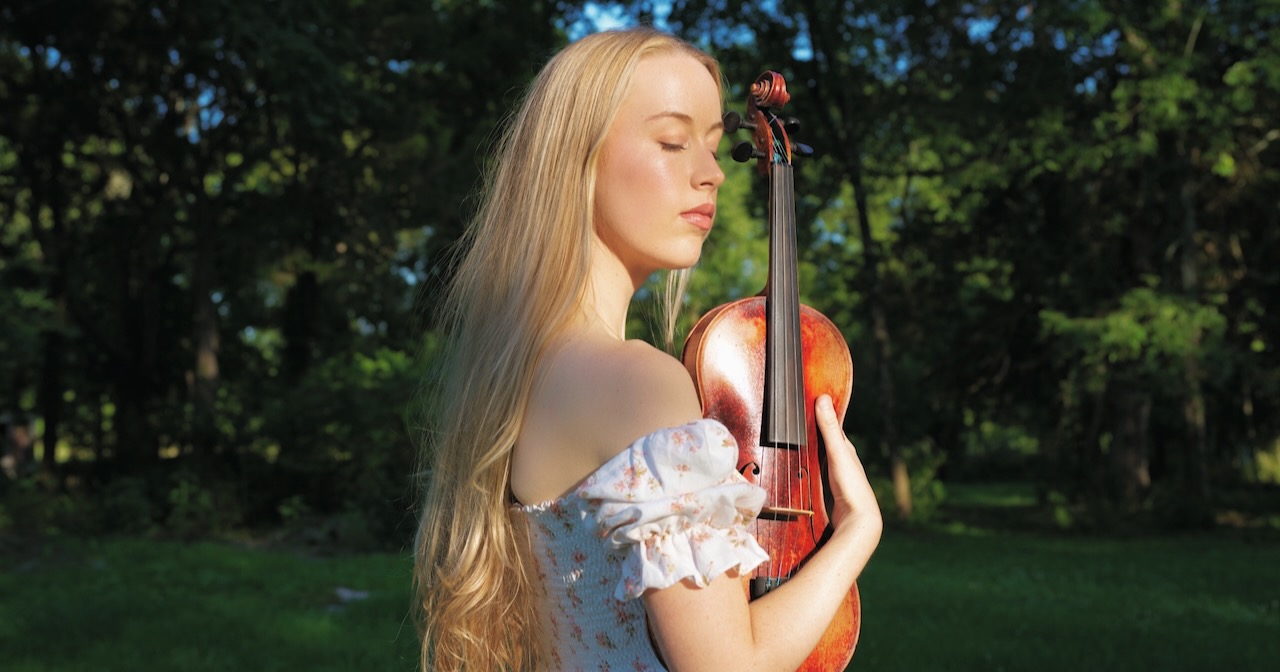
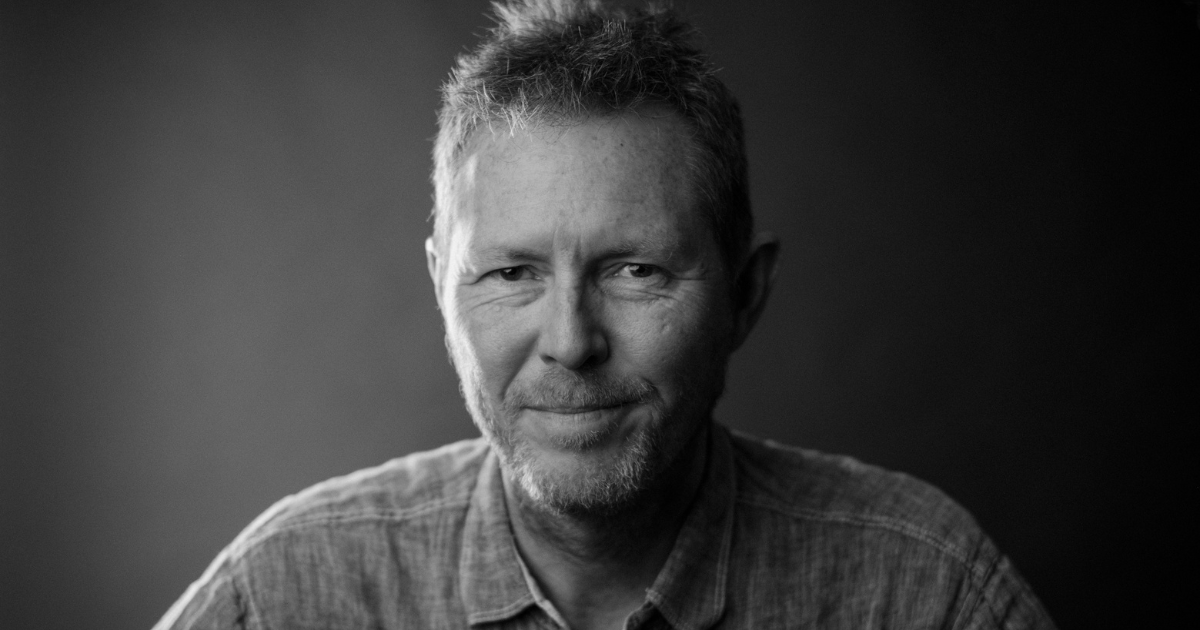
With the September release of her album Queen of Time, Nashville artist Lindsay Lou takes listeners beyond a creative journey – it’s more like a long, strange, and satisfying trip, where her “radical truth” conquers all.
A former bluegrass songsmith with roots in groups like her former backing band, the Flatbellys, and Sweet Water Warblers, Lou’s Queen of Time marks the start of another new solo chapter and follows a rough time in her life filled with earthquakes of change. She both lost a grandmother who was pivotal to her development and experienced the end of a marriage – all while her career picked up steam. But, through those endings came a new beginning. One where she better understood her place in the universe, both spiritually and musically.
On Queen of Time, Lou welcomes herself to that new identity (and all who care to follow), doing so with a fresh sound and some old friends. Featuring Billy Strings and Jerry Douglas, 11 thought-provoking tracks infuse her bluegrass roots with atmospheric folk, back-porch psychedelia, and more, as lyrics and voice weave together into something like a sonic dreamcatcher – snatching ethereal truths from the cosmos and translating them in ways the mind can just begin to process.
Recently, Lou spoke with BGS about this heady transformation, working with her friends, and how her “teacher-turned-Rainbow-Gathering-healer” of a grandma helped shape her radical spirituality.
BGS: Tell me how you’re feeling about music making these days? I know this album comes after a lot of change in your life, personally and professionally. Has the way you feel about making music changed, too?
Lindsay Lou: It felt like the most freeing recording endeavor that I have ever set out on. Working with [producer] Dave O’Donnell was really great. He held a ton of space for me creatively and emotionally and just in all the ways. So it was really nice. I brought in all of my friends, and what drew me to music to begin with was jams that my family would have, so feeling among my chosen family, being able to bring in the people who I’ve been jamming with in living rooms and on stages for the last several years, was really, really sweet.
Honestly, I’m feeling really inspired and just really happy about music. All of the tours have felt like they were in really good flow, and spiritually, it just feels very open and satisfying. I sort of blew up my life a few years ago, and the last three years or so I’ve been gestating and rebuilding my path. It was rebuilding on the foundation I had laid down with the Flatbellys and the Warblers, so it wasn’t out of nowhere, but it felt like there was a lot of unknown – and there were times where I felt there’s just some fear that goes into it. But now I’m on the cusp of watching all of this be born and come to life, and it feels so good. It’s like everything that I could have hoped for.
Seeing the record in the hands of people and hearing all the stories they send me about how it’s touched their lives has been very, very fulfilling. And I’m watching the album chart and watching different things on the horizon, different gigs and stuff – it’s just really inspiring, and I feel really excited to follow this new path that I’ve laid out for myself.
You don’t always get that payoff when your life blows up, so congrats! Tell me a little bit about the imagery behind the Queen of Time theme. You’re asking the listener if they know who they really are – did that come from an epiphany you had?
It definitely came from an epiphany and the ongoing question and journey of self-discovery, because it’s something you never achieve. It’s just a journey you’re always on. The imagery [for the song “Queen of Time”] was definitely from Absolem, the caterpillar from Alice in Wonderland. He challenges Alice, “Who are you?” And it was less about who she was and more about who she identified as, because we contain multitudes. So this is a broad and complex question, and as I’ve been playing it, the song has sort of come to life and revealed itself to me in new and unexpected ways. I always love that with songs.
You start the album off with this refrain saying, “I don’t need the world to hear me / I’m singing and nothing else matters.” What’s the significance of that to you?
I guess it’s just acknowledging the personal relationship. I always say that the voice is a window to the soul, but a lot of people have this horrible trauma that they carry with them – that they’re not a good singer and that they don’t have a good voice, and so they don’t ever sing. I feel so much grief thinking about people not even singing to themselves. In my darkest hour, the most soothing thing that I have found to do is to sing to myself. And it’s not because I think that I have the greatest voice, it’s because singing actually releases endorphins in your mind. It’s like a physiological truth that the experience of singing is medicinal and it’s a form of meditation.
The obvious interpretation of that is that as career musicians, you’re always wanting more people to hear you and wanting your fan base to expand. But at the end of the day, the reason that I sing and I think the reason anyone sings, is because it is a magical and medicinal way of expressing your soul, your spirit, your inner truth. So just remembering that value that I don’t need to be anywhere to let my voice ring and to connect with my own soul in that way, that’s really the most powerful thing.
I know your grandmother had a big part in influencing the record. But on top of everything else she was to you, did she also help you get into music?
I guess in a roundabout way, she did. Her greatest influence on me was spiritually. She was a preacher woman, and she lived her life the best that she could in the literal footstep of Jesus. So she took everyone in and she welcomed everyone. She was always preaching that [unless] you have not sinned, don’t cast the first stone and really strongly believed that no one will be left behind. Like if God said the greatest commandment was to love God and to love your brother, then she spent her whole life practicing that. Now, I call myself a praying atheist. I don’t necessarily connect with any institution of religion, but I do connect with the practice of spirituality and of love. Even Christianity says that God is love. So in my mind it’s like, “Well, then let’s just get right to the heart of the matter and call it love!” If we’re living in love and if we’re thinking critically and we’re following our radical truth, then we’re doing it right.
Was music a part of your childhood?
[My grandmother] had 12 children and she surrounded herself with hippies and counterculture. And her husband – the father of her 12 children – was a musician. He played the trumpet and he sang, so they always sang to their children, and the songs that she sang to them, they sang to their children. So I heard all the gospel songs that she sang to my mom, because my mom sang them to me, and there’s been various forms of family bands throughout the generations of all of her children. The older kids had a rock band, and they would get together and sing gospel songs in harmony and Beatles songs and folk songs, and the younger kids formed bands with the older cousins. There was just always music around, so I think she just held space for music.
She sounds like an amazing person. Is that her voice in the phone conversations you put on “Love Calls”?
Yeah. I played that song for a couple of my friends before she was in it. There was this long expansive jam and my girlfriends listening to it were like, “We want more Lou here.” I thought, “Well, what version of Lou makes sense to go there?” And it dawned on me that it was the version of Lou that interviewed grandma. I interviewed my grandma on the one hand to sort of preserve her radical life story for posterity. And on the other hand, as a way of knowing myself. I’ve collected about 27 hours of her telling me her life story and how she came to believe what she believes. It’s a little bit foggy now, but I had an idea of what story I wanted to put there, and once that conversation was in there, the song had the context that it was calling for.
What was the context?
The song is about someone being a guide of love for someone else. And the conversation is her telling me the story of meeting someone at a rainbow gathering who she had a conversation with, and later found out that that conversation talked them out of suicide. Many parts of this record came together in the context of me witnessing suicides in my music community, and addiction and mental health struggles. And pretty much all of my music goes back to that in some way, because of where I came from and the world that I see around me.
Other songs have that through line to it too, right? Like “Nothing’s Working”? I know you worked with Billy Strings on that one, how did it come together?
He and I get together every once in a while to write and we had gotten together and started that song. He had just been hanging out with Bryan Sutton and had this open B shape thing in his head that he started to play along with, and he was talking to me about Ionia – the town that he grew up in. He had just seen so many people get a job and try to make all the right decisions and try to always do the right thing, and just end up with nothing to show for it, because they’re stuck in a system that doesn’t support them and wasn’t built for them, or a scene that really wasn’t good for them.
We wrote the first verse, and kind of left it at that, and it sat in my voice memos for a couple years. Then I was on a plane on my way to the Jeff Austin tribute concert benefit [late member of Yonder Mountain String Band, who died in 2019], and I was just thinking about things. I think I finished it on my way home, but during that same week, I attended my cousin Emily’s funeral. She died in her 20s and was struggling with opiate addiction. I don’t mention either of them in the song necessarily, but it really got me into the headspace of thinking about people I know who are still alive, who are struggling with similar challenges. The song is about telling their story, and telling their story with compassion and honesty.
I noticed a lot of hard bluegrass influence on tracks like “Rules,” and along with Billy you have a collab with Jerry Douglas. Do you still feel like you can be creative in the bluegrass form these days? Or is it harder to do that as you grow as an artist?
Bluegrass gave me a lot of tools and a home. It gave me a place to belong and an opportunity to hone my craft, just in terms of tightening up rhythm and getting better at playing the guitar – and having an entire world of people I can get together with anytime, anywhere, and play any one of the many songs in the bluegrass canon and sing three-part harmony, like we’ve been a band our whole lives. It gave me so much, but I didn’t grow up in a family or a community that played bluegrass music. It was something I found in my early 20s. I’ve never been like people like Billy and Molly [Tuttle] – [bluegrass] is not just a part of their history, it’s like their earliest memories.
I grew up doing acoustic music, so there’s always going to be some element of that in my music. And I’m so grateful to have bluegrass now as a tool of expressing myself. But I don’t think I find it harder as I get older. I just find it easier to connect more authentically with my own voice, and bluegrass is a tool of doing that – but it’s not the only tool.
Artist:Bronwyn Keith-Hynes Hometown: Nashville, Tennessee Song: “Can’t Live Without Love” (Featuring Molly Tuttle, Sam Bush, Bryan Sutton, Jerry Douglas, and more) Release Date: October 13, 2023 (single); October 17, 2023 (video) Label: Sugar Petunia Records
In Their Words: “I’m so happy to share a behind the scenes studio video from the recording of my debut vocal single, ‘Can’t Live Without Love’ featuring Molly Tuttle and Sam Bush. This song is the first track I’ve released from my upcoming album, out in Spring 2024. We tracked it last fall in Nashville, at Brent Truitt’s studio, ‘The Cave,’ and it was actually the first song of the first day of recording the album, so it’s kind of fitting it should also be the first song to be released.
“I’m joined by some of my absolute favorite musicians: Jerry Douglas, Bryan Sutton, Dominick Leslie, Wesley Corbett and Jeff Picker. They all brought so much joy and magic to this track! And it was such an honor to get to sing with Molly Tuttle and Sam Bush, both of whom inspire me so much on a musical and personal level. This song by Jamie Hartford is a beautiful meditation on what we can and can’t live without in this life and how we can overcome challenges by focusing on what’s important.” – Bronwyn Keith-Hynes
Track Credits: Written by Jamie Hartford
Co-produced by Brent Truitt and Bronwyn Keith-Hynes Recorded by Brent Truitt. The Cave, Nashville, TN Mastered by Alex McCollough. True East Mastering, Nashville, TN
Bronwyn Keith-Hynes – lead vocal, fiddle Molly Tuttle – harmony vocal Sam Bush – harmony vocal Jerry Douglas – Dobro Bryan Sutton – guitar Dominick Leslie – mandolin Wesley Corbett – banjo Jeff Picker – bass
Photo Credit: Alexa King Stone Video Credits: Shot at The Cave in Nashville, TN; produced by Steve Voss of Solar Cabin.
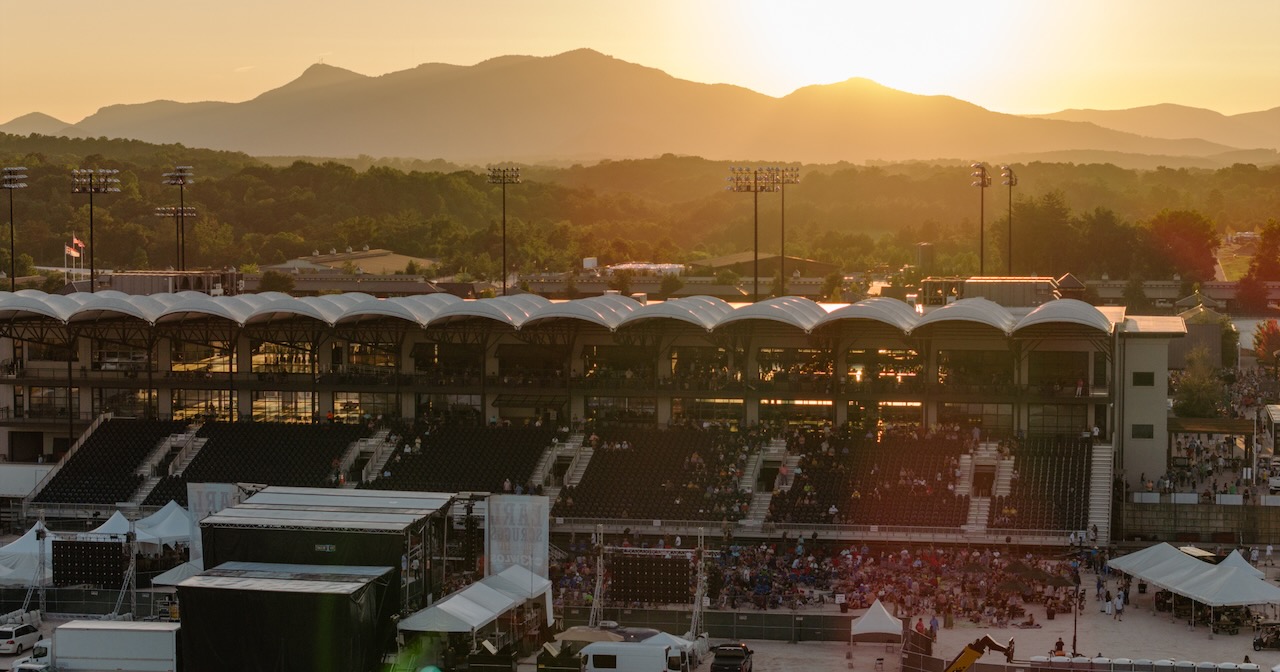
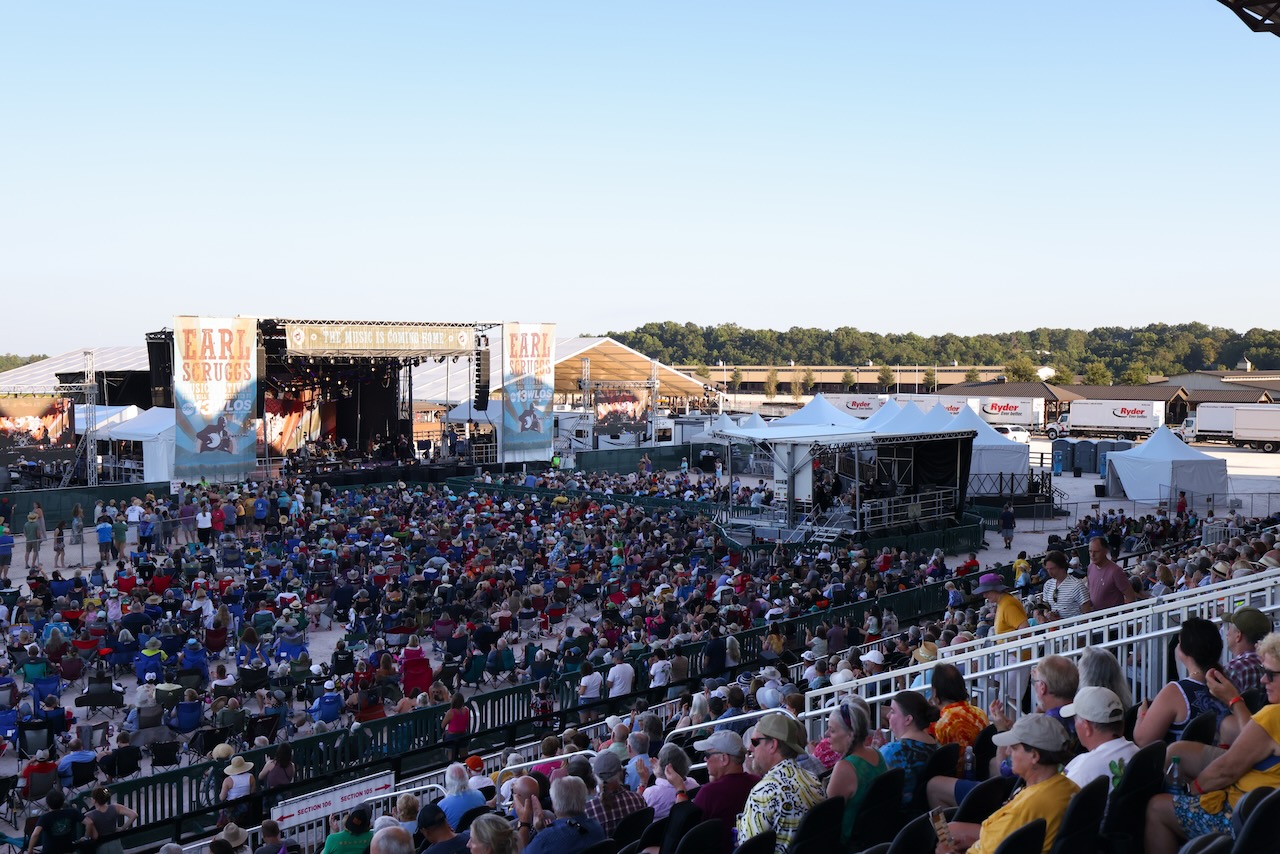
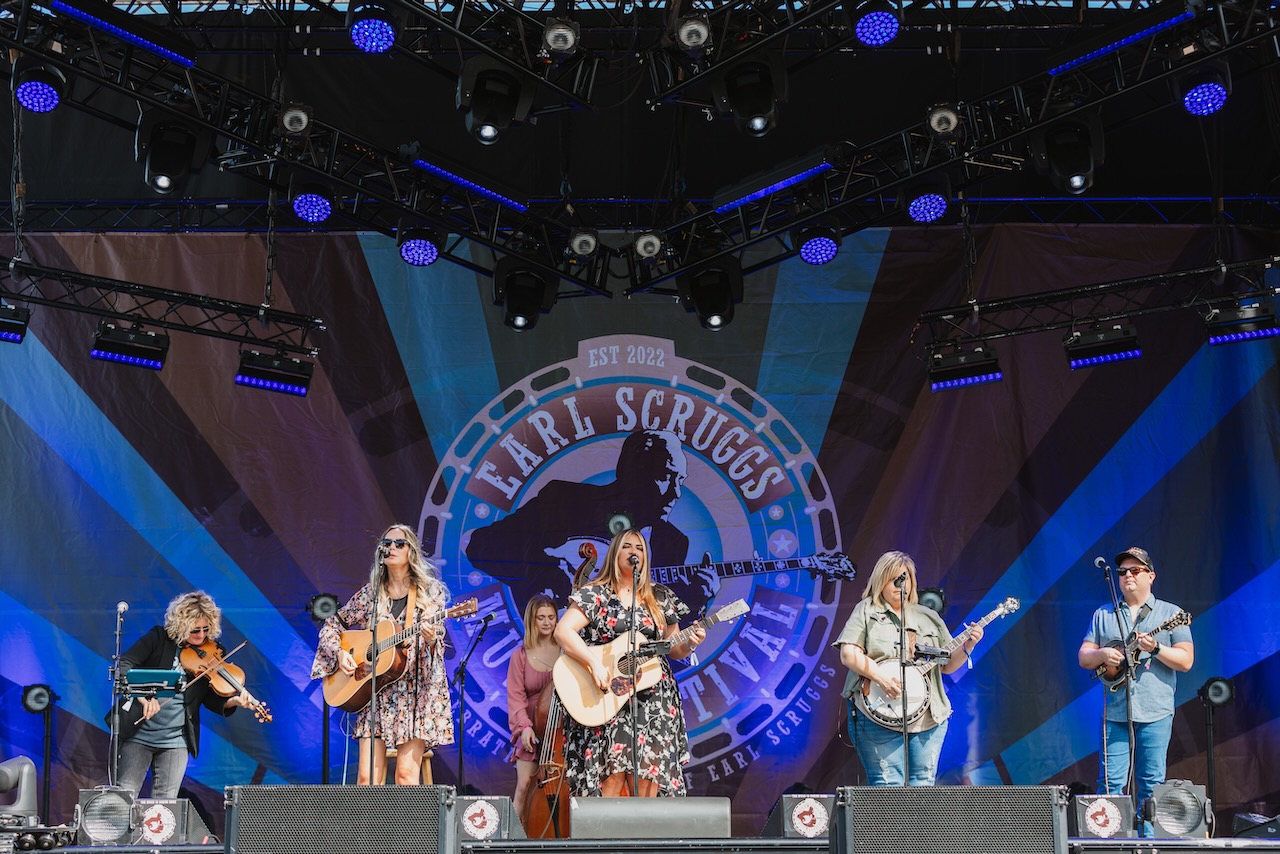
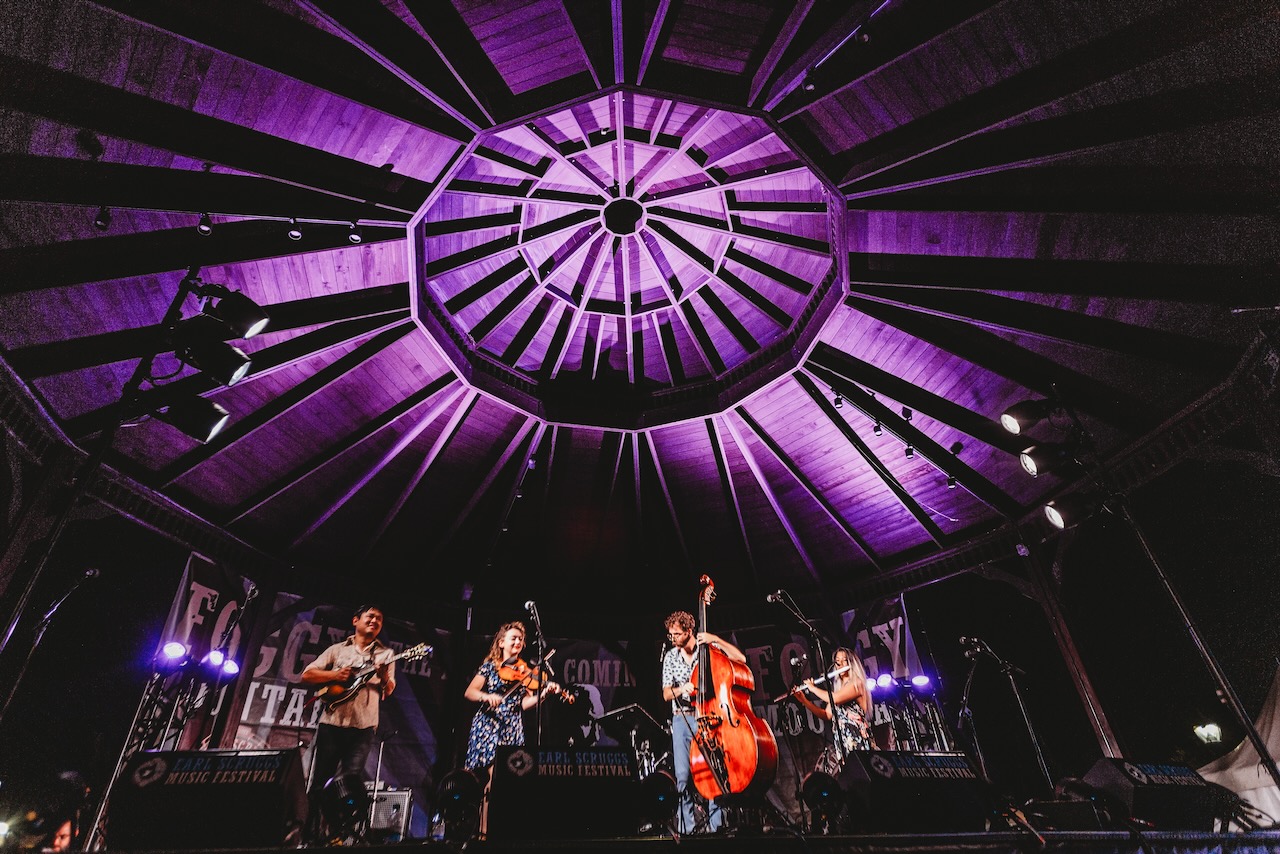
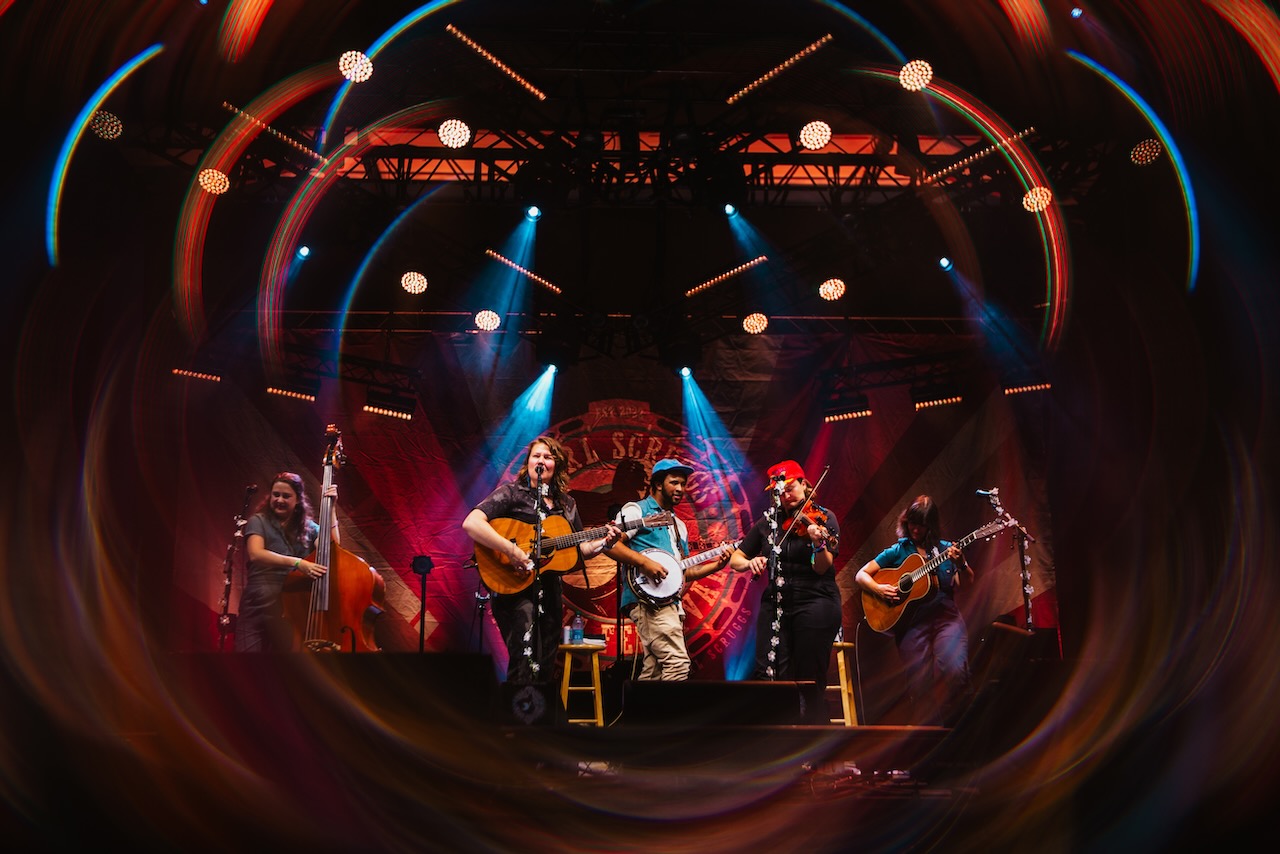
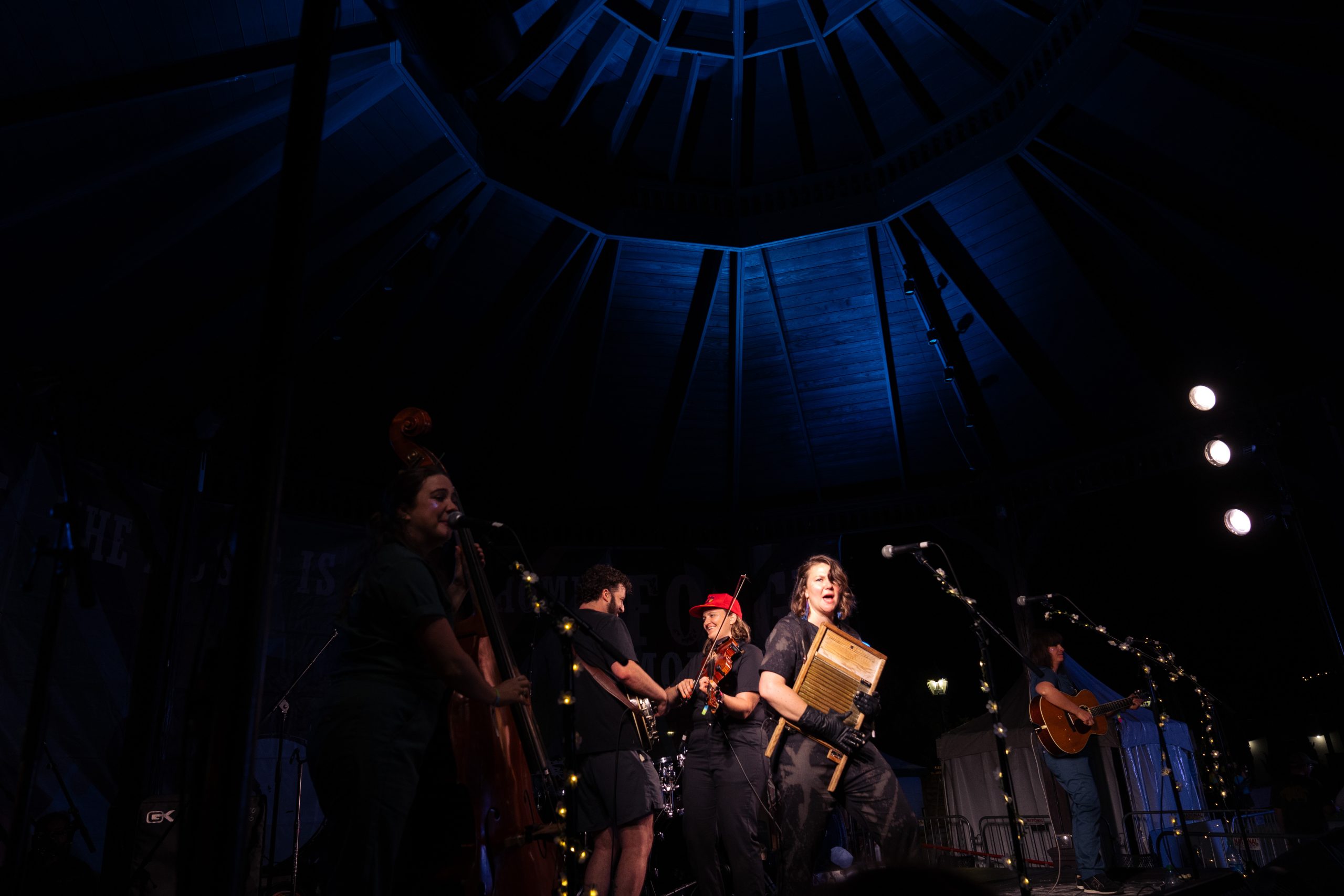
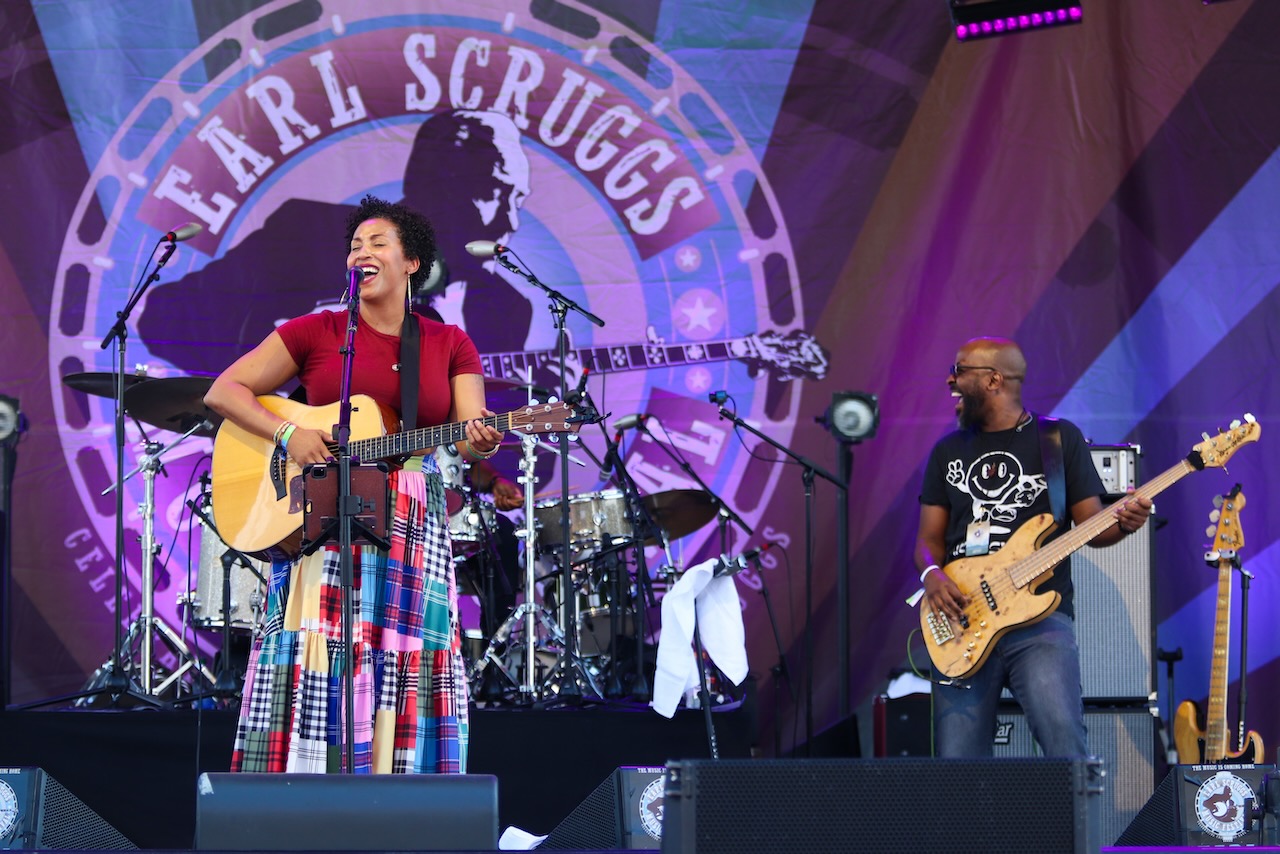
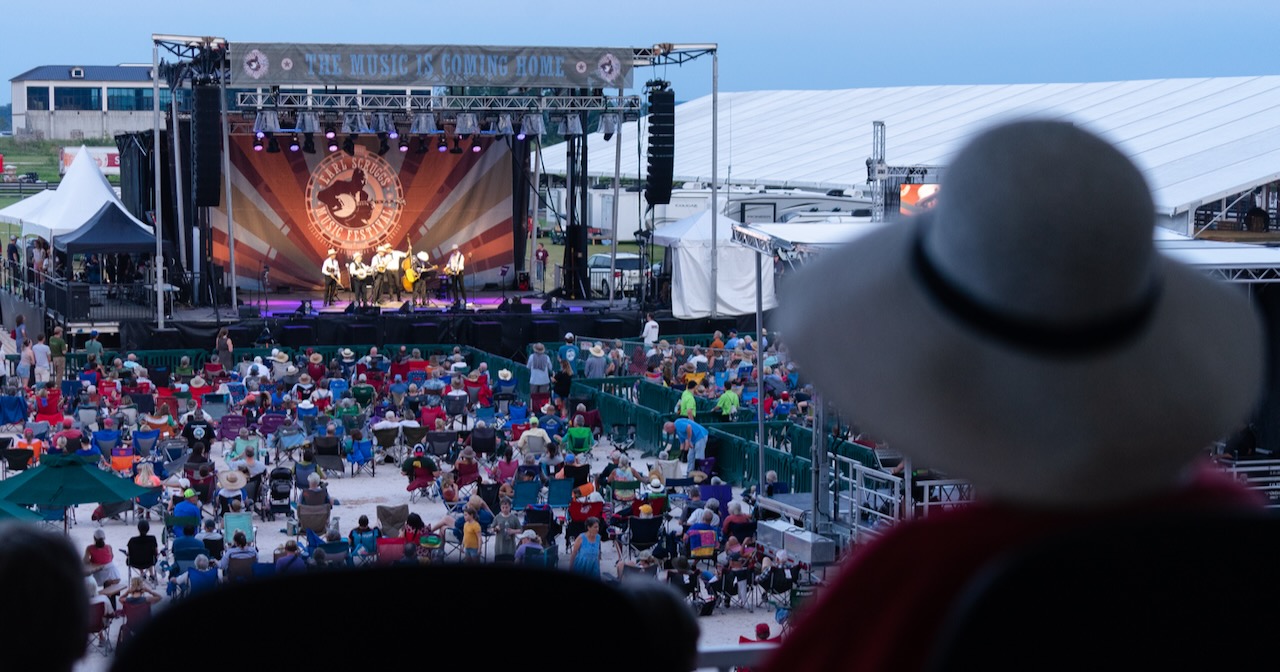
The 2nd Annual Earl Scruggs Music Festival was held over Labor Day weekend at the Tryon International Equestrian Center just outside of Tryon, North Carolina, in Mill Spring. The gorgeous festival grounds, nestled in the foothills of the Blue Ridge Mountains, were the perfect setting for the sunny and warm event, featuring glamorous cabins, manicured campsites, brick-and-mortar restaurants and shops, horse-jumping demonstrations, workshops and two stages chocked full of bluegrass, old-time and roots music. The festival is a partnership between Tryon International, roots radio station WNCW and the Earl Scruggs Center just down the road in Shelby, North Carolina, the county seat of Cleveland County – Scruggs’ ancestral home. Over four days, the event showcased the broad, varied and lasting influence Scruggs and his playing have had on American roots music as a whole, especially in North Carolina.
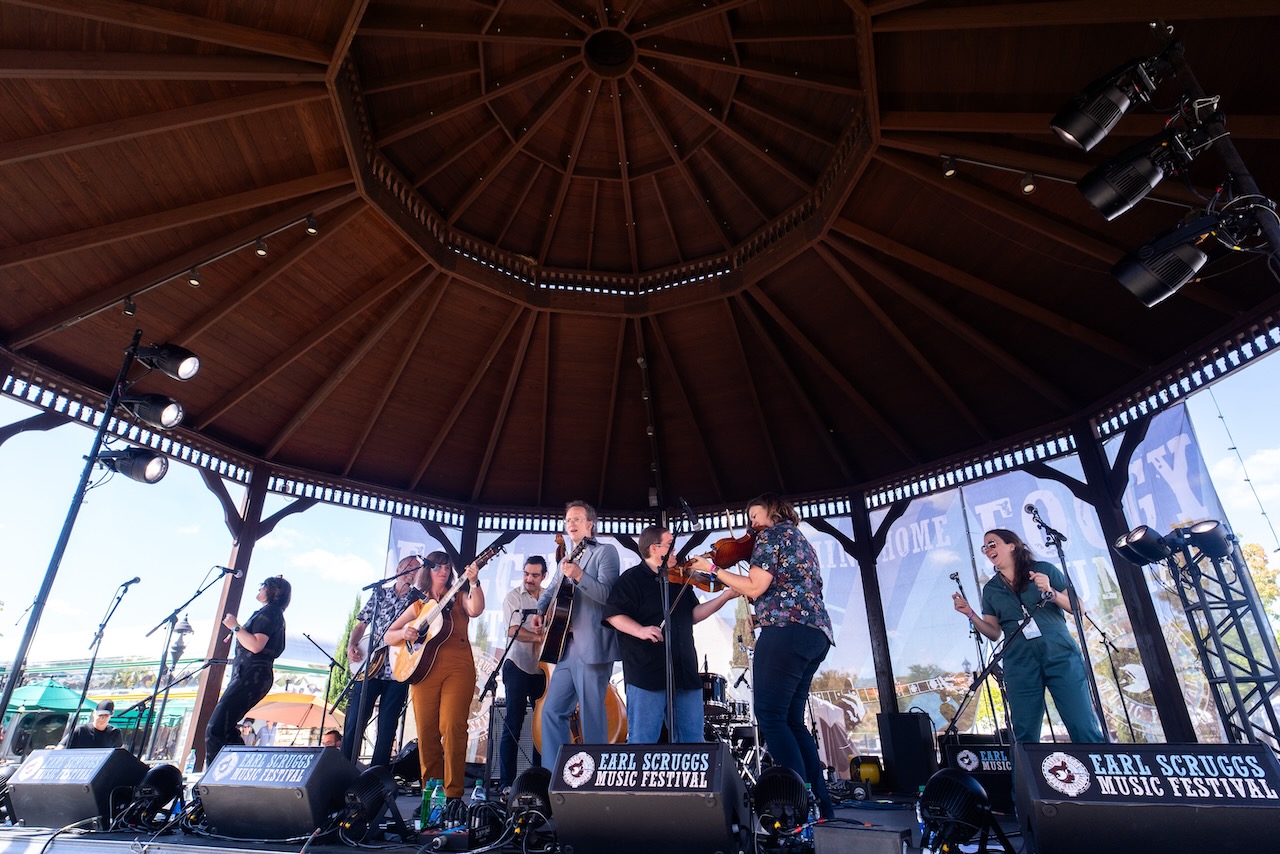
BGS returned to ESMF for its second year, once again sponsoring the very special, fan favorite Earl Scruggs Revue tribute set, hosted by Tony Trischka – and his band, Michael Daves and Jared Engel. Listeners and fans packed the plaza surrounding the Foggy Mountain gazebo stage to hear Trischka and many special guests – such as Della Mae, Michael Cleveland, I Draw Slow, Twisted Pine, Tray Wellington, Greensky Bluegrass, Jerry Douglas and more – pay tribute to Earl’s and his son’s groundbreaking and innovative group, the Earl Scruggs Revue, and their Live! From Austin City Limits album.
Enjoy a collection of photos from the Earl Scruggs Music Festival below and make plans to attend the 3rd Annual edition of this first-class event in 2024 – the dates are set and tickets are already on sale for the August 30 to September 1, 2024 edition of ESMF!
Flint Hill Stage photo by Reagan Ibach
Horse jumping demonstrations were held daily at the festival, held at the Tryon International Equestrian Center. Photo by Rette Solomon.
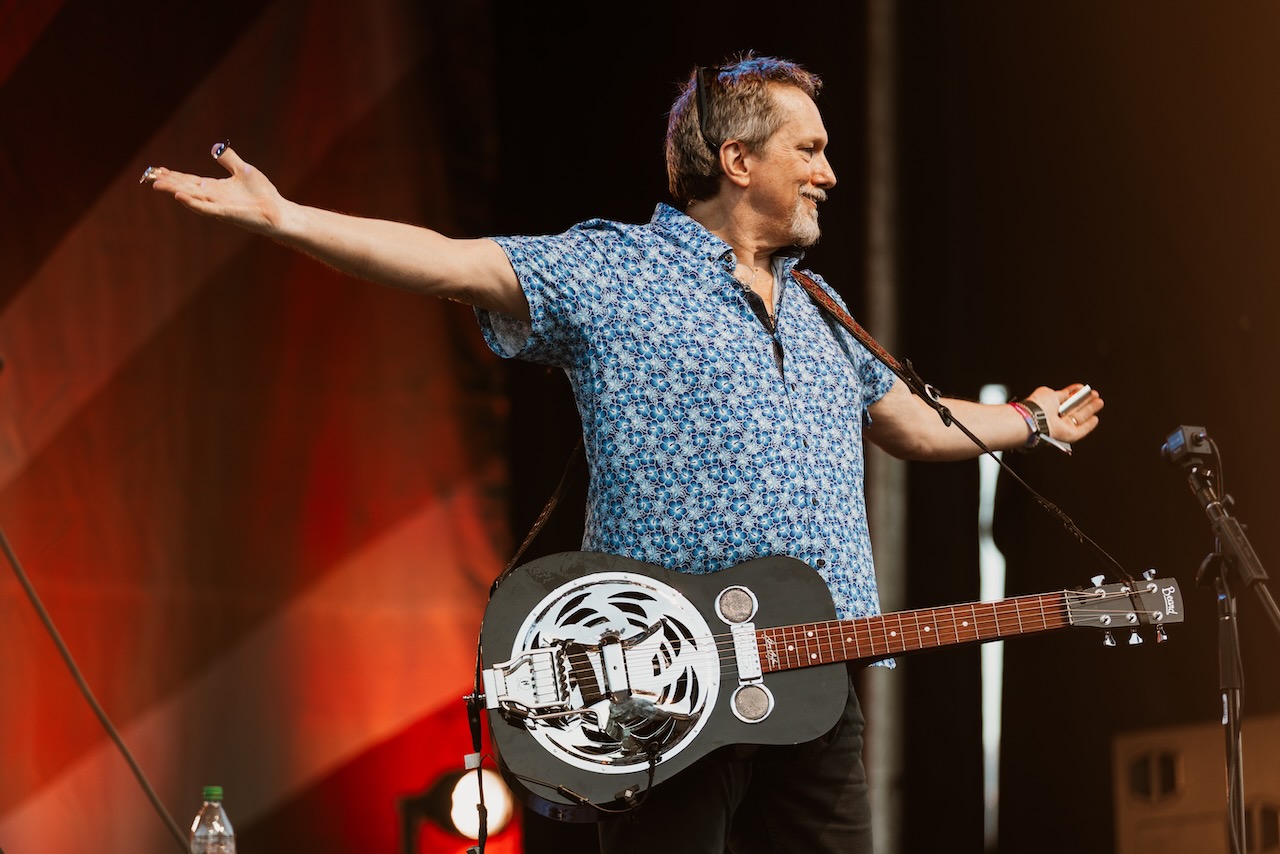
Earl Scruggs Music Festival host Jerry Douglas on the main stage. Photo by Cora Wagoner
Sister Sadie perform on the Flint Hill Stage. Photo by Cora Wagoner
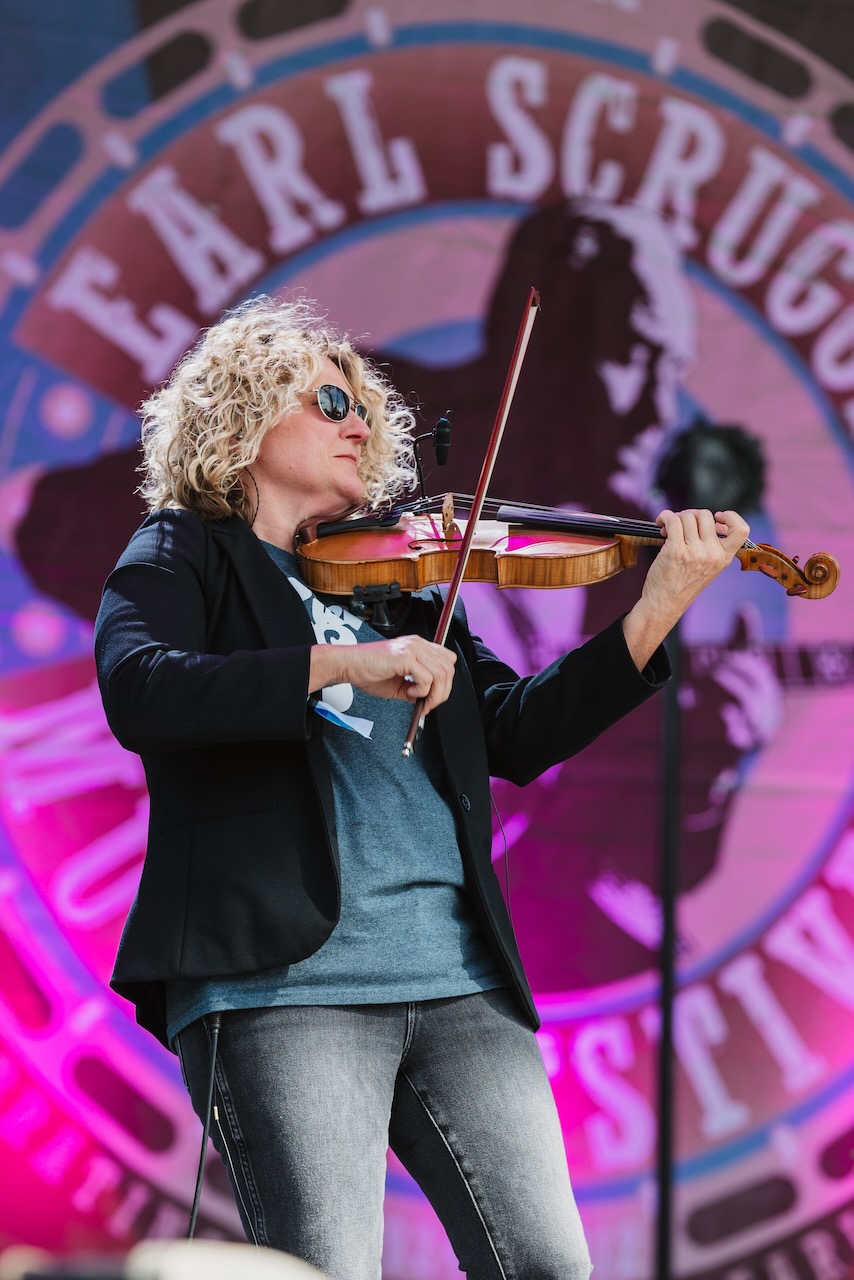
Deanie Richardson, fiddler and band leader of Sister Sadie, on the Flint Hill Stage. Photo by Cora Wagoner.
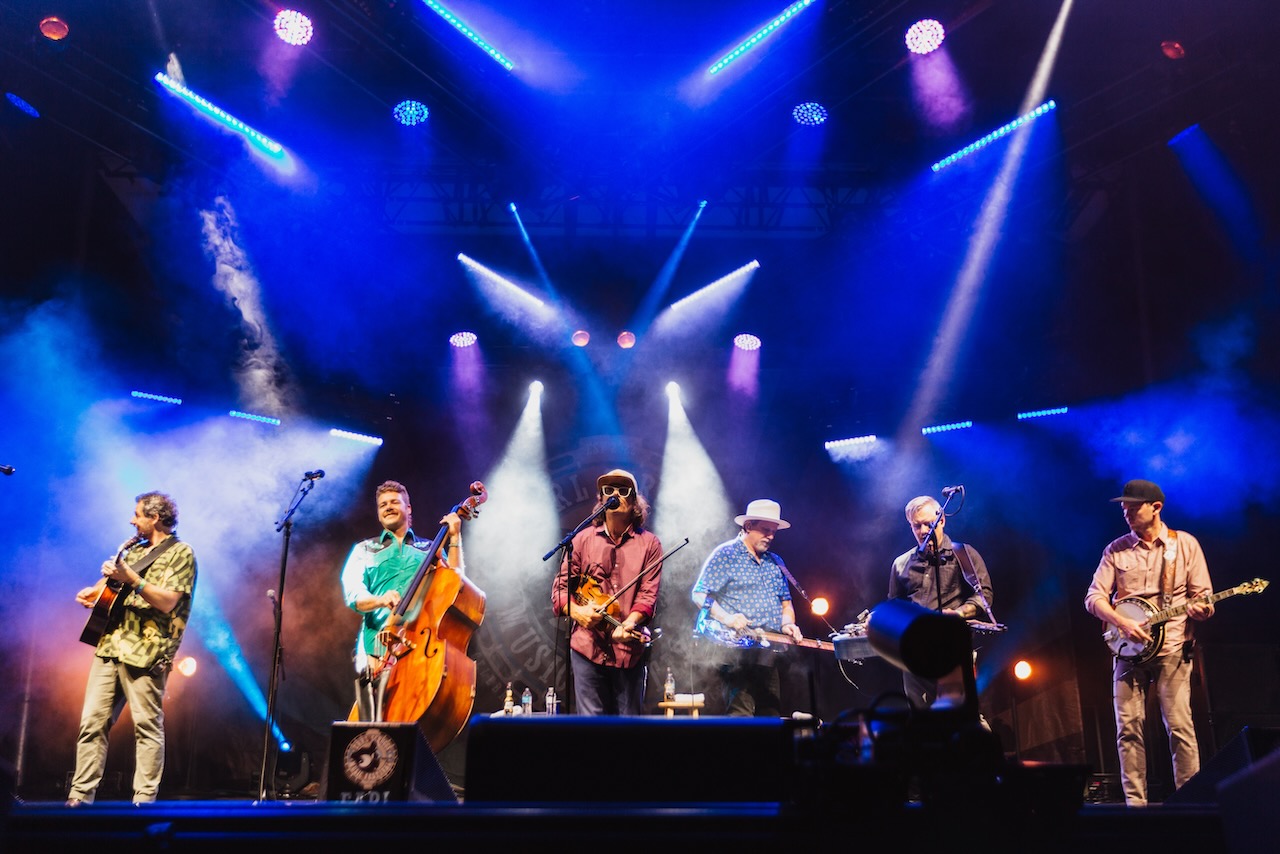
The Infamous Stringdusters perform with Jerry Douglas during their headline set. Photo by Cora Wagoner.
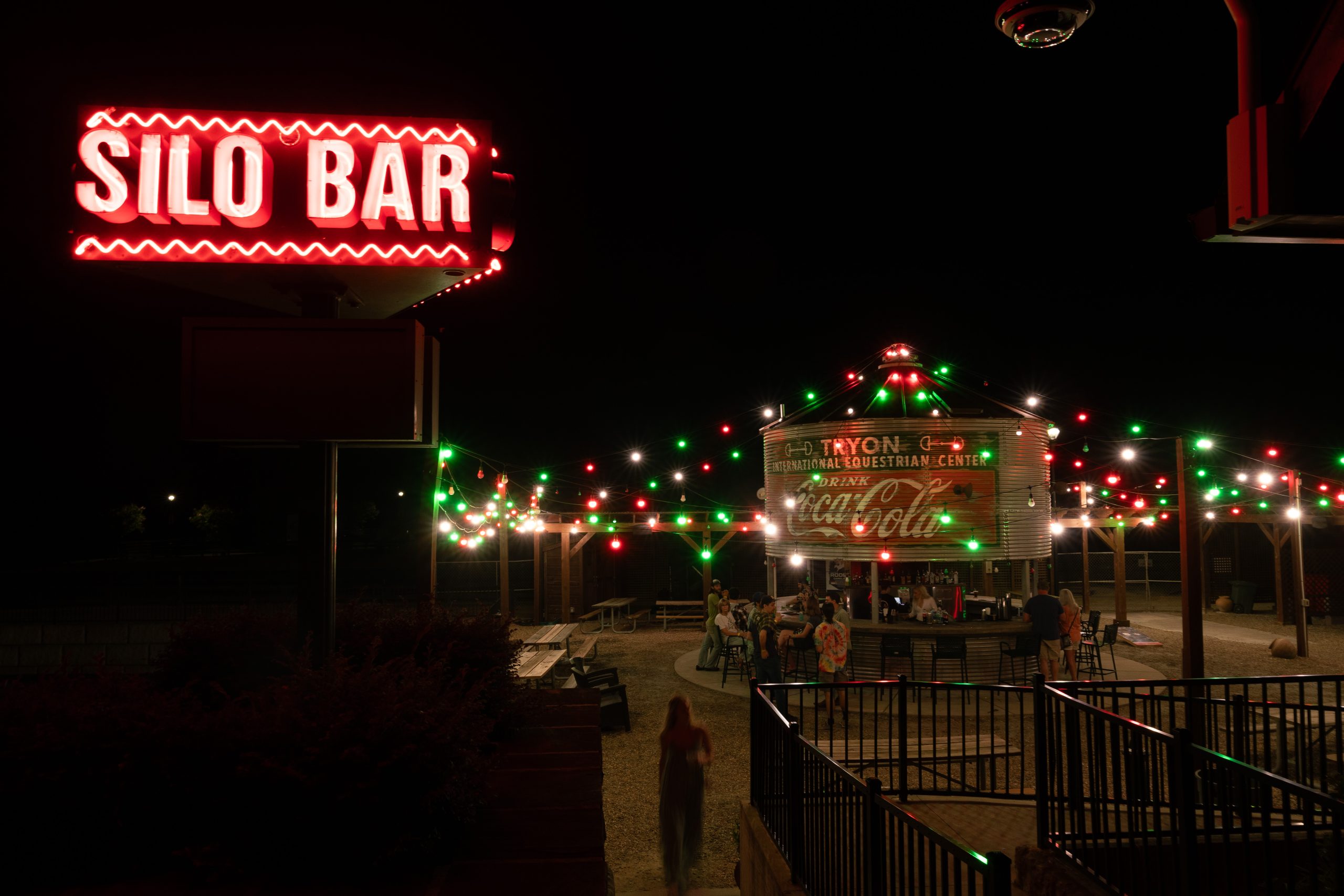
Tryon International's Silo Bar, festively lit. Photo by Eli Johnson
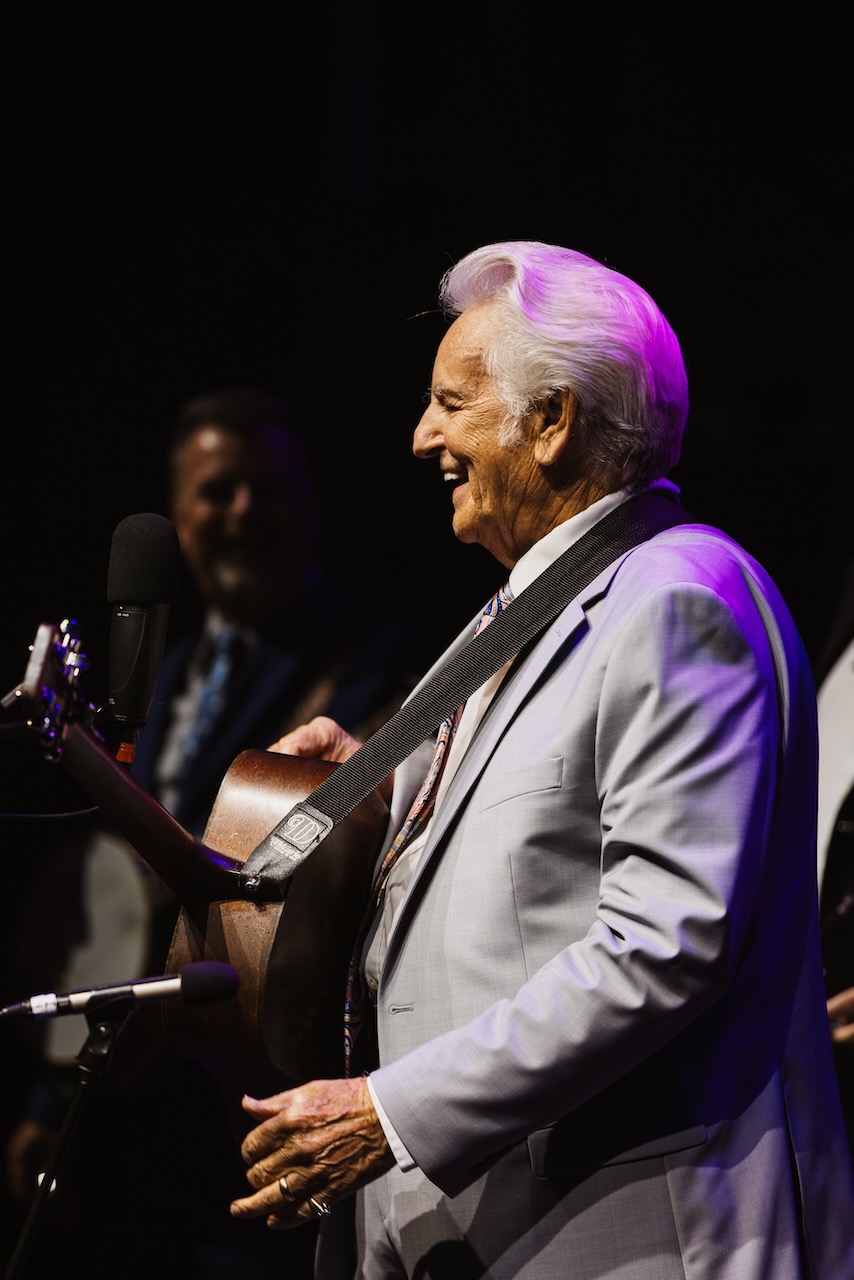
Del McCoury smiles during his headline set on the Flint Hill Stage at Earl Scruggs Music Festival. Photo by Cora Wagoner.
Greensky Bluegrass on the Flint Hill Stage for their headline set. By Eli Johnson
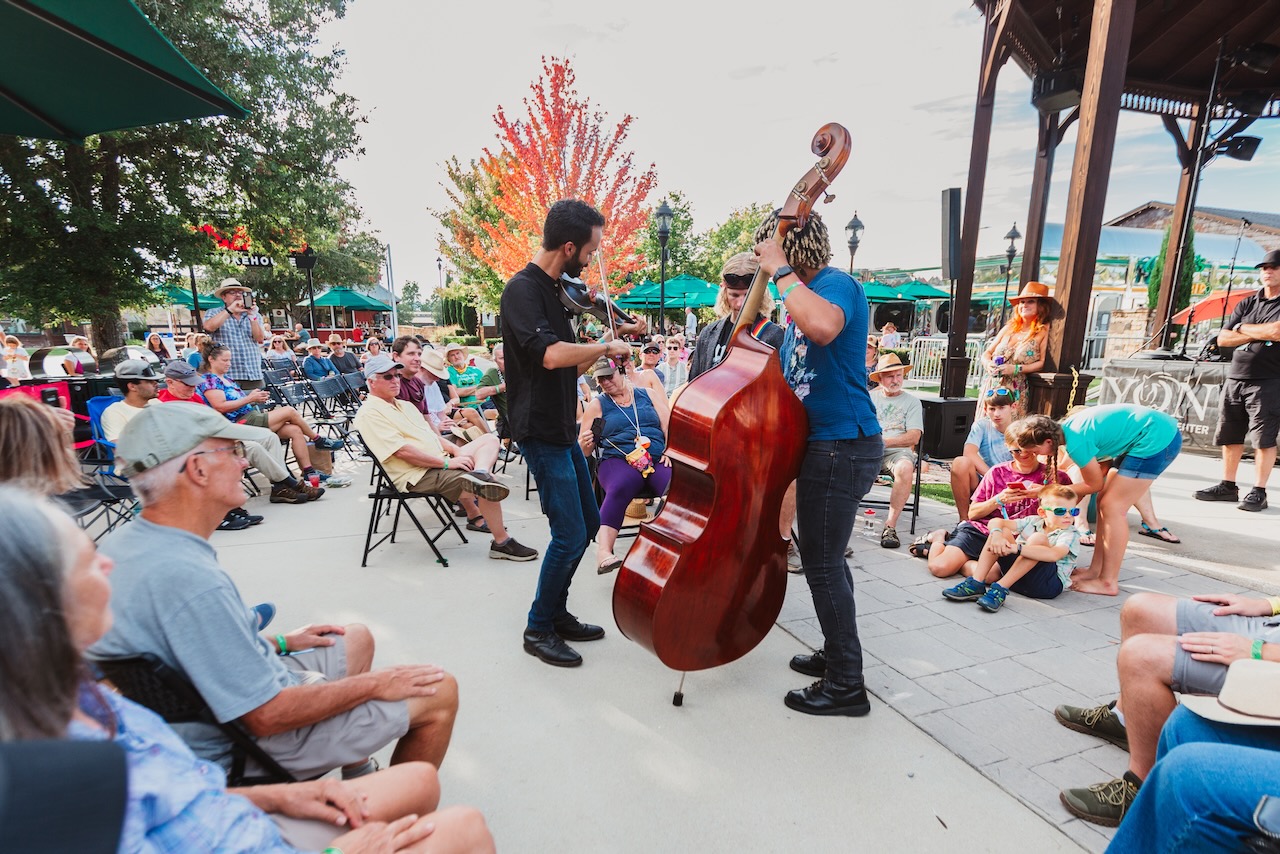
Jake Blount and band step off the stage to perform among the crowd when technical difficulties interrupted the beginning of their set. Photo by Cora Wagoner
Della Mae cover Bob Dylan's "I Shall Be Released" during the Earl Scruggs Revue set. Photo by Eli Johnson
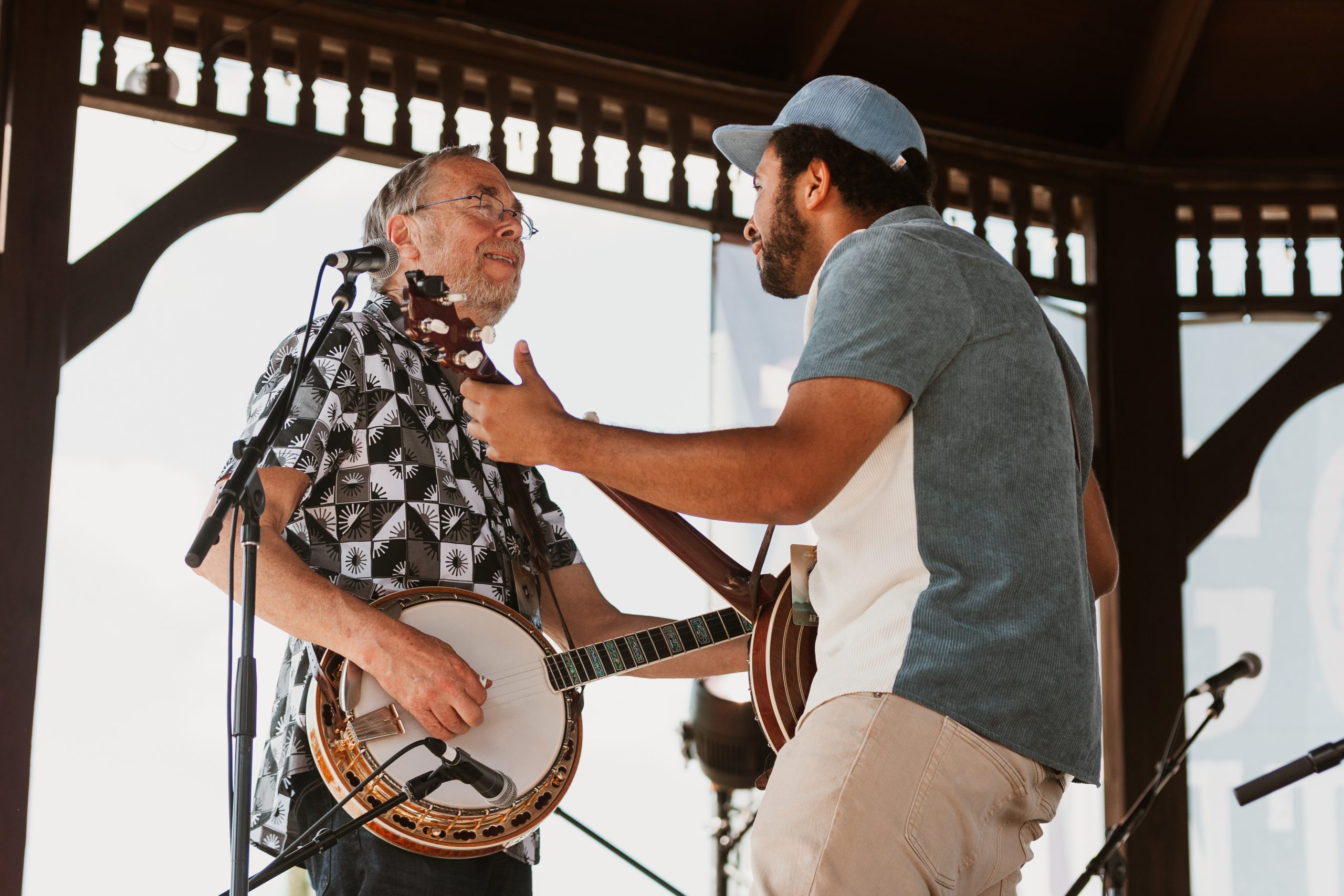
Tony Trischka and Tray Wellington perform "Earl's Breakdown" during the Earl Scruggs Revue tribute set. Photo by Cora Wagoner.
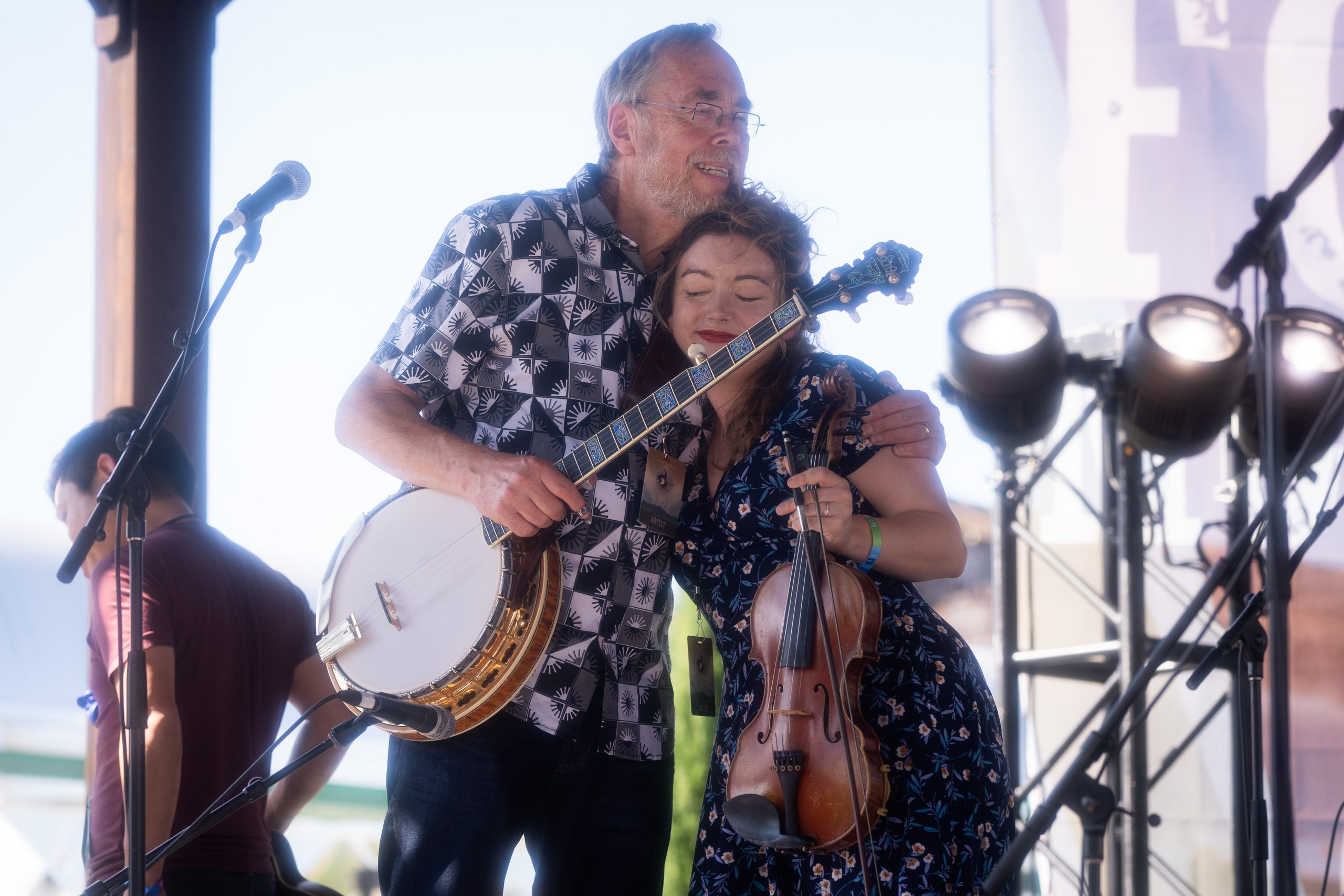
Tony Trischka embraces Kathleen Parks of Twisted Pine during the BGS-sponsored Earl Scruggs Revue tribute set. Photo by Eli Johnson
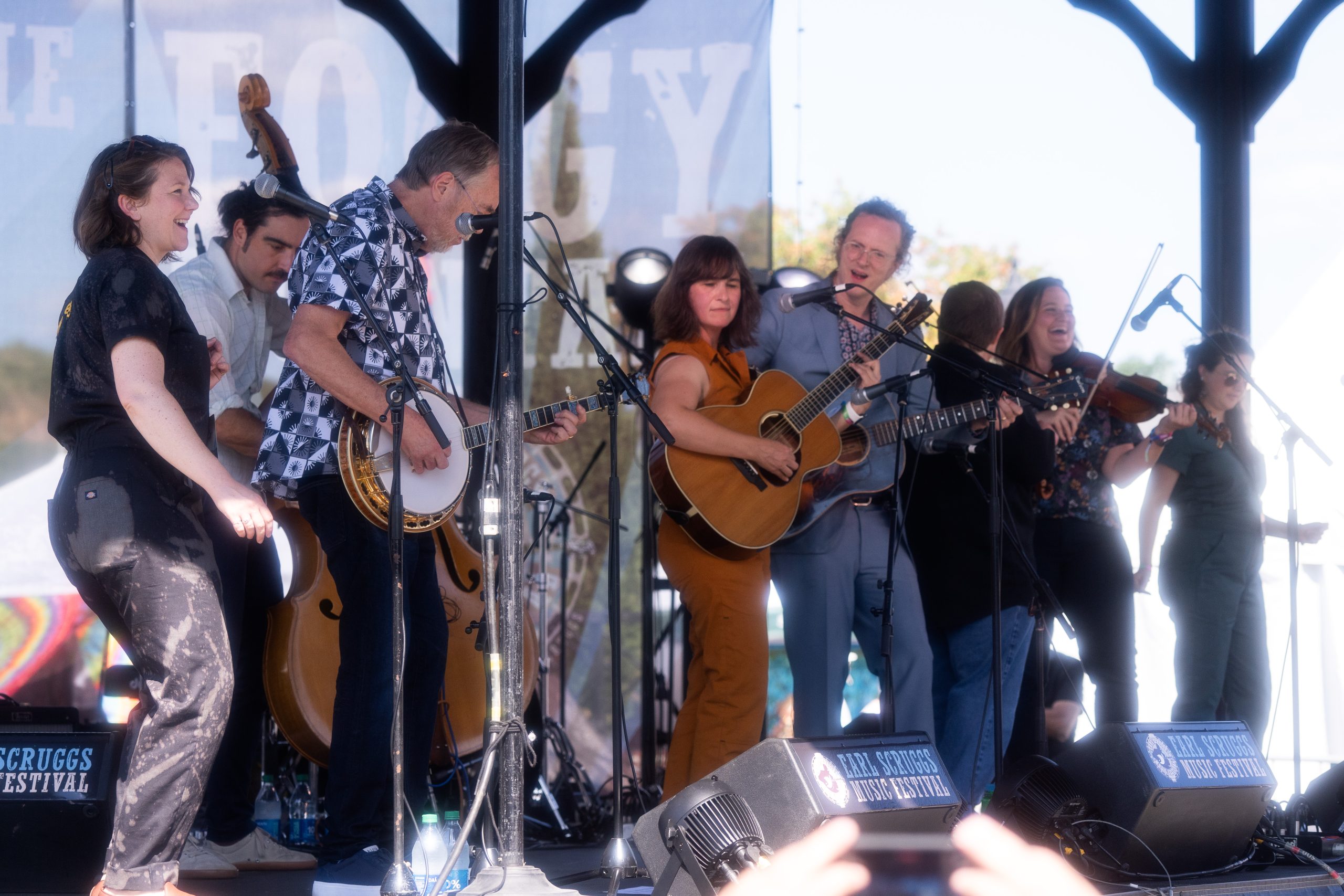
Della Mae and Michael Cleveland join Tony Trischka and band during the Earl Scruggs Revue set. Photo by Eli Johnson
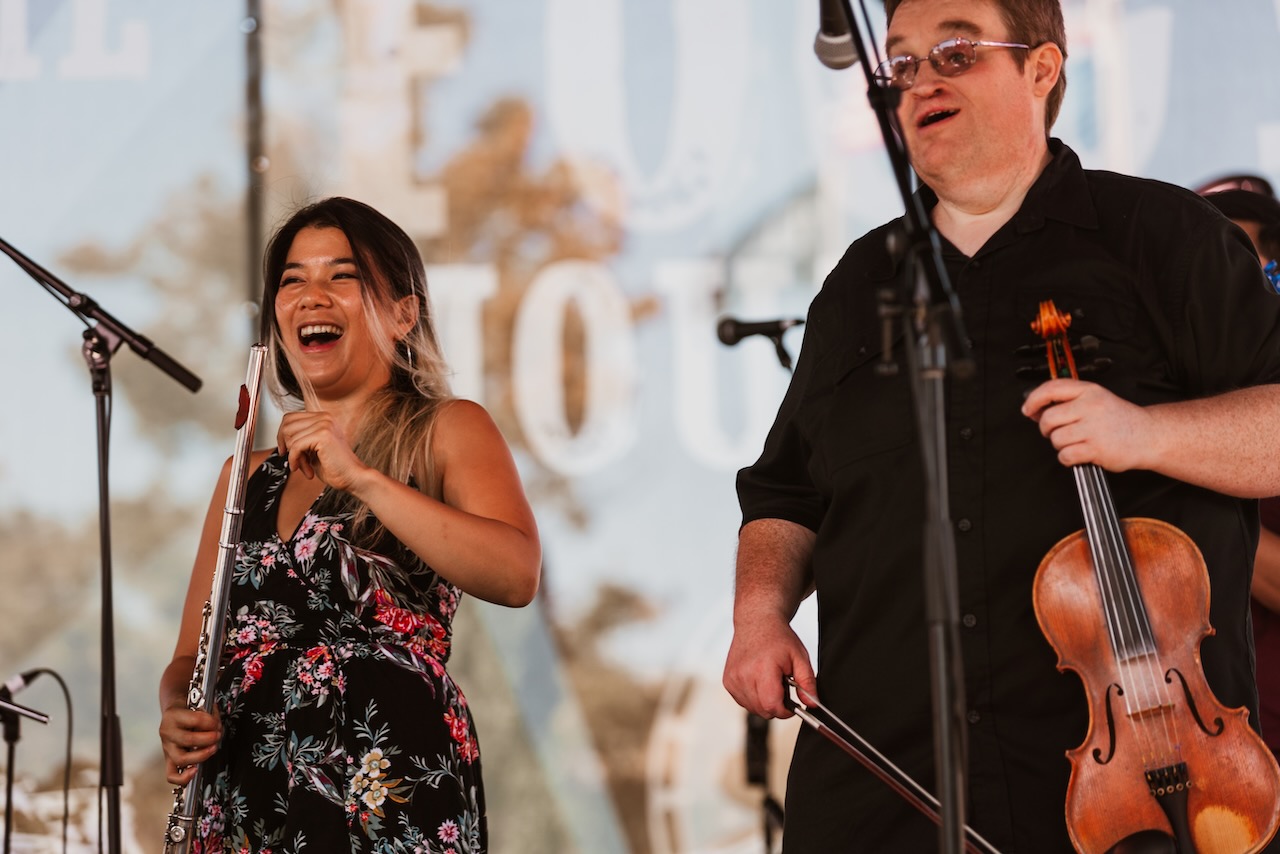
Anh Phung of Twisted Pine with Michael Cleveland at the Earl Scruggs Revue tribute. Photo by Cora Wagoner.
Paul Hoffman of Greensky Bluegrass and Jerry Douglas perform during the Earl Scruggs Revue tribute show. Photo by Cora Wagoner
Twisted Pine perform on the Foggy Mountain Stage. Photo by Cora Wagoner
Della Mae performed a main stage set at Earl Scruggs Music Festival. Photo by Cora Wagoner.
Della Mae's rousing late night set on the Foggy Mountain stage, complete with an appearance by BGS managing editor Justin Hiltner on banjo. Photo by Eli Johnson
Rissi Palmer on the Flint Hill Stage by Rette Solomon.
Zoe & Cloyd on the Foggy Mountain Stage by Eli Johnson
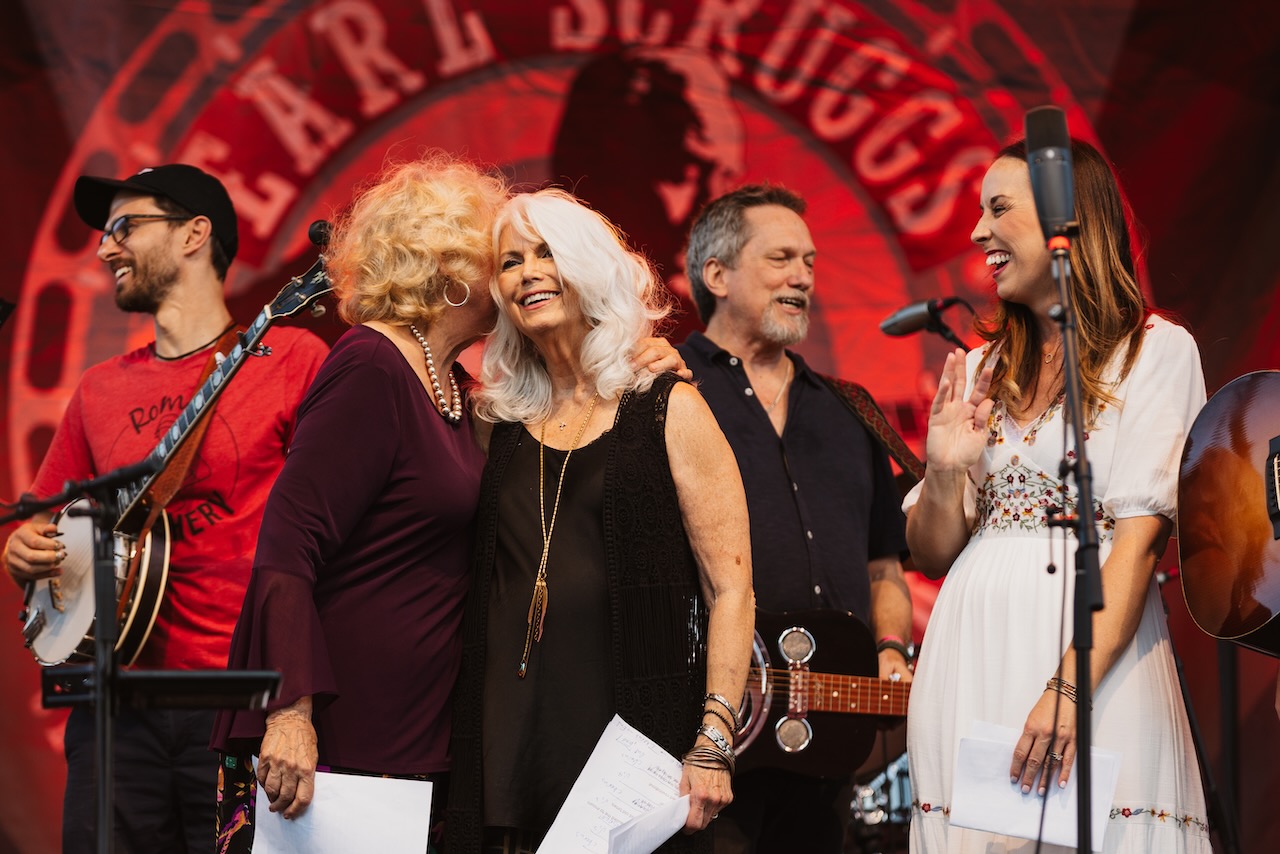
Emmylou Harris joined by many special guests during her set to close out the festival. Photo by Cora Wagoner.
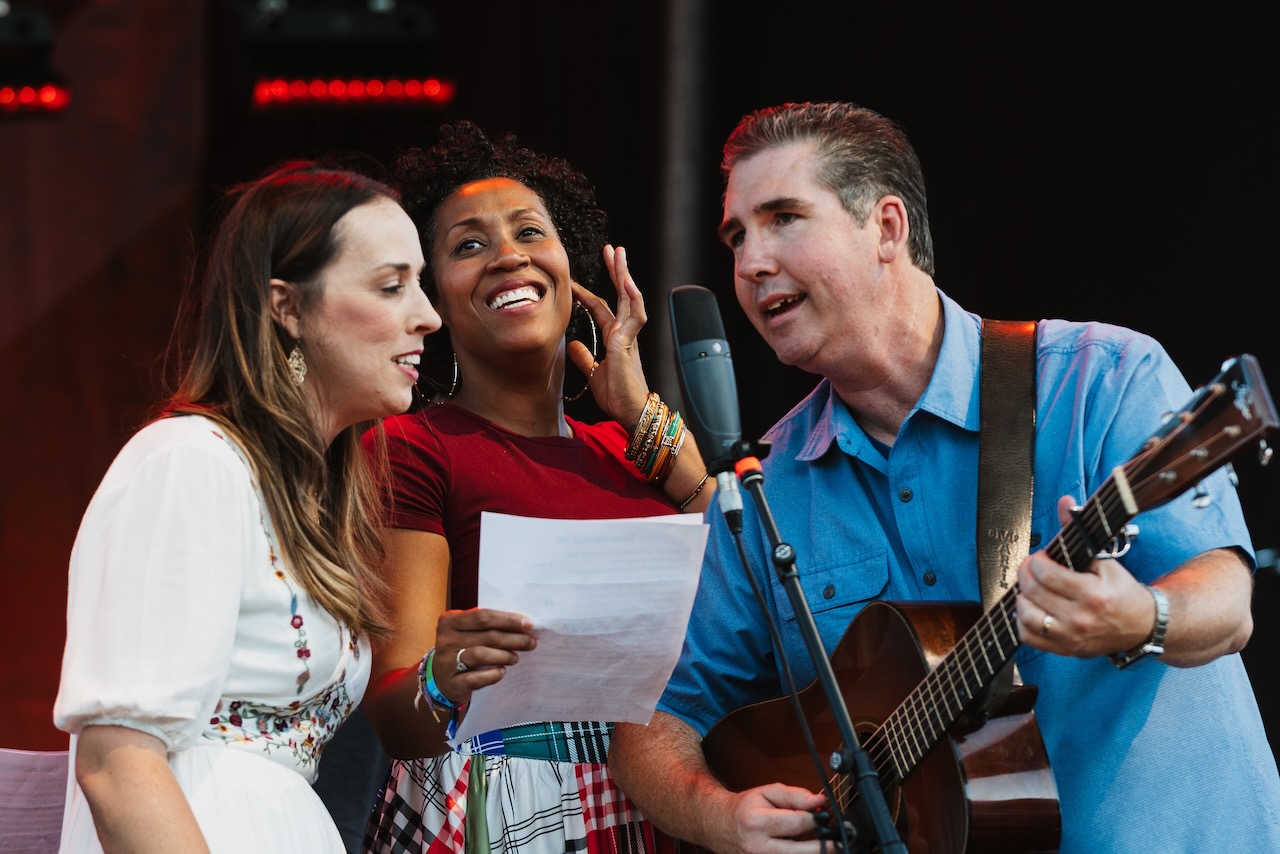
Brooke Aldridge, Rissi Palmer, and Darin Aldridge sing background vocals with Emmylou Harris. Photo by Cora Wagoner.
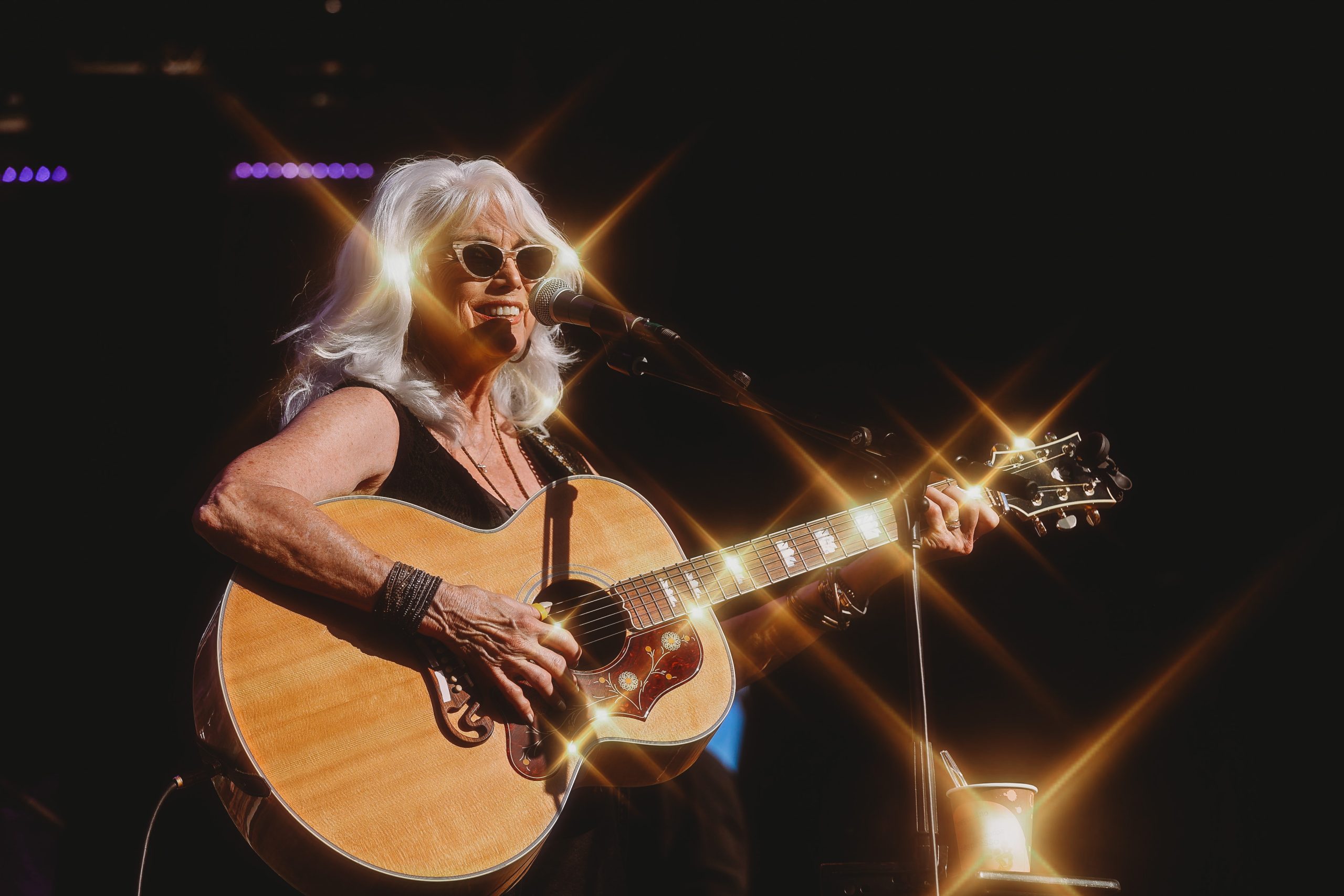
Emmylou Harris shines and sparkles on the Flint Hill Stage. Photo by Cora Wagoner.
Photos courtesy of Earl Scruggs Music Festival. Lead image credit: Devon Fails All other photos:Reagan Ibach, Eli Johnson, Rette Solomon, and Cora Wagoner.
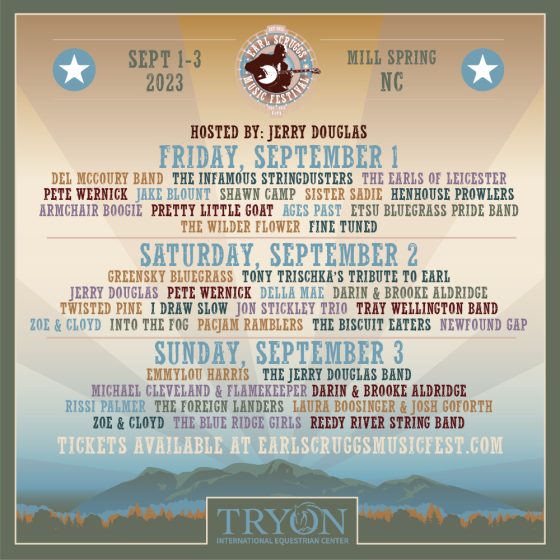
The BGS Team is excited to return to Western North Carolina for the second year of the Earl Scruggs Music Festival at the Tryon International Equestrian Center in Mill Spring. Held September 1, 2, and 3, the event will be hosted by Jerry Douglas and will include headline sets by the Infamous Stringdusters (Friday), Greensky Bluegrass (Saturday), and Emmylou Harris (Sunday) plus, on Saturday at 3:30 p.m., don’t miss the Earl Scruggs Revue Album Tribute hosted by Tony Trischka and sponsored by BGS. The showcase will spotlight an album by Earl Scruggs’ iconic late-’60s to ’80s group featuring his sons, the Earl Scruggs Revue, and will include appearances and performances by many special guests pulled from the festival’s expansive bluegrass and roots lineup.
In preparation for the festival this weekend and our trek to beautiful Western NC, check out a few of our preview picks for each day of the event:
Thursday, August 31, 2023
It’s the day before the real fun begins at the Tryon International Equestrian Center, but you’ve already pulled into town and you’re rearin’ and ready to go – what to do? Travel down the road about 30 minutes and visit Shelby, North Carolina, Earl Scruggs’ hometown, and the incredible Earl Scruggs Center. It’s open every day of the festival until 4 p.m., but hours vary some so check before you visit.
Not only does the Center co-present the festival, but it’s housed in the former Cleveland County Courthouse in the center of the Shelby town square. It’s an adorable small town with an outsized impact on American roots music – Don Gibson is from Shelby, as well; Nina Simone is from Tryon, just down the road. (Visit her homeplace on your way back to Mill Spring.) We focused on Shelby for an episode of our podcast made with Come Hear NC titled Carolina Calling. Listen to our Shelby episode while you drive!
Ready to head to the Equestrian Center to check out the festival footprint and do some reconnaissance? You’re in luck! The official festival events don’t commence until Friday, but on Thursday there will be a FREE concert on-site and restaurants and vendors will be open from 6 to 9 p.m.
Friday, September 1, 2023
The day is finally here! Gates open at 8 a.m. and the fun begins at 10 a.m. with restaurants, vendors, experiences, workshops, performances, and so much more.
Don’t miss “Secrets of Scruggs-Style” on the Legends Workshop Stage at 11 a.m. featuring Tony Trischka, Charlie Cushman and Pete Wernick – arguably three of the best living scholars and emulators of Scruggs – a perfect way to kick off his namesake festival. At 3 p.m. on the main stage, affectionately dubbed “Flint Hill Stage,” J.T. Scruggs and Jerry Douglas will do an official festival welcome leading directly into a Banjo Kickoff by Gena Britt, Charlie Cushman, Rob McCoury, Pete Wernick, Tony Trischka and Ben Wright.
We’ll also be making a point to catch Foggy Mountain Stage sets by Jake Blount (5:30 to 6:30 p.m.) and Shawn Camp (8:30 to 9:30 p.m.) plus Flint Hill Stage appearances by Sister Sadie (4 to 5 p.m.), Del McCoury Band (7:30 to 9 p.m.), and the Stringdusters closing out the night at 9:30 p.m.
Don’t go back to your campsite or your hotel yet, though! Foggy Late Night begins at 10:30 p.m. with Armchair Boogie.
Saturday, September 2, 2023
If your schedule is too-tight and you can only make one day of ESMF 2023, Saturday is the day not-to-miss. It’s wall-to-wall, superlative programming across all of the stages at the event.
On the Legends Workshop Stage we’re eyeing “High Lonesome Songs: Then & Now” at 11:30 a.m., a songwriting workshop featuring Louisa Branscomb, Celia Woodsmith and Jon Weisberger. But you may have to split your time between Legends Workshop and Flint Hill, because Tony Trischka’s tribute to Earl Scruggs – EarlJam! EarlJam! – begins on the main stage at 12 p.m. Stick around, because banjo phenom and innovator Tray Wellington brings his tight and tidy band to the main stage directly after EarlJam. Wellington’s languid drawl is only one of many traits of Scruggs’ he carries on with his innovative sound and truly traditional right hand approach.
We’re super excited to see our friends Della Mae (Flint Hill Stage, 8 p.m.) and Twisted Pine (Foggy Mountain Stage, 8:45 p.m.), but the highlight of day two for us will certainly be the Earl Scruggs Revue Album Tribute show on the Foggy Mountain Stage at 3:30 p.m. It will feature a star-studded lineup hosted by Trischka and his band and featuring songs from a classic Earl Scruggs Revue performance. (Hint above.) Our own managing editor Justin Hiltner will be emceeing and updating y’all on the event on our socials, so be sure to follow along.
At Foggy Late Night we’ll be dancing along to Della Mae past midnight! See you there?
Sunday, September 3, 2023
When Sunday morning rolls around, we, too, will be wondering where the weekend went so fast. But don’t worry, there’s still a full day of music and fun before the post-festival depression starts to creep back in.
Sunday begins, appropriately, with Gospel Brunch hosted by Darin & Brooke Aldridge and immediately following, singer-songwriter and host of Apple Music’s Color Me Country, Rissi Palmer will “take us to church” on the Flint Hill Stage, too. If you’ve never had the chance to experience Palmer’s heartfelt, modern, and soulful country stylings you won’t want to miss her set. For an infusion of a faith tradition less prominent in roots music, check out Zoe & Cloyd on the Foggy Mountain Stage at 4:30 p.m. Their latest album, Songs of Our Grandfathers, combines bluegrass, fiddle music, old-time and Jewish folk and klezmer.
On the Legends Workshop Stage at 1 p.m., get up close and personal with festival host and the worlds premier resophonic guitarist Jerry Douglas before his main stage set with his band at 3:45 p.m.
Then, to close out your weekend full of amazing music, excellent hangs, and so much fun, settle in for Emmylou Harris’s headline set on the Flint Hill Stage at 5:30 p.m. As her final notes fade into the Western North Carolina air, cheer up – you don’t have to go home yet! Reedy River String Band will give us one last hoorah for their Foggy Mountain Stage performance from 7 p.m. to 8 p.m.
As you drive back home after the second annual Earl Scruggs Music Festival we hope, like ourselves, you’ll be making plans to return next year (perhaps as you listen to Carolina Calling).
It’s halfway through 2023, and Molly Tuttle is having an incredible year. The Grammy-winning artist released her new record — made with her band, Golden Highway — on July 21 via Nonesuch Records. Only days before, Tuttle and Golden Highway were nominated in seven categories at the 34th Annual IBMA Bluegrass Music Awards.
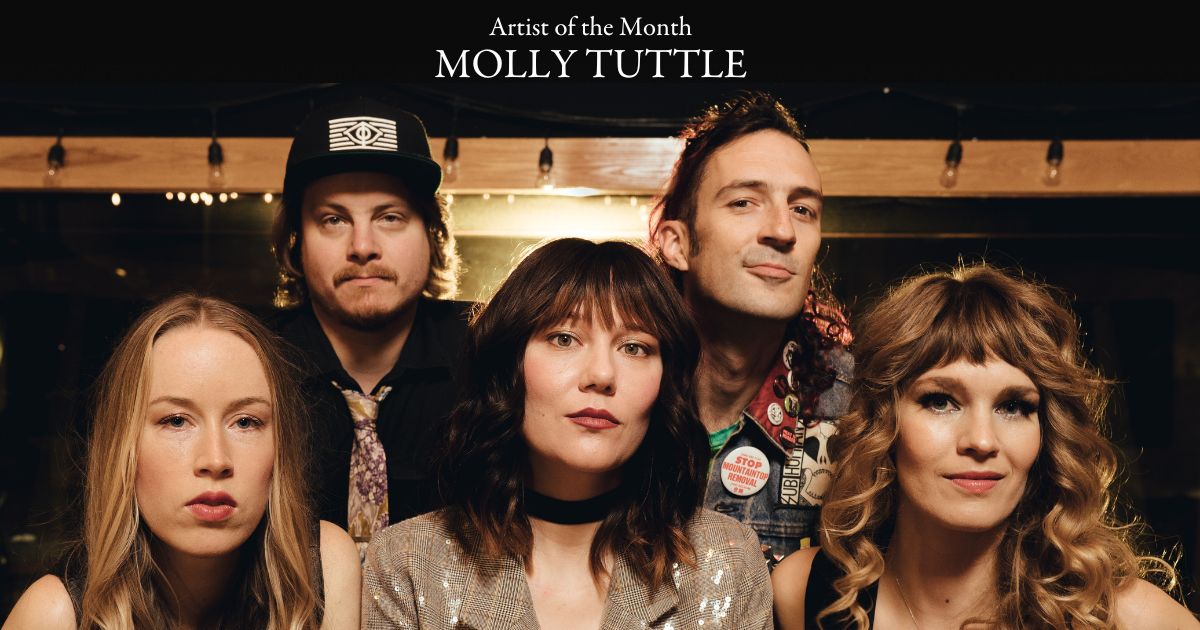
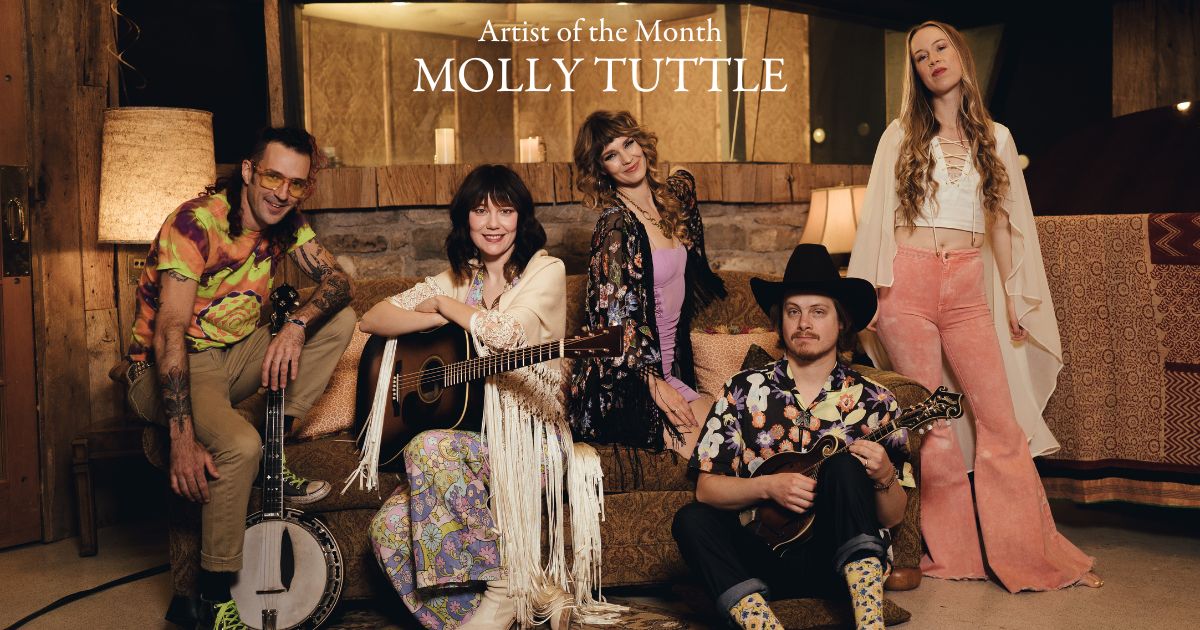
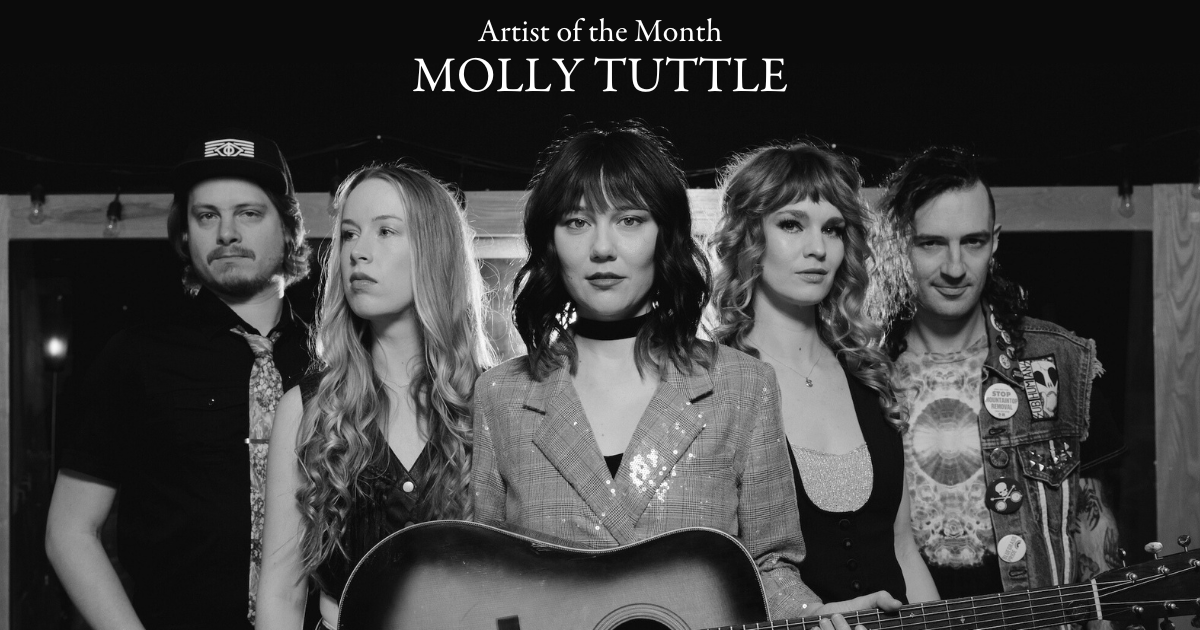
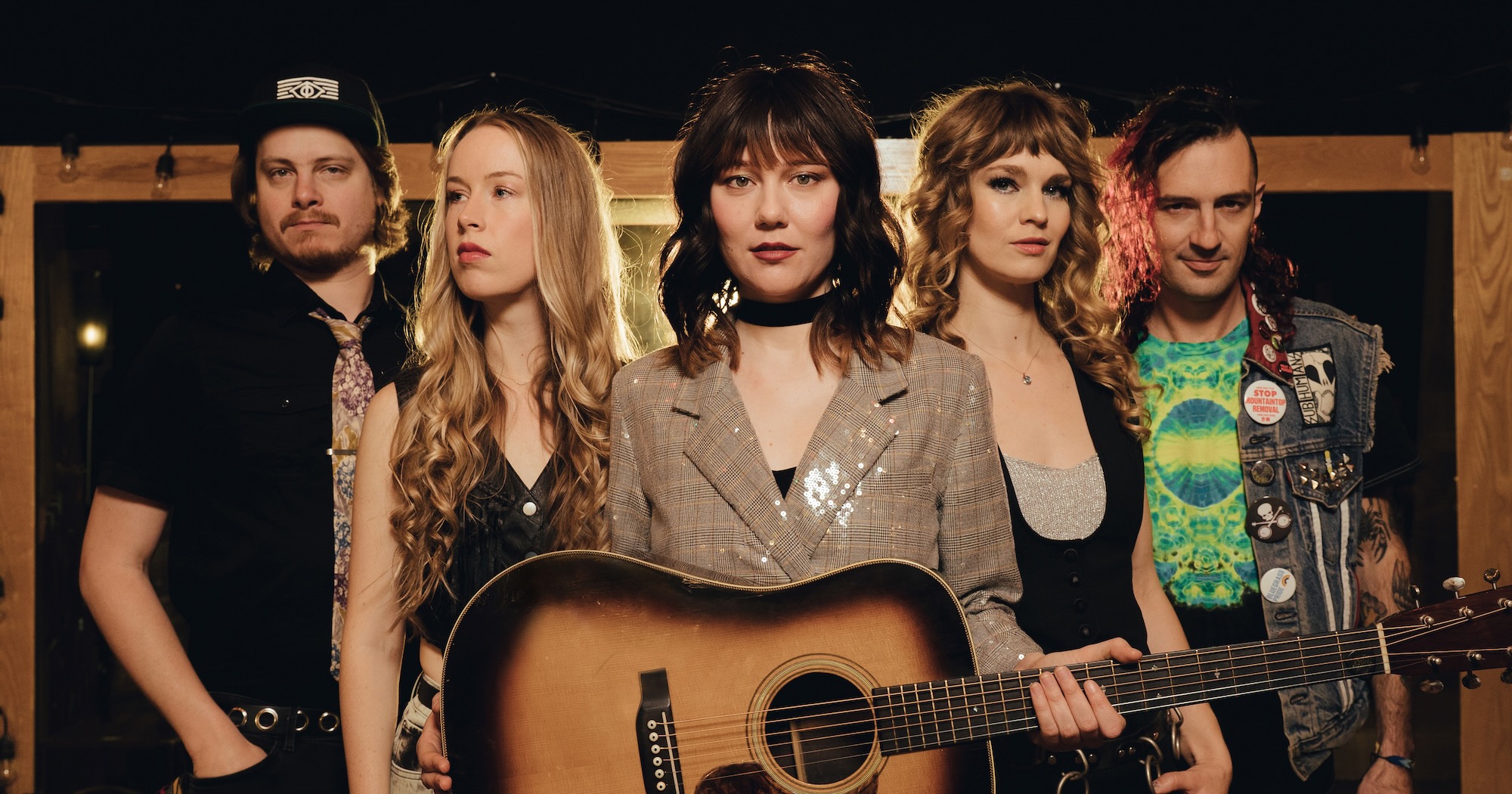
In the middle of her ongoing tour, we caught up with Tuttle and the members of Golden Highway to celebrate her selection as July’s Artist of the Month and to go behind the scenes of making City of Gold. Luckily, it’s easy to make music with friends, and the entire group goes way back. Tuttle says Bronwyn Keith-Hynes (fiddle), Dominick Leslie (mandolin), Shelby Means (bass), and Kyle Tuttle (banjo), have been a part of her musical life for years.
“I’ve known everyone in the band since I was in my late teens, early twenties,” Tuttle explains via video call.
Tuttle and Keith-Hynes attended classes and bluegrass jams together at Berklee College of Music. She met Kyle Tuttle (no relation) at around the age of 17 at an IBMA jam, and met Means while she was in Boston with the all-women string band Della Mae. Tuttle says she and Leslie met as kids, when they would both play the same bluegrass festivals.
“When Molly told me what she was planning, and asked me to join the band and told me who else was going to be in it, I was thinking, ‘I’m already friends with all these people. This is gonna be really cool!’” Means said during our group interview.
When it came time to record City of Gold, the group worked with modern roots music icon Ketch Secor of Old Crow Medicine Show on much of the writing. Tuttle says there’s a definite Old Crow influence on the tracklist, which makes sense given “Down Home Dispensary” is a tune on the record originally written for the group best known for hits like “Wagon Wheel.” Tuttle said she initially worried the song was “too Old Crow” for Golden Highway, but is glad it ended up on the record. She and Secor got “into a good groove,” as she puts it, and churned out the tunes for City of Gold in about six months, often while driving in the car or passing around instruments during jam sessions. At least one track, though, was extremely collaborative. Tuttle, Means, Secor and Melody Walker (formerly of Front Country) all had a hand in finishing the tune.
Jerry Douglas, the iconic resonator guitar player who’s worked with almost every name in the bluegrass industry, produced the album. Tuttle said that whereas she had only a few studio days booked for her previous album, Crooked Tree, the group had nearly two weeks of studio time to work with Douglas this time around. When asked what it was like working with the legend, every member of Golden Highway said they’d had a great experience.
“Working with someone who’s a hero, there’s a lot of baggage that comes along with that,” Kyle Tuttle said. “But he’s the kindest dude. He supported us in a really cool way. It wasn’t hard or intimidating or anything like that. I thought it was easy and fun. Every now and then he’d play on a track with us.”
Whether it was encouraging Golden Highway to take breaks or telling funny jokes, the group agreed that Douglas made sure everyone was comfortable and having a good time. Keith-Hynes said Douglas told the band that NASCAR drivers walk slowly to their cars to slow down their nervous systems, encouraging the musicians to do the same on walks between takes.
“Jerry has been a huge musical hero to all of us,” Leslie said. “Getting to spend all that time in the studio was the thrill of a lifetime. We all knew we were in really good hands with him musically going in, but what I didn’t realize was how good of a hang Jerry is. He [was] filling up any moment of dead air with a great story to break the ice.”
On tour, the band’s camaraderie is just as apparent as it is in the studio, or as it was in the group’s music video for “Next Rodeo.” After Tuttle catches her no-good, fictitious cowboy boyfriend cheating, the band collectively decides to kidnap him and give him what for — although, of course, all in good fun. They say they haven’t (yet) had to kidnap anybody on tour, but that doesn’t mean the on-the-road lifestyle isn’t taxing. Kyle Tuttle said he missed a connecting flight the night before the album release show and was up all night driving to make it in time.
“I was checking into the hotel and the sun was already up,” Kyle Tuttle said. “[There was] orange sky and some palm trees. I thought, ‘Damn it’s pretty. I sure wish I was in bed right now.’”
While it’s a good time to be in Golden Highway, it’s also just a great time to be in bluegrass, the group says. All agreed that bluegrass is having a moment, and were happy to report multiple sold-out festivals with lineups that include country, folk, bluegrass, blues, and other roots artists. Means said it’s incredible to see bluegrass acts opening for bigger country artists, because it means the genre is a real selling point.
“I wonder if it’s a backlash to how crazy everything is with technology,” Keith-Hynes thinks aloud. “People want something real. Nothing is more real than people playing acoustic music on acoustic instruments.”
Tuttle said the internet has also really leveled the playing field, making more music accessible to all kinds of fans. Golden Highway has had its own viral moments on TikTok, the short-form video social media app. Earlier this year Tuttle posted a 2022 Halloween clip that has now hit nearly one million views; inspired by a track on the new album, “Alice in the Bluegrass,” the band members are each dressed as a character from Alice in Wonderland, with Tuttle starring as the Queen of Hearts.
“It took people by surprise to see this bluegrass band playing Jefferson Airplane in full Alice in Wonderland dress,” Tuttle said.
As for what’s ahead, the group says they hope to see everyone out on the road. Means shared that the band will announce more dates soon, and that they’ll be touring both coasts after the annual IBMA Bluegrass Music Awards in September. Tuttle and Golden Highway are currently nominated for Entertainer of the Year, Instrumental Group of the Year, Song of the Year and Album of the Year. Tuttle is also nominated for Collaborative Recording of the Year, Female Vocalist of the Year, and Guitar Player of the Year. Bronwyn Keith-Hynes is nominated for Fiddle Player of the Year.
City of Gold can be streamed online wherever you listen to music. Check out more of our Artist of the Month coverage of Molly Tuttle & Golden Highway here and here.
Over the course of her lifelong career in bluegrass, Americana and roots music, we’ve had the pleasure of interviewing and connecting with Grammy Award winner Molly Tuttle on quite a few occasions. When we selected Tuttle and her band, Golden Highway, as our Artist of the Month, we wanted to open a space to discuss her career and music in a fresh light – and we could think of no better context for such a conversation than Basic Folk.
We asked Basic Folk podcast hosts Cindy Howes and Lizzie No – who featured Tuttle on the show once prior, in 2022 – to sit back down with the International Folk Award and Americana Award winner to discuss her brand new album, City of Gold, and to dig deeper into the creative output of this buzzworthy guitar player, songwriter, and business woman.
Watch for the full podcast episode to drop later this month, but for now enjoy these excerpts from Cindy and Lizzie’s conversation with Molly Tuttle.
Cindy Howes: Molly Tuttle, welcome to Basic Folk again. It’s so great to have you back on the podcast.
Molly Tuttle: Thank you so much for having me back. It’s great to be here with you guys.
CH: Before we start our interview, I want to set the tone for our conversation. Molly Tuttle is being highlighted as Bluegrass Situations’ Artist of the Month, which is so awesome. The tone of our interview today is LYLAS. Do you know what LYLAS is?
Lizzie No:It’s spelled L-Y-L-A-S.
MT: LYLAS. Okay. I don’t know that.
LN: What it means is: “Love you like a sister.”
CH: Oh yeah. So we are total LYLAS. This is like a fun trip to the mall. This is like a really fun cruise around the harbor with your gal pals.
MT: Oh my gosh, that’s so fun. Well, it’s perfect because I’m actually in a hotel outside of Missoula. And there’s a strip mall nearby. So shopping has been on my mind today. Great.
CH: We’ll all get mani pedis together.
LN: Yes. French tip.
CH: So, when approaching the writing on City of Gold, you asked yourself, “How do I tell my story through bluegrass?” Which I can relate to, as somebody who’s sort of tried to distance themselves from folk music for a really long time. And now I am fully leaning into it. So, I take [it as] you asking that question of yourself, like “How can I fit my Molly Tuttle-ness into a world that can be rigid, patriarchal, and maybe different from what you stand for.” So how true is that? And how have these songs helped you take control of the bluegrass narrative and tradition?
MT: I think that’s something I’ve always kind of struggled with. I remember when I first started writing songs, I just thought, “I don’t know how to write a bluegrass song.” I can write a song, but they never ended up sounding like bluegrass to me and I just didn’t feel like my story fit into the bluegrass narrative of the songs that I grew up singing.
I always loved songwriters like Hazel Dickens, who wrote bluegrass songs from a woman’s perspective, wrote songs about the struggles that she had as a woman in the music industry and as a working woman, and songs about workers’ rights and things she believed in. I grew up with two really strong role models, Laurie Lewis and Kathy Kallick, out in the Bay Area. I remember early on I would go out to [Kathy Kallick’s] house and she would make me tea and listen to my songs. She always told me that when she was first getting started writing bluegrass songs, she kind of felt the same way as me. Like, maybe her story didn’t belong in the genre. But she met Bill Monroe, and he encouraged her, “Don’t try to write a song that sounds like a song I would have written, write a song from your own perspective.”
So she wrote a song called “Broken Tie” about her parents getting a divorce. She said every time she was at a festival with Bill Monroe, he specifically requested that song. That was an inspiring story to me. But when I started writing songs for Crooked Tree, it was suddenly like a floodgate opened. I think I just found my people to write with, found my groove, and ended up with a collection of songs that kind of told my story, [told] about things I believed in, and [told] my family history and personal experiences. And then other songs that were just, you know, from a woman’s perspective, or from a perspective that I resonate with.
For [City of Gold], it was fun to kind of continue that and also expand it to be songs that I felt like were inspired by my band members, or inspired by experiences we’d had on the road. This felt more like a collective vision in a way.
LN: Okay, let’s talk about Crooked Tree. The title track from your last record was partly inspired by your experience living with alopecia. You’ve said that as a kid you would wear hats and then wigs, and then you learned to talk about your wig. Eventually, you started to get more comfortable going without. Now that you’re touring with Golden Highway a ton, you sometimes take your wig off when you play that song, which is such a powerful moment of joy, courage, and vulnerability. As a performer, I can relate to those moments where you bring a little bit extra of yourself and you share a part of yourself that you might normally keep private. How do you get to that right mood? How do you gauge if the crowd is like the right crowd to share about your alopecia experience?
MT: It’s also based on how I’m feeling. I took off my wig a few times last year. But I didn’t do it as much as maybe I wanted to, or maybe I should have, just because I wasn’t always sure what to say. I’ve had so many experiences of trying to explain alopecia to people and they still think I’m sick or still feel bad for me. And it’s so hard sometimes to put it in words that aren’t going to bring the mood down at the show, you know, I want people to be having a good time. I want it to be this fun, inspiring moment, not a moment where people can go, “I feel so bad for you.”
Recently, I performed and told my whole story [for] a keynote speech at this alopecia conference out in Denver, Colorado. I think that was such an important step for me. Just getting to share my story and reflect on the pain of growing up having this really visible difference, but also like, the joy and why it’s so important to me to share that with others and share the message that it’s okay to be different. It’s okay to be a “Crooked Tree.” This last weekend, we played in Michigan, and I did take off my wig and I felt like I finally nailed what I said and the perfect mood. Everyone was cheering and it was just a moment of celebration. I think I’m gonna just continue doing that more and more, but I find that it’s so helpful for me to check in with the alopecia community and feel that support from other people who know exactly how I feel. That makes me feel confident to share my message with the world and maybe sometimes be like, “I don’t care how it’s received, maybe I’m not sure how it’s gonna be received, but I’m going to do it anyway.” That just comes with time. And I guess I’ve had to grow kind of a thick skin. It used to be a lot harder for me.
CH: The new album, City of Gold, the songs were mostly written by you and your partner Ketch Secor of Old Crow Medicine Show. What is the writing process like with you and Ketch? Like, how do you bring out the best in each other’s writing?
MT: We’re both quite different writers. He’s very fast paced. He throws out ideas and lines. [While I’ll] think it over. I’m kind of more internal. I think about the lines. We balance each other out in a way where I might think a lot about what exactly we are saying, and then he’s good. If I get stuck on something, [he can] kind of keep it moving. But our writing process is always different. It’s nice, because we’re together a lot. So we can write in a lot of different circumstances. Some of the songs we wrote in the car, like on a road trip, just throwing lines back and forth. Maybe he’d be driving, I’d be writing the lines on my phone. Maybe we’re talking about something at home or listening to music and sitting down with instruments, kind of more the conventional way of writing. I find it so hard to fit writing into my life, especially when I’m on tour and I’m on the go so much. [It’s so nice that] we got into a groove with it, where we were just doing it all the time, and it felt more naturally intertwined into my day-to-day life.
LN: The bluegrass community was a huge source of inspiration for you. Of this record, you said, “One of the things I love most about this music is how so much of the audience plays music as well.” And that you hope that people will sing along and maybe play those songs with their friends, almost like we’re all a part of one great big family. Now, how do you walk the line of making a sophisticated, bitchin’ bluegrass record, while keeping it simple enough for others who might not be musical geniuses to play along?
MT: The beauty of bluegrass music is that most of the songs have like three or four chords. You can play them really simple, you can just strum along and play as slow as you want. Beginner bluegrass musicians might go to a jam of people at the same level as them and play these songs in a lot simpler of a way. Then, as you get better and better you can play it faster, you can play more complicated solos, you can really play with the dynamics. There are infinite ways to make the songs more and more complex and sophisticated as you progress in your musical abilities.
On City of Gold, I did kind of stray away from that “three chords and the truth” format a little more than I did on my last record. It was fun, because we were working on these arrangements as a band, which was a lot different process than I’ve ever done before in the studio. I’ve always gone in with my songs and gathered musicians that I don’t normally play with on the road – studio musicians. I have a lot of my bluegrass heroes on the record, and you’re kind of learning the songs and playing them by a chart, but for this album, we really took the time to develop more complicated arrangements and add in new sections that stray away from the key. These songs are a little less accessible to the standard bluegrass jam. But I think there’s still a few that people could learn to play at any level.
• • •
CH: Okay, now we’re going to talk specifically about some of the songs on the new album, City of Gold, starting with the first song, “El Dorado.” Right now I am rewatching Deadwood, so I am super into this song. As a kid, you took a field trip to Coloma, the site of California’s first gold strike and it was the first time you heard about the legendary El Dorado, the City of Gold. In the song you sing, “El Dorado, city of gold, city of fools.” You said, “Just like gold fever, music has always captivated me.” So who are the characters in the song – like gold rush Kate from the Golden State – and how do you connect with these fools?
MT: I wrote the song with Ketch and I don’t know [exactly] how it came about… [But I told him,] when I was a kid, every school would send the kids off to gold country. You’d go to different places. The person who taught my class how to pan for gold, for some reason I have like a very vivid memory of him. He had this gold nugget on a chain around his neck and he showed us how to pan for gold. He was like, “You might find a flake of gold, but if you find an actual nugget of gold, we’re not gonna let you keep that, you have to give it back to us.” [Laughs] I remember being like, I really want to find like a nugget of gold and just squirrel it away and not tell this guy about it. So that kind of stuck with me.
CH: Literally every kid in your class thought that!
MT: Yeah! Like, we’re gonna strike it rich at this goldmine!
We were kind of doing some research on Coloma and found that it’s in El Dorado County. That seemed like a good place to start with a song just inspired by that character, but also thinking about all these characters who came together and we’re all trying to strike it rich. I feel like that is such a theme in our society. You know, we have these like little, mini gold rushes – everyone being like, “This is the next big thing. We’re all going to make so much money off of this.” But for me, I didn’t get into music thinking this is gonna make me rich, but it is something I’ve chased after for many years now.
CH: What do you think is the current gold rush? Is it dispensaries? Vape stores?
MT: The thing that just popped into my head, it’s a couple years old, maybe like a year past its prime, is crypto currency. I think I don’t know where that stands. But I think we’re a little bit past that.
• • •
LN: The second track on this album is “Where Did All the Wild Things Go?” Which is a song about gentrification’s corrosive effect on the character of once-vibrant neighborhoods nationwide – which I can very much relate to living in Brooklyn. I’d love to hear about your neighborhood where you live now. Is there a specific tradition or neighborhood institution or restaurant or store that is so special about your neighborhood? That you’re passionate about preserving? And how are you and your neighbors trying to keep your neighborhood weird and wild?
MT: Well, my neighborhood is East Nashville, and before I got there, it was totally different. It’s just in constant flux. It really changed so much when we had the tornado hit [in 2020] that took out tons of the local businesses that never returned. A lot of people moved out. The pandemic just kind of sped all of that up. Coming out of lockdown I was like, “Whoa, this is so different. Like, where do I even live anymore?”
I don’t really know how to answer how I’m trying to preserve it. I feel like I’m living in a different city every time I come back from tour, basically. Nashville’s always changing, just constantly growing, so many businesses are moving here. I do feel like there’s this constant sense of everyone missing the old Nashville. I don’t think that I was even around for the like “old Nashville” as many people who grew up in the city know it. So maybe I’m part of the problem in a way, really. I moved there just eight years ago…
• • •
CH: The next thing we want to talk about is “San Joaquin,” a new, old-style railroad song. There’s such a romance surrounding trains in song. You’ve always loved singing about trains. There is that long tradition of trains and folk songs. What do you think it is about trains that have captured artists’ hearts since they’ve been around?
MT: I think as artists, especially as musicians, we kind of have this roving spirit, where we want to see the world, we want to travel. I feel like a lot of musicians, myself included, we romanticize trains as this early way of getting across the country. And still, you’ll see musicians from time to time doing a train tour. Of course you have buskers who might hop on a train across the country and play all over the place. Now, I’ve never done that, but I think it’s just this thing that’s romanticized, especially by musicians. I’ve always loved singing [train songs]. There’s so many bluegrass train songs, but I didn’t know a specifically California bluegrass train song, so I felt like it was time to write one.
CH: What’s your favorite train song?
MT: That’s such a good question. The first one that popped into my head was Larry Sparks’ song, “I’d Like To Be A Train.” He doesn’t just want to ride a train. He wants to be a train.
• • •
CH: The song “Next Rodeo” you say, “…Reflects the miles I’ve put in with my band, Golden Highway, which has clocked in well over 100 shows.” That’s in the press release, so it’s probably 200+ shows at this point, and we’ll give a shout out to Bronwyn Keith-Hynes. Let me know if I’m mispronouncing anyone’s name–
MT: We have so many nicknames for Bronwyn in the band. We saw a YouTube comment on one of our videos where I introduce her and someone said, “What’s the fiddle player’s name? I couldn’t catch that.” Someone wrote “Ron Winky Pies.” We often call her Ron Winky Pies.
CH: Yes, that sounds right. Well, she is a hell of a fiddler. Also Dominick Leslie on the mandolin, Shelby Means on bass, and Kyle Tuttle, who is playing banjo. Can you talk about the ease and connection you feel with Golden Highway? What’s the feeling that you get when you’re on stage – and, when did it start gelling for everyone?
MT: After I made Crooked Tree, first I started thinking about who I wanted to take the songs on the road with. On the record I had the band name Golden Highway, but I didn’t actually have a band yet, so it’s kind of funny. I did it in reverse a little bit.
Dominick played on the whole record. I called him and I was like, “Hey, do you want to play with me next year?” And he said yes. So I had one band member. I was just trying to fill in the rest of the band thinking like, “Who’s gonna bring the most personality to this project? Who’s gonna bring a unique voice?” The whole record was all about being who you are, [about] individuality. I wanted to choose people who I felt like their personalities really shine through – and their music and their playing and their stage presence.
I got my dream band. We’ve all been friends in one way or another for like the past decade, so it was a cool experience. I’ve never had that before where I have this band in my head, I imagine the people playing together, and then it happens and it’s better than I could have imagined. It felt really cool. In the past I’ve had wonderful bandmates, but it’s never been this kind of brainchild where I’m trying to concoct my dream bluegrass band that will have this unique personality to it.
We all got together and everyone already knew each other and already played together in different configurations just through the bluegrass scene over the years. It all kind of started gelling really quickly. Our first couple shows we’re just kind of like, “Wow, this is something special!”
• • •
CH: We do want to ask a question about Jerry Douglas, who co-produced the record with you and is the master of the Dobro. How has your relationship with him as a producer shaped how you think about your own recordings?
MT: On this record, especially on “Stranger Things,” I just felt like I needed to hear him play on it. We had this funny thing we’d say in the studio, “Make us AKUS” – make us Alison Krauss and Union Station – cause they’re like our heroes. [Laughs]
When we got to that song we’re like, “We need that iconic Jerry Douglas dobro part.” It’s such a spooky song and he just knows how to accompany a song [like that] so well and that’s part of why I felt like he was the dream producer. He understands the musicianship side of things. He’s such a master of his instrument, but then he also has this deep connection to songs and vocalists and just knows exactly what to play behind the vocal.
That’s something I really kind of leaned on him for, just getting the best performance out of everyone, instrumentally. He has just the greatest ear. He hears a pitchy note here or like a wrong note there and really pushes everyone to do their best performance, but then he also has this side of him that’s extremely tasteful and he knows how to get behind a song and not overpower it.
LN: I want to talk about “Down Home Dispensary,” which is such a fun song. I’m fascinated by the way you’ve framed this issue, which is very hot in the news… legalizing marijuana. The way it’s framed in “Down Home Dispensary” is like a very fun political pitch about how Southern culture can evolve and is evolving. Why did you feel it was really important to frame this as a “Down Home Dispensary?” And do you notice an evolution in the way that Southerners and your audiences, more broadly, are relating to marijuana use?
MT: I think like the South is still the holdout. It’s not legal in most places in the South, but I feel like it’s become almost a bipartisan issue, where people are getting behind it. We play it and we’ve been playing it live and people are cheering no matter who they are. They’re like cheering for the “Down Home Dispensary,” because it’s this thing that’s become normalized in our society, but it still is technically not legal. That was one that Ketch and I originally wrote to be an Old Crow [Medicine Show] song and then they didn’t cut it. It’s so much fun!
CH: It’s sort of like a book end to “Big Backyard.” The world can be your down home dispensary, your backyard. You can make home and freedom anywhere.
MT: I thought it was like a funny angle to to go about it. You’re talking to a politician and just being like, you should really do this, because you’re gonna make a lot of money like this is in your best interest.
LN: How has living and working in Tennessee changed how you see your responsibilities as a feminist artist?
MT: I’m confronted with things in Tennessee that I never imagined would happen. Where I live, abortion is not legal in Tennessee at all, it was one of the first states to basically ban it for any reason.
That was really like a dark moment in our history as a country to just be going backwards completely. It’s something that I’ve feared since I was a teenage girl, like, what if this got taken away? And what if I couldn’t make decisions for my body? I can’t [access this healthcare] in the state where I live, I could maybe travel somewhere else if needed, but who knows if [someone else] could. They could make it more and more impossible to have access to this. It just breaks my heart for all the people who now don’t have that choice and don’t have the privilege of being able to go somewhere where they can get this health service.
[When writing “Goodbye Mary”] I was thinking about a story my mom told me growing up of my grandmother, whose name was Mary. She had a friend who was in an abusive relationship and she wanted to leave this relationship, but she ended up getting pregnant. So my grandmother and her friend, she would push her friend down the stairs, they would try anything to get rid of the baby. It’s a really, really dark story. But it’s somewhere that we’re going again, as a nation. When we were writing it, we were talking about my grandmother. That’s not something that happened to my grandmother personally, but it’s something that her generation had to deal with.
LN: I think it’s so important to link abortion access to women’s experiences of intimate partner violence. A lot of people who claim to be pro-life don’t want to admit that access to abortion is also access to freedom and the ability to leave an abusive situation. It’s just one more way of actually having freedom in your own body. That’s a really powerful story. It’s just so important, I think, for musicians to be talking about this issue, especially those of us that live in Nashville or are working in country and folk and bluegrass.
MT: It’s really scary to talk about, I was so scared to put that song on my record. Jerry was the one who was like, “We have to.” It was his favorite song. He was like, “If we’re gonna record one song, it needs to be this one.” And I was like, “I’m scared.”
This issue is one I care about so deeply. And it’s one of the most important social issues to me. But it’s also like, you get kind of the most backlash for it.
LN: Have you played this live yet?
MT: We haven’t, no. We’ve worked it up. And once the record is out, I think we will start playing it. But we haven’t tried it live yet.
LN: You got this.
MT: Yeah, totally. Thank you.
LN: Thank you. Thank you for this telling this story. I think that the bluegrass community needs to hear it and the world needs to hear it. I think it’s really important.
• • •
(Editor’s Note: This conversation has been abridged and lightly edited for flow and grammar. Cindy Howes’ and Lizzie No’s full Basic Folk conversation featuring Molly Tuttle will be available next week on BGS – or wherever you get podcasts.)
Folks in the bluegrass world have been watching Molly Tuttle’s star rise since long before her Grammy-winning 2022 album, Crooked Tree, has added even more momentum to the award-winning flatpicker’s career. Though we first crossed paths much earlier, we spoke to Tuttle initially in 2017 for an edition of Deep Sh!t that put her and guitarist James Elkington on the phone together. Even then, Elkington went out of his way to laud Tuttle’s playing, placing it on the same level as his own. (Tuttle, in a turn of mutual admiration, praised Elkington’s picking above hers, of course.)
This is a consistent phenomenon in musicians, songwriters, producers, and instrumentalists who encounter Tuttle’s work: They are all astounded by it; They all feel and hear genius within it. Tuttle is sometimes – no, often – your favorite musician’s favorite musician. Certainly your favorite musician’s favorite flatpicker.
At numerouspoints over the years since that first interview, the BGS team has latched onto songs and recordings by Tuttle. We’ve had the privilege of inviting her to join BGS lineups and stages and we’ve published more than a handfulofinterviews, as well, watching and documenting a career and creative output that continue to enjoy rapid-yet-meaningful growth. From our earliest premiere of “Good Enough” all the way to anchoring a BGS Cover Story, as Tuttle has advanced through the music industry, we’ve watched and written about those changes and the distance she’s traveled.
It’s fitting, then, as Tuttle and her band, Golden Highway, ready a second album on the heels of the wildly successful Crooked Tree, that they should at last be named BGS Artist of the Month. We know listeners and fans, whether brand new or veteran, will understand and appreciate how much pleasure and joy we have gained over the years from Tuttle’s songs, her creative vision, her passion, and perhaps above all, her fiery picking. It makes naming Tuttle our Artist of the Month that much more gratifying, highlighting the real reason we make BGS in the first place: our community.
After having a star-studded roster on Crooked Tree helmed by producer (and guest artist) Jerry Douglas, Tuttle has focused her vision slightly for City of Gold, which releases July 21 on Nonesuch Records. Douglas returns as co-producer. The new album, like the former, drips with the imagery, mythos, and mystique of California, drawing on West Coast influences like the Grateful Dead, Laurie Lewis, Kathy Kallick, and folk revival, troubadour singer-songwriters. But, instead of a rotating cast of characters and besides a stout handful of featured artists, this record centers Tuttle and her full-time road band, Bronwyn Keith-Hynes (fiddle), Dominick Leslie (mandolin), Shelby Means (bass), and Kyle Tuttle (banjo).
This lineup and the material of the Golden Highway era all seemingly mock the rare critics and naysayers of Tuttle’s music, who, especially in the earliest days of her career, could sometimes be heard describing her songs and singing as toothless or lacking energy or grit. At their sold out theater and club headline shows or in front of thousands at music festivals, Molly Tuttle and Golden Highway’s performances are jaw-dropping, electric (literally and figuratively), and enormous – fully realized. It’s jamgrass without valorizing toxic masculinity; it’s “MASH,” but with taste; it’s a shredfest, but it’s also emotive and vulnerable and theatrical.
That Tuttle’s found her stride while “returning” to bluegrass – whether intentionally, subconsciously, or merely as a framing and narrative device – is striking and impressive. There are many songs, stages, and Artist of the Month features yet to be conquered down the Golden Highway.
Watch for a special Artist of the Month episode of Basic Folk later in July featuring Tuttle as well as an interview with her band, Golden Highway. For now, enjoy our Essential Molly Tuttle Playlist.
The queen returns and she’s kicking ass and taking names. Molly Tuttle’s new video for the single “Next Rodeo” debuted last week, and with it comes an album announcement from the multi-IBMA-Award and Grammy-winning flatpicker extraordinaire.
A film by Edgar Evin, the “Next Rodeo” video finds Molly & Golden Highway (comprised of Bronwyn Keith-Hynes on fiddle, Dominick Leslie on mandolin, Kyle Tuttle on banjo, Shelby Means on bass, and Jordan Perlsan on drums) getting even with a cheating ex — complete with kidnapping, duct tape, and a super-spicy helping of “Goodbye Earl” vibes.
Tuttle’s new album, City of Gold, drops on July 21 with Nonesuch Records. Each track was co-written with Old Crow Medicine Show’s Ketch Secor and co-produced with bluegrass legend Jerry Douglas.
“When I was a kid we took a field trip to Coloma, California, to learn about the gold rush,” Tuttle said in a statement, revealing the inspiration behind the record. “I’ll never forget the dusty hills and the grizzled old miner who showed us the gold nugget around his neck—just like gold fever, music has always captivated me and driven me to great lengths to explore its depths.”
Songs include spellbinding tales about gold miners, fortune tellers, love and loss and a fast-changing world — as well as a reimagining of Alice in Wonderland set in the backwoods of Kentucky. City of Gold is a follow-up to 2022’s Crooked Tree, a beloved LP that won the Grammy Award for Best Bluegrass Album. Tuttle is also the first woman to win the IBMA’s Guitar Player of the Year award and a member of the First Ladies of Bluegrass — so you won’t want to miss her new release.
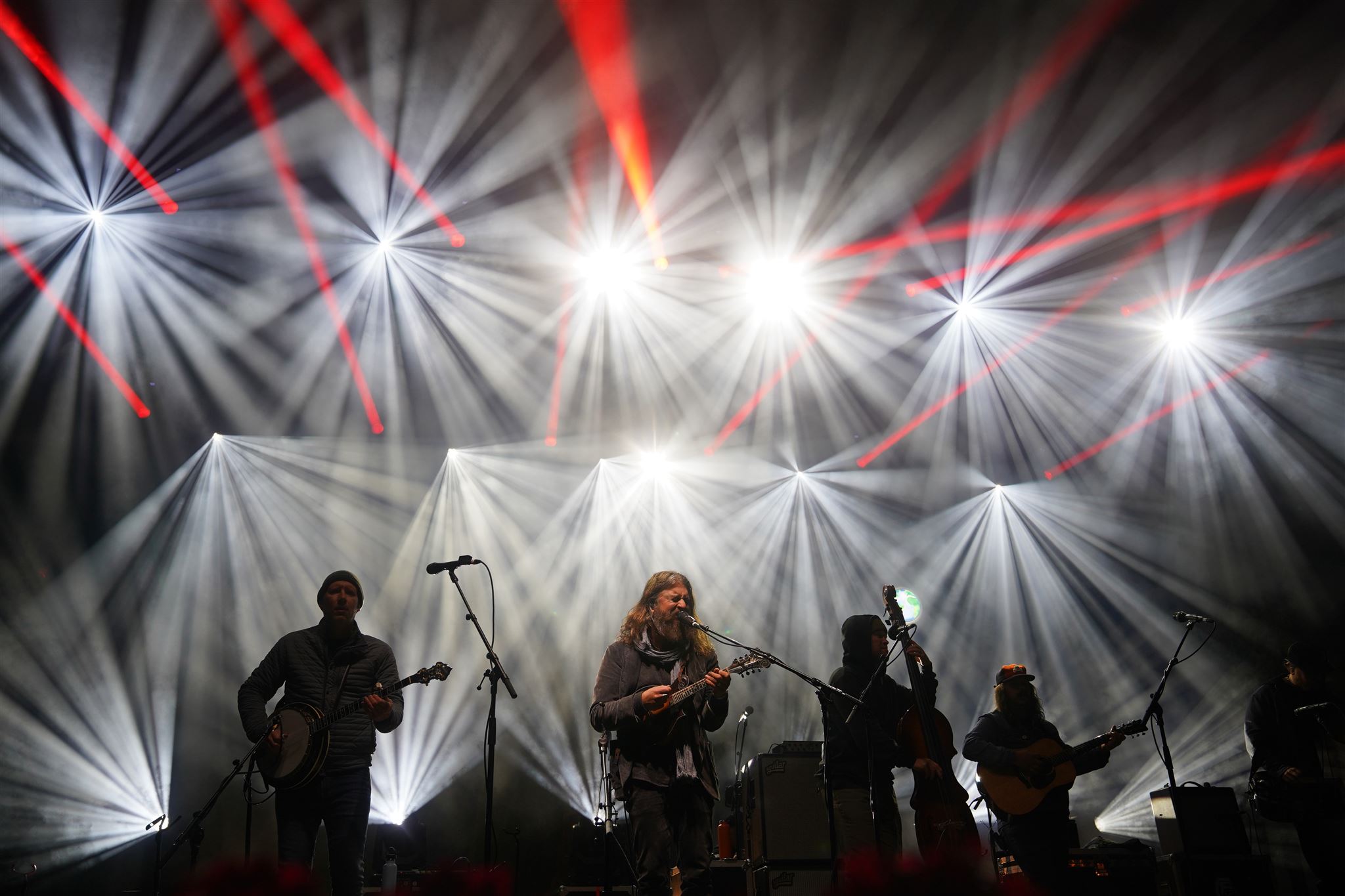
(Editor’s Notes: Headline image of Béla Fleck & the Flecktones. Scroll to see a photo gallery.
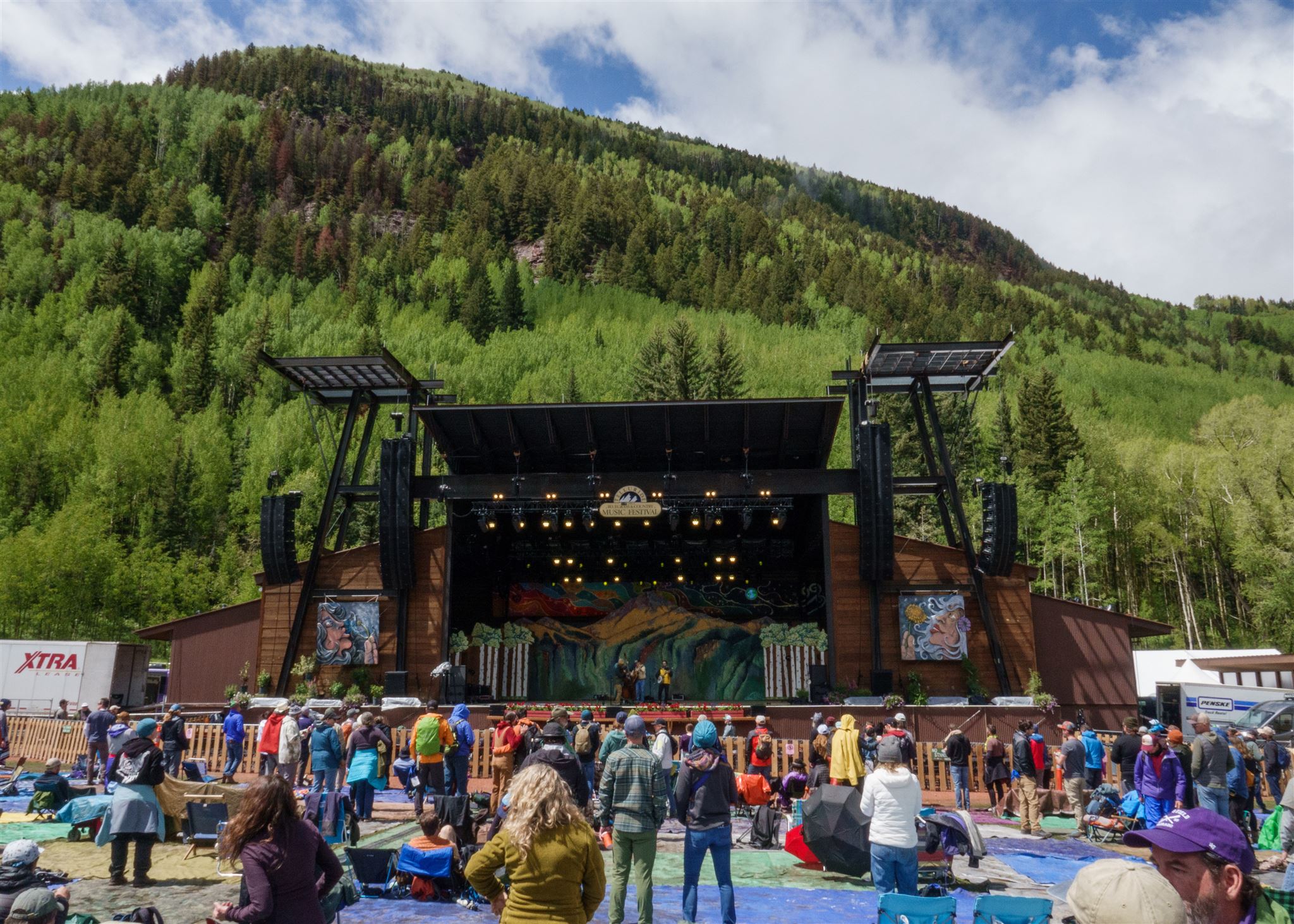
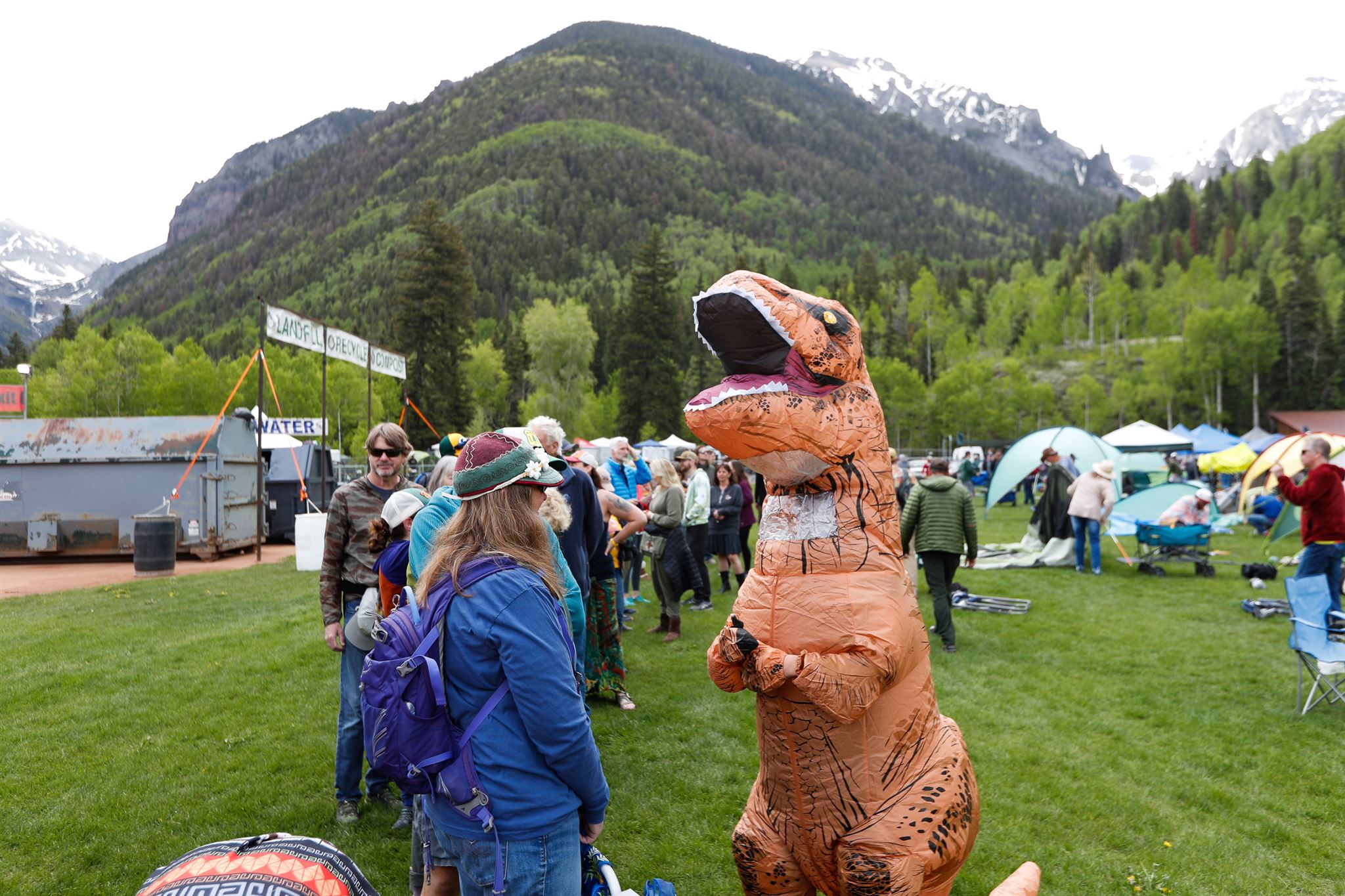
To mark Planet Bluegrass’s 50th annual Telluride Bluegrass Festival, we asked author and music journalist David Menconi to reflect on its impact – and the vibrant community that’s grown up around this iconic roots music event.)
The circuit of roots music festivals in America has some similarities to the Professional Golf Association. There’s at least one festival as well as one golf tournament pretty much every week of the spring, summer and fall. But a few stand out as special and even career-making – golf’s four major championships, and the handful of prestigious main-event music festivals. North Carolina’s MerleFest is like The Masters, the early-season springtime kickoff each April, while late-season festivals like San Francisco’s Hardly Strictly Bluegrass line up nicely with the British Open.
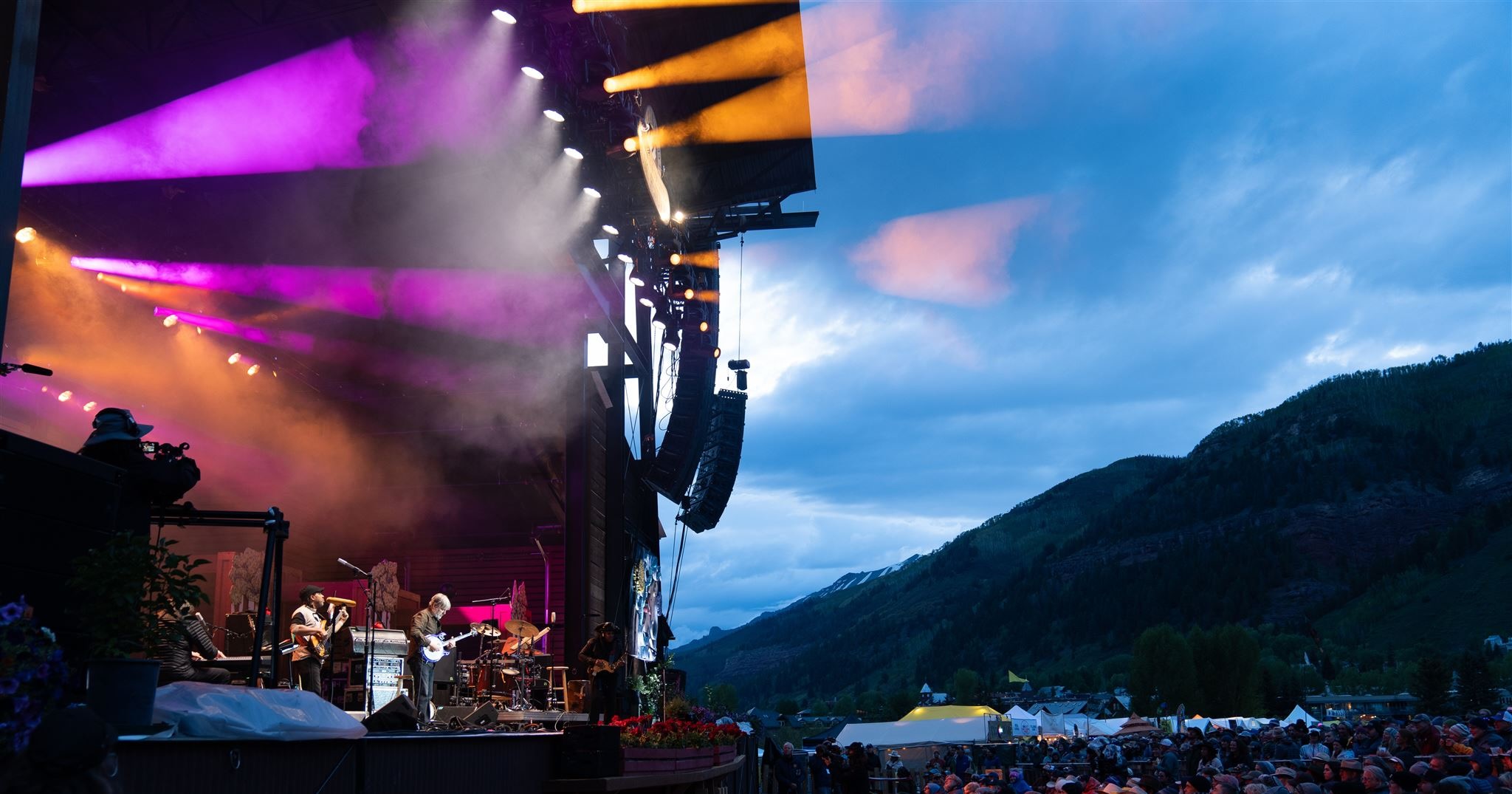
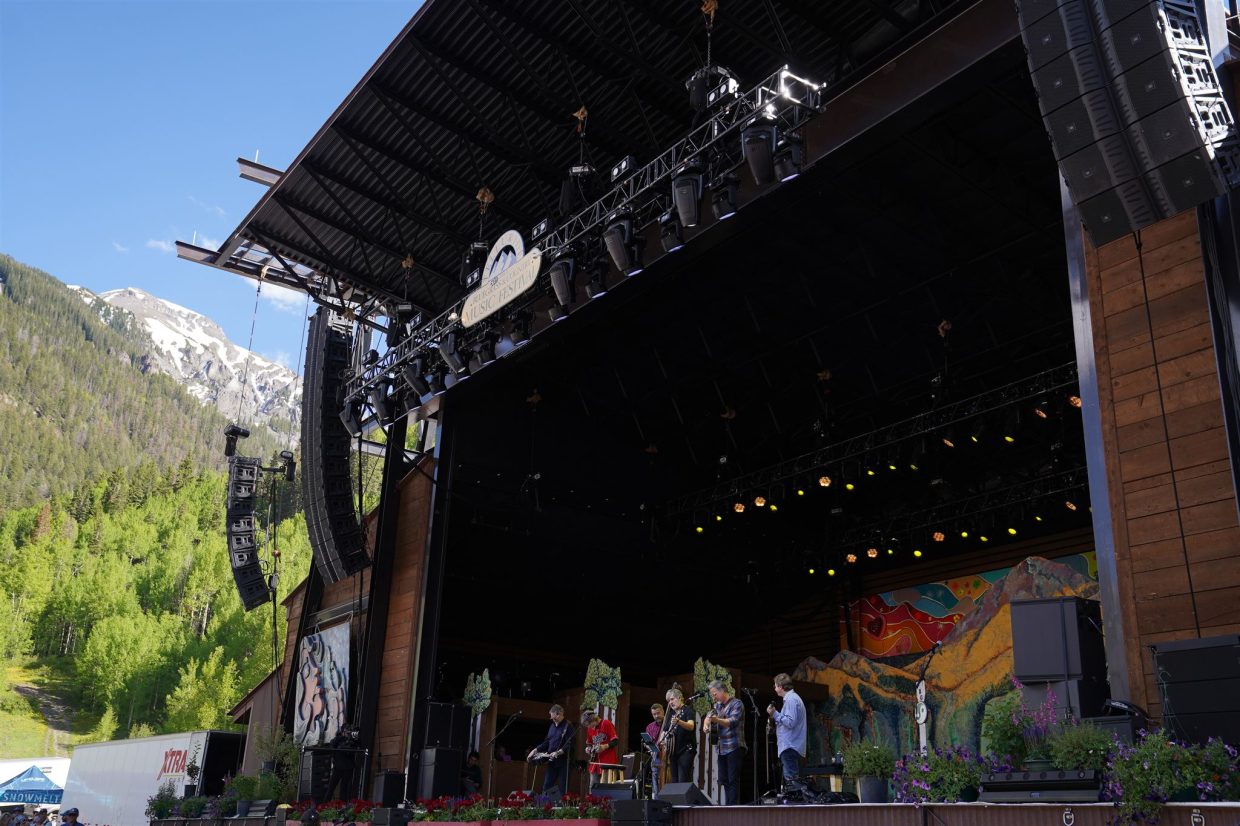
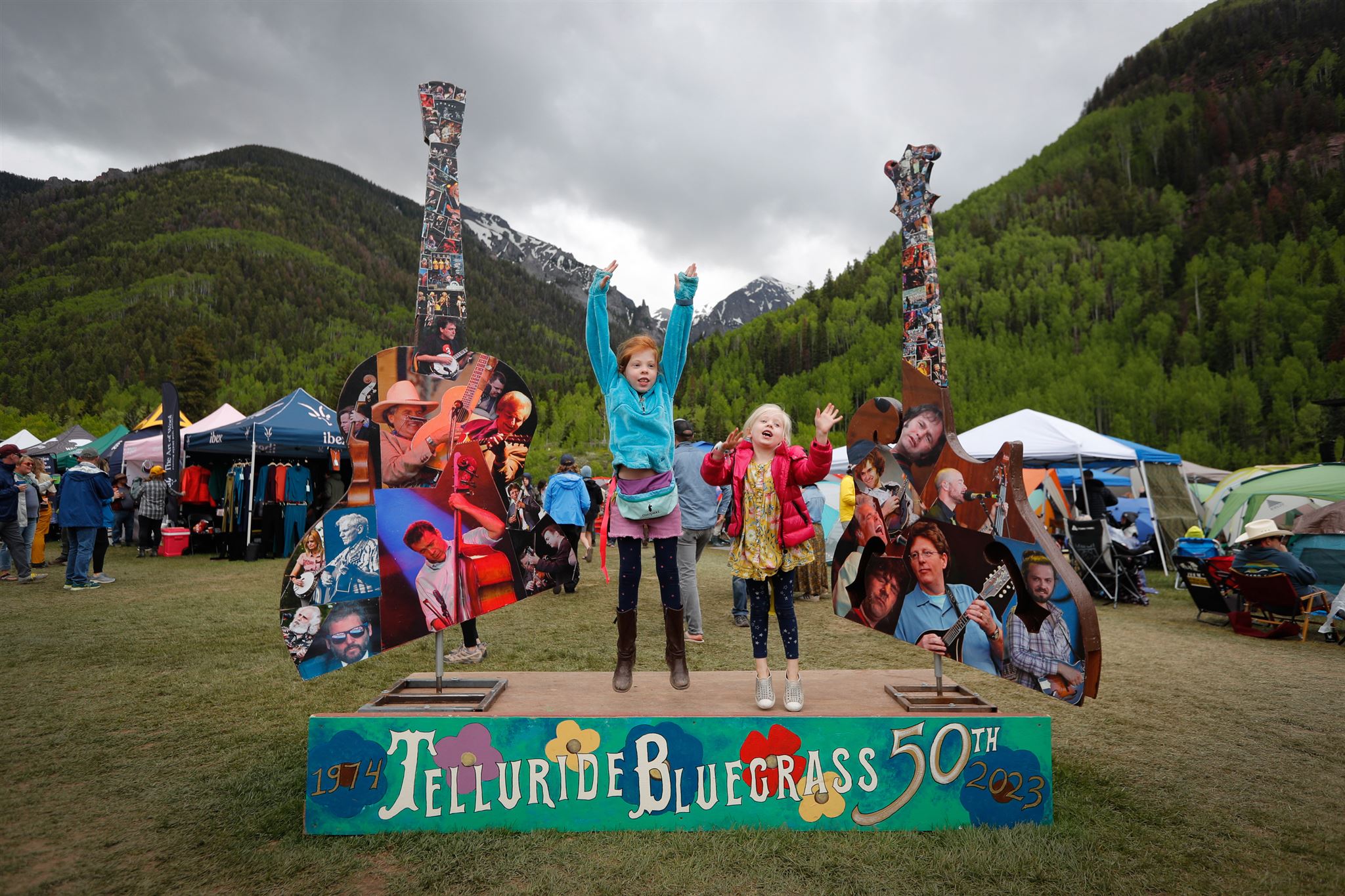
But there’s no question which music festival stands as the summit of the circuit, and not just because it’s in the mountains of Colorado. That’s the Telluride Bluegrass Festival, which marked its 50-year anniversary with the 2023 edition last weekend, June 15-18. The fact that Telluride has prospered for half a century makes Telluride something like golf’s U.S. Open championship, the big one that everybody wants to be a part of. Telluride’s status is something that the musicians who play it are well aware of.
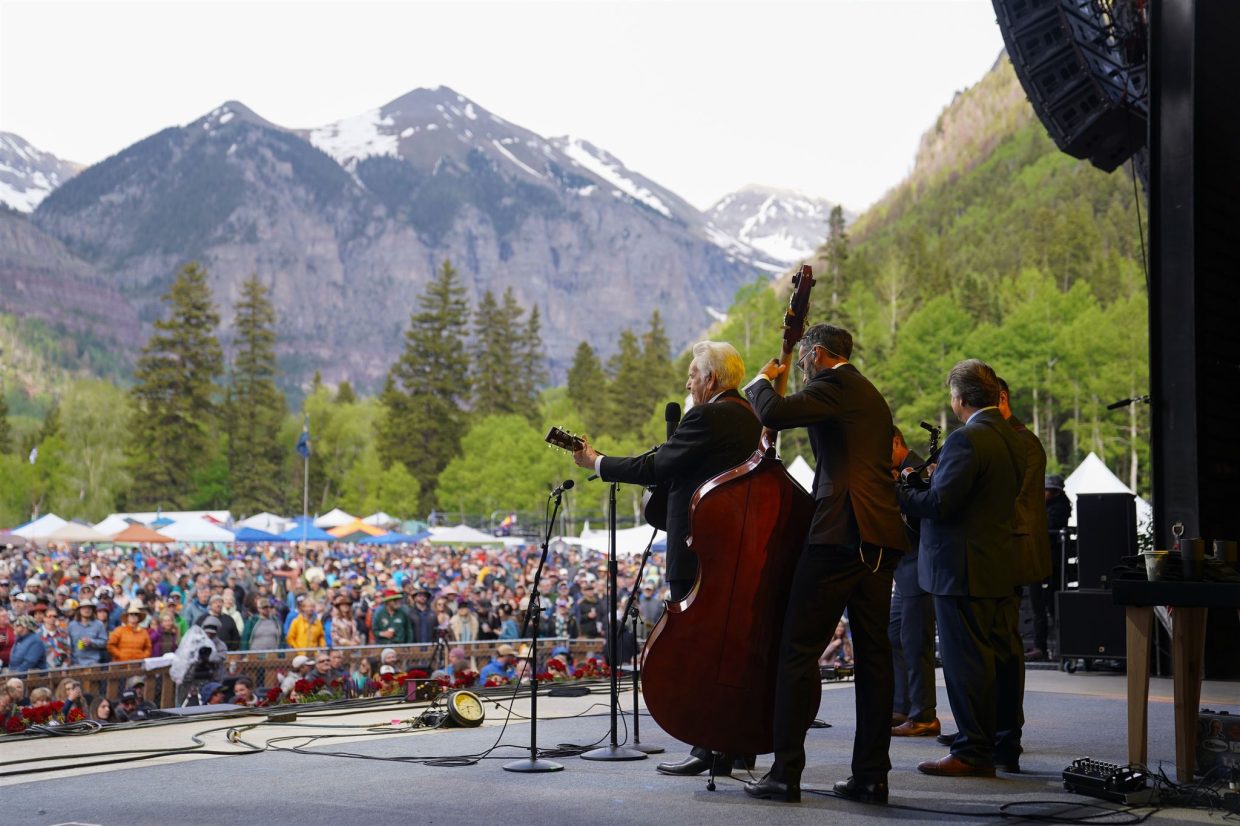
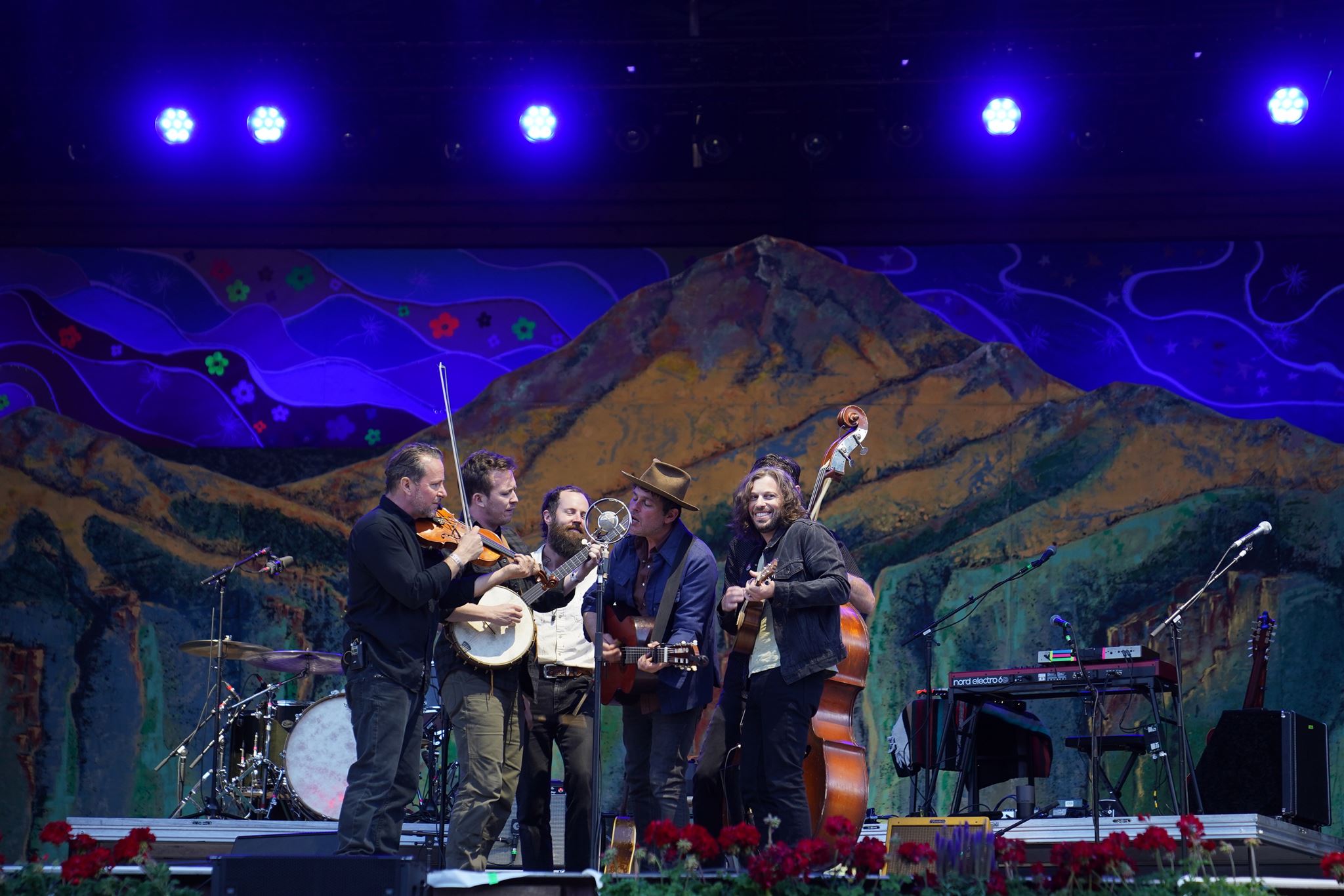
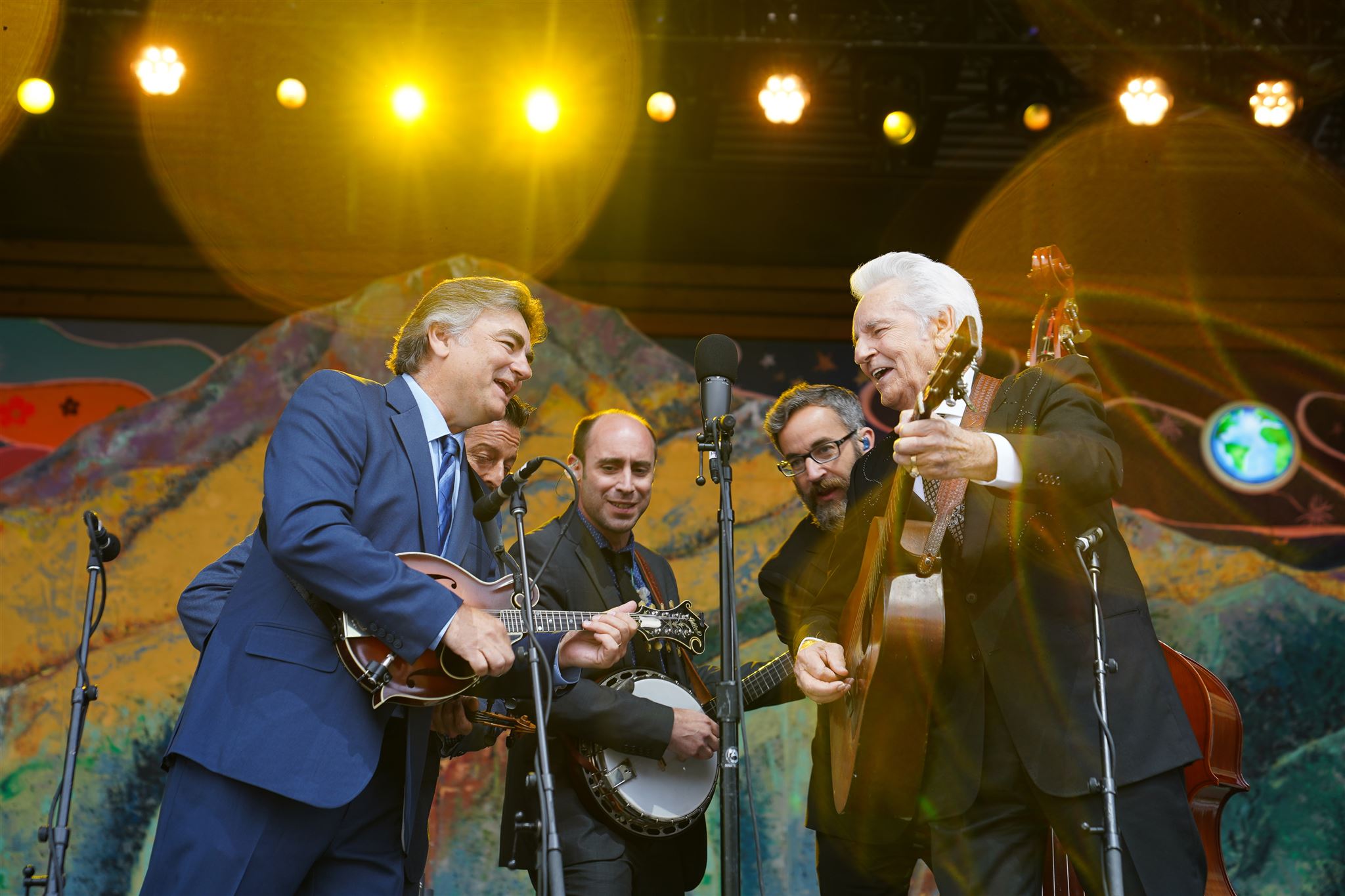
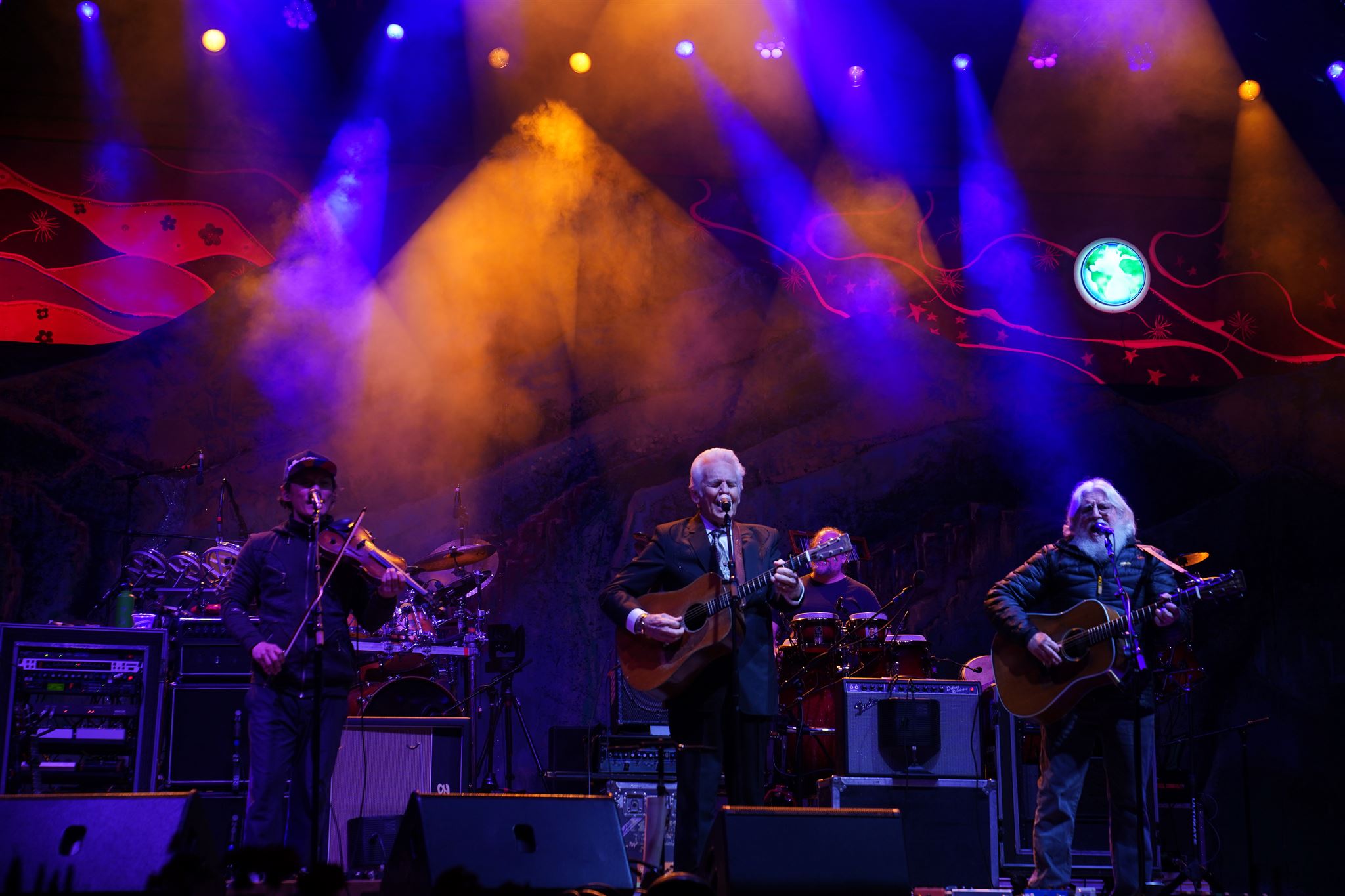
Del McCoury Band performs Thursday, June 15, at the 50th Annual Telluride Bluegrass Festival.
“Festivals and musical trends come and go, and acoustic music has been through some serious peaks and valleys the last 50 years,” says Chris “Panda” Pandolfi, banjo player for Telluride regulars The Infamous Stringdusters, who were on this year’s lineup. “The one mainstay throughout has been Telluride Bluegrass Festival. When we started out, Telluride was the place to be and the definitive crossroads we aspired to, and it still is. Lasting 50 years is an amazing testament to its importance. Bluegrass is more popular than ever now, and Telluride is a big part of that.”
There are literally hundreds of music festivals spanning every style imaginable nowadays, including massive annual gatherings like Bonnaroo in Tennessee and Coachella in the California desert. But there were just a small handful of festivals when Telluride Bluegrass Festival started up in 1973 in the scenic Colorado mountain town that bears its name. And even though Telluride’s daily capacity of 10,000 fans is significantly smaller than a lot of the other major festivals on the circuit, it has still maintained its prestige status.
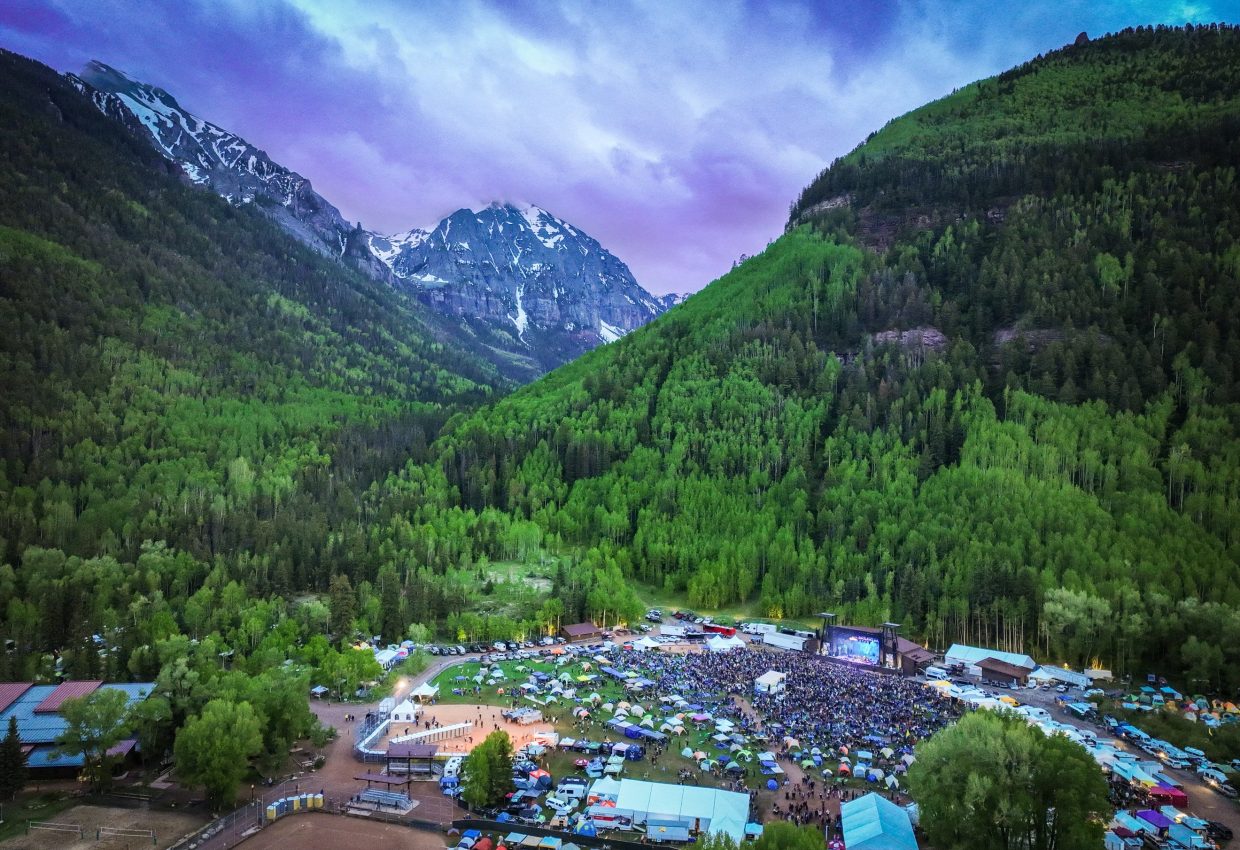
A drone shot of the festival grounds of Telluride Bluegrass Festival.
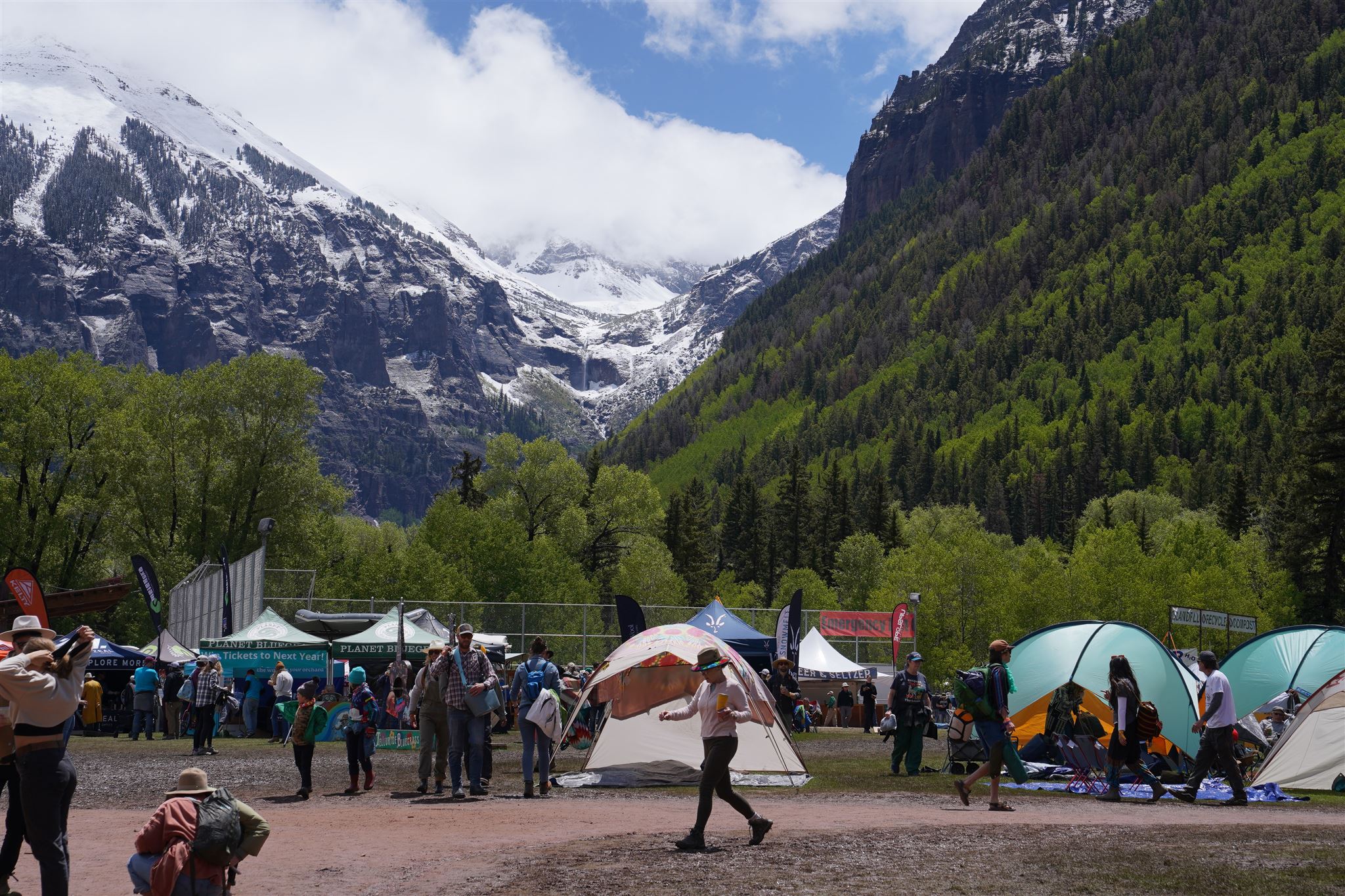
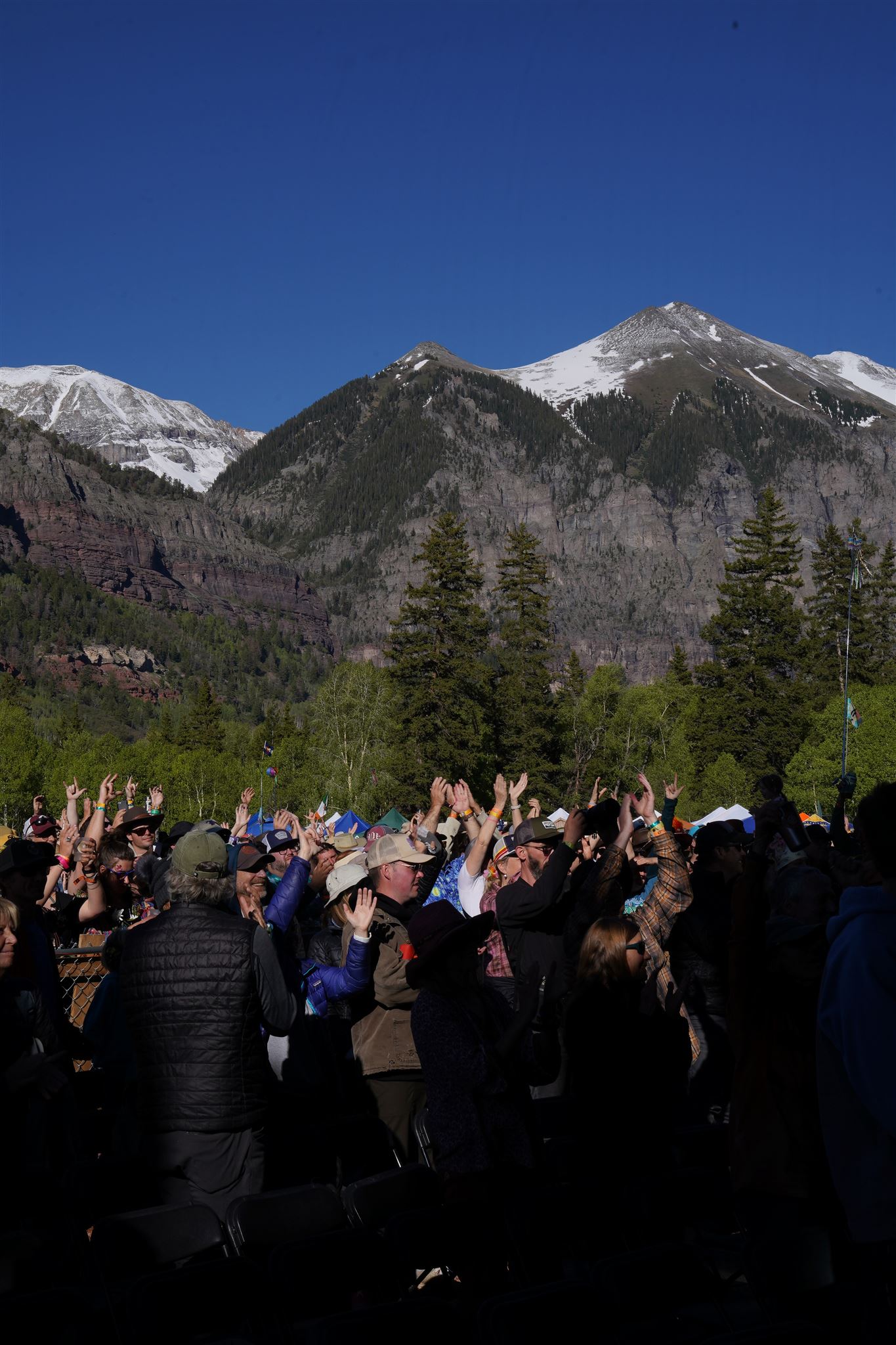
In spite of that smaller size, Telluride does have a few structural advantages that set it apart. One is a picturesque setting of surpassing natural beauty on the western edge of Southwestern Colorado’s San Juan Mountains. For performers as well as attendees, there’s not a better view anywhere than what you see at Telluride.
“The view from the crowd is amazing, but from the stage it’s the most incredible view imaginable as an artist,” says Pandolfi. “It’s this multi-layered inspirational snapshot of some of the best music fans, at the best-run festival, in the most beautiful environment in the world. I think a lot of people have this experience, knowing of Telluride as this iconic festival with an outsized reputation, but it more than lives up to the hype. First time we played there, I remember feeling intimidated because so many heavy-weight players we looked up to were there. But as soon as we got onstage, everything clicked.”
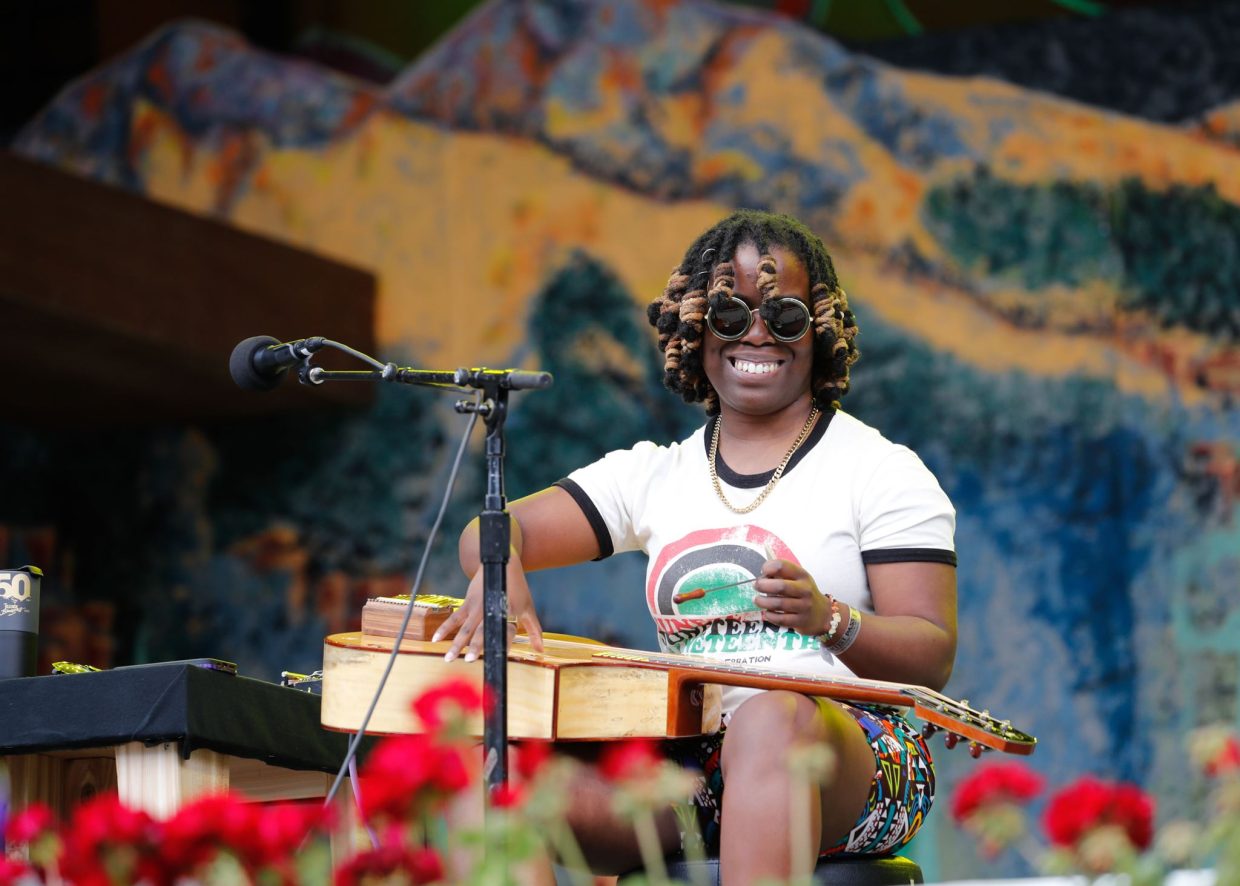
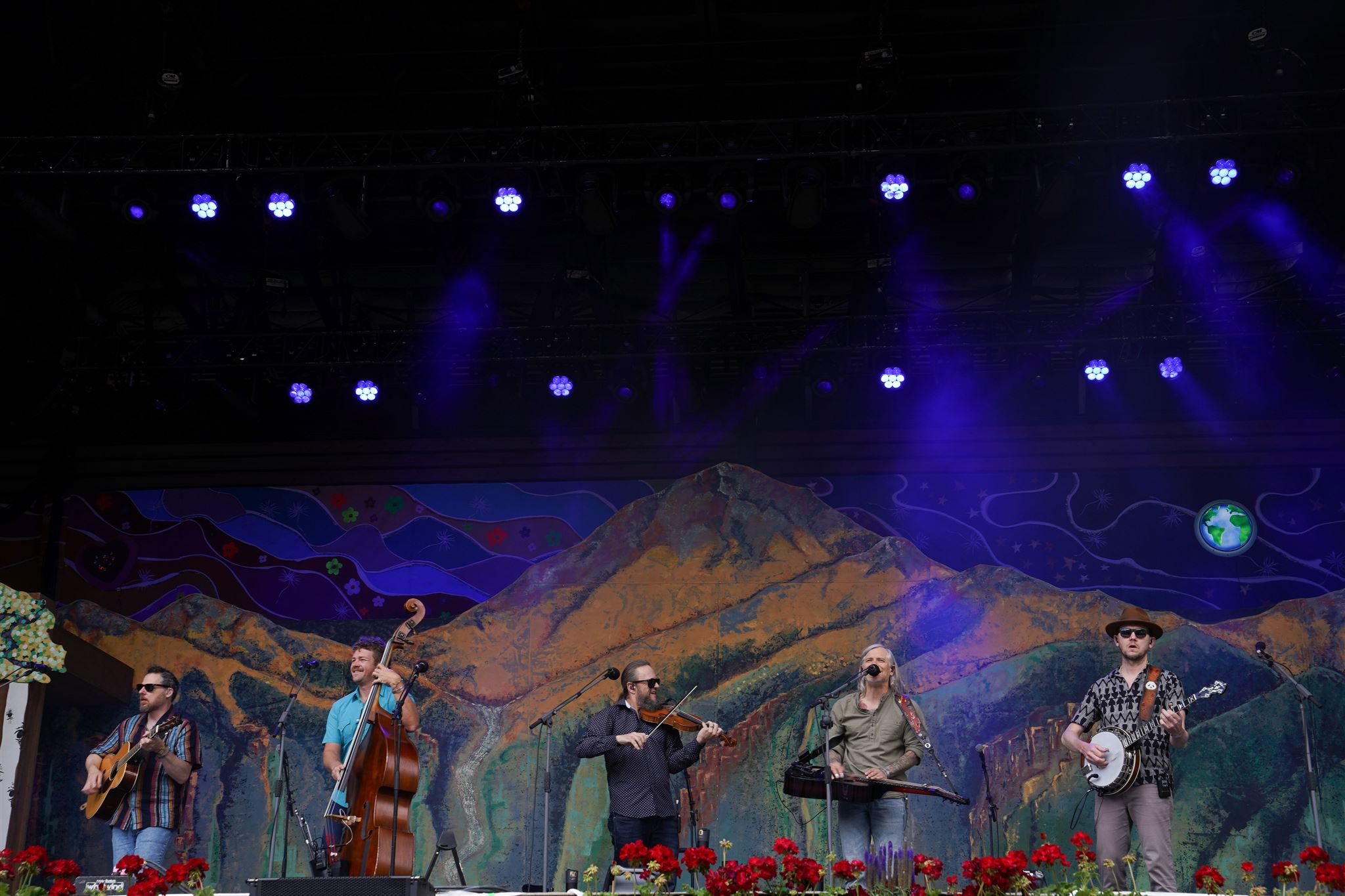
Yasmin Williams performs on Telluride Bluegrass Festival’s main stage – its sole stage.
Another major difference between Telluride and its festival peers is scale, and not just in terms of the size of the crowds. Most festivals cram as many performers onto as many stages as possible, all of them running simultaneously, resulting in sensory overload as well as the fear that you’re missing out on something elsewhere. By contrast, Telluride still has just one stage. Every act gets a solo spotlight at Telluride.
“Every year’s festival lineup is an interesting thing,” says Craig Ferguson, who oversees Telluride Bluegrass Festival under the auspices of Planet Bluegrass. “I’ve always said, just watch and it will book itself, and that’s really true. Our process is unique because we have just the one stage and not a bunch of bands, so everybody in the crowd gets to have the same experience. There’s not 18 different stages, so we can create one festivarian experience that everyone shares. We do the booking one act at a time, and we often wind up with interesting combinations.”
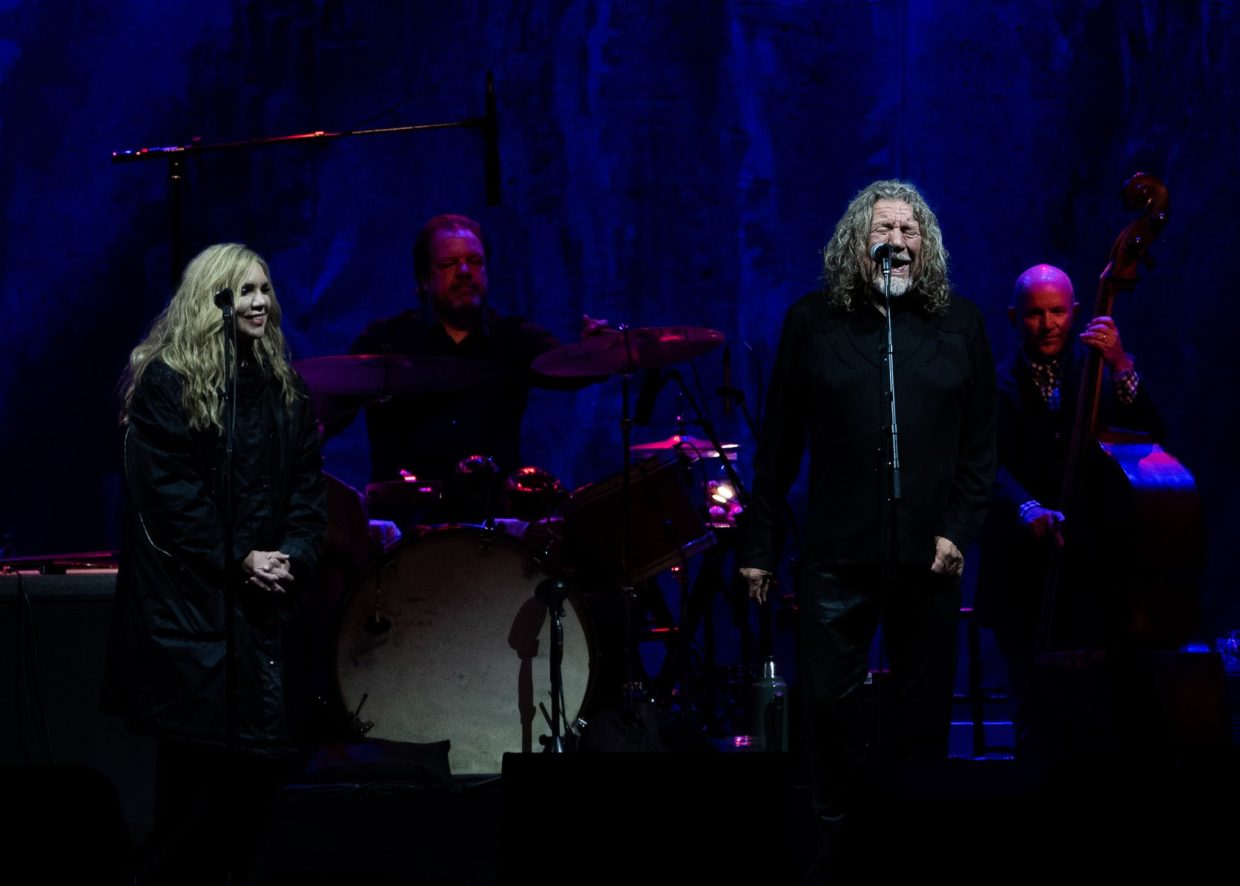
Robert Plant & Alison Krauss perform at Telluride Bluegrass Festival.
Indeed, those interesting combinations can venture well beyond what you see at a typical folk or bluegrass festival. Along with Sam Bush, Emmylou Harris, Peter Rowan, Del McCoury and The Infamous Stringdusters doing a Sunday morning gospel set, this year’s lineup features ringers like the West African ngoni master Bassekou Koyate and the venerable jam band String Cheese Incident. Some of the anomalous acts from previous years include pop-star jazz pianist Norah Jones, the comedic folk duo Tenacious D and even singer/rapper/actress Janelle Monae. Even with the unlikely acts, the Telluride experience sells itself. It doesn’t take much convincing to get any artist to play.
“Janelle Monae was the most interesting person to talk to,” Ferguson says. “I snuck into her RV just as she was sitting down to a meal by herself, and I was able to sit and talk to her for an hour. I think she would’ve signed up to play every year if she could have, she was so enthralled by the fact that there were elk in the park. It was the most wonderful conversation, and she was great. We’re famous for our curveballs and she was the oddest, I’ll give you that.”
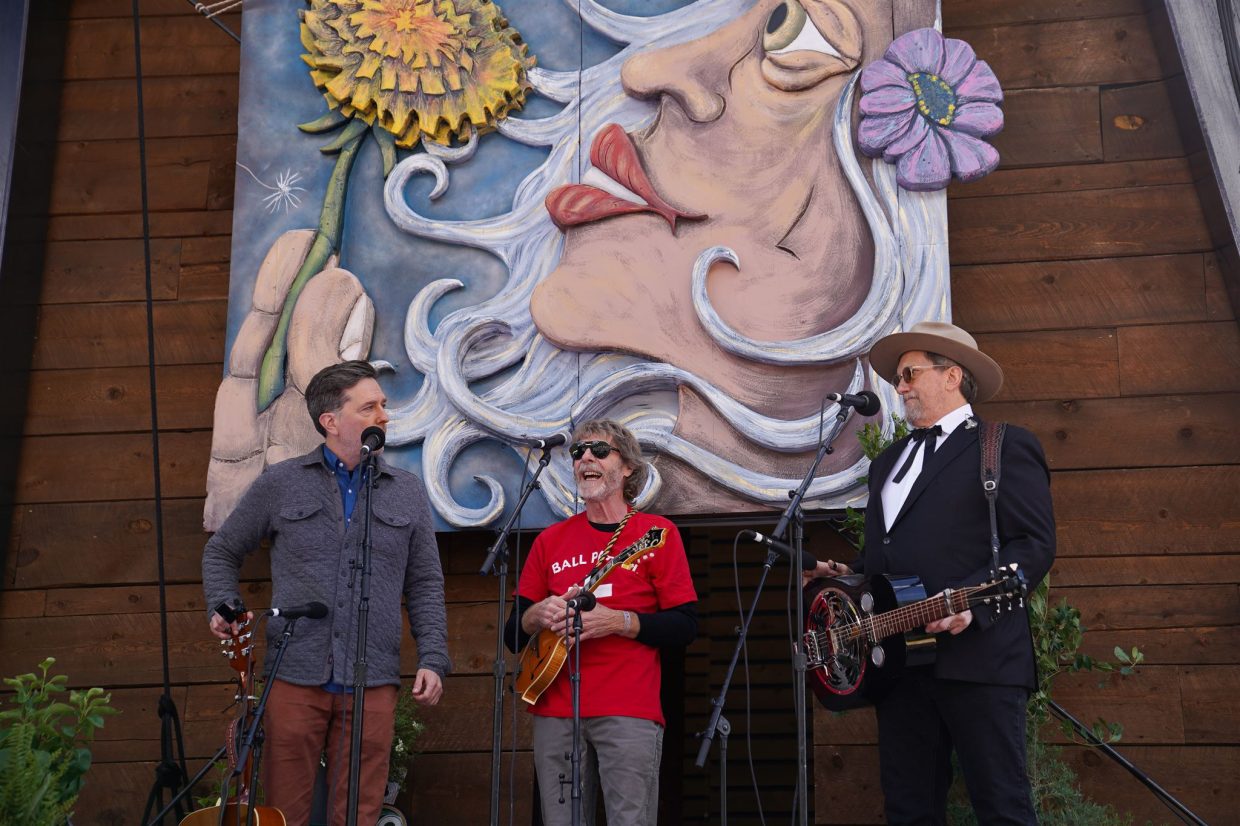
BGS’s own Ed Helms with Sam Bush and Jerry Douglas at Telluride Bluegrass Festival.
Apart from the change-ups, multiple generations of musicians in the world of acoustic music count Telluride among their major artistic, career and personal milestones. One of them is Sarah Jarosz, a four-time Grammy winner who first went to Telluride as a fan at age 14 and played it herself for the first time two years later. Telluride is where Jarosz first connected with idols and future peers like Gillian Welch and Abigail Washburn. It’s also where Gary Paczosa saw Jarosz for the first time at her 2007 Telluride debut. He subsequently signed her to Sugar Hill Records and produced her first four albums.
“It’s the quintessential place to see your heroes, and even get to jam with them,” says Jarosz, who is back on this year’s lineup. “You’ll hear, ‘There’s a jam at this house down the street after the shows.’ So I brought my mandolin and before I knew it, Chris Thile was showing up. Also Jerry Douglas, Tim O’Brien. That was really life-changing, this proximity to heroes that allowed me to become friends with them. And even though Telluride is rooted in bluegrass, they always bring in artists from beyond that world – Janelle Monae, Decemberists, Alison Krauss and Robert Plant. It feels like anything can happen, and the audience that goes is very supportive of that.”
The stalwart House Band of Telluride Bluegrass Festival.
Still, no matter how far afield the lineup wanders, Telluride is ultimately rooted in bluegrass.
“Bluegrass is a fable, and a team sport,” says Ferguson. “That informs how we create the lineup. Looking to the future, socially as well as musically, we think of bluegrass as an allegory. It’s a context that is invitational to all these other styles, country or jazz or classical, and it complements all of them. That remains the heart and soul of this festival, surrounding bluegrass with these other complimentary musics. We are fortunate to be of service to the festivarian community. It’s an annual privilege to see how much it brings to people’s lives, the connection to community.”
Young festivarians celebrate Telluride Bluegrass Festival's 50th Birthday.
Nickel Creek.
Bassekou Koyate.
Greensky Bluegrass.
Charles Wesley.
Sierra Ferrell.
Mary Chapin Carpenter.
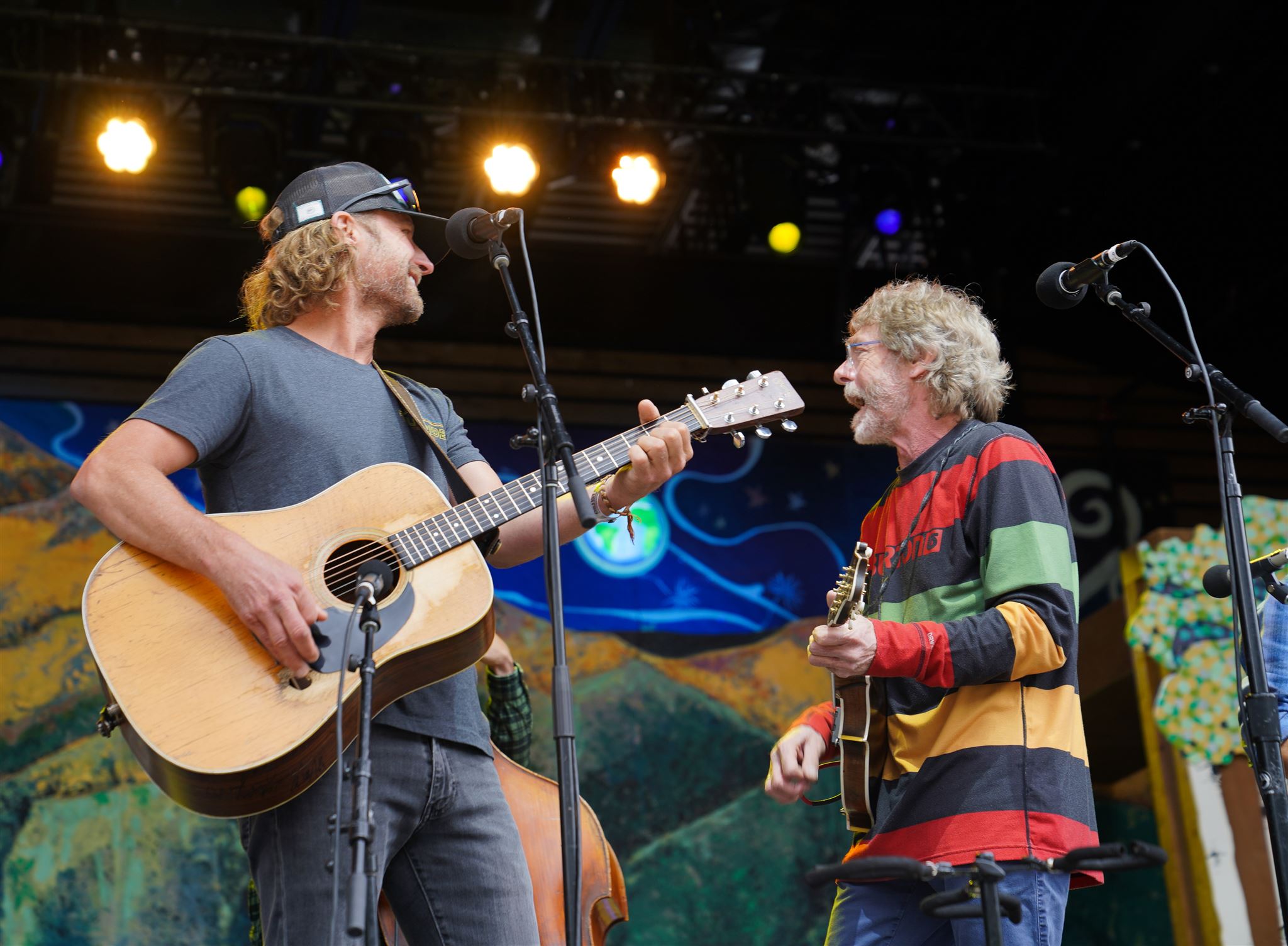
Dierks Bentley brings Long Jon to Telluride and Sam Bush up on stage.
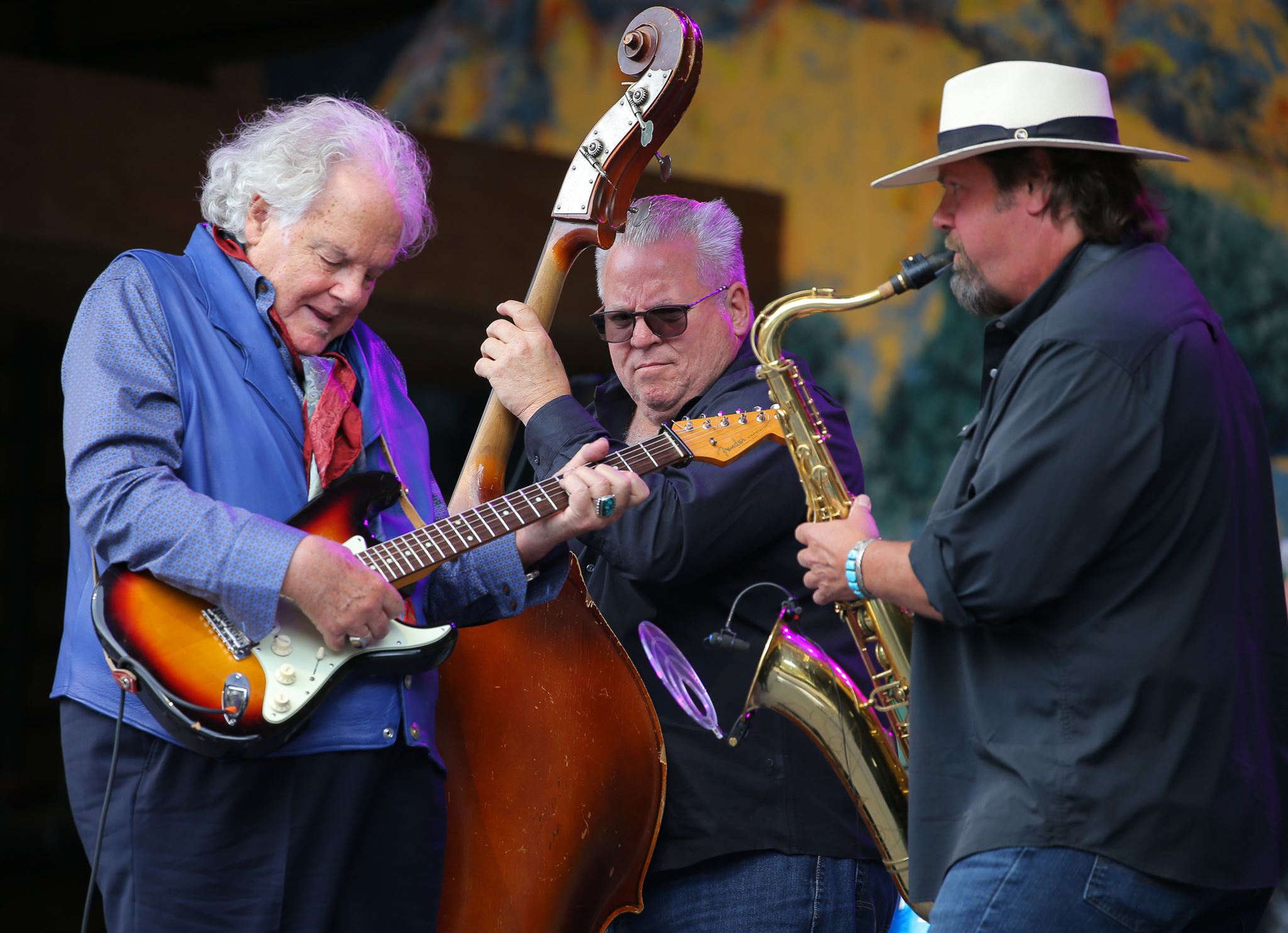
Peter Rowan.
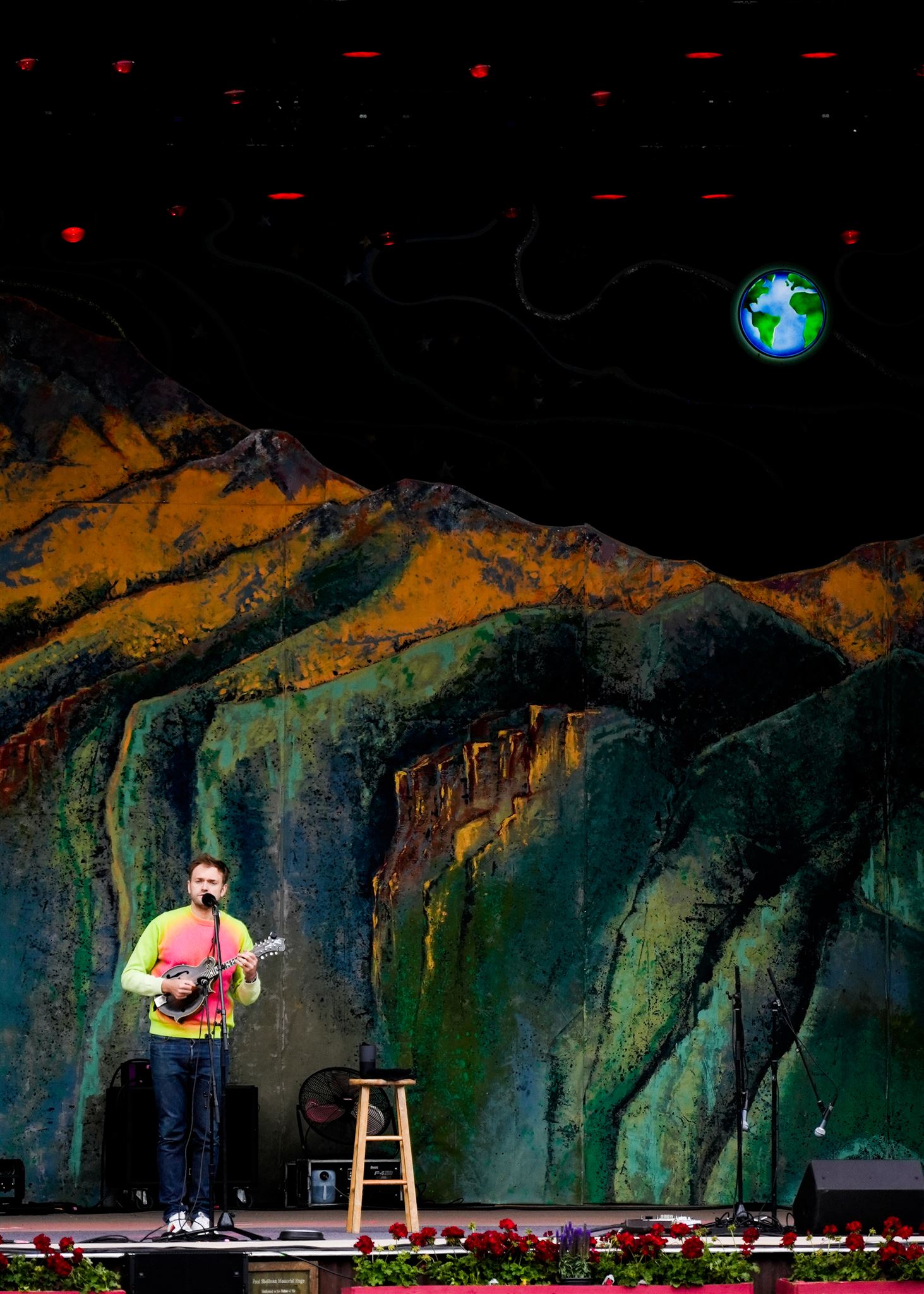
Chris Thile.
Gregory Alan Isakov.
The Infamous Stringdusters.
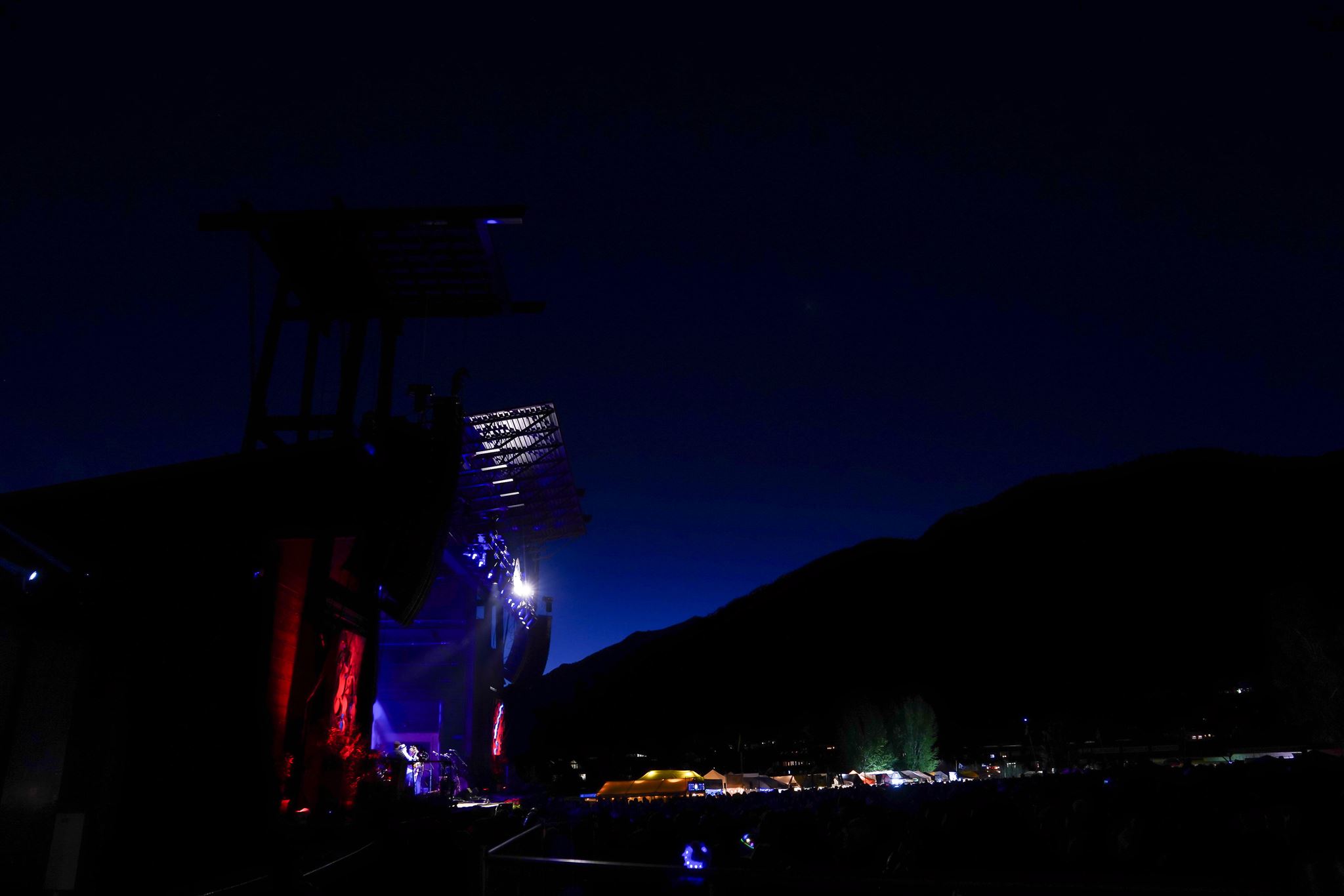
A gorgeous, though chilly, festival grounds.
Leftover Salmon.
Punch Brothers performed their last sets with Gabe Witcher as a member of the band at Telluride.
Sarah Jarosz.
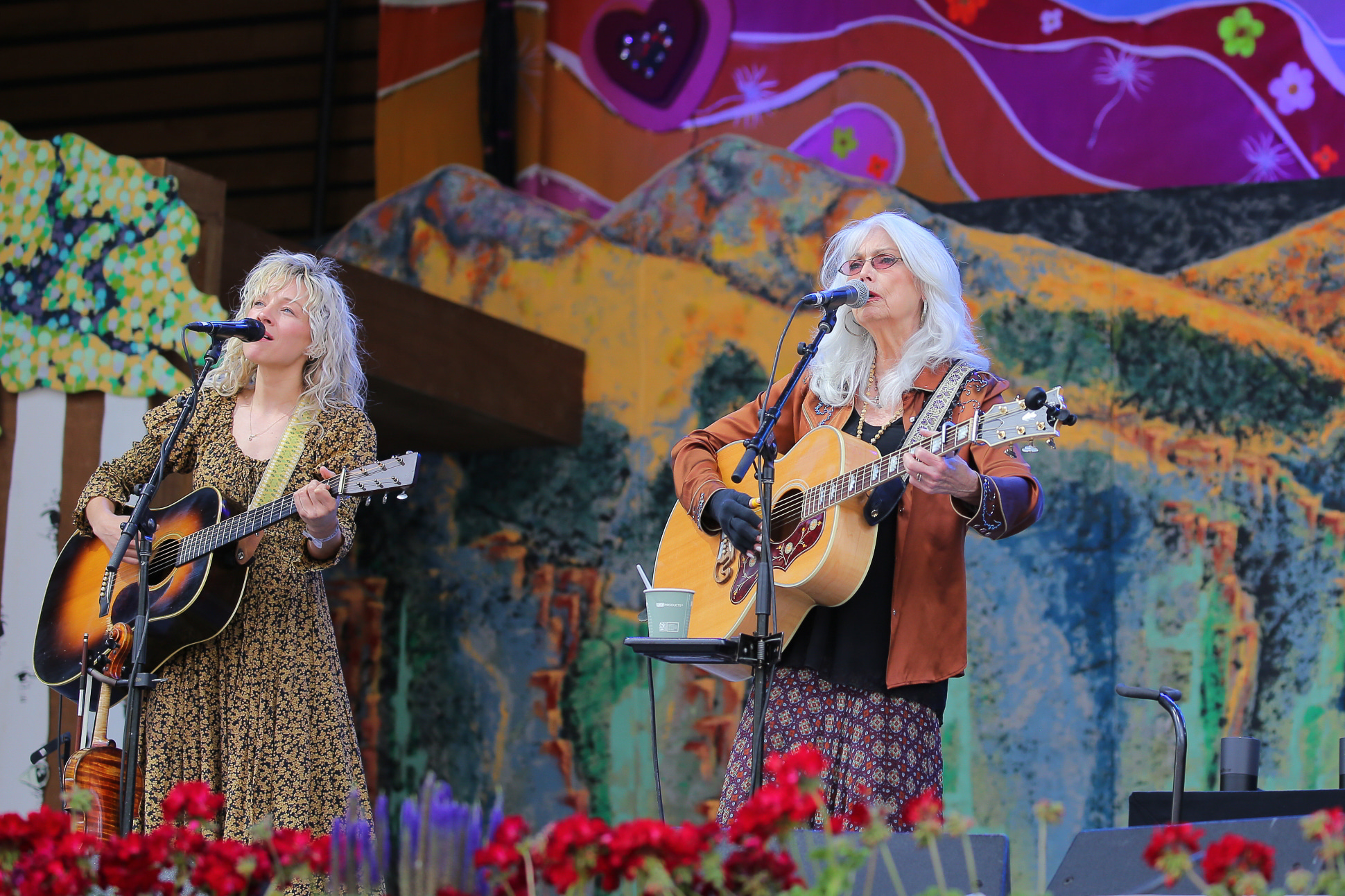
Sam Bush Band with special guest Emmylou Harris.
Del McCoury joins String Cheese Incident on stage at Telluride Bluegrass Festival.
The Earls of Leicester.
Tim O'Brien Band featuring Shad Cobb, Jan Fabricius, Mike Bub, and Noam Pikelny.
Watchhouse was joined by Emmylou Harris.
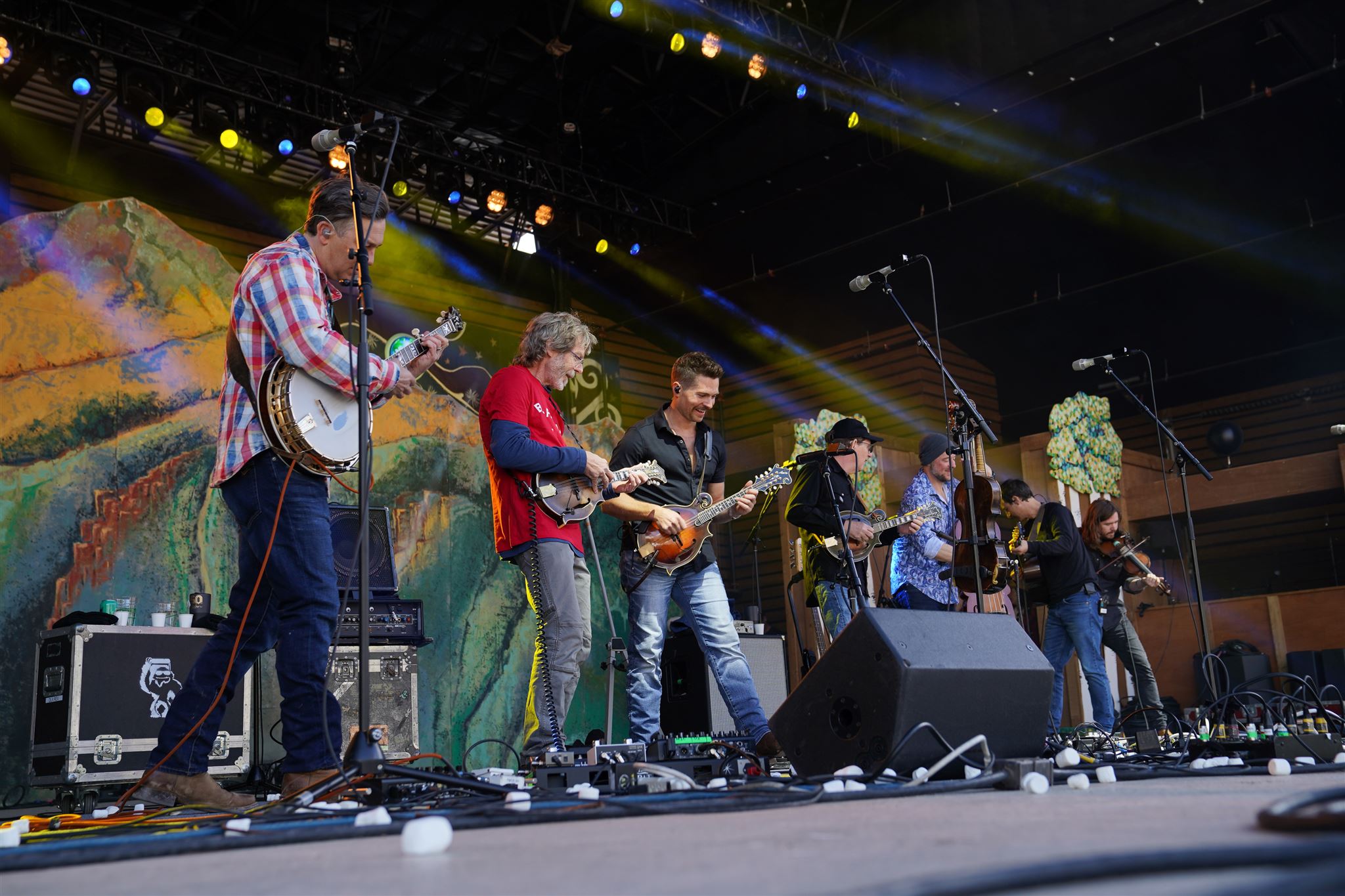
Yonder Mountain String Band with Sam Bush and guests.
The crowd cheers for Yonder Mountain String Band.
Sam Bush Band backgrounded by the mountains and evening sky.
In the liner notes to his new album Bluegrass Vacation, released at the beginning of April, Robbie Fulks talks about his formative experiences in the genre. He also mentions how, as a young musician in the early ’80s, he drifted away from it in search of the coolness of trendier sounds. “But what made me think there was anything cooler than bluegrass?” he asks, playfully reprimanding his younger self.
Bluegrass Vacation makes the case that there is indeed nothing hipper than some of the world’s most decorated musicians tearing into a tried-and-true format. And it doesn’t hurt when they do so in service of smart, funny, heartfelt material, which is what Fulks delivers here and is emblematic of his output for the past three decades. While he proves that he can write rollicking back-porch jams like “One Glass of Whiskey” and “Let the Old Dog In,” he also slows the tempo for tender acoustic beauties like “Molly and the Old Man” and “Momma’s Eyes.” And in the stunning “Angels Carry Me,” he pushes bluegrass boundaries with a multi-movement piece of fearless lyrical and musical complexity.
Considering it took 2 ½ years from first session to album release due to pandemic holdups, Fulks is thrilled to finally have Bluegrass Vacation out in the world. He talked to BGS about early influences, his impressive cohorts on the record, and whether he’d consider dipping back into the genre again.
BGS: What are your earliest memories of bluegrass and what drew you to it?
Robbie Fulks: Early memories are a reel-to-reel tape of Doc Watson’s first Vanguard record. There were a couple of other records on the tape as well, but Doc was the first thing up, “Nashville Blues” going to “Sitting on Top of the World,” that warm, beautiful, versatile sound. Doc did all these different things that kind of put him one foot in bluegrass and one foot out. That was probably the earliest thing that hooked me. And then after that it was like The Country Gentleman and Will The Circle Be Unbroken. A couple of other records that my folks had, and then the festivals.
What made you decide that now was the time to do an all-bluegrass record?
Generally, over the last 10 years, I’ve been making more inroads. My bluegrass hot-shot Rolodex has expanded to where it’s like, holy shit, I have Jerry Douglas’ email and can call Sam Bush (laughs). It just seemed like it had reached a tipping point the last couple of years where it was like I gotta do this. The older guys are going to be dead soon including myself, and that’s part of the reason (laughs). But I’ve been leaning that way more and more for the last five to 10 years.
Did your songwriting process change at all?
I varied my angles on the songwriting as I went along. On a couple of them, I had a genre thing in mind. Like “Lonely Ain’t Hardly Alive,” I was thinking about Jimmy Martin in the late ’50s and early ’60s and wrote to that. With “Angels Carry Me,” that came about because I had inked (mandolinist) Sierra (Hull) on a session. I started thinking about what kind of a groove I would like to hear her on and wrote from the groove forward thinking about the way she plays.
And did writing for bluegrass steer you in the direction of any particular subject matter?
I’ve noticed that I gravitate repeatedly toward four or five rough subjects over and over again. One of them is alcohol, and that shows up in a couple songs. One of them is memories of when I was a kid, and that shows up. Or music itself. When these subjects show up, I always think “Should I go ahead, or not go ahead?” Because it’s well-trodden ground for me. Like “Old Time Music Is Hear to Stay,” I thought “Well, I’m writing another song about music. I’ve done of lot of that. Should I go forward?” And as I went forward with the song, I just found that I really liked it and that compensated for any qualms about having done something similar before. I guess it’s a long-winded way of saying no, it really wasn’t any different. Just going into a room with an instrument and seeing what happened.
Considering the incredible instrumentalists on this record, did you give them a lot of direction? Or was it more like, “Here’s the song. Let it rip?”
Generally, I’ve noticed in the studio that the less I say, the better. Because it’s surprising how you can say four words that seem well-chosen and exactly what you want and then things go haywire because it’s overinterpreted or misinterpreted. My approach is that I definitely have things in mind and I chart and have rough end points in mind. But when you hear the first go at it, I go with the idea that that’s what it’s going to be, like 90 percent, and then I direct the other 10 percent of it as delicately as I can.
Tell me about recording “Angels Carry Me,” which is fearless with how it expands the notion of what a bluegrass song can be.
The people that were on the session, it skewed a little younger, because Sierra was there and (guitarist) Chris (Eldridge) was there. And (fiddler) Stuart (Duncan) is just kind of ageless and genre-less, just pure music. Todd (Phillips) is the same way on the bass. He’s a really wide-brained guy. I think if it had been different players, it might have been more of a challenge. But those players can go anywhere and just have adventurous spirits, as do I. It was never a question that it would be too weird for somebody to get their mind around.
That song also has one of my favorite lines I’ve heard in a long while: “And only a fool thinks he can leave just by driving away.”
That was a line that took me by surprise. I worked on the song for three or four weeks in an attitude of mystery and concern (laughs). Because I didn’t know where it was going or what I was doing. It was kind of amorphous. But the appearance of that line at the end, it seemed like, “Ah, that could have been in my sights the whole time and I just didn’t know it.” It appeared as a gift.
Did you have to embellish any of “Longhair Bluegrass,” which talks about you going to see a festival as a kid with your parents?
I think the only untrue part is that in the fourth verse, I put an example of somebody at the festival, an old-timer that was not into the younger generation and their attitude. And I put in Wilma Lee Cooper because I looked at a poster of that Culpepper festival. Her name fit and I thought the age bracket kind of fit. In the session, Sam Bush said, “No, she was real easy-going about it.” I said, “Who wasn’t?” And he said, “Probably Ralph Stanley.” So I put that in. That was a little untruth, because I didn’t see Wilma or Ralph at that festival looking around angry. And maybe my parents weren’t stoned out of their heads like I implied in the song (laughs).
You talk in “Old Time Music Is Here to Stay” about picking up the electric guitar and then losing interest in it as you returned to more traditional sounds. How accurate is that?
100 percent. I think it was just a natural thing for me to want to swim with the current when I was 17 years old. But even at the time, I think it was at the back of my mind that this music by, I don’t know, Aztec Camera and Big Country or U2, it was OK, but it just didn’t grab me in the way that I was grabbed by a Doc Watson record. It was a little bit more work coming to the popular music of the late ’70s, early ’80s. But what can you do? The stuff that gets in you when you’re five or ten years old, that’s the stuff that doesn’t go away.
Did you feel extra pressure on this record because you wanted to do the genre proud?
There was pressure there, but it was more from being in an isolation booth and looking out the glass door and seeing Sam Bush over there or Ronnie McCoury over there. No matter how welcoming these people are, it’s a mind fuck to pick up your instrument and be playing with them (laughs). It freaked me out a little bit.
I know you just finished this one, but is it possible you could return to the genre again somewhere down the road?
I’m starting to think about what to do next. I’m open-minded. If people like this enough, I loved doing it. I would do another one.
Photo Credit: Scott Simontacchi
This website uses cookies to improve your experience. We'll assume you're ok with this, but you can opt-out if you wish.AcceptRejectRead More
Privacy & Cookies Policy
Privacy Overview
This website uses cookies to improve your experience while you navigate through the website. Out of these, the cookies that are categorized as necessary are stored on your browser as they are essential for the working of basic functionalities of the website. We also use third-party cookies that help us analyze and understand how you use this website. These cookies will be stored in your browser only with your consent. You also have the option to opt-out of these cookies. But opting out of some of these cookies may affect your browsing experience.
Necessary cookies are absolutely essential for the website to function properly. This category only includes cookies that ensures basic functionalities and security features of the website. These cookies do not store any personal information.
Any cookies that may not be particularly necessary for the website to function and is used specifically to collect user personal data via analytics, ads, other embedded contents are termed as non-necessary cookies. It is mandatory to procure user consent prior to running these cookies on your website.