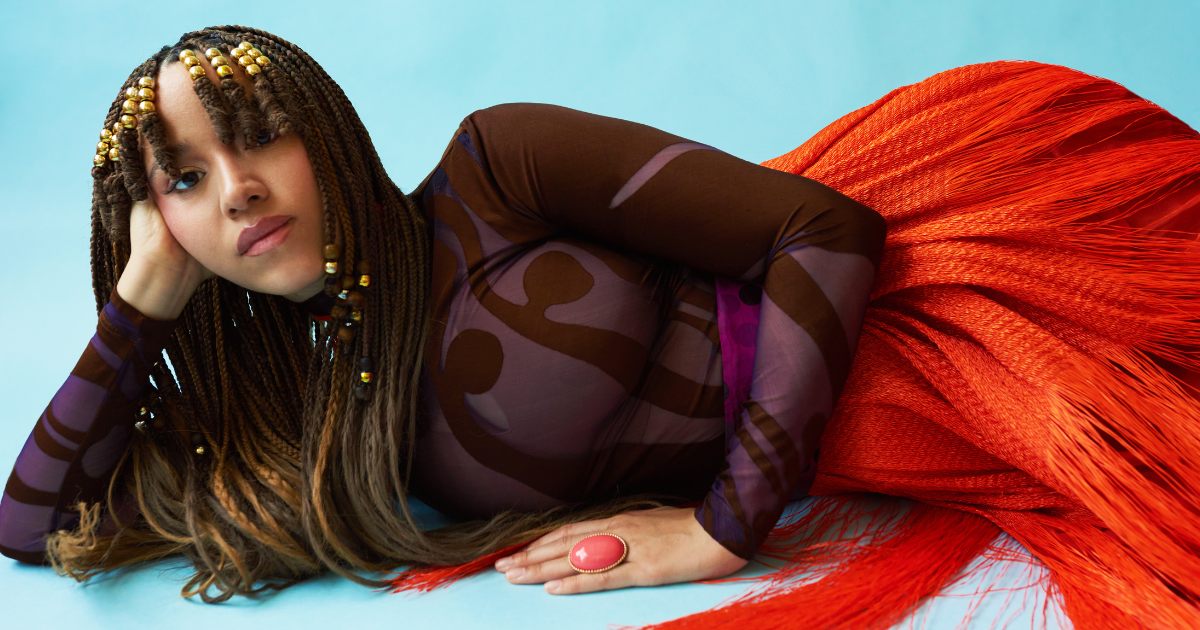
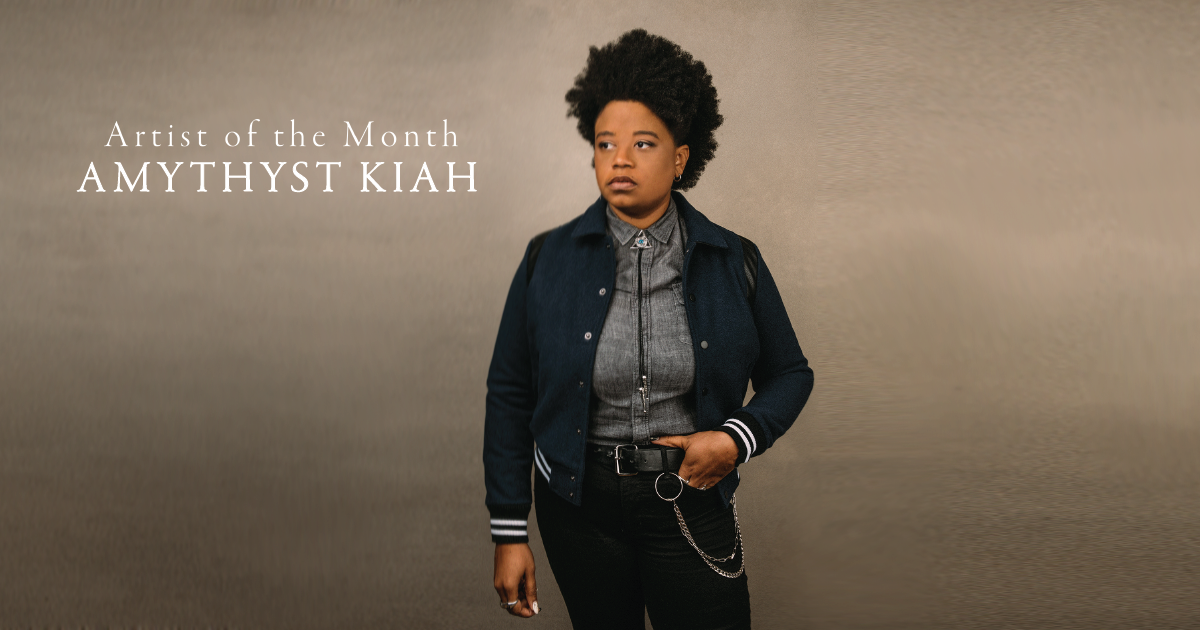
BGS first had the opportunity to work with singer, songwriter, multi-instrumentalist, and composer Kaia Kater all the way back in 2016. She appeared on our inaugural Shout & Shine showcase stage that year at the International Bluegrass Music Association’s business conference in Raleigh, North Carolina. It was the first ever showcase celebrating diversity at the headline bluegrass event and it was also where I met her for the first time in person. We were both panelists for another first-ever, IBMA’s round-table style panel on inclusion that was convened the day after Shout & Shine. Partially planned in response to North Carolina’s just-passed transphobic measure, HB2 – one of the first anti-trans “bathroom bills,” beginning what would become a nearly decade-long and as yet unfinished battle in state houses around the country for equal rights for trans folks – the panel’s format was all about direct conversation and reaching folks where they were at.
A grassroots collective of musicians, artists, and industry professionals who represented often marginalized identities in bluegrass had decided enough was enough, we would have to stake out and hold space at IBMA’s conference to have these long overdue conversations about who is and who isn’t excluded from these roots music genres and what we can do to make all folks feel safe(r) and at home in these communities we love. Kater was right there, engaging and often leading dialogues on these important subjects. A handful of days later, she published her first byline on BGS, an incisive, compassionate, and necessary op-ed on Breaking the Wheel of Silence – calling out all too common “closing of ranks” and music industry status quos that reinforce and protect misogyny, patriarchy, and systems of sexual harassment and sexual violence and their perpetrators.
In short, Kater has long been a thought leader in roots music, especially in bluegrass, old-time, and our BGS family. We’ve been fortunate to get to collaborate with her in various ways on that vital work, from having her writing published on our site and in our year end round-ups to covering her own art and roots music creations.
Luckily, the music she crafts and the messages within it make it infinitely easier to spotlight these often touchy and incredibly nuanced issues. From her debut, 2015’s Sorrow Bound, to 2016’s impressive Nine Pin – which some call her “break out” record – Kater has been spinning complex and entrancing roots music threads that draw on her lived experiences as a Canadian-Grenadian banjo player and lifelong folk musician, turning over and examining what are often called “thorny” or “divisive” issues. Her music grounds abstract and theoretical concepts in the past, present, and future. But her songs don’t sound mired in these issues or concepts at all, just the opposite.
Over the course of her career, from her teens and young adulthood to today, on the cusp of releasing a new album, Strange Medicine (out May 17 via Free Dirt Records), this singular perspective Kater has cultivated continues to blossom, grow, and come into sharper focus. 2018’s Grenades, a sort of concept record placed decidedly in the Caribbean and tracing Kater’s roots back to the beautiful island of Grenada, processes generational traumas, the machinations and intricacies of culture, the nebulousness of belonging, and so many other colors and textures decidedly at home in folk music, but enlivened constantly through Kater’s creative lens. Grenades is a master work, demonstrating a creator and musician who knows who they are – even when they do not.
Six years later, enter Strange Medicine, another album masterpiece that finds Kater still more confident, more at ease, and just as convicting. Genre parameters, her prior records, and her strong positioning of community are all present here, but perhaps not as directly. Instead, Strange Medicine seems to be grown from the fertile, rich, and dense soil of Kater’s career to this point. There are indirect touches of all of the above, but overall this collection feels brand new. It is a novel synthesis of her values systems and worldview, one that feels assured while still exploratory, firm but flexible, responsive but not reactive. Strange, indeed, but never odd (or estranged).
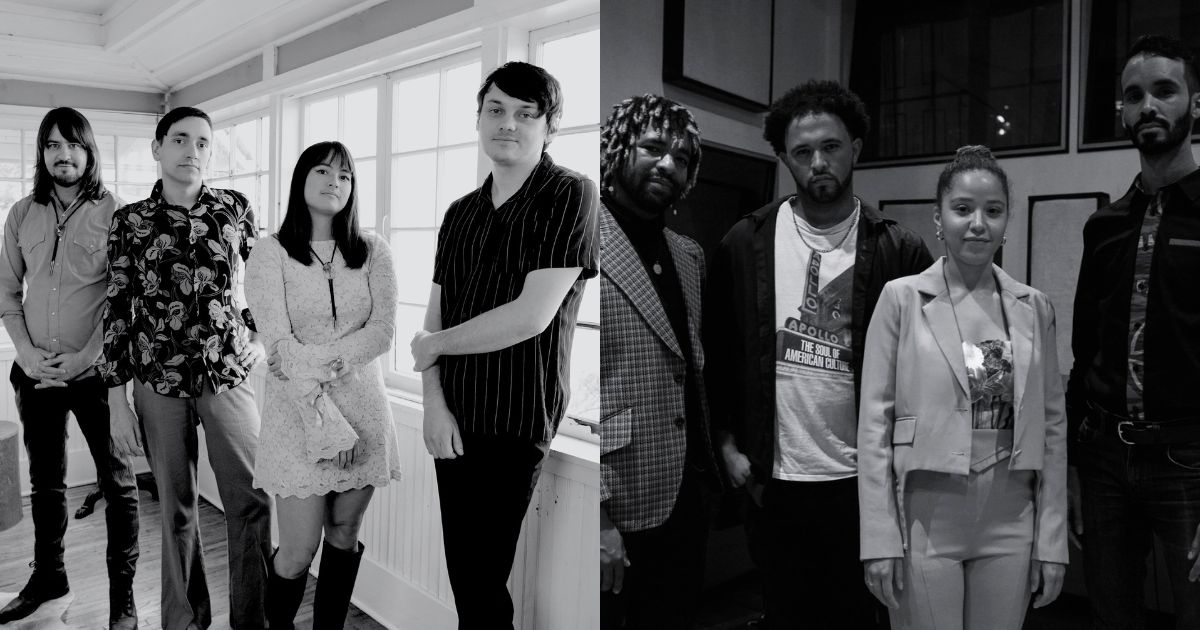
With stunning collaborations with Taj Mahal, Allison Russell, and Aoife O’Donovan – who is featured on “The Witch,” a track made available today – Kater demonstrates how, more than ten years since she began her professional trajectory, her music shines with cross pollination, positioning the community members who helped shape her own music within that very body of work. It’s part of why her new band, New Dangerfield – with Jake Blount, Tray Wellington, and Nelson Williams – can be called a supergroup, though that moniker immediately feels reductive. Kater and her cohort are no longer simply adding their voices to an ongoing conversation, they are the conversation. The center of gravity – in folk, old-time, bluegrass, Americana, and beyond – has shifted, and with that shift we see Kater, many of her peers in her generation, as well as those collaborators and influences who came before continually advancing these discourses.
Her medium, as always, is music. Her dialogue, as always, is not simply with those who choose to consume her art, but specifically with those who engage with it, try it on, turn it inside out, and kick the tires. This is music that will stand up to that sort of holistic interaction. It’s infinitely listenable, incredibly fun, and grooving, too; Strange Medicine might be the danciest record in Kater’s catalog. It’s intellectual, yes, but more than that, Kater shows us that music can be nutritious, challenging, and dense while effervescent, joyful, and soaring.
All month long, we’ll be celebrating our pal, collaborator, and constant source of inspiration Kaia Kater as our Artist of the Month. Below, enjoy our Essential Kaia Kater Playlist and watch for an exclusive AOTM interview coming in just a couple of weeks, too.
Back then in 2015 and 2016, when we were just introduced to Kater and her music, if you had asked any of us if we’d expect her to be our Artist of the Month someday, down the line, I think almost any of us would’ve responded with a resounding, “Yes!” So we’re especially proud to celebrate Strange Medicine and Kaia Kateras our May Artist of the Month.
Are you excited for new music Friday? With our slate of premieres this week, we certainly are! AJ Lee & Blue Summit bring us the first track from their just-announced album, City of Glass (coming in July), old-time, folk, and Americana supergroup New Dangerfield have released their very first music together, and banjoist Tray Wellington (also of New Dangerfield) is dropping a new instrumental today, as well!
Plus, don’t miss Australian-via-Nashville country artist Wesley Dean and his new video for “Mercy” and you’ll also find Jacob Jolliff Band’s new number, “Los Angeles County Breakdown,” which premiered on BGS yesterday.
It’s all right here and to be totally honest, You Gotta Hear This!
AJ Lee & Blue Summit, “Hillside”
Artist:AJ Lee & Blue Summit Hometown: Santa Cruz, California Song: “Hillside” Album:City of Glass Release Date: July 19, 2024 Label: Signature Sounds
In Their Words: “The song ‘Hillside’ is sung from the perspective of a hill that is being eroded by weather and chipped by the tools of man. Still, the hill aspires to become a mountain and refuses to give in to the bombardment of forces. The last line in the chorus is, ‘… A thousand years don’t mean a thing to the stone cold hill that you call me,’ which I wrote with the idea that I will have confidence in myself no matter who tries to tear me down. I feel like I am becoming an immovable mountain that has been birthed out of proving my resilience. This song represents women empowerment, resilience, and strength.” – AJ Lee
Track Credits:
Written by AJ Lee Produced by Lech Wierzynski Mixed and engineered by Jacob LaCally Mastered by Paul Blakemore
New Dangerfield, “Dangerfield Newby”
Artist:New Dangerfield (Jake Blount, Kaia Kater, Tray Wellington, and Nelson Williams) Hometown: Providence, RI; New York City, NY; New Orleans, LA; Raleigh, NC Song: “Dangerfield Newby” Release Date: April 26, 2024 Label: Distributed by Free Dirt Records
In Their Words: “I learned the tune we call ‘Dangerfield Newby’ from Eddie Bond close to a decade ago. He called it by the name ‘Old Sport,’ but told us that it was alternatively named ‘Dangerfield’ after one of John Brown’s raiders. I performed on John Brown’s farm last summer and had the opportunity to visit the grave he shares with his sons and several of his raiders — including the Black ones. I learned that Dangerfield was Black from his gravestone. The string band tradition has been honoring a Black freedom fighter all this time – who knew? I brought the tune to the band, since these are the stories we want to tell.
“Inspired by Dangerfield’s dedication to his family and community and his drive for freedom, we decided to put his full name on the tune. Thus, ‘Dangerfield Newby’ was born! We chose our band name, New Dangerfield, as an homage just a few days later.” – Jake Blount
Tray Wellington, “Blue Collared Dog and His Green Eyed Friend”
Artist:Tray Wellington Hometown: Raleigh, North Carolina Song: “Blue Collared Dog and His Green Eyed Friend” Release Date: April 26, 2024 Label: Mountain Home Music Company
In Their Words: “One late night while doing some paintings, we ended the night with two different ones. One featured a dog with a blue collar, and one featured a cat with bright green eyes. I thought about how, if I was still a kid, I would’ve created a whole story within these paintings of how these two were friends and journeyed the world together. Shortly after this thought, I picked up my banjo and just did some improv which ended up being the start of the tune. I just kept going and finished the tune in that improv session, remembered what I could, and recorded it right away. I was amazed at how such a simple thought could help me create a piece of music I’m so proud of.” – Tray Wellington
Artist:Wesley Dean Hometown: Nashville, Tennessee (by way of Australia) Song: “Mercy” Album:Music From Crazy Hearts Release Date: April 26, 2024
In Their Words: “While I was traveling around the country last summer on my Crazy Hearts Across America tour, we shot different music videos for the album in different cities. Where else is better than the neon psychedelic lights of Las Vegas for ‘Mercy?’ It suited the music and the vision. We shot up and down the strip outside the famous Flamingo casino one night and then built the rest of the video around that footage.
“Jacobie Gray, my director, wrote the treatment for the redemption story and then we filmed the rest of the video at a bar and old church in Nashville and a cemetery outside of town. I’ll never forget the night when we filmed with the gospel choir, it’s such a dream to sing with those guys, and it was one of the first visions I had before Crazy Hearts was born, ‘Mercy’ being the first song I wrote for the record. And being out in the cemetery in the middle of the night was another experience I’ll hold close from making this video. An Amish horse and cart rode past in the darkness while I was looking up at the stars smoking a cigar and it was so surreal. You wouldn’t experience that in Australia.
“My main cinematographer, David Bradley, who also edited and colored the video, really delivered on that psychedelic vibe I was wanting.” – Wesley Dean
Jacob Jolliff, “Los Angeles County Breakdown”
Artist:The Jacob Jolliff Band Hometown: New York City, New York Song: “Los Angeles County Breakdown” Album:Instrumentals, Vol. 2: Mandolin Mysteries Release Date: May 24, 2024 Label: Adhyâropa Records
In Their Words: “‘Los Angeles County Breakdown’ is the first tune we started arranging for Mandolin Mysteries. I taught it to the group while we were in LA, on the last show of our last tour before the lockdown in 2020. So I had these demos of us playing the working version that I listened to and was excited about for a couple years before we finally got the chance to finish the arrangement and perform it live. It’s a sprightly little number with a lot of different influences — I like that it features a nice section for the fiddle and guitar to stretch out on. Hope you enjoy it!” – Jacob Jolliff
Year-end lists can be so problematic – pitting distinct sounds and music against each other, peddling absolutes, attempting objectivity in a demonstrably subjective field. Each year, as we consider the music that impacted us over the course of twelve months, we try to challenge ourselves and each other, as BGS contributors, to think outside the year-end round up “box.”
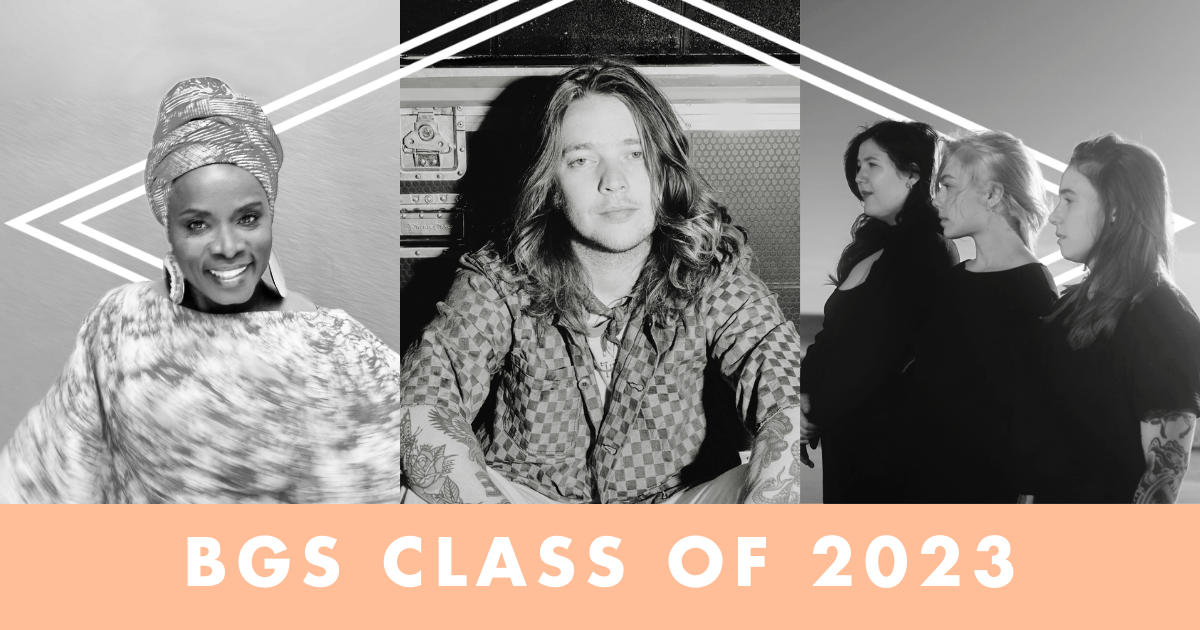
For the BGS Class of 2023, our intention is to highlight music, songs, albums, and performances that have stuck with us, or that we know will continue to stick with us into the future. We wanted to deliberately look beyond the music and creators that merely have the resources, networks, and access to reach us; we wanted to utilize genre as a checkpoint or touchstone, but never as a blanket criterion; we wanted to broaden what forms of media or formats are included; and overall, we wanted to attempt a holistic look at what a year of listening, learning, watching, and hearing can look like to this particular group of people.
You’ll find ravishing and large indie folk, earnest and literary – and raucous and silly – bluegrass, legendary legacy artists and brand new lineups, soundtracks and live shows, and more. Ultimately, whatever the year, we always want our retrospective lists to be a starting point, a springboard, for our readers, followers, and for roots music fans. This is not the end-all, be-all “Best of 2023” list. Instead, it’s a reminder of the music that scored a year absolutely filled to bursting with excellent, exemplary, ecstatic roots songs, albums, and shows.
boygenius in Pittsburgh, June 2023
When I saw boygenius this summer, I was milktoast about the whole thing going into it. As soon as I arrived, I realized I was surrounded by young people – and not just any young people: All the beautiful freaks were out for Lucy, Julien, and Phoebe. The energy was palpable and something that I have not experienced in over 20 years. Everyone knew every word. They were FaceTiming friends who cried and sang along remotely with these heroes on stage. It was inspiring!
boygenius feels like an important band. I so wish they had been around when I was an outcast teenager feeling such confusing, wild emotions. Music has a way of helping the world make sense. boygenius radiates communion and it felt like an honor to be a part of their world. – Cindy Howes
Caitlin Canty, Quiet Flame
My favorite bluegrass album of the year is often an album that, through no fault of its own, ends up receiving little to no bluegrass radio airplay or IBMA Awards recognition, and as I listened to Caitlin Canty’s Quiet Flame over and over this year, I couldn’t help but expect it would end up criminally underrated by the general bluegrass community. It’s made by bluegrass pickers – Canty assembled Chris Eldridge (who also was the project’s producer), her husband Noam Pikelny, Brittany Haas, Paul Kowert, Sarah Jarosz, and Andrew Marlin for her band – and as a result Quiet Flame, more often than not, is just an unencumbered string band album that’s as much bluegrass as it is Americana and singer-songwriter folk. But while Mighty Poplar, with a similar lineup of folks, takes off in bluegrass circles, it raises an eyebrow that this impeccable, heartfelt, and complicated set of songs hasn’t seen the same trajectory. Not that that was Canty’s goal – it’s obvious her priorities in music making are grounded and community-minded, part of why this album is such a stunner. “Odds of Getting Even,” co-written with another BGS favorite, Maya de Vitry, is one of the year’s best songs, bar none. – Justin Hiltner
A Homeplace Pilgrimage to Earl Scruggs Music Festival, August 2023
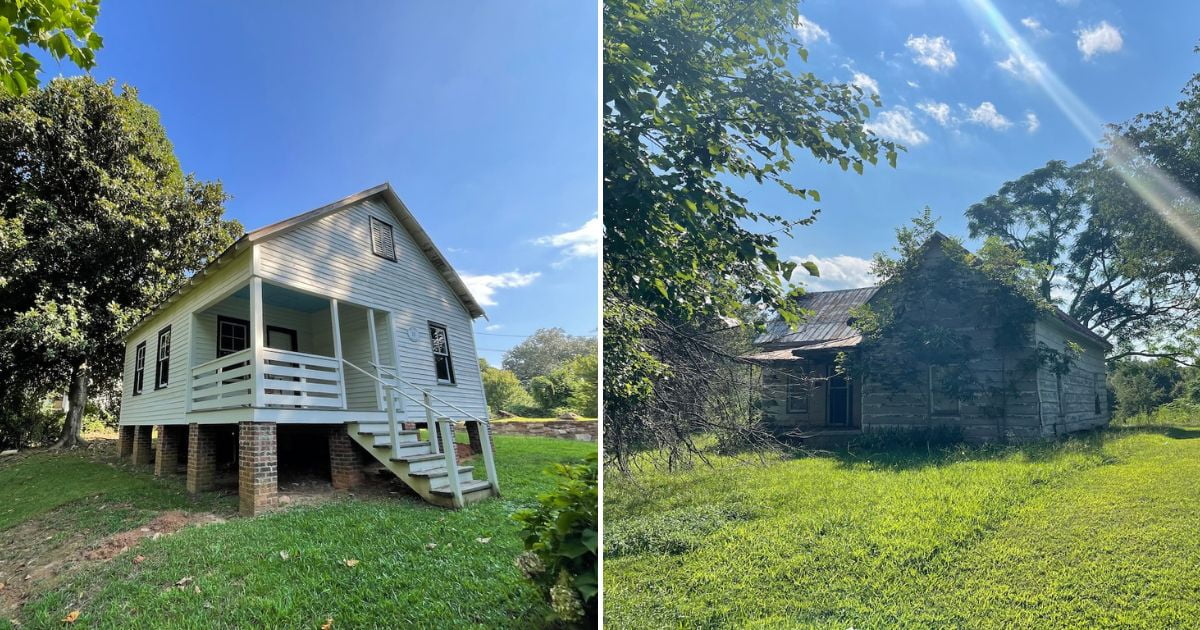
L: Nina Simone’s homeplace in Tryon, NC. R: Earl Scruggs’ homeplace in Boiling Springs, NC. Both photos by Justin Hiltner.
BGS once again co-presented the Earl Scruggs Revue tribute set hosted by Tony Trischka at Earl Scruggs Music Festival, held just outside of Shelby, North Carolina at the Tryon International Equestrian Center in August. On my drive to the festival grounds, I made stops in Tryon proper, to visit Nina Simone’s childhood home, and also in Shelby, to visit the Earl Scruggs Center and to drive by both of the Scruggs homeplaces just outside of Boiling Springs, North Carolina. It was stunning to visit both homes on the same day, to realize the interconnectedness of so much of American popular music. Simone grew up with a view of the Blue Ridge Mountains from her front porch nestled in one of their hollers, yet we place Scruggs as an Appalachian musician and not Simone?
The festival and Scruggs Center, for their parts, did an excellent job of demonstrating how broad, varied, and intricate American roots music is, even while focusing closely on bluegrass, string band, and Americana music. Listeners of our podcast, Carolina Calling, will know how much BGS loves North Carolina music history – the show features episodes on both Scruggs and Simone. Seeing that history in person, while heading to a first-class, banjo-heavy festival was a favorite musical moment of this year, for sure. – Justin Hiltner
East Nash Grass, Last Chance to Win
East Nash Grass seems to be all the buzz on the bluegrass circuit these days and those who have ventured to Dee’s Country Cocktail Lounge on any Monday night since 2017 can certainly understand why. The band’s long-standing residency at the Madison, Tennessee dive bar has taken them from a weekly pick-up band to performing at the Grand Ole Opry, the Ryman Auditorium, and at bluegrass festivals across the U.S. Their sophomore album, Last Chance to Win, captures the band at their very best (albeit, without their lovable stage antics). Following a 2023 IBMA nomination for Best New Artist, it won’t be a surprise if we see this record, and these musicians, sweeping awards in 2024 and beyond. – Thomas Cassell
Alejandro Escovedo at Cat’s Cradle Backroom, Carrboro, NC, November 2023
There are countless good reasons why you should make a point of seeing the Texas punk/soul godfather if he’s ever playing anywhere near you. But what might be the best reason of all is it’s a lead-pipe cinch that everyone in your town worth hanging out with will be there, too – onstage as well as in the crowd. Escovedo was among a dozen stars drawn to the North Carolina Triangle for an all-star “Nuggets” tribute show overseen by Lenny Kaye in November. So, he came a night early and played a solo show, too, ably supported by local luminaries Lynn Blakey and Pinetops/The Right Profile guitarist Jeffrey Dean Foster. The love in the room was palpable on deeply moving originals like “Sister Lost Soul” and “Wave Goodbye.” And when Kaye and R.E.M.’s Peter Buck came on for a closing Velvet Underground cameo of “Pale Blue Eyes” and “Sweet Jane,” the circle was complete. – David Menconi
Ben Garnett, “Open Your Books” (featuring Brittany Haas and Paul Kowert)
Before I’d listened to the complete #BGSClassof2023 Spotify playlist and realized this track was one of our first additions, the app kept recommending “Open Your Books” to me – and it’s not hard to see why. From guitarist and composer Ben Garnett’s debut album, Imitation Fields, the track features bassist Paul Kowert and fiddler Brittnay Haas and is an example of what bluegrass music can be, and what traditionally bluegrass instruments can do.
The tune opens slowly, with guitar and mandola – provided by Molly Tuttle & Golden Highway’s own Dominick Leslie. Fiddle swells, orchestral arrangements, and dreamy acoustic production make for a piece that feels distinctly intellectual. It’s chambergrass, but it’s also highly listen-able. While there’s a strong melodic thread throughout, the surrounding instruments and their players are allowed to wander off up the guitar neck, throwing in trill-y banjo licks, and detouring outside traditional fills and solo styles. The record was produced by Chris Eldridge and also features Matthew Davis on banjo and additional guitar from Billy Contreras. I’d recommend this tune to low-fi lovers, roots music fans, and anyone looking for a chilled out moment. It’s perfect for an introspective drive or a rainy winter day spent drinking hot tea at the window. – Lonnie Lee Hood
Alice Gerrard, Sun to Sun
Never, over the course of her lifelong career in music, has Alice Gerrard stopped, having reached her musical destination. She has challenged herself, time and time again, not simply for reinvention’s sake, but because she is a consummate old-time and bluegrass musician, someone so solidly bitten by the string band bug that making music requires that constant movement, that aspirational looking into the future, girded by songs of the past. But Sun to Sun, her latest – and perhaps final – album, features songs decidedly of the present. A synthesizer of traditional art forms, Gerrard takes textures and colors we relate to “authenticity” and leverages them to serve the messages in these tracks. Aging, mortality, justice, apartheid, gun violence, community are all woven into this collection. Alice is their nexus point, around which the entire project revolves and reflects the cosmic light she continues to shine on all of us – and on roots music subjects too often hidden in the shadows. – Justin Hiltner
A Good Year for Soundtracks – Asteroid City, The Holdovers, and More
Between the Writers Guild and Screen Actors’ strikes, 2023 was a weird year for the entertainment industry. But for those releases that did make it to the screen, it was a great year for movie soundtracks, especially for roots music fans.
First up, Wes Anderson’s western sci-fi Asteroid City. In addition to the usual cadre of Anderson’s cast, the film was peppered with classic country and bluegrass recordings from the likes of Tex Ritter, Slim Whitman, Bill Monroe, and Johnny Duncan & the Blue Grass Boys (you read that right). That’s to say nothing of the incredibly catchy original ear worm, “Dear Alien (Who Art In Heaven)” which felt as classic as those twentieth century tunes of the frontier written decades ago.
Capping off the year was Alexander Payne’s The Holdovers, a beautiful ode to a particular style of 1970s filmmaking that stars Paul Giamatti. Set in snowy western Massachusetts over a lonely winter break in 1970, the soundtrack plays like an old, soft blanket – familiar and warming. Newer tracks from Damian Jurado and Khruangbin weave seamlessly alongside ‘70s AM gold and Mark Orton’s pensive, folksy score. But the real standout of this soundtrack is a rediscovery of British folk artist Labi Siffre. His music has been shamefully overlooked in U.S. folk canon. Hopefully this movie can help start to rectify that.
Finally, it would be criminal if I didn’t mention the key placement of Indigo Girls’ “Closer to Fine” in the biggest hit of the year, Barbie. Here’s to another generation of young women finding themselves in Amy and Emily’s music. Thanks, Greta Gerwig. – Amy Reitnouer Jacobs
Kristen Grainger & True North, “Extraordinary Grace”
Take the anvil from my chest…
I am gasping for breath at this opening line. In her extraordinary, intimate voice, Kristen Grainger is pleading, letting us know she has lost hope. And we are right there with her. Whether we believed salvation came from the church or the Voting Rights Act, we believe no more. We are a fractured world, and it seems there is no bringing us together. Kristen’s melodies pull you in as much as her words, and I sometimes wake with this haunting song emerging from my dreams. Her bandmates’ graceful harmonies and instrumental accompaniment support the stunning words.
I once believed in extraordinary grace I put my faith in saints and saviors In the mirror, I can’t bear to see my heroine Killing time until time returns the favor.
Still, there is cause for hope: the promise of more music from True North. – Claire Levine
Angélique Kidjo at New Orleans Jazz & Heritage Festival, April 2023
“We can’t hear! We can’t hear!” Not what a performer wants to hear an audience chanting – though Angélique Kidjo didn’t hear it for a couple of songs at the New Orleans Jazz & Heritage Festival in April. She was giving it all, singing and dancing with vigor and verve, as she does. But the Benin-born star’s voice and all but the drums and percussion from her band were not reaching the crowd, that had already waited out a 45-minute rain delay. Finally, the stage crew got the message, but it still took some time to get things working. When they did, Kidjo betrayed no frustration – just pure, joyful release as she packed a full set’s worth of spirit into the handful of songs she could squeeze in the remaining time slot, including a few highlights from her re-infusion of Talking Heads’ Remain in Light album. Closing with her idol/mentor Mariam Makeba’s signature “Pata Pata,” she was radiant, as was everyone who stuck around to see and hear her. – Steve Hochman
The Lemon Twigs, Everything Harmony
This album is, without reservation or exaggeration, one of the most beautiful records I have heard in my entire life. Building on inspiration from ‘60s/’70s pop-rock (think the Byrds,Todd Rundgren, the Beach Boys, the Flamin’ Groovies), the Lemon Twigs achieve a layered delicacy of nostalgia and innovation. Their creative impulses are so detailed, articulate, and inspired that the entire album feels unfathomable; how could music reach such timelessness that it tickles at the preterhuman? Brothers Michael and Brian D’addario share the songwriting credits for pieces that feel distinctly matured from much of their earlier work. They’ve pared down the theatrics, tightened the sprawling lyrics, and created from a place that strikes a quintessential balance of self and influence. Their result is something oceanic – music that calls upon its ancestry in a way that is pervasive, striking, and sublimates the query of eternity. – Oriana Mack
Ronnie Milsap’s Final Nashville Concert, October 2023
Ronnie Milsap’s final Nashville concert will resonate with me for many years to come, both because of the multiple memorable performances and because it represented the best of country music from the standpoint of diversity and inclusion. Various performers from across the musical spectrum covered Milsap hits, with songs from every arena – honky-tonk and straight country tearjerkers, reworked doo-wop, R&B, and pop classics, love songs, and slice of life retrospectives. The roster of artists who displayed their love and affection for Milsap’s music crossed racial, gender, and sexual orientation lines, and it was also great to see the legend himself conclude the proceedings. While the Nashville audience and community will miss Milsap’s performances, this last outing provided plenty of wonderful moments and lots of great music that will never be forgotten. – Ron Wynn
New Dangerfield’s Debut at IBMA Bluegrass Live!, September 2023
For years a growing number of Black musicians have entered the trad scene and reclaimed Black traditions key to its development and evolution. Their work has run the gamut from preservation to experimentation. Audiences at this year’s IBMA Bluegrass Live! were introduced to a new Black string band that does it all: New Dangerfield. Made up of powerhouses Tray Wellington, Kaïa Kater, Jake Blount, and Nelson Williams, New Dangerfield has, in their own words, “risen to carry the torch.” In their premiere performance the band delivered an eclectic set of early jazz, early blues — and even a cover of R&B musician H.E.R’s “Hard Place,” led by Kater’s deliciously lush vocals. Each member, proficient instrumentalists in their own right, also showed off their technical chops and drew whoops from the crowd. Their set was something historic, and I’m excited to see what comes next from New Dangerfield. – Brandi Waller-Pace
Railbird Festival, June 2023
Set in the heart of Lexington, Kentucky, under a deep-red Strawberry Moon, the 2023 Railbird Festival was an under-the-radar masterstroke, highlighting the confluence of roots music and the mainstream. Held June 3 and 4 on the spacious lawn of The Infield at Red Mile, a sold-out crowd of 40,000+ enjoyed a non-stop lineup of performers from across the “Americana” pantheon, expertly curated and spread out over three stages. With 32 acts in total, country, rock, folk, bluegrass and more were all represented, as headliners Tyler Childers and Zach Bryan topped a bill including Charley Crockett, Whiskey Myers, Morgan Wade, Nickel Creek, Molly Tuttle & Golden Highway – even Weezer and Sheryl Crow. Combine all that with a well-thought out fan experience and an off-the-beaten path vibe, and the weekend was an ideal kickoff to festival season. – Chris Parton
Sam Shackleton at the Horseshoe Tavern, October 2023
Country fandom has always been ideological, but in the last few years the genre’s politics have felt plainer – clear villains and clear heroes, but also messy interior politics. Through this time, I’ve mostly been listening to folk music far away from the fighting at home, from musicians like Sam Shackleton, a genius singer and banjo player from Scotland. He was supporting the Mary Wallopers, the radical Irish party band, in Toronto in October. Shackleton was great, working the audience, singing his songs, and classic folk tracks. The crowd was restless, the beer he was offered on stage seemed pro forma, but he tried. There was a version of “All You Fascists (Are Bound To Lose)” that gave me hope for a few minutes. We step out for a smoke, and Shackelton is on the patio, nursing a lager. I tell him I loved the show and that I wanted vinyl. He hugs me and thanks me. Walking back in, the room is filled with Irish expats who are singing along to the Wallopers in ways that feel a little hostile. I leave early, going for Chinese food. These couple of hours were country/folk in 2023 for me – inclusive, exclusive, hand shakes, hugs, and isolation – plus enough physical/emotional distance from the world that I didn’t ask exactly how the fascists would lose. – Steacy Easton
Sleeping in the Woods Festival, May 2023
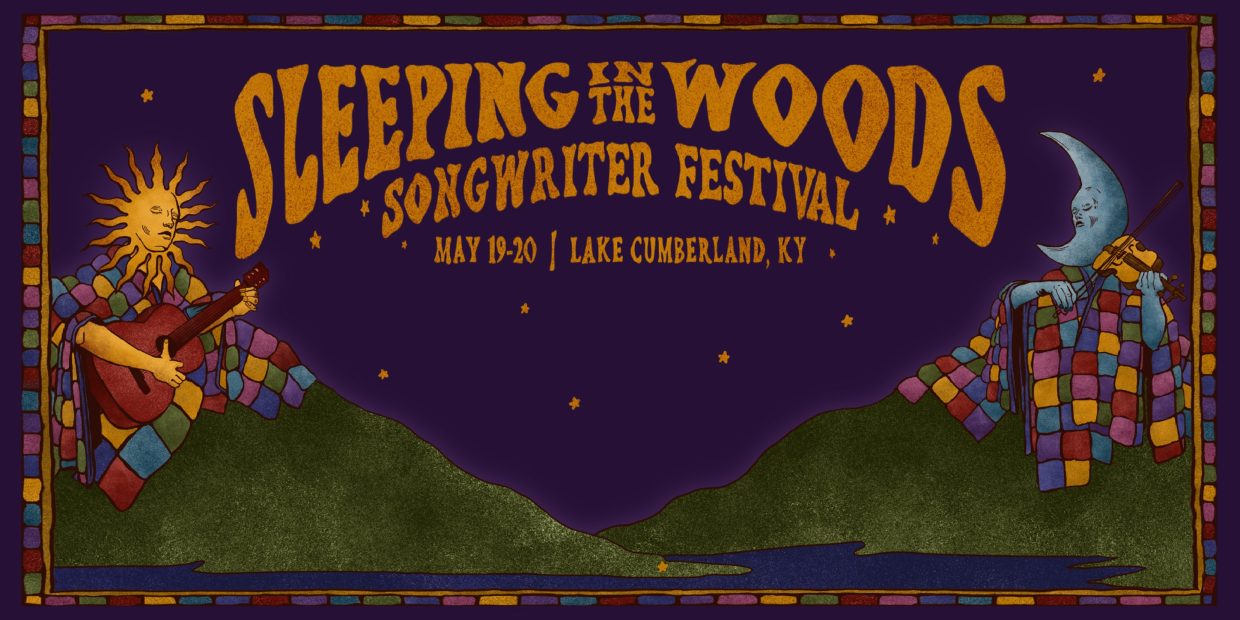
At a time when money in the music industry is at an all time low, and expenses are at an all time high, I have immense gratitude for anyone starting new community projects to showcase and uplift musicians and songwriters. I was lucky enough to get to be a part of Nicholas Jamerson’s Sleeping in the Woods Festival in Cumberland, Kentucky in May of 2023, and this event makes my best-of list. The festival bills itself as songwriter specific and showcases many lesser known Kentucky songwriters and bands. The strategy is to create a listening environment and bring together a Southern audience hungry for more straight-shooting roots music and hard hitting lyrics after becoming fans of Tyler Childers, Sturgill Simpson, and of course, Jamerson himself. After a successful first year, the festival is poised to grow exponentially and become a beloved annual event for all of those involved. – Rachel Baiman
Billy Strings at Bourbon and Beyond, September 2023
After five years of programming the BGS stage at Bourbon & Beyond, the Louisville-based festival has become something of a homecoming for our whole team. But nothing was more special than this year, when we got to see Billy Strings headline the main stage in front of over 50,000 people. It seems like just yesterday (in reality it was more like 2018) that Billy played our own stage inside the Bourbon Tent, a memory made all the sweeter by his surprise appearance this year on our stage during Michael Cleveland’s set. Hopefully it’s one of many happy returns to B&B for Billy, his fans, and BGS for years to come. – Amy Reitnouer Jacobs
Sunny War, Anarchist Gospel
Nobody sounds like Sunny War. As her profile has risen over the past decade, Sunny has held onto her punk rock politics and direct lyricism, grounding her artistry in the blues. Listening to one of her songs is like looking at a diorama of a nearby planet, similar to our own, but with none of human society’s bullshit. 2023’s Anarchist Gospel features Americana heavyweights David Rawlings, Jim James, Allison Russell, and Chris Pierce, but always sounds exactly like Sunny. Her hypnotic guitar work and precise songcraft shine. Her vocals walk a fine line between eerie and inviting. And at the end of a year when riot grrl aesthetics have gone mainstream, Sunny War is a rare reminder of what the real thing sounds like. – Lizzie No
Photo Credit: Angélique Kidjo by Fabrice Mabillot; Billy Strings by Christopher Morley; boygenius byMatt Grubb.
Even if you’re from Nashville or you’ve visited Music City many times, AMERICANAFEST always offers something new. This year, the annual event encompasses more than a dozen places to hear live music, as well as an impressive slate of industry panels and a near-endless list of parties. Where to begin? Although this story is by no means definitive, here are some promising highlights from the 2022 Americanafest daily schedule.
Tuesday, September 13
If you’re in town early, come say hello to BGS at Station Inn, where Jason Carter & Friends will take the stage. Doors at 8. Although it’s not open to the public, all conference and festival passholders are welcome. To pick up your pass, you’ll need to swing by City Winery or the Westin (the host hotel) earlier that day. An exploration of East Nashville might also be in order, with The Old Fashioned String Band Throwdown from 6-9 p.m. at Dee’s Country Cocktail Lounge.
Wednesday, September 14
A plethora of panels awaits conference registrants at the Westin, along with a couple of notable interview sessions. The Indigo Girls will be interviewed by NPR Music’s Ann Powers at 10 a.m. (They’ll be honored with a Lifetime Achievement recognition at the Americana Music Honors & Awards later that night too). Stick around for a conversation between Dom Flemons and Asleep at the Wheel’s Ray Benson, presented by WSM’s American Songster Radio. After that, Stax Records’ Al Bell and Deanie Parker will discuss the historic Wattstax festival in 1972.
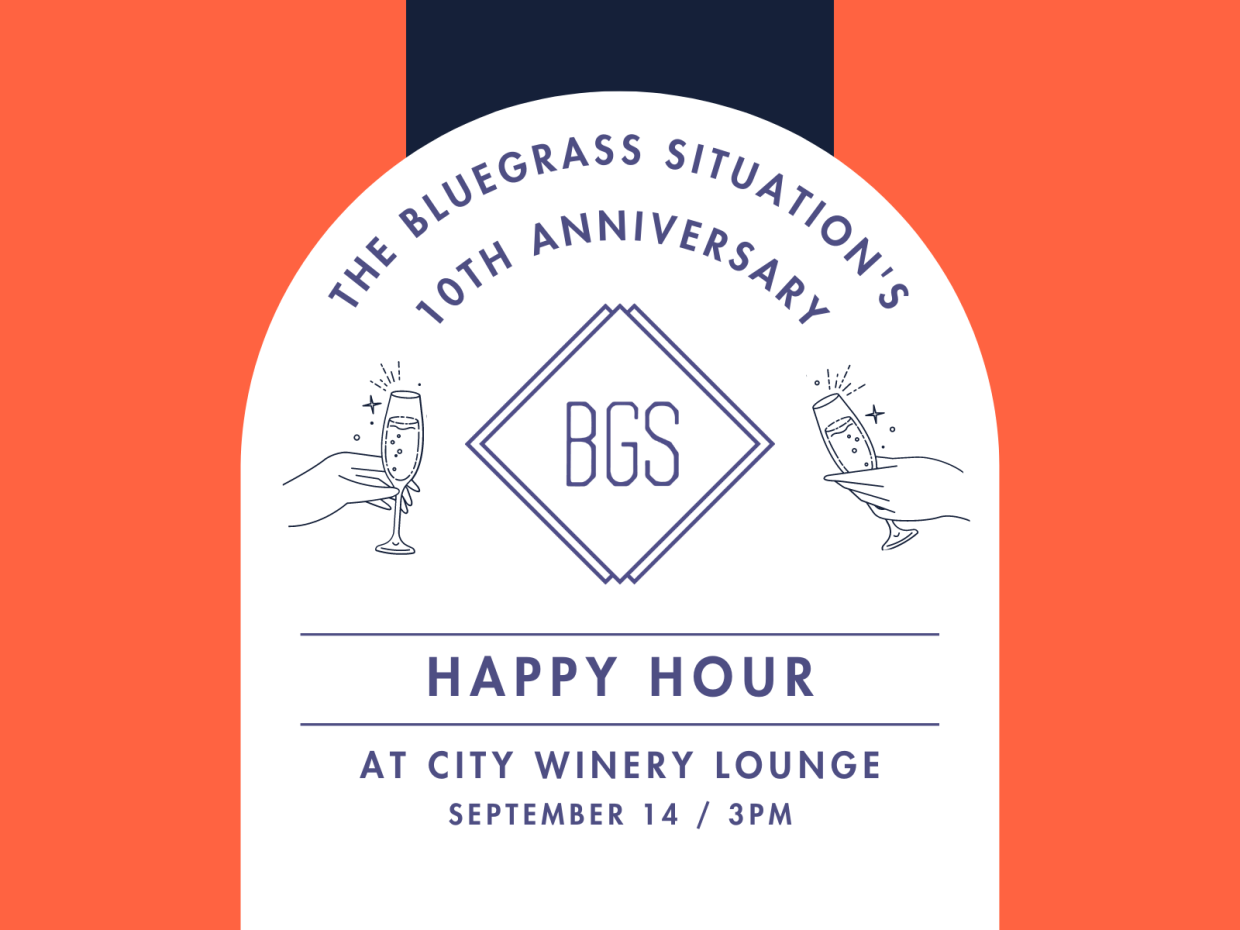
You can count on BGS for another party as we celebrate our 10-year anniversary with a happy hour at City Winery Lounge from 3 – 5 p.m. Conference and festival passholders welcome. Special performers include Kyshona, Rainbow Girls, and Willie Watson. And after the awards show, there’s an abundance of awesome shows to consider, including a rare solo set by Angel Olsen (our BGS Artist of the Month in August) at Riverside Revival, a set from Bill Monroe acolyte Mike Compton and a surprise headliner at Station Inn, and an acoustic showcase from members of North Mississippi Allstars at Analog at Hutton Hotel immediately followed by Texas great Joshua Ray Walker.
Thursday, September 15
One of the most intriguing panels on Thursday is titled The Narrators: How Jake Blount, Leyla McCalla and Kaia Kater Re-Mapped the Past, Present and Future With Concept Albums. As the Americanafest app points out, all three artists are students of musical and cultural traditions, as well as Black banjo players. The conversation takes place at noon with moderator Jewly Hight. Coincidentally, these three performers are showcasing at the exact same time later that night, so here’s your chance to catch them all at once.
Ishkōdé Records will celebrate Indigenous voices from Turtle Island at Dee’s Country Cocktail Lounge from 1-4 p.m., with performers such as Amanda Rheaume, Aysanabee, Digging Roots and Evan Redsky. If you’re lucky enough to get into the Bluebird Cafe for a 6 p.m. show, you can enjoy a songwriting round with Gabe Lee, Tristan Bushman and British artist Lauren Housley. A Tribute to Levon Helm with an all-star cast closes out the night at 3rd & Lindsley, following an evening of music with Arkansas roots.
Several of the most buzzed-about showcases of AMERICANAFEST will take place at the Basement East, with a strong lineup boasting Rissi Palmer, Molly Tuttle & Golden Highway, Trousdale, Bre Kennedy and Jade Bird. If you’re up for bluegrass, the City Winery Lounge lineup includes Tammy Rogers & Thomm Jutz alongside rising talent like the Tray Wellington Band and Troubadour Blue. If honky-tonk is more your style, stay up late for Jesse Daniel at 6th & Peabody, with original music that pays homage to the Bakersfield Sound without losing its contemporary appeal.
Friday, September 16
Diversity is a common theme on Friday’s daytime events, with panels like Booking With Intent: How Curating the Stage Impacts Industry Diversity and How Americana Music Is Embracing Minority Representation. Of particular note, British artist Lady Nade speaks on the influence of Black music in country and Americana in a panel titled You Can’t Be What You Can’t See: Why Representation Is Vital for the Americana Genre. Look for a conversation and performance at the Country Music Hall of Fame and Museum at noon with rising artists from the Black Opry Revue.
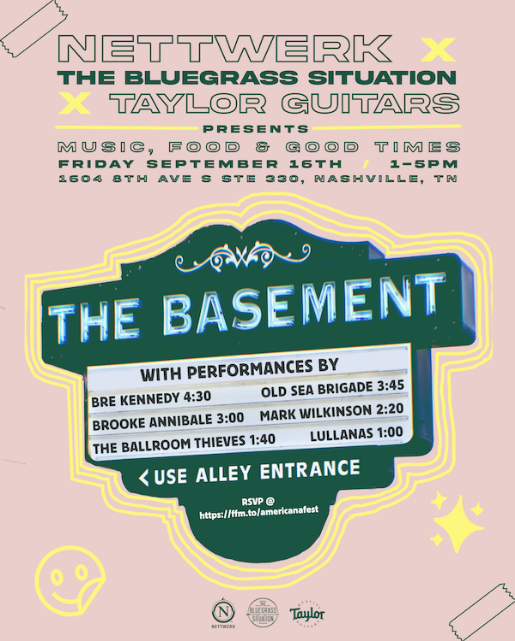
To list all the parties on Friday would take up this whole page. To socialize, you’ve got options ranging from songwriting rounds to label parties to multiple happy hours. (If you’re a craft beer drinker who loves to linger on the deck, it’s worth a visit to Tennessee Brew Works, where Hear Fort Worth is setting up shop.) As for BGS, you’ll find us at the Basement for a party presented with Nettwerk Records and Taylor Guitars. The public may RSVP through the invitation below.
This might be a good time to mention one of the festival’s new venues, The Well at Koinonia. This cozy coffee shop on Music Row played a crucial role in the development of contemporary Christian music, once lending its small stage to a then-unknown Amy Grant. For AMERICANAFEST, it’s providing a listening room environment for a number of quieter artists who still deserve to be heard, such as Nashville songwriter-producer Alex Wong, award-winning acoustic guitarist Christie Lenée, mesmerizing folk duo Ordinary Elephant, Australian troubadour Colin Lillie, and the accomplished Mexican-American musician Lisa Morales on Friday night. If you’re interested in early shows (starting at 6 p.m.), easy parking, and/or enjoying music in a non-alcoholic environment, make an effort to get refueled here.
Not far away lies one of Nashville’s musical landmarks, The Basement (a.k.a. “The Basement O.G.”), and if you’re in town to discover some overlooked voices, this might be an ideal spot to start. Drawing on blues and rock, Chicago musician Nathan Graham is making his AMERICANAFEST debut this year, followed by Southern slide guitarist-songwriter Michelle Malone, who’s touring behind new material like “Not Who I Used to Be.” At Exit/In at 9 p.m., Michigan Rattlers are among Americana music’s best storytellers, with a vibe that’s kind of brooding but still has some rock ‘n’ roll swagger. Hang around for 49 Winchester, a Virginia ensemble that’s been DIY for most of its career. However, 2022’s Fortune Favors the Bold is garnering some much-deserved attention. Listen closely for the Exit/In reference in standout track, “Damn Darlin’.”
For something more mellow, you can zoom over to City Winery for a late set by Milk Carton Kids. It wouldn’t even feel like AMERICANAFEST without seeing these guys. Earlier in the evening, longtime festival favorite Ruston Kelly will play alongside his dad, Tim Kelly, performing exquisite songs that they recorded together (with Ruston serving as producer). Gaby Moreno, Henry Wagons and Rainbow Girls are also on the well-rounded bill. Go ahead, order a bottle.
Saturday, September 17
By the time the weekend arrives, the panels have wrapped and the parties are well underway. You can peruse the Americanafest app for all the options, but first, settle in at City Winery for the Thirty Tigers Gospel Brunch from 11 a.m. to 1 p.m. (It’s on Saturday this year, rather than Sunday.) Artists appearing include Alisa Amador, Brent Cobb, Emily Scott Robinson, Stephanie Lambring, The Fairfield Four and The McCrary Sisters. Musicians Corner in Centennial Park also features free afternoon sets from Nashville mainstay Josh Rouse, Brooklyn’s own Bandits on the Run, Los Angeles songwriter Chris Pierce, Canadian banjo player Ryland Moranz, and more.
Over at The 5 Spot, Alabama bluesman Early James anchors a lineup with Theo Lawrence (a French songwriter-guitarist who opened dates for Robert Plant and Alison Krauss in Europe), Canadian musician Megan Nash, and new ATO Records signing Honey Harper. The night concludes with an 11 p.m. showcase titled Luke Schneider & Friends: A Pedal Steel Showcase. For something similarly atmospheric, consider a one-night-only event, Phosphorescent Performing Songs From the Full Moon Project, also at 11 p.m. at Brooklyn Bowl. He’s promising to play more songs than just the covers he’s chosen for this unique album, so you can bask in the afterglow of an incredible week of music.
For more information about these events and countless more, visit AMERICANAFEST.COM.
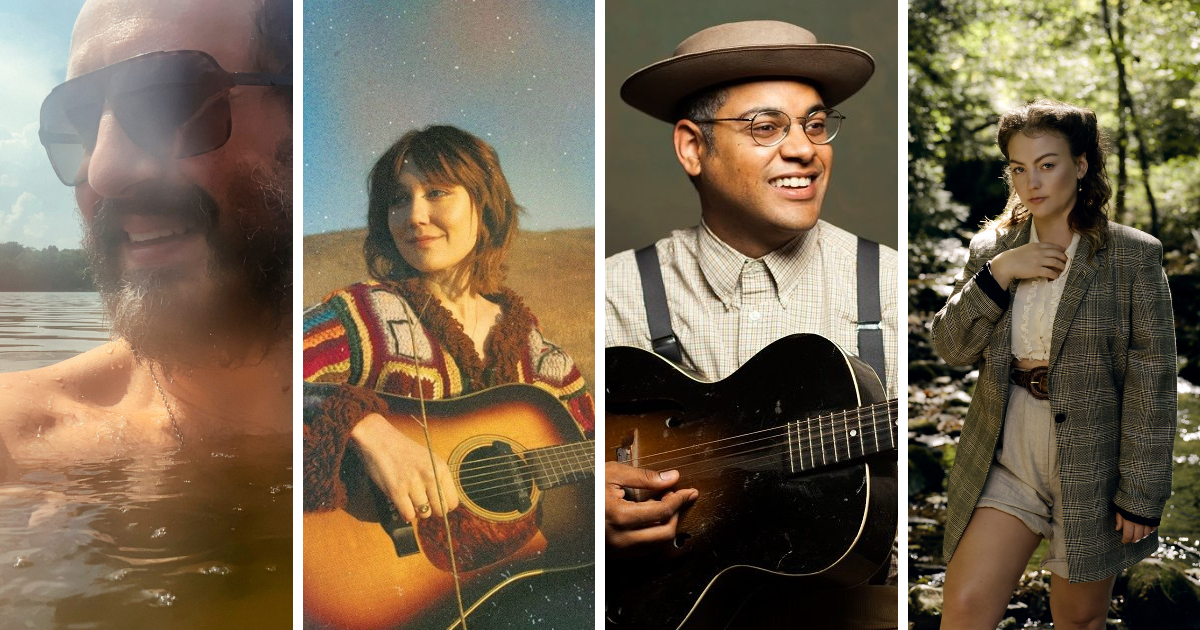
Artists featured at top (L-R): Phosphorescent, Molly Tuttle, Dom Flemons, Angel Olsen
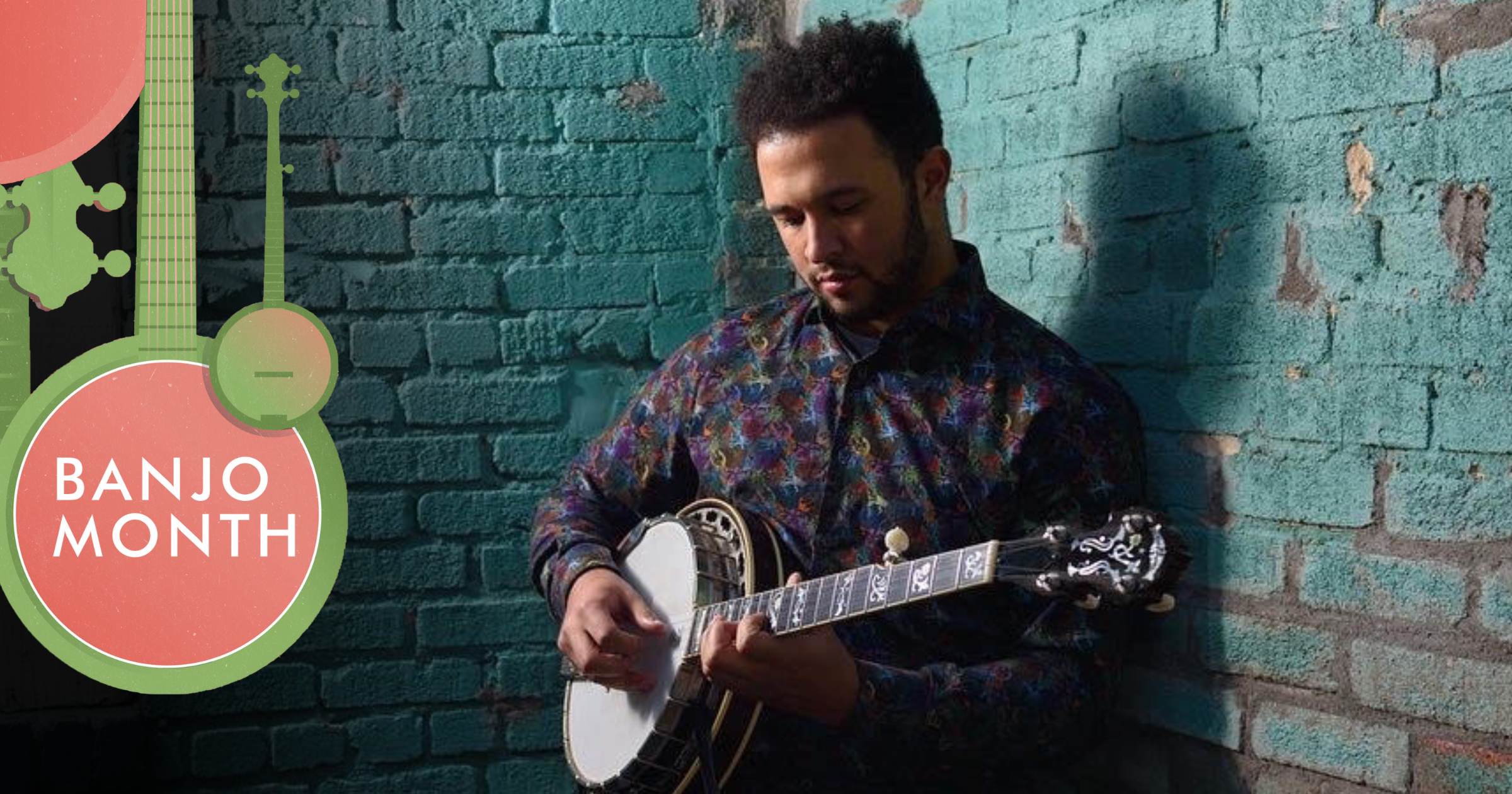
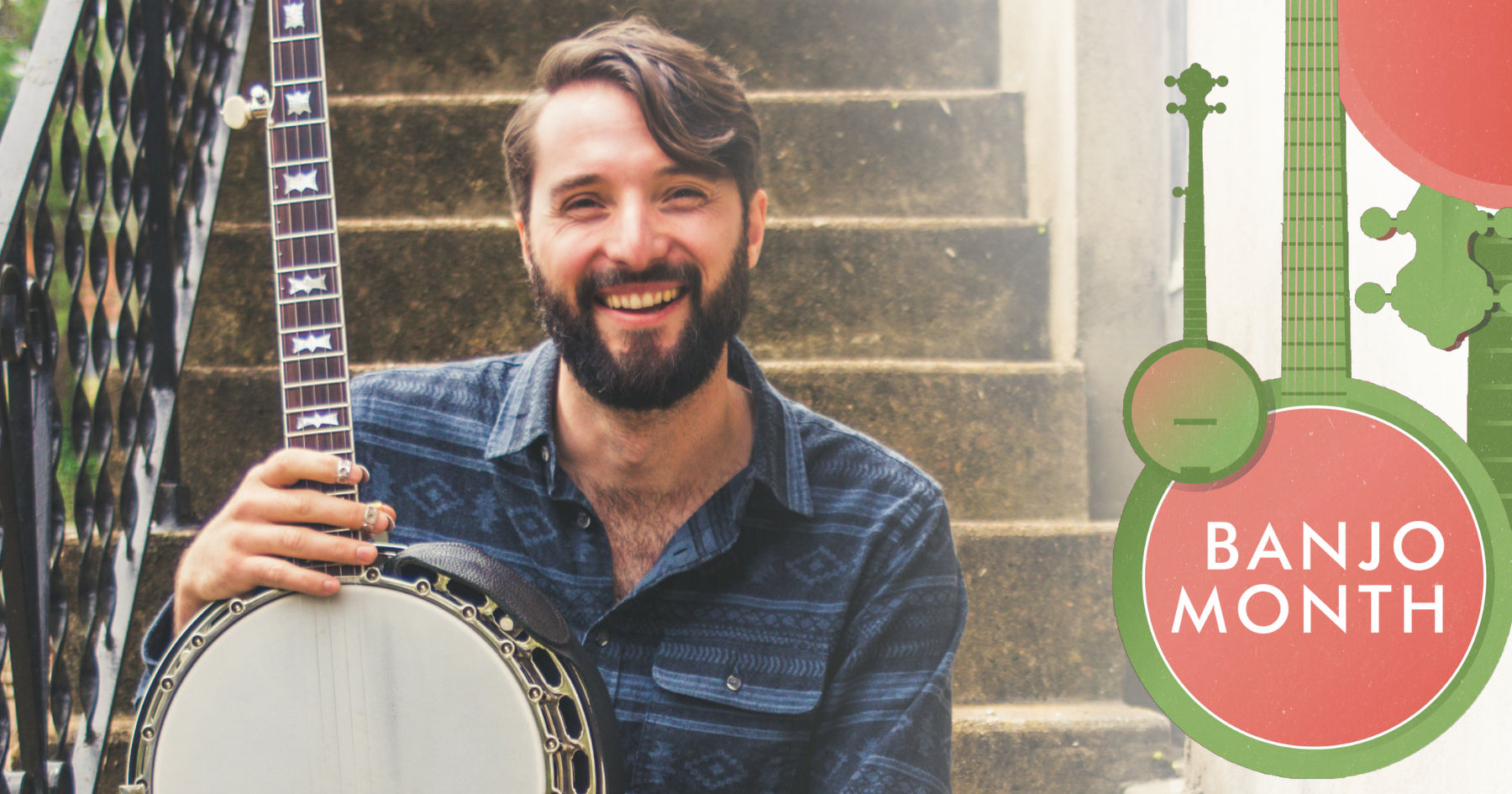
North Carolina musician Tray Wellington is fresh off a nomination for this year’s IBMA New Artist of the Year, following the release of his full-length debut album Black Banjo. Still in his early 20s, Wellington pulls from a myriad of influences — on his latest album he cites jazz as the major influence of his progressive bluegrass style. Many other banjo players of this younger generation are using the influence of genre and blurred genre lines, adapting and subverting narrative and traditions, and utilizing sheer unrestrained creativity to operate outside the traditional confines of the instrument.
In honor of BGS Banjo Month, Wellington gathered a collection of current artists who are thinking outside the box, creating their own voice on the banjo in new and innovative ways, and striving to make the banjo a better-known and appreciated sound.
Wes Corbett is a banjo player who wears many hats. The self-described “musically omnivorous bluegrass musician” is a true multi-hyphenate: 5-string aficionado (having released his solo album Cascade back in 2021), producer, former professor at Berklee College of Music, and musician with the likes of Joy Kills Sorrow, Molly Tuttle, and most recently Sam Bush Band.
Before hitting the road again with Sam Bush, the Washington native shared an exclusive playlist for BGS of “Wes Corbett’s Banjo Needs,” or as he puts it: the official home of all the songs that take him to his “happy place.”
“Fortune” – Adam Hurt
“Sliding Down” – Béla Fleck, Edgar Meyer, Mike Marshall
“Saint Elizabeth” – Kaia Kater
“The Hunt” – Kristin Scott Benson
“Milford’s Reel” – Noam Pikelny
“Your Love Is Like a Flower” – Flatt & Scruggs
“Come Back Darlin’” – The Bluegrass Album Band
“Poe’s Pickin’ Party” – Alison Brown
“The Over Grown Waltz” – Béla Fleck
“Goodbye, Honey, You Call That Gone” – Jake Blount
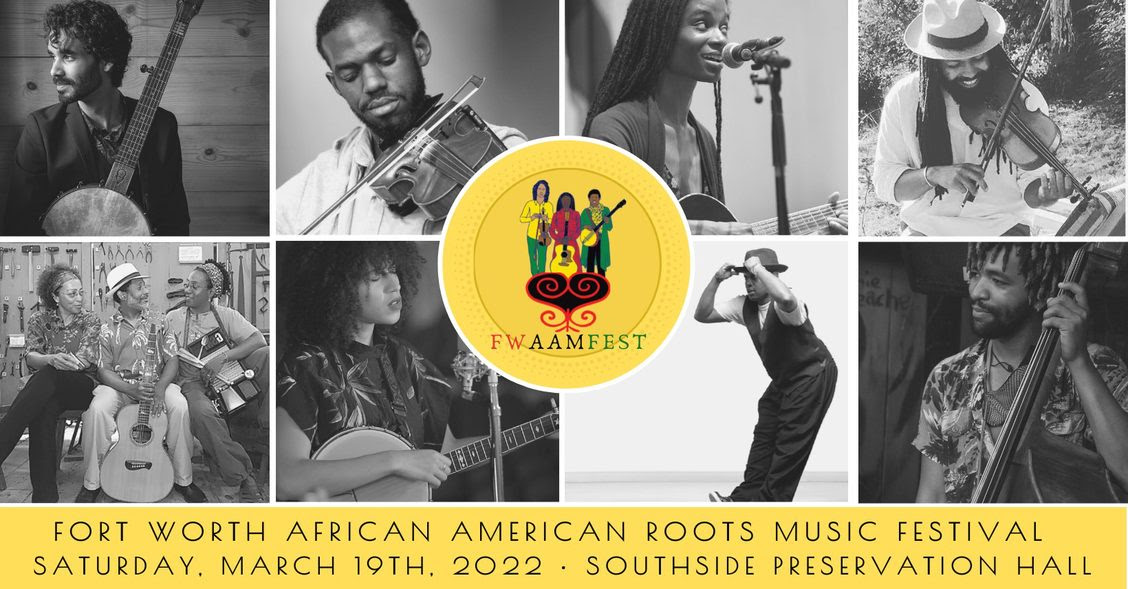
To put it simply, the Fort Worth African American Roots Music Festival is expanding awareness about the Black roots of old-time music. It’s also about representation, visibility, and perhaps most of all, community.
“We have been there since the beginning of this music, yet there is little to no representation in the large music festivals that cater to this genre,” says founder Brandi Waller-Pace. “We aim to change that.”
Also known as FWAAMFest, the event focuses on the genres of old-time, jug band, early blues and jazz music that is Black-led and showcases Black performers. Produced by Decolonizing the Music Room, FWAAMFest takes place on Saturday, March 19, at Southside Preservation Hall. Headliners include Jake Blount, Kaia Kater, and Justin Robinson.
Leading up to FWAAMFest, Brandi Waller-Pace shares how a sense of community shaped this one-of-a-kind event.
BGS: What led to the idea of launching a festival focused on African American roots music?
Brandi Waller-Pace: I started playing old-time music myself by finding the banjo not terribly long ago. Maybe five years ago is when I really turned my attention toward the instrument and began to play, and really quickly connected with one of the few people in my community who plays clawhammer. He convinced me to sing and play guitar in a string band with him and another member. So, I got my chops up and learned a lot and gradually learned a lot about the history.
Finding out how deeply embedded Blackness and Black history – the history of my own ancestors – was, in the case of the banjo and the tradition surrounding the music, felt really affirming to me. Before long I began to meet other Black folks who were deeply involved in the community and the history. We started to connect, and those circles grew.
I remember hearing about the Black Banjo Gathering before I had gotten into the music at all, and not really knowing its significance until later. And then I attended another event that Dr. Dena Jennings, at her farm in Orange, Virginia, called the Affrolachian On-Time Music Gathering — or “The Thang.” It was really the first time I was around a significant amount of Black folks who were engaged in roots music, talking about the history and just engaging with one another.
It wasn’t an exclusively Black event, but it was really the first time I was around a significant amount of Black folks who were engaged in roots music, talking about the history and just engaging with one another. It was really beautiful. It planted a seed, I think. As I engaged more in the community, there were discussions about “How do we work on inclusion in existing spaces? When is it time to create new spaces?” I considered, “You know, I could create something new.” I tend to operate that way. I’ll engage in existing spaces and systems but I love the idea of creating something new. And so I said, “I could do a festival.”
You cover multiple old-time music styles at this festival. How did you curate the lineup?
I have to be honest. I’ve just been really fortunate to know so many wonderful musicians, and to become acquainted with some, and to develop deep friendships with others. And so, the lineup came from asking, “What’s the community that I’m finding myself in? And who are the people that I know about that I don’t get to see as often but are amazing musicians?” As this event grows, I hope to engage with people further and further from my close circle while still making sure to have space for those that were so important to starting my journey into this music and learning the history of it.
A festival like this will bring visibility to the Black roots of old-time music. Why is that important to you?
In part, the visibility is connected to my own journey of discovery and finding myself, and what my Blackness means to me. The Black roots of old-time music are such a huge part of US culture. Enslaved Africans materially and economically and physically and culturally built so much of what we define as US culture.
In my work in music education, and in my scholarly work, and in my clinician work, that is what is so important to me – centering narratives that are so very important but are not broadly treated as such. It makes me happy to think of the idea of Black folks on a broader scale looking at these musical forms and seeing Black identity within that and having that engagement. It brings it back full circle to times when these traditions were seen as common in Black spaces.
What is the mission behind your nonprofit, Decolonizing the Music Room?
The mission of Decolonizing the Music Room is to center Black, Brown, Indigenous, and Asian voices, knowledge, and experiences in music education and related fields. So, we do this with things like FWAAMFest or with presenting to educators and other organizations, or by creating content that puts these narratives out there. We’re engaging with music education and other communities across disciplines to really connect to others and get this work out there as much as possible.
It’s a lot of work to launch a festival, but what have you enjoyed the most about creating this event?
You’re right, it is an immense amount of work to launch a festival, but what has brought me the most joy is doing it with friends. These are not just people I admire, experts in their field, genius performers, scholars, and community activists. They are actual people I know in real life and I still want to pinch myself when I think about the fact that this is actually happening with these people, because I feel like so much of a newbie. Being able to do this has been really amazing.
The second thing has been that it’s been in my community. I taught in public schools here. I taught music, wrote curriculum, and engaged in community advocacy work. I’ve been down here for 13 years now. I feel like I have roots here. I have children who go to school here. I have colleagues that I’ve worked with. I’m an artist in the community. For me personally, I wanted it to be something that feeds diversity into the community where I live, where I’ve taught, and where I’m raising my children. It’s wonderful to be able to do that.
For those music fans coming to check it out, what do you hope will take away from the experience?
I want people to come and understand that this music is Black music. Blackness is all throughout. This music is community music. This music is music that can bring people together, and that one can engage in. One of the things that I love most about learning old-time music is that there’s so much nuance and there are complicated things that you can learn, but also the level of accessibility. It didn’t take me long to be able to engage in a way that felt meaningful for me, even though the way I can play now is light years from the way I could play when I just started.
Seeing all that Blackness represented and understanding the connection. Seeing that it can be participatory and then knowing something like that is in Fort Worth. They’re gonna take away, “I gotta come back to Fort Worth every March because I have to be in this festival.” The folks in the community are gonna say, “You know what? Maybe I want to learn the banjo.” That is something I can do here. We can create more musical community here.
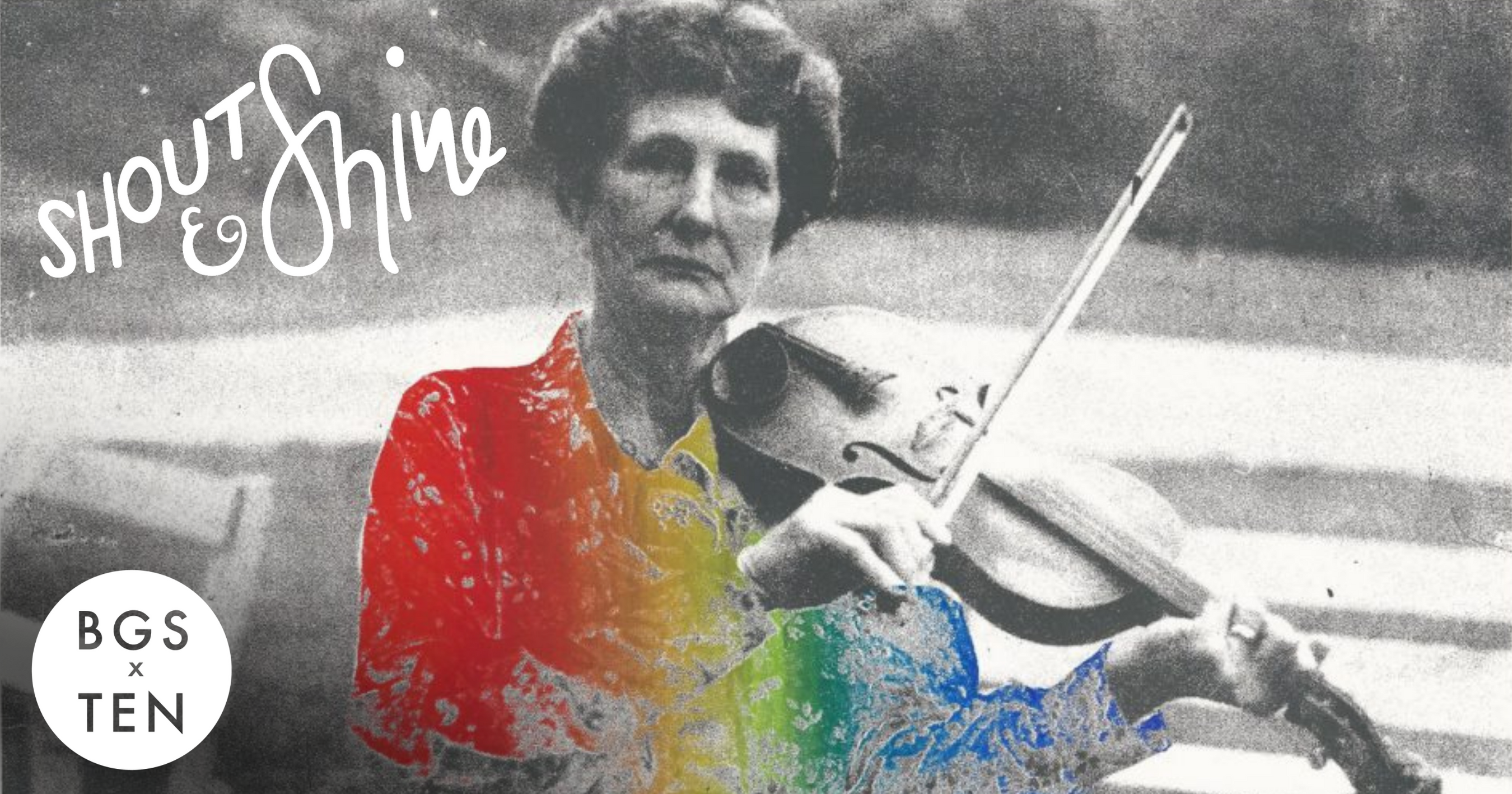
It was late 2016 when the world first learned of North Carolina’s HB2 – the “bathroom bill” – prohibiting trans folk from using bathrooms and locker rooms that aligned with their gender identity. The International Bluegrass Music Association was having its conference in Raleigh that autumn, and we at BGS were feeling restless about wanting to do something at the conference to create a safe space for marginalized artists who were already not feeling welcome at the annual event. And thus the first ever Shout & Shine was conceived and held at the Pour House in Raleigh on September 27, 2016.
In the years since its inception, Shout & Shine has taken on multiple forms – from a one-night showcase, to a day-long stage, to an ongoing editorial column and video series on the BGS homepage, Shout & Shine continues to create a dedicated space for diverse and underrepresented talent in the roots music world.
“Shout & Shine began with a simple mission, to create a space for marginalized and underrepresented folks in bluegrass to be celebrated for who they are, unencumbered by their identities,” explained Shout & Shine co-creator Justin Hiltner. “Since 2016, it’s grown into so much more but above all else, it continues to be exactly what we created it to be first and foremost: a community. Our Shout & Shine community demonstrates that these roots music genres are for everyone; they always have been and they will be in the future, too.”
Past lineups have included Amythyst Kiah, Nic Gareiss, Kaia Kater, Alice Gerrard, Jackie Venson, Lakota John, The Ebony Hillbillies, Cathy Fink & Marcy Marxer, Yasmin Williams, and many more.
You can read about the first Shout & Shine event from 2016 here and more Shout & Shine video sessions and features here.
When Amythyst Kiah was a teenager in the suburbs of Chattanooga, Tennessee, she wanted to be “the guitar-playing version of Tori Amos.” Locked away in her room with her headphones pulled over her ears, poring over liner notes and listening intently for every nuance in her favorite records, she found solace in the way Amos told her darkest secrets in her songs and how she turned that vulnerability into something like a superpower. It made her feel less alone, especially as a young, closeted Black girl in a largely white suburb. Tori Amos helped her survive adolescence.
Kiah didn’t grow up to become any version of her hero. Instead, she simply became herself. Her new solo album, Wary + Strange, ingeniously mixes blues and folk with alternative and indie rock, devising a vivid palette to soundtrack her own songs that tell dark secrets. It’s one of the most bracing albums of the year, grappling with matters both personal (her mother’s suicide) and public (the struggles of Black Americans). “Now, when I’m in my mid-thirties,” says Kiah, “it’s amazing to make a vulnerable record and then have people at my shows tell me that my music helped them heal, helped them get through some hard times. To have someone connect with my music is really powerful.”
BGS: These songs are rooted in your own life and your own experiences, but they do seem like there is something universally relatable in them. Is that something you were thinking about or striving for?
Kiah: Yeah. To have someone connect with my music is really powerful. But that’s been hard to process that idea, because for the longest time I had so much social anxiety and depression and low self-esteem. I didn’t think that much of myself and couldn’t imagine that anybody really cared about me. It’s all stuff related to mental health. Obviously there are people who cared about me. I just couldn’t see it. Now, I’ve come around and maybe fully grasped my value as a person and what I have to offer the world, and that has been very reaffirming. I have a better sense of who I am and why I’m here. And it feels good to make music that helps people get through hard times.
What is it like to revisit the tough times in these songs night after night?
I’ve spent some time thinking about that, and I don’t really know how I’m doing it, to be perfectly honest. A big part of it is that I spent a really long time repressing my emotions and keeping my feelings to myself. So writing a song about how I’m feeling is a sign that I’ve processed it. Not that I’m moving on or I’m done with it, whatever I might be writing about. But I’ve confronted it. I’ve learned from it. And now I can continue with my life and move forward.
A big part of my life has been living in the past and not being fully present in the moment. In order to be present, you have to be able to process stuff that’s happening to you in that moment. Otherwise, you make decisions based on something that happened before. So, a song is a representation of me processing something and understanding what happened to me. Singing that song night after night, it doesn’t feel like I’m necessarily reliving it every time. Because I’ve already processed it. That’s my working theory right now. It might change.
That’s something I think about a lot, because as a listener I can play a song based on the mood I’m in. But as an artist, you’re locked into these songs. You can’t not play them.
I get what you’re saying. The way people listen to music is really fascinating to me. My partner and I, we approach music very differently. My approach has always been to listen to things that reflect my mood. When I was younger, that meant listening to a lot of really sad, depressing songs. Somehow that made me feel good. I’m a very critical listener of music and I like to listen to all the different intricacies. I’m not someone who has a vast library of music, but I’m obsessed with certain sounds and ideas so I will listen to an album and pick apart every detail.
But my partner listens to music to shut her brain off. Her favorite artists are very different from mine. She loves a lot of pop music, like Taylor Swift. To her it’s feel-good music. You break it out and sing along. But she also listens to a lot of classical music, too. She’s got that ability to go back and forth with her listening vibe. That was surprising to me at first, because I used think, “How can people listen to happy music? Don’t they know what’s happening in the world?” I would deliberately avoid happy music because I was personally insulted by it. But thanks to my partner, I can totally see that perspective where you’re listening to music that doesn’t reflect the mood you’re in because you’re trying to snap out of it.
Did that change how you listened to music?
As I’ve gotten older and my mental health has gotten a lot better, I can appreciate listening to something that is just meant to be fun. It doesn’t have to be a super serious moment. I think I learned how to be a lot less pretentious about what I listened to and why I listened to it, and I learned to be a lot less judgmental about other people’s listening habits.
Some lines in these songs sound very defiant of religion — like in “Black Myself,” when you sing, “Your precious God ain’t gonna bless me.” Can you talk about that aspect of your songwriting?
With “Black Myself,” the idea was that each verse would be from the perspective of a specific type of person. So the first verse with that line is from the perspective of an enslaved person. They’re singing about wanting to jump the fence, wanting to be free, wanting to be with the one they love. If an enslaved person had a relationship or a marriage, it was never legally recognized. There was always a chance that they might get sold to different people and they’d never see each other again. Whatever bonds they had could be broken, like they were just cattle. The line about “Your precious God ain’t gonna bless me,” that’s a direct reference to the way that pro-slavery people used Christianity as a way to justify enslaving people.
There was a Bible specifically written for enslaved people — it was even called the Slave Bible — and the people who edited it made sure to only leave in the verses that talk about being obedient. All the verses that talk about autonomy and freedom were removed. The sole purpose was to get enslaved people to be content being slaves, so they wouldn’t revolt. But they were basically saying, “God wants you to be enslaved. He wants you to serve your master. He wants you to be treated like a subhuman.” That is not a God that I would ever want to believe in or ascribe to. That line is that character saying that’s wrong.
I’ve had one or two instances where someone got upset at that line, because they felt like I was being disrespectful to God without really understanding the context in which it’s being said. But I don’t agree with that. There are people all over the world with different belief systems, and at the end of the day, if what you believe in makes you a better person and makes you have respect for humanity, that’s wonderful. If you believe in humanity, that’s what important to me. But why would God be OK with telling someone they have no freedom? But any time you make art, there’s always going to be people who see one thing but not everything else surrounding it. And they base an opinion on that. Not everybody’s going to understand the whole picture.
I read about your performances in Europe, where the crowd would sing “Black Myself” back to you. It definitely seems to reinforce that idea of having a conversation with the song.
I was at the Cambridge Folk Festival with Rhiannon [Giddens], Yola, and Kaïa Kater. We put together a set where we’re singing our own songs and then singing harmonies for everybody else’s. There had to be 500 or 600 English white people in this tent, and it was the first time I’d really noticed other people singing the song or singing that line, “I’m black myself.” I remember thinking, “What planet are we on?” One of my biggest reservations about that song was that people would hear it and think, “Oh, that’s just for black people.” But to me, when someone’s telling a story, it’s meant for everyone to hear. Systemic racism is something that affects everybody in different ways, so we all need to be part of the conversation if we’re going to make things better and look out for each other.
Did you get any other negative responses to the song?
My big concern was that there would be some backlash from white people who weren’t really listening to the song or thinking about it. I was afraid they’d try to make a point like, “If this was called ‘White Myself,’ you’d be canceled.” And there have actually been some comments like that, which completely disregards the fact that the song is about Blacks. It’s about overcoming adversity despite being Black. So if someone can’t hear the words of the song and actually understand what’s happen, that says more about them than it does about me or the song. So I have no apologies for it.
But there are white people who understand what the song is about and they’re singing in solidarity. They know that it’s about human experience. And just because you didn’t personally experience some of this stuff doesn’t mean you’re not allowed to sing along with it. I had a similar conversation the other day with somebody about the song “Coal Miner’s Daughter” by Loretta Lynn. I’m not a coal miner’s daughter. I didn’t grow up in the coal mines. But I love that song and I love to sing that song. It’s a great song about someone else’s experiences. Empathy is such an important quality in that regard and we need allyship in order for things to get better.
At BGS, we seek out roots music from all corners — for those readers encountering us for the first time, we’re not “just bluegrass.” With our annual year-end list, we’ve shaken off the “best of” title and instead gathered 20 recordings that inspired our staff and contributors. For many reasons (but especially the long-awaited return of live music and festivals), we look ahead to 2021, but first… here are the albums and songs that inspired us in 2020.
Courtney Marie Andrews – Old Flowers
Courtney Marie Andrews couldn’t touch my heart deeper. Her music has been the healing salve for the wounds of 2020. To me, she’s the true definition of an artist: A songwriter, a musician, a painter, a writer, a singer, a poet, an activist. My favorite song on her magical 2020 album is “Old Flowers.” It’s the perfect metaphor of resilience and rebirth after suffering, both in love and in life. Becoming whole again. If that ain’t a theme we could all grow from this year, I don’t know what is! – Beth Behrs
Anjimile – “Maker (Acoustic)”
Anjimile’s Giver Taker was the album I can’t stop (and won’t stop) telling people about in 2020. The full version of their single, “Maker” was a beautiful amalgamation of cultures and influences synthesized by an artist not constrained by cultural and creative preconceptions. To me, Anjimile’s acoustic version of the lead single distills the brilliance of their songwriting into its purest form. – Amy Reitnouer Jacobs
Danny Barnes – Man on Fire
Danny Barnes’ Man on Fire was a worthwhile gift to us all this year. Over the last couple of years, I’d heard chatter of a project in the works with names like Dave Matthews, John Paul Jones, and Bill Frisell involved. I am constantly in awe of what Barnes can create using the banjo as a pencil. This record was no exception, combining his unique style and songwriting with an electrified crew. – Thomas Cassell
Bonny Light Horseman – “The Roving”
There’s an odd bit of sorcery in the first measures of “The Roving,” a new version of an old folk tune on this supergroup’s debut. It opens tentatively, the instruments falling into the song like autumn leaves: First an acoustic guitar, then cymbals, then piano, all coalescing into a windblown arrangement that’s both understated and sublime. – Stephen Deusner
Bob Dylan – Rough and Rowdy Ways
Packed with jumbles of historic/cultural references and tall tales, bluesy swagger and prayerful romance, and climaxing with the shattered-mirror JFK assassination epic “Murder Most Foul,” Dylan’s first set of originals in a decade is breathtakingly masterful. It’s also, often, hilarious. Nearing 80, the Bard’s as playful as ever. And as poignant. And, justifiably, as cocky. – Steve Hochman
To me, Bob Dylan’s best era started in 1989 with his 26th studio album, Oh Mercy, and continues to this day with his 39th, Rough and Rowdy Ways. “Murder Most Foul” shows us that the master of his generation is as much in control of his folktale troubadour craft as he’s ever been. – Chris Jacobs
Justin Farren – Pretty Free
Knowing nothing about Justin Farren, I was immediately sucked into his evocatively detailed story-songs that involved returning diapers to Costco, getting a “two-paycheck ticket” while trying to impress a girl, and (in the all-too-appropriately-titled for-2020, “Last Year Was The Best Year”) a wild Disneyland adventure. Full of humor, sorrow, regrets and hope, Pretty Free was a musical world I visited often this year. – Michael Berick
Mickey Guyton – “Black Like Me”
Mickey Guyton’s lyrics illuminate the individuality and dilemma of any non-white vocalist in country music, and in particular the difficult journey of Black women in the field. Her performance is gripping and memorable, paying homage to many others who’ve faced ridicule and questions about why they’re daring to perform in an idiom many still feel isn’t suited for their musical style. – Ron Wynn
Sarah Jarosz – “Pay It No Mind”
Atop a Fleetwood Mac-style groove, Sarah Jarosz imagines the advice a distant bird might offer. But her songbird is no sweet, shallow lover. She comes with the weight and wisdom of something more timeless. Jarosz lets her fly via mandolin-fiddle interplay that personifies the tension between the endless sky and the “world on the ground.” – Kim Ruehl
Lydia Loveless – Daughter
“I’m not a liberated woman,” Lydia Loveless declares on her fifth album, “just a country bumpkin dilettante.” Don’t you believe it. Written in the shadow of her 2016 divorce and beautifully sung in a voice both epic and straightforward, Daughter finds this Americana siren at the height of her formidable powers. – David Menconi
Lori McKenna – The Balladeer
Lori McKenna‘s singular talent for capturing the joy in everyday details is on full display, from the church parking lots and hometown haunts of “This Town Is a Woman” to the stubborn tiffs and make-up kisses on “Good Fight.” But The Balladeer acknowledges the hard-as-hell times, too. With gentle accompaniment, commanding melodies, and McKenna’s signature lyrical wit, The Balladeer showcases a modern songwriting master. – Dacey Orr Sivewright
Jeff Picker – With the Bass in Mind
I love “new acoustic music,” but am often afraid I’ll be disappointed by it. Jeff Picker’s With the Bass in Mind immediately eases those worries by offering music that is creative, thoughtful, unexpected, and virtuosic while still feeling grounded and musical. All while effortlessly answering the once-rhetorical question: “What would a solo bluegrass bass album even sound like?” – Tristan Scroggins
William Prince – Reliever
William Prince‘s Reliever feels like the best pep talk I’ve ever had. In particular, “The Spark” finds him astonished with loving a partner who loves him back, no matter his own perceived flaws. As a whole, the album explores complicated emotions with a comforting arrangement (with duties shared by Dave Cobb and Scott Nolan). Sung with assurance by Prince, almost like he’s confiding in you, Reliever is both encouraging and excellent. – Craig Shelburne
Scott Prouty – Shaking Down the Acorns
We’d be remiss in our jobs as procurers of roots music culture to not include this stoically beautiful record on our year-end list of the very best. A hearty collection of 24 (mostly solo) old-time fiddle and banjo songs, there is something ever-present, comforting, and timeless about Prouty’s playing, and I have no doubt this is a record I’ll be revisiting like an old friend for years to come. – Amy Reitnouer Jacobs
Emily Rockarts – Little Flower
Montreal-based songwriter Emily Rockarts’ debut album Little Flower is one to remember. Produced by Franky Rousseau (Goat Rodeo Sessions), the album features lilting cinematic ballads punctuated with dance-in-your-room indie anthems. Rockarts’ musicianship is undeniable; her stunning melodies and refreshingly earnest lyrics make for a remarkable combination that is unlike anything else I’ve heard. Run, listen to Little Flower now! – Kaia Kater
Sarah Siskind – Modern Appalachia
Sarah Siskind brought her luminous, Nashville-honed songwriting back home to North Carolina a few years ago and let the mountains speak through her. Leading an all-star Asheville band live off the floor at iconic Echo Mountain studio, she’s made a heart-swelling set of songs that gather her special melodic signature, her meticulous craft, and her insight into how a rich musical region is evolving. – Craig Havighurst
Emma Swift – Blonde on the Tracks
Emma Swift reminded the music world of the power that artists have to control their work when she self-released Blonde on the Tracks, an eight-song collection of Bob Dylan covers. Her interpretations are as powerful and innovative as her methodical and thoughtful initial distribution sans streaming services. – Erin McAnally
Julian Taylor – The Ridge
Mohawk singer-songwriter Julian Taylor resides in what is now referred to as Toronto, but his masterful country-folk record, The Ridge, hits your ear as if plucked directly from Taylor’s childhood summers spent on his grandparents’ farm in rural British Columbia. Refracted through Taylor’s crisp, modern arrangements and undiluted emotion, The Ridge seamlessly bridges the elephant-in-the-2020-room chasm between rural and urban — musically, familially, lyrically, and spiritually. – Justin Hiltner
Molly Tuttle, “Standing on the Moon”
2020 has handed us its fair share of cover albums, with stay-at-home orders urging many to reach for the familiar — but none have meshed a variety of musical sources so creatively as Molly Tuttle’s whimsical …but i’d rather be with you. Her version of “Standing on the Moon” is the nostalgic and homesick, Earth-loving galactic trip of my pedal steel-obsessed, Deadhead dreams. – Shelby Williamson
Cory Wong – Trail Songs (Dawn)
A record that I didn’t know I needed came in early August when Vulfpeck guitarist Cory Wong released Trail Songs (Dawn). A change of pace for Wong, it features predominantly acoustic instrumentation and organic sounds. The album kicks off with “Trailhead,” which sounds like a Dan Crary instrumental until the groove drops in the second verse. BGS standbys Chris Thile and Sierra Hull make appearances as an added bonus. – Jonny Therrien
Donovan Woods – “Seeing Other People”
We may seem unsentimental, stoic, unemotional — especially when faced with something like a partner moving on, or a breakup, when it may be easier to seem fine, have a pint, and download Tinder. Donovan’s gift in this song is to show those complicated “yes, and” internal thoughts and emotions. It is beautiful. – Tom Power
This website uses cookies to improve your experience. We'll assume you're ok with this, but you can opt-out if you wish.AcceptRejectRead More
Privacy & Cookies Policy
Privacy Overview
This website uses cookies to improve your experience while you navigate through the website. Out of these, the cookies that are categorized as necessary are stored on your browser as they are essential for the working of basic functionalities of the website. We also use third-party cookies that help us analyze and understand how you use this website. These cookies will be stored in your browser only with your consent. You also have the option to opt-out of these cookies. But opting out of some of these cookies may affect your browsing experience.
Necessary cookies are absolutely essential for the website to function properly. This category only includes cookies that ensures basic functionalities and security features of the website. These cookies do not store any personal information.
Any cookies that may not be particularly necessary for the website to function and is used specifically to collect user personal data via analytics, ads, other embedded contents are termed as non-necessary cookies. It is mandatory to procure user consent prior to running these cookies on your website.