(Editor’s Note: Sign up here to receive Good Country issues when they launch, direct to your inbox.)
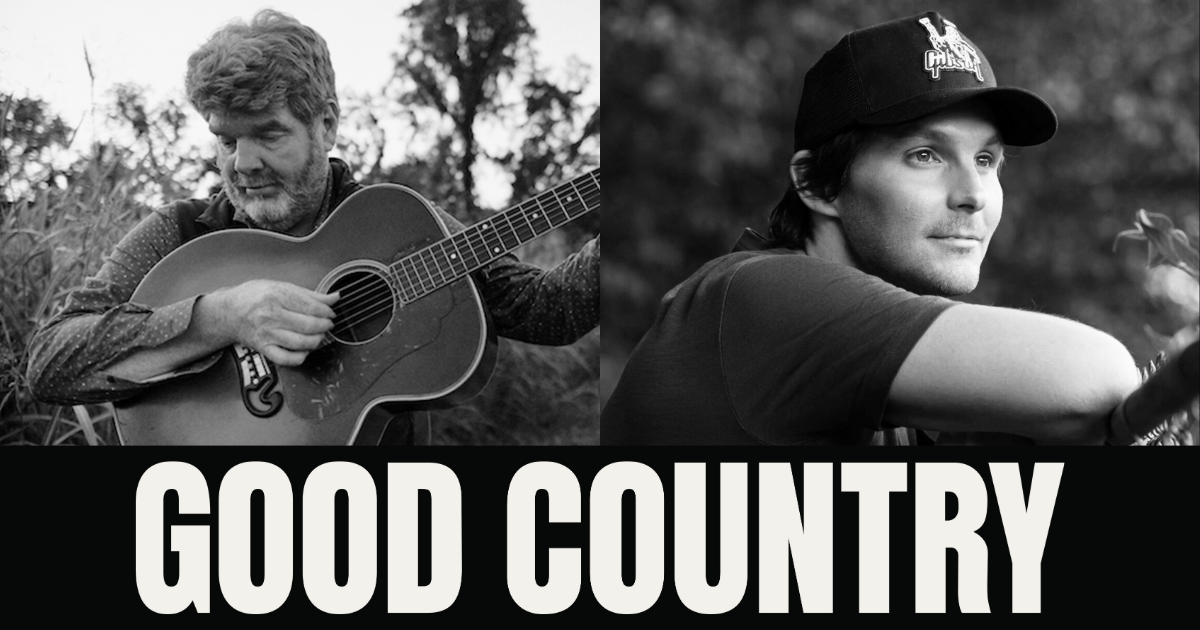
Mississippi is well-known for storytellers who craft in multiple mediums. From songwriter-guitar shredder-photographer Marty Stuart, to filmmaker-actor-business owner Morgan Freeman, to author-TV personality-business magnate Oprah Winfrey, the list of multi-hyphenates originating in the state is formidable. Hailing from different parts of the state and from different generations, Charlie Worsham and Mac McAnally are both known as consummate songwriters, instrumentalists, storytellers, singers, producers, and prolific performers.
McAnally frequently jokes that spare time is the chief export of the state of Mississippi, and while hyperbolic, this does underline the fact that it takes time and space to become an expert music creator. Whether Mississippi afforded them both the opportunity to develop their crafts or whether their own obsessions forced them to carve pathways to success for themselves, we’ll never know.
The way the pair speak about playing instruments is reminiscent of the youthful compulsion with which some people describe playing video games or sports. Both Worsham and McAnally started very young. By age 12, Worsham was on the Grand Ole Opry’s hallowed stage. McAnally grew up playing in bars and honky tonks on the Tennessee state line and started playing sessions in Muscle Shoals studios by his early teen years.
In an industry rife with surly personalities, both McAnally and Worsham have reputations of kindness that precede them. It is no coincidence that both of their calendars are fully booked with tours, both solo and in support of other artists and acts, studio work, and various and sundry creative projects. Worsham’s most recent solo release, Compadres, is a who’s who of modern Nashville duet partners; he’s also a current member of Dierks Bentley’s band. McAnally has a fully packed solo tour schedule after losing his long-time collaborator and Coral Reefer Band leader, Jimmy Buffett, just last year and is currently collaborating with Disney on updating the Country Bear Jamboree.
Good Country spoke with Worsham and McAnally from their homes in Nashville. Worsham was making Valentine’s Day memes, preparing for a run of solo shows, and balancing it all with a toddler in the house. McAnally was fresh off a week-long run of shows in Hawaii co-headlining with fellow multi-hyphenate, Jake Shimabukuro, and gearing up for a run of solo shows himself.
The discussion was a mutual admiration society as they are clearly big fans of each other’s work. They talked about their progressions to becoming multi-hyphenates, the benefits of being able to pivot, what their younger selves would think about their careers, and in a Substack-exclusive epilogue, they paid tribute to the fellow multi-hyphenate greats that we lost this past year, Jimmy Buffett and Toby Keith.
As you both became multi-hyphenate creators, were there people in your pasts who either discouraged you from this or encouraged you towards this?
Mac McAnally: Well, I began just by being pretty much fascinated with everything. As far as the multi-instrumentalist part of it, that came from my dad, because he kept the books at an auction and he came home every week with some musical instrument, and it wouldn’t be connected to the last one that he brought. He was just fascinated with music, too, so he would trade up a saxophone one week. He’d have a clarinet the next week, a fiddle the next week. And then drums, which he was kind of glad I didn’t stick with. I was always interested and fascinated by what kind of sounds they made, whether I could help make them or not.
When it became the studio application, I don’t wanna say I was discouraged, but my application in Muscle Shoals was that there wasn’t really a dedicated acoustic guitar player. There was a rhythm section at every studio. Broadway had a rhythm section. Fame had a rhythm section. Muscle Shoals Sound had a rhythm section. Wishbone, where I was working mainly, had a rhythm section. But none of them had a dedicated acoustic player, so it allowed me to go cross-pollinate those different rhythm sections and learn with different producers.
I wouldn’t say I was discouraged, but initially, I was encouraged to be primarily an acoustic player. But I think just because I’m so fascinated with all of it, I was paying attention to all of those jobs; to what the engineers were doing, to what the producers were doing. And then, as I began to have opportunities to do some of those other jobs later on, I certainly believe that having done a few of them gave me more consideration or compassion for everybody that was doing them. I think that it is a good thing to go through life with respect for everybody, and how they’re doing their job. So the more jobs you’ve done, the more you can identify with individual situations of those jobs.
Charlie Worsham: I couldn’t agree more on that last statement. You know, I always have felt that way, and all my favorite people in music are people who have worn different hats over the years, because they have that added perspective and appreciation. And I think it was similar for me, Mac. I was curious. I wasn’t really good at sports, so for me instead of picking up a new sport, it was picking up a new instrument. I was fortunate to have supportive parents who would help me acquire that instrument and acquire a connection to someone who could give me lessons, or a book or video tapes to learn from, or whatever, or just be playing along to records.
That was a big driver for me – and I don’t think anyone ever discouraged me in a similar way. It wasn’t discouragement so much as an encouragement in the other direction, which was because I was a bluegrass kid. There were a handful of people in the bluegrass world who sort of said, “Hey, if you want to be a fiddler, or if you want to be a banjo player, you need to dedicate everything you got to that one instrument,” and I figured out pretty early on I that I was too curious about the full picture, like you said. I wanted to get a little bit of understanding about it all, especially once I got the bug for recording equipment.
I had a chance to come to Nashville when I was 13 and make a bluegrass record. And this guy named Bobby Clark, who played mandolin with Mike Snider at the time, had a 2-inch tape machine in the guest bedroom. I walked in, saw that thing, and I was hooked. It was game over. And so, of course, my new mission became that I had this room full of instruments and I needed a way to record them. That’s what got me into being a songwriter. It all kind of snowballed, because I ran out of fiddle tunes to record. I was like, well, I need to write something now that I’m running out of material to record. By the time I got to Nashville, my motto in those early years was, “Say yes, ‘til you can afford to say no.”
I really wanted to be the big ol’ electric solo rippin’ guitar player. But everybody was an electric guitar player, like you said. A lot of times they needed an acoustic player or the band needed a harmony singer and someone who could play mandolin. So it was a way to always be able to pay the rent. And then, as I got more and more connections, and I guess my stock rose, then I could afford to choose a little bit more what I wanted to do specifically. Looking back, I wouldn’t have wanted to do it any other way, because I love being able to pivot.
I have a question for your 16-year-old selves. What hat do you wear today that you would be most surprised about?
CW: So if 16-year-old us popped into the future and said, “Wow, I didn’t see that coming?” Man! What’s yours, Mac?
MM: I probably didn’t understand what record production was, so it would have seriously surprised my 16-year-old self. A), That there was a job that was really what this is, and B), I wanted to do it. My 16-year-old self just wanted to be a guitar player in a band. At the time I was kind of having to be a piano player in the band, because I knew the notes on the piano and that pretty much disqualified me as a guitar player. Everybody played a little guitar in North Mississippi and almost nobody played the keyboard. If you had a keyboard, you were a keyboard player. I had a Fender Rhodes, which meant I was gonna load it by myself every night and blow my back out by the time I was 20.
I didn’t want to be a singer. I didn’t think I could sing. I wanted to be a guitar player, and I didn’t even want to be the guy playing the solo. I honestly think that’s probably what’s got me so many gigs in bands, because I would always just sit and play rhythm for two hours while somebody jammed over “Down By the River.” I was just trying to make it groove.
My adult self is fueled a little bit by my ignorant teenage self, and like you, I wasn’t necessarily inclined to sports, but I was a big enough guy that they expected me to play football in Belmont, Mississippi. I was blessed by the fact that Belmont, Mississippi did not own a helmet that would go on my head – even in junior high school. My head is huge, and the high school coach took me into the equipment room and said, “Son, see if you get any of these high school helmets on that head of yours. You’re a big boy, and we’d love to have you out on that field.” And I sat and mashed as hard as I could. It looked like Mr. Peanut. I went trotting out on the field, and the coach said, “No, that ain’t on, son.” The face mask was still over my hairline, you know, so I didn’t get to play football.
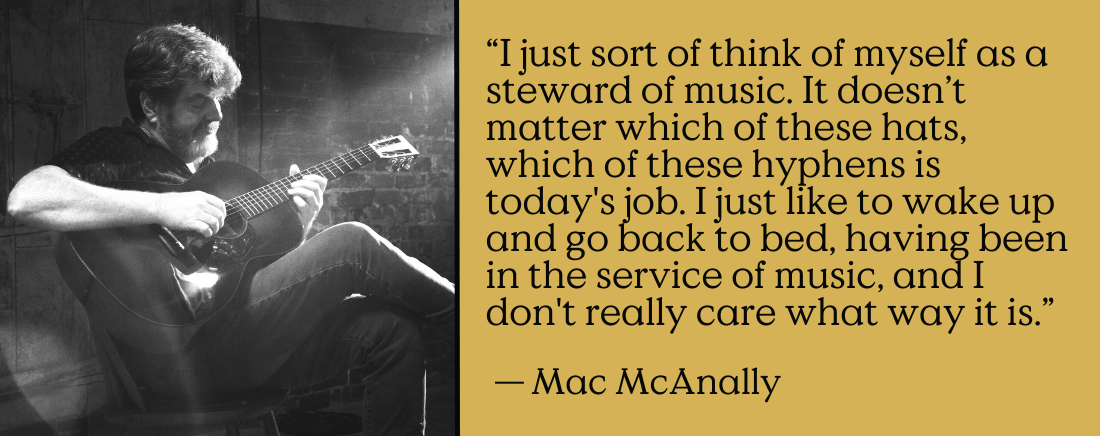
But a record producer, somebody that is in the service of the music and in the service of helping somebody’s dream come true, I didn’t understand what that job was. I don’t view myself as particularly good at it, but I relish the fact that I get to do that on occasion. I just sort of think of myself as a steward of music. It doesn’t matter which of these hats, which of these hyphens is today’s job. I just like to wake up and go back to bed, having been in the service of music, and I don’t really care what way it is.
CW: It’s interesting, because I think I’m closer in my mindset today, for the first time, to my 16-year-old self than I’ve been since then. In that, like you, I just wanted to be where the music was. I wanted to be involved. By my early twenties, there was a part of me that if I brought my 22-year-old self to the present he’d be going, “Where’s the building you own on Music Row? And where’s your wall full of plaques and all your 10 number ones?” I was pretty fired up by then to go out and change the world and be a star. But at 16, I just wanted to be around the music. I wanted to get to Nashville and be in those rooms. I think that the part of me that’s fueled by gratitude and excitement, that 16-year-old self, would be blown away by how much music I get to make and the people who I get to make it with. And the fact that the liner notes legends that I revered and learned from know me and that people like Vince Gill, who were my ultimate North Star and still are, that they would know me, and even respect what I do, and want me to be around to help.
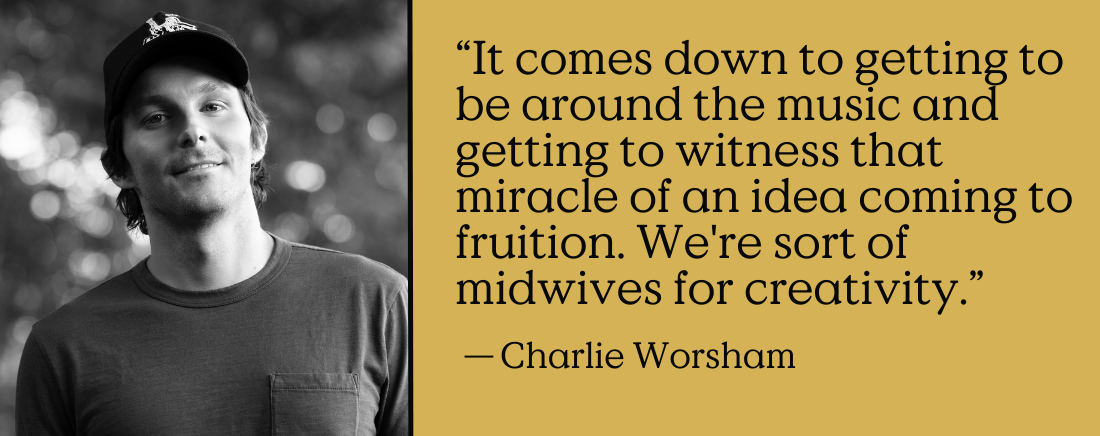
That early 20s self, who just thought I had to have the number ones and thought I had to have it a certain way, has given way to realizing that it’s unfolded in a much cooler way. Had I had that one hyphen, the guy in the spotlight, and if everything had gone the way I thought I wanted it to go, I would not have gotten the chance to do all these other things. Being a big star means that’s really all you have time to do. I’ve had the chance to be on the tour bus with Vince, with Old Crow Medicine Show, or right now with the Dierks Bentley gig. And I’m still hungry for certain things in the spotlight part of the hyphen, but it’s way cooler now – and I have so much more perspective and gratitude. It comes down to getting to be around the music and getting to witness that miracle of an idea coming to fruition. We’re sort of midwives for creativity.
MM: That’s well said, and I almost bet as many of these multi-hyphenates as you talk to, they are gonna have that in common. I didn’t even desire to get a record deal, but I got a record deal when I was 19 and I had a record on the charts when I was 19. I was just really on a dare out there. I was like, “They’re gonna send me back home within 6 months.” I didn’t have any ambition to be in the middle of the stage at all. And still don’t. It’s Old Testament miracles, daisy-chained together, that I ever got a record deal, because I never even played my songs to my parents. I was so bashful.
But had the record deal been a big blow-up kind of deal, as you said, Charlie, it takes up all your time, and it also can shorten your career.
CW: So true.
MM: You can only take the hard spotlight for a few years and then people kinda want you out of their living room.
Charlie, you’re actually a few decades closer to your 16-year-old self than I am. I still have the mindset of that, and I’m grateful every day, really, that I didn’t blow up when I was 19, because I didn’t have a clue how to handle that. It allowed me to watch a bunch more people, how they do it, how they make records to get to play along with a bunch of people, and, as you said so well, I got to play with heroes of mine that I would never dream to be even shaking hands with. All of that is partly a result of not being a big deal when I was 19.
CW: We do it backward, right? Because I think when people hit about 40, that’s when they’re actually finally prepared to be a big star and they’re at their peak. That’s one of the best pieces of wisdom I’ve been fortunate to glean from Vince in particular, as the great mentor that he is. He’s making the best records he’s ever made now, and that’s my own hope, too, that every 10 years I can be proud of the music I’m making today, and I can look back at the music I made 10 years ago. I’ll still be proud, but also part of me cringes a little bit, because that means I’m growing. That’s the dream really.
MM: I couldn’t say it better.
Can you both talk about what being from Mississippi means to you as music makers and in terms of how you developed as music creators?
CW: The older I get, the more I recognize that you can tell the whole story of America, and particularly American music, through the lens of Mississippi. All the really inspiring parts and all the really scary parts and tragic parts of it, too. It’s all wrapped up there, and somehow, it just seems like the folks who came out of Mississippi with music in their heart did just a bang-up job of documenting all of that.
I think back to when I first acquired an electric guitar. It took me a while. I had the banjo, I had the mandolin, and I was playing all the acoustic and bluegrass instruments. But I still wanted to be Vince Gill or Marty Stuart. And I finally got that electric, and it was B.B. King records that I used to learn first. The reason was I thought, “Oh, he didn’t play that many notes. I’ll figure all this out in no time. One weekend and I’ll be playing like B.B. King.” I very quickly learned, no. He might only be playing one note, but the way that he bends a note is like watching Mozart compose.
Growing up [in Mississippi], there was that factor of seeing Marty Stuart on TV, knowing he grew up where I grew up. Same with B.B. King and Pops Staples. And same with you, Mac. I’ve always looked up to you, as well. If there’s anything I know about Mississippi, I know the only thing bigger than our mosquitoes are our stories. We really know how to tell a story.
MM: It is the truth. I got to run around with Jimmy Buffett for years, he was a Mississippi guy who had done well and I respected him. And the same with all of the blues guys. I wasn’t so much a student of blues, but I knew that the blues essentially came out of our delta. I appreciate and honor the fact that it came out of our soil there.
Our home state is fiftieth in most things. We’re the poorest and the least educated, and the most overweight. We get the number 50 a lot. But I also think that the spirit of community– when everyone’s kind of close to one another because nobody’s that far apart. The poor and middle class are almost everybody. So you kinda know your situation and how everything you do affects everybody you know. It gives you a big picture from a small town. That is a big picture that applies to the whole world. There’s a ripple of good or bad, according to whether you’re doing good or bad, it goes out through your community. That, I think, informs our storytelling nature.
If you had to boil it down today and you could only pick one thing that you do, what would you choose?
CW: Today? There’s a part of me that wants to say, “Play mandolin,” as crazy as that sounds. It’s probably number six on the list of things I do. I learned over the years that being on tour and playing that two hours of music every night doesn’t necessarily mean that you keep your chops, because you’re playing the same two hours of material. And so over the last few years, I’ve sort of set a mission ahead of every tour: I want to pick a music nerd project – and last year it was mandolin. So I try to put in a couple of hours every day out on the road, learning solos I always wanted to learn, or just playing along, or jamming with the other guys in the band.
Since I’m sort of in the middle of a mandolin renaissance, there’s a part of me that would be relieved to just go, “Oh, that’s all I’m gonna do is just go get really good at mandolin right now.” Just because it’s what’s fueling my curiosity and my creativity. I also think it’d be impossible for me to not pick songwriting, especially off the heels of us talking about being from Mississippi and the fact that we’re kind of born into telling stories growing up there.
I process so much of my life and my feelings through writing songs. If I don’t get it out, it builds up and it comes out all sideways. One of my life’s mantras is “I ain’t right if I can’t write.”
But most days, to make a long story short, I just want to play guitar. You give me a guitar and I just want to play, and that’s fine by me.
MM: You could just superimpose my voice on what Charlie said pretty much. I love everything that I do. But I just came home from working every day for a long time and literally, before I took my shoes off, I was playing a guitar. Like you said, Charlie, on tour you play what you already know how to play. You don’t really challenge yourself, because you’re spending two hours just trying to make that show be as good as you can.
But I know that I still want to get better. At a certain age, you also want to maintain. I’ve got arthritis in my hands. I remember my grandmother, who was a musician as well, she crocheted all the time, and she crocheted things that we didn’t need, because she was afraid to stop. She was afraid her hands would lock up if she stopped, so we got sweaters and doilies and blankets and bedspreads. She was really just trying to keep her hands active. There’s an element of that in what I’m doing, too. But it also lights me up. I can’t imagine being separated from a guitar for any long period of time. That’s sort of terrifying.
CW: I brought a guitar on my honeymoon. That tells you how bad it is.
MM: Yeah, I was just all week last week with my buddy Jake Shimabukuro, and he’s blessed by the fact that his passion is the ukulele. He literally doesn’t go to dinner without it. Anytime we get in the van to ride from the airport to the hotel, I make a personal bet with myself whether we get to the first speed bump on the way out of the airport before he’s playing. He’s still just as fired up about it as ever, and that’s inspiring to a 66-year-old. And I hope there’s some 78-year-old that’s looking at me going, “Look at that idiot! He’s playing guitar before he sets his suitcase down!”
Even though you’re in different generations, the modern-day music business is so different from when either of you guys were coming up. And there’s a lot of extra hats that you guys are having to wear. Given that it is a different landscape, do you have advice for people coming up who aspire to do what you two do?
CW: Most of it is stuff I’m passing on secondhand. I’d love to start by saying I believe we are in the best time in my lifetime to go into this world of music with this multi-hyphenate mindset. My dad was a banker and my mom was a teacher, both professions that they held for decades. I grew up with this message from the world that this is kind of how it works, right? You get a job, and you keep that one job, and that’s what your job is. That has kind of gone away. I’m actually particularly grateful now that I never had a plan to stay on one track. Generally music, yes. But I was always prepared to pivot. Looking at where we are now, I think that the ability to pivot is going to be the most important skill someone could have, especially in music going into the future.
I could give you tons of great advice from other people like, never be the best musician in your band, because then you don’t have anything to learn. You’re gonna learn more if you’re the weak link in that band.
But in terms of personal advice that I can give, I think it’s figure out how to have a sustainable and not-so-toxic relationship with your public-facing platform, most of the time that’s going to be through whatever social media is happening. And you can count on that changing. It’s TikTok today. It’ll be something else in a couple of years. But I have found success in finding something that I know I can commit to, that I know I can be consistent with, and that isn’t going to just drain my soul.
You know, the definition of integrity I keep is that the insides match the outside. If it’s guitar nerd stuff, I know there are other guitar nerds out there, and I know that’s something I can always put 10 minutes of my time into. I do believe that our presence online, in so many ways, is becoming the currency of the future. I mean, even for songwriters, even for session players. You know, if someone heard your name twenty years ago, they’d pick up the phone and call a musician they trust and say, “Hey, have you heard about this kid? What are they like? Have you worked with them?” And basically, that was your best shot at getting called by that person. But now they’re more likely to just search you online and look at your YouTube or your Instagram. Iif you’re there and you have a consistent presentation of who you are, they can get to know you really quickly. You also have to keep in mind that it isn’t everything. There are seasons in life where it’s okay to let that go and shut it down and focus on something else. But it is something you kind of have to at least keep on the back burner.
Ultimately, if it ain’t who you really are, it’s just not gonna work long term. And if there’s anything I’ve learned, it’s that if you can’t pull it off long term, it’s not worth doing. Like Mac said earlier in this conversation, being a big star isn’t made for thirty years. You’re not meant to stand in that bright of a light for a long time. The real trick is being able to run the full marathon. With social media, you have to really be careful not to lose your spirit in it.
MM: I have missed my opportunity to take some of your good advice, because social media came too late into my life. I’m probably not ever gonna be anybody that posts a lot, but I will say just in general, whatever the new thing is tomorrow, that was the old thing yesterday.
What I would say to folks starting out is to widen the lens, to dream wider. When you are a teenager, when you’re full of hormones, you tend to dream narrow. There’s so many rewarding aspects of what’s available to us that you don’t know about in your teen years and if you narrow your dreams down to where all bands suck except the one you like, you eliminate not only a lot of career opportunities, but you eliminate a whole bunch of joy that’s just sitting there waiting in the music.
There are just all sorts of payoffs to leaving everything as a possibility. And then, besides that, I would just say, in the context of all success, in all the ways that we measure it and quantify it, if you can just remember that the music is the reward. It is the primary reward. Everything else, as wonderful as everything else is, is secondary to the music itself. Nothing will ever compete with that to me. The things that I’ve gotten to be part of, or play on, or make a little bit better just because I was there, that is the most career reward that I’ll ever have, regardless of how much revenue I ever generate or how many people mistake me for the musician of the year, or whatever songwriting accolades that we get. All of those are great, but they’re secondary to the work. The work is the reward.
CW: That is incredibly profound and true. I relate to that every day these days. It calls to mind for me, too, that when we talk about awards, number ones, or getting big checks in the mail, you don’t often in those kinds of conversations hear people talk about respect. I’ve found that the work is the reward. But to feel the respect of people that you admire and look up to, respect is about as sweet a feeling as anything you could get.
MM: It is awesome
CW: And it’s also kind of a hedge against hard seasons. If you operate with empathy and respect for others, one of the best ways to get respect is to respect other people in the first place.
MM: Absolutely
CW: It is a bit of insurance, I think, against hard times, because it means in your lowest point you got people you can call who are gonna shoot you straight, who are gonna help in any way they can. There are people with big mansions and number ones, and all the things who don’t necessarily have respect, and if I had to pick one or the other, I’d rather have the respect and not have all the rest than have all the rest, and not have respect.
MM: No, that’s correct. And there is no hard turn or dark corner that music can’t get you out of. Not necessarily financial and success-wise, but whatever headspace you’re in, music can turn bad into good. There aren’t many things that do that and we’re connected to one of those. The worst thing that ever happens to you can become a song that makes somebody else’s life better who is going through a similar thing. And they couldn’t articulate it. They couldn’t speak it. But we can help with that and help ourselves at the same time.
Editor’s Note: Longtime BGS and GOOD COUNTRY contributor Erin McAnally is the daughter of Mac McAnally.
Sign up here to receive Good Country issues when they launch, direct to your inbox.
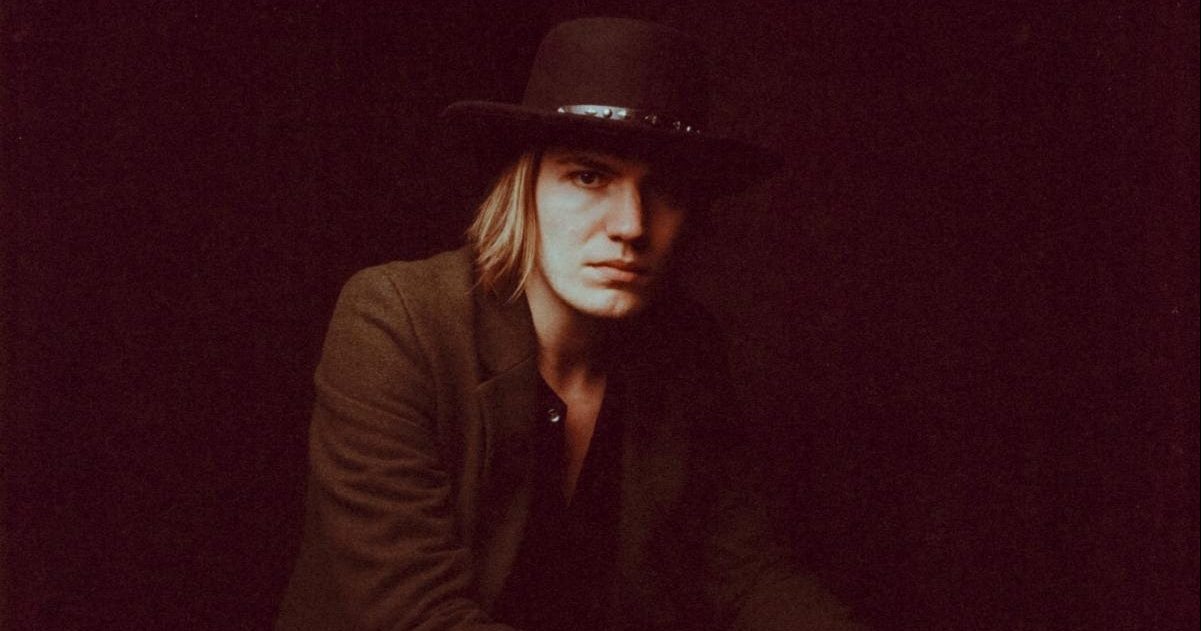
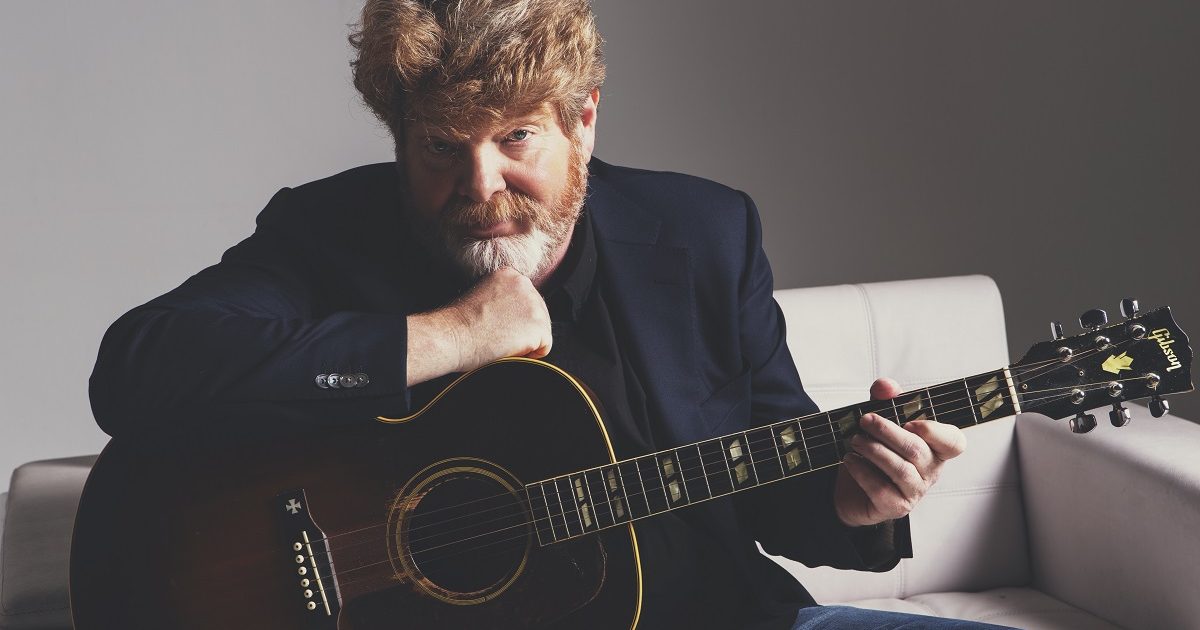
Photo Credit: Mac McAnally courtesy of the artist; Charlie Worsham by Jess Williams.