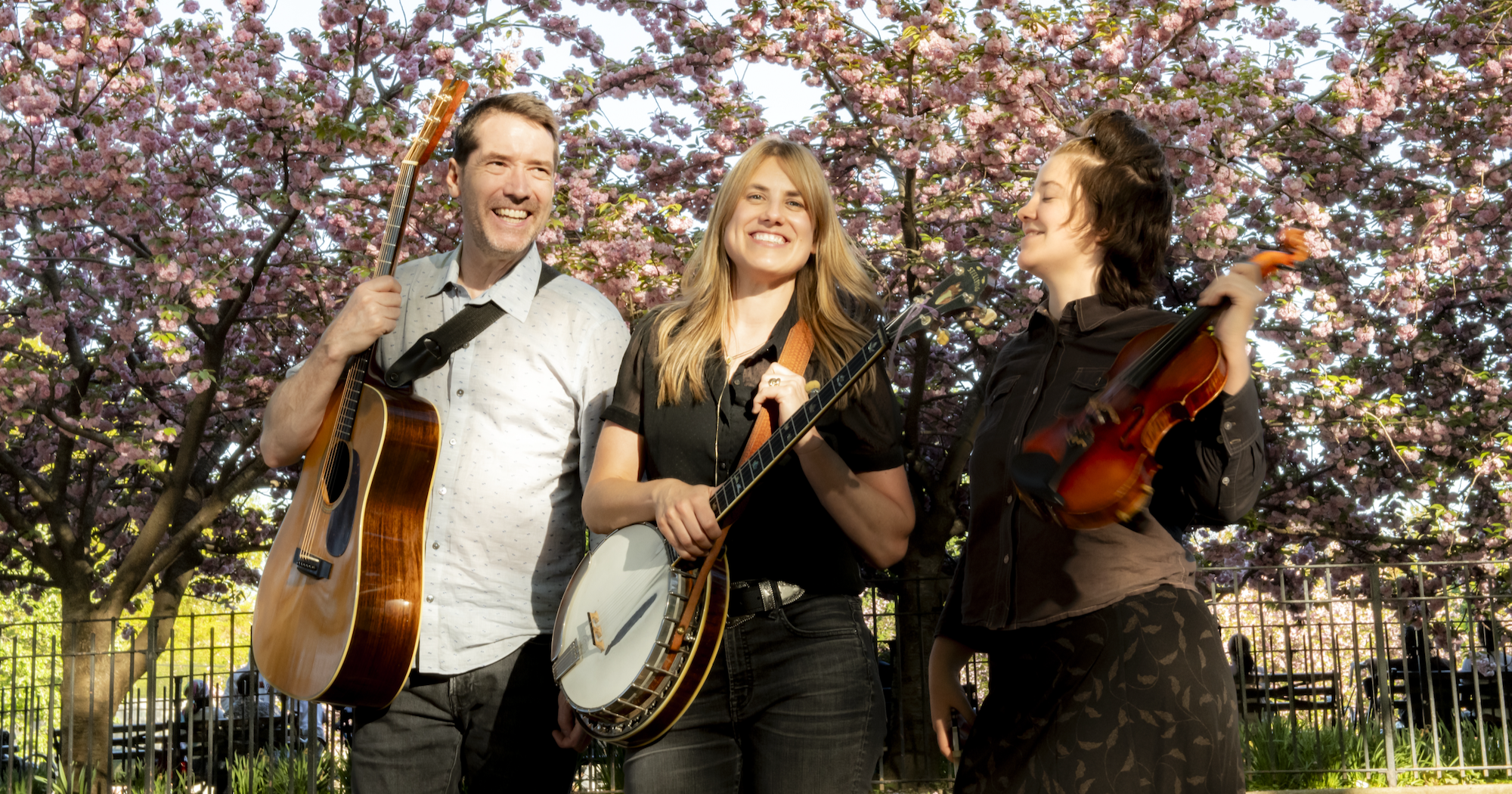
Hilary Hawke is a Banjoist Who Does It All

Banjoist, songwriter, and podcaster Hilary Hawke has had a meandering journey with music, starting with guitar and clarinet before finding her musical home in the banjo and “becoming obsessed with it” during her late teens. Inspired by the storied folk tradition of upstate New York, Hawke now makes her home in New York City, where she leads her own bluegrass band and plays for various other groups as part of a close-knit roots music community.

New York City is uniquely ripe with gigs in theater and Hawke has found herself playing on Broadway for musicals such as Oklahoma! and Bright Star and composing music for puppet shows, among many other diverse projects. She has also started her own podcast, Banjo Chat, where she speaks about the banjo and banjo music with folks that love the instrument as much as she does.

BGS connected with Hilary Hawke to discuss the making of her new album, Lift Up This Old World, her time on Broadway, her new job teaching bluegrass at Columbia University, and more.

Can you tell me a bit about how you got started on the banjo?

Hilary Hawke: I actually went to school for classical music on clarinet and guitar, but I realized I didn’t know how I was going to get a job in music or what kind of job I wanted… composition? Teaching? Music therapy? I got to a point where I was like, “This all seems very serious and I’m not actually having much fun with music.”

During that time, I was writing songs on guitar and I just picked up a banjo for fun, to do something outside of school. I grew up in upstate New York and we have a lot of folk music and a lot of great banjo influences up here like Tony Trischka, Béla Fleck, Pete Seeger, the Gibson Brothers. And, honest to God, it was just the thing I started creating music on all the time. I started playing it nonstop. I ended up moving into New York City just on a whim. There were lots of opportunities to perform and I was able to take some lessons with Tony Trischka. New York is like– you just think you’re going to try it out and then suddenly 5 years have gone by.

Influences like the New Lost City Ramblers, Mike Seeger, Bruce Molsky, and Fred Cockerham seem to be threaded through your old-time and bluegrass style. Do you have a specific moment you can remember that sparked your love for these musicians?

I think that it’s always through popular culture that you get inspired to dive into the deeper stuff. Alison Krauss had a record called Too Late to Cry and I remember I heard the banjo on that and was like “What’s that sound?” It was Tony Trischka playing on her record. Similarly, I heard the banjo on the Dixie Chicks’ albums and wanted to know how it worked. Through those more popular bands, I got interested in banjo. And then I went to the festivals and I heard about the old guys. People would give me rides and we’d be listening to their CDs in the car. It was a lot of word of mouth like, “Oh you gotta hear Fred Cockerham and Tommy Jarrell!”

You started teaching banjo in Brooklyn at the Jalopy Theatre back in 2006. How has that community influenced your growth as a teacher and performer over the last 20 years?

I really cut my teeth at Jalopy. I was there for 10 years or so and I was able to develop a curriculum for teaching. I learned how to tear things apart and break them down, as far as playing the banjo. I gained the skills I’m now using to teach at Columbia University. I think Jalopy is a great breeding ground for performers, artists, and teachers to develop. It’s open-minded and exploratory.

Tell me about your new album, Lift Up This Old World. Where does it fall in the trajectory of your music-making?

This is the third album I’ve released under my own name. The first album I made was more of a singer-songwriter album; writing songs was really my entry point into folk music. Then I released an instrumental old-time album. This one combines songwriting and picking, but it is much more bluegrass-forward.

I noticed that you play both clawhammer and bluegrass-style banjo on the record. How do you relate to the two different styles and where do you feel more at home?

I started with fingerpicking and got into bluegrass first, but I just wanted to do it all. I wanted to be involved with a wide range of music. Sometimes a person would ask, “Do you want to come play with my old-time band?” And I had to say no because I couldn’t play that style. I quickly realized I didn’t like to say no! I wanted to be able to do it. So I started learning clawhammer from some Ken Perlman videos and taught myself. Now I feel like they take up an equal amount of space in my life and I pick the style based on the music.

With my original material, I approach the banjo with the kind of song I want to write in my mind, so if I want to write a honky-tonk song I might use fingerpicking, but if I want to do something with a shout chorus, for example, I’ll approach with clawhammer banjo. I listen to a lot of Tim O’Brien and I feel like he does that, too. Being able to play both styles, I have a little bit more of a tool kit for what I want to do.

Tell me about your approach to songwriting. There are a lot of songs about lost love and relationships on this album, some about relationships with people, but even your relationship with New York City. “NYC Waltz” is a track I particularly love. Is there a common theme that you see that brings these songs together?

I think this record is about overcoming struggles in confidence, specifically struggles in the music industry. I had the realization that you have to be your own cheerleader, you have to believe in yourself, and find that happiness in yourself. If you’re doing what you’re supposed to be doing, things are going to happen. Making this album was me having the belief that I could do this thing, overcoming fears and doubts in myself, striving, and coming out on the other side.

The way you recorded this album, it sounds live in a way that is rare for modern recordings. Can you tell me about how the record was made?

We did it live to save money. We started a year and half ago and I didn’t have the resources to do separate tracking, so we rehearsed it for a couple of days and then just went in and tried to nail it. We recorded pretty much the whole thing live with a full band in Williamsburg, one day with each of two fiddle players, Bobby Hawk and Camille Howes, at Waldon Studios in Williamsburg.

Ross Martin [who plays guitar on the album] and I have been playing together for two years as a duo and we have worked up some of these songs over that time. I felt like these album songs were a good representation of the music we have been making for a good while now. “Dreaming of You,” the last song on the record, is the only one that we arranged and tracked out separately; it has a very different feel than the rest of the album.

Yes, I noticed that! It’s a bit orchestral.

Yes, that was all arranged and written out by me. I produced this album myself and I think going forward, I would like to do more collaboration with visionaries and people I trust in the making of a record. I think I learned that it’s great to have another trusted set of ears for a project. It’s hard to step away and see things for yourself. I have a pretty clear vision about what I want things to sound like, but you also have to be gentle and kind to yourself. It’s hard to find that line.

You also have a podcast about the banjo called Banjo Chat. Can you tell me about how that got started and how you’re enjoying it?

It’s good! It started because I had a lot of questions for banjoists about the way they write songs, form solos, and think about music that I didn’t hear asked or answered on other podcasts. Also, I wanted to amplify the voices of people whose playing I loved who were female identifying, queer, gay, minorities, or just didn’t really fit into a bluegrass or old-time genre with their music.

So I started this podcast. I got some new software for editing and now I do the research, recording, editing, and mixing all by myself.

Before I let you go, I wanted to ask you about your time on Broadway. In 2016 you subbed on Broadway playing banjo for Bright Star – a show that brought bluegrass and old-time to the stage in a major way. Looking back, how did that highly choreographed experience change your approach to live shows?

Bright Star does have a huge regional presence. For me, that was my first Broadway subbing gig, subbing for Bennett Sullivan. Being in that environment made me realize that when you play live shows you need to get out of your own head, you can’t just be standing up there not giving any energy out to the audience. You have to have a lot of love to give out and to have your message clear in your head when you’re performing. Be happy to be there.

That’s what I learned from the theater. All these people bought tickets to see the show, they’re here to see a show and have a good time – not to see you in your head worrying about your performance.


Photo Credit: Aidan Grant

Madeline Combs contributed research and interview prep for this feature.
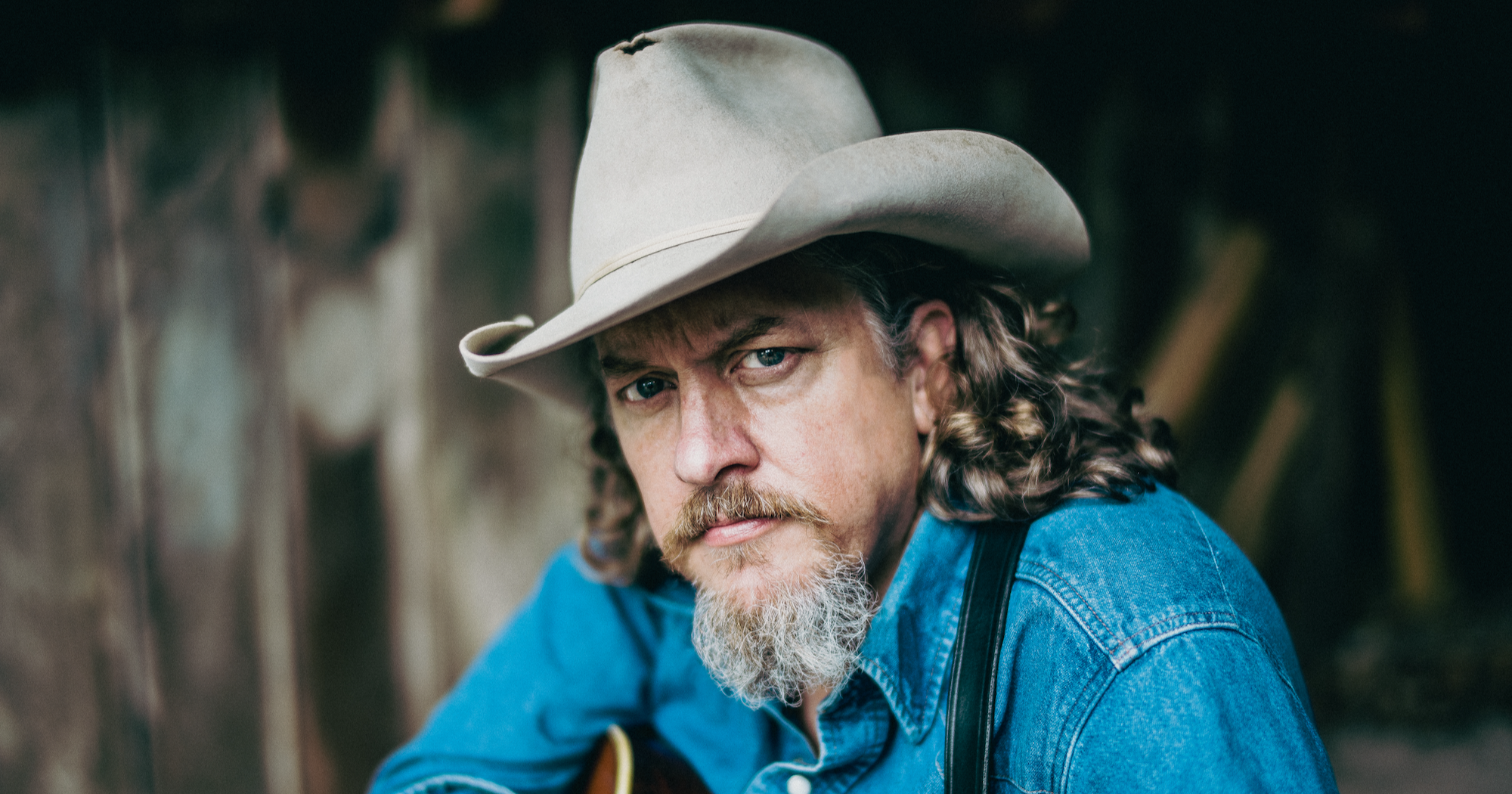
Shawn Camp Pays Homage to A Childhood Hero on The Ghost of Sis Draper

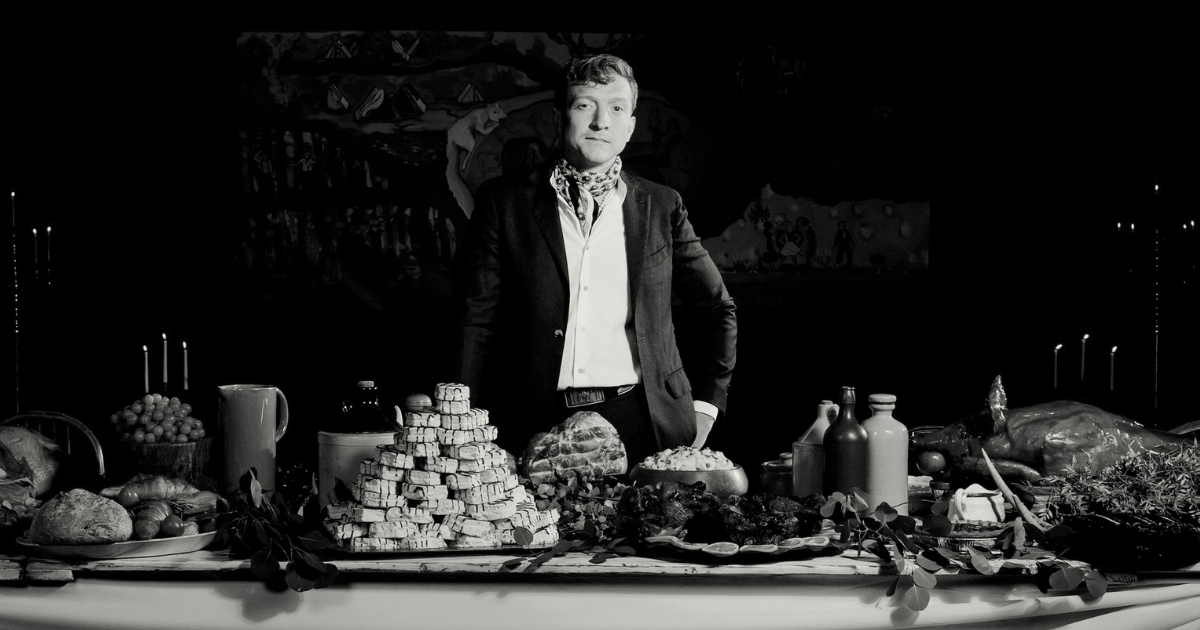
From the half dozen records under his own name to hits co-written for Garth Brooks, Brooks & Dunn, Blake Shelton, and Josh Turner; playing with Jerry Reed, Alan Jackson, Trisha Yearwood and the Earls of Leicester; or his work on Willie Nelson’s GRAMMY winning album, A Beautiful Time, in 2023, Shawn Camp has done just about everything in his 30+ year musical career.

But with his latest project, The Ghost Of Sis Draper, he’s able to cross off another box off his bucket list – making a concept album. According to the Arkansas native, the album’s origins trace back to the late ‘90s with his close friend and longtime collaborator Guy Clark, centering around a larger-than-life figure from Camp’s childhood named Sis Draper.

After laying the project’s foundation with the lead track “Sis Draper” one fateful day, the pair later penned “Magnolia Wind” soon thereafter with other songs slowly trickling out whenever they reconnected in the years that followed. Once the songs were all written, Camp took them to Nashville’s famed Cowboy Arms Hotel and Recording Spa – now the Clement House – where he knocked the entire record out in only one day.

Per Camp, the immediacy of his time in the studio helped to keep its collective sound cohesive – like Willie Nelson’s Red Headed Stranger and other standout thematic country albums that came before it. And, by the sound of it, there’s more like it coming soon.

“I’ve got lots of ideas for concept albums and songs I won’t release until I have a record like that to include them on,” Camp tells BGS. “I’ve got about 14 songs on another that I started recording last year that were inspired by Johnny Cash and Cowboy Jack Clement that’ll likely be out next year as well. It’ll be a lot different from the Sis Draper stuff, because we recorded it like Johnny Cash & The Tennessee Two – stripped down with an electric and upright bass – but in a similar fashion all belong together.”

Ahead of the release of The Ghost of Sis Draper, Camp caught up with BGS to discuss his relationship with Clark, musicals, the album’s old-time ties and more.

When did you first connect with Guy Clark?

Shawn Camp: I had a country label deal with Warner Bros. Records in the early ‘90s and in 1993 the people there asked me if I could write with anyone in Nashville, who would it be? I shot for the moon and said, “How about Guy Clark?” and before I knew it I was sitting across the room from him writing [“Stop, Look And Listen (Cow Catcher Blues)”] from my second album, 1994, that Warner shelved until 2010.

Guy was known at the time for writing songs that in parentheses included a second title he’d refer to them as and that was one of them. When you go to the Country Music Hall Of Fame now his entire writing room and workshop is on display there and it’s exactly the way it was the day he died. You can walk up to the glass and see his writing tables, his ashtrays, his guitars and all of his work tapes that he would record the day he wrote each song. He would spin around and write the title on the spine of a cassette to stick on a rack on the wall behind him. If you look into that room right now you can still see the cassette for “Stop, Look And Listen” about waist-high two or three feet from the wall on the right. It’s just a real treat to see his work environment that I spent so much time in up close again.

Years ago, I remember Guy getting mad at a fiddle he couldn’t get into tune so he smashed it into smithereens and stuck it up in his attic in a fiddle case. He got to telling me about it one time and crawled up there and set it down on his bench and it’s still laying there to this day. It’s been wild to see how they number and photograph everything so they can get it back to exactly how it was – it was a real trip to see.

How did the idea for this Sis Draper album first come about a quarter century ago?

I was just sitting around with Guy trying to write a song, but got stuck. It led to us talking for an hour or so until I eventually got around to telling him about a lady I knew in Arkansas named Sis Draper. She had a big beehive hairdo and a fiddle she carried around in a coffin case that she’d shred these old-time fiddle tunes on. Before I ever saw her, my grandpa and Uncle Cleve built her up as such a superstar that she was a world traveler in my eyes, even though in reality I don’t think she did much traveling at all.

After telling Guy about her I remember him leaning back in his chair, taking a big drag off a cigarette, and saying, “That’s your story right there,” which led to us writing more songs about Sis Draper and my family that together make up this new record.

Were there any differences in how you approached writing or recording this project compared to your other non-conceptual work?

We recorded it all in one day with the same musicians, so when you listen it doesn’t sound like a hodgepodge of different sessions and trying to make them fit together, because it basically happened live. In the past I’ve spent eight or nine months just recording the songs, but with Sis Draper it was easier to streamline because all the songs already sounded similar and fit together.

What motivated you to keep returning to this project through the years?

It’s taken a long time to come to fruition. [Laughs] We first started in the late ‘90s and would work on it anytime we got together and didn’t have other stuff to work on. We’d always thought about it being a musical play too. I even have started writing dialogue to turn these songs into that. It’s always been in the back of my mind, but now that Guy’s gone it felt like I needed to go ahead and get it into this form.

What specifically interests you about a play format?

I’ve always loved acting, even though I haven’t done much of it. I’d love to do it more and a play would be a cool way to accomplish that.

Several of the songs on Sis Draper have roots in old-time music. What made you want to weave those influences through these songs?

We wanted to pull from those old fiddle tunes that I heard Sis and others playing when I was a kid during jam sessions. Like “Lost Indian,” which is what “Big Foot Stomp” was written around. The common thread of it all was always an old fiddle tune melody, so I wanted to reference those songs in any way I could.

You and Guy both collaborated a lot with Verlon Thompson through the years. With that in mind, what did it mean to have him aboard to co-write “Old Hillbilly Hand-Me-Down” with y’all?

Verlon is one of the greatest songwriters around and an even better person. I don’t do a lot of co-writing with him, but we’re the best of friends. I love making music with him because we play off of each other so well.

The only song on the album you weren’t involved in writing was “New Cut Road,” but even so it still ties back to Guy and your childhood?

Yes. Guy wrote the song originally about his grandaddy Coleman Bonner who played fiddle in Kentucky. On the play-version of this album there’s dialogue that ties it all together. But when I was a kid, I started playing fiddle at 15. I remember standing on a ladder holding up a piece of sheet rock to the ceiling in a house my dad and I were remodeling. We had a little Gilligan’s Island radio playing across the room and Bobby Bare’s version of the song featuring Ricky Skaggs came on. It really inspired me to be a fiddler even though I didn’t know Guy wrote it at the time. Six short years later I was in Nashville, so it just felt like it belonged in this Sis Draper suite of songs.

Another tune I wanted to ask you about was “Grandpa’s Rovin’ Ear,” which I understand you originally constructed as a poem?

Guy and I wrote all those lyrics in different places, but for the longest time didn’t have a melody to go with it, so I made one up before going in to record. Similarly, “The Checkered Shirt Band” started as a rap that we played without a melody, almost like a group chant. I put melody to that right before heading into the studio, as well and was inspired by the old-time tune “I Don’t Love Nobody.”

The guy’s names I mention on [“The Checkered Shirt Band”] – Rodney, Chuck, and Rodge – are all band members from my days with the Grand Prairie Boys in Arkansas. We’d dress up like Bill Monroe & the Blue Grass Boys. I recently went back there to receive a Lifetime Achievement Award from the Arkansas Country Music Awards and got those boys together to play for the first time in years. We played that song and a couple others from the album and it was such a treat. It meant a lot to not only do that, but shout them out by name in the song as well.

The end of Sis Draper includes “Hello Dyin’ Day,” the last song you and Guy ever recorded together, sandwiched between “The Death Of Sis Draper” parts 1 and 2. What did it mean to you to include that one here?

It represents the deathbed confessions of Sis Draper. It just felt like The Ghost Of Sis Draper to me, due to the mood of it all. It’s her last words, but when we return to “The Death Of Sis Draper” in the medley it’s like Sis’ funeral, so it all just kind of belonged together in my mind. It’s about 10 minutes of music that all goes together, so hopefully it’ll be listened to that way and not dissected too much.

With that being said, what are your thoughts on song sequencing? It sounds like you designed this Sis Draper record as something intended to be listened to in order?

We’ve really gotten away from the arc of storylines on albums. It’s a two-minute world out there now, so if you can get just one single out that’s all a lot of people shoot for anymore. I miss those records like Red Headed Stranger that take you through all different kinds of moods and serve as an escape from the real world. I enjoy going on those little trips and hope listeners enjoy going on this Sis Draper adventure with us.

What has the process of bringing The Ghost Of Sis Draper taught you about yourself?

It’s taught me not to hesitate and to make the move to record stuff when it crosses your mind because if you don’t it may never happen. It initiated a whole new lease on life for me because I hadn’t put out a solo album since 2006. A lot in the world has changed since then just like it has in my own life, but I’ll never stop wanting to make music.


Photo Credit: Neilson Hubbard

Ethan Setiawan’s Personal Encyclopedia Mandolinnica

A short history of the mandolin in America: The mandolin is essentially a small lute which has been around since the 1300s. Italian immigrants brought bowl-back mandolins to the States in the 1800s. Mandolin orchestras were big in the 19th and 20th centuries, believe it or not. In fact, a whole mandolin family exists with mandolas, mandocellos, and mandobasses out there.

Around the turn of the 20th century, Orville Gibson started to develop flat-backed mandolins constructed more similarly to guitars. Finally, in the 1920s, Lloyd Loar created the F5 mandolin, with its longer neck and F holes. These new instruments were built to project and fill a concert hall, though they were ill-timed – the mandolin orchestra craze was fading and not ’til Bill Monroe picked up one of those instruments from a barbershop in Florida in the ’30s did they come back into their own. Since then, bluegrass mandolinists the world over have played these instruments or copies thereof. I play an instrument by John Monteleone, who started innovating on Lloyd Loar’s design in the 1980s – and so the tradition continues.

My new album, Encyclopedia Mandolinnica, turned into a survey of Western and Northern mandolin styles quite quickly. It’s very much been shaped by these inspiring musicians who were very kindly up for playing a duet with me. We go on a real journey through bluegrass both progressive and traditional, old-time, jazz, classical, and Scottish trad. The chance to get to work with these heroes of mine has been such a pleasure and invoked several “pinch me” moments. One of the most beautiful things was getting to see how everyone approached our little 8-stringed instrument so uniquely. I learned something from playing with and working alongside each of the mandolinists that agreed to be a part of the project!

In putting together this playlist I thought about my personal inspirations as well as the mandolin’s place in musical cultures across the world. It ranges from hardcore bluegrass, to Brazilian choro, over to Scottish trad – with lots of things in the middle. It mostly features folks you can hear on Encyclopedia Mandolinnica. I hope you enjoy my guided tour of the mandolin! – Ethan Setiawan

“Victoria” – Ethan Setiawan & Mike Marshall

Mike is a legend of the mandolin. He was an early member of the David Grisman Quintet and went on to collaborate with Darol Anger, among others. He helped write the book on progressive acoustic music and mandolin styles therein. This tune of mine falls within that realm and Mike was the perfect person to play it with.

“Shoulda Seen It Comin’” – Mike Marshall & Chris Thile

Mike also duetted with this young guy Chris Thile, whom you may have heard of. The live record that this cut is from is one of my very favorite recorded mandolin performances. Both mandolinists are at the top of their game. This tune was in my ear quite a bit when writing the previous tune, which maybe you can hear?

“There Will Never Be Another You” – Don Stiernberg

Don is one of the world’s foremost practitioners of jazz mandolin – a combination of words you might have never thought you’d hear. He studied with the great Jethro Burns of Homer & Jethro before forging his own path forward into a style where few mandolinists have ventured. Don was a teacher of mine during high school and it was great fun to get to be in the studio together for Encyclopedia Mandolinnica.

“Jiguaraña” – Ethan Setiawan & Maurizio Fiore Salas

Venezuela has a rich and beautiful mandolin tradition that not many folks are aware of. This tune is a co-write between myself and Maurizio. We took a jig (a Celtic form in 6/8) that I came up with and Maurizio had the bright idea of putting it over a Venezuelan rhythm called guarana (also in 6/8). It’s always a joy to play with Maurizio, he challenges me in the right ways.

“Wonderful” – Kinnaris Q (Laura-Beth Salter)

Laura-Beth is at the forefront of the Scottish trad revolution in Glasgow, Scotland. This track by her band Kinnaris Q puts the mandolin front and center – when she takes the tune at 1:52 check out the facile right hand triplets! We co-direct the Glasgow Mandolin Retreat as well and it’s always great to get a tune with LB.

“Blue Grass Stomp” – Bill Monroe

This is where it all started for a lot of us. Bill Monroe, along with Earl Scruggs and Lester Flatt, in the ’40s had something electric and powerful, so much so that in large part bluegrass has been unchanged since then.

“New Cimarron” – Matt Flinner

Matt Flinner is one of my favorite mandolinists out there. One of the many things that strikes me about his playing is how good it feels. Everything is placed so precisely and beautifully. He also writes great tunes that beautifully synthesize lots of things we love about bluegrass, old-time, and jazz. This is one of my favorite tunes of his.

“Golden” – Ethan Setiawan

In a similar tradition to the last tune, this is my take on a progressive “new acoustic” tune. Darol Anger on the fiddle here, he produced this album and it was such a joy to work with him on it.

“O Voo Da Mosca” – Jacob Do Bandolim

While bluegrass was developing up north, another mandolinist was fusing styles down south. Way down south. In short, choro is a fusion of classical forms with jazz harmony and Afro-Brazilian rhythms – similar on the page to ragtime. Jacob Do Bandolim (which translates to Jacob the mandolin, amazing) wrote many tunes that became staples of the style and was a virtuosic mandolinist to boot.

“Saint Cecilia Caprice” – Hamilton De Holanda

Hamilton De Holanda is the Chris Thile of Brazil. Amazing technically and a great musical mind. He wrote a double album of caprices and made the music public on his website, as well. Every mandolinist reading this: go download them, now!

“Salt Spring” – John Reischman

The greatest modern jam standard of our time! John is another great tune writer. He also gets the most beautiful sound out of the mandolin.

“Shetland Jigs” – Hildaland (Ethan Setiawan)

My own contribution to the Scottish trad lexicon from my duo with fiddler Louise Bichan, Hildaland. These are a couple nice jigs from Shetland. I’m playing mandola here, but I’ve tuned the highest string down a step and put on a capo so that the strings are tuned DAEA. This is inspired by the fiddle, which is crosstuned – common in old-time but not so common in Great Britain. We thought it was a cool connection to draw for our duo which goes between those styles at will.

“Canon at the Twelfth in Counterpoint at the Fifth” – Caterina Lichtenberg & Mike Marshall

Caterina is one of the greatest classical mandolinists to ever live. There have been vital classical mandolin traditions going on this whole time in Italy and Germany, which is so cool to see. Classical music is being made on the mandolin at very high levels and being taught as well.

“Queen of the Earth, Child of the Stars” – Sharon Gilchrist & John Reischman

A beautiful old-time tune, played so beautifully by Sharon on mandolin, John on mandola, and backed up by Scott Nygaard on guitar. I first heard this tune played late at night by Darol Anger and Bruce Molsky at Freshgrass a bunch of years ago now and it’s stuck with me ever since.

“Big Hill” – Ethan Setiawan & Andrew Marlin

Andrew has taken the mandolin scene by storm over the past several years with beautiful tunes and great trad bluegrass playing. Part of the thing that developed with this project was to write something that I thought might work well for each guest – not to explicitly write something that sounded like theirs, but to draw a little inspiration. I think this tune captured something there and I love the way Andrew accompanies the tune.


Photo Credit: Louise Bichan

BGS 5+5: Remedy Tree

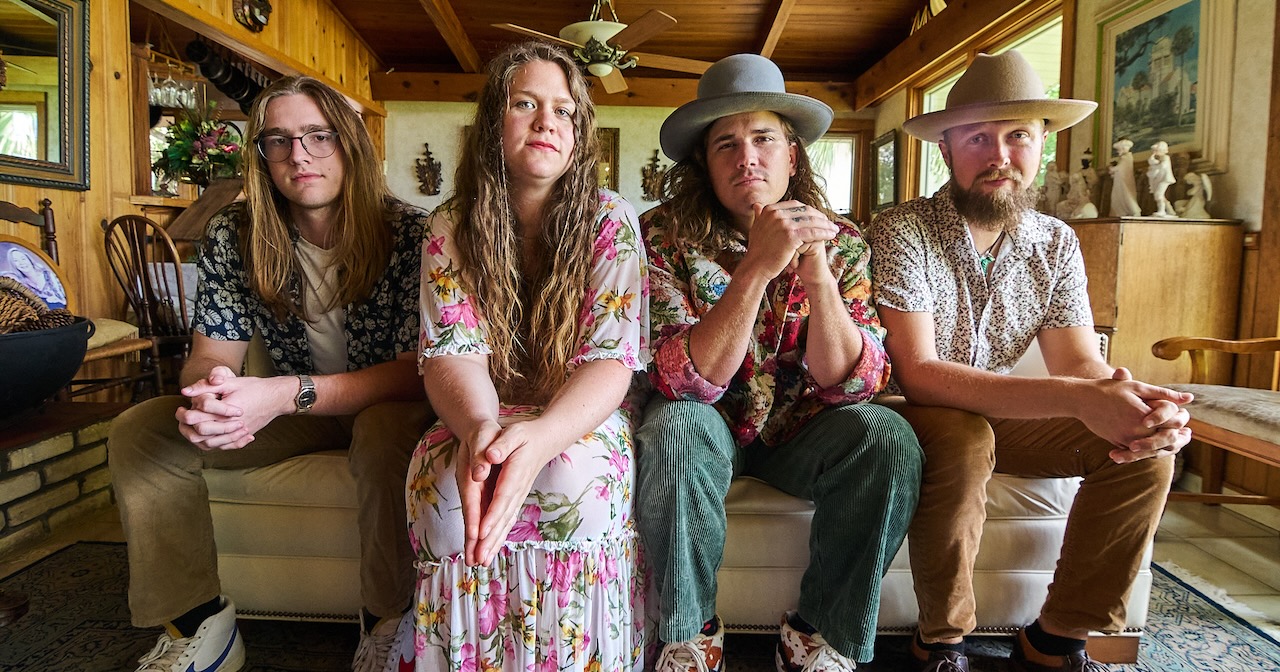
Artist: Remedy Tree
Hometown: Umatilla, Florida
Latest Album: Beyond What I Can See (releasing September 12, 2025)
Personal Nicknames: Abigail – Abi; Gabriel – Gabi;  Nathan – NayNay; Isaac – Dehydrated And Decaffeinated.

(Editor’s Note: Answers provided by Gabriel Acevedo)

What’s your favorite memory from being on stage?

2024 EMS Spring Bluegrass Fest in Brooksville, Florida, with Chris Henry and Steve Leonard. We got to open for the SteelDrivers and worked tirelessly to put on our best show and production together with props, a late night pre-show, etc. Watching it come to fruition with the perfect vibe and watching everyone dance was very inspiring.

What rituals do you have, either in the studio or before a show?

I used to not have any and it started to affect the show, coming up feeling unprepared and frantic. Nowadays I try to have about half an hour before shows to slow myself down. Laying on my back on the ground, doing vocal warmups. Also ashwagandha gummies. We all kind of just hang out and relax and try to be as chill as possible.

What’s the most difficult creative transformation you’ve ever undertaken?

Becoming a bluegrass band recognized in the industry as such. Funny enough, this upcoming album exemplifies the most difficult creative challenge: Creating a proper bluegrass album while staying true to our flavors and background. Remedy Tree was born within the old-time and folk world. Bluegrass has a formula that must be learned and perfected and that’s one reason why it’s so beautiful. Being on a bluegrass label having recorded much of the album live feels amazing. It’s been so surreal.

What’s one question you wish interviewers would stop asking you?

“So where does your band name come from?” This is unfair, I know, but it’s the most frequently asked question and I never have a good answer for them. The name came from me brainstorming names for hours and using a series of random word generators. I didn’t even like it at first, and then it stuck!

What is a genre, album, artist, musician, or song that you adore that would surprise people?

Being Puerto Rican, I think Latin elements will enter our music sometime, subtly. I don’t know when, but that’s a part of me that is bound to show itself at some point.


Photo Credit: Tucker Joenz

Is Tyler Childers’
Snipe Hunter a Prank?
Yes and No

I remember my very first snipe hunt. I was a teenager and my family, along with a handful of others, had recently left our former congregation, deciding to spend each Sunday alternating between our various houses to hold “home church” instead. This particular Sunday afternoon, we had already finished our DIY service, had enjoyed our shared meal, and were sitting scattered in lawn chairs and on the front porch of a humble little brick home in the foothills of southeastern Ohio.

A few of the more mischievous, prank-minded adults had begun gathering as many of the kids as possible, from toddlers to teens like me to young adults, with empty plastic grocery bags spanning the distance between our arms as we tramped off from the porch to the surrounding trees and woods. We were taught to shout, to bang sticks together or against tree trunks, and to keep those grocery bags open and ready, as the snipe were hiding above and – when correctly startled using these certified methods – would fall directly and immediately into our waiting plastic sacks.

We made attempts, we marched around, we laughed and shrieked and ran about. No, we didn’t catch a single snipe that day, but that’s not how I determined it was a prank. It was my very first snipe hunt – we weren’t a Scouts or summer camp sort of family – and still, as soon as they began passing around grocery bags, I knew a joke was being played. I wasn’t on the inside of it yet, but I knew what was happening – even though I really had no clue.

As a young teen, I had at that point spent my entire life obsessed with two things: banjo and birds. So when the jokester adults began spinning their yarn about how we were going to all catch snipe together, I knew we most certainly were not. After all, I knew Wilson’s Snipe were the only snipe species native to North America and that they preferred grasslands, marshes, beaver ponds, shorelines, and flooded meadows to lush hardwood forests in the foothills. Plus, at that time of year they would have already migrated back to their summer grounds in the north.

I had also already passed my Ohio Department of Natural Resources Hunter Safety Course – incredibly proud that I had scored 100% and hadn’t missed a single question – and knew that Wilson’s Snipe were hunted across the U.S. as upland game birds. I hadn’t hunted or bagged any, but having already spent countless hours across multiple seasons tracking down pheasant, partridge, and grouse, I knew that a grocery bag wouldn’t be our first choice if taking home snipe were really our aim.

Though I had never before been initiated into the lore or ritual of such a snipe hunt, I immediately knew what was happening, why it was happening, and – somehow, despite the odds – I overcame my primary instinct as a know-it-all bird nerd and didn’t “Um, actually…” obnoxiously and ruin the joke for everyone. I stretched out that Kroger bag and ran alongside all my home church friends as we hunted for snipe.

On July 25, Kentuckian country megalith Tyler Childers released Snipe Hunter, a Rick Rubin-produced Appalachian fever dream of an album that has had a remarkably polarizing effect across the diverse and disparate swathes of folks who profess to be Childers fans. Drawing from grunge and garage rock as often as old-time fiddle and bluegrassy mountain music, the 13 songs of Snipe Hunter are impeccable, harlequin, and mystifying. This is a fantastic collection – superlative yes, but even moreso, these songs are pure fantasy.

Being a snipe huntin’ veteran myself, as I first listened through the LP, I was floored. As each unpredictable, unhinged, unparalleled song ended and the next began I was all at once shocked and surprised, but still knew exactly what was coming next – and why. (Even though, as for that first snipe hunt as a kid, I actually had no idea what was going on. How could any of us?)

It’s just, I was already on the inside of this joke, too. While the internet (especially TikTok and Instagram Reels) quickly became swallowed up in wall-to-wall speculative videos about the album – claiming it was a prank, a litmus test, a Rorschach inkblot, a middle finger to the red hat-wearing fans who blow capillaries in their eyes screaming for “Feathered Indians” at every show – a host of folks pushed back on their front porch gliders and smiled to themselves. Because, if you’re Appalachian, or a lifelong folk musician, or even just an ardent and committed fan of true country, Americana, and bluegrass, you know exactly what this album is – and you know without a single shred of doubt that it’s not a prank.

It’s clear that many listeners feel challenged and excluded by Snipe Hunter. Many folks think it must be a joke purely because the thing is downright silly, or because Childers forsook the Sturgill Simpson or Zach Bryan trajectory he could have taken quite a few records ago and they’re still grieving what could have been. Other listeners seem to think the album is unserious not because it’s hilarious, but because they don’t hear the country in it. Or the Appalachia in it. Or the homespun, DIY, front-porch, hay-barn-recording-studio, rural-East-Kentucky-VFW-hall of it all throughout the sequence.

But to folks from inside the scenes Childers paints, to folks who’ve lived their lives in or touching on the regions he tributes with these poetic (and ugly and greasy) songs, to folks who still have grounded, everyday relationships with this type of rural mountain creativity and the folkways he draws on, this is just a standard phenotypic Appalachian country record. With more than a dash of Childers panache, of course.

There are eye-widening and jaw-dropping tales of far-off and exotic places (“Down Under,” “Tirtha Yatra”); there are eyebrow-raising retellings of hunting trips that seem just a bit too good or too successful or too chaotic to be true (“Dirty Ought Trill,” “Poachers,” “Snipe Hunt”); there are songs about sticking it to the man, sticking up for the working class, and sticking out your wrist to clown your not-as-rich neighbors (“Eatin’ Big Time,” “Nose On The Grindstone,” “Getting to the Bottom”); there are tributes to the true, multi-ethnic reality of Appalachia and the Southeast (“Tirtha Yatra,” “Dirty Ought Trill”); and of course, there’s “transatlantic” “Scotch/Irish” present, too (“Tomcat and a Dandy”). In short, it’s a country album. It’s an Appalachian album. Rick Rubin be damned.

For a record that has been regarded by thousands and thousands of listeners as a “prank,” it’s striking how grounded in Kentucky, Appalachia, and the Southeast this set of songs really is. Though you may need to be viewing it from the inside of the kaleidoscope to hold onto this fact.

This is a traditional album; it might even be Childers’ most regional and culturally anchored project yet – which is saying something, given the terroir of Long Violent History, the Can I Take My Hounds to Heaven? trilogy, and well, you know, his entire remaining catalog of country and bluegrass. Plus, he tracked the thing in Hawai’i. Quite a different set of mountains than East Kentucky.

Snipe Hunter is only a joke if you see Appalachia as a joke. And, my, how so many folks are telling on themselves in this moment. Luckily, Appalachians are used to being the butt of the joke. (And Childers is, too, as he writes himself into that role over and over again – on Snipe Hunter for sure, and beyond.)

The area grew its regional and cultural identity that we all still venerate today from being the first “wild west” of the New World. An ancient mountain range – the bedrock older than trees, older than our current continents, and older than bones themselves – with its hidden hollers, switchbacks, and impenetrable forests and hills, it was the perfect hiding spot for hardscrabble working class folks of all backgrounds and ethnicities fleeing civilization on a continent that didn’t have a lot of that to go around anyway. Villages and towns were often multi-ethnic (white, Black, Asian, Native American) and, by necessity, were remarkably communitarian as, until the advent of the railroad, survival, getting anything done, and getting anywhere in the Appalachians was a tall task that required insider knowledge and a host of help. Back then “it took a village” to survive in Appalachia, and it does to this day.

Alongside the trend of speculating about the intrinsic prank of Snipe Hunter online you’re just as likely to encounter dozens and dozens of vertical videos explaining and hyping up Appalachian folklore about cryptids, ghosts, and paranormal activity. Never before in the history of the region have skinwalkers and unexplained whistling in the middle of the night and beings like Mothman held such cultural power outside of the mountains themselves. You can make an entire career off of explaining creepy Appalachian myths without ever having been there yourself – and with an accent so passé you could be from anywhere.

You wouldn’t think these brands of videos – “Tyler Childers made Sniper Hunter to piss off the fans he doesn’t like” vs. “Here’s what to do when you hear a voice call your name in the middle of the night in rural Appalachia” – would be so analogous, but they really and truly are.

With these kinds of Appalachian myths, of monsters and cryptids and spirits and ghosts, their validity is entirely based upon their contexts, right? Appalachians know there’s no easier way to spot an outsider, a city slicker, or a poverty tourist in their midst than by letting someone who thinks they know what they’re talking about do just that with all the unearned confidence of a person who actually doesn’t know what they mean. These myths, while in many communities and families are held up as true in particular contexts or shared as knowledge – an amalgam of legend, myth, truth, science, and spirituality – their purpose has always largely been to determine one thing: Who’s an insider and who’s an outsider?

If you hear a stranger on TikTok explain to you that you should: 1) never go outside in Appalachia at night and 2) if you do, and you hear a voice you recognize call your name, you should 3) not do that and go back from where you came and thank your lucky stars that you respected this magical place enough to learn your lesson in advance – that person is not an insider. And, if you believe that video as truth or as cultural knowledge, you may not be an insider, either.

And that’s where we land. Tyler Childers’ Snipe Hunter is not a prank, except it most certainly is. It’s a cryptid. A litmus test to show who is on the inside of what he’s making and who’s on the outside. It’s artful, stunning, and resplendent because he makes his musical test such that anyone can pass, anyone can enjoy the product, and anyone can be a part of this wild, ridiculous, and joyous reality. But will you be inside the joke, or outside of it? Will you be shuddering in your car, doors locked, afraid of skinwalkers? Or will you be out under the stars on a ridgetop listening to the hounds bray as Dirty Ought Trill chases the dogs who are chasing raccoons down the holler?

Either way, the music will still hit, but wherever you start or end up here will change how the snipe hunt goes for you – and will determine whether or not you take anything home with you in that crinkled-up grocery bag.


Explore more of our Artist of the Month content on Tyler Childers here.

Photo Credit: Emma Delevante

Gimme That Old-Time
Non-Monogamy

At times frowned upon or occasionally slandered, covers are as deep-rooted as the songs and the emerald valleys that have produced them.

Indeed, covers stir discussion, spark research, and add another patch to the great heart-sewn embroidery of music. Fashioned in a similar vein to the original – that’s flattery. When a song circles across genre divides, well, that’s an enriching voyage.

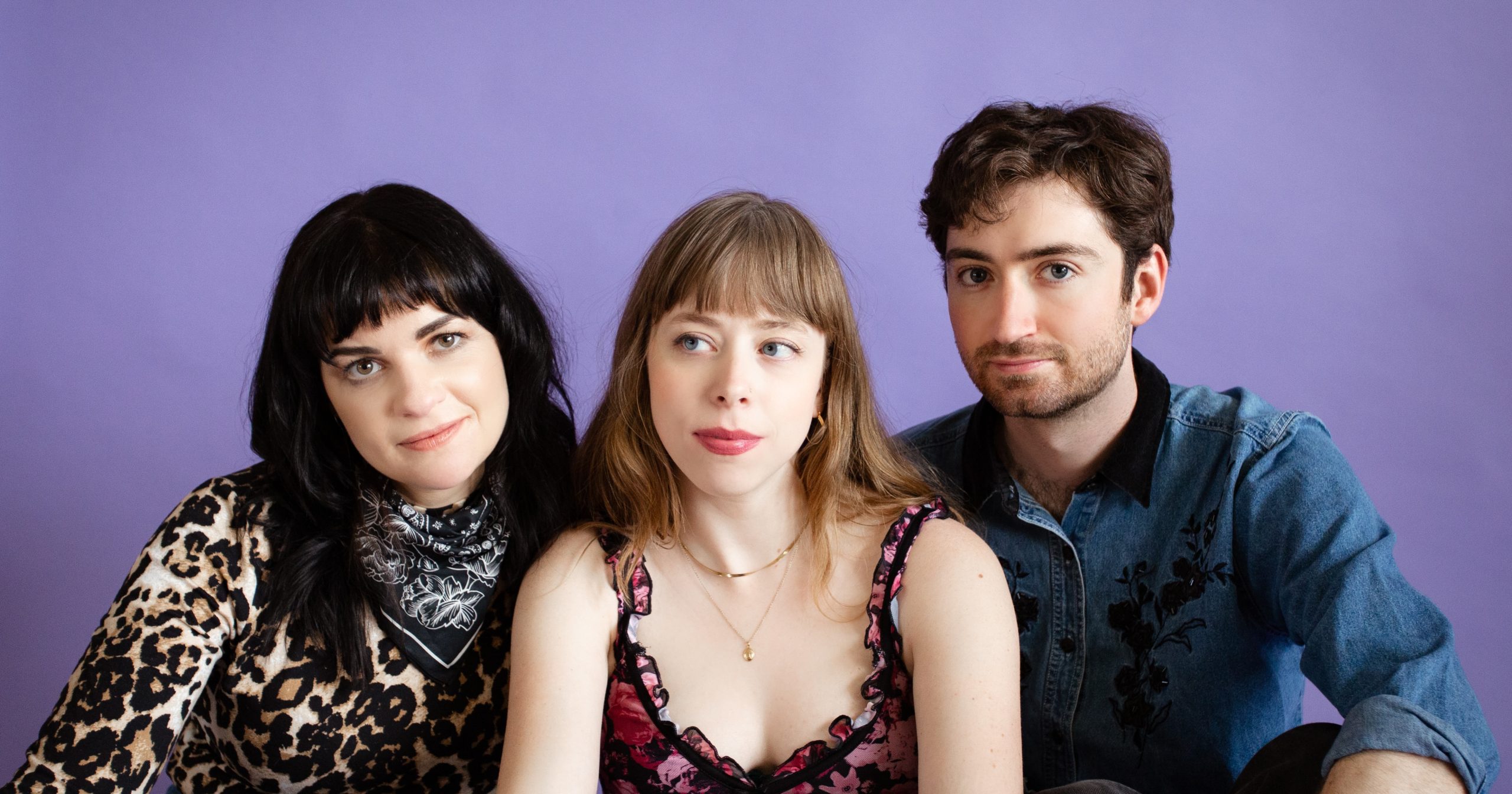
The members of Kissing Other pplRachel Baiman and folk duo Viv & Riley – see their endeavor not just as an individual artistic sojourn but as a larger opportunity to establish a collective conversation. Here, they’ve taken a handful of mostly rock and pop songs and blended, marinated, and sautéed them in unfamiliar flavors. The end results turned out nearer to their own identities.

“I grew up playing traditional Appalachian style,” said Riley. “This is not that!”

Baiman is a sincere and dogged lyricist, with a harmonious ear and a top contender’s punch. She grew up in Chicago, with a factory-made violin in her hands and an insatiable curiosity for why and how music could conform and contort to her swiftly evolving moods. Somewhere along the line, she started getting serious about music and purchased a John Silakowski five-string fiddle on a lengthy installment plan. She arrived in Nashville at age 18, riding fragile finances. Slogging on foot, lugging her fiddle in a hard, cumbersome case, she lacked the extra dollars to hail a taxi. Her odd jobs were many: dog walking; catering; reading novels and writing summaries for a sociology professor; she once even held a job organizing a comedy contest. But a fearless, tenacious sense of purpose compelled her to stick with music.

Pondering all of these circumstances in her heart, Baiman released several persuasive projects, including Shame (2017) and Common Nation of Sorrow (2023). Riley Calcagno, one half of the contemplative folk duo Viv & Riley, added stringed support and pre-production assets to one of Rachel’s albums.

Subsequently, Baiman asked Riley and Vivian Leva (the other half of the duo) if they’d be willing to join her on tour, where long hours on the road were spent in between gigs consuming, swapping, and contemplating music. Baiman’s traditional background taught her how to fully perceive a recording – whether an old fiddle tune or multi-generational, passed down ballad, or even a contemporary pop song – to not only hear it superficially, but to visualize its promise. Through prolonged stretches of asphalt and expressway, she’d oftentimes wonder what she, if given the opportunity, could bring to a certain song.


@kissing.other.ppl♬ original sound – kissingotherpplband

“The idea stems from Rachel’s musical generosity and curiosity and the extended times in those van rides,” said Riley. “Eventually, the songs included were the ones that we’d all individually had been listening to and were moved by. Songs that had stopped us in our tracks at different realms of our lives. Songs that hit us emotionally or otherwise… spontaneously contributed in the week that we recorded them.”

Some of Riley’s earliest memories are of his father’s fondness of traditional music. His father played the guitar, fiddle, mandolin, and banjo. At age 3, the younger Calcagno expressed interest in the fiddle. Though he was raised in an unrelentingly urban environment in the heart of Seattle he was never far from the folksy hospitality of music: square dances, jams, and potlucks. At the Wintergrass Music Festival in Bellevue, Washington, he formed connections with musicians originating from the sparsest, most countrified swaths of the state.

“I discovered an authentic-feeling bluegrass scene in the state and an old-time rural music scene on the West Coast that was kept going by people living in cities,” he explained, “and I don’t see that at all as contradictory.”

Like many other kids his age who grew up in Seattle, beginning in middle school, Riley burned liberal hours listening to local indie rock, though the attachment he had made with traditional music would override all else. He met Vivian Leva at a music camp in the Seattle area which emphasized the cultural importance of preserving long-standing traditions.

“I was a fan of Viv’s parents’ music,” said Riley. “We started playing music right away. Viv is a gifted songwriter. We started passing ideas back and forth. That was eight years ago.”

Vivian Leva was born and raised in Lexington, Virginia, in the Shenandoah Valley close to the abounding cultural and geographical influences of Charlottesville, Roanoke, and the Blue Ridge Mountains. It’s a small town with a deep worship of bluegrass and old-time narratives.

“Before I was born, it was a big hub of old-time traditional music,” said Viv. “Young people moved here for the rich, blossoming scene. My dad came here at 18 and stayed forever.”

Viv’s father, too, took a particular interest in the fiddle, traveling to neighboring counties and states to observe and jam. Her mother sang and guitar-picked, emulating and scrutinizing the local and regional ballads she had fallen in love with. They attended old-time fiddler’s conventions as a family. And when her parents formed a duo and headed out on the highway, sometimes she would share in such jaunts first-hand.

“When I was little I went on tour with them for a bit,” said Viv. “As a teenager, I was playing in my dad’s bands. As a kid he would bring me up to sing a song on stage.”

Certainly, music has long filled the souls of Rachel, Viv, and Riley with good things – and Kissing Other ppl is a remembrance of affection as much as it is a representation of impression. Indeed, Baiman said that Kissing Other ppl is a natural extension of her – and her counterparts’ – inquisitiveness, their attempt to understand the mysterious processes of expression, meaning, and memory.

“In reality,” said Rachel, “I don’t think any band or musical project should attempt monogamy, because you miss out on so many opportunities to learn and grow and bring new inspiration back to your main role.”

Similar to Rachel, Viv finds original songwriting to be a sacred, mysterious place to dwell. But she also believes that covers are a part of the whole process of an artist’s maturity, the recognition of the music of one’s friends, mentors, neighbors, and across-the-board community.

“There can be a stigma about covers,” she said. “You can’t make it your own. You are not creative enough to make your own music. It’s a shortcut. It’s a cop out. But as someone who has written a lot of songs and released a lot of records of original music, and plans to do so in the future, I don’t see it that way. It is an acknowledgment of how being inspired by other people’s music is such an important part of creating your own music. You can’t make your own music in a vacuum.”

“Anytime that you are playing a song, you are creating it again in the moment, and re-interpreting in your own way,” added Riley. “Whether it is a cover or an old traditional song, you still have the power to sing it and do it in a way that really moves someone.”

Baiman said the intuitive, empathetic nature of the type of music she plays requires that she be an attentive observer as well as a cordial, broad-minded learner – prerequisites for a collaboration of this sort.

“I think that having a background in old-time and fiddle music in general really prepares you to be a musician who listens,” said Rachel. “If you approach any musical situation with the mindset of, ‘Can I do something to help support the group musically here?’, that goes a long way.

“Old-time really prepares you for the idea that your best contribution might be not to play at all. The bar is really high for joining in, you have to make sure you’re adding something that isn’t already there, and you’re not dragging down the groove. That’s part of the etiquette of informal jamming and it translates to professional playing.”

A fine cover such as the group’s rendition of Wilco’s “Ashes of American Flags” not only illuminates a previous desire, elevating or enriching it with brand new urgency, but in some fashion it obliges the total re-evaluation of the original.

“There are people who are not able to handle ‘Ashes of American Flags’ because of the context, or they come from a different generation, or they don’t like Jeff Tweedy singing it,” said Riley. “Why not give a song like that another chance or give it another life? If you have a song that’s fun, or one that hits hard, emotionally, lyrically, or harmonically, maybe you can add to it, instead of just burying it on a playlist.”

Riley notes that many of the greatest records and biggest chart sellers are in fact cover-centric productions, though they might not have been advertised or promoted as such at the time. Many great albums are rife with songs written by others, sometimes entire roomfuls of songwriters on Music Row. Many memorable albums, such as Bob Dylan’s 1962 self-titled debut, only have a small number of originals; among the traditional folk and blues arrangements, Dylan’s had but two.

Indeed, Kissing Other ppl simply builds on a long tradition of artists rearranging songs that they like and then reinserting them back into the public sphere of approval.

“We seem to be obsessed with originality in our current moment and society,” said Riley. “But we are also at a time when art and – the pursuit of it – is less funded and less valued monetarily than ever. So many of the great records that we love are cover records. Ours isn’t heavy-handed.”

Perhaps one sterling example of a cover album that marvelously nudged old material into fresh fields was Tim O’Brien’s Red on Blonde, on which O’Brien grabbed a handful of Dylan songs, tinkered with their framework, and dragged them into bluegrass brightness. Many of these songs have stuck around since the album’s release in 1996 and bluegrass buffs routinely call out titles such as “Señor (Tales of Yankee Power)” and “Farewell Angelina.”

One of the record’s most memorable tracks is a rendition of Jason Molina’s “Hold On Magnolia,” which draws out the spookily and eerily beautiful essence of the inscrutable artist’s mystifying original. Rachel’s fiddle punctuates the abstract stylishness with characteristic splendor and aplomb.

“Jason Molina [1973-2013] was one of the greatest songwriters,” said Riley. “He grew up in Lorain, Ohio, and he went to Oberlin College, where I went. He had a rough life and died of alcohol-related complications. He left so much amazing music behind… if even one person hears our version and goes and listens to his records then it is a job well done.”

Alluding to Molina, Viv noted the deferential nature of covers and their special reward.

“That’s the cool element of doing a record of covers,” she said. “You can inspire people with that special song that resonates and if they haven’t heard of that artist, they can go back and listen to their work.”

On both “Hold On Magnolia” and “Ashes of American Flags,” Viv found herself in the new position of playing the drums. She sensed the two songs required the presence of drums and their inclusion was inspired by her simple desire to test the unfamiliar.

“One of the incentives I had to go to guitar lessons when I was younger was that my teacher would let me play drums for the last ten minutes of the lesson,” said Viv. “During COVID, Riley surprised me with a drum kit. He got an electric guitar. We were having fun during the lockdown in our basement. We were doing less folk music, and experimenting with instruments outside of the immediate folk genre. So, I took a crack at it.”

“I think it is a testament to the spirit of making the record that we felt comfortable putting her on the drums,” added Riley. “[Producer] Greg D. Griffith made the snare drums sound huge and awesome, adding a big element to the tracks.”

One song that Viv introduced to the project was “Born to Lose” by Waylon Payne, and the diversity in these respective arrangements is startling: Payne’s original was supported by a complete country band; the new offering is sagaciously stripped down, extracting every syllable of bitterness, sorrow, self-loathing, and private turmoil from the lyrics.

“I had been particularly into this artist, Waylon Payne,” said Viv. “His vocals are really fascinating to me. His ornamentation is really incredible. I spent a lot of time trying to figure out what he was doing. I was definitely interested in trying to get his vocal ornaments similar, because I think that they are really beautiful.”

The spacey, moody “Where’d All the Time Go?” by Doctor Dog was another one of Rachel’s proposals.

“That is a fun song to do as a trio, because of its echoing harmony parts,” said Viv. “I would have never picked that song for myself to learn. That’s what made it challenging. It took me outside of my vocal comfort zone, and that was a fun challenge for me.”

The name of the band, Kissing Other ppl, is a teasing affirmation of one of the pop songs covered on the album, a soft, mischievous Lennon Stella song released in 2020.

“It has a fun and flirty vibe,” said Riley, “but it also gets to something funny and true about relationships. It captures the lightness of the experience of playing music and hanging out, and not taking yourself too seriously. It was Rachel’s idea and she stuck with it. It is awkward and funny, and why not? Life is short.”

Baiman said the namesake reveals a good-natured admittance of the diversionary quality of art.

“Coming from two different projects that are based in original music and collaborating on cover songs,” said Rachel, “we chose the band name as a playful nod to the idea that we were cheating on our own projects by trying something different and new.”

The trio intends to take their reincarnated versions on the road. Beyond that they have no fixed plans to continue – or, for that matter, discontinue – sewing and hemming their skills and interests together.

Indeed, sustained in its own special love and humility, kissing other ppl expresses not just innovative lyricism and beautiful buzzes, but a powerful sense of understanding. What Rachel, Viv, and Riley all agree on is that the genre or style of its communication is less important than the nourishing energy and want that necessitated its assembly.

“In the end, a lot of the songs are ambiguous,” said Viv. “It is hard to say exactly what some of the songs are about. We are not spelling out what you should be thinking or feeling. It’s just cool to see how other people are able to communicate things in totally different ways than how you would communicate them. But somehow it still hits you.”


Photos courtesy of the artist.

Eli West: Timber and Timbre

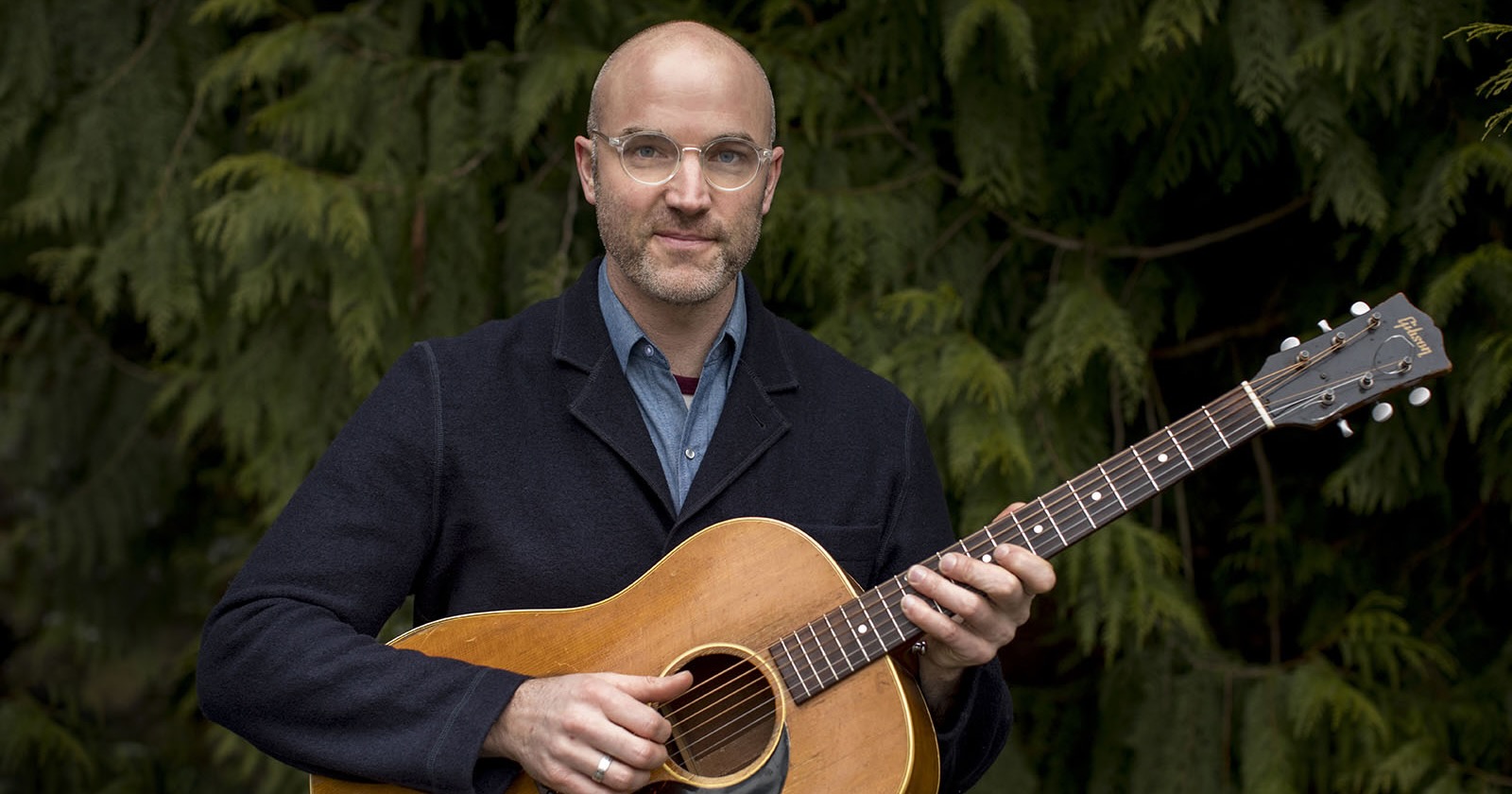
Eli West first rose to prominence in the acoustic music world as part of a duo with fellow singer-songwriter Cahalen Morrison. After creating three highly regarded albums together in the 2010s, West set off on his own. In 2016, he released The Both, featuring appearances by folks like Dori Freeman and Bill Frissell and on 2021’s well-received Tapered Point of Stone, West led a band that included Watchhouse’s Andrew Marlin and Clint Mullican and fiddler Christian Sedelmyer (Jerry Douglas Band).

This summer, the Seattle-based musician delivered his third solo album, The Shape of a Sway, where he is backed by his current sidemen, fiddler Patrick M’Gonigle and bassist Forest Marowitz, along with longtime collaborator Matt Flinner (mandolin, banjo) and an old college buddy, Peter Hatch (harmonium, piano).

West didn’t take a straight line to becoming a professional musician. Although he played violin and guitar growing up in the Pacific Northwest, he studied visual arts and political science in college. Then he headed east, where he went to timber framing schools in Vermont and Maine. Returning to Seattle, he got a job as a graphic designer.

Dissatisfied with his 9-to-5 existence, he quit his desk job after several years and went to Seattle’s Bainbridge Graduate Institute to study business. About halfway through, he realized business school wasn’t for him. It was around this time that West, who was getting more interested in bluegrass, met Morrison. He quickly decided to take a big leap and start playing and touring with Morrison. “My 30s were my 20s and it was awesome,” he shares with BGS. “And music was the means for that.”

West took some time to talk about his new album and his life while loading up a rental truck with timber frame kit to take to Orcas Island off the coast of Washington, where he and his wife own the Victorian Valley wedding chapel.

The Shape of a Sway is your third solo album. What type of a musical evolution do you see with this album?

Eli West: [With] each sequential record since my project with Cahalen, I’ve just been kind of establishing myself as a solo artist and singing my own music.

Tapered Point of Stone occurred right after my dad died and then this [album] occurred right after I became a dad. And making it halfway through life, turning 40, thinking about the second half. So, there’s kind of a transition theme. Looking up to someone and then all of a sudden looking down to my kids. Kind of switching teachers. My parents were my teachers and now my kids are my teachers. That’s a really abrupt shift.

I was writing for my last two records, but with this record I’m finally singing my songs that matter to me in a way that if they fall on other ears and feel good, I’m stoked. But I’m mostly happy with them as my own journal entries.

You have said you had something of a late start as a songwriter. How did your recent significant life events – your father dying, you getting married, and having children – influence your songwriting?

It took me so long to start songwriting, because I felt like I was cocky if I was putting my songs out if I hadn’t lived life. So, I needed to experience death. I needed to experience life on the other end, being a dad. I just didn’t have enough to say until then. It felt arrogant to do that without those experiences.

I have more certainty in whatever I’m doing. And I honestly needed a few years to think about my dad dying before I became a dad. And that certitude I feel in my music now, too.

I’m not writing to anything. I’m writing for myself. I have a lot of friends in Nashville, but I hate Nashville, because everyone’s writing to something. Not everybody, but there’s a big trend of writing to something to get awards or get someone to cover it – you know, that kind of thing.

How did you select the ten songs – did you pick them because they felt like a piece or because they were the ones ready to record?

It’s half matchmaking and half just the dam breaking because it was time. Making sense of getting half of your life, getting married, settling down, not road-dogging anymore, and ultimately deciding to have kids. So the matchmaking was finding the songs that spoke truth to being a new parent, I guess.

Are there tunes that you feel especially stand out to you from a songwriter’s perspective?

Well, “Ever Lovin Need To Know” doesn’t have a lot of meaning and it’s kind of filling syllables and it just feels good. It had meaning, but it was more about the feeling of the song than the content. “Spite and Love” is maybe the other end, where I had read this article in the New York Times about crows holding grudges and that just kind of launched it. I’m really proud of the lyrical content of that song.

And what songs served as the impetus for the album?

“Ever Lovin Need To Know” kind of felt like the tipping point where I could start assembling songs… And then “Rocks and Trees” is the most pertinent to my current situation. I have a nine-month-old daughter and that is speaking to that reality of who she is in my life.

“Rocks and Trees” also contains the line that you used for the album’s title.

Yeah, I don’t like naming a record after a song title. I think picking a lyric is way more interesting. I think there’s more satisfaction in finding that as a listener, than having a song title be the album title. So, “the shape of a sway” was kind of a secondary line that ended up meaning a lot to me. I have this newborn daughter, and I feel like I really know her not in a cognitive sense, but in a feeling sense. And “the shape of a sway” is this kind of different way to know somebody.

It feels like your lyrics often concern people exploring, examining, and searching for answers, but you don’t necessarily provide answers or explanations. Also, several songs (“All The Saints,” and the cover of Jean Ritchie’s “Cool of the Day”) have spiritual or religious imagery. Is this intentional or coincidental?

I’m glad you brought that up. I grew up in the church but then realized there’s just such a bigger common denominator than religion to get to know the world and people. So, I’ve happily delivered myself from that. But I think I ask better questions of myself because I acknowledge that human experience is bigger than any one religion.

I’m kind of looking back on those religious questions with a humanist empirical perspective, and I think that’s pretty fascinating to look back at the same questions but have a deeper well of experience and knowledge.

Was it difficult to quit the more structured world of graphic design and later business grad school for a life of a musician?

I think we’re all trying to reclaim this word “freedom” in this time and the definition of freedom for me was choosing a creative pursuit. There was some privilege and luxury in that, but it just felt like freedom. And I am grateful.

Has your background in design influenced the way you make music, similar to the connection that people have drawn between music and math?

Yes, spatial thinking – relative understanding based on space – what it feels like to be in one room and look into another room. I think of music and arrangements like that. The flow of walking through space and anticipation and memory, that’s really how I navigate music. That sounds kind of cocky, but I think you know what I mean.

You have talked about how collaborations are important to you. And this album features performers who you are familiar with (Patrick M’Gonigle, Forest Marowitz, Peter Hatch, and Matt Flinner). So, I was wondering how you walked the line with the arrangements and the collaborating, when it’s your name on the cover.

Yeah, I think any relationship [involves] grabbing onto the things that are important. The first line of this “Rocks and Trees” song is “a heavy rock that’s lightly held.” So, how to grab on to important things, but not white-knuckle them. I mean, I had this a few times, mostly in relationships, but also in musical collaborations that you seize the moment, but you don’t pretend it’s eternal.

And there’s a kind of like healthy promiscuity in music that just feeds the creative side. That said, this band that I play with right now – I feel so lucky. They’re just some of my favorite musicians. Besides Matt, we’re all in the Northwest now. And I think beyond anything, that’s why I do this – it’s just to play music with pals that I appreciate.

I had tried to record this a year previous, [and] it was basically too lightly held. I went in with a framework, but not enough rehearsing or structure around mostly [the] arrangements. And it was a great session. Those songs sound great. But it just didn’t have that kind of cohesive thing. So, I think my ideal process is leaving like 20% to be determined the day of recording. And then like that shit is always so great. But I need the 80% structure there.

You play a rather impressive variety of instruments. Guitar is your main instrument, but you play mandolin on this album’s two original instrumentals (“Gentleman’s Bulldog” and “Thanks and Sorry”). And you also play banjo and pedal steel. Do you feel like you have a particular facility with playing instruments?

I did Suzuki violin as a kid, which focuses mostly on ear training and that really helps to be fluid on instruments later in life. So, I’m really grateful for this Suzuki method!

This album has a little less bluegrass sound to it. Songs like “Spite and Love” and your reworking of Paul Simon’s “Hearts and Bones,” in particular, have real adventurous arrangements. Listening to it, the album sounds more genre-less – in a good way.

Yes, I am without genre. I just am drawn to good music, and I don’t like bad music. That’s how I define genre. There’s a lot of whim and not feeling bound to anything. So, that’s a freedom, and I kind of don’t care.

The Shape of a Sway also contains fewer instrumentals than your prior albums, was that by design?

I also love instrumental music…But the lyrical content of this record is important enough that I think that the instrumentals are just kind of supplemental.

You end the album with a real lively version of “I’d Rather Be A Train.” Was that on purpose?

[Chuckles] That Larry Sparks song was mostly just to make sure I still love bluegrass or to show that I love bluegrass.


Photo Credit: Jenny Jimenez

The Road Home: A Documentary Short About Fiddle, Family, and Kentucky

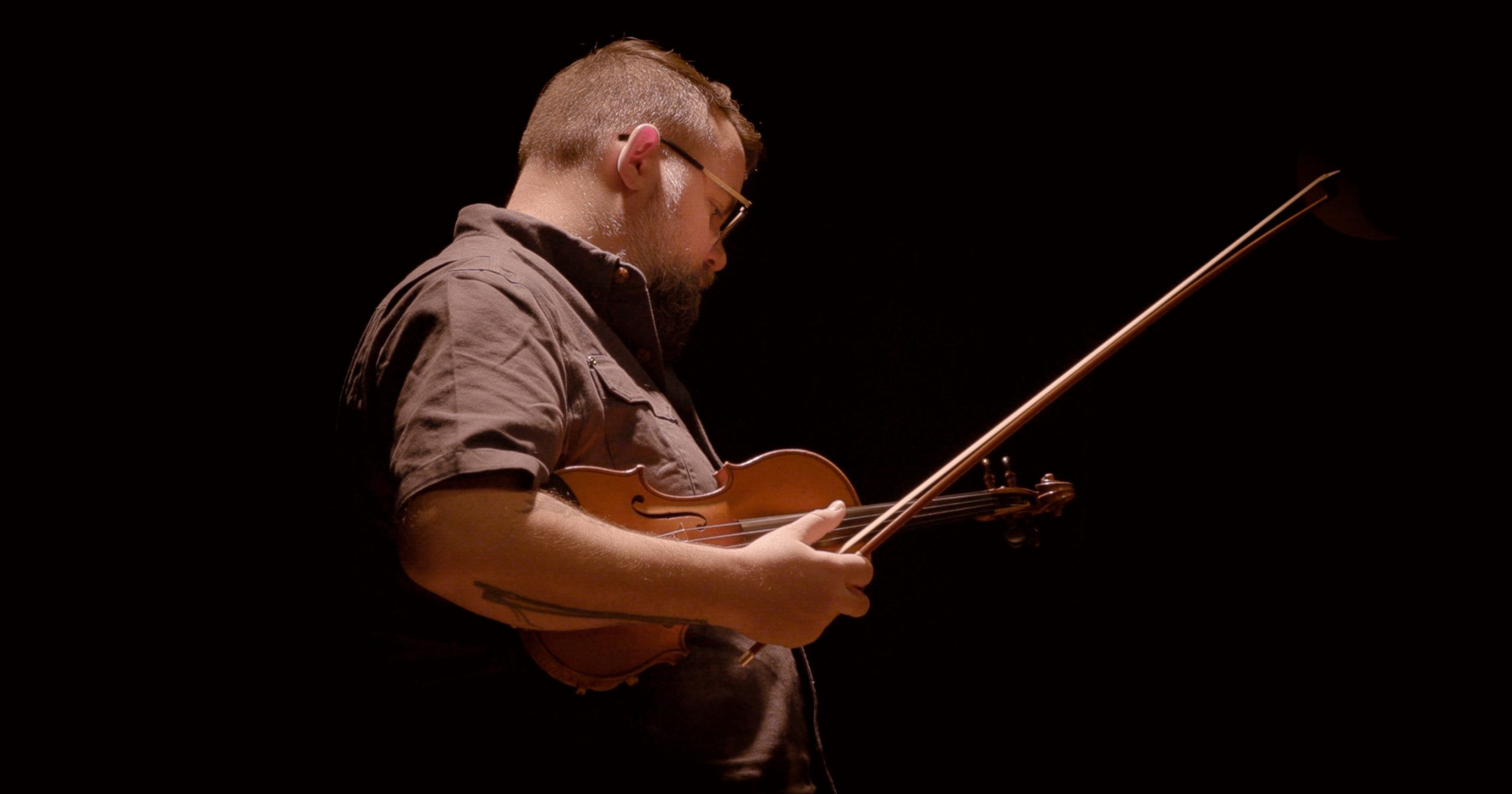
Bluegrass and country fans may recognize Kentucky-born, San Francisco-based fiddler Brandon Godman from touring, recording, and performing with folks like Dale Ann Bradley, Laurie Lewis, Jon Pardi, the Band Perry, the Music City Doughboys, and many more. He’s also an accomplished business owner and luthier, helming two fiddle repair and retail shops based in Nashville (The Violin Shop) and the Bay Area (The Fiddle Mercantile.) In addition, Godman helped found Bluegrass Pride and was instrumental in organizing the non-profit association’s float and marching contingent that won the coveted “Best Overall” ribbon from the 2017 SF Pride Parade.

Godman has played fiddle his entire life, beginning on the instrument as a young child in Northern Kentucky. His skills span old-time, bluegrass, western swing, country, contest fiddle, and beyond, and his career, by necessity often, has been remarkably varied, boasting stories of success, trials, tribulations, and highs and lows beyond his years. Now, filmmaker Bria Light has crafted a remarkable, heartfelt, and stunning documentary short all about Godman and his journey on and with the fiddle.

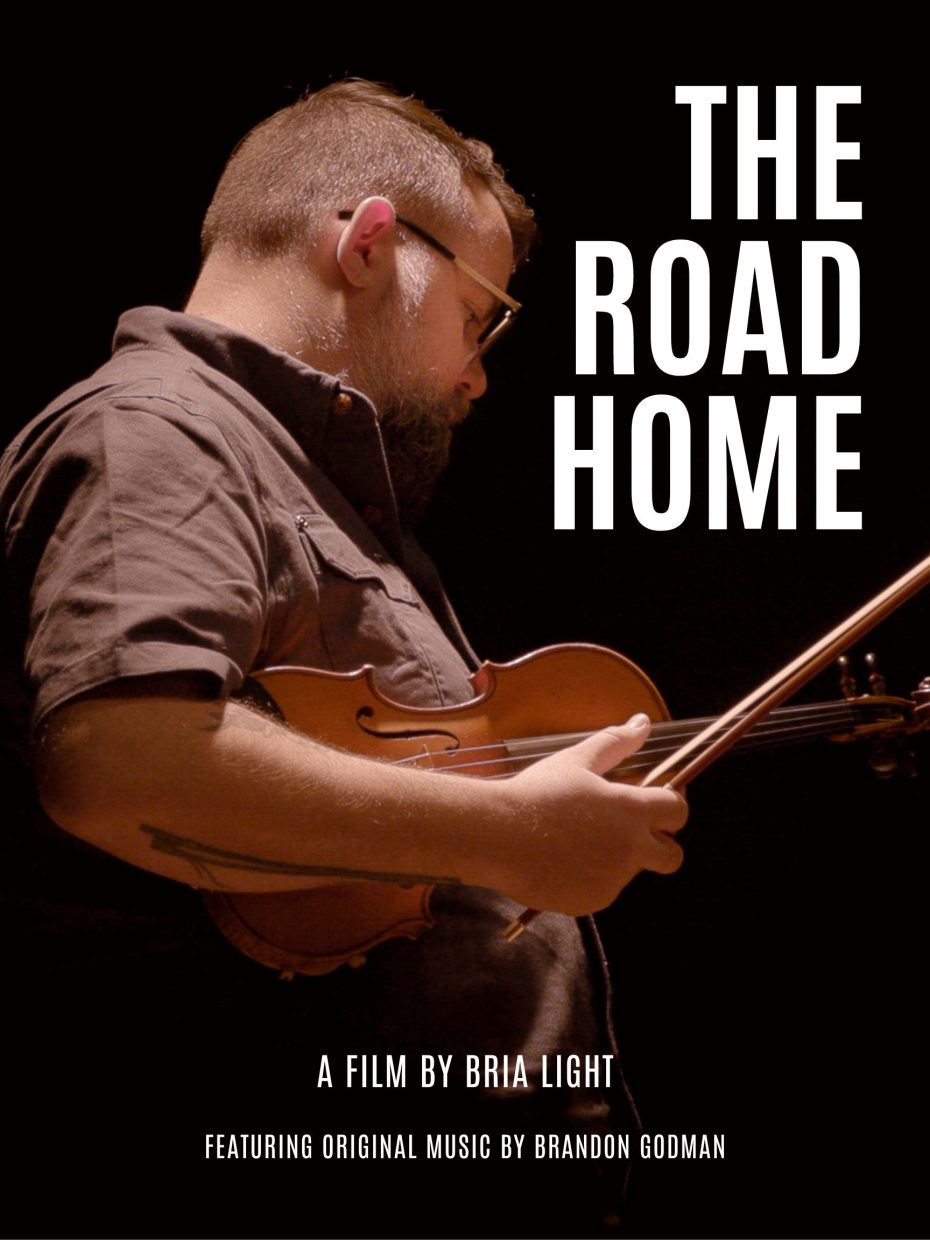
Shot and crafted in 2022 and 2023 as Light’s thesis film at UC Berkeley’s Graduate School of Journalism, The Road Home is an intimate and gorgeous look at Godman and his relationship with his instrument, his career path, and his rural home in Kentucky. The film includes lovely original music – much drawn from Godman’s acclaimed 2024 solo album, I Heard the Morgan Bell – that offers many varied samples of his expansive skillset on fiddle throughout, a perfect score and soundtrack for the 20 minute-plus documentary. Together, Light and Godman travel from California to Kentucky, visit with Godman’s family, share old memories and stories, and examine the complications and intricacies of family and community, the transient, intangible nature of “home,” and the pains and reliefs of leaving and returning.

Now, for the first time, The Road Home is available to screen online, right here on BGS and on YouTube. (Watch below.)

Light has a deft and artful touch as a filmmaker and director, utilizing the fiddle and Godman’s original compositions as an enormous character in these narratives, propelling the story forward and entrancing viewers with the sights, sounds, textures, and mythos of Northern Kentucky – as could only be delivered by a musician and creative like Godman. The end result is moving and illuminating, subverting expectations of the region, the instrument, the genres we associate with the fiddle, and the communities we expect – or don’t expect – to love these traditions and the people who keep them alive.

We spoke to Light via email about the film, its conception and making, and the twists and turns along the way that led Light and Godman to this stellar piece of visual, aural, and narrative storytelling.

Let’s begin by going back to the beginning. Can you tell us a bit of the story of how this film project came to be? What inspired you and how did you get connected with Brandon?

Bria Light: I made this film for my thesis film in the documentary film program at UC Berkeley’s Graduate School of Journalism and when it came time to look for a story that I would be spending all year working on, I knew I wanted a story that was music-related. But I also wanted to find a story that revealed something deeper about how music can help us find our way through the sometimes fraught path of being human. I eventually got connected with Brandon, who agreed to let me into his life and tell me this slice of his story.

This film tells such an expansive story in a relatively short amount of time. What was it like trying to condense such an interesting and often complicated narrative into this short film “package”?

I’ve sometimes used the metaphor that making a film feels like having the vast expanse and depth of the ocean stretching out before you and your job is to chart the best course from continent to continent. It can feel overwhelming! At every turn there are not only creative decisions to be made (What part of this person’s complex life do I focus on? Do I shoot this scene? Do I interview that person?), but also ethical ones (Who is affected by telling this story and how? Should I or should I not reveal someone’s identity? What impact am I hoping for this film to have and how is that best served?).

While you’re finding and crafting the story, it’s not always self-evident what the best, most meaningful storyline is and you want to explore a million different possible paths. You end up with hours and hours of footage (the ocean) that you have to fully explore to find the best course. And the thing is, you have to try things out to see if they work in a movie and until that golden moment where something works, it, well, doesn’t work. So it is a process of months – or years for feature docs – of trial and error, during much of which you suspect you might be terribly lost at sea and had no business becoming a sailor in the first place, to follow the metaphor… until one fine day you’re like, “Land ho!” and things start coming together and you can sleep again at night. [Laughs]

I feel like you let the music itself, and the tradition of fiddle music and roots music, do a lot of the storytelling here. What is it like translating music to a visual media like film in this way and leveraging it to help advance your narrative?

Absolutely. One of the key elements of my vision of the film from the beginning was to leverage the richness of this musical tradition and Brandon’s music within that to assist in telling his personal story. In fact, I pictured the music almost as a character itself. Music, of course, is a storyteller, even when it doesn’t have lyrics. So thinking of the music almost like the narrator of the story felt very natural.

Of course, Brandon creating his album of original tunes, I Heard The Morgan Bell, is part of the film’s narrative as well, so it all tied together organically. Additionally, since part of the film delves into the past and the creation of the album was the part of the story that was unfolding in the present, it helped provide a narrative thread to follow and to tie Brandon’s musical and personal evolution together from his past to his present.

Can you tell us a bit about what it was like traveling to Kentucky with Brandon?

It was very, very cold! Our trip to Kentucky took place over Christmas week and it just so happened to be during a cold snap that swept the entire country. It was in the single digits temperature-wise, in the negatives with wind chill, and the roads were covered in thick ice. I had envisioned going there and shooting scenes on the family farm with golden winter light sparkling in the crisp air, etc., and instead there was roaring wind so bitterly cold that you could barely be outside for two minutes before your fingers were completely numb. At one point, my camera was having some issues because it was so cold! But of course we filmed mostly inside and Brandon’s family was so warm and welcoming. I ate a copious amount of Mamaw’s famous chocolate peanut butter squares!

The music of the film is so stunning, and some of the selections went on to be included on Brandon’s 2024 album, which you mentioned already, I Heard the Morgan Bell – it was one of our favorite bluegrass albums of last year. Was there a “music supervision” process for the film? Did you leave it up to Brandon? What was it like collaborating on what would become the soundtrack and soundbed for your visuals?

Brandon was so generous in granting me permission to select music from his album, which was still in process, to use for the film. Through the course of our many hours of conversation over the year, he told me many of the stories behind the songs, of the inspiration and ideas that led to their creation. So I used that, along with the general feel and mood of the tune, to inform my choices as to which pieces to include where. Normally, you’re right, there would be a music supervision process, but in this case I had the privilege of working directly with Brandon, who was essentially also the film’s composer!

Do you have a favorite moment in the film? Or from the process of crafting it?

Hmm, there are so many memories attached to the creation of this film! I loved filming and editing the “Morgan Bell” scene in the church. The music is so gorgeous and I knew I would love filming in low light with stained glass church windows as the container for that wordless song that expresses so much emotion.

I also loved the moment in the editing process where I found the old footage of Brandon as a young teen on a local TV show. In Kentucky, his parents had given me a paper bag full of photo albums and old VHS tapes of Brandon at fiddling contests and other things to go through and see what I could use. Late one night, after a full day on campus, I headed back to the edit rooms in the journalism school to continue digitizing and going through the old VHS tapes. I got to one tape, began watching it, and it seemed to be all recorded re-runs of Days of Our Lives. After fast-fowarding through so many episodes of Days of Our Lives, I was wondering if that tape had been mistakenly included. I was about to stop when suddenly it cut to the footage of Brandon on the local TV station. It ended up becoming of my favorite scenes in the film, thanks to the very enthusiastic TV show host and a young, guileless Brandon.

Another favorite part of making the film was simply working with Brandon and getting to know him throughout our many conversations together. He’s such an old soul was a joy to work with, which is of course not always the case when making a film about someone’s real life. He was always open and willing to go along for the ride, despite the vulnerability required.

Filmmaker Bria Light, creator and director of ‘The Road Home.’

Maybe it’s an obvious question to ask, but what’s your goal? Making such an incredible and involved piece of art is goal enough, but where do you hope to take this film? How are you thinking about getting it in front of audiences? What’s next for the project?

I had several goals: I hoped some people might see a bit of themselves in the story and feel that they, too – despite having been made to feel othered in the past – belong in bluegrass and country music, that this music can be a home for everyone.

I also hoped that people would see Brandon’s story and say, “Wow, I didn’t realize there were still folks facing this type of persecution in the music industry.” This wasn’t so long ago. And unfortunately, as we all know, we are seeing today the continuation and resurgence of anti-LGBTQ laws and bigotry all over the country and the world. Another hope I have for the film is that by sharing stories that elevate the depth and humanness of the characters onscreen, folks from all sides of the political spectrum might, over time, begin to think about these issues in a new light.

What’s next? Recently the film screened to lovely and engaged audiences at the Sebastopol Documentary Film Festival and next it will play a bit farther from home at the Sound on Screen Film Festival in South Africa. I’m also hoping to show the film at music events or conferences, to continue to share Brandon’s story with audiences around the country.

What did you learn during the making of The Road Home that was unexpected? What will you take with you into future projects – whether in a similar vein or in another space entirely?

I learned so much! I learned the importance of finding that balance of pre-planning and knowing what the story is about while at the same time going with the flow of real-life, nonfiction storytelling – that is to say, you can’t actually predict how life is going to unfold, so you have to hold your preconceived ideas in one hand, while leaving room for the story to reveal itself to you as it unfolds in real time in the other. One thing I “learned” (in quotation marks because I’m still learning it…!) is to trust the creative process, with its highs and lows, self-doubts, rewarding moments, and ultimately, you find that you have gotten to the end of your creative process and survived! There are really too many things I’ve learned that I’ll be taking with me into future projects, so I’ll just leave it there for now.


Film, poster, and images courtesy of Bria Light.

BGS 5+5: Grain Thief

Artist: Grain Thief
Hometown: Boston, Massachusetts
Latest Album: House of the Dog (out August 1, 2025)

Genre is dead (long live genre!), but how would you describe the genres and styles your music inhabits?

We’ve sort of faced the “genre-bending” thing throughout our career, so by now you’d think we’d have a good idea of how to summarize ourselves and our music. The beauty is, though, that we don’t really have to put ourselves down for a genre for anything more than maybe a drop-down menu or an intake form.

We’re from Boston, Massachusetts, an area that’s not typically known for its bluegrass scene (think Aerosmith, Dropkick Murphys, and Marky Mark). But through playing together in the early stages, we landed on this instrumentation that would be typical for a bluegrass band. So, does that make us a bluegrass band? Not really.

We welcome our individual musical backgrounds into our collective creative process. Alex (fiddle) went to school for classical music while Mike (bass) played drums in a punk band. Zach (mandolin) grew up in the PNW old-time scene while Patrick (guitar) studied English and developed a knack for songwriting. Tom (resonator) is a hell of an electric guitar player and is ready at the drop of a hat to play any iconic lead guitar riff that you might’ve just made reference to. We’re a mess. Sometimes, it’s a beautiful one.

What this all translates to is that we have a wide range of musicality within our crew and we allow all of that into our creative process and see what we come up with. Sometimes that could be called bluegrass or maybe even derivative of classical. Sometimes it’s lyrically poignant while other times it’s an angsty punky notion. Sometimes it’s, “This bridge kind of sounds like Weezer!” Thankfully this process has allowed us to grow a wide audience and allows for opportunities that are inside and outside of the bluegrass genre.

What other art forms – literature, film, dance, painting, etc. – inform your music?

We’re a group of friends who are all just about the same age, so we’ve all grown up along the same cultural timeline – regardless of the fact that we all first met in our 20s. When we’re making any kind of cultural references together, whether satirically or literally, things generally land with the other band members. We all watch similar series and movies and someone might make a reference from childhood that’s stood the test of time. Other times we’re in the van looking for things to talk about and someone asks, “Hey have you seen Dune 2 yet?” while the odd-man-out immediately goes straight to “earmuffs” mode.

We’ve got hobbyist photographers and not-so-hobbyist visual artists within the group, so we share our work and inspirations with each other which leads to art direction brainstorming for band projects (album art, merch, etc). Many of us enjoy literature and some of us can barely read music. Not bad! While we haven’t necessarily organized the thought before, we certainly draw inspiration from other art forms and that spills into our music and our relationships together as bandmates.

What rituals do you have, either in the studio or before a show?

Prior to making a record we generally go away for a few days (as much as time allows for) while we are on a break from playing shows to take a creative writing retreat. This has taken place now before our albums Gasoline (2020) and House of the Dog (2025), which are the two from our catalog of the past few years that are complete original compositions. This time together allows us to get away from the outside world and work distraction-free and it allows a significant amount of time for creative collaboration or to bring works to the group for arranging. This time together also acts as an opportunity to share meals together, check in, strengthen friendships, and generally just appreciate the role that we collectively play in each others’ lives.

If you didn’t work in music, what would you do instead?

Sadly we all have other jobs, too. Yay music industry life of 2025! Among us are skilled computer programmers, web developers, carpenters, general contractors, bartenders, sound engineers, CAD engineers, teachers, and more. Is anybody hiring for those positions? It’s literally no rest for the wicked. Yet here we are and we are grateful that there is still a place for being a professional musician in our lives at all.

We try to really make it count when we get to do this, and it has never felt like something that we have to do.

Since food and music go so well together, what is your dream pairing of a meal and a musician?

We’ve all got excellent taste in both food and music, so it’s going to be hard to pick a single pairing that would apply for all of us. Sometimes we can’t all even decide on the same place to eat on the road. But, I’ve got two words that are abundantly clear with this one: “Jerry” and “Dogs.” So, probably a night of grilling hot dogs to the soundtrack of Grateful Dead bootlegs.


Photo Credit: Lead image by Toan Trinh; alternate image courtesy of the artist.

Ketch Secor
Contains Multitudes, Too

After a quarter century fronting the frenetic bluegrass and jug band outfit Old Crow Medicine Show, Ketch Secor is finally breaking out on his own with his solo debut Story The Crow Told Me. The retrospective record looks back on the past few decades, from his own journey to stardom spurred by a chance encounter with Doc Watson to the certified platinum hit “Wagon Wheel,” through the lens of a soundtrack that’s equal parts bluegrass and contemporary country.

“Because the band [recently] celebrated 25 years, I was already in the mindset of a retrospective look,” Secor tells BGS. “I was thinking about everything that’s happened and transpired over that time and started writing about it. In fact, at first I really thought it was going to be a spoken word record before the music eventually took over.”

Talking over the phone, Secor spoke about the timing for his debut project, its connections to both Old Crow and contemporaries like Dierks Bentley, becoming the new host of Tennessee Crossroads on Nashville PBS, and more.

You mentioned this album was initially envisioned as a spoken word compilation. What led to its transformation into a fully realized album?

Ketch Secor: I was working with Jody Stevens. We had written a couple songs that were largely based around spoken word and others we were looking to add background sounds on. Those sounds started getting more and more like what I already do, which is writing songs with choruses and verses and hooks. It just evolved out of the beat poetry version of the album, which was probably a little less listenable but closer to what I was striving for. The musicality of it is a bit of a compromise to be like “Well, I’m going to make this an actual record people might want to listen to” because the spoken word records I enjoy are not highly listened to.

I recently was trying to find them again since my record collection got lost in the 2010 floods we had in Nashville. I went on Spotify, which I’d never used before, to find all these songs in my head like Amiri Baraka’s “It’s Nation Time” or Moondog – a 1950’s renegade beat poet from New York – in trying to get an understanding of how the spoken word music I heard as a kid was being utilized today. It quickly became clear that nobody listens to that stuff anymore. [Laughs] So it seemed like making it musical would make it more fun for people.

It seems a bit ironic that you had to look up all these songs – many of which would be considered part of the Great American Songbook – on a digital streaming platform like Spotify. Talk about two very different worlds colliding!

I talk a little bit about that phenomenon on the song “Junkin’.” A lot of the experience of making music with Old Crow, especially in the beginning when we were still developing a canon, was about music’s physical form. When the band first started the internet was still new and we were still selling cassettes. The last time I made a solo record was on tape, the band didn’t have a website and none of us even used email when all of this started. It meant that searching for the physical was really important.

There’s another song on the album called “Thanks Again” that highlights the personal relationships that you develop out on the road – these chance encounters that are very much real and put the wind in your sails. There’s something to be said about having to come of age in a time when information was so tactile and often involved a human touch.

With the emergence of the internet and things like streaming and social media it really is an entirely different world for artists to navigate nowadays.

I realized that I had a kind of time capsule in my mind I had yet to crack open in the days before going in to make this record, which was done quickly and often with me writing the songs as we were recording them. Opening it up was really cathartic and essential for me to process and move past because the experience of coming to Nashville when we did and the kind of band we were in was, at times, slightly traumatic. It was a very intense quest similar to a military deployment, being a minor league ball player fighting your way through the ranks or even being a teenage whaler in Moby Dick. You end up leaving everything else behind in search of this one pursuit.

It’s not unique to come to Nashville to make it big, but what made our experience unique was that we were trying to do it with these traditional sounds in an era in which technological changes were happening as we were doing it. It was almost like we were going against the literal tide with our choices and artistic motivation.

You just mentioned writing these songs as you were recording them. Is that something you’d done before?

That was a very new way of going about things. I understand that record-making has changed a lot since we first started – our most popular Old Crow records that gave us a career were the early ones we made with Dave Rawlings on analog tape that we cut with a razor blade. Making a record the way Gillian [Welch] and Dave do is very studious, labor and time-intensive. But now the technology exists to do it super fast.

This record almost felt like a throwback to the seminal recordings of the 1920s and ‘30s that are the headwaters of our sound. Those records were made in three minutes oftentimes without knowing what the arrangements would be. Three minutes wasn’t the time frame of hillbilly music until the record company said it was – they just sat there, watched the light turn on and played. Writing a song and building a track like that actually felt really on par with what it would have been like going to Camden, New Jersey, in 1928 on a train when you’d never left your county before that. The challenge is keeping one foot in the past and one in the present. When you play fiddles and banjos and blow harmonica for a living the instrument kind of does it for you.

You name dropped Jody Stevens a few minutes ago. How’d y’all come together and what was it like working with him?

We met through my publishing company. I was going to do a co-write with him and knew he’d written a lot of songs for contemporary country artists, so I brought my bag of tricks that I bring out when I try to pretend I’m going to write the next big, top 10 country smash, except for this one time with Darius [Rucker]. I love country music even though I feel that in the past 25 years I have a whole lot less in common with it than I did when I was a kid, in terms of what it sounds like today in its mainstream output versus when I was singing along to Jo Dee Messina when I was 19. It was interesting to circle the wagons with Jody because he brought such a unique perspective in record making that comes from contemporary country music even though his roots are in hip-hop.

The other thing that brought us together was that Jody had seen Old Crow a lot, especially in our early days from 2000-2005, which is the sweet spot I try to explore on this record. He’d been there at the Station Inn and the festival Lightning 100 used to do downtown and some of these other places that have since been replaced by high rises. The fact that he had been a first-account witness to the band was really helpful to bounce ideas off of. His sister was also a big Old Crow fan and even though I’ve never met her I thought about her as my target demographic – someone who saw us back in 2001 and wanted to know what that time capsule looked like.

The fact that Jody had done all this work with people that rapped – only to find that 25 years later the tapes and demos he’d made with Jelly Roll were now part of a pop culture consciousness that hadn’t been there when he first started working on them – gave him a similar orientation to country music that I have about Americana. When I got started there was nothing called Americana and nobody lived outside of contemporary country music unless you were alt-country. Coming into this period of time in Nashville where it wasn’t yet determined that anyone with a banjo could make it that wasn’t bluegrass is another place where Jody and I shared commonality. The rap game has since become a massive component to contemporary country music similar to how Americana has become the tastemaker for anything roots-related.

In terms of the sound on this record, the way you move between more Old Crow-esque bluegrass and those pop country flavors reminds me a lot of Dierks Bentley, another person who excels at showcasing the best of both sides of roots music.

I came up with Dierks and remember witnessing his arrival. Before [“What Was I Thinkin’”] came out there was an issue of CMA Up Close that had a story about us on the page opposite one about Dierks and I thought to myself, “Well, if a guy named Dierks Bentley can make it, then probably a guy named Ketch Secor can, too.” Surely Nashville has the appetite for two oddly-named boys. [Laughs] Then I went on and took a moniker that wasn’t my name. Because of that I feel very much like a brand-new artist now and have developed a strong sense of empathy for the young guns who are out there trying to put their stuff out for the first time, because it’s so much harder now than when I was a kid.

What are some of those major hurdles you’ve noticed for new artists today compared to what you first encountered with Old Crow?

Now the way you stand out in a crowd is through visual means that often require the least amount of artistic acumen and the most amount of social media acumen. So far, I’m not sure it’s helping the cream rise to the top, though. The skill set should be how good can you pick a banjo, not how good can you pick the keypad on your iPhone, even though you have to do both to be successful today. When I was a kid it was about making these connections with people, knocking on doors so many times that every time something good came to me [it did] on account of me showing up and being in the right place at the right time.

Seeking a viral moment has an undue effect of potentially limiting the number of new entrants into the arena. For one generation, what was once divinized is now digitized. I’m sure that if there’s a God above that He or She can use the binary code to reach people and connect their children. I can pick up The New York Times and feel like there’s a closeness with the loss in Texas right now, which is only amplified by me having swam in the Guadalupe before and having a personal connection to the area. If you’ve plunged in the waters yourself then you’ll share something so much more vital with those who are experiencing the loss.

It’s really a metaphor for how we all have a shot at playing the Grand Ole Opry or going from the Station Inn to the Ryman like I did. There’s a turnstile in front of that and I want to see it spinning wide so that artists of all stripes can find their way up to that stage where they belong. As a steward of those stages, I want to see the people show up who have found music as the great connector that, regardless of the speed of the computer in your pocket, the speed of music breaks all other forms of sonic barriers.

In terms of personnel, what motivated you to bring in past and present Old Crow members like Willie Watson, Critter Fuqua, and Morgan Jahnig to record these songs with?

I really wanted to have all the past members of Old Crow on the record, because it felt like a bit of an offering to the gods to say “thanks.” So I really wanted a little bit of all their spirits on it. Not only that, but I read through a lot of old journals and called up some people I’d met hitchhiking, but hadn’t talked to in 25 years. I went and visited the guy who coined the term “Wagon Wheel,” because that song was always called “Rock Me Mama” until I met James Sizemore – a wonderful rascal and drug-dealing Vietnam vet.

I went to see him on his deathbed and recorded phone conversations late at night with old friends. While none of that stuff is necessarily on the record in its physical form, it all went into the process of trying to bake something that really felt like I was living in the past and bringing it to the present through these songs. I think a lot about cairn stones that the Inuit people up north call inuksuit, which are like sign posts that tell you where to turn, but they’re also spiritual. So imagine a road sign that could say “300 miles to Memphis,” but also told you the ancestral route of the settlers who first brought buffalo down 7,000 years ago, sort of like the duality of a time signature.

That duality of time reminds me of one of the album’s songs, “What Nashville Was,” which highlights how much Nashville has changed over the decades while also highlighting how no matter how many venues are replaced with condos, music will always be the city’s heartbeat.

A lot about the way Bob [Dylan’s] record Nashville Skyline had a way of pointing out Nashville for the first time to anyone who didn’t live in the South or listen to country music. He was really pointing to Nashville from a unique perspective and certainly Bob Dylan’s Nashville was the kind of Nashville that I was looking for when I first started playing on the street corner there in 1996.

Similarly, I was also looking for Dolly Parton’s Nashville. I wanted the Nashville that Dolly got when she stepped out of the pickup truck and married the first guy that honked his horn at her, the kind of Nashville where Willie Nelson was laying down in the street in front of Tootsie’s thinking he’s gonna kill himself because nobody wants his songs.

I used “Girl From The North Country” as the template for a love letter to a changing place and a cityscape that has gone on to do so much stuff that it itself is largely oblivious to the price it pays for its constant reinvention. And the price is that who we’re ushering in … is probably because you were on a reality TV show more consistently than because you had a song that people couldn’t stop singing at summer camps. Not that those things are good or bad, they just change. But we’re at a point now where the legend and lore of Nashville has grown so much that we’re at risk of the bubble bursting and it being something like Seattle after grunge or Austin after it wasn’t weird anymore – which is a glass, monolithic, industry executive business center. Oftentimes those forces stand in opposition to the ability of songwriters, hucksters, showmen, and the survival spirit that goes into creating the next Bob Dylan of a generation. I’m hoping that we, the architects of Nashville, can endeavor to build a place that still allows a hearty hero or heroine to come through the gates just like Loretta Lynn or Jack White did.

You were recently named the new host of Tennessee Crossroads on Nashville Public Television. How’d that opportunity come about and what’s it mean to you?

When PBS called me about this unique role that had come available with the sudden and sad loss of Joe [Elmore] – who ran the show for 30 or so years – it only made sense to find someone else to step in who’s also run a business for around 30 years that’s similar to Tennessee Crossroads. Old Crow Medicine Show has been criss-crossing the American south getting inspired by quilters, gee-haw whimmy diddles, carvers, and folks that plant by the lunar signs – those are the kind of folk heroes that go into our music. They’re also the same kind of stories that this show loves to tell.

I love public broadcasting and care a lot about access to it in this country. I made my television debut on our local PBS affiliate up in the Shenandoah Valley of Virginia when I was in fifth grade. I fell in love with my own backyard because Ken Burns showed me what was so rich about it and so frightening and tragic, which was the bones of the Union and Confederate armies right here, just past the fence. Ken Burns really illuminated that for me and ever since I’ve been the biggest fan of public broadcasting.

What has the process of bringing this record to life taught you about yourself?

I was born about 35 miles outside the birthplace of Walt Whitman and always wondered why I like the guy so much. Then I recently rode my bicycle there and thought, “God, this guy’s place is really popular!” There were people sleeping on a stoop and waiting for a free sandwich in the parking lot. And it turns out where Walt Whitman used to live is like the center of the drug-addled corpse that is parts of Camden, New Jersey. It looks a bit like the Dickerson Road corridor, at least as it was in about 1999.

I feel like Walt really said it best when he said he contains multitudes on “Song Of Myself, 51.” I feel as a picker of banjos and fiddles and guitars and dulcimers and auto harps; and a blower of jugs and juice harps and harmonicas; and a singer of ballads and lamentations pretty songs; and [an attender of] corn shuckins, frolics, and cotillions, that I am like you, a container of multitudes.


Photo Credit: Jody Stevens