Bluegrass Memoirs: Jackson, Kentucky Bluegrass

[Editor’s note: Photos by Carl Fleischhauer]

On Monday August 7, 1972, with fresh memories of Maritimes old-time and bluegrass, I drove from New Brunswick to New England to join my wife and kids, who were house-sitting for my in-laws in Norwich, Vermont. 

On Thursday the 10th I headed south. A fourteen-hour drive brought me to Morgantown, West Virginia, the home of my friend and partner in research, photographer and film-maker Carl Fleischhauer, then employed at West Virginia University. We’d known each other for twelve years. (Our stories are in Bluegrass Odyssey: A Documentary in Pictures and Words, 1966-86 [U of IL Press 2001]). We were about to embark on fieldwork.

During the preceding year, when I began planning for the book Bluegrass: A History, I asked Carl to help me think about photos. In addition to documenting bluegrass festivals and other venues he, with Sandy Rothman, had recently looked for traces of earlier days in a field trip to the old Monroe home in Rosine, Kentucky. Now, we made plans for our own field trip. Carl would take photos. I would make notes and do interviews. 

We spent that Friday in Morgantown looking at Carl’s photos and films and listening to LPs as we prepared for the research. At the end of the evening, my notes say,

Did some picking.

Early Saturday morning we piled in my new Toyota with our gear (cameras, tape recorder, axes, tent, sleeping bags) and headed southwest, crossing into Kentucky from Huntington, WV and snaking down through the mountains to Jackson, the seat of Breathitt County. Three hundred miles; we arrived around 2 o’clock.

There we headed just outside of town for Bill Monroe’s Second Annual Kentucky Blue Grass Festival. When I went to Canada in 1968, Bill Monroe had one festival a year at Bean Blossom in Indiana. Now he was running a bunch in other states, as were other artists. Festivals were the big news in bluegrass music in 1972. We sought to document the bluegrass festival experience.

Later others would write about this, like Bob Artis (“An Endless Festival” in Bluegrass [1975]) and Robert Owen Gardner (The Portable Community [2021]). Here’s how my notes from Jackson begin:

West of town on main hwy, down short steep road. Paid camping & Sat. fees, never did pay for Sunday. Parked & walked down to the stage area — tent set up, natural amphitheatre, uncovered stage, bad sound. Lots of cops around on Saturday.

Made contact with Pete & Marion Kuykendall, and agreed to move in next to them to camp. Set up tent, attempted to speak to Monroe but he was busy coping with the Goins Bros. problem of being hassled by the cops for drinking. Later Kuykendall said that cops had asked Monroe for $ (3 or 6 hundred) and he had refused to pay off so they were taking it out in fines. Lots of racing around on Sat. with flashing lights et al, but they stayed away on Sunday.

Listened then to IT’S A CRYING TIME, hot & exciting Japanese bluegrass band. Then back to Kuykendall’s bus/home whatall. Thunderstorm; discovery that cassette recorder didn’t work on batteries because plug distorts switch; got it running eventually. Oldest Kuykendall girl Sam/Ginger comes in with bass player of above-mentioned Japanese band, then leaves. Kuykendalls are a bit worried about this but Carl & I both notice later that a number of young girls (McLain girls, for example) are hanging around, with this group.

Dinner with Kuykendalls. Frank & Marty Godbey come in and are around for the rest of the evening. Mostly we sit & talk, though I went down to the amphitheatre to catch Jim & Jesse and the Japanese bands. Came back, then returned to catch Monroe. Afterwards listened to picking group in tent near us. Did mainly Emerson & Waldron, Newgrass Revival, Bluegrass Alliance, Gentlemen, etc. Chromatic banjo. Noisy night in Carl’s tent, as sessions went on late and busses started early. I got a spider bite.
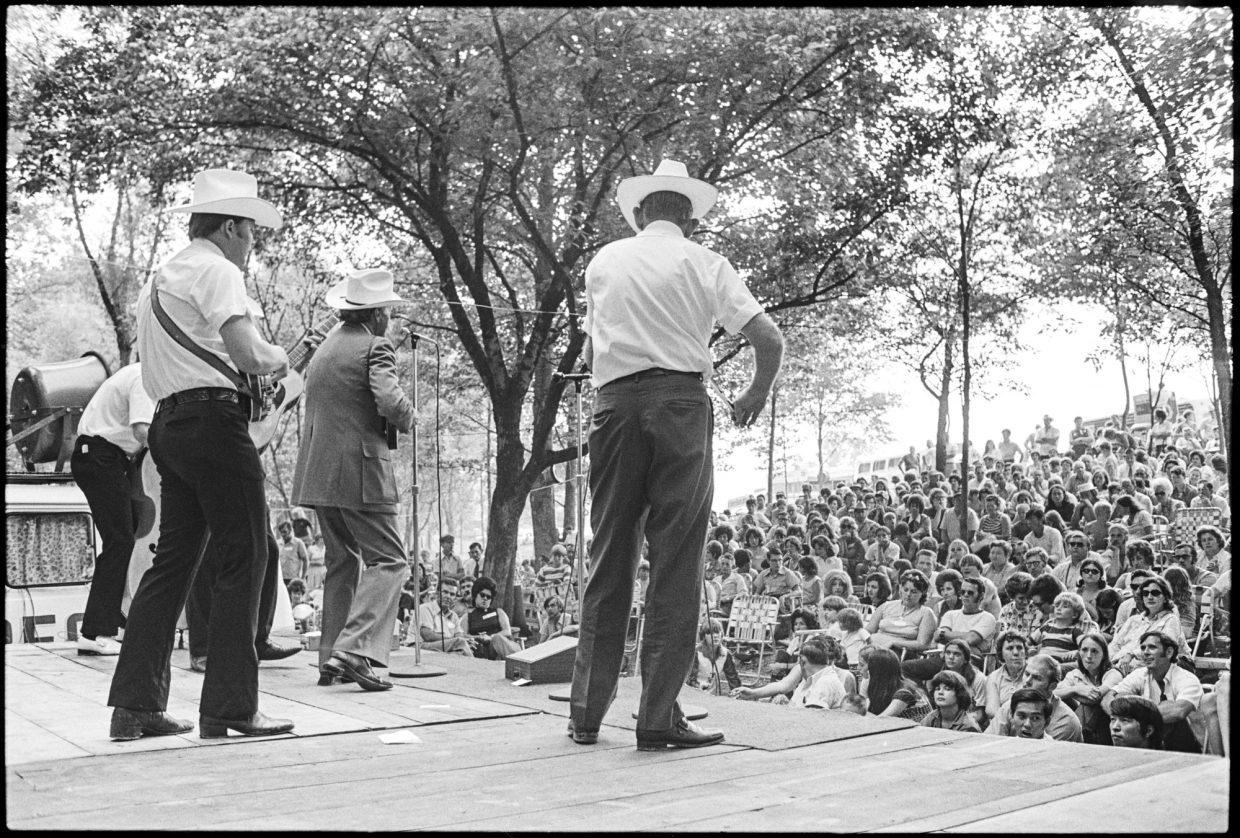
Bill Monroe (center) and the Blue Grass Boys at the Second Annual Kentucky Bluegrass Festival, Jackson KY, Saturday, August 12, 1972. Bandmembers include Monroe Fields, bass; Jack Hicks, banjo; Joe Stuart, guitar (hidden); Monroe, mandolin; and Kenny Baker, fiddle.

I’d known the Kuykendalls since 1966. Pete, a 1996 inductee to the Bluegrass Hall of Fame, was a musician, record collector, producer, publisher, and, since 1970 owner-editor of the first and leading bluegrass monthly Bluegrass Unlimited.
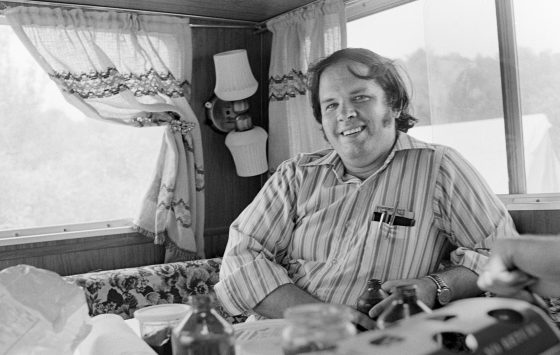
Pete Kuykendall, editor of Bluegrass Unlimited, in his RV parked in the camping area at the Second Annual Kentucky Bluegrass Festival, Jackson KY, Saturday August 12, 1972.

Pete and I had already been corresponding about bluegrass history when we met on Labor Day weekend 1966 at the second Roanoke Bluegrass Festival. Subsequently, I visited the Kuykendalls in Virginia where Pete encouraged me to write for the then all-volunteer magazine he would later own. I began with a review of the festival, published the following January — the first of eight articles I did for BU in 1967.
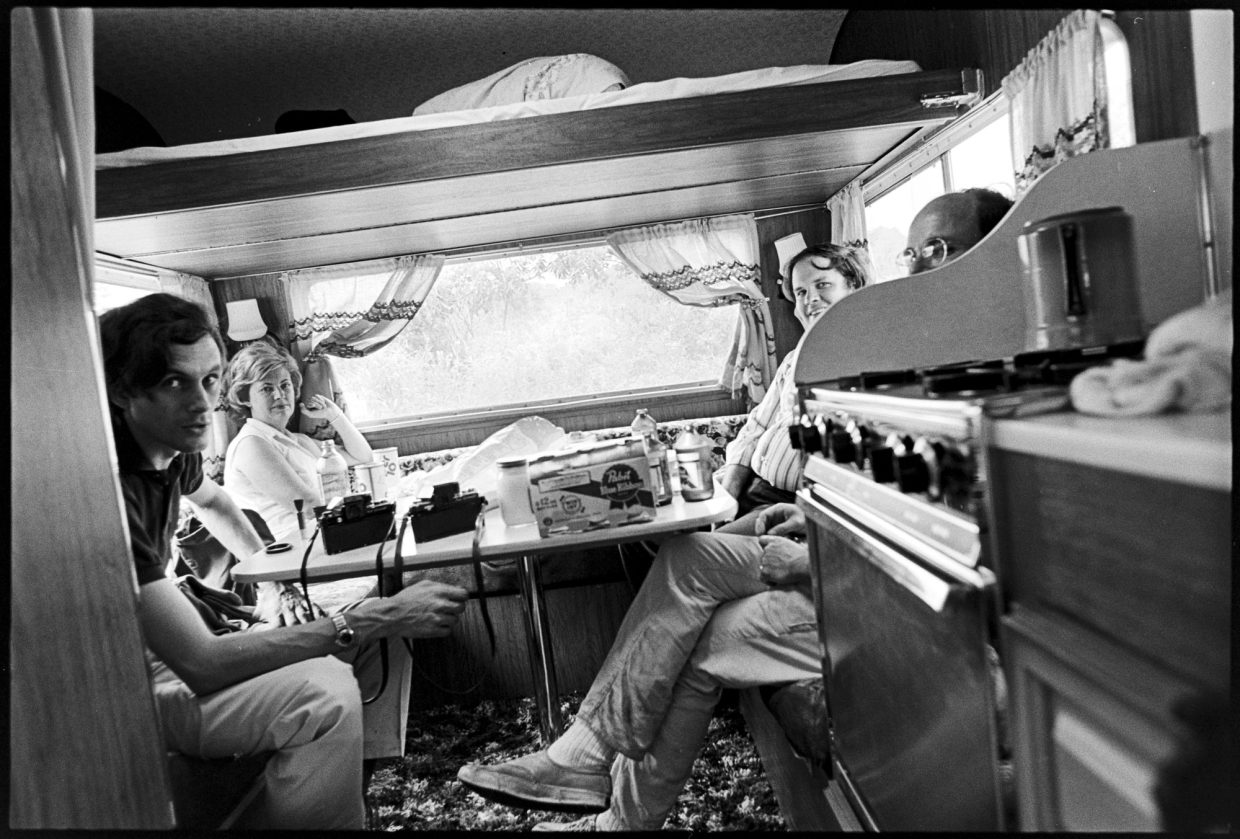
Photo made by Pete Kuykendall’s son Billy with one of Carl Fleischhauer’s cameras. Carl is seated at left with two other cameras on the table. This photo was made at the time of Neil Rosenberg’s (top of head above stove) interview of Pete Kuykendall, editor of Bluegrass Unlimited, in his RV at the Second Annual Kentucky Bluegrass Festival, Jackson KY, Saturday, August 12, 1972. In the background, at left, is Pete’s wife and Bluegrass Unlimited co-manager Marion Kuykendall.

By 1970 Pete and Marion were running BU full-time; I’d done an article for them earlier in 1972 (eventually I would write a monthly column) so we had been in touch recently by mail and phone. Conversations with Pete were never brief! He loved to share the business scuttlebutt and he had plenty since they were selling the magazine at festivals every weekend and had just launched BU’s own annual festival. 

I think this may have been the first time I met the Godbeys. From Lexington, and before that, Columbus, Ohio, they had been following the bluegrass scene for a decade. Frank is a musician who is still performing these days. By 1972 he and Marty had begun writing and publishing photos in BU. For them, as for me, hanging out with the Kuykendalls was a good way to keep up on the bluegrass news. People were already talking about starting an industry association, though that — the IBMA — wouldn’t happen until 1986. Pete was one of its founders.
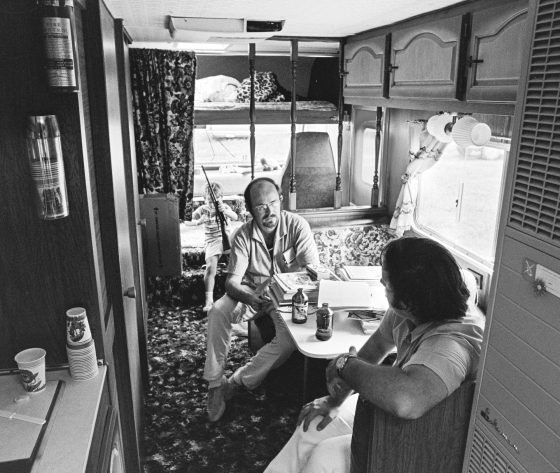
Neil Rosenberg (facing camera) interviewing Pete Kuykendall, editor of Bluegrass Unlimited, in his RV parked in the camping area at the Second Annual Kentucky Bluegrass Festival, Jackson KY, Saturday, August 12, 1972. In the background, with an air rifle, is Pete’s son Billy Kuykendall.

With the growth of the festivals came clubs, newsletters, and magazines. Bluegrass enthusiasts (many of them musicians) followed their favorites to festivals and other venues. Paths crossed; networks grew. The politics of bands was a favorite discussion topic.

Over the course of the festival, I made note of gossip about the always changing bands. Ricky Skaggs had just left Ralph Stanley — there were rumors about where he was headed next. Was Bill working to get Ralph Stanley on the Opry? Some thought so. The II Generation was said to be splitting up. Stories were told of bluegrass festival camp followers. 

At this Jackson, Kentucky festival were a bunch of bands that had been appearing at Bill Monroe’s other 1972 festivals — Monroe, Jim & Jesse, Flatt, Reno & Harrell, the Goins, Ralph Stanley — mature musicians who’d been working with this music for a substantial period of time and who stuck close to the early models of which they were, often, the authors. Classic bluegrass, one could say. 

What the audience didn’t hear was the kind of stuff we’d heard from the jammers late Saturday night, like “One Tin Soldier,” The Bluegrass Alliance’s cover of a song popularized in the film Billy Jack. Their bluegrass version, with Sam Bush’s lead voice and Tony Rice’s harmonies and guitar work, was a hit, a big step on the road to newgrass.

The Japanese bands were new to the scene. Japanese bluegrass began in the early sixties. In 1971, Bluegrass 45 came from Kobe, Japan, with the sponsorship of their label, Rebel, to tour U.S. bluegrass festivals. They made a big hit at Monroe’s Bean Blossom festival with their showmanship and musical savvy. This year they were back, along with another Japanese outfit, It’s A Crying Time.
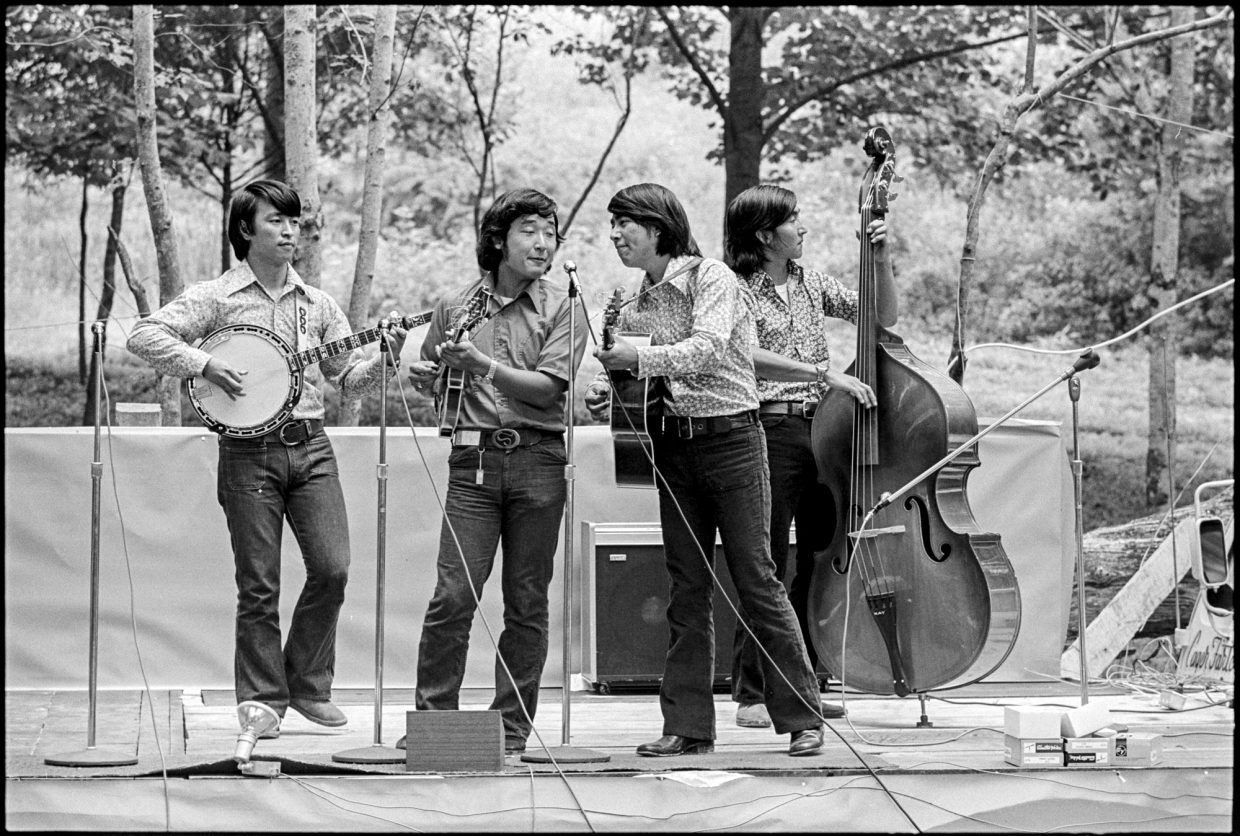
Visiting from Japan, the band It’s a Crying Time performs at the Second Annual Kentucky Bluegrass Festival, Jackson KY, Saturday, August 12, 1972. Band members include Eiichi “Ei’ Shimizu, banjo; Kazuyoshi “Kazu” Onishi, mandolin; Satoshi “Sato” Yamaguchi, guitar; Akira “May” Katsumi, bass.

Monroe had booked the Japanese bands as a novelty, something you couldn’t see just anywhere in the bluegrass world. As I mentioned in my field notes, I found It’s A Crying Time’s music “hot & exciting,” and I was not the only one in the audience reacting this way. They came to the attention of Lester Flatt, who, after watching them rehearse, invited mandolinist Kazu Onishi to join him on stage at his final set. 
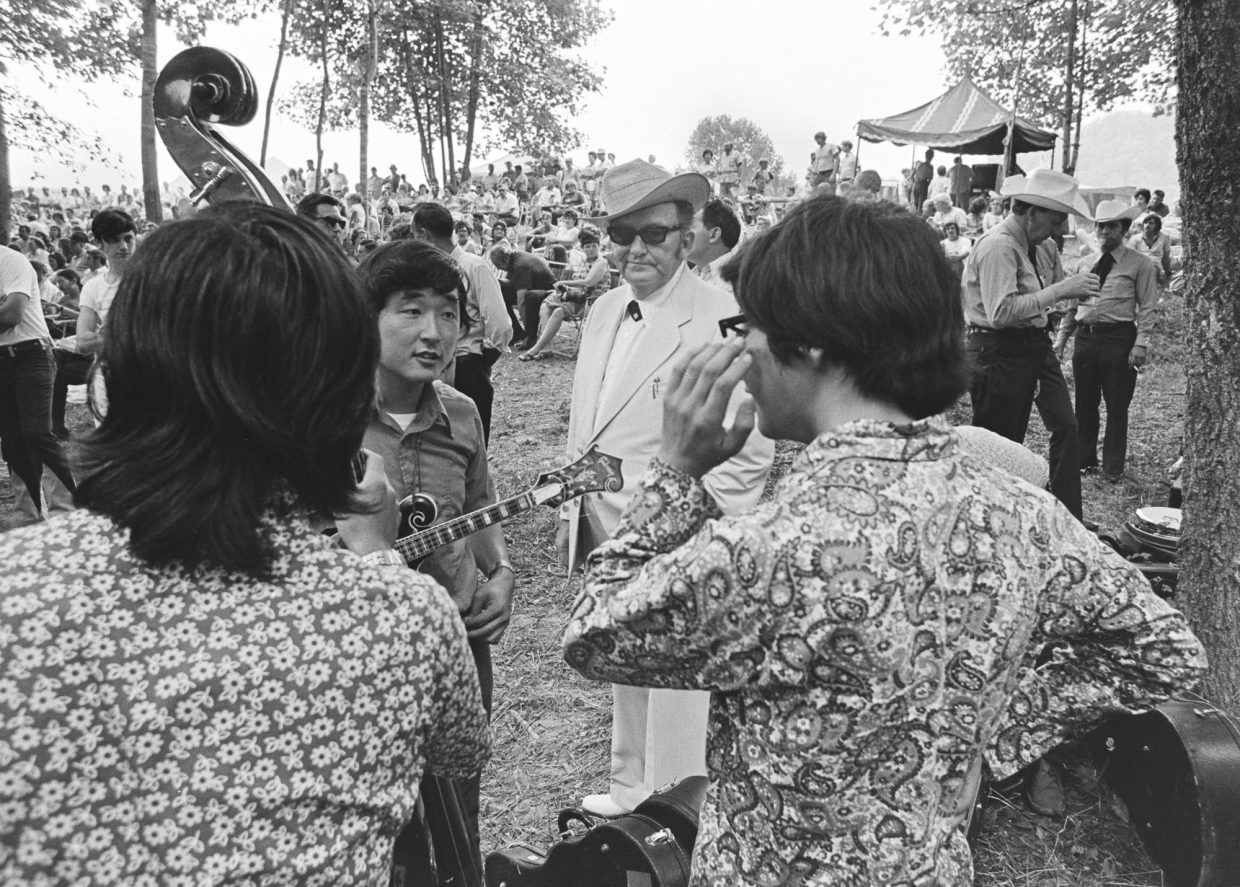
Backstage moment at the Second Annual Kentucky Bluegrass Festival, Jackson KY, Saturday, August 12, 1972. Akira Katsumi, Kazu Onishi,
Lester Flatt, and Akira Otsuka. Otsuka was Kazu’s friend from the Japanese scene, a member of the Bluegrass 45.

This video comes from the Bluegrass 45’s appearance at Carlton Haney’s Camp Springs festival:

They are announced at the beginning of the video by emcee, writer, and DJ Bill Vernon. Vernon was here at Jackson, as I learned Sunday morning when I went down to the early morning gospel show. Pete Kuykendall introduced me to Bill there, and we had a long chat about the politics of the bluegrass industry. I wrote in my notes:

A very loquacious and complex person.

At that morning’s gospel show, the music came to a stop as a fundamentalist preacher began his sermon. At that point, I noted:

Bill Vernon cut out from the morning sermon, he’d had enough…
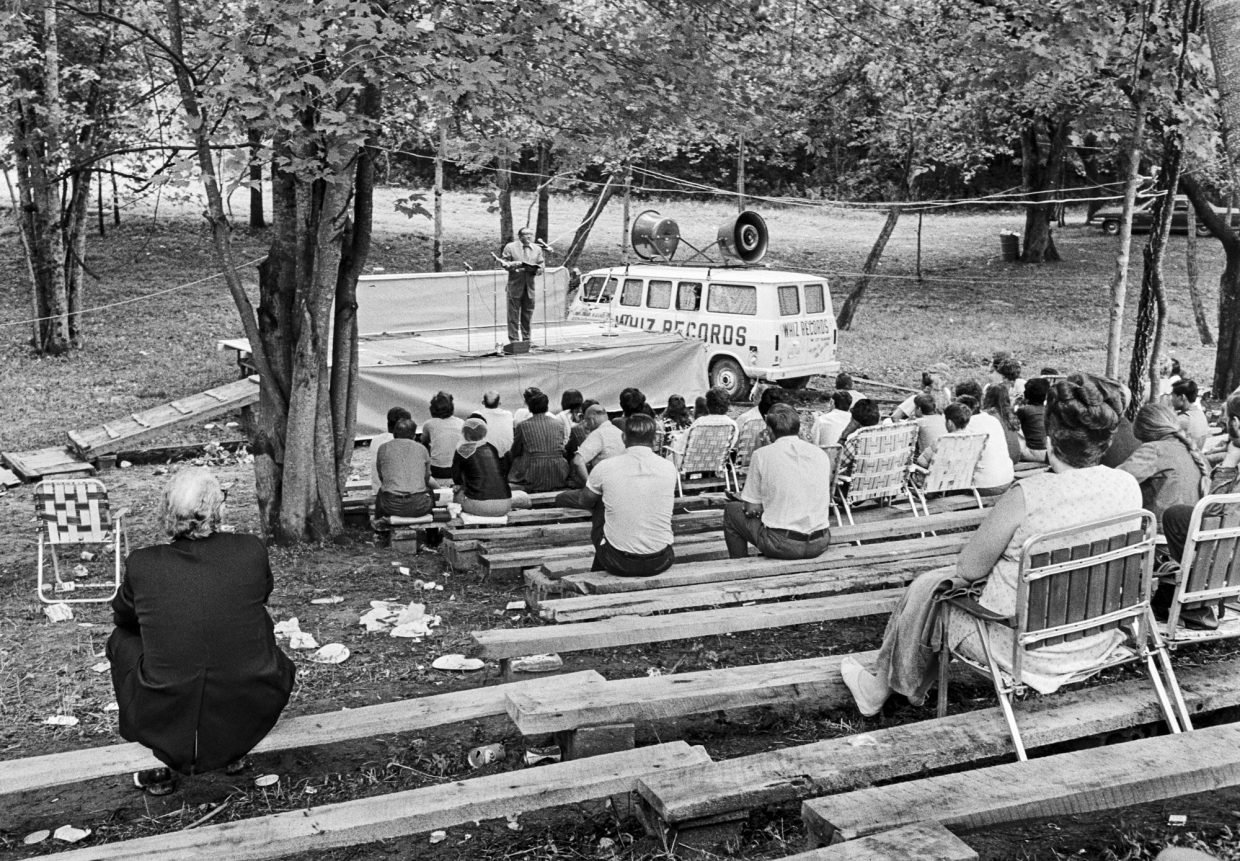
During the preacher’s sermon at the gospel program at the Second Annual Kentucky Bluegrass Festival, Jackson KY, Sunday, August 13, 1972. Bill Monroe (wearing a black suit) is seated in the audience area at left.

I stayed and heard some good music, noting:

The gospel section’s high point was when the Goins Bros. did “Somebody Touched Me” and Eleanor Parker came on stage & started clapping hands and singing; Monroe caught on and came up to join in too.
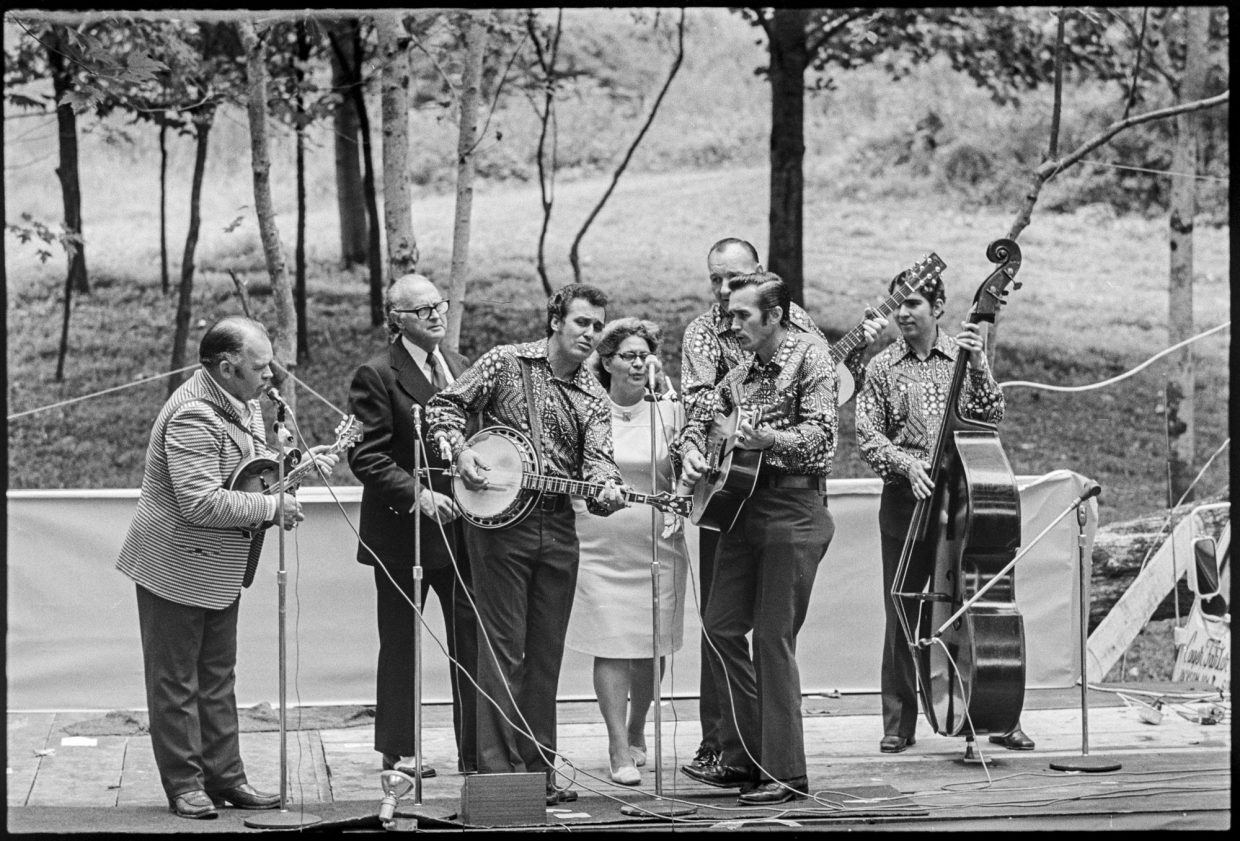
During the gospel program at the Second Annual Kentucky Bluegrass Festival, Jackson KY, Sunday, August 13, 1972. When the Goins Brothers band performed “Somebody Touched Me,” they were joined on stage by Eleanor and Rex Parker and Bill Monroe. Eleanor and Bill joined the Goins trio at the main microphone while Rex sang and played mandolin at the “stage right” microphone.

This kind of spontaneity, which gave festivals their appeal, was not there all the time. Jim & Jesse, I wrote, had:

A good show, with Jim Brock sounding especially good, but … a cut and dried quality to it all.

Describing Lester Flatt and his Nashville Grass, I concluded:

To me the whole band sounded tired, lackluster.

But Flatt’s final set was enlivened when It’s A Crying Time mandolinist and tenor Kazu Onishi came on stage to sing “Salty Dog Blues” with him. 

During my times around the stage area, I had a chance to talk with Monroe and with some of the musicians I’d gotten to know during my years as a backstage regular at Bean Blossom, like Birch Monroe, Joe Stuart, and Roland White.

I arranged with Birch, who was busy helping Bill run the festival, for an interview, to take place later in the week at his home in Martinsville, Indiana.
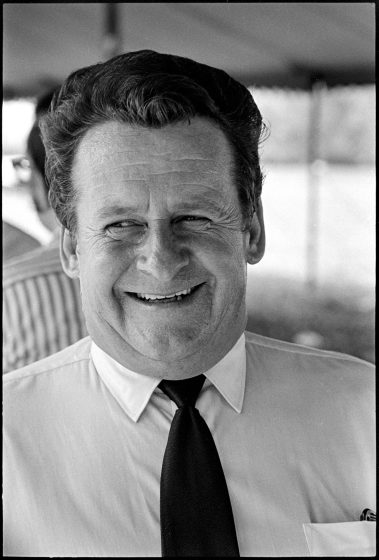
Joe Stuart offstage at the Second Annual Kentucky Bluegrass Festival, Jackson KY, Saturday, August 12, 1972.

Joe told me about his experiences playing bluegrass in Canada with Charlie Bailey. He’d even appeared in Newfoundland.

Roland, whom I’d known since his days as a Blue Grass Boy, was now playing with Lester Flatt. He told me they were working solid, playing festivals every weekend.

Here’s what I wrote about the audience:

Audience — bluegrass die-hards from Ohio, Ky., D.C., Carolinas. Few freaks. Appear to be about 50% campers, 50% local people. Certainly no more than 1500-2000, on Saturday, though figure of 3000 was bandied about. Bill moved his Ky festival to Jackson from Ashland this year because the turnout at Ashland was dropping. Fact, bluegrass ain’t as popular in Kentucky as it is elsewhere — Ohio, D.C.
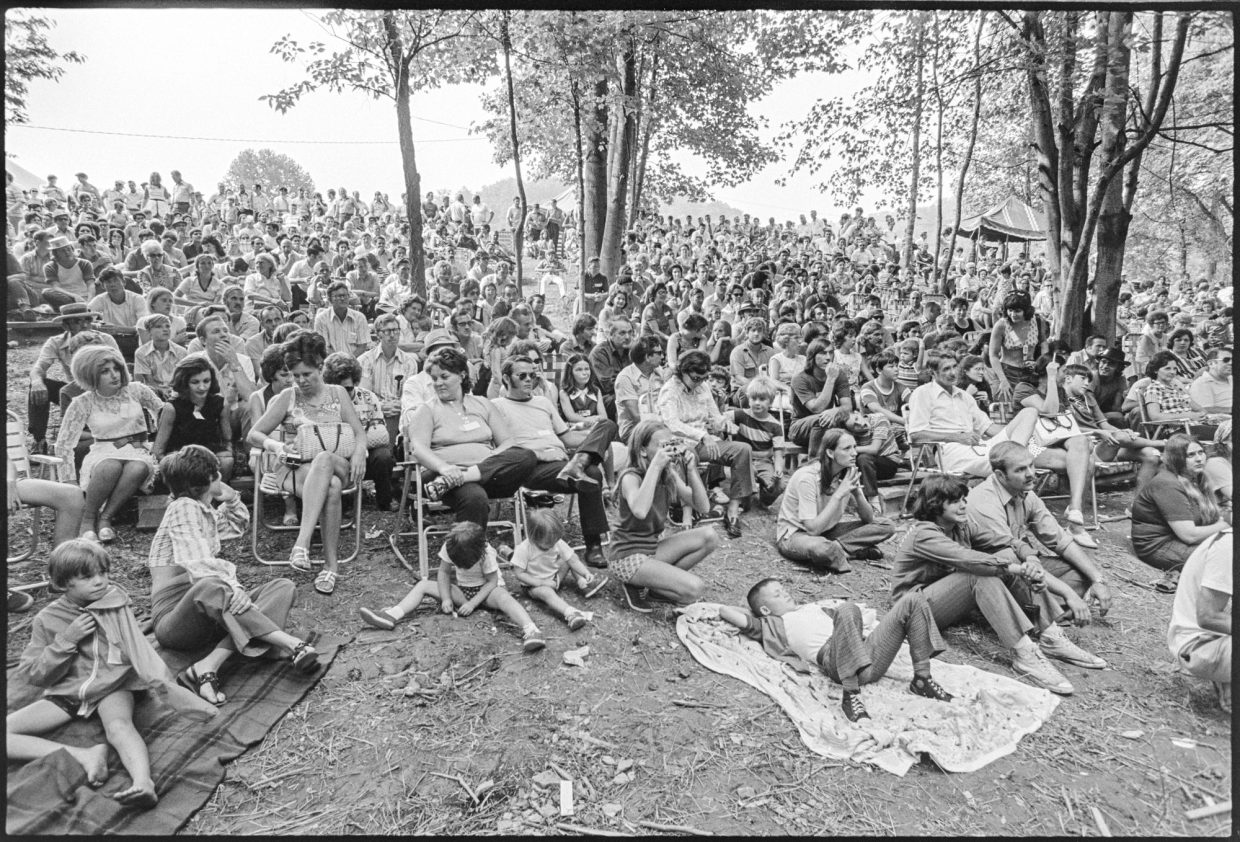
Audience on the hillside natural amphitheater at the Second Annual Kentucky Bluegrass Festival, Jackson KY, Saturday, August 12, 1972.

The festival closed with a finale, orchestrated by Monroe. At the first festivals in the mid-60s, which were created to honor Monroe, such events were somewhat spontaneous, but by now, seven years after the first one, these events were highly ritualistic. By the time it happened, I noticed that the Kuykendalls had left. They were not the only ones.
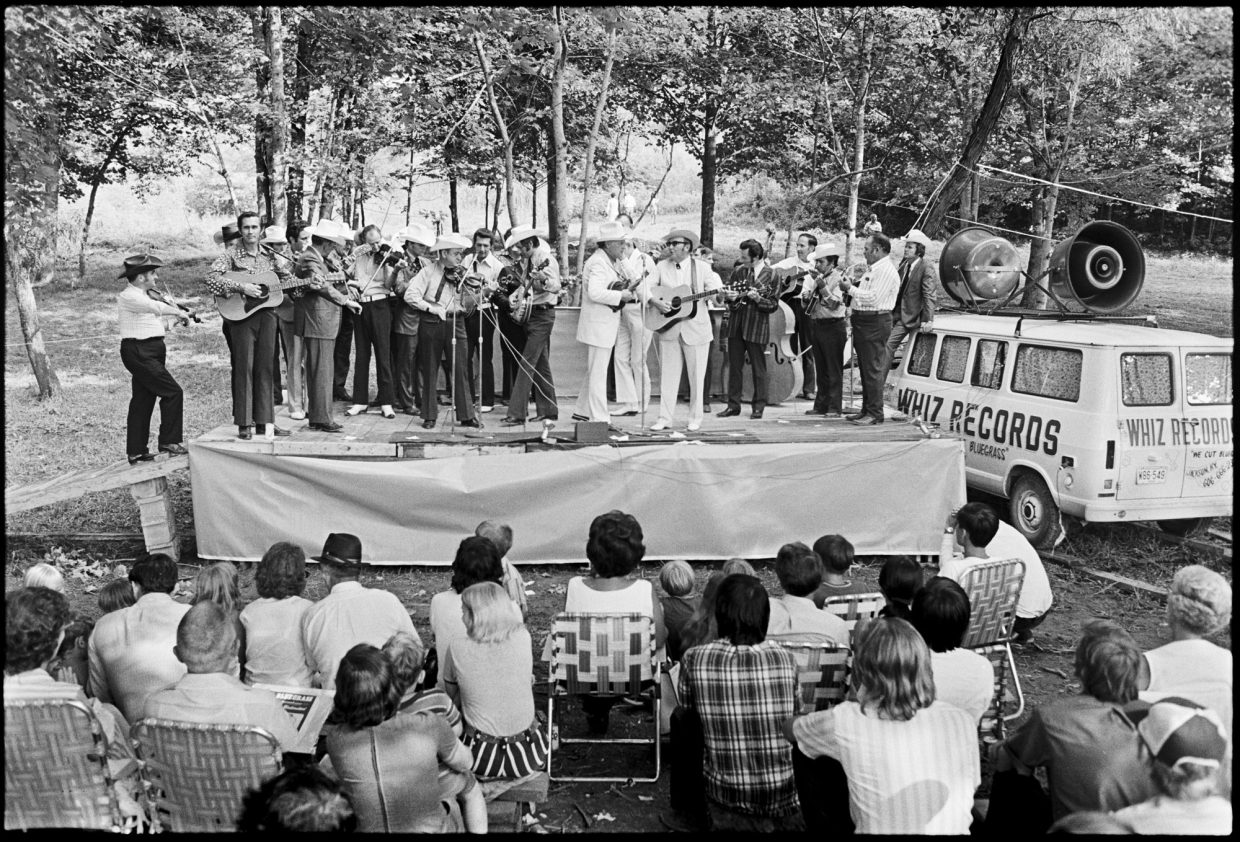
The finale performance at the Second Annual Kentucky Bluegrass Festival, Jackson KY, Sunday, August 13, 1972. At the center, in white suits, are Bill Monroe and Lester Flatt. Here are a few of the other performers, left to right: Curly Ray Cline (on the ramp), Melvin Goins (guitar, facing camera), Kenny Baker (fiddle, white hat, wearing a suit), Joe Stuart (just behind Baker, partly hidden), Buck Ryan (fiddle, white belt), Jack Hicks (banjo, white hat, wearing suit), Paul Warren (fiddle, white hat, at microphone), Vic Jordan (banjo, facing forward), Ralph Stanley (banjo, dark suit, hidden behind McCormick), Haskell McCormick (banjo, in profile), Monroe and Flatt with Don Reno (wearing white) partly hidden behind them, Raymond W. McLain and sister Alice McLain (hidden behind Flatt), Jesse McReynolds (mandolin, wearing striped jacket), Ruth McLain (bass, behind McReynolds), Raymond K. McLain (guitar, no hat), Roland White (mandolin, white hat), Rex Parker (mandolin, striped shirt), and Monroe Fields (leaning on van).

We packed up soon after and headed west for Lexington. I was hoping to interview J.D. Crowe.

[To be continued]


Thanks to Akira Otsuka and Carl Fleischhauer

Rosenberg is an author, scholar, historian, banjo player, Bluegrass Music Hall of Fame inductee, and co-chair of the IBMA Foundation’s Arnold Shultz Fund.

Photo of Neil V. Rosenberg by Terri Thomson Rosenberg.

Edited by Justin Hiltner
WATCH: Olivia Ellen Lloyd, “West Virginia My Home” (Hazel Dickens Tribute)

Artist: Olivia Ellen Lloyd
Hometown: Shepherdstown, West Virginia
Song: West Virginia My Home (Hazel Dickens Tribute)
Release Date: December 14, 2022

In Their Words: “Country Roads? Never heard of her. The truest anthem for West Virginians, especially for those of us who left home, is and always will be ‘West Virginia My Home.’ Hazel’s melancholy ballad about love and loss of place is as timeless as it is beautiful. I discovered this song when I first moved away from West Virginia over ten years ago, and it has followed me ever since. I performed this song right before moving to Nashville with a crew of some of my favorite Brooklyn-based musicians and dear friends. This recording reminds me of the community and friendships I forged in my time in New York City, and of my deep roots back in West Virginia.” — Olivia Ellen Lloyd


Photo Credit: Sam Guilbeaux

LISTEN: Jesse Milnes, “Jesse James Carter”

Artist: Jesse Milnes
Hometown: Elkins, West Virginia
Song: “Jesse James Carter”
Album: The Straight and Narrow
Release Date: August 9, 2022

In Their Words: “I wrote this song about a guy I picked up hitchhiking maybe twelve years ago. He told me a long story about why he had spent the previous night in jail, and I dropped him off near where I live in Randolph County, West Virginia. Five or six years later, I read in the local newspaper that he had shot a neighbor in a dispute over a small amount of money, stolen a car and fled into the backcountry. His story stuck with me and eventually became this song. I changed his name and added some details from other people I’ve known, but it’s all true. My friends Ben Sanders and PJ George did an amazing job recording this and a few other songs for me last October. The full EP is coming out everywhere on August 9.” — Jesse Milnes


Photo Credit: Chad Crawford

LISTEN: Chris Haddox, “Streets of Danville”

Artist: Chris Haddox
Hometown: Morgantown, West Virginia
Song: “Streets of Danville”
Album: Chris Haddox
Release Date: March 25, 2022

In Their Words: “Years ago I was on a job in Danville, West Virginia, for a week of tree-planting on a mountaintop removal site. We’d be up at sunrise, head to the jobsite, plant trees all day long, get back to the Park Avenue motel, have a meal, play some tunes, then hit the bed. Once it was lights out, however, I tossed and turned until eventually getting up and wandering around the dark and quiet streets of the town in the wee hours of the morning until I was finally tired enough to get to sleep, only to be up and at it again in a few short hours. Fortunately, the boss was a good friend and didn’t can me when I got a little tired towards the end of each day’s shift!” — Chris Haddox

Chris Haddox Music · 5 – Chris Haddox – Streets Of Danville

Photo Credit: Amelia Haddox

BGS 5+5: Charles Wesley Godwin

Artist: Charles Wesley Godwin
Hometown: Morgantown, West Virginia
Latest Album: How the Mighty Fall
Personal nicknames: Chuck

Which elements of nature do you spend the most time with and how do those impact your work?

I live in the hills of West Virginia. I’m in the woods every day of my life when I’m home. This is the setting for all of my work thus far. This place is a part of everything that I do whether I know it or not. I believe it gives me peace and a different type of rest as well. There’s a type of rest that I believe we all need that has nothing to do with laying down or the amount of sleep that we get. It’s just being out there wherever you may be where the world is still the way it was 10,000 years ago. Phone calls can’t reach you, texts don’t come in and there ain’t nothing to check on except whatever it is that you’re doing or thinking about at that moment. I get that kind of rest when I’m hunting, scouting for deer, fishing, or hiking.

What was the first moment that you knew you wanted to be a musician?

I remember I’d just played my first gig ever for a lingerie fashion show in Tartu, Estonia, while I was studying abroad. I got handed 150 euros after the show was done and I thought to myself, “Oh my God. I’ve figured it all out. This is the best job in the world. This is what I’m going to do.” Drinks were on me that night.

What’s the toughest time you ever had writing a song?

“Coal Country” was a bear for me. The subject matter of that song is such a tender subject that I had to absolutely think through every little piece of every single idea I had about “coal.” I had to make absolutely sure I knew exactly what I felt and why. It was painstaking to write that song. I think it took about two months and I was working on it in some form or fashion just about every day. I believe it improved my songwriting ability considerably going through that one.

What’s your favorite memory from being on stage?

My favorite memory is Kathy Mattea (the queen of West Virginia country music) calling me out onto the Mountain Stage to perform at the Culture Center Theater in Charleston, West Virginia. It was one of the purest feelings of joy in my life. I’ll never forget it and it’ll always be one of the milestones that I’m most proud of.

Since food and music go so well together, what is your dream pairing of a meal and a musician?

Ok, what pops up in my head immediately is a Chris Knight show at The Hamilton in Washington, DC (real fancy spot) and that night on the menu they serve venison backstrap, garden green beans, morel mushrooms, and mashed potatoes with ramps. Bulleit bourbon old fashioneds are the cocktail for the night. I’d go into debt for a show like that.


Photo Credit: Harry Ilyer

From “Ghost in This House” to “O Death,” Our 13 Favorite Boo-Grass Classics

Ah! There’s a chill in the air, color in the leaves, and a craving for the spookiest songs in bluegrass — it must be fall. Bluegrass, old-time, and country do unsettling music remarkably well, from ancient folk lyrics of love gone wrong to ghost stories to truly “WTF??” moments. If you’re a fan of pumpkins, hot cider, and murder ballads we’ve crafted this list of 13 spooky-season bluegrass songs just for you:

The Country Gentlemen – “Bringing Mary Home”

THE bluegrass ghost story song. THE archetypical example of “What’s that story, stranger? Well, wait ‘til you hear this wild twist…” in country songwriting. (Yes, that’s a country songwriting archetype.) The Country Gentlemen did quiet, ambling — and spooky — bangers better than anybody else in bluegrass.


Cherryholmes – “Red Satin Dress”

Fans of now-retired family band Cherryholmes will know how rare it was for father and bassist Jere to step up to the microphone to sing lead. His grumbling, coarse voice and deadpan delivery do this modern murder ballad justice and then some. 

One has to wonder, though, with so many songs about murderous, deceitful women in bluegrass — the overwhelmingly male songwriters across the genre’s history couldn’t be bitter and misogynist, could they? Could they?


Zach & Maggie – “Double Grave”

A more recent example of unsettling songwriting in bluegrass and Americana, husband-and-wife duo Zach & Maggie White give a whimsical, joyful bent to their decidedly creepy song “Double Grave” in the 2019 music video for the track. Just enough of the story is left up to the imagination of the listener. Feel free to color inside — or outside — of the lines as you decide just how the song’s couple landed in their double grave. 


Alison Krauss – “Ghost in This House”

Come for the iconic AKUS track, stay for the impeccable introduction by Alison. Equal parts cheesy and stunning, if you haven’t belted along to this song at hundreds of decibels while no one is watching, you’re lying. Not technically a ghost story, we’re sliding in this hit purely because a Nashville hook as good as this deserves mention in a spooky-themed playlist.


The Stanley Brothers – “Little Glass of Wine”

Ah, American folk music, a tradition that *checks notes* celebrates the infinity-spanning, universe-halting power of love by valorizing murdering objects of that love. Kinda makes you think, doesn’t it? Here’s a tried and true old lyric, offered by the Stanley Brothers in that brother-duet-story-song style that’s unique to bluegrass. What’s more scary than an accidental (on purpose) double poisoning? The Stanley Brothers might accomplish spooky ‘grass better than any other bluegrass act across the decades.


Missy Raines – “Blackest Crow”


A less traditional rendering of a folk canon lyric, Missy Raines’ “Blackest Crow” might not feel particularly terrifying in and of itself, but the dark imagery of crows, ravens, and their relatives will always be a spectre in folk music, if not especially in bluegrass. 


Bill Monroe – “Body and Soul”

The lonesome longing dirge of a flat-seven chord might be the spookiest sound in bluegrass, from “Wheel Hoss” to “Old Joe Clark” to “Body and Soul.” A love song written through a morbid and mortal lens, you can almost feel the distance between the object’s body and soul widening as the singer — in the Big Mon’s unflappable tenor — objectifies his love, perhaps not realizing the cold, unfeeling quality of his actions. It’s a paradox distilled impossibly perfectly into song.


Rhiannon Giddens – “O Death”

Most fans of roots music know “O Death” from the O Brother, Where Art Thou? soundtrack and the version popularized by Ralph Stanley and the Stanley Brothers. On a recent album, Rhiannon Giddens and Francesco Turrisi reprise the popular song based on a different source — Bessie Jones of the Georgia Sea Island Singers.

The striking aural image of Stanley singing the song, a capella, in the film and on the Down from the Mountain tour will remain forever indelible, but Giddens’ version calls back to the lyrics’ timelessness outside of the Coen Brothers’ or bluegrass universes and reminds us of just how much of American music and culture are entirely thanks to the contributions of Black folks.


Johnson Mountain Boys – “Dream of a Miner’s Child”

Mining songs are some of the creepiest and most heartbreaking — and back-breaking — songs in bluegrass, but this classic performance from the Johnson Mountain Boys featuring soaring, heart-stopping vocals by Dudley Connell, casts the format in an even more blood-chilling light: Through the eyes of a prophetic, tragic dream of a miner’s child. The entire schoolhouse performance by the Johnson Mountain Boys won’t ever be forgotten, and rightly so, but this specific song might be the best of the long-acclaimed At the Old Schoolhouse album. 

Oh daddy, don’t go to the mine today / for dreams have so often come true…


Emmylou Harris, Alison Krauss, Gillian Welch – “Didn’t Leave Nobody But the Baby”

A lullaby meets a field holler song on another oft-remembered track from O Brother, Where Art Thou? The disaffected tone of the speaker, in regards to the baby, the devil, all of the above, isn’t horrifying per se, but the sing-songy melody coupled with the dark-tinged lyric are just unsettling enough, with the rote-like repetition further impressing the slightly spooky tone. It’s objectively beautiful and aesthetic, but not… quite… right… Perhaps because any trio involving the devil would have to be not quite right? 


AJ Lee & Blue Summit – “Monongah Mine” 

Another mining tale, this one based on a true — and terrifying — story of the Monongah Mine disaster in 1907, which is often regarded as the most dangerous and devastating mine accident in this country’s history. AJ Lee & Blue Summit bring a conviction to the song that might bely their originating in California, because they make this West Virginia tale their own.


Jake Blount – “Where Did You Sleep Last Night”

“In the Pines” is one of the most haunting lyrics in the bluegrass lexicon, but ethnomusicologist, researcher, and musician Jake Blount didn’t source his version from bluegrass at all — but from Nirvana. That’s just one facet of Blount’s rendition, which effortlessly queers the original stanzas and adds a degree of disquieting patina that’s often absent from more tired or well-traveled covers of the song. A reworking of a traditional track that leans into the moroseness underpinning it.


The Stanley Brothers – “Rank Stranger”

To close, we’ll return to the Stanley Brothers for an often-covered, much-requested stalwart of the bluegrass canon that is deceptively terrifying on closer inspection. Just who are these rank strangers that the singer finds in their hometown? Where did they come from? Why do none of them know who this person or their people are? Why are none of these questions seemingly important to anyone? Even the singer himself seems less than surprised by finding an entire village of strangers where familiar faces used to be. 

For a song so commonly sung, and typically in religious or gospel contexts or with overarchingly positive connotations, it’s a literal nightmare scenario. Like a bluegrass Black Mirror episode without any sort of satisfying conclusion. What did they find? “I found they were all rank strangers to me.” Great, so we’re right back where we started. Spooky.


Shaped by String Bands and Bluegrass, John R. Miller Delivers ‘Depreciated’

On his new album Depreciated, John R. Miller shows a true appreciation for traditional country songwriting and progressive bluegrass musicianship, even though his music isn’t neatly defined by either one. A West Virginia native who now lives in Madison, Tennessee, Miller unveiled the material at a club show in Nashville just a few days after the album’s release on Rounder Records. His original songs are rich in detail and humor, although his lyrics can get moody enough to satisfy anybody who’s looking for the darker side of acoustic music. Delivered in his rough-hewn baritone, his songs somehow feel like familiar stories that you want to hear again.

Before returning to the road, Miller caught up with BGS at an East Nashville coffee shop to talk about his acoustic heroes, where he found his first guitar, and why he puts a fiddle in a rock ‘n’ roll band.

BGS: You announced this record by releasing “Lookin’ Over My Shoulder,” which is not exactly a happy song, but it does makes me laugh. What was on your mind as that song was taking shape?

Miller: I wrote that after I moved away from the town I’d lived in for a while. It’s a small-town scenario. When you go back after being away, you’re in the mode of trying to avoid some people. It can be tricky to navigate but I thought it was a funny little song that I didn’t think we would end up recording. Then we rearranged it a little bit and turned it into what it is now – and it’s the first song on the record. You just never know, I guess.

Where is your hometown?

The place where I grew up is just off the highway in the eastern panhandle of West Virginia. It has historically been pretty rural. There’s a lot of development around the highway, so it’s turned into a strip mall highway town. Just over the mountain, it gets real country real quick. But for most of my 20s I lived in a river town called Shepherdstown. It’s small, just a couple of bars in town and everybody knows everybody. That was home for a long time, but I felt like I needed a fresh start, so I moved down here. I spent so much time traveling and felt untethered in the first place. A lot of my friends started getting older and moving away. A few of them actually came down here. This was the next place, where I knew the most people and the most couches to crash on for a little while. I decided to give it a shot and I’m still here.

When did you gravitate toward playing guitar?

I was about 14 when I picked up guitar. My dad had a nylon string guitar in the closet that I never saw him play. I was starting to get into music more, and into punk bands that I found out about from my friends. Basically I was trying to learn power chords on this classical nylon string guitar classical guitar. Eventually I wrote that out and got a Stratocaster and tried to do garage bands in high school.

Were you and your friends listening to acoustic music too?

Maybe not when I was a teenager. We were mostly into indie rock and punk rock growing up, like skater kids. It probably wasn’t until I was 19 that my musical interests expanded a little bit. I started getting into songwriters. The real gateway for me was that Steve Earle and Del McCoury Band album, [1999’s The Mountain], which is one of the best out there. I had already found my way into Steve Earle’s music and then that dovetailed nicely with bluegrass and old-time music with that record. That was a big one for me.

Are you a bluegrass fan?

Oh yeah. I’ve lived in the bluegrass world a little bit and during times in my life a whole lot. I used to play in a string band too. It was more like a fiddle-centric string band, but we did some bluegrass stuff as well and got on that circuit for a little while. There were a couple of guys in the string band that were ahead of me in terms of what they knew about and what they liked, so they helped me learn about a whole lot of stuff.

Who were some of your influences in bluegrass?

I’m a huge Jimmy Martin fan. That stuff’s so cool and just kind of ragged in all the right ways. The Stanley Brothers, of course. There are some modern bluegrass bands that I’ve grown to love a whole lot. Town Mountain is one of the best out there. We crossed paths with them a little bit back in the day and it’s cool to see them still doing it. The Seldom Scene’s Live at the Cellar Door record is a classic too. I really love that. I also really love that early newgrass stuff, like Old & In the Way and John Hartford. That Old & In the Way record was a constant in the van.

Speaking of that, how did you get the idea for “Half Ton Van“?

That song in particular, I spent months looking for an old van to get the band moving. I was on Craigslist and Marketplace a whole lot. I feel like I was seeing a lot of the same tricks, you know? I went to look at a lot of terrible vans. It was a few years ago and I had already been through a few vans with other bands, and it always feels like I’m trying to find one at the last minute. I ended up getting one that was full of rust holes and leaking oil and everything like that. So the song is an amalgam of all those experiences of people trying to sell their junk to you.

At your show, the crowd really responded to “Shenandoah Shakedown,” which surprised me. It has that gothic feel, and seems to be the sleeper on the record.

That one seems to be doing pretty good. I wouldn’t have expected that either because it’s kind of different. It doesn’t strike me as an accessible song necessarily. That one is heavily inspired by living on the river out there. It’s more of a collection of vignettes of time spent up there, and some mushrooms and whatnot involved, you know? Some of the characters are composites but there are specific people in it, for sure.

There’s a lot of fiddle on this record too. Why do you like having that in the mix?

I love fiddle tunes and fiddle music and I spend a lot of time at fiddlers conventions, like the Clifftop Appalachian String Band Music Festival in West Virginia, or in Mt. Airy, North Carolina. It’s been a constant in my life for a really long time now. I’ve got a lot of buddies in that world and I play a little fiddle myself too. It’s a great way to just sit down and play tunes with people. The communal feeling and the non-commerciality of it is really cool. So I’m a little obsessive about it. Putting fiddle in a full rock ‘n’ roll band sounds good to my ears, and I also feel like if it wasn’t there, I would miss it — the presence of it.

Why did you want to include a guitar instrumental, “What’s Left of the Valley,” on here?

I’ve definitely written a couple of guitar pieces, but my partner Chloe really liked that one. I played it for her and it was her idea to just try it in the studio. We took a break from doing the stuff we had on the docket and gave that a try. It ended up feeling so nice, I thought it would be a good way to break up the songs on the record. I like that kind of stuff too, like an instrumental interlude.

At your show I was happy to hear you cover a Gary Stewart song, “Single Again.” What is it about that honky-tonk sound that appeals to you?

Man, it just sounds so cool to me. There’s a really wide range of it but that Gary Stewart stuff is so cool and so nuanced. A really high level of musicianship playing pretty accessible music is pretty awesome. I love country music very much. That’s been my soul food. Early to mid ‘70s is the sweet spot for me.

As a songwriter going into a music career, did you always want to have a full-band sound?

I don’t mind playing by myself — it’s kind of its own thing — but I’ve always played in bands and I love that connection. It’s so much fun. I prefer to be making music with my buddies and I’m fortunate to be playing with the band I’ve got now. They’re easygoing folks and great musicians. We’ve been on the road for a little over a week now and this is the first long tour that we’ve gotten to take together. We’re all getting used to it again.

Listening back to this record now, what goes through your mind?

I’m really proud of the work we did and what I love most about it is that I got to actually sit and play the songs live in a room with some of my close friends. Adam Meisterhans, who played guitar with us the other night, co-produced the record. He and I played in bands in West Virginia. I know him from Shepherdstown too. He’s like a brother to me. So it’s been cool to very intentionally work on a project and have it get finished and work out, you know? It’s nice to know that we did it the way we wanted to.


Photo credit: David McClister

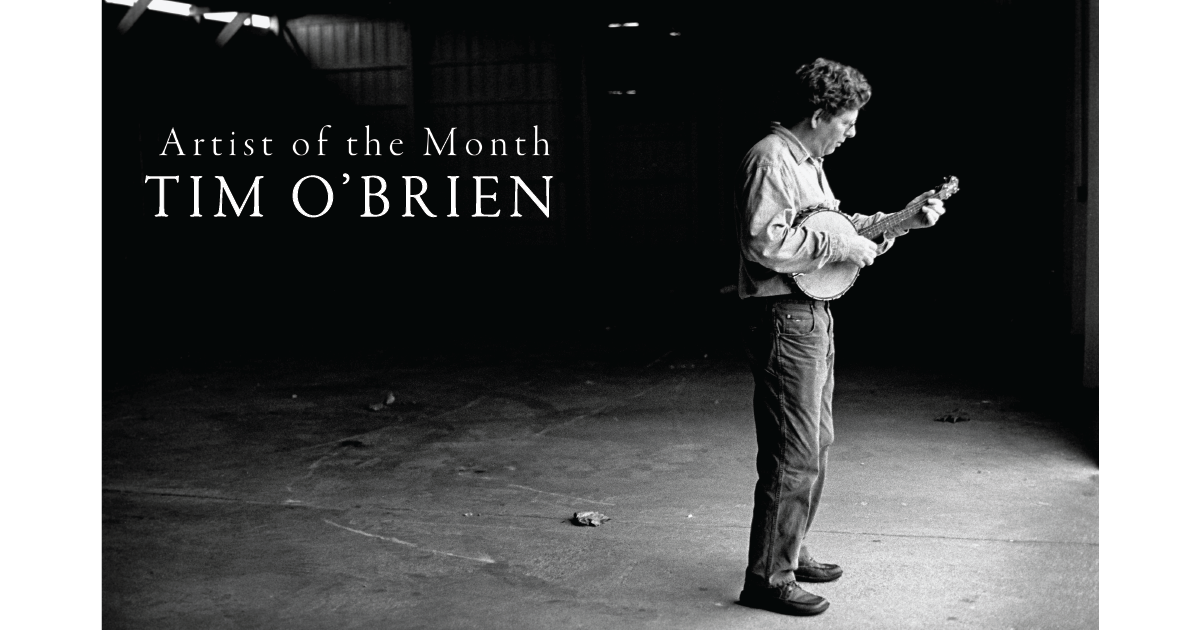
Artist of the Month: Tim O’Brien

Tim O’Brien is putting his best foot forward with He Walked On, a new collection of eight originals and five carefully chosen covers. Through his music he shares his worldview, by channeling significant figures like Thomas Jefferson and Sally Hemings, Congressman John Lewis, and John Prine. The topics on this self-produced record may be heavy, yet O’Brien believes that the music offers an opening for reflection.

“When you sing something, it kind of sneaks in, in that music is a powerful medium,” he says. “It’s a language that’s mysterious on its own — it tugs on the emotions. It grabs people’s attention in a certain way and prepares them to hear things, and music kind of draws people together.” O’Brien wrote the album’s lead single, “I Breathe In,” which BGS proudly premiered in May. He relied on longtime band members like Mike Bub on bass, Pete Abbott on drums, and fiancée Jan Fabricius on vocals to round out the record.

“The project is about what you need to do to survive in America,” he told BGS. “We all need a roof over our head and something to eat, of course, but we also need love. I’ve been grateful to have Jan beside me during the pandemic. The song stresses the need to take things one step or one breath at a time, and to keep those you love close as you do so.”

O’Brien’s own journey has carried him from his birthplace in West Virginia, through the Colorado bluegrass scene, and ultimately to Nashville, where he’s been a key figure in the roots music community since the ’90s. In some ways, He Walked On reads like a map, with distinctive songs like “Five Miles In and One Mile Down,” about the Upper Big Branch Mine disaster in West Virginia in 2010. (The banjo adds some serious mood to this narrative, too.) In addition, “El Comedor” was written with Fabricius after they joined a grassroots humanitarian effort to provide water and food to immigrants at the border near Tucson, Arizona.

“You talk about the music, where would we be in America if we didn’t have this mix of people from Africa and Europe and Native Americans,” he says. “We’re family, but we’re estranged, and we’ve never learned to be family in so many ways. And it’s crazy, and we’re still suffering from that. If you read James Baldwin — America’s insane. And until we figure out how to actually deal with reality here, we’re just going to stay insane.”

With a multi-tasking musician like Tim O’Brien, who plays mandolin, fiddle, guitar, mandola, and mandocello on this record, his creative path could carry him almost anywhere. And his comic timing is impeccable on songs like “Nervous” and “See You at the Funeral.” Until he brings us on his next adventure, let’s enjoy a few songs from He Walked On, mixed in with some classics, on our BGS Essentials playlist. Read part one of our Artist of the Month interview here. Read part two here.


Photo credit: Michael Lewis

They’ve Got You Covered: 10 Tributes You Need to Hear

2020 was a year of many things – COVID-19, existential elections, the shuttering of the music industry, and on and on – but one common, non-catastrophic throughline of the musical variety was cover songs. Many musicians and artists, finding themselves with more free time than usual and more standard-fare albums and cross-continental tours back-burnered, took the opportunity to explore live records, collaborations, and yes, covers. From Molly Tuttle to Wynonna, livestreams to socially-distanced shows, covers became an unofficial pandemic pastime. 

Now, in 2021, many of these cover projects conceived and created in 2020 have made it to store shelves – digital and otherwise – and we’ve collected ten tributes worth a listen:

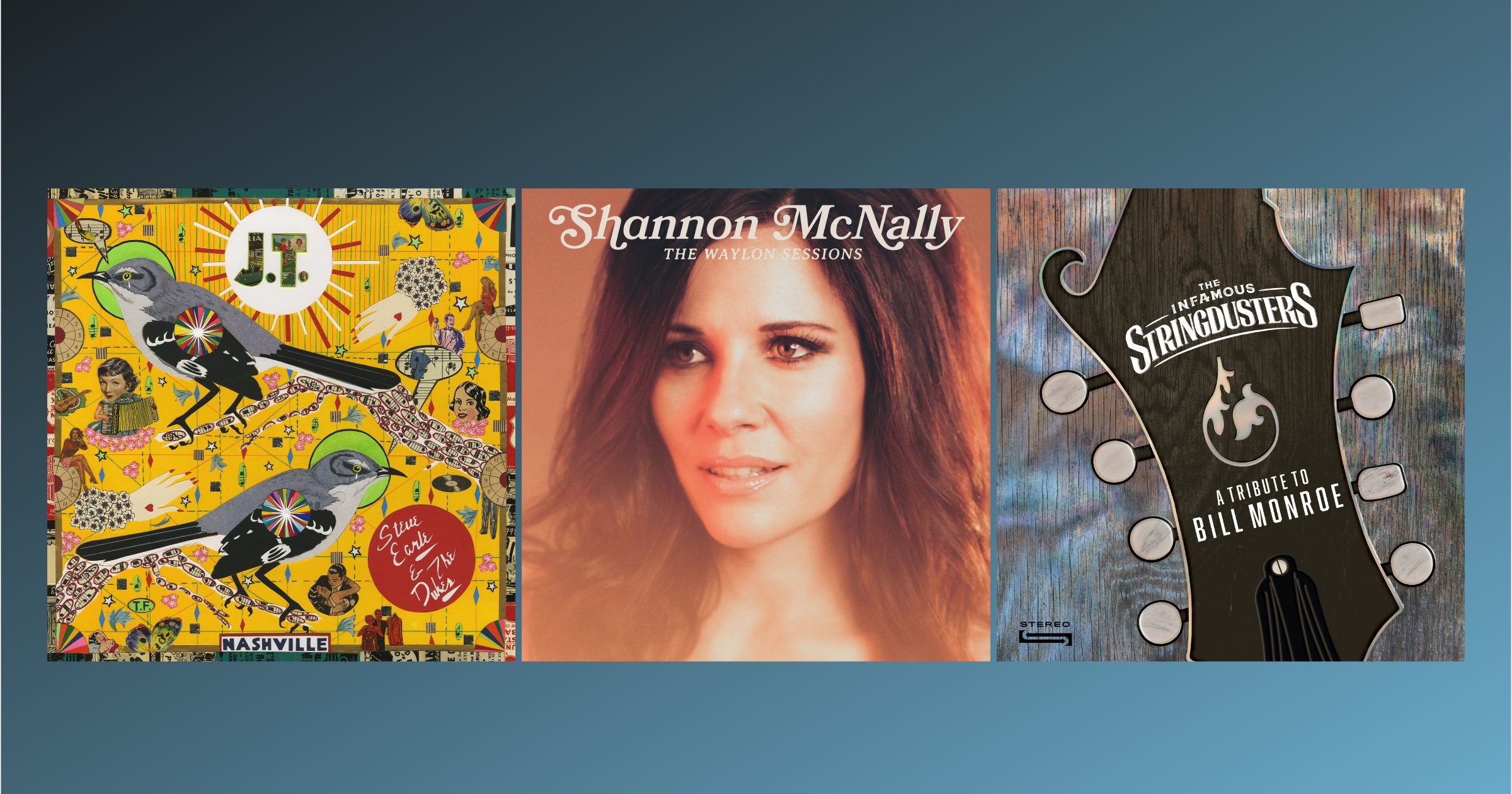
Shannon McNally covers Waylon Jennings

It’s fitting that Shannon McNally released The Waylon Sessions on Compass Records, whose headquarters now occupies “Hillbilly Central.” As Tompall Glaser’s former studio, the building helped give rise to country’s outlaw movement and it’s where Waylon himself recorded. With guests like Jessi Colter, Buddy Miller, Rodney Crowell, and Lukas Nelson, the project recontextualizes Waylon Jennings’ material, which is usually associated with hyper-masculine wings of the country scene. As McNally puts it in a press release, “What Waylon Jennings brought to country music is what country music needs right now, and that unapologetic and vulnerable sense of self are what women are tapping into artistically right now as the industry evolves.” 


Steve Earle covers Justin Townes Earle

Many a musical child has covered their parents’ catalogs in retrospect, but it’s rare that we see the reverse. A gorgeous, gutting, and laid-bare album, Steve Earle’s J.T. is a ten-song tribute to his son, Justin Townes Earle, who passed away suddenly in August 2020, shocking the Americana and folk communities. Earle’s signature emotion bristles and crackles throughout the project, giving Justin Townes’ songs an even stronger quality of visceral electricity. Proceeds from the album will go to a trust for Etta St. James Earle, Justin Townes’ daughter and Steve’s granddaughter. 


The Infamous Stringdusters cover Bill Monroe

Spread out from North Carolina to Colorado and beyond, the Infamous Stringdusters utilized home recording from their respective studios during the pandemic to accomplish musical creativity their jam-packed schedule hadn’t really allowed in the “before times.” Their brand new EP, A Tribute to Bill Monroe, returns the virtuosic jamgrass outfit to territory familiar to those who first found the group when they were cutting their teeth, striding out from traditional bluegrass into the vast, expansive newgrass-and-jamgrass unknown. The project illustrates that the true strength of this ensemble is found in utilizing traditional bluegrass aesthetics for their own creative purposes. For example, you might listen through the entire record without realizing the Stringdusters made a Bill Monroe tribute album without mandolin!


Mandy Barnett covers Billie Holiday

Mandy Barnett is a cross-genre chameleon; between her talent, her voice’s timeless Americana tinge, and her appetite for classics — from Nashville staples to the American songbook — she often finds herself reaching far beyond Music Row and classic country to R&B, standards, and in her most recent release, Billie Holiday covers. Every Star Above was recorded in 2019, pre-pandemic, and includes ten songs from Holiday’s 1958 Lady in Satin album – songs previously also covered by Frank Sinatra, Dinah Washington, and many, many others. The project feels akin to Linda Ronstadt’s pop and big band forays, never fully detached from Barnett’s country roots, but built atop their solid foundation. In another Ronstadt-esque move, Barnett partnered with recently departed jazz arranger Sammy Nestico; Every Star Above was the award-winning composer’s final project.


Charley Crockett covers James Hand

Country-western crooner Charley Crockett is truly prolific, having released nine full-length albums in the past six years. As the story goes, before his friend, acclaimed Texan singer-songwriter James “Slim” Hand passed away unexpectedly about a year ago, Crockett promised he would record his songs. “Lesson in Depression” captures the sly, winking quality of the best sort of sad-ass country, which isn’t burdened by its own melodrama. While it’s certain Crockett (as Tanya Tucker would put it) would have rather brought Slim his flowers while he was living, there’s a poignancy in how 10 For Slim – Charley Crockett Sings James Hand, like Earle’s J.T., immediately demonstrates how these impactful musical legacies will live on.


Lowland Hum cover Peter Gabriel

Lowland Hum’s album covering Peter Gabriel’s So — which they’ve cutely and aptly entitled So Low — began as a passing joke, but the folk duo of husband-and-wife Daniel and Lauren Goans followed the passion and fun that led them to Gabriel’s hit 1986 release, quickly unspooling the passing whim into inspiration for a full-blown project. “We already loved the iconic record, but in translating Gabriel’s melodies and otherworldly arrangements,” they explain on their website, “we fell even deeper in love with the songs, Gabriel’s voice, and his uncanny ability to fully inhabit both vulnerability and playfulness…” Their “quiet music,” minimalist approach is well suited to the material and the entire project is incredibly listenable, comforting, and subtly envelope-pushing.


Chrissie Hynde covers Bob Dylan

After The Bard released “Murder Most Foul” and “I Contain Multitudes” early in 2020 (and in the pandemic) founder, singer, songwriter, and guitarist for The Pretenders Chrissie Hynde was inspired to once again revisit Dylan’s catalog – a limitless fount of material with which she was already intimately familiar. Her new album, Standing in the Doorway, features nine Dylan tracks recorded with fellow Pretenders guitarist James Walbourne – almost exclusively via text message – and for their coronavirus YouTube video series. Hynde opts for deeper cuts, showcasing her affinity for swaths of Dylan’s career often overlooked by other would-be cover-ers. This classic, “Tomorrow is a Long Time,” feels appropriately sentimental and longing, a perfect encapsulation of the day-to-day of the realities of the pandemic, filtered through a Bob Dylan lens and Hynde’s distinctive voice. 


Various Artists cover John Lilly

John Lilly is a songwriter’s songwriter. Based in West Virginia, his original music has been covered by modern legends like Tim O’Brien, Kathy Mattea, and Tom Paxton. April In Your Eyes: A Tribute to the Songs of John Lilly gathers various artists from the folk, old-time, and bluegrass communities – in West Virginia and otherwise – spotlighting the incredible depth and breadth of Lilly’s catalog. The title track is stunningly rendered by Maya de Vitry and Ethan Jodziewicz, who were connected with Lilly originally through West Virginia’s iconic old-time pickers’ gathering affectionately referred to as “Clifftop.” Paxton, O’Brien, and Mattea all make appearances on the project, as do Brennen Leigh & Noel McKay, Bill Kirchen, and many other members of Lilly’s musical family and inner circle, giving the project an intentional and intimate resonance.


American Aquarium cover ’90s Country Hits

BJ Barham’s American Aquarium dropped a surprise album, Slappers, Bangers, & Certified Twangers: Volume One in May. Featuring ten covers of some of the band’s favorite ‘90s country hits, it’s a dose of all-star-tribute-concert packaged in a pandemic-friendly stay-at-home-form – and available on John Deere Green vinyl, of course. One particularly sad casualty of the coronavirus pandemic has been these sorts of musical nostalgia bombs – when was the last time any of us attended a theme night or tribute show at say, the Basement East in Nashville or Raleigh, NC’s The Brewery? – and Slappers, Bangers, & Certified Twangers has us in the mood to attend the first ‘90s country covers live show possible now that things are finally reopening.


Various Artists cover John Prine

A year without Prine seems far, far too long to travel with such a Prine-shaped hole in our musical hearts. But his presence and legacy certainly still loom large; the Prine family has announced “You Got Gold: Celebrating the Life & Songs of John Prine,” a series of special concerts and events held across various venues in Nashville in October. Oh Boy Records is also planning to release a new tribute record, Broken Hearts and Dirty Windows: Songs of John Prine, Vol. 2, to coincide with You Got Gold. The first two tracks from the project that have already been unveiled feature Sturgill Simpson performing “Paradise” and Brandi Carlile’s rendition of “I Remember Everything,” which you can hear above. Each month until October, the Prine family and Oh Boy will release another song from the project, unveiling special guests who each pay tribute to Prine, his songs, and the enormous vacuum his loss has left in the roots music industry.


STREAM: Christopher Jones, ‘Bach: The Goldberg Variations’

Artist: Christopher Jones
Hometown: Morgantown, West Virginia
Album: Bach: The Goldberg Variations
Release Date: May 7, 2021

Editor’s Note: Christopher Jones is director of the Appalachian Music Ensemble, a performing group at West Virginia Wesleyan College. He got his start, however, in the classical world. He holds a bachelor’s degree in cello performance, and a master’s and doctorate degree in music composition from West Virginia University. For his newest project, he has reworked Bach’s iconic Goldberg Variations for mandolin, banjo, and guitar.

In Their Words: “This project is something that I had thought about for a long time. Not necessarily that I wanted to record it myself, but that it was something that I really wanted to hear. When everything shut down last year and the world was upended, I made a split-screen video of the ninth variation, and then the second, and realized I might as well do a studio recording of the entire thing. I think I turned to this piece as something that had that satisfying and comforting sense of order and normalcy, even though the scope of the whole thing can feel chaotic. Each variation is an exercise in perspective, begging the question of ‘How many different ways can I look at the same problem?’ It was a lens to try and make sense of things.” — Christopher Jones


Photo credit: Lauren Smith