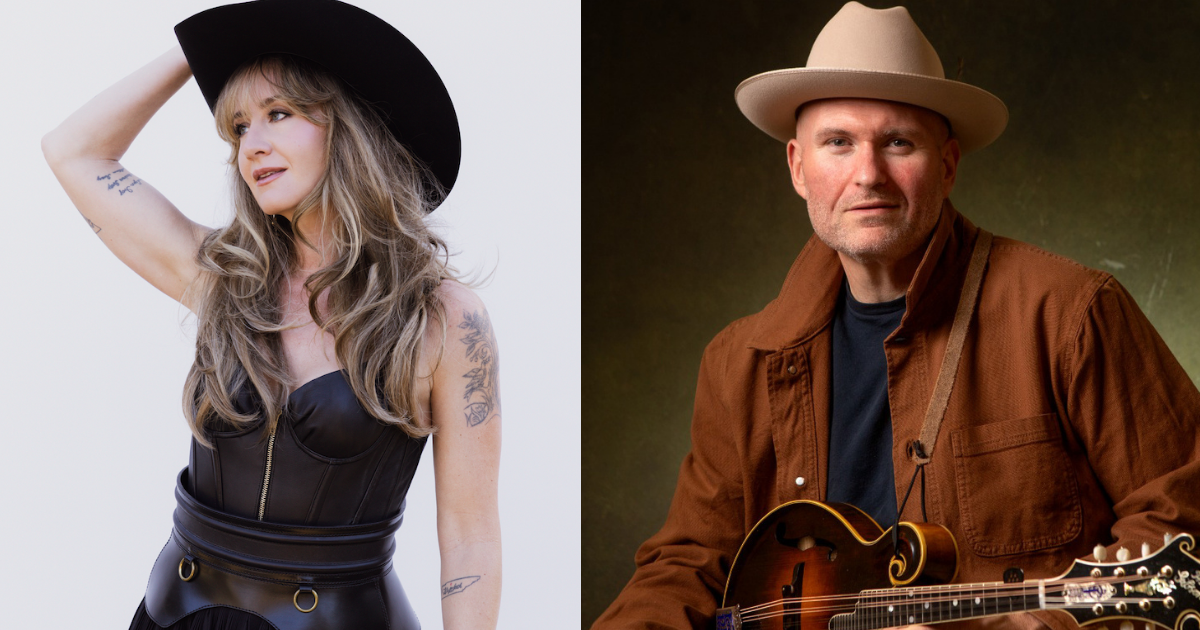
It’s another week where popcorn may be necessary to fully enjoy our weekly new music round-up, with all of the new music videos included below! You Gotta Hear This…
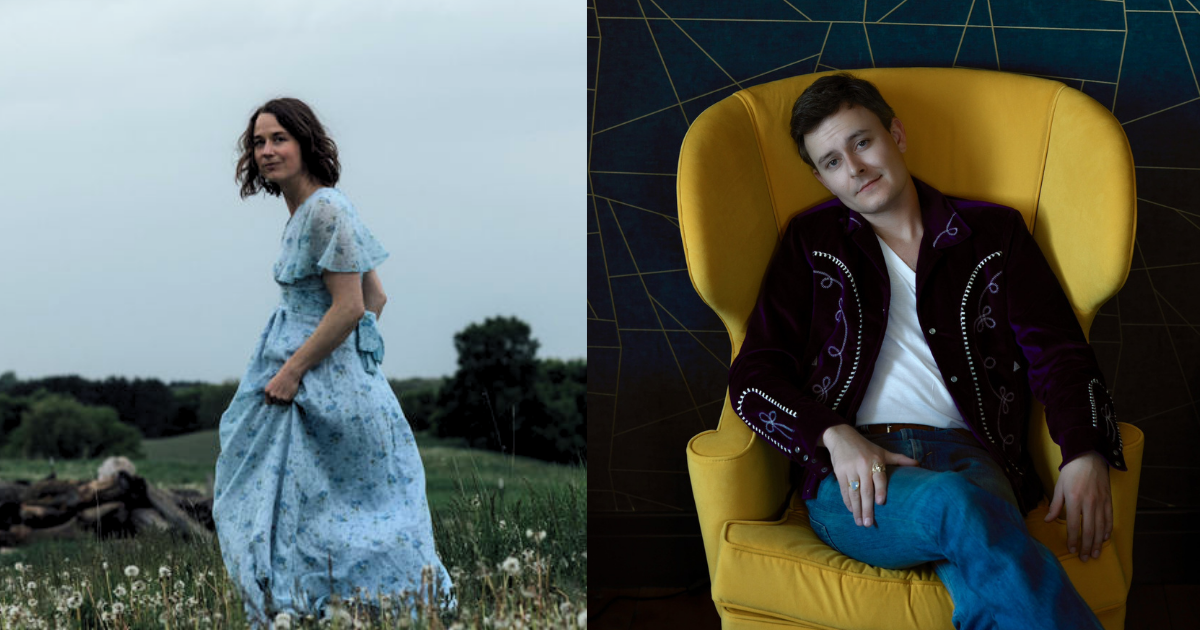
Our first screening is some cosmic California country from Mac Cornish, who’s sharing a music video for the title track of her upcoming album, Wayfaring Woman. The full LP will launch in September, so enjoy this early taste of the project, a song about finding, re-finding, and returning to oneself despite time, geography, and all that comes between.
We have a couple of fun and funny videos you’ll enjoy as well. Nashville-based husband-and-wife roots duo Zaggie (Zach & Maggie White) have a new single and video for “Parking Lot Vacation.” Sometimes a need to unplug, unwind, and relax can be satiated with a good ol’ fashioned sit in a parking lot. The video is witty and hilarious to match the flowing, island-getaway sonics of the song. Plus, Essence & Gold Country have a gut-busting video to tribute Mother’s Day and every “Good Mom” out there. As frontwoman Essence Goldman puts it, it’s all about “the beautiful chaos of motherhood and the truth that we don’t have to lose ourselves to be a good mom.” It’s bluegrassy country that will get your toe tapping while bringing a smile to your face.
Also just in time for Mother’s Day, our old friend Courtney Hartman shares an intimate and tender peformance video for “Honey, Honey,” a song she wrote dripping with love for her young daughter, describing the perfection of her child through her own eyes and building her up for a life built on love, confidence, and strength. It’s gut-wrenching and comforting at the same time, a deft balance that Hartman is well known for in her songwriting and guitar picking. It’s a lovely video for the occasion – and beyond – and announces her upcoming album, With You: From The Garden Shed, set for release June 12.
From bluegrass, Jaelee Roberts has a new single that was written by bluegrass radio personality and songwriter Terry Herd. “I’m Putting You Out of My Misery” pulls inspiration from traditional hard-driving bluegrass and contemporary sounds equally and boasts a stacked roster of pickers rounding out the band behind Jaelee’s gorgeous, crystalline vocals.
Country and Americana powerhouse Dee White has a new song as well, “Green River Rye,” which dropped earlier this week. Check it out below, it’s a pretty stripped-down recording made with just a simple acoustic trio – with Brian Murray and Jimmy Law – that lands somewhere between classic folk, country & western, and bluegrass, aesthetically. With whiskey as its centerpiece, it’s a lonesome and longing song that feels truly timeless – like you could sing along intuitively immediately, even on first listen. And don’t miss singer-songwriter Zach Seabaugh’s “Owes You Nothing,” a song about navigating Nashville, Music Row, and the music industry without losing your sense of self – or comparing yourself to everyone else you meet along the way. It’s a lovely track built on sensitive and brooding modern country sounds.
Celebrate your Mother’s Day weekend by calling your mama (who is definitely a good mom), sipping some Green River Rye, and taking a parking lot vacation – you’ve earned it. And, You Gotta Hear This!
Mac Cornish, “Wayfaring Woman”
Artist:Mac Cornish Hometown: Raised Bay Area, California, based in Nashville, Tennessee Song: “Wayfaring Woman” Album:Wayfaring Woman Release Date: May 8, 2026 (single); September 25, 2026 (album)
In Their Words: “‘Wayfaring Woman’ is a song about a girl who stays moving so her past won’t catch up to her – and so she won’t have to face herself. By the time I finished writing it I realized it was about myself. It was my way of telling myself, ‘It’s alright to cry, but it’s time to remember who you are and stop this cycle.’ So when I sing, ‘Even in yours lows, you can always go home,’ I mean the place and the state of mind.
“Making my way back to myself has always felt connected to the California home of my youth. Those canyon roads and golden hills remind me of who I am and who I always dreamed of being. I might not be able to access those places physically anymore, but the sense of self that I found there is within me and this song is a reminder to myself that I can always go back, I can always go home to myself. ‘Wayfaring Woman’ is the title track and first single off my second record, set to come out in September 25. It’s steeped in cosmic California twang, and I don’t think I’ve ever sounded more like myself.” – Mac Cornish
Track Credits: Mac Cornish – Vocals, acoustic guitar, songwriter Hillary Fretland – Harmony vocals Charlie Fuertsch – Electric guitar Cooper Dickerson – Steel guitar Jack Lawrence – Bass Dave Racine – Drums
Video Credit: Directed and filmed by Janaya Pardo.
Essence & Gold Country, “Good Mom”
Artist:Essence & Gold Country Hometown: San Francisco, California Song: “Good Mom” Album:Father’s Daughter Release Date: May 8, 2026 (video); September 26, 2025 (album) Label: Blue Elan
In Their Words: “This ‘Good Mom’ video is about the beautiful chaos of motherhood and the truth that we don’t have to lose ourselves to be a good mom. It holds that tension between giving everything to our children and still claiming space for our own soul, and taking care of ourselves so we have more to give.
“This song gets the best reaction when I perform it live. I just watch the mothers start laughing and shaking their heads in agreement. It is hard for me not to laugh when I sing it. Any mom out there can relate. We thought it was fun to release this music video as as a gift to all the moms on Mother’s Day. Though in my opinion, every day should be Mother’s Day!” – Essence Goldman
Artist:Courtney Hartman Hometown: Eau Claire, Wisconsin Song: “Honey, Honey” Album:With You: From The Garden Shed Release Date: May 8, 2026 (single); June 12, 2026 (album)
In Their Words: “‘Honey, Honey’ is a love song to my daughter – a collage of daily imagery and truths I want her to hold onto. She has taught me about delight and even as I am the one cradling her and giving her comfort, it is often my own heart being mended by her.
“In the final verse I list a few things I want her to remember when I am not there to hold her, ‘quiet waters, soothe and sway, sunlight and kindness, the cradle of a day. You’re brave as an iris, a bright display, a trumpeter swan lifting up and away.’ Tift Merritt co-wrote this song with me, helping me clear away the debris and uncover within my own days the scenes I most wanted to sing.” – Courtney Hartman
Video Credits: Filmed by Kyle Lehman. Edited by Erik Elstran.
Jaelee Roberts, “I’m Putting You Out of My Misery”
Artist:Jaelee Roberts Hometown: Nashville, Tennessee Song: “I’m Putting You Out of My Misery” Label: Mountain Home Music Company Release Date: May 8, 2026
In Their Words: “‘I’m Putting You Out of My Misery’ is one of those songs that stopped me in my tracks the first time I heard it. Terry Herd wrote an incredible song and I fell in love with it right away. To me, it strikes the perfect balance between that hard-driving traditional sound and a touch of contemporary bluegrass. I absolutely love how everything came together in the studio. I’ve always enjoyed a song with a little bit of attitude and this one definitely delivers.
“I was also fortunate to have some amazing musicians join me on the recording. Alan Bartram on bass, Ron Stewart on banjo, Tony Wray on guitar, Michael Cleveland on fiddle, Justin Moses on mandolin and Dobro, and Zack Arnold adding harmony vocals. Getting to collaborate with such talented players made this project especially meaningful to me. I’m truly proud of how the track turned out, and I’m so thankful to each of them for being part of it. I hope you all enjoy listening to it as much as I enjoyed recording it.” – Jaelee Roberts
Track Credits: Jaelee Roberts – Lead vocal Alan Bartram – Bass Ron Stewart – Banjo Tony Wray – Guitar Michael Cleveland – Fiddle Justin Moses – Mandolin, resonator guitar Zack Arnold – Harmony vocal
Zach Seabaugh, “Owes You Nothing”
Artist:Zach Seabaugh Hometown: Marietta, Georgia & Nashville, Tennessee Song: “Owes You Nothing” Release Date: May 8, 2026 (single) Label: Cloverdale Records
In Their Words: “This song came at a time when I needed to check myself – on where I was in life – and on the people in my life I didn’t want to take for granted. I wrote it with Park Chisolm and Reid Haughton on Music Row. I was talking to them about how hard it is sometimes to show up in Nashville, to be creative for a living. You can fall into the comparison trap when so much of the industry around you is trying to set out for the same thing. But I don’t like feeling sorry for myself. I’m super grateful for what I have and who I get to live life with and at the end of the day, I guess this world owes you nothing. So you gotta make the most with what you got—that’s when you realize you got all you need.” – Zach Seabaugh
Dee White, “Green River Rye”
Artist:Dee White Hometown: Slapout, Alabama Song: “Green River Rye” Release Date: May 6, 2026
In Their Words: “I first discovered Green River Rye Whiskey during a hunting trip to Kentucky. The bottle instantly caught my eye – it was the same one I remembered from an antique lithograph that hung in my childhood home. At the time, my girlfriend had just left me, and the chorus melody had already popped into my head. Later that night, I was hanging out with my buddies Jimmy and Brian and we finalized the music and lyrics. The very next evening, we went into the studio and recorded it as an acoustic trio in Nashville.” – Dee White
Zaggie, “Parking Lot Vacation”
Artist:Zaggie Hometown: Nashville, Tennessee Song: “Parking Lot Vacation” Album:Turpentine Mind Release Date: May 6, 2026 (single); August 26, 2026 (album) Label: Zaggie Records
In Their Words: “‘Parking Lot Vacation’ came from the exact mental-headspace-shift the song is about. I was supposed to be writing. Instead, I was staring at a blank page for long enough that it started staring back. Eventually I just… leaned back, let myself off the hook for a bit, and the song showed up. Turns out vacations are less about where you are and more about the moment you stop letting petty anxieties run the show. A good car seat, a warm breeze, a window cracked just right is sometimes all I need. We’ve seen a lot of beautiful places in the world and a parking lot on the right day is genuinely in the conversation.” – Zach White
Track Credits: Zach White – Vocals, guitar, songwriter Maggie White – Mandolin Dan Needham – Drums Byron House – Bass Chris Walters – Piano
Video Credits: Cast: Annabelle Fox-Tieman, Douglas Waterbury-Tieman, Ollie Fox-Tieman, Huck Fox-Tieman, Emily Rogers, Josée Klein. Directed and edited by Zach White. Location Videography by BAMM Productions.
Photo Credit: Courtney Hartman by Michelle Bennett; Dee White by John Peets.
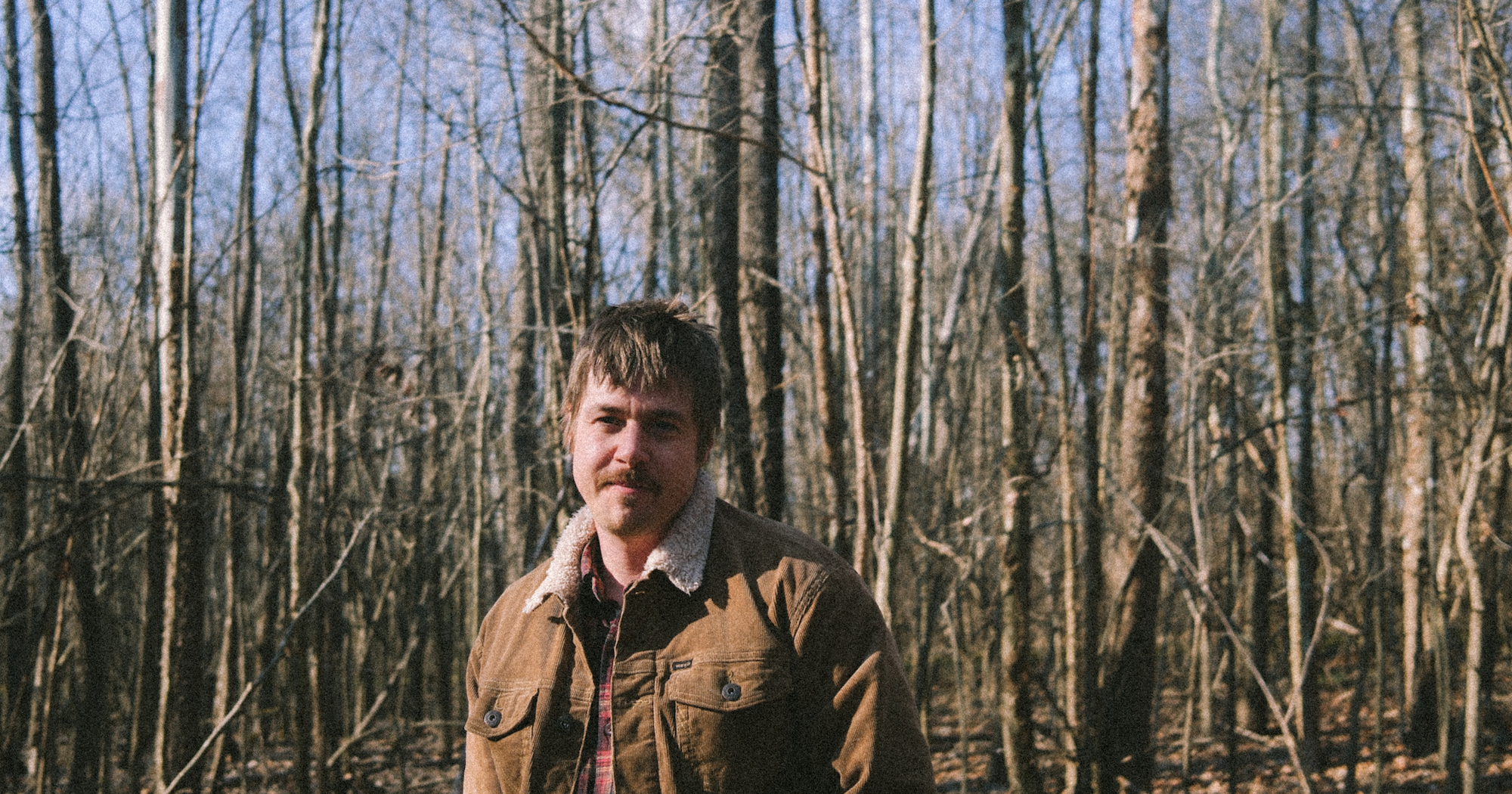
By now, Josiah Leming is a master of reinvention. In the early 2000s, he signed a major label deal, then went indie for a while. Some of his albums leaned on his rock influences; others were more folk-oriented. He’s released a healthy number of covers projects, but can write songs as well as anybody who’s been in the business for 20 years. Leming also recorded under his own name before rebranding himself as Josiah and the Bonnevilles. And he’s about to be all over the map, literally, when he launches his Redline North American Tour in May with openers Max Alan and Brenna MacMillan.
Josiah and the Bonnevilles’ base should only grow with As Is, out May 8 on Rounder Records. Returning with a more electric approach, Leming co-produced the album with Konrad Snyder.
“It was important to me that the album sound different, but not so different that people don’t recognize it,” Leming tells BGS. “That was actually a pretty tough thing to do, because it’s easy to change things and really turn them on their head, but to have it still feel like it came from the music that came before it was something I thought a lot about.”
A proud native of Morristown, Tennessee, and now living in Nashville, Leming caught up with BGS to talk about how he picked up the banjo, the positive results of listening to Ralph Stanley, and how Jack Reacher helped him define his relationship with his fans.
I noticed the first line of the first song on the new album is, “I’ve been staying out and off the internet,” and after listening to the album a couple times, I realized that’s an important line for this whole record. Was there sort of a recentering, or a desire to disconnect, maybe, as you went into this album?
Josiah Leming: It was a huge part of it. And I still struggle with it a little bit, because the reason I got to where I am now is because I embraced the internet, I embraced social media, and I shared my life with people, day in and day out. I was 33 years old, fighting and scrapping to have a place, making music as a living. But I found as we got toward the end of 2024, the things that I was doing to sustain the level that I was at were coming directly at the cost of the essential thing that goes into the music.
Like, things had never been better. My shows were as big as they’d ever been. Everything was cooking on all cylinders, but I didn’t have any new songs that I was very excited to share. I needed to completely cut myself off from that world of the promotion cycle and the daily posting. … I have always written so autobiographically, and it would have been very easy for me to write an album about the struggles of the road or an album that would make a lot of sense to me. But I started thinking about 13-year-old Josiah in Morristown, Tennessee, and that guy doesn’t care what it’s like to be in Tulsa on a Thursday night, and maybe you’re a little lonely. Like, I gotta cut deeper to the core of this thing that’s not just about me.
That took me 30 or 40 songs to write out all of that stuff, to get to where I could look a little deeper for the meaning and the songs that somebody would understand if they weren’t a touring musician. That was the ultimate goal for me with the record, to make something where people don’t think about me when they listen to it. They can maybe just put it on in the garage. When I put on Ralph Stanley or AC/DC in the garage, I don’t think about Angus Young or Malcolm Young or Brian Johnson. I think, “Damn, this is an awesome day. This is a soundtrack to my life.” And I hope I have done that somewhere on this album.
How much of an influence did your Appalachian roots have on this album?
It’s really interesting. So the bio for the album was written by an author named Silas House. We had a chat and he actually asked me a similar question. He was like, “It feels Appalachian, even though it isn’t that obvious.” I think that’s because of the language I use that I grew up with. I think a lot about when I write, “Would my dad understand it?” My dad’s a simple, working-class man. So if things get too complicated, lyrically, then I want to change that to make it simpler.
That’s a lot of it, and I really went into the deep phase with Ralph and a lot of older stuff. That really changed my perspective on how I see myself in this industry. It’s very easy to start to get into this race to the top, and you’re looking at analytics, and you want more monthly listeners and all this stuff. Listening to bluegrass, and Ralph Stanley especially, all that kind of disappears, and it just becomes about the raw emotion of it. Which is what I fell in love with in the first place, when it felt like I had to do music.
How did Brenna MacMillan get involved with the project?
I was tracking a demo to a different song, a song I love but that’s very strange. And I was like, “I really want a banjo player.” Back in the day, I used to use Craigslist to find background singers because I love finding new people. So I put up an Instagram story and somebody sent me Brenna’s account. I watched one video and I thought, “This is just like lightning in your veins.” She’s so awesome. The energy in the banjo and the voice. And we had connected but it didn’t work out that particular moment.
So when it came time where I wanted banjo on the record, I hit Brenna up again because we’d exchanged numbers. She came in, and she’s just amazing. She doesn’t know how good she is. She’s been tour managing the band East Nash Grass, which I love. I’ve been listening to them a ton right now. I was like, “We need you in the band.” So now she’s in the band, she’s touring with us, and she’s going to open up the shows. I’m so excited for people to hear her.
When did you first pick up the banjo?
My grandpa gave me a banjo. He loved George Jones. He was a hard-drinkin’, George Jones-lovin’, bluegrass-lovin’ guy. He had a banjo and a Dobro he gave me, and I fiddled around with that. And then, all of us guitar players, when we find the six-string banjo, we’re so pumped because we don’t have to learn all these new chord shapes. So, it’s been a couple of years that I’ve been adding in the six-string banjo on things when I play, and I still play that on “Redline.” I am using the finger picks now, rather than my nails. So I feel like I’m starting to cross the bridge… if I can learn some shapes on the real banjo, maybe I can do some damage one day.
In “Redline,” it seems like you’re writing for the people you grew up with. People in your life who have hope, but it’s just hard. Who do you have in mind when you write a song like “Redline”?
It makes me emotional, honestly. I think about my dad all the time. It’s like I have all this… it’s not anger, but there’s very strong feelings. While I’m doing very well in my career, it’s better than it’s ever been, most people that I know are not winning in this modern world. Where everything is through the phone, and it’s the only way to access social circles. It’s the only way sometimes to order a damn McDonald’s sandwich. And there’s just this barrier, there’s this divide.
I see it with my dad, and my grandparents, just being left behind. And also working people. We shot the video for “Hell Without the Flames” down in Colombia, because that’s where all these jobs have gone, and now they pay these people even less than they paid before. So there’s just something that I can’t get out of my brain. I think about it all the time. That’s an important song to me. We love playing it. The band loves playing it. So I appreciate you asking that, it means a lot.
You’re welcome, and this may be a good segue to ask about “You’ll Never Leave Harlan Alive.” I found your version when I was going through your Country Covers EPs. It tells a similar story, about how grandma and grandpa had to keep working to live. Why did that song pull you in?
I probably heard that song first on Justified and I think that would have been the Darrell Scott version, the original. And I had always loved it. I mean, that’s just one of the best songs ever made. Talking with Silas about it, or anybody from the region, it’s so complicated because there’s so much pride. I like to think that there’s so much pride in working for so little, but these people are exploited over and over again. We don’t have aspirations of gold palaces or island complexes, so we’ve just been consistently taken advantage of, because we have this value system that’s a lot different. It makes you sad, sometimes it makes you angry, and sometimes it also makes you proud, and it’s really complicated feelings around all of it.
But it also seems like it’s important for you to share the music that you like. You’re writing songs that you want your audience to relate to. You’re covering songs to maybe introduce the music you like to your fans. You’re bringing musicians you like out on tour with you. Your fans can tell what you’re into through the company you keep. Is that part of your creative vision, to share with your audience who you’re listening to and what you like?
I think so, yeah. I was thinking recently, I always had service jobs growing up. I would serve tables or I would bartend. As I get older, I just see myself as having a responsibility. I think I had the responsibility to get off the internet for a year to write the best album that I could, rather than perpetuating my brand with songs that sounded similar. I feel like I have a responsibility to have the upbeat songs in the set list. If people are flying into town or driving 10 hours, it’s my responsibility to give them an experience.
There’s a great quote that I love from the Jack Reacher books. I love anything like James Bond, Reacher, or Tom Clancy. I love that stuff. But the author of Jack Reacher has a great quote about a handshake. And to make a handshake work, there’s got to be the hand on the other side that shakes back. I think about that in everything I do these days, since I read that. I wouldn’t get a lot of benefit out of just making music that I love and putting it out in the world if there’s not that hand on the other side. So I am at the point in my life where I think about those people that I’m looking at when I play live, and there’s a responsibility to me to weave what I’m excited about into what I hope will connect with them.
Want to see Josiah and the Bonnevilles live at the Fonda Theatre in Los Angeles on May 21, 2026? Enter to win tickets here!
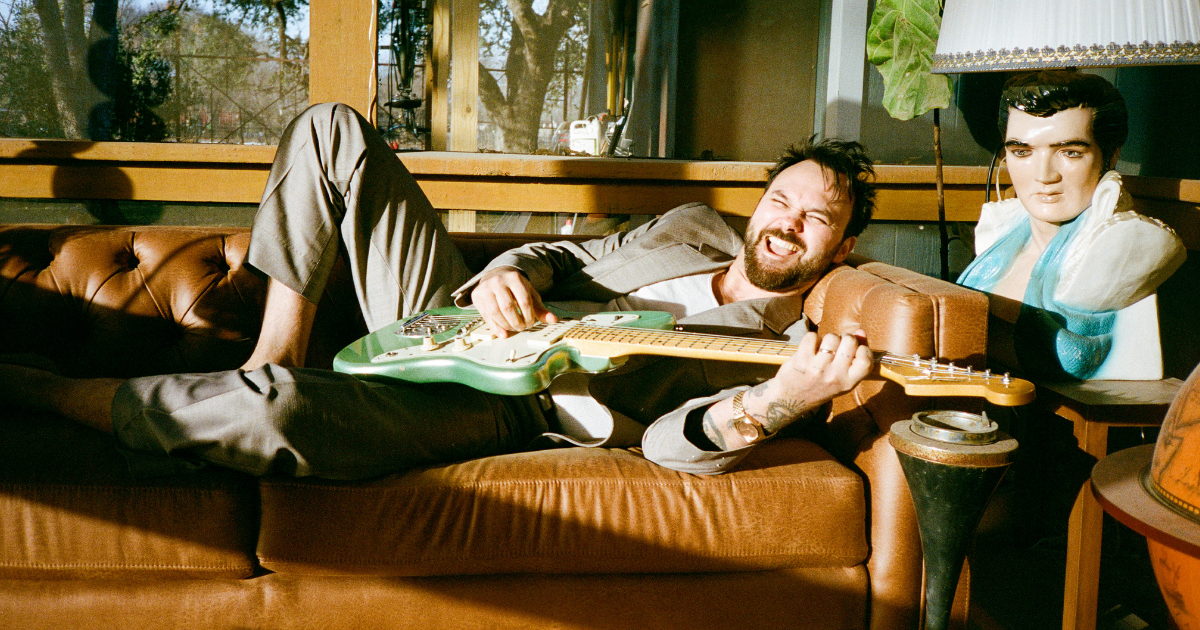
There has always been something uncontainable about Shakey Graves – a sense that his songs arrive not as glossy statements but as lived artifacts, scuffed at the edges, humming with the residue of wherever they’ve been. Born Alejandro Rose-Garcia, he first emerged from Austin’s DIY scene as a one-man band, stomping out rhythms on a suitcase kick drum while threading guitar lines that felt equal parts front-porch confession and desert hallucination. It was a sound built on immediacy and invention, earning him a devoted following long before the industry quite knew what to do with him.
That restless instinct runs straight through Fondness, Etc., his fifth studio album, due May 15, and the subject of the hour-long Artist of the Month conversation that follows. Where earlier releases by Graves leaned into the spectacle of one-man-band ingenuity, this collection turns inward – quieter, stranger, and more revealing. Recorded at home over a single, focused month, the album trades gloss for atmosphere, unfolding as a lo-fi meditation on time, memory, and the uneasy grace of becoming someone new while still carrying who you once were.
The record often feels more uncovered than constructed. Graves tracked the songs onto a pair of TASCAM tape machines, committing performances in ways that resist the endless revisions of digital recording. What remains are nine lived-in tracks that breathe with their surroundings – passing trains, stray birds, the soft blur of the tape – all of it absorbed into the music’s grain. In that sense, Fondness, Etc. becomes a document of a moment, caught before it could be refined into something less human.
That approach shapes the album’s sound, which drifts between avant-garde folk and restrained indie rock without settling too comfortably in either. Graves plays nearly everything – guitar, drums, synth, even Optigan – building arrangements that feel intimate but slightly off-center. There’s a tactile quality throughout, as if each sound has been handled, worn down, and set in place with intention rather than perfection.
“I Once Was an Ocean,” the album’s lead single, offers a clear window into that sensibility. Inspired by mid-century composer Martin Denny, the track re-envisions exotica through the stark geography of West Texas. It moves in a slow, dreamlike sway, as if the land itself were remembering what it used to be. The idea that the Big Bend area of the Rio Grande River was once a prehistoric ocean lingers beneath the surface, mirroring the album’s quiet fixation on change and the long arc of transformation – how nothing holds its shape forever, and perhaps never did.
Elsewhere, the album keeps its footing in that same reflective terrain. A cover of “Time Flies,” originally by Frankie Sunswept, is rendered with a measured restraint, its string arrangement adding a subtle weight to an already wistful meditation on love and impermanence. Across the record, Graves circles a familiar tension: how to hold onto the past without getting stuck in it.
That question carries added weight now. Removed from his early, road-worn persona, Graves approaches this work from a life reshaped by family and fatherhood. The songs don’t proclaim that shift, they absorb it. There’s a quiet awareness of time passing, of priorities morphing in ways that are less dramatic than they are decisive – changes that, indeed, tend to reveal themselves only in hindsight.
If there is a unifying thread here, it is the idea that imperfection can tell the truth more plainly than shine. By choosing limitation – tape over digital, immediacy over endless revision – Graves has made a record that resists easy categorization. It stands as a snapshot of a particular stretch of life, captured without much concern for how it might be received.
In the interview that follows, he traces that path with candor, moving between the making of Fondness, Etc., the milestones that have marked his recent years, and the earlier chapters that continue to echo through his work. It’s a conversation about process, memory, and the slow accumulation of experience – how a life in music is shaped not just by forward motion, but by the willingness to look back and take measure of what still lingers.
You’ve had an ongoing relationship with the Bluegrass Situation over the years, across different formats and moments. What has that meant to you?
Shakey Graves: I’ve always really loved the way Bluegrass Situation approaches things. It’s never just one lane – it’s a bunch of different formats, different kinds of events, different ways of presenting music. That flexibility feels true to how music actually exists in the world. I’ve gotten to be part of it at a bunch of different stages, and it’s always felt natural, never forced. There’s something about that openness that I really connect with.
Austin is a destination for so many people – a pilgrimage of sorts. But you were born there. What has it been like watching it change from the inside?
Growing up, Austin always felt small. Not isolated, but intimate – like a place where you could run into people you knew almost anywhere. Even as the capital, it had a small-town heartbeat. That’s probably the most noticeable shift: it’s now fully becoming a major city.
There was a time when “Keep Austin Weird” didn’t exist. That slogan showed up at some point during my lifetime and, honestly, people who grew up here didn’t feel like it was necessary. It was already weird. So when that phrase came along, it felt almost like labeling something that didn’t need to be labeled.
Now it’s different. The growth is real, the changes are real, but at the same time, the essence is still there if you know where to look. For me, Austin isn’t just a place – it’s the backdrop to everything I’ve done creatively. I don’t really know how to separate it from my identity.
Your parents were both involved in the arts. How did that shape your sense of what was possible?
They both ended up in Austin through the University of Texas theater department. My dad was a set designer, my mom’s an actor who later taught directing. So from the beginning, I was surrounded by people whose lives revolved around making things – plays, performances, stories.
But it wasn’t a traditional path. It wasn’t like there was a clear blueprint for success. I used to think of it as “magic beans income.” Somehow, through theater or dance or whatever project was happening, we’d get by. That unpredictability didn’t feel scary to me. It felt normal. What that did was make creativity feel viable. It never seemed unrealistic to pursue something artistic, because that’s what the adults around me were doing. The more I’ve traveled, the more I’ve realized that’s actually a rare environment. Austin gave me that without me even realizing it at the time.
What are your earliest musical memories – the ones that really stuck with you?
Music was always there, but it wasn’t always front and center. It was part of the atmosphere – something happening around me all the time. The first moment where I really engaged with it was in middle school. My mom let me go to a concert with my neighbor; we saw the Bloodhound Gang at La Zona Rosa. I got to come into school late the next day, which already felt rebellious. Then at the show, I got crowd-surfed, got kicked in the head – just total chaos. It was perfect. That’s probably my first vivid concert memory.
At home, my parents had their own band, Moon Coup. It was kind of this eclectic, world-music thing. There were always strange performances happening – Alejandro Escovedo playing in our backyard at a birthday party, stuff like that. It wasn’t polished or industry-driven. It was just… happening.
What about the records that shaped your taste early on? How did you discover music for yourself?
It was a mix of tapes and CDs, a lot of those old mail-order deals – buy one, get a bunch free. I got a steady stream of whatever my parents were into: R.E.M., Talking Heads, The Beatles, even Enya. For a long time, I didn’t really know what I liked. So I leaned heavily into soundtracks. If I loved a movie, I’d get the soundtrack, even if the music didn’t quite hold up outside the film. I had some strange ones – like the Predator 2 soundtrack, a lot of Alan Silvestri stuff. So my early listening habits were kind of all over the place. It wasn’t curated. It was just whatever stuck.
You’ve experimented with performance in a lot of settings, but busking never really stuck for you. Why is that?
I’ve barely done it – maybe a handful of times. It’s not something I enjoy. Even when I built my setup in LA, which could have worked for busking, it wasn’t about that. It was about having control over my sound wherever I went. I wanted to feel like I could present something intentional, not just fill space.
The challenge with busking – or even playing certain bar gigs – is that you’re often background noise. And I’ve always wanted the opposite. I want people to stop, to listen, to be pulled into it. I had friends who were incredible at busking. They had systems, routines, ways to make real money doing it. But for me, it felt like it took me away from what I actually wanted, which was connection.
Where did you first start playing your own material in a serious way?
A lot of that happened in Los Angeles. I was bouncing between LA and Austin at the time. One of my first gigs came through Craigslist – a Chinese restaurant on the [Sunset] Strip. I thought it sounded great. It wasn’t. I basically played to people who were just trying to eat dinner, yelling songs at them for half an hour.
Then there were the pay-to-play situations, like the Viper Room, where you had to bring a crowd or pay to perform. I didn’t always know what I was getting into, but I learned quickly. At the same time, I was playing DIY spaces – warehouse shows, house shows. That’s where things started to make more sense. When I moved back to Austin, everything clicked a bit more. I got a happy hour slot at the Hole in the Wall, and that place became foundational for me. It’s still one of the most important venues in my life.
You’ve said there’s no “right” or “wrong” way to make music. Where does that philosophy come from?
It’s something I come back to constantly. It’s kind of my guiding principle.
Recently, my daughter gave me a new perspective on it. She’s two, and at her preschool they were explaining how she loves the process of doing things. Like painting – she’ll get excited about setting everything up, picking colors, putting on the apron. But when it comes to the actual painting, she doesn’t really care about the result.
That hit me. Somewhere along the line, we lose that. We start focusing on outcomes – on whether something is “good” or “successful.” But the process is the real thing. You don’t need a studio or a perfect setup to make music. You can make it with anything. What matters is that you’re engaged in it. Some days I feel completely lost with my gear and other days everything aligns. That unpredictability is part of it.
How has fatherhood changed the way you approach your work and your life?
It shifts everything. Suddenly, the stakes are different. Spending hours worrying about a reverb setting feels a little absurd when you’re also responsible for raising a person. But at the same time, I’ve realized how important it is to hold onto your sense of self. Parenthood can completely disrupt your routines – everything you’ve built to manage your life just gets wiped out. You have to rebuild from scratch. That process – figuring out how to balance those things – is a big part of what this record came out of. It’s not about losing one identity to gain another. It’s about learning how to carry both.
Fondness, Etc. feels reflective, even intimate. How did it take shape?
It felt less like building something and more like uncovering it. Like an archaeological dig. I don’t usually go in with a clear concept. I start with a song, or even just a feeling, and follow it. The first piece was “When the Love Is New,” which I wrote before my daughter was born. It had a certain honesty, a kind of Western tone, and that became the direction. From there, the record revealed itself as a series of vignettes – little snapshots of relationships. Not necessarily my own, but drawn from experiences, observations, stories. It’s not linear, but it’s cohesive in its own way.
Big Bend shows up in your writing. What draws you to that landscape?
It’s an otherworldly place. Growing up in Texas, you learn that it was once a shallow ocean and when you’re out there, you can almost see that history. It looks empty, but it’s full of life – you just don’t always see it. That contrast is something I connect with. Texas in general has that dual nature. It’s complicated, layered, sometimes contradictory. No matter who you are, there’s a little bit of that mythology in you if you’re from Texas. Big Bend just makes it visible.
You’ve also talked about exotica music influencing you. What appealed to you about that genre?
I got into it pretty late – about 10 years ago – and then went all in for a while. What I love about it is that it’s not literal. It’s music imagining a place rather than representing it. It’s like fictional geography in sound form. That idea resonates with me. I’m not a traditional country artist, but there’s something Western in what I do. It’s not about authenticity in a strict sense – it’s about interpretation, imagination.
As a DIY artist, who helped shape your sense of independence?
Elliott Smith was huge for me – someone who could do everything himself. And Beck, especially One Foot in the Grave. That record felt chaotic and free. Hearing that made me realize there were no rules. Songs could be short, messy, weird – whatever they needed to be. That freedom has stayed with me.
Your audience has grown steadily over time. What does that connection feel like?
It means everything… The first time someone I didn’t know – someone far away – connected with my music, that was it. That was the moment I felt like I’d made it. What’s really amazing is how people continue to discover it. There’s always a new group coming in, finding something in it that I might not have even intended. That’s incredibly comforting.
Have you ever felt like walking away from it, or has it always been forward momentum?
I’ve never really felt like quitting, but I do think about expanding. If I could go back, I might have separated some of my projects under different names, just to give myself more freedom. Everything being under one umbrella can get a little limiting. Moving forward, I want to collaborate more, experiment more, maybe not always be the center of it. That feels exciting.
Storytelling is such a big part of your work. Where does that come from?
It’s always been there. My family are storytellers, my dad especially. And then there’s what I grew up on: Calvin and Hobbes, The Far Side, The Simpsons, Shel Silverstein. Those things are deceptively deep. They’re funny, but they’re also philosophical. Later, hearing artists like Townes Van Zandt or Tom Waits, it felt like a natural extension of that. Storytelling through music just made sense.
There’s a remarkable story behind the 1932 Gibson L-7 guitar that you’ve recorded with on this new album and other previous offerings. What does that instrument mean to you?
It’s one of those things that feels almost mythic. I met a guy at a weird speakeasy in LA, a bar in the warehouse district when I was figuring out who Shakey Graves was. After talking for a while, he told me he had this guitar – his grandmother’s boyfriend had owned it. The guy played on the Chitlin’ Circuit, took it to World War II, survived a fire that burned his hands, but still kept playing. It was a crazy guitar with all of the newspaper clippings of the guy who played it.
After the ten-year anniversary of my first album, Roll the Bones, the guy I met in LA gave it to me. When I first handled it, it was this stubborn, living thing – it didn’t want to stay in tune, felt like it had its own personality. But I connected with it immediately. I wrote some of my most important songs on that guitar. Then I broke it. The neck snapped clean off. It stayed like that for years before it was finally restored. Getting it back for this record felt like being reunited with something essential. Like picking up a tool that had shaped you in the first place.
What do you want at this point in your life and career?
I want everything. I want contradiction. I want to be obscure and famous. I want to be a family man and also like a scamp disappear into something unpredictable. I don’t think I’ll ever stop wanting all of it at once. That’s kind of the beauty of it. I don’t think I’ll ever be able to stop wanting every opposing direction in some shape or form.
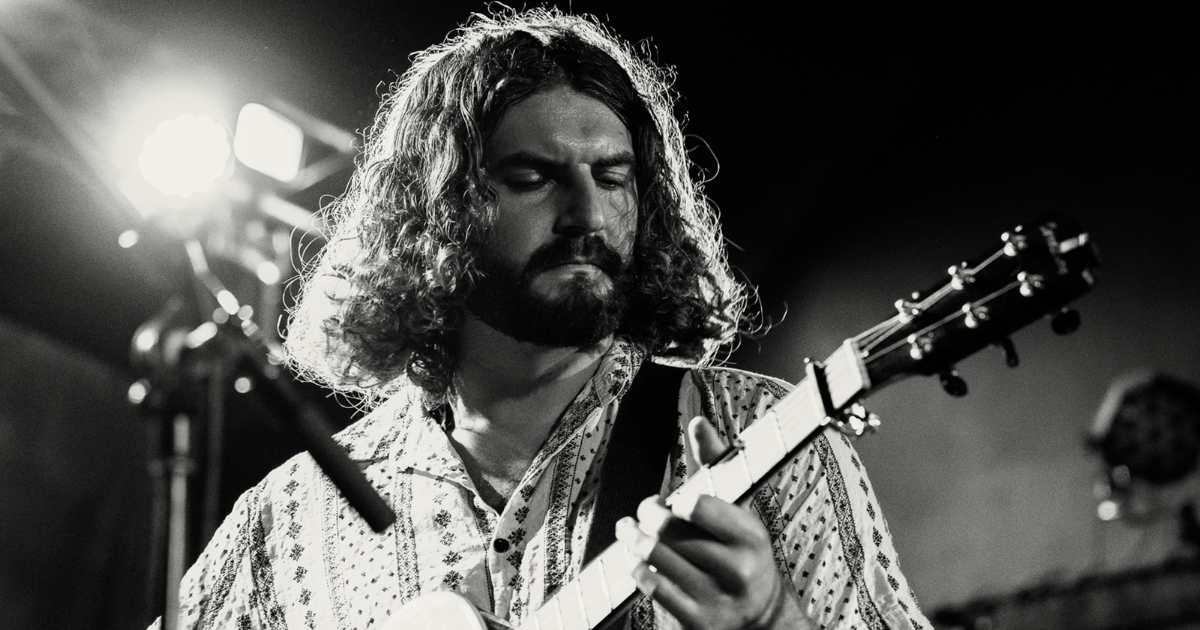
While many young talents, willingly or hesitantly, bow down to music industry boardroom suits who promise stardom if they’ll follow a professionally curated path, Cole Chaney takes a hard pass. He knows exactly who he is, what he does, and how he wants to get there. He creates songs, not content. He’s a career musician, not a brand. And the only thing he hopes to influence, maybe, is someone, somewhere, who wants to make music for all the right reasons.
Chaney grew up in Catlettsburg, Kentucky, surrounded by the legacies and storytelling of his elders. After graduating high school he worked as a welder, uncertain of his career path, but already fueled by his passion for music. Today, he keeps one musical foot in the bluegrass traditions of his Appalachian roots and the other in guitar-centric, amplified bands like Soundgarden, Nirvana, Alice In Chains, and Stone Temple Pilots.
His debut album Mercy and subsequent OurVinyl Sessions reflect his love of acoustic music and showcase his leanings toward introspection and melancholy. In the Shadow of the Mountain, released last fall, takes that darkness to a new place, balances it with moments of light and leans into the aforementioned rock influences, while never losing the origins of his sound. All of this shines at peak level onstage, captured by Western AF on a Live AF Session.
Sitting outside at home on an April morning, drinking coffee and surrounded by the sounds of birds and a breeze, Chaney spent a couple of hours on the phone with Good Country. He spoke candidly about his music, faith, values, mental health, and the intertwining of inner peace and inner turbulence that make all these things uniquely him.
When you were ready to do this professionally, you went to Lexington. Most songwriters would have chosen Nashville. Was yours a deliberate decision or a natural one?
Cole Chaney: To understand that decision, you have to look at who I was looking up to at the time – and still do – and what drove that decision. When I was in high school, probably around my freshman or sophomore year, 2014 or 2015, I started getting into this band called Sundy Best. They’re from Prestonsburg, Kentucky, which is just down the road from me. This was pre-Tyler Childers. At the time, in Eastern Kentucky, these guys were the biggest thing coming and going. They leaned heavily on being from Kentucky, the same way I do, and they moved to Lexington to get a foothold.
That was my early example, watching those guys. I knew they weren’t going about it the traditional way, which was to go to Nashville and pray somebody picks you up. They did it in Lexington. A couple years later, Tyler Childers comes along – another super-influential figure in my musical upbringing. Of course, he’s anti-Nashville – not the city, but the machine, if you will. I’m pretty sure he lived in Lexington, or at least around the area in the scene, for a while. So did Sturgill Simpson. The list goes on.
I was like, “What business model makes more sense to me? Do I go to the place where there’s more songwriters than the rest of the entire planet or somewhere where people will actually understand what I’m saying and I can maybe build myself a little bit of a foundation?”
The way I saw it is if I started building a sort of fan base or if I had enough ticket buyers, places like Nashville or Denver, these big music scene cities, what choice would they have other than to book us? That’s the way I looked at it.
And it worked.
It did work. It’s a simple business model, but the difference between that model and the other is you’re not sitting around waiting for something to happen. It’s on you to go out and make your own connections. It’s a very grassroots and organic way of doing it and that’s the way I like to do things. I’m anti-machine. Even though I work with some bigger companies, I keep it as limited as possible. That’s so I can play pretty much wherever I want, whenever I want, and they understand that.
On the Whiskey Riff Raff Podcast you said, “Music found me.” Would you mind expanding on that just a bit?
It did. I never would have dreamed at 16 years old that I would be doing this as my full-time job at 25. That was never on the horizon for me. I didn’t know what I was going to do. I knew I was going to weld for a little bit, see what happened, and maybe try to start my own business. And I did. But I really didn’t think it was going to end up like this.
I started realizing that people liked to hear me play and sing around the same time that COVID hit really hard. That gave me an opportunity to sit down, write some songs, and think about what I wanted to do with the rest of my life.
I’m very much a subscriber to the Bible, and I think the Lord has a mysterious way of working. He put me on a path without me even realizing it way back then and I do my best to stay on it now. I think my job while I’m here is to create as much good stuff as I can, stuff that means something, get it out to the people, and get out in front of them and play it for them. As somebody who enjoys going to shows in their free time and watching my favorite bands perform live, I know how that feels, and it’s truly a privilege to be able to offer that same service to other people.
There is music in your bloodlines, not professionally, but family members who played in church and at home. You obviously assimilated the sound of the area, and also this wider scope with bands like Alice In Chains and Stone Temple Pilots. When did all of that begin seeping into your songwriting?
We listened to the radio when I was growing up. I didn’t get educated on music or how to play until I started really getting into it. To this day, I’m still being educated and learning how to play on a daily basis. Part of what keeps it so fun to me is how much I don’t know and constantly learning about things.
Mercy was my first album, and I had access to what was around me. I had just moved to Lexington and I was really into bluegrass. There’s a band called the Wooks that, to this day, Glory Bound is one of my top three favorite records of all time. I was infatuated with that sound and that was what I wanted Mercy to sound like, or at least as close to it as I could get. A lot of the Wooks ended up playing on that album, plus Michael Cleveland. It was crazy.
Alice In Chains has been a mainstay in my musical taste since I was probably 15 or 16 years old. Since I first found them, I was very drawn in by the tone of Layne Staley’s voice and the weight of Jerry Cantrell’s guitar. It feels like you could bite it and chew on it. I don’t know how to describe it.
I’ve also always loved bluegrass, so it was [figuring out] how to bridge the gap of what I listen to and where I want to go with my writing without completely abandoning that sound. And bringing the alternative rock sound into the folk realm, where you have mandolin, upright bass, fiddle, acoustic guitars, and drums. The biggest change in the sound has been the addition of drums over the past two years, navigating that and seeing how it fits into the whole equation. It opened up a lot of avenues for me as a songwriter.
You began playing guitar at 13 or 14. Did you always play acoustic?
The thing about electric guitar, for me, is that it’s such a deep realm of gear and a deep dive. I’ve always been attracted to good-sounding acoustic guitars and players like Tony Rice, so I felt my effort was best spent getting really good at playing the acoustic guitar.
That will carry over whenever I decide to pick up an electric guitar, more so than if I only played electric guitar and tried to write some bluegrass-style acoustic lines. It would be a tougher transition to come over from light gauge strings on an electric guitar to .013s on a dreadnought and trying to play “Blue Railroad Train” or something like that.
Do you have an electric guitar?
I have several electric guitars. I’ve got a ’57 reboot Stratocaster, an American Professional Telecaster, my old Paul Reed Smith that I learned how to play electric on, and a nice Vox amp. I don’t know all that much about electric guitars. I still have a lot to learn.
Prior to this interview, you sent over your touring rig: a Gibson J-45 Banner in standard tuning with a K&K Pure Mini pickup, and a Breedlove sitka/rosewood Custom Dreadnought in drop D/double drop D, with an LR Baggs Element VTC pickup. Also two Grace BiX DI’s and a Lampifier Model 711 cardioid mic for lead vocals.
Those are my road guitars. They aren’t the ones I recorded everything with, but those are what you see at the shows.
In addition to the Gibson and Breedlove, do you have other acoustics?
I have two Gary Cotten guitars. [On] OurVinyl [Sessions, that] was my first Cotten I recorded with. On In the Shadow of the Mountain, many of those songs are my newer Cotten, which is sinker mahogany and an Adirondack top. “Alone?,” “In the Shadow of the Mountain,” “Into,” “Feels Like Rain,” and “Spirit” [were all recorded] on the Cotten.
That guitar sounds huge. It’s an outstanding guitar. I don’t tour with it because I’m scared something would happen to it and it’s too special to me. And Gary’s a great dude. He’s always taken really good care of me, and I want that guitar to stick around for a long time.
I don’t have any electronics in it, either. It’s a very traditional style, it’s a dovetail, and I want to keep it as traditional as I can and keep as much weight out of it as I can, because the more weight you add, sometimes it makes them sound worse.
What makes the Gibson and Breedlove right for touring?
They’re super-versatile and they both sound fantastic plugged in. That Breedlove is the longest-standing guitar I have that I’ve consistently played shows with. I got it in 2019 from 4 o’clock Rock Guitar Shop in Ashland [Kentucky]. It’s a custom dreadnought that they shop-ordered and it’s got the LR Baggs VTC Element in it. It has always sounded so good plugged in. I mean, all guitars sound bad plugged in, but it’s a matter of how much of the original sound can you actually preserve when you plug it in.
I’ve gotten to the point where I am almost starting to desire a little bit of that direct input texture. Maybe it’s because I’m listening to too much MTV Unplugged, but I’m starting to desire that kind of cardboard bad sound.
The Gibson, I put a K&K Pure Mini in and it sounds really close to what it sounds like not plugged in. Man, that Gibson is a beast. I love that guitar. It’s been to every show with me since I bought it last year.
I still have a Paul Reed Smith acoustic guitar and it’s a damned good little guitar. I’ll probably end up using it again on some stuff. It’s one of those that you plug in and it sounds great, too. But when I got into the whole bluegrass thing, I knew I needed something with a little more body.
Sometimes you use a pick, sometimes fingers. Either way, your attack is strong. How did your technique develop?
It’s one hundred percent out of necessity. I had a really bad injury in 2015 and I damn near cut my index finger completely off at the knuckle. I can’t wholly bend my index finger and I can’t feel the picking side of that finger. If you watch some of my older videos, my index finger is flailing around all the time. It’s because I’m picking with my thumb and middle finger, and that’s where I’m holding the pick. That took me long enough to learn how to do.
In recent years I’ve learned how to use my middle finger to lock my index in place and be able to hold a pick. It looks normal, but if you could see how the sausage is made, it’s not that pretty. I wish I had that dexterity in my finger. The takeaway message from that is, “Take care of your hands, y’all.”
Let’s talk about the through line from bluegrass to bands like Stone Temple Pilots and Alice In Chains. You blend the genres seamlessly and it all makes sense. Did you always feel that connection?
If you listen to any playlist I’ve had, I’ll go from Ralph Stanley to Chris Cornell in a heartbeat. Obviously the music is different, but there are common themes between the two. Mountain folk music, hard rock, and that era are very dark and brooding, and they can be heavy in their own ways too.
What is heavy? What makes a song heavy? You’ve got people drop-tuning their guitars, but it’s still not as heavy as Pantera or Black Sabbath or something like that. So it’s not necessarily the sound that makes it heavy. It’s the vibe of the song.
I feel like a salesman a little bit, trying to sell this idea that this stuff can be brought together and related in an authentic capacity. Let’s take [Stone Temple Pilots’] “Big Empty,” for example. To do a cover of that and be looked at as a folk artist or an Appalachian artist, or some people will even say country – which I disagree with, but whatever – it always seems like somebody will start into a cover of this great song, but then they’ll get hokey with it and it loses all its purity.
That’s not at all the intended purpose for me. It’s to say, “This is a fantastic song and it fits the vibe that we’re all going for in this realm.” A lot of people probably didn’t know that a mandolin or fiddle sounds great on “Big Empty,” but now they do, because it fits. That’s the way I listen to that kind of stuff. It’s just how to pull that off without being cheesy or coming off in a capitalistic way. More so in a way of, “I love this song and you guys should listen to it.”
Was it challenging to find musicians who understand going from bluegrass to Stone Temple Pilots and back again?
The band, I think through a lot of prayer/manifestation, has come together and, as you hear, they’re fantastic. They can play anything in any style. Ella [Webster] and Kyle [Kleinman] come from a more traditional folk music side of things. Kyle is a bluegrasser and Ella is an old-time fiddle player. Lars [Swanson] and James [Gooding] are jazz cats, so they have infinite vocabulary when it comes to music. If you can play jazz, then you’re going to be all right. If you can pull off that stuff, you don’t have anything to worry about when it comes to my type of music. Stone Temple Pilots is a walk in the park for you.
In our van, the most listened-to bands between us are Soundgarden, Pantera, whatever James’s choice of jazz is, and Alice In Chains MTV Unplugged. That’s a really good piece of music. But yeah, they’re a great band and they can play anything.
Did Lars and James know each other before they joined your band? To lock in a rhythm section…
No, they didn’t. Once you start playing with a jazz drummer, you need somebody who can comprehend the stuff he’s laying out and answer that on the bass. To have those two sit in a room and jam is really something to witness and listen to, because they speak a language to each other that I don’t understand. But I love when they do it, and it’s great to hear.
I’ll be playing onstage, singing and doing my thing, those guys are behind me and I’ll hear them back there, talking to each other while we’re doing this thing, and it’s awesome. They’re special. Those two dudes – they’re incredible. They’re the unsung heroes of music in general. That’s your metaphorical offensive line right there. If you don’t have a Lars and a James, then your quarterback’s getting sacked all the time.
This is you in 2025 on The Western Side, talking about Shadow: “a lot of darkness and an equal amount of joy in other songs. It’s a good depiction of where I’ve been for the past two years. A tumultuous and chaotic time period, but also great. And I’m still here.”
Then, In 2021, on With A View: “I load the pressure on. It’s how I operate. My brain lives in constant turmoil.” In 2020, talking about “Fever Dream,” “a song about trying to keep it all together. … the way I deal with this is isolation. And when you isolate yourself, you don’t have much of a choice but to hash some things out in your head.”
You are no stranger to the dark place.
Hearing those things, I look at that younger version of myself almost as I would look at a younger brother. Part of me wishes I could put an arm around that kid’s shoulders and be like, “You’re going to be all right, buddy.” Times got a little tough, as they probably should for anybody at points in their life. You can’t really enjoy the great parts of your life without having a little bit of adversity to overcome or deal with. The darkest part, for me, was maybe just growing up and gaining a new understanding of the way the world actually operates and how hopeless that can be at times, but also how beautiful it can be in the same stroke.
What I’ve realized is you get out of this world what you pay attention to, because whatever you want to find, you can find it. It’s there and it’s aplenty, whether you want to find the negativity and suffering, or whether you want to find the positive and the good. I don’t have the answer to where folks are supposed to operate and live, but I think it’s good to help people who are in that suffering side of things. But you can’t let that dominate your existence, and for a little while, I was maybe dominated by the darker side of life.
I try to be as empathetic as I can, but with that comes feeling a lot and also accidentally hurting people sometimes. That’s really tough, because then you have this cycle of guilt that you deal with trying to make it right in your head. As I’ve gotten a little older and maybe figured a couple things out, I try to have a lot more grace for myself. What I’ve learned about the pressure is that it’s really just perceived pressure and none of that exists, and you should just care less what people think.
Obviously, music is where you go during those times.
Absolutely. If something is eating at me that I’m having a hard time getting out in a linear fashion, a lot of times I find myself writing about it without even realizing it. My mom is an abstract painter, so I grew up with an understanding of what “abstract” means and abstract concepts. That’s how I materialize a lot of that stuff, because some of it is things I would never come right out and literally write down, for multitudes of reasons, but things you want to indirectly address. That’s when [abstraction] becomes a great tool for addressing those kinds of things. Metaphors.
It seems, when it comes to expressing those things, you’re in the balance between the emotionally open world of Cornell, Cobain, and others and the world of bluegrass, country, hunting, fishing, and those stereotypes of “manly men” – and not so much emotional transparency.
Not necessarily. I don’t know about the whole “alpha male” personality type. It’s always seemed to me that a lot of times the guys who are trying to be perceived as macho are probably the ones who need a hug the most. Now it’s everybody else’s problem because their dad didn’t do it, and that sucks.
As I’ve emotionally developed a little bit, I’ve really started to respect individuals like Chris Cornell. If you look into him as a person and watch some of his interviews, he’s intelligent and seemingly self-aware. I respect the way he conducted himself, especially in interviews, and the way he made sure to pay attention to people and make them feel seen. The only way you can empathize with people like that and make sure of those types of things is if you’ve been on the other end of that stuff and you’ve felt looked over and brushed off.
I may not be the best at answering Instagram DMs, and I definitely don’t stay on the internet because I think it sucks, but if I talk to somebody in person, I always try my best to give them that and be present in the moment. Somebody else that does a fantastic job of that is Nicholas Jamerson, the frontman of Sundy Best, who’s a mentor, friend, and hero of mine.
Have you ever felt any hesitation about publicly ripping off the mental health Band-Aids? Or, conversely, is there a feeling of opening the door to people having these conversations?
Sure, there’s hesitation about a lot of things. There’s a lot of decisions about, “How do you want to portray yourself in a public light?” But my main goal is and has been to just be as authentic as I can, as representative of how I feel about things as I can, and to be accepting of people and understand that they come from different places and have different perspectives.
With that hesitancy, there’s also much more in the way that when we were talking about 20-year-old Cole, the way I want to put my arm around that kid and comfort him, that’s what I want my music to do for people that feel the way I was feeling at that time.
Listening to you, I’m reminded of something Charlie Daniels said to me during an interview years ago: “Music is too precious for me to prostitute it.”
Oh, yeah. Absolutely. And, too, Charlie Daniels is one of the greatest country musicians ever. I want to go on record saying that.
The way I look at it is, could I see my heroes, people I look up to, going online and being like, “Comment what song you think I should release next”? No, I don’t think I could. When I see someone who has musical and artistic integrity, that’s how I’m going to operate. I’m going to try my hardest to uphold my integrity and not do the TikToks and the really cheap stuff.
You absolutely will suffer financially for not playing the game and if you don’t kiss the right ass, but, to me, that suffering is not negative suffering. I’m honored to be able to suffer like this, because if my options are suffer or have to watch Country Central’s “Hot Take Tuesday,” then give me suffering all day long, because I’m not paying attention to that bullshit. It’s ridiculous. I don’t care who’s beefing and I don’t care what dude is playing cowboy this week.
That’s why I’m trying to get out of the country scene. It’s becoming so fake and there’s so many people trying to be carbon copies of other people. There’s no authenticity. Everybody’s full of shit. We went through this period where people like Tyler [Childers] drove the spear through the heart of this mainstream country thing and it was akin to when Nirvana came on the scene and effectively killed hair bands for a while. But then the Nirvana copycats came along and garnered a lot of the same attention.
I’m not saying that just Tyler Childers is responsible for this. People like Sturgill, and a lot of smaller artists in their own scenes, are responsible for the turning over of the dirt, if you will. But it’s getting stale. It’s past getting stale. It is stale and it’s bad. There’s a lot of really shitty music being put out right now and I don’t want any part of that.
If I’ve got to step away and back off and be out of the internet eye, then fantastic. That doesn’t bother me one bit. If it means a few less people know who I am, then so be it. But I hold out hope that people will eventually realize how cheap and bad a lot of the music is that is being promoted right now, and there’ll be another turning of the dirt soon.
Yes, art is subjective, but art is subjective. Not this corporate bullshit that they’re trying to push. That’s not art. That’s six dudes in a room trying to come up with a song that’s going to sell on the radio or sell on the internet, or “We’re going to put thirty tracks on this album” so they can set streaming records. It’s like, “Man, y’all have lost the complete plot of the whole thing.” There’s nothing interesting about that to me. I’m all about authenticity. I want to believe the person on the other side of the microphone from me, and if I don’t believe you, then I’m out.
Ray Benson is an absolute pillar of American music, a nine-time GRAMMY winner whose band, Asleep at the Wheel, has defined Western swing for over half a century. In this episode of the Other 22 Hours, we talk with Ray about the “geographical imperative,” rebuilding his career from a broke-down bus to a musical institution, and the delicate balance between the craft of music and the business of image. This is an exploration of longevity, team building, and the importance of finding a “moral compass” in leadership.
What other art forms – literature, film, dance, painting, etc. – inform your music?
I’m a film nerd. I try to watch as many movies as possible, and also love the cinema (shout out to the Belcourt in Nashville), so if I’m burnt out from touring or music I fall back on that for influence. If you hear my music there is a deep influence of British folk horror from classic titles such as The Wicker Man and The Blood on Satan’s Claw to modern British folk movies such as Enys Men and Bait.
I do tend to go on the hunt for obscure ones I haven’t seen. I recently watched the 1977 TV series Children of The Stone and 1972’s A Warning to the Curious. Both incredible early origins of folk horror. Worth a look if that floats your boat.
What’s your favorite memory from being on stage?
Bonnaroo with Rich Ruth. Our backline was these giant Fender Twin [amps] and we all just turned up. It was this incredible wall of sound. I also think a big percentage of the audience had taken acid and there was a certain sway to everything.
Green Man Festival in Wales was also pretty magical, the sun was setting over Bannau Brycheiniog [National Park] and I got to play my favorite Trees cover, “Road,” in that environment with Sean Thompson, Erin Rae, and Hollow Hand.
What has been the best advice you’ve received in your career so far?
Surround yourself with friends that inspire you and encourage you. Be in a community you treasure.
Commit to what you enjoy and care about.
This is more advice for the “session” musician world. For years I was insecure about not being as good as x-y-z or the older players I look up to, but there’s something so powerful about harnessing insecurity. It’s what makes art special. To be confident in taking a risk and not knowing the outcome. There’s a lack of that in Music Row cause everyone plays to a formula, so the idea of risk and insecurity is not there.
What is a genre, album, artist, musician, or song that you adore that would surprise people?
Oh, I have some very questionable tastes. Especially if I’m behind the wheel and it’s an eight-hour drive home. I love Robert Palmer. I weirdly like Primus (especially the Brown Album) – I think it’s a nostalgia thing with them. Kicking around blasting Tommy the Cat at the Romford Skate Park on my CD Walkman.
Oh, Bruce Hornsby. I can burn through three hours of Bruce in one stint. Easy!
What would a perfect day as an artist and creator look like to you?
With my wife and two dogs on a hike, then a pub lunch by the seaside (somewhere in Cornwall), then a cheeky tobacco pipe outside in the evening with the cat listening to John Peel archives, but like the intense Aphex Twin archives… really loudly.
Texas has long been known for its singer-songwriters and country acts, but there’s plenty of music within the Lone Star State that navigates outside those boundaries as well. A few recent examples include Spoon, Gary Clark Jr., Khruangbin, White Denim, and Shakey Graves, the latter of which has become a cult hero of sorts in the folk and roots music space.
Born Alejandro Rose-Garcia, Graves’ career in music didn’t begin to take hold until the mid-2000s following acting roles with the Spy Kids franchise and television series Friday Night Lights, but once it did momentum hasn’t slowed since. Each step along the way the singer has reinvented himself. From the solo one-man band setup on his independent 2011 debut, Roll the Bones, to 2014’s And The War Came – which featured the indelible Esmé Patterson on songs like “Dearly Departed” and “Big Time Nashville Star” and eventually culminated in Graves winning Emerging Artist Of The Year at the 2015 Americana Honors & Awards – to the trippy, extended jams of 2023’s Deadstock anthology.
That constant transformation leaves listeners in perpetual awe. Among those caught in the cycle of captivation has been BGS executive director and co-founder Amy Reitnouer Jacobs, who first encountered Graves at Pickathon in Happy Valley, Oregon.
“I remember hearing him start his set and watching the crowd grow,” recalls Reitnouer Jacobs of that maiden experience. “There’s certain festival sets where you can feel a palpable energy and buzz, and this was one of them. It was just him, a guitar, a harmonica, and a suitcase holding a kick drum. It was a truly magical moment where you knew the person you’re watching is really gonna hit.”
In the 18 months that followed, Reitnouer Jacobs began booking Graves on several BGS-related gigs and sponsored stages at places like Bonnaroo, the Newport Folk Festival, and the LA Bluegrass Situation Festival. Around the same time, Graves was starting to pop off with his first big hit, the aforementioned “Dearly Departed,” which to this day remains his second-most streamed song ever with over 133 million listens on Spotify at the time of this story’s publication.
According to Reitnouer Jacobs, being around to witness Graves then was like a once-in-a-lifetime opportunity that is still in the process of playing out: “There’s a few key moments in anyone’s career where, if they’re lucky, they get to witness and be adjacent to somebody’s incredible talent,” she explains. “Getting to know Alejandro feels exactly like that.”
“He is always beholden to himself first and foremost,” she continues. “He’s not an artist that will crank out material just for the sake of doing so. When he comes up with something it’s going to be really considerate and developed. He’s also not afraid to try new things. I’ve seen him with a full band and solo, acoustic and plugged in. It really speaks to his multifaceted nature and how no one artist exists within a vacuum. Sometimes roots music can get a bit caught up in that, but Alejandro does a good job of having these different sides of him coexist and come through in his music.”
Speaking of trying new things, Graves does just that on his latest record, Fondness, Etc. Out May 15, the album of home recordings takes on an ambient and lo-fi approach that most closely compares to his simplified 2017 project, Shakey Graves And The Horse He Rode In On. Accompanying the minimalist methodology on these songs are the sound of bird calls and wind gusts on “On My Own” and various tropical noises on “I Once Was An Ocean” that give the compilation a very lived-in feel, something that’s not often the case for an artist who’s constantly reimagining his own work.
Per Reitnouer Jacobs, she thinks a lot of that intimacy and experimentation goes back to Graves’ roots in Austin, a Texas town known for embracing its weird side. “There’s a lot of really cool stuff happening in that part of Texas, so it doesn’t surprise me that something like ambient music is sneaking into what he does,” she observes. “My favorite artist, personally, is Kate Bush, with my top lyric of hers being ‘let the weirdness in’ on her song ‘Leave It Open.’ I go back to that a lot, because I think artists fearless enough to let the weirdness in are the ones who actually move their genres forward, which is exactly what Alejandro is doing.”
Our guest this week on the Working Songwriter hails from my neck of the woods, Washington, D.C. Mary Chapin Carpenter got her start in the proto-Americana music scene of 1970s and ’80s D.C. She broke out of that local circuit with her signing to Columbia Records; her 1992 album, Come On Come On, went quadruple platinum.
Carpenter has toured with Emmylou Harris, Shawn Colvin, and Rosanne Cash, she’s won five GRAMMY Awards, two CMA Awards, and two Academy of Country Music Awards. Her song, “Shut Up and Kiss Me,” went to the top of the country radio charts. She has appeared on the Late Night with David Letterman and Rolling Stone calls her “one of the most grounded, sentient songwriters of her generation.” NPR has said that she’s “a singular voice in country and folk” and the New York Times praises her “intelligent, literate songwriting with emotional depth.”
Simply put, she’s an all-timer. I got a chance to catch up with her earlier this year and hear about her musical journey so far.
A fresh batch of roots music has arrived! You Gotta Hear This.
To kick off our weekly roundup of new music, singer-songwriter Jacob Augustine shares a music video for “Halfway to Harlem,” a jangling, twanging, and bluesy roots track with post-apocalyptic vibes – and the video to match. For how forbidding the video and lyrics are in their subject matter, the song is still charming and inviting. You’ll also enjoy a new song from Swedish roots duo Orange Oak. “well, well, well” is tender and contemplative and, as they put it themselves, it “explores the struggles of confronting yourself after a period of avoidance and inner conflict.” Still, there’s ample redemption to be found in the alt-folk track.
For a bit of troubadour storytelling, Pennsylvania’s Jeff Mamett unveils “Like Old Uncle Jim.” With a bit of dark country & western tinge, it’s a story song that pays tribute to larger-than-life figures and finds truth even in fiction and mythology. Mamett’s baritone vocal is rich and engaging. Plus, Irish artist Helen O’Shea, who’s now based in New Jersey, calls on her friends the Carlile Family Band for her new track and lyric video for “There Will Be Days.” It’s Americana with a party vibe, but the subject matter is much more deep and involved, passing on wisdom and considering the many cycles of living life. It’s ripe for a sing along!
In bluegrass, mandolinist and singer-songwriter Darren Nicholson launches his new album, Lonesome Trails and Tall Tales, today. To celebrate, we’re sharing “All Trains Must Come to Pass” for release day. It’s a barn-burning traditional bluegrass number that Nicholson co-wrote with Charles Humphrey III and Thomm Jutz. And don’t miss the latest duo recording from Bryan Sutton, this time featuring guitar wizard Tommy Emmanuel alongside. “Don’t Let Your Deal Go Down” is a common choice by Sutton, but in this arrangement with Emmanuel there are equal infusions of jazz and swing alongside bluegrass and flatpicking.
Also out today is a new tribute album to Guy Clark produced by Dan Knobler and released by Truly Handmade Records. Old No. 1 Revisited features performances by Jade Bird, Erin Rae, Brennen Leigh, Kelsey Waldon, Logan Ledger, and more. For our roundup, we’re sharing Margo Price’s rendition of “Rita Ballou.” Both Price and Knobler tell us their stories of how the track came to be below – it’s an absolutely lovely tribute to a songwriting and Americana legend.
There’s so much to enjoy! You Gotta Hear This…
Jacob Augustine, “Halfway to Harlem”
Artist:Jacob Augustine Hometown: Portland, Maine Song: “Halfway to Harlem” Album:I Love You Forever Release Date: April 29, 2026 (single); May 22, 2026 (album) Label: Team Love Records
In Their Words: “Post-apocalyptic survivor studies. Car alarms serenading the cities of America to dead battery silence.
“What is it to fall in love, raise a child, and save the world all at the same time? This song explores these themes and questions. Questions I don’t really have the answers to. But questions that need to be asked I think.” – Jacob Augustine
Video Credits: Directed by Jacob Augustine. Co-directed, filmed, and edited by Joshua Powers, Wavin AM. Starring Brandon Wardwell. Produced by Wavin AM.
Jeff Mamett, “Like Old Uncle Jim”
Artist:Jeff Mamett Hometown: Central Pennsylvania Song: Like Old Uncle Jim Album:Fortunate Son Release Date: May 1, 2026 (single); August 21, 2026 (album)
In Their Words: “I grew up around people like this – the kind of man whose stories don’t always land the same way depending on who’s listening. With Uncle Jim, I was interested in that gap between what people say about somebody and what you see for yourself. As a kid, you don’t question it the same way, you just take it in.
“The details were important to me – the cigarette, the pony ride, the way he carried himself. Those things felt more honest than trying to explain him. By the end, the truth is there if you’re paying attention, but it doesn’t come out and announce itself. It just sits in the room. I think that’s how a lot of people are. You don’t always know who they are unless you’re looking closely.” – Jeff Mamett
Darren Nicholson, “All Trains Come to Pass”
Artist:Darren Nicholson Hometown: Canton, North Carolina Song: “All Trains Come to Pass” Album:Lonesome Trails and Tall Tales Release Date: May 1, 2026 Label: Mountain Home Music Company
In Their Words: “‘All Trains Come to Pass’ is a barn-burner! It was written by Thomm Jutz, Charles Humphrey III, and myself. The song speaks metaphorically about the passing of time and how important it is to live in every moment. Breathe it in. The band is kicking on this one, and it was so much fun to record! We hope you enjoy listening to it as much as we did creating it.” – Darren Nicholson
Track Credits: Darren Nicholson – Mandolin, lead vocal Kristin Scott Benson – Banjo Mark Fain – Upright bass David Johnson – Acoustic guitar Tony Creasman – Drums Deanie Richardson – Fiddle Kevin Sluder – Harmony vocal Avery Welter – Harmony vocal Jennifer Nicholson – Harmony vocal
Orange Oak, “well, well, well”
Artist:Orange Oak Hometown: Stockholm, Sweden Song: “well, well, well” Album:almost, I thought to myself Release Date: May 1, 2026 (song); September 11, 2026 (album) Label: Nettwerk Music Group
In Their Words: “This song explores the struggles of confronting yourself after a period of avoidance and inner conflict. It moves between self-criticism and a quiet desire for change; realizing escape is no longer sustainable. There’s tension between wanting control and accepting vulnerability. There’s strain in letting go of anger and returning to life with a new sense of honesty. At its core, ‘well, well, well’ is about self-reflection, reconciliation, and finding the courage to begin again and again and again.” – Filippa Frisell and Erik Olsson, Orange Oak
Helen O’Shea, “There Will Be Days”
Artist:Helen O’Shea Hometown: Born in Limerick, Ireland; living in Long Branch, New Jersey Song: “There Will Be Days” Album:Songs In The Key Of O Release Date: May 1, 2026 Label: White Butterfly Music
In Their Words: “The song ‘There Will Be Days’ started out in a conversation between Caroline Carlile and myself. She was starting out as a young artist with tremendous potential and I was telling her that there will be days when she feels the world is against her, but that is exactly when she must let her starlight shine through. First this line became a poem and then Caroline and I decided to write a song about it together, with help from Jay Carlile and Marc Swersky. The result is this beautiful duet between Caroline and myself with Jay on harmonica and the Carlile Family Band on backing vocals against the music of Andrew Carillo (Joan Osborne), Rob Clores (Jesse Malin), and Aaron Comess (Spin Doctors).” – Helen O’Shea
Track Credits: Helen O’Shea – Vocals, songwriter Caroline Carlile – Vocals, songwriter The Carlile Family Band – Background vocals Marc Swersky – Producer, songwriter Andrew Carillo – Guitars Rob Clores – Keys Aaron Comess – Drums Jay Carlile – Harmonica, songwriter
Video Credits: Story & Bone
Margo Price, “Rita Ballou”
Artist: Margo Price Song: “Rita Ballou” Album:Old No. 1 Revisited Release Date: May 1, 2026 Label: Truly Handmade Records
In Their Words: “Many years ago, I was lucky enough to find Guy’s Clark’s perfectly crafted album, Old No. 1, while shuffling through the jukebox at the Devil’s Backbone Tavern in Fischer, Texas. His fingerpicking and storytelling on ‘Rita Ballou’ pulled me in. And I was hooked.
“Guy’s a carpenter in every sense of the word and every song he builds is ornate, solid, and reliable. It’s an honor to interpret his songwriting for this tribute, alongside producer and guitar virtuoso Dan Knobler, harmonies by my talented bandmate Logan Ledger, and the incredible, top-tier musicians that played on this track.” – Margo Price
“Margo Price was the immediate and obvious choice to extol the charms of ‘Rita Ballou.’ These songs do the work, all we have to do is cast them appropriately. So in that spirit I appointed the tracking room at Good Wishes with a proverbial joy carnival of musicians: octopus double drums from Jamie Dick and Dom Billett, powerhouse Jen Gunderman at the keys, the legend Russ Pahl walking into the studio with his steel on his shoulder, Will Honaker holding it down on bass, me strumming and picking. Margo stood out on the floor with us and nailed the song to the wall. Logan Ledger and Nicki Bluhm provided the backup choruses and a good time was had by all.” – Dan Knobler, producer
Track Credits: Margo Price – Vocals Logan Ledger – Harmony vocal Nicki Bluhm – Harmony vocal Maya de Vitry – Additional harmony vocals Rachael Davis – Additional harmony vocals Dan Knobler – Acoustic guitars, electric guitar Jen Gunderman – Piano, organ, Wurlitzer Russ Pahl – Pedal steel Will Honaker – Bass Jamie Dick – Drums, percussion Dom Billett – Drums, percussion
Bryan Sutton, “Don’t Let Your Deal Go Down” with Tommy Emmanuel
Artist:Bryan Sutton with Tommy Emmanuel Hometown: Nashville, Tennessee Song: “Don’t Let Your Deal Go Down” Album:From Roots to Branches Release Date: May 1, 2026 (single) Label: Mountain Home Music Company
In Their Words: “[Tommy is] another guy that’s just been gracious to me over the years… a big pal and he’s a big energy. Every time he sees me, you just get all of his attention … he’s a wonderful friend and a lovely dude. Certainly, the world knows how strong a musician he is, but you know, the choice for that song, something with energy, that sort of comes from more of a bluegrass background. Those chord changes lend a little more to the swing and jazz world, and that’s where he and I have spent a lot of time playing other songs together.
“I was a partner on his duet record some years ago. We did ‘C Jam Blues’ and some other swing music like that. Trying to choose songs that sort of honor a certain angle of our relationship, musically, so that mix of bluegrass and jazz and swing is where Tommy Emmanuel and I find some common ground.” – Bryan Sutton
Track Credits: Bryan Sutton – Acoustic guitar, lead vocal Tommy Emmanuel – Acoustic guitar, vocal
Photo Credit: Margo Price by Yana Yatsuk; Darren Nicholson by Jeff Smith.
We are live at sea aboard Cayamo 2026 with Abraham Alexander and Kashus Culpepper! The pair had not met prior, but we found a couple of very cool parallels between them, so we decided to interview them together. Plus, we knew it would be more fun to have them both up on stage in front of an audience. Abraham, based in Ft. Worth, Texas, and originally from Greece, has had an impressive rise in profile thanks to opportunities from friends like Leon Bridges, Gary Clark, Jr., and Adrian Quesada (Black Pumas). Quesada actually worked with Abe on the song “Like a Bird,” which was nominated for an Oscar for its inclusion in the deeply moving 2023 film Sing Sing. Navy veteran Kashus Culpepper, born and raised in Alexander City, Alabama, grew up singing in church and learned to play guitar while deployed in Spain. His deployment actually occurred during the pandemic in 2020; left with nothing to do and nowhere to go, he spent his time learning guitar, drinking plenty of sangria, and playing for his fellow sailors (who would also be enjoying said sangria).
Abe and Kash have a few things in common that we discuss: their emotive and boisterous singing voices, learning guitar as adults, intense histories with sports, and, of course, being very handsome. We introduce our conversation with the two musicians as “Handsome Club,” (a shout out to Lizzie No’s OnlyFans handle, @handsomelizzie) and ask them to speak about their relationship with beauty. After ensuring them that we were for real, they spoke of beauty found in the process of turning pain into something positive, and how confidence in yourself is everything. We have some poignant moments and some major laughs that are enhanced by an awesome crowd. Thanks to everyone on board Cayamo for making the first meeting of Handsome Club so successful!
Photo Credit: Joel Parks
This website uses cookies to improve your experience. We'll assume you're ok with this, but you can opt-out if you wish.AcceptRejectRead More
Privacy & Cookies Policy
Privacy Overview
This website uses cookies to improve your experience while you navigate through the website. Out of these, the cookies that are categorized as necessary are stored on your browser as they are essential for the working of basic functionalities of the website. We also use third-party cookies that help us analyze and understand how you use this website. These cookies will be stored in your browser only with your consent. You also have the option to opt-out of these cookies. But opting out of some of these cookies may affect your browsing experience.
Necessary cookies are absolutely essential for the website to function properly. This category only includes cookies that ensures basic functionalities and security features of the website. These cookies do not store any personal information.
Any cookies that may not be particularly necessary for the website to function and is used specifically to collect user personal data via analytics, ads, other embedded contents are termed as non-necessary cookies. It is mandatory to procure user consent prior to running these cookies on your website.