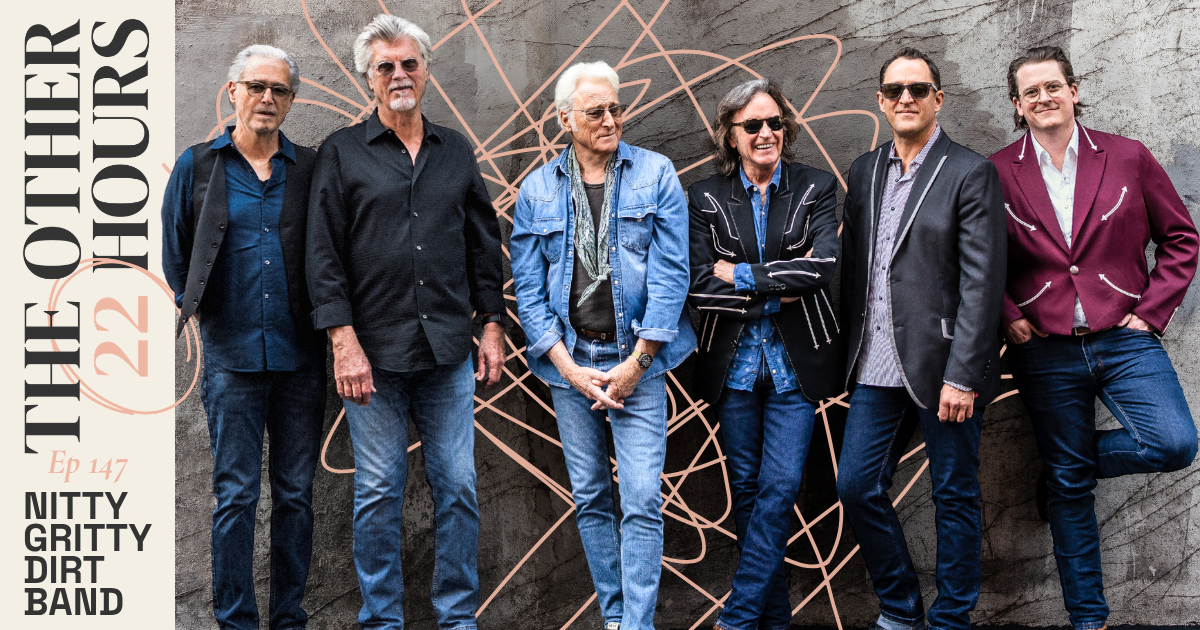
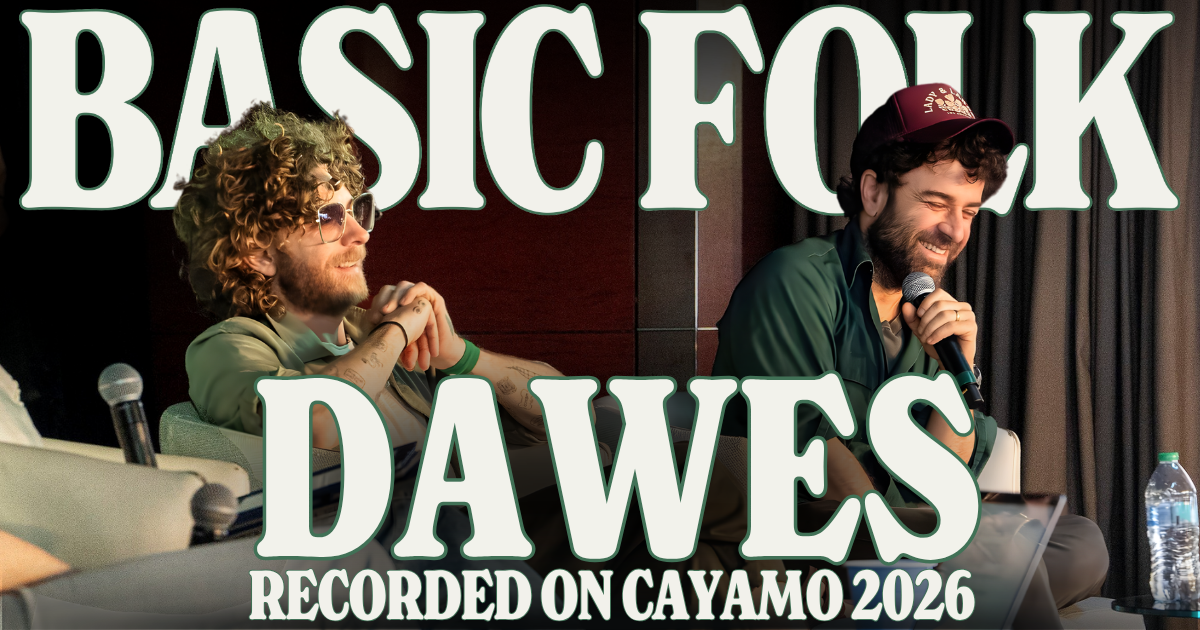
As a founding member of the legendary Nitty Gritty Dirt Band and a three-time GRAMMY winner, JeffHanna has navigated nearly 60 years in the music industry. His resumé includes credits with the likes of Linda Ronstadt, Emmylou Harris, Johnny Cash, and many others. In this episode of the Other 22 Hours we explore the geography of inspiration, from the 1970s Troubadour scene in LA to his 40 years anchored in Nashville’s songwriting community. Jeff reflects on the economy of a perfect line, the creative vitality of a “hard reset,” and why the bedrock of this work has to begin with the simple intention of having fun.
Hating on Nashville – whether Music City, Music Row, Lower Broadway, the tourists, the industry, the traffic, or almost anything and everything else – is a trope and tradition essential to country itself. As long as this town has been a roots music mecca it’s been a curse, too. It’s a maker and breaker of dreams that’s all at once exactly what it is and what it looks like, and a figment of your imagination, too.
On the roots songwriter’s map, it might be the capital city. Flanked by Memphis and “Carolina” and Los Angeles and Malibu and the bluegrass of Kentucky and the “concrete jungle where dreams are made of,” all familiar locales to songsters of all genres referencing places and cities. Places are excellent characters in songs, and we return to our favorite destinations over and over as we relish tracks like “Dublin Blues,” “Eight More Miles to Louisville,” “Big Ball in Brooklyn,” “Take Me Home Country Roads,” and so many more.
But isn’t there just something special about songs that hate Nashville? As a motif, it stands out among songs about places or among places as a trope, in country and outside of it. Songs that hate Nashville can ooze pain or vengeance. They can be aspirational or giving up all hope. But perhaps their real unifier, besides Music City itself, is that each and every song that offers a variation on this theme is really, at its core, declaring a deep love for the town.
In March, country artist, singer, and songwriter Ashley Monroe surprise released an eight-track original album, Dear Nashville. Not quite a concept album – perhaps rather having a concept at its core, instead of as its entirety – it’s an incisive and vulnerable demonstration of Monroe’s love… and hatred of Music City. “I Hate Nashville” opens the album with gauzy pads and a forward-leaning train beat as Monroe sings words that clearly haunt her, and so many like her. Lyrics often uttered by the gatekeepers of the world, the holders of the keys to this city. “They can’t make you a star,” “somethin’ ain’t stickin’,” “pay your dues.”
The rest of the song, though, is something different. It’s exasperated and exhausted, yes. Defeated, almost. But it’s not a hate letter Monroe is writing to her hometown of decades. She sings on the chorus:
Country music Is the reason I’m alive Paul Franklin playin’ steel God knows I love Vince Gill But I hate Nashville
And wouldn’t you know it, that mournful, heart-wrenching pedal steel singing along with Monroe’s beautiful, East Tennessee voice is played by Paul Franklin himself. Because that’s what Nashville is capable of. That’s what it does best. It makes dreams reality, it makes friends of idols. It can be everything you pictured, but wouldn’t let yourself believe is possible.
Wrote a lot of songs Made a lot of friends And if I’m being honest I’d do it all again I remember the first time I saw the skyline shining Sometimes the road to the top’s A lot of downhill climbin’
Verse two captures the duality of songs that hate Nashville perfectly. Monroe is displeased with the industry, with the machinations of a community designed to reap profits and profits and profits, and that isn’t so concerned with art or country anymore. But her dreams have come true. She has paid her dues – and then some – and she’s made records and sung songs with Franklin, Vince Gill, Miranda Lambert, and so many more name-droppable peers, heroes, legends, and virtuosos. And, if she’s being honest, she’d “do it all again.” Who wouldn’t?
In each of these 35 songs, you’ll find artists just like Monroe, from across generations and from a variety of backgrounds and origin points inside and outside Music City. Each grapples with these same essential questions of this place. Of Nashville, Tennessee. Struggling with the industry, or Music Row, or the politics of each. Some demonstrate internal battles, others are so external they itch. There are songs that decry capitalism and that long for acceptance by it. There are songs of love lost and romantic haunts turned sour. You may hear someone writing on the outside looking in, or the inside looking out. It’s all compelling, the same but different.
Whatever you hear across these songs that hate Nashville, you’ll hear excellent music and a country tradition so essential to the format it belongs right next to losing your love, your truck, your dog, your house, your job, your… dream of making it in Nashville. Three chords, the truth, and hating Nashville. It’s as country as it gets.
“Heartbreak Town” – The Chicks
“Square people in a world that’s round.” That’s an indictment, for sure, written as only Darrell Scott could. Scott is well-practiced in songs that hate Nashville whether this magnificent track made even more delicious by the Chicks or “Long Time Gone,” also cut by the Chicks and included on this playlist, or even “Hopkinsville,” a Scott original inspired by longing to be done working on the Shelby Street bridge downtown. The Chicks sold the true heartbreak of Nashville on this number even before the city’s central machine turned its ire toward them. As we all know, they survived being on the receiving end of Music City’s ire more than once – and made millions doing it.
“Kay” – John Wesley Ryles
A story song for the ages, and about Nashville, to boot. “Kay” is sung from the perspective of a depressed taxi driver, “I’m living and I’m dying, staring out at Music City, from my cab.” The singer moved his love, Kay, to town to give her a shot at making it big. He’s hearing her record on the jukebox – it “don’t sound bad.” Woof. Gut punch. (At least if she’s gonna be famous, let her sound bad!) The perspective in the song is dynamic and surprising in a modern context, but reminds of how literary and poetic country story songs in the ‘60s and ‘70s could be. And how narratively dense. “Kay” peaked at No. 9 in the U.S. and is Ryles’ best-known record.
“Nashville Blues” – Billy Strings, Bryan Sutton
Out of so many versions to choose from, we chose this one. Can you blame us? Perhaps Bryan Sutton’s joke at the top is the real reason it belongs on this playlist. He introduces “Nashville Blues,” a classic in the bluegrass and old-time canon, thusly, “Here’s a song about Nashville that Billy wrote on the way here stuck in traffic.” The crowd cheers at the joke and a man can be heard responding, “That’s gonna be a long song.” Everybody at the sold-out American Legion neighboring the famous, coveted 37206 zip code laughs. Hating Nashville unites us.
“Ten Year Town” – Hailey Whitters
Speaking of dues, Ashley Monroe’s “I Hate Nashville” immediately brings to mind Hailey Whitters’ “Ten Year Town.” Released in 2020 on The Dream, it drives to the heart of the strange but usual expectations projected by others and ourselves – onto Nashville, careers, dreams, and music- and art-making. What Whitters is really singing about – and Monroe, too, to a degree – is that country music is a trade. Whitters is asking what else she could do besides this, while noting all she’s had to do besides make music in order to make music her trade. But if, like Monroe and Whitters, the trade you’ve plied your whole life or for decades can’t make you a living, what good is paying dues? In investing 12 years in a “ten year town”?
“Nashville Without You” – Tim McGraw
You know what else is country AF? Referencing country songs in a country song. If roots music is going to be one thing, it’s going to be self-referential. All songs about Nashville do this to a degree, but Tim McGraw’s “Nashville Without You” does it remarkably well. Especially for highly stylized mainstream radio country such as this. As a bonus, this is also an “I Left My Heart in San Francisco” sort of love song, where one’s relationship to a place is entirely colored by another person and your shared connection to that place. Ryles’ “Kay” in another generation!
“Nashville” – Indigo Girls
Let’s not forget the folks who have the most reason to hate Nashville – in the music industry and outside of it – have always been women, queer folks, Black and Brown folks, and disabled folks. That’s certainly part of why so many women have written such excellent songs panning Music City. There’s an added layer of truth, an extra heaping helping of grit. 70 cents on the dollar, 12 years to equal the ten-year town requirement.
As an extension of that theory then, being both women and queer as alt-country indie folk artists in the ‘90s is a huge part of what imbues the Indigo Girls’ “Nashville” with honesty and resonance. It’s artful in its lyricism and for painting as much with absence as presence, fleshing out the story by leaving it out here and there. But it’s the perfect song to leave off with, as you continue your listening to the full 35-song playlist below.
Emily Saliers and Amy Ray touch yet again on the maelstrom of mixed feelings musicians and creatives feel about this place, reminding of the central existential love/hate in Monroe’s “I Hate Nashville.” Saliers sings:
I’m leaving I’ve got all these debts to pay You know we all have our dues I’ll pay ’em some other place I never ask that you pay me back We all arrive with more I left with less than I had
The song is so seemingly over-and-done-with Nashville and yet, there’s a crack under the door. The window is not quite latched. A pathway however slight to wiggle back in. You can see it again elsewhere in the song, “I can’t place no blame/ But if you forget my face/ I’ll never call your name again.” Are they singing to a person? To the industry? To Nashville? To all of the above?
One thing we know for sure, they hate (love) Nashville. Just like Monroe. Because how does she close her album, Dear Nashville? It’s how we decided to close our playlist, too. With “Quittin’.” Another song co-written by Monroe with co-producer Luke Laird. It ends:
So much for quitting I guess I’ll stay on the ride ‘Til the day that I die
We should hope so. There are so many more songs about hating Nashville to write and to enjoy!
Below, sample many more songs that hate Nashville from artists like Marty Stuart, John Anderson, John Hartford, Margo Price, Donovan Woods, Lindi Ortega, Kacey Musgraves, Steve Earle, Kris Kristofferson, Charley Crockett, Dale Watson, Waylon Jennings, and many more.
Additional contributions and curation by Shelby Williamson.
New Music Friday is here! Our final Friday of April finds our roundup sharing excellent country, folk, and Americana. You Gotta Hear This.
To start, Los Angeles based neo-folk artist Malena Cadiz has released a very cool track, “Smoke Rings.” It’s a Les Paul cover recorded on the original Les Paul recording console. Music nerds will get the importance of the first-ever multi-tracking console and how apropos the song selection is, too, with Cadiz offering her own rendition of a song by Paul and Mary Ford. It’s jazzy and lazy – deliciously relaxed. Also based in LA, Dominique and the Diamonds launch a vibing and glittery honky-tonkin’ song, “I Don’t Mind,” to announce their upcoming album Honky Tonk Queen. It evokes California in a sonic package that shines like it’s covered edge-to-edge in sequins, pulled forward by Dominique Gomez’s lush voice.
Earlier this week, Irish artist Glen Hansard released a gorgeous live video for “Don’t Settle,” the title track for his new album out today, Don+t Settle – Transmissions East. Hansard and his ensemble perform the impassioned song in the round, surrounding each other and surrounded by their audience and a circle of shadows. It’s dramatic and compelling. Out in the sunshine, singer-songwriter Maya de Vitry announces her new upcoming album with a fresh song, “Confidence of the Sun.” Written in the warm and soft sunlight of the Texas Hill Country, the track showcases de Vitry’s penchant for finding redemption in herself, in breaking old habits, and in being present – within music and without – to do so. It’s a lovely harbinger for what’s to come.
Texan Jacob McCoy shares a new song with us today, as well. “All Our Days” is rich with deeply stacked vocal tracks and a country-meets-indie twang. One of the last songs written for his EP, Deep Deep Water, it’s also one of the singer-songwriter’s favorite tracks he’s written to date. His EP is out everywhere today. To round us out and finish us off, our old pal Charlie Worsham – country’s modern renaissance man – returns with a new single, “Grass,” out now. It’s a tribute to his favorite pastime (mowing), his favorite surface for walking barefoot, and his rowdy 20s (IYKYK). With a heaping helping of the humor he’s often known for, “Grass” is a summer anthem perfect for farmers tans and coming in the house smelling like a fresh-trimmed lawn. As Worsham performs at Stagecoach this weekend, we’ll be cheering him on and enjoying “Grass” right here on BGS.
There’s so much to enjoy below. Get listenin’, because You Gotta Hear This:
Malena Cadiz, “Smoke Rings”
Artist:Malena Cadiz Hometown: Los Angeles, California Song: “Smoke Rings” Release Date: April 20, 2026 Label: Sad Mall
In Their Words: “A few months back, an old friend from NYC, Tom Camuso, reached out that he was in LA working on an exciting new project. Tom, who’s worked with Lenny Kravitz, Blondie, and Steve Earle, was in charge of refurbishing the original Les Paul recording console. For music nerds this is HUGE. Les Paul created the very first multi-tracking console in 1957 and it now has a new home in the historic United Studios in LA.
“He invited my band and I to track a few songs on the console to test the gear – this was the first time anyone had recorded on this machine since it had been put in storage decades ago. We were obviously over the moon to be invited and decided the first track recorded on Les Paul’s console after all these years should be a Les Paul song. We chose to do a version of Les Paul and Mary Ford’s ‘Smoke Rings.’ I’ve loved this song forever for its dreamy, whimsical quality and Mary Ford’s gorgeous performance.
“My buds Jason A. Roberts (Norah Jones, Spoon, Bedouine), Leeann Skoda (Noah Cyrus), and Aaron Stern (Curtis Harding) came into the studio with me and I do not exaggerate when I say it was a semi-spiritual experience to get to record in this legendary space – they even got to play Les’s original guitars for the recording.” – Malena Cadiz
Maya de Vitry, “Confidence of the Sun”
Artist:Maya de Vitry Hometown: Lancaster, Pennsylvania Song: “Confidence of the Sun” Album:All My Faith Release Date: May 1, 2026 (single); July 24, 2026 (album) Label: Mad Maker Studio
In Their Words: “Over the years, I have shed what feels like many skins. When I wrote the first lines of this song, ‘It took me a long time to recognize peace as a place I belong,’ it felt healing just to sing it and own that truth. It’s taken years for me to begin to rewire some painful patterns, some deep grooves of self-doubt and self-sabotage. For anyone who has ever been through periods of interpersonal chaos, times of loud endings and quiet beginnings, an era of coming back to honesty in your body and spirit after going through the motions – it can be hard to actually see and feel and appreciate in your bones just how far we’ve come, you know?
“I wrote this song in the unapologetically bright-yet-soft sunlight of the Texas Hill Country, in spring, at the Blue Rock Artist Ranch & Studio. I received a gift of attending a writing residency there, and it allowed me the space and time to slow down and listen to my own heart. I love this arrangement so much, the way it feels like home for me to rest my vocals in Dom Billett’s drum groove, the way the band rises and falls in energy together because this all happened in one whole live take, and the comfort and camaraderie of singing in unison with Shelby Means and Joel Timmons before we split into some joyous three-part harmony towards the end of the song.” – Maya de Vitry
Track Credits: Maya de Vitry – Vocals, acoustic guitar Shelby Means – Harmony vocals Joel Timmons – Harmony vocals Jo Schornikow – Keys Ethan Ballinger – Electric guitar Spencer Cullum – Pedal steel Ethan Jodziewicz – Fretless electric bass Dom Billett – Drums
Dominique and the Diamonds, “I Don’t Mind”
Artist:Dominique and the Diamonds Hometown: Los Angeles, California Song: “I Don’t Mind” Album:Honky Tonk Queen Release Date: April 24, 2026 (single); June 26, 2026 (album)
In Their Words: “Before moving to LA, I lived in a small farm town on the coast of Northern California. I didn’t want to leave, but I had to escape a dangerous relationship I was in. I was heartbroken for having to leave the town, not so much the relationship itself. I had plans of making it back one day and settling down, but when I found out my ex had planted roots out there, I knew it wouldn’t be safe for me to go back. I felt like he took a dream of mine away from me. I wanted this song to sound like that coastal town I was living in; a song that could transport you to that same beach where the sea touches the redwoods of Muir Woods. It might seem contrary for the song’s title to be ‘I Don’t Mind,’ but it’s how I feel about everything now. Moving to LA was the best decision of my life and unfortunately I don’t think I would have ended up here if I hadn’t experienced all of those terrible things up north. There would be no Dominique and the Diamonds, this incredible, dreamlike life that I live now because of this project would have never existed. So in the end, I don’t mind that my ex took my old dream away from me. This is exactly where I was meant to be.” – Dominique Gomez
Track Credits: Dominique Gomez – Vocals, acoustic guitar Hamilton Boyce – BGVs, bass Tyler English – Pedal steel Craig Jacobs – Drums Glenn Brigman – Piano, producer Dominique and the Diamonds – Producer
Glen Hansard, “Don’t Settle”
Artist:Glen Hansard Hometown: Dublin, Ireland Song: “Don’t Settle” Album:Don+t Settle – Transmissions East Release Date: April 21, 2026 (video); April 24, 2025 (album) Label: Plateau/Secretly Distribution
In Their Words: “‘Don’t Settle’ is a song I wrote to a younger version of myself, the song came quite fast. A kind of roadmap of dos and don’ts for the sometimes treacherous tightrope that is one’s life in music. Stay the road, know your north. Listen only to your own heart and gut. Your road is your road. You’ll know the signs. Don’t deviate. And when you do, deviate completely. Don’t settle for less than you envisioned.” – Glen Hansard
Video Credits: Frank Machel – Director, editor Markus Mörtz – Producer, editor Sara Kelly-Husain – Documentary, unit manager Vincent Chmiel – Documentary Martin Ullrich – DOP Eric Poß – Camera Armin Riedel – Camera Stephan Bodner – Technical assistance, camera
Jacob McCoy, “All Our Days”
Artist:Jacob McCoy Hometown: Amarillo, Texas Song: “All Our Days” Album:Deep Deep Water (EP) Release Date: April 24, 2026
In Their Words: “‘All Our Days’ was one of the last songs written for the EP, and to date is one of my favorite songs I’ve written. I wrote it with friend and fiddle player Coral Bradshaw just a few weeks prior to recording. Something about it contains this seasoned, hard-earned romantic intimacy that just immediately drew me in like a lot of old country songs do. The song moves through all of the seasons of a long love – summer’s ease, winter’s frozen hope, and the slow return of spring – before landing somewhere that feels genuinely hard-won.
“Sam and I cut it on the first day of recording in his small above-garage studio in Nashville and it came together very organically. Syncopated fingerstyle guitar provides the foundation for the entire song and almost immediately you become immersed in intimate harmonies, with a waltzing bass line and support from an upright piano that provides some forward motion. For the interludes, I ended up playing my mother-in-law’s old cheap classical [guitar] from the ’70s that almost gave it a Willie Nelson feel, which given that he was always playing somewhere in the background growing up, I absolutely love. It might be my favorite musical moment on the entire project.” – Jacob McCoy
Track Credits: Jacob McCoy – Vocals, acoustic guitar, classical guitar, bass Sam Westhoff – Upright piano, producer
In Their Words: “‘Grass’ is an ode to my favorite surface to walk on barefoot, my favorite domestic pastime (mowing), and maybe a wink to a certain favorite pastime of my 20s, IYKYK…
“More than that, ‘Grass’ represents the blend of blues and bluegrass influences that raised me. I play that song and it takes me back to drinking from the water hose, attending my first MerleFest, walking out to the lawn seats at amphitheaters across the country, whether I was playing the show that night or catching a show with my friends.
“Some people like sand. Some people like snow. Some people like the concrete, where ain’t nothing grows. But I’d rather be… sweatin’ all summer on a John Deere stacking up cash cash cash…” – Charlie Worsham
Photo Credit: Charlie Worsham by PJ Brown; Maya de Vitry by Ethan Jodziewicz.
Thomm Jutz has worked with a wide cast of characters since moving to Nashville in the early 2000s – John Prine, Nanci Griffith, Todd Snider, Billy Strings, and the SteelDrivers’ Tammy Rogers. But on his latest record, Ring-A-Bellin’, he strived to capture each song with the smallest musical unit possible.
The result of the 18-track album, released April 3, is a distinctly timeless vibe that feels just as much rooted to the present day as it does the mid-1900s or Civil War era, due to its recurring themes of history, mythology, and working with your hands. From self improvement (“Sharpen Your Knife”) to using natural disaster as a metaphor for perseverance (“Holy Mother Mountain”), the mastery that comes with time (“The Hammer And The Anvil”) and becoming more grounded in yourself (“Settle Me Down”), the GRAMMY-nominated transplant from Germany waxes philosophical and takes listeners back to a period long before we walked the Earth.
According to Jutz, the approach – recording with only a small group of people all in the same room not wearing headphones – is his way of replicating the process for how musicians would’ve recorded a century ago.
“This is how I want to make music right now,” he declares. “I don’t want to make a layered record – not because there’s anything wrong with that, it’s just not what I’m feeling at the moment. It’s like saying I don’t want to use red in my paintings right now, because I’ve used enough of it already.”
During a lengthy conversation with BGS at his Belmont office on Music Row, Jutz spoke about his concept of home, how psychology and mythology informed Ring-A-Bellin’, and a companion book that takes listeners even further into the world of his 18 new songs.
You’re releasing this album with a companion book. Tell me a little about what’s inside and why you decided to adopt this approach?
Thomm Jutz: It’s more and more important to create some kind of parallel narrative to the music nowadays. Vinyl has seen a resurgence over the last couple years, but it is not practical for me to take on my one trip to Europe every year. Because of that, I wanted to create something that was still a larger format, fun to hold, and had all the liner notes present without being something so small it’s hard to read.
I’ve also always enjoyed writing and reading – especially during my last 10 years as an instructor at Belmont – so I wanted to articulate some of those thoughts as they relate to the songs on this record in a longer form. When I got to working on it I quickly realized I was in over my head with the graphic design aspect of it, so I consulted my friend Gina Meredith. I just told her what I wanted artwork for and commissioned various folks to create pieces for each song. But rather than tell them what to make, I just sent them the music and had them use the songs as their creative prompts. Because of that I don’t always see the linear connection between the songs and the graphics that were made, but that’s also my favorite part.
A lot of my thoughts on this record revolve around analytic and Jungian psychology, alchemy and things like that, which are difficult to talk about in a tiny CD booklet, so I wanted to do something that allowed for a more longform format.
Overall, this record has a timeless feel – it could be (and is) from 2026, but if I didn’t know any better I wouldn’t second guess if someone told me it was from the mid-1900s or Civil War era as well, especially songs like “Sharpen Your Knife” and “The Hammer And The Anvil.” What are your thoughts on the vibe you were able to conjure up here?
I’m a traditionalist at heart, so everything I do is always trying to bring something new to the way I perceive what came before us, whether that’s lyrically, thematically, or in the recording process – which in this case was mostly all done live. I just think there tends to be more mystery with that music. There’s new music that does that too, but it’s easier for me to find that in old music because the cultural context can be studied since it’s not as close to my own lived experience. No matter how much I listen to or read about Charley Patton, I’ll never understand what he fully experienced because I was never there.
Regarding the songs you mentioned, both talk about people working with their hands, but they’re also metaphors for working on yourself – like you are the hammer, you are the anvil, you are the iron that’s being forged. Those mantras are rooted in human thought and analytical psychology, which is something I’ve dealt with and thought about a lot over the last 15 years. Particularly in terms of how mythology and history go together, and how understood the former is.
On one hand, some people think a myth is a lie and others say a myth is a fact, but both are wrong. A myth is a metaphor and must be understood as one. These songs are an effort to create a mythological framework that is a mirror image of my development as a person and artist. If you ever want to develop as an artist, you must develop as a person first.
With so much of this record wrapped up in concepts like history, psychology, and mythology, what’s the timeline for bringing the 18 songs on it to life?
These songs came from a period of about three years, but when I started I wasn’t setting out to make a record – I just wanted to experiment with a couple things. I had a few songs that I co-wrote with my friend Adam Wright that I wanted to test out with only me singing and playing and Mark Fain on bass. And it worked out really well. As I got fascinated with that process I began looking through my catalog and noticed that the songs which spoke to me the most were all ones that formed a narrative arc.
However, it’s not an autobiographical record that says, “I was born here,” “I did this,” and “This is how it made me feel.” But more so, one that explores spiritual development. I’m not interested in autobiographical songwriting. I find it very claustrophobic how you have to spell everything out to the listener. When you do that you’re shutting them out with nothing to do, which has me opting for a more open approach. A song is only ever truly finished when the listener interprets it for themselves, not with what the person who wrote it intended.
One of the songs on Ring-A-Bellin’ that is tied to more recent events is “Holy Mother Mountain,” which was inspired by the fallout of Hurricane Helene, specifically in Western North Carolina. But it’s also a metaphor for overcoming adversity. Care to explain?
That song is a good example of how writing with someone else – in this case Mando Saenz – can profoundly shape an idea. I remember Helene happening and having this line “Holy Mother Mountain” appear to me out of nowhere. From then on I couldn’t stop thinking about it, so I brought it to a writing session with him and said I didn’t know what to do with it. Then the co-writing dance ensued, with him taking the lead, followed by me for a bit, until it started becoming much clearer that there was no way to move forward without it being about Hurricane Helene somehow.
While it was inspired by that, the song is also about overcoming adversity and understanding that it’s going to happen again. Just because you live through Helene doesn’t mean there’s not another storm coming right behind it. If that storm showed us anything, it’s that perceived climate safety in Appalachia is not true. Also, “mother” and “mountain” are not just a nice alliteration, but there’s also a feminine quality about a mountain. An inverted mountain is a valley – or a place you can seek refuge in – and if you go on top of a mountain, you might find yourself closer to some kind of spiritual awareness.
The song is much more a collection of images that relate to the archetypal images of mother and mountain. Maybe even the word “holy” in the title has something to do with the fact of how little modernity treats nature with respect. Maybe that’s what we need to do – not bring offerings, but bring out attention to it instead of riding around and abusing it like crazy.
On “Too Many Walls” you sing about the idea of home. Given that you moved to the states 25 years ago from Germany, what is “home” to you?
Home and time are two of the biggest themes we write about, and it’s longing that connects the two – longing for home, longing to belong somewhere, longing to live in a different period of time, longing to get over something. Over the last couple years, I’ve also started thinking more about how strange a thing it is to build a house, because you’re just enclosing space that’s been there all along. You’re building and calling it something that wasn’t there before, but the land was always there. It’s a strange construct, and at the same time we need shelter.
From an early age I didn’t feel at home where I was because I longed for a place where music was part of the everyday lived experience. But in Germany after 1945 that was completely out of the picture, because the Nazi regime had completely and absurdly abused any sense of folklore. Since I was longing for an environment where people played music, I went to Ireland for the first time with my wife when I was 18 since it was much closer than coming [to the United States], which we couldn’t afford at the time. I was amazed by the music coming out of the pubs there – it felt so natural, like it was rising out of the Earth.
That fascination carried over into my love of American roots music. In that sense, “home” is where I feel connected to a place through music since that’s my main way of expressing myself. Additionally, southwestern Appalachia and the Black Forest that I’m from in Germany can look astonishingly similar sometimes, so when I go back to visit my parents I occasionally feel like I’m navigating the mountains around Johnson City, [Tennessee]. When I’m in Johnson City I sometimes imagine I’m back in Germany. But Appalachia has more importance to me now because it’s where I live and long to be. If it weren’t for all the writing I do in Nashville and my work at Belmont, I’d be in Appalachia fulltime, because it just speaks to me. When I haven’t been in a while I can start feeling something deep inside me – it’s not a heaviness, but a feeling of “I just really wanna fucking go.” [Laughs]
What has bringing this record to life taught you about yourself?
It’s taught me that I know nothing about graphic design and should always let someone else handle that instead. [Laughs]
In all seriousness, it has taught me that while I don’t consider myself a great singer, I can still enjoy the way I deliver a song if I do it correctly. It’s also taught me that while I have great deficiencies as a guitar player, I do enjoy the way I play guitar and this record, where I’m keenly aware of everything wrong with my playing. Even Tony Rice said that about his playing.
It’s not a sense of having completed my journey as a guitar player, but quite the opposite. It’s more like I’m aware of what’s missing. It’s also taught me that staying on the path of creating and writing a lot. You have to be in it for the long game in today’s environment and be doing it for the right reasons or you’ll run yourself ragged. I already understood that a little bit, but now I understand it even better. Maybe that’s what it’s all about – gaining a little awareness and moving on.
You’ve got to have some durability to name your album A Heavy Duty Heart. For Drayton Farley, paying a decade’s worth of dues is an important part of the story.
After a slow but steady build of recording albums and relentless touring, Farley picked up four significant synch placements in 2025, with songs “Blue Collar,” “Touch and Go,” and “It’s Called Doubt” heard in the Paramount+ series Landman, and “Turn Around” appearing in the CBS show Sheriff Country. That remarkable achievement seemed like a perfect way to set up A Heavy Duty Heart, which was recorded with his touring band and produced by Sadler Vaden.
“What I found is, usually the biggest enemy is me when it comes to how I’m feeling about how it’s going,” Farley says. “When things like that happen, it pulls you again out of your head and reminds you, ‘No, everything’s going great, actually. You’re doing really well, and you should just keep doing it and get out of your head a little bit.’”
In an interview with Good Country, the Birmingham, Alabama-based singer-songwriter retraces his trajectory to becoming one of roots music’s most promising performers. He explains why he considers Robert Earl Keen a role model and shares the song that still makes his wife cry.
The opening song, “Love We Mean,” captures that moment in a relationship where you have a rare moment to reflect. What was on your mind as that song was taking shape?
Drayton Farley: Yeah, it was pretty much that. I wanted to write a song about that moment where the kids are gone and you’re not on the road and there’s not a lot going on. All of a sudden, you’re both just at the house and there’s nothing to do or worry about. [Laughs] And you’ve both been going a hundred miles an hour, sometimes in the same direction, sometimes in the other direction, but all of a sudden, everything just kind of stops and gets quiet. Then you’re both looking at each other like, “What the hell just happened?” And you start kind of taking stock and checking in.
I sensed a theme throughout this album of assessing where you are in life and asking those big questions. Then I looked you up and saw that you’re just 30 years old. Have you always been the kind of guy who’s willing to look inward and analyze the world around you?
Yeah, I think so. I don’t know why. I think that feels easier to do. I celebrate my 10th wedding anniversary in May. You know, I’m only 30, but I guess I’ve worked enough of the real jobs and been married long enough with two daughters now, these kinds of things feel required to do.
What were the day jobs you had before you could finally dedicate yourself to music?
Out of high school, I spent about three and a half years working on the railroad [as a subcontractor for Norfolk Southern doing derailment cleanups]. I got married while I was working there, then quit that job, and I got a job working for Mercedes-Benz. I worked on the assembly line building cars for the next four years. During that last year is when I started releasing music. I spent the last two years there, kind of gigging after work every day that I could, just trying to build whatever local presence I could and release as much music as I could and build a catalog. And this is just me and a guitar with a few microphones. Just lo-fi. It’s really demo tapes. They’re live recordings really, just in the house.
Then I left that job so that I could gig more. I got a job working for Safelite, doing auto glass for about two months. Then I booked myself opening a few tours and I booked a little headline run for myself. I told my boss, “Man, I gotta do music. I thought I could just open my schedule a little more and that would make me happier. But it’s pretty obvious now that music is what I have to do.” In the next month or two, I met my agent at CAA, met my manager, and hit it off with David Macias at Thirty Tigers. All the dominoes started falling immediately. Within three months of quitting that last job, I was already booked to open two shows for Willie Nelson. So it all happened fast, and it’s like reassurance that I’d made the right choice.
I’m going to quote a lyric back to you, which is “Somewhere deep inside I knew/ And I know you knew it, too/ Couldn’t be more proud to see we saw each other through.” That’s got to be the best feeling to know it actually happened for you. You held onto the dream. How did you stay motivated when things weren’t exactly going fast for you?
I think, especially for those times, the struggle was the motivation. It came pretty naturally. That song specifically, “Dream Come True,” that is mine and my wife’s story. I spent those years working the jobs – and even on the railroad I brought my guitar with me to write songs in the hotel rooms. I played open mics after work. We traveled for work on that job. So, those days, all the way leading up to, I guess around ‘22, that was it.
It was always just like, “How do you even make a career in music?” You know, “I’ve never been to Nashville. I don’t know anybody in Nashville. I really don’t know anyone in the Birmingham music scene. I don’t even know where to start or what to do, other than use social media to try to get my stuff out there.” And then fast forward to Mercedes. I was gigging after work for a few years, like Thursday, Friday, Saturday, as many shows as I can play, and I’m releasing EPs that I’ve self-recorded. The dream was always to do music and just find a way to be able to support us with music, instead of these other jobs that aren’t what I’m supposed to do.
We were trying to have kids and start a family and we ended up losing the first pregnancy. We kept trying after that, we had a second pregnancy, and we lost that one. So there for a while, it just felt like music wasn’t going to happen. How do you get that to kick off? And we’ve lost two pregnancies, so who knows if we can even have kids? That was our shared dream. That is what the whole song is about. We have two daughters now and this is what I do. When my wife hears that song now, she cries.
Being married myself, I appreciate these songs about the depth of that relationship, just leaning on each other and trusting each other.
I just needed something in my catalog that would reflect those parts of my life, because I’ve written so much about other things. Just looking back through all the songs, I was like, I have a severe lack of love songs going on, you know? Why not write an entire album of it?
I also picked up on the Robert Earl Keen reference in “Feel Like Getting High.” What do you enjoy about the music that he’s made over the years?
It spans a lot of different moods and I want to be more that way. So far, a lot of my projects and albums and catalog have had a similar atmosphere around it all. What he’s talking about, and what he sings about and writes about, is a pretty broad spectrum. As a writer, I want to get more in that direction where I’m not gridlocking myself to a certain topic or a certain mood. I would say that’s inspiring from him.
Why did the album title, A Heavy Duty Heart, seem to fit?
That was the hardest part of this whole thing, just naming it. It had me stuck for a while, trying to figure out the name. I don’t know where that came from. It was just a thought and I kind of liked the way it rolled off the tongue. Looking through the songs, almost all of these songs say the word “heart,” and it’s talking about the inward, deeper, zoomed-in struggles and details of my life, being a touring musician and having children and a wife, and our journey to get there. So, it felt like it would take a pretty strong heart and will to keep going through all that and keep your eye on the prize. I thought that title reflected the overall idea of the album.
I really like “Turn Around” right there at the end of the record. What was going on in your life when you were when you wrote that song?
That was a similar thing to what I was talking about earlier, where it was kind of throwing yourself a pity party and losing perspective. “Why is this going on?” “Why are these tickets not selling more?” “Why is this artist doing more than I’m doing? Two years ago, we were at the same place.” It’s just a game of comparison on social media and that can really begin to affect you, just wondering if you’re stalling, or if you’re doing well or not.
But the truth is, that’s just your mind going to those places because you haven’t kept your own perspective on everything. Like, me five years ago wouldn’t believe anything that me right now would have to tell them about all the things I’ve done and accomplished. That’s the real perspective. And when you lose it, you get too far in your head, for no good reason. And then stopping and turning around, kind of taking stock of where you’re at, and what all you have, and measuring yourself again.
It is deeply joyful sitting with Jonny Fritz at a restaurant he suggested (Pollos Puebla #1) in an area of Los Angeles he’s an expert on (Pasadena/Altadena border) and talking about subjects he thinks about a lot, ranging from rebirthing ceremonies to alimony to how…“different” Nashville is now. He’s keenly honest about his life, his work, and his thoughts about any question thrown his way. Nothing is out of line or off limits. Nothing is filtered by a publicist or an agenda. It is off the cuff and real and wild.
We met over grilled chicken, rice, and beans to discuss his newest work, Debbie Downers (Woodwinds), a reimagining of the original 2025 album Debbie Downers. The conversation unfolded much like the album, with unexpected turns and humor that expose raw nerves about an unfriendly music industry, the beauty of PG Tips, the subtlety of serving a song, and the goal of taking a ride on the wave of a sliced open above-ground pool.
Well, let’s talk about Woodwinds. I’m a huge woodwind fan. How’d this come about?
Jonny Fritz: Oh, yeah? Me too. I love woodwinds. I’ve always loved them. I think they’re so great.
It’s so expensive making a record. It’s just stupid, you know? For example, the last record I made, Sweet Creep, I made it pretty cheap. I think it cost about 12,000 bucks. But ATO Records had an option on it so they could pick it up. They bought Dad Country, the record before that, for 5,000 bucks. It cost me five grand to make. “We’ll pay you five grand for it.” All right, fine. And then, hidden in the contract – or at least hidden to me – they got the option on the next one. Same deal. So when I made Sweet Creep they picked up the option. So for $5,000, they got this record that cost me $12k. I was like, “Jesus, man, this business is so rough.” And I just knew it was going to be something similar with the next one.
By this one, Debbie Downers, I thought, “What do I really want to do?” I might as well just do what I want, because there’s nothing worse than having something be expensive and unsatisfactory. I just decided I really wanted to make the record over and over and over again. I have a bunch of different visions for how it should go and I wouldn’t call any of them the one.
The Woodwinds one was something I’ve always just wanted to do. So I’m pretty pleased with it. I got this amazing guy in Highland Park who does film and TV stuff. There’s not a lot of work going on right now, so he was willing to do it. And the first couple of arrangements that he came up with, I was just giddy. I couldn’t believe how cool it was.
Were there any revelations for you? When you heard them in that arrangement, was there anything that shocked you about it?
Hmm… Yeah, some of the versions with the woodwinds really lent themselves to the winds better than any other version. I wrote this song called “Have You Seen Her.” I wrote it coming off of anesthesia. I was out of my mind. I got a hip replacement at UCLA 10 years ago. You know, coming off anesthesia affects people in weird ways. I’m one of them. It really got me, I wrote this song and I felt like it was the most brilliant thing.
It was so embarrassing. I wrote everybody who I knew who was high up at Rolling Stone, and all the Newport Folk Festival team, and all their PR team. I mean, I wrote everybody. And I wrote these really incoherent emails. I haven’t actually looked at them in a long time. I looked at them right after I wrote them and I was so ashamed. But I wrote all these emails being like, “You’re gonna want to get Scarlett Johansson down here. I need to perform this for her. And you need to get Joaquin [Phoenix] here, too.”
I’m not a social climber, but there was something in me that was like, “You need to make some moves. Call out a lifeline.” I was so ashamed of it for so long, because it was one of the most embarrassing moments in my life, for sure.
All of that to say, I didn’t want to play it or record it. I had to overcome it, admit it, and start talking about it. When I heard it with the woodwinds, I was blown away.
Years ago, I worked with Chris Crofton on a comedy event at Third Man Records that involved a compilation of found video footage that was submitted. There were so many submissions of people coming out of anesthesia, and I remember Chris immediately going, “No, that isn’t funny.” It really isn’t; you aren’t in your right mind.
God bless that man. He always knows exactly what the fuck is up. He is driven by pure heart and knows exactly where his morals should be. He’s incorruptible.
Do you spend a lot of time on social media? What is your relationship to it as a creator?
Pretty passive. I like social media. I feel like I’m kind of floating above social media. By like eight feet, just kind of looking down at it. Like, “What are you guys doing? That’s insane.” Then I dive into it to interact, and then just kind of get out of it. I get a little hooked on it for sure, but I hear about the addictions and the stuff that people fall for, and just like the amount of engagement. But it’s like engagement versus quality of life. I get so much fulfillment from everything else. I like playing with it. I always have fun with it, but I try not to let it get sticky.
Well, one of my favorite social media posts in the past bit is the one with your kiddo singing “Tea Man.”
Oh, wasn’t that so sweet?
So sweet.
She’s 6.5 now. She was like 2.5 then. And I just was like, I can’t post this. It felt so…I don’t know…
Personal?
It was personal, but I didn’t have a problem with that. I definitely want to protect her, you know? But that’s not her anymore. She doesn’t even look like that. She’s like doubled since that song came out. But then I was like, “Oh, fuck yeah, I’m posting this!” There was no risk of seeing her in public and recognizing that she’s the girl from the video.
Are you a tea man? In real life?
I got a PG Tips tattoo. I really like tea. I drink enough tea to float a canoe every day.
Really? All caffeinated?
Usually. Well, when I’m on tour, yeah. I get so tired. I can’t really mess with coffee. It just makes me so jittery. But I can just drink tea all day.
Are you an equal opportunist, or is it mostly black tea?
Oh, I like it all. Really like it all, but I love the black stuff, though. I think it happened when I was on tour 10 years ago with Josh Hedley. We were in England somewhere on a train, and they came down the lane with a steaming cart and it was £1 for a cup of tea. I don’t have an addictive personality. I don’t care about alcohol or anything. But I felt like, “Oh, I’m in trouble.” Just sitting on a cold, rainy train going through England with a cup of PG Tips.
It reminded me of something I heard about Andy Warhol. Although I’m not a big fan, I don’t know much about the guy. But what I do know about him is that one thing that made me really like him. I heard that he doused his whole world in a certain scent for a season. For example, in the summer of ‘63, he would just cover everything with lavender oil. And then come winter, it would be a totally different scent. And you’d put lavender away, and it’d be bergamot. So then the sense memory of whatever happened around that time would be so strongly connected to that scent that you could be completely brought back. And I really love that.
I think there’s something to it with the tea thing, because that tour was really big for me. It was a fantastic time. It was a really, really wonderful, lovely tour, and drinking PG Tips like that, I just got into English culture too. Everywhere you go, somebody’s like, “Well, you want a cup of tea?” Like, yes, I fucking do. I decided I’m never turning down a cup of tea. And I never have since.
Tell me about writing “Hot Chicken Condos” with Jordan [Lehning] and Skylar [Wilson]. I deeply connect with that song because I also left Tennessee, and for many of the reasons you list in the song.
Yeah, that was the point. Everybody who really gets this place will really understand these things, even like Pit Bull puppies in parking lots.
And humidity.
Fucking unrelenting humidity.
Were those things you were storing? How did that song come about?
God, why I love writing with Jordan and Skyler is because they don’t bring any ego to the write. They don’t fucking care. They’re just such good vibes. I’m really pretty neurotic about writing and also I’m pretty protective of my words, too. When I get into the writing space, I’m just so sensitive about what’s being said. So if somebody says or suggests the wrong thing, I can quickly be like, “This is the wrong association.” I can be a little trigger-happy.
But with Jordan and Skylar, they’re always just like, “Just play what you got.” And they usually edit everything that I have. With that song, one of the lyrics was “Mustard in the corner of his tiny little mouth.” And Jordan said, “Why don’t you say, ‘Mustard cracking in the corner of his tiny little mouth?'” And it was perfect. Mark Twain said the difference between the right word and almost the right word was the difference between lightning and the lightning bug.
It’s so true.
I got to hang out with Guy Clark once in Nashville, and it was like one of the best moments of my Nashville career. I was going through really bad writer’s block. And I asked him, “Do you ever get stuck?” And he said, “Yeah… Do you ever write with other people?” And I told him, “I don’t like the idea of giving somebody 50% of the song just because they’re sitting in the same room.” He leaned over and he goes, “Well, you never would have fucking wrote it if they weren’t sitting there.”
I was like, “Damn, old man schooled me.” Because so much of writing, I feel like, is picking up on something else that’s happening. And who’s to say you don’t owe somebody credit just because they’re sitting there?
The other thing that Jordan suggested for [“Hot Chicken Condos”], which was so right on, was that he asked me how high I could go on the Tennessee part. I told him I could go falsetto, and he told me to try it. I hit it and he said, “That’s it.” He took an idea of a song and made it a song. I just so appreciate those guys.
I just feel it is like a pedal steel player who plays about eight notes per song. That’s the best player in town, ‘cause all the other players are nonstop. Same with fiddle. Take Josh Hedley. The guy just stands there most of the time, then he pulls out something incredible, and he sets it back down. He doesn’t overplay. If you don’t overwrite and you don’t overplay, those are heavy attributes.
Those are both things to do in service of the song, not in service of self.
Absolutely. You know who I saw last night was Erin Rae. Kevin Morby and I were standing next to each other, just like, ”Oh my god, she’s so good.” One of the most amazing things about her is that she underplays the guitar. She’s playing the whole time, but if you really focus on how much she is actually playing, it is barely. It’s just enough to fill in where she’s not singing and she works the mic so well.
All those things are so important, but nobody teaches them, you know? You have to kind of know it. It’s innate, right?
Or you got to learn it trial by fire. And you have to be playing with players who know what they are doing to learn that.
Yeah. That’s right. Sometimes people are technically good, but they just don’t stop noodling, and it sucks.
You took a long hiatus from music, huh?
I did. I took nine years between records. I didn’t mean to. And I didn’t actually think that I was doing it. I was playing shows here and there. I blame it on real estate. I got into real estate because my heart got broken from music so many times from wanting to do better. Wanting to succeed more. Really, really caring what people said and thought and comparing myself. All the things you really shouldn’t do ever in any aspect of life. I mean, if you did that in a relationship, then your therapist would be like, “That’s your problem. Stop. Don’t do that.”
I couldn’t get out of it. I just felt so bad about how it was going. And I know what I’m doing is not for everybody, and it’s not gonna take off. But I love what I do. I’m not putting myself down, but I just knew my ambition was a lot faster than everybody’s interests. It was just wearing on me and I needed to do something that’s purely about money and doesn’t have anything to do with creativity, because I’m just getting my feelings hurt. And I got polyps in my vocal cords. I was touring too much. It just wasn’t going well.
So I thought, “I’m just going to pivot. I’ll still do shows and if somebody asks me to do something, I’ll do it. I love music.” I stopped prioritizing writing. I stopped prioritizing recording, and then the pandemic happened, and I had a kid, and real estate took off, and I looked up, and it was 9 years. It really was like, “Oh, crap, how did that happen?” It shocked me.
What’s your writing process like typically? Do you write everywhere?
I write everywhere. I use my voice memos a lot. I really love just making up new country songs and fake country songs – like, really bad ones. I find that if I can get them out, I can expand upon them or delete them and move on.
I was writing with Skylar [Wilson] one time and we were trying to write a song called “Remember the Alimony?” We wrote for hours and hours and it was a stupid song and it didn’t go anywhere. It went, “I’m just a poor man. All I eat is beans and write checks to my ex, one and only. I rolled the dice, but I lost my wife. But I remember the alimony.” So stupid. God. But we were writing all day and just hanging out, and neither of us thought to finish it. It just didn’t work. But then I got home and I had like 6 other song ideas that went on Sweet Creep. It’s that muscle thing that everybody talks about.
I’m also a pleasure seeker to the nth degree. If things aren’t fun, I just drop them so quick. I’m really bad about that. So I just make sure that it’s really fun and get the idea out quickly. I try to stay hovering above it, just stay light. Because as soon as I dig into it, that’s when I’m like, “Oh, my God, right. I don’t know how to do this.” Just keep it fun and it will grow. But I like to write all the time, every day.
Do you wake up and do it?
It is in the shower, on the way to school, washing dishes. You know, when you have a great idea and no way to write it down.
Soapy hands! Sometimes it happens when there’s an absence of anything else and those ideas pop up.
I have to really protect myself when I’m diving in. I wash all the dishes, do all the laundry, sweep up a bit, and make sure no one is going to ask me for anything. I’m really self-conscious about that. If nobody is home, I’m going to the basement and putting on Ken Burns’ Civil War, and I turn the radio on at low levels where it is just kind of humming. I drink a tremendous amount of caffeine. That’s my favorite.
But it is intense. I can get really emotionally rocky after diving in pretty deep.
I was thinking about Roger Miller when you were talking about the “Alimony” song. I’m drawn to that kind of writing because you can get really dark while staying very light.
People think that the meat is deep, but the nerves are on the surface. There’s meat down there, but it’s dead. I feel like the most cutting and incredible songs kind of sound like an email to an old friend. My favorite Lucinda Williams songs all sound like they were written to a buddy.
Or she’s talking to somebody over tea.
So true. And John Prine, too. Everyone’s like, “How did they do it?” They just did it. They’re just talking.
Will you play any live shows with the woodwinds?
Yes, actually, April 14, we’re doing a free show at Zebulon. It’s going to be good. I have this giant golf ball, it’s like a concession stand, and I’m bringing that to the show. The whole point of it is to give away free tea. It’s my tea ball. The tea is free, just buy a house from me!
What will the live configuration look like? How many players will you have?
Four, but they play multiple winds. It’s the players on the record. They’re such pros. They’re all symphony kids.
There’s something about stripping it down to just woodwinds; it’s so cinematic. It takes you directly to the meat and it makes you lighter when it is time, as music does for film. It helps direct your emotional experience.
I like that. I’ve always loved demos of songs. Sometimes I just want to hear someone play the songs, not the record. Or just hear someone sing it. As close to the song as I can get, I’m most happy. I love a cappella stuff. Sometimes the most powerful way to arrange a song is to remove everything.
With winds, too, it’s nice because that’s pretty much it. There’s the vocal and then there’s some wind behind it. I love that.
At the top of my notes that I took while listening to the record, I have the words “jello rebirth” scribbled down regarding the song “Polished Turd.” Can you tell me more about that concept?
For this record, it was a bit of a cynical and fatalistic career thought, but I wanted to make a record of real estate songs. The whole idea behind it was that people would hear it and would say, “This sucks.” And my reply can be, “Yes. That’s what happens when you give up on your dreams.” Music really suffers when you just write about what you’re doing. It’s like this martyrdom thing.
You know the three D’s in real estate are like death, diapers, and divorce – all the things that make people sell their homes. So I wrote one that went, “Death, diapers, and divorce. And the lottery, of course.”
During the pandemic, I had this fantasy of buying someone an above-ground pool. Have you heard of rebirthing ceremonies?
No.
Oh, rebirthing ceremonies are a thing. A fucking thing. People simulate a mother’s vagina in like a mega fucked up Christian ceremony. They make you relive your birth so you can be reborn and let go of all your childhood traumas. They have a gelatinous vagina and people push themselves through it. So anyway, I got that in my mind and thought, “What the hell is this world?” But I could see that for real estate, like a used car salesman going, “We are doing rebirthing ceremonies, come on down!”
And I have always wanted to slide through the tsunami of an above-ground pool that gets sliced open.
Yeah, that does look fun.
Right, who hasn’t wanted to do that? But then I want to turn it into jello. And then I thought maybe I should do that for my clients or have a commercial about it. I could cut a slice in the pool with a katana sword, then they’d ride in slow motion through the incision of the above-ground pool, I could hand them the keys, and they’d be reborn into home ownership. Follow me?
Yep.
That is a song very near and dear to me, but it is a hard one to explain. What was your experience with it?
Well my first thought was that wherever it was coming from and whatever it meant, you have thought a lot about it.
April 6 would have been Merle Haggard’s 89th birthday – and was also the tenth anniversary of his death. So, before these anniversaries get too far in the rearview mirror, I wanted to take a moment to remember one of country music’s all-time legends – and one of the great singer-songwriters in all American popular music.
One lesson of Haggard’s career is that you best honor your musical heroes, not only by playing their records at home or talking up their influence in interviews, but by continuing to perform their songs – on stage and in the studio. Merle released tribute albums to Jimmie Rodgers, Bob Wills, and Elvis Presley, and across his catalog cut at least an album’s worth of Lefty Frizzell songs.
Since his death, it’s been nice to see how often Merle’s musical contemporaries and descendants have taken Haggard’s model to heart, recording his songs and even releasing entire Merle Haggard tribute albums.
In recognition of his ongoing legacy, I’ve chosen 12 of my favorite cover versions of songs by Merle Haggard. I shared a kind of companion piece to this list last week, at No Fences Review, pulling choices from the 20th century only. Now, for Good Country, I’m focusing my dozen picks on Hag covers from this century.
I could assemble similarly strong lists every week for months without running out of possibilities. But these dozen Hag covers are among the very favorites.
“You Don’t Have Far to Go” – Candi Staton (from His Hands, 2006)
Co-written with trucker-song specialist Red Simpson, “You Don’t Have Very Far to Go” was the earliest of Merle’s songs to have legs. Recorded more than a couple dozen times through the years (including three versions from Hag himself), it’s proven a special favorite of first-name-basis country women. Bonnie and Connie, Rosanne and Lucinda, and others all seem to sing the song directly to some toxic asshole: “If I’m not crying, you’re not satisfied.”
My favorite reading of the song in that way is by Candi Staton. She became renowned for her disco and gospel recordings, but when first establishing herself as an R&B star circa 1970, it was with striking country soul takes on hits by Tammy Wynette and Patsy Cline. Decades later, she deploys Merle’s old song to deliver a master class in soulful, thought-by-thought phrasing. Staton sounds fragile and beaten down yet, by the end, her tone hints she may finally have had enough.
“Hungry Eyes” – Leona Williams (from Leona Williams Sings Merle Haggard, 2008)
Leona Williams may be best known as Haggard’s third wife, but she’s a tremendous artist in her own right, a country music lifer who played bass behind Loretta Lynn in the 1960s, enjoyed a solo career worth tracking down, and wrote or co-wrote chart toppers “You Take Me for Granted” and “Someday When Things Are Good” for Merle in the early ‘80s.
Leona’s version of “Hungry Eyes,” from her superb 2008 Haggard tribute, always stops me in my tracks. In the verses, she sounds haunted by her parents’ long-ago struggles. At each chorus, she gulps and springs to the top of her range, once again meeting her mother’s dissatisfied gaze. “She only wanted things she really needed!”
“The Running Kind” – Marty Stuart & His Fabulous Superlatives (from The Marty Stuart Show, c. 2009 or 2010)
“The Running Kind” is both one of country music’s great declarations of independence and, for Haggard, a great self-own: Merle boasts that he’s always on the run from one thing or the other even though, “I know running’s not the answer” to anything. The sentiment can serve as a kind of thesis statement for the Hag’s own restless life and career, so it’s ironic that my favorite version of the song isn’t Merle’s but this live cut from Marty Stuart. From an episode of the singer’s television series, Stuart and his Superlatives rage noisily and headlong, while staying absolutely controlled, through Merle’s tune. The solos from Kenny Vaughan and Stuart are my idea of Telecaster heaven.
“Ramblin’ Fever” – Tanya Tucker (from My Turn, 2009)
My pick for the best-ever “Ramblin’ Fever” is this version by Tanya Tucker. Riding an outlaw thump spiked by country disco high-hat, Tucker honors a musical hero, a former paramour, and a kindred rambling spirit. To that end, she loves it when some good-lookin’ fella rubs her back, but what really turns her on comes in the a.m. when she can drink a cup of coffee before leaving. The series of guitar solos that play out the final 1:20 here sound like she’s already out the door.
“How Did You Find Me Here?” – k.d. lang (from Sweet Relief III: Pennies from Heaven, 2013)
“How Did You Find Me Here?” was among Merle’s finest new songs of this century. From 2010’s I Am What I Am, Merle sings the number like a grim but grateful gospel ballad – his savior has come for him in his grave. “Thank you, Lord,” he prays at the close.
k.d. lang’s spare, ethereal reading feels less straightforwardly religious but, if anything, more spiritual. She’s desperately alone, at her nadir, but now someone – a lover or friend, her sponsor or her community – has seen her for who she is, taken her in. Lang’s contralto sounds bleary-eyed and dumbfounded, but she gains strength as she goes, ready to move on up.
“I Think I’ll Just Stay Here and Drink” – Suzy Bogguss (from Lucky, 2014)
Back in 1989, one of Suzy Bogguss’ earliest charting singles was a cover of “Somewhere Between,” still my favorite version of that great Haggard ballad. So my expectations were unreasonably high for Lucky, a full-length Merle Haggard tribute that she released in 2014. But the album’s a gem straight through, and I especially recommend her take on “I Think I’ll Just Stay Here and Drink.”
Most versions of Merle’s boozy romantic complaint have been done by rowdy dudes who sound like they’re slamming shots while ordering their fourth pitcher ahead of passing out. Bogguss, by contrast, comes off country-jazz cool, sipping a good bourbon and commiserating with herself in some dark corner. Don’t wait up. She’s going to be here awhile.
“Shelly’s Winter Love” – Lonesome River Band (from Turn on a Dime, 2014)
Merle’s most haunting song is about depression: Shelly’s depression each winter, the narrator’s the rest of the year round when the sunshine’s lured her back to town. This Lonesome River Band rendition from 2014 is the most haunting I know. Brandon Rickman sings beautifully but frighteningly too, and LRB’s pacing, like seasonal affective disorder set to a melody, reflects the long, slow days of a long dark winter. Midway through, Sammy Shelor’s banjo plunks a drip, drip, drip, that quickly gathers to a stream. A thaw’s coming; spring is on the way. It won’t be long now…
“A Working Man Can’t Get Nowhere Today” – Rob Ickes & Trey Hensley (from Before the Sun Goes Down, 2015)
This was a savvy cover choice by Rob Ickes, 15-time winner of the IBMA’s Resophonic Guitar Player of the Year award, and Trey Hensley, the association’s pick for Guitar Player of the Year in 2023. For one thing, the song is an underappreciated gem of the Haggard songbook, recorded maybe not even half a dozen times since Merle had a hit with it in 1977. More importantly, this Hag number lets Ickes and Hensley trade elegantly exhausted solos while tapping into a perpetually frustrating and common condition: Working your ass off every day to to put food on the table yet still coming up short. Hensley moans, “I’ll still be deep in debt the day that I fall dead.”
“Some of Us Fly” – Bonnie “Prince” Billy (from Best Troubador, 2017)
Merle’s “Some of Us Fly” served as the concluding track to his underrated release Chicago Wind, from 2005, and featured a guest vocal from Toby Keith. Because both men had already experienced such heights in their career, the message of each chorus – “Some of us fly but all of us fall” – comes off a little like superstars performing their humility. But where Haggard and Keith share hard-won wisdom, Bonnie “Prince” Billy casts a spell. With his duet partner, Irish singer/flutist Nuala Kennedy, he surrenders to a mystery.
On the remarkable 2017 Haggard tribute album, Best Troubador, Billy (AKA indie songster Will Oldham) and Kennedy whisper their way through Merle’s song in cautious harmony, their hands clutched tightly. The whole performance feels so fragile a strong wind might blow it way.
“Today I Started Loving You Again” – Eli “Paperboy” Reed (from Down Every Road, 2022)
Eli Reed specializes in making over all manner of roots-adjacent material into cool, committed soul music. Down Every Road does that for the Haggard songbook with thrilling results straight through. (A duet between Eli and Sabine McCalla on Merle’s most covered song, “Today I Started Loving You Again,” was inspired by a famous, but officially unreleased, 1969 version by Buck Owens and soul singer Bettye Swann.)
I especially appreciate Reed’s take on Merle’s celebratory kiss-off “I’m Bringing Home Good News,” which he relocates from Merle’s dusty, country-rocking San Joaquin all the way down to Louisiana for some funky Tony Joe White-styled swamp.
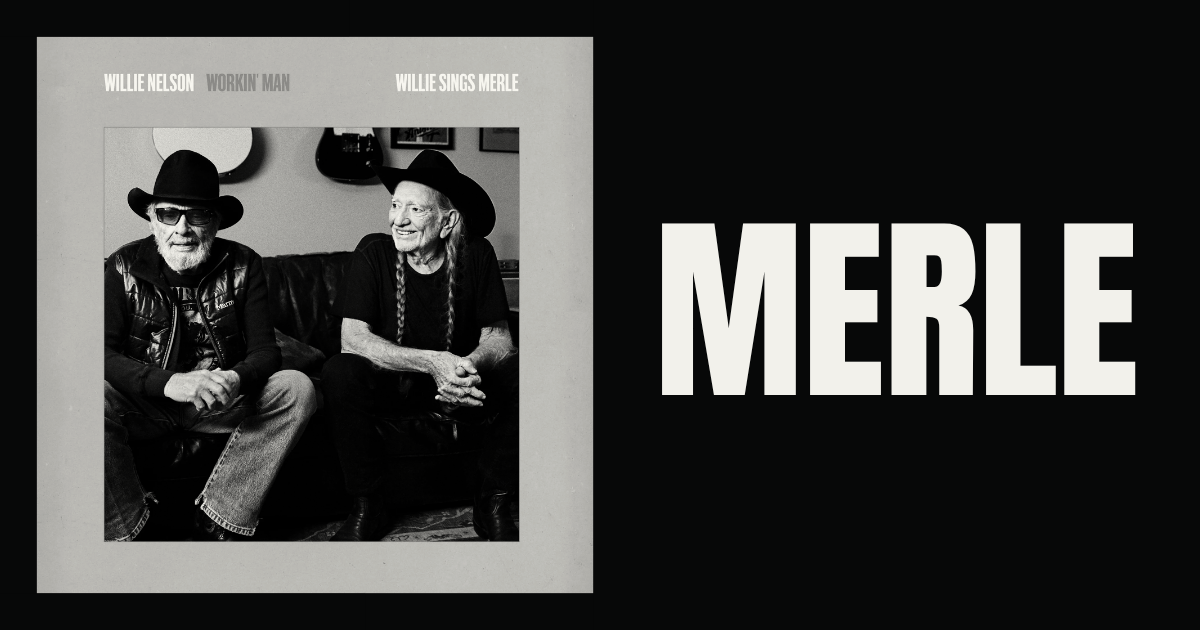
“Workin’ Man Blues” – Willie Nelson (from Workin’ Man: Willie Sings Merle, 2025)
One of Hag’s signature hits, “Workin’ Man Blues,” is usually framed as a purely blue-collar anthem, but it’s good to remember he identified the song as a blues. Having to work to survive while hoping your body holds out as long as you’ll need it is something to be cursed more than celebrated.
From last year’s Workin’ Man: Willie Sings Merle, a 92-year-old Nelson delivers his friend’s lines with a bit of a slur, weary and resigned but also grateful still to be working, to be on the road again until he runs out of road. Similarly, Willie’s arrangement sheds Merle’s Elvis-y fanfare for some hard, use-it-or-lose-it swing. “Play it, little sister,” he says, introducing one of the hot-jazziest solos in the career of the late Family band pianist Bobbie Nelson. Willie’s solos up top and midway through, meanwhile, are things of singular beauty, guitar work that sounds like play but refuses to hide the callouses and the miles. “As long as my two hands are fit to use…”
“Daddy Tried” – Jade Jackson (single, 2026)
Merle’s “Mama Tried” has been covered well over 100 times since he wrote it for the Killers Three soundtrack in 1968. But the song’s indelible ascending chorus and its universal theme – Merle sings it as if he’s as proud of defying his mom as he is remorseful for disappointing her – have encouraged people to use the song in all kinds of ways. Country comic Don Bowman parodied it as “Pappa Tried” as early as 1969 and more recently Angeleena Presley was clearly in conversation with Merle’s classic when she released “Mama I Tried” in 2017. As was Keith Urban when he sampled its lick for “Coming Home” in 2023.
Jade Jackson grew up in a small Cali town between Bakersfield and the Pacific, and her updated, gender-flipped take on Merle’s tale sounds just like that: Her voice feels a little dusty and a little sunny. Switching out Merle’s locale from “prison” to “Nashville” is funny because those two aren’t at all alike, but also because maybe they’re a little alike. For sure the ache in her voice reveals her as another singer-songwriter in a long line of kindred spirits to Merle; she’s going to go her own way, no matter her dad’s good advice.
David Cantwell is the author of The Running Kind: Listening to Merle Haggard, the co-author of Heartaches by the Number: Country Music’s 500 Greatest Singles and the co-creator of No Fences Review. His byline has appeared at Rolling Stone Country, The New Yorker, Slate, and No Depression, among other publications.
Photo Credit: Workin’ Man: Willie Sings Merle on Legacy Recordings
This week it’s absolutely packed in our weekly roundup of new roots music! You Gotta Hear This…
From the Blue Ridge Mountains of Western North Carolina, the Asheville Mountain Boys kick us off with a new performance video for “Don’t Take Me Back Again.” It’s a track from their debut self-titled album, which was just released in February. It’s straight-ahead bluegrass that will transport you right back to their beautiful home turf in Southern Appalachia. Also in bluegrass, from just down the ridge from NC in Boiling Springs, South Carolina, husband-and-wife duo Benson (Wayne and Kristin Scott Benson) have a new single out today, “Maybe It’s You.” Featuring their friend Heath Williams on the lead vocal, it’s a clean and crisp example of modern bluegrass with traditional bones.
You’ll also get to hear a lovely bluegrass-gospel-western rendition of a Randy Travis cut, “He’s My Rock, My Sword, My Shield” below, brought to us by Southern California singer-songwriter and roots artist Victoria Bailey. She effortlessly combines bluegrass, classic country, country & western, and gospel with her version of the familiar tune. The loping, cowgirl feel is just perfect. Plus, impeccable fiddler and multi-instrumentalist Andy Leftwich has a new album out today, Aced. To celebrate, we’re sharing “Crossville” from that collection, a tune from the catalog of Ricky Skaggs – Leftwich’s former boss, who’s a friend and a mentor – that has a transatlantic and somewhat Celtic feel. It features Leftwich on both fiddle and mandolin.
From further territory on the roots genre map, Paula Boggs Band calls on both Blind Boys of Alabama and Valerie June as special guests on their recording of “Ain’t Gonna Let Nobody Turn Me ‘Round.” Soulful string band folk is a perfect backdrop for the languid, marching track – one that remains all too timely and applicable in 2026. Watch a new lyric video for the song below and join the sing-along party, and the struggle for justice, too. Don’t miss Serafima and the Shakedowns’ paean to Seattle, the Queen of the Pacific Northwest. “Shivers” is a chill and vibing Americana track with lush guitars backing gentle ruminations on friendship, community, and place. Whether you have or haven’t felt the “shivers” in a while, this song will be there for you when you do again.
Keep scrolling, as there’s more gold to find. For instance, Gregory Alan Isakov and Sylvan Esso released a track together earlier this week, “Fade Into You.” It’s a lovely cover song of the cult favorite ’80s and ’90s alt-rock band Mazzy Star. For a while, Isakov wasn’t sure the track was finished – that is, until he called upon Amelia Meath of Sylvan Esso to complete the number with her vocals. Like Isakov, we love how it turned out. Finally, a legend of country music returns, posthumously, with a new album on May 29. Don Williams passed away in 2017, but his powerful legacy lives on. We spoke to his son, Tim Williams, about the latest single from Epilogue: The Cellar Tapes, a collection of found recordings made by Don himself dating back to the ’70s. The new single is an alternate version of a favorite track, “I’m The One,” that puts a magical focus on Williams’ vocals. You won’t want to miss it.
So much to love and enjoy is waiting for you below – You Gotta Hear This!
The Asheville Mountain Boys, “Don’t Take Me Back Again”
Artist:The Asheville Mountain Boys Hometown: Asheville, North Carolina Song: “Don’t Take Me Back Again” Album:The Asheville Mountain Boys Release Date: February 12, 2026 (album)
In Their Words: “‘Don’t Take Me Back Again’ is an original song written by our guitar player, Marshall Brown, and is featured on our new self-titled LP. Marshall brought the song to the group about a year ago and we had so much fun working it up into an early ’50s-style bluegrass song. Zeb and I wrote exchanging mandolin and banjo riffs for the song instead of normal solos; we felt that was an homage to how early Jimmy Martin songs would have more melody-based riffs than conventional solos. We shot the video at Asheville Guitar Pedals in West Asheville as sort of a tongue in cheek reference to our motto: ‘No Plugs No Pedals Only Bluegrass.’ We loved working with Rebecca Jones (video) and Carter Giegerich (audio) on this in-person, fully live take of the song. “ – John Duncan
Track Credits: Marshall Brown – Lead vocal, guitar Jacob Brewer – Tenor vocal, bass John Duncan – Banjo, baritone vocal Zeb Gambill – Mandolin
Video Credit: Videography by Rebecca Branson Jones, audio by Carter Giegerich.
Victoria Bailey, “He’s My Rock, My Sword, My Shield”
Artist:Victoria Bailey Hometown: Huntington Beach, California Song: “He’s My Rock, My Sword, My Shield” Release Date: April 24, 2026
In Their Words: “My cover of this Randy’s Travis gospel song, ‘He’s My Rock, My Sword, My Shield,’ truly sets the tone for where I am in music and with my faith. It’s been a few years since my album release (A Cowgirl Rides On) and I continue to grow a deep love for bluegrass and gospel. It only made sense to go in and record one of my all-time favorites by Randy Travis before I dive into my next record.
“This song was recorded live in studio with my bluegrass band at Station House Studio in Los Angeles, produced by my good friend Brian Whelan. It was a sweet reunion being back in that room and to honor such a beautiful, spiritual song. I often describe my sound as ‘a little bit gospel, a little bit bluegrass, and everything in between.’ This next single is a perfect recipe of all those things and I’m looking forward to more of it this year!” – Victoria Bailey
Track Credits: Victoria Bailey – Vocals Brian Whelan – Producer, lead guitar, BGVs Ted Russell Kamp – Bass Luke Adams – Drums Philip Glenn – Fiddle Leeann Skoda – BGVs
Benson, “Maybe It’s You”
Artist:Benson Hometown: Boiling Springs, South Carolina Song: “Maybe It’s You” Release Date: April 17, 2026 Label: Mountain Home Music Company
In Their Words: “We love the tried-and-true themes of classic bluegrass songs. Cabins, farms, and mountains were relevant to the writers then. In fact, if you can find a new song that is reminiscent of those standards, it’s a real find. I think ‘Maybe It’s You’ is a nice representation of a modern bluegrass song, lyrically. Troubled relationships are timeless, but this is a contemporary take on that same theme.” – Kristin Scott Benson
“Heath Williams sang lead on ‘Maybe It’s You’ and we are so lucky to work with him. He has been a huge part of many Benson songs, like ‘Oh Me of Little Faith’ and ‘Lay ‘Em Down.’ He’s not from a bluegrass background, but is perfectly suited for it and has a really fresh, special take. In fact, Terry Herd, one of the co-writers, specifically mentioned him because Terry thought his approach would be ideal. After years of going to church with Heath and playing with him on occasion, it’s a joy to be recording with him now.” – Wayne Benson
Track Credits: Heath Williams – Lead vocal Wayne Benson – Mandolin Kristin Scott Benson – Banjo Cody Kilby – Acoustic Kevin McKinnon – Bass Zack Arnold – Harmony vocals
Paula Boggs Band, “Ain’t Gonna Let Nobody Turn Me ‘Round”
Artist:Paula Boggs Band Hometown: Seattle, Washington Song: “Ain’t Gonna Let Nobody Turn Me ‘Round” featuring Blind Boys of Alabama and Valerie June Album:Sumatra Release Date: March 27, 2026 (album) Label: Boggs Media LLC
In Their Words: “Our cover of the civil rights anthem, ‘Ain’t Gonna Let Nobody Turn Me ‘Round,’ feels more relevant today than when we recorded it. To highlight its American roots heritage, we incorporated bluegrass instruments like banjo and fiddle. The featured artists, Blind Boys of Alabama and Valerie June, further enhance the song’s messages of hope and determination. The lyric video grounds the song in present times.” – Paula Boggs
Track Credits: Paula Boggs – Lead vocals Tor Dietrichson – Percussion Jacob Evans – Drums, percussion Darren Loucas – Acoustic guitar, Dobro, banjo, ukulele Paul Matthew Moore – Acoustic piano, percussion David Salonen – Upright bass, fiddle Blind Boys of Alabama (Ricky McKinnie, Sterling Glass, J.W. Smith, Joey Williams) – Co-lead vocals Valerie June – Co-lead vocals
Gregory Alan Isakov and Sylvan Esso, “Fade Into You”
Artist:Gregory Alan Isakov and Sylvan Esso Hometown: Gregory Alan Isakov: Born in Johannesburg, South Africa; grew up in Philadelphia, Pennsylvania. Sylvan Esso: Durham, North Carolina Song: “Fade Into You” Release Date: April 16, 2026 Label: Dualtone
In Their Words: “I grew up listening to Mazzy Star and sort of sketched this song out one afternoon. I had read an article about Hope Sandoval (the singer of Mazzy Star) the week before and there was this paragraph about how she played a few shows at the Sydney Opera House in almost complete darkness. Some of the crowd was super disgruntled about it and walked out. I remember thinking, ‘Wow, what a hero.’ I sat on the recording I made for a long time, thinking it wasn’t quite finished, and reached out to Amelia of Sylvan Esso. She has one of my favorite voices of all time. Once I heard her on it, it felt ready. I really love how it came out.” – Gregory Alan Isakov
Andy Leftwich, “Crossville”
Artist:Andy Leftwich Hometown: Carthage, Tennessee Song: “Crossville” Album: Aced Release Date: April 17, 2026 Label: Mountain Home Music Company
In Their Words: “One of the greatest joys of playing music with Ricky Skaggs was getting a chance to jam on his original instrumentals! They all have great melodies and are structured in a way that gives you an opportunity to stretch out and push yourself. This song is certainly that. Ricky has always inspired me with his creativity and heart behind each note that he plays and I always looked forward to playing this one with him each night! It’s one of my favorites! I thought I’d pay homage to my friend and former boss by recording one of his wonderful compositions, ‘Crossville.'” – Andy Leftwich
Track Credits: Andy Leftwich – Fiddle, mandolin Byron House – Upright bass Cody Kilby – Acoustic guitar Matt Menefee – Banjo
Serafima and the Shakedowns, “Shivers”
Artist:Serafima and The Shakedowns Hometown: Seattle, Washington Song: “Shivers” Album: Ride Easy Release Date: April 14, 2026 (single); May 1, 2026 (album) Label: BWGiBWGAN
In Their Words: “‘Shivers’ is an ode to Seattle, Queen of the Pacific Northwest – a cloud-soaked rumination that finds the song’s lonely voice wondering, is there anyone out there? My friends have left the city and I’ve heard I’m supposed to have a guardian angel – but where is she? Maybe she’s hiding behind the marine layer.
“This is a song about the city I grew up in, missing all your friends that have moved far away, feeling like they lied to you about stuff like having a guardian angel, and wondering if heaven is a real place – either up there or down here.” – Serafima Healy
Track Credits: Serafima Healy – Vocals, guitar Sam Burrows – Guitar Joe McPhee – Bass Jules Tennyson – Drums Finn O’Hea – Trumpet Aaron Khawaja – Piano Jay Kardong – Pedal steel
Video Credits: Hand animations by Serafima Healy.
Don Williams, “I’m The One (Alternate Version)”
Artist:Don Williams Hometown: Nashville, Tennessee Song: “I’m The One (Alternate Version)” Album:Epilogue: The Cellar Tapes Release Date: April 17, 2026 (single); May 29, 2026 (album) Label: Craft Recordings
In Their Words: “I remember this song very well from when I was 13-14 years old. I always loved the song. Obviously, Daddy did too, or there would not have been strings on it. Strings are always about the last thing before mixing (sometimes percussion). When I realized that it was one of the songs on the tapes in the cellar, I was excited. I did, though, want to take a crack at stripping it down a bit or making a little more room for Dad’s vocal, which was my intention and the approach I took. The original version is definitely cool and pretty complicated, actually, but I wanted a version that would be a platform from which maybe there’d be a little more focus on the vocals.” – Tim Williams, son of Don Williams
Photo Credit: Don Williams by Jim McGuire via the Grand Ole Opry Archives; Victoria Bailey by Dylan Gordon.
Editor’s Note: Earlier this month, we shared our exclusive Artist of the Month interview with Tenille Townes exploring the many factors and creative processes that brought about her excellent new album, The Acrobat.
That interview, with BGS contributor Alison Richter, included many more golden moments and special tidbits that ended up cut for length, so we’re excited to share portions of those edits here as a bonus follow-up to our feature conversation. Below, enjoy Townes’ insight, wisdom, and feelings about her songwriting methods, collaborating with Lori McKenna, trusting herself at the helm of her new album, and more.
And, continue exploring all of our Artist of the Month coverage of Tenille Townes – and our Essentials Playlist – right here, on Good Country and BGS.
Songwriting
I have a notes thing on my phone that I’m always picking at. I also have random voice notes in my phone from airplane windows. There’s something about the perspective of zooming out. I think about songs differently up there, so there’s plenty of voice memos of me singing into the window seat with the hum of the engine.
Songwriting is so interesting because it calls you to be present in the moment. When I’m more present, I notice songs around me anywhere. It’s the gift of paying attention. I push myself to keep working on that, striving to notice what’s happening around me and how I feel about it. That’s what inspires me to keep writing.
Working with Lori McKenna
I love Lori so much. Talk about somebody with lived experience, and also she has this way of completely disarming any sort of fear. Obviously she’s a legend. She’s a hero to me. She’s been that forever. When I first moved to Nashville, I saw her play a round at the Bluebird [Cafe] and I was like, “I want to write songs like that someday.” I dove into her whole catalog and learned so much from studying her work. There’s such vulnerability to her writing and there’s so much she isn’t afraid to say. She’s paved the way for so many writers. We’ve all learned from her.
I’ll never forget when we got to write for the first time. I was so nervous, but she made me feel at home and listened to and valued all the things. I had the best day. A lot of times people will say, “Be careful about meeting your heroes.” That could be the farthest thing from the truth about Lori. She’s over and beyond what you would expect. From that, we struck up a friendship and have gotten to write a ton of songs through the years.
She invited me to Boston and I got to spend a few days with her, writing in her music room. I loved every second of that trip. A lot of the songs on this record came from that time with the two of us together. She was always so encouraging about my work tapes. She was like, “You should really make a record of that someday.” So it’s full circle to me to have some of our songs together on this project.
It made sense to extend the invitation, in case she was up for singing on “the acrobat,” and she ever so graciously said yes. It was such a great experience getting to work on that with her. She starts singing as the fortune teller in the song. She enters around that line, which is such a timely entrance because she’s got this perspective of wisdom that comes from lived experience and from somebody who’s a complete master of the craft. I respect her so much, and I’m so glad to call her a friend.
I was maybe four or five songs in. Honestly, if I’d sat down at the beginning of it and gone, “I’m gonna produce a record,” I’m not sure I’d have ever started. I had so much fear and anxiety at that time – that plan never would have worked. But it’s like this record guided me along its way.
I got a few songs done and sent it to a producer friend I’ve worked with in the past. I was like, “This is something I’m excited about. Who should I get to mix this or would you want to maybe guide the rest?” He was like, “I don’t think you need anybody. You should see this through. This sounds wonderful. Just follow your gut and enjoy the ride.” That was so encouraging to hear in that pivotal moment. I kept going and I really enjoyed the process beyond that point.
I think I’m hardwired … in my family system and everything I was always the peacekeeper, and it’s in my nature to make sure everybody else is okay. It was really strengthening to not have to check on anybody else in this process and to trust my own compass again. I’m glad I gave myself permission to do that, but it was never the initial plan.
The Challenges of Self-Producing
Once I decided I was doing it, I had reached the part in my healing, my mental health journey, where I was starting to recognize that the imperfections of this project were actually where the magic was. I think the music guiding me [toward] that was a little bit of a spiritual letting go. That’s the practice.
One of the themes in this record is letting go. Even making it was a practice of that and going, “I could do that fifty more times and get it perfect, or I could accept that I think it sounds beautiful and human just like that,” and that’s what I did.
“she plays the piano”
This song is so special to me and it’s been a special one to me for years. I wrote it with Lori McKenna, Alex Stacey, and Amy Wadge over Zoom during the pandemic. I remember finishing it and going, “This song is so special. I don’t know when its moment is going to be,” because it wasn’t quite in the vibe of what I was releasing at that time. But I knew the song would tell me when it was time and I’m so glad the time is now.
The idea came from visiting my great-grandmother at her nursing home. She was there for close to 10 years and was on the Alzheimer’s and dementia ward. It was so tough, especially watching my grandmother. She went all the time, and watching her with her mom in that space was devastating. The fact that she didn’t recognize any of us or know where she was, that she was always time traveling, that was heartbreaking to have a front row seat to.
We went to visit and have lunch one day and there was this woman, this other patient, in the cafeteria. They had a keyboard, and at lunchtime she would sit and play this polka over and over. This sweet woman couldn’t tell us her name, she had no idea where she was, but she could play that polka like nobody’s business. She’d play the song and then glance around her shoulder and wait for us to clap. We’d cheer every time. It was like she played Carnegie Hall or something. We would applaud her and then she’d turn and face the piano and start the song over again.
I sat there, as a teenager, thinking how music can remember who we are even more than our mind can sometimes. That’s such a powerful thing. I’ll never forget witnessing that. I’ve wanted to write that song for a lot of years, so I’m glad it’s a part of this project. I think of that sweet woman and my great-grandmother every time I play it.
We are so excited to kick off our Interviews at Sea series with DAWES! We had the chance to talk to brothers Taylor and Griffin Goldsmith aboard Cayamo: A Journey Through Song in front of a packed audience during the music cruise’s 18th voyage in March 2026. The guys have been performing as Dawes since 2009, but the band has been a duo since their 2024 album, Oh Brother.
The Goldsmiths have been singing and playing together their whole lives inspired by their musician father, Lenny Goldsmith, who toured as the lead singer of Tower of Power in the 1980s. Taylor was never told it was hard to play guitar or sing, so he just did it. He always knew he wanted to be a professional musician. We talk about the ways his musical career turned out as not quite what he had expected. We also touch on how their singing has evolved over the course of their lives together.
Both Taylor and Griff are fathers, so of course we asked about the freedom that comes with priorities changing in their lives and careers – as well as what toys they may have regretted ever letting their kids have.
One thing following Dawes around for the past year is the aftermath of the January 2025 Eaton Fire in Los Angeles. Both brothers and their parents suffered immense loss due to the flames sweeping through Altadena, California, destroying thousands of homes and causing over 30 deaths. Griffin’s son was born two weeks after the fire, a month early. Dawes became the musical face of the disaster with an emotional performance on Jimmy Kimmel Live! and opening the GRAMMYs with Randy Newman’s “I Love LA” with a veritable supergroup: Sheryl Crow, Brad Paisley, Brittany Howard, St. Vincent, and John Legend. The brothers get into what the experience taught them about healing and reaching a place where this tragedy does not define them. We hear a bit about Taylor’s love of collecting first editions and his fear of the comment section and we wrap up with a fun “Which One?” lightning round. Thanks to Dawes!
Photo Credit: Joel W. Parks
This website uses cookies to improve your experience. We'll assume you're ok with this, but you can opt-out if you wish.AcceptRejectRead More
Privacy & Cookies Policy
Privacy Overview
This website uses cookies to improve your experience while you navigate through the website. Out of these, the cookies that are categorized as necessary are stored on your browser as they are essential for the working of basic functionalities of the website. We also use third-party cookies that help us analyze and understand how you use this website. These cookies will be stored in your browser only with your consent. You also have the option to opt-out of these cookies. But opting out of some of these cookies may affect your browsing experience.
Necessary cookies are absolutely essential for the website to function properly. This category only includes cookies that ensures basic functionalities and security features of the website. These cookies do not store any personal information.
Any cookies that may not be particularly necessary for the website to function and is used specifically to collect user personal data via analytics, ads, other embedded contents are termed as non-necessary cookies. It is mandatory to procure user consent prior to running these cookies on your website.