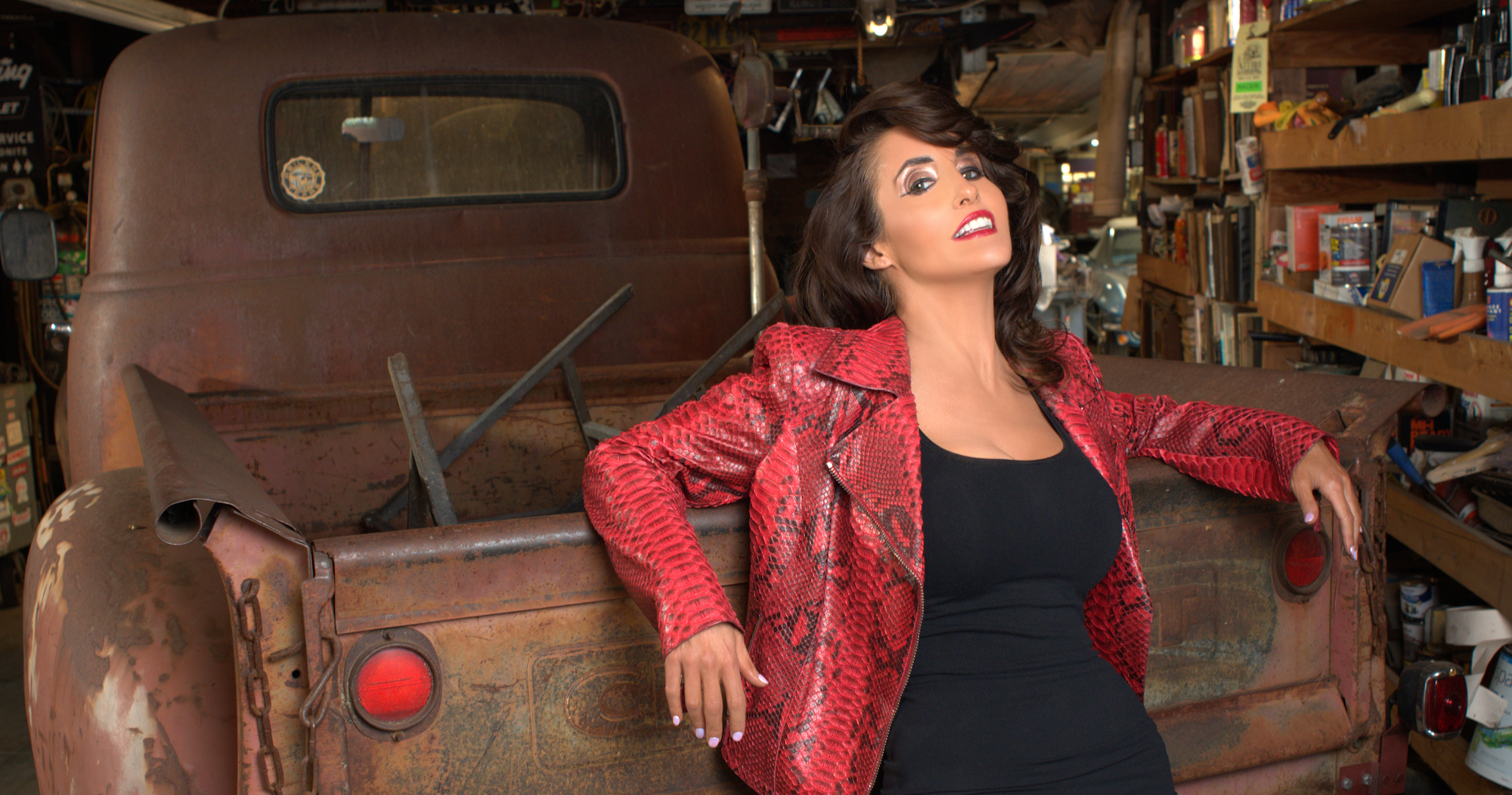
Laura Bryna’s Lipstick & Lightning Playlist

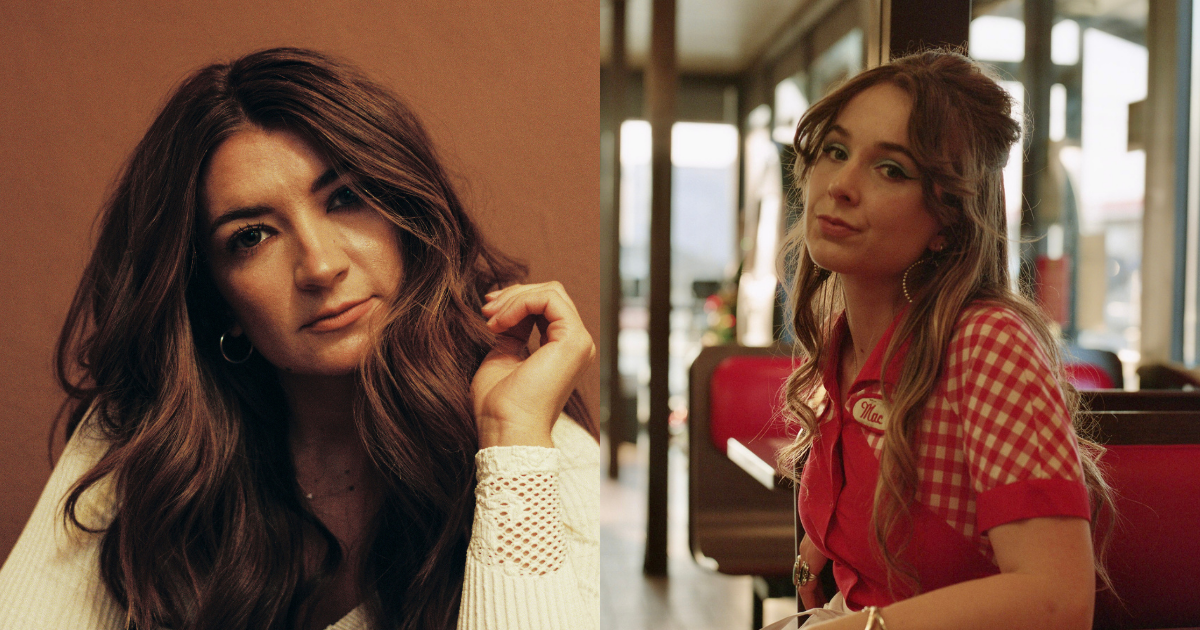
“Lightning & Lipstick” is exactly what it sounds like – strength with sparkle, power with personality. This is a Mixtape full of songs that remind us we can be fierce and feminine, gritty and glamorous all at the same time. These are the anthems that shaped me – the ones that say you don’t have to shrink, you don’t have to apologize, and you definitely don’t have to choose between softness and strength. That duality is who I am, and it’s woven into everything I’m creating right now, from the fire and fight in “Warrior” to the swagger of “Beauty Queen” to the passion of “Hearts On Fire.”

As I gear up for shows at Sturgis Motorcycle Rally, The Cutting Room in NYC, Vanish Hall in Maryland, CMA Fest, and beyond, this Mixtape feels like the heartbeat behind it all – loud, fearless, and unapologetically alive. – Laura Bryna

“Rise” – Laura Bryna

I believe my song “Rise” resonates so deeply with women because it speaks to that quiet strength so many of us carry. It’s about pushing through the moments that try to break you – the doubts, the setbacks, the heartbreak – and choosing to stand up anyway. I’ve heard from so many women who see their own story in that song and to me that’s everything. It’s not about being fearless, it’s about being brave enough to rise even when you’re scared.

“Queen Of The Night” – Whitney Houston

This one resonates so powerfully because it’s pure confidence. There’s no shrinking, no second guessing – just a woman standing fully in her power and daring the world to keep up. That kind of boldness is contagious. For so many female listeners, it’s not just a song, it’s a reminder that you’re allowed to take up space, own your presence, and rule your own night without asking for permission.

“Miss Me More” – Kelsea Ballerini

I love “Miss Me More” because it flips the breakup narrative in such a smart way. It’s not about missing him, it’s about rediscovering yourself. That’s such a powerful shift. It reminds women that sometimes the biggest glow-up isn’t finding someone new, it’s remembering who you were before you started shrinking. It’s confident, catchy, and such a great reminder that losing someone can actually mean getting yourself back.

“Stronger” – Kelly Clarkson

“Stronger” is one of those songs that just hits you in the chest in the best way. It takes heartbreak and turns it into fuel. I love how it doesn’t pretend pain doesn’t exist, it just refuses to let it win. For women especially, it’s such a powerful reminder that the thing that knocked you down might actually be the thing that builds you back braver, louder, and more yourself.

“Jawbreaker” – Laura Bryna

My song “Jawbreaker” is that no-filter energy I think every woman deserves to tap into. It’s about being bold, a little dangerous, and not watering yourself down to make anyone else comfortable. I wanted it to feel playful but powerful – like, yes, she’s sweet… but she’s also not someone you mess with. For female listeners, it’s a reminder that you can be soft and strong at the same time, and that confidence looks really good on you.

“Survivor” – Destiny’s Child

This track hits because it turns every setback into a statement. It’s not about pretending things didn’t hurt, it’s about saying, “You didn’t break me.” That kind of energy is so powerful for women. It reminds us that resilience isn’t quiet; sometimes it’s loud, proud, and sung at the top of your lungs. It’s the ultimate glow-up anthem: strength with rhythm and attitude.

“I Will Survive” – Gloria Gaynor

“I Will Survive” is the blueprint. It’s the original standing-ovation moment for every woman who’s ever been underestimated. What I love about it is that it doesn’t just move on from heartbreak, it rises above it with dignity and fire. It’s strength wrapped in melody. For female listeners, it’s a reminder that resilience is timeless, and sometimes the most powerful thing you can say is, I’m still here and I’m stronger than ever.

“Before He Cheats” – Carrie Underwood

“Before He Cheats” is just fun. It taps into that dramatic, slightly unhinged energy we’ve all joked about at some point, and Carrie delivers it with such sass and power that you can’t help but sing along. It’s not about actually keying a car (please don’t), it’s about reclaiming your power in a moment where you felt disrespected. It’s fiery, bold, and the ultimate girls’ night, windows-down anthem.

“Strong Enough” – Cher

This song is such a timeless empowerment anthem because it’s strength wrapped in attitude. I love how the production carries that steady, almost defiant pulse; the groove feels grounded and unshakeable, like the confidence the lyrics are claiming. Cher’s vocal delivery is cool and controlled, which somehow makes the message even more powerful. For female listeners, it’s that reminder that independence isn’t loud for the sake of it – it’s steady, self-assured, and completely unbothered.

“Pink Pony Club” – Chappell Roan

“Pink Pony Club” feels like freedom in glitter form. It’s about choosing the life that lights you up, even if it doesn’t look like what everyone expected for you. I think that’s why it resonates so deeply with female and LGBTQ+ listeners – it celebrates self-expression without apology. The production is big, theatrical, and dramatic in the best way, like stepping into your own spotlight. It’s not just a song, it’s a permission slip to be fully, fabulously yourself

“Over Being Under You” – Laura Bryna

This song came from a really honest place for me. I wrote it during a season where I realized I was bending over backwards trying to keep the peace, trying to make everything work and slowly losing myself in the process. The song is about that turning point, when you decide you’re not going to shrink or overextend just to be chosen. For female listeners, I think it resonates because so many of us have been taught to over-give. This song is the reminder that you don’t have to over-bring anything to be enough – you already are.

“Unstoppable” – Sia

“Unstoppable” is that anthem you blast when you need to borrow a little courage. What I love about it is how the production builds — those pounding drums and cinematic layers make it feel larger than life, like you’re stepping into your own movie moment. Sia’s vocal has that mix of vulnerability and steel, which makes the message hit even harder. For women especially, it’s a reminder that even if you don’t always feel unstoppable, you can choose to show up like you are.

“My Strongest Suit” – Sherie Rene Scott

This one is a little out of left field but it’s such a clever, empowering anthem because it flips the idea of vanity into self-confidence. On the surface it’s playful and glamorous, but underneath it’s about owning your presence and knowing your worth. The production is theatrical and bold – bright brass, dramatic builds, and that larger-than-life Broadway energy – which makes it feel like you’re stepping into your power with every beat. For us women, it’s a reminder that confidence isn’t shallow… it’s strength dressed up and shining.

“Born This Way” – Lady Gaga

“Born This Way” is one of those songs that feels bigger than music, it feels like a movement. Gaga wrote it as a direct celebration of identity and self-acceptance, inspired by conversations around equality and the idea that we’re all designed exactly as we’re meant to be. I love how the production is bold, anthemic, and loud – it doesn’t tiptoe around the message that you were born powerful

“Time To Say Goodbye” – Laura Bryna

This is one of the most personal songs I’ve written because it’s about that breaking point. The moment you realize love shouldn’t feel like walking on glass. I wrote it thinking about anyone who feels stuck in something that’s slowly dimming their light. The production builds intentionally. It starts restrained and vulnerable, almost fragile, then opens up into this powerful, emotional lift that mirrors the courage it takes to finally choose yourself. For listeners in toxic relationships, it’s not just a goodbye to someone else – it’s a hello to your own strength.

“Espresso” – Sabrina Carpenter

“Espresso” just has that effortless, confident sparkle to it. It’s playful but self-assured, like she knows exactly the effect she has and isn’t apologizing for it. It’s flirty without being desperate, powerful without being preachy. The production is slick and minimal in the best way – that tight groove, the punchy bass, the airy vocal stacks – it feels cool, modern, and addictive. It’s the kind of song you put on when you want to walk a little taller and remember you’re the energy in the room.

“Beautiful” – Christina Aguilera

One of those rare songs that meets people exactly where they are. The lyrics are so direct and vulnerable – there’s no metaphor to hide behind, it just says what so many people are afraid to admit: I don’t feel enough sometimes. That honesty is universal. Production-wise it’s intentionally stripped back at first, soft piano, space around the vocal, which make Christina’s performance feel intimate and raw. Then it swells just enough to feel like a release. It’s not flashy, it’s sincere. And that sincerity is why it resonates across every background, identity, and experience.


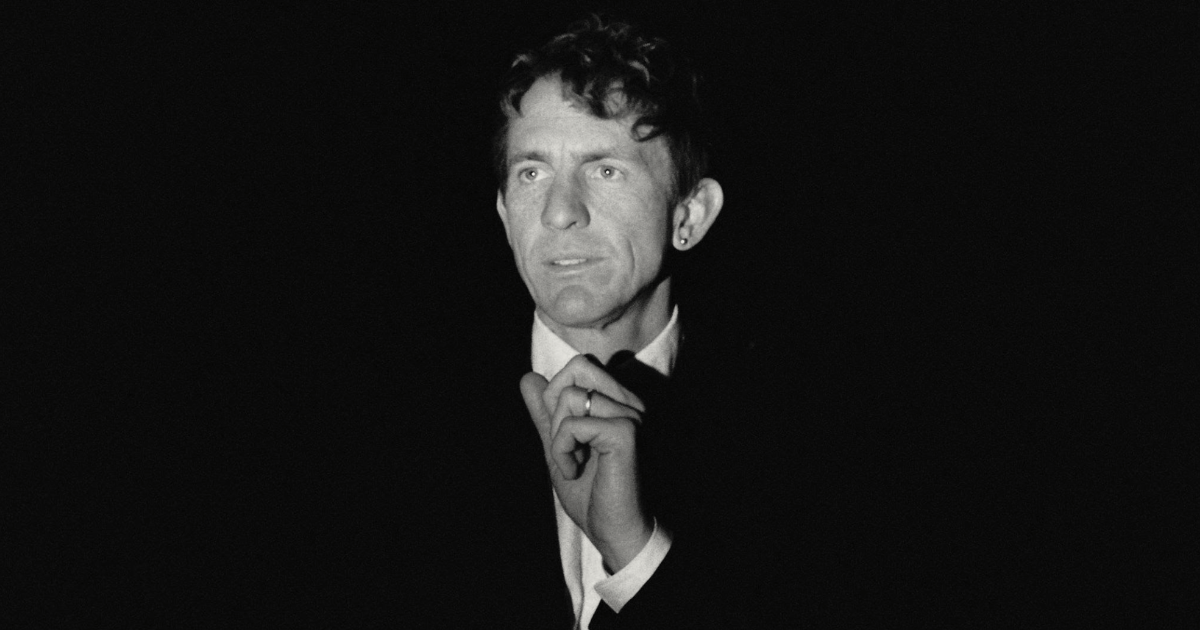
Photo Credit: Fernando Salazar
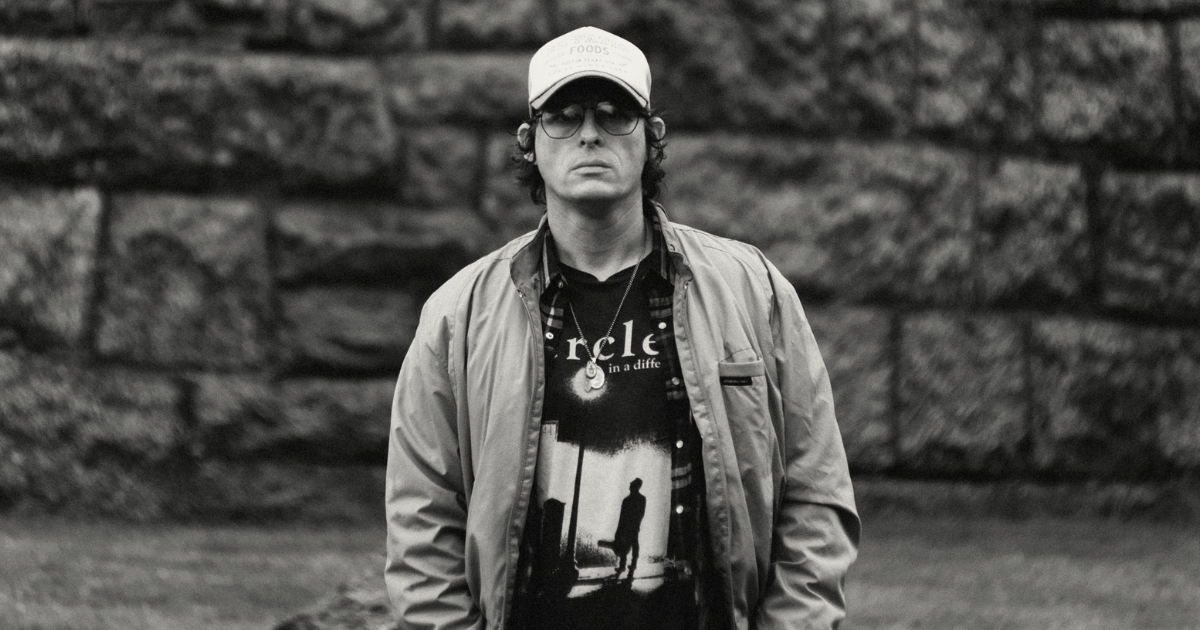
Stephen Wilson Jr.’s Dreams Have Been Outdreamed

Stephen Wilson Jr. knows he doesn’t fit the mold of your typical mainstream country artist. But honestly, who needs that?

A 46-year-old former microbiologist and Golden Gloves boxer, the Southern Indiana native stands out with probing lyrics and an experimental sound to match. Grunge and jazz combine with country inside a drop-tuned gut-string guitar, powering the 2023 album søn of dad to critical acclaim and a slow build of career momentum. But Wilson has now reached exit velocity.

After a viral, six-minute solo performance of Ben E. King’s classic “Stand By Me” at the 59th Annual CMA Awards – so stark and surging it stunned Nashville’s Bridgestone Arena into complete silence – Wilson has followed up with the equally enigmatic single, “Gary.” Like his album debut (which was a tribute to his multi-faceted father), “Gary” takes an almost scientific approach to detailing the mythical class of people who don’t do fancy, but do get things done.

“When life gets very real, like your plumbing or your electricity goes out for two weeks like we experienced [in Nashville’s January ice storm], you need a Gary,” Wilson explains.

“Gary” is now climbing up the country radio charts and it will eventually become part of Wilson’s next album, currently in the works. But we wanted to catch up with him now. Wilson spoke with Good Country about his musical worldview just before the launch of his headlining Gary the Torch Tour, which kicked off March 6 in Columbus, Ohio – and just added dozens of dates through the summer and fall, including appearances in Europe and the United Kingdom.

I was hoping you could tell me a little about how your sound developed. I mean, you play a gut-string acoustic guitar, but not the way Willie Nelson does, right? It’s down-tuned and you have these very hypnotic sections that I really love. Have you always played guitar like that?

Stephen Wilson Jr.: Yes and no. I’ve been a guitar player of all ilks over the years. I’ve been an electric lead guitar player, a jazz nerd in college. And I was an indie rock guitar player for a long time. A lot of soundscaping and stuff like that. And I was super technical for a long time. I still am very much into Apocalyptica and Al Di Meola and the John McLaughlin Trio.

Oh, ok!

I used to go to sleep to the song “Mediterranean Sundance” [by Al Di Meola, Paco de Lucía] all the time. That was the soundtrack to my late teen years. And just because I love that kind of music, there’s a lot of percussiveness in the style that I play. Influencers like Dave Matthews, a lot of acoustic players like that, they kind of treated the guitar like a drum as much as they did a melodic instrument. …

I was also very influenced by the Seattle sound, all the drop tunings. The fundamentals of my guitar playing I kind of learned from the Superunknown record by Soundgarden. I learned it from front to back, and there’s so many different tunings and so many droney riffs that had a huge inspiration on me, too. So it’s really a combination of Seattle and then a bunch of Spanish-style guitar players.

Wow, I had no idea.

Then, I discovered Willie Nelson. I grew up listening to tons of country music, but it was more like George Jones and Johnny Cash and Hank Sr. and a lot of ’90s country. Willie wasn’t a big part of my soundtrack growing up. But I saw him at the Ryman Auditorium the year I moved to [Nashville] and it changed my life. I saw him playing a gut-string through two Baldwin [amps] with a pick and I’ve been pretty much chasing that ever since. I play a gut-string through an amp, too, but not the same way. It’s a lot heavier and a lot grungier. And, obviously, I use these drop tunings, which Willie doesn’t do, which has made for a lot of challenges in the production department. It’s like trying to figure out how to tame that animal, which is honestly kind of the point. I didn’t really want it to be tame. I want it to be wild. I liked that it always has the ability to get away from you.

I think it tells – definitely on stage.

That’s kind of what I learned from Willie when he would solo. He would just fly real close to the sun. He had no problem taking the 18-wheeler right to the edge of the cliff and seeing how far he could take it before it almost goes off the edge. And he’d always somehow pull it back on the track. I really lean into that every night and every song – every time we produce a song, we kind of go in hoping that the wild animal will show up. And it does all the time on stage, there’s a lot of unpredictable things that happen, but we kind of welcome them.

The untamed wildness of it. I would say you can even hear that in your lyrics. Tell me a little bit about “Gary” and why you felt the need to say this. You write about the value of blue-collar folks, how loyal, selfless, and capable they are. But also how they’re not appreciated enough sometimes.

Well, yeah, I grew up in a body shop. I’m a son of a body man.

Really? Me too.

Yeah. Grandson of a body man. All my uncles are auto body repairmen. I grew up in body shops. I grew up in a house that was surrounded by a cornfield, like the movie Signs. And there was farmers all around me. The blue-collar influence was everywhere. I grew up in a John Mellencamp song, literally. I grew up in a town where there was an abundance of these “Garys,” as I call them. I kind of started thinking about Garys as a subspecies of humanity, and I started to observe them in the wild, similarly to how Jane Goodall would observe chimpanzees and other greater apes. That’s kind of the approach with the whole song, but it was all inspired by a tragedy, really.

I was driving down a highway and I saw a memorial billboard sign and it said “in memory of Gary,” and there was a picture of a boy who was probably 16 years old. It was just really heartbreaking. I could feel the sadness and the heartbreak and the family’s plea to keep this boy alive in any way possible. I understand that plea. That’s why I made that album. I mean, søn of dad is a sonic monument to my father. That’s my billboard that I put on the side of the road to keep my dad alive, to keep his memory alive. So I really understood that sentiment behind it, just on the foundational level. And then when I saw it, I couldn’t help but say out loud in the car, “Dang, there ain’t a lot of boys named Gary these days.”

That’s where my brain started subconsciously turning Gary into a subspecies of human. And then honestly, the song just fell out. Because of my upbringing, it wasn’t really written. It was subconscious. I guess my brain just started writing, and that’s how I write pretty much all my songs. Generally, I write them fast and I write all the lyrics first. I wrote the whole chorus in my car right there and I just kept driving around and I kept writing it. Then I put it to music a couple hours later and it was 85 percent done.

It seems like people have really latched onto the “Gary” theme. Those people you can depend on, but they’re not flashy.

There’s a lot of truth to this Gary thing. There’s a lot of people coming up after the show or whatever. I was getting overwhelming evidence to basically prove that this Gary thing was real. … You really couldn’t deny the conclusions that, yeah, I’m not the only person that has seen this Gary theme. Because I had so many people like, “Dude, I know exactly who you’re talking about.” It wasn’t a couple months after we started playing and people were chanting “Gary” in the audience. The song wasn’t even recorded yet, let alone released. … Now it’s being played all over the country. It’s pretty wild.

And the song is sad. I mean, that’s the thing. I’m definitely celebrating a working-class human, but at the same time, it’s a very sad story. I wasn’t trying to make Gary some superhuman. I wanted to try to be real about the situation, because the Garys are endangered. We experienced that when we had this ice storm in Tennessee [in late January 2026]. We had to import Garys from all over the country to get everybody’s power back on. There’s logistical evidence that we just saw recently to prove that, yeah, these Garys? We’re running out of them, and maybe we should pay attention to that because we rely on them to fix things. … Instead of just letting them drive off into the abyss to go save another person’s day, how about we give them a moment and celebrate them?

You’re starting the Gary the Torch Tour in March, and that should help. I was wondering, what’s your favorite setting for listening to music? Do you consider that when you’re putting your tour together?

I guess I prefer vinyl, and I listen a lot in my vehicle as I’m driving. But also, I don’t listen to a lot of music. It probably will shock a lot of people, not that it matters to them, but I wouldn’t say that I just sit around and listen to music all the time. I listen to a lot of silence, and I think it’s really important for musicians to listen to as much silence as they do sound, because that’s where the inspiration for me really comes from – the silence, not the sound.

That’s actually fascinating.

As much as I want to sit around and listen to bops, I got to listen to nothing, too. I’ve never had a song come to my head from listening to another song, ever. It’s always come from silence.

@stephenwilsonjrwent loco tryna open my møuth more for y’all this time. “Cuckoo” live acoustic version out now. love y’all. 🖤🥕🏃🏻‍♂️♬ original sound – Stephen Wilson Jr.

I saw you at the Ryman Auditorium in November and I know those were special shows, but you had a boxing ring on stage there. Where do you go creatively from something like that?

That was very much an ode to my father and getting to that stage was all I ever dreamed of, really since I moved to town. Back to the first part of this conversation, seeing Willie Nelson at the Ryman? I’ve been dreaming about that show since I moved to town.

Typically I tend not to rely on a lot of spectacle for the show. I tend to rely on something divine. … The real light show is what descends into the room during those shows. That’s really what I try to focus on more than laser beams and a bunch of production tactics. I do have a really quirky stage design that I created. I have my own little world up there. And ideally, full-time, there will be a boxing ring on stage. We’re working out the logistics of bringing that around full-time because it’s quite the undertaking.

But I mean, I think it’s all about feeling at home up there. I’m not really supposed to be here in this world. I’m not a natural-born star, as they would call it. My goal is to try to feel comfortable up there, and get people feeling things. That’s what people really remember. I’m in the emotion business, not the music business.

You’ve been working on some new music, right? What do you hope people will take away from that?

Well, I’m working on a whole new record, which is more just the continuation of conversations and observations from where I left off. Because it would’ve been really easy to never make another record again after søn of dad.

Oh yeah?

I never was trying to be an artist in the first place. And there was a big part of me that was … I mean, honestly, when I was making that record that’s what I was thinking, if I’m going to be perfectly honest with you. “I’m going to make this and then I’ll never make another record again,” because why would I? Then the story of søn of dad just was so much a God thing. It was so divinely orchestrated that I just had a hard time thinking, “What would I do from here?” Everything I ever wanted to do was already done.

But that was my own stuff, and I don’t believe God put me in this position for me to do that. It took me some time to figure that out. I’ve got to give “Gary” the credit for that because when “Gary” showed up, that’s when I knew I wasn’t done. If “Gary” hadn’t showed up to show me that, I’m not sure I would’ve ever recorded another song ever again. Like I said, I’m not supposed to be here. None of this was supposed to happen. So for me to have any expectation of what is down the road is pretty comical. My dreams outdreamed me a long time ago. I really just want to focus on being there for people and being where I’m supposed to be.

That’s one thing I learned from being a scientist and doing all these things over the years: There’s where you can be and then there’s where you’re supposed to be. And there’s nothing wrong with being in either place. There’s no guilt to be had in being where you can be because, man, we’re all just trying to survive. But then there’s where you’re supposed to be, and that can be a very difficult place to be. But I’ve chosen to be there and for whatever reason, I intend to stay there until the day I die.


Photo courtesy of Missing Piece.

Buck Meek’s Musical Worlds Collide

Buck Meek doesn’t give the whole game away. It’s not guaranteed he’ll tell you exactly what his songs are about. However, he will expound, in detail no less, on how he gets himself in alignment to write them and what the mechanics of his songwriting process look and feel like. After six albums with Big Thief and four solo albums, most recently The Mirror, he has more than earned the right to hold back in some ways while sharing deeply in others.

Born and raised in Wimberley, Texas, Meek grew up playing guitar, singing, and writing songs surrounded by a community of old-guard outlaw songwriters, western swing players, and barrelhouse blues musicians who took him under their wing at a young age, taught him how to play it how he felt it, and gave him his first gigs around the Texas Hill Country. At the same time, annual trips to the nearby Kerrville Folk Festival introduced him to the rich traditions of Texan folk music.

As the grandson of scholars who studied the two Williams – Shakespeare and Faulkner – and the son of a child psychologist and a glass sculptor, it’s easy to surmise he was never short on literature and art. His depth of influence and fluency come through in how he speaks about his musical practice and his commitment to it.

When he was 17, Meek left Texas for Boston, where he studied jazz at Berklee College of Music before finding community with a generation of young musicians who wanted to write their own songs and play sweaty rock shows in basements. Later, he moved to New York, where he began performing with Adrianne Lenker. The two musicians lived in a van, singing their songs across the country before forming Big Thief. Fourteen years later, the East Coast’s long-standing punk and rock traditions are as much a part of his musical DNA as the Americana, country, folk, and blues he was raised on. The eureka moment came when he let his two worlds collide musically.

Produced by Big Thief drummer James Krivchenia, The Mirror features a stunning cast of family and friends turned collaborators, including his brother Dylan, Lenker, the hauntological harpist Mary Lattimore, Adam Brisbane, Germaine Dunes, Staci Foster, and the Avant-Americana icon and former BGS advice columnist Jolie Holland.

Opening with the range-roving rhythms and bittersweetly sung melodies of “Gasoline,” Meek digs into the intricacies of relationships and communication throughout the album, rendering them in a traditionalist alt-country and western style, underpinned by modular synthesis and subtle electronic textures from Krivchenia and engineer Adrian Olsen.

On “Can I Mend It,” he describes a deeply regrettable moment where raw emotions crystallize, before shattering into a million potentially irreparable fragments. As he laments on the chorus, “Can I mend it?/ Can I make it whole?/ Now that you’ve seen into the dark side of my soul.” Later, when Meek looks in the mirror on “Demon,” Olsen’s modular synthesis briefly overpowers the band with a not-so-subtle squelch. As with all parts of the album, there’s a reason for this.

By the time The Mirror closes with the summery, sunset shuffle of “Outta Body,” we’ve lived with Meek for a spell. Although, as he argues in this interview, we never really fully know anyone else, or even ourselves for that matter. Sometimes, when you look at someone from that right angle, or let our communication move beyond words, we achieve brief but precious moments of understanding.

On a Wednesday morning in early March, Meek spoke with Good Country by video call about all of the above and more.

How are you doing? What do your days look like at the moment?

Buck Meek: I just moved to Los Angeles. I got this big old yard, but the fence is kind of patchy. My little dog keeps running away. I’ve just been chasing my dog around every day. She keeps escaping and there are peacocks everywhere in my neighborhood. So my dog is just chasing peacocks all day long. I’ve also been trying to learn how to garden a little bit, planting some plants, and doing lots of interviews.

It’s one thing to be in a band that succeeds, but it’s a whole other thing to be able to have a solo career as well. What’s the difference between how things have played out for you and the future you imagined when you were younger?

I grew up playing blues, ragtime, and jazz manouche with some local cats, Django Porter and Brandon Gist, and playing in icehouses around the Texas Hill Country. I felt really happy when I played the guitar, and that was enough. I didn’t really have any idea what it even meant to be a musician in the world. When you’re a kid, you don’t know how any of that works. Of course, I idolized Jimmy Page and the like, but that felt completely out of reach.

Do you think what you’re describing was a common experience for musicians your age growing up in Texas?

I think the bar bands of the world are the modern folk musicians. Really, the people who are keeping the songs alive are the ones who have never made an album, or nobody’s ever heard of. The people who play in bars around the world in small towns. They’re the ones who keep the spirit of music alive. There is this incredible relationship between the elders at the bars and the little kids coming up as guitar students. Inevitably, the star kid, the kid who works the hardest, gets taken under the wing by the old-timer as their protege. There are these beautiful relationships that pass down knowledge. I think you find that pretty much everywhere.

I’ve gone on to have bands with names and travel around the world, but when I’m on stage playing guitar, it still feels the same as it did back then. It’s just me and my guitar. It’s a very simple form of happiness. It’s very fulfilling, whether people show up or not. There’s a life cycle to attention, but as long as I have my guitar, I don’t care.

At the heart of it, it’s about your relationship with your instruments and the musicians you play with, right?

Totally. In the words of Tom Sachs, the reward for good work is more work. As long as I get to do it again the next day, I’m good.

When you think about your career in Big Thief and as a solo artist, do you feel like you’ve mostly been able to do it on your own terms?

Yes, for the most part, but we’ve done it collectively. Everyone in Big Thief is very uncompromising in our own ways, but we all have blind spots. Because we’re a group of people, we’re able to call each other out on our blind spots, maintain our collective lack of compromise, and never sell out, never sell our souls. I’ve been lucky to be surrounded by people who have a perspective on that. We’ve done it on our own terms. I’ve definitely learned the power of that over the years.

Do you ever feel like you were born in the wrong era?

No, I don’t feel that way. I’m stoked.

What do you think the era you emerged within has afforded you that a previous era might not have?

Of course, it’s a two-headed monster, but access to communication, for example, how we’re talking now, helps so much. Not being beholden to a record label giving you a budget, and being able to record your own music at home is huge as well. Now, people are able to hear that music on Bandcamp or the like, which allows you to go and play shows around the world. That’s a very new phenomenon. It’s been a huge part of building my career.

When we started booking tours, we recorded our first album at our friend’s house. We were burning copies to CD-R, putting them in brown paper bags, and passing them out to anyone we could think of. We basically asked all our friends in Brooklyn if they had friends in other towns and got their email addresses. We’d email them our record and ask if we could play a show in the town where they lived. We just kind of pieced this tour together around the country.

We used the internet as a tool to get started, but we’d drive to these towns, meet these people, shake their hands, and become friends. Eventually, we moved out of our apartments, bought a crappy van, hit the road, and played a lot of shows: parties, basements, whatever. Getting in a room with people was essential.

How do you feel about going on the road by yourself?

Lately, I really enjoy traveling with a band. I’ve had some really good solo tours, especially down in the desert and around the Southwest. My friend Tony Presley, who runs the label Keeled Scales, released my first two solo records. He’s an Austin kid. He’s a booking agent as well, but he primarily books small towns and DIY venues. He booked a few tours for me around the Southwest. Taos in New Mexico, out in the desert, El Paso and Santa Fe. Little towns in Arizona, and out in the Hill Country of Texas, stuff like that. That’s always a lot of fun.

How much impact do you think the people you meet through these experiences have had on your music?

I think they’ve made me who I am, which has a big impact on my music. I mostly think of songwriting as the time I spend away from my guitar and my songs. I really try to put it down and just go out into the world and live my life. That’s the real work, living your life as a person in the world.

How close do you think we can get to truly knowing another person?

We never fully get there. I think the closest we can often get is by looking at them sideways or trying to find oblique solutions to communication. I think language is really powerful, but it’s limited. The space between words and conversations, and unspoken communication, often adds up to more of an understanding. The truth is, we never fully know ourselves either. So how can we know someone else? Often, I feel like it’s easier to understand someone else than to understand yourself. I think it’s just shifting constantly. There are moments of understanding, but there’s never any kind of permanence.

Tell me about the conditions under which your new album came together.

I spent a couple of years just living my life. I was living in a log cabin in Topanga and booked a recording date with my band about six months in advance. I sat on the porch every day for eight hours and wrote these songs. I’m blessed to have the resources to do that thanks to my label, 4AD. I put in the time to write the tunes, and then I brought the band together in the cabin.

We set up the big living room with the drums. I stood on the front porch and recorded the vocals outside with a big window into the living room. So there was enough isolation for the drums. Our producer, James Krivchenia, had this setup of electronic instruments and modular synths in the control room with our engineer, Adrian Olsen. They were using the live band as triggers for modular synths and some electronic synthesis feedback in the mix. The album was made live with my band. We moved pretty quickly. There was about a week and a half of tracking.

The other thing I’m the proudest of is how much fun we had making it. It was a great group of people. We had a blast cooking good meals, playing cards, and running around the woods. The music was just a small part of it. I’m glad I can share it as an artifact, but the experience was really the best part.

I thought it was interesting how subtle the use of modular synthesis was.

The entry point for the idea was to be pretty bold, but in practice, the band held a lot of space for the songs. James wanted to focus on the songs as the primary force. There were certain moments where the modular synth took the lead. At one point in the song “Demon,” it kind of takes over and swallows the band for a second. There’s this battle between the two worlds.

For the most part, it’s pretty subtle. For me, it represents the subconscious. The band is the conscious world – a structured, acoustic-instrument world. The electronic elements represent the subconscious. I speak about this in the lyrics of these songs, this kind of play between the conscious and subconscious, intention and intuition, and all these things. It’s subtle, but if you were to remove the electronics, the impact would be great.

It’s like Ernest Hemingway’s iceberg theory. You only ever see the 20% of the iceberg that floats above the surface.

I think having a nod to this limitless space, this ambient world where there’s no grid, no structure, not as much transient energy, this textural, abstract, liquid aspect of the album, opens up the subconscious a little bit in the listening experience.

While listening to The Mirror, I thought about how no one has a monopoly on interiority. Just because someone doesn’t say much in a conversation doesn’t mean they don’t have a lot going on upstairs.

I like playing with that in songwriting. I feel this pressure to be precise and create a very clear map and logic for people to follow. My ideas have to be very concrete, but that’s a rule I’ve imposed on myself. It’s exciting to be able to, to some degree, reveal an abstract inner world amid structure and logic.

I know that pressure is self-imposed or has been projected onto me by society at large. It’s something I try to push back against, while still honoring the medium. There’s a reason that people want some form of relativity or underlying structure. There is always a need for a starting point in communication, but I think we must know when to depart from that structure to express the full spectrum of our ideas and truth. There’s a balance. It’s important to honor it, because otherwise you’re just isolating yourself.

When did you start thinking about songwriting in the sort of terms you’ve just articulated?

I started writing songs in high school as a confession to my high school crush. I just wrote a love song for love’s sake. It was no more complicated than that. I think that’s really the heart of a song. Ideally, for me, a song has a reason to be. It comes from some form of compulsion, or a need to articulate something or to create an artifact, to be able to pull something out of your body and observe it as some form of catharsis. To me, those are the best songs, but there are no rules for the context.

How did you develop your approach to it all?

As I started writing, my self-education was mining the world for songs that, for lack of a better term, felt good. I was trying to find songs that really moved me. Intuitively, I started trying to understand why a song makes me feel something. I’d unpack every word and learn the song and the melody while trying to understand the relationship between them. I wanted to understand how the melody sanctified the lyric and what the rhythm had to do with it.

Let’s talk about taste. There’s a constructed taste you can use as a tool to help people understand where you are. Then, there are those songs that you might not even think you like, but they make the hairs stand up on your neck.

The older I get, the more willing I am to accept those things for myself and really listen to that intuition. As a young kid, I was obsessed with pop country. In my teenage years, I rejected it. When I listen now, it still hits me in the same way it did when I was six. I’ve learned to embrace that. Sometimes, you’ve got to be able to come home. I think with this album, I was thinking about moments when my body wanted to say something, but my mind would kick in and say, “Oh, the critics won’t think that is cool, hip, or smart enough.” I had to lean into those lines and say them twice, say them louder. If you can do that, no one can touch you.

Have you ever thought about how lakes and streams were the original mirrors?

Yeah, ponds and lakes and puddles and things. Good point. They’re still enough to provide a reflection, but also fluid enough that you can throw a rock in and diffuse them. There’s still a relativity to it, which is more true to what a reflection really is. There’s some form of objectivity, but to some degree, it’s just a construct.


Photo Credit: Germaine van der Sanden

You Gotta Hear This: Steep Canyon Rangers, Jim Lauderdale, and More

Welcome to the conclusion of another week. With it, we’re once again sharing our weekly roundup of brand-new tracks, singles, videos, and more. You Gotta Hear This!

To start us off, Kentuckian singer-songwriter and instrumentalist Adam Chaffins shares a lyric video for “Sugarcoat It,” a new original song about the temptation and believability in misinformation these days. Chaffins and his collaborators leverage groove and catchy hooks for a meaningful and oh-so-timely message in the rockin’ Americana track. Also bringing a topical and cutting central thesis are Joe Troop & the Truth Machine, who have released a new live performance video for “Billionaires.” Bluegrass and old-time stemming from Southwest Virginia are the musical trappings for a funny, satirical song taking the 1% of the 1% to task. Troop and his queer cohort are well equipped to proffer their message with silliness, joy, and string band music.

From across the Atlantic, Spanish (via Amsterdam) singer-songwriter Liza Lo shares “Birdsong,” a tender and vibing alt-folk number zooming in on the present moment. “Life can get overwhelming and the simple things are quickly forgotten or overlooked,” she explains to BGS, using the song to remind all of us – and herself – not to lose sight of the beauty in the simplest of everyday things.

Bluegrassers Chris Jones & the Night Drivers have a new single out today. “Steal My Today” is the band’s first recording released with their latest member, Nelson Williams, playing the bass. Plus, Italian resonator guitarist Paolo Ercoli guests on the track, which also features banjoist Grace van’t Hof throwing some accordion into the mix. It’s also a song about the present moment, and not letting it be soiled by another. Meanwhile, perhaps the most prolific recording artist in roots music has announced a new project. Jim Lauderdale once again teams up with the Po’ Ramblin’ Boys, this time on his upcoming album The Birds Know – out in April. The lead single, “We Look At Things In Different Ways,” furthers our unofficial theme today of examining societal discourse, by pointing out you actually can love and care for another even with disparate points of view.

And, you won’t want to miss the latest from Western North Carolina’s bluegrass troubadours the Steep Canyon Rangers. Earlier this week they launched “Rumble Strips” a new single that will be included on their May Yep Roc Records release, Next Act. Written by Aaron Burdett, it’s a straight ahead bluegrass jam about getting back on track after you’ve wandered a bit from your lane and hit the rumble strips. But hope need not be lost, as Burdett points out, often you “maybe only need a little course correction to get back on the right path.”

Just in time for St. Patrick’s Day next week, country rockers Reckless Kelly share a reimagined, “evolved” acoustic version of “Seven Nights in Eire.” They originally released the song in 2005 on Wicked Twisted Road and it’s since become a fan favorite. This new edition of the track features mandolin, fiddle, pedal steel, and more combining country, Celtic, and string band in a pub-ready blend.

Check it all out below, right here on BGS. You Gotta Hear This!

Adam Chaffins, “Sugarcoat It”

Artist: Adam Chaffins
Hometown: Nashville, Tennessee, via Louisa, Kentucky
Song: “Sugarcoat It”
Release Date: March 13, 2026 (single)
Label: Spirit Nashville Recordings / Fluid Music Revolution

In Their Words: “Lately it just feels harder and harder to tell what’s real and what isn’t with so much information flying at us all the time. Sometimes, you hear something so outrageous you assume it can’t possibly be true – until you realize it is. That tension really shaped the song. It’s got sweet, sugary, sticky hooks and a groove you can’t help but move to, while shining a little light on how the truth can sometimes be deceiving. It was a lot of fun to track this playing upright bass. Along with Frank Rogers and the crew we really brought it to life. We’ve got a lot of new music on the way and we’re really excited to kick it off with this one.” – Adam Chaffins


Chris Jones & the Night Drivers, “Steal My Today”

Artist: Chris Jones & the Night Drivers
Hometown: Nashville, Tennessee
Song: “Steal My Today”
Release Date: March 13, 2026 (single)
Label: Mountain Home Music Company

In Their Words: “This song represents some firsts for us: it’s our first release to feature Nelson Williams on the bass (including some bowed bass). He’s the newest Night Driver, though he’s already been with us for over two years. It’s also our first time to feature Italian Dobro player Paolo Ercoli as a musical guest. He and I have been doing duo tours in Europe and in the U.S. for a few years now. Grace van’t Hof and I co-wrote the song, one about not letting the material loss of a breakup take away the joy of the present moment. Grace also played banjo and even added some accordion to the recording.” – Chris Jones

Track Credits:
Chris Jones – Acoustic guitar, lead vocal
Nelson Williams – Bass
Mark Stoffel – Mandolin, harmony vocal
Grace van’t Hof – Banjo, accordion, harmony vocal
Tony Creasman – Drums
Paolo Ercoli – Resonator guitar


Jim Lauderdale, “We Look At Things In Different Ways”

Artist: Jim Lauderdale & the Po’ Ramblin’ Boys
Hometown: Troutman, North Carolina
Song: “We Look At Things In Different Ways”
Album: The Birds Know
Release Date: March 13, 2026 (single); April 24, 2026 (album)

In Their Words: “This song came through me to speak to these times of divisiveness in our world. It was an important message I wanted to get out: that you can still love somebody even though your views might differ.” – Jim Lauderdale


Liza Lo, “Birdsong”

Artist: Liza Lo
Hometown: Amsterdam, the Netherlands
Song: “Birdsong”
Release Date: March 18, 2026
Label: Gearbox Records

In Their Words: “‘Birdsong’ reminds me of a new love, a gentle morning walk, or a hug from a friend. Life can get overwhelming and the simple things are quickly forgotten or overlooked. First morning coffees, meeting someone new, real connection, holding hands, song of birds in the garden, the smell of spring air, sunlight on your face after a long period of rain and grey. ‘Birdsong’ is written to remember the beauty in the smallest of things life gives us, I hope it can be this reminder for you too.” – Liza Lo

Track Credits:
Sean Rogan – Acoustic guitar
Chris Rabbits – Double bass
Owen Spafford – Fiddle
Liza Lo Hoek – Vocals, acoustic guitar


Reckless Kelly, “Seven Nights In Eire (Alternate Routes)”

Artist: Reckless Kelly
Hometown: Austin, Texas
Song: “Seven Nights in Eire (Alternate Routes)”
Album: Alternate Routes
Release Date: March 13, 2026 (single)
Label: No Big Deal Records

In Their Words: “‘Seven Nights In Eire’ is a collection of stories based on trips taken to Ireland by myself, my dad Muzzie, and our old friend Pinto Bennett. We had all been there individually a time or two and had had some amazing experiences that we wanted to write about. We got together at Pinto’s house in Boise, Idaho, and after a couple hours and a few beers, we had the song down. We basically just sat around swapping stories and telling jokes and working them into the verses that became the song as you know it today.

“The original version was recorded for our 2005 release, Wicked Twisted Road. Over the years it’s become a fan favorite and one of our most popular songs, so we decided to include it in its new evolved version on Alternate Routes. We had our friend Kym Warner come play some mandolin on it and we did the version we’ve been playing live over the last several years. It’s a little different from the OG, but it’s one of those songs that has stood the test of time and will definitely continue to be a staple on the set list.” – Willy Braun


Steep Canyon Rangers, “Rumble Strips”

Artist: Steep Canyon Rangers
Hometown: Asheville, North Carolina
Song: “Rumble Strips”
Album: Next Act
Release Date: March 10, 2026 (single); May 22, 2026 (album)
Label: Yep Roc Records

In Their Words: “My friend Nate is fond of saying when a person has gotten off track a little bit and notices they’ve ‘hit the rumble strips’ and maybe only need a little course correction to get back on the right path. I took this imagery and applied it to a relationship. Some ongoing conversations between Graham [Sharp] and I filled this one out.” – Aaron Burdett, songwriter, guitarist, vocalist


Joe Troop & the Truth Machine, “Billionaires”

Artist: Joe Troop & the Truth Machine
Hometown: Winston-Salem, North Carolina
Song: “Billionaires”
Album: The Truth Machine (EP)
Release Date: March 13 2026 (video); April 3 2026 (EP)

In Their Words: “I formed this band with friends that I made at the Galax Fiddlers Convention many moons ago. This track has Southwest Virginia written all over it. It’s Southern bluegrass gospel with four-part vocal harmonies in the Stanley Brothers style.

“Lyrically, it’s unabashed political satire, a high lonesome roasting of MAGA and their principal talking points. But funnily enough, people often approach me after gigs to thank me for singing it without realizing it’s satire. Yikes! Is media literacy a problem in this country? On occasion, some folks have walked out on our show during this song. One couple told the presenter that they didn’t pay to be insulted – they work hard for their money! And while we aren’t ragging on anyone for accumulating wealth, to add some perspective: a million seconds is 11 days. A billion seconds is 32 years. Who needs that much money!? What could you possibly spend it on?! Election meddling, propagating divisive talking points? Beyond partisan politics, the wealth disparity in this country ought to alarm everyone. We plebs are not that different. Let’s rally together around music, laughter, and class justice in this billionaire-induced hellscape of a country. It’s time for a change!

“‘Billionaires’ is part The Truth Machine, a five-track EP that drops everywhere on April 3, 2026. It is available for preorder now on my website.” – Joe Troop

Track Credits:
Joe Troop – Banjo, vocals
Lu Furtado – Guitar, vocals
Malia Furtado – Fiddle
Olivia Fernandez – Mandolin, vocals
Jimmy Washington – Bass, vocals

Video Credits: 
Kayla L Oelhafen – Producer
Alexei Mejouev – Videographer
Andy Augustyn – Gaffer
Larry Vellani, Toni Murray – Location coordinators


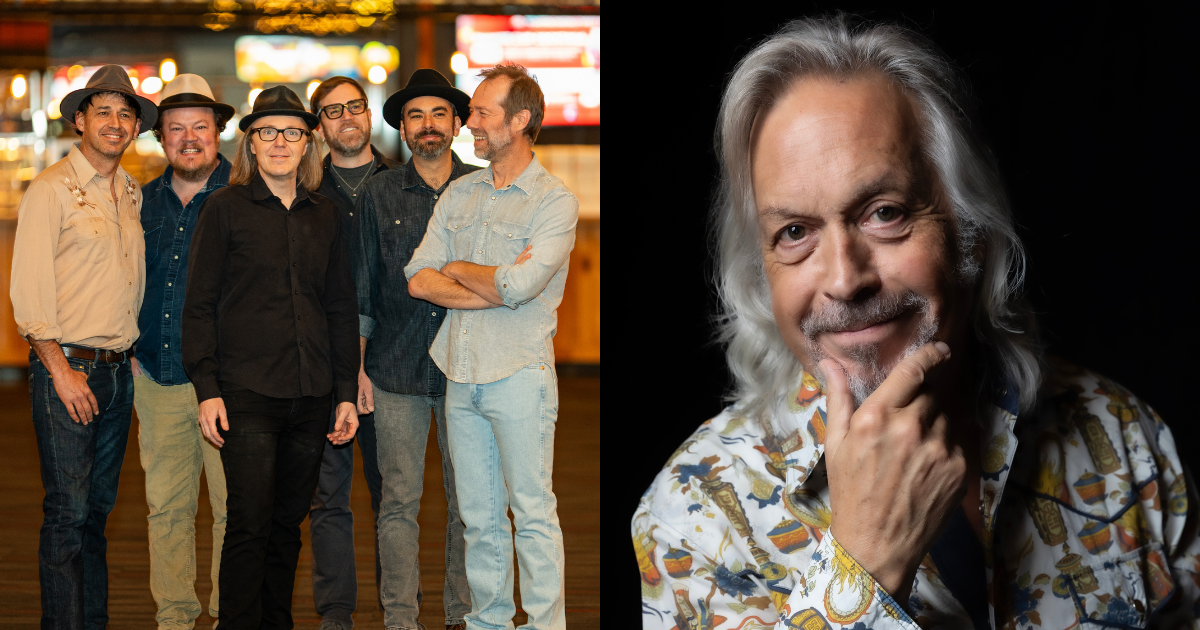
Photo Credit: Steep Canyon Rangers by Jay Strausser; Jim Lauderdale by Jeff Fasano.

The Performance of Rodeo, Music, and Country & Western

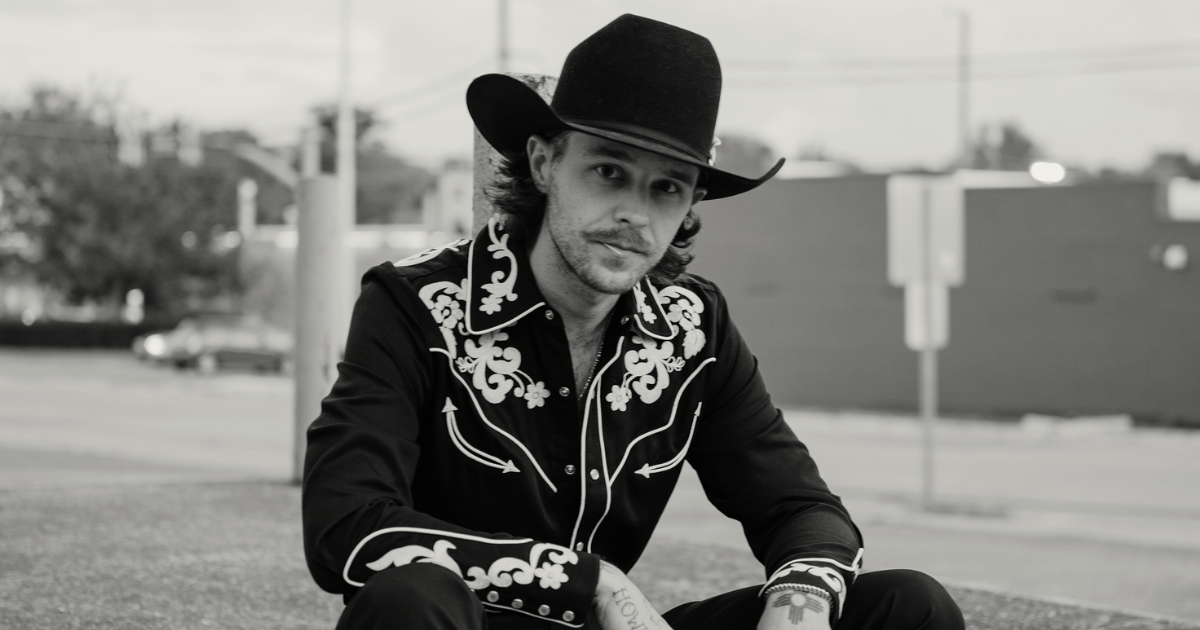
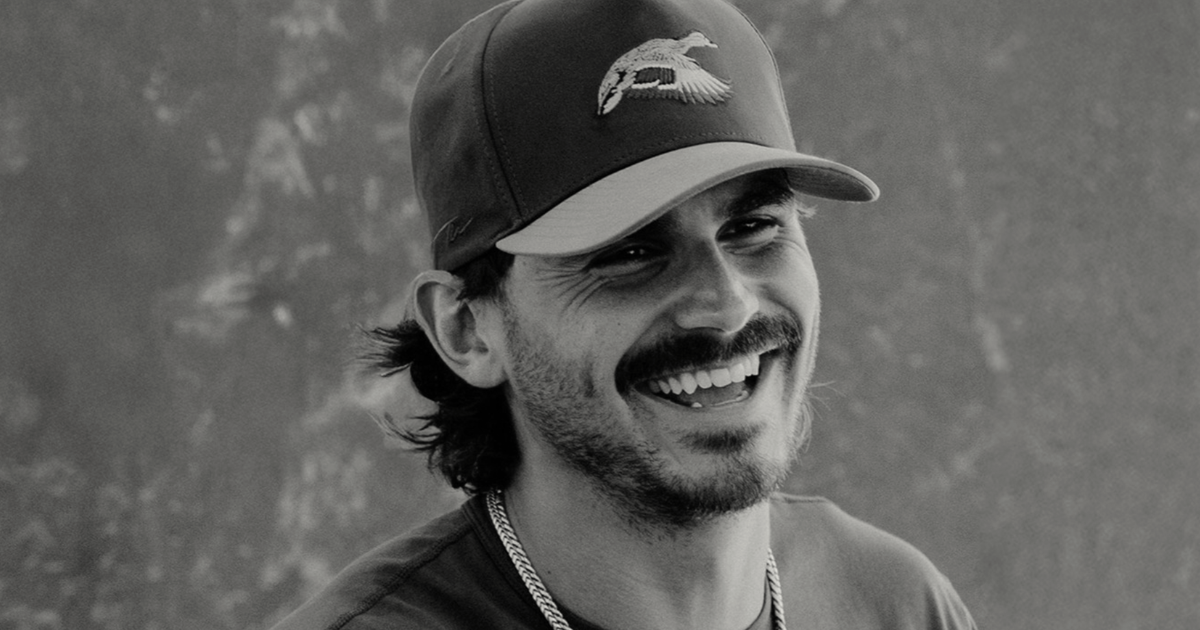
A few years ago, Tyler Halverson had a near-breakthrough hit with his track “Mac Miller,” a song more spoken than sung about the too-soon-departed hip-hop star and how Halverson felt about him. It was a modest song, and a discreet one, a mumbled ode to a kind of masculinity, arguing in favor of a wide and expansive country aesthetic. When he sings about the cowboy killer in the first verse of the song, there is some ambivalence there: Is it the cowboy doing the killing or the cowboy being killed? And, is it an actual cowboy or the larger myth of the West?

The West here is a distinct category from back when country used to be C&W, before the W for western was dropped. Halverson knows more about that W than most other twentysomethings. He grew up in a small town in South Dakota, surrounded by farmland and ranchland. Basically anything that could be done with cattle in the Dakotas, Halverson or his family have likely done. There might be some dissonance here, that ode to Mac Miller perhaps at expense to these country bona fides, but his parents loved listening to music as much as they loved working with cattle. He tells stories about driving around in a truck with his folks playing rock, rap, and country in their truck and making sure that he saw live shows in all those genres.

Music and rodeo are two kinds of performance, two ways of big action, and both boast big audiences – but songs about rodeo are often about the idea of the West. There are songs about small towns by people who haven’t lived in small towns for decades, or whose ideas of small towns are more about commuter suburbs an hour from Atlanta.

The small town is reflected in a kind of fascist excess lately and the rodeo has been stripped of any of its working class parts. What’s left is a kind of stadium tour. If local and small rodeos abstract the actual tasks of ranch hands (roping, tying, cutting cattle, breaking broncos), the overtaking of the Professional Bull Riders Tour made spectacle of that abstraction. Halverson has noted that middle ground between the rodeo and the cattle lots – and has also noted where the music business overlaps with these concerns, though he has not reached PBR or stadium tour levels himself. Yet.

Listening to Halverson’s many songs about the rodeo on his brand new album, In Defense of Drinking (released February 13, 2026 via CmdShft), they are another kind of cowboy killer. One of the best things about his song about Mac Miller was how artful it was displaying the boredom of driving around a small town, the anomie of a blank Saturday night, of being on the aux cord flipping through songs, trying to find something to listen to, trying to find something to do.

So, when Halverson returns to the cowboy killer idea in “Fort Worth Losing,” a song about heartbreak in the stockyards that slices through the myth of the West with a surgical precision, the song bucks, guitars roaring. Then, almost instead of a chorus, a guitar break arrives sounding like an outtake of “Ghost Riders of the Sky.” The mix of failure, heartbreak, heartland rock, and cowboy songs adds to the great tradition of Texas-shaped heartbreak. (It’s less goofy than George Strait’s “All My Exes” and more serious than Mark Chesnutt’s “Going Through the Big D,” but you could two-step to all three.)

“Forth Worth Losing” is one of three rodeo songs on the album; there is a reprise of “Beer Garden Baby,” this time with Parker McCollum – a rollicking and tender song which reminds a potential hookup of the differences between those who ride and those who play music for those riders. The musicians get paid, never out of the money. For all of its joviality, there is an undercurrent of playful cruelty. The musician asks the barrel racer, “Who’s going to pay for your Coors tonight, honey?” They still have tonight – to drink, to smoke dope, to fuck, to play music, and play at being a cowgirl or a cowboy.

The carpe diem nature of these dual performances is made even clearer with “Eight Second Ride,” a tense ballad which notes that “the time between is a long comedown.” Describing the comedown, about “rodeo queens, go around dreams,” and then eventually noting that the lack of money and the melancholy of that comedown doesn’t matter as much as the “eight second high.” His point punctuated with a squall of harmonica.

If “Beer Garden Baby” is a gender-reversed argument about the intersections of musicians and riders, the idea is made deeper and sadder on the heartbreaking “Like the Rodeo,” where Halverson asks, “Could she ever love me, like the rodeo?” He’s telling the listener that the musician and the rider have the same kind of itinerant circuit, one which might never develop into any kind of permanence. Though, on the next song, he makes the suggestion that wanting “cows and cowboy babies” might result in that Dakota grassland. That the cattle of the rodeo might lead to the cattle of the range, in a personal song made more poignant when realising this might be what his parents have done.

These rodeo songs have a kind of modesty, a small softness, that could be considered sober. And though at least one of them is about drinking, the soberness of the sound could also mark a move away from the partying done by the rowdy boys who sing about the events which Halverson sings.

In the ballad “In Defense of Drinking,” which rests on a double entendre that would make ‘70s countrypolitan singers proud, the narrator’s lover leaves him because he’s an asshole who drinks. It’s not the booze’s fault, but the fault of the person who drinks. The soberness continues on the last song of the album, “Son, Brother, Believer.” He sells the cliché from the first line, “I know these hands are made for praying,” but there is a lovely line about rolling joints with the Book of James. The song is about not wanting to disappoint his mother and not wanting to go to Hell, but there is a weariness and a sadness about the realization. Like how his rodeo songs strip away the large-scale spectacle for the one-on-one intimacy of after the show; this Jesus song is about giving up everything for the Lord. The number is threaded by a poignant, almost weeping harmonica, correcting the raucous instrumentation of “Eight Second Ride.”

The modesty of the record, especially the ballads, marks the conversation I had with Halverson for Good Country, a back-and-forth where the silences are as telling as the insights – and where Halverson is only willing to speak for himself. If In Defense of Drinking kills that cowboy, it’s one where the cowboy can’t speak for anyone but their own experience, and also one which foregrounds the eight second ride, the dance after, and the smoke at the back of the chutes.

I know that you have talked about listening to the radio in your parents’ truck and how that can help explain the eclecticism of your work, but I am wondering also about where you first heard Mac Miller. Does his work still influence this album?

Tyler Halverson: Me and my parents were like big concert junkies. They were going to everything… and were kind of just around music a lot. And then we would show cattle all over the country and that’d be at kind of fairs and festivals and stuff like that. So there would always be concerts going on there as well. I feel like it was just [that] we’re kind of always around it.

What was it like working with Wade Forster – you’ve mentioned that touring the rodeo and touring music are similar, can you talk a little bit about that? I love how smart the rodeo songs are on this album, and how careful they are in their metaphors. I know you rode for a while, how directly does the riding undergird the writing?

I mean, I think the rodeo and the music hustle is kind of the same thing, just in the sense of you’re not making no money sitting still. You got to keep going to the next one. Kind of the fun part of it, too, is that it’s like singing, starting out. You’re playing every shithole bar that you can find that lets you sing for four hours for a couple hundred bucks. It’s the same thing for rodeo in some small town that’s not paying out, too. Well, it’s the same kind of progression and build up, I think. I think just being around that – like my dad’s side was all horses and rodeo. My mom’s was all cattle and farming – the whole thing on both sides of that. It’s just a whole big gamble. If you’re gonna ride, you don’t know if that show is going to sell out, or if anyone’s gonna come. I think it’s all that.

There are two drinking songs on this album or perhaps anti-drinking songs [“In Defense of Drinking” and “Son, Brother, Believer”], but they are also in some ways about sobriety. Do you think there is a reconsideration of what drinking means in country right now or do the songs function as a kind of reconsideration?

Yeah, I mean, I think I can’t really speak for anybody else, and what’s going on right now, but I think for myself, you know, when you’re playing, we’ve played 115, 120 shows the last couple years, and you can get a little carried away [with] the party… every damn night.

And then that trickles right back home to me, so I think it was just a little like, I don’t know, sober enough, and a little realization. But it’s not all one big party, you know. Take care of yourself a little bit when you’re off the road.

Marissa Moss and Natalie Weiner of Don’t Rock the Inbox have talked about you as connecting to a revived Texas scene, and I know that you spent a year there, not in Nashville. How was that time? Do you consider yourself part of that scene, and also how was the Bob Wills festival?

Yeah, it was like a year or two. [It] was good for me to kind of reset and, I mean, at the time, we put “Beer Garden Baby.” That was kind of going off in Texas. So it was nice. It was a good timing for that, to be there, to play … I think I was just a little upset and fighting with Nashville at the time. I think Texas was great for just kind of reassuring me that we’re … doing it all right and we’re on the right track. It was a good little pressure, breath, fresh air, I think.

That town [Turkey, Texas] itself was just like 300 people. The dogs that get dropped off at the Allsup’s gas station by random truckers and shit like that, like there is nobody there. My phone didn’t work. I lived a block away from… Hotel Turkey [which] was owned by Bob Wills. There’s a huge history and music scene there in itself. That hotel’s got music every weekend, year-round.

So there’s always this kind of like, little transient hippie hole, people stopping in and out. It’s cool for that, just meeting people and then getting out of Nashville and being around people that were just having normal everyday conversations. …You can’t meet a stranger in Turkey, Texas. Whoever’s at the bar that night you’re sitting by, you’re gonna be friends with them. It’s gonna be just fine, but it was refreshing to kind of hear people with real jobs, real problems, and real things going on in life and collecting from that.

You grew up in Canton, South Dakota, right? About 30 minutes from Sioux Falls?

30, 40 minutes south of Sioux Falls.

How was growing up in Canton?

I grew up in a small town. Like, my family, my mom and dad were probably about the only ones living in town. Everybody else was out in the country… So I kind of grew up with the best of both worlds, I guess. I mean, during the week, I’d be hanging out in town skateboarding with my friends and all that and causing trouble. Then we’d go out to the farm on the weekends and we were just out there working cattle or going to a cattle show.

It’s kind of nice being able to have both, and I think that kind of helped frame a lot of music – like my taste and my phrasing. The things that I have just by hanging out with the kids in town and a bunch of my friends. Like my neighbor was in this punk band for a long time. So I didn’t pick up an acoustic guitar. How about my skateboard, electric guitar, and I had a mohawk? And then I’d show up at a cattle chute with that. I was just a misfit the whole time.

Thinking about working with members of Muscadline Bloodline [as producers] – I always think of them as a little outsider, too. How did that process work? How did you get them involved in the album?

Well, Gary Stanton, he found a clip of “Beer Garden Baby” way back in the day when I was [sending it] ‘round and he’s actually the one that reached out and said we should make a record. That’s where the first record came from. And then we made another one with Eddie Spear. I was kind of missing the sound that was going on with the first record, I guess, after that, and decided to go back with them.

I just think that they’re great, Gary and Ryan [Youmans] as the other producers. We’ve just always been pretty collaborative on sound and what we’re trying to go towards. I think they understand my crowd and what I’m trying to do, maybe sometimes a little better than I do. It was an easy choice to go with them. I look up to Muscadine a lot and what they’re doing independently. I just really trust Gary with the sound of what we’re trying to do. They’re doing it all on their own and busting their asses and making it happen.


Photo Credit: Ben Christensen

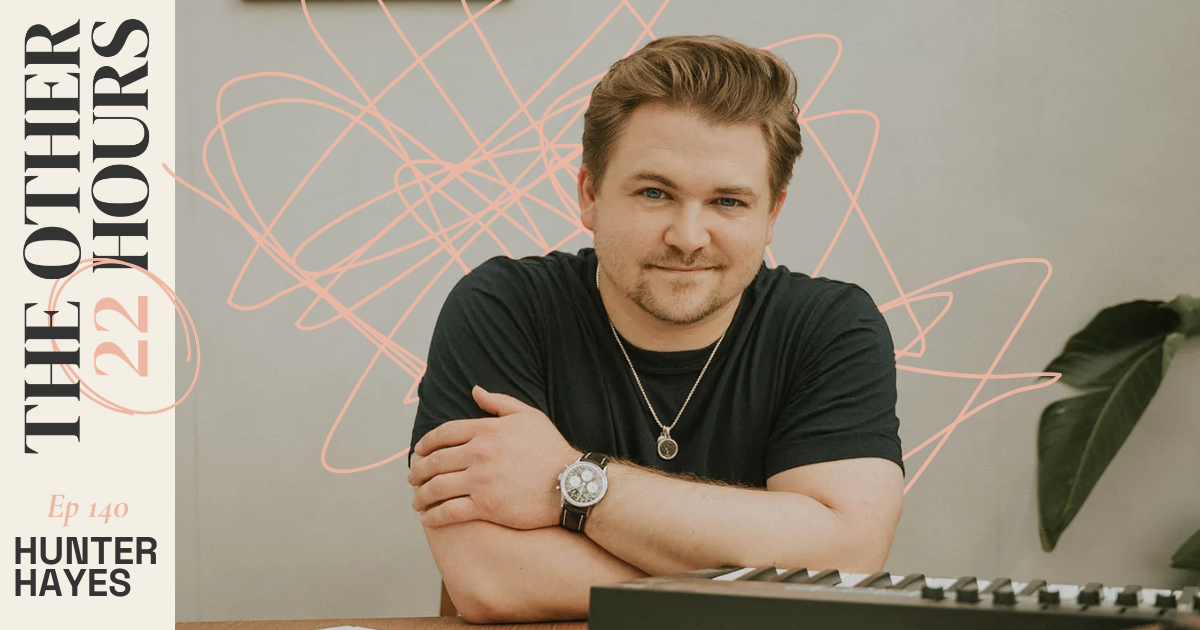
The Other 22 Hours: Hunter Hayes

Five-time GRAMMY nominee Hunter Hayes has spent his entire life on the national stage, from performing at the White House at age seven to sharing stadium spotlights with the likes of Stevie Wonder and Taylor Swift. Yet, behind the multi-platinum accolades was a realization that his professional development had far outpaced his personal life. In this episode of the Other 22 Hours, we explore the vulnerability of “growing up” in the public eye, the paralyzing fear of not being busy, and how a strict routine can actually provide the ultimate freedom to play. And, we chat about how starting from a place of love is the only viable way to build an artistic career that lasts.

LISTEN: APPLE • SPOTIFY • AMAZON • MP3

In This Episode:

Hunter Hayes
Dann Huff
Ep136 – Chely Wright
Ep 73 – Edwin McCain

Go Deeper:

Watch: View this entire conversation on YouTube.
Explore: Find similar conversations in these themed playlists.
Connect: Join the conversation on Instagram.

The Other 22 Hours is hosted by Aaron Shafer-Haiss (producer, mixer, musician) and Michaela Anne (songwriter, artist, creative coach). More about Aaron’s workMore about Michaela Anne’s work.


Produced by Aaron Shafer-Haiss. Original music written, performed and produced by Aaron Shafer-Haiss.

Photo Credit: Noah Tidmore

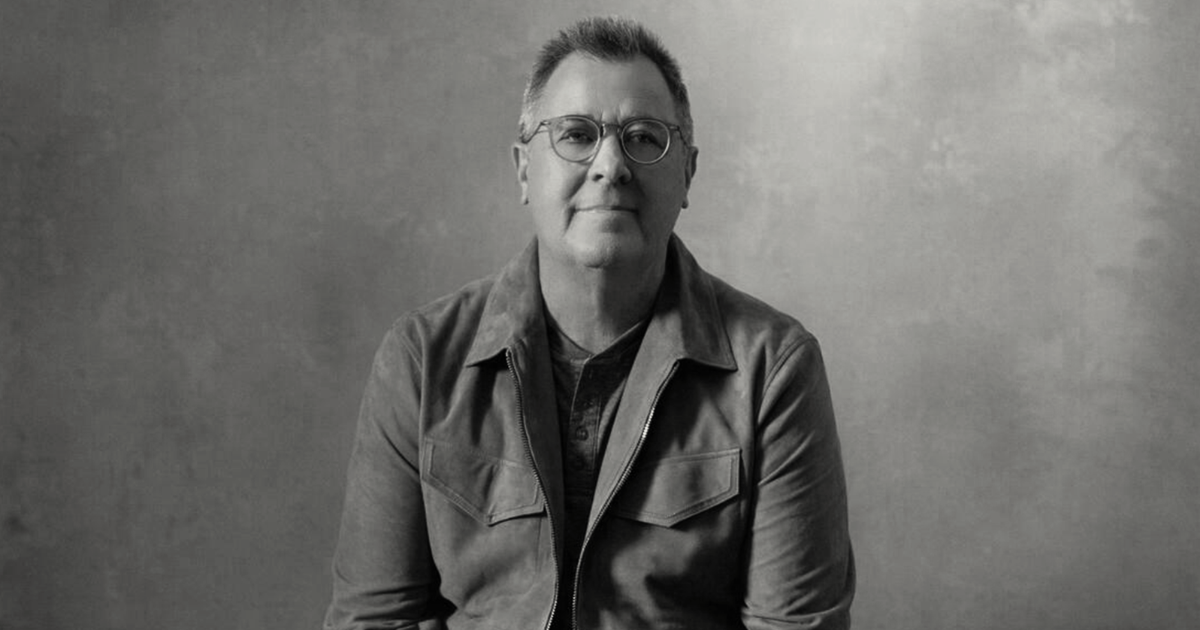
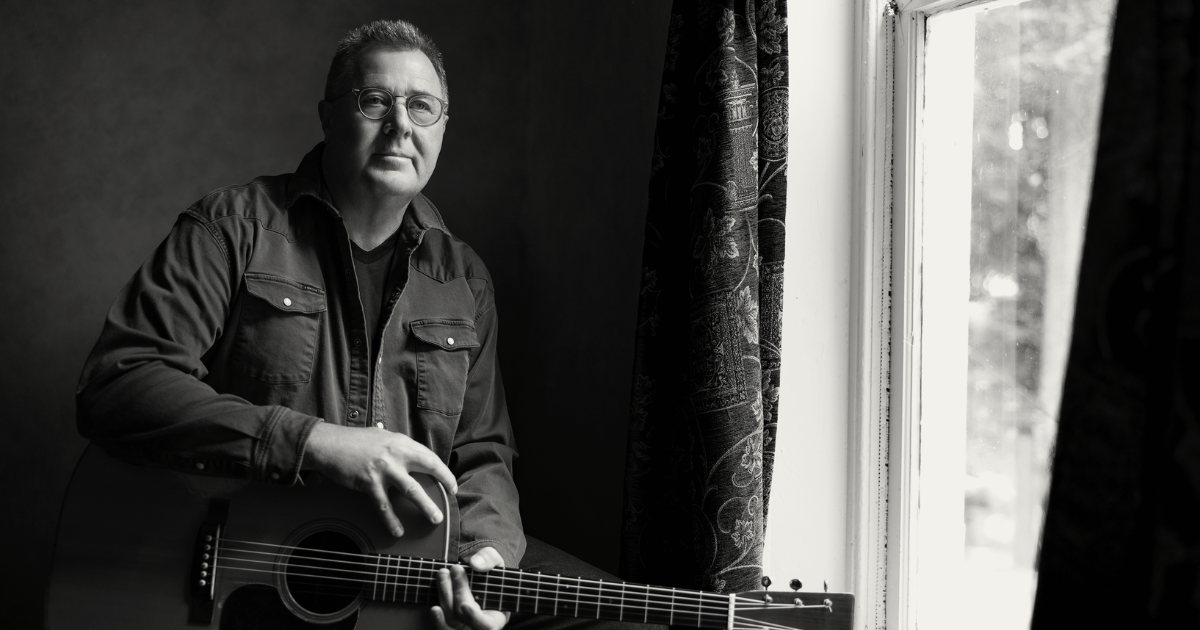
Vince Gill Has Done It All (Part 2)

Poaching from Elvis, well over 50,000,000 Vince Gill fans can’t be wrong.

The longevity Gill discussed in Part 1 of this interview has taken him from bluegrass beginnings to a genre-inclusive 50 years as one of country’s most beloved and sought-after artists.

It’s not always been easy, however. No one, regardless of talent or fan loyalty, is immune from freedom of the keyboard and Gill is no stranger to the highs and lows of public opinion. Mostly it’s outpourings of gratitude from the millions whose lives his music touches. Sometimes it’s claptrap about his now decade-long tenure in the Eagles, or venomous spewing over songs like “March On, March On,” from Secondhand Smoke, the second in his series of retrospective EPs being released monthly.

In Part 2 of his conversation with Good Country, Gill discusses, among other things, the aforementioned decade-long tenure with the Eagles, bullying – with a few choice words for those who inflict it – his scrolling habits, and he indulges us in a rapid-fire round of closing questions.

In the arc of this 50-year project, it is not unnoticed that Hotel California turns 50 this year. Do you have memories of listening to that album as a young man, as you now find yourself onstage playing those songs?

Vince Gill: I had all the Eagles records. We did a lot of their songs in my bluegrass days, and it’s completely surreal. I’m starting my tenth year of being in that band and continuing that legacy of songs. What I value most about getting to play with these guys, what I’ve learned most, is how important songs are – all the notes, all the licks, all the riffs, all that stuff. Getting to relearn that at this stage of life has been pretty profound in the way that I’m trying to write songs. I’m patient in the way I write. I’m patient to wait for it to come – the right words, to not settle on anything, and really edit and work and edit and work and continue to try to be mindful of how important the song is.

What I’m mindful of with the Eagles is the tragedy. More important than the fact that I get to do it is that if Glenn had not passed away, I would not have gotten to do this and I’m grateful I’m the one they called. I met all those guys in, I think, 1980, when I was living [in California]. In a million years, would I have ever thought this would have happened? No. But I am careful of how I couch everything, because it came from something tragic and I am respectful of that.

Glenn was a really good friend of mine, actually, and his son Deacon is doing a great job up there of carrying on his dad’s tradition. I think I’m a great fit for them in the way I play guitar and sing, and sing harmony, and play all the instruments I do. I’m not saying I’m better than anybody else they could have gotten. I’m just saying what I do suits them really well.

Jedd Hughes described you as “one of the greatest band leaders I’ve ever worked with. He’s listening to everything and everyone, always, so you can read his cues pretty easily.” First part of the question: Where did you learn to lead?

Because I’m a musician, I think I come at it different and I operate under the mindset that every note is equal. You’re not more important because you’re the lead singer. You’re not more important because you play the lead solo in the song. I value every note the same. Spending my life in the studio like I have, knowing what you play and do has to sit well and play well with others, you have to listen to everybody else.

It’s amazing what you can accomplish if you don’t care who gets the credit. Sometimes people play only to be noticed and that doesn’t necessarily constitute the right thing for the song. They say in Nashville all the time, “Just serve the song.” That’s all I’ve ever tried to do. If someone’s playing something and doing something, don’t do something to distract it. Do something to enhance it, to support it.

Second part: How does that translate to arrangements and contributions from the musicians you work with?

Great players all listen to each other and you’re dealing with a caliber of musicians that already know what not to do, so you don’t have to waste time going, “Hey, don’t play that, that’s too much, that’s not necessary.” Every time I’m in there playing, I take every note, examine it, and make it move me, make it sit just right.

Once again, if you’re playing with that caliber of people, which I fortunately am – my band is usually made up of a lot of studio musicians and amazing players – they like playing with me because I’m a player, too. I’m not just someone up there singing the songs. So I think I have their respect, and that points you once again towards, “What’s the best thing for the song? What’s the best arrangement idea? What’s the best part to play? What’s the best part not to play?” That’s it in a nutshell.

I’m surrounded by musicians that can all play me under the table, straight up. That’s the truth. I’m grateful to have them, grateful to get to play with them, and it makes for a very democratic spirit. Even in the way we record, I’m not heavy-handed. I’m not telling people what to play. Oftentimes we’ll be in there and they’ll say, “Do you like this?” I go, “I don’t have any idea. I’ve never even heard this song before. I know I wrote it, but we’re in here trying to figure it out, so we’re just going to figure it out all together.”

It creates a great spirit in there if everybody feels like they’re all walking on equal ground, everybody has a right to an opinion, everybody has a right to try something, nobody gets shut down, nobody gets put off. It’s an amazing experience. I don’t ever do demos with my songs. I just write them and then I show them to the guys on the floor. I go, “This is how it goes. Let’s figure it out.” They naturally gravitate towards something great and you just follow them off the cliff! It’s wonderful to watch other people’s gifts.

Earlier you described yourself as “the happiest son of a bitch in the world” who just loves sad songs. In that happiness, however, you have experienced much grief. Your faith is strong. Have you ever lost or questioned it during times of loss?

When I think about faith, I don’t think of it so much [from] the religious point of view. I think faith in humanity – more than Baptist or Methodist, or heaven or hell, or any of that stuff. None of these questions have ever been answered, so to pretend you know the answers seems a little, I don’t know, pretentious almost. That might not be a good word. But, no. It all comes from loving deep. The people I love, I love them deeply. They matter to me.

Music is where I go to grieve. It’s where I go to get through loss. It’s where all those things are. I tell everybody it’s cheaper than therapy. I just write about it.

I never feel the need to fix everything in my life. My relationship with my dad, if it was funky or whatever, I said, “It’s not my place to change him. It’s my job to accept him.” Once I could do that, we had a great relationship. You don’t have to be like me for me to like you. You don’t have to think like I do for me to like you.

I’ve been told more often than not, “Why I like your songs is you are able to say what I wish I could say. You are able to express feelings I have that I don’t know how to.” Maya Angelou sought me out and asked me to come and meet her when she was in Nashville years ago. She told me, “‘Go Rest High’ was a lifesaver to me. It helped me get through the loss of my brother.” Those kinds of things make you go, “I’m going to try to find a way to be emotional about things and not only help myself, but help other people too.” I think if you can portray in a story what someone’s going through, you have a chance to make people feel better.

You can’t name-drop Maya Angelou and just go on to the next question! We need to back up a little bit.

She was speaking at Vanderbilt and wanted to meet. [My wife] Amy [Grant] and I went and afterward we got to go back and say hi. She said, “You mean a lot to me, because your song helped me get through one of the hardest times of my life.” It was a great visit.

You’ve released the fourth EP in your series. Which chapter is this and do you know what’s to follow?

It’s uptempo-y and groove-y, kind of like “Liza Jane” and “One More Last Chance” and some of those fun songs. Each record is, on purpose, similar-driven. The record after this fourth one will be a lot of real country-country stuff, real traditional stuff. The one after that is going to be more like “I Still Believe In You” and “Don’t Let Our Love Start Slippin’ Away,” from a more rocking side. I don’t want to say the word “pop,” but it is. It feels like an Eagles record or a Fleetwood Mac record at times. The inspirations are all in there.

The one after that is real bluesy R&B-ish. Are you hip to Lamont Landers? He’s a soul singer from Alabama. You look at him and go, “There’s no way this voice is coming out of that dude.” He does all these really cool things. I found him and I got him to come and sing on one of my songs that’s coming out later in the year. He’s just such a cool dude. I’ve been trying to turn people on to him.

How did you find him?

Scrolling.

You’re a scroller!

Oh, heavily guilty. I tell Amy it’s my TV now instead of channel surfing. Once in a while you’ll come upon a great young musician, or a great young singer, or a great comedian. There’s so many options, and if you stop on something, it’ll start giving you hundreds of things just like that.

The algorithm gets you.

Yeah, exactly. But it’s entertaining, and I found a couple of people to track down and
have them sing on my record because I like what they do.

What do you scroll?

YouTube, Facebook, Instagram. Most of the stuff is pointless, but there’s a nugget once in a while.

How do you handle the cruelty of social media? It can get to anyone, especially when it’s directed toward you.

It can, if you let it. That’s the life we live in now. You can’t go perform and not have everybody have a camera out and put it up and showing it and seeing it. You have a bad night and everybody’s going to rip you for it. It’s like, “How much negativity can you continue putting out there, saying negative things?” It’s never going to stop, you know that, but it’s still entertaining to read.

I read it to be informed and I don’t mind taking it. I’ve lived with critics being critical of everything I’ve ever done. It comes with the territory. If you’re brave enough to stand up there and speak through a microphone, you know you’re going to get judged to some degree. Once in a while, somebody will say something and I say, “That’s fair. That’s truthful.” Other people will say things and I go, “You don’t even know what the hell you’re talking about, but you have an opinion that’s inflammatory towards me, and you couldn’t be more wrong.” I know that, so it doesn’t have an impact.

Sadly, people have to get on there, the keyboard warriors. They think they finally have a voice. Being able to post and have an opinion, they think that gives them a voice. But in the grand scheme of things, it doesn’t. I know that, so I just take it with a grain of salt and move on.

Perhaps being 68 years old with experience and success makes that easier than for a young person just starting out.

People are still critical of me being in the Eagles. They say, “Now it’s a cover band and you shouldn’t be there,” blah, blah, blah. You know it’s coming, so press on. Say whatever you want. Say it to my face and see what happens to you!

I can’t control any of it. I can control me. I can control my heart, what my heart thinks, what my heart feels. If you hate what I do, that’s okay. A lot of people don’t like what I do. I’m used to that. You’re not going to stop me.

Earlier we talked about hope. I just hope people respond. I don’t mind if they respond negatively. You don’t want that, you’d rather not, but it’s funny how you can get a hundred good reviews on a record and one bad and you only remember the bad one. That’s human nature. It’s not a weakness. It just goes to show how being cruel and negative towards someone has an impact.

I think about the times I was in school and was talked to in a negative way, and how it lasted. I remembered it forever. There was a girl I was in a band with for a little bit. She sang in this choir at the school that was really well thought of, and the choir director told her, “You are wasting your time with that guy and his banjo and bluegrass. He’s a fool.” And I just want to go, “Na-na-na-na-na!” But you remember it. And an English teacher that kicked me out of the class for saying something she didn’t like and painted me a certain way. You remember it.

My own kids, one teacher said to my youngest daughter, “My dog has more manners than you.” Things like that … my hundred-year-old mother is still pissed off about that! She’s still, “I’d like to get my hands on that teacher!” We’ve got a good bit of redneck in us!

I watch my sweet wife take slings and arrows all the time and the way she handles it is so beautiful to watch and so inspiring. It’s helped me do the same thing.

Can you play everything you hear in your head?

Probably. I hope so! It’s funny you brought that up, because being a musician and a singer, people say, “How do you get inspired to sing?” or “How do you get inspired to play?” Well, before I play something, in my head, I’m saying, “How would you sing this?” And when I’m getting ready to sing something, I ask myself, “How would you play this? What kind of rhythm? What kind of phrasing?” All those things.

I think the real difference [between] a good singer and a great singer is the way they phrase. Ray Charles could phrase like nobody’s business. Jerry Lee Lewis, when he sang country songs, could phrase like nobody else. George Jones could phrase like nobody else. You go on and on and look at all the greatest singers, and they’re unique because more so the way they phrased than how many notes they sang.

What is the difference between playing guitar and being a guitarist?

Oh, man. I don’t know if there is. I think it’s the same thing. It all comes from the same heart. It all comes from the same ears. I just play what I think fits. I think that’s what being a great guitarist is – playing what fits.

I saw something the other day that said, “I refuse to name who I think the greatest guitar player is,” and it makes sense to me because there’s no such thing. Everybody goes at it in a different way and has a different spirit about it, has a different way they want to play and statement they want to make. Then it becomes a matter of your preference, of what you like best, that defines what the best guitar player is.

I just like people that are gifted, and people that are musical, and they play what’s in their hearts and what they feel. If you feel it like they do, game over. If you don’t, you move on. Not every great guitar player moves me. It might move you. I think we’re lucky that we can be subjective and not have to all feel the same way about the same things.

Let’s close with a lightning round. Anything goes, whatever comes to mind. An album you wish you had played on.

Hotel California.

A song you wish you had written.

’Till I Gain Control Again” by Rodney Crowell.

A session in which you wish you could have been a fly on the wall.

Together Again” by Buck Owens.

A concert you attended that made your head spin.

Paul McCartney.

A guitar solo you wish you could claim as your own.

Oh, gosh. I might have to go with a Chet Atkins solo, because he’s the first person I ever saw play live when I was a little boy.


Editor’s Note: Check out part one of our Good Country conversation with Vince Gill here.

Want more Good Country? Sign up to receive our monthly email newsletter – and much more music! – direct to your inbox.

Photo Credit: David McClister

Vince Gill Has Done It All (Part 1)

Vince Gill doesn’t give interviews; he gives conversations – lengthy, engaging conversations filled with the same reflection and storytelling that make his songwriting so relatable and successful. Factor in his enviable mastery of guitar and other instruments and the result is a well-rounded artist who has won 18 CMA awards, 22 GRAMMY awards, and eight Academy of Country Music Awards.

In 2025, he was presented with the CMA Willie Nelson Lifetime Achievement Award, and this year, on May 6, he will receive the Ken Burns American Heritage Prize. He’s been a member of the Grand Ole Opry since 1991 and in 2005 was entered into the Nashville Songwriters Hall of Fame. Two years later, he was inducted into the Country Music Hall of Fame.

Over the course of 21 albums his sales exceed thirty million with 45 chart singles. Coming up is a summer tour, which will wrap with a six-night residency at the Ryman Auditorium, while continuing his ongoing schedule with the Eagles. All of this is only a cursory glance at his many accolades.

Gill’s accomplishments, and the experiences that accompany them, are at the core of his latest project, 50 Years From Home, a yearlong series of monthly EPs marking the fiftieth anniversary of his leaving home to pursue a music career. Each collection features themed new songs and revisited classics, with photos of select guitars on the covers. The EPs are introduced via detailed conversations with friend and colleague Charlie Worsham – watch all episodes on Gill’s YouTube channel.

Down At The Borderline, released February 13, is the fourth and latest EP in the series, while the next installment, Lonely’s What I Do, already arrives this Friday, March 13. A few weeks prior to the release of Down At The Borderline, Gill made himself available for more interviews and conversations, including a talk with Good Country.

At this point, it’s difficult to imagine anything Vince Gill hasn’t done. In fact, there are two key things, neither of which he cares to pursue:

“I’ve never sent a text,” he says, “because I prefer talking to people. What you find out [with texts] is how many people really don’t want to talk to you!” And, “I’ve never posted anything on the internet,” although he does have a scrolling habit, which he gladly admitted to during this discussion.

As you move through endless interviews around these EPs, is there something you’ve always wanted to talk about but have never been asked? Now’s your chance to tell the world!

Vince Gill: I wouldn’t have a clue! I never was much of a planner. I think it’s a blessing that I just live in the moment. I don’t look ahead, I don’t look back much, and there’s not a lot of regrets in my life. I figure the mistakes I made were valuable to learn something. I never planned any of this. I didn’t sit down and have a diary that I’d go, “When I’m this age, I want to have done this and this.” I just answered the phone.

You should probably give classes on that, because this is an industry of nonstop worry: What’s going to happen? Will this work? Will this not work? To move from project to project, stage to stage of your career with that mindset is impressive.

I started out with absolutely not one dollar, so money has never been the reason for any of it. I bought a guitar when I was 18 years old and I moved away from home. It was an old pre-war Martin that was perfect for bluegrass. I spent every dime I had on it and I didn’t worry. I said, “My rent’s $15 a month, I’ll make a couple hundred bucks a week when we work, so I’ll be fine.”

Amazing.

Speaking of going from stage to stage of your career, the EPs are each a chapter told with collections of songs. Tell us more.

The majority of it is fairly new. From the time I started in 1975, there was no reason to have a publishing deal for a long time. Even after I had a record deal, I didn’t see the need because I had a place for my songs to land on my own records. I never partnered up with a publisher, to give away half the money, to give a monthly draw to help pay my rent or whatever. I was able to always pay the rent somehow – my house note, whatever it was – with playing and singing.

Three or four years ago, Jody Williams, who’s a lifelong publisher in Nashville and a friend of mine for 40-something years now, called me and said, “You’ve never had a publisher. Would you consider letting me manage your songwriting for a while? I think you still have a lot to say as a songwriter.” I said, “Yeah, I’ll try that out.”

He would call great songwriters and say, “Would you like to write a song with Vince?” I was never a very good self-promoter, so I would never do that on my own. I just let it unfold with people I would meet. So it started me down this path of writing a lot of music, and over the last three or four years I’ve written twice as many songs as I’ve recorded on this new 50 Years From Home project. I think I’m writing the best songs I’ve ever written. With time you should get better, and I think I have.

I don’t want to check out someday and have all these songs lost in a desk drawer somewhere, so I’ve started recording them all. It’s a different world now, a different way. If you want to release 75 songs, you can do it. You don’t have to have one album with 10 songs on it anymore. So I started thinking about what it would be. My first conception was to release two songs a week, like an A-side and B-side of a 45. “It’s Monday, it’s time for a couple new Vince songs.” The record company came up with the idea of, “Why don’t you do a series of EPs and have six or seven songs on each one?” I said, “That sounds cool. We’ll put one out a month.”

That’s where the whole thing started. I was trying to find a way to put all this out. I realize at this point in my life, I’m almost 69, I don’t have as much time left to be creative as I’ve had to this point, obviously. How much more it matters now is palpable. It really means something to me to be creative, and if I see myself improving, I want to nurture and foster that and continue, because it’s so dear to me, being musical, being creative, coming up with an idea, coming up with a story that could potentially move somebody, touch somebody. It’s unbelievable to be able to have that gift, to be able to do that. So I’m trying to take full advantage of it.

But 68 or 69 today is not the 68 or 69 of our parents’ years. When you’re a kid, your parents turn 50 and it seems ancient.

That’s true. My mom’s a hundred years old.

See? You have many more years to go, especially if you’re still 17 in your head, which happens in this business.

Yeah, and I am. I don’t feel any different than when I pulled out of the driveway and took off. I still have the same love and I’m so drawn to playing music. It’s such a huge part of me. I tell everybody, “My mom’s a hundred and I hope I’m really her son, so I have those genes! For all I know, she might have rented me out of a yard in southern Oklahoma somewhere!” But my dad checked out early. He died at 65 – and I was afraid of being 65. There’s so many instances of people passing at the same age as their parents and whatnot.

I’ve heard from others that it’s a strange feeling when you reach the age when a parent passed.

Absolutely. But my dad drank a lot, he smoked two packs a day, and he didn’t take very good care of himself. I don’t think I have too many of those qualities. I don’t smoke and I don’t drink. I eat bad, but that’s about it.

You’ve stated many times that your goal was always to be a recording musician. With reality shows and social media, do young players have that same goal, or is a lot of it about chasing clicks and stardom? Are you concerned about the future of musicianship?

No, because there are plenty of young kids out there that can play their brains out. There’s so many of them that you don’t worry about it. I tell people all the time, “If American Idol was on in 1948, Little Jimmy Dickens would’ve been on it.” I don’t really care for those shows – and not in a bad way, because a lot of talented people go on them – but sadly, you don’t see that really bear out with a lot of artists coming from those shows that have longevity. They have that moment, but we’re so ready to slide our thumb and move on to the next scrolling thing. It’s the same way with those shows: “The season’s over. Okay, who are the new ones?” And I never like seeing creativity be a contest.

But I don’t worry too much. You see someone like Sierra Hull, who can play better than anybody in the whole world, and Michael Cleveland, and so many that come along that can completely annihilate their instruments. It’s beautiful to watch. I don’t think that’ll ever go away.

Does AI-created “music” concern you?

Of course, but when I’m asked about it, I say, “The people who create it, deep down, they know they haven’t done anything. They know they’ve done nothing.”

As a recording and performing guitarist, singer, and songwriter over a lot of years, how has your approach changed? Your technique, your picking style, your ear, your tone?

It’s a combination of all of those things. I’ve spent the latter years realizing what I don’t need, what I don’t need to do, what I don’t need to play, what I don’t need to sing, what I don’t need to say in the lyrics. To me, the beauty of it is your willingness to try to say the most with the least.

I like my singing better now than I did when I had hits. I much prefer the way I sing and play my songs today. That’s motivation enough, that I feel like I’m better now than I ever was. My ears have never lied to me, and with that, if I feel like I’m making progress, that’s all the reason in the world to keep doing it. If I start wheezing like an old woman, I probably won’t wanna go out there and sing. But, thank God, that hasn’t happened yet,

With music, the more you do it, the more you learn. The point of it is not to impress, but to move people. If you can move people with what you play and sing and write, that’s the real gift. That’s when you really get something that matters out of it, rather than a big “Woo, that was incredible! That was impressive.” That’s fleeting in a way. I like the long haul.

I could have very easily stopped working on other people’s records and being a sideman and a harmony singer and guitar player and what have you. But I love doing that so much, because I always thought it was a harder job to complement somebody and what they’re doing, more so than doing what you want and having everybody follow you. It took more talent to do that – better ears, bigger ears, that kind of stuff. So I continue to do that. I’ve worked on over a thousand artists’ records in the last 50 years. The diversity of that, the willingness to go into any kind of world of music and try, and not just be shortsighted and only do this and only do that – I love all of it. I’ll find something good in any of it. If I can play a part in making something better that’s being done, then that’s a good feeling.

Can you draw a through line from your bluegrass roots to what you’ve done and what you do now?

“When I Call Your Name” wouldn’t have sounded like it did had I not played bluegrass. That high lonesome sound was totally taken out of my love and life of bluegrass. A song on one of my new records [Secondhand Smoke, EP 2] is called “Hill People,” with [harmony vocalist] John Meador – great singer, great player, it just blows my mind how good he is. That sounds the way it does, it was written the way it was, because of my history of bluegrass.

I was never one of those guys that [would say], “I can only play bluegrass and it has to be traditional.” I loved New Grass Revival. They were different than Bill Monroe and I loved it all. If you take whatever’s great about something and cast the rest aside, then you’ve done your job. I’m not critical of young people that don’t do it the way I did it, or the way my heroes did it. That doesn’t serve anybody any good, to be critical of stuff. I remember hearing Billy Strings talk about how he would go to jam sessions and felt unwelcomed, and that killed me. I felt so bad for him.

I experienced that once when I was 17. We were playing some bluegrass festival, a hardcore traditional-minded festival. We were up there playing “Rocky Road Blues,” which is a Bill Monroe song, but we were doing it real bluesy. The promoters kicked us out of the festival and said, “You can’t be playing that kind of music!”

As they were kicking us out, Jim & Jesse were playing Chuck Berry’s “Johnny B. Goode.” I said, “Now wait a minute. We’re playing a Bill Monroe song and we’re going to get kicked out, and they’re playing ‘Johnny B. Goode’ by Chuck Berry? What’s cool about that?” They go, “Their suits match. Get outta here!”

I’ve known Sam Bush for 50-something years. The story he tells about Monroe is that he said, “What is it you call that music you play?” Sam said, “We call it New Grass.” He goes, “Yeah, I hate that.” That kills me, but it didn’t impact Sam one bit. But that hardline thing – I don’t go for it.

You’ve said that the role of the artist is to speak for others. Are there songs that speak for you, or to you, in those moments?

I like the things that are the most honest, that are not trying to be something they’re not. I’m not a fan of singers that alter the sound of their voice to make it do something it doesn’t naturally do. I heard Merle Haggard say, “Man, just tell the truth.” That’s where I’m finding the biggest inspiration in songs is being truthful. I think the truth has always been the greatest thing you can lean on.

People talk about country music, and if you could point somebody to what you think country music is, I’d say Merle Haggard’s “Mama Tried.” How it starts– “I turned 21 in prison doing life without parole.” That’s pretty dark. That’s pretty sad. And then, “No one could steer me right, but Mama tried.” There’s your hope.

One thing they’ve never taken away from me is hope. Even though they quit playing my records on radio stations and I don’t have hits anymore, I’m always hopeful that something will slide through and move people. I had hope when I made my first record at 16 or 17 years old, and lo and behold, some radio station played it and I heard it in my pickup truck. That instilled a hope in me that’s never faded. They can pass on songs, they can not play them, they can do all that, but they have never dinged my hope in my heart for what it is that I want to try to do.

Where were you in your truck when you heard yourself on the radio for the first time?

I-40, Oklahoma City. I was driving and all of a sudden they started playing “July You’re a Woman.” It’s a John Stewart song and we’d done a bluegrass version of it. I was singing lead. I think some other bluegrassers had done that same song. I’m driving and all of a sudden they started playing it on the radio station and I get on the CB radio and start screaming, “You’re not going to believe it! They’re playing our record on the radio!” Truckers were coming back saying, “Hey, you sound good, kid! Hang in there.” Wow.

The first record I ever made, I heard on the radio. It put that dose of hope in me that has never faded.


Editor’s Note: Read part two of our Good Country conversation with Vince Gill here.

Want more Good Country? Sign up to receive our monthly email newsletter – and much more music! – direct to your inbox.

Photo Credit: David McClister

Tucker Wetmore Is Buckled Up for the Ride

If you’ve read about Tucker Wetmore or listened to one of his many interviews, chances are the following subjects were lobbed his way: women, whiskey, blondes versus brunettes.

When the “star-maker machinery” that is the business of music collides with media outlets in search of headlines and algorithm rankings, it can make or break a promising new artist by reducing them to a pretty face with a clickbait story angle, the whole time steamrolling over the singer-songwriter at the core.

Tucker Wetmore is keenly aware of this and proceeds with caution. He’s affable enough to play along and astute enough to know the game. Peel back the layers and you’ll find a thoughtful, hard-working artist rooted deeply in faith and family and with a sense of public image versus personal values, carefully monitoring how and what he presents.

With multiple hit singles, award nominations, over a billion streams, product endorsements and campaigns, television appearances, endless interviews, the 2024 breakout Waves on a Sunset EP, and 2025’s unstoppable nineteen-track What Not To, Wetmore is taking it all in with cautious abandon, savoring the wins as they come.

It’s been a long, hard-fought road in a story now told countless times: he grew up in a small town, was raised in the church, brought up by his mother when his father walked out on the family. Music became vital at a young age, athletic prowess and four state titles led him to college, a severe football injury sidelined his career goals. Back home, he again threw himself into music, moved to Nashville in 2020, and pursued his dream.

On January 25, 2026, Wetmore added another victory to his timeline – this one particularly special, as it brought with it a lifetime of memories. He performed the National Anthem at Lumen Field during the halftime show at a Seattle Seahawks game, in front of a stadium filled with cheering fans.

He was still on that high when he spoke with Good Country only days after – and days before the launch of his Brunette World Tour. “It felt like a full circle moment,” he says of the halftime show. “I’ve been to Seahawks games growing up. I’ve been in that stadium, screaming my face off, cheering for the ‘Hawks. But to be on the field and playing my songs in front of thousands and thousands of people was absolutely surreal, especially for something as big as the NFC Championship. I’ve pretty much seen every NFC Championship since I was born. I was super nervous, but we got through it and we didn’t mess up too bad, so it was a good time.”

You have the biggest country debut album from a new artist in 2025. When did you realize that things were really taking off and it was time to “buckle your seatbelt, because this is happening”?

Tucker Wetmore: I’d say even before the album. The first time I felt like that was when Kameron Marlowe was nice enough to bring me on tour. I had one song out and I hadn’t even dropped “Wind Up Missin’ You” yet. I remember getting onstage at that first show and people screaming my songs back to me, singing every word to the songs I had teased [online]. It was absolutely insane. I was like, “I should probably buckle up. This is getting pretty real.” That’s when I knew I might have a chance to do this.

Can you ever be truly prepared for this level of success?

There’s definitely ways to prepare for certain situations, but there’s curveballs thrown at you every single day, so there’s no way to prepare for that. To put it in sports terms, learning how to sit back on the curve, wait for it to cross the plate, swing, and hopefully hit it.

We know about fan reactions to “What Not To,” and people relating to it from the perspective in which you wrote it. Have you also heard from fathers whom that song is hitting as hard because of what they didn’t do?

I’ve heard stories at meet-and-greets, people spending a little extra time telling me about how much that song has helped them cope. But I don’t think I’ve heard anything from fathers having that realization. That’s a touchy subject, and I hope it moves some fathers to want to be better.

All I can do with my music is write what I’m feeling, produce it the way I think it should sound, and put it out to the world for people to do what they will with it. One of my goals with that song was hopefully this changes some viewpoints on some fathers, and hopefully it helps people learn. It’s a “glass half full” kind of song. It’s saying, “Even though these things happened to me in my life, I can learn from this and use everything as a lesson,” instead of, “Oh, poor me.”

Have you ever fallen into that mindset?

I think we’re all human and we all do it. Not in a really long time, though.

I look at life as an opportunity. Whether it’s good or bad, it’s always an opportunity to learn and grow. I don’t [fall into it] so much anymore, but I remember being young and being pretty upset about some of the cards I was dealt. Luckily, my mom’s great and my family’s super supportive, I’ve got the best friends in the world that think the world of me, and I do the same for them. So I’ve got good people around me to keep my head on straight.

You had to grow up early when your dad left. What are some life lessons you took from those years that apply to your life and career now?

Growing up, I had four sisters and a beautiful mother, so it was a lot of women in the house, but it taught me a lot of things and I wouldn’t have changed it for the world.

There’s definitely times where I thought, “It’d be really nice to go out with another male and throw the ball out in the yard.” But looking back at it now, I learned so much about how to care for women, and how to be a provider, at a really young age, even though there wasn’t much I could do back then. Now I’m taking all those lessons and putting them into real life, like providing for my family, taking care of them, making sure they’re good mentally and financially.

A lot of things I learned at a young age are translating into my life now. Down the road, when I do find that special someone, I want kids someday. I want to build a family and do it right. And so I’d say I’m prepared for when that day comes because I know what to do and what not to do.

In an interview with Billboard, you said about music, “It saved me. It helped me. It was my therapy.” Let’s talk about how music helped you and how it continues to do so.

Music is, in my opinion, the best form of therapy. I think it’s God’s gift to us to be able to create and sing along, or dance, or whatever it is, to a tune. Music has shaped my mindset so much. I started playing when I was 10 or 11 years old and it shaped the way I cope with things. Instead of getting angry or upset or sad or frustrated, whatever the emotion is, I sit down at my piano and I just play for 30 minutes to an hour.

Being creative and having that creative mind, it runs fast and it runs 24/7. It’s … not a double-edged sword, but there’s a yin-yang to it. Music is the thing that drives me crazy because my mind can’t shut up and stop. But at the same time, I was in a write yesterday and the energy in the room was so great for four or five hours straight. We were smiling and laughing and creating the song. So music is my escape from what music does to my brain, if that makes any sense. It helps me ease the craziness of my mind.

During those earlier periods, when music, as you said, saved you, how dark was the darkness?

I lean very strongly on my faith, even during the dark times, and we all get them. I’m the happiest man in the world most days, but I still have days where the weight of the world feels like it’s compressing my spine, in a sense. It’s definitely been dark at times, but I lean on faith and I lean on God, and I lean on my music and other people’s music. It’s easy to snap out of when you have those avenues that are so moving to the soul or the mind.

Has there ever been a time when your faith wavered, or when you questioned it?

Yes. In college … it sounds wrong, and I don’t mean it in this way, but I kind of put my faith on the back burner. I was focusing on other things instead of the most important thing. I was playing football, I was partying a lot with my buddies, I was drinking every weekend to escape whatever it is. I still drink, but I do it with a solid conscience and it’s more celebratory now. There’s a fine line of focusing on worldly things and keeping your eye on the bigger picture of faith and the blessings that God has for us, because there’s so many.

You are giving a portion of ticket sales from this tour to Face The Fight, supporting suicide prevention and mental health treatment for veterans. Why is this the organization you selected to promote and help?

The first time meeting them, I turned to my manager and I was like, “I want a part of this. Let’s find a way to do something.” We put our minds together and it was, “What if we do ticket sales?” I was like, “Yes, a hundred percent.” It’s a huge thing for me because I’ve got a lot of veterans in my family, a lot of men that served and that have given their life on the battlefield.

My grandpa was like my father figure a lot growing up. He ended up taking his life five years ago. He was a very decorated veteran and one of the best people I’ve ever met, but even though it was so many years later, he couldn’t win that battle in his mind.

I think it’s super important to not just shine a light on it, these people that have given so much for our country and the people in it. It is such a selfless act, especially in the heat of war, when you’re fighting for people that you don’t even know, and doing things that no human should do, in my opinion. And then to come home, and 20 or 30 years down the road you’re still thinking about it, and still in that mental space of, “I can’t escape my mind.”

What [Face The Fight] is doing is amazing. It’s a blessing to be a part of. I think if my grandpa had an avenue like that, or knew of an avenue like that, maybe he’d still be here.

In an interview or podcast, you mentioned that you read the comments–

Sometimes.

You must have a really thick skin, because that can wear a person down.

There’s a lot of keyboard warriors out there. I can read the worst comment in the world and it doesn’t get under my skin at all. At the end of the day, I know who I am. The irony behind it is most of the people saying heinous and nasty things online have never created a song. They’ve never sung a tune. They’ve never sat in a room at 3 a.m. because they can’t sleep and put all their feelings on a piece of paper and tried to put a melody behind it. They don’t get it. They see things at surface level. I’m not going to bash on them or say it’s their fault for that. There’s irony behind it and that’s all I take it as. It’s funny to me. It’s almost comical at times.

@tuckerwetmore This one is getting loud live.. #songofthesummer ♬ Brunette – Tuck

I heard you use the words “build your brand” during a podcast. There’s a lot of image in this industry: wear the tight jeans, pose with your shirt up – you know what I’m talking about. How do you make sure this doesn’t overshadow the craft? As a new artist, do you have the autonomy to say no, to not answer a question, to stop an interview, to not want to take this picture?

While building a brand, and while creating something that is larger than yourself, it is more important to say no than it is to say yes. I definitely have the autonomy of saying no, and I do say no to a lot of things that come across the table. It’s saying yes to the correct things that align with not just the goal of what we’re trying to build, or the pillars that we are building it on, but morally. I account for my faith in pretty much all the decisions I make.

If I could give advice to any artist coming up – and I’m still making my way there – my biggest piece of advice is, “Say no to things that don’t feel right or don’t make you look like you.” I think I’ve done that pretty decently. At the beginning it’s really hard to say no to things, because you want every opportunity there is. But now I’m saying no to a lot more, saying yes to the correct things, and trusting my people. They know who I am and what we all want to build together, and it makes it a little easier.

Earlier you mentioned people reacting to song teasers. Before this career explosion, was there pressure to keep up when “everyone” is teasing songs on social media and the algorithm is bombarding people? It can turn into artists chasing numbers, which can also affect your mental health. How did you ride that storm without falling victim to it?

The grace of God, honestly. That’s a tough thing. It’s easy to compare yourself to others, based on a numerical scale of, “This got a million views, and I just posted one that’s got 150,000, it’s not being shared.” It’s very easy to get into that comparison mindset, but I do think it’s important to keep posting your stuff. Luckily, I’m getting to the point where I don’t have to post all the time. Posting is one of the most taxing things to my brain. I can’t stand just sitting there and making TikToks or taking photos or whatnot.

I realize the weight that a viral video can hold to your career and to a certain song or a project. It’s an easy way for millions of people to engage with what you’re trying to create. It’s a great tool. That’s the word I’ll use for it: social media is a tool. Some people idolize it and can’t go through their day without it. I look at it as a tool for people to share my music and hear my music and get excited about the things I’m trying to do.

We can’t do this without talking about your mother. She is such an integral part of your life and your career. Without her support, how different would your trajectory have been?

I don’t think there would be any trajectory at all, honestly. After I got injured playing football and dropped out of college, I was living back home. I remember having that conversation with her. I was like, “Mom, I really want to chase this music thing.” It was like a sigh of relief from her, in a sense. Her shoulders went down, she took a deep breath, she goes, “Finally. Finally. I’ve been telling you this for years now.”

She helped me pack up all my stuff and move, and she supported me financially the first couple years of me moving to Nashville. I would be living on the street if it weren’t for her – metaphorically living on the street, because she would never let me do that. She believed in me before I even had good songs. She believed in my work ethic and my mind and my creativity. One of the biggest blessings God has given me is a mother who cares and wants to see her kids succeed in whatever dream they have.

And now she’s doing podcasts and talking about your childhood.

Yeah. Somebody needs to rein her back a little bit!

You love being on the lake. Is water also a form of therapy for you?

Oh, a hundred percent. I grew up in a super small town, Kalama, Washington. Because it’s built up on a hill, pretty much wherever you are, you can see the Columbia River. I spent so much time on that river, or on the Kalama River, or at the lakes surrounding. I feel happiest when I’m at the ocean or at the islands.

I’ve got a lake house in Nashville and it’s a great escape for me to go back home and be able to sit there and look at the water. It helps not just my creative mind, but [also] my mental health. Another thing God has given us as natural therapy is the beauty of a body of water. It’s the most simple thing in the world, but I do not take it for granted.

Is it a spiritual place for you as well, a natural church?

Yeah. Anything can be a church, as long as you’ve got the spirit in it!

What’s on your heart as you’re getting ready for this tour?

Excitement. It’s been a couple months since I’ve toured and I’m itching and eager to get back to it. I’ve had a great break. I’ve had a very creative break. I finished writing my second album yesterday. Obviously, things change and I get new thoughts or whatever, but right now I feel pretty confident in the songs we got, and I’m excited to get back on the road and maybe tease or play some of these new ones and see how people like them.

And I’m excited to just be on the road. I feel most alive when I’m in the craziness of it all. It does get taxing at times, but it’s truly a drug to not just me, but pretty much all my artist buddies. It’s a feeling you can’t really explain, getting up on a stage in front of thousands and having people scream your creations back to you. It’s the coolest thing in the world. I’m excited to see the fans and be with my band, my crew, and my team. It’s a family that we’ve built, and it’s going to be cool. I’m excited.

Since you brought it up, before we close, what can you tell us about the next album?

It is sonically one of the coolest things I’ve heard in a long time. I don’t want to give too much away. I’ve been doing a lot of thinking about what I want this next record to be for the last year already. I think about what I get in my truck and listen to, and I’m kind of an older soul. So it’s very ‘70s-influenced and early ‘80s, with the guitar tones and drums and weird, synth-y sounding steel guitar licks. It’s really cool and it’s fresh, and I don’t think anybody’s really doing it right now, which I’m excited about but which is also scary, because I don’t know how people are going to feel about it because it is different.

I was thinking about this yesterday, actually: “Proving Me Right” is the perfect bridge into this next chapter, sonically. It’s not too far leaning over there, but it’s still got the old tendencies in it. If you were to listen to anything that gets you excited about this next record, I’d say “Proving Me Right” is a great start.


Want more Good Country? Sign up to receive our monthly email newsletter – and much more music! – direct to your inbox.

Photo Credit: Chase Foster

You Gotta Hear This: New Music From Tenille Townes, Mac Cornish, and More

It’s Friday and it’s new music time! We’ve got a few things on the slate that you simply gotta hear.

Starting us off, quickly rising bluegrass up-and-comer 16-year-old Asher Brinson gives us a sneak preview of his upcoming single, “Midnight Hurricane,” the title track for an album the young songwriter and picker has set for release in early April. “Midnight Hurricane” features Sierra Hull on mandolin and Lindsay Lou on vocals – and Brinson more than holds his own among the talented roster on the track.

Also in bluegrass sounds, Jesse Smathers turns the clock and calendar back to the primordial musical ooze before bluegrass with his rendition of “Take A Drink On Me.” The track was inspired by Charlie Poole and the North Carolina Ramblers, with whom Smathers shares a hometown. As the artist and mandolinist puts it, “This tune is a prime example of early popular dance music” – the kinda stuff that inspired the earliest bluegrass artists like Bill Monroe, Earl Scruggs, and many others. In the hands of Smathers and his band, it’s a bluegrass song fit for any era.

There’s Good Country to enjoy below, as well. Mac Cornish unveils a new track, her cover of Ian & Sylvia’s “Trucker’s Cafe.” You can almost catch the glint of bright sunshine off a chromed truck stop diner listening to the tune, lush with pedal steel and honky-tonkin’ guitar. The boot scootin’ track was recorded in Nashville and produced by Andrija Tokic.

To round us out, Tenille Townes returns to the site with “The Acrobat,” a contemplative and resonant song featuring another of our favs, Lori McKenna. “When you’re barely hanging on it’s easy to let go,” Townes sings, her voice rich with emotion and conviction. The song is the title track for Townes’ upcoming album, set for release in April, and is a fitting nexus point for the LP. “After losing my way for a while,” Townes shares with BGS, “this song felt like such an important anchor for this album.” You can watch the brand new music video for “The Acrobat” below.

Take a scroll and enjoy your listen – You Gotta Hear This!

Asher Brinson, “Midnight Hurricane”

Artist: Asher Brinson
Hometown: Newport, North Carolina
Song: “Midnight Hurricane”
Album: Midnight Hurricane
Release Date: March 6, 2026 (single); April 3, 2026 (album)

In Their Words: “When Chris Henry and I got together to write, I told him I was having an ‘off’ day and he said to let it flow – say whatever was on my mind. Those thoughts became the first line of ‘Midnight Hurricane.’ Growing up on the North Carolina coast, hurricanes have always just been a part of my life. And it seemed like they always hit at night! Midnight is quiet, but your thoughts aren’t, and hurricanes are like that — all of your feelings hitting at once. It’s a love story wrapped in chaos and after the storm, there’s a calm that makes you appreciate what’s steady and real. With Sierra Hull on mandolin and Lindsay Lou on vocals, this song instantly became one of my favorites. I feel like they both added just the right touch. While hurricanes unfortunately bring destruction, they also have a way of bringing people and communities together… to uplift each other, support, and rebuild.” – Asher Brinson

Track Credits:
Asher Brinson – Guitar, lead vocal
Cory Walker – Banjo
Jason Carter – Fiddle
Christopher Henry – Bass, baritone vocal
Sierra Hull – Mandolin
Lindsay Lou – Tenor vocal


Mac Cornish, “Trucker’s Cafe”

Artist: Mac Cornish
Hometown: Currently Nashville, Tennessee, but grew up in the Bay Area, California
Song: “Trucker’s Cafe”
Release Date: February 27, 2026

In Their Words: “This single is a cover of the Ian & Sylvia song, ‘Trucker’s Cafe.’ The song is from their 1969 record, Great Speckled Bird, which they also used as the name of their newly formed band, including the likes of Buddy Cage and David Briggs. Ian and Sylvia are a huge influence on me because of their blending of folk, rock ‘n’ roll, and country – especially on this album and this song. The song is a subversive take on the trucking country fad of the 1960s and ’70s, taking the perspective of a heartbroken truck stop diner waitress. The vocals are distinctly folk with their vibrato and falsetto, but the instrumentation is all rockin’ country goodness with walking bass and ripping pedal steel. I’ve always said that the best year in music was 1969. This is one of the many songs I absolutely love from that year in music and it only felt right to record a cover and honor my influences. My cover was recorded in October of 2025 at the Bomb Shelter in Nashville, TN and was produced by Andrija Tokic.” – Mac Cornish

Track Credits:
Mac Cornish – Vocals, acoustic guitar
Charlie Fuerstch – Electric guitar
Jeff Taylor – Piano
Cooper Dickerson – Pedal steel
Jack Lawrence – Bass
Dave Racine – Drums


Jesse Smathers, “Take A Drink On Me”

Artist: Jesse Smathers
Hometown: Floyd, Virginia
Song: “Take A Drink On Me”
Release Date: February 27, 2026
Label: Mountain Home Music Company

In Their Words: “Though my familial roots are deeply planted in Western North Carolina, I was raised in Eden, NC – the home of Charlie Poole. I spent my youth picking and competing at the Charlie Poole Festival there. The festival was held at Morehead Park, on the same grounds where the cotton mill Poole used to work at once stood. I heard the music of Charlie Poole and the North Carolina Ramblers ringing throughout my childhood. He, along with his bandmates, were some of the most prominent precursors to bluegrass stylings that came nearly 20 years later. Tales of Poole, Posey Rorer, and Norman Woodlief are still being told today, as you would expect, with larger-than-life personalities and musicians.

“I often imagine this scene: walking down Morgan Road in Spray (one of three small communities that made up Eden) in 1926 as a bystander and hearing the centric bounce of Piedmont Mill music in the distance. As I approach, I witness the North Carolina Ramblers sitting on a stoop sharing tunes and a jug of the best white liquor that the area along the NC/VA line is so notorious for. That sight is exactly what came to mind when recording this tune and what comes to mind when I hear it back. This tune is a prime example of early popular dance music. Hunter Berry on fiddle masterfully captured the necessary musical essences all while integrating his own spontaneous and playful liveliness. The same can be said of Corbin Hayslett who mixed in popping Charlie Poole banjo techniques. Whether it’s a Coke, glass of tea, a beer, or a jar of Shooting Creek’s finest, all you rounders get ready to party and ‘Take A Drink On Me’!” – Jesse Smathers

Track Credits:
Jesse Smathers – Guitar, lead vocal
Hunter Berry – Fiddle
Corbin Hayslett – Banjo
Nick Goad – Mandolin, harmony vocal
Joe Hannabach – Upright bass
Patrick Robertson – Harmony vocal


Tenille Townes, “The Acrobat” featuring Lori McKenna

Artist: Tenille Townes
Hometown: Grande Prairie, Alberta, Canada
Song: “The Acrobat” featuring Lori McKenna
Album: The Acrobat
Release Date: February 27, 2026 (single); April 10, 2026 (album)

In Their Words: “There’s an underlying whisper in this song saying you don’t have to make yourself smaller anymore, and it is my greatest hope that someone hearing this could believe it’s true. I have been navigating a return to self season in my life and reclaiming the belief that I don’t have to contort myself to fit what anyone else needs. After losing my way for a while, this song felt like such an important anchor for this album. Writing this song through the lens of a character helped me to hold enough distance from myself to be able to write the truth, and name the quiet damage that comes from performing, instead of just being.

“Lori McKenna has been a compass influence for me and it’s an honor to have her singing on this song we wrote together. I love how she enters the recording on the line about the fortune teller with all her knowledge, because Lori has been that voice of wisdom for me for years through her songs. The honesty in her lyrics and the way her voice holds emotional tension has given me permission to explore that kind of vulnerability in my own writing. I’m grateful for our friendship, and for the opportunity to share a love for the craft of a song with someone I am still so inspired by.” – Tenille Townes


Photo Credit: Tenille Townes by Madison Rensing; Mac Cornish by Mandi Fountain.