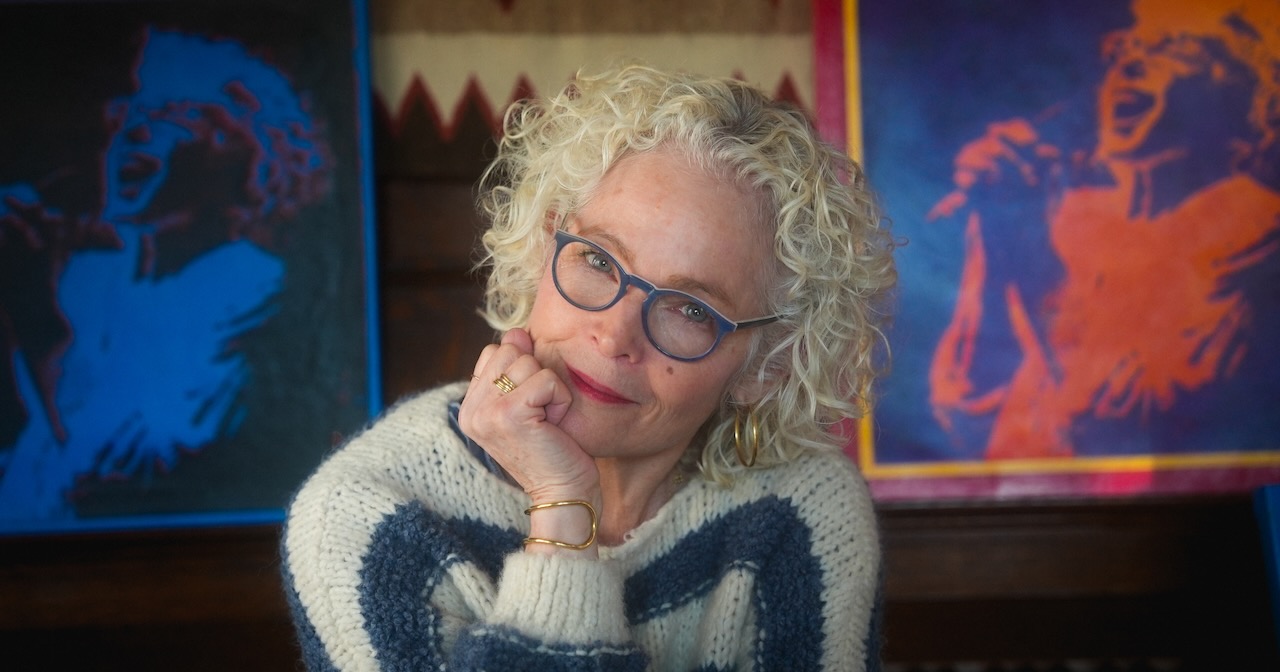
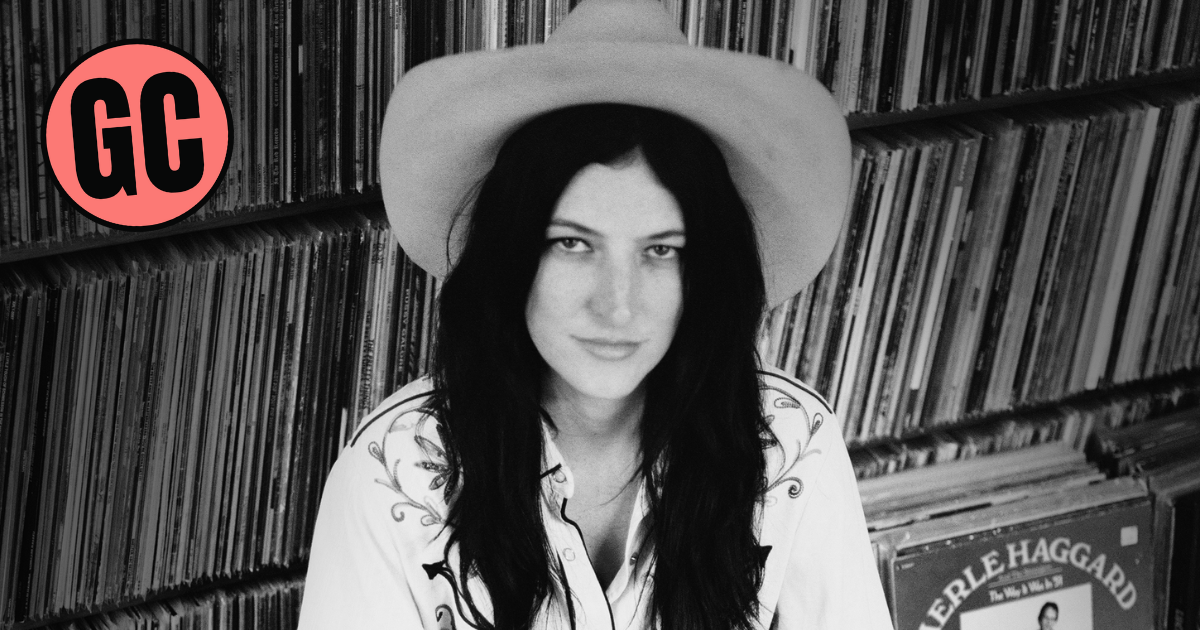
Artist: Amy Irving Hometown: San Francisco, California Latest Album: Always Will Be (out April 25, 2025)
What has been the best advice you’ve received in your career so far?
I’ve been an actor all my life. I began on this new path, making music with the band GOOLIS, a few years back. And I’ve been learning so much from them, especially our band leader Jules David Bartkowski.
I remember going into the studio to record our sophomore album, Always Will Be, and Jules suggested I improvise some. Well, let me tell you, as an actress, I had been traumatized in acting school improv class. I was never comfortable acting without a script. I’ve always considered my gift was in interpreting playwrights’ words. So, when I sang, I followed the notes exactly. But Jules and Aaron, our keyboardist, insisted that I try. I complained my mistakes would be so loud and they replied, “Oh yeah, Amy, we never make mistakes here.” Okay, I got it. I did it. And now you can’t keep me down on the farm.
What rituals do you have, either in the studio or before a show?
Before every show, after sound check, I retreat to my dressing room, to meditate and rest my voice. It’s a time to conserve my energy. I eat some protein that will not talk to me on the stage. Half a beta blocker keeps my hands from shaking. I do a vocal warmup, either alone with a taped class or over FaceTime with my wonderful vocal coach, Celeste Simone. Gabriel Barreto, my son and manager and record producer and photographer, then digs his elbows into my tight shoulders. When it’s five minutes to showtime, I usually run to the bathroom and have to throw up (yes, I get terrible stage fright), knock back a shot of tequila, then Jules leads us all in an exercise of shaking all the tension from each part of our bodies.
Genre is dead (long live genre!), but how would you describe the genres and styles your music inhabits?
Working with bandleader Jules is a thrill, because our music covers so many genres, once he decides on his arrangements. He has taken the songs of Willie Nelson and transformed them from punk rock to samba.
Broadly speaking, Jules was going for a kind of golden age of mid- to late-century global pop/rock approach. To offer a more specific example: the first song of the record Always Will Be, “Dream Come True,” was, for Jules, an attempt to channel 1960s Italian rock acts like Mina and Adriano Celentano, while throwing in some Vegas-style late Elvis maximalism and some doo-wop baritone sax. On the song “Getting Over You,” he was trying to find an intersection between The Clash and The Supremes. On “Everywhere I Go” he was trying to mix the Mexican influence of the original with the connected worlds of Klezmer and Balkan music and 1970s Ethiopian jazz.
Since food and music go so well together, what is your dream pairing of a meal and a musician?
I’d like to eat foie gras and fig jam on a baguette with a glass of pinot noir while Édith Piaf sings to me “Non, je ne regrette rien.”
Does pineapple really belong on pizza?
I think anything goes. I remember a long time ago when Wolfgang Puck first opened Spagos on Sunset Boulevard in Los Angeles, I was appalled to see “Jewish Pizza” on the menu. Well, it was smoked salmon and cream cheese pizza and I’m here to tell you it was delicious!
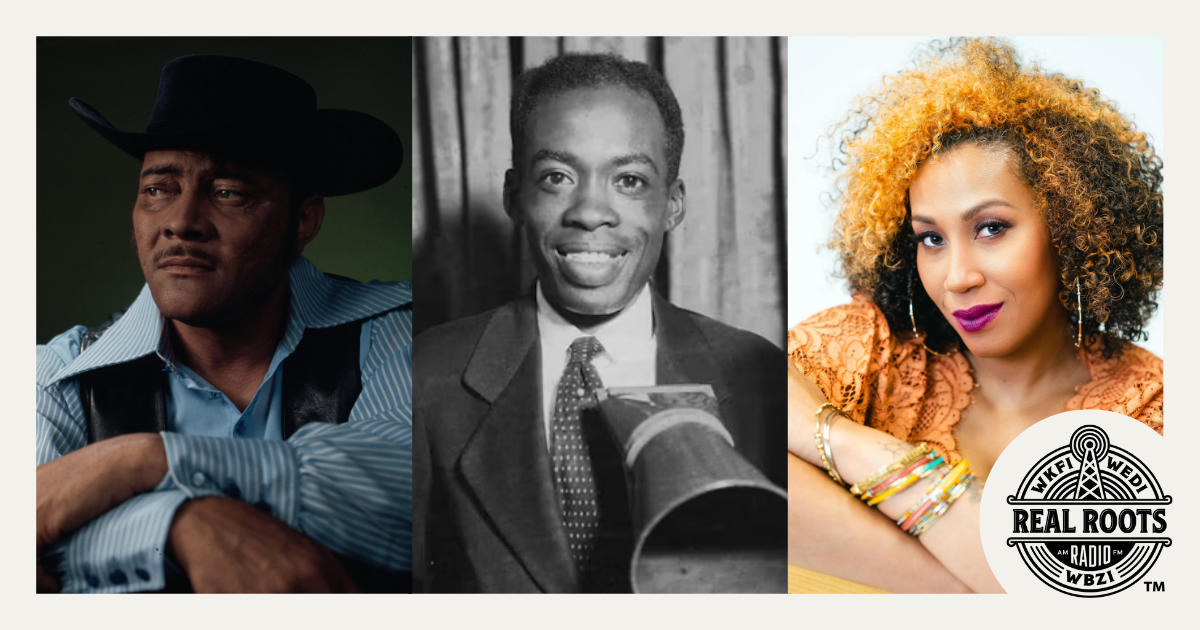
To celebrate Black History Month – and the vital contributions of Black, Afro-, and African American artists and musicians to American roots music – BGS, Good Country, and our friends at Real Roots Radio in southwestern Ohio have partnered once again. This time, we’ll be bringing you weekly collections of a variety of Black roots musicians who have been featured on Real Roots Radio’s airwaves. You can listen to Real Roots Radio online 24/7 or via their FREE app for smartphones or tablets. If you’re based in Ohio, tune in via 100.3 (Xenia, Dayton, Springfield), 106.7 (Wilmington), or 105.5 (Eaton).
American roots music – in any of its many forms – wouldn’t exist today without the culture, stories, skills, and experiences of Black folks. Each week throughout February, we’ll spotlight this simple yet profound fact by diving into the catalogs and careers of some of the most important figures in our genres. For week two of the series, RRR host Daniel Mullins shares songs and stories of Stoney Edwards, Rissi Palmer, Keb’ Mo’, Tina Turner, and DeFord Bailey. Check out the first week of the series here.
We’ll return each Friday through the end of the month to bring you even more music celebrating Black History and the songs and sounds we all hold dear. Plus, you can find a full playlist with more than 100 songs below from dozens and dozens of seminal artists, performers, songwriters, and instrumentalists from every corner of folk, country, bluegrass, old-time, blues, and beyond.
Black history is American roots music history; the two are inseparable. As we celebrate Black History Month and its legacy, we hope you’ll join us in holding up and appreciating the artists who make country, bluegrass, blues, folk, and Americana the incredible and impactful genres that they are today.
Stoney Edwards (1929 – 1997)
If you don’t know the late, great Stoney Edwards’ name, it’s time to fix that – because his story in country is as powerful as the songs he sang.
Born Frenchie Edwards in Seminole Country, Oklahoma, in 1929, Stoney was part African American, Native American, and Irish. The son of sharecroppers, he was a prominent bootlegger in Oklahoma during his younger years. Stoney had dreams of playing the historic Grand Ole Opry. His big break in music would come later in life, in his early 40s, when he was discovered in California singing his honky-tonk style at a benefit for the King of Western Swing, Bob Wills.
Stoney was signed to Capitol Records in the early ’70s and from there he made history. He scored fifteen charting singles, including a pair of Top 20 hits, one of which – his 1973 hit “She’s My Rock” – is still revered as a bona fide country standard later covered by artists like Brenda Lee and George Jones. His songs were deeply authentic, whether he was singing about love, loss, or his own experiences growing up poor and Black in America. He gave a voice to the underdog, often drawing from his own struggles, including battling discrimination and working blue-collar jobs before music. Edwards would also record several songs saluting his country heroes over the years, including “The Jimmie Rodgers Blues,” “Daddy Bluegrass,” and his Top 40 hit, “Hank and Lefty Raised My Country Soul.”
Stoney’s music wasn’t just about catchy melodies; it was about storytelling. His debut single was inspired by a true story. Before he hit it big as a country singer, Stoney was trying to provide for his family working as a forklift operator at a steel refinery in San Francisco. A workplace accident resulted in Edwards being sealed up in a tank and suffering dangerous carbon dioxide poisoning; he endured an extensive two-year recovery, both physically and mentally. During this time, Stoney was struggling to care for his wife and children, so he planned to leave in the middle of the night. However he tripped over one of his daughter’s toys, and it prompted him to stay. In 1970, backed by the virtually unknown Asleep at the Wheel, Stoney Edwards released his debut single, the autobiographical “A Two Dollar Toy.”
While his career didn’t reach the same commercial heights as some of his peers, Stoney Edwards left an indelible mark on country music. He paved the way for greater diversity in the genre and showed that country music is for everyone – no matter where you come from or what you look like. Stoney Edwards passed away from stomach cancer in 1997 at the age of 67.
She’s a trailblazer in country music, a voice for change, and an artist who refuses to be boxed in – meet Rissi Palmer!
Palmer’s mother passed away when she was just seven years old, but she instilled in her a love for the music of Patsy Cline. Rissi would burst onto the country scene in 2007 with her hit single, “Country Girl,” making history as one of the few Black women to chart on the Billboard country charts. Rissi has built a career on breaking barriers by blending country, soul, and R&B into a sound all her own. She has penned some empowering original songs, helping folks on the margins feel seen, especially her most personal song, “You Were Here,” dealing with the heartbreak of a miscarriage.
Beyond the music, Palmer uses her platform to uplift underrepresented voices in country and roots music. As the host of Color Me Country radio on Apple Music, she spotlights Black, Indigenous, and Latino artists in country music – proving that the genre belongs to everyone. With her powerful voice and unwavering spirit, Rissi Palmer isn’t just making music, she’s making history.
Keb’ Mo’ is a modern blues legend. Born Kevin Moore, this L.A. native blends Delta blues with folk, soul, and a touch of country. With his smooth vocals and masterful guitar skills, he’s kept the blues alive for over four decades.
Mo’ is heavily influenced by the late Robert Johnson, who preceded Keb’ by about 60 years. Keb’ portrayed Robert Johnson in a 1998 documentary and included two Johnson covers on his breakthrough self-titled album in 1994. He has since won five GRAMMY Awards, collaborated with legends like Bonnie Raitt, Jackson Browne, and Taj Mahal, and performed for multiple U.S. presidents.
Mo’ is embedded in country and Americana music as well, working with cats like Lyle Lovett, Old Crow Medicine Show, John Berry, Alison Brown, Jerry Douglas, and Darius Rucker over the years. He has been quick to share his respect for country and gospel traditions, appearing on the critically acclaimed all-star album, Orthophonic Joy, recreating the magic of the 1927 Bristol Sessions – country music’s big bang.
Whether he’s playing a heartfelt ballad or a foot-stomping blues groove, Keb’ Mo’ keeps the genre fresh and timeless. His music isn’t just about the past – it’s about where the blues is going next. We love his passion for all things American roots music. Fifty years into his remarkable career, Keb’ Mo’ is still one cool cat.
She was the Queen of rock ‘n’ roll, but did you know Tina Turner had deep country roots?
Born Anna Mae Bullock, she grew up in Nutbush, Tennessee. Tina recalled picking cotton as a youngster during her hardscrabble rural upbringing. Her musical journey began by singing at church on Sunday mornings. She grew up on country, gospel, and blues. Turner and her husband, Ike (who was abusive towards her) had massive success in R&B and rock and roll, but her first solo record was actually a country album.
In 1974, Turner released her debut LP, Tina Turns The Country On!, introducing herself as a solo act. Featuring top musicians, including Country Music Hall of Famer James Burton on guitar, Tina tackled songs from country greats like Dolly Parton, Kris Kristofferson, and Hank Snow. It would go on to receive a GRAMMY nomination for Best Female R&B Vocal Performance in 1975. Over the years, unreleased songs from this groundbreaking album would be dropped, including her powerful take on “Stand by Your Man.”
However, her most enduring impact on country might be as the inspiration behind one of the outlaw movement’s most popular hits. In 1969, Waylon Jennings was staying at a motel in Fort Worth, Texas, when he saw a newspaper ad about Ike & Tina Turner that intrigued him enough to interrupt Willie Nelson during a poker game so they could write a country classic. The phrase that struck Waylon heralded Turner as “a good hearted woman loving a two-timin’ man.” Sound familiar?
From honky-tonks to stadiums, Tina Turner’s fiery spirit left an unforgettable mark on practically every genre – country, rock, and everything in between.
Let’s go back to the early days of country to a name that shaped the Grand Ole Opry, but is often forgotten: DeFord Bailey, “The Harmonica Wizard!”
Born in 1899 in Smith County, Tennessee, Bailey grew up around banjos and fiddles in a musical family, saying that he learned the “Black hillbilly music” tradition. He overcame polio as a child, resulting in his short stature – he was only 4’ 10” tall – but it was through this ordeal that he found his voice in a harmonica. While recovering from the disease, he was bedridden for a year, and learned to mimic the sounds he heard outside on his harmonica: trains, animals, and the rhythms of life.
In 1927, Bailey became one of the first stars of the Grand Ole Opry on Nashville’s WSM, dazzling crowds with hits like “Pan American Blues.” He was actually the first artist introduced after George D. Hay referred to WSM’s Barn Dance as the “Grand Ole Opry” for the first time to poke fun at NBC’s classical Grand Opera. Bailey would also become the first artist to record in Music City. His hits like “Fox Chase,” “John Henry,” and “Evening Prayer Blues” captivated radio audiences, making him one of the Opry’s most popular performers. He would tour with other stars like Roy Acuff, Uncle Dave Macon, The Delmore Brothers, and Bill Monroe, but would often not be allowed to stay in the same hotels or eat at the same restaurants as his white contemporaries due to Jim Crow laws.
In 1941, DeFord Bailey was unceremoniously fired from the Grand Ole Opry under suspicious circumstances. He would make his living shining shoes in Nashville and would not perform on the Opry again until 1974, the first of only a handful of final performances on the radio program which he helped grow during its infancy, before his passing in 1982.
The Grand Ole Opry would eventually work to reconcile its mistreatment of its first Black member, issuing a public apology to the late DeFord Bailey in 2023 with his descendants on hand. Old Crow Medicine Show was there to celebrate the occasion, performing their tribute song to Bailey led by black percussionist Jerry Pentecost, entitled “DeFord Rides Again.”
In 2005, Bailey was rightfully inducted into the Country Music Hall of Fame and over 40 years since his passing, he is still recognized as the Harmonica Wizard.
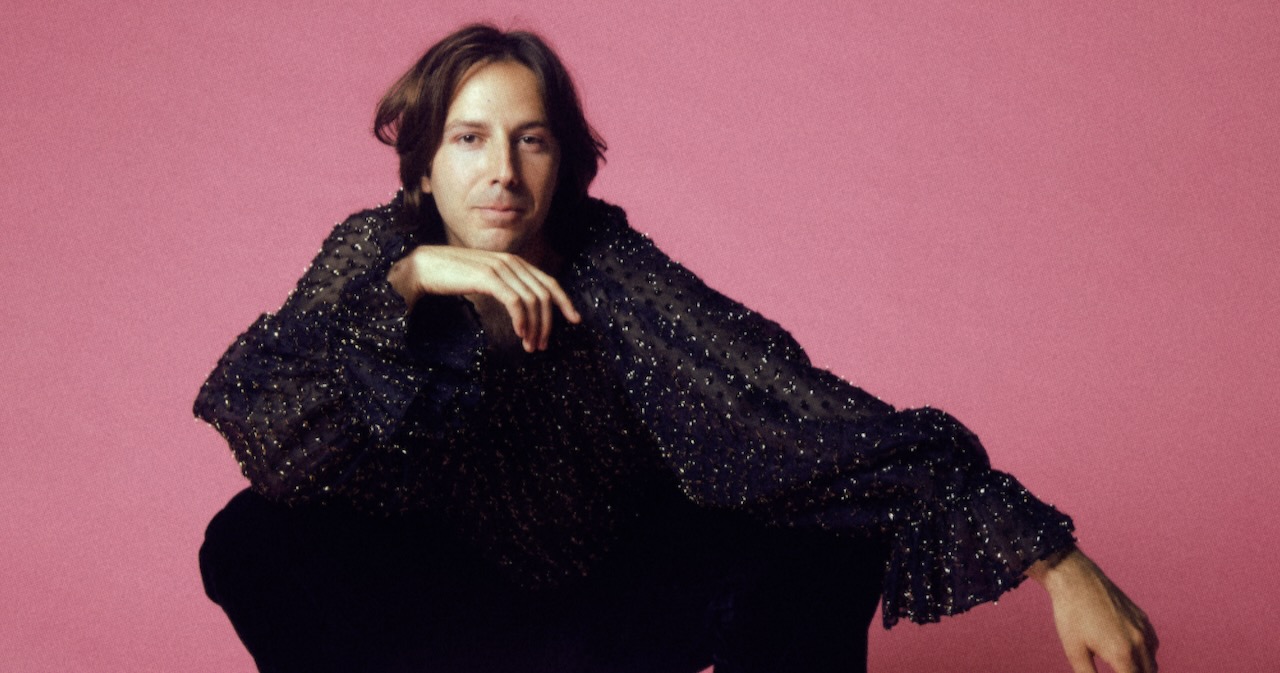
Coming early 2025, I will be releasing a live concert film of my new record, Real Life Thing. The film runs like a play of sorts, including different set changes and moods for each song as we run down the entire track list of the album. To me, live performance is the reason for making music. It’s the best way for me to tap into something deep in myself with those that have come out to do the same. It’s also the way that I make my trade as a human; I think live performance already brings an honest and vulnerable energy since it is our livelihood.
Songs evolve each time they’re performed live and each instrument reflects a current mood. It’s an endless mixed bag of potential outcomes. So much of a performance is pulled from all of the energies involved – the crowd, the band, the venue and the ghosts that live there, the time of year, etc. It’s the most exciting part of music to me and that’s why I decided to make my playlist all live performances of some of my favorite songs. – Sam Blasucci
“If I Was Your Girlfriend” Live In Utrecht (2020 Remaster) – Prince
I could have made this entire playlist just live Prince recordings that blow my mind, but that might only be fun for me. I especially love this version because it’s a song he wrote as his alter ego persona Camilla, who sang it on the album (Prince pitched his voice up to sound higher). But in this version, you just get Prince in Europe with his natural voice and it’s one of my favorite recordings of his ever.
“Hey That’s No Way to Say Goodbye” Live in London – Leonard Cohen
I think this is Leonard Cohen’s best album of any, live or in the studio. He was better and better with age. This is the cute version of Leonard as an old man finally, singing this song in the way it feels like it should have always been sung. Of any live performance on this list, this is the one I would have loved to see most in person.
“LA FAMA” Live en el Palau Sant Jordi – Rosalía
Some live versions I think are better than the studio versions and this is one of those cases, although I love the studio versions of all the MOTOMAMI songs. When Rosalía released this on the deluxe version of the album, it gave the song another side and clicked with me even more.
“Hunter” (Live) – Björk
If the purpose of a live performance is to tap in to something, Björk never missed. She’s the hunter.
“Knock On Wood” Live; 2005 Mix; 2016 Remaster – David Bowie
This is my favorite era of David Bowie (Cracked Actor). I especially love his vocal performance in this version. It’s not easy to cover a classic song like this and have it feel tastefully ramped up, but I think he brought it and crushed it.
“Voices Inside (Everything Is Everything)” – Donny Hathaway
Willie Weeks may be my favorite bass player and his solo section toward the end of this is widely known as one of the coolest bass moments, and with good reason. I suppose it shouldn’t be that hard to tap in when Donny Hathaway is leading the band.
“17 Days” Piano & A Microphone 1983 Version – Prince
When you can strip it all down to a single instrument and a voice and come through with so much power and spirit, that must be the true peak of live performance. When there is nothing else in the pot, all the secret parts of the music come out and make magic.
“Hot Burrito #2” Live at Lafayette’s Music Room – Big Star
I always thought Alex Chilton had some similarities with Gram Parsons. They sort of sing in a similar way and they both show so much emotion in their songs. I think that’s why he could make this version hit so hard. Chilton is at the top of my list of guitar players as well, and this song is a reason why.
“Ventura” Live 2003/The Fillmore, San Francisco – Lucinda Williams
This was recorded on my birthday in 2003. Although I was in 3rd grade and not in attendance for the show, I’d like to think I helped with the vibes. This one sounds like November in SF to me. Another amazing thing about live performance is capturing the energy surrounding the show.
“Woman of Heart and Mind” Live at Universal Amphitheatre, Los Angeles, CA, 8/14-17, 1974 – Joni Mitchell
Another version that I prefer to the studio cut. The sound of the night and the live acoustic guitar; Joni’s semi-confrontational and conversational writing style seem to be designed for an in-person type of listening.
“Angel Eyes” Live In Toronto/1975 – Jim Hall
Jim Hall is another one of my favorite guitar players. I learned about this song years ago on tour in Colorado and it has ever since remained one of my favorites.
“Stay a Little Longer” Live at Harrah’s Casino, Lake Tahoe, NV April 1978 – Willie Nelson
This feels like a good burning ender to this playlist, although it is the very opening of the concert it was taken from. Willie’s recipe is 3x the speed of the original, a couple out of control solos, and likely some exotic mood modifiers.
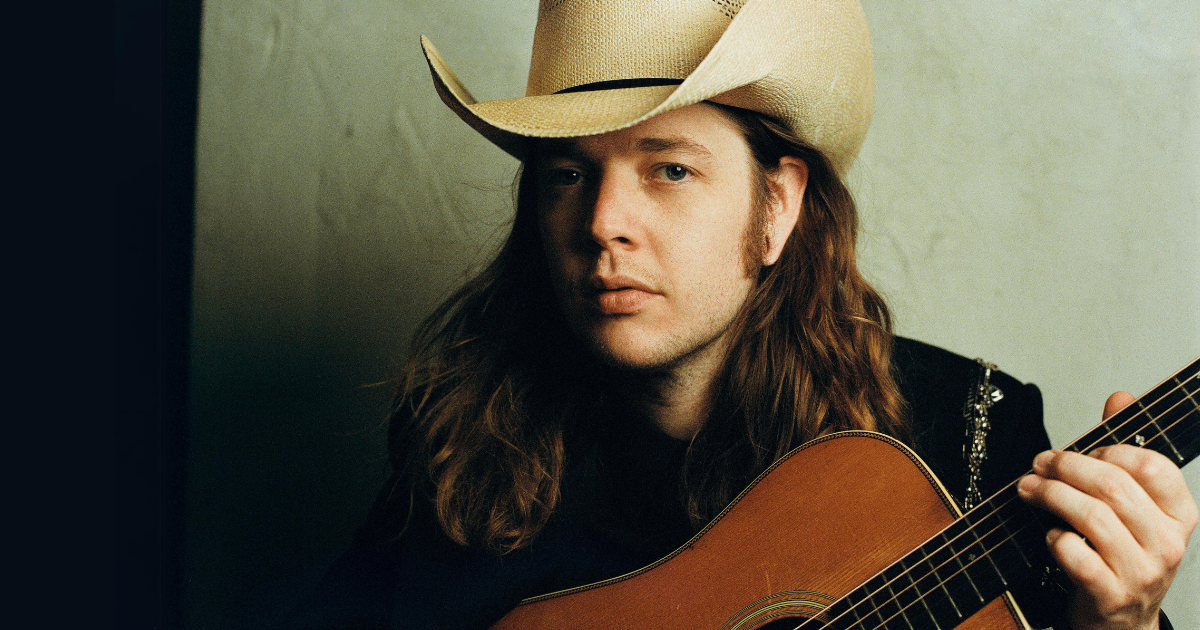
It’s hard to imagine Billy Strings as anything other than the glass-shattering guitar virtuoso he’s become. Over a decade, he’s flipped, rearranged, and altogether transformed bluegrass music. He leads with instinct, allowing the music to speak on a much deeper level than many of his contemporaries. Four albums deep into his career, in addition to a live album and several collaborative projects, Strings immerses himself in the tradition of string music while bringing a fresh, exciting perspective to the classic structures of flatpickin’.
Our November 2024 Artist of the Month, Strings continues cementing his legacy by stretching boundaries and pushing progressively forward. With a foot firmly rooted in the past, always feeling ripped from another era, the musician remains intently focused on breathing life into the genre for modern audiences. As much as he’s built upon his growing solo catalog, he’s also known to frequent other artists’ work and inject his unique charms into their shared musical performances.
Strings has remained committed to bluegrass and jamgrass through the last 10 years and more, while often stepping outside these tight genre boxes for some playful excursions. From appearing on a Dierks Bentley song to teaming up with a rap juggernaut-turned-country-star Post Malone, the Michigan native keeps an open musical mind and heart. He’s an unstoppable force, always willing to try something new.
Below, we’ve put together nine of Billy Strings’ best features, both on his own projects and on others’ releases, too.
“Things to Do” with Zach Top
Zach Top recently released a three-track collaborative EP with Billy Strings as an Apple Music exclusive. “Things to Do” sees the duo injecting the track with a healthy helping of pep. The pair swaps off verses, each bringing their strengths to the performance.
“Girl, it just ain’t right / You’re burning up my daylight,” they sing. On a wide stretch of musical canvas, Top and Strings paint with vitality and urgency. The special release also includes a cover of Ricky Skaggs’ 1983 classic “Don’t Cheat in Our Hometown” and “Bad Luck,” another Top original, which appeared on his 2024 studio album Cold Beer and Country Music.
“California Sober” featuring Willie Nelson
On the eve of Willie Nelson’s 90th birthday, the country legend hopped aboard “California Sober” with Billy Strings. The rollicking track celebrates weed in moderation, finding the pair giving up late-night parties and weekend binges for a chiller sort of high.
In classic Nelson fashion, dusty strings give an air of a traveling tune and barreling down the highway at 100 miles an hour. The one-off collab single (written by Strings, Aaron Allen, and Jon Weisberger) demonstrates someone maturing and realizing that some vices should be left in the past. But regardless, the duo still cheekily admits: “the devil on my shoulder always wins.”
“M-E-X-I-C-O” with Post Malone
Post Malone dove head first into country music with the release of 2024’s F-1 Trillion. Featuring everyone from Dolly Parton and Tim McGraw to Luke Combs and Lainey Wilson, the collaborative set made quite a splash – seeing the rapper swerve into modern country with his own special twist. “M-E-X-I-C-O” is a certified barn-burner, among the project’s standout moments. Credit should be given generously to Billy Strings, who infuses his twangy, finger-pickin’ bluegrass style into the explosive, toe-tapping experience.
“The Great Divide” with Luke Combs
“The Great Divide” arrived in 2021 as a cautionary tale during troubling sociopolitical times.
“We’re striking matches on the TV / Setting fires on our phones,” warns Combs in the opening line. The singer fuels those flames throughout the song, sending smoke signals as things methodically escalate. “We’re all so far, far apart now / It’s as deep as it is wide / We’re about to fall apart now,” the lyrics burst like dynamite.
The song isn’t all doom and gloom, though. Later on, the lyrics detail how many strangers love one another despite glaring differences. Several years later, the song rings even more eerily poignant than ever before.
“Dooley’s Farm” with Molly Tuttle
A long-time fan of The Dillards’ classic, “Dooley,” Molly Tuttle updates the story to reflect an elderly man’s penchant for growing weed. “Dooley’s Farm” is a slower ditty, unlike the giddy-up pace of the Dillards’ song, and darker in tone and feel.
Strings lends his voice for spooky backing vocals, poking through the track like a ghost in the night. Their performance is found on Tuttle’s 2022 album, Crooked Tree.
“You can hide by day, but the night will find you / They caught Dooley in the moonlight,” whispers Tuttle over the gentle cry of a fiddle.
“Too Stoned to Cry” with Margo Price
Margo Price had been wanting to record “Too Stoned to Cry” for years, ever since hearing its writer Andrew Combs perform the lonesome ballad. Working with Beau Bedford, she convinced the producer to put his magical touch on the song. When it came to enlisting a duet partner, Price turned to Billy Strings, who turns in a sinewy and evocative lead performance.
“There’s whiskey and wine and pills for the pain / Fast, easy women and a little cocaine,” they sing, their voices tangling like barbed wire. With its frayed, tired edges, the song proves to be an ample showcase for both singers’ talents. It’s as classic as you can possibly get these days.
“I Will Not Go Down” with Amythyst Kiah
On her 2024 album Still + Bright, Amythyst Kiah reaches into the depths of her songcraft for a cinematic stunner. With Billy Strings in tow, “I Will Not Go Down” pounds with alarming emotional urgency. Taking cues from such film staples as Avatar: The Last Airbender and Lord of the Rings, Kiah mounts an expedition across space and time, metaphorically speaking, as she slays dragons and seeks life’s simple truths. Strings supplies a startlingly resonant knit of guitar work that punctuates Kiah’s flame-throwing vocals.
“Muscle Car” with Andy Hall
Two musical forces collide for a bedeviling five-minute epic on “Muscle Car.” With no vocal line, the composition here sizzles and pops, as it transmits its very own story through the power of instruments.
Andy Hall’s 2023 album, Squareneck Soul, delivers a torrential downpour of raw storytelling. Hall (of the Infamous Stringdusters) expertly offers up rip-roaring string work, matched with his companions’ equally engaging performances. The track also features Sierra Hull (mandolin), Wes Corbett (banjo), and Travis Book (bass), who all band together for one of the decade’s finest bluegrass moments.
“Bells of Every Chapel” with Sierra Ferrell
Sierra Ferrell pulls Billy Strings along for a charming lovesick gallop with “Bells of Every Chapel.” Found on her 2021 album, Long Time Coming, the mid-tempo track sees Ferrell peering through rose-tinted glass, examining unrequited love that squeezes your heart.
“They were ringing so clear/ But you couldn’t hear/ And your heart could never be mine,” she sings. Old-timey in spirit, the song soars higher and higher with Strings’ choo-choo train flatpicking.
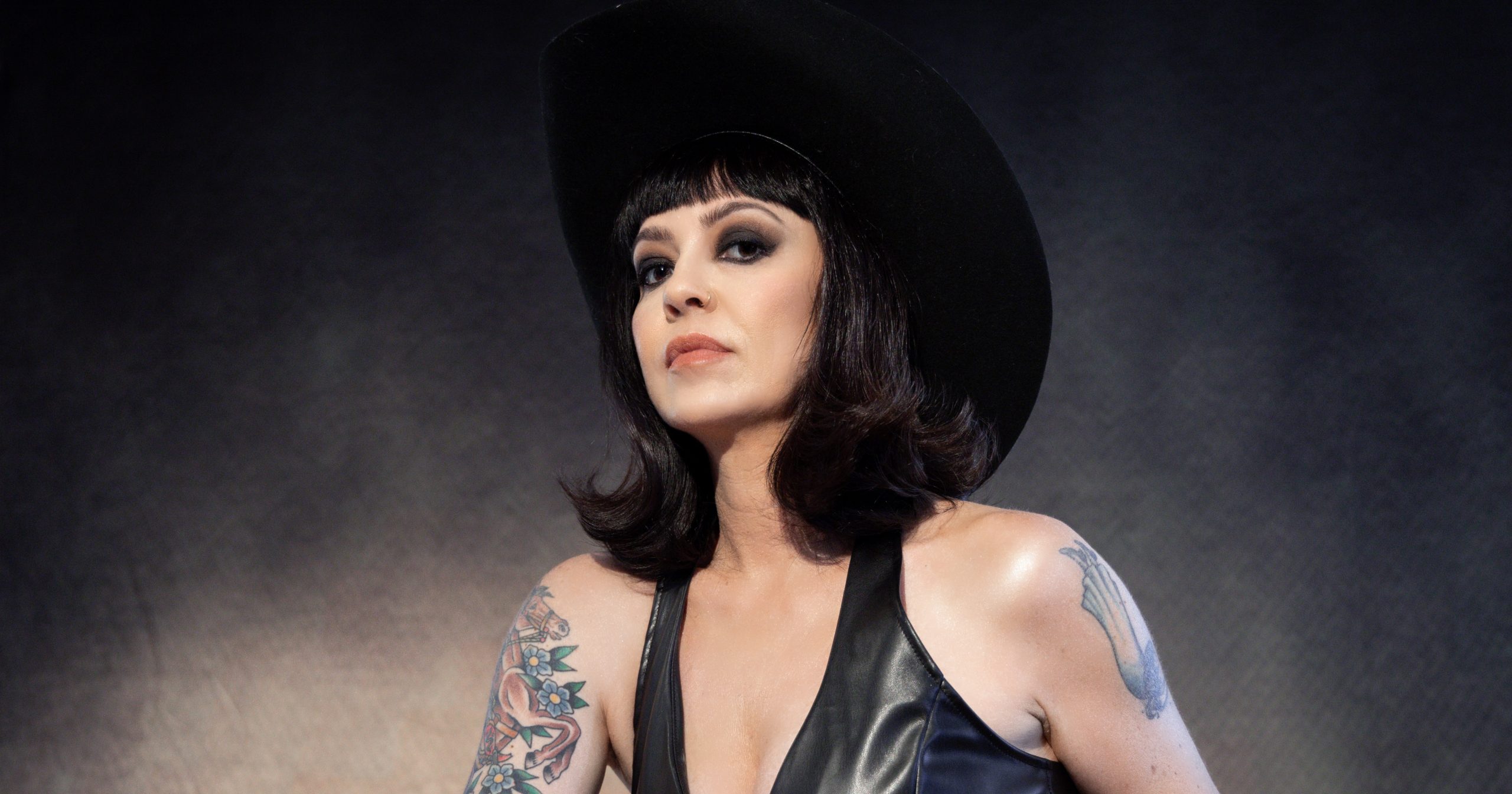
Artist:Emily Rose & the Rounders Hometown: Los Angeles, California Latest Release: “Too Much Too” (single) Personal Nicknames (or rejected band names): Steve from Pink Mountaintops/Black Mountain calls me E.R., which I like. He’s the only person who calls me that.
Which artist has influenced you the most and how?
I think probably Gram Parsons has been my biggest influence. When I was first learning to sing and play guitar, I would pretty much just play his songs. The earliest incarnation of what would sort of morph into the Rounders was actually a Gram Parsons cover band called the Kickers, where I sang and played drums. Then I started to sort of want to try to write my own material.
[Gram was] an LA guy, his voice is so sweet and sad and his songs are just heartbreaking. I also used to have these wild dreams when I was like 18 or so, where he and I would be driving around in a car, talking. They were recurring and it was very sweet. I’ve just always adored him.
What’s your favorite memory from being on stage?
Definitely playing and singing with Willie Nelson at Austin City Limits. Can’t really top that.
What’s the most difficult creative transformation you’ve ever undertaken?
When I left Ty [Segall’s] band, I really didn’t know what I was doing. I had been playing drums with him since I was 20 years old and I found myself at 27 with a repetitive injury that was making it so that I couldn’t really play drums anymore like I used to. It really messed with me psychologically on the last few Ty and Mikal Cronin tours and I started having stage fright, too, which I had never had before.
Since the crowds were getting bigger than ever, the judgment on my abilities was getting more fierce and I was taking it to heart in a very serious way. I don’t pay much attention to reviews or trolls online anymore, but at the time I really would and all of this was compounding in this really difficult way. I was sort of unsure if I would ever make music again or want to be in the public eye in any way.
Eventually, I sort of just committed to trying to do what I had wanted to do all along, but never had the guts to – which was writing and singing and making country music. Thankfully, I had some encouraging friends and a friend in particular who sat with me many nights a week, teaching me guitar. We’d harmonize together and stuff, and play almost-secret shows out of town and around LA until we had a fully realized thing going on. It was one of the scariest pivots I’ve ever made, but it really changed my life to sort of take the reins and figure out how to express myself musically again and to have fun doing it again. Country music is so cathartic, too, so it was really freeing to share a lot of the growing pains and to turn it into something really positive and productive.
If you didn’t work in music, what would you do instead?
I think I’d want to do something with dogs – maybe I’d be a vet or something or work for a dog rescue? I’m a big dog fan.
I also got certified as a domestic violence and sexual assault advocate over lockdown and volunteer for a non-profit that helps try to arrange housing, healthcare, legal services, etc., for those who need it. That’s something I’d like to be more involved with as well.
If you were a color, what shade would you be – and why?
I think black would be a natural answer, since I basically almost exclusively wear black. But actually, I’ve always thought and been told that my aura was blue!
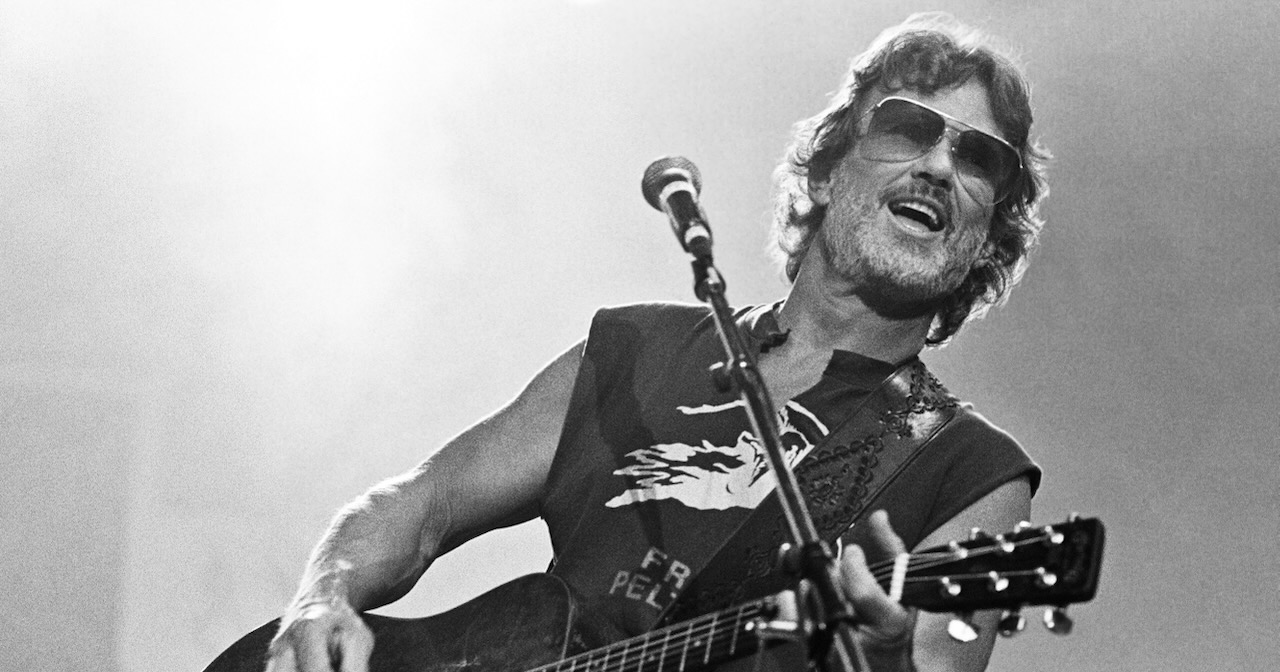
After passing away on September 28 at the age of 88, Kris Kristofferson has rightly been eulogized as a renaissance man without compare. It makes sense, since the colorful character’s legendary resume includes time as a Rhodes scholar, Golden Gloves boxer, U.S. Army Ranger, Golden Globe-winning actor, janitor at Columbia Studios, and helicopter pilot who once brought Johnny Cash a demo by landing on the superstar’s front lawn.
In fact, it was only after all of these accomplishments that Kristofferson became the icon we remember – a songwriter’s songwriter, and one of the most authentic and impactful artists to hit country and roots music since its development. Yet his longest-lasting gift to all of us may prove to be his humanity.
Emerging onto an American landscape just beginning to feel the pangs of decay – the “Sunday Morning Coming Down” of its post-war glory – Kristofferson’s work found beauty in even the ugliest moments life had to offer. He broke every mold of what a country star “should” be, choosing substance over style, embracing the unwanted, and cutting a trail for generations of artists to follow. Stunning empathy seemed to be his primary tool and as a man of many lives, he was well suited to put himself in the shoes of whatever characters he conjured up.
That deep well of human empathy might be the source of his gravity on camera and on stage. Maybe that’s why his songs came alive for the 450 other artists who covered them. But whatever it was, Kris Kristofferson accessed emotion and compassion without pretension. His humanity will live on now like a beacon, guiding others away from the shallow posturing of country songcraft and toward the authentic depths of the art.
In honor of his life, legacy, and impact, here are eight moments where Kris Kristofferson’s humanity shined bright.
“Help Me Make It Through the Night” on The Old Grey Whistle
After his debut album in 1970, Kristofferson made frequent TV appearances with duet partner and soon-to-be-wife Rita Coolidge – with one capturing his tender side especially well. Singing “Help Me Make It Through the Night” on the UK variety show The Old Grey Whistle in ‘72, Kristofferson and Coolidge were just a few months away from their marriage and seem enchanted with each other. Sharing a microphone and never more than a few inches apart, you can almost feel the sensual spark.
“Help Me Make It Through the Night” on The Muppet Show
Same song, different duet partner – and a totally different view of Kristofferson as an artist. Fast forwarding to 1978 and Season 3 of The Muppet Show, the respected singer-songwriter showed he was good sport by doing “Help Me Make It Through the Night” with none other than Miss Piggy. Clean shaven and re-creating the close proximity of the first clip, Kristofferson could barely hold back the laughs as he serenaded a swooning swine – then lost it completely as Miss Piggy broke into the chorus. Hopefully he and Kermit patched things up later.
“Sunday Morning Coming Down” on The Johnny Cash Christmas Special
Later in 1978, Kristofferson had the chance to perform alongside an idol and show his respect for the artist who had done more to popularize his work than any other. Joining Johnny Cash for the Man in Black’s yearly Christmas special, Kristofferson was left almost speechless as Cash introduced the vivid “Sunday Morning Coming Down,” which they then took turns singing. After Cash noted he’d been making the song his own for years, Kristofferson responds, “Up until now that was the proudest moment of my life. Now this may be the proudest.”
“Me and Bobby McGee” on Austin City Limits
Kristofferson appeared on Austin City Limits a few times, but in 1981 he had a hot band behind him and that led to a rollicking delivery of his biggest rock hit, “Me and Bobby McGee.” Made famous by the late Janis Joplin 10 years before, the freewheeling anthem put Kristofferson’s range – and a sense nostalgic joy – front and center. Although, there’s still a tinge of sadness embedded in the tone. From our perspective now, the iconic line “Freedom’s just another word for nothing left to lose,” is matched only by “I’d trade all my tomorrows for one single yesterday.”
“For the Good Times” with Tanya Tucker
Kristofferson always looked more comfortable in a flannel shirt than a black tie, but in the long run, that only made him more endearing. Joined by Tanya Tucker on a 1982 awards show, Kristofferson climbed into a tux and delivered the one-last-time anthem “For the Good Times” in classic pop style. Backed by an orchestral score and with Tucker taking the lead, it was a rare ballroom-country presentation of a song also recorded by Ray Price, Al Green, and more, which proved the Hollywood heartthrob would truly rather be hanging out with friends at the local dive.
“The Hot Dog Tree” with Pee Wee Herman
By 1988 Kristofferson had built up decades of acclaim as an actor, artist, songwriter – and as an international sex symbol. But he was never too big to have fun. Playing opposite Pee Wee Herman in the kid’s comedy Big Top Pee Wee, Kristofferson slipped into silliness with an easy charm. The iconic scene sees Pee Wee unveiling his top-secret Hot Dog Tree to Kristofferson, and the star’s initial skepticism – and then child-like awe – will brighten any day. Despite being held up as a talent of rare caliber, he never took himself too seriously.
Encouraging Sinéad O’Connor at Madison Square Garden
If you want to know about Kris Kristofferson’s character, look no further than what he did for Sinéad O’Connor at New York’s Madison Square Garden in October 1992. A few nights earlier, O’Connor had shocked the nation by protesting the Catholic Church’s still-under-wraps sex abuse scandal on Saturday Night Live, ripping up a photo of Pope John Paul II as cameras rolled.
When she then took the stage for Bob Dylan’s 30th anniversary concert, the crowd erupted in boos. As O’Connor stood there, unable to begin her performance through the rain of jeers, Kristofferson stepped beside her and spoke the famous words of encouragement, “Don’t let the bastards get you down.” He didn’t try to save her or get her off stage, or diminish her in any way – he just let her know she wasn’t alone. For her part, O’Connor went on to scream sing an a-capella rendition of “War” over the crowd, before staring them down as she left the stage. She said the moment created a lifelong appreciation for Kristofferson.
“Loving Her Was Easier (Than Anything I’ll Ever Do Again)” with Rosanne Cash at Willie Nelson’s 90th Birthday
Kris Kristofferson made his final public performance in 2023, appearing at the Hollywood Bowl in honor of his longtime friend Willie Nelson’s 90th birthday. The moment was filmed for a special airing on CBS and gave us one last moment with an icon.
After a shaky walk to the microphone, Kristofferson joined Rosanne Cash for an arm-in-arm rendition of “Loving Her Was Easier (Than Anything I’ll Ever Do Again),” a devastating ballad first released at the start of his career. Following Cash’s lead with a wide smile and a twinkle in his eye – one armed raised in triumph – Kristofferson soaked up the moment, while the rapt attention of the audience evolved into a thunderous applause. As Cash adapted the song’s hook to address Kristofferson himself, the whole world seemed to send him out on a high note:
Loving you was easier than anything I’ll ever do again…
Photo Credit: Scott Newton, courtesy of New West Records.
When life hands you lemons, sometimes it’s better to just burn them and start anew rather than make lemonade. That’s exactly what India Ramey does on Baptized By The Blaze, the singer’s empowering fifth album that sees her shedding the trauma that had haunted her since seeing her father abuse her mother as a child.
For years Ramey tried coping by working as a domestic violence prosecutor, but turned to music when that career fell apart in 2009 with her first album, Junkyard Angel, already in hand. Despite all the pain her father inflicted, she says her first musical memories were with him.
“He’d play Waylon Jennings and Willie Nelson’s Wanted! The Outlaws on repeat,” Ramey tells BGS. “Through that I became obsessed with Jessi Colter. I’d get my mom’s curling iron and sing her songs while standing on our living room ottoman. I always say that my dad was such a bad guy. He never gave me anything except for my love of country music.”
But as Ramey’s own career in music materialized, a 12-year dependence on the daily tranquilizer Klonopin began to rear its head. Taken to quell the panic disorder that’s lingered since first witnessing her abusive father’s actions, Ramey sought to gradually come off the drug during the pandemic before its severe withdrawal symptoms landed her in rehab. There, through stubbornness and self-determination, she was able to reclaim the power over her dependence and the trauma that caused it, vowing to never go back. Baptized By The Blaze is her journey to become a better version of herself.
“I went through a lot of stuff — a metamorphosis if you will,” says Ramey. “It was really hard and really scary, but I got so much personal empowerment out of it. Since then, I’ve been motivated to pass that on to bring folks strength and remind them that the tragedies they’ve faced give you superpowers to handle anything else life throws at you.”
Helping Ramey realize those superpowers was her therapist, a conversation with whom inspired the song “The Mountain.” According to Ramey, it occurred about a year into their sessions after something had left her in a puddle of shame and defeat. She explained how our anxiety attacks are similar to avalanches in that we don’t know the tools needed to combat them until going through it. But every time there is an avalanche you’ll have more tools and awareness to recover because you are the source, you are the mountain.
“It was the most empowering thing anyone had ever said to me in a moment where I was so vulnerable,” admits Ramey. “It left me feeling so powerful and wanted. This song is my way of spreading that beautiful message she gave to me.”
Another metaphor central to the album comes on its title track, on which Ramey compares her journey of redemption to a phoenix rising from the ashes. It was written while she “was thinking about that moment where I decided to burn it all down, to burn all of those defense mechanisms that I’d put in place to avoid confronting my trauma.” Despite its personal and well-meaning message, the song didn’t always resonate with everyone on her team though, with one person even calling the song over-dramatized. This led Ramey to shelve it for a couple years until producer Luke Wooten chose to include it on the new record.
“As artists, we’re always second guessing ourselves, so to have somebody on my own team tell me I should leave the idea behind really hurt,” Ramey confides. “Because of that, I struggled with self doubt for a long time about going all in on it, but in the end I went with my gut and I’m glad I did.”
Another example of being misunderstood and defying the expectations of others comes on “Piece Of My Mind,” a soft but stern ballad about an industry type who found out about her past working in law and said if he’d known he would just assume all her albums were vanity projects. On it, Ramey’s signature sass shines through as she urges the person to tell them their story: “Just a snapshot is all you see, you don’t know shit about me.” Before going on to describe how “I’ve fought wars and still they haunt me” and likening each day to being Halloween.
“It pissed me off, because that judgment he had was denying me my authentic story,” exclaims Ramey. “He was denying me the suffering that my family and I had gone through because of a job, so this song is me telling people exactly who I am, which is a lot more than any article or bio can capture.”
While most of the album is derived directly from Ramey’s own personal experiences, two songs that veer from that path are “Silverado” and “Down For The Count.” Both are stories about badass women living life on their own terms unburdened by the judgment and shame often delivered through patriarchal transgressions. “Silverado” details a one night stand at the motel El Dorado and “Down For The Count” highlights a streak of promiscuity to get over a past lover (“I put ten men between you and me”).
“The women I wrote about in these songs are people I think any woman will resonate with, because they’re about women doing whatever the hell they want,” she asserts. “It’s about doing things that dudes do all the time without the same level of judgment and are unapologetic about it. They’re my way of giving the middle finger to the patriarchy.”
No matter the delivery, Baptized By The Blaze charts out a journey of empowerment and recovery that is sure to provide strength and an upbeat honky-tonk soundtrack to anyone with a listening ear. It’s also proof that Ramey’s best work isn’t behind her and that her renewed focus has her poised for a bright future, despite the scars that once plagued her past.
“The process of making this record has taught me just how strong and powerful that I am, which are both things I was never convinced of beforehand,” Ramey reflects. “My hope is that it does the same for listeners and helps guide them on their own journeys.”
Welcome to the second edition of BGS Bytes! From up and coming artists on TikTok to conversations the biggest artists are having online, we’re here to round up any important things happening online in roots music — so you can save your thumbs a few scrolls!
In no particular order, let’s take a look back at a few notable highlights from bluegrass and country social circles in the last few weeks.
Spotify Stopped Paying Out to Small Artists On Its Platform
Spotify has now changed which tracks are eligible for monetization. Tracks with under 1,000 streams will earn nothing from the streaming giant.
In early April, More Perfect Union reported that Spotify has stopped paying out for artists whose songs don’t top 1,000 streams. While this change won’t impact musicians who top the charts, it reduces profitability for smaller up-and-comers. Of course, this also impacts all genres, not just roots music, a genre that has already historically struggled with a digital era. We might have posted some satirical news about Spotify recently, but this is all too real.
Could there possibly be new music on the way?? I’m With Her posted a reunion photo with all three members: Sara Watkins, Aoife O’Donovan, and Sarah Jarosz, as the golden trio took in the eclipse through solar viewing glasses!
Black Opry Hit Mainstream News Talking About Beyoncé’s New Album
Tanner Davenport, co-director of The Black Opry, spoke with MSNBC in March about the record-breaking album, ‘Cowboy Carter,’ that’s been setting tongues wagging since its debut.
“She has always been country”: Critic on Beyoncé’s “Cowboy Carter”
Tanner Davenport, co-director of The Black Opry, spoke with MSNBC’s @AlexWitt following the release of the music idol’s record-breaking new album. pic.twitter.com/BFubaNCig1
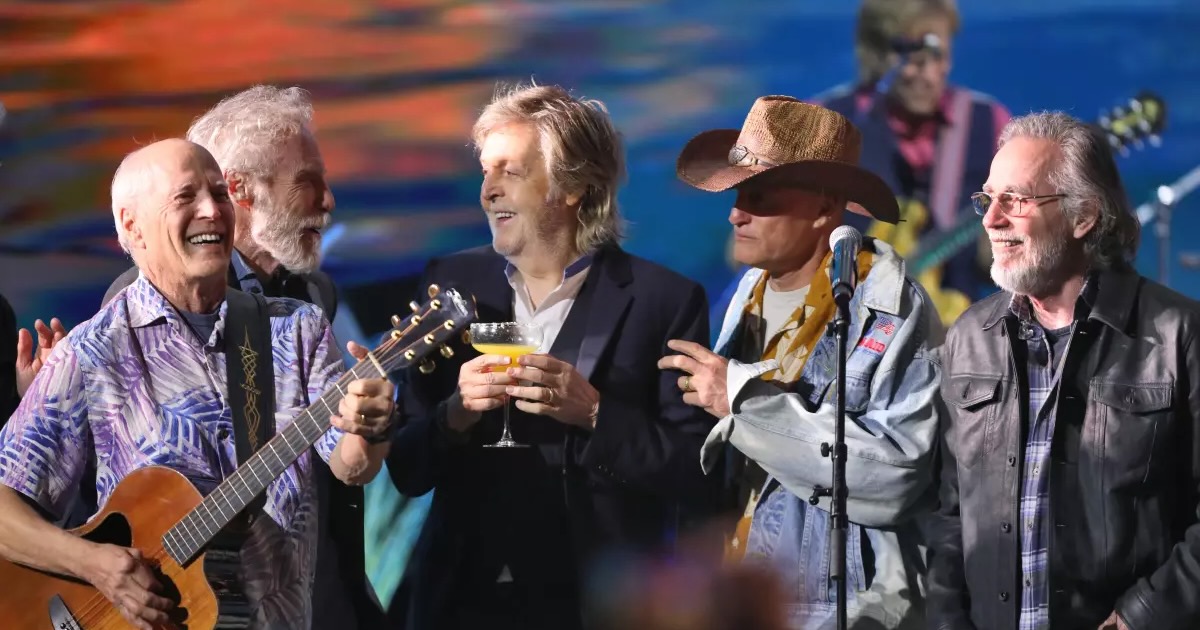
One of the wildest social media videos you’ll see this week features a surprising crew — watch Harrison Ford, Paul McCartney, Will Arnett, Brandi Carlile, Mac McAnally, Jon Bon Jovi, Vince Gill, and Pitbull on stage singing “Margaritvaille” together. That’s not an exhaustive list, of course, so let us know who else you can spot! It’s hard to count all the celebs in this Jimmy Buffet tribute.
Orville Peck Celebrated His New Release With Willie Nelson
If you missed it, Orville Peck recently released a recording and accompanying music video for “Cowboys Are Frequently Secretly Fond of Each Other” with Willie Nelson. The video has already racked up more than half a million views on YouTube! Turns out there must be many a cowboy feeling the vibes Peck and Nelson are putting out.
Viewers Have Been Digging Tyler Childers’ Live Performances on TikTok
A handful of Tyler Childers’ videos have gone viral in the last few weeks, including the above that’s racked up more than 179,000 likes and nearly two million views. Hey, we can’t blame y’all for loving his music, especially when it’s performed live!
With nearly three million views, Gary the Snail’s version of Tracy Chapman’s “Fast Car” has been taking over TikTok. Just a silly little cover, you’re sure to get a good chuckle, even if you’re not a huge SpongeBob fan.
It’s pretty obvious — a lot happened in March and the beginnings of April! We’ll continue rounding up the hottest social media conversations and goings-on for BGS readers every month — let us know on social media and tag us in a post if you think something deserves to make the next list.
Photo Credit: Jackson Browne, Paul McCartney, Woody Harrelson, and more perform on stage at the Jimmy Buffett tribute on April 11, 2024 shot by Randall Michelson / Live Nation – Hewitt Silva.
On March 29, Beyoncé rode sidesaddle onto the world stage and took us all by storm with the release of her eighth studio album, Cowboy Carter.
Cowboy Carter arrived as the second installment of a three-act project that commenced with Renaissance in 2022. Renaissance incorporated house, disco, hyperpop, R&B, and funk while reclaiming the Black queer roots of dance music. On Cowboy Carter, she similarly reclaims the Black roots of country, blending it with folk, rock, R&B, hip-hop, classical, house, and gospel throughout.
Prior to the release of Cowboy Carter, country has been a longstanding muse for Beyoncé. While her affiliation with the genre was popularized by Lemonade’s “Daddy Lessons,” her first country-leaning performance dates back to nearly a decade earlier when she performed “Irreplaceable” with Sugarland at the American Music Awards in 2007.
Potent and impeccably saturated, Cowboy Carter makes clear that country is inarguably a huge part of Beyoncé’s creative and cultural identity. However, her presence in the genre has not always been well-received; in an Instagram caption 10 days before the album’s release, Beyoncé revealed that CC was largely inspired by an experience where she “did not feel welcomed” into the country fold. Many speculate that this refers to her appearance at the 2016 CMA Awards. The network received racist backlash after she performed “Daddy Lessons” with the Chicks, prompting the erasure of the song’s video from the show’s website (though a representative from CMA later denied the correlation between those two events).
Of Cowboy Carter Beyoncé writes, “The criticisms I faced when I first entered this genre forced me to propel past the limitations that were put on me.”
Beyoncé alchemizes a multitude of influences and collaborators across the gargantuan album in order to achieve the monumental musical feats of CC. With a credits list that sprawls for seemingly miles, Beyoncé enlists a number of guest artists, co-writers, producers, and musicians. Between them, they represent the Black roots of country, pay tribute to Black Americans’ impact on the genre, include legendary country artists and well-known side musicians and collaborators that assert the project’s roots in country, and represent the bright and diverse present and future of country by featuring several lesser-known Black country artists, many of which are also genre-bending in their own work.
In a list that is by no means comprehensive, here are just a few of the contributors that brought their musical magic to Cowboy Carter.
Rhiannon Giddens
“Texas Hold ‘Em” made history as the first hit single by a solo Black woman to top the Billboard’s Hot Country Songs Chart and 10 weeks later, as of this writing, it maintains its gilded perch. Fittingly, the song opens with the warmth and drive of the legendary Rhiannon Giddens strumming a standalone fretless, clawhammer gourd banjo. The talented multi-instrumentalist, singer, composer of many mediums, and roots scholar also sprinkles notes of viola throughout the track.
It is no coincidence that Giddens’ banjo playing, like much of her work, pays homage to the lineage of Black influence throughout roots music. Referred to by many as a “performing historian,” Giddens has spent her career shedding light upon the cross-cultural interweavings of the genre. Here, in an interview, she details the West African origins of the banjo, an instrument essential to American country music that was initially brought to the Americas by enslaved Black folks who used gourds and other accessible materials to recreate instruments of their homelands. By showcasing Giddens on the track, Beyoncé introduces a sonic representative of overlooked histories while uplifting one of the most celebrated Black musicians in modern day roots music.
Robert Randolph
Raised in a secluded religious community, Robert Randolph grew up without secular music. The renowned pedal steel guitarist heard only the music played within the House of God Church of Orange, New Jersey, for decades. He learned the instrument through Sacred Steel, a Black gospel tradition developed in the ’30s that highlighted the steel guitar during religious services.
During his early adulthood, Randolph became exposed to the world of music beyond; as he absorbed jazz, blues, funk, rock, and soul, he soon set out layering his gorgeous pedal steel tones upon a fusion of genres, particularly alongside his band, Robert Randolph and the Family Band. Across his musical arc, he epitomizes Beyoncé’s philosophy that music is transcendent; “All music is related,” he says. “Gospel is the same as blues. The only thing that changes is hardcore gospel people are singing about God and Jesus and in the blues people are singing about ‘my baby left me’ and whiskey.”
Justin Schipper
Like Robert Randolph, Justin Schipper is also credited for steel guitar on the track “16 Carriages.” A Nashville-based composer, multi-instrumentalist, songwriter, and producer, Schipper is a prominent figure in the current country landscape. His talents have landed him on tour with Josh Turner and Shania Twain (playing pedal steel and dobro), and he has gigged with the likes of Carrie Underwood, Chris Stapleton, Kris Kristofferson, Florida Georgia Line, and more.
Cam
Cam (given name Camaron Ochs) co-produced and co-wrote five songs on CC. An American country singer and songwriter, Cam began her career songwriting for musical giants in the industry such as Sam Smith and Miley Cyrus. Since then, she’s released three of her own studio albums with songs inspired by the songwriting styles of Patsy Cline, Ray Charles, Bonnie Raitt, Willie Nelson, and Joni Mitchell, amongst others. A prominent figure in the current country landscape, Cam lends crucial insights and layers with each of her contributions.
Sean & Sara Watkins
Renowned in the current bluegrass/newgrass scene, this sibling duo lends guitar (Sean) and fiddle (Sara) to the track “II Most Wanted.” Sean and Sara epitomize the familial quality so integral to bluegrass; their first band, Nickel Creek, was formed in 1989 alongside virtuoso Chris Thile when Sara and Chris were only 8 years old and Sean was 12. The siblings have been playing together ever since; Nickel Creek would go on to release seven albums, the latest of which, Celebrants, was released last year.
In 2002, the pair began The Watkins Family Hour as a monthly musical showcase featuring their friends and other collaborators in Los Angeles. Spanning over 20 years, the WFH has blossomed expansively. In fact, the pair released their third studio album, Vol. II, in 2022, a celebration of the project and the community surrounding it. Similarly to CC, the list of features for Vol. II is extensive, featuring the likes of Madison Cunningham, Willie Watson, Jackson Browne, and Fiona Apple, amongst others.
Stevie Wonder
A child prodigy who became blind shortly after birth, Stevie Wonder is widely regarded as one of the most influential musicians of the 20th century. He makes his contribution to CC by layering tasteful harmonica atop the sonically rich layers of “Jolene,” a reimaginative cover in the shape of Dolly Parton’s 1973 classic. Much like Beyoncé herself, Wonder is a trailblazer who, as Beyoncé stated in her Innovator Award speech at the iHeartRadio Awards, “defied any label placed upon [him].” From jazz to soul to funk to R&B to gospel to pop and beyond, Stevie Wonder has influenced and inspired creators across infinite genres and blendings with his vibrant propensity for experimentation. In the same speech, Beyoncé poured out a fountain of gratitude towards the legend, who presented her award —“Thank you so much Stevie, I love you,” she said. “I love you and I honor you. I want to thank you for making a way for all of us. […] Whenever anyone asks me if there’s anyone I can listen to for the rest of my life, it’s always you. So thank you, God bless you.”
Brittney Spencer, Tanner Adell, Tiera Kennedy, and Reyna Roberts
These four women are responsible for the ethereal background and third verse vocals for “Blackbiird.” Additionally, Spencer, Roberts, and Kennedy also lend background vocals to “Tyrant,” while Adell’s voice is woven into the sweeping harmonies of “Ameriican Requiem.”
Initially released in 1968 on The Beatles’ self-titled album, (colloquially known as “The White Album”), Paul McCartney wrote “Blackbird” in response to witnessing on television the harassment and violence that Black students endured upon attending newly-integrated schools. In 2018, he told GQ that he was particularly influenced by the young women who constituted, in part, the Little Rock Nine in Alabama — a nickname for the first nine Black students to desegregate the formerly all-white Central High School in Little Rock, Arkansas.
As McCartney explained to TODAY, “In England, a ‘bird’ is a girl, so I was thinking of a Black girl going through this; now is your time to arise; set yourself free; take these broken wings.”
Within her illustrious arrangement of the classic, Beyoncé pairs the initial guitar track recorded by McCartney with the vocals of herself and these four Black women whose careers are actively altering the historically whitewashed landscape of country. By including them, Beyoncé nods towards McCartney’s intended meaning of the song while actively uplifting these young women so that they may prosper in a genre that undervalues and mistreats the Black artists who continue to give it wings. Brittney Spencer, Tanner Adell, Tiera Kennedy, and Reyna Roberts each have burgeoning careers in the genre that are largely influenced by traditional country sounds and themes.
Willie Nelson & Dolly Parton
In addition to inviting in many Black artists and roots musicians, Beyoncé strategically inserts more commercially successful country greats whose values align with her own. As Willie Nelson tells his faux-radio station listeners in the track “Smoke Hour II,” “Sometimes you don’t know what you like until someone you trust turns you onto some real good shit. And that, ladies and gentlemen, is why I’m here.” This line candidly demonstrates an awareness of the unfortunate truth that a vast array of today’s country fans are white listeners unlikely to take this music seriously without ample accreditation from respected white artists.
Merely four days after the release of CC, likely due in part to the inclusion of Willie and Dolly, the number of first-time listeners of Beyoncé’s music had increased by 85% on Spotify.
Willie Nelson, who celebrates his 91st birthday this year, is renowned for his left-leaning activism (especially advocating for the legalization of marijuana — hence the nomenclature of his feature tracks “Smoke Hour” and “Smoke Hour II”) and his role in pioneering the Outlaw Country movement. Outlaw Country began in the ’60s as a subgenre to rebel against the conservative suppressions, sonic and otherwise, of the country industry at the time. Willie and his like-minded contemporaries strove to achieve creative freedom beyond the political and sonic standards that dominated Nashville.
Similarly, Dolly Parton has used her platform, influence, and capital to enact social change. In addition to being an advocate for LGBTQ+ rights, she donated $1 million to Vanderbilt University in 2020 to go towards vaccine research amidst the early stages of the COVID-19 pandemic.
As of 2024, Willie Nelson and Dolly Parton are widely regarded as two of the most successful American country artists of all time. Nelson holds 12 Grammys from 57 nominations, and continues to tour (in fact, he is actively on the road again right now). Dolly has accrued a total of 11 Grammys from 50 nominations over the course of her career and recently gave a dazzling performance at the 2023 NFL Thanksgiving Halftime Show. The amount of esteem and respect each has garnered throughout their careers grants Cowboy Carter a certain amount of credibility within the wider country circuit.
However, it is clear that Beyoncé doesn’t just merely use these two for their name recognition. She is, indubitably, a seasoned scholar in the history of American country music and respects the discography of both artists immensely. While both give narrative voice-overs, Dolly also lends background vocals to “Tyrant” and, of course, shares songwriting credits for the innovative cover of her song “Jolene” that appears on the album.
Willie Jones & Shaboozey
Willie Jones joins Beyoncé on CC to lend his resonant, smoky vocals on the duet track, “Just for Fun,” and to “Jolene.” Having gotten his start as a contestant on the X Factor in 2012, Jones is currently making a name for himself as contemporary Black country artist that Grammy.com refers to as a “country-rap iconoclast.” As proves to be a crucial theme throughout Cowboy Carter, Jones galvanizes cross-genre musings to make a sound that is entirely his own.
Similarly, Shaboozey is a rapping Black country artist who represents the future of the genre. Combining hip-hop, rock, country, and Americana, Shaboozey further embodies the blending spirit behind CC. His contributions to the album include rapping verses on both “Spaghettii” and “Sweet Honey Buckiin.”
Linda Martell
Beyoncé ingeniously laced together Cowboy Carter to demonstrate the past, present, and future of Black musicians who have influenced the American roots music; and Linda Martell stands as a crowned example of the past. Martell, now 82, was the first commercially successful Black woman in country. In 1969, she made history as the first Black woman to play the Grand Ole Opry, and she held the status of highest peaking single by a Black woman on Billboard’s Hot Country Singles Chart for her song “Color Him Father” until Beyoncé’s very own “Texas Hold ‘Em” took its place.
However, Martell’s success was short-lived; she left Nashville and country music altogether in 1974 after receiving racist backlash following the release of her first album. Nearly every live show was corroded by racial slurs from belligerent audiences, and her label eventually shelved her music when her single, “Bad Case of the Blues,” failed to do the numbers they were expecting. As Martell postulates on the CC track “Spaghettii,” “Genres are a funny little concept, aren’t they? In theory, they have a simple definition that’s easy to understand. But in practice, well, some may feel confined.”
While Martell’s career arc fell victim to the confines of hegemonic racism within Nashville (and the country at large), her appearance on Cowboy Carter pays tribute to her historical strides for Black artists nevertheless. The track “The Linda Martell Show” (wherein Martell poses as the host of her own radio show) acts as a foil to Willie Nelson’s “Smoke Hour” — Beyoncé here reimagines the career of Martell, granting her the accreditation to host her own show, something history previously never afforded her.
Miley Cyrus & Post Malone
Beyoncé’s respect for innovation rings loud and clear in her inclusion of Miley Cyrus and Post Malone on CC. Each share a vocal duet with Beyoncé on the album — Miley sings “II Most Wanted” and Post Malone contributes to the track “Levii’s Jeans.”
Though both are primarily known as pop artists, each has a career largely informed by their capacity to genrebend. Miley, daughter of country icon Billy Ray Cyrus and God-daugher of Dolly Parton, adds additional credibility to Beyoncé’s country venture. Throughout her career, Miley has traversed country, rock, pop, and R&B.
Similarly, Post Malone has woven together pop, alternative R&B, hip-hop, and indie throughout his career, and many speculate that he will soon release a country album.
It should be noted that both Miley Cyrus and Post Malone have been able to immerse themselves in genres that are historically Black throughout their respective careers. That both have moved between country and R&B without controversy is telling; their capacity to do so seamlessly and successfully demonstrates how white artists are able to express themselves fluidly without systemic repercussions. It is this very ease that Beyoncé wishes to cultivate for artists of every race; in her Instagram post about the release of the album, she writes, “My hope is that years from now, the mention of an artist’s race, as it relates to releasing genres of music, will be irrelevant.”
Raphael Saddiq
Referred to by music critic Robert Chrisgau as the “preeminent R&B artist of the ’90s,” Raphael Saddiq made mark as an American singer, songwriter, record producer, and multi-instrumentalist. He rose to fame in the ’90s with his R&B/soul group, Tony! Toni! Toné!, and went on to have a successful solo career. Additionally, he has produced songs for musical giants such as Erykah Badu, Stevie Wonder, TLC, D’Angelo, Solange Knowles (Beyoncé’s sister), John Legend, and more.
He is credited 18 times over the course of Cowboy Carter for his producing, writing, and instrumental contributions to the tracklist.
Double-, triple-, quadruple-threats are not uncommon in country music, not in the least. It’s a frequent occurrence, tripping over or into a country artist that’s a songwriter, vocalist, multi-instrumentalist, writer, thinker, and so much more. In fact, until more recent decades, wearing many hats was seen as a sort of prerequisite to making hillbilly music. After all, this is “just” country music, it’s got a wide and deep DIY tradition, and the folks who make it often have to also load in the gear, sell the merch, post on social media, and produce the albums, play the demos and scratch tracks, write the lyrics, and otherwise steer the creative ship.
Some of the most successful artists and most original voices in country music are perfect examples of how multifaceted skill sets translate directly to star power. You may not need to be a Telecaster shredder to make it onto the radio or you may not need to be able to pick like Mother Maybelle to make a living, but if you can back up your songs with mighty playing, it certainly translates with audiences.
From Chet Atkins, Dolly Parton, and Wanda Jackson to Charlie Daniels, Willie Nelson, and Bonnie Raitt, here are just a few legendary examples of hugely successful country artists who are or were excellent musicians and instrumentalists, too.
Chet Atkins
A record company executive, producer, and pioneer of the “Nashville Sound,” Chet Atkins was also a one-of-a-kind guitar picker, renowned across the globe for his unique style – which was inspired by Merle Travis. Atkins certainly made “Travis picking” his own, arguably eclipsing all of his predecessors and continuing to influence guitarists today. An inductee of the Country Music, Rock and Roll, and Musicians’ Halls of Fame, Atkins’ impact is hard to understate and his resume includes work with Dolly Parton, Elvis Presley, Hank Snow, Waylon Jennings, and countless others.
DeFord Bailey
One of the first superstars of the Grand Ole Opry, DeFord Bailey was a world-class harmonica player who was also the first Black performer on WSM’s fabled stage. Some sources also credit Bailey as being the first musician to record music in Nashville. However you approach his career and music, Bailey was a seismic presence in the earliest days of country. Born in 1899, Bailey faced constant racism, bigotry, and marginalization on the Opry, in Nashville, and as he traveled and performed. He passed away in 1982 and was posthumously inducted into the Country Music Hall of Fame in 2005.
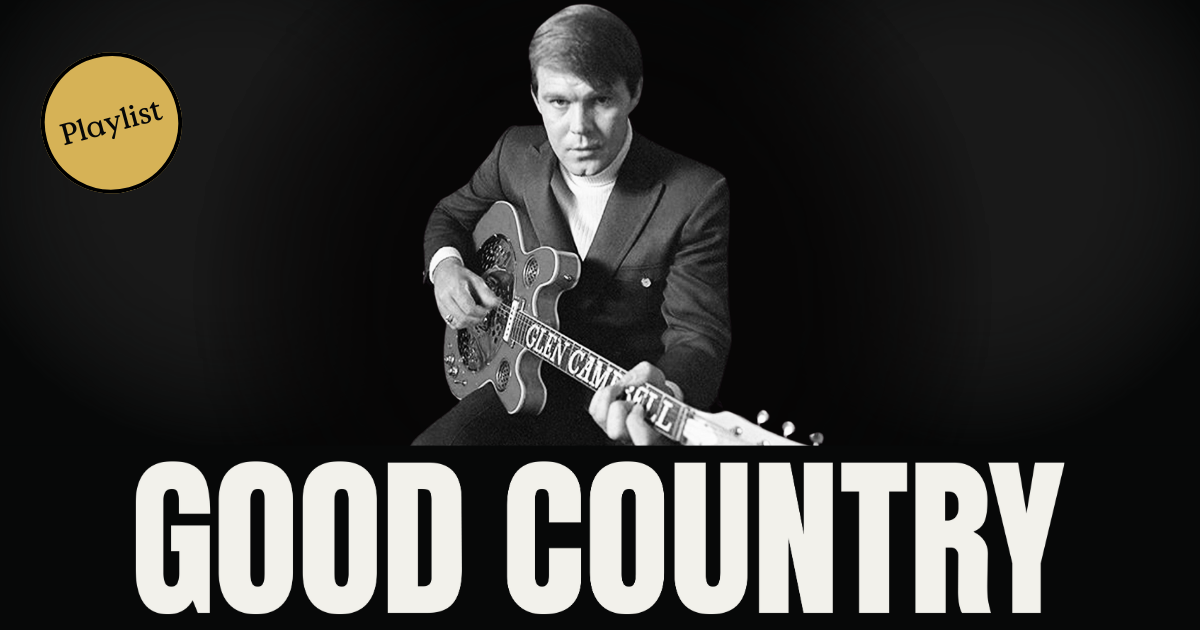
Glen Campbell
Even at the highest heights of Glen Campbell’s superstardom, he refused to let his superlative instrumental skill take a backseat to his roles as frontman, songwriter, Hollywood actor, TV star, and tabloid veteran. Campbell’s approach to country music as a true multi-hyphenate celebrity bridged generations, connecting the hardscrabble, DIY generations where multiple skills were necessary to make a living to the modern era, where he helped pave a way for famously multi-talented picker/singer/writers like Vince Gill and Brad Paisley to not be pigeonholed as one thing or the other.
Ray Charles
Any conversation around or collection of superlative country pickers and musicians would be glaringly incomplete without the inclusion of Ray Charles. His incursions and experimentations in country music are many and infamous. His 1962 album, Modern Sounds in Country and Western Music is routinely listed as one of the best country albums of all time. He’s worked with and performed with Willie Nelson, Merle Haggard, Ricky Skaggs, Travis Tritt, Johnny Cash, Glen Campbell, and many, many more. Plus, his country forays demonstrate a deep, holistic understanding of the genre. Charles is a quintessential country multi-hyphenate and country-soul in the modern era would feel especially lacking without his seminal contributions to that tradition.
Charlie Daniels
It’s hard not to wonder what young, hippie, “long-haired,” Vietnam War-opposing fiddler Charlie Daniels would have thought of his older self, and his more harebrained and often hateful beliefs later in life. But the controversial and outspoken musician, at all points of his career, was a picker’s picker. Over the course of his life he performed and recorded with Earl Scruggs, Bob Dylan, Leonard Cohen, and many more. But his chief contribution to American roots music may just be his fiery, unhinged fiddling on “The Devil Went Down to Georgia.” Just wander down Lower Broadway in Nashville on any given Saturday night to feel the impact of that particular show-stopper. In this clip, he chats and performs “Uncle Pen” with Scruggs and Del McCoury.
Vince Gill
That buttery voice, that stank-face inducing chicken pickin’, that high, lonesome sound – Vince Gill is all at once country and bluegrass, Nashville and Oklahoma, western swing and old-time fiddle. Whether with The Eagles, preeminent pedal steel guitarist Paul Franklin, the Time Jumpers, or so many other outfits, bands, and iterations, Gill is simply right at home. Because, at his core, he’s just a picker. He may play arenas, but he knows he belongs at 3rd & Lindsley or the Station Inn. Or Bluegrass Nights at the Ryman. A quintessential picker-singer-frontman, Gill continues to define the myriad ways country stars can maintain their selfhood and personality – instrumentally and otherwise – even in their wild successes.
Merle Haggard
Speaking of chicken pickin’, country’s most famous Okie was a shredder, too. A sad song, a glass of (misery and) gin, a Telecaster, and the Hag – that’s all we need, right there. Merle’s playing style, even at its most technical and impressive, was simple and down to earth. You could tell he cut his teeth playing bars, fairs, and honky tonks. You could almost hear him pulling himself up by his bootstraps as he played.
Wanda Jackson
The Queen of Rockabilly has been slaying rock and roll, hillbilly music, and the guitar for more than seventy years. In 2021 she released her final album, Encore, when she was 84 years old. It features her signature passion and fire – and performances by Elle King, Joan Jett, Angaleena Presley, and more. Jackson has been representing the vital contributions of women to rockabilly and rock and roll for her entire career, just as often commanding the stage with her growly, entrancing voice and her powerful right hand.
Willie Nelson
Who would Willie Nelson be without Trigger? Without a tasty, less-is-more, nylon-string guitar solo? For decades, Nashville, Music Row, and guitar players around the world have been emulating his particular sound as a guitarist – whether they know it or not. Sure, he’s a hit songwriter, a star and front-person, a collaborator of Snoop Dogg and Frank Sinatra, and a connoisseur of fine bud, but perhaps more than all of these accomplishments, Willie is an impeccable picker. He can hold his own with the best of the best, because he is the best of the best.
Brad Paisley
Brad Paisley’s fame crested at perhaps the perfect time for him in country music, combining a rip-roarin’ guitar playing style with a sound that was entirely trad while carrying touches of the bro country wave that was about to inundate the genre. As such, he was able to build a career on the diversity of his skill set, before Music Row and the power behind it began prioritizing music that didn’t need to be musical and voices that didn’t need to be singular. Luckily, Paisley is both those things and more, and despite the many eyebrow raising moments across his career, our faces more often show shock at his mind-bending skill as a guitarist than anything else.
Dolly Parton
How is it that Dolly Parton can play so many instruments so impeccably with those iconic acrylic nails!? Nowadays, you are just as likely to hear Dolly performing to a track – yes, she does lip sync and pantomime playing along with recordings – but don’t get it twisted, she absolutely can play a passel of instruments from her beloved “mountain music” traditions. She plays guitar, banjo, auto-harp, dulcimer, and has even been known to pick up a bedazzled saxophone from time to time – though we can’t guarantee she actually knows how to play that one, we’re still blown away.
And what about thatone viral video with Patti LaBellewhere they play their acrylics like washboards? Dolly can make music with just about any instrument.
Bonnie Raitt
How many people do you think enjoy Bonnie Raitt’s soulful blues and Southern rock sounds without knowing she’s also often the one playing the guitar solos and making that bottleneck slide weep? Raitt is a Grammy winning songwriter, a fantastic vocalist and song interpreter/collector, and – above all, in this writer’s opinion – a superb guitar picker, especially playing slide. She can hold her own with just about anyone, and she has. Her phrasing and use of melodic space demonstrates that she’s been honing her craft for her entire life. That taste can’t be taught, it has to be found. Boy, has she found it.
Marty Stuart
Marty Stuart’s long, fabulous, superlative career began with him filling the role of sideman for such luminaries as Lester Flatt, Johnny Cash, Vassar Clements, and Doc Watson. He plays guitar and mandolin, working up his chops as a youngster with pickers like Roland White as his mentors. When his solo career took off after his Columbia debut in the mid-eighties, his ear for fine picking remained present throughout his music – however far afield from those early bluegrass and country days he may have traveled, stylistically. Whether bringing in psychedelic surf sounds or Indigenous flavors of the American West, Stuart’s catalog of music centers virtuosity that’s never gratuitous. And his band, the Fabulous Superlatives, featuring crack guitarist Kenny Vaughan and multi-instrumentalist Chris Scruggs, represent a high level of picking prowess, too.
Tedeschi Trucks Band
By many measures, Derek Trucks is the world’s foremost living slide guitarist, but don’t overlook powerhouse vocalist and co-band leader, Susan Tedeschi in order to venerate Trucks! Both started playing as youngsters – Trucks when he was a kid and Tedeschi when she attended Berklee College of Music. These two are guitar and blues royalty, helming one of the most impactful modern blues and Southern rock orchestras on the planet. They’re consummate musicians, knowing just how to surround themselves by players who support and challenge, both. Even with their laundry list of personal accomplishments, together, Tedeschi & Trucks – who are also married – are so much greater than the sum of their parts.
Keith Urban
Keith Urban brings a scruffy, down to earth guitar playing style to his polished and glam mainstream country sound. Yes, even as far away as Australia, having instrumental chops means having country currency. When he moved to Nashville in the early ‘90s, with a few Australian radio hits and awards under his belt, he immediately found work as a side musician and co-writer in Music City. It wasn’t long until his star ascended stateside, too – and then, as quickly, around the world – bolstered by arena-ready guitar. Now readying his first album since 2020, Urban shows no signs of slowing down, with the music or the picking!
This website uses cookies to improve your experience. We'll assume you're ok with this, but you can opt-out if you wish.AcceptRejectRead More
Privacy & Cookies Policy
Privacy Overview
This website uses cookies to improve your experience while you navigate through the website. Out of these, the cookies that are categorized as necessary are stored on your browser as they are essential for the working of basic functionalities of the website. We also use third-party cookies that help us analyze and understand how you use this website. These cookies will be stored in your browser only with your consent. You also have the option to opt-out of these cookies. But opting out of some of these cookies may affect your browsing experience.
Necessary cookies are absolutely essential for the website to function properly. This category only includes cookies that ensures basic functionalities and security features of the website. These cookies do not store any personal information.
Any cookies that may not be particularly necessary for the website to function and is used specifically to collect user personal data via analytics, ads, other embedded contents are termed as non-necessary cookies. It is mandatory to procure user consent prior to running these cookies on your website.