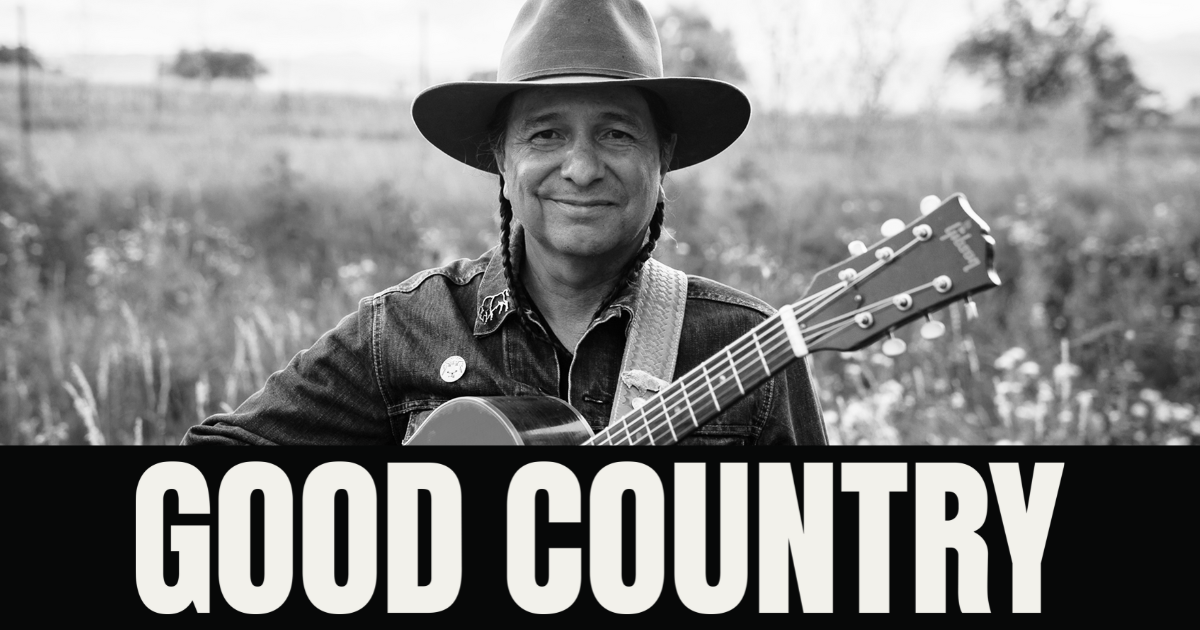
I consider myself to be amongst the luckiest of music lovers. Growing up, I saw some of the most incredible roots artists from backstage while holding my Jack Russell terrier and playing with my cousins. When I was 8 years old, my grandfather Warren started a free bluegrass festival in San Francisco called Hardly Strictly Bluegrass. These artists shaped me since they were the first ones I watched perform, but the connection went on to become even deeper. When my grandfather passed away in 2011 I started performing music, and the larger community of Hardly Strictly was where I found my encouragers and mentors.
This is a compilation of the artists who I heard from and listened to as a child, and those whose songs I learned when I first became a musician. –ISMAY (AKA Avery Hellman)
“Dark Turn of Mind” – Gillian Welch
Just after high school I spent time working on some small homesteads with a farm labor trade for room and board. This was the same time that The Harrow & the Harvest by Gillian Welch came out – a literary masterpiece. Every time I listen to this record it reminds me of those homesteads and my borrowed car with a faulty battery. It brings me back to the day I arrived late to a new farm in West Virginia while my roommate was still sleeping and how odd it felt to be in a house with a stranger. I got up in the morning to make sourdough toast with an egg wondering what that person who was asleep in the loft of that ’80s wood cabin would think of me.
“Concrete And Barbed Wire” – Lucinda Williams
In the ’90s I was fortunate that my mom had great music taste. She took us around in a magenta suburban car and played Lucinda Williams. She said us kids used to sing along with silly accents to the words “concrete and barbed wire.” It took me another 20 years to fully appreciate Lucinda Williams and the masterful lyricist she is. Over the last four years, I’ve been working on a documentary about her, and it’s been so rewarding, because Lucinda’s music is the kind that gets better the more you know it.
“Dallas” – The Flatlanders
My grandfather was not a professional musician for most of his life, but in the final years he played in a bluegrass band with his friend Jimmie Dale Gilmore. What a kind man Jimmie is, with a voice that reminds me of a dove fluttering away. Because of this relationship he had with my grandfather, I heard about this record Jimmie made with his band The Flatlanders that was lost for 40 years. It was raw and made me feel like I was under a tin roof in Texas. It’s said that this tape helped mark the birth of alt-country.
“The Times They Are A-Changin'” – Odetta
A few years ago I was asked to perform at an event that compared and contrasted Bob Dylan and Leonard Cohen. I’m more of a Cohen person, so I had more trouble finding a Dylan song that felt like it would fit my feel. That was when I came upon this remarkable Odetta cover and I was inspired. She changed the whole feel of the song to make it her own. In 2008, she performed at Hardly Strictly Bluegrass just two months before she passed away, it was one of the final times she ever performed.
“St. James Hospital” – Doc Watson
I know that most people know Doc for his flatpicking, but I’ve always been much more drawn to the fingerpicking style of guitar in general. “St. James Hospital” feels like a fascinating departure from the more well known Doc Watson performances, and I love hearing him playing in a less linear fashion. This shows he can do it all. In the music that I’ve recorded I sometimes feel a bit out-of-the-norm and nowhere-to-belong, but this song feels similar to one I recorded called “A Song in Praise of Sonoma Mountain.” Hearing “St. James Hospital” makes me feel less out-on-a-limb in roots music.
“Permanent” – Kenneth Pattengale & Joey Ryan (The Milk Carton Kids)
As I started playing music I found this record by The Milk Carton Kids before they had that name, and played under Kenneth Pattengale & Joey Ryan. Listening to this song now, it is still unreal that it was all recorded live at a concert. It was deeply inspiring to see artists like Gillian Welch and Dave Rawlings generating a new live sound that was somehow very modern and yet felt like a continuation of original folk music. As if the ’80s and ’90s had never happened! What a gift. Then, seeing The Milk Carton Kids take that torch and carry it on was so exciting for me as a 19 year old.
“Boulder to Birmingham” – Emmylou Harris
I listen to Emmylou every year on Sunday night at Hardly Strictly Bluegrass. Her silver hair and steadiness feel beyond time. I can’t believe she is still here, with that same strong presence since I was just 8 years old. As a performer she has a strong sense of worthiness to the audience, a sense of mutual respect for the relationship between listener and performer. I hope that I can hold just a bit of her steadiness within myself.
“Restless” – Alison Krauss & Union Station
I was in 6th grade and didn’t much enjoy recess out on the playground. I brought my CDs over to an empty classroom, and sat in the back listening to Alison Krauss & Union Station. Sometimes I’d show these CDs to my friends. This was before I figured out that it was cooler to be listening to rock music. But I loved that music, and the songs were amongst the first I tried to learn in singing lessons.
“The Silver Dagger” – Old Crow Medicine Show
Old Crow Medicine Show was playing at Hardly Strictly as they rose up in mainstream culture. I appreciate the edge that this recording preserves. There’s even a moment where it sounds like someone might have dropped something or hit their instrument on another (01:35). I wish more recordings kept imperfections preserved within them.
“Pretty Bird” – Hazel Dickens
Part of the reason that my grandfather started Hardly Strictly Bluegrass was because of his love of Hazel Dickens. They were from very different backgrounds, but they became friends and saw the common humanity in one another through music. She played every year until she died. This is my favorite song of hers. What is beautiful to me about Hazel’s take on bluegrass is the imperfections and raw emotion. She brought her whole self to the song.
“Harlem River Blues” – Justin Townes Earle
I can still picture Justin on the stage with his impeccably curated suits. Back around 2018, I opened a show for him in Santa Cruz, California. He drove up to the venue in a red convertible, which I thought was the coolest thing ever. Just a guy and his ride. He was very kind to me and I wish I had more chances to see him play again. May his music never fade away.
“Tiniest Lights” – Angel Olsen
When I was 20, I went into a record shop in Ohio. The guy there said they only really carry more obscure records. No problem, I thought, I was here for Captain Beefheart and PJ Harvey. But when I asked, he said those artists were too well known. He pointed me towards Angel Olsen and I heard something in songwriting I had never heard before. My world opened up, and I knew there was so much more that was possible after listening to “Tiniest Lights.” She performed at Hardly Strictly in 2015 and her voice was as real and penetrating as the recordings.
“If I Needed You” – Lyle Lovett
What’s better than Lyle Lovett playing a Townes Van Zandt song?? We listened to Lyle a bunch when I was a kid. No, I’m not from Texas, but I do love those Texas songwriters.
“Long Ride Home” – Patty Griffin
The first time I performed at Hardly Strictly (although somewhat tangentially) was at an artist after party. I chose this song, because it had a fun fancy guitar line I could play with my beginner fingers. Someone who was performing came up and said they thought I was talented. I think that might have changed my life right there. It was the first time anyone had come up to me and said I was good enough to do this as a job, not to mention amongst professional musicians.
“Are You Sure” – Willie Nelson
Willie played Hardly Strictly in 2003 and I remember that big black bus sitting behind the main stage. I can’t even imagine the thrill of the audience members, his fans are as dedicated as they come. I heard this song at a recently released film that is fantastic called To Leslie.
“Little Bird of Heaven” – Reeltime Travellers
This band was part of that wave of old-time style artists that came at the same time as Hardly Strictly. The vocals are so unexpected, but real and honest. One of their band members became a mentor of mine and helped me get my start in the music business and I am forever grateful.
“Essay Man” and “The Golden Palomino” – ISMAY
These are two songs from my latest release, Desert Pavement, that would never have happened if it weren’t for Hardly Strictly. I am trying to find my way with my own version of folk, and can’t help but be inspired at what a rich trove of artists I have to draw from.
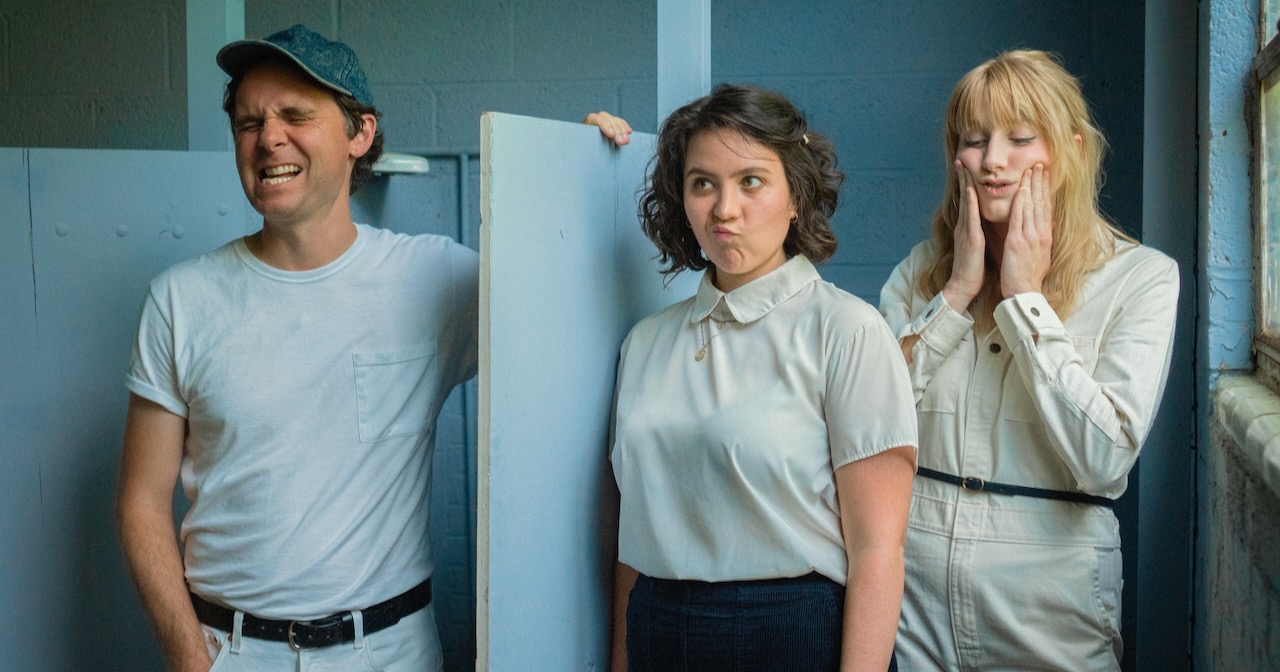
Eight years ago, in 2016, the harp-playing half of Brooklyn-based folk duo Devil & the Deep Blue Sea, found herself filing away songs for a solo project.
“There were certain songs… [that] would tell me who Lizzie No was going to be,” she explained in a recent phone interview. “There were songs that felt very personal, very femme, and a little more country and a little more pop than would be appropriate in my band. Those songs started getting categorized into the ‘new solo project’ category. And then, I just had to come up with a name, you know. Like, I needed my Sasha Fierce alter ego, to be able to stand in myself.”
The name she landed on, Lizzie No, was a doozy. Considering the femininity she noticed her new songs projecting, the decision to include the word “No” in her name was no small thing. Women, especially feminine women – especially Black feminine women – have a special relationship with the word. It was important to No that her solo singer-songwriter persona reflect the energy she wanted to project, the space she wanted to carve for herself and her songs.
“I think there’s a real difference between singing songs that you wrote in the context of a band versus being a solo artist and having people literally look at you, in your physical body, and associate the songs with you and yourself. So I needed an identity, a performer identity, that would be able to encapsulate the confidence and the directness, and yes the femininity, that I wanted to present with these songs that I was writing.”
The idea of mindfully presenting femininity is nothing new, of course. Women in all professions must decide how they’d like to present; how many minutes or hours they will spend before each workday putting on their face and dressing to impress. But, there is a special place in the history of country music for artists taking the stage while female.
It was far less than a century ago that female country singers were expected to travel with a husband, brother, or other male family member as their escort. Women country singers were expected to eschew ambition and to primarily be a pretty face with a pretty voice.
All that started to shift when Mother Maybelle and the Carter Sisters made their Grand Ole Opry debut in 1950 – the first all-female band on that storied stage. In fact, well aware of how women were perceived and received by the country music establishment, Mother Maybelle nonetheless insisted her daughters become masterful on their instruments, develop independent business acumen, and forge a career on the stage.
For the 74 years hence, women who can and do shred have been of great interest to country music critics and fans alike. Author and critic Marissa A. Moss dove deep into this subject with her 2023 book, Her Country: How the Women of Country Music Busted Up the Old Boys Club. Meanwhile, on social media, fans and artists alike routinely return to the evergreen topic of how much airplay women get (or, rather, don’t) on country radio.
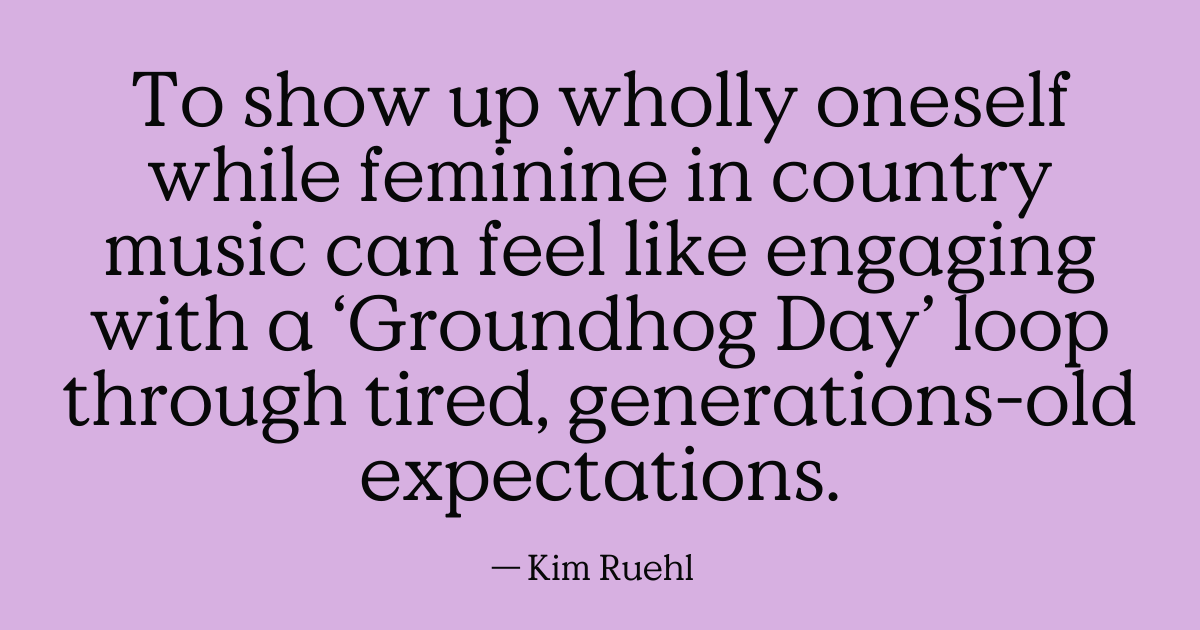
To consider what it means to show up wholly oneself while feminine in country music can feel like engaging with a Groundhog Day loop through tired, generations-old expectations. Granted, the options for women have broadened a bit since the Carter Sisters showed up in their gingham checks and transcended what one might have expected from pretty women who sing and play. (A new documentary by Kristen Vaurio on Paramount+ about the youngest Carter Sister, JUNE, is well worth a stream.)
The modern answer to the Carters’ quietly subversive embodiment is a cadre of demonstrably feminine women like Allison Russell, Margo Price, and Amanda Shires. Recent Grammy winner Russell comes off like a clarinet-wielding, angel-voiced supermodel, self-made from equal parts awful trauma and infectious joy. Price appears as a cross between Willie Nelson and Cher, riding her biting narrative lyricism on the vehicles of magic mushrooms and low-cut, glittery fringe. Shires saunters about in spiked heels and leotards, a finer fiddler/poet than you’ll find anywhere else on God’s green earth.
That each of these women is stunningly talented as a lyricist, multi-instrumentalist, and performer, is inarguably the most important thing. But the messages they convey by leaning hard into how they wear their gender, remind us that women in country music no longer need to amplify the pretty and take the brilliance behind the scenes. There’s more than enough space for both/and.
It wouldn’t be a leap to suggest this is thanks in part to a rising tide of queer country artists. Lizzie No, Russell, and others – Jaimee Harris, Brandy Clark, Jaime Wyatt – prioritize songcraft as equivalent to crafting persona. Other queer artists like Paisley Fields subvert the masculine/feminine binary with candid expressions of personhood that transcend traditional femininity while remaining sonically adherent to traditional country music.
All of this raises numerous questions, including: What does 21st century femininity bring to the cis-het boys’ club of country music? Shouldn’t women get country airplay while also being free to show up as the full human they are?
Lizzie No is a good example of a walking answer to both questions.
A rising country singer whose music lands warmly – a stew of Dolly and Emmylou, a twinge of Kris, just a pinch of Sleater Kinney – her new album, Halfsies, is a mostly-country and occasionally rock and roll rumination on the intersections of love, identity, and freedom. While it may resonate for plenty of men and folks who don’t identify as feminine, it is, in other words, about the numerous conundrums and longing-for-transcendence of womanhood.
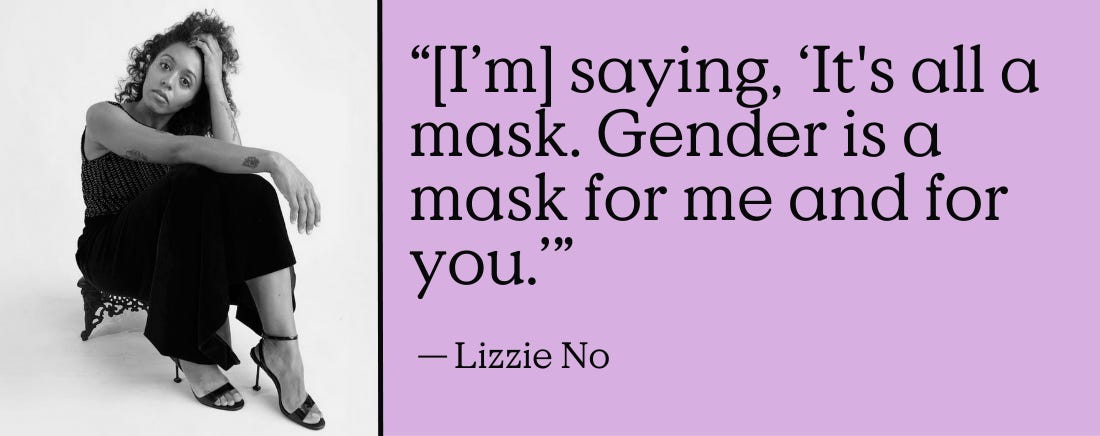
“There’s a patriarchal anxiety around performance and illusion, and we associate that with femininity,” No says. “[I’m] actually leaning into that and saying, ‘It’s all a mask. Gender is a mask for me and for you.’ That’s a big part of how I’ve constructed my identity as Lizzie No. I am one thousand different things and [you shouldn’t] try to narrow it down musically, or in terms of gender.”
She goes on to affirm that the way she constructed her performer persona is similar to drag. Considering country music is most often associated with Nashville (where No recently relocated from New York City), it’s worth considering that this new wave of feminine people in country music has risen at the same time as a push-back against drag performers in the same state and across the country. The tension between these two phenomena is mostly political and definitely charged.
When indie band Yo La Tengo played a show in Nashville shortly after the state passed its anti-drag bill, their decision to wear dresses onstage was a funny, tongue-in-cheek protest. An overt resistance, an assertion of allyship. This is different from when someone like nonbinary country singer Paisley Fields steps out in a sheer top and jewelry, or a dress. The former is clowning on politicians; the latter is throwing on something comfortable to engage in vulnerable, intensely personal creative expression. The former is playing to its indie rock audience, replete with left-leaning, ironic hipsters; the latter is forging a path of their own in the country music world, where femininity is a little more… complicated.
“The first thing that comes to mind when it comes to femininity in country music is just how misogynistic of a genre it is,” Fields said in a recent interview.
For example, they added, “The first time I wore a dress [onstage], I noticed the way people treat me is very different. Even if I’m just in a more, like, sort of flamboyant or more feminine look—maybe hot pink pants or something – I’m treated very differently. If I’m wearing a dress, it’s almost a little scary.”
Over the past couple of years, since coming out as nonbinary, Fields has been exploring what it means for a person assigned male at birth to express authentic femininity on a country stage. Indeed, they are just as likely to appear in the jeans-boots-hat costume of a country man as they are in a sparkly net top and purple chaps – an outfit nobody would look twice at, were it donned by Margo Price or Lizzie No. In the process, they’ve firmed up their own convictions around country music’s relationship with femininity.
“It would be better for a woman to be masculine [in country music] than for a man to be feminine,” they say. To clarify: “Some of the most successful women in country music are obviously very feminine and embrace their femininity, like Dolly Parton and [Shania] Twain. But there is this sort of like, tough as nails [persona], which I guess is perceived a lot of times as masculine.” Granted, this tough-as-nails persona is often an outcropping of the mountains these women have needed to climb in order to make it onto the big stage.
In her 2022 memoir, Maybe We’ll Make It, Price detailed a few shady encounters with Nashville songwriters and executives who saw her as a young, hopeful girl who deserved to be exploited. That she survived these instances and earned success with her music on her own terms, in the end, perhaps lends itself to a tough-as-nails persona. But it is one that comes from being a woman with well-marked boundaries in a misogynistic boys club. When she rode into the 2022 Stagecoach Festival in a crop top and glitter skirt, on horseback, she knew she’d earned the right.
This balance of toughness and femininity (often used in a context where it’s synonymous with “weak” or “fragile” or “naïve”) is indeed not a stretch, but rather the innate characteristic of a woman with a strong moral center and the desire to get hers.
Lizzie No explains perhaps better than this writer can.
“I feel my most feminine when I am in some way using my physical body to achieve political ends,” she says. “To me, that’s my ideal of femininity. It’s like the women who lured Nazis to their death by being hot. When I want to post about taking down the government, you know, I will always use a bikini pic. … Because it’s like, hey, look over here, you’re going see my midriff and you’re going to learn about how capitalism has alienated us from ourselves.”
Last year, my bandmates and I went into the woods to a studio that wasn’t a studio to record this collection of songs, Did You Do The Thing We Talked About? (Out February 16.) Some were songs from before the pandemic that meant a lot to us, and others were new songs I needed to write coming out of it.
Usually, when you go into the studio, you’re trying to maximize control, right? You put everyone in different rooms, isolate each sound, get a basic track, then have everyone redo their part until they’re happy with it. Then you add other instruments, effects, color.
We didn’t do that for this album. Coming out of the pandemic, we needed to share space again. We needed to be in the same room, to see each other’s fingers, to watch the crumbs clinging for dear life to each other’s shirts.
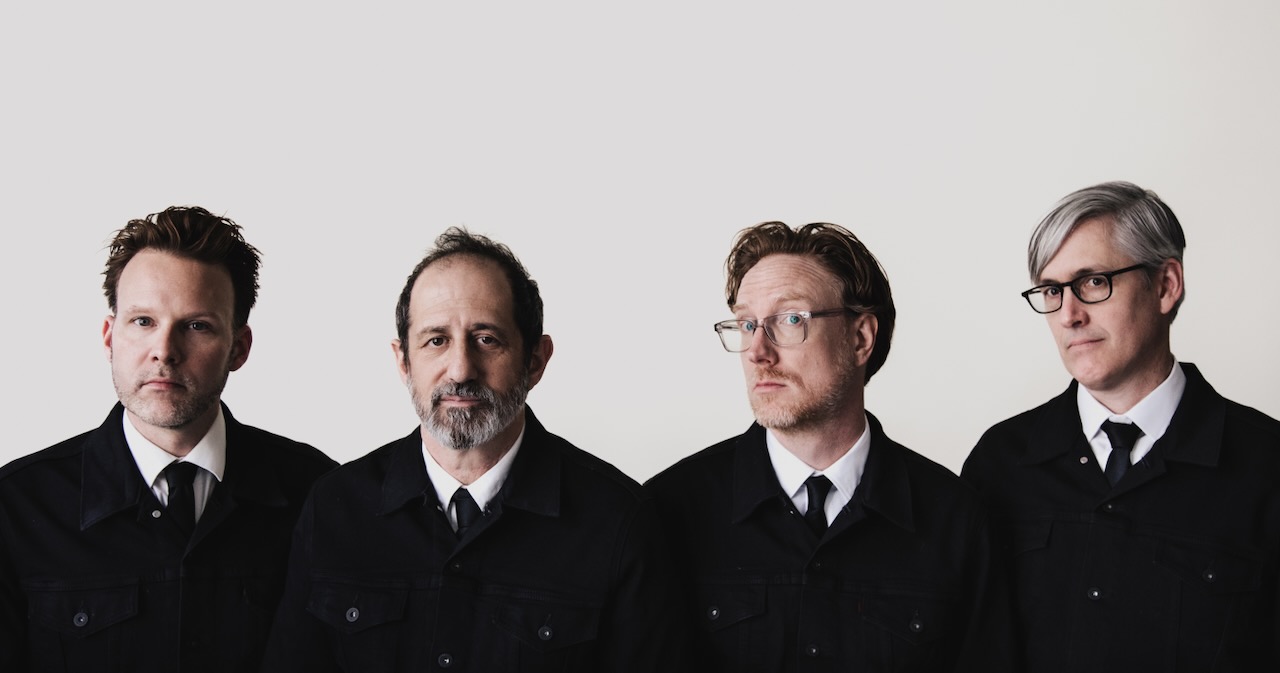
I wanted to make a record that sounded like the four of us communing.We all set up in one big room. Made baffles out of couches and blankets, like you do. We recorded in whole takes without overdubs or extra instruments. Our guitarist, Eben Levy, engineered the tracking. Our saxophonist, Vito Dieterle, and I did the cooking. Ian Riggs, our bass player, kept the tempos and the peace. The album sounds a lot like what our band sounds like on any given night after playing together for 20 years, and that’s just what we were after.
In creating this Mixtape of songs recorded “in the same room,” I was just trying to think of recordings by artists I revere that contain a sense of intimacy and life – I can’t say for sure how they were all recorded. More than anything, these songs make me feel like I’m listening to humans saying human things to other humans. That always makes me feel less alone in the world. – Ethan Lipton
“Walter Johnson” – Jonathan Richman
This is an a cappella recording, so how could it not be intimate? Still, I love this song about one of baseball’s all-time greats, and on this version, Richman sounds like he’s making it all up — lyrics, melody, tempo — as he goes. No one else could do a recording quite like this. Richman occupies a unique space in music, blending folk, garage rock, and proto-punk (?), but it’s his chops as goofball raconteur that I love most. This song also reminds me of my big brother, who introduced me to Richman and a lot of my favorite songwriters.
“Christmas Card from a Hooker in Minneapolis” – Tom Waits
Two pianos, Tom (acoustic) and George Duke (electric). And they create a whole universe together. To me it sounds like Tom is drunk and George is trying to hold him up. There’s so much air and grease and love in it. Blue Valentine isn’t my favorite Waits album — there are too many other exceptional ones — but I’m devoted to the epic narratives of this song and “Kentucky Avenue.” And “Christmas Card” has my favorite lyric ever: “I don’t have a husband / he don’t play the trombone.”
“I’ve Loved You All Over the World” – Willie Nelson
A nearly perfect album, and of course Daniel Lanois got Willie to record it in an old Mexican movie theater. It sounds like every musician on this track is dialed in to every other. I mean, if Bobbie Nelson’s clankity piano doesn’t break your heart, I don’t know what will. And Mickey Raphael’s harmonica is something I hear in my dreams. The drumming takes us into this whole other world. Lanois once said: “We had some nice risers set up for Willie and Emmylou [Harris] and the drummers. So we had a nice time setting it up like a club, and it sounds as though the fun that you’re hearing in the track was definitely in the building at the time.” Amen to that.
“Stardust” – Hoagy Carmichael
I don’t know how this recording was made, but the intimacy of it feels so honest and assured, you almost can’t believe there was a time when it didn’t exist. Nobody sings Carmichael’s songs like he does, and this version is full of his idiosyncratic phrasing. It’s hard not to see Hoagy sitting at the piano when you hear it. And the song itself, I mean ranking is ridiculous, but it has to be one of the best ever written.
Here are a couple of faves from our saxophonist, Vito Dieterle:
“Alone Together” – Lee Konitz, Brad Mehdlau, Charlie Haden
Lee Konitz was a huge inspiration to me. A true improviser. Brad Mehldau took the scene by storm with his virtuosity, but I always knew his roots were in the old masters, and this group showcases all facets of Brad’s talent in ways that few other albums do. And Charlie Haden brings everybody together in a grounding way like only he could.
This group was together only briefly but it captured the essence of playing jazz live and being in the moment with little ego, with true spontaneity and freedom within the confines of the traditional forms of the American songbook. These three were playing live all in the same room/club. The result was just magic. And pure sensitivity and support. I encourage everyone to explore the entire record.
“Fall” – Miles Davis Quintet
This composition by Wayne Shorter is a perfect example of what I consider a “musical trust fall.” A moment when you know everyone in that room has your back, so no matter what, you feel like you can’t fail. The tempo here is liquid, and the chances taken are mighty and bold. You can feel each musician digging into and supporting each other’s choices, and in some cases making those choices even more bold and beautiful in real time. This track changed my life. The first piece of music that truly made me aware of teamwork being the dream work, in a musical context.
Our bass player Ian Riggs wrote about two of his favorites, including another classic by Tom Waits: (The four of us come from different points of musically, but it’s rare for only one of us to like a particular song. In almost every case, one or more of the other three has big love for the same tune.)
“Semi Suite” – Tom Waits
From the quiet count-off to the rousing peak, this song is a wonderful instance of a group of people listening and breathing with each other in the same room. Bones Howe, the producer on this (The Heart of Saturday Night) and other early Waits albums, came from a jazz background and preferred to record musicians that way, without separation. I suppose a multi-tracked version of this song could have also been great, but I’m sure glad they gave this way a shot first.
“Switch Blade” – Duke Ellington, Charles Mingus, Max Roach
The stories about these “Money Jungle” sessions are legendary. They say it wasn’t the best day for Charles Mingus. Apparently he packed-up and stormed out more than once. Duke Ellington and Max Roach (an idol and longtime friend of his) talked him into staying each time. Mingus’ playing is wildly erratic but also beautiful and full of raw feeling. Thank goodness for wise friends who ask you to stay, especially on the bad days.
And here are a couple of picks from Eben Levy, our guitarist.
“Little Ditty” – Cyrus Chestnut
Pianist Cyrus Chestnut’s 1993 album Revelation, with Christopher J. Thomas on bass and Clarence Penn on drums, feels so alive because it’s so live. The liner notes state, “Recorded live to two-track analog at Clinton Studios, Studio B on June 7 & 8, 1993. Complete takes only, with no additional mixing or editing.” It’s all tightrope playing and tightrope engineering. Everyone involved nails the landing, like Kerri Strug. There’s zero filler on this album, but the track “Little Ditty” kills me every time. When Chesntut goes into the very highest keys after the break at about 1:40, the swing is so hard and so light at the same time. Philippe Petit!
“Tight Like That” – Asylum Street Spankers
The 2004 album Mercurial by the Asylum Street Spankers was recorded live in a 100-year-old church direct to a 2-track reel-to-reel tape deck. I love how much the room itself is a voice on the album. The drums are way in the back. The singer is right up front. Wait, holy shit! That harmonica is right in my face! And check out the old 20s barn burner “Tight Like That.” Great solos, and the Spankers mix in some of Jim Carroll Band’s “People Who Died” just to fuck with me.
Now that I see the tunes everyone picked, I can’t wait to listen to this mix-tape!!! There are pieces of all of us in each of these songs. – Ethan Lipton
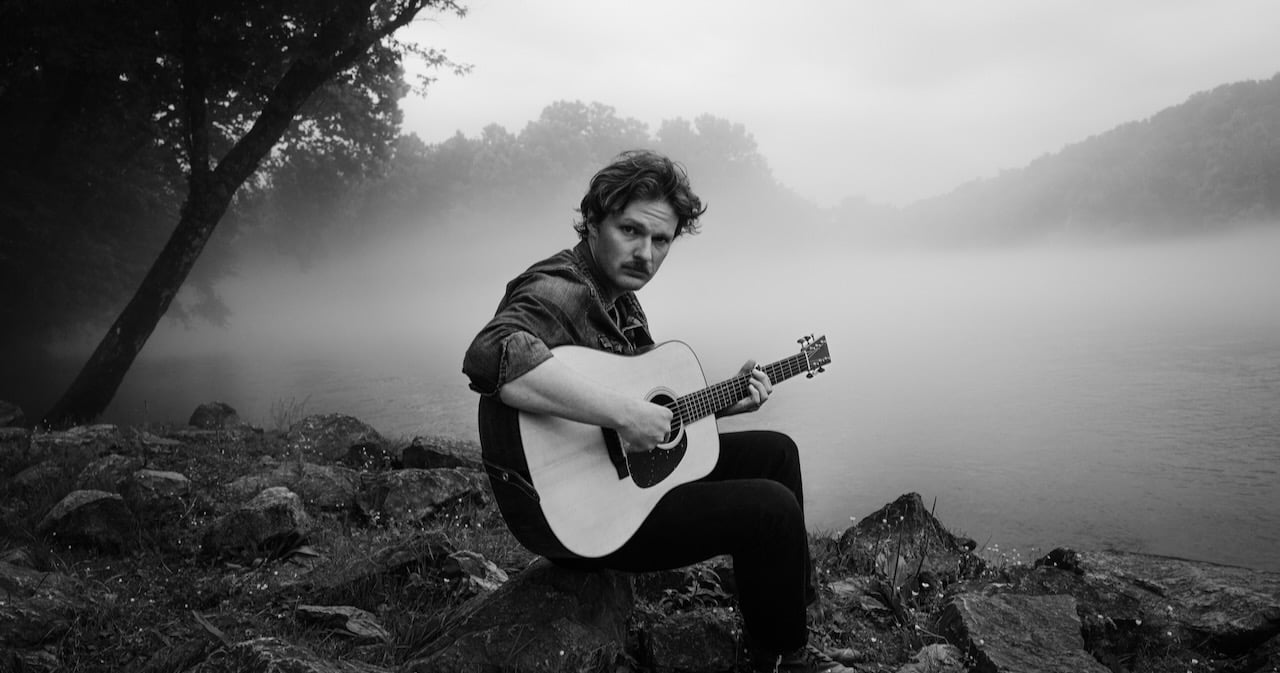
Artist:Zach Russell Hometown: Caryville, Tennessee Latest Album:Where The Flowers Meet The Dew (out December 1)
Which artist has influenced you the most – and how?
I’ve always looked up to Willie Nelson. In my opinion, he is the top tier as far as “artists” go. He wrote many great songs, but wasn’t against recording others’ great songs. His work is of substance and quality, but catchy and with mass appeal. He ebbed and flowed with the styles of the times, but it never felt inauthentic. He had success in the pop realm, then went back to Texas and started the outlaw movement. He has released 100 studio albums. He is still touring at 90 years old. He has a massive marijuana company.
As he said at the very beginning of his Yesterday’s Wine album, “The voice of Imperfect Man must now be made manifest and I have been selected as the most likely candidate.” I mean, come on. That’s as cool as it gets.
What other art forms – literature, film, dance, painting, etc. – inform your music?
I am a big fan of literature, especially Appalachian authors like Lee Smith, Amy Greene, Silas House, and Wendell Berry, but my favorite being John Steinbeck, a California native. I believe reading good literature keeps my mind’s eye in good shape and subconsciously strengthens my sense for imagery.
A song can be seen like a book. Though, in a song you don’t get hundreds of pages to make your point. You get three and a half minutes, some 32ish lines, to get across a story or feeling. You can’t waste a single word. Each line needs to fracture out in a hundred different directions once it enters the listeners mind. I don’t think I ever would have gotten that had it not been for good literature.
How often do you hide behind a character in a song or use “you” when it’s actually “me”?
Nothing against characters in songs, but I wouldn’t create one to hide behind. If I wanted to hide something I wouldn’t write a song about it. Art is largely about bravery.
If I cried and that is an important part of the story, I’ll say that I cried. Sometimes things aren’t meant to be taken literally, though. Sometimes they are meant to be seen mythically, meaning whether it’s true or not is not what is important. But no, never to hide.
What has been the best advice you’ve received in your career so far?
Be kind and be a good hang. Being fun to be around and a nice person will get you gigs over more talented players. I didn’t understand that at first, but now that I hire musicians I get it. You spend a lot more time sharing space with people than you do playing together.
Which elements of nature do you spend the most time with and how do those impact your work?
I spend a good amount of time thinking about my local world: All the local trees and wildlife, the Clinch River and the waterways that feed it, when things bloom, what eats what, and the general way things tend to go. I think if you pay enough attention to the natural world you could accidentally learn all kinds of secret stuff. I believe I have. I’m not really sure what, but things are different now. And I don’t believe it’s any coincidence that it was only after I moved back home to the mountains of East Tennessee that people started paying attention to what I was doing. Maybe it makes it easier to know where things wanna go, or what comes next.
In advance of the release of Vincent Neil Emerson’s latest, critically-acclaimed album, The Golden Crystal Kingdom – which dropped on November 10 – BGS moderated a conversation between VNE and his friend and peer, country & western singer-songwriter and song-interpreter Charley Crockett.
Both artists cut their teeth in music venues in Texas a decade ago. In our conversation, they tell the story of how they came to know each other and discuss ways they protect each other within the business. They talk about covering and cutting each other’s songs and the importance of telling their truths.
Emerson’s new album, produced by Shooter Jennings, veers his sound toward warm ’60s rock and folk influences. He opens up to Charley and BGS about its creation process and what is on the horizon for him.
Charley Crockett: What’s up, Vincent?
Vincent Neil Emerson: What’s up, my boy?
CC: Another day, another dollar.
BGS: Tell me where you both are in the world right now.
VNE: I’m in Asheville, North Carolina, right now, at an Airbnb.
CC: I’m up here in San Luis Valley in Southern Colorado.
Both really nice places to be in the fall.
VNE: You ain’t wrong.
Can you give us a little bit of context about your relationship, where you know each other from, and how long you have been working together?
VNE: Charley, you wanna go?
CC: Oh man, I always tell that story; I wanna hear it from you.
VNE: I met Charley in Deep Ellum. We were playing around town, playing a lot of shows around there and Fort Worth. That was over 10 years ago, maybe?
CC: I was trying to think about it this morning. I think it had to be ’13 or ’14.
VNE: That’s crazy, man.
CC: He remembers it being at Adair Saloon; I remember it being at the Freeman. It really don’t matter, ’cause I’m sure it was both places.
VNE: I’m sure we went and had a drink at Adairs or something like that.
CC: I remember I walked up on him and said, “I like all them Justin Townes Earle songs.” And he said, “I only played one.” I always liked what he was doing, and he used to play solo and do the guitar pools up at Magnolia Motor Lounge all the time. He’d be up there smoking a cigarette, picking through them songs like Townes Van Zandt, and I thought, “Oh lord have mercy, this boy is a force to be reckoned with.”
VNE: Man, I felt the same way as soon as I heard you, brother. I remember a couple of nights I saw you at the Freeman with this band. You had a bunch of guys up on that tiny little stage, and you were just ripping through all these songs, taking all these old honky tonk songs and flipping them on their head and turning them into blues and vice versa. I always thought that was so cool, man.
CC: I don’t remember that well, but I guess you’re right. In those days, every gig we played for both me and Vincent, we ended up getting booked by the same folks, or they were all standing together in some bar, no matter if it was Ft. Worth or Nashville or Los Angeles. One way or another, all them same business folks been standing pretty close to me and Vincent. And that’s the truth.
Well, that’s convenient if you like to work together, I guess. Charley, do you have questions you want to dig in on?
CC: You know, Erin, I don’t even know what the hell we are doing?
Let’s talk about the release of Vincent’s new album.
CC: Well, let me just do this then. Everything he’s been putting out with Shooter [Jennings], like everything else he’s ever done…If you sit there looking at Vincent and he surprises you, it’s like, “Oh damn, I didn’t know old boy was gonna do that.” The very next thing he does, it just happens again — every single time. I remember when he was playing “7 Come 11” way before anybody gave a damn about him and was looking out for his interests or his career. He had all them songs in his pocket way before anybody had ideas or designs on him and his business. I’ve said for a long time that “7 Come 11” is one of the best folk songs written out of Texas in 20 years. Remember Central Track, Vincent?
VNE: Yeah, they did a lot of write-ups on music.
CC: I will never forget that stuff when you did that record and what you were doing live. Erin, he was playing for 50 bucks and a case of Lone Star in them dive bars in Fort Worth, you know? He was living in a 10×10 room. He was hardly ever even standing inside of the damn joint.
A handful of us showed up at the same time, and we are all moving on our own paths, but we’ve all stayed pretty close, or we damn sure weave it together quite a bit even if we get way out there, you know, in the territories, we always come back to each other. I think I met Leon Bridges right around the same time that I met Vincent. I met him in Deep Ellum, too. There is a guy who plays guitar with me now named Alexis Sanchez. He had a band back then, and he was playing at Club Dada there for some little festival, and Leon Bridges was standing there in a trench coat and a bowler hat. I venture to guess that me and Leon and Vincent met each other damn near about the same time. There were a lot of other folks like that. Ten years later, especially for some Texas guys, you know, we’ve all grown a lot, and I think we have always supported each other and loved each others’ music. That’s only grown, and Vincent is standing there as one of the premier, original, authentic talents to come out of Texas since the turn of the damn century. I’m not blowing smoke. I’m just stating what is already happening.
VNE: Man, that is high praise. I appreciate you sayin’ that, Charley.
CC: Well, they want all this shit to write about it, but that’s just the truth. He was playing in Fort Worth and like I said, playing for all that low money. They were calling him Lefty. Why did they call you Lefty? I figured it was because you had a black eye or something.
VNE: Yeah, I had my left eye knocked out of the socket one time, and the nickname stuck for a while.
CC: I remember they wrote about you pretty salaciously there in the Fort Worth Weekly. I know a thing or two about that myself.
VNE: I would say it was because they were trying to sell papers, but it was a free publication.
CC: Shit, they are selling advertisements. I think the Dallas Observer is still doing that to me.
He was playing them bars, we were playing them bars. I don’t know which one of us is which, but more often than not, he sure seems like if I’m Waylon, he’s Willie. I have felt like that for a long time. You could change the names. I think about this stuff a lot. The business folks, it is always hard to tell what they are doing, but you can be sure they are rolling dice and betting and gambling on folks. It ends up being, a guy like Vincent that somebody like me can lean on a lot more. We can trust those guys, and I’m real happy with who I’m working with, and I’m sure Vincent is, too. It is the other artists living life for the song that gets us through. I know I feel like that about Vincent, and I feel like that about a lot of other guys I don’t know as well as him.
Kind of like Johnny Cash said, “We are all family, even though some of us barely know each other.” I think it is because we can see each other and know we are in the same boat and in that way, care more for each other than other people would. I think it is pretty serious. It is life and death.
VNE: That’s a good feeling to not feel so alone in that way and have people out there and doing things similar to you. They probably think a lot of the same thoughts. Me and you are good buddies, Charley, and I feel that way, too. I feel like some guys out there like Tyler Childers – I really respect him, and I feel like he is in the same boat as us. I’m not as well known as you guys, but I think none of that really matters. I think what it comes down to is that we are all songwriters trying to make our own stories happen and be true to ourselves and honest to the world. I think that the reason we can relate to each other is the same reason the fans can relate. Honesty will cut through anything and bring people together.
CC: One way or another, them folks we are selling tickets to, they know.
VNE: You can’t fake the funk, I guess.
CC: Eventually, it comes through. Speaking of Tyler Childers, we ended up on the same plane flying from Nashville to Austin recently… I was there for the Country Music Hall of Fame induction and I didn’t want to go. I get real antisocial and want to hide out from everybody and shit, and I went to Nashville kicking and screaming. Tanya Tucker was getting inducted to the Hall of Fame with a couple of other people. Patty Loveless and Bob McDill, who I wasn’t that familiar with. I had thought that he’d written the Jimmy C. Newman song, “Louisiana Saturday Night”, which I know real well. To be honest with you, it is the only reason I agreed to go out there, ’cause I love singing that song. I made a lot of money writing songs off of that song, so I figured I owed whoever the songwriter was. Long story short, there in the last week, I found out it was a different “Louisiana Saturday Night,” regularly mistakenly attributed to Bob McDill cause he wrote a totally separate song called “Louisiana Saturday Night” that Mel McDaniel had a big hit with, and that’s the one that goes,
“Well, you get down the fiddle and you get down the bow Kick off your shoes and you throw ’em on the floor Dance in the kitchen ’til the mornin’ light Louisiana Saturday night”
That was a big ol hit, right Vincent? He did “Baby’s Got Her Blue Jeans On,” and a bunch of shit like that that I just didn’t realize. My naive, ignorant ass goes up there to Nashville kicking and screaming, and that’s how I feel. A horse gets led to water or something like that. I saw Tanya get inducted. I damn near built my career off of my version of “Jamestown Ferry” when I was younger, and I realized that she had blazed that trail for me, and I had not shown her enough respect. I really hadn’t. Same thing with Bob McDill. All those songs he wrote and the advice he gave in his speech, and my dumbass could really shut up and pay attention to these folks.
Then I ran into Tyler going from there. He was flying to Austin to do a John Prine tribute. That’s how it is. When I see Tyler, I’m on a plane. When I see Vincent, it is at Monterey Fairgrounds. We are ships passing in the night. All these guys like Tyler, Colter [Wall], Leon, Vincent. Whenever I see them, they got a big light around them, and it is shining. You just want it to keep shining for them, and for myself, to keep it going,
I don’t know exactly where you want to go with this, Erin, but I’m excited about this record. Shooter was telling me about your songs and offered to send them and I was like, “No, I ain’t gonna do that. I wanna be like everyone else.” I wanna watch this thing get rolled out, and I wanna be excited. I’m looking forward to going through the songs.
Vincent, can you tell us about working with Shooter on this record?
VNE: I met Shooter a few times. Me and Charley were at this festival in Iowa hanging out, and Shooter came up to me and tapped me on the shoulder. I’d met him before at another festival but I’d never talked to him. He turned me around and said, “Hey man, I really like that thing you did with Rodney Crowell.” He paid me a lot of compliments, and since then, we talked, and when it came time to make another record, Shooter was the first guy I thought of. I thought it would be such a cool idea to work with him on an album. One thing about him is he really is one of the nicest people I’ve ever met, and he is a genuine fan of music. He’s trying to make cool things happen. I’m so lucky I got to work with him on it. That is the big takeaway from the whole thing for me was making a real good friend like that and meeting someone who gets me excited about songwriting and about making an album and making music in general.
Since Charley cut “7 Come 11” and you cut one of Charley’s songs for this record, can you talk about what prompted “Time of the Cottonwood Trees” winding up in this pile of songs?
VNE: Oh man – that song. Me and you were on tour together for three months, was it last summer? We did a bunch of dates, and we were on the road a long time, and I was listening to Charley do that song every night. It was a brand new song that hadn’t come out on his record yet. I got to hear him sing that song every night by himself, and I just think it is one of the best songs I’ve ever heard. It is one of my favorites from you, Charley. I think it is a fine example of songwriting. When it came time to make this album, I always wanted to pay tribute to you and cut one of your songs on a record because you cut “7 Come 11.” That really ties back into that whole Willie and Waylon and all those old timers who cut each others’ songs and lifted each other up like that. I just wanted to pay tribute to you, and that’s why I put it on the album.
CC: Shit, I appreciate it. I’ll be excited to get the check in the mail. You surprised the hell out of me with that one, you really did. I’ve always wanted people to cut my songs. Sometimes, I think I’d be better off that way. I have so many. I’ve always cut a lot of songs that weren’t mine, probably about half of them. And I got about a 250-song catalog of published shit. I would guess about 40-50% are songs I didn’t write. I feel like I’ve caught a lot of heat for that. People have an idea about me that I never wrote a single song. I think that’s because we live in an era where, like what Vincent was talking about, where all those folks back in the day, across genres, and it wasn’t just country it was pop, folk, soul, R&B. It was everything. Everyone was cutting each other’s songs. I just really think that to write a great song, you have to learn great songs from other people.
You have to watch out for these publishers these days. They’ll just put any piece of junk out as long as they’ve got control over it. They figured out they can make money selling junk. If you can make more money than ever before selling junk and you aren’t principled, and you aren’t that close to the music, well, they don’t see the reason not to do it that way. I think it feels like a renaissance.
VNE: Specifically in the genre of country music, there is a lot of junk out there. I don’t want to put anyone down. Most of the time, I just try to ignore whatever I don’t like. I think that’s the best way to go about it. I think there is room at the table for everybody, whatever you are into. I just think it is so cool that Sturgill and Charley and Colter and Tyler, all these other guys that are out here putting out real, honest-to-goodness songwriter songs. And not just that, but real country music. It doesn’t matter if it is your song or someone else’s; if you are telling that story honestly, I think that’s great. I’ve always appreciated you for that, Charley. I think you are a great interpreter of songs, and I think you are an even better songwriter, man.
CC: Damn, I’m glad I talked to y’all this morning. I feel better.
I’m glad that we are talking about cutting songs because that is such a huge part of country music, interpreting other people’s songs or reinterpreting a song. It feels like that art was lost in the past 20 years or so and it is having a resurgence. I’m excited that you guys are at the forefront of that, because great songs have more than one life. And it is an opportunity for songwriters to make more money.
VNE: I think it is one of the greatest compliments that a songwriter could receive – to have an artist who they love and respect cut one of their songs.
CC: There is no question about that. That is the best feeling.
VNE: It is, cause you know that your songs has legs and can go places that you can’t, which is a great feeling.
CC: It really is. It is such a political world, and it is so divided. There is a lot of pressure on people that you step out there into the great mirror of society, and the more out there in front of the public that you get, there is a mirror that starts projecting on you, and it is tough to deal with. It is hard to know what to do, but the thing about it is – being able to write honest songs and tell the truth in your writing; that is the most rewarding feeling. That is why I always look forward to what Vincent is doing. There aren’t a whole lot of people that I anticipate their new works as much as him, if anybody really. That’s the whole deal. You look over, and he’s writing better and better, and it makes me want to write better, too.
Speaking of, Vincent, can you talk a bit about your writing process for this record?
VNE: I kind of pieced together songs over time. Sometimes they jump out real fast; sometimes it takes a while. And thanks for saying that Charley, brother. Damn.
CC: I’ve been saying it for 10 years.
VNE: That’s kept me going a lot of times and I don’t think you realize that. These songs – damn, what was I saying?
CC: You were saying sometimes they come quick, sometimes they come slow.
VNE: I’m very influenced by the music that I’m listening to and that is why I try to be real careful about what I listen to. I think it is like if I’m making a smoothie. I gotta put certain ingredients in my brain, and it comes out me on the other end, hopefully. I was listening to a lot of Neil Young and Steven Stills and David Crosby. A lot of the ’60s rock and roll and a lot of Bob Dylan stuff. That’s just where I was in my headspace, so I was taking in all that. I try to put it all together to make it my own. That’s where I was at when I was making this album.
By the way, I’m excited about this rodeo we are playing together, Charley.
CC: Oh shit yeah! At the Virgin Theater there? Yeah man, I’m excited about it, too. Thanks for doing it.
VNE: Thanks for having me on.
CC: When it comes to money and shit like that, just any time, whatever you gotta do to make it work cause I wanna keep playing with you as much as we can and build up. I’ve played in some arenas recently, and I really don’t like it. I don’t know if country music belongs in arenas. And I just mean opening. I can’t sell tickets to no damn arena. And I take a cue from Colter cause he and Tyler and them boys, they could be in arenas all day long if they wanted to be. I would rather play rodeos and municipal auditoriums and really special theaters and stack ‘em up. I think we need to get a goddamned Dripping Springs reunion tour going. A real one.
VNE: Man, that’d be great.
CC: You know what I mean, just do some of our own shit. My aunt and uncle and a bunch of people who haven’t been out to see me play in a long time are coming out to Vegas. I used to live with my uncle when I was a kid in Louisiana and Mississippi and shit. He’s gonna flip his shit when he sees you.
VNE: I can’t wait, man, I’ve heard so many stories about him.
CC: He’s wild. We gonna show these folks what country music actually sounds like. They might not be able to tell who is left or right. Nahhh I’m just kidding it is a bunch of cool people.
Thank y’all for letting me be a part of this. I’m just happy to help out or talk about this. I’m real excited about the album for real. The imagery in your writing, man, it’s like everything you write is getting more and more vivid. You paint such a picture. I’ll stop blowing smoke up your ass.
I’m gonna get back on the trail and Vincent, I’ll talk to you soon.
VNE: Thank you for doing this brother, I appreciate you.
Acoustic Syndicate is one of the best acoustic rock and Americana bands on Earth. Fronted by Steve McMurry, the band’s music leans toward themes of sustainability, social justice and quality of life and they’ve built a loyal following over the last 30 years. Steve takes us on a musical journey filled with inspiration and tradition in this episode, and he is as down-to-earth as they come; he still farms the land his ancestors first tended over 200 years ago near Shelby, North Carolina, and we get together every Thanksgiving for a hometown holiday jam in Brevard where I get absolutely blown away by the gravity of this musical titan. As a third-generation folk performer, Steve, in our interview, reveals the deep-rooted sources of his creativity, from legendary Americana influences to the tight-knit musical family that nurtured his sound. I was honored he agreed to join us for an episode of the Happy Hour and I know you’ll love his story and his insights and humility.
This episode was recorded live at The Grey Eagle in Asheville, North Carolina, on May 19, 2021. Huge thanks to Steve McMurry, Mike Ashworth, and Mike Guggino.
Timestamps:
0:06 – Soundbyte 1:00 – Introduction 2:24 – Bill K. Introduction 4:00 – “I Will Lead You Home” 6:52 – “Beauty In The Ugliest Days” 10:44 – Interview 1 26:45 – “Sweetest Breeze” 33:51 – “Rainbow Rollercoaster” 40:00 – Interview 2 50:25 – “Sunny” 57:18 – “Song For Myself” 1:03:26 – Outro
Editor’s note: The Travis Book Happy Hour is hosted by Travis Book of the GRAMMY Award-winning band, The Infamous Stringdusters. The show’s focus is musical collaboration and conversation around matters of being. The podcast is the best of the interview and music from the live show recorded in Asheville and Brevard, North Carolina.
The Travis Book Happy Hour Podcast is brought to you by Thompson Guitars and is presented by Americana Vibes and The Bluegrass Situation as part of the BGS Podcast Network. You can find the Travis Book Happy Hour on Instagram and Facebook and online at thetravisbookhappyhour.com.
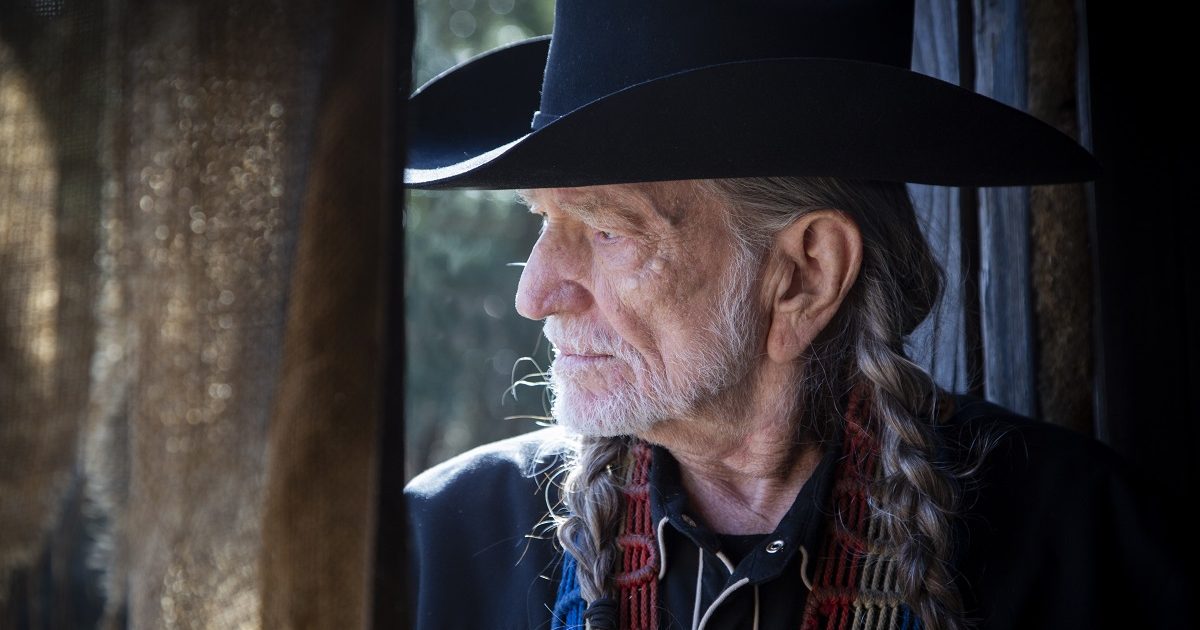
“He was exceedingly cool and easy,” long-time Bill Monroe bassist Mark Hembree remembers about Willie Nelson’s presence at a 1983 recording session where Nelson sang and played with Monroe. “I never had a say in Bill’s mixes, but they had Willie’s guitar way up and as we listened to playback he mentioned it, then turned and asked what I thought,” Hembree wrote in a recent exchange of messages. “I agreed, a little surprised he would ask me.”
People who hear about Willie Nelson’s latest album, Bluegrass, before hearing the music might ask, “Wait, what? What does Willie Nelson have to do with bluegrass music?”
Upon listening, at least two answers come to mind: 1) Much more than you might think. 2) Don’t worry so much.
With tunes by Nelson, one of the best American songwriters, played by notable pickers, the record contains strong music that should sound welcome to fans of Nelson, of bluegrass, and of the field with the loose label, “Americana.”
It’s a given that in more than 60 years of major-label recording, Nelson, 90, has been better known for presenting his own songs, enduring tunes such as “Crazy,” “Hello Walls,” and “On the Road Again,” the last of which is heard here in a new version. But he’s also made his name with notable covers – like “Blue Eyes Crying in the Rain,” “Seven Spanish Angels,” “Blue Skies,” and others – in a welter of styles, including blues, pop standards, and even reggae. Nelson’s core music enfolds ‘40s and ‘50s country, traditional fiddle tunes, four-square gospel, ragtime, some swing flavorings, and definitely a heap of blues. The mix also includes more contemporary pop. Subtract some of that last bit of material, throw in some lonesome mountain banjo and ballads, and you’ll find, in different proportions, foundational bluegrass as designed by chief architects like Bill Monroe and Earl Scruggs.
Legacy Records, the Sony division putting out Nelson’s Bluegrass disc, says the style “was given a name by Kentucky songwriter/performer/recording artist Bill Monroe and the Blue Grass Boys, whose post-war recordings profoundly influenced Willie’s songwriting sensibilities and the direction of American country music in general.” They go on to say, “Willie chose songs combining the kind of strong melodies, memorable storylines and tight ensemble-interplay found in traditional bluegrass interpretations of the roots (from European melodies to African rhythms) of American folk songs.”
And it’s pretty much on target. But what else speaks to Nelson’s involvement with bluegrass?
Let’s return to the early ‘70s, when he famously abandoned a Nashville scene where he had achieved songwriting fame and a recording career. But Music Row had flagged in creativity and opportunity, he and others thought. And yes, at the end of 1969, his house had burned down. By 1972, Nelson’s persona was changing as his new approach revisited his Texas roots. The year saw new-breed stars like Kris Kristofferson showing up at the first Dripping Springs Reunion, a Texas country music festival. The show, which was to morph int0 a string of outdoor throwdowns known as Willie’s Fourth of July Picnic, presented a bluegrass contingent led by Monroe, with foundational figures Earl Scruggs and Lester Flatt leading their post-breakup bands, as well as additional notables including Jimmy Martin.
Jo Walker, executive director of the Country Music Association, told the Austin-American Statesman that the trade group was delighted to hear about the Dripping Springs Reunion. “So many of the rock festivals and similar events have reflected so unfavorably on the music industry that we are particularly happy that your reunion will be a Country Music show.” But with Nelson embracing a new, youth-driven fan base and a long-haired, bandana-ed look, what did country music even mean?
There was a growing correlation, it seemed, between the increased popularity of bluegrass and the emergent outlaw (read: long hair, free-thinking, whiskey-drinking, dope smoking, etc.) movement in country music, led by Nelson and Waylon Jennings. Its bluegrass surge was sparked in part by the Earl Scruggs Revue’s broad acceptance in non-traditional venues like college campuses and hot sales for the Nitty Gritty Dirt Band’s Will the Circle Be Unbroken. Back in Nashville, in 1973, wider acceptance of bluegrass also meant that Monroe, his former Blue Grass Boy Flatt, the brilliant wildman Jimmy Martin, and the great brother team of Jim & Jesse McReynolds would join Nelson amid the crowd of stars at CMA’s second annual Fan Fair celebration.
In 1974, both Scruggs and Monroe, as well as Grand Ole Opry stars Ernest Tubb, Jeanne Pruitt, and Roy Acuff appeared on stage singing with another wildman, country-blues rocker Leon Russell. That’s documented in a photograph of this period, likely from a Willie’s Picnic. Quite a lineup.
A version of the picture found on the web says the shot is from A Poem is a Naked Person, a documentary on Russell by esteemed filmmaker Les Blank shot between 1972 and 1974, but not released until 2015. Nelson appears in the movie to sing “Good Hearted Woman” – also on this new album – playing guitar bass runs that would work fine in bluegrass. He also backs up fiddler Mary Egan, of the Austin “progressive-country” band Greezy Wheels, on an energetic version of the bluegrass-country perennial “Orange Blossom Special.”
In 1974, Nelson went to work in the soul-music capital of Muscle Shoal, Alabama, to record a milestone disc on his road to making records his own way. The album, Phases and Stages, which won over both fans and critics, contains prominent five-string played Scruggs-style on the hit “Bloody Mary Morning,” which also returns on Bluegrass.
The 1983 Bill Monroe session referenced above came after a last minute February 22 phone call from Nelson to let Monroe know he was available to appear on the in-progress Bill Monroe and Friends album for MCA Records. That’s according to a passage in the indispensable book, The Music of Bill Monroe, by bluegrass scholars Neil Rosenberg and Charles Wolfe.
“[Engineer, Vic) Gabany recalls that on February, 22, 1983, Monroe called the studio and asked if it was free that afternoon,” Rosenberg and Wolfe write. “Willie Nelson was in town, and he wanted to rush in and cut the duet with him. Fortunately, it was. Moreover, the Blue Grass Boys were all available, and Haynes was able to round up studio musicians Charlie Collins and Buddy Spicher.”
Monroe’s original tune with Nelson, “The Sunset Trail,” shows the impact of another style, cowboy music, that both men favored. Nelson reaches into his upper range to sing below Monroe, who’s going way up there, as was his wont. “It’s a thrill of my life to be here with you,” Monroe says as he and Nelson exchange praise in the track’s introduction.
In 1990, Monroe accepted Nelson’s invitation to perform at the April 7 Farm Aid IV concert in Indianapolis. “We’re glad to be here with Willie Nelson!” he said to kick off a set marked by powerful singing, crisp mandolin picking, and a little crowd-pleasing buck dancing. The show placed Monroe, 79, in a lineup that included stars such as Elton John and Lou Reid. The Indianapolis Star estimated the crowd at 45,000.
During Monroe’s last years — he died in 1996 — he often spoke to Nelson on the phone, according to a person who didn’t want to be identified, but often spent time at Monroe’s home on the farm outside Nashville during that period. “He valued their friendship immensely,” the person said.
Bluegrass‘s 12 songs contain several Nelson compositions that became standards of his repertoire, along with less familiar tunes that also fit in the recording approach overseen by Music Row’s Buddy Cannon. A songwriter and producer, Cannon is known for delivering big songs, like “Set ‘Em Up Joe” for Vern Gosdin, and chart hits for more recent mainstream acts such as Kenny Chesney, John Michael Montgomery, and Reba McEntire. A frequent Nelson collaborator, Cannon assembled a list of Nashville co-conspirators: Union Station members Barry Bales, on bass, and Ron Block, on banjo; former Union Station member and current rising star Dan Tyminski on mandolin; fiddler Aubrey Haynie; Dobro man Rob Ickes; Seth Taylor also on mandolin; as well as harmonica player Mickey Raphael, who’s worked for decades in Nelson’s band.
The music mostly doesn’t come off as hard-core bluegrass in the mode of, say, the Stanley Brothers. But it leans on the elements that Nelson has in common with the style — lonesome melodies, classic country, swing and blues.
The mournful “You Left Me a Long, Long Time Ago,” from 1964, reflects the straight-country songwriting to which Nelson and others brought a terse, modern beauty in the late ‘50s and early ‘60s. It was a time when bluegrass enjoyed a closer co-existence with mainstream country, as opposed to straining against the tight format borders that limit today’s music business. Among the many artists who crossed back and forth freely were guitarist-songwriter, Carl Butler, fiddler Tommy Jackson, and Cajun star Doug Kershaw. They all worked with Monroe.
A new version of “Sad Songs and Waltzes” mourns in tones not too different from Monroe favorites ranging from “Kentucky Waltz” to “Sitting Alone in the Moonlight.” The song also recalls the 3/4 time Lone Star tunes that Nelson might have heard at the Texas Fiddlers Contest and Reunion.
That show got going in 1934 in Athens, Texas, just one year before Nelson arrived on the scene in Abbott, less than 90 miles away.
The fiddle contests that influenced so much of Texas music beginning in the 19th century, had parallels in the 18th century Southeast, where contests featured both the fiddle and the banjo, with its African roots. This music went around, and it still comes around.
The sock-rhythm backing of “Ain’t No Love Around” recalls early Blue Grass Boys recordings such as “Heavy Traffic Ahead,” recorded September 16, 1946, and featuring Earl Scruggs’ first recorded banjo solo. Elsewhere, the laidback favorite, “On the Road Again,” gets a more intense reading from Nelson, with some vocal and instrumental improvisation to spice it up. The mystical “Still is Still Moving to Me” leaves plenty of room for pickers to range far and wide on banjo, mandolin, fiddle and Dobro.
“You give the appearance of one widely traveled,” Nelson sings in “Yesterday’s Wine.” He’s singing from a faraway spot in time, in myth, in history. It’s a stance that’s earned a place on bluegrass playlists for more recent songwriters such as Guy Clark, David Olney, and Gillian Welch.
“Bloody Mary Morning,” from Phases and Stages gets the most recent of several revivals from Nelson, who led a jam-grassy version in the 1980 film Honeysuckle Rose and later sang it in a duet with Wynonna Judd. The song’s forthright tale of fighting the blues by having a highball on a plane seems somehow classier than the constant tales of beer and pickups that populate country radio.
In the end it seems clear that for decades, both Willie Nelson and bluegrass music have served, in different ways, as a conscience of country music. Just as the Solemn Old Judge, WSM radio announcer George D. Hay, commanded, they “Keep her close to the ground, boys,” although their paths have diverged, at times.
In any case, this new collection brings Nelson together with bluegrass pickers for music that might even work to serve that same worthy purpose.
Earlier this year legendary musician, songwriter and recording artist Willie Nelson announced his 151st studio album would be a return to bluegrass, this time reimagining 12 of his own originals with a string band lineup. Available September 15 and simply titled Bluegrass, the Buddy Cannon-produced project reinforces the career-long relationship Nelson has had with bluegrass and bluegrass pickers, calling on old friends and collaborators like Barry Bales, Ron Block and Dan Tyminski, as well as band members and vocalists Aubrey Haynie, Rob Ickes, Josh Martin, Mickey Raphael, Seth Taylor, Bobby Terry, Wyatt Beard and Melonie Cannon.
Nelson is a revered song interpreter and cross-genre adventurer, covering and recording songs from all across the American roots music landscape, from the Great American Songbook to blues and soul, from jazz to Texas swing. No corner of Americana in any/all of its forms has been left untouched by this prolific music maker. But his relationship to bluegrass – similar to his peers like Dolly Parton or Lee Ann Womack, or his acolytes and emulators like Sturgill Simpson and Kacey Musgraves – speaks to the primordial relationship between country and bluegrass, more than just musical touristing or a genre-based gimmick. Nelson doesn’t put on “bluegrass” as a costume, he brings it forward from the earliest days of country music as a genre, before sub-genres like bluegrass had stratified and coalesced as identities somewhat separate from country as a whole. It’s part of what makes Bluegrass a compelling collection, tracks like “Still Is Still Moving to Me,” the album’s lead single, don’t feel like songs wearing bluegrass drag, but rather feel like country gone back to its roots.
Across a career that has touched so many other musicians, singers, and creators – from Waylon Jennings to Ray Charles to Snoop Dogg – it follows that Nelson has counted many bluegrass greats among his album guests, track features, and show bills. He’s toured extensively with Alison Krauss & Union Station over the past two decades; it’s no surprise to find a handful of Union Station alumni on Bluegrass. He’s recorded with Rhonda Vincent, Billy Strings and all the McCoury boys, Del, Rob and Ronnie – the latter two have toured with Willie, too. Country Music, a 2010 release from Nelson produced by Americana superstar T Bone Burnett, was also a bluegrass-centered album, pulling from the deep and broad repertoire of early country, old-time and bluegrass – when the three genres could be represented by a Venn diagram of one circle.
There are so many facets of Nelson’s music making that feel patently bluegrass: his love of borderless, boundless cover songs; his ability as a picker standing equal with his songwriting and one-of-a-kind vocal interpretations; his endless output of personal, meaningful music; his mutual admiration of his compatriots, adorers and mentees. The list could go on ad infinitum. It makes perfect sense that this year he’ll join the father of bluegrass, Bill Monroe, in the Rock & Roll Hall of Fame.
It’s rare that a multi-hyphenate musician and songwriter such as Willie Nelson can shift so effortlessly between contexts, gathering and maintaining a diverse following that understands great music can – and should – transcend not only genre, but all of the trappings of the music industry. It’s part of why Bluegrass feels grounded, honest and resonant. Willie Nelson isn’t playing pretend, he’s just being himself – and that might be the most bluegrass thing about him.
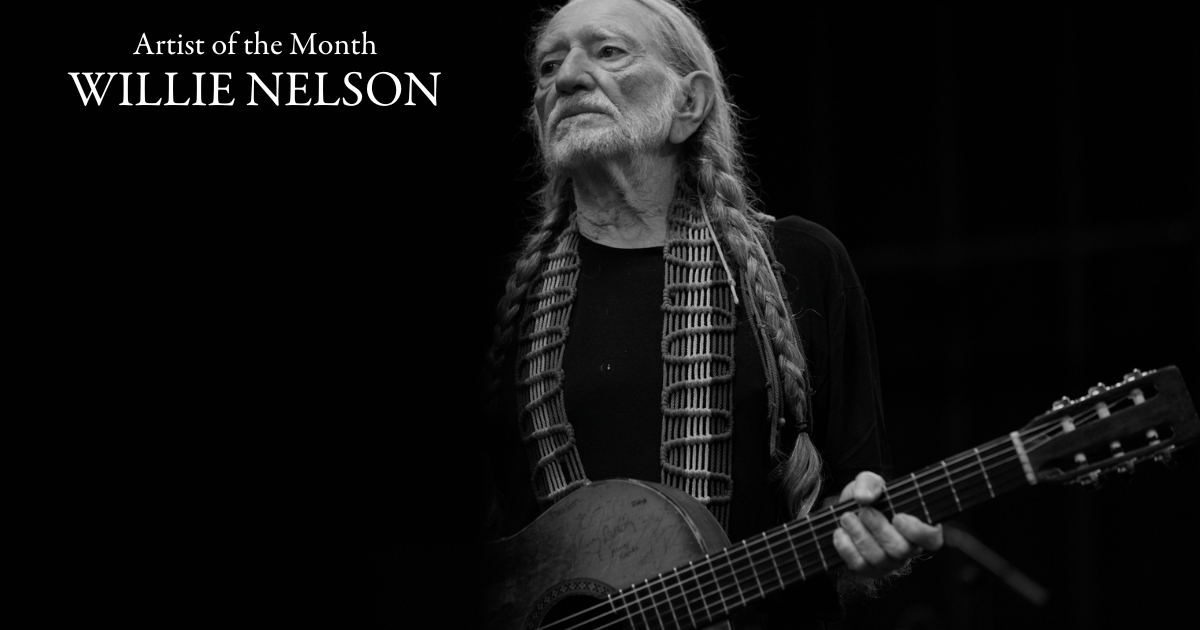
Watch for our Artist of the Month feature, an in-depth exploration of Willie Nelson’s relationship with bluegrass across his life and career coming later this month, and enjoy our Essential Willie Nelson Playlist, featuring many of his bluegrass forays among his popular recordings and our BGS favorites.
Artist:Bill and the Belles Hometown: Johnson City, Tennessee Song: “Gotta Get Drunk” Album:To Willie From Billy Release Date: September 8, 2023 Label: Ditty Boom Records
In Their Words: “Our upcoming album, To Willie From Billy, is a tribute to Willie Nelson, released in honor of the icon turning 90. We like to think it’s a bold and playful meeting of our string band origins and genre-defying arrangements, and a celebration of Nelson’s songwriting and musical ethos. It is that musical ethos that ties Willie and Billy together: A commitment to timelessness and simplicity, with a good dose of rebellion. Picking out just 12 tunes from Willie Nelson’s catalogue proved to be tough if not impossible, but eventually we got there. Most of the tunes are lesser known cuts from Nelson with a few hits thrown in for good measure. ‘Gotta Get Drunk,’ a raucous bar shout, wobbles and sways right in the middle.” – Kris Truelsen
When The Stringdusters were in Nashville around 2006 or 2007, our dobro player lived next door to Jon Weisberger in Madison, right on the Cumberland River. There were two houses on the property; Andy lived in one, Jon lived in the other. I was sleeping in Andy’s guest room and there were regular picking parties at The Compound, as we now refer to it. A few years ago I suggested Jon move to Brevard, he looked into it, and I’m happy to say I’m now neighbors with my favorite co-writing partner. Jon’s written with just about everybody in bluegrass, but recently his most notable songs have been with Billy Strings. In fact, Jon helped write “California Sober,” a song Billy recently recorded with Willie Nelson. A music historian, writer, bassist, and king of the charcoal grill, I was thrilled to get to know more about one of the most-liked people in bluegrass.
This podcast is an edited distillation of the full-length happy hour which aired live February of 2021. Huge thanks to Jon Weisberger and Tommy Maher.
Timestamps:
0:09 – Soundbyte 0:52 – Introduction 2:18 – Bill’s live introduction 2:47 – “Wasted on the Way” 5:30 – Interview 41:19 – “Pearl of Carolina” 45:00 – “Windy In Nashville” 49:24 – “Blowin’ On A Lonesome Breeze” 53:05 – Outro
Editor’s note: The Travis Book Happy Hour is hosted by Travis Book of the GRAMMY Award-winning band, The Infamous Stringdusters. The show’s focus is musical collaboration and conversation around matters of being. The podcast is the best of the interview and music from the live show recorded in Asheville, North Carolina.
The Travis Book Happy Hour Podcast is brought to you by Thompson Guitars and is presented by Americana Vibes and The Bluegrass Situation as part of the BGS Podcast Network. You can find the Travis Book Happy Hour on Instagram and Facebook and online at thetravisbookhappyhour.com.
Photo courtesy of the artist
This website uses cookies to improve your experience. We'll assume you're ok with this, but you can opt-out if you wish.AcceptRejectRead More
Privacy & Cookies Policy
Privacy Overview
This website uses cookies to improve your experience while you navigate through the website. Out of these, the cookies that are categorized as necessary are stored on your browser as they are essential for the working of basic functionalities of the website. We also use third-party cookies that help us analyze and understand how you use this website. These cookies will be stored in your browser only with your consent. You also have the option to opt-out of these cookies. But opting out of some of these cookies may affect your browsing experience.
Necessary cookies are absolutely essential for the website to function properly. This category only includes cookies that ensures basic functionalities and security features of the website. These cookies do not store any personal information.
Any cookies that may not be particularly necessary for the website to function and is used specifically to collect user personal data via analytics, ads, other embedded contents are termed as non-necessary cookies. It is mandatory to procure user consent prior to running these cookies on your website.