Watchhouse Found New Rituals Amid the Push and Pull of Change

Chances are you’ve cultivated a few personal routines to help you navigate the world: one for daily life, one for weekly, monthly, and so on. There’s also likely a handful of individual habits that affect how you choose to go about your routine. The former, at times, can influence the latter, fitting within each other like a pair of nesting dolls, adjacent and similar in their roles.

Then there are rituals. Though these three recurring sets of actions – routines, habits, and rituals – would seem like easily overlapping bedfellows, rituals carry an intrinsic quality the other two lack: mindfulness. Rituals bear a sense of intention like the other two, but it’s often coupled with an element of symbolism or custom. It’s not just a matter of doing something and saying it’s done; there are other connotations or expectations that may influence why doing it matters.

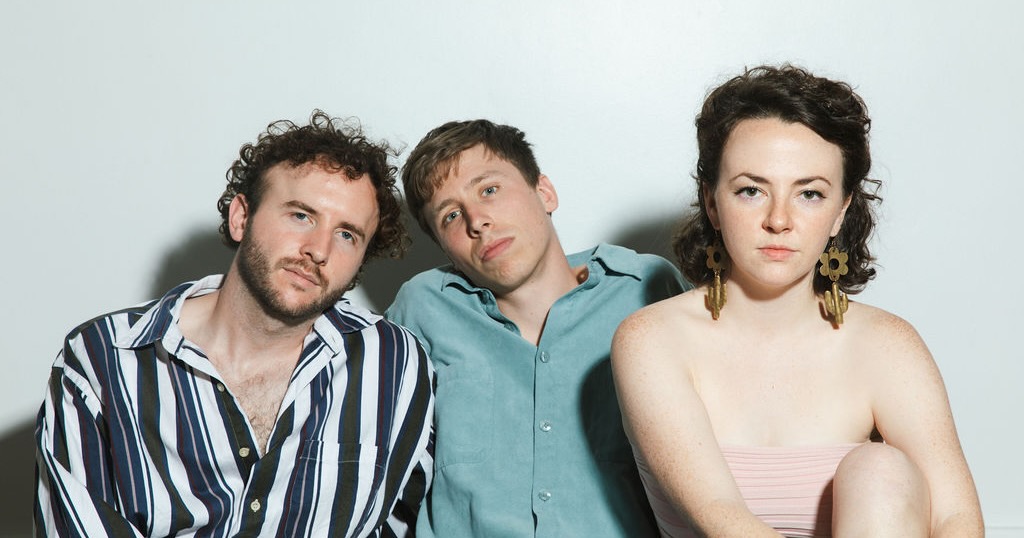
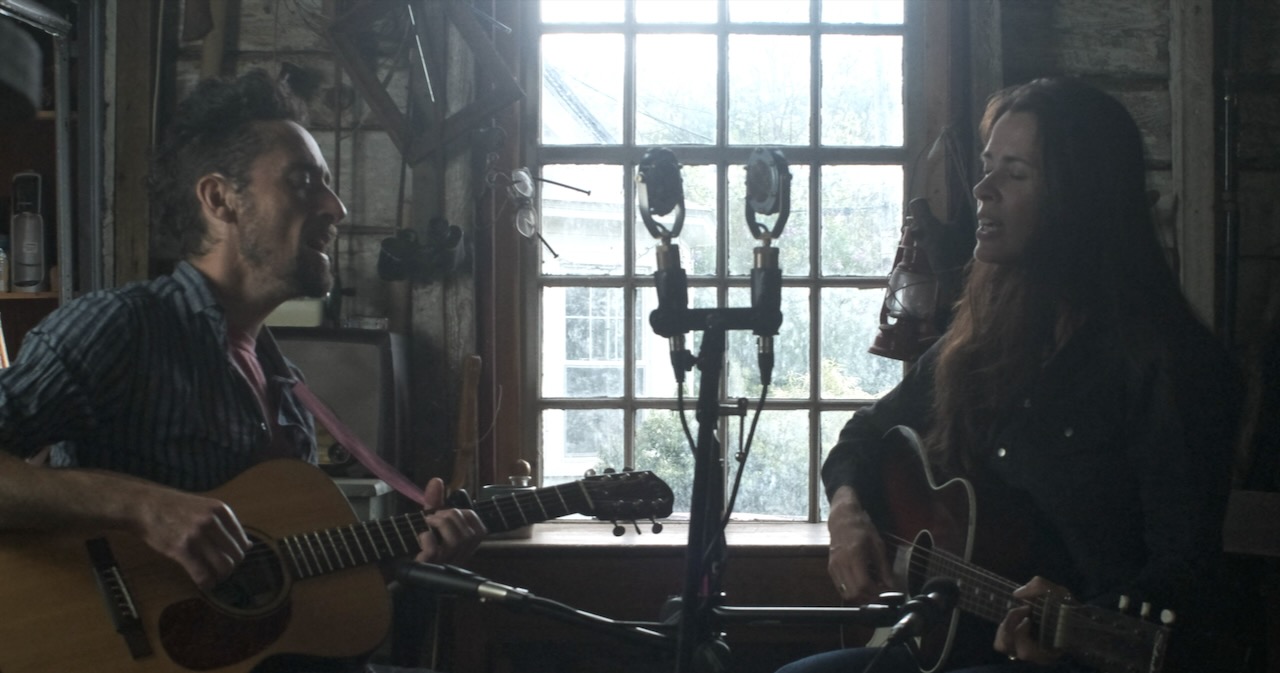
Holding this notion in mind, it’s Rituals that Andrew Marlin and Emily Frantz of North Carolina duo Watchhouse have decided to name their new album. Through its 11 tracks, the married musicians posit an abundance of questions and actions, their contemplations placed in settings that are as clear as a simple back porch and as abstract as a space “through the looking glass,” “beyond this to and fro.” Settings that exist outside of not only any kind of routine, but separate from time and space all together.

Though Watchhouse’s new writings don’t seem to present rituals in their conventional form, the title still feels wholly appropriate. Marlin and Frantz’s reflections, wistful pining, and open-ended ruminations don’t lead to a sense of clear, expected structure that rituals would traditionally provide, but each song is lined with an abundance of intention, mindfulness, and hope for various outcomes. Sometimes these are overtly stated – Oh, I’m dreaming of a life with you in the sun/ And I hope our time together has only just begun… – and sometimes they are dressed in metaphors: Go fire your cannonball, go and fire away/ When the ashes fall we’ll start a brand new day.

There are defined ideas that Watchhouse put forth on the album: identity and awareness, the distinction between patterns and truths, how to develop a positive relationship with change, and what it means to evolve. All the same, while our internal responses to these songs may change over time, the very act of revisiting, replaying, and reconsidering their meanings, and how we are affected by them, can be a form of ritual in its own way.

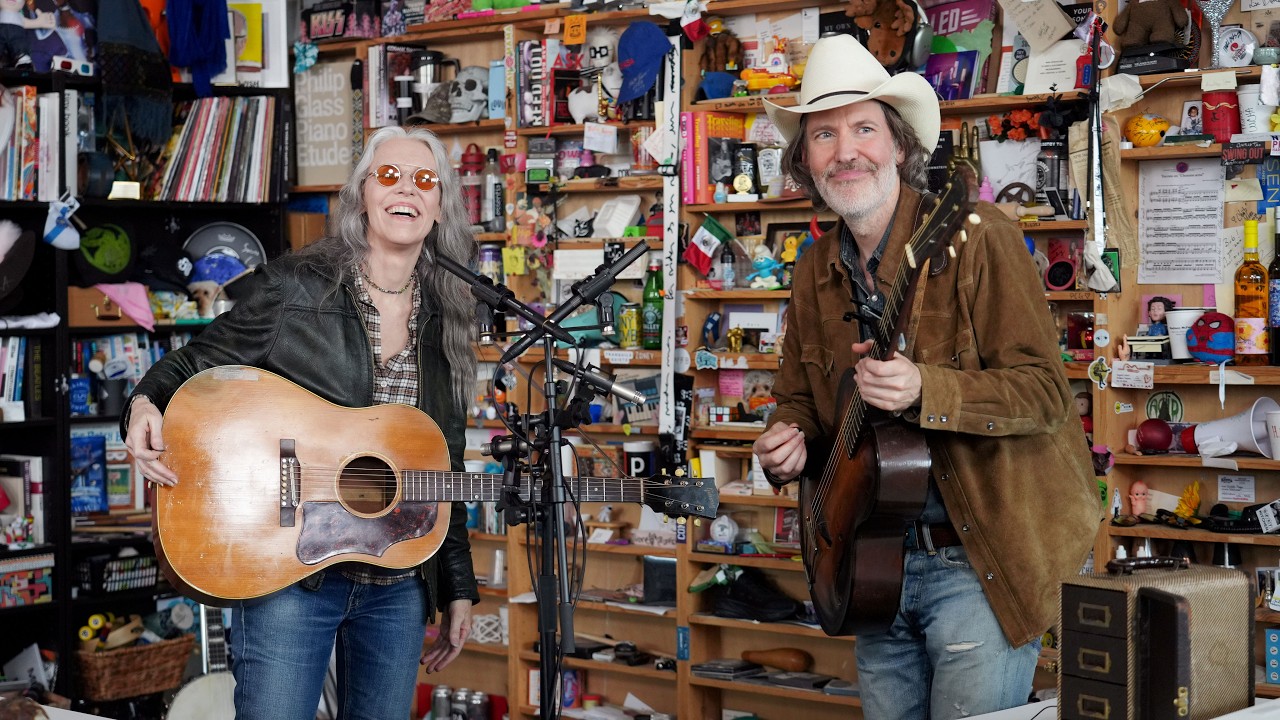
Amid an extensive tour that will take them all over the U.S. and into Canada through summer and fall, Watchhouse spoke with BGS about their collaborative dynamic, how their individual artistic instincts influence the direction of a song, and the prevalence of duality in the album – as well as in their lives.

It’s been about four years since your last album and eight years since both your lives changed from bandmates to family. Given that Rituals focuses on patterns and the perception of change on our lives, how has the ever-growing longevity of your union in marriage — and all the ways marriage transforms a relationship on its own — changed the way you perceive and interact with the music making process?

Andrew Marlin: When you hit the road and join forces with other people to play music, it’s kind of like stepping outside of the norm and stepping outside of the daily life to go up there and almost take on a role or take on a character in order to get inside the music. You kind of just forget everything that the day often requires of you, because all of a sudden those requirements aren’t there. It’s just the stage and the music and the people that are there rooting for you to go deep, you know?

I think finding that zone with Emily has had its challenges in the past, because we’re so closely tied to each other. We raise kids together and we live together, and so doing all this traveling together and playing music together too, it makes it harder – or made it harder for me at the beginning, I think – to leave the daily routine and expectations behind on stage and just shed all of that and take on that character. It’s one thing to look at your bandmates’ eyes and get a little nod or whatever’s happening during the music. It’s kind of like this understanding of, “I’m not here right now. This is just me playing music.”

Getting to that zone with Emily, now that we’re 16 years into it, has taken a while to get to that point to where it’s an acceptance of all of it, instead of just leaving things behind to get on stage. It’s like we’re carrying all of it with us at all points in time. People that come to see us get a real and honest version of ourselves, trying to go deep in the music but also being completely aware of each other too.

Emily Frantz: I was just thinking about how much things changed in 2020 and 2021, living our mundane day-to-day lives in our house, and the transition back into being on the road again and touring. We’ve obviously been doing that for a few years now since COVID, but that experience made us relearn what the relationship is between our daily life at home and touring and [figuring out] how can they coexist in a healthy way.

Ironically, the album’s opening track, “Shape,” avoids the traditional shape or structure of a song (all verses, no chorus) while the actual narrative of the song embraces ideas that lean into a sense of purgatory and a nebulous state of being — the very opposite of what would help establish a sense of shape, boundaries, identity, direction, patterns, or truths. What were the mental and emotional motivations that inspired you to take the song in this direction?

AM: It’s like establishing the shape or the pattern in order to separate yourself from it. That’s what a lot of those verses are doing, kind of outlining the things that often make me feel like I’m in a box and I’m trying to get outside of that box. The only way to do it – because there’s no real form to it – is to imagine the parameters, imagine the spaces that it ends up kind of confining you in, in order to step outside of those [boxes]. I think that was the intention with “Shape.”

EF: And the way that “Shape” came into its final form, at least final the way it appears on the record, was a lot of the things that you said about it: It didn’t ever really conform and it got rearranged and had things added and taken away from it so many times, a lot more so than other songs. But it always did feel like the backbone of this record in a lot of ways, which is why it felt really right as the opening track of this record.

AM: If there was a shape to define that song, I’d say it’s a spiral.


View this post on Instagram


A post shared by Watchhouse (@watchhouseband)

How have you fit rituals into your lives and have they helped you maintain a sense of stable continuity as a family and as musicians?

AM: I feel like since having kids, the day has taken so much more form. Because I think that, and Emily [is] really brilliant about this, giving structure to the day is super helpful for them. So that they don’t have to wonder what’s happening, so that they can really pay attention to what is happening. I’ve watched both of our kids blossom in that environment. Emily’s really good about helping to create that and make sure we stick to it. Carrying that on the road has been really helpful, too and something that I didn’t realize I was going to benefit very much from. Because I definitely, when left to my own devices, am like a sheet left out to dry – just flapping in the wind. To have a little bit of structure to the day, and have to enter into these mental zones with the kiddos, has added a lot of mental structure to my existence. I think that’s the biggest thing for me.

And within that, it’s about realizing what the day actually requires of me, instead of what I imagined today to be expecting of me. Finding those real anchors and a little more gravity to the things I’m working on have helped me shed old expectations of myself and what I think I’m supposed to be doing. I think that’s what led us to be okay with changing the band name and changing up some of the sounds and approaching this thing we’ve been doing for a long time in a whole new way.

EF: I think the thing that we are [focusing on] 16 years in is finding where the balance is between freedom and artistic expression, and also just daily life and figuring out how to have those two things like coexist and make each other better and not be in a constant sort of push and pull.

The first verse in “Beyond Meaning” is intriguing. The statement of your “gentle” disposition is nice, but its seemingly conditional nature gives pause — particularly when considering that life is noisy and out of our control more often than not. What is it that you’re trying to say about your own identity and awareness of how you cope with the noise and bustle of everyday living?

AM: I feel like what I was getting at is to view it as though it’s external noise. But it’s actually internal noise. That’s often the thing that keeps me from my peace and keeps me from being gentle. It’s my own defenses and my own self-consciousness that end up creating all of this noise. It paints the external noise in a negative light. When I can control that and remember to keep my own defenses at bay and be open and actually present, the idea that maybe this external noise is not a malicious one keeps me gentle and then often what comes from that is a gentle interaction. So it’s more about controlling the internal noise in order to actually experience the external factors.

Out of the 11 songs on the album, Emily is the primary vocalist only for “Firelight.” Why was Emily the right fit to sing the story of this one song? And more broadly, what went into your shared thought process on when, and for how long, you two would sing together? Is it a purely harmony and arrangement-based decision, or do the emotions of a song influence how each vocal arrangement is structured?

EF: A lot of times it can be pretty cut and dry. If we’re deciding who should sing lead on a song, it might just have to do with the range or the key, where we think it sounds good. Sometimes that plays into it maybe even more than the lyrics or the subject matter. With Andrew doing the songwriting, he’s always been more of the primary lead vocalist. Oftentimes, by the time we’re arranging a tune and finding out how we want to present it, it’s very cemented in his voice. But then a lot of times, there will be tunes that we’re struggling with and we’re not quite finding it. By switching out who’s singing, it reframes the whole song and allows us to not just change the lead vocalist, but to find a whole different zone for the song in terms of what we hear and how it gets arranged and recorded. That was the case with “Firelight.” We had so many different versions of that song over the years leading up to recording – different time signatures, different instrumentation – and that was one of the last ones that came together for this album. Most of it got done after the initial tracking session because we were searching on it for a long time and I think I like it more and more the longer I sit with it, the more I hear it.

AM: Often people do want to know why Emily’s not singing more tunes or why the roles are what they are. But I think it’s really important to shine a little light on what Emily does behind the scenes when she’s not singing. The way she plays rhythm and plays violin or whatever instrument she’s on, it ends up being this anchor for everyone in the band. The way that offers complete structure to what we’re doing and allows everything else to sway around that a little bit, I feel like even when she’s not singing, her musical voice is such a strong presence in the music. I’ve heard her say this before, like when she’s playing violin, she’d rather not sing lead because it’s almost like having to sing with two voices. That became part of the structure of what we’ve been doing all along, not just with the lead vocal. The feel of the song and the rhythm and the chord structure and the flow of it all often is hinged on what Emily ends up doing. I think that’s just as important as her taking a lead vocal.

EF: I’ve really, over the years of us playing music together, come around to enjoying singing lead when we find the song that feels good in my range. But for the most part, I’d rather be singing harmony to Andrew and that definitely brings me just as much, if not more, fulfillment than singing lead on a song.

Endless Highway (Pt. 1)” and “Sway / Endless Highway (Pt. 2)” leave a much heavier state of reflection than that of “Patterns,” the song you chose as the album’s finale. Were the lighter tone of the music and the lyrics a driving factor for why these last three songs are in this order? Did you want to avoid an ending that leaves the listener with a more uncertain emotional state?

AM: I’ll start off by saying Ryan Gustafson, who produced this record with us, actually ended up coming up with this track order. Having not listened to it that way and then taking Ryan’s perspective on it, it was like being able to listen to these songs in their entirety for the first time. All of a sudden, I was getting feelings from these recordings that I hadn’t gotten yet.

“Endless Highway (Pt. 1)” is a heavier song and talks about a really traumatic event that Emily and I went through and that long drone at the end of it kind of dances around the dread of that. Then into “Sway,” it’s more of a coming out of that [feeling]. How do we peek our heads out of the hole once we’ve gone down and slowly crawl back out? To finally get into “Endless Highway (Pt. 2),” where it feels like a real revelation and a real triumphant part of the record? So, you get to the top of the mountain on this song. But I do believe that while those revelations come, we get to the top of those mountains, everything’s clear, and there’s so much lightness and clarity around us, we still have to wake up the next morning, make coffee, make breakfast, get kids to school, go and run errands and carry that little mountain of revelation with us everywhere we go.

I think that the heaviness and the profoundness of that idea ends up giving way to these smaller, mundane parts of our life. That’s what “Patterns” feels like to me. It’s an admission that if we can hold on to those little revelations and the clarity they offered us, hopefully it’ll keep us light by offering us that little reminder of hope.

EF: Going back to what Andrew was just saying about having these big events or these heavy, emotional things happen, and then having to go on with our lives, and the push and pull of that – there’s frustration and beauty in it. I love the order of those [last few] tracks, because I feel both the “Endless Highways” and “Sway” are songs that were written in the middle of this album being written and there’s a lot of anguish from a lot of different sources in those songs. And then “Patterns” was the last song that was written for the album before we recorded it, so it feels like it has a certain clarity to it. Going down in the trench and making your way back up, even though it’s still really just posing a lot of the same questions [as the beginning of the album], but from a more settled state of mind.

What truths about yourselves and how you view the world have you discovered and accepted since finishing Rituals? How many of the questions you’ve posed through these songs do you feel you’ve managed to settle on answers for?

AM: I don’t think I would often look closely enough at how I was making a person feel, as much as I would look at the way the person was. I think that’s becoming more of my truth these days, just to trust that showing up open-minded with awareness and consciousness, focused on experiencing rather than projecting, is probably the closest to any truths that have come out of writing these songs and getting to the end of this record. The takeaway is that it’s not like we found answers, necessarily.

EF: It’s all just a pursuit, always.

AM: You know, it’s not always about finding answers. It’s about finding out–

AM/EF: It’s figuring out what the question is.


Photo Credit: Jillian Clark

Explore more of our Artist of the Month coverage here.

Gary P. Nunn on Only Vans with Bri Bagwell

Today, I interview a legend! Gary P. Nunn joins the pod to talk about the Texas Country Music Cruise, writing a book, friendship with Willie Nelson, drummers and Texas Music Heritage.

LISTEN: APPLE • SPOTIFY • AMAZON • MP3

First thing: obviously the audio here is not ideal, and I really apologize. I was at a songwriting retreat in the sticks, so from my end, there was a lag and also some audio that cuts in and out. But when you get the chance to interview Gary P. Nunn, you take it! So even though I was not purposefully interrupting Gary P — I would never — it does happen due to the delay in audio. This legend is so unbelievably kind, open, fun, and genuine. We talk about his book At Home With The Armadillo, which I own and adore, and his new record To Texas With Love which is also fantastic. We talk about Willie and Jerry Jeff Walker, writing the epic song “London Homesick Blues,” all of the success around his song, “The Last Thing I Needed, First Thing This Morning” (which I had to sing in front of him at Steamboat, terrifying), and how he has stayed super independent through all of the changes in the music industry.

Gary P. and I share a love of red wine, and I spill the beans that I will be joining the Texas Country Music Cruise in Fall of 2026! You can see me there next year and Gary P. this year! Head to TexasCountryMusicCruise.com to book that right away!

Thanks to Gary P. Nunn for hanging in there with me through the audio mishaps, and go to GaryPNunn.com for all of his merch, tour, videos, you name it! And Gary P! Release that photobook!


Photo Credit: Valerie Fremin Photography

Finding Lucinda: Episode 4

Ismay uncovers a fascinating seldom heard recording of Lucinda from a radio show in 1981, leading them down a path to discover the musical influences in Lucinda’s early Life. Meeting with members of the Grammy Award-winning band Los Texmaniacs, Ismay goes out on a limb and seeks to recreate that radio session in the famed Cactus Cafe.

LISTEN: APPLE • SPOTIFY • AMAZON • MP3

Produced in partnership with BGS and distributed through the BGS Podcast Network, Finding Lucinda expands on the themes of Ismay’s eponymous documentary film, exploring artistic influence, creative resilience, and the impact of Williams’ music. New episodes are released twice a month. Listen right here on BGS or wherever you get podcasts.

Finding Lucinda, the documentary film that inspired and instigated the podcast, is slated for release in the fall. Both the film and podcast showcase never-before-heard archival material, intimate conversations, and a visual journey through the literal and figurative landscapes that molded Lucinda’s songwriting.

Credits:
Produced and mixed by Avery Hellman for Neanderthal Records, LLC.
Music by Ismay.
Final song by Los Cenzontles Cultural Academy
“Libro Abierto (ft. Flaco Jimenez)”
Artwork by Avery Hellman.
Music Supervisor: Jonathan McHugh
Austin, Texas recordings at The Cactus Cafe
Sound recordist: Rodrigo Nino
Producer: Liz McBee
Director: Joel Fendelman
Co-Director & Cinematographer: Rose Bush
Special thanks to: Eugene Rodriguez, Matt Bizer, Mick Hellman, Chuck Prophet, Don Fierro, Jacqueline Sabec, Rosemary Carroll, Lucinda Williams & Tom Overby


Find more information on Finding Lucinda here. Find our full Finding Lucinda episode archive here.

Basic Folk: Dar Williams (Reissue)

(Editor’s Note: Welcome to our Reissue series! For the next several weeks, Basic Folk is digging back into the archives and reposting some of our favorite episodes alongside new introductions commenting on what it’s like to listen back. Enjoy!)

Dar Williams, originally from Mount Kisco, New York, grew up in an era and a household where everyone was tearing down the old ways of doing things, and learning new ways of expressing themselves. For Williams this meant participating in theater and learning to play instruments. She attended Wesleyan University where she studied theater and religion. A deep engagement with matters of the heart and spirit continues to permeate her work today.

LISTEN: APPLE • SPOTIFY • AMAZON • MP3

After college Dar found herself in Boston, immersed in the singer-songwriter scene. She wrote and released her album The Honesty Room, which changed everything. That album started her on a path to becoming a venerated performer in the folk space. She was on the original Lilith Fair lineup, which included too many musical legends to name here. It was a dream come true to talk with Dar about that experience, about what it might take for another Lilith Fair to happen, and about the current climate for women in the music industry.

Dar’s latest album, I’ll Meet You Here, was released on October 1, 2021. This beautiful collection of songs was mostly recorded pre-COVID, but then hit a number of road bumps on its way to release. It deals with time, acceptance, places, and small towns, topics about which Dar Williams is a master storyteller.


Photo Credit: Ebru Yildiz

Finding Lucinda: Episode 3

Ismay visits cornerstone music venue The Hole in the Wall in Austin to interview Charlie Sexton, the producer and songwriter who’s best known as a guitarist for Bob Dylan. They discuss Charlie and Lucinda’s first gig together in 1979 when he was just a kid. Charlie shares insights into Lucinda’s remarkable songwriting, as well as the emotional struggles musicians face with self-doubt.

LISTEN: APPLE • SPOTIFY • AMAZON • MP3

Produced in partnership with BGS and distributed through the BGS Podcast Network, Finding Lucinda expands on the themes of Ismay’s eponymous documentary film, exploring artistic influence, creative resilience, and the impact of Williams’ music. New episodes are released twice a month. Listen right here on BGS or wherever you get podcasts.

Finding Lucinda, the documentary film that inspired and instigated the podcast, is slated for release in the fall. Both the film and podcast showcase never-before-heard archival material, intimate conversations, and a visual journey through the literal and figurative landscapes that molded Lucinda’s songwriting.

Credits:
Produced and mixed by Avery Hellman for Neanderthal Records, LLC.
Music by Ismay.
“Sundays” written by Lucinda Williams.
Artwork by Avery Hellman.
Music Supervisor: Jonathan McHugh
Austin, Texas recordings at The Hole in the Wall.
Sound recordist: Rodrigo Nino
Producer: Liz McBee
Director: Joel Fendelman
Co-Director: Rose Bush
Special thanks to: Mick Hellman, Chuck Prophet, Don Fierro, Jacqueline Sabec, Rosemary Carroll, Lucinda Williams & Tom Overby.


Find more information on Finding Lucinda here. Find our full Finding Lucinda episode archive here.

ISMAY on Only Vans with Bri Bagwell

Today we make a new friend! ISMAY is an outstanding human and artist based in California who happens to have a podcast of her own on The BGS Podcast Network! We went wayyy over on time so you’re welcome and I hope you enjoy learning about ISMAY as much as I did!

LISTEN: APPLE • SPOTIFY • AMAZON • MP3

ISMAY is an alternative folk music project driven by California-based singer/songwriter Avery Hellman. Avery does it all: curates a music festival called Woollystar, releases amazing records (go listen to ISMAY’s Desert Pavement LP now), and is currently working on a project documenting the early-musical footsteps of Americana icon Lucinda Williams. We dive into that immediately, and bring up Charlie Sexton, an amazing producer who was in Bob Dylan’s band and co-founded the Arc Angels. The Finding Lucinda podcast they recorded on this journey is out NOW everywhere you listen, and is presented by our same amazing podcast network, The Bluegrass Situation! Growing up on a farm in Sonoma County, California, with a grandfather who founded the Hardly Strictly Bluegrass Festival, ISMAY is an incredible product of that farm and musical lifestyle. You’re gonna “flip” when we talk about Avery’s phone, and we were instant friends!


You Gotta Hear This: New Music From Jaelee Roberts, Moira Smiley and More

Ready for some new songs of the summer? Don’t miss these new tracks from exceptional bluegrass talents Jaelee Roberts and The Kody Norris Show, New England-based songwriters Moira Smiley and Naomi Westwater, rising country duo the Kentucky Gentlemen, and fellow Kentuckian Jeremy Short with special guest Tommy Prine. It’s all below in our latest edition of You Gotta Hear This!

Jaelee Roberts, “Love Gone Missing”

Artist: Jaelee Roberts
Hometown: Nashville, Tennessee
Song: “Love Gone Missing”
Release Date: June 6, 2025

In Their Words: “I co-wrote ‘Love Gone Missing’ with my friend Theo MacMillan (we wrote ‘Something You Didn’t Count On’ and ‘November’ on my debut album). We were swapping around ideas during a writing session and ‘Love Gone Missing’ is the result of that and I really love it! The entire song is written from the perspective of the girl but that isn’t revealed until the last verse which gives the story a different twist. This song has hopeful lyrics about losing the person you love but knowing there’s a chance to get them back. ‘Love Gone Missing’ came together so beautifully in the studio with Cody Kilby on guitar, Andy Leftwich on mandolin, mandola, and fiddle, Ron Block on banjo, and Byron House on bass (and producing), along with Grayson Lane singing harmony. I really hope that y’all enjoy this song and the story it tells!” — Jaelee Roberts

Track Credits:
Jaelee Roberts – Vocals
Cody Kilby – Guitar
Andy Leftwich – Mandolin, mandola, and fiddle
Ron Block – Banjo
Byron House – Bass
Grayson Lane – Harmony vocal


Moira Smiley, “We Are Timeless”

Artist: Moira Smiley
Hometown: Bristol, Vermont
Song: “We Are Timeless” (featuring Shruti Ramani)
Release Date: June 6, 2025
Label: Whim Records

In Their Words: “By February, it was clear to me, living as I am in rural America, that a Pride anthem was going to be an important part of what I would sing this year, 2025. It was life-affirming to film the video with Fiona Small and finish the track in our tiny town with dancers & friends showing up in their fiercest finery and joy against the worry and cold. My friend Shruti and her fiancée Kia wrote the second verse after I shared with them my own story in verse one. We shared our personal journeys knowing that so many humans have harrowing journeys discovering our sexuality and the rules of gender as we become our most grounded and expressive selves. Queerness has shown us ALL – across the eons – that it is sacred to investigate how we express our love most fully and authentically.” — Moira Smiley

“During our first live filming session with Kai and Moira, I was reminded of Brandi Carlile’s stunning music video for ‘The Joke,’ where very real, sensitive humans lip-sync the words of the song so that we understand that this is their song too. GRATEFUL to the movers, musicians, and creators who showed up with open hearts, curious minds, and fierce authentic presence.” — Fiona Small, filmmaker

“Writing these words with Moira felt like opening a channel to something bigger than both of us — a collective memory, a song that reaches back and stretches forward.” — Shruti Ramani

Track Credits:
Written & Arranged by Moira Smiley.
Sung by Moira Smiley & Shruti Ramani.
Lyrics by Moira, Shruti and Kiarah O’Kane.
Kai Fukuda, piano; Seamus Egan & Moira Smiley, percussion & bass. Kristina Stykos & Moira Smiley, edit/mix/master

Video Credits:
Vermont Dancers (in order of appearance): Moira Smiley, Kai Fukuda, Leonore Tjia, Jacqueleen Bordjadze, Laurel Jenkins, Sonnie May Jenkins-Kent, Sophia Calvi, Leila Hon, Marek Zajac, Jenesis Artis, Fiona Small.
Co-directed by Moira Smiley & Fiona Small


Naomi Westwater, “The Empress”

Artist: Naomi Westwater
Hometown: Mashpee, Massachusetts
Song: “The Empress”
Album: Cycle & Change
Release Date: May 9, 2025

In Their Words: “As a New Englander, I’ve found that around the end of the summer, people get anxious about the days getting shorter and the cold coming in. This song is an acceptance that all seasons are sacred and so we shouldn’t fear them. It’s also a declaration of my own sacredness. Written in a field of goldenrod and inspired by The Empress tarot card, this song welcomes in the acceptance, the trust, and abundance the previous song lacked.” – Naomi Westwater

Track Credits:
Ben Burns – Drums
Cooper Evello – Percussion
Don Mitchell – Producer
Talia Rose – Seagull M4
Chris Sartori – Electric bass, upright bass
Naomi Westwater – Songwriter, producer, vocals
Dan Cardinal at Dimension Sound in Boston, MA – Mastering engineer
Andrew Oedel at Ghost Hit Recording, West Springfield, MA – Recording engineer
Philip Weinrobe at Sugar Mountain, Brooklyn, NY – Mixing engineer
Video Credits: Shot by Naomi Westwater with help from Dan Blahnik. Video edited by HipStory.


The Kody Norris Show, “Wild Mountain Rose”

Artist: The Kody Norris Show
Hometown: Mountain City, Tennessee
Song: “Wild Mountain Rose”
Album: Highfalutin Hillbilly
Release Date: June 6, 2025
Label: Rebel Records

In Their Words: “‘Wild Mountain Rose’ came to me from a great friend and fellow songwriter, Conrad Fisher. In my opinion, this song embodies the true simple essence of bluegrass music! We’ve held on to this song for a couple years now, waiting for the right time and right album. I think it fits well on Highfalutin Hillbilly and feel that this song will be around for a long time to come!” — Kody Norris

Track Credits:
Kody Norris – Guitar & Lead Vocals
Mary Rachel Nalley-Norris – Fiddle, Mandolin & Harmony Vocals
Josiah Tyree – Banjo & Harmony Vocals
Charlie Lowman – Bass
Jason Barie – Twin Fiddles


The Kentucky Gentlemen, “To Kill Me”

Artist: The Kentucky Gentlemen
Hometown: Versailles, Kentucky
Song: “To Kill Me”
Album: Rhinestone Revolution
Release Date: June 6 , 2025
Label: River House Artists

In Their Words: “This song ‘To Kill Me’ is for the fighters, the ones who’ve been dragged through hell and still come out swinging with a smile. This is about freedom from fear, from limits, from anything that tries to bury you before your time. It’s proof that we’re still standing.” – The Kentucky Gentlemen


Jeremy Short, “Let It Shine” feat. Tommy Prine

Artist: Jeremy Short
Hometown: Eastern Kentucky
Song: “Let It Shine” feat. Tommy Prine

In Their Words: “A lot of people will come and go in your life, no matter how hard you try to hold onto them. And sometimes focusing on holding on so tightly gets in the way of appreciating moments while they’re happening.

“On the road we meet a lot of really cool people, a lot of really cool, super talented artists, club owners, you name it. But then in a matter of hours you pack up, load out and head on to the next city. You always hope you’ll make it back there sooner than later, that those people will also remember those interactions, that the connections will last and they will want to come back and hang again or play another show together, that’s one of the best parts of getting out there and seeing the world. But because of the briefness of your time together, it’s also easy to get lost in thoughts of ‘Does this really matter?’, ‘Will they even remember me?’, ‘Am I just spinning my wheels?’, so when I wrote this song, I think I was really just trying to find that balance.

“Tommy is a top notch songwriter, man. I still really want to get in there and write one from scratch with him instead of him coming in as a feature on mine. Being the son of one of the greatest songwriters in the world, I’m sure it didn’t hurt – but man, he’s carving his own path, his own way, with his own style and it’s great music. I’ve been spinning his songs since way before I met him, and I’m super grateful to have had the opportunity to work with him and get to know him a little bit.” — Jeremy Short

Track credits:
Jeremy Short – Vocals, Guitar
Tommy Prine – Vocals
Katie Barker – Vocals, Bass
Ron Rite – Vocals, Guitar
Shane Diesel – Vocals, Drums
Johnathan Smith – Keys

Written by Jeremy Short
Recorded at The Pine Box (Nashville, TN)
Produced, Recorded & Mixed by Justin Francis
Mastered by Raelynn Janicke @ Infrasonic Sound Recording INC


Photo Credit: Jaelee Roberts by Eric Ahlgrim; Moira Smiley by Fiona Small

Basic Folk: John Hiatt (Reissue)

(Editor’s Note: Welcome to our Reissue series! For the next several weeks, Basic Folk is digging back into the archives and reposting some of our favorite episodes alongside new introductions commenting on what it’s like to listen back. Enjoy!)

In 2021, John Hiatt released Leftover Feelings (which is still his latest album, by the way), a collab with bluegrass great Jerry Douglas as producer and his band as backup. Hiatt’s digging into some serious past memories for these songs, which include one about his older brother, Michael. Michael died by suicide when John was only nine and it’s only recently that he chose to write about the experience with the track, “Light of the Burning Sun.” Jerry knew that the material was very serious and approached it lovingly with John and band. On Basic Folk, John expands on his grief and talks about giving himself the time and space to mourn. We also chat about the importance of radio in John’s young life: he would listen to WLAC from Nashville as a kid around 11 years old. There was a gospel show on Sunday night and the station would go to a different Black church every week to broadcast services. As
Hiatt has said, “Those gospel shows used to scare the shit out of me.” That opened his world to a completely different way to relate to music, in terms of faith.

LISTEN: APPLE • SPOTIFY • AMAZON • MP3

Hiatt picked up the guitar at 11 years old, partially to cope with the trauma resulting from being an overweight child. This was especially hard because he was a bigger kid at a time when it was rare for a child to be heavier. He discusses how music and, surprisingly, drugs and alcohol helped him overcome his weight issue. Then, of course, the drugs and alcohol led him to new problems in his adult years, requiring overcoming that addiction to live a sober life. John also talks about his kids, which includes musician Lilly Hiatt. Lilly said in an interview once, “I was crying over the fact that my career seemed stalled and I wasn’t the flavor of the month, and Dad said, ‘Lilly, we will never be hip. We’re just not those people.’”

John Hiatt has been a steadfast songwriter since the ’70s who’s written many well-loved songs such as “Have a Little Faith in Me,” “Cry Love,” and, of course, “Thing Called Love.” The writing on Leftover Feelings spans several decades and confronts some of his most vulnerable feelings. To be able to talk to John Hiatt about this project was a sincere privilege and we hope you enjoy!


Photo Credit: Patrick Sheehan

You Gotta Hear This: New Music From Jade Jackson, Wyatt Ellis, and More

Bidding farewell to May already? It seems impossible, but somehow we’ve quickly reached our final collection of premieres and new music for the month. You Gotta Hear This!

We’ve got bluegrass to get you moving this week, with North Carolina’s Balsam Range kicking us off with a dark and gritty story song of a shipwreck and the sea, “The Pacific,” their latest single dropping today. Then, prodigious young mandolinist Wyatt Ellis takes us from ocean to land with a classic, “Choo Choo Coming.” We’re sharing the brand new video for Ellis’ hit track.

There’s plenty more bluegrass to be enjoyed, too. Caroline Owens has just dropped a new music video for her March-released single, “You’ve Still Got It,” a song about the tight hold love can have on one’s heart and soul that highlights Owens’ bright, sparkling vocals. Plus, Kansas-based group MoonShroom take us into raucous, lovable jamgrass territory with “Somewhere On A Mountain” set to a fun and trippy lyric video. Exile – whether externally or self-imposed – sure can be enjoyable with the right soundtrack and a gorgeous view.

Don’t miss Maygen & the Birdwatcher included below, as well. Their brand new single, “Feel Good,” was released yesterday and will remind you of well executed country-string band-grass from artists like the Chicks, Darrell Scott, or Hailey Whitters. You’ll be feelin’ good, for sure.

For an alt-folk, indie-Americana counterpoint, singer-songwriter Jade Jackson shares “Pretending” in recognition of the conclusion of Mental Health Awareness Month. Brooding, vibey, and ravishing, Jackson’s beautiful voice cuts through the dark and stirring bed of sounds and synths before being joined by a broad, pocketed country-tinged back beat.

We hope you enjoy this week’s assemblage of excellent new music. You Gotta Hear This:

Balsam Range, “The Pacific”

Artist: Balsam Range
Hometown: Haywood County, North Carolina
Song: “The Pacific”
Release Date: May 30, 2025

In Their Words: “This song has everything I like. A great story, great melody and chord progressions, and a great delivery by Caleb and Don. Just a great song. It’s kind of a bluegrass version of ‘The Wreck of the Edmund Fitzgerald.’ This was a song that just seemed to musically fit everybody in the band all at once. Caleb especially has a real gift for a delivery on a song like this. The depth of story was really appealing, too – you could almost make a movie out of it.” – Tim Surrett

Track Credits:
Caleb Smith – Acoustic guitar, lead vocal
Tim Surrett – Bass, harmony vocal
Marc Pruett – Banjo
Don Rigsby – Fiddle, harmony vocal
Alan Bibey – Mandolin


Wyatt Ellis, “Choo Choo Coming”

Artist: Wyatt Ellis
Hometown: Maryville, Tennessee
Song: “Choo Choo Coming”
Release Date: May 16, 2025
Label: Knee High Records

In Their Words: “‘Choo Choo Coming’ was one of the first songs my band and I started playing together and it’s always had a certain kind of electricity to it – it just moves. We’ve played it live so many times, including during our first Grand Ole Opry band performance, and it never fails to light up the stage. It’s one of those songs Keith Whitley and Ralph Stanley used to tear into and I’ve always loved how raw and driving their versions was. That sound – gritty, tight, and right in the pocket – is what we’ve worked hard to capture as a band. When we sing together, I like to think we land somewhere between a freight train and a church choir barreling through the mountains. This single really shows who we are: young, rooted in tradition, but not afraid to push the tempo and let it roar. I’m proud of how far we’ve come and excited for folks to finally hear my band’s first recording. It’s the sound of where we started – and where we’re headed.” – Wyatt Ellis

Video Credits: Directed, filmed, and edited by Joseph Cash.
Styled by Bonny Mary Green.
Shot at the Tennessee Valley Railway, Hiwassee, Tennessee.


Jade Jackson, “Pretending”

Artist: Jade Jackson
Hometown: Santa Margarita, California
Song: “Pretending”
Release Date: May 30, 2025
Label: Jackson Star Records (Independent)

In Their Words: “‘Pretending’ was written during a season when I was going through the motions, but felt completely lost inside. It was meant for a record that never came out and, for a long time, I thought it might never be heard. I’m sharing it now, for Mental Health Awareness Month, in hopes it reaches someone who needs to feel less alone in what they’re carrying. Releasing it now feels like closing a chapter, so I can fully step into the new music I’ve been creating.” – Jade Jackson


Maygen & the Birdwatcher, “Feel Good”

Artist: Maygen & The Birdwatcher
Hometown: Minneapolis, Minnesota
Song: “Feel Good”
Release Date: May 29, 2025
Label: Yellow House Music Collective/Missing Piece Records

In Their Words: “Although we’re just now coming out with the studio recording of the song, ‘Feel Good’ is one that we’ve played live for a while now. It’s definitely one of my very favorite parts of our set, because it gets me right into the moment on the stage where it always ‘feels good’ to be.” – Maygen Lacey, vocals, acoustic guitar

“I’m really satisfied with how both Jesse’s mandolin and my banjo part line up/dance around Maygen’s vocal delivery throughout the song, especially on the line ‘mama’s cookin’ in the kitchen.’ Also props to Noah for the tasteful major 2 chord in the chorus. Chef’s kiss.” – Nik Pellinen, banjo

“I’d agree with what Nik said on ‘Feel Good.’ It’s really impressive how each instrument has a unique part yet still all feel like they’re pulling in the same direction! Also love that we got to include a little of our drummer Peter’s infectious laugh in the intro.” – Noah Neumann, acoustic guitar, background vocals

“To me, the song ‘Feel Good’ represents a lot in a Maygen & The Birdwatcher set, because it truly highlights the optimistic and empowering nature of the band in one single moment. It was an honor to be a part of capturing that feeling for the studio recording with such a stellar cast and crew.” – Joe Barron, bass

“I love the bluegrass feel in the chorus. I grew up listening to and playing bluegrass, so this makes the music along with the lyrics feel like home for me.” – Jesse Moravec, mandolin


MoonShroom, “Somewhere On A Mountain”

Artist: MoonShroom
Hometown: Kansas City, Kansas
Song: “Somewhere On a Mountain”
Album: Take a Trip
Release Date: May 30, 2025 (single); June 27, 2025 (album)

In Their Words: “No matter what walk of life you are in, everybody is on a journey of their own. The path to success is not always linear and, for most people, the road to where you want to be is riddled with hurdles, adversity, and setbacks. Sometimes you pour your heart and your soul into something, only to watch it crumble in an instant.

“I wrote ‘Somewhere On A Mountain’ amidst a past musical project of mine falling apart during the COVID pandemic. We had hit the road hard for five years building, only for it to end abruptly due to several factors out of our control. I felt like I had been climbing for years trying to reach an unknown peak, only to have the whole mountain give out from under me. Although it was unfortunate that the project had to come to an end, I realized that it was just a stepping stone leading to where I was headed. I learned a lot touring with my past band, but it was a lesson that sometimes your expectations are subverted and you have to rebuild.

“Ultimately, the universe had a weird way of shaking up my life in order to make way for the new. Now, I couldn’t be happier with the music we are creating with MoonShroom, and the progress we are making. I’m still somewhere on a mountain, just in it for the view.” – Jake Keegan

Track Credits:
Jake Keegan – Vocals, Dobro, songwriting
Lily B Moonflower – Harmony vocals, acoustic guitar
Colby Allen Walter – Harmony vocals, mandolin
Zach Bozeman – Upright bass
Staś Heaney – Fiddle
Nate Deel – Drums


Caroline Owens, “You’ve Still Got It”

Artist: Caroline Owens
Hometown: Denton, North Carolina
Song: “You’ve Still Got It”
Release Date: March 7, 2025
Label: Billy Blue Records

In Their Words: “‘You’ve Still Got It!’ This song, this video, this moment – what a true labor of love.

“I’m completely overjoyed and filled with gratitude for the support this song has received from the bluegrass community, and I’m so incredibly thankful for the help from our team at Billy Blue Records.

“From sunrise to sunset, every single detail of this video just fell right into place, and we can’t wait to share it with the world.” – Caroline Owens


Photo Credit: Jade Jackson by Lauren Farrah; Wyatt Ellis by Joseph Cash.

Kieran Kane & Rayna Gellert Let Their Music “Be What It Wants to Be”

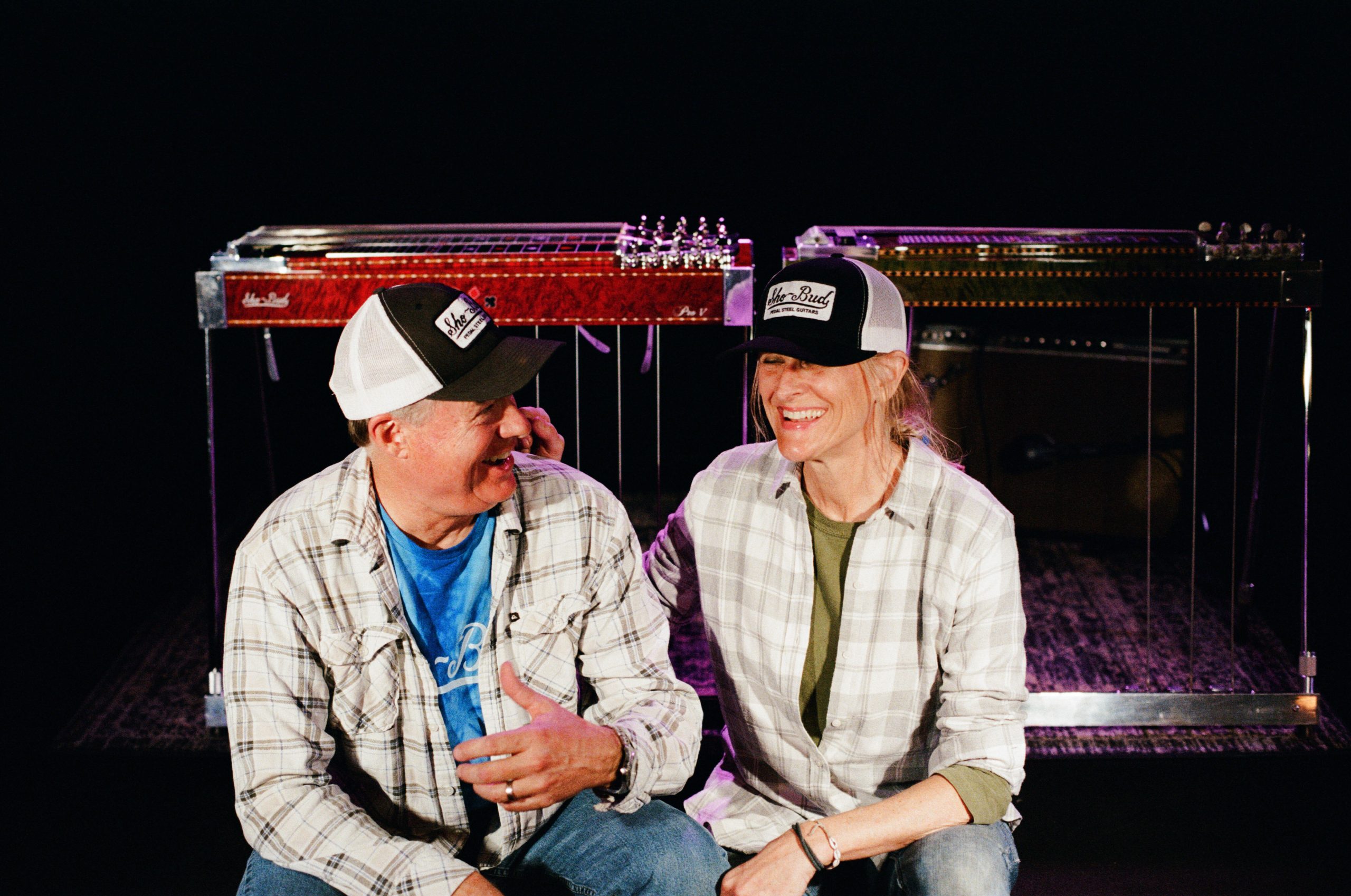
Volume 4 is a beginning and end for Kieran Kane & Rayna Gellert. It’s a beginning in that it’s the duo’s newest release, which means new songs, a new tour cycle, and a new round of interviews. It’s an end – “the end of an era,” as they put it – for Dead Reckoning Records, the label Kane and his bandmates in The Dead Reckoners launched 30 years ago. The independent venture grabbed the attention of other artists whose recordings they released, in addition to The Dead Reckoners’ first and only album, A Night of Reckoning, and the band members’ various other projects.

“Over the 30 years, [The Dead Reckoners] drifted into their own worlds, their own lanes,” says Kane. “Tammy Rogers and the late Mike Henderson started doing The SteelDrivers, Harry Stinson has been with Marty Stuart for years, and Kevin Welch is in Australia. For a long time, I was just putting out my solo records on the label, and then Rayna and I put our records out.

“30 years seemed like a nice, round, anniversary number to give everybody their work back, their masters back, and dissolve the company. It’s been great. I’m quite proud of the work we’ve done over the years and that it’s still a functioning label. We’ve managed to survive all kinds of digital flare-ups and breakthroughs and ways of sharing music. The company makes a little bit of money every year, but it seemed like, ‘Yeah, let’s call it a day.’ I called everyone and everybody was like, ‘That’s fine.’”

Bringing Dead Reckoning Records full circle is sweet rather than bittersweet, says Kane, “in that the label was started by an album of mine [Dead Rekoning, 1995] and thirty years later, on the same date [April 11], we released Volume 4. To me, it serves as bookends for the label.”

Gellert and Kane met at the Hardly Strictly Bluegrass Festival in San Francisco. Their first collaboration was co-writing for Kane’s Unguarded Moments [2016] and Gellert’s Workin’s Too Hard [2017]. The following year, they released their first duo album, The Ledges, followed by When The Sun Goes Down [2019], and The Flowers That Bloom In Spring [2022]. This year brings Volume 4, which they produced, recorded, and mixed, with Kane on vocals and guitars, Gellert on vocals, guitar, and fiddle, and Kane’s son Lucas on drums.

I thought we’d start by introducing you to readers, but instead of telling us about yourselves, tell us about each other.

Rayna Gellert: Kieran is a multi-instrumentalist and songwriter with a long, awesome career doing all kinds of musical things ever since he was a child. The thing that other musicians immediately say about him is they comment on his sense of groove that seems to be a through line in his musical output. And he’s awesome. He’s the funnest person to write and perform with.

Kieran Kane: Musically, we are so much on the same path, and have been on the same path, for both our individual lines. But out of all the people that I’ve ever worked with, Rayna, in the same way she talks about groove when talking about me, I would have to say the same thing about her, in that it’s just so … I want to say reliable, and that sounds sort of pedestrian, but it is.

It’s like having a drummer and a bass player playing the fiddle, in that the pockets and the grooves are so strong and well established that I can drift away and they’re just there. And it’s all been unusually compatible in writing and playing and performing. We genuinely enjoy doing what we do together. It’s a lot of fun, and it’s creatively fulfilling, and all those things.

Rayna, in an interview with WYSO you mentioned there are differences in your songwriting processes. Could you tell us about those differences and how they work as a duo?

RG: Kieran’s the first person I’ve consistently co-written with. I mostly wrote on my own. I occasionally noodled around with a friend on something, but I had no consistent co-writer. I was very much a newbie to actual co-writing when Kieran and I started writing together.

He approaches songwriting from a completely different angle than I do and that makes it extra fun and adventurous. I’ve always started with some bit of lyric and melody that come at the same time together and I go from there. Kieran usually starts with some kind of instrumental riff that becomes the seed of a structure of something. Lyrics come later for him.

The combination of the way we come at a song is very compatible because it’s different. We bring different strengths to the table. I tend to be super verbose when it comes to lyrics. I spill a lot of stuff out, and he’s a great editor. He is really good at finding the key phrases, figuring out the hook, and creating a structure around that.

My background is in old-time music, so the idea of a long ballad where there’s no chorus and it’s just inspiration that goes on and on and on is totally normal to me. For Kieran, it’s like, “What’s the hook? What’s the chorus? What’s the instrumental riff that’s going to tie the thing together?” And it works together very well.

KK: I agree with that. A lot of times what I’m hearing, along with a song, is a record. So much of what we do is based on an intro, in a way, or, as she said, a little musical hook that’ll tie things down. I’ve almost never sat down with an idea about a song. It’s more like I sit down and start playing banjo or mandolin or guitar until something catches my ear and then a lyric will be a free association to get started.

With us, that’s true to some extent, as well. A lot of times we don’t know what the song is going to be about until we wade into the waters and go, “Oh, it could be this.” It seems to work. Whatever the two different approaches are, it comes together.

How is Volume 4 the next step in your journey? You’ve talked about the songwriting process. When it’s time to record, do the arrangements happen organically?

RG: His view of the song tends to be a little more zoomed out than mine. What he’s saying … he is not just thinking about the song, he’s thinking about the record – I think that’s about arrangement. That’s about, “How are the pieces fitting together here?”
It does evolve organically. We always have to decide, “What’s the instrumentation? What feels right for this? Am I playing guitar? Am I playing fiddle?” If he comes up with a riff on an instrument, usually it stays on that instrument. But we’re working with so few pieces that we make a lot of use of space, because that’s one of the biggest colors in our palette.

KK: A way for us to build things in terms of arrangements often – since, as Rayna said, there’s so few pieces – is to eliminate something, like, “We’ll drop out here, which will bring the song down,” because if we start off with the two of us singing and playing at the same time, there’s no place to go, other than to start removing things.

As I’m saying this, I realize that my mission, if there is such a thing, in writing and making records has always been about removing things, making it simpler, and cutting off all the fat, anything that’s unnecessary.

RG: One of the things that’s different about this project is, in a way, we approached the whole album sort of like we would approach a song, as in letting it be what it wanted to be.

On past albums, we approached it more like we were writing a set list for a show, where it’s, “Have we included different instrumentation? Do we have a balance of lead singers? Do we have uptempo and downtempo?” This album is structured more like the way we write a song, which is, “What does this want to be?” Regardless of instrumentation, regardless of who’s singing, regardless of whether we wrote the songs. It evolved into this little sonic package that feels like you go in there and it’s a room you hang out in for the length of the album. To me, that’s a different experience than our past records.

KK: I’ve never thought of it like that. Yeah. We’ve been writing a lot. We wrote three albums, I did an EP that we had written a couple of songs for, and Rayna did an EP that I helped out on a couple of songs and produced. So we’ve done a lot of work in the last eight years, or however it is, that we’ve been doing this. Before Volume 4, there were three albums and two EPs, which is a lot more work than I’ve ever done in that amount of time.

This record, to me, was a little bit more of a grab-back in a way. Rayna was talking about wanting to do a fiddle album at some point and I was like, “Let’s play more fiddle tunes.” So we did that and pulled some older songs that were, as Rayna was saying, “Let’s just do it.” In my mind, it’s almost cleansing in a way to have taken this “just let it be what it wants to be” approach. Now we can move on to something else … and I don’t know what that is.

Tell us about the recording process and gear choices on this album.

RG: We have a very simple home recording setup that we’ve refined over the years. We got some good mics that we like a lot a couple years ago, Soyuz mics. We use those for everything, for instruments and vocals, the same mics. We have four of those.
We have a Zoom R16 board that we can either record directly onto or use as an input into Logic for recording. It’s a very mobile rig. We spend our summers in the Adirondacks at a cabin and we do a lot of recording when we’re up there. Some of this album was recorded there and some of it was recorded here in Nashville, in our house. We can take the board with us and do a nice, clean, digital field recording.

KK: It’s a wonderful piece of gear and shockingly inexpensive. As far as instruments and things like that, this record is a departure for me in terms of guitars, because I’ve basically used the same Guild M-20 on every record and every show I’ve done with Rayna, and before that for the last twenty-five years. For some reason, on this record, I picked up a couple of different guitars that I’ve had lying around the house for years. It was like, “Let me try this song on this guitar. Oh, that’s fun.” Whether or not I would do that again, I don’t know, because the guitar I’ve used all those years I love and it’s so reliable.

There’s three different acoustic guitars for me on this record. One is a Martin 00-16 classic, an early-’60s gut-string guitar that I played on “Keep My Heart in Mind.” The other is an early-’60s D-28 that I played on “The Mansion Above.” The other guitar songs are all on the Guild M-20. Rayna played the same guitar that she’s been using, an early D-28.

Last year, I was listening to a lot of ’60s folk music. I was listening to Gordon Lightfoot, Ian & Sylvia, Bob Dylan, and things like that, and hearing these really simple guitars where there’s no real guitar solos or anything like that. “I Can’t Wait” fits into that mold – as does “Keep My Heart in Mind,” and “Imagine That” – in that there’s no solos, but there’s a repetitive musical vein that goes through it all. It’s just two people playing guitars and singing. It’s that simple, which is something that really appeals to me.

Is it accurate to say there’s a connecting thread of faith in some of these songs?

KK: Yeah, I think that maybe is a thread through it.

RG: Not from that specific angle, but we definitely talked about hoping that people, in listening to the album, felt comforted.

KK: “I Can’t Wait,” to me, is very much is about faith – not in a religious way, but in a general sense of hope. As bad as things are right now, I remain hopeful and I keep looking towards the light. I’m aware of the dark, profoundly aware of the dark, but I don’t think that’s the end. I think there’s light as well and there’ll be more light as time goes by.

There are a couple of songs, specifically “Whatcha Gonna Do About It” and “Short Con,” that people could easily interpret as political – and they are. There’s no doubt about that. “Short Con” we look at as written from the standpoint of the Constitution. It’s like, “Why don’t you believe in me now?” There are other songs we have that certainly people have told us, “We’re not interested in your political views.” There’s a few floating around that just turn out … it’s not like we sit down and try and write about politics, or faith, for that matter. It’s just where our mental space is at the time.

You can look at these new songs as being political, but we’ve started thinking about them as being patriotic. It’s patriotic to stand up and say, “No, you can’t do that. You can’t just pull someone out of their car and throw them in a jail in El Salvador or whatever.” That’s not a political statement to me and I think for us at this point, as much as it is a patriotic statement, it’s our duty as citizens to say something. We’re given that right and we’re taking advantage of it.

And then something like “The Mansion Above,” which I wrote fifty years ago, somehow fits in there. There is a thread between those songs. So yeah, I think to see a line through of faith is good.

You’ve mentioned before that you’re doing what you call “three-day-weekend touring.” What are your upcoming “weekend” plans?

RG: Our approach to touring is very chill. We do two or three dates in a row, sometimes just one-offs. That’s our usual mode. I think the most we’ve ever done in a row is four dates. It’s all compact and it’s all about being humane and kind to ourselves.

KK: We have a good time. We have a comfortable car, I do all the driving and Rayna does all the navigating and mans the phone. I like to get onstage and play, but I don’t think either one of us wants to go, “Let’s book a month.” I look at other people’s schedules sometimes and go, “I remember doing things like that,” but I wouldn’t want to do it again.

We are gentle on ourselves. Our performances– we’ve cut that down in the sense that we don’t use any monitors onstage. We sit as close as humanly possible together and still be able to move the instruments around. Sound people really like us because sound people hate monitors. You say, “No monitors,” they rejoice. Doing it that way, if a soundcheck takes more than 15 minutes, we’re in trouble. Two instrument mics, two vocal mics, no monitors. “Can you hear us? Great. We’re done.” It makes life simpler.

RG: So yes, we do have gigs. There’s some stuff for the summer that will be posted on our website and I’m working on fall right now.

KK: And we are open to offers.

RG: Yes, we’re always happy to hear from venues!


Photo courtesy of the artist.