Tim O’Brien Recalls the Origins of Hot Rize… and That Other Band (Part 2 of 2)

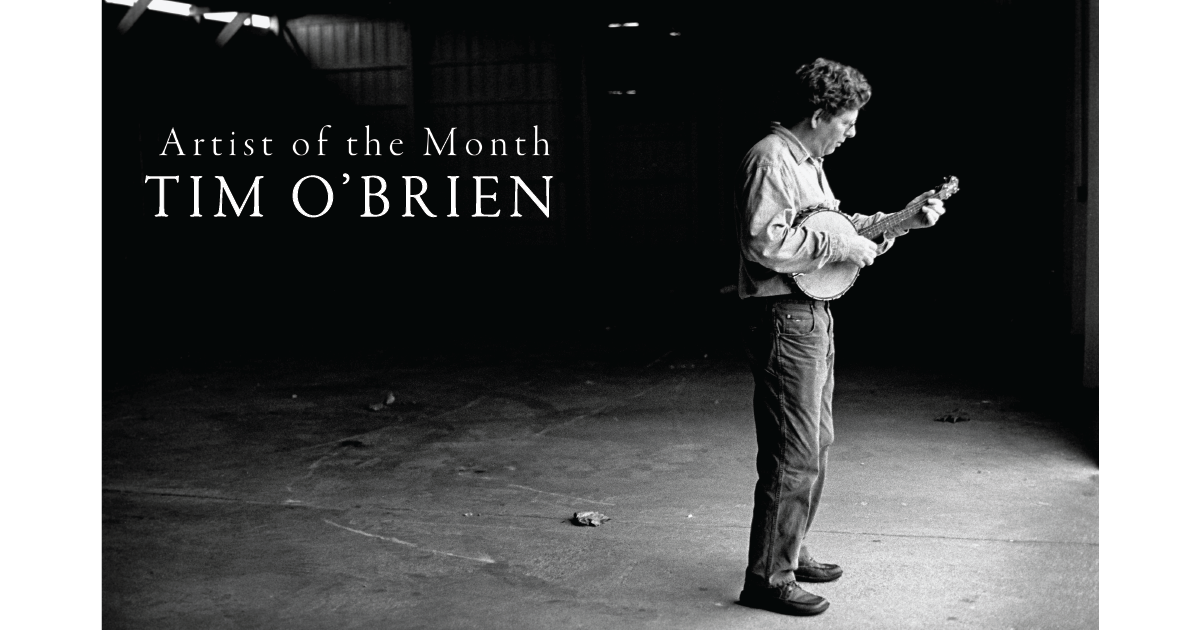
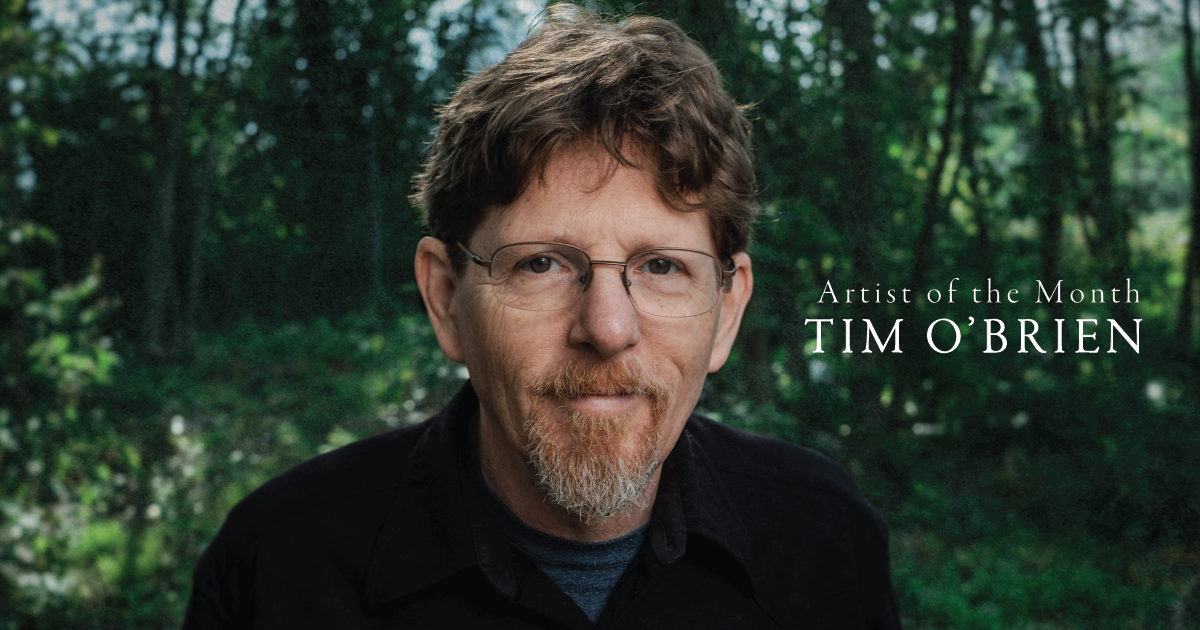
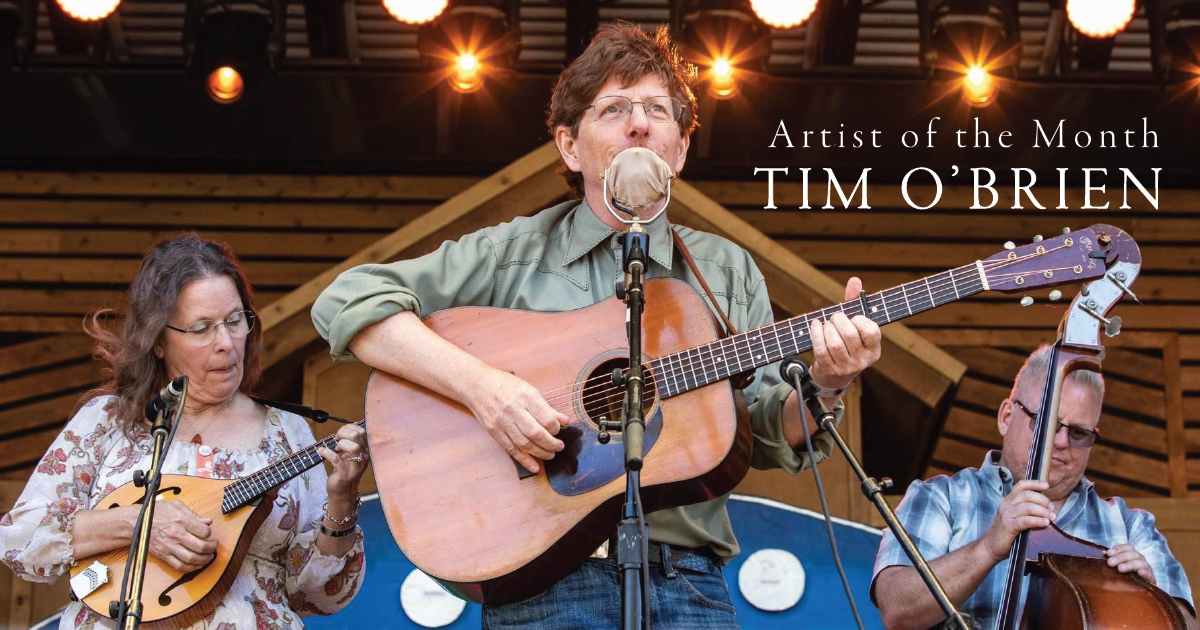
Tim O’Brien’s seemingly effortless tenor singing, musicianship, and songwriting have kept him in great esteem in the bluegrass community for more than four decades. One might say “seemingly effortless” is a fitting way to describe his career path, too. So much of it seems natural, as if each new thing was the obvious next step, whether it was creating a Western swing band alter ego within a bluegrass band, recording duet albums with his sister Mollie O’Brien, earning a Grammy nomination with an collection of Bob Dylan covers, or connecting lines between Appalachian music and traditional Irish music, tying back to his own heritage as a West Virginian of Irish descent.

Yet beneath his quiet demeanor is a thoughtful artist who brings a tremendous amount of intentionality to his work. We sat down with O’Brien, our BGS Artist of the Month for July, to ask him about how he got started and how some of these projects came to light.

(Editor’s Note: Read the first half of our interview with Tim O’Brien.)

BGS: When did you first start trying to play music professionally?

TO: In the fall of ‘73 I gave up on the idea of college and decided that maybe I could support myself playing guitar and a little bit of fiddle. I was just learning back then. I saved up for a car and I went to Jackson Hole and played shows in bars and whatever I could get. I had some friends that I had worked with as part of a summer camp out near there that were out there to spend the winter. Then, in the fall of ‘74, I ended up in Boulder and briefly played in a bluegrass band called Town and Country Revue with two guys who were affiliated with a music store that I worked for a short time. Then I met up with a guy that started a band called the Ophelia Swing Band and I joined them for about three years. Our front man was Dan Sadowsky, who later became known as “Pastor Mustard” at the Telluride Bluegrass Festival.

We did some bluegrass things, but we weren’t portraying ourselves as a bluegrass band. We had strings, but it was mostly a swing band. I had been playing guitar and fiddle at this point and ended up borrowing a mandolin for a while until I eventually got my Nugget in ‘76. We were into that Cab Calloway kind of a hepster swing and there was another violin player in the group named Linda Joseph so we’d play some twin fiddle parts in a Western swing style. We tried to make big band arrangements with a lot of call and response between the instruments. We were making it up as we went along, but very much enjoying it.

We made a record, [Swing Tunes of the 30’s & 40’s], for the same label that my solo record came out on, a Denver label called Biscuit City. That record came out in ‘77, but I quit the band right before the record came out. I briefly moved to Minneapolis but I went back and did a little run of gigs with them in the summertime. I went back and was trying to dig in in Minneapolis, and then Pete Wernick called and suggested that we should get a group together. My girlfriend at the time, shortly before we ended up getting married, was thinking that maybe we should move back to Colorado anyway. So we went back in January of ‘78 to start up Hot Rize.

Your description of the Ophelia Swing Band’s material reminds me a lot of Red Knuckles and The Trailblazers. I’ve always enjoyed the Trailblazers portion of Hot Rize shows because the music is so good but it’s almost hiding behind the facade of a well-presented comedy show. Sort of like Homer & Jethro. How did you end up presenting it in that way? Or playing that music in the first place?

What happened was, Pete said that we should get a bluegrass band together and promote these two records. I had just put out Guess Who’s in Town on Biscuit City and Pete had just released Dr. Banjo Steps Out. I said, “That sounds good, I’ll do it, but I’d like to venture out into some other kinds of music other than straight bluegrass” and I mentioned Hank Williams kind of stuff or Western Swing. I asked Pete if he’d ever play Dobro. He had never played Dobro, but he said he’d look into getting one (he ended up getting a lap steel) and said we could work some of that stuff in.

Our first guitar player was a brilliant instrumentalist named Mike Scapp [who also played with the Ophelia Swing Band]. He didn’t last very long though and when he quit, Charles Sawtelle had been playing bass, but switched to guitar. When Nick Forster came along we told him we were doing this country and western material and he said that he had a Charlie Christian Gibson [electric archtop] guitar and played that kind of stuff. So all of a sudden, we had electric guitar, steel guitar, acoustic guitar, and bass. (Charles would go back to the bass for that because he didn’t play that kind of music on guitar.) So, when we would play four sets at a bar or something, we’d feature some of that stuff on the third set just to break it up. We would say, “We’re going to bring another band up here,” but we would just stay on the stage and switch instruments. We’d make a joke about the name of the band — we had different silly names that we used — and it was just a stage patter and a bit of a different kind of music.

Then, about two years into the band, we had a formal concert at the City Park in Denver in a nice theater sponsored by the Denver Folklore Center. I’m not sure who said it but I think it was Charles who said, “Why don’t we do a quick change? We’ll wear cowboy outfits and actually be a different band.” So we worked out the basic formula in rehearsal where Pete would introduce us while three of the four change clothes and then we’d come on and he’d make his quick change and all of a sudden we were a different band. That night, we called ourselves Red Knuckles and the Trailblazers. Rather than this just being some bar, these were mostly bluegrass and folk music fans and Pete and Charles were well-known in that community at that time. So we changed clothes and played a part and never let on that we were the same people and everybody knew it, but they got into it. That seemed to work, so we kept doing it.

The following fall, we played in Louisville at the free bluegrass festival that was put on by Kentucky Fried Chicken. We were interviewed by a radio host there and she said, “Well, I want to interview Hot Rize, but who I really want to interview is Red Knuckles and the Trailblazers.” So we said, OK, and acted like the Trailblazers. When she asked us stuff about where we’re from, we were just making up these answers. All of that stuff about us being from Wyoming, Montana, which is on the border of Wyoming and Montana, and the Eat Cafe was all just jokes that we might have said while we were driving around in the car. But it became our story after that interview. After we’d finished we all looked at each other and said, “Well, I guess that’s our story. Now we have to remember it.” [Laughs]

That’s how it started. I had always wanted to play that music so I wanted to do the music justice, but the act was about not taking yourself seriously. It helped Hot Rize immeasurably to have that as a foil. Whenever we’d mention the name of that band we’d make a snide remark about them as if they were a different band and we were rivals. This helped create an understanding that this was a lighthearted event which helped a lot.

Yeah, I could imagine it helped a lot. Not only as a way to stand out with something different, but since you guys were from Colorado playing a progressive style of bluegrass I’m sure the Hot Rize material sounded even more like traditional bluegrass when juxtaposed against the Trailblazers.

That’s why we got Entertainer of the Year the first year that they awarded it at IBMA; we had a show. At that time you had bands starting like Doyle Lawson & Quicksilver, The Johnson Mountain Boys, and the Nashville Bluegrass Band. The Johnson Mountain Boys were also working on a show, but those other two bands were still standing by their individual microphones. I loved those bands a lot and still do but having a show was good for us because it took a little stress off the music and let our music just be what it could be. We weren’t measuring ourselves against those other bands quite as much as we might have been otherwise.

It took a while for the promoters to understand it. There were some traditional festivals that wouldn’t let us do that. Out in Grass Valley, California, at the CBA festival, they didn’t even really want electric bass there, but they’ve made an exception for Hot Rize. But they wouldn’t let us do the Trailblazers. The same thing happened at Doyle Lawson’s festival the first time we played there. Milton Harkey said, “Oh, don’t get me wrong, I love the harmonies,” which proved that he had never heard it since the Trailblazers didn’t really have a lot of harmony singing. But after we played his fans got to him and asked why they didn’t let us play that Trailblazers stuff and explained it to him and they started letting us.

For some of those festivals like the one in Grass Valley, I think they just have their rules about what is and isn’t bluegrass. But the other ones like Doyle Lawson’s festival, they just didn’t want a bunch of bikers coming in. They didn’t want hippies taking a lot of drugs with electric music because it might get out of control.

What was it like to play in these traditional, sometimes conservative spaces?

We were always the funny ones. Our hair was too big and too long and our ties were wrong. We wanted to fit in so we wore suits, but we never hid who we were. Bluegrass, since the ‘60s at least, has always had lots of different fans. They might be Northerners or city folks that didn’t grow up with the banjo but they love it and kind of poke fun at themselves for being involved in a way. I think that’s the thing that’s sort of wonderful about music; it’s a free pass. It’s whatever anybody thinks it is and anybody can like any kind of music and art. How you react to it is up for grabs and, in a way, all responses are valid. People all respond to music differently and people will change it to express themselves within it.

(Editor’s Note: Read the first half of our interview with Tim O’Brien.)


Photo credit: Scott Simontacchi
Tim O’Brien Sings of American Life, Then and Now, on ‘He Walked On’ (Part 1 of 2)

Tim O’Brien’s latest album, He Walked On, explores the many realities and histories of what it means and what it has meant to be American. With his well-known ability to tell a story through song and his less recognized, but equally powerful ability to pick and perform covers, O’Brien shares intimate and intriguing stories including the traditions of the Irish Travellers living in the U.S., Volga German immigrants turned sodbusters, or Thomas Jefferson’s children birthed by his slave, Sally Hemings.

Such stories and topics are not uncommon for O’Brien to write about, but in the wake of the murder of George Floyd and the protests that followed, as well as the Black Lives Matter movement, these songs feel even more topical and personal. His music is often presented with a lightheartedness that settles the listener and reminds them not to take themselves too seriously. And while some of that can still be found here, there is a somber tone that reflects the state of the country today. He’s joined on the album by bassist Mike Bub, drummer Pete Abbott, fiddler Shad Cobb, and vocalist (and fiancée) Jan Fabricius.

In the first of a two-part interview, BGS catches up with O’Brien, our Artist of the Month for July, to discuss the songs from He Walked On. (Editor’s note: Read part two here.)

BGS: The songs on this album speak to a lot of current events and the theme is more “political” than some of your previous work — although I don’t like thinking of human rights issues as being political.

TO: Yeah, they are politics nowadays. I think that the artist’s job is to reflect and respond to what’s going on around you and in your life. I don’t know anybody that creates original stuff who’s not doing that. Of course, this is an exceptional year for that. There’s a lot of things going on that were highly, highly provocative such as the Black Lives Matter movement and the pandemic itself and the way the politics entered into that, which was unfortunate. And then related to that is paying attention to history, the developments of technology, and how it affects society. That’s where songs like “Nervous” came from and they’re not “political,” but they’re kind of a report on the state of humanity.

You’ve often written about your experience in the modern world and talked about technology before but usually with a humorous tone. When I heard “Nervous” and “Pushing on Buttons,” it made me think of “Phantom Phone Call” from Chameleon.

You know, actually, I think one of the saddest things I’ve ever written is “Pushing on Buttons.”

Yeah, that’s what I was getting at. There’s usually a lot of whimsy when you’re talking about modern stuff, but “Pushing on Buttons” is pretty somber.

Yeah, I almost left it off because I thought, “Nobody wants to hear how sad this is.” But I was able to get Chris Scruggs in the studio and said, “I ought to cut this song so let’s make it like a Hank Williams number, if I can.”

The tone on the album felt more serious, in general, than your previous work. Do you feel that way?

Yeah, I suppose so. I don’t know how it will ring with everybody, but I felt like this was the thing to do. The Black Lives Matter movement is another step on a long road of reckoning with our history and the racial divide in this country. When stuff gets thrown up in the air like it did with George Floyd it’s time to look at all that’s been going on from day one and try to make sense of it. I could have written these songs like “When You Pray” and “Can You See Me, Sister?” any time. But it was staring me in the face much more so this year. Whimsy is good and all, but I couldn’t ignore these things.

But, in general, I try to stay light on my feet and that’s more of the tone of “When You Pray, Move Your Feet” which is a pretty happy song in a lot of ways. And I hope that means something. “He Walked On” is like, well, the only way to really get through this is just to try and notice the good. Notice when it’s really good and when you don’t just keep going and try to find it again. So it is sort of a mission statement for living in the United States. You have people doing their various jobs — farming, or trading mules, or coal mining, or looking at a computer — and we’re all kind of looking for the same things. It’s nice to have somebody to share your love with and a roof over your head. It’s nice to help other people find that as you’re going along to help yourself.

Songs like “He Walked On” or “Can You See Me, Sister?” — like a lot of songs that you’ve written — are told from a different perspective than your own life experience. How do you approach writing those stories in particular?

I don’t know. Maybe my age is telling me to look at it in different ways. But I don’t know that I was conscious about trying to write differently. Back working with Darrell Scott, I realized that he had so much personal detail in his songs and it made them more universal. Which is counterintuitive, but I’ve noticed that that’s the case. So, “He Walked On” is about changing your perspective and getting a glimpse of the divine. We’re not always paying attention but about one percent of my time, I wake up and go “gee, look at that” and really appreciate it and really be present and in the moment.

In the case of “Can You See Me, Sister?” it was such a fascinating story. I kind of knew about Sally Hemings and Thomas Jefferson because in the early days of Hot Rize, we played in Charlottesville, Virginia. A bluegrass fan brought us around to Monticello and took us on a personal tour. Jefferson is a really interesting character in American history in so many ways, but you and I can relate to him in that he was a fiddler. He was really interested in old-time fiddling. He played tunes like “Money Musk” and they have his handwritten transcriptions of some of these tunes at Monticello. He was a renaissance man — an artist, a writer — and apparently he carried a pocket fiddle around with him. He had a little mini-fiddle you could put in your overcoat pocket.

So I had known some about him but I recently learned more about the children he had with Sally Hemings. It was a great loss for him when his wife [Martha Jefferson] died. He promised her he wouldn’t get remarried and he didn’t. But he turned to Sally Hemings, who had been a slave at Monticello and was brought to France to nanny his daughter. She birthed at least six of Jefferson’s children and I hadn’t realized until recently that a couple of them passed as white and lived their adult lives in white society.

The decision to have a spoken word introduction to “Can You See Me, Sister?” was interesting. I don’t remember ever hearing one in any of your other songs.

Mike Bub brought it up because when I sent the demos around he heard it and liked it, and then I told him what it was about. He said, “Wow, there’s a lot more punch to it when you know what it’s about.” He said most of the radio listeners wouldn’t know that so he recommended having some kind of explanation. It was a conscious choice and it was interesting to write. I don’t usually  write stage dialogue. I guess I hone it as I go and I get more succinct and more pointed and more efficient with it as I learn. But this was before I ever performed it on stage. I wanted to have the right introduction that would say what needed to be said; no more and no less.

What inspired you to write “See You at the Funeral?”

“See You at the Funeral” is kind of an odd one. It’s about Irish Travellers in America, which is a subset of American society that’s kind of unknown. The song is about the once-yearly reunion in Nashville of the greater clan of the Sherlocks families and their relatives. They have all their funerals and weddings for the year in one week so everybody can be there and then they scatter and go do their own thing. … It’s all the happy parts and the sad parts and the big ball of wax. By the end of that week, you would have a sense of where you come from, who you are, and what’s next. Those rituals are part of what helps us get by. That’s Americana. It’s from a lesser-known part of our history and our society. That is the part that I’m interested in. And if it means something to me, maybe I can make it into something to someone else.

What about some of the covers like “Sod Buster”?

Jan’s family is from western Kansas and her great-grandfather was another type of migrant. Their background is what they call Volga German; they were German farmers that got recruited by Catherine the Great of Russia to farm wheat on the Volga River. Then the politics changed and they were going to have to serve in the Russian army. That’s when everybody started coming to the American plains. The railroads had started and they were advertising for people to move. Her great-grandfather was one of the earliest sodbusters in the late 1800s.

It’s a Bill Caswell song that I just love and I ended up talking to him about it and he said, “Oh, yeah, that’s about my grandfather. He was out there at that time and plowed with a team of horses.” I love Bill Caswell and I love this song. And I wondered why nobody had yet recorded it. So we worked it up and it means something because of Jan’s connection. We go out there sometimes and I really love being out in someplace exotic like that. I grew up where there’s hills everywhere and being on an absolute flat plain with the sky and the grass is an amazing thing.

I’ve always admired how much of a personal connection to all of your music that you have. It all feels very intentional.

John Hartford gave good advice to Hot Rize one time. He said, “You don’t want to get famous doing something you don’t like doing.” So I want to try to aim for the intersection of what people might enjoy and what I’m interested in and it ends up attracting people that think like me. I’m a bit of a bleeding heart liberal, if we got down to it. But I try to mostly put something out that people could enjoy and then maybe give them something to think about and maybe they’ll think poorly of it, or maybe they’ll change. You know, that’s a Buddhist thing. You work towards conscious change. Change and betterment and creativity. You just try to find your opening and hopefully I’ve found a few here.

(Editor’s Note: Read the second half of our interview with Tim O’Brien here.)


Photo courtesy of Tim O’Brien

Artist of the Month: Tim O’Brien

Tim O’Brien is putting his best foot forward with He Walked On, a new collection of eight originals and five carefully chosen covers. Through his music he shares his worldview, by channeling significant figures like Thomas Jefferson and Sally Hemings, Congressman John Lewis, and John Prine. The topics on this self-produced record may be heavy, yet O’Brien believes that the music offers an opening for reflection.

“When you sing something, it kind of sneaks in, in that music is a powerful medium,” he says. “It’s a language that’s mysterious on its own — it tugs on the emotions. It grabs people’s attention in a certain way and prepares them to hear things, and music kind of draws people together.” O’Brien wrote the album’s lead single, “I Breathe In,” which BGS proudly premiered in May. He relied on longtime band members like Mike Bub on bass, Pete Abbott on drums, and fiancée Jan Fabricius on vocals to round out the record.

“The project is about what you need to do to survive in America,” he told BGS. “We all need a roof over our head and something to eat, of course, but we also need love. I’ve been grateful to have Jan beside me during the pandemic. The song stresses the need to take things one step or one breath at a time, and to keep those you love close as you do so.”

O’Brien’s own journey has carried him from his birthplace in West Virginia, through the Colorado bluegrass scene, and ultimately to Nashville, where he’s been a key figure in the roots music community since the ’90s. In some ways, He Walked On reads like a map, with distinctive songs like “Five Miles In and One Mile Down,” about the Upper Big Branch Mine disaster in West Virginia in 2010. (The banjo adds some serious mood to this narrative, too.) In addition, “El Comedor” was written with Fabricius after they joined a grassroots humanitarian effort to provide water and food to immigrants at the border near Tucson, Arizona.

“You talk about the music, where would we be in America if we didn’t have this mix of people from Africa and Europe and Native Americans,” he says. “We’re family, but we’re estranged, and we’ve never learned to be family in so many ways. And it’s crazy, and we’re still suffering from that. If you read James Baldwin — America’s insane. And until we figure out how to actually deal with reality here, we’re just going to stay insane.”

With a multi-tasking musician like Tim O’Brien, who plays mandolin, fiddle, guitar, mandola, and mandocello on this record, his creative path could carry him almost anywhere. And his comic timing is impeccable on songs like “Nervous” and “See You at the Funeral.” Until he brings us on his next adventure, let’s enjoy a few songs from He Walked On, mixed in with some classics, on our BGS Essentials playlist. Read part one of our Artist of the Month interview here. Read part two here.


Photo credit: Michael Lewis

Chris Thile Takes Us to Church in Official Music Video for “Laysong”

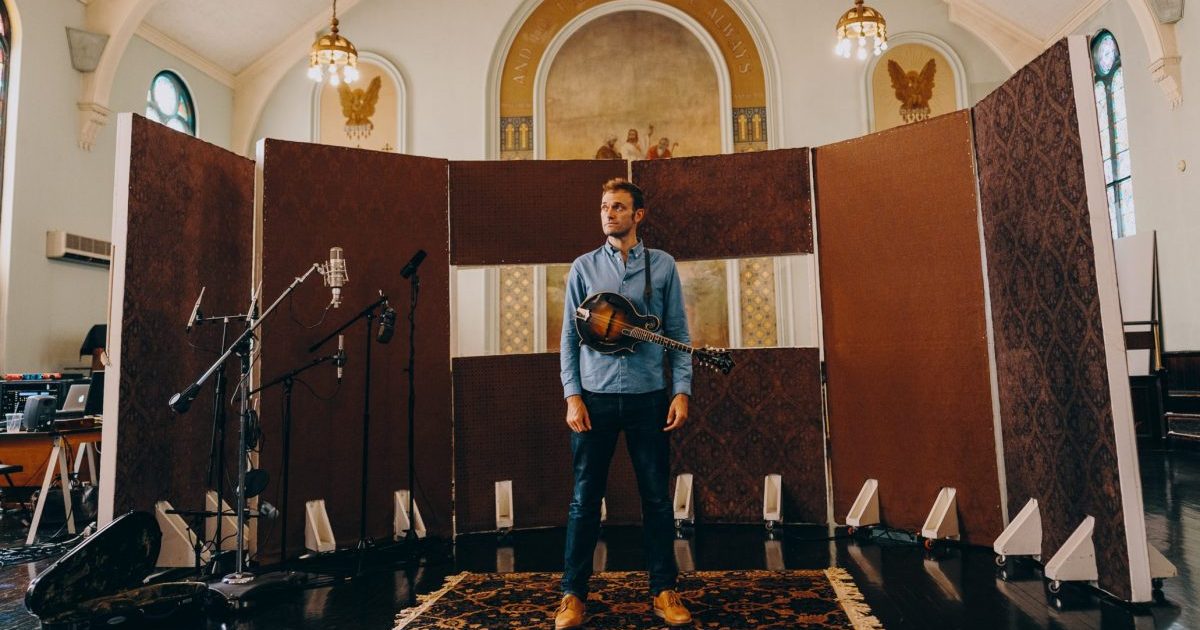
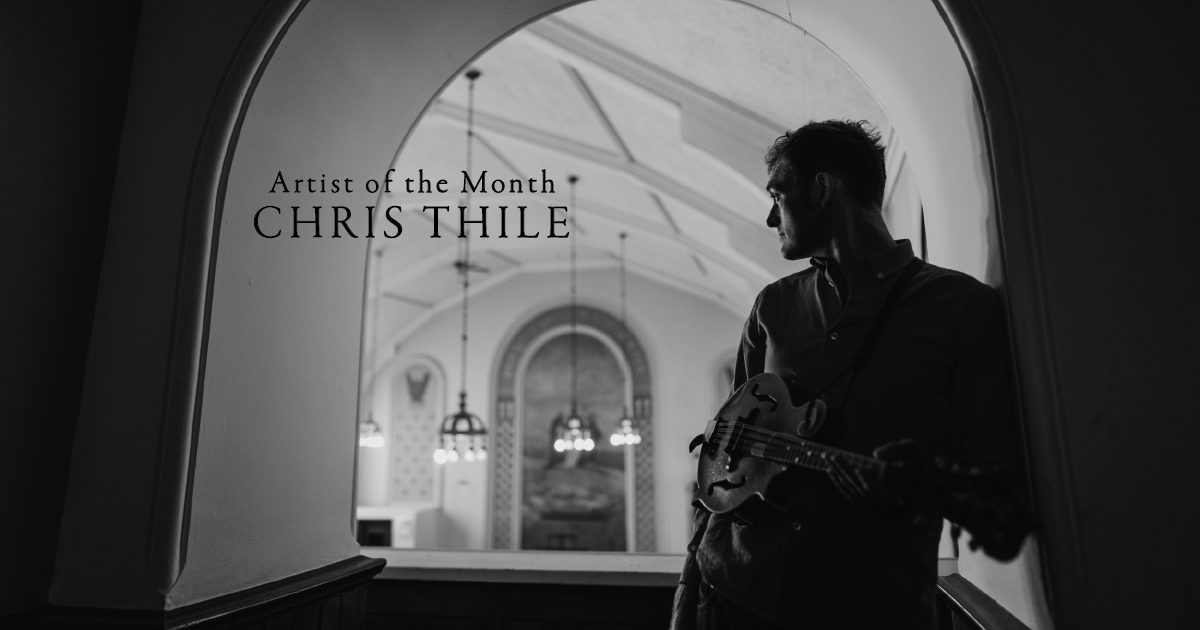
For a musician who has seemingly done it all and has the awards to prove it, Chris Thile found an excellent opportunity to create a solo record in the throes of the early pandemic. The project of that period of introspection and seclusion is one that has been, in some ways, a long time in the making, as his label Nonesuch had been hinting for some time to make an album centered around faith and spirituality. When the circumstance arose, Thile decided it should be done in as honest and straightforward a manner as possible: performed entirely by himself and recorded within the walls of a beautiful old church in upstate New York.

Titled Laysongs, the album offers a host of incredible performances, including compelling arrangements of Bartok and Bach, re-imaginings of traditional folk tunes, and original pieces inspired by literature. Enjoy this video of Chris Thile, our BGS Artist of the Month for June, performing the album’s title track in the church where it was recorded. And, check out Part 1 and Part 2 of our exclusive, AOTM interview.


Photo credit: Josh Goleman

The BGS Radio Hour – Episode 211

Welcome to the BGS Radio Hour! Since 2017, this weekly radio show and podcast has been a recap of all the great music, new and old, featured on the digital pages of BGS. This week, we bring you new music from our June Artist of the Month, Chris Thile, as well as Robert Finley, Oliver Wood, and much more! Remember to check back every week for a new episode of the BGS Radio Hour.

APPLE PODCASTS, SPOTIFY

Robert Finley – “Sharecropper’s Son”

Singer-songwriter Robert Finley first picked up a guitar at age 11. He was raised in Jim Crow-era Louisiana amongst a family of sharecroppers and knew from a young age that his dream was to sing. Now, at sixty-seven-years-old, that dream is alive and well with his newly-released, third solo album, Sharecropper’s Son, made in collaboration with Dan Auerbach of The Black Keys. BGS recently caught up with Finley to talk about the new album, and how his upbringing and vast life experiences have shaped his music.


DoomFolk StarterKit – “Look at Miss Ohio”

For David Swick of DoomFolk StarterKit, recording any of Gillian Welch’s work is an honor. His cover of “Look at Miss Ohio” has a balance of lightness and melancholy in its’ arrangement, which Swick says represents the song’s theme of “making peace with uncertainty.”

Zach Person – “Wanna Fly”

Zach Person was inspired to write “Wanna Fly” after reflecting upon the social and political intensity of 2020. He cites “Dylan-esque” protest songs and the openness of the western plains as the two main influences of this powerful track.

Lula Wiles – “Call Me Up”

“Call Me Up,” from Lula Wiles’ new album, Shame and Sedition, is a lighter track amongst an album that aims to transform listeners and enact change. Between tender harmonies and mellow piano chords, the trio describes meeting with an old acquaintance, singing, “I know you’ve been taking it rough / You gotta just call me up.”

Oliver Wood – “Face of Reason”

BGS spoke with Oliver Wood of The Wood Brothers for a 5+5 in support of his new solo record, Always Smilin’. He told us about his biggest influences — from Ray Charles to Levon Helm — as well as how hard times can be processed through songwriting. When asked to write a mission statement for his career, he stated: “Just be completely yourself, because that’s all you have, and that’s enough.”

Dana Sipos – “Breathing Barrel”

Dana Sipos’ “Breathing Barrel” is a meditation of being at peace with the present moment. Written immediately upon returning home to the city from a music residency at the Banff Centre for the Arts, deep in the foothills of the Canadian Rockies, this song is an attempt to integrate a very powerful experience into the more mundane, everyday life.

Shannon McNally – “This Time”

Shannon McNally reimagines Waylon Jennings’ “This Time” by giving the lyrics a personal spin — singing not about a lover, but instead about her relationship with the music business as an artist and as a woman. For McNally, the song’s directness is a breath of fresh air, and it helped her get into the headspace that permitted her to sing the rest of the album.

Chris Thile – “Laysong”

The name Chris Thile is likely familiar to fans in any corner of roots music. Growing up in southern California, Thile rose to popularity with his childhood (and sometimes still adult) band Nickel Creek, and has since helped form the Punch Brothers, the Goat Rodeo Sessions, and other noteworthy collaborations. However, this summer Thile brings something special — a completely solo album entitled Laysongs. In celebration, he is our Artist of the Month, so be sure to stick around all month long for exclusive content from Chris Thile.

Mara Connor – “Old Man”

Mara Connor recorded “Old Man” at the same age Neil Young was when he wrote it about a caretaker who lived on his ranch. When she first heard the track, she was struck by the amount of empathy the songwriter exhibited at such a young age. Connor states that the song is an affirmation of how the world would be a better place if we took the time to see the humanity in each other’s eyes.

The Grascals – “Thankful”

2020 was a difficult year for us all, and it seems that we need uplifting music more now than ever before. “Thankful” is just that. The lyrics are a powerful reminder of the things we have to be grateful for and of the important things in life.

Rising Appalachia – “Catalyst”

Inspired by their recent release and the blooming of spring, Rising Appalachia’s Leah Song created a Mixtape for BGS, entitled Rising Appalachia’s Love Songs for Blooming Spring. The playlist features heartbreakers and heart-menders from John Prine to Hozier that are sure to make your heart bloom.

Eli Lev – “As It Is”

Eli Lev’s “As It Is” began to develop halfway through a 10-day meditation retreat he went on near the Florida coast at the beginning of the year. He states, “I experienced silent sunrises over the ocean and brilliant sunsets over the bay that brought on infinite color variations and led me to a unique insight that everything is changing while staying exactly ‘as it is’ in every moment.”

Kyle LaLone – “Learning How to Love”

Featuring the sweet sounds of classic country twang and harmonies by singer-songwriter Michaela Anne, Kyle Lalone’s “Learning How to Love” is a song that details the process of understanding how to be a good partner and showing up for someone in a relationship.


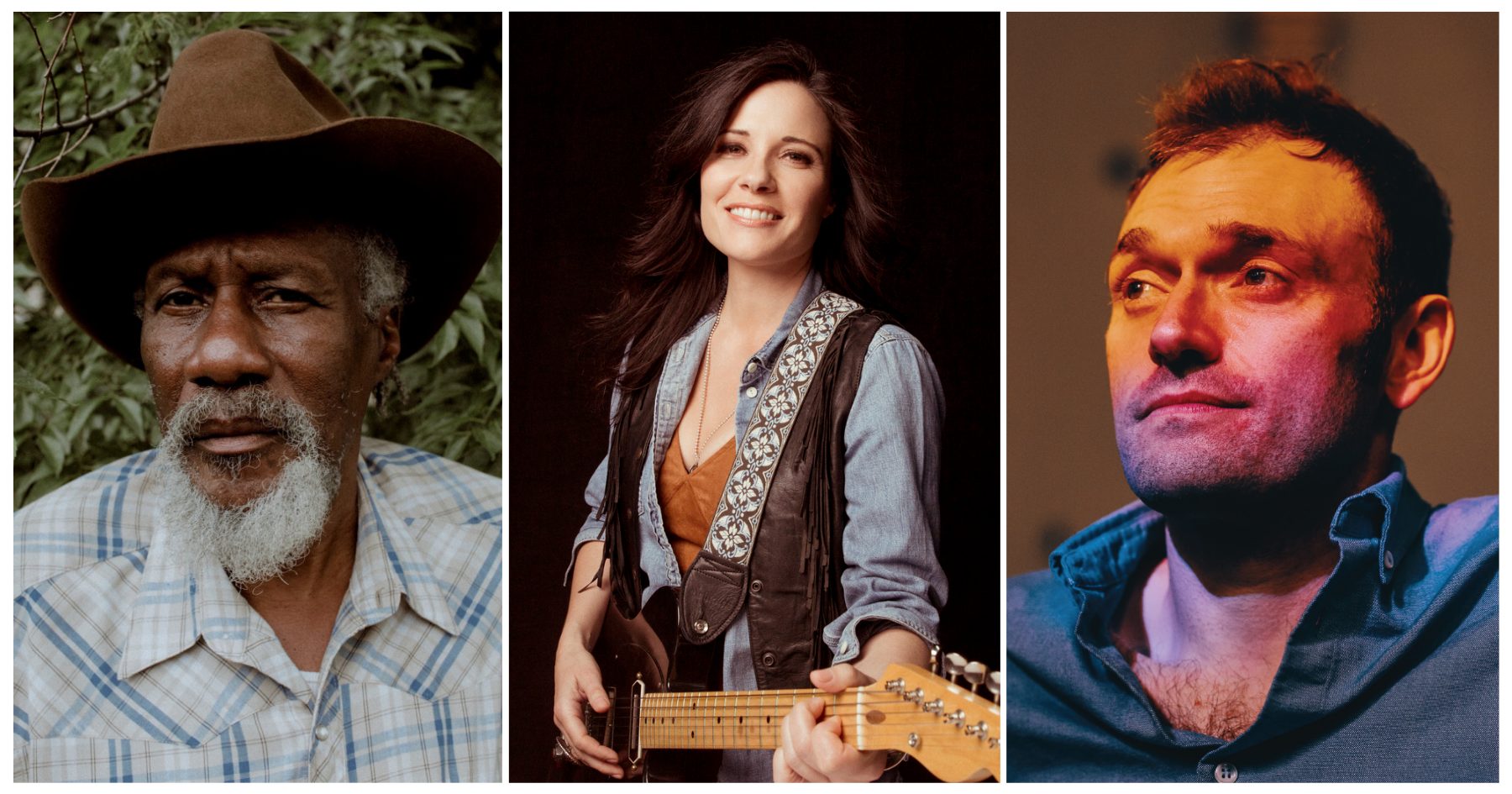
Photos: (L to R) Robert Finley by Alysse Gafjken; Shannon McNally by Alysse Gafjken; Chris Thile by Josh Goleman

For Chris Thile, Instrumental Music Excels in the Cracks of Language (2 of 2)

Chris Thile has always woven religious references into his songwriting, but never so much as on Laysongs. Recorded in solitude in an old church with just a mandolin and a sound engineer, the new album offers lyrics that question our impulses and references that span the Bible (“Ecclesiastes”), Hungarian composers (a take on Bartok’s “Sonata for Solo Violin, Sz. 117: IV. Presto”), and bluegrass legends (a cover of Hazel Dickens’ “Won’t You Come and Sing for Me”) in service of a higher truth.

Here, in the second installment of a two-part interview, BGS catches up with Thile about co-producing an album with his wife, finding inspiration in good wine, and why great instrumental music should emulate a warm dinner conversation.

Read the first half of the BGS Artist of the Month interview with Chris Thile here.

BGS: Your wife, [actress Claire Coffee], co-produced this album with you. What did that lend to the final product, and how did it influence the process?

Thile: Pretty much since we met, she’s graciously been my unofficial editor. It was high time to just formalize that. [Laughs] When you’re doing something like this — a pure solo record, no overdubs, absolutely nothing between me and your ears — it really helps to have someone involved who is absolutely 100 percent unimpressed with you. She has heard every one of my tricks and can see straight through them, can hear straight through them.

As an actor and someone who’s made a lot of film and television, Claire cuts straight to the chase: “Is this meaning something? Does one and one equal two here? Are we starting somewhere and ending somewhere — and how is the ride between those two points? Are we engaged? Is this clear enough, and does it ever get too painfully clear? Are we leading the witness, are we telling people the punchline before we give them the setup?” I can really gild the lily when left to my own devices. Musically, I can sort of be the guy in the theatre, like, elbowing you — like I’ve seen it six times and I’m like, oh, you’re going to love this part! And so Claire, I think, is so good at being like, “Hey. Don’t do that.” [Laughs]

And perhaps, also, letting you know when it’s warranted.

Right. Sometimes I won’t pull the trigger on what would be a really interesting decision because I’m worried that I’m just swinging too hard. I sort of gingerly put the idea of doing the fourth movement of Bartok solo violin sonata. Thinking, well, this is kind of a bridge too far. I sent it to Claire like, “What if I learned this on the mandolin?” and she was like, “Absolutely. Do that. That’s gonna be amazing.” Which was just so shocking to me! I thought I had probably lost my mind. [Laughs]

It was also her idea to put it after “Salt (in the Wounds) of the Earth.” I mean, I feel like everyone thinks they’re gonna get a big ol’ chance to exhale after “Salt (in the Wounds) of the Earth,” and instead… I mean, think of it like these Peloton instructors: You think, “Surely, surely this is it. Surely this is the hardest I’m gonna have to go.” And they’re like, GIVE ME FIVE MORE ON YOUR RESISTANCE!!

I feel like it’s that kind of move, going from “Salt (in the Wounds) of the Earth” to the fourth movement of the Bartok sonata. It’s as if the demon in “Salt (in the Wounds) of the Earth” just took my mandolin from me. But that’s the kind of perspective someone who loves you—but isn’t taking any of your shit—can help you with, especially someone who also has a deep and wide skill set that is compatible with mine. It was so fun to work with her on that.

You’ve always got multiple projects going. Is there anything you learned specifically from performing in groups and making music in that atmosphere that you feel gave you an advantage when you set out to record an album alone?

The accountability — the musical accountability, artistic accountability — that you feel in a collaborative context is noticeably absent in a solo context, so you need to pick up the slack there. You need to start roleplaying those people in your life who hold you artistically accountable. Thank God I had Claire involved in this project, but on the deep I-dotting and T-crossings that you encounter at every step along the way of the record-making process, I would also assume the role of an Edgar Meyer or Gabe Witcher or a Sara Watkins. I’d tease out a little fake conversation between myself and them, all by myself in the practice room. “In what way am I not being clear enough right now? In what way am I being self-indulgent right now?”

There are so many things that you learn from the people around you. But there are also things that you can learn in the silent retreat of making music solo. There are things that I can take back to each of those projects — things I can take back to Punch Brothers, or Nickel Creek, or the Goat Rodeo Sessions — that I think could be illuminative in those contexts.

Do you enjoy talking about religion outside of your art?

People have such strong feelings about religion. You wanna bust open a conversation, bring up God — like, in a real way. People are gonna quit mincing words and they’re gonna start talking about shit. I love that. I really love talking to people about that kind of stuff, from wherever they are. I find it endlessly instructive in my own journey. I find someone’s total disinterest in it just as interesting as total interest in it. If I bring up God and you’re like, “I don’t wanna talk about that shit, come on,” then I love you for that. Let’s go with that. Let’s talk about that.

And if I bring up God and you’re like, “Ugh, you know what? I was just praying about that this morning, I feel like the Lord brought you to me,” I’m in. Let’s go there. Why do you feel that way? Let’s go there. At this point, I have no reservations about bringing up God. It’s always been an instinct of mine to infuse whatever I’m thinking about with a little of that kind of imagery and language and thought, and so this was cathartic for me to just turn all the taps on and let it run.

You push beyond your own religious upbringing, too — you also included a song, “Dionysus,” named for the Greek god of grapes and wine. What inspired you to write about that figure?

I’m always looking for encouragement, as a human being, about human beings. We see a lot of evidence of our failings right now, and I want to see evidence of our success. Wine — the existence of good wine — is evidence of our success as a species. That is a beautiful relationship with the earth. We have occasionally exploited that relationship, but the best wine comes from the healthiest relationship with the soil. The best winemakers have this beautiful balance of science and mysticism. It sounds silly, but I find the whole thing very inspiring.

Ecclesiastes 2:24 seems like it’s along those lines, too: “Nothing is better for a man than that he should eat and drink, and that his soul should enjoy good in his labor. This also, I saw, was from the hand of God.” Why express that instrumentally rather than through lyrics?

Think about the last great dinner that you had with friends. Could you really, with words, describe to me why it was so great? Could you say, “And then we talked about this” or “Next, we gossiped about that”? When you walk me through that, or when I walk you through the last dinner I had, it’s gonna sound trite. And yet, there was something holy about it, you know? Maybe there was a new person that you sat next to, and you got a little light into a different corner of life that night. But could you say with words what that was? I don’t think you could, necessarily, say what can be so transcendent and transportive about a great dinner with friends. That’s where instrumental music excels — in the cracks of language. What language is incapable of properly expressing, instrumental music steps up and says, “I got this.”


Photos: Josh Goleman

Chris Thile Considers His Community and Christian Upbringing in ‘Laysongs’ (1 of 2)

For a while, Chris Thile might have been the busiest man in bluegrass. The former public radio host has snagged four Grammy awards and a prestigious MacArthur “Genius Grant,” all the while maintaining his status as a founding member of Punch Brothers, the Goat Rodeo Sessions, and Nickel Creek, collaborating with plenty of other Americana firebrands along the way. But on his latest album, Laysongs, Thile slowed down.

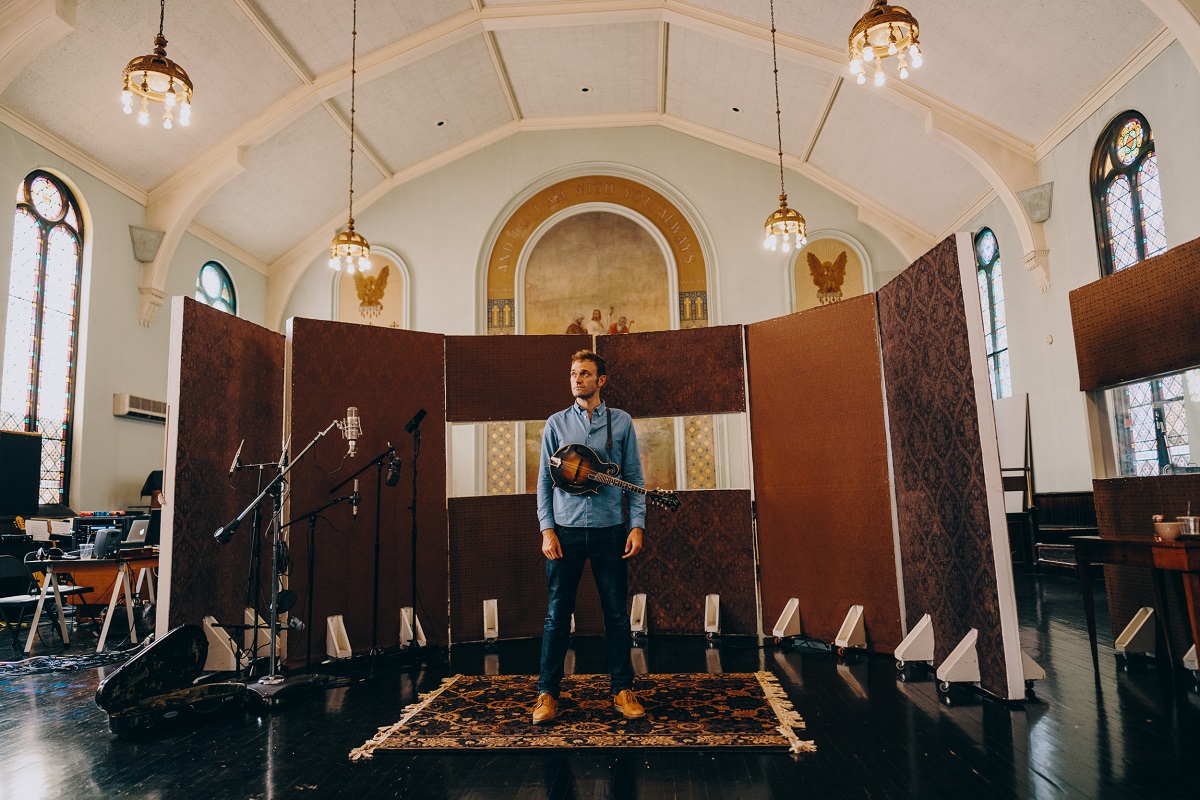
A solo album in the truest sense — it’s just Thile and a mandolin, after all — the album was recorded by engineer Jody Elff at Future-Past, a studio housed in an old church in Hudson, New York. The setting was a perfect match for the religion-influenced album, which ranges from the biblical passages of Thile’s Christian upbringing to mythological ideas about gods and gathering from the Greeks and the Romans. Below, in the first of a two-part interview, BGS caught up with Thile about recording the new album, finding inspiration in memories from his adolescence, and the dearly missed joy of a packed concert hall.

BGS: You recorded this album in a church in upstate New York. What did that atmosphere lend to the album, whether purely sonically to the recording or more generally as inspiration?

Thile: That was such a stroke of luck in a time that felt like it was a little thin on luck overall. [Laughs] We were weathering the earlier stages of the pandemic in Hudson, New York, and someone told me about a church right in the middle of town that had been converted into a studio. I went and checked it out and played a few notes in there and absolutely loved it. It’s not the most awe-inspiring church, but there were stain-glassed windows and very odd paintings that all brought me right back to my childhood.

I never attended a grand, elegant church growing up. This was still a beautiful church, but it was helpful that it wasn’t, y’know, St. Patrick’s in downtown New York — that it had a whole lot of that whole human-beings-just-trying-to-do-the-best-with-what-they-have kind of a vibe. Getting to be there was really helpful in terms of getting into character for the songs that I was recording. So much of the record comes from solitude… Actually, the solitude of the pandemic felt a lot like the solitude of spending one’s adolescence in a church pew.

What do you mean by that?

I spent so much of my adolescent time in church wondering if I was the only person there who was doubting the existence of God, or who couldn’t not think about how attractive the girl two pews over was. “Wait, I’m going to hell now probably, right?” Or, “Wait, is there hell? What is going on?” The pandemic thrust me and a lot of other people that I know back into that sort of lonesome, existential monologue: “Has every single choice I’ve made up to this point been wrong, perhaps?”

The sort of strange dialogue that we have with ourselves late at night started reminding me of those weird dialogues I would have with myself in church. I could well imagine at 16 years old sitting in this pew at Christian Community Church in Kentucky. I could well imagine there was a little angel and devil on my shoulder kind of duking it out. The centerpiece of the record, “Salt (in the Wounds) of the Earth” is very much a grown-up version of that feeling—but you know, also, how grown-up, really? I’m 40 now, and so much of the time, this felt like a rebirth right back into adolescence, smack in the middle of the most awkward period of our lives.

I loved being in that church for all those reasons. It was so easy to put myself in the headspace I was in when I had written the lyrics or when I discovered the power of those songs that I didn’t write that are on the record. It just lent a certain weight to those performances.

Why did it feel like the right time to approach religion specifically here? Was there anything you felt you had to tread carefully around?

If there’s a silver lining of this whole incredibly disorienting and distressing affair, it’s the chance to gain a little context: to have been forced to take a massive step back and to take a look at our lives, whether we wanted to or not. One of the things I saw, in the midst of missing the community that I’d inserted myself into, was that community often ends up acting in ways that are similar to my experience of organized religion.

How so?

A lot of people who grow up with religion and veer away from it at a certain point are veering away from what they — what we — perceive to be a poisonous exclusivity, or habitual exclusionism. I think that’s one of the main turn-offs for my generation on organized religion. You start meeting people who aren’t welcome in the flock, and you start wondering why. Having taken a step back, I see the same kind of exclusionary behavior in my current community. If you take a look at your own community, it’s probably full of people who think a lot like you do, and who feel very similar to the way that you do about whatever’s going on right now, and who live in a very similar way. I worry that we, as human beings, are trading one messed-up thing for another messed-up thing.

I adore community. I love it so, so much. For instance, the Telluride Bluegrass Festival: I feel like those are the high holy days of my acoustic music-making community, and to be deprived of them is so painful. You feel cast adrift, untethered. I can’t wait to get back and I’ll never take that for granted again. But I also want to go back there with my eyes wide open as to whom I have habitually not welcomed into that community. What barriers am I being a part of unknowingly placing between people and that community that I love so much? And what harm is that doing that community?

Tell me about how that harm appears on the record.

There’s a lot in the record about coming together, but there’s also a lot in the record about our compulsive need to compare ourselves favorably to other people. In an effort to feel better about ourselves, we look for someone to feel better than. That’s what “Salt (in the Wounds) of the Earth” is about. I took a look at this thing that had been a big deal for me in my adolescence, The Screwtape Letters by C.S. Lewis, and I was wondering: What would those demons be up to with me, right now? They would be preying on this compulsive desire to feel good about myself. One of the easiest, dirtiest ways to feel better about yourself is by looking at someone else and going, “Well, I’m better than that guy.”

In “Laysong,” the lyrics mention “drown[ing] out the enemy.” It made me wonder what it is that you consider the enemy — maybe it’s this comparison trap, maybe not — and how you drown it out.

When I wrote that lyric, the enemy was he or they that would talk loudest regardless of whether they had the best idea. “I’m gonna say whatever I have to say louder than anyone is saying anything else, and therefore it will be all that’s heard, and the discussion will be on my terms.” That felt like the enemy. And at that moment, in that lyric, I had to write it. It fit with the shape of the melody. The idea of drowning out the enemy — I couldn’t shake it, even though it’s not what I believe to be right. [Laughs] Hopefully you can get a sense of that in the performance, that it’s coming from an angry and not altogether balanced place. In that moment, I was pursuing the idea of drowning out the enemy with beauty, with restructuring, with anything, really. Let’s get a love song, let’s get a hard-times song, anything but a song about the front page of the newspaper.

The record starts there and ends with the Hazel Dickens song, “Won’t you come and sing for me.” When I get back into the concert hall, there’s no way I’m not ending my solo set with that song, the performance is going to be sincere—especially at the end of all this solitary music-making. [Laughs] But “Laysong” is very much like an altar call for the record. “Here’s what we’re gonna discuss.” Who knows where we’re gonna come out? I know that when I listen to a record, there’s a collaboration that starts there. I would love to imagine that happens when people listen to my records, too—that it starts a conversation. I can’t wait to feel that in the concert hall. No piece of music is done until you [the audience] hear it. And I am so dearly looking forward to that completion of this little bit of work.

Editor’s Note: Read the second half of the BGS Artist of the Month interview with Chris Thile.


Photos: Josh Goleman

The BGS Radio Hour – Episode 209

Welcome to the BGS Radio Hour! Since 2017, this weekly radio show and podcast has been a recap of all the great music, new and old, featured on the digital pages of BGS. This week, we bring you new music off of the beautiful new album Outside Child from Allison Russell, as well as bluegrass songs to celebrate springtime, and much more! Remember to check back every week for a new episode of the BGS Radio Hour.

APPLE PODCASTS, SPOTIFY

Kishi Bashi – “Waiting For Springtime”

To start off this week’s roundup, we visit our conversation with Athens, Georgia-based Kaoru Ishibashi, better known as Kishi Bashi, about his new EP Emigrant. When COVID hit, he and his daughter packed into a camper and hit the road, from the southeastern U.S. all the way to Oregon, over a period of several months. Along the way, he fleshed out the songs that became Emigrant through visiting places like the Ozarks, the Dakotas, and Montana, including Heart Mountain: a World War II Japanese internment camp he visited many times during the production of his documentary Omoiyari: A Songfilm by Kishi Bashi.


Reid Zoe – “When I Go”

This new track from singer-songwriter Reid Zoé is, on the surface, a song about dying, but really it’s about all of the questions that come with being a human on earth.

Full Cord – “Right In Step”

With a catchy melodic hook and low-tuned banjo, “Right in Step” is a lovely bluegrass tune full of love, hope, and togetherness – hopefully a respite from the uncertainty of the pandemic.

Sean McConnell – “Price of Love”

It’s been said that everything in this world comes with a price. For Nashville’s Sean McConnell, that price is reflected in loving someone — be it family, friend, or significant other — and the eventuality and certainty of you losing them. Yet still, he suggests, most of us are willing to take that risk for love, to give up our hearts completely. It’s the price that our heart pays for love in return.

The Deep Dark Woods – “How Could I Ever Be Single Again?”

A new song from pan-Atlantic singer-songwriter The Deep Dark Woods was inspired by English folk band Steeleye Span. Featuring Kacy Anderson on fiddle, the tune asks the titular question, “How Could I Ever Be Single Again?”

Sam Robbins – “Raining Sideways”

“Raining Sideways” is one of Sam Robbins’ most-requested songs, a stream of consciousness lyric that’s one of the most raw and authentic he’s ever written.

Lera Lynn – “A Light Comes Through”

A recent episode of The Show on the Road featured a deep dive with silky-voiced, southern gothic-folk songwriter Lera Lynn. Stick around to the end of the episode to hear Lynn introduce her favorite broken-romance number, “So Far.”

Graham Sharp – “Truer Picture of Me”

BGS recently caught up with Steep Canyon Rangers’ banjo player and songwriter Graham Sharp about the release of his new solo record, Truer Picture. We talked about Steve Martin’s influence on the Rangers and Sharp himself, as well as his approach to songwriting, nature inspirations, and the way literature and music coincide.

Our Native Daughters – “Quasheba, Quasheba”

Our Artist of the Month for May, Allison Russell, wrote this song for her many-times-great-great-grandmother Quasheba, who survived being enslaved, being ripped away from everything she knew, the horrible Middle Passage, having her children taken, and more. Russell says her art and a loving community have inspired her to connect with her ancestors and find connection through intergenerational strength, resilience, and transcendence, despite intergenerational trauma and abuse.

Grace Pettis – “Paper Boat”

Singer-songwriter Grace Pettis literally dreamed up “Paper Boat,” a song about coming of age, trying to fit in, and losing our innocence. She’s joined by her producer, Mary Bragg, on tender harmony vocals.

Allison Russell – “The Runner”

We spoke with our May Artist of the Month, Allison Russell, about the inspiration behind and creation of her honest and stunning album Outside Child, including this track “The Runner.” Read our two-part interview here.

Lost & Found – “Wild Mountain Flowers for Mary”

We hope, wherever you’re reading this from, that snow, frost, and the cold are truly retreating, giving way to longer days, warmer weather, and the gorgeous, humid, cicada-soundtracked days of summer. But, before we get to full-blown bluegrass season – and, hopefully, our first live music forays since COVID-19 shut the industry down in early 2020 – let’s take a moment to intentionally enjoy spring with 12 bluegrass songs perfect for collecting a wildflower bouquet, romping and frolicking in the meadow, and pickin’ on the back porch while the evenings are still cool.

Accidentals – “Wildfire”

The Accidentals spoke with BGS on loving and learning from Brandi Carlile, singing on stage with Joan Baez, the magic in meeting strangers and finding common ground, and much more in this edition of 5+5.


Photos: (L to R) Lera Lynn by Alysse Gafkjen; Allison Russell by Marc Baptiste; Kishi Bashi by Max Ritter

Artist of the Month: Chris Thile

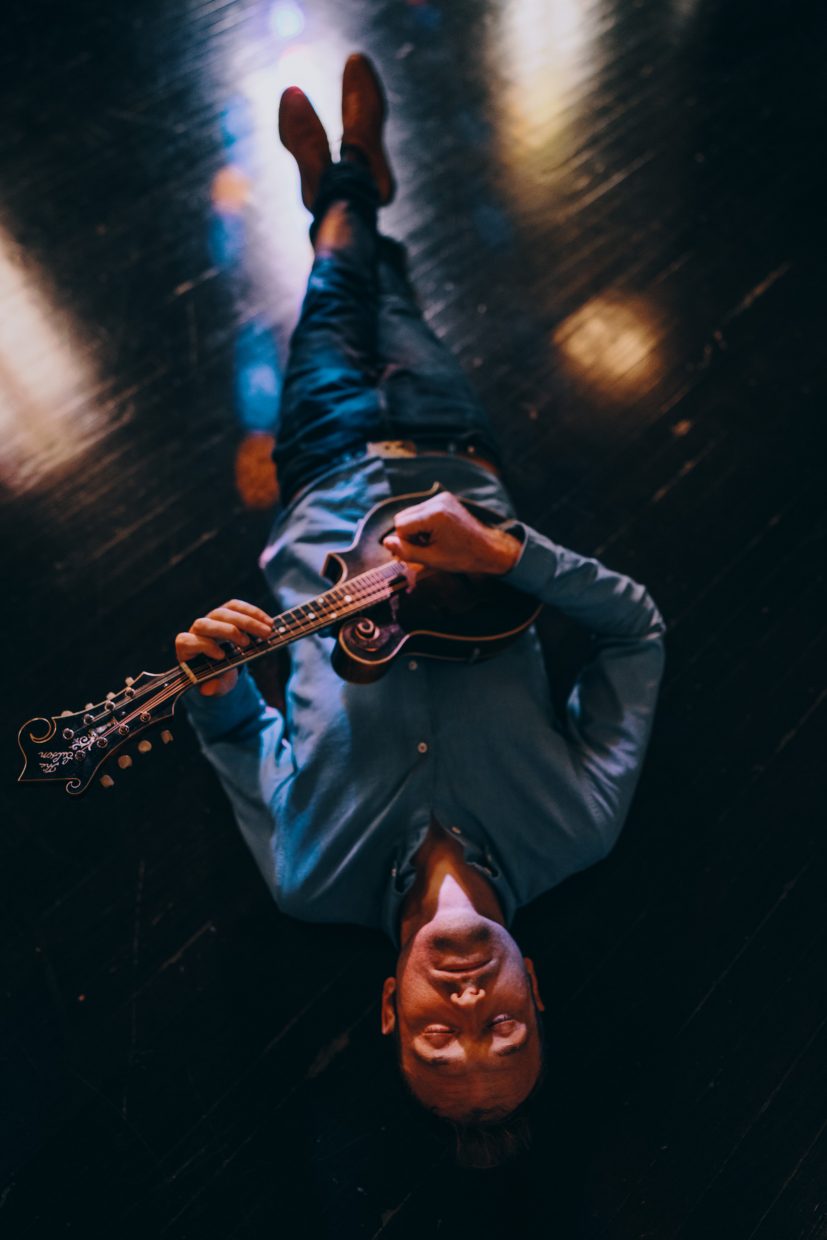
Chris Thile found solace during the pandemic in a church — more specifically, a remodeled one that now houses Future-Past recording studio in Hudson, New York, where he and his family were temporarily living in the summer of 2020. “I went in there to look at the space and instantly felt so at home,” Thile said upon announcing his new album, Laysongs. “I loved the amount of sound around the sound. I had two sonic collaborators on this record: the tremendous engineer Jody Elff and that church.”

With a suggestion from Nonesuch Records’ Chairman Emeritus Bob Hurwitz to make a record that was both spiritual and a snapshot of the pandemic, Thile decided to pursue the idea, putting together six originals and three covers with only his voice and his mandolin. In April, he introduced the project with the lead single, “Laysong.” As he noted, “It is a lifelong obsession of mine, even post-Christianity, what the impact of that kind of devotion to any organized religion is.”

Laysongs offers the three-part “Salt (in the Wounds) of the Earth,” which was inspired by C.S. Lewis’s The Screwtape Letters; a song Thile wrote about Dionysus; a performance of the fourth movement of Béla Bartók’s Sonata for Solo Violin; “God Is Alive, Magic Is Afoot” based on Buffy Sainte-Marie’s adaptation of a Leonard Cohen poem; a cover of bluegrass legend Hazel Dickens’ “Won’t You Come and Sing for Me;” and an original instrumental loosely modeled after the Prelude from J.S. Bach’s Partita for Solo Violin in E Major. Thile’s wife, actor Claire Coffee, serves as co-producer.

It’s the latest creative endeavor from the MacArthur Fellow, whose exceptional career spans far beyond his solo work. From Nickel Creek and Punch Brothers to a pair of Goat Rodeo albums and the much-missed Live From Here series, Thile remains one of acoustic music’s most visible figures. You can read part one of our Artist of the Month interview here. Read part two here. Meanwhile, enjoy our BGS Essentials playlist, a tip-of-the-iceberg hint at the remarkable breadth of this masterful musician.


Photo credit: Josh Goleman

With Her Banjo and Best Friends, Allison Russell Delivers ‘Outside Child’ (Part 2 of 2)

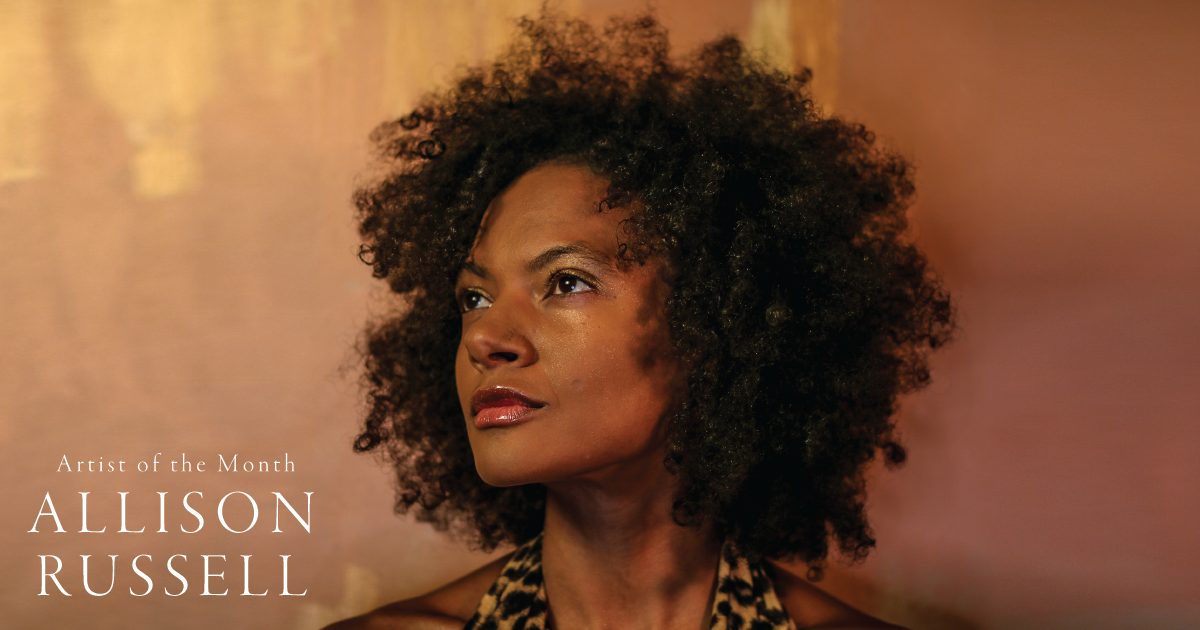
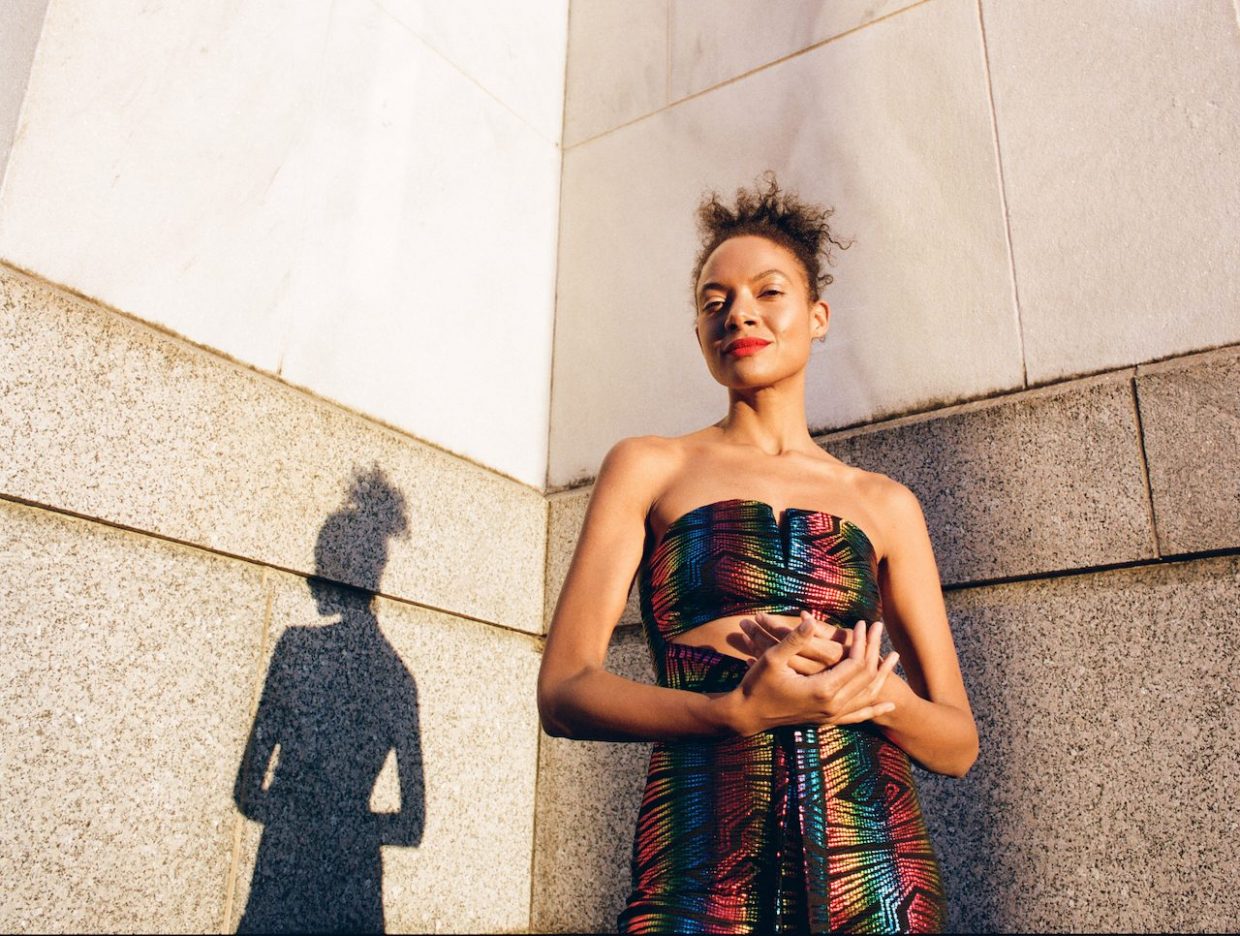
Allison Russell’s first solo album offers an intimate look into her life, yet it’s far more than just her musical vision that elevates Outside Child to one of the year’s most eloquent albums. Working with Dan Knobler in Nashville, she populated the studio with musicians like Joe Pisapia, Jason Burger, Chris Merrill, Jamie Dick, and Drew Lindsay, as well as exceptional guests such as Yola, Ruth Moody, Erin Rae, and the McCrary Sisters. She describes them as her “chosen family,” accompanying her as she shares stories about other families in her life.

Enjoy the second half of our BGS Artist of the Month interview with Allison Russell. (Editor’s note: Read the first half of our AOTM feature here.)

BGS: You can feel that sense of community between the musicians on this record. Can you talk a little bit about what it felt like while you were tracking?

Allison Russell: These songs were recorded in four days. Everything that you are hearing, I sang live with the band. We did it at Sound Emporium Studio A. There’s a lovely, big room with glass doors that you can open up. Everyone was in a semi-circle. It was a magical experience. We would gather in the center of the room and work out an arrangement together and then we would record the song. Most of what you are hearing is the second take. That was sort of when it magically coalesced, when everyone was communing and free flowing.

Dan [Knobler] shares my deep conviction that it is not about perfection. It is about capturing the communication in as honest and as true of a way as you can. That has been my approach ever since working with Joe Henry four or five years ago on a record called Real Midnight. So what you are hearing is a community choosing to come together to uplift these songs. I will be grateful for that for the rest of my life, even if no one ever heard the record. That experience of getting to record that way with chosen family. I can’t imagine a more healing, supportive environment than I experienced.

This is your first solo record and though you’ve made many records with groups, I’m wondering if the feeling of picking the songs and the sounds was different for you as a solo artist?

I don’t know that I really picked them. I think that the songs just poured out. So much of the sound is my community of artists. I would never dream of telling any of those artists what to play. I trust their ears and I trusted Dan Knobler’s ears, who produced the record. And I trusted my own ears too, of course, but really what we did was cast the room with people who we love and trust. What was different is that I’d never worked with Dan before and I trusted him bringing in two of his brothers, Joe Pisapia and Jason Burger to join the family of musical kindred that I’ve been part of. A lot of the artists who played on the record were artists that I’d met over my many years and different projects. …

And then since I moved to Nashville in 2017, I’ve been going to hear the McCrary Sisters and loving them. I really got to know them through Yola, because they formed a friendship at a festival in Scotland and I got to know them through her. I’m a huge admirer of them and their work and their harmonies. I reached out to them thinking I wouldn’t be able to afford them and they were so generous. They came and sang for way less than they are worth and worked within my budget. I was honored that they came. So it was really a matter of casting the room and then letting people shine the way they do.

I read your speech from the [2020] Women’s March [in Nashville]. It is really gorgeous, thought- and emotion-provoking. In it you mention that you are the hero of your own story which is wildly inspiring and important for us all to remember – that there are some things we can save ourselves from. Can you talk a bit about ways in which you save yourself?

I feel like connection with a loving community is what saves me every day. Art and music save me every day. I’ve been a book worm my entire life and I can’t emphasize enough, I don’t think I would have survived my childhood if I hadn’t had the escape of literature. Being able to go into other worlds and other imaginings and literally inside of someone else’s mind and take refuge and find inspiration and comfort and strength. Disappearing into books was the first kind of way that I learned how to try to be brave. It was reading about brave protagonists and people in situations worse than I could imagine. I got very obsessed in my tweens with reading first person accounts of survival of the Holocaust. It put into context what was happening to me, that if people could survive that, then I could survive what I was experiencing.

Being in a community with people that uplift you and see you and value you and you do the same for them, that is life-changing. I have that with my partner J.T. I have that with my sisters in Our Native Daughters. We wrote a whole record together, uplifting each other and bringing forward the perspective of Black women within the diaspora and within the historical record. Our particular demographic is so often left out of any kind of historical record in any kind of first-person way, with agency and lived experience. That has been a source of great strength and resilience.

And then to connect with my ancestors. To delve into all of the history. With all of the intergenerational trauma and abuse, there is also incredible intergenerational strength and resilience and transcendence. The ability to overcome circumstances I cannot even dream of. My many-times-great-great-grandmother Quasheba survived being enslaved. She survived being ripped away from everything she knew, her family and language and home. She survived the horrible Middle Passage. She survived multiple plantations and having her children taken. If she can survive all that, I can get through this.

Do you remember what prompted you to pick up a banjo for the first time?

I was in a band called Po Girl, that was my first baby band and the woman I started the band with, Trish Klein, played the banjo. She taught me my first few chords and I just kept playing from there. I met Rhiannon Giddens in 2006 at the Vancouver Folk Music Festival and I was so excited to meet another Black woman that played banjo, because I was the only one that I knew. She told me about the Black Banjo Gathering, which I never got to attend. I’ve met so many dear friends who were a part of that, like Valerie June. All of us in Our Native Daughters play banjo and that has been a deep communion for us.

I think Rhiannon’s minstrel banjo is one of the most beautiful sounds I’ve ever heard. I’ve adapted my little Americana Goodtime banjo to sound as much like that as I can by adding gut strings and a fiber skin head. I’ve modified the bridge a bit to give it that deeper resonance. For me the banjo has allowed me to access my songwriting in a different way. I’ve noticed this over time as I’ve picked up more instruments. Different songs come through on different instruments and now for me, the banjo has become my primary songwriting instrument.

This album is coming out hopefully at the tail end of the pandemic so I’m guessing some of the songs have not been performed in front of an audience yet. Are there songs you are particularly excited about presenting on stage and on the flip side are there songs you are nervous or trepidatious about presenting to an audience?

Basically none of them. Of course I’ve done some virtual performances here and there of a couple of them. But they have not been played live. I am always nervous about everything. I’m just a very anxious person most of the time. But where that stops, usually, is on stage, when I get to be in communion with my fellow artists and with the people who have come to listen. That is very much a two-way exchange. The answer is, I’ll be nervous about all of it right up until the moment we are playing and then I will be in the happiest place I know.

(Editor’s note: Read part one of our Artist of the Month interview with Allison Russell here.)


Photo credit: Marc Baptiste (top); Laura E. Partain (in story)