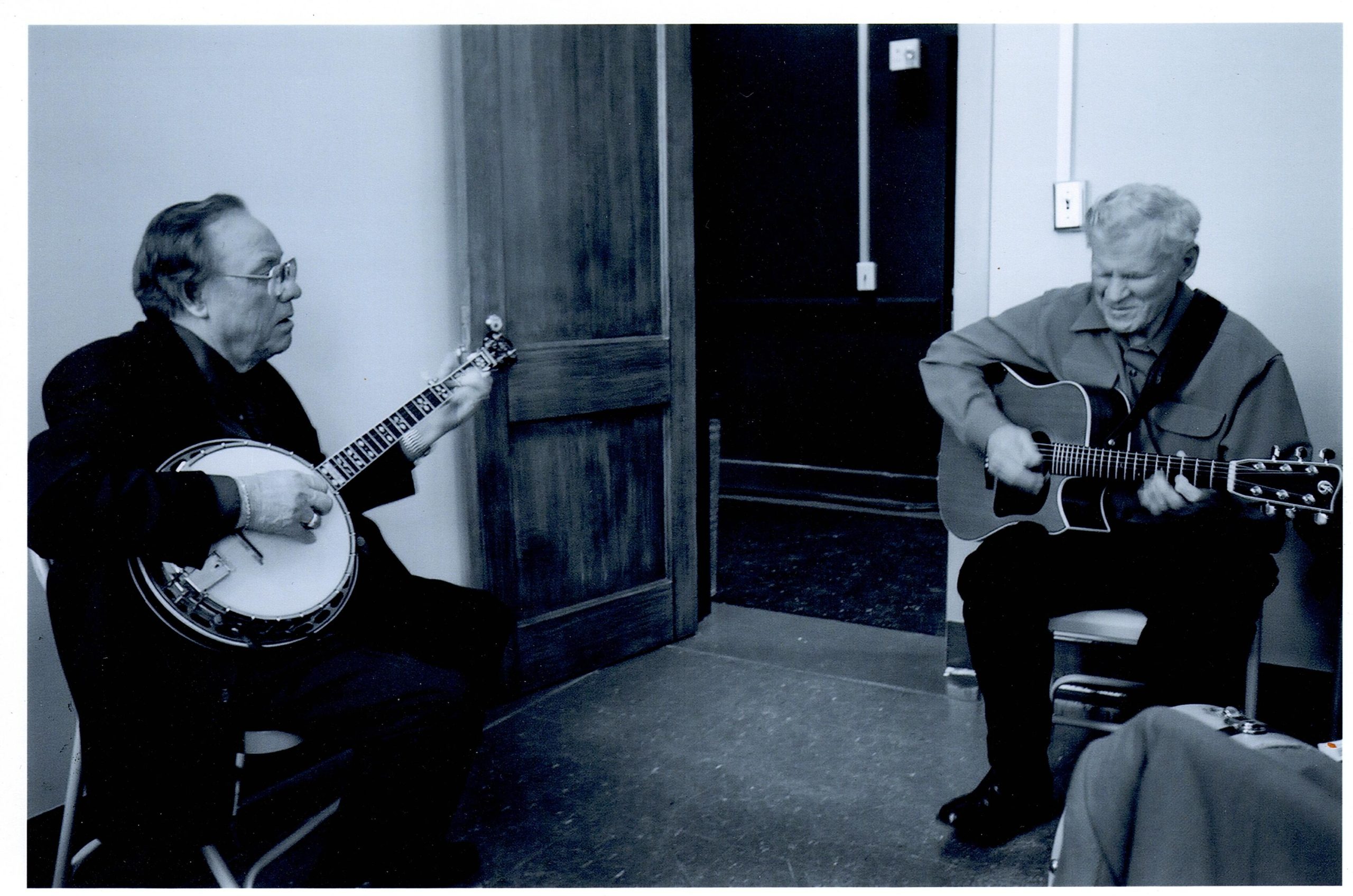
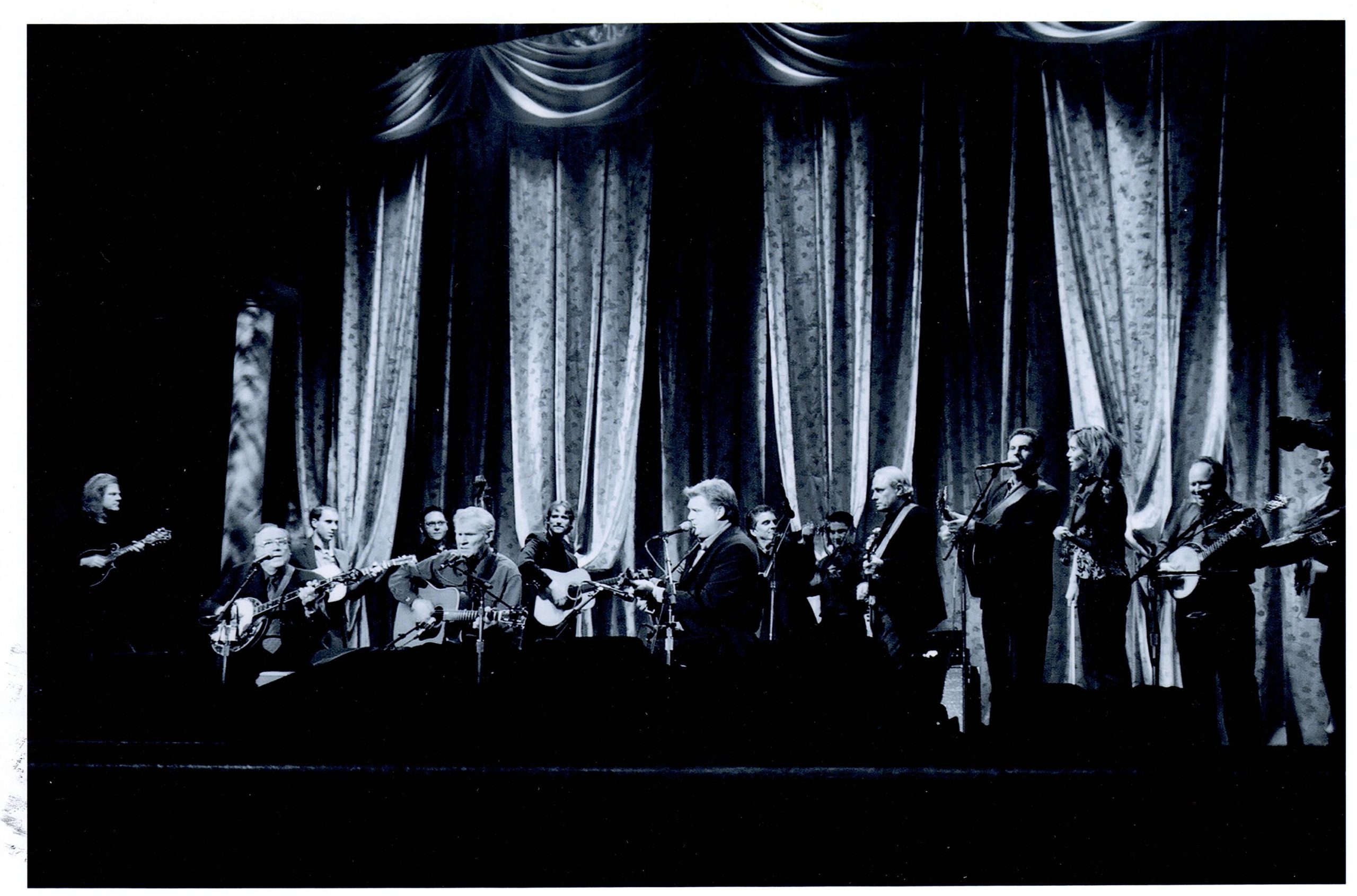
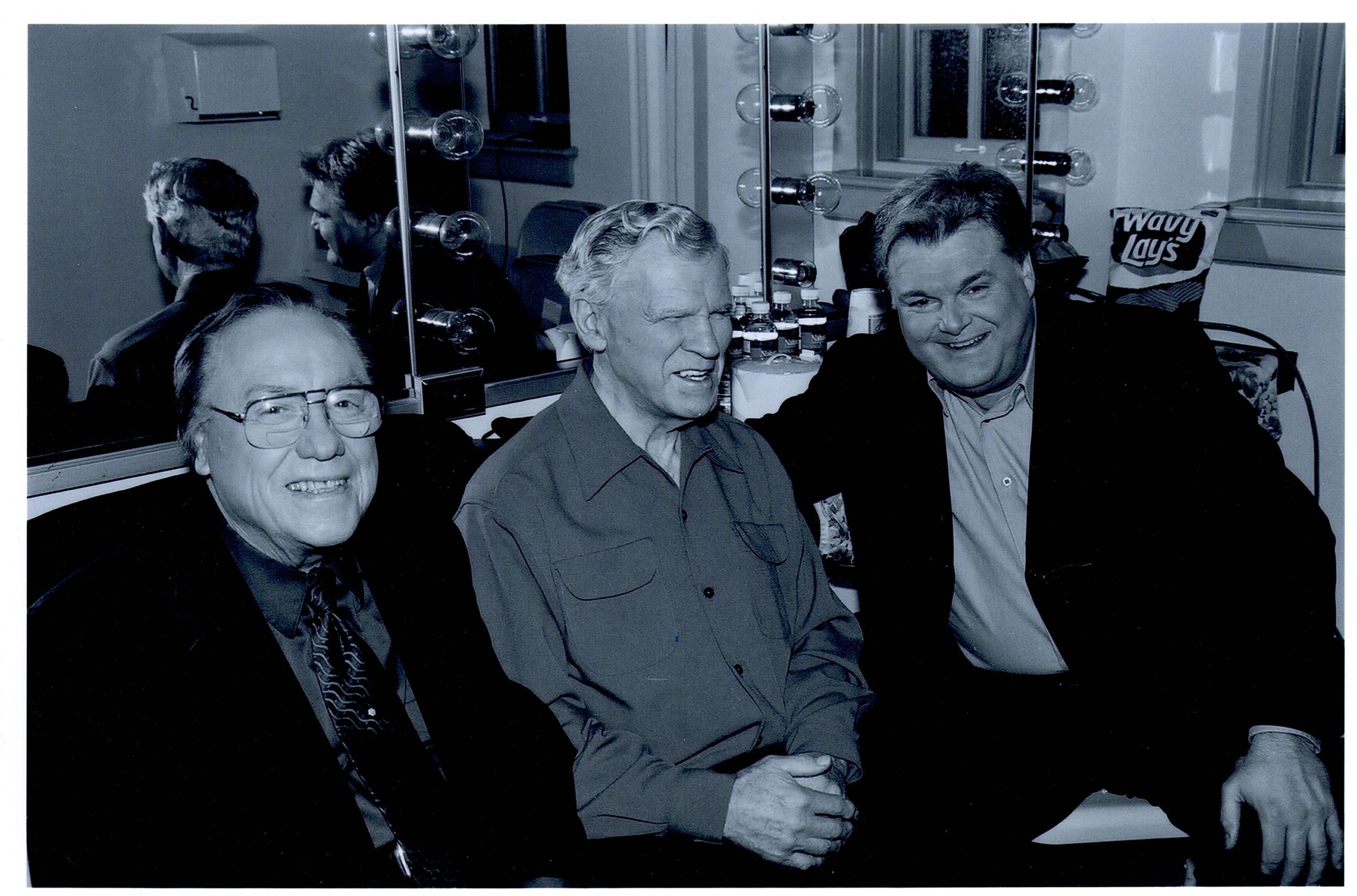
It’s no secret that Earl Scruggs and Doc Watson were great friends, collaborators, and mutual admirers. Both of the bluegrass, old-time, and mountain-music stylists took inspiration and borrowed heavily from the other across their careers, whether they were making music together or separately in any of their many endeavors. The moments they came together, though – from The Three Pickers album and concert film, to David Hoffman’s iconic backyard jam session film of the Scruggs and Watson clans picking together, to many more appearances and recordings – were always magical. Two legendary stylists bouncing musical ideas off of each other as only these two could.
In honor of our Doc in December series for Artist of the Month, we’ve partnered with our friends at the Earl Scruggs Center in Shelby, North Carolina, to bring you an exclusive look inside their collection and archives at photos of Scruggs and Watson together. The Center’s executive director, Mary Beth Martin, pulled a selection of historic photos from the collection as well as a handwritten quote directly from Scruggs’ notes about Watson and his influence:
“There are two people’s sound no man can, in my estimation, duplicate,” Earl states in a notebook. “Of course I’m referring to Mama Maybelle and Doc Watson. I’ve had the pleasure to work [with] and visit these people. I will never cease to admire the courage of these people.”
You can certainly hear the impact and influence of Watson and Maybelle Carter on Scruggs’ playing, especially his approach to acoustic guitar, when he would most often fingerpick the six-string.
“Earl had enormous respect for Doc and admired him deeply,” says Martin of the Earl Scruggs Center via email. “Both grew up in humble North Carolina homes surrounded by rich musical traditions and went on to leave an incredible mark on music. Having Earl’s personal memories and photos of Doc in our collection makes their connection feel especially meaningful.”
Over the course of their careers in roots music, Scruggs and Watson performed, collaborated, and recorded together dozens and dozens of times. We’re very proud to be able to share these photographs from the Earl Scruggs Center Collection to celebrate the cross-pollination of these two Bluegrass Hall of Famers and Doc in December.
The Earl Scruggs Center is located in downtown Shelby, North Carolina, and celebrates the life, legacy, and groundbreaking sound of Earl Scruggs. Their collection includes many treasured Scruggs family objects and remarkable pieces from Earl’s career – including more than 2,000 photographs. In January, they’ll install new interactive exhibits that dig deep into the roots of the region’s music and the history of bluegrass. The entire ESC team is excited to welcome everyone back to the museum when they reopen on February 3, 2026, after renovations and completion of the new exhibits.
Beyond the museum, the Earl Scruggs Center team are also restoring the Earl Scruggs Homeplace in the Flint Hill community of Cleveland County, bringing Earl’s childhood home back to the formative era that shaped him as a musician.
To stay in the loop and to catch upcoming Earl Scruggs Center events like the Earl Experience Banjo Camp, visit their website and connect with them on socials. We hope you enjoy our special photo story with our friends at the Earl Scruggs Center celebrating Earl Scruggs, Doc Watson, and Doc in December.
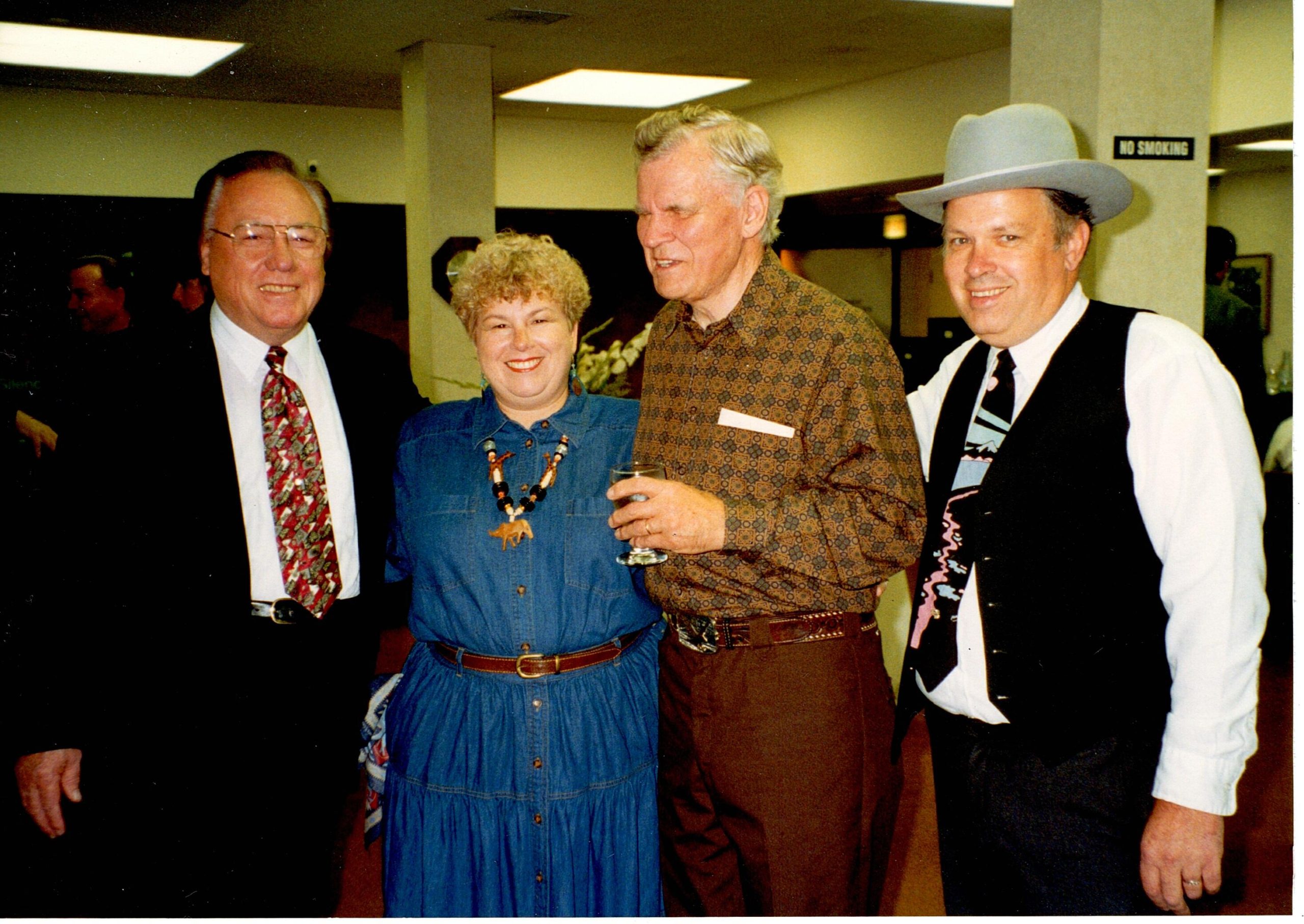
(L to R:) Earl Scruggs, Kitsy Kuykendall, Doc Watson, and Pete Kuykendall.
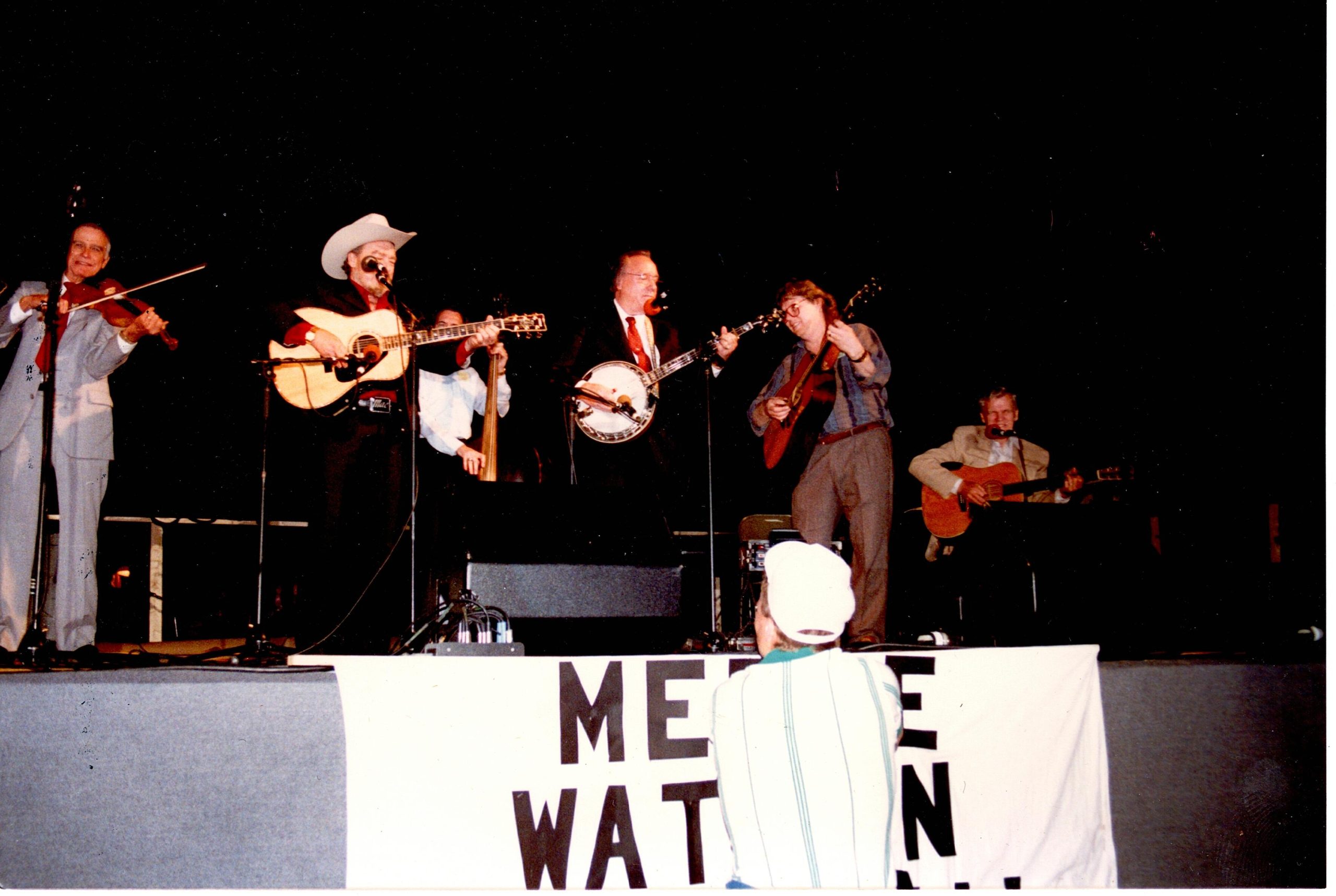
(L to R:) Jim Shumate (fiddle), Mac Wiseman, unknown bassist, Earl Scruggs, Jack Lawrence, and Doc Watson on stage at the Merle Watson Memorial Festival – what would become MerleFest.
Earl Scruggs and Doc Watson perform at the first MerleFest in 1988, then called the "Merle Watson Memorial Festival." (L to R:) Marty Stuart, Jim Shumate, Mac Wiseman, Earl Scruggs, unknown bassist, Jack Lawrence, Doc Watson.
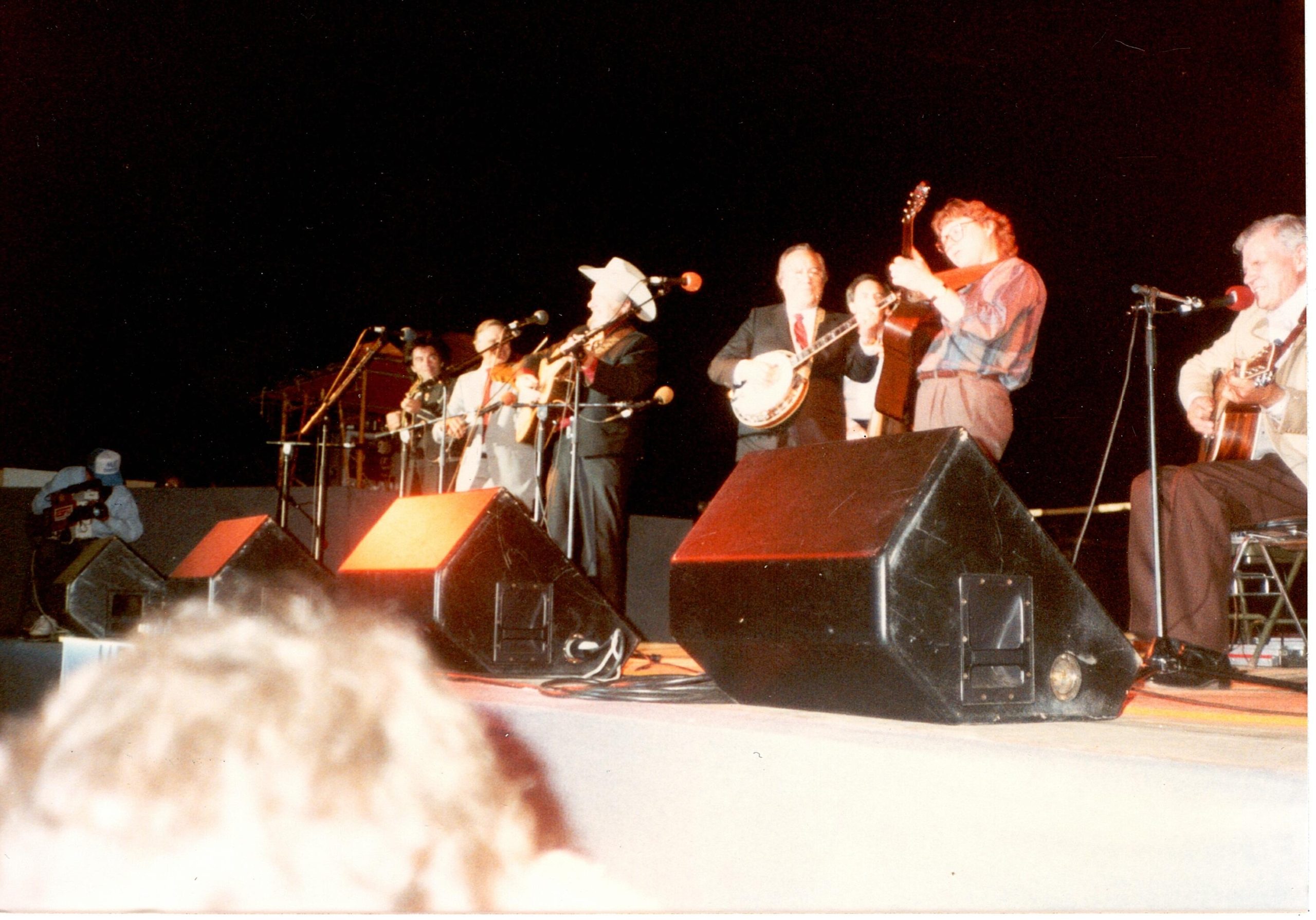
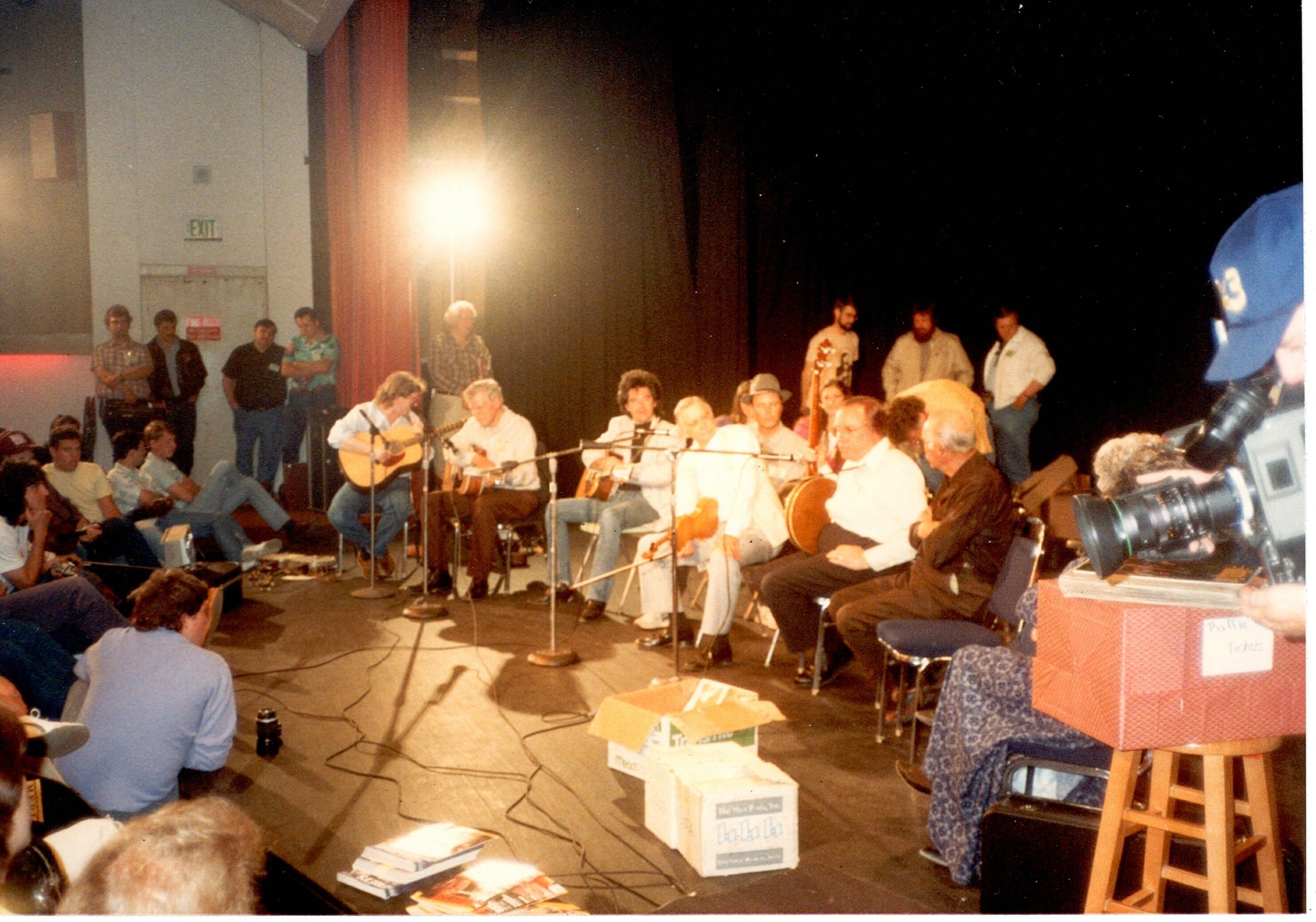
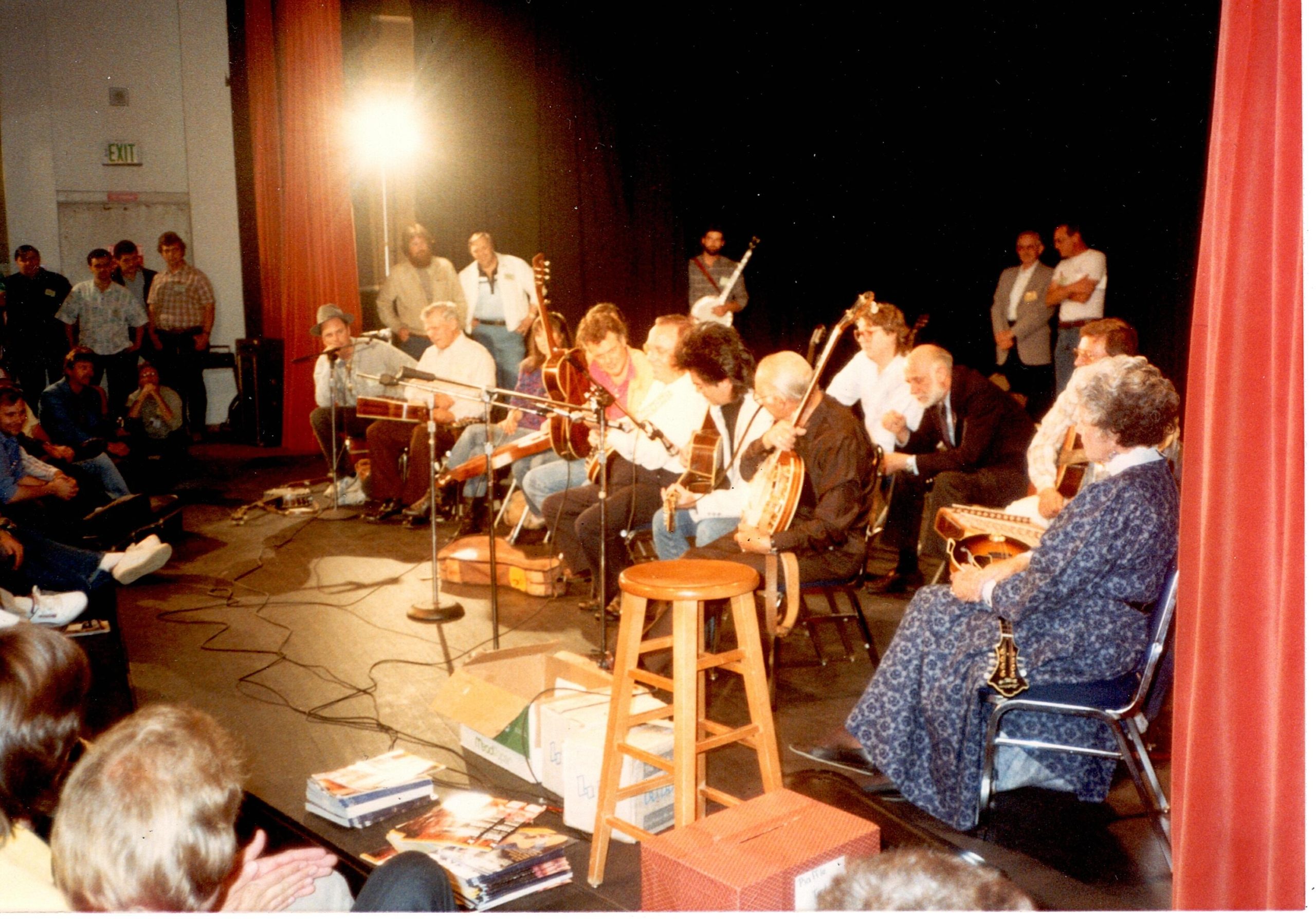
A workshop held at the first MerleFest in 1988. (L-R:) Jack Lawrence, Doc Watson, Marty Stuart, Jim Shumate, Earl Scruggs, Grandpa Jones. David Holt behind the first row of musicians, Ramona Jones on the far right, partially obscured by camera.
Another scene from a workshop at the very first MerleFest.
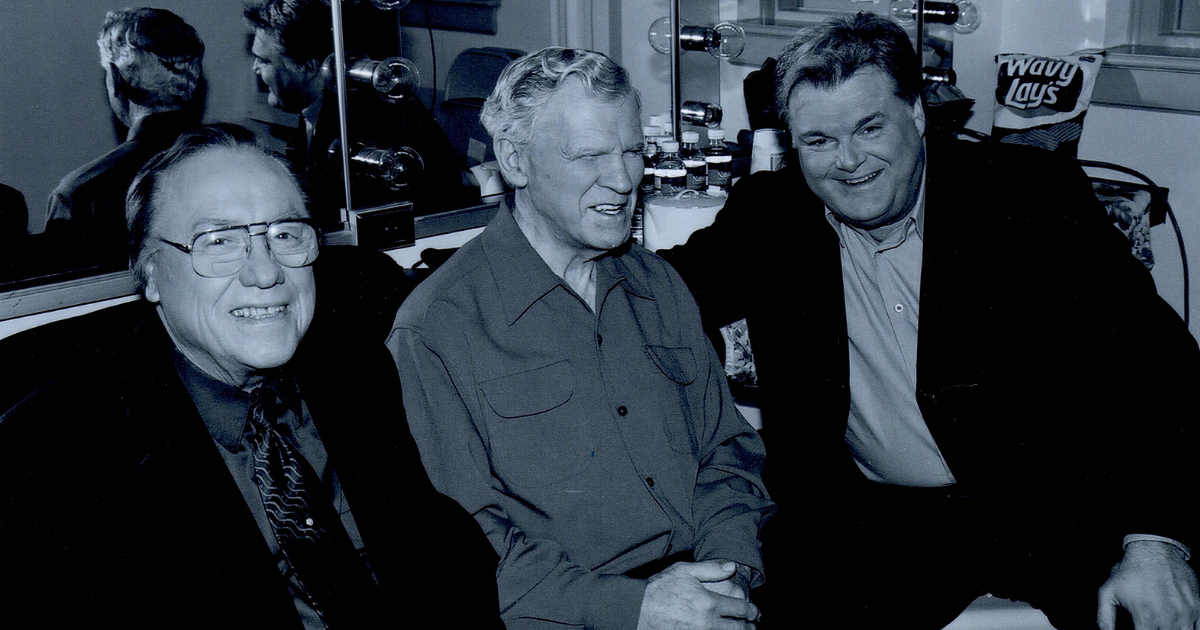
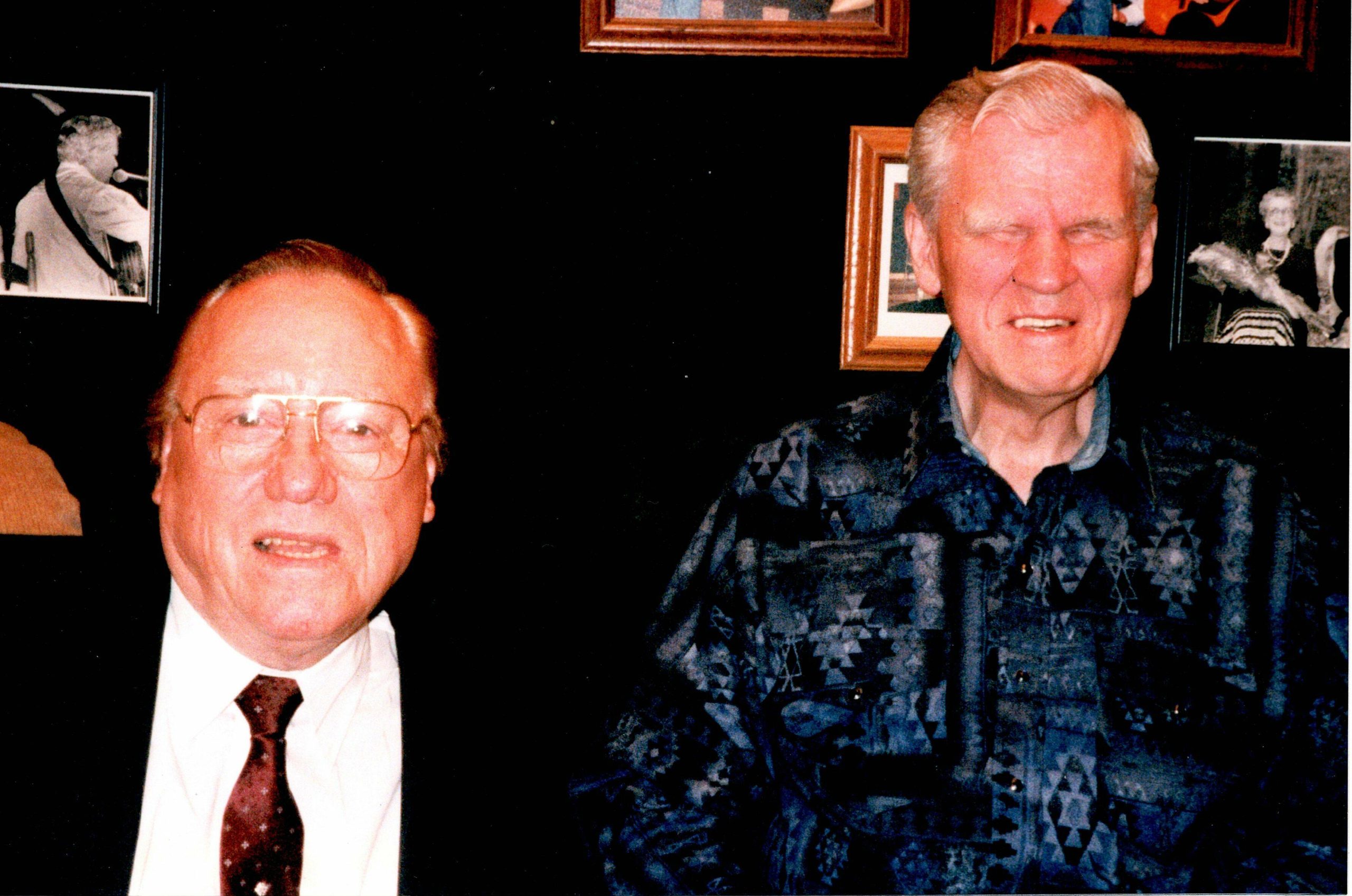
Earl Scruggs and Doc Watson backstage at MerleFest.
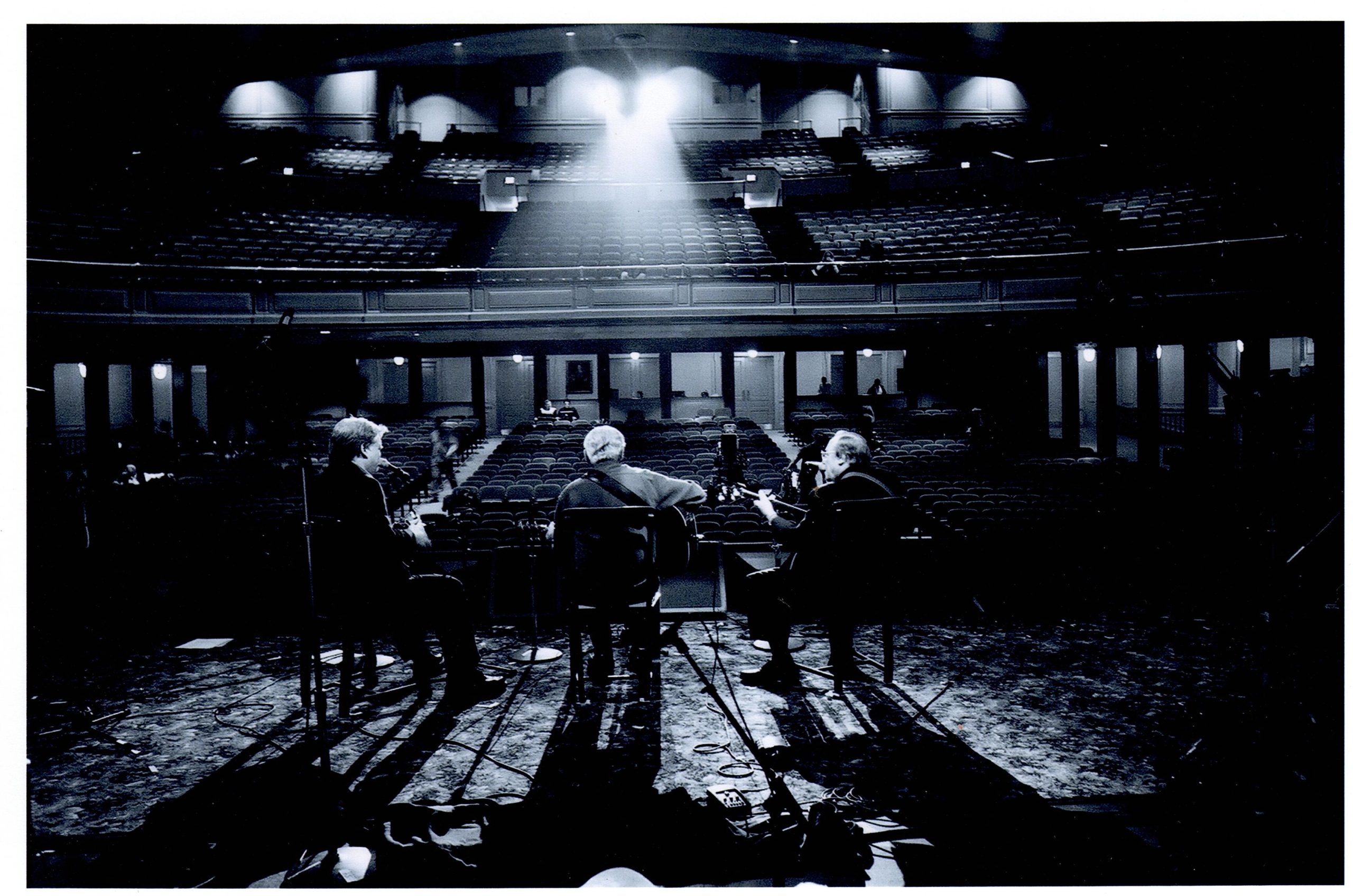
A behind-the-scenes shot of Ricky Skaggs, Doc Watson, and Earl Scruggs preparing for 'The Three Pickers.'
Earl Scruggs and Doc Watson backstage during filming of 'The Three Pickers.'
Earl Scruggs, Doc Watson, Ricky Skaggs, and many more musicians (including John Jorgenson, Cody Kilby, Mark Fain, Andy Leftwich, Alison Krauss, Jim Mills, and more) onstage filming 'The Three Pickers.'
The stars of 'The Three Pickers' pose backstage during the taping.
All photos courtesy of the Earl Scruggs Center Collection. Lead image: Earl Scruggs, Doc Watson, and Ricky Skaggs backstage at the taping for The Three Pickers.
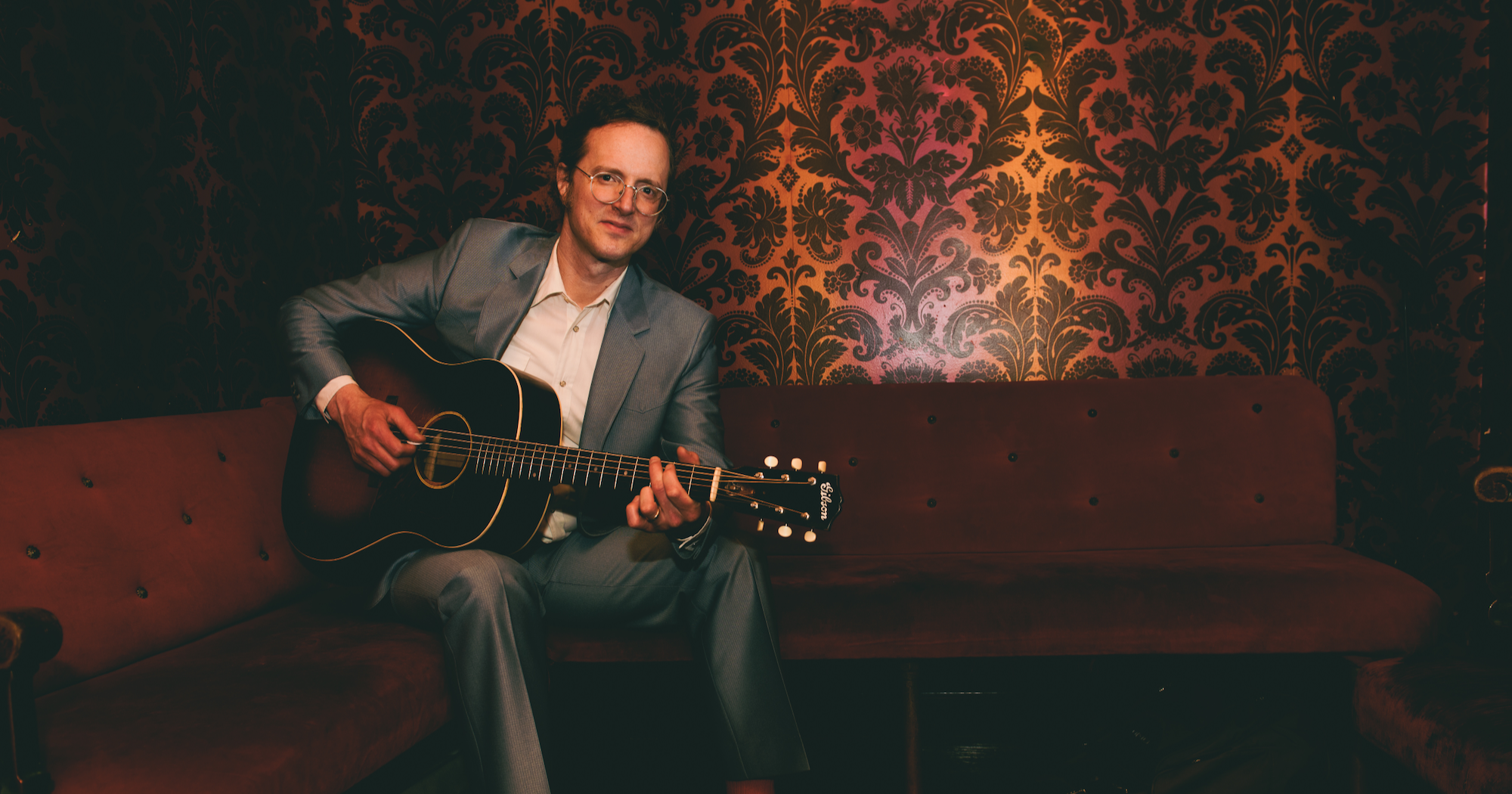
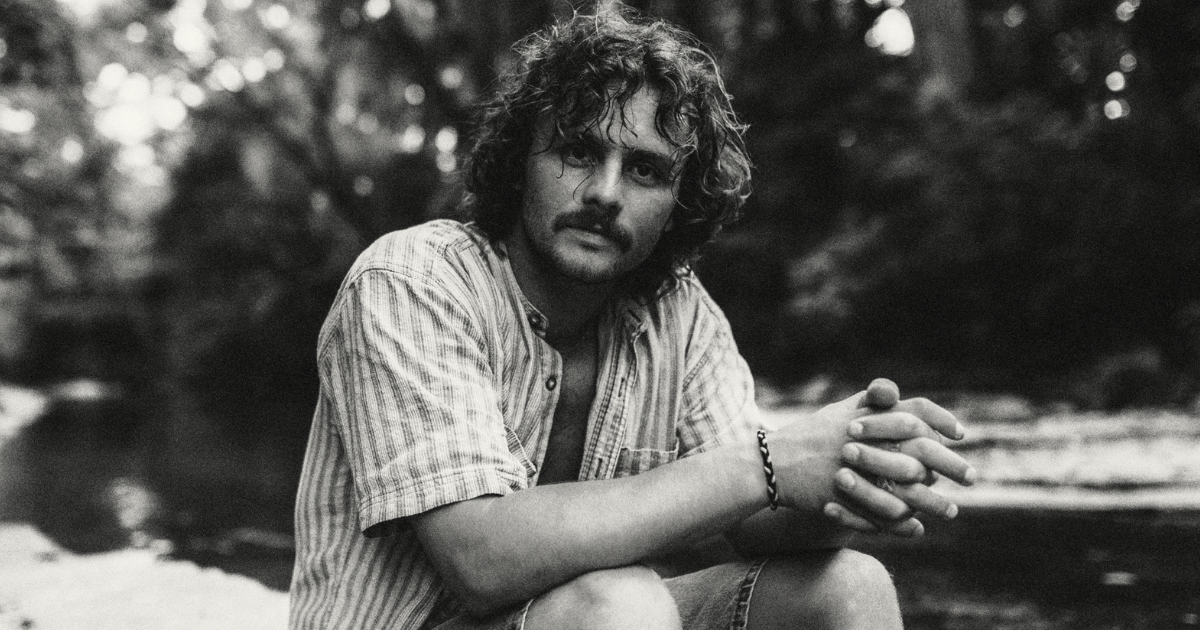
Artist:BB Bowness Hometown: Somerville, Massachusetts Latest Album:Goodtime Revival (released November 1, 2025) Personal Nickname (or rejected band names): BB (short for Catherine)
Which artist has influenced you the most – and how?
It’s tough to choose just one person, but I’d have to say Béla Fleck. He has expanded what’s possible on the banjo for all of us banjo nerds. Hearing him play classical, jazz, bluegrass and so many other styles, all with stunning fluency, is such an inspiration to me. And his tune writing is masterful, tunes like “Sunset Road,” “The Overgrown Waltz,” and “Big Country” feel so beautiful and singable to me. It’s really hard to write tunes that come anywhere close to that level of completeness.
What was the first moment that you knew you wanted to be a musician?
I’ve always been drawn to music, since growing up in a traveling New Zealand craft market. There was a stage manager in the fair, Ralph Bennett-Eades, who played guitar and sang really great. His boys played guitar and drums so I always saw the cool, older kids playing music. Then after learning banjo for a few years, I headed to the states for the first time and got to attend some festivals and camps including Telluride and Rockygrass in Colorado. Seeing the amazing musicians perform on stage at those festivals made me really want to try music for a living. Fifteen-year-old me thought, “Wow, people do this for a job?!” Turns out it’s not that easy to get those jobs, but it’s been an incredible journey so far.
What has been the best advice you’ve received in your career so far?
The great Tony Trischka once told me it’s great if you can learn to sing. I’ve thought back on that comment frequently through the years, being primarily an instrumentalist. But it really rings true! Being able to sing in a band and contribute to the show as a vocalist by singing harmonies is a big plus. It’s also so great in general for your musicianship to learn to sing so that your ears are more connected to your hands. Having a decent ear is a must for singers and I’ve found it very helpful for my banjo playing to work on developing my ear.
If you didn’t work in music, what would you do instead?
I’ve always fantasized running a New Zealand coffee shop that sells baked goods. It’s got to be a waterfront cafe so that I can wake up early, go for a surf, and then make coffee and baked goods for people.
What would a perfect day as an artist and creator look like to you?
I love the days where you’re not sitting in a van for 10 hours. Any day where the drive is short and you get to play music with your friends for people who’re listening is a very good day! Throw in some vegetables with dinner and a little private spot to practice some before the show and I’m positively delighted.
Artist:Michael Daves Hometown: Atlanta, Georgia (originally); New York, New York and Adams, Massachusetts (currently) Song: Can’t Get There From Here Album:Fables (EP) Release Date: December 19, 2025 Label: Wild Geranium Records
In Their Words: “As a Georgia boy growing up in 1980s, R.E.M. was my first musical obsession and I still love those early albums. The dream logic, the obscure references to Southern culture, the addictive hooks, the ghostly background vocals. I thought it would be interesting to adapt one of them to bluegrass and it happens that Fables of the Reconstruction is celebrating its 40th anniversary this year. It’s an arty rock album, but there’s a lot of droney stuff in there that sounds like it came from mountain dulcimer, banjo, and mandolin. The quartet I lead with Hargreaves, Jolliff, and Alvar has proven very adept at interpreting music from non-bluegrass sources and though they had no prior knowledge of this music, they were open to it and knocked it out of the park.” – Michael Daves
Track Credits: Michael Daves – Guitar, vocals Alex Hargreaves – Fiddle Jacob Jolliff – Mandolin Erik Alvar – Bass Duncan Wickel – Cello Sean Cahill – Background vocals Jefferson Hamer – Background vocals
Evan Honer opens his new album, Everything I Wanted, with a charge of electric guitar – an unexpected twist for a singer-songwriter who has mostly recorded with a stripped-back sound. And after commanding attention with that blast of energy, Honer carries the listener through a range of emotions familiar to any twentysomething (and beyond). There are breakup songs, of course, but also entanglements with loneliness, self-doubt, and even the relationships that seem to be going well.
Recorded in Honer’s garage studio just outside of Nashville, Everything I Wanted documents a creative moment where sonic exploration may be the biggest priority. However, the fans who discovered Honer in 2022 through a TikTok cover of Tyler Childers’ “Jersey Giant” will likely embrace the songwriting on the new album, with lyrics that reflect a day in the life of someone who’s still figuring things out.
Honer was raised in Surprise, Arizona and excelled in competitive diving at California Baptist College in Riverside. Although a spot on the U.S. Olympic team was within reach, Honer turned instead to a career in music and established his own label, Cloverdale Records. From his home office, Honer called into Good Country to talk about his new album, his relationship with fans, and the road ahead.
I listened to your catalog, and this album seems more electrified than your previous work. Why it was important for you to show another side of your musical approach?
Evan Honer: I felt like the first two albums were… I guess it was what I was into and the production that I was a fan of at the time. I was so new to everything, too. I just thought, “I’m gonna record the guitar, then maybe we’ll have drums.” But I hardly had any drums at all with my first two albums. I guess I just didn’t know the possibilities. And the more I grew as an artist, and thankfully, with the resources that I have, the more things I can do. If I want this exact sound, I know I can do it and I can do it in my garage. My taste has changed. I grew as an artist, and I realized, why not? I can do whatever I want literally.
Are you pretty consistent with your writing routine?
Yeah, most of the time I’m working on something. And it could be one line the whole day, but I sat there for three hours. That’s very common. Now I’m writing with other people more – with artists that I am inspired by. And when I’m back home, it takes a long time. Sometimes it’s sitting with my guitar for hours, and I don’t get anything except a couple words. Or I go backwards and I change everything, then I don’t even have lyrics anymore. I try to do some type of writing every day, but on the road it’s a lot more difficult.
The song “Curtain” captures your relationship with your fans. What does that relationship between artists and audience look like for you personally?
It’s such a difficult thing for me. Recently I’ve been able to enjoy a tour more and not be so affected by it emotionally. On my first tour, I was so not used to how you’re running on no sleep at all and you’re around the same people for a month. You have a bad show, and it feels like your life is over. That is sort of what I wrote [“Curtain”] about, just the ups and downs of being on tour.
I still am upset after a bad show and I don’t know if I ever will not be. In my opinion, a bad show could be, like, one person talking for one song. It was tough for me to realize – and it still is tough for me to realize – that I have such a different perspective on it. There’s my perspective, and their perspective. I felt like I needed to write that song where it’s like, “I’m looking out at you, and I’m just grateful that you guys bothered showing up to hear me scream about my problems.”
And it really helps me, now that I let it. They’re constantly telling me, “Oh, your music means the world to me,” and that is the greatest thing to hear. But them being there is like the whole reason and it means so much to me. That relationship is not one-sided at all. It’s completely: “I need you as much as you need me.”
Listening to “Not There Yet,” I can remember that phase in relationships where it’s like, everybody wants me to be all in, except I’m not sure myself if I’m ready. When you finish a song like that, who is the first person that gets to hear it?
Most of the time, my best friend Blake Abernathy. He was a big reason why I started doing music. When I graduated high school, I went to go sell AT&T Internet and DIRECTV. I moved out to Minnesota with Blake and that’s where we became best friends. We worked together and he shared his music tastes. Tyler Childers was the first person he showed me and I’d never had felt that feeling before, from hearing a true songwriter, someone that makes me feel something.
And from that point, I went down a rabbit hole with my favorite songwriters, like Benjamin Tod, James Taylor, Jim Croce, and so many that I can’t even think of. And that’s how I started and fell in love with writing. From then on, I sent every single song to Blake and he always shoots me straight. He’s always such a big supporter in anything I’m doing, and he always gets it. He’ll tell me, “This is very different, I’m not sure if I like it yet,” or stuff like that.
For the record, can you explain how the “Jersey Giant” video took off?
The first song I ever posted on TikTok was the first song I released, called “How Could I Ever.” I had a good reaction to it and that was literally one of the only songs I had finished. At that point I was like, “Holy crap, I have to write another song because I don’t have any.” Maybe four months later, I was like, “All right, I got a new one.” So, I released “Comfort the Fall” and then “Foolin’ Ourselves,” and maybe a couple other ones, I’m not sure.
Then I released “Jersey Giant” as a cover and it went crazy. Then a bunch of label people were in my email! That was so funny. “Jersey Giant” was a big moment, for sure, but I think the songs that made people come to the shows were from my first and second album, rather than “Jersey Giant.”
I saw you playing banjo and singing a Noah Kahan song, “Dial Drunk,” on a TikTok video. When do you find yourself reaching for the banjo? Is there a certain mood where you think, “Banjo is going to make this better”?
Yeah, there’s a good amount of banjo that I played on this album. I don’t know, I just love the banjo. It’s always so interesting to me to have a song like “Long Road.” It’s not super country. And then you throw in a very country instrument, like a banjo. I love having really country instruments in songs that are not country and have very different melodies than what a traditional country song would normally have. It’s always fun to just throw in a banjo, whenever it feels like it needs it. Maybe I overdo it sometimes. [Laughs]
Do you remember when you first reached for the banjo, or what led you to it?
My grandma actually got me that banjo. I just wanted a new and different instrument to write on, to create new ideas. I think that’s always helpful with piano and banjo. Just writing on a different instrument to hopefully get a different outcome, because sometimes I’m writing on the guitar and it feels like “I’ve written this song already” and I don’t feel excited about it. Now I’m trying to explore every option to write a song, even if it’s writing and producing at the same time.
That’s a scary thing to me. It’s like, we’re writing this song as we’re making it. Normally you have a whole song, or at least how I do it, and you produce it out, and the creative part is producing it. But it’s kind of scary when you don’t have the lyrics. You don’t even know what the chorus is going to be, but you’re already starting to produce it.
Is that because you’re on deadline or just trying to stretch your boundaries? What leads you to a situation like that?
There’s no deadline at all. [Laughs] I’m a fully independent artist, so it’s all up to me when I want to release stuff. I think that’s why I feel like I’ve released a lot more than maybe somebody that kind of started the same time. Three albums in, it’s just me trying to make something different.
I read you released an album the day you graduated from college. Was that like a mission statement? Like, “I’m gonna do this. I’m a musician from this day forward”?
Yeah, pretty much. It’s called West on I-10, because I would go west on I-10 driving back from home to college. Funny enough, the navigational voice would always pop up in my voice memos with, like, “I-10 West.” I had already decided that I was going to do music full-time. I was a diver in college and I originally made plans with my coach to do my fifth year and go for the Olympic trials. That was tough, making that big change. First, my dad was very much like, “Wait, are you sure you want to do this?” But now he’s the biggest supporter ever. There was just a lot of uncertainty and releasing that album on the day I graduated just felt like the most normal thing for me. All those songs I’d written in college are now on that album, and I felt like then I can move on to whatever else.
What goes through your mind now when you hear this new album in its entirety?
This is always tough for me. In January when I recorded it, listening through the album, I’m, like, incredibly stoked on it. And I still am, but it’s a different type of stoked now. I’m stoked that it’s out and I don’t have to sit on these songs anymore. I can move on to what I’m liking now. Because right now, my taste has already changed, where I’m into different production styles, I’m into different, really weird lyrics, or whatever it is. I’m in a different spot now.
That’s always an interesting thing to see how delayed the music industry is. Even if I’m independent, it still takes time to do all these things. So that’s always a hard thing for me, but I’m so happy that it’s out, and I’m so happy that we recorded that way, just 18 straight days of recording. That helps with the cohesiveness of it. I’m really proud of it, and I’m really proud that it’s my third album, and I’m excited to make something else.
Normally, when singer-guitarist Nick Hexum plays a gig, it’s fronting legendary hard rock band 311, performing for massive audiences in huge venues around the globe. But, on a recent evening in Knoxville, Tennessee, he was backed by Americana/bluegrass act Water Tower in front of a small crowd at the Open Chord, a cozy space on the west side of the city along Kingston Pike.
“I’ve always been drawn to music that has energy, and there’s so much energy in flatpicking, the banjo, the tremolo picking of the mandolin,” Hexum tells BGS backstage. “This stuff has rock and roll energy that predates rock and roll.”
For Hexum, this deep dive into bluegrass, country, and Americana of late has become something of an intrinsic mission from within. It’s the current soundtrack of a 55-year-old rock star carefully aiming to dig up and examine the melodic roots of his past – these existential anchor points needed to move forward.
“This whole experience is just bringing it really full circle, like a home,” Hexum says. “My mom is from Nashville, so this is me getting in touch with [memories of] when we used to go to visit my great aunt Margaret in Gatlinburg and she’d play the autoharp.”
Retracing old routes, both geographically and sonically, was no more apparent for Hexum than when he and Water Tower appeared at Americanafest in Nashville. The stop in Music City was part of a larger tour throughout the Southeast in an attempt for Hexum to not only reconnect with his past, but also create an opportunity to break new ground for his craft – especially outside of the hard rock juggernaut that is 311.
“I’m just grateful that fans are showing up and are open to seeing me do something completely different,” he says.
During the intimate set in Knoxville, Hexum and Water Tower crowded around a single microphone, weaving in, out, and around each other in a whirlwind of acoustic instruments and Hexum’s signature vocals. The show ran a gamut of material, whether it be classic 311 numbers or selections from Hexum’s latest solo record, Phases of Hope and Hollow.
“The intimacy [of the show], it’s wonderful to be so up close. It’s totally different [for me] from a technical situation – it takes silence,” Hexum reflects.
This project is the brainchild of Hexum and Water Tower’s Kenny Feinstein. Water Tower is a rising ensemble from Los Angeles, one which initially started as an old-time/punk group, only to lean further into becoming a high-energy string band. They raised more than a few eyebrows when they performed at the recent Telluride Bluegrass Festival in Colorado.
“We’re walking into another side of Nick,” Feinstein says. “311 is all about bringing people together through unity and different styles of music, so this is another slice of Nick’s personality.”
For Feinstein, working with Hexum has been this surreal experience, personally and professionally. As a millennial growing up in the late 1990s and early 2000s, Feinstein was a huge 311 fan, so much so he vividly remembers their video for the smash hit “Amber” and seeing 311 guitarist Tim Mahoney sporting a mohawk haircut.
“My friend and I saw the video and [decided] we needed mohawks,” Feinstein reminisces with a laugh. “So, all three of us went to a party [that night] and got our heads shaved into a mohawk.”
This latest musical chapter for Hexum and Water Tower happened serendipitously through the sober community both Hexum and Feinstein are part of in Los Angeles. Leading up to their crossing paths, Hexum had been heading down the rabbit hole of an Apple Music playlist that featured singer-songwriter Faye Webster. His ear perked up.
“I really like her songs, the pedal steel [sound], and the beautiful arrangements,” Hexum says of Webster. “And then, I reached out to Drew Vandenberg, who produces her music. We started talking about working together and one of the things I wanted to do was learn some of those instruments. So, I bought a pedal steel and took some lessons.”
Making space in his studio for the pedal steel, Hexum wanted to add a few more instruments into his creative arsenal, including the mandolin. Cue Feinstein. Meeting him through the sober community, Hexum asked Feinstein if he would teach him how to play the mandolin.
“I had [Kenny] over and I was like, ‘Let’s do something that sounds like [Faye Webster],’” Hexum says. “And he was just a cornucopia of ideas.”
At that juncture in his career, Hexum “mostly had played six-string guitar,” with these other instruments “a new world” for the artist. And yet, even though he was just learning how to play them, he was already well-versed in the sounds of bluegrass and country.
“Nick saw a dulcimer on my wall and I was really impressed that he knew what that was,” Feinstein recalls. “He told me about his heritage and [growing up] in Omaha and how he loved country and bluegrass. Then I said, ‘We should jam sometime.’”
That initial jam session between Hexum and Feinstein resulted in the duo writing five songs right out of the gate. Soon, Feinstein brought in Water Tower banjoist Tommy Drinkard and wrote several more.
“And now we’re on tour. It’s so special to see the humility that [Nick] carries, the gratitude and appreciation for all of his fans after so many years of doing it,” Feinstein says. “It just inspires us to have gratitude for where we’re at now, and to know the journey we’re on is about continuing to lessen the suffering [of others through music].”
“There’s so many people out there in the crowd crying, really taking it in,” Drinkard adds. “These are very intense subjects and Nick does a good job of explaining where he’s coming from with the songs he’s writing.”
For Hexum, this recent journey into the bluegrass realm has become this incredibly cathartic experience. He found himself not only dissecting his past and that of his parents, but also that of his ancestors going back generations.
“My mom is from Tennessee and my grandpa was a Southern Baptist minister,” Hexum notes. “Half of my family does have these southern roots, so when I hear bluegrass, it just feels like part of my DNA.”
Beyond the new music itself, Hexum views this ever-evolving project as part of his ongoing quest to find himself through this vibrant kaleidoscope of sound and purpose. It’s about stripping everything down, focusing on the essence of a particular melody, and always being aware of the beauty of the sacred platform that is live performance. Turn off the amps, pick up the acoustic guitar and huddle around a lone microphone, together.
“It has gotten to a point where I’m like, ‘All right, time is limited here, and I want to make the most of the time that I have now,’” Hexum says humbly. “I mean, when you see your kids get older and get their driver’s license and stuff like that, you just feel this passing of an era. And so, for me, it’s getting into a different mode of songwriting – really focusing on sincerity and simplicity.”
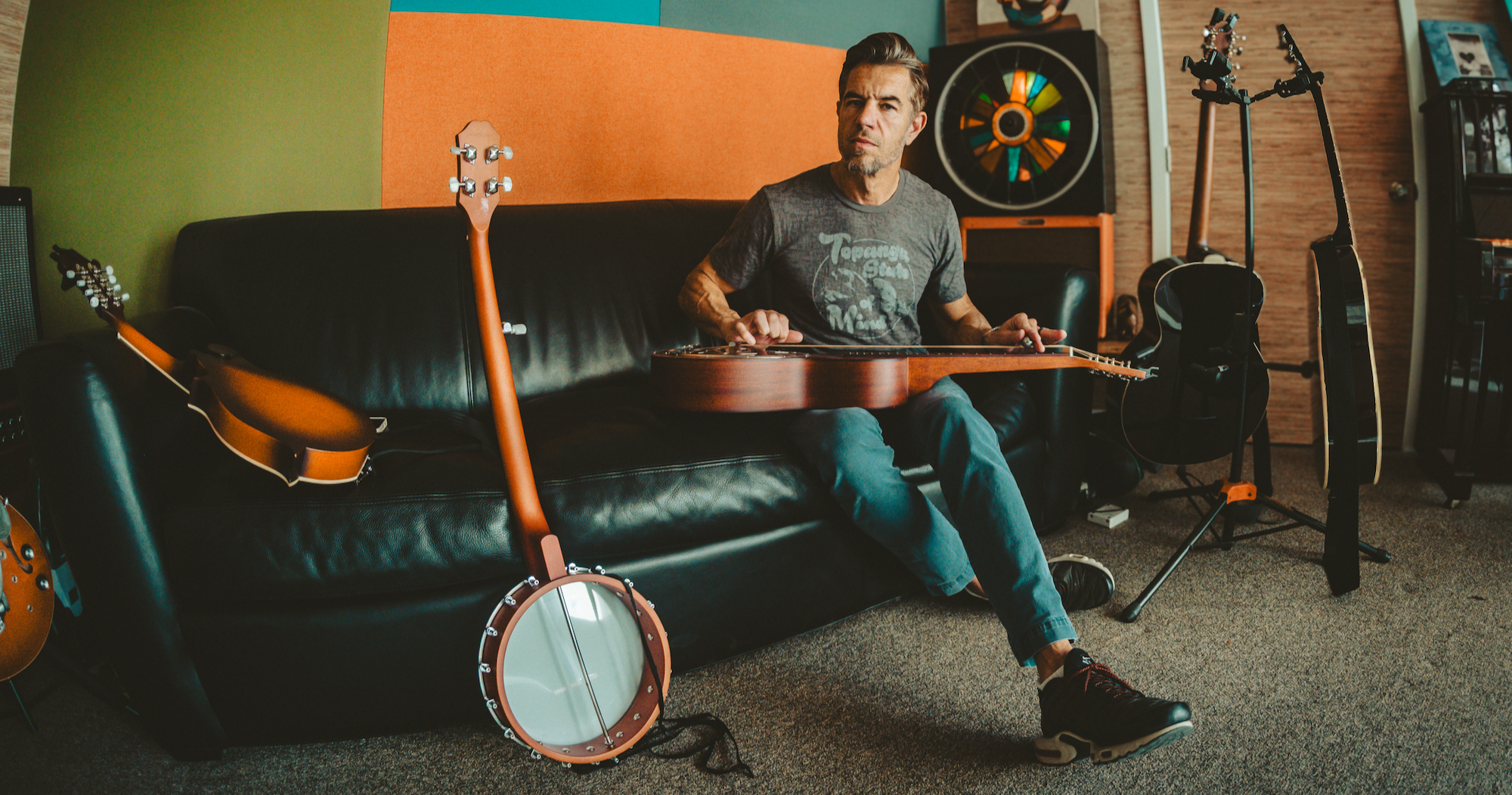
Artist:Frank Evans Hometown: Toronto, Ontario, Canada Latest Album: Debut album is in the works
Which artist has influenced you the most – and how?
It’s always difficult to narrow that question down to one artist, but if it has to be one, I would say Alan O’Bryant of the Nashville Bluegrass Band. His ability to sing and play banjo at the same time, with so much dynamic intensity, still gives me chills whenever I hear it. When I was just starting out on the banjo, my teacher, Chris Coole, gave me a compilation CD of all these different banjo styles. “When I Get Where I’m Goin'” was on there and I must have listened to it on repeat ten thousand times. That band has really influenced how I arrange songs for a full bluegrass outfit. It was a huge honor to have Alan come into the studio to produce The Slocan Ramblers’ latest album. He was such a joy to work with.
What’s your favorite memory from being on stage?
All the guys in The Slocan Ramblers used to joke that if you’re a banjo player, you’re never safe from another banjo player appearing out of nowhere and asking you a very specific question about your instrument. I guarantee I’ve been that person.
A funny example of that happened back in 2015 when we were at MerleFest. They’d asked a few bands to do some early-morning TV interviews to help promote the festival. It was 5 a.m. and the gates were all closed. We had just gone live with the first interview when a guy popped out from behind a bush about 50 yards away and shouted, “Is that a Presto tailpiece on your Style 11?” How he knew what kind of banjo I was playing from that far away, I have no idea – but it was almost impossible to keep my composure after that.
What other art forms – literature, film, dance, painting, etc. – inform your music?
I’ve always been a fan of graphic novels and comic art. Growing up in Toronto, I was lucky to be surrounded by a healthy community of artists and great comic shops – especially my favorite, The Beguiling. Chester Brown, Harvey Pekar, and R. Crumb have always been some of my favorite artists.
Back in eighth grade, we had a year-long culminating project that could be on any topic and I decided to write a graphic novel about Edden Hammons, the old-time fiddler from West Virginia. It was a lot of fun and a ton of work, but I got to sell a few copies at The Beguiling, which was pretty cool. The last time this hobby came up was when The Slocan Ramblers asked me to come up with a cover for their Queen City Jubilee album. It’s a little out there, but I like how it turned out.
Does pineapple really belong on pizza?
Being born in Ontario — the birthplace of the Hawaiian pizza — I firmly believe that pineapple belongs on pizza. It actually took me a long time to come around to it, but a fresh Hawaiian slice from the right place is hard to beat. One of my favourites was a little spot called 2 for 1 Pizza in Kensington Market, Toronto. They’d pull a regular-sized slice from the oven, cut it in half, and hand you “two for one.”
What would a perfect day as an artist and creator look like to you?
I’ve really enjoyed the days I’ve spent in the studio since moving to Nashville. I feel very lucky to have been invited to be part of a number of projects here, ranging from experimental old-time records to working on the soundtrack for King of the Hill. If you’ve ever been unsure about what to practice, spending a day in the studio among amazing musicians will fix that. Recording has a way of putting everything under a microscope, which can sometimes feel crippling, but it’s also extremely rewarding when you notice tangible improvement from the last session.
I’ve also started working on my own solo record, which has been both rewarding and humbling. I plan to start releasing some of the tracks next year.
A few years back, we put out an album called Modern Old-Time Sounds for the Bluegrass and Folksong Jamboree. The title was a nod to that 1960s trend of naming records in a way that tried to cover every possible base. It was tongue-in-cheek, but it still sums up what we do – and what you’ll hear on our latest Lonesome Ace Stringband album, Big Wing. We don’t really play old-time music so much as make a modern old-time sound, and that’s exactly what this playlist is all about
Up here in Canada, we have a wealth of traditional music – distinct regional fiddle styles from coast to coast, songs and ballads that reflect the multicultural makeup of our country, and Indigenous music that predates all of it. Even with this abundance of homegrown music to draw from, many of us have found ourselves charmed by the traditional “old-time” sounds of the American South.
Being far away – geographically and culturally – from the source of the music you love presents some challenges, but it also affords a certain freedom. The first step is always to understand where the music comes from and its history; eventually, though, we all need to find our own voice within it. That’s sometimes easier to do when you’re removed from entrenched scenes and long-established communities.
One way I see this playing out in the old-time music coming from Canada is that writing original tunes and songs seems to come naturally and early in the journey. Whether it’s composing new tunes in the tradition or letting the sounds and themes of traditional music color our lyric writing, we’ve developed a wealth of modern old-time sounds up here – and I’m excited to share a few examples in this playlist. – Chris Coole, Lonesome Ace Stringband
“Maggie At The Door” – Arnie Naiman
Arnie Naiman has been playing old-time music longer than anyone else on this list. When I first met him in the early ’90s, he’d already been playing for around 20 years. Back then, he was mostly on fiddle, but sometimes he’d pull out the banjo at the end of the night and share some of the original tunes he always seemed to be writing. This led to us making a couple of albums together – and to me becoming a lifelong fan. “Maggie at the Door” is a great example of how he can write a banjo tune that also works on the fiddle – not as easy as it sounds. It was written for his dog and it’s probably the most badass-sounding tune ever written for a golden retriever.
“Lonesome Song” – Rube & Rake
Rube & Rake are Josh Sandu and Andrew Laite. Both live in St. John’s, Newfoundland, and are writing beautiful songs while touring hard. We ran into them in the UK last year and were instantly taken by their deft playing and the “low lonesome” sound of their harmony singing. “Lonesome Song” is a moody example of all that.
“Platform Four” – The Slocan Ramblers
The Slocan Ramblers are Canada’s bluegrass band – at least as far as I’m concerned. Although Frank Evans no longer plays full-time with the group, I chose this tune to remind everyone that while he’s mostly known for his three-finger bluegrass playing these days, he’s also on another level as a clawhammer player. There are a few licks on “Platform Four” that he’ll probably take to the grave.
“Narrow Line” – Mama’s Broke
Mama’s Broke are another duo from Eastern Canada (Nova Scotia). We crossed paths with Lisa Maria and Amy Lou Keeler at the Baltimore Old-Time Gathering a few years ago. They put on a riveting show and blew us away with their singing and playing. The arrangements on their records are so imaginative – they capture the spaciousness of their live sound while layering on subtle textures. “Narrow Line” is an excellent example of this and one hell of a song.
“White Horse Plains” – The Red River Ramblers
The Red River Ramblers feature the music of Douglas Richard Sinclair, a Red River Métis musician whose last album, Reverie, showcased original tunes inspired by the Métis fiddle tradition. “White Horse Plains” highlights Douglas’ tuneful guitar playing and answers the question: What would Norman Blake have sounded like if he’d been Métis?
“Saint Elizabeth” – Kaia Kater
Kaia Kater’s 2016 album Nine Pin made a lot of folks take notice of this exceptionally talented songwriter. Kaia is a perfect example of someone who’s really tried to get to the roots of the music; she studied Appalachian traditions at Davis & Elkins College in West Virginia. She’s taken what she learned there and carried it to a creative place that defies genre or categorization. “Saint Elizabeth” is a perfect example.
“New Caledonia” – Pharis & Jason Romero
Pharis & Jason Romero probably need no introduction to anyone here. They’re old friends of ours and we’re big fans of their music. It almost seems remiss to share a song that doesn’t feature their beautiful singing and lyrics, but we’re always enchanted by Jason’s tune writing, backed by Pharis’ always-right-on-the-money guitar playing. “New Caledonia” is one of those tunes that instantly takes you somewhere. It manages to say a lot without a single word.
“The Wheels Won’t Go” – Hannah Shira Naiman
Hannah Shira Naiman comes to the music honestly. She grew up learning fiddle and banjo from her dad, Arnie Naiman, while listening to her mom, Kathy Reid-Naiman, sing the songs of Jean Ritchie, the Georgia Sea Island Singers, and the Delmore Brothers. Hannah has taken it all in and made something uniquely her own. “The Wheels Won’t Go” is the title track of her 2022 album.
“Wellington” – Allison de Groot & Tatiana Hargreaves
Allison de Groot is one of our most treasured banjo exports – clean, hard-driving, and full of tone. Best known these days for her work with Tatiana Hargreaves, she’s also a fine composer. “Wellington” is one of her own tunes, a reminder that she’s as creative as she is technical.
“Mama’s Boy” – Lotus Wight
Lotus Wight (AKA Sam Allison) is best known for his work with Sheesham and Lotus & Son. He’s a beautiful banjo player, a lovely jaw-harpist, a rock-solid bassist, and even plays the contrabass harmoniphoneum. I didn’t know until his last album that he’s also a moving songwriter, somewhere between John Hartford and Leon Redbone. “Mama’s Boy” tells the story of the three men who were fathers to Sam over the course of his life. I can’t remember the last time I heard such an honest and tender song.
“From Silence” – Daniel Koulack
Daniel Koulack hails from Winnipeg, Manitoba, where he’s been making music and teaching banjo for many years. (Allison de Groot is one of his students.) Daniel has always been game to take the clawhammer banjo to new and unexpected places – which might explain “From Silence,” possibly the only clawhammer banjo and saxophone duet in the known universe.
“At the Airport” – Old Man Luedecke
Old Man Luedecke is one of the crown jewels of Canadian singer-songwriters and he also happens to be one hell of a clawhammer banjo player. He’s written most of his songs on the banjo (at least the early ones), which gives them those unmistakable twists and turns – in both phrase and melody. And he has that rare gift for putting a bit of hope into everything he writes, whether the song is sad, funny, or introspective. “At the Airport” is a perfect example.
“May Day” – The Andrew Collins Trio with The Lonesome Ace Stringband
The Andrew Collins Trio (Andrew Collins, James McEleney, Adam Shire) collaborated with us on “May Day,” a tune Andrew and I wrote together many years ago. These three are next-level players who are always pushing the boundaries of what’s possible on their instruments. Known for mixing new acoustic bluegrass with classical and jazz influences, we had fun diving into some weird old-time with them on this track from our new album.
Happy first Friday of November! Let’s kick off a month of new music roundups with our first edition of our usual weekly collection for November.
To begin, banjoist Gena Britt – whom you may know from Sister Sadie – releases her brand new solo album, Streets, Rivers, Dreams & Heartaches today. We’re sharing “What Kind of Memory Will You Be” off the new project to celebrate its launch. It’s one of Britt’s favorite tracks from the album. Her Sister Sadie bandmate, fiddler Deanie Richardson, is also included in our roundup today, joining fellow fiddler Kimber Ludiker (of Della Mae) on a twin fiddle rendition of a rip-roaring original instrumental, “No-See-Um Stomp.” It’ll have you dancing and smacking the hell out of some sandflies, too.
Singer-songwriter and guitarist Sammy Brue previews his upcoming album that pays tribute to one of his creative heroes, Justin Townes Earle, by crafting songs from inhabiting and being inspired by Earle’s journals. Brue wrote “Lonely Mornings” based on snippets of unrecorded lyrics in Earle’s journals, before Earle’s own recording of “Lonely Mornings” was released on ALL IN last year. The tunes stem from the same source, and feel connected, but show the intricate ways a single origin point can grow into two distinct songs. Watch the video for Brue’s “Lonely Mornings” below.
Our Missouri bluegrass pals the HillBenders bring us a brand new music video for their most recent single, a rock and roll and disco-infused string band version of Ola Belle Reed’s classic, “I’ve Endured.” The band leans into their genre-blending tendencies and highlight a couple of new members in the new studio music video, too. Plus, Americana-folk singer-songwriter Brendan Walter launches his new album, Disappearing Days, today and we’re sharing a new music video for his song “Pipe Dream.” Contemplating the realities and trials of building a career in the music industry, “Pipe Dream” and the album together demonstrate Walter’s goals in music are anything but far-fetched.
Make sure to check out a new single from guitarist-writer-archivist Cameron Knowler, as well, who covers Elizabeth Cotten’s “Wilson Rag” in a simple, pared-down arrangement featuring acoustic guitar, pedal steel, and kick drum. Knowler tweaks Cotten’s original arrangement slightly, continuing the age-old tradition of musical transfer and cross-pollination in bluegrass, old-time, and beyond.
It’s quite a nice roundup to get the month rolling, isn’t it? Check it out for yourself below, ’cause You Gotta Hear This.
Gena Britt, “What Kind of Memory Will You Be”
Artist:Gena Britt Hometown: Star, North Carolina Song: “What Kind of Memory Will You Be” Album:Streets, Rivers, Dreams & Heartaches Release Date: November 7, 2025 Label: Mountain Home Music Company
In Their Words: “This song was penned by one of my Sister Sadie bandmates Dani Flowers and co-written by Paul Sikes. She had actually sent it to us several years before she ever joined the band. I remembered it and pulled it back out when I was starting to gather songs for this recording. I asked her if she would mind if I recorded it one weekend that we were on the road and she graciously agreed. We had so much fun working this up and recording it in the studio. It ended up being one of my favorite tunes on the album. And, that Dobro ride at the end of the song by Jeff Partin is out of this world good! I hope everyone enjoys listening as much as we did recording it!” – Gena Britt
Track Credits: Gena Britt – Banjo, lead vocal John Meador – Guitar, harmony vocal Alan Bartram – Acoustic bass, harmony vocal Jason Carter – Fiddle Jonathan Dillon – Mandolin Jeff Partin – Resonator guitar Tony Creasman – Drums, percussion
Sammy Brue, “Lonely Mornings”
Artist:Sammy Brue Hometown: Ogden, Utah Song: “Lonely Mornings” Album:The Journals Release Date: November 12, 2025 (video); January 23, 2026 (album) Label: Bloodshot Records
In Their Words: “The song ‘Lonely Mornings’ was written in collaboration with Justin Townes Earle’s journals. After I wrote this song, New West Records released a new album of Justin’s called ALL IN which contained unreleased recordings and songs of his. I was ecstatic to find a song called ‘Lonely Mornings’; it was like a sign. Even though our songs didn’t sound similar, they are connected through a couple lines at the end of his last verse and a similar cadence on the tag line. I found the early rendition of his lyrics and they seemed to be almost a decade old, which goes to show how long Justin really carved a song like it was made of marble. I found inspiration and a whole song in just one verse of his true version of ‘Lonely Mornings’ before I even knew it existed. To me, this song holds the mundane scenes that go with living the artist lifestyle. It also holds a sentiment that we both share, which is the love of spending a morning alone… a writer’s heaven.” – Sammy Brue
The HillBenders, “Tradical Volume 1: I’ve Endured”
In Their Words: “We’ve always leaned into ‘bluegrass meets rock ’n’ roll,’ a tag our late manager Louis Myers, co-founder of SXSW, gave us early on. So when we started talking about a new recording project, we didn’t feel the need to change course. Like I tell people, we blame our love for traditional roots music and classic rock on our parents’ vinyl collections. There are so many great legacies to pull from in that wax.
“Instead of putting out a standard album or EP, we decided to start a new series called Tradical, where we let those two loves live together. The first release is Tradical Volume 1: I’ve Endured. For the traditional side we went to Appalachian songwriter Ola Belle Reed’s classic ‘I’ve Endured’ and gave it a rock almost disco groove.
“This track also lets you hear our newest bandmates and singer-songwriters, Andrew Morris (banjo/mandolin) and Jody Bilyeu (keys/mandolin). Jody takes the lead vocal on this first Tradical release. This song is our nod to the rocky road that is show business and to the people who keep going against the odds simply because they love music and performing.” – Jimmy Rea
Track Credits: Jim Rea – Guitar, harmony vocal Gary Rea – Bass, harmony vocal Jody Bilyeu – Mandolin, lead vocal Andrew Morris – Banjo John Anderson – Drums
Cameron Knowler, “Wilson Rag”
Artist:Cameron Knowler Hometown: Yuma, Arizona Song: “Wilson Rag” Album:East of the Gilas (Lagniappe Session) Release Date: November 14, 2025 (EP) Label: Castle Dome Records
In Their Words: “As far as anyone knows, Elizabeth Cotten composed ‘Wilson Rag’ and recorded it a few times on various projects. Though her performances often include a third part which changes slightly from take to take, I decided to focus on the first two parts, adding a bit of reharmonization to make the tune sing with my buddy Will Ellis’ pedal steel playing. Ellis also engineered this track at his home studio in East Nashville, where varied bird songs quietly spilled through a large window. I’m the one playing the ratty Lyon & Healy kick drum from the nineteen teens or twenties, which was performed live with an early-1900s Antonio Grauso acoustic guitar, tuned quite low. I’m also using one of Guy Clark’s old thumbpicks. This tune sure feels great under the fingers and is one that I’ve played for quite some time.” – Cameron Knowler
Artist:Deanie Richardson & Kimber Ludiker Song: “No-See-Um Stomp” Release Date: November 7, 2025 Label: Mountain Home Music Company
In Their Words: “I wrote ‘No-See-Um Stomp’ after meeting a flock of no-see-ums for the first time on the East Coast. As a PNW girl, I was mortified by their existence and the one billion bites I suffered. This tune came out of me very quickly. The first part is the swarm and the second part… human agony. I recorded it once with my band Della Mae and, although there’s an amazing ‘twin guitar’ moment with Avril Smith and Molly Tuttle, I always heard this tune as a twin fiddle tune. As you know, you never encounter just one of these bugs, so I’m very excited to have a twin fiddle version of this with Deanie Richardson. We took a mild ‘controlled chaos’ approach to this, which fits the tune perfectly. Instead of linear twin fiddle parts, we depart here and there, swarming around each other just like the little critters this tune was written for.” – Kimber Ludiker
Artist:Brendan Walter Hometown: Dallas, Texas Album:Disappearing Days Song: “Pipe Dream” Release Date: November 7, 2025 Label: RECORDS/Sony Music Nashville
In Their Words: “I started writing this song while I was still in college, when I was figuring out if I wanted to pursue my majors or follow my lifelong dream of being a musician. At first, music felt like a pipe dream due to the fact that I knew nothing about the industry or how to get started. During college and for about a year after graduating, I bartended full-time to survive while nurturing this dream to make music my full-time gig. Those long nights definitely lit a fire under me to fully pursue music. I had no idea how I was going to accomplish my dreams in this wildly new world, but I knew I wanted it more than anything else and I wasn’t going to stop until I could make it a reality.
“Now, having a couple years in the industry under my belt, I still feel like I’m the new kid on the block, but I know a lot of other artists have felt that way so I thought it was fitting to show a glimpse of my struggles and aspirations along the way. I also worked in a strum pattern inspired by Mumford & Sons, because their music got me into playing guitar and writing songs. I had the opportunity to play with session musicians for the first time when making my debut album and, on this song specifically, I got to play with the very talented Kurt Ozan. Hope everyone enjoys this one!” – Brendan Walter
Photo Credit: Gena Britt by Tom Turk; Sammy Brue by Joshua Black Wilkins.
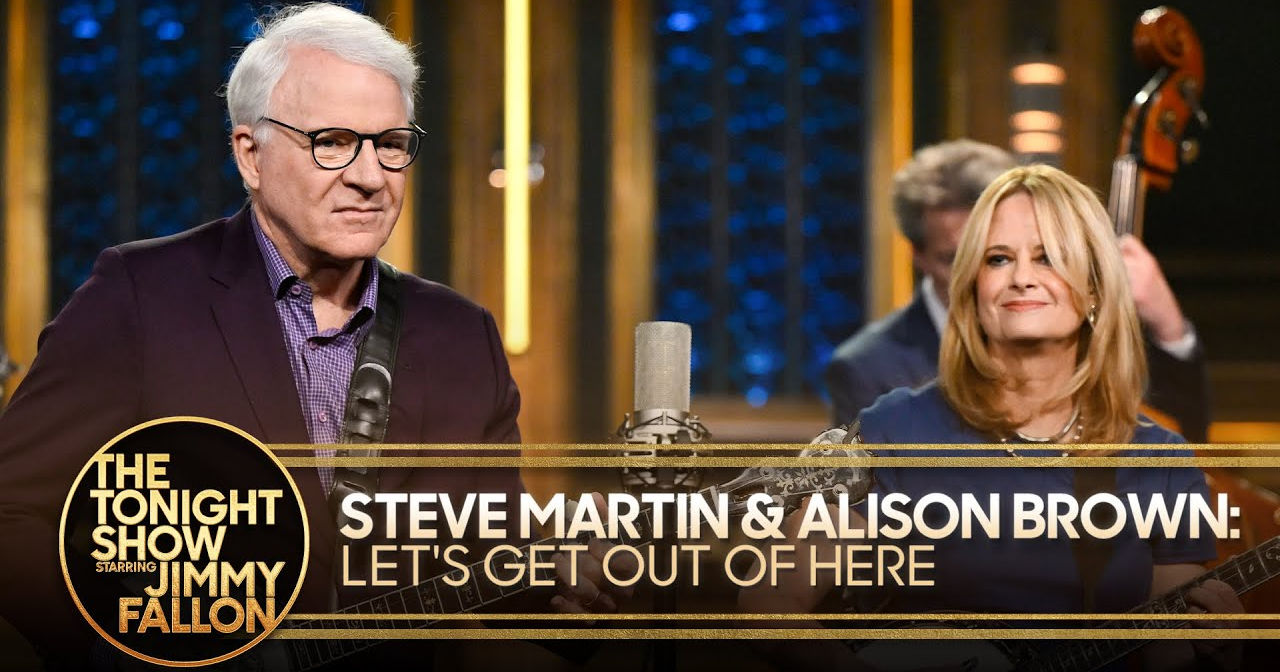
Last week, Steve Martin & Alison Brown brought a star-studded bluegrass band to The Tonight Show Starring Jimmy Fallon to celebrate their brand new duo album, Safe, Sensible and Sane. Released via Brown’s Compass Records on October 17, the album showcases a mighty roster of pickers and special guests as well a packed slate of original tunes and songs co-written by Martin and Brown. For their Tonight Show appearance, they burn through the LP’s closing track, “Let’s Get Out of Here,” a perfect selection to close out the late-night television show.
On the album, Martin’s dancing clawhammer banjo and Brown’s confident three-finger style on the number are bolstered by Sam Bush, Trey Hensley, Stuart Duncan, and Todd Phillips. But for their live TV appearance, they tap an equally astounding group of players, bringing along Bronwyn Keith-Hynes (fiddle), Sierra Hull (mandolin), Michael Daves (guitar), and Brown’s husband and business partner Garry West (bass). The tune demonstrates the special – and often tricky – stylistic dialog Martin and Brown accomplish with ease, blending frailing old-time with Scruggs-style bluegrass. The melody is especially suited to both approaches, danceable and driving at the same time. It’s something of a hallmark of the pair’s work together across the years, and especially this new recording.
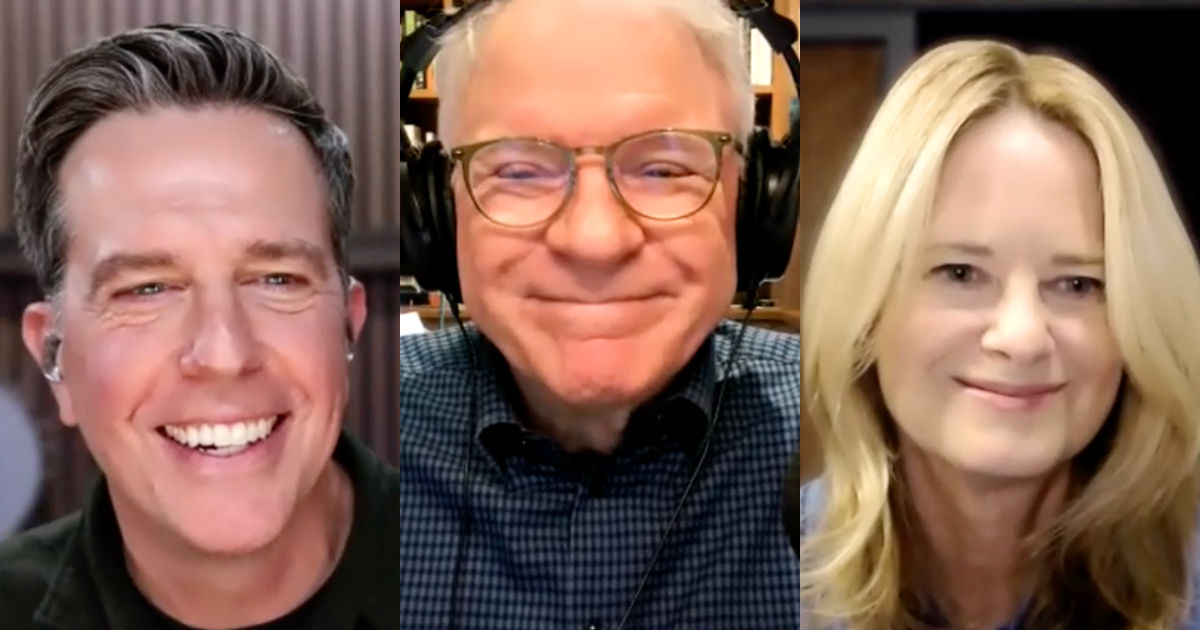
As viewers can attest watching their performance of “Let’s Get Out of Here,” the music of Safe, Sensible and Sane is excellent, engaging, hilarious, and heartfelt. All qualities that have attributed to its debut last week at No. 1 on Billboard‘s Bluegrass Album Chart. Need more of this duo? BGS co-founder, actor, comedian, and banjoist Ed Helms, recently had a lovely in-depth chat with both Martin and Brown about the album, three renowned banjo stylists in conversation. Read that feature interview here.
They always say, “Don’t meet your heroes,” but in the bluegrass world, I’ve mostly found that not to be true. Take Steve Martin & Alison Brown, for instance – two of the most recognizable and veritable banjo players alive today. Earlier this year, I was fortunate enough to join them (along with Rhiannon Giddens and a formidable lineup of bluegrass, folk, and old-time musicians) onstage at the legendary Hollywood Bowl. It was a night I’ll never forget.
And earlier this month, I had the pleasure of rejoining Steve and Alison in conversation about their new collaborative project, Safe, Sensible and Sane, (out now via Compass Records). It’s a beautiful album filled with original songs, guest appearances from musical friends, and a whole lot of banjos.
Hope you enjoy our conversation!
Ed Helms: First of all, let me just say huge congratulations. An album like this is such a big undertaking and this is phenomenal. I’ve been listening to it basically on a loop for the last couple of days. And my family, my kids are loving it.
Steve Martin: Thanks. Thank you. It’s not easy to rope the family in.
I know! My four- and seven-year-old are extremely critical of anything banjo-related. You won them over.
SM: Awesome.
Right off the bat, what jumps out at me about this album is the title – which immediately strikes me as a kind of direct counterbalance or maybe even a rebuke of these unsafe, nonsensical, and totally insane times that we’re living in. I do think that the album title sets such a warm, funny, and welcoming tone that the music then totally delivers on. Am I getting close?
SM: You’re so far. [All laugh]
Tell me what it is. Walk me through.
SM: I’m almost embarrassed to tell you. Alison, should we confess?
Alison Brown: You told us never to tell, but it’s up to you. [Laughter]
SM: When Alison and I were writing songs together, I had come across a book published in the 1930s on how to improve your letter writing. 80 years old, 90 years old, and it had a list of phrases you can use in your letter writing or business letter writing to brighten up your letters. It said things that are formal phrases, like “thank you for the frank statement of your affairs.” And it went on, things like that.
One of them was “safe, sensible and sane.” I just listed these suggestions and I wrote Alison and said, “I think there’s song lyrics in here somewhere.” Alison organized it, so they kind of rhyme, then Alison wrote this tune for it, and Jason Mraz made sense of it. Because the lyrics are actually nonsense, we have noted that the more we listen to it they actually start to make sense in some way.
That is wild. That is such a weirdly specific rabbit hole of where that came from.
Is the banjo itself something that feels safe, sensible, and sane to each of you in some way? Is it a place of home?
AB: For sure. I think so, certainly speaking for myself. It’s definitely been an anchor for me in my life and I noticed, Steve, watching your documentary, how many scenes the banjo was in the background and realizing that it’s been trailing you your whole life, too.
SM: Yeah. I find you’re right, in the sense that it’s not a “dangerous” instrument like the guitar, sure. Which can be naughty. The banjo is safe, sensible, and sane – but the way Alison plays and the way these great banjo [players] turn it into a kind of extraordinary jazz instrument. It’s too bad that most people probably have an idea of what the banjo sounds like and they’re way off.
I think what you’re saying is that the banjo can be edgy.
AB: it can be edgy, but it can be mainstream, palatable at the same time.
SM: Edgy in the sense of avant-garde, yes. There are some. Didn’t you write a 12-tone banjo song, Alison?
AB: I did. I had a chance to produce and play on a track called “Old Atonal Music” and I actually wrote a 12-tone row banjo solo, which–
Oh my gosh.
AB: Which was then analyzed by the classical community. And fortunately it really was a 12-tone row, so that’s about as edgy as you get.
That’s getting out there.
AB: Boy, are we.
This just got so nerdy so fast.
AB: It sure did. I knew that was gonna happen.
The last time I saw you guys, we had the incredible privilege of joining Rhiannon Giddens at her show at the Hollywood Bowl, and I remember showing up to rehearsal for that and you guys were working on what I thought was just “Cluck Old Hen.” I’m watching you and listening and thinking, “What are these lyrics? What is this? This is so funny.”
Of course, now I know that’s “New Cluck Old Hen,” which is on the album. But what I observed that day in the rehearsal stages was just the rapport that you guys share, which seems so easy and effortless, light, fun, and playful – and well earned. It makes me very curious about the origin of your friendship and was it music immediately? Where did you first connect and what was it you saw in each other?
SM: Go, Alison.
AB: Okay, we were on a Caribbean island at the same time by chance, really just by luck. It was a place that we both vacation regularly with our families and I knew we were gonna be down there at the same time that Steve was gonna be down there. We were gonna overlap for a couple of days and Steve suggested we get together for lunch. Of course, banjos had to be involved, so we had a really wonderful lunch and then sat and spent the afternoon playing banjo together, just sonically clicked really easily.
Because Steve and I both really love finding beautiful melodies in the instrument, we’re both in the same pursuit when we’re playing and composing music. Writing this music, it’s been surprising to me how easy it’s been. It is almost like the tunes were just waiting to be written and we just had to pull them outta the sky.
How long ago was that first connection?
AB: I would say maybe about 10 years ago.
Then was it right away, “Let’s start collaborating!” Or did you guys circle back to each other?
AB: It took me a little while to get up the nerve to see if Steve actually would co-write some music together. [Laughs] I got a chance to do a few shows with Steve and Marty [Short] when the Steep Canyon rangers weren’t able to make shows, so we got a chance to jam some more backstage and play some more clawhammer banjo and three-finger banjo, which is my favorite combination. Like chocolate and peanut butter. Clawhammer and three-finger.
I totally agree. It’s so beautiful. And there are a lot of great players that do both, but usually I think most people assume that a song is in an old-time style or in a sort of three-finger style. So to hear [you] two just beautifully mixed together, you guys are really sharing a language that transcends the style of playing. You’re playing very differently, but there is a fluidness.
I think the song “Evening Star,” which might be my favorite on the album, is such a great example of that, starting out with your three-finger, beautiful lilting rolls and melodic runs. Then Steve comes in picking up the same tune in a [clawhammer] style that feels like a really even, woven-in feel. It doesn’t change the feeling of the song in any way. I think that’s a testament to the connection that you guys share musically.
SM: Our roots and love of the banjo are very similar in the sense of Appalachian sound, the Celtic sound, the modal mountain sound. That’s what gets me. We both like to find those melodies that reside within those tunings and history.
And Alison, as I recall, you sent me this beautiful part and I contributed another part and then Alison found– You can tell the story. You found yourself in Dublin?
AB: Yeah, actually that one, I knew that we were gonna be in Glasgow. I dunno if you have ever become acquainted with the music of John McSherry, Mike McGoldrick, and John Doyle, they have a fabulous trio. They’re completely badass Irish players, Celtic players and I knew that it would sound great to play this tune with them. John Doyle in particular, when he plays rhythm guitar, it’s like riding a big wave. They’re also heroes.
SM: They’re heroes of mine, too.
AB: It’s funny, though, because the genesis of that tune was really Steve telling me about a song he wrote called “Canadian Girl” where he was playing clawhammer in 3/4 time. I’d never even thought about the clawhammer playing in 3/4. But it’s so beautiful. Then I tried to write a melody that could work for both.
I think it’s a real testament to Steve’s banjo playing, too – like you were saying, a lot of banjo players will choose a lane. They’re either three-finger or they’re clawhammer. But Steve’s really unique that he plays both. I think that’s part of the reason why our two banjos go so well together, ’cause he completely understands the three-finger thing. But when he’s playing clawhammer, he brings some of that sensibility to it.
SM: You can also play the modality that you find in clawhammer on three-finger. I remember a song I found on a record recorded by Dick Weissman called “Trail Ridge Road” and it was played with picks, but it had this unique– I just call it modality. I’m sorry to keep using that word, but it had this minor sound that just kept rolling. I always loved it. I think that sound stuck with me forever. I even wrote him once to tell him that.
I think your song, “The Crow,” falls in that category, right?
SM: It is in double C. [It has] that drone sound, ’cause you have two strings tuned to the same note. Yeah, that does have a bit of that in there.
That was one of my favorite songs to learn. I found a transcription in a Banjo Newsletter and I was able to work it up and I love it. Another one of my all-time favorite tunes.
SM: Alison told me that banjo players like to play my songs because they’re easy. [All laugh]
How do you guys collaborate? Walk me through that process. Are you sending each other tracks and just saying, “Hey, here’s an idea.” A little melody or a catch or a hook, and then you’re building on it together? Or do you try to make sure you’re in the same space, just steeping the tea together?
SM: All of the above. Garry [West] and Alison flew out to California, where we spent like three, four days there just writing and recording. We got ideas, initial ideas for songs there. Then we started communicating by text and sending song ideas. It’s the new way to write things. It’s everything.
But we did meet and get that sound of two people together. You’re listening to the other player.
AB: That’s the thing, when I get a chance to sit around with Steve and just play, it always gives me more ideas for where we can take the banjo. Or gives me a new way of thinking about what he’s doing that maybe you could expand on. That’s really exciting. But technology’s totally been our friend, so we’ve done a lot of this by just swapping ideas back and forth and it’s amazing how efficiently you can do that.
How frustrating is it that Zoom, the latency of these video conferences, you can’t quite jam.
SM: You cannot play over the internet! You can’t play, you gotta bounce it back and forth.
That’s [why] I flew down to Nashville to record with Vince Gill, so it’d all be in the same room.
You mention flying down to Nashville to work with Vince and others. This album is so much more than just a double banjo album. It’s this grand collaboration. So many special guests, close friends of yours like Tim O’Brien, Aoife O’Donovan, Sarah Jarosz, Vince Gill, Jason Mraz, Jackson Browne, Jeff Hanna, the Indigo Girls – I’m from Georgia, so that’s a huge one for me. I love, love, love the Indigo Girls.
You two obviously have such a deep well of relationships and friendships throughout music. How did you decide who to rope in on these particular songs? What was that decision-making process like?
SM: I’ve said this before, I’m a talk singer. I sing like Robert Preston, The Music Man. I know Alison sings harmony, but she’s never presented herself as a lead singer, as I know. So we’re forced to find someone to sing these songs. A good example is the song “Michael,” which was written without anybody in mind. The lyrics to that are imperfect in the best sense, in a good sense. Sometimes they don’t quite scan out. Sometimes the rhyme is soft.
Alison was at an event with Aoife O’Donovan and said, “Hey, would you mind singing?” And [Aoife] just understood the song so perfectly. You just go, “Oh, that’s it!” There’s no need to look anywhere. She just really knew how to sing it. You’re looking for people who know how to sing these songs. Like Jason Mraz instantly understood “Safe, Sensible and Sane.” He knew that it was in some way humorous, that none of us could figure out why.
Both of those songs have a little international flair to them. “Michael” almost has a samba or Brazilian feel? And then “Statement Of Your Affairs” with Jason Mraz, is it like reggae?
SM: Is it reggae?
There’s something Caribbean there.
AB: It’s definitely Caribbean, yeah.
Really everything sprang from the banjo. The melody for “Michael,” I just wrote that chorus melody as a banjo tune and really could not fathom how you could do anything other than play a newgrass banjo tune with that melody. It was amazing that Steve could set words to it and then he developed this whole story. It was really fabulous.
SM: What I liked is Alison sent me the tune, I listened to it, and it inspired me to a situation, an atmosphere. And she said, “We can change those lines, some of those melodic lines, and shorten ’em.” I say no. That’s what you want, that unexpected line that extends too long or it forces the words to do something tricky. I really like that challenge.
I love your closing number, “Let’s Get Out of Here” [with] Sam Bush, who counts that one in. I’ve heard it said often that Sam Bush is the best drummer in bluegrass. He sets such a great, driving tempo and rhythm.
SM: I couldn’t play without the mandolin! I’d be all over the place, rhythmically.
AB: No, that’s true. There is nothing like Sam’s chop. When Stuart Duncan and I were teenagers, we were presidents of the “Sam Bush Chop Fan Club.” A super nerdy thing.
This is one for both of you. You’re both multifaceted, creative people. You move so effortlessly between different creative disciplines, collaborative contexts, different bands, different musicians, different media and art forms. Obviously, Steve with film and comedy and writing and performing. You’re also a passionate art collector. Alison, you have tremendous business acumen running Compass Records for so long with your husband.
This is a question as a fellow sort of striving, creative person: How do you balance all of it? I always wonder when I see people like you, is this something that you set aside and approach each discipline as a chunk? Or do you feel more like these are constantly interwoven? Is there a seamless overlap of your various disciplines and ideas and you’re just weaving in and out? Or is it more, “I do this for this time” and now, “It’s comedy time. I’m gonna work on this.” How do you break it down?
SM: Go ahead, Alison. I know my answer.
AB: Okay. So mine probably is less interesting, ’cause mine is kinda like that right brain versus left brain thing. I find that sometimes I’ll be doing just banjo for a stretch of time or music or producing a record or getting to go out and play shows. Other times, I’ll be behind the desk doing spreadsheets and financials – that kind of thing. In some kind of bizarre way, the two things inform each other.
I think for me, I spent so many years in school and got an MBA studying finance. I was an investment banker for a while, so there’s part of me that really enjoys doing all that and feels a responsibility to my mom and dad, too, that I do some of that stuff on some kind of regular basis. I have to look analytically at the music business. I think it helps me when I go in the studio to think about positioning a record – whether I’m producing or just writing my own stuff – positioning it for success, because I understand the challenges of the business landscape in a way that if I was just a banjo player, I wouldn’t understand.
Then when I get to go out and play, it’s like a complete relief just to be out and let your mind be a little bit more free. I know you can be structured and disciplined about creating, but it’s a completely different mindset to sit and look at financials than it is to have enough of an expansive view in your mind to be creative for a moment. But, somehow, the two things work together.
SM: I’ll give my answer. Most people have a job. They maybe, let’s say, go to work at nine and they come home at six – or sometimes they work [until] maybe seven or eight. And if they’re gonna do any extracurricular thing, like practice the banjo, they have to do it at night or on the weekend.
But I just wake up. I don’t have a job, so I can have breakfast and have an idea and go pick up my banjo and go play it. There’s a lot of time where you’re just really doing nothing, because you don’t have a job.
I think it really is that concept they used to apply to basketball players, “being in the zone.” Where you don’t have a sense of time. It’s just there and it’s either working or not. And it’s fun, especially at this age where my creative mind is more agile, where I’m not afraid to go other places or think of things. Ideas seem to come without as much angst, because it doesn’t have to be a success. It just has to be fun.
I know Alison hates hearing that. [All laugh]
AB: No, actually. I’m glad to hear that!
SM: The creative part of my life has become really fun. Whether I’m working with Alison or with Marty or live stage shows… or just dinners! Dinners will be fun.
That’s really beautiful and really inspiring and I’m really grateful to both of you for opening up a little bit and talking me through this. Congrats! This is a fantastic album. It’s a really wide pastiche of different ideas and feelings and vibes, and it all works together. So congrats and thank you.
SM: Thank you, Ed. It’s always great to talk with you. And you’re a great player, too. Don’t forget that!
Thanks, guys.
AB: I’m thinking what we need to do is a triple banjo thing!
SM: I’m up for it! We’ll figure it out.
AB: We’ll figure it out.
SM: Fifteen banjo strings. Can’t get enough. You can never have too many.
This website uses cookies to improve your experience. We'll assume you're ok with this, but you can opt-out if you wish.AcceptRejectRead More
Privacy & Cookies Policy
Privacy Overview
This website uses cookies to improve your experience while you navigate through the website. Out of these, the cookies that are categorized as necessary are stored on your browser as they are essential for the working of basic functionalities of the website. We also use third-party cookies that help us analyze and understand how you use this website. These cookies will be stored in your browser only with your consent. You also have the option to opt-out of these cookies. But opting out of some of these cookies may affect your browsing experience.
Necessary cookies are absolutely essential for the website to function properly. This category only includes cookies that ensures basic functionalities and security features of the website. These cookies do not store any personal information.
Any cookies that may not be particularly necessary for the website to function and is used specifically to collect user personal data via analytics, ads, other embedded contents are termed as non-necessary cookies. It is mandatory to procure user consent prior to running these cookies on your website.