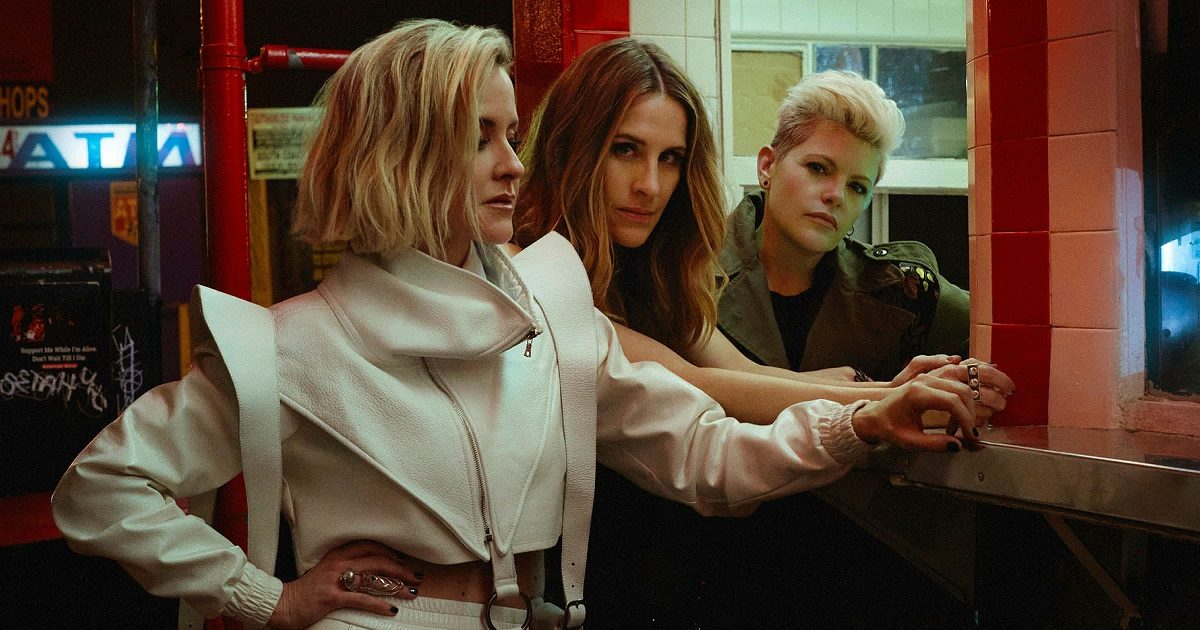
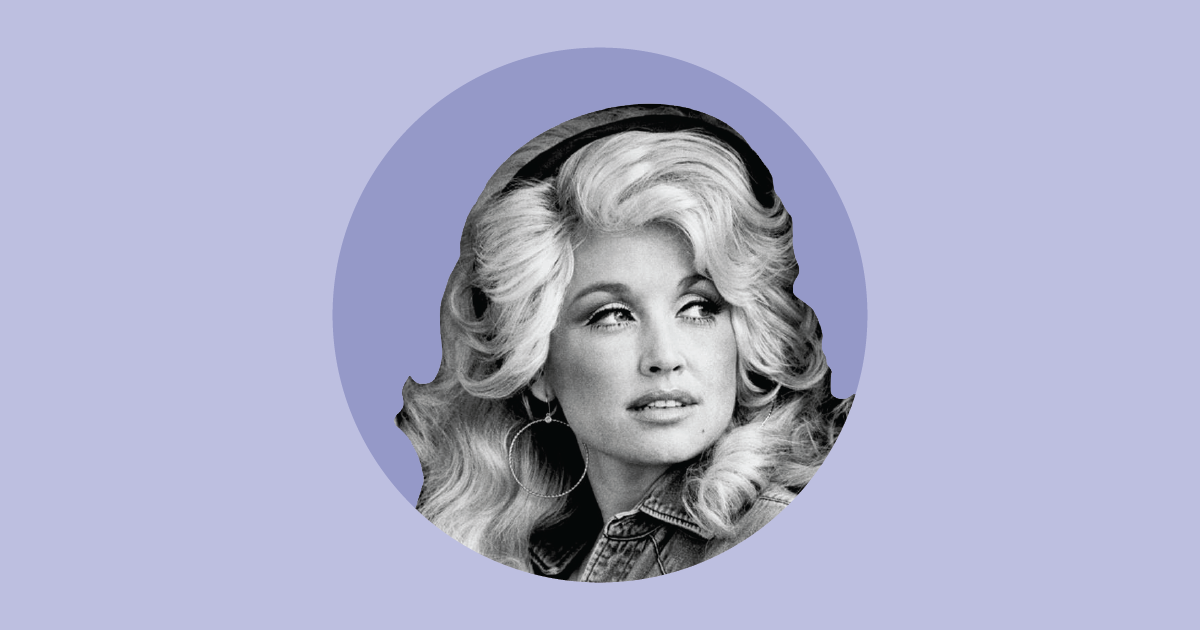
With what many have called a comeback album, the Chicks sported new experiences, new stories, and a new name to top it all off. Their 2020 album Gaslighter is a unique one in the decorated discography of the group formerly known as the Dixie Chicks. In an interview for Today, The Chicks described how they deviated from their normal process of writing all the music prior to arriving at the studio to record the album, and insist they have no regrets about the past controversy that prompted their perceived exit from mainstream country.
For Gaslighter, which is their first new album since 2006, the Chicks collaborated with producer Jack Antonoff to craft the songs in the studio. The result is a fresh sound that retains the characteristic directness for which The Chicks are well-known. The album doesn’t shy away from dealing with heavy themes like family, social justice, and divorce. For example, its title track was written about lead singer Natalie Maines’ bitter divorce, an experience that no doubt was also a primary inspiration for “Sleep at Night.” Take a look at their Today interview with Carson Daly below.
Billy Strings completed a nine-day virtual tour of Nashville venues this year that let fans all around the world get up close and personal for full-production live shows. The Streaming Strings 2020 Tour saw the band in five Music City stages alongside guests such as Marcus King, Anders Beck, and Bryan Sutton, through venues like Brooklyn Bowl, Station Inn, City Winery, Exit/In, and 3rd & Lindsley, with all but the latter hosting two consecutive nights. Strings’ calling card is the electrifying live show that he and his band put on, and the Streaming Strings tour was no exception. The tour also offered authentic poster prints, adding a welcome touch of normalcy to a concert series made for a socially-distanced life.
Not only did the event bring live music to fans, the tour donated resources to select charities with a portion of proceeds from the nine shows. The ACLU, Backline, and the NAACP Legal Defense and Educational Funds were beneficiaries of the award-winning guitarist’s uncompromising dedication to live performance. (Learn more: read our BGS interview with Billy Strings.) To raise awareness for another entity, the National Independent Venue Association (NIVA), Billy Strings featured “Taking Water” from one night of the tour at the World Famous Station Inn on Jimmy Kimmel Live!, hosted on this night by Joel McHale. Get your helping of live bluegrass, watch the clip below.
Sierra Hull, an accomplished instrumentalist, vocalist, and songwriter who also co-hosted the IBMA Awards this year, notched another career highlight this fall. In her first fully animated music video for “Beautifully Out of Place” she offers a refreshed meaning to the song, now set to the story of a girl walking through her day and noticing beauty in many modest places. Be it a flower growing through the sidewalk or silhouettes forming in the clouds, the main character finds herself more open to the lyrical message of “Beautifully Out of Place.”
Hull’s latest album, 25 Trips, features several heavy-hitting songs such as this, featuring positive themes, skillful singing, and weightless picking. In an interview with American Songwriter, Hull echoes this song’s sentiment, saying that the message holds true in the world even now; during an unprecedented time of uncertainty and unrest, there is still abundant beauty to behold. By the way, her song “Ceiling to the Floor” (also from 25 Trips) is up for a Grammy Award in the category of Best American Roots Song. Watch “Beautifully Out of Place” below.
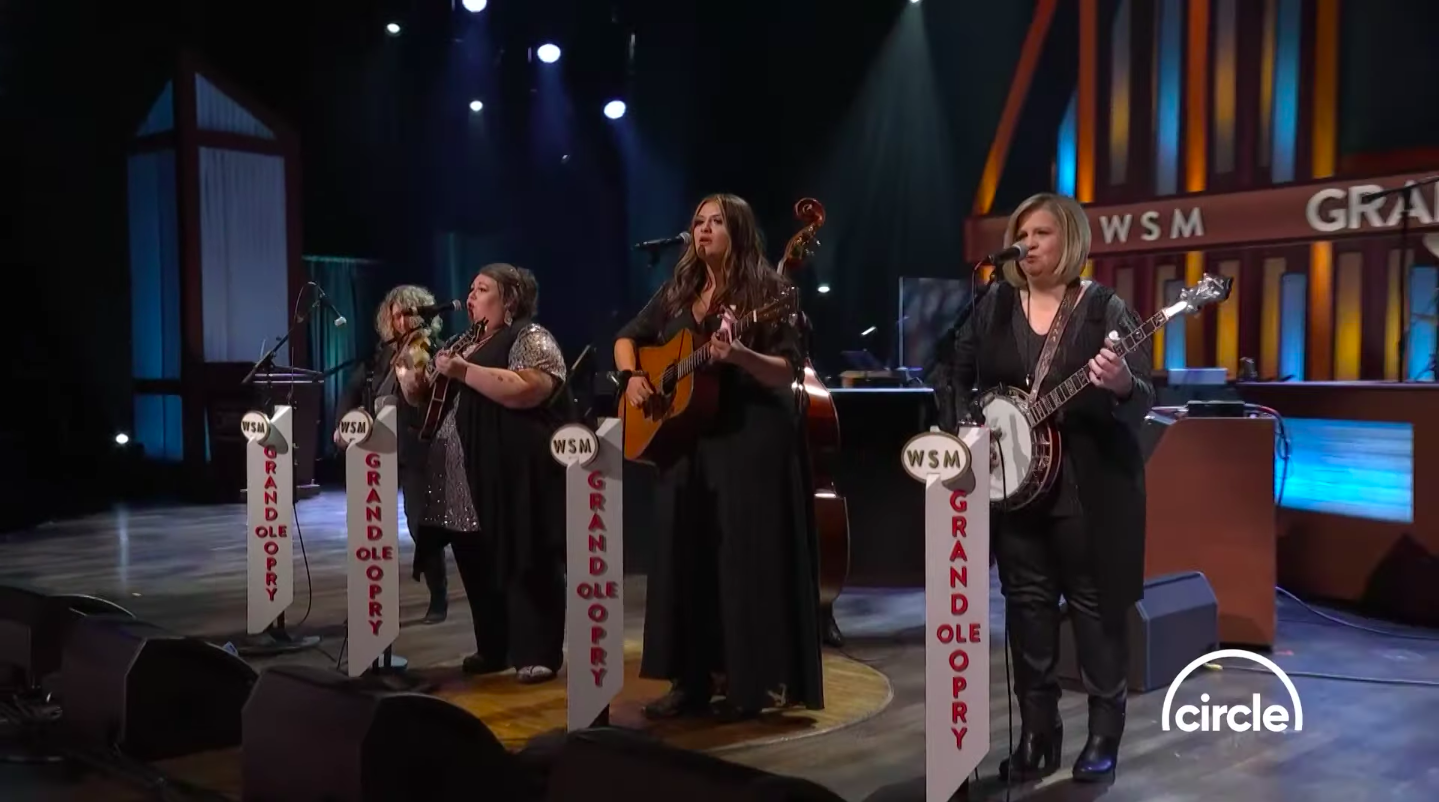
Sister Sadie, our BGS Artist of the Month in December, got a strong start to closing out 2020. The trailblazing all-female powerhouse performed on the Grand Ole Opry on December 5 and left the audience in ashes after performing a scorching rendition of “Since I Laid My Burden Down.” Folks and fans are wising up to the group since their recent successes at both the IBMA Awards and the Grammys, winning three awards in the last two years from the IBMA and earning their first Grammy nomination in 2018.
For those who might still be new to the band, check out our Artist of the Month interview to gain a deeper appreciation for the incredible music that has arisen so naturally from the tight bonds of friendship and out of the hard-worked hands of these all-stars in the acoustic community. Tina Adair sings and picks mean mandolin over the roaring undercurrent of Gena Britt’s rolling banjo and Deanie Richardson’s screaming fiddle. They’re joined in this performance by singer-guitarist Jaelee Roberts and bassist Hasee Ciaccio. From the famed Opry stage, watch the reigning IBMA Entertainers of the Year tear up some old-fashioned bluegrass.
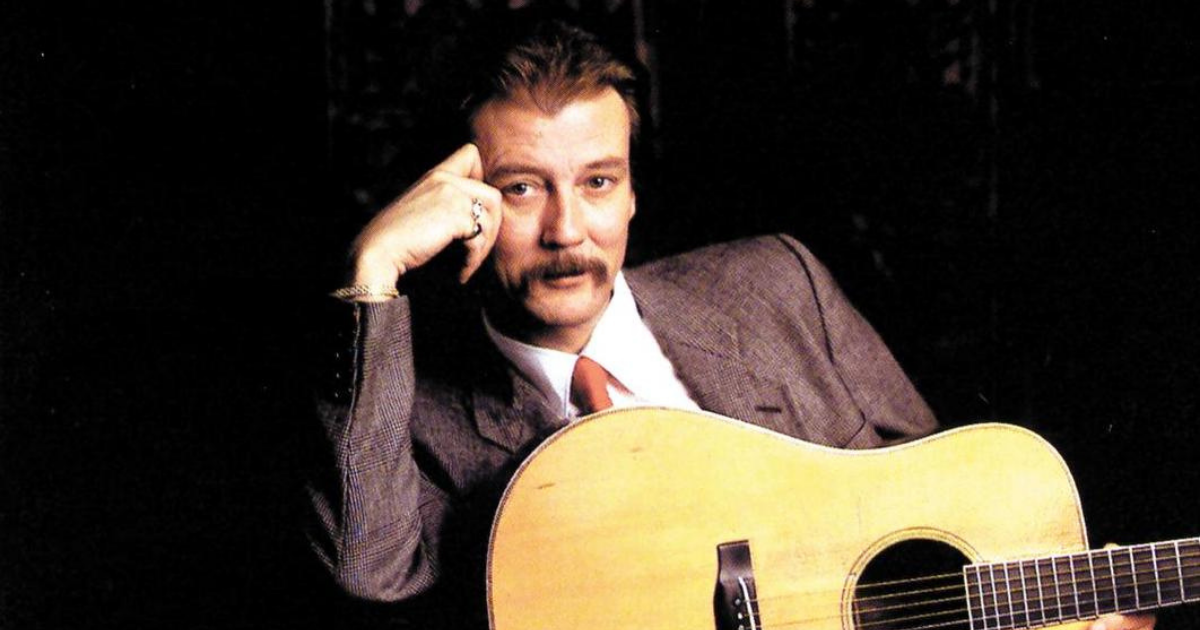
Tony Rice, revolutionary guitar player and Bluegrass Hall-of-Famer, died Friday, December 25 at the age of 69. His passing was confirmed and memorialized by friend, collaborator, and fellow Hall-of-Famer Ricky Skaggs, per the request of Tony’s family. He was a true icon and will be remembered and revered by everyone in the community. Read Ricky’s full post below:
“Sometime during Christmas morning while making his coffee, our dear friend and guitar hero Tony Rice passed from this life and made his swift journey to his heavenly home. It’s still quite a shock to the whole family. After talking with Tony’s wife Pam and their daughter India, they asked if I would make a statement on their behalf and give them some privacy to process during this difficult time. I was honored to help out. Tony is also survived by his brothers Wyatt and Ronnie, and all of you who loved his music and those who will continue to share it with others.
Tony Rice was the single most influential acoustic guitar player in the last 50 years. Many if not all of the Bluegrass guitar players of today would say that they cut their teeth on Tony Rice’s music. He loved hearing the next generation players play his licks. I think that’s where he got most of his joy as a player. With many IBMA Awards and a Grammy Award, Tony was a gracious recipient of the International Bluegrass Music Award’s highest honor as an inductee into their Hall Of Fame in 2013.
Not only was Tony a brilliant guitar player but he was also one of the most stylistic lead vocalist in Bluegrass music history. When I joined the group The New South in 1974, I knew I’d found a singing soul mate with Tony. Our voices blended like brothers. In 1980 we recorded the album “Skaggs And Rice” for Sugar Hill as a tribute to our duet hero’s with just the simplicity of guitar, mandolin, and our voices. All these years later people tell me how much the purity of that record still touches their heart. That’s who Tony was, a singer from the heart.
I will miss him as I’m sure all of you will. But where Tony is right now, he’s not missing us. He’s in the place that God has prepared for those who love Him and receive Him. Rest In Peace dear brother. Thank you for your great talent and the music that will continue to inspire more and more generations to come.”
Not many instruments can match the fiddle for expressive, emotive power, but a few special players have been able to conjure a similar magnetism from the steel guitar. This year, modern dobro icon and member of the Infamous Stringdusters Andy Hall released 12 Bluegrass Classics for Resophonic Guitar, interpreting songs that are pillars in the traditionalist songbook. Hall, a player associated more closely with progressive styles than conventional ones, lends his signature shred to the standards of the bluegrass repertoire.
Upon announcing the project, he stated, “I’ve always striven to push the envelope as a player, but never had the chance to put my stamp on some of the formative tunes I’ve always played at jam sessions. I chose songs that were familiar to me. These are tunes that I’ve been playing for years, and that have shaped my playing.” He told BGS all about it in an interview this fall, too. As 2020 comes to a close, we hope you enjoy Andy Hall’s performance of “Amazing Grace.”
One of Molly Tuttle’s strongest suits is her fluency in an array of instruments and styles. Using her experience as an excellent clawhammer banjo player and a masterful guitarist, she has forged a unique style of clawhammer guitar-playing. Similarly, Tuttle is at home in old-time music, traditional bluegrass, and more modern roots styles. Already an artist who seemingly can do it all, the California native’s newest endeavor is showcasing an even broader range of musicianship.
Her 2020 album, titled …but i’d rather be with you, is made completely of cover songs by artists from many different genres, including the National, the Rolling Stones, and Grateful Dead. In her interpretation of Rancid’s “Olympia, WA,” Tuttle’s ability to match her voice to the energy of the song speaks volumes of the caliber of musician that she is. In her trademark effortless way, she brings an acoustic guitar to a punk rock song and somehow still delivers an inspiring performance. Watch the video here.
One of the musical highlights of 2020, the SteelDrivers‘ Bad For You is the debut for the group’s newest member, singer and guitarist Kelvin Damrell. A tremendous talent in his own right, Damrell certainly had some big shoes to fill, stepping into the role inhabited first by Chris Stapleton and then Gary Nichols. Fortunately, Damrell’s fresh take on bluegrass — and his background as a rocker — dovetailed perfectly with the hard-edged, “uneasy listening” brand of bluegrass for which the band is known.
The SteelDrivers’ music video for “Innocent Man” follows the tune’s dark subject matter, coming right out of the band’s wheelhouse. It kicks off with Tammy Rogers’ evocative fiddling over a dark drone; Damrell’s smoky voice rises over Rogers’ melody and tells a story of a man who knows, more than any other, the depth of his own sin. Black-and-white images run through an old film projector, their graininess and imperfection distorting the picture and mirroring the on-brand unrest and turmoil in the story. If you haven’t yet heard the SteelDrivers’ amazing follow-up to their Grammy Award-winning 2015 album, The Muscle Shoals Recordings, check out “Innocent Man” and Bad For You to get a taste of what this hard-hitting band sounds like in 2020 — and don’t miss our interview with the band from earlier this year.
There are a whole lot of ways you can tell the story of 2020, but for us here at BGS, it will be remembered as a year of especially remarkable songwriting from women in roots music.
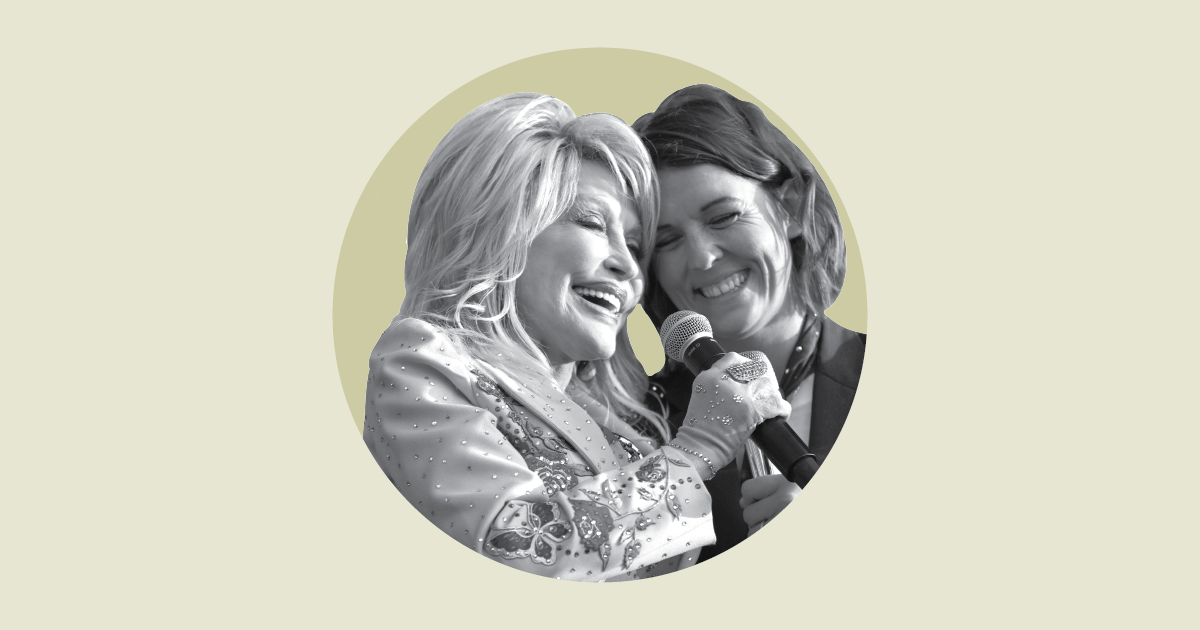
We lead our playlist with the one and only Dolly Parton, who assured us that life will be good again. Parton’s songwriting is presented in an enticing new book, Songteller, and her ability to articulate complicated emotions — through lyrics that speak to all walks of life — is something that Brandi Carlile picked up on as a teenager. In this video interview from the 2020 BMI Country Awards (with a cameo from Dolly at the end), Carlile explains how Parton’s perspective on equality kept Carlile from divorcing country music completely.
Parton, who turns 75 next month, shares a number of important qualities with a new generation of singer-songwriters she’s inspired. In the case of Brandi Carlile, there’s a sense of belonging that is woven throughout their work, from Parton’s “Joshua” to Carlile’s “Carried Me With You.” Like Parton, Brennen Leigh is able to capture a sense of place and make it relatable, even for a listener who’s never been there. Kyshona Armstrong offers a sense of self-worth and self-awareness in her writing, as Parton does, allowing listeners to know them better. Likewise, Maya de Vitry and Parton share a sense of wonder and joy, portraying landscapes — internal and external — that are imagined, yet vivid.
On Prairie Love Letter, her full-length paean to her homeland on the Minnesota-North Dakota border, Brennen Leigh demonstrates a visceral, evocative grounding – just as Parton constantly speaks of her Tennessee mountain home: with a glint in her eye, and a sorrow in her heart for knowing she had no choice but to leave it. Leigh stakes her claim on both the wide, expansive plains and Nashville all at once, asking her audience “Don’t you know I’m from here?” As if to remind she’s as at home in bluegrass and country — and Music City — as Dolly herself.
“Backwoods Barbie,” “Dumb Blonde,” and “Just Because I’m a Woman” are all perfect examples of Parton’s lifelong radical self-possession. She expresses her agency boldly, confidently, without (visible) second guessing – from her wigs to her infamous tattoos to her nothing-special acknowledgement of her plastic surgeries, struggles with suicidal ideation, and so on, she is her fully realized, autonomous self. As Dolly told Jad Abumrad on Dolly Parton’s America, “Who we are is who we are… I would just bow out if I wasn’t allowed to be me…” Kyshona Armstrong‘s prescient album, Listen, holds similar space, as Armstrong doesn’t simply ask folks to listen; her presence, compassion, and radical honesty demand it. Because, first and foremost, she’s welcoming and non-judgmental in that aim, you will find yourself fully enveloped by her music before you realize the conviction within it.
Maya de Vitry made a gorgeous, poetic foray into heavier, rockier turf with How to Break a Fall, a gutsy, genre-bending set of songs. Their anger, release, and passion, expressed by the folk-rock production style, feels right out of Parton’s post-White Limozeen era, an effortless combination of seemingly disparate musical influences, distilled into something that, almost above all else, feels joyful. Where male-centered rock and roll finds itself often hung up on its endemic toxic masculinity, de Vitry and Parton stride into electrified sounds with their femininity forward, and the result is as charming as it is subversive.
It’s striking, among such an incredible volume of musical output from their Americana and country peers this year, that these women would stand out, above and beyond the still-common glass ceilings imposed upon them for decades. Dolly blazed a trail, but these dozens of writers — and singers and pickers and composers and front women and side musicians and authors and poets — would have crashed through inevitably on their own. With songs like Adia Victoria’s “South Gotta Change,” Sunny War’s “Can I Sit With You?,” “Troubled Times” from Laurie Lewis, the Secret Sisters’ “Cabin,” it’s obvious Dolly Parton’s songwriting legacy will be inherited by multiple generations worthy of carrying it on.
Throughout 2020, the BGS editorial team embraced this wealth of excellent music from women songwriters in roots music. It has been a privilege to share these original voices with our readers, too. Here are 50 of our favorite tracks from 2020:
Photo credit: Daniel Jackson for BGS, Newport Folk Fest 2019
Everyone has a “Dolly Story.” Whether it’s a personal interaction (like when Brandi Carlile confessed on my podcast, Harmonics, that when she met her backstage at Newport Folk Fest, Dolly prayed with Brandi to calm her nerves) or the first time you heard your own story in one of her songs (like when BGS editor Justin Hiltner explained to host Jad Abumrad how “Why’d You Come In Here Lookin’ Like That” is a gay anthem on his podcast, Dolly Parton’s America), these stories are the universal connectors for Dolly Parton fans.
My own love of Dolly Parton’s music goes back a very long time, but my “Dolly Story” finally happened a few years ago, when my husband and I got to meet her after her show at the Hollywood Bowl. It was surreal and wonderful and the moment was over far too soon, but from that day on I knew I wanted to live my life more like Dolly Parton.
One of these days, I hope to be able to have a longer chat with Dolly (DOLLY IF YOU’RE READING THIS YOU CAN BE ON MY SHOW ANYTIME). But until then, I’ve distilled four pillars of What Dolly Parton Means to Me:
1) Dolly is Always Unapologetically Herself.
“I’ve often made the statement that I’d never stoop so low as to be fashionable. That’s the easiest thing in the world to do…. Once they got past the shock of the ridiculous way I looked and all, they would see there are parts of me to be appreciated. I’m very real where it counts — and that’s inside.”
In today’s fractured society, there are few figures as unifying as Dolly Parton. Say her name to almost anyone, anywhere, and almost certainly they will know who she is. Maybe part of the reason for this is her indelible commitment to never being anything but herself. And it’s because of that raw honesty that she can mean so many things to so many people. Over the years when I’ve been pressured to conform to certain looks, trends, people, or situations for the “sake of my career,” Dolly has been a glorious, glittering reminder to never apologize for sticking to who you truly are.
2) Dolly is Always Decent.
“I think everybody should be treated with respect. I don’t judge and I try not to get too caught up in the controversy of things. I hope everybody gets a chance to be who they are.”
Decency and goodness are not just about building a massive resort and theme park to revive the economy of your hometown in East Tennessee (Dollywood). They’re not just about founding a charity that has given away over 150 million books to underprivileged children around the world (Dolly Parton’s Imagination Library). They’re not even just about donating over a million dollars to help fund a COVID-19 vaccine. (Seriously. The hero we needed in 2020.)
Real goodness and decency are about how you act when no one is looking. Dolly is not just a good person, but she is a decent one. She has a universal acceptance for everyone just as they are, and uses her wealth and visibility to stand up for those who cannot. If that’s not decent I don’t know what is.
3) Dolly is Always Resilient.
“I’m not going to limit myself just because people won’t accept the fact that I can do something else.”
Dolly may seem like a divine being sent from heaven above, but she’s as human as the rest of us. In so many interviews she’s talked about her rough patches, her health problems, her doubts, her frustrations and failures. But one thing she has never lost is a resounding resiliency to keep going. It’s important to realize that our heroes are just flesh and blood, but it’s also important to remember that what makes someone a true hero is how they remind us to get back up and keep going.
4) Dolly is Always in on the Joke.
“All these years, the people have thought the joke was on me, but it’s actually been on the public. I know exactly what I’m doing and I can change it at any time. I make more jokes about myself than anybody.”
As a comic actor, I love and admire Dolly’s ability to not only be in on the joke, but often two steps ahead of it. It’s easy enough to assume that she’s some dumb blonde with big boobs, but as she shows us time and time again, looking good and being the smartest person in the room are not mutually exclusive. You can see her adeptness in clips from her late night appearances from the ’80s and ’90s, where the host usually takes a cheap jab at Dolly’s ample attributes and makes the interview about her physicality rather than her talent. But without missing a beat, Dolly always throws it right back at him (it’s always a him), usually with a punchline that’s even funnier than the host’s bit.
It’s like she says in her classic song “Dumb Blonde:” “Just because I’m blonde / Don’t think I’m dumb / Cause this dumb blonde ain’t nobody’s fool.” I’ve sat on those same couches, fielded countless embarrassing questions, and in my retort I always try to ask myself: What Would Dolly Do?
Beth Behrs is an actress (The Neighborhood, Two Broke Girls) and host of the BGS podcast, Harmonics. Check out season 1 of Harmonics and follow Beth on Instagram at @bethbehrs for updates on season 2.
This website uses cookies to improve your experience. We'll assume you're ok with this, but you can opt-out if you wish.AcceptRejectRead More
Privacy & Cookies Policy
Privacy Overview
This website uses cookies to improve your experience while you navigate through the website. Out of these, the cookies that are categorized as necessary are stored on your browser as they are essential for the working of basic functionalities of the website. We also use third-party cookies that help us analyze and understand how you use this website. These cookies will be stored in your browser only with your consent. You also have the option to opt-out of these cookies. But opting out of some of these cookies may affect your browsing experience.
Necessary cookies are absolutely essential for the website to function properly. This category only includes cookies that ensures basic functionalities and security features of the website. These cookies do not store any personal information.
Any cookies that may not be particularly necessary for the website to function and is used specifically to collect user personal data via analytics, ads, other embedded contents are termed as non-necessary cookies. It is mandatory to procure user consent prior to running these cookies on your website.