Dierks Bentley Shines with Sierra Hull, Molly Tuttle, and Bronwyn Keith-Hynes on CMA Awards

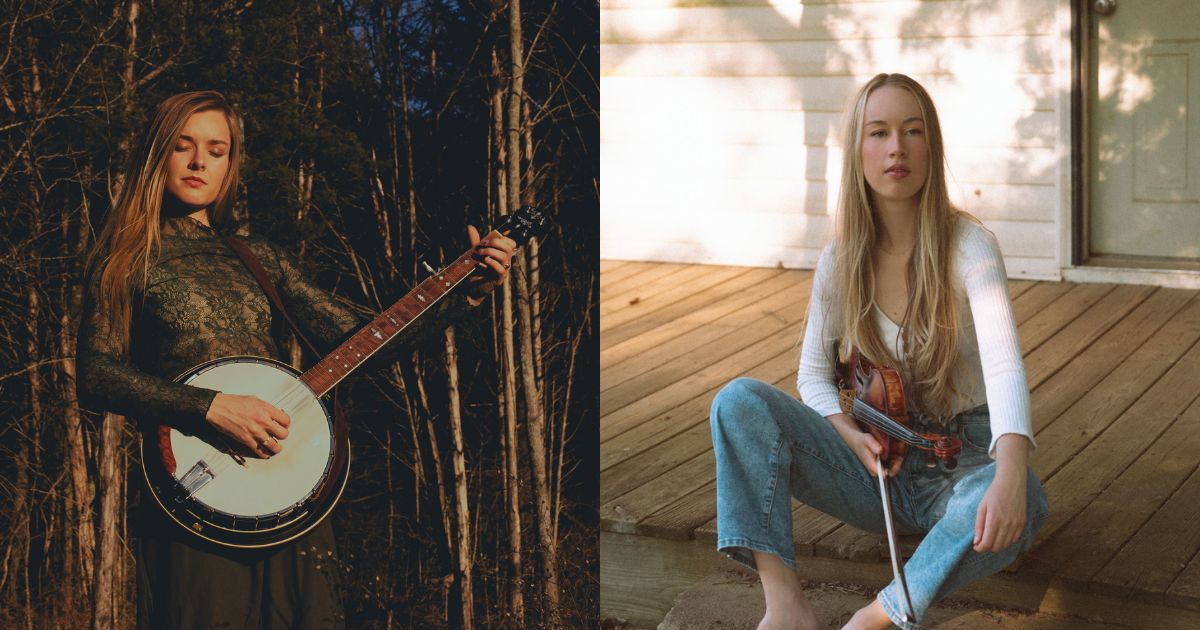
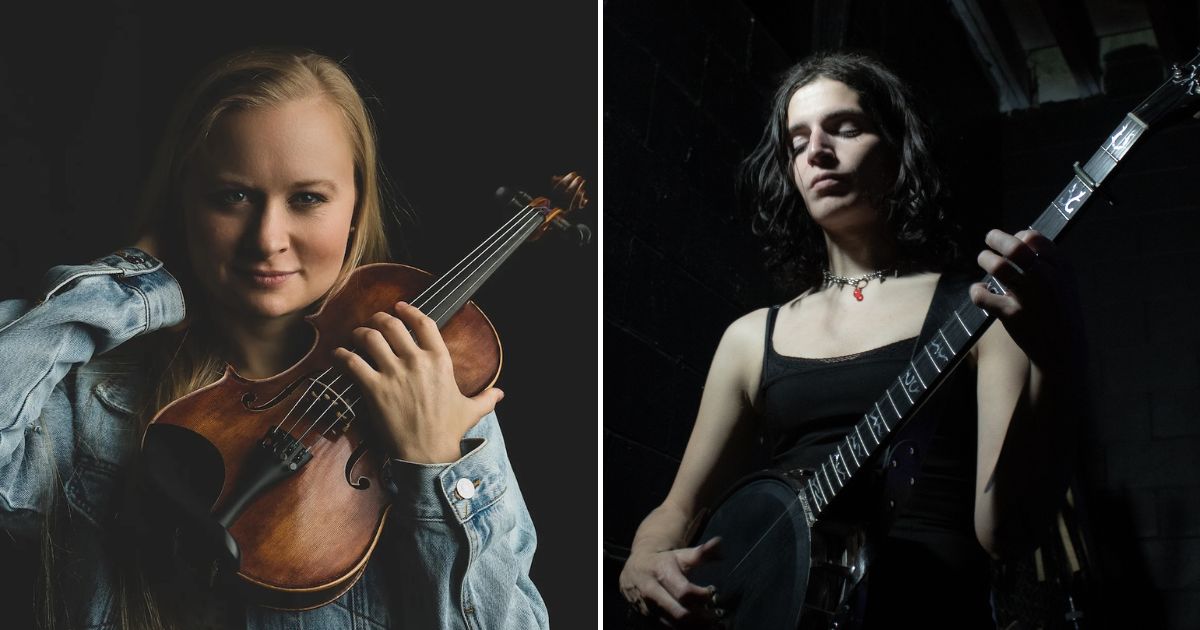
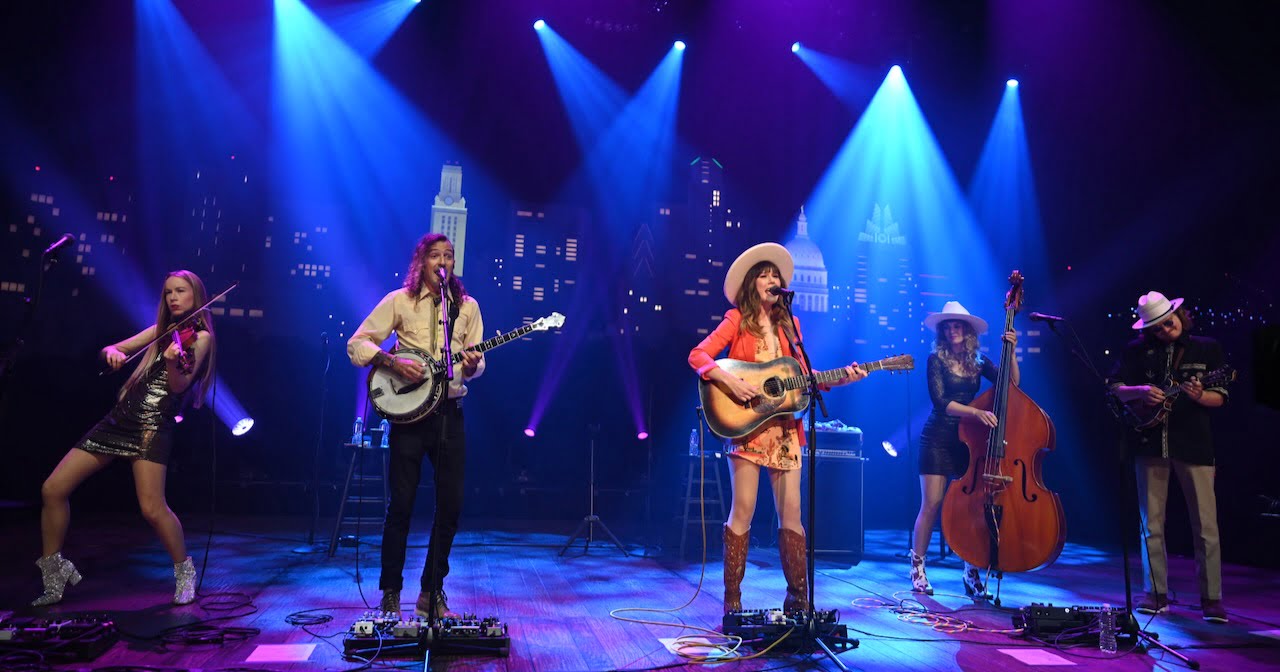
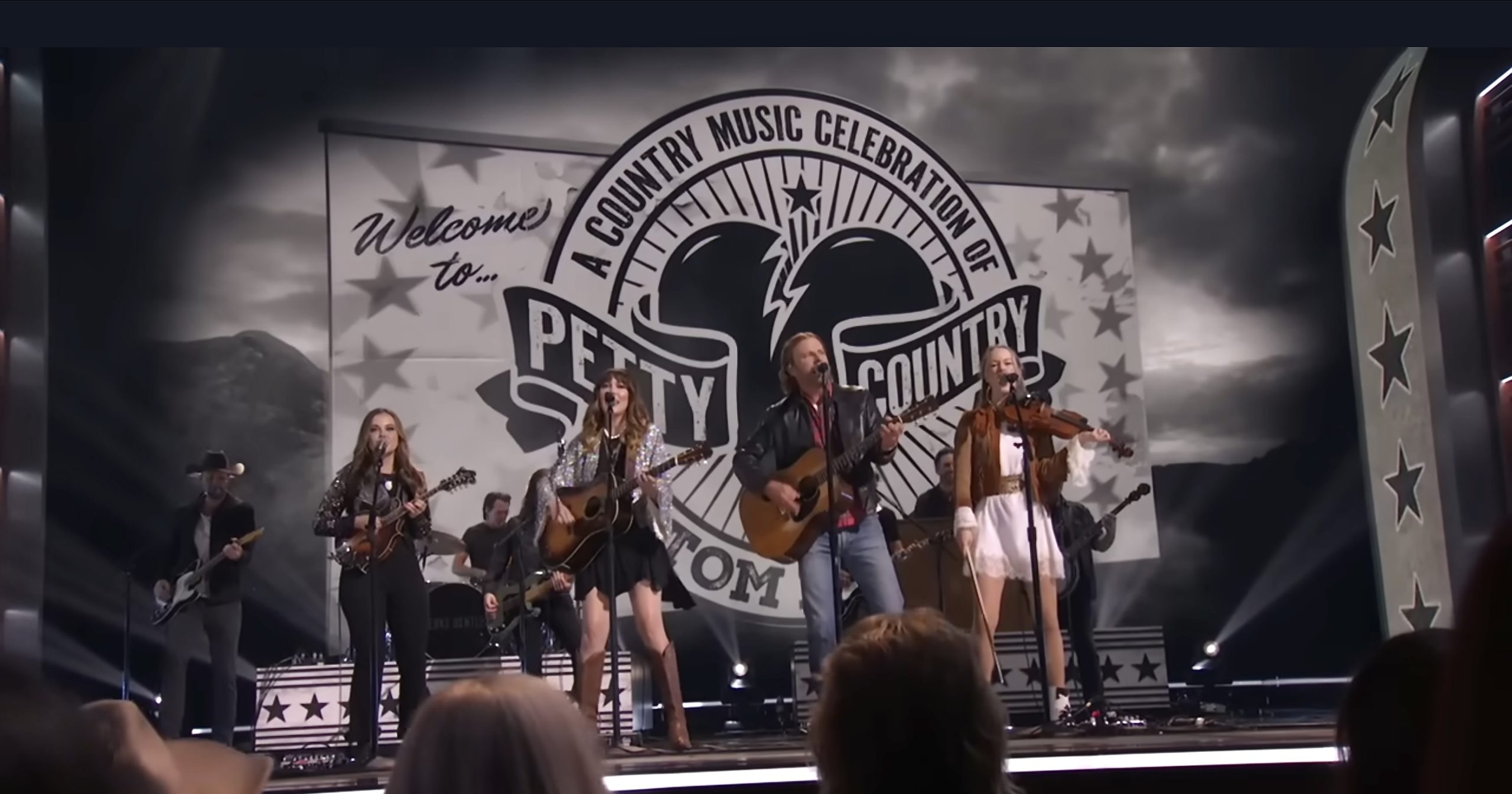
A big night for country music ended up being a big night for bluegrass as well when Sierra Hull, Molly Tuttle, and Bronwyn Keith-Hynes joined country star Dierks Bentley on the CMA Awards stage for a show-stopping performance. The quartet, backed by Bentley’s band (including the evening’s winner of Musician of the Year, Charlie Worsham) played a rousing rendition of Tom Petty’s “American Girl,” a huge single for Bentley this year from the compilation album, Petty Country.

Bentley has released plenty of ‘grassy and string band tracks across his career, especially on his 2010 album Up on the Ridge, and he is close friends with many bluegrass musicians and legends. He used to haunt the World Famous Station Inn in Nashville well before his fame and recognition – and well after, too. He’s even gifted commemorative hit records to the bar (which still hang on the walls today) and he’s appeared at the divey listening room dozens of times. He’s also a friend of the McCoury family and has collaborated with Del and sons on multiple occasions. In addition, he’s brought Tuttle and her band Golden Highway out on the road as an opening act repeatedly, and he guested on Keith-Hynes’ now GRAMMY-nominated album, I Built a World.

Tuttle even shared an image to social media from a past MerleFest where Bentley can be seen braving the North Carolina rain to catch her band’s mainstage set in the very front row of the VIP section. It’s no surprise that he would tap Hull, Tuttle, and Keith-Hynes for the CMA Awards, even if the context feels a bit out-of-left-field for diehard bluegrassers.

“American Girl” was truly a highlight of the star-studded awards show, which despite more than a few perceived flubs and snubs highlighted plenty of Good Country, Americana, roots music – and yes, bluegrass! Here’s to plenty more primetime television moments in the future highlighting incredible bluegrass pickers such as these.


See the Nominees for the 67th GRAMMY Awards

This morning, Friday, November 8, the Recording Academy announced the nominees for the 67th GRAMMY Awards, to be held in Los Angeles on February 2 at the Crypto.com Arena. Roots musicians can be found at all levels and across all fields of the buzzworthy awards, which are voted on by the vast Recording Academy membership of music makers, artists, and creatives.

Notably, Beyoncé, her groundbreaking country fusion album COWBOY CARTER, and its tracks can be found throughout the general field and American Roots categories, including landing nominations for Best Country Album, Best Country Song, Best Americana Performance, Album of the Year, Record of the Year, and more. Banjoist and composer Béla Fleck collected more than a handful of nominations for his work with Chick Corea – released posthumously – and Rhapsody in Blue, as well.

The Best Bluegrass Album category this year includes releases from Bronwyn Keith-Hynes, the Del McCoury Band, Sister Sadie, Billy Strings, Tony Trischka, and Dan Tyminski, making for an incredibly stout and superlative lineup.

From Kacey Musgraves to Shemekia Copeland, Aoife O’Donovan to Lake Street Dive, below we’ve collected all of the nominees in the Country & American Roots Music fields, plus we feature select categories from across the many fields, genres, and communities that also include roots musicians and our BGS friends and neighbors. Check out the list and mark your calendars for the 67th GRAMMY Awards, Sunday, February 2, 2025.

Best Country Solo Performance

“16 CARRIAGES” – Beyoncé
“I Am Not Okay” – Jelly Roll
“The Architect” – Kacey Musgraves
“A Bar Song (Tipsy)” – Shaboozey
“It Takes A Woman” – Chris Stapleton

Best Country Duo/Group Performance

“Cowboys Cry Too” – Kelsea Ballerini with Noah Kahan
“II MOST WANTED” – Beyoncé featuring Miley Cyrus
“Break Mine” – Brothers Osborne
“Bigger Houses” – Dan + Shay
“I Had Some Help” – Post Malone featuring Morgan Wallen

Best Country Song

“The Architect” – Shane McAnally, Kacey Musgraves & Josh Osborne, songwriters (Kacey Musgraves)
“A Bar Song (Tipsy)” – Sean Cook, Jerrel Jones, Joe Kent, Chibueze Collins Obinna, Nevin Sastry & Mark Williams, songwriters (Shaboozey)
“I Am Not Okay” – Casey Brown, Jason DeFord, Ashley Gorley & Taylor Phillips, songwriters (Jelly Roll)
“I Had Some Help” – Louis Bell, Ashley Gorley, Hoskins, Austin Post, Ernest Smith, Ryan Vojtesak, Morgan Wallen & Chandler Paul Walters, songwriters (Post Malone Featuring Morgan Wallen)
“TEXAS HOLD ‘EM”– Brian Bates, Beyoncé, Elizabeth Lowell Boland, Megan Bülow, Nate Ferraro & Raphael Saadiq, songwriters (Beyoncé)

Best Country Album

COWBOY CARTER – Beyoncé
F-1 Trillion – Post Malone
Deeper Well – Kacey Musgraves
Higher – Chris Stapleton
Whirlwind – Lainey Wilson

Best American Roots Performance

“Blame It On Eve” – Shemekia Copeland
“Nothing In Rambling” – The Fabulous Thunderbirds featuring Bonnie Raitt, Keb’ Mo’, Taj Mahal, & Mick Fleetwood
“Lighthouse” – Sierra Ferrell
“The Ballad Of Sally Anne” – Rhiannon Giddens

Best Americana Performance

“YA YA” – Beyoncé
“Subtitles” – Madison Cunningham
“Don’t Do Me Good” – Madi Diaz featuring Kacey Musgraves
“American Dreaming” – Sierra Ferrell
“Runaway Train” – Sarah Jarosz
“Empty Trainload Of Sky” – Gillian Welch & David Rawlings

Best American Roots Song

“Ahead Of The Game” – Mark Knopfler, songwriter (Mark Knopfler)
“All In Good Time” – Sam Beam, songwriter (Iron & Wine featuring Fiona Apple)
“All My Friends” – Aoife O’Donovan, songwriter (Aoife O’Donovan)
“American Dreaming” – Sierra Ferrell & Melody Walker, songwriters (Sierra Ferrell)
“Blame It On Eve” – John Hahn & Will Kimbrough, songwriters (Shemekia Copeland)

Best Americana Album

The Other Side – T Bone Burnett
$10 Cowboy – Charley Crockett
Trail Of Flowers – Sierra Ferrell
Polaroid Lovers – Sarah Jarosz
No One Gets Out Alive – Maggie Rose
Tigers Blood – Waxahatchee

Best Bluegrass Album

I Built A World – Bronwyn Keith-Hynes
Songs Of Love And Life – The Del McCoury Band
No Fear – Sister Sadie
Live Vol. 1 – Billy Strings
Earl Jam – Tony Trischka
Dan Tyminski: Live From The Ryman – Dan Tyminski

Best Traditional Blues Album

Hill Country Love – Cedric Burnside
Struck Down – The Fabulous Thunderbirds
One Guitar Woman – Sue Foley
Sam’s Place – Little Feat
Swingin’ Live At The Church In Tulsa – The Taj Mahal Sextet

Best Contemporary Blues Album

Blues Deluxe Vol. 2 – Joe Bonamassa
Blame It On Eve – Shemekia Copeland
Friendlytown – Steve Cropper & The Midnight Hour
Mileage – Ruthie Foster
The Fury – Antonio Vergara

Best Folk Album

American Patchwork Quartet – American Patchwork Quartet
Weird Faith – Madi Diaz
Bright Future – Adrianne Lenker
All My Friends – Aoife O’Donovan
Woodland – Gillian Welch & David Rawlings

Best Regional Roots Music Album

25 Back To My Roots – Sean Ardoin And Kreole Rock And Soul
Live At The 2024 New Orleans Jazz & Heritage Festival – Big Chief Monk Boudreaux & The Golden Eagles featuring J’Wan Boudreaux
Live At The 2024 New Orleans Jazz & Heritage Festival – New Breed Brass Band featuring Trombone Shorty
Kuini – Kalani Pe’a
Stories From The Battlefield – The Rumble Featuring Chief Joseph Boudreaux Jr.

Best Roots Gospel Album

The Gospel Sessions, Vol 2 – Authentic Unlimited
The Gospel According To Mark – Mark D. Conklin
Rhapsody – The Harlem Gospel Travelers
Church – Cory Henry
Loving You – The Nelons

Best Jazz Performance

“Walk With Me, Lord (SOUND | SPIRIT)” – The Baylor Project
“Phoenix Reimagined (Live)” – Lakecia Benjamin featuring Randy Brecker, Jeff “Tain” Watts & John Scofield
“Juno” – Chick Corea & Béla Fleck
“Twinkle Twinkle Little Me” – Samara Joy featuring Sullivan Fortner
“Little Fears” – Dan Pugach Big Band featuring Nicole Zuraitis & Troy Roberts

Best Jazz Instrumental Album

Owl Song – Ambrose Akinmusire featuring Bill Frisell & Herlin Riley
Beyond This Place – Kenny Barron featuring Kiyoshi Kitagawa, Johnathan Blake, Immanuel Wilkins & Steve Nelson
Phoenix Reimagined (Live) – Lakecia Benjamin
Remembrance – Chick Corea & Béla Fleck
Solo Game – Sullivan Fortner

Best Traditional Pop Vocal Album

À Fleur De Peau – Cyrille Aimée
Visions – Norah Jones
Good Together – Lake Street Dive
Impossible Dream – Aaron Lazar
Christmas Wish – Gregory Porter

Best Contemporary Instrumental Album

Plot Armor – Taylor Eigsti
Rhapsody In Blue – Béla Fleck
Orchestras (Live) – Bill Frisell featuring Alexander Hanson, Brussels Philharmonic, Rudy Royston & Thomas Morgan
Mark – Mark Guiliana
Speak To Me – Julian Lage

Best Instrumental Composition

“At Last” – Shelton G. Berg, composer (Shelly Berg)
“Communion” – Christopher Zuar, composer (Christopher Zuar Orchestra)
“I Swear, I Really Wanted To Make A “Rap” Album But
This Is Literally The Way The Wind Blew Me This Time” – André 3000, Surya Botofasina, Nate Mercereau & Carlos Niño, composers (André 3000)
“Remembrance” – Chick Corea, composer (Chick Corea & Béla Fleck)
“Strands” – Pascal Le Boeuf, composer (Akropolis Reed Quintet, Pascal Le Boeuf & Christian Euman)

Best Arrangement, Instrumental or A Cappella

“Baby Elephant Walk” – Encore, Michael League, arranger (Snarky Puppy)
“Bridge Over Troubled Water” – Jacob Collier, Tori Kelly & John Legend, arrangers (Jacob Collier Featuring John Legend & Tori Kelly)
“Rhapsody In Blue(Grass)” – Béla Fleck & Ferde Grofé, arrangers (Béla Fleck featuring Michael Cleveland, Sierra Hull, Justin Moses, Mark Schatz & Bryan Sutton)
“Rose Without The Thorns” – Erin Bentlage, Alexander Lloyd Blake, Scott Hoying, A.J. Sealy & Amanda Taylor, arrangers (Scott Hoying featuring säje & Tonality)
“Silent Night” – Erin Bentlage, Sara Gazarek, Johnaye Kendrick & Amanda Taylor, arrangers (säje)

General Field:

Record Of The Year

“Now And Then” – The Beatles
“TEXAS HOLD ‘EM” – Beyoncé
“Espresso” – Sabrina Carpenter
“360” – Charli XCX
“BIRDS OF A FEATHER” – Billie Eilish
“Not Like Us” – Kendrick Lamar
“Good Luck, Babe!” – Chappell Roan
“Fortnight” – Taylor Swift featuring Post Malone

Album Of The Year

New Blue Sun – André 3000
COWBOY CARTER – Beyoncé
Short n’ Sweet – Sabrina Carpenter
BRAT – Charli XCX
Djesse Vol. 4 – Jacob Collier
HIT ME HARD AND SOFT – Billie Eilish
Chappell Roan The Rise And Fall Of A Midwest Princess – Chappell Roan
THE TORTURED POETS DEPARTMENT – Taylor Swift

Song Of The Year

“A Bar Song (Tipsy)” – Sean Cook, Jerrel Jones, Joe Kent, Chibueze Collins Obinna, Nevin Sastry & Mark Williams, songwriters (Shaboozey)
“BIRDS OF A FEATHER” – Billie Eilish O’Connell & FINNEAS, songwriters (Billie Eilish)
“Die With A Smile” – Dernst Emile II, James Fauntleroy, Lady Gaga, Bruno Mars & Andrew Watt, songwriters (Lady Gaga & Bruno Mars)
“Fortnight” – Jack Antonoff, Austin Post & Taylor Swift, songwriters (Taylor Swift Featuring Post Malone)
“Good Luck, Babe!” – Kayleigh Rose Amstutz, Daniel Nigro & Justin Tranter, songwriters (Chappell Roan)
“Not Like Us” – Kendrick Lamar, songwriter (Kendrick Lamar)
“Please Please Please” – Amy Allen, Jack Antonoff & Sabrina Carpenter, songwriters (Sabrina Carpenter)
“TEXAS HOLD ‘EM” – Brian Bates, Beyoncé, Elizabeth Lowell Boland, Megan Bülow, Nate Ferraro & Raphael Saadiq, songwriters (Beyoncé)

Best New Artist

Benson Boone
Sabrina Carpenter
Doechii
Khruangbin
RAYE
Chappell Roan
Shaboozey
Teddy Swims


Graphic courtesy of the Recording Academy.

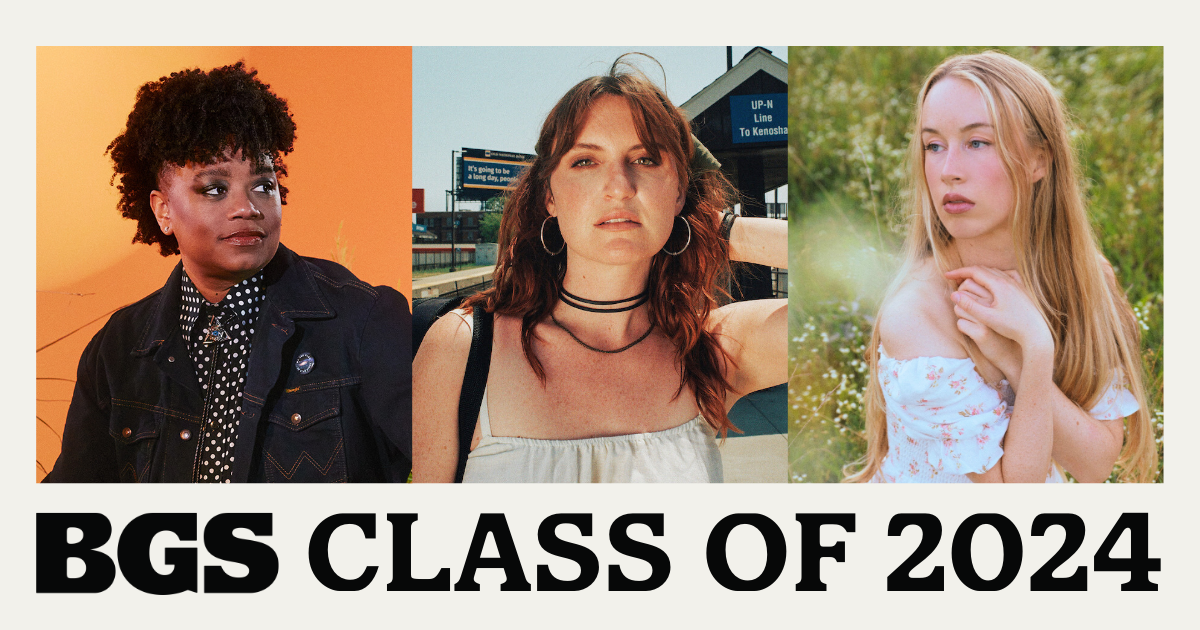
These Berklee Students Helped Create Ensembles for Women and Non-Binary Folks

“Bluegrass music is a truly American artform. It reflects the culture and the time in which it’s created, and as with many traditional artforms, a preservationist stance is held on a pedestal. Bluegrass music’s history is very gendered, and when this happens, the music can’t reach its full potential.”

My teacher Laura Orshaw told me this.

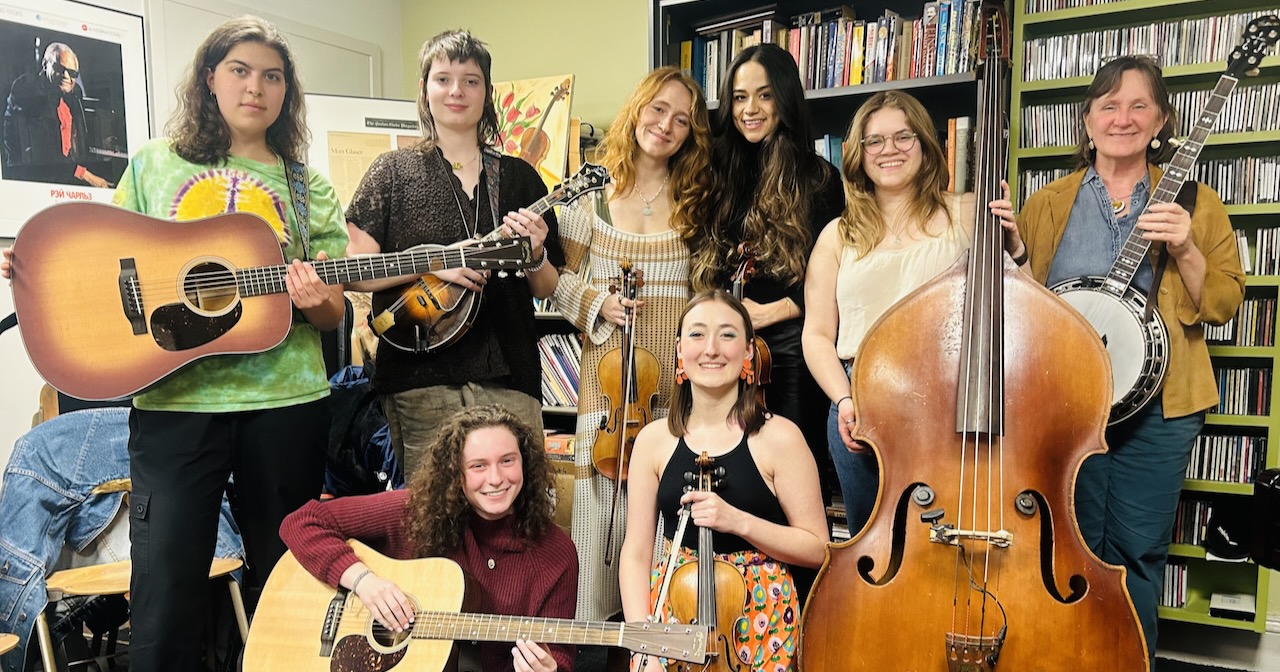
There has been no shortage of amazing women bluegrass musicians to come out of the roots department at Berklee College of Music. Gillian Welch, Sierra Hull, Molly Tuttle, Bronwyn Keith-Hynes, and on and on. I’m going into my senior year at Berklee this fall as a mandolin principle, and one of the reasons I went to Berklee was how inspired I was by these women and their music.

Towards the end of my sophomore year, my friend Katelynn Casper – a brilliant bluegrass fiddler – came up with an idea. She wanted to start a bluegrass ensemble of all women and non-binary folks. Katelynn approached Matt Glaser, the artistic director of the American Roots Music Program, about helping us create a class in which we would study and perform in a group. Excited by the prospect, he brought in Laura Orshaw (the Po’ Ramblin’ Boys) to be our mentor. In the past few years, there had been a strong influx of women who came to Berklee and wanted to play roots music, so it didn’t take us long to find people who wanted to join the project.

The ensemble started in October of 2023 with about 12 members, enough for us to break into two ensembles. I got to be in both groups, in one as mandolinist and the other as bassist. Our focus between both groups was to play music mostly written by women who we looked up to and were maybe overlooked.

Through the course of our year together, we moved through a catalog of songs and tunes written by our heroes and then delved into original material. We wrote songs and tunes together and on our own and fleshed them out as a band. It was an empowering experience to be a part of and it was beautiful to watch my friends explore a new kind of confidence in their music.

This past April, the American Roots Music Program sent all of us down to Washington, D.C. In June of 2022, the Smithsonian Center for Folklife and Cultural Heritage opened up an exhibit entitled Music HerStory: Women and Music of Social Change. Laura had caught wind of the exhibit and wanted us to visit, so we could witness its content and impact. The exhibit explored many women who were significantly overlooked in music, but yet the world would have been drastically different had their music not been a part of it.

We heard and read stories of when Loretta Lynn put out “The Pill” and how much of an uproar it caused; stories of how Elizabeth Cotten had to put her music on hold to raise her children and didn’t come back to it until she was in her 60s, putting out “Freight Train” and “Oh Babe It Ain’t No Lie” and still was not given much credit.

Walking through the exhibit, I couldn’t help but think about all the different musical influences I have and how so many of those influences were inspired by these women, but how that was never really talked about.

On the same trip, we also got the privilege of going to Smithsonian Folkways Recordings and learning about some of the history of their record label and how it came to be. When we were checking it out, both ensemble bands did a little recording in the archives to commemorate the trip. Playing our originals and covers written by powerful women was an incredible experience. We were surrounded by original recordings and records that made bluegrass and old-time what it is now and some of the music that brought each of us to the genres to begin with.

While we were down in D.C., we also got the chance to hang out with Kimber Ludiker (fiddle) and Avril Smith (guitar), two members of Della Mae. In both groups, the inspiration from Della Mae was so apparent – we all learned many of their songs. Getting to stand up and play their songs with them was a mind-blowing experience.

Taking part in this project has been such an inspiring experience. As a kid who grew up in the bluegrass and old-time world, there weren’t always a lot of women to play music with, so to get the opportunity to dedicate time each week to just sit down with a group of deeply passionate women and non-binary folks who are also such remarkable roots musicians was an indescribably moving experience.

A common conversation amongst us during that time was how freeing and comfortable it felt to play music in a setting like this. Whether or not you think about it, music as a whole is an intensely male dominated world – and bluegrass isn’t any different.

“Here’s a question that crossed our minds every week,” Laura said. “‘What would bluegrass be like without patriarchy or bias?’ The answer comes through music, not essays, and this project certainly chipped away at our goal.”

Being in this ensemble, I learned a lot about myself. Being surrounded by a community of women and non-binary folks playing music taught me a lot about my confidence as both a person and a musician. Being in that environment gave me an amazing place to explore.

“When Matt [Glaser] asked me to be the curator of this project, I couldn’t have guessed how impactful and enlightening it would be for me. Working in an all-women and non-binary band filled a void for all of us – creatively, academically, and socially,” Laura continued. “Students shared experiences of the not-so-glamorous parts of working in a male-dominated field. They studied the music and songs of their heroes, who sometimes got overlooked in other classes and ensembles. They wrote songs, arranged music, and tried on different leadership roles in the band.

“But most of all, they encouraged and inspired each other to be better musicians. The mutual dedication and enthusiasm were palpable in every rehearsal.”

It’s been an experience of a lifetime to learn the music I love with a group of women who want to push the boundaries of the genre. To sit with a group of people who understand the intricacies of being a woman or gender non-confirming person playing bluegrass – or even music in general – was a very comforting experience. We all grew so much as people and musicians.


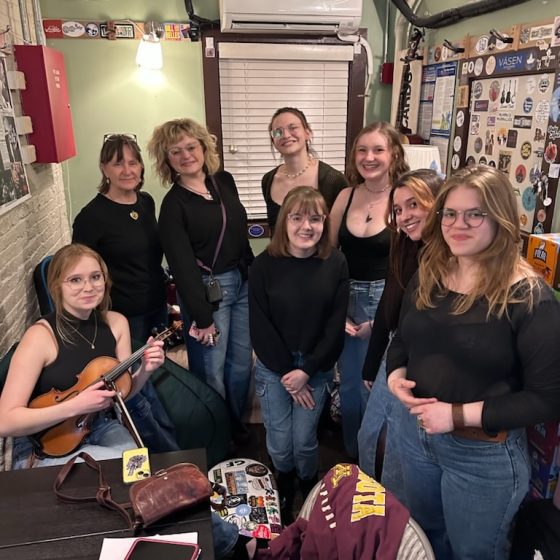
Photos courtesy of Emma Turoff. Lead image: Ensemble, No Man’s Land. Inset image: Ensemble, Ain’t That Just Like A Man.

The Best Bluegrass Albums of 2024 (So Far)

It’s seven months into the year and music and media outlets are looking back while looking forward, pondering and collating all of the incredible music that’s been released in 2024… so far. From Beyoncé to Zach Bryan to “brat summer,” there’s certainly been no shortage of seismic album drops – and in our bluegrass corner of the roots music world, the same holds true.

So far this year, there have been stellar releases by the biggest names in the genre, like Béla Fleck, Billy Strings, Tony Trischka, Laurie Lewis, and the Del McCoury Band. Country singer-songwriter Brit Taylor and roots-soul legend Swamp Dogg both released bluegrass titles this year as well, demonstrating how the age-old tradition of various styles and sounds cross-pollinating with bluegrass continues in the present day.

Supergroups like Sister Sadie, Greensky Bluegrass, and Gangstagrass have all unleashed critically-acclaimed projects in 2024, too, while newcomers like Wyatt Ellis and Jack McKeon impressed with records that sound mature and fully-realized for debut releases. And of course there’s plenty yet to come, as anticipation builds for long-awaited albums from bluegrass stalwarts and heroes like Jerry Douglas – who was just unveiled as a 2024 Bluegrass Hall of Fame inductee – and Gillian Welch & David Rawlings, who recently announced a new project, Woodland, their tenth studio album and first release in four years.

No matter how you cut it, 2024 has been a banner year for superlative bluegrass albums – and there is still so much more to come! Take a minute to amble through our favorite bluegrass releases of the year so far (in approximate chronological order), plus a few honorable mentions that pull heavily from bluegrass traditions and inspirations, and we’ll set the table for the albums we can’t wait to arrive later this year, too.

Cary Morin, Innocent Allies

A jaw-dropping acoustic guitarist who toggles between flatpicking, fingerstyle, blues, and many other styles, Cary Morin released a gorgeous visual art-inspired album earlier this year entitled Innocent Allies. The entire project oozes images of the West done up in bluegrass textures and tones, especially so in Morin’s rendition of “Whiskey Before Breakfast.” Read our feature on the album here.

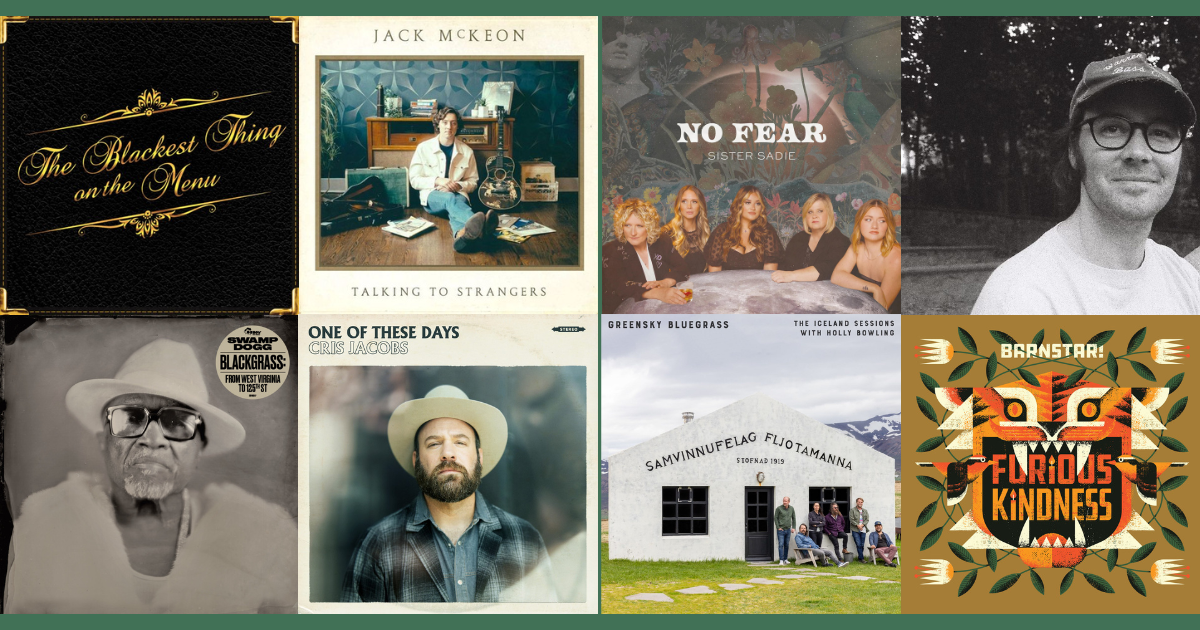
Sister Sadie, No Fear

For a band that boasts alumni like Dale Ann Bradley and Tina Adair, it’s saying quite a lot to make the statement that this may be the best lineup of Sister Sadie yet. Their latest offering, No Fear, brings striking Nashville vibes together with a dash of the Chicks and features collaborations with country stars like Cam and Ashley McBryde. It’s no surprise this supergroup and their newest album are all over this year’s IBMA Awards nominations. Read our March Cover Story on No Fear here.

Wyatt Ellis, Happy Valley

A mere 15 years old, mandolin picker Wyatt Ellis certainly deserves the “bluegrass prodigy” designation he often receives, but dare not sell this young virtuoso short with such a moniker. There’s musicality, touch, and taste evident across his debut album, Happy Valley, well beyond his teenaged years. That’s just part of the reason behind why he’s able to attract such notable collaborators and guests as Marty Stuart, Sierra Hull, Mike Compton, and more. Keep an eye on this one, ‘cause there’s no telling just how far he will go in music, but it’s sure to be way up there!

Brit Taylor, Kentucky Bluegrassed

Pulling a page out of the bluegrass playbook of the ‘60s through ‘90s, country singer-songwriter Brit Taylor demonstrates the inseparable interconnectedness of country and bluegrass with Kentucky Bluegrassed, a reimagination of her 2023 country album, Kentucky Blue, played by a cracking bluegrass band. There are touches of Alan Jackson, Vince Gill, Patty Loveless, and so many more through the project. It certainly reminds of those eras, in which bluegrass artists and bands were just as likely to identify simply as “country” as they were “bluegrass.” The lines between these genres used to be much more blurry; we’re happy to see folks like Taylor – and many others – smear, complicate, and dirty up those genre demarcations once again. Kentucky Bluegrassed is a “don’t miss” album that may not be on every diehard grasser’s radar.

Missy Raines & Allegheny, Highlander

Missy Raines never left bluegrass, but Highlander feels like something of a return by this trophied and exalted bassist, singer, and songwriter after her last few more experimental and Americana-geared outings. This is her first recording with her “new” backing band, Allegheny, who have performed with her now for a handful of years. It’s a rollicking, up-tempo, dynamo of an album, but it’s never one note or stolid – or trying to pander to digital radio. There are calm moments, songs that will bring a tear to your eye, and political tones, too, all bolstering the tightness of the band and the trad-tastic, meta-mash energy herein. “Who Needs a Mine,” the stand out track in a superlative song sequence, will most likely go down in history as one of the best issues-oriented bluegrass songs ever written. Every bit as biting and timely as Hazel Dickens, Jean Ritchie, and so many other activist artists from the regions Raines grew up in. Read our recent feature interview here.

Béla Fleck, Rhapsody in Blue

The most traditional aspect of Béla Fleck’s music-making across his lifelong career is his constant and effortless innovation. As a community, we lose sight so easily of the fact that every first generation bluegrass star was an innovator, so many consummate musicians just “making it up as they go along.” Referring to Fleck’s Rhapsody in Blue as “making it up as he goes along” might raise an eyebrow at first, but one of the most fascinating threads throughout Fleck’s countless albums is his ability to ground whatever musical vocabulary he chooses within the traditions, styles, and physicality of bluegrass banjo. He doesn’t so much care what “does” or “doesn’t” fit on the banjo, he follows his whims, fancies, and inspirations and always makes it work. Perhaps only he could do so with Gerswhin! (And we are so glad that he did.)

Kyle Tuttle, Labor of Lust

Banjo player Kyle Tuttle released his second studio album, Labor of Lust, in February. You may know him from Molly Tuttle’s band, Golden Highway, or from his ubiquitous presence in jamgrass scenes over the past decade or so. The new album demonstrates his particular approach to newgrass, jamgrass, and engaging and exciting improvisational picking. His voice on the instrument is indelible. A modernist banjo player with endless panache, a strong sense of humor, and buckets of stamina and drive. We spoke to Tuttle about the project earlier this year.

Barnstar!, Furious Kindness

New Englander and Northeastern-based bluegrassers will be more than familiar with this raucous outfit, but the national bluegrass scene may need to be put onto the singular sounds of Barnstar! Made up of Mark Erelli, Zachariah Hickman, Charlie Rose, and Taylor and Jake Armerding, Barnstar! started as a side project for these in-demand musicians and songwriters and quickly blossomed into a chaotic, bombastic, and hilarious group that can just as easily go earnest, emotive, and touching. Furious Kindness is another selection here that you may not have yet encountered – and we’re here to rectify that. Need more? We hosted Erelli and Hickman on Basic Folk to chat about the project.

Cris Jacobs, One of These Days

If your first introduction to Cris Jacobs was the above song – “Poor Davey,” featuring Billy Strings – fed to you by the algorithm or a roots DJ or found via the “appears on” section of Strings’ streaming profiles, you certainly aren’t alone. A well-known musician in alt-country, rock and roll, and the often nebulous regions between these genres, Americana, and bluegrass, Jacobs may read as a newcomer in bluegrass, but his Jerry Douglas-produced album, One of These Days, is anything but a one-off or novelty project or ‘grassy interloping. This is deep and broad bluegrass that feels straight ahead and genre-expansive at the same time, drawing on guests like Lindsay Lou, the McCrary Sisters, Sam Bush, and more. The Strings track may be what first grabs you, but this album deserves a deep dive follow-up, immediately.

Greensky Bluegrass, The Iceland Sessions (featuring Holly Bowling)

An EP we loved so much it just had to be included on our Best Bluegrass Albums list. Pianist and keys player Holly Bowling joins illustrious jamgrass group Greensky Bluegrass to revive the often latent, near extinct, and severely underrated tradition of bluegrass piano. Over four tracks recorded in remote northern Iceland in 2023, the band and Bowling have curated a vibe that hinges on the present, focusing in on the exact moments in time wherein they captured these sounds and songs. It’s why we love jamgrass to begin with, right? The way the music calls all of us to be grounded in the present. That’s the exact spirit in which these recordings were made and the translation of that intention is more than just successful, it’s deeply resonant.

Bronwyn Keith-Hynes, I Built A World

Fiddler Bronwyn Keith-Hynes has found her voice – literally and figuratively. While her last studio release, Fiddler’s Pastime (2020), was more instrumental-focused, her latest project, I Built A World, finds her stepping up to the vocal mic with confidence. Her voice is strong and well-practiced while homey and down to earth, too. The song selections are bold, her collaborators are glitzy and first-rate, but each feature, guest, and musician serves the track they’re on and the album as a whole first and foremost. Keith-Hynes has certainly found her groove and her creative community, and we’re all reaping the benefits of her commitment to challenging herself and looking ahead to the future. We recently chatted with Bronwyn and her pal Brenna MacMillan about their respective solo projects – check it out here.

Swamp Dogg, Blackgrass: From West Virginia to 125th St

When the initial announcement of Swamp Dogg’s latest album, Blackgrass, reached the BGS team, electricity and excitement shot through our ranks. Here’s a project that speaks deeply to one of our highest-priority missions in bluegrass: to showcase the multi-ethnic, melting pot, diverse roots of our favorite genre of music. Bluegrass has never been a music for white folks only, no matter how prevalent that narrative is today, and this legendary multi-hyphenate musician, creator, and producer, Swamp Dogg, demonstrates that fact part and parcel over the course of this impeccable collection of music – with a backing band that includes many of the best pickers around today. There are countless remarkable aspects of this album, too many to include in this simple blurb, so head to Lizzie No’s feature on the project to learn more about why this project is purposefully rebellious and revolutionary.

Laurie Lewis, TREES

California bluegrass keystone Laurie Lewis was just announced as one recipient of this year’s IBMA Distinguished Achievement Awards. For decades she has been a center of gravity around which the California and West Coast bluegrass scenes orbit, like a perseverant mother tree from which so many young shoots and saplings have sprung. Her brand new album, TREES, draws upon her wellspring of through-hiking and naturalist knowledge to encounter, process, and challenge so many modern day realities – health issues, the ever-quickening climate crisis, personal and professional life hurdles, and much more. The result is touching, emotional, encouraging, and inspiring, wrapped in traditional bluegrass trappings that feel more in service to the songs than to legalistic genre criteria. Lewis is one of the best to ever make bluegrass and TREES is one of the best releases in her lauded and superlative catalog. We recently published our exclusive interview, which you won’t want to miss.

Tony Trischka, Earl Jam

One of the greatest banjo players today, our current Artist of the Month Tony Trischka has made a career trailblazing on melodic-style three-finger banjo, writing, composing, and recording music that only he could’ve made. For his latest album, Earl Jam, though, he instead leans on the timeless bluegrass task of emulating the greats – namely, Earl Scruggs. The track list is pulled from recordings of casual, at-home jam sessions between Earl, John Hartford, and others, and with his all-star band and fabulous guests, Trischka reiterates Earl’s idiosyncratic playing from these previously unheard recordings. It’s a fascinating context in which to rediscover the limitless intricacies behind Trischka’s playing and the way he synthesizes others’ influences into his own musical vocabulary. Whether stepping into the role – or, shall we say, roll – of Scruggs or making modern banjo compositions out on his own creative limbs, Tony Trischka makes it look effortless and executes everything he does at the highest level. Don’t miss our Artist of the Month feature and our discography deep dive.

Gangstagrass, The Blackest Thing on the Menu

With a band as incisive and forward-looking as Gangstagrass, there will always be countless reasons naysayers will attempt to use to disqualify their music as “bluegrass.” But when viewing this now 15-year-old group through an objective lens, you can see many more bluegrass qualities than not. Innovation (the oldest bluegrass tradition), improvisation, virtuosity, conversational lyrics, a blending of styles, genres, and textures, and the bringing together of creators and inspirations from a variety of backgrounds – that all sounds like bluegrass to us! Gangstagrass’s latest opus, The Blackest Thing on the Menu, finds the critically-acclaimed group at their strongest yet, with a Jerry Douglas track feature (“The Only Way Out is Through”) and plenty of hip-hop-meets-bluegrass excellence. In the present, folks may errantly write off this band as a novelty or an aberration, but in the future we will all view Gangstagrass as they have always been: one of the firsts in the quickly-developing tradition of roots hip-hop, rap string bands, and postmodern bluegrass re-interpreters.

Jack McKeon, Talking to Strangers

In the vein of country songwriters with bluegrass careers – or bluegrass songwriters with country careers (think Shawn Camp, Tom T. Hall, John Prine, Darrell Scott) – Jack McKeon’s debut album, Talking To Strangers, isn’t just bluegrass, but it certainly tracks as first class ‘grassy, down home, front porch music. These thoughtful, introspective lyrics are perfectly set, to a straight ahead bluegrass band like Ashby Frank, Justin Moses, Christian Sedelmeyer, and Vickie Vaughn. McKeon is inaugurating his catalog of recorded works demonstrating that his songs and his voice can be shapeshifters, at home on Music Row and on bluegrass stages and radio, both.

The Del McCoury Band, Songs of Love and Life

Del McCoury is one of the most-awarded personalities in the history of bluegrass and it’s truly no wonder why. He’s spent his entire life honing the family trade: the highest quality bluegrass around. At 85 years-old, every album, concert, performance, and festival we enjoy from Del and the boys is a gift that we’re determined to cherish and savor. His latest full length album, Songs of Love and Life, is sure to be shortlisted for the highest honors handed out by the Grammys and IBMA. This particular track, “Only the Lonely,” is a Roy Orbison cover that showcases Del’s lifelong penchant for not worrying about what is or isn’t bluegrass and instead doing his utmost to serve the song – hence the tasty, honky-tonkin’ bluegrass piano. (Bluegrass piano? Twice in one list??) The record includes a few more charming covers, plenty of brand new tracks, and a Molly Tuttle feature, too.

Brandon Godman, I Heard the Morgan Bell

A killer fiddler from Kentucky who’s performed with Laurie Lewis, Dale Ann Bradley, Jon Pardi, and many, many more, Brandon Godman recently released his first studio album as a solo artist since he was a teenager. Based in San Francisco, Godman is a touring fiddler turned luthier who remains an expert in so many musical styles from his home turf in northern Kentucky. From contest fiddling to western swing to pop country to bluegrass breakdowns and transatlantic hornpipes, Godman’s playing has grit, drive, and aggression, sure, but what stands out the most on I Heard the Morgan Bell, his album of all original compositions, is his emotional range, lyricism, and heartfelt tenderness. Throw in guests like Darol Anger, Patrick Sauber, Sam Reider, and more and you’ve got what will end up being one of the best fiddle-centric albums of this decade.

Tray Wellington, Detour to the Moon

Carrying the banjo innovation banner for millennial cuspers and Gen Z, Tray Wellington is anything but a traditional bluegrass banjo player – and that fact alone is what will always land him in the “solidly bluegrass” camp, by our reckoning. Like fellow listees Trischka, Tuttle, and Fleck, Wellington has found a voice of his very own on the five-string banjo and in recent years his musical offerings – which were already top-notch – have become exponentially more fascinating, fun, and entrancing as a result. His new EP, Detour to the Moon, includes seemingly through-composed, instrumental new acoustic music a la Punch Brothers alongside more straightforward original banjo tunes and a Kid Cudi cover that may just be the best bluegrass cover of a non-bluegrass hit in recent memory. Watching the excited recognition of “Pursuit of Happiness” ripple through the audience at a bluegrass festival while Tray Wellington Band is on stage kicking off the number will certainly never get old.

Billy Strings, Billy Strings Live Vol. 1

The People’s Bluegrass President, Billy Strings, is out with his first live album, Billy Strings Live Vol. 1. No one is doing it like Billy; selling out arenas, coliseums, and gigantic amphitheaters with what’s actually just a five-piece bluegrass band will always be remarkable and noteworthy. Plus, the way he and his team bring his audience into the creative process, feeding their insatiable appetites for content, for music, for four-hour-long tribute shows, is not simply to sell tickets, fill seats, and move product. Strings, at the beginning of the day and at the end of the day, is just a big ol’ bluegrass and guitar nerd. We love that about him. There’s almost no one else in the history of this music from whom we’d tolerate a 13 minute track. (By the way, that’s not the longest runtime on the album!) Keep doing it like only you do it, Billy, and we’ll all stick with you the whole entire way.

AJ Lee & Blue Summit, City of Glass

The last time we had a bluegrass artist take off on our website and socials like AJ Lee & Blue Summit are taking off now, it was Billy Strings playing “Meet Me at the Creek.” We’ve been following this Santa Cruz, California-based string band – featuring AJ Lee, Jan Purat, Scott Gates, and Sully Tuttle – for years, so it’s no surprise to us that the greater bluegrass audience is catching onto the special sound and style of Blue Summit and their brand new album, City of Glass. This is pointedly Californian bluegrass, meaning it is effortlessly traditional and organically inventive and generative. High lonesome harmonies and fiery pickin’ skills combine with soul, groove, emotion, and thoughtful writing. There are country moments, there are barn burners, but overall, it’s clear this young band have hit their stride and know who they are. We aren’t here to tell you the best of the best, per se, but if we were City of Glass would be at the very top.

Interested in those viral moments we mentioned? Check out our hugely popular interview from earlier this month here and the band’s rendition of “You’ll Never Leave Harlan Alive” that’s still doing mega numbers here.

Andrew Marlin, Phthalo Blue

Andrew Marlin, how dare you surprise release this divine album!? (Seriously, thank you, it was indeed a wonderful surprise.) Out last week with hardly more fanfare than a handful of social media posts, Marlin’s brand new collection, Phthalo Blue, has already charmed its way onto our “Best So Far” list. Featuring Stephanie Coleman, Allison de Groot, Clint Mullican, Josh Oliver, and Nat Smith, this is the perfect kind of bluegrass to put on while you work, tidy the house, or tend to your garden. You’ll find the healing effects herein don’t just come from rabbit tobacco.


Near-Bluegrass Honorable Mentions

Whatever you think about our list so far – and whether or not the albums on it qualify as bluegrass to you – here are just a handful of albums we would have regretted not including, but may have more tangential relationships to the genre than their fellows in this piece. Still, each of these fine records has obvious bluegrass bones, however subtle or overt they may be.

Willi Carlisle, Critterland

Many an old-time troubadour/poet such as Willi Carlisle has been a bluegrass musician, but perhaps Carlisle himself wouldn’t identify in that way. Still, there’s bluegrass throughout the critters and characters on this critically-acclaimed album, Critterland. We did a feature on the project, read that here.

Sierra Ferrell, Trail of Flowers

Her new album is markedly post-genre, but those in the know are already well aware that Sierra Ferrell came up through bluegrass circles. From her patinaed West Virginia voice – that brings Hazel Dickens to mind – to her cutting fiddle bowings, wherever she may roam musically, Ferrell will always have a home in bluegrass.

Rachel Sumner, Heartless Things

Rachel Sumner (formerly of Twisted Pine) is decidedly bluegrass, but somehow that seems too simplistic an umbrella for the nuanced music she creates and the special tones she strikes. She infuses so much of the Northeastern bluegrass, folk, Celtic, and jazz scenes and their respective vocabularies into her songs – they may not be exactly bluegrass, but they certainly don’t fall entirely outside that umbrella, either.

Zach Top, Cold Beer & Country Music

Now, this ain’t no bluegrass album – it’s Good Country, that’s for sure – but there’s a bluegrass story embedded within Zach Top’s hugely popular debut, Cold Beer & Country Music, that we’re determined to tell. Once a winner of SPBGMA’s band contest, Top grew up idolizing Tony Rice and Keith Whitley and playing in a bluegrass family band on the weekends. You can see bluegrass touches throughout this mainstream country record, just like when Ricky Skaggs, Whitley, the Osborne Brothers, and more targeted country radio with their songs and sound. Our Good Country feature interview explores all the ways bluegrass filters into his music.

Kaia Kater, Strange Medicine

Kaia Kater is another genre expander who hasn’t ever quite made bluegrass music, but has never been too far from that sonic space, either. She pulls more readily from indie and old-time and folk traditions, but her new album, Strange Medicine, feels like she’s developed an entirely new thing, where genre is a third space, something liminal, or purposefully transitional. Perhaps the most bluegrass thing about this stunning collection is groove, an ever present character through these gorgeous and intricate songs. Kater was our Artist of the Month in May.


Anticipated Albums Still to Come This Year

There’s plenty more where all that came from! Here are just a few of the as yet unreleased recordings we’re sure will be on our “Best Of” lists when we reach the end of the year. It’s not as far off as you think! Luckily, we’ll have a stellar soundtrack to get us there.

Alison Brown, Simple Pleasures (reissue) – available August 9

Rhonda Vincent, Destinations And Fun Places – available August 9

Bella White, Five For Silver – available August 16

Po’ Ramblin’ Boys, Wanderers Like Me – available August 16

Dan Tyminski, Whiskey Drinking Man – available August 16

Fruition, How to Make Mistakes – available August 23

Gillian Welch & David Rawlings, Woodland – available August 23

Caleb Caudle, Sweet Critters – available August 30

Various Artists, Bluegrass Sings Paxton – available August 30

Willie Watson, Willie Watson – available September 13

Jerry Douglas, The Set – available September 20

Twisted Pine, Love Your Mind – available October 18

Brenna MacMillan, Title TBA – release date TBA


BGS Staff also contributed to and assisted curating this list. 

AJ Lee & Blue Summit’s ‘City of Glass’ is Funny, Sexy, and Empowered

At 26, the prodigy phase of AJ Lee’s music career has passed. It might take a little more time for the tendency to confuse her with a professional wrestler using the same name to fade away.

“I think I could take her!” Lee — the singing one — gamely pronounces at the conclusion of an interview on the third album by AJ Lee & Blue Summit, City of Glass (out July 19 on Signature Sounds), prompting laughter from the band’s Scott Gates, who asserts himself on the new album writing three songs on which he sings lead.

Rounding out Santa Cruz, California-based Blue Summit are fiddler Jan Purat and guitarist Sullivan Tuttle, one of the children of educator-musician Jack Tuttle and brother of breakout star Molly Tuttle. Lee also got her start with “The Tuttles with AJ Lee.”

A keen sense of humor dots City of Glass, which was produced by Lech Wierzynski of “retro-soul” band The California Honeydrops. It was Wierzynski who suggested Harlan Howard’s “He Called Me Baby,” on which Lee delivers a notably sultry lead vocal. The reference point for her version of “He Called Me Baby” is soul singer Candi Stanton, rather than Patsy Cline or Charlie Rich.

“I was raised to sing pretty straightforward. I wanted to remove as much ego as I could, because I just wanted to sing and have fun,” Lee said. “I’ve learned to put a little bit more of my personality into it and that, I think, is making me a better singer overall, which is why we wanted to work with Lech in the first place, because he’s such a powerful singer.

“That really resonated with me and I’m trying to move more in that direction.”

Gates pipes up at this point: “AJ’s not going to say this, but Lech brought ‘He Called Me Baby’ to the table because he had the foresight, coming from that soul world, he recognizes in AJ’s voice the ability to do this kind of thing.

“The cross-pollination of these American roots, is a smart move from Lech, I think,” he said.

BGS caught up with Lee and Gates as they rehearsed in Nashville, Tennessee, and prepared to do some lip synching for a video. As a seasoned bandleader, Lee takes pains to spread the credit for her success around and steers some questions toward Gates to try and ensure she doesn’t dominate the conversation.

City of Glass is AJ Lee & Blue Summit’s third album. How do you view the progression that got you to this point?

AJ Lee: The first album, [Like I Used To], we were looking for what kind of sound we wanted as a band. Because at that time, it was only four members without a fiddle player. So on that one, we had some more electric instruments and more drums. The second album, [I’ll Come Back], we went more acoustic roots, because we just wanted to play more bluegrass, because that’s what we grew up on and that’s what we do best. For this third album, we’re confident doing bluegrass, roots, and country, sticking with more stringed instruments, but also branching out. With Lech’s involvement, we’re leaning a little bit towards soul, R&B, and keeping it interesting, but still showcasing ourselves and what we like to play and what we like to do.

Several songs on City of Glass are funny. There’s one, “Toys,” making fun of a men who act like boys, another about getting “Sick on a Plane” and a humorous take on busking, “Solicitor Man.” Why so lighthearted this time around?

Scott Gates: I grew up playing bluegrass with a lot of silly guys. There’s a bouncy kind of lighthearted feel in a lot of traditional stuff. … I noticed that a lot of songs that I had written were kind of getting down into my feelings and whatnot, and I wanted to write one that I knew would be fun for my friends to play.

Are there models in bluegrass you’re following with the humor?

SG: There is a history of fun stuff like The Louvin Brothers. I’m also influenced by Jimmy Martin. Jimmy Martin is one of the pillars of bluegrass music, and he’s hilarious.

“Toys” is about a young guy or maybe an immature man. Is it about yourself, Scott?

SG: A little bit, yeah, probably as a teenager noticing the involuntary methods by which young, dumb boys go about thinking of themselves. It was mostly born out of that phrase, “The man who dies with the most toys wins.”

The title cut, “City of Glass,” is about leaving an artistic legacy. Aren’t you guys a little young to be concerned about that?

AJ: Yeah, I’m pretty young. I’m 26 now, but I have been doing music since I was really young. Collectively, we figured out that the band has about 90 years worth of experience. I’ve been playing on stage since I was about four or five years old. So I’m young, but I have been doing it for a long time. Legacy is having something that you’ve made be around even when you’re not doing it anymore. That’s a big theme of “City of Glass.”

As you say, you got started very young as musicians and Jack Tuttle was a common mentor. How did that develop?

SG: I met AJ when she was four. I knew her older sister Molly, ‘cause she’s my age. So I knew her more. But [Sullivan Tuttle] was around, and Sully and AJ had known each other since back then. I was probably about seven or eight when I first started going to the Father’s Day Festival and the music camp. So I got an opportunity to learn and play from people like John Reischman and Mike Compton and see musicians like The Osborne Brothers and Earl Scruggs. The picking scene is incredibly high quality.

AJ, you were the only non-Tuttle in the Tuttle family band when you were very young. What was that like?

AJ: I loved it. As a young kid, it’s kind of hard to be in the moment and really appreciate what you’re doing. As a seven-year-old to fifteen-year-old, I went about it as like, “OK, we’re playing a gig, I’m going to practice here and I’m going to sing my song. I’m hanging out with my friends, and that’s it.” But being in that band was definitely instrumental in my progress as a bluegrass musician, because I got to work directly with Jack Tuttle. Everyone loves Jack because he’s such a renowned teacher in the community and obviously all of his kids are talented beyond measure. So I was able to play with people who were better than me and also equal to me. My mom, growing up, she always said, “You always want to play with people who are better than you, because that’s how you’re going to get better.” And so I got to have that opportunity for many years.

Is there any competition now between yourself, Molly Tuttle and Bronwyn Keith-Hynes now that you all are competing musicians in the marketplace?

SG: Absolutely! [Laughs]

AJ: No, no, no, definitely not. For me and Molly, we’re branching off and doing our own thing. We were in a band for however many years, and now we’re off doing our own projects. And Bronwyn is branching off and doing her own projects in a similar way.

So, it’s the same in any community or genre of music, you played together and now you’re doing your own thing. Molly’s singing on our album as well, on a song [“I Can’t Find You at All”] that her dad wrote.

AJ, you could pursue a solo career, why do you prefer a band situation?

AJ: It makes me happy. I like playing with other people. I don’t really like performing by myself. I feel like I have a lot to offer, but I also like playing with people who also have a lot to offer and are amazing talents. And, you know, people compliment our band on how many singers there are. I always think that the more singers the better, the more talent you can showcase the better.

Pretty much anyone in the band could peel off and do a solo career. But I think what makes us really unique and strong as a band is that we all can be individual musicians, but we choose to play together, because it just makes the creative juices flow more and it makes us want to even continue on more than I would as a solo musician.

SG: At some point, I’ll probably do my own project. But right now, all I care about is playing music with AJ and the boys and see where this goes. I try not to plan too much. I don’t really scheme. I probably should scheme a little bit more, but I just don’t.

How does the California bluegrass scene differ from the South?

SG: A lot of people think of California as the jammy stuff, the Deadhead stuff that comes out of there. But even to this day, the California Bluegrass Association is very traditional. It’s one of the most traditional associations out there and there’s also a huge focus on singing. The singers that come out of a place like Tennessee are extremely good at blending. There’s a school of singing, and a lot of them sound very similar. Their harmonies are incredibly perfect. But California tends to reward individuality and uniqueness. The unique voices are kind of put on a pedestal.

AJ, your singing style is more subtle than showy. Why?

AJ: I agree with you. I’ve always really appreciated the subtlety of singing to where it’s not, “Look at me. Look at how well I can sing.”

“Hillside” uses the metaphor of a hill that aspires to be a mountain. What does the metaphor represent?

AJ: “Hillside” is about women empowerment. The metaphor is that you are this hill that is bombarded by all these outside elements trying to knock you down. But your foundation has become so strong and nothing’s really going to topple you over.

Have you experienced a lot of sexism in your career?

AJ: I’ve experienced some, of course. Especially after shows, you know a lot of older gentleman say things to me that obviously they mean well, but it just turns out to be very sexist. I get a lot of the, “If I was 20-years, 30-years younger” sort of statements, and it’s just like, “Ooh, gosh.”

How about general discrimination?

AJ: Yeah, especially jamming in the bluegrass community, as a woman sometimes you’ll just get into those circles that have that male energy so present and it’s really hard for women to join a jam sometimes. But I’ve learned to try to just get myself in there over the years with support from my mom and other strong women who are also in the community.

Are you on the record on where the “Blue Summit” band name originates?

AJ: Our first festival we played was a Kate Wolf festival. We actually didn’t really have a band name yet that we were happy with. The original name we hated. Our original bass player at the time, Isaac Cornelius, came up with The Highway 17 Savages, which doesn’t really resonate with our band at all. We totally needed to change this name. So we made these recordings to send in to Kate Wolf at Isaac’s house, which he grew up on the summit in Santa Cruz. So we were like bluegrass on the summit. So we became Blue Summit.


Photo Credit: Natia Cinco

Two Women on the Cutting Edge of Bluegrass’s Future

At whatever level you may be plugged into the online bluegrass scene, you have surely heard, seen, or scrolled into content by Bronwyn Keith-Hynes and Brenna MacMillan. These two young, talented pickers are part of a vibrant and blossoming community of traditional musicians and folk artists that includes folks like Cristina Vane, Victor Furtado, Hilary Klug, Wyatt Ellis, and many more.

What makes these creators stand apart, especially Keith-Hynes and MacMillan, is that they aren’t just shoehorning social media into their art-making and creative processes to move up Music City ladders and check abstract music industry boxes. Instead, they’ve intentionally demonstrated how powerful, engaging, and charming content can be when it’s made with art, creativity, tradition, and joyful, cooperative generation as its focal points. Instead of bending over backward to construct virality and lean into transient socials trends, they let their talent, their songs, and their communities do all the talking.

In May, Keith-Hynes released her second solo album, I Built a World, her first project to center songs and her recently-developed, impressive vocals. Drawing on musicians and pickers from her immediate circle and her main gig – Molly Tuttle & Golden Highway – as well as tapping notable country stars and bluegrass legends, the project finds Keith-Hynes at her most confident and unbothered. This is a fiddler-singer-front woman who has found her voice – literally, through work, practice, and vocal lessons as well as figuratively, not satisfied to craft a career on bowing the fiddle alone.

@bronwynmusic Somehow Tonight [Earl Scruggs] SPBGMA stairwell jam!!! Our favorite acoustics for sweet harmonies 😇 🎻: Bronwyn Keith-Hynes 🪕: Brenna @Brenna MacMillan 🎸: Danielle Yother #spgbma #bluegrass #indoor #festival #nashville #harmonies #womeninmusic #banjo #guitar #fiddle #fridaynights #weekend #fyp #stairwellsinging #explore #foryou #bluegrasstiktok ♬ original sound – Bronwyn Keith-Hynes

Later this year, MacMillan will release her debut solo album. Its lead single, “What’s to Come,” features Ronnie McCoury and is indeed a harbinger for the superb album to follow. This project, which highlights MacMillan’s prolific songwriting and features her musical community fleshing out the band, is built directly upon the successes she, Keith-Hynes, and others have found on the internet. Eschewing labels, management, or traditional roll outs, MacMillan will release the project herself, with funds raised on GoFundMe, bringing the music directly to her consumers on her own website and socials channels without “middle men.”

So, not only are MacMillan and Keith-Hynes innovating on ideas around what it means to be a side person, a career picker, and multi-hyphenate, professional traditional musicians, they’re taking all of their expertise as online brands and businesswomen to find success for themselves, on their own terms. They’re focusing on what matters, centering their communities, and making incredible, superlative music at the same time.

BGS connected with MacMillan and Keith-Hynes together via video chat to talk about their unique approaches to making albums, content, and music, while highlighting the deep and tight-knit “bluegrass influencer” circle they’ve each helped create since moving to Nashville and putting their all into bluegrass.

I wanted to start by talking about community and musical community – one of the reasons why I wanted to have you both in conversation with each other is how you each rely on, draw from, and center your musical communities in what you create. It may look like these are solo projects that you’re making, but they’re clearly not solitary projects – and they don’t really feel like vanity projects, either. from the outside looking in either. It really feels you’re making music with other people so you can make music with other people. Could you talk about your work, your solo albums, and working in your communities?

Bronwyn Keith-Hynes: Yeah, I think first and foremost, me and Brenna are good friends and we just ended up being drawn together. We both moved to Nashville around the same time and ended up doing a lot of things together and had a lot of similar interests. That’s cool to find. I haven’t found that many women who have my same interests until I moved to Nashville and then all of a sudden I felt like there was a whole bunch. It’s been really awesome to find that.

First of all, I’m just such a fan of so many people, and I wouldn’t want to make music any other way. My project was based around songs from my community, which was really special to me. It was like a little nerve wracking reaching out to friends and people I respected to be like, “Do you have a song that you’re not going to record that I could record?” But, thankfully, a lot of people did – including Brenna – and I ended up recording one of her songs. And, she sang on it and it was awesome!

I feel like I couldn’t do it alone. I know my strengths and then I know other people’s strengths and I want to make sure we’re all [drawing on our strenghts]. I don’t know if singing is my strength, but it’s something I feel passionate about and feel driven to do for whatever reason. I know the things that I want to put out in the world; I want to make sure the music I’m making has the best parts of myself, but then the best parts of everyone else who’s playing on it.

I think that folks who aren’t just straight white men in this industry, we realize from the get-go that we have to have others with us. We have to do it together. Otherwise we’re not going to go the distance. I feel that in both of your music, as well. But Brenna, I wonder what that question brings up for you, as you’re thinking about and positioning your album to release as well?

Brenna MacMillan: It’s funny, because when Bronwyn asked about songs that I had, I had like a bunch and at that time I wasn’t even thinking about [making] an album at all. I think it was maybe like a couple months later that I decided, based on my friends that kept being like, “You should record some of these songs!” And I was like, “I guess…” I wasn’t thinking about it at all whatsoever.

Then that’s another way like to get my songwriting out there, too. And why wait for someone to come to me for songs if they don’t even know that there are songs? Besides my friends, which is who I first would want to do my songs anyway. It’s funny, because obviously it’s really cool putting out your own music, but I still get more excited when “Riddle” comes on than when “What’s to Come” comes on. [Laughs] That is so cool!

Someone else’s vision for your song, it’s like the coolest thing ever to me. Because, I know what my brain comes up with so it’s not shocking, but someone else’s ideas around something that you wrote – it’s like the coolest thing ever, and I guess that’s why I love the community. I feel like community is like the word that I say way too much, but I do I love it. For Bronwyn, Cristina [Vane], Hilary [Klug], Emily, and Mallory, to some extent back in 2018, we all were moving to town around that time and then 2020 hit and I think that’s when we all got a little closer, because we were all bored and wandering around. I took a lot of walks with my friends, individually, we tried to stay across the path from each other, but I think those bonding moments brought us closer. We were like, “Let’s get coffee” or “let’s get dinner,” and then we ended up making a video or something and it all evolved into great friendship, plus people online being like, “Oh, we like to hear you guys play together!”

@brennamacbanjo Friday night with Lester Flatt! #bluegrass #harmonies #sisters #womeninmusic #fyp #banjo #fiddle #musicians #foryou #friday #weekend #vibes #flatt #scruggs @bronwynkeithhynes @cvanemusic ♬ original sound – brennamacbanjo

One of the things I love most about that whole community of content creators – you’re talking about Cristina Vane and a lot of these other folks you create with here in Nashville – it never feels like you’re trying to shoehorn bluegrass into contemporary content creation. It really seems that making bluegrass music and making roots music with your friends is the impetus, and then you made it fit into social media – instead of vice versa. Like, it’s happened organically and from a community standpoint first, and not just from “I have a social strategy. I have a five year plan.” Do you agree or disagree?

BM: Oh yeah, I agree. There’s not much strategy that’s happened in here. There’s not a lot of that going on. [Laughs]

And yet, I can tell you objectively from the outside looking in, y’all are still operating with 110% more strategy in mind than most of bluegrass. [Laughs]

BKH: I feel like Brenna and I have both talked about – correct me if I’m not saying this right, Brenna – wanting social media to serve us, rather than for us to serve social media. The end goal, for at least for both of us, is not like to become a social media star, it’s to have it serve us, to get our names and our music out to more people.

BM: Yeah! And it felt like it was very random that social media took off for me. I was just like, “Where are you guys coming from? Why do you want to hear me kick off a J.D. Crowe song like every day?” But at the same time, it has its own frustrations and that’s when me – and I think a bunch of the other girls that do this side by side with their music careers – we’re like, “We’re going to have this, but only if it makes sense for helping promote our live gigs and any projects we’re doing.” But as soon as I get nasty comments, or this, or that I’m like, “Oh, I will literally just get off of this app if it’s going to go this direction.” I just block people and then keep going.

I want an audience who will appreciate the things that I want them to appreciate. I think that I’ve trained my audience, too. Basically I shoved it in there, “You are going to listen to this slow song and try to enjoy that. And if you don’t, then I’m going to take you [out of my following]…” Because there have been some people who think that I am a content creator on there, and I’m like, “No, I play music and I took an hour out of my day and posted this video and we’re lucky that happened. Now I’m on my way to a gig and I don’t need some [negative] comment.” But you could come to a live gig and request a song!

Brenna, one of the things I love about your upcoming album and the messaging around it is that you’re really doing  a direct-to-consumer business model and roll out. You’re being like, “Y’all can come to me. You already know how to find me, so this is where you can find the music, too.” I think it’s amazing and again, it’s the cutting edge of what the future of bluegrass will be while it’s also so fucking trad. It’s like back in the day, when bluegrass music required taking the car battery out of the car to play a show in the high school auditorium and then putting the battery back in to drive to the next high school auditorium.

It’s like you’re doing that in the 21st century. You’re being a DIY bluegrass musician, but in 2024. Can you talk a little bit about the direct to consumer model you’re using with your album roll out?

BM: I was like, I need to build a website so that there’s everything in one place – I remember why I did it, too, because there are a bunch of fake accounts. I knew I needed something out there to be authentic and to have all of my official links. That was literally my number one goal with the website. So now, here’s the link to my website, you can find my YouTube channel, my Facebook, my Instagram, my TikTok from there. And you’re going to know you’re in the right place. I’ve basically just started to try to push everything to my website and go from there to everything else, even if it’s taking you back to Instagram. Because [the website is] where everything’s going to happen, so that you know that it’s me instead of some person scamming you. I guess with that in mind, I started trying to link everything, like in my stories, when I’m talking about anything coming up, I just say, “Go to my website!”

Bronwyn, I wanted to ask you again about community and about bringing your circle, your scene into your album. I love all of the features on your album and I also love that it doesn’t just feel like you’re reaching for a Collaborative Recording of the Year nomination. 

[All laugh]

But I wanted to know how it felt to you, as you were thinking about who you wanted to have on the record and why you wanted to have them on the record?

BKH: I’m glad to hear you say that it feels like it’s in service of the music, because that was definitely my intent. It was the funnest part of [recording the album], for me. I did kind of make those decisions after the tracks were done and I’d done my vocals. I just didn’t know how it was going to turn out until I heard it. Then I would brainstorm with Brent [Truitt], and Jason [Carter], and whoever about who to get on it. Dudley Connell was somebody I was really excited about and I’d never met him. I didn’t know him. Someone just gave me his number, I called him up and left him a nervous voicemail. But yeah, he turned out to be the sweetest guy ever – and he’s a bluegrass hero, I love all those Johnson Mountain Boys records.

It’s crazy especially being a new singer, I haven’t heard my voice recorded much ever. Then to hear my voice with all these other voices that I know and I’ve heard a lot – to hear like that combination for the first time – it was like very surreal!

What was it like working with Dierks [Bentley]? We all know his bluegrass pedigree and his connections to the Station Inn and to the McCourys and that he’s always had one foot so solidly in bluegrass, but y’all would have gotten to know him and got to spend some time with him on the road with Molly Tuttle & Golden Highway, too. I wondered how how that conversation happened and also what it felt like to you to have someone who has gold records and platinum records collaborating with you on your record?

BKH: I grew with his Up On The Ridge album, it was literally one of the first bluegrass albums I heard around my college years.
I was obsessed with it and I thought it was so cool. It got me into listening to the more trad stuff, but I’d always loved his music and then being Jason [Carter’s] partner, and Jason and he were friends even before he was famous. So they’ve been friends from the get go.

I’d met him a few times through Jason and then again when we were on tour [opening for him], that was cool. ‘Cause I felt like we could meet [more as peers], not just because I’m somebody’s partner. But now, this is my gig and this is your gig. And you’re asking us to sit in every night. I felt a little bit more comfortable to make that ask. He just came into Brent’s studio one day and tracked it in under an hour. He’s great! Very quick.

Brenna, talk to me a little bit and if you have features on your upcoming album – and if you can’t talk about them yet, that’s totally fine.

BM: I know, I was trying to think of what I should say – I don’t know, I’m the one in charge! But let me check, I don’t know if Brenna wants to tell all that yet. [Laughs]

At the very least, we can talk about Ronnie [McCoury] and “What’s to Come.” Ronnie’s one of my favorites. Talk a bit about, again, bringing in community and bringing in the scene that already surrounds you.

BM: The core band in the studio was [Mike] Bub on bass and Jake Stargel on guitar. Me, I played banjo on four or five of the tracks, but I have been writing a lot on clawhammer lately and I know that I’m not good at it, so I had Frank Evans come in for those and then I had Cory [Walker] play on a couple very last minute. I was thinking, it’s just going to be better if he does it.

When the special guests ideas popped in my brain, I was thinking, “Do I want special guests to be like my friends, my age, or like people that I really are like heroes of mine? Is this the time to ask them? I don’t know.” Nobody knows who I am, but that’s okay. I had met Ronnie a handful of times in kind of settings where it was like, “I’m here with so and so” and I’m just a little curmudgeon. [Laughs]

“What’s to Come,” it’s like a reflective life song. I know that I sound like a small baby when I sing, and I was thinking of someone with an older sounding voice. Like wanting ancient, lonesome vibes so that there could be old and young together, pondering about life. If you’re young or if you’re old, you still ask all the same questions about life.

Also, [Ronnie’s] gritty mandolin playing. I love it so much. Jarrod Walker played on most of the core mandolin stuff, but he happened to be out of the country that session. I was like, this is perfect! But it’s funny, because I didn’t even know if Ronnie was going to bring his mandolin! [Laughs]

To wrap up, here’s a question I had for both of you, because you’re both musical shape shifters. You move in and out of musical contexts so easily; you’re both side people, you’re both front people, you’re both social media brands. How do you maintain your senses of self?

BKH: I feel like I can’t get away from myself! I don’t feel like I ever even think about that. The only way I’ve struggled with that a little bit, or thought about that more, is doing the solo projects. That’s where I’m like, “Wow. OK. What would Bronwyn do next?” But I think I know what I like and I know what I want to do. I’m just like, “How am I going to do that? I need to figure that out.

BM: I think similarly, I don’t really think about it that much. I think I know what I like, too. And I know what I don’t like. From the get go, I’ve very much just been myself online. I come home from the lab job and do a video with dark circles [under my eyes] and grunge and smelling like hemp trash. That’s what I established from the beginning. So now, I feel comfortable being myself.

Pretty much everything has been my own ideas and, it’s funny, because ten of my eleven songs are originals on the album, three of which are co writes, but hearing it come to life in the studio with other people, it still ended up being what I thought it should be. Which is weird, because there’s no way that I could bring some of these musicians into the studio who are eons beyond what I could imagine, but they knew exactly what the track needed. It does sound like me still and what my vision would have been if I had expressed it [all myself].

BKH: I feel like I’m like more myself these days than I’ve ever been. I feel like for a while, starting out in bluegrass, I had a lot of ideas of what a woman in bluegrass needed to look like, or be, or act like. In the last couple years, maybe inspired by being with Molly in Golden Highway, I feel like I’ve been able to let a lot of that stuff go – about how I should dress and whatever. Now, I embrace the things I actually like.


Photo Credit: Brenna MacMillan by Sophie Clark; Bronwyn Keith-Hynes by Alexa King Stone.
Your Guide to the Internet’s Essential Bluegrass Content Creators

When I started playing mandolin in 2004, the internet was integral to my experience. I spent countless hours on websites like Mandolin Cafe, used a PayPal account I made when I was 9 to buy albums on eBay, and downloaded countless viruses onto our family computer pirating bluegrass recordings on Limewire. When the internet went public 30 years ago, it immediately changed the world and bluegrass. By the end of the ’90s, blogging had become mainstream and bluegrass had cultivated its own corner of the web with forums and listservs like BGRASS-L. When broadband replaced dial-up, people were able to share large files such as recordings and videos and information sharing exploded.

I grew up in a generation that saw regular people like Justin Kan (who would later go on to co-found Twitch) become celebrities through vlogging and like many people my age, I wanted to be a content creator. “Content” is just the soulless marketing word for the cultural ephemera humans have always created, but in the internet age. When I was in high school, microblogging became popular with platforms like Twitter (now X) while social media sites such as Vine and Snapchat that favored short form content appeared, creating another paradigm shift towards the hyper-specific, unpolished, slice-of-life videos we now see on TikTok and Instagram Reels.

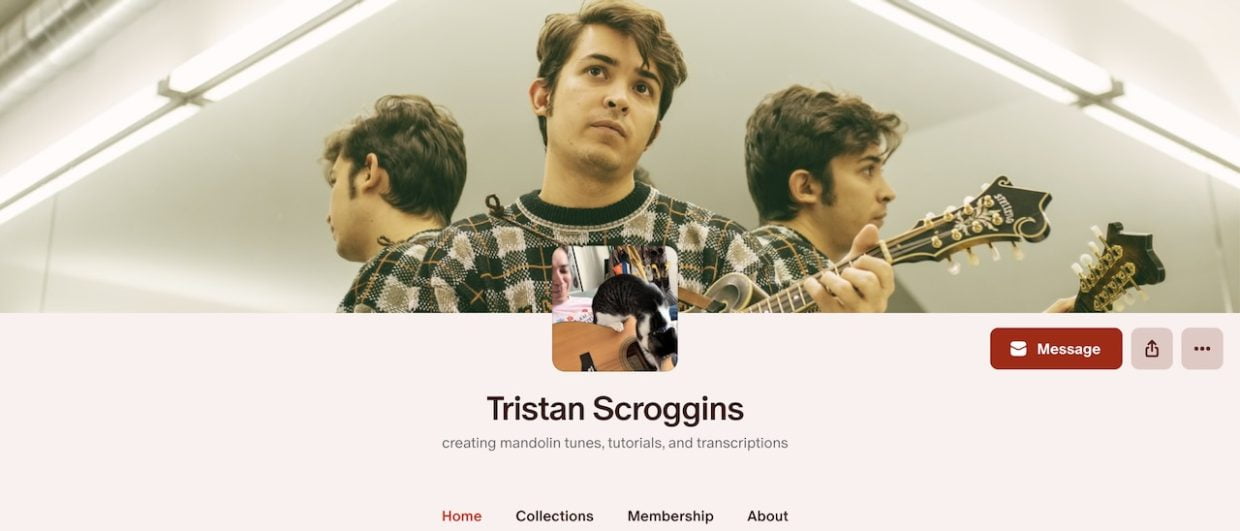
My social media career began in earnest in 2019. I was burned out from touring and was trying to find a way to stay relevant without traveling so much. I started by posting clips of myself playing tunes that I was learning, which eventually morphed into a Patreon page. Patreon became hugely popular with artists after the COVID-19 pandemic hit, but at the time I began using it there were relatively few educational bluegrass pages. I ended up formatting mine in a similar way to podcasts that I subscribed to at the time. I studied up on how the algorithm works and during lockdown began creating and posting fervently.

A preview of Tristan Scroggin’s Patreon profile.

Once restrictions were lifted, I found myself drawn back into performing and had less and less time to consistently post. In the ever intensifying war for attention, consistency is key, but I found no satisfaction in churning out things I didn’t care about and the things I do care about take time. So I found myself burned out again, trying to learn how to slow down. It’s a vicious and common cycle.

Ultimately, I love creating new things and sharing them with people. This is true of all of the people on this list, many of whom are friends and part of a community that openly shares tips and tricks on how to navigate the unfiltered digital miasma of social media. For every entry on this list there are a dozen more who I couldn’t include for space. Separating the wheat from the chaff in the world of online bluegrass content can be difficult, but there are many shining beacons that have and will continue to influence those that follow them.

Billy Strings

Billy had a small cult following in his home state of Michigan before videos of him performing at festivals went viral. Videos became an integral part of Billy’s brand with footage from his concerts becoming inescapable for a time. Taping culture, the act of recording a live show and posting it online – an activity with ties to old school tapes of bluegrass shows that David Grisman, Jerry Garcia, and Sandy Rothman created and distributed along the West Coast to help spread bluegrass – had grown with social media and videos of full performances were shared religiously online. This practice has challenged more traditional bluegrass artists who have often relied on physical CD sales and see digital distribution as undermining that effort. Despite that, Billy’s most recent record Me / And / Dad was #1 in pure album sales in country, and #5 in all of music selling more than 15,000 copies upon release.

Billy’s Youtube channel has more than 300,000 subscribers and currently features everything from music videos to full concerts to behind the scenes mini-documentaries. Billy has since partnered with Nugs.net to livestream and host his current shows. Nugs is a livestream website that provides high quality video and audio of concerts, mostly rock and jam bands providing an updated version of the Grateful Dead tapers from days of yore.

Carter Vintage

Since their start nearly a decade ago, Carter Vintage Guitars has posted demonstration videos and in-store performance footage to their YouTube channel, which became a who’s-who collection of Nashville talent. While the videos started out as informal captures from around the store, by the end of 2016 the production quality had increased with Jon Roncolato and Keith Cypert making sure they looked and sounded great. While there are videos from hugely popular rock and Americana artists such as Jason Isbell, the majority of their most popular videos are from Molly Tuttle and Billy Strings from when they had recently moved to Nashville and were still relatively unknown.

Clover Lynn

@hillbillygothic Heres an old tune called Katey Daley hope yall enjoy #banjo #fyp #bluegrass #appalachia #music ♬ original sound – Clover-Lynn

Clover Lynn, also known as hillbillygothic, is from Southern Appalachia and plays banjo with a dark gothic-esque twist that challenges Steve Martin’s assertion that “you can’t play a sad song on the banjo.” She gained a massive amount of fame on TikTok and later Instagram for dueting posts. (A duet contains two videos in a split screen that play at the same time.) Specifically, she’d duet TikToks featuring men “challenging” feminism, spouting misogyny, or outright supporting violence against women. When they began spewing hate speech, Clover would appear alongside the original video loudly playing tunes like “Foggy Mountain Breakdown” over their bad opinions. This trend was extremely popular; the most popular post I could find had 8.2 million likes. Clover also uses her platform to advocate for the Appalachian region and its often overlooked BIPOC and LGBTQIA+ people, issues, and history.

Dirty Laundry

Marcus Veliz, through his page Dirty Laundry, has created a collection of moments and memories from his travels. Marcus is a wanderer driven by mindfulness. His videos offer short, musical meditations in nature that reflect on the beauty of living in the moment, which then informs his music. It’s all very “carpe banjo.” He has cultivated a following of nearly 40,000 followers on social media, but has deliberately chosen to focus on Instagram, because he values the community that he can build there. When scrolling on an app, these moments can be completely disembodied from the people who made them, but by creating a collection of these moments, Marcus, like a poet’s anthology, has created a digital visage of himself with Dirty Laundry that feels as if Woody Guthrie had an Instagram account. (Read BGS’s 2023 feature on Dirty Laundry here.)

Educational Videos by Eli Gilbert, David Benedict, and Lessons with Marcel

Educational content is hugely popular online. While there are countless pages dedicated to teaching bluegrass, I’ve collected just a few here. All three produce educational content that is supplemented by other work. Eli Gilbert has run his YouTube channel for nearly a decade, growing an audience of people learning the banjo (that included myself). Eli centralized these folks on his Patreon page and Discord server. While he’s not the first to post banjo tutorials or start a banjo Patreon page, he is currently the most popular banjo instructor on Patreon with more than 2,000 subscribers.

David Benedict has been well-known in the mandolin scene for quite some time. He curates a Mandolin Mondays series that’s run continuously since 2016. What started as videos of him playing tunes grew into a collection of over 400 videos in partnership with Mandolin Cafe that feature incredible mandolinists from all over the world. Check out his YouTube channel, too.

Marcel Ardans has over 500 full-length videos on his channel, Lessons with Marcel. Perhaps his most unique contribution to the genre is the bluegrass YouTube video essay. Video essays are exactly what they sound like and in the last decade they’ve gained immense popularity with the general public, especially on YouTube. With educational topics such as A Guide to Bluegrass History by Subgenre to more light hearted ones like The Untold History of Bluegrass Triangle, Marcel is filling a niche in the bluegrass community by providing thoughtful analysis in a style that audiences have become accustomed to. Marcel has also collaborated with many other popular social media pickers in the same sphere such as Jake Eddy and Hayes Griffin.

In 2023, Marcel was an official social media ambassador at IBMA’s World of Bluegrass business conference, where he held a guitar contest in partnership with IBMA and Martin Guitars.

Hillary Klug

Hillary Klug gained international popularity for multiple viral videos featuring her fiddling while buck dancing. In addition to her 100,000 YouTube subscribers, she has more than a million Facebook fans with her most popular video on FB sitting at over 64 million views. Hillary has been able to leverage short form content to reach people all over the world and her frequent collaborators – such as Cristina Vane, Brenna MacMillan, and Bronwyn Keith-Hynes – have also developed substantial followings on these platforms thanks to video creation in this style.

Molly Tuttle

When sites like YouTube and Facebook launched, they created networks that many used to connect with real world friends and family. But videos uploaded to share with distant relatives had the side effect of being visible to the general public. So when Jack Tuttle began filming his children, Michael, Sully, and Molly, to share their musical talent with family back in Illinois, suddenly thousands of people could see their virtuosity. The family formed a band called The Tuttles with AJ Lee, performing regularly and continuing to post videos that would garner hundreds of thousands of views until the oldest, Molly, went to college.

I distinctly remember watching their most popular video dozens of times which featured Michael, the youngest, playing El Cumbanchero. I watched that video over and over again with a sense of both jealousy and admiration. This feeling would become familiar as similar videos – such as a very young Sierra Hull playing with Sam Bush – would also go viral.

Molly has gone on to become one of the most popular bluegrass acts currently touring. She was the first woman to win the IBMA Guitar Player of the Year and she won a Grammy for Best Bluegrass Album in 2022. In that same year, she was nominated for the Best New Artist Grammy alongside hugely popular artists such as Samara Joy and Latto. Molly’s brother Sully also still plays, professionally touring with childhood friend, bandmate, and fellow bluegrass internet child celebrity AJ Lee in her band Blue Summit.

The Petersens

The Petersens are a family band based in/near Branson, Missouri that has played theaters in that area for more than a decade. After their oldest daughter, Ellen, made the top 48 on American Idol (season 16), they began producing videos of themselves performing, which have become extremely popular. A video clip of Ellen’s audition is one of the first videos posted on their YouTube channel and currently sits at over 3 million views. They have since garnered more than 200 million views, which they’ve utilized to gain fans in countries all over the world. This form of vlogging has created an entire ecosystem and a style many other family bands emulate, such as the Sleepy Man Banjo Boys, The Family Sowell, the Cotton Pickin’ Kids, Williamson Branch, and more.

Bluegrass Barbie

A post by bluegrass.barbie on Instagram.

Bluegrass Barbie may not quite belong on this list, but I absolutely couldn’t write a piece about influential bluegrass social media personalities in the year 2024 without mentioning them.

As a chronically online teen, I watched the birth of internet “memes” – a term originally coined by evolutionary biologist Richard Dawkins in 1976. I very distinctly remember the first time I saw a bluegrass meme. Dread washed over me, as I was struck with a haunting vision of a future full of low effort, bottom text memes misquoting Bill Monroe. I lived in this “No Exit” style social media hellscape for years until 2023, when Bluegrass Barbie appeared.

This Instagram account doesn’t have the numbers (239 followers at the time of writing), but they do have the jokes. Rather than “dunking” on Mark O’Connor or Billy Strings ad nauseam, Bluegrass Barbie presents a look at the humor in growing up as a young woman in bluegrass in a way that is relatable, contemporary, and hilarious. It’s the only good active bluegrass meme account; fight me about it.

Russ Carson

Russ Carson, known as the banjo player for Ricky Skaggs and Kentucky Thunder since 2014, runs 81Crowe, a one stop shop YouTube Channel for banjo nerdery as well as a source of high-quality, behind the scenes footage of both his personal and professional life.

Russ creates more traditional vlog content. Videos of jam sessions have shown up on YouTube since the very beginning, but Russ innovated them by implementing a gopro he would wear on his head to film, simulating a POV experience for the viewer as a participant. In addition to performance and educational videos, Russ provides video content of private jam sessions and conversations with talented friends as well as his off-stage experience touring with one of the most well known bluegrass bands out there. His explanation of his personal thoughts on banjo as well as his other hobbies, including photography, are the kind of personal details that make vlogging what it is.

Take’s Bluegrass Album Channel

Takehiko Saiki’s Take’s Bluegrass Album Channel has an air of mystique about it. Since 2014 it has served as a digital museum where out-of-print vinyl records, albums, and CDs have been sporadically posted by the hundreds. In fact, this channel is no longer active. After posting 1,300 albums, Take started Take’s Bluegrass Album Channel Phase Two, which already has 1,000 more albums. Take is a fan of “roots music” in general and runs additional YouTube channels for folk, blues, jazz, and country music, but he seems to have a particular love for bluegrass. In addition to his album channels he has a channel for recordings of live performances from Bill Monroe to the Flying Burrito Brothers and everything in between.

These channels are a treasure trove for fans of classic bluegrass and an invaluable resource for amateur historians like myself. So much so that I felt conflicted about including it on this list for fear that it might disappear. Take is very clear that he will take down anything, immediately, at the request of the owner and states that the channel’s mission is to “make it possible for bluegrass lovers [all] over the world to have access to as many bluegrass albums not available on CD as possible.”


Photo Credit: Hillary Klug courtesy of the artist; Clover Lynn by Madison Tunnicliff.

How to Watch Earl Scruggs’ 100th Birthday Celebration

January 6, 2024 would be the 100th birthday of Earl Scruggs, a musician and artist who helped create bluegrass music and who was and is perhaps the most prominent and well known banjo player to have ever lived. Scruggs passed away in 2012, but this posthumous celebration – to be held at Nashville’s Ryman Auditorium – speaks to his undying musical legacy. The performance will benefit the Earl Scruggs Center, a museum in Shelby, North Carolina that’s dedicated to Scruggs, the local community, and its residents, and inhabits the former courthouse just up the highway from unincorporated Flint Hill, where he was raised.

The show, with musical director Jerry Douglas, will feature performances by bluegrass and roots music luminaries such as The Earls of Leicester, The Del McCoury Band, Gena Britt, Alison Brown, Sam Bush, Michael Cleveland, Stuart Duncan, Jimmie Fadden, Béla Fleck, Jeff Hanna, Sierra Hull, Bronwyn Keith-Hynes, Jim Mill, Justin Moses, Jerry Pentecost, Todd Phillips, Harry Stinson, Bryan Sutton, Tony Trischka, Abigail Washburn, Pete Wernick, and more. Limited tickets are still available and, for those who may not be able to attend in person, the entire show will be livestreamed via Veeps.com for $14.99.

It promises to be a quintessential Nashville evening, a star-studded lineup with endless appearances, special guests, and with certainly plenty of heartfelt remembrances and tributes in store. Livestream viewers will get a rare chance to be invited “flys on the wall” for a magical and one-of-a-kind concert.

Earl Scruggs’ legacy will certainly live on – for another hundred years and, we hope, beyond. BGS and many other roots music and bluegrass communities and organizations will continue to celebrate Scruggs’ centenary throughout the year, so keep an eye out for upcoming content that celebrates Earl Scruggs and his three-finger style.


Lead image courtesy of the Ryman Auditorium; inset graphic courtesy of Veeps.

WATCH: Two Exclusive Clips From Molly Tuttle & Golden Highway’s ACL Debut

Just last week on October 28, PBS and Austin City Limits aired Molly Tuttle & Golden Highway’s debut performance on the prestigious, long-running series. Now, fans can watch the full episode – which also features country singer, songwriter, and activist Margo Price – for the next four weeks via this link.

Our friends at ACL were kind enough to bring to BGS and our readers these two exclusive performance videos from Tuttle’s fiery and energetic performance. Fresh off their packed and buzz-y Road to El Dorado tour, Tuttle and band – featuring Shelby Means (bass), Kyle Tuttle (banjo), Dominick Leslie (mandolin), and Bronwyn Keith-Hynes (fiddle) – showcase the blistering and effortlessly tight ensemble they’ve crafted together after nearly two-and-a-half years of performing together. Their set on ACL (full set list below) will be certain to introduce countless new fans to what’s one of the fastest rising groups in all of roots music, let alone bluegrass.

“El Dorado” begins with Tuttle’s gritty guitar and powerful right hand, telling a story from her Bay Area homeland, which features heavily on her most recent album, City of Gold. “San Joaquin” is a careening, forward-leaning train tune that’s always perfectly under control, even while it feels as though, at any moment, the locomotive may be launched from her rails. But what is perhaps most impressive about Tuttle & Golden Highway is the combination of their loose, in the moment vibe and their absolute, minute control.

Tuttle’s vocals are at some times soaring and crisp at others fierce and on the verge of breaking, demonstrating the passion and power she’s always infused into her nuanced and striking lyrics – and her fine-tuned cudgel of a right hand. Before closing her appearance with “San Joaquin,” Tuttle doffs her wig – she’s been continually open and honest about her life experiences with alopecia – backing up the devil-may-care nature of her music and band with an attitude to match. It’s part of what makes her particular brand of bluegrass so engaging.

Enjoy these two videos from Tuttle’s Austin City Limits debut then head to PBS to watch the full episode.

Austin City Limits Season 49 – Margo Price / Molly Tuttle

Margo Price Set List:
“Been to the Mountain”
“Change of Heart”
“That’s How Rumors Get Started”
“Twinkle Twinkle”

Molly Tuttle & Golden Highway Set List:
“El Dorado”
“Yosemite”
“Dooley’s Farm”
“Where Did All the Wild Things Go?”
“Crooked Tree”
“San Joaquin”


Photo Credit: Scott Newton

WATCH: Bronwyn Keith-Hynes, “Can’t Live Without Love”

Artist: Bronwyn Keith-Hynes
Hometown: Nashville, Tennessee
Song: “Can’t Live Without Love” (Featuring Molly Tuttle, Sam Bush, Bryan Sutton, Jerry Douglas, and more)
Release Date: October 13, 2023 (single); October 17, 2023 (video)
Label: Sugar Petunia Records

In Their Words: “I’m so happy to share a behind the scenes studio video from the recording of my debut vocal single, ‘Can’t Live Without Love’ featuring Molly Tuttle and Sam Bush. This song is the first track I’ve released from my upcoming album, out in Spring 2024. We tracked it last fall in Nashville, at Brent Truitt’s studio, ‘The Cave,’ and it was actually the first song of the first day of recording the album, so it’s kind of fitting it should also be the first song to be released.

“I’m joined by some of my absolute favorite musicians: Jerry Douglas, Bryan Sutton, Dominick Leslie, Wesley Corbett and Jeff Picker. They all brought so much joy and magic to this track! And it was such an honor to get to sing with Molly Tuttle and Sam Bush, both of whom inspire me so much on a musical and personal level. This song by Jamie Hartford is a beautiful meditation on what we can and can’t live without in this life and how we can overcome challenges by focusing on what’s important.” – Bronwyn Keith-Hynes

Track Credits: Written by Jamie Hartford

Co-produced by Brent Truitt and Bronwyn Keith-Hynes
Recorded by Brent Truitt. The Cave, Nashville, TN
Mastered by Alex McCollough. True East Mastering, Nashville, TN

Bronwyn Keith-Hynes – lead vocal, fiddle
Molly Tuttle – harmony vocal
Sam Bush – harmony vocal
Jerry Douglas – Dobro
Bryan Sutton – guitar
Dominick Leslie – mandolin
Wesley Corbett – banjo
Jeff Picker – bass


Photo Credit: Alexa King Stone
Video Credits: Shot at The Cave in Nashville, TN; produced by Steve Voss of Solar Cabin.