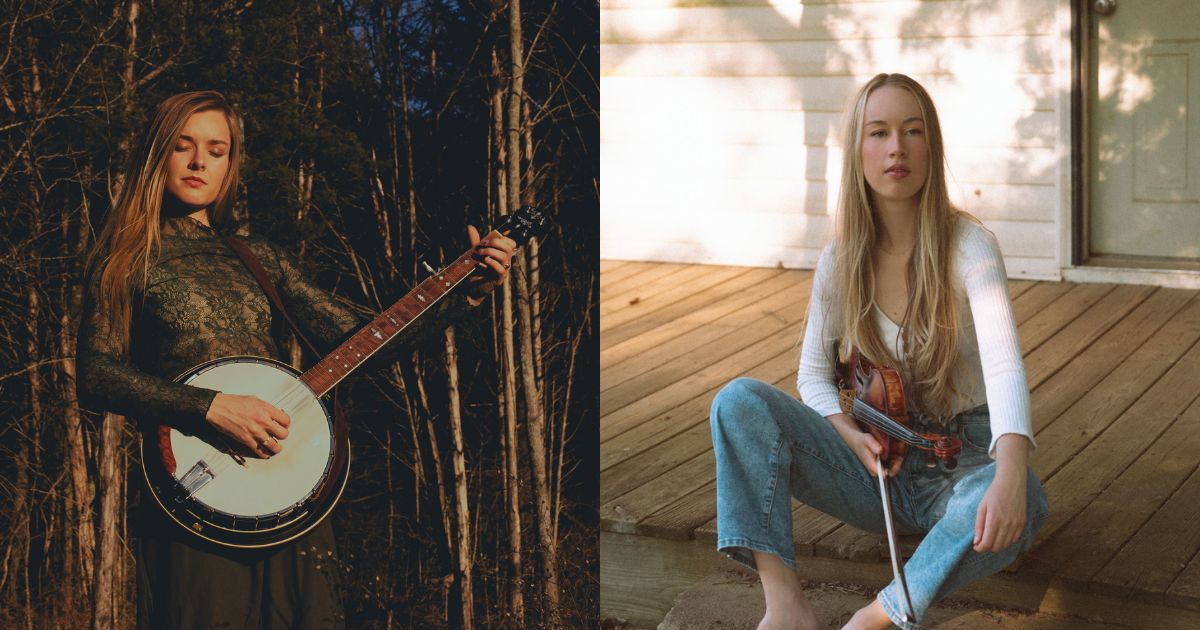
Two Women on the Cutting Edge of Bluegrass’s Future

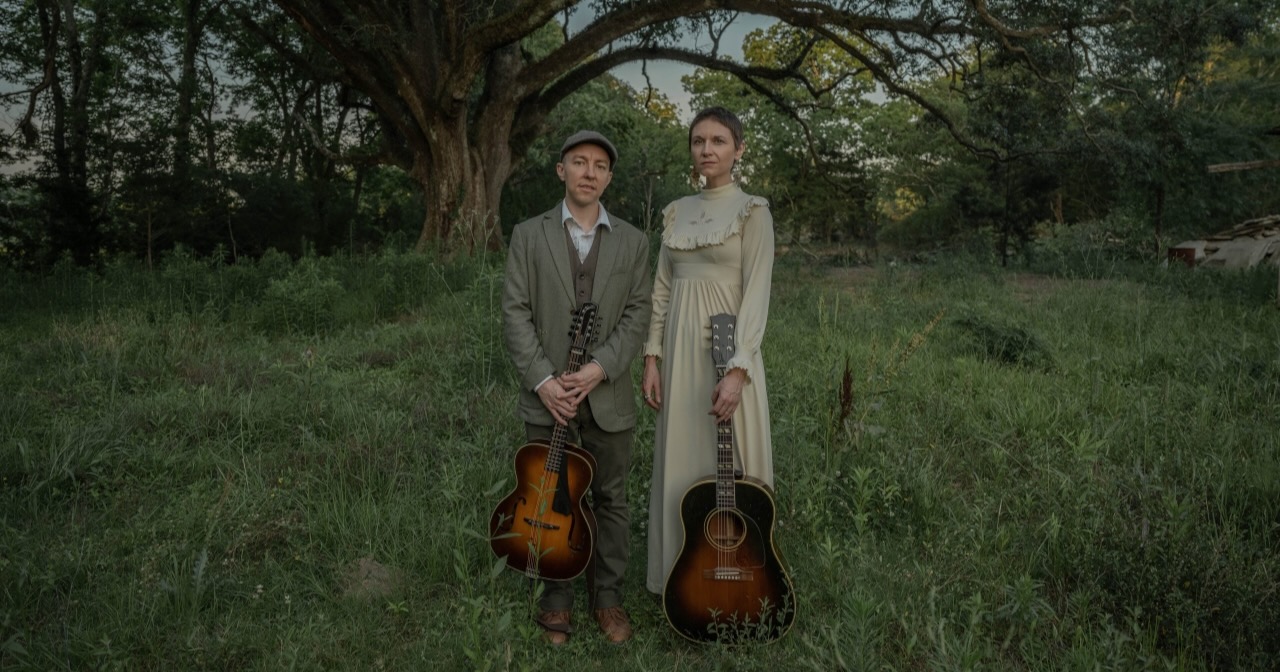
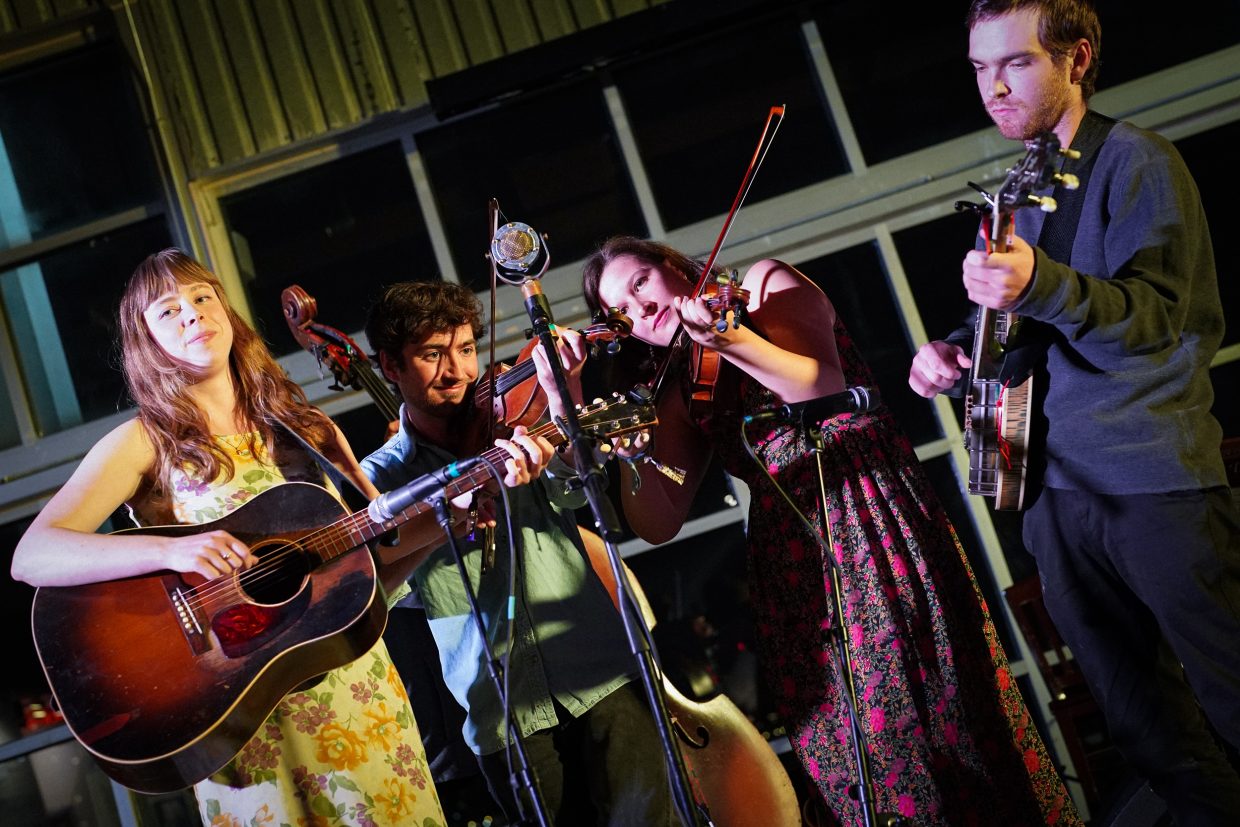
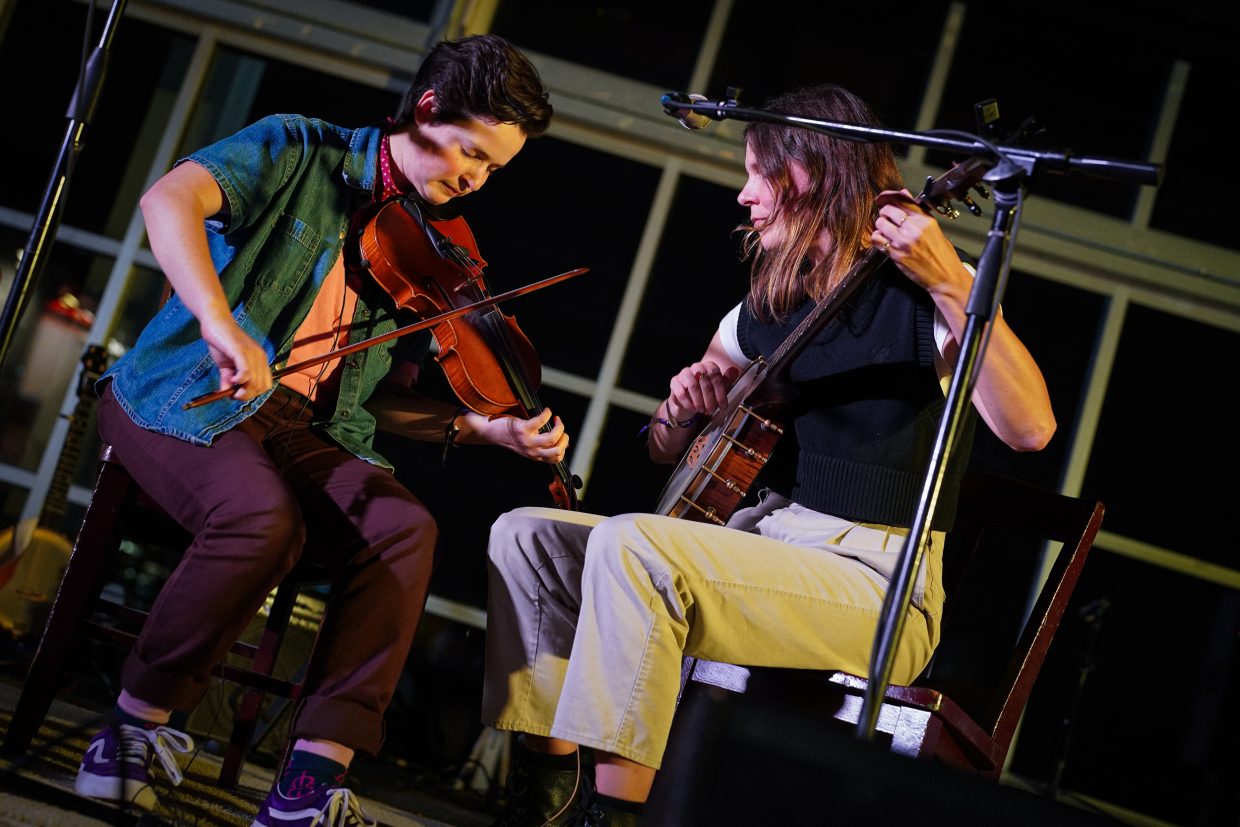
At whatever level you may be plugged into the online bluegrass scene, you have surely heard, seen, or scrolled into content by Bronwyn Keith-Hynes and Brenna MacMillan. These two young, talented pickers are part of a vibrant and blossoming community of traditional musicians and folk artists that includes folks like Cristina Vane, Victor Furtado, Hilary Klug, Wyatt Ellis, and many more.

What makes these creators stand apart, especially Keith-Hynes and MacMillan, is that they aren’t just shoehorning social media into their art-making and creative processes to move up Music City ladders and check abstract music industry boxes. Instead, they’ve intentionally demonstrated how powerful, engaging, and charming content can be when it’s made with art, creativity, tradition, and joyful, cooperative generation as its focal points. Instead of bending over backward to construct virality and lean into transient socials trends, they let their talent, their songs, and their communities do all the talking.

In May, Keith-Hynes released her second solo album, I Built a World, her first project to center songs and her recently-developed, impressive vocals. Drawing on musicians and pickers from her immediate circle and her main gig – Molly Tuttle & Golden Highway – as well as tapping notable country stars and bluegrass legends, the project finds Keith-Hynes at her most confident and unbothered. This is a fiddler-singer-front woman who has found her voice – literally, through work, practice, and vocal lessons as well as figuratively, not satisfied to craft a career on bowing the fiddle alone.

@bronwynmusic Somehow Tonight [Earl Scruggs] SPBGMA stairwell jam!!! Our favorite acoustics for sweet harmonies 😇 🎻: Bronwyn Keith-Hynes 🪕: Brenna @Brenna MacMillan 🎸: Danielle Yother #spgbma #bluegrass #indoor #festival #nashville #harmonies #womeninmusic #banjo #guitar #fiddle #fridaynights #weekend #fyp #stairwellsinging #explore #foryou #bluegrasstiktok ♬ original sound – Bronwyn Keith-Hynes

Later this year, MacMillan will release her debut solo album. Its lead single, “What’s to Come,” features Ronnie McCoury and is indeed a harbinger for the superb album to follow. This project, which highlights MacMillan’s prolific songwriting and features her musical community fleshing out the band, is built directly upon the successes she, Keith-Hynes, and others have found on the internet. Eschewing labels, management, or traditional roll outs, MacMillan will release the project herself, with funds raised on GoFundMe, bringing the music directly to her consumers on her own website and socials channels without “middle men.”

So, not only are MacMillan and Keith-Hynes innovating on ideas around what it means to be a side person, a career picker, and multi-hyphenate, professional traditional musicians, they’re taking all of their expertise as online brands and businesswomen to find success for themselves, on their own terms. They’re focusing on what matters, centering their communities, and making incredible, superlative music at the same time.

BGS connected with MacMillan and Keith-Hynes together via video chat to talk about their unique approaches to making albums, content, and music, while highlighting the deep and tight-knit “bluegrass influencer” circle they’ve each helped create since moving to Nashville and putting their all into bluegrass.

I wanted to start by talking about community and musical community – one of the reasons why I wanted to have you both in conversation with each other is how you each rely on, draw from, and center your musical communities in what you create. It may look like these are solo projects that you’re making, but they’re clearly not solitary projects – and they don’t really feel like vanity projects, either. from the outside looking in either. It really feels you’re making music with other people so you can make music with other people. Could you talk about your work, your solo albums, and working in your communities?

Bronwyn Keith-Hynes: Yeah, I think first and foremost, me and Brenna are good friends and we just ended up being drawn together. We both moved to Nashville around the same time and ended up doing a lot of things together and had a lot of similar interests. That’s cool to find. I haven’t found that many women who have my same interests until I moved to Nashville and then all of a sudden I felt like there was a whole bunch. It’s been really awesome to find that.

First of all, I’m just such a fan of so many people, and I wouldn’t want to make music any other way. My project was based around songs from my community, which was really special to me. It was like a little nerve wracking reaching out to friends and people I respected to be like, “Do you have a song that you’re not going to record that I could record?” But, thankfully, a lot of people did – including Brenna – and I ended up recording one of her songs. And, she sang on it and it was awesome!

I feel like I couldn’t do it alone. I know my strengths and then I know other people’s strengths and I want to make sure we’re all [drawing on our strenghts]. I don’t know if singing is my strength, but it’s something I feel passionate about and feel driven to do for whatever reason. I know the things that I want to put out in the world; I want to make sure the music I’m making has the best parts of myself, but then the best parts of everyone else who’s playing on it.

I think that folks who aren’t just straight white men in this industry, we realize from the get-go that we have to have others with us. We have to do it together. Otherwise we’re not going to go the distance. I feel that in both of your music, as well. But Brenna, I wonder what that question brings up for you, as you’re thinking about and positioning your album to release as well?

Brenna MacMillan: It’s funny, because when Bronwyn asked about songs that I had, I had like a bunch and at that time I wasn’t even thinking about [making] an album at all. I think it was maybe like a couple months later that I decided, based on my friends that kept being like, “You should record some of these songs!” And I was like, “I guess…” I wasn’t thinking about it at all whatsoever.

Then that’s another way like to get my songwriting out there, too. And why wait for someone to come to me for songs if they don’t even know that there are songs? Besides my friends, which is who I first would want to do my songs anyway. It’s funny, because obviously it’s really cool putting out your own music, but I still get more excited when “Riddle” comes on than when “What’s to Come” comes on. [Laughs] That is so cool!

Someone else’s vision for your song, it’s like the coolest thing ever to me. Because, I know what my brain comes up with so it’s not shocking, but someone else’s ideas around something that you wrote – it’s like the coolest thing ever, and I guess that’s why I love the community. I feel like community is like the word that I say way too much, but I do I love it. For Bronwyn, Cristina [Vane], Hilary [Klug], Emily, and Mallory, to some extent back in 2018, we all were moving to town around that time and then 2020 hit and I think that’s when we all got a little closer, because we were all bored and wandering around. I took a lot of walks with my friends, individually, we tried to stay across the path from each other, but I think those bonding moments brought us closer. We were like, “Let’s get coffee” or “let’s get dinner,” and then we ended up making a video or something and it all evolved into great friendship, plus people online being like, “Oh, we like to hear you guys play together!”

@brennamacbanjo Friday night with Lester Flatt! #bluegrass #harmonies #sisters #womeninmusic #fyp #banjo #fiddle #musicians #foryou #friday #weekend #vibes #flatt #scruggs @bronwynkeithhynes @cvanemusic ♬ original sound – brennamacbanjo

One of the things I love most about that whole community of content creators – you’re talking about Cristina Vane and a lot of these other folks you create with here in Nashville – it never feels like you’re trying to shoehorn bluegrass into contemporary content creation. It really seems that making bluegrass music and making roots music with your friends is the impetus, and then you made it fit into social media – instead of vice versa. Like, it’s happened organically and from a community standpoint first, and not just from “I have a social strategy. I have a five year plan.” Do you agree or disagree?

BM: Oh yeah, I agree. There’s not much strategy that’s happened in here. There’s not a lot of that going on. [Laughs]

And yet, I can tell you objectively from the outside looking in, y’all are still operating with 110% more strategy in mind than most of bluegrass. [Laughs]

BKH: I feel like Brenna and I have both talked about – correct me if I’m not saying this right, Brenna – wanting social media to serve us, rather than for us to serve social media. The end goal, for at least for both of us, is not like to become a social media star, it’s to have it serve us, to get our names and our music out to more people.

BM: Yeah! And it felt like it was very random that social media took off for me. I was just like, “Where are you guys coming from? Why do you want to hear me kick off a J.D. Crowe song like every day?” But at the same time, it has its own frustrations and that’s when me – and I think a bunch of the other girls that do this side by side with their music careers – we’re like, “We’re going to have this, but only if it makes sense for helping promote our live gigs and any projects we’re doing.” But as soon as I get nasty comments, or this, or that I’m like, “Oh, I will literally just get off of this app if it’s going to go this direction.” I just block people and then keep going.

I want an audience who will appreciate the things that I want them to appreciate. I think that I’ve trained my audience, too. Basically I shoved it in there, “You are going to listen to this slow song and try to enjoy that. And if you don’t, then I’m going to take you [out of my following]…” Because there have been some people who think that I am a content creator on there, and I’m like, “No, I play music and I took an hour out of my day and posted this video and we’re lucky that happened. Now I’m on my way to a gig and I don’t need some [negative] comment.” But you could come to a live gig and request a song!

Brenna, one of the things I love about your upcoming album and the messaging around it is that you’re really doing  a direct-to-consumer business model and roll out. You’re being like, “Y’all can come to me. You already know how to find me, so this is where you can find the music, too.” I think it’s amazing and again, it’s the cutting edge of what the future of bluegrass will be while it’s also so fucking trad. It’s like back in the day, when bluegrass music required taking the car battery out of the car to play a show in the high school auditorium and then putting the battery back in to drive to the next high school auditorium.

It’s like you’re doing that in the 21st century. You’re being a DIY bluegrass musician, but in 2024. Can you talk a little bit about the direct to consumer model you’re using with your album roll out?

BM: I was like, I need to build a website so that there’s everything in one place – I remember why I did it, too, because there are a bunch of fake accounts. I knew I needed something out there to be authentic and to have all of my official links. That was literally my number one goal with the website. So now, here’s the link to my website, you can find my YouTube channel, my Facebook, my Instagram, my TikTok from there. And you’re going to know you’re in the right place. I’ve basically just started to try to push everything to my website and go from there to everything else, even if it’s taking you back to Instagram. Because [the website is] where everything’s going to happen, so that you know that it’s me instead of some person scamming you. I guess with that in mind, I started trying to link everything, like in my stories, when I’m talking about anything coming up, I just say, “Go to my website!”

Bronwyn, I wanted to ask you again about community and about bringing your circle, your scene into your album. I love all of the features on your album and I also love that it doesn’t just feel like you’re reaching for a Collaborative Recording of the Year nomination. 

[All laugh]

But I wanted to know how it felt to you, as you were thinking about who you wanted to have on the record and why you wanted to have them on the record?

BKH: I’m glad to hear you say that it feels like it’s in service of the music, because that was definitely my intent. It was the funnest part of [recording the album], for me. I did kind of make those decisions after the tracks were done and I’d done my vocals. I just didn’t know how it was going to turn out until I heard it. Then I would brainstorm with Brent [Truitt], and Jason [Carter], and whoever about who to get on it. Dudley Connell was somebody I was really excited about and I’d never met him. I didn’t know him. Someone just gave me his number, I called him up and left him a nervous voicemail. But yeah, he turned out to be the sweetest guy ever – and he’s a bluegrass hero, I love all those Johnson Mountain Boys records.

It’s crazy especially being a new singer, I haven’t heard my voice recorded much ever. Then to hear my voice with all these other voices that I know and I’ve heard a lot – to hear like that combination for the first time – it was like very surreal!

What was it like working with Dierks [Bentley]? We all know his bluegrass pedigree and his connections to the Station Inn and to the McCourys and that he’s always had one foot so solidly in bluegrass, but y’all would have gotten to know him and got to spend some time with him on the road with Molly Tuttle & Golden Highway, too. I wondered how how that conversation happened and also what it felt like to you to have someone who has gold records and platinum records collaborating with you on your record?

BKH: I grew with his Up On The Ridge album, it was literally one of the first bluegrass albums I heard around my college years.
I was obsessed with it and I thought it was so cool. It got me into listening to the more trad stuff, but I’d always loved his music and then being Jason [Carter’s] partner, and Jason and he were friends even before he was famous. So they’ve been friends from the get go.

I’d met him a few times through Jason and then again when we were on tour [opening for him], that was cool. ‘Cause I felt like we could meet [more as peers], not just because I’m somebody’s partner. But now, this is my gig and this is your gig. And you’re asking us to sit in every night. I felt a little bit more comfortable to make that ask. He just came into Brent’s studio one day and tracked it in under an hour. He’s great! Very quick.

Brenna, talk to me a little bit and if you have features on your upcoming album – and if you can’t talk about them yet, that’s totally fine.

BM: I know, I was trying to think of what I should say – I don’t know, I’m the one in charge! But let me check, I don’t know if Brenna wants to tell all that yet. [Laughs]

At the very least, we can talk about Ronnie [McCoury] and “What’s to Come.” Ronnie’s one of my favorites. Talk a bit about, again, bringing in community and bringing in the scene that already surrounds you.

BM: The core band in the studio was [Mike] Bub on bass and Jake Stargel on guitar. Me, I played banjo on four or five of the tracks, but I have been writing a lot on clawhammer lately and I know that I’m not good at it, so I had Frank Evans come in for those and then I had Cory [Walker] play on a couple very last minute. I was thinking, it’s just going to be better if he does it.

When the special guests ideas popped in my brain, I was thinking, “Do I want special guests to be like my friends, my age, or like people that I really are like heroes of mine? Is this the time to ask them? I don’t know.” Nobody knows who I am, but that’s okay. I had met Ronnie a handful of times in kind of settings where it was like, “I’m here with so and so” and I’m just a little curmudgeon. [Laughs]

“What’s to Come,” it’s like a reflective life song. I know that I sound like a small baby when I sing, and I was thinking of someone with an older sounding voice. Like wanting ancient, lonesome vibes so that there could be old and young together, pondering about life. If you’re young or if you’re old, you still ask all the same questions about life.

Also, [Ronnie’s] gritty mandolin playing. I love it so much. Jarrod Walker played on most of the core mandolin stuff, but he happened to be out of the country that session. I was like, this is perfect! But it’s funny, because I didn’t even know if Ronnie was going to bring his mandolin! [Laughs]

To wrap up, here’s a question I had for both of you, because you’re both musical shape shifters. You move in and out of musical contexts so easily; you’re both side people, you’re both front people, you’re both social media brands. How do you maintain your senses of self?

BKH: I feel like I can’t get away from myself! I don’t feel like I ever even think about that. The only way I’ve struggled with that a little bit, or thought about that more, is doing the solo projects. That’s where I’m like, “Wow. OK. What would Bronwyn do next?” But I think I know what I like and I know what I want to do. I’m just like, “How am I going to do that? I need to figure that out.

BM: I think similarly, I don’t really think about it that much. I think I know what I like, too. And I know what I don’t like. From the get go, I’ve very much just been myself online. I come home from the lab job and do a video with dark circles [under my eyes] and grunge and smelling like hemp trash. That’s what I established from the beginning. So now, I feel comfortable being myself.

Pretty much everything has been my own ideas and, it’s funny, because ten of my eleven songs are originals on the album, three of which are co writes, but hearing it come to life in the studio with other people, it still ended up being what I thought it should be. Which is weird, because there’s no way that I could bring some of these musicians into the studio who are eons beyond what I could imagine, but they knew exactly what the track needed. It does sound like me still and what my vision would have been if I had expressed it [all myself].

BKH: I feel like I’m like more myself these days than I’ve ever been. I feel like for a while, starting out in bluegrass, I had a lot of ideas of what a woman in bluegrass needed to look like, or be, or act like. In the last couple years, maybe inspired by being with Molly in Golden Highway, I feel like I’ve been able to let a lot of that stuff go – about how I should dress and whatever. Now, I embrace the things I actually like.


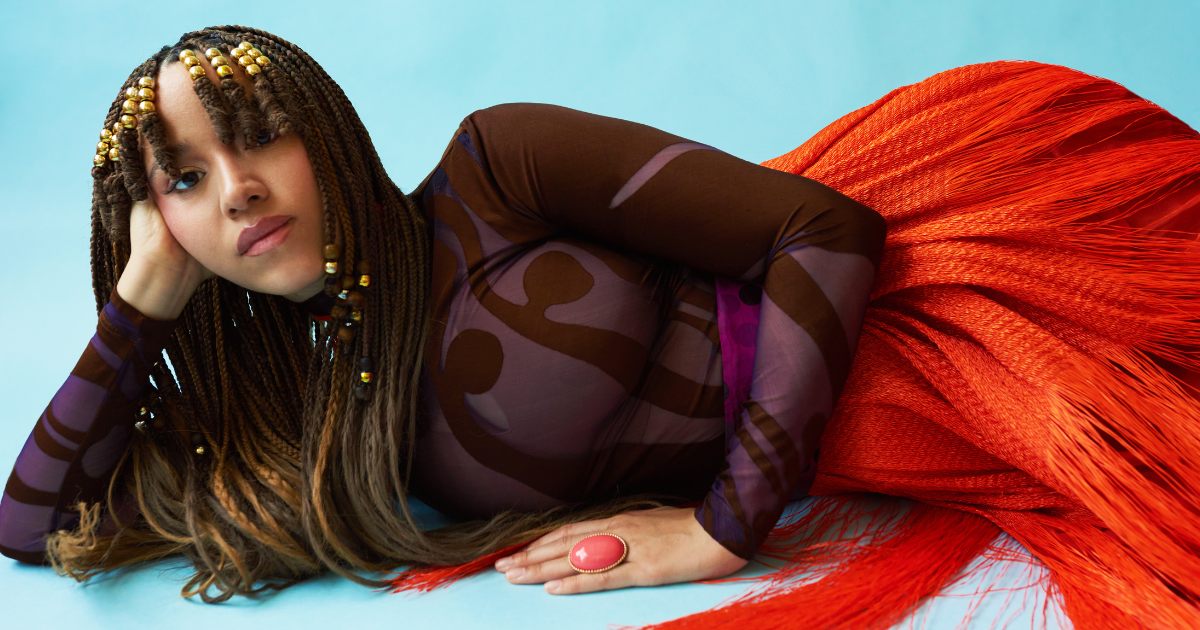
Photo Credit: Brenna MacMillan by Sophie Clark; Bronwyn Keith-Hynes by Alexa King Stone.
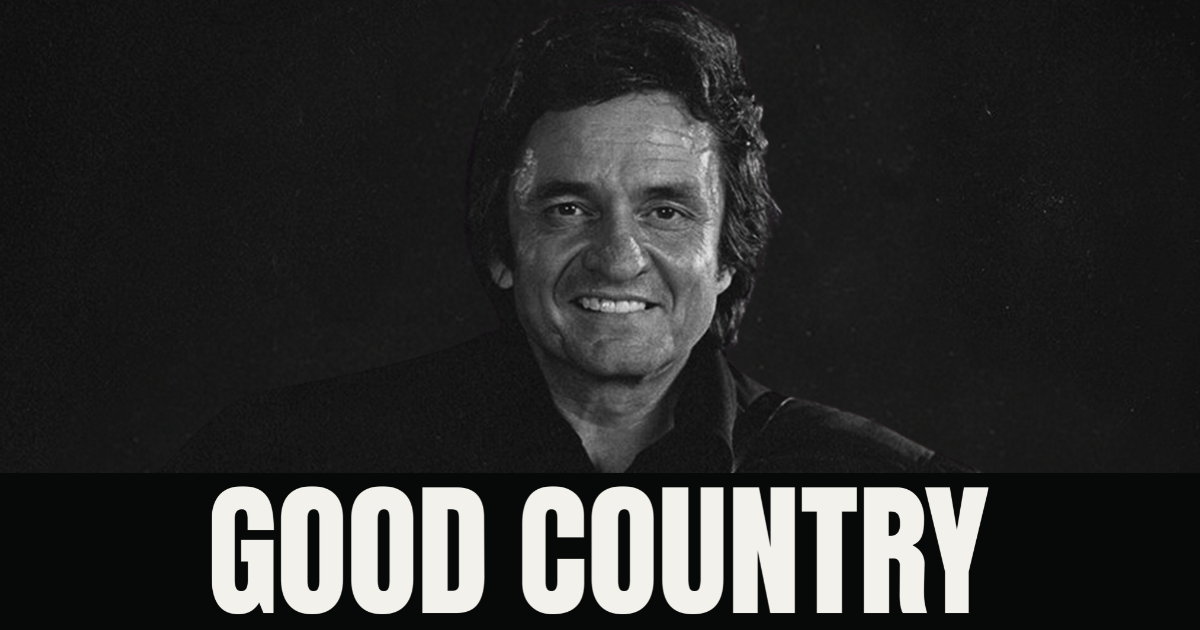
10 of the Best Deep Voices in Country

No matter where you look in the history of country music, you’ll find some common themes – working-class stories, banjos, an appreciation for the simple life. But there’s something else fans of country music then and now all seem to love, and that’s a deep, rich singing voice.

In this roundup, we’ve gathered just 10 of the all-time best deep voices in country music, from smooth baritones to booming basses. Whether you’re a fan of outlaw country, pop country, or something a bit more classic, there’s a voice for you on this list.

Amythyst Kiah

Combining elements of Americana, old-time, folk, and country, Amythyst Kiah has spent the past decade proving she has one of the most powerful deep voices in roots music. Whether she’s sharing an arrangement of a traditional ballad or innovating Americana, Kiah brings her unique, rich, and haunting voice to everything she does. Her song “Black Myself” even earned her a Grammy nomination in 2020 for “Best American Roots Song.”

Accompanied only by banjo, Kiah’s take on the traditional ballad “Darlin’ Cory” highlights the literal and emotional depth of her one-of-a-kind voice.

Waylon Jennings

Known as a pioneer of outlaw country, Waylon Jennings got his start in country music when he was just a 14-year-old kid in Texas. He then spent six decades gracing the world with his soothing baritone voice, earning himself a permanent place in country music history – and the Country Music Hall of Fame. Alongside frequent collaborators Willie Nelson, Kris Kristofferson, and Johnny Cash, Jennings recorded some of the most legendary songs in the modern country canon, including “Highwayman” and “Mammas Don’t Let Your Babies Grow Up to Be Cowboys.” Jennings passed away in 2002, but his deep and powerful voice remains one of the most recognizable sounds in country music.

Scotty McCreery

Newer to the scene, North Carolina-born Scotty McCreery got his industry start in 2011 after winning the 10th season of American Idol. Since then, he’s enjoyed a successful career as a country singer-songwriter – he even became a Grand Ole Opry member earlier this year – thanks largely to his smooth, deep vocals. Fitting in perfectly with the modern Nashville sound, McCreery’s most recent single, “Cab in a Solo,” showcases this young country star’s keen skill as a baritone crooner.

Orville Peck

A mysterious character in the alt-country realm, Orville Peck has one of the most stunning deep voices in country music, genre-wide. Boasting an impressive vocal range (baritone to falsetto), Peck is best known for his resounding lower register. Teaming up with country stars like Midland and Sheryl Crow, Peck has quickly made a name for himself since the release of his debut album, Pony, just five years ago. Inspired by ’60s- and ’70s country (à la Jennings and his collaborator, Willie Nelson), Peck’s brooding, emotive, and theatrical voice is a must-hear for appreciators of high-quality baritone country singers.

Trace Adkins

First rising to fame in the mid-’90s, Trace Adkins continues to reign as a big name in pop country. His gruff-yet-soothing voice sounds like a day on the farm in the hot sun — and that’s exactly why he’s on this list. A songwriter, singer, and dynamic performer, Adkins wields an unmistakable baritone voice that helped shape the sound and direction of Nashville in recent decades. If you’re looking for a chance to relive the glory days of early pop country, Adkins has the voice you’re looking for.

Randy Travis

One of the most popular country singers of all time, Randy Travis is known for his earnest songwriting style and velvet-smooth baritone voice. After getting his start in the 1980s, Travis recorded over 20 albums and charted on the Billboard Hot Country Songs chart over 50 times. In 2013, he experienced a tragic, life-altering stroke, affecting his ability to sing and perform. With the help of AI, producers recently teamed up with Travis to record and release his first new single in over a decade, “Where That Came From.” Using AI to combine past existing recordings of Travis’s vocals with contributions from another singer, James Dupre, the new single captures the singer’s spirit and depth, giving listeners a newfound opportunity to appreciate a living legend.

Johnny Cash

Let’s be real: This list would not be complete without Johnny Cash. Arguably the most famous country music star to ever live, Johnny Cash is known near and far for his deep, rich voice that straddled the border between baritone and bass. Cash had a storyteller’s voice, and he used it proudly to tell the stories others weren’t telling. As time went on, Cash’s voice settled into its lower register, which can be heard on his final non-posthumous album American IV: The Man Comes Around. But there’s no better way to showcase the rumbling voice of Johnny Cash than through his infamous recording of “Folsom Prison Blues,” recorded live at Folsom State Prison in 1968.

Jim Reeves

One of the forefathers of country music, Jim Reeves wielded one of the most beautiful baritone voices in the genre. A true crooner and country & western artist, Jim Reeves’s voice is smooth, deep, and unforgettable. Arguably the most technically accomplished singer on this list, Reeves topped the country charts throughout the ’50s, ’60s, ’70s, and ’80s. A dynamic and masterful baritone with a gentle stage presence, Reeves played a huge role in shaping the sound of Nashville and his influence is still felt today.

Colter Wall

Canadian singer-songwriter Colter Wall released his first single, “The Devil Wears a Suit and Tie,” in 2015 when he was just 20 years old. Showcasing Wall’s impossibly deep and weathered voice, the single swiftly launched the young artist into the limelight, mostly via a live performance video on YouTube. Treading the country and Americana borderlands, Wall has one of those voices that makes you think, “How is that sound coming out of that person?”

Since his debut, Wall has released five full-length albums, including his 2023 release, Little Songs. Throughout his catalogue, Wall never misses a beat or fails to remind us that he has one of the deepest and richest bass voices in country.

 Josh Turner

For Josh Turner, bass singing is old hat. He grew up singing bass parts in church choirs and gospel quartets, then debuting at the Grand Ole Opry when he was just 24. Now in his 40s, Turner has spent over half his life making waves in the industry as one of the only true bass singers in the genre — and a top-notch one at that. In May 2024, Turner released a brand-new single, “Heatin’ Things Up,” proving he still deserves the title of the man with the most satisfying deep voice in country.


Photo Credit: Johnny Cash courtesy of JohnnyCash.com.

MIXTAPE: Books, Story, & Poetry by Ordinary Elephant

As humans, we have a history of turning to story for comfort, direction, and preservation – a way to keep the present alive in the future. Story can be found in books, poetry, song, and our minds and mouths.

This playlist starts with our song, “Once Upon a Time,” which was born of our turning to story in the deep uncertainty of early 2020, and is the opening track of our recently released, eponymous album. In this Mixtape, we feature songs that incorporate or allude to books, authors, poetry, or story, written by artists that inspire us to write our truest stories. – Ordinary Elephant

“Once Upon a Time” – Ordinary Elephant

When the world shut down in March of 2020, we found ourselves one show into a two-week Australian tour. After scrambling to get home, the quiet hit and the processing of a new world began from our Louisiana porch, deeply feeling the human instinct to turn to a sense of story when faced with intense uncertainty.

“Always a Little Less Time” – Justin Farren

“So I guess that’s always been the story of you and I.” Justin paints pictures with the specifics that draw you in and let you see yourself in his songs, then cuts straight to the truth. The impermanence and the importance of our time here. This song guts us, in the best way, every time.

“Nothing at All” – Clay Parker & Jodi James

“I’ve got books stacked on the bedside table, that are gonna make me well and able, but the light in my room is still burned out,” Jodi sings, as one of our favorite duos spins an ethereal tune of rejection and resolve.

“Walking Each Other Home” – Mary Gauthier

One of our favorite songs of Mary’s. Achingly beautiful, it details the uncertainty of a relationship ending, but also speaks to the broader idea of the unknown. “I don’t know how this story’s supposed to go,” she sings in the chorus, as it’s hard to know when we’re living it. But there is clarity and acceptance that “we’re all just walking each other home,” helping each other find our own stories.

“Under My Fingers” – Wes Collins

Wes is one of those writers who takes you places you didn’t know you needed to go. Both with his words and with his music. This song follows a writer’s thoughts, even alluding to the scarcity mindset that can sometimes take hold of creatives. The fear that it won’t last and the solution of surrendering to the pen.

“Paperback Writer” – The Beatles

The Beatles were Pete’s first musical love, showing up in his life around sixth grade and giving a wealth of melodies and harmonies to soak in. He studied guitar through their songs, which span so many genres, it was easy to get lost in their catalog for years.

“Windmills” – Mutual Admiration Society

The story of Don Quixote twisted into a song by one of Pete’s favorite songwriters, Glen Phillips. This song first appeared on Toad the Wet Sprocket’s 1994 album, Dulcinea. This version is from an incredibly underrated collaboration between Glen and Nickel Creek. Both of these artists changed Pete’s musical world, Glen being one of the first songwriters that he really dug into and in this collaboration, Nickel Creek introducing him to the world of acoustic music.

“Hemingway’s Whiskey” – Guy Clark

Guy Clark’s use of simple language to tell deep truths is unparalleled in the modern songbook. Here he salutes his admiration for another legendary writer, toasting with a drink, and reveling in the difficult work it takes to be a writer of that stature. Guy’s songs are revelations.

“I Ain’t Playing Pretty Polly Anymore” – Dirk Powell

We have the choice to perpetuate stories or let them die off. Some traditions continue to enrich our lives, but it’s important to realize when we’ve moved past them and when it’s time to draw the line between cautionary tale and normalizing certain types of violence. As someone steeped in tradition, Dirk makes an important statement about what songs are able validate, and that we can choose not to continue singing certain ones.

“The Other Morning Over Coffee” – Peter Mulvey

In remembering a conversation with a friend, Peter recalls talking about having lived lives “so full of poetry and adventure that if we died right then and there it would have been fine.” It’s a goal we can hope that some part of us is always aiming for. As the song unfolds, it becomes a perfect reminder that we’re all moving through the same world, the same bigger story, despite the difference in our details.

“Velvet Curtain” – Anna Tivel

Anna’s songs are movies, thick with imagery and emotion. She’s one of those writers who you’re thankful is walking this earth at the same time as you. This song shows us that sometimes there are words that need to be heard, and sometimes you’re unknowingly the one singing them.

“Billy Burroughs” – Jeffrey Martin

Jeffrey’s work tends to knock your socks off, right out of the gate. His rich voice and insightful command of language immediately demands your full attention. His background of teaching literature melds with his own writing here.

“Tailor” – Anaïs Mitchell

“When he said that my face he’d soon forget, I became a poet.” One of our favorite songwriters, Anaïs has a way of weaving a story that hits you in the softest spots. Here she spins a gorgeous warning of how easy it is to let others define our story, and that we can learn to tell our own if we remember to listen to ourselves.

“The Prophet” – Ordinary Elephant

Crystal came across a copy of Khalil Gibran’s The Prophet, gifted to her by a dear friend 20-something years ago. The bones of this song were hiding between the dog-eared pages, a discovery of self-love through returning to reminders of a love gone.

“Everything Is Free” – Gillian Welch

“We’re gonna do it anyway.” In lyric, and in delivery, Gillian shows us the power of song and story to persevere. Her voice and style are singular, and are always a welcome reminder to find comfort in the unique and truest version of ourselves.


Photo Credit: Olivia Perillo

PHOTOS: The 5th Annual Baltimore Old Time Music Festival

More than 1,500 people from 26 different states made their way to the fifth annual Baltimore Old Time Music Festival, bringing pickers, fiddlers, and players of all stringed instruments to rejoice along the waters of the Charm City’s Inner Harbor last month, on April 19 and 20.

A convincing demonstration of the city’s thriving old-time and roots music scene, the Old Time Festival saw attendance more than triple from 2023 as it packed the Baltimore Museum of Industry (BMI) in the first year at its new location after four memorable years at Creative Alliance.

Presented by the Center for Cultural Vibrancy and hosted by father-son duo Ken & Brad Kolodner, this year’s event boasted a lineup of high-profile artists and groups both honoring the traditions of old time, and seeking to broaden them.

BMI and its astonishing collection of artifacts set a remarkable scene that grew to life with performances early Friday evening on the Harborview and Pavilion stages, each presenting splendid views of the Inner Harbor and famous landmarks, like the Domino Sugar sign glowing just to the southeast.

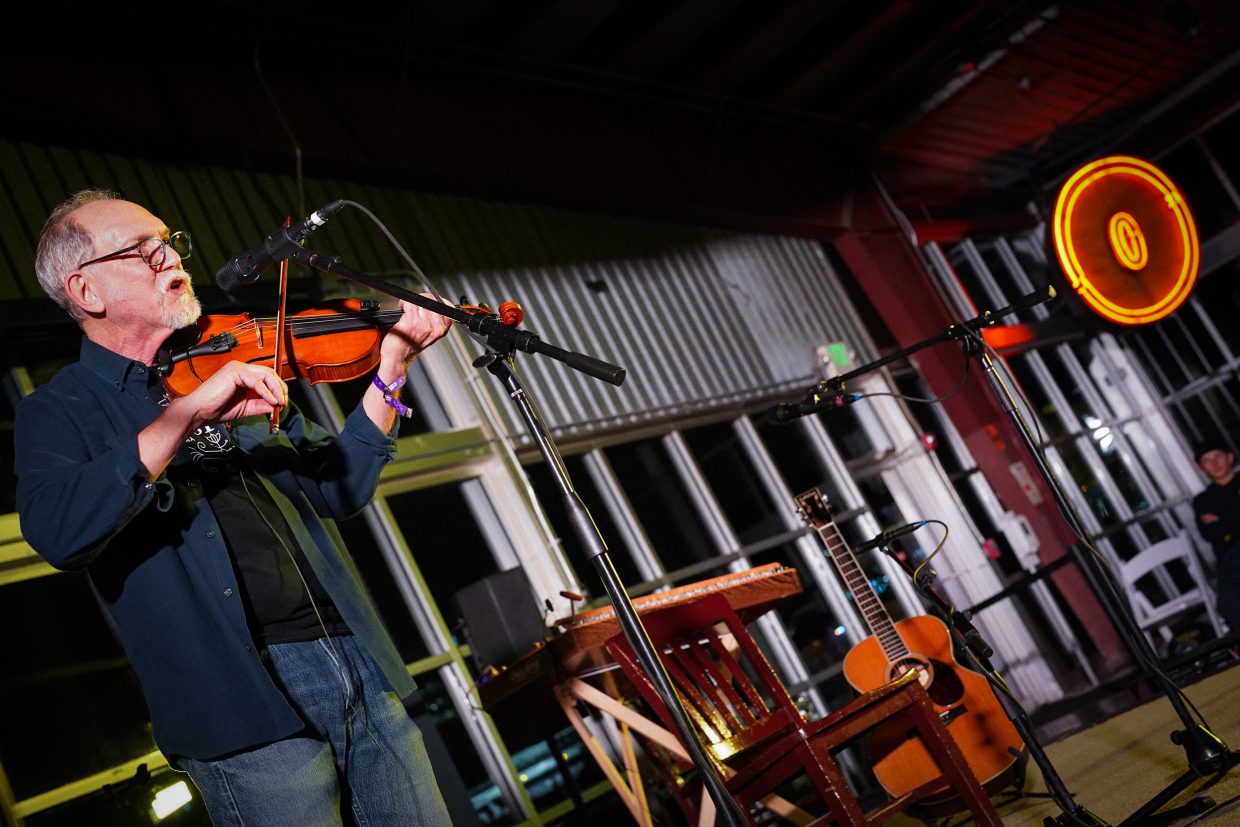
Old Time legend Bruce Molsky at the festival Kickoff Concert.

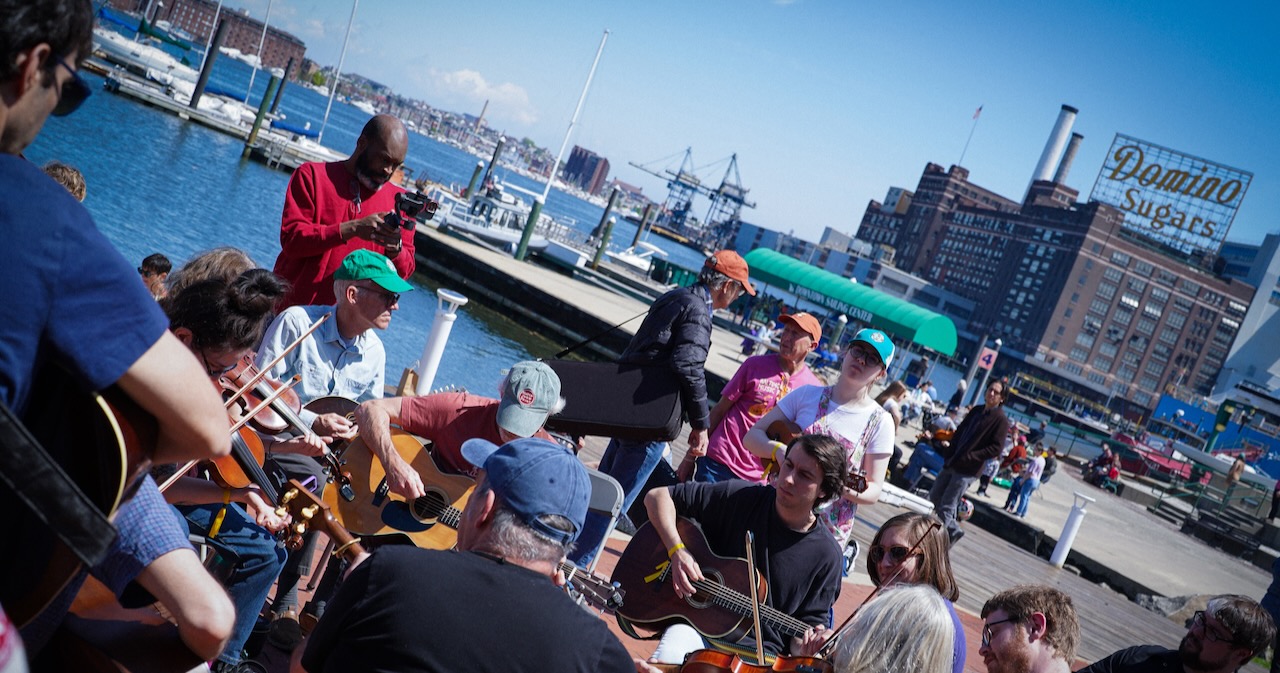
Saturday afternoon brought a loaded schedule of not only live music, but workshops, presentations, and open jam sessions in every nook and corner of the fascinating museum – and outside on its docks, too, where old pals reconnected and total strangers became friends as they played underneath the warm sun all day long.

“We’re clearly witnessing a huge period of growth for our old time community,” said Brad Kolodner, who’s a member of numerous Baltimore-based string bands and, as he does each spring, performed alongside his dad at this year’s festival.

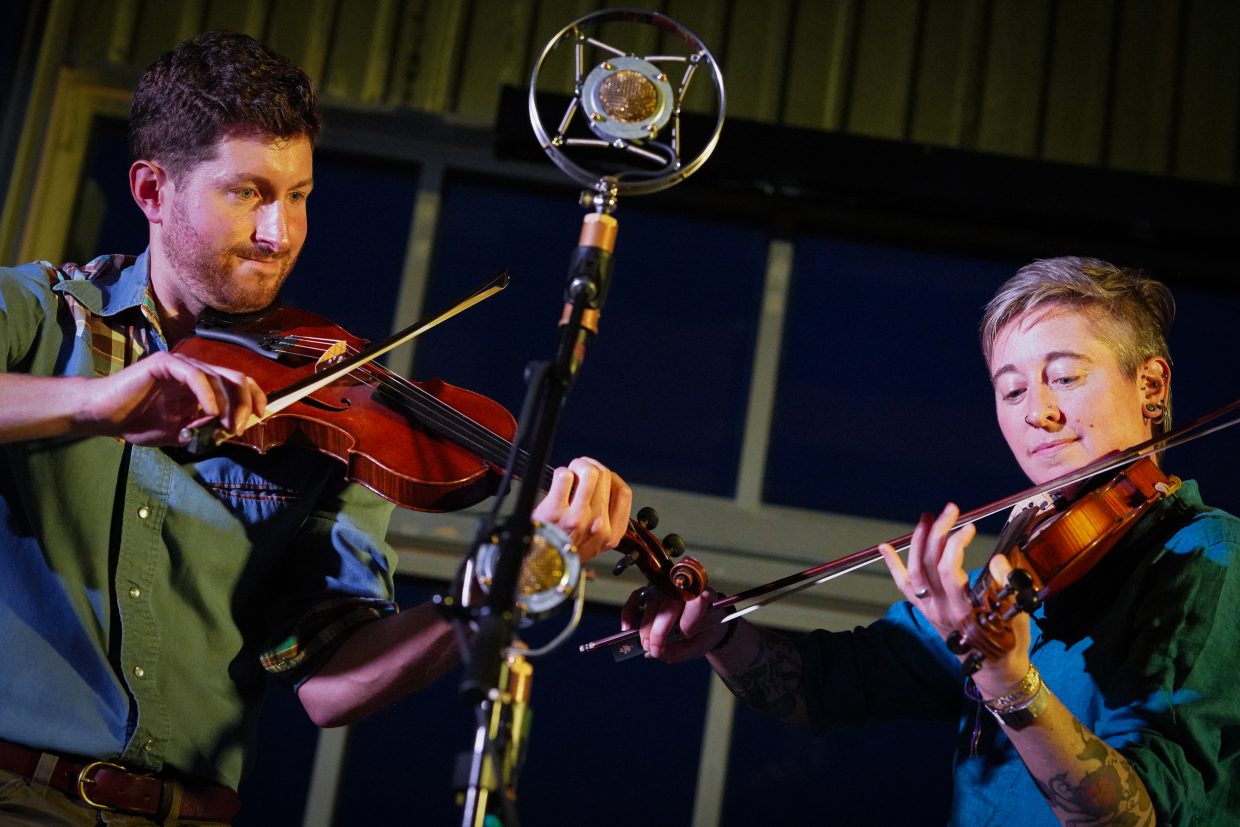
Twin fiddling from festival co-founder Brad Kolodner and Rachel Eddy.

“This marks 10 years that my father and I have been organizing events, square dances, jams and concerts, and this is the culmination of those efforts and work done behind the scene as well. We know that this is already a landmark event for Baltimore, but we took it to another level this year thanks to so much support, the amazing venue and of course the artists, who were incredible.”

Ascending Seattle-based string band The Onlies headlined both nights and served up numerous delightful sets across Friday and Saturday, as did Allison de Groot & Tatiana Hargreaves, the Horsenecks, and Bruce Molsky, a widely respected fiddler, banjoist, guitarist, vocalist and educator.

The Onlies dazzling at the Kickoff Concert.

“This festival brought together all the most positive and wonderful aspects of roots and old-time music,” said Molsky, who has recorded and performed with a long list of legendary musicians.

“It really represented all the things I love about this music, including the community,” he continued. “The cross-section of music and kinds of musicians that Brad and Ken programmed was kind of perfect.”

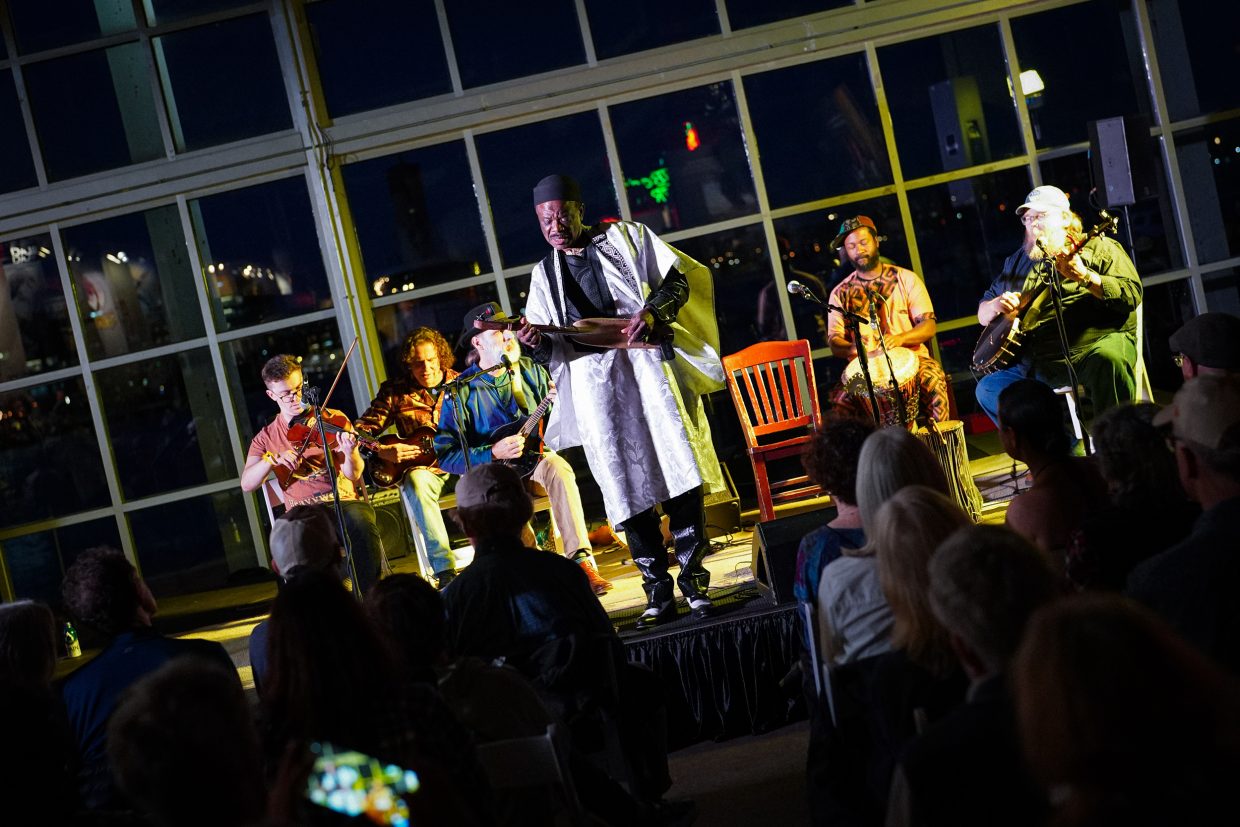
From Africa to Appalachia (one of the weekend’s most anticipated acts) is the fascinating project featuring Grammy-nominated master Malian griot Cheick Hamala Diabate, old-time banjo player Riley Baugus and multi-instrumentalist Danny Knicely.

From Africa to Appalachia featuring Cheick Hamala Diabate, Riley Baugus and Danny Knicely.

Through its uncommon blend of sound and perspective, the dynamic group illustrates and educates on the historical connection between West African and Appalachian music, a theme crucial to the Baltimore Old Time Music Festival.

“This band — these people — is my heart,” said the spirited Diabate as he detailed his adventures in America, where he’s worked with star musicians and been cast in major motion pictures.

Diabate mesmerized with blazingly fast fingers on the ngoni and played his custom gourd banjo that was handcrafted by Baltimore’s own Pete Ross.

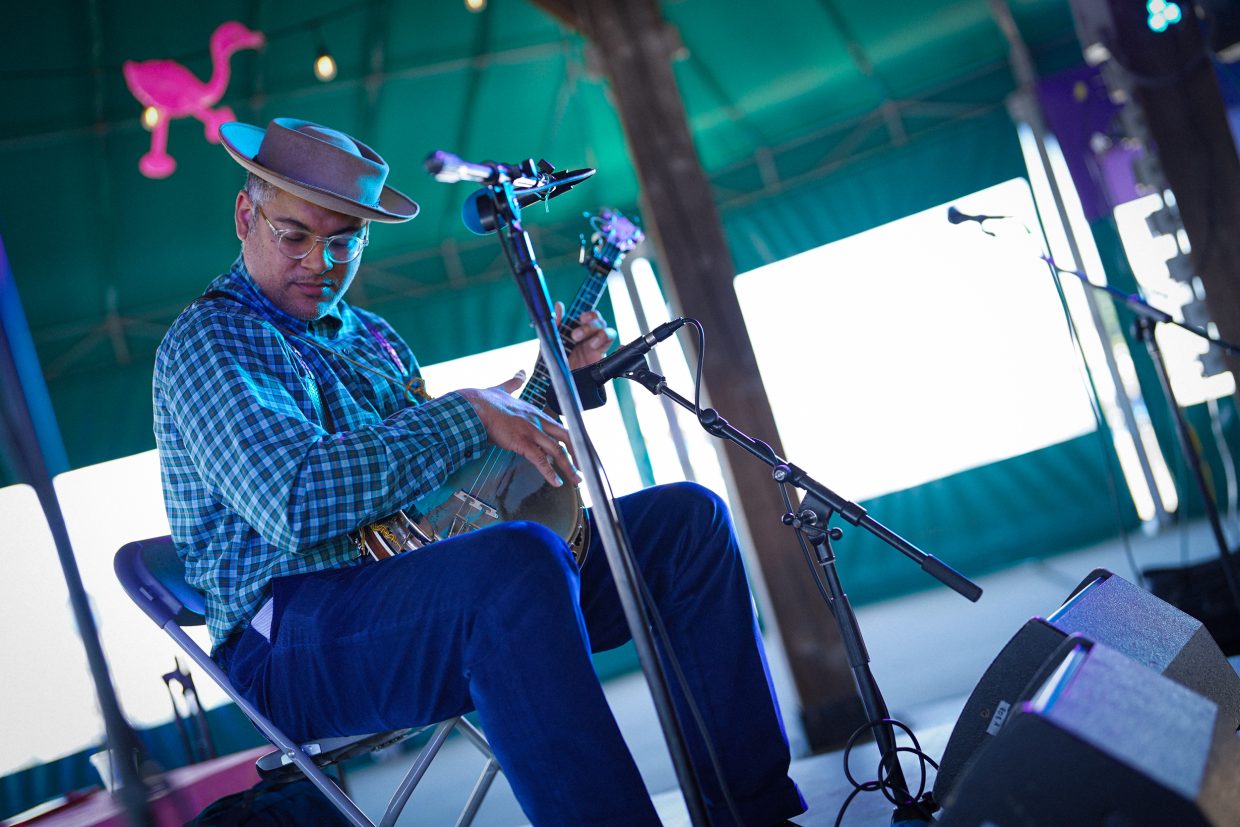
Dom Flemons, the American Songster, performs on the Pavilion Stage.

In each of his unforgettable appearances, Diabate riveted with stories and offered advice to concert goers. Presenting a session on Old Time Roots, he spoke alongside modern day old-time pioneer Dom Flemons — a co-founder of the award-winning Carolina Chocolate Drops and himself a Grammy nominee, who delivered two unforgettable performances on Saturday.

Another spectacular presence at the event, Becky Hill is a percussive dancer, choreographer, square-dance caller and educator who has focused her research on Appalachian percussive dance, flat footing and clogging. She considers the old-time space one where dancers are an equal part of the conversation with instrumentalists.

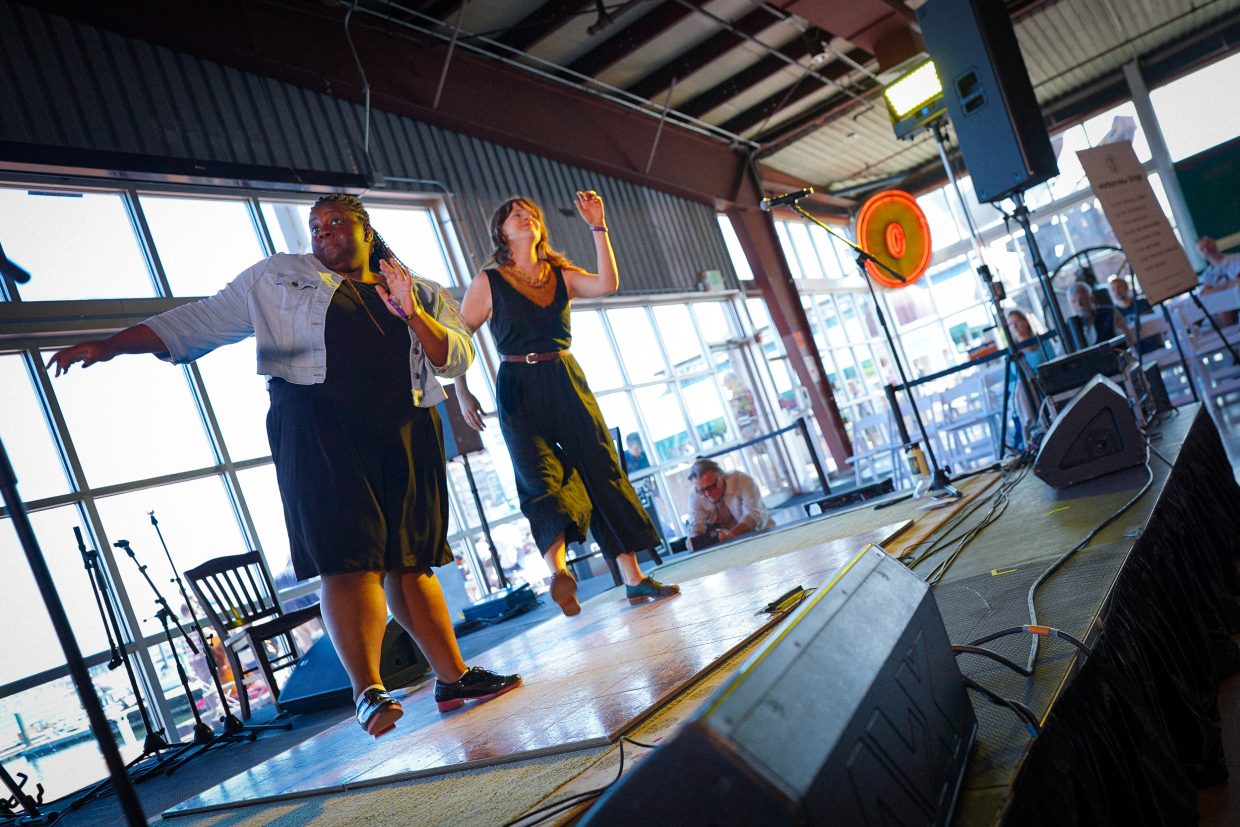
As a performer on both Friday and Saturday at the festival, Hill displayed her interest in the intersections of clogging, flatfooting and tap dance. To do so, she invited tap dancer Roxy Hill to join her at BMI, where they used old-time sounds to examine the relationship between the different dance styles.

Tap dancing and flatfooting with Roxy King and Becky Hill.

“They’re all American roots percussive dance forms. Both tap and flatfooting originated here and are unique to this complicated melting pot of the U.S. … To have the space to present our dance dialogue on stage feels really significant,” Hill said.

“It opens up new audiences for both tap dancing and flatfooting and it shows that there’s connective tissue across music and dance genres in the U.S. … In particular, what the festival is doing with the Center for Cultural Vibrancy is to expose that connection between all different aspects of old-time music.”

Dance, as it is each year, was a primary feature of the latest Old Time Music Festival, and the two days were capped with a jubilant old fashioned Baltimore square dance that twirled and howled into the late hours on Saturday night.

Square dancing in the pavilion with over 300 participants.

The lively affair took over the pavilion as hundreds of attendees let loose with friends and family. Veteran caller Janine Smith, who’s stoked many Charm City celebrations, led the way with the help of the Horsenecks and other performers from the lineup before all the artists on site joined together to close out the special occasion.

For Molsky and others deep into their careers, the festival provided a refreshing post-pandemic chance to catch up with longtime friends forged on the old time touring circuit, but also to interact with festival goers themselves.

“This kind of music isn’t the thing where a big star is sequestered until they walk out on stage,” he said. “Part of it is walking out there and remembering people’s names and getting to know them. I don’t consider that to be work. I love that.”

Molsky lived in the D.C. area for years and spent time in Baltimore, but he was impressed by what he sees as an undeniable “vibrancy” in the Charm City’s music landscape and its people.

The all star square dance band featuring Bruce Molsky and the Horsenecks.

“I think Brad has a lot to do with that,” Molsky said. “When somebody walks up to me and says, ‘Hey man, I’ve been listening to your music for 20 years, it’s so nice to meet you in person,’ I’m moved by that. This festival was just a great festival for meeting people.”

Beyond introducing artists to listeners, the Kolodners intentionally designed the event to help cutting-edge musicians show what they’re doing to expand the traditional confines of the old-time genre.

“It’s going to grow into something beautiful and it already is,” Hill observed.

“It’s unique because it highlights all the different ways that this tradition is evolving by not only celebrating its roots but by having new conversations within it, too, like what Tatiana and Allison are doing or like Roxy and myself,” she continues. “We’re pushing the boundaries and we’re experimenting within the structures that old-time music provides. And I think that is part of how vernacular music traditions keep evolving.”

Allison de Groot and Tatiana Hargreaves perform at the Kickoff Concert.

With its 2024 version in the books, the Baltimore Old Time Music Festival has firmly established itself as one of the fastest growing and most influential gatherings of its kind anywhere in the country. Eyeing sustainable growth and a balance of honoring and augmenting old-time customs, the Kolodners are optimistic for what the future holds.

“We’re pleased to make so much progress, to create an enriching experience for everyone involved and we’re thrilled to be at BMI for years to come,” said Brad Kolodner.

“We’re proud of the intergenerational aspects we’ve built into it. We offer children’s programming and make it free for families, all with the hope that we can keep driving interest and participation in old time moving forward. Above all, we aim to celebrate diversity and the true roots of this music through the performers we invite to be here with us.”

Be sure to save the date for next year’s Baltimore Old Time Music Festival, which will return to BMI on April 18 and 19, 2025. More information here.

Becky Hill and Ben Nelson, in conversation with feet and banjo.

Photo Credit: All photos by Casey Vock and courtesy of the Baltimore Old Time Music Festival.

Artist of the Month: Kaia Kater

BGS first had the opportunity to work with singer, songwriter, multi-instrumentalist, and composer Kaia Kater all the way back in 2016. She appeared on our inaugural Shout & Shine showcase stage that year at the International Bluegrass Music Association’s business conference in Raleigh, North Carolina. It was the first ever showcase celebrating diversity at the headline bluegrass event and it was also where I met her for the first time in person. We were both panelists for another first-ever, IBMA’s round-table style panel on inclusion that was convened the day after Shout & Shine. Partially planned in response to North Carolina’s just-passed transphobic measure, HB2 – one of the first anti-trans “bathroom bills,” beginning what would become a nearly decade-long and as yet unfinished battle in state houses around the country for equal rights for trans folks – the panel’s format was all about direct conversation and reaching folks where they were at.

A grassroots collective of musicians, artists, and industry professionals who represented often marginalized identities in bluegrass had decided enough was enough, we would have to stake out and hold space at IBMA’s conference to have these long overdue conversations about who is and who isn’t excluded from these roots music genres and what we can do to make all folks feel safe(r) and at home in these communities we love. Kater was right there, engaging and often leading dialogues on these important subjects. A handful of days later, she published her first byline on BGS, an incisive, compassionate, and necessary op-ed on Breaking the Wheel of Silence – calling out all too common “closing of ranks” and music industry status quos that reinforce and protect misogyny, patriarchy, and systems of sexual harassment and sexual violence and their perpetrators.

In short, Kater has long been a thought leader in roots music, especially in bluegrass, old-time, and our BGS family. We’ve been fortunate to get to collaborate with her in various ways on that vital work, from having her writing published on our site and in our year end round-ups to covering her own art and roots music creations.

Luckily, the music she crafts and the messages within it make it infinitely easier to spotlight these often touchy and incredibly nuanced issues. From her debut, 2015’s Sorrow Bound, to 2016’s impressive Nine Pin – which some call her “break out” record – Kater has been spinning complex and entrancing roots music threads that draw on her lived experiences as a Canadian-Grenadian banjo player and lifelong folk musician, turning over and examining what are often called “thorny” or “divisive” issues. Her music grounds abstract and theoretical concepts in the past, present, and future. But her songs don’t sound mired in these issues or concepts at all, just the opposite.

Over the course of her career, from her teens and young adulthood to today, on the cusp of releasing a new album, Strange Medicine (out May 17 via Free Dirt Records), this singular perspective Kater has cultivated continues to blossom, grow, and come into sharper focus. 2018’s Grenades, a sort of concept record placed decidedly in the Caribbean and tracing Kater’s roots back to the beautiful island of Grenada, processes generational traumas, the machinations and intricacies of culture, the nebulousness of belonging, and so many other colors and textures decidedly at home in folk music, but enlivened constantly through Kater’s creative lens. Grenades is a master work, demonstrating a creator and musician who knows who they are – even when they do not.

Six years later, enter Strange Medicine, another album masterpiece that finds Kater still more confident, more at ease, and just as convicting. Genre parameters, her prior records, and her strong positioning of community are all present here, but perhaps not as directly. Instead, Strange Medicine seems to be grown from the fertile, rich, and dense soil of Kater’s career to this point. There are indirect touches of all of the above, but overall this collection feels brand new. It is a novel synthesis of her values systems and worldview, one that feels assured while still exploratory, firm but flexible, responsive but not reactive. Strange, indeed, but never odd (or estranged).

With stunning collaborations with Taj Mahal, Allison Russell, and Aoife O’Donovan – who is featured on “The Witch,” a track made available today – Kater demonstrates how, more than ten years since she began her professional trajectory, her music shines with cross pollination, positioning the community members who helped shape her own music within that very body of work. It’s part of why her new band, New Dangerfield – with Jake Blount, Tray Wellington, and Nelson Williams – can be called a supergroup, though that moniker immediately feels reductive. Kater and her cohort are no longer simply adding their voices to an ongoing conversation, they are the conversation. The center of gravity – in folk, old-time, bluegrass, Americana, and beyond – has shifted, and with that shift we see Kater, many of her peers in her generation, as well as those collaborators and influences who came before continually advancing these discourses.

Her medium, as always, is music. Her dialogue, as always, is not simply with those who choose to consume her art, but specifically with those who engage with it, try it on, turn it inside out, and kick the tires. This is music that will stand up to that sort of holistic interaction. It’s infinitely listenable, incredibly fun, and grooving, too; Strange Medicine might be the danciest record in Kater’s catalog. It’s intellectual, yes, but more than that, Kater shows us that music can be nutritious, challenging, and dense while effervescent, joyful, and soaring.

All month long, we’ll be celebrating our pal, collaborator, and constant source of inspiration Kaia Kater as our Artist of the Month. Below, enjoy our Essential Kaia Kater Playlist and watch for an exclusive AOTM interview coming in just a couple of weeks, too.

Back then in 2015 and 2016, when we were just introduced to Kater and her music, if you had asked any of us if we’d expect her to be our Artist of the Month someday, down the line, I think almost any of us would’ve responded with a resounding, “Yes!” So we’re especially proud to celebrate Strange Medicine and Kaia Kater as our May Artist of the Month.


Photo Credit: Janice Reid

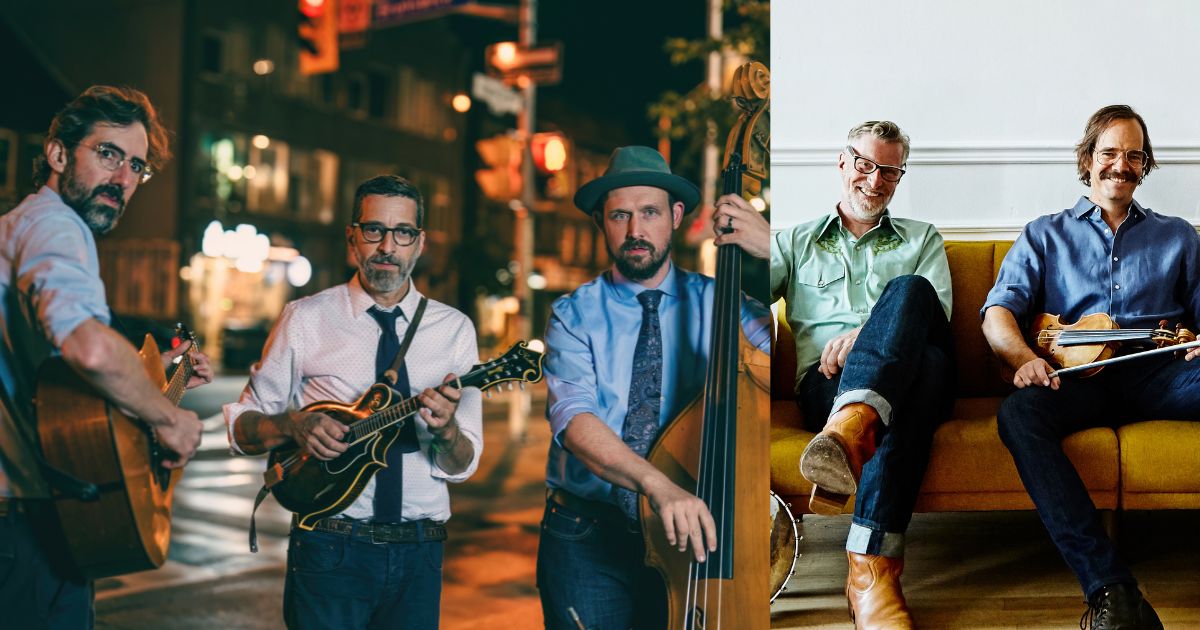
LISTEN: The Lonesome Ace Stringband, “May Day” (with The Andrew Collins Trio)

Artist: The Lonesome Ace Stringband with The Andrew Collins Trio
Hometown: Toronto, Ontario, Canada
Song: “May Day”
Release Date: May 1, 2024

In Their Words: “Andrew and I wrote this tune together about 20 years ago. It was the first of May and we spent it in the sun, picking fiddle tunes, looking at flowers, and getting in the groove with the mycorrhizal network. This melody revealed itself to us in the early afternoon, setting the vibe for the rest of the day. I’ve always found this tune beguiling. It’s hard to put your finger on its mood; to me, it’s ultimately hopeful, but it has to go through a lot before it gets there! I’ve recorded ‘May Day’ three times now; each version is very different. I can’t seem to keep away from this tune! It was so wonderful for John and me to have the chance to collaborate with Andrew, Adam, and James on this release!” – Chris Coole, the Lonesome Ace Stringband

Track Credits:

Andrew Collins – Mandolin
Chris Coole – Banjo
James McEleney – Bass
Adam Shier – Guitar
John Showman – Fiddle


Video Credits: Edited by Chris Coole. P.D. archival footage filmed by Arthur Edward Pillsbur from the Prelinger Collection.
Photo Credit: Andrew Collins Trio by Andrew Collins; the Lonesome Ace Stringband by Jen Squires.

You Gotta Hear This: New Music From AJ Lee & Blue Summit, New Dangerfield, and More

Are you excited for new music Friday? With our slate of premieres this week, we certainly are! AJ Lee & Blue Summit bring us the first track from their just-announced album, City of Glass (coming in July), old-time, folk, and Americana supergroup New Dangerfield have released their very first music together, and banjoist Tray Wellington (also of New Dangerfield) is dropping a new instrumental today, as well!

Plus, don’t miss Australian-via-Nashville country artist Wesley Dean and his new video for “Mercy” and you’ll also find Jacob Jolliff Band’s new number, “Los Angeles County Breakdown,” which premiered on BGS yesterday.

It’s all right here and to be totally honest, You Gotta Hear This!

AJ Lee & Blue Summit, “Hillside”

Artist: AJ Lee & Blue Summit
Hometown: Santa Cruz, California
Song: “Hillside”
Album: City of Glass
Release Date: July 19, 2024
Label: Signature Sounds

In Their Words: “The song ‘Hillside’ is sung from the perspective of a hill that is being eroded by weather and chipped by the tools of man. Still, the hill aspires to become a mountain and refuses to give in to the bombardment of forces. The last line in the chorus is, ‘… A thousand years don’t mean a thing to the stone cold hill that you call me,’ which I wrote with the idea that I will have confidence in myself no matter who tries to tear me down. I feel like I am becoming an immovable mountain that has been birthed out of proving my resilience. This song represents women empowerment, resilience, and strength.” – AJ Lee 

Track Credits:

Written by AJ Lee
Produced by Lech Wierzynski
Mixed and engineered by Jacob LaCally
Mastered by Paul Blakemore


New Dangerfield, “Dangerfield Newby”

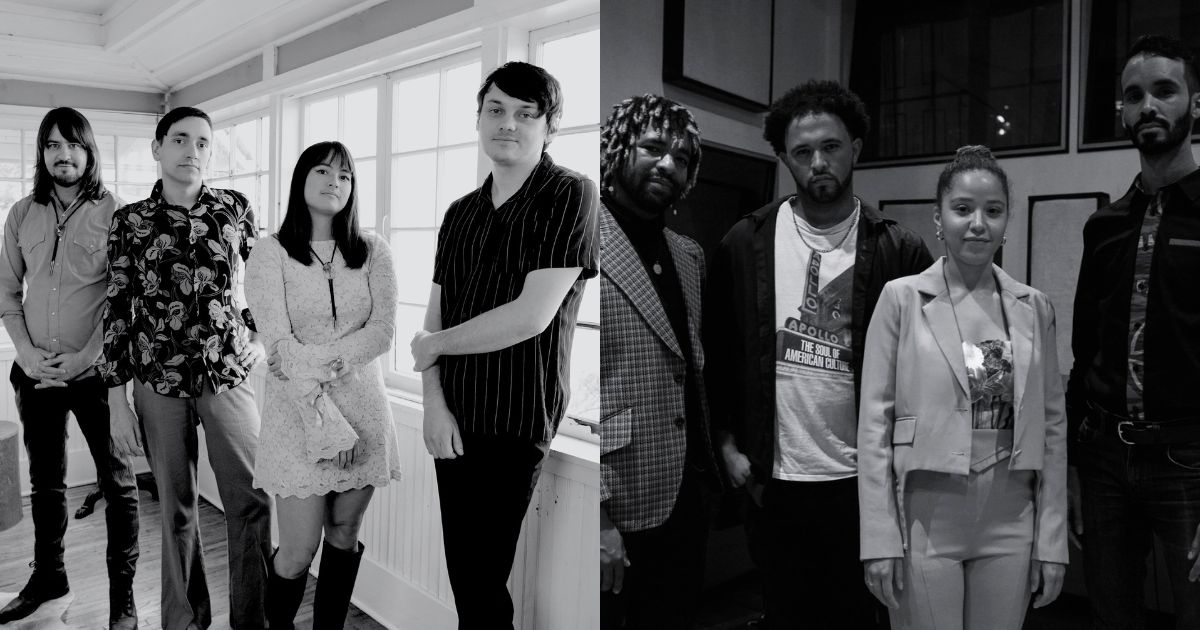
Artist: New Dangerfield (Jake Blount, Kaia Kater, Tray Wellington, and Nelson Williams)
Hometown: Providence, RI; New York City, NY; New Orleans, LA; Raleigh, NC
Song: “Dangerfield Newby”
Release Date: April 26, 2024
Label: Distributed by Free Dirt Records

In Their Words: “I learned the tune we call ‘Dangerfield Newby’ from Eddie Bond close to a decade ago. He called it by the name ‘Old Sport,’ but told us that it was alternatively named ‘Dangerfield’ after one of John Brown’s raiders. I performed on John Brown’s farm last summer and had the opportunity to visit the grave he shares with his sons and several of his raiders — including the Black ones. I learned that Dangerfield was Black from his gravestone. The string band tradition has been honoring a Black freedom fighter all this time – who knew? I brought the tune to the band, since these are the stories we want to tell.

“Inspired by Dangerfield’s dedication to his family and community and his drive for freedom, we decided to put his full name on the tune. Thus, ‘Dangerfield Newby’ was born! We chose our band name, New Dangerfield, as an homage just a few days later.” – Jake Blount


Tray Wellington, “Blue Collared Dog and His Green Eyed Friend”

Artist: Tray Wellington
Hometown: Raleigh, North Carolina
Song: “Blue Collared Dog and His Green Eyed Friend”
Release Date: April 26, 2024
Label: Mountain Home Music Company

In Their Words: “One late night while doing some paintings, we ended the night with two different ones. One featured a dog with a blue collar, and one featured a cat with bright green eyes. I thought about how, if I was still a kid, I would’ve created a whole story within these paintings of how these two were friends and journeyed the world together. Shortly after this thought, I picked up my banjo and just did some improv which ended up being the start of the tune. I just kept going and finished the tune in that improv session, remembered what I could, and recorded it right away. I was amazed at how such a simple thought could help me create a piece of music I’m so proud of.” – Tray Wellington

Track Credits:
Tray Wellington – Banjo
Drew Matulich – Guitar
Katelynn Bohn – Bass
Josiah Nelson – Mandolin, fiddle


Wesley Dean, “Mercy”

Artist: Wesley Dean
Hometown: Nashville, Tennessee (by way of Australia)
Song: “Mercy”
Album: Music From Crazy Hearts
Release Date: April 26, 2024

In Their Words: “While I was traveling around the country last summer on my Crazy Hearts Across America tour, we shot different music videos for the album in different cities. Where else is better than the neon psychedelic lights of Las Vegas for ‘Mercy?’ It suited the music and the vision. We shot up and down the strip outside the famous Flamingo casino one night and then built the rest of the video around that footage.

“Jacobie Gray, my director, wrote the treatment for the redemption story and then we filmed the rest of the video at a bar and old church in Nashville and a cemetery outside of town. I’ll never forget the night when we filmed with the gospel choir, it’s such a dream to sing with those guys, and it was one of the first visions I had before Crazy Hearts was born, ‘Mercy’ being the first song I wrote for the record. And being out in the cemetery in the middle of the night was another experience I’ll hold close from making this video. An Amish horse and cart rode past in the darkness while I was looking up at the stars smoking a cigar and it was so surreal. You wouldn’t experience that in Australia.

“My main cinematographer, David Bradley, who also edited and colored the video, really delivered on that psychedelic vibe I was wanting.” – Wesley Dean


Jacob Jolliff, “Los Angeles County Breakdown”

Artist: The Jacob Jolliff Band
Hometown: New York City, New York
Song: “Los Angeles County Breakdown”
Album: Instrumentals, Vol. 2: Mandolin Mysteries
Release Date: May 24, 2024
Label: Adhyâropa Records

In Their Words: “‘Los Angeles County Breakdown’ is the first tune we started arranging for Mandolin Mysteries. I taught it to the group while we were in LA, on the last show of our last tour before the lockdown in 2020. So I had these demos of us playing the working version that I listened to and was excited about for a couple years before we finally got the chance to finish the arrangement and perform it live. It’s a sprightly little number with a lot of different influences — I like that it features a nice section for the fiddle and guitar to stretch out on. Hope you enjoy it!” – Jacob Jolliff

More here.


Photo Credit: AJ Lee & Blue Summit by Natia Cinco; New Dangerfield by Justin French.

MIXTAPE: JigJam’s Irish Bluegrass

We all grew up in rural Ireland in small communities in the midlands around County Offaly and County Tipperary. From a young age we were brought up with traditional Irish music, learning the tunes and playing in local sessions. Bluegrass was never a part of our musical upbringing, however, little did we know how strong the relationship between Irish and bluegrass music is. Our band JigJam was formed in 2012 and over the years we developed a sound which captures the crossover between these musical genres.

The creation of bluegrass music and its development over the years is heavily influenced by Irish music. When the Irish people emigrated to North America years ago they brought their music and culture with them, which you can hear within bluegrass music from tunes, melodies, and songs.

We released our new album, Across The Pond, on March 1st of this year. The theme of Across the Pond is to creatively celebrate the deep connection between Ireland and North America through newly composed material that is a dynamic fusion of bluegrass, old-time, and Irish traditional music. By also including traditional tunes and songs which are popular amongst the people from both Irish and American traditions, we added their voice to this transatlantic conversation. This album has been inspired and composed on themes of immigration, nostalgia, cultural difference, and cultural amalgamation. It views the immigrant experience through the lens of pre-immigration, the journey of immigration itself, and their lives upon having settled in North America.

This is our Irish Bluegrass Mixtape, hope you all enjoy! – JigJam

“Good Ole Mountain Dew” – JigJam

Here’s our version of the bluegrass standard, “Mountain Dew,” that we put our own spin on. There’s a similar Irish song called, “The Rare Old Mountain Dew.” It’s about the same subject – “Good Old Mountain Dew” is obviously about moonshine. What we call the “mountain dew” at home is poitin, which is Irish moonshine.

We took some of the lyrics of that song and put it into our version and also wrote our own lyrics based on where we come from. We took the instrumental tune from “Rare Old Mountain Dew” and put it in “Good Old Mountain Dew” while also adding in a bit of Irish lilting. It’s a mashup of both cultures in one song!

“Classical Grass” – Gerry O’Connor

When I was young and first learning how to play the tenor banjo one of my musical heroes was Gerry O’Connor. I was always mesmerized by the speed and precision of his banjo playing. The first time I saw him in concert was at a banjo festival in Ireland called Johnny Keenan Banjo Festival. He was sharing the bill with Earl Scruggs and his band. As a 12-year-old Irish boy, I had no idea who Earl Scruggs was at the time. Little did I know the influence he (Earl Scruggs) would have on my music and JigJam’s music in years to come, when we discovered what bluegrass was and where it came from!! In this track from Gerry, he shows his bluegrass influence himself with pristine crosspicking along with his renowned clean triplets, which was always a favourite of mine growing up.

“Colleen Malone” – Hot Rize

“Colleen Malone” is one of our favorite songs that Hot Rize recorded. Here’s a great live version from their Hot Rize’s 40th Anniversary Bash album. A lovely song co-written by Leroy Drumm and Pete Goble about an Irish girl, Colleen Malone.

“Tennessee Stud” – The Chieftains

In many ways The Chieftains paved the way for Irish bands touring in America and that is something for which we’ll always be incredibly grateful. Their album, Down The Old Plank Road: The Nashville Sessions, paints a vivid picture of the crossover between between the Irish and American music traditions.

“B/C Set” – Beoga

Beoga are an Irish trad band who we all listened to as kids growing up. They were known for thinking outside the box and being ahead of their time as regards arrangements. The second tune in this set is “Daley’s Reel,” which I only realized in recent years when I heard some of the great bluegrass players like Bryan Sutton and Aubrey Haynie playing it. Beoga have a very unique version of “Daley’s Reel,” played on two button accordions and accompanied by piano, bodhrán, and even brass near the end of the track. Certainly a fun one to listen to!

“Streets of London” – Tony Rice

This is one of my favourite songs sung by Tony Rice. “The Streets of London” is a very popular song in Ireland and has been covered by many Irish artists. Written by English songwriter Ralph McTell, I learned this song from the playing of the great Liam Clancy of The Clancy Brothers, Irish powerhouses. I only heard Tony Rice’s version in recent years when I delved into bluegrass guitar playing and I loved it straight away. Tony Rice’s rendition is beautiful as he incorporates his flawless bluegrass crosspicking and signature approach to this classic.

(Editor’s Note: Watch JigJam guitarist Jamie McKeogh perform “Streets of London” for a recent Yamaha Session here.)

“Water’s Hill” – JigJam

“Water’s Hill” is a song off our new album, Across The Pond. The lyrics were written by Ken Molloy as he tells the story of a couple falling in love together and marrying on water’s hill, a mound near Tullamore in County Offaly. The music is by Jamie McKeogh and Daithi Melia along with an old traditional Irish reel that is incorporated into the middle of the song. “Water’s Hill” features a driving Scruggs-style 5-string banjo part along with a strong mandolin backbeat, fiddle counter melodies, and rhythmic acoustic guitar which creates the JigJam sound, capturing the crossover between Irish and bluegrass music.

“Forty Shades of Green” – Rosanne Cash and Paul Brady, Transatlantic Sessions

The Transatlantic Sessions is an amazing platform for the collaboration of Irish and bluegrass musicians. With the likes of Jerry Douglas, Aly Bain, Mike McGoldrick, and many more, this project has wonderfully captured Irish and bluegrass crossover for years. I could have chosen many songs from their repertoire, but I went with this one. It’s “Forty Shades of Green” from the legend that is Johnny Cash. Here, it’s being sung by his daughter Rosanne and Irish singer-songwriter Paul Brady, backed up by the Transatlantic band.

“Sally Goodin / The Blackberry Blossom” – Gerry O’Connor

Gerry O’Connor from Co. Tipperary is the reason I began to play the tenor banjo and he has always been a musical hero of mine – his music still inspires me to this day. This set showcases his skill set, pickin’ on these classic bluegrass fiddle tunes.

“Battersea Skillet Liquor” – Damian O’Kane, Ron Block

One of my favorite tracks off one of my favorite albums. I always loved the groove in this track and of course the playing from this star-studded crew of players always leaves me feeling inspired.

“Bouli Bouli” – JigJam

This set combines the traditional Irish jig, “The Miller of Glanmire,” with the bluegrass fiddle tune, “Big Mon.” It showcases the dynamic and genre fluid nature of JigJam through seamlessly traversing both traditions while highlighting each instrument’s capabilities. We’ve been having a lot of fun playing this one live!

“On Raglan Road” – Dervish & Vince Gill

I always enjoyed this song being performed by the great Luke Kelly from The Dubliners and recently came across this beautiful version of Patrick Kavanagh’s “On Raglan Road” by the legendary Dervish featuring the iconic vocals of Vince Gill.

“The Stride Set” – Solas

I love this set by Solas from their album, The Words That Remain. We are influenced by their creative way of arranging Irish tune sets. I love the addition of the 5-string banjo featured on this track.

“Did You Ever Go A-Courtin’, Uncle Joe” – The Chieftains

Here’s a mighty set from The Chieftains’ live album, Another Country. The crossover between Irish and American genres is great here with a medley of American songs and Irish tunes and also featuring a 5-string banjo. With a great lineup of The Chieftains with Chet Atkins, Emmylou Harris, Nitty Gritty Dirt Band and Ricky Skaggs.

“County Clare” – New Grass Revival

New Grass Revival are one of our biggest influences as a band. Béla Fleck is one of the reasons why I fell in love with the 5-string banjo and started to learn ‘Scruggs style’ while delving into the bluegrass world. Here’s his great instrumental “County Clare,” which Béla wrote inspired by his time spent in Ireland.


Photo courtesy of the artist.

Ed’s Picks: A Breath of Fresh Air

(Editor’s note: Each issue of Good Country, our co-founder Ed Helms will share a handful of good country artists, albums, and songs direct from his own earphones in Ed’s Picks. 

Sign up here to receive Good Country issues when they launch, direct to your inbox.)

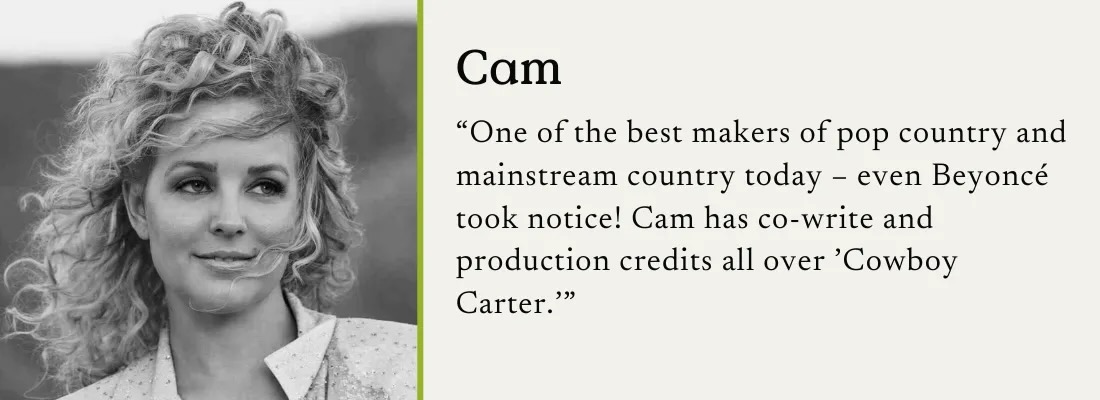
Cam

A photo of Cam with the quote: "One of the best makers of pop country and mainstream country today – even Beyoncé took notice! Cam has co-write and production credits all over 'Cowboy Carter.'"

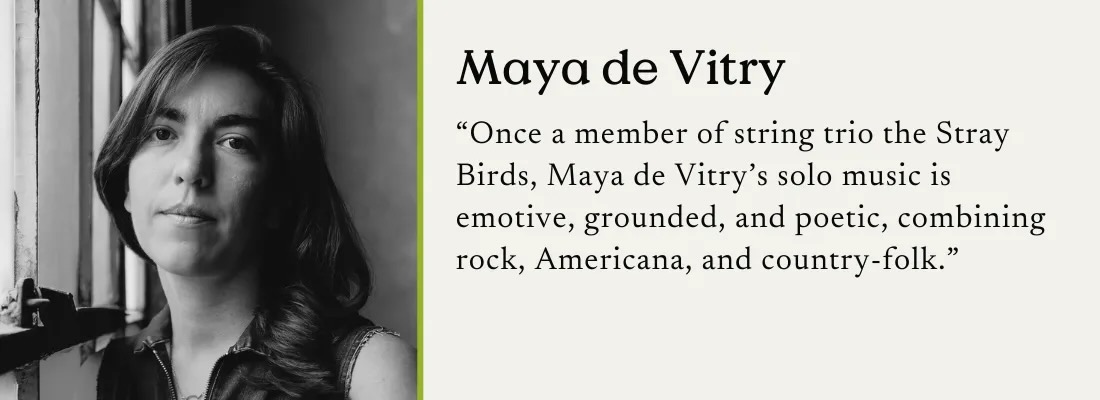
Maya de Vitry

A black and white photo of Maya de Vitry with a text quote: "Once a member of string trio the Stray Birds, Maya de Vitry's solo music is emotive, grounded, and poetic, combining rock, Americana, and country-folk."

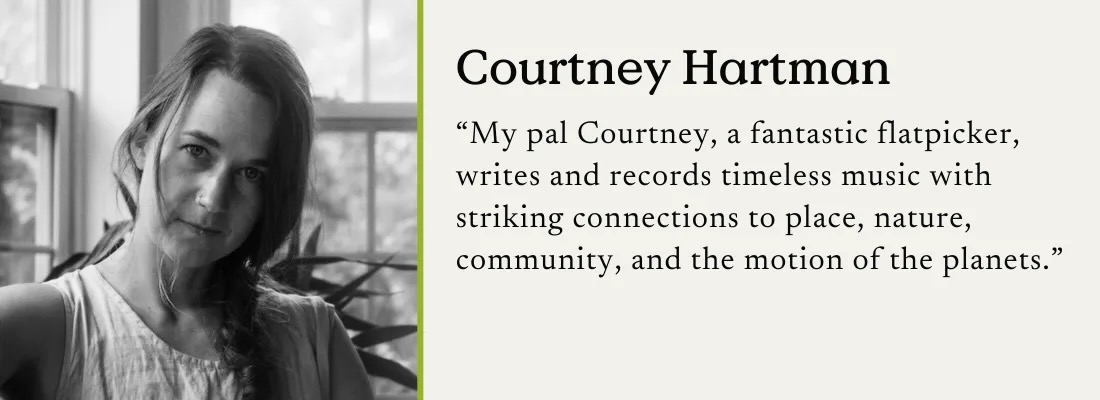
Courtney Hartman

A black and white photo of Courtney Hartman with a text quote: "My pal Courtney, a fantastic flatpicker, writes and records timeless music with striking connections to place, nature, community, and the motion of the planets."

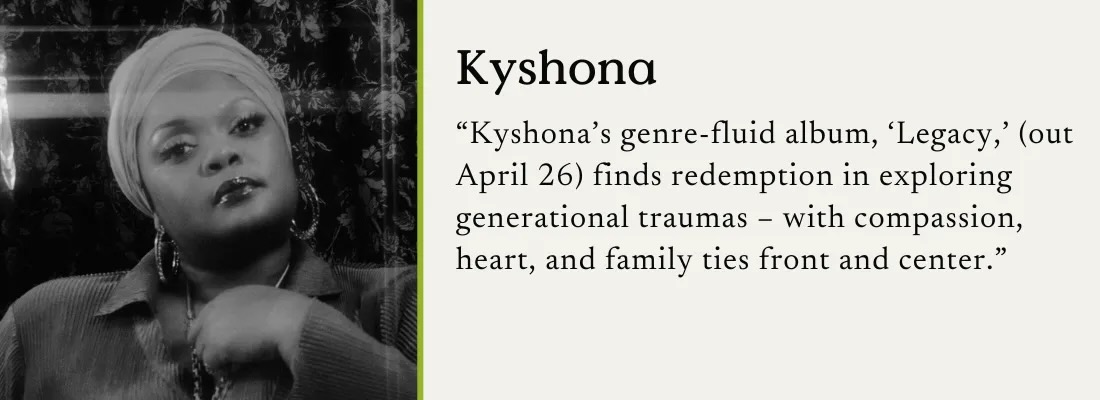
Kyshona

A black and white photo of Kyshona with a text quote: "Kyshona's genre-fluid album, 'Legacy,' (out April 26) finds redemption in exploring generational traumas - with compassion, heart, and family ties front and center."

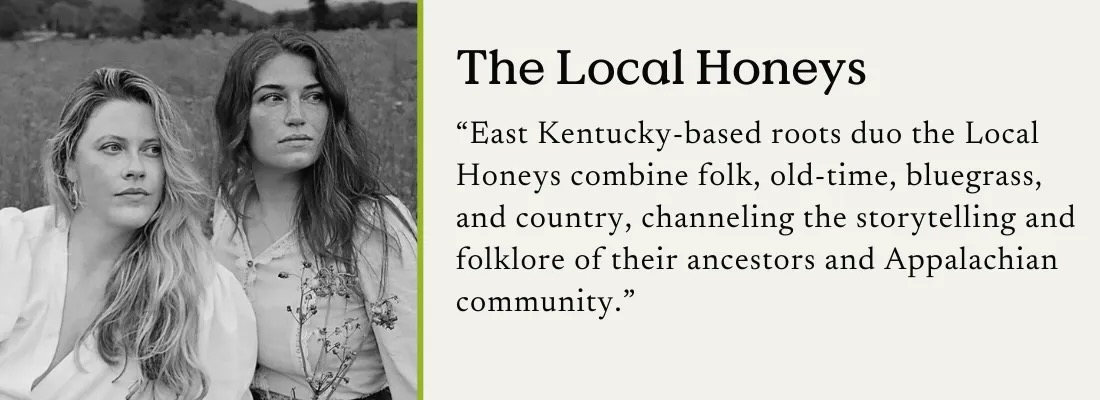
The Local Honeys

A photo of roots duo the Local Honeys in black and white with an accompanying text quote: "East Kentucky-based roots duo the Local Honeys combine folk, old-time, bluegrass, and country, channeling the storytelling and folklore of their ancestors and Appalachian community."

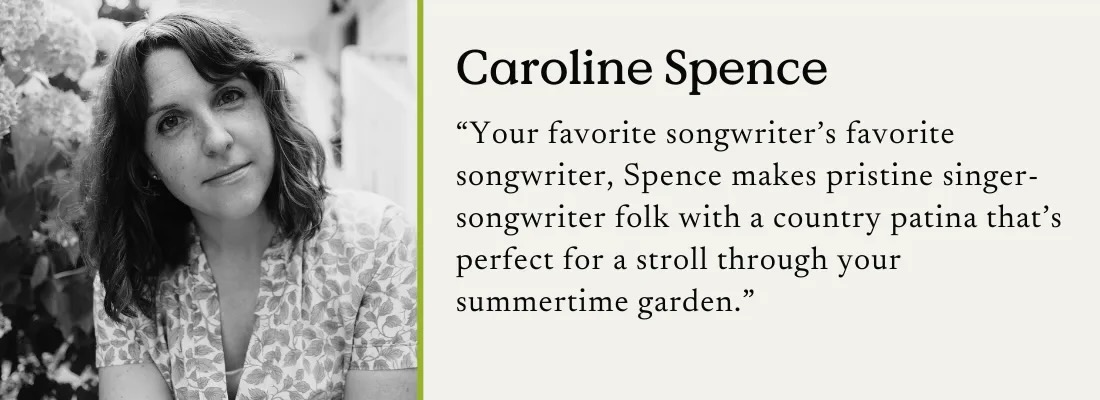
Caroline Spence

A black and white photo of Caroline Spence with a text quote: "Your favorite songwriter's favorite songwriter, Spence makes pristine singer-songwriter folk with a country patina that's perfect for a stroll through your summertime garden."


Photo Credits: Cam by Dennis Leupold; Maya de Vitry by Kaitlyn Raitz; Courtney Hartman by Jo Babb; Kyshona by Anna Haas; The Local Honeys by Erica Chambers; Caroline Spence by Kaitlyn Raitz.

You Gotta Hear This: New Music From John McEuen, Tom Paxton, and More

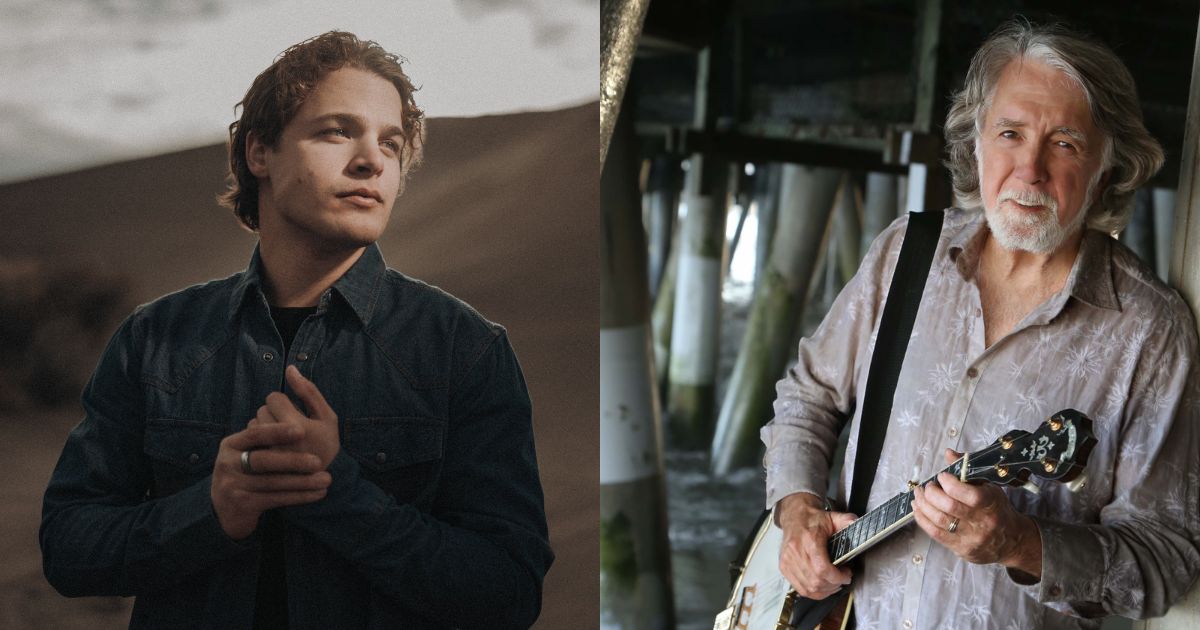
This week, banjoist and Nitty Gritty Dirt Band founding member John McEuen kicks off our You Gotta Hear This round up with a track from his brand new album, The Newsman: A Man of Record. Check out his adaptation of a Robert Service poem, “The Cremation of Sam McGee” below.

Plus, we’ve got track premieres from gritty country outfit Tylor & the Train Robbers, from Claire Lynch singing Tom Paxton for an upcoming album, Bluegrass Sings Paxton, from the Stetson Family contemplating mortality, and from the Onlies a rendering of a classic old-time ballad.

Don’t miss our video premiere from Max McNown, too, which posted to BGS just yesterday. It’s all right here and, if we do say so ourselves, You Gotta Hear This!

John McEuen, “The Cremation of Sam McGee”

Artist: John McEuen
Hometown: Oakland, California
Song: “The Cremation of Sam McGee”
Album: The Newsman: A Man of Record
Release Date: April 12, 2024
Label: Compass Records

In Their Words: “Using sound effects, music I composed, and some ‘recording tricks’ with instruments, I concocted the back up for one of my favorite poems, ‘The Cremation of Sam McGee.’ My (late) older sister would sometimes tell her 8-10 year old brother, me, this favorite Robert Service poem from 1906, captivating me with the story of a place unknown. I later found it in my high school English book and fell in love with it again. It takes me away to that strange time in these miners’ lives, and while starting kind of morose, manages (in my opinion, anyway) to reach a ‘happy ending’ with Sam finally getting warm! Trying to make the ‘definitive’ version of this classic was a challenge. It is one of my best ‘works.’ I am hoping each time a listeners hears it they will hear something different show up in the mix, as I planned it to be ‘with surprises’ like that.” – John McEuen


Claire Lynch, “I Give You The Morning” (by Tom Paxton)

Artist: Claire Lynch from Bluegrass Sings Paxton
Hometown: Toronto, Ontario, Canada
Song: “I Give You The Morning”
Album: Bluegrass Sings Paxton
Release Date: April 12, 2024 (Single)
Label: Mountain Home Music Company

In Their Words: “Claire Lynch has one of the most recognizable and expressive voices in bluegrass. We knew we wanted to have that voice on the album and her choice of ‘I Give You The Morning’ was a great call — it’s got an old-fashioned ballad construction, a deliciously unusual yet natural rhythm to the first lines in each verse, a captivating melodic rise in the refrain, and an evocative lyric. And, the band has just the right balance of strength and delicacy to complement those same qualities in her approach. It’s a performance that brings out so many aspects of what makes Tom Paxton’s songs so memorable, and I can’t think of a better way to introduce this project to listeners!” – Jon Weisberger, co-producer

“Since the early 1960s, when bluegrass and the emergent folk revival first crossed paths, arguably no songwriter from the latter world has seen more of their songs adopted by the former than Grammy Lifetime Achievement Award recipient Tom Paxton. From early covers of his epochal ‘The Last Thing On My Mind’ by Bluegrass Hall of Famers, The Dillards and the Kentucky Colonels, to regular performances of ‘Leaving London’ by IBMA Entertainer of the Year Billy Strings, to Ashby Frank’s version of ‘Can’t Help But Wonder Where I’m Bound,’ which landed a place among the 30 most-played tracks on bluegrass radio in 2023, Paxton’s creative visions have echoed in bluegrass studios, on bluegrass stages and in bluegrass jam sessions for generations.

“Now a broad-ranging group of artists in and around bluegrass are paying explicit tribute to this vital legacy in a new Mountain Home Music Company collection — Bluegrass Sings Paxton — that places these classic songs alongside less familiar, but no less finely crafted material from the Tom Paxton songbook, including new songs written especially for the project.” – Mountain Home Music Company

Track Credits:
Claire Lynch – Lead vocal
Darren Nicholson – Mandolin, octave mandolin
Deanie Richardson – Fiddle
Chris Jones – Acoustic guitar
Kristin Scott Benson – Banjo
Nelson Williams – Upright bass


Tylor & the Train Robbers, “Workin Hands”

Artist: Tylor & the Train Robbers
Hometown: Boise, Idaho
Song: “Workin Hands”
Album: Hum of the Road
Release Date: April 12, 2024 (single); May 3, 2024 (album)

In Their Words: “I wrote this one around a guitar riff I had been playing with for a while. The riff is busy, but something about it stuck in my head and I decided to write a song to match it. I wanted to keep the intensity of that guitar part and extend to every instrument in the band, pushing us all musically. Everyone in the band worked to find the right parts that brought it all together. The vibe is inspired by bands like Barefoot Jerry and the Amazing Rhythm Aces, it’s unpredictable and keeps you on your toes. It’s definitely not a song I would ask someone to sit in with us on unless they came prepared, but it’s become a favorite for us to play live. I think it really showcases the musicianship of everyone in the band.” — Tylor Ketchum

Track Credits:

Tylor Ketchum – Lead Vocals and Rhythm Guitar
Jason Bushman – Bass Guitar and Harmony Vocals
Tommy Bushman – Drums and Harmony Vocals
Rider Soran – Lap Steal Guitar
Johnny Pisano – Electric Guitar
Cody Braun – Hand Claps and percussion
Katy Braun – Hand Claps
Jonathan Tyler – Hand Claps and percussion

Recorded at Yellow Dog Studios in Wimberley, Texas.
Producer – Cody Braun
Engineer – Adam Odor
Mixed by Jonathan Tyler.
Mastered by Adam Odor.


The Stetson Family, “Make Me Ashes”

Artist: The Stetson Family
Hometown: Melbourne, Australia
Song: “Make Me Ashes”
Album: The Stars, If You Look Closely
Release Date: April 19, 2024

In Their Words: “‘When it’s time to meet my maker, come the fire or the hole…’ – the words ‘fire or the hole’ come from a conversation I had with a woman who was the owner of a Vietnamese restaurant in Melbourne where my family and I went every Wednesday night for many years. When my mum passed away, Lisa, the lovely Vietnamese owner, asked me in broken English, ‘Does your mum have the fire or the hole?’ Meaning, ‘Will she be cremated or buried?’ I loved her humble way of asking, it was so heartfelt. It got me thinking about when it’s my time, will I have the fire or the hole? This song lets people know I’ve chosen the fire.” – Nadine Budge

Track Credits:
Nadine Budge – Writer, lead vocal, rhythm guitar, resonator guitar
John Bartholomeusz – guitar, harmonies
Colin Swan – banjo, harmonies
Greg Field – fiddle, mandolin, harmonies
Luke Richardson – double bass, harmonies


The Onlies, “Matty Groves”

Artist: The Onlies
Hometown: Nashville, Tennessee; Durham, North Carolina; Whitesburg, Kentucky
Song: “Matty Groves”
Release Date: April 12, 2024

In Their Words: “A couple years ago, our friend Sonya Badigian sent a recording of Doc Watson playing this song and recommended we learn it as a band. Before going into the studio, Leo spent many weeks singing the long, epic poem which tells the story of Matty Groves stealing Lord Daniel’s wife and the dramatic duel that later ensues. This story dates back to 17th century Northern England, closely related to Child ballad #81, ‘Little Musgrave and Lady Barnard.’ When we got together to work up an arrangement, a driving fiddle melody emerged to accompany the lyrics. We recorded it late at night in a small studio in Eunice, Louisiana, with the help of incredible engineer Joel Savoy and the unmistakable bass groove of Nokosee Fields.” – Sami Braman

Track Credits:
Leo Shannon – lead vocal and guitar
Vivian Leva – harmony vocal and guitar
Sami Braman – fiddle
Riley Calcagno – banjo
Nokosee Fields – bass


Max McNown, “Worry ‘Bout My Wandering”

Artist: Max McNown
Hometown: Bend, Oregon
Song: “Worry ‘Bout My Wandering”
Album: Wandering
Release Date: April 12, 2024
Label: Fugitive Recordings x The Orchard

In Their Words: “‘Worry ‘Bout My Wandering’ was probably the most difficult song for me to write as it’s so personal. It came from being far away from my family and thinking about my mom and wondering how she feels about my life and the direction it’s taken. Shooting the video in my beautiful home state of Oregon was very important to me… I just always want to make my family and hometown proud.” – Max McNown

More here.


Photo Credit: John McEuen by Henry Diltz; Max McNown by Benjamin Edwards.