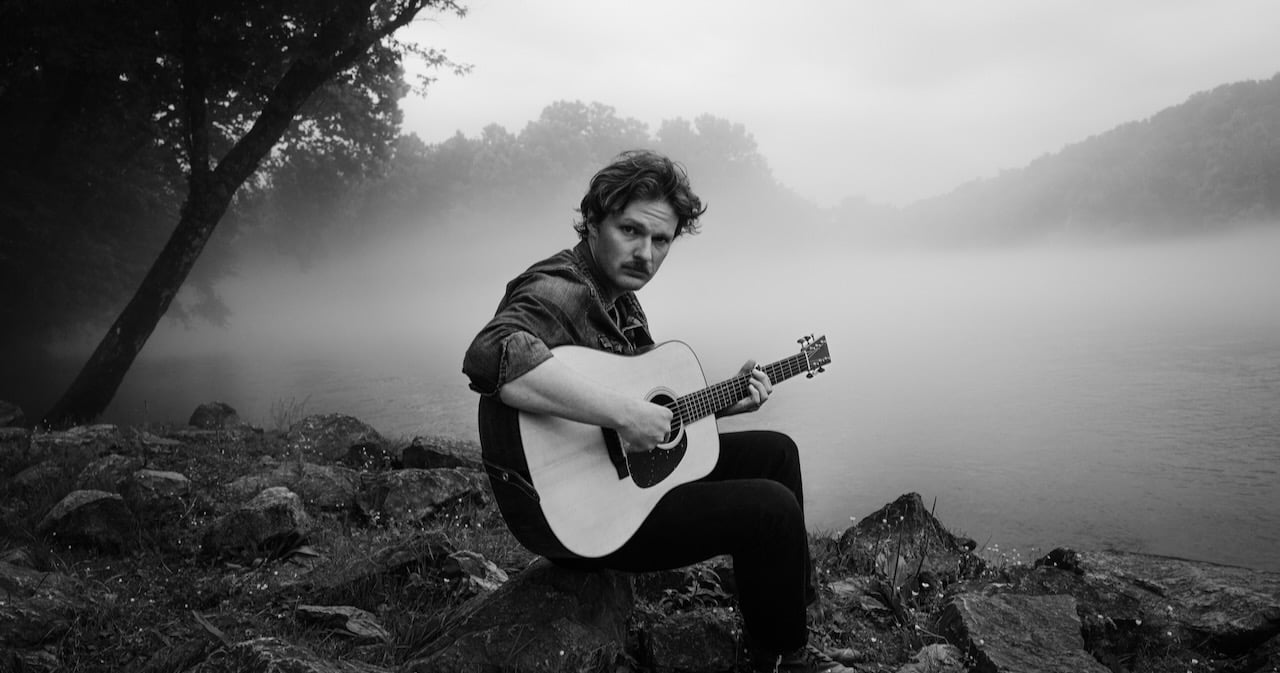
For Indie-Folk Sensation Mon Rovîa, ‘Atonement’ is Just the Beginning

(Editor’s Note: Read our January 2026 interview with Mon Rovîa about his new album, Bloodline, here.)

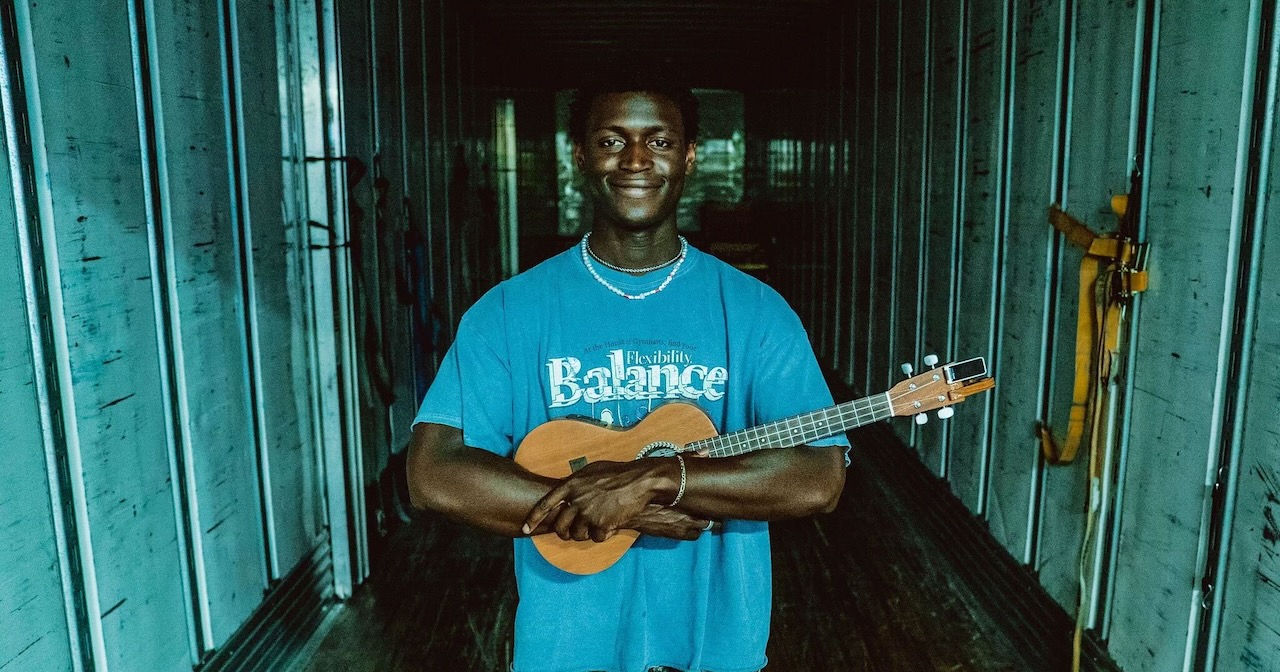
When one really digs below the surface of Mon Rovîa, there’s this intricate kaleidoscope of self, this winding path where the road to the here and now for the singer-songwriter has truly been one of restless resilience, dogged passion, and spiritual curiosity.

The rising artist has already lived this whirlwind existence of trials and tribulations, but also one of triumph and transcendence. Born in the West African country of Liberia, Mon Rovîa (taking his stage name from Liberia’s capital city) was adopted by Christian missionaries and taken from his homeland in the midst of an extremely violent and daunting civil war,

From there, Mon Rovîa bounced around the United States in a highly religious household, one where he wasn’t exposed to modern culture or the endless depths of music, either new or old. But, nonetheless, he fostered many existential questions about his unfolding life, with one main query in the forefront: Who am I?

The intricate nature of Mon Rovîa became heavy and tumultuous within his heart and soul, these deep layers of internal conflict. Being an immigrant in America. Being a Black man raised in a white family. Being adopted with no sense of his biological parents. And being filled with survivor’s guilt about leaving Liberia.

Yet, it was writing in his journals that launched the long process of healing and understanding within Mon Rovîa. Those words, thoughts and emotions soon took shape as songs, all while he began to learn to play the ukulele, guitar and other instruments. Add into that, his continued exploration of recorded music itself.

What has resulted is this unique tone, a vibrant crossroads of indie-folk, Americana, and shoegaze pop stylings, with many viewing Mon Rovîa as a talented rising voice in the Afro-Appalachian folk scene.

Fast-forward to 2025, where Mon Rovîa has become a very popular star on TikTok, yet his soothing sounds and melodies echo far across the massive social media platform. Several studio EPs have been released to wide acclaim, with the latest, Act 4: Atonement, putting a period on this chapter of his art – his eyes now aimed at the unknown horizon of his intent, head held high and optimistic.

When you’re looking out the window these days – in terms of your career, where the music’s going, and also where you’re going – what are you seeing?

Mon Rovîa: From even last year, I think things have accelerated a lot faster than I would’ve hoped in music, to be honest. It still seems really fresh though. It’s a lot of taking in the new fans and a lot of the joy that’s come with the acceptance of the music on a broader scale. At times, I wonder if I was really prepared for all of it, because a lot of these songs and a lot of the roadmap was written from a place of deep sadness and things that I was going through at the time. It’s crazy when you get to the place of living the thing you hoped for and realize that, “Oh man, there’s longevity that needs to be tied along with it now, since it’s becoming something that people are really desiring.” But, I’m very thankful. I try to be truly in tune with my energy and spirit. The world is super heavy and I tend to feel it a lot.

As things get crazier for you, expectations may shift and things change. How do you keep that piece of you that’s honest and real intact in your music?

A lot of it is, for me at least, having perspective. I know that’s easier said than done. But, being able to understand that you’re doing what you love and to be honest with whatever it is you’re presenting. Write what you know, write what you feel.

Your popularity soared through TikTok and now you’re playing more live shows. Has that been an interesting transition in being face to face with your fans that normally see you from behind a screen?

Absolutely. It’s totally different. I’m a pretty quiet, shy person. So now, transitioning to moving from the screen and having that barrier, that river that can divide, all the little things that come into play when you’re face to face? It was a little bit scary at first, especially with the first couple tours we did. With being in front of a crowd, the most important piece I think that I’ve learned now is the stories that I’m telling are the tales of my journey with each song. As I play music, that’s helped me become a lot more confident onstage, because I know what I’m speaking about and I know what the songs are about. It’s not this kind of idleness and just good music to listen to. I try to take the listener a little bit deeper, and that’s fun for me to do that. It creates a lot more fun. I’m just not someone that likes to be in front of a lot of people or be the center of attention, to be honest. I prefer writing things in silence, being in my room and contemplating.

@mon_rovia_boy To those alchemizing your traumas… this is “to watch the world spin without you” 🫂 #folkmusic #mentalhealth #derealization ♬ To Watch The World Spin Without You – Mon Rovîa

With all of this going on, you’re also on this journey of finding yourself and figuring out who you are, where you came from, and where you’re going.

I think every adopted kid eventually hits the point where they want to know so many different things about their life, their story, what their background was. And that’s what was happening to me around the time of [my 2021 album] Dark Continent. And that’s even before we were taking this route of Afro-Appalachia. But, it led me to dive deeper into music and I just happened to be [living in Chattanooga, Tennessee]. Being in this area helped me to dive deeper into where all this music kind of came from and the history [behind folk, bluegrass, and Americana]. So here I am, just a Liberian refugee, but somehow in the perfect hands of history learning from where I was, not necessarily anything else. It is a very full circle moment.

That’s got to be a lot to wrestle with as you get older and you become your own person. I mean, there’s a lot of layers there.

So many layers. But don’t forget, there’s that layer of being the Black kid in a white missionary Christian family. And then the experience of growing up Black in that private school kind of world, having no tie to the African American experience. Being exiled as well from that group, because I didn’t have the same upbringing. I was always looked at as being a white Black person, a Black person that spoke white, because I spoke pretty properly. Kids that have my experience are very lonely, you know? There’s not really a place you fit, because you don’t fit with the white kids because you’re Black in their eyes, clearly. And then the African Americans don’t accept you because you don’t know their world either.

It was a very tough upbringing. I was very quiet and I watched a lot. I learned how to be what I am in social settings, how to relate to [others] and keep things to myself a lot, just try to fit in as best as possible. It was tough. It was lonely. Music didn’t really come to me as Mon Rovîa until 2018, and that’s when I really started to take music a little bit more seriously. [Growing up], it was more of an outlet. It was just a fun thing I did with my brothers. I didn’t think of a career or me being good at it, because nobody said I was good at music or writing music. My friends did like my writing. They thought I was very clever, but I didn’t consider it for myself at that time. I just did it.

With this period of your life and career, it seems Act 4: Atonement seems like the end of the beginning of this chapter of your music and your journey.

Yeah. That’s what Atonement is. It’s the end of the beginning. Everyone is a hero in this story of life. So, everyone has their hero’s journey, whatever that is to them. Some don’t make it to becoming the hero, which is a tragic thing. And some do, but everyone has that journey in their life. For me, this atonement ending is the start of what I am now. I think it gets me to this place where I’ve gone through a lot of difficult things. Hopefully now, in my next chapters of Mon Rovîa, whatever that is, I can atone to the people – people that are hurting and going through different things. The point is, I can hopefully now be some kind of light to these people, where I can tell them things I’ve learned along the way. And hopefully it helps them through their things and through their time. That’s the important piece of what atonement is – the knowledge then turns hopefully to wisdom.

Have you been back to Liberia at all?

The last time I was there I was 10 or so. But, I’m supposed to go back next year to see my sister and brother. They still live there.

Have you tracked down your parents?

My mother passed away during the war and my father also did. I keep in contact with my sister, and that’s only recently. Growing up, these people were not in my thoughts. I tried to forget a lot of these things and just assimilate to American culture. It wasn’t until I was older that that guilt set in where I realized, “Man, I hadn’t even thought about anybody else in my country or the gift that it is to be chosen,” because it could have been my sister or brother that was chosen to come to America. I was just picked out of the group of them like, “Hey, he should go with this missionary family.” So, a lot of those things didn’t even come to my mind until I was older, to really see how much time I wasted absolutely doing nothing for anyone else but myself in this place. At that time, I was going through a lot of different vices and dealing with a lot of different bad things. I was constantly drinking and deep into my depression and lack of understanding of what my purpose was at all.

Or who you are.

I didn’t know who I was. I didn’t really know my past and history. I had glimpses of it from just some things my adopted parents had told me. But, I hadn’t dove into it until I contacted my sister and heard the real thing, the truth of it all. The goal is to go back [to Liberia] and try to get some colors from my native country and, and just, you know, spend some time with people that I haven’t seen in a long time and learn. The last time I went was really difficult. When I was there, it was in the middle of the second civil war and we ended up staying longer than expected because the child soldiers had taken over the capital city of Monrovia. It was a really scary time and that was the last memory of Liberia during the conflict. That’s a whole other cathartic piece of my journey, to [once again] step foot on that soil. I think once I step foot on that soil, I’ll probably weep. A lot of things have been bottled up and lodged into different areas of my body, [and will be] released onto the continent. But, not until I go there. My story won’t end until I go back. That’s a major piece.

You have such an interesting perspective, because I think a lot of times people in this country take things for granted, where they’ve either never traveled out of this country or they’re not from other countries. I would surmise that you probably see things that are beautiful in this country that a lot of us don’t acknowledge.

Yeah. There’s so much beauty in this country. Through all of the tirades against each other, there is still so much goodness. I mean, being able to walk out your door and be able to get anything you want at a store that’s there and not be–

Afraid to go for that walk.

Not afraid to go, yeah. Not afraid to go on that walk knowing I might not come home today, and there’s many countries like that currently. People don’t even have that freedom to go out their door and just see something and or go walk in the woods.

Or make an album.

Or make an album. It’s crazy to me that we forget so easily the good things when times are tough. And when times are tough, you think that the good won’t come back again. Man’s memory is so short and it’s really the plague.

That’s really what kills us all is that our memory is terrible. In times of famine, you never think good will come again. So, you lose hope. But, everything’s cyclical as well. Good comes back and hard times come again. And then you weathered the bad time before, but you forget that you weathered it, so you suffer. That’s us. That’s humanity.


Photo Credit: Glenn Ross
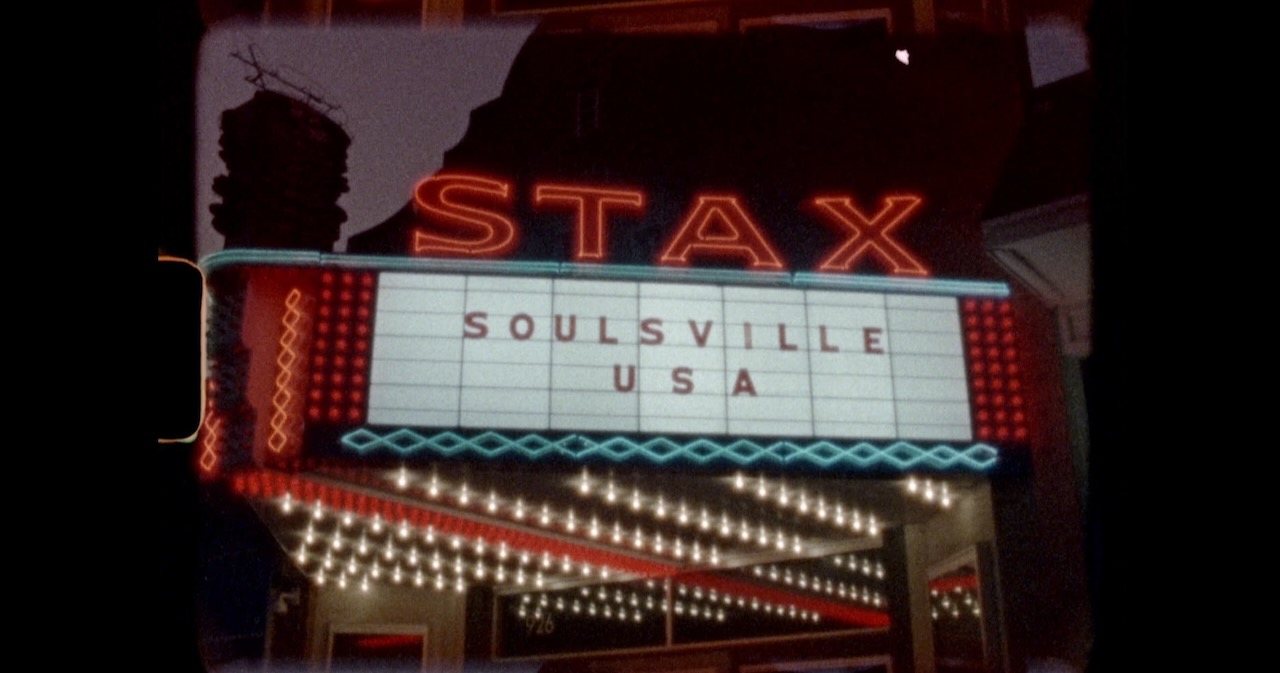
Emmy-Nominated Docuseries Highlights the Impact of STAX Records

It all began way back, nearly seventy years ago in Memphis, Tennessee, when an almost unremarkable thing happened: A record store opened its doors.

That a record store might exist in the home of the blues in 1957 was itself no remarkable thing. But this store, Satellite Records, was quite literally a sister operation to the recording studio next door. Satellite’s owner, Estelle Axton, was the older sister of the studio’s founder, Jim Stewart.

Stewart was a fiddler with a passion for country music. Long before the dominance of indie labels, Stewart had the idea to start his own studio and label, to get his music out to the masses. As luck would have it, his original country songs were… just fine. Nothing groundbreaking. But his work sparked the imagination of a young musician named David Porter, who strode into the studio one day and asked if he could lay down some tracks.

Long story short, Porter recruited some other artists who became a band known as Booker T. and the M.G.s – eventually the studio’s de facto house band. Suddenly, the label – named STAX as a combination of Jim and Estelle’s last names – was off to the races.

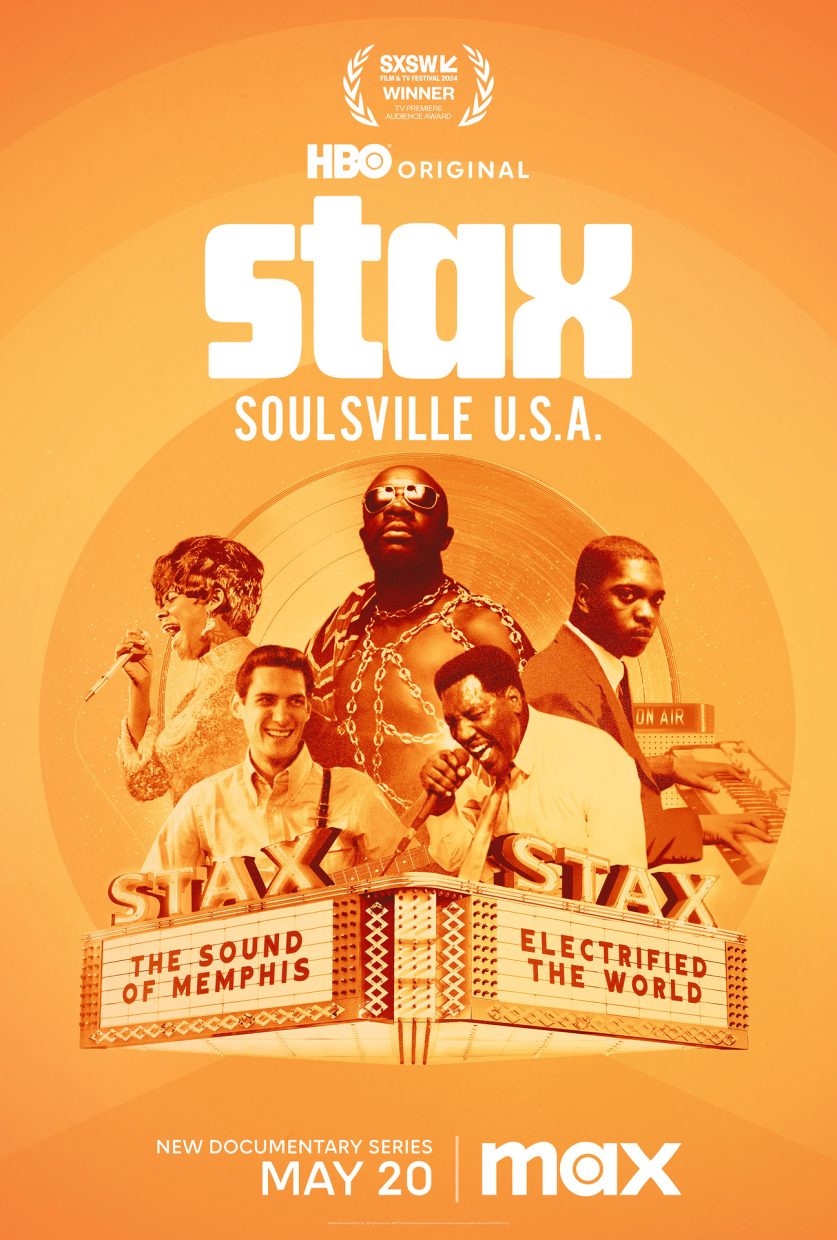
Now, a three-part docuseries from HBO titled STAX: Soulville USA is available for streaming on MAX. The series premiered at South by Southwest earlier this year and earned two Emmy Award nominations (Outstanding Documentary or Nonfiction Series and Outstanding Sound Mixing for a Nonfiction Program). While the series did not prevail in those categories, it is a powerful, thorough, emotional telling of the relationship between music, its makers, and the world in which they live.

The series’ director – Peabody, Emmy, and NAACP award-winner Jamila Wignot – strung together an incredible array of rare and never-before-shared footage of the rise and fall (and rise again) of STAX Records between 1961-1975. But footage isn’t just from inside the studio walls. We see musicians on their first trips to Europe, relaxing in the pool at the Lorraine Hotel – a frequent STAX hangout before it became the scene of Martin Luther King, Jr.’s assassination. There is footage from civil rights protests and speeches and moments of great grief and outrage. There are contemporary interviews with the musicians and staff of STAX and Satellite Records, including Axton and Stewart.

And always, at the heart of it all, there’s the music.

In a For Your Consideration panel also available on MAX, Mignot admitted that, when she was approached to direct the series, she was “really just into it for the music.”

“I thought it was going to be this great-big, beautiful music story,” she adds. “As I started to do more research, and particularly looking into the work that [STAX biographer] Rob Bowman had done, I understood that it was a much bigger story that touched on social issues, history, and [it] really was this beautiful story of these folks who were, I think, led by intuition and desire, and weren’t necessarily trying to do more than the things that they loved. But they were very responsive to the world that was around them.”

Of course, outside the walls of STAX studio and Satellite records, Black people were subject to the cultural and legal realities of living in the Jim Crow South.

“[Jim Crow] was too strong a system to tear down,” bandleader Booker T. notes. “In Memphis, you had to keep your mouth shut and hope for the best. Or fight.”

While that was the rule of the road outside, inside STAX studio, Booker T.’s band had two Black members and two white. Together, they developed an approach to Southern soul music that would become one of the most influential sounds of the 20th Century.

Granted, as the civil rights movement went through its various waves in Memphis and beyond, and STAX players marched on picket lines without their white bandmates beside them, this complicated interpersonal relationships in the studio. But the music continued to compel everyone forward. As a result, music fans got to find solace in some of the greatest roots recordings ever made.

The docuseries’ executive producer Michele Smith commented on the artists’ legacies in a recent phone conversation.

“Those artists were just teenagers who had a love for the music,” she says. “[They] just wanted to be heard. What they did not know at that time was they were forging a path to history. They were working, they did know that what they were doing was technically illegal in the Jim Crow South. … They were young people who just wanted to make music. And they did a whole lot more than that. Their music, to this day, will … outlive all of us. It’s globally renowned and it’s some of the best R&B soul music out there, sampled by young people today.”

Being able to watch this music get made is certainly one major draw of the series. Isaac Hayes and the Bar-Kays developing the “Theme from Shaft”; Sam & Dave rolling out “Soul Man” for a live audience the first time; and Otis Redding onstage at the Monterey Pop Festival.

In interview clips, STAX alumni recall how out-of-place Redding and his band were – sober and polished in their well-pressed suits – among the mostly white hippie, dropped-out crowd. Recognizing the one thread that connected him with his seemingly polar-opposite audience, Redding started his set by asking, “This is the love crowd, right? We all love each other, don’t we?” The crowd roared, so he closed his eyes and lit into “I’ve Been Loving You Too Long” with a passion and emotional clarity that was absolutely intoxicating.

“Otis Redding hit the stage,” recalled trumpet player Wayne Jackson. “All those hippies got quiet. They ain’t seen anything like us.”

Though that was the truth, it often was in those days of STAX artists making the rounds with their groundbreaking sound. But, certainly, nobody present for any of it – no matter if STAX was on its way up or its way down – would ever forget the way the music turned their soul.

Watch STAX: Soulsville USA via MAX.


Images courtesy of HBO.

Camping at Bonnaroo? Beat the Heat By Booking a Luxury Mansion and Driver

MANCHESTER, TN – Bonnaroo is here, and what better way to experience your favorite national brands and a little music than by camping out with thousands of strangers. But after pitching your tent in the swampy hellscape of Tennessee, experiencing the serenity of a fetid port-a-potty, and meeting your new influencer neighbor, “Kylie B,” living it up in her $4,000 glamping tent, you might be craving some creature comforts of your own. Here’s how to secure the ultimate Bonnaroo experience that’ll make you the envy of the unwashed masses before human-being-turned-cigarette Post Malone even takes the stage.

FUNDRAGING

You’ve already blown your firstborn’s college fund on festival passes, so it’s time to get creative with money. Start by hitting up any old roommates who stumbled into lucrative STEM careers while you were exploring your passion for Russian literature, then consider who among them you might have particularly damaging kompromat on. Your roommate-turned-pediatrician Owen really doesn’t want you to email his wife the Polaroids you have of “Turtle Night” back at Sigma Chi? It’s probably best that he just Venmo you a few thousand dollars in your time of need so that they never see the light of day.

SECURING PRIMO DIGS

Booking sites like Hotels.com or Airbnb can be expensive, and during festival season, availability is limited. Instead of stressing out with a last-minute scramble to find a place to your standards, try heading straight to Google Earth. With satellite technology, you can easily see which nearby McMansions look empty during the summer months. Nervous about trespassing? Bone up on Tennessee’s excellent stand-your-ground laws. Once you’ve established residency, even a returning homeowner can be escorted off their own property using any means necessary.

EATING LIKE A ROCKSTAR

Festival food is notoriously overpriced and underwhelming. But the headlining artists at these festivals come with specific riders that all but guarantee a yummy backstage spread. Since anyone under 5’6″ with a shaved head and the confidence of a middle-aged white man can pass for Flea, you’re virtually assured a seat at the table once you whisk past security into the Red Hot Chili Peppers’ dressing room. Over 5’6″? Throw on a backward baseball cap and cosplay as drummer Chad Smith or his lesser-known doppelgänger, Will Ferrell.

DRIVING IN STYLE

Did you know that Tesla owners get roadside assistance anywhere in America? Of course, you don’t own a Tesla, but your ring-light-bathed glamper neighbor Kylie B sure does. A standard box cutter will make quick work of the tires on her new Model S. When the tow truck arrives, simply decline the repair and ask them to drop you at your new house. Your compelling tales of every performance you’ve witnessed over the weekend are sure to win over the driver, so at the festival’s end, don’t hesitate to make him take you all the way back to your old life in Iowa and your wistful year-long wait before you can do it all again.


Greg Hess is a comedy writer and performer in Los Angeles. His work has been featured in The American Bystander, The Onion, Shouts & Murmurs, Points in Case, and he cohosts the hit satirical podcast MEGA.

Women’s History Spotlight: Hazel & Alice, Dale Ann Bradley, and More

March is Women’s History Month, and BGS, Good Country, and Real Roots Radio have partnered to highlight a variety of our favorite women in country, bluegrass, and roots music with our Women’s History Spotlight.

Each weekday in March at 11AM Eastern (8AM Pacific) on Real Roots Radio, host Daniel Mullins will be celebrating a powerful woman in roots music during the Women’s History Spotlight segment of The Daniel Mullins Midday Music Spectacular. You can listen to Real Roots Radio online 24/7 or via their FREE app for smartphones or tablets.

Then, we will have a Friday recap here on BGS featuring the artists highlighted throughout the previous week. No list is comprehensive, but we hope to feature some familiar favorites as well as some trailblazers whose music and impact might not be as familiar to you.

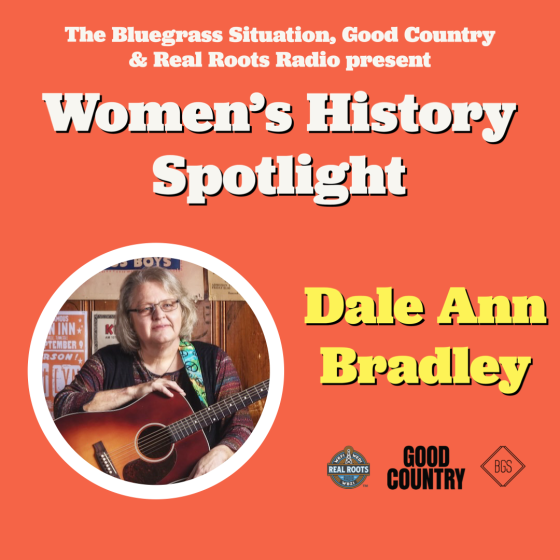
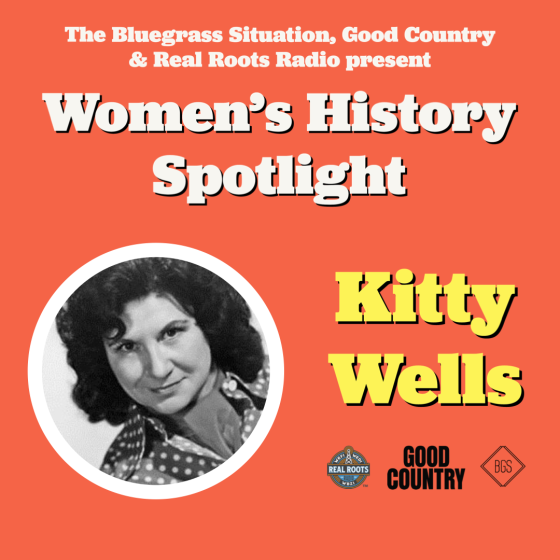
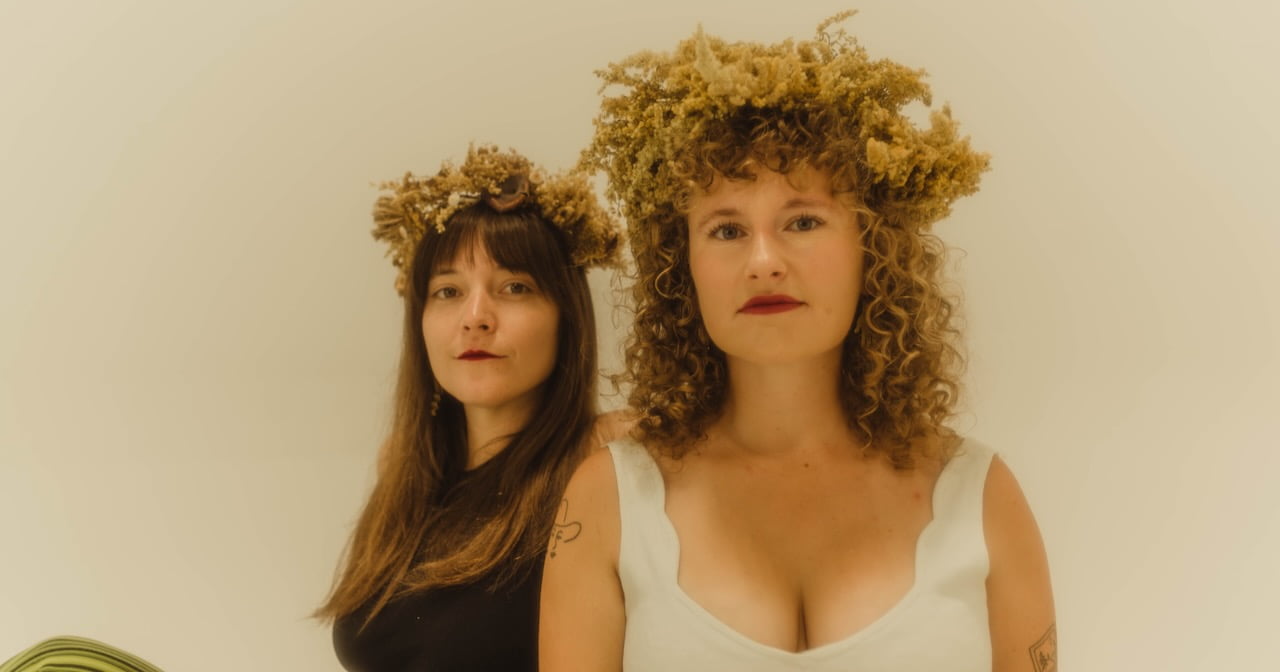
This week’s edition of our Women’s History Spotlight features musicians and artists like IBMA Award winner Dale Ann Bradley, the legendary Dolly Parton, Bluegrass Music Hall of Fame inductees Hazel Dickens & Alice Gerrard, early country hitmaker Kitty Wells, and Kentuckian-West Virginian Molly O’Day. Tune in next week for the final installment of our Women’s History Spotlight!

Dolly Parton

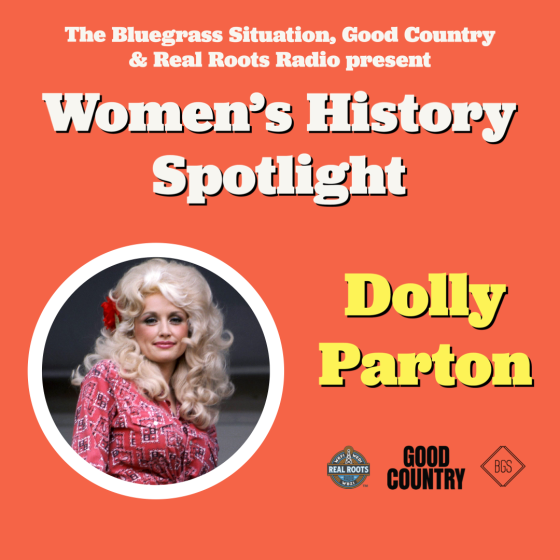
You knew it was coming. You can’t tell the story of country music (or American pop culture) without Dolly Parton. Growing up in Sevier County, Tennessee, she is not just the Queen of the Smoky Mountains, but quite possible the Queen of the Universe (if there was such a ridiculous title). Her rags-to-riches story will continue to be told and re-told for generations. Aside from her beautiful voice and philanthropic work (the millions of books that she gives to children through Dolly Parton’s Imagination Library is her proudest achievement), there are numerous other aspects about Dolly Parton that are remarkable.

Her business acumen is frequently praised, but it still bears repeating. Aside from her numerous endeavors (including Dollywood), it’s often worth remembering that she fought to regain control of her own career and decision-making from Porter Wagoner after her star began shining brighter than his scope of influence. (Remember, it was the ending of this business relationship that was the impetus behind Dolly writing one of her most famous songs, “I Will Always Love You.”) Call it a business decision or just genius, but Dolly’s ability to juggle embracing her role as an undeniable sex symbol and avoiding being labeled as “unwholesome” by conservative crowds has to be one of the most difficult tightrope walks in American entertainment.

Vanity Fair’s 1991 article “Good Golly, Miss Dolly did a deep dive into the dichotomy of Dolly’s role as a sort of clean sex symbol: “Dolly, in her openness, demystifies sex. ‘One of the things that makes the image work is that people understand that I look one way, but am another, that there’s a very real person underneath this artificial look,’ she theorizes. ‘It’s not like I am a joke. People can laugh at me, but they don’t make fun.’ … Indeed, Dolly Parton has become the billboard for sex without being the product itself.”

It is the way that she ensures that the “very real person” that is Dolly Rebecca Parton doesn’t get lost in the glitz, glamor, and boob jokes that is part of the reason why she is so endearing and universally beloved by folks from all walks of life; in a world where polarization is en vogue, Dolly is one of the few topics on which everyone agrees! She epitomizes the best of us.


Hazel Dickens & Alice Gerrard

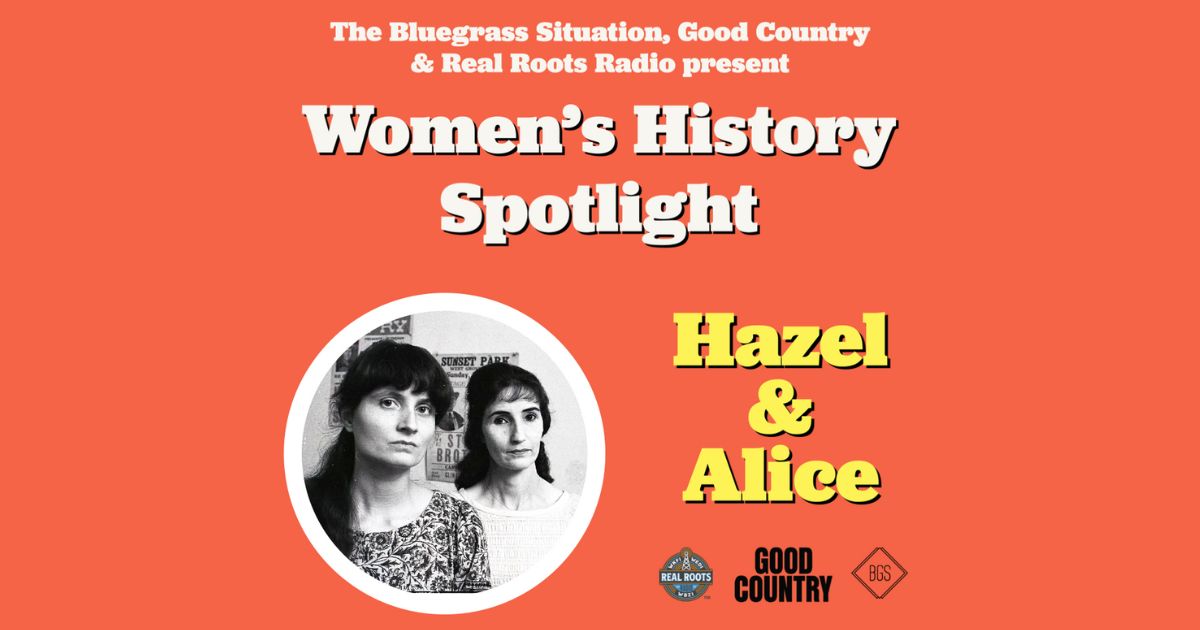
Members of the Bluegrass Music Hall of Fame, Hazel Dickens & Alice Gerrard were an unlikely pair who blasted down doors for women in bluegrass. Hazel hailed from the mountains of West Virginia, while Alice was from across the country in Seattle, Washington. Alice attended Antioch College in Yellow Springs, Ohio, where she was exposed to folk and bluegrass music. While a student there, she helped coordinate bringing The Osborne Brothers to the Antioch campus, making history as the first major bluegrass concert held on a college campus! After college, she wound up in the D.C. area, becoming active in their flourishing bluegrass scene, where she became friends and musical partners with Hazel Dickens – who had moved to the region with her family to find factory work years earlier.

Hazel & Alice became some of the first female bluegrass bandleaders and recorded some classic albums for Smithsonian Folkways and Rounder Records before embarking on successful solo careers by the mid-’70s. With Hazel’s mountain sound and Alice’s more folk-oriented sensibilities, their music appealed to both traditional bluegrass fans and those who were being introduced to the genre via the Folk Revival. Their original material which highlighted a woman’s perspective were critical in bringing a voice to women in the bluegrass canon. Decades later, their music and legacy is still rippling across American roots music, with artists as diverse as Rhiannon Giddens and Dudley Connell still celebrating their influence and impact.


Molly O’Day 

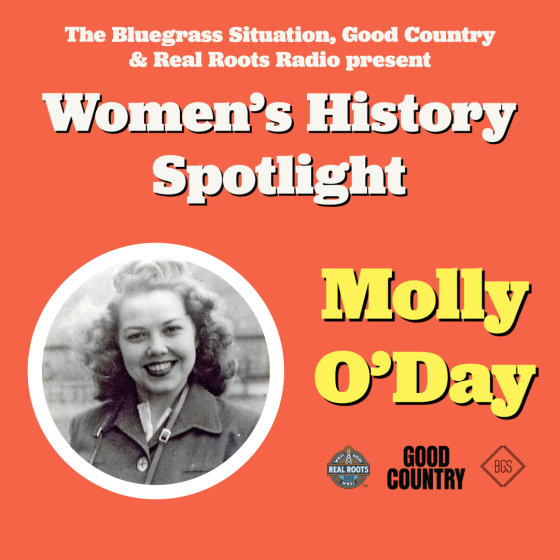
Born Lois LaVerne Williamson, country pioneer Molly O’Day was born in Pike County, Kentucky. She would become a popular radio star in West Virginia by the early 1940s, eventually leading Molly O’Day & The Cumberland Mountain Folks. Her band crossed paths with Hank Williams on the radio circuit and Molly even sang quite a few of his songs on radio and later in the recording studio. Molly learned “Tramp On The Street” from Hank Williams and it would land her a recording contract with Columbia Records. (Fun Fact: Her band at the time of her first Columbia recording session featured a young Mac Wiseman on bass!)

In an era when the term “hillbilly music” was still commonly used, Molly’s music, retroactively, could have country and bluegrass labels applied to it. Her powerful voice felt just as at home on an ancient balled like “Poor Ellen Smith” as it did on soul-stirring gospel songs like “Matthew 24.” By the early 1950s, Molly and her husband grew weary of life in the limelight and essentially retired from the music business, both dedicating their life to ministry. She would record a few gospel albums for some small record labels in the ensuing years, but her final album was released in 1960. She would pass away in the late 1980s, but she left a mark on country music and earned the respect of her peers at a time when the list of female country pioneers was relatively short.


Dale Ann Bradley

Revered as one of the most heartfelt bluegrass singers of her generation, this Kentucky songbird’s career started in earnest as a member of the Renfro Valley cast in her home state of Kentucky. The Renfro Valley Barn Dance was an extremely popular barn-dance style radio program in the 1930s and it spurred the creation of Renfro Valley as a country music entertainment destination in Kentucky. This helped kickstart the careers of folks like Steve Gulley, Jeff Parker, Dale Ann Bradley, and more by the 1990s.

While at Renfro Valley, Bradley would eventually join The New Coon Creek Girls, one of bluegrass’s only “all-girl” bands at the time, and aptly named after The Coon Creek Girls, a pioneering female string band of the 1930s who also started on The Renfro Valley Barn Dance.

Dale Ann’s soulful voice, largely influence by the Primitive Baptist tradition which she grew up around, quickly gripped the bluegrass world, leading to a successful solo career for the last three decades. In addition to recording songs that hearken to those familiar with mountain people and mountain ways, the appeal of Dale Ann’s voice has led her to adapt songs from outside of the genre to her style of bluegrass, tackling tunes from Tom Petty, Bobbie Gentry, The Grateful Dead, Jim Croce, and everyone in-between! Her diverse material has led me (and many others) to the conclusion that no matter the material, if Dale Ann is singing it, I already know I’m going to like it!


Kitty Wells

Hailed as the original Queen of Country Music, Kitty Wells hit a massive reset button on the role of women in country music after the massive success of her breakthrough hit, “It Wasn’t God Who Made Honky Tonk Angels.” Written by J.D. Miller, it was penned as the antithesis of Hank Thompson’s hit, “The Wild Side of Life.” After writing the song, the search began for a woman to sing it. Kitty Wells had pursued a country career, to little avail, and had essentially consented that maybe it wasn’t in the cards for her, when she was contacted to record the song. “It Wasn’t God Who Made Honky Tonk Angels” would become the first Number One hit by solo female in country music history, and its status as one of the most iconic country songs of all time only grows.

This explosion of success led to many other hit records by Kitty Wells, and opened the doors for those who would follow in her wake like Jean Shepard, Loretta Lynn, Dolly Parton and more! You can’t celebrate Women’s History Month without honoring the gal who famously sang the line, “It’s a shame that all the blame is on us women!” (Still kind of bummed that Margot Robbie didn’t sing that line in Barbie. Seems like a missed opportunity to me!)

As an added bonus, here’s another cool version from 1993, where Dolly Parton, Loretta Lynn, and Tammy Wynette recruited Kitty Wells to join them on a new version of this country classic on their collaborative album, appropriately entitled Honky Tonk Angels.


BGS 5+5: Zach Russell

Artist: Zach Russell
Hometown: Caryville, Tennessee
Latest Album: Where The Flowers Meet The Dew (out December 1)

Which artist has influenced you the most – and how?

I’ve always looked up to Willie Nelson. In my opinion, he is the top tier as far as “artists” go. He wrote many great songs, but wasn’t against recording others’ great songs. His work is of substance and quality, but catchy and with mass appeal. He ebbed and flowed with the styles of the times, but it never felt inauthentic. He had success in the pop realm, then went back to Texas and started the outlaw movement. He has released 100 studio albums. He is still touring at 90 years old. He has a massive marijuana company.

As he said at the very beginning of his Yesterday’s Wine album, “The voice of Imperfect Man must now be made manifest and I have been selected as the most likely candidate.” I mean, come on. That’s as cool as it gets.

What other art forms – literature, film, dance, painting, etc. – inform your music?

I am a big fan of literature, especially Appalachian authors like Lee Smith, Amy Greene, Silas House, and Wendell Berry, but my favorite being John Steinbeck, a California native. I believe reading good literature keeps my mind’s eye in good shape and subconsciously strengthens my sense for imagery.

A song can be seen like a book. Though, in a song you don’t get hundreds of pages to make your point. You get three and a half minutes, some 32ish lines, to get across a story or feeling. You can’t waste a single word. Each line needs to fracture out in a hundred different directions once it enters the listeners mind. I don’t think I ever would have gotten that had it not been for good literature.

How often do you hide behind a character in a song or use “you” when it’s actually “me”?

Nothing against characters in songs, but I wouldn’t create one to hide behind. If I wanted to hide something I wouldn’t write a song about it. Art is largely about bravery.

If I cried and that is an important part of the story, I’ll say that I cried. Sometimes things aren’t meant to be taken literally, though. Sometimes they are meant to be seen mythically, meaning whether it’s true or not is not what is important. But no, never to hide.

What has been the best advice you’ve received in your career so far?

Be kind and be a good hang. Being fun to be around and a nice person will get you gigs over more talented players. I didn’t understand that at first, but now that I hire musicians I get it. You spend a lot more time sharing space with people than you do playing together.

Which elements of nature do you spend the most time with and how do those impact your work?

I spend a good amount of time thinking about my local world: All the local trees and wildlife, the Clinch River and the waterways that feed it, when things bloom, what eats what, and the general way things tend to go. I think if you pay enough attention to the natural world you could accidentally learn all kinds of secret stuff. I believe I have. I’m not really sure what, but things are different now. And I don’t believe it’s any coincidence that it was only after I moved back home to the mountains of East Tennessee that people started paying attention to what I was doing. Maybe it makes it easier to know where things wanna go, or what comes next.


Photo Credit: Emma Delevante

WATCH: The Montvales, “Lou”

Artist: The Montvales
Hometown: Knoxville, Tennessee, but currently residing in Cincinnati, Ohio
Song: “Lou”
Album: Born Strangers
Release Date: February 2, 2024

In Their Words: “I spent a year teaching English in a small town in France. My baby niece came to visit during that time and I got to take her to the ocean for the first time. I showed her beaches, vineyards, and forests.

“Sometimes being far away makes troubling news of home feel more vivid. Threats to American public land felt especially heartbreaking as I watched my niece grow to love the land for the first time. I wrote this song imagining a future in which she gets to love all the mountains, beaches, and forests that I love. It felt like the only acceptable option was a world passed on to her intact.” – Sally Buice

Track Credits: Produced by Mike Eli LoPinto
Engineered by Sean Sullivan
Mixed by Jake Davis
Mastered by Kevin Butler


Photo Credit: Suzi Kern
Video Credit: Contrary Western

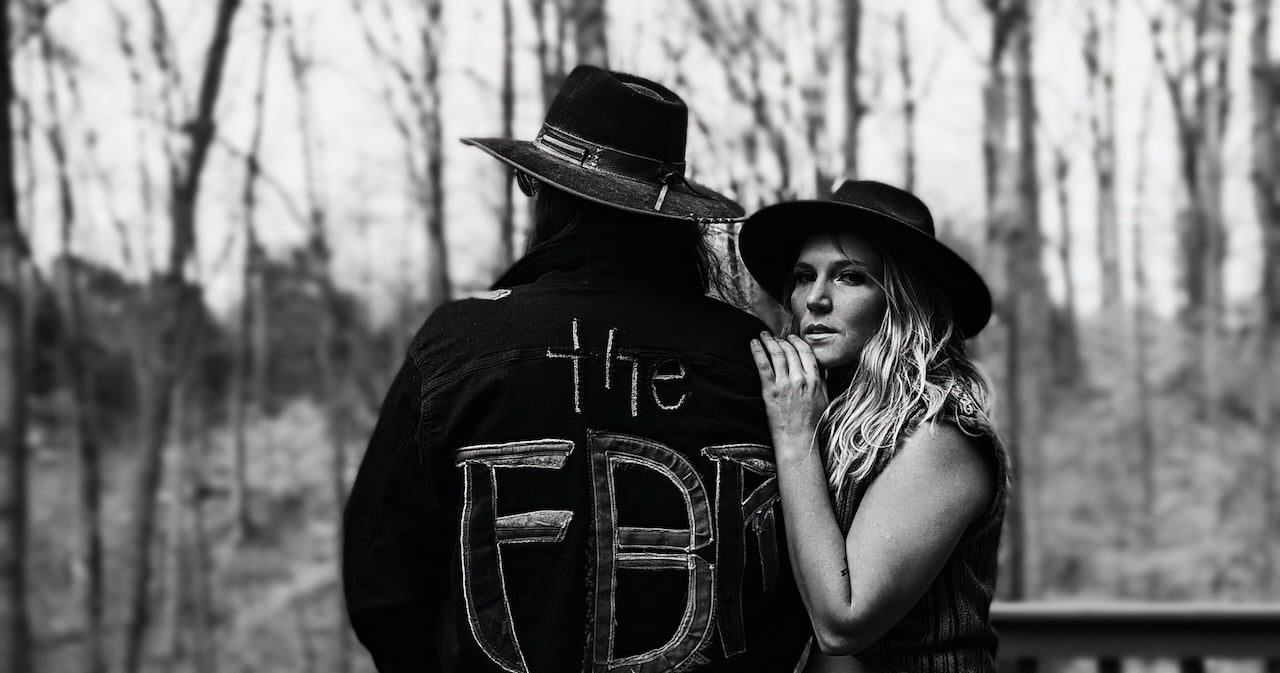
LISTEN: The FBR, “Empty Room”

Artist: The FBR
Hometown: Franklin, Tennessee
Song: “Empty Room”
Album: Ghost
Release Date: January 19, 2024

In Their Words: “Tim and I had hardly spent any time apart at all for nearly two years during the pandemic. There are times, especially in the winter, that I seem to struggle spending time on my own. I don’t like being left alone with my thoughts too long. He was heading out of town for a long weekend in Colorado, and I found myself riddled with the same old apprehension and anxiety about being alone for four days.

“I usually get kind of moody/cold and distant, so a few days prior, as the feelings began to surface, I communicated that I was struggling. I asked him to work on some sad lyrics for me to write music to while he was gone, so it would give my unwanted energy an outlet. I came home from a day of running around to the words of a tune, at the time titled ‘An Empty Room,’ sitting on the piano.

“He said the first thing that came to his mind when sitting down to write was quite literally an empty room, kind of symbolizing that loneliness. The first night he was gone I sat at the piano just reading the words over and over, and trying to find the right chord progression.

“It is really cool listening back to the earliest phone recordings I took that weekend, and slowly hearing the song come to life. It was a monumental moment for me, being able to be vulnerable enough to express my struggles and for both of us to be able to communicate it through a song.

“After he returned, we both felt the song needed a bridge, so we worked on the music and lyrics together to wrap it up. A few months later, while at rehearsal, the guys were upstairs taking a break, and I had asked Brandon (our keys player) to run through the song with me, as I had pictured it as a piano ballad up to that point.

“After the first verse, the guys were inspired, came quickly back downstairs and jumped in at the perfect time on the perfect beat, and we had what I call a ‘Holy Shit!’ moment. The intensity was so awesome that we all knew that is how it needed to be recorded!” – Malarie McConaha

Track Credits:

Lyrics by Tim Hunter
Music by Malarie McConaha
Produced by Tim Hunter, Malarie McConaha
Mixed by Jim Scott
Lead Recording Engineer – Kevin Willis
Assistant Mix Engineer – Martin Cooke
Vocals – Malarie McConaha
Background Vocals – Malarie McConaha, Zachary Goforth, Tim Hunter
Drums – Mike Malinin
Bass Guitar – Chopper Anderson
Rhythm Electric Guitar – Kevin Willis
Lead Electric Guitar – Evan Opitz
Acoustic Guitar – Tim Hunter
Keys – Brandon Mordecai


Photo Credit: The FBR

LISTEN: Nora Jane Struthers, “Life Of A Dream”

Artist: Nora Jane Struthers
Hometown: Nashville, Tennessee
Song: “Life Of A Dream”
Album: Back To Cast Iron
Release Date: October 27, 2023

In Their Words: “Co-written with my husband Joe Overton, this song is an inquiry into our own dreams and how our season of life shapes and reshapes those dreams. I think the pandemic gave most people a new perspective on their dreams… in many cases redefining them. My dream of building a family has taken a front seat for the past few years and as I think about what this song means to me right now, I realize that I am standing on a precipice: We are planning our final embryo transfer and if it takes, that means 3.5 more years of living in baby-world. If it doesn’t, we’re only a few years away from having two kids in school and all of the ‘free’ time that comes along with that. What will I do if I am in fact leveling-up and out of the baby-mom season of my life? Pour all my day-light hour energy into writing? Can I refocus on touring on weekends and summers? What is the dream now?” – Nora Jane Struthers


Photo Credit: Bree Marie Fish

Our Interview with Young Mandolinist Extraordinaire, Wyatt Ellis

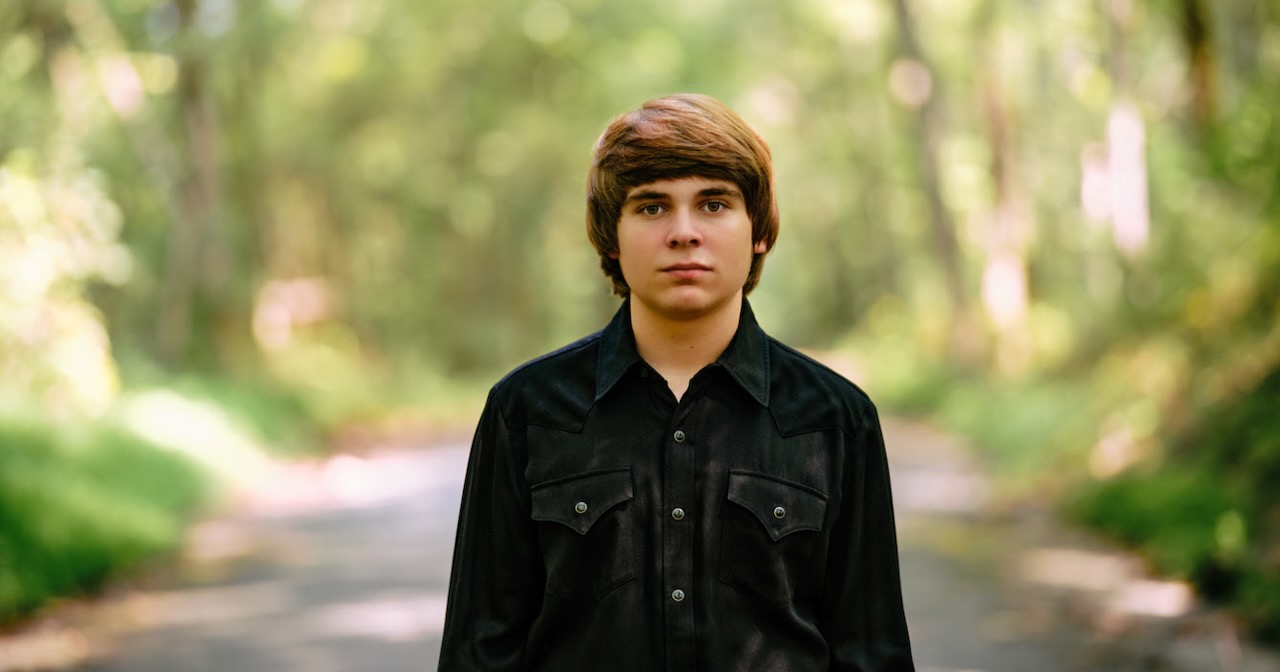
At only 14 years old, East Tennessee-based Wyatt Ellis is making waves in the bluegrass community. Having recently made his Grand Ole Opry debut and having worked with mandolin mentors like Sierra Hull and the late Bobby Osborne, the teen is now putting out his own original music and is constantly writing new tunes — sometimes as many as three a day.

During a phone interview with BGS, Ellis explained that he took virtual lessons with Osborne for two years — chuckling when mentioning Osborne’s background green screen and the iconic hat and hatband he kept on even while teaching. On Osborne’s last birthday, he taught Ellis his exact “Rocky Top” solo.

When he’s not outside fishing or playing sports, Wyatt Ellis plans to build on the support and encouragement from his heroes by continuing to release more original music. He has more than one exciting collaboration coming out later this year with icons of bluegrass, but is pretty satisfied now with the fact that his single “Grassy Cove,” a co-write with Hull, hit the bluegrass charts and was covered in national outlets like Billboard.

Let’s take it from the top. When did you start playing mandolin, and why?

Wyatt Ellis: I started playing when I was ten years old. I had heard “Rocky Top” living in the Knoxville area — Bobby Osborne playing the mandolin, singing that high tenor. That made me want to get a mandolin. A little while after that I heard Bill Monroe. That’s when I really got into it.

Would you say your career started out on social media?

WE: During the pandemic, everything was shut down. It really slowed me down going to festivals. But on social media, I was able to connect with so many people through Skype and Instagram. [I got a lot of] encouragement from some of my heroes on Instagram.

Do you have a musical family?

WE: I’m the only one.

How has your career changed over the last few years? You’ve been leveling up — talk about how you made that happen.

WE: The pandemic allowed so many more people to connect online, and that really helped me a lot. I had a lot of time to put in a lot of hard work during that. Just making connections online and some people started teaching, and that helped me when I was starting to really get into it

Which instruments do you play and how much do you practice?

WE: I play the mandolin, the guitar, the fiddle — and I started on piano. That laid a foundation for everything else. I wasn’t super serious, but I was serious enough to learn the basics of music. I play a lot when I want to, probably two or three hours a day, and I just enjoy it. I do it as much as I enjoy it.

How do you balance all this with school?

WE: I’m homeschooled, so it’s pretty easy to be able to go to festivals and still be completely doing school.

Talk about working with Sierra Hull — how did that mentorship come to be?

WE: So, I had met Sierra briefly after a concert. She was going to do an apprenticeship through the Tennessee Folk Like program, and she was looking for a child to mentor. I was chosen for that. I got to know Sierra, and we wrote a tune and it’s out now. It was really special. This is my first single in general. We co-wrote that one. I came up with a little bit of the tune, started the chords and melody, and she helped me add a few parts and finish it up.

Can you talk about another single “Get Lost?” What was the big surprise with Michael Cleveland?

WE: Justin Moses, who produced it, he coordinated everything for Michael to be there and play on the track. I was sitting in the control room and Justin walks in and says, “Your fiddle player’s here.” I wondered who — I was confused. I walked out and saw Michael. We jammed a little bit, played some mandolin tunes.

What was it like being on the Opry for the first time?

WE: When I got the message from Darrin Vincent, it was just through Instagram. I saw it and I was shocked. I was on a Zoom [call] with Bobby Osborne when I got the message. I told him, and he says, “[You] wouldn’t want to pass that up.” I had never had much contact with them before that; they’d just seen my videos. It was pretty cool, and it was even cooler that [we played] “Rawhide.” The second night, I went out and you have to play when the curtain rises. It’s really special and I don’t even know how I was ready for that one.

What are your biggest musical goals?

WE: I would have to say to keep writing music and creating new stuff.


Photo Credit: Shawn Poynter

WATCH: Hogslop String Band, “Mississippi Queen”

Artist: Hogslop String Band
Hometown: Nashville, Tennessee
Song: “Mississippi Queen”
Release Date: October 6, 2023
Label: Tone Tree Music

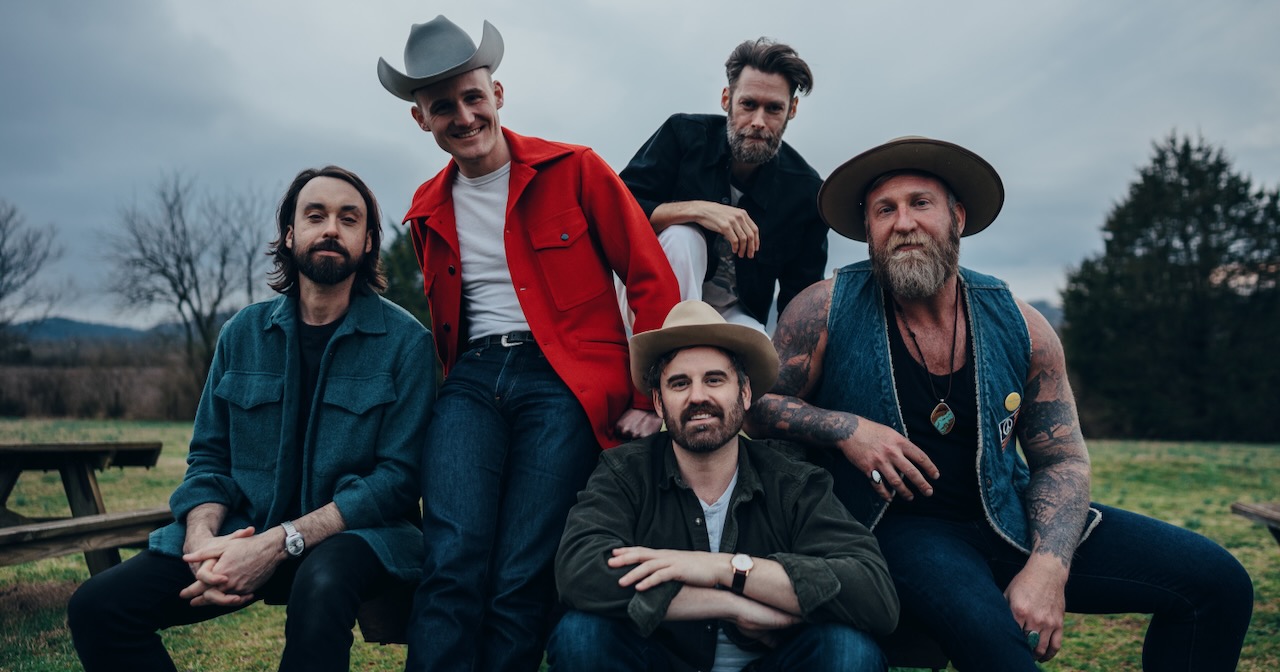
In Their Words: “‘Mississippi Queen’ is a story about an escaped inmate during the construction of the Richmond-Danville railroad. I wrote it years ago, and we have occasionally worked on it over the years, but we recently came up with a new arrangement of it that felt really good. The main character escapes on foot, follows the Tennessee River south, then across Alabama to find his family in North Mississippi. Ultimately, it’s a story about being separated from loved ones and doing whatever it takes to make it back home, which I think a lot of people can relate to.” – Daniel Binkley, banjo


Photo Credit: Josh Goleman