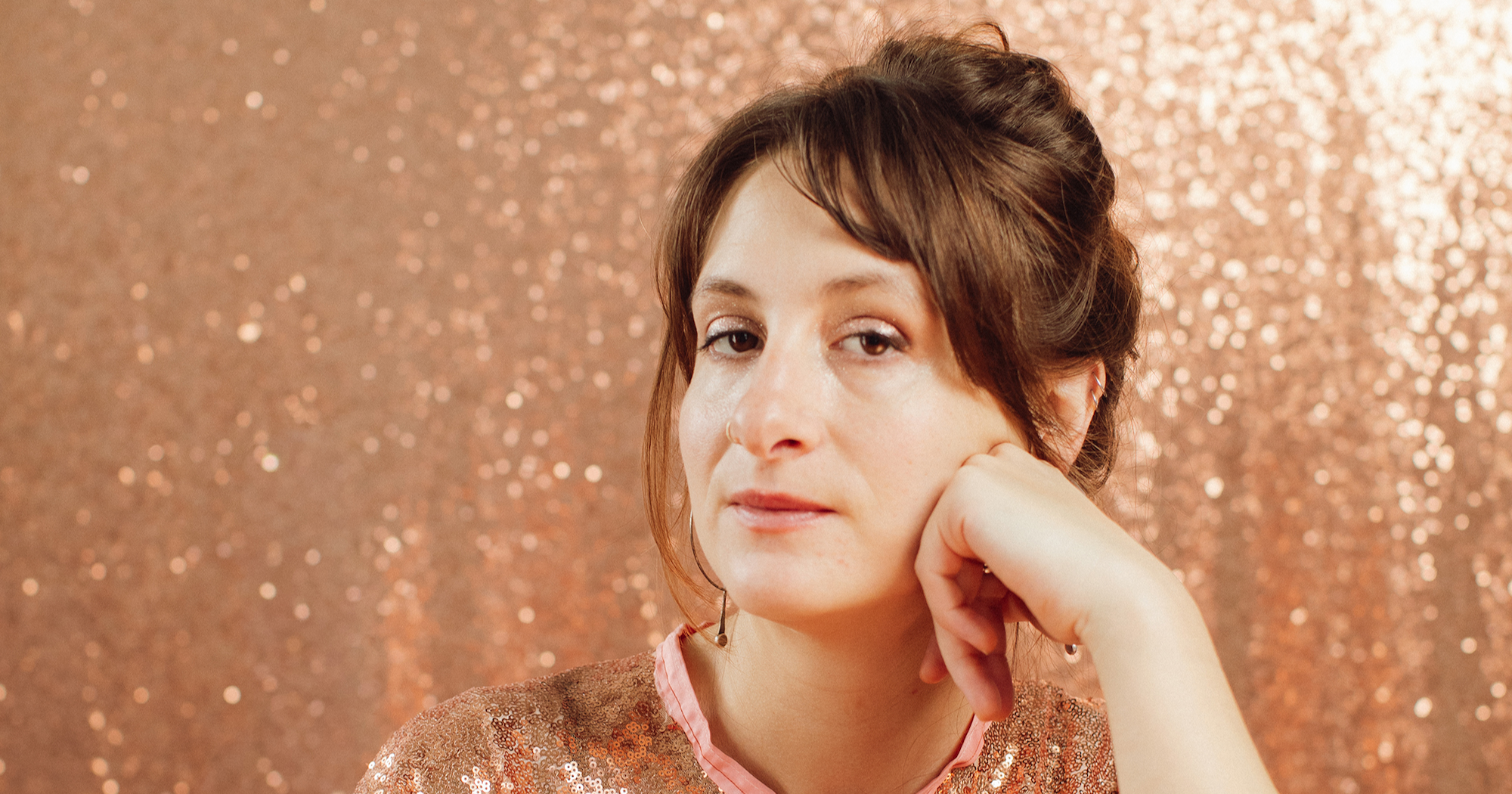
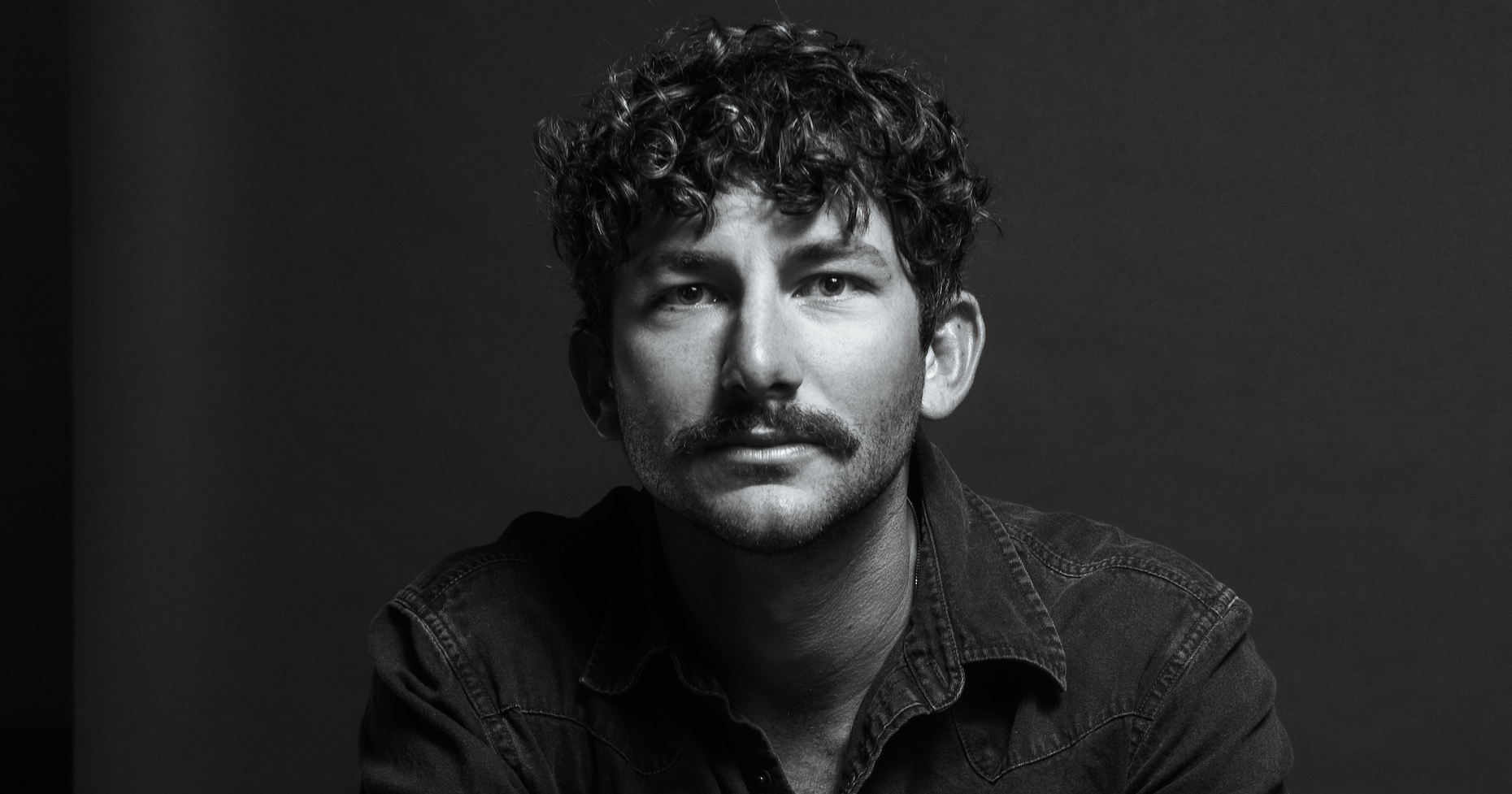
Artist:Benny Bleu Hometown: Hemlock, New York Latest Album:When I Am a Fossil (released June 5, 2026) Personal Nicknames (or rejected band names): My real name is Benjamin Haravitch. I like it just fine, and maybe someday I’ll release music as that guy. For now, Benny Bleu helps out.
Which artist has influenced you the most – and how?
Early on in my old-time journey, I became obsessed with the fiddling of Rayna Gellert. I said to myself, “I want to play the banjo like she plays the fiddle.” And that goal still stands. I love the way she records and releases music, especially her latest duo albums with Kieran Kane and also alongside Joachim Cooder. The music is accessible and rooted in traditional old-time music and also totally fresh with a clear point of view. Most importantly, it feels good and flows with perpetual motion. All things I try to do with the music I make.
What was the first moment that you knew you wanted to be a musician?
When I was about four years old, a new neighbor moved in next door. Gary. He had a band called Wilderness Family (banjo, fife, snare drum, upright bass, accordion) and I remember them playing for us in my driveway. When I was eight or so, the band threw a party in my backyard and invited all their freaky musician friends who camped out and jammed and juggled all weekend. I eventually grew up, but I don’t think I ever left that party. For a while I tried to work a 9-to-5 as a geologist. But the songs never stopped ringing in my head! I knew there was no avoiding the fact that I make music and that’s just what I do.
Which elements of nature do you spend the most time with and how do they impact your work?
All of the music I make is an echo of my relationship with the earth. Even the way I tour reflects this, primarily getting around on Amtrak. My new record When I Am a Fossil is entirely focused on our place in nature. In the title track, I reflect on my past life as an environmental geologist. Scientists in the deep future might find vast evidence of our human experiment, but will they ever find the steps we didn’t take?
I live in upstate New York, in a region known as the Finger Lakes. Two of these lakes – Canadice and Hemlock – have been lasting muses for me. Ancient worlds that have witnessed glaciation, generations of native cultures, colonial progress come and gone, and now provide water for the city of Rochester. This is a story I tell in the song “Abbey Lovely.” And “All I Want to Be” is a meditation on awe and the simple pleasure of being “here” in our place in nature.
Does pineapple really belong on pizza?
All toppings belong. Especially the under-represented ones, like pineapple. If a pizza is provided with a supportive crust, a zesty sauce, and savory cheese, then all toppings will manifest greatness. I don’t do the social medias, but in my newsletters I like to let my fans know where my favorite pies are as I travel around. I usually go for a simple slice of cheese.
What is a genre, album, artist, musician, or song that you adore that would surprise people?
The element of music that speaks to me most is rhythm. So I tend to love drummers and rhythmically adventurous musicians. I love Latin music. I love Fela Kuti and James Brown. Music that holds the groove above all else. Bernard Purdie, the legendary session drummer, is one of my favorite musicians and I hear a lot of similarity in how he keeps a song moving with how an old-time fiddler creates that perpetual forward motion. My desert-island-all-time favorite track would have to be “Sugar” by Stevie Wonder.
Amy Grant didn’t set out to make her first album of original material in more than a decade. What started as a way to reconnect with herself gradually became The Me That Remains (released May 8), a deeply personal collection of songs about healing and finding ourselves again.
As a compendium to the project and in tandem with host Khalil Ekulona, Grant has launched a new podcast that invites listeners to delve deeper into the stories behind the songs and learn more about what and who shaped the record. (Watch the first episode of the podcast, which has just premiered, below.)
I recently sat down to speak with Grant about the unexpected path that led to The Me That Remains, which she created alongside producer Mac McAnally – full disclosure, that’s my dad. Her candid reflection on some of her life’s most difficult moments was crafted into something that deeply resonates with her fans and is a great reminder that sometimes, when we close a door or two, we open new ones.
Well, I feel very honored to have been tapped to do this, and I also think it’s an interesting perspective because I got to have a backseat to the making of this record through Dad’s eyes. I know he’s told you, but he was just so thrilled and joyful to work on this. We had some screen-free, dedicated listening sessions in the studio and he gave me lots of behind-the-scenes stories about the recordings and some of the stories behind the songs. It was a really special time for me to get to see him through that process, and I hope you know how much it meant to him.
But I was curious as to what led you to pick him for this project.
Amy Grant: I didn’t realize we were doing a project. I reached out to Mac when I had written a song, really the first lyric that I wrote as I was launching into being creative.
To me, this whole project was such a chapter of life that was a recovery journey. I had a bike wreck the summer of 2022 and then not quite two years later I had to go back to Vanderbilt to see a neuropsychologist to get my new baseline. I did a day of testing. I received three different scores. Two were in the 90s, and a third was under 30 percent. I was like, “Oh my gosh, this makes total sense to me.” It makes sense how I’m experiencing life. Everything is happening in the family room, and I’m down the hall in a back bedroom, three steps behind.
The doctor asked how it was exhibiting in my life and I said, “I feel a slow withdrawal in me from everything.” And his advice was, “Lean in. Lean into the things that matter to you, even when you feel uncomfortable. If you feel like you are three beats behind, lean in.”
Within a few weeks, I had created a space in my home to be creative, because creativity is leaning in for me. My watercolors. My dress-up clothes. I know it sounds silly, but my grandkids and I dress up. And I have a record player and my 45 collection and my instruments. Creativity always grounds me, always makes me glad to be alive.
When I created that space, I sat down in the only chair in the room – which is a child’s chair – and top to bottom, I wrote the lyrics to “The Me That Remains.”
Wow.
I was just talking to myself and said, “Hey, this is who you are.” At the time, I was bored with my own musical ideas and still dealing with my short-term memory. I reached out to Mac to say, “I’ve got a lyric. Any chance you would help me with some music?” I think I instinctively reached out to him because he’s fun to be with and a great storyteller. On some level, I trusted him as a person and I felt at ease.
He said, “I’m so busy right now; this could take a while.” Weeks would go by, but he’d say, “I think I’m on to something.” Months went by. I told him, “No sacred cow. Change anything you want.”
In the meantime, I was leaning into creativity and lyrics were coming. So I initiated more conversation with Mac and let him know I was writing more songs. By the end of 2024, life was busy for all of us, but I reached back out and told him that I had two songs I would love to record. “Any chance you would put together a rhythm section? Would you oversee this?” It was such a natural step, and he said yes. But we didn’t have a contract. I didn’t have a record deal. That’s how the whole rest of the record emerged. Weeks would go by, and I would reach out and tell him I had more songs.
“Any chance we can do that again?”
Six weeks later, he’d booked a double session. By then, he was saying, “Hey, I’ve got some songs I’d like to play you.” A month later, we had another session, and then he said, “Hey, we’ve got a whole record.” I so appreciate Mac and his style of producing. It is “come as you are.” He’s very welcoming of everyone’s ideas.
My friends joke about me that it feels like I could hobble together my life, clearly and completely, with a roll of duct tape and a roll of twine. I couldn’t care less if things are perfect. And I really found a great creative match in Mac. He’ll work on something exhaustively. He’ll sing every potential background part until he knows what he wants, and that’s what he’ll ask the singer to do. But he’s also open to things. He looks for honesty and believability over perfection.
And Mac and Vince [Gill] are old friends, and they get in the same room, and the storytelling starts. You feel lucky to be in that space.
That’s wonderful. I find it very inspiring that creating the space for yourself and pulling together the things that make you feel like you helped open those gates. Do you feel like they’re still open?
I do. Yes. I was in that space today. It’s funny. It’s just a little pass-through room, but you can actually close the doors. We live in a house that’s very open and sprawling. There’s not a space that I can close the door and feel like nobody’s going to walk in. I think sometimes, for some of us, that’s important creatively.
I nicknamed that space “Craftopia,” and I was encouraged to create that space by my youngest daughter. She pointed out that there are lots of places to sit, but no place that I can cloister away. She said, “This house, you’ve got a lot of places to sit.” I love to cook, but our kitchen’s wide open. I’ve got my desk with all my books, but it’s a pass-through area. It’s like my life is an open passageway. And just to say it was okay for me to close the doors, be alone, and welcome myself. That’s good for everybody.
Well, that’s a good segue, talking about your daughter. One of the things that gave a twinkle to Dad’s eye was your daughters singing on this record. He loved that process. Can you talk a bit about what that was like for you, and what brought that about?
Well, I have two daughters singing on this project and my daughter Sarah was singing on a song that I wrote with Tom Douglas. Sarah sang underneath me on the song, “The Other Side of Goodbye,” and I wanted Corinna to sing above me. She quietly asked Mac, “I’m not asking to be on the record, but would you let me have the experience of going into the vocal booth? Can I sing with my mom on this song, ‘Beautiful Lone Companion’? I listen to it all the time, and I have all these parts that I sing.”
And I’ll never forget what Mac said to Corinna. He said, “Corinna, you will spend the rest of your life taking what is in your head creatively and getting it out, and then deciding if you like it. I got nothing but time.” She went and got her journal and she had done a chart, just like with solfège. I don’t really know the do-re-me-fa-sol-la-ti-do, like I wouldn’t know how to make a chart with that, but she had made a vocal chart. She ran through it once and asked if she could have another track to double the part and Mac said, “You just saved me from asking you to do that.”
Here’s what was so beautiful. Mac had hired an arranger to do what he was calling a “mandolin symphony” that took up that same space as her parts. His openness to hearing what she had was so lovely. To watch him look at that song, or listen through her lens. At one point, she asked me to come into the vocal booth to listen, and I wrapped my arms around her and she burst into tears. Vince was in the doorway and he came in and we had this three-way hug.
It is true that music comes to us and through us. Creativity is a sacred space. With songwriting, I find that if I’m writing with someone in the same room, you can have an idea musically or lyrically and they’ll say, “Okay, sing it to me.” But I’ll get choked up, even if it is a fun song, because the emotion of landing on something is, well, hard to explain. But it is emotional.
I have this very silly thing that I’ve had since I was a kid, where if I sing gibberish, just words flowing out of my mouth, I cry. It can be the silliest noises coming out. It makes my husband laugh so hard. I can do it at the drop of a hat. Immediately, tears stream down my face. It feels like a deep emotion that I can’t really put my finger on. Not joy, not sadness.
Free. It’s free. We’re all born with a freedom to just be. To classify, not categorize. And we lose that. I think anything we can do to return us to being childlike is good.
Now I want to hear you sing gibberish. I’m not going to ask you to do it right now, but I think I want to try that. It’s funny because, six months ago I started doing a pattern of movements in the mornings, and I do it consistently. It is basically just moving like a child. I call it child’s play. It always makes me laugh.
That’s wonderful.
It is a pattern that I do four times a day: first thing in the morning, last thing at night, and a couple of times during the day. I’m just mimicking the way children move. If you want to be exhausted, follow a 2-year-old around for five minutes and do what they do. There is not a pilates workout that will put you through [that]…
Well, I’m actually really excited that we’re talking after the release of this album, because I’m curious to hear about how you feel about it now that you’ve been able to play this in front of audiences. What has it been like to be out in the world with these songs?
Well, it has felt so comfortable. The response I’ve mostly gotten is that people say, “I feel like I’m stepping into a conversation that’s already going on in my head. You are singing my life.”
I know that there’s such a welcoming, honest observation of life in all these songs. And the songs that are hard are never “us and them.” You know, whatever we’re sitting in, we helped create it. And if there’s moving on, then we will think of a way to move on. The record is very observational and honest and hopeful.
It just makes me so glad to be making music at 65, because my intention is not to try to be center stage anywhere. Job well done is just the experience of creativity. You can’t control it. This project has been met with exponentially more positive feedback than I ever imagined. Well, I didn’t imagine anything. I was just glad for the experience, and that was the gift. The gift was being in the studio with all those incredible musicians, and with Mac.
At the end of the third day of recording, we were just sitting around and Glenn Worf said, “You know, when I first came to Nashville, I wanted to be in a band and I had several misfires, and then that dream kind of went by the wayside. I became a studio player and that’s been great. Time and technology are kind of editing that experience in all of our lives. But we all just had the experience in the studio of feeling like we are in your band.”
I had that same experience. I love my road band. Music truly creates road families. But that experience of being in the room with everyone, Chris Stone at the soundboard, I mean, everybody. I’m so glad we had that.
Yeah, that was a lovely group of deep-feeling people in one room.
Has your relationship to the songs evolved now that they’re out in the world? Have you fallen more deeply in love with any particular song on the album since it’s out there?
Well, first off, these songs all wear well with time, and the relationship I had to develop with the songs was to not get choked up because you can’t sing with a lump in your throat. With “How Do We Get There From Here,” I got to sing that with the Staten Island PS22 fourth- and fifth-graders. I had to steel myself. It’s just hard not to get emotional. Kind of the same as when you are doing your gibberish singing. I feel a greater appreciation for each one of the songs.
The songwriting, whether it’s the songs I wrote alone or with other people, nothing happens without great patience, intention, and time. I know that each one of the writers on this took a great deal of time and attention and patience writing these songs, and I feel very grateful for it.
I’m reminded of the story about Sherwood Anderson and William Faulkner when Faulkner was experiencing some misses, and Anderson encouraged him to write about what he knew. And that is when he created Yoknapatawpha County. It doesn’t matter how specific something is to you. It will resonate with others.
I feel like this record is a great example of that because it is very specific to you. To that pass-through room with the closed doors. To everything that you have been through in the past few years. It is resonating because it is specific.
Let’s talk about the new podcast, The Me That Remains, hosted by Khalil Ekulona. It’s a wonderful companion to the record. Tell me how it came about with Khalil and what it was like to make it.
I met Khalil when he was a guest in our home for Easter one year. My sisters and I all cook. My nieces and nephews add to it. It is definitely a big spread, and I’m always meeting people in my home because somebody else invited them.
I was on a Southwest flight not too long ago, and the flight attendant said, “I came to a party at your house once.” And I said, “I thought you looked familiar.” I’m the youngest in my family, and there were just always people in my parents’ house. And so an open door is the way I grew up.
I met Khalil, and then he invited me to be on [the show he hosted on WPLN], “This Is Nashville.” It’s such a rich exploration of Nashville, and I so enjoyed talking to him that when it was time to create some material, we chose him as the interviewer. He’s such a lovely human, and so thoughtful. I enjoyed my first conversations about these songs being with him.
That’s wonderful. I particularly loved the episode about the album artwork. The way it was pulled together is really beautiful. I strongly encourage readers to check out that episode. It’s wonderful.
Every one of our lives should be turned into a multimedia art piece, because only you know what is important to you.
That’s right.
When you see it all gathered together, it’s extraordinary. I had so many collections when I was younger. Now I’m kind of at the point of passing things on or letting go, and I do think there are stages in our lives.
There’s a collection stage, when you are appreciating that season of life, whatever it is, and the things that you’ve collected. And then there comes a time to lighten the load. And to leave a minimal imprint in some areas, you know?
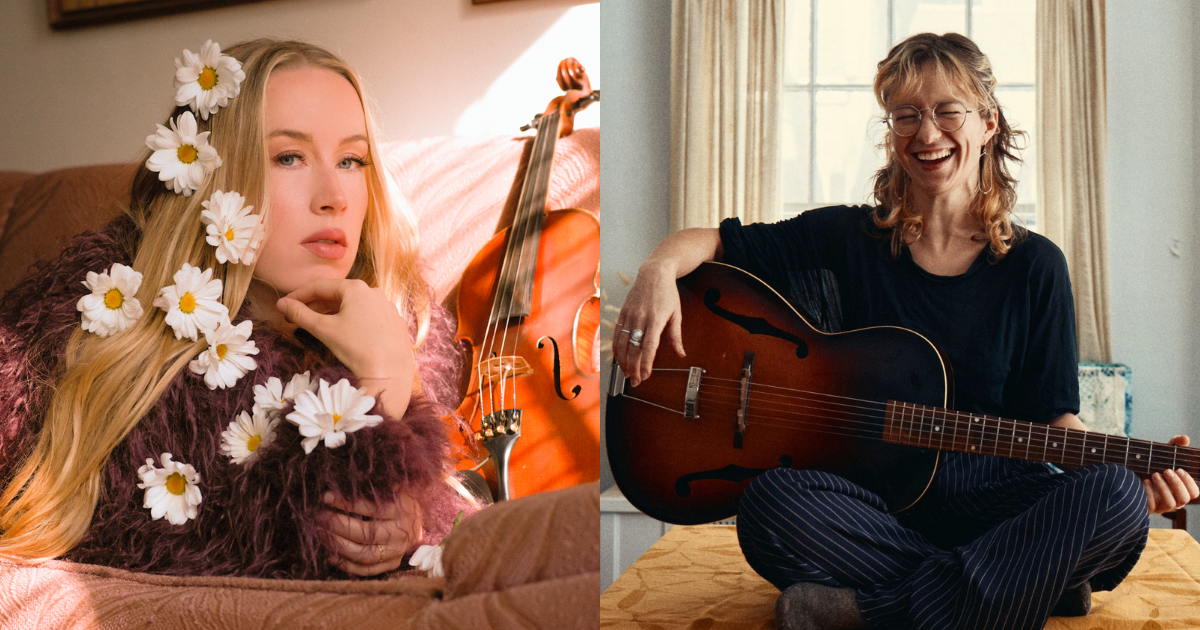
This Mixtape brings a spotlight to the vibrant community that I call home in New Orleans. This is a list of some recordings I’ve been part of as a side musician. There are so many bands that I have played and recorded with through the years, I feel honored to be at their sides. Here are a few memories of moments from the making of these records – and I’ve noted what I contributed to each song.
Thank you for trusting me with your tunes! The life I love is making music with my friends…
I should make a disclaimer – my memories run together and I can’t always remember complete credits for every person on every song… forgive me, for I know these are incomplete! There are so many people who work behind the scenes. One thing I realized while writing this list and wanted to note: Ross Farbe (Video Age) is either a recording engineer, mixing engineer, producer or performer on almost half of these songs. He mixed my whole record. It’s often those working just out of view who make the magic happen. – Gina Leslie
“The World Is Changing” – Gina Leslie
I’ll start off this listening session with the opening track of my new album, I Love You Always No Matter What Happens. I wrote this song sitting around a campfire on a long haul drive from Louisiana to Colorado while going through it. I went to therapy and all I got was this self-love and ability to cope?!? I’m obsessed with the guitar riff that my co-producer Nat Smith added after the hook.
“Little Things” – Bella White
(Bass, harmony vocals.) It’s been a treat to record on Bella’s new album and play in her live band for the past few years. When we met, we immediately clicked about our similar bluegrass childhoods and endless love of singing three-part harmony, and we never looked back. We recorded this album at our friend’s house by the levee in New Orleans.
“Had To” – Esther Rose
(Bass, harmony vocals.) After playing with Esther here and there through the years, we finally got together for a full record together. I loved playing bass and singing harms on her album Want, recorded live to tape at the Bomb Shelter in Nashville. Esther is a well of songs and I’m constantly inspired by her commitment to writing.
“New Believers” – Sam Gelband
(Bass, harmony vocals.) I’ve been playing in different versions of Sam’s band for a long time and we recorded his new album at his house in New Orleans. There’s something about his songs that makes me perfectly happy and sad at the same time. Sam and I are also a rhythm section team, playing with a lot of the bands on this list.
“Jay’n Bee Club” – Max Bien Kahn
(Acoustic guitar, harmony vocals.) Max and I have both been playing bass in each other’s live bands for years. This song is from his upcoming unreleased album where everyone switched instruments constantly; sometimes we would do a take of a song and then everyone swap and do another take. I love how alive it feels.
“Louisiana Hound Dog” – Sabine McCalla
(Bass, harmony vocals.) I’ve got a Louisiana hound dog of my own and she goes wild for Sabine, much like most anyone who hears her. The recording session for this album was the beginning of me playing in Sabine’s band and we’ve been all over the place since then. I love how this album covers so much sonic ground and is layered with harmonies and little ear candies everywhere.
“I Really Do” – Leonie Evans
(Bass, harmony vocals.) Nearly 10 years ago, I got a bootleg copy of a home recording of Leonie singing and nearly crashed my car when I put it on for the first time. I couldn’t believe she was real. Then a few months later, I manifested her into my life and she came to my house straight from the airport to work up harmonies for a gig that night. We’ve been harmony sisters ever since.
“Long Gone” – Chris Lyons
(Bass, harmony vocals.) I was standing outside when Chris put on the rough mixes at closing time at beloved neighborhood dive bar BJ’s, and through the walls I thought it was an old record from the ’70s. Then I came inside and realized it was the Chris Lyons record we had been working on that week. Chris has that classic folk rock sound.
“No Mama Blues” – The Lostines
(Bass, harmony vocals.) The Lostines – songwriting & singing team Casey Jane Reece-Kaigler and Camille Weatherford – were one of the early bands I started playing with when I moved to New Orleans. We recorded this record at the Tigermen Den in early 2022 with a revolving door of friends to ice the sonic cake.
“Chicken Pocket” – Chicken Milk
(Harmony vocals.) I met Dave Hammer, the mastermind behind local cult icon Chicken Milk, on the very first night I came to New Orleans in 2016. We started a band together a few days later. I’d guess we’ve played thousands of hours of music together at this point. Chicken Milk create some of the most unique, joyful, hilarious songwriting and playing I’ve ever heard. I often can’t get through a song without bursting into laughter. This is a tame one.
“Left Side” – Stelth Ulvang
(Bass, harmony vocals.) The day that I met Stelth, we went straight into the studio minutes later and started setting up mics and jamming his songs, capturing some of the first times we ever got through the songs. I love how Stelth is so playful and not precious about the creative process, with everything fully live and breathing. The backing band includes a few of my beloved and most frequent collaborators – Howe Pearson on drums and Max Bien Kahn on guitar.
“Misty Mama” – Rainy Eyes
(Harmony vocals.) The session for this album began in a little cabin in Bolinas, California, before Irena Eide (AKA Rainy Eyes) took a meandering journey to Lafayette, Louisiana, several years later to finish the album. I was so happy to be a part of bringing it to the finish line. Irena writes classic and confessional songs that speak truth to my wandering spirit.
“Oaxaca” – Maggie Koerner
(Bass.) Absolute powerhouse Maggie slid into my DMs a few years ago and asked if I wanted to hang out and try making some music together, wanting more women in the room on her next record. I was so glad to play bass on her album UPSTATE, recorded at Lil Squeeze studio by Ajai Combelic. Maggie’s voice stops me in my tracks.
“Anna Rose” – Ric Robertson
(Harmony vocals.) When I quit my job in 2016, packed my car, and started driving, it was Ric Robertson who told me to come down to New Orleans, where I could sublet a room, have a band of my own, and play every night of the week. It changed the course of my life. He co-produced my EP, No, You’re Crying, and it’s been so special to be a part of each other’s music. I loved singing harmonies here with Appalachian songbird Dori Freeman.
“Yellow Motorcycle” – Gina Leslie, Elise Leavy
(Guitar, vocals.) I couldn’t possibly talk about loving music with my friends without a mention of Elise Leavy. We’ve been dancing with the mysterious art of writing songs together for years, and have never yet run out of songs to sing together. My new album features her on a lot of the harmony singing, as well as two stripped down acoustic duets that we co-wrote.
Welcome to our weekly collection of new music! You Gotta Hear This…
First thing today, you should know it’s a bluegrass-rich week in our roundup – which we love! The Binoculars start us off on a strong bluegrassy foot with their cover of “Lorene,” a Louvin Brothers song that will be included on the duo’s upcoming album, Double Whammy, out July 17. Like the Louvin Brothers themselves, the Binoculars do a great job of bridging rootsy sonic territories, country, bluegrass, old-time, and more. For a taste of bluegrass gospel, we’re celebrating the release of Eighteen Mile’s new album, Peace Be Still (out today), with the title track, written by vocalist and guitarist Jack Ritter. It’s fresh, modern bluegrass built on faith and tradition.
We’ve got several great fiddlers represented in our list today, too. A huge – and still-growing name – on the current bluegrass and jamgrass scene, Bronwyn Keith-Hynes, is dropping her surname for a new era under a mononym, Bronwyn. Today, Bronwyn announces her upcoming album Rattlin’ Bones, her first LP under the new name, which will release in August. We’re sharing the track from which the LP draws its title, “Sticks and Stones.” It showcases the growth in Bronwyn’s songwriting over time – and features Darrell Scott. Plus, if you’re familiar with fiddler Libby Weitnauer, she’s now releasing music under the artist name Libby Dale. “Empty Tank,” which came out yesterday, is indie Americana with a Gothic, Appalachian undertone and excellent rootsy touches. Dale’s songwriting is impeccable and the production is built on a fascinating blend of roots styles.
An old-time and Americana favorite, Sophie Wellington, has unveiled a new single and video, “Scolding Wife.” Wellington has a new album coming in early July. This track and video showcase her unique, multi-hyphenate approach to music-making; it’s a simple, stripped-down arrangement featuring only guitar and percussion – provided by dance. It’s lovely and entrancing, no matter how basic or elemental in its construction. Singer-songwriter Kate Waters has a new song out this week, too. “Words” arrived on June 10, juxtaposing steel guitar, mandolin, and acoustic guitar in a folk-meets-string band-meets-Americana sound. It’s a contemplative lyric that searches inward and outward for the right thing to say.
You’ll enjoy the music video for the title track of Dailey & Vincent’s album, A Beautiful Life, released today. This feel-good song is the duo’s special way of sharing what they’re grateful for. We’re also thankful that Bill Anderson and Jon Randall (who co-wrote “Whiskey Lullaby”) teamed with Carrie Underwood to write it. And our own Justin Hiltner (editor of BGS and Good Country) and Jon Weisberger (BGS contributor) are back on the site again – for the first time since 2022 – as musicians and artists, rather than writer or editor. Hiltner & Weisberger just announced they’ve signed with Mountain Home Music Company to release music as a duo again. “Marinda” is their first single with Mountain Home, a song about a woman in California built on low-tuned long-neck banjo and an all-star band – that includes Libby Dale (Weitnauer) on fiddle, by chance, as well. We hope you enjoy the track and don’t mind the BGS team’s bias, we think these guys are pretty okay and, yeah… maybe, just maybe, You Gotta Hear This, too!
There’s plenty of bluegrass, Americana, old-time, and more to enjoy. Get scrolling and get listening– You Gotta Hear This!
The Binoculars, “Lorene”
Artist:The Binoculars Hometown: Brooklyn, New York Song: “Lorene” Album:Double Whammy Release Date: July 17, 2026 Label: Jalopy Records
In Their Words: “As huge fans of the Louvin Brothers, it’s hard to resist covering all of their songs. ‘Lorene’ really stood out to us, as a secular number and with a letter-writing theme! We both frequent the postal service for transmitting love letters and postcards. There is a spirit in handwritten letters that just can’t be replicated in a text or in the vacuum of social media. We find the lyrics strike an even more dynamic chord in these modern times, where rejection can be felt in a single swipe, and the appetite for approval and response is insatiable and aggressive. This song transports us to a slower more ponderous time, when that ache of not knowing your lover’s position gnaws at your heart. You can feel those empty mailbox blues.” – The Binoculars
Bronwyn, “Sticks and Stones”
Artist:Bronwyn Hometown: Charlottesville, Virginia Song: “Sticks and Stones” Album:Rattlin’ Bones Release Date: June 12, 2026 (single); August 14, 2026 (album)
In Their Words: “‘Sticks and Stones’ started coming to me a couple years ago as I was lying awake in the middle of the night, rolling down the road on the bus. It was a rough ride through the mountains, enough to rattle your bones, and some lines from the chorus started banging around in my head as I was drifting in and out of sleep. The chorus is the heart of this devil-may-care traveling song: ‘Sticks and stones/ Burning down the highway/ Rattling bones/ I don’t need no heartache/ I’ve been gathering a whole lotta sticks and stones…’
“‘Sticks and Stones’ has a hard-won swagger to it, a feeling borne out of years of being on the road as well as the requisite slight romanticism of it that keeps me going. That feeling is clearly heard in the last verse— ‘Heard a guy on a record singing walk that line/ He was saying what I’ve been thinking all my life/ Turned it up loud enough my truck began to shake.’ It’s self-sufficient, self-aware, and a little bit pissed off.” – Bronwyn
Track Credits: Bronwyn – Fiddle, lead vocal, songwriter Darrell Scott – Harmony vocal Harry Clark – Mandolin Bryan Sutton – Guitar Frank Evans – Banjo Jeff Picker – Bass
Dailey & Vincent, “A Beautiful Life”
Artist:Dailey & Vincent Hometown: Nashville, Tennessee Song: “A Beautiful Life” Album:A Beautiful Life Release Date: June 12, 2026 Label: Pillar Stone Records
In Their Words: “There are songs you record because they’re great songs, and then there are songs that become part of your story. ‘A Beautiful Life’ became that song for us. It captures so much of what we believe – that even through life’s challenges, we have so much to be thankful for.” – Jamie Dailey
“This song became the title track because it perfectly reflects where Jamie and I are today. We’ve been blessed beyond measure, and this lyric serves as a reminder to never take those blessings for granted. It’s a celebration of faith, family, friendship, and the gift of life itself.” – Darrin Vincent
Track Credits: Greg Morrow – Drums Craig Young – Bass Seth Taylor – Acoustic guitar Andy Leftwich – Fiddle, mandolin Michael Rojas – Piano James Mitchell – Electric guitar Jamie Dailey – Lead vocal Jaelee Roberts – Harmony vocal Darrin Vincent – Harmony vocal
In Their Words: “‘Empty Tank’ was inspired by recordings like Lucinda Williams’ ‘Crescent City’ and Emmylou Harris’ ‘Leaving Louisiana’ – both twisted anthems for less-than-perfect places. It’s an airing of grievances and a love letter for my life in Nashville. Pothole-riddled streets, the music industry rat race, and summer heat are certainly prominent characters, but so are good dances and a great band. Producer Thomas Bryan Eaton helped me bring this track to life with a fantastic rhythm section (Chris Gelb and Jonathan Beam) and the GRAMMY-winning mixing chops of Justin Francis. All parties mentioned brought the relentless groove and thunk I had envisioned for the song. ‘Empty Tank’ is the second single off my debut LP, Freehand, due in October of this year.” – Libby Dale
Eighteen Mile, “Peace Be Still”
Artist:Eighteen Mile Hometown: Upstate South Carolina Song: “Peace Be Still” Album:Peace Be Still Release Date: June 12, 2026 (album)
In Their Words: “I wrote ‘Peace Be Still’ on the better side of a bad year. While the tune was there, I struggled to find words that could convey my testimony throughout the song. The more I thought about my testimony and walk with Christ, the words came quickly and became what you hear today. I wanted this song to not only be a personal testimony of God’s grace and mercy, but a message to those who are struggling that my Lord and Savior can provide peace that is beyond all understanding. I’m so honored and never would have thought that a song I wrote would become the title track of our first album with Mountain Home. I’m so thankful to my friends for choosing it.” – Jack Ritter, lead vocalist, guitarist, songwriter
Track Credits: Jack Ritter – Acoustic guitar, lead vocal Hallie Ritter – Upright bass, harmony vocal Carson Aaron – Acoustic guitar, harmony vocal Savannah Aaron – Fiddle Steve Pettit – Mandolin Rob Ickes – Resonator guitar
Justin Hiltner & Jon Weisberger, “Marinda”
Artist:Justin Hiltner & Jon Weisberger Hometown: Nashville, Tennessee & Brevard, North Carolina Song: “Marinda” Release Date: June 12, 2026 Label: Mountain Home Music Company
In Their Words: “On a mountaintop in Western North Carolina I met a fabulous woman named Marinda. ‘Like Miranda, but with the letters swapped,’ I think she told me. She’s a great cook, made us a delicious lentil salad. Then she told me where she was from: Marin County, California. I couldn’t believe it. Marinda from Marin.
“There are so many bluegrass songs that take their titles from women’s names, I guess it was time Jon and I added such a track to our catalog of co-writes. I love how this one turned out, evoking iconic and familiar images of California and singing praises to a powerful, entrancing woman. She may be a fictionalized version of my friend Marinda, but her inspiration comes all the way through. I love the long-neck, low-tuned banjo here and the way the fiddle, banjo, and mandolin all join in together on the melodic hook. When I’m missing the Bay Area – or Marinda’s lentil salad – I play this tune.” – Justin Hiltner
(Editor’s Note: Justin Hiltner is the editor for BGS and Good Country, and Jon Weisberger is a former contributor to BGS.)
Kate Waters, “Words”
Artist:Kate Waters Hometown: Dallas and Houston, Texas, and Taos, New Mexico Song: “Words” Album:Some Comfort Release Date: June 10, 2026 (single); August 21, 2026 (album)
In Their Words: “This is the oldest song on the record, from my earliest stages of songwriting as an adult. I was wrestling with why I felt intimidated by writing lyrics, like words couldn’t ever fully capture what I wanted to say. I mean, that’s why I’m a musician, truly.
“The sentiment still holds true – words can do a lot, but they also fail a lot of the time. We see it so much these days, politically speaking – people talking past each other and never truly understanding one another. I’m a music therapist, and as someone who’s worked professionally with nonspeaking people for most of my professional life, I know how important it is to tune into other aspects of communication and human connection.” – Kate Waters
Sophie Wellington, “Scolding Wife”
Artist:Sophie Wellington Hometown: Staunton, Virginia Song: “Scolding Wife” Album:Her Bright Smile Haunts Me Still Release Date: June 8, 2026 (single); July 10, 2026 (album) Label: Adhyâropa Records
In Their Words: “This fiddle tune has complex phrasing and tells an intriguing melodic story. Marion Reece, the source fiddler for this tune, plays this in calico tuning (AEAC#) which give it haunting, suspended quality. While I can’t remember where I first learned this tune, I fell in love with it again in 2025 when playing it with Sally Jablonsky and Stefan Amidon at Cascade of Music and Dance, a social dance camp run by Country Dance & Song Society. We played this tune late into the night, locking in with one another and allowing the space to breathe and the notes to sing. For me, old-time music shines brightest in my friendships and shared memories of playing. I’m fascinated with how to best adapt this music for guitar, allowing it to feel fluid and free on that instrument.” – Sophie Wellington
Track Credits: Sophie Wellington – Guitar, percussive dance
Video Credits: Pat Piasecki and Chris Dempsey, with special thanks to Barbara Hauser.
Photo Credit: Bronwyn by Alexa King Stone; Sophie Wellington by Pat Piasecki.
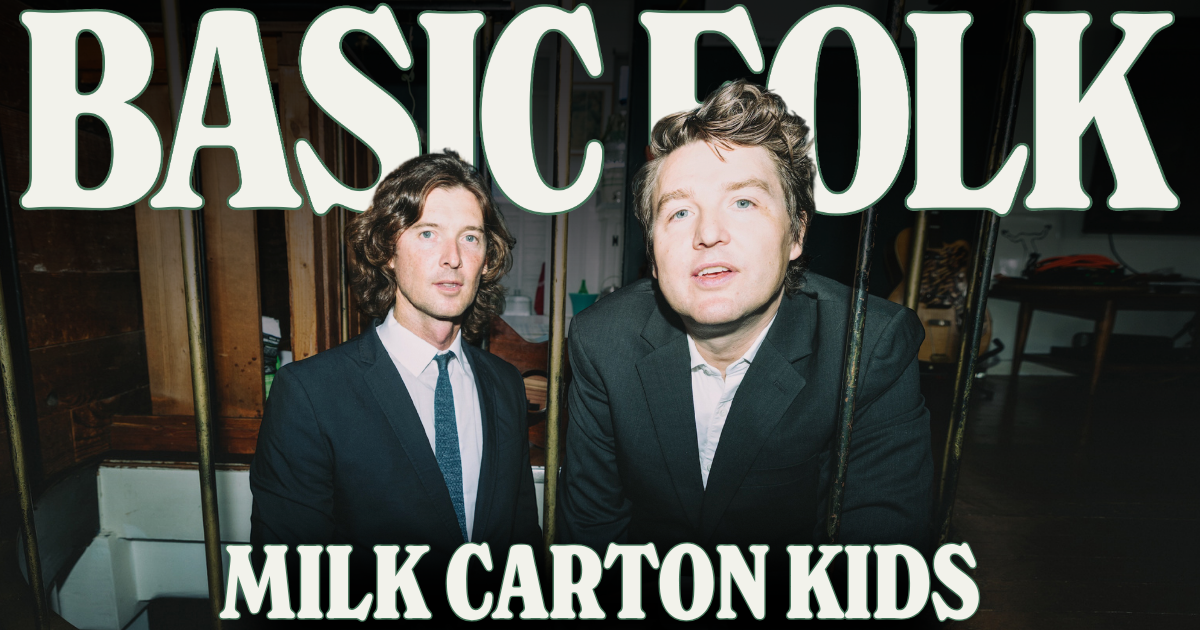
Kenneth Pattengale and Joey Ryan, the MilkCartonKids, are calling their latest album, Lost Cause Lover Fool, “the one.” They have finally figured out how to feel and sound like themselves with a broader sonic palette. They attribute that to sharing one mic when they sing with each other. The songs on the album enlarge small feelings and moments, working to turn them all into eternity. Moments that “usually pass too quickly to notice.” The guys have spent their careers making a case for staying small, staying present, and listening closely.
We loved our conversation with Kenneth and Joey so much – in fact, immediately following Lizzie sent me a voice recording expressing just that. She said it was so real: “What great guests and what great hosts!” We learn that Joey is a nepo folk baby as his mother, Debbie, was in a folk duo in college. We dig into what death–and the banjo–are up to on their new album. We explore what it means to be labeled “weenies” versus “gentle” or “the titans of yearning.” We also hear from the guys about how they do not actually feel pressured to be funny, they just are.
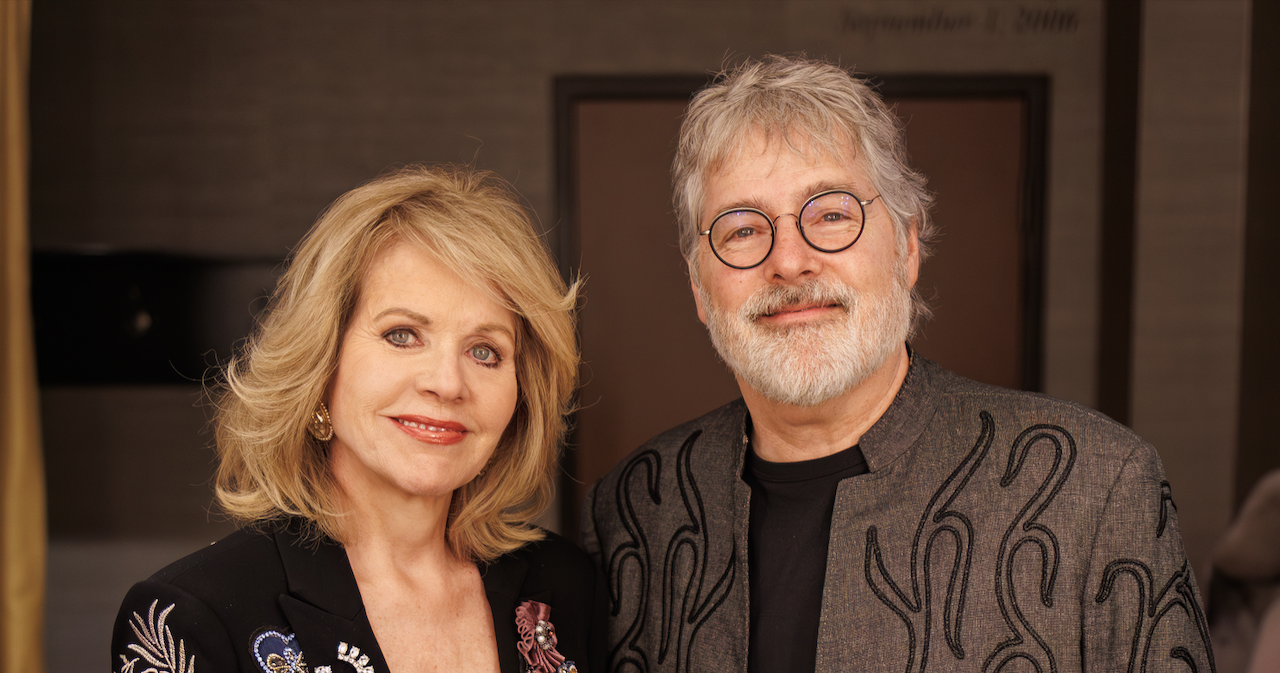
Renée Fleming, Béla Fleck, Appalachia, and an all-star bluegrass band. Though the knee-jerk reaction to this list might be to play “one of these things is not like the other,” there is much more to this premise than meets the eye – and ear.
Fleming is one of the most renowned opera singers of the modern day, but the internationally acclaimed soprano has a long history of musical curiosity and often enthusiastically indulges thereof. From this trait alone, she and Béla Fleck found a resonance within one another, embracing and making music beyond the bounds of their respective claims to fame. This resonance sparked an idea that endured for more than 20 years, culminating in The Fiddle and the Drum, an album of Appalachian songs sung by Fleming and produced by Fleck – one that, more than anything, reveals a journey of familiarity and discovery for both artists.
The pair joined BGS on a phone call to delve into the musical, historical, and personal connective dimensions of this record. The memories shared are rich and many. Some extend as far back as Fleming’s preteen years. Others revive Fleck’s contemplations of how each song might come to life through Fleming’s vocal prowess. Every one of their recollections is imbued with immense mutual respect and awe for each other as well as the album’s many collaborators; it’s clear they both appreciate the gifts each and every person brought to this record.
Our conversation isn’t without painful realities, as the album’s focus on love and loss and war prompts reflections on fights and fatalities happening today. But, ultimately, it’s a conversation colored by a range of emotions and experiences, not unlike the very music of The Fiddle and the Drum itself.
Renée, you’ve spoken extensively about your upbringing and how you formed your relationship with a lot of folk music and folk artists. In that vein, how would you describe the initial perspective you formed about the music of folk, bluegrass, and Appalachia during the younger formative years of your life?
Renée Fleming: I think it was in middle school that they offered a guitar class – which I think is a fantastic way to get kids interested in music, because it’s an instrument you can carry around and you can read tablature pretty easily and pretty quickly. So that got me interested in [music], but also some of the music that I really genuinely liked [and got me interested] came a little later, including my discovery of Joni Mitchell in junior high school and high school. Then I was exposed to it through my family as well, because my grandfather was a fiddler and a drummer, so we had very eclectic tastes in music. I just was constantly exploring. [I] wrote a lot of songs and wrote a lot of music, starting probably when I was 12 years old, and it just branched out from there.
Where did Béla Fleck initially come into the picture for you?
RF: I was already a fan of Béla because of Béla Fleck & the Flecktones. In college, I really started singing jazz with a big band and also with the trio every weekend, so I was a big fan of his [at that time].
Obviously everything worked out the way it was meant to, but you still carry those glimpses into other worlds – folk, jazz, and so on – and it helped somewhat shape where we are now. I think it’s really brought a lot of extra color, showing people that [music] doesn’t have to be so rigid and doesn’t have to be about genres and specific labels and I think that’s something that really shines through with The Fiddle and the Drum.
Béla Fleck: I think we all have a tendency to pigeonhole people and put them into a black-and-white kind of a concept. You know, “They do this, they don’t do that,” but people are nuanced and love all kinds of things, especially when growing up and you’re open, you’re trying things and figuring out where you’re going to land.
I was also a huge fan of Joni Mitchell, and I was a vocal major in school, even though I couldn’t sing worth a darn and was secretly working on the banjo in the closet. But being exposed to classical music in high school – and my stepfather is a cellist, so I was listening to string quartets and stuff when I was a kid. People might be surprised by that, or maybe not, considering the kind of music I like to do, which is very varied. But I think it makes all the sense in the world that all of these other interests make Renée an even better opera singer, if that’s the right thing to call her. But the bigger your world is, the more you can bring to the specific things that you do.
RF: I never heard that you were a voice major before. I love that.
BF: Don’t think I’m gonna sing, because I want to protect you from awful pain, agony, despair.
RF: I don’t believe it.
BF: Nobody ever gave me a voice lesson, but they started me on French horn. I got into my school playing guitar and then it became clear that I wasn’t going to be able to play the French horn. They said, “Listen, you could just go stand in the chorus and still be in the school.”
So they put me back in there, but they needed tenors. I wasn’t a tenor so I just kind of screamed, looked at the music, and tried to figure out what they were singing and sing along. Then, when I got to my final year, they said, “Oh, we found out we’re doing Rhapsody in Blue for the semi-annual concert, and we found a banjo part so you can get out of chorus. If you want to get out of chorus, you can play this banjo part on the final concert.” I was like, “I think I’ll stay in chorus.” I liked it at that point.
Then on the last day of school, the chorus teacher – a woman named Mrs. S, who was an amazing vocal teacher – she had never spent any time with me, but she got me in front of the piano and said, “Stand up straight, sing from your diaphragm!” And she gave me a few quick things she made me do and I was singing like a bird. I was like, “Holy cow, I wish you had given me a lesson when I started at the school. I would actually be able to sing!” She knew exactly what I needed to do. It was remarkable.
Speaking of singing technique, Renée, when you were preparing to record the songs for the album, where on the spectrum of vocal expression did you anticipate needing to steer your voice?
RF: I think it was Béla who kind of clocked that a lot of the songs we were choosing kind of fell in line with [themes of] love and loss – and war, as well.
One of the things that I do, especially when I’m singing outside the classical genre, is I try to avoid an obviously classical sound. That, typically for me, means the upper register. But we worked it in some songs and you just have to be mindful of vibrato. It’s really thinking about style and, for me, that’s the same as when I’m singing on a program of French art song versus an Italian aria. So I may sound the same, but the style is completely different.
What struck me as I listened to the album was just how subtle and yet impactful the differences in how you sing can be. It’s just shaping and forming your voice around the mood that needs to come through. And I visualized that, if your voice was some kind of an entity or something that could be shaped, that you just have this beautiful ability to mold it and manipulate it into exactly the shape and form and size it needs to be to express whatever the music calls for.
RF: I like to record. I like the idea of focusing only on what we hear and not adding so many other elements like you do in a live performance, where it’s also your acting and your movement and how you look and your facial expression. This is a very much more focused activity and we would do many versions of the same song. I left it to Béla to choose which versions he liked. I had almost no complaints about the choices he made.
BF: I loved to hear your voice on all the takes. And then sometimes there would just be a magic moment of, “Oh my god, the song is really happening here. We’ve got to make sure this is part of the final takes.”
I have a frustration when you have something killer that happens in one portion of the take and then the rest of the take isn’t as good. I like to find those magic moments and have them all end up on the record. But I also think for Renée, there’s an unconscious element to being a musician. [To Renée:] You’re inspired by a moment, and sometimes it’s hard to put into words all the things that you’re [doing]. You put the material in front of yourself, you decide [to] embody it, and the music is correct and things are happening in the right way – you just know what to do. And it’s hard to say how you know.
Renée and I worked really, really hard on our craft, but I think the craft is there to serve something that’s a little harder to quantify, which is just what the unconscious – what our bodies and our souls – wants to doubt when it’s time to make the music.
RF: And it has to do with the expression. I’m also thinking of specific pitches and words that relate to the song, but [to Béla:] I was really thrilled to hear how much you could vary what you were playing. Sometimes your harmonies would just come from another world and I’d say, “Wow, that’s so cool. Béla can kind of put in a jazz harmony once in a while.”
BF: You also pushed for that. I remember the first arrangements you said, “I think this could be more interesting.” And then in the moment, I had to come up with a better arrangement, a more interesting arrangement, for the first song on the record [“He’s Gone Away/Storms Are on the Ocean”]. I’m really proud of it. I think if you hadn’t pushed and I hadn’t reacted, we wouldn’t have ended up with that arrangement, which was quite unusual for that song, and then that kind of led the way to being a little bit more open.
It’s funny, when I’m playing with the Flecktones, or Chick Corea, or somebody like those folks, I feel very open harmonically. When I’m playing music that’s more traditional, I’m very careful not to get too harmonic. So, when I discovered this was a safe place to explore a little bit and look for just the right kind of harmonic additions to the basic chords, it was very freeing and inspiring. And of course, getting to work with a great vocalist like Renée… I’ve been a big fan of female vocalists since Joni Mitchell and Joan Baez and Linda Ronstadt and all of these people. I saw that there was a lot of art to working with a great vocalist like that. I was eager to have that opportunity and thankful to get a chance to try and figure out how to make it work from my end.
RF: It’s funny you say that, because I’m a huge fan now of Hazel Dickens, and you said that you had worked with her. Because there’s something so plaintive about the way she sings, it’s like Roscoe Holcomb, too. There’s something– I can’t describe it. It’s authentic and it’s immediate simplicity. I just absolutely love it.
BF: We used to talk about the “ancient tones” in the bluegrass world, and Bill Monroe had this quality. It might not always be perfectly in tune but it didn’t matter. It was just so pure and so powerful. And Hazel has that. It’s like it’s coming from another planet, almost. It’s so deep and powerful the ordinary rules don’t apply. It’s something else.
RF: I agree.
Connecting this topic of the intangible with the themes of the record, how are you both feeling about the album’s thematic focus, given the various experiences of war and loss that are happening in the U.S. and abroad?
BF: What happened was, we had a certain amount of songs we were committed to and we were excited about, and we were looking at quite a large list of additional songs that might finish out the record. That’s when I started looking at the original six songs we had recorded and thought, “You know, there really is a thematic arc.” Some of these songs were not working for me, and I couldn’t explain why until I put my finger on the fact that the six songs that we’d already recorded were telling me a story. When I explained what I was seeing to Renée, she said, “Oh, I see that. That makes all the sense in the world.”
It kind of starts with a romantic relationship that leads to commitment and then the man, in this case, goes off to war and doesn’t make it back. The woman is left on her own, maybe with a child, and then in the end, there’s a rumination about life and the way it goes like this often in the world. So that’s the story arc. Basically, to me, that is about when you make a man your boss, you give yourself up. You give up your beauty. You give up your individuality and all the promise that you could be if you weren’t in that kind of a relationship, you know what I mean? And in a way, the woman in this story is taken advantage of by bigger forces, a war.
Well, this stuff is happening every day, all over the world. And we’re in a big one right now, and there’s a lot of questions as to whether we should be there. Those questions usually come out a few years after the war is over, and everybody will say, “Oh, this was a terrible idea, and here’s why.” You don’t have to be a genius to know that we’re going to be saying the same thing about a lot of these conflicts before long. So to me, it just makes the record have that much more meaning. It’s happening right now, just like it always does – this is what people do. This is what mankind does. And it’s very disappointing that it keeps going back to this place.
RF: [My and Béla’s] generation has been fortunate that, in a way, we’re too young to have really understood what was happening in Vietnam. A lot of this repertoire really relates specifically to Vietnam. But there’s also the Civil War. And every once in a while, things really fall apart. We’re in a period now where the same thing is happening. And it’s really not useful. It’s not going to move the needle for Iranian citizens – it might even make it worse for them. So I just think it’s tragic when leaders feel like the only alternative is war.
BF: Renée also mentioned she wasn’t sure that “Scarlet Tide” would fit with the other songs, but we went ahead and did it because we both loved it. And then when we looked at what we had – again, those first six songs – it made all the sense in the world. The songs were leading us in a direction, one that, unfortunately, mirrored what mankind does.
RF: And my heart goes out also to people in the Ukraine. There are always conflicts happening around the world. There have been so many reasons for these things, it’s shocking that sometimes it’s just [plain] political. I find that really sad.
It certainly has just felt like a very heavy time, for quite a long time. So even though the themes on this album are rather heavy and emphasize a lot of the sadness that’s going on, I think it’s also very cathartic.
BF: It’s funny how in blues and bluegrass, sometimes you’ll sing the most terrible lyrics – little girl and the awful, dreadful snake or a guy killing a woman – and make this very happy, jolly song about it. It’s bizarre! And in blues, a lot of time you’re singing the saddest things, but it’s uplifting somehow to bring them out in the open and treat them maybe in a different way that allows you to experience them differently and work them through in different ways. Some bluegrass songs are really, really sad but they’re so jaunty you don’t quite realize it.
RF: Well, it’s also that we are practicing grief. That’s one of the things that scientists have come up with, that sad songs really help us process and learn how to process actual grief, because we’ll all experience it.
BF: I think also having kids – we’re both parents – but you realize that people process grief in really different ways. Some people don’t show it for a long time, but then it comes out. It’s handled in a lot of different ways.
When you were putting the music together, what kind of unexpected creative sparks came up amongst the two of you and also among the large group of immensely creative artists that are contributing to the album?
BF: I think with music, you can be over prepared because there’s a lot of things that happen very spontaneously when you have musicians of this caliber – people like Sam Bush, Jerry Douglas, Stuart Duncan. Just like Renée colors every take differently, they’re going to do the same. They’re going to be very responsive. Things are going to happen on the floor. Someone’s going to want to stay on the floor in the studio while we’re doing takes, someone’s going to say, “Yeah, I don’t know, that part’s not working for me.” And we’re going to solve it in a matter of seconds and something’s going to work.
It’s a very emotional place to get into when you’re recording, especially songs like this. As we’re all listening to Renée, we’re all inspired by how she’s singing them. They’re different than we’re used to hearing. So we’re playing differently than we’re used to. But we also come up with an arrangement, develop it, and do it a few times so we really think we have something and try not to rush through it. But there’s a tendency for things to really work out very quickly.
So with the producer role that I was in – and Renee didn’t have that experience with these folks, although she has with a lot of other musicians that are improvising musicians – where the parts are not written down and they’re very spontaneous, she was able to ride those waves very well. And whenever she spoke up, she gave me a lot of latitude, a lot of rope. But whenever she spoke up with any comment, it was always dead on the money. It was going to make it better. We listened and we tried to incorporate everything we could to make it her music.
RF: I think also that collaboration, for me– the example I would use is working with a conductor is, at best, very intuitive. You’re reading each other’s signals that you’re giving musically, in terms of dynamics, and it’s never the same way twice. I think that was true in this process as well. And having Béla, who had really created the structure for each of these arrangements, helped to anchor everything.
But to have those other musicians playing – they’re the crème de la crème of Nashville I think, and the singers as well. I mean, the way Dolly Parton was able to add her voice to the track I had already created [“In the Pines”] and just blend in amazingly, but then to also add so much to it. And the same was true for Jerry Douglas. Aoife O’Donovan, I already knew and had worked with her already on a project at the Kennedy Center. I didn’t know Sierra Hull and Sarah Jarosz, who are also just extraordinary musicians and terrific artists. For me, it was really a delight to be working with so many truly great musicians.
I’ve been fortunate to see Béla perform live in other genres with other musicians. [To Béla:] You never do anything easy, because I just wondered at your ability to manage these polyrhythms and changing meters, and then also to keep track of where you are. I mean, it just boggles my mind.
BF: Thanks. I feel like the banjo is like a percussion instrument. Like a tuned percussion instrument, similar to maybe a marimba. The rhythm of things is very fundamental to what makes me tick and what makes the banjo tick, because we don’t have sustain. So everything’s all about where you place the note.
So when they say, if you [lose or] don’t have a sense, your other senses become stronger – I think, as a banjo player, we have certain limitations that are almost like senses we don’t have. We can’t take a note and hold it for a long time. It’s just not possible. So we get better and better at timing and rhythm. If we’re on top of it, and we understand that, then we become rhythmicists.
It’s more challenging for me to do music with a lot of space, because I can’t do it. Banjo won’t do it. So notes will hang in the air for a little while. I can’t sustain like a piano with the whole pedal or things like that, but I find ways to work around it. In this case, I got to play the band. I couldn’t sustain, but I sure know who could. Jerry Douglas, Stuart Duncan, they know how to hold a note and have it mean something. It’s not just a length, it’s a feeling and a depth. So, I know I can step out of the way.
I mean, for a record that you’re kind enough to want my name on the record as an equal, I felt like I was really playing more of a producer role most of the time, and I really enjoyed that opportunity.
As the producer for the album, did you have a vision for the overall sonic profile of the music? Was there a particular way you envisioned blending the typical folk and bluegrass instrumentation with Rénee’s voice before you hit the record button?
BF: I did have the experience of hearing her sing live, doing opera in China. But I also listened to her recordings before taking the project on, because part of me was wondering, “Well, can she do this? Is this going to work?” I listened to some of her recordings and I heard some stuff that she did with Bill Frisell on one of her records, where she used a lower range. It was almost like a different person. I was amazed at how much I loved it. I love hearing her do her opera thing, because it’s the best it can be. It’s just so good. It’s like how I was not a basketball fan, but when Michael Jordan played, I wanted to watch.
I feel like Renée is like that with opera. Even if you don’t know about opera, or the form is strange to you and you’re not sure what you think about it, when you get a chance to hear her, do it. You want to see it. You want to do it, you want to hear it. I knew she was a world-class singer, but I didn’t realize that she had this other gear that was possible for her in her low range. I’m not trying to say that the opera stuff isn’t unbelievable. It’s just in a different language. It’s a different world of music. It’s a role. She plays these roles on every song.
I just didn’t know if she could translate her honest, personal humanity to these songs. And when I heard these Bill Frisell tracks, I went, “She can, she can! And it’s not a bluegrass/country singer doing their thing. It’s a whole different authenticity. I guess I didn’t know at that time that she had it in her family, and that it was music that she’d heard the whole time. So she wasn’t sitting there thinking or singing down to it, “Well, I can do this. This is easy. I do hard stuff.” She wasn’t like that. She was like, “I’m committing. I’m really going to do this thing.” So I was very impressed by her professionalism but also in the way she could summon up the emotion that felt true and authentic.
I think the album will just keep reinforcing to the listening population out there that people should embrace differences, embrace new, and embrace change – and maybe even embrace the unknown.
BF: I think it’s important to remember that it’s not just the idea that’s good or bad, it’s how it’s done. The same idea could be a disaster if it’s not done the right way.
We have something called a mashup, when you take two people that do completely different things and you throw them onto the same song and they alternate doing their thing. To me, that can be fun and enjoyable, but it’s not a true collaboration – where the artists actually have to change, grow, and listen to each other. You have to actually learn things. I look for those kinds of collaborations, where you’re doing something different from what you normally would do in order to play with this person.
But again, and you can talk about politics [in the same framing], too. Sometimes it’s not the thing that they’re doing, it’s the way that they’re doing it that is either good or bad. When you put musicians together from different musical worlds, often we can figure something out. We can work something out.
When I play with musicians from different parts of the world, people get really excited and happy. I do, the other musicians do, and we find a common ground. We find some way to play together. The people around that are there hearing it are uplifted by the idea that, “Hey, you guys worked it out.” And again, that’s what we need to do politically, too. We need to find ways to reach each other and connect with each other and listen to each other. It doesn’t need to be as hard as it feels like it is.
My most uplifting times have been playing with musicians from other cultures or from other musical worlds and finding common ground – finding a way to be yourself, together, and accommodate each other in that aural space.
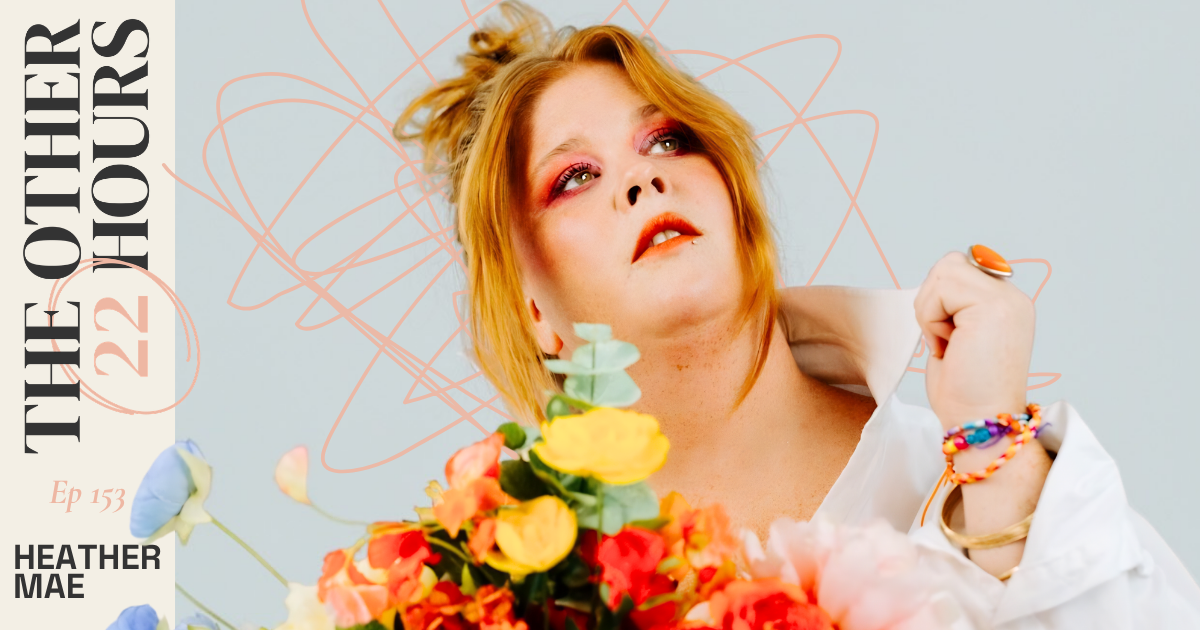
We often look at an artist’s career through the lens of industry accolades: the tours, the streaming numbers, the awards. But what happens when you intentionally dismantle your creative ego to build something focused entirely on collective liberation? Heather Mae is an award-winning independent artist, the founder of Singing Resistance Nashville, and a prominent voice in organized musical activism. Following a viral arrest at the Tennessee State Capitol while protesting anti-trans legislation, Heather sits down with The Other 22 Hours to discuss the profound impacts of communal singing, navigating trauma as a neurodivergent and queer creator, and how to balance radical empathy without completely burning out. It’s an expansive, deeply human conversation about moving past the modern traps of artistic productivity to discover what it truly means to be of service.
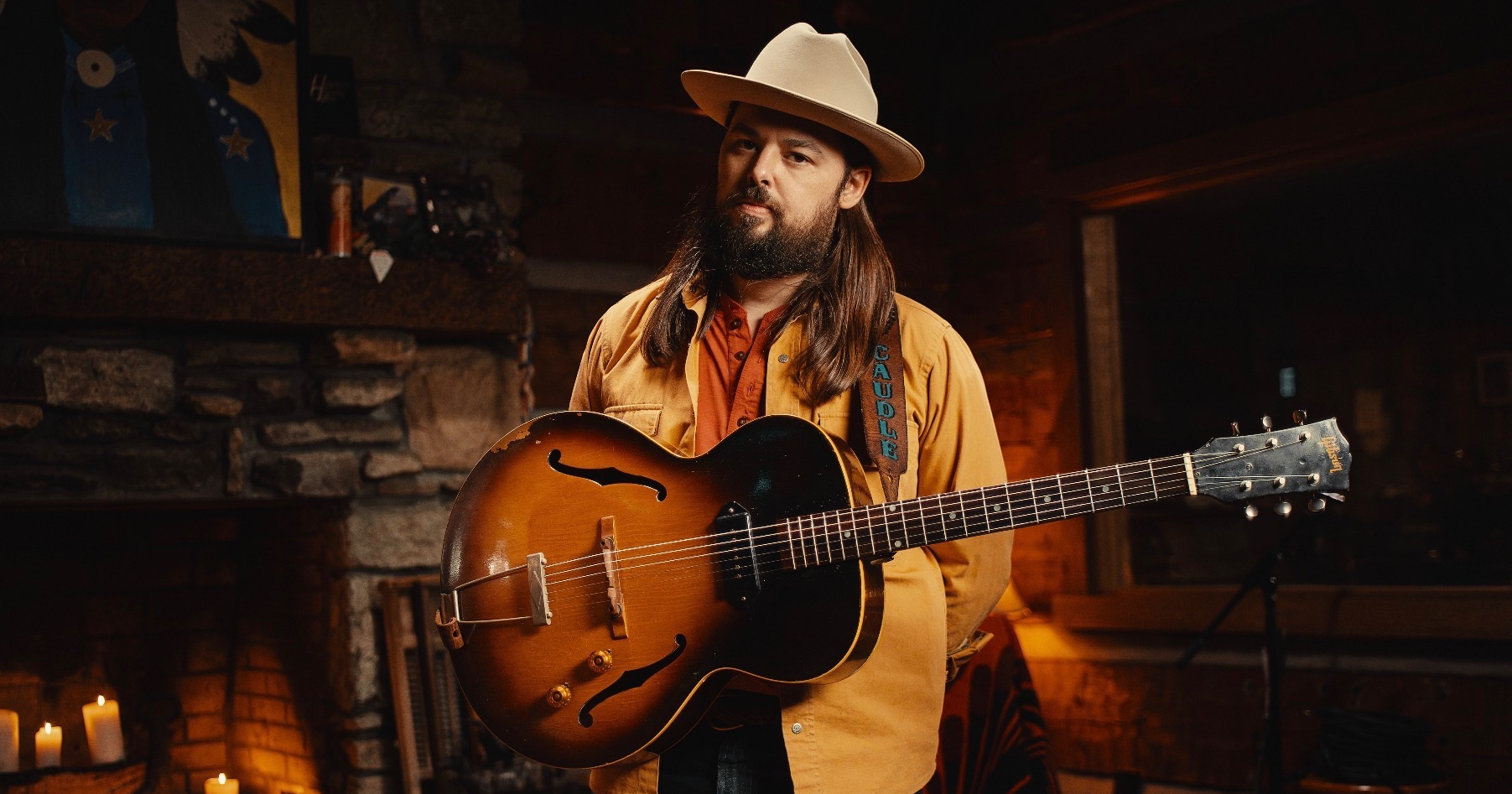
For nearly two decades North Carolina folk singer Caleb Caudle has traveled the country bringing his music to fans wherever they’ll listen, but on his forthcoming eighth studio record he adds a new role to his repertoire – producer.
Released June 5 via his newly launched imprint Hand Plow Records, Heavy Thrill looks to be his most ambitious work yet, as it melds his personal evolution and artistic journey into one singular vision. Whether he’s ruminating on a bumpy road to self-improvement on “Slow Growth,” analyzing self-doubt with “Anxious,” or examining how people deal with adversity on “Path of Desire,” Caudle’s words tell the story of his individual journey through a world that’s changing too fast for him to keep up with.
Although the bulk of the record was recorded at Johnny Cash’s former retreat-turned-studio, the Cash Cabin, Caudle actually recorded his bits for the album at a friend’s studio in the Pocono Mountains – before returning to Tennessee to wrap things up at the same place he captured his projects Better Hurry Up (2020) and Forsythia (2022). He says that the familiar setting not only helped him hone in as a producer, but also helped him to tap into the building’s history as continues chipping away at perfecting his retro modern sound.
“I feel like I’ve started to develop my own sound over the past 20 years that marries traditional elements with more modern sounds,” Caudle tells BGS.
“Because of that I’ve never been afraid to try new things. In many ways I think of what people like Sturgill Simpson, Tyler Childers, or myself are making as modern country music, but in a different timeline where people aren’t as focused on songs about pickup trucks and shaking your ass,” he continues, laughing.
Caudle spoke with BGS about learning from other producers, fatherhood, artificial intelligence, and more.
This is your eighth studio record, but your first time self-producing one of those projects. What motivated you to finally take the plunge?
Caleb Caudle: It’s been one of my end goals for a really long time. I’ve always wanted to produce my own records, but I wanted to go and work with people first that I could learn from. Each has brought different things to the table I’ve picked up on. I’ve also always been involved in the process and have a good idea for how I wanted things to sound. Then after talking with some of my past producers and telling them my plan they all gave me their votes of confidence.
Once I jumped in I wound up doing a lot more pre-production than I’d ever done in the past. I also had great mixing and mastering engineers – Jacquire King and Pete Lyman – who were my safety net in case anything went off track. It turned out to be a really fun experience that even has me thinking about producing records for other folks someday.
While producing the record was new for you, the place you did most of it at – the Cash Cabin – was not. Tell me about what drew you back there to record for the third time?
That place is like my second home now. I’ve done several video sessions there and written with John Carter Cash a bunch. This time around I also kept the band leaner there than I had ever done before. It was just five people total, with no features or guest vocalists like some of my past records have had. I instead wanted to make something that was more self-contained. I knew I could make a record the other way, so I wanted to see what it’d feel like if I took some of those pieces out and really relied on my own instincts above everything else.
It’s also a place with so much history that I’m able to tap into even though I’m writing mostly about my own modern-day experiences. At the end of the day, I love Ralph Stanley just as much as I do Big Thief. They all come from a place that’s honest to that person, which is what I’m after, too. I love what indie rock bands like Bonny Light Horseman do with melodies, but I also love Flatt & Scruggs. It’s all music to me – I’m just trying to take bits and pieces from all of it that I feel would suit my sound.
With that in mind, I also think it’s important to listen to music outside or your own genre. Sometimes when I’m struggling with songwriting I’ll start listening to a ton of jazz to provide that spark that gets me writing again. Other times I’ll go a month listening to music with no lyrics before I grab the pen again. Whether it’s a playwright, actor, poet or songwriter, I always find myself drawn to folks that are passionate about what they’re doing.
Tell me about the writing process for this record… Did anything stand out compared to previous writing sessions? And how many leftover songs did you pen for it that didn’t make the cut?
I’ve had extras every time I’ve made a record. For me, there’s the obvious ones that are going to make the record that everyone feels good about, then there’s another batch of songs that I wouldn’t call “filler,” [that] are less immediate. We do our best to decipher which of those are the missing puzzle pieces for the story we’re trying to build. It’s like having brother and sister songs on the record where something on Side A reminds you of a tune on Side B – it’s all very cohesive. Trimming the fat is such a big part of songwriting for me. As a writer you want to focus on giving people what they need and not all the fluff surrounding it.
Since writing and recording these songs you and your wife learned you’re expecting your first child this summer. How has that knowledge shifted the perspective you have of these songs?
While I didn’t know I was going to be a dad before I wrote it, it almost feels like a record that’s preparing me for that whole process. It’s a really measured and honest look at where my life is right now. There’s a lot of mass confusion in our world currently with artificial intelligence and inflation that feels out of my control. That’s the macro side of it, but I’m also looking at things on a micro level by taking care of the earth and those around me.
With this new label I’ve set up, with every 100 records I sell I’m providing 1,000 meals to the Second Harvest Food Bank of Northwest North Carolina. I want to do all I can to help the people around me in a meaningful way. I’m not saying to disregard the big stuff by any means, because I do believe it’s important to be tapped into what’s going on in the world, but for me personally I feel like my time is best placed in my own community with the people of Appalachia around me.
You just mentioned your label, Hand Plow Records. Tell me more about launching that and the intentionality behind its name?
I live across the street from my great uncle who has a single-horse hand plow that belonged to his great-grandfather and goes back multiple generations. My parents used to plow tobacco near Winston-Salem and sold it to RJ Reynolds, so it’s something I’ve always been around. It also seems like really hard work, which has me drawing lots of parallels between what I do as a musician and the farming they did. I weather storms the same way they did, by putting in the work, planting seeds and constantly nurturing them while they blossom and grow. Farmers are critical to our way of life, so I wanted to use the name to honor them for their hard work and sacrifice.
Is “Slow Growth” reflective of that hard work and change, whether it be on a farm, internally, or in society at large?
That’s a song about honing your craft and trying to become a better person each day. I’m not out here looking for shortcuts, even though so much of society right now is about “how I can get things done the quickest,” especially with AI – which in music feels like cutting corners on something I’ve dedicated 20 years of my life to. I don’t know that anything meaningful will ever come of that process, because lessons learned are the whole point. I don’t think I’d be writing the songs that I’m writing now had I not written the songs that I had before them.
AI feels like a very cheapened version of real life, and I’m not interested in that. It’s a huge threat to the existence of art and creativity – both things that can’t be faked or fast-tracked. It’s a slow process where you have to put the work in every day. There’s days where I pick up and play for two hours but don’t write a single word, but it still feels important. It feels like part of this bigger process where I’ve dedicated my life to this thing, so the fact that someone could use AI to generate a song that sounds like me is scary. It can give them an approximation of what I may sound like, but it’s not getting at where I’m at currently. It’s replicating what’s already been made, but I’m out here trying to tell new stories. It’s the opposite of progress.
Another song that reminds me of stepping away from technology and plugging into the moment is “Sequoia Polaroids.” Tell me about what inspired that one.
I’m constantly trying to pay attention to the small details. [My wife] Lauren and I were on a solo tour opening for Ray Wylie Hubbard in California a while back and we made a trip out to Sequoia National Park. That song is almost like a page from that day. We wound up taking a bunch of Polaroids and throwing them on the dash of the car. The song is about being present in those moments and spaces that feel ancient and vulnerable.
Places like Sequoia are majestic and big and we have an opportunity as humans to help preserve or destroy them. Those spaces are so important to me, so it was really cool to get a song out of that day. The trees out there shrink you in a way that’s very humbling – it’s a beautiful thing.
Nature is a great way to get in tune with yourself, just how vinyl is a great way to interact with music on a deeper level. On that note, I know the physical version of Heavy Thrill incorporates some cool imagery taken from its title track. How did that come to be?
I’ve got to shout out Skillet Gilmore, who did the art. He’s an incredible artist in Raleigh that I love working with. The ants carrying the peach pit [that appears on the center of Heavy Thrill on vinyl] come from a lyric in the title track about how an army of ants can lift up a peach. [That] is symbolic of our chaotic world and how we’ve got to work together to get things done, setting aside our differences along the way in order to find some common ground. When we do that you’ll realize we all have a lot more in common than we think and that our goal should be to help everyone be happy and thrive. A rising tide lifts all ships, so it’s important to work together and show empathy to your fellow humans, because you never know what sort of hard times they’re going through. It’s like Mr. Rogers once said: “Look for the helpers.”
One of my favorite parts of the record is the instrumental transition two thirds of the way through “No Show,” which feels like a new composition entirely. How did it come about?
That instrumental piece is something I’ve been playing at sound checks for a couple years called “June Bug Crawl.” I included it on the record because I was always a fan of when folks like Doc Watson included instrumentals on their records. I thought the song was really cool even though it’s in a different key than “No Show” is, but I still wanted them to live together on the record. I give a lot of credit to my buddy Philippe Bronchtein, who played pedal steel and keys on the record. He’s very good with the more electronic side of things. We basically had to get the instrumentals into a different moment to execute that transitional moment. It was executed flawlessly and really works well given the context of the song and record.
On a more reflective note, what has bringing Heavy Thrill to life taught you about yourself?
It’s taught me to trust myself. This is the first time I’ve seen an album all the way through calling the shots myself. I’ve spent 20 years doing this and developed good instincts over that time, so it’s important to believe in those and remain confident in what I’m doing.
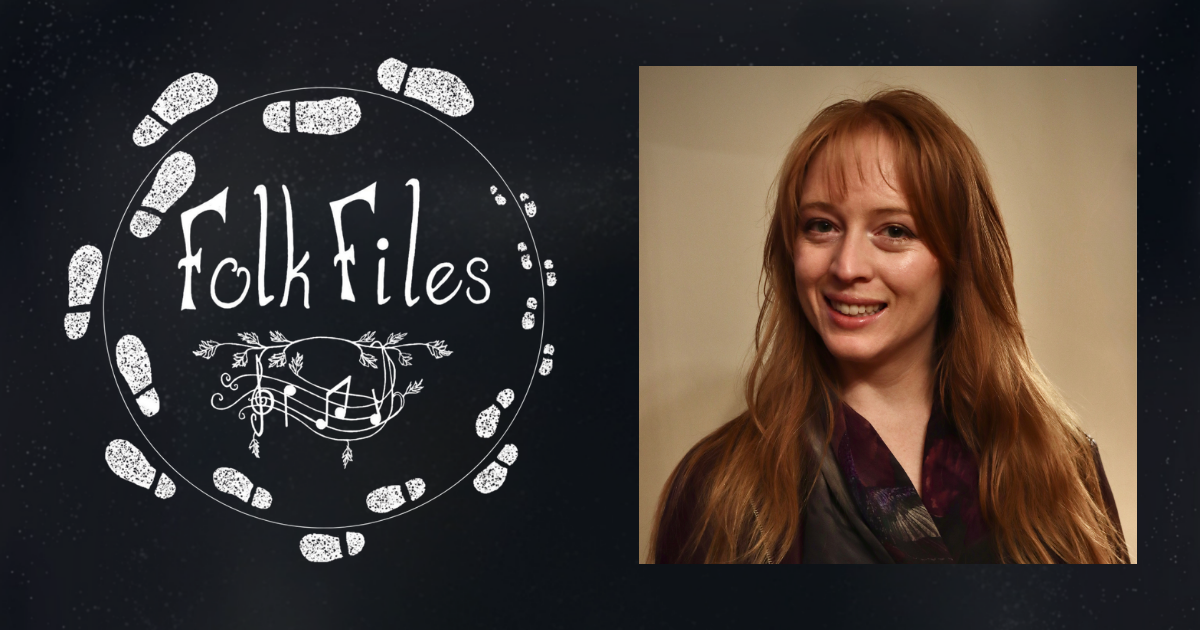
The BGS team is excited to announce yet another addition to the BGS Podcast Network lineup for 2026, after both The Other 22 Hours and the Working Songwriter came on board earlier this year. On June 19, 2026 beloved folk music podcast Folk Files, hosted and created by Olivia Harding, will begin a new season as part of the BGS family. This makes the third new podcast to join BGS in 2026 and the 15th show to partner with or be produced or distributed by the BGS Podcast Network.
Founded in 2023, Harding began Folk Files as a podcast seeking to uncover “the mysteries of folk music through the ages.” Each episode dives deep into the tangled history of murder ballads, sea shanties, rebel songs, and other music that has withstood the test of time. Folk Files provides context, history, and insight into songs we all know and love – and fresh discoveries and deep cuts, too. Episodes will be released once a month on every third Friday beginning on June 19, 2026, with an episode examining a child ballad, “Two Brothers,” and stories of fratricide from around the world. The episode will also discuss the importance of nomadic communities when it comes to the folk process and song collecting. (Find where to listen and subscribe here.)
“When I first started Folk Files, the Bluegrass Situation was an amazing resource full of interviews, articles, and audio that proved invaluable while I was researching my earliest episodes,” Harding says about the announcement. “I never would have guessed that within a couple years, BGS would become my podcast’s new home. I am so excited and grateful to have joined a network of such passionate, supportive people.”
Cindy Howes, director of the BGS Podcast Network and host of Basic Folk, also gushed about the new partnership: “We have been quietly freaking out over Folk Files for some time now. The way Olivia presents and untangles the mysteries and backstories of folk music had us hooked from the jump. We are overjoyed to welcome this wonderful show to our network.”
With BGS’s longtime focus on roots music, culture, and traditions, Folk Files will certainly feel right at home on the BGS Podcast Network. Before the show resumes with BGS on June 19, Harding shared with us five recommended episodes from the Folk Files archives so readers and subscribers can catch up on the show in preparation. Subscribe now so you don’t miss a thing and dive into the full show archive (above) or Harding’s five recommended episodes (below) to celebrate the addition of Folk Files to the BGS Podcast Network.
The Music of Temple Bar (Episode #3.3)
In 2026’s St. Patrick’s Day episode, Folk Files asks the question: Is it actually Irish? Explore over thirty songs that are performed in Irish contexts and see if they actually come from Irish sources. Along the way, we’ll discuss the Rising of 1798, the history of Dublin, the Great Famine, and the Irish diaspora.
Stand and Deliver (Episode #2.8)
Robbers, bandits, highwaymen – there are a lot of English folk songs about outlaws. In this episode of Folk Files, we look at why there are so many songs about criminals and what patterns exist in these ballads. Then, we look at “Robbers’ Retreat” in an attempt to figure out why the song (also known as “Cadgwith Anthem”) doesn’t seem to follow any of those patterns.
Peaches in the Summertime (Episode #8)
“Shady Grove” is an Appalachian folk song that is often linked to the English ballad “Matty Groves.” But what is the actual relationship between them? This episode of Folk Files discusses the meaning and history of “Shady Grove” and untangles the origins of the two iconic songs.
Haul Away (Episode #4)
This episode of Folk Files traces the roots of popular sea shanties to Black work songs and African folk traditions.
The music scene in Tulsa, Oklahoma, is alive and well. If I’d thought otherwise at any point in time, it wouldn’t take long for a stranger in an Austin dive or a songwriter in Nashville to remind me – and they have. I’ve called Tulsa home for 10 years and gladly claim and evangelize her as often as I can. This little-big town’s reputation of producing quality singer-songwriters and musicians is justified, however biased I am.
Come with me, Keyland, on a little walk through a Tulsa-Mixtape journey. Before we begin, I’d like to offer a few important listening notes:
1) I regret that I will inevitably leave some folks out, merely due to the limitation of brevity. My sincerest apologies. But I’d like to point out that this list is composed of my personal friends in the Tulsa music scene. Beers on me at the Mercury Lounge to any friends I leave out here…
2) This is a list of current artists. The Tulsa music scene is often associated with only a handful of eclectic deceased writers and musicians. God bless them – but Tulsa has changed a lot in the last 50 years or so. My friends included here do an amazing job of looking ahead at what the future holds.
Ramsey is one of my best friends and most likely the very best musician I know. He plays drums and sings harmonies in my band, Keyland, and he is an incredible guitar and banjo player. In the best way, this album is more a composition than anything else.
“Stranger” – Wilderado
This is my favorite band. I so respect the way these guys approach rock and roll with a blue-collar “dad” mentality. It’s truly inspiring, and the way I want to approach music as a career.
“Coyote” – Ken Pomeroy, John Moreland
This is a two-for-one selection: Ken and John are both powerhouse songwriters and singers. Both these artists are gifted in very special ways and I’m glad they make music.
“Get to You” – Micah Felts
Micah Felts is hilarious, a fantastic songwriter, and an all-around great dude and friend. He is also a stellar acoustic guitar player.
“Better If Worse” – HAFFWAY
Sam Westhoff is slipping in this Tulsa music list, because I sure as hell wasn’t going to leave him out. He is one of my best friends and has produced all of my music. He lives in Nashville now and is famous (rightfully so).
“Comanche Moon” – John Ferrell
John Ferrell is one of the most rawly talented players and singers I know. I met John while we were both in college and he learned to play guitar better than me and all my other friends in like three months.
“Marigold” – Chris Bo Jones
Also sneaking in this Tulsa list is OKC rockstar Chris Bo Jones. Lineman by day, rock star by night, Chris is one of my favorite singers.
“Outside” – MORE&MORE, Beachfriends
Brady Ballew (the happiest person I know) used to play professional soccer. Now his band MORE&MORE and Keyland like to sell out shows in our favorite Tulsa dive, the Mercury Lounge. I’ve listened to this song 10,000 times.
“Call Me Anytime” – Sports
Christian introduced me to nicotine toothpicks and Australian beer one time after a HAFFWAY show. These guys produce a lot of cool stuff in Tulsa. And Sports is like a huge band.
“Bullfighter” – Joleen Brown
Joleen Brown is Tulsa’s sweetheart. Her voice is crazy good and she is the sweetest, coolest person you will meet.
“Wishes” – Travis Linville
I’m new to Travis’s music and I’m so glad I found it. This is like a Tom Petty song in the best way. I don’t know Travis super well, but it seems like he has a really grounded view on the reality of what it means to be a musician in 2026, and for all the right reasons.
“More” – Kalyn Fay
Kayln Fay just put out a really cool record that highlights and honors her Cherokee culture and roots.
“This Damn Funky” – Johnny Mullenax
Johnny plays guitar 1000 miles per hour. Johnny’s band plays their music at 1000 miles per hour also. The live show is insane.
“South and Pine” – Zach Bryan, King Cabbage Brass Band
I have not met Zach yet, but I have drank one million beers at 5 or 6 of his concerts. The horn section in this new record of his is a Tulsa band called the King Cabbage Brass Band and it is physically impossible to not have fun at a show of theirs. And they also do really cool work in our community by teaching band camps for kids – they recently held a concert at Cain’s Ballroom and their band camp kids absolutely crushed a song on the main stage.
“Cowboy Song” – BC & the Big Rig, Jacob Tovar
This is another two-for-one selection: Brandon Clark was one of the first people to ever believe in my band, Keyland, and let us play our first real gig with them. Jacob Tovar has a buttery voice and one of the funniest people you could give a microphone to. You can catch both of these gentleman holding down separate residencies at local dives – Tonkin’ Tuesdays with Tovar and BC’s Sunday Service – you guessed it, at the Mercury Lounge.
Photo courtesy of the artist.
This website uses cookies to improve your experience. We'll assume you're ok with this, but you can opt-out if you wish.AcceptRejectRead More
Privacy & Cookies Policy
Privacy Overview
This website uses cookies to improve your experience while you navigate through the website. Out of these, the cookies that are categorized as necessary are stored on your browser as they are essential for the working of basic functionalities of the website. We also use third-party cookies that help us analyze and understand how you use this website. These cookies will be stored in your browser only with your consent. You also have the option to opt-out of these cookies. But opting out of some of these cookies may affect your browsing experience.
Necessary cookies are absolutely essential for the website to function properly. This category only includes cookies that ensures basic functionalities and security features of the website. These cookies do not store any personal information.
Any cookies that may not be particularly necessary for the website to function and is used specifically to collect user personal data via analytics, ads, other embedded contents are termed as non-necessary cookies. It is mandatory to procure user consent prior to running these cookies on your website.