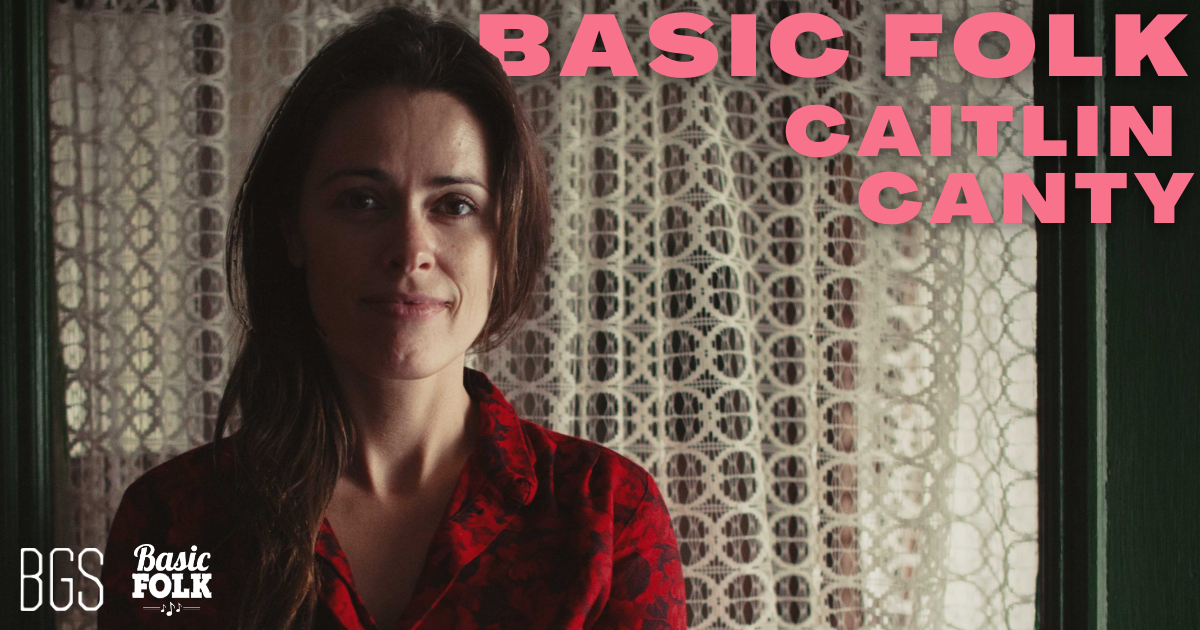
Basic Folk – Caitlin Canty

Urgency and patience are the two poles of New England songwriter Caitlin Canty’s magnetism. Her music invites you to quiet moments of reflection with unhurried confidence. When I first heard her song “Get Up” in 2015 I felt like I was receiving a very important magical message. Canty’s subsequent releases have further revealed her uncanny talents for grooving at the right tempo, describing the memorable image, leaning into elegant arrangements, and letting delicate moods hang in the air.

LISTEN: APPLE • SPOTIFY • STITCHERAMAZON • MP3

Canty’s new album, Quiet Flame, was recorded live with a string band and no drums. Live tracking has become her signature over the years, and this new record shows the authentic and powerful moments that can only be created in that setting. Produced by Chris Eldridge of the Punch Brothers and featuring collaborators like Sarah Jarosz, Brittany Haas, and Paul Kowert, Quiet Flame is not only a showcase for Canty’s unmistakable voice and songwriting, but also a celebration of her impressive artistic community.

Caitlin knows a thing or two about teamwork after many years of team sports. She was a soccer player and heptathlete through her college years, and I have a hunch that her athlete-brain and her musician-brain share a particular wisdom. Pacing, collaboration, focus, and graceful movement characterize her unique body of work. It was a true delight to talk about writing, friendship, family, touring, humility, and self-belief with this gem of a musician.


Photo Credit: Louise Bichan

Robbie Fulks Reflects on a Funny, Smart and Heartfelt ‘Bluegrass Vacation’

In the liner notes to his new album Bluegrass Vacation, released at the beginning of April, Robbie Fulks talks about his formative experiences in the genre. He also mentions how, as a young musician in the early ’80s, he drifted away from it in search of the coolness of trendier sounds. “But what made me think there was anything cooler than bluegrass?” he asks, playfully reprimanding his younger self.

Bluegrass Vacation makes the case that there is indeed nothing hipper than some of the world’s most decorated musicians tearing into a tried-and-true format. And it doesn’t hurt when they do so in service of smart, funny, heartfelt material, which is what Fulks delivers here and is emblematic of his output for the past three decades. While he proves that he can write rollicking back-porch jams like “One Glass of Whiskey” and “Let the Old Dog In,” he also slows the tempo for tender acoustic beauties like “Molly and the Old Man” and “Momma’s Eyes.” And in the stunning “Angels Carry Me,” he pushes bluegrass boundaries with a multi-movement piece of fearless lyrical and musical complexity.

Considering it took 2 ½ years from first session to album release due to pandemic holdups, Fulks is thrilled to finally have Bluegrass Vacation out in the world. He talked to BGS about early influences, his impressive cohorts on the record, and whether he’d consider dipping back into the genre again.

BGS: What are your earliest memories of bluegrass and what drew you to it?

Robbie Fulks: Early memories are a reel-to-reel tape of Doc Watson’s first Vanguard record. There were a couple of other records on the tape as well, but Doc was the first thing up, “Nashville Blues” going to “Sitting on Top of the World,” that warm, beautiful, versatile sound. Doc did all these different things that kind of put him one foot in bluegrass and one foot out. That was probably the earliest thing that hooked me. And then after that it was like The Country Gentleman and Will The Circle Be Unbroken. A couple of other records that my folks had, and then the festivals.

What made you decide that now was the time to do an all-bluegrass record?

Generally, over the last 10 years, I’ve been making more inroads. My bluegrass hot-shot Rolodex has expanded to where it’s like, holy shit, I have Jerry Douglas’ email and can call Sam Bush (laughs). It just seemed like it had reached a tipping point the last couple of years where it was like I gotta do this. The older guys are going to be dead soon including myself, and that’s part of the reason (laughs). But I’ve been leaning that way more and more for the last five to 10 years.

Did your songwriting process change at all?

I varied my angles on the songwriting as I went along. On a couple of them, I had a genre thing in mind. Like “Lonely Ain’t Hardly Alive,” I was thinking about Jimmy Martin in the late ’50s and early ’60s and wrote to that. With “Angels Carry Me,” that came about because I had inked (mandolinist) Sierra (Hull) on a session. I started thinking about what kind of a groove I would like to hear her on and wrote from the groove forward thinking about the way she plays.

And did writing for bluegrass steer you in the direction of any particular subject matter?

I’ve noticed that I gravitate repeatedly toward four or five rough subjects over and over again. One of them is alcohol, and that shows up in a couple songs. One of them is memories of when I was a kid, and that shows up. Or music itself. When these subjects show up, I always think “Should I go ahead, or not go ahead?” Because it’s well-trodden ground for me. Like “Old Time Music Is Hear to Stay,” I thought “Well, I’m writing another song about music. I’ve done of lot of that. Should I go forward?” And as I went forward with the song, I just found that I really liked it and that compensated for any qualms about having done something similar before. I guess it’s a long-winded way of saying no, it really wasn’t any different. Just going into a room with an instrument and seeing what happened.

Considering the incredible instrumentalists on this record, did you give them a lot of direction? Or was it more like, “Here’s the song. Let it rip?”

Generally, I’ve noticed in the studio that the less I say, the better. Because it’s surprising how you can say four words that seem well-chosen and exactly what you want and then things go haywire because it’s overinterpreted or misinterpreted. My approach is that I definitely have things in mind and I chart and have rough end points in mind. But when you hear the first go at it, I go with the idea that that’s what it’s going to be, like 90 percent, and then I direct the other 10 percent of it as delicately as I can.

Tell me about recording “Angels Carry Me,” which is fearless with how it expands the notion of what a bluegrass song can be.

The people that were on the session, it skewed a little younger, because Sierra was there and (guitarist) Chris (Eldridge) was there. And (fiddler) Stuart (Duncan) is just kind of ageless and genre-less, just pure music. Todd (Phillips) is the same way on the bass. He’s a really wide-brained guy. I think if it had been different players, it might have been more of a challenge. But those players can go anywhere and just have adventurous spirits, as do I. It was never a question that it would be too weird for somebody to get their mind around.

That song also has one of my favorite lines I’ve heard in a long while: “And only a fool thinks he can leave just by driving away.”

That was a line that took me by surprise. I worked on the song for three or four weeks in an attitude of mystery and concern (laughs). Because I didn’t know where it was going or what I was doing. It was kind of amorphous. But the appearance of that line at the end, it seemed like, “Ah, that could have been in my sights the whole time and I just didn’t know it.” It appeared as a gift.

Did you have to embellish any of “Longhair Bluegrass,” which talks about you going to see a festival as a kid with your parents?

I think the only untrue part is that in the fourth verse, I put an example of somebody at the festival, an old-timer that was not into the younger generation and their attitude. And I put in Wilma Lee Cooper because I looked at a poster of that Culpepper festival. Her name fit and I thought the age bracket kind of fit. In the session, Sam Bush said, “No, she was real easy-going about it.” I said, “Who wasn’t?” And he said, “Probably Ralph Stanley.” So I put that in. That was a little untruth, because I didn’t see Wilma or Ralph at that festival looking around angry. And maybe my parents weren’t stoned out of their heads like I implied in the song (laughs).

You talk in “Old Time Music Is Here to Stay” about picking up the electric guitar and then losing interest in it as you returned to more traditional sounds. How accurate is that?

100 percent. I think it was just a natural thing for me to want to swim with the current when I was 17 years old. But even at the time, I think it was at the back of my mind that this music by, I don’t know, Aztec Camera and Big Country or U2, it was OK, but it just didn’t grab me in the way that I was grabbed by a Doc Watson record. It was a little bit more work coming to the popular music of the late ’70s, early ’80s. But what can you do? The stuff that gets in you when you’re five or ten years old, that’s the stuff that doesn’t go away.

Did you feel extra pressure on this record because you wanted to do the genre proud?

There was pressure there, but it was more from being in an isolation booth and looking out the glass door and seeing Sam Bush over there or Ronnie McCoury over there. No matter how welcoming these people are, it’s a mind fuck to pick up your instrument and be playing with them (laughs). It freaked me out a little bit.

I know you just finished this one, but is it possible you could return to the genre again somewhere down the road?

I’m starting to think about what to do next. I’m open-minded. If people like this enough, I loved doing it. I would do another one.


Photo Credit: Scott Simontacchi

As the Newest Supergroup in Bluegrass, Mighty Poplar Goes Back to the Classics

At your average live music event on the folk and bluegrass circuit, the stage isn’t the only place where great performances are happening. There’s the campfire and parking lot picking scene at the big outdoor festivals, of course. But a lot of it goes on out of sight backstage, too, when musicians who don’t often see each other come together to play with and for each other. A close approximation to listening in on that is Mighty Poplar (Free Dirt Records), the self-titled first album by the group of the same name.

The bluegrass world’s newest supergroup, Mighty Poplar is a five-piece band centered around three virtuoso players from the Punch Brothers orbit — banjo player Noam Pikelny, guitarist Chris “Critter” Eldridge and original Punch Brothers bassist Greg Garrison, currently in the band Leftover Salmon. Out front as primary vocalist is Watchhouse mandolinist Andrew Marlin, with well-traveled fiddler Alex Hargreaves (currently knocking ’em dead in Billy Strings’ touring band) filling out the lineup. Over the years, various subsets of this quintet would cross paths out on the road and jam, generally falling back on the old numbers everyone knew as a common language. That’s how Mighty Poplar began to coalesce.

“There’s a pretty complex web of relationships between all five of us that began with a lot of hanging out,” says Pikelny. “There’s this beautiful thing about bluegrass, the amazing music and all the shared songs. There’s a great social component that can exist with the music if you let it, and it became a reason to get together and have fun.”

While none of Mighty Poplar’s members come from acts you’d really call “bluegrass,” you could say they’re all at least bluegrass-adjacent. And none of them have ever come down as top-dead-center old-school bluegrass as on Mighty Poplar. The album’s 10-song tracklist draws material from A.P. Carter, Bob Dylan, John Hartford and Leonard Cohen, with songs made famous by the likes of Hazel & Alice, Uncle Dave Macon and Bill Monroe fiddler Kenny Baker.

Monroe, the Father of Bluegrass, also figures into the proceedings in terms of inspiration for the ensemble’s name. Proposing Mighty Poplar as a moniker was Marlin, someone who definitely knows his way around names involving wordplay (witness the original name of Watchhouse: Mandolin Orange).

“I was listening to a Bill Monroe and Doc Watson live recording where they were about to kick off ‘What Would You Give in Exchange for Your Soul?’” Marlin recalls. “Bill said he and Charlie recorded it in ’19-and-36’ in Charlotte and it had been ‘mighty poplar down through the Carolinas.’ We had a huge text thread already going about band names, where my phone was always going BING at 2:30 a.m. So many names we considered, but everybody thought Mighty Poplar was a good awning to stand under.”

While Mighty Poplar is only now coming out in the spring of 2023, the album has actually been in the can for a couple of years. It might never have happened without the Coronavirus pandemic shutdown of 2020-21, which took everyone’s regular bands off the road for an extended period of time.

In isolation, everyone felt drawn toward bluegrass as the musical equivalent of comfort food. So they took this on as a pandemic project, convening with engineer Sean Sullivan at Nashville’s Tractor Shed for a brisk three-day session in October of 2020.

“There was a sense that we were getting away with murder, traveling across the country and podding up while everything was closed up,” says Pikelny. “There were logistical hurdles and we had three days, so we had one shot to get it all at once. So we worked out as much as we could ahead of time, even the sequence. The concept, if there was one, was that this was the closest thing to a real-deal, traditional, classic bluegrass project any of us have done in a long time, maybe ever.”

As lead vocalist on six of the album’s 10 songs, Marlin is the primary out-front voice of Mighty Poplar. But he felt like he had to step up his game on the instrumental side, to keep up with his bandmates.

“It was intimidating, but not because those guys are intimidating,” Marlin says. “As a musician, I’ve had to figure out how to feel like I can express myself in front of people I look up to. But that’s on me for projecting my own shit onto them, because they don’t wear that. So ‘Grey Eagle,’ an instrumental fiddle tune Alex brought forth, I was kind of sweating that one in the studio. That kicked off at 150 beats per minute and everybody else is just looking around, casually exploring the nooks and crannies of the tempo while I’m popping a vein and kind of being drug behind the horse. But I managed to keep it together. Ultimately all those guys still love a great song as much as anyone. There’s something about simple songs that leave it up to the player to bring whatever they want. I love it when the song’s not telling you how to play it, and I feel lucky that they were down to explore that approach.”

Song choice was pretty casual, mostly in favor of material from a bit off the beaten path. Even with a Hall of Fame list of songwriters, they focused on less-well-known songs from the repertoire of each — Dylan’s take on the A.P. Carter tune “Blackjack Davy” rather than “Will the Circle Be Unbroken,” or Hartford’s Mark Twang riverboat song “Let Him Go On Mama” rather than “Gentle On My Mind.”

“It all happened pretty organically,” says Eldridge. “In the initial text volley about what to do, there were a lot of songs we would’ve been happy to cut. It’s hard to say why we landed on these particular songs other than that they felt right. I would not say there was an overarching concept beyond good songs that felt right.”

While they considered including some originals, ultimately they decided to stick with covers, mostly of older vintage (the most recent song on it is Montana singer/songwriter Martha Scanlan’s “Up on the Divide,” from 2012). In that way, Pikelny looks at Mighty Poplar as a classic folk record.

“In other genres, people might call this a ‘covers album,’” says Pikelny. “But if you record solo Bach compositions, that’s not ‘Bach covers.’ It’s repertoire, reinterpretations of classics to pass down. It was born of a desire, almost a need for all of us, to gather around a bluegrass project. And it was such a joyous process. It felt like coming home for Thanksgiving or Christmas and being around family you’ve not seen in a while, in the home you grew up in with a turkey in the oven. It was that kind of comfort, the warm fuzzy feelings of gatherings like that.”

It went so well, in fact, that they were in no hurry to get around to the detail work of mixing and mastering the record after they finished tracking. Pikelny says they felt almost paranoid about not wanting to touch it, for fear of messing up a good thing.

“We’ve been sitting on this for so long because it felt like such a special session,” Eldridge says. “So effortless and deeply joyful. Magical, even. We didn’t want to let it go because it felt like all we could do was ruin it. But I kept coming back to it, listening now and then and thinking, ‘I really like this. We have to share it, plus it’s a good excuse for us to get together again.’ It’s ironic that we’ve not actually played it live yet, and we’re already kind of getting the next batch together.”

Indeed, Mighty Poplar’s first real touring commences in May. With Hargreaves busy playing arena-sized venues with Strings for the foreseeable future, John Mailander will stand in for him on the first leg of touring. And all the principles are cautiously optimistic that Mighty Poplar’s first album won’t be its last. Pikelny likens their hoped-for trajectory to Tony Rice and J.D. Crowe’s Bluegrass Album Band, which periodically convened to make albums and tours through the 1980s and into the ’90s.

“Bluegrass Album Band was never a full-time group for any of those guys, it was a very sustainable side project whose records served as homecomings,” says Pikelny. “They’d go off to do whatever else and then come back for another edition. It’s a celebration of our love for bluegrass. As long as it stays as effortless as this felt, I think we’ll keep doing it when we can.”


Photo Credit: Brian Carroll

WATCH: Caitlin Canty, “Blue Sky Moon”

Artist: Caitlin Canty
Hometown: Nashville, Tennessee
Song: “Blue Sky Moon” (written by Caitlin Canty and Philippe Bronchtein)
Album: Quiet Flame
Release Date: June 23, 2023

In Their Words: “‘Blue Sky Moon’ is an ode to the slow road. It’s a stubborn refusal to travel at anyone else’s speed but your own. This song is about moving through the world at a satisfying pace, and I recorded it with the most satisfying band I can imagine; Brittany Haas (fiddle), Sarah Jarosz (banjo, vocals), and Paul Kowert (bass) were the core band for this video as well as our Quiet Flame recording sessions, produced by Chris Eldridge. This song reminds me to notice those magic moments at the edges of the day, to hold my ground as the world goes rushing by. ‘Rock in my tire keeping time with the strobing light between the pines / My heartbeat finds the rhythm / Breakneck boy goes speeding by in a hellbent race to some finish line / I ain’t going with him.’” — Caitlin Canty


Photo Credit: David McClister

Top 10 Sitch Sessions of the Past 10 Years

Since the beginning, BGS has sought to showcase roots music at every level and to preserve the moments throughout its ever-developing history that make this music so special. One of the simplest ways we’ve been able to do just that has been through our Sitch Sessions — working with new and old friends, up-and-coming artists, and legendary performers, filming musical moments in small, intimate spaces, among expansive, breathtaking landscapes, and just about everywhere in between. But always aiming to capture the communion of these shared moments.

In honor of our 10th year, we’ve gathered 10 of our best sessions — viral videos and fan favorites — from the past decade. We hope you’ll enjoy this trip down memory lane!

Greensky Bluegrass – “Burn Them”

Our most popular video of all time, this Telluride, Colorado session with Greensky Bluegrass is an undeniable favorite, and we just had to include it first.


Rodney Crowell and Emmylou Harris – “The Traveling Kind”

What more could you ask for than two old friends and legends of country music reminiscing on travels and songs passed and yet to come, in an intimate space like this? “We’re members of an elite group because we’re still around, we’re still traveling,” Emmylou Harris jokes. To which Rodney Crowell adds with a laugh, “We traveled so far, it became a song.” The flowers were even specifically chosen and arranged “to represent a celestial great-beyond and provide a welcoming otherworldly quality … a resting place for the traveling kind.” Another heartwarming touch for an unforgettable moment.


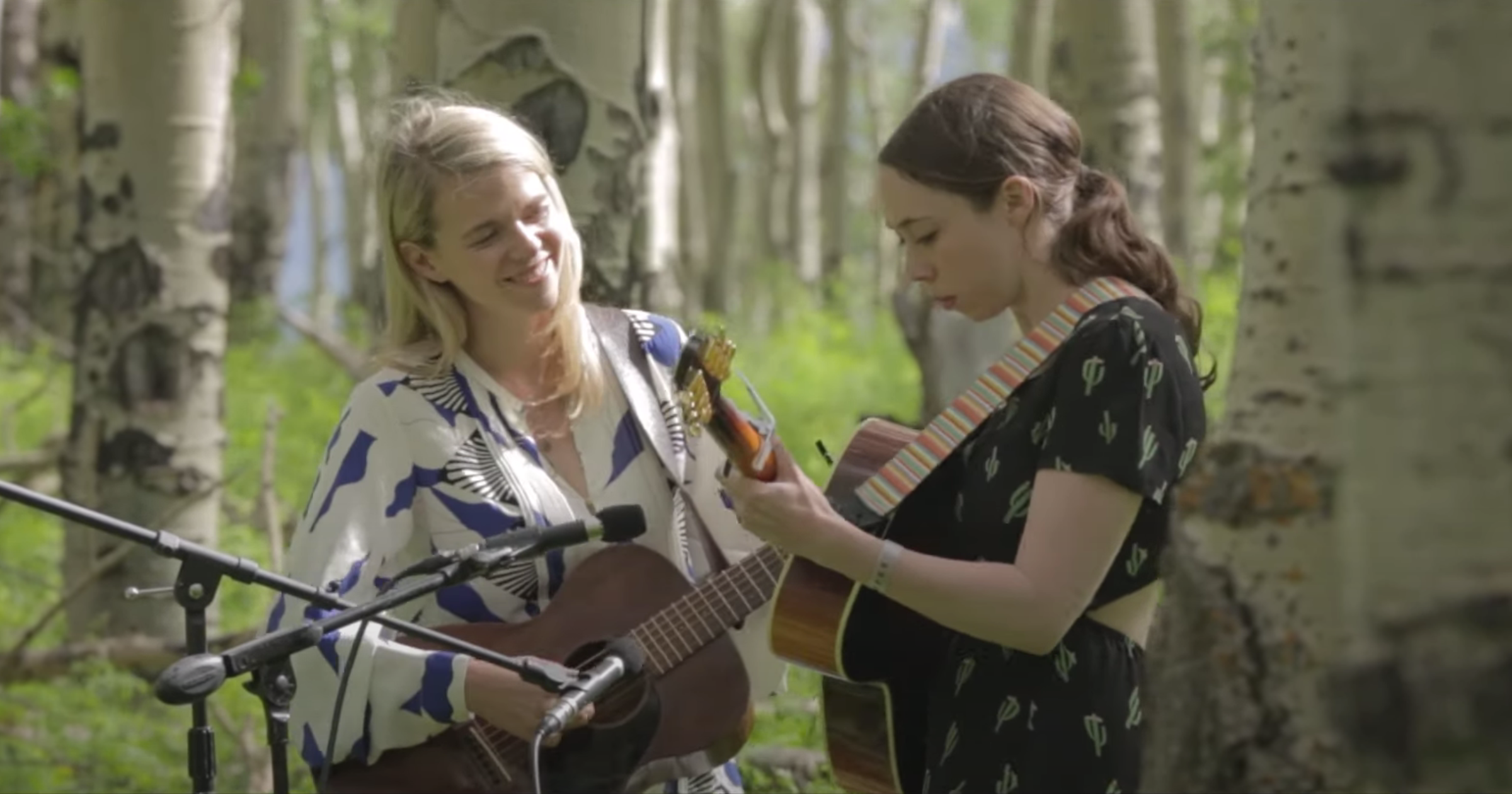
Sarah Jarosz and Aoife O’Donovan – “Some Tyrant” 

In the summer of 2014, during the Telluride Bluegrass Festival we had the distinct pleasure of capturing Sarah Jarosz and Aoife O’Donovan’s perfectly bucolic version of “Some Tyrant” among the aspens. While out on this jaunt into the woods, we also caught a performance of the loveliest ode to summertime from Kristin Andreassen, joined by Aoife and Sarah.


Rhiannon Giddens – “Mal Hombre”

Rhiannon Giddens once again proves that she can sing just about anything she wants to — and really well — with this gorgeously painful and moving version of “Mal Hombre.”


Tim O’Brien – “You Were on My Mind”

Is this our favorite Sitch Session of all time? Probably. Do we dream of having the good fortune of running into Tim O’Brien playing the banjo on a dusty road outside of Telluride like the truck driver in this video? Definitely.

Enjoy one of our most popular Sitch Sessions of all time, featuring O’Brien’s pure, unfiltered magic in a solo performance of an original, modern classic.


Gregory Alan Isakov – “Saint Valentine”

Being lucky in love is great work, if you can find it. But, for the rest of us, it’s a hard row to hoe. For this 2017 Sitch Session at the York Manor in our home base of Los Angeles, Gregory Alan Isakov teamed up with the Ghost Orchestra to perform “Saint Valentine.”


The Earls of Leicester – “The Train That Carried My Girl From Town”

In this rollicking session, the Earls of Leicester gather round some Ear Trumpet Labs mics to bring their traditional flair to a modern audience, and they all seem to be having a helluva time!


Sara and Sean Watkins – “You and Me”

For this Telluride session, Sara and Sean Watkins toted their fiddle and guitar up the mountain to give us a performance of “You and Me” from a gondola flying high above the canyon.


Punch Brothers – “My Oh My / Boll Weevil”

The Punch Brothers — along with Dawes, The Lone Bellow, and Gregory Alan Isakov — headlined the 2015 LA Bluegrass Situation festival at the Greek Theatre (a party all on its own), and in anticipation, the group shared a performance of “My Oh My” into “Boll Weevil” from on top of the Fonda Theatre in Hollywood.


Caitlin Canty feat. Noam Pikelny – “I Want To Be With You Always”

We’ll send you off with this delicate moment. Released on Valentine’s Day, Caitlin Canty and Noam Pikelny offered their tender acoustic rendition of Lefty Frizzell’s 1951 country classic love song, “I Want to Be With You Always.”


Dive into 8 of our favorite underrated Sitch Sessions here.

Inspired by Tony Rice, Punch Brothers Give ‘Em ‘Hell on Church Street’

It was banjo player Noam Pikelny who heard first. On December 26, 2020, he messaged his Punch Brothers bandmate Chris Eldridge to tell him the news that Tony Rice, their bluegrass hero and Eldridge’s guitar mentor, had died on Christmas Day. “It just didn’t seem like it could be real,” says Eldridge. “It was a complete shock.”

The band felt more than just sadness at the legend’s passing; there was regret, too. Eldridge had thought about calling Rice to tell him what they had been working on — a reimagining of his landmark album, Church Street Blues — but had resisted the urge. “I thought, you know what, it’ll be cooler if I can just give him the music. ‘Hey, we made a thing for you…!’” The moment had never come. It was a heartbreaker.

Hell on Church Street, Punch Brothers’ sixth full album, was recorded in Nashville the month before Rice died. The 1983 solo record that inspired it is high canon among bluegrass lovers with its wistful songs and fiddle tunes repurposed as dazzling guitar solos, laid down in the period when Rice was opening up bluegrass music in multiple directions at once. Punch Brothers have remained faithful to the original tracklist, but equally to Rice’s boundary-pushing creativity.

What emerges is a kaleidoscopic mise en abyme — their versions of Rice’s versions of songs by Bob Dylan, Tom Paxton, Gordon Lightfoot, et al. — both reflecting bluegrass’s rich progressive history and refracting through their own endlessly inventive perspective. Those hoping for Chris Thile to indulge in some light Gordon Lightfoot karaoke, in other words, will be disappointed. A few have already cried sacrilege. Witness the internet backlash that accompanied the band’s release of the title track, which resets Norman Blake’s famous lyrics to an urgent 5/4 meter.

“You never want to admit you look at internet comments but some people were pissed,” says Eldridge. “I thought, oh boy, wait til these people hear ‘Gold Rush!’”

Even Pikelny admits he had a few early qualms about the technical ambition of that initial recording. “It took us a day and a half [in the studio] to play it with the effortlessness and ease it needed. But I’m glad we stuck with it, because if we were just going to play it like it’s already been played then really what’s the point? It becomes like a Civil War re-enactment.”

“And it’s just not true to the spirit of what Tony himself exemplified his entire career,” adds Eldridge. “This record was never a memorial — it was a living tribute created in the spirit of some of the deep lessons we learned from Tony: you have to be yourself. If you’re going to make music, play it the way only you can play it.”

Certainly only Punch Brothers would take bluegrass standard ‘Gold Rush’ and turn it into a piece of esoteric free-time improv, ethereally led by Gabe Witcher on fiddle. “For the record we all love that Bill Monroe tune,” says Eldridge, with a wry smile. “But I don’t even think I’ve played a fiddle tune that’s been that deconstructed and stripped of basic elements like pulse and beat before.” It is, laughs Pikelny, certainly not a version likely to be heard at a contest any time soon: “Contestant 11, you’ve been disqualified!”

Hell on Church Street is a record that might never have been made but for the pandemic. The band’s need to quarantine before they could assemble in the studio had restricted their time together and they were looking for a project that would satisfy them musically without turning their precious time in each other’s company into a songwriting bootcamp. “When we’re on the road together it’s camaraderie, it’s therapy,” says Pikelny. “We said, ‘What can we do that we can still enjoy being with each other?’”

Their minds turned back to a similar conversation they had had in Japan two and a half years previously. During their residency at the Blue Note in Tokyo, the band were asked to prepare a set of bluegrass standards for the 2019 Rockygrass festival (or, as Pikelny puts it: “Don’t bring all your original shit!”). With limited time to rehearse — or perhaps, given the allure of the Japanese capital, not a great deal of inclination — someone had suggested paying tribute to an artist or record they loved. The response was unanimous, almost instantaneous. It had to be Church Street Blues. “That record was so sacred to all of us,” says Eldridge.

The live set that followed at Rockygrass became one of the great wish-you-were-there experiences: a performance fizzing with spontaneity, in an atmosphere crackling with passion. It had been a busy festival for all of them — bassist Paul Kowert playing a set with Hawktail, Pikelny performing with Stuart Duncan — and when they took to the stage, they had been working on the material for just four hours. But the coupling of their collective virtuosity with one of bluegrass’s most beloved of song collections created instant electricity.

In Nashville last November they saw the chance to reignite that experience. “It’s not something we get to do much these days,” says Eldridge, “make music by the seat of our pants. And it’s one of the things that initially brought us together, all the way back the first time the five of us got in a room together. It’s something very special to us, and with this project we got to tap into that side of the band that tends to lie dormant for long stretches — to enjoy what it’s like when we don’t have super tight arrangements, when we just have to listen and be very reactive.”

It also allowed them to delve far more deeply into the songs on Church Street Blues than they ever have had before. “You get closer to the material when there’s a responsibility to make it your own,” says Pikelny. His own parents had loved Tom Paxton, for instance: Pikelny had been familiar with “Last Thing On My Mind” since he was a kid. “It had always seemed like just another heartbreak song — it was only when we started working on it I realised how profoundly sad it is.” At the start of their arrangement, Thile’s voice yearns out over the lone plucked notes of the fiddle, a sound like the ebbing of lost time.

But it’s “Streets of London” where Punch Brothers’ ability to mine the meaning of a song and transform it into sonic expression is most evident. Where Rice rendered the melancholy of Ralph McTell’s lyrics through his bell-like baritone, here the stories of abandoned, lonely lives are tossed about in broken melody and dismembered harmony. This is a sad song that’s been restrung with anxiety and tautened with menace, in a manner that detaches it from some nostalgic past and confronts you with the shamefulness of our world’s ongoing poverty and isolation.

What the band wishes, above all, is for the album to honour Rice’s own experimental and fearless musicianship. To most, the man himself had remained an enigma, withdrawn from the bluegrass world and even his peers to the end of his life, ever since the loss of his voice had stopped him performing. “He seemed like a king off in a castle,” says Pikelny. “I wish I’d once got to hear what Tony Rice’s guitar sounded like in a room, but he wasn’t accessible in the way of so many bluegrass heroes.”

But to Eldridge he had been more — a family friend and musical mentor, the man who used to crash on his parents’ sofa when his touring schedule brought him through DC. Eldridge can still recall the moment, aged 12, when Rice effectively changed the course of his own life forever. They were at the Graves Mountain bluegrass festival in Virginia, “and all of a sudden I was like, that’s a Zeus on stage and he’s throwing thunderbolts,” he remembers. “It wasn’t so much that his playing was so great, it was obviously really great that goes without saying, but the impression on me was that every note he’s playing is meaningful and is very direct. It was like they transcended being musical notes and took over your whole being.”

“Isn’t it true that the reason your nickname Critter got reinstated was due to Tony?” interjects Pikelny.

“It was entirely due to Tony! When I was in utero my parents referred to me as the critter, people called me it as a little boy but eventually they stopped and everyone called me Chris. Then when I went down to Merlefest with some of my college friends in 2001, we were hanging out with Tony, and the name came back with a vengeance! And here we are today…”

It’s a touching thought: that Rice’s legacy should have made so personal and lasting a mark on Eldridge, even as it continues to influence the musical world that he and Punch Brothers inhabit. “I would argue that he more than anybody ushered bluegrass into its modern form, in terms of the new standards of musicianship and song selection. He was probably more responsible for that than anybody.” Pikelny nods his head: “The way the music has expanded in all these different directions, Tony was involved in every single one of them, whether it was J.D. Crowe & the New South or David Grisman. It was like a superpower. He was such a team player, there was something about the way he played when he was around he just elevated everybody.”

They’ll never know exactly what their hero would have made of Hell on Church Street. Pikelny suspects there would be bits of it he may have even hated. But they hope that he would have recognised it as, above all, a love letter. “I hope he’d be proud,” says Eldridge. “Of what he encouraged us — and everybody else — to do.”


Photo Credit: Josh Goleman
WATCH: Maya de Vitry, “Dogs Run On”

Artist: Maya de Vitry
Hometown: Lancaster, Pennsylvania
Song: “Dogs Run On”
Album: Violet Light
Release Date: January 28, 2022
Label: Mad Maker Studio

In Their Words: “I grew up with a black lab named Georgia who was like a fifth sibling in our family. A little while after Georgia passed away, my parents got another black lab named Sylvie (she’s the one in this video). A lot of my musician friends got to meet Sylvie over the years, snuggling with her for a little bit while passing through Pennsylvania on tours. When Sylvie got sick in 2020, I really thought I was going to get to see her again, and at first I wrote a completely different song — it was called ‘Hold On, Sylvie.’ I finally realized I just wasn’t going to get to see her again, and the song became ‘Dogs Run On.’ My parents cared for their sweet friend until the difficult end, and Sylvie passed away in the sunshine in my mom’s arms in November 2020. Many thanks to Chris ‘Critter’ Eldridge for embodying the playful spirit of dogs in his gorgeous lead guitar playing on this track. Critter, Kristin Andreassen, and Ethan Jodziewicz are all such dog lovers, and it was really meaningful to make this song with them. This song is for all the best dogs, running through our hearts forever.” — Maya de Vitry


Photo Credit: Laura Partain

WATCH: Punch Brothers, “Church Street Blues”

Artist: Punch Brothers
Song: “Church Street Blues”
Album: Hell on Church Street
Release Date: January 14, 2022
Label: Nonesuch Records

Editor’s Note: Recorded at Nashville’s Blackbird Studio in November 2020, during a time of great uncertainty, Hell on Church Street is the band’s reimagining of, and homage to, the late bluegrass great Tony Rice’s landmark solo album, Church Street Blues. The record features a collection of songs by Bob Dylan, Gordon Lightfoot, Bill Monroe, and others. It was intended as both its own work of art and a gift to Rice, who died that Christmas.

In Their Words: “No record (or musician) has had a greater impact on us, and we felt compelled to cover it in its entirety, with the objective of interacting with it in the same spirit of respect-fueled adventure that Tony brought to each of its pre-existing songs.” — Punch Brothers


Photo credit: Josh Goleman

The BGS Radio Hour – Episode 201

Welcome to the BGS Radio Hour! Since 2017, the Radio Hour has been a weekly recap of all the great music, new and old, featured on BGS. This week, we’ve got music from Ani DiFranco, Andrew Marlin, and a Whiskey Sour Happy Hour appearance from Chris Eldridge! Remember to check back every Monday for a new episode of the BGS Radio Hour.

APPLE PODCASTS, SPOTIFY

Ani DiFranco – “Simultaneously”

Longtime voice of social change and activism through her music, Ani DiFranco brings us a new album, Revolutionary Love, at a time where we so much need it — a time marked by social and political unrest, racial equity, and the COVID-19 pandemic. While DiFranco usually has a busy tour schedule, the past year has been an opportunity to spend time at home with family, write a children’s book, start a free radio station, and write a musical about restorative justice. All of that in ONE year.

Melissa Carper – “Makin’ Memories”

Coming March 19, this Texas-based artist brings us Daddy’s Country Gold. BGS caught up with Carper on a recent 5+5 to talk about influences, memories, nature, songwriting, and the first moment she knew she was going to be a musician.

Elise Davis – “Empty Rooms”

Although the pandemic has been hard on everyone, musicians have a unique experience – most were accustomed to singing in bars and halls every night, for different crowds, in different cities. Even the empty rooms are missed, suggests Elise Davis in this new single from her upcoming project, Anxious. Happy. Chill. 

Mando Saenz – “Shadow Boxing”

From Corpus Christi, TX, singer and songwriter Mando Saenz – AKA ‘Mando Calrissian’ – graces the show this week with with a song from his newest album, All My Shame. His mission statement? To create music true to his heart and inspirations. It doesn’t get much truer than that.

Andrew Marlin – “Oxcart Man”

In 2018, Andrew Marlin (of Mandolin Orange) released his first solo album – a collection of mandolin-based old-time instrumentals entitled Buried in a Cape. Now after nearly 3 years, Marlin returns to the medium with twin albums of a similar aesthetic – Fable & Fire, Witching Hour. 

Six-String Soldiers & The SteelDrivers – “Long Way Down”

The United States Army Field Band teams up with bluegrass favorite The SteelDrivers for a new collaborative video of “Long Way Down.” From Alabama to their home in D.C., the Six-String Soldiers have been able to collaborate with the SteelDrivers a few times now.

Vivian Leva & Riley Calcagno – “Will You”

A couple of grown-up old-time festival kids, Vivian Leva and Riley Calcagno bring us a mixtape of their “old-time deep cuts” this week. From Roscoe Holcomb to Foghorn Stringband to Hazel & Alice, the duet offers their playlist in celebration of a newly released self-titled album.

Valerie June – “Why the Bright Stars Glow”

Tennessee-born and Brooklyn-based Valerie June is our March Artist of the Month here at BGS! Stay tuned all month long for exclusive interviews and content regarding her new album, The Moon and the Stars: Prescriptions for Dreamers.

Melody Duncan – “Over the Hill”

Aging is something that none of us escape. Melody Duncan relishes in the life lessons that we’re given from unavoidable challenges and growth opportunities, in exchange for more time here on Earth. Like a journal entry, “It’s a dedication for all of those willing to invest in a good today,” says Duncan, “even if our bones ache in the morning.”

Nathan Vincent – “Blue Ridge State”

It’s hard to end something, even when we know we have to. For Texas-based Nathan Vincent, the title is a physical place and an emotional one – and like the mountains, the relationship in the song rises and falls. Vincent and his crew journeyed to Asheville, NC to shoot the video, a “visual motif” that accompanies the sentiment and progression of the song.

Emily Moment – “Master of One”

From her upcoming The Party’s Over, London-based Emily moment brings us a song this week about our hurtful behaviors. We’re drawn to the things that hurt us so much, suggests Moment – like the Fugu fish in Japan, whose tastiest part is closest to its poison.

Chris Eldridge – “Angeles”

It’s hard to believe that it’s been a year since COVID changed all of our lives. We’re looking back at some of our virtual series from last year, highlighting the many performances which deserve to be seen more than once. This week, we’ve got Chris Eldridge (of the Punch Brothers) with a cover of Elliot Smith’s “Angeles” – a tribute to the city where BGS was born.

Ariel Posen – “Now I See”

Sometimes the smallest realizations can lead to the biggest breakthroughs, suggests Ariel Posen. From his new album Headway, this song is about self acceptance, and finding belonging among our imperfections.

Adam Douglas – “Joyous We’ll Be”

By taking a stand against the political and social challenges that we face, Adam Douglas offers this song for a brighter future. From watching his home country since 2016, seeing everything that was hidden rise to the top, Douglas was troubled by the viewpoints of so many. “It’s not an anti-45 song though,” he says. “It is an ‘anti-idiot’ song.”


Photos: (L to R) Andrew Marlin by Lindsey Rome; Chris Eldridge; Valerie June by Renata Raksha

Chris Eldridge, Molly Tuttle, Chris Thile, Bryan Sutton – Toy Heart: Remembering Tony Rice

In the final chapter of Toy Heart’s three-part tribute to Tony Rice, host Tom Power speaks to several musicians who have been inspired by Tony Rice throughout their career, pickers and artists through whom Tony’s music will certainly live on.

LISTEN: APPLE PODCASTSSPOTIFYMP3

On episode 3 of Toy Heart: Remembering Tony Rice, MacArthur “Genius” and Punch Brothers frontman Chris Thile tells a story about a jam with Tony Rice backstage that changed his musical life. Chris “Critter” Eldridge (pictured), also of the Punch Brothers, talks about the time he spent living with and learning from Tony — not just about music, but about life. Guitarist and singer-songwriter Molly Tuttle speaks about Rice’s influence on her guitar playing and how she sees his music living on even through musicians like herself, who never knew him personally. Finally, in-demand Nashville guitarist, session player, and sideman Bryan Sutton talks about recording with Tony and how he learned to be himself thanks to Tony Rice’s example.

Editor’s Note: Hear Thile at timestamp 01:58; Eldridge at 33:17; Tuttle at 01:03:17; and Sutton at 01:21:09


Photo credit: Jeromie Stephens