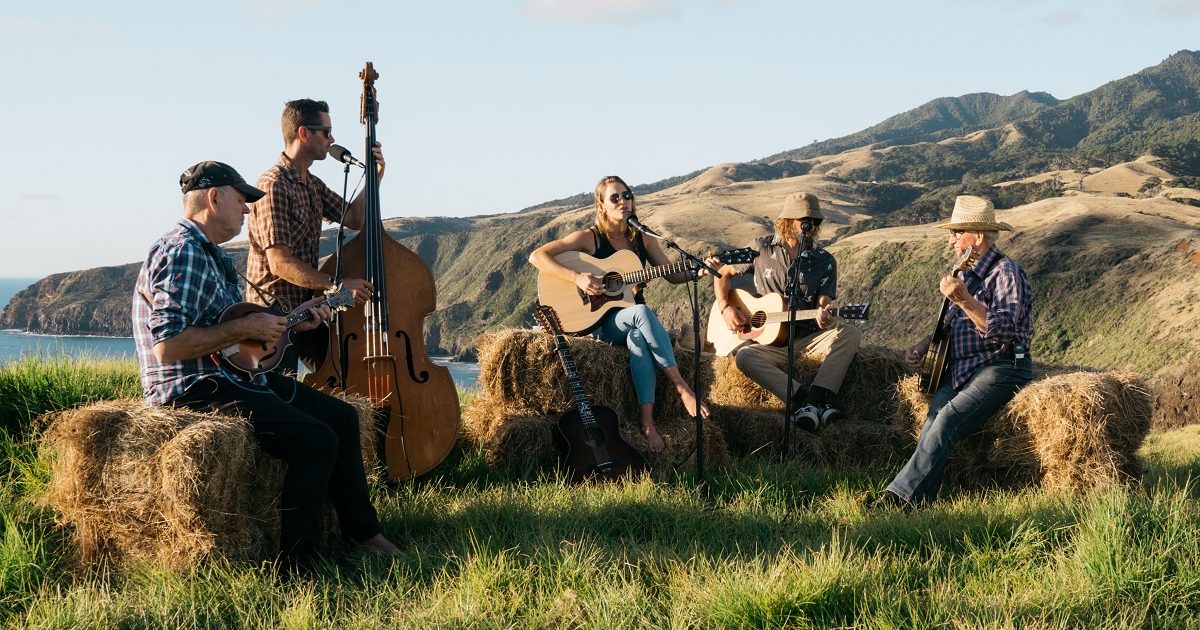
In Their Words: “I spent most of last year making my sophomore album in New Zealand. While there, I was fortunate enough to meet The Trenwiths, a Kiwi bluegrass band, who became great collaborators and even better friends. Before I returned to America this spring, we set up a bunch of hay bales and recording equipment on a friend’s farm in Raglan, New Zealand, to capture us jamming on some of our favorite country/bluegrass classics and a few originals. The Raglan Sessions is the result. I have always loved the song ‘If I Needed You.’ Emmylou Harris is one of my favorite country voices, so I gravitate towards her and Don Williams’ duet version. Keith Pereira, a NZ country singer-songwriter, is also featured in this particular performance.” — Caroline Jones
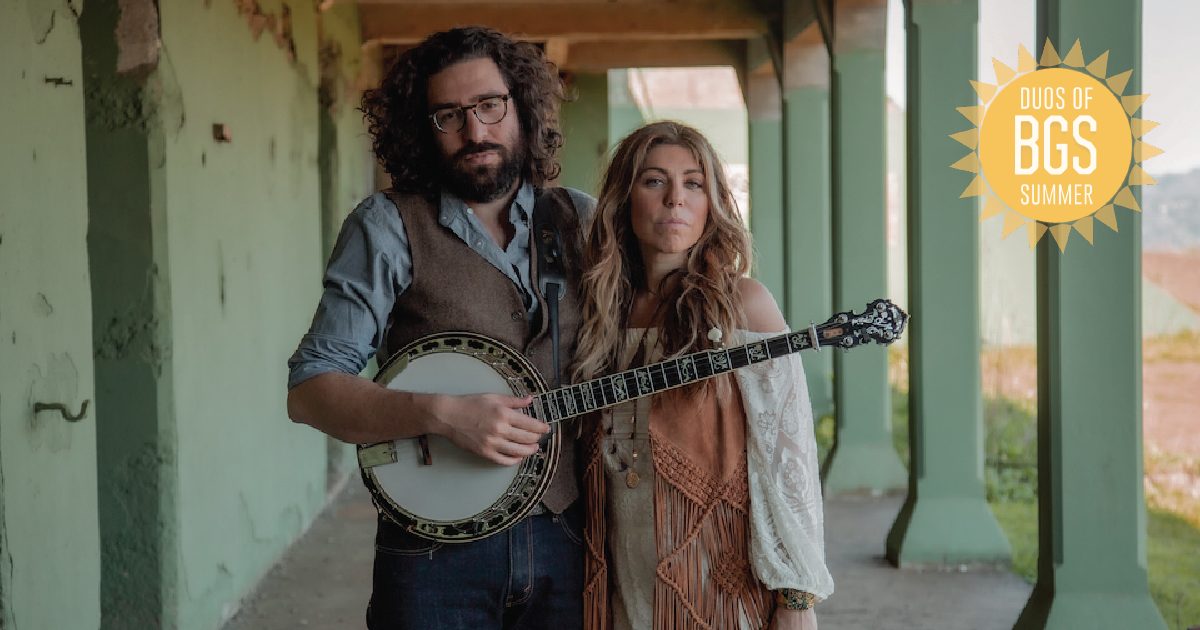
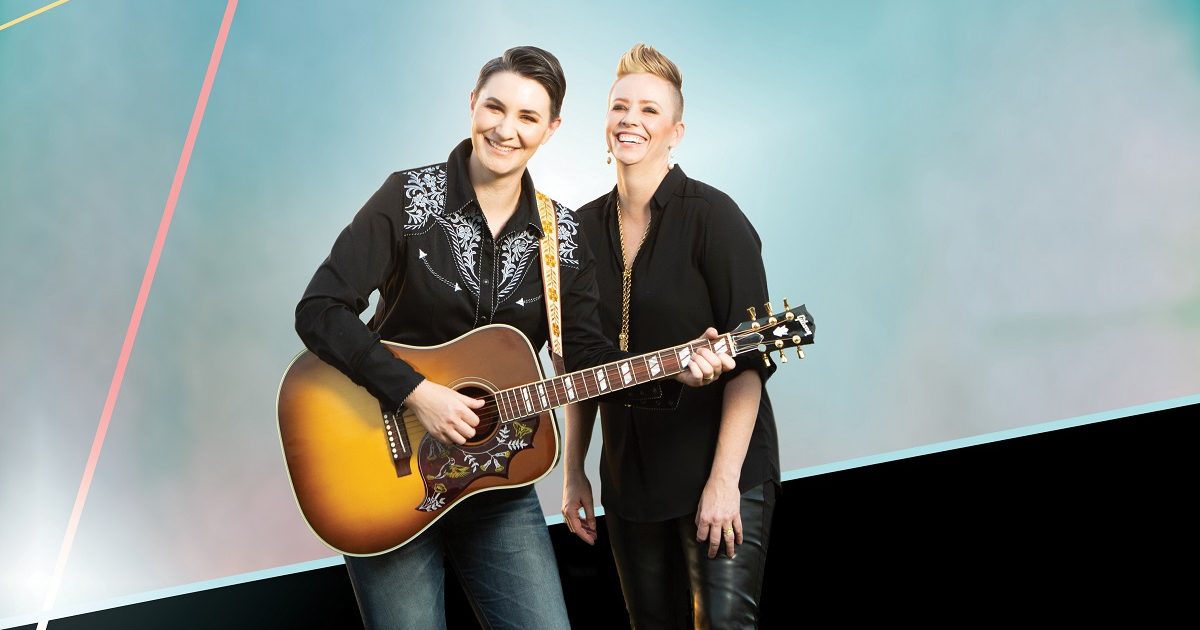
Artist:Nefesh Mountain (Eric Lindberg and Doni Zasloff) Hometown: Brooklyn, New York City (born & raised); Montclair, New Jersey (current locale) Latest Album:Songs for the Sparrows
If you had to write a mission statement for your career, what would it be?
As a musician, there are times when you have to sit and write, practice and create music — this process can be so inward, so solitary and alone. But these quieter moments are also filled with their own kind of magic, the kind that personally sustains you and over time hopefully also helps define you as an artist. There are other times when you find yourself in this great shared musical community with friends, bandmates, mentors, and of course audiences and fans. In these moments, we get to experience it all together as a community. I love all of it, and this crazy cycle that we go through as artists — it’s a great question, the mission statement. And while we’ve never really thought of our career having a “mission” exactly, there is a word that comes to mind that for me applies to all aspects of our musical life, and that is inspiration. Doni and I both want to inspire new thought and ideas with our music, and hope that through song we’re able to depict a better world than the one we see sometimes these days. But inspiration also flows in all directions, and we can feel it from an audience just as easily as they can feel it from us, which is such an encouraging thought. Ultimately for me, I think it’s the drive to inspire and be inspired that fuels a song, improvisation, lyric, or melody, and I’d consider us so lucky just to continue to keep receiving, and giving inspiration back and forth throughout our career… I guess you could say invent, inspire, repeat! — Eric Lindberg
Which artist has influenced you the most … and how?
For me it’s sometimes hard to separate music from life, and vice versa — and when asked this question, I always seem to come back to the artists that’ve shaped me over the years, especially at pivotal moments in my life. As a child, I remember being obsessed with the songs on “Free To Be You And Me.” The songs, messages, and humor on this album opened up a whole new world of inspiration for me at the time. We still listen to it with our kids today! Being a strong woman in the musical world is something that is just so important to me, and in part this is thanks to my next phase of musical influences: Joni Mitchell, Carole King, Carly Simon, Dolly Parton, Emmylou Harris, and Joan Baez. For me, I came to a lot of bluegrass and old-time musical forms by way of these artists, tracing backwards from them and finding this amazing and wide world of Americana music like the Carter Family, Ola Belle Reed, Doc Watson, and so many others. Today, I’m also beyond proud that both my and Eric’s biggest bluegrass influences have become dear friends and collaborators on our albums: Jerry Douglas, Sam Bush, John Doyle, Bryan Sutton, David Grier, and Mark Schatz among others, have all had such a deep influence on our music, and we’re so grateful for it. — Doni Zasloff
This is such a hard one. There are so many people who have been heroes and “north stars” in my musical life over the years, yet there are two names that always seem to jump to mind when I get asked this question: Pat Metheny and Béla Fleck. I think that I’ve always been drawn to artists who are able to portray their own world on their own terms, and Pat and Béla have done this time and time again, not only defining their sound as composers and improvisers, but all while truly pushing the boundaries of their instruments as well — guitar and banjo, respectively. I also learned early on through them, as well as others like Miles Davis, Bill Monroe, Bill Frisell and more, the importance of composing your own music, and that has been a huge influence on me as it relates to Nefesh Mountain. When I think of Pat and Béla’s music, I actually think of their compositions first. Pat’s “Question and Answer,” “Bright Size Life,” “Farmer’s Trust,” “Letter From Home,” “Last Train Home” and Béla’s “Spanish Point,” “Whitewater,” “Big Country,” “See Rock City,” “Up and Running” to name a few, have all been huge inspirations for me. I’ve learned so much from listening to these two over the years, and not all of it has been exactly music-related. They both always seem to take risks, break rules, and push forward with an inner drive that is just so inspiring to me, and they’ve help pave this musical road out there for other folks, like us perhaps, who also want to build their own world and story on their own terms. — EL
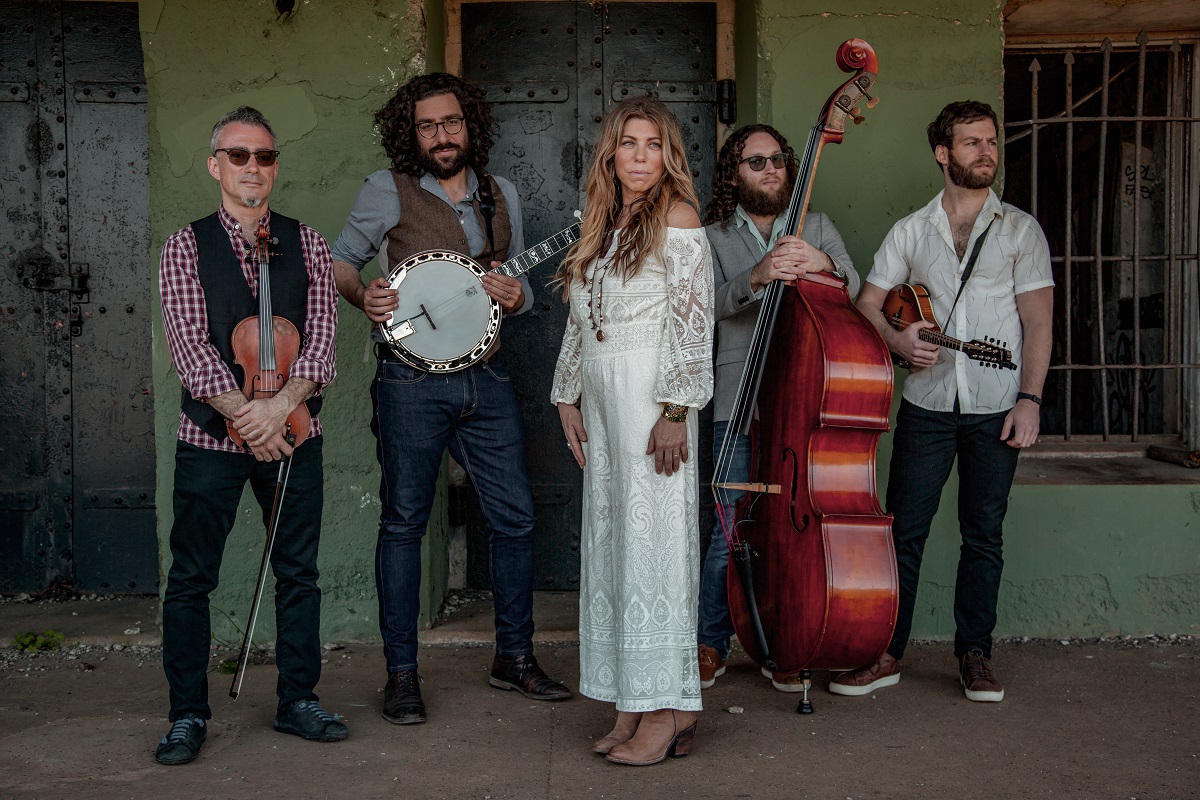
(L-R): Alan Grubner, Eric Lindberg, Doni Zasloff, Max Johnson, David Goldenberg
What’s your favorite memory from being on stage?
We’ve had so many incredible moments over the years, and one that always comes to mind for me was a number of years back at one of our first IBMA Wide Open Bluegrass festivals in Raleigh, NC. Our music, especially in a more traditionally bluegrass environment like IBMA, can be a bit different, to say the least. We were playing the 5:00 pm spot at the Capitol Stage, right in the center of the city, about to play a set that we knew had a few songs with Hebrew in them. I remember standing backstage looking out at a few thousand people at least, and just being terrified, scared that we would not be accepted for who we are. If you’ve never been, Wide Open Bluegrass is kind of a festival meets street fair. There are no tickets, and for these few days, about a million or so people in Raleigh come out to see some of the best bluegrass music around. So I’m looking out at this crowd that is growing by the second — and in my mind just assumed that they would all leave once they heard a lyric in Hebrew. But in the blink of an eye, I feel Eric come up next to me, grab my hand, and whisk me onto the stage — and less than 60 seconds later we were into our first song. I can barely remember any of the music from that particular performance, but what I do remember are the faces in the crowd… the smiles, the applause, the tears, the joy, the hope, and the rapidly growing numbers of people! When we got to our last song the crowd had more than tripled in size and we received our first standing ovation from the city of Raleigh, NC. It was a show and feeling I’d never forget. Of course, we’d played countless shows before and after that one, but there was a different sense of unknowing that day, of a deeper unknown, and felt like a trust fall between us and all the folks in that crowd who overwhelmingly all reached and caught us! – DZ
What other art forms — literature, film, dance, painting, etc — inform your music?
I think about this a lot, actually. I’m always curious about this connection between music, film, dance, literature and sometimes art as well — that all of it takes place, unfolds, and exists over time. A song, album, TV show, movie or book all have a specific and unique length, and I love that it’s our job as creators to ultimately tell a story within the parameters of our own medium. Our newest album, Songs for the Sparrows, is for me our most “cinematic” yet, in that we really wanted the album as a whole to take on the dramatic flow and characteristics of a film. We took a lot of time to write themes and motifs for this album, both melodically and lyrically, that would weave in and out of the songs. For us, these are our “characters” — the different voices and melodies that make appearances throughout. We also wanted a clear and definite beginning, middle, and end to the album, but overall really wanted it to feel like one story and one experience. I think the most exciting part of attempting to make music in this “cinematic” way is that it forces me to think more visually about the songs… to really focus on the images that we’re striving to create with all these beautiful acoustic instruments. There is a piece on the record called “Suite for a Golden Butterfly,” and for this one, Doni and I actually sat down and wrote out a detailed narrative before even a note of music was written. The music to all five movements came from this story that we wrote together about a Jewish family from Eastern Europe who flees to America to escape the Nazis, and for us it was such an exciting way to collaborate — each putting our own visuals, thoughts, and ideas into the music. — EL
Which elements of nature do you spend the most time with and how do those impact your work?
The natural world has had a profound influence on our music and lyrics over the years, and as songwriters and composers, we are always looking for ways to convey feelings, stories, and emotions that will resonate, both with ourselves and the listener. We all in one way or another have such a strong relationship with the world around us, and we often lean on this shared “common ground” in our songs, and really love telling our story through the lens of these universal images of rivers, canyons, forests, fields, and of course mountains! One of the great gifts of being a touring musician is having the chance to see the world. When I sit at home at my desk to write or compose a new piece, my mind will often wander on its own, referencing images of the mountains of Colorado, the coasts of Maine, the California sun, the peaks in Switzerland, the hills and valleys in Ireland. It’s a bit abstract and hard to measure, but for me, these elements of nature and personal memories come out in our work all the time — sometimes in an intended lyric or melody, and sometimes in just a few notes of an improvised solo. — EL
We’re always looking for connections in our music… ways of telling our story and how we see the world while bridging bluegrass music with our heritage as Jewish Americans. One common thread that beautifully runs through Americana music and Jewish tradition is the undeniable reverence shown for our natural world, and that connection is so encouraging for me! We so often only look at our differences these days — our backgrounds, skin color, religion, gender, or even musical genre — but over the years of traveling and making music, I’ve found that we can just as easily look at all the things that connect us, that we have in common. Strangely enough, it’s a choice that we can make every day, and it gives me comfort to know that despite our differences we’re all “Somewhere on This Mountain” all at once, all looking up at the same trees, clouds, and sky every day. — DZ
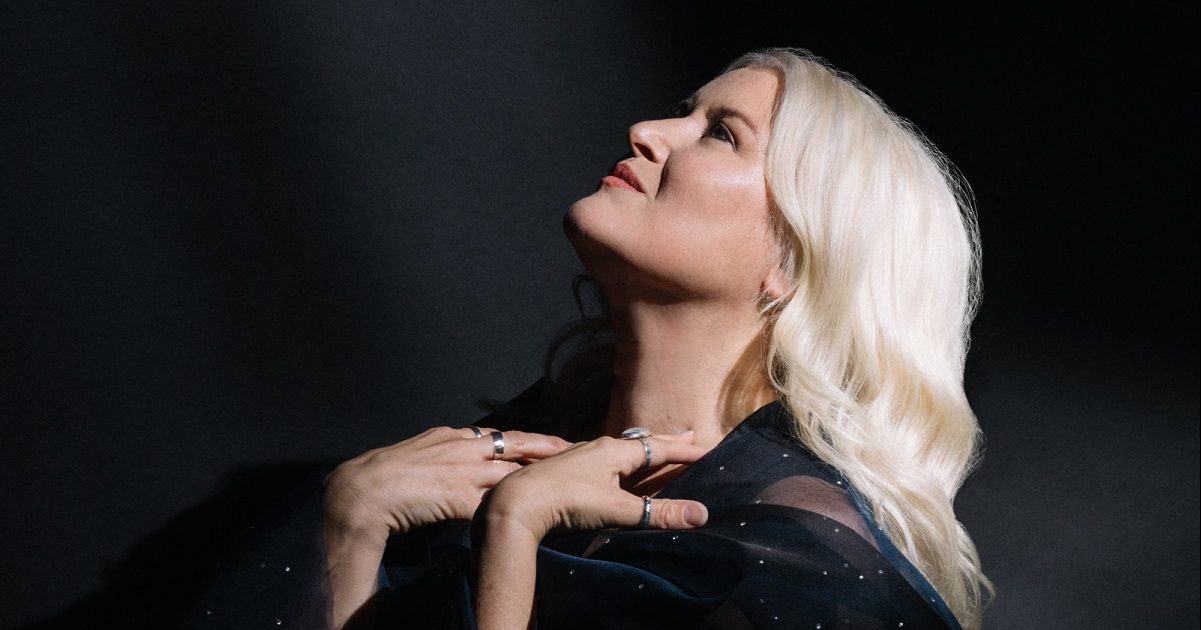
Paula Cole has long explored the musical territories that inform her work, making it nearly impossible to define her. Singer-songwriter? Yes. Pop star? Yes. Interpreter of jazz standards? Yes. She’s collaborated with country legends, toured with internationally acclaimed artists, and occasionally dropped completely out of sight. Because she’s so hard to pin down creatively, Cole has managed to transcend her commercial zenith of the ’90s, when songs like “Where Have All the Cowboys Gone” and “I Don’t Want to Wait” were inescapable.
Twenty-five years later, Cole is in the spotlight again with American Quilt, which sets her impressive vocal range to standards like “Bye Bye Blackbird” and “You Don’t Know What Love Is.” It isn’t quite a jazz album, and although her writing skills are on display in “Steal Away/Hidden in Plain Sight,” it isn’t quite a folk record either. Instead it’s a reflection of the influences that shaped her musical direction early on.
“Even when I explore jazz, I like it to be a little more raggedy and raw and rootsy,” she says. “I just wanted the album to reflect all that I am, and I realized, gosh, all of these songs are different from another. How do I unify it? That’s when I remembered my mom, who is a visual artist and she’s a quilter. And I realized that the quilt is the perfect metaphor for the album, that they’re all patches of an American quilt. That’s how the title was born.”
The metaphor works for the spectrum of songs on the album, yet it’s also appropriate for the warmth and comfort it provides. Some songs are more familiar than others – and her rendition of “Shenandoah” is particularly exquisite – but it’s an album best enjoyed as a whole. By dismissing the expectations of how long a song should be, and by showing reverence without replicating what everybody else has already done, Cole has produced a sweeping and immersive listening experience. She called in to BGS from the music room in her Massachusetts home, with a photo of Dolly Parton smiling over her shoulder.
BGS: Your version of “Wayfaring Stranger” is beautiful. What made you want to record it for this album?
Paula Cole: I learned of it through listening to Emmylou Harris, and loving and adoring her. Her Roses in the Snow album was really important to me developmentally. We were on Lilith Fair together in the ‘90s and would sing on each other’s sets. And I’ve been on a few benefit concerts that she’s asked me to play. I love her so dearly. I think she’s an important American voice and we should all be talking about her much more. She kind of saves music because she brings it back to the traditional aspect of it. She keeps us whole and she keeps us real by bringing integrity back to the music.
The song came to me very intuitively and I thought, “A ha!” I can reveal some of my influences and also bow to someone who was important to me. Also I was so fed up and traumatized by the music business and it was Emmylou who told me, “Don’t quit.” You know, I took a seven-and-a-half year hiatus and thought about leaving the music business, but she was the one who said, “Hang in there.” It just happened too fast. She had this motherly wisdom for me and it made sense, and I’ve thought of her so much over my life. I love her very much.
Roses in the Snow is a familiar bluegrass album for a lot of our readers. Are you a bluegrass fan?
I just love music. So, if you asked me, “Do you like jazz?” I would say, “I love music.” [Laughs] My dad played bass in a polka band on weekends when I was little, then he would go home and play Duke Ellington on the piano or he would play obscure folk songs on banjo in my house growing up. It was always a mixture. I love all music. I love bluegrass. I love acoustic music. I love music where musicians are playing real instruments, so that’s one defining factor to me — real instruments! I’ve been touring with upright bass now for several years and I can’t go back.
Did your dad teach you how to play banjo?
No, darn it! [Laughs] I guess I could have picked it up. I mean, he played everything. He could do hambone and play nose flute and upright bass and guitar and banjo and piano. Just really a renaissance man. He exposed me to all music and there were no classifications. That was something more that non-musicians did. Musicians would fluidly move from music to music and just find the joy in all of it. He taught me that.
When I was listening to “Nobody Knows You (When You’re Down and Out),” I was curious, does that mirror your own experience to some degree? Like, you’re living the good life as a millionaire, then you find that your friends vanish when the circumstances change.
Oh sure, I’ve known that. False friends, false fans, false everybody comes to you when you’re successful. They’re flattering and they’re obsequious. They have ulterior motives, so it’s hard, and of course I’ve experienced that because I’ve been up and down and side to side…. [Laughs] All over the business! And I wanted to come back home and have a personal life and have truth and family and let the trappings fall, and to be honest.
So, I chose to walk away in a sense from that shiny pop world because it wasn’t me. I was introverted and shy. I didn’t feel like this big pop star. I was very much a musician of integrity that wanted to have a long career and a rich catalog. I had to walk away to reset and reinvent myself. So, yes, of course I relate to that song. Also I relate to Bessie Smith, and so many fantastic singers are coming from the river of Bessie Smith. You hear Billie Holiday and Janis Joplin — Bessie Smith was their favorite singer. She combines all of that beautiful roots music. And the songs from the Prohibition era speak to me, those hard times, they speak to me.
Sometimes I will ask musicians about their first guitar, but for you, I’m wondering, do you remember your first piano?
Yeah, I remember the first piano, oh my gosh. It was covered in chipped, baby blue paint. I grew up in Rockport, Massachusetts, and my dad was a teacher at a state college, and we did not have much money. I wore hand-me-downs and we got things at Goodwill. In New England — freezing cold New England — we would really skimp on the heat to save money, and they put the piano in what they called the cold room. It was like a mud room. You walk into that room and take off your coat, and the piano was in the back. And it was cold! It was cold-ass cold! And there’s my first piano.
I was quite dedicated to music, to be playing in a freezing cold room in New England. Literally, we had some fish at one point and they froze! That’s how cold our house was. We had a potbelly stove and it was just hard. We were looking for ways to save money. It wasn’t always that hard. My dad ended up changing jobs and doing better, but my childhood was formative for me. I started working at a really young age. I was waitressing at 14 and I’ve always worked. It’s not nice, struggling like that, but that piano is indelibly etched in my mind with the back of the cold room. The chipped blue piano, out of tune! [Laughs]
Did you grow up with a lot of songbooks around?
Yes, and one of my missions while my father is still alive on the planet is to comb through his fake books and real books, especially of his folk standards. He has some really interesting, cryptic and eclectic, folk books that I would love to go through. That’s on one of my do lists of life.
To me, “Good Morning Heartache” sounds like it could be a sad country song, but it was made famous by jazz singers. How did you learn that one?
It’s in the real book of standards. Those books were around, and I have a real book of standards on my piano now. Even when I was touring, or had hits, or didn’t have hits, or mothering and not being in music, I would go back to the real book just for comfort and learning. I’d let my hands go on the piano and the shapes of the chords and learn songs. I first learned “Good Morning Heartache” by reading it out of a book but then I heard Billie Holiday and even modern singers do it. A lot of people have done it. But I love it because it feels to me like one of those songs that crosses genre, just like you said. It feels to me like it could be a jazz ballad, a country ballad, a soul ballad – and often it’s recorded by R&B singers. I love that it’s universal, and I love sad music. I’m not very good at happy music. [Laughs]
You close this album with “What a Wonderful World,” which offers a lovely and optimistic message. Was that an intentional decision for you to wrap up the album with that song?
Sequence is extremely important to me, so I probably spent at least a month listening to heads and tails of the songs, and all the different possibilities and combinations. And yes, it is the perfect punctuation of the journey of an album format. I love albums – I think in albums. I don’t think I’ll ever be a singles releaser. I’ll always be an album writer and album producer. I love the art of sequence.
Again, this is a song that transpires over genre and it appeals to all audiences. It unifies people. And it was written specifically for Louis Armstrong because he unified Black and white audiences. He was a genius if ever there were one. His ability to improvise within chord changes was profound. He was joyful and elevating. I play it in a somber way, and I hear sadness in my voice, and I think it’s melancholic and ironic in a way, but yeah, we must hold on to hope. We must hold on to that thread of hope for our children and our grandchildren to make this world better.
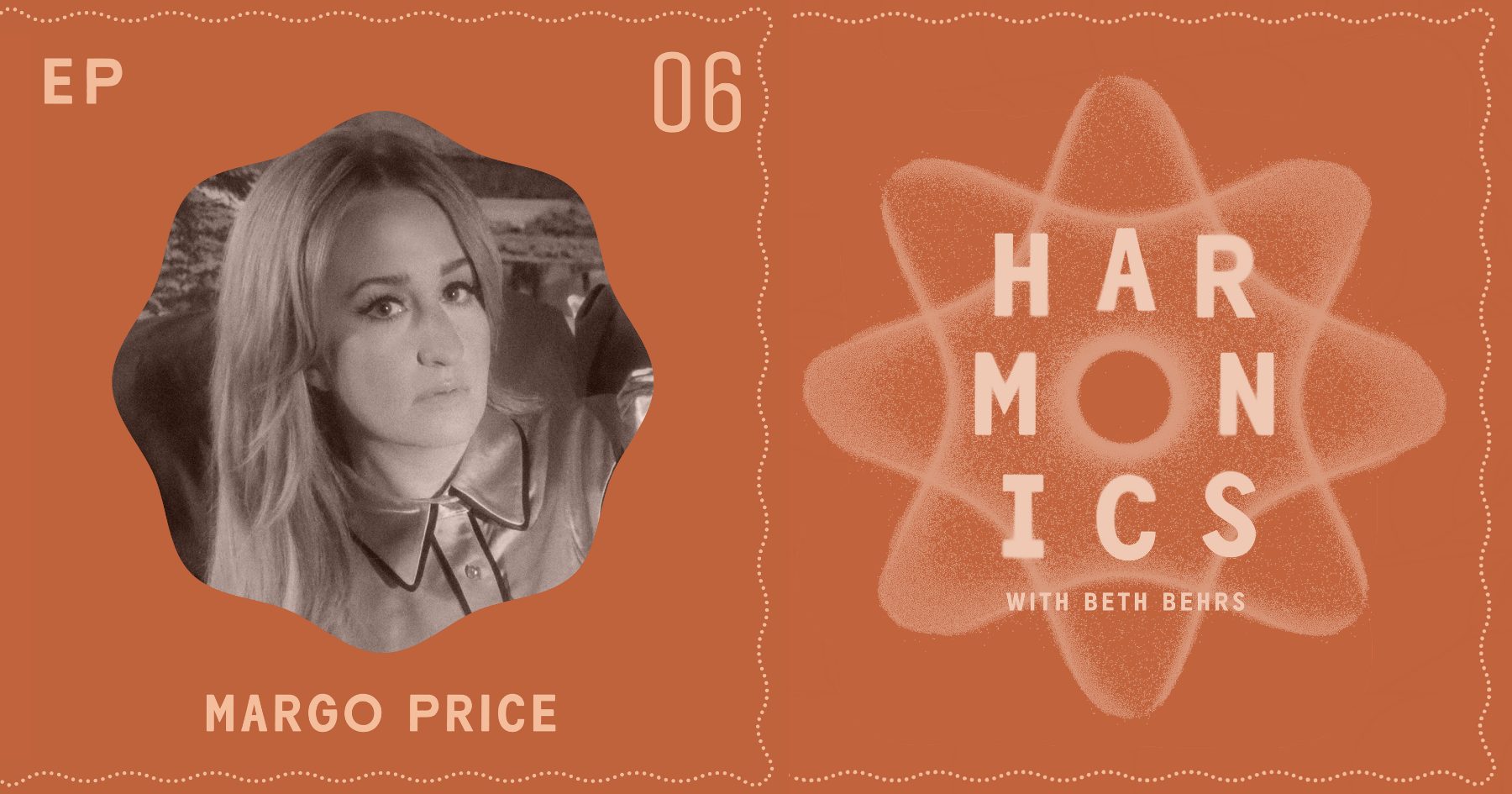
It’s Americana April here on Harmonics, and this week brings a conversation with one of host Beth Behr’s all-time favorite artists — Americana or otherwise — Nashville’s very own Margo Price.
This past year may have temporarily pulled Price off the never-ending road of touring, but that doesn’t mean the pace has slowed down; being a mother is a never-ending rush of another kind. She and Beth talk about this time spent at home, from spending time with her children and attempting to instill in them a respect for the earth and for others, to navigating the complexities of a songwriting relationship with her husband, singer-songwriter Jeremy Ivey.
Price also shares her feelings on becoming the first female artist on the board of Farm Aid (a full-circle, bittersweet moment after her family lost their farm when she was young,) the advice she’s gleaned from the greats like Willie Nelson and Emmylou Harris, working with longtime friend Sturgill Simpson as the producer on her latest album That’s How Rumors Get Started, and so much more.
Listen and subscribe to Harmonics through all podcast platforms and follow Harmonics and Beth Behrs on Instagram for series updates!
This episode of Harmonics is brought to you by BLUblox: blue light blocking glasses, backed by science. Reclaim your energy and block out the unhealthy effects of blue light on your mental and physical health. Take 15% off your order with code “HARMONICS”
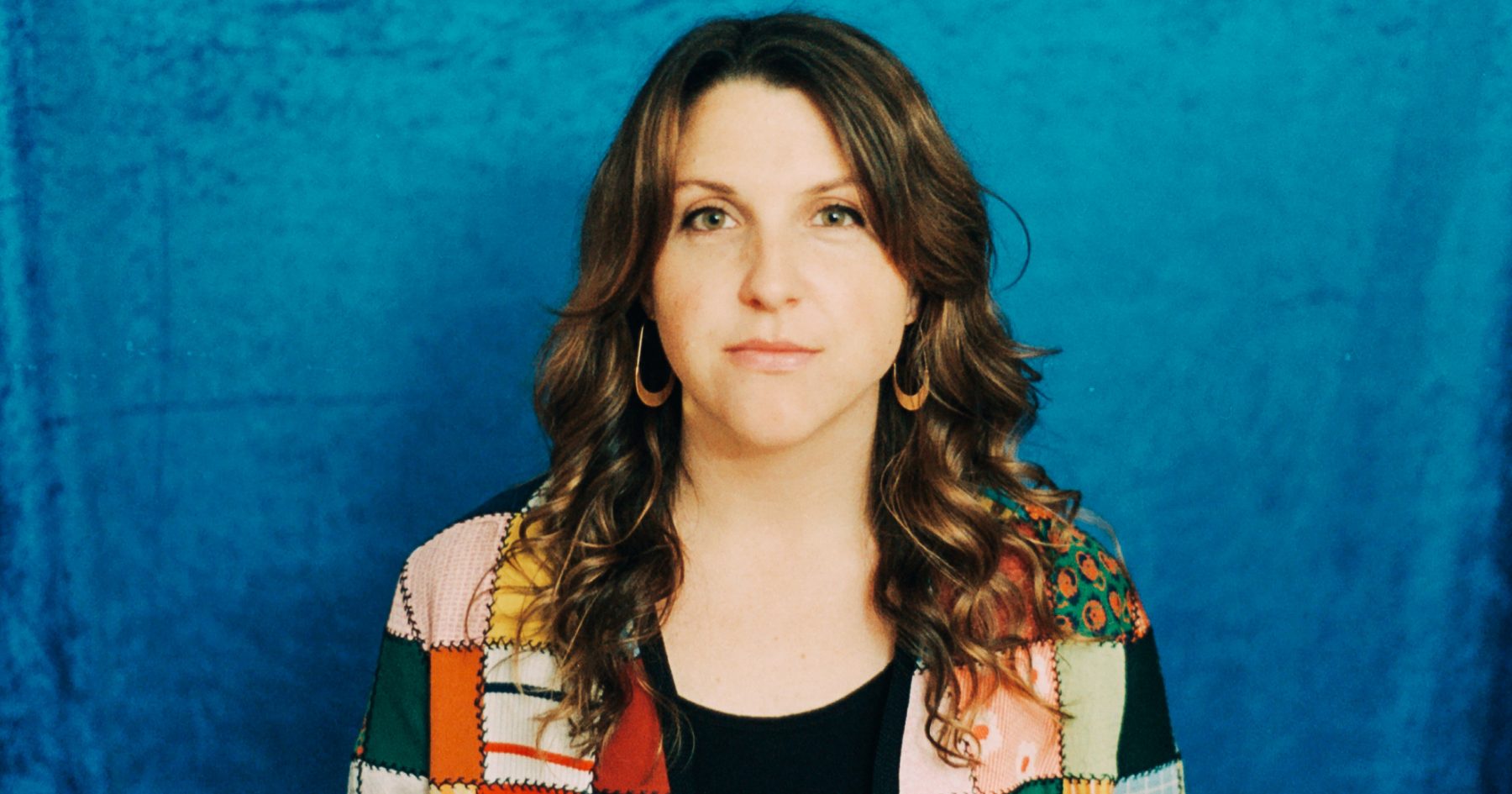
The Schinus molle — more commonly known as the California pepper tree — can grow up to 45 feet high and 50 feet wide, producing small yellow flowers and rose-colored berries, and bringing shade to everything within reach. For Nickel Creek originator Sara Watkins, the pepper tree brings about memories of family, youthful fun, and inspiration for her latest record, Under the Pepper Tree. Produced by Tyler Chester, the 15-song album is a personal project for Watkins, including songs from her own childhood alongside a few original compositions. Reuniting Nickel Creek, I’m With Her, and a range of guest performances, she tackles favorite songs such as “Pure Imagination” (from Willy Wonka and the Chocolate Factory) and “Blue Shadows on the Trail” (from The Three Amigos).
BGS caught up with Watkins from her California home to talk about the inspirations behind Under the Pepper Tree, and the experience of making a record like this during the COVID-19 pandemic.
BGS: Was the making of this album a different experience from those you’ve done in the past?
Watkins: Yeah, and not just because we did it during COVID. That was a huge appeal in working with Tyler Chester — he can play so many instruments so well. His musicality comes out on each instrument really well. Other than that, I knew early on that it would be necessary for the songs to weave together. As I was collecting these songs, realizing that so many of them are kind of dreamy and mellow, I wasn’t dealing with the typical balance of “up” songs, “down” songs, “sad” songs, “happy” songs, the way those things can affect the sequence of a normal album. Because of the nature of this material, a lot of the songs had a similar dreamy quality, so I thought by connecting them all, that would let the album kind of drift along, and hopefully sweep you up in a way that might not happen if they were all just 15 individual tracks.
Before going in to record the project, we did a bit of a practice swing, just to see how the sequence might work together. We made some changes to the sequence and adjusted the transitions accordingly, so that everything went together as well as possible. This is the first time I’ve sequenced an album before going in to record, and I really enjoyed the result and how it affected the process throughout. It’s definitely something I’m going to bring with me into my future projects, even if I don’t do it exactly the same way. I’m going to consider it very seriously before starting records.
How did getting to be home during the pandemic influence your day to day, and outlook on this album?
If affected it completely. I don’t think I would have made this record without the experience of just being home, and realizing that I needed some kind of rhythm, needed something that would tell me that today was passing. I’m new to being home, the way that all musicians are. That, combined with having a toddler now, was a new experience. The first couple years of being a mom I was on tour, and the rhythm of tour life is built into the work, the way that most people’s jobs provide a rhythm for their life. I think a lot of [musicians] were discovering that we needed to create those rhythms, by taking morning or evening walks around the neighborhood, by spending more time making meals or cooking, or doing whatever it is that helps cycle you in to the next part of the day.
I was digging through my old record collection, and I would listen to five a day, and decide whether or not I wanted to keep them or whether I was done with them. A big part of me creating Under the Pepper Tree with vinyl in mind was because of this wonderful freedom that it gave me to put on a record and not have to make a choice for a while. I could just listen to it and not have to worry what song came up in the algorithm next, or decide whether or not I wanted to skip ahead. That freedom of just making one choice and being able to go about the rest of the things that I needed to do, it felt really liberating, like a kindness that I could do to myself.
That also played into why I wanted to make this album with record listening in mind. It works great on digital too, but I imagined it being an A and B side. If you only listen to side A, you can get a full arc and it can send you into dreamland. And if you want to listen to it altogether, that’s another experience.
Like with Nickel Creek on “Blue Shadows on the Trail,” were any specific guests important to certain songs?
“Tumbling Tumbleweeds” with Aoife [O’Donovan] and [Sarah] Jarosz, my I’m With Her bandmates, was just as important, because I really wanted both of those bands on this record. I feel like this album in a lot of ways celebrates this time in my life, and the music that I grew up with. For me also, it was an incredible way to get those two bands together on an album, because they’re both so meaningful to me, and have played such huge roles in my life, and in my growth and development as a person, as a mom. So it was incredibly meaningful to get to have them on it.
All of the players on the record mean a lot to me, but I really also loved having Davíd Garza on this record, who is a dear friend. In particular, he plays this beautiful solo on “Moon River.” There’s a song on Emmylou Harris’ record Roses in the Snow when Willie Nelson comes in with a guitar solo, and then it sounds like he just goes away. When I first heard that record — I think it was in my early 20s — it was pretty informative to me about how a lot of times musicians can be known for one or two things, but they might not often get asked to just be a musician on somebody else’s record. I just love that [Harris] didn’t get Willie to sing on it, she got him to come in and play a guitar solo. That was really eye-opening for me, and changed the way I thought of playing with people.
On “Moon River,” I specifically had that moment in mind where Willie comes in and plays a solo and goes away, and so Davíd graciously agreed to be my Willie Nelson on this song, and he does a wonderful job.
Having a couple of original tunes on the record, what was your process behind writing something that incorporates naturally with these classic songs?
I felt like there should be a spot for fiddle on this record. I knew that I wanted to have an instrumental on here, and I knew that I wanted to write it. It was important to have a little break in the lyrics. It was great to expand my childhood story with the title of the [instrumental], “Under the Pepper Tree.” That has very personal weight to me. A lot of instrumental titles are pretty arbitrary in my experience, but this was an opportunity to share a little bit about my own childhood.
There’s a tree that I spent a lot of time growing up with, playing in and imagining in. There are several very important pepper trees in my life. One of them is at my aunt’s house, where my grandma used to live. There were two huge family reunions under that pepper tree. I just remember running around with my cousins, playing tag, listening to my aunt’s laugh, all that stuff. It’s a really beautiful thing, and I think that had a natural place on the album.
The other song [“Night Singing”] was a poem that I wrote, that eventually fell into a guitar part. Originally, I thought that this record would be a lullaby record, but my goal for the record changed. It was to make something a little more deeply transitional for people of all ages. But “Night Singing” is a true lullaby, for my daughter, for myself, and for my friends.
Do you have any specific plans you’re looking forward to taking on when we climb out of this pandemic?
This fall, my brother [Sean Watkins] and I are going to do some touring behind our Watkins Family Hour album brother sister, which came out a year ago now. We weren’t able to tour it, but a lot of the dates we had for last fall have been rescheduled for this fall, 2021. We have some dates on the books starting in August, which is kinda hard to believe! So this fall we’ll be able to do some in-person shows, and I’m really looking forward to it.
I feel very stopped up in terms of creativity, because we wrote the brother sister record, recorded it, and put it out, and haven’t really been able to celebrate it with an audience. Then I put together Under the Pepper Tree, recorded that, released it, and I haven’t been able to do shows for it. There’s been writing for other projects, but I honestly feel a little bit stopped up creatively. I think I just need to perform some of these songs, and get them out of my body, so that I can put more stuff in. As alienating as this whole thing has felt for us, and as isolating as it has been, there has been to some degree a shared experience, and the universality of that has been reassuring at times for me.
Sara and Sean Watkins, as Watkins Family Hour, are coming to Colorado in March 2022! Grab your tickets here.
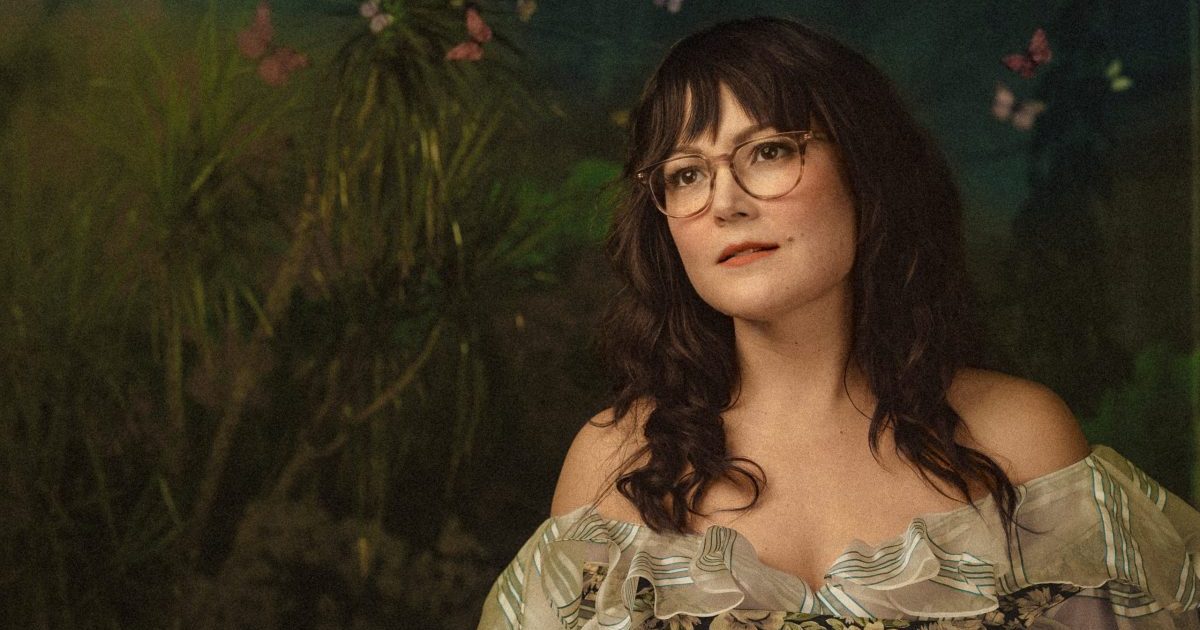
This week on The Show On The Road, we feature a conversation with an admired and sharp-witted singer-songwriter in the fertile Nashville Americana scene, Caroline Spence.
A sought-after lyricist who mines her own vulnerabilities and lovelorn past to tell delicately crafted story-songs, Caroline Spence’s voice seems to always hover angelically above the page, bringing to mind new-wave country pop heroine Alison Krauss or her vocal hero, Emmylou Harris.
Growing up in Charlottesville, VA daydreaming to Harris’ signature twangy honey-toned records like Wrecking Ball, Spence admittedly was a bit starstruck when the silver-maned lady herself came on board to sing harmonies on the title track of Spence’s newest LP, Mint Condition. It quickly became a critic’s darling and an Americana radio staple nationwide.
As a conversationalist, she usually leads with cheerful southern modesty, but beginning with her 2015 debut, Somehow, Spence wasn’t afraid to push at country music’s guy-centric boundaries. She brought aboard a talented group of genre-defining collaborators like blue-eyed soul hero Anderson East and pop-folk favorite Erin Rae to give the songs new heft. Her follow-up Spades And Roses brought more lush atmospherics to her yearning acoustic stories, elevating the clear-eyed feminine power behind emotive songs like “Heart Of Somebody.”
While Spence will tell you she is just furthering the empowered spirit of roots songwriter pioneers who came before her, during this time of high anxiety, her deeply felt love songs like “Sit Here and Love Me” and “Slow Dancer” seem especially fitting, touching on her bouts of depression and her inability to connect with the ones who are trying to help her through.
Sometimes sad songs truly do make people happy, and if you’re feeling a bit low, maybe pop on her newest single “The Choir,” about finding your people when you need them most.
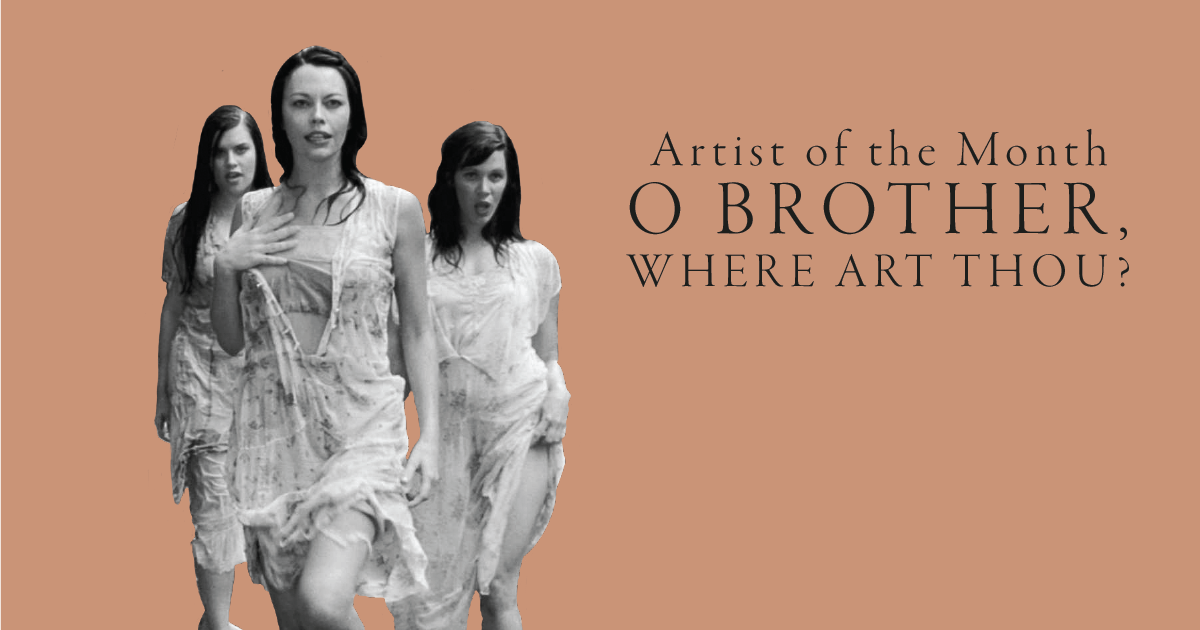
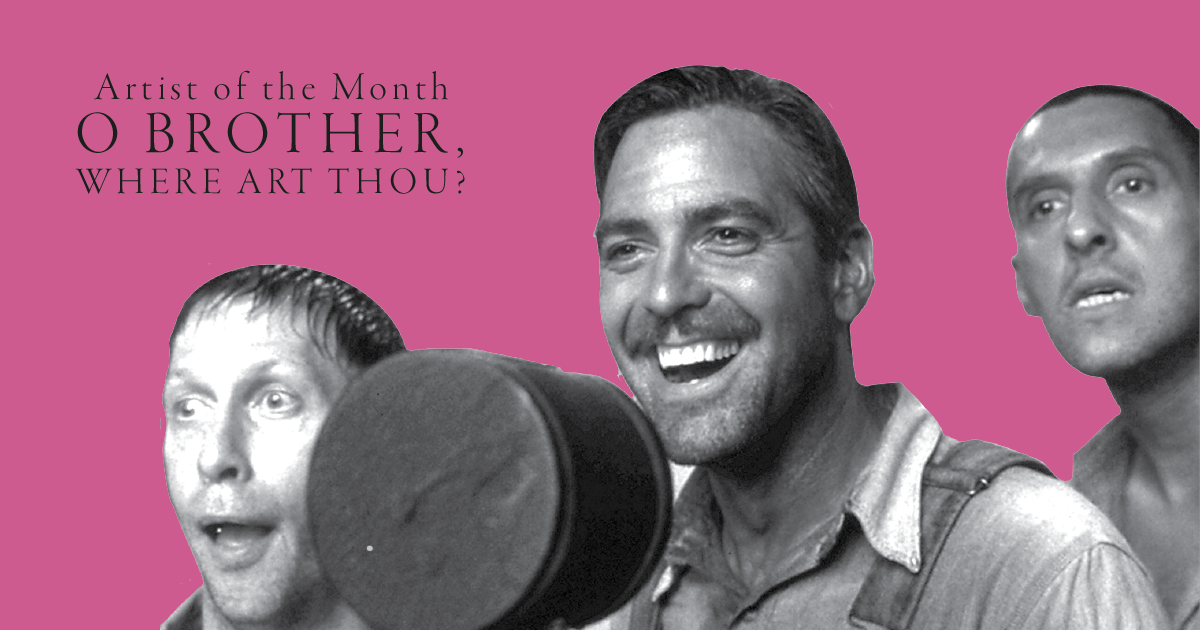
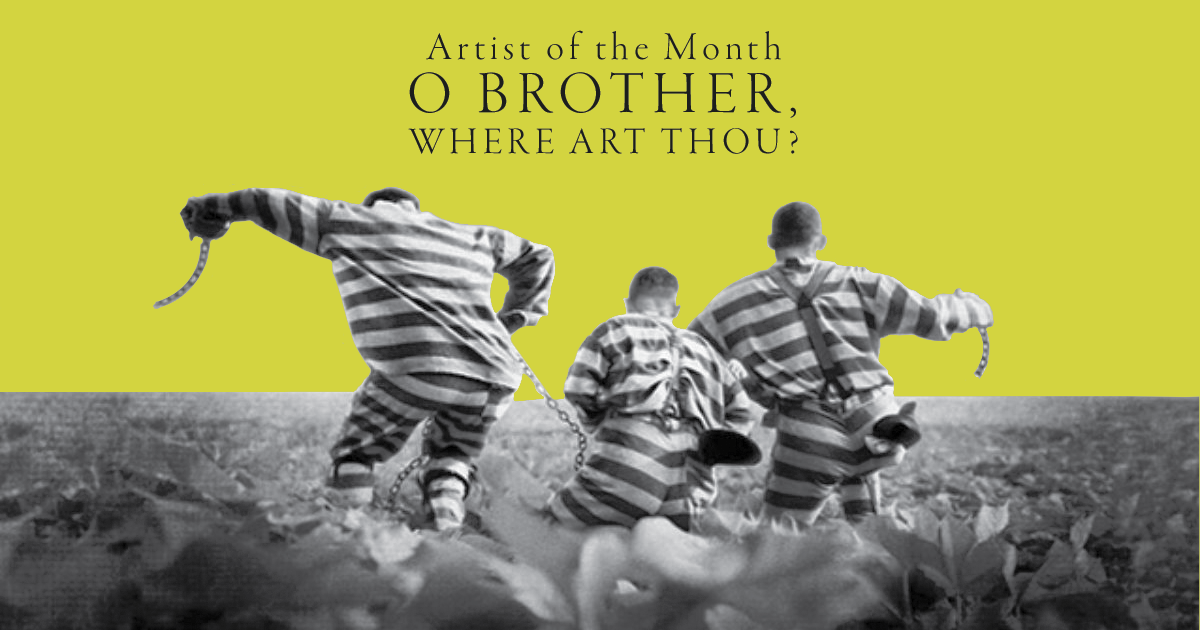
The soundtrack to O Brother Where Art Thou? was a phenomenon in the early 2000s, turning bluegrass musicians into superstars and creating an instant mainstream market for old-time music — from folk to gospel to children’s songs to prison chants to blues and everything in between. To celebrate the twentieth anniversary of its astonishing success and to wrap up our Artist of the Month series, we spoke to several musicians about the impact O Brother and its subsequent tours had on their lives and livelihoods.
Sierra Hull: “I grew up in a little town with maybe 900 people, and there used to be a poster section at the Walmart the next town over. You could flip through the posters and there would be pop stars like Britney Spears and Backstreet Boys. I was always convinced that one day I would find an Alison Krauss poster in there. She was as popular in my little kid brain as Britney Spears. So it was cool when O Brother came out and elevated some of those people who were already giants to me, like Alison and Dan Tyminski and Ralph Stanley.
“I was already playing, but I was too young to be touring yet. By the time Cold Mountain came out [in 2003], I was part of that tour. Alison was part of both soundtracks, and she invited my brother and me to go on that tour. So we got to help celebrate that second wave. I was 12, and it was really the first time for me to be out on tour, travel to so many different places, and play Red Rocks and the Beacon Theater in New York. Standing at the side of the stage and listening to Alison sing to hundreds of people every night every night was one of my favorite memories.
“It was amazing to watch people go crazy over Ralph Stanley every night. He had this dazzled suit jacket that he wore every night. Sometimes he would sit his banjo down while his band played and take that jacket off and throw it to me at the side of the stage. I would get to wear that dazzled jacket at the end of the show when everybody came out on stage. It’s one of the most special musical experiences I’ve ever had.”
Sara Watkins: “O Brother was something we somehow became affiliated with. Nickel Creek had just released our band’s first record on Sugar Hill, after years of doing just little homemade projects. Alison Krauss produced it, which had been out maybe a year and a half when O Brother came out. She was a big part of that soundtrack, of course, so our band was gaining a little bit of notoriety. I remember reading a huge New York Times spread, and we were listed among the people on that scene. We were part of that conversation, despite not having been part of the soundtrack in any way. We were just at the right place at the right time, and the awareness of the bluegrass scene just exploded. We were able to reach a different level very quickly. It was a huge advantage to our career. We already had some momentum, but the soundtrack really put the wind in our sails.
“T Bone Burnett [who produced the album], one of his brilliant skills is finding the right people for the right song. He brought in some incredible musicians in a way that really showed the musicianship in our community and made everyone really proud of our scene. We saw our heroes up there, and it was gratifying to see them celebrated by a huge audience. I remember feeling a new respect for Ralph Stanley with that vocal [on ‘Oh Death’]. That actually turned me on to shape-note singing. Someone told me his delivery was reminiscent of those old communities that did shape-note singing and those old preachers who used to sing that way. I’d never heard anything like it. And to this day, whenever I see Dan Tyminski, I make a point to stick around until he plays ‘Man of Constant Sorrow.’ No way I’m leaving before then.”
Dave Wilson (Chatham County Line): “I remember going with our old bass player to see O Brother in the theater. We snuck a bottle of whiskey in and sat in the back row and just laughed and drank. I remember thinking, ‘Bluegrass has arrived!’ We were already a band and playing small gigs around town, but we weren’t at a place where we had dedicated our lives to it. So it was kismet for us. That record came out, and the scene just exploded. Suddenly we had this huge advertisement out there in the world for the style of music we were playing. We definitely noticed a change. There were more strangers coming to see us play gigs, and they were really excited about it. One side effect was people would yell out for us to play ‘Man of Constant Sorrow.’ They did it enough to make me wonder if they had heard the soundtrack or just seen the movie. But we never played it. We didn’t know how! It would have probably shut them up if we had!
“I really got into the record. There are some badass arrangements on there. And it’s not corny. It’s not super traditional. I love that they reached out to the right people. It could have been bad. They could have gotten Toby Keith or someone like that. Oh god, I don’t even want to think about that! One of my favorite parts is that blues song by Chris Thomas King [a cover of Skip James’ ‘Hard Time Killing Floor’]. It makes for such a special moment. Later, they booked that concert film [Down from the Mountain, recorded at the Ryman Auditorium] at our old classic movie theater here in town, and I remember the boys going to see it and we were all just floored. That was almost bigger than the movie as far as having an impact in the folk music scene.”
Sam Amidon: “People in the folk world can be very protective of the music, which I think is valid. But my inclination is that if I find something I’m excited about, I want to share it. I want people to know about it. To have grown up in a world knowing a lot of the corners O Brother explores, it was beautiful to think about how many people all of a sudden were going to discover these field recordings and these great musicians. And I was thankful because until then, portrayals of traditional music in the mass media had just been so bad and so clichéd or so simplistic. Nothing had depicted this stuff on this scale before. Before then, if you told somebody you played banjo, they would think Deliverance. That was their frame of reference.
“For O Brother to do it without messing it up was a miracle. To see these different corners of American music — beyond just blues and bluegrass as the two major industry terms — was a very positive thing, especially because ‘folk music’ can be such a heterogeneous category. Nobody would even really know what you were talking about if it wasn’t bluegrass or blues. O Brother pointed to all of these different areas. It’s singing games and banjo songs and all these different things. O Brother is weirdly inclusive. It cast a wide net. Nowadays it’s easy to go to the soundtrack and hear more problematic elements of the whole Americana genre thing, but I think it’s good to remember that when it first came along, it was much more nuanced compared to what had come before.”
Woody Platt (Steep Canyon Rangers): “It’s interesting that the twentieth anniversary of O Brother is fairly parallel to the twentieth anniversary of our band. We formed in Chapel Hill, North Carolina, when we were seniors in college, right when the movie came out. We all had been exposed to bluegrass and old-time just by being Carolinians. We all had that music around when we were growing up, but none of us in the band really dove into it until we were in college. We’d only been following that music a few years when the movie came out. I’m not sure we were aware at the time of the impact that the movie and the tour had on bluegrass, old-time, string band, mountain music, but we could feel some excitement when we were playing bars on Franklin Street, which is the main drag in Chapel Hill. But we didn’t really have anything to compare it to. There was no before or after. It was just what we were doing, and that’s all we knew.
“I really enjoyed the movie, but I was a big fan of the album. Hearing Ralph Stanley’s voice in a film, or Dan Tyminski’s, or just seeing people I admired in that movie was pretty incredible. Looking back on it, it was good timing for us to be getting off the ground, and we were having so much fun and finding so much joy in it. The music we were playing had been a small niche, but all of a sudden it had this national interest. I have no doubt in my mind that the awareness of the music was fueled by the movie. It’s a fascinating phenomenon to think about, because it wasn’t marketed in any significant way. It just happened. It was just this thing where people were suddenly into this music.”
Molly Tuttle: “The movie came out when I was seven years old, and I remember my dad showing it to me when I was in grade school. I loved it, and the music really stuck with me because I already had an affinity for bluegrass and old-time music. Seeing it performed in a movie was new and exciting. My dad teaches bluegrass for a living, and when the movie came out, he had an influx of new students.
“It’s had a lasting impact on the popularity of bluegrass music. But I was so young that I didn’t know many of the musicians on the soundtrack by name, so it introduced me to a lot of artists who later became my favorites. And the Down from the Mountain documentary further familiarized me with people like Emmylou Harris and Alison Krauss. Many of those artists, like Gillian Welch and John Hartford, have been big influences on me, and that was my introduction to their music. I’ve performed ‘I’ll Fly Away’ and ‘Angel Band’ a number of times, and I got to do ‘Man of Constant Sorrow’ with Dan Tyminski at the IBMA awards one year.”
Dom Flemons: “I actually saw Ralph Stanley on the O Brother tour in Flagstaff, Arizona, in the year 2000. It was at this random high school. I saw the poster on a telephone pole when I was going to college there. I’d started playing the banjo by that point — six-string and four-string banjo, guitar, and harmonica. I remember the place was really packed out, and he gave this amazing performance. I just loved watching the man at work. When he sang ‘Oh Death,’ he pulled this piece of paper out of his pocket, put on his glasses, and made a joke about how old he was. And he just sang it off this piece of paper and blew our minds.
“O Brother was very interesting, and I think it’s still a milestone album for several generations. A lot of the old folks who played those old styles and sang those old songs were starting to pass away, so the soundtrack ended up being a perfect vehicle for getting younger people into the music of the ‘20s and ‘30s. It reminded people of the really good old recordings that were available. That’s where I went. I found the old RCA Victor and Columbia recordings, and that was it for me.
“It’s a perfectly structured record, opening with the prisoners on the chain gang and then it goes to that beautiful ‘Big Rock Candy Mountain.’ And then you get into “You Are My Sunshine” with Norman Blake, and then Chris Thomas King presenting ‘Hard Time Killing Floor.’ That in itself was a revival of Skip James. People talk about Ghost World and Devil Got My Woman, but I think O Brother got it going. People just started casually bringing those songs back in at shows and festivals, and it seemed like a lot more people knew them. Of course they would sing them like the recordings on O Brother. Those are just things I observed before I was a professional musician, and it was amazing to see.”
The O Brother, Where Art Thou? soundtrack, which was just starting to pick up momentum twenty years ago this winter, was both a forethought and an afterthought. The Coen Brothers had an idea for a film and even a title borrowed from Preston Sturges’ 1940 comedy, Sullivan’s Travels, but no screenplay. They commissioned T Bone Burnett to assemble a sprawling playlist of old-time music for them to use as writing prompts — original recordings from the first half of the twentieth century as well as new recordings of old songs. He gathered some of the finest vocalists and players, including Emmylou Harris, Gillian Welch, Alison Krauss, and members of Union Station, as well as Norman Blake, Sam Bush, and John Hartford. In various combinations they produced around sixty tracks covering hillbilly plaints, gospel numbers, Protestant hymns, children’s songs, labor songs, even prison songs.
From that pool the Coens selected a handful of tracks that served as the skeleton for their screenplay, which became a Deep South retelling of The Odyssey. As three yokel chain-gang fugitives wander the backwoods and cotton fields and gravel roads of Depression-era Mississippi, they inadvertently become country stars thanks to a hasty version of “Man of Constant Sorrow,” originally recorded in 1917 by Dick Burnett and re-recorded for the film by Dan Tyminski. Along the way they encounter a parade of white-clad Christians singing “Down to the River to Pray,” a blues singer who regales them with a campfire rendition of Skip James’ “Hard Time Killing Floor,” and a KKK klavern performing a Busby Berkley routine in white sheets and hoods.
Whittled down to eighteen tracks, the soundtrack hit stores just a few weeks before the film, and it seemed designed to stand alone as an upscale release. As Luke Lewis, formerly chairman/CEO of Universal Nashville, told Billboard in 2015: “When we were putting it together, a bunch of us said, ‘This is probably going to be a coffee table kind of a CD, where people will leave it around and be proud to have it.’ That turned out to be pretty much true… A lot of people that don’t buy records at all, or buy one a year, bought that record.”
Still, no one figured it would sell any more copies than your typical soundtrack, and certainly no one predicted it would so completely eclipse the film. Its success has been astounding: It has sold nearly 9 million copies, hung around the upper reaches of the Billboard Top 200 for several years, won the Grammy for Album of the Year (beating out Bob Dylan and Outkast, among others), spun off a sequel, inspired a series of tours and live albums, and redefined a massive market for traditional music in America.
Twenty years later, the gulf separating film and soundtrack remains remarkably wide. The former is glib to the point of nihilism, as though every line of dialogue and every camera angle is surrounded by quote marks. The soundtrack, by contrast, is sincere to the point of evangelism, as though these old songs were pieces of secular scripture. The music plays everything straight, while the film can’t keep a straight face. The soundtrack became a phenomenon, while the film sits in the lower tiers of its auteurs’ sprawling catalog.
Both are products of a very particular time: They were released during that short window between two defining events — the hand-wringing spectacle of Y2K and the horrific televised tragedy of 9/11. With the benefit of twenty years’ hindsight, they represent a pop-cultural pivot from the irony that defined the 1990s and much of the Coens’ output to the “New Sincerity” that defined the 2000s.
Why did this niche soundtrack become such a massive hit? Some have credited the popularity of O Brother to fin de siècle jitters and a desire to return to a rosier, more comfortable American past (never mind that the past, especially the 1930s, was never rosy or comfortable). Others have chalked it up to a rejection of the late ’90s pop music excess embodied by Britney Spears and the Backstreet Boys.
Perhaps the best reason for its success is also the most obvious: This is a good album, and an accessible one. It’s a well-curated tour through old-time music, a sampler of rural American traditions that serves as a primer on the subject without sounding like a textbook. All of these different styles are presented with an eloquence that is homespun yet modern: a balance that highlights rather than dampens their charms.
Burnett puts such an emphasis on the human voice that even the instrumental tracks sound a cappella. He wants you to hear the exquisite grain in the voices of Emmylou Harris, Gillian Welch, and Alison Krauss on “Didn’t Leave Nobody But the Baby” as well as the weight pressing on Chris Thomas King as he moans through “Hard Time Killing Floor.” Curiously, Dr. Ralph Stanley had to convince the producer to let him sing “Oh Death” without banjo, which was absolutely the right call. His voice is high and keening, a serious a death, shaken by the very subject he’s singing about.
If there’s a breakout song on O Brother — something resembling a hit — it was this very intense performance, which remains one of the finest renditions of this very odd and oft-covered song. Stanley was 73 years old when the album was released, had been playing since 1946, and was already celebrated as one of the fathers of bluegrass, but O Brother gave his career a considerable boost, introducing him to a significantly wider audience. (That said, it always struck me as deeply disrespectful that the Coens have a Klansman lip-synching Stanley’s performance in the film, as though they feared the words might actually mean something.)
Stanley performed the song a cappella at the 2002 Grammys — imagine anything a cappella at such a glitz-bound ceremony — not long before the soundtrack won Album of the Year. It might have been the climax of the soundtrack’s shelf life, but it kept selling and kept selling. It created an instant audience for old-time music, and upstart string-bands found themselves with readymade audiences, many of them shouting “Man of Constant Sorrow” the way they once might have yelled “Free Bird!” Every artist on the album got a boost, especially Alison Krauss & Union Station, who crossed over from bluegrass to pop and launched a series of hit records with the aptly titled New Favorite in August 2001. Similarly, Welch, Harris, and even Stanley enjoyed boosts in album and ticket sales in the wake of O Brother.
As with any sweeping change, there are new opportunities as well as new losses. The alt-country acts of the 1990s had already lost much of their luster, but roots suddenly had no room for punk anymore. Gone were the dark, twangy experiments like Daniel Lanois’s Americana trilogy — Harris’ Wrecking Ball in 1996, followed by Bob Dylan’s Time Out of Mind the next year and Willie Nelson’s Teatro the year after that. All three proved that roots music could accommodate new sounds, that it could look to the future without completely letting go of the past, and all three stand among the best entries in their artists’ remarkable catalogs.
But O Brother seemed to wipe most of those new avenues away, turning roots music into something largely acoustic, uniform, polite, conservative — beholden to the past and largely dismissive of the present. Watching certain acts riding that wave was like watching Civil War reenactors march on a makeshift battlefield, and ten years later groups like Mumford & Sons and the Lumineers were using roots music to sell arena-size sentiments.
Another aspect of old-time lost in the O Brother wave: politics. Previous folk revivals had a populist bent, extolling the music as the sound of the people and as an expression of a specifically American community. Woody Guthrie and Pete Seeger were branded subversives and communists, while Dylan and his early ‘60s cohort found radical possibilities in Harry Smith’s legendary Anthology of American Folk Music. But no one on O Brother is in any danger of being branded a pinko. The film itself nods to issues of race and class, but without really commenting on them in any serious or specific way. The soundtrack, by contrast, foregrounds songs about yearning, about breaking free of turmoil and hardship to find peace and contentment. Often that can be humorous, as on Harry McClintock’s fantastical “Big Rock Candy Mountain,” but more often it’s poignant, as on Krauss and Welch’s “I’ll Fly Away.” It’s a collection more concerned with needs of the spirit than of the flesh, so any earthly implications are largely ignored.
The roots market that sprang up in the soundtrack’s wake was consequently blanched of anything resembling social commentary, despite there being so much to comment on. That wave of bands might have provided a counterpart to the entrenched political conservatism that defined mainstream country music of the early 2000s, but instead it offered merely escapism.
A few artists did manage to question this rosy thinking about the past, in particular the Carolina Chocolate Drops. They traced strains of Black influence, craft, and contribution to old-time music, which is generally considered to be white, and therefore expanded its historical scope and current impact. As players, however, they injected their songs with no small amount of joy, as though taking great delight in what these old forms allowed them to express. The group’s three primary players — Dom Flemons, Rhiannon Giddens, and Justin Robinson — have carried that particular balance into their solo careers.
Any of the soundtrack’s shortcomings weren’t the fault of the musicians, who play and sing these songs much more beautifully and sympathetically than the film ever demanded. Nor is it the fault of the songs themselves, which obviously spoke to people as clearly in 2001 as they did in 1937. And it continues to speak loudly in 2021: The coffee table product wasn’t designed to bear the burden of the market it created, but the songs still inspire subsequent generations well into a new century, with its own tribulations and hardships.
Artist:Hardened and Tempered Hometown: Austin, Texas Latest album: Hold the Line Personal nicknames (or rejected band names): Less of a nickname than a consequence of a band name for a duo that uses the conjunction “and” is that we are often asked, “which one are you?”
Answers provided by Kristin Davidson
Which artist has influenced you the most … and how?
I was 12 when I discovered a mixtape of the Indigo Girls in my older sister’s room. Their songs captured my ears, mind, and heart, and remained constant company for me growing up. I think it was the first time I felt transformed and transported by music. But the pantheon of my musical influences is full of powerful writers, and I can pair just about every childhood memory with songs by Indigo Girls, Mary Chapin Carpenter, Nanci Griffith, Tracy Chapman, Lucinda Williams, Patty Griffin, Emmylou Harris, Dolly Parton, Patti Smith, and Ani DiFranco.
What other art forms — literature, film, dance, painting, etc. — inform your music?
I love street photography and am drawn to the captured moments that expose the illusion of anonymity — that split second of absurdity or loneliness on a crowded street. I enjoy the process of finding words and sounds for the images that evoke emotion.
What rituals do you have, either in the studio or before a show?
We love to laugh and try to bring a joyful lightness to the stage. We are big fans of Maria Bamford. In the second season of her show, Lady Dynamite, Ana Gasteyer’s character keeps shouting a particular line as a rallying cry that we think is hilarious. We usually say that line to each other, giggle, and then walk onto the stage.
If you had to write a mission statement for your career, what would it be?
Hard enough to hold an edge; soft enough not to break. The band name, Hardened and Tempered, sums up the dynamic and delicate balance we try to keep in our lives and our music. Both Carolyn and I have intense personalities, we are drawn to big adventures and hard challenges, and we work with a lot of suffering. Slowly but surely, we are learning the artful balance of easing up a little and looking for light in dark places.
Since food and music go so well together, what is your dream pairing of a meal and a musician?
I have dreamed about finding refuge from a cold, big city night in a basement bar room, only to discover Nina Simone playing an impromptu set on an intimate stage. I order my favorite bourbon, but don’t drink it. How could I?!
Twenty years ago, in 2001, the music of O Brother, Where Art Thou? captivated America and, suddenly, bluegrass appealed to pretty much everybody. We could all sing at least a few words of “I Am a Man of Constant Sorrow,” though admittedly not sound as good as Dan Tyminski or the Soggy Bottom Boys. Roots music heroes Emmylou Harris, Alison Krauss, and Gillian Welch added more positive press to their résumés, and before it was all over, the generation-spanning collection won multiple industry accolades, inspired a national tour, and even led to the first-ever Grammy Award for Dr. Ralph Stanley.
The song choices were largely well-known to dedicated bluegrass listeners, but even so, chestnuts like “I’ll Fly Away” don’t routinely end up on albums that sell eight million copies. Legends like Norman Blake and The Fairfield Four shared the spotlight with rising talent such as Chris Thomas King and The Peasall Sisters. Two decades later, The Whites still perform their version of “Keep on the Sunny Side” on the Grand Ole Opry at nearly every appearance, and to be sure, the audience smiles and applauds to hear it again.
This month, we’ll look at the legacy of that landmark album as an inspiration to a new generation of acoustic musicians, along with an interview with family members of John Hartford, whose name is back on the Grammy ballot this year for the collaborative album, The John Hartford Fiddle Tune Project, Vol 1. We’ll also have a special edition of our Roots On Screen feature about the film. Plus, check out a special IBMA Awards show performance of “Down In the River To Pray” and an archive edition of The Breakdown. And to finish out the month, we asked a crew of young bluegrass and Americana stars what the film means to them. While you’re at it, put down the Dapper Dan and turn up the O Brother, Where Art Thou? soundtrack below.
This website uses cookies to improve your experience. We'll assume you're ok with this, but you can opt-out if you wish.AcceptRejectRead More
Privacy & Cookies Policy
Privacy Overview
This website uses cookies to improve your experience while you navigate through the website. Out of these, the cookies that are categorized as necessary are stored on your browser as they are essential for the working of basic functionalities of the website. We also use third-party cookies that help us analyze and understand how you use this website. These cookies will be stored in your browser only with your consent. You also have the option to opt-out of these cookies. But opting out of some of these cookies may affect your browsing experience.
Necessary cookies are absolutely essential for the website to function properly. This category only includes cookies that ensures basic functionalities and security features of the website. These cookies do not store any personal information.
Any cookies that may not be particularly necessary for the website to function and is used specifically to collect user personal data via analytics, ads, other embedded contents are termed as non-necessary cookies. It is mandatory to procure user consent prior to running these cookies on your website.