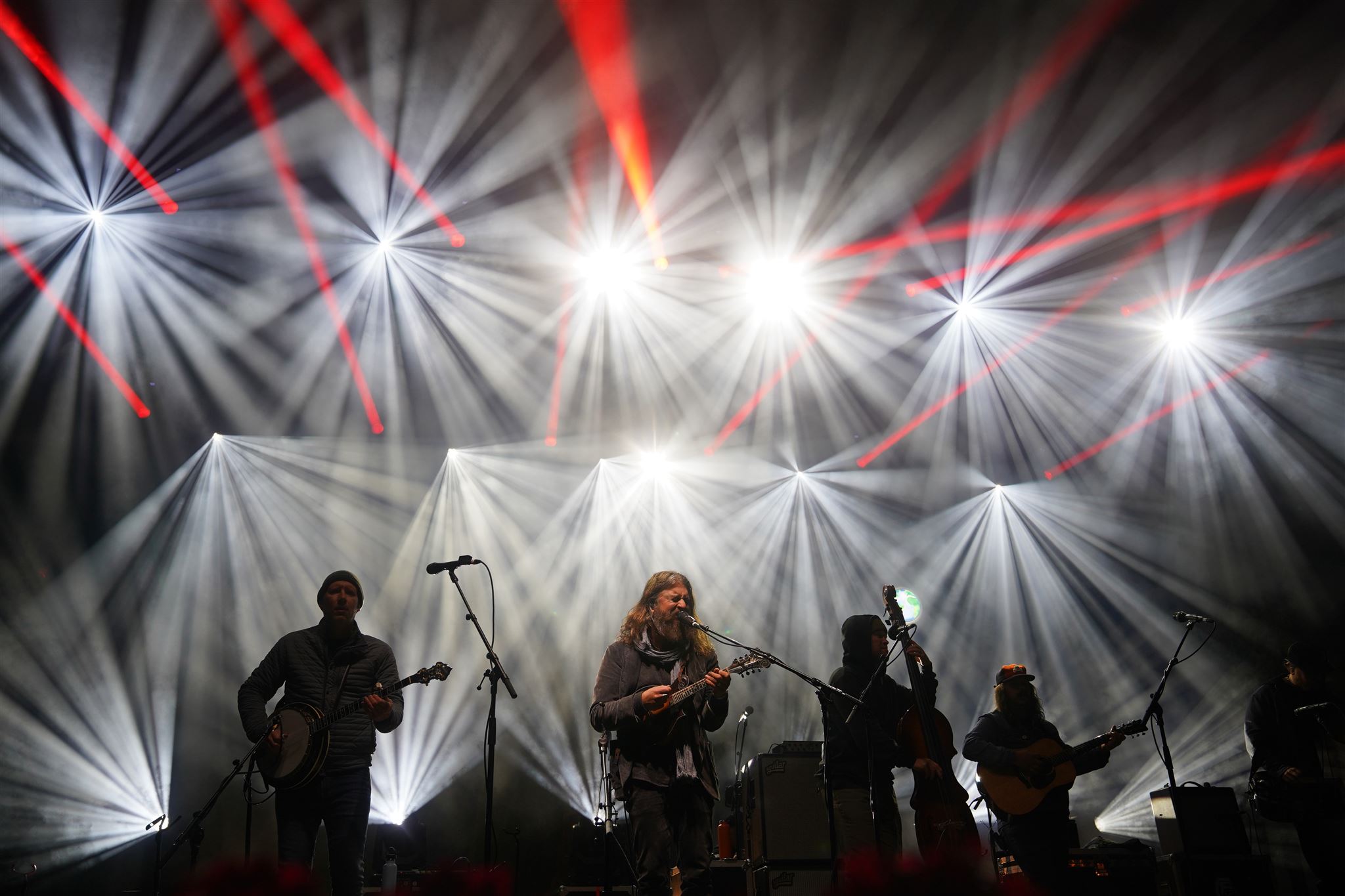
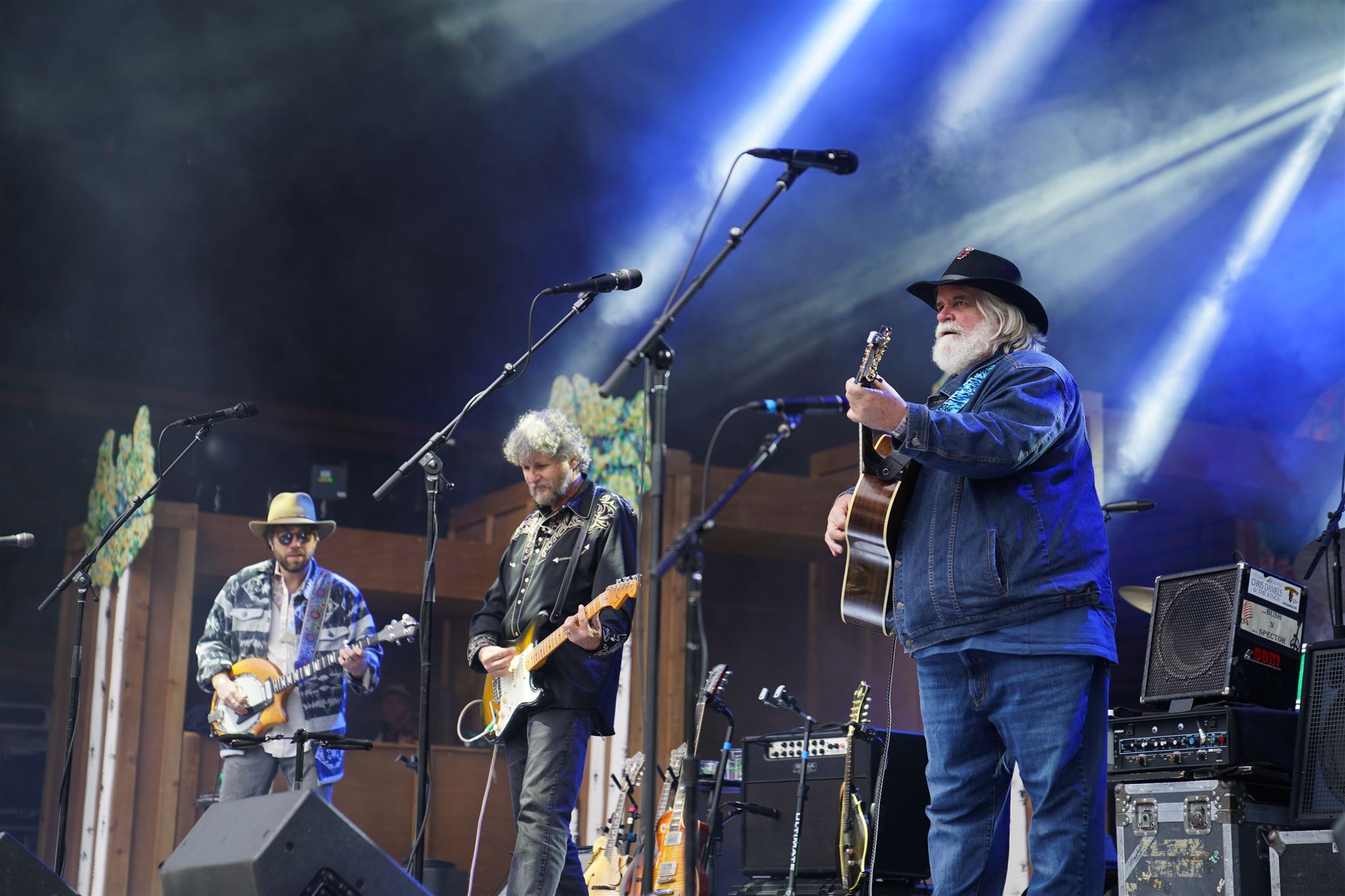
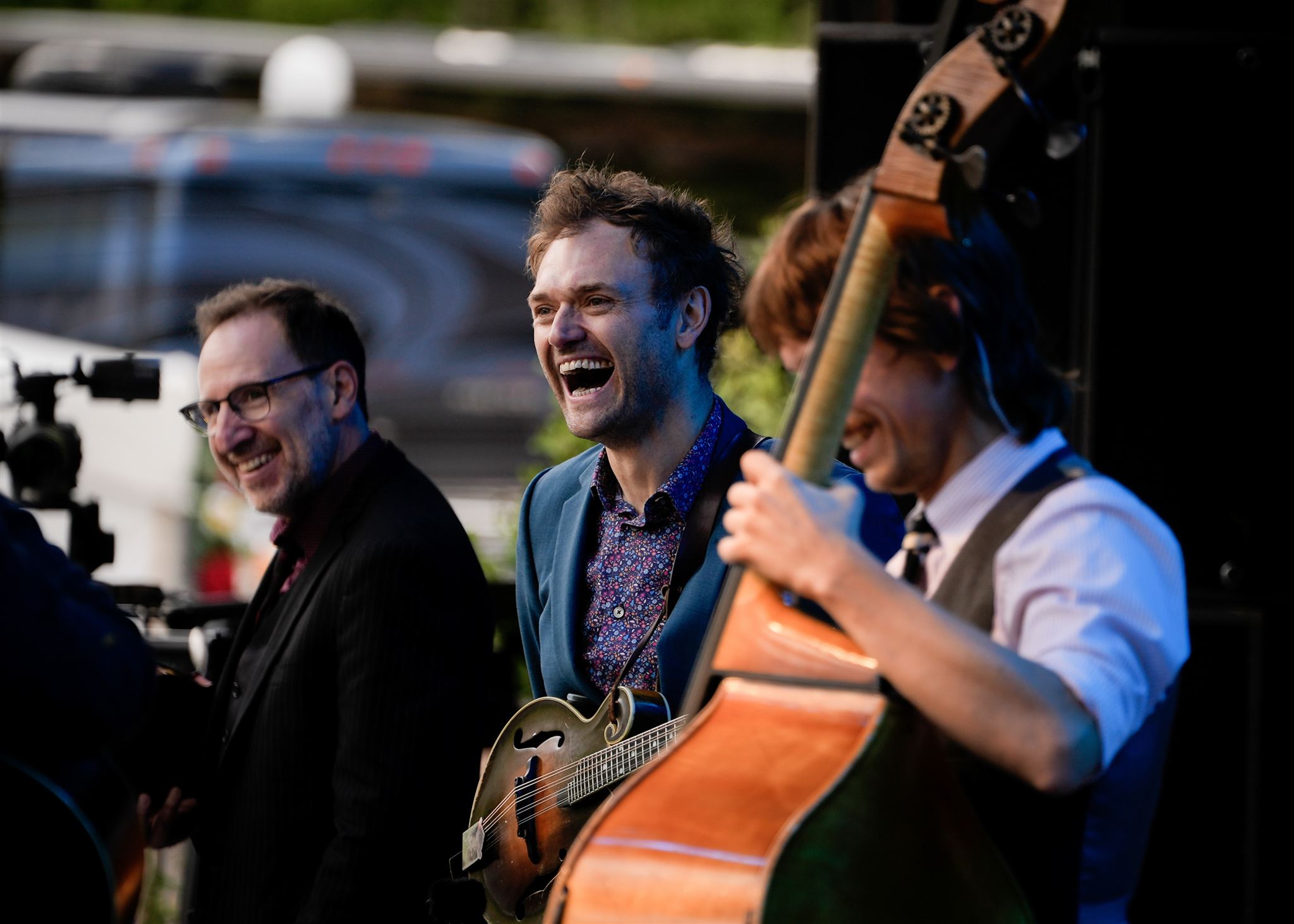
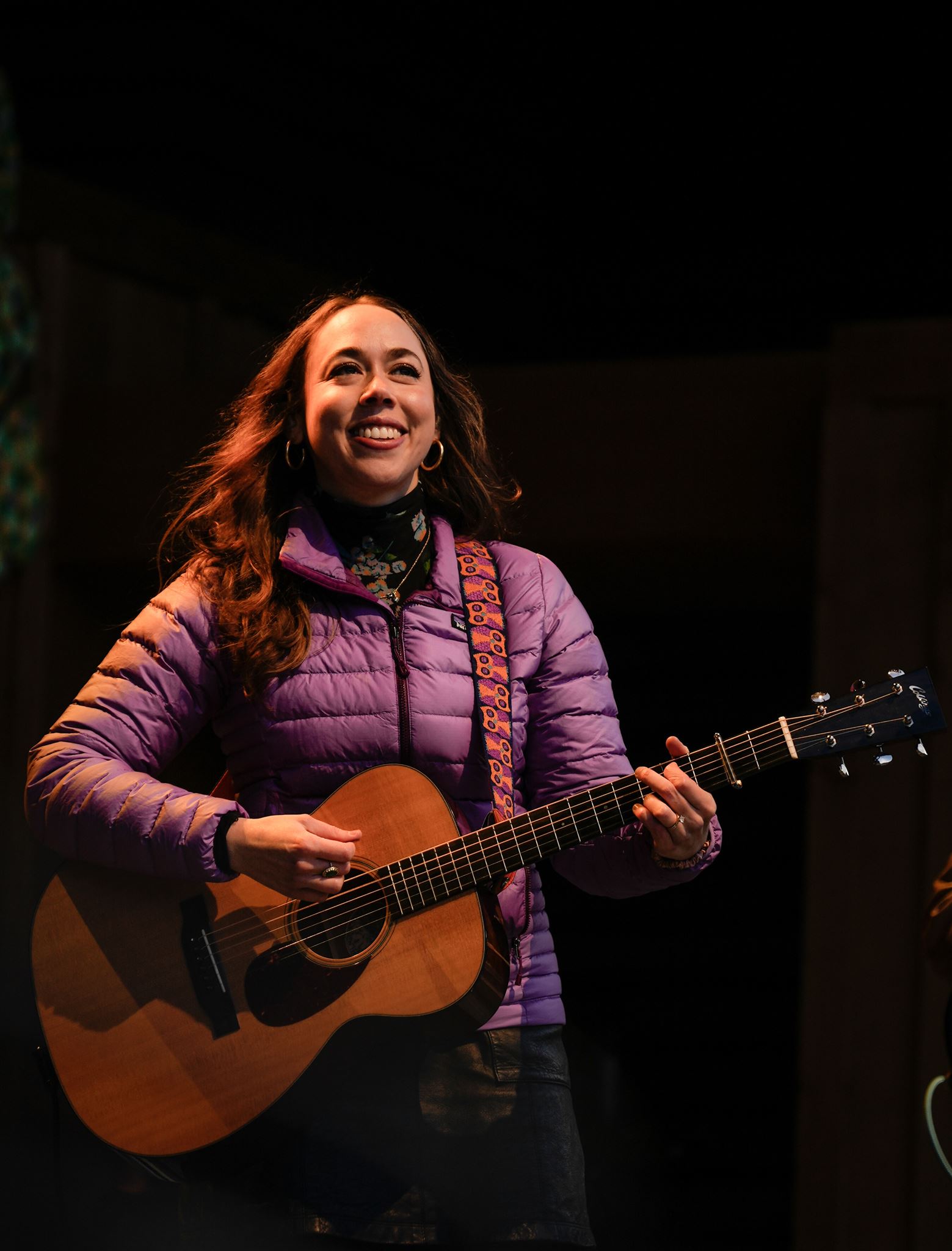
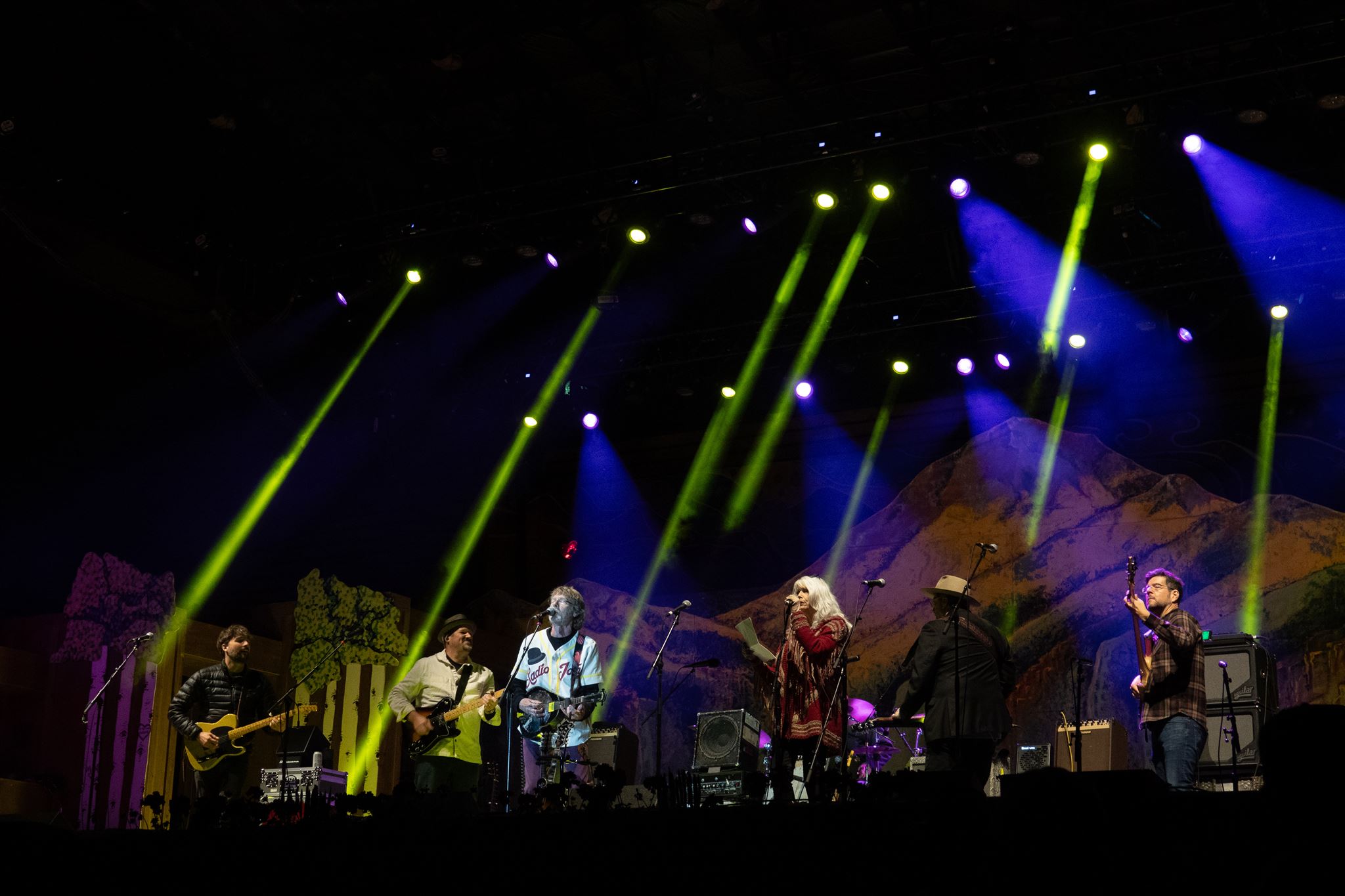
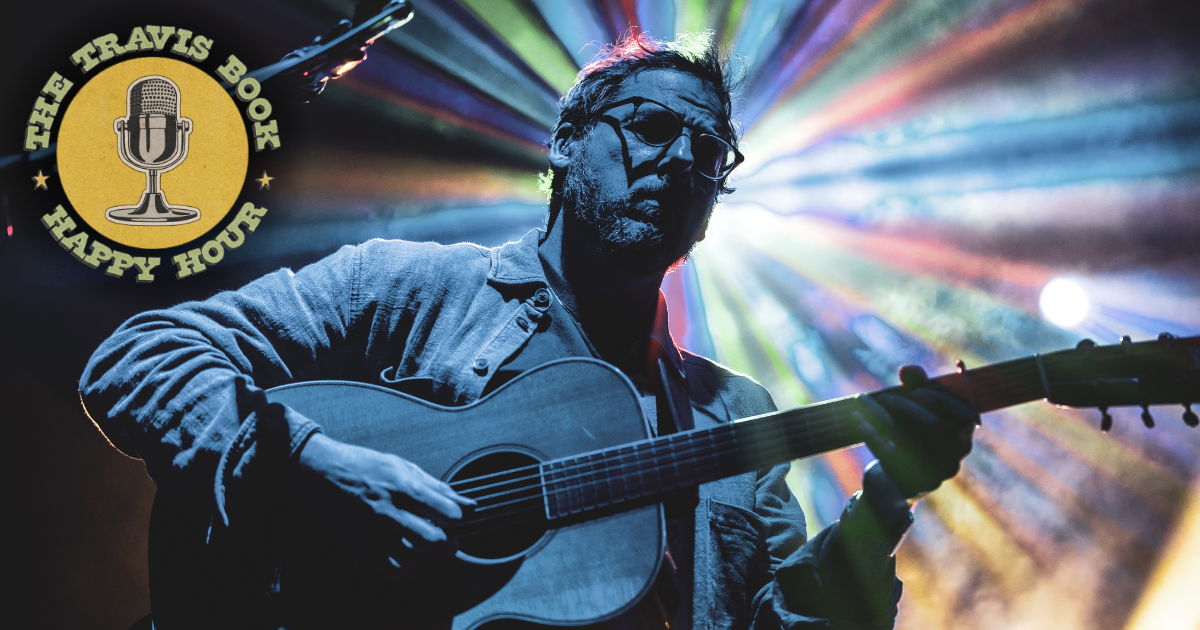
The Travis Book Happy Hour: Andy Falco (Infamous Stringdusters)

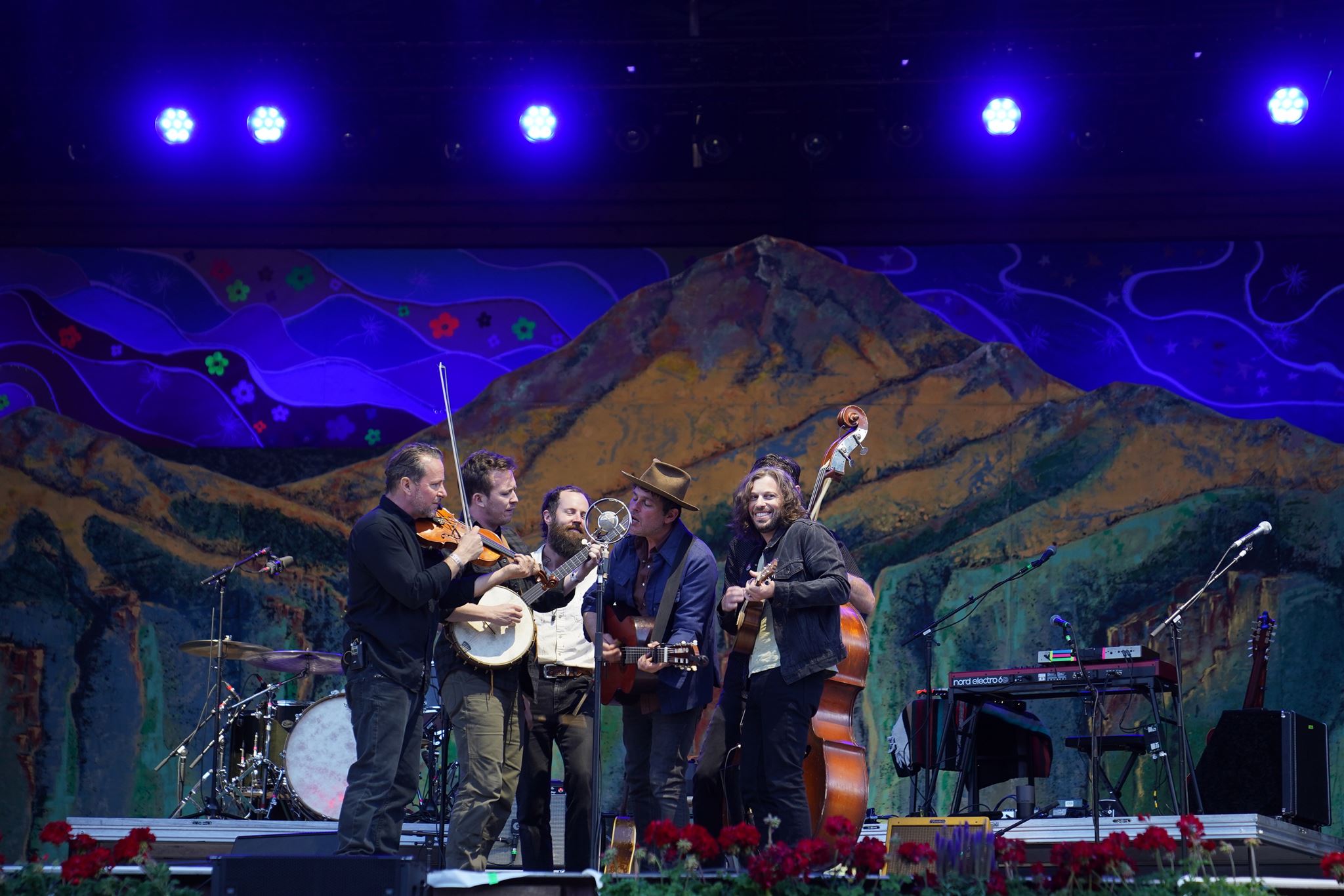
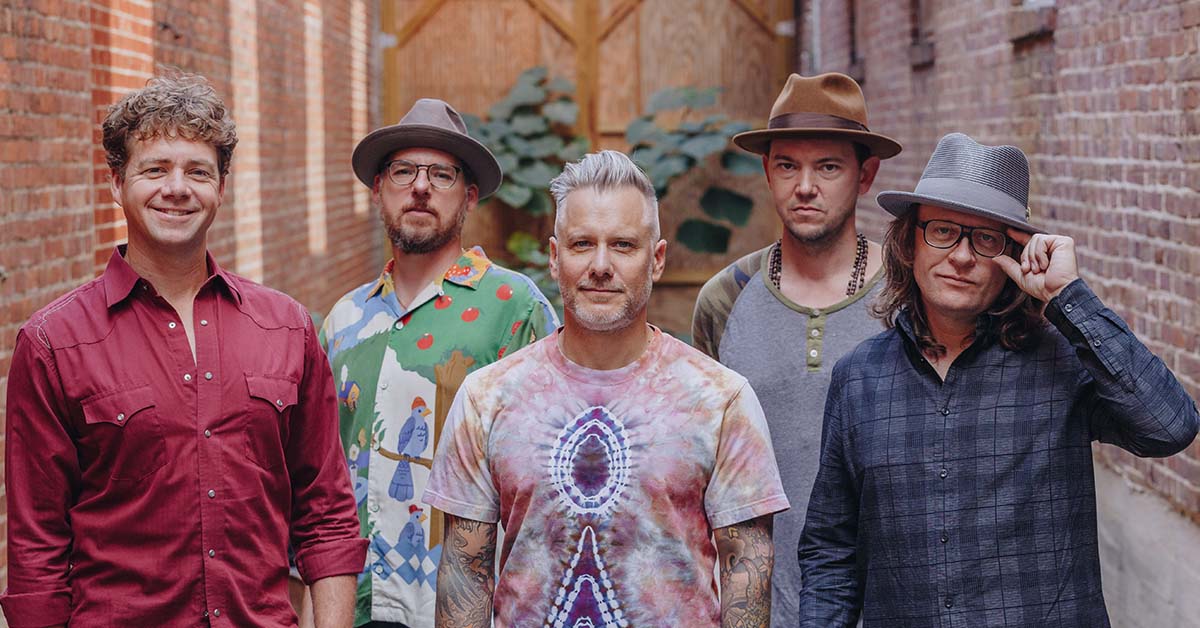
Full disclosure; I’ve played music and stood closer to Andy Falco onstage more than anyone over the last 15 years, maybe ever. As the guitarist for our band The Infamous Stringdusters, he continues to redefine acoustic guitar, blending bluegrass, blues, funk, and rock & roll in a style that defines the sound of the Dusters. His guitar is the most important part of the band. In 2021 he released a solo record, Will of the Way, and in 2023 we released the first volume of our tribute to Jerry Garcia on Americana Vibes. Kind, humorous, focused, and grateful, Andy Falco is a living legend and an absolute treasure.

LISTEN: APPLE • SPOTIFY • STITCHERAMAZON • MP3

This episode was recorded live at The Grey Eagle in Asheville, North Carolina, on August 25, 2021. Huge thanks to Andy Falco.

Timestamps:

0:06 – Soundbyte
0:40 – Introduction
1:56 – “The Thrill Is Gone” / Bill Introduction
3:14 – “Rise Sun”
6:41 – “All the Same”
13:16 – Interview
35:36 – “Holy Rover”
40:24 – “Wings Upon Your Feet”
44:18 – Interview
53:10 – “Birdsong”
1:03:32 – “Stones Unturned”
1:08:19 – Outro


Editor’s note: The Travis Book Happy Hour is hosted by Travis Book of the GRAMMY Award-winning band, The Infamous Stringdusters. The show’s focus is musical collaboration and conversation around matters of being. The podcast is the best of the interview and music from the live show recorded in Asheville and Brevard, North Carolina.

The Travis Book Happy Hour Podcast is brought to you by Thompson Guitars and is presented by Americana Vibes and The Bluegrass Situation as part of the BGS Podcast Network. You can find the Travis Book Happy Hour on Instagram and Facebook and online at thetravisbookhappyhour.com.


Photo Credit: George Trent Grogan

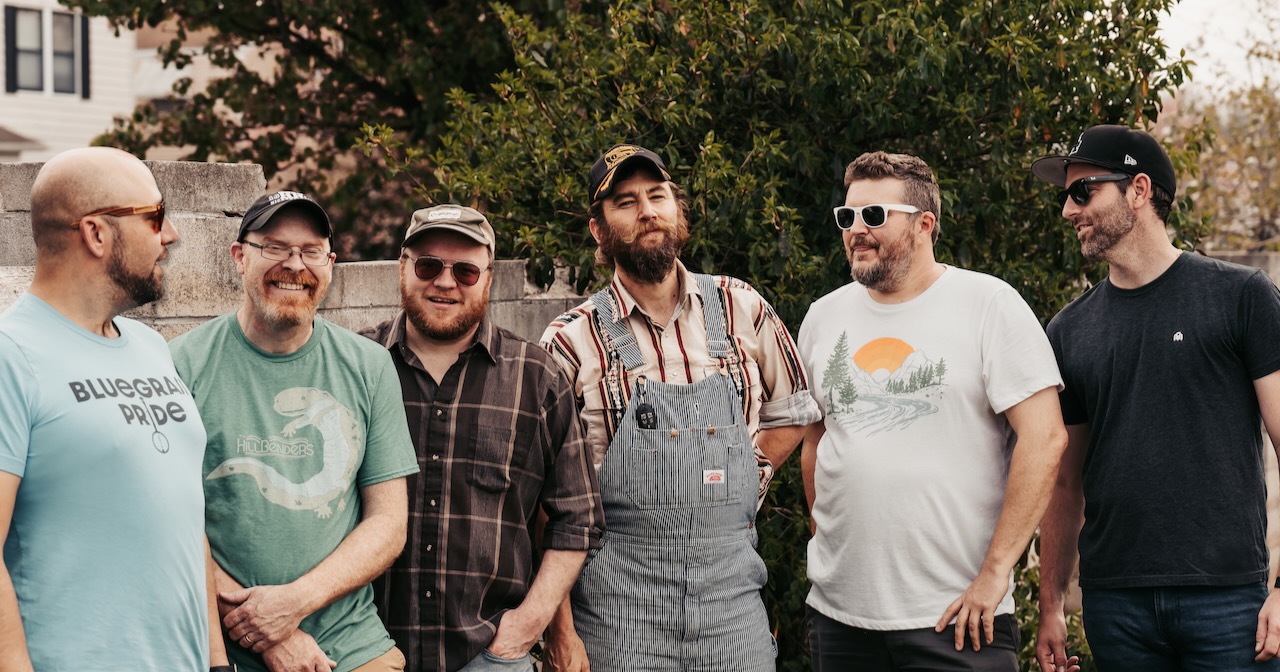
LISTEN: The HillBenders, “Take On The World (Give ‘Em Hell!)”

Artist: The HillBenders
Hometown: Springfield, Missouri
Song: “Take On The World (Give ‘Em Hell!)”
Release Date: September 29, 2023

In Their Words: “‘Take On The World (Give ‘Em Hell!)’ embodies the age-old tale of a directionless, troubled soul. We’ve all been there in one way or another. Maybe doing things you ought not be doing just for the excitement of doing it. But then comes along someone that shows you how much more there is to life. It’s almost like you’ve turned into a completely different person after falling in love with them. Like you’re under some sort of spell of theirs. And all of a sudden, all that trouble doesn’t seem as fun anymore. How long it lasts is maybe for another song.” – Mark Cassidy, banjo

“The tune was recorded at Red Rock Studios in Saylorsburg, Pennsylvania, while having a rare day off on tour. Primarily used to record jazz music, the studio had a beautifully organic design nestled in the quiet rural countryside. We asked Jeremey Garrett (of the Infamous Stringdusters) if he would lay some fiddle down on the song and he cut some buttery tracks at his studio, including a twin fiddle part that made the final mix. Jeremy is a great cat and his involvement really elevated the song as a whole. Since adding our new drummer, John Anderson, we have explored all sorts of new musical possibilities — but it was nice to return to our bluegrass roots on this number.” – Jim Rea, guitar


Photo Credit: Robert Crook

Preview: What to See & Hear at This Weekend’s Earl Scruggs Music Festival

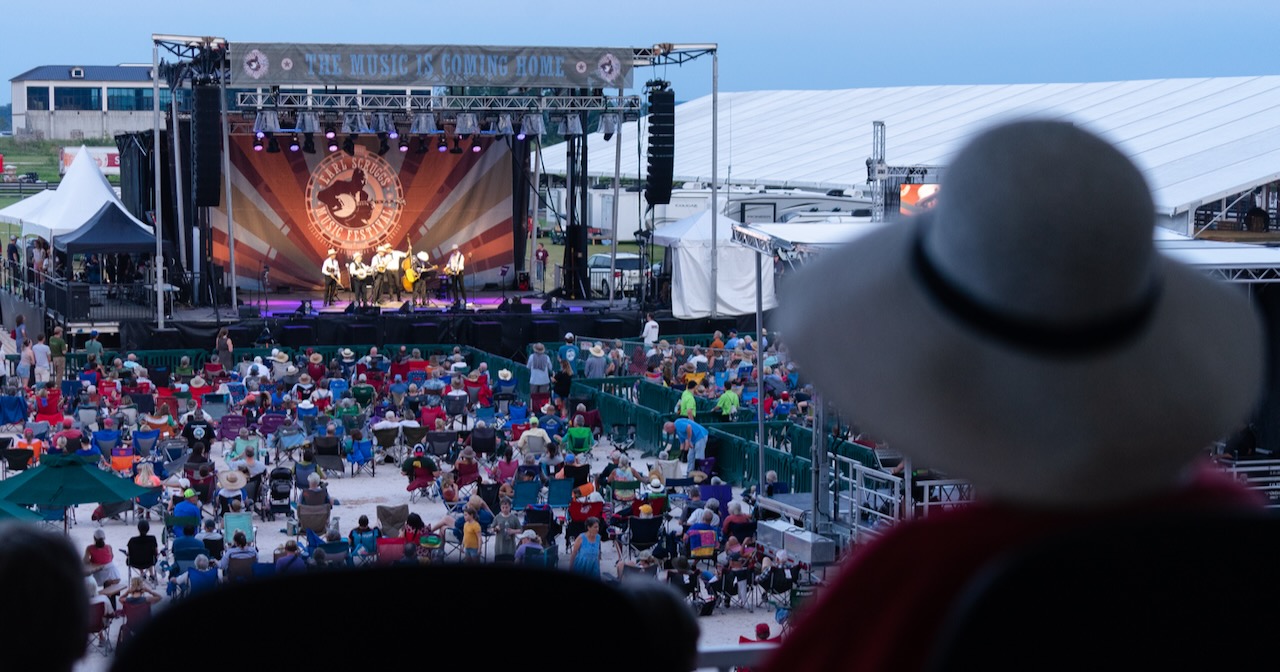
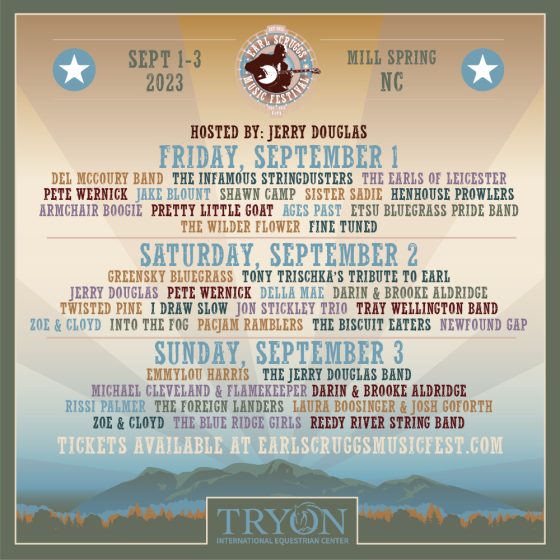
The BGS Team is excited to return to Western North Carolina for the second year of the Earl Scruggs Music Festival at the Tryon International Equestrian Center in Mill Spring. Held September 1, 2, and 3, the event will be hosted by Jerry Douglas and will include headline sets by the Infamous Stringdusters (Friday), Greensky Bluegrass (Saturday), and Emmylou Harris (Sunday) plus, on Saturday at 3:30 p.m., don’t miss the Earl Scruggs Revue Album Tribute hosted by Tony Trischka and sponsored by BGS. The showcase will spotlight an album by Earl Scruggs’ iconic late-’60s to ’80s group featuring his sons, the Earl Scruggs Revue, and will include appearances and performances by many special guests pulled from the festival’s expansive bluegrass and roots lineup.

In preparation for the festival this weekend and our trek to beautiful Western NC, check out a few of our preview picks for each day of the event:

Thursday, August 31, 2023

It’s the day before the real fun begins at the Tryon International Equestrian Center, but you’ve already pulled into town and you’re rearin’ and ready to go – what to do? Travel down the road about 30 minutes and visit Shelby, North Carolina, Earl Scruggs’ hometown, and the incredible Earl Scruggs Center. It’s open every day of the festival until 4 p.m., but hours vary some so check before you visit.

Not only does the Center co-present the festival, but it’s housed in the former Cleveland County Courthouse in the center of the Shelby town square. It’s an adorable small town with an outsized impact on American roots music – Don Gibson is from Shelby, as well; Nina Simone is from Tryon, just down the road. (Visit her homeplace on your way back to Mill Spring.) We focused on Shelby for an episode of our podcast made with Come Hear NC titled Carolina Calling. Listen to our Shelby episode while you drive!

Ready to head to the Equestrian Center to check out the festival footprint and do some reconnaissance? You’re in luck! The official festival events don’t commence until Friday, but on Thursday there will be a FREE concert on-site and restaurants and vendors will be open from 6 to 9 p.m.

Friday, September 1, 2023

The day is finally here! Gates open at 8 a.m. and the fun begins at 10 a.m. with restaurants, vendors, experiences, workshops, performances, and so much more.

Don’t miss “Secrets of Scruggs-Style” on the Legends Workshop Stage at 11 a.m. featuring Tony Trischka, Charlie Cushman and Pete Wernick – arguably three of the best living scholars and emulators of Scruggs – a perfect way to kick off his namesake festival. At 3 p.m. on the main stage, affectionately dubbed “Flint Hill Stage,” J.T. Scruggs and Jerry Douglas will do an official festival welcome leading directly into a Banjo Kickoff by Gena Britt, Charlie Cushman, Rob McCoury, Pete Wernick, Tony Trischka and Ben Wright.

We’ll also be making a point to catch Foggy Mountain Stage sets by Jake Blount (5:30 to 6:30 p.m.) and Shawn Camp (8:30 to 9:30 p.m.) plus Flint Hill Stage appearances by Sister Sadie (4 to 5 p.m.), Del McCoury Band (7:30 to 9 p.m.), and the Stringdusters closing out the night at 9:30 p.m.

Don’t go back to your campsite or your hotel yet, though! Foggy Late Night begins at 10:30 p.m. with Armchair Boogie.

Saturday, September 2, 2023

If your schedule is too-tight and you can only make one day of ESMF 2023, Saturday is the day not-to-miss. It’s wall-to-wall, superlative programming across all of the stages at the event.

On the Legends Workshop Stage we’re eyeing “High Lonesome Songs: Then & Now” at 11:30 a.m., a songwriting workshop featuring Louisa Branscomb, Celia Woodsmith and Jon Weisberger. But you may have to split your time between Legends Workshop and Flint Hill, because Tony Trischka’s tribute to Earl Scruggs – EarlJam! EarlJam! – begins on the main stage at 12 p.m. Stick around, because banjo phenom and innovator Tray Wellington brings his tight and tidy band to the main stage directly after EarlJam. Wellington’s languid drawl is only one of many traits of Scruggs’ he carries on with his innovative sound and truly traditional right hand approach.

We’re super excited to see our friends Della Mae (Flint Hill Stage, 8 p.m.) and Twisted Pine (Foggy Mountain Stage, 8:45 p.m.), but the highlight of day two for us will certainly be the Earl Scruggs Revue Album Tribute show on the Foggy Mountain Stage at 3:30 p.m. It will feature a star-studded lineup hosted by Trischka and his band and featuring songs from a classic Earl Scruggs Revue performance. (Hint above.) Our own managing editor Justin Hiltner will be emceeing and updating y’all on the event on our socials, so be sure to follow along.

At Foggy Late Night we’ll be dancing along to Della Mae past midnight! See you there?

Sunday, September 3, 2023

When Sunday morning rolls around, we, too, will be wondering where the weekend went so fast. But don’t worry, there’s still a full day of music and fun before the post-festival depression starts to creep back in.

Sunday begins, appropriately, with Gospel Brunch hosted by Darin & Brooke Aldridge and immediately following, singer-songwriter and host of Apple Music’s Color Me Country, Rissi Palmer will “take us to church” on the Flint Hill Stage, too. If you’ve never had the chance to experience Palmer’s heartfelt, modern, and soulful country stylings you won’t want to miss her set. For an infusion of a faith tradition less prominent in roots music, check out Zoe & Cloyd on the Foggy Mountain Stage at 4:30 p.m. Their latest album, Songs of Our Grandfathers, combines bluegrass, fiddle music, old-time and Jewish folk and klezmer.

On the Legends Workshop Stage at 1 p.m., get up close and personal with festival host and the worlds premier resophonic guitarist Jerry Douglas before his main stage set with his band at 3:45 p.m.

Then, to close out your weekend full of amazing music, excellent hangs, and so much fun, settle in for Emmylou Harris’s headline set on the Flint Hill Stage at 5:30 p.m. As her final notes fade into the Western North Carolina air, cheer up – you don’t have to go home yet! Reedy River String Band will give us one last hoorah for their Foggy Mountain Stage performance from 7 p.m. to 8 p.m.

As you drive back home after the second annual Earl Scruggs Music Festival we hope, like ourselves, you’ll be making plans to return next year (perhaps as you listen to Carolina Calling).

Find more information on Earl Scruggs Music Festival and purchase tickets here.


Graphic courtesy of Earl Scruggs Music Festival.
Photo Credit: Eli Johnson

Telluride, the Most Beautiful Bluegrass Festival, Turns 50

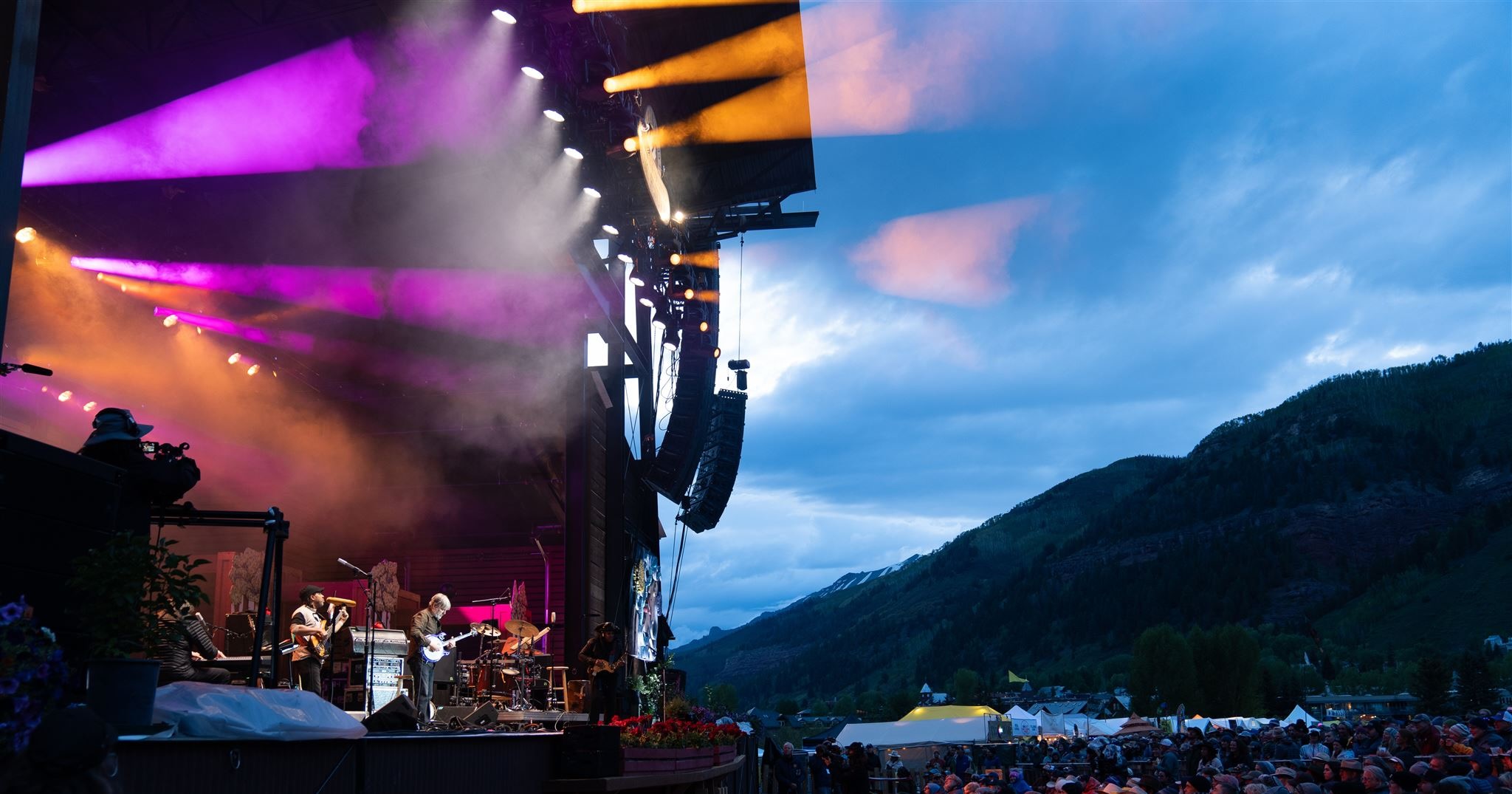
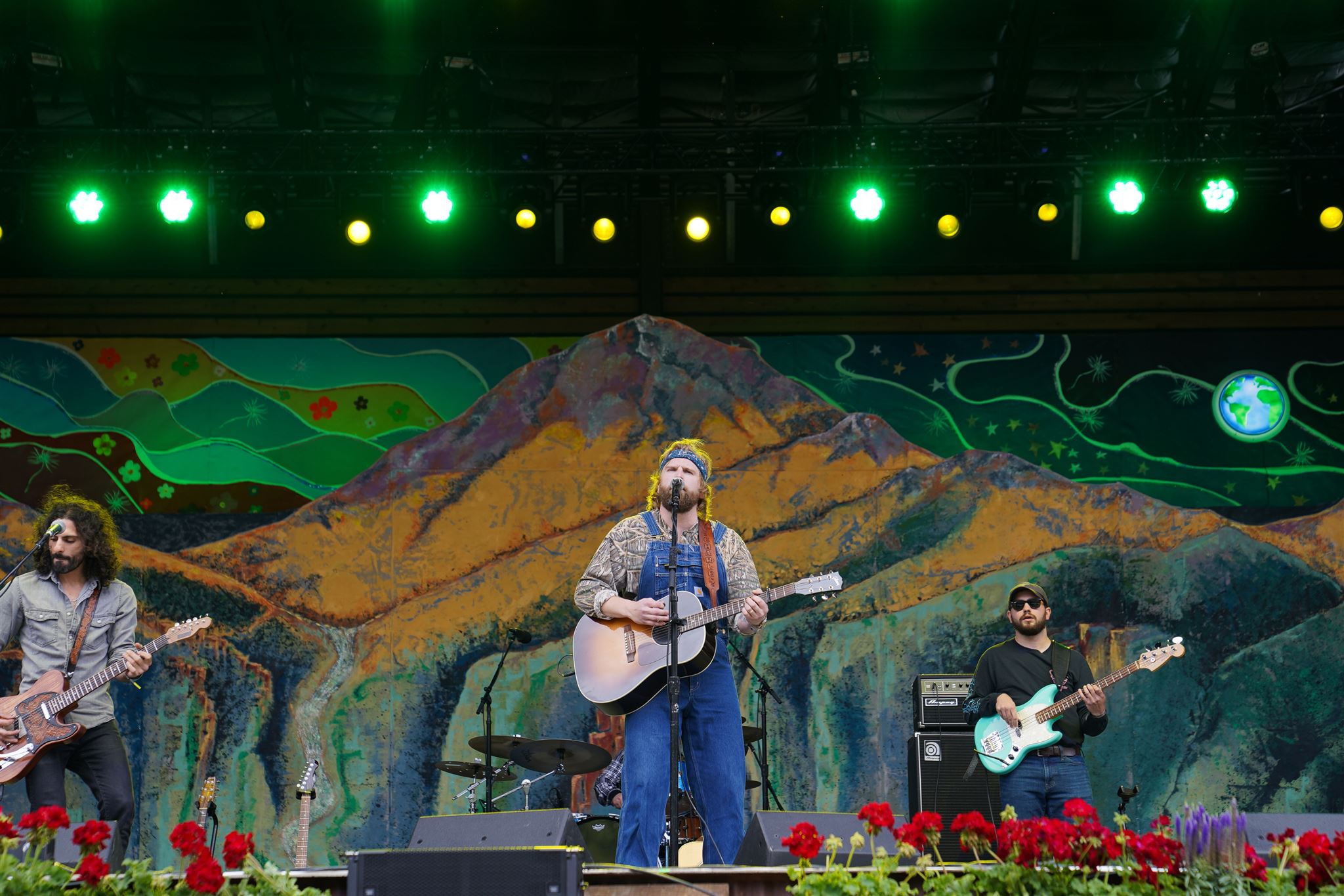
(Editor’s Notes: Headline image of Béla Fleck & the Flecktones. Scroll to see a photo gallery.

To mark Planet Bluegrass’s 50th annual Telluride Bluegrass Festival, we asked author and music journalist David Menconi to reflect on its impact – and the vibrant community that’s grown up around this iconic roots music event.)

The circuit of roots music festivals in America has some similarities to the Professional Golf Association. There’s at least one festival as well as one golf tournament pretty much every week of the spring, summer and fall. But a few stand out as special and even career-making – golf’s four major championships, and the handful of prestigious main-event music festivals. North Carolina’s MerleFest is like The Masters, the early-season springtime kickoff each April, while late-season festivals like San Francisco’s Hardly Strictly Bluegrass line up nicely with the British Open.

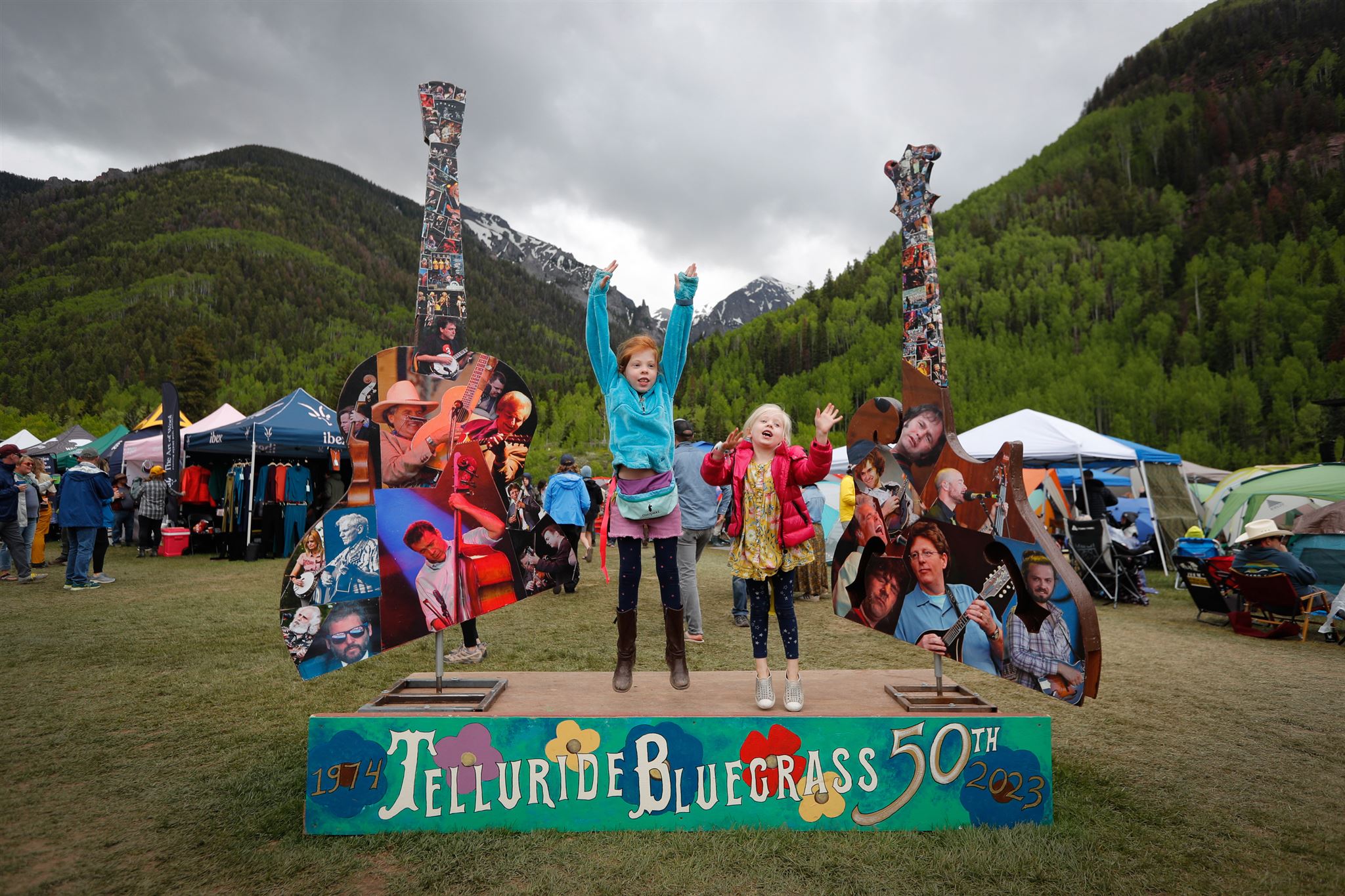
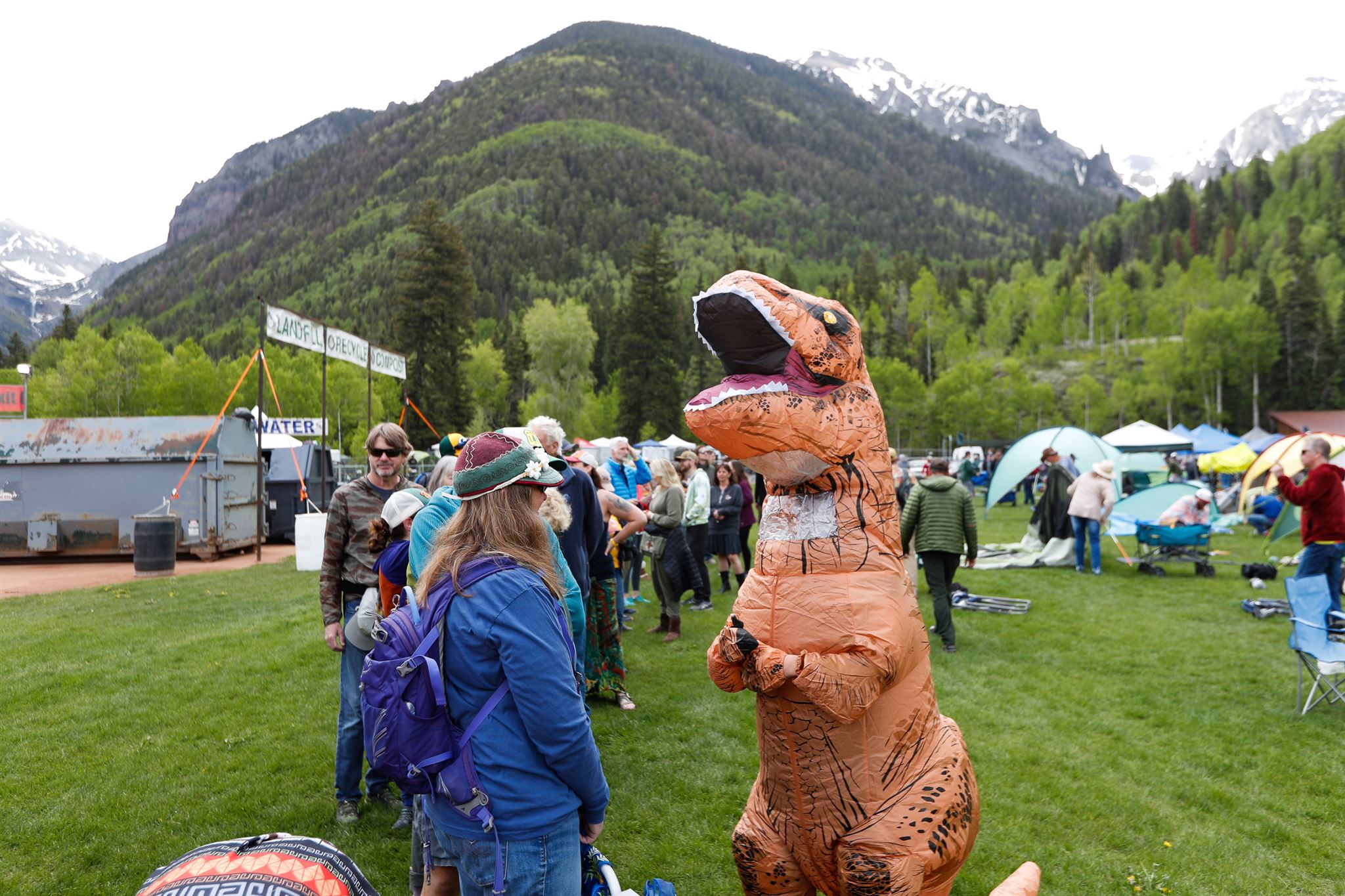
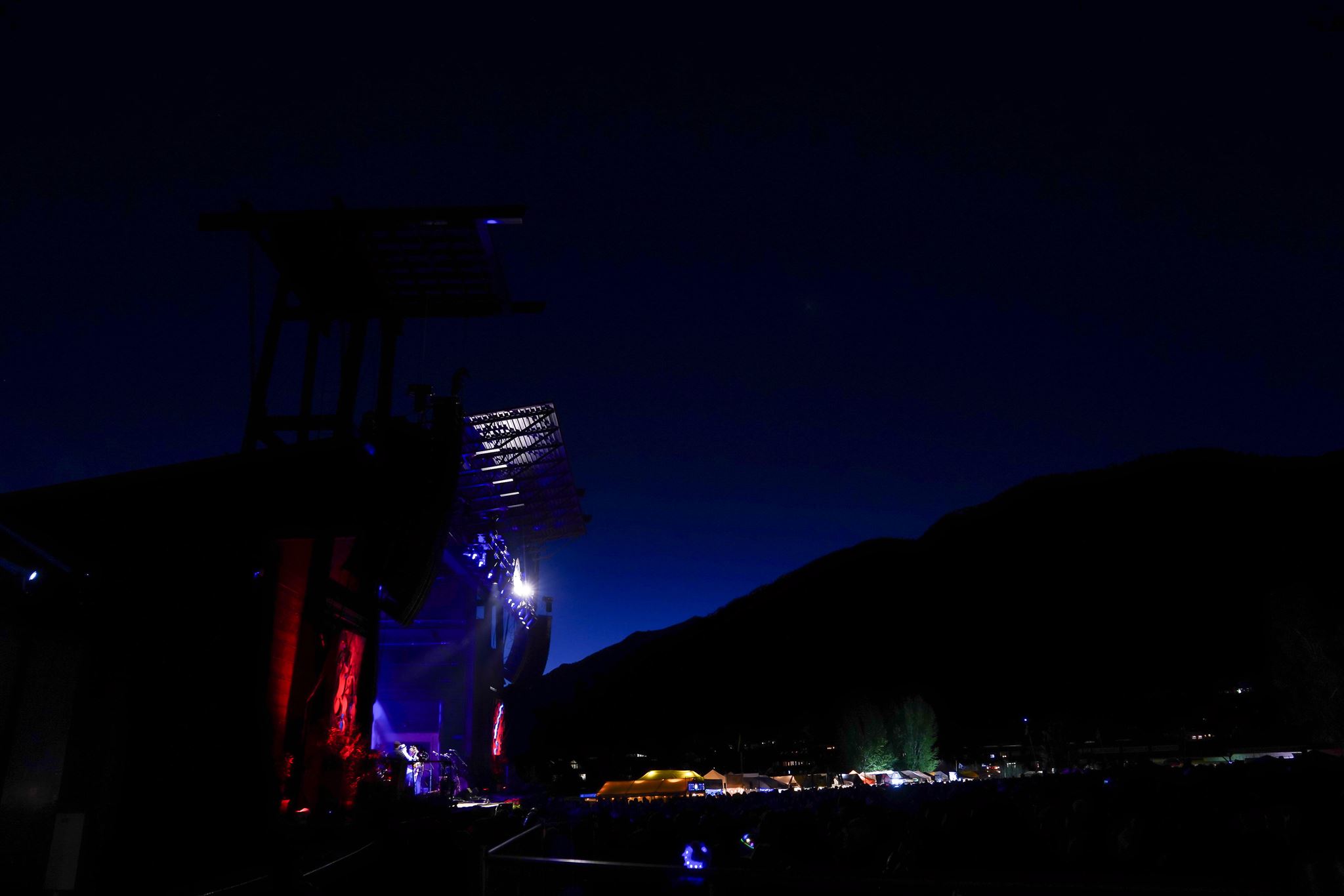
But there’s no question which music festival stands as the summit of the circuit, and not just because it’s in the mountains of Colorado. That’s the Telluride Bluegrass Festival, which marked its 50-year anniversary with the 2023 edition last weekend, June 15-18. The fact that Telluride has prospered for half a century makes Telluride something like golf’s U.S. Open championship, the big one that everybody wants to be a part of. Telluride’s status is something that the musicians who play it are well aware of.

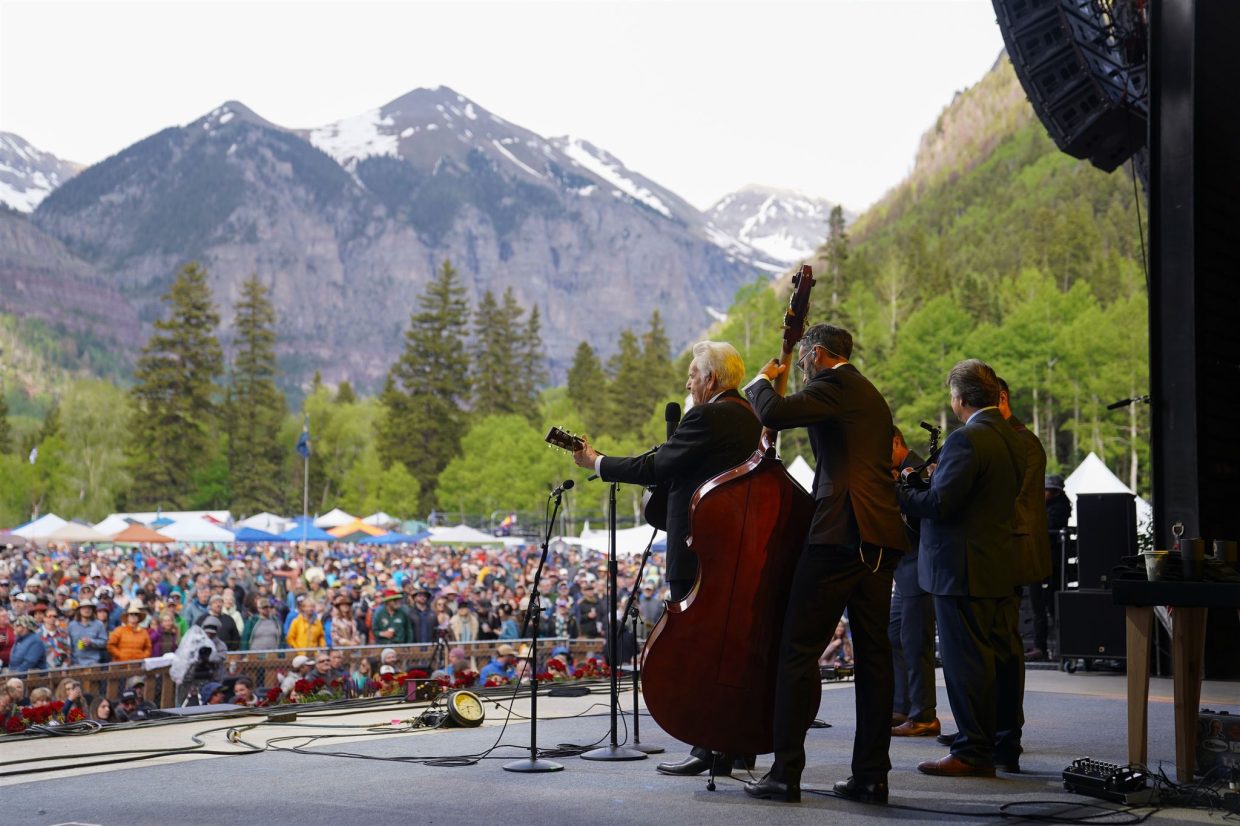
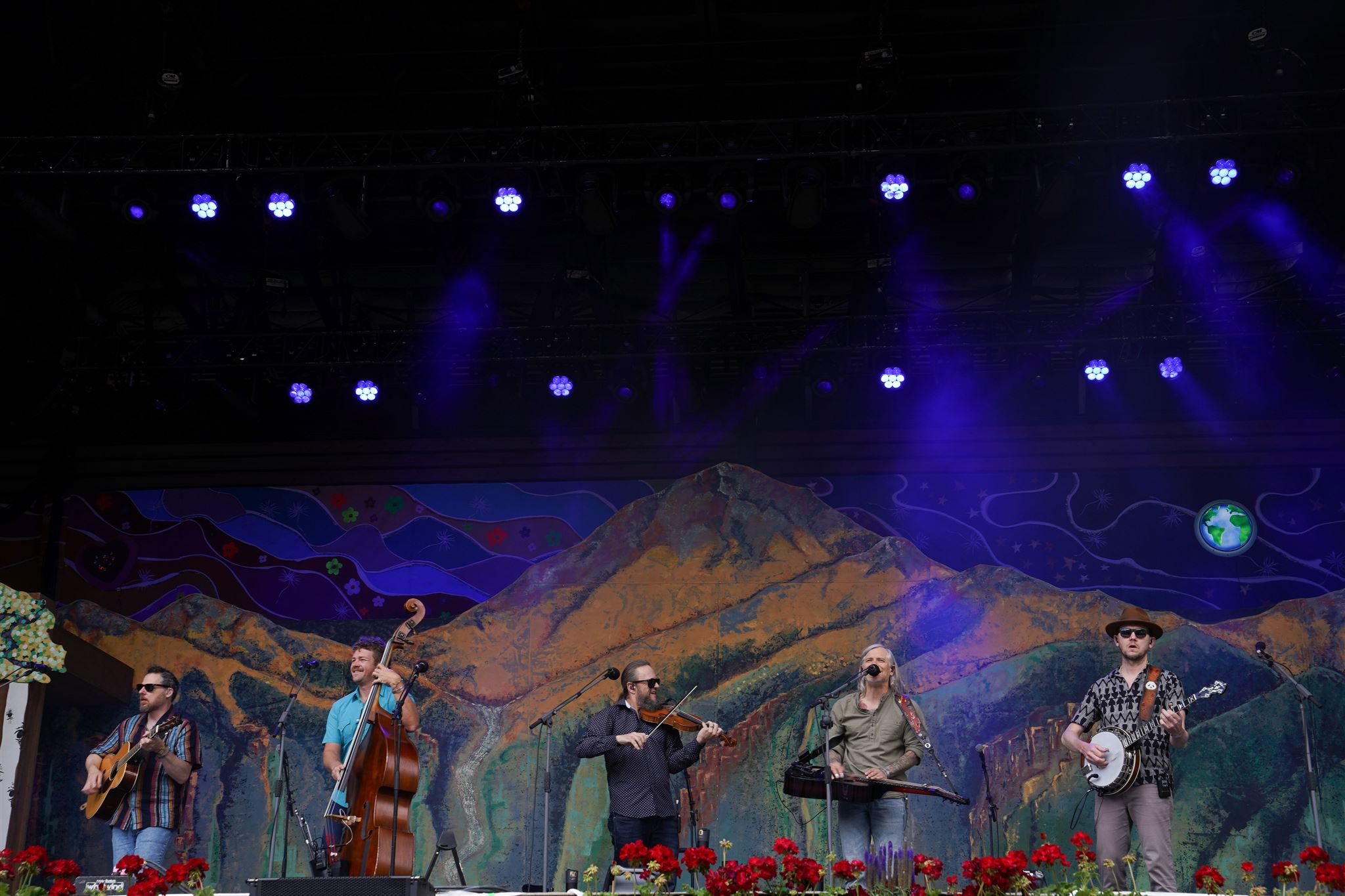
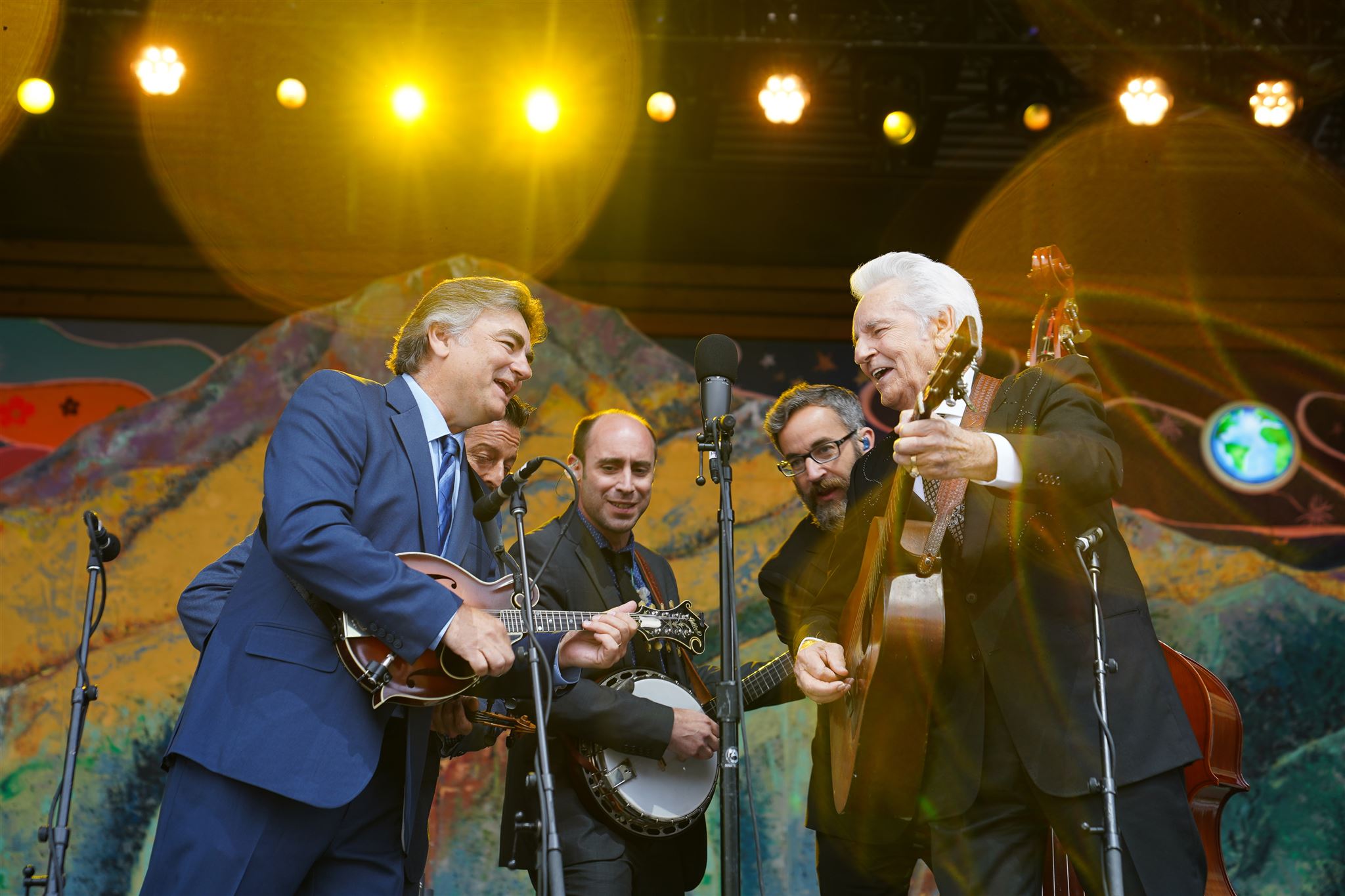
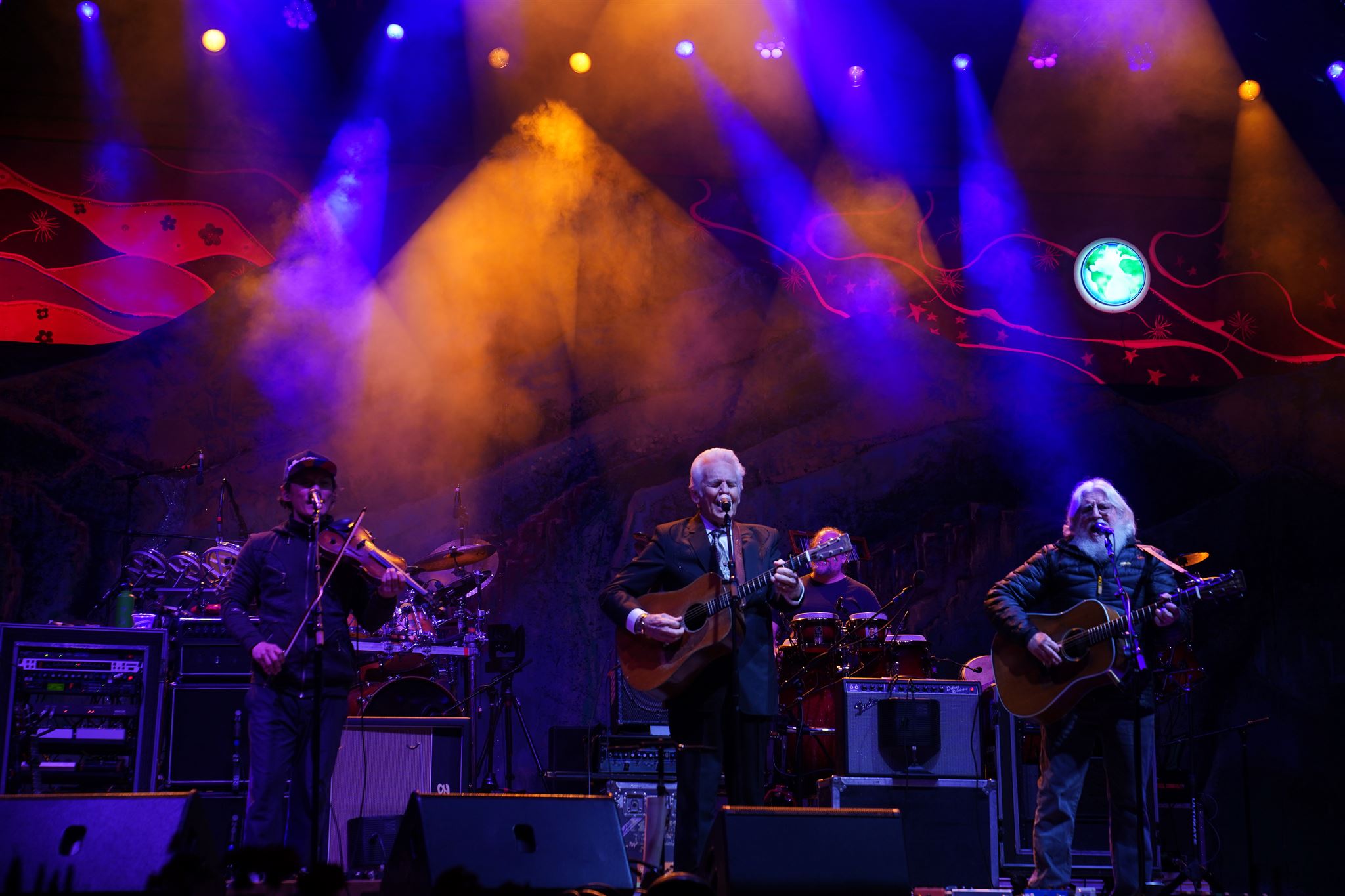
Del McCoury Band performs Thursday, June 15, at the 50th Annual Telluride Bluegrass Festival.

“Festivals and musical trends come and go, and acoustic music has been through some serious peaks and valleys the last 50 years,” says Chris “Panda” Pandolfi, banjo player for Telluride regulars The Infamous Stringdusters, who were on this year’s lineup. “The one mainstay throughout has been Telluride Bluegrass Festival. When we started out, Telluride was the place to be and the definitive crossroads we aspired to, and it still is. Lasting 50 years is an amazing testament to its importance. Bluegrass is more popular than ever now, and Telluride is a big part of that.”

There are literally hundreds of music festivals spanning every style imaginable nowadays, including massive annual gatherings like Bonnaroo in Tennessee and Coachella in the California desert. But there were just a small handful of festivals when Telluride Bluegrass Festival started up in 1973 in the scenic Colorado mountain town that bears its name. And even though Telluride’s daily capacity of 10,000 fans is significantly smaller than a lot of the other major festivals on the circuit, it has still maintained its prestige status.

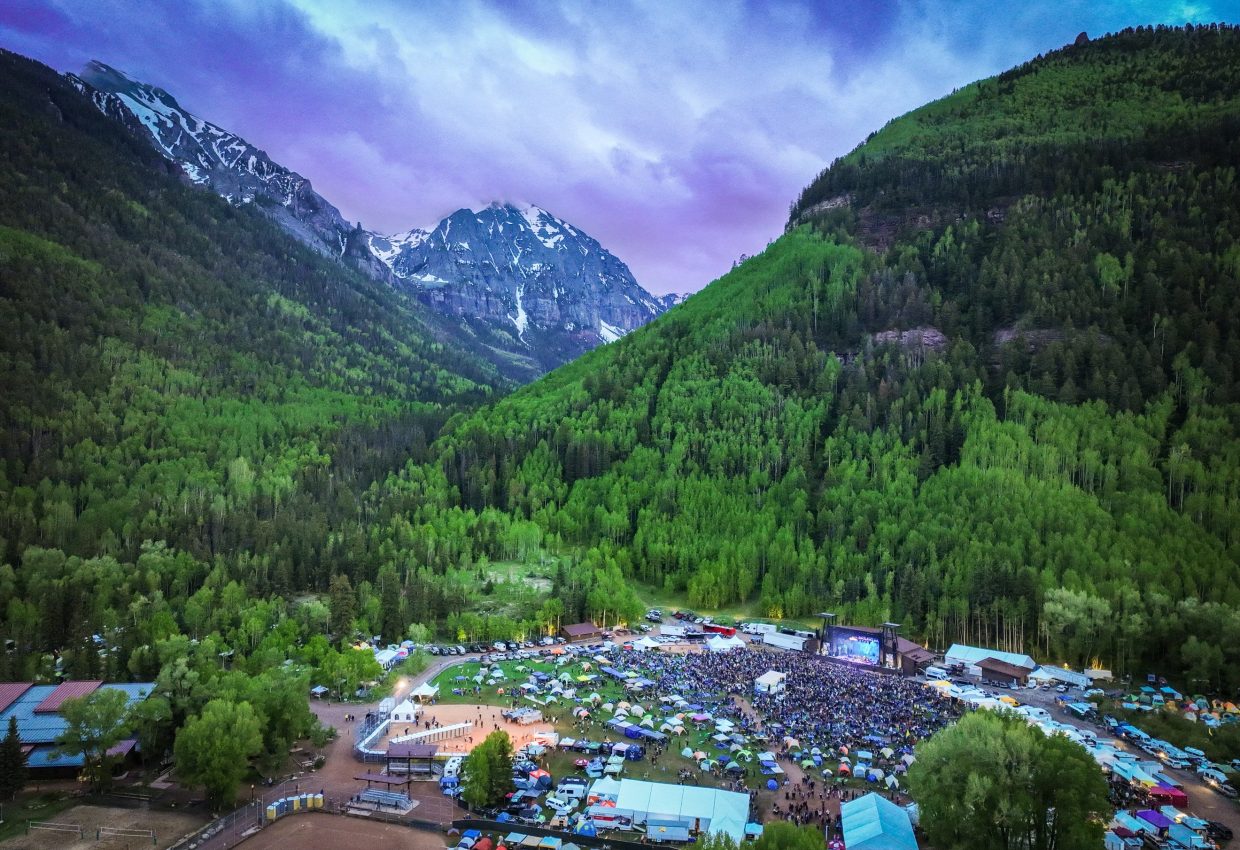
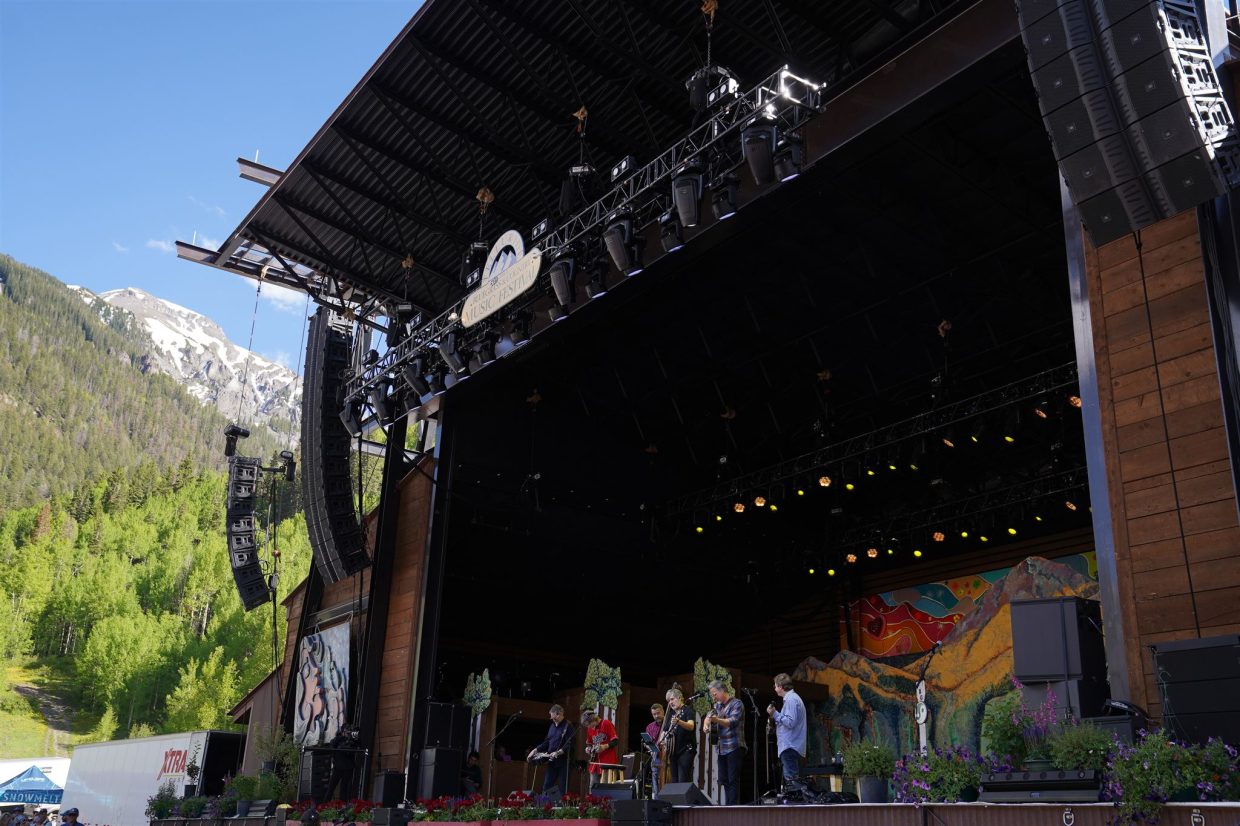
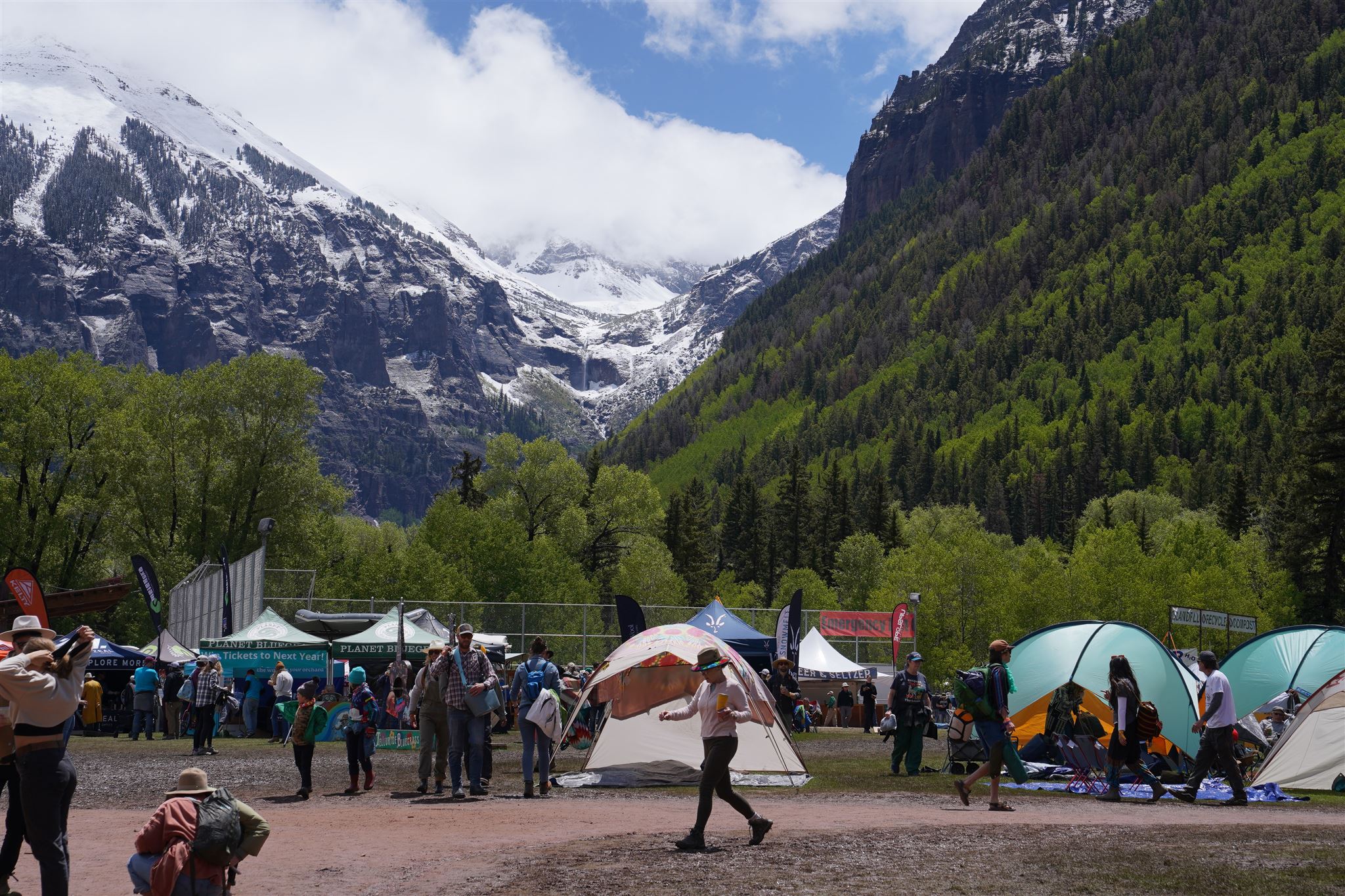
A drone shot of the festival grounds of Telluride Bluegrass Festival.

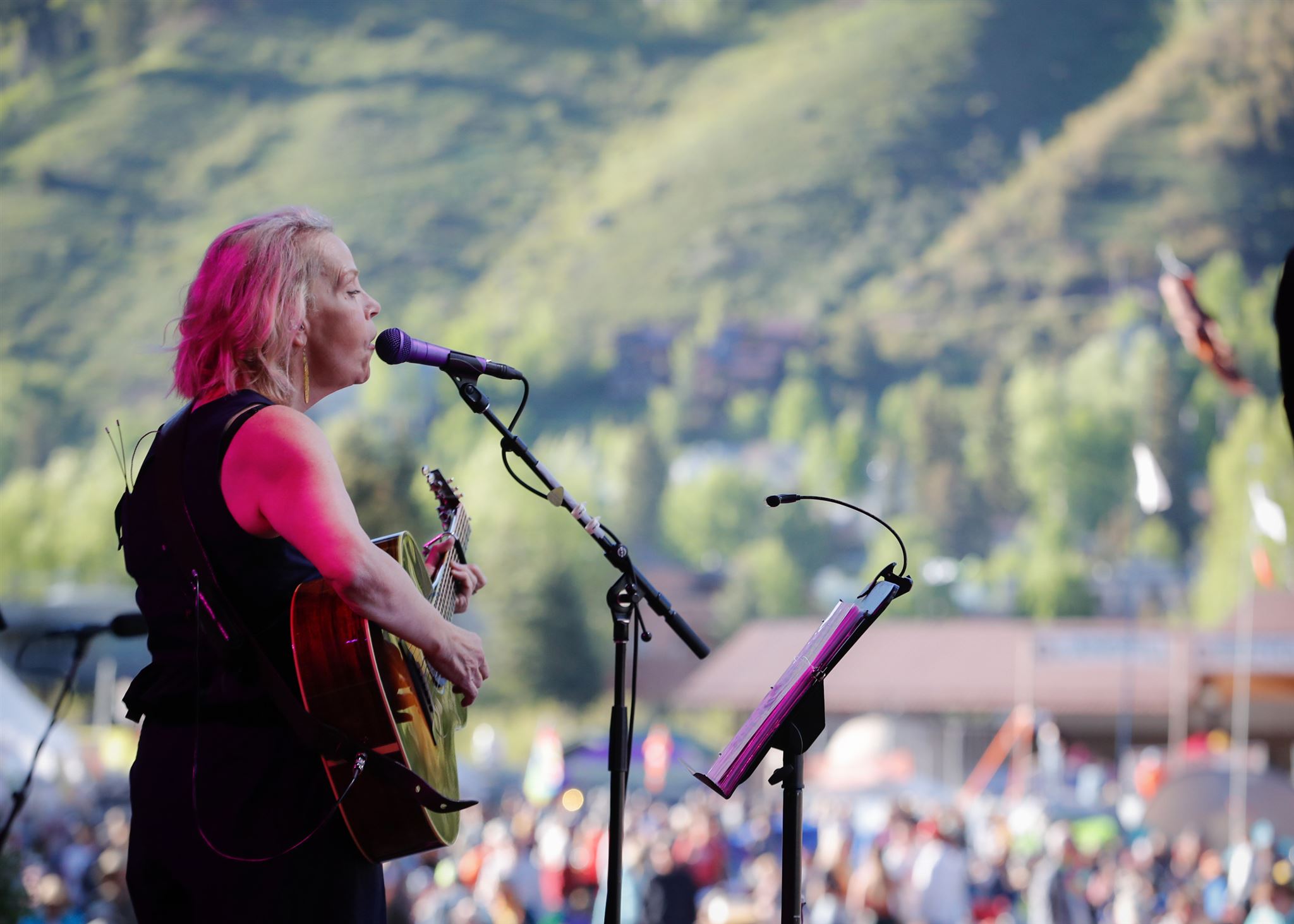
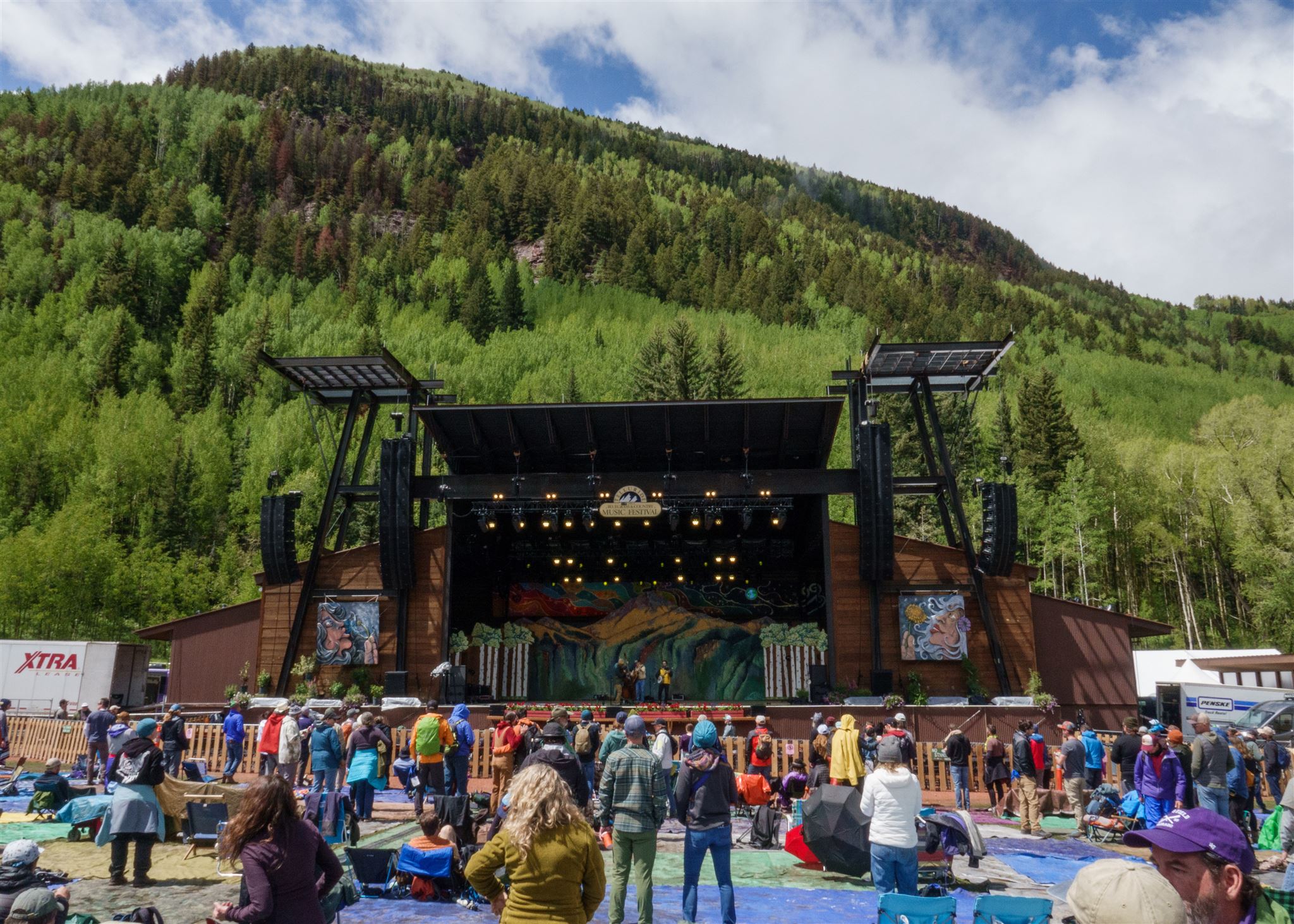
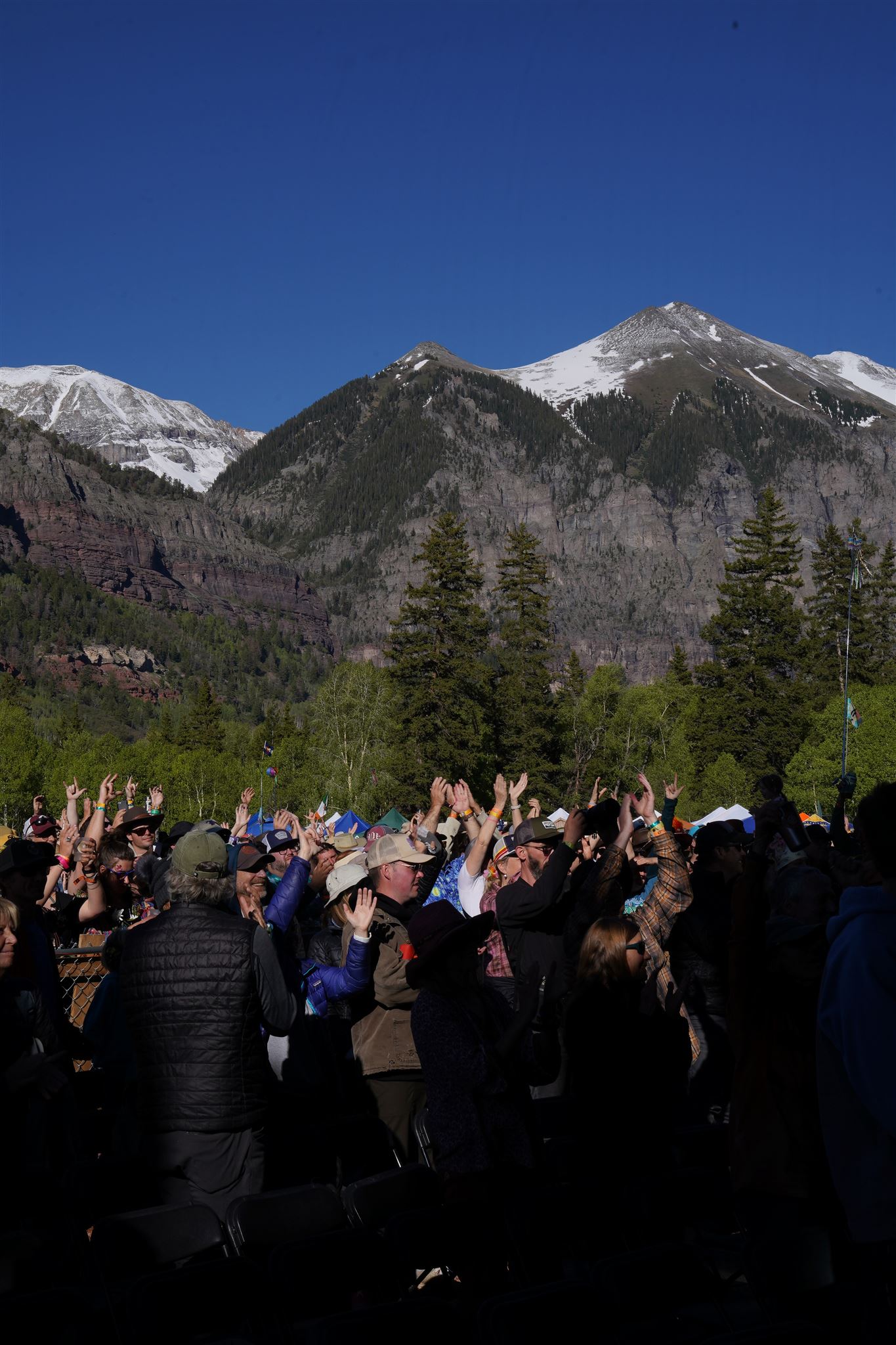
In spite of that smaller size, Telluride does have a few structural advantages that set it apart. One is a picturesque setting of surpassing natural beauty on the western edge of Southwestern Colorado’s San Juan Mountains. For performers as well as attendees, there’s not a better view anywhere than what you see at Telluride.

“The view from the crowd is amazing, but from the stage it’s the most incredible view imaginable as an artist,” says Pandolfi. “It’s this multi-layered inspirational snapshot of some of the best music fans, at the best-run festival, in the most beautiful environment in the world. I think a lot of people have this experience, knowing of Telluride as this iconic festival with an outsized reputation, but it more than lives up to the hype. First time we played there, I remember feeling intimidated because so many heavy-weight players we looked up to were there. But as soon as we got onstage, everything clicked.”

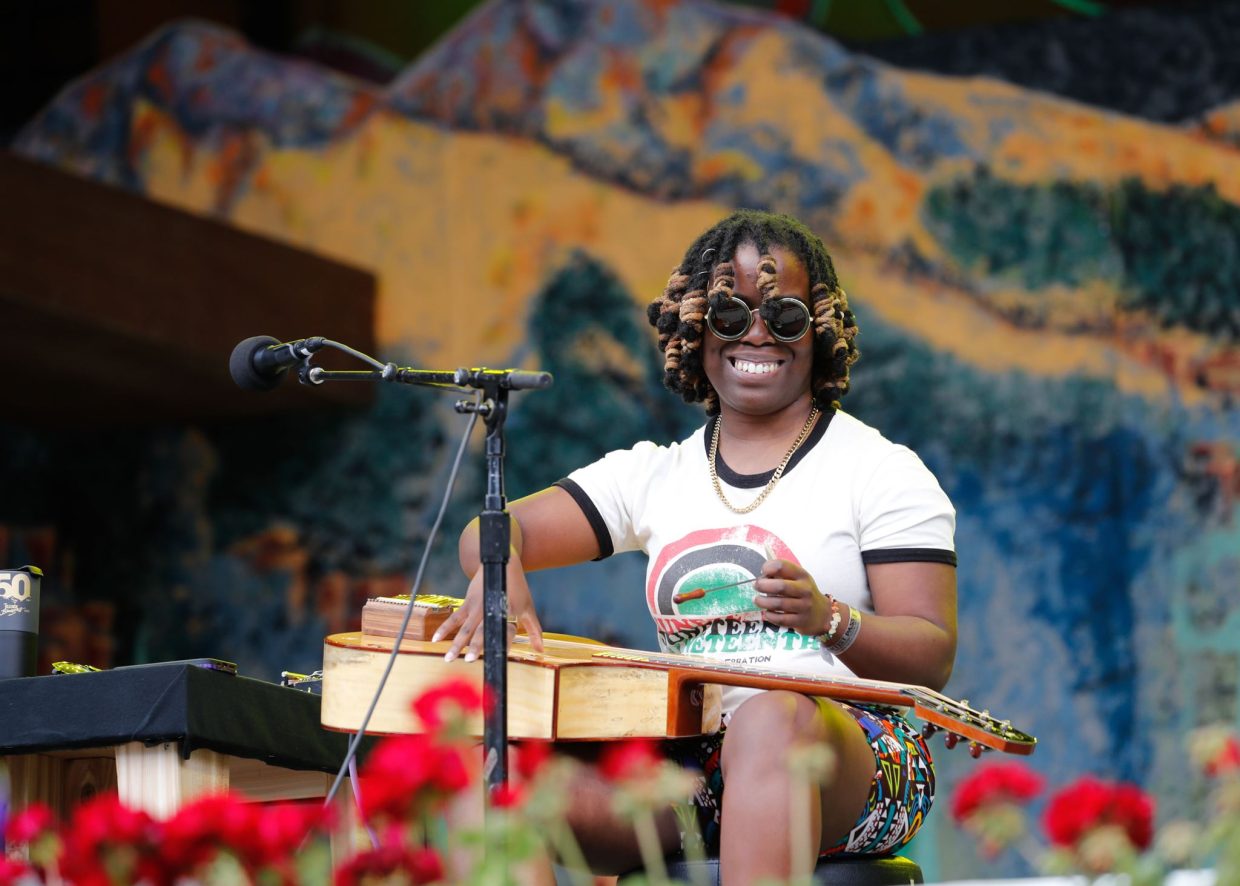
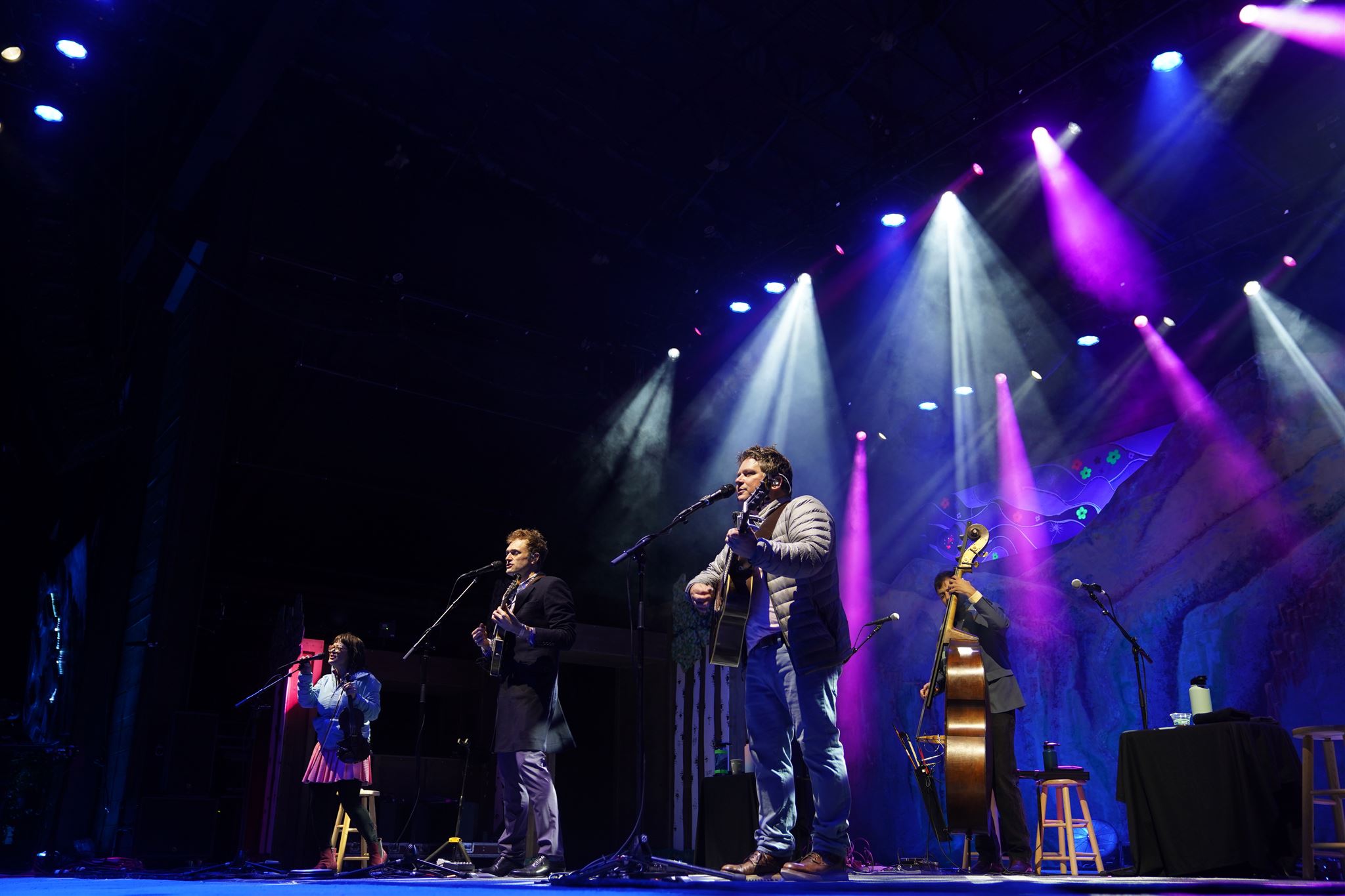
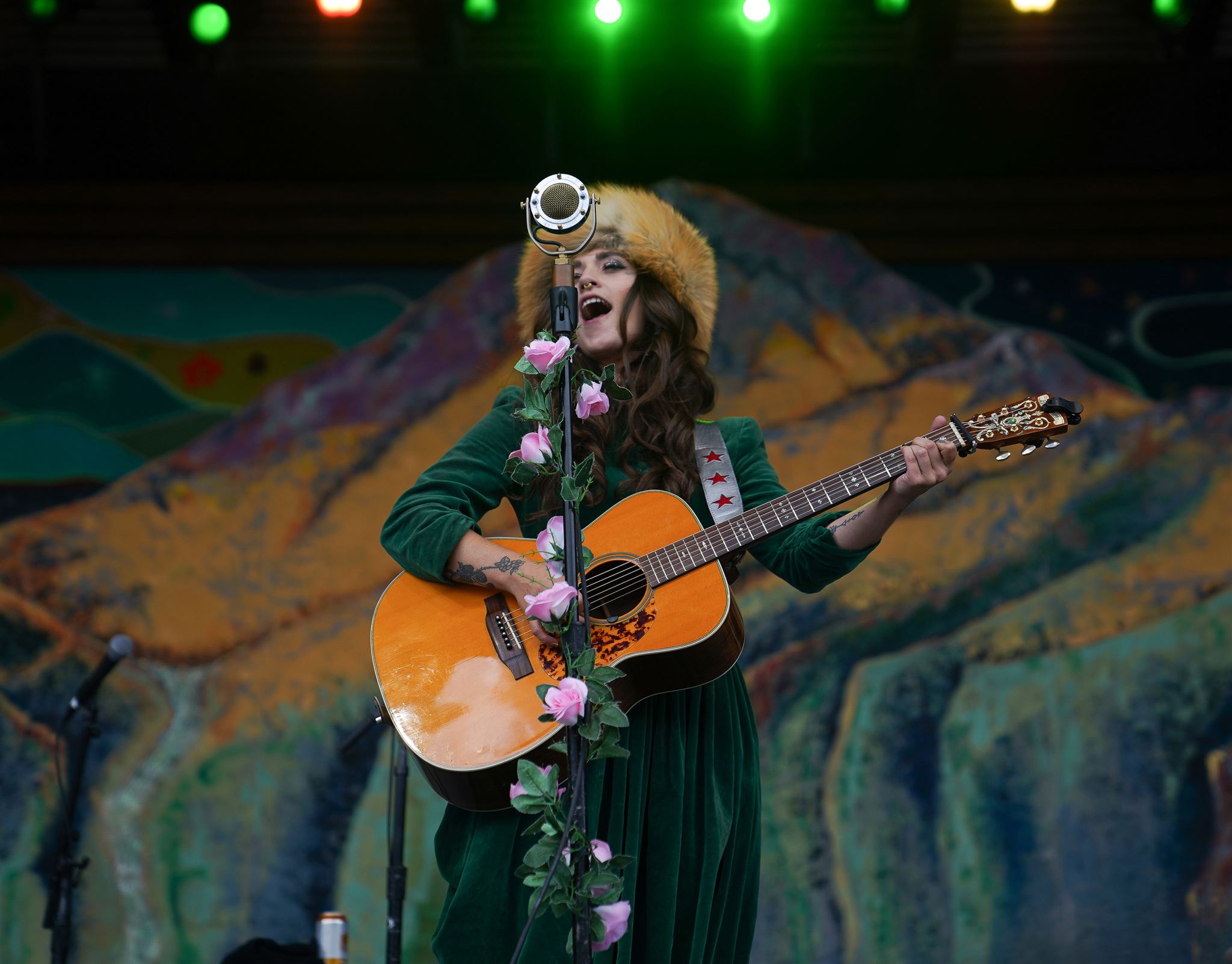
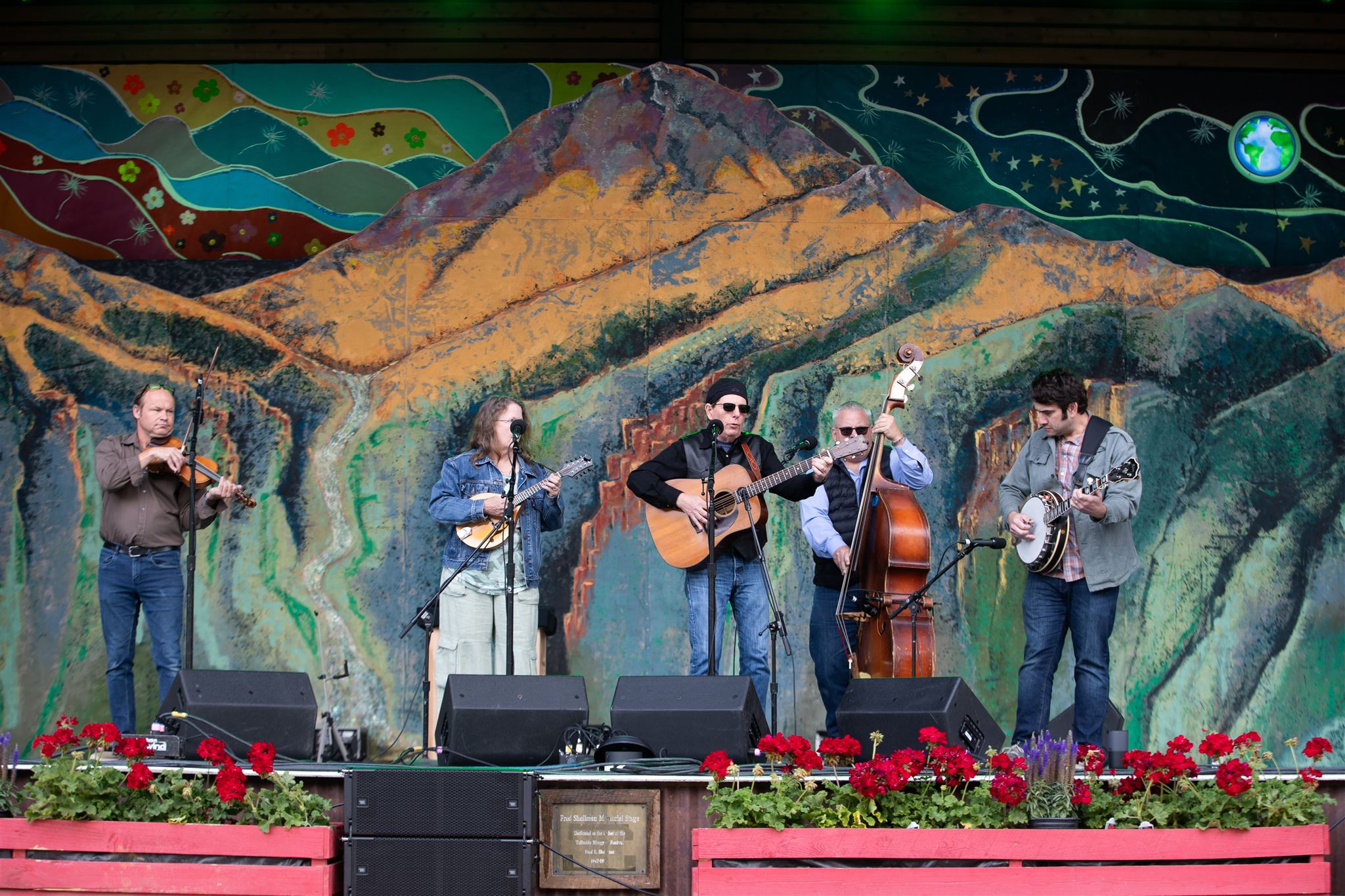
Yasmin Williams performs on Telluride Bluegrass Festival’s main stage – its sole stage.

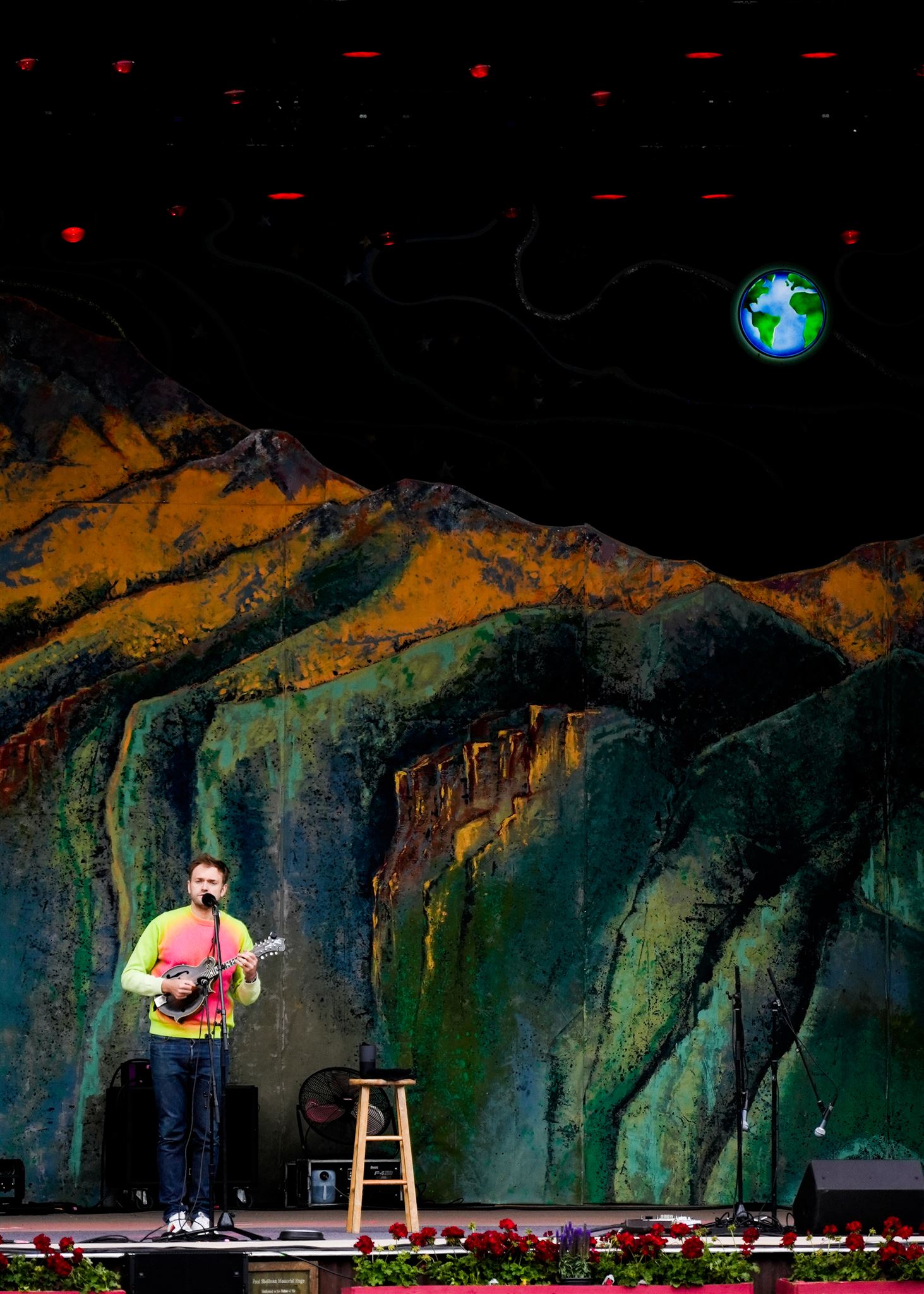
Another major difference between Telluride and its festival peers is scale, and not just in terms of the size of the crowds. Most festivals cram as many performers onto as many stages as possible, all of them running simultaneously, resulting in sensory overload as well as the fear that you’re missing out on something elsewhere. By contrast, Telluride still has just one stage. Every act gets a solo spotlight at Telluride.

“Every year’s festival lineup is an interesting thing,” says Craig Ferguson, who oversees Telluride Bluegrass Festival under the auspices of Planet Bluegrass. “I’ve always said, just watch and it will book itself, and that’s really true. Our process is unique because we have just the one stage and not a bunch of bands, so everybody in the crowd gets to have the same experience. There’s not 18 different stages, so we can create one festivarian experience that everyone shares. We do the booking one act at a time, and we often wind up with interesting combinations.”

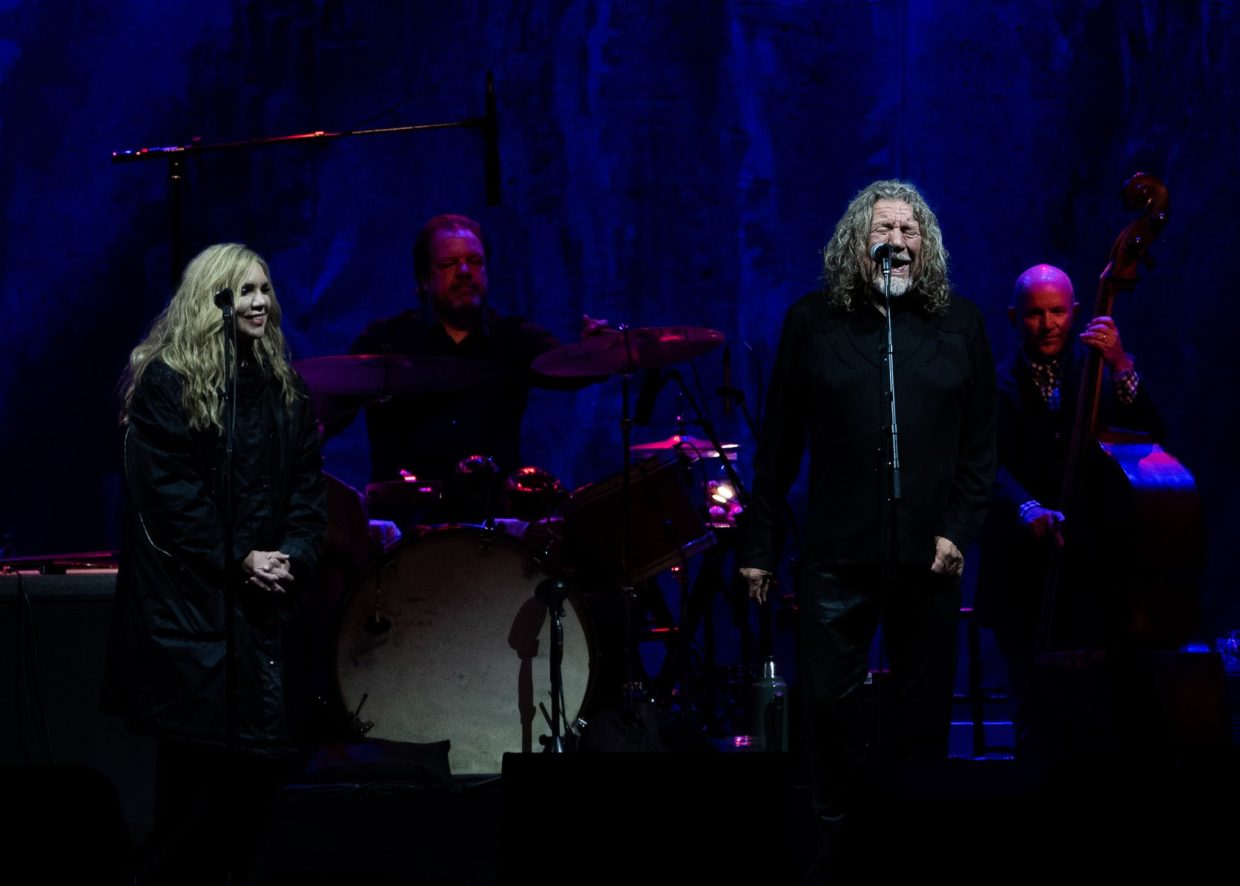
Robert Plant & Alison Krauss perform at Telluride Bluegrass Festival.

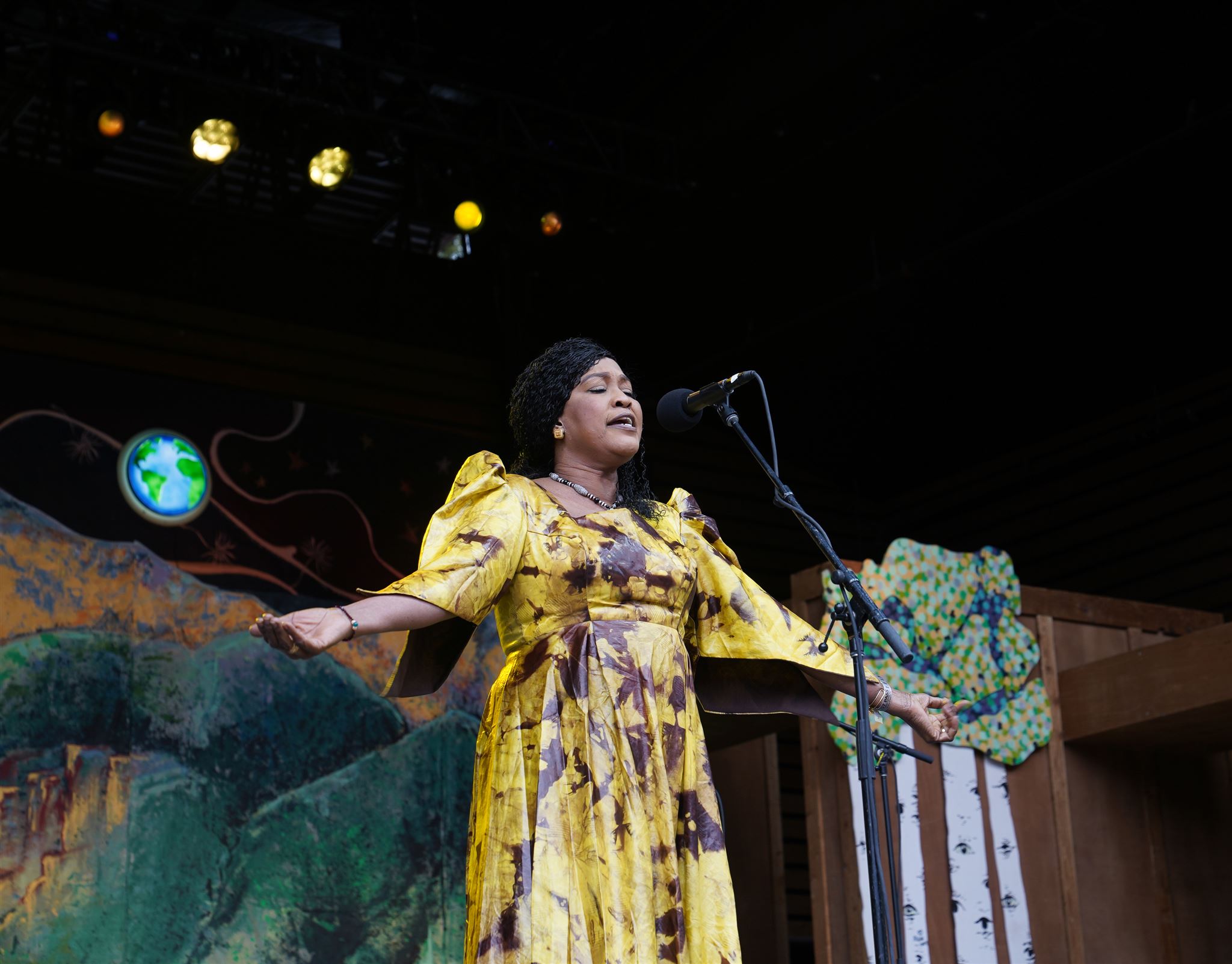
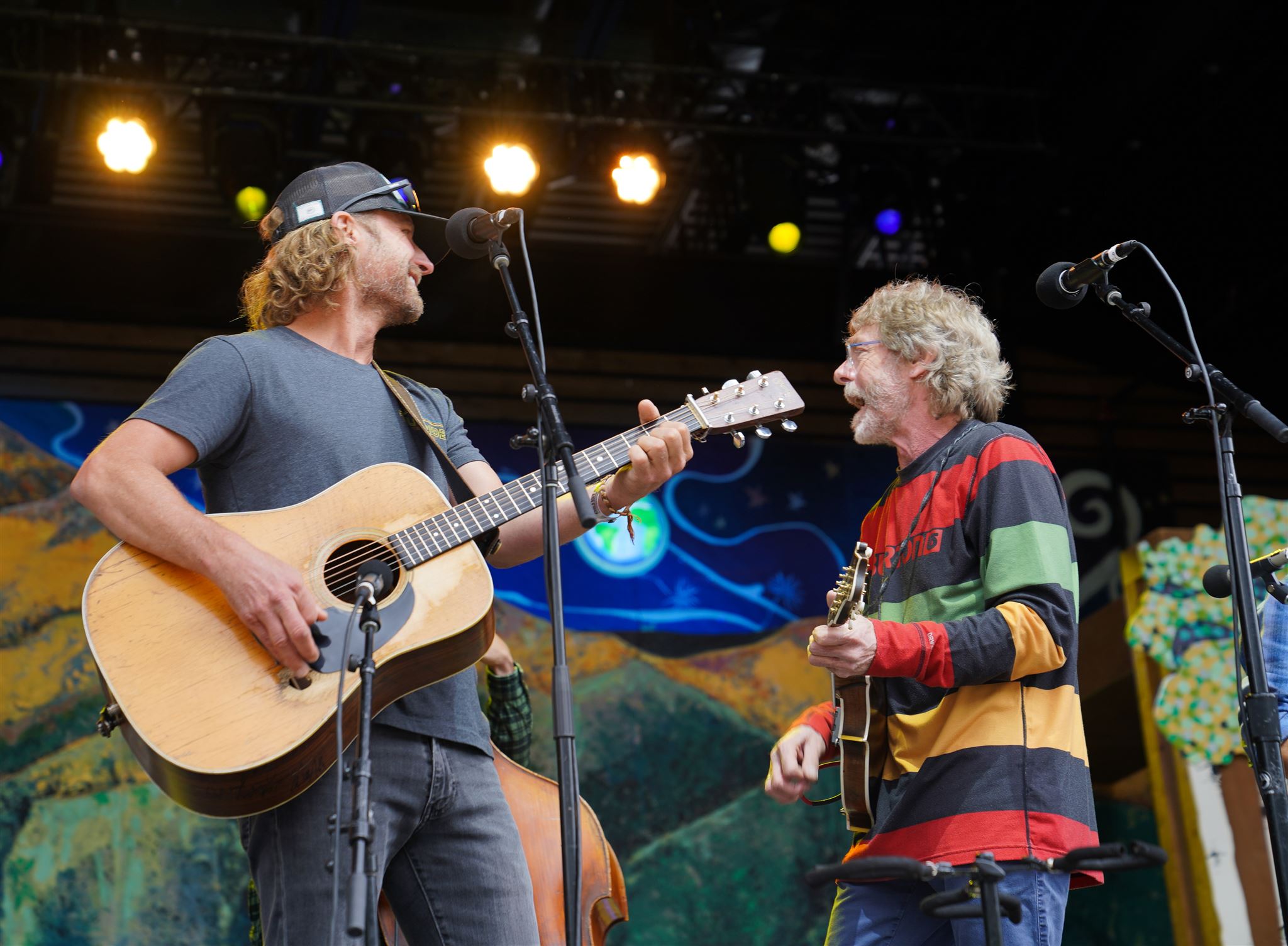
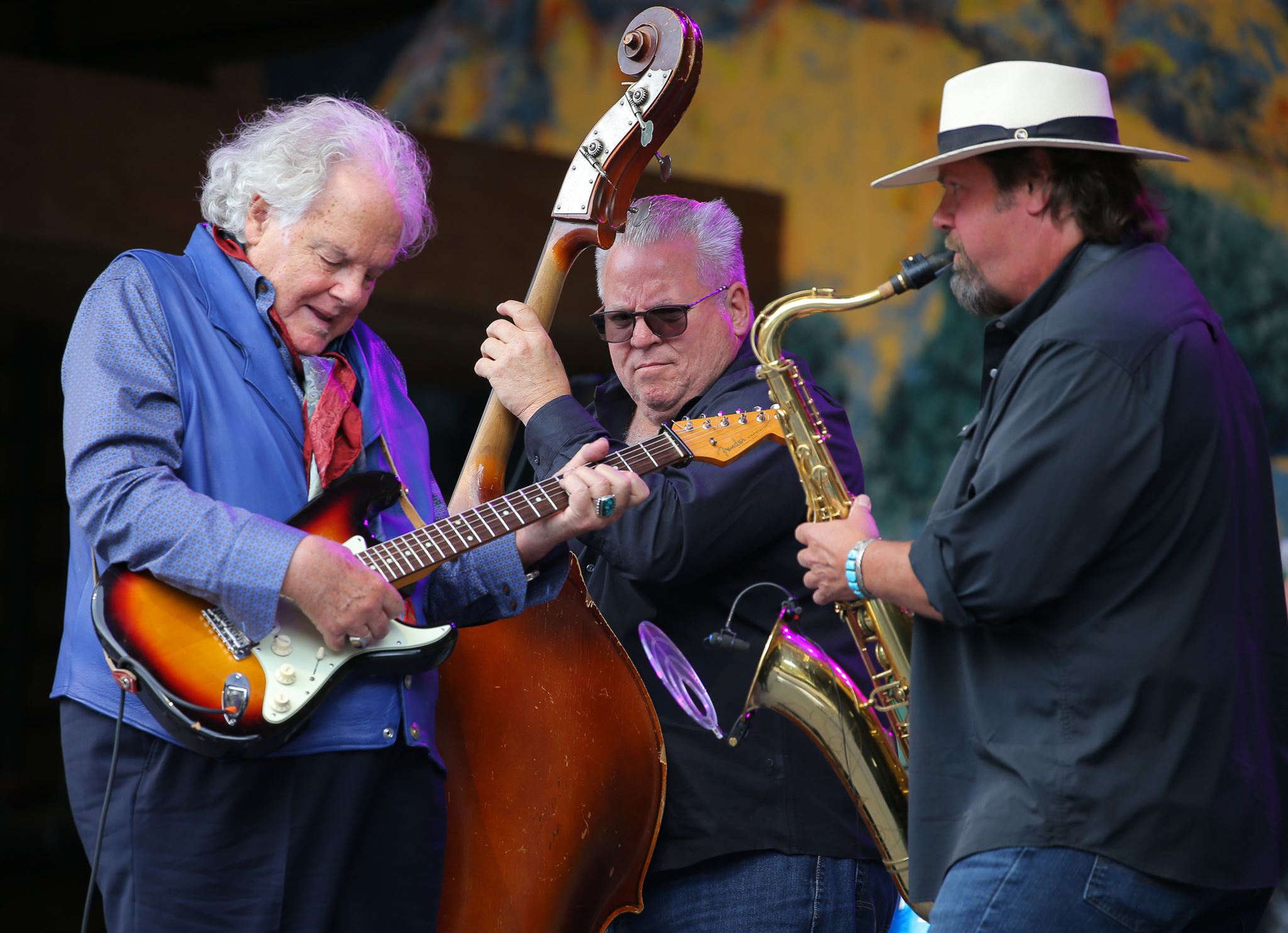
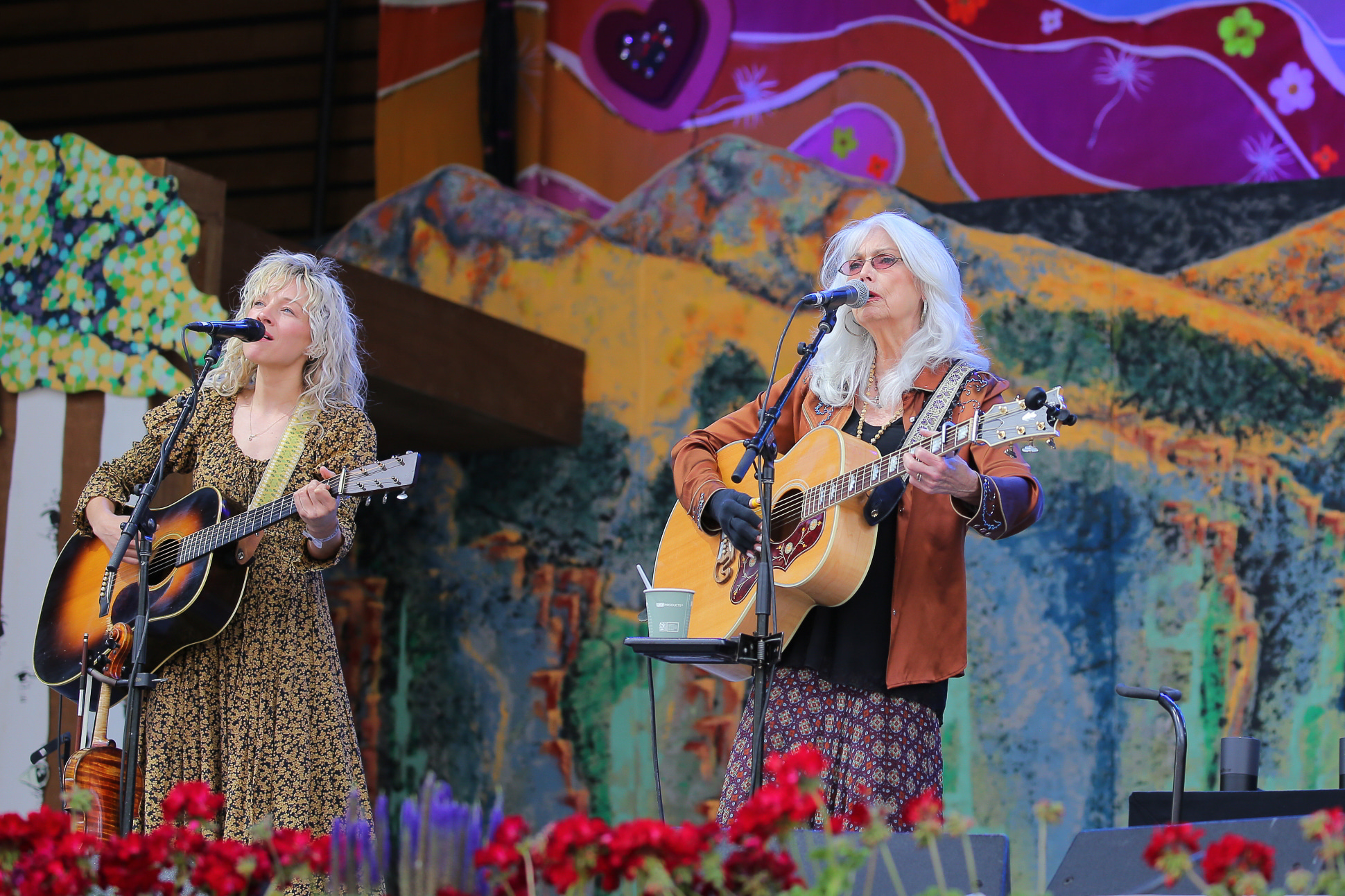
Indeed, those interesting combinations can venture well beyond what you see at a typical folk or bluegrass festival. Along with Sam Bush, Emmylou Harris, Peter Rowan, Del McCoury and The Infamous Stringdusters doing a Sunday morning gospel set, this year’s lineup features ringers like the West African ngoni master Bassekou Koyate and the venerable jam band String Cheese Incident. Some of the anomalous acts from previous years include pop-star jazz pianist Norah Jones, the comedic folk duo Tenacious D and even singer/rapper/actress Janelle Monae. Even with the unlikely acts, the Telluride experience sells itself. It doesn’t take much convincing to get any artist to play.

“Janelle Monae was the most interesting person to talk to,” Ferguson says. “I snuck into her RV just as she was sitting down to a meal by herself, and I was able to sit and talk to her for an hour. I think she would’ve signed up to play every year if she could have, she was so enthralled by the fact that there were elk in the park. It was the most wonderful conversation, and she was great. We’re famous for our curveballs and she was the oddest, I’ll give you that.”

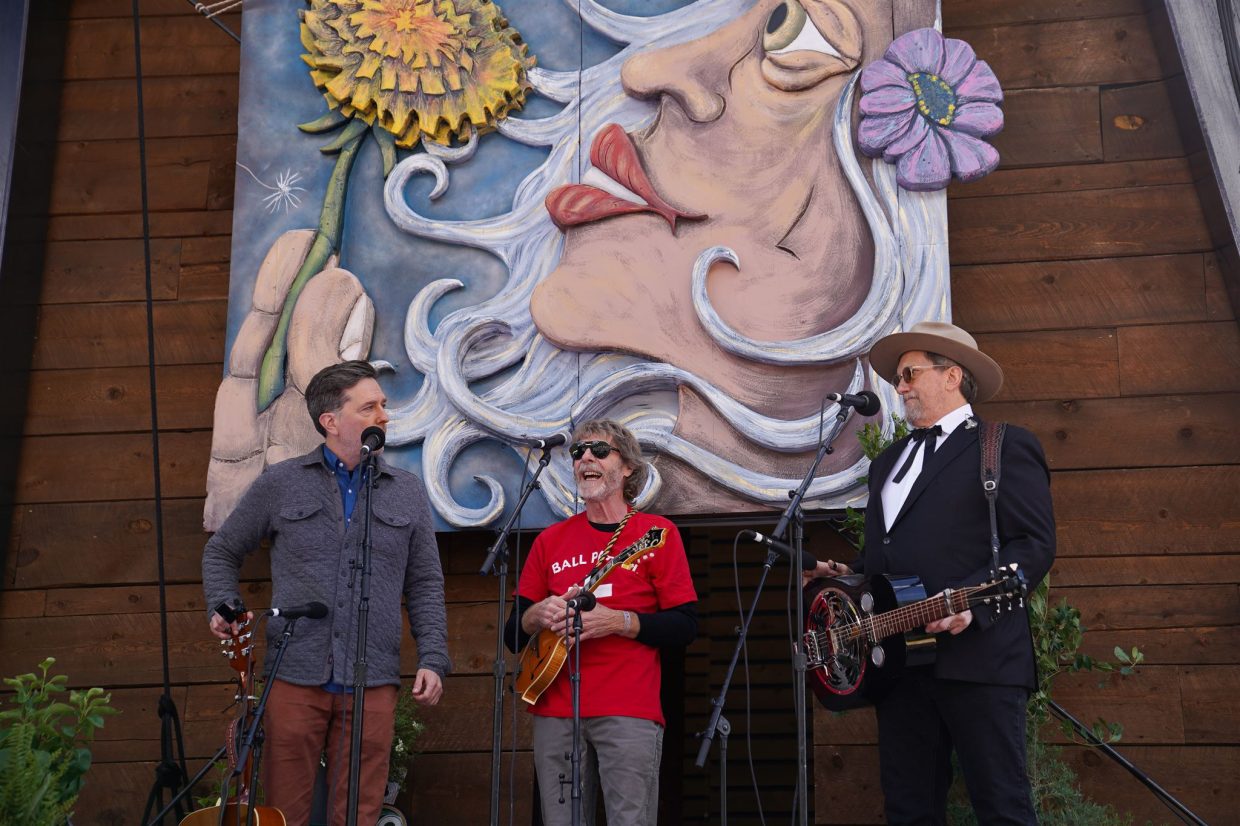
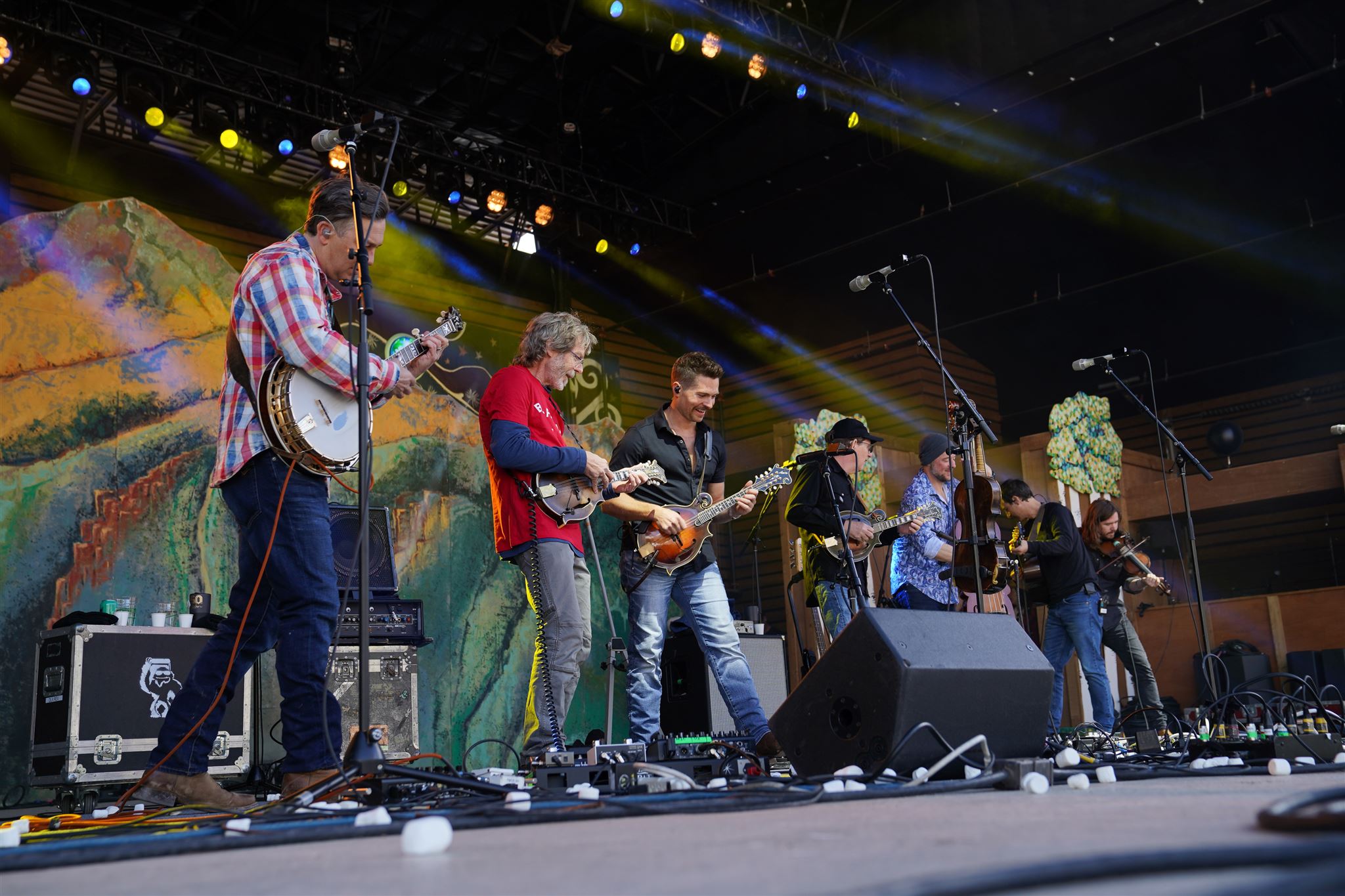
BGS’s own Ed Helms with Sam Bush and Jerry Douglas at Telluride Bluegrass Festival.

Apart from the change-ups, multiple generations of musicians in the world of acoustic music count Telluride among their major artistic, career and personal milestones. One of them is Sarah Jarosz, a four-time Grammy winner who first went to Telluride as a fan at age 14 and played it herself for the first time two years later. Telluride is where Jarosz first connected with idols and future peers like Gillian Welch and Abigail Washburn. It’s also where Gary Paczosa saw Jarosz for the first time at her 2007 Telluride debut. He subsequently signed her to Sugar Hill Records and produced her first four albums.

“It’s the quintessential place to see your heroes, and even get to jam with them,” says Jarosz, who is back on this year’s lineup. “You’ll hear, ‘There’s a jam at this house down the street after the shows.’ So I brought my mandolin and before I knew it, Chris Thile was showing up. Also Jerry Douglas, Tim O’Brien. That was really life-changing, this proximity to heroes that allowed me to become friends with them. And even though Telluride is rooted in bluegrass, they always bring in artists from beyond that world – Janelle Monae, Decemberists, Alison Krauss and Robert Plant. It feels like anything can happen, and the audience that goes is very supportive of that.”

The stalwart House Band of Telluride Bluegrass Festival.

Still, no matter how far afield the lineup wanders, Telluride is ultimately rooted in bluegrass.

“Bluegrass is a fable, and a team sport,” says Ferguson. “That informs how we create the lineup. Looking to the future, socially as well as musically, we think of bluegrass as an allegory. It’s a context that is invitational to all these other styles, country or jazz or classical, and it complements all of them. That remains the heart and soul of this festival, surrounding bluegrass with these other complimentary musics. We are fortunate to be of service to the festivarian community. It’s an annual privilege to see how much it brings to people’s lives, the connection to community.”


All photos by Maya Benko, courtesy of IVPR

TIDAL’s Bluegrass: Dolby Atmos Playlist Is Changing the Listening Game

Ask any fan of bluegrass, and part of what inspires their love is the experience of feeling the music.

The reverberations of wood and string. Thick harmony hanging in the air. That magic interplay of creative spirits trading instrumental breaks back and forth without speaking a word. Until now, you could really only get that in a live setting. But with Dolby Atmos, we’re getting closer than ever to capturing it. 

This new spatial audio format is slowly changing the listening experience – and for once, bluegrass music is at the forefront. Labels like Crossroads Music Group – which includes Mountain Home Music Company and Organic Records – are recording and mastering their music with Dolby Atmos, and platforms like TIDAL are fully onboard, adopting it for their “Bluegrass: Dolby Atmos” playlist.

It’s a win-win, really. Fans get that full-bodied, textured-listening experience – and artists love it, too. According to them, bluegrass is particularly well suited to the spatial-audio revolution.

“It’s perfect because of the organic nature of the music,” says Darren Nicholson (formerly of Balsam Range), who is featured on the TIDAL playlist. “It feels like you are standing in the middle of a jam session in the living room.”

“As a listener of bluegrass music, it feels groundbreaking to listen to the genre in Dolby Atmos,” adds Jesse Iaquinto of Fireside Collective, praising how the Bluegrass: Dolby Atmos playlist highlights bluegrass’s “depth” – with all its tone and timbre included.

In fact, artists like Jeremy Garrett of The Infamous Stringdusters say bluegrass is “prime candidate” for new tech like Dolby audio.

“Bluegrass music in particular is very dynamic and has great sonic separation built in by nature of the instruments usually involved,” he explains. “The extra space gives it the breathing room the music needs to really ‘pop’ for a recorded music listening experience.”

That was the idea for TIDAL’s Editor-in-Chief, Tony Gervino, too. He calls bluegrass “one the most dynamic and vital branches within today’s country music,” and notes that “as the Bluegrass sound itself expands, so do the listening possibilities for its fans.”

He and his team created the Bluegrass: Dolby Atmos playlist to celebrate that very expansion. They ended up with an expert-curated lineup which includes artists from across the bluegrass spectrum, from Lonesome River Band and Balsam Range, to Unspoken Tradition, Benson, The Grascals, The Cleverlys and more. Many of them are also part of Crossroads Music Group.

To them, the magic is in the way Atmos recording makes each listener feel surrounded – even through tiny computer speakers. You don’t just hear the notes, you hear the way each musician and their instrument play off one another, and how it all blends together. 

Before now, that has never really been captured in recorded music – not even bluegrass, with its intricately woven textures and overlapping parts. So for Iaquinto, this new playlist is especially gratifying.

“With no drums or percussion, bluegrass musicians are always playing subtle but intricate parts,” he explains. “These can go unheard on other forms of audio, but with spatial audio, they are brought to the forefront. 

“The vocals are brightened up and colored in a way that finally gives the recorded songs the respect and focus they deserve,” he goes on. “As someone who loves acoustic music, I am extremely happy with the level of quality provided by Dolby audio.”

For artists like Nicholson, the appreciation is perhaps more simple. Calling Dolby Atmos the “ultimate experience,” he praises the way fans can finally sense the attention to detail bluegrass musicians put into their work – a labor of love he likens to crafting “an amazing bouillabaisse.”

You might not know what’s in it, but you know it’s delicious.

“I’m proud of it. I’m proud for listeners to hear it,” Nicholson says, speaking of his music being recorded in Dolby Atmos, and placed on playlists like TIDAL’s Bluegrass: Dolby Atmos. “It is the way to enjoy the music with the utmost clarity. It’s a completely unique listening experience. Whether the average listener knows why, they do know that something is different. And in a good way.”


Editor’s Note: This post is sponsored by Crossroads Label Group.

Seeking Bluegrass in LA, Ed Helms & Amy Reitnouer Jacobs Made a Scene With BGS

To commemorate the 10th birthday of the Bluegrass Situation, co-founders Ed Helms and Amy Reitnouer Jacobs are taking it all the way back to the beginning. In the first installment of an ongoing interview series, the enthusiastic bluegrass fans reveal how they first met, their shared vision for a modern aesthetic, and the meaning behind the unexpected (yet appropriate) name.

Amy: As we’re looking back on 10 years of The Bluegrass Situation, it occurred to me that you and I have never really reflected on how all of this started and how this thing kind of built up. So I wanted to get our own take on it and… reminisce, stroll down memory lane a bit, and think about it.

Ed: We need a little oral history for the archives! [laughs] And for our own… ’cause it’s exciting to reminisce a little bit.

Amy: I’ll kick it off and ask, what was your intro to bluegrass? Why do you care about this music to begin with and what drew you into it?

Ed: The earliest I can trace back would be growing up in Atlanta, Georgia. My mom’s from Nashville, so we would take road trips from Atlanta to Nashville all the time. In addition to that, I spent many, many summers at a summer camp in the Smoky Mountains in North Carolina. That’s another road trip that’s about a three or four-hour drive from Atlanta.

So, on those drives, we’re always pulling off at truck stops and whatever, and we would pick up cassette tapes at the checkout counter. And my dad, who grew up in Alabama, was always a big fan of opera and classical music. He would grab these string band tapes for some reason. And I started listening to these very generic, early string band tapes when I was 8 years old in the car. They didn’t resonate with me as artists, but the music connected with me somehow. And I associated it with those places — Nashville and the North Carolina mountains.

Then as I got older, I was one of those kids that kind of thought everybody was fake, you know, like Holden Caulfield. Just distressed by all the artificiality of our world and of the people around me and like, “Oh, everyone at school, everything is so performative. Like, who’s real? Who’s the real deal?” And that kind of drew me, musically, into older and older music. I got obsessed with authenticity and where are the roots of things. … I think it scratched some itch that I had for authenticity-seeking, and probably allowed me to feel superior to all my classmates in junior high.

Then when I could actually get to a record store, I remember the very first bluegrass album that I bought was the Bluegrass Album Band. I didn’t know who J.D. Crowe and Vassar Clements and Jerry Douglas were, but all I knew was that on the cover of this CD at Turtle’s Records & Tapes in Atlanta was guys holding banjos and guitars and mandolins. So I bought that album and to this day it’s one of my favorite albums. I’ve never asked Jerry Douglas about this, I should, but it felt like the intention of those albums was to kind of just be the ultimate catalog of, you know…

Amy: I mean, it’s called the Bluegrass Album Band.

Ed: Right. They just called themselves the most generic name. And it’s almost like they were just trying to create a library of excellent bluegrass artists playing the canon or something. Or maybe they were really ahead of their time with like meta irony and they were just like, “We’re going to call ourselves the Bluegrass Album Band, ’cause it’s hilarious.”

And of course Tony Rice’s guitar playing on that – I was very much into guitar at the time, I later picked up a banjo – Tony’s guitar playing was so magical to me. I could not understand how human hands could play what he was doing. I would just pour over these solos. I remember the solo to “Your Love Is Like a Flower,” it just was like, how the hell is that being played? I could not wrap my head around it. And I listened to it a million times, and I didn’t have the technology to slow it down, so I couldn’t do that.

Amy: That album and that band really represent a generational shift. It’s not newgrass. It’s playing the canon, but with this mix of the new guard and some folks with some real cred from the second generation.

Ed: You’re right. It isn’t an old sound, what they’re doing. It’s a new sound at that time, because no one was doing Tony Rice licks before Tony Rice. But the harmonies are timeless and the structure of the songs is very traditional. That album means so much to me and I listen to it to this day and I’m still blown away! I actually can play that solo from “Love Is Like a Flower” now, but only at about half speed. And it’s one of the proudest things, when I finally found – someone had transcribed it in tablature, and I was like, “This is string theory explained. This is like if you had Carl Sagan sit you down and explain the mysteries of the universe.” I was like, “Holy shit, I got it! The holy grail!”

Amy: Yeah. To me, it’s still magic. ‘Cause I am not someone who can play an instrument, at least very well, so when I first heard bluegrass, I was just like, “How does that happen? How do you even get the notes from your brain to your fingers and do it so well, and in a way that I’ve just never heard before?” It still kind of blows me away.

Ed: Can I ask you the same question? Where did you first connect to bluegrass music?

Amy: I grew up in rural Pennsylvania, and there was a lot of country and bluegrass around there. Admittedly, I didn’t like it because to me it represented… I mean, I was really busy listening to showtunes and learning Sondheim lyrics and stuff. I was that kid. And I just thought country and roots music was inherently uncool and representative of this place that I felt like I was stuck in.

It wasn’t until I went to college in North Carolina… It was probably the first few weeks of school, one of my housemates who is still a very dear friend of mine invited me to a show, and it was Nickel Creek. I had never heard of them. I had no idea what I was going in to and Erin said, “I just think you’re going to like this. Just come with me to the show. I’ll drive. We’ll go.” And I can honestly say, that show changed my life. I can still remember the whole show so clearly.

Ed: What year are we talkin’?

Amy: 2005? Somewhere around there. I was kind of reeling from it, because it had been a really long time since I felt like I had been challenged by music that was being played by young people, that I really connected with, but also was just kind of flummoxed by. From there it became a deep dive. I was really fortunate going to school where I did, that there was great bluegrass around. I mean, there was this bar about 30 minutes away called The Cave in Chapel Hill, and we used to go see the Steep Canyon Rangers play there every month. And I mean, this is a tiny underground basement bar, maybe holds 50 people, and they would just have bluegrass jams.

Ed: How close were you to Asheville?

Amy: It was about three hours from Asheville. Asheville is where we went for, like, fall break and our little weekend trips and stuff. We would go to Boone and Asheville, and even Mount Airy had a bluegrass fest that we went to. So that’s when I really started getting into it. And I could say, I think my first significant album purchase was pretty soon after that first concert. It was Why Should the Fire Die? by Nickel Creek. I played that into oblivion and had it in my car for like, 10 years, back when we kept stacks of CDs in our cars.

From there it kind of fell into the background, because I was studying film and I moved to New York. I was working all the time and didn’t really make space in my life for music. By the time I moved out to LA, I was working for a producer and I had one or two friends out here that I knew. Again, working a lot, not making any money and trying to find my place in the city, and not really connecting with a lot of the other assistants that I was meeting at the agencies. And I remember going to see the Get Down Boys at some bar on the west side of LA and having this thing reignited in me that I had felt back in college and was like, “OK, I think these are my people.” There was this momentum happening in LA at that particular time. And that’s how I started getting to know the scene out here and had the idea for the BGLA blog.

Ed: Tell us about BGLA.

Amy: I admittedly was a little bored at work. I was working at the Academy of Motion Pictures at this point, which was exciting, especially for three months of the year around the Awards, but the rest of the time was kind of slow. So I started this Blogspot and wrote about what was happening on the scene in Los Angeles. And then people started pitching me, cause I don’t think anybody was really covering it out here. So suddenly I was getting inquiries to interview these people… I mean, I started going really deep in the music and the history and background and getting to know the scene out here. But I remember getting connected to Sean Watkins (of Nickel Creek), and it was this beautiful, full-circle moment. It was the first time I met Sean and got to talk to him, and we became friends and kind of opened a whole other door to the roots music scene and what it could be. And then I think I met you pretty soon after that.

Ed: So when did we meet? I cannot remember.

Amy: Well, I remember when we first met, but I doubt you remember when we first met. I remember this because it was probably the most nervous I’ve been in my whole life. I saw you at a Sarah Jarosz show at Hotel Cafe. And I walked up to you and gave you one of my business cards for Bluegrass LA. And I was like, “I think you’ll like my blog.” That was it! And I don’t imagine you remember that, but that is technically the first time I met you.

Ed: At some point we had a cup of coffee to talk about possibilities.

Amy: Yes, that’s true.

Ed: But then maybe we bumped into each other… I assumed it was Largo, but I have the vaguest memory of getting a business card from you. So yeah, that part tracks.

Amy: Why don’t you talk about the LA Bluegrass Situation, because that predates me.

Ed: You weren’t even a part of the first LA Bluegrass Situation?

Amy: No. I was there. I went one night. But we didn’t know each other at that point. I just went as a fan.

Ed: The first time I ever went to Largo was when John Krasinski took me to see Aimee Mann playing at the Fairfax Largo. We went in through the back and I just was like, “Whoa, what is this incredible vibe?” This whole place is just so, so cool. And eventually Flanny (the owner of Largo) invited me to do stand-up on some people’s shows, and one night he said, “Why don’t you do a show?” And I thought, “OK, cool. It’d be fun to mix music and comedy.” So I think the first show that I did at Largo was called “Hams and Jams.” [Laughs] The idea was like, “Oh, it’s hams, like comedy people, and jams, music people!” And I just mixed up some comedians and musicians with a terrible name that Flanny was so gracious about rolling with.

We really loved that combination, but I was really struggling to wrap my head around the LA bluegrass scene. It just was so disparate, but somehow we managed to get excited about trying to cultivate the scene and coalesce things a little bit more. And I think that was the idea… that was the sort of original inertia behind the first LA Bluegrass Situation. The name literally just came from Flanny talking about it before we named it. He just kept talking about it as the bluegrass situation that we were dealing with. So then when it came time to be like, “What are we going to call it?” I was like, “Well, you’ve been saying this awesome thing because there’s something a little cheeky about a ‘situation.'” Like, it feels like, you know, “We got ourselves a situation, here!” Like it just kind of has some irreverence built into it.

So that’s what we named it, and Flanny and I both pulled as many strings as we could with whatever relationships we had at the time and put a totally magical lineup together. Like I still can’t wrap my head around it. I mean, it was Dave Rawlings and Gillian Welch and Steve Martin and Steep Canyon Rangers and Nickel Creek and Punch Brothers and the Infamous Stringdusters… Oh, and of course the Lonesome Trio, my crew, with my friends Ian and Jake. We were sort of the hosts.

Amy: I remember I got an email from you not long after that, which was pretty shocking. What was the impetus of that, do you remember?

Ed: Yeah, I think that I was feeling pretty heady after that first LA Bluegrass Situation and probably getting over my skis a little bit and being like, “We can create the ultimate hub of bluegrass for Los Angeles and it will be this Tower of Babel that everyone will flock to!” I had so many ideas. There were so many things that I found lacking in Los Angeles that I had taken for granted in New York. There are just so many website resources. “You want a banjo teacher? Look here, there’s tons in New York City. You want to see what shows are happening? Look here!” You could just find stuff in New York City and you couldn’t find stuff in Los Angeles.

Amy: I look at the branding of that initial site and that first logo — I think DKNG did our first logo in Santa Monica — and I remember being really proud of the fact that we didn’t look stereotypical of the era.

Ed: You’re so right. And I give you so much credit for that because the very first LA Bluegrass Situation, Hatch Show Print did a bunch of posters for us. And they were so cool. I still have a bunch and I’m really proud of that, but it was also leaning really hard into a very conventional, stereotypical bluegrass aesthetic. It was a funny wake-up call for me – that plus your input. It helped me realize that what we wanted to do and where we wanted to go as fans and supporters of this idiom was not retro, like it was…

Amy: Forward-thinking.

Ed: Forward. And that artists like Chris Thile were doing that musically, right? But there was a little bit of a reckoning of “What’s our brand going to feel like? What do we want it to evoke? And who do we want to connect with? Do we want to connect with young people who are finding this stuff for the first time and finding it really fresh and exciting?”

Amy: That was always the crux of it for me. To a large extent, that aesthetic is still very alive and well within the roots music community. I had an inkling that there was an audience that had different tastes, but still could love this music and that it didn’t all have to look the same way. I could have never predicted where it went and what we’ve worked on since, but I think at the beginning we were very “of the moment.” It was the same time that Mumford & Sons and the Lumineers were on the top of the charts, and there was this kind of “authenticity” movement taking place.

Ed: I remember going to business meetings with Hollywood producers and one guy had a banjo in his office. And I was like, “You play the banjo?” And he’s like, “No, no, but I want to learn!” But you’re right. It was a moment. I’ve felt like an old fuddy duddy since I was 12 years old, but I was like, “Was I ahead of the curve here?”

Amy: Yeah, similarly, I’ve kind of always felt like an old soul; I never really felt like I truly fit in to my time, so I think there was something that really drew me in to that zeitgeist, but what amazed me was that once we really got into it, it was so much more complex and modern and exciting than I ever expected.

Editor’s Note: Look for the next part of this conversation with Ed Helms and Amy Reitnouer Jacobs in the weeks ahead.
BGS Top 50 Moments: The LA Bluegrass Situation at Largo

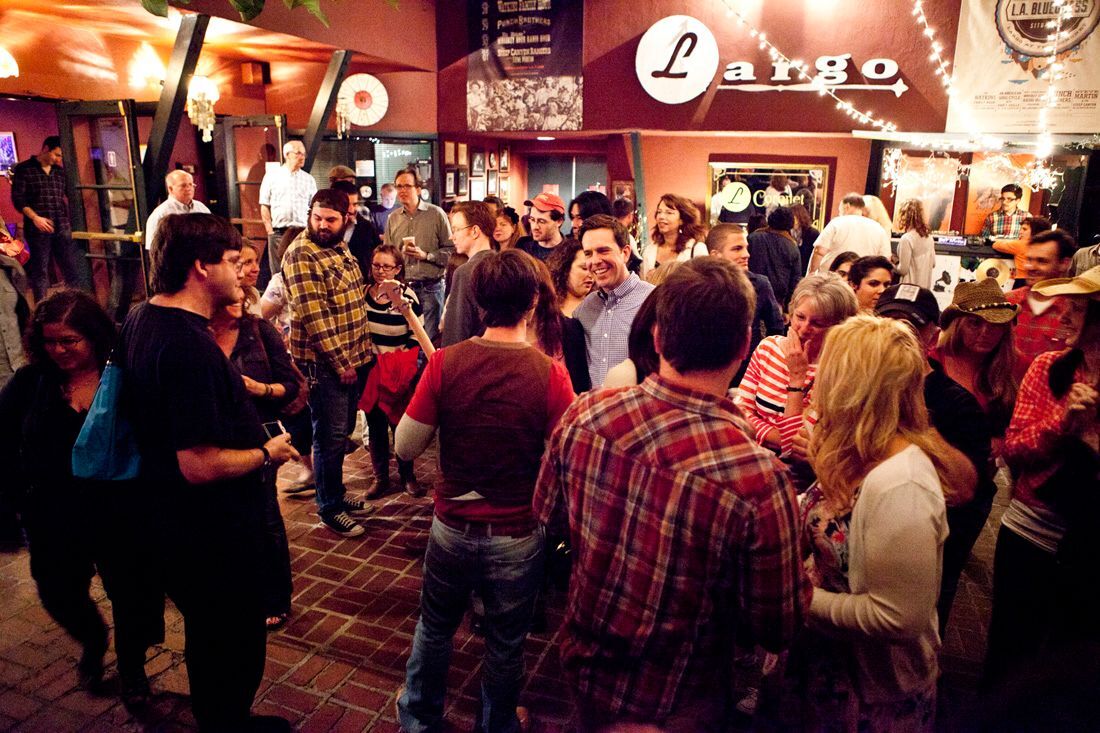
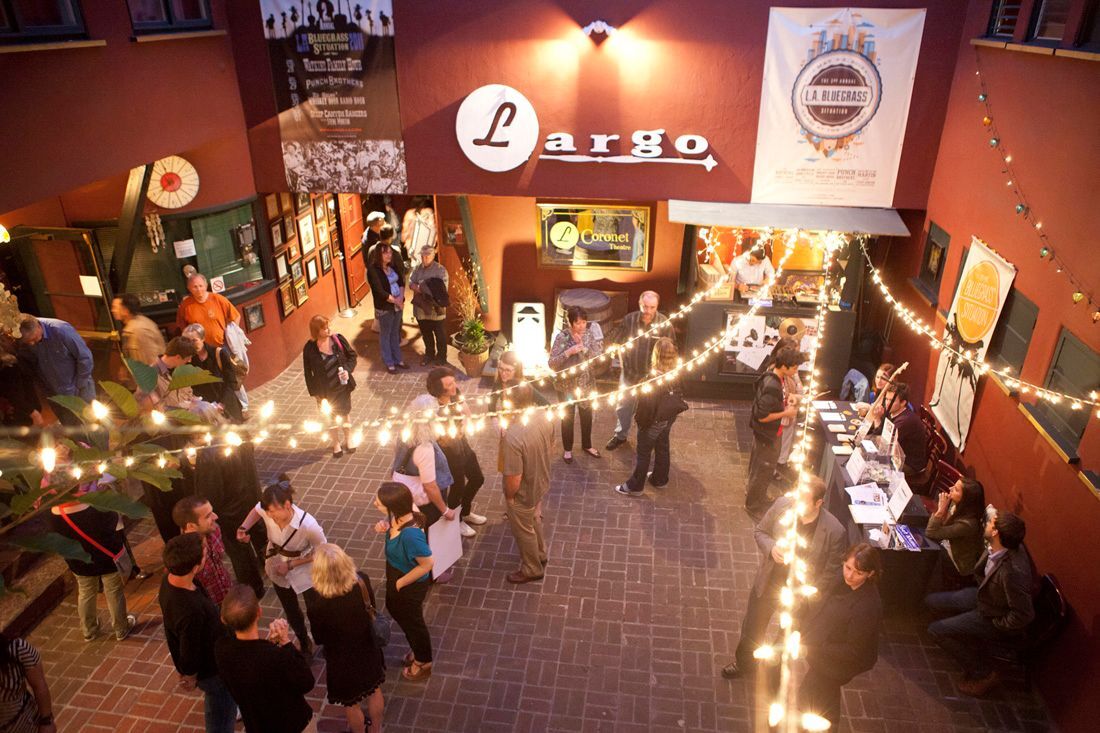
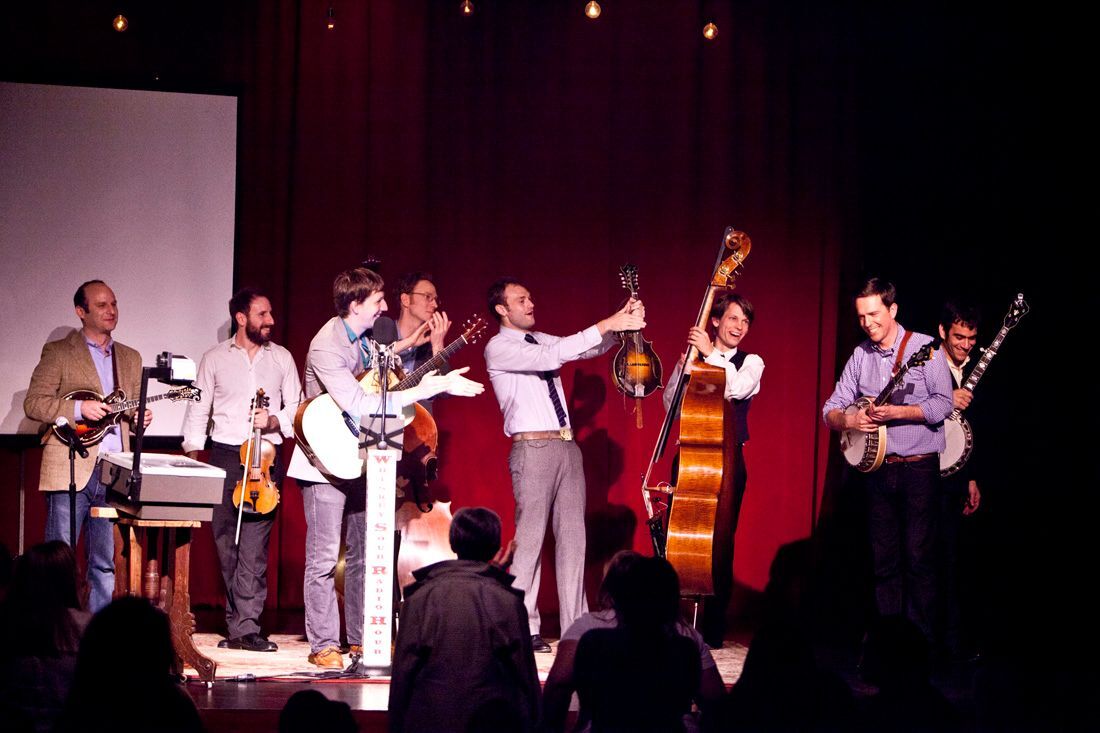
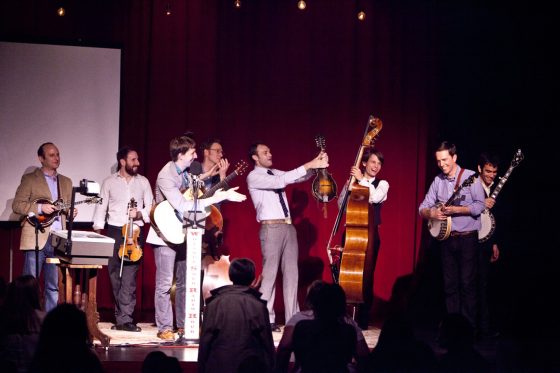
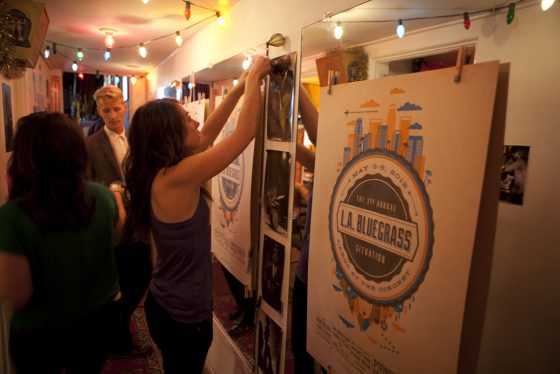
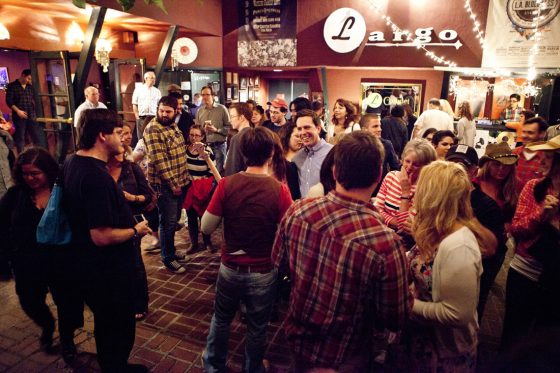
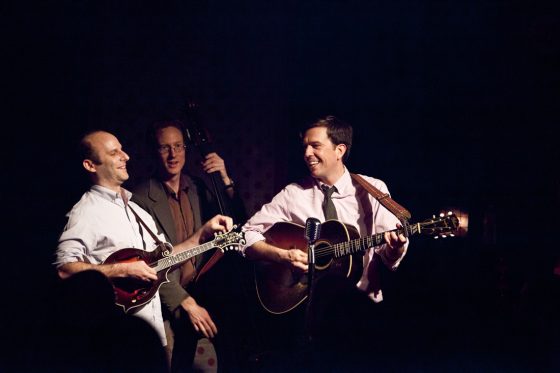
It was 2010 when the true origins of “The Sitch” first materialized.  For five days in May, BGS founder Ed Helms congregated a lauded lineup of roots artists at the storied Largo at the Coronet Theatre in Los Angeles.  That first annual LA Bluegrass Situation festival included the likes of Steve Martin and the Steep Canyon Rangers, The Watkins Family Hour, Gillian Welch, Will Ferrell, Jackson Browne, The Infamous Stringdusters, and Ed’s Whiskey Sour Radio Hour variety showcase.
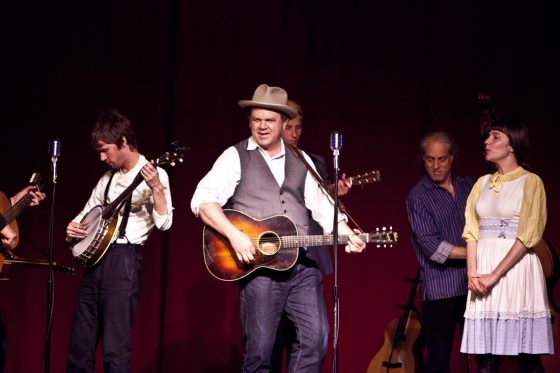
In the festivals that followed, LABS brought in the likes of Nickel Creek, John C. Reilly, the Punch Brothers, Willie Watson, and many others before broadening to bigger venues across Los Angeles.  The online iteration of “The Bluegrass Sitch” wouldn’t come to fruition for another two years, but the heart of it was all there, on stage at Largo, from the very start.


Photo Credit: Lincoln Andrew Defour

BGS Class of 2021: Our Favorite Albums, Made With Intention

This collection of albums is not simply a “best of” 2021. That would be selling every single collection included herein far too short. These roots and roots-adjacent releases each stood as a testament to the music makers and communities that spawned them. Not simply in the face of a globe-halting, existentially challenging pandemic, but in the face of an industry, government, and culture that would just as soon have all of us pretend the last two years — and beyond — simply didn’t happen. 

These artists and creators refused to let the pandemic define their artistic output through it, while simultaneously acknowledging, processing, and healing from the pandemic through this music. Not a single album below is a “pandemic record,” yet every single one is a resounding, joyful balm because the intention in each is not simply a reaction to a global disaster or an attempt to commodify it or its by-products. Not a single one is an attempt to “return to normalcy.” They’re each challenging us as listeners, in both overt and subtle ways, to walk into our collective new reality together, wide-eyed and open-armed, and with intention.

Daddy’s Country Gold, Melissa Carper

It was a sly move on Melissa Carper’s part to give her album, Daddy’s Country Gold, a title that works on so many levels, nodding to the passing down of sounds, to her road nickname and to her ability to casually loosen postwar country perceptions of masculinity and femininity. In her songs and performances, her gestures are even more beguilingly subtle. Enlisting a fellow upright bassist to produce with her, the Time Jumpers’ Dennis Crouch, Carper claimed western swing and early honky-tonk eras as her playground, and the shrewd, crooning intimacy of Billie Holiday as her guide. Carper sings in a slight, reedy rasp, deftly phrasing her lines and curling her words to suggest the lasting nature of longing and fleeting nature of pleasure. She’s written a movingly clever ballad of broken commitment (“My Old Chevy Van”), elegantly pining tunes of both torchy and down-home varieties (“I Almost Forgot About You,” “It’s Better If You Never Know”) and whimsical fantasies of rural homesteading, sometimes making clear that she’s cast a female partner in those stories (“Old Fashioned Gal,” “Would You Like to Get Some Goats?”) Her artful knowledgeable nudging of tradition is a revelation. — Jewly Hight


Music City USA, Charley Crockett

Few artists in the last few years have us as fired up as Charley Crockett. His unapologetically individual sound and aesthetic shine through once again on his 2021 release, Music City USA. The irony, of course, is that the album sounds nothing like most of what comes out of modern-day Nashville. It’s an amalgamation of influences both old and new — blues and classic country and soul with a peppering of Texas-tinged Americana on top. Charley Crockett absolutely represents what the future of Music City sounds (and looks) like in our book. — Amy Reitnouer Jacobs


Home Video, Lucy Dacus

We must forgo the existential “Is it roots?” question at this juncture, simply because this stunning and resplendent work by Lucy Dacus refused to be excluded from this list. Perhaps the superlative album of 2021, in a year filled to bursting with objectively and subjectively superlative albums, Home Video is impossibly resonant, relatable, down-to-earth, and touching — despite its intricate specificity and deeply vulnerable personality. Dacus’ queerness, and the beautiful, humane ways it refuses categorization and labels, is the crack beneath the door through which the light of this gorgeous, fully-realized universe is let into our hearts. Her post-evangelical pondering; the challenging while awe-inspiring abstract, amorphous gray zones she doesn’t just examine, but celebrates; the anger of rock and roll paired with the tenderness of folk and the spilled ink of singer-songwriters — whether taken as a masterpiece of genre-fluid postmodernity or an experiment on the fringes of roots music, Dacus’ Home Video establishes this ineffable artist as a subtle, intellect-defying (and -encouraging), empathetic genius of our time. — Justin Hiltner


My Bluegrass Heart, Béla Fleck

It’s been over twenty years since the eminent master of the banjo, Béla Fleck, recorded a bluegrass record. My Bluegrass Heart completes a trilogy of albums (following 1988’s Drive and 1999’s The Bluegrass Sessions) and is as much a who’s who of modern bluegrass – featuring the likes of Billy Strings, Chris Thile, Sierra Hull, Bryan Sutton, Molly Tuttle, Michael Cleveland, Sam Bush and many others – as it is a showcase of Fleck’s still-virtuoso level talent.

But as much as My Bluegrass Heart is an album for a bluegrass band, we would be hard pressed to call it a bluegrass album (in the best possible way). As he has done countless times before, Fleck effectively breaks every rule and pushes every boundary by surrounding himself with fellow legendary rule breakers, creating something wholly beautiful and unique in the process.Amy Reitnouer Jacobs


A Tribute to Bill Monroe, The Infamous Stringdusters

Bluegrass loves a “back to bluegrass” album, no matter how far an artist or band may or may not have traveled from bluegrass before coming back to it. On A Tribute to Bill Monroe, the Infamous Stringdusters cement ‘80s and ‘90s ‘grass – “mash” and its subsidiaries – as an ancestor to the current generation of jamgrass. Or, at the very least, it cements that these two modern forms of bluegrass cooperatively evolved. It’s crisp, driving, bouncing bluegrass that’s as much traditional as it isn’t. Sounds like quintessential Stringdusters, doesn’t it? Their collective and individual personalities ooze through the Big Mon’s material, which is what we all want cover projects to do, in the end: Cast classics in a new light, into impossibly complicated refractions. And, in this case, infusing postgrass sensibilities back into the bluegrass forms that birthed them. — Justin Hiltner


Race Records, Miko Marks & the Resurrectors

One of the best bluegrass albums of the year most likely would not be “binned” as bluegrass, and that this album is titled Race Records demonstrates exactly why. Miko Marks returns to the primordial ooze aesthetic of country, old-time, blues and bluegrass — without a whiff of essentialism — and accomplishes a Bristol Sessions or ‘40s-era Grand Ole Opry sound that’s as firmly anchored in the present as it is elemental. Marks’ musical perspective has always highlighted her awareness that the death of genre, as it were, is nothing new, but a return to the traditions that birthed all of these roots genres, many of which can be attributed to the exact communities race records originally sought to erase. Marks & the Resurrectors joyfully and radically occupy songs and space on Race Records. The result is as light and carefree as it is profound; it’s devastatingly singular yet feels like a sing along. All quintessential elements of bluegrass and country. — Justin Hiltner


Dark in Here, Mountain Goats

John Darnielle sings at the velocity of a firehose torrent, and he writes songs with titles like “Let Me Bathe in Demonic Light” and “The Destruction of the Superdeep Kola Borehole Tower.” But rather than death metal, Mountain Goats play elegantly arranged folk-rock dressed up with saxophones and the occasional keyboard freak-out. Dark in Here, the best of five Mountain Goats albums released the past two years, coheres into tunefulness despite the clashing contrasts — especially “Mobile,” a gently gliding Biblical meditation on hurricane season, and also Darnielle’s prettiest song ever. Perfect for the whiplash jitters of this modern life. — David Menconi


In Defense Of My Own Happiness, Joy Oladokun

I don’t know if I’ve ever been so immediately captivated by an artist as I was when I first heard Joy Oladokun’s single, “Jordan,” earlier this year. On that song — and every other one on In Defense of My Own Happiness that I played over and over this year — her clear voice and searingly personal lyrics emerge as a calm, universal call to pursue something better, melting down her own painful past and re-molding it in the image of self-love, inner peace and … well, joy. Oladokun is indeed building her own promised land, and we’re all lucky to bear witness. — Dacey Orr Sivewright


Outside Child, Allison Russell

One might assume an album covering the subject of abuse could intimidate a listener with its potential heaviness. While Outside Child does indeed venture into the depths of those dark experiences, Allison Russell gleans profound lessons learned and treasures discovered from each and every detail of her experiences in her youth. The result is ethereal and uplifting — and a release of trauma through a bright musical experience swelling and overflowing with hope for the future. — Shelby Williamson


The Fray, John Smith

Most artists are pretty keen to play down the idea of a “lockdown record,” because they’re worried it will limit the music’s appeal or longevity. But the emotions John Smith pours into The Fray — born of that period when we were all taking stock of our lives, and wondering what to do next — will hold their currency for a long while yet. It’s honest, yes, but also pretty soothing on the ear, showcasing Smith’s fullest sound to date — both heart’s cry and soul’s balm at once. — Emma John


See You Next Time, Joshua Ray Walker

I wasn’t out after “Three Strikes.” Instead, I was all in. With the steel guitar weaving like a drunkard in a Buick, it sometimes seems like this Dallas musician’s third album is about to go off the rails, along with the lives of the people he’s created in these songs. It never does, though, and that’s a credit to Joshua Ray Walker’s commanding vocal and a willingness to bring his dry sense of humor to the country music landscape. From the pretty poser in “Cowboy” to the unsightly barfly known as “Welfare Chet,” these folks feel like true honky-tonk characters. — Craig Shelburne


Simple Syrup, Sunny War

“Tell me that I look like Nina,” sings Los Angeles singer-songwriter Sunny War in “Like Nina,” the keystone song of her fourth album, Simple Syrup. The Nina in question is, of course, Nina Simone. The look is the “same sad look in my eyes,” though in concert War often flashes a bright, disarmingly shy smile — that of a young Black artist demanding to be taken on her own, singular terms, not the terms of cultural expectations. She continues: She can’t dance like Tina, sing like Aretha, be styled like Beyoncé. But she can see injustice, seek love and respect, seek a sense of self, and sing about it, captivatingly, with her earthy voice and folk-blues-rooted fingerpicking, enhanced by a small cadre of friends led by producer Harlan Steinberger. Like Nina? No. Like Sunny War. — Steve Hochman


Sixteen Kings’ Daughters, Libby Weitnauer

There’s a new artist on the folk scene — Libby Weitnauer. Weitnauer is a fiddle player, violinist, singer and songwriter raised in East Tennessee and currently based in Nashville. Her debut EP and first solo effort, Sixteen Kings’ Daughters, was produced by Mike Robinson (Sarah Jarosz, Railroad Earth) and presents centuries-old Appalachian ballads that have been recast into a lush and unsettling sonic landscape. Weitnauer’s high lilting voice is reminiscent of Jean Ritchie, and she glides with ease atop eerie backdrops of electric guitar, bass, fiddle and pedal steel. A strong debut to say the least, and we’re excited to hear more. — Kaïa Kater


Urban Driftwood, Yasmin Williams

Watching Yasmin Williams play guitar can boggle your mind. She uses her full body to coax noise from the instrument, her fingers pounding on the strings, her feet clicking out counter rhythms in tap shoes, one hand even accompanying herself on kalimba. As impressive as her technique is, it’s less remarkable than her facility for compositions that are melodically direct yet structurally intricate. Urban Driftwood is a carefully and beautifully written album, and Williams’ songs lose none of their flair when she transfers them from the stage to the studio. Dense with earworm riffs and evocative textures, the album represents a crucial pivot away from the increasingly staid world of folk guitar, which has recently been dominated by white men indebted to the historical American Primitivism pioneered by John Fahey. Williams is opening that world up to new sounds and influences, insisting that her guitar can speak about our present moment in ways that are meaningful, moving, and subversive. — Stephen Deusner


They’ve Got You Covered: 10 Tributes You Need to Hear

2020 was a year of many things – COVID-19, existential elections, the shuttering of the music industry, and on and on – but one common, non-catastrophic throughline of the musical variety was cover songs. Many musicians and artists, finding themselves with more free time than usual and more standard-fare albums and cross-continental tours back-burnered, took the opportunity to explore live records, collaborations, and yes, covers. From Molly Tuttle to Wynonna, livestreams to socially-distanced shows, covers became an unofficial pandemic pastime. 

Now, in 2021, many of these cover projects conceived and created in 2020 have made it to store shelves – digital and otherwise – and we’ve collected ten tributes worth a listen:

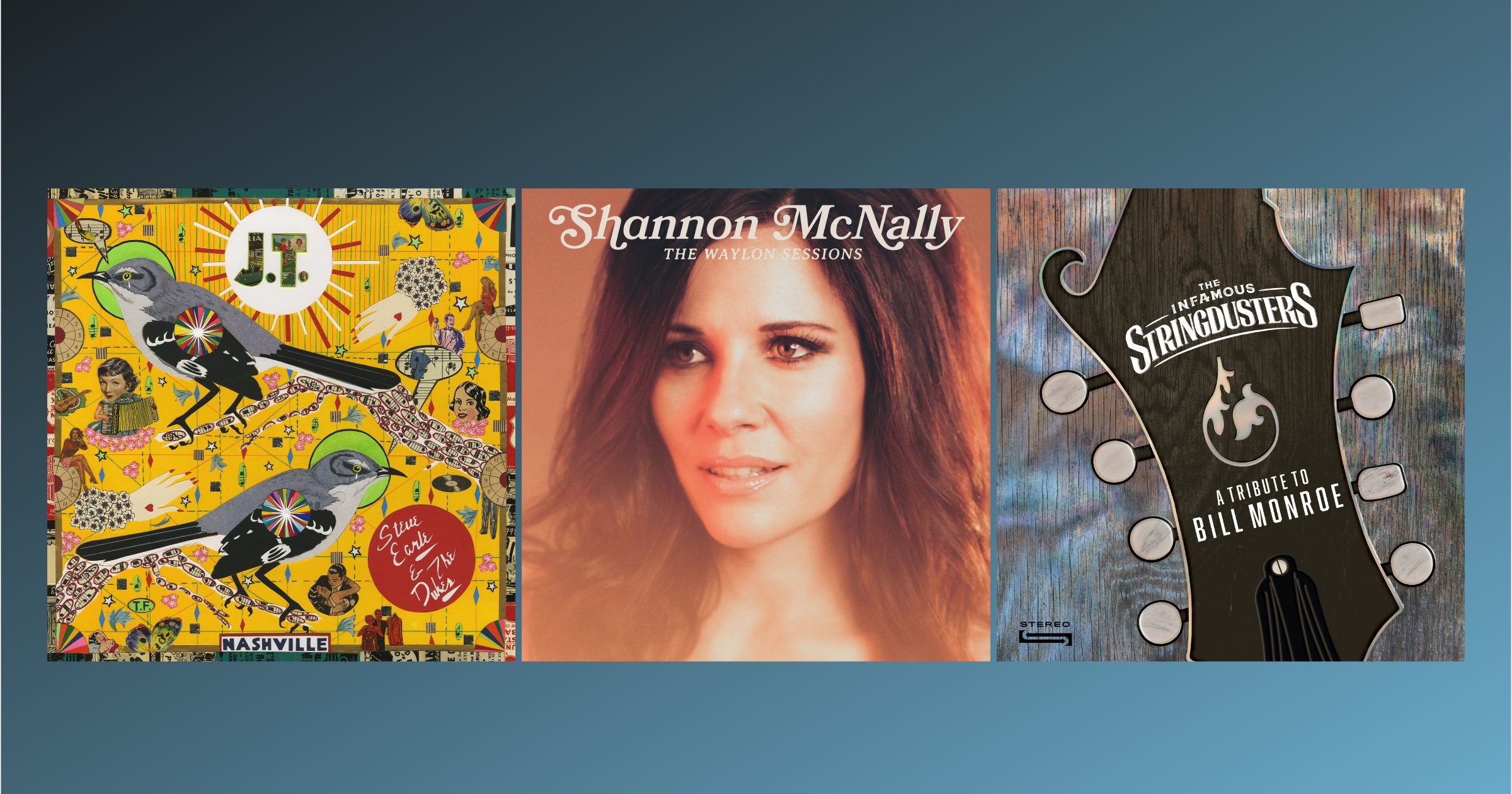
Shannon McNally covers Waylon Jennings

It’s fitting that Shannon McNally released The Waylon Sessions on Compass Records, whose headquarters now occupies “Hillbilly Central.” As Tompall Glaser’s former studio, the building helped give rise to country’s outlaw movement and it’s where Waylon himself recorded. With guests like Jessi Colter, Buddy Miller, Rodney Crowell, and Lukas Nelson, the project recontextualizes Waylon Jennings’ material, which is usually associated with hyper-masculine wings of the country scene. As McNally puts it in a press release, “What Waylon Jennings brought to country music is what country music needs right now, and that unapologetic and vulnerable sense of self are what women are tapping into artistically right now as the industry evolves.” 


Steve Earle covers Justin Townes Earle

Many a musical child has covered their parents’ catalogs in retrospect, but it’s rare that we see the reverse. A gorgeous, gutting, and laid-bare album, Steve Earle’s J.T. is a ten-song tribute to his son, Justin Townes Earle, who passed away suddenly in August 2020, shocking the Americana and folk communities. Earle’s signature emotion bristles and crackles throughout the project, giving Justin Townes’ songs an even stronger quality of visceral electricity. Proceeds from the album will go to a trust for Etta St. James Earle, Justin Townes’ daughter and Steve’s granddaughter. 


The Infamous Stringdusters cover Bill Monroe

Spread out from North Carolina to Colorado and beyond, the Infamous Stringdusters utilized home recording from their respective studios during the pandemic to accomplish musical creativity their jam-packed schedule hadn’t really allowed in the “before times.” Their brand new EP, A Tribute to Bill Monroe, returns the virtuosic jamgrass outfit to territory familiar to those who first found the group when they were cutting their teeth, striding out from traditional bluegrass into the vast, expansive newgrass-and-jamgrass unknown. The project illustrates that the true strength of this ensemble is found in utilizing traditional bluegrass aesthetics for their own creative purposes. For example, you might listen through the entire record without realizing the Stringdusters made a Bill Monroe tribute album without mandolin!


Mandy Barnett covers Billie Holiday

Mandy Barnett is a cross-genre chameleon; between her talent, her voice’s timeless Americana tinge, and her appetite for classics — from Nashville staples to the American songbook — she often finds herself reaching far beyond Music Row and classic country to R&B, standards, and in her most recent release, Billie Holiday covers. Every Star Above was recorded in 2019, pre-pandemic, and includes ten songs from Holiday’s 1958 Lady in Satin album – songs previously also covered by Frank Sinatra, Dinah Washington, and many, many others. The project feels akin to Linda Ronstadt’s pop and big band forays, never fully detached from Barnett’s country roots, but built atop their solid foundation. In another Ronstadt-esque move, Barnett partnered with recently departed jazz arranger Sammy Nestico; Every Star Above was the award-winning composer’s final project.


Charley Crockett covers James Hand

Country-western crooner Charley Crockett is truly prolific, having released nine full-length albums in the past six years. As the story goes, before his friend, acclaimed Texan singer-songwriter James “Slim” Hand passed away unexpectedly about a year ago, Crockett promised he would record his songs. “Lesson in Depression” captures the sly, winking quality of the best sort of sad-ass country, which isn’t burdened by its own melodrama. While it’s certain Crockett (as Tanya Tucker would put it) would have rather brought Slim his flowers while he was living, there’s a poignancy in how 10 For Slim – Charley Crockett Sings James Hand, like Earle’s J.T., immediately demonstrates how these impactful musical legacies will live on.


Lowland Hum cover Peter Gabriel

Lowland Hum’s album covering Peter Gabriel’s So — which they’ve cutely and aptly entitled So Low — began as a passing joke, but the folk duo of husband-and-wife Daniel and Lauren Goans followed the passion and fun that led them to Gabriel’s hit 1986 release, quickly unspooling the passing whim into inspiration for a full-blown project. “We already loved the iconic record, but in translating Gabriel’s melodies and otherworldly arrangements,” they explain on their website, “we fell even deeper in love with the songs, Gabriel’s voice, and his uncanny ability to fully inhabit both vulnerability and playfulness…” Their “quiet music,” minimalist approach is well suited to the material and the entire project is incredibly listenable, comforting, and subtly envelope-pushing.


Chrissie Hynde covers Bob Dylan

After The Bard released “Murder Most Foul” and “I Contain Multitudes” early in 2020 (and in the pandemic) founder, singer, songwriter, and guitarist for The Pretenders Chrissie Hynde was inspired to once again revisit Dylan’s catalog – a limitless fount of material with which she was already intimately familiar. Her new album, Standing in the Doorway, features nine Dylan tracks recorded with fellow Pretenders guitarist James Walbourne – almost exclusively via text message – and for their coronavirus YouTube video series. Hynde opts for deeper cuts, showcasing her affinity for swaths of Dylan’s career often overlooked by other would-be cover-ers. This classic, “Tomorrow is a Long Time,” feels appropriately sentimental and longing, a perfect encapsulation of the day-to-day of the realities of the pandemic, filtered through a Bob Dylan lens and Hynde’s distinctive voice. 


Various Artists cover John Lilly

John Lilly is a songwriter’s songwriter. Based in West Virginia, his original music has been covered by modern legends like Tim O’Brien, Kathy Mattea, and Tom Paxton. April In Your Eyes: A Tribute to the Songs of John Lilly gathers various artists from the folk, old-time, and bluegrass communities – in West Virginia and otherwise – spotlighting the incredible depth and breadth of Lilly’s catalog. The title track is stunningly rendered by Maya de Vitry and Ethan Jodziewicz, who were connected with Lilly originally through West Virginia’s iconic old-time pickers’ gathering affectionately referred to as “Clifftop.” Paxton, O’Brien, and Mattea all make appearances on the project, as do Brennen Leigh & Noel McKay, Bill Kirchen, and many other members of Lilly’s musical family and inner circle, giving the project an intentional and intimate resonance.


American Aquarium cover ’90s Country Hits

BJ Barham’s American Aquarium dropped a surprise album, Slappers, Bangers, & Certified Twangers: Volume One in May. Featuring ten covers of some of the band’s favorite ‘90s country hits, it’s a dose of all-star-tribute-concert packaged in a pandemic-friendly stay-at-home-form – and available on John Deere Green vinyl, of course. One particularly sad casualty of the coronavirus pandemic has been these sorts of musical nostalgia bombs – when was the last time any of us attended a theme night or tribute show at say, the Basement East in Nashville or Raleigh, NC’s The Brewery? – and Slappers, Bangers, & Certified Twangers has us in the mood to attend the first ‘90s country covers live show possible now that things are finally reopening.


Various Artists cover John Prine

A year without Prine seems far, far too long to travel with such a Prine-shaped hole in our musical hearts. But his presence and legacy certainly still loom large; the Prine family has announced “You Got Gold: Celebrating the Life & Songs of John Prine,” a series of special concerts and events held across various venues in Nashville in October. Oh Boy Records is also planning to release a new tribute record, Broken Hearts and Dirty Windows: Songs of John Prine, Vol. 2, to coincide with You Got Gold. The first two tracks from the project that have already been unveiled feature Sturgill Simpson performing “Paradise” and Brandi Carlile’s rendition of “I Remember Everything,” which you can hear above. Each month until October, the Prine family and Oh Boy will release another song from the project, unveiling special guests who each pay tribute to Prine, his songs, and the enormous vacuum his loss has left in the roots music industry.