For a week of wintry weather over much of the U.S., here’s some brand new music to keep you warm.
To kick us off, singer-songwriter Karen Dahlstrom calls on the Milk Carton Kids’ Kenneth Pattengale for a new single, “The Last of My Line.” Finger-picked acoustic guitar scores a contemplative and devastating “hobo song” about lineage, family, and circumstance – and the existential feelings surrounding being the last in your family line. Ohioan alt-Americana trio Oliver Hazard have a new song out today, as well. “Hold On” is infused with folk-rock sounds of the ’70s and built around a catchy guitar riff brought to the band by picker Devin East. It’s one of those songs that just “poured out.”
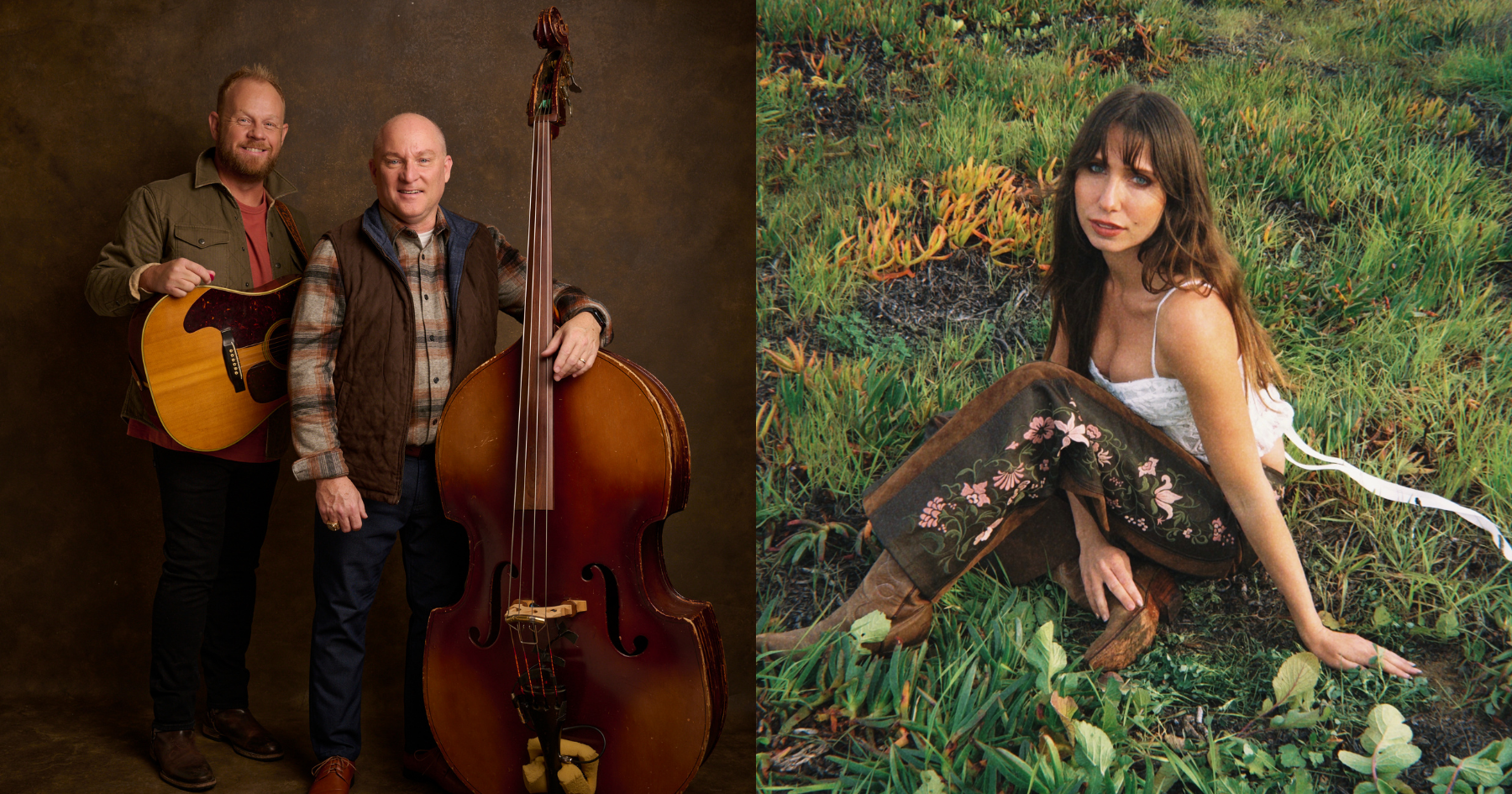
In bluegrass, country-grass superstars Dailey & Vincent return to their roots as only they could, with a rip-roaring and stratospheric rendition of a classic, “Ruby.” With an all-star cast of players behind them, the duo blazes through the iconic old-time song made popular in bluegrass by the Osborne Brothers. The D&V rendition is spotless; we hope it’s a harbinger of more bluegrass to come from their camp. Plus, Ashby Frank gives the bluegrass treatment to Dave Grohl and the Foo Fighters with “The Pretender.” Out today, it combines style points from both bluegrass and grunge in a deep and lush sonic swirl. Whatever your opinion about what is or is not “no part a nothin’,” the energies of both rock and string band are surprisingly well-matched.
You won’t want to miss Lily Meola’s new song, e8ther. Born in Hawaii, Meola makes modern, crisp country music that’s still rich in rootsy tradition and outlaw textures. “Never Kissed a Cowboy” celebrates that, as she puts it, “chivalry ain’t dead, I guess,” and the fun that can be found when doing a romantic dance with a gentleman instead of, well, a loser. It’s a dreamy country waltz that, while contemporary, seems like it could’ve been plucked from just about any decade in the genre’s history.
There’s certainly plenty to love and enjoy this week! You Gotta Hear This…
Karen Dahlstrom, “The Last of My Line” (featuring Kenneth Pattengale)
Artist:Karen Dahlstrom Hometown: Brooklyn, New York Song: “The Last of My Line” featuring Kenneth Pattengale Album:Love These Days Release Date: January 29, 2026 (single); March 27, 2026 (album)
In Their Words: “I’d never really thought about having children – I just assumed I would have them someday. But as the years went on, biology and circumstance made the decision for me. In working through my feelings about being – literally – the last of my family line (my dad was an only child, neither I nor my sisters have biological children), this song started to form. In the back of my mind, I held this idea of a simple, Woody Guthrie-style hobo song with a dash of Lyle Lovett’s ‘Family Reserve.’ I wrote the song I needed when I needed it, without any idea of whether it would resonate with anyone else. To my surprise, it’s one of the songs people say they connect with most.” – Karen Dahlstrom
Dailey & Vincent, “Ruby”
Artist:Dailey & Vincent Hometown: Nashville, Tennessee Song: “Ruby” Release Date: January 30, 2026
In Their Words: “We’ve never believed bluegrass had to live in a box, but with ‘Ruby,’ we felt a strong pull to strip things back. It’s a reminder that even as you grow and experiment, you never forget your roots. This song reconnects us with that energy and joy that made us want to do this in the first place.” – Jamie Dailey and Darrin Vincent
Track Credits: Bryan Sutton – Acoustic guitar Darrin Vincent – Bass Russell Carson – Banjo Andy Leftwich – Fiddle Dominick Leslie – Mandolin Jamie Dailey – Vocals
Ashby Frank, “The Pretender”
Artist:Ashby Frank Hometown: Nashville, Tennessee Song: “The Pretender” Release Date: January 30, 2026 Label: Mountain Home Music Company
In Their Words: “Bluegrass and hard rock often have a similar feeling of ‘drive’ to them; I guess it’s no surprise that many pickers that grew up listening to the shredding instrumentals of bluegrass also have a deep appreciation for great rock musicians. I’ve been a fan of Dave Grohl and the Foo Fighters since I was a teenager. I decided to take a giant leap that I’m not sure anyone’s ever made before and cover one of their most iconic songs with a bluegrass-meets-grunge treatment. I really had no idea what the final product would be when I made the decision to record ‘The Pretender,’ but I couldn’t be more proud of what we came up with.” – Ashby Frank
Track Credits: Ashby Frank – Mandolin, lead vocal, harmony vocal Seth Taylor – Acoustic guitar Travis Anderson – Bass Matt Menefee – Banjo Tony Creasman – Drums
Oliver Hazard, “Hold On”
Artist:Oliver Hazard Hometown: Waterville, Ohio Song: “Hold On” Release Date: January 30, 2026 Label: Nettwerk Music Group
In Their Words: “‘Hold On’ sounds like home to us. Devin came over one afternoon with a guitar riff he’d just written, and we sat down at the piano and the song just kind of poured out. It felt like the old ’70s records we loved listening to. It felt like growing up where we did – feeling the change of seasons, spending time in the local dives, that urge to leave town, but not wanting to let it go.” – Oliver Hazard
Lily Meola, “Never Kissed a Cowboy”
Artist:Lily Meola Hometown: Nashville, Tennessee Song: “Never Kissed A Cowboy” Release Date: January 30, 2026 Label: Nettwerk Music Group
In Their Words: “My picker really did me dirty for a while, so when I experienced good ol’ fashioned gentleman behavior for the first time, it honestly threw me for a loop. I didn’t know how to receive it. I was like, ‘I can open my own door!?’ Then I started to see it from another perspective: having someone treat you like that is honestly really sweet. It might not be the most logical or efficient way of doing things, but damn, being treated like a princess is kinda fun, and being a gentleman is hot. So this is a love song honoring the men who go the extra mile.” – Lily Meola
Photo Credit: Dailey & Vincent by Greg Roth; Lily Meola by Jo Anna Edmison.
By the time Sammy Brue finished recording The Journals, he already knew something unsettling: this might be the most meaningful work he ever makes. Not because it would be his last, but because it arrived fully formed, heavy with inheritance, responsibility, and grief.
“If I never made another album again,” Brue said, almost laughing at the impossibility of topping it, “this was it.”
The Journals (out January 23 on Bloodshot Records) is a spare, intimate record built from the handwritten notebooks of Justin Townes Earle – Brue’s mentor, hero, and one of the most restless, brilliant American songwriters of his generation. Earle died of an accidental drug overdose in 2020 at age 38. What he left behind, scattered across hotel rooms, trains, taxis, storage units, and decades of living, was a vast, unfinished body of work. Hundreds of pages of lyrics, fragments, revisions, false starts, and songs carved and recarved like stone.
Entrusted with those journals by Earle’s widow, Jenn Marie Earle, Brue didn’t approach them as artifacts. He approached them as living documents. “I never got to write a song with Justin,” he said. “And then I thought – maybe I could.”
The result is neither a covers album nor an act of ventriloquism. Some songs on The Journals emerge directly from lyric sheets Earle left behind. Others are co-writes in spirit, with Brue completing ideas Earle had shaped over years. A few are Brue’s own songs, written from compilations of Earle’s images and themes. One track, “For Justin,” is entirely Brue’s – a quiet, aching letter written two years after Earle’s death, “by a Justin fan for Justin’s fans.”
The record was made quickly, almost violently so. With GoFundMe money raised to finish the project, Brue booked two days in Muscle Shoals, Alabama, a nod to the sparse manner that Earle once cut Yuma, his breakthrough 2007 debut. Brue wanted to honor that lineage directly: no band, no overdubs, no safety net. Just voice, guitar, microphones.
“I wanted it all live,” he said. “No tracking. No instrumentals. Just me.”
Brue practiced obsessively for months, then walked into the studio and recorded ten songs in a single day. When nerves crept in, he leaned on a conversation with Joshua Black Wilkins, Earle’s longtime collaborator, asking how Yuma had been made so quickly, so ferociously. “He said Justin was desperate,” Brue said. “He had to make it happen or he was going to sink.” That urgency – career, life, survival – became Brue’s template. The next day, they listened back, drank, and let the record sit where it landed.
Brue has been playing these songs live since the moment they were finished. Unlike most of his own catalog, they haven’t worn thin. “I’ll never get sick of playing these,” he said. “I’ll play them until my demise.”
To understand why requires also understanding what Earle represented to Brue long before the journals ever entered the picture. Brue grew up in a household steeped in American roots music – Justin Townes Earle, the Avett Brothers, Old Crow Medicine Show, Dave Rawlings. As a child, he assumed Woody Guthrie and Lead Belly were simply what came on the radio. At 10, he asked his father to take him to see Earle play in Salt Lake City, only to discover the show was 21-and-over. Fate intervened: Earle was outside the venue, smoking, when they pulled over. He signed Brue’s guitar. Years later, Earle invited him to open shows, tour, and appear on the cover of Single Mothers as a kind of “mini-Justin.”
They stayed connected. Brue watched Earle fall in love with Jenn, watched his life oscillate between discipline and chaos, sobriety and relapse. “He always treated me the same,” Brue said. “He put on a strong front for me.”
When Earle died, Brue felt the loss in stages – shock, numbness, then collapse. He later read Earle’s rehab journals but couldn’t bring himself to take them home. The pain on those pages was too raw. “Some of the most heartbreaking stuff I’ve ever read,” he said. “You want it released. You don’t want it released.”
What struck Brue most, beyond the suffering, was the work ethic. Earle wrote obsessively, filling 150-page notebooks song by song, revising endlessly. Saint of Lost Causes alone contains nearly 80 pages of drafts. “He carved songs like marble,” Brue says. “No wonder they’re undeniable.”
That rigor reshaped Brue’s own sense of craft. Archiving Earle’s journals – more than 800 pages total, still only a fraction of what exists – forced him to confront the fragility of legacy. “I’m looking at my own songs now like, why was I writing in the Notes app?” he said. “I need a box.”
The emotional core of The Journals came together when Brue met with Jenn and Etta, Earle’s daughter, flipping through the notebooks together. Etta clung to Brue’s arm as they turned the pages. “It felt like she was closer to her dad,” Brue said. “Jenn, closer to her husband. Me, closer to my idol.” From that moment on, failure wasn’t an option.
The album arrives alongside renewed attention to Earle’s life and work, including Jonathan Bernstein’s authorized biography, What Do You Do When You’re Lonesome. Together, they suggest something rare: a continuation rather than a conclusion.
“I feel like I’m a link in the chain,” Brue said, naming the lineage he feels bound to – Guy Clark, Townes Van Zandt, Steve Earle, Justin Townes Earle. “It’s rough and tumble right now. Which is perfect.”
For all its weight, The Journals isn’t morbid. It’s alive. It moves forward. Brue knows he doesn’t have to top it. He only has to honor it. And for now, that’s enough to keep the fire lit.
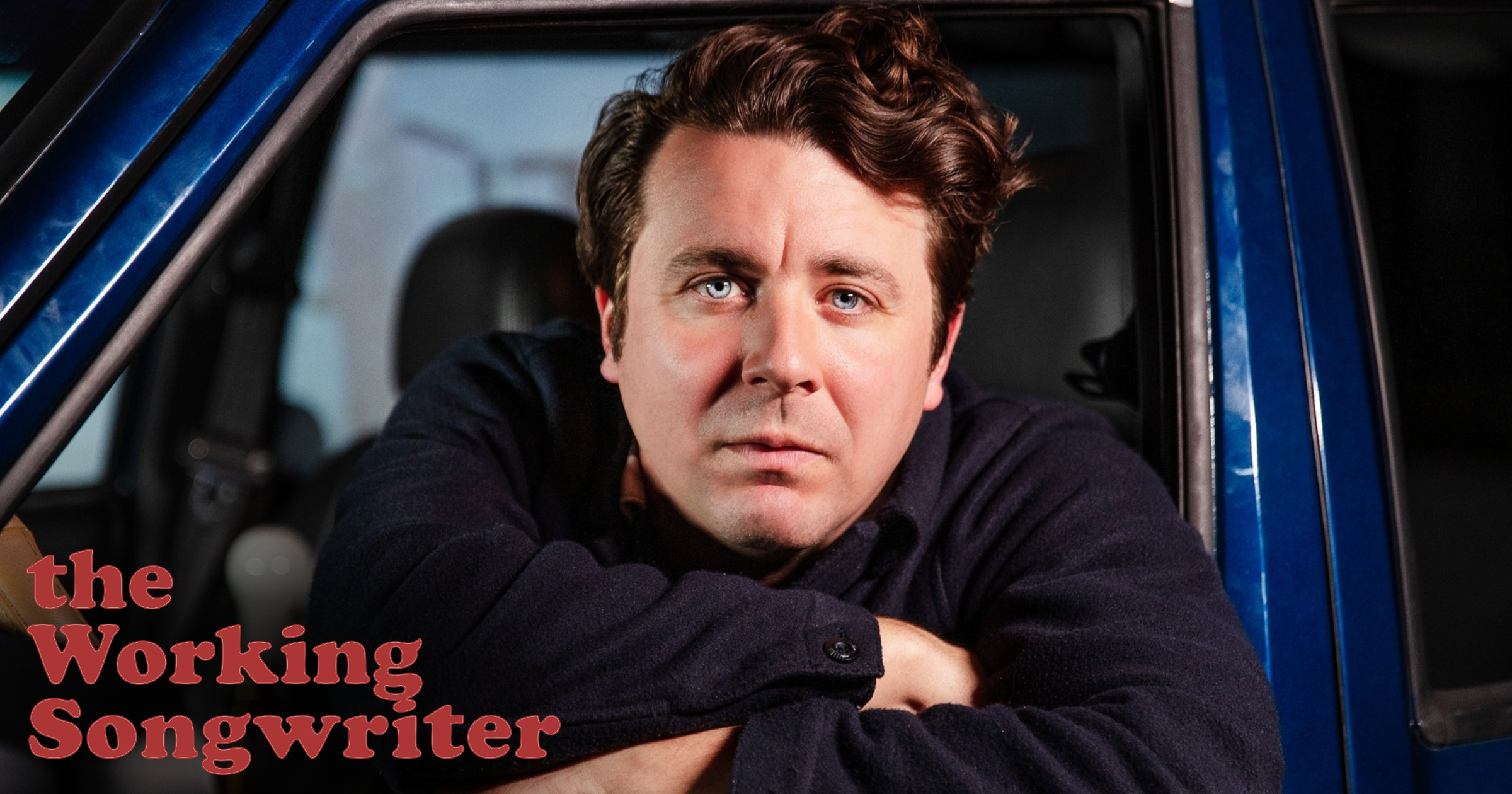
The BGS Podcast Network is proud to announce our first addition of a new (to us) show in 2026, bringing artist and singer-songwriter Joe Pug‘s hit podcast, The Working Songwriter, on board. Beginning January 9, the Working Songwriter will be distributed exclusively through BGS and available wherever you stream podcasts.
“After ten years and over three hundred episode of doing this podcast independently, we’ve decided to go pro!” Pug says. “[BGS] is the perfect home for our show. They focus on American roots music, but ultimately they celebrate any kind of songwriting as long as it’s of a very high quality. I think that’s pretty similar to the ethos of The Working Songwriter.”
Over a decade of work and hundreds of episodes, Pug has explored songwriting, music-making, artfulness, and creative practices with some of the most thoughtful and entrancing voices in Americana, country, roots music, and songwriting as a whole. Over the years, guests have included such luminaries as Jerry Douglas, Charlie Peacock, John Hiatt, ERNEST, Chuck Prophet, Kim Richey, Bonny Light Horseman, Hunter Hayes, Iris Dement, Del McCoury, Keb’ Mo’, Darrell Scott, and countless others. Alongside these songcraft heavy-hitters are just as many fresh discoveries, newcomers, and essential-yet-underrated voices in the space, too.
The overlap between our rootsy BGS purview and Pug’s roster of guests is vast and varied, illustrating how perfect a fit the show will be for the BGS Podcast Network. “With their network,” Pug continues, “we’re gonna be able to get guests that we’ve never had before. We’re gonna be able to produce more content and we’re gonna be able to lean into video quite a bit more. I’d like to thank Cindy Howes and Amy Reitnouer Jacobs for believing in our show and helping to shepherd it to the next level.”
“The Working Songwriter has set the standard for long-form interviews with our favorite songwriters in the roots music world and beyond,” responded Cindy Howes, director of the BGS Podcast Network. “Joe’s ability to open up his guests in relaxing conversations on the craft of writing is endlessly impressive. The fact that a podcast of this caliber that legitimizes the best working songwriters is joining our roster is an honor. We are beyond excited to work with Joe and his team on this wonderful show.”
The latest season of the Working Songwriter will premiere this Friday, January 9, with guest Evan Bartels. Bartels, a singer-songwriter, burst onto the national scene with his 2017 debut, The Devil, God & Me. He has toured with American Aquarium, The White Buffalo, and John Moreland; he records for MCA/Universal; and he’s performed at Mile of Music, Americanafest, and the C2C Festival. We’re looking forward to beginning this new era for The Working Songwriter with Joe Pug, Evan Bartels, and all of you, right here on BGS.
To celebrate the announcement and the upcoming season premiere, listeners can subscribe to the Working Songwriter wherever they listen to podcasts. While you do, revisit and enjoy all past episodes of The Working Songwriter – including these five of our favorite selections below, chosen from over 10 years of superlative work.
Remembering Todd Snider (March 2020, rereleased November 2025)
Joe originally sat down with The Bard of East Nashville back in March of 2020, but after his untimely passing in November 2025 at the age of 59, TWS reissued this beautiful episode in his honor.
Jerry Douglas (June 2025)
An artist who needs little introduction to BGS audiences, GRAMMY-award winner Jerry Douglas is considered the contemporary master of the Dobro. Joe talks to Jerry about his long and storied career, playing alongside everyone from Ray Charles to Billy Strings.
Ashe (September 2024)
TWS covers songwriters of all backgrounds and genres, as demonstrated in this 2024 episode with Ashe. The Berklee College of Music grad discusses her years writing songs for other artists such as Demi Lovato, only to find her own distinct voice (and a legion of obsessive fans, including the late Diane Keaton) in the last five years.
The Swell Season (October 2025)
The Oscar-winning and decades-spanning musical partnership of Glen Hansard and Marketa Irglová has captivated worldwide audiences, but this conversation with Joe from 2025 celebrated their first album together since 2009 (Forward), and showed their connection and chemistry was as deep as ever.
Bonny Light Horseman(February 2023)
Each member of the folk supergroup trio of Anaïs Mitchell (Hadestown), Eric D. Johnson (Fruit Bats), and Josh Kaufman (The National, Bob Weir, Josh Ritter) could easily deserve their own deep-dive episodes, but put together it’s clear that they are greater than the sum of their parts. Joe digs in with the three GRAMMY nominees to peek behind their magical music-making curtain.
Roots music was everywhere this year. It’s time we decide once and for all: Is roots music enjoying a “moment”? Or are these genres and sonic stylings alwaysthis foundational to popular and mainstream music?
Maybe roots is just at the center of everything we do here at BGS, but we’re inclined to the latter option. Roots music, folk music, whatever you want to call it, these styles are at the root – pun intended – of everything we love, not just in our scenes and spaces, but what we love about pop music, radio hits, and the musical mainstream, too. It’s no wonder, then, that roots shows up in albums and offerings by Bad Bunny and Sabrina Carpenter. That roots music finds its way across the globe in the fight for justice. That banjos and fiddles and the blues and bluegrass can be seeds by which entire resplendent artistic universes can be birthed, whether festivals or films or documentaries or albums or songs.
For our final year-end retrospective list of 2025, we asked our BGS contributors to reflect on the roots music and moments that stuck with them over the course of this year. Instead of setting strict criteria for what qualified as “roots music,” we did just the opposite, leaving our year-end “best” prompt as loose, open, and broad as possible. The results reaffirm our central belief that roots music isn’t a niche, it’s everything. There’s no limit to what it can touch on, impact, and transform.
We look forward to continuing to celebrate all things roots music and roots culture with you in 2026. In the meantime, enjoy our BGS Class of 2025. Roots music below, bluegrass here, and Good Country here.
Bad Bunny, DeBÍ TiRAR MáS FOToS
Last year, the most mainstream and far-reaching roots album was most certainly Beyoncé’s Cowboy Carter. The project has amassed billions of streams and listens, millions of sales, and has been certified Platinum by RIAA. This year, the most prominent roots album has received little to none of the controversial discourse of “belonging” and genre and roots-adjacency that Cowboy Carter attracted. Bad Bunny’s 2025 masterpiece, DeBÍ TiRAR MáS FOToS, is perhaps a bit sneakier in its rootsiness – or, being that it was made by a Puertorriqueño and is delivered entirely in Spanish, perhaps the same sorts of racism that put Beyoncé under the crosshairs may have relieved Bad Bunny of such targeting.
DeBÍ TiRAR MáS FOToS is jaw-dropping in its artistic and sonic accomplishments. Reggaeton and pop, hip-hop and house are grounded and contextualized by roots music, which does incredible heavy artistic lifting across the album. Interludes and intros reference many of the Latin and Caribbean folk styles that would birth the genres Bad Bunny currently inhabits. Calls of endemic frogs are mentioned alongside varied sounds of the diaspora, gentrification decried while advocating for self-determination. The album successfully does the work of so many solely folk and/or roots projects, but given its mainstream appeal and A-lister creator, that fact seems to have been lost in the glitz, glamour, and Super Bowl Halftime Show of it all. Make no mistake, though, for all the things that it is, DeBÍ TiRAR MáS FOToS is obviously roots music. – Justin Hiltner
Carsie Blanton
Singer-songwriter Carsie Blanton gave the most fun performances I saw on folk stages this year. Whether solo in the round or with frequent collaborators Sean Trischka, Joe Plowman, and Isa Burke, a Carsie show feels like a block party. People pack in corners to see what she will cook up next: a saucy tale, a power pop-influenced anthem of revolution, a quiet moment that demands reverent attention. Blanton has a gift for translating history into sing-alongs without softening any of her political edges. It takes an expert vocalist and arranger to sing “I guess America’s coming untied/ Half of my neighbors are living outside” without the audience feeling gloomy or preached at.
It helps that Blanton embodies the kind of working-class swagger that only a bad bitch from New Jersey can pull off. An outspoken feminist and member of the Party for Socialism and Liberation, this past October she brought the revolutionary hope of her songs to Global Sumud Flotilla to Gaza, where she risked her life as a member of the humanitarian coalition. Blanton, along with many of her comrades, was detained when the Israeli military intercepted their boats. Her bandmates were waiting at the airport when she got home. – Lizzie No
Brooklyn Folk Festival
Celebrating its 17th year, the Brooklyn Folk Festival is the best of the independent roots music community incarnate. Each November, the festival brings together members of the New York folk music community with musicians from across the country (and sometimes the world) for one weekend of homegrown joy, hosted in the Saint Ann and the Holy Trinity Episcopal church in Brooklyn. Musicians swap instruments and stories and audiences pack church pews and sit cross-legged on the floor to listen, intently.
The festival fosters space both for old-timers and young musicians; each year students from the Jalopy Theatre and School of Music, which hosts the event, perform. This year, the mainstage audience waited patiently, giving grace to 91-year-old folk legend Alice Gerrard (of Hazel & Alice) as she remembered the lyrics to one of her songs. Friends, lovers, and children waltzed together to Black string band New Dangerfield. And when musician Nick Shoulders invoked folk music’s long history of protest and compared old-time music to public lands – dubbing both worthy and precious resources, which should be protected and preserved as free for all – the entire room cheered. Community uplift at its purist and sweetest. – Meredith Lawrence
Sabrina Carpenter’s Sneaky Roots
They say the Germans have a word for everything. Do you think there’s one for how good it feels when roots music sneaks into the pop mainstream? Maybe… Beyoncénfreude? There should be some term for it, because it’s a special kind of satisfaction, and this year the good vibes continued with Ms. Short n’ Sweet herself, Sabrina Carpenter.
The superstar had already shown a genuine appreciation for country when she teamed up with Dolly Parton on “Please, Please, Please” (even changing explicit lyrics to better suit the mild-mannered icon) and with the dreamy country-folk of “Slim Pickins.” But in 2025 two important things happened. 1) She made her Grand Ole Opry debut in October, beaming with pride and lavishing the institution with praise. “Please, Please, Please” and “Slim Pickins” were both part of her set. And, 2) “Man Child.” Beneath the disco pulse ran an undercurrent of country twang, with a rhinestoned electric guitar hook dripping in her signature campiness.
This alone would be a prime case of Beyoncénfreude, but the best part was how Carpenter felt no need to call attention to the matter. It wasn’t a play or statement. She just wanted some country in there and knew her fans would accept it. What that says about roots music and the mainstream is definitely a 2025 highlight. – Chris Parton
Neko Case, “Winchester Mansion of Sound”
The late great Flat Duo Jets guitarist Dexter Romweber, who died at a too-young 57 last year, was an inspirational figure to generations of artists, Neko Case among them. The Americana siren repaid that debt with a cameo on Dex Romweber Duo’s 2009 LP Ruins of Berlin, and goes one better with this eulogy from her latest album, Neon Grey Midnight Green. Over spectral tack piano plinking away, Case paints a picture of kindred spirits bound together by music:
I still think of you And your wild, recurve guitar Only you can play so far out of tune And still kick me in the heart.
By the end, shortly before the full band kicks in for the outro, Case concludes, “Only music is forever.” Perfect.
This has been just one of 2025’s Romweber afterlife artifacts, including posthumous induction into the North Carolina Music Hall of fame and depiction in the teen drama TV series, The Runarounds. But this one is the best of all. – David Menconi
Chatham Rabbits, Be Real With Me
Despite its general lamenting about growing older – something I can relate to all too well – I can’t get enough of husband-wife duo Chatham Rabbits on Be Real With Me. But instead of focusing on the aches, pains, and other changes that come with the passing of time, Sarah and Austin McCombie also reflect on the wisdom that accompanies it as well.
This manifests itself in missives like “Matador,” where Sarah sings about trusting people too fast and ignoring red flags along the way, and “Gas Money,” which touches on overcommitting to relationships with others before first looking after yourself. The duo also navigate everything from falling out with longtime companions (“Childhood Friends”) to wanting freedom while also having desires to build and nurture a family (“Collateral Damage”), painting an understandably complex web of stories in the process.
The result is a very millennial-leaning record that puts a positive spin on aging as a young adult and will leave any 20-something listening ready to do what Austin describes on the album’s lead track, “Facing 29” – “Grabbing 30 by the strap of its boots.” – Matt Wickstrom
Michael Daves, Early Morning Sun
2025 has been a bang-up year for new releases and one at the top of my list is Michael Daves’ five song EP, Early Morning Sun. Daves’ music is always inspiring, but this EP differs from his past releases. Unlike Orchids and Violence, which was a two-part album with one side being bluegrass covers and the other being electric covers of those same bluegrass songs, Early Morning Sun is just Daves and his guitar.
All recorded on a low-tuned Kay guitar in an old church in Brooklyn, the EP has a rough, thrashy bluegrass and somewhat country feel. It’s an album of covers that, if you live in Brooklyn, you’ve probably heard Michael play around town, especially at the Jalopy Theatre or in the old days at Rockwood Music Hall. What’s special about this EP is that you can really feel the energy of how it was recorded. The slight echo of the church compliments the songs in a unique way, bringing a lot of oomph to the songs both in his vocals and his guitar playing. – Emma Turoff
Flock of Dimes, The Life You Save
Feeling weighed down by life? Tired of propping up others who can’t (or won’t) get their act together? Friend, have I got a record for you.
Jenn Wasner has been telling survivors’ stories through exquisite, deeply textured music for two decades. Her third Flock of Dimes LP, The Life You Save, leans into the atmosphere of Wasner’s voice over instrumental theatrics. Its songs find her in the deeply wearying role of reluctant savior, trying her best to heal her little corner of the world – or at least herself. The album’s money shot is “Long After Midnight,” which sounds like it could be about anything – from trying to save a friend from a drug problem or a parent sliding into dementia. The video shows Wasner sitting on the floor singing as every piece of furniture behind her is removed, finally directing attention to herself near the end:
I live my life among the lucky ones When things are bad I never let them know When you come from where I come from There’s only so far you can go…
But if you try some time, you just might find, you get what you need. – David Menconi
Rhiannon Giddens & Justin Robinson, What Did the Blackbird Say to the Crow
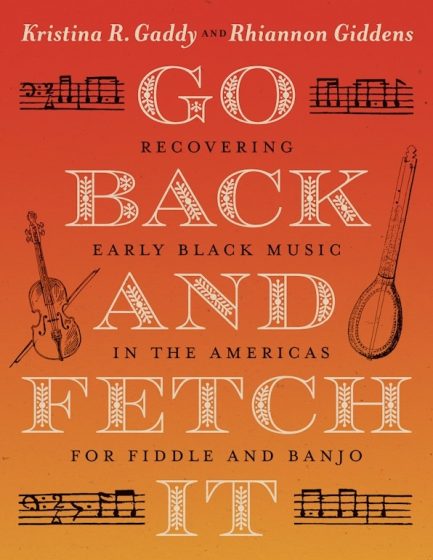
Rhiannon Giddens reunites with former Carolina Chocolate Drops bandmate Justin Robinson for what is essentially a crash course in the music of North Carolina. What Did the Blackbird Say to the Crow contains 18 songs – a healthy mix of instrumentals and tracks with lyrics. The music comes alive in the pair’s very capable hands and invites the listener to take a 44-minute stroll through Appalachia and North Carolina’s Piedmont. Their late mentor, Piedmont musician Joe Thompson, taught them all he knew, which is quite evident on selections such as “Hook and Line,” “Little Brown Jug,” and “Old Molly Hare.” Together, it’s like no time has passed between Giddens and Robinson, and they reach new heights in their work with some of the most propulsive and emotive string work of the year.
What Did the Blackbird Say to the Crow demonstrates that learning and growing never end. String work is best served when untethered to strict structures, but rather fluid and gently gliding, they evoke both a sense of whimsy and raw emotion. – Bee Delores
The History of Sound
I was in a cab going up the mountain to see Bugonia, and I was talking to another queer friend about The History of Sound. Specifically, about Josh O’Connor and Paul Mescal singing “Pretty Saro” and “Silver Dagger” to each other as a method of seduction. We talked about other versions of both songs – especially “Silver Dagger” – about how tender the song is in general, how O’Connor makes it softer, and about how his halting, half-good singing was effective in ways that, for example, Joan Baez wasn’t.
I thought a lot about the “Silver Dagger” scene, with a heat and a hunger, more than anything else in that film; a song which was too formalist to fully represent the erotic lives of the main characters. The movie made me sad and aroused, and what else can you ask for from a film? But it also made me worry about what songs we absorb from which traditions, and that the trading of these two famous songs as signifiers of a kind of melancholic, cock-blocked Appalachia only considers one kind of desire, one kind of hunger, and one kind of aesthetic. One marked by loss, and one which never completes except in death.
I wondered what it would mean, instead of “don’t sing love songs,” to sing every possible love song for every possible kind of love. In that too-short scene in the tent, Mescal and O’Connor sing to each other as a mode of seduction, but we get an incomplete song and an incomplete seduction. If we are listening to folk songs for their ardor, then the tradition must allow for all kinds of ardor – all kinds of desire. Sure, we have their version of “Pretty Saro” (the movie convinced me that nothing would be sexier than hearing that song post-coitally), but what about everything from “The Money Comes Rolling In” to “The Wanton Seed” to “The Two Magicians”? – Steacy Easton
I’m With Her, Wild and Clear and Blue
Right from the get-go, 2025 was a hard year. The Los Angeles wildfires ripped through homes and communities in January, displacing thousands of people, including many of my friends and music industry peers. Even for those of us whose homes were unscathed, everything suddenly felt untethered and dangerous, like it could disappear at any second.
For me, nothing captured that unnatural feeling quite like I’m With Her’s “Standing on the Fault Line.” “Is it when the reservoir runs out/ And the birds stop flying south/ Are we gonna know it’s time to flee?,” questions Sara Watkins. Many of us did have to flee, loading our cars with whatever we could grab; evacuating to anywhere that seemed remotely safer. But as climate change and economic and political upheaval continuously flip our world upside down, is anywhere really safe?
The rest of I’m With Her’s beautiful album, Wild and Clear and Blue, has been a soothing balm amidst these strange times. Each song captures a different aspect of womanhood, family, home, and the slipping of time – a testament to the shared songwriting duties of Aoife O’Donovan, Sara Watkins, and Sarah Jarosz. Their harmonies ring out like an old friend offering words of comfort on the other end of the line. – Amy Reitnouer Jacobs
Lilith Fair: Building a Mystery
One of the highlights of the late 1990s was Lilith Fair, a popular music festival co-founded by Sarah McLachlan and featuring the talent of such acts as Fiona Apple, Mary Chapin Carpenter, Sheryl Crow, Bonnie Raitt, and The Chicks over three years (1997-99). Director Ally Pankiw, known for I Used to Be Funny and two episodes of Black Mirror, pulls from a remarkable 600 hours of never-before-seen footage that cuts to the core of what Lilith Fair meant – and continues to mean – for women and female-identifying people. Interviews with Emmylou Harris, Brandi Carlile, and Jewel, among others, give new insight into the landmark festival and the tough-as-nails artists who stormed its stages.
Pankiw pulls back the curtain and offers the audience a peek into the blood, sweat, and tears that festival planners and the talent endured for the sake of the art and proving to the world that women artists were far more valuable than as tokens in a sea of men. Lilith Fair: Building a Mystery is raw, honest, and probing. For any casual music fan, it’s a must-watch of the year. – Bee Delores
Jess Sah Bi, Jesus-Christ Ne Deçoit Pas
Seven years ago, I worked on the reissue of Our Garden Needs Its Flowers (1985) by the West African country, folk, and afro-pop duo Jess Sah Bi & Peter One. Back in the 1980s, they were one of the most popular musical acts in Côte d’Ivoire (Ivory Coast), entertaining stadium-sized audiences at home, and later on, throughout Benin, Burkina Faso, and Togo.
When I first heard it, Jess Sah Bi & Peter One’s music was a revelation. In a sense, it offered a whole new lens through which to view country and folk music, while unlocking an entirely different set of African musical histories to learn from. Afterwards, Peter One scored a deal with Verve Records, culminating in his celebrated comeback album, Come Back to Me (2023).
Earlier this year, Awesome Tapes From Africa, the label that gave Our Garden Needs Its Flowers a second wind, reissued Jess Sah Bi’s rare early-1990s gospel, folk, and country solo album, Jesus-Christ Ne Deçoit Pas (Jesus Christ Does Not Disappoint). Written and recorded after recovering from a mystery illness and relocating from Côte d’Ivoire to the United States, the album’s seven songs, sung in French and Gouro, are soaring, transcendent, and undeniable. – Martyn Pepperell
Caroline Spence, Heart Go Wild
For me, 2025 has been typified by abject, all-encompassing grief. Singer-songwriter Caroline Spence’s past albums are certainly also heartfelt and lean towards tear-jerking and raw emotion-inhabiting, but Heart Go Wild feels particularly primed for a good, cathartic, therapeutic cry. Spence processes quite a few life and career changes within these songs, but the specificity by which these tracks and lyrics were born don’t hem them in or limit their relatability. On the contrary, by Spence opening up her own particular introspections to all of us, yet again, she enables each of her listeners to find our own healing, growth, and redemption in the same way she has. Through song.
Tracks like “Fun at Parties,” “Confront It,” “Why the Tree Loves the Ax,” and “Where the Time Goes” – really, the entire collection – have been remedies I didn’t know I would need so deeply when the album was first announced. Spence never needs to rely on tropes or platitudes to handle these sorts of topics. She rises above gratuitousness or melodrama, even while she acknowledges the sorts of grief, pain, and change she’s reckoning with aren’t aberrations from the human experience, they are the human experience. She’s reminding herself as much as each of us, and I suppose that’s where the magic of her particular skillset truly lies. – Justin Hiltner
Billy Strings at IBMA World of Bluegrass
When it comes to the International Bluegrass Music Association, two big things happened in 2025: the annual conference, festival, and awards show found new digs in Chattanooga, Tennessee, and Billy Strings finally returned to where it all began for the star. Taking home his fourth Entertainer of the Year award this year, Strings made a genuine, heartfelt effort to appear at the IBMA events. Not only to accept his recognition, but also to hang around the festivities all week.
Strings kicked off the conference with a stunning keynote address, only to then perform two shows in Chattanooga (one with his full band, one with guitar wizard and mentor Bryan Sutton). Throughout the week, Strings casually popped up all over the city, either jumping in on jam circles or merely stopping to chat with fans and fellow musicians alike, including a memorable jam with 90-year-old bluegrass icon Paul Williams. Strings’ presence was a well-received thing for a bluegrass community not only indebted to the six-string ace for what he’s brought to the scene, but also to remind everyone he hasn’t abandoned bluegrass — it’ll always be the essence of his melodic core. – Garret K. Woodward
Molly Tuttle, So Long Little Miss Sunshine
Molly Tuttle’s So Long Little Miss Sunshine actually comes loaded with sunshine and it’s evident from all angles. The empowered and fearless lyrics start on the first track, “Everything Burns,” and continue through “No Regrets” and “Story of My So-Called Life,” showing Tuttle standing proudly in feelings, intentions, and reflections that are true to this chapter in her life.
Whether she’s basking in a seemingly perfect headspace (“There’s no valley I can’t cross, or mountain I can’t climb/ I’m in a golden state of mind”) or making a messy choice and owning it without self-abasement (“Don’t try to fix it when you break my heart/ Knew when you hit me with your poison dart”), every moment is deliberate and delivered with confidence. That includes the sonic side of things, too – despite judgmental heat coming from folks who think Tuttle is trading in pickin’ parties for pop(ularity).
First: There’s plenty of Tuttle’s prodigious musicianship shining on this record. Second: take a cue from Tuttle herself and embrace what’s new as we go into the new year! Because for Tuttle, not all the personality on this album is new. It’s just new to us because she’s finally letting it out and letting it breathe. – Kira Grunenberg
Cristina Vane, Hear My Call
The Italian-born, Nashville-based singer and multi-instrumentalist Cristina Vane has long been at home playing bluegrass, country, blues and everything in between, but on Hear My Call she’s finally at home with the most important thing of all — herself.
Across the album’s 13 tracks Vane embraces the cultures and sounds that have shaped her, from finding joy in everywhere she’s been on the rock anthem, “Little Girl From Nowhere,” to relating to the stories of someone born an ocean away on the banjo ballad, “My Mountain.” While many songs on the record lean heavy into introspection and the strength that comes from it, others find power in everything from fun and sensual moments (“Shake It Babe”) to moving on from people who don’t value your presence and time (“You Ain’t Special”).
On top of Vane’s clever songwriting, I also can’t get enough of her playing on this album. Throughout, she moves effortlessly from banjo to slide guitar without skipping a beat, further reinforcing her staying power. This is someone to watch from 2026 onward. – Matt Wickstrom
Lead Image: Justin Robinson & Rhiannon Giddens by Karen Cox; I’m With Her by Alysse Gafkjen; Carsie Blanton by Bobby Bonsey.
Such words as “legendary,” “transcendent,” and “magnificent,” while accurate, only skim the surface in describing the greatness of vocalist Mavis Staples. There’s no idiomatic area where she doesn’t excel and no song, regardless of origin or writer, that she can’t turn into a personal triumph. She’s also a genuine survivor, both in the familial (she’s the last living member of the Staple Singers) and socio-political sense (she’s a cultural warrior and champion of the Civil Rights era whose resonant voice has inspired generations of listeners).
For many artists, claiming they’ve gotten better with age is at best polite overstatement, and at worst woeful exaggeration. But Staples at 86 still has the authoritative edge, tonal quality, and lyrical flair that’s always marked her performances. It seems hard to believe she’s been singing since childhood, and listening to the 10 tracks on her newest release, Sad And Beautiful World (released November 7 by Anti), you hear the confident, jubilant sound of a vocal titan.
That Staples can cover with equal distinction and flair songs penned by Tom Waits, Curtis Mayfield, Gillian Welch & David Rawlings, Leonard Cohen, and Frank Ocean reaffirms her versatility. Producer Brad Cook smartly lets her voice dominate through each setting, regardless of instrumental backdrops, tempo or lyrical setting. Her spoken word narrative adds additional punch to the cover of Ocean’s “Godspeed” and underscores its recurring themes of urgency and redemption that fuel the album’s sensibility.
But the album also contains prominent message tracks, most notably “We Got To Have Peace,” a number whose tone and lyrics couldn’t be more timely in an era where it seems lunacy often runs supreme. “Anthem” and “Satisfied Mind” are just as powerful and energetic in their declarations of the importance of persistence, kindness, and goodwill. “Everybody Needs Love” provides the perfect finale, with Staples superbly punctuating its theme and completing a 38-minute epic work. Indeed, songwriter Kevin Morby has offered perhaps the best tribute to Staples’ brilliance possible, when he gave a press statement about what it meant to have her doing his song “Beautiful Strangers,” which is another memorable and passionate number.
“It isn’t easy to put into words what it feels like having one of the best, most important vocalists and cultural figures of both the 20th and 21st century sing one of my songs,” Morby said. “But hearing Mavis sing ‘Beautiful Strangers’ is hands down the greatest moment and highest honor of my career. Far beyond any kind of accolade or acclaim – having one of my biggest heroes sing something I wrote is the most validating and flattering thing that could ever happen to me as a songwriter and person. Thank you, Mavis.”
Staples has been awesome for so long, sometimes it’s easy to forget how many different periods and genres her artistry covers. The original family unit the Staple Singers were gospel and folk song giants. The unit included her sisters Cleotha and Yvonne, plus her brother Pervis, her father Pops, whose roots reached back to the seminal days of Delta blues, and Charlie Patton, who served as anchor, both vocally and on guitar. The Staple Singers began singing in Chicago churches in the late ’40s, became recording artists in the early ’50s, and earned their first hit with “Uncloudy Day” in 1952, recorded for the Black-owned label Vee-Jay. By the ’60s they were a cornerstone unit of the Civil Rights Movement, often accompanying Dr. Martin Luther King at rallies.
Mavis began really getting noticed as a solo performer during their transition in the late ’60s and early ’70s to a soul and pop unit. The decision to sign with Stax Records and the shift to secular music was one Pops often acknowledged as a controversial one, but it ultimately paid off as the group’s status elevated into crossover stars. They had eight Top hits in the early and mid-’70s; “I’ll Take You There” and “Let’s Do It Again” were chart toppers and “Who Took The Merry Out of Christmas” reached number two. Mavis also cut her first solo single in the late ’60s, then a full self-titled release for Stax in 1969. Their songs were expertly produced, featuring the crisp and outstanding backing of Booker T. & the MGs. Other essential hits included “I’ll Take You There” and “Respect Yourself.”
Slowly but surely, Mavis began to establish herself outside the Staples family trademark. Her soundtrack LP, A Piece of the Action on Curtis Mayfield’s label, helped her reach some new audiences, as did another self-titled mid-‘80s LP. But it was a pair of releases produced by Prince in the ’90s that really helped her reach the next generation of listeners. The second by the duo, The Voice, was another masterpiece. It included her magical version of Prince’s “Positivity,” as well as a cover of “Melody Cool” from the film Graffiti Bridge. Staples returned to the church in 1996 for a marvelous release, Spirituals & Gospels: Dedicated to Mahalia Jackson, that personified the close friendship that Jackson had with the entire Staples family and her influence on Mavis, personally and professionally.
Over the course of the 21st century, Mavis Staples has unquestionably become an iconic figure. The roster of artists with whom she’s worked over the course of her remarkable career is an astonishing one, both in terms of talent and musical approach. She’s recorded with jazz guitarist John Scofield, Los Lobos, Bob Dylan, Johnny Paycheck, Natalie Merchant, George Jones, Delbert McClinton, Aretha Franklin, Nona Hendryx, and Ann Peebles, to cite only a handful. Staples has also continued making emphatic message albums, among them the 2017 dynamo If All I Was Was Black. Her voice has been sampled by rappers and hip-hop and pop artists like Salt ‘N’ Pepa, Ice Cube, Ludacris, and Hozier.
Mavis also been featured in a host of television shows and films, among them The Tonight Show with Jay Leno, The Late Show With David Letterman, Conan, and “CBS Saturday Morning: Saturday Sessions,” and she was the featured performer on the very first episode of The Late Show With Stephen Colbert. Her film resume includes appearances in Martin Scorsese’s The Last Waltz and Antoine Fuqua’s documentary Lightning in a Bottle, about the Salute to the Blues concert at Radio City Music Hall in February 2003.
Mavis!, the first feature documentary about Staples and the Staple Singers, was directed by Jessica Edwards and had its world premiere at SXSW in March 2015. It was later screened in theaters and was broadcast on HBO in February 2016, eventually winning a Peabody Award. Her appearance with Mahalia Jackson at the 1969 Harlem Cultural Festival is among the many highlights in the award-winning documentary Summer of Soul, which was released in 2021. Staples has even been portrayed on film, played by Laura Kariuki in the 2024 hit film, A Complete Unknown.
Staples has rightly won numerous awards. The array includes three GRAMMYs and a GRAMMY Lifetime Achievement Award, induction into the Rock and Roll, Gospel Music, and Blues Halls of Fame, and having been a Kennedy Center Honoree. The Rock and Roll Hall of Fame honored her a second time in 2019 with the inaugural Rock Hall Honors Award for her solo work. Rolling Stone named her 56th among the “100 Greatest Singers of all Time” in 2008, though there was already no question about her inclusion in that select company.
Amazingly, there doesn’t seem to be any slowing down for Mavis Staples. She celebrated her 80th birthday at the Apollo Theater in 2019, returning to the famed venue where she first appeared as a teenager 63 years before that date. She did a series of collaborative birthday concerts that year with special guests that included David Byrne and Norah Jones. She also collaborated with Run the Jewels on the track “Pulling the Pin” from their studio album RTJ4. In 2022, Staples released Carry Me Home, a collaborative effort with the late Levon Helm that they recorded together at Helm’s Midnight Ramble in 2011.
She’s already announced upcoming tour dates for 2026 at three famous sites: Chicago’s Chicago Theatre, Nashville’s Ryman Auditorium, and New York’s Beacon Theatre. Mavis Staples also remains a voice for social justice. Way back in 2010, she performed at the Rally to Restore Sanity and/or Fear alongside singer Jeff Tweedy. In 2011, she was joined onstage at the Outside Lands Music And Arts Festival by Arcade Fire singer Win Butler. The two performed a version of “The Weight” by The Band. Shortly after the release of her 2016 LP Livin’ On A High Note, produced by M. Ward with songs written for her by Nick Cave, Justin Vernon, Neko Case, and others, Staples issued these prophetic words:
I’ve been singing my freedom songs and I wanted to stretch out and sing some songs that were new. I told the writers I was looking for some joyful songs. I want to leave something to lift people up; I’m so busy making people cry, not from sadness, but I’m always telling a part of history that brought us down and I’m trying to bring us back up.
These songwriters gave me a challenge. They gave me that feeling of, “Hey, I can hang! I can still do this!” There’s a variety, and it makes me feel refreshed and brand new. Just like Benjamin Booker wrote on the opening track, “I got friends and I got love around me, I got people, the people who love me.” I’m living on a high note, I’m above the clouds. I’m just so grateful. I must be the happiest old girl in the world. Yes, indeed.
Anyone paying attention to the songs on Sad And Beautiful World knows that’s still the case with Mavis Staples’ music.
In our eyes and to our ears, there’s no better family of musical genres to usher in the holiday season than roots music. Bluegrass, Americana, old-time, country, blues, and beyond – they’re all perfectly suited for the coziest time of year, for togetherness, for parties and gift-giving and cookie icing. Whether you celebrate Christmas, Hanukkah, Kwanzaa, or Winter Solstice – or even if you feel like opting out of the ruckus altogether – there is roots music for you.
Each year, we like to share our picks for the rootsiest time of the year in BGS Wraps, a weekly collection of songs, videos, albums, shows, tours, and events that celebrate the season. We share a few of our favorites, mostly brand new but often classics and timeless selections, too. Plus, we collect all that we can into a running playlist so you’re ready when the family or party hands you the aux cable.
We hope you enjoy BGS Wraps and tune in the next week as we continue our series celebrating the holiday season. (Catch up on week one here. And check out week two here.)
Merry Happy Whatever, The Doohickeys
Country duo the Doohickeys go fully original with their brand new Christmas EP, Merry Happy Whatever. Their trademark wit and humor are evident across the project’s five songs – including gut-busters like “Santa Needs A Beer” and “Santa Is A Stoner.” (Does Santa need a breathalyzer, as well?) On the EP’s title track, the delightfully crowd-pleasing and all-encompassing “Merry Happy Whatever,” Haley Spence Brown and Jack Hackett are joined by the Wolves of Glendale, with rich background vocals and holiday winds and brass to accomplish that full-tilt holiday sound. And a merry happy whatever to you, too!
A Cherry Valley Holiday, Carter Faith
A favorite of ours from the mainstream country space, Carter Faith released an excellent A-side/B-side holiday single this season, pairing “Nothin’ For Christmas” (featuring William Beckmann) with “Please Come Home For Christmas.” Packaged as a two-song collection titled A Cherry Valley Holiday, both tracks are perfectly suited for your countriest Christmas playlists. Faith’s duet with Beckmann showcases how both artists keep tradition alive while still looking to the future. You may be reminded of iconic duets like Lee Ann Womack with George Strait or Dolly Parton with Kenny Rogers. The holiday cheer doesn’t stop there, either, Faith recently joined Jimmy Fallon himself on “Ugly Sweater,” a funny seasonal track produced by Dave Cobb that the pair unveiled together on The Tonight Show. Between the Christmas singles and “Ugly Sweater,” there’s a country holiday flavor for everyone. Carter Faith does it all.
“Christmas in Yuma,” Cameron Knowler
One of our favorite albums of the year was released by guitarist, archivist, writer, and composer Cameron Knowler (who sometimes writes for BGS, too). CRK was released in April and, being set in the desert in and around Yuma, Arizona, the project feels properly warm and sunny, painting sonic pictures of red rocks and cactuses and blacktop baking in the sun. If that doesn’t sound properly Christmas-y to you, take a moment to inhabit the album’s lead track, “Christmas in Yuma.” A gorgeous prose poem set to sparse, textural guitar, the text was written by Knowler but is read by his friend and fellow Southwesterner, Jack Kilmer. It’s a truly stunning beginning to the project and we’ve been holding onto it all year for just this occasion. It may not be the most sing-along ready track of the holiday season, but its transportive feelings of nostalgia, grief, longing, and pain at seismic transformations – or at cloying, gluey stagnation, or both – are altogether more than perfect for the holidays.
“Christmas Love Song,” Willie Nelson
If the only present any of us received this year was a “Christmas Love Song” from Willie Nelson, well, that would feel like a pretty complete holiday season, wouldn’t it? With just one simple offering, every “need” could be checked off our wish lists. Written by fellow legend Bill Anderson (with help from Bobby Tomberlin and Marv Green) and produced by fellow legend Buddy Cannon, “Christmas Love Song” includes plenty of Nelson’s signature charm, whether in his languid phrasing or his tasteful nylon-string licks on his trusty guitar, Trigger. In the lyric itself Nelson is remarkably humble about his holiday offering: “It ain’t a lot, but every word of it’s true/ It don’t sparkle or shine/ But it’s one of a kind…” For all of us who’ve received this holiday gift from the legendary Willie Nelson, it feels like more than enough. And we will certainly cherish it.
“Oh, It’s Christmas,” Sage Palser and Prairie Wildfire featuring Danny Paisley
New bluegrass holiday hits are all too rare, so we relish them when we find them. This release from 2024 is a great example, cheery sleigh bells giving way to burning bluegrass that will warm the winter right out of your heart. Sage Palser joined Danny Paisley and the Southern Grass on a recent single that ended up on Paisley’s most recent album, Bluegrass State of Mind, and their knack for collaboration is showcased on “Oh, It’s Christmas,” as well. Paisley and Palser sing in duet while backed up by Palser’s band, Prairie Wildfire. This one has got us in the mood for Dollywood’s Smoky Mountain Christmas. It’s the perfect bluegrass track for some cinnamon bread and roller coasters.
“Office Christmas Party,” Brittany Ann Tranbaugh feat. Carsie Blanton
Ah, at long last, a tribute to everyone’s favorite events of the holiday season – the dreaded office Christmas party. From Brittany Ann Tranbaugh and Carsie Blanton, “Office Christmas Party” is silly and light-hearted, but with a message direct from Ebenezer Scrooge’s counting house employees: Sure, gifts of appreciation from our employer at this time of year are appreciated, but we’d much prefer workers’ rights, collective bargaining, and a living wage. Enjoy the free beer, cookies, and pizza at your corporate party, of course – and commiserating with our coworkers is solidarity, whether they know it or not – but focus on what will really bring the reason for the season into focus. A union! Tranbaugh and Blanton continue to showcase their penchant for making mission-focused music that’s also fun, engaging, and joyous.
“Where My Heart Is,” Randy Travis
Thanks to technology, AI, and contributions from vocalist James DuPré, Randy Travis “got his voice back” last year and began releasing brand new music featuring the low, smoky, dulcet tones for which he was adored. It’s one of the more interesting use-cases of AI in music, leveraged to give an artist their agency back instead of stealing it away forever. Travis’ pair of singles with his new AI-enabled voice are well-executed for what they are, but a newly released from-the-vault track like “Where My Heart Is” still reaffirms the ineffable in his hitmaking voice that we won’t ever get back. Even the best AI just cannot compare. “Where My Heart Is” was recorded prior to Travis’ fateful 2013 stroke that would render him unable to sing. It’s a lovely, heartfelt track that falls in perfect step with his beloved holiday albums An Old Time Christmas and Songs of the Season. We’ll take any/all Randy Travis songs we can get, but this one feels extra special.
Christmas with el Twanguero, Twanguero
Spanish guitarist Diego Garcia is Twanguero, maker of one of the finest holiday collections to be released this year, Christmas with el Twanguero. Recorded entirely to analog tape, the album of instrumental renditions of holiday favorites is tasteful, warm, and cozy. It would fit just perfectly bookended by Vince Guaraldi Trio and Sharon Jones & the Dap Kings. It’s understated in its execution, relying on retro vibes and sounds to do the heavy lifting holiday pomp and bling would normally bring on such a project. For an album centered on the guitar, it never feels like it has to rely on showboating or hot licks, instead leaning into familiarity to bring us something that feels refreshing and new. It’s cinematic and lush, but down to earth and intimate, too. Plus, the album supports El Patojismo, a school of arts and social transformation based in Jocotenango, Guatemala, fostering education and creativity within its community. All around, it’s a lovely holiday discovery.
Peace, Love, and Cowboys (Holiday Edition), Lainey Wilson
Not sure if or when we’ve ever enjoyed such a holiday treat as this! Lainey Wilson returns to “Peace, Love, and Cowboys” from the deluxe release of her 2024 hit album, Whirlwind, to offer us a lovely holiday rewrite of the track. Retooled for the season, the message of the song resonates all the same – we need more hippie cowboys, cowgirls, and cowbabes, this time of year and beyond. The Christmas EP also includes a duet with Bing Crosby himself on “Let it Snow! Let it Snow! Let it Snow!” – Wilson can get anyone on a feature! Plus, she revisits a prior holiday single, “Christmas Cookies;” she also includes instrumental versions of each number, if you happen to have a word-free playlist that needs new transfusions of seasonal songs. We love the way Wilson approaches country music, and this little collection shows the creativity and outside-the-box-thinking she brings to the table.
Lead Image: Randy Travis by Marisa Taylor; Carter Faith by Bree Marie Fish; The Doohickeys by Jesse DeFlorio.
In 1853, a 29-year-old Parisian photographer, Adolphe-Alexandre Martin, delivered a paper to the French Academy of Sciences. In his text, he proposed a process for creating a photographic image on thin, chemically coated metal sheets: the tintype. Between the late 19th and early 20th centuries, his invention became the portrait medium of choice, especially across North America, eventually falling out of fashion in the 1930s. Strikingly evocative, tintypes imbue subjects with a surreal, dreamlike quality, offering an emotional portal into the past.
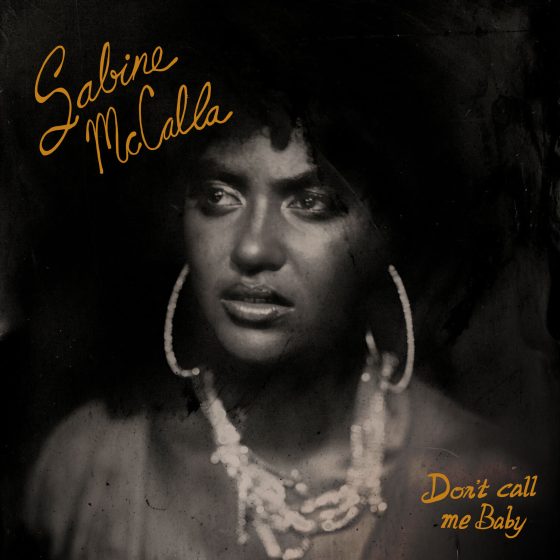
Over a century and a half later, the New Orleans-based Haitian American singer-songwriter Sabine McCalla, younger sister of the influential classical and folk musician Leyla McCalla, asked the tintype revival photographer Meg Turner to take her portrait. For an artist who draws from the past while seeking pathways forward, using an old medium to capture something new was an instinctive choice. Turner’s image became the cover art and a lodestar for the central feelings underpinning McCalla’s debut album, Don’t Call Me Baby, released through Kurt DeLashmet and Nick Shoulders’s Gar Hole Records label.
As we discuss later in this interview, the inspiration for Don’t Call Me Baby wasn’t born from a happy moment. Rather than sinking into sadness, McCalla juxtaposes joy and heartbreak, using narrative storytelling as a vehicle for catharsis across nine haunting, surreal songs. On “Sunshine Kisses” she recalls being lost in liminality after a breakup before letting loose on the classic rock and roll slanted singalong “Louisiana Hound Dog” (a co-write with Dan Auerbach from The Black Keys and Pat McLaughlin). By the time “Two of Hearts” arrives, our protagonist is singing about three different suitors.
Amid the paradisiac instrumentation surrounding her soothing voice, McCalla and her producers, Sam Doores (of The Deslondes) and Ajaï Combelic, collaborate with a cast of more than a dozen musicians from her musical community in New Orleans. Together, they blend rhythm & blues, country, folk, jazz, Tropicália, quiet storm soul, and doo-wop into hypnotic roots music. Song by song, the results reflect a lifetime spent studying traditions from across the Americas, Europe, the Caribbean, and Africa. Equal parts comforting, adventurous, and spicy, she serves up an Americana hotpot that speaks to the world while being informed by it.
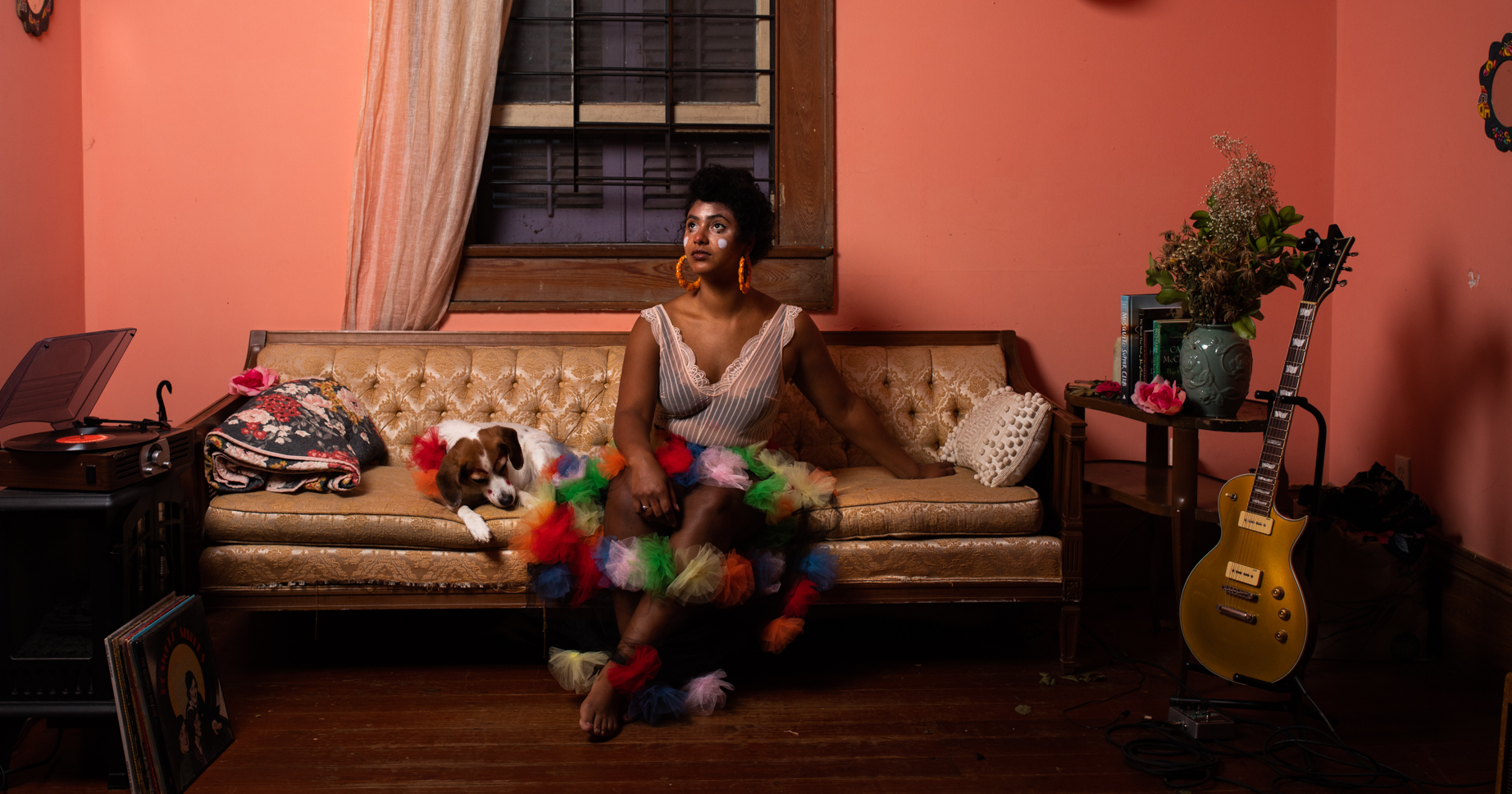
Last month, McCalla joined BGS on a video call. Sitting on a yellow couch surrounded by rosebud-hued walls and framed art, she spent just under an hour with us. In a discursive conversation, we explored the influence of life in Louisiana, her passion for musical history, and, given her background, the inevitability of her worldly confluence of sensibilities. A thoughtful speaker, McCalla isn’t the type to rush her answers. She’s also happy to keep a point simple or, when needed, throw in some extended anecdotes. Sometimes it’s not that deep; other times, it really is.
How important is a sense of place and location to your music?
Sabine McCalla: I don’t know. I mean, it is important. Louisiana and New Orleans have been characters in, or influenced my music a lot. But I’ve certainly written songs outside of New Orleans and Louisiana. I think any land we connect with is important when we’re writing songs.
From the outside looking in, it’s easy to surmise that there is a quality to New Orleans and the musical community that lives there that unlocked something in your artistry.
Yeah, it’s definitely been very inspiring. New Orleans is a very musical city. Nearly everyone you meet is a musician or plays more than one instrument. It’s incredibly culturally rich here. Learning to play music in this environment, you learn certain styles, or you learn with a focus on dancing. There’s a lot of rhythm & blues, soul, and second-line music, and people dancing in the street. I think dancing is something I was thinking of when I thought about how I want these songs to be listened to. Like I’m thinking of a honky-tonk dive bar, hot and steamy, lots of close dancing.
Who says you can’t dance to misery, right?
You certainly can. In fact, you’re probably a better dancer.
There’s something about the juxtaposition between a sad sentiment and a happy rhythm or melody that can be so moving.
I think innately we all want to experience pleasure, and we all have our pains that go with it. I think that’s what people are connecting with.
Unfortunately, or perhaps, fortunately, what is pleasure without pain?
Just a high.
New Orleans looms large in my mind as one of those places where traditions have been kept alive that don’t still exist elsewhere.
Yeah, for sure. There’s a tradition of passing down songs. There’s also so much space to create music here.
Don’t Call Me Baby is an ambitious album, but you succeed in your ambitions. You’ve braided a lot of threads together: different places, genres, periods of time. Was there a specific time in your life when you became interested in musical history, or looking to the past to find new ways to go forward?
I grew up playing classical music. Then I studied some old-time music from Appalachia. I’m interested in learning lots of old songs. I like listening to Harry Smith’s Anthology of American Folk Music. I feel like I’ve dug into a lot of pre-war recordings throughout the South and been inspired by ballad singing.
Like many people, I learned about the Anthology of American Folk Music through Bob Dylan and Joan Baez. There’s something about songwriters who go back and listen to their influences’ influences.
Totally. Shape-note singing is coming back into fashion now. I keep hearing about shape-note festivals around the country. My drummer, Howe Pearson, who also plays in The Deslondes, has been hosting a shape-note singing workshop every Monday.
What was it about the Anthology of American Folk Music that excited you?
They were songs I’d never heard before. I liked the quality of the voices on tape. So emotive and raw. And not just the Harry Smith anthology, Alan Lomax recordings too. I’ve always been interested in ethnomusicology. When I was younger, my sister and I had a mentor who played a lot of blues and jazz. I remember thinking he wrote these songs, until I realized, no, this white man from New Jersey did not write these songs. There’s this beautiful history of Black people in America who sang the blues and jazz and wrote so many songs that have been passed down.
Sometimes I wonder about the impact recorded music had on community singing. I’ve read that after phonograph records turned up, people became more self-conscious about singing at home. They’d hear these great singers and a shyness would set in.
People were keeping the songs they heard alive. They lived when there was no radio, so they were better keepers of songs than we are today. Now everything is so fast. There’s so much music, AI music, the industry pushing constant output, and not reviving songs. But I think a new resurgence of song revivals is happening.
You grew up in a Haitian family in New Jersey. Were your parents encouraging about music?
Yes and no. My sister’s also a musician. My mom was like, “Leyla’s the musician. You need to figure out your own path.” I was like, “No, I think I want to do this.” Both of my parents always encouraged choosing your own path and focusing on it.
It’s not always immediately obvious, but there’s a strong Haitian influence in American music.
Yeah, the Fugees! Lauryn Hill went to my high school. Her album The Miseducation of Lauryn Hill is like a bible to me. It’s a perfect album – the intros, outtakes, transitions. Lyrically empowering. I grew up on her songs. I’m grateful for my high school. We had amazing music teachers.
I graduated with SZA and Dave Authors, and a few others who’ve done great things. My sister Leyla McCalla went there, too. New Jersey is incredibly diverse. A lot of people immigrate to New York and then move into the suburbs, which my family did as well.
Did you grow up on a bit of everything musically?
Classical music. School trips to the opera. My parents played the Haitian groups Boukman Eksperyans and RAM. We listened to The Beatles, Bob Marley, and Rod Stewart.
When I think about Americana, I think about this confluence of cultures and musical traditions that came together in the South. When did it become attractive to you?
It all came together naturally. I was focused on pre-war songs, then going through decades of music. When I moved here, I got interested in The Boswell Sisters and songs collected in New Orleans in the early 1900s. Then I learned about Lonnie Johnson, the godfather of rock ’n’ roll. Through studying songs, I realized that it’s all Americana music. It influenced how I sang and created songs.
In a sense, there’s an inevitability to where you arrived.
I originally wrote and sang songs a cappella. That became my EP, Folk. My friends Leonie Evans and Steph Green helped with backup vocals. There wasn’t much thought about creating a larger sound until I met Eli “Paperboy” Reed. I’d already been listening to New Orleans R&B and soul, and when he put chords to my songs, I was like, “Oh, this is the sound I’ve been looking for.” That changed how I thought about songs. I also grew up listening to [the Tropicália singer-songwriter] Caetano Veloso. I’ve been trying to read his book Tropicalism, but there are so many references to Brazilian artists. It’s going to take forever.
After growing up in New Jersey, you moved to New Orleans, where this was all even more concentrated. There was a weekly jam session you’d go to called the All-Star Covered Dish Country Jamboree.
Yes. The first time I went was in 2014, probably in February. Joy Patterson came up to me – she runs it – and said, “I know who you are.” I was like, “Oh no, this lady…” But I loved it. My sister had been living here, so people were like, “Oh, you’re Leyla’s sister.” I think I saw Sam Doores’ doo-wop group with Casey Jane, Camille Weatherford, Emma Eisenhower, Jon Hatchett, and Max Bien Kahn; they did a little doo-wop show. I thought it was so cute. I wanted to know these people. And I’ve ended up working with all of them.
From there, it became a weekly ritual in your life, right?
Yeah, it was like a church. Going to this country night where I could talk about songs with people and hear a lot of old songs: classic country, classic R&B and soul. Those things lit my soul up.
After all these experiences, what’s your understanding of country music and where you could fit into it in 2025?
I don’t know. Maybe giving voice to other women of color who are interested in country music, not just hip-hop or R&B, but a diversity of sounds. I also lived in Ghana growing up, and lots of people listen to country music in Africa. What surprised me was going to Ghana and someone saying, “Where’s your cowboy hat?” I was like, “I’m from New Jersey, not Texas!”
I get the sense that a lot of your music is therapeutic storytelling.
Yeah, it is. It comes from the heart.
What sort of stories do people tell you about their experiences with your music?
The best one was in London. Someone said their friend’s father passed away and left her a boat. She went sailing for three months. They didn’t listen to music for most of it, then one day she put on my record and that’s all they listened to. That made my heart swell. It’s making me tear up now. Another woman told me she’d separated from her husband and, after hearing my music, reached out to him, saying she was ready to compromise. I was like, damn… Hopefully, this music lets people feel they’re not alone in their feelings.
How much has loneliness driven your music?
It’s been a huge component. I value my alone time, but sometimes it’s a detriment when I’m alone too long or ruminating too long.
You need something to break the feedback loop. Tell me about the backdrop to this album?
I was playing with a lot of ideas. Not everything made it onto the record. A friend visited – she’s an amazing stylist – and I wanted to get a tintype photo done by Meg Turner. We did makeup, hair, clothes, jewelry, so much dazzling stuff, so I’d be shiny in the sun. It was hot in New Orleans. Right before taking the photo, I got a text from someone I was dating, and that’s the true look of shock on my face. After I saw the picture, I was like, “Everything needs to be based around this photo.”
It’s an amazing photo.
Right after that, I wrote “Sunshine Kisses” and then I thought, “What else goes with this?”
What sort of ideas did you have about the threads you wanted to bring together in the music?
I was like: What are all my breakup songs? I wanted it to be haunting, but warm. Some songs I wrote during the pandemic felt too cold for this album. I originally wanted to name it Sudden Blue because I was thinking of a colder feeling. But something transpired while making it; the songs were given a new breath by the people I was working with: Sam Doores, Gina Leslie, Roy Brenc, Howe Pearson, and Ajaï Combelic. It was a warm feeling in the room, lots of laughter. And we were doing it during Mardi Gras, during carnival season, which was wild, because we’d play shows at night and then go into the studio in the morning.
It’s amazing how much other people can make a difference to a creative process.
Yeah. We fed off each other. If there’s negativity or self-consciousness, it’s felt in the music. We were all happy to work out ideas and nerd out about music.
Did you have a heartbreak record, not necessarily one you idolized, but a north star to look towards?
A few albums inspired me. Lauryn Hill’s The Miseducation of Lauryn Hill. Fiona Apple’s When the Pawn… There were also songs: Irma Thomas’s hits, and “Andromeda” by Weyes Blood. It’s such a powerful song about all the emotions we face. Feeling lonely, then liking the loneliness, then changing your mind five times a day.
Photo Credits: Lead image by Camille Lenain; album cover tintype by Meg Turner.
In our eyes and to our ears, there’s no better family of musical genres to usher in the holiday season than roots music. Bluegrass, Americana, old-time, country, blues, and beyond – they’re all perfectly suited for the coziest time of year, for togetherness, for parties and gift-giving and cookie icing. Whether you celebrate Christmas, Hanukkah, Kwanzaa, or Winter Solstice – or even if you feel like opting out of the ruckus altogether – there is roots music for you.
Each year, we like to share our picks for the rootsiest time of the year in BGS Wraps, a weekly collection of songs, videos, albums, shows, tours, and events that celebrate the season. We share a few of our favorites, mostly brand new but often classics and timeless selections, too. Plus, we collect all that we can into a running playlist so you’re ready when the family or party hands you the aux cable.
We hope you enjoy BGS Wraps and tune in the next week as we continue our series celebrating the holiday season. (Catch up on week one here.)
Christmas at the Ryman, Amy Grant & Vince Gill
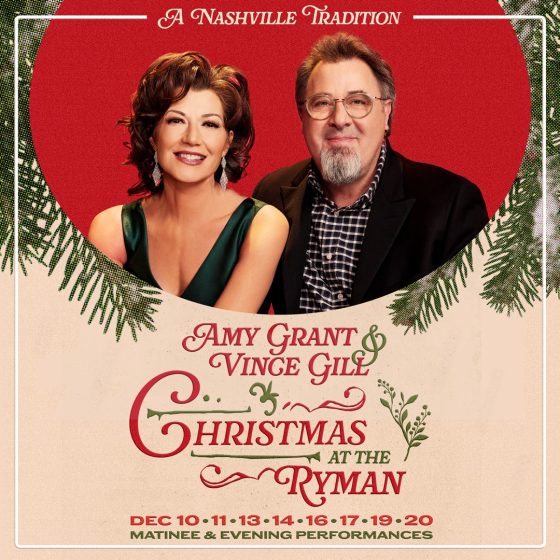
“When I Think of Christmas” I think of Amy Grant and Vince Gill holding down the holiday fort with their iconic annual Christmas at the Ryman series. This year, they’ll offer 12 performances over eight days at the lauded venue known as the most famous former home of the Grand Ole Opry and the birthplace of bluegrass. Grant and Gill epitomize Music City and how tightly knit this town and its music creators are. There are sure to be plenty of memorable and one-of-a-kind moments across their holiday residency. Limited tickets are still available, so secure yours today. The series begins today, Wednesday, December 10 and concludes on December 20.
“Joy,” Kirby Lyle
Nashville-based songwriter and multi-instrumentalist Kirby Lyle is joined by Maya de Vitry on a brand new seasonal track, “Joy.” Featuring trickling banjos, fiddles, cellos, and guitars in a cozy and grooving 6/8 time, “Joy” feels like a folk holiday mantra, with Lyle and de Vitry singing in a call-and-response style perfect for the often ecclesiastical vibes of this time of year. “Joy” centers the feelings of working class and downtrodden folks in the holiday season, finding radical hope not through toxic positivity but through intention and community. It’s both a sonic and rhetorical antidote for those weary of capitalism and consumerism masquerading as togetherness and holiday cheer.
“Merry Christmas, Baby,” Miko Marks
Does Christmas give you the blues? Well, the blues can cure your holiday blues, too – as evidenced by Oakland-based artist and singer-songwriter Miko Marks’ brand new rendition of “Merry Christmas, Baby.” With twangy resonator guitar and whining harmonica, Marks’ ensemble stomps their way through the deep-pocketed number. The classic form and chord progression are as comforting as Christmas cookies and a mug of hot cocoa, and Marks’ soaring and soulful voice is more than angelic enough for the season.
“Santa Claus Is Coming to Town,” Parker McCollum on CMA Country Christmas
Young country superstar Parker McCollum performed a quintessential classic, “Santa Claus Is Coming to Town,” on this year’s primetime broadcast of CMA Country Christmas. Flanked by thousands of twinkle lights and backed by brass, strings, and background vocalists, McCollum wore a crisp white “Fresh Western” trucker cap as he brought his trademark country energy to the beloved carol at Belmont University’s Fisher Center for the Performing Arts. If you missed the original broadcast of CMA Country Christmas on December 2 and the encore broadcast on December 9, don’t worry – you can stream CMA Country Christmas via Hulu or Disney+. The single version of the track is also available exclusively via Apple Music.
“Every Season,” MORGXN
On the opposite end of the mainstream country continuum from bro country and country trap you have artists like MORGXN innovating on the genre in similar sonic ways, but without the genre cognitive dissonance, toxic masculinity, or petty litmus testing of the other end of the spectrum. See how much fun, engaging, and innovative country can be with pop and electronic influences from other territories than what we most commonly find on the country airwaves? “Every Season” is the first holiday release from MORGXN, an original song that draws as much upon rootsy textures and tones as crisp and modern software sounds.
We always love when we find new seasonal music that’s inclusive of everyone’s faiths and traditions, too, so we’re especially excited to add “Every Season” to our holiday playlists this year.
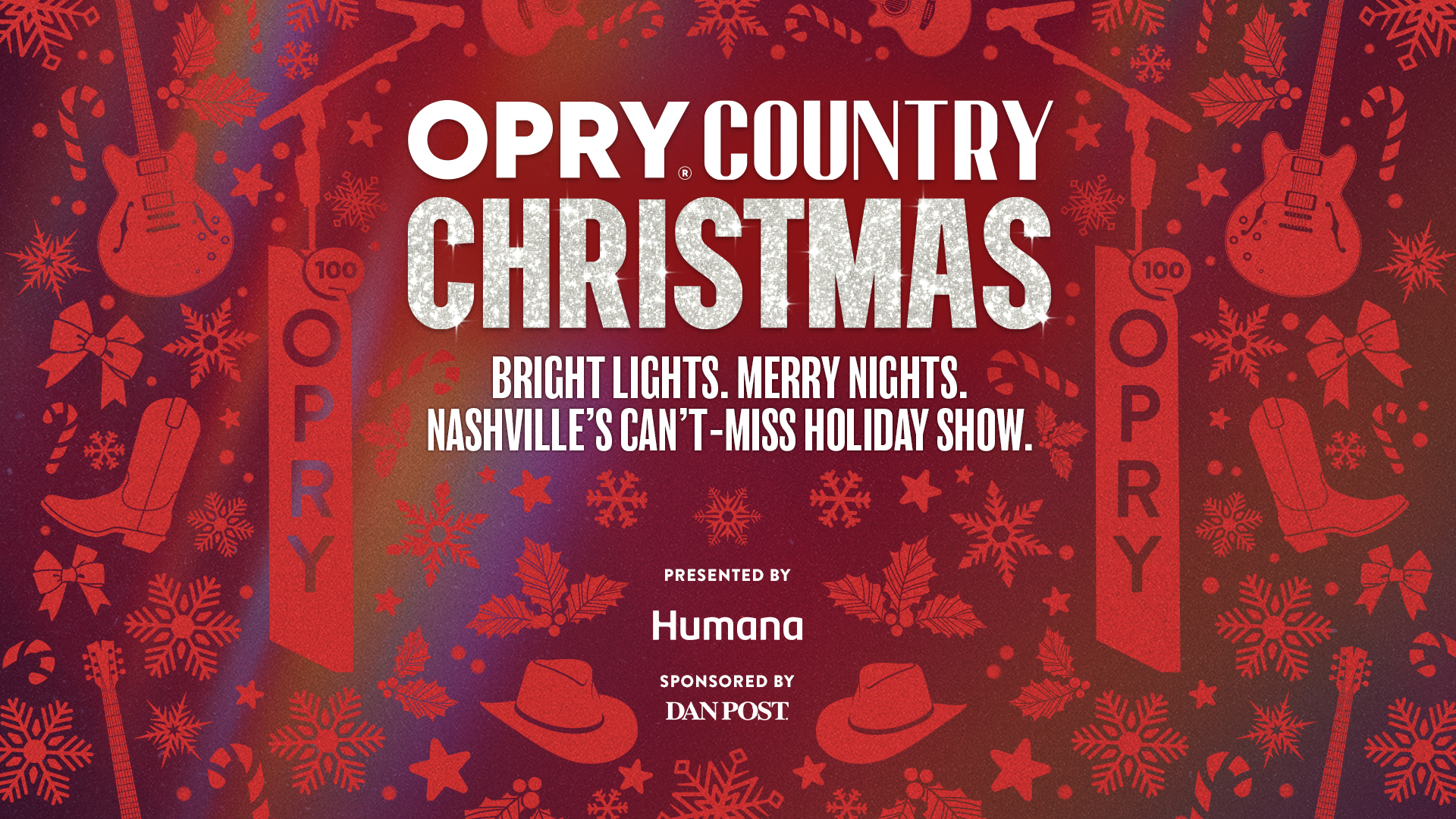
Opry Country Christmas
Are you also devastated our Opry 100 Artist of the Month series concluded already? Here’s your solution, as mere days after the Grand Ole Opry’s special 100th Anniversary shows on November 28, Opry Country Christmas began in earnest at the Grand Ole Opry House on November 30. The festive, star-stacked shows will continue through December 23, each performance featuring Opry members the Gatlin Brothers, Riders In The Sky, Mandy Barnett, and Charlie McCoy plus varying special guests each night like Connie Smith, Marty Stuart, Maddie & Tae, the Isaacs, Ricky Skaggs, Marcus King, and many more.
If you’re nearby or traveling to Nashville this December, get your tickets and more info here. Not able to make it in person? Stream Opry Country Christmas on WSM Online and the Opry’s digital platforms, or listen like we do most often, over the good ol’ fashioned airwaves at 650 AM. When you hear Country Music Hall of Famer Charlie McCoy wail through a medley of Christmas carols on his harmonica, you’ll be glad you did.
Snow Globe Town, Brad Paisley
Brad Paisley’s brand new country Christmas album, Snow Globe Town, was inspired by him being asked by Hallmark Channel to write and record music for their brand new A Grand Ole Opry Christmas movie. Paisley has already taken his festive songs to The Tonight Show Starring Jimmy Fallon and NBC’s “Christmas in Rockefeller Center” – and the album rose rapidly to the very top of the Billboard Current Country Album chart, scoring a No. 1 while it landed on their Top Country Albums and Holiday/Seasonal Albums charts, too. With his signature croon and hearth-hot telecaster licks, Paisley offers brand new numbers and favorite classics. Snow Globe Town has been called “unmistakably Brad” and we certainly agree.
Wrapped in Paper, Sofia Talvik
We’ve enjoyed featuring Swedish singer-songwriter Sofia Talvik’s holiday songs in BGS Wraps over the years. Now, she’s collected all of her Christmas singles and tracks since 2018 into a new holiday album, Wrapped in Paper. The project also includes three brand new tracks, two originals – “Merry Christmas, Adios, So Long” and “Let Peace be the Song” – as well as her version of “Silent Night.” “Let Peace be the Song” is more than apt for the uncertain and extreme times we find ourselves living in. Seemingly a response to the attention economy of social media and the sensationalism of the news cycle, Talvik calls for peace – the true meaning of this season, regardless of faiths or traditions – while wars, conflicts, and political frays are fought all around us. If only peace could be the gift we all give each other this year.
Heart of the Holidays, Tenille Townes
A new three-song EP from singer-songwriter Tenille Townes, Heart of the Holidays, is inviting, cozy, and classic. The collection’s title track is warm and jazzy, with round hollow-body electric guitar tone that feels like a comforting hug. The drum kit shuffles along as Townes gives us an excellent track for all kinds of wintry holiday celebrations. “I love writing and singin Christmas songs,” Townes said on social media, “because it brings out all the jazzy, cozy melodies.” The project continues with “Auld Lang Syne” – preemptively add that to your New Year’s playlist now! – and a lovely three-part harmony rich version of “Go Tell It On The Mountain” featuring Caylee Hammack and Fancy Hagood rounding out the vocal trio. It’s a perfect fit for BGS Wraps!
Lead Image: Miko Marks by Karen Santos; Amy Grant & Vince Gill by Robby Klein; Tenille Townes by Robert Chavers.
In our eyes and to our ears, there’s no better family of musical genres to usher in the holiday season than roots music. Bluegrass, Americana, old-time, country, blues, and beyond – they’re all perfectly suited for the coziest time of year, for togetherness, for parties and gift giving and cookie icing. Whether you celebrate Christmas, Hanukkah, Kwanzaa, or Winter Solstice – or even if you feel like opting out of the ruckus altogether – there is roots music for you.
Each year, we like to share our picks for the rootsiest time of the year in BGS Wraps, a weekly collection of songs, videos, albums, shows, tours, and events that celebrate the season. We share a few of our favorites, mostly brand new but often classics and timeless selections, too. Plus, we collect all that we can into a running playlist so you’re ready when the family or party hands you the aux cable.
To kick off the season this year, we’ve got a BGS Wraps full of Good Country, jingle bells, Texas snow, holiday generosity, and plenty of glittering lights and joyous cheer. We hope you enjoy BGS Wraps and tune in the next two weeks as we continue our series celebrating the holiday season.
A Very Carper Christmas, Melissa Carper
One of our favorite purveyors of Good Country in the most legit old-school, Texas, Western swing, and outlaw styles, Melissa Carper has just launched her own album of holiday music, A Very Carper Christmas. It boasts quite a few originals and co-writes and a couple covers of classics, too. The collection is silky smooth and timeless, a perfect accompaniment to holiday cooking, decorating, gallivanting from store to store, or cozying up by the fire with your loved one of choice.
Starting December 4, Carper will join JD McPherson’s “Socks: A Rock & Roll Christmas” tour around the Southeast, East Coast, and Midwest. So don’t miss your chance to catch these Good Country seasonal songs live in person. Melissa Carper tour details here.
“When It Snows in Texas,” Chaparelle & Sierra Ferrell
Let’s keep it going with more Austin-based Good Country! Last month, alt-country supergroup Chaparelle announced a brand new co-write and collaboration with everyone’s current favorite old-time Americana goddess, Sierra Ferrell. “When It Snows in Texas” is the perfect seasonal holiday number, apt for each and every rootsy holiday playlist and certainly suited to occasions beyond just Christmas. With a languid, loping groove, it’s all wrapped up in alt sounds that remind of Nitty Gritty Dirt Band and a casual sing-along sidled up to a shiny wooden bar all at the same time. This is the country & western (heavy on the ampersand western) vibe we all crave – this time of year or anytime.
Feels Like Christmas, Mickey Guyton
Singer-songwriter and country star Mickey Guyton is no stranger to festive song releases, but Feels Like Christmas is officially her first full-length holiday album. From the adorable “Sugar Cookie” to the classic pop trappings of the title track to her “Christmas Isn’t Christmas” duet with the Michael Bolton, Feels Like Christmas feels… well, grown up. Fully realized. Ready for your moody, ambient Christmas cocktail hour or a laughter-rich, full kitchen, too. Guyton makes some of the best crisp, modern, radio-ready country around today, and this holiday collection – like most if not all of her discography – feels made to last the ages, too.
Further leaning into the festivities of the season, Guyton will also appear in a brand new Hallmark movie, A Grand Ole Opry Christmas, which is premiering this year during Hallmark Channel’s 16th annual Countdown to Christmas programming event. Guyton certainly has our number, and we’ll be camped out in front of the TV with our hot ciders and sugar cookies ready and waiting for this incredible Opry, country music, and Hallmark crossover.
I’ll Be Home for Christmas, Drew & Ellie Holcomb
Drew & Ellie Holcomb have added to their deep-and-wide catalog of holiday and seasonal music with a brand new EP entitled I’ll Be Home For Christmas. The project adds three lovely covers of Christmas favorites to the stacked roster of selections the couple and their Neighbors trot out each winter for the season. This year, they’ll perform two “Neighborly Christmas Special” shows in Tennessee – in Memphis on December 5 and in Nashville on December 12 – before heading out on their next headline tour in February. Find ticket info here, then put on I’ll Be Home For Christmas while you make your holiday lists and check them twice.
The Greatest Christmas On Earth, Robert Earl Keen
Now this right here sounds like our kind of Americana Christmas circus! Robert Earl Keen kicks off his “The Greatest Christmas On Earth” tour this week, crisscrossing the South and Southeast through the month of December spreading cheer, joy, silliness, and light – and keeping the party going down the road forever, as he does.
The tour will kick off on December 4 in REK’s hometown of Kerrville, Texas, and you can be sure each night will feature his paean to the beauty and dysfunction of families at the holidays, “Merry Christmas From The Family.” Put all your own rowdy relatives in the van and don’t miss these shows. Ticket info here.
“Dream a Dream of Christmas,” Lydia Luce
Lydia Luce just released her excellent brand new album, Mammoth, in late October, but even before the project’s release she was looking ahead to the winter and holiday seasons with a A-side / B-side single release, “Dream a Dream of Christmas.” Like her songs in general, the A-side selection is contemplative, emotional, and rich with text painting and lush piano and vocals. Resonant strings play along with the contours of her vocal, punctuated by Christmas-y percussion and scoring, like Hollywood holiday offerings of the ’50s and ’60s. The track’s B-side is a delightful rendition of the beloved carol “Silent Night” that’s dramatic and rich – and features guest vocals by Caroline Spence. Both songs would be excellent additions to your themed playlists for the season.
OCMS XMAS, Old Crow Medicine Show
It’s hard to believe one of bluegrass and old-time’s longest running party string bands, Old Crow Medicine Show, have just released their first holiday album this year – but it’s true! OCMS XMAS is zany, rollicking, and unhinged. (As it should be.) It’s a collection of stories, songs, and tableaus that are just as fantastic and engaging as any of their rip-roaring live shows or any of their adored albums from their stacked discography. It’s a Christmas album as only Old Crow could make, and frontman Ketch Secor’s fingerprints are all over the track listing. From “Corn Whiskey Christmas” to “Breakin’ Up Xmas” to “Krampus Night” and beyond, this set of material will certainly be a Holiday Hootenanny on stage. Catch their Holiday Hootenanny on tour through December 20, before the band returns yet again to the Ryman Auditorium for their iconic annual New Year’s celebration performances to close out the year.
Sweet Relief’s Annual Holiday Auction
Sweet Relief is a non-profit organization with a mission that we all – in the music industry and outside of it – can get behind. For more than 30 years Sweet Relief has worked to provide financial assistance to musicians and music industry workers who are facing illness, disability, or age-related challenges. Just last week, they launched their annual holiday auction yet again, offering signed memorabilia and in-person experiences with a variety of artists in roots music and beyond, all of which benefit their important mission and vital work supporting music professionals’ mental and physical health.
Folks can bid on offerings from artists and musicians like Billy Strings, Hozier, Pearl Jam, Walker Hayes, The Decemberists, the Black Keys, Amanda Shires, Gregory Alan Isakov, and many, many more. If you’re planning your Giving Tuesday donations and also wondering what to get the music lover in your life who already has everything, perhaps you can check two things off your list in one go by supporting Sweet Relief. Learn more and view the auction items here.
Jingle All The Way Tour, Béla Fleck & the Flecktones
No holiday season would be complete without regularly returning to one of the best roots holiday albums ever made, Béla Fleck & the Flecktones’ Jingle All The Way. Released in 2008, the GRAMMY Award-winning album is beloved in and outside of roots music spheres – it even landed a mention in Oprah’s O Magazine back in ’08! Now, Fleck and the band – including Victor Wooten, Roy “Future Man” Wooten, Howard Levy, and special guests Jeff Coffin, Alash, and Sierra Hull (on select dates) – are taking their virtuosic cheer back on the road with a full slate of Jingle All The Way Tour shows. The tour kicked off in Nashville and will continue through December 20 hitting performing arts centers and theaters in the Midwest and across the Eastern U.S. To mark the occasion, Fleck & the Flecktones released their first holiday music since Jingle All The Way, a single medley of “The First Noel/Joy To The World.” If you can’t make the shows, put the original album and new single on the stereo – but we really recommend snagging tickets and seeing them live, with this superlative lineup, if you can.
Lead Image: Mickey Guyton, Feels Like Christmas; Melissa Carper by Lyza Renee; Old Crow Medicine Show courtesy of the artist.
2025 was a standout year for roots music books. In a time of political upheaval and uncertainty, authors like Craig Shelburne & Brenda Colladay and Alisa Murphy brought us deep into the history of music institutions that have weathered generations of American ups and downs: the Grand Ole Opry and The Station Inn. Reading about these places is a reminder that culture is often a better litmus test than news cycles, when it comes to what a country stands for and where its soul can be found.
Biographies of Dolly Parton and Alice Gerrard (the latter written by Gerrard herself) highlight women who defied the odds to become iconic voices in country and old-time. Parton first debuted on the Opry at the age of 13 and her influence on American culture has spanned from highlighting women in the workplace with “9 to 5” to donating a million dollars for medical research to accelerate the creation of the Moderna COVID vaccine. Gerrard, while less of a household name, is considered one of the last of the old guard in traditional music; even if you haven’t heard of her, you’ve probably still been touched by her work. These books detail the unlikelihood of these women’s successes given the time and place of their work and both good reminders of changing gender norms that we now take for granted.
Two books on Black American fiddle and banjo music continue the quest to restore African music’s and African American musicians’ rightful place in the history of the American string band tradition. With additional archival and notation resources, these books offer not only scholarship, but an opportunity for dedicated pickers to add to their repertoire, too.
And finally, roots musicians Paul Burch and Charlie Parr channel their creative writing into novels Meridian Rising and Five, respectively, the former a fictionalized story of Jimmie Rodgers and the latter a wild meditation on the wanderings of a troubadour.
From coffee table aesthetics to novels and new tunes, 2025’s roots music books have you covered! See a list of our favorites and a collection of “honorable mentions” below.
Ain’t Nobody’s Fool: The Life and Times of Dolly Parton by Martha Ackmann
Martha Ackmann is known for illuminating the stories of women who rise above societal expectations, so it’s only appropriate that she should tell the story of Dolly Parton’s ascent to success. With new interviews and documents, the book focuses on the price Parton paid for her early fame, penalized and criticized by those who saw it as a betrayal of her roots. Despite legal battles and struggles with her mental health, Parton persevered and went on to use her affluence to help her East Tennessee home, through the development of Dollywood, her charitable work, and the creation of The Imagination Library. Find it here.
Go Back and Fetch It: Recovering Early Black Music in the Americas for Fiddle and Banjo by Kristina R Gaddy and Rhiannon Giddens
Appropriate for pickers and scholars alike, this collection of early Black Atlantic music is equal parts songbook and history lesson. Nineteen carefully transcribed tunes sourced from 1687 to the 1860s are presented in standard notation and banjo tablature, and accompanied by rich historical essays detailing their origins, cultural context, and evolution over time and place. This collection is another important step in the recovery of Black history of the American musical canon – and specifically the fiddle and banjo canon – from two lauded experts on the subject. Find it here.
Meridian Rising by Paul Burch
Meridian Rising, the debut novel from Paul Burch, fictionalizes the life of country star Jimmie Rodgers and was released this fall to rave reviews. As the Chattanooga Free Press says, “Burch must have done a great deal of research to deliver a story that feels so authentic, but research alone doesn’t make a good novel. The writing is what matters, and Burch skillfully renders a large cast of narrators throughout Meridian Rising, especially its main subject, whose witty, sometimes barbed voice is vivid and memorable.” Find it here.
The World Famous Station Inn by Alisa M Murphy
The passing of JT Gray in 2021 marked the end of an era for The Station Inn. Although the venue continues its bluegrass legacy with new management, it has been long past time to commemorate this (as its name rightly points out) world-famous venue with a book of stories and photos. Author Alisa M Murphy spent two years immersing herself in the culture of the venue and conducting interviews to put together her coffee-table book, The World Famous Station Inn.Find it here.
Custom Made Woman: A Life in Traditional Music by Alice Gerrard
This new memoir from one of our national treasures, Alice Gerrard, features over 100 of her personal photographs along with stories from pivotal times and an exceptional life in traditional music. Gerrard’s career saw her crossing paths with Bob Dylan, Doc Watson, Elizabeth Cotten, and many more. Recent rereleases of Gerrard’s trailblazing collaboration albums with Hazel Dickens have been put out by Rounder Records and Smithsonian Folkways, and they can be listened to in an entirely new context thanks to this book. Find it here.
Fiddling is My Joy: The Fiddle In African American Culture by Jacqueline Cogdell DjeDje
UCLA Ethnomusicologist Jacqueline C. DjeDje investigates the fiddle in Black America, not only helping restore it to its rightful position in history, but also exploring why fiddle in African American culture disappeared from the mainstream story of the instrument in the first place. In addition to exploring geographic differences in African American fiddling traditions, DjeDje’s scholarship looks at fiddle traditions in West African and how their specific characteristics made their way to both Black and white American fiddlers. The book is accompanied by an online eScholarship Companion with primary source documents and audiovisual examples of music discussed in the text. Find it here.
Five by Charlie Parr
The second collection of short fiction from beloved Minnesota musician Charlie Parr is not for lovers of a tight plot and succinct characters. Parr’s five stories are, according to his own description, “more like sad anecdotes told to you at the end of an impossibly long dinner party by the drunken spouse of someone that you barely know while you’re easing your way to the door, having already put your coat on around the time that these stories began.”
But, if you’re a fan of Parr and his 18 (!!!) studio albums, this collection is a must. Find it here.
100 Years of Grand Ole Opry by Brenda Colladay & Craig Shelburne
Music journalist Craig Shelburne worked tirelessly with Opry historian Brenda Colladay – and dozens of artist, announcer, and Opry employee interviewees – to tell the story of the world’s longest-running live radio show over a century. The Grand Ole Opry is certainly the main character. This book is perfect for collectors and readers alike, since it’s full of illustrations and photographs. It’s separated into chapters by time periods, following the twists and turns of the Opry’s youth, adolescence, and adulthood. From Lester Flatt to the 2010 flood, the book is as deep as it is wide. An entertaining resource for country fans who like to get the full story. Find it here.
Other Reads From Our Inbox
Solomon Simon Dog Man Jack by Cindy Baucom, illustrated by Grace van’t Hof (Self-published)
This website uses cookies to improve your experience. We'll assume you're ok with this, but you can opt-out if you wish.AcceptRejectRead More
Privacy & Cookies Policy
Privacy Overview
This website uses cookies to improve your experience while you navigate through the website. Out of these, the cookies that are categorized as necessary are stored on your browser as they are essential for the working of basic functionalities of the website. We also use third-party cookies that help us analyze and understand how you use this website. These cookies will be stored in your browser only with your consent. You also have the option to opt-out of these cookies. But opting out of some of these cookies may affect your browsing experience.
Necessary cookies are absolutely essential for the website to function properly. This category only includes cookies that ensures basic functionalities and security features of the website. These cookies do not store any personal information.
Any cookies that may not be particularly necessary for the website to function and is used specifically to collect user personal data via analytics, ads, other embedded contents are termed as non-necessary cookies. It is mandatory to procure user consent prior to running these cookies on your website.