The five-string banjo is often associated with Appalachian music, but its reach has always extended beyond one place. In Ireland, the banjo is traditionally heard as the four-string tenor banjo, a cornerstone of Irish folk music. This playlist celebrates the banjo in Ireland and Northern Ireland, but focuses instead on five-string banjo players, highlighting Irish and Northern Irish artists who are bringing bluegrass banjo into folk, Americana, and contemporary acoustic settings. The tracks here feature musicians working across traditions and genres, using the banjo as a bridge rather than a boundary.
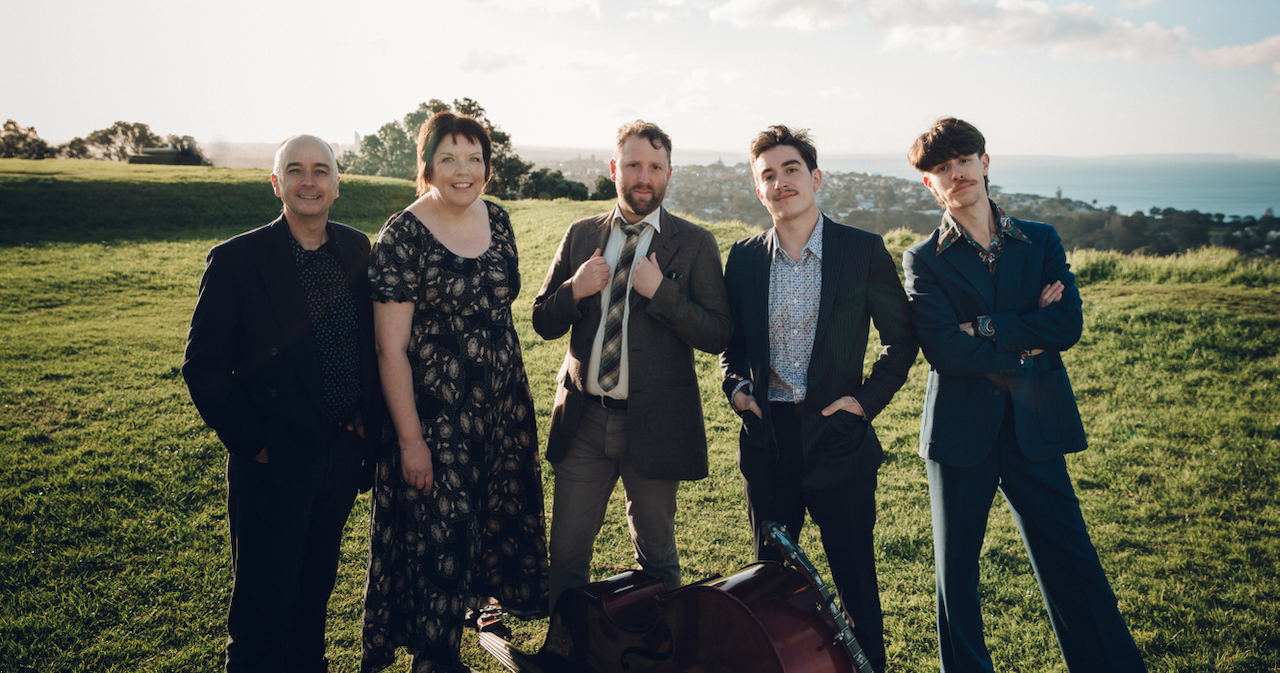
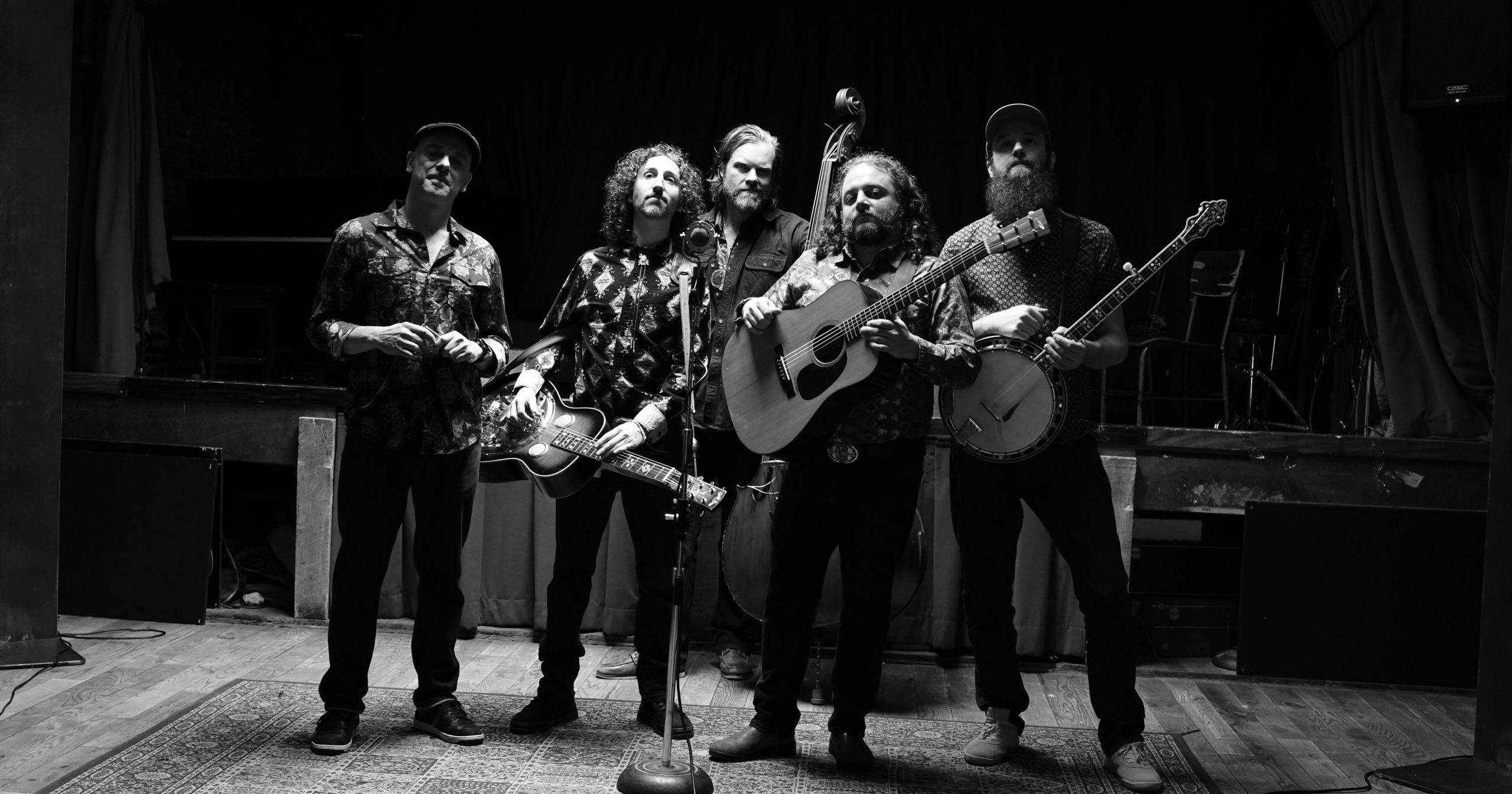
For us, The Foreign Landers, this playlist is closely tied to our own story. Our songs, woven throughout the playlist, reflect life lived between Northern Ireland and the U.S., and the relationships, faith, and sense of distance that shape that experience. In a small way, that mirrors the five-string banjo’s own journey across time and place. Our new album, Made to Wonder, is our expression of these ideas; including our music alongside these other innovative artists helps frame our transatlantic sound within a much larger conversation.
Alongside our music, you’ll hear boundary-pushing banjo work from artists like Flook, JigJam, Damien O’Kane, Ron Block, I Draw Slow, Brian Finnegan, and NÁVA, each offering a different answer to the same question: What does bluegrass banjo become when it’s rooted in Irish soil?
The result is a playlist that honors tradition while continuing to move forward. We hope you enjoy. – The Foreign Landers
“Made to Wonder” – The Foreign Landers
The title track from our new album, this banjo-centric song is about stepping away from noise and busy-ness to find true rest and belonging in Christ, whose yoke is easy and burden light. Featuring Tristan Clarridge (Crooked Still) on cello, adding depth and resonance.
“Road to Errogie” – Flook
There’s something infectious about Flook’s craftsmanship and energy – especially when five-string banjo enters the mix, played by the incredible Leon Hunt of the UK. A major influence on our sound.
“Gold Mine” – I Draw Slow
Irish-based and deeply rooted in both Appalachian and Irish traditions, this clawhammer-driven track blends heritage with heart.
“Johnny’s Peacock / The Red-Tailed Hawk” – The Foreign Landers
Two original tunes deeply informed by Tabitha’s heritage, joined by John Doyle, Brian Finnegan, and Cathal Murphy, bringing Irish tradition and bluegrass energy together.
“John D. McGurk’s (The Heartbeat of St. Louis)” – JigJam
JigJam seamlessly bridge U.S. and Irish folk scenes. Irish banjoist Daithí Melia delivers powerful five-string work on this fun, high-energy track.
“Mario Kart Rides Again” – Ron Block & Damien O’Kane
Two banjos – five-string and four-string – done right. Ron Block of Alison Krauss & Union Station and Damien O’Kane of the Kate Rusby band make for an unxpected delightful pairing. Here is a playful, virtuosic track from their album Banjovial that’s near to Mario Kart-loving hearts.
“Pictures” – The Foreign Landers
Led vocally by David with Tabitha on banjo, this original song draws on our own experience of long-distance dating. “Pictures” captures the quiet weight of distance – and how old photographs can briefly collapse time and place. The unconventional role of banjo on this track is one of our favorite sounds on the new album.
“Marga’s” – Brian Finnegan
A must-include from the County Armagh master himself, featuring Crooked Still with Greg Lizst on five-string banjo. Both four-string and five-string banjo shine in this expansive, genre-blurring piece.
“The Thrifty Wife” – Ron Block & Damien O’Kane
Another Ron and Damien double-banjo banger. Their three collaboration albums are essential listening when talking about banjo in Irish music. Bonus mando moments from Sierra Hull seal the deal.
“Traveler”–The Foreign Landers
Narrated from the perspective of Tabitha’s parents back in Northern Ireland, “Traveler” reflects on growing older, separation, and the tenderness of loving someone from afar. Another unconventional banjo track that we loved making.
“Magic Box” – Nava
Irish Americana and folk meet Persian influences, led by Ireland’s Paddy Kiernan on five-string banjo. A rich example of cross-cultural musical exploration.
“Hope” – Cup O’Joe
Featuring Tabitha’s two brothers (alongside David and Tabitha), this title track from Why Live Without blends Northern Irish roots with progressive Americana.
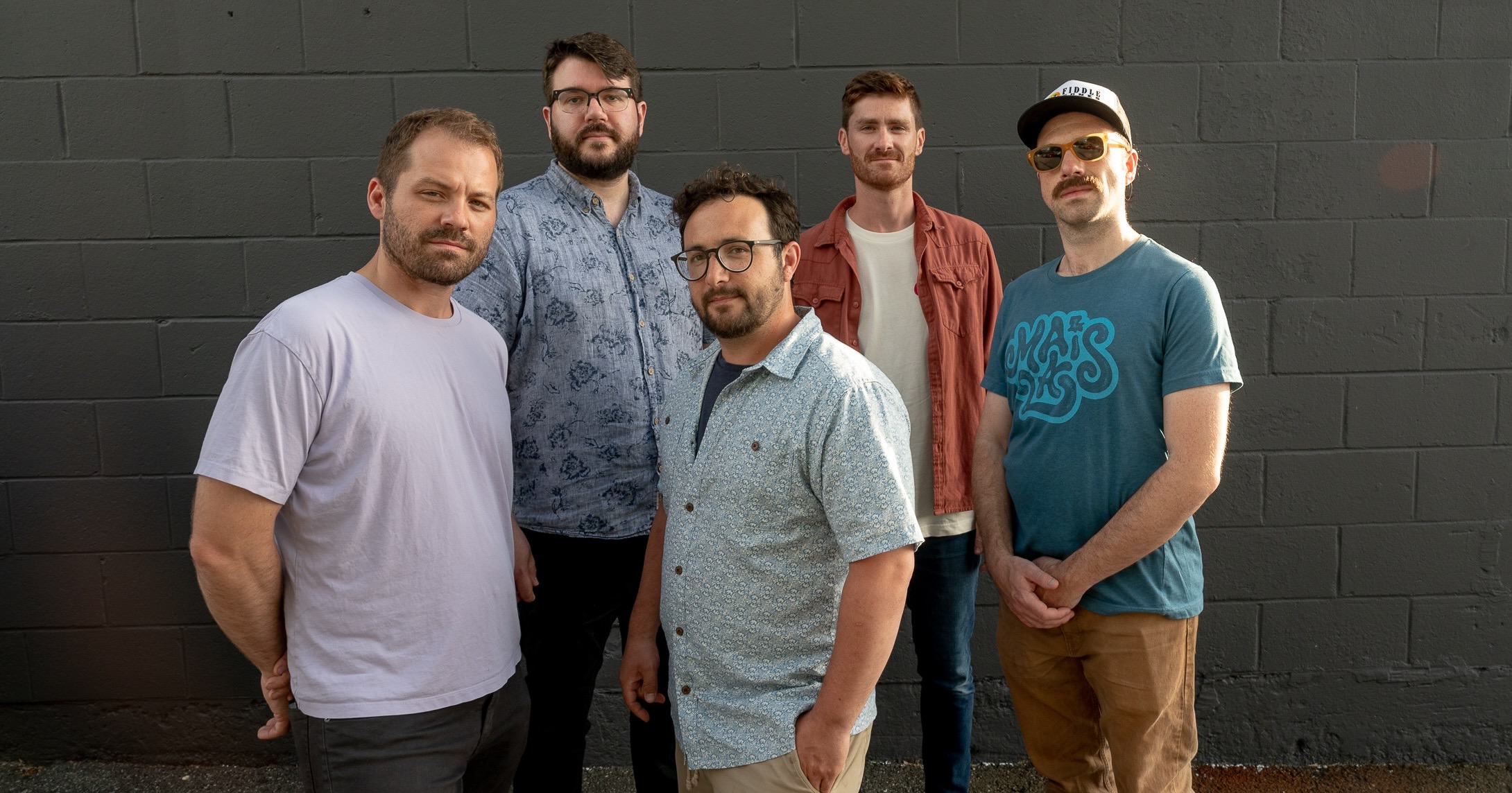
Aotearoa (New Zealand) doesn’t have a strong history of bluegrass bands – except one. If you mention bluegrass to New Zealanders, some will have at least heard of the Hamilton County Bluegrass Band. New Zealand has produced some great players, notably fiddle player George Jackson, banjo player BB Bowness, guitarist/singer Cy Winstanley, and bassist/singer Vanessa McGowan. (Now that we write this, these four would make a great NZ bluegrass band!) But while these names are well known in American bluegrass circles, it is fair to say they aren’t known (outside of folk circles) in Aotearoa.
Many of the songs on our new album, Midnight (out January 30, 2026), are situated within a day, or feature characters who are sitting at the cusp of who they have been before delving into something new. That sense of “in-between” also reflects our place within Aotearoa’s musical landscape, where bluegrass arrives without a long local history, but can be shaped in ways that feel natural to how we live and create here.
“Our Kiwi fans know bluegrass from traditional songs and contemporary artists such as Alison Krauss & Union Station, and Billy Strings. But they are more familiar with the other genres that bluegrass sits alongside. We’re also collectively members of the New Zealand folk, country, and jazz communities,” says our bassist, Rob Henderson.
Midnight starts with bluegrass at its core, but gently widens scope, bringing in different genres with their rhythms, broader chord progressions, and influences drawn from our own environment and lives lived in Aotearoa.
Here are the songs and tunes that anchor us in tradition and inspire us to find our own path as the clock strikes twelve. – You, Me, Everybody
“Ain’t No Grave” – Crooked Still
I love groove and the forward motion in all music, so when I heard this tune for the first time I was naturally inspired by the push of the cello part. This feel was a factor in my own bass playing across the album, especially for up-tempo tunes such as “Misdirection.” – Rob Henderson
“Dorrigo” – George Jackson
George Jackson’s tune “Dorrigo” feels friendly and familiar. It’s one of those tunes that will just keep going around and around the jam circle. When the Dorrigo Challenge did the rounds on the internet a couple years ago, it was a reminder of how a tune can bring people together. I had this in mind while writing “Sam’s Tune” on our album. – Sam Frangos-Rhodes
“Wildfire” – Watchhouse
I find when I sit down to write a song, I usually follow the same template or theme. Of course, there is variation in a lot of my songwriting, but I find rhythmically it’s always much of the same thing. A while back I wanted to break that cycle and try to write a more chilled out, slower tempo song, so I wrote “Heart of Stone,” which leads to “Wildfire” by Watchhouse. I enjoy this song because I think it has a very similar vibe to “Heart of Stone.” For me, it captures the same emotion and feeling I was looking for. I find it’s always nice to find what I was looking for in other people’s writing and relate that back to my own music. – LaurenceFrangos-Rhodes
“Heart of Stone” – You, Me, Everybody
Laurence originally wrote this while we were producing our previous album, Southern Sky. I love the backbeat to it, but he also writes great chord progressions; they feel natural and authentic to the song and surprising at the same time. I’ve known Sam and Laurence since they were in their early teens and while our audience love our instrumentation, singing harmonies with them feels like home to me. “Heart of Stone” gives us an opportunity to showcase our vocal blend and milk those beautiful chords Laurence gifts to his songs. – Kim Bonnington
“Railroad” – Béla Fleck & Abigail Washburn
When I try to serve the song with three-finger banjo, I frequently look to Béla Fleck’s work with Abigail Washburn. He plays parts and the two of them fill out the texture of a song so well! Ironically, when we arranged “Silver Spoon,” I was hearing Abigail-like clawhammer behind it, so I did my best to provide that kind of sound with three fingers. – Nat Torkington
“A Hundred and Sixty Acres” – Marty Robbins
Our track, “The Ballad of Bubs and Beautiful,” started when I overheard a conversation between two women shearers in a camp ground in Waipukarau. I knew that I wanted to capture their relationship to each other and their working life, all framed within a day. My Dad’s vinyl collection is 50% Marty Robbins and I remembered the picture that “A Hundred and Sixty Acres” colored of a life well lived. That’s why the first line in “Bubs and Beautiful” is, “Up ‘fore dawn to greet the sun.” There’s a tendency for NZ songwriters to still write about American experiences and places due to an inability to describe ourselves that has been labelled “cultural cringe.” But I knew the description of the women was genuine when I heard someone go, “Oh” as we played the last line live for the first time. – KB
“Orphan Annie” – Tony Rice
As a guitarist, I’ve been heavily influenced by Tony Rice – who hasn’t!? Whenever I listen to the Church Street Blues album it leaves me feeling creative and inspired. I love the minimalism; stripped back to one guitar and vocals telling a story. A lot of the songs on Midnight started in this exact same way, guitar and vocals alone. So it only feels appropriate to give credit to Church Street Blues where credit is due. I cannot pick one track from the album as a favorite because they are all great, but here is “Orphan Annie.” – LFR
“Was It You” – Joy Kills Sorrow
“Was It You” is a song I love for how it drives. That rapid mando chop over a fast rolling banjo held down by a thumping bass is a sure way to make a foot stomper. I took a lot of inspiration from Jacob Jolliff’s mandolin playing in “Was It You” when I put together my part for our song, “Busy Without Me.” – SFR
“Busy Without Me” – You, Me, Everybody
Kim writes wonderful slice-of-life songs. The Midnight album has everything from the plight of an unwed mother to mother/daughter sheep-shearers. “Busy Without Me” is perhaps more #relatable, though: we have a short life with ample temptation for busyness, it says, but it’s important to take moments to “sit and breathe and let the breeze wash over me with nothing in my way.” I love the way the busy-ness of the music reflects the lyrics. – NT
“Caleb Meyer” – Gillian Welch
Country/folk/bluegrass songwriters have always done a great job of writing songs about things we won’t talk about, but make us happy to sing about them. Our song “Silver Spoon” was initially written to an Irish jig. But the joyfulness didn’t eclipse the bleakness of the lyrics. At different times when we were arranging it, different band members would say, “What would Caleb Meyer do?” and our producer Rachel Baiman asked exactly the same question when she arrived for our sessions before we recorded. It’s become the quintessential modern murder ballad. – KB
“Distant Sun” – Crowded House
I grew up in ’90s New Zealand with parents who would play in a country band at the local barn dance while my brother was DJing at the rugby club rooms. So while Marty and Merle would be in one ear, Crowded House was in the other. If you think of great bridges in songwriting, “Distant Sun” has one of them. It also has my favorite line ever in a song: “I don’t pretend to know what you want, but I offer love.” The melody lines in our own track, “The Rest of Us,” hark back to years of admiring Neil Finn as a songwriter. – KB
“The Rest of Us” – You, Me, Everybody
When Kim first brought the concept of “The Rest of Us” to the band I was immediately a fan, and thought it would a great fit on the album. Before we went into the studio we all spent some time together to arrange the new material. As a band I feel like we work uniquely well when it comes to putting a song together and it’s one of our biggest strengths. I think “The Rest of Us” is a great example of Kim’s songwriting and a great example of how we function as a band. – LFR
“Natchez Trace” – Béla Fleck
In my mind, this is the classic G minor banjo instrumental, from Béla Fleck’s landmark album, Drive. Recorded with his B string tuned down to B flat, Fleck often plays it live out without the re-tuning. That was the inspiration for me to write my own Gm instrumental for a banjo tuned to open G major. – NT
“What a Fool Believes” – The Doobie Brothers
I wrote “She’s Alright With Me” a few years ago before I joined You, Me, Everybody. At the time, I had been deep diving into a lot of Doobie Brothers music and the moving parts within their songs. When “She’s Alright With Me” was born, it was originally a heavy keyboard driving tune – having written it on an old 1960s Wurlitizer Piano and styled it on some of the Doobies’ keyboard parts. It’s safe to say it’s transitioned a lot as we don’t have a keyboard part, but you can hear the rhythm now being driven in the same way by Laurence’s guitar. – RH
“Old Train” – Tony Rice Unit
Laurence’s epic album-opening “Misdirection” is a straight-ahead driving bluegrass song, which nonetheless has a few surprise chords in it. For some reason that reminds me of this epic Tony Rice track. – NT
“Misdirection” – You, Me, Everybody
“Misdirection” fits nicely as the opener on our album. It’s a fun example of progressive bluegrass while still staying true to its roots. “Misdirection” is my favorite track on the album and I would like to think the amount of fun we had recording this song is reflected in the final result. – SFR
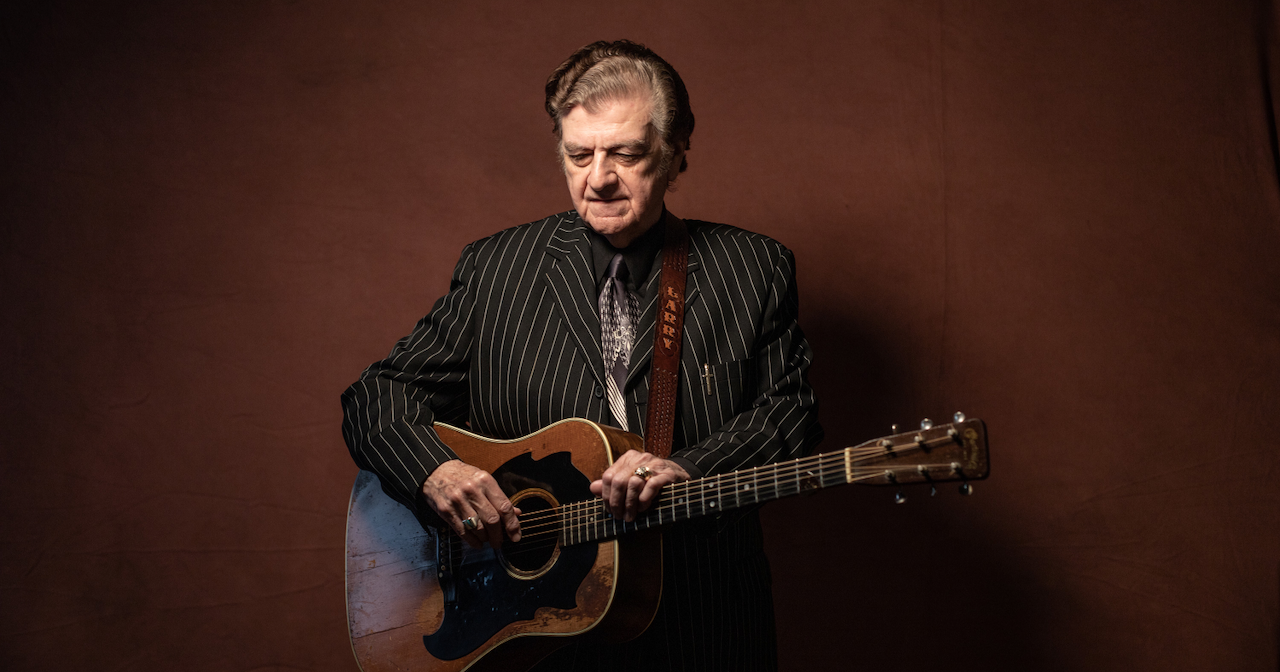
Speaking to Bluegrass Music Hall of Fame inductee and IBMA Award winner Larry Sparks over the phone, you might never guess you’re conversing with a living legend. He’s remarkably humble, down to earth, and plainspoken. And his approach to making bluegrass – as he has professionally for more than 60 years – is surprisingly zen.
His latest album, Way Back When, was released in late October 2025 and the project finds Sparks in exactly the same sonic space as any of his excellent LPs from the last six decades. If you were to take a short audio sample of Way Back When, it would be genuinely difficult to identify from which era of his lauded career it came. The project is warm, lively, and resonant, sounding like you’ve been dropped into a cozy living room with perfect acoustics and a superlative bluegrass string band.
The songs, as well, are timeless and classic, whether fresh tracks, iconic covers, or an old-timey instrumental fiddle tune with familial origins. Like his vocal style, guitar picking, and production preferences, Sparks’ song curation also feels like an intuitive extension of his personality. When he describes how he accomplishes this consistency across eras and executes the timelessness of his albums, it seems as though he becomes a sort of bluegrass guru.
“When songs touch me, they touch my feelings,” he explained to BGS . “When the song touches me, it’s saying something. I’ll take that and see what I can work with, and make it my song.
“The song’s me and I’m the song. And that’s the way that they did it back in the day. They become that song – the older singers, they became those songs. That’s the way that I do it, I try to make that song me and me the song.”
It’s a secret ingredient lacking from too many bluegrass records out there today. Not just his inhabitation of songs so that they can inhabit him, but also treating bluegrass like the forebears of this music did. As a living, breathing, cutting-edge thing that doesn’t need to be built on a foundation of regurgitation and emulation and litmus testing. Like Sparks puts it so simply – and eloquently – in our conversation, bluegrass has mainstream appeal. It requires heart, soul, and being present – becoming the music and becoming each song.
That right there is exactly how Sparks became a Bluegrass Music Hall of Famer and a hero to many – Alison Krauss, Billy Strings, and this writer included. It’s also how he’s maintained a consistent (never boring, stale, or regressive) sound over the course of his 62-year career. And, it’s what keeps him motivated to continue looking forward while inspiring all of us and reaching new audiences.
Let’s start by talking about your excellent new album, Way Back When. When I first listened to it in the fall, when it was released, I was struck by how old-school it sounds. The production style sounds so timeless, it sounds so warm and live – like real bluegrass. It also feels like it could have been pulled from almost any era of your career. with the way that it’s produced and the way that it stands out sonically. I wondered how you accomplished that?
Larry Sparks: I try to do things normal and just go for it. And all of the band– you just feel what you’re doing. You make it real. It’s hard to explain. It’s just, I sing and play from my heart, soul, and mind. Some songs you don’t have to do that, you just – like the old saying – rear back and let it go.
But some songs need attention, and you have to become that song and the song becomes you. That’s the way that I think probably all these songs are, everything I sing is pretty much that way. But, I don’t know, the feel just comes out natural. It’s more of an older feel, the real feel. That’s the way I like things. So much [that’s] added in today’s recording and music and everything, it’s okay – I’m not saying anything about it! But myself, I’d rather keep it pretty real, just like it used to be.
Are you tracking in isolation booths? Or are y’all tracking in the same room and live? It doesn’t sound like you’re putting the music under the microscope, as it were.
No, I don’t like that. You have to [sometimes], but I’d rather [not]. It’s [an] all in the same room deal. Sometimes you’ve gotta do an overdub break or something. You miss your hot lick, you gotta do it over again. Overdubs are good to use, but I don’t like to depend on them. I’d rather do it straight down the line, and if you make a mistake you do it over, you can overdub a spot or something.
Something else that stood out to me listening to the album is how consistent your sound has been over the decades. You have your own way of singing, you have a style that’s really consistent – as well how you pick the songs that go on your recordings. And you certainly have your own guitar-picking style. Almost no one picks like you these days. How do you think it is true, across 60 years in music, that when you listen to Larry Sparks, you know you’re hearing Larry Sparks and Larry Sparks alone?
It’s a natural style for me. I respect the older songs an awful lot. The older music and the older singers, that came along before I did, in the ‘30s, ‘40s, and ‘50s. I was a kid, but I remember the music mighty, mighty well in the ‘60s. All the older country singers were embedded in me, too. Some of the people just stayed in me. They were good singers and their music, their singing was real. It embedded in me.
I still had my own way of singing and playing. I never did wanna copy someone else. And although I respected what they did very much, the older music and the older country and bluegrass [artists] and whatever else – there is other music, too. It just became natural for me to have my own style of singing and playing, and I never really worked on it to do that. It’s just me, and the band pretty well feels what I’m doing.
The whole thing, you gotta keep it natural, real, and feel what you’re doing, from your heart and soul. That’s the way I do it. It’s nothing I plan to do. It just comes out that way.
I think that’s why it works and is so consistent across your entire career, because it’s not a costume that you put on, it’s not affectation, it’s not a target that you’re trying to hit. It’s just you being you.
People can feel that, too. The audience can feel what you feel. Most of ’em, they can feel exactly what you feel, what you do.
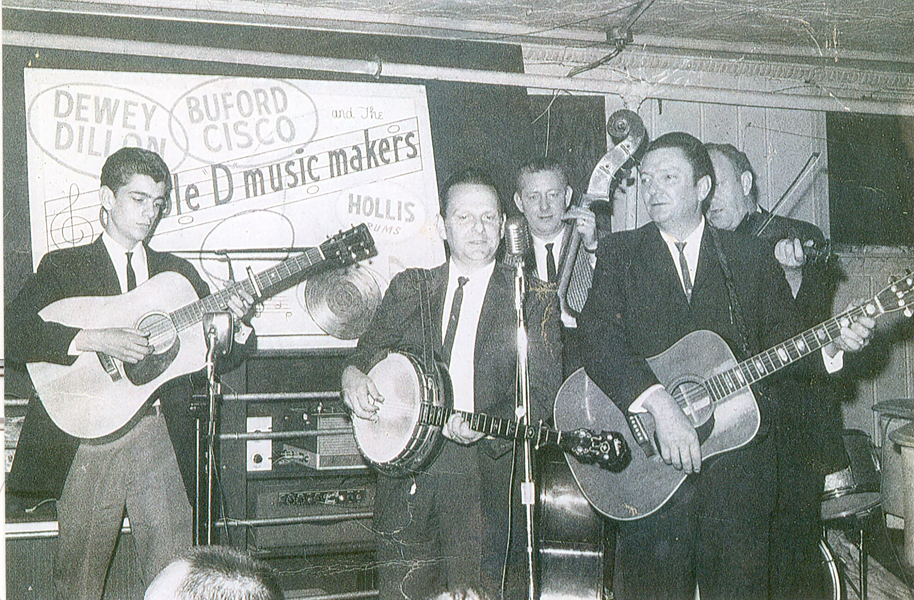
Larry Sparks (far left) performs with the Stanley Brothers before Carter Stanley’s death. Circa 1964. Image courtesy of Rebel Records.
I so appreciate that you bring up heart and soul, because I think people make the assumption that bluegrass is not a music that’s based on heart and based on soul. Especially when you listen to some barn burning, shredding bluegrass or jamgrass.
But for me, this music has always been as much about the stories, the heart, and the soul – and the feeling of it. And that’s clearly such an important part of it for you, too, and the storytelling. I think a lot of people don’t realize heart and soul are an important part of the tradition of bluegrass.
Yeah, sure it is. I’ve worked under the bluegrass name for years. Bluegrass is about 80 years old now, and I have been into it 62 of those years.
Wow.
I can’t believe I’ve been into it that long under the bluegrass name. My music is considered bluegrass, but actually a lot of my stuff could go either way. I’m considered bluegrass and that’s fine. I appreciate it. I’m honored, but a lot of my stuff can go into country or some other direction, too.
I just hold to what I’m doing and [what has] been a good business for me over the years. But you have to make it work and look ahead. The music is music, but you gotta make a business out of it. If you don’t, it’s not gonna work. And that’s what I did. It’s worked out for me. A lot of the bluegrass [industry] is not easy. It’s not one of the easiest forms of music to “make it” in.
And, it’s always been set behind [other] forms of music. I’d really like to see it be possible for bluegrass to be played on all stations. To play it [alongside] new country, modern country, rock and roll. Whatever it is, mix it up. But get bluegrass to program directors. If it ever could get played on other stations, with the right songs and the right artist – put in with everything else they’re doing – it would work. I don’t know if it’ll ever come to that or not, but that’s what it’s always been. We’ve always – like the old saying – took the backseat to the other forms of music.
But we got enough fans and that keeps it [going]. … I’m honored and I’m thankful for it. But it takes a lot of years, a lot of hard work. It’s not easy. I’ve done it all myself. I’ve done my own management, my own booking, my own phone calls, my own writing. This, that, this, that, this, that. I’ve done it all. Like I said, I’m gonna keep doing it, it’s working. It’s fine.
Like you mention, these songs really could go both ways. I love how much country is on this album, and you do such a great job of illustrating that bluegrass and country will always be related and that they cross-pollinate.
And I totally agree, bluegrass has mainstream appeal. And always has! I don’t know why we pretend like it doesn’t.
Yeah, we need more promotion on bluegrass. I wanna keep doing everything I can for it, because I respect it very much. Bill Monroe, the Stanley Brothers, and Flatt & Scruggs – these three names put [bluegrass] on the path and all that played bluegrass come after those three names.
Those three names are in you. I never did want to actually copy any one of those three names, but you take those three names – just to give you an idea. Take those three names I said and you put the Osborne Brothers with ‘em. Put Jim & Jesse with ‘em. Put Jimmy Martin, Mac Wiseman and others – and Larry Sparks – all those names. Every one of ’em are different sounds, different style. But they’re still on the same path. That’s what you gotta have. That’s what I knew, “I better stick to that and not be a copy.”
Let’s talk a little bit about your guitar playing style, because I think you’re carrying on a tradition of a particular kind of guitar picking in bluegrass that is rarer and rarer today. So few people who still make records and perform shows pick like you do. I love how front-and-center your guitar is on this album. Could you talk a little bit about your picking style and maybe who your influences were or how you came up in that type of picking?
Other guitar players are really good and there are a few players out there that can. But the way I do things, my playing is like my singing. I play the melody. And I don’t play over the melody. There’s less notes than normal guitar, it’s more of a feel. It’s hard to explain, but I just play the feel of the song and the melody. I try not to overdo it. I play it and when I hit a note or a slide or a backward– or whatever I do, a pull-off, I want it to come from me. I want it to be me and I wanna feel that note I’m doing, feel that slide I’m doing, whatever I’m doing. And [I want to] keep it that way and not overplay the song.
I also wanted to talk about the instrumental on the album, “Sleepin’ Lula.” Speaking of things that are rarer and rarer in bluegrass, having the clawhammer banjo on it is excellent. It feels like no one flogs the banjo anymore. There’s a lot of old-time players, a lot of clawhammer players, but it doesn’t really seem like anybody’s flogging it anymore. Hearing the instrumental, when the clawhammer kicks in, it was reminding me of that era of early bluegrass when you were just as likely to hear frailing banjo as a three-finger in a bluegrass band.
That’s great. Yeah, I thought it turned out pretty good. I was pleased with it. That’s an old tune. My grandpa, I got a recording of him playing that in 1953. Him and some guys, and he’s from Jackson County, Kentucky. Very good fiddle player. Very good. He was one of the best, he could’ve done something with his talent. He was born in 1877. Back in those days, up to the turn of the century, ‘20s, ‘30s, ‘40s, and ‘50s, he just played square dances around locally and stuff. He never did really go out. Stringbean asked him to go out with him some, but he never wanted to leave or go ‘round traveling and stuff. But he could have filled the bill for anything. He was that good.
I heard the tune from him. And I had never heard it before. “Sleepin’ Lula” – that was my grandma’s name, his wife’s name. She died in 1910 in childbirth and I never got to see her, of course. But her name was Lula, and so he recorded that “Sleepin’ Lula.” And I don’t know, I’m not going to say for sure if he wrote it. There’s a couple other fiddle players I heard play that from back in the ‘20s or ‘30s. But all respect to him. There wasn’t a player like my grandpa.
I don’t know who it came from. I don’t know if it came from my grandpa and he put it together because his wife’s name is Lula. Or if “Sleepin’ Lula” was the name [he gave another tune.] Someday I may try to trace that out a little further.
The other fiddlers that you know played it, did they use the same title for it, too?
Yeah!
Interesting. That’s so cool!
Yeah, it’s something else.
You’re a famous bluegrasser. You’ve been famous to me, for instance, my whole life. I was honestly nervous and a little starstruck to have this conversation. [Laughs] But you’re also becoming more famous at this moment, because two of the biggest bluegrass names to ever come out of the genre – Alison Krauss and Billy Strings – they’re such big fans of yours. I feel like both Alison and Billy see your legacy, they see how important it is, and they are translating that importance to people that maybe don’t know who you are or are just learning about you for the first time.
So I’ve just been curious to ask you, how do you feel about having these prominent “fans” – and it’s not just Alison and Billy, obviously. What does it mean to you to be part of that constellation of people that they look to as influences? And, what does it mean to you to see your music reach new audiences thanks to them and others?
It’s a new world. It’s a different world than what I’m used to. Which, there’s nothing wrong with it. I’m very honored that they stand behind what I do and my music. And, for the music, I’m very honored and thankful that they like it and that they maybe have it in their shows sometime or whatever.
But yeah, the new crowds in bluegrass – we have a very good crowd, but it’s bigger than it ever has been, now, bluegrass music is. But we still have that limited crowd [coming] from other forms of music. And that’s why I said, if it ever got to play on the big stations, give us a little room and respect for the bluegrass. It’s very important music and if the big country stations would give us some respect and get bluegrass to their program directors…
Don’t just [throw it out there]. You gotta be careful. Give it the right thing, the right artists, the right songs, and it would really help our music. It really would help.
But if it never happens, we still got a good crowd and we get more people all the time coming in. It’s a kind of a new crowd coming in, a new age group coming in. We still have a lot of the older people, but the younger people are coming into it. Teens to 20 years old, I’m seeing that happen more. That’s good. Bluegrass, it needs more push, it needs more promotion.
Do you see what Billy Strings is doing as that push or as that promotion? Can you tell, with younger fans coming in, that they started as Billy Strings fans and found you that way? I wonder, is there any way you’re measuring the impact of people talking about you and pushing your music?
I can’t really tell on that, for sure. I can’t. I’m just seeing people that’s young – teenagers and stuff – that wants to learn to play the music and are trying to play. And then that age group I was telling you about is. It’s coming in stronger all the time.
I’ll be honest with you. I don’t listen to other music. I don’t listen to anything hardly, music-wise. You gotta keep yourself fresh. But I respect other music. I respect it. All forms of music. I don’t have anything against the big bands and all the new names. But I like that old stuff. Of course, bluegrass and old country. And other things, blues, I like a lot of that.
You seem remarkably humble and so down to earth. You follow the songs, you put heart and soul into ‘em. But you’re literally a Hall of Famer and you’re one of the last of the first big generation of bluegrass makers that are still doing it today. You’re a legend to all of us. Does it feel like you’re a legend? To you, on the inside? Or no?
I would be to a lot of people, a legend, and to a lot of people I would be famous, I would be a star. But when I went into this business, went into music in my teens, I never looked at it as wanting to be a star or to be famous. I never looked at those two things. I wanted to take what talent I had. I knew I had something to offer. I had to put it together and see what I could do [to] make it work.
I don’t know if I’m a star or famous to people. I hope so, because that’d be nice. I’m pretty honored.
Photo Credit: Images courtesy of Rebel Records. Lead image by Michael Wilson.
As our second year of Good Country comes to a close, we’re reflecting on another 12 months’ worth of the best in country music. Whether Americana, bluegrass, or string band, blues, outlaw, or Western swing – or any of the many styles of country we know and love – there’s been plenty of excellent picks from my ear buds directly to your inboxes and playlists.
We sampled post-modern Mississippian country from KIRBY, got funky and soulful with Memphis family band and GRAMMY nominees Southern Avenue. We celebrated Suzy Bogguss’ invitation to join the Grand Ole Opry and traveled to the remote center of the Pacific Ocean for Maoli’s particular twang.
Fiery twin fiddle by Jason Carter & Michael Cleveland had our jaws on the floor, while we were surprised – but not really – at how well Brooks & Dunn went together with the Earls of Leicester. Huge stars like Billy Strings, Warren Zeiders, Sabrina Carpenter, and Carín León were enjoyed alongside everyday working musicians like Jordan Tice, The Creekers, Nick Shoulders, Sunny War, and more.
That depth and breadth – of artists and styles, of notoriety, or approach – is exactly what we’re going for with Good Country.
Good Country isn’t any one thing. It’s a feeling. It’s a place. We’ll be chasing more Good Country feelings and places in 2026, and we’re so grateful to have you along for the ride. Look back at all of Ed’s Picks for 2025 with our master playlist.
Want more Good Country? Sign up to receive our monthly email newsletter – and much more music! – direct to your inbox.
Normally, when singer-guitarist Nick Hexum plays a gig, it’s fronting legendary hard rock band 311, performing for massive audiences in huge venues around the globe. But, on a recent evening in Knoxville, Tennessee, he was backed by Americana/bluegrass act Water Tower in front of a small crowd at the Open Chord, a cozy space on the west side of the city along Kingston Pike.
“I’ve always been drawn to music that has energy, and there’s so much energy in flatpicking, the banjo, the tremolo picking of the mandolin,” Hexum tells BGS backstage. “This stuff has rock and roll energy that predates rock and roll.”
For Hexum, this deep dive into bluegrass, country, and Americana of late has become something of an intrinsic mission from within. It’s the current soundtrack of a 55-year-old rock star carefully aiming to dig up and examine the melodic roots of his past – these existential anchor points needed to move forward.
“This whole experience is just bringing it really full circle, like a home,” Hexum says. “My mom is from Nashville, so this is me getting in touch with [memories of] when we used to go to visit my great aunt Margaret in Gatlinburg and she’d play the autoharp.”
Retracing old routes, both geographically and sonically, was no more apparent for Hexum than when he and Water Tower appeared at Americanafest in Nashville. The stop in Music City was part of a larger tour throughout the Southeast in an attempt for Hexum to not only reconnect with his past, but also create an opportunity to break new ground for his craft – especially outside of the hard rock juggernaut that is 311.
“I’m just grateful that fans are showing up and are open to seeing me do something completely different,” he says.
During the intimate set in Knoxville, Hexum and Water Tower crowded around a single microphone, weaving in, out, and around each other in a whirlwind of acoustic instruments and Hexum’s signature vocals. The show ran a gamut of material, whether it be classic 311 numbers or selections from Hexum’s latest solo record, Phases of Hope and Hollow.
“The intimacy [of the show], it’s wonderful to be so up close. It’s totally different [for me] from a technical situation – it takes silence,” Hexum reflects.
This project is the brainchild of Hexum and Water Tower’s Kenny Feinstein. Water Tower is a rising ensemble from Los Angeles, one which initially started as an old-time/punk group, only to lean further into becoming a high-energy string band. They raised more than a few eyebrows when they performed at the recent Telluride Bluegrass Festival in Colorado.
“We’re walking into another side of Nick,” Feinstein says. “311 is all about bringing people together through unity and different styles of music, so this is another slice of Nick’s personality.”
For Feinstein, working with Hexum has been this surreal experience, personally and professionally. As a millennial growing up in the late 1990s and early 2000s, Feinstein was a huge 311 fan, so much so he vividly remembers their video for the smash hit “Amber” and seeing 311 guitarist Tim Mahoney sporting a mohawk haircut.
“My friend and I saw the video and [decided] we needed mohawks,” Feinstein reminisces with a laugh. “So, all three of us went to a party [that night] and got our heads shaved into a mohawk.”
This latest musical chapter for Hexum and Water Tower happened serendipitously through the sober community both Hexum and Feinstein are part of in Los Angeles. Leading up to their crossing paths, Hexum had been heading down the rabbit hole of an Apple Music playlist that featured singer-songwriter Faye Webster. His ear perked up.
“I really like her songs, the pedal steel [sound], and the beautiful arrangements,” Hexum says of Webster. “And then, I reached out to Drew Vandenberg, who produces her music. We started talking about working together and one of the things I wanted to do was learn some of those instruments. So, I bought a pedal steel and took some lessons.”
Making space in his studio for the pedal steel, Hexum wanted to add a few more instruments into his creative arsenal, including the mandolin. Cue Feinstein. Meeting him through the sober community, Hexum asked Feinstein if he would teach him how to play the mandolin.
“I had [Kenny] over and I was like, ‘Let’s do something that sounds like [Faye Webster],’” Hexum says. “And he was just a cornucopia of ideas.”
At that juncture in his career, Hexum “mostly had played six-string guitar,” with these other instruments “a new world” for the artist. And yet, even though he was just learning how to play them, he was already well-versed in the sounds of bluegrass and country.
“Nick saw a dulcimer on my wall and I was really impressed that he knew what that was,” Feinstein recalls. “He told me about his heritage and [growing up] in Omaha and how he loved country and bluegrass. Then I said, ‘We should jam sometime.’”
That initial jam session between Hexum and Feinstein resulted in the duo writing five songs right out of the gate. Soon, Feinstein brought in Water Tower banjoist Tommy Drinkard and wrote several more.
“And now we’re on tour. It’s so special to see the humility that [Nick] carries, the gratitude and appreciation for all of his fans after so many years of doing it,” Feinstein says. “It just inspires us to have gratitude for where we’re at now, and to know the journey we’re on is about continuing to lessen the suffering [of others through music].”
“There’s so many people out there in the crowd crying, really taking it in,” Drinkard adds. “These are very intense subjects and Nick does a good job of explaining where he’s coming from with the songs he’s writing.”
For Hexum, this recent journey into the bluegrass realm has become this incredibly cathartic experience. He found himself not only dissecting his past and that of his parents, but also that of his ancestors going back generations.
“My mom is from Tennessee and my grandpa was a Southern Baptist minister,” Hexum notes. “Half of my family does have these southern roots, so when I hear bluegrass, it just feels like part of my DNA.”
Beyond the new music itself, Hexum views this ever-evolving project as part of his ongoing quest to find himself through this vibrant kaleidoscope of sound and purpose. It’s about stripping everything down, focusing on the essence of a particular melody, and always being aware of the beauty of the sacred platform that is live performance. Turn off the amps, pick up the acoustic guitar and huddle around a lone microphone, together.
“It has gotten to a point where I’m like, ‘All right, time is limited here, and I want to make the most of the time that I have now,’” Hexum says humbly. “I mean, when you see your kids get older and get their driver’s license and stuff like that, you just feel this passing of an era. And so, for me, it’s getting into a different mode of songwriting – really focusing on sincerity and simplicity.”
Artist:The Unfaithful Servants Hometown: Victoria, British Columbia, Canada Latest Album:Fallen Angel (released October 17, 2025) Personal Nicknames (or rejected band names): Quince/Quincy; Cobby; Dyl/Dilly; Cuss
(Editor’s Note: Answers supplied by mandolinist Jesse Cobb.)
Which artist has influenced you the most – and how?
Sam Bush, both solo and with New Grass Revival, Strength in Numbers, and many others. When I first started playing mandolin, I learned old-time fiddle tunes from the likes of Gus Ingo, Blind Kenny Hall, Bill Monroe, Bobby Osborne, and others all from LPs, by ear. I also had a few books around – Jack Tottle’s mandolin book, fakebooks, and some others. I recall going to the library in Superior, Wisconsin, and checking out albums/tapes of many artists.
Among the picks one time was New Grass Revival’s On The Boulevard. I was likely 10-12 years old and pretty new to playing at the time. I remember putting on the record and just being blown away by the overall intensity, sound, clarity, timing – everything seemed so leveled-up compared to the bluegrass and old-time music I’d been listening to. Sam particularly caught my ear as a mandolin player. The tone, attack, intensity, rhythm, changed my whole view of a mandolin’s role in a band. I still get this feeling every time I hear Sam’s music or get the opportunity to play with him! A real game changer for me.
What’s your favorite memory from being on stage?
My first time on the main stage at Telluride Bluegrass. I had been listening to recordings/watching videos of that stage with the house band, New Grass Revival, and others for literally my whole childhood! When I first played there with The Stringdusters, the feeling of looking over the massive crowd and up to the mountains in the distance was very special. It felt like a dream being there at that time and was a very emotional affirmation that all the time, sacrifice and hard work was worth it.
Genre is dead (long live genre!), but how would you describe the genres and styles your music inhabits?
The Unfaithful Servants draw from such a deep well of influences: old-time fiddle tunes to Vulfpeck; Doc Watson and Townes [Van Zandt] to Rush; Edgar Meyer to Jaco Pistorius; The Band to Polyphia; Bach to the Flecktones! Given our varied influences and our span of four decades in ages, we try to put this all together to inform our sound.
In my mind, the closest genre that encapsulates this is Americana. I think that we have more in common with artists like Sierra Ferrell and the Avett Brothers than with traditional bluegrass bands, although that influence/drive is incorporated as well. With the intensity of the Stanley Brothers and the technical aspirations of Punch Brothers, the groove of classic funk and lyrical depth of Neil Young, we try to create our own sound encompassing them all!
What is a genre, album, artist, musician, or song that you adore that would surprise people?
I really like ’80s rock music – think Steve Vai, Damn Yankees, Warrant, Def Leppard. I grew up listening to old-time music almost exclusively and working very hard to live up to the feel and sounds I was hearing in that. I recall being at a soundcheck at a theatre in northern Minnesota one time, probably around 13-14 years old. Walking into the venue for soundcheck, the crew was ringing out the room with the most exciting thing I’d ever heard. The song was “Peace of Mind” by Boston and I was blown away, very similar to the way Sam Bush hit me! I recall asking the crew, “What is this?” This started a long infatuation with ’80s hair bands, electric guitar shredding, and the crazy vocalists in the genre. I know a surprising amount of lyrics to ’80s hair bands and love to karaoke them when I can, for better or worse!
Does pineapple belong on pizza?
While I can confidently answer no for me, it’s kind of like asking, “What is bluegrass?” except without a point. I don’t like the flavor of pizza sauce and pineapple together, personally, but that doesn’t make it wrong for everyone! Much like trying to define genres, it’s completely up to personal taste.
A few years back, we put out an album called Modern Old-Time Sounds for the Bluegrass and Folksong Jamboree. The title was a nod to that 1960s trend of naming records in a way that tried to cover every possible base. It was tongue-in-cheek, but it still sums up what we do – and what you’ll hear on our latest Lonesome Ace Stringband album, Big Wing. We don’t really play old-time music so much as make a modern old-time sound, and that’s exactly what this playlist is all about
Up here in Canada, we have a wealth of traditional music – distinct regional fiddle styles from coast to coast, songs and ballads that reflect the multicultural makeup of our country, and Indigenous music that predates all of it. Even with this abundance of homegrown music to draw from, many of us have found ourselves charmed by the traditional “old-time” sounds of the American South.
Being far away – geographically and culturally – from the source of the music you love presents some challenges, but it also affords a certain freedom. The first step is always to understand where the music comes from and its history; eventually, though, we all need to find our own voice within it. That’s sometimes easier to do when you’re removed from entrenched scenes and long-established communities.
One way I see this playing out in the old-time music coming from Canada is that writing original tunes and songs seems to come naturally and early in the journey. Whether it’s composing new tunes in the tradition or letting the sounds and themes of traditional music color our lyric writing, we’ve developed a wealth of modern old-time sounds up here – and I’m excited to share a few examples in this playlist. – Chris Coole, Lonesome Ace Stringband
“Maggie At The Door” – Arnie Naiman
Arnie Naiman has been playing old-time music longer than anyone else on this list. When I first met him in the early ’90s, he’d already been playing for around 20 years. Back then, he was mostly on fiddle, but sometimes he’d pull out the banjo at the end of the night and share some of the original tunes he always seemed to be writing. This led to us making a couple of albums together – and to me becoming a lifelong fan. “Maggie at the Door” is a great example of how he can write a banjo tune that also works on the fiddle – not as easy as it sounds. It was written for his dog and it’s probably the most badass-sounding tune ever written for a golden retriever.
“Lonesome Song” – Rube & Rake
Rube & Rake are Josh Sandu and Andrew Laite. Both live in St. John’s, Newfoundland, and are writing beautiful songs while touring hard. We ran into them in the UK last year and were instantly taken by their deft playing and the “low lonesome” sound of their harmony singing. “Lonesome Song” is a moody example of all that.
“Platform Four” – The Slocan Ramblers
The Slocan Ramblers are Canada’s bluegrass band – at least as far as I’m concerned. Although Frank Evans no longer plays full-time with the group, I chose this tune to remind everyone that while he’s mostly known for his three-finger bluegrass playing these days, he’s also on another level as a clawhammer player. There are a few licks on “Platform Four” that he’ll probably take to the grave.
“Narrow Line” – Mama’s Broke
Mama’s Broke are another duo from Eastern Canada (Nova Scotia). We crossed paths with Lisa Maria and Amy Lou Keeler at the Baltimore Old-Time Gathering a few years ago. They put on a riveting show and blew us away with their singing and playing. The arrangements on their records are so imaginative – they capture the spaciousness of their live sound while layering on subtle textures. “Narrow Line” is an excellent example of this and one hell of a song.
“White Horse Plains” – The Red River Ramblers
The Red River Ramblers feature the music of Douglas Richard Sinclair, a Red River Métis musician whose last album, Reverie, showcased original tunes inspired by the Métis fiddle tradition. “White Horse Plains” highlights Douglas’ tuneful guitar playing and answers the question: What would Norman Blake have sounded like if he’d been Métis?
“Saint Elizabeth” – Kaia Kater
Kaia Kater’s 2016 album Nine Pin made a lot of folks take notice of this exceptionally talented songwriter. Kaia is a perfect example of someone who’s really tried to get to the roots of the music; she studied Appalachian traditions at Davis & Elkins College in West Virginia. She’s taken what she learned there and carried it to a creative place that defies genre or categorization. “Saint Elizabeth” is a perfect example.
“New Caledonia” – Pharis & Jason Romero
Pharis & Jason Romero probably need no introduction to anyone here. They’re old friends of ours and we’re big fans of their music. It almost seems remiss to share a song that doesn’t feature their beautiful singing and lyrics, but we’re always enchanted by Jason’s tune writing, backed by Pharis’ always-right-on-the-money guitar playing. “New Caledonia” is one of those tunes that instantly takes you somewhere. It manages to say a lot without a single word.
“The Wheels Won’t Go” – Hannah Shira Naiman
Hannah Shira Naiman comes to the music honestly. She grew up learning fiddle and banjo from her dad, Arnie Naiman, while listening to her mom, Kathy Reid-Naiman, sing the songs of Jean Ritchie, the Georgia Sea Island Singers, and the Delmore Brothers. Hannah has taken it all in and made something uniquely her own. “The Wheels Won’t Go” is the title track of her 2022 album.
“Wellington” – Allison de Groot & Tatiana Hargreaves
Allison de Groot is one of our most treasured banjo exports – clean, hard-driving, and full of tone. Best known these days for her work with Tatiana Hargreaves, she’s also a fine composer. “Wellington” is one of her own tunes, a reminder that she’s as creative as she is technical.
“Mama’s Boy” – Lotus Wight
Lotus Wight (AKA Sam Allison) is best known for his work with Sheesham and Lotus & Son. He’s a beautiful banjo player, a lovely jaw-harpist, a rock-solid bassist, and even plays the contrabass harmoniphoneum. I didn’t know until his last album that he’s also a moving songwriter, somewhere between John Hartford and Leon Redbone. “Mama’s Boy” tells the story of the three men who were fathers to Sam over the course of his life. I can’t remember the last time I heard such an honest and tender song.
“From Silence” – Daniel Koulack
Daniel Koulack hails from Winnipeg, Manitoba, where he’s been making music and teaching banjo for many years. (Allison de Groot is one of his students.) Daniel has always been game to take the clawhammer banjo to new and unexpected places – which might explain “From Silence,” possibly the only clawhammer banjo and saxophone duet in the known universe.
“At the Airport” – Old Man Luedecke
Old Man Luedecke is one of the crown jewels of Canadian singer-songwriters and he also happens to be one hell of a clawhammer banjo player. He’s written most of his songs on the banjo (at least the early ones), which gives them those unmistakable twists and turns – in both phrase and melody. And he has that rare gift for putting a bit of hope into everything he writes, whether the song is sad, funny, or introspective. “At the Airport” is a perfect example.
“May Day” – The Andrew Collins Trio with The Lonesome Ace Stringband
The Andrew Collins Trio (Andrew Collins, James McEleney, Adam Shire) collaborated with us on “May Day,” a tune Andrew and I wrote together many years ago. These three are next-level players who are always pushing the boundaries of what’s possible on their instruments. Known for mixing new acoustic bluegrass with classical and jazz influences, we had fun diving into some weird old-time with them on this track from our new album.
The last time Mipso were our Artist of the Month it was 2023, in the run-up to their release of Book of Fools. At that time, I wrote our article unveiling the group as our artists-of-honor with the central conceit of that writing a straightforward but relatively groundbreaking plank in the band’s foundational mission as musicians:
“…[Mipso] aren’t defined by their ambitions; and their ambitions don’t seem to ever be conflated with conquering anything. Instead, this is a band building something.”
Over 13 years, six studio albums, hundreds of millions of streams, and more than 1200 shows, that fact remained true. No matter the shifting sands of their music making, industry successes, and the natural ebb and flow of more than a decade touring and creating together – even in moments of uncertainty, growing pains, and stress – it was always clear, at every juncture, that this band wasn’t just trying to climb industry and corporate ladders toward success. They were building something, not just building towards something.
A few months ago, the group of Wood Robinson, Libby Rodenbough, Jacob Sharp, and Joseph Terrell announced their Farewell For Now Tour and a deliberate and intentional stepping away from the band that was the gravitational center of their lives from their college days into their 30s. Fans and peers around the globe were devastated and saddened. But, with that stalwart keystone at the center of their artistry, it was immediately clear Mipso aren’t abandoning anything. Or walking away from something that will wither, wilt, or die away without them. The “something” they’ve been building has, gratefully, been built to last without themselves or their egos at its core. Their songs, their mission, and their impact are structurally sound, unwavering in the face of the purposeful uncertainty of the band’s next new era.
Mipso perform with Sean Trischka on drums and percussion and special guest fiddler Stephanie Coleman in NYC during their Farewell For Now Tour. Photo by Elliot Crotteau.
Mipso’s final studio recording, the gutting, emotional, and convicting “Singing Song” (released in August) wasn’t originally meant to be such a well-fitting final track from the group. But, whether coincidentally, fatefully, or aptly, it finds in its crosshairs the exact pathway through which Mipso’s legacy can and will live on with or without the band acting as their own life support system.
“Singing Song” imagines a not so far-fetched reality in which songbirds are going extinct in the accelerating climate crisis and humans are assigned birdsongs to help keep alive by singing, refusing to let their avian melodies die, go silent, or be forgotten. It becomes the role of the community itself to hold memories, together, and move into the future with our pasts to help guide and inform of what’s to come.
This is what Mipso have built for us. And they have built it for the eons. Their music will live on in each of us, as we carry their melodies – “Louise” and “Carolina Rolling By” and “People Change” and “Coming Down the Mountain” and so many more – with us into our collective uncertain future. Mipso were never building a mine or a factory or a quarry by which they could extract all the resources they could from us. No, they built us a home. Joist by joist, shingle by shingle. And now, though they may be moving out for a time, we’ve all been invited to maintain this idyllic Carolina mountain shack they’ve gifted to us.
A parting such as this begs the question, “Who will sing for Mipso?” but the answer is immediately obvious and indelible: All of us. Because this band, this impeccable string folk foursome, has never been solely about the people who make it up. It’s always been a community far greater than the simple sum of its parts or only made up of the folks on stage.
Midway through their Farewell For Now Tour, BGS connected with Mipso via Zoom for an in-depth round-table discussion about their decisions to put the band “on the shelf” for a little while. Our conversation was full of intention, nostalgia, and a remarkable variety of ways to look into the future for redemption and renewal.
I wanted to start by having y’all talk a little bit about how you feel about how your mission as a group – prioritizing art and community and building something instead of going somewhere – has informed this decision to pause the band. Whether it’s been stated overtly or has been the undercurrent behind what you’ve all done, that mission is clearly informing this decision as well.
I think some people see this farewell as a switch being turned off and a new thing happening after an old thing goes, but I don’t see it that way at all. I see this as an extension of what you have always been doing, being intentional and deliberate with the group and its purposes. So I wonder what your reactions might be to that, or if you have thoughts about that as we’re talking about this next era that you’re entering together?
Libby Rodenbough: Yeah, I agree with that. I feel like what we’re trying to do here is protect intentionality rather than letting this slow creep of unintentionality take over what we’re doing. It almost feels like that’s the natural inertia of the world, to let anxiety run things for you.
I see this as trying to protect the preciousness of how we’ve done it for so long from an anxious orientation, which I really feel is just like the way the world wants you to think about everything.
Joseph Terrell: That was a beautiful way to put it, Justin. Thank you. And also thanks for being one of our friends and pals and loved ones in this corner of the world for so long. I appreciate the way you’ve just explained us to us. That’s actually very helpful.
I think there are all kinds of “supposed tos” that we allow to rule our lives and tell us what to do next. And this decision, I think, for us to put the band on the shelf for a while is very much a deliberate decision that comes from years of conversation. It’s an attempt to do what we really want to do, on purpose, based on our love for each other and what we’ve built together – as opposed to what’s expected of us or what we are “supposed to do.”
Jacob Sharp: I think there were moments where we did make decisions based on what we thought we should do. We had the benefit of being able to trust each other when we heard from one or many people that it didn’t feel right. Like, we flirted with Nashville, we flirted with content creation and all these things that people are telling us you need to lean into in the industry, you need to lean into online.
There’s an element of this decision right now, of us having realized that something that used to feel really good and obvious was less so in the current version of it. Looking around, I’ve said in different ways that it’s like it’s a blessing to feel full and to be content with that.
All of us are very full on what we’ve been able to do and how we’ve been able to do it. And as we, over the last year and a half, talked about this in different ways and tried different things, it was easy to imagine how it would be irreversibly not good if we kept going down the path that didn’t involve us – in some of this vision that you’re recognizing that has been in different ways at our core throughout.
Wood Robinson: I think that, as we’ve let this decision percolate over [time], we’ve thought through this idea of putting it on the shelf for a little while – probably the first time we genuinely talked about it was on our Europe tour from hell, and there have been many different feelings at many different times. …
You might as well have a really fulfilling and intentional process of arriving at a conclusion that you actually feel good about. And the beautiful thing about music is that it isn’t as if we’re going away. Everyone has links to our entire 15 years of music making on their phones at any time.
When you remove the impetus of an end goal, it immediately becomes so clear that none of this is a zero-sum game, right? None of this is black and white or binary – “We’re done now. We can’t ever do that again.” … These songs, this catalog, this thing that you’ve created together, it has a life that isn’t dependent on all of you continuing to do this the same way that you’ve always done it. And that longevity, that we’re foregrounding right now, I think that is gonna be built on that same foundation of intention.
WR: I’m currently working in conservation and over this past weekend I drove down from Salt Lake City to Zion [National Park], around it, and then back, which was a lot of driving. That’s neither here nor there. I’m very used to that. But I re-listened to the most recent season of Scene On Radio about capitalism. My favorite episode of that is really talking about that [Donella] Meadows book from the ‘70s, The Limits to Growth. It was a very poignant moment of thinking [about how] the growth virus infects everything.
If the only way of thinking of a future for any entity is for it to grow indefinitely, even if you don’t know what it’s supposed to grow into, that’s cancer. If the primary goal of a group is to make music together, is to make beautiful art together, putting it away for a while does nothing to impede that. Maybe the growth mindset really infects that. I was chewing on that when I finished the series and it weighed heavy, but it also reinforced my feeling really good about this decision.
LR: I don’t know if it’s coincidental, Wood, or if we talked about it, but I just finished that season of Scene On Radio as well and I loved that episode. It makes you wonder then, what’s the alternative to growth? To infinite growth.
I feel like the world shows us that it’s death and rebirth. Like death is the natural way for things to go. I think we have a culture that – in a way [is] not unrelated to this cancerous growth mindset – is really afraid of death. Really afraid of talking about death, thinking about death, having rituals about death. Not to be like dramatic or morbid about what we’re doing, but death happens in the natural world every fall.
It’s not necessarily tragic and it’s not world-ending. Conversely, it’s essential for life. I think that saying goodbye to something – I said this at one of our shows in this first little run – but saying goodbye to something is a really good practice, because it’s how I want to go through my life, generally. It’s how I want to relate to life itself, too. That death is part of what makes things beautiful and meaningful.
I didn’t even need to say what I was gonna say, ’cause you just said it! [Laughs] How helpful it is to think about infinite growth as being unsustainable through the lens of nature and ecosystems – what an excellent model. Looking out the windows, stepping outside, literally grounding ourselves in our natural surroundings shows us how stasis, maintenance, renewal, all of those things are equally productive as working 40, 70, 80 hours a week and driving thousands of miles. Just “being” is a lesson that we can all learn.
This connection, the death and renewal of nature and the seasons, it’s making me think of “Singing Song” and it’s making me think of the contours of “Singing Song” being about nature, about environment, and about the Rachel Carson of it all. But also how the song applies to where y’all are at with Mipso at this stage.
Talking about the infinite growth mindset and how it’s pretty well antithetical to how the earth actually works and how we all work as biological beings, the way that y’all draw on nature and the environment to convey the message of “Singing Song” feels so apropos. Can you talk about the song a little bit and can you talk about how, for y’all, if it bumps into or up against any of these things we’re already talking about here?
WR: Obviously, “Singing Song” is about a not-quite-hypothetical world in which all of the birds die and everyone is tasked with singing the song of a bird so that their memory lives on as a ghost among us forever and ever. It wasn’t intended to be quite so on the nose to be the last song that we released before we went away and people were tasked with singing our memories forever and ever. But it really worked out to be a little on the nose there.
I think that there is a real beauty in memory and in the fact that every person is just a little spirit that enters the world and then leaves. Then there are little wisps of that spirit in memories, in people that continued after them until those people’s memories go away. That impermanence becomes permanent in a very poetic way. We haven’t really talked so much outwardly about how that song really worked out well for this moment, but I think that in the context of what we’re talking about now, the conclusion of something, gives it a lot more meaning.
Sometimes I think about how I really love the Marvel universe because it never ends. [Laughs] That feels like a drug to me. I don’t like that I like that. But the world just keeps on building and building and it feels like there’s no intention, because it can’t be let to rest. The reason that it can’t be let to rest is the very growth that we’re talking about.
And sometimes I think about bands who keep on being on tour for 60 years playing the same songs and that just can’t not be sad to me. Always wanting to relive the moments of the past that somehow, like a little bit of morphine, give us meaning in a moment.
JT: I think, at our best, we were doing something we’ve done together that is beautiful in its uniqueness, four people making something that we couldn’t have made on our own together. I’m really proud of us that we’ve never phoned-in the live shows. While it’s easy to be cynical about the music industry part of stuff nowadays, I don’t think we’ve ever been cynical about music making. I really don’t think it’s a stretch to say that concerts, at their best – not just ours – but the spaces that we can create with other people live together in a room, human bodies sweating together. It really is a sacred thing.
Partly this is us being able to say, “Hey, this has been so special and I love you guys and I love what we’ve built. And we wanna do other stuff for a while now.” That attitude has allowed this tour, I think, to be a place where we can really be appreciative and grateful.
We did a few acoustic shows on the last run, just the four of us on stage, and it was really fun. We haven’t done that in a while. We’re standing close together and we’re listening to each other. I like playing with all kinds of people and I love [that] every time I play with new musicians, I’ll learn something. But also, with these four people together, I have this kind of home feeling of just rightness and intuition that I really love. I’m glad we’re able to celebrate that.
“Singing Song” also makes me think of “Who Will Sing For Me?” and the idea of, “Who will sing for Mipso?” Who will carry on the songs of Mipso now? It’s such an easy question to answer, because so many of these songs are so important to so many people.
This tour is a bit of a family reunion, you guys have had some really great special guests, you’ve had and will have some really great openers. You talked a little bit about that feeling of home, never wanting to phone it in for the live shows, and doing the acoustic sets – how has it felt on the Farewell For Now Tour so far? How are audience reactions and what are the takeaways for y’all as you are going through this tour?
LR: It makes me think about how I feel ambivalent about the idea of having a wedding, but if I was gonna have one – I’m single by the way [Laughs] – but if I was gonna have one, I think a lot of the motivation would be to get people together. So, in some ways, I see this tour as just an occasion. It’s an occasion for getting together, an occasion for thinking about the past together. And it’s been an occasion for me to look through all my old photos and try to make sense of my many overlapping memories of tours, of the same cities in geographic regions, and certainly an occasion to get our friends together and play songs.
When you’re doing tours interminably, it doesn’t feel like you can really make an ask of people as easily. But if you’re like, “Hey, this is maybe the last time we’re ever gonna play,” it’s kind of a trump card on people’s schedules. [Laughs] In the same way as getting married, we at least maintain the fiction that it only happens once in every life.
JS: One funny thing, Justin, was we have known this was coming for a long time and our fans have, too. We announced it a number of months ago, but night one of each of these shows is really specific. Like, to what city and what venue we’re playing. There’s a reason.
Night one [of the tour] was in Seattle, a place that we all really love and have had great times at Tractor Tavern, one of our favorite venues. We came out loose, joking, irreverent. And our fans were so sad. Not all of them, but they were having this moment of sadness. It was one funny thing that we have talked about in the intervening days, is we need to try and rectify the difference between where our emotional space is and where certain crowds are, because there is an element of this where it’s a gift to ourselves and also we hope it’s a gift for our fans.
‘Cause we know what it feels like or what it would feel like to know you weren’t gonna see your potentially favorite band again. If we are that for anybody, we want them to have this moment to commune one more time with us and the other people in their community that connect with the music and with the songs themselves.
It’s been funny to feel this emotional responsibility of occupying both the reality of where we’re at with it emotionally and also where we might imagine other people are – both in the music and the presence and how we talk about it. But it is that nature of it being, to Joseph’s point, the sacred space that we’ve gotten to occupy together a lot more than we could have ever imagined. It is like this final gift that we’re giving to ourselves of getting to do it within a very definite and intentional manner for this final month.
Maybe I’m putting carts before horses – never done that before in my life – but as you guys are looking to the future, what is Mipso potentially gonna look like over the next 13 years? Is it maybe going to be like Nickel Creek or Bonny Light Horseman or boygenius? We get a record cycle maybe once every few years, a sold-out tour.
As you are looking to the future, do you have any sort of sense of what the models are that you’re looking at or what sort of rhythm you might picture as a best case scenario for how Mipso might be a part of your individual constellations of creativity as you move forward? Have you had any discussions about that?
JS: Yeah, we don’t know. I think the point of taking a break is to be able to see that question clearly, because when you’re so in-the-rhythm as we were, it was a given that there was always another tour and it was a given that you prioritize Mipso creatively, timewise. That was the spoken and unspoken contract for the majority of our adult lives.
I think of it now as like Mipso became this drug, like our phones do. I want to be rewired from that, I want to be away from it long enough that I can know why I’m picking up the phone, why I’m picking up the Mipso, why I’m thinking about these songs. And for that answer and the meaning behind it to be the “why” of if we would ever do it again.
But of course, it’s funny, as soon as you announce a farewell tour promoters are like, “Great, can we add something next weekend? What about this festival next year? Here’s a reunion tour.” We think we need a pretty long break to know if and why we would do it again.
JT: I’m proud of us for not having figured that out yet, because it wouldn’t be a true stepping away if we had that plan in place.
The one idea I do [love] is that if we get The Onlies and like Palmyra and a couple of other groups that, on a rotating basis over the next 10 years, we can always have an active Mipso going made up of some of them and they could just kinda keep it going on the road without us.
WR: Yeah, I feel like if we had an answer to that [question] it would be destroying the point of the tour itself, at least for my own part. I think the point is to be open to it, but not planning anything. I don’t think that any of us are absolutely adamant that we never play music together as the four of us in a public setting again. To say that we’re putting it away, but we’re actually gonna start a festival next summer, would feel disingenuous to the people that are having strong emotions about it right now.
LR: I would say honest openness – an honest relationship with the lack of control that we have over the future – that’s becoming central to my life. Philosophy has become central over the last few years. It’s not only that I like being open, I do like the feeling of it. I like relinquishing control, but I also believe that it is true. And I also believe that a great deal of unhappiness comes from people trying to exert control over things they have no control over. They wanna control outcomes. That’s not possible. I don’t think that’s a human ability. So I think we’re really trying to love our humanness and not try to impose superpowers that we don’t have.
Mipso take a bow after the close of their NYC stop on their Farewell For Now Tour. Photo by Elliot Crotteau.
I know all of you have been working on other projects, other music – other projects in your lives that aren’t music as well. As we’re thinking about what’s next, as we put Mipso away for a little while, what’s filling you up? What’s exciting you? When you wake up in the morning, what is the thing that you’re ready to pour yourself into, bring to the world, and have that energy reflected back at you – in the same way as when you were getting Mipso up and running and started?
LR: I think, when I wake up here at Rare Bird [Farm], where I have a cabin where I live on my own, I usually don’t have to do anything first thing in the morning. I just start strumming the guitar and singing lines. It just feels like there will never be an end to the pleasure of doing that.
And I think I might even love it more now that I’m not thinking about an album cycle at all. It’s very motivating to me to just think all I’m doing, like the whole cycle, is contained in this moment. Something filtering through me and I sing it and it goes out into the ether.
JT: [To Jacob and Wood] Come on, you guys have really obvious answers to this.
JS: Okay, Wood and I both have wives that are pregnant, Justin!
Oh my god, congratulations! We’re gonna get Mipso second gen.
JS: Thank you!
Yeah, what’s next? My year has been so defined by change – unexpected, forced, and then chosen – that I’m excited for stability and for building a home in my former home, North Carolina, again, but in a very different way. And for the first time ever to not be looking at multiple years of calendars filled with tours and the ideas of tours.
I’m welcoming all the insecurities that have already started to creep up because of that. And I’m looking forward to finding answers about how I’m different than maybe I thought I was in the absence of this ecosystem, this rhythm of life, and with the baby in tow and how that changes the type of music I wanna make. And with whom.
I imagine letting the moss grow over the rolling stone that is not rolling anymore. Like what a novel feeling. We’ll watch it grow.
LR: That sounds so soft.
Wait, what is my identity if I’m not traveling constantly? If I don’t live in airports and hotels? Will people care about me? Will I be remembered? And then, you see the little inchworm on the moss and you’re like, “Oh, that’s all that matters anyway.”
JS: Yeah, you don’t have to answer those questions when you’re always filling the space with something else. I’m eager for some answers in that space.
JT: I was just outside while you’re asking that question – I’ve never had a dog before. I’ve never lived with an animal that I took care of. I love her so much. My other three bandmates have all done that, been through that phase a little bit more than I have. But I just moved back to North Carolina, too, and I’m feeling a little bit of that homey warmth. I’m so excited to plant some persimmon trees and to finish building this house that I’ve been working on for a few years.
That really does get me so excited to wake up and work on that. That’s the place that I can make music and have people over and really feel at home. It’s a version of that homey life that we haven’t really had as much of an opportunity to do for whatever, 12 years.
WR: I’m in a similar space to Jacob with there being a crazy amount of changes. But one thing that I have really come to terms with, that I recognize about myself, is that I really like being exhausted at the end of the day from a lot of work. From a lot of either physical or emotional work that feels like I made not forward motion in the sense of going for growth like I said, but forward motion.
So in conservation [work] I feel very fulfilled, because there is a tangible aspect of protection and feeling like I’m fighting a deliberate and pronounced fight for the future of that. Hopefully my kid inherits that. I always knew that I liked being tired at the end of the day, but I’m really excited to recognize a sort of routine that is within a smaller world than Mipso inhabited, but with a real, pronounced, and just fight that I’m fighting within it.
I feel a lot of gratitude right now for getting to be a small, small star in the constellation of Mipso in so many different ways over the years. And honestly, it will always be one of the things I’m most proud of to be misattributed as a Mipso member in 2017 by the Raleigh News & Observer. Huge moment for us all. [Laughs] That’s going on my bio for the rest of my life!
JS: Justin, I would say likewise to you. Now that we’re actively in the present nostalgia of saying goodbye to different cities and songs and motions together, the thing that’s hardest for me to imagine fully saying goodbye to is the built-in excuse of seeing this wide community that’s spread across the world. That we’ve built together with frequency and getting catch-ups on your life and hearing reflections on how you understand things that have happened to us that you’ve heard about or seen in the music or the shows.
That’s something I value so much and you’ve been a treasured part of that, so thank you. I really appreciate that.
JT: Totally. Thank you, Justin. One of our most trusted narrators over the last many years. Thank you for playing that role for others.
Photo Credit: Photos courtesy of Mipso, shot by Elliot Crotteau.
Artist: Cole Quest and the City Pickers Hometown: Brooklyn, New York Latest Album: Homegrown Personal Nicknames (or rejected band names): CQCP, incorrectly called: Cole West and The City Slickers. Holding out for Cold Cuts and The City Pickles.
(Editor’s Note: Answers provided by Cole Quest.)
What’s your favorite memory from being on stage?
One of my favorite memories was from our inaugural tour to Germany in 2023. It was a 20+ day adventure and for many in the band it was their first time traveling internationally. I was beyond excited – and equally nervous – leading up to and during the trip, running through the millions of things that could go wrong along the way.
But as we traveled, we were met with packed venues, heartfelt appreciation, and as close to “fandom” as we’ve ever experienced. It was unforgettable.
We closed the tour with four days in the small German town of Rudolstadt, which had swelled to 90,000 visitors and over 20 stages for the Rudolstadt World Music Festival. We played several sets and gave a handful of radio interviews, each appearance building momentum as more fans and followers came out to support us. Our final performance was the big one. Right before we walked on, I gathered the band into a circle and shared a heartfelt moment to thank them for everything that led to us being there. With tear-filled eyes, I stepped on stage just as the emcee finished our introduction to a billowing applause and a spontaneous rendition of “Happy Birthday.” It was my birthday – and I couldn’t have imagined a better way to celebrate it.
What other art forms – literature, film, dance, painting, etc. – inform your music?
I often find it hard to tell where others’ art ends and mine begins. We’re all products of our surroundings and, in my case, those surroundings have always been steeped in art.
My parents had a modern dance company for many years. My grandmother was a founding member of the Martha Graham Dance Company. My grandfather was Woody Guthrie. My great-grandmother, Eliza Greenblatt, was a Yiddish poet. My late aunt Ann Cooper was a painter. The list goes on – and that’s just on my mother’s side.
In our house, many hours were spent discussing what creative expression looks like and the different forms it can take. Having these conversations growing up really pushed my creative boundaries and ways of thinking. I often attribute sounds to colors (chromesthesia) and wonder if that came from these open discussions. I believe all of the art forms influence everything about my life all the time, including my music.
How often do you hide behind a character in a song or use “you” when it’s actually “me”?
I find I actually do the opposite – and quite often. I find myself writing about “me,” putting myself in someone else’s shoes. I find I often use songwriting as an excuse to shift my own perspective – not necessarily to a “better” perspective – but more as exercise to deeper understand things from different angles. For example, “Plane Wreck At Los Gatos” or “Jolly Banker.”
I’m heavily influenced by my grandfather in that way. Growing up, it’s something I’ve always noticed about many of his writings and grew up understanding that to be the norm. It made sense to me, to use songwriting as a tool for greater understanding and gaining a broader perspective.
Since food and music go so well together, what is your dream pairing of a meal and a musician?
I’m not much of a food connoisseur, but I am a fan of good company and good conversation over a slice of cheesecake or a latke. My dream meal would be showing up to downtown Brooklyn’s famous cheesecake establishment, Junior’s, for a late night slice with Stevie Wonder.
To set the scene, Junior’s is basically a classic NYC diner including bright Broadway-style lighting outside, brown and orange vinyl booths, and your food order comes with the best-in-town complimentary beets, coleslaw, and pickles. The main difference is its exceptional desserts and historic presence. Because its location is a central hub of Brooklyn, it’s a true “mosaic of Brooklyn” according to the third-generation owner. The late-night crowd often includes folks coming in after seeing a concert nearby, locals looking to put a few back, families who missed “dinner time,” or the seasoned regulars appreciating a delicious milkshake.
I can’t think of a better spot to sit down and pick Stevie’s brain about all of his songwriting, his lyrical prowess, his thoughts on love, social issues, and anything part of the human experience.
If you didn’t work in music, what would you do instead?
I’ve spent many hours of my life as a computer programmer – and still do – but deep down, I’ve always wanted to drive what I call “the big square.” I want to drive big vehicles: coach buses, school buses, 18-wheelers, and RVs. It’s not that I crave the long hours behind the wheel, which is why I’ve never made it a profession; part of me wants to just spin the big steering wheel and navigate these oversized boxes in narrow and small spaces. I have no idea why.
Between other jobs, I’ve thought about getting my commercial license, but it just hasn’t happened yet. For now, I live vicariously through the 18 Wheeler: American Pro Trucker arcade game.
Artist:Grain Thief Hometown: Boston, Massachusetts Latest Album:House of the Dog (out August 1, 2025)
Genre is dead (long live genre!), but how would you describe the genres and styles your music inhabits?
We’ve sort of faced the “genre-bending” thing throughout our career, so by now you’d think we’d have a good idea of how to summarize ourselves and our music. The beauty is, though, that we don’t really have to put ourselves down for a genre for anything more than maybe a drop-down menu or an intake form.
We’re from Boston, Massachusetts, an area that’s not typically known for its bluegrass scene (think Aerosmith, Dropkick Murphys, and Marky Mark). But through playing together in the early stages, we landed on this instrumentation that would be typical for a bluegrass band. So, does that make us a bluegrass band? Not really.
We welcome our individual musical backgrounds into our collective creative process. Alex (fiddle) went to school for classical music while Mike (bass) played drums in a punk band. Zach (mandolin) grew up in the PNW old-time scene while Patrick (guitar) studied English and developed a knack for songwriting. Tom (resonator) is a hell of an electric guitar player and is ready at the drop of a hat to play any iconic lead guitar riff that you might’ve just made reference to. We’re a mess. Sometimes, it’s a beautiful one.
What this all translates to is that we have a wide range of musicality within our crew and we allow all of that into our creative process and see what we come up with. Sometimes that could be called bluegrass or maybe even derivative of classical. Sometimes it’s lyrically poignant while other times it’s an angsty punky notion. Sometimes it’s, “This bridge kind of sounds like Weezer!” Thankfully this process has allowed us to grow a wide audience and allows for opportunities that are inside and outside of the bluegrass genre.
What other art forms – literature, film, dance, painting, etc. – inform your music?
We’re a group of friends who are all just about the same age, so we’ve all grown up along the same cultural timeline – regardless of the fact that we all first met in our 20s. When we’re making any kind of cultural references together, whether satirically or literally, things generally land with the other band members. We all watch similar series and movies and someone might make a reference from childhood that’s stood the test of time. Other times we’re in the van looking for things to talk about and someone asks, “Hey have you seen Dune 2 yet?” while the odd-man-out immediately goes straight to “earmuffs” mode.
We’ve got hobbyist photographers and not-so-hobbyist visual artists within the group, so we share our work and inspirations with each other which leads to art direction brainstorming for band projects (album art, merch, etc). Many of us enjoy literature and some of us can barely read music. Not bad! While we haven’t necessarily organized the thought before, we certainly draw inspiration from other art forms and that spills into our music and our relationships together as bandmates.
What rituals do you have, either in the studio or before a show?
Prior to making a record we generally go away for a few days (as much as time allows for) while we are on a break from playing shows to take a creative writing retreat. This has taken place now before our albums Gasoline (2020) and House of the Dog (2025), which are the two from our catalog of the past few years that are complete original compositions. This time together allows us to get away from the outside world and work distraction-free and it allows a significant amount of time for creative collaboration or to bring works to the group for arranging. This time together also acts as an opportunity to share meals together, check in, strengthen friendships, and generally just appreciate the role that we collectively play in each others’ lives.
If you didn’t work in music, what would you do instead?
Sadly we all have other jobs, too. Yay music industry life of 2025! Among us are skilled computer programmers, web developers, carpenters, general contractors, bartenders, sound engineers, CAD engineers, teachers, and more. Is anybody hiring for those positions? It’s literally no rest for the wicked. Yet here we are and we are grateful that there is still a place for being a professional musician in our lives at all.
We try to really make it count when we get to do this, and it has never felt like something that we have to do.
Since food and music go so well together, what is your dream pairing of a meal and a musician?
We’ve all got excellent taste in both food and music, so it’s going to be hard to pick a single pairing that would apply for all of us. Sometimes we can’t all even decide on the same place to eat on the road. But, I’ve got two words that are abundantly clear with this one: “Jerry” and “Dogs.” So, probably a night of grilling hot dogs to the soundtrack of Grateful Dead bootlegs.
Photo Credit: Lead image by Toan Trinh; alternate image courtesy of the artist.
This website uses cookies to improve your experience. We'll assume you're ok with this, but you can opt-out if you wish.AcceptRejectRead More
Privacy & Cookies Policy
Privacy Overview
This website uses cookies to improve your experience while you navigate through the website. Out of these, the cookies that are categorized as necessary are stored on your browser as they are essential for the working of basic functionalities of the website. We also use third-party cookies that help us analyze and understand how you use this website. These cookies will be stored in your browser only with your consent. You also have the option to opt-out of these cookies. But opting out of some of these cookies may affect your browsing experience.
Necessary cookies are absolutely essential for the website to function properly. This category only includes cookies that ensures basic functionalities and security features of the website. These cookies do not store any personal information.
Any cookies that may not be particularly necessary for the website to function and is used specifically to collect user personal data via analytics, ads, other embedded contents are termed as non-necessary cookies. It is mandatory to procure user consent prior to running these cookies on your website.