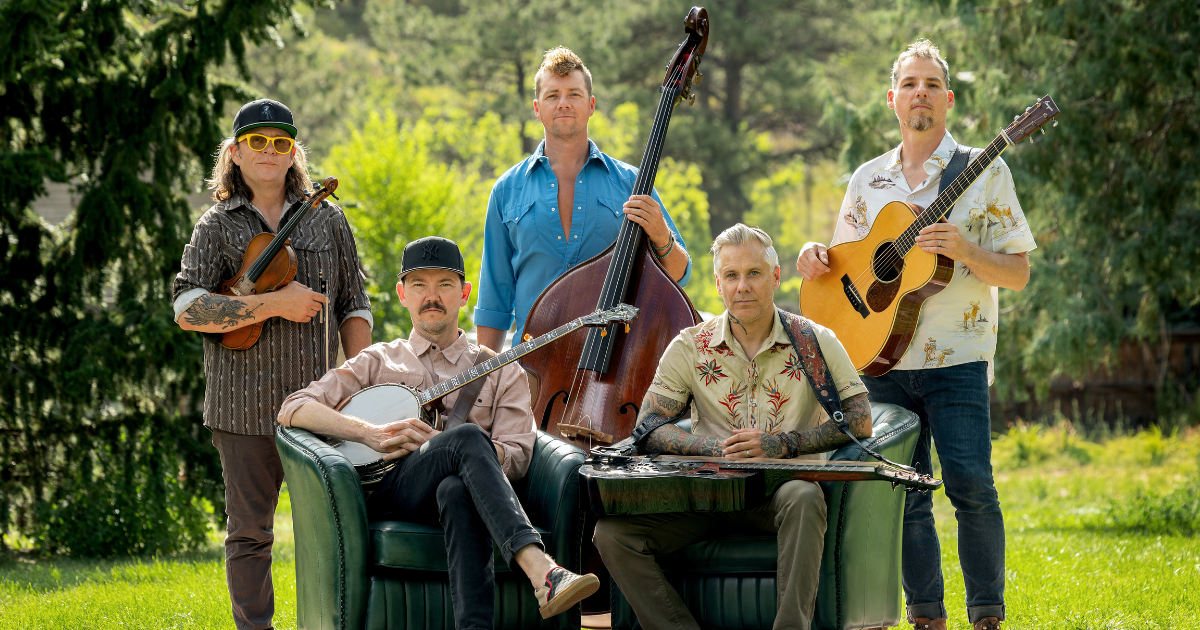
Magoo on Taking Chances and Giving Up Second Guessing

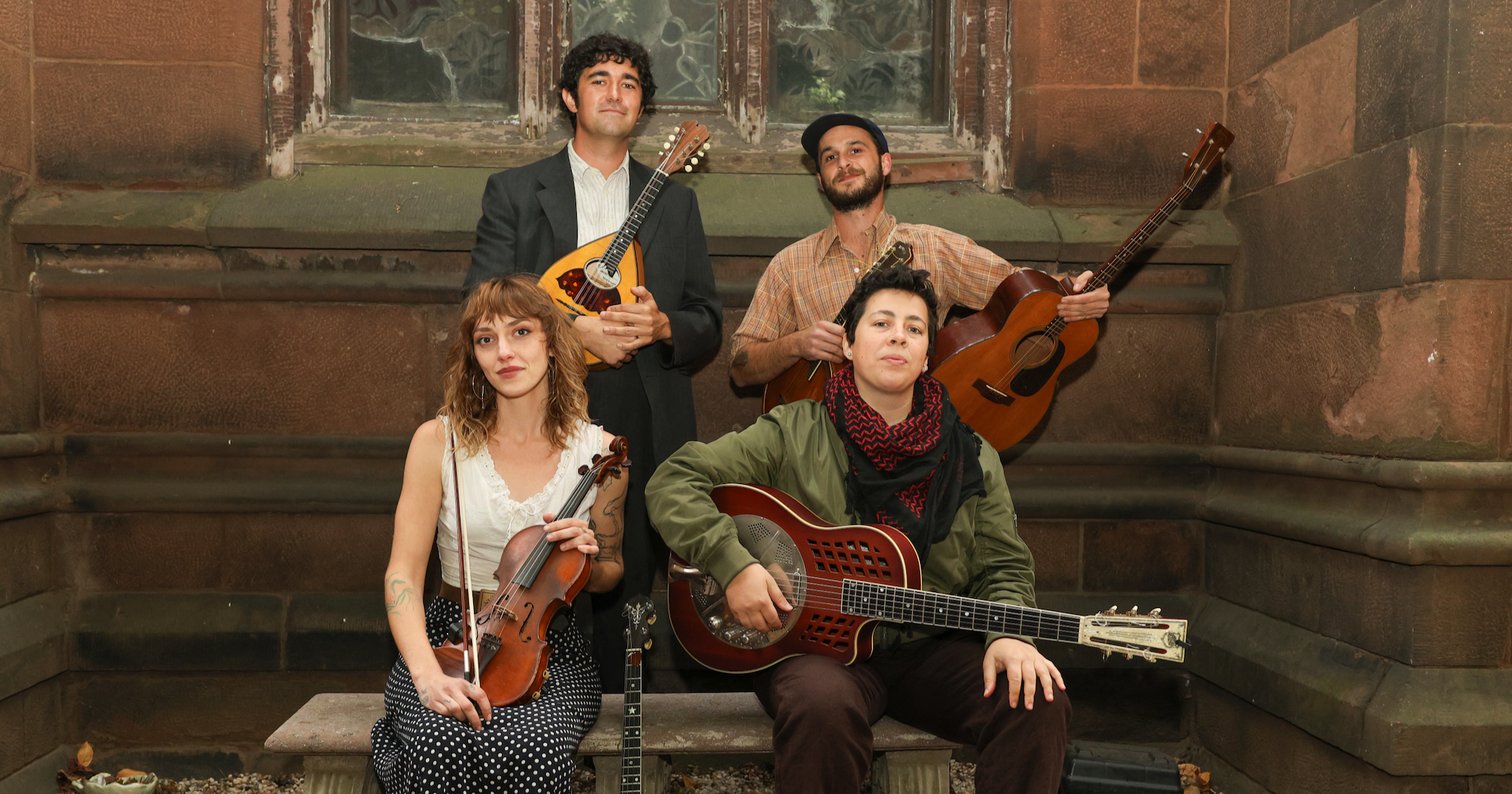
Magoo has been lighting up Colorado’s vibrant and crowded jamgrass scene since 2022. Their collision of string band music with danceable beats, jazzed up instrumental breaks, and anthemic lyrics rooted in rock has led guitarist Erik Hill to coin the phrase “bluegrass with lasers” to describe their sound and style.

After turning heads with two volumes of Magoo The EP in 2023 and 2024, the band – now comprised of Dylan Flynn (Dobro), Courtlyn Bills (mandolin), A. Denton Turner (bass), and Hill – have finally unleashed their full-length debut, What A Life. The 10-song compilation sees the upstart group of pickers contemplating everything from the sacrifices of a life lived on the road, the places that have transformed us, and how our stories are all connected.

Across 52 minutes of run time, the musicians rip their way through meandering jams that flow freely from one song to another as if it was a live show, an approach Hill says was intentional to keep the album from feeling sterile.

“Our live shows and recordings are very important to us, so it was imperative that this album not feel so copy and paste or cut and dry like studio projects often can be,” explains Hill. “I think we landed on a nice, organic feel that stretches the songs out, but not as much as we do when you see us live. In that sense, it serves as a good bridge between the two.”

During a free-flowing conversation with the band inside the green room at The Burl in Lexington, Kentucky, midway through their winter tour, Magoo spoke about the DIY approach to What A Life, Telluride’s significance to the group, near-death experiences, and more.

Why was now the right time to release your debut record?

Erik Hill: We had all the songs that we wanted to record. With the EPs we released previously, we basically recorded the couple originals that we had at the time along with a few covers. Eventually we started collecting a nice set of original music and figured it was time to do a full-length album.

Denton Turner: A big part of it is just having all the parts in place, from our management to booking people, so we can hit the road full speed. But in order to do that right it was important we have an album out to go with it – we needed a product to market. That was a big motivator for us this year, having an album to really kick in the door and make the most of our 100+ shows this year. Getting those other pieces in place on our team gave us ample time to focus on recording. When you’re trying to do everything it’s easy to half-ass it all, so having them by our side allows us to focus on and tackle what we love – the music – head on.

And with What A Life you opted to tackle it in your own DIY studio. Tell me about that experience?

Courtlyn Bills: I’ve made about 80 records in the past, but for this one everything was set up special just to make this album. I was moving and had my dad drive up a bunch of equipment from Texas, including my console he’d been holding in storage that was previously owned by Prince.

EH: Sessions were scattered throughout the month when we weren’t touring. Any time we were able we’d try getting over to Courtlyn’s to bang out a tune or two.

CB: There were a lot of 4 a.m. sessions. The coffee pots were flowing! The only big difference from one session to the next came on the jams, which we decided to use our pedal boards on and mic them up simultaneously. The only other thing is that I changed the action in my mandolin near the end of some tunes, which is why my mandolin sounds a bit thicker to close out three songs. There was a lot of us repeatedly asking each other, “How does your instrument sound?” Because there’s no turning back now, so no pressure. [Laughs]

DT: Even though we’re coming from touring and going straight into recording and back to touring – which seems hectic in a way – it’s nice for me doing [songs] one at a time. Being in a studio can be a grueling, tedious process, so having the luxury of being able to do it ourselves when it made sense for us was nice. We were able to just focus on one song or two songs at a time and give them all our attention. It didn’t feel like we were on the clock and paying by the hour with the pressure to get it all done quickly. Instead we were able to focus on banging out a song then hitting the road and discussing what next song we want to do and develop next before coming back being ready to give that song the attention it deserves, which was a lot of fun.

Courtlyn, you mentioned having a deep catalog of producer credits already. Has it always been a goal of yours to record your own band’s projects?

CB: I first started working in a studio when I was 15, mostly with younger artists that have less developed material, which I love. However, what I don’t love recording is my own music, which is why I never made a record for myself up to this point. But the cool thing about Magoo is, even though I write for and sing a lot with them, it feels like I’m working for a band and not myself. Knowing that removed a lot of the pressure of it being a make or break thing because I could trust my dudes. If they said something was good I wouldn’t question it, I’d just say, “Let’s move on!”

If I’m not mistaken, the only song you didn’t record at the DIY studio was “Angel Of Telluride,” which you flew to Nashville to knock out with its feature artist, Sam Bush. How’d that one come about?

CB: That connection came about through Jeff Fasano, an amazing photographer who used to shoot the rock band I was in prior to Magoo. Whenever we first met I had just started playing mandolin and I remember him telling me that he could see into my soul and could tell that playing it was my destiny, not rock music. I knew he was also close to Sam, so when I eventually wrote “Angel Of Telluride” I did it to be a Sam Bush song.

One day Jeff emailed Sam about the song and once he realized we were a real band and not full of shit he gave me a call and said he’d be honored to be a part of it. When we got to recording, I remember asking him if he wanted a producer credit on the song and he turned it down even though he was still effectively acting as a producer, because every freaking note, chord change, and tone shift he hit was spot on.

DT: Sam actually beat us to the studio the day we recorded. We wound up spending the entire day hanging out with him. It reminds me of a line in “What A Life” – “Buy the ticket, take the ride.” You only get one life, so don’t shy away from taking chances and shooting for the stars. Who knows, you might just wind up at a studio in Nashville recording with one of your heroes. Working with Sam never would’ve happened if we hadn’t taken the chance, and I’m so glad we did. I hope it inspires others to bet on themselves and their abilities too.

That song also holds a lot of significance given what the Telluride Bluegrass Festival has meant to the band, notably how you wound up bringing Courtlyn into the fold. Can you tell me about that?

Dylan Flynn: Erik, myself, and my Uncle Paul [Flynn] were the original Magoo and would regularly attend and pick around at festivals like Telluride, Rockygrass, and Tico Time. Then a few years ago Courtlyn, still new to bluegrass at the time, stumbled into our campsite. We ended up picking all week, through the night until 8 a.m. each day.

Then at one point when we were watching Greensky Bluegrass perform I remember him turning to me and saying, “I want to be in your band” and I responded, “I just met you like five minutes ago. Let me talk to the guys about it first.” [Laughs] But after spending all that time with him there and seeing not just how his brain works, but also how far along he was as someone still new to bluegrass, it was a no-brainer. In the weeks after Telluride it dawned on us that he was the missing piece we needed, not just as a player but as a person as well.

We rode with that lineup for about a year until my Uncle Paul decided he wanted to step away from music to travel the world – he’s actually rooting us on from Thailand right now. But when he departed, Denton was presented to us by a mutual friend. Similar to Courtlyn, after being introduced he tagged along to play several gigs before we formally asked him to join us long-term.

DT: I still remember them proposing to me and making it official with a Slim Jim ring. I still have mine and see it every day. It’s on the bus sitting on the butter tray in our fridge. [Laughs]

Sounds like you’re preserving it like one of those Big Macs you see in a museum that’s unchanged after 20 years!

Switching gears now – Courtlyn, what led to your move from the rock world into bluegrass?

CB: I was seeing the String Cheese Incident and going to festivals like Hulaween a lot, but I still didn’t quite love or understand bluegrass yet. I come from a really progressive and heavy world of jazz fusion, metal, and radio rock, but once I started hearing Cheese do more bluegrass-leaning songs I started falling in love and learning how to do them myself.

Then in 2019 – still prior to picking up a mandolin – I ingested DMT for the first time. When I did, I remember a friend who’d been telling me for years that even though I didn’t know it, that I was a mandolin player. [He] put a 1916 Gibson A[-style mandolin] into my hands and told me to shred. I don’t know how to explain it besides it being like “Dr. Strange,” but with numbers. It was that moment I became a mandolin player.

From there I formed a Celtic band and began plugging away with that, all the while realizing I had to get this bluegrass thing figured out. Bluegrass is one of the most prominent genres in the counterculture-ish scene that I loved being a part of, from String Cheese people to Deadheads and Spreadnecks and beyond. One day I sat myself down and said bluegrass is gonna have to be it – you are married to bluegrass now. Then I started going online and listening to pickers like Ricky Skaggs, Sierra Hull, Jarrod Walker, and David “Dawg” Grisman, slowing down YouTube videos to learn their breaks. That was about it. Once I learned what was going on in bluegrass musically, then it was obvious that these guys and gals are monsters. To be able to create such a back pocket with no drums on that mash grass stuff – there’s nothing like it.

You’re right, there is nothing like it! With that in mind, is that what your song “What A Life” is about – taking chances and being grateful to make a living making music?

CB: The melody and chorus for that song came together really quickly one day in my buddy’s living room. At that time in my life, the songs I was writing didn’t hold a lot of meaning or significance, so I wanted this one to be profound. The last verse really says it all: “What a life/ Is what I thought before I got swallowed by the tide/ Something felt amazing/ But I knew it wasn’t on the other side.”

I had a near-death experience when I was 19 and that is where I take a lot of the song’s inspiration from – although in the beginning I try to get cute talking about grandpas and other relatives and how their actions and memories have impacted the person you are in this very moment. Despite how insignificant those stories may seem to you right now, the fact that they were passed down and made it to you means they must’ve been pretty big moments in their and your family’s history.

So even though something like hopping into a stranger’s car and hauling ass to Telluride may not seem significant to anything other than the present moment, it’s so much more than that. We’re all connected in the climb and the work we put in together to build the memories we cherish. If none of us were here, what would be the point?

DF: …There’d be no life at all. That’s my favorite line in the entire song: “If none of us were here there’d be no life at all.” [Laughs]

A big part of the musical life and memories in your Colorado stomping grounds are its vibrant jamgrass community, a talented and tight-knit group that reminds me a lot of the Kentucky scene I’ve been fortunate to grow up in. What are your thoughts on the scene there and where Magoo fits into it all?

EH: We’re pretty lucky to call Colorado our home base. It’s certainly a breeding ground for a lot of great bands and even better music fans. People that love our type of music are everywhere in Colorado, no matter what town you’re in. From Denver to Boulder and up in the mountain towns, people want to hear that jam music, bluegrass, or a mix of both. It keeps us constantly busy and buzzing with new ideas to explore.

DF: We also have so many friends who are a part of great bands like Clay Street Unit, Tonewood String Band, and The Fretliners. I have more friends in my life now than ever before because of the community that we’re building. It’s also funny too – like one day I was driving home and saw [the Infamous Stringdusters’] Andy Hall in my neighborhood and am in awe, only to find out he lives half a mile down the road. My number one Dobro inspiration is Andy Hall, so having him so close by is a testament to just how unbelievable the music scene is in Colorado right now.

CB: There’s just something about being above 8,500 feet [elevation] that pushes people to their limits, whether it’s climbing a mountain or writing a song. The special thing about Colorado is the people here are making music for their friends. They’re making music for their little community to get together and have a good time. Someone like Vince Herman isn’t out there writing a song to have a number one hit. He’s writing a song so his family and his homies can get in front of the stage and throw down and feel comfortable and have the time of their lives, which is exactly what we’re getting to do now.

All: What a life!

What has bringing this album to life taught you about yourselves?

EH: Doing this album DIY style, we had to learn to trust ourselves and say, “Hey, this is really good.” You can sit here and nitpick each part and each take fucking forever, but at the end of the day what we have is really good, good enough to put out for people.

DT: For me, it’s in line with the phrase “what a life,” to take the chance and take the ride, call Sam Bush, whatever. I hope it inspires others the way it inspired me. When I met these guys, I lived three and a half hours away on a good day, but I saw what was going on and wanted to be a part of it. That meant getting in my car and driving to Denver multiple times a week to practice and learn the material. People thought I was crazy, but if you want something, you’ve got to go for it and give it your all. When you do that, amazing things can happen.

This whole experience has been a case in point of that, especially with the Sam Bush thing and making that call. We didn’t sit there and second guess ourselves about it and look at what happened. It’s always worth your time to give it a shot. You never know where the ride will take you. For me, that’s what this is all about.


Photo Credit: Jeff Fasano

Obejváci’s Bluegrass of Czechia Playlist

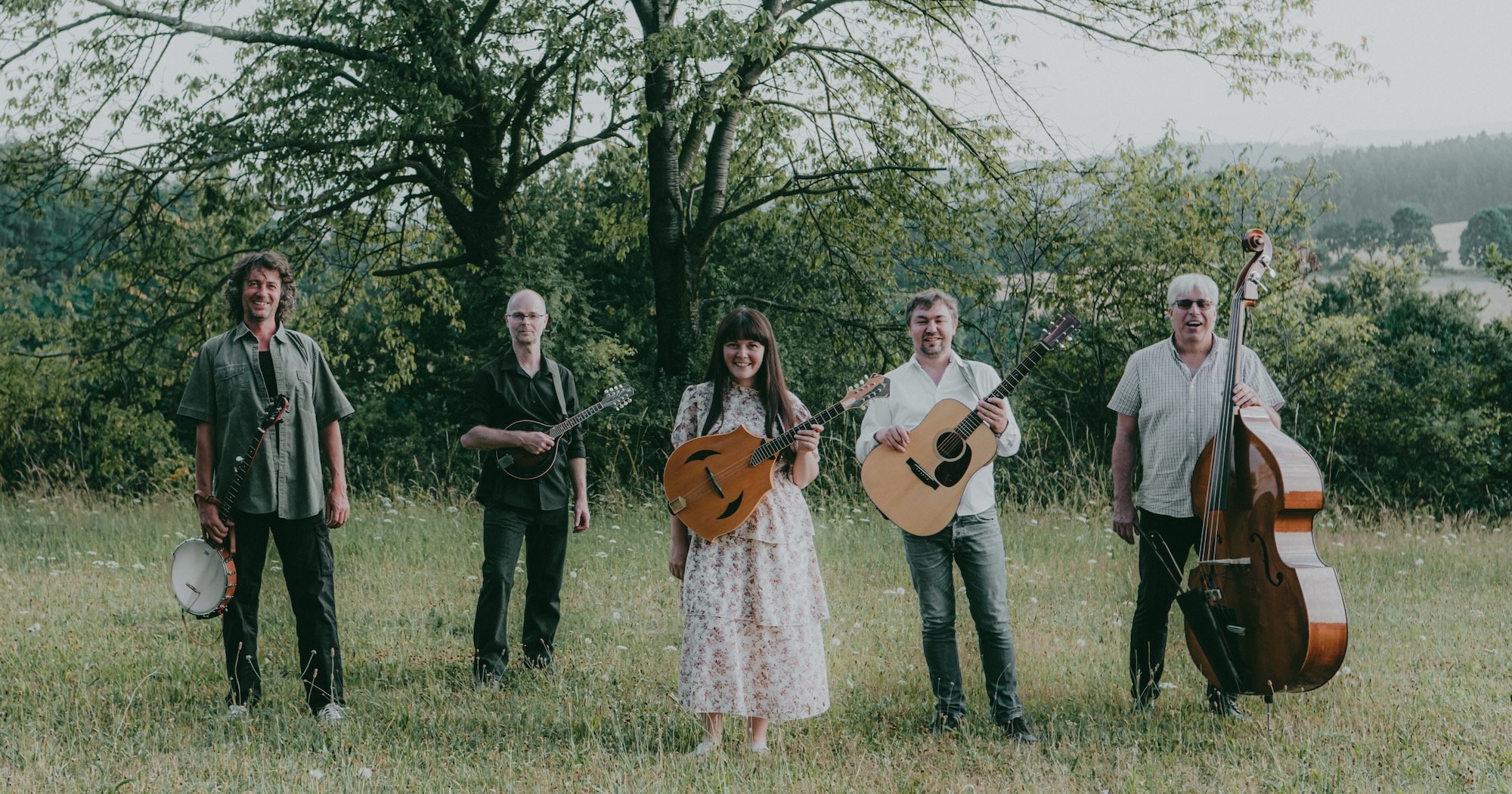
Bluegrass in Czechia has unusual roots. It didn’t arrive as a passing trend, but as music people shared with one another – at festivals, in pubs, around campfires, and at home in the kitchen or living room. And that’s still how it’s played today, bringing lovers of this music together into an amazing community.

We even took our name from that living room spirit. Obejváci – something like “the ones from the living room” or “living room pickers.” A band that grew out of playing at home, we still hold onto that foundation. Rehearsals by the couch, more voices than cables, and songs that stand strong even without amplification.

We see our Mixtape of the bluegrass of Czechia as a small cross-section of a scene that is surprisingly vibrant and diverse. There are bands that keep the traditional sound alive and others that naturally bend it in their own direction. We’re sometimes surprised, ourselves – and very proud – of how many wonderful musicians in this genre our small country has.

A chapter of its own could be written about Czech bluegrass instrument makers: Krishot, Vláďa Ptáček, Průcha, Zdeněk Roh, Jaromír Jahoda, Čapek, Karel Začal, Stanislav Štol, Ondřej Holoubek… the list would probably be very long. Our guitarist and frontman Luboš Barchini took his love of bluegrass so far that just a short distance from that original living room he started building his own bluegrass guitars.

This year we released a new EP, Tisíc let. It’s our current chapter – a handful of new songs about time, relationships, and the landscape we know so well. We’re adding tracks from the EP to the playlist as a natural part of this theme. Because in our view, the best way to understand Czech bluegrass is by simply pressing play. – Obejváci

“Spring in the Old Country” – Slávek Hanzlík with Béla Fleck, Stuart Duncan, Mark Schatz

Slávek Hanzlík is one of the most prominent Czech acoustic guitarists and composers whose musical life has been closely connected with the bluegrass and instrumental scene both abroad and at home. Born in Prague, he spent many years in Canada and the United States, recorded several original albums with leading international players, and was shortlisted for the GRAMMYs twice in the Instrumental Album of the Year category. For us, though, Slávek is, above all, a good friend and a great inspiration. His approach to melody, his playing, and the way he connects tradition with his own experience have opened new horizons for us in how we think about acoustic music.

“Letní romance” (“Summer Romance”) – Robert Křesťan a Druhá Tráva

Deep lyrics, beautiful vocals, and masterful musicianship. Robert Křesťan and Druhá Tráva are among the most popular Czech bands and in recent years have been reaching far beyond the boundaries of bluegrass. They are definitely a Czech band worth knowing. This year, they are celebrating 35 years together with a special tour in the Czech Republic joined by Tim O’Brien.

“Ty víš” (“You Know”) – Obejváci

One of the songs from our new EP. We recorded it at SONO Records, one of the best recording studios in Europe. We recorded it live, almost the same way we play at home in our living room.

“Už se blíží svítání” (“Dawn Is Coming”) – Petr Kůs a Fámy

Songwriter, musician, and singer Petr Kůs has long been one of the leading figures of the Czech (not only) bluegrass scene. He has always surrounded himself with outstanding musicians and his songs are a must at any bluegrass jam session.

“Twin Peaks/ Happygrass Medley” – Radim Zenkl & Ondra Kozák

A duo of musicians with a strong cross-genre reach. In their program, they present original instrumental pieces and songs written by both players and complemented by bluegrass, Celtic, and world music traditional tunes in distinctive, personal arrangements. They began their collaboration in 2020 and have since performed a number of successful concerts around the world.

“Ještě ne” (“Not Yet”) – Pavlína Braunová & Minesengři

Minnesengři were a progressive folk band from České Budějovice, founded as early as 1968. They quickly became one of the most distinctive folk groups of their time. Their early recordings of South Bohemian folk songs, as well as their later original material, are still regarded as legends of Czech folk music. For anyone who knows Minnesengři, listening to their music carries a special meaning – not only because of the songs themselves, but also because of the mysterious disappearance of their singer Pavlína Braunová. Although the band disbanded in 1989, their legacy and the inspiration they drew from South Bohemia continue to live on.

“Tisíc let” (“A Thousand Years”) – Obejváci 

The song “A Thousand Years” captures a moment when a person pauses and tries to take a breath even in the middle of chaos. It speaks about closeness that can keep you afloat, yet also hurt, and about the hope that even after darkness, light can be found again.

“Signal Jammer” – New Aliquot

In our view, New Aliquot are currently at the very top of the Czech acoustic scene. Instrumentally, they are among the finest bands you can hear in the country. They play bluegrass, new acoustic, and folk music, combining original songs, instrumental pieces, and distinctive arrangements of roots music. The band was formed in 2016 on the foundations of the group Křeni and has since toured across the Czech Republic and Europe — from Germany to Sweden to France.

“If You Break My Heart” – Fragment

Fragment were one of the jewels of the Czechoslovak and later Czech bluegrass scene – a band that recorded numerous albums in the 1990s and toured across Europe and the United States. Their sound blended bluegrass with new acoustic influences, highlighted by strong instrumental passages and distinctive vocals, especially thanks to Jana Mougin Doláková. Although Fragment are no longer active, their legacy lives on in their recordings, in the memories of fans, and in the generations of musicians they inspired. Jana later moved to the United States, where she and her husband Stephen Mougin run a studio and label and continue to devote themselves to music.

“Osud nikdo nezmění” (“No One Can Change Fate”) – Monogram 

Monogram are a Prague-based bluegrass band active on the Czech and European scene for more than 30 years. Acoustic music fans associate them with quality and instrumental precision. Their repertoire consists mainly of original songs and instrumentals, which they regularly perform at festivals at home and abroad – from Porto to IBMA in Nashville.

“Balada pro čistou duši” (“Ballad for a Pure Soul”) – Obejváci 

This song is dedicated to a friend who chose to leave this world. It is not about tragedy, but about a quiet passage and the peace the soul finds. Images of nature – darkness, flowers, cold, snow – underline the fragility of life while also reminding us of its beauty. It is more a gentle celebration of life than a mourning elegy.

“America” – Milkeaters

Until recently, Milkeaters were one of the distinctive names on the Czech bluegrass scene. Formed in 2014, their common denominator was bluegrass, energy, and humor. They played both covers and original songs, always bringing drive and joy to the stage. For us, Milkeaters have an even more personal meaning – it was at their musicians’ camp that Obejváci first came together. The band ended its activity in 2024, but its members, songs, and spirit continue in new projects and in the people they inspired.

“Stokrát” (“A Hundred Times”) – COP 

COP are one of the most essential names in Czech bluegrass – and there is probably no bluegrass fan in the country who doesn’t know them. The band was founded in 1978 and despite the emigration of most members in the early 1980s, they found new life thanks to frontman Míša Leicht and continued on. Over time, they became festival mainstays; in 2023 they celebrated 45 years, still playing with their characteristic energy. For our guitarist Luboš, this band is an especially personal chapter – as a teenager, it was COP who led him to bluegrass and indirectly to today’s Obejváci.

“Až Uslyším Hvízdání” (“When I Hear the Whistle”) – Poutníci

The more banjo, the more happiness! Poutníci were founded in 1970 and their sound and approach influenced an entire generation of musicians. Their most distinctive era came between 1979 and 1991, when Robert Křesťan was a member along with banjo player Luboš Malina, considered one of the best Czech banjo players.

“Deeper than the Holler” – G-runs ‘n Roses 

The name G-runs ‘n Roses might suggest tough guys with tattoos and long hair. The reality is a bit different – but the energy is definitely there. They are a distinctive Czech bluegrass band built on a solid rhythm section, tight vocal harmonies, and expressive instrumental solos. They perform both original songs and covers, all in thoughtful arrangements with respect for traditional bluegrass.

“Traveling Shoes” – Loes van Schaijk

Originally from the Netherlands, van Schaijk has put down roots in Prague. She is a singer, songwriter, and instrumentalist appreciated on the European bluegrass and folk scene for her sincere vocals, natural sound, and sensitive playing on bass, guitar, and bodhrán. She performs in many different musical projects.

“Every Breath You Take” – The Jumper Cables

The Jumper Cables came together simply to make music. With their acoustic instruments, they create convincing and powerful arrangements of both original compositions and cover songs.


Photo Credit: Gwendoleena – Vendula Koloušková

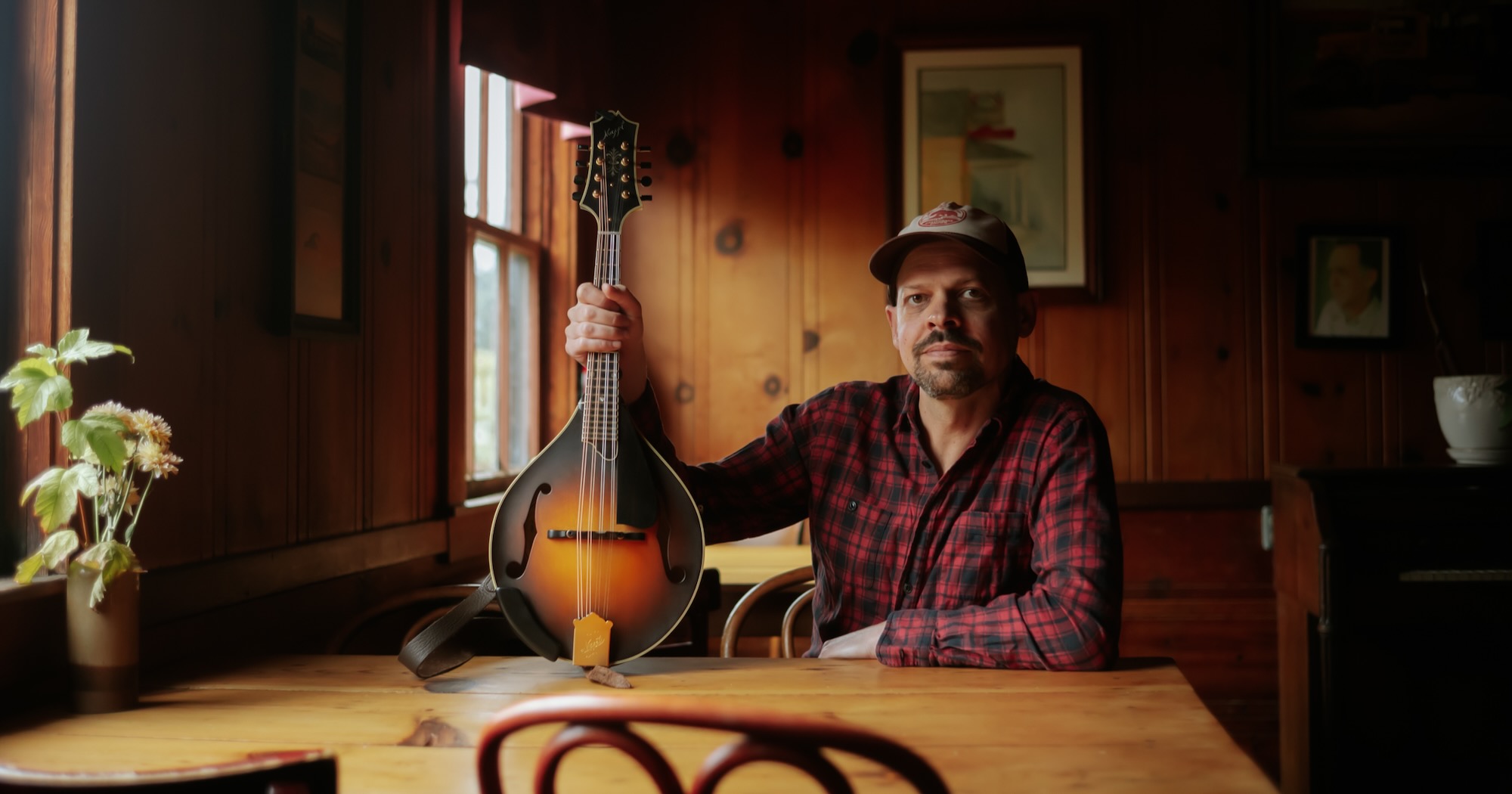
BGS 5+5: Jesse Appelman

Artist: Jesse Appelman
Hometown: Oakland, California
Latest Album: Where We Go (released February 20, 2026)

If you had to write a mission statement for your career, what would it be?

For me, music is about community, connection, and collaborative creation.

It’s about the intimacy of singing harmony with someone, or finding musical ideas that only occur to me because of what someone else just played. I’m in awe of people like Keith Jarrett who can carry a full solo show, but my musical voice only feels complete in collaboration. I play best when I have things to respond to.

I leave most festivals with at least one new real friendship, forged through a shared language and the vulnerability of playing music together. There are not a lot of spaces where this can happen so easily, especially once you’re past your 20s, and they only exist because people keep showing up and participating.

I’m most interested in the music that results when musicians prioritize the collective sound while still bringing their full and unique personality to the table. When everyone listens and tries to make everyone else sound better rather than demonstrating their own ability. It’s easy to take for granted the ability to sit down with strangers and create music in real time but we are so lucky to get to do it.

Genre is dead (long live genre!), but how would you describe the genres and styles your music inhabits?

I don’t think anyone involved in this record ever discussed what genre of music we were making. Not John Mailander, who produced the album, and not the band (Eli West, Sami Braman, and Emily Mann). We talked a lot about the how and the why. We talked about density and space, groove, melody, interaction, texture, and flow. Nobody asked if they should be playing these tunes like bluegrass, old-time, Americana, or anything else.

So what kind of music is it? It’s the sound of these particular musicians playing these tunes, trusting their ears and instincts, and adding their unique personalities to the stew. Bluegrass is certainly in there, and old-time, and probably some jazz and classical, but it’s not a conscious “little bit of this and little bit of that,” it’s just what comes out when we play without thinking too hard.

I remember listening back to the tunes at the end of the first day in the studio and John said something like, “Isn’t it cool how you can do all this planning and arranging and preparing, but you have no idea what the album will sound like until you start making it?”

Some musicians immerse themselves in a single tradition or lineage and spend a lifetime going deep inside it. I listen to a lot of stuff like that, and it’s some of my most beloved music, but when I play I’m most interested in what happens when you agree on priorities and principles, and let musical identity emerge. My priorities come from lessons learned from musicians in my West Coast string band community. Some get called innovators, some traditionalists, but all share a commitment to deeply-felt, collaborative, and highly personal music-making.

Music is an activity and genre is a labeling system; the best I can do is focus on the activity and get the right people together and trust that the result will sound like us.

If it needs a label, maybe string band music that breathes?

What rituals do you have, either in the studio or before a show?

I have a loose mental checklist that I try to review before I go on stage or into the studio or even to a jam. I don’t succeed at all of them all the time but it’s a north star to aim for.

The first is from Chick Corea:

1. Play only what you hear.
2. If you don’t hear anything, don’t play anything.

This is simple and sometimes really hard. To me it means that every note should exist in my mind before it comes out of my hands – whether it’s a particular texture when playing backup or a phrase in a solo. Even down to the tonal color, dynamics, and articulation. This takes deep focus and deep listening both outward to the band and internally to your own ideas. When I listen to my favorite improvisers – Jim Hall, Stuart Duncan, Keith Jarrett, David Rawlings – I hear this level of intentionality.

The second is from John Hartford: “Style is based on limitations.” This means giving myself permission to play within my actual capabilities rather than the ones I wish I had. If I have to take solo over something that is outside of my comfort zone in terms of tempo, harmony, or whatever, I search for the most musical solution available within the boundaries of my own technical and conceptual limitations. This might be something simpler and more spacious than what I might feel like I’m supposed to play, and consequently truer to my own voice.

The rest of the checklist: Stay relaxed in mind and body. Listen deeply at all times. Never sacrifice groove or tone to execute an idea. Never go on autopilot when playing behind someone else’s vocal or solo. Search for the most beautiful idea, not the cleverest.

Which elements of nature do you spend the most time with and how do they impact your work?

My happiest place outside of music and family is underwater. I scuba dive and snorkel for the same reasons I play music. It feels like a portal into another universe. Diving requires an intentionality of every movement that I try to apply to making music. Your time underwater is limited by the air in your tank, and the more you exert, the faster you breathe. Every muscle movement costs you air and time, and the best divers carry themselves in the water with a calm and economy of movement that is almost meditative. It’s a flow state that slows your breathing and lets you focus your attention fully on the environment around you. I make my best music when I find that same state and put most of my awareness on what’s happening around me.

I find a lot of inspiration in California’s landscapes and colors. Kelp forests, rocky coasts and windswept coastal meadows with washed-out browns and green, golden hills dotted with green oaks, the pale gray granite of the High Sierra. There’s an aesthetic minimalism to these environments that I think shows up in some of my music, like “Lyell Fork,” a stream that flows from a glacier on a high peak in Yosemite and flows through alpine meadows and over granite slabs before joining the Tuolumne River. Or “Montaran” which is a stretch of coast south of San Francisco. In both cases I thought those tunes sounded like how those places feel.

What would a perfect day as an artist and creator look like to you?

Waking up to my kiddo climbing in bed for a cuddle. Breakfast, immediately followed by some quiet unstructured time with an instrument in my hands with an extremely good cup of coffee, before all the details of life fill my brain. A hike or bike ride with my wife. Some silly afternoon play time with my kid. Cooking mapo tofu for family dinner. Tunes and songs in the evening with a few dear friends. Someone else sends all my emails for the day.


Photo Credit: Giant Eye Photography

An Oral History of the Infamous Stringdusters

BGS was founded 14 years ago and from the very beginning, we’ve been covering, collaborating with, and cheering on the Infamous Stringdusters. Our first posts about the group published to our site in 2013 – not even a year after our launch – spotlighting banjoist Chris Pandolfi’s Bluegrass Manifesto, the band’s only-four-years-old marquee event The Festy Experience, and their most recent album at that time, Silver Sky. Now, in 2026, they’re not only our Artist of the Month for the second time, they’ll be headlining our stage at Bourbon & Beyond this September, too. But, our love for the band – and the many partnerships we’ve built together – began, like most, back in 2007 with their now iconic debut album Fork in the Road and a banner year for the group at IBMA’s World of Bluegrass and the IBMA Awards.

Back then, when the Stringdusters took home trophies for Song of the Year (“Fork in the Road”), New Artist of the Year, and Album of the Year, perhaps no one – not even the band themselves – would have predicted the seismic, existential impact they would end up having on bluegrass and the as-yet-unnamed subgenre thereof: jamgrass. Twenty years on, the Stringdusters celebrate their duo of decades with 20/20, an album of 20 songs celebrating 20 years of defining and redefining bluegrass and jamgrass.

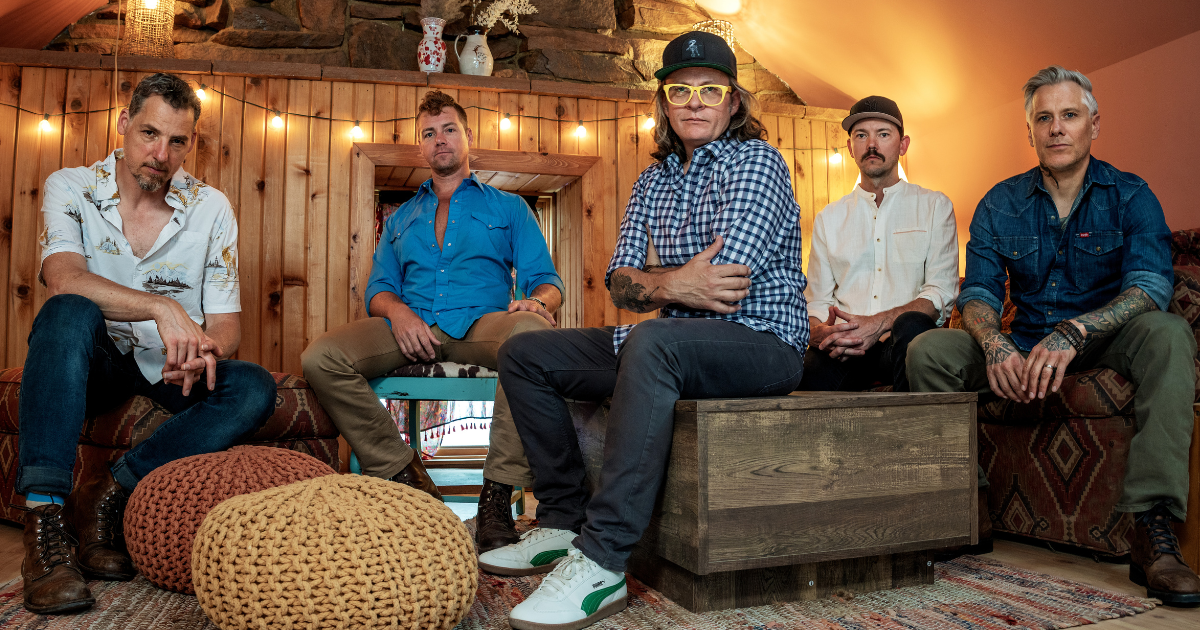
For our Artist of the Month coverage, BGS and Good Country co-founder Amy Reitnouer Jacobs sat down with all five members the Infamous Stringdusters for a wide-ranging conversation of a band that epitomizes bluegrass, jamgrass, and psychedelic string band music in the 2000s.

First of all, again, I wanna just thank you for doing this. We are so thrilled to have you guys as our Artist of the Month and congratulations on 20 years of the ‘Dusters.

I wanna start this with Panda actually, and this is not gonna be just an oral history interview, but I think, looking back on 20 years, it feels appropriate to start from the beginning. So let’s talk about origins and start back at Berklee [College of Music], if that’s cool. Tell us a little bit about the beginning of the band.

Chris Pandolfi: I arrived at Berklee in 2001, which was the year that Andy [Hall] had just left Boston for Nashville. I first met Critter [Chris Eldridge] through Zach Hickman, who was playing in Josh Ritter’s band. He went to Oberlin [University] with Critter. We got together and we were playing, and Zach had some free studio time at a spot in New Hampshire and we were gonna go record some music, just for fun. Our careers were not underway in any way, shape, or form. We didn’t have any grand designs here. We were just gonna go record some music and have some fun.

Then, on the precipice of this recording, we went down to the Cantab Lounge to meet this guy named Andy Hall. We went there and–

Andy Hall: [It was] The Plough and Stars.

CP: The Plough and Stars! Andy was playing–

AH: I don’t remember exactly if I was playing or if you were playing.

CP: And the next day we were in New Hampshire at this recording studio and we made this EP called Stable Horse. Essentially, Andy was already living in Nashville, so around that same time, he had met Jeremy [Garrett] and they were playing together. It was that recording session that got the wheels turning for me. Like, “Oh, we could do this thing with other people our age,” and not fall into the very sort of common thing in bluegrass where you get hired by someone else and you’re essentially a sideman.

We were recording and teeing things up, and we all had other gigs at that time. It was me, Andy, Jesse [Cobb], Critter, and Alan Bartram from the Del McCoury Band. But that was my earliest memory of “We could start a band with our contemporaries.” And Zach Hickman, I give him credit, he facilitated that.

I don’t even think we had the name “Stringdusters” yet. Alan got the offer to go play with Del McCoury and we had met Travis [Book] at IBMA, so we called him up and he came and lived in my driveway for a few months. True story.

Travis Book: You can really get away with a lot if you park your car in someone’s driveway and then try to stay outta the way.

So Andy and Jeremy, what are the origins of you guys starting to play together?

AH: Was it Ronnie Bowman? Was that the first time? I was in Ronnie Bowman’s band and the fiddle player and Ronnie had a bit of a falling out while we were on the road and–

CP: We were all at a festival, so we scooped up Jeremy and he got on the bus with Ronnie Bowman!

Jeremy Garrett: Yeah, I definitely knew about you two beforehand. And, of course, in bluegrass everyone’s a fan of Ronnie Bowman. He’s such a crooner and such a cool cat. I definitely had plenty of experience before, but this was like one of my first major Nashville gigs. And it was eye-opening very quickly that, as a sideman, it’s pretty limiting.

The conversations I remember started happening pretty fast in the back rooms: “Hey, let’s maybe consider doing something of our own. Long-term, how can we make this happen?” But it was just like whispers. I remember going to IBMA – that’s where I met Chris Pandolfi and he blew me away with his melodic banjo playing style and this futuristic sound that he had. I’d really never played with that before, because I came from a very traditional side of bluegrass.

CP: Didn’t I give you a copy of my record? I remember you telling me that.

JG: Yeah. And I listened to that record all the way home from IBMA – I’ll never forget – and my dad was riding with me. I was just like, “This guy’s awesome.” Overall, it felt like all of us coming together through our connection in Nashville and these music parties that used to happen on the reg. I don’t know if they still do. We would have huge jam sessions, especially at Panda’s Pad. There’d be 20-30 people all gathered up in somebody’s backyard, picking. And it was almost every night. So you can’t help but get tight and start seeing the writing on the wall, the possibilities, through those kind of connections.

CP: These days in Nashville are so different. It’s so much “cooler” now. There’s so many young people playing bluegrass and when you hear about a lot of the socializing in Nashville, it’s a lot of young musicians. When we were having these parties, it was a real diverse mix of ages. You had Sam Bush there, you had Scott Vestal, you had Ronnie Bowman, and the McCourys. We were the young cats around and there wasn’t a very vibrant young scene. We were intermingling with a lot of the elder statesmen of bluegrass.

That’s a really special time in Nashville. I can remember that’s when I started hanging out in town and there was like a magic in the air. That intergenerational mix doesn’t organically seem to be happening as much, but maybe it is and I’m just not invited to parties anymore.

So Travis, were you coming to Nashville from Colorado? Where were you before then?

TB: Yeah, I was living in Durango and Anders Beck from Greensky [Bluegrass] and I started playing music together in maybe 2002. There were gigs and we were learning this music and then Andy Thorn and some other friends – that’s Leftover Salmon – they just showed up in a music store one day. Andy was probably 19 on college break and we hung out with him for three days straight. When he went back to North Carolina, we called him up. We’re like, “Dude, you gotta come back! We gotta make a band! We’ll play RockyGrass, you’ll win the banjo contest, we’ll win the band contest.” Anders and I were like, “We can see the future, but we need Andy Thorn,” because he was such a compelling musician and just such a natural. Still is.

We started this band called the Broke Mountain Bluegrass Band with Jon Stickley, who’s also a visionary in our music. We were all picking and almost entering that same path as Leftover Salmon or Yonder [Mountain String Band]. We were already doing this like hippie bro band, just loving playing music and camping and playing festivals and going to hot springs and just fucking around. It was brilliant.

But then we went to IBMA, which at the time was the best way to show off your band and position yourself in the context of the larger [bluegrass] world. Try to get some gigs and go party your absolute brains out for a week. We were pretty rough around the edges, but one night I stepped off an elevator and Chris Eldridge came around the corner. [He] was like, “We need a bass player for this jam. Will you come jam with us?” I went into this little alcove and it was essentially the Stringdusters. It was Critter and Pandolfi and Andy Hall and Jeremy and Jesse Brock. I was just hanging out, holding on for dear life. I’m partying, I have a backpack full of beer, I have no shoes on, and I looked around and all my band mates were just there sitting along the hallway floor listening to the jam.

Andy’s partner at the time, Janice, said, ” Do you ever think about moving to Nashville?” I just laughed. Absolutely not. But I had fixed myself in their mind and once they exhausted all the possibilities of people who could play bass in Nashville – at least this is my understanding – they dug into their collective consciousness and called me up to audition. They’re like, “We think you’re the guy. When can you move to Nashville?” So I went out there to work on Fork in the Road that summer. What was this, 2004? Am I right, guys?

AH: I think that would’ve been 2005.

TB: Yeah, you’re right. 2005. [I] moved out there in September and lived in this guy’s driveway. It was kinda wild.

Falco, I promise we’re getting to you. We’re almost there!

In pretty quick succession though, you’ve got the core crew with Critter and Jesse [Cobb] at that time, you record the album, and get signed to Sugar Hill. And then things just start happening! Can you walk me through the time between recording and the IBMA Awards in ’07?

CP: There’s a lot of extremely disorganized touring. We’re driving around in two cars. I still have the notebook from the gigs – we were getting paid a few hundred bucks a night, maybe a thousand on a good night. Doing everything that we could.

We didn’t have grand designs on anything. The IBMA Awards was a really big moment for our band. Thinking back, it was a moment of legitimacy, of just getting [to] one of the hardest things as a band, which is the collective feeling that this thing is gonna stick together. That’s the peril of starting a band with players who you think are really good: at any time anyone could get hired away for something. But we were playing gigs, we were loving life, we were working on our music, and we were poor as could possibly be. I just remember the IBMA Awards as a big moment of solidity, of that feeling like we could really do this, we could really be in this for a long time.

TB: There was that first summer we had a couple of big anchor gigs, but a lot of it was really just driving around and killing time in between these anchors and hoping that we could reach the right audiences. I think that the big bluegrass scene was ripe for some young pickers who were taking it seriously and committed to each other.

JG: Yeah, getting gas in the tank right off the bat was huge for us, that’s for sure. And we spent a lot of time in between those gigs just going to be in the wilderness and spending time together. I don’t know, for lack of a better way of explaining it, [we were] bonding like a band.

But man, when you’re a real band and you’re not just like a frontman or whatever, you’ve got a real synergy with other guys in a group. It’s special. And I feel like a lot of what brought us together and [what] makes us as tight as we are now was those off times where we were discovering our lives and just doing cool stuff like that. Creating this thing together.

I do need to know who came up with the name. Where did the name come from?

CP: Ben Eldridge.

AH: Yeah!

CP: We were working with a list of pretty mediocre names and Ben came up with “Stringdusters.” After 20 years, I can say there’s a lot of bad band names out there, but the Stringdusters – I think it’s a cool band name and it suits us.

All right. Now we bring Falco into the mix. So how did you get mixed up in all this? Tell us your origin story.

Andy Falco: So, Critter fell off the back of a truck and I got picked up – no! What happened was, I’d known Pandolfi and Andy Hall from the Northeast bluegrass scene. I was playing with this guy, Buddy Miriam, who’s on Long Island, and who actually was friends with Bill Monroe because he got struck by lightning at the Berkshire Mountain Bluegrass Festival, which of course was Grey Fox. And Monroe found out about it and reached out and they became friends. So he learned a lot of mandolin directly from Monroe.

My brother was getting into bluegrass and was like, “You should come to this bluegrass festival.” I went up there and saw Doc Watson and really got into playing bluegrass. ​I moved to Nashville maybe a year after Panda and Critter did. Andy Hall was already playing in Dolly Parton’s band. And I had met Jeremy, actually by accident, at SPBGMA. My first time in Nashville, some guy came up to me and said, “Hey man, how are you doing? How’s everything been?” I was like, “Great. This is my first time in Nashville. Everything’s been great.” Then he stopped and said, “Man, I thought you were someone else.” And he says, “Come meet my son.” That was Jeremy’s dad, and that’s the first time I met Jeremy.

When I moved to Nashville, these guys were starting the band. I was watching them doing their sets at IBMA. It was killer. Then when Critter left, they asked if I’d be in. I wasn’t gonna start until September and one month later was the IBMA Awards. So I just joined the band and here they are, winning all these awards.

JG: I would like to say, I’ll never forget your first gig. You killed it harder than literally anybody I’ve ever worked with to this day. Absolutely stepped into the role and blew it away. And it was very obvious at that moment that he was the right man for the job, for the Stringdusters.

AF: I had big shoes to fill with Critter – and Critter and I were friends. In fact, I knew Critter before I met anybody in the Stringdusters. We met at seven o’clock in the morning on the last day of IBMA, when we’d pick all night and our door was open. And here comes Critter with his guitar.

CP: Critter introduced us.

AF: Yeah.

CP: He said to me, “Do you want to go hear the fastest guitar player alive?” And I said yes.

AF: I worked with Critter, too. Critter was very supportive of coming over when I was preparing to join the band, showing me the parts that he played on the record. So I had a really good foundation, thanks to Critter, of what he had done. Then I was able to put my stamp on it.

So what is that pivot then? You all mentioned the kind of shift that occurred, moving you away from traditional bluegrass and more towards jamgrass. How did you find your own sound? What was the decision to pivot?

AH: I remember a specific show where we decided we were gonna try and extend some [of the] set. I think it was the Animus Theater in Durango and it was a Colorado bluegrass crowd, which was more of a dancing crowd. They were used to more diverse sounds. I don’t remember, we were just like, “Let’s try and put a jam in this one song,” or whatever. So we’re playing, we’re jamming, and we’re extending whatever song it was. The whole crowd was just dancing. The energy was feeding back and forth and it was like, “Whoa! This is so much more exciting,” in contrast to everyone sitting silently and clapping in between songs. We made a choice one night and we saw the crowd just light up and dance and lose themselves in the music, and that fed our energy.

CP: Also, we were into that stuff.

AH: Yeah.

CP: But we hadn’t really made that connection yet. The real moment that I remember is we opened three shows for Railroad Earth. We played the 9:30 Club. We played Theater of the Living Arts and, I think, and we played Burg Williamsburg, when our van broke down and we showed up last minute. Those are the gigs that I referenced in the Bluegrass Manifesto. When I did the IBMA keynote that grew out of that, it really referenced those. I remember a few shows, too, where we would come off stage and we’re like, “Oh my god, that jam. Let’s do that again.”

We played these shows with Railroad Earth and it connected some dots that didn’t connect automatically, even though we had Grateful Dead, Phish, playing all the time. We were really coming from that IBMA buzz and awards. And, like anything, it took some time to discover, [it took] some experience. That was when some real change started happening around our business. Then the music really followed that trend.

JG: I’ll say, you guys, don’t forget about the Zeltfestivals. They were beyond anything that I personally had ever experienced. We went out and these people were going absolutely bonkers for our music – they had barricades out there and stuff. I’d never seen any of that at a bluegrass show. To me, that was fire in the tank.

AF: I think that also a big part of that is just, I know for myself, not growing up playing bluegrass music and then getting turned onto it by Garcia and Grisman and people like that. But I think it was just like when I started learning bluegrass. There’s a way that you have to do it and then, finally, you get to a certain point where all these dots are being connected, where you start to let these other influences come out, because you start to get more comfortable as a band. You start to allow that like, “Yeah, why can’t we do it? Why can’t we mix these things?” Even just as individual players. Why can’t you play this style? Blending these kind of jammy elements and these rock elements and then seeing how it worked.

You all have such varied individual projects and influences. Do you still think that you’re shifting your sound? What are you listening to and is that influencing what you’re doing?

AH: It’s definitely influencing what we’re doing. I think, to Falco’s point, I feel like I’m allowing [in] more and more of my original influences that I grew up with. I was a metal dude in high school. I think the older I get, the more I enjoy letting in who I am.

AF: Getting away from the “that ain’t a part of nothing” bullshit, right? Like, what? Who’s to say, right?

JG: Yeah, at the end of the day it’s art and you gotta let that lead itself, if you’re a true artist. Otherwise, you’re doing a preservation society kind of thing in the bluegrass world. For the longest time, I felt we were all paying homage to this awesome music, but we’re not letting it breathe like it should sometimes. It’s very fun to be an artist and be able to have the permission to just kinda let it flow, which is what we let ourselves do. We let the art dictate what we did, and we were true to ourselves in that way. That was something that served us very well. Still does.

You all live in different places now. I know the band is not as centered in Nashville as it used to be, but you did talk about the off-times and how that bonded the group early on. How do you stay bonded as a band now? How have things shifted? Being a decentralized band, how has the writing recording process changed for y’all over the last 20 years?

JG: I think that’s an important point. Yes, we’ve changed a lot over the years, but we’ve been able to stay tight because of those early formative years when we were all just broke traveling around in a band. I didn’t have any brothers growing up, but these guys are definitely my brothers and they know more about me than anybody else in this world. To allow each one of us to have the freedom to live where we wanna live and come together the way that we want to come together, I think that has been really one of the main things that have kept us together.

Over the years we’ve all developed little side things outside of the band. I think that’s been healthy. For me, I like to do my own solo music, music that I write and I like to perform – and stuff that wouldn’t necessarily fit within the confines of the Stringdusters. But I still want to get that art out there. We continue to challenge each other. Music can be competitive in a not-healthy way. But I feel like we do it in a healthy way, in the sense that we drive each other to just be the best that we can be at what we do.

CP: I got married last fall and in the run up to my wedding, one of my aunts asked me, “Are all your bandmates gonna be there?” In my mind I had this moment where I was like, “Are my band mates gonna be there?” You might as well ask me if my family is gonna be there! It’s just life at this point. After 20 years, it’s cool to observe the level to which you become each other’s family.

That’s the definition of community and you don’t think about these things when you’re going into this life, but there are some incredible unintended consequences. That informs the music and that informs all the life experiences too.

And here we are, 20 years later. That’s pretty cool.


Explore more of our Artist of the Month coverage of the Infamous Stringdusters here.

Photo Credit: Daniel Milchev

The Lowest Pair Are as Enchanting as Ever

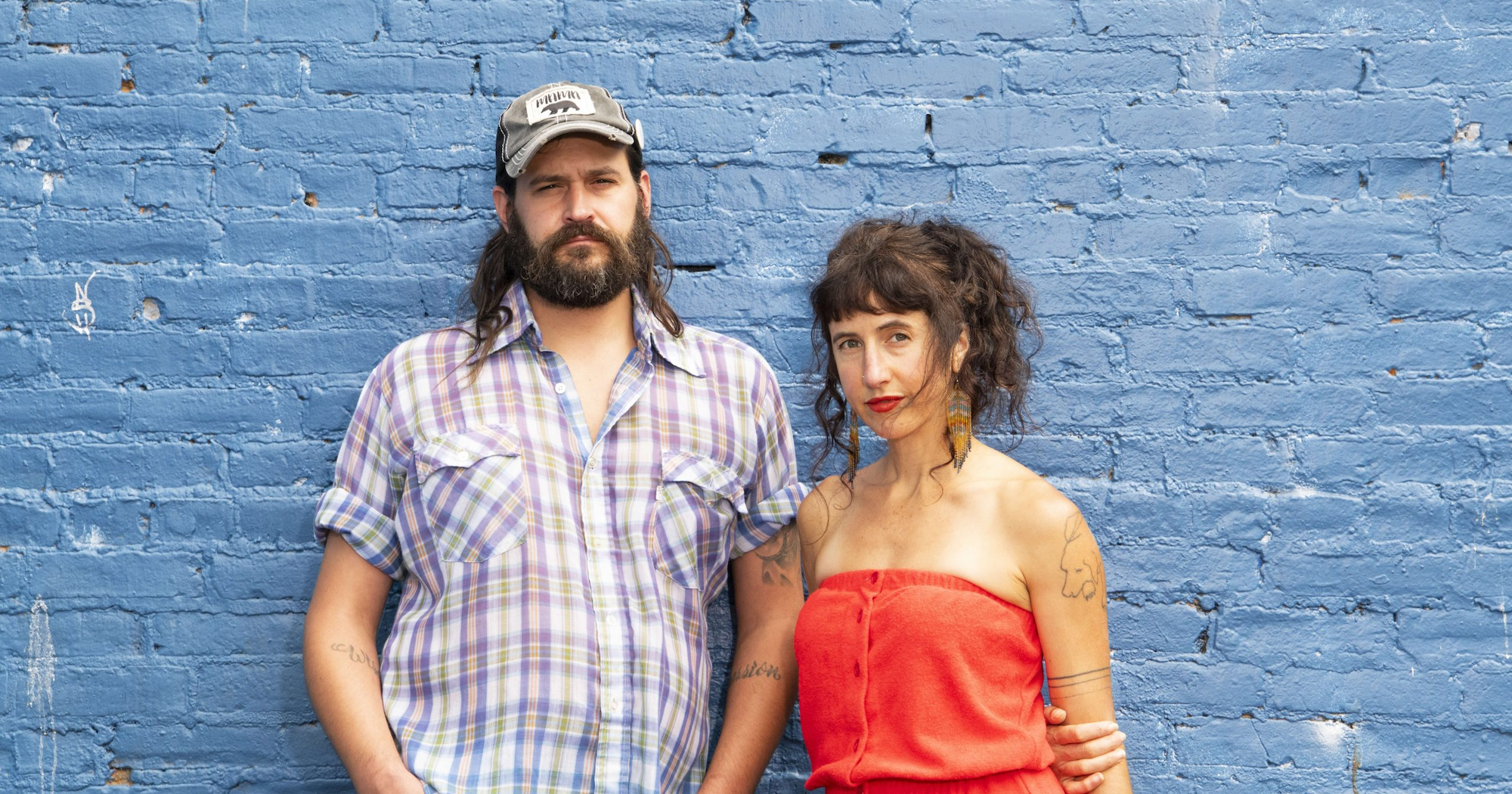
It’s fitting to enjoy the Lowest Pair’s new album, Always as Young as We’ll Ever Be, in the opening weeks of a new year. In particular, the song “Give It All Away” gently offers a theme of letting go amid an orchestration of acoustic guitar, banjo, and other subdued instrumentation. As the song swells, a soft percussion begins to underscore a sense of renewal.

“I feel the lightest when I give it all/ Give it all away,” sings Kendl Winter in the opening moments; she’s later joined by bandmate Palmer T. Lee when they harmonize on a simple yet poetic lyric: “Before the sun, there was the rain/ Before the rain, there was the sun.”

Indeed, it’s been quite a few seasons – six years in fact – since the Lowest Pair released an album of their own. The duo enlisted Tucker Martine to produce the new project, recorded in Portland, Oregon. There are some surprising musical textures for longtime fans of the duo, but at the heart of the Lowest Pair, there’s still the welcoming vibe that’s enchanted listeners since their 2014 debut album.

“We were really excited about the recording situation, being with Tucker Martine in his studio, and having such beautiful musicians paint our songs, to flesh them out more than just the two of us,” Winter says. “They really did lean into the medium of the studio and the sounds that were available to us. There are a lot of instruments and musicians…”

“… A lot of other people’s ideas coming into the mix. We were just feeling open to that,” Lee adds.

Although both Winter and Lee are reluctant to divulge too much about the meanings behind the songs, listeners will certainly relate to lyrics about making it through rough patches (“Diamonds”) and learning to find comfort in the unknown (“Uncertain Seas”). The album’s country-tinged closing track, “Thorn,” is an elegant ode to getting past the pain.

“You visit these things that hurt often. I mean, we all do,” says Winter, who wrote the song. “That’s what grief is, right? You’re kind of hoping you’ll figure it out, and then it’ll go away. …

“With Always as Young as We’ll Ever Be, the whole theme is now, and now, and now, and trying to be in the present with things. There’s a love and there’s a ‘go to hell’ in that song. There’s a wanting to hold things sacred but also let them go.”

The album is actually named for a song that didn’t make the final track listing; Martine loved the phrase so much that he insisted the band should keep it as the title. The words are wistful enough to also call to mind the 2009 bluegrass festival in Minnesota, where Palmer, Lee, and a few other musicians stayed up late jamming along the Mississippi River.

“That was really pretty special!” Winter recalls. “Both of us were playing banjos in different bluegrass bands at the same festival. I saw Palmer playing and singing and I loved his voice and I loved his melodic style. I still hadn’t seen a bunch of other banjo players exploring more, like, off-the-grid playing and more melodic approaches. And after he played, I think I said something about it, right?”

“Well, I think the first time, you were just like, ‘Hey, nice banjo playing.’ And I was like, ‘Thanks, random person,” Lee remembers with a laugh. “Then maybe a few hours later, you were just like, ‘I really dug your melodic style,’ And it’s like, ‘Oh… you’re a banjo player.’”

Growing up in Arkansas, Winter heard the banjo in bluegrass, but considered herself more of a punk rocker. Hearing Béla Fleck & the Flecktones changed her perception of what tones and sounds could come from the instrument. Lee, a Minnesota native, inherited two banjos – one from each side of his family – when his relatives heard about his burgeoning interest in music. He dismantled them both to create one instrument specifically suited to his personal taste.

Several years later, after that initial encounter at the riverbank, Winter decided to quit her band; Lee asked if she needed a singing partner. Remembering their easy musical bond, she invited him to Olympia, Washington, where she’d relocated in her early twenties. In turn, he asked her to make a duo record with some time he’d already booked. Thus, the Lowest Pair was born.

“I think, serendipitously, both of our bands were falling apart at the same time, and I was exploring ideas about how to move forward in my career,” Lee says. “It was like, maybe if I collaborate with somebody and make a record that way, that could be a way forward.”

Now living about a mile apart in Olympia, Winter and Lee will be touring the Pacific Northwest this spring. At the merch table they’ll have some lino-cut carvings and prints, new posters, stickers, and T-shirts, and of course, vinyl copies of Always as Young as We’ll Ever Be. (The album art is a watercolor painted by Winter’s mother, Jill Morgan.) Along with the new material, they’ll also be mixing in catalog cuts like “Too Late, Babe” and “Rosie.”

Asked about the enduring popularity of the former song, Lee chalks it up to placement on an editorial playlist when it was released as a single in 2020. “I have this vague memory at one point of someone after a show mentioning that we played a really good cover of that ‘Too Late, Babe’ song,” he says. “That was like, ‘Hell, yeah!’”

As for “Rosie,” Winter says, “Yeah, that one’s still in the set list. That one is a really early one. I was playing that even before we had started the Lowest Pair. And it’s really interesting what people latch onto, because it’s simple. I mean, I wrote it crying.

“I think with songs, you can kind of feel the ones that come from your heart. They did the thing. They gave you the goosebumps when you wrote it, and then they continue to have that effect, and it’s pretty cool.”

That emotional effect remains in place for Always as Young as We’ll Ever Be, too.

“I took a lot of space from it and hadn’t listened to it for a few months before we started talking about what we’re gonna do with it,” Lee says of the album. “And I remember being kind of surprised. You know, there’s an amount of pride and accomplishment. I was grateful to have contributed to it.”


Photo Credit: Sarah Cass

Artist of the Month: The Infamous Stringdusters

During the Infamous Stringdusters’ recent holiday gig at The Orange Peel in Asheville, North Carolina, the storied venue was packed out with jamgrass freaks, the performance itself a kickoff of sorts for the band’s 20th anniversary in 2026. I found myself standing sidestage when show opener Bronwyn Keith-Hynes came up next to me. A smile emerged on her face taking in the band and the audience.

“The Stringdusters made me want to start a band,” the GRAMMY-winning fiddler said, turning to me. “The Fork In The Road album was the most influential modern bluegrass album for me when I was at Berklee.”

Keith Hynes’ sentiment conjured numerous memories and moments I’ve been lucky enough to be a part of when it comes to the ‘Dusters. The first time I ever laid eyes and ears on them, it was the 2008 Targhee Bluegrass Festival in Alta, Wyoming. I was 23 years old and a rookie reporter for the Teton Valley News, based just down the mountain in Driggs, Idaho. By that point in my life, both personally and professionally, I was diving deep into the jamgrass world – the intersection of ancient tones, psychedelia, improvisation, and a collective love of the Grateful Dead.

The initial spark of the modern jamgrass movement was lit by Yonder Mountain String Band, Leftover Salmon, and the String Cheese Incident, all three acts coming into the national spotlight by the end of the 1990s. A musical template had been formed, and the ‘Dusters would emerge in the early 2000s to throw gasoline onto that melodic fire, ultimately becoming a missing link (alongside Greensky Bluegrass) between jamgrass originators, those ‘90s propagators, and folks currently carrying the torch into new, exciting realms: Billy Strings, Sierra Ferrell, Molly Tuttle, Sierra Hull, and more.

“That’s what’s so beautiful about bluegrass music, in particular,” Stringdusters fiddler Jeremy Garrett told me recently. “You pass it on to the next generation and they take it and they do their thing with it. Luckily for us, we were around at a time that [that] was very important, and a transitional time in the industry.”

In 2010, a couple of years after my introduction to the band at Targhee, when I returned to my native North Country of Upstate New York, I found myself covering a show at the intimate Showcase Lounge at Higher Ground in Burlington, Vermont. I was there to see the ‘Dusters once again. Their sound and energy immediately transported me back to the Rocky Mountains that I missed dearly. (Sharing the bill was another rising jamgrass act, Trampled by Turtles.)

I remember walking away from that gig feeling in awe and refreshed with a genuine feeling that something was happening. Something was on the horizon when it came to bluegrass and string band music. This wasn’t a traditional bluegrass band in matching suits, standing like statues. It was a rock show with acoustic instruments. Baseball caps and long hair, grins ear-to-ear. More provocative than standstill, more vibrant than just going through the motions of what past generations were instructed to do.

“Being able to showcase our own songs, in our own way, [our] writing skills, and making the decisions on what was chosen to play and how to play it [were] foremost for most of us at the beginning,” Garrett says. “Over time, we realized that we were actually growing a community. And after all these years, that honestly has become the most important part, the most important thing that we could possibly do.”

What I witnessed in Wyoming and Vermont years ago is what I’ve continued to experience with the Infamous Stringdusters, in person and in method, from Florida to Colorado and beyond. They set the pace then for where we stand with jamgrass right now, built on a full-throttle approach, one which remains sonically elusive as well as paying homage to the architects of bluegrass and those who broke from the pack and made something all their own.

Aside from the talents of the Stringdusters, either as individuals or the sum of their parts, you also have a unique setup. Alongside founding members, banjoist Chris Pandolfi and Dobroist Andy Hall, who emerged from the prestigious Berklee College of Music in Boston, you have the tradgrass pedigree of Garrett, who was born and raised in a traveling family bluegrass band hailing from Idaho. This fusing of road-tested grit and grace with conservatory-style techniques is at the heart of what this group does best: jam.

All of which circles back to the Asheville Orange Peel performance in late 2025. There were tightly knit melodies and freewheelin’ improvisational explorations. They broke down the invisible walls between themselves and the audience, maintaining a two-way street of momentum, energy, and inspiration from both sides of the microphone – a vortex of sound and scope, all revolving around a deep sense of community.

“The band is stronger than ever and making some of the best music we’ve ever made,” Garrett says. “But, the thing I see that is the most important being carried on is that community factor. We certainly didn’t invent that, but we took note and applied the philosophy to our scene, and hopefully the next generation realizes how important that piece is.”

Ultimately, this 20th anniversary celebration for the Infamous Stringdusters is a culmination of a tried-and-true effort to bring this hallowed music into the unknown and unfolding musical landscape of the 21st century. With their upcoming album, 20/20 (out February 13 via Ameriana Vibes) they continue their efforts to break new ground and forge ahead, together, whatever the next 20 years hold for jamgrass and the ‘Dusters.

The Infamous Stringdusters are our Artist of the Month. Below, enjoy our Essential Infamous Stringdusters playlist and stay tuned as we share brand new and archive content on the ‘Dusters throughout the month of February here on BGS – and across our social media channels. Like our exploration of their 20-year discography or our oral history of the band featuring all five members in conversation.


Photo Credit: Daniel Milchev

The Foreign Landers Celebrate the Banjo in Ireland & Northern Ireland

The five-string banjo is often associated with Appalachian music, but its reach has always extended beyond one place. In Ireland, the banjo is traditionally heard as the four-string tenor banjo, a cornerstone of Irish folk music. This playlist celebrates the banjo in Ireland and Northern Ireland, but focuses instead on five-string banjo players, highlighting Irish and Northern Irish artists who are bringing bluegrass banjo into folk, Americana, and contemporary acoustic settings. The tracks here feature musicians working across traditions and genres, using the banjo as a bridge rather than a boundary.

For us, The Foreign Landers, this playlist is closely tied to our own story. Our songs, woven throughout the playlist, reflect life lived between Northern Ireland and the U.S., and the relationships, faith, and sense of distance that shape that experience. In a small way, that mirrors the five-string banjo’s own journey across time and place. Our new album, Made to Wonder, is our expression of these ideas; including our music alongside these other innovative artists helps frame our transatlantic sound within a much larger conversation.

Alongside our music, you’ll hear boundary-pushing banjo work from artists like Flook, JigJam, Damien O’Kane, Ron Block, I Draw Slow, Brian Finnegan, and NÁVA, each offering a different answer to the same question: What does bluegrass banjo become when it’s rooted in Irish soil?

The result is a playlist that honors tradition while continuing to move forward. We hope you enjoy. – The Foreign Landers

“Made to Wonder” – The Foreign Landers

The title track from our new album, this banjo-centric song is about stepping away from noise and busy-ness to find true rest and belonging in Christ, whose yoke is easy and burden light. Featuring Tristan Clarridge (Crooked Still) on cello, adding depth and resonance.

“Road to Errogie” – Flook

There’s something infectious about Flook’s craftsmanship and energy – especially when five-string banjo enters the mix, played by the incredible Leon Hunt of the UK. A major influence on our sound.

“Gold Mine” – I Draw Slow

Irish-based and deeply rooted in both Appalachian and Irish traditions, this clawhammer-driven track blends heritage with heart.

“Johnny’s Peacock / The Red-Tailed Hawk” – The Foreign Landers

Two original tunes deeply informed by Tabitha’s heritage, joined by John Doyle, Brian Finnegan, and Cathal Murphy, bringing Irish tradition and bluegrass energy together.

“John D. McGurk’s (The Heartbeat of St. Louis)” – JigJam

JigJam seamlessly bridge U.S. and Irish folk scenes. Irish banjoist Daithí Melia delivers powerful five-string work on this fun, high-energy track.

“Mario Kart Rides Again” – Ron Block & Damien O’Kane

Two banjos – five-string and four-string – done right. Ron Block of Alison Krauss & Union Station and Damien O’Kane of the Kate Rusby band make for an unxpected delightful pairing. Here is a playful, virtuosic track from their album Banjovial that’s near to Mario Kart-loving hearts.

“Pictures” – The Foreign Landers

Led vocally by David with Tabitha on banjo, this original song draws on our own experience of long-distance dating. “Pictures” captures the quiet weight of distance – and how old photographs can briefly collapse time and place. The unconventional role of banjo on this track is one of our favorite sounds on the new album.

“Marga’s” – Brian Finnegan

A must-include from the County Armagh master himself, featuring Crooked Still with Greg Lizst on five-string banjo. Both four-string and five-string banjo shine in this expansive, genre-blurring piece.

“The Thrifty Wife” – Ron Block & Damien O’Kane

Another Ron and Damien double-banjo banger. Their three collaboration albums are essential listening when talking about banjo in Irish music. Bonus mando moments from Sierra Hull seal the deal.

“Traveler”– The Foreign Landers

Narrated from the perspective of Tabitha’s parents back in Northern Ireland, “Traveler” reflects on growing older, separation, and the tenderness of loving someone from afar. Another unconventional banjo track that we loved making.

“Magic Box” – Nava

Irish Americana and folk meet Persian influences, led by Ireland’s Paddy Kiernan on five-string banjo. A rich example of cross-cultural musical exploration.

“Hope” – Cup O’Joe

Featuring Tabitha’s two brothers (alongside David and Tabitha), this title track from Why Live Without blends Northern Irish roots with progressive Americana.


Photo Credit: Nicole Davis, Storied Artisan Photography

You, Me, Everybody Grow True Roots in Borrowed Soil

Aotearoa (New Zealand) doesn’t have a strong history of bluegrass bands – except one. If you mention bluegrass to New Zealanders, some will have at least heard of the Hamilton County Bluegrass Band. New Zealand has produced some great players, notably fiddle player George Jackson, banjo player BB Bowness, guitarist/singer Cy Winstanley, and bassist/singer Vanessa McGowan. (Now that we write this, these four would make a great NZ bluegrass band!) But while these names are well known in American bluegrass circles, it is fair to say they aren’t known (outside of folk circles) in Aotearoa.

Many of the songs on our new album, Midnight (out January 30, 2026), are situated within a day, or feature characters who are sitting at the cusp of who they have been before delving into something new. That sense of “in-between” also reflects our place within Aotearoa’s musical landscape, where bluegrass arrives without a long local history, but can be shaped in ways that feel natural to how we live and create here.

“Our Kiwi fans know bluegrass from traditional songs and contemporary artists such as Alison Krauss & Union Station, and Billy Strings. But they are more familiar with the other genres that bluegrass sits alongside. We’re also collectively members of the New Zealand folk, country, and jazz communities,” says our bassist, Rob Henderson.

Midnight starts with bluegrass at its core, but gently widens scope, bringing in different genres with their rhythms, broader chord progressions, and influences drawn from our own environment and lives lived in Aotearoa.

Here are the songs and tunes that anchor us in tradition and inspire us to find our own path as the clock strikes twelve. – You, Me, Everybody

“Ain’t No Grave” – Crooked Still

I love groove and the forward motion in all music, so when I heard this tune for the first time I was naturally inspired by the push of the cello part. This feel was a factor in my own bass playing across the album, especially for up-tempo tunes such as “Misdirection.” – Rob Henderson

“Dorrigo” – George Jackson

George Jackson’s tune “Dorrigo” feels friendly and familiar. It’s one of those tunes that will just keep going around and around the jam circle. When the Dorrigo Challenge did the rounds on the internet a couple years ago, it was a reminder of how a tune can bring people together. I had this in mind while writing “Sam’s Tune” on our album. – Sam Frangos-Rhodes

“Wildfire” – Watchhouse

I find when I sit down to write a song, I usually follow the same template or theme. Of course, there is variation in a lot of my songwriting, but I find rhythmically it’s always much of the same thing. A while back I wanted to break that cycle and try to write a more chilled out, slower tempo song, so I wrote “Heart of Stone,” which leads to “Wildfire” by Watchhouse. I enjoy this song because I think it has a very similar vibe to “Heart of Stone.” For me, it captures the same emotion and feeling I was looking for. I find it’s always nice to find what I was looking for in other people’s writing and relate that back to my own music. – Laurence Frangos-Rhodes

“Heart of Stone” – You, Me, Everybody

Laurence originally wrote this while we were producing our previous album, Southern Sky. I love the backbeat to it, but he also writes great chord progressions; they feel natural and authentic to the song and surprising at the same time. I’ve known Sam and Laurence since they were in their early teens and while our audience love our instrumentation, singing harmonies with them feels like home to me. “Heart of Stone” gives us an opportunity to showcase our vocal blend and milk those beautiful chords Laurence gifts to his songs. – Kim Bonnington

“Railroad” – Béla Fleck & Abigail Washburn

When I try to serve the song with three-finger banjo, I frequently look to Béla Fleck’s work with Abigail Washburn. He plays parts and the two of them fill out the texture of a song so well! Ironically, when we arranged “Silver Spoon,” I was hearing Abigail-like clawhammer behind it, so I did my best to provide that kind of sound with three fingers. – Nat Torkington

“A Hundred and Sixty Acres” – Marty Robbins

Our track, “The Ballad of Bubs and Beautiful,” started when I overheard a conversation between two women shearers in a camp ground in Waipukarau. I knew that I wanted to capture their relationship to each other and their working life, all framed within a day. My Dad’s vinyl collection is 50% Marty Robbins and I remembered the picture that “A Hundred and Sixty Acres” colored of a life well lived. That’s why the first line in “Bubs and Beautiful” is, “Up ‘fore dawn to greet the sun.” There’s a tendency for NZ songwriters to still write about American experiences and places due to an inability to describe ourselves that has been labelled “cultural cringe.” But I knew the description of the women was genuine when I heard someone go, “Oh” as we played the last line live for the first time. – KB

“Orphan Annie” – Tony Rice

As a guitarist, I’ve been heavily influenced by Tony Rice – who hasn’t!? Whenever I listen to the Church Street Blues album it leaves me feeling creative and inspired. I love the minimalism; stripped back to one guitar and vocals telling a story. A lot of the songs on Midnight started in this exact same way, guitar and vocals alone. So it only feels appropriate to give credit to Church Street Blues where credit is due. I cannot pick one track from the album as a favorite because they are all great, but here is “Orphan Annie.” – LFR

“Was It You” – Joy Kills Sorrow

“Was It You” is a song I love for how it drives. That rapid mando chop over a fast rolling banjo held down by a thumping bass is a sure way to make a foot stomper. I took a lot of inspiration from Jacob Jolliff’s mandolin playing in “Was It You” when I put together my part for our song, “Busy Without Me.” – SFR

“Busy Without Me” – You, Me, Everybody

Kim writes wonderful slice-of-life songs. The Midnight album has everything from the plight of an unwed mother to mother/daughter sheep-shearers. “Busy Without Me” is perhaps more #relatable, though: we have a short life with ample temptation for busyness, it says, but it’s important to take moments to “sit and breathe and let the breeze wash over me with nothing in my way.” I love the way the busy-ness of the music reflects the lyrics. – NT

“Caleb Meyer” – Gillian Welch

Country/folk/bluegrass songwriters have always done a great job of writing songs about things we won’t talk about, but make us happy to sing about them. Our song “Silver Spoon” was initially written to an Irish jig. But the joyfulness didn’t eclipse the bleakness of the lyrics. At different times when we were arranging it, different band members would say, “What would Caleb Meyer do?” and our producer Rachel Baiman asked exactly the same question when she arrived for our sessions before we recorded. It’s become the quintessential modern murder ballad. – KB

“Distant Sun” – Crowded House

I grew up in ’90s New Zealand with parents who would play in a country band at the local barn dance while my brother was DJing at the rugby club rooms. So while Marty and Merle would be in one ear, Crowded House was in the other. If you think of great bridges in songwriting, “Distant Sun” has one of them. It also has my favorite line ever in a song: “I don’t pretend to know what you want, but I offer love.” The melody lines in our own track, “The Rest of Us,” hark back to years of admiring Neil Finn as a songwriter. – KB

“The Rest of Us” – You, Me, Everybody

When Kim first brought the concept of “The Rest of Us” to the band I was immediately a fan, and thought it would a great fit on the album. Before we went into the studio we all spent some time together to arrange the new material. As a band I feel like we work uniquely well when it comes to putting a song together and it’s one of our biggest strengths. I think “The Rest of Us” is a great example of Kim’s songwriting and a great example of how we function as a band. – LFR

“Natchez Trace” – Béla Fleck

In my mind, this is the classic G minor banjo instrumental, from Béla Fleck’s landmark album, Drive. Recorded with his B string tuned down to B flat, Fleck often plays it live out without the re-tuning. That was the inspiration for me to write my own Gm instrumental for a banjo tuned to open G major. – NT

“What a Fool Believes” – The Doobie Brothers

I wrote “She’s Alright With Me” a few years ago before I joined You, Me, Everybody. At the time, I had been deep diving into a lot of Doobie Brothers music and the moving parts within their songs. When “She’s Alright With Me” was born, it was originally a heavy keyboard driving tune – having written it on an old 1960s Wurlitizer Piano and styled it on some of the Doobies’ keyboard parts. It’s safe to say it’s transitioned a lot as we don’t have a keyboard part, but you can hear the rhythm now being driven in the same way by Laurence’s guitar. – RH

“Old Train” – Tony Rice Unit

Laurence’s epic album-opening “Misdirection” is a straight-ahead driving bluegrass song, which nonetheless has a few surprise chords in it. For some reason that reminds me of this epic Tony Rice track. – NT

“Misdirection” – You, Me, Everybody

“Misdirection” fits nicely as the opener on our album. It’s a fun example of progressive bluegrass while still staying true to its roots. “Misdirection” is my favorite track on the album and I would like to think the amount of fun we had recording this song is reflected in the final result. – SFR


Photo Credit: Ebony Lamb

Larry Sparks Is a Surprisingly Zen Bluegrass Star

Speaking to Bluegrass Music Hall of Fame inductee and IBMA Award winner Larry Sparks over the phone, you might never guess you’re conversing with a living legend. He’s remarkably humble, down to earth, and plainspoken. And his approach to making bluegrass – as he has professionally for more than 60 years – is surprisingly zen.

His latest album, Way Back When, was released in late October 2025 and the project finds Sparks in exactly the same sonic space as any of his excellent LPs from the last six decades. If you were to take a short audio sample of Way Back When, it would be genuinely difficult to identify from which era of his lauded career it came. The project is warm, lively, and resonant, sounding like you’ve been dropped into a cozy living room with perfect acoustics and a superlative bluegrass string band.

The songs, as well, are timeless and classic, whether fresh tracks, iconic covers, or an old-timey instrumental fiddle tune with familial origins. Like his vocal style, guitar picking, and production preferences, Sparks’ song curation also feels like an intuitive extension of his personality. When he describes how he accomplishes this consistency across eras and executes the timelessness of his albums, it seems as though he becomes a sort of bluegrass guru.

“When songs touch me, they touch my feelings,” he explained to BGS . “When the song touches me, it’s saying something. I’ll take that and see what I can work with, and make it my song.

“The song’s me and I’m the song. And that’s the way that they did it back in the day. They become that song – the older singers, they became those songs. That’s the way that I do it, I try to make that song me and me the song.”

It’s a secret ingredient lacking from too many bluegrass records out there today. Not just his inhabitation of songs so that they can inhabit him, but also treating bluegrass like the forebears of this music did. As a living, breathing, cutting-edge thing that doesn’t need to be built on a foundation of regurgitation and emulation and litmus testing. Like Sparks puts it so simply – and eloquently – in our conversation, bluegrass has mainstream appeal. It requires heart, soul, and being present – becoming the music and becoming each song.

That right there is exactly how Sparks became a Bluegrass Music Hall of Famer and a hero to many – Alison Krauss, Billy Strings, and this writer included. It’s also how he’s maintained a consistent (never boring, stale, or regressive) sound over the course of his 62-year career. And, it’s what keeps him motivated to continue looking forward while inspiring all of us and reaching new audiences.

Let’s start by talking about your excellent new album, Way Back When. When I first listened to it in the fall, when it was released, I was struck by how old-school it sounds. The production style sounds so timeless, it sounds so warm and live – like real bluegrass. It also feels like it could have been pulled from almost any era of your career. with the way that it’s produced and the way that it stands out sonically. I wondered how you accomplished that?

Larry Sparks: I try to do things normal and just go for it. And all of the band– you just feel what you’re doing. You make it real. It’s hard to explain. It’s just, I sing and play from my heart, soul, and mind. Some songs you don’t have to do that, you just – like the old saying – rear back and let it go.

But some songs need attention, and you have to become that song and the song becomes you. That’s the way that I think probably all these songs are, everything I sing is pretty much that way. But, I don’t know, the feel just comes out natural. It’s more of an older feel, the real feel. That’s the way I like things. So much [that’s] added in today’s recording and music and everything, it’s okay – I’m not saying anything about it! But myself, I’d rather keep it pretty real, just like it used to be.

Are you tracking in isolation booths? Or are y’all tracking in the same room and live? It doesn’t sound like you’re putting the music under the microscope, as it were.

No, I don’t like that. You have to [sometimes], but I’d rather [not]. It’s [an] all in the same room deal. Sometimes you’ve gotta do an overdub break or something. You miss your hot lick, you gotta do it over again. Overdubs are good to use, but I don’t like to depend on them. I’d rather do it straight down the line, and if you make a mistake you do it over, you can overdub a spot or something.

Something else that stood out to me listening to the album is how consistent your sound has been over the decades. You have your own way of singing, you have a style that’s really consistent – as well how you pick the songs that go on your recordings. And you certainly have your own guitar-picking style. Almost no one picks like you these days. How do you think it is true, across 60 years in music, that when you listen to Larry Sparks, you know you’re hearing Larry Sparks and Larry Sparks alone?

It’s a natural style for me. I respect the older songs an awful lot. The older music and the older singers, that came along before I did, in the ‘30s, ‘40s, and ‘50s. I was a kid, but I remember the music mighty, mighty well in the ‘60s. All the older country singers were embedded in me, too. Some of the people just stayed in me. They were good singers and their music, their singing was real. It embedded in me.

I still had my own way of singing and playing. I never did wanna copy someone else. And although I respected what they did very much, the older music and the older country and bluegrass [artists] and whatever else – there is other music, too. It just became natural for me to have my own style of singing and playing, and I never really worked on it to do that. It’s just me, and the band pretty well feels what I’m doing.

The whole thing, you gotta keep it natural, real, and feel what you’re doing, from your heart and soul. That’s the way I do it. It’s nothing I plan to do. It just comes out that way.

I think that’s why it works and is so consistent across your entire career, because it’s not a costume that you put on, it’s not affectation, it’s not a target that you’re trying to hit. It’s just you being you.

People can feel that, too. The audience can feel what you feel. Most of ’em, they can feel exactly what you feel, what you do.

Larry Sparks (far left) performs with the Stanley Brothers before Carter Stanley’s death. Circa 1964. Image courtesy of Rebel Records.

I so appreciate that you bring up heart and soul, because I think people make the assumption that bluegrass is not a music that’s based on heart and based on soul. Especially when you listen to some barn burning, shredding bluegrass or jamgrass.

But for me, this music has always been as much about the stories, the heart, and the soul – and the feeling of it. And that’s clearly such an important part of it for you, too, and the storytelling. I think a lot of people don’t realize heart and soul are an important part of the tradition of bluegrass.

Yeah, sure it is. I’ve worked under the bluegrass name for years. Bluegrass is about 80 years old now, and I have been into it 62 of those years.

Wow.

I can’t believe I’ve been into it that long under the bluegrass name. My music is considered bluegrass, but actually a lot of my stuff could go either way. I’m considered bluegrass and that’s fine. I appreciate it. I’m honored, but a lot of my stuff can go into country or some other direction, too.

I just hold to what I’m doing and [what has] been a good business for me over the years. But you have to make it work and look ahead. The music is music, but you gotta make a business out of it. If you don’t, it’s not gonna work. And that’s what I did. It’s worked out for me. A lot of the bluegrass [industry] is not easy. It’s not one of the easiest forms of music to “make it” in.

And, it’s always been set behind [other] forms of music. I’d really like to see it be possible for bluegrass to be played on all stations. To play it [alongside] new country, modern country, rock and roll. Whatever it is, mix it up. But get bluegrass to program directors. If it ever could get played on other stations, with the right songs and the right artist – put in with everything else they’re doing – it would work. I don’t know if it’ll ever come to that or not, but that’s what it’s always been. We’ve always – like the old saying – took the backseat to the other forms of music.

But we got enough fans and that keeps it [going]. … I’m honored and I’m thankful for it. But it takes a lot of years, a lot of hard work. It’s not easy. I’ve done it all myself. I’ve done my own management, my own booking, my own phone calls, my own writing. This, that, this, that, this, that. I’ve done it all. Like I said, I’m gonna keep doing it, it’s working. It’s fine.

Like you mention, these songs really could go both ways. I love how much country is on this album, and you do such a great job of illustrating that bluegrass and country will always be related and that they cross-pollinate.

And I totally agree, bluegrass has mainstream appeal. And always has! I don’t know why we pretend like it doesn’t.

Yeah, we need more promotion on bluegrass. I wanna keep doing everything I can for it, because I respect it very much. Bill Monroe, the Stanley Brothers, and Flatt & Scruggs – these three names put [bluegrass] on the path and all that played bluegrass come after those three names.

Those three names are in you. I never did want to actually copy any one of those three names, but you take those three names – just to give you an idea. Take those three names I said and you put the Osborne Brothers with ‘em. Put Jim & Jesse with ‘em. Put Jimmy Martin, Mac Wiseman and others – and Larry Sparks – all those names. Every one of ’em are different sounds, different style. But they’re still on the same path. That’s what you gotta have. That’s what I knew, “I better stick to that and not be a copy.”

Let’s talk a little bit about your guitar playing style, because I think you’re carrying on a tradition of a particular kind of guitar picking in bluegrass that is rarer and rarer today. So few people who still make records and perform shows pick like you do. I love how front-and-center your guitar is on this album. Could you talk a little bit about your picking style and maybe who your influences were or how you came up in that type of picking?

Other guitar players are really good and there are a few players out there that can. But the way I do things, my playing is like my singing. I play the melody. And I don’t play over the melody. There’s less notes than normal guitar, it’s more of a feel. It’s hard to explain, but I just play the feel of the song and the melody. I try not to overdo it. I play it and when I hit a note or a slide or a backward– or whatever I do, a pull-off, I want it to come from me. I want it to be me and I wanna feel that note I’m doing, feel that slide I’m doing, whatever I’m doing. And [I want to] keep it that way and not overplay the song.

I also wanted to talk about the instrumental on the album, “Sleepin’ Lula.” Speaking of things that are rarer and rarer in bluegrass, having the clawhammer banjo on it is excellent. It feels like no one flogs the banjo anymore. There’s a lot of old-time players, a lot of clawhammer players, but it doesn’t really seem like anybody’s flogging it anymore. Hearing the instrumental, when the clawhammer kicks in, it was reminding me of that era of early bluegrass when you were just as likely to hear frailing banjo as a three-finger in a bluegrass band.

That’s great. Yeah, I thought it turned out pretty good. I was pleased with it. That’s an old tune. My grandpa, I got a recording of him playing that in 1953. Him and some guys, and he’s from Jackson County, Kentucky. Very good fiddle player. Very good. He was one of the best, he could’ve done something with his talent. He was born in 1877. Back in those days, up to the turn of the century, ‘20s, ‘30s, ‘40s, and ‘50s, he just played square dances around locally and stuff. He never did really go out. Stringbean asked him to go out with him some, but he never wanted to leave or go ‘round traveling and stuff. But he could have filled the bill for anything. He was that good.

I heard the tune from him. And I had never heard it before. “Sleepin’ Lula” – that was my grandma’s name, his wife’s name. She died in 1910 in childbirth and I never got to see her, of course. But her name was Lula, and so he recorded that “Sleepin’ Lula.” And I don’t know, I’m not going to say for sure if he wrote it. There’s a couple other fiddle players I heard play that from back in the ‘20s or ‘30s. But all respect to him. There wasn’t a player like my grandpa.

I don’t know who it came from. I don’t know if it came from my grandpa and he put it together because his wife’s name is Lula. Or if “Sleepin’ Lula” was the name [he gave another tune.] Someday I may try to trace that out a little further.

The other fiddlers that you know played it, did they use the same title for it, too?

Yeah!

Interesting. That’s so cool!

Yeah, it’s something else.

You’re a famous bluegrasser. You’ve been famous to me, for instance, my whole life. I was honestly nervous and a little starstruck to have this conversation. [Laughs] But you’re also becoming more famous at this moment, because two of the biggest bluegrass names to ever come out of the genre – Alison Krauss and Billy Strings – they’re such big fans of yours. I feel like both Alison and Billy see your legacy, they see how important it is, and they are translating that importance to people that maybe don’t know who you are or are just learning about you for the first time.

So I’ve just been curious to ask you, how do you feel about having these prominent “fans” – and it’s not just Alison and Billy, obviously. What does it mean to you to be part of that constellation of people that they look to as influences? And, what does it mean to you to see your music reach new audiences thanks to them and others?

It’s a new world. It’s a different world than what I’m used to. Which, there’s nothing wrong with it. I’m very honored that they stand behind what I do and my music. And, for the music, I’m very honored and thankful that they like it and that they maybe have it in their shows sometime or whatever.

But yeah, the new crowds in bluegrass – we have a very good crowd, but it’s bigger than it ever has been, now, bluegrass music is. But we still have that limited crowd [coming] from other forms of music. And that’s why I said, if it ever got to play on the big stations, give us a little room and respect for the bluegrass. It’s very important music and if the big country stations would give us some respect and get bluegrass to their program directors…

Don’t just [throw it out there]. You gotta be careful. Give it the right thing, the right artists, the right songs, and it would really help our music. It really would help.

But if it never happens, we still got a good crowd and we get more people all the time coming in. It’s a kind of a new crowd coming in, a new age group coming in. We still have a lot of the older people, but the younger people are coming into it. Teens to 20 years old, I’m seeing that happen more. That’s good. Bluegrass, it needs more push, it needs more promotion.

Do you see what Billy Strings is doing as that push or as that promotion? Can you tell, with younger fans coming in, that they started as Billy Strings fans and found you that way? I wonder, is there any way you’re measuring the impact of people talking about you and pushing your music?

I can’t really tell on that, for sure. I can’t. I’m just seeing people that’s young – teenagers and stuff – that wants to learn to play the music and are trying to play. And then that age group I was telling you about is. It’s coming in stronger all the time.

I’ll be honest with you. I don’t listen to other music. I don’t listen to anything hardly, music-wise. You gotta keep yourself fresh. But I respect other music. I respect it. All forms of music. I don’t have anything against the big bands and all the new names. But I like that old stuff. Of course, bluegrass and old country. And other things, blues, I like a lot of that.

You seem remarkably humble and so down to earth. You follow the songs, you put heart and soul into ‘em. But you’re literally a Hall of Famer and you’re one of the last of the first big generation of bluegrass makers that are still doing it today. You’re a legend to all of us. Does it feel like you’re a legend? To you, on the inside? Or no?

I would be to a lot of people, a legend, and to a lot of people I would be famous, I would be a star. But when I went into this business, went into music in my teens, I never looked at it as wanting to be a star or to be famous. I never looked at those two things. I wanted to take what talent I had. I knew I had something to offer. I had to put it together and see what I could do [to] make it work.

I don’t know if I’m a star or famous to people. I hope so, because that’d be nice. I’m pretty honored.


Photo Credit: Images courtesy of Rebel Records. Lead image by Michael Wilson.

2025: Another Year of Ed’s Picks

As our second year of Good Country comes to a close, we’re reflecting on another 12 months’ worth of the best in country music. Whether Americana, bluegrass, or string band, blues, outlaw, or Western swing – or any of the many styles of country we know and love – there’s been plenty of excellent picks from my ear buds directly to your inboxes and playlists.

We sampled post-modern Mississippian country from KIRBY, got funky and soulful with Memphis family band and GRAMMY nominees Southern Avenue. We celebrated Suzy Bogguss’ invitation to join the Grand Ole Opry and traveled to the remote center of the Pacific Ocean for Maoli’s particular twang.

Fiery twin fiddle by Jason Carter & Michael Cleveland had our jaws on the floor, while we were surprised – but not really – at how well Brooks & Dunn went together with the Earls of Leicester. Huge stars like Billy Strings, Warren Zeiders, Sabrina Carpenter, and Carín León were enjoyed alongside everyday working musicians like Jordan Tice, The Creekers, Nick Shoulders, Sunny War, and more.

That depth and breadth – of artists and styles, of notoriety, or approach – is exactly what we’re going for with Good Country.

Good Country isn’t any one thing. It’s a feeling. It’s a place. We’ll be chasing more Good Country feelings and places in 2026, and we’re so grateful to have you along for the ride. Look back at all of Ed’s Picks for 2025 with our master playlist.


Want more Good Country? Sign up to receive our monthly email newsletter – and much more music! – direct to your inbox.