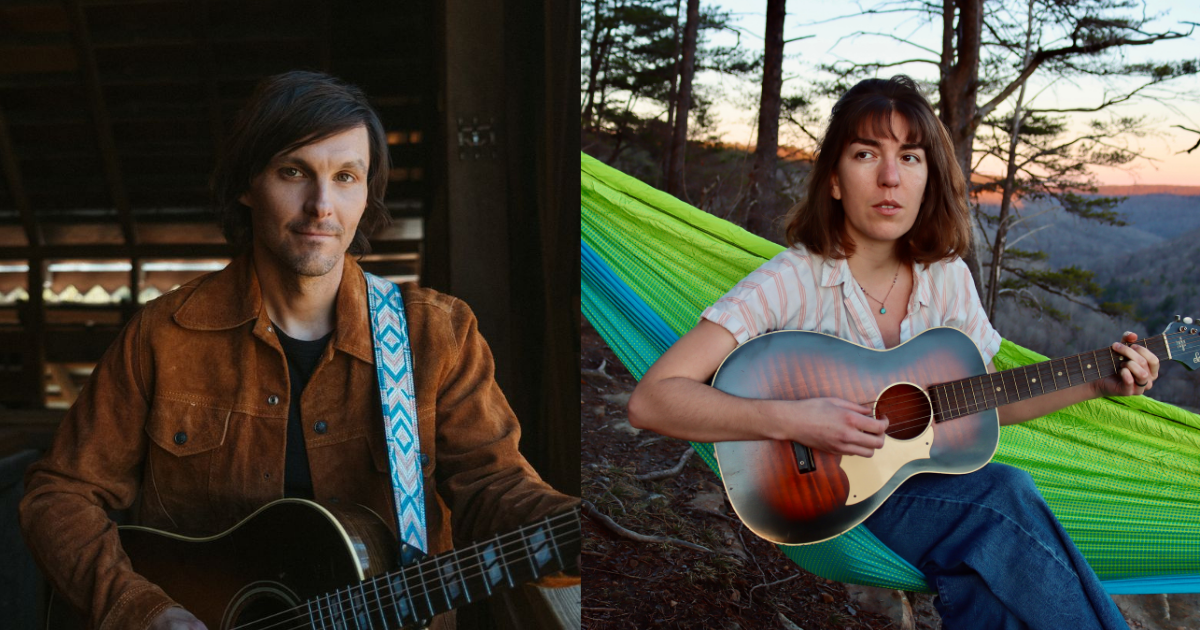
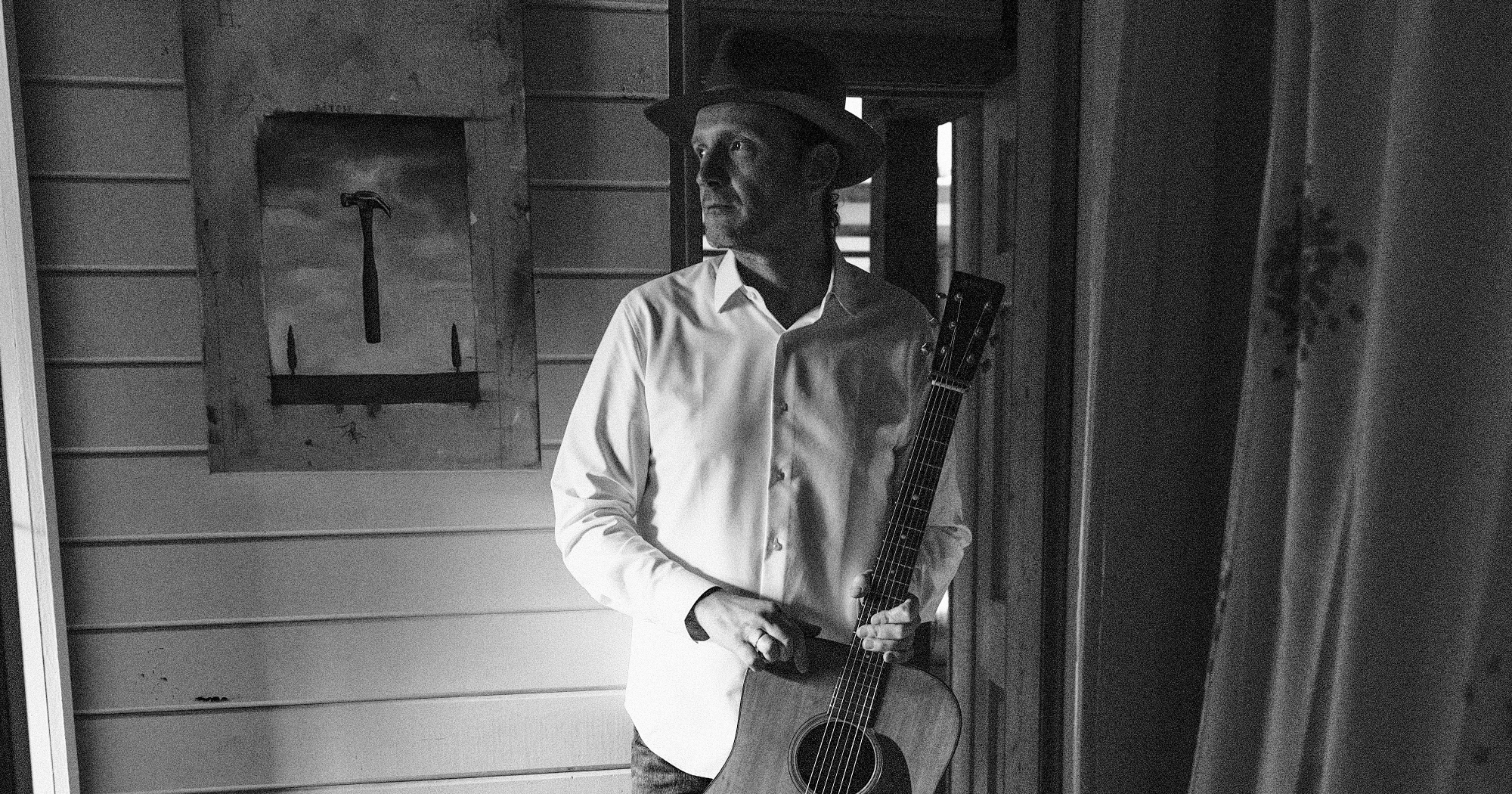
Basic Folk: Julian Taylor

One of the things I really enjoyed about interviewing Toronto-born singer-songwriter Julian Taylor is his relationship with the truth. He has a really peaceful attitude towards learning and sharing new information. For example, at the beginning and the end of our interview, there were biographical facts about him that I had gotten wrong in my research. Gently and matter of fact he fact-checked me and we just moved on. It was such a cool example of, “Oh, you’ve got this a bit wrong and it matters that we get it right,” but nothing about that is personal. In an era of misinformation and alternate facts, it feels really grounding to have an hour-long conversation with someone who really cares about getting it right. That shows through in his songs and in his storytelling.

LISTEN: APPLE • SPOTIFY • AMAZON • MP3

Julian experienced an eclectic musical upbringing thanks to his classical-and-gospel musician father, his mother’s love of Motown and folk, and wide influences from pop to blues. Oral tradition in his family shaped how he tells a story. Especially on his mother’s side with his Mohawk grandfather, a pastor who told incredible stories. He also discusses being pigeonholed by race and genre. Oftentimes, people will think that he performs a certain type of music because he looks a certain way. He mentions that audiences can be shocked when he pulls out a country song while sporting hair that looks more reggae than Johnny Cash. Taylor discusses his breakthrough 2020 album, The Ridge, he talks about his writing process (often starting with lyrics), and the intent behind his latest release Anthology: Volume Two – including “Hunger,” “Don’t Let ’Em” (with Jim James), “Dedication,” and “Weighing Down” – addressing mental freedom, identity politics, and self-forgiveness.


Photo Credit: Lisa MacIntosh

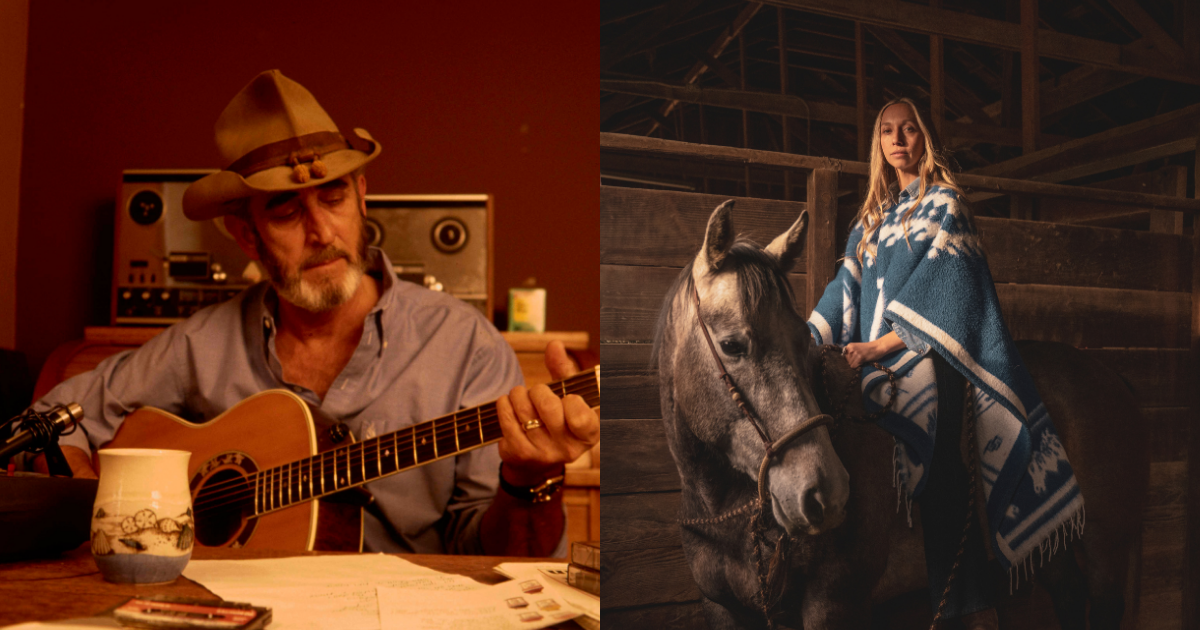
Queen Esther Made a Civil War Album Unlike All the Rest

Civil War albums are all too common in roots music, bluegrass, country, and Americana. Usually, these concept projects romanticize and valorize one of the darkest periods in our nation’s history, while cheerfully and cartoonishly detached from reality and untethered from the nuances of this horrifying and violent period of tumult in the U.S. Revisionism and imperialism are enacted by fiddles and banjos in loose, contrived musical period garb.

Audiences seem to devour this kind of idyllic reimagination of the Civil War and the issues that gave rise to it. Though chattel slavery and its foundational role in our economy were central to the conflict, Civil War concept albums rarely interrogate those facts, instead leaning on listeners’ love for story songs and cursory understanding of “brothers against brothers” narrative paradigms to sell records and tickets. The sketchiness of this practice is overlooked across the board, perhaps due to the sheer ubiquity of such efforts.

On February 6, artist, musician, songwriter, actor, and playwright Queen Esther released a very different sort of Civil War album, Blackbirding. Enabled by a grant from The National Parks Arts Foundation, Queen Esther worked and lived in residence at Gettysburg National Military Park in Gettysburg, Pennsylvania, for a month in 2020. During that time, she communed with the land, the place, and the losses and griefs seeped into the blood-soaked soil, plumbing stories, myths, memory, and feelings to craft her 12-song reckoning with the Civil War. Original songs, songs from that time period, and fascinating covers combine into a work of roots music and theater, dramatization and storytelling interwoven with knowledge-bearing and memory-keeping.

Queen Esther being a Southern Black feminist multi-hyphenate creative is exactly why Blackbirding stands out among its peers in the curséd Civil War concept album space. There is no idealization or revisionism happening in Queen Esther’s songs. Instead, there’s a tangible humanity and an awe-inspiring alchemy of grief, loss, and crimes against humanity into beautiful, redemptive music.

Queen Esther first brought Blackbirding into the world as a piece of performance art with a staged reading in 2024. Even now, in its LP form, these songs lean forward, doing narrative work perceptible whether on stage or off, and coaxing listeners to abandon passive listening and – as all theater asks – inhabit a third, artistic, creative space together in our interaction with these compositions.

The central point of the album is made over and over again across the 12 tracks and throughout our lengthy and in-depth BGS conversation. “Blackbirding,” the 19th-century practice of kidnapping free Black folks and selling them into slavery or back into slavery, never really went away. The Civil War was not won. Reconstruction failed. Slavery itself was not abolished, but rebranded. As such, Blackbirding, whether from the perspective of its content or its genre aesthetics, isn’t a throwback or time capsule album. This is music made in the present, for the present, about the present, and it calls on all of us – again, in the present – to reckon with and consider how we each contribute to or act in defiance of the continuation of racial apartheid and imperialism in the United States.

Do not fear, though, because Queen Esther’s approach to such musicmaking is remarkably joyous, grounded, and compassionate. It’s clear she’s not only ready to engage in the conversations this music evokes, but that is exactly her purpose. And the ultimate culmination of her many talents. In this way, she yet again distinguishes herself from other such concept albums in Americana.

I’ve been a fan of yours for a few years, ever since we discovered your TED Talk. When I first watched it, it was so revelatory. It felt like you supplied vocabulary – and knowledge and expertise – that I wish I would’ve had my whole life to help describe the multi-ethnic origins of roots music and bluegrass and country. If all of this came from “Scotch-Irish tradition,” then why does bluegrass sound like bluegrass? Why does country sound like country? Why doesn’t it sound like Irish music or Scots music or music from the British Isles? It sounds different.

I just wanted to start by saying thank you for that talk – and thank you for all of the insight, feeling, and emotion that you bring to these intellectual topics that people tend to forget are about real humans, real experiences, and real music.

Queen Esther: Absolutely. I really appreciate you saying that. I think more often than not, Black people have these conversations amongst ourselves. We wait until the door is closed and then we talk. I think we should have more conversations with everyone in the room. As long as they’re willing to listen. That’s a tall order. Much more so than you would think.

I’m really happy about this album, especially because people are starting to have conversations around the songs, topics, and everything that I’m bringing up. The fact is that slavery has never ended. It was just modified. The Civil War has never ended. It just evolved. “Blackbirding” has never ended. It just got a lot more inclusive.

Those three things are standing in the way of America being America. There is the America that is on paper – the one that is in the brochure with the Statue of Liberty, the flag behind it, and mom, and apple pie, and all of this stuff. And none of it is true. It’s all a marketing ploy. The actual America that really exists, that’s the one that Black people have had to endure and survive for hundreds of years. That’s the America that turned its back on us.

You know as well as I do that there are so many Civil War albums in bluegrass, folk, string band music, and Americana. So many are built upon the revisionist history that you’re talking about. The manicured, sanitized “picket fence and 2.5 kids” version of the “American Dream.” So, normally when I get a pitch about an album like this, it just goes straight to my email archive. Knowing you and knowing your work – and especially the way that you bring theater and all of your multi-hyphenate titles into crafting and creating – I was so excited to have a chance to talk about approaching the Civil War and approaching Gettysburg as an inspiration for music.

Blackbirding is set in the present. You’re talking about how slavery never went away, how reconstruction failed, and how the Civil War was not won. You’re contextualizing this art in the present sonically, as well. Because, like you’re saying, the Civil War never ended, slavery never ended, blackbirding never ended. Can you talk a little bit about placing all of this discourse in the present and not just in period garb, as it were?

I have to say perspective is a powerful thing. As a Black woman, as a Southerner, as someone that’s two generations removed from slavery, as a creative, I never heard any of this told from a Black perspective. It was always “the lost cause”: “These Yankees came and they just attacked us from out of nowhere. We were living this beautiful life and they just ruined everything.” When nothing could be further from the truth.

They literally terrorized Black people. They tore us apart, they raped our children. They did all manner of evil constantly, under the guise of Christianity. And it was even uglier than anyone would dare to imagine. Which is why they’re struggling to hide Black history, to hide lost history, to make sure that it stays lost. To not have anyone like me turn over the rock to see what’s underneath.

At the same time, these songs from minstrelsy, these songs from not that long ago, they’re important songs. They should be rediscovered. The problem that I’ve always had is that once you have that technical prowess as a musician and once you plumb the depths with that music, no one was bringing that music forward into the present. Not unless they were … putting it in a historical context, and that’s important, but to bring it into the now [is just as important]. …

Having a sense of intellectual curiosity, it’s really important. It doesn’t matter that you’re not the smartest, but that you are curious intellectually and that you are brave enough to explore that curiosity is way more important. That’s really my bedrock. That’s where I’m coming from now.

I’m a generative performing artist. … We are the ones who generate our work and we perform that work. Some people don’t necessarily perform their work. They just write it or they create it and they’re looking for other people to do the work, to perform the work, so that they can get their work out there. Lots of songwriters like that. Lots of lyricists are like that. That’s beautiful. That’s great. …

The songs would come to me, they would just float up in my head. It’s like a patchwork quilt. You take all these different kinds of fabric and all these bits and pieces. But you’re making this mosaic that turns into this overall image that is bigger than whatever bits and pieces you brought to it in the first place.

Talking about that mosaic, it makes me think that of course we would end up at this point, with a project like this, with a conversation like this, and with a body of work that couldn’t have been made if you had tried to step outside of yourself or your own identity to make it.

Exactly. All of that fueled me. I was reaching out in different genres, not just musically, but in the world. I was doing a lot of alternative theater, I was doing cabaret. I was doing performance art, I was doing solo performance. I was doing storytelling. I’d get up on stage and I would do just about anything. That was a world in and of itself.

Now, after a certain point, when you’re a generative performing artist, you’re looking for grants so that you can develop the work in general. It takes seven to nine years to develop a musical. It takes five to seven years to develop a play. When you see someone go, “Oh yeah, my new play, it’s up.” They put in a heavy grind! That’s five years of rewrites and workshops and readings. Some theater taking them on with their theater company and developing that work until it was ready for a test audience, not even necessarily ready [to open]. It’s just a lot of hard work and a lot of heavy lifting. There are certain grants that make that possible, where you just have to go away and you have to write and create.

I found a grant that would let me do that with this album through the National Park Service. The National Parks Arts Foundation has grants to at least a dozen National Parks. You can go to the park, you can live on the park, and they will pay you.

This project is also a work of theater. What jumped out to me first and foremost in that regard is what you’re talking about – the residency, the grant, being on location. Bluegrass, roots music, country music, they all ask us to be in a place together, but not in the same way that theater does. Theater is very much created so the audience are not passive participants. It actively invites listeners and collaborators and bystanders into a space and into a place.

You are doing that with this body of work – and with your residency at Gettysburg. I thought that was one of the most fascinating things about this project. Using theater, with a capital T, to help do that work of transporting all of us to the battlefield, to Gettysburg, to the geographical place that you are evoking with these songs.

I’ve been doing theater ever since I could stand up straight. Think about the cavemen, just standing in front of their brethren and telling a story about what happened to them that day. If my grandmother were here right now and in on this conversation, she’d tell you that I was telling stories ever since I could talk. I would just make things up. She would be sitting there washing dishes and I would try to distract her by making up something wild or crazy or imaginative. I don’t know, I just gotta say something to make her drop that dishcloth or at least laugh or something. [Laughs]

What is fantastic realism? Fantastic realism is when you have ordinary circumstances and then something extraordinary just pops right in. … So the idea of theatricalizing whatever was happening around me as a little kid, [that’s fantastic realism]. If we were sitting here at a table talking, for example, and then an elephant came along and took the hat off your head – that kind of a thing. Just the outrageous Southern tall tale. Bombastic storytelling is always floating just beyond your reach, I think, as a Southerner. It’s just how we do.

And of course, like everything in the South, this is an African tradition. This is an oral tradition handed down from West Africa. West African traditions [are] something else that people have a really hard time saying out loud and acknowledging. It’s not that other cultures didn’t tell stories, but our influence as Africans, as enslaved Africans, of our African ancestors on the South and on America, is seismic. It’s time for people to make the shift however small, however great, and center that and acknowledge it. They can’t even acknowledge it. …

I’m going to tell you a story. I almost always start [performances] with, “You wanna hear a story? I got a story to tell you.” Sometimes I’ll sing it, sometimes I’ll say it with music happening around me or behind me. But this is a story that you’re gonna want to hear. And every single song on [Blackbirding] is wrapped up in a story. There’s a story that’s around it that’s historical. There’s a story that resonates into the now, and there’s a story that I bring to you as an audience when I’m performing the song itself.

I’m thinking about how there’s so much music made in these genre spaces that is also putting on a costume, or telling a story, or doing theater, but that often isn’t grounded in reality at all. It’s all construction. So where some people might interface with your art and think, “Oh, this is a musical, this is theater, this is going to be a play, this is going to be ‘make believe.’” It’s actually so much further from that.

Oh no, it’s reality!

Exactly. And to me, that’s the whole story here. The thing I wanted to talk about most about Blackbirding is the point that you made right at the top – and that you’ve made throughout this conversation. You’re not talking about something that was happening a while ago and isn’t happening today.

Look, the 13th Amendment said slavery’s over “except.” Except? That’s a gigantic loophole. Except for what? Except for incarceration. That means if you’re incarcerated, you’re a slave. What if someone said to you, “You’re fired except on Tuesdays”? Then I’m not fired. You have to come in on Tuesday for four hours. Other than that you’re fired. You don’t work here. How much sense does that make? No one would hear an employer say that and go, “Am I fired or not?” Am I free or not?

You are free. Except they had to make that exception. They had to. Why? Because when the Civil War ended, this country was in absolute shambles. And because Black people were the actual currency. There were 4 million of us and we were basically worth trillions in today’s money.

We went off and we started our own little hamlets and towns, and we started working for ourselves. Suddenly there was this massive tilt. Black people were the money and had all of these resources, energy, and power. And just by sheer force of will, we started building for ourselves, which is why they started tearing us down. Showing up to each and every single community and just murdering people, burning people [alive] in their homes. Coming up with all of these lies built on pseudoscience to justify all of the things that they did. …

But it never ended. Pulling Black people over on the road, out in the middle of nowhere for no reason whatsoever. Beating them up. Maiming them, murdering them in some instances. This has always been the way. This has always been the case.

I’m imagining you on site at Gettysburg. How do you take that sort of emotional devastation or the intrinsic triggering and challenging nature of these topics and turn them into something beautiful? Do you see them as beautiful to begin with? I’m trying to imagine how you take care of yourself emotionally and psychically as you’re doing this important work. Because I think there must be an emotional toll to it, but you clearly are built for it as well. This feels like your wheelhouse – and the way you talk about it and the comfortability you have in having these conversations.

Simple. I am not an atheist. I am not an agnostic. I believe in God. I believe in Jesus. I’m a Christian, and I know that God is with me. I feel God’s presence upon me. I feel God hovering over me, protecting me divinely. I feel that I’m walking in divine purpose and in divine order. I know that I am divinely protected, that the blood of Jesus covers me everywhere I go. …

There’s this point at which inspiration takes over. There’s a point at which you are no longer there, and inspiration is there instead. An actor prepares– the idea is that you have technique, right? Your technique is there whether you’re playing an instrument or singing or washing the dishes or driving the car.

Let’s say driving the car. I don’t know how to drive. So, every time I get behind the wheel and the car is moving, even if it’s moving slightly, I’m screaming like a banshee. I’m so excited. But when I get in a car [with my partner], he just does what he’s been doing. He doesn’t think about it. He adjusts the window here and he readjusts this here, he puts the key in, and he does all of these dozen or more motions. He just does it automatically.

That’s the idea. When you make art, when you’re on stage, when you’re performing, when you’re creating, there has to be something that takes over. Inspiration takes over. Once you’ve got the technique, set the technique, learning how to drive the car, what do you do? Something else takes over. And I’m telling you, that’s something else for me, personally, is not my ego. For me, that’s the Holy Spirit.

I remember when I got to the house [at Gettysburg], everything was explained to me, and they gave me the keys. I’m sitting there in the parlor, I’m arranging everything, and it’s still light outside. I thought, “You know what? Why not?” I took my camera and I walked to Devil’s Den. The first song that I wrote was “The Devil May Care (But Jesus Knows).” I came back and I wrote that down like I was writing someone a letter. It just poured right out of me.

I can’t even begin to explain the process. I wrote it down and I wrote down the chords. I shaped it around everything that I did and I thought, “This is a complete song.” What is that song about? It’s about Devil’s Den, the Valley of Death, which is what they called that area in between Devil’s Den and Little Round Top. These soldiers would climb into Devil’s Den, which is these hulking, gigantic rocks. There was this big snake that lived there. It was huge. They called it the devil. It was so huge, it was as big around in the middle as a grown man’s waist. There were children that liked to play around that rock, so the townspeople got up the courage and killed it.

They would climb inside of that perfect coverage for a sniper and they would shoot Yankee soldiers that they could [see] from Little Round Top and they would fall into the Valley of Death. That was a run, Plum Creek – a run is a creek – and it was so filled with blood they just called it a bloody run. From where the creek started, all the way past the house that I lived in, all the way through that valley of death, was just nothing but human blood.

To be a soldier caught in [Devil’s Den] meant that you could not be saved. Someone would have to come and get you if you were wounded. More often than not, those soldiers died, not because they were shot and they fell down and they died. They died because no one came to get them. They died because they were wounded and the wounds got infected and they just bled out or [succumbed].

That Valley of Death comes for you, not just at the end of your life. It comes for you at any given moment, at any crisis that you have. Over and over and over again.

Can you talk a little bit about how you approached genre on these songs? Because I really love that you didn’t make a “time capsule” record that’s trying to sound like it came from the 1800s. At the same time, you’re collapsing time musically and creatively so that you can draw on those textures and on those sort of old-timey elements to do that storytelling for you, sonically. How did the production process actually look or feel as you were putting this collection together?

I think that when you have a kid or when you give birth to a kid, you just let that kid be the kid. You’re not sitting there going, “I want this kid to be this,” or “I want this kid to be that.”

That’s a really good metaphor. Just let them be themselves.

And what you’re doing, really, is sitting back and waiting to see what that kid turns into. You have no idea how they got so great at math. This kid is a mathematician. You can’t balance your checkbook. This kid is just explosively running in this whole other direction that you can’t even fathom. You have no idea what your children will do, what they will become. And none of it really has anything to do with you.

It’s the same thing. These songs came to me and when they came to me, sometimes fully formed, I literally wrote down what I heard in my head. And that really is it. Each song is its own world. I just let the song be what it is, whatever it is. However it came to me, I just let it be what it is.

I consider myself to be a transcriber of the song. I’m sitting there. The song is in my head and I’m just writing it down as quickly as possible. I’m someone with a butterfly net chasing the butterfly through the jungle. I’m running after the butterfly and I’m hoping that it doesn’t get away. It’s fluttering. It’s right above my head. Sometimes I capture it, sometimes I don’t. My job as a producer is to make sure that song sounds exactly the way it did in my head.

Even the cover songs, the Olivia Newton John song, “Magic.” When Olivia Newton John is singing that, it’s one way. It’s interesting. But I’m a Black woman and I’m singing that about my ancestors, and my family, and all of us in community. It turns into a completely different song.

You have to believe that we’re magic. Nothing can stand in our way. You have to believe that because, ultimately really, Black people never thought we were supposed to survive any of this.
Toni Morrison says that in an infamous speech that she gave, we were not just supposed to survive any of it. …

When the song comes, it comes as it comes. I knew that I had the goods as a producer, because the song sounded in the room the way they did in my head. That’s the best feeling. But moreover, more than anything else, you have to develop your own aesthetic. You have to know what’s good, what’s not good, and why. You have to know your own mind. You have to know your own aesthetic. And you have to have the courage and the willpower to stand on it.


Photo Credit: Whitney Browne

Vaiano’s Paisanos Valsa Continental Playlist

Honestly, I think the reason I am a nerd about string band music is that it offers a beautiful way of thinking about how music moves – not just through instruments traveling, but also through melodies, rhythms, and ideas making their way through people and place and time.

Maybe that means across the globe, but it could mean between a dining room and a basement, whatever the dialogue. The tracks in this playlist are a winding path through a tiny subsection of this sonic world. – Rachel Meirs, fiddle, Vaiano’s Paisanos

“Rosa Negra Vals Venezolano” – Orquesta De Lionel Belasco

“Rosa Negra Vals Venezolano” comes from Lionel Belasco, a Trinidadian-Venezuelan pianist and composer whose recording career spanned five decades. This waltz is a really joyous piece recorded by Belasco’s orchestra, who recorded an incredible number of sides for Columbia Records in New York City in the late ’20s and early ’30s. An iteration of a calypso band with piano, woodwinds, strings, and syncopated rhythms that all give a hint to which version of the journey this waltz form took to arrive.

“Para Mi y Para Mi Novia (Vals Foxtrot)” – El Ciego Melquiades

“Para Mi y Para Mi Novia (Vals Foxtrot)” comes from El Ciego Melquiades, “The Blind Fiddler,” who recorded in San Antonio. It sounds like a Tex-Mex fiddle tune, since that’s the way he plays it, but the most compelling thing about it is how unintuitive it is. I could never figure out why its form and melody were so strange, but a friend recently tipped me off that it’s his take on “For Me and My Gal,” a 1917 pop song (later popularized by Judy Garland), which also made the song title make more sense.

“Rolling Mill Blues” – Peg Leg Howell

Discovering the origins of “For Me and My Gal” brought to mind this Peg Leg Howell recording from 1927. I loved his recordings with Eddie Anthony on fiddle, but when I heard “Rolling Mill Blues” I remember thinking it was beautiful and strange. Instead of Eddie Anthony’s driving country-blues style fiddle, the violin’s counter-melody takes on an almost ethereal tone. I don’t know if it is a coincidence or not how much that melody calls to mind the pop song, “Tonight You Belong to Me,” which was first recorded in 1926.

“Smart (Tango Argentino)” – Kostas Bezos, Loudiana, Aspra Poulia

On the theme of the crazy routes music takes, I think saying that this next one, “Smart (Tango Argentino)” comes from Kostas Bezos, who led a Hawaiian band in 1930s Athens, is sufficient!

“Cariño” – Cuarteto de Cuerdo de F. Facio

Orquestas de cuerdas were small string bands that played for dances and social functions in Northern Mexico. The entire Arhoolie compilation Orquestas de Cuerdas: The String Bands: The End of a Tradition 1926-1938 is worth listening to, but “Cariño” from Cuarteto de Cuerdo de F. Facio has always stood out to me for what I think is a cello or bowed bass in addition to violins and bajo sexto. This adds a significant low-end to an already dramatic song – this one goes through a lot of emotions.

“Valsa Continental” – Abrew’s Portuguese String Trio

This next one comes from another compilation series I recommend for anyone looking to deep dive into this music across even more territory. Check out Pat Conte’s anthology series, The Secret Museum of Mankind (now on our label, Jalopy Records, since 2021.) Another waltz, which I named this playlist for, “Valsa Continental” comes from Abrew’s Portuguese String Trio. Composer, violinist, and bandleader Augusto Abreu led this Cape Verdean trio from New England who recorded four discs for Columbia Records in 1931.

“Abrew’s Portuguese Jazz” – Vaiano’s Paisanos

It’s hard to say, but since Abrew’s Portuguese String Trio is one of my favorite bands, and because the recordings are still hard to find digitized, this next one is our band Vaiano’s Paisanos take on “Abrew’s Portuguese Jazz.” Our version keeps the violin part, but instead of guitar and cavaquinho, we have mandolin adding harmonies and rhythm, and tenor guitar playing the melodic runs that make up the tune’s backbone and bass line.

“Quisiera Olvidarte” – Pastorita Huaracina

This style of melodic accompaniment reminds me of the relationship between a country-blues fiddle line and a song’s vocal melody (for instance “Rolling Mill Blues,” on this playlist) is one of my favorite things to hear. Maybe that’s why I have listened to “Quisiera Olvidarte” by Pastorita Huaracina so many times in a row. This track comes from another great Arhoolie compilation, Huayno Music of Peru, Vol. 1.

“Il Mio Cuore E Tuo” – Giovanni Gioviale

I knew I wanted to include a track to represent some of the Italian-American music of the era. For many of the tracks on this playlist, I have been trying to decide between polkas, mazurkas, waltzes, foxtrots, and tangos, a reminder many of these groups were dance bands. The mazurka form comes from Poland, a dance in 3/4 or 6/8. This mazurka comes from Giovanni Gioviale, a mandolin virtuoso from Sicily who recorded in New York between 1926 and 1929. “Il Mio Cuore E Tuo” features Gioviale on the tenor banjo– another marker of combined musical histories.

“Black Mountain Mazurka” – Gu-Achi Fiddlers

The next tracks have us following mazurkas to the Southwest. “Black Mountain Mazurka” is Gu-Achi fiddle from the Tohono O’odham people of Southern Arizona. This Southwest fiddle sound is made even more distinct with the addition of drums and very sweet harmonies.

“Bailando en Phoenix” – Lone Piñon

Staying nearby but jumping ahead into this century, Lone Piñon (also on our label, Jalopy Records), plays New Mexican string band or “orquesta típica” music. “Bailando en Phoenix” shows both the amazing energy and musicianship of the whole band. Their whole album is a beautiful tribute to their attention to learning, playing, and performing this musical style.

“Tarantella” – Magic Tuber Stringband

One more modern band, to remind ourselves that we are all participating in the process of reimagining music across time and space. And we will be for as long as we engage with these old traditions and continue to make music. The cross-tuned fiddle on North Carolina-based Magic Tuber Stringband’s “Tarantella” so effectively calls to mind the droning sound of a zampogna (an ancient bagpipe played in southern and central Italy), and the track fades to a fitting end for this playlist.


Photo Credit: Brian Geltner

You Gotta Hear This: New Music From John R. Miller, Eilen Jewell, and More

Welcome to another edition of our weekly roundup of new roots music! You Gotta Hear This…

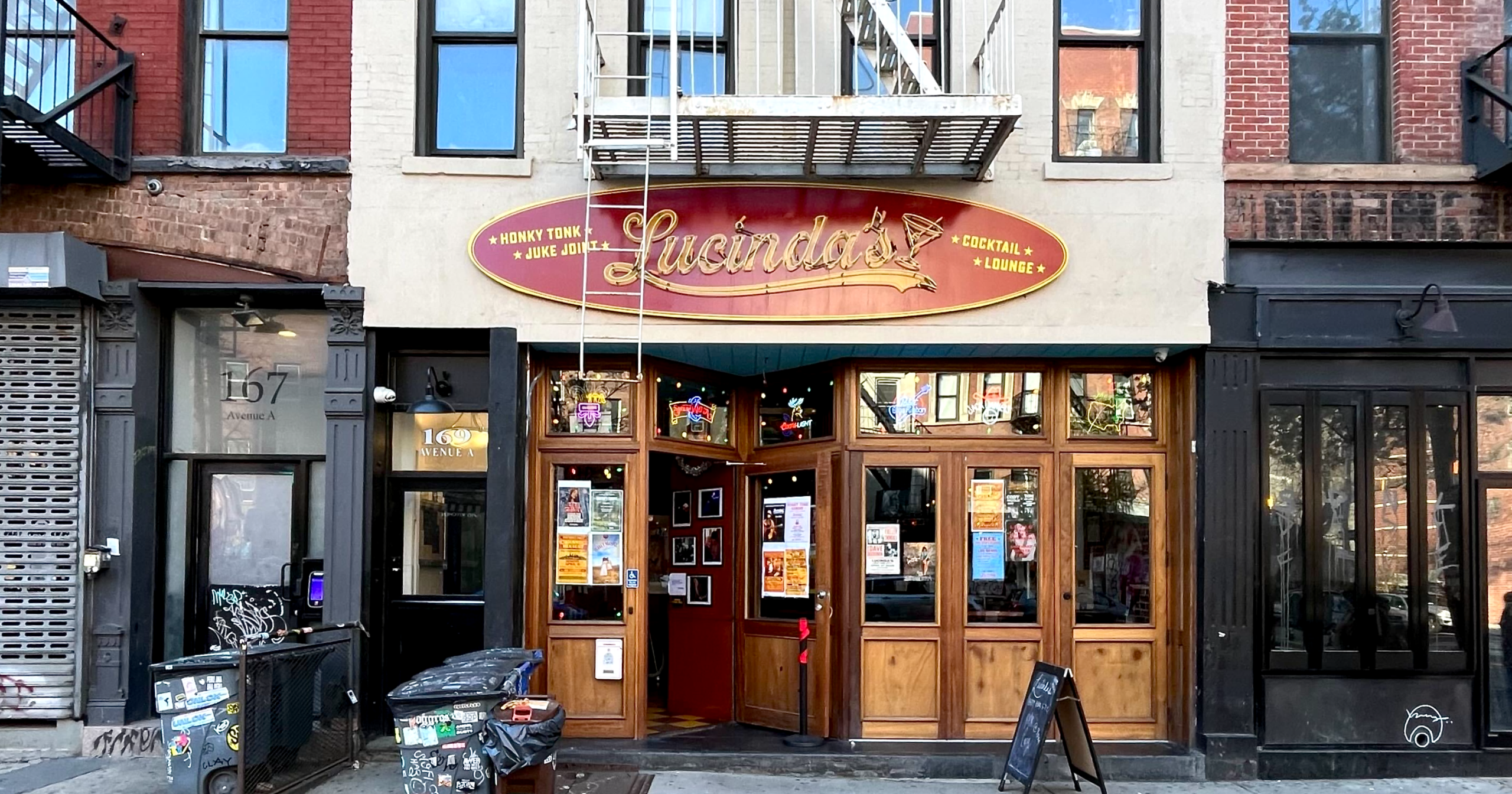
First up, country singer-songwriter Erin Gibney gives us a preview of a brand new version of “Risk It,” one of the first true love songs she had ever written. In this iteration, it’s stripped back to a more simple and acoustic approach, but still with a pop country sheen and plenty of big, energetic moments. Also in country, Carly King has announced her upcoming album, Loving You Is Easy, with a lovely and tender lead single, “Three Martinis.” King wrote the song about a fated trip to New York City where she fell in love with the man who would become her fiancé. It’s full of memories, nostalgia, and lush with imagery of falling head over heels, all wrapped in a cozy and gauzy folk-country package.

In the bluegrass world, North Carolina’s Unspoken Tradition highlight their working-class bluegrass bent with a new single, “Company Man,” which celebrates and interrogates the reality of blue-collar, hard working folks in this day and age. As they describe it, “The song tells the story of a man who seems to live to work, not work to live. There’s pride in that, but also a sense of stoic sadness.” Also speaking to the social and political climate of today, folk artist and singer-songwriter Eilen Jewell has released her own version of Woody Guthrie’s important and sadly still applicable song, “Deportee.” Jewell’s rendition is twangy, honky-tonking, and plaintive, drawing inspiration from the first time she ever heard the song as a teenager. She tells us that story – and about how the number has “haunted” her since – below.

Roots music fans will also enjoy watching singer-songwriter Adam Klein perform “Burnin’ Love,” an original song, in a brand new music video. Previously released in 2015, Klein returned to the track with collaborator Adam Poulin for a simple duo, acoustic reimagination of the song, which Klein wrote while on a Peace Corps mission in Mali in West Africa. And be sure you don’t miss a brand new single – and live performance video, to boot! – from West Virginian Americana troubadour John R. Miller. “If You Could Only See Me Now” is Miller’s take on a song written by a dear friend and musical compatriot, William Matheny. It’s another two-stepping, honky-tonk ready track perfect for sliding across the shiny floorboards or leaving a tear in your beer. Miller inhabits the lyric intuitively, with languid and laid back phrasing while the lyric, fiddle, and pedal steels pull him along.

There’s plenty to listen to and love. You Gotta Hear This!

Erin Gibney, “Risk It (Stripped)”

Artist: Erin Gibney
Hometown: Southington, Connecticut and Nashville, Tennessee
Song: “Risk It (Stripped)”
Release Date: April 3, 2026
Label: Rock Ridge Music

In Their Words: “I wrote this song after meeting my now-fiancé and it is one of the first true love songs I have ever written. ‘Risk It’ really describes the feeling of falling in love knowing that it could either end in marriage or the greatest heartbreak of your life. During the beginning of the relationship, I felt all the fears and excitement that come in the early stages of love. I brought this experience to Kipp Williams when we began working together and this became the first song we created. It was so much fun to not only try something new with my sound, but explore new themes in my music. This song is so close to my heart and I can’t wait for the world to hear this reimagined version of it!” – Erin Gibney

Track Credits:
Kipp Williams – Producer, songwriter, all instruments
Erin Gibney – Vocals, songwriter


Eilen Jewell, “Deportee”

Artist: Eilen Jewell
Hometown: Boise, Idaho
Song: “Deportee”
Release Date: March 24, 2026
Label: Signature Sounds

In Their Words: “I first heard ‘Deportee’ when I was a teenager. I can’t recall which version it was, but I remember I was babysitting a little girl who was about six years old. She put it in the CD player, cranked it up, and started singing along loudly in a sweet and mournful tone. I could tell it really resonated with her so I listened closely and realized it resonated with me too – the grief in the sudden separation of friends, the ripping away of a shared humanity – it’s haunted me ever since. I’ve heard just about every version of it there is, searching for one as anguished as the one in my memory of that night with the little girl howling along.

“My search never yielded one that quite fit so I altered the song a bit by putting it in a minor key and choosing only the verses that felt closest to the bone. It’s disheartening to think that Woody Guthrie wrote ‘Deportee’ nearly 80 years ago and it still rings true. What can I do but join him in fighting fascism the only way I know how? With my conscience, with my guitar, with my voice.” – Eilen Jewell

Track Credits:
Eilen Jewell – Acoustic guitar, vocals
Jason Beek – Drums, vocals
Jerry Miller – Electric guitar
Matt Murphy – Upright bass


Carly King, “Three Martinis”

Artist: Carly King
Hometown: New Jersey and Nashville, Tennessee
Song: “Three Martinis”
Album: Loving You Is Easy
Release Date: March 25, 2026 (single); May 15, 2026 (album)
Label: First City Artists

In Their Words: “I wrote this song about the first time I went to New York with my fiancé, who at the time was my boyfriend of one month and my brother’s best friend of 15 years. We stayed in a tiny hotel room and spent the whole day wandering Manhattan, falling in love, and ducking into dive-y music shops. I found a guitar I fell in love with and bought it and we carried it around the city all day – well, mostly he did. I remember feeling how simple and lucky everything was. Later, over martinis at the Carlyle Hotel (my namesake), guitar beside us, we talked deeply about our past, our families, and our future, and I knew I wanted to build a life with him around music. This song is the first date – it’s the taxi cab that takes you into the album.” – Carly King


Adam Klein, “Burnin’ Love”

Artist: Adam Klein
Hometown: Tucker, Georgia
Song: “Burnin’ Love”
Album: Live at Leesta Vall Sound Recordings
Release Date: April 3, 2026
Label: Cowboy Angel Music

In Their Words: “This album is a mix of previously released and unreleased songs. ‘Burnin’ Love’ was originally released on my 2015 album, Archer’s Arrow, with a full band presentation. Here, like all the songs on this new record, it’s stripped back to just acoustic guitar, vocals, and violin. But it still feels like it packs a punch. It randomly occurred to me to play it on tour in this duo format a couple nights before the session at Leesta Vall, so it’s fresh and a bit off the cuff. If the Archer’s Arrow version gave a nod to Neil Young & Crazy Horse in the sound of the electric guitar, somehow Adam Poulin’s fiddle playing here achieves something similar in its abandon.

“The song itself was written on my first full day in the village I lived in for two years during my Peace Corps service in rural Mali in West Africa. I was listening to the metal roof of my two-room mud house crackle from the blistering sunlight and questioning all my decisions – did I really want to spend two years here on my own in this curious land? It all loomed before me like a joke. I remember thinking of the feeling of solitude and emptiness that accompanies the end of love, and channeled it into this two-chord song.” – Adam Klein

Track Credits:
Adam Klein – Acoustic guitar, vocals
Adam Poulin – Violin, vocals

Video Credits: Filmed and edited by Jeff Shipman.


John R. Miller, “If You Could Only See Me Now”

Artist: John R. Miller
Hometown: West Virginia
Song: “If You Could Only See Me Now”
Release Date: March 27, 2026
Label: Rounder Records

In Their Words: “I’ve been fortunate to collaborate with William Matheny for a majority of my musical life at this point. Probably 15 years or so now, definitely in the widest variety of musical situations. The first time I saw him play at 123 Pleasant Street in Morgantown, West Virginia, in 2004 I passed out on a bench and somehow remembered his set that night. I’d get to meet him a few years later and we’ve been playing shows together ever since.

“William’s been playing in bands since he was in the single digits, and his body of work as a songwriter is huge and detailed, with recurring motifs and great riffs. His way of zooming in on the minutiae of viscerally familiar settings in his writing is something I have always admired, and his songs are imbued with literary and philosophical references that reward repeated listening.

“This is my take on a country song of his, one that we recorded some years back for his album That Grand, Old Feeling. I’ve always loved this song, feels like some unearthed forgotten classic country gem every time I hear it. It’s an evocative, tongue-in-cheek ode to the gutter that reads like a drunk postcard to a lost loved one back home.” – John R. Miller

“I’ve played a lot of music with John R. Miller over the years. Sometimes it was my band, sometimes it was his, and sometimes it was something else entirely. When the subject comes up, I usually tell people that we’ve been giving each other the same hundred dollars back and forth for 15 years. I say that completely in jest, of course. We’ve only recently started making that kind of money. When John played [the song] for me, I was incredibly flattered. I mean, it’s certainly not as if he’s hurting for material. On a completely selfish level, I got a huge kick out of hearing such a great singer interpret it and the Tulsa players putting their own spin on it.

“I love songs that bury the lede on the listener a little bit. Stuff like Tom Waits’ ‘Christmas Card From a Hooker in Minneapolis,’ Tom T. Hall’s ‘The Homecoming’ or ‘The Green, Green Grass of Home’ by Tom Jones. I didn’t want to let guys named Tom have all the fun, so I wrote this.” – William Matheny


Unspoken Tradition, “Company Man”

Artist: Unspoken Tradition
Hometown: Western North Carolina
Song: “Company Man”
Release Date: March 27, 2026
Label: Mountain Home Music Company

In Their Words: “When Unspoken Tradition first started trying to find our niche, we branded ourselves as ‘working class bluegrass.’ Though we’ve grown and evolved, that is still very much who we are. ‘Company Man’ perfectly exemplifies this slogan. Our nation was built by folks just like the man portrayed in this song. I’ve known and was even raised by a few of them. I’d like to think that the men and women this song was written about would appreciate our music.

“The song tells the story of a man who seems to live to work, not work to live. There’s pride in that, but also a sense of stoic sadness. The lines, ‘Only thing waiting is a watch and chain’ and, ‘Old men are really what the company makes’ hit so hard, and could have only been written by Tim Stafford and Mark Bumgarner. These guys are two incredibly talented songwriters and we’re honored they shared this song with us. Evoking images of the hard-working people we all know and love, this song is a bittersweet reminder to work hard but not make work your master.” – Audie McGinnis

Track Credits:
Audie McGinnis – Acoustic guitar, lead vocal
Sav Sankaran – Upright bass, harmony vocal
Tim Gardner – Fiddle, harmony vocal
Ty Gilpin – Mandolin
Zane McGinnis – Banjo


Photo Credit: John R. Miller by Larry Nieuhes; Eilen Jewell by Damu Malik.

Joshua Burnside’s It’s Not Going To Be Okay is an Absolutely Shattering Album

Irish folksinger Joshua Burnside has always shown an affinity for expressing grief, once calling it the reason he began writing songs as a precocious 13-year-old. He’s 36 now, and that sense of grief has never felt as overt as it does on his latest music. Burnside’s It’s Not Going To Be Okay is absolutely shattering, an album that more than lives up to its title. Written and recorded in the wake of the death of Burnside’s best friend Dean Jendoubi, who died of a drug overdose in August of 2024, the album is a bittersweet requiem.

Burnside’s previous albums combined Irish folk with electronic flourishes, worldly rhythms, and elements of sonic collage. His multi-layered experimentation reached a peak with 2025’s Teeth of Time, a record that felt like a major statement and milestone. Barely a year later, It’s Not Going To Be Okay could almost be his Nebraska move – bare-bones stark with minimal embellishment, focused on unadorned voice and guitar in the service of deep, deep mourning.

It’s a state of mind where everything brings back memories of the departed, like the opening of “The Last Armchair”:

Oh, the last armchair you ever sat on
Before you overdosed
Is the one I sit in every morning
To eat my egg and toast…

Ahead of the album’s release on March 20, 2026, we caught up with Burnside for a Zoom interview about his musical past, present and future plans.

It’s Not Going To Be Okay is quite a title. How did that come to be the name of this body of work?

Joshua Burnside: These songs are about the inevitability of pain, suffering, and death, which is what I was dealing with while accepting the loss of my friend. But it was at least a little bit tongue-in-cheek, too, such a ridiculously depressing statement to make. I thought it would be funny in a way. In Northern Ireland, we have a very strong sense of gallows humor. So I was drawing on that a wee bit. I don’t think it’s supposed to be taken literally.

How did you and Dean Jendoubi first meet?

Our paths crossed briefly in school and then we met playing music. Formed a band with a few other people. He and I were maybe 14 and got on immediately. Then there was a trio when we were 16. He played drums, I played guitar, and another friend played bass. We didn’t really gig, just played for the fun of it at his parents’ house. He was a great musician and songwriter himself. His music is amazing and beautiful and weird and dark, like him in many ways. He released a few EPs. The last one is called Skin Hunger and I sing on one of those tracks. Recorded in his mum’s greenhouse, our summer shed 10 years ago.

Since it’s been not much more than a year since Teeth of Time was released, when did you make It’s Not Going To Be Okay?

My sense of time has been so terrible the last few years. It was maybe a few months after Dean passed away in 2024, which is strange to say now. So, end of 2024 is when I started writing and recording and I finished it up autumn of 2025. I was recording it as I was writing it, and the last song I wrote was “It’s Not Going To Be Okay.” It was in the last month of making the record that that one happened.

Is it unusual for you to be working ahead like that, on the next record before the last one was even released?

It’s not typical. It was five years between Teeth of Time and Into the Depths of Hell. That one was a similar dark-humor title, but then COVID hit not long after I’d written those songs. That was some strangely perfect timing. So no, it’s not really normal for me to write and record this quickly. But I just felt an urgency, because one of the main ways I’ve always processed painful feelings is writing and singing about them.

The songs came quickly and easily. I had not planned to focus on just one topic, but most of what came out happened to be that. It felt natural to have them all together like this, almost like a grief journal. That’s the story. A lot of people thought some songs on Teeth of Time had been about Dean’s passing, but they were all written before that. Some of those songs seem resonant with this new record. That seems to happen to me a lot, I’ll write a song and then it seems like life imitates it. If I were not of sound mind, I’d start to worry about ever writing anything tragic or sad.

Was it your intention from the start for this one to be so sonically spare?

Absolutely. I’d been listening to Bill Callahan and Smog, A River Ain’t Too Much To Love. I love how sparse his records are – guitar and cymbal and voice – and they’re still so alive and rich. So sparse, you hang on every word. His voice is so clear. I wanted to do something like that.

Teeth of Time had a lot going on, so I wanted to go with more of a less-is-more principle. See if I could make the songs simpler, almost minimalist, and keep attention with straightforward and very to-the-point lyrics. So I challenged myself. Before that, I was almost hiding behind production and layered instruments. I’d maybe felt a little insecure. But after all these years, I’m feeling more confident.

What has the response been to this record and these songs?

It’s been interesting. I’ve already been playing a lot of these songs live, and so many people come up afterward to say how they lost a friend, dad, uncle, and how much it means to them to connect with my music in a time of grief. That’s powerful, makes me think it’s worthwhile to make music and do this at all. It’s special. I feel a great responsibility not to take this lightly.

I did send the album to Dean’s family, my family, his closest friends, to make sure it’s okay and wouldn’t upset anyone to put this out in the world. My brother and dad knew Dean as well and they told me they couldn’t finish it at first. Just too painful. It took them a while to come around to it. It’s so raw for people who knew him. A bit of an emotional whirlwind in general.

Touring with a record this intimate and personal seems like it would be challenging. Does it feel like you’re delving into difficult feelings every night?

Actors have an ongoing debate about performance technique, whether you should act an emotion or actually feel it. I think it’s similar to performing as a musician. I don’t know what’s more correct or authentic, but the main thing seems to be to stay present in the moment. Playing these songs does make me revisit those feelings a little bit. But I have to be careful with that because I only have so much emotional bandwidth. In performance, I try to remain as present as possible with the feeling of the song, the melody, sound of the words, and craft of the song, as opposed to tapping directly into the original emotion. Sometimes I’ll do that and it’s powerful. But I can’t do that the whole gig or every night, because then touring would be too much.

How many of these It’s Not Going To Be Okay songs will be in your every-show setlist this go-round?

I’ve been toying with the idea of playing all of it start to finish. I was thinking of it that way while writing these songs, how I wanted to play every track and have it hold up even if it was just me. I need to get into the rehearsal room with my bandmates to see if we can crack it. Would be nice to make some different arrangements with electric guitar and cello. We’re a three-piece most of the time.

What were you listening to while growing up?

Lots of heavier stuff, hardcore and post-hardcore, new metal, funk, grunge. Nirvana, Offspring, Fall of Troy. An endless list of screaming, shouting, loud bands, which I still love. But alongside that, I also got a heavy dose of what mom and dad were listening to – Simon & Garfunkel, Fleetwood Mac, Alanis Morissette. Jagged Little Pill was a favorite of my mom’s and I still love that one. Great pop record.

You’ve often cited the experimental duo The Books as a major influence and the source of some of your experimental tendencies.

I saw The Books playing when I was a student in Manchester 15 years ago and they just knocked my socks off. It did not sound like any music I’d ever heard before. All the sampling and found-sound collaging was just eye-opening, a completely different way of making music. I loved the aesthetic, the sound, the folksiness of banjo and cello with all that. It was just inspired.

I would not think about music the way I do without The Books. I still listen to them all the time, and you can hear their influence on loads of my tracks. “Under the Concrete” has city noises I recorded in a park in Belfast, sirens in the distance. I wanted that song to have the feeling of being set in that park in that city. It felt like that’s where it had to take place emotionally.

After two such vastly different records back to back, what’s next for you?

I don’t know yet. I need a bit of time for gestation and recalibrating why I make music and to try to come at it from a different angle. I’m very excited at the prospect of making something new that goes away from what I’ve done before, something a bit more experimental. That’s where my head is at now. Maybe someplace percussive. At the moment all I’ve got are loose imaginary mental soundscapes, but that’s enough to keep me happy for now.


Photo Credit: Tom Johnson

10 Fiddlers We Know You’ll Love

When it comes to fiddlers, we all know that more is more is more.

Lonesome fiddle? Great. Twin fiddle? Even better. Triple fiddle? (Who called Bob Wills?)

But with all this great fiddling, it’s hard to keep up with who is who. We are here to help. It turns out that for all the fiddlers that you may know and love, there are probably 10 more that you haven’t heard of – even if you’ve heard their playing!

Here are some fiddlers making big waves and sawin’ big figure eights who may be flying under your fiddle radar.

Ellie Hakanson

Originally from Portland, Oregon, Ellie Hakanson grew up playing music in her family band. Bluegrass fans will have heard her blazing solos as part of Jeff Scroggins & Colorado, with whom she toured and recorded for five years. She now lives in Nashville, where she plays with Missy Raines & Allegheny and Kristy Cox among many other artists.

Ellie’s fiddling is defined by its traditional bluegrass sound and deep study of the genre. The International Bluegrass Music Association agrees, as Ellie has been nominated for several IBMA Momentum Awards – in 2017 for Instrumentalist of the Year, in 2018 for Vocalist of the Year, and in 2019 for both Vocalist and Instrumentalist of the Year.

Here, she plays “Sally Goodin” with the incredible Michael Cleveland during a workshop at Cowichan Valley Bluegrass Festival in Lake Cowichan, British Columbia, in 2024.

Evan Snoey

Multi-instrumentalist Evan Snoey approaches music with a wide lens. Equally comfortable playing old-time fiddle and jazz saxophone, Snoey’s breadth of musical knowledge finds him playing with everyone from young shredders (like the Litch Brothers) to country artists (like Dylan Gossett). Originally from Seattle, Snoey’s stylistic interests include old-time, bluegrass, Scandinavian, Scottish, swing, jazz, and contemporary improvisational music.

In this video, he performs a medley of tunes – “Busta,” “Sjøvald,” and “Primrose Lass” – with Alex Wilder on piano for the Nashville Contra Dance.

Omar Ruiz-Lopez

Chapel Hill, North Carolina-based fiddler and multi-instrumentalist Omar Ruiz-Lopez may be best known for his work with folk duo Violet Bell. Ruiz-Lopez is currently making a name for himself as a sideman (playing cello, guitar, and fiddle) with artists such as the War and Treaty, Franklin Jonas, Lizzie No, and Langhorne Slim. And he has just announced a crowdfunding campaign for his first record of original music. Born in Panama and raised in Puerto Rico and Florida, Ruiz-Lopez is a bilingual singer-songwriter who brings a cross-cultural perspective to his music.

In the above video clip, Ruiz-Lopez performs “Panavueiro da Rabeca” and “Panariqueño,” an original fiddle tune, accompanied by Jamey Haddad and Clay Ross at Casey Driessen’s Blue Ridge Fiddle Camp in 2025.

Josie Toney

Soon after moving to Nashville, Josie Toney hit the road as part of Sierra Ferrell’s band, which went from a DIY van tour to a bus operation during her tenure. In 2022 she released her solo album, Extra, featuring her songwriting and guitar playing as well as extraordinary fiddle work. Originally from Olympia, Washington, Toney studied at Berklee College of Music before moving to Music City. She now tours with country star Hailey Whitters and appears often around Nashville fronting her own band and picking with others.

In 2022, she was a guest on Cameron DeWhitt’s podcast, Get Up in the Cool, performing a version of “Smith’s Reel” that perfectly shows her style.

Libby Weitnauer

Libby Weitnauer grew up in the shadows of the Great Smoky Mountains and studied classical violin in Chicago before returning to her roots in Tennessee to play old-time and country fiddle. An endlessly curious and evolving musician, she has played for Margo Price and Kelsey Waldon and has performed on Broadway in New York City, as well as founding indie band Dallas Ugly and fronting her own songwriting projects. A solo album is rumored to be on the way.

In this video, she performs “Swannanoa Waltz” for the YouTube channel The Old-Time Fiddler.

Amy Alvey

Old-time expert Amy Alvey is a fiddler from California who focuses on building community wherever she goes. In addition to recording and touring with her duo, Golden Shoals, and her indie solo project Mild Windago, she fronts the string band Hometeam Advantage, hosts a radio show on Middle Tennessee’s WMOT, and has cultivated a weekly old-time jam in Nashville. Amy is an encyclopedia of old-time tunes and sources with a wide range of stylistic ability.

Here, Hometeam Advantage includes George Guthrie (banjo), Charlie Fuertsch (guitar), and Ethan Hawkins (bass) performing “Tanner’s Farm.”

Jamie Fox

Montana-based fiddler (and pilot and aircraft mechanic) Jamie Fox grew up on the Fort Belknap Indian Reservation and is part of the Agniih and Nakoda tribes. Jamie, along with her brothers, learned Métis fiddle styles from traditional players on the reservation such as Old Fatty Morin, as well as Métis fiddlers like Jimmie LaRocque, Mike Page, and Johnny Arcand. She currently tours with her band The Fox Family Fiddlers, and as a solo performer.

This video, uploaded in 2019, showcases three reels in the Métis style performed in Denmark with Malene D. Beck accompanying on piano.

Katie McNally

Scottish fiddler Katie McNally grew up in the Boston area and was mentored by the legendary Hanneke Cassel. Her style is fierce and energetic, drawing inspiration from traditional Scottish and Cape Breton styles – as well as Scottish-American players. Katie records and tours her own music and is also a member of The Pine Tree Flyers with Emily Troll (accordion), Benjamin Foss (guitar), and Neil Pearlman (piano).

In 2024, the Pine Tree Flyers performed “Vidita” together for Seirm during Celtic Connections 2024, taped for BBC Alba. Watch above.

Austin Derryberry

As deeply rooted as they get, old-time fiddler and luthier Austin Derryberry plays with the groove of generations. Originally from Unionville, Tennessee, Derryberry’s duo album with Trenton “Tater” Caruthers focuses on the less well-known fiddling of the Middle Tennessee area. He apprenticed with legendary fiddle maker Jean Horner and now makes and plays fiddle in the region.

In this video, Derryberry is joined by his wife Courtney Derryberry and Greg Reish to perform an Ed Haley version of “Chinese Breakdown” in Ireland for the Westport Folk & Bluegrass Festival in 2023.

Connor Murray

Originally from the Chicago area, Connor Murray Ostrow polished his bluegrass chops studying with Michael Cleveland and he can currently be found gigging all over Nashville and around the country. Connor’s playing is clean and focused, with bluegrass drive and country sensibilities.

A graduate of Belmont University, for his senior recital in 2022 he performed a hot club jazz rendition of a Kenny Baker tune, “Bluegrass in the Backwoods,” illustrating the way his approach to the instrument has cross-pollinated with many styles.


Photo Credits: Lead image (L to R): Ellie Hakanson by Nico Humby; Josie Toney by Natia Cinco; Omar Ruiz-Lopez by Phyllis B Dooney, PHOTOFARM. Alternate image: Ellie Hakanson by Nico Humby.

BGS 5+5: Aidan VanSuetendael

Artist: Aidan VanSuetendael
Hometown: Stuart, Florida
Latest Album: Old Imagined Future (releasing June 25, 2026)

What was the first moment that you knew you wanted to be a musician?

Seeing my parents play music when I was little. I loved watching my dad play guitar – we’d sit together, he’d let me strum the strings, and it felt like magic. I got the same feeling when my mom would sing, too. I loved her voice. That was really formative for me. My parents weren’t working musicians, so I wouldn’t see professional musicianship modeled for a while longer, but those experiences made it clear to me that I wanted to hold that magic feeling as closely as I could.

What’s the toughest time you ever had writing a song?

Maybe not the toughest, but the most intentional. I wrote one song on the album, “Bow River,” one day at a time on a road trip through the Canadian Rockies. Every day I wrote down a couple of lines about what we were up to on this insanely beautiful trip and the song came out like a memoir of a long journey. It made that song feel very special, like it’s a little snowglobe where I can see myself and my Canadian friends frozen in time.

What’s the most difficult creative transformation you’ve ever undertaken?

Making this record, I think. Prior to this record, which I recorded about a year ago now, I really only performed and created music that was a lot more traditional in nature. I had joined a band called Bill and the Belles during the pandemic and in that band I played mostly three-finger banjo, sometimes clawhammer. Making my own record was a big departure from that. I intentionally didn’t play any banjo on this record. I was in such a post-breakup headspace – I was totally grieving the end of that band and the connectedness to that creative world. I leaned into fingerpicked guitar for these songs instead.

I wrote all of these songs on a lovely little ’20s parlor guitar given to me by a dear friend. When I brought that guitar to the studio to make the record, though, it wouldn’t behave. Not sure if it was temperature or age or humidity that pushed it over the edge, but it was a disaster. It was buzzing and bridge pins kept flying out. Maybe the guitar was telling me it was happy to be a songwriting guitar, but it didn’t want to be recorded with. Maybe it marked the symbolic ending of that chapter of grieving. The guitar I ended up using on the record was a beautiful Waterloo guitar, made by Collings, which was lent to me by my sweetheart Anthony da Costa. I think that was symbolic, too.

What is a genre, album, artist, musician, or song that you adore that would surprise people?

I’m not sure if this would surprise anyone that much, but I love the Mountain Goats and have for a long time. I think I’ve listened to The Sunset Tree enough times that it’s just baked into my subconscious now. John Darnielle is such a fantastic songwriter – the way he writes characters and imagery is so compelling, he just pulls you into these different worlds. It’s amazing.

What would a perfect day as an artist and creator look like to you?

Honestly, my ideal day has a big grandma vibe. I’d wake up at 6:30 in the morning on a farm somewhere and let out my chickens and ducks. I’d throw a stick for Russo, our dog, then have an enormous breakfast. Afterwards, I’d write some songs and head into the studio for the afternoon. In the evening I’d make some pottery then play at a cozy little wine bar or late-night coffee joint. I’d get home and go to sleep by 9:30pm, and that’s the dream.


Photo Credit: Oceanna Colgan

You Gotta Hear This: New Music From Dirk Powell, Daniel Grindstaff, and More

Need some new music in your life? You Gotta Hear This!

This time, our weekly roundup is kicked off – pun intended – by mandolinist and singer-songwriter Ashby Frank, who has just released “Stokes County Buck Dancing Man.” Written with Mason Via, the track pays tribute to the tradition of flatfooting and buck dancing at fiddlers conventions, old-time jams, and bluegrass festivals – especially giving homage to Todd “The Bod” Inman of Galax Old Fiddler’s Convention fame. It’s modern bluegrass with plenty of fun, down-home, mountain music infusions. Also in bluegrass, Daniel Grindstaff & the Uptown Troubadours have a brand new self-titled album out today. To celebrate, we’re sharing their cover of “Denver,” a song written by the legendary Larry Gatlin. Whatever the genre, whomever the artist, the song certainly shines; Grindstaff and company do it justice.

Old-time, Cajun, and Americana musician Dirk Powell shares a new lyric video with us today, as well. “Down The Line” captures the musical itinerant lifestyle and career Powell has made for himself, reflecting on the journeys he’s taken from his home in Louisiana to points all over the map – but especially Powell’s beloved Southwest. From West Virginia, singer-songwriter Brad Goodall draws from the river town vibes of his native Huntington for “River Water.” Found at the confluence of clean, manicured soft rock and gritty Americana folk rock, Goodall plays with themes well-placed in roots music: home, belonging, leaving, staying, and – eventually – coming to terms with all of it.

Texan artist, songwriter, and cowgirl Candace Hastings has brought us her new song, “Loving Cowboys,” today as well. It’s a song about being left behind by the person you love, watching the dust kick up from their truck tires as they head off to make their living. Jazzy and swinging, it’s country steeped in the “& western” most of the genre has long since dropped, but Texas keeps well alive for all of us to enjoy. To wrap us up, SUSTO’s acoustic iteration, Susto Stringband, team up with Morgan Wade for “Hard Drugs,” off an upcoming second volume of Susto Stringband. The group wasn’t originally planning to include this song on the project, but were convinced by Wade – to the benefit of each of us.

There’s so much to check out and enjoy below! You Gotta Hear This…

Ashby Frank, “Stokes County Buck Dancing Man”

Artist: Ashby Frank
Hometown: Nashville, Tennessee
Song: “Stokes County Buck Dancing Man”
Release Date: March 20, 2026
Label: Mountain Home Music Company

In Their Words: “I wrote this song with my buddy Mason Via. We both attended fiddlers conventions and bluegrass festivals in North Carolina and Virginia when we were kids and, of course, flatfoot buck dancing and clogging are a big part of these events. There were always so many great musicians and dancers there, as well as some larger-than-life personalities, but Todd ‘The Bod’ Inman from Stokes County, North Carolina, might have been the biggest and brightest character of them all.

“We wrote this song as a tribute to Todd and we were able to send him a work tape version of it before he passed away from cancer in 2024. He loved being the life of the party and the star of the show and he seemed to really get a kick out of our song about him. Galax Old Fiddler’s Convention will never be the same without his iconic dance moves and sense of humor. I was so pleased that Mason agreed to sing harmony with me on this track and I’m so very proud of how it turned out. This one’s for The Bodman!” – Ashby Frank

Track Credits:
Ashby Frank – Mandolin, lead vocal
Seth Taylor – Acoustic guitar
Travis Anderson – Bass
Matt Menefee – Banjo
Tony Creasman – Drums
Mason Via – Harmony vocal
Jim VanCleve – Fiddle


Daniel Grindstaff, “Denver”

Artist: Daniel Grindstaff
Hometown: Elizabethton, Tennessee
Song: “Denver”
Album: Daniel Grindstaff & The Uptown Troubadours
Release Date: March 20, 2026 (album)
Label: Bonfire Music Group

In Their Words: “‘Denver’ lyrically paints a picture and tells a story of heartbreak set against the backdrop of the Rockies. Written more than 40 years ago by legendary songwriter Larry Gatlin, I felt it was the perfect time to introduce ‘Denver’ to a new bluegrass audience. There’s so much about the song that I loved when I first heard it – the melody, the storyline, and the vocal lift in the chorus all grabbed me. Being a huge fan of Larry Gatlin’s songwriting and the music of the the Gatlin Brothers, it’s an honor to put our spin on this great song and show how incredible lyrics and melodies can move through genres and generations and stand the test of time.” – Daniel Grindstaff


Brad Goodall, “River Water”

Artist: Brad Goodall
Hometown: Huntington, West Virginia
Song: “River Water”
Album: Hometown
Release Date: March 20, 2026 (single); May 1, 2026 (album)

In Their Words: “Biographical in nature, this song pulled from me a lot of the bittersweet feelings I have regarding my surroundings. ‘You can leave it, it’ll be there when you need it,’ in the hook. West Virginia isn’t going anywhere, and it’s home, but finding my own brand of happiness here took a lot of maturing, because I spent much of my twenties confused, frustrated, and wanting out. As my values changed, my outlook on it brightened.

“This song became more than I imagined in the initial demos. The record version scratches my soft rock itch and even leaves room for a hypothetical live jam in the instrumental bridge section – both of those qualities are pure to me. I was also lucky to have found a defining riff song, which has blossomed again in trending indie and folk songs of today’s landscape. ‘River Water’ is a personal favorite of mine for another reason, it’s malleable. On the road last year and now, I’ve played it as a solo piano ballad, which has brought me close to the tune in inspiring new ways.” – Brad Goodall

Track Credits:
Brad Goodall – Vocals, piano, songwriter, producer
Jason Boesel – Producer
Zack Owens – Guitar, vocals
Griff Goldsmith – Drums, vocals
Macey Taylor – Bass
Jack Tellmann – Engineer


Candace Hastings, “Loving Cowboys”

Artist: Candace Hastings
Hometown: San Marcos, Texas
Song: “Loving Cowboys”
Release Date: March 26, 2026

In Their Words: “I’ve loved a lot of leavers in my life. ‘Loving Cowboys’ is for all of us who stay home and watch the truck kick up dust on the way out of the gate at sunrise or the ship pull away from the dock for yet another six-month tour. It’s about loving someone with a divided heart, a touchstone for those of us who are left behind – how much are we willing to give up of ourselves to make someone else’s dreams come true? ‘Loving Cowboys’ is a song that gets folks to push back the tables in a crowded bar and dance in the dark. It’s a late-night, jazz-tinted country ballad you can’t help but sway to, a dive bar classic jukebox tune that closes out the night for every lonely heart in the joint. So close the blinds and turn down the lights – it’s time to dance.” – Candace Hastings

Track Credits:
Candace Hastings – Vocals, guitar
Lloyd Maines – Guitar
Glen Fukunaga – Upright bass
Chris Gage – Piano
Pat Manske – Drums


Dirk Powell, “Down The Line”

Artist: Dirk Powell
Hometown: Lafayette, Louisiana (Born in Oberlin, Ohio into a family with deep Kentucky roots.)
Song: “Down The Line”
Album: Wake
Release Date: April 17, 2026 (album)
Label: The Last Music Company

In Their Words: “Softly rolling banjos, stark guitars, and distant fiddles paint pictures of journeys from my home in Louisiana through places that have inspired me to lay everything on the line – and given me settings in which to do so. West. South. I’ll take either one, but both at once makes the blood rise in my chest. To feel the moisture of the Gulf give way to chaparral, then to scrubby plains, and finally to the bright desert. Danger and its opposite.” – Dirk Powell


Susto Stringband, “Hard Drugs” Featuring Morgan Wade

Artist: Susto Stringband
Hometown: Asheville, North Carolina
Song: “Hard Drugs” featuring Morgan Wade
Album: Susto Stringband (Volume Two)
Release Date: May 29, 2026 (album)
Label: Missing Piece Records

In Their Words: “‘Hard Drugs’ was written in the early days of SUSTO, shortly after the release of our self-titled debut. It’s a song about loss, and performing it for years has always taken me back to the moment when it was written. It’s one of the songs from our catalog that people have really latched on to over the years and I’m glad to have been able to revisit it for Susto Stringband (Volume Two). I wasn’t originally planning on including this track for the record, but after chatting with Morgan [Wade] about doing a feature for the album, she requested this one in particular and I’m really glad she did. Morgan’s vocals, along with the string band reimagining of the song, have really breathed new life into it for me and reminded me that songs written from the heart can continue to transcend when presented in new light. I’m so grateful for Morgan adding her voice to this song and the stories it represents, and I’m extra glad to finally share it with the world!” – Justin Osborne


Photo Credit: Dirk Powell by Karen Cox; Daniel Grindstaff courtesy of Bonfire Music Group.

Welcome to Meels’ Critter Country

There are plenty of country subgenres out there, but quickly rising up-and-comer Meels has carved out a unique new niche. The California-born singer-songwriter calls her sound “critter country,” a fitting term for her playful but grounded brand of country-leaning roots music, which takes cues from folk of the ‘60s and ‘70s, traditional bluegrass, and classic country a la Loretta Lynn or Willie Nelson.

On her recently released new project, Across the Raccoon Strait, Meels takes listeners on a colorful, far-reaching tour of critter country and in the process announces herself as a fresh, genuinely exciting new voice in the broader roots music ecosystem.

Folks are taking notice – Meels is one of the first handful of artists signed to the newly rebirthed Lost Highway Records, with a legacy of artists like Lucinda Williams, Lyle Lovett, and Johnny Cash, as well as another left-of-center singer-songwriter, Kacey Musgraves, who was announced as the first official signee when the label relaunched last year. Meels has shared stages with artists like Molly Tuttle and Old Crow Medicine Show, and will appear with Margo Price, Carter Faith, and Nitty Gritty Dirt Band this spring.

Below, BGS catches up with Meels about songwriting, “critter country” and signing to Lost Highway.

In the lead-up to releasing Across the Raccoon Strait you shared that this batch of music feels truest, holistically, to who you are as an artist. Can you elaborate on that? What do you think enabled you to express yourself so fully?

Meels: As a writer and a producer and a songwriter and a singer, I really trust my gut and just follow the wave. With these songs, it was just me doing that. A few summers ago, before I made the project, I dove deep into the country classics – like Loretta Lynn and Marty Robbins and Dolly Parton. I got super inspired, the floodgates opened, and I just started writing like crazy. I grew up on a lot of ‘60s and ‘70s folk and my uncle is actually a bluegrass musician. He gigged around town where he lives in upstate New York. So I was already introduced to that world, but I took a deep dive and felt really inspired. The project just kind of poured out of me.

Would it be fair to say you found some unexpected connection points or overlap in those genres – the bluegrass and folk you grew up with, then the classic country you dove into?

Oh, totally. I also was trying out my own take on all of these genres and, again, trusting my gut with production and with the songwriting, to find a space within the genres that felt right for me as an artist.

You describe your music as “critter country,” which I just love. And that seems to encompass more than just your sound, as you’ve developed this really strong visual aesthetic in your videos and artwork, too. How did the concept “critter country” first come to you?

That came naturally, too. I grew up surrounded by a ton of critters in the woods in Northern California and found myself using animals as metaphors for my life. I went to NYU for music, and I took a branding class. I remember all of my peers were coming up with all these cool names for their genre. The teacher was like, “Oh, come up with a name specific to your genre and who you are as an artist.” I was still figuring out who I was as an artist in college and when I was looking through my lyrics and finding all of these “critter” similarities, I was like, “You know what? Critter country, that has such a nice ring to it.”

Take me back to the early days of making Across the Raccoon Strait. Was there a moment or idea that kicked off the creative process for you?

I think it was probably “Out West.” That track, in itself, encompasses the whole idea of the EP. I wrote it in New York when I was still living there and I’d just decided that I was moving back to California, back to my roots. I was just so excited about the idea of moving back out to the West Coast that the song came ripping out of me in my New York apartment. So that was a catalyst for me. I wrote most of these songs – that are about California and about home, actually – in New York when I was in a state of longing for home.

Did having that physical distance from your California home, and maybe the benefit of hindsight, help you write those songs?

I think so. My whole life, I have felt the most creative when I’m in California. New York is very overstimulating and there’s a lot going on all the time. I feel like, when I was living there, I was very much just absorbing everything that I could, but I wasn’t really writing so much until I was like, “Yeah, I’m gonna move back.” Then all of the sudden, I just started writing like crazy.

Something that stands out in your songwriting is how freely you use humor in your lyrics. You tackle some tough subjects, but never shy away from playfulness and to me it makes the stories feel more realistic, because in real life our experiences are often mixed bags. Are you consciously trying to inject some lightheartedness into your writing or does it just happen that way for you?

I don’t know. I do find myself making little jokes in my songs all the time. For example, in “The Wizard” I’m writing about a heavier topic: my struggles with OCD for my whole life. But I’m writing about it in a way that I’m not trying to hide anything. I’m just trying to put it in a way that’s maybe a little more digestible, and a little silly and a little funny, to help myself work through it a little more. And maybe to make it more digestible for my audience, too. Maybe I use humor as a way to cope.

“The Wizard” really does nail that balance of sharing something difficult and vulnerable while giving a little wink and nod to the listener.

I love a wink and a nod.

Speaking of that song, when you do get into vulnerable territory in your writing, do you ever feel fear or hesitation? And if you do, how do you engage with those voices?

To be honest, I feel like when I’m songwriting I’m at my most fearless. Since I was young, it’s been my way to put it all out on the table and not be afraid. I think me writing in these little critter metaphors, or using humor – maybe that’s my fear talking, I don’t know – but when I’m writing I just want to lay it all out on the table. It’s my one true release, so I try to do it without fear.

It sounds like you had a fantastic group of collaborators working with you in the studio. What was your time together like?

It was so wonderful. We recorded at a studio in Oakland called Tiny Telephone [owned by John Vanderslice]. They actually had old telephones that worked all over the studio. And they had everything you could want and more to play with and to get creative with. The space itself was incredible. We had an incredible engineer named Danielle, and she was also so important in the creative process, you know, running the vocal through this weird flanger and making moves that were so creative and so unique and so cool.

I also co-produced it with Peter [Groenwald] and Mark [Campbell], who made my first record with me, so that felt really comfortable and really safe. I knew nothing was off the table. I could bring up any idea, no matter how stupid I thought it was, and we would try it. Sometimes it worked, sometimes it didn’t. But we had such a good, natural flow in the studio. I brought a lot of friends, too, to play in the band, which was just really great.

You can hear the looseness and camaraderie in the music, in a way that I’d assume can’t be replicated without having close relationships with the players.

I’d always wanted to track a whole record live to tape. And we did that with Across the Raccoon Strait. We didn’t use any click [tracks]. It was just like, “Let’s get this next one tight, guys, let’s go.” We were all having a lot of fun with it.

When I’m in the studio, making music is such a collaborative thing. Even if it’s my song, every musician that I bring in is going to bring something unique. I really love to let them loose and let them rip. We can pull back where we want, but everybody in there plays an instrumental – no pun intended – role in making the music great.

This is also the first project you’ve done as one of the initial signees to the newly relaunched Lost Highway Records. How did you get hooked up with them and what does it mean to you to work with such an historic and impactful label?

This record has opened a lot of doors for me. I made it a little over a year ago and I was like, “I’m gonna quit my day job.” I was living with my grandma in Pasadena. She’s 86 and she’s so cool. “Marsha June” was actually written about her. So, I was basically like, “I’m just gonna give this thing a go.”

I sent this record around to literally anybody that would listen to it. I would send it to venues, because I’d just moved to LA. I was like, “Hey, I haven’t played a lot of LA gigs. Here’s my new record. You want to book me?” I was just kind of fearless about that, too. Some artists are so precious with the new stuff and don’t want to send it around. But I was sending these songs around before they were even mastered.

Eventually, I started working with a manager, I started working with an agent, and then I got a lawyer and did the whole thing. I talked to a lot of great labels, but when I met with Lost Highway I knew that it was the right direction. I’m so, so happy that I’m working with them. It really does feel like a family. It’s such a close-knit team and everybody really cares. … So many of my favorite artists have put music out through Lost Highway. Its legacy just runs so deep. I’m the hugest Johnny Cash fan in the world – and a Willie Nelson fan, and Lucinda Williams. It’s kind of absurd to me that my name could be looped in with all of those other names.


Photo Credit: Jim Hughes

Basic Folk: The Mammals

Mike Merenda and Ruth Ungar Merenda have been making music together as the Mammals since 2001, with a little break in 2008 to play as Mike & Ruthy. They’ve been back as the Mammals since 2017 with a couple of great albums, most recently Touch Grass Vol. 1 and Vol. 2. Mike, born and raised in New Hampshire, picked up the banjo after he met fiddler Ruth Ungar. Ruth is the daughter of Jay Ungar, a much-loved folk musician who is best known for his composition, “Ashokan Farewell,” used as the theme tune to the Ken Burns 1990 documentary The Civil War, which you now have playing in your head. Essentially, Ruth grew up surrounded by folk music, which she talked all about on her previous appearance on Basic Folk.

LISTEN: APPLE • SPOTIFY • AMAZON • MP3

This time around, we dig into a few of the songs on their double album Touch Grass. There are A LOT to choose from: seventeen tracks in all. It was a four-year project recorded at their Humble Abode studio in the Catskills. The songs offer a mix of socially conscious “daytime” folk-rock and introspective “nighttime” Americana. We get into the gospel influence on “O The Cruelty,” the bare-bones arrangements of “Old Friend,” and keeping the sadness in check with “Doldrums.” They also talk a bit about their home venue, the Ashokan Center, where their musical festival the Hoot takes place. Let it be known that the center has a ton of old farm equipment and no, they do not want any more, so don’t ask them to take it. Thanks, Mike & Ruthy!


Photo Credit: Lead image and vertical alternate image by Wayne Gibbous; square alternate image by Tanya Barricklo.