Jontavious Willis Is Traditional and Contemporary At The Same Time

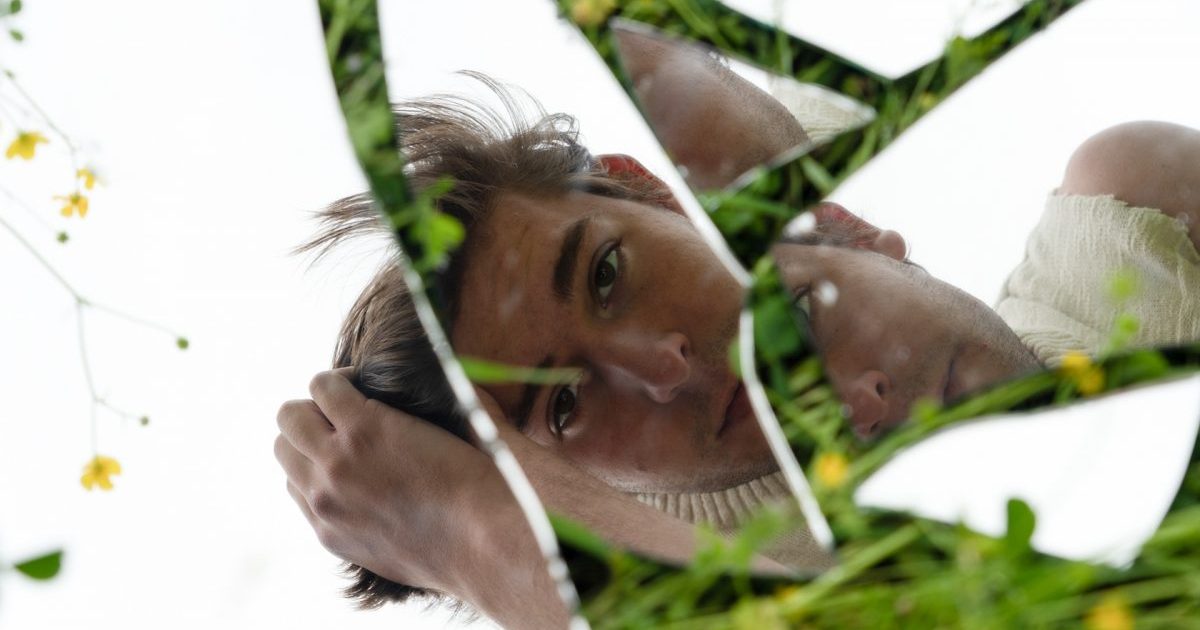
Growing up in rural Georgia, Jontavious Willis discovered blues through a YouTube video of Muddy Waters and immediately immersed himself in the genre. At 14, he began playing acoustic guitar, he started gigging as a college student, and released his first album, Blues Metamorphosis, in 2016. Two years later, he opened on the TajMo tour with Taj Mahal and Keb’ Mo’. They co-produced his GRAMMY-nominated second album, Spectacular Class.

Offered the opportunity to record his new album, West Georgia Blues, in Nashville, Willis’s response was a resounding “No.” Tracking in his home state was non-negotiable, as that DNA was critical to his vision and sound. “Georgia was a big part of the story and I wasn’t going to fold on that,” he says. “I wasn’t going to let up.”

The singer-songwriter-guitarist and his musicians gathered for ten days at Capricorn Studios in Macon. Willis produced while engineer-guitarist John Atkinson mixed (and contributed guitar work on “A Lift Is All I Need”). They tracked some 200 songs, 80 of them usable, says Willis, and pared those down to the 15 that became his third album.

Willis’s fingerpicking style is rich in tradition and, as he’ll tell you, contemporary because it exists – now. With that, being featured alongside bluegrass and country music on a website such as this is a perfect fit, as he explained during his recent interview with BGS.

What were your goals going into this record?

Jontavious Willis: My goal was to show growth and stay away from carbon copies of other songs. I hear it all the time – you take a song and change a few words around, but it’s still B.B. King, it’s still Robert Johnson. I tried to make each song its own and if I did take from other folks, I did it my own way.

We get so wrapped up in saying, “Oh, I can play old music, so let’s stay there,” that we forget to create. I wanted to show my writing ability, my producing ability, and I wanted to show a difference. I’m glad I put space in between the albums to really show growth. Since the album’s complete, I’ve been getting great reception. But beyond that, I made an album I can listen to from beginning to end.

You didn’t feel that way with your other albums?

The first one, I knew I was green, but I had to put something out there. I’m always happy in the beginning. Then, when you listen to it long enough, you’re like, “I should have did this and this.” But I really can listen to this one. Truly, honestly, the first one, I wasn’t as good a player. The second one, I wasn’t playing at my full capacity or with blues players. I was playing with session musicians. This one, I played with people that knew the references to blues.

You’re a blues musician being interviewed by BGS, a bluegrass website, with a country music “sister” website, Good Country. That might seem like a big jump to some people, but the genres have common threads. Music historian that you are, could you address those connections?

Music was the most integrated pastime, prior to the big record labels coming in and separating them. One of the first integrated groups was actually in Georgia, called the Georgia Yellow Hammers. It featured a fiddle player named Andrew Baxter.

When some people think of country, they think of a particular sound. When I think of country, I think of rural. A lot of people say “simplistic,” because it sounds so peaceful and melodic, but it can be some of the hardest music ever. When I think of the intertwining of country music, I think about the early pioneers, like the first star of the Grand Ole Opry, DeFord Bailey, a Black fellow that played harmonica. Hank Williams learned from Tee Tot, [Rufus Payne]. Johnny Cash spent a lot of time with Gus Cannon and Furry Lewis and old blues folks like that. You can go on and on. A lot of the repertoire of blues artists isn’t just blues. Some of it could be classified as country.

Over time, with new talent, genres expand and change and self-proclaimed “purists” get ruffled. As an artist with deep roots in traditional and contemporary music, what are your thoughts?

I’m kind of with them and not with them. The reason I say this is because I feel like it is good to identify things sonically. When I listen to classical music, I think about what makes it classical. When I listen to jazz, I think about what makes it jazz. The same with blues, because what I’m seeing now is that blues have been overtaken by rock, and I don’t like that, because rock is not blues. It’s definitely a sub-genre or even a whole ’nother genre of blues, but it’s not interchangeable. A lot of the audience the rockers had kind of melted over into the blues, and a lot of people didn’t learn the blues from the front. A lot of ’em came through the back door, through these rockers and other big bands.

So I feel like it is good to identify what it is, but also understand that music changes. But call it what it is. If I’m playing blues-rock, I’m not playing natural blues. If I’m playing contemporary gospel, I’m not playing traditional gospel. The guys that made these beautiful songs that sold millions of copies — they didn’t get money for it. They didn’t get their due. It’s time for folks to stand by the genre of music they do and tell folks what it is.

Let’s talk about those sub-genres and what they mean, if anything.

It’s hard to really define the categories. With blues, they chop it in two main categories, at least for the GRAMMYs: contemporary and traditional. Contemporary means you’re keeping with the times. So by me living and writing music, that is being contemporary. Traditional means I’m a part of the tradition. So I can be traditional and contemporary at the same time. It is not one or the other. It’s a safe room for both.

Scholars made these terms up. Black folk wasn’t calling their music Delta blues or Piedmont blues until they heard so many folks saying it. Then they started saying it. But nowadays, those terms don’t mean nothing unless you’re from those places. I’m from Piedmont, so I’m a Piedmont player by default. I even went one step further to say I play West Georgia blues. What is West Georgia blues? I don’t know. I’m from West Georgia and I’m playing the blues in West Georgia. I can say that’s my style. A lot of people say Delta blues. Delta blues is a region, not necessarily a style. I can name three artists from the Delta that don’t sound alike. It varies from musician to musician.

It’s nicer for the listeners to think it’s categories, so you can navigate your way. But it also pigeonholes the artists and doesn’t really showcase the music and what it is. This is freeform music that people created. The record industry had a big hold on all of it, and that’s how they separated bluegrass from blues and country music. So I think you have to be a purist in a sense to maintain. If not, everything could spill over into everything, which is a good idea, but in essence, you want to identify the different sounds and nuances.

How does Georgia – its music, its history, and your history – inform your music?

Every state has salt-and-sugar history. I grew up in a predominantly Black town. Greenville, Georgia, is 70 or 80 percent Black. We’ve got a rich gospel history, and Georgia overall has Buddy Moss, Blind Willie McTell, on and on. So being in Georgia, always loving history, and always being around my family definitely shaped my music, the good and the bad. That’s what life is about, the good and the bad. Most of all, my hometown shaped me, more so than the famous people.

The blues people from Georgia definitely shaped my music. I was always aware of the other folks, like Little Richard, James Brown, Ray Charles, and Otis Redding, but they didn’t shape me. I listened to the old blues players and it was a great awakening for me to realize that Georgia has blues, because if you listen to a lot of folks, you’ll only think that it’s in Illinois and Mississippi. But the first studio in the South was in Atlanta in 1923. Everybody had to come to Georgia to record.

I know the United States has got twisted history, and that’s part of the blues. The blues is free Black people speaking their mind and saying how they feel, not always being political but just being true to themselves. To me, Georgia is family, struggle, prosperity, farming, food, life. It’s everything. I’ve been to a lot of places in the world, in Europe, to 46 of the 50 states, and ain’t no place like home. I’m looking at it now – the contrast of this dark green and light blue and these hills. You can’t beat that, man. Georgia’s everything to me.

What was it about blues that spoke to you as a 12-year-old? What has or hasn’t changed?

When I was a kid, I was singing gospel music about going to heaven and wasn’t I thinking about dying! A lot of those blues guys started out young. They were teenagers. Helen Humes, Buddy Moss, Josh White … Robert Johnson was 27 when he died, so he had to be singing the blues when he was young.

I’ve loved the blues since I was 12 years old, two years before I started playing guitar. I was at the age where I could appreciate it. The blues makes you think. Technically, some of those sounds aren’t supposed to be happening. Some of the stuff don’t make musical sense because lot of these folks aren’t trained musicians. But the stuff they put out – I can listen to it because it’s relatable to me. They talk in the way I understand. They sing in the way I understand, and man, it can just do something good to me. I don’t know what it is, but Jesus, it’s so good!


Photo courtesy of the Jontavious Willis Team.
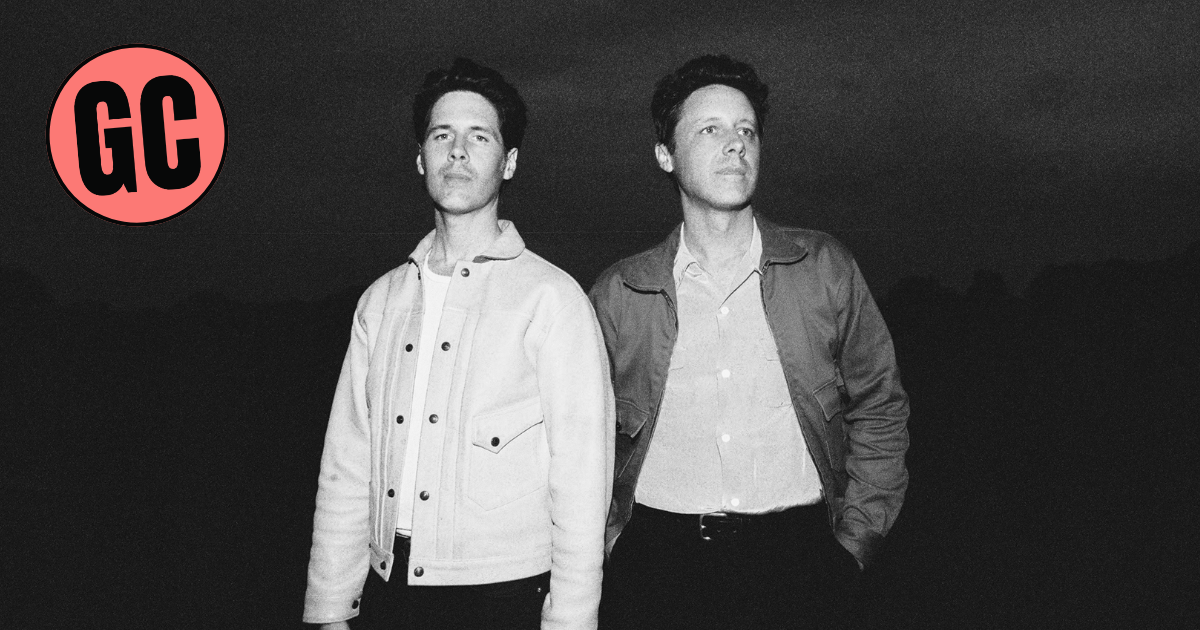
The Cactus Blossoms’ Modern-Classic Sound Blooms on New Album

With a sound that’s like rain in the desert for fans of early rock and country, the Cactus Blossoms let their modern-classic vibe bloom on their latest album, Every Time I Think About You. But with pair of big shows to help celebrate the launch, this band is living very much in the present tense.

Made up of Minneapolis-based brothers Jack Torrey and Page Burkum, the duo’s new project arrives August 30 and once again captures the full, timeless magic of spacious melodies, tasteful twang, and tightly-wound harmony. That night, they’ll mark the release with a long-overdue debut at the Grand Ole Opry – where they ought to find a few like-minded fans of keeping music’s traditional cool factors alive – and then head home for a milestone gig in St. Paul.

After a trio of well-received albums and more than 10 years of riveting shows, it’s the perfect setup for a duo who seem totally at ease blurring the American roots timeline – and who promise they couldn’t fake it if they weren’t.

“I don’t think we’re very good at striving,” Torrey says, speaking from the verdant midsummer shores of Lake Superior on a much-needed break from the road. “I do think [this record] has a comfort level, especially since we’ve been able to start touring again, and really hit it. It’s been feeling like we’re a unit and we can kind of read each other’s minds a little bit.”

Speaking with BGS ahead of the release of Every Time I Think About You, Torrey and Burkum filled us in on what that telepathic bond helped create, and where it’s coming from.

A lot of Every Time I Think About You features the “modern-classic” sound you have both made a calling card – like it would sound fresh a few decades ago and today as well. But is that dangerous territory for a band? You don’t want to be pigeonholed as a throwback, right? So how do you walk the tightrope?

Jack Torrey: I think there’s an interesting aspect of that from our perspective. I got super into Bob Dylan and Hank Williams and I was singing songs by both of those guys way back, 18 years ago or whatever. Page was into Jimmie Rodgers and those other super old country things. We start singing together and it’s like if you harmonize on a Hank Williams song, it kind of starts to sound like an Everly Brothers song. You’re kind of accidentally falling into that and getting into territory that people went into 60 years ago – but it’s new for us and I think that has kind of kept happening. We’re not recreating or trying to do anything like listening to records and imitating it. It’s almost like we’re carving our own mini canyon, that resembles some of the other ones from the past.

Page Burkum: I was kind of thinking about this as a way of summing up our style and influences: The Band, The Traveling Wilburys. Those are like my four main food groups or something. I love where all those guys are coming from – a little Roy Orbison, a little Bob Dylan. They balance each other nicely. And I was thinking, when that’s your diet, you’re going to make something that comes out [like Every Time I Think About You]. … But we love other totally different kinds of music outside of that realm too, and I hope a little bit of that gets in there, too.

Where is the title track, “Every Time I Think About You,” coming from? It’s got that lovely, warm-and-fuzzy feel of a mid-century romance ballad to it, but maybe something more, too …

JT: That one is kind of a love song to losing a friend – it’s kind of a heartwarming grief, where you’re almost being consoled by the memory of someone. And that’s where that song came from. The way we wrote it, I just had a couple lines, and then Page jumped in and started singing the beginning of the chorus, and then I sang back the next line, “Every time I think about you …”

PB: Sometimes Jack and I have made fun of biopic movie scenes like in Walk the Line, where it’s like Johnny and June or whoever sit down with a guitar and they’re just writing a song in real time. Like, they sing one line and then pause dramatically, and then sing another line and then it cuts to them playing it for a thousand people or something. But in a funny way, that was kind of the closest to that. [Laughs]

JT: I was like, “I didn’t ask you to jump in and work on my song … but that’s pretty good idea. Let’s do it.”

The album kicks off with “Something’s Got a Hold On Me” – which almost has a Southern rock swagger to it. Where does that come from? Is that your Tom Petty influence showing?

PB: When I first had the idea for that one, the very original idea that set it off was actually a weird little piece of a Jimmie Rodgers song. So, I stole that line and that melody, which is about two notes or something, but it kind of inspired the whole song in a weird way. To me there’s some blend of Lead Belly and The Beatles or something in my mind, but then it ends up just sounding like a country-rock two step. That’s just what happens. It’s fun to roll with stuff. … I threw in another Jimmie Rodgers line, that “T for Texas, T for Tennessee,” to kind of keep that tribute going.

Oh that’s right, I should have known. Why did you end up finishing on “Out of My Mind (On Sunday)”? Is there a reason that seemed to wrap things up?

JT: It wasn’t a big dramatic decision, but it seemed like a nice bookend from “Something’s Got a Hold on Me” to end with being a bit of a crazy person. [Laughs]

PB: To me it actually kind of leaves the door wide open. I don’t know if you want to cap things off with the sweetest, most-concise thing you have, you know? There’s something about it that’s a little bit out there to me.

You’ll make your Grand Ole Opry debut the night this album drops. Then you’re having a big hometown party with show at Fitzgerald Theater in St. Paul [on September 13]. What does that mean to you?

PB: We’ve got one of our favorite local bands, Humbird, joining us for that [St. Paul] show, so that’ll be really cool. We’re trying to get some of our collaborators to be involved too, if we can spice it up with an extra ensemble beyond our regular band. So we’re trying to get a piano on stage or something. I mean, it’s a theater show, so it’s a little different. And it’s our first time playing our own show at this theater. It’s a really beautiful building and I never thought I’d play there when I was a kid.

JT: It’s where [A] Prairie Home Companion used to be back in the day. Page and I actually played there when we were first getting started, which was a special time. So it’s cool, and should be fun. Some people can come that don’t like to stand, since we play a lot of clubs. [Laughs]


Photo Credit: Aaron Rice

Women’s History Spotlight: Hazel & Alice, Dale Ann Bradley, and More

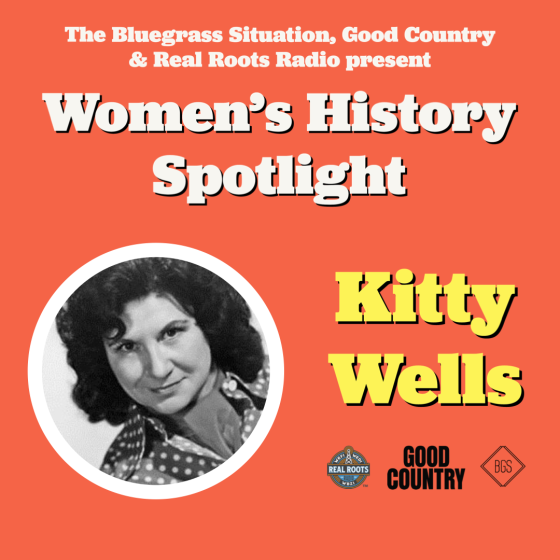
March is Women’s History Month, and BGS, Good Country, and Real Roots Radio have partnered to highlight a variety of our favorite women in country, bluegrass, and roots music with our Women’s History Spotlight.

Each weekday in March at 11AM Eastern (8AM Pacific) on Real Roots Radio, host Daniel Mullins will be celebrating a powerful woman in roots music during the Women’s History Spotlight segment of The Daniel Mullins Midday Music Spectacular. You can listen to Real Roots Radio online 24/7 or via their FREE app for smartphones or tablets.

Then, we will have a Friday recap here on BGS featuring the artists highlighted throughout the previous week. No list is comprehensive, but we hope to feature some familiar favorites as well as some trailblazers whose music and impact might not be as familiar to you.

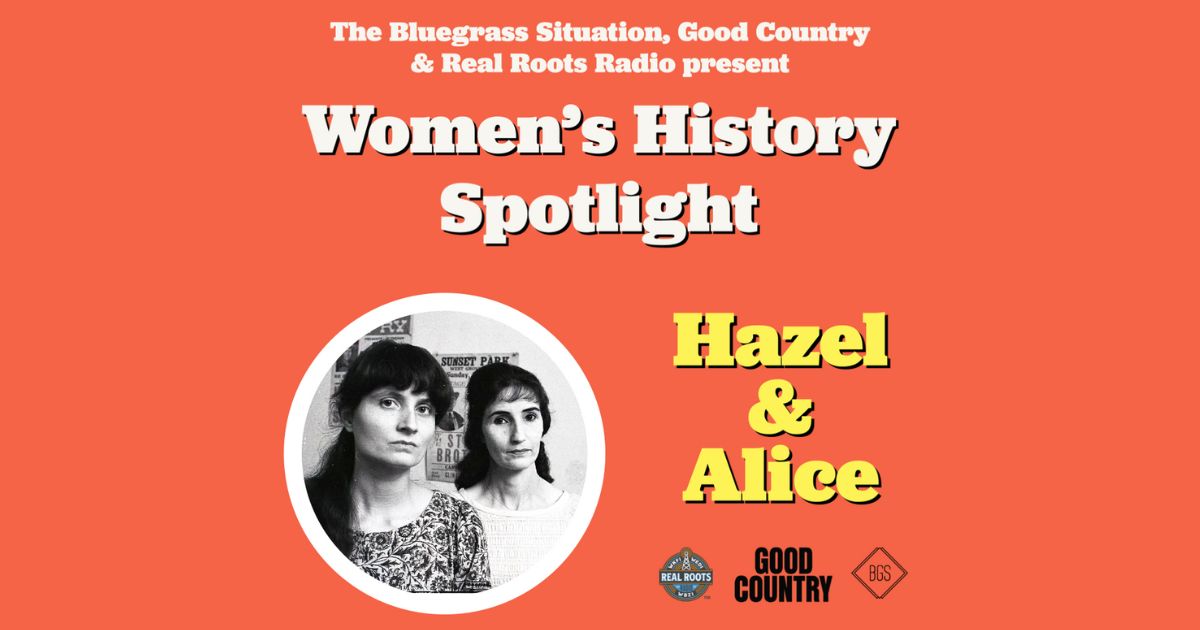
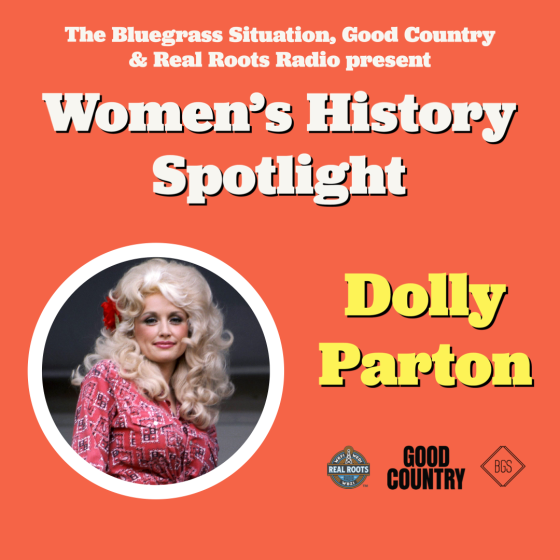
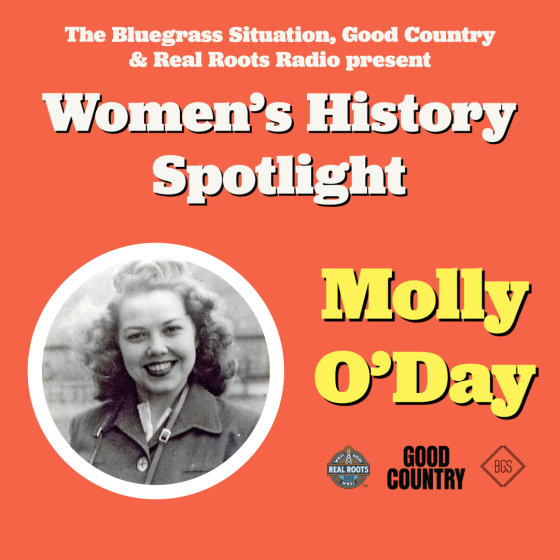
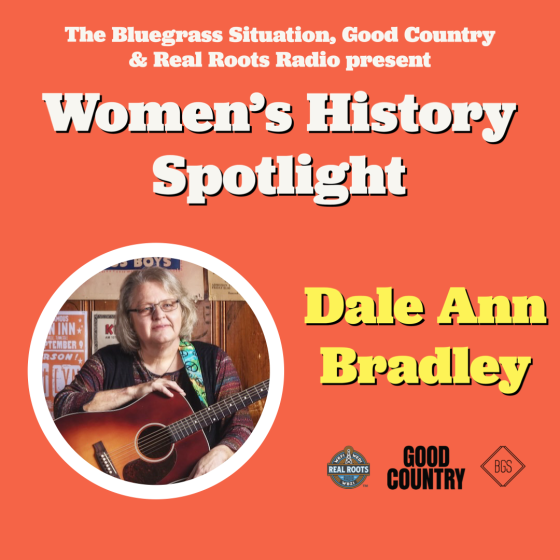
This week’s edition of our Women’s History Spotlight features musicians and artists like IBMA Award winner Dale Ann Bradley, the legendary Dolly Parton, Bluegrass Music Hall of Fame inductees Hazel Dickens & Alice Gerrard, early country hitmaker Kitty Wells, and Kentuckian-West Virginian Molly O’Day. Tune in next week for the final installment of our Women’s History Spotlight!

Dolly Parton

You knew it was coming. You can’t tell the story of country music (or American pop culture) without Dolly Parton. Growing up in Sevier County, Tennessee, she is not just the Queen of the Smoky Mountains, but quite possible the Queen of the Universe (if there was such a ridiculous title). Her rags-to-riches story will continue to be told and re-told for generations. Aside from her beautiful voice and philanthropic work (the millions of books that she gives to children through Dolly Parton’s Imagination Library is her proudest achievement), there are numerous other aspects about Dolly Parton that are remarkable.

Her business acumen is frequently praised, but it still bears repeating. Aside from her numerous endeavors (including Dollywood), it’s often worth remembering that she fought to regain control of her own career and decision-making from Porter Wagoner after her star began shining brighter than his scope of influence. (Remember, it was the ending of this business relationship that was the impetus behind Dolly writing one of her most famous songs, “I Will Always Love You.”) Call it a business decision or just genius, but Dolly’s ability to juggle embracing her role as an undeniable sex symbol and avoiding being labeled as “unwholesome” by conservative crowds has to be one of the most difficult tightrope walks in American entertainment.

Vanity Fair’s 1991 article “Good Golly, Miss Dolly did a deep dive into the dichotomy of Dolly’s role as a sort of clean sex symbol: “Dolly, in her openness, demystifies sex. ‘One of the things that makes the image work is that people understand that I look one way, but am another, that there’s a very real person underneath this artificial look,’ she theorizes. ‘It’s not like I am a joke. People can laugh at me, but they don’t make fun.’ … Indeed, Dolly Parton has become the billboard for sex without being the product itself.”

It is the way that she ensures that the “very real person” that is Dolly Rebecca Parton doesn’t get lost in the glitz, glamor, and boob jokes that is part of the reason why she is so endearing and universally beloved by folks from all walks of life; in a world where polarization is en vogue, Dolly is one of the few topics on which everyone agrees! She epitomizes the best of us.


Hazel Dickens & Alice Gerrard

Members of the Bluegrass Music Hall of Fame, Hazel Dickens & Alice Gerrard were an unlikely pair who blasted down doors for women in bluegrass. Hazel hailed from the mountains of West Virginia, while Alice was from across the country in Seattle, Washington. Alice attended Antioch College in Yellow Springs, Ohio, where she was exposed to folk and bluegrass music. While a student there, she helped coordinate bringing The Osborne Brothers to the Antioch campus, making history as the first major bluegrass concert held on a college campus! After college, she wound up in the D.C. area, becoming active in their flourishing bluegrass scene, where she became friends and musical partners with Hazel Dickens – who had moved to the region with her family to find factory work years earlier.

Hazel & Alice became some of the first female bluegrass bandleaders and recorded some classic albums for Smithsonian Folkways and Rounder Records before embarking on successful solo careers by the mid-’70s. With Hazel’s mountain sound and Alice’s more folk-oriented sensibilities, their music appealed to both traditional bluegrass fans and those who were being introduced to the genre via the Folk Revival. Their original material which highlighted a woman’s perspective were critical in bringing a voice to women in the bluegrass canon. Decades later, their music and legacy is still rippling across American roots music, with artists as diverse as Rhiannon Giddens and Dudley Connell still celebrating their influence and impact.


Molly O’Day 

Born Lois LaVerne Williamson, country pioneer Molly O’Day was born in Pike County, Kentucky. She would become a popular radio star in West Virginia by the early 1940s, eventually leading Molly O’Day & The Cumberland Mountain Folks. Her band crossed paths with Hank Williams on the radio circuit and Molly even sang quite a few of his songs on radio and later in the recording studio. Molly learned “Tramp On The Street” from Hank Williams and it would land her a recording contract with Columbia Records. (Fun Fact: Her band at the time of her first Columbia recording session featured a young Mac Wiseman on bass!)

In an era when the term “hillbilly music” was still commonly used, Molly’s music, retroactively, could have country and bluegrass labels applied to it. Her powerful voice felt just as at home on an ancient balled like “Poor Ellen Smith” as it did on soul-stirring gospel songs like “Matthew 24.” By the early 1950s, Molly and her husband grew weary of life in the limelight and essentially retired from the music business, both dedicating their life to ministry. She would record a few gospel albums for some small record labels in the ensuing years, but her final album was released in 1960. She would pass away in the late 1980s, but she left a mark on country music and earned the respect of her peers at a time when the list of female country pioneers was relatively short.


Dale Ann Bradley

Revered as one of the most heartfelt bluegrass singers of her generation, this Kentucky songbird’s career started in earnest as a member of the Renfro Valley cast in her home state of Kentucky. The Renfro Valley Barn Dance was an extremely popular barn-dance style radio program in the 1930s and it spurred the creation of Renfro Valley as a country music entertainment destination in Kentucky. This helped kickstart the careers of folks like Steve Gulley, Jeff Parker, Dale Ann Bradley, and more by the 1990s.

While at Renfro Valley, Bradley would eventually join The New Coon Creek Girls, one of bluegrass’s only “all-girl” bands at the time, and aptly named after The Coon Creek Girls, a pioneering female string band of the 1930s who also started on The Renfro Valley Barn Dance.

Dale Ann’s soulful voice, largely influence by the Primitive Baptist tradition which she grew up around, quickly gripped the bluegrass world, leading to a successful solo career for the last three decades. In addition to recording songs that hearken to those familiar with mountain people and mountain ways, the appeal of Dale Ann’s voice has led her to adapt songs from outside of the genre to her style of bluegrass, tackling tunes from Tom Petty, Bobbie Gentry, The Grateful Dead, Jim Croce, and everyone in-between! Her diverse material has led me (and many others) to the conclusion that no matter the material, if Dale Ann is singing it, I already know I’m going to like it!


Kitty Wells

Hailed as the original Queen of Country Music, Kitty Wells hit a massive reset button on the role of women in country music after the massive success of her breakthrough hit, “It Wasn’t God Who Made Honky Tonk Angels.” Written by J.D. Miller, it was penned as the antithesis of Hank Thompson’s hit, “The Wild Side of Life.” After writing the song, the search began for a woman to sing it. Kitty Wells had pursued a country career, to little avail, and had essentially consented that maybe it wasn’t in the cards for her, when she was contacted to record the song. “It Wasn’t God Who Made Honky Tonk Angels” would become the first Number One hit by solo female in country music history, and its status as one of the most iconic country songs of all time only grows.

This explosion of success led to many other hit records by Kitty Wells, and opened the doors for those who would follow in her wake like Jean Shepard, Loretta Lynn, Dolly Parton and more! You can’t celebrate Women’s History Month without honoring the gal who famously sang the line, “It’s a shame that all the blame is on us women!” (Still kind of bummed that Margot Robbie didn’t sing that line in Barbie. Seems like a missed opportunity to me!)

As an added bonus, here’s another cool version from 1993, where Dolly Parton, Loretta Lynn, and Tammy Wynette recruited Kitty Wells to join them on a new version of this country classic on their collaborative album, appropriately entitled Honky Tonk Angels.


Crying in Music: Darrell Scott’s Honest Artistry

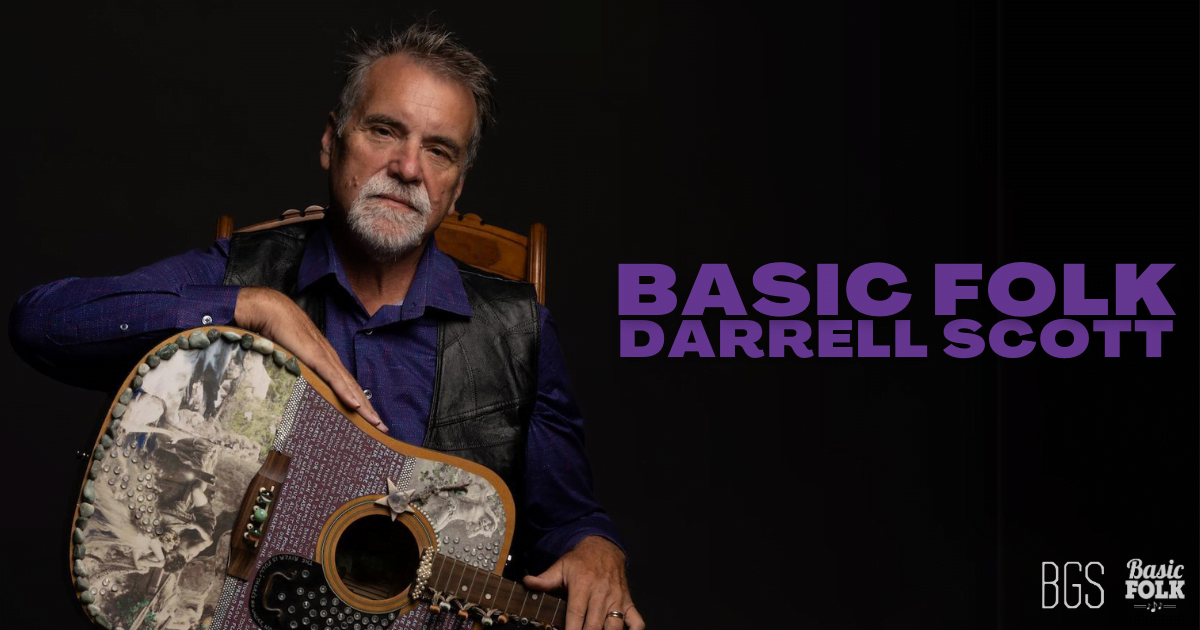
The cover of Darrell Scott’s latest album, Old Cane Back Rocker, immediately sets the tone for your listening experience. The inclusion of the names of the Darrell Scott String Band (Bryn Davies, Matt Flinner, and Shad Cobb) lets you know right off the bat that this recording is a band effort. The photo on the album cover gives a visual of Scott’s family roots in rural Kentucky. His cousin Dwight Messer is standing in front of his former childhood home, now abandoned on the family land. The music reflects his family’s story: some, like Dwight, stayed behind and some, like Darrell’s father, Wayne Scott, moved up North to find work. Despite being raised in the North, Darrell’s home has always felt like Kentucky and the traditional music learned from there. These songs showcase those roots.

LISTEN: APPLE • SPOTIFY • STITCHERAMAZON • MP3

In our conversation, Darrell digs into the darkness that can be heard in his music, even if it’s not a sad song. He talks about his friend and frequent collaborator, Tim O’Brien, and how his performance and writing has allowed Scott to level up. Darrell also speaks to leaning into emotional songwriting and trusting his tears during the creative process. He shares the emotional account of rerecording his father’s song “This Weary Way” and how he used to think Hank Williams had actually written it.

Immediately after we finished our interview, Lizzie texted me, “What a cool eccentric intellectual dude.” Couldn’t have said it better myself. This episode honestly discovers the true essence of Darrell Scott — an artist whose music resonates with the soul, rooted in the traditions of Kentucky.


Photo Credit: Michael Weintrob

MIXTAPE: Bonnie Montgomery’s Music of an Arkansas Childhood

I was born into a music-centered family in small town Arkansas near “where the Delta meets the Ozarks.” My grandparents started a music store on the court square in the 1960s and they sold instruments and equipment, et al. – and also carried the top records of the day. So, music and musicians were infused into my life from birth and my family was at the center of a vibrant musical community.

At every holiday or birthday or community event, we played music together and sang with a cast of characters ranging from the local church organist to Sun Records session players. I thought every family was like that, but as I’ve grown older and a lot of those characters have passed on, I’ve realized how rare my upbringing was and I cherish it with all my heart.

I remember the voices and the sounds of the jams like it was yesterday, and I’m honored to make a playlist of some of the favorites we played and sang together. I didn’t discover a lot of the recordings of these songs until much later in my life because we played them by rote – or sheet music – at those beautiful, heavenly hoe-downs. These songs are the soundtrack of my early life. I’m honored to share them. – Bonnie Montgomery

(Editor’s Note: Scroll to find the full Mixtape playlist below, to enjoy while you read.)

“Precious Memories” – Merle Haggard & The Strangers featuring the Carter Family

I chose Merle Haggard and the Carter Family’s version of this hymn, because it’s the closest version to what I remember our hoe-down version sounding like. My grandfather Ivan would always request this song and all the old-timers would sing with such passion, and even tears. I remember the far away look in their tear-filled eyes when they sang it, and although I never felt it like they did back then, I loved the song. We always thought it was a funny selection too, because they would always sing it “pray – shush mam -ries” over and over, which made us laugh. But now that those faces are all passed and gone across the great divide, I feel it like my grandfather used to. Now, just like them, all I have is the memories. Sacred, precious, treasured memories gathered around the piano in my grandparent’s music room – in what feels like a lifetime ago.

“Your Cheatin’ Heart” – Hank Williams Sr.

I didn’t hear the recorded Hank Williams version of this until my late teen years, but we sang it as the grand finale of the Christmas Eve hoe-down every year. After hours of singing the entire catalogue of Christmas carols and standards, my grandfather would sing this one with the most volume and gusto of them all. My mother, or our dear family friend Teddy Reidel, would play a romping walking bass line on the piano with it. So when I went Christmas caroling with friends at age 11, I was ready for the big grand finale and started in on “Your Cheatin’ Heart,” but none of my friends knew it! It was then that I realized “Your Cheatin’ Heart” in fact wasn’t a Christmas carol!

“Born to Lose” – Ted Daffin

My grandfather always requested this song when I was playing piano, whether at the jam sessions or after school, when I would be practicing piano at their house. I never understood it, because the lyrics were so depressing and I wondered why anyone in their right mind would want to profess to being such a huge loser, ha! I remember practicing my classical pieces (I rebelled in the ultimate way by falling in love with classical music at a young age) and Papaw would holler “quit playing that long hair music and play ‘Born to Lose.'” By “long hair,” he meant classical, as in Handel or Beethoven’s long hair. I still laugh about that – instead of long haired hippies, he was talking about the wild artists from centuries ago.

“Sentimental Journey” – Doris Day, Les Brown & His Orchestra

This was my grandparents’ song. They would request this one and dance together every time we played it. During the Great Depression, my grandfather left Arkansas and went to California to look for work. Once he was there, he sent for my grandmother Frances and when she was out there, they got married. They both missed home terribly, so around 1943, when they finally arranged to go back, they had to go separately because of money. My grandmother was expecting their first child by then and had to ride all the way home from California to Arkansas in the back of pickup truck. She always called it her sentimental journey and you could just see the love between them every time we played this one.

“Tennessee Waltz” – Connie Francis

This was another favorite at the hoe-downs. I must have played it a million times while everybody danced and sang. And other times, when we were just hanging out at home, my grandmother would sit in a chair near the piano and ask me to play this one. She would have such a huge smile on her face and she just seemed to melt into the song. I’m so grateful for her encouragement with my musical endeavors.

“Sweet Dreams” – Patsy Cline

This was another of my grandmother Frances’ favorites. She was a fashion-forward, tall, beautiful red-head, full of life and fire. For small town Arkansas she was way ahead of her time. She started her own businesses (the music store was her main project) and ran for mayor in the ’60s too. She adored Patsy Cline and always thought she was so classy compared to the other female country singers of her time. We didn’t jam on this song, but we listened to the recording at full volume. The string arrangements from those Patsy songs have a huge influence on my string arrangements (arranged and played by maestro Geoffrey Robson) in the studio.

“Goin Down the Road Feelin’ Bad” – Woody Guthrie

My grandfather used to take us to his farm in Garner, Arkansas almost every morning in the summer. It was pure heaven for us as children – we could run wild and do whatever we wanted, ride horses, swing on the barn swing, go fishing, drive old cars and tractors around the farm, eat turnips straight out of the ground when we got hungry, crawl around with the pigs in the pig pen, and much more. We would sing in the truck with him all the way to the farm and he loved to sing this song and make up new verses such as, “I’m goin’ where the boys don’t blow their nose…”

That farm lives in my memory every single day – and incidentally, the highway it’s on (old highway 367), got named the “Rock and Roll Highway,” because it’s the road all the Sun Records artists would drive from Memphis to Helena back in the day. I didn’t know that when I was young, but it makes sense that Johnny Cash, June Carter, Elvis, Roy Orbison, Carl Perkins, etc. knew that road well.

“The Strawberry Roan” – Sons of the Pioneers

My grandfather on my father’s side, a wild cattle auctioneer named Leon Montgomery, used to drink his whiskey and burst in the door with his cowboy hat and a grin and croon out “Oh, That Strawberry Roan” as a greeting.

“Gonna Burn Some Bridges” – Ray Price

Ray Price was another familiar voice in the musical landscape of my childhood and is pretty much the ultimate crooner in my opinion. I’m including this tune because it’s direct inspiration for a song on our new album.

“I Was Fine” – Bonnie Montgomery

I’m including one of the songs off my new album, because it was inspired by the music of my childhood and, in particular, the music of Ray Price. My bandmate and engineer, Kevin, came up with a steel guitar riff that’s a direct nod to the steel guitar riff on Price’s “Gonna Burn Some Bridges.” We recorded this one with vibraphone and full string orchestra and I sang my heart out for Ray.


Photo Credit: Jamie Lacombe

MIXTAPE: Daniel Donato’s Cosmic Country

It is a tale as old as time itself. As above so below. Yin and Yang. The explored and the unexplored. The hero’s journey, any and all of them, are exposed to the eternally enduring dance of chaos and order. We must leave the garden, enter into the forest to find the gold, kill the dragon, and return back to where we began, returning back more harmonized, realized, and higher frequency than we began.

Musically, Cosmic Country takes this pattern and uses it as its sole fuel for the soul and all of its musical fruits. Cosmic Country is an approach that uses simplicity, complexity, and truth to tell stories of life that bring beauty and goodness into reality. This 9-track mixtape I have assembled for your enjoyment and exploration today covers some ground of the far-flung lands of music that is Cosmic Country, where the high frequencies fall like rain and blossom like lilies in the fields that never end nor never began. Let’s get Cosmic. – Daniel Donato

“Honky Tonk Night Time Man” – Merle Haggard

This is a country song. But just like any country, there is more nuance to be discovered and brought to light than meets the eye. This is an archetypal honky-tonk song. A few of these will be on here. Honky-tonk songs cover truthful states of life that apply to all of our brothers and sisters sojourning in space and time together down on this chaotic planet. This song talks about relief from the grind and finally getting around to what is right for the soul when quittin’ time comes around.

“Doggone Cowboy” – Marty Robbins

This is also a country song, but it is also more nuanced than that. This is a cowboy song. The cowboy is one of the great American archetypes. The cowboy embraces a life of service, hard work, endurance, adventure, and most enduringly, faith. It takes faith to stay patient and persistent in pursuing your work through realms of chaos that you must travel through and come out on the other side stronger than you did prior. Marty had a way of personifying sorrow, acceptance, reflection, and hope in his delivery of these transcendant, simple lyrics.

“Mystery Train” – Jerry Reed

It can’t be fully Cosmic Country unless it moves you. Internally, songs move us, but sometimes the pocket and groove move us externally, which is a brilliant expression of personality. What I love about this song is that Jerry Reed always had a vision in his mind that could create a groove for people to dance to and for players to have fun-expression in. Everyone knows “Mystery Train,” but this version can make any club, honky tonk, theatre, or arena dance and move all together. Bonus points for a train song. Everyone loves a train song.

“Everybody’s Talkin’” – Harry Nilsson

The bottomline is that we are on our own trip. It is an individual experience of life, personality, and dynamics that only you experience. No one will ever live your life for you or as you. Songs that find promise and truthful reflection on the truly individualized nature of existence are my favorite. The movie Midnight Cowboy turned me onto this song when I was 16. I’ve never wished I had written another song as much as this American classic.

“I Can’t Help It (If I’m Still In Love With You)” – Hank Williams

The Shakespeare of country music. The man who was able to take the power of the word – through a Western lens of faith, hardship, and hard living – and deliver to us some of the most truthful and beautiful songs composed of themes ranging from love, loss, religious experience, jail time, honky tonkin’, and the universe. This song specifically has a brilliant form to it, just one verse and two B sections, coupled with that classic lap steel signature sound from Don Helms.

“Waiting for a Train” – Jimmie Rodgers

Any storyteller of American songs, country songs, any songs based in truth and experience, must tip their “Slouch Hat” to Jimmie Rodgers in one way or another. A lot of everything country begins with the songbook of Jimmie Rodgers. This song is just a fantastic story through and through. The lyrical furniture, the sophisticated use of actual terms of water tanks, brakemen, boxcar doors, all bring the listener into the simulated reality that this song conjures.

“Long Black Veil” – Lefty Frizzell

Murder songs are a necessity. The reaper takes his toll, and with that, law and order speak their truth. One of the brilliant elements of this song is that the perspective is from the deceased character. That is innately Cosmic, especially given the window of time this song was released. Lefty was one of Merle’s favorite vocalists, and was the band leader with which Roy Nichols and Merle Haggard first played together when Merle was 16.

“You Ain’t Goin’ Nowhere” – The Byrds

Even though Bob Dylan penned this one on the side of the road, in the rain, waiting for a motorcycle fix, The Byrds – with Gram Parsons and Clarence White – deliver to us one of the most archetypal Cosmic Country recordings there will ever be. The instrumentation, the vocal melody, and harmonies on this song alone explain this sentiment, but the lyrical detail is another universe worth noting with great reverence. The olden language of the great folk songs of America inform the meter and colloquialisms in this song, giving it an ability to exist in the past through its roots, the present through its great orchestration and arrangement, and the future through its seeds of truth, beauty, and goodness – the only values in any creation that endow it to persist through the fleeting episodes of space and time.

“Truck Drivin’ Man” – Buck Owens

If I left out truck driving songs, then everybody from my time at Robert’s Western World would be ashamed of me. The truck driver is a minister of the highways, the great vehicle of true exploration and discovery. The eternal, long white line drags on and on, and the road songs of her fruits just keep coming, but some of the great ones came from Capitol Records in L.A. in the early ’60s.

An element of Cosmic Country that this song relates to is the overall “sound.” What is “the sound?” It is ultimately unqualifiable – it cannot be fully explained or qualified by words – especially when The Sound is doing what it can be doing in potential, which is rendering feelings that hit deeper than words can describe. With the Transcendant Twang of Don Rich’s Telecaster, the immensely clean and powerfully compressed sound of Mickey Cantu’s snare drum, along with that Tic-Tac Fender Bass playing, Buck Owen’s vocal and story rests upon a divinely simple and reverberated landscape of country gold. If there ever was a record that “sounds” like a country song, this one certainly qualifies.


Photo Credit: Jason Stoltzfus

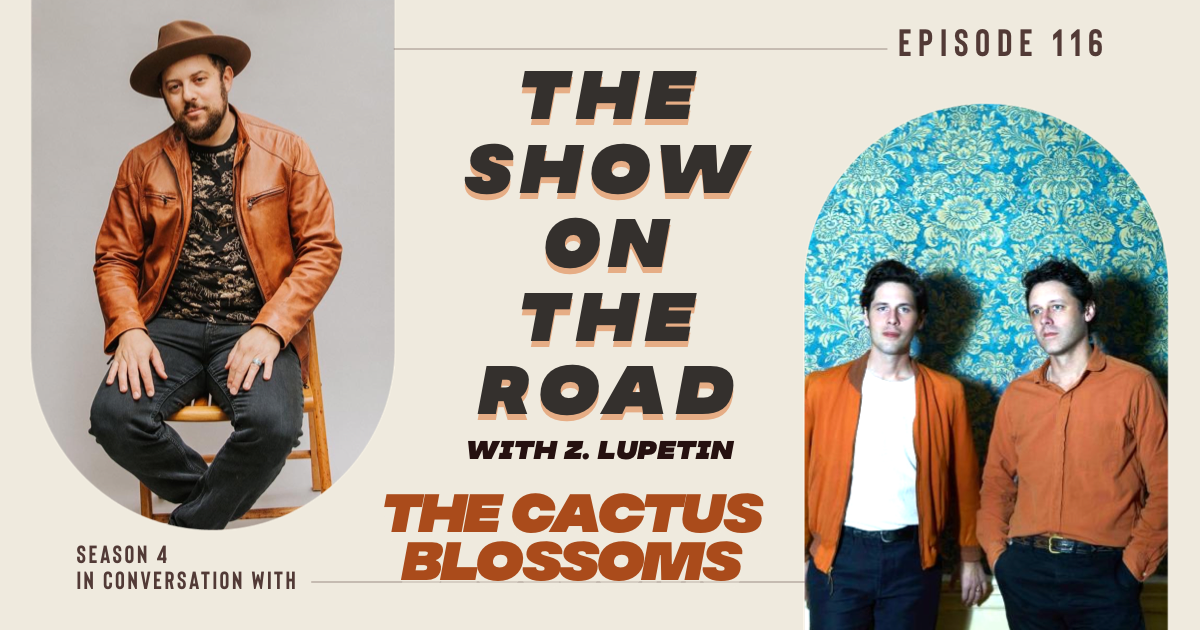
The Show On The Road – The Cactus Blossoms

On this new episode, maybe we need something soft to counter the hard news many Americans have witnessed this week: so why not dive into the crystalline brother harmonies of Minneapolis duo The Cactus Blossoms, who just put out a lush new record, One Day?

LISTEN: APPLE PODCASTSSPOTIFYSTITCHER

Sure, you could write off what Jack Torrey and Page Burkum are creating as simply a loving homage to roots pop pioneers like the Everly or Louvin Brothers with an acerbic modern twist. But with allies like David Lynch (who inserted them into his rebooted Twin Peaks universe) and Jenny Lewis in their corner (she joins them on the bouncy tear-jerker, “Everyday”) there is something a bit more biting under the sweet-as-candy close harmonies and hushed acoustic guitars, Wurlitzer and pedal steel.

With a song like “I Could Almost Cry,” you have to dive beneath the aching minor country chords and Hank Williams-adjacent lyrics to find a Beatles Rubber Soul fury roiling underneath. As the soft-spoken mention in this freewheeling talk – what lurks inside many of the songs on One Day isn’t just the story of a broken love affair – but maybe of our slowly-breaking country which Jack and Page see out on the road and try and make sense of anew.


Sam Williams Carries His Country Music Legacy to Late Night Debut

On his primetime television debut, Sam Williams makes a powerful statement. Grandson of the legendary Hank Williams and son of Hank Williams Jr., the rising recording artist previewed his debut album, Glasshouse Children with a riveting performance from his grandfather’s old house in Franklin, Tennessee. In an extended one-shot capture, Sam Williams does his name proud with a beautifully-written song called “You Can’t Fool Your Own Blood.” Out of a less-than-usual childhood and recent family tragedy, he has emerged with a style that is both poetic and hard-hitting, pulling no punches in his blend of honesty and vulnerability.

With an undoubtedly heavy burden of expectation, Williams blossoms in this realm of singer-songwriters who are more forlorn than raucous, standing with the likes of artists such as Donovan Woods and Ruston Kelly. Although his television debut was one for the books, perhaps the more exciting news is of the debut full-length record, set for a release later this summer on UMG Nashville. Music from Sam Williams has undoubtedly been a long time in the making, but the good news for us is that it’s almost here. Watch his performance on The Late Show with Stephen Colbert below.


Photo credit: Claire Joyce

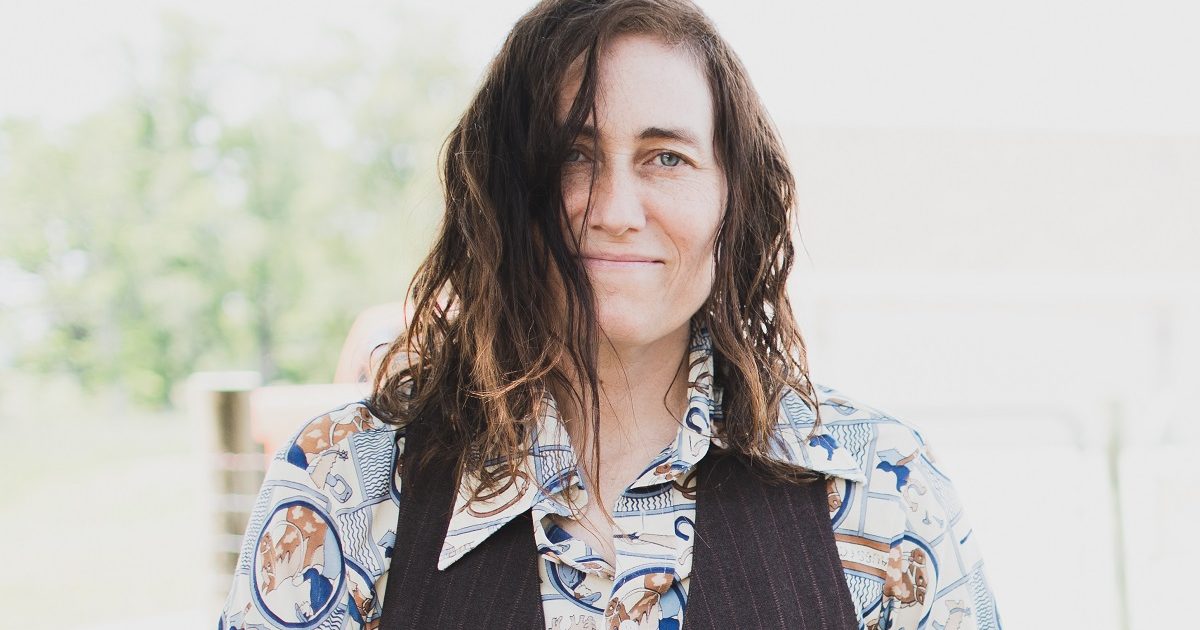
BGS 5+5: Melissa Carper

Artist: Melissa Carper
Hometown: Bastrop, Texas (outside of Austin)
Latest album: Daddy’s Country Gold (out March 19)
Personal nicknames: Daddy

Which artist has influenced you the most … and how?

I’d have to say Jimmie Rodgers, the Father of Country Music, has influenced me the most. My dad gave me the full collection of Jimmie Rodgers on tape when I was about 20 years old. I had grown up listening to Hank Williams, but I’d never heard anything like Jimmie Rodgers. The quality of the recording was raw and initially harder to listen to, but I became addicted and listened over and over to these tapes. When I first started trying to write country songs I would copy the formula in Jimmie Rodgers songs, or rather they had become such a part of me that I couldn’t help but write something similar. Come to find out years later, a lady name Elsie McWilliams co-wrote on many of Jimmie’s songs, so I guess I have been copying her as well. Jimmie Rodgers combined blues and jazz into his country songs and even had horn sections and collaborated with Louis Armstrong on some recordings. Hank Williams and so many country artists coming after Jimmie Rodgers were influenced by his style.

What’s your favorite memory from being on stage?

I have many great memories on stage. One of my favorites is playing a farm party and the stage was a trailer bed and one of their goats jumped up on the stage while we were playing. Also, a fun memory is performing at NYC’s Town Hall for Prairie Home Companion‘s Talent in Towns Under 2000 Contest. At the time I lived in a town that was just under a population of 2000 — Eureka Springs, Arkansas. This was in the year 2000, and back then my band, the Camptown Ladies, auditioned by leaving a song on their answering machine — this was one of the ways you could audition! We were one of six finalists chosen and they flew us to Manhattan for the contest. I think the contrast of living in a small town and then being brought to this grand theater in NYC is an amazing memory for me. We won the toolbox prize — which was the staff’s vote for their favorite band.

Which elements of nature do you spend the most time with and how do those impact your work?

I love to meditate sitting under trees and listening to the birds. I don’t know that this exactly impacts my work directly. I also just enjoy being in the country where there is space and plenty of nature around. I have noticed that if I spend time in nature I will write a different type of song. I moved from Austin, Texas, to the middle of nowhere in Arkansas in 2014 and rented a cabin in the woods. I felt like I was decompressing from being in a city and I had several old-time songs come out that were nature-oriented. I enjoy writing about birds, trees, flowers, seasons, moons, stars. If I spend a lot of time alone my creativity will open up. Also, I often write when I am driving on a road trip or going for a walk. I almost always write a melody and words first without an instrument, and then I’ll go back with a guitar and figure out what chords go with the melody.

What’s the toughest time you ever had writing a song?

When I have to try too hard to write something it usually doesn’t turn out to be as good of a song. There have been several times I’ve rehashed a song over and over and am still not satisfied with the outcome. Sometimes I’ll try a song out at a performance and if it feels good and resonates with people then I know I’ve got a good song. I love it when I’m writing and a song just flows right out almost seamlessly as if the universe is helping. Usually, I’ll know right away if I’ve got one of those magic songs happening. I don’t like to force myself to write but I have had long dry spells in which I have tried to do this and sometimes I have some success by just trying to be more aware of ideas and inspiration that is coming in.

What was the first moment that you knew you wanted to be a musician?

I had no choice. We had a family band growing up, and I was probably 5 when we started playing gospel music at churches and retirement homes. Then when I was 12 years old we started the family country band and we would play four-hour shows in the American Legions, Eagles, Elks and Moose clubs around our area. I did enjoy it and the siblings that didn’t enjoy it did get to drop out of the band. The four-hour-long shows were a bit long but my dad bought us as many Shirley Temples as we wanted and they paid us for the gigs as well. I was one of the few kids that had their own money at the age of 12 and I would take my friends out for pizza. My mom and dad wanted all their kids to be musicians and I am glad they encouraged and supported us in this.

I received a scholarship for studying music, upright bass, at the University of Nebraska in Lincoln. I had been considering being an English major also, but I chose music. I dropped out of college after two and half years and didn’t play music for maybe a year or so, but I just kept coming back to music and eventually realized I could make a living playing all sorts of styles. I also realized that my choice of upright bass as my instrument was a smart choice as I was able to join bluegrass and old-time bands, country bands, blues and jazz, just about anything and everyone always needed a bass player.


Photo credit: Aisha Golliher

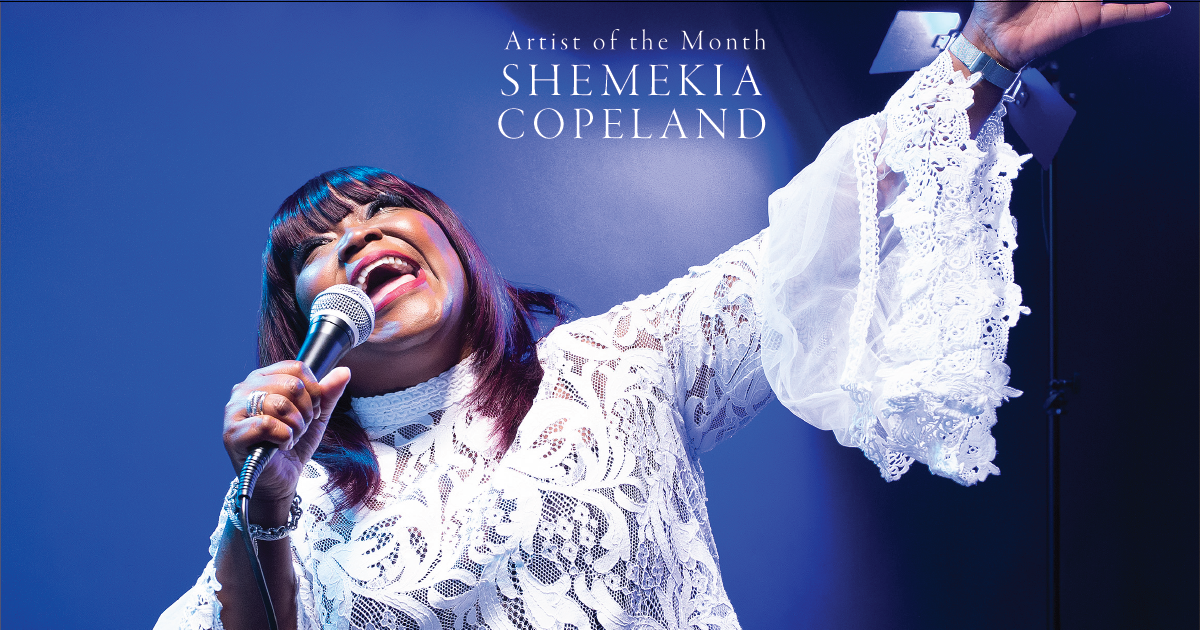
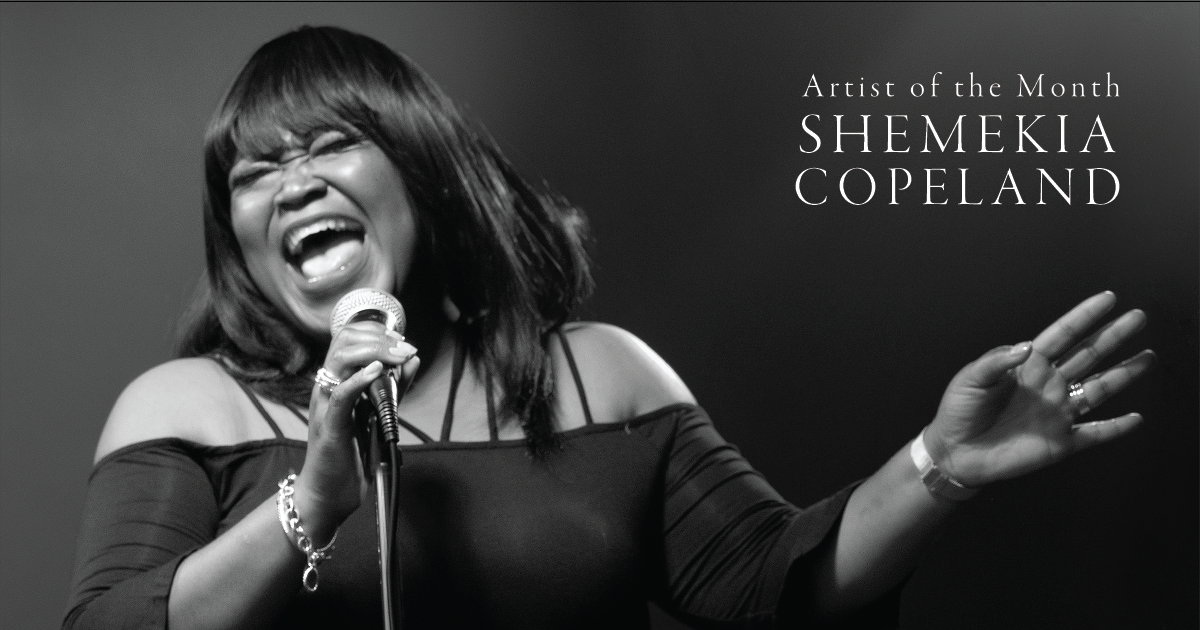
Shaped by Blues and Country, Shemekia Copeland Launches ‘Uncivil War’ (Part 1 of 2)

At just 41 years old, Shemekia Copeland is already an established multi-decade blues veteran. That’s what happens when you start performing as a pre-teen with your blues legend father Johnny Clyde Copeland and make your recorded debut at 18. As one of the primary hosts on SiriusXM’s BB King’s Bluesville channel, she’s also one of the genre’s highest-profile artists. A recent series of albums have both underlined Copeland as a star of the blues and pushed her beyond the walls of the genre, further into Americana and socially conscious commentary.

Her latest, Uncivil War, is another bold step forward. Recorded in Nashville with producer Will Kimbrough, the album features a wide range of guest performers, including Jason Isbell, Christone “Kingfish” Ingram, Steve Cropper, Duane Eddy, Webb Wilder and bluegrass legends Sam Bush and Jerry Douglas. She pushes boundaries not just with the instrumentation but the topics she covers, including “Clotilda’s on Fire,” which tells the story of the last slave ship to come to the U.S., and the title track, “Uncivil War,” is a plea for healing in our increasingly divided nation.

“Americana was not on my radar, but I grew up listening to country music because my dad grew up in Texas and loved it,” Copeland tells BGS. “I’d walk around the house singing Patsy Cline and Hank Williams songs that my dad loved, but I hadn’t really even heard anything about the blend of country and roots music until a few years ago, so I think it’s kind of hilarious that people are saying I’m crossing over to Americana. But I welcome all listeners!”

Editor’s Note: Read the second half of our interview with Shemekia Copeland here.

BGS: Over the past few albums, you’ve really stretched out musically and part of that is working with a wide range of musicians, many from outside the blues world. Let’s talk about a few of them on the new record, starting with two bluegrass greats, Sam Bush and Jerry Douglas.

SC: Oh my gosh! They are just really talented guys who make anything better. I just love those guys! I think my favorite part about them is that they exemplify something I love about Nashville: nobody cares about genre. It’s all about just whether or not it’s a good song and whether they want to play on it. And that’s it.

You think that’s notably different than other places? Do you find that not to be the case in New York or Chicago, for instance?

I have to say yes to that. I think it’s different in Nashville. People just want to play music. Down there, nobody ever even asks, “How much does it pay?” They’re just like, “What time do I need to show up?” It’s really about the music and Will Kimbrough, who produced the last two records, knows everyone in town and has played with most of them.

Jason Isbell is another great guest on this album and plays a great solo on “Clotilda’s on Fire.”

Yes, that one was a little different. We did a show at the Grand Ole Opry together, so Jason knew who I was when Will called and asked him to play on this song, and he was ready to do it. “Clotilda’s on Fire” is about the slave ship that they found off the coast of Alabama, and he’s from Alabama and we wanted him to play lead guitar on it. It just felt natural. It’s amazing how organically these things happen.

That song is really powerful and it’s just one of several very topical tunes on this record. That’s something different that you’ve really established. The first four songs are not about personal things like heartbreak, but heavy topics addressed in interesting ways. You have “Clotilda’s on Fire,” about the last slave ship; “Walk Until I Ride,” a modern-day Civil Rights anthem; and “Uncivil War” and “Money Makes You Ugly,” whose titles speak for themselves. Did you make a very conscious decision to do this?

Absolutely! I’ve been doing it for several records now. And I think the more confident I get, the better I get at it, and the more comfortable I get with saying what’s on my mind. Like on America’s Child, I did “Would You Take My Blood?” which was the first time I ever tackled a song about racism. On previous records, I did songs about domestic violence, date rape, things like that. But it feels more imperative than ever with everything that’s going on in this country now — and this was before COVID-19. This record was finished when all of this crap happened.

I was struck by the story about the Clotilda ever since the ship was found off the coast of Alabama. My ancestors came over here on one of those ships. I did my DNA and I’m 87 percent African, so I was very interested in that story. I wanted people to know about it and, more importantly, to understand why it still matters so much. The line in that song that’s one of the most important to me is “We’re still living with her ghost.” I want people to know that it hasn’t ended, that we’re still going through the same stuff and it’s very, very saddening. Heartbreaking, really.

Have you had any backlash to being more outspoken?

Oh, of course.

Do you care?

Not at all. You can’t satisfy everyone. The one thing that I’ve learned in my career is you’re going to piss somebody off. Not everybody’s gonna be happy with you. It’s just that simple, and it’s okay. Nobody wants their difficult history dredged up and put out in front of their face, but I’m good as long as I can look at myself in the mirror every day and be happy with myself.

Amidst all the great new original songs is a cool cover of The Rolling Stones’ “Under My Thumb.” How did you choose that one?

Doing that song was, for me, turning the tables on men. In fact, I actually hate it as a Stones song. I don’t want a man talking about a woman in that way — but it’s a great song! I don’t want to think of a woman being under anyone’s thumb, so the tables were turned… but one critic listened to it and said, “She’s talking about Black women being oppressed in this country.” I thought, “They’re making me sound so smart!” Same thing with “No Heart at All,” which a lot of people have read a lot into and interpreted as being about the president. Okay, but that goes for anyone who doesn’t have one.

That’s interesting about “Under My Thumb.” There’s a power to a woman flipping a song as Aretha did with Otis Redding’s “Respect.” That’s a completely different song sung from a woman’s perspective.

Yeah, to me, a guy singing that is just not right. Doesn’t work. Like, I couldn’t do some standard songs, as much as I love them. I would never want to sing things like “I’d Rather Go Blind” because, shit, I don’t want to go blind. You want to go? Get to steppin’! I don’t need you here. You know what I mean? It’s like this great love song but it leaves me saying, screw that. Peace out.

And you’d never think of Etta James as a pushover in any way! You were close with Koko Taylor, who turned some songs around as well.

She did! “I’m a Woman” was her turning the tables on men. I was devastated when we lost her [in 2009] because she always checked on me. She was so worried about me being in this business because of what she went through with her musicians and managers. Meanwhile, I’m out on the road with all these square guys that only drink herbal tea and don’t even smoke cigarettes. This was not her experience at all! I don’t think that she realized that it was just a different time. She had managers stealing money and disappearing into crack dens. She went through some stuff and wanted to make sure that I could avoid them.

You have a very interesting relationship with your manager, John Hahn, who is also your primary songwriter. How did that develop?

I met John when I was 8 years old. When my friends came around, I’d say, “This is Mr. John Hahn and he’s my manager.” Really, he was working with my father and I was just a little kid talking shit. But when I was about 12, he wrote me a song called “Daddy’s Little Girl” for fun. I started to go sit in with my dad. Now fast forward 33 years or so, and John and I talk every day on the phone, about everything. Having someone who knows me so well write songs is like having a tailor make you a suit. These songs are tailor-made to me, and I’m very fortunate to have that.

Your father was a great songwriter who wrote simple but profound lyrics that really resonated with me. Obviously you agree because almost every album you do one of his tunes, this time “Love Song.”

Yes, thank you! People have suggested I could do a whole record of my daddy’s songs, but this is my subtle way of doing it. I’ve already done ten of them. And, I got to tell you, I do believe that my little boy Johnny is my father reincarnated. He acts just like him. He’s three-and-a-half years old, and is so damn sure of himself. This kid knows who he is. He is arrogant in his confidence, and I always felt my father to be that way. Kind and sweet, but definitely sure of himself. You couldn’t tell him who he was, because he knew. And this little boy is all that and a bag of chips. By the way, my dad knew that I was going to be a singer the second that I came out of the womb.

That’s amazing. How?

I don’t know, but he told my mother when she was holding me in her arms, “She’s going to be a singer.”

And you always feel that way?

No! I did not have the confidence to be a singer. I never wanted to be in front of people. Audiences scared me. I’d always ask my dad how he could get up there in front of all those people and perform. That was always a problem for me.

But you did it from such a young age. I saw you when you were about 12!

I did, but I never was comfortable with it. And it’s now my favorite part. The music business sucks, but performing in front of people is the most amazing feeling in the world. That didn’t come to me until I got older, and became more confident in myself. I had to grow up. Eventually I realized this is who I am.

When was that? You put out your first record at 19.

It’s gotten better over the years. You’re always a work in progress. I started out as a child, and a certain confidence comes in when you’ve been doing it a couple of decades! You never ever stop paying your dues, but I’ve now accepted me wholeheartedly.

(Editor’s Note: Read the second half of our interview with Shemekia Copeland here.)


Photo credit: Mike White