2025 Good Country

What is Good Country?

We wouldn’t ever begin to even try to define it. Good Country is a place. A feeling. A sense of knowing it when you hear it. Whatever you consider to fall under the term or qualify for the moniker, there certainly is plenty of Good Country to be found these days – and especially in 2025.

To wrap up the year in country, we asked our GC contributors not to simply select their favorite country song or album of the year, but to consider that titular question. We gave our writers no parameters or qualifiers for what their picks could be or include, leaving the prompt as open-ended as possible, asking our folks to focus in on the music that stuck with them, whatever the reason or impulse or staying power. Most selections are albums and songs, but some are artists, books, soundtracks, live shows, or other more intangible moments.

The results perfectly illustrate how much easier it is to triangulate the location of Good Country by showing, rather than telling. Spanish-language and Mariachi-infused country fall alongside twangy Mississippian working class messages over hip-hop beats and contemplative singer-songwriter mental health reckonings. Bluegrass pickers can be found beside books and motion picture soundtracks and songs sung in te reo Māori. Smash hits and household names bump up against newcomers and fresh discoveries. It’s all here. It’s all Good Country.

As you scroll, we hope you enjoy the broad, borderless, and endlessly entrancing territory we’ve come to know as Good Country. As we turn the page from 2025 to 2026, we’re proud of the community of folks who love and make Good Country – and beyond excited to hear what they’ll continue to bring to us in the very near future.

Sammy Arriaga, “Before The Next Teardrop Falls”

Freddy Fender’s masterful 1974 hit, “Before The Next Teardrop Falls,” with its Tejano guitar and half-Spanish chorus, is so cemented into the history of the place it was made that it sounds as contemporary as Willie in Austin, and older than the Carter Family, even maybe older than Nashville itself. Recording a cover of it, especially in this era of ICE raids and xenophobic facism, is to argue for a kind of double heartbreak – where the loss of a lover and the oppression of a culture work concurrently. I would have never thought that Sammy Arriaga was capable of this, his previous work was often vapid and derivative, but 2025’s Heart in Texas has an immediate, difficult tenderness.

If Fender’s work has hope that his lover will eventually need him in the same way that country music will need him, then Arriaga’s work is devastating because he knows that he will not be asked to be there at all. – Steacy Easton

William Beckmann, “Por Mujeres Como Tú”

Few things brought me more joy this year than videos of country crooner William Beckmann performing Pepe Aguilar’s “Por Mujeres Como Tú” at Floore’s Country Store in Helotes, Texas, in September. Beckmann was joined by Mariachi Campanas de America, a San Antonio-based group that’s been active in different iterations since 1978.

A native of Del Rio, Texas, Beckmann has made no secret of his bilingual roots – he sang Vicente Fernández’s “Volver, Volver” during his Opry debut in 2023 and included a cover of “Por Mujeres Como Tú” on his major-label debut, Whiskey Lies & Alibis, earlier this year. But this was clearly a special moment, as evidenced by the triumphant expressions on Beckmann’s and the mariachis’ faces and the sounds of the delighted crowd singing along. It offered proof of what many generations of Texans already know to be true: Mariachis make everything better. – Will Groff

Luke Bell, The King is Back

Luke Bell was a country music chameleon like no other. Western swing, country blues, classic country, outlaw, cowboy, trucker songs, and rowdy barroom country – he sounded at home in it all. Enigmatic and tough to pin down, Bell was a quintessential driving force in the Americana and independent country scene as it blossoms now. He also struggled with mental illness and substance abuse, and was found dead at 32, truncating his musical contributions.

Now, a posthumous double album, The King is Back, delivers both Bell’s ineffable joie de vivre and his remarkable songwriting in the most complete form yet. The King is Back’s 28 tracks range from bravado on “Rattlesnake Man,” “Long Gone Love,” and “Cold Stew,” to vernacular country with “Roofer’s Blues” and “Irrigator’s Blues,” and classic country weepers like “Seven and Steady” and the album’s spectacular, tragic closer, “Tiger’s Mouth.” Bell’s songwriting was often stunningly prescient. And on the album’s title track, it’s easy to imagine Bell’s just stepped back on stage with a wink and a grin: “I heard things just ain’t the same without me/ Hold your hats, the party’s on, the king is back,” he sings. This album is as close as it gets. – Meredith Lawrence

Cole Chaney, In The Shadow Of The Mountain

In 2023, as I was wrapping up an interview with music industry counselor JT Nolan about the mental health benefits of playing music, he asked, “Have you heard Cole Chaney? Go to YouTube and listen to ‘Spirit.’” When friends and family turn away, houses of worship slam-lock their doors, and society at large stigmatizes and ostracizes, the broken take refuge in the arts. Sometimes it’s complex work. Sometimes it’s the gentle strumming of an acoustic guitar and a high lonesome refrain: “I want to let go, I don’t want to hurt no more, I want to let go … spirit … I’m tired of holding on …”

A lot can happen in two years. Cole Chaney grew his hair, plugged in, turned up, and released In The Shadow Of The Mountain. The result owes as much to Cobain and Cornell as it does to Doc and Merle. Chaney describes it as “a little bit of a darker album.” That’s saying something, considering the emotional outpouring that is his debut, Mercy. Settled in midway on the new release is a revisited “Spirit,” somehow even more plaintive than the OurVinyl session.

Albums like In The Shadow Of The Mountain, in all its aching beauty, are reminders that while our brokenness may never truly leave us, music is the kintsugi that helps fill its deepest cracks. – Alison Richter

Tyler Childers, Snipe Hunter

Sure, Tyler Childers’ grungy Rick Rubin-produced masterpiece, Snipe Hunter, has been nominated for a GRAMMY Award in the Best Contemporary Country Album, but placing the project alongside releases by fellow nominees Miranda Lambert and Kelsea Ballerini illustrates how limiting this buzzworthy category split really is. To this listener, every single fascinating song on Snipe Hunter is built upon a centuries-old foundation of country and Appalachian tradition.

While the album has certainly had a polarizing effect among those who describe themselves as Childers fans, folks “in the know” inside and outside of the region – be it central or southern Appalachia, Kentucky, the South, or rural haunts in general – found endlessly artful complications and narrations of country (and country-ness) throughout the collection. Childers’ lyrics are all at once demonstrable and fantastic, far-fetched and absolutely grounded in reality. Over the half-year since its release, I find myself returning to Snipe Hunter over and over again to delight in new discoveries and freshly raised eyebrows and first time laughs-out-loud as I find more and more whimsical magic flowing from Childers’ true country pen. You may not see yourself reflected in this EP, but to those of us who do, the sensation is joyous – and addicting. – Justin Hiltner

Madeline Edwards, FRUIT

When Madeline Edwards started turning in songs for her 2025 album, FRUIT, an “industry leader” on her team suggested she package the project as a “grief EP” – a moment of catharsis in the wake of her younger brother’s death that would not distract her from more commercially viable musical pursuits. But the grief songs kept coming and the suits lost faith.

Edwards stuck to her guns and delivered the brilliant concept album independently. The pangs of mourning ring out throughout FRUIT, but so do hard-won determination and joy. Edwards’ range as a storyteller is on marvelous display from the instantly memorable piano ballad “Just A Dream” to the wall of guitars on “American Psycho” and gospel timelessness of “Holy Fire.”

Edwards is at home among the many different shades of contemporary country, while also dipping her toes in soul, rock, indie and her very own brand of classical pop vocals. Somebody please put this multifaceted performer on a massive headlining tour ASAP so we can watch her soar to even greater heights. – Lizzie No

Sierra Hull, A Tip Toe High Wire

With the release of her latest album, A Tip Toe High Wire, Sierra Hull has broken through a new level of national and international notoriety. With a songbird voice and soothing stage presence, the mandolin virtuoso took her deep bluegrass roots and blended it with a heady helping of Americana and indie-folk stylings.

Always cognizant of her traditional bluegrass foundation, Hull continues to use that steady footing to step over musical fences and into new realms of sonic possibilities, as seen with her appearances onstage in recent years with the likes of Slash, Cory Wong, and the Allman Betts Family Revival. If anything, A Tip Toe High Wire is, in many respects, Hull finally arriving into her own space and signature sound, something she’s chased after since she was a young kid playing alongside legends like Alison Krauss, Sam Bush, and Béla Fleck. The album itself is a testament to the unlimited possibilities she possesses and radiates with such ease and pure enthusiasm.

Not to mention, Hull also took home her seventh Mandolin Player of the Year honor at this year’s International Bluegrass Music Association Awards. – Garret K. Woodward

Nicholas Jamerson, The Narrow Way

Those plugged into Kentucky’s music scene will often put Nicholas Jamerson’s songwriting on the same level as that of Tyler Childers, Chris Stapleton, and Sturgill Simpson. With his latest record, The Narrow Way, it’s easy to see why.

On the 12-song project, the singer’s humility shines through as he tackles topics like the bond he’s built with his partner (“One With You”), remaining hopeful in life’s dim moments (“Dark In Every Day”), not taking your time for granted (“Running Out Of Daylight”) and reflecting on moments you can’t get back (“Prater Creek”).

Further recognition of Jamerson’s prowess as a writer can be found in the feature spots littering the project, which range from its producer Rachel Baiman to Ketch Secor (Old Crow Medicine Show), Tim O’Brien, Shelby Means (Molly Tuttle & Golden Highway), and his sister, Emily Jamerson (another artist to keep your eye on). Altogether, The Narrow Way follows the same formula Jamerson has rode to success for over a decade now – serving the song above everything else – and the best part is he’s showing no signs of slowing down. – Matt Wickstrom

KIRBY

@singkirbysing Did you know Mississippi has the most food deserts in America ? A food desert is where residents have limited access to affordable healthy & nutritious food options due to a lack of grocery stores. Spread the word. #fyp #foryou #foryoupage #fypシ #fypppppppppppppp #viraltiktok #viralvideo #fypdongggggggg #singing #relatable #singer #fypage #mississippi ♬ The Man – KIRBY

I spend more time on TikTok than I’d like Good Country’s readers to know, and it seems like most country artists’ content sits on a continuum between “here’s a bonfire scene that cost two million dollars to produce” and “pardon my PJs, the label made me post this :(.”

Mississippi songwriter KIRBY, however, used short-form vertical video as a canvas for her Southern Gothic storyscapes to great effect all year, turning album promotion into an opportunity for site-specific performances. In July, KIRBY posted a lyric video for “The Man,” a song from her then-forthcoming album, Miss Black America. She sings straight to camera in front of the yellow Dollar General sign you see on every block in the hood. Her vocal winks at Ann Peebles and the caption explains the prevalence of food deserts in America.

This fall, clips of “Na$ty” created their own cultural moment on the Black Internet. You kinda had to be there, which is a lesson in itself. On KIRBY’s internet, everything is text and anything can be useful. Hair, thighs, grooves, intertextual comparisons, and accents are thick, and AAVE will not be translated. We are cordially invited to keep up. – Lizzie No

Olivia Ellen Lloyd, Do it Myself

West Virginia native, now New York-based songwriter Olivia Ellen Lloyd taps into a deeper sense of love, heartbreak, liberation, and resilience on her sophomore album, Do it Myself. The release features an all-star band with Dave Speranza on bass, Connor Parks on drums, Duncan Wickel on fiddle, James Woodall on pedal steel, Sarah Glades on percussion, and Mike Robinson as producer – as well as playing guitar and pedal steel.

Lloyd’s storytelling is vivid, emotional, and quite powerful. Listening to both this album as well as her first, it’s beautiful to watch her story unfold in sentimental songs, which have a country twang, but you can also hear influences from other genres. Whether punchy songs or soft ones, all of her music has a groove that makes you want to sing and dance along – while also giving you a space to experience your own feelings, as she does while singing. – Emma Turoff

Rob Miller, The Hours Are Long But The Pay Is Low: A Curious Life in Independent Music
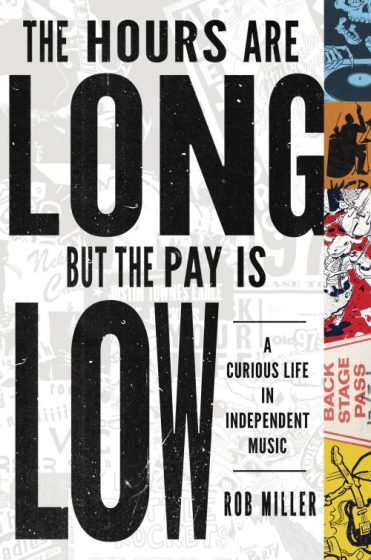
A question anyone who pursues a creative life will ask themselves: Why do we take a vow of poverty to put art into the world? As put forth in Bloodshot Records co-founder Rob Miller’s memoir, The Hours Are Long But The Pay Is Low, it’s because not doing it is not an option.

Chicago-based Bloodshot caught the wave of mid-1990s alternative country, releasing seminal works by Old 97s, Waco Brothers, Robbie Fulks, Sarah Shook, and more. Miller comes across as an OCD character straight out of High Fidelity, and his memories of the label’s hardscrabble early days are refreshingly unpretentious.

Bloodshot’s story wasn’t entirely positive. Its original incarnation ended badly amid disputes between Miller and his business partner (the label was ultimately purchased by Exceleration Music, which operates it now under new management). But Miller summarizes the bad-vibes part only briefly, concentrating instead on telling one man’s love story for music. It’s honestly impossible to imagine him doing anything else. And as the cherry on top, Miller dedicates the book to a pair of late friends including Dex Romweber, who he writes “left this world before he could read what his music meant to me.” – David Menconi

Kristina Murray, Little Blue

Little Blue is an understatement. Kristina Murray’s sterling third LP could convincingly have been called “Huge Bummer,” which is coincidentally the mark of a great country record.

“It’s gonna get worse, just give it time,” Murray incants on “Has Been,” a cheekily dour turn-of-phrase that just may stop you in your tracks. (Surely she means it’s gonna get better, right?) Later, on the dreamy “Fool’s Gold,” Murray tries her best at seeing beyond the proverbial grey skies, only to come up short: “It’s just more clouds,” she sighs. Such moments are appropriately slathered in pedal steel, but there’s also a swampy, rock ‘n’ roll groove to tracks like the deliciously jaded “Watchin’ the World Pass Me By” that makes the whole set go down easy. – Will Groff

Drew Parker

My introduction to Drew Parker was his 2020 single “While You’re Gone,” about missing a girl and drinking a gas station PBR while waiting for her to come back. That song had the classic hallmarks of a contemporary country breakup song. Little did I expect the curveball to come five years later.

For over a month earlier this year, Parker teased a big announcement with cryptic social messages like, “Some chapters end. Some chapters begin. This one… isn’t about me. 9•15•25.” The day came and Parker revealed in a short film testimonial that he’s felt God speaking to him, culminating in Parker’s non-religious manager calling and saying Parker should record Christian (country) music. This “moment” stuck out to me not only for the unexpected manner in which Parker revealed his decision, but because it’s obvious this isn’t a creative “phase.”

I don’t see Parker putting together a “token” record about believing and then going back to just girls, beer, and his pickup. Furthermore, Parker exudes unwavering peace about it all – whether he loses fans or faces mean-spirited judgment. There’s tangible risk to this move and there’s something to be said for Parker’s resolve and frankly, his faith in making this change. – Kira Grunenberg

Nathaniel Rateliff & The Night Sweats Live at the Kia Forum

Thinking back on all the great music I saw this year, the concert topping my list is one I saw at Los Angeles’ Kia Forum in February. The amazing triple bill – a solo Sam Beam, Waxahatchee, and headliner Nathaniel Rateliff & The Night Sweats – all delivered dynamic performances. But it was the unexpected parts of the concert that really made it so memorable.

During his set, Rateliff welcomed several special guests: Lucius’ lead singers Jess Wolfe and Holly Laessig, Taylor and Griffin Goldsmith from Dawes, and Grateful Dead bassist Bob Weir. What especially impressed me, however, was how Rateliff generously let his guests take the spotlight – a gesture that conveyed his joy for making music, particularly in a “more-the-merrier” collaborative way.

The Colorado-based Rateliff and his band also made the extraordinary gesture of using the concert to raise funds for victims of Southern California’s January wildfires as well as partnering in a purchase of a mobile food pantry to assist those left homeless by the destructive fires. This night reminded me how musicians can not only create a genuine sense of community through their rousing performances, but also through their inspiring actions. – Michael Berick

Sinners (Original Motion Picture Soundtrack)

Ryan Coogler’s Sinners is the horror film of 2025. It’s been hard to ignore, and for good reason. Michael B. Jordan, who plays double duty as twin outlaws Smoke and Stake, leads the cast which also includes Hailee Steinfeld, Wunmi Mosaku, and Thomas Pang (also known by his stage name, Yao). The film ultimately raked in $367 million in worldwide box office receipts. From its unique spin on vampires to its rootsy, blues-driven music, Sinners excels in celebrating the rich history of Black music and connects the dots between African tribal music to modern day hip-hop and R&B.

Songs like “Travelin’” (a standout moment from newcomer Miles Caton as musician hopeful Sammie) and the mind-blowing time-traveling song “I Lied to You” (paired in the movie with a visual mixing all the styles of Black-made music throughout history) mark the soundtrack as one of the year’s best releases. It’s sure to give the audience a renewed sense of Black history that’s often correlated to specific moments and eras in time. The film and its soundtrack will be talked about for decades as being a vital cinematic moment. – Bee Delores

Ringo Starr, Look Up

Way back at the beginning of 2025, Ringo Starr reminded us how different the world would look today if not for his love of American roots music. Teaming up with GRAMMY-winning producer T Bone Burnett, Starr’s country album Look Up is a love letter to the sound that drove his imagination.

Over 11 new songs written mostly by Burnett for the occasion, a classic American art form got a British Invasion makeover, with modern masters like Billy Strings, Molly Tuttle, and Alison Krauss joining Starr’s fun. Yet, what made this project a year-end highlight was not just the tunes. It was what they represent. As Starr openly declared, his first musical love was American blues and country. Artists like Lightning Hopkins sparked a creative impulse that would ultimately help redefine pop forever. From releasing music as a self-contained band and writing their own songs, to making youth culture a dominant force, The Beatles would change the world – and who knows? With a different drummer behind the kit, maybe none of it happens. Look Up shows where Starr was coming from. – Chris Parton

Vandoliers, Life Behind Bars

Vandoliers’ fifth studio album, Life Behind Bars, is both joyous and contemplative as the raucous country-punk band dive deep into themes of gender, grief, and sobriety in equal measure. “Dead Canary” blasts eardrums with a Mariachi flavor that barrels full steam ahead, setting the stage for their most impressive record to date. Other essentials such as “Bible Belt” and “Thoughts and Prayers” take aim at the current social and cultural moment, addressing religious fanaticism and how it clouds any sense of empathy.

Songs like “You Can’t Party with the Lights On” and “Valencia,” another Mariachi-intoned moment, are just plain fun. These round out the album into a well-crafted snapshot of the group right now and where they fit into the ever-changing world. Additionally, Vandoliers have never sounded so in tune with one another, vocally and musically, opting for compelling and intricate choices that expand their style without sacrificing what’s made them so good. – Bee Delores

Kelsey Waldon, Every Ghost

As the editor for Good Country and BGS, I listen to hundreds of albums a year, but they rarely stop me in my tracks. That happens even more rarely when album creators are longtime close friends of mine. But despite having met Kentuckian singer-songwriter Kelsey Waldon nearly 15 years ago and adoring all of her LP releases in that time, when Every Ghost first arrived in my email inbox earlier this year, I was floored.

In a world – and industry and genre – absolutely dripping with affectations of country music in lieu of the “real deal,” Waldon’s sixth studio album is dyed in the wool, but unconcerned with meeting those expectations or checking the boxes of trends and salability. These honky-tonking songs are infused with old-time, bluegrass, outlaw, confidence, and Prine-ian philosophizing. Waldon somehow turns introspection and identity into gritty and engaging wit and metaphor, without ever needing to obscure her messages to make them feel artistic or serious or poetic.

Even listeners like myself, who have been in Waldon’s fan club for a decade and a half or who have swapped vegetable seedlings and chicken pics with her, or who have crisscrossed her Ohio river floodplain homeland dozens of times, will learn much more about Waldon, her approach, her sonic loves, and her inner machinations as she pulls back the curtain for all of us on Every Ghost. – Justin Hiltner

Marlon Williams, Te Whare Tīwekaweka

Down here at the bottom of the globe in Aotearoa and Te Waipounamu (the North and South Islands of New Zealand), 2025 has very much been the year of the Māori singer-songwriter Marlon Williams (Kāi Tahu, Ngāi Tai).

Back in April, I interviewed Williams for a Good Country cover story to celebrate his stunning fourth solo album, Te Whare Tīwekaweka (The Messy House) and director Ursula Grace Williams’s equally affecting documentary film Marlon Williams: Ngā Ao E Rua – Two Worlds. Since then, he’s brought his antipodean blend of country and western, folk, rock and roll, and mid-to-late 20th-century pop to audiences across the U.S., UK, Australia, and at home, culminating in taking home the coveted APRA Silver Scroll songwriting award for his single “Aua Atu Rā” in late October.

Written and sung entirely in te reo Māori, the indigenous language of New Zealand, Te Whare Tīwekaweka is a masterful example of how music can use mood and emotion to cross geographic borders and linguistic barriers effortlessly. Even when we don’t speak the same language, we can still find common ground. Sometimes a sense of connection is only a song or two away. – Martyn Pepperell


Photo Credit: Tyler Childers by Sam Waxman; Kelsey Waldon courtesy of the artist; Olivia Ellen Lloyd courtesy of the artist.
BGS Class of 2025: Books

2025 was a standout year for roots music books. In a time of political upheaval and uncertainty, authors like Craig Shelburne & Brenda Colladay and Alisa Murphy brought us deep into the history of music institutions that have weathered generations of American ups and downs: the Grand Ole Opry and The Station Inn. Reading about these places is a reminder that culture is often a better litmus test than news cycles, when it comes to what a country stands for and where its soul can be found.

Biographies of Dolly Parton and Alice Gerrard (the latter written by Gerrard herself) highlight women who defied the odds to become iconic voices in country and old-time. Parton first debuted on the Opry at the age of 13 and her influence on American culture has spanned from highlighting women in the workplace with “9 to 5” to donating a million dollars for medical research to accelerate the creation of the Moderna COVID vaccine. Gerrard, while less of a household name, is considered one of the last of the old guard in traditional music; even if you haven’t heard of her, you’ve probably still been touched by her work. These books detail the unlikelihood of these women’s successes given the time and place of their work and both good reminders of changing gender norms that we now take for granted.

Two books on Black American fiddle and banjo music continue the quest to restore African music’s and African American musicians’ rightful place in the history of the American string band tradition. With additional archival and notation resources, these books offer not only scholarship, but an opportunity for dedicated pickers to add to their repertoire, too.

And finally, roots musicians Paul Burch and Charlie Parr channel their creative writing into novels Meridian Rising and Five, respectively, the former a fictionalized story of Jimmie Rodgers and the latter a wild meditation on the wanderings of a troubadour.

From coffee table aesthetics to novels and new tunes, 2025’s roots music books have you covered! See a list of our favorites and a collection of “honorable mentions” below.

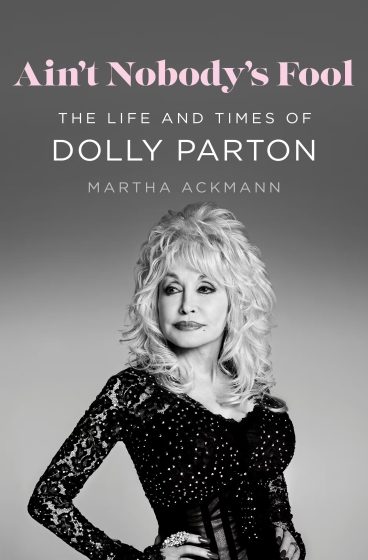
Ain’t Nobody’s Fool: The Life and Times of Dolly Parton by Martha Ackmann

Martha Ackmann is known for illuminating the stories of women who rise above societal expectations, so it’s only appropriate that she should tell the story of Dolly Parton’s ascent to success. With new interviews and documents, the book focuses on the price Parton paid for her early fame, penalized and criticized by those who saw it as a betrayal of her roots. Despite legal battles and struggles with her mental health, Parton persevered and went on to use her affluence to help her East Tennessee home, through the development of Dollywood, her charitable work, and the creation of The Imagination Library. Find it here.


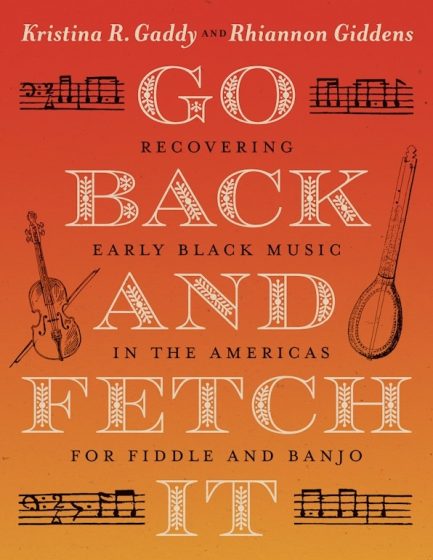
Go Back and Fetch It: Recovering Early Black Music in the Americas for Fiddle and Banjo by Kristina R Gaddy and Rhiannon Giddens

Appropriate for pickers and scholars alike, this collection of early Black Atlantic music is equal parts songbook and history lesson. Nineteen carefully transcribed tunes sourced from 1687 to the 1860s are presented in standard notation and banjo tablature, and accompanied by rich historical essays detailing their origins, cultural context, and evolution over time and place. This collection is another important step in the recovery of Black history of the American musical canon – and specifically the fiddle and banjo canon – from two lauded experts on the subject. Find it here.


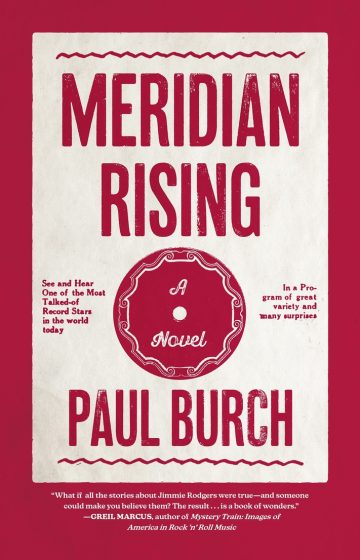
Meridian Rising by Paul Burch 

Meridian Rising, the debut novel from Paul Burch, fictionalizes the life of country star Jimmie Rodgers and was released this fall to rave reviews. As the Chattanooga Free Press says, “Burch must have done a great deal of research to deliver a story that feels so authentic, but research alone doesn’t make a good novel. The writing is what matters, and Burch skillfully renders a large cast of narrators throughout Meridian Rising, especially its main subject, whose witty, sometimes barbed voice is vivid and memorable.” Find it here.


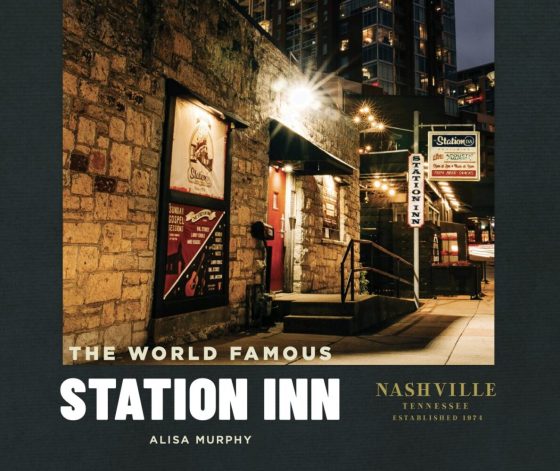
The World Famous Station Inn by Alisa M Murphy 

The passing of JT Gray in 2021 marked the end of an era for The Station Inn. Although the venue continues its bluegrass legacy with new management, it has been long past time to commemorate this (as its name rightly points out) world-famous venue with a book of stories and photos. Author Alisa M Murphy spent two years immersing herself in the culture of the venue and conducting interviews to put together her coffee-table book, The World Famous Station Inn. Find it here.


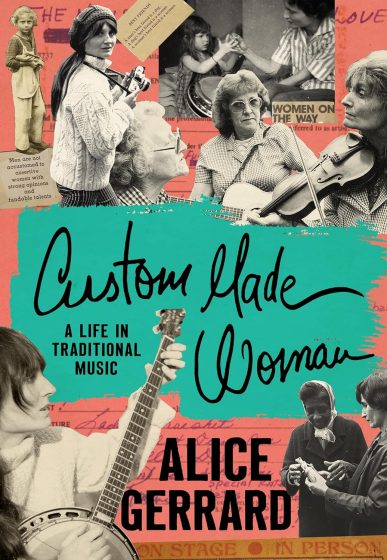
Custom Made Woman: A Life in Traditional Music by Alice Gerrard

This new memoir from one of our national treasures, Alice Gerrard, features over 100 of her personal photographs along with stories from pivotal times and an exceptional life in traditional music. Gerrard’s career saw her crossing paths with Bob Dylan, Doc Watson, Elizabeth Cotten, and many more. Recent rereleases of Gerrard’s trailblazing collaboration albums with Hazel Dickens have been put out by Rounder Records and Smithsonian Folkways, and they can be listened to in an entirely new context thanks to this book. Find it here.


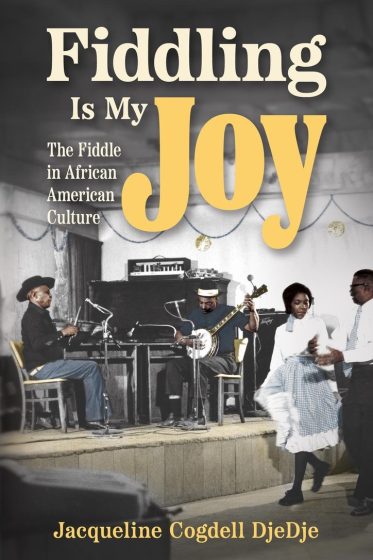
Fiddling is My Joy: The Fiddle In African American Culture by Jacqueline Cogdell DjeDje

UCLA Ethnomusicologist Jacqueline C. DjeDje investigates the fiddle in Black America, not only helping restore it to its rightful position in history, but also exploring why fiddle in African American culture disappeared from the mainstream story of the instrument in the first place. In addition to exploring geographic differences in African American fiddling traditions, DjeDje’s scholarship looks at fiddle traditions in West African and how their specific characteristics made their way to both Black and white American fiddlers. The book is accompanied by an online eScholarship Companion with primary source documents and audiovisual examples of music discussed in the text. Find it here.


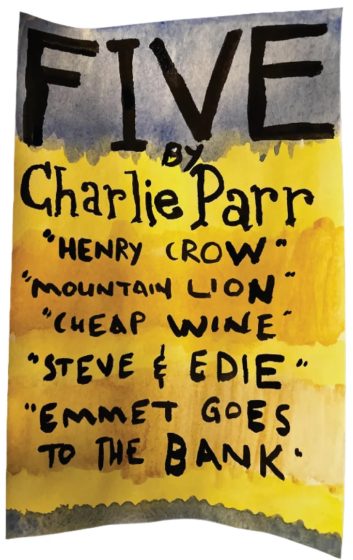
Five by Charlie Parr

The second collection of short fiction from beloved Minnesota musician Charlie Parr is not for lovers of a tight plot and succinct characters. Parr’s five stories are, according to his own description, “more like sad anecdotes told to you at the end of an impossibly long dinner party by the drunken spouse of someone that you barely know while you’re easing your way to the door, having already put your coat on around the time that these stories began.”

But, if you’re a fan of Parr and his 18 (!!!) studio albums, this collection is a must. Find it here.


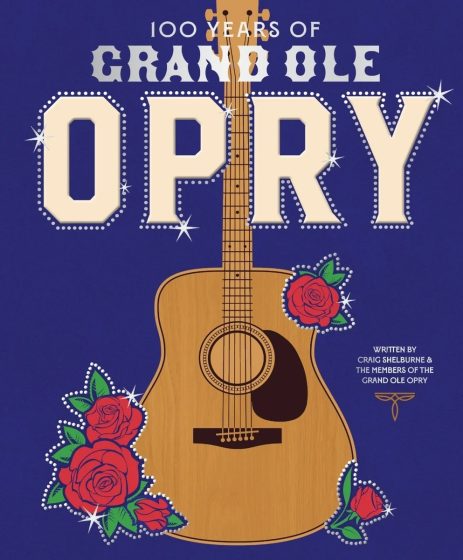
100 Years of Grand Ole Opry by Brenda Colladay & Craig Shelburne

Music journalist Craig Shelburne worked tirelessly with Opry historian Brenda Colladay – and dozens of artist, announcer, and Opry employee interviewees – to tell the story of the world’s longest-running live radio show over a century. The Grand Ole Opry is certainly the main character. This book is perfect for collectors and readers alike, since it’s full of illustrations and photographs. It’s separated into chapters by time periods, following the twists and turns of the Opry’s youth, adolescence, and adulthood. From Lester Flatt to the 2010 flood, the book is as deep as it is wide. An entertaining resource for country fans who like to get the full story. Find it here.


Other Reads From Our Inbox

  • Solomon Simon Dog Man Jack by Cindy Baucom, illustrated by Grace van’t Hof (Self-published)
  • Bluegrass Gospel: The Music Ministry of Jerry and Tammy Sullivan by Jack Edward Bernhardt (University Press of Mississippi)
  • Land of a Thousand Sessions: The Complete Muscle Shoals Story by Rob Bowman (Malaco Records Press)
  • Heart Life Music by Kenny Chesney with Holly Gleason (Harper Collins)
  • Southern Mountain Music: The Collected Writings of Wayne Erbsen (McFarland Books)
  • Howdy! Welcome to the Grand Ole Opry! by Emily Frans (Abrams Books)
  • Blood Harmony: The Everly Brothers Story by Barry Mazor (Da Capo Press)
  • The Hours Are Long, But the Pay Is Low: A Curious Life in Independent Music by Rob Miller (University of Illinois Press)
  • Star of the Show: My Life On Stage by Dolly Parton (Ten Speed Press)
  • Roots & Rhythm: A Life in Music by Charlie Peacock (Eardmans)
  • Poets and Dreamers: My Life in Americana Music by Tamara Saviano (Texas A&M University Press)
  • Bluegrass and Religion by Pete Ward (Bloomsbury)


An AKUS Primer: Alison Krauss and (Mostly) Union Station for Beginners

While you know better, there’s a wide swath of the music-listening world in which Alison Krauss is best known as former Led Zeppelin golden god Robert Plant’s duet partner. Yet, Krauss has had a wholly remarkable career going back nearly 40 years, in which she has exhibited profound collaborative instincts and abilities.

On the occasion of the release of Arcadia, her first album with Union Station in 14 years (as well as a reunion with the founders of her former longtime label, Rounder Records), we look back at some of Krauss’ career highlights in and out of Union Station.

“Cluck Old Hen” (traditional; 1992-2007)

We begin with a literal oldie, “Cluck Old Hen,” from the pre-bluegrass era, which demonstrates two things – that Alison Krauss has always revered the history, roots, and traditions of bluegrass; and that Union Station is one incredible ensemble. Recordings of this Appalachian fiddle tune go back more than a century, to country music forefather Fiddlin’ John Carson in the 1920s.

Krauss first released an instrumental version of the tune on 1992’s Everytime You Say Goodbye (her second LP with Union Station), and won a GRAMMY with the onstage version on 2002’s AKUS album, Live. But feast your ears and eyes on this 2007 performance at the Grand Ole Opry, with a pre-teen Sierra Hull sitting in.

1992 studio version: 

2002 live version:


“When You Say Nothing At All” (Paul Overstreet & Don Schlitz; 1994)

After a decade of steadily accelerating momentum, Krauss had her big commercial breakout with this AKUS cover of the late Keith Whitley’s 1988 country chart-topper. Krauss sang it on 1994’s Keith Whitley: A Tribute Album and it served as centerpiece of her own 1995 album, Now That I’ve Found You: A Collection. It reached No. 3 on the country singles chart and went on to win the Country Music Association’s single of the year plus a GRAMMY Award. You can hear why.

Whitley’s version:


“I Can Let Go Now” (Michael McDonald; 1997)

For any interpretive singer, the choice of material is key. And if the singer in question has Krauss’ range and chops and vision, some truly unlikely alchemy is possible. Among the best examples from the AKUS repertoire is “I Can Let Go Now,” a deep cut on Doobie Brothers frontman Michael McDonald’s 1982 solo album, If That’s What It Takes. Another amazing Krauss vocal in a career full of them.

McDonald’s version:


“Man of Constant Sorrow” (traditional; 2000-2002)

Before O Brother, Where Art Thou?, you wouldn’t have called singer-guitarist Dan Tyminski the unheralded “secret weapon” of AKUS. Nevertheless, he didn’t become a star in his own right until serving as movie star George Clooney’s singing voice in the Coen Brothers loopy, Odyssey-inspired farce. “Man of Constant Sorrow” was the hit in the movie and also on the radio, launching Tyminski to solo stardom.

Resonator guitarist Jerry Douglas especially shines on this version from 2002’s Live, recorded in Louisville – you can just tell everyone in the crowd was waiting for the “I bid farewell to old Kentucky” line so they could go nuts. Tyminski would have another unlikely hit in 2013, singing on Swedish deejay Avicii’s “Hey Brother.”

O Brother version:


“New Favorite” (Gillian Welch & David Rawlings; 2001)

Kraus sang on the GRAMMY-winning O Brother soundtrack, too, alongside Gillian Welch. It will come as no surprise that the Welch/Rawlings catalog has been a recurrent favorite song source for her. One of Krauss’ best Welch/Rawlings selections is “New Favorite,” title track of the thrice-GRAMMY-winning 2001 AKUS album. Though it’s edited out in this video, the album-closing version concluded with a rare in-the-studio instrumental flub, followed by sheepish laughter to end the record. Perhaps the AKUS crew is human after all?


“Borderline” (Sidney & Suzanne Cox; 2004)

The story goes that the first time Krauss was on the summer touring circuit, she’d go around knocking on camper doors at bluegrass festivals to ask whoever answered, “Are you the Cox Family?” Once she found them, she didn’t let go, and the Coxes became some of the best of her collaborators and song providers. Along with producing their albums, Krauss covered Cox compositions frequently; “Borderline” appeared on 2004’s Lonely Runs Both Ways, another triple GRAMMY winner.


“Big Log” (Robert Plant, Robbie Blunt, Jezz Woodroffe; 2004)

When Krauss first sang with Robert Plant at a Leadbelly tribute concert in November 2004, it seemed like the unlikeliest of pairings. But here’s proof that they had more in common than you’d expect, with Krauss covering a solo Plant hit from 1983. She sang “Big Log” on her brother Victor Krauss’ album, Far From Enough, which was released earlier in 2004.

This video pairs the Krauss siblings’ version with Plant’s original 1983 video, directed by Storm Thorgerson.


“Dimming of the Day” (Richard & Linda Thompson; 2011)

Fairport Convention guitarist Richard Thompson is one of the finest instrumentalists of his generation as well as a brilliant songwriter, especially with his former wife and collaborator Linda Thompson. This stately, bittersweet love song dates back to their 1975 duo LP, Pour Down Like Silver, and Linda sets the bar high with a stoic yet emotional vocal. Krauss more than lives up to it on the 2011 AKUS album Paper Airplane, which also offers another great showcase for resonator guitarist Douglas.

Richard & Linda’s version: 


“Your Long Journey” (Doc & Rosa Lee Watson; 2007)

Krauss isn’t just a spectacular lead vocalist, but also an amazing harmony singer, one of the few who can hold a candle to Emmylou Harris. Retitled from the Doc/Rosa Lee Watson original, “Your Lone Journey,” this closing track to 2007’s grand-slam GRAMMY winner Raising Sand has Krauss’ most emotional vocal harmonies with Plant on either of their two albums together.

Doc Watson’s version:


“Heaven’s Bright Shore” (A. Kennedy; 1989, 2015)

All that, and she’s an incredible backup vocalist to boot. “Heaven’s Bright Shore” is a gospel song Krauss first recorded as a teenager on 1989’s Two Highways, her first album billed as Alison Krauss & Union Station (and also her first to receive a GRAMMY nomination). It’s great, but an even better version is this 2015 recording in which she’s backing up bluegrass patriarch Ralph Stanley alongside Judy Marshall.

AKUS version: 


“The Captain’s Daughter” (Johnny Cash & Robert Lee Castleman; 2018)

The late great Johnny Cash left behind a lot of writings after he died in 2003, some of which were turned into songs for the 2018 tribute album, Forever Words: The Music. None of his songs ever had it so good as “The Captain’s Daughter.” This superlative AKUS version fits Cash’s words like a glove.


Continue exploring our Artist of the Month coverage of Alison Krauss & Union Station here.

Alison Krauss & Union Station figure prominently in David Menconi’s book, Oh, Didn’t They Ramble: Rounder Records and the Transformation of American Roots Music, published in 2023 by University of North Carolina Press and featuring a foreword by Robert Plant.

Photo Credit: Randee St. Nicholas

Six of the Best Alison Krauss Covers

Alison Krauss has been recording and releasing music with her band, Union Station, for longer than she’s been able to legally drink or vote. Along the way, she’s been a key influence in the lives and careers of countless other musicians, many of whom have recorded and performed covers of their favorite Alison Krauss material.

Famously signing with Rounder Records when she was just 16, Krauss has spent the past four decades offering inspiration to multiple generations of artists spanning many genres, from bluegrass and country to Americana, folk, and beyond. She’s collaborated with fellow legends like Dolly Parton, Neil Young, and Robert Plant, and her list of honors includes not one, not two, but 27 GRAMMY Awards. In fact, she’s the fifth-most GRAMMY-awarded musician of all time, across all genres and categories.

As we highlight the vibrant legacy of Alison Krauss & Union Station, our Artist of the Month, in celebration of Arcadia, their first album in over a decade, we’re carving out some space for the performers who have skillfully and reverently covered Krauss and her music over the years. From big names and bluegrass stalwarts to some less expected artists that land a bit further off the beaten path.

While not all of our selections are Alison Krauss & Union Station originals, you can tell each of these musicians have been distinctly inspired by Krauss and her musical legacy. The internet is chock full of Alison Krauss covers, and we think these are six of the best.

“Whiskey Lullaby” – Kaitlin Butts and Flatland Cavalry

Originally released by Brad Paisley on his 2003 album, Mud on the Tires, “Whiskey Lullaby” was penned by Jon Randall and Bill Anderson and remains one of Krauss’s most popular songs as a featured guest artist. This cover by country phenoms Kaitlin Butts and Cleto Cordero of Flatland Cavalry – and featuring multi-instrumentalist Kurt Ozan on Dobro – infuses fresh grit and intimacy into the somber sensitivity of the original. While it’s hard to compete with Krauss’s bright, soaring vocals, Butts honors them well while staying true to her own rich vocal timbre.

We also recommend checking out this version where Paisley and Krauss perform the track at Carnegie Hall back in 2005.

Plus, the pair recently reunited on the special Opry 100: A Live Celebration TV broadcast to perform the song, as well. It was one of our favorite moments from the event.


“The Boy Who Wouldn’t Hoe Corn” – Dan Tyminski

You might know Dan Tyminski as the voice of Ulysses Everett McGill (AKA George Clooney’s character in O Brother, Where Art Thou?), but he was also a longtime member of Alison Krauss & Union Station. In 2001, Tyminski arranged and recorded a version of “The Boy Who Wouldn’t Hoe Corn” for the band’s album New Favorite.

In this video recorded for BBC Four, Tyminski leads the charge, belting this stunning rendition of the American folk traditional. While admittedly not a cover in the truest sense of the word (since Tyminski also sings lead vocals on the original), we couldn’t help but include this heart-stopping performance with Jerry Douglas, Russ Barenburg, Aly Bain, and more.

Tyminski performs the song as a member of Alison Krauss & Union Station in this equally impressive video from a 2002 performance in Louisville, Kentucky.

Tyminski left AKUS before the release of Arcadia and has been replaced in the band and on the recordings by bluegrass veteran Russell Moore. Still, Tyminski does appear on Arcadia on a couple of tracks and he also co-wrote “The Wrong Way.”


“My Love Follows You Where You Go” – Lori McKenna

Another unconventional cover, Lori McKenna co-wrote “My Love Follows You Where You Go” for Alison Krauss, but she didn’t record or release it herself until 2013. Alison Krauss & Union Station had recorded and released it on their acclaimed 2011 album, Paper Airplane.

This offbeat love song captures the richness and complexity of Krauss’s singing and performance style; hearing McKenna perform it adds another layer of depth. McKenna wrote the track with Barry Dean and Liz Rose as a bittersweet love note to her children. She shared her feelings about it with American Songwriter in 2013: “I was able to sing it pretty well. Not as beautifully as Alison Krauss, of course. But I’m happy that one made my record because it is such a message to our kids.”

Watch AKUS performing the number on a live television performance from 2011:


“Let Me Touch You For A While” — Mary Spender

Mary Spender isn’t too well-known in the American bluegrass scene, but she’s an acclaimed British singer-songwriter and YouTuber. Guitarist Magazine even called her “one of the most dynamic, expressive young British singer-songwriters working today.” She’s one of many young musicians who draws inspiration from Alison Krauss.

Spender has one of those rich, soulful voices that makes you stop and catch your breath when you first hear it. It’s hard to anticipate and it’s also very distinct from Krauss’s light, angelic voice. But in this cover of “Let Me Touch You For A While,” Spender offers a simple yet jaw-dropping performance that boldly honors the original while taking things in a unique direction. Accompanied only by her guitar, Spender brings a sultry, driving energy to the song’s emotional complexity and leans into her impressive vocal range.

Originally recording the track in 2001 for New Favorite, it would go on to become one of their most recognizable hits. Krauss & Union Station performed “Let Me Touch You For A While” alongside Jerry Douglas at the Opry 100 celebration last month.


“No Place to Hide” – Adam Steffey

If you’re a diehard AKUS fan, you’ll definitely recognize Adam Steffey’s name; he’s another past member of Union Station from 1990 to 1998. Here, Steffey and his own band (including Tyminski) give a raucous rendition of “No Place to Hide,” a song Steffey recorded with Union Station on So Long So Wrong (1997). A straightforward “mash” bluegrass track, “No Place to Hide” booms and rolls with the band’s strong vocal harmonies and tight, effortless timing.

Here’s a much earlier live version of the song that’s got a more traditional bluegrass sound by Krauss and band:


“The Lucky One” – Jessica Willis Fisher, Gavin Trent

One of Krauss’s major country hits, “The Lucky One” was originally released on New Favorite in 2001. That same year, it won two GRAMMY Awards: Best Country Song and Best Country Performance by a Duo or Group. This stripped-down cover by Jessica Willis Fisher and Gavin Trent honors Krauss’s voice and musicianship in a way few other musicians can. Fisher has a similarly bright, soprano voice, and she can definitely hold her own on the fiddle, which she’s been playing since she was a child. As soon as you start listening, it’s clear Fisher is inspired by Krauss and this rendition serves as a fitting tribute.

A lifelong musician, Fisher has received praise from CMT, American Songwriter, and Billboard, and she’s worked with some of the same songwriters who write for AKUS – but it’s still possible you’ve never heard of her. Fisher has intentionally stayed out of the public eye in recent years (despite releasing her debut solo album, Brand New Day, in 2022) due to significant personal trauma tied to her family history. Fisher now uses the trauma she’s endured to help others heal, both through her music and her writing.

Alison Krauss & Union Station performed “The Lucky One” live on CMT in 2005:


Explore more of our Artist of the Month content on Alison Krauss & Union Station here.

Photo Credit: Randee St. Nicholas

Celebrating Women’s History Month: Sister Rosetta Tharpe, Laurie Lewis, and More

Our partnership with our friends at Real Roots Radio in Southwestern Ohio concludes as we wind down our weekly celebration of Women’s History Month. We’re proud to have brought you four collections of a variety of powerful women in bluegrass, country, Americana, folk, and elsewhere who have been featured on Real Roots Radio’s airwaves each weekday in March, highlighting the outsized impact women have on American roots music. You can listen to Real Roots Radio online 24/7 or via their FREE app for smartphones or tablets. If you’re based in Ohio, tune in via 100.3 (Xenia, Dayton, Springfield), 106.7 (Wilmington), or 105.5 (Eaton).

American roots music, historically and currently, has often been regarded as a male-dominated space. It’s certainly true of the music industry in general and these more down-home musics are no exception. Thankfully, American roots music and its many offshoots, branches, and associated folkways include hundreds and thousands of women who have greatly impacted these art forms, altering the courses of roots music history. Some are relatively unknown – or underappreciated or unsung – and others are global phenomena or household names.

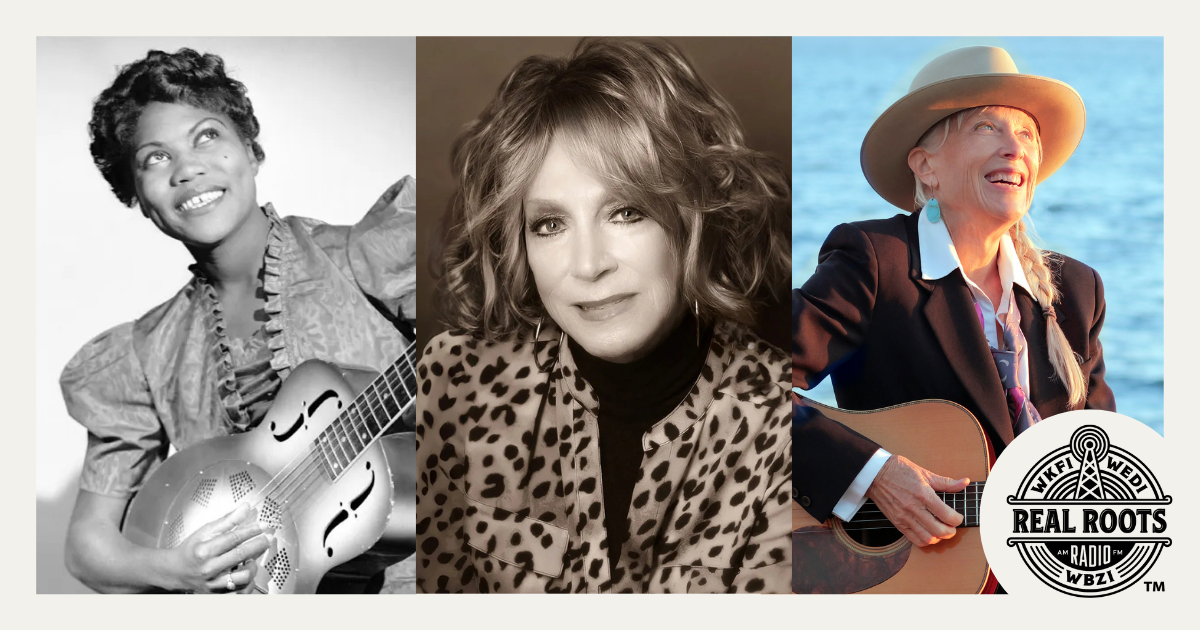
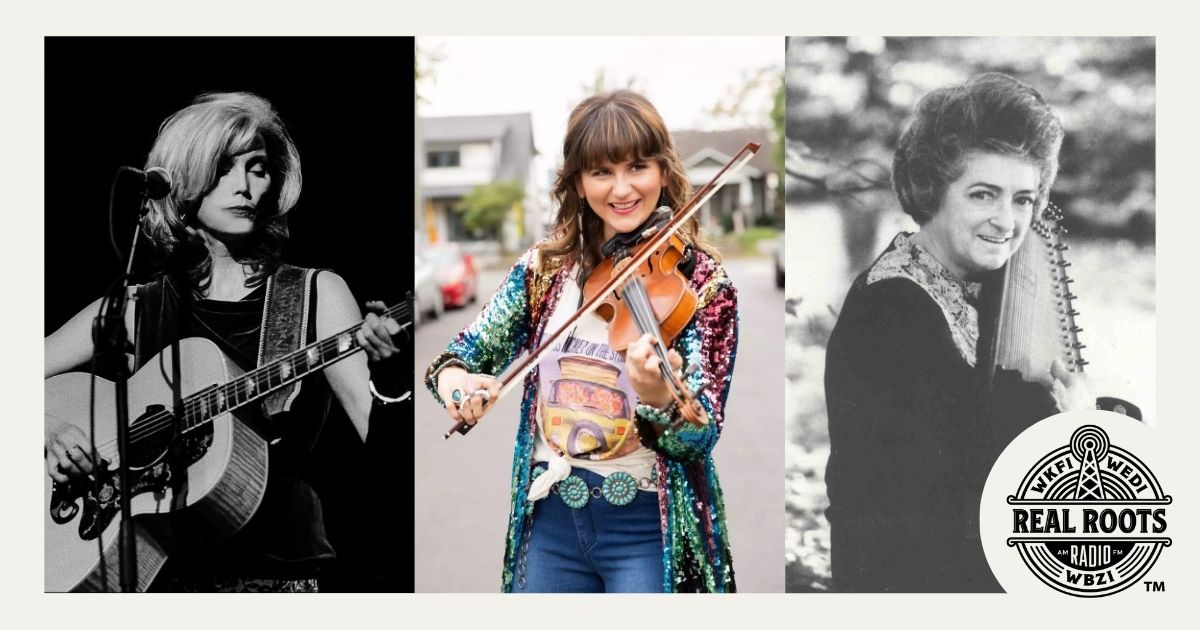
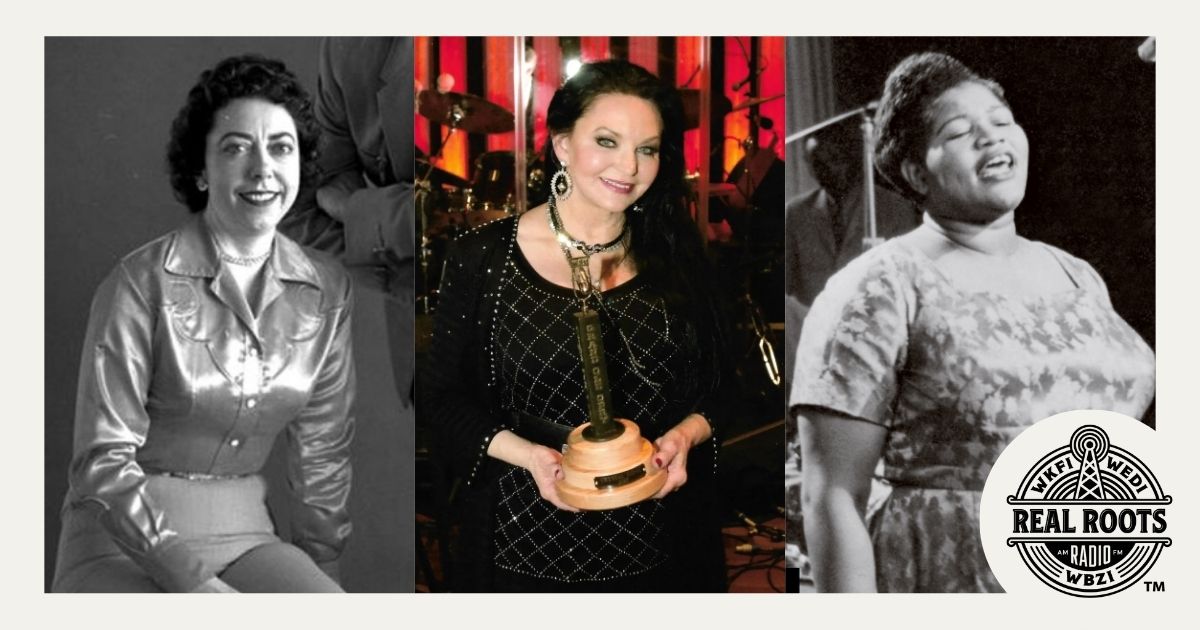
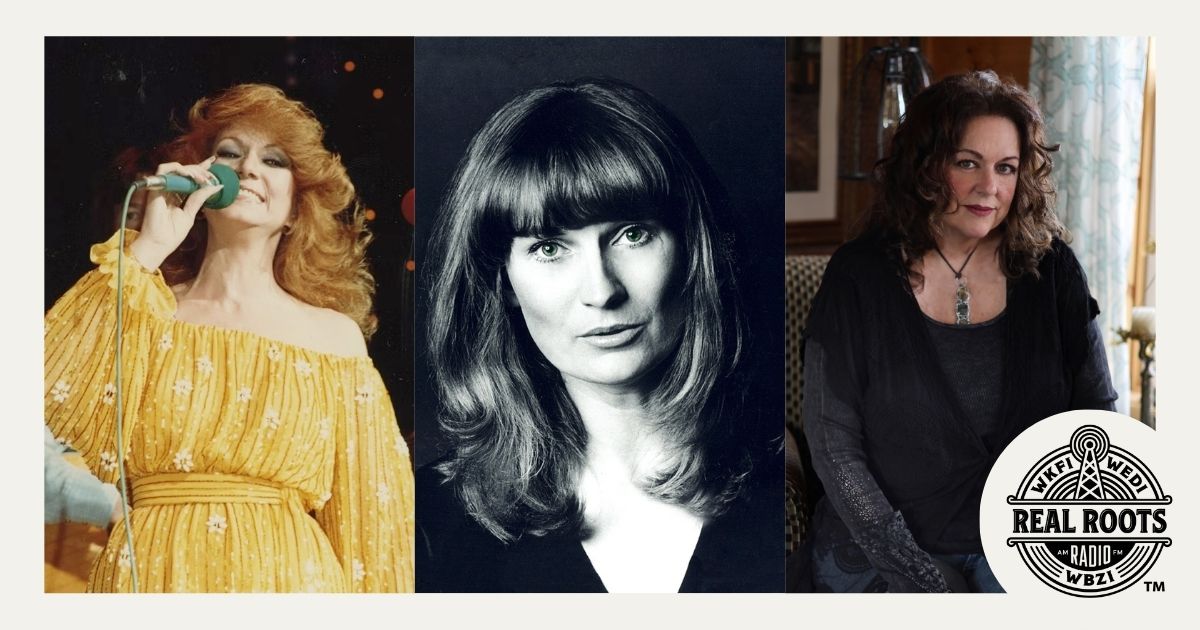
Over the last few weeks, radio host Daniel Mullins, who together with BGS and Good Country staff has curated the series, has brought you just a few examples of women in roots music from all levels of notoriety and stature. Week one featured Dottie West, Gail Davies, and more. Week two shone a spotlight on Big Mama Thornton, Crystal Gayle, Rose Maddox, and more. Week three, paid tribute to Emmylou Harris, Wild Rose, Mother Maybelle, and more. This final installment of the series celebrates Laurie Lewis, the Coon Creek Girls, Amanda Smith, Sister Rosetta Tharpe, Petticoat Junction, and Jeannie Seely.

Plus, you can find two playlists below – one centered on bluegrass, the other on country – with dozens of songs from countless women artists, performers, songwriters, and instrumentalists who effortlessly demonstrate how none of these roots genres would exist without women.

Laurie Lewis (b. 1950)

A GRAMMY-winning singer, songwriter, and fiddler, Laurie Lewis is a California native who has been blazing trails in bluegrass for over four decades. She became enamored with folk music after attending the Berkeley Folk Festival in her youth – she has since made an indelible mark on American roots music with her work in bluegrass and beyond!

Whether leading her band, Laurie Lewis & The Right Hands, performing solo, or collaborating with her pal Kathy Kallick – with whom she helped found the Good Ol’ Persons in 1970s, pushing norms in the process – Laurie’s soulful vocals and skilled fiddle work have made her a standout in bluegrass for a lifetime. Her songwriting paints vivid pictures of love, loss, and the land, while her honest voice pulls at the heartstrings, earning her two IBMA Female Vocalist of the Year awards.

Her recording of “Who Will Watch the Home Place” was named IBMA’s Song of the Year in 1994 and has touched hearts for generations. It’s a certified bluegrass classic and is still a staple on bluegrass radio programs. Another beloved composition, “Love Chooses You,” has been recorded by Laurie, Jeannie Kendall, Kathy Mattea, and more.

Laurie Lewis isn’t just a performer – she’s a mentor, a producer, and a keeper of the bluegrass flame, not only by encouraging the next generation of bluegrass music makers, but also by shining a light on significant voices of the past like Vern & Ray and Hazel & Alice. This West Coast bluegrass leader was honored by the IBMA with their Distinguished Achievement Award in 2024.

Suggested Listening:
“Love Chooses You”
“The Bear Song”
“I’m Gonna Be the Wind”

The Coon Creek Girls (active 1937 – 1957)

We’re heading back to the 1930s with an all-female string band that made history, the one and only Coon Creek Girls! It was 1937 when talent scout and radio pioneer John Lair formed the Coon Creek Girls for the Renfro Valley Barn Dance radio show on the airwaves of Cincinnati’s WLW. Led by the talented Lily May Ledford on banjo alongside her sister Rosie, Esther Koehler, and Evelyn Lange, these ladies brought high-energy mountain music to the masses.

Their popularity on radio brought opportunities to tour around the Midwest and even record in Chicago. They didn’t just play, they broke barriers! In 1939, First Lady Eleanor Roosevelt selected the Coon Creek Girls to perform at the White House for President Franklin D. Roosevelt and the King and Queen of England. A hillbilly band of women? Unheard of at the time! But they proved talent knows no boundaries.

The Coon Creek Girls would be an influence on folks like Cathy Fink, Suzanne Edmondson (of The Hot Mud Family and Dry Branch Fire Squad), and even Pete Seeger. While the historic group would disband in the 1950s, John Lair would revive their legacy decades later by helping pull together another all-female bluegrass band to again perform at the Renfro Valley Barn Dance (which had relocated to Mount Vernon, Kentucky, becoming a popular country music tourist destination for decades). With the blessing of Lily May Ledford, this new act was called The New Coon Creek Girls and would make music consistently for nearly twenty years, helping springboard the careers of Pam Perry and Pamela Gadd (of Wild Rose), Wanda Barnett, Vicki Simmons, Deanie Richardson, Dale Ann Bradley, and more.

The Coon Creek Girls inspired generations, proving women belonged in country and bluegrass. Their legacy lives on in every banjo-pickin’ girl who follows in their footsteps!

Suggested Listening:
“Flowers Blooming In The Wildwood”
“Banjo Pickin’ Girl”

Amanda Smith (b. 1975)

Amanda Smith’s voice soars like the mountains of West Virginia from which she comes. She has been a force in the bluegrass world for years. Amanda met her husband Kenny in the mid ’90s at a Lonesome River Band concert (he was playing guitar with LRB at the time). Not only did Kenny fall in love with Amanda, but he fell in love with her voice as well.

Kenny would leave LRB at the turn-of-the-century and he and Amanda would form the renowned Kenny & Amanda Smith Band, a duo celebrated for their tight harmonies and masterful musicianship. They were named Emerging Artist of the Year by the IBMA in 2003 and they haven’t slowed down since. With a sound built on Amanda’s gripping vocals and Kenny’s exquisite guitar work, they have been a staple of the bluegrass world for nearly twenty-five years, racking up many #1 hits on bluegrass radio and frequently seen on stages across the country – both as a duo and with the Kenny & Amanda Smith Band.

Their band has also introduced bluegrass audiences to some of the top pickers of today’s generation, including Jason Davis, Zachary McLamb, Cory Piatt, and Alan Bartram (Amanda’s brother-in-law). Whether delivering beautiful ballads or bluegrass barnburners, Amanda’s voice is one of the most beloved in the genre today, leading to multiple awards, including the IBMA Female Vocalist of the Year honor in 2014. From festival stages to radio waves, Amanda Smith continues to leave a lasting mark on bluegrass.

Suggested Listening:
“Feeling of Falling”
“Mountain Top”

Sister Rosetta Tharpe (1915 – 1973)

The Godmother of Rock ‘n’ Roll, Sister Rosetta Tharpe was one of the most influential artists of the 20th century. Born in 1915, Tharpe was shredding on an electric guitar before rock even had a name! With a gospel heart and a rock and roll soul, she fused spirituals with electrifying riffs, paving the way for Chuck Berry, Elvis, and even Jimi Hendrix. Her hit, “Strange Things Happening Every Day,” was one of the first gospel songs to cross over to mainstream charts and is pointed to by many as the first rock and roll record, proving that faith and fiery licks could share the stage.

The juxtaposition of performing her powerful gospel songs in smoky barrooms is the stuff of legend. Her gospel hits like “This Train,” “Down by the Riverside,” “Up Above My Head,” and “The Lonesome Road” are still revered and helped shape the musical identity of artists as diverse as Johnny Cash, Elvis Presley, Tina Turner, Jerry Lee Lewis, Rhiannon Giddens, and more. Despite being a woman in a male-dominated industry, she didn’t just break barriers – she smashed them! Sister Rosetta Tharpe was posthumously inducted into the Rock and Roll Hall of Fame in 2018.

Suggested Listening:
“This Train”
“Up Above My Head”

Petticoat Junction (active 1988 – 1998)

A bluegrass festival mainstay of the ’80s and ’90s, Petticoat Junction was a popular all-female traditional bluegrass band that helped open doors for some of today’s “girl groups” like Della Mae and Sister Sadie. In fact, there are several direct connections between Sister Sadie and Petticoat Junction. Not only was Sadie banjoist Gena Britt a member of Petticoat Junction (primarily playing bass), but reigning IBMA Female Vocalist of the Year Jaelee Roberts has followed in her mother’s footsteps. Andrea Mullins Roberts was an anchor of Petticoat Junction’s sound with her rich, traditional voice and strong guitar playing before becoming a respected booking agent, manager, and behind-the-scenes businessperson in today’s bluegrass industry.

One of the most celebrated lineups of Petticoat Junction featured Robin Roller (banjo) and Gail Rudisill-Johnson (fiddle) alongside the aforementioned Andrea and Gena. This particular four-piece ensemble released a pair of great albums for Pinecastle Records in the early ’90s, in addition to touring heavily at festivals from coast-to-coast. Deriving their name from the popular ’60s sitcom (whose theme song would be a hit for Flatt & Scruggs), their heartfelt vocals and instrumental prowess shone brightly, whether on original songs or on material from the likes of Jimmy Martin, Reno & Smiley, Flatt & Scruggs, and more.

In addition to continuing to open avenues for other all-women bands, Petticoat Junction’s influence is still being felt in the 21st century as they’ve influenced acts like Flatt Lonesome and Starlett & Big John.

Suggested Listening:
“I’d Miss You”
“Lift Your Eyes To Jesus”

Jeannie Seely (b. 1940)

From the bright lights of the Grand Ole Opry to the heart of country music, today we’re tipping our hats to “Miss Country Soul,”  Jeannie Seely! Born in Pennsylvania, but a Nashville star through and through, Jeannie Seely made history in 1966 with her Grammy-winning hit “Don’t Touch Me,” an envelope-pushing and controversial song due to its featuring a woman expressing sexual desires. With her bold style, unmistakable voice, and trailblazing spirit, she became a beloved icon in country music.

Seely shattered barriers, becoming the first performer to wear a miniskirt on the Opry stage (among other fashion trends she helped bring to country music), being the first woman to host an Opry segment, and fiercely advocating for women in country. Jeannie’s also a respected country music songwriter, writing hits like “Leavin’ and Sayin’ Goodbye” (Faron Young), “He’s All I Need” (Dottie West), “Enough to Lie” (Ray Price), and more; folks like Merle Haggard, Rhonda Vincent, Connie Smith, Ernest Tubb, and Little Jimmy Dickens have recorded her songs over the years.

More than 50 years later, Jeannie is still gracing the Grand Ole Opry stage, holding the record for the most Opry performances ever – 5,200+ appearances and counting! Just as Dottie West encouraged her when she was a young country artist, Jeannie is constantly investing in the future of country as a dear friend and mentor to her Opry sisters, like Carly Pearce and Rhonda Vincent, and even to the young bluegrass band, Cutter & Cash and The Kentucky Grass. She proves that true country never fades. So here’s to Jeannie Seely – an icon, a trailblazer, and a country legend who continues to shine!

Suggested Listening:
“Can I Sleep In Your Arms”
“So Far, So Good” (featuring The Whites)


Photo Credit: Sister Rosetta Tharpe from the Michael Ochs Archives; Jeannie Seely by Cyndi Hornsby; Laurie Lewis by Irene Young.

Celebrating Women’s History Month: Emmylou Harris, Mother Maybelle, and More

Our partnership with our friends at Real Roots Radio in Southwestern Ohio continues as we celebrate Women’s History Month. We’re proud to bring you weekly collections of a variety of powerful women in bluegrass, country, Americana, folk, and elsewhere who have been featured on Real Roots Radio’s airwaves each weekday in March, highlighting the outsized impact women have on American roots music. You can listen to Real Roots Radio online 24/7 or via their FREE app for smartphones or tablets. If you’re based in Ohio, tune in via 100.3 (Xenia, Dayton, Springfield), 106.7 (Wilmington), or 105.5 (Eaton).

American roots music, historically and currently, has often been regarded as a male-dominated space. It’s certainly true of the music industry in general and these more down-home musics are no exception. Thankfully, American roots music and its many offshoots, branches, and associated folkways include hundreds and thousands of women who have greatly impacted these art forms, altering the courses of roots music history. Some are relatively unknown – or under-appreciated or undersung – and others are global phenomena or household names.

Over the last few weeks, radio host Daniel Mullins, who together with BGS and Good Country staff has curated the series, has brought you just a few examples of women in roots music from all levels of notoriety and stature. Week one featured Dottie West, Gail Davies, and more. Week two shone a spotlight on Big Mama Thornton, Crystal Gayle, Rose Maddox, and more. This week, we’ll pay tribute to Emmylou Harris, Wild Rose, Goldie Hill, Jenee Fleenor, and Mother Maybelle Carter. We’ll return next week for the final installment of the series – with even more examples of women who blazed a trail in roots music.

Plus, you can find two playlists below – one centered on bluegrass, the other on country – with dozens of songs from countless women artists, performers, songwriters, and instrumentalists who effortlessly demonstrate how none of these roots genres would exist without women.

Emmylou Harris (b. 1947)

Let’s spotlight a true legend of American music: Emmylou Harris. Born on April 2, 1947, in Birmingham, Alabama, Emmylou Harris grew up in a military family, moving frequently across the South. A straight-A student and class valedictorian, she initially pursued drama at the University of North Carolina. However, her passion for music led her to the vibrant folk scene of Greenwich Village in the late 1960s.

Her big break came when she collaborated with Gram Parsons, contributing to the birth of country rock as a genre. After Parsons’ untimely death, Harris embarked on a solo career, releasing her acclaimed album Pieces of the Sky in 1975. Over the next four decades, Harris became a musical chameleon, effortlessly blending folk, country, and rock. Her collaborations read like a who’s-who of music legends, including Rodney Crowell, Mark Knopfler, Ricky Skaggs, and as one third of “Trio” alongside Dolly Parton and Linda Ronstadt.

In 1992, Harris recorded an acoustic album at the Mother Church of Country Music. The historic building had been practically abandoned and nearly condemned, but the success of Emmylou’s live project At The Ryman is largely viewed as responsible for saving the historic landmark. Her 1995 album, Wrecking Ball, is also significant for Emmylou, as she leaned into more of an alt-country space, creating a landmark record for what is now referred to as Americana.

With over 25 albums and 14 GRAMMY Awards to her name, Emmylou Harris was inducted into the Country Music Hall of Fame in 2008 and received a GRAMMY Lifetime Achievement Award in 2018, cementing her legacy as one of the most influential artists in contemporary music. ​Her distinctive voice and heartfelt songwriting continue to inspire artists and captivate audiences worldwide. Whether revisiting traditional tunes or exploring new sonic landscapes, Emmylou Harris remains a beacon of authenticity and artistry in the music world.​

Suggested Listening:
“Roses In The Snow”
“Guitar Town” [Live At the Ryman]
“All My Tears”

Wild Rose (active 1988 – 1991)

A groundbreaking band in country history, do you remember Wild Rose? Founded by several veteran musicians in 1988, Wild Rose proved that a band with girl power can bring some serious fire power, too.

The group featured Pam Gadd (banjo/guitar) and Pam Perry (mandolin), who had cut their teeth in bluegrass as members of the New Coon Creek Girls, plus Wanda Vick (guitar/fiddle) and Nancy Given (drums) who had worked on the road with Porter Wagoner, and Kathy Mac (bass). Originally known as Miss Behavin’, they would change their name to Wild Rose. Combining country-rock, bluegrass, and more, they were full of energy and sass.

The title track of their debut album, Breaking New Ground, was written by Carl Jackson and Jerry Salley and would be a Top 15 Country Hit in 1989 (and a kickin’ music video as well). Their first album would also include the Top 40 Texas-flavored follow-up single “Go Down Swingin’” and the GRAMMY-nominated instrumental track, “Wild Rose.” With their tight harmonies and hot pickin’, Wild Rose was nominated for Top New Vocal Group or Duet at the 1990 ACM Awards. Their lively stage presence would earn them television appearances on Hee Haw, Nashville Now, and more. The band would release two more albums, Straight and Narrow and Listen to Your Heart, before disbanding in 1991. Many of the gals would continue to work in traditional music as session musicians, songwriters, and more. Although their time together was short-lived, their country-grass sound made waves and made history during country’s new traditionalist era.

Suggested Listening:
“If Hearts Could Talk”
“Go Down Swingin’”
“Wild Rose”

Goldie Hill (1933 – 2005)

Goldie Hill is one of country’s unsung legends. Born in 1933, Goldie was a trailblazer and a shining star in the early days of Nashville. She wasn’t just a pretty face–she was a powerhouse vocalist with a heart full of soul.

Goldie’s breakout hit, “I Let the Stars Get in My Eyes,” soared to the top of the charts in 1953. It was an answer song to “Don’t Let the Stars Get in Your Eyes,” so popular in 1952 that Perry Como, Sketch McDonald, and Ray Price all had separate hit renditions. “I Let the Stars Get in My Eyes” made her only the second female country artist to have a Number One hit song.

Goldie Hill would entertain audiences on radio airwaves through the Grand Ole Opry and the Louisiana Hayride and on television screens through the Ozark Jubilee. With a voice that blended sweetness and grit, she became a favorite of fans and fellow musicians alike. She would go on to have several hit duet recordings with Red Sovine and Justin Tubb. She married fellow country star Carl Smith in the late ’50s, releasing some albums under the name Goldie Hill Smith in the ’60s. Goldie largely retired from the music business by the end of that decade. She and Carl Smith were married for 47 years before Goldie’s passing in 2005. Along with her peers such as Kitty Wells and Jean Shepard, Goldie Hill helped open doors for women in country.

Suggested Listening:
“Looking Back To See” with Justin Tubb
“Blue Lonely Winter”

Jenee Fleenor

When you think of today’s great country fiddlers, one name has to be a part of the conversation – Jenee Fleenor! Born and raised in Arkansas, Jenee picked up the fiddle as a kid after she heard Bob Wills’ “Faded Love” and never looked back. She dropped out of college when she landed her first professional gig playing bluegrass music with Larry Cordle & Lonesome Standard Time.

Since then, she has toured with some of the biggest names in country, including Blake Shelton, Terri Clark, Martina McBride, and George Strait, while also doing session work in Nashville, playing fiddle, mandolin, and guitar on all sorts of hit records – such as Jon Pardi’s fiddle-laden “Heartache Medication.” She’s the first-ever female to be named a CMA Musician of the Year – taking home the honors a whopping four years in a row.

Not only is Fleenor a top-tier musician, but she’s also a talented songwriter, penning hits for artists like Miranda Lambert, Blake Shelton, Darin & Brooke Aldridge, Del McCoury, Adam McIntosh, Rebecca Lynn Howard, Kathy Mattea, and more. Recently, she helped form the hit bluegrass and roots band, Wood Box Heroes, where she lends her talents as a picker, songwriter, and vocalist — a true triple threat! Her skills are shaping the sound of modern country and roots music.

Suggested Listening:
“This Train” with Wood Box Heroes
“Fiddle and Steel”

Mother Maybelle Carter (1909 – 1978)

Referred to as the “Mother of Country Music,” there was only one Maybelle Carter. Born in 1909 in the hills of Virginia, Maybelle Carter didn’t just play the guitar – she changed the way it was played. With her signature “Carter Scratch,” she made the guitar a lead instrument, blending melody and rhythm like nobody had before.

Maybelle, Sara, and A.P. Carter formed the original Carter Family. Maybelle was eight months pregnant in August 1927 when the trio made the trek to Bristol, Tennessee/Virginia, to audition for RCA Victor’s Ralph Peer, part of what we now refer to as the “Big Bang of Country Music.” Peer immediately knew the Carter Family were stars.

The Carter Family’s music captured the heart of America – from “Keep on the Sunny Side” to “Wildwood Flower.” Epitomizing the “Sunday morning” aspect of country’s Saturday night/Sunday morning dichotomy, their songs of hearth and home told stories of love, loss, and life in the Appalachian mountains and became part of the bedrock of country, folk, and even rock and roll.

After Maybelle’s cousin Sara Carter divorced A.P. Carter, the original Carter Family went their separate ways by 1944, with Maybelle taking on a matriarchal role – literally! With her daughters Anita, June, and Helen, “The Carter Sisters and Mother Maybelle” began making waves on radio throughout the southeast, even hiring a young guitarist by the name of Chet Atkins as a part of their show in 1949 and bringing him with them to Nashville when they were made members of the Grand Ole Opry in 1950.

By the latter half of the 20th century, Mother Maybelle was a revered figure in American roots music. She would be a special guest of Flatt & Scruggs on their 1961 salute to the Carter Family. Maybelle and her daughters would frequently tour and collaborate with her future son-in-law Johnny Cash, and would find an enthusiastic new generation of fans thanks to the Folk Revival. In 1972, she would appear alongside other musical pioneers as featured guests on the Nitty Gritty Dirt Band’s platinum-selling Will the Circle Be Unbroken, shortly before her passing in 1978. Mother Maybelle’s influence still echoes today in every twang, every strum, and every song that dares to tell a story.

Suggested Listening:
“Keep On The Sunny Side” the Carter Family with Johnny Cash
“The Storms Are On The Ocean” with Flatt & Scruggs
“Will The Circle Be Unbroken” with the Nitty Gritty Dirt Band


Photo Credit: Emmylou Harris by Paul Natkin/Getty Images; Jenee Fleenor by Katie Kauss; Mother Maybelle Carter via the Southern Folklife Collection at UNC.

Celebrating Women’s History Month: Crystal Gayle, Rose Maddox, and More

Our partnership with our friends at Real Roots Radio in Southwestern Ohio continues as we move from Black History Month to Women’s History Month! This time, we’ll bring you weekly collections of a variety of powerful women in bluegrass, country, Americana, folk, and elsewhere who have been featured on Real Roots Radio’s airwaves each weekday in March, highlighting the outsized impact women have on American roots music. You can listen to Real Roots Radio online 24/7 or via their FREE app for smartphones or tablets. If you’re based in Ohio, tune in via 100.3 (Xenia, Dayton, Springfield), 106.7 (Wilmington), or 105.5 (Eaton).

American roots music, historically and currently, has often been regarded as a male-dominated space. It’s certainly true of the music industry in general and these more down-home musics are no exception. Thankfully, American roots music and its many offshoots, branches, and associated folkways include hundreds and thousands of women who have greatly impacted these art forms, altering the courses of roots music history. Some are relatively unknown – or under-appreciated or undersung – and others are global phenomena or household names.

Over the next couple weeks, we and RRR will do our best to bring you more examples of women in roots music from all levels of notoriety and stature. Radio host Daniel Mullins, who together with BGS and Good Country staff has curated the series, kicked us off last week with Dottie West, Gail Davies, and more. This week, we’re shining a spotlight on Kristin Scott Benson, Crystal Gayle, Big Mama Thornton, Reba McEntire, and Rose Maddox. We’ll return next week and each Friday through the end of the month with even more examples of women who blazed a trail in roots music.

Plus, you can find two playlists below – one centered on bluegrass, the other on country – with dozens of songs from countless women artists, performers, songwriters, and instrumentalists who effortlessly demonstrate how none of these roots genres would exist without women.

Crystal Gayle (b. 1951)

She’s a country music icon with signature floor-length hair and a voice as smooth as silk – Crystal Gayle!

Born Brenda Gail Webb in Paintsville, Kentucky, Crystal Gayle stepped out of the shadow of her legendary sister, Loretta Lynn, to carve her own path in country and pop music. She scored her first Top Ten hit in 1975 with “Wrong Road Again.” However, her major breakthrough came in 1977 with the GRAMMY Award-winning “Don’t It Make My Brown Eyes Blue,” a crossover hit that topped the country charts and even made waves on the pop scene. It peaked at Number Two on the overall Hot 100, setting Gayle up to be one of the premiere crossover artists of the era.

With 18 Number One hits, Crystal Gayle has the fourth most chart-topping songs for a female in country music history, even more than her older sister. She became a defining voice of the late ’70s and ’80s, blending country with soft pop for her signature sound. Who could forget those long, flowing locks – almost as famous as her music! A member of the Grand Ole Opry and the Kentucky Music Hall of Fame, she even has a star on the Hollywood Walk of Fame in addition to scores of other awards, honors, and accolades. Crystal Gayle is still shining today, proving that true talent – and great hair – never go out of style!

Suggested Listening:
“Wrong Road Again”
“The Sound of Goodbye”

Big Mama Thornton (1926 – 1984)

Before Elvis shook his hips and Janis wailed the blues, there was Big Mama Thornton. Born Willie Mae Thornton in 1926, this powerhouse of a woman changed music forever.

Thornton’s deep, growling voice and raw emotion made her a legend in blues and rock and roll. She recorded “Hound Dog,” which was written specifically for her, in 1952 – years before Elvis made it even more famous. It sold over half a million copies and reached the Top Ten on the Billboard R&B charts. Her recording of “Hound Dog” is regarded as a pivotal recording in the birth of rock and roll, and truthfully, her female perspective makes the song make a lot more sense.

Like many Black artists of her time, she never saw the wealth or credit she deserved. Big Mama wasn’t just a singer – she played drums, harmonica, and wrote music, influencing generations of artists. Janis Joplin’s hit “Ball and Chain” was written by Big Mama.

As a blues icon, she toured the United States and Europe, worked at many prestigious folk, blues, and jazz festivals, and even recorded an album with Muddy Waters. Sadly, her life was cut short after years of alcohol abuse, passing away at the age of 57 in an LA boarding house; Big Mama was buried in a potter’s field.

Big Mama Thornton paved the way for rock and roll, blues, and soul, and was posthumously inducted into the Rock & Roll Hall of Fame in 2024.

Suggested Listening:
“Ball and Chain”
“Wade in the Water”

Kristin Scott Benson (b. 1976)

A South Carolina native, Kristin Scott Benson is a six-time IBMA Banjo Player of the Year and an absolute force on the five-string. She was a mandolin player as a youngster, but caught the banjo bug at nine years old when she saw Doyle Lawson & Quicksilver in the 1980s with their exciting brand of bluegrass – and a young Scott Vestal on banjo. She joined the all-female bluegrass band Petticoat Junction when she was just a senior in high school, moving to Nashville in 1994 to attend Belmont University.

Unknowingly, she made history during her sophomore year in college when she was hired by The Larry Stephenson Band. She is viewed by many as having “broke the glass ceiling” in bluegrass, by playing in a male-dominated professional bluegrass band, without being married to, dating, or being related to any of the other members – she was simply a powerful picker. Kristin worked two different stints with The Larry Stephenson Band, in addition to working with Larry Cordle & Lonesome Standard Time. She joined The Grascals in 2008, where she has remained for over fifteen years.

Pointing to Sonny Osborne as her banjo mentor, she has fit The Grascals’ sound like a glove with their heavy Osborne Brothers influence. (It was actually Sonny who recommended her to The Grascals for their banjo job.) In addition to kicking tail on stage and in the studio with The Grascals, in recent years Kristin has formed a recording duo with her husband, mandolin master Wayne Benson of Russell Moore & IIIrd Tyme Out. Together they are simply known as Benson.

Kristin Scott Benson received the Steve Martin Prize for Excellence in Banjo & Bluegrass in 2018, and was inducted into the American Banjo Hall of Fame in 2024.

Suggested Listening:
“Up This Hill and Down” – The Grascals
“Conway” – Benson

Rose Maddox (1925 – 1998)

She was bold, she was brash, and she helped shape country as we know it! Rose Maddox wasn’t just another singer, she was a trailblazer.

Born in Alabama and raised in Modesto, California, Rose and her brothers – The Maddox Brothers and Rose – became pioneers of the “hillbilly boogie” sound. Performing on radio as teenagers, their career really took off when Rose’s brothers returned from World War II, anchored by her powerhouse vocals. One of the first hillbilly bands to come from California, The Maddox Brothers & Rose cut a wide swathe, touring across the country, performing on the Louisiana Hayride, and making smash records.

With wild outfits, high energy, and Rose’s infectious laugh, they were country music’s first real rock stars, known as America’s most colorful hillbilly band. In the 1950s, The Maddox Brothers & Rose parted ways and Rose pursued a solo career. She broke barriers as a female country star, scoring over a dozen Top 30 hits like “Sing a Little Song of Heartache” and inspiring legends like Dolly Parton and Emmylou Harris. She also recorded several popular country duets with another legend with ties to southern California – Buck Owens. In 1962, she released the first bluegrass album by a female artist, Rose Maddox Sings Bluegrass, joined by Bill Monroe, Don Reno, Red Smiley, Donna Stoneman, and more.

She would continue to tour and record, even recording an album with Merle Haggard & The Strangers as her backing band. The Hag always pointed to The Maddox Brothers & Rose as one of his influences. Maddox also performed on stage and in studio with California bluegrasser Vern Williams, and even received a bluegrass GRAMMY nomination for her Byron Berline-produced album $35 & A Dream, shortly before her passing in 1998 at the age of 72.

Honky-tonk, bluegrass, rockabilly – Rose did it all and she did it first! So next time you hear a fiery female country singer, tip your hat to Rose Maddox, the original queen of country sass.

Suggested Listening:
“Honky Tonkin’” – The Maddox Brothers & Rose
“Sing A Little Song of Heartache”

Reba McEntire (b. 1955)

From the heart of Oklahoma, one voice has echoed through the decades, captivating fans with her powerhouse vocals and undeniable charm. Reba McEntire, one of the true Queens of Country Music, has been breaking barriers since she first stepped onto the scene in the 1970s.

Her big break came in 1974 when country & western singer Red Steagall saw Reba perform the National Anthem at a rodeo event in Oklahoma. He then helped her land her first record deal. But she was hardly an immediate success, working to find her footing in the music industry and after four years, she scored her first Top Ten hit, “(You Lift Me) Up To Heaven.” After that, she hasn’t looked back!

Reba topped the Billboard country singles chart for the first time in 1983 with “Can’t Even Get The Blues,” the first of her many Number One hits. With over 40 chart toppers and a career spanning more than four decades, she’s done it all. From mega hits to her legendary TV show, Reba, she’s not just a country icon, she’s a cultural force. However, Reba’s most iconic hit only reached #8, from her classic 1990 album, Rumor Has It. A song she learned from Bobbie Gentry, that has been a signature song of Reba’s ever since, it has been certified double-platinum, selling over 2 million copies: everyone loves “Fancy.”

Known for her fierce spirit and down-to-earth personality, Reba’s music continues to inspire generations of fans. Whether she’s singing about love, heartbreak, or resilience, one thing’s for sure – Reba’s voice is timeless. Reba McEntire, a true legend and a voice like no other.

Suggested Listening:
“Fancy”
“Swing All Night Long With You”


Want more Good Country? Sign up for our monthly email newsletter full of everything country.

Listen to Real Roots Radio online 24/7 or via their FREE app for smartphones or tablets.

Photo Credit: Rose Maddox courtesy of Discogs.com; Crystal Gayle courtesy of the artist; Big Mama Thornton from Ball N’ Chain.

Celebrating Women’s History Month: Dottie West, Gail Davies, and More

Our partnership with our friends at Real Roots Radio in Southwestern Ohio continues as we move from Black History Month to Women’s History Month! This time, we’ll bring you weekly collections of a variety of powerful women in bluegrass, country, Americana, folk, and elsewhere who have been featured on Real Roots Radio’s airwaves each weekday in March, highlighting the outsized impact women have on American roots music.

You can listen to Real Roots Radio online 24/7 or via their FREE app for smartphones or tablets. If you’re based in Ohio, tune in via 100.3 (Xenia, Dayton, Springfield), 106.7 (Wilmington), or 105.5 (Eaton).

American roots music, historically and currently, has often been regarded as a male-dominated space. It’s certainly true of the music industry in general and these more down-home musics are no exception. Thankfully, American roots music and its many offshoots, branches, and associated folkways include hundreds and thousands of women who have greatly impacted these art forms, altering the courses of roots music history. Some are relatively unknown – or under-appreciated or undersung – and others are global phenomena or household names.

Over the next few weeks, we and RRR will do our best to bring you examples of women in roots music from all levels of notoriety and stature. Radio host Daniel Mullins, who together with BGS and Good Country staff has curated the series, kicks off March featuring Dottie West, Girls of the Golden West, Donna Ulisse, Gail Davies, and Cousin Emmy. We’ll return next week and each Friday through the end of the month with even more examples of women who blazed a trail in roots music.

Plus, you can find two playlists below – one centered on bluegrass, the other on country – with dozens of songs from countless women artists, performers, songwriters, and instrumentalists who effortlessly demonstrate how none of these roots genres would exist without women.

Dottie West (1932 – 1991)

She was a trailblazer, a storyteller, and a country music legend. Dottie West – born Dorothy Marsh in the small town of Frog Pond, Tennessee – rose to fame with her rich voice and heartfelt songs. Her childhood was heartbreaking, due to physical and sexual abuse at the hands of her alcoholic father. As a teenager, she testified against her father, aiding in his conviction and sentencing on charges resulting from his continued sexual abuse of her and her siblings.

After high school, Dottie received a music scholarship to pursue her passion. It was her songwriting that really helped build in-roads for her in the music business, particularly after Jim Reeves had a top three hit with Dottie’s song, “Is This Me.” In 1965, she made history as the first female country artist to win a GRAMMY with her original composition, “Here Comes My Baby.” Its smash success also led to her becoming a member of the Grand Ole Opry.

From then on, Dottie became a force in Nashville, penning hits and performing alongside legends like Jim Reeves, Don Gibson, Jimmy Dean, and Kenny Rogers. Her duets with Kenny melted hearts, but her solo career soared, too, scoring twenty-five Top 40 country hits as a solo artist spanning three different decades. Songs like “A Lesson in Leavin’” proved she was unstoppable.

Part of Dottie’s legacy is that of friend and mentor. Pointing to Patsy Cline’s encouragement of her own career, Dottie West would help build up aspiring performers like Jeannie Seely, Steve Wariner, and more. She also helped transform the image of the female country star, with a sexy wardrobe full of flash and glamour. Dottie would be one of the first country artists to find success in writing commercial jingles as well, most notably, Coca-Cola’s use of “Country Sunshine.” But tragedy struck in 1991 when a car accident on the way to the Grand Ole Opry cut her life short at the age of 58.

Though gone too soon, Dottie West’s voice still echoes through country music. She was posthumously inducted into the Country Music Hall of Fame in 2018.

Suggested Listening:
“A Lesson In Leavin’”
“Here Comes My Baby”

Girls of The Golden West (active 1930s to 1960s)

Before there was Dolly or Patsy, there were the Girls of the Golden West! Sisters Mildred and Dorothy Good burst onto the country music scene in the 1930s, blending sweet harmonies and cowboy spirit into radio gold on Chicago’s WLS, home of the National Barn Dance. Alongside early radio stars like Gene Autry, Patsy Montana, and Bradley Kincaid, Girls of the Golden West were one of the most popular country acts of their era.

Taking their name from a popular opera, these Illinois farm girls also developed a compelling backstory for audiences – telling radio listeners they were from Muleshoe, Texas. Embodying the “western” in “country & western,” their cowgirl stage clothes helped add some girl power to the infatuation with cowboys and the Wild West at that time. Their signature song, “Will There Be Any Yodeling in Heaven?,” showcased their angelic voices and signature yodeling style, making them fan favorites on The National Barn Dance.

By the late ’40s, they would relocate from Chicago’s WLS to Cincinnati’s WLW, where they would be part of such iconic programs as the Renfro Valley Barn Dance and the Boone Country Jamboree. Unlike many country acts of the time, these trailblazing women wrote much of their own music, proving that female artists belonged in the spotlight. Their songs, filled with adventure, heartache, and the open range, paved the way for generations of country music legends, including Kitty Wells, Jean Shepard, and The Davis Sisters. Though their fame faded after World War II, their influence never did. So next time you hear a classic country duet, remember – Mildred and Dorothy Good were there first. The Girls of the Golden West were true pioneers of country music.

Suggested Listening:
“Lonely Cowgirl”
“Round-Up Time In Texas”

Donna Ulisse (active 1991 to present)

Donna Ulisse is a powerhouse singer, songwriter, and storyteller whose music blends traditional bluegrass with heartfelt country roots. Originally from Hampton, Virginia, she made her mark in Nashville as a country artist before fully embracing her love for bluegrass.

Donna arrived in Nashville in the early ’80s, working as a harmony vocalist. Her first recording session when she hit town was on a Jerry Reed album. By 1990, she was signed to Atlantic Records, where she released her debut album, Trouble at the Door. This great country album yielded two charting singles for Donna and landed her guest spots on Hee Haw, Nashville Now, and more. But Donna had a knack for mountain melodies – heck, Ralph Stanley & The Clinch Mountain Boys played at her wedding (her husband, Rick, is a Stanley after all).

Donna began gaining traction as a songwriter and released her first album of original bluegrass in 2007. Since then, she hasn’t looked back. With a voice as rich as the Appalachian hills and lyrics that paint vivid pictures of life, love, and faith, Donna has penned songs for top artists like Del McCoury, The Grascals, Darin & Brooke Aldridge, and more. Her song, “I Am a Drifter” was recorded by Volume Five and was named Song of the Year by the International Bluegrass Music Association in 2017. Donna has multiple Bluegrass Songwriter of the Year honors under her belt, as well.

But it’s her own albums – filled with soul-stirring melodies and award-winning songwriting – that truly showcase her artistry. Hits like “Back Home Feelin’ Again,” “Come to Jesus Moment,” “When I Go All Bluegrass on You,” and “Livin’ Large in a Little Town” have made her a beloved mainstay on bluegrass radio and at bluegrass festivals nationwide. Whether she’s performing on stage, writing timeless tunes, or inspiring the next generation of songwriters, Donna Ulisse is a true gem in bluegrass music.

Suggested Listening:
“Trouble At The Door”
“When I Go All Bluegrass On You”

Gail Davies (b. 1948)

She wasn’t just another voice on the radio, she was the first female record producer in country music history. Let’s tip our hats to a native of Broken Bow, Oklahoma and a trailblazer in country music: Gail Davies!

Originally a session singer, Davies sang on records by Glen Campbell, Hoyt Axton, Neil Young, and more. Through this experience she befriended Joni Mitchell, whose producer taught her about record production. In the mid-’70s she worked alongside Roger Miller and started her songwriting journey. Her song, “Bucket to the South,” would be covered by Lynn Anderson, Ava Barber, Wilma Lee Cooper, and later recorded by Gail herself.

In the late ’70s and ’80s, Davies broke barriers. She released her self-titled debut album in 1978. Though successful, she was dissatisfied with the production, changing labels in order to produce her own records – much like Willie Nelson and Waylon Jennings had done earlier in the decade. This made Gail Davies country’s first female record producer. The result was stellar, yielding her first top ten hit, “Blue Heartache.”

Gail crafted a unique sound that blended traditional country with fresh, innovative production. Hits like “Grandma’s Song” and “I’ll Be There (If You Ever Want Me)” put her on the map, proving she had the talent and the vision to shape her own career. But Gail wasn’t just making music – she was making history, paving the way for women in Nashville to take creative control of their work, inspiring hitmakers who would follow in her wake like Suzy Bogguss, Kathy Mattea, Mary Chapin Carpenter, and Pam Tillis.

Davies would also produce albums for others as well, being hired as the first female Music City staff record producer in 1990. Over the years she would record with Emmylou Harris, The Whites, Ricky Skaggs, Dolly Parton, and even Ralph Stanley. With over a dozen albums and a career spanning decades, her impact still echoes through country music today. So here’s to Gail Davies – a pioneer, a hitmaker, and a legend.

Suggested Listening:
“Grandma’s Song”
“I’ll Be There (If You Ever Want Me)”

Cousin Emmy (1903 – 1980)

Have you ever heard of Cousin Emmy? If you haven’t, you’re missing out on a true legend of the Appalachian music scene. Born Cynthia May Carver in the heart of Kentucky, Cousin Emmy was the daughter of sharecroppers and a pioneering force in old-time radio and country music.

In the 1930s, her voice rang out across the airwaves captivating listeners with her mountain spirit and stunning talent. She became the first female to win the National Oldtime Fiddlers’ Contest in 1935 and fronted her own band and radio show by the end of the decade. A true trailblazer for women in bluegrass, she didn’t just play – she performed. Known for her skillful banjo playing and unforgettable voice, Cousin Emmy brought Appalachian culture to the masses on major radio stations in Wheeling, Knoxville, St. Louis, and Chicago, leading her to be signed to Decca Records.

Cousin Emmy was featured in Time magazine in 1943, informing its readers that her popular St. Louis radio program drew an average of 2.5 million listeners every Sunday morning. From live shows to classic radio broadcasts, she influenced generations of musicians, including Grandpa Jones (whom she purportedly taught how to play old-time banjo) and Bobby Osborne, who heard her recording of “Ruby” on jukeboxes when he was a youngster. It would later become the debut single for The Osborne Brothers, and remained one of their signature songs, solidifying its status as a bluegrass standard.

Emmy would eventually move to L.A., where she would raise the children she adopted while continuing to perform locally. As the Folk Revival emerged in the early ’60s, the New Lost City Ramblers heard Cousin Emmy performing at Disneyland and encouraged her to join them on record. That session introduced her to a new generation of fans and led to appearances on the folk circuit, including the infamous 1965 Newport Folk Festival. She passed away in southern California in 1980, at the age of 77. Remember the name: Cousin Emmy — a powerful personality and hillbilly star.

Suggested Listening:
“Ruby, Are You Mad At Your Man?”
“I Wish I Was A Single Girl Again”


Want more Good Country? Sign up for our monthly email newsletter full of everything country.

Listen to Real Roots Radio online 24/7 or via their FREE app for smartphones or tablets.

Photo Credit: Dottie West courtesy Country Music Hall of Fame & Museum; Gail Davies courtesy of the artist; Donna Ulisse courtesy of Turnberry Records.

10 of Our Favorite Roots Cellists

Though an uncommon encounter in the roots music scene, the BGS team will always applaud a roots, folk, bluegrass, or old-time cello moment. With velvety, rich tones and a unique percussive capacity, the cello deepens the flavor of every tune it encounters. While not considered a traditional bluegrass instrument, it carries an ancestry boasting many folk interweavings – and its proximity to both the upright bass and fiddle grant it a certain amount of creative leverage while integrating into roots music.

The cello’s undefined yet familiar positionality allows cellists an unconventional playing ground for innovation; without the same distinctly canonized roots traditions as say, the fiddle or the banjo, cellists can access a broadened range of textures and styles.

This list, though it is by no means comprehensive and is curated in no particular order, pays tribute to some of our favorite cellists in a variety of roots music contexts.

Leyla McCalla

A prolific multi-instrumentalist and multilingual singer, Leyla McCalla’s impact on the roots music scene continues to be nothing short of profound. An alumna of the GRAMMY-winning Black string band the Carolina Chocolate Drops and founding member of Our Native Daughters (alongside Allison Russell, Rhiannon Giddens, and Amythyst Kiah), McCalla also has five solo releases under her belt. She is the daughter of two Haitian immigrants and activists and her work is widely informed by Afrofuturist thinkers and Afro-diasporic musical influences. The 2022 recipient of the People’s Voice Award by Folk Alliance international, McCalla’s work has been recognized time and again for her deep commitment to ancestral study and social change.

More Leyla McCalla content here.

Mike Block

Ever seen a cellist perform standing up? If you have, they’ve probably heard of Mike Block. Among the inaugural wave of cellists to perform using a strap, Block was the first cellist to ever perform standing at Carnegie Hall and he did so using his own patented creation, the Block Strap.

Sonically, Block has also explored an expanded range of motion, as he is well known for his cross-cultural collaborations. While BGS fans may know him best from the Mike Block trio, his acoustic string band with Joe K. Walsh and Zachariah Hickman, Block also tours with an electric trio called Biribà Union, a duo with Indian tabla player Sandeep Das, a six-piece American/African fusion band, and the Silk Road Ensemble, a collective formerly spearheaded by fellow cello luminary Yo-Yo Ma. Block, astoundingly, has also released 20 albums of his own music, in addition to recording, performing, and arranging for other musical giants such as Miley Cyrus, Elton John, Raffi, and more.

Yo-Yo Ma

Perhaps one of the most renowned cello players of all time, Yo-Yo Ma is widely recognized for his feats in classical music. His discography includes over 120 albums (19 of which earned GRAMMYs), both paying tribute to the classical Western canon and forging revolutionary cross-cultural connections. One of our personal favorite examples here at BGS is Ma’s participation in the Goat Rodeo Sessions, a stellar 2011 collection of classical and Appalachian entwinements featuring Ma, Stuart Duncan, Edgar Meyer, and Chris Thile, with vocals from Aoife O’Donovan showcased as well. The result is nothing short of breathtaking – truly an original fusion of soundscapes that remained unparalleled until the supergroup’s release of their sequel album, Not Our First Goat Rodeo (2020).

Read our exclusive 2020 interview with Yo-Yo Ma on Not Our First Goat Rodeo.

Monique Ross

Hailing from Milwaukee, Wisconsin and now based in Nashville, cellist Monique Ross is one half of the dynamic sibling duo SistaStrings. She and her sister, Chauntee Ross (violin), blend their classical training with gospel, R&B, and folk influences to yield music that once again proves the age-old wisdom that there is nothing quite like sibling synastry. The pair’s vocal and instrumental prowess enrapture with both distinctive emotive execution and precise relationality. Both also perform as members of Brandi Carlile’s touring band and Carlile will serve as the producer for their upcoming project currently in the works.

Find more Monique Ross and SistaStrings here and here.

Larissa Maestro

Larissa Maestro is a Filipinx multi-hyphenate talent based out of Nashville, Tennessee. Named “Instrumentalist of the Year” at the 2022 Americana Music Awards, Maestro was the first cellist and the first member of the AAPI community to receive that honor. A composer and activist as well as a musician, Maestro arranges chamber music, co-founded a community orchestra (The Nashville Concerto Orchestra), and often fundraises for non-profit organizations through their craft.

Maestro’s ability to weave lush string arrangements into a vast array of genres positions them as a highly coveted collaborator, having worked alongside the likes of Hozier, Margo Price, Gillian Welch & David Rawlings, Ms. Lauryn Hill, John Legend, Allison Russell, and more as well as fronting and collaborating with various projects and bands.

Natalie Haas

Known for her impeccable traditional cello playing, Natalie Haas keeps centuries of Celtic traditions ablaze. She and Scottish fiddler Alasdair Fraser have toured together for twenty-three years, reviving and reimagining the tradition of cello/fiddle duets, popular in 18th and 19th century Scottish dance music. Though historically these duets featured a droning cello and melodic fiddle, Haas’s curiosity coupled with her virtuosity explore the cello as a dynamic instrument, capable of harmony, melody, percussion, and every blended iteration thereof. As Peter Winter once said, “Natalie basically wrote the book on the cello’s place in Celtic music.”

Read more about Natalie Haas and her collaboration with her sister, Brittany, here.

Ben Sollee

Ben Sollee is a Kentucky-based cellist and activist whose interdisciplinary work seeks to connect and elevate his communities. His most recent solo album, The Long Haul, interpolates both American influences and inspirations from the global south to deliver a dynamic album that, in part, processes the many griefs he faced during COVID’s inaugural years while maintaining a buoyant sense of resilience and growth. In addition to his innovative cello playing, Sollee works as a composer, having scored several films and the podcast “Unreformed.” Sollee has also recently helped spearhead a non-profit called Canopy to support local Kentucky businesses mindful of having a positive social and environmental impact on their community.

Read more about Sollee and The Long Haul here.

Nancy Blake

A pioneer for glimmers of cello in the modern American roots landscape, Nancy Blake is a cross-genre hero. Nancy began her relationship to the instrument at age 12 and grew up playing cello in the Nashville Youth Symphony. On a fortuitous day in 1972, her band Natchez Trace opened up for prolific picker Norman Blake. The two eventually married, and Nancy aptly fused her cello playing into Norman’s musical landscape. She also picked up several other more traditional roots instruments, such as guitar, fiddle, and upright bass, appearing on many of Norman’s releases throughout his career.

Joy Adams

Dr. Joy Adams is a versatile multi-instrumentalist, vocalist, composer, songwriter, and educator from Washington state who currently resides in Denver. While you may know her best from her extensive touring with Nataniel Rateliff, Darol Anger, and the all-women powerhouse group Big Richard, she has accrued a sprawling list of collaborators throughout her career. From recording on the Emmy award-winning soundtrack of The Queen’s Gambit to performing with the likes of Chick Corea, Kenny Loggins, Ben Folds, Waxahatchee, and more, Adams weaves energetic innovations into each of her collaborations.

Read our recent interview with Big Richard on their brand new album, Girl Dinner.

Casey Murray

Like many of our favorite cellists, Casey Murray is a talented educator in addition to their performance and compositional ventures. A Berklee grad based in the luscious roots scene of Boston, Murray finds much inspiration in blending Celtic, old-time, folk, classical, and improvisational sensibilities – like in their work with forward-looking string band Corner House. They particularly enjoy providing musical accompaniment for contra dances around the New England area, an exercise of their keen attunement to the rhythmic possibilities the cello has to offer.

Of course, even with ten incredible entries, our list of roots cellists barely scratches the surface of this vibrant community in folk, bluegrass, and beyond. With plenty of examples – like Rushad Eggleston, Nathaniel Smith, Kaitlyn Raitz, and many more – still to pull from, we’re already prepping a Part II to our roots cello exploration. Who would you include?


Photo Credit: Ben Sollee courtesy of Big Hassle; Leyla McCalla by Noé Cugny; Yo-Yo Ma by Austin Mann.

Cheatin’, Betrayal, and Heartbreak

It’s Valentine’s Day again, which means we’re all wading through a saccharine sea of pink-and-red grocery store displays, sentimental commercials for overpriced jewelry, and unsolicited reminders of how dreamy love is supposed to feel. But country doesn’t shy away from the gritty, painful sides of love – and neither do we. So, if you need an escape from the nausea-inducing love parade this year, we’ve got you covered.

From classic pleas like Dolly Parton’s “Jolene” to rage-filled revenge ballads like Miranda Lambert’s “Gunpowder & Lead,” this Good Country playlist is packed full of songs about betrayal, heartbreak, regret, and unfaithful partners. Whether you’re recovering from a recent stab in the back or staving off memories of a long-lost love, these songs will ride with you through the pain and see you to the other side of another gruelling Valentine’s Day season.

Check out a few of our favorites and below you’ll find over four hours of cheatin’ songs on our Good Country playlist on Spotify.

“Does My Ring Hurt Your Finger” – Charley Pride

Jerry Crutchfield and Don Robertson mastered the art of the gentle-yet-cutting callout when they wrote this song for Charley Pride back in 1967. Released on Pride’s third album, The Country Way, “Does My Ring Hurt Your Finger” tells the story of a kind and understanding husband whose wife just can’t seem to keep her wedding ring on when she goes out on the town.

Unlike a lot of cheating songs that devolve (understandably) into anger and spite, this one holds a certain gentleness that we can really appreciate. Pride’s voice is booming and rich, but it’s also tender and emotive as he essentially says, “Hey, not to step on any toes here, but would you mind not pretending you’re single every time you go out? Thanks.”


“Whispering Waltz” – Sierra Ferrell

Sierra Ferrell’s “Whispering Waltz” is an earnest and sorrowful song of surrender. Showcasing the clear, subtle qualities of Ferrell’s voice, this short and sweet waltz holds no anger or contempt – just simple sadness and the acceptance of having been betrayed.

While much of Ferrell’s music highlights her skill as a belter and larger-than-life performer, this tune underlines her talent as a songwriter. But the recent four-time GRAMMY winner is no stranger to writing mic-drop-worthy cheating songs. One of her earliest hits, “Rosemary” (which originally garnered attention as a Gems on VHS field recording on YouTube) tells a time-tested and brutal tale of a woman who murders her disloyal partner’s mistress and buries her under a flower bush.

While of course we absolutely do not condone this kind of unhinged behavior, both “Rosemary” and “Whispering Waltz” are some of the best country songs about cheating and betrayal penned and performed in recent decades. And murder ballads, after all, have been a country tradition since time immemorial.


“Your Cheatin’ Heart” – Hank Williams

It may seem like too obvious a choice, but this list just wouldn’t feel complete without a nod to one of Hank Williams’ most famous songs – and one of the most well-known country cheatin’ songs ever recorded.

Written nearly 75 years ago, “Your Cheatin’ Heart” has been resonating with scorned lovers everywhere since its release in 1952. A great example of Williams’ knack for timeless storytelling and a brilliantly simple song structure, this country classic won’t make your heartbreak go away, but it might make it just a little easier to bear (at least for two minutes and 41 seconds).


“Gaslighter” – The Chicks

This fiery 2020 release from country superstars The Chicks is electrifying from its first belted notes to its last. An extremely personal song written by the band’s longtime frontperson, Natalie Maines, “Gaslighter” is direct, confronting, and does not mince words. We won’t name any names, but we wouldn’t have wanted to be in Maines’s ex-husband’s shoes when this banger first dropped.

For anyone out there who’s ever been cheated on, lied to, or misled by a long-term partner, “Gaslighter” offers an empowering boost of righteous redemption and brutal-yet-necessary honesty. In the words of one anonymous commenter on YouTube, “If you can’t afford therapy, listening to this song about 20 times on repeat works.”


“I’m Gonna Sleep with One Eye Open” – Dolly Parton

Written by Lester Flatt and first recorded by Flatt & Scruggs in 1955, “I’m Gonna Sleep With One Eye Open” is an irresistible bluegrass take on the classic cheatin’ song. Dolly Parton’s version, recorded for her 1999 album, The Grass Is Blue, might help cheer you up if you’re feeling down and out this Valentine’s Day. (Because really, who can be in a bad mood while listening to Dolly Parton?)

Of course, Dolly’s better known for a different song about jealousy and the risk of betrayal – her 1973 megahit, “Jolene,” which is quite possibly the most well-loved and well-known country song to ever hit the airwaves. In 2024, Rolling Stone named “Jolene” the greatest country song of all time, calling it “the ultimate country heartbreak song” – and we won’t dare disagree.


“Fist City” – Loretta Lynn

Before Dolly Parton’s “Jolene” there was Loretta Lynn’s “Fist City.” With both dukes up, Lynn wrote this iconic country diss track in 1968, allegedly inspired by her real-life husband’s habit of cavorting with other women. But while the song quickly reached number one on the Billboard Hot Country Singles chart after its release, it was soon banned by most major radio stations for its controversial theme. (That is, Lynn threatening to beat people up for hitting on her husband).

Lynn went on to have upwards of a dozen songs banned from various radio stations throughout her career, because they often addressed feminist themes (though Lynn herself didn’t identify as a feminist). In fact, some radio stations still won’t play Lynn’s song “The Pill,” a single released in 1975 about birth control and sexual freedom. This Valentine’s Day, we’ll be blasting “Fist City” in honor of Lynn, who passed in 2022, and in honor of everyone else who’s ever been wronged by someone who made promises they weren’t prepared to keep.


Want more Good Country? Sign up to receive our monthly email newsletter – and much more music! – direct to your inbox.

Lead Image: Audrey & Hank Williams by Henry Schofield (1951), courtesy of the Country Music Hall of Fame.