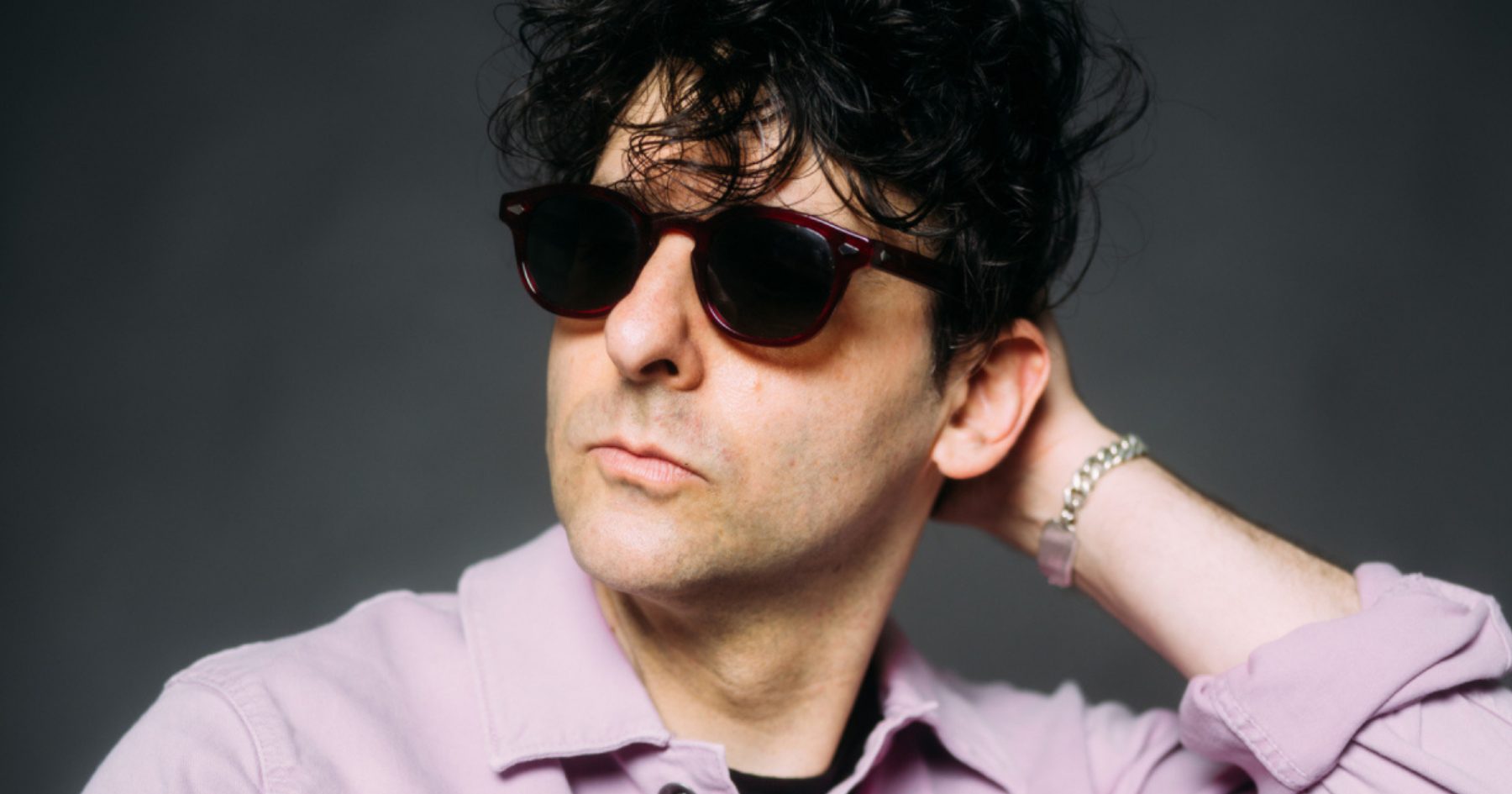
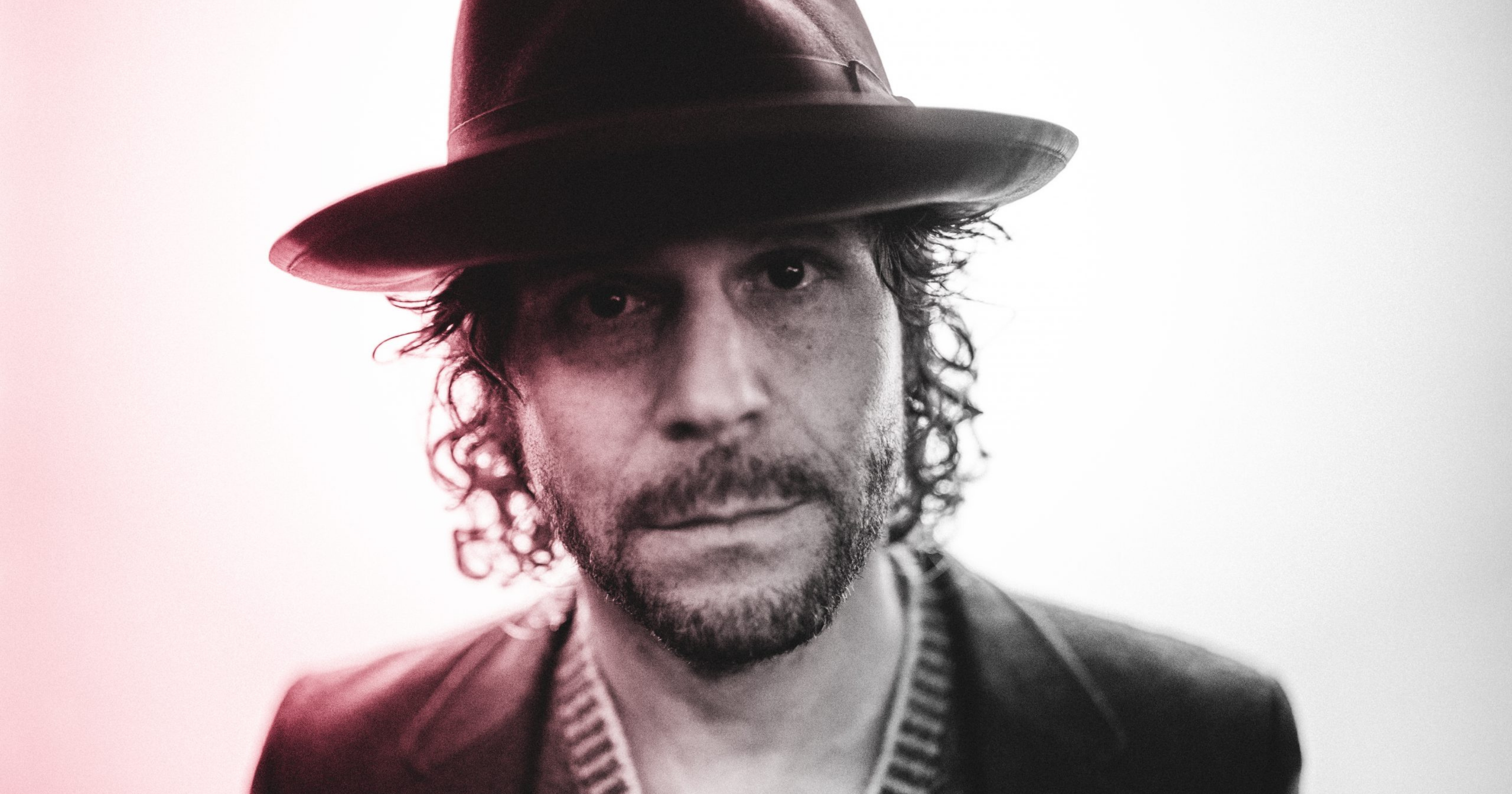
This week, we call in to Philadelphia for a conversation with the highly-theatrical pianist and tireless, much-adored performer Adam Weiner, who for the last decade has gained a cult following around the world fronting his soulful bizarro-rock outfit, Low Cut Connie.
Some artists have retreated into obscurity during the pandemic shut-down, some have turned lemons into personalized, livestream lemonade. But Adam Weiner took it to another level when he launched his often twice-weekly vaudevillian interactive web show “Tough Cookies” in March. Charging around his small home stage like a schvitzing piano preacher, often losing clothing along the way, Adam has learned nearly six hundred covers in the last eight months alone — from Barry Manilow to Cardi B’s “WAP” to Macho Man to an entire Little Richard set, which he performed to honor his hero after his passing. He then interviews anyone from Beyonce’s dad to members of Sly and the Family Stone. In short, it’s a rollercoaster every week — one that you kind of have to watch to believe.
Alongside his 2020 LP Private Lives, Low Cut Connie’s heartfelt and sweat-dripping sets have gained Weiner some famous supporters: Elton John for one, fellow New Jersey-born hero Bruce Springsteen for another. Up-and-coming playlist presenter Barack Obama unexpectedly placed Low Cut Connie’s defiant cabaret rocker, “Boozophilia,” on his must-listen list. Indeed, this taping, which often showed Adam jumping from his piano to his guitar to play favorites (like the Kinks-esque, “Revolution Rock N Roll”) initially had to be delayed so he could play an inauguration event for new president and Philly-piano lover Joe Biden.
While Weiner is basking in some much-earned attention, it hasn’t always been an easy road. He readily admits to scraping by on side jobs into his mid-thirties, for years playing around dim New York City piano bars as his sequined alter-ego, Ladyfingers. If Low Cut Connie has learned anything during this strange era, it’s that people desperately still need live music. In all its spur-of-the-moment, sweaty glory. One of the more moving stories he tells is seeing groups of nurses in beleaguered hospitals taking a much needed break to watch his livestreams. Much like his role model and patron Elton John, Low Cut Connie’s songs can leap from intimate folk-rock to greasy soul to bombastic musical theater and back with ease and his relentless spontaneity keeps fans waiting for that he will do next.
Welcome to the 200th episode of the BGS Radio Hour! Since 2017, the show has been a weekly recap of all the great music, new and old, featured on BGS. This week we’ve got new releases from legends including Willie Nelson, and up-and-comers like Clint Roberts – and we can’t forget our March Artist of the Month, Valerie June! Remember to check back every Monday for a new episode of the BGS Radio Hour.
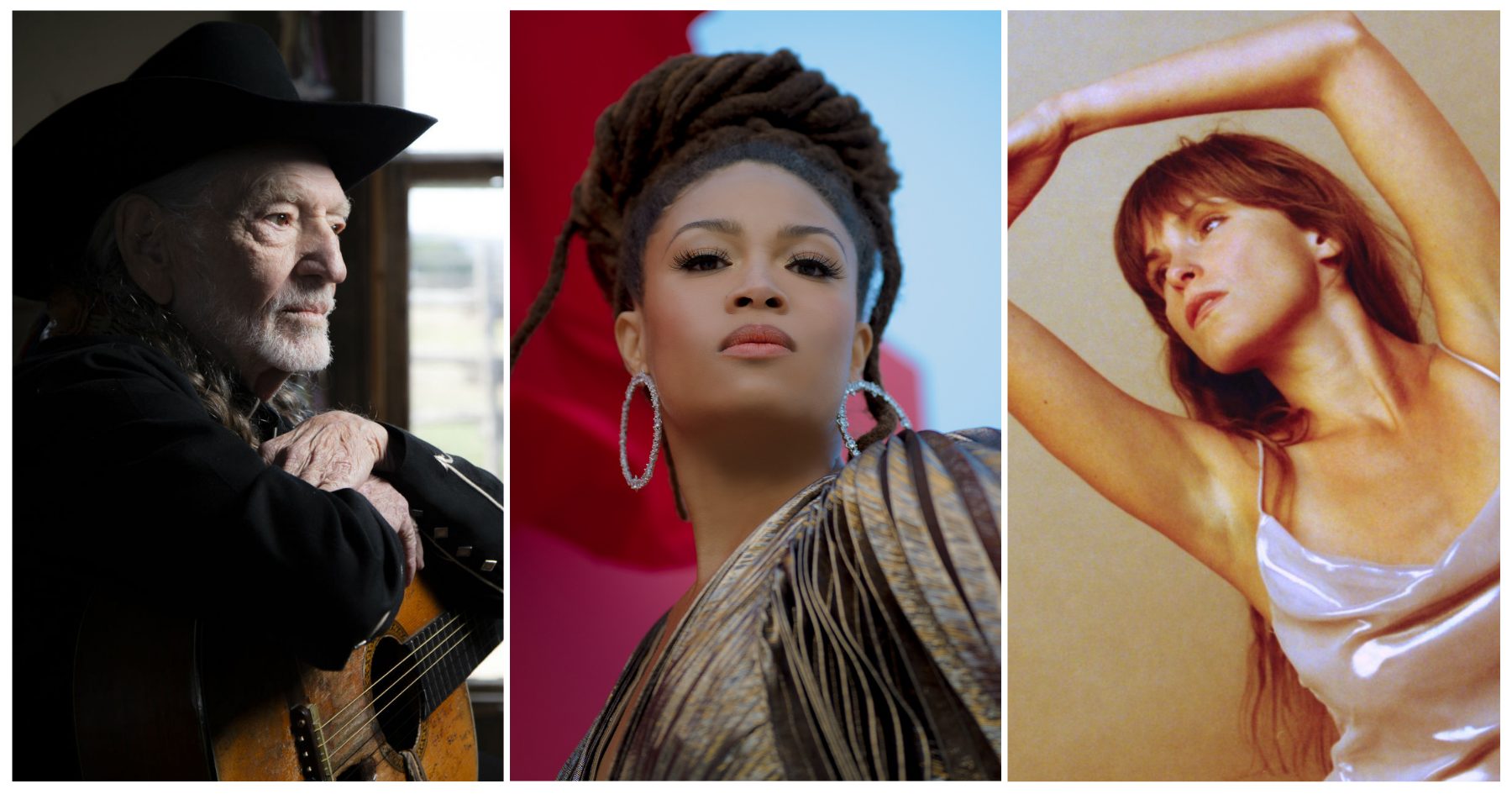
Through a career spanning more than a half decade and 95 albums, Willie Nelson continues to provide answers during our troubled times. His most recent record, That’s Life, celebrates the music of his friend and colleague Frank Sinatra.
In celebration of her newest album, Dark River, Lydia Luce joins BGS for a 5+5 this week, where we talked inspirations, favorite art forms (other than music), and performance rituals. We’d like to RSVP for that Pad Thai with Nick Drake, please.
San Francisco-based Jesse Brewster brings us a fictional tale from 19th-century Ireland this week. His new album, The Lonely Pines, is out now on Crooked Prairie Records.
From the upcoming album Changemakers, Crys Matthews extends a social justice invitation to us all in “Call Them In.” As a Black southerner, Matthews wrote the lyrics with freedom songs on her mind, supported by the inspiration of the late Representative John Lewis and Dr. Martin Luther King, Jr.
Recent guest of our Show On The Road podcast Langhorne Slim sat down with BGS to talk his new album, Strawberry Mansion. Though it was never planned, the album presented itself through self-discovery, through the many personal and shared hardships of the last year.
Many of those who have driven westward from Tennessee have jetted past Paducah, Kentucky. For Nashville-based singer and songwriter Nate Fredrick, it’s more than just a stop on the highway: it’s a stage in the journey where it becomes obvious that if he made it this far, he can make it to his home in Springfield, Missouri.
Being tough isn’t easy, but it’s something we can all do with the right inspiration. Cooper wrote this song for his nephew, Brazos, inspired by the river for which he was named. “I want him to remember that, like a river, he could shape mountains, instead of mountains shaping him,” Cooper tells BGS.
This West-Tennessee born and Brooklyn-based artist is our March Artist of the Month here at BGS! Stay tuned all month long for exclusive interviews and content featuring Valerie June. Here’s a track featuring soul legend Carla Thomas, from June’s new album The Moon and Stars: Prescriptions for Dreamers.
From Connecticut, Jesse Terry brings us a travel-inspired song, ironically completed right before the pandemic hit. Terry captures the feeling of taking a risk, despite fear of the unknown, and the shared experience of emerging out of it a more fulfilled human being.
For Lauren Spring, “I Remember You” is about choosing to remember someone in a kinder light than what the relationship may have been in reality. We should note the song’s inspiration: the viral TikTok video featuring a skateboarder, cranberry juice, and Fleetwood Mac’s ‘Dreams’ may or may not have subconsciously influenced the song’s sound.
Portland-based blues musician Curtis Salgado brings us a 5+5 this week in celebration of his new album, Damage Control. From an unexpected performance with B.B. King to a dream musician and meal pairing, Salgado seems to be nailing those three mission statements that he gave BGS.
For this Western North Carolina-based singer and songwriter, the mountains are his inspiration. As a trail runner, Roberts uses his time running through the mountains to hash out lyrics and music – perhaps this song, from his new Rose Songs, was one of them.
Inspired by pickers as varied as the plugged-in sounds of Joe Satriani and Eric Johnson to acoustic masters like Chris Thile and Béla Fleck, this Tucson-based duo brings us a rare (for them) instrumental on their new album, Under the Leaves.
Many of us have heard this phrase in the past, but almost definitely this past year: Silence is violence. But we can’t give up on reaching out to those who are silent for help; we have to uproot the complacency that plagues our society. As Chris Pierce tells BGS, “If you smile and applaud for those different than you, be willing to fight for those folks too.”
Photos: (L to R) Willie Nelson; Valerie June by Renata Raksha; Lydia Luce by Alysse Gafjken
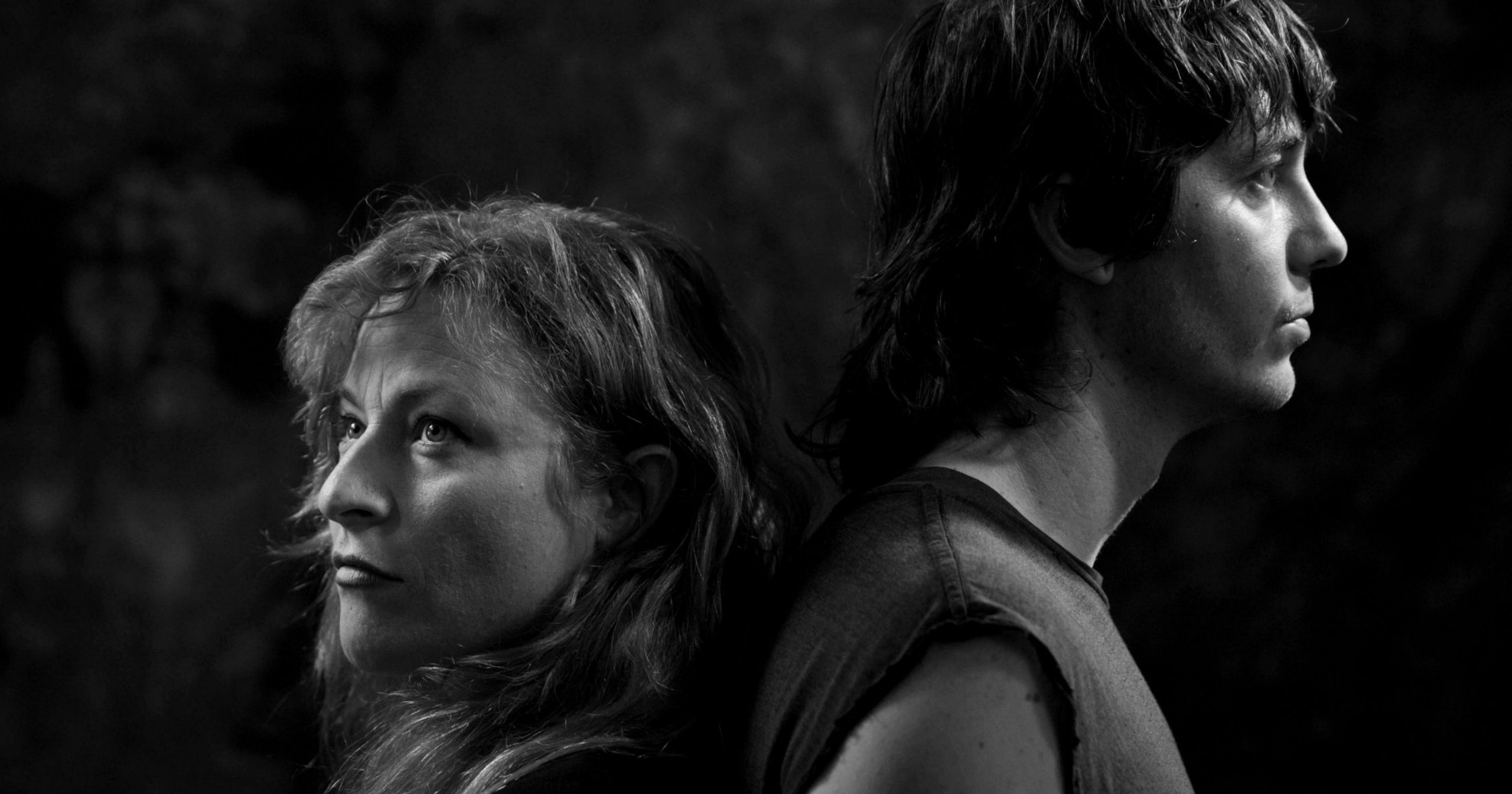
This week, The Show On The Road celebrates the newest record by Charleston’s hellion harmonizers, Shovels & Rope, with a new conversation with the married duo of Michael Trent and Cary Ann Hearst.
You’d be hard-pressed to find two harder working singer-songwriters than this prolific duo, even before they got together to record their honey-voiced self-titled debut over a decade ago. Thinking it was just a sonic souvenir before they split off again to pursue their barnstorming bar-band solo careers, their human hearts and some encouraging listeners had other plans, convincing them to keep creating as a team. They’ve been off to the races ever since — making five acclaimed records of originals beginning with O’ Be Joyful and following with three gritty covers albums with collaborators like Lucius, Shakey Graves, Brandi Carlile, The War & Treaty, and more.
Shovels & Rope’s newest cover project, Busted Jukebox Volume 3, which dropped on February 5 via Dualtone Records, is a new experiment. You could say it’s an angsty rock record for kids or maybe it’s an homage to the yearning, defiant, ever-hopeful teenager in all of us. With indie-darlings like Sharon Van Etten sitting in on standouts like the Beach Boys’ “In My Room” and Deer Tick joining a rollicking version of the Janis Joplin favorite “Cry Baby,” like a good Pixar animated flick, this collection has just as much to offer Mom and Dad as it does for the kiddos.
If you’ve seen Shovels & Rope live, you’ll notice that Trent and Hearst often face each other, not the audience; their eyes never seem to leave each other. Almost all their songs, like the award-winning favorite “Birmingham,” include spot-on harmony and intensely-focused unison singing. Somehow they create a blisteringly big sound despite always remaining a duo. Even on the biggest stages, from Red Rocks to their own acclaimed festival High Water Fest (set in their longtime South Carolina home base), they stick to their simple but potent formula. Switching back and forth between jangly and crunchy guitars, humming keyboards and pounding piano, hopping from sweat-strewn stripped-down drum kits to aching accordions, their joyous garage-rock Americana keeps gaining them new fans worldwide.
If you’re stuck at home and have kids running rowdily through your house like Shovels & Rope do, (this taping had to be rescheduled three times), maybe try turning on Busted Jukebox Volume 3 nice and loud and see what little ones think. Or just put them to bed and rock out yourself!
Stick around to the end of the episode to hear Shovels & Rope present the sweet campfire jam “My Little Buckaroo” featuring M. Ward.
At BGS, we firmly believe that Black history is American roots music history. Full stop.
Last year, following the extrajudicial murder of George Floyd and the civil unrest, protests, and rebellions against racial injustice and systemic inequality in this country, we realized that that belief wasn’t present enough in our daily content and editorial. We knew that it needed to be overt, expressed within every aspect of what we do.
Which is why this month, we’ve invited you to celebrate Black History Month as we always do, by denoting that celebrating Black contributions in bluegrass, country, and old-time — and roots music as a whole — requires centering Black creators, artists, musicians, and perspectives in our community daily, not just in February. (Though, for the entire month we’ve been sharing music, stories, and songs featuring Black artists every day, too!)
In the past year we’ve recommitted ourselves to fully incorporating Black Voices into everything we do and we hope that our readers and listeners, our followers and fans, and our family of artists constantly celebrate, acknowledge, and pay credit to Blackness and Black folks, who we have to thank for everything we love about American roots music. To bid adieu to Black History Month 2021, we’re spotlighting Black artists who have graced our pages in the last year in a two-part roundup.
Fresh off of an appearance at President Biden’s inauguration, Grammy nominees Black Pumas are our current Artist of the Month honorees, but they aren’t the only ones to hold down our most prestigious monthly series and editorial spotlight. Drawing on folk songwriting as much as soul groove, both men agree that the term “American Roots” fits their sound well. The Americana Music Association seconds that notion, as the duo picked up that organization’s Emerging Act of the Year award in late 2020.
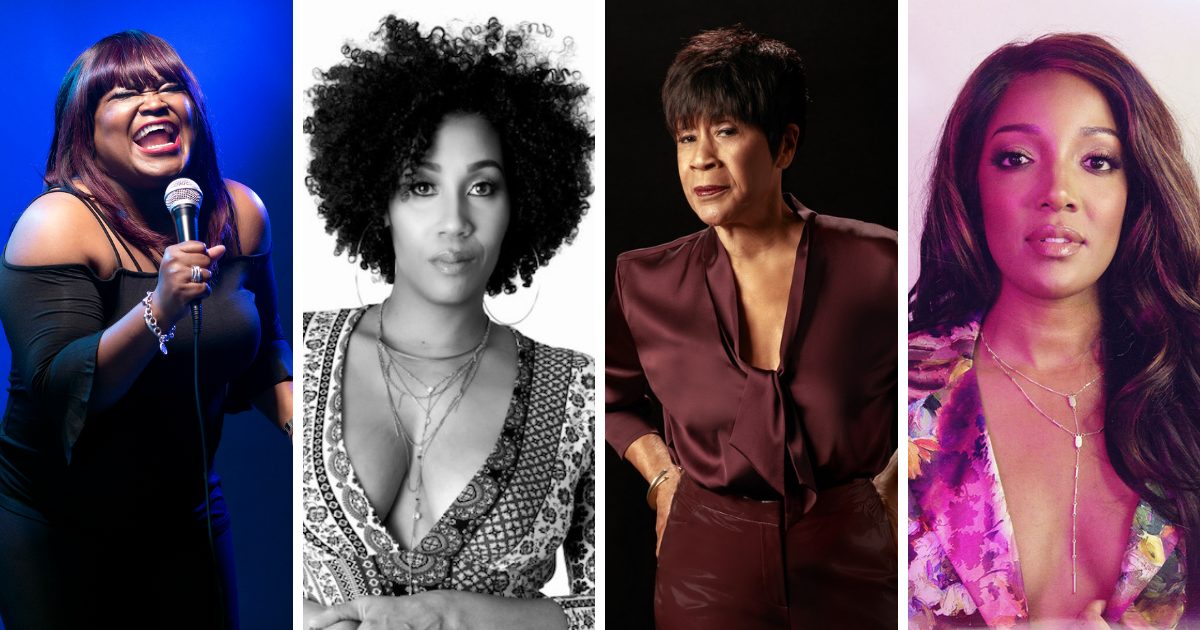
Modern blues legend Shemekia Copeland was our Artist of the Month in November, when we celebrated her latest release, Uncivil War from Alligator Records. The song sequence offers quite a few topical numbers ranging from gun rights (“Apple Pie and a .45”) to LGBT affirmation (“She Don’t Wear Pink”). But a standout is certainly the title track, Copeland’s most bluegrassy foray yet, which features Sam Bush and Jerry Douglas
Song-interpreter extraordinaire Bettye LaVette held down the AOTM post in August, reminding us of the value of persistence, perseverance, and perspective – especially by Black women. Her interpretation of the ubiquitous “Blackbird” recalls the fact that Paul McCartney wrote the song about a Black woman (as British slang refers to a girl as a “bird”). In LaVette’s rendition, though, she is the one who’s been waiting… and waiting… and waiting for this moment to arrive. And, in a specific allusion to this moment in history, to be free.
On the Cover
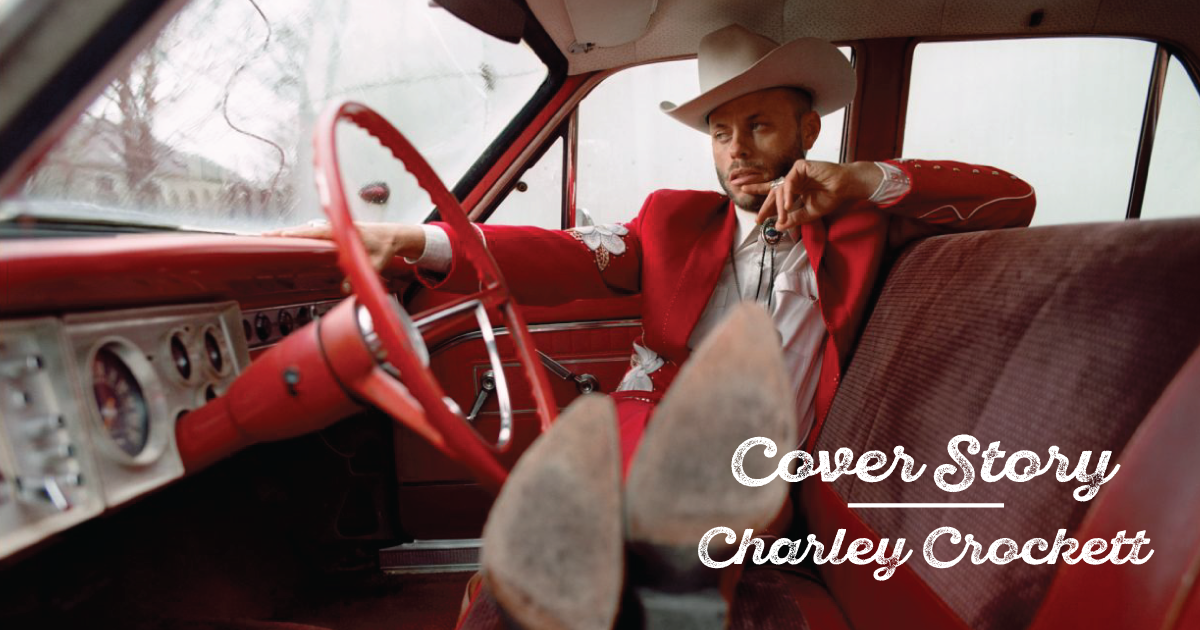
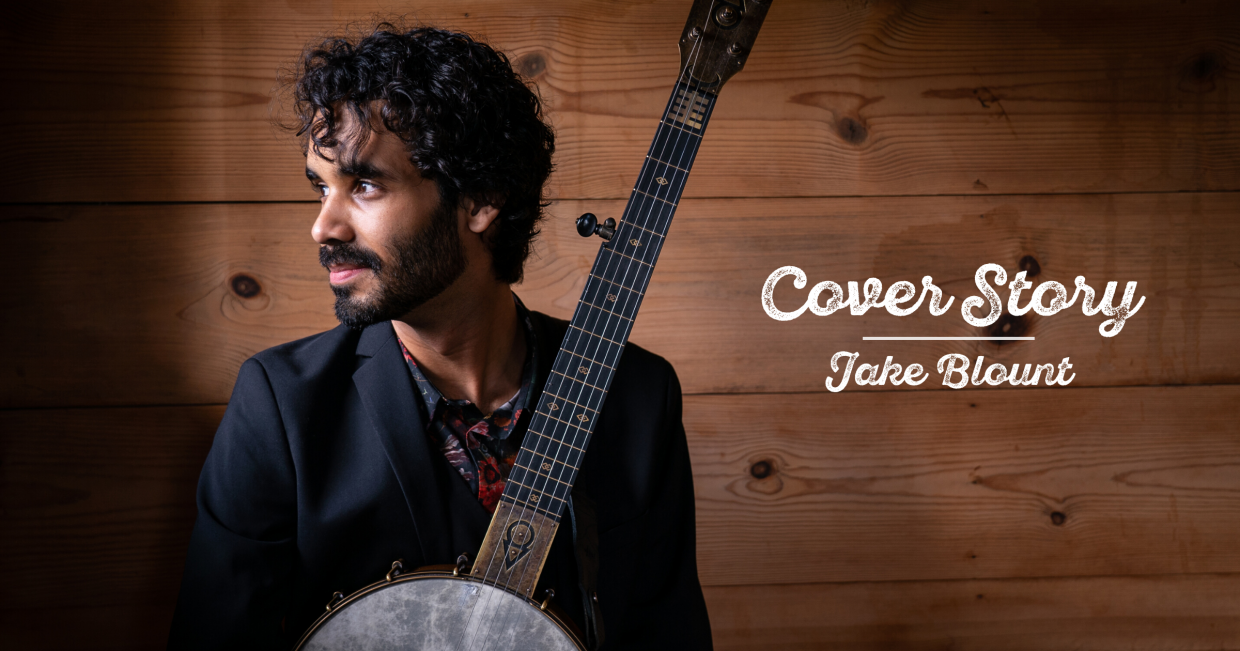
Both country & western crooner Charley Crockett and old-time banjoist, fiddler, and ethnomusicologist Jake Blount graced our digital covers in the past year, demonstrating the width, depth, and breadth of Black contributions to American roots music across the country and drawing from various regions and traditions.
In our interview and on his most recent release, Crockett doesn’t just reckon with the current historical moment. With Welcome to Hard Times, which is comprised of 13 tracks of searing anguish set to slick, ’60s-style, country-western production, he’s also examining his own place in this moment, and how his music has a different impact with different audiences. Even as he — a man living somewhere between Black and white, privileged and not — feels that his message is obvious.
Queer old-time musician and scholar Jake Blount is intimately familiar with the history of Black artists in the twentieth century who spoke out against white supremacy and often paid for it with their lives. He sees his music — and his most recent album, Spider Tales — within that subversive, radical lineage, and rightly so. A critically acclaimed project that landed on seemingly dozens of year-end lists in 2020, Blount’s carefully curated tunes convey that racial inequality in this country is a long, self-feeding cycle and this current iteration of the civil rights movement was neither surprising nor unpredictable. In a year defined by music created in response to current events or simply passively shaped by them, Blount’s Spider Tales stands out, an example of action rather than reaction.
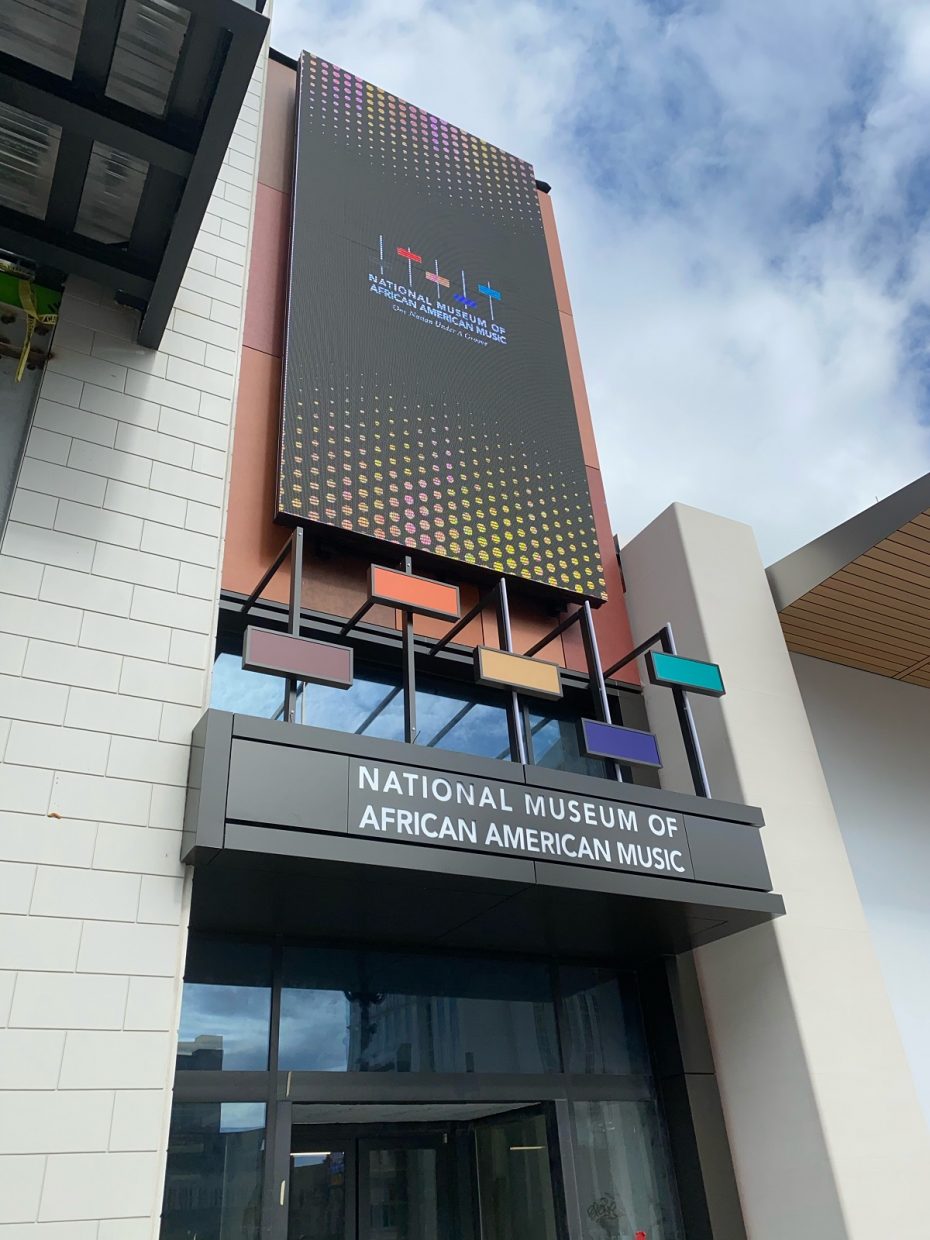
Last week, we celebrated the grand opening of the National Museum of African American Music in Nashville with a feature that explores the ways Music City has always been a major player in the African American music world — from the days of the Fisk Jubilee Singers to radio station WLAC breaking R&B, soul, and blues hits, and the Jefferson Street nightclub scene providing both valuable training for emerging artists and a vital showcase for established ones. The 56,000-square-foot museum, something of a musical equivalent to the the National Museum of African American History and Culture in Washington D.C. (definitely with the same level of visual splendor and attractiveness) is a testament to the Black, African American, and Afro contributions that have touched, impacted, and influenced every sphere of American pop culture and art.The striking marquee of the National Museum of African American Music in Nashville, TN
The BGS Podcast Network
Over the course of the past year, the BGS Podcast Network has been proud to feature many Black artists over our shows about bluegrass, Americana, touring, wellness, and of course, music. On Harmonics season one, three Black women joined host Beth Behrs to talk about living through so much stress and tumult and how self-care, wellness, and music are all woven so tightly together.
Country singer and 2020 breakout star Mickey Guyton (who, for the record, has been a recording artist for more than a decade despite her recent meteoric rise) appeared on Episode 3, talking about writing “Black Like Me” — a song about her pain and struggles growing up as a Black woman in America — amidst the protests against police brutality across the nation. They also discuss country artists speaking out against racism and injustice, the power and importance of “three chords and the truth” in the midst of Music Row fluff, lifting other women up as a form of therapy, and, of course, Dolly Parton.
Two of Behrs’ closest friends, sisters Tichina & Zenay Arnold also appeared on the show. Tichina, Behr’s co-star on CBS’s The Neighborhood, and her sister are something like spiritual coaches for Beth. The three discuss the spirituality of music and the musicality of comedy, the timeliness of The Neighborhood as well as the pure spirit on the set, the absolutely necessity of open conversation in active anti-racism, balancing professional and familial relationships, and much more.
Finally, Birds of Chicago frontwoman and multi-instrumentalist Allison Russell decided to dig deep into her childhood traumas, the healing power of music and artistic community, the history of the banjo, and the intersectionality of the honest conversations in our culture on her episode of Harmonics. In addition to her career with Birds of Chicago, Russell is one quarter of the supergroup Our Native Daughters, with Rhiannon Giddens, Amythyst Kiah, and Leyla McCalla, and is preparing to release her first solo album.
On The Show On The Road, host Z. Lupetin curated a special episode last summer featuring clips and snippets from past editions of the show featuring Sunny War, Bobby Rush, Dom Flemons, and more. As he put it, “I’ve been lucky to talk with truly amazing Black artists, songwriters, and performers in the two years I’ve been creating The Show on the Road. I ask you to go back into our archives and listen to these voices.”
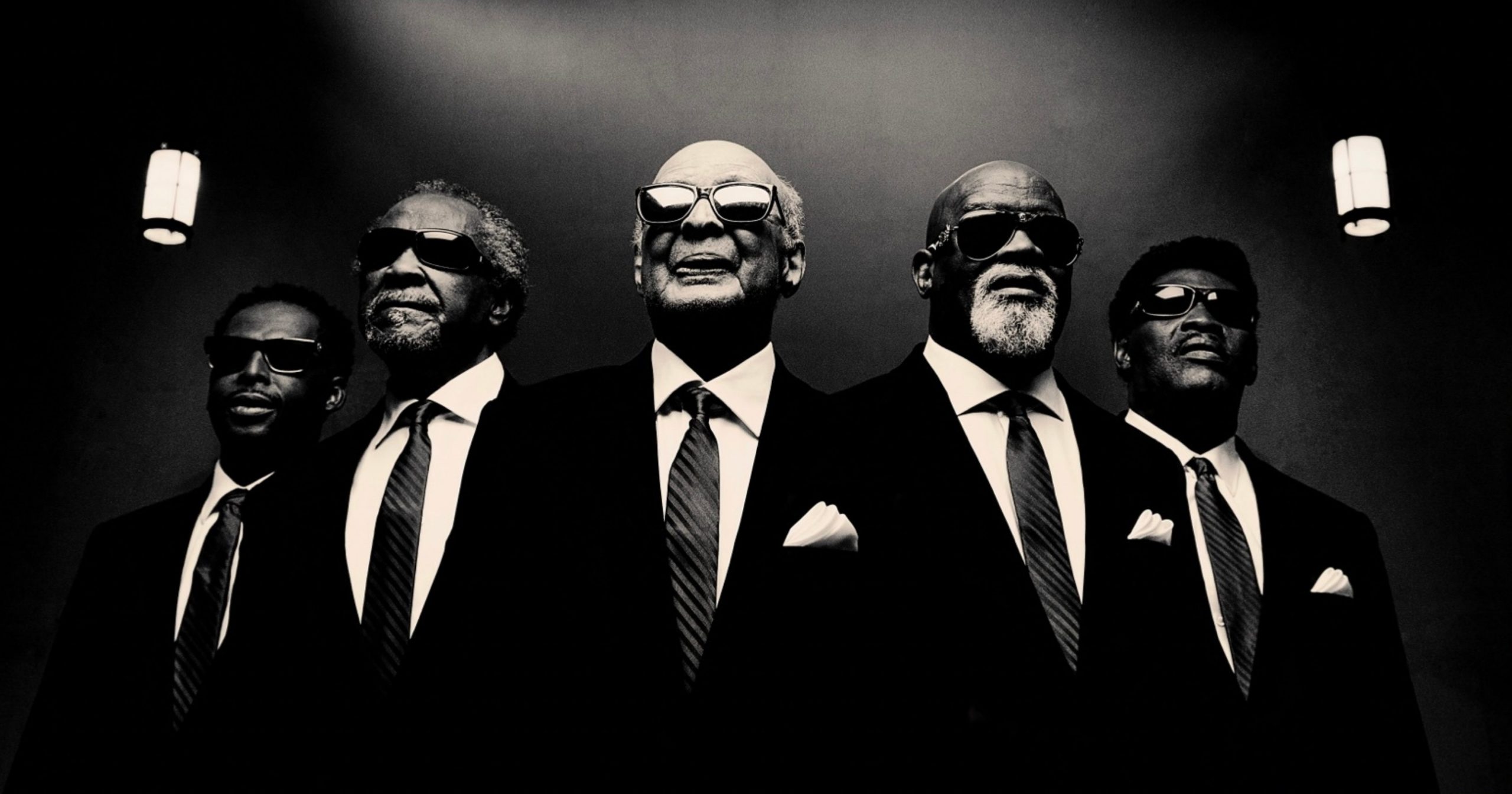
Later in the season, SOTR episodes featured Leyla McCalla — a talented, multilingual cellist, banjoist, and singer-songwriter and member of Our Native Daughters — and a special podcast swap with Under The Radar featuring truly fantastic Oakland-based artist, Fantastic Negrito. And just a couple of weeks ago, the show dropped an episode honoring Black History Month, featuring an interview with Jimmy Carter and Ricky McKinnie of the legendary Blind Boys of Alabama.
Plus, on the String, Craig Havighurst interviewed new lead singer for the Time Jumpers, Wendy Moten, and southern Gothic poet, songwriter, and Americana-blues wizard Adia Victoria.
And, not to be left out, the BGS Radio Hour always includes music, premieres, and features of Black artists every week, as we round-up the best stories from our pages to include on the airwaves. Like this week, Allison Russell’s Sade cover and Valerie June’s cosmic new single, “Call Me a Fool” — which features Stax soul legend Carla Thomas — both appear on the show. And, on Episode 194, Chris Pierce, our Whiskey Sour Happy Hour friend Ben Harper, and Charley Crockett all make the playlist as well.
Shout & Shine
Our annual IBMA showcase celebrating representation and diversity in 2020 focused entirely on Black performers, building upon our collaboration with PineCone, who co-presents the event each year. Brandi Pace of Decolonizing the Music Room curated the lineup, showing our audience how seamlessly our missions intersect and build off of each other. The showcase lineup included Rissi Palmer, Tray Wellington, Stephanie Anne Johnson, Jerron “Blind Boy” Paxton, and more, drawing a direct line between Black musicians and bluegrass while highlighting the important role Black folks played in the genre’s creation as well as influencing all of its contemporary forms.
To build on this intention, we retooled our monthly column version of Shout & Shine as well, turning the interview series into a regular livestream event. Sponsored by Preston Thompson Guitars, each episode includes thirty-plus minutes of exclusive performances by Lizzie No, Sunny War, Julian Taylor, and Jackie Venson with more to come. Each set of music — and each interview as well — reinforces just how vibrant and varied roots music created by Black musicians and songwriters can be and just how valuable the perspectives and lived experiences of all kinds of people are to our communities.
Photo credit (L to R): Shemekia Copeland by Mike White; Rissi Palmer courtesy of the artist; Bettye LaVette by Joseph A. Rosen; and Mickey Guyton by Chelsea Thompson.
This week, host Z. Lupetin talks to one of the founding members of beloved folk-rock hitmakers, The Lumineers, drummer and pianist Jeremiah Fraites. After following his heart to Italy, Jeremiah dialed into the podcast from Turin, his wife’s hometown. Alongside juggling duties as co-songwriter and performer in one of the most successful acoustic groups of the last twenty years and raising his two-year-old son, Fraites released a gorgeous instrumental record called Piano Piano this January.
Nearly fifteen years in the making, Piano Piano was created at Fraites’ former home in Denver during the height of the early COVID-19 lockdowns. His two favorite pianos lead the way, as main characters in a story that seemed to unfurl, as his wife would say in Italian, “step by step” — delicately, but with passion. First, he used a newer Steinway for the brighter, more forceful tones, and then a warmly creaky creature, that his piano teacher sarcastically named “Firewood,” for the most personal moments. Really, it’s the tiny imperfections that make this solo work shine: when you can hear the bench swaying slightly; his wife making dinner in the next room as the sustain pedal is pressed into the wood floor; when the aged instrument struggles to hammer out the final notes, but finally does; and when Fraites and the instrument seem to breathe and speak and cry out, together.
While certain smaller songs like “Departure” and “Chilly” are as intimate as fateful field recordings, other standouts like “Tokyo” and “Arrival” are more polished pieces, blooming from that same small space, but growing into masterful, orchestral, widescreen soundscapes with the help of violinist Lauren Jacobson (who often plays with The Lumineers), cellists Rubin Kodheli and Alex Waterman, and the 40-piece FAME’s Orchestra from Macedonia.
Fraites was born in New Jersey, where he grew up with Lumineers frontman Wesley Schultz. When they self-released their confessional and warm-hearted self-titled record in 2012, the two friends never imagined that they would have a chart-topping hit on their hands. Playing the scruffy bars around Denver before their fanbase expanded exponentially and their first record went triple-platinum, The Lumineers soon found themselves headlining international pop festivals, opening for U2 and Tom Petty, placing songs in The Hunger Games and Game Of Thrones, selling out Madison Square Garden (twice) and finally filling their favorite hallowed Colorado venues like Red Rocks. Before the pandemic slowed them down, The Lumineers were bringing their same acoustic spirit to a full-on arena tour coast to coast, showcasing their newest album III. If you’re reading this right now, you’ve probably found yourself singing along to their romantic, stomping ear-worms “Ho Hey” or “Ophelia” or heard them accidentally a thousand times in the last decade (both tracks have been streamed over 500 million times and counting), but all of that is paused for now.
What a perfect time for a peaceful piano record to clear our heads. As Jeremiah Fraites has gained confidence as a sought-after composer, songwriter, and unlikely pop performer, he’s given himself the space to finally create the deeply personal record he’s been hoping to share for decades.
This week on The Show On The Road, in honor of Black History Month, we bring you a conversation with members of foundational gospel group, The Blind Boys Of Alabama, including longtime singer Ricky McKinnie and beloved senior member Jimmy Carter, who has been with the group for four decades.
Formed in the late 1930s with talent discovered at the Alabama Institute For The Negro Blind, the Blind Boys of Alabama have superseded limitations to bring their own high-spirited version of jubilee gospel throughout the world. Their music was often the backdrop to the Civil Rights Movement as Martin Luther King Jr. toured the south, and Jimmy and Ricky are both amazed and grateful that their message is still ringing true throughout the latest iteration Black Lives Matter movement that grew during the tumultuous last year.
While the members of the band have changed through time, the group has stayed steadfast to preserving a kinetic, church-based music that doesn’t seek to evangelize, but can bring people of all faiths together. Indeed, watching Jimmy and the other bespectacled members walk with hands on each other’s shoulders into the youthful crowds of adoring festival-goers, from Bonnaroo to Jazzfest, is really something to behold.
The Blind Boys’ body of work continues to grow. In the last few decades they’ve gamely collaborated with a wide range of secular artists from Peter Gabriel to Ben Harper to Bonnie Raitt, they made an album produced by Justin Vernon, AKA Bon Iver (2013’s stellar I’ll Find A Way), and they shrewdly reworked the ominous Tom Waits classic, “Way Down In The Hole,” which became the theme for HBO’s The Wire.
Their newest full length album, Almost Home, is a particularly moving treatise on morality and mortality. It features songs written by Marc Cohn, Valerie June, The North Mississippi All Stars and many others and was the last record that longtime member and bandleader Clarence Fountain was a part of before he passed away. He was a member of the Blind Boys of Alabama for nearly sixty years.
As Jimmy playfully mentions throughout our conversation, the Blind Boys of Alabama never let being blind stand in the way of doing what they do best: putting on a show. They’re entertainers at heart and it’s no small feat that they’ve brought a nearly lost form of swinging, soulful (and expertly arranged) gospel from the small southern towns where they grew up, all the way to the White House, where they’ve held court for three different presidents. And they’ve won five Grammy Awards along the way.
Stick around to the end of the episode hear their rich cover of Bob Dylan’s “I Shall Be Released.”
In the final chapter of Toy Heart’s three-part tribute to Tony Rice, host Tom Power speaks to several musicians who have been inspired by Tony Rice throughout their career, pickers and artists through whom Tony’s music will certainly live on.
On episode 3 of Toy Heart: Remembering Tony Rice, MacArthur “Genius” and Punch Brothers frontman Chris Thile tells a story about a jam with Tony Rice backstage that changed his musical life. Chris “Critter” Eldridge (pictured), also of the Punch Brothers, talks about the time he spent living with and learning from Tony — not just about music, but about life. Guitarist and singer-songwriter Molly Tuttle speaks about Rice’s influence on her guitar playing and how she sees his music living on even through musicians like herself, who never knew him personally. Finally, in-demand Nashville guitarist, session player, and sideman Bryan Sutton talks about recording with Tony and how he learned to be himself thanks to Tony Rice’s example.
Editor’s Note: Hear Thile at timestamp 01:58; Eldridge at 33:17; Tuttle at 01:03:17; and Sutton at 01:21:09
This week on The Show On The Road, a wide-ranging conversation with the peripatetic, Pennsylvania-born, confessional folk songwriter Sean Scolnick, who for the last fifteen years has become a troubadour truth-teller of the Americana circuit, amassing a devoted following performing as his many-hatted, impish alter-ego: Langhorne Slim.
Host Z. Lupetin caught up with Slim to discuss his much awaited new LP, Strawberry Mansion (just released last week via Dualtone), which is named after the neighborhood in Philadelphia where both of his grandfathers grew up. Coming out of a deep creative funk, Slim produced a record of many entwined reckonings. A flurry of twenty-two diaristic sonic sketches, incantations, and emotive story-songs follow his struggle with mental illness, sometimes in real time, his pandemic isolation, and sobriety. It’s an overall hopeful collection that shows Langhorne may finally be finding his true calling on the other side of the darkness.
Sean Scolnick is never shy about revealing how his mental health and creativity are ever-evolving. Without playing the hundreds of international shows and festivals a year he normally does, Scolnick had to create at home in a new way. A note his therapist gave him still holds true, as he releases his newest record without being able to take his guitar and his trademark worn hat in public to support it: “When you’re freaking out, just play.”
Make sure you stick around ’til the end of the episode when Slim plays an acoustic rendition of “Morning Prayer,” joined briefly by his cat, Mr. Beautiful.
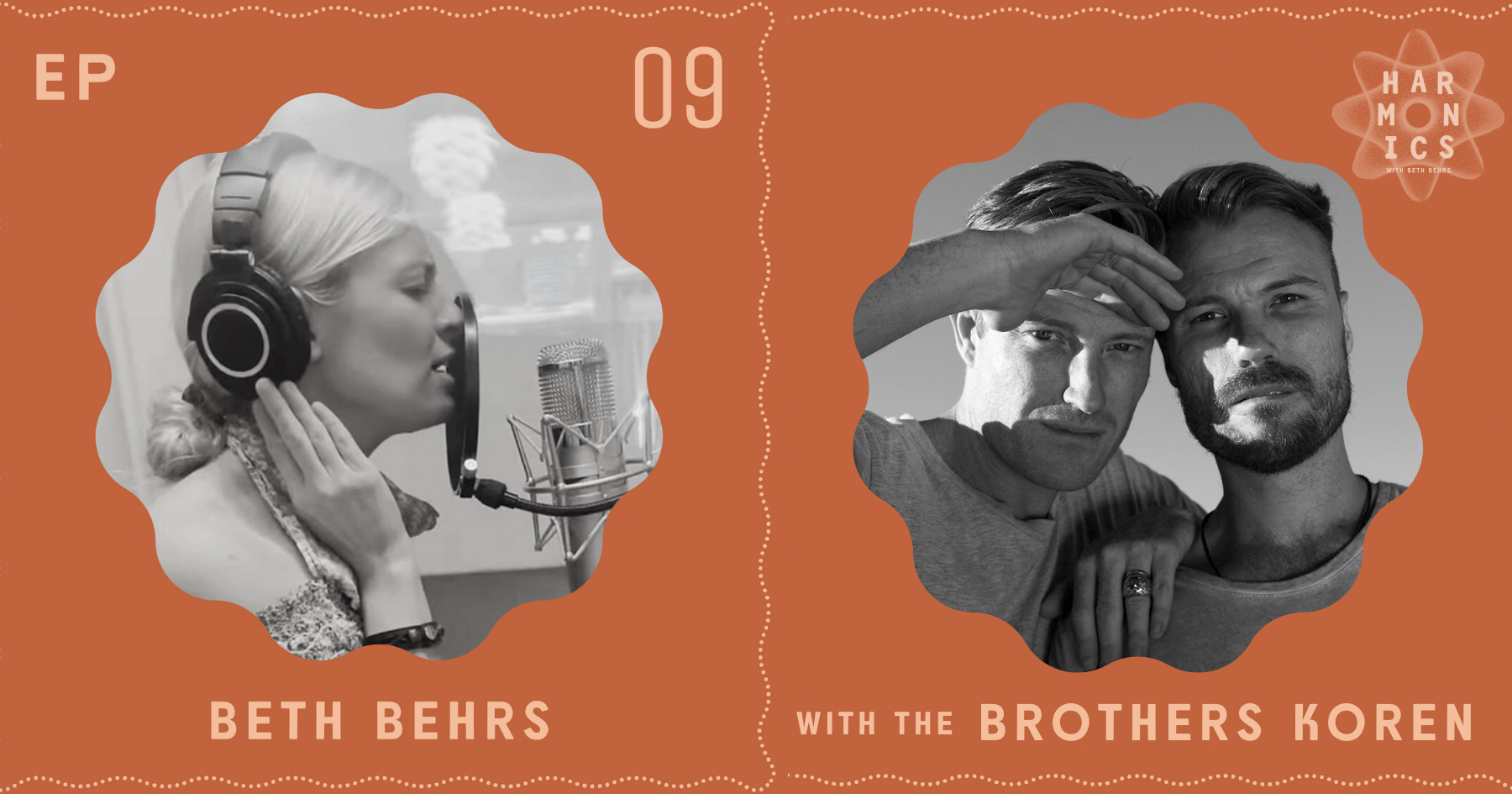
This episode almost didn’t happen. I thought long and hard about taking this step to not only be vulnerable with listeners, but also to put out some music into the world that I never intended to be shared — music that was strictly intended as therapy. But, the reason I started this podcast was to explore how creativity is healing, and also to have creatives be open and honest about the messy bits: everything that forms the human experience. None of us get through life without the messy bits. How could I interview everyone else and hear their open and vulnerable takes on healing and the process of their creativity, and not let you hear the same?
I am so grateful to the Brothers Koren. They have an incredible program called the Songwriter’s Journey, where they help folks to reclaim their “Big Voice” — and to reclaim their power, creativity, and truth through that voice. As musicians they’ve toured with the likes of Coldplay, Pink, and Rod Stewart, but they decided that after so many years in the music industry, they wanted to use their voices, their music and their incredible talents to help others. In this special, co-interview episode we discuss our creative process as we worked together for the past year and a half, after they came into my life at one of the most difficult times for me, especially regarding my relationship to art.
We lost my grandmother at the beginning of the pandemic last year, and even though my grandfather is suffering from dementia, at our family’s memorial service (held via Zoom) he once again became the man we all knew and loved — the man who, at a young age, had instilled in me his deep love of nature — who was now soothing and bringing our family together in our grief. I hope you’ll stay tuned to the end of this episode for the premiere of our song “The Moon Will Stay,” which is a collaboration between a poem I wrote for my grandfather and the beautiful music it inspired in Thorald and Isaak Koren. There are incredible studies about the healing power of music, especially for those with Alzheimer’s and dementia, and I’m so glad I was able to write this for my grandfather and for him to have heard it before we someday will inevitably lose him. But not today — because the moon will stay, and we will always have that. — Beth Behrs
More music from Beth Behrs and the Brothers Koren will be available on Bandcamp later this month. All proceeds will benefit mental health-focused charities.
Follow @harmonicspodcast on Instagram for more updates on how you can download this music and support these important causes!
Welcome to the BGS Radio Hour! Since 2017, the show has been a weekly recap of all the great music, new and old, featured on BGS. This week, we reflect on artists lost in 2020 and look forward to some upcoming releases from the biggest names in roots music. Remember to check back every Monday for a new episode.
Tony Rice’s passing on Christmas Day 2020 was an unexpected loss for the entire world of roots music. Fortunately for all of us, he leaves behind an enormous legacy of recordings from his career, which began in 1971 with Sam Bush and the Bluegrass Alliance. Our most recent Toy Heart episodes dive into Rice’s personality and music, crafted through conversation with those closest to him.
From Tulsa, Oklahoma Jared Tyler of Saugeye brings us this tribute to his late pup, from the band’s self-titled album. After Lillie passed, he was observing all of the holes she dug in the yard. Did she ever find China?
Tampa-based blues artist Selwyn Birchwood proves to BGS this week that you can party to blues music. “When I look back at all of the blues songs that I really loved growing up, a lot of them were about drinking, f#%^ing or smokin’,” Birchwood told us…”So I wrote a song about all three!!”
So many artists, the Dead South included, have missed performing live more than we can imagine. So, why not put out a live album? This week, we’ve got this Dead South hit from Served Live.
Alabama-born and New Orleans-based artist Alabama Slim brings us a single from The Parlor. A mere four hours of recording – straight to tape – at the Parlor studio, alongside Little Freddie King and Ardie Dean, and the result is a master class in deep, soulful blues.
Our bi-weekly Tunesday Tuesday feature is changing in 2021, from an artist spotlight to a monthly roundup of instrumental music and the themes which connect several recordings. This week, we look at modern Irish banjo styles, and artists like Allison de Groot who add their own unique contributions.
Texas duo Hardened & Tempered are our recent guest on 5+5 – that is, 5 questions, 5 songs. We talked inspirations, rituals, and a dream musician and meal pairing. Their new album Hold the Line, is out now!
Regular viewers of The Tonight Show Starring Jimmy Fallon may have seen Shires and Isbell grace the stage recently. The power-couple stopped by the show to perform Shires’ new single, “The Problem,” just another example of her impeccable songwriting.
From Joe Mullins and Smithsonian Folkways. We’re looking forward to Industrial Strength Bluegrass, an album honoring the rich bluegrass history of Southwestern Ohio, created by an influx of mid-century migrants from Appalachia in search of factory jobs.
Surely, one thing we’re all missing are the endless hours on the highway accompanied by a favorite mixtape. Singer-songwriter David Starr brings us just that this week, featuring this classic Jackson Browne song, which Starr does himself.
As we wind down our January Artist of the Month – the complete soundtrack to O Brother, Where Art Thou? – we’ll leave the first month of 2021 with this soothing melody from the Cox Family, featured in the film.
From her new album, That’s How Rumors Get Started, Margo priced brings us this resurrected song from her former band, Buffalo Clover. Coping with losing a child, Price and her husband began hanging around a rough crowd of musicians, and “partying harder than the Rolling Stones.” Hence, this song about drinking and partying your talents away – something Price wrote of her friends but later recognized in her own actions.
From Edwards, Colorado, Wolf van Elfmand sings about the lessons we learn from loss. Rathering than basking in the anger or loneliness that follows, he pursues what he considers the only other option: acceptance.
From Justin Timberlake’s new film, Palmer, Nathaniel Rateliff brings us “Redemption.” The film tells the story of a small-town high school hero turned ex-convict, humbly returning to his roots. After Rateliff’s previous release, And It’s Still Alright, grew his popularity in 2020, he was tasked with writing this song for the film – and it came naturally.
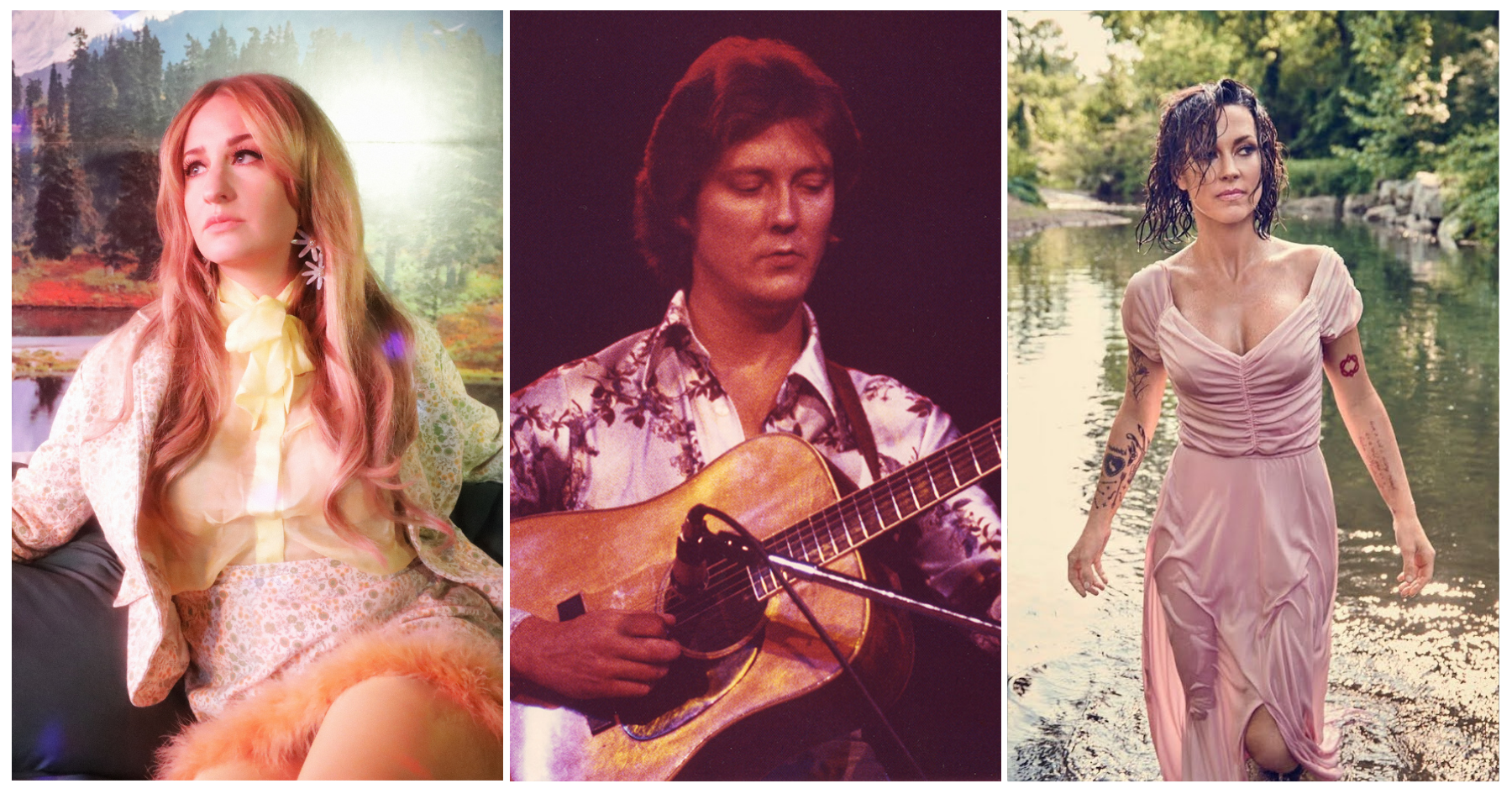
Photos: (L to R) Margo Price by Bobbi Rich; Tony Rice by Heather Hafleigh; Amanda Shires by Alysse Gafkjen
This website uses cookies to improve your experience. We'll assume you're ok with this, but you can opt-out if you wish.AcceptRejectRead More
Privacy & Cookies Policy
Privacy Overview
This website uses cookies to improve your experience while you navigate through the website. Out of these, the cookies that are categorized as necessary are stored on your browser as they are essential for the working of basic functionalities of the website. We also use third-party cookies that help us analyze and understand how you use this website. These cookies will be stored in your browser only with your consent. You also have the option to opt-out of these cookies. But opting out of some of these cookies may affect your browsing experience.
Necessary cookies are absolutely essential for the website to function properly. This category only includes cookies that ensures basic functionalities and security features of the website. These cookies do not store any personal information.
Any cookies that may not be particularly necessary for the website to function and is used specifically to collect user personal data via analytics, ads, other embedded contents are termed as non-necessary cookies. It is mandatory to procure user consent prior to running these cookies on your website.