2025 was a standout year for roots music books. In a time of political upheaval and uncertainty, authors like Craig Shelburne & Brenda Colladay and Alisa Murphy brought us deep into the history of music institutions that have weathered generations of American ups and downs: the Grand Ole Opry and The Station Inn. Reading about these places is a reminder that culture is often a better litmus test than news cycles, when it comes to what a country stands for and where its soul can be found.
Biographies of Dolly Parton and Alice Gerrard (the latter written by Gerrard herself) highlight women who defied the odds to become iconic voices in country and old-time. Parton first debuted on the Opry at the age of 13 and her influence on American culture has spanned from highlighting women in the workplace with “9 to 5” to donating a million dollars for medical research to accelerate the creation of the Moderna COVID vaccine. Gerrard, while less of a household name, is considered one of the last of the old guard in traditional music; even if you haven’t heard of her, you’ve probably still been touched by her work. These books detail the unlikelihood of these women’s successes given the time and place of their work and both good reminders of changing gender norms that we now take for granted.
Two books on Black American fiddle and banjo music continue the quest to restore African music’s and African American musicians’ rightful place in the history of the American string band tradition. With additional archival and notation resources, these books offer not only scholarship, but an opportunity for dedicated pickers to add to their repertoire, too.
And finally, roots musicians Paul Burch and Charlie Parr channel their creative writing into novels Meridian Rising and Five, respectively, the former a fictionalized story of Jimmie Rodgers and the latter a wild meditation on the wanderings of a troubadour.
From coffee table aesthetics to novels and new tunes, 2025’s roots music books have you covered! See a list of our favorites and a collection of “honorable mentions” below.
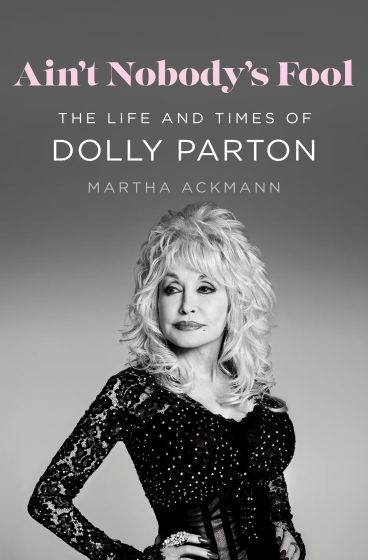
Ain’t Nobody’s Fool: The Life and Times of Dolly Parton by Martha Ackmann
Martha Ackmann is known for illuminating the stories of women who rise above societal expectations, so it’s only appropriate that she should tell the story of Dolly Parton’s ascent to success. With new interviews and documents, the book focuses on the price Parton paid for her early fame, penalized and criticized by those who saw it as a betrayal of her roots. Despite legal battles and struggles with her mental health, Parton persevered and went on to use her affluence to help her East Tennessee home, through the development of Dollywood, her charitable work, and the creation of The Imagination Library. Find it here.
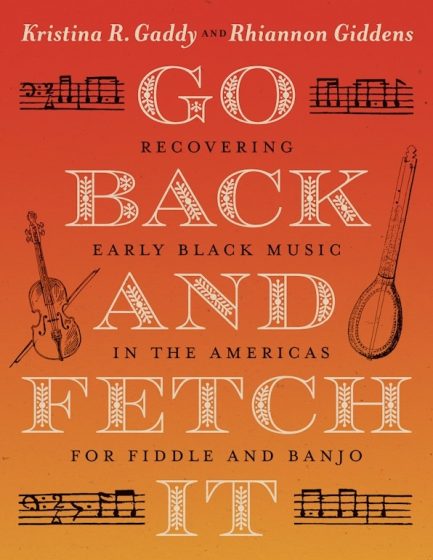
Go Back and Fetch It: Recovering Early Black Music in the Americas for Fiddle and Banjo by Kristina R Gaddy and Rhiannon Giddens
Appropriate for pickers and scholars alike, this collection of early Black Atlantic music is equal parts songbook and history lesson. Nineteen carefully transcribed tunes sourced from 1687 to the 1860s are presented in standard notation and banjo tablature, and accompanied by rich historical essays detailing their origins, cultural context, and evolution over time and place. This collection is another important step in the recovery of Black history of the American musical canon – and specifically the fiddle and banjo canon – from two lauded experts on the subject. Find it here.
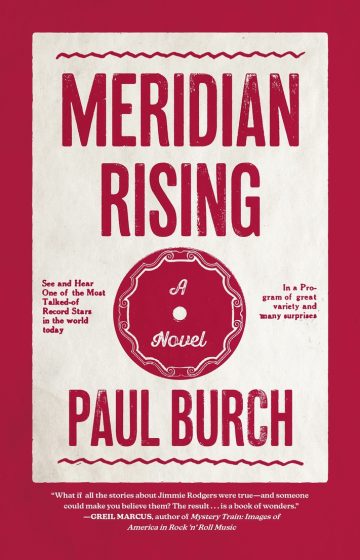
Meridian Rising by Paul Burch
Meridian Rising, the debut novel from Paul Burch, fictionalizes the life of country star Jimmie Rodgers and was released this fall to rave reviews. As the Chattanooga Free Press says, “Burch must have done a great deal of research to deliver a story that feels so authentic, but research alone doesn’t make a good novel. The writing is what matters, and Burch skillfully renders a large cast of narrators throughout Meridian Rising, especially its main subject, whose witty, sometimes barbed voice is vivid and memorable.” Find it here.
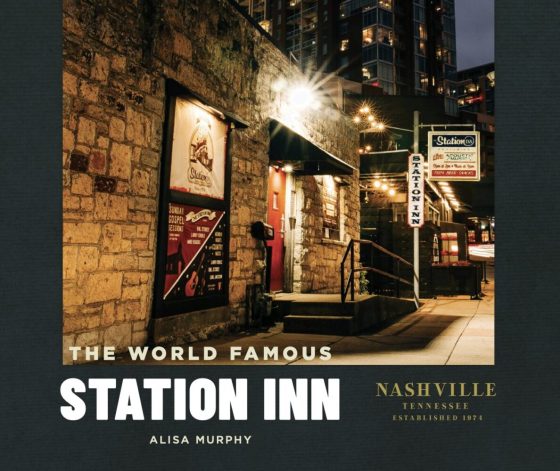
The World Famous Station Inn by Alisa M Murphy
The passing of JT Gray in 2021 marked the end of an era for The Station Inn. Although the venue continues its bluegrass legacy with new management, it has been long past time to commemorate this (as its name rightly points out) world-famous venue with a book of stories and photos. Author Alisa M Murphy spent two years immersing herself in the culture of the venue and conducting interviews to put together her coffee-table book, The World Famous Station Inn.Find it here.
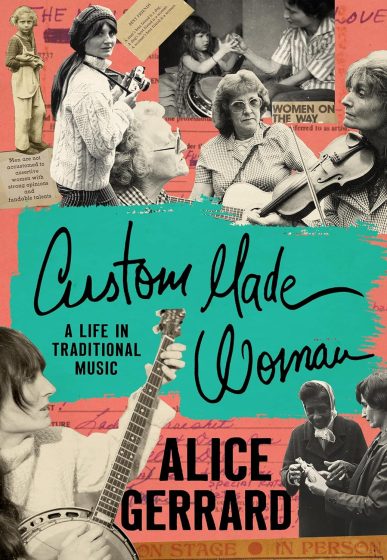
Custom Made Woman: A Life in Traditional Music by Alice Gerrard
This new memoir from one of our national treasures, Alice Gerrard, features over 100 of her personal photographs along with stories from pivotal times and an exceptional life in traditional music. Gerrard’s career saw her crossing paths with Bob Dylan, Doc Watson, Elizabeth Cotten, and many more. Recent rereleases of Gerrard’s trailblazing collaboration albums with Hazel Dickens have been put out by Rounder Records and Smithsonian Folkways, and they can be listened to in an entirely new context thanks to this book. Find it here.
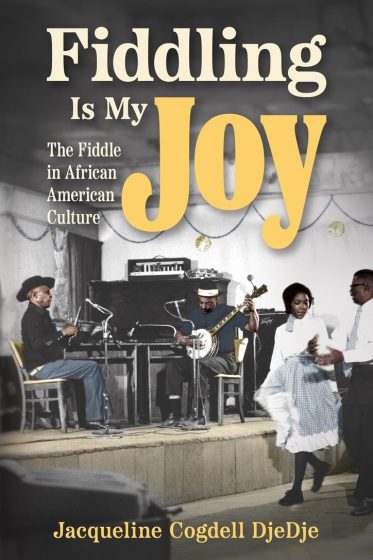
Fiddling is My Joy: The Fiddle In African American Culture by Jacqueline Cogdell DjeDje
UCLA Ethnomusicologist Jacqueline C. DjeDje investigates the fiddle in Black America, not only helping restore it to its rightful position in history, but also exploring why fiddle in African American culture disappeared from the mainstream story of the instrument in the first place. In addition to exploring geographic differences in African American fiddling traditions, DjeDje’s scholarship looks at fiddle traditions in West African and how their specific characteristics made their way to both Black and white American fiddlers. The book is accompanied by an online eScholarship Companion with primary source documents and audiovisual examples of music discussed in the text. Find it here.
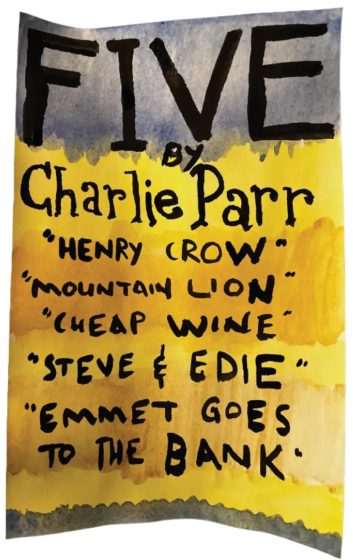
Five by Charlie Parr
The second collection of short fiction from beloved Minnesota musician Charlie Parr is not for lovers of a tight plot and succinct characters. Parr’s five stories are, according to his own description, “more like sad anecdotes told to you at the end of an impossibly long dinner party by the drunken spouse of someone that you barely know while you’re easing your way to the door, having already put your coat on around the time that these stories began.”
But, if you’re a fan of Parr and his 18 (!!!) studio albums, this collection is a must. Find it here.
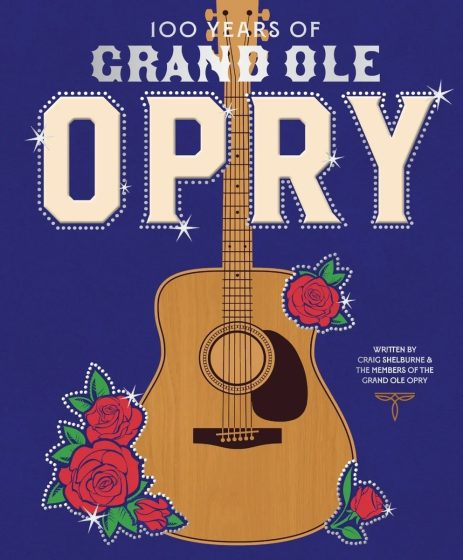
100 Years of Grand Ole Opry by Brenda Colladay & Craig Shelburne
Music journalist Craig Shelburne worked tirelessly with Opry historian Brenda Colladay – and dozens of artist, announcer, and Opry employee interviewees – to tell the story of the world’s longest-running live radio show over a century. The Grand Ole Opry is certainly the main character. This book is perfect for collectors and readers alike, since it’s full of illustrations and photographs. It’s separated into chapters by time periods, following the twists and turns of the Opry’s youth, adolescence, and adulthood. From Lester Flatt to the 2010 flood, the book is as deep as it is wide. An entertaining resource for country fans who like to get the full story. Find it here.
Other Reads From Our Inbox
Solomon Simon Dog Man Jack by Cindy Baucom, illustrated by Grace van’t Hof (Self-published)
Editor’s Note: Each issue of Good Country, our co-founder Ed Helms will share a handful of good country artists, albums, and songs direct from his own earphones in Ed’s Picks.
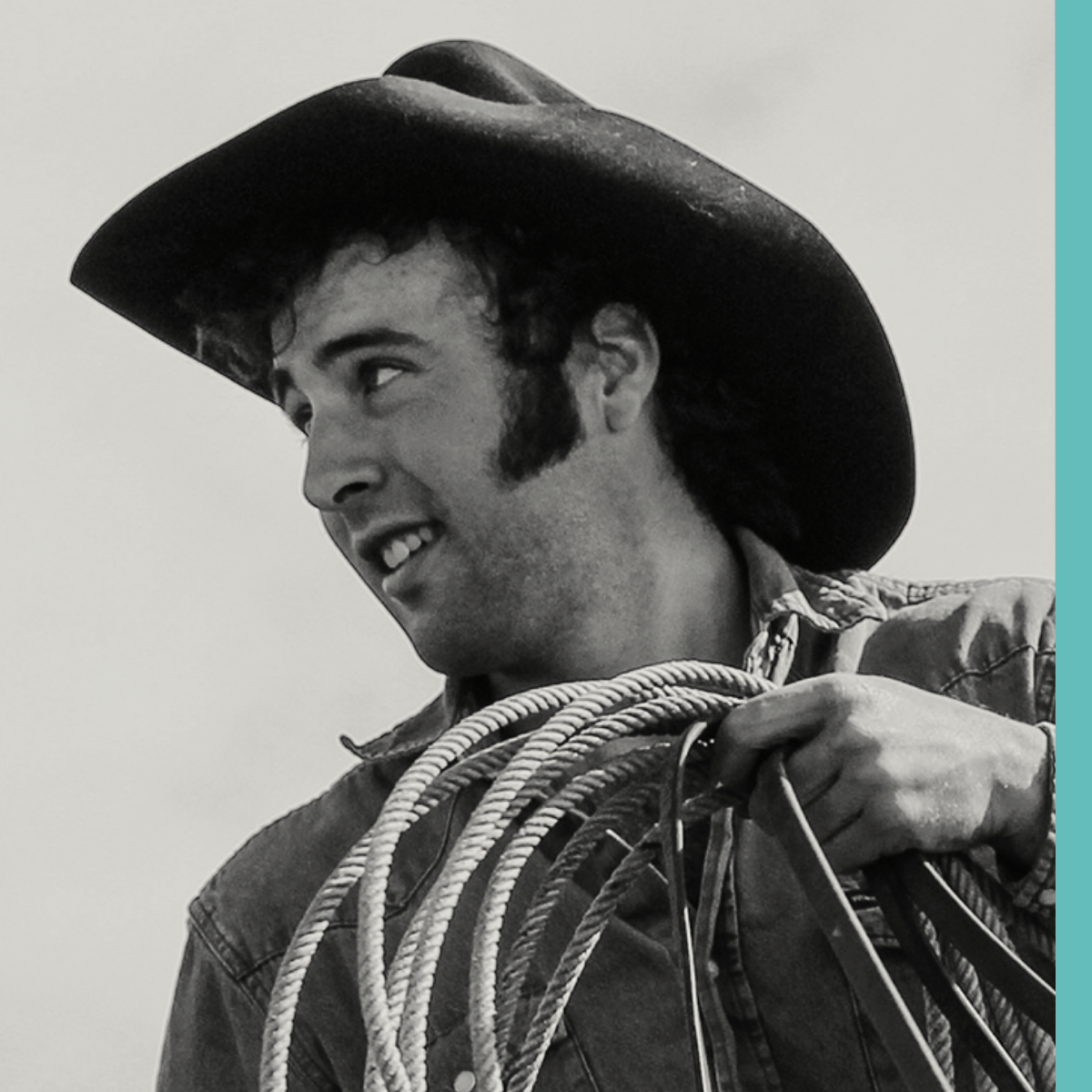
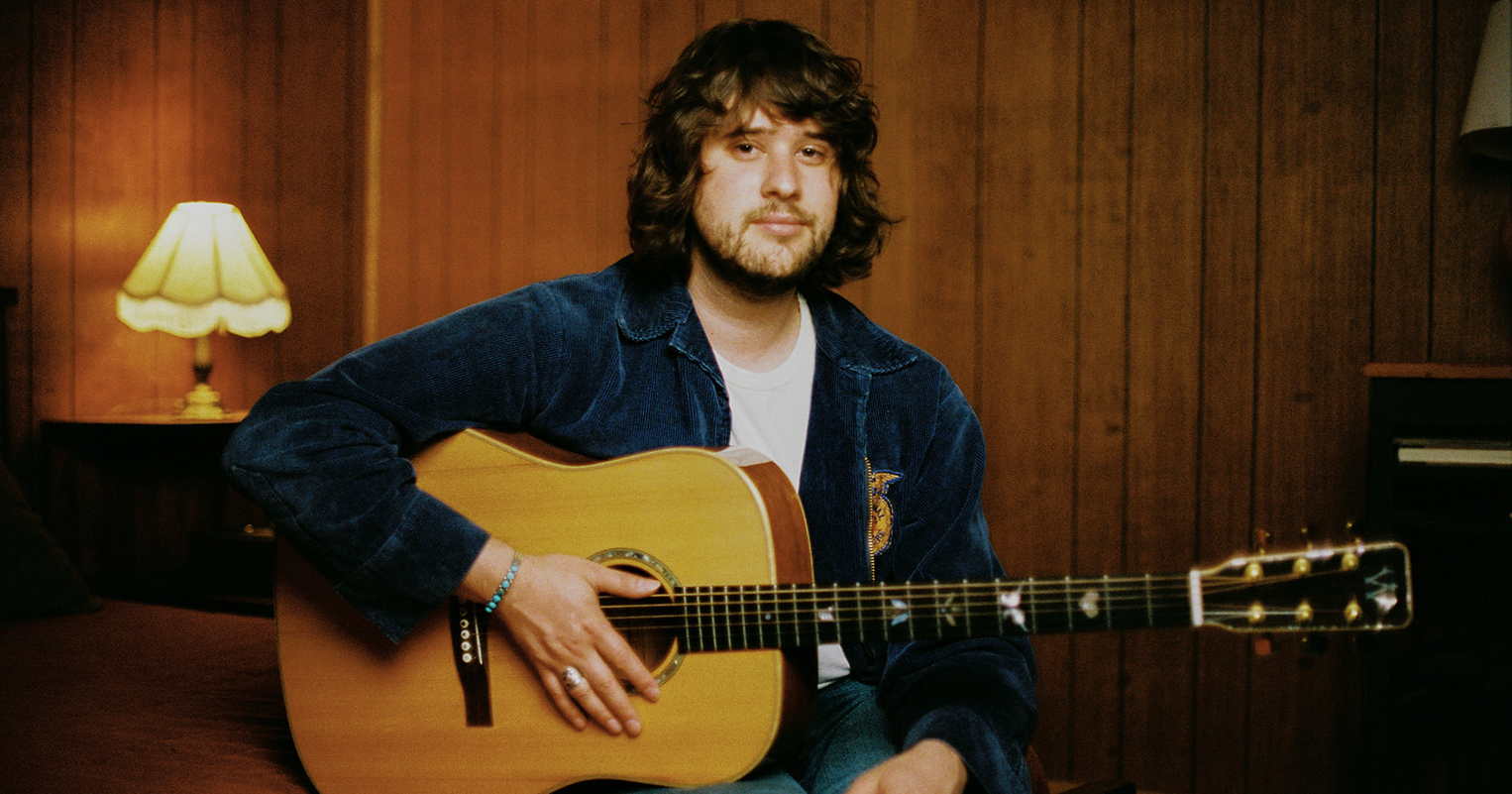
When country singer-songwriter and community-builder Luke Bell passed away in 2022, he left an enormous vacuum in the scenes that made him and adored him. But, he left an even larger legacy. His only posthumous album, The King Is Back, was released last week after being lovingly compiled by his mother Carol, sister Jane, and his team, friends, and collaborators – many of whom perform the LP’s 28 Bell-penned songs. It’s a devastating and heartfelt collection that benefits the Luke Bell Memorial Affordable Counseling Program. Learn more and donate here.
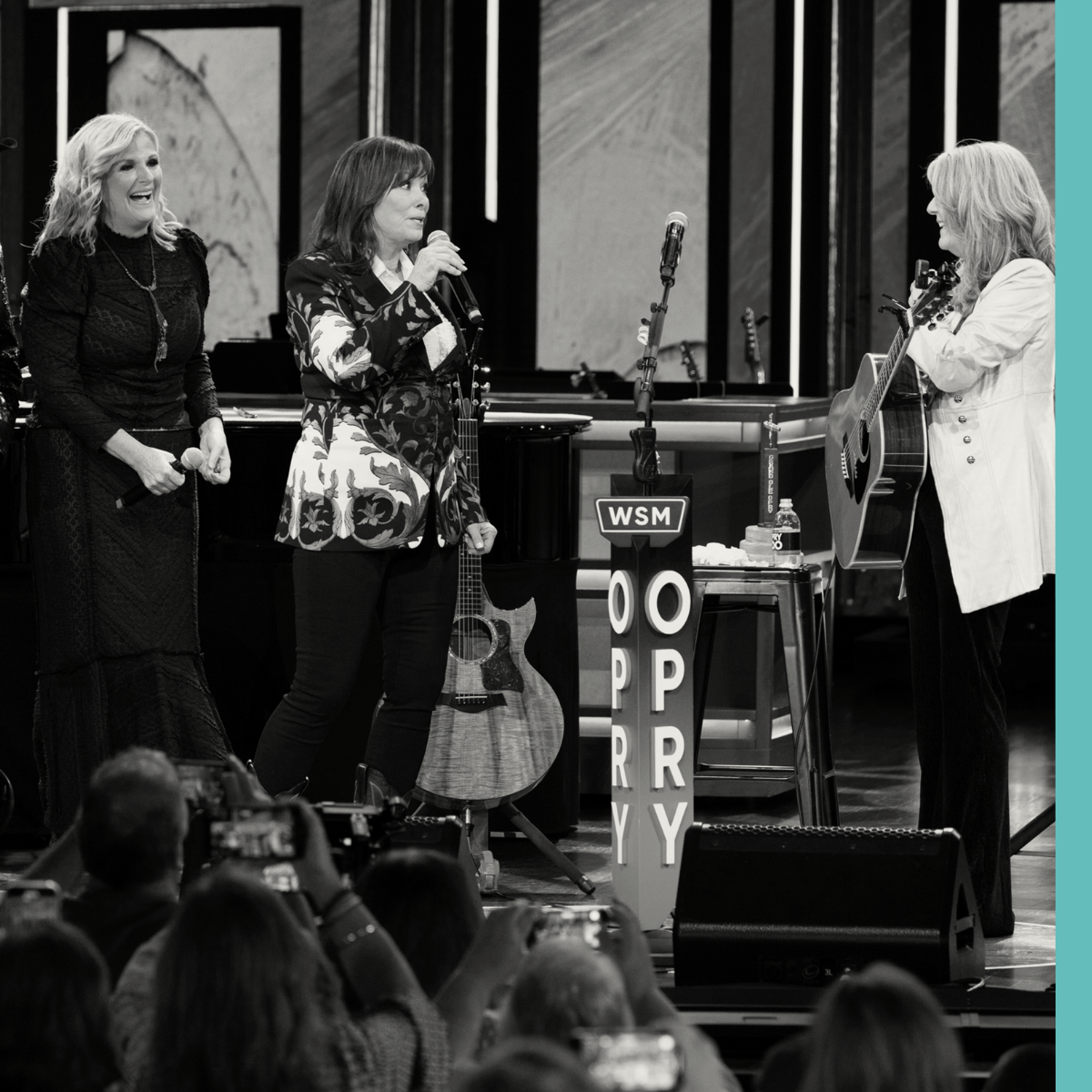
Suzy Bogguss is a country artist and singer-songwriter who’s won a GRAMMY, two CMA Awards, and an ACM award, and has had eight original songs become top 10 hits on the country charts across her career. Now, she’s adding another impressive title to her resumé: Grand Ole Opry Member! Last month, while her longtime friend Kathy Mattea celebrated her own induction into the Opry, Mattea interrupted her performance of “Eighteen Wheels and a Dozen Roses” (with Bogguss, Trisha Yearwood, and Terri Clark singing along) to surprise Suzy with her own invitation. Congratulations, Suzy! (She’ll be inducted in early 2026.)
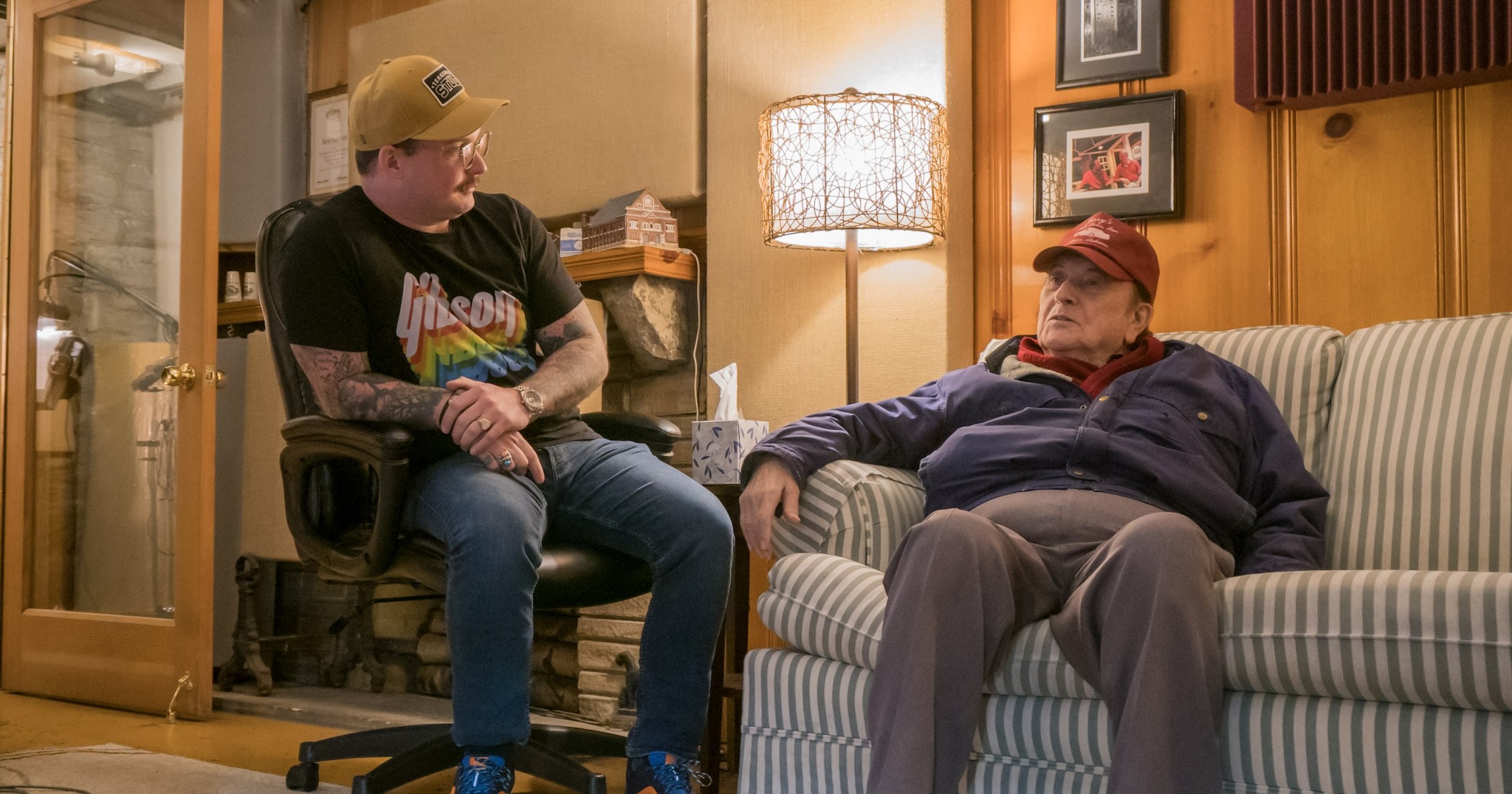
It would be hard to find a more prolific artist-producer-actor in country these days. Shooter Jennings is everywhere, producing albums for Jake Owen, Charley Crockett, Jeremy Pinnell, and the Turnpike Troubadours this year alone. In addition, he’s reached back into the archive of his outlaw father, Waylon Jennings, to release Songbird, the first in a three-album series of posthumous Waylon releases curated by Shooter. His influence is everywhere in modern country – and we’re glad about that.
Read our brand new feature on Shooter Jennings and the new Waylon project, Songbird, here.
We first heard about Memphian modern blues-Americana family band Southern Avenue way back in 2017 and now, more than eight years later, they’re nominated for a GRAMMY! Their most recent album, Family, dropped in April and gained the group their second GRAMMY nomination last week for Best Contemporary Blues Album. The band showcases how Memphis, though it’s often overlooked in favor of its nearby music city sisters, produces fascinating, genre-blending roots music dripping with personality.
Everyone’s favorite Canadian cowboy recluse is back with more of his signature raw, down-to-earth, and grizzled country & western sound. Memories and Empties, Wall’s first studio release in two years, is out today. Tracked in Nashville at the legendary RCA Studio A with his touring band, Scary Prairie Boys, and production by bandmate Pat Lyons, it’s a stellar collection of traditional, working-class, flatland-steeped country that wouldn’t even dare to try getting above its raising. Plus, it celebrates the communities and relationships often obscured or overlooked in songs and recordings that sound like this. Good Country? That’s for damn sure.
Want more Good Country? Sign up to receive our monthly email newsletter – and much more music! – direct to your inbox.
Photo Credits: Luke Bell by Mike Vanata; Suzy Bogguss, Kathy Mattea, and Trisha Yearwood at the Grand Ole Opry by Chris Hollo; Shooter Jennings by Jared Christopher; Southern Avenue by Rory Doyle; Colter Wall by Jake Zielke.
In 1925, world leaders were signing the final treaties coming out of WWI; Congress authorized work on Mt. Rushmore as a national memorial; the Scopes Trial was held in Tennessee; and the first patent on radio transmission was only 28 years old.
And, in 1925, WSM first broadcast its barn dance – soon to become the Grand Ole Opry.
One hundred years later, the Grand Ole Opry is the world’s longest-running radio program. After a century that saw changes unparalleled in world history, audiences are still drawn to the Opry. Every week thousands make the pilgrimage to the Grand Ole Opry House in Nashville while others tune in around the world. The show continues to inspire new generations of performers to aspire to step “into the circle” on the Opry House stage.
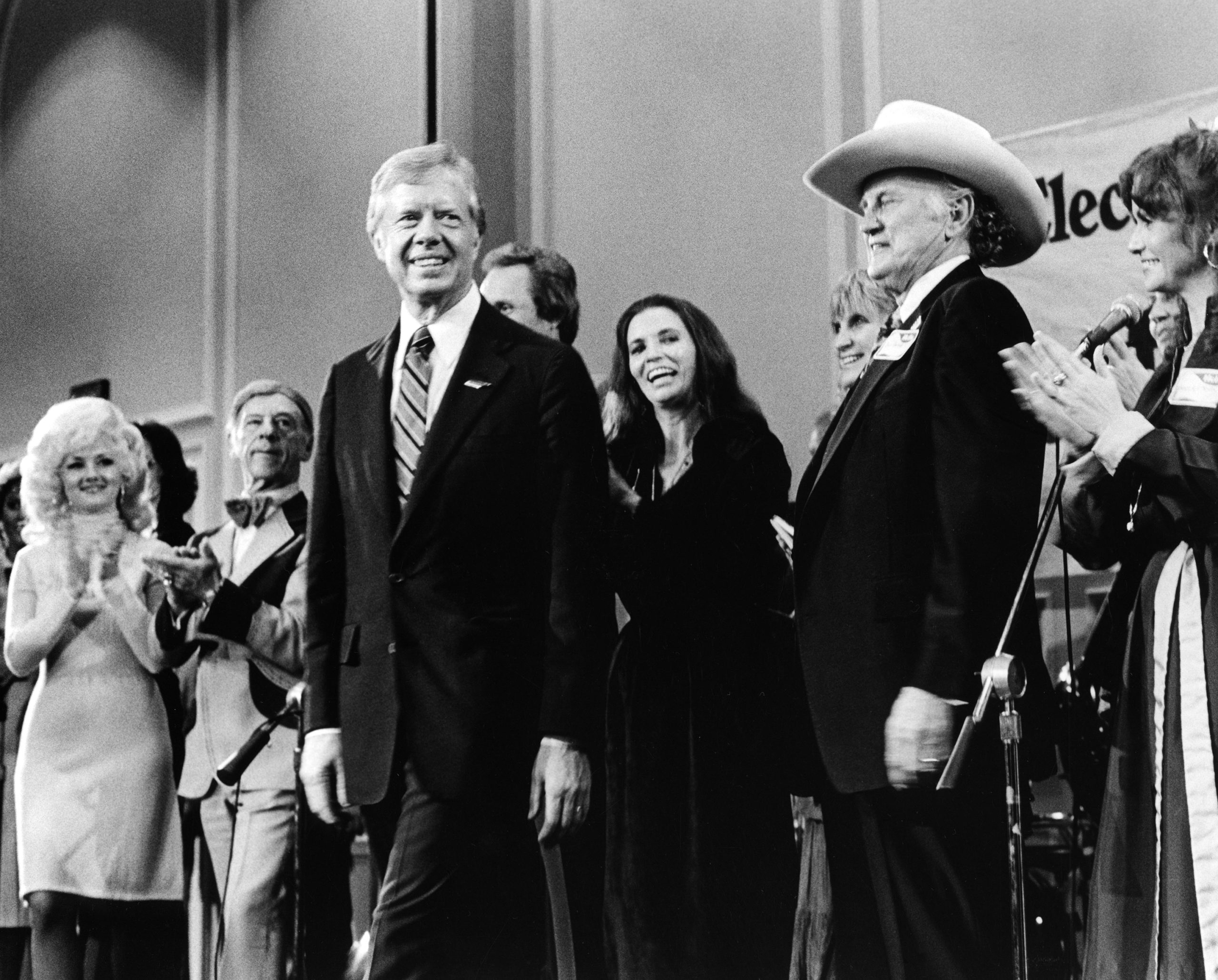
President Jimmy Carter on the Grand Ole Opry stage with Kelly Foxton, Hank Snow, Mel Tillis, June Carter Cash, Skeeter Davis, Bill Monroe, Jeannie C. Riley, and others on October 9, 1980. Photo courtesy of Ryman Hospitality Properties.
In The Beginning Was Insurance
In the 1920s, Edwin Craig was watching radio stations emerge across the nation – and seeing the money-making potential for sponsors and owners. He convinced Cornelius Craig, his father and founder of the National Life and Accident Insurance Company, that a radio station could sell a lot of insurance.
Soon, the fifth floor of the company’s downtown Nashville building held a radio studio. The call letters WSM stood for “We Shield Millions,” the company’s motto. A program that would become the lifeblood of country music started as a way to promote life insurance.
The hiring of George D. Hay away from Chicago’s WLS was the beginning of the WSM Barn Dance. The 30-year-old who called himself The Solemn Old Judge and started every show with a steamboat whistle would set the tone for much of the Opry’s 100 years – including its name.
Which all started with a clash of cultures.
Some upper-crust Nashville residents complained the only radio they could hear on weekends was string band programming from the dominant WSM station. In response, WSM began carrying the syndicated “Music Appreciation Hour.”
The Barn Dance slot followed the classical program, and Hay, not one to pass up a good line, said, “For the past hour, we have been listening to music largely from Grand Opera, but from now on, we will present ‘the Grand Ole Opry.”
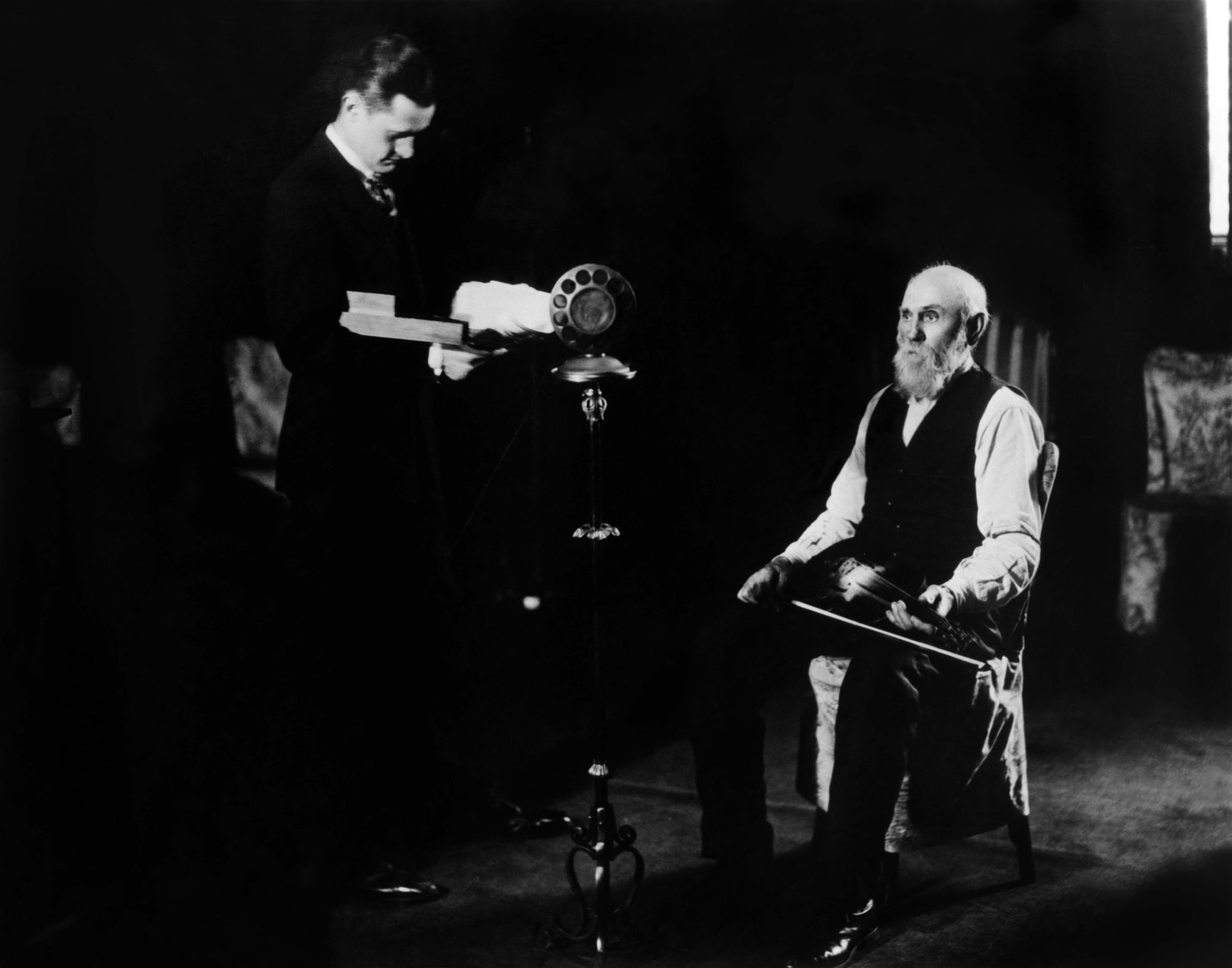
George D. Hay is pictured at microphone with a whistle and Uncle Jimmy Thompson is seated in this 1925 photograph from when the Grand Ole Opry was still the WSM Barn Dance. Photo courtesy of Ryman Hospitality Properties.
For years, the Shield Men – door-to-door National Life and Accident insurance salesmen carrying the company’s shield logo – introduced themselves as representing the Grand Ole Opry. They would even listen outside windows to see who was tuned in to the Opry – and who would be a likely customer.
The earliest WSM shows relied on local talent, running heavily toward fiddlers and string bands. But Hay would invite whoever he thought the audience would like.
DeFord Bailey, a Black musician grounded in both the blues and old-time string band music, became a regular, wowing audiences with his harmonica. Kitty Cora Cline, the first female soloist, performed on hammered dulcimer, and Fred Shriver played the accordion. Uncle Dave Macon on his banjo with Sid Harkreader on fiddle and guitar set the stage for the comedy that would remain central to the Opry’s success, with songs like, “Keep My Skillet Good and Greasy.”
A Beacon
As the recording industry grew, the variety of musicians available to the Opry grew, as well. The show began featuring brother duets, cowboy music, Western swing and solo crooners. Bill Monroe & the Blue Grass Boys were featured stars for decades.
Opry singers expressed the joys of new romance, the happiness of Sunday dinner on the lawn, the sorrow of lost love, and the loneliness of leaving home. Audiences across America listened – and related. The Opry became a focus of family life.
Dolly Parton, like many rural listeners, grew up without electricity. Her family faithfully listened to the Opry on a battery-powered radio. Waylon Jennings’ dad would hook their radio to the car battery. Jeannie Seely’s family would pile in the car and drive up a hill until they could get the signal. Opry history is filled with stories of musicians who listened as children – and dreamed of growing up to perform, like their idols, on the iconic stage.
Opry member Dierks Bentley, who gracefully moves between country and bluegrass, told BGS, “Being invited to join at all is the biggest honor – especially for me, personally. I grew up listening to all the Opry greats on the radio with my dad, so becoming a member is like having the ultimate backstage pass to see the best musicians in the world. And to be invited by Marty Stuart … hands down, it was one of the coolest nights of my life.”
Dan Rogers, the Opry’s senior vice president and executive producer, said the Opry has always been a place to celebrate the good times and be uplifted during the tough times. “Think about,” he said, “the folks who tuned in on Saturday nights during World War II. That was their only source of entertainment throughout the week.” Minnie Pearl, with her signature “How-dee,” and Roy Acuff gave them respite from war news.
On the first show after the 9-11 attacks in 2001, Rogers said, “Our background singers sang an a cappella version of ‘God Bless America.’ And one by one, the people in the audience stood and sang along. And I remember thinking, I bet everybody tuned in across the country is singing along to ‘God Bless America.’”
The Opry’s response to the COVID-19 crisis created desperately needed connection during a frightening time of isolation.
Just a week after deciding that live audience shows weren’t safe, Opry staff arranged a pared-down streaming production with no audience and a skeleton crew. Longtime cast members Bill Anderson, Jeannie Seely and Connie Smith held down the first night alongside Mandy Barnett, Michael Cleveland & Flamekeeper, and Sam Williams.
For the second weekend of restrictions, veterans Vince Gill, Marty Stuart, and Brad Paisley sat on stools spread out across the stage and pulled off what Rogers called “a beautiful, beautiful show.”
Watching from his office, Rogers started reading comments from grateful listeners. For months, people marked their calendars to tune in. They wrote, “I’m in Europe. I set my alarm. It’s 2 a.m. here, but I wanted to experience this with a community.”
Marty Stuart, Vince Gill, and Brad Paisley perform for an empty Grand Ole Opry House during the COVID-19 lockdowns in 2020. Photo by Chris Hollo, courtesy of Ryman Hospitality Properties.
Kathy Mattea, the newest Opry inductee, feels those connections whenever she performs there.
People may have sung along to her hit “18 Wheels and a Dozen Roses” in their car or in the shower, but at the Opry, she says to BGS, “Here’s your chance to sit with an audience and sing this song that everybody knows. Nobody knows who the person next to them voted for and it doesn’t matter at that moment.”
“The Ellis Island of Country Music”
In the early days of radio, what was called hillbilly music was as limitless as the range of a 50,000 watt radio station. And the Opry remains dedicated to maintaining those wide open spaces.
Garth Brooks and Trisha Yearwood, in their forward to the book 100 Years of the Grand Ole Opry, refer to the show as the “Ellis Island of Country Music – a place where all are welcome.”
Contemporary country often has been accused of being homogenous and limited. But despite the factors that have controlled commercial country, the Opry maintains its open-arms attitude. Rogers said, “The two core tenets of an Opry show are celebrating the past, present, and future of country music, and also showcasing multiple genres under the country music umbrella.”
In any show, he said, “You might have something that’s on the top 20 of the country charts today. And you’ll have country classics. You might have a contemporary Christian song, Americana string music, or even something from outside the genre by somebody who just happens to be a country music fan or was influenced by country music.”
In 1974, the R&B-oriented Pointer Sisters included an original country song, “Fairytale,” on their second album. The cross-over hit earned them an invitation to the Opry stage, where they became the first Black group to perform.
Ringo Starr appeared for the first time in 2025 and James Taylor’s debut on November 11 will be remembered as a big part of the 100th anniversary celebration.
And, Rogers said, “Because we can do it, it’s fun to take a chance on a new artist.”
Before his first Opry appearance in July 2022, Zach Top had no hits to his name. But Rogers remembered the programming team saying, “You don’t see an artist like that every day. It sure feels to us like our audience would absolutely eat that guy up!” Today, Top’s music is everywhere.
Bluegrass has been a staple since before it had a name and it has never lost its place on the stage. Bentley and Del McCoury played “Roll on Buddy, Roll On” when the Grand Ole Opry House first reopened after the 2010 flood closed its doors for months.
Charlie Mattos is a 10-year veteran Opry announcer and longtime co-host and producer of WSM’s morning show. He said that on any given night, a portion of the Opry House audience “may truly have never seen a bluegrass band play.”
“And when Del McCoury and the boys finish with an incredible instrumental,” Mattos continued, “or Sister Sadie blisters the stage … the enthusiasm that comes out of that crowd, the immediate standing ovation for the insane musicianship that they have just witnessed …” Mattos said, “it blows their minds.”
Mattea said, “Bluegrass is front porch jazz – the virtuoso playing and the vocals and the harmonies and the trading off of licks. That’s how I fell in love with bluegrass.” And the Opry exposes millions to that brilliance.
A Good-Natured Riot
The Opry show is a complex set of acts and sets requiring precision planning, flexibility, and good nature on the part of the announcers – and commitment on the part of the performers. Rehearsals are brief or non-existent. Timing is everything.
Borrowing a phrase from George D. Hay, the Opry is still sometimes called a “good-natured riot.”
Mattos said, “When you come to see the show live, you see it all. The set changes. The artists leaving as the announcer sends them off. You can see the stage crew out there and usually in 90 seconds they can completely swap things around.”
But while reading a commercial during set changes, Mattos may notice the stage manager giving the “stretch” signal. He might have to keep talking for as long as four minutes – a millennium in radio time.
Sometimes the commercials themselves become the entertainment.
The first time Glad Wags sponsored an Opry segment, Chuck Morgan was announcing. While he stood off-stage reading the dog food commercial, house bassist Bill Linneman came up behind him and started barking. “By my last year there, there were like 20 people behind me going at it,” Morgan said. (The consensus is that Connie Smith does a great chihuahua imitation.)
A Family
Jeannie Seely – who racked up nearly 5,400 performances on the Grand Ole Opry before her passing in August 2025 – remembered it was more than the music that fueled her desire to join the Opry: “That’s hearing these people, like Mr. Acuff and Minnie [Pearl] and Jimmy Dickens and all of them, coming together every week,” she says in 100 Years of the Grand Ole Opry. “They always sounded like they were so glad to be together. They picked on each other and joked, and I thought, that’s just like a family.”
And they were family. When the plane Jim Reeves was aboard crashed in a wooded Nashville suburb, Marty Robbins and Ernest Tubb joined the search party, as did the elegant Nashville socialite Sarah Ophelia Colley Cannon – known as Minnie Pearl.
Opry star Jean Shepard was expecting her second child with husband Harold “Hawkshaw” Hawkins when Hawkins died in the plane crash that also killed Patsy Cline and Cowboy Copas. After months feeling adrift, as Shepard was quoted in the 100 Years book, “I looked down my driveway one day and here come two big black limousines full of the so-called ‘higher-ups’ from the Grand Ole Opry. They said, ‘We want you to come back to the Grand Ole Opry.’ And it really meant a lot to me.”
The family feeling is no accident. In earlier years, Opry members had to perform a specified number of Saturday nights a year. While there’s no set number today, Rogers said they look for a sense of commitment in new members. “It truly is about that relationship,” he said.
Rogers quoted Mattea, upon her invitation to become a member, saying, “These people treat you like family, no matter what.”
One of Mattea’s favorite Opry memories involves a bass player who toured with her. “He was sitting on a stool, playing and singing some old Western swing chestnut, and suddenly Riders in the Sky leaned into the dressing room in full regalia and started singing harmony.
“He was gobsmacked. He felt it was the highlight of his life,” she said.
Bluegrass performer Kody Norris’ music is influenced heavily by first- and second-generation bluegrass. But the band’s preference for flashy suits dates back to a family-friendly welcome Norris received 25 years ago.
His parents took nine-year-old Kody backstage at the Opry, “and I met Bill Anderson. And he had on a red rhinestone suit. That’s the first one I ever saw up close, where I could touch it.”
Later that day, upon meeting his equally rhinestone-clad hero, Porter Wagoner, young Kody got so excited he spit out his chewing gum. Wagoner graciously grabbed two Opry-logoed napkins, one of which the little boy used for his gum. The other one the grown Norris still keeps in perfect condition.
The Circle is Unbroken
In 1974, the Opry left its revered home of decades, the Ryman Auditorium, to move to the deliciously air-conditioned 4,400-seat Grand Ole Opry House.
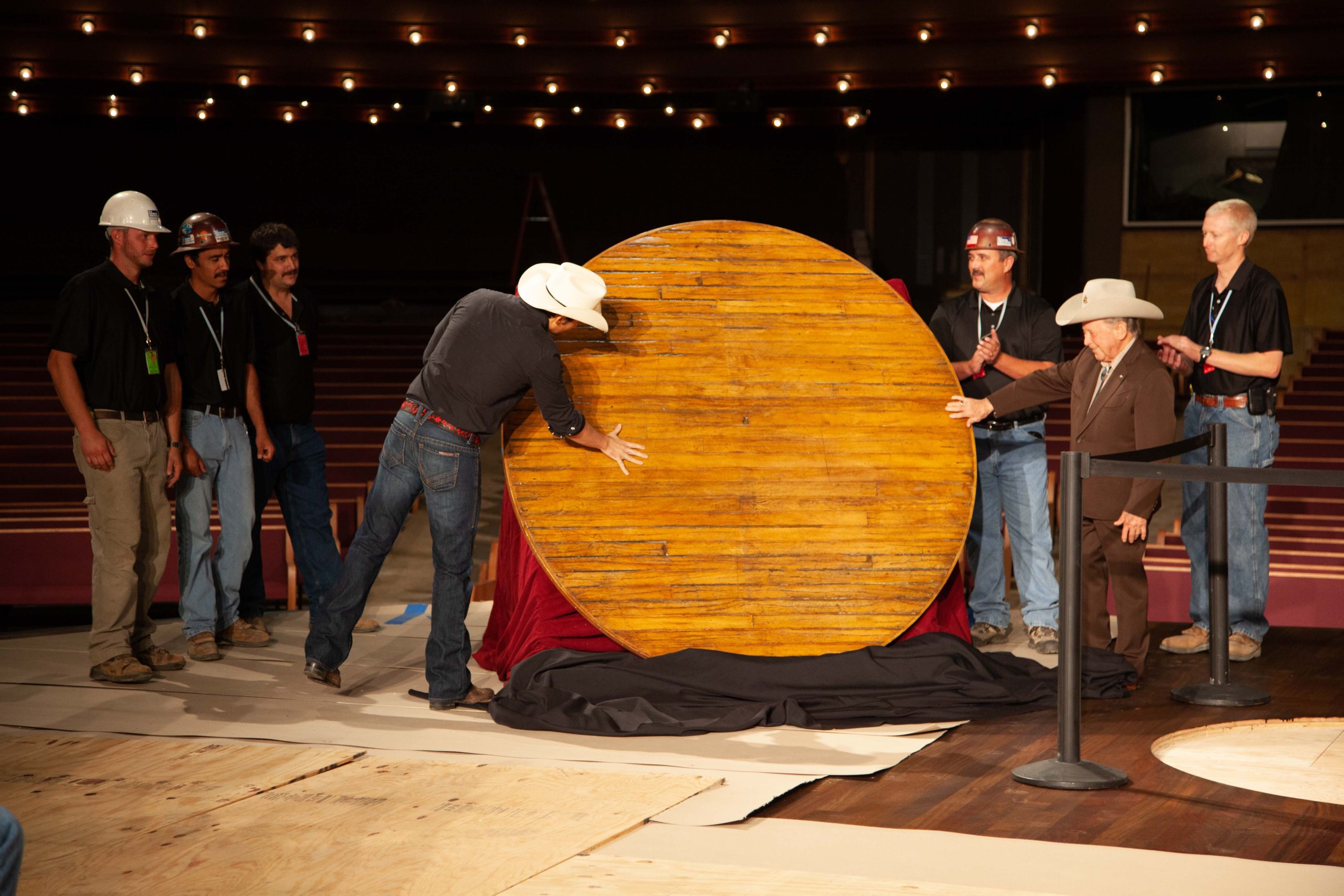
To honor its longtime home, the Opry crew cut a circle out of the Ryman stage and inset it in the new Opry House stage. The circle symbolizes the Opry’s continuity, respect for the past, and optimism for the future.
Mattea experienced that sense of a completed circle on the day she became an Opry member.
“Suzy [Bogguss] was there. We’ve toured together and sung on each other’s records. She’s my closest artist friend, and she was the only one at the ceremony who was not a member. And I thought how generous it was of her to be there.
“So, while I was overflowing with celebration, to get to invite my friend to the party publicly in the name of the Opry was the sweetest gift. It was a moment I’ll never forget, and I’m going to be there for her induction, too.” Bogguss will officially be inducted as an Opry member in early 2026.
Braid Paisley and Little Jimmy Dickens return the Circle to the Opry stage after the 2010 flood. Photo courtesy of Ryman Hospitality Properties.
Join The Celebration
There’s nothing low-key about the Grand Ole Opry – so in the classic Opry spirit, fans have had plenty of opportunity to celebrate the centennial all year long.
Earlier this year, NBC broadcast a three-hour anniversary special, with dozens of stars ranging from Reba McEntire to Jelly Roll to The War and Treaty. The Opry also took the show to London’s Royal Albert Hall for the very first time. You can stream clips of these and other Opry events on YouTube and social media.
With the Virgin Music Group, the Opry has produced the album Opry 100, Country’s Greatest Songs (released November 7). Among the unforgettable recordings are Vince Gill singing his heart-rending “Go Rest High on That Mountain,” Dolly Parton singing “I Will Always Love You,” and Ashley McBryde covering the classic “Your Cheatin’ Heart.” You can order the album from the Opry site.
Craig Shelburne, Brenda Colladay, and Opry members and employees collaborated on 100 Years of the Grand Ole Opry, a book filled with anecdotes and photos that vividly illustrate the Opry’s remarkable history. And to teach your children well, there’s also a new childrens’ picture book written by Emily Frans and illustrated by Susanna Chapman. Find them in your local bookstore.
And, on November 28, 2025, the official 100th anniversary of the Grand Ole Opry we all hold dear, the Opry is celebrating with two huge birthday party shows featuring country stars and Opry members like Vince Gill, Ricky Skaggs, Trace Adkins, Dailey & Vincent, Bill Anderson, Jamey Johnson, Marty Stuart, and many, many more. Tickets are available here.
Of course, the celebrations will continue in 2026.
“The Opry is the core and soul of country music,” Bentley said. “It’s a place where the past, present and future of our genre all come together. There isn’t anywhere else like it.”
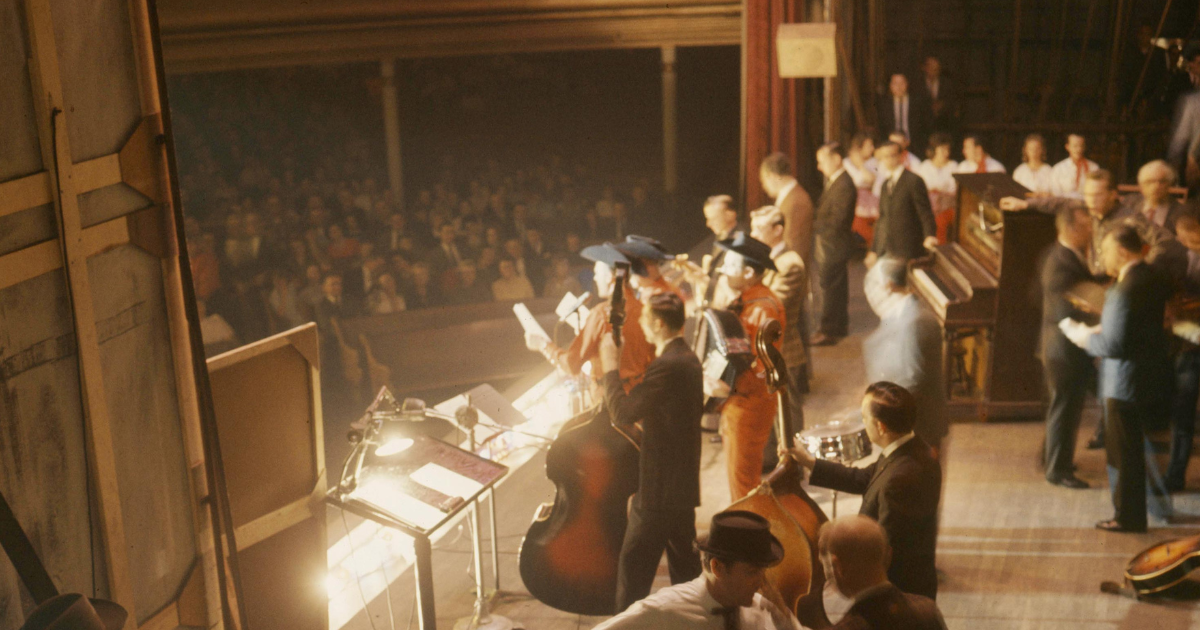
All photos courtesy of Ryman Hospitality Properties, credits and attributions as marked. Lead image: Bill Monroe & the Blue Grass Boys and the Opry Square Dancers take the Opry stage at the Ryman Auditorium in the 1960s.
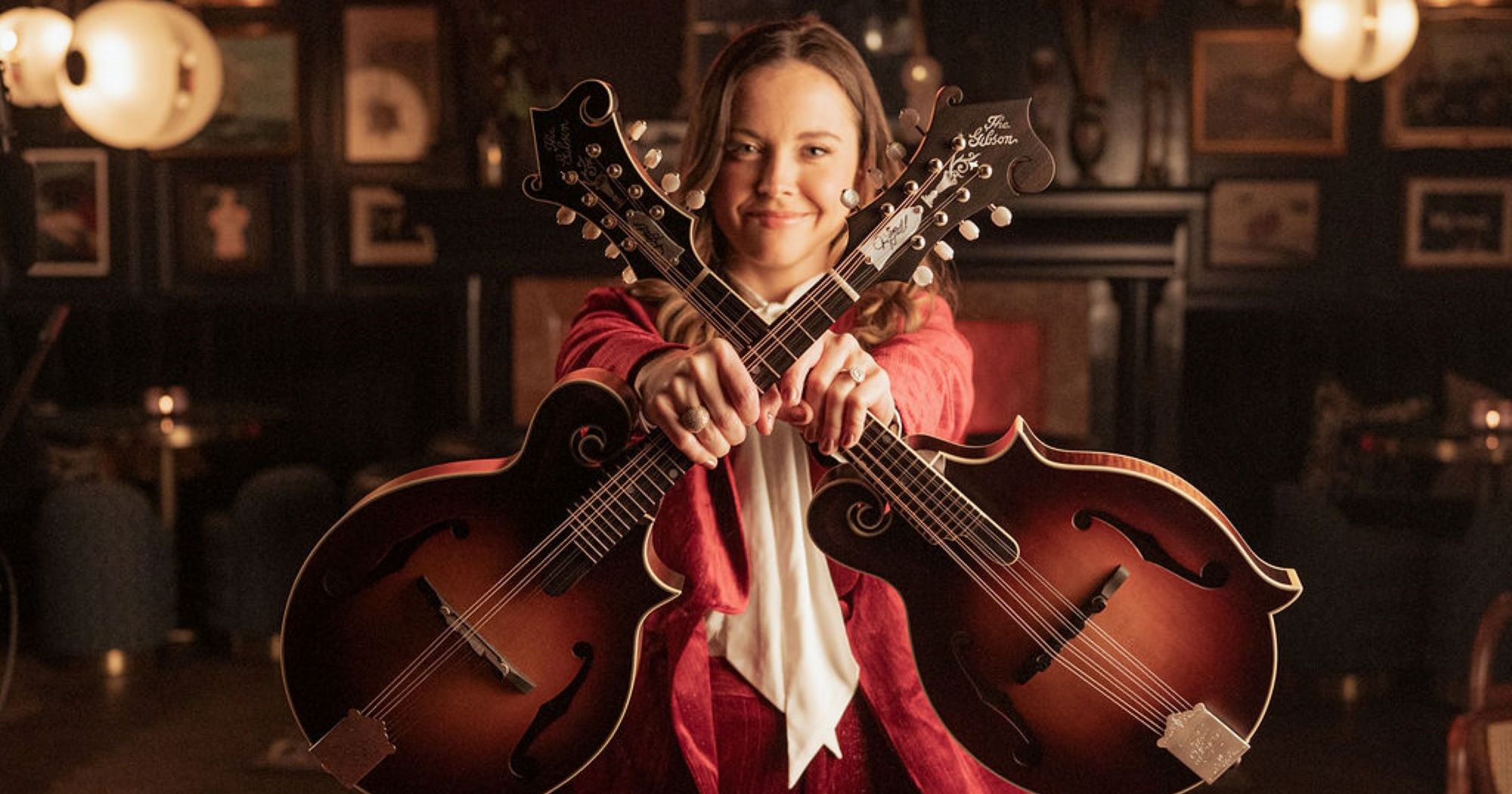
Eyes on the future, heart in the past – it’s the cornerstone of how award-winning mandolin player, guitarist, singer, and songwriter Sierra Hull crafts her music, and how Gibson Master Luthier David Harvey and the Gibson Custom Shop crafted her new signature mandolins: the F-5 Master Model and F-5G.
The F-5 Master Model boasts a red spruce top, eastern curly maple back and custom narrow neck, and ebony fretboard, while the F-5G offers a red maple neck and body, Sitka spruce top, and ebony fretboard. Both models feature the Sierra Burst VOS Varnish finish and come with certificates of authenticity, Sierra Hull/Gibson BlueChip pick, and mandolin cases – vintage replica for the Master Model and hardshell case for the F-5G.
The instruments are the result of Hull’s many years of dedication, hard work, and talent, alongside a working relationship with Gibson that began when she was 12 years old and already a four-year veteran on her instrument. Growing up in Byrdstown, Tennessee, with few if any resources for musicians, the slightest instrument repairs required a two-hour drive to Nashville, where, at the time, Gibson had a shop in the Opry Mills Mall.
Hull had graduated from her first F-style mandolin, “a starter-model Epiphone that was so cool because it said ‘Gibson’ on the truss rod cover,” she says, to a flatiron mandolin she bought used from a local player and still has in her collection. In need of new frets, and in Nashville with family, they went to the mall in hopes of a walk-in or referral. Hull had recently played the Opry with Alison Krauss and upon entering the Gibson Showcase shop, Grascals mandolin player and Gibson staffer Danny Roberts recognized her and put a new, limited edition Adam Steffey signature model in her hands.
“My dad remembers them saying, ‘How would you like to have one of these?’ He’s thinking, ‘Yeah, buddy, I bet she would, but we ain’t got that kind of money to spend on a mandolin,’” Hull recalls. “They gave me that mandolin and it was such an unbelievable moment, as a 12-year-old, to be given this incredible instrument. That was the beginning of my relationship with Gibson. I’ve mostly played a Gibson mandolin ever since.”
Fast-forward to 2009 and Sierra Hull’s main instrument: her Gibson Master Model, built by Gibson Master Luthier David Harvey. “The 2009 was brand new at the time,” she says. “Dave made some modifications to it to suit what I was looking for and it has become my voice.”
That mandolin eventually became the springboard for her signature Master Model and F-5G, in line with her original specifications for the 2009. “I have small hands, so Dave took the neck down a little bit for me,” she says. “We put an aged varnish on it instead of the normal gloss, which makes it a little more unique than one right off the line.
“I’ve always preferred that thin, matte varnish type finish, so we decided to recreate that with the signature line. So many people often ask me about my mandolin; they think I’m playing a Lloyd Loar most of the time. I’ve put a lot of miles on this mandolin since 2009. I’ve played it as my primary instrument since then. When I got it, it didn’t look anything like it does now in terms of being so worn, but it didn’t look brand new and shiny, either. I always loved that about it, that there was a certain aged vibe to it already because of the finish.”
In addition to the aesthetics, the Master Model parallels Hull’s unique sense of blending her deep bluegrass roots with contemporary sounds. It is, she says, the perfect instrument for that mix of past and present. “When I think about the kind of music I play, both these days and throughout my career, I’m so rooted in traditional bluegrass,” she says. “I grew up going to bluegrass jams on the weekends, sitting in a circle – you need a mandolin with volume, something you can dig into, like the Master Model.”
“Part of the reason we all want to play F-5 mandolins is because Bill Monroe, the Father of Bluegrass, played an F-5,” she continues. “I love an A-style mandolin as well, but there’s something that makes you feel legit about playing bluegrass on an F-5 mandolin, because it just feels right – the feel, the look, the sound, the pointedness that those F-style mandolins have. The idea of having a mandolin that you can really channel that traditional thing that as mandolin players we’re born to love in bluegrass music – Gibson is the gold standard for what we think of in terms of every F-style mandolin that you see.
“There’s a lot of great builders out there, so many talented luthiers building beautiful mandolins, so it’s no slight to any of them. But nobody would be doing that if Gibson didn’t exist and build these F-5 mandolins with Lloyd Loar’s stamp of approval on them. When I pick up my Master Model, it feels like the connection to that legacy.
“Even though I tend to think my sound is more progressive and modern – way more so than what you think of when you think of Bill Monroe – that’s the world I come from, so I want a mandolin that feels connected to those roots. But the clarity, the top end, the sparkle that these mandolins have, too – they have a large span on what they can bring to the table. No matter what musical direction I go in, I never find myself lacking from the side of what the instrument can do. It really shows up in all those situations.”
Bringing the Sierra Hull Master Model and F-5G from concept to showroom was a two-year process. Hull, David Harvey, and Gibson worked closely, taking time and care to not rush the work, but instead building the mandolins to her exact specifications.
“As a youngster I couldn’t have dreamed of having my own signature line with Gibson, so it was wild to get the call,” she says. “I’ve learned so much in this process over the past couple of years. Getting to go up-close, help pick out the wood, and see it go from a chunk of wood to mandolins that have my name on them is such an experience. To see it all come to life is a full-circle moment that takes me back to sitting in the Gibson Showcase at 12 years old and playing one of my heroes’ signature lines. To see these mandolins with my name on them is overwhelming. It’s such an honor.”
Mat Koehler, Vice President of Product at Gibson, joined the company almost ten years ago. He says bringing the vision of Sierra Hull signature mandolins to fruition was, in fact, over a decade in the making, beginning with conversations and leading up to the present.
“Even ten years ago, Sierra was one of the best, if not the best, mandolin players in the world,” he says. “When I got here, I was like, ‘Why don’t we have a Sierra signature model?’ The answer, of course, is very complicated. I think everybody’s intention was to make that happen, but we had a restructuring of the company, change of leadership, change of management, a lot of things, a lot of obstacles. So this is really the culmination of a long time spent both ideating what a Sierra signature model would be and then executing it, finally. I am very happy and proud to be involved in some small way. But this is all Sierra and speaks to her incredible talents.
“Her impact [on the instrument] has been huge,” says Koehler. “She represents the next generation of players. She really refreshed the mandolin and offered a completely fresh take. Mandolins are a little bit similar to banjos in that with bluegrass music in the mainstream, if it’s not Mumford & Sons or Nickel Creek, it’s almost ‘out of sight, out of mind.’ Sierra has done an amazing job of taking mandolins into the mainstream in both her music and her collaborations with other amazing musicians. I see a recharging of the bluegrass world right now and Sierra is one of the many leading the charge.”
At the intersection of tradition meets technology, precise replication of Hull’s Master Model in order to build her signature mandolins was done by 3D scanning of the 2009 Master Model, a process Hull describes as “kind of like an ultrasound of your instrument. They run it over the whole instrument, you see it on the screen, and they capture all the specs in a detailed way.
“It gave us a good, strong starting point to mimic the Master Model that I love so much. From there, I got to pick out the wood and watch the process in real time. Essentially they made a replica of my mandolin that Dave Harvey, for fun, distressed to look like my mandolin, and they nailed it on the first try. We used those scans to build the signature line.”
True to her preferences, she selected a thin matte varnish finish on the models, a custom look that Gibson titled “Sierra Burst.” She also opted for the traditional Loar nut width and flat, scalloped fingerboards. “It’s much like I feel my career tries to do – lean into traditional while having some progressive new things as well,” she says.
“We did a custom tailpiece design. I didn’t want a lot of flair on the instrument. I didn’t want crazy inlays or my name spread across the fretboard. But I’m so honored to be the first woman to do a signature mandolin line with Gibson, so part of me did want a little touch of feminine something on there. If you look closely, there’s a little heart dotting the i on my signature on the truss rod. On the tailpiece, the traditional script says ‘The Gibson,’ but where the tailpiece has a curve up top, you’ll see a little heart built into the design, and a little bit of a heart at the bottom and my initials.”
“Sierra has played dozens of original Lloyd Loar 1923 F-5s, so we couldn’t cut any corners with her,” says Koehler. “We wanted to make sure her instrument was on par with any of the amazing mandolins she has played, because she would know right away what looks right, feels right, and sounds right. There are lots of different ways you can spec mandolins, but hers is true to the 2009, which would have been, at the time, a core Master Model F-5.
“That mandolin is her number one instrument to this day, so obviously we had the recipe. … Sierra’s took the very same path as our historic reissue 1923 F-5, which was we scanned her mandolin, we detailed it down to every tiny little nick and ding on it, just so we had a record of the current state of that mandolin, how it looked. The feel of the neck is really unique on hers because it was handmade by Dave Harvey at Custom.
“[3D] scanning has been a complete game-changer for us. Not only has it opened the door to be able to recreate instruments more accurately, it’s rekindled relationships with artists. Customers and fans of Gibson who want the most accurate now can finally have it, knowing it’s mapped identically from the original instrument. … Now, in a matter of maybe twenty minutes, you can do an entire mandolin, just waving a wand over it. That wand is capturing thousands and thousands of points…”
When the mandolins were ready, Hull – still a bit incredulous about having her own signature line – made a special trip to the Gibson shop to test each Master Model. “I guess it’s rare for someone to ask to do that, but I was like, ‘Can I come in and play all these?’” she says. “So we just made a fun day of it. The consistency of the sound, the build, and the playability is all at an insanely high level. All this stuff is done by hand and it’s no small feat to accomplish that. Dave sets them all up. He is the only one to set up my Master Model since 2009, so he knows what I want. Not that I expected anything less, but it was comforting and confirming that this is something I could be proud of.”
“We were overjoyed that she wanted to do it,” says Koehler. “That’s going over and above. She wanted to support this every way she could and obviously she was really excited about it, which makes us really excited. … For her to go the extra mile with us – we were very appreciative. … The fact that the endorsing artist would go to that length of playing it to test it out is amazing.”
It’s been a long, remarkable journey from Opry Mills Mall to seven-time IBMA Mandolin Player of the Year and two GRAMMY nominations, but Sierra Hull hasn’t forgotten the early days. Cognizant that signature edition mandolins are beyond the financial grasp of most players, her next collaboration with Gibson is an Epiphone model, bringing her back to her first instrument.
“I want this to be something that doesn’t price everybody out,” she says. “We’re going to work on an Epiphone model that will be a little bit more affordable for young players and people who are just starting on mandolin, the same way I was when I was a kid. It’s important to me not to have those people feel forgotten. I’m excited to work on it with Gibson as the next part of this story.”
This month, BGS is celebrating 100 years of the Grand Ole Opry! It would be hard to overstate the influence of the Opry on American roots music – hell, on music in general – over the past century.
From Earl Scruggs joining Bill Monroe to create the sound of bluegrass; to DeFord Bailey becoming the first Black Opry star and the first Black musician to break into the commercial music scene in Nashville; to the legendary meeting of Johnny Cash and June Carter; the Opry has been a catalyst for so many iconic moments. Below, we kick off our “Artist of the Month” celebration with our Opry 100 Essentials Playlist, which includes some of our favorite live recordings from the Opry, songs famously debuted on that legendary stage, and some of our favorite roots songs written about the Opry and its lore, too.
Did you know that Dolly Parton made her first Grand Ole Opry appearance in 1959 at the age of 13 and received three encores? To get a sense of how young Dolly might have sounded on that stage, we’ve included one of her very first singles, “Girl Left Alone,” (the B-side of the now well-known “Puppy Love”), recorded when she was just 11 years old and released the same year as her Opry debut.
Elvis famously made his Opry debut in 1954 at the age of 19, singing “Blue Moon of Kentucky” in a style that was so poorly received a manager told him to “go back to driving a truck,” or something of that nature. You can hear his rockabilly version on our playlist.
In 1969, Linda Martell was the first solo Black woman to perform on the Opry, singing “Color Him Father” for her debut. Although she faced rampant racism throughout her career, her first performance on the Opry was met with two standing ovations and she went on to perform there 12 times over the years.
The Opry has also been fodder for songwriting, inspiring many tracks over the years. Early Opry star David “Stringbean” Akeman met Bill Monroe while playing semi-professional baseball and went on to play clawhammer-style banjo in his band from 1943 to 1945. After parting ways with Monroe’s band, Stringbean became an Opry star in his own right and penned the song “Opry Time in Tennessee.”
Stringbean and his wife were tragically murdered in 1973 by thieves who had heard of him storing cash in his home. In 2009, Sam Bush released his song, “The Ballad of Stringbean and Estelle,” co-written with Guy Clark and Verlon Thompson. “The thieves laid in wait for hours/ But things didn’t go their way/ But he wouldn’t let go of his Opry pay,” sings Bush on his album, Circles Around Me.
Shortly before the Opry was moved from downtown Nashville’s Ryman Auditorium to the newly built Opry House in 1974, John Hartford released “Tear Down the Grand Ole Opry,” a scathing commentary on the commercialization of country music. “Right across from the wax museum/ They used to line up around the block/ From east Tennessee and back down home again … Broad Street will never be the same,” Hartford sings nostalgically on his legendary Aereo-Plain album.
While the Opry is known as a country music gold standard, over its 100 years as a live-broadcast radio show it has held clout across the genres and in popular culture – not just in country. This year, as part of the celebration of its 100th anniversary, the Opry has been featuring 100 Opry debuts and first-time performances. These special appearances have showcased the broad impact of the Opry, hosting the likes of pop star Sabrina Carpenter who said, “My mom raised me on the artists who have stood up here.”
Whether in country, bluegrass, Americana, or beyond, the Grand Ole Opry continues to be a musical powerhouse, 100 years after its barn dance birth. While we look ahead to the next century of Opry magic, we’re beyond excited to join the Grand Ole Opry family in celebrating Opry 100 for the entire month of November. Enjoy our Opry 100 Essentials Playlist below and relive the Opry 100: A Live Celebration television special on NBC from earlier this year here, too. You can read our primary feature on Opry 100 right here. Plus, stay tuned all month as we have brand new and archive articles, interviews, and features we’ll be sharing here and on socials all spotlighting the incredibly legacy and community of our beloved Grand Ole Opry as we countdown to November 28, 2025 – the Opry’s official 100th birthday!
Lead Image: Opening of the Grand Ole Opry House in 1974, courtesy of Ryman Hospitality Properties.
Editor’s Note: Each issue of Good Country, our co-founder Ed Helms will share a handful of good country artists, albums, and songs direct from his own earphones in Ed’s Picks.
Rolling Stone describes young country phenom Carter Faith as “a bright light for the future of country” – but she’s definitely illuminating the genre in the present! Her debut full length album, Cherry Valley, released earlier this month, displaying in full her gritty, fun, down-to-earth, and modern brand of Good Country.
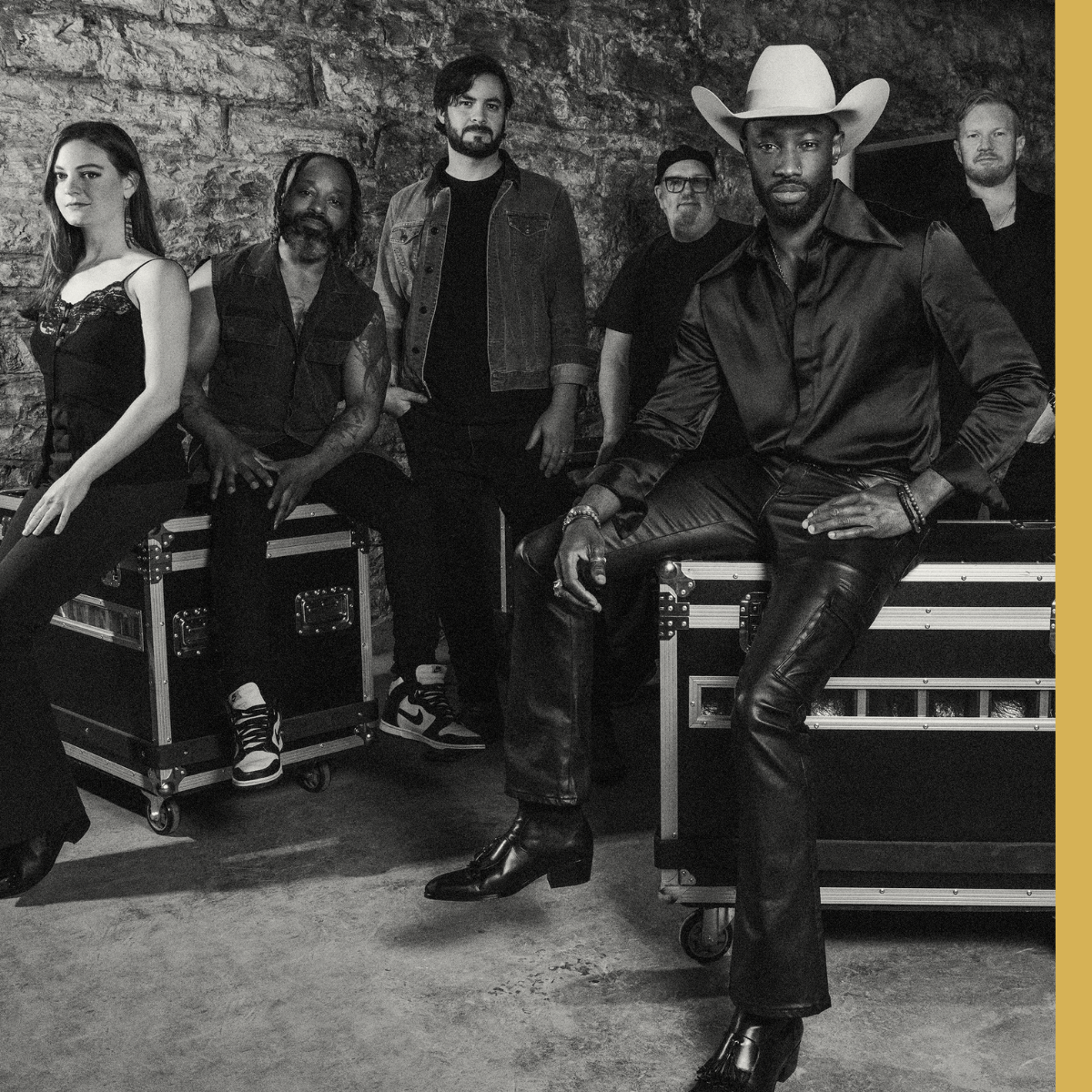
Something special is happening with Ghost Hounds, a Pittsburgh Americana outfit combining blues, rock and roll, alt-country, soul, and much more. Their latest album, Almost Home, features the group’s new lead singer and frontman, SAVNT; a lineup change isn’t foiling this dynamic band, it’s building their momentum. They just made their Grand Ole Opry debut this week!
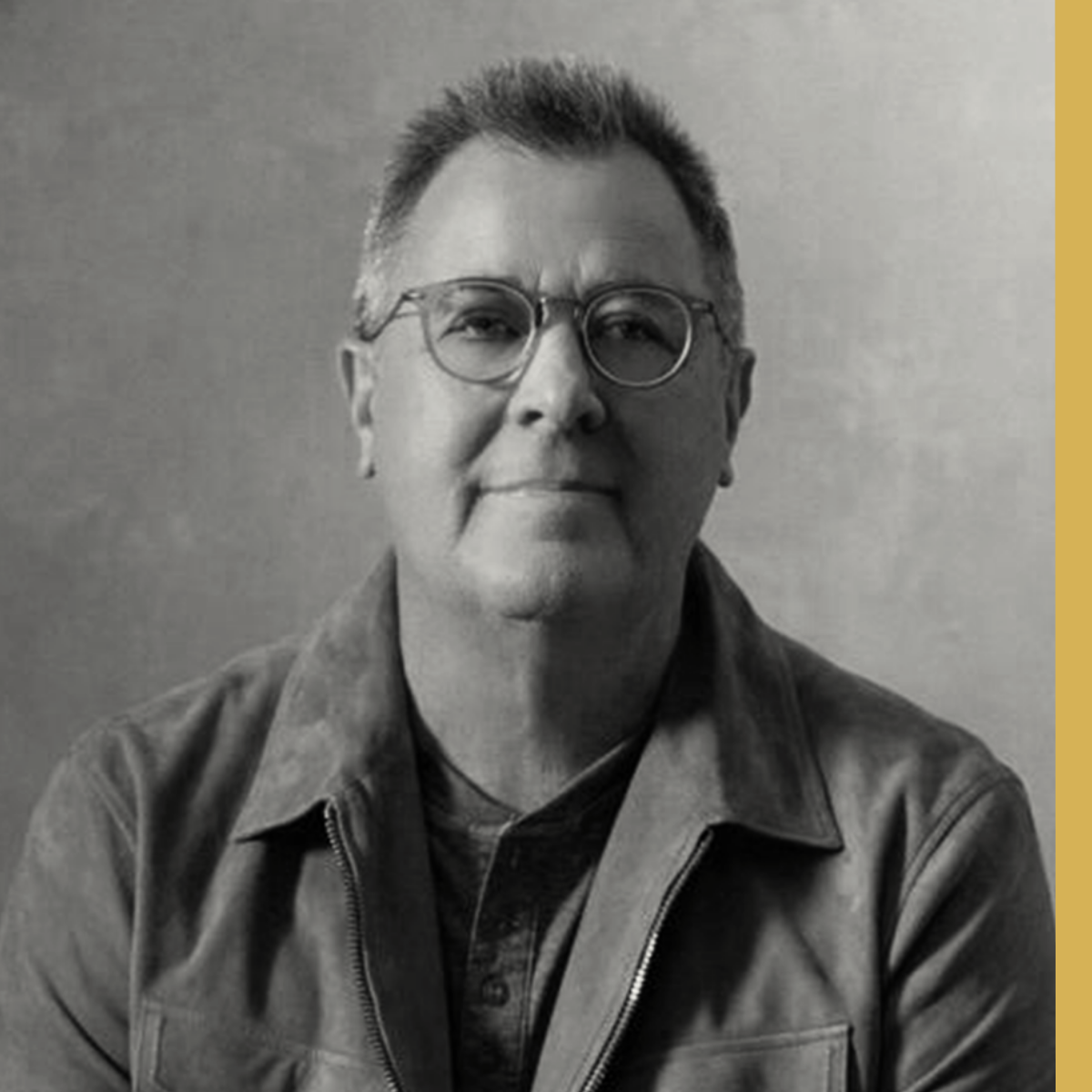
Perhaps our first repeat Ed’s Pick, but Vince Gill is always Good Country, right? The singer-picker-Country Hall of Famer-Eagles vocalist just announced a new series of EPs celebrating his lifelong career in music. The series, titled 50 Years From Home, begins with its first EP, I Gave You Everything I Had, today. We’re so grateful for all the years, all the music, and all you’ve given all of us, Vince!
Singer-songwriter-artist and Gar Hole Records co-proprietor Nick Shoulders is the real deal. He’s part of a broad movement of country musicians recentering the industry, its stakeholders, and its fans so the music better reflects all of the kinds of folks who love it. If you like Good Country that sticks it to the man, seeks justice, imagines a better world, and still sounds like “Grampa Music,” look out for his upcoming album, Refugia Blues (out October 31).
From Broadway in NYC to Lower Broadway in Nashville, MORGXN has done it all, but we find the singer-songwriter-performer thriving as he “reclaims his Nashville roots,” subverts expectations of musical and cultural stereotypes of country, and unabashedly celebrates queerness – especially so on his new twangy EP, Heartland: Part II. More MORGXNs like this in country, please and thank you.
Want more Good Country? Sign up to receive our monthly email newsletter – and much more music! – direct to your inbox.
Photo Credits: Carter Faith by Bree Marie Fish; Ghost Hounds courtesy of the artist; Vince Gill by David McClister; Nick Shoulders by Shelby Merry; MORGXN by Gabriel Starner.
Six years ago, I found myself in the hospital for a period of a few weeks with a mystery illness, unsure of whether or not I would make it out alive. I did survive, of course; but the experience changed me fundamentally. It brought me closer to many of my heroes, both living and dead, who have walked before me, people who know a whole lot more about life and its passing than I do. As near-death experiences do for many, it led me to live differently, cherishing each present moment and honoring life’s transitory nature rather than fearing it. Retrospectively, it was a gift, because it helped me to realize that I have been fortunate to have been given a free life and my hope is to use my experience of healing to help others heal too.
My new album, Streets Of September, marks my reflection upon the anniversary of that life-altering event. It is a collection of songs that, to me, honor the beauty of being alive and the magic of alchemizing grief into something beautiful, created out of thin air in the moment we have before us. It is an ode to brevity and the wonder that can be found there: to be appreciated for a moment before being washed away.
As I have navigated the path of healing myself, these songs have served as anchors during some of the darkest of times. They are beacons of light I’ve looked to when I was uncertain of how to shift my consciousness from a place of grief to one of hope. We are all growing and healing one day at a time, and everyone else’s reality is as real to them as our own is to us. Wherever this music may find you, my hope is that there may be something here to give you the courage to press on, to continue on your journey, whatever it may be. – Jack Schneider
“Looking For Space” – John Denver
I first discovered this song when I was in middle school. That was a dark time for me. I felt different and yearned for a place to belong, wondering if it was something that even existed. This song helped me to look inward, to find peace in the home within my heart. As I continue to grow up I keep coming back to it. It reminds me to stay true to that journey, to open myself up to the space of my soul. It’s not about arriving at that place. Ultimately, it is about the continuous practice of aiming for something that we know we will never reach within our consciousness, but that the growing is what makes us who we are, stronger and more resilient, committed to the path as it disappears, which is how we can tell that it is the right one.
“Secret Of Life” – James Taylor
My parents took me to see James Taylor perform a solo acoustic show when I was nine years old. He played this song and the idea of the “secret of life” stuck out to me. At that age I barely knew what living meant. I’m still not sure I do. But coming back to that song now, having survived a near-death experience, it has more depth than I ever could have understood before. Our task in being truly present and grounded is through the power of the now and “enjoying the passing of time.” No matter how dark or difficult the road gets, nothing is forever, and if we can remember to shift our awareness and accept the unfolding of things in the time that they are meant to unfold, we can surrender to the joy of living and experience the full extent of our aliveness.
“Sweet Seasons” – Carole King
When I was growing up, my mom had an art studio in our house that she used to paint in. Every now and then I’d get to go hang out with her in there and we’d listen to music together. My mom put this song on a lot back in those days and hearing it reminds me of those special memories, of being encouraged to connect deeply with my creative energy. “Sometimes you win, sometimes you lose/ And most times you choose between the two…”
The older I get, the more I realize that we really do get to choose how we show up to the present. The hope is to be able to embrace the passing seasons as they come and go and find the beauty in watching life flow.
“I Got A Name” – Jim Croce
Jim Croce was one of my first musical heroes. I can’t remember how I found my way to his music, but his songs sound as if they always existed. I especially love this one, largely because of the last line of the chorus, “Moving ahead so life won’t pass me by.” Healing is not a linear journey and the dark times are necessary to help build and reveal our character. Time continues to pass and it is in the forward motion that we find ourselves connected to the magic of life, continuing to be reborn every time we open our eyes.
“That Lucky Old Sun” – Big Mama Thornton
A favorite song of mine and my favorite version of it. Perfect in every way.
“Shine A Light” – Rolling Stones
This was my grandmother’s favorite song. At her request, we played it at her funeral. She used to quote the lyric all the time, “May every song be your favorite tune.”
“If You Want To Sing Out, Sing Out” – Cat Stevens
My dad first showed me this song, and I’ve always loved the simplicity of its message.
“Go Wherever You Wanna Go” – Patty Griffin
I remember listening to this song leaving home, on my way to college. I cried so hard. The possibilities of the future were endless. And with that came the necessity to accept the changes happening around me and within me and the loss of the grounding presence of my family and the home I knew. I was bound to chase my dreams with tremendous uncertainty, hunger, and hope.
“One Of These Days” – Emmylou Harris
I love the line in the chorus of this song “ I won’t have this urge to go all bottled up inside.” Writing and singing songs is my outlet for processing my emotions, but I often struggle to create the space to bring them to light in my day to day life. Growing is recognizing where or who you hope to someday be, and then each day waking up and striving towards that dream, one moment at a time.
“Good Again” – Sunshine Grocery
“For us, there is only the trying. The rest is not our business” – T.S. Eliot.
“Bells Of Harlem” – Dave Rawlings Machine
A song of hope and redemption, capturing the essence of the kind of clarity that comes through after a season of darkness. The sun rises again. “A little joy, at long last.”
“Pilgrim” – Steve Earle
I was fortunate to have been at the Grand Ole Opry a couple weeks ago when Steve Earle was inducted. After becoming a member, he chose to play this song. Emmylou Harris, Vince Gill, Don Schlitz, and Connie Smith sang it with him. It was such a special moment, and I am grateful to have witnessed that kind of history. We don’t know where our journeys will lead us, but the path is homeward.
Artist:Diane King Hometown: Nashville, Tennessee (grew up in Beverly, Ohio) Latest Album:SKY (releasing September 19, 2025) Personal Nicknames (or rejected band names): D-Music
Which artist has influenced you the most – and how?
I actually have five or six artists who have had a big influence on my songwriting and artistry. But, to pick one: it’s Olivia Newton-John. I heard her song, “Let Me Be There,” on our country radio station in southeastern Ohio when I was around 8 years old. I remember it vividly. We had just pulled into the grocery store parking lot as the song began to play. I asked my mom if we could listen to it before going into the store. She happily obliged and, at the end of the song, the DJ said, “That’s Olivia Newton-John,” and my life was changed.
Specifically speaking to her musical talents, the two things I love most are her beautiful voice and her flawless harmonies. I love vocal harmony and her albums are full of them! But, Livy is so much more to me than a singer or musical artist. In addition to loving her angelic voice, I love her kindness and gentle spirit. And, frankly, she was a light for me. As a young girl, I watched her career and accomplishments and I knew there was something outside of the hills where I was growing up.
Here’s an interesting story. When I was working with Harlan Howard we were going to lunch one day and he asked me who I received my “calling” through. I remember just looking at him and pausing, because I hadn’t known anyone before who understood that, receiving your calling to music through another artist. I knew exactly what he meant. After pausing, I said, “Olivia Newton-John,” and in my mind I reflected back on that day in the car at 8 years old, listening to “Let Me Be There.” Harlan nodded and said, “Yep! I met her once; she was a sweetheart and a great singer!” He proceeded to tell me he received his calling through Ernest Tubb over the radio listening to the Opry in a barn loft in Michigan. It was a moment, for someone to fully understand how another artist can have such profound meaning in your life. That person for me is Olivia Newton-John.
What’s your favorite memory from being on stage?
My favorite memory is going to be when I stand in the circle of the Grand Ole Opry to sing my songs on the live show for the first time!
What’s the most difficult creative transformation you’ve ever undertaken?
I had a five-year battle with and recovery from lymphoma. I had a significant amount of trauma to my neck and throat with multiple procedures and surgeries in that area. Once I finally turned the corner on that cancer battle and the healing began, my voice performed differently. That has been and still is a big adjustment for me. Singing is certainly not as easy as it used to be “BC” (before cancer, as I call it), but I keep at it! I’m so grateful to be writing, singing, and recording again!
What is a genre, album, artist, musician, or song that you adore that would surprise people?
These are some songs that will likely surprise you that stop me in my tracks when I hear them. When they’re playing, I have to stop whatever I’m doing and just listen and be in the song. I can’t function in any other way.
“Uptown Funk” – Bruno Mars “Nessun Dorma” – Aretha Franklin “Dancing Queen” – ABBA “Play That Funky Music White Boy” – Wild Cherry “Shake It Off” – Taylor Swift “Shoop Shoop” – Whitney Houston “Simply the Best” – Tina Turner “Addicted to Love” – Robert Palmer “Deborah’s Theme” – Chris Botti
Since food and music go so well together, what is your dream pairing of a meal and a musician?
I so love this question! I can’t even tell you how many times my co-producer, Stephan Oberhoff, and I would use food metaphors to communicate with each other what we wanted to hear when recording a song. Such as me saying, “Stephan, it needs to sound more lush, like a creamy, rich alfredo sauce with a subtle hint of salt.” Or, “Can you make it sound warmer – it needs a dash of nutmeg.” So, yes, I agree that food and music go well together, in many ways! To answer your question: Dolly Parton and fried chicken (with some spice) and waffles with real maple syrup, a side of mashed potatoes with butter, sweet iced tea, and a piece of homemade apple pie a la mode!
I seriously love sad songs and it’s honestly so hard to keep this Mixtape short. Every time I think I’m done, I remember another song that deserves a spot. Some songs are perfect for those late-night lonely vibes, while others hit harder on a rainy day. I just think sad music has this special kind of beauty that happy songs can’t match. It’s dramatic, emotional, and somehow comforting at the same time.
Honestly, this Mixtape feels more like a mood diary than just a list of songs. Even now, I know I’ve left off some that should be here which means I’ll probably end up making a “Part 2.” At this point I might as well admit I’m the CEO of sad playlists. But hey – you can never really have too many sad songs, right? – Jaelee Roberts
“Desperado” – The Eagles
“Desperado” is a song that has grabbed me by my heart strings for my whole life. The melody alone just has that sad and lonesome feel that I love so much. A line in the lyrics that always jumps out at me is, “You better let somebody love you before it’s too late.” That grabs my heart in the best way.
“Marie” – Blue Moon Rising
The first time I heard this song it stopped me in my tracks. The way Keith Garrett sings it is absolutely the epitome of lonesome. The song is about a man struggling his entire life to make ends meet and finally he gets a glimpse of happiness through a woman he meets, Marie, and she and their unborn baby pass away. Townes Van Zandt’s lyrics paint a heartbreaking picture of poverty and loss.
“He Stopped Loving Her Today” – George Jones
George Jones is my all-time favorite and this is an obvious choice, but such an important one! This song has often been called “the saddest country song of all time” and I might just have to agree with that. A short explanation is that a man lost the love of his life and he was never able to get over her until he passed away – that’s when he finally stopped loving her. That is absolutely gut-wrenching, but I am obsessed with the song and love it so much.
“I’m So Lonesome I Could Cry” – Hank Williams
I am a huge Hank Williams fan and I have always listened to this song when feeling sad. The way his voice almost cries when he sings it just gets me in my heart and feelings every time I hear it. I am a bit of a country music history nerd and I study a lot about the lives of my heroes and learning about him and this song – the lyrics are so sad and hit even harder when you get into the story behind writing the song. He wrote it after he and his wife Audrey split up amongst his struggles with addiction… it’s heartbreaking.
“Are You Lonesome Tonight” – Elvis Presley
I have loved this song since I was a little girl. Elvis was my first love and I can remember this song being one of the first songs to ever make my heart feel sad. I was just a little kid and thinking, “Oh my goodness, is he okay?” The cry and emotion in his voice is so tragically beautiful and it’s a go-to sad song when I need to hear one. The lyrics are so sad. When you hear his voice say, “…And if you won’t come back to me, they can bring the curtain down…” it breaks my heart every time.
“Lonesome Town” – Ricky Nelson
The first time I heard this song I was hooked. The melody, the lyrics, his hauntingly sad voice made my heart hurt in the way you want it to hurt when listening to a sad song. I really love this song!
“Both Sides Now” – Joni Mitchell
This song is filled with the most beautiful imagery. It’s about viewing love one way and then having your heart broken and seeing love a different way – seeing it “from both sides now.” It’s such a perfectly crafted song and Joni’s voice is so sad and raw on this track.
“Let Me Be Lonely” – Jaelee Roberts
When I first heard this song I knew I had to record it. If you can’t tell, sad songs are my absolute favorite songs and this one hit me hard. I am so honored I got to sing this one. I love the way that it all came together with the way the fiddle sounds so sad and then accompanied by the crying steel guitar (my favorite sound in the world). I love the harmonies that the writers of this song, Kelsi Harrigill and Wyatt McCubbin added. It just completed the lonesome feeling. My favorite lyric in the song is the opening line: “Don’t come knockin’ on the door/ That smile’s not welcome here anymore.”
“Chasing Cars” – Snow Patrol
I actually first heard this song during a heartbreaking scene of one of my favorite TV shows and I remember feeling so sad. Every time I hear this song I feel like I’m in a sad music video. Lyrically, the song is just so great. I love the chorus when it comes in strong and says, “If I lay here, if I just lay here, would you lie with me and just forget the world?”
“Manhattan” – Sara Bareilles
I am a huge Sara Bareilles fan and this song has always had a hold on me. It’s one of the first songs that made me want to play piano. Her voice and the piano work together to make such a beautifully sad song. The song is about finding love, sharing their lives together in Manhattan, and letting that other person have that special place when the relationship ends. The way it’s written is just genius, really.
“Weekend In New England” – Barry Manilow
The melody of this song is what first caught my ear’s attention and then Barry starts singing and it’s just so beautiful. I have loved this song since I was just a young girl and have always listened to it when I feel sad. It’s just a classic sad song and you cannot go wrong with listening to it over and over.
“Heartbreaker” – Dolly Parton
I can still remember sitting in the backseat of our car in the driveway at home – small enough that I wasn’t allowed in the front seat yet. My mom would turn on WSM and we’d sit there together listening to the Grand Ole Opry until it was over. I’ll never forget one night when Little Jimmy Dickens had just finished his segment and the Opry signed off. The DJ came on playing music and that’s when it happened – Dolly Parton’s “Heartbreaker” came on. In that moment, my world stood still. I had never felt so heartbreakingly sad from a song, yet so completely happy at the same time. It was the first time music truly hit me that hard and it’s stayed with me ever since. “Heartbreaker, couldn’t you be just a little more kind to me?” So, so good.
“Misery and Gin” – Merle Haggard
This is another song that I have loved as long as I can remember. The music and melody starts off and then you hear Merle’s voice come in singing, “Memories and drinks don’t mix too well/ Jukebox records don’t play those wedding bells…” What a perfectly sad scenario! Merle Haggard is one of my favorites and could sing anything and make it sound sad, which I love so, so very much. This song is so lonely, but so beautiful and the lyrics are everything a sad lonesome song should be.
“Cry In The Rain” – Jaelee Roberts
This song is so beautifully written. Penned by two incredible songwriters – Billy Droze and Chris Myers – it tells a sad story about being heartbroken over someone, but refusing to let them see your tears. Instead, you hide your pain and only let yourself cry in the rain. I really love this image – it’s sad, strong, and poetic all at once. To me, that’s what makes the song so special. I feel truly honored to have had the chance to record it and tell the story in my own voice.
“Between an Old Memory and Me” – Keith Whitley
Keith Whitley had a way of singing that made you feel every single word, as if he lived inside the stories he told in his songs. In this song especially, when he sings the line, “I don’t want to talk about it, why can’t they just let me be?” you can literally hear the raw desperation and aching sadness in the cry of his voice. It’s lonesome, it’s haunting, and it’s heartbreak wrapped in melody. I love this song with my whole heart – it’s everything I admire about Keith Whitley’s music.
I was fortunate to grow up in a time and place where some of the first generation of bluegrass artists were still out performing – and that is my heart. To see these guys on stage made me want to dive in the music more and learn all I could from the people that helped create it. Bobby Osborne is part of the reason I play bluegrass music for a living. I wanted to be like him. He’s also one of the reasons I still play music for a living. At one time, I was gonna give it all up – several times actually – but Bobby’s love for the genre 70-plus years after he started was encouraging. He also believed in me and I can never thank him enough for that.
I met Bobby for the first time in 2004 and got a picture with him (that is included in the new album’s liner notes). The kid in that picture would have never guessed what the next 20 years would hold for him.
Touring with Karl Shiflett’s Big Country Show and then The Po’ Ramblin’ Boys, I was around Bobby a lot on the circuit and always made time to visit him. I later joined him for a few months at the Kentucky School of Bluegrass & Traditional Music in Hyden, Kentucky, where I took lessons from him. From there, we somehow became buddies. I started visiting him at home and stayed in constant communication with him.
The new album on Turnberry Records, Keep On Keepin’ On, is a reflection of our friendship. It started as a project with Bobby, then was shelved for quite a while. I couldn’t bear to hear his voice on this record after his passing in June 2023. Then, with a little help from friends and Bobby’s spirit, the project became one that was for Bobby. The original idea was awesome, but what it has bloomed to be with all these amazing guests to help me out– I would have never imagined. I hope folks enjoy it as much as I enjoyed making it, and Long Live Bobby Van Osborne! – C.J. Lewandowski
March 17, 1973 was an extremely historic moment for bluegrass music. In this video you are viewing the very first time that bluegrass was played in The White House with the most iconic bluegrass song of all time, “Rocky Top.” Bobby was so proud of this moment and spoke of it often. You can see the joy in his face.
This features a 1970s Gibson mandolin that he later traded for a 1924 Gibson F-5. It was plugged right into an amp, which was also a historical moment for bluegrass. Bobby gave me the strap he is wearing in this video and it now resides in the Bluegrass Music Hall of Fame & Museum in Owensboro, Kentucky.
The Osborne Brothers were all over network television for decades and this is an example of such with “Ruby.” Even in his 40s, Bobby is stretching his boundaries. The instruments are tuned up 1/2 step, playing a E flat in D position. These are suits that were made by all the wives of the band members, as well.
“Rosie Bokay” is probably my favorite song on the new album. Paul Brewster sings the album cut and is also featured on the guitar in this video. Bobby heard Lincoln Hensley kick this off in the studio, just toying around, and he immediately said, “Let’s do that.” So we did! What Bobby wanted, Bobby got. He sang a scratch vocal, but was never able to get back in the studio.I think Bobby would be very proud of Paul’s vocals on the song.
The look in Bobby’s eyes was incredible in this video. I have a feeling he was proving a point to someone for some reason. Could it have been the divorce he was going through? Could it be the heart surgery that was near to this video taping? Who knows. I just know that Bobby was singing his ass off and I love it!
This has nothing to do with Bobby’s music, but I feel like this needs to be recognized. This is an hour-long interview pertaining to his time in the Korean War. A huge part of Bobby’s life. It may be a long video, but if you want to learn about Bobby Van Osborne, this is mandatory.
He was truly an incredible force of a human being in every aspect. Thank you for your service, Bobby.
This is live at Bean Blossom in 2009 featuring a song from Bobby’s solo career that he recorded on Rounder Records. Bobby talked about cutting this song again on the newest project, but we didn’t get to it. What a great message, right? Bobby’s compassion for people was always present.
Bobby did a YouTube series of him playing his favorites. Here is an example of Bobby playing his own piece, “7th of December.” Mind you, he was in his late 80s and could still play great. This is one of the actual tunes of his own that he taught me while visiting him at his house.
Twin banjos, steel guitar, the Grand Ole Opry, the best singing – can’t ask for anything else.
Bobby worked for several months with The Stanley Brothers before being shipped off to basic training and planned to return to work with them when he came back home. He had no idea his brother was working with Bill Monroe.
This video was filmed at the most important place to Bobby, the Grand Ole Opry. The twin banjos of Sonny and Bobby’s son, Wynn, are just amazing, This song is also featured on the new project. Bobby singing it at 91 years old is a different kind of hurt.
Photo Credit: C.J. Lewandowski (left) and Bobby Osborne (right) by Jeff Daugherty.
This website uses cookies to improve your experience. We'll assume you're ok with this, but you can opt-out if you wish.AcceptRejectRead More
Privacy & Cookies Policy
Privacy Overview
This website uses cookies to improve your experience while you navigate through the website. Out of these, the cookies that are categorized as necessary are stored on your browser as they are essential for the working of basic functionalities of the website. We also use third-party cookies that help us analyze and understand how you use this website. These cookies will be stored in your browser only with your consent. You also have the option to opt-out of these cookies. But opting out of some of these cookies may affect your browsing experience.
Necessary cookies are absolutely essential for the website to function properly. This category only includes cookies that ensures basic functionalities and security features of the website. These cookies do not store any personal information.
Any cookies that may not be particularly necessary for the website to function and is used specifically to collect user personal data via analytics, ads, other embedded contents are termed as non-necessary cookies. It is mandatory to procure user consent prior to running these cookies on your website.