House of Worship,
House of Pain

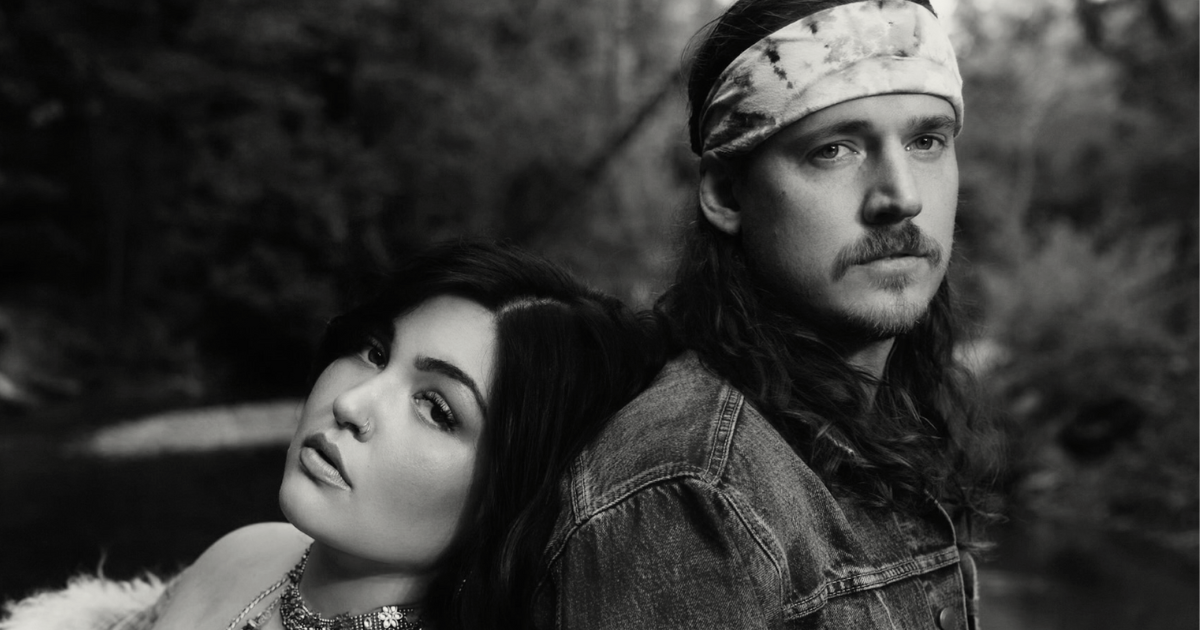
If you’ve spent enough time within the sacred walls of a sanctuary, chances are you’ve witnessed or experienced church hurt – the trauma foisted upon others, by others, under the guise of scripture. Logan Simmons – a woman of deep faith and former worship leader who grew up in the church and cultivated her powerhouse vocals in the sanctuary – knows this too well. Together with her best friend and musical other half, Malachi Mills, Simmons channeled her wounds into The Band Loula’s single “Running Off The Angels,” an unfiltered exposé of damage done in the name of religion. Reaction has been overwhelming, as both song and video cut deep into listeners who recognize their own stories in the song.

This isn’t the first time the songwriting team of Simmons and Mills has made a bold statement. Tackling and confronting dark subjects usually swept under rugs and stuffed away in family closets seems to be their comfort zone. “Marshall County Man” began as their take on the traditional “murder ballad.” However, with its challenging lyrics and graphic video, the song quickly pivoted to an outcry about domestic violence and generational trauma, speaking loudly to systemic treatment of victims/survivors.

All is not grim in the world of The Band Loula. Far from it, in fact, as evidenced on their debut EP, Sweet Southern Summer, which was produced by Brothers Osborne’s John Osborne, with additional production by Greg Bieck. The six songs – “Running Off The Angels” among them – are a slice of life reflecting Simmons and Mills’ experiences growing up in Gainesville, Georgia, up to the present. The two attended school and sang in church together and became best friends along the way. At one point, their paths diverged. Mills pursued music full-time, including an American Idol audition (fun fact: Luke Bryan voted him a firm “no”), a solo career, and writing for and working with other artists, while Simmons built a successful photography business.

Music, however, had the strongest hold, bolstered by their enduring friendship. They launched The Band Loula in 2020 and officially debuted as such in 2022. They independently released singles recorded at Ivy Manor Studios, where they worked with close friend, co-writer, and guitarist Gary Nichols. Universal Music Publishing Group discovered, auditioned, and signed them in 2023; Warner Music Nashville did the same the following year. They spent 2024 on the road with Brothers Osborne, Ashley McBryde, Paul Cauthen, Brent Cobb, and Elle King.

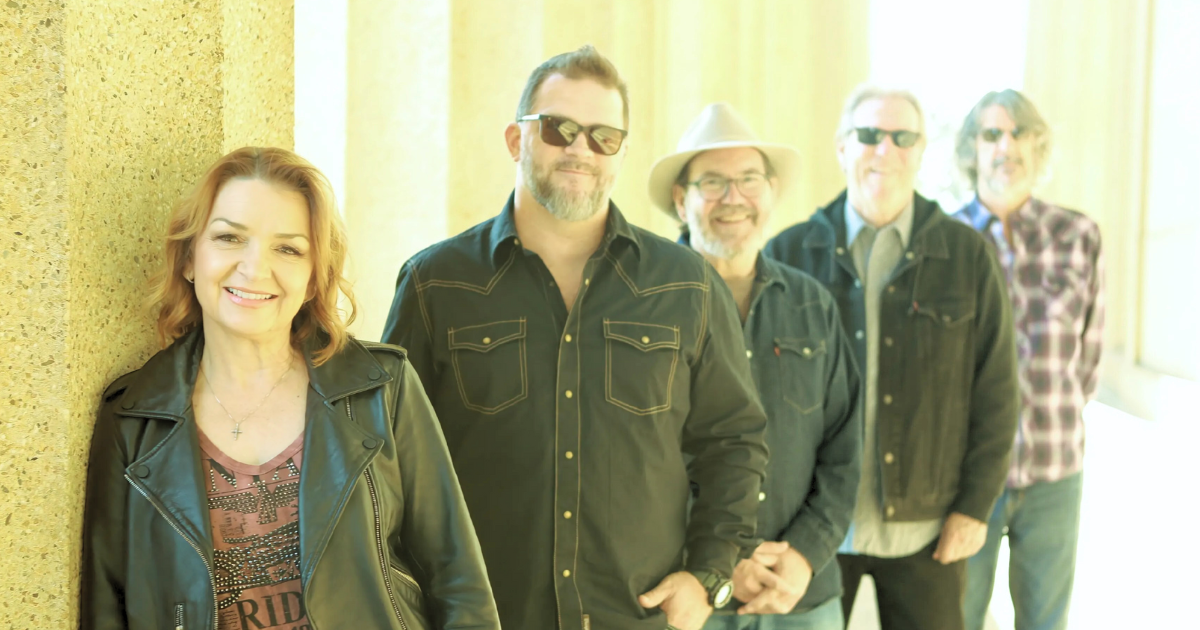
This year, The Band Loula and their band – Gary Nichols on guitar, Jamie McFarlane on bass, Justin Holder on drums, and Diana Dawydchak on fiddle – are spending the summer touring with Dierks Bentley and Zach Top. When they spoke again with Good Country, they were weeks away from a date at Madison Square Garden and from their Opry debut, and equal parts overjoyed, incredulous, and grateful for all that has happened and is yet to come.

Let’s begin by having you introduce each other to readers.

Logan Simmons: I’m Logan, I’m half of The Band Loula, and Malachi is the other half who leads us very well. He’s been writing songs and playing music since he was 16 or 17, and we’ve been friends since we were 14, so I’ve gotten to watch that whole journey. He had his own career going, added me into the mix once we found that we had some magic, and we created The Band Loula. We bring different things to the table. He is an incredible singer and guitarist, and he’s the planner of the group. He’s got all the logistics underway. He knows what everybody’s doing and at what time. I’m pretty much the opposite of that. I’m very Type B. He keeps us together. He’s definitely the glue of the band.

Malachi Mills: I’m Malachi, and as Logan mentioned, we met when we were 14 years old. When I first saw her, she was performing a skit onstage with her cheerleading squad doing a Justin Bieber dance. We were friends through high school, went to church together, and sang together in church a handful of times. I also got to watch Logan’s career as a photographer. She started when she was still in high school and now she is critically acclaimed. Along that journey she learned so much about visual arts, marketing, and things that are a major part of her role in The Band Loula. She is the brains behind our social media and she’s an absolute visionary. Big visions, big emotions, a great songwriter, and obviously an excellent singer. Half the time I’m just trying to keep up with her vocally.

Logan, is it correct that you first heard Malachi sing at a Relay For Life event?

LS: Yes. It was the same event he’s referring to. We both signed up for karaoke, essentially. I saw him first. He was onstage singing “When a Man Loves a Woman” by Percy Sledge. I did not see him when I was onstage in my Justin Bieber outfit, with Ray-Bans on, because I couldn’t see much of anything! But yeah, that was the first time I ever saw him. That’s how we met.


Universal Music Publishing Group came to see you at a gig in a Gainesville parking lot. What, exactly, is the story?

LS: In April 2023, we got an email from Ron Stuve at Universal Music Publishing Group. We had plans a few days later to play under a little pop-up tent by the lake in Gainesville. It was a Food Truck Friday event. Ron came to Georgia with his family and saw us play there for the first time. We didn’t expect this at all. At first, we thought the email was spam because we didn’t have any followers. We were a very small band. But Ron came and he believed in us.

How did he find you?

MM: Ron was on his iPad early one morning and saw an Instagram video of our song “Getting Clean.” He didn’t know how to save it, so he left his iPad open on the charger, for hours, after he had woken up, so he could step away! Thankfully, we were still there when he came back. He submitted a form on our website to email us. We only had that video at the time. It had about 10,000 views, which, when you’re a small band, is a lot. But in the grand scheme of how many views happen daily in the world, that was pretty small odds, so we definitely think it was meant to be.

It’s quite a jump from a food truck gig to Madison Square Garden. Can anything prepare you?

MM: There’s nothing we could have done to fully prepare for the mad rush that has happened over the past two years of our career. It’s been a very quick rise, a lot of opportunities that came fast, but in a weird way we’ve had peace about it the whole time. With our separate journeys, we’ve been able to build the skill sets to come together and be ready for the opportunities that have been given to us. All that to say, stepping out onstage at Madison Square Garden … you can call us back in a couple weeks and see if we feel the same!

LS: There’s nothing to prepare you for something like that except thoughts, and prayers. We’re not even halfway up the ladder. It still feels like we’re babies and a lot of what happens to us doesn’t really hit us until it’s happening or after the fact. We don’t expect anything. We just put our heads down, work, hope that what we believe in is connecting with people, and we’re really thankful when it does. We’re grateful for all the opportunities we’ve been given.

How did your separate journeys help lay the groundwork for the band?

MM: I’ve always had a strong love for songwriting. I looked at the artist side of it as supplementary to that. It’s given me an outlet. I never felt I had a place as an artist until The Band Loula, because there’s so much identity and chemistry in what we have together. All that experience came into play when we started to really commit to this, for sure. You learn what to do and not do, and I was able to bring a lot of what we probably shouldn’t do on our journey as artists, because I had lived and learned in some of those areas.

LS: It taught me a lot about life in general. I shot my first wedding when I was 14 or 15. My dad drove me. One of my cheerleader friend’s sister asked me to shoot her wedding, which is a very important thing. I couldn’t believe she asked me to do it. I learned a lot over twelve years of doing it professionally. You can’t replace the connections you make in that kind of business, where you deal with people of all ages and from all walks of life every day. At one point I was traveling every week, meeting new people, driving across the desert in a podunk car, and sleeping in the car, just to make it to the next shoot. It’s life lessons and learning about yourself.

Now that we’re in the music industry, I find myself using those tools. The photography world is a lot of people-pleasing and deadlines. It tests your strength and emotional intelligence, which is a real skill that you can use in every industry. I feel like I have mastered some corners of that, of being emotionally intelligent, reading people, making real connections, and how that can get you to the next step. Every milestone and opportunity we’ve gotten as the band has been a product of how well we treat the people around us and how we reciprocate the love that’s given to us. I’ve learned how to master that because of all the people that were put in my life during my photography years. I’ll never forget what I learned and the people I met. I [recently] had some backstage guests at a show with Dierks Bentley and it was two people I shot a wedding for in Maine a few years ago. Watching those people become our fans is irreplaceable for me.

What were your goals for Sweet Southern Summer?

MM: Our main goal was to show our listeners a different side of us. A lot of the tracks we’ve put out so far have done a great job of showing a more emotional side. Usually, people don’t come in off the bat with emotional songs. They come in with lighter or more topical songs. We came in with a pretty heavy side of us, and I think that’s why our fans appreciate us. But we wanted to show our fans that we also have songs that are a little less gothic and more bluesy and rocking and soulful.

LS: With this EP and beyond, the goal is to show a different side of us each time, so our fans feel like they are learning more about us, and the relationship gets deeper and deeper. But we also are keeping the common thread of who we are and who we’ve always been. This EP is so exciting because it’s fresh and different, but it is obviously working toward a goal of a debut album. I think these songs will maybe surprise people and keep them on the journey. We really believe in this EP and we hope it connects with folks.

You’re both very open about your faith. How does that guide you and keep you grounded?

MM: A big hinge point in faith is being grateful. Whenever you’re grateful, you’re reminded where opportunities and things in life come from. To think that we could have put all this together with our own two hands would be egotistical. We’ve worked very hard and intentionally, but we believe that if we take care of the small steps, put one foot front in front of the other, and stay grateful for the opportunities that are coming, God will continue to bless us with those opportunities and take care of the big picture.

LS: I agree. Malachi has been a really good leader in that way to point us toward the bigger picture, which is having faith and believing that God will get us where we need to be. I led worship for a long time, but I had a falling out with church and a large moment of my life that was hard to believe that something … I don’t know. It’s a lot to chew on. For the past few months it’s been lovely to watch Malachi lead our band in prayer and keep God and our faith at the center, because I was not previously doing that. I had a really hard time getting past some church hurt and realizing that God is the reason why we’re here and why we’re doing this. That is what I believe now, and that’s what I’m getting back to after a lot of trauma, a lot of hurt, and a lot of figuring things out.

Thankfully, that’s why God put us in a duo – because we’re two different people and we’re able to lead each other in different ways. I’ve continuously been watching Malachi lead in that way and help me regain faith. We like to keep that at the center of our band. I can’t walk onstage without him praying for us now. We both believe we’re not here because of us or something we’re doing with our two hands. It’s a lot more divine than that, and it’s a beautiful thing.

Church hurt is an inconvenient truth mostly swept under the rug, which speaks to the overwhelming positive response to “Running Off The Angels.” Did you also experience blowback?

MM: We don’t ever want to be divisive in any way. Our main goal, without being too specific, is to promote love first. We don’t want to promote judgment. There’s a lot of judging people before you even get to know them, and I think our songs do a good job of reminding people of that reality. I think the ones who get frustrated might be actively judging in that way, or maybe they’re coming to grips that they’re ready to change for the better.

LS: “Running Off The Angels” has been interesting for us, because we weren’t a hundred percent sure we were going to put it out when we first wrote it. It was very specific to my experience and it crosses some lines. We got a wonderful response. We went out on a limb a little bit and were like, “Let’s just post this on social media and see what happens,” and it went viral. There was a lot of blowback, too. On social media, in the Facebook world, people like to talk. They like to hide behind their keyboards. So we did get people who didn’t enjoy the song. But at the end of the day, you can write about experiences that don’t necessarily encapsulate who you will be forever.

When we wrote, “I quit church and never went back, sang my last red-covered hymn,” that isn’t necessarily completely true to me now. But the song has so many truths to it, and it’s something that needs to be said, because people are struggling every day with church hurt and trauma, and it’s not talked about enough. There are wonderful communities and people and churches out there, and I’m thankful for that. And then you have wonderful churches that have people in them with bad intentions or who don’t understand how to treat people. We hope that people always turn toward love, if they can. That’s all that song is about. But it was wonderful writing it, recording it, teasing it, releasing it, and gaining new fans from it.

One of your social media posts says, “Songwriting is an ugly truth. It makes you dig through trauma with your hands, open up an emotional filing cabinet that you locked away and somehow come out on the other side with something you’re proud to sing in front of folks.” How does music help you heal that trauma and protect your mental health?

LS: Music is everything. I’m very much an empath, so music and songs that make me feel something shape who I am and affect me in different ways. That sentiment has amplified now that I’m a songwriter, because I get to create the music that is helping heal me. It’s not just I hear a song that pertains to me and takes me to a place. Now we get to write music that is about what we are feeling and what we experience. That’s therapy. It has deeply affected who I am. It has healed me in many ways. Most of the trauma I went through was recent, in my twenties, so this career choice, leaning into this passion and into music, happened exactly when it was supposed to happen, because it has helped pull me out of some deep, dark places.

MM: I agree. Songwriting and music are very cathartic. The fact that there is a song in my heart, in my brain, inside of me, and having the ability to get it out into the world, is very healing. Also, when you’re able to say things that other people don’t feel they have the words or the song inside of them to say, that is very special, because it makes you feel like you’re really making a difference.


Photo Credit: Sara Katherine Mills
Dierkscography

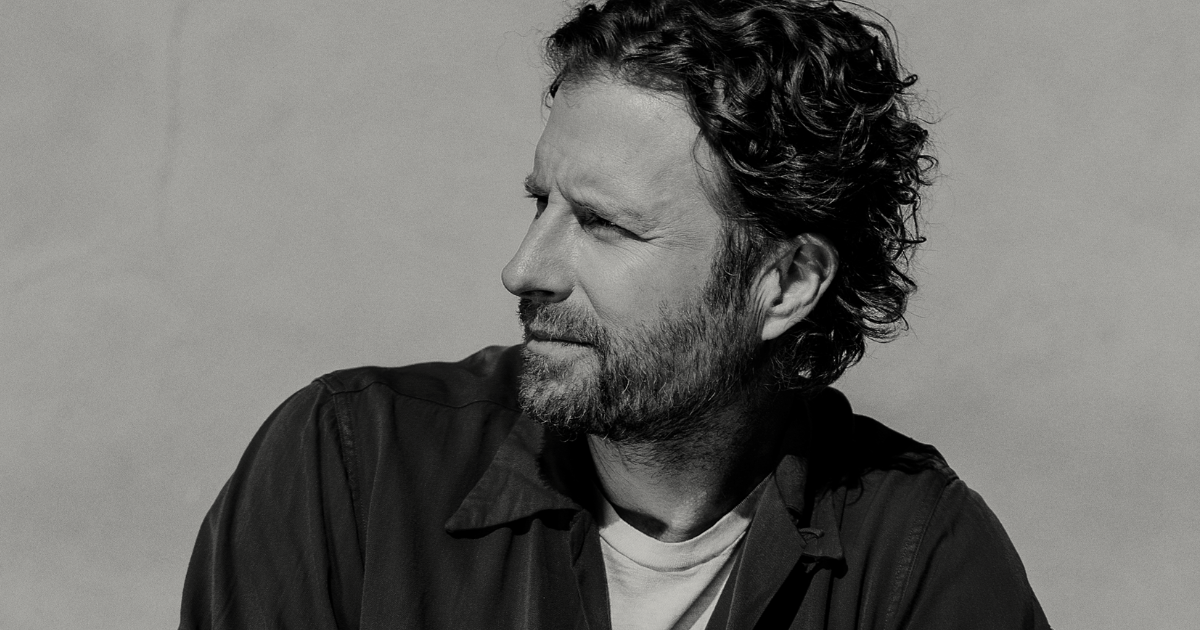
In 1994, a not yet 20-year-old Dierks Bentley threw all caution to the wind when he packed up his dorm room at the University of Vermont with hopes to never return. Bentley’s relocation would not only forever change the course of his life – it would go on to catalyze his tremendous impact on roots music at large.

After a trip with his father to Nashville made quite the impression, Bentley decided to complete his college degree at Vanderbilt, dedicating his studies to English (the major most proximal to songwriting). After graduating, Bentley continued to foster both his musical education and career; his day job entailed archiving old country performances at The Nashville Network (in fact, his diligent field work even got him banned temporarily from the Grand Ole Opry), while his evenings were filled with bar gigs and songwriting sessions. After five years of grunt work, 2003 saw Bentley release a self-titled album with Capitol Records. His first single, “What Was I Thinkin’,” made waves on the country charts. Since then, Bentley has been responsible for the release of 20 No. 1 country singles and 10 additional studio albums, the latest of which, Broken Branches, arrived in June.

While Bentley’s career has seen major commercial country success, his deep respect for expansion and immersion has made him a beloved fixture within bluegrass, as well.

Of his instrumental move to Nashville, Bentley has shared, “I moved to Nashville in 1994 – I was trying to find that seed of truth, that authenticity, that thing ‘country music’ that I had in my head. And I got here and it was definitely different than I expected it to be. It’s big business, a lot of money.

“Luckily, for me, I found a little bar called the Station Inn where bluegrass music existed – and I found what I was looking for. Just the sound of a five-piece bluegrass band blew my mind. And they’re not trying to take meetings all the time and meet producers, and get their foot in the door. It’s funny, I moved to Nashville looking for country music, but I found bluegrass.”

Whether it’s his proclivity for cross-genre conversation, songwriting prowess, or patinaed tenor delivery, Dierks has proved himself a mainstay favorite for country, Americana, and bluegrass fans – here at Good Country and BGS, and beyond. In honor of his recent album release and his huge Broken Branches tour with Zach Top and the Band Loula concluding this month, we present you with our Dierkscography, a non-comprehensive compilation of more than 15 songs meant to show off some of our favorite Dierks gems from across genres sampled from the many years of his remarkable career.

“Never You” featuring Miranda Lambert, Broken Branches (2025)

Dierks’s new album, Broken Branches, arrived fresh off the press with a slew of impressive collaborators, from Riley Green to Stephen Wilson Jr. Dierks fondly calls the record a “special” display of “making music in the studio with our buddies.” Country giant and longtime collaborator Miranda Lambert joins Bentley on this banjo-driven track, with the pair’s velvety duet vocals imbuing tenderness and warmth into one of the album’s only love songs.

“High Note” featuring Billy Strings, Gravel & Gold (2023)

This rip-roaring tune off of Bentley’s tenth studio album features a whole handful of bluegrass greats. Not only does Billy’s high tenor soar above Dierks gravelly tones during choruses, his famous flatpicking joins the likes of Sam Bush, Bryan Sutton, and Jerry Douglas for a superjam ending.

Of the collaboration, Dierks recalls, “Bryan Sutton first tipped me off to Billy Strings about seven years ago, mentioning that the future of bluegrass was in good hands. I was totally blown away the first time I saw him. I’ve cut songs like these since my first record, and I knew I wanted to have him on this one, I’m such a huge fan. It was a lot of fun to have him, Jerry, Sam, and Bryan all passing licks around – having them all on this record means a lot to me personally.”

“American Girl” (2024)

Who doesn’t love an Americana “American Girl”? Bentley delivers this country-fied Tom Petty classic alongside some BGS favorites, including Chris Eldridge on guitar and Noam Pikelny on banjo. Dierks reprised the hit single joined by Bronwyn Keith-Hynes, Sierra Hull, and Molly Tuttle on stage at the 2024 CMA Awards, bringing down the house.

“For As Long As I Can Remember,” Broken Branches (2025)

The country canon has seen its fair share of heartache, murder, trains, and drinking. Also on his latest release, “For As Long As I Can Remember” shirks these motifs in favor of something a little more wholesome – a warm and adoring ballad dedicated to the strength of enduring familial bond. An ode to his brother and father, Dierks reminds that respect and love can be country, too.

“Train Travelin’,” Dierks Bentley (2003)

With many of his nascent Nashville days edified by nights at the Station Inn and in the surrounding bluegrass scene, iconic bluegrass family the McCourys quickly became repeat collaborators for Dierks. Their features pepper many of his earlier albums, dating all the way back to his debut self-titled release in 2003. “Train Travelin’” would become the first of many, with other gems such as Good Man Like Me (Modern Day Drifter, 2005) and Last Call featuring Ronnie McCoury (Feel That Fire, 2009) dotting the road to Bentley’s eventual bluegrass-centric album, Up On The Ridge.

“Up On The Ridge,” Up On The Ridge (2010)

The titular track off of Bentley’s bluegrass-inspired album is thrumming with energy, both quickly-paced and haunting with its descending melodic hook. Up On The Ridge was Bentley’s fifth studio album, featuring a star-studded list of bluegrass collaborators including Alison Krauss, Punch Brothers, Chris Stapleton, Tim O’Brien, Sam Bush, and beyond. Del McCoury even joins forces with Bentley and Punch Brothers to deliver a deliciously grassified cover of U2’s “Pride (in the Name of Love)” further evidencing the album as a culmination of both tradition and innovation.

“Freeborn Man,” (Live, 2025)

Another of our favorite timeless covers, Dierks has been adorning his Broken Branches Tour this summer with his vigorous take on “Freeborn Man.” This rendition includes a fiery feature by Zach Top, nearly toppling the stage with talent.

“Hoedown for My Lowdown Rowdy Ways” featuring Dierks Bentley, Lowdown Hoedown (Jason Carter, 2022)

With Jason Carter fiddling his heart out on Dierks’ records since 2003, it’s of course a polite roots custom for Dierks to return the favor. Released as part of Carter’s second solo album, Lowdown Hoedown, “Hoedown for My Lowdown Rowdy Ways” has Dierks singing harmony and strumming away on the bluesy breakdown. Lowdown Hoedown also features a tender Jamie Hartford number, “Good Things Happen,” that Dierks Bentley covered on his 2005 album Modern Day Drifter, yet another frame of conversation between the two artists.

“Prodigal Son’s Prayer” featuring The Grascals, Long Trip Alone (2006)

This acoustic tune features the bluegrass sensibilities of the Grascals, a long-running group lauded for their instrumental prowess. The song loosely follows the parable of the prodigal son, ultimately centering themes of repair and reconciliation. The song also features the stomps and hums of incarcerated individuals from Charles Bass Correctional Complex, who had been in Bentley’s producer’s Bible studies course at the time.

“Free and Easy (Down The Road I Go),” Long Trip Alone (2006)

From the same release, this breezy banger remains a hallmark of Bentley’s career, even after nearly two decades since it dropped. The fifth of his singles to top Billboard’s Hot Country charts, “Free and Easy (Down The Road I Go)” lures in listeners with its fast-paced country twang and life-affirming sentiment.

“Beautiful World” featuring Patty Griffin, Feel That Fire (2009)

No stranger to incredible collaborators, Dierks Bentley asked iconic folk and country singer-songwriter Patty Griffin to accompany him on this track, gushing, “Her voice is one of a kind and she’s such an important figure in the American music scene… She’s just amazing. And so I asked her.”

The result is a tender homage to the beauties of the world, largely inspired by his wife, who was pregnant with their daughter at the time of the song’s conception. “You hear people sometimes say, ‘Man, I can’t imagine bringing a child into this world. It’s so bad.’ That’s just such a negative outlook,” Dierks says. “You cannot live your life with that viewpoint of the world. Yes, there are a lot of things that are wrong, but it is a beautiful world, and you need to find the positive in it.”

“Heart of a Lonely Girl,” Home (2012)

From Bentley’s sixth studio album, Home, comes this spirited, emotionally deep number. The narrative song was penned by the infinitely talented Charlie Worsham, who would go on to join Bentley’s touring band a decade later – and you can currently see him on stage each night during the Broken Branches tour.

“Trip Around the Sun,” featuring Dierks Bentley, I Built a World (Bronwyn Keith-Hynes, 2024)

Fiddler Bronwyn Keith-Hynes first connected with Bentley through Molly Tuttle & Golden Highway, the popular bluegrass group that opened for him several times on tour. She’s also married to Jason Carter, so Dierks wasn’t just a professional collaborator, but a member of her personal Nashville network, as well. It’s no surprise, then, that she’d end up on stage with him at the CMA Awards and, in the same year, he would guest on her acclaimed and GRAMMY Award-nominated album, I Built a World.

“Mardi Gras” featuring Trombone Shorty, Black (2016)

Soaked in Louisiana charm, this tune was inspired by Dierk’s 2015 galavant on a Mardi Gras parade float. Featuring the indelible hornsmanship of Trombone Shorty, the track grooves along with bluesy undertones. “Getting Trombone Shorty to do his thing on it, what a great guy. I love working with him. He is so laid-back and so good at what he does,” Bentley boasts of his collaborator.

“Travelin’ Light” featuring Brandi Carlile, The Mountain (2018)

Featuring the powerhouse vocals of Americana giant Brandi Carlile, this tune appears on Bentley’s 2018 album, The Mountain. The collaboration between the two icons came to fruition after Bentley saw Brandi perform at Telluride Bluegrass Festival, inspiring him to approach her about dueting on the track.

“Sun Sets in Colorado,” Gravel & Gold (2023)

Written reflecting his pandemic move to Colorado (though he has since returned to Nashville), Bentley released this tune on Gravel & Gold. The song shouts out New Grass Revival and Telluride in a verse: “Sing an old new grass song with me/ Telluride along with me,” while also featuring New Grass Revival founding member Sam Bush on mandolin. Bryan Sutton also joins in on the studio recording, yet another sparkling collab with bluegrass greats.


Want more Good Country? Sign up to receive our monthly email newsletter – and much more music! – direct to your inbox.

Photo Credit: Robby Klein

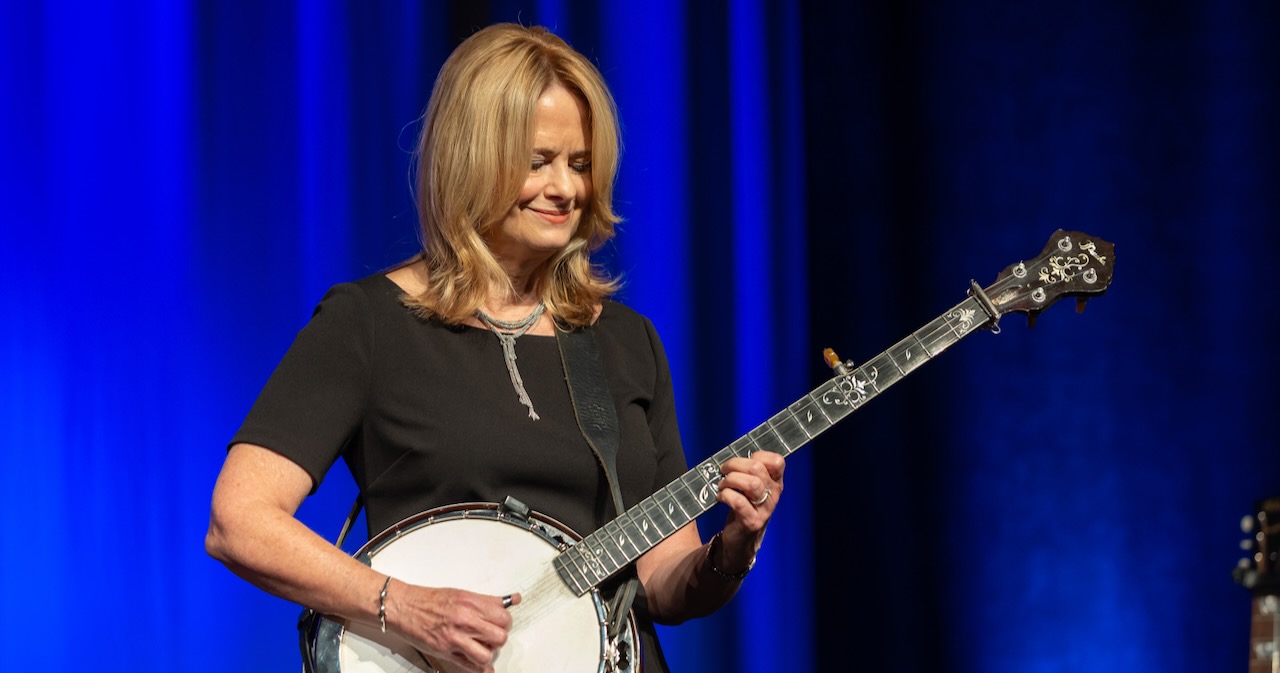
Alison Brown Carries on the Legacy of Louise Scruggs

Alison Brown heard Earl Scruggs playing on the Foggy Mountain Banjo album when she was 10 years old – and it changed the course of her life. More than 50 years later, Brown is the newest honoree at the Country Music Hall of Fame and Museum’s Louise Scruggs Memorial Forum.

Yes, the circle really is unbroken.

Brown has received countless awards throughout her career as a groundbreaking banjo player. This time, however, she will be recognized for her many contributions to the business side of music.

The museum states that “The Louise Scruggs Memorial Forum recognizes a music industry leader who continues the legacy of trailblazer Louise Scruggs, a formidable businesswoman who set new professional standards in artist management.”

Michael McCall, CMHOF’s Associate Director of Editorial, said, “We always try to look at the people who are important in country music, but who the public may not know about.”

The forum began in 2007 with a mission to acknowledge Louise Scruggs’ remarkable contributions in light of the fact that “women don’t always get the recognition they should,” McCall said. “The forum is a way to shine lights where they don’t always shine.” Brown is the 17th honoree.

Default icon

Marty Stuart once told writer Jon Weisberger that Louise Scruggs “was to the business what Lester and Earl were to the music.” While performing with Bill Monroe, the “Father of Bluegrass Music,” Earl Scruggs introduced audiences to the three-finger style that we now think of as bluegrass banjo. That driving syncopation was one, possibly the primary, feature that separated bluegrass from the other forms of what was then called “hillbilly music.”

Decades later, bluegrass banjo players, almost without exception, cite Earl Scruggs as a primary influence.

While Louise’s impact isn’t as widely known, she was an equal force in the music industry. She turned the management of bluegrass artists from a casual afterthought to a profession. And her instincts and cultural awareness started ripples that are still expanding today as bluegrass, folk, and country meet in the land of Americana.

Louise was born in 1927. Shortly before she died in 2006, she told The Tennessean, “My mother worked her fingers to the bone, and my daddy did, too, and I didn’t want to go out in a field chopping corn.”

She developed office skills to fulfill a desperate determination established during the Great Depression to escape farm life. Those abilities set her on a path that in some ways changed the trajectory of bluegrass music. At the time, the bluegrass world was totally male-dominated on both the entertainment and business sides.

“But Louise was so good at what she did,” McCall said, that she was a total success. She overcame any resistance with her “integrity, and by being both hard and fair in business.”

Earl Scruggs and Lester Flatt started an immensely successful band in 1948. But it wasn’t just Lester’s voice and Earl’s banjo that made Flatt & Scruggs household names. It was Louise.

Louise had been working as a bookkeeper when she fell for Earl Scruggs, seeing him on stage as a member of Bill Monroe’s Blue Grass Boys. After marrying Earl, Louise initially stayed home to raise their three children. In 1955, she took over management of Flatt & Scruggs, becoming the first female manager and booking agent in the music industry.

In addition to excelling at contract negotiation and other financial aspects of talent management, Louise was a visionary. She pursued the potential of various media previously untapped by bluegrass, as well as navigating shifting cultural trends.

When Louise negotiated with CBS for use of “The Ballad of Jed Clampett” and appearances on The Beverly Hillbillies, the sound of bluegrass banjo was heard in living rooms across the nation – well beyond the coverage of the Grand Ole Opry. The theme song to Petticoat Junction kept the momentum going.

With “Foggy Mountain Breakdown” featured in the popular film Bonnie & Clyde, banjo teachers were inundated with requests to take new students.

Louise established Earl as part of the folk revival when she booked him into the first Newport Folk Festival. New York City audiences opened their ears and hearts to Flatt & Scruggs when the band appeared at Carnegie Hall. Louise also encouraged these revered bluegrass musicians to incorporate songs written by contemporaries like Bob Dylan and Johnny Cash; Earl even made some recordings with saxophonist King Curtis.

Flatt didn’t appreciate the expanded repertoire and he split from Earl in 1969. Louise quickly helped form the Earl Scruggs Revue with their sons, a “beyond-bluegrass” ensemble enthusiastically received on college campuses and at festivals. They performed with acts like Steppenwolf and The Byrds and they appeared at a major anti-Vietnam War demonstration in Washington, D.C., in 1969.

Default icon

The Country Music Association’s CEO Sarah Trahern said of Louise, “She was blessed with charm, intelligence, a puritan work ethic, and a wonderful sense of humor.”

The same can be said about Alison Brown, the 2025 honoree. To say Alison Brown is admired as a banjo player hardly touches the music community’s regard for her talents.

Once she heard Earl play at age 10, Brown never let up on the banjo, winning contests at a young age and working across her entire career to expand the banjo’s role in acoustic music.

She was the first woman to receive an Instrumentalist of the Year award from the International Bluegrass Music Association on any instrument. She has won GRAMMYs and has been nominated for others and she is in the Banjo Hall of Fame.

Kristen Scott Benson, six-time IBMA Banjo Player of the Year – the second woman to receive the honor – recalls hearing Brown’s Simple Pleasures CD. “It was the first time I had ever heard any banjo playing outside the bluegrass realm. I was completely fascinated and my ears were opened to a whole new world of writing and playing.”

These days Brown frequently writes and performs with fellow banjo player Steve Martin and receives rave reviews for numerous other collaborations.

When Brown graduated Harvard with a history degree, she faced the question of what to do next. Realizing that neither the humanities nor banjo playing were money makers, she adopted the attitude of, “A girl’s gotta eat, right?”

She was accepted into UCLA business school and spent three years in investment banking. Then Alison Krauss beckoned her back to professional banjo in the early days of Union Station.

This eventually led her to performing with Michelle Shocked and to meeting her husband-to-be, Garry West. Cut to an Alison and Garry discussion in a Stockholm café about the elements of a good life. They still have the napkin on which they jotted words like performing, recording, having a label, a studio, publishing – and family. That was how the idea for an independent record label was born.

Small World Music began with the goal of distributing music by little-known artists they heard while on tour. Initially, they worked with a tiny Australian company, promoting six products in their catalogue.

“There was a video called ‘Coral Sea Dreaming’ that was visual music – beautiful scenes of coral reefs, set to a new age soundtrack,” Brown described. She and West thought it would be perfect for the Nature Store chain, but the buyer ignored their overtures.

So, Brown said, “We started calling Nature Stores and saying that we’d heard about this amazing video called ‘Coral Sea Dreaming’ – did they have it in stock?” And a few days later, the buyer called them.

“That was one of the first big things that helped our cash flow, leading to the launch of Compass.”

While she had been happy to leave the dry work of entry-level investment banking, she appreciates the knowledge she acquired there and in business school. “Like how to put together a business plan and the financial projections to support it. It also gave me paper credibility,” with investors.

Compass Records has evolved to become one of the most respected independent labels in the industry, specializing in niche markets like Celtic, folk, bluegrass, Americana, jazz and many varieties of roots music.

Default icon

The business environment Brown entered when she started Compass Records in 1995 was a far cry from the all-male world that Louise Scruggs operated in.

“I’m a firm believer that we all stand on the shoulders of the people who have come before us. And that’s incredibly true for me as a woman in business. I’ve never had to deal with those kinds of challenges [being undervalued or ignored] as a female.”

Brown and West planned their lives so they could start a business, support their love of music, and raise two children – building in the resources they needed for balance and family time. Technology and changing gender roles made all that possible in a way that wasn’t available in the 1950s. But while she didn’t encounter the same challenges as Louise Scruggs, she finds herself facing more profound obstacles.

“The digital transformation has changed the music business, maybe more than any other industry,” she said. “How do you exist in an ecosystem where you’re creating music and having to give it away for free?”

Brown was recently elected president of the Nashville Chapter of the Recording Academy. She has assumed a leadership role in promoting the rights of artists and labels and she is a determined advocate for equality of broadcast royalties – more important than ever when “streaming pays a third of a penny per stream.”

“That’s a rate conceived by the Copyright Board before people knew that a stream wasn’t a small river,” she said. “I feel like this is a critical time for creators, and I fear that, with so many people in Washington in the pocket of big tech, creators’ interests could very easily become marginalized in this race for AI.

“It’s a precarious moment, but at the same time, I feel like some of the best roots music and bluegrass music that’s ever been made is being made now, and I think it will stand the test of time.

“I think that cultivating your community is the key to succeeding – knowing who your fans and supporters are and making sure they know who you are. And now we have the tools to connect directly with our audience, which we didn’t have when we started 30 years ago,” Brown said.

She also reminds fans that, “If you want to support the artists, buy physical product. That’s still where the artists can make some money.”

Default icon

Marian Leighton Levy, who started Rounder Records in the 1970s along with two partners, knows the challenges of an independent label. And she is well aware of how much more competitive the industry has become in the face of consolidation; artists’ ability to produce their own product; and the devastating effect of streaming on creators’ incomes.

Levy said of Brown, “She’s one of the few people who’s been a top-level musician, someone who knows her way around the studio as an engineer and a producer, has started and been running a record company with Garry and somehow or other had as balanced a life as one can have while doing all of those things. And she’s been doing remarkably well for a very long time – it is just incredible what she’s accomplished.”

At the Hall, McCall lauds Brown not only for her success with Compass, but with all the ways she contributes to the industry – from participating in IBMA to the Recording Academy to the Country Music Hall of Fame and Museum itself.

Brown feels deeply honored to be recognized at the Louise Scruggs Memorial Forum, “having been called Girl Scruggs for so much of my childhood.”

“Louise was such a wonderful, influential force in roots music, being acknowledged as following in her footsteps is incredibly meaningful.”

She sees the forum as a great contribution to the business of music by acknowledging how far the industry has come.

“One of the things that I think is so exciting about the moment that we’re living in is that women are peppered throughout the ecosystem in a way that wasn’t the case 50 years ago. We have women promoters, artists, DJs, running record labels. Now we have this golden opportunity to create the reality that we want to live in, and we can do that by supporting each other.”


Photo courtesy of the Country Music Hall of Fame & Museum.

Ketch Secor
Contains Multitudes, Too

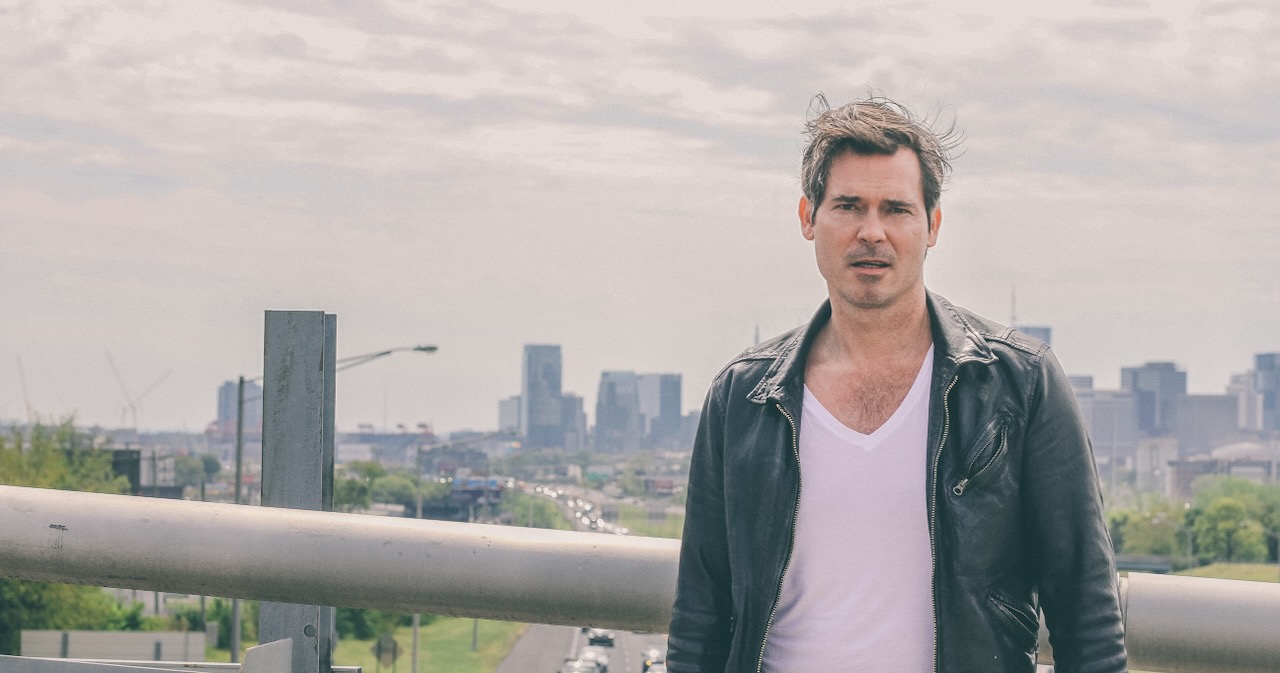
After a quarter century fronting the frenetic bluegrass and jug band outfit Old Crow Medicine Show, Ketch Secor is finally breaking out on his own with his solo debut Story The Crow Told Me. The retrospective record looks back on the past few decades, from his own journey to stardom spurred by a chance encounter with Doc Watson to the certified platinum hit “Wagon Wheel,” through the lens of a soundtrack that’s equal parts bluegrass and contemporary country.

“Because the band [recently] celebrated 25 years, I was already in the mindset of a retrospective look,” Secor tells BGS. “I was thinking about everything that’s happened and transpired over that time and started writing about it. In fact, at first I really thought it was going to be a spoken word record before the music eventually took over.”

Talking over the phone, Secor spoke about the timing for his debut project, its connections to both Old Crow and contemporaries like Dierks Bentley, becoming the new host of Tennessee Crossroads on Nashville PBS, and more.

You mentioned this album was initially envisioned as a spoken word compilation. What led to its transformation into a fully realized album?

Ketch Secor: I was working with Jody Stevens. We had written a couple songs that were largely based around spoken word and others we were looking to add background sounds on. Those sounds started getting more and more like what I already do, which is writing songs with choruses and verses and hooks. It just evolved out of the beat poetry version of the album, which was probably a little less listenable but closer to what I was striving for. The musicality of it is a bit of a compromise to be like “Well, I’m going to make this an actual record people might want to listen to” because the spoken word records I enjoy are not highly listened to.

I recently was trying to find them again since my record collection got lost in the 2010 floods we had in Nashville. I went on Spotify, which I’d never used before, to find all these songs in my head like Amiri Baraka’s “It’s Nation Time” or Moondog – a 1950’s renegade beat poet from New York – in trying to get an understanding of how the spoken word music I heard as a kid was being utilized today. It quickly became clear that nobody listens to that stuff anymore. [Laughs] So it seemed like making it musical would make it more fun for people.

It seems a bit ironic that you had to look up all these songs – many of which would be considered part of the Great American Songbook – on a digital streaming platform like Spotify. Talk about two very different worlds colliding!

I talk a little bit about that phenomenon on the song “Junkin’.” A lot of the experience of making music with Old Crow, especially in the beginning when we were still developing a canon, was about music’s physical form. When the band first started the internet was still new and we were still selling cassettes. The last time I made a solo record was on tape, the band didn’t have a website and none of us even used email when all of this started. It meant that searching for the physical was really important.

There’s another song on the album called “Thanks Again” that highlights the personal relationships that you develop out on the road – these chance encounters that are very much real and put the wind in your sails. There’s something to be said about having to come of age in a time when information was so tactile and often involved a human touch.

With the emergence of the internet and things like streaming and social media it really is an entirely different world for artists to navigate nowadays.

I realized that I had a kind of time capsule in my mind I had yet to crack open in the days before going in to make this record, which was done quickly and often with me writing the songs as we were recording them. Opening it up was really cathartic and essential for me to process and move past because the experience of coming to Nashville when we did and the kind of band we were in was, at times, slightly traumatic. It was a very intense quest similar to a military deployment, being a minor league ball player fighting your way through the ranks or even being a teenage whaler in Moby Dick. You end up leaving everything else behind in search of this one pursuit.

It’s not unique to come to Nashville to make it big, but what made our experience unique was that we were trying to do it with these traditional sounds in an era in which technological changes were happening as we were doing it. It was almost like we were going against the literal tide with our choices and artistic motivation.

You just mentioned writing these songs as you were recording them. Is that something you’d done before?

That was a very new way of going about things. I understand that record-making has changed a lot since we first started – our most popular Old Crow records that gave us a career were the early ones we made with Dave Rawlings on analog tape that we cut with a razor blade. Making a record the way Gillian [Welch] and Dave do is very studious, labor and time-intensive. But now the technology exists to do it super fast.

This record almost felt like a throwback to the seminal recordings of the 1920s and ‘30s that are the headwaters of our sound. Those records were made in three minutes oftentimes without knowing what the arrangements would be. Three minutes wasn’t the time frame of hillbilly music until the record company said it was – they just sat there, watched the light turn on and played. Writing a song and building a track like that actually felt really on par with what it would have been like going to Camden, New Jersey, in 1928 on a train when you’d never left your county before that. The challenge is keeping one foot in the past and one in the present. When you play fiddles and banjos and blow harmonica for a living the instrument kind of does it for you.

You name dropped Jody Stevens a few minutes ago. How’d y’all come together and what was it like working with him?

We met through my publishing company. I was going to do a co-write with him and knew he’d written a lot of songs for contemporary country artists, so I brought my bag of tricks that I bring out when I try to pretend I’m going to write the next big, top 10 country smash, except for this one time with Darius [Rucker]. I love country music even though I feel that in the past 25 years I have a whole lot less in common with it than I did when I was a kid, in terms of what it sounds like today in its mainstream output versus when I was singing along to Jo Dee Messina when I was 19. It was interesting to circle the wagons with Jody because he brought such a unique perspective in record making that comes from contemporary country music even though his roots are in hip-hop.

The other thing that brought us together was that Jody had seen Old Crow a lot, especially in our early days from 2000-2005, which is the sweet spot I try to explore on this record. He’d been there at the Station Inn and the festival Lightning 100 used to do downtown and some of these other places that have since been replaced by high rises. The fact that he had been a first-account witness to the band was really helpful to bounce ideas off of. His sister was also a big Old Crow fan and even though I’ve never met her I thought about her as my target demographic – someone who saw us back in 2001 and wanted to know what that time capsule looked like.

The fact that Jody had done all this work with people that rapped – only to find that 25 years later the tapes and demos he’d made with Jelly Roll were now part of a pop culture consciousness that hadn’t been there when he first started working on them – gave him a similar orientation to country music that I have about Americana. When I got started there was nothing called Americana and nobody lived outside of contemporary country music unless you were alt-country. Coming into this period of time in Nashville where it wasn’t yet determined that anyone with a banjo could make it that wasn’t bluegrass is another place where Jody and I shared commonality. The rap game has since become a massive component to contemporary country music similar to how Americana has become the tastemaker for anything roots-related.

In terms of the sound on this record, the way you move between more Old Crow-esque bluegrass and those pop country flavors reminds me a lot of Dierks Bentley, another person who excels at showcasing the best of both sides of roots music.

I came up with Dierks and remember witnessing his arrival. Before [“What Was I Thinkin’”] came out there was an issue of CMA Up Close that had a story about us on the page opposite one about Dierks and I thought to myself, “Well, if a guy named Dierks Bentley can make it, then probably a guy named Ketch Secor can, too.” Surely Nashville has the appetite for two oddly-named boys. [Laughs] Then I went on and took a moniker that wasn’t my name. Because of that I feel very much like a brand-new artist now and have developed a strong sense of empathy for the young guns who are out there trying to put their stuff out for the first time, because it’s so much harder now than when I was a kid.

What are some of those major hurdles you’ve noticed for new artists today compared to what you first encountered with Old Crow?

Now the way you stand out in a crowd is through visual means that often require the least amount of artistic acumen and the most amount of social media acumen. So far, I’m not sure it’s helping the cream rise to the top, though. The skill set should be how good can you pick a banjo, not how good can you pick the keypad on your iPhone, even though you have to do both to be successful today. When I was a kid it was about making these connections with people, knocking on doors so many times that every time something good came to me [it did] on account of me showing up and being in the right place at the right time.

Seeking a viral moment has an undue effect of potentially limiting the number of new entrants into the arena. For one generation, what was once divinized is now digitized. I’m sure that if there’s a God above that He or She can use the binary code to reach people and connect their children. I can pick up The New York Times and feel like there’s a closeness with the loss in Texas right now, which is only amplified by me having swam in the Guadalupe before and having a personal connection to the area. If you’ve plunged in the waters yourself then you’ll share something so much more vital with those who are experiencing the loss.

It’s really a metaphor for how we all have a shot at playing the Grand Ole Opry or going from the Station Inn to the Ryman like I did. There’s a turnstile in front of that and I want to see it spinning wide so that artists of all stripes can find their way up to that stage where they belong. As a steward of those stages, I want to see the people show up who have found music as the great connector that, regardless of the speed of the computer in your pocket, the speed of music breaks all other forms of sonic barriers.

In terms of personnel, what motivated you to bring in past and present Old Crow members like Willie Watson, Critter Fuqua, and Morgan Jahnig to record these songs with?

I really wanted to have all the past members of Old Crow on the record, because it felt like a bit of an offering to the gods to say “thanks.” So I really wanted a little bit of all their spirits on it. Not only that, but I read through a lot of old journals and called up some people I’d met hitchhiking, but hadn’t talked to in 25 years. I went and visited the guy who coined the term “Wagon Wheel,” because that song was always called “Rock Me Mama” until I met James Sizemore – a wonderful rascal and drug-dealing Vietnam vet.

I went to see him on his deathbed and recorded phone conversations late at night with old friends. While none of that stuff is necessarily on the record in its physical form, it all went into the process of trying to bake something that really felt like I was living in the past and bringing it to the present through these songs. I think a lot about cairn stones that the Inuit people up north call inuksuit, which are like sign posts that tell you where to turn, but they’re also spiritual. So imagine a road sign that could say “300 miles to Memphis,” but also told you the ancestral route of the settlers who first brought buffalo down 7,000 years ago, sort of like the duality of a time signature.

That duality of time reminds me of one of the album’s songs, “What Nashville Was,” which highlights how much Nashville has changed over the decades while also highlighting how no matter how many venues are replaced with condos, music will always be the city’s heartbeat.

A lot about the way Bob [Dylan’s] record Nashville Skyline had a way of pointing out Nashville for the first time to anyone who didn’t live in the South or listen to country music. He was really pointing to Nashville from a unique perspective and certainly Bob Dylan’s Nashville was the kind of Nashville that I was looking for when I first started playing on the street corner there in 1996.

Similarly, I was also looking for Dolly Parton’s Nashville. I wanted the Nashville that Dolly got when she stepped out of the pickup truck and married the first guy that honked his horn at her, the kind of Nashville where Willie Nelson was laying down in the street in front of Tootsie’s thinking he’s gonna kill himself because nobody wants his songs.

I used “Girl From The North Country” as the template for a love letter to a changing place and a cityscape that has gone on to do so much stuff that it itself is largely oblivious to the price it pays for its constant reinvention. And the price is that who we’re ushering in … is probably because you were on a reality TV show more consistently than because you had a song that people couldn’t stop singing at summer camps. Not that those things are good or bad, they just change. But we’re at a point now where the legend and lore of Nashville has grown so much that we’re at risk of the bubble bursting and it being something like Seattle after grunge or Austin after it wasn’t weird anymore – which is a glass, monolithic, industry executive business center. Oftentimes those forces stand in opposition to the ability of songwriters, hucksters, showmen, and the survival spirit that goes into creating the next Bob Dylan of a generation. I’m hoping that we, the architects of Nashville, can endeavor to build a place that still allows a hearty hero or heroine to come through the gates just like Loretta Lynn or Jack White did.

You were recently named the new host of Tennessee Crossroads on Nashville Public Television. How’d that opportunity come about and what’s it mean to you?

When PBS called me about this unique role that had come available with the sudden and sad loss of Joe [Elmore] – who ran the show for 30 or so years – it only made sense to find someone else to step in who’s also run a business for around 30 years that’s similar to Tennessee Crossroads. Old Crow Medicine Show has been criss-crossing the American south getting inspired by quilters, gee-haw whimmy diddles, carvers, and folks that plant by the lunar signs – those are the kind of folk heroes that go into our music. They’re also the same kind of stories that this show loves to tell.

I love public broadcasting and care a lot about access to it in this country. I made my television debut on our local PBS affiliate up in the Shenandoah Valley of Virginia when I was in fifth grade. I fell in love with my own backyard because Ken Burns showed me what was so rich about it and so frightening and tragic, which was the bones of the Union and Confederate armies right here, just past the fence. Ken Burns really illuminated that for me and ever since I’ve been the biggest fan of public broadcasting.

What has the process of bringing this record to life taught you about yourself?

I was born about 35 miles outside the birthplace of Walt Whitman and always wondered why I like the guy so much. Then I recently rode my bicycle there and thought, “God, this guy’s place is really popular!” There were people sleeping on a stoop and waiting for a free sandwich in the parking lot. And it turns out where Walt Whitman used to live is like the center of the drug-addled corpse that is parts of Camden, New Jersey. It looks a bit like the Dickerson Road corridor, at least as it was in about 1999.

I feel like Walt really said it best when he said he contains multitudes on “Song Of Myself, 51.” I feel as a picker of banjos and fiddles and guitars and dulcimers and auto harps; and a blower of jugs and juice harps and harmonicas; and a singer of ballads and lamentations pretty songs; and [an attender of] corn shuckins, frolics, and cotillions, that I am like you, a container of multitudes.


Photo Credit: Jody Stevens

Sister Sadie Are
At Their Strongest, Together

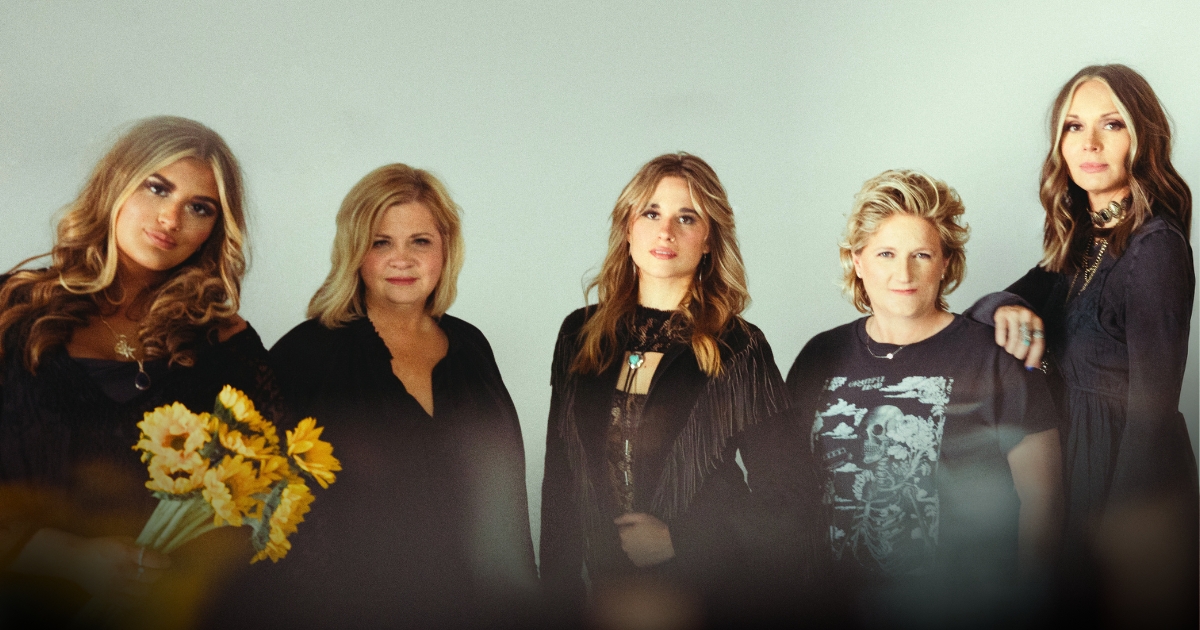
The last time BGS spoke at length with Sister Sadie, in December 2020, they were two-time IBMA winners, GRAMMY nominees, and clearly on their trailblazing way with two albums to their credit. Fast-forward five years and the group, now in its thirteenth year, is back as BGS Artist of the Month with their new and fourth album, All Will Be Well, following last year’s No Fear.

Sister Sadie 2025 includes founding members Gena Britt (banjo, vocals) and Deanie Richardson (fiddle) with Jaelee Roberts (guitar, lead vocals), Dani Flowers (guitar, vocals), Rainy Miatke (mandolin, vocals), and Katie Blomarz-Kimball (bass, vocals). Along the way to solidifying this lineup, the band notched a few more personal and professional milestones. Since becoming the first all-female band to win IBMA Entertainer of the Year in 2020 they’ve won three Vocal Group of the Year awards from the trade organization as well; performed at The Grand Ole Opry numerous times, fulfilled what they describe as “our ongoing bucket list” of goal festivals and other dates they hoped to play; charted several Number One singles; and were among the artists requested to perform at Patty Loveless’s Country Music Hall of Fame induction.

All Will Be Well is the band’s second project for the Mountain Home Music Company label. It was tracked at Crossroads Recording Studios in Arden, North Carolina, with Clay Miller engineering and Richardson producing. While the band did not set out to write a concept album, All Will Be Well is in many ways just that in its explorations of life lessons, experiences gained, and finding closure – the latter powerfully represented in “Let The Circle Be Broken,” a revealing take on ending the cycle of generational trauma.

Sister Sadie gathered together from various points to speak with BGS. Their six-member Artist of the Month interview, following, has been edited for space and clarity.

How have your many accomplishments to date brought the band to this point?

Deanie Richardson: We never intended to be a full-time band. We were friends who played a one-off at the Station Inn. That went so well that we decided to do another one. Gena started getting phone calls from promoters and we thought, “That might be fun. Let’s do it.” From there, we got a call from a record label and it grew organically, doing everything ourselves, because we weren’t looking to do it a hundred percent.

With every person that’s come into Sister Sadie, the whole band has shifted. The energy changes every time you bring in a new vocalist, a new player. You have to just let this thing guide itself. With each personnel change comes a new sound and you have to rebuild and regroup. I feel like that has happened since the last time we spoke with you guys. With Katie and Rainy here now, the energy feels perfect.

We finally have this team around us – booking agents, management, publicists – helping now and we get to focus more on the music and the amazing women in this band. So, for me, it feels like every step led to where we are right now, and it feels so right.

Gena Britt: With these personnel changes we’ve gained some wonderful songwriters, and they bring this creativity to the band. Like Deanie said, we’ve evolved into what we are today and that has a lot to do with being together, being creative together, growing as a band, and Deanie and I growing as businesswomen. It’s incredible to think of where we were when we first started and had no intention of doing this. And here we are. We have an incredible team behind us and it’s working. All the ingredients are here.

Let’s talk about the theme of All Will Be Well and sequencing the songs to tell that story.

Dani Flowers: When we went in to make the record, we definitely did not go, “This is [the title], this is the theme, and this is what it’s going to be about.” But it almost feels like we did.

We all write songs and send them to each other in Dropbox, an Apple Music playlist, and listen to them over and over. We put our opinions in as to what we might want to sing, what we hear other people singing, what songs we think are a good fit for the band, and it comes together into this thing that we almost never could have planned.

I do feel there is an overarching production style, even a theme, throughout the sequencing. But it wasn’t planned, which is the crazy thing. Deanie did the sequencing, and even outside of the band we’ve had so many folks comment on how it’s such a journey. I think the sequencing on this record is really something.

DR: The title No Fear was about Gena and I facing fears of losing some powerful personnel and deciding, “Do we want to quit? Do we want to keep going?” We decided we wanted to be all in, no fear, let’s get a team around us and do this thing. When Dani brought “All Will Be Well,” the Gabe Dixon song, I thought instantly that would be a great title, coming from No Fear: “We’re going all in on this thing, and whatever happens, all will be well.”

Once we finished the record, I started listening to the tunes. I would go on walks around the neighborhood, listen to the record over and over, and it felt like a journey. It felt like you’re taking a trip or a drive, starting with “Winnebago.” Jaelee’s singing is so powerful – that had to be the first song. You step in this Winnebago, you’re going through your drive, and then “I Wish It Would Rain” just felt like the next thing.

I imagined this person going through … call it a trip or just life in general and that being the case with this sequencing. It’s telling a big story. There’s a lot of personal connections in the writing and the song choices, from “Let The Circle Be Broken” to “First Time Liar” to all of it. This record is a representation of the deepest parts of all of us.

DF: Sister Sadie members had a hand in nine out of these thirteen songs. So there’s a lot of originals here, there’s a lot of our personal stories, our personal feelings and experiences, and it’s not perfect. I love that the record is called All Will Be Well. It’s not “all is well at this very moment.” It’s that even when we make mistakes, when we are in good moods, in bad moods, we have this overall feeling that we are going to get where we want to go. It might not be butterflies and daisies right now, but we know we’re going to get there.

Jaelee Roberts: The sequencing really is quite something, because these songs means so much to all of us individually. Even though I didn’t have a hand in writing them, at the time that I was in my life, some of these songs meant so much to me. The fact that I got to sing some of them, that they trust me to sing their songs, is so cool. I was excited when Deanie sent the sequencing to listen to our final mixes in that order, because it really is like going on a journey. The sequencing is absolutely perfect.

Can you select one track and walk us through the recording process?

DR: We all play acoustic instruments, so from sitting in my kitchen with our instruments, working out arrangements, that’s how we walk into the sessions. We recorded at Crossroads and we trust Clay Miller a lot. He’s great. He sets up the mics, we walk in and record. There’s not a lot of discussion as far as gear and mics.

The song lets you know what it needs. It will arrange itself and produce itself. “Winnebago,” for instance, has dissonant chords. I heard right away a B-3 organ accenting that. So on that song there’s electric guitar, steel guitar, the B-3, some piano. We brought things in that add an incredible amount of texture to our bluegrass instrumentation, our acoustic instruments.

GB: When we got to the studio, I had just acquired a baritone banjo that I hadn’t had an opportunity to play very much. It really lent itself to the sound of “Winnebago” and “Do What You Want.” I don’t know how to explain the feel of that song, but it just fit so well. So I played baritone banjo on a couple of tunes, which was great.

How do your playing styles and backgrounds come together to create the band’s sound?

DF: We are all such music fans, and through our upbringings and our own exploration of music, we’ve all been exposed to the best songs. We have pretty high standards when it comes to writing our lyrics and what we want to sing. We love a good lyric. We love creative harmonies. We have great instrumentalists in this band, so we especially love a melody with a really cool hook.
You can find that in any genre. Onstage we quite often cover rock and roll songs, pop songs, old and new country songs. Katie comes from a jazz background. Rainy comes more from West Coast bluegrass. Gena and Jaelee and Deanie all come from traditional bluegrass. I come strictly from a country background. You can find a good song, good lyrics, good melodies, in any genre.

Katie Blomarz-Kimball: My background is in jazz. I didn’t really grow up with country or bluegrass music. Since I’ve lived in Nashville for about ten years now, I’ve definitely dipped my toe into the genres, but it’s hard when you’re playing with some of the best bluegrass musicians on the scene to come in and not be like, “Am I good enough for this? Can I do this?”

One of the very first things Deanie said to me at the rehearsal two hours before the first show I ever played with them was, “I want you to play like you would play it.” That was important to me, because there is a really interesting perspective that can happen when people from different backgrounds come together in one group. And I think it can change, depending on what naturally migrates as a group. Adding some of my quirky bass playing can influence one way or another for things to have a different feel or vibrancy behind it that maybe shifts the music slightly. It’s definitely a fun part of this experience for me.

DR: We all come from different genres of music that we love, but we have country and bluegrass as a deep-rooted passion. That’s basically why we’re here. Because we are so creatively different, I think that’s a plus. Each of us brings something to the situation that changes it, adds to it, and you have to figure out ways to highlight or bring to the table everyone’s strengths. Once you do that, the sound starts coming together.

Deanie, you produced All Will Be Well. What does the term “producer” mean to you? Is it a democratic process?

DR: It is democratic up to pushing the red button. Everybody has input, but there comes a time when you have to call it, when you have to say, “That’s brilliant. I’m sure you think you could do it better, but I don’t need better. I need feel; I need it to feel a certain way.” This is a killer band, and they don’t need me to tell them how to play or sing. But there has to be some person that says, “You just wrecked me, you just turned me into a puddle on the floor, and I’m not going let you do it again because of that.” That’s what a producer is for me.

We all arrange these songs, pick these songs, write these songs, and at the end of the day, we’re making great records that I am so proud of. That’s not because of something I did. That’s because of something this band did. It’s a group effort. It is six very talented, capable women who I respect and value tremendously. It’s just that there has to be someone calling the shots, if you will.

Could we talk about writing “Let The Circle Be Broken” and presenting it to the band?

DR: We spend a lot of time in the car together, riding up and down the road, so we talk about everything. We know each other’s deepest, darkest secrets. We know the pain we’ve been through, the love we’ve been through, the relationships we’ve been in. We know everything about each other. I love being with a group of people you’re that connected to and that close with, and getting to be creative with them and make music together. That’s the ultimate thing for me. That’s honestly why I stay in tears all the time – because I love these women so much.

Dani, Erin Enderlin, and I got together right after my dad died. We were talking about all the shit I went through as a child growing up with him and all that Dani went through having an abusive mother. Each of the women in this band has experienced some form of generational trauma or abuse from someone in our lives. When we brought the song to the band, everyone knew my story and Dani’s, so it wasn’t a surprise.

Everyone was very supportive about telling the story and getting the song out, and it felt like the right time to do it. Once he passed away, I was ready to finally talk about it. It’s a very personal story, but it doesn’t say anything specific about what I went through. The song hopefully relates to anyone who’s experienced any sort of abuse.

We didn’t write it to make a statement. We wrote it because that’s where we all were, having that conversation that day. The more we talked, the more the song came to life. It was a beautiful thing and very therapeutic to write. I am extremely proud of how it came out, what each girl brought to this tune, and how they supported and loved me through it.

How do you protect yourself, mentally and emotionally, when performing the song live?

DR: Sometimes I don’t. Sometimes I cry, sometimes I get upset. I just want to feel the song as I feel it every night. Some nights it’s just a song for me, some nights I just want to get through it, some nights I feel so much peace with it, and some nights I feel like he’s there. We played in Ogden, Utah, recently, and I could feel his presence and I got very upset.

One night in a theater I looked over at the girls while we were playing the song and I thought about each of them individually and how I know all these things about them. I know the struggles they’ve been through, the people who’ve hurt them, all the things they’ve felt, and struggled with, and beat, and have experienced in their lives.

At that moment, the song was theirs too. It was their experience as well. That night, walking across the stage as I’m playing that play-out at the end, I looked at each of them and told them I loved them as I walked by them. I’ve been doing that every night since, because I don’t feel like it’s just my song. I feel like it represents each of us. These are strong, amazing, talented women, and I’m so grateful to be in their presence every day.

DF: For me, this song is about the fact that we are in control now. We have the ability to stop the cycle that’s happened through our families and could very well carry on to our own children, if we didn’t take accountability, stand up, and say, “This goes no further.” So, for me, there’s not really a need for protection. It’s more letting it all out. Watching the crowd’s reaction every time we perform it is so therapeutic because you can tell there’s always somebody that really needed to hear what we had to say.

You both used the word “therapeutic.” What part does music play in your healing, in your mental health?

DR: It’s the only reason I’m still alive.

DF: To put it in perspective, imagine going through one of the worst things a person could go through, then to live your life and get to a place where … like, for Deanie, her dad passing away … to be able to sit down with two other women that are going, “I know almost exactly what you’re talking about. I have been through this as well. We are going to get it all out through the thing we all love the most.” And then to take that song you wrote that’s so honest and so vulnerable, play it for the people you’re in a band with, and have them all react with such compassion, saying, “Yeah, we have to do this.” And not only record the song, but there also was a conversation about how much we’re going to say about what the song is about, because some of us are really ready to talk about the things that happened to us, and we know that affects the entire band.

To have everybody embrace that, and then to get onstage and perform that with those people every night, to look at these women and tell them you love them — I can’t think of anything more therapeutic than to be able to say, “This happened to me,” and have so many people — the people that you wrote the song with, the people in the band with you, the people who made the record with you, and the people in the crowd listening and buying the record and all the comments we get on this song … I cannot think of anything more therapeutic for a person who has gone through something so traumatic. Other than actual therapy — I’m an advocate for actual therapy!

Rainy Miatke: Music plays such a huge role in my mental health and my healing journey. At times in my life when I’m not playing as much music, I can really feel the difference. Since I was a little kid, I’ve used music, writing melodies, writing songs, playing, and singing as a way to process the emotions I was going through. Now, being part of a band that is on a similar journey and path as I am, in my life and musically, and playing these powerful songs that the band has written about very personal subjects, it feels like we’re all in this together and here for each other, and it feels so healing.

When Deanie’s up there playing that part at the end of “Circle,” I sometimes find myself feeling really emotional and having to almost compartmentalize it, but also sometimes just letting it happen and processing some of the things that I’ve been through, too. I’ve found these people that I can do that with, and that I can process that stuff with through music, so it feels really special.


Read more on our Artist of the Month, Sister Sadie, here.

Photos courtesy of the artist.

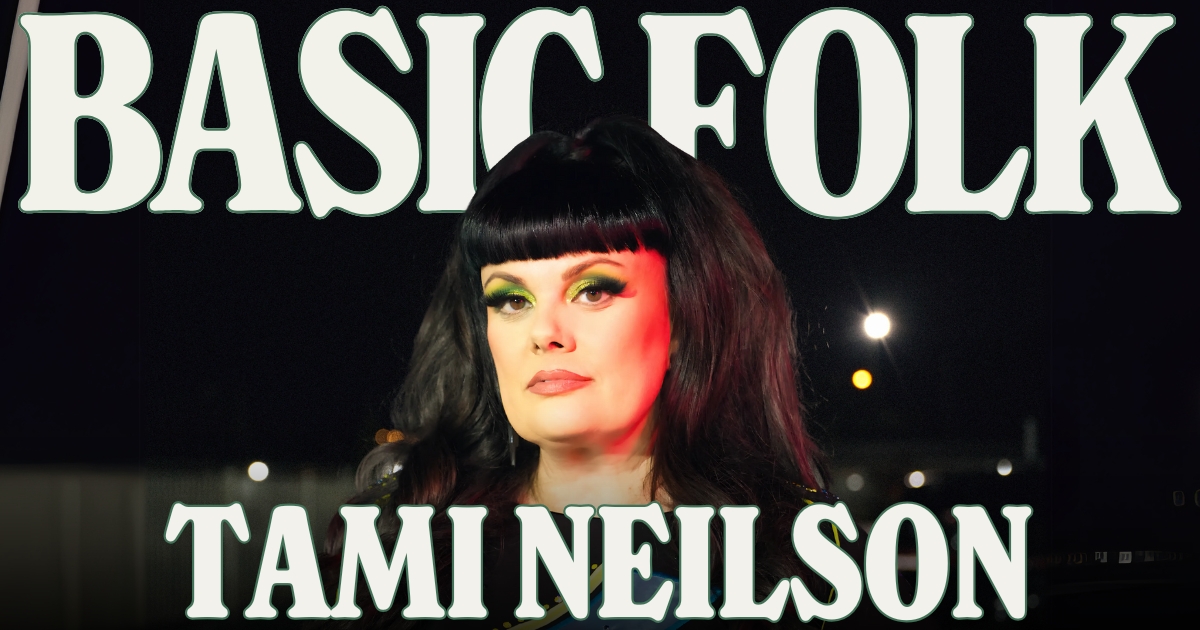
Basic Folk: Tami Neilson

In recent years, Tami Neilson has been learning to carry both great joy and great sorrow simultaneously. The New Zealand-based, Canada-born powerhouse’s new album, Neon Cowgirl, is named after the towering electric figure on a sign that’s overlooked Broadway in Nashville watching over Tami’s career since she was 16 years old. The songs were born from a five-month family road trip combined with a major musical tour that would allow Tami the once-in-a-lifetime chance to really give it her all with her career. It was the chance for her children to experience what her life was like at their age, when she toured the country with her family’s band, led by her eccentric and wildly lovable dreamer-father, Ron Neilson. Before she got the chance to hit the road for that trip, Tami landed in the ICU with sepsis and nearly lost her life. She blessedly recovered, but found that all her priorities centered around trip/tour had changed.

LISTEN: APPLE • SPOTIFY • AMAZON • MP3

In our Basic Folk conversation, we talk about the songs on Neon Cowgirl, her dear friendship and collaborations with Willie Nelson, and Tami’s exciting performances at the Grand Ole Opry. One of the songs on Neon Cowgirl, “Keep On,” was inspired by a cosmic conversation she had with Wynonna Judd. Judd, to her surprise, quoted the same exact phrase – “Keep on, keep on, keep on” – that Tami’s late father had written in one of her most cherished letters. We also talk a lot about her brother, Jay Neilson. For all of her career and life, Jay has been by her side as her guitarist, co-writer, and musical partner. Last July, Jay suffered a rare and debilitating brain injury that he is still recovering from. Tami and Jay have not been able to perform together since that injury. She shares what it’s been like to be without Jay and how it’s been for him to be so public about his condition.

Tami Neilson and I first connected during the pandemic. She was a guest on the podcast after she released her 2020 album, Chickaboom! and again after she released her fifth album, Kingmaker, in 2022. Since those chats, I have loved following her career, listening to her new music, and experiencing her highs and lows with her. She’s one of my favorite guests and I’m thrilled to welcome Tami back to talk about her wonderful new record.


Photo Credit: Alexa King Stone

Sho-Bud Steel Guitars Relaunches, A Family Business Once Again

Tone: it’s the Holy Grail for musicians, and it’s the cornerstone of Sho-Bud, the iconic pedal steel guitar company founded in 1955 by Harold “Shot” Jackson and Buddy Emmons. When Emmons moved on, Jackson continued with sons Harry and David, handcrafting instruments integral to the sound of country music.

In the early 1980s, Sho-Bud was acquired by Fred Gretsch. In 2005, after twenty years away from the business, Harry and David Jackson, joined by David’s daughter, Dawn Jackson, resumed building instruments. As Jackson Steel Guitar Company, they introduced new pedal steel, lap steel, resonator, and slide guitars.

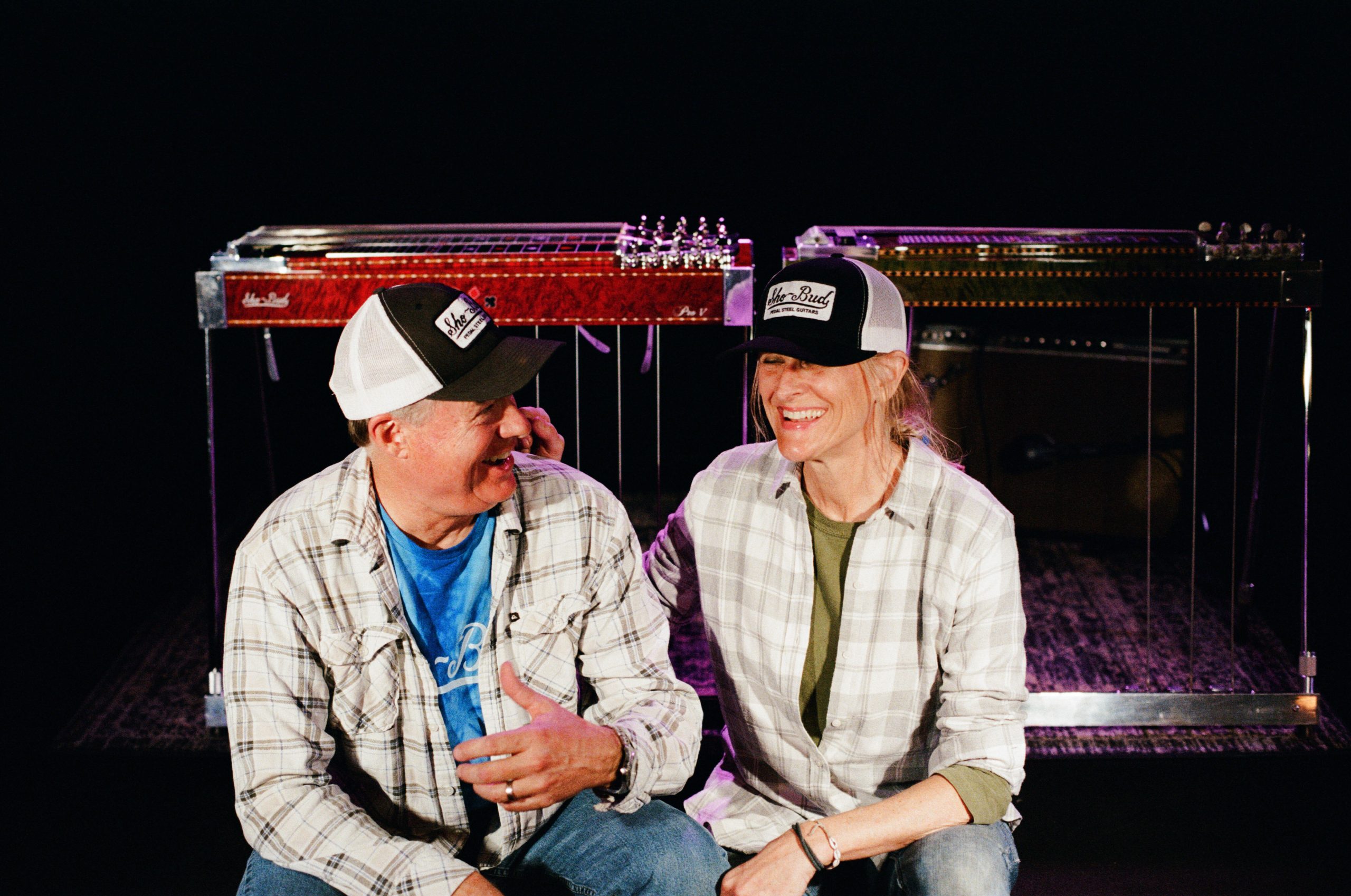
In December 2024, the third generation of Jacksons, siblings and co-CEOs Dawn and Will Jackson, reacquired the company name and family legacy. “We knew that the name carried a lot of weight,” says Dawn Jackson. “It’s our heritage, and we wanted to bring it back while Dad and Harry were still building.”

“I want to acknowledge Fred Gretsch, his wife Dinah, his family, and his team,” says Will Jackson. “A lot of people approached him to acquire the Sho-Bud name over the years, and he didn’t do it. He saved it for us. We very much appreciate what he did in terms of preserving the name, keeping it intact, and not selling it to someone else. We’ll be eternally grateful to him for that.”

Sho-Bud relaunched this year with new and classic gear, plus several projects across platforms and generations. The reach stretches from traditionalists devoted to the classic instruments they saw on the Opry stage, to young musicians incorporating steel in everything from country to metal.

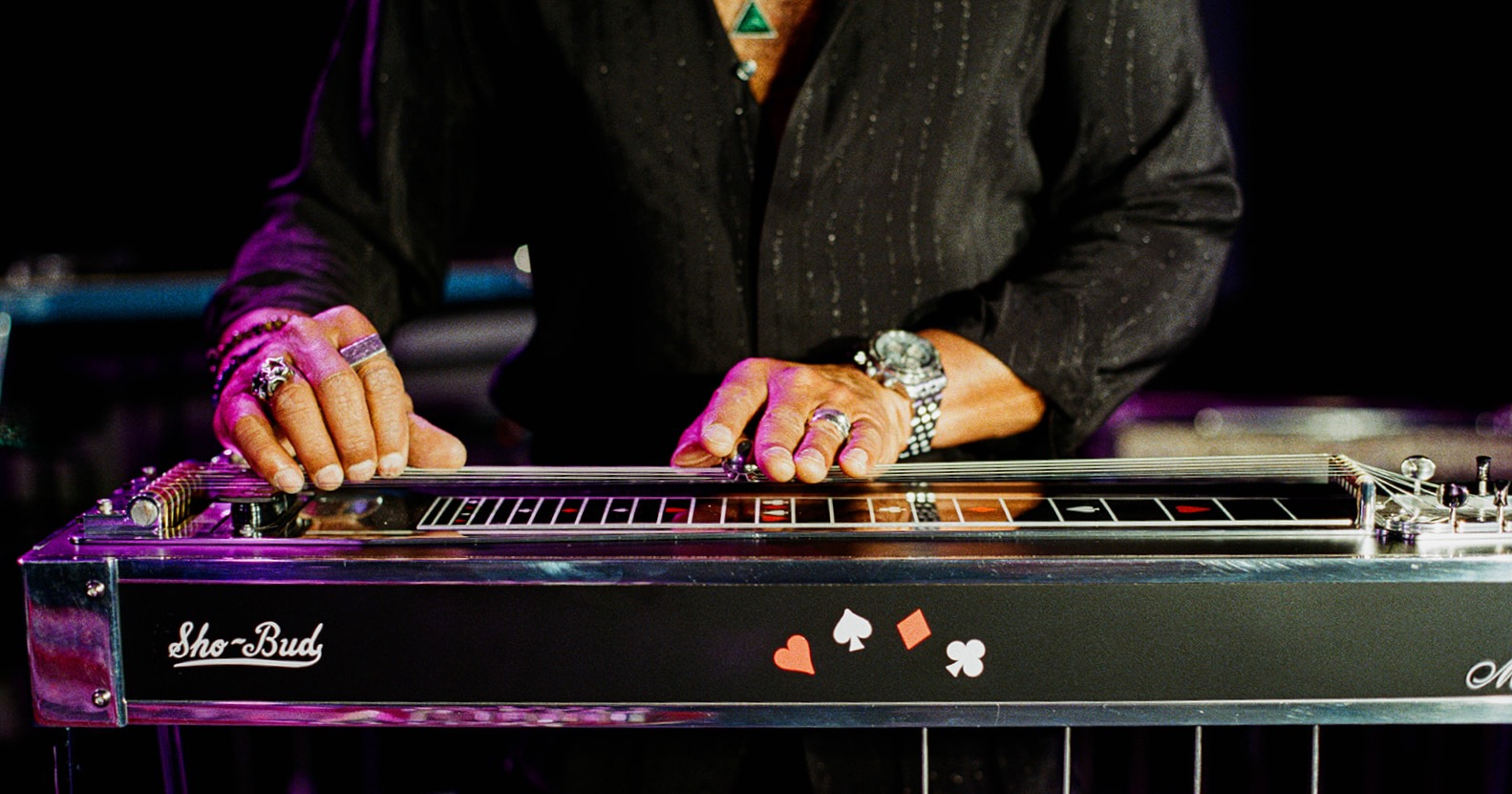
Central to all of this, of course, are the instruments, which include the high-level, traditional, maple cabinet Pro V; bender-equipped, stand-up SlideKing LS lap steel; and best-selling Maverick II.

“It’s not the Maverick of old,” says Will Jackson of the Maverick II. “The original Maverick was designed to be a low-cost, entry-level, beginner guitar. With the Maverick II, our objective was to build one of the sweetest-sounding guitars. We developed a front and rear extruded aluminum panel that has a hard rock maple soundboard that sits between them. On top of that, the one-piece aluminum neck now binds the key head and tail plate together.

“When you sandwich all that together, this particular guitar, as Dawn describes it, cuts through all the other noise. It’s distinctive, it’s clear, it rings and resonates. It has that Nashville sound because we still utilize the exact same pickup design that Shot developed back in the ’50s. When you marry that to this modern design cabinet, it is incredible. The Maverick II definitely stands out in terms of its tonal qualities. It’s pretty much unmatched. It’s quite an advancement in terms of pedal steel guitar technology.”

Sho-Bud plans a reissue of the signature Lloyd Green model, the LDG, which the Jacksons describe as “a continuation of the original classic design,” and a limited-edition LDG, cut with modern components and updated mechanisms, each one signed by Lloyd Green, David Jackson, and Harry Jackson. Other reissues will follow, including Jimmy Day’s Blue Darlin’.

Sho-Bud co-CEOs and siblings Will Jackson and Dawn Jackson.
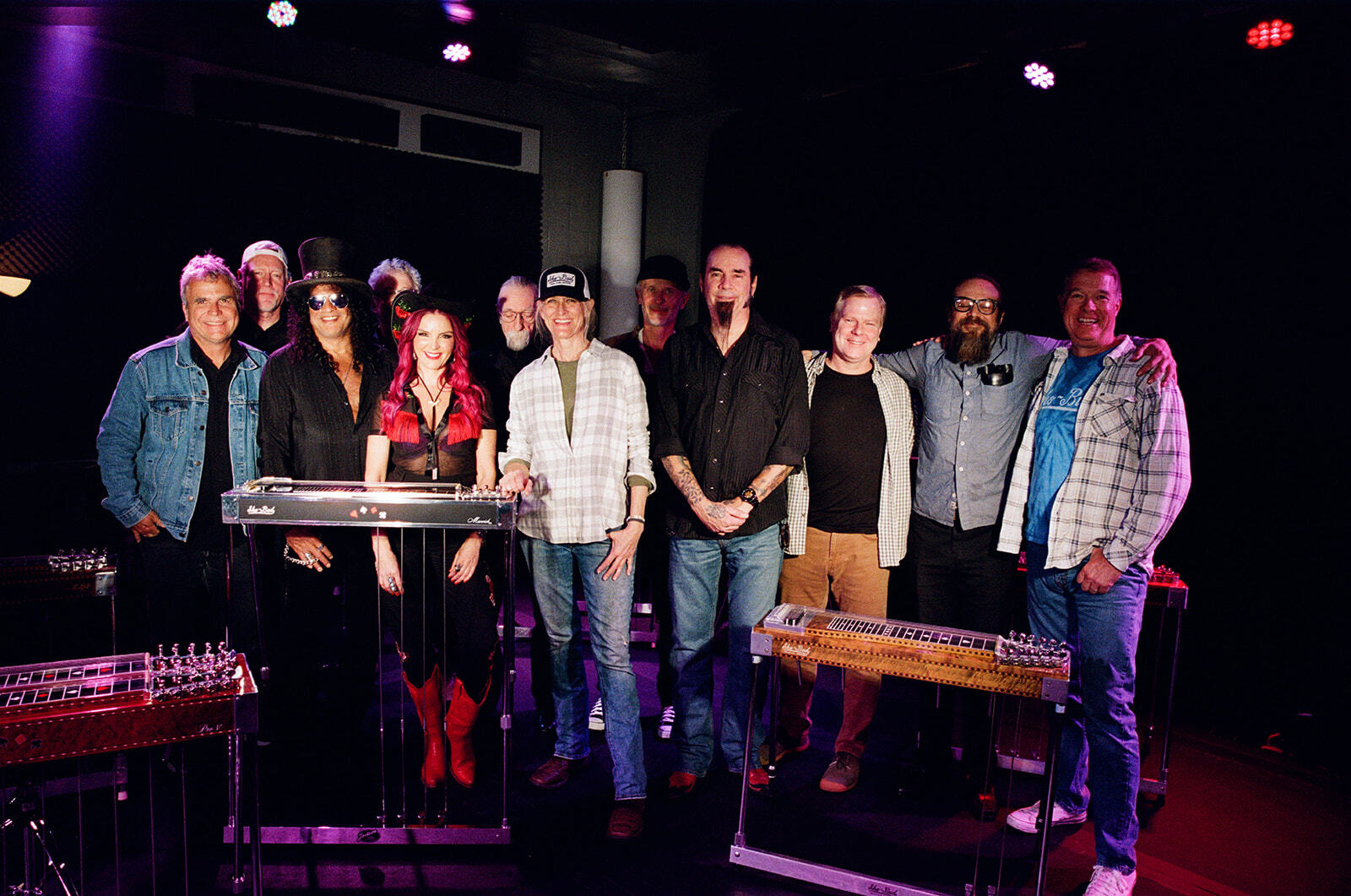
 

“Relaunch,” in Sho-Bud vernacular, is all about name recognition, product reputation, and upholding a decades-old legacy. “We built steels for the past twenty-five years under the name Jackson Steel Guitars,” says Dawn Jackson. “So the relaunch, for us, circles around the Sho-Bud name.

“What’s happened in the months since we secured the name again, the outpouring of support from the guitar industry in general has been overwhelming,” she says. “That lends itself to the weight this brand carried around the world, and how throughout the years of its ‘dormancy,’ it maintained a true following, and not only from older generations. Younger people love the brand too. When we mention Sho-Bud, every door is open. So that’s really the relaunch. We maintained building these amazing instruments during our Jackson Steel era, but the [Sho-Bud] brand itself has the leverage and momentum behind it.”

“A lot of people have asked, ‘Is this just a rebranding of Jackson Steel Guitars?’ Definitely not,” says Will Jackson. “We’ve been sitting on a few patents that we’ve obtained over the last couple of years. They’ve got about fifteen years or so left on them while we fine-tune these components.”

Those components include a tunable vibrato, on-the-fly D Drop, The EDGE® multi-bending system, and Core-Over™ strings, all of which they’ve introduced to Sho-Bud artists with positive response.

“When a traditional, fretted-instrument guitarist is, say, holding a chord, when they use an old-school vibrato — let’s say a Bigsby, for example — when they hit that thing, all those strings are falling out of tune,” says Will Jackson. “Our tunable vibrato doesn’t destroy the chord. When they’re holding a chord and they go down, all those strings fall in tune now.

“We’ve got a Drop D tuner that allows an artist, again on a fretted instrument, to simply roll their E down to a D while they’re playing. They don’t have to take their fretting hand off and adjust anything on the key head. They don’t have to stop and tinker around with their picking hand to adjust anything. They’re able to use the palm, the heel, of their hand, roll it right down to a D, and roll it right back up to an E. So it’s very novel, very easy to use.

“With our Core-Over strings, we take the winding off up to where it passes the bridge and on the pickup side of the nut, so it’s just the core of the string going across those two touch points. It creates incredible amounts of sustain. The sound profile of the string is much rounder, bigger, fuller. It’s amazing.”

(L to R) Kyle Ince, Bob Sheehan, Slash, Ted Stern, Andrea Whitt, Skunk Baxter, Dawn Jackson, Pavel, Hexx Henderson, Mark Tucker, Rocco DeLuca, and Will Jackson pose for a group photo at the Sho-Bud Showcase Live at the Desert 5 Spot in Los Angeles.
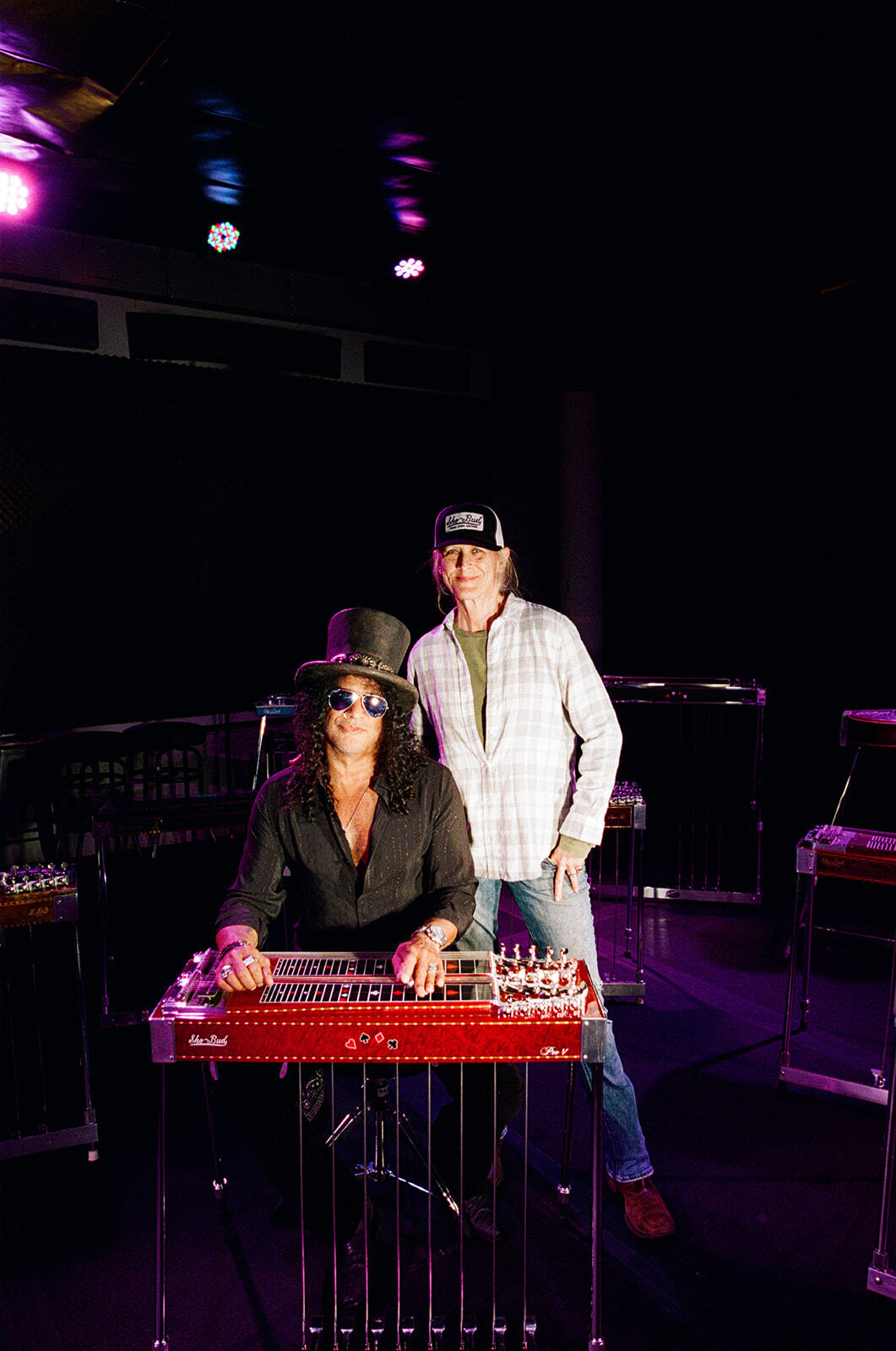
 

On April 24, in Hollywood, the company celebrated the return of Sho-Bud Showcase Live, national concerts spotlighting steel-centric artists in all genres. The series kickoff, Sho-Bud’s first live event in over forty years, included, among its many participants, Jeff “Skunk” Baxter, Robert Randolph,
Andrea Whitt, Rocco DeLuca,
Hexx Henderson, Hatfield Rain, Shooter Jennings, and Slash.

Sho-Bud Music is a record label and publishing company originally established by Dawn Jackson to release an album by her band, the aforementioned Hatfield Rain. “Around that time, I started working with Dad and Harry on Jackson Steel and never did anything with the [album] mixes,” she says. “It’s getting ready to come out after all this time, so I’m super-excited.” Along with that recording, Sho-Bud Music is promoting other Sho-Bud artists.

Coming soon is Shot Jackson’s Sho-Bud Showcase radio program, which will now become a podcast featuring music, interviews, and over 150 digitized reels from the original 1970s and early 1980s WSM broadcasts. “We have all the reels and we’re going to start releasing them,” says Dawn Jackson. “The podcast will also include interviews with today’s Sho-Bud artists and, of course, our dad and Harry.”

Harold “Shot” Jackson built Sho-Bud on a foundation of superior instruments, customer service, customer satisfaction, and customer loyalty. Those values remain at the core of Dawn and Will Jackson’s goals, whether putting instruments in the hands of internationally renowned musicians or newcomers learning their way around pedal steel.

Sho-Bud CEO Dawn Jackson poses with Slash and a Sho-Bud Steel Guitar.
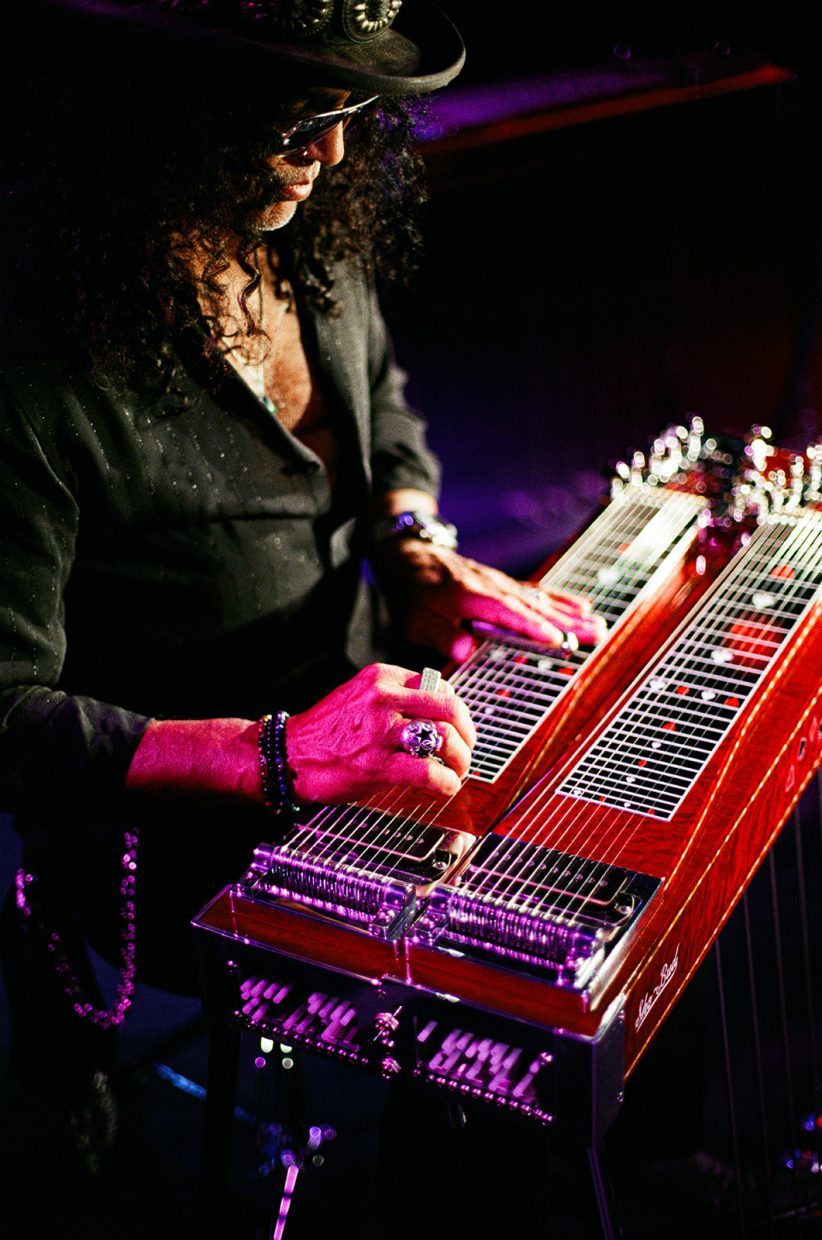
 

“These instruments are not like traditional fretted instruments,” says Will Jackson. “Fretted instruments don’t have moving parts per se. But these do. Because they have those linkages and mechanical pulling mechanisms, as they’re used, they wear. Anytime you make a change to these instruments, you have to be careful, because in the interest of trying to maximize performance or life on one end, you can impact tone on the other end, and that is something we can’t sacrifice.

“Sho-Bud has always been known for that Nashville sound, the tone that we got. The story I recall as a kid was Shot sitting there on a pickup-winding machine, which was made out of an old sewing machine motor. He had apple bushels next to his workbench. He would wind a pickup, plug it in, and if it gave him the tone he was after, performed the way he wanted it to, it went in the keeper bushel. If it didn’t, it went into the discard bushel.

“That is how our family has built these things. There are no Rhodes Scholars over here or MIT graduates in engineering. These guys developed these instruments through pure trial and error and using their ears to develop that tone. Again, we can’t sacrifice mechanical advantages over tone. Some guitar companies do, but we cannot do that. For us, it is about tone, tone, tone. We live and die by that.”

“We’ve always maintained the tradition and look of our guitars — the beautiful cabinets, our certain inlays, the finishes,” says Dawn Jackson, “but aesthetics are second. Tone has always been number one for us.”

“These instruments require maintenance,” says Will Jackson. “If there is a nut, a screw, a bolt, it will get turned by someone. When these things leave the shop, they’re set perfectly. People will start adjusting things, and that’s what they’re for. You need to fine-tune things ergonomically to make it fit. But, because these things can be very sensitive, sometimes they overdo it, or they have trouble chasing the tuning back to where they wanted it.

“We are here to support them in terms of Zoom calls, where they can show us exactly what they’re doing, what the instrument is doing, or what it’s not doing that they would like it to do. We can help walk them through that, using a blend of modern technology to help them fine-tune some of these traditional instruments. We’re always looking for ways to make it easier for them to keep these guitars maintained.”

As a family-owned and operated company, versus a multi-department corporation, the Jacksons are front and center when phones ring, texts chime, and emails arrive – no call centers, AI assistants, or being transferred through a half-dozen departments and hold times. They field calls, walk customers through setups, stay active via social media, keep up with forums, provide instructional videos, and cherish human-to-human relationships.

Slash plays a Sho-Bud Steel Guitar.
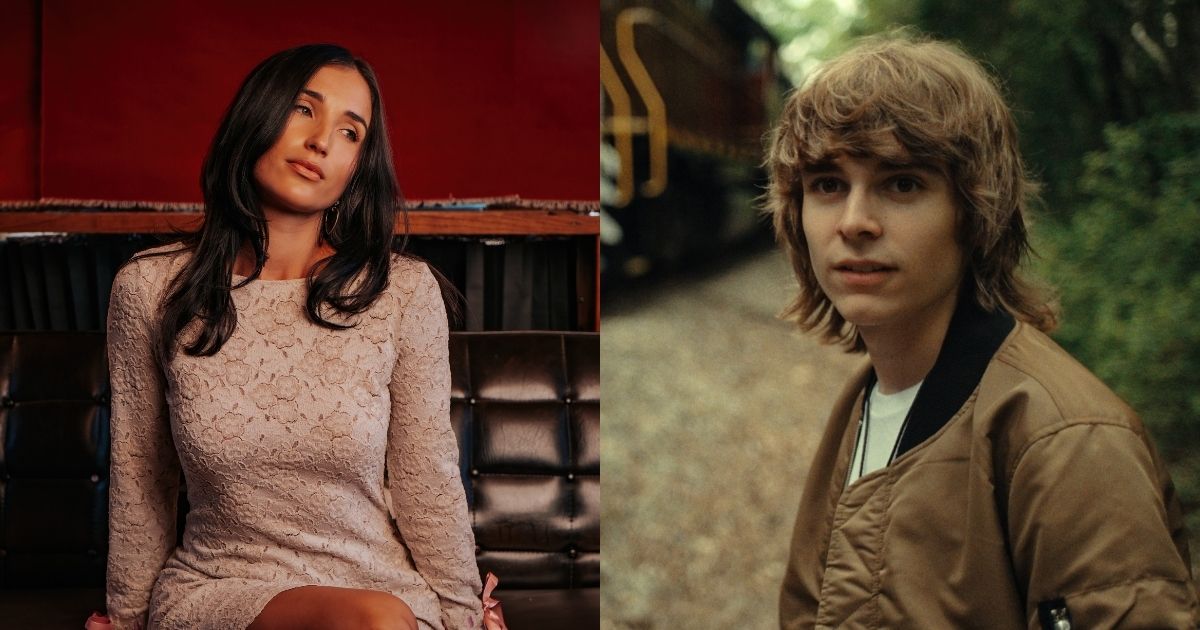
 

“Will and I have been a team since we were kids playing football in the backyard,” says Dawn Jackson. “We really believe in team efforts, and that’s why we’re so big on using the words ‘Team Sho-Bud.’ The dynamics between us, our father, and our uncle – we’re all creators and passionate about the things we do.

“We have the same objective in mind, which is to maintain our family heritage,” she says. “I am so proud that Sho-Bud is still a family business, and that people love and respect that. We work together, play off of each other, and it just works and works well.”

“I’m proud of my family – our dad, our uncle – for the sacrifices they made over the years to build these instruments, and to deliver the tone and the sounds that everyone enjoys,” says Will Jackson. “I’m very proud of the work they put into this, and of Dawn for rolling up her sleeves and helping them. I’m proud of the way Sho-Bud has evolved. It’s fun to be a part of the rebirth of Sho-Bud. These instruments, these new components, are going to be total game changers. I’m very proud to represent these products and wear the old brand. It’s exciting times.”


All Photos: Ashley Marie Myers, courtesy of Sho-Bud. Lead and alternate images: Slash plays a Sho-Bud pedal steel guitar.

Sawtooth
Country Soul

To say Kashus Culpepper’s life has changed over the last five years is an understatement. A former state champion wrestler, firefighter, and EMT, the Alabama native developed a raspy, smoke-and-voodoo vocal while stationed in Spain with the U.S. Navy in 2020, forced to pass the pandemic in his bunk. Since then, he’s knocked over one milestone after another.

With a distinctive mix of country, blues, Southern rock, and soul, the 27-year-old cites Robert Johnson, Bill Withers, and Hank Williams as inspirations and is now bringing his roots-renegade instincts to mainstream fans. Despite only releasing his first official track in June of 2024, the music industry short-timer has earned big-time appreciation.

That includes the respect of heroes like Elton John and John Mayer, a Grand Ole Opry debut, tour dates around the country, and inclusion on 2025 “artist-to-watch” lists at GRAMMY.com, Apple, Billboard, Pandora, and more. Culpepper just finished a run of dates with Leon Bridges and he’ll hit the road with Whiskey Myers in June before joining tours by Sierra Ferrell, Darius Rucker, and others later on in the summer. It would all be overwhelming, if he had time to think about it.

“I’ve just been taking it day by day,” Culpepper tells Good Country with a hearty laugh, waiting to perform at a community festival in Arkansas last month. “I think that’s the best course of action. Don’t think too far in the future and just take each show, each writing session, each recording session one at a time. Just pray everything works out and keep going. … Because when things started happening, I was like, ‘Oh, snap.’”

We wanted to get to know Culpepper before anything else “happens,” and figure out what’s fueling the hype. As it turns out, this all-natural talent is just going with the flow.

I read that you didn’t even start playing guitar until you were in Spain for the Navy, right? What made you want to do that?

Kashus Culpepper: Yeah, in Spain we got shut down and I didn’t have nothing else to do, man. I mean, literally I was bored out my mind. It’s a different type of boredom, because during COVID you couldn’t do nothing. It’s not like you can just go outside or go to a bar or hang with your friends. We couldn’t do nothing. So this was a weird point in my life and my buddy had a guitar in the barracks. I was like, “Well, this is a perfect time. I literally have nothing to do.” I just went on YouTube and looked up covers I wanted to learn. Music has always been something I go back to whenever life is hard. So I resorted back to music and that ended up leading me to learn guitar, eventually learn to write songs.

Thank God for YouTube, huh?

Shout out Marty Schwartz!

You seem to have a lot of diverse tastes, but that bluesy, soulful country thing – why did that speak to you?

I think maybe that’s just my music taste. My first taste of music was gospel, and I’m from Southern Alabama, so gospel there, it’s really rootsy already. It already sounds like a folk song. And the way they sing it sounds so bluesy, like old Son House type of vibes. From there I got into blues music outside of church. I got into country music and R&B and folk music a little. I’m all over the place when I listen to music. I can go from Allman Brothers to a Conway Twitty song really quick.

But I know you like John Mayer and all that stuff, too, right?

Yeah, yeah. I mean, I love so many of those rock artists, ZZ Top, Led Zeppelin, Skynyrd. People ask me all the time my influence and I’m just like, “Bro, it’s so hard to name everybody.” John Mayer was a huge thing for me. Recently I went back to Norah Jones, I’m like, “Man, I used to love this record.” But with my music, at the end of the day, it’s just centered on my lyrics. I just want it to feel as rootsy as possible, because all the music I come from – blues, folk, R&B, soul, gospel – it’s all roots music at the end of the day.

Your voice is so good at expressing these really raw emotional states, I think. Is that how you are naturally? Or does that only come out in your music?

Most of the time? Honestly man, it’s just with the music. It’s hard to open up to the people. I think for me music has been great, just to express how I actually feel through my singing and my lyrics. I don’t usually just tell people.

So you’re from Alabama. After the Navy, did you go home and keep playing?

I got out the Navy in 2022 and by that point I already had gigs booked on the Mississippi Gulf Coast. I was booked at all these casinos, all these bars. I was booked out for a year in advance. I got out and went straight to full-time doing cover band shows pretty much for another year, until I literally couldn’t take any more of it. Then that’s when I decided I really want to write songs. Literally, I decided “I’m going to move back home to save as much money as I can and move to Nashville.” I was home for maybe a week or two and posting a lot on TikTok and I remember I was in my mom’s living room. I posted a TikTok, I went out because I had an interview for a job, I got back home, and it had reached 100,000 views. From there it was just, “Oh, snap. It’s going on.”

@kashculpeppermusic Replying to @Casey Wayne One week till “Man of His Word” drops! Appreciating all the support on this one❤️ Pre-save link in bio🔥 #country #singersongwriter #original #kashusculpepper #newmusic #livemusic #countrymusic #countrymusiclover #tour #soul #newcountry ♬ original sound – Kashus Culpepper

That’s awesome. Congratulations on how that all turned out. I think one reason for it might be that your music seems so unconventional, almost untamed. Maybe because you did it on your own? Do you feel like fans are hungry for that?

I think so. We talked about John Mayer. John Mayer is kind of like that. He’s all over the place. Sometimes he’ll do a blues song and then straight up pop, and then an R&B song with Leon Bridges. I think people just love that from artists. Artists just being artists. Just do whatever the song feels like. That’s how I feel with songs.

“A Man of His Word” is super soulful, with lots of that gospel influence and a big raspy vocal. Tell me about being the man a girl deserves. Where’s that theme coming from?

I wrote that song with Natalie Hemby and at the time we was just talking about life. The song is from a perspective of a guy looking into a girl and she’s going through hardships, because she don’t have a man of his word. She’s drinking a lot, doing a whole bunch of stuff. The song has a lot of me in it. I grew up with a single mother and you don’t know how those things can affect you without having somebody in your life you can trust. You get the feeling you can’t really trust nobody, because that’s not part of your life, and that leads to mental health problems or substance abuse. You don’t even notice it at the time, until you look back and you’re like, “Dang, that’s why I feel that way.”

After that comes “Broken Wing Bird” with Sierra Ferrell and it’s on the opposite end of the spectrum. Very threadbare and folky, right?

Oh man. So I’m a huge fan of Willie Nelson. One of my favorite songs is “Funny How Time Slips Away” – I just love so much the crooner era that he was doing – and I wanted a song that felt like that.

I wrote the song about somebody that’s not really good for you and you just keep taking ‘em back regardless, because you love them and no matter what they do, you’re always going to. So she’s like my broken-winged bird – no matter what she does, she’s flying back and I’m always going to help her out and then she’ll probably be on her way again.

It’s been good getting to know you a little. Big picture, what do you hope people take away from your music?

I think overall, I hope they can see I’m just an artist trying to express the way I see things, and I hope in some way they can find music that can fit every part of their life. Whether they’re trying to have a good time out partying, or if they want to soak into the sadness of a lover they lost, I just hope my music can fit some aspect of their life. And I hope they can enjoy it.


Photo Credit: Cole Calfee

Sign up here to receive Good Country’s email newsletter direct to your inbox.

The SteelDrivers Celebrate 20 Years, Usher in New Chapter With ‘Outrun’

With four lead vocalists, seven studio albums, one GRAMMY Award to their name, and countless fans won over, The SteelDrivers have been one of this century’s most consistent and trailblazing bluegrass bands. That longevity can be credited to three things – the strength of their catalog of all-original songs, their collective precision picking, and the family atmosphere the band has cultivated together since forming in 2005.

Despite not joining forces until then, banjoist Richard Bailey says he’s known bandmates Tammy Rogers (fiddle) and Brent Truitt (mandolin from 2012 to present) since they were teenagers. His first run in with Mike Fleming (bass) and Mike Henderson (mandolin 2007 to 2011) came not long after during a college ski trip, with the group remaining close ever since. In the early 2000s Bailey relocated to Nashville from Memphis and reconnected with Henderson, regularly joining him at the Station Inn during Sunday night bluegrass jams and setting the foundation for what would eventually become The SteelDrivers. Then one day Henderson rang him up and was glowing about a young kid he’d just started writing with named Chris Stapleton who was wanting to play a little bluegrass.

“We eventually got together at his house and nobody knew Chris except for Henderson,” Bailey tells BGS. “We rehearsed a few bluegrass standards and then Chris began singing and Tammy, Mike, and I all looked at each other and went, ‘damn!’ I remember asking if the song he sang was an old Stanley Brothers tune and he said that it was actually one that he wrote.”

By that point, Henderson and Stapleton had already been penning songs together for a few years, with one of their most notable co-writes to that point being “Higher Than The Wall” from Patty Loveless on 2003’s On Your Way Home – a full seven years before The SteelDrivers eventually cut it on 2010’s Reckless. With their songwriting prowess already well established, the band opted to lean all the way in, keeping to the pattern of only recording songs crafted by them. Early on that mostly consisted of songs from Stapleton and Henderson, but has extended to all of the band in the years that followed, with Rogers writing the entirety of 2020’s Bad For You and the band’s newest member, Matt Dame, contributing songs for the first time ever on the group’s latest effort, Outrun.

“Starting with our very first record we determined that we were only going to play original music and we’ve never wavered from that,” explains Rogers. “It’s always been when you come to see The SteelDrivers that you’re not going to hear an updated version of ‘Little Cabin Home On The Hill’ or a modern country song done bluegrass style. There’s nothing wrong with any of that, but the whole point of the band originally was two songwriters coming together – Chris Stapleton and Mike Henderson – and everything else grew around that.”

That persistence of sticking with original material doesn’t only extend to The SteelDrivers recorded catalog, though. As Rogers points out, you’ll also be hard-pressed to hear any covers during the band’s live show. Per Bailey, the only such instance came during their televised Grand Ole Opry debut in 2008 when Charlie Daniels joined them on stage for a sing along to Flatt & Scruggs’ “I’m Gonna Sleep With One Eye Open.”

However, the band has regularly employed and worked with writers outside the group to craft songs centered around what Fleming describes as “uneasy listening music where bad things happen to good people.” This includes the likes of the venerable Verlon Thompson (“Booze And Cigarettes”), George Strait, Martina McBride, and Pam Tillis collaborator Leslie Satcher (“Outrun,” “Bad For You”); and German-born Thomm Jutz (“I Choose You,” “Cut You Down”), with whom Rogers has written over 140 songs (and counting).

“We’re fortunate to have always had wonderful songwriters in the band no matter who the membership was,” clarifies Fleming. “As it’s morphed through different CDs and personnel the strength of the songwriting has never wavered. Our goal has always been to serve the song, no matter who is singing it.”

Regardless of who’s been writing – or singing the songs for that matter – the band’s impeccable storytelling and bluesy grit has never faltered, even when lineup changes shook the band to its core. The first of those came in 2010 when Stapleton left to begin pursuing his solo career – a move that has resulted in him becoming not just one of the most well known country singers, but one of the most renowned vocalists of any genre globally. Henderson followed a year later, with Gary Nichols and Truitt stepping in to fill each of their shoes, respectively.

“I would’ve loved it had Stapleton never left the band – I mean who doesn’t want to be in a band with Chris Stapleton?” Rogers continues, “But when he left we had to make the decision of do we keep going or do we stop, because it wasn’t going to continue the same way that it had before. It wasn’t even a choice to me, though – I wanted to keep playing. To me that was better than no SteelDrivers at all.”

With two of their founding members gone, the band set out to prove they could still create bluegrass bangers and it didn’t take long for their efforts to pay off. Five years into their new look lineup The SteelDrivers won their first GRAMMY Award, taking home the honor for Best Bluegrass Album with The Muscle Shoals Recordings at the Academy’s 58th annual gathering in 2015. According to Rogers, the GRAMMY completely changed the band’s trajectory and continues to have a positive impact over a decade later.

“There’s been a lot of discussion in recent years about the validity of the GRAMMYs, but for us the recognition from the Academy has been a game changer,” states Rogers. “There’s a huge difference between being GRAMMY-nominated and a GRAMMY winner. For us, we were suddenly validated and were able to play bigger shows and venues that wouldn’t have considered or booked us prior to winning.”

In addition to validating their decision to keep pushing on, the band’s success post-Stapleton has also proven that they excel at finding new vocalists with their own distinct styles and vibrant storytelling to fill the void. First it was the funky, bluesy, and soulful sensibilities of Nichols. After him came the rock ‘n’ roll energy and piercing holler of Kelvin Damrell – who Rogers described as “the highest pitched singer of anyone we’ve had in the band.” He’s the only Kentuckian other than Stapleton to ever be in the band and sang lead for over three years – including on 2020’s Bad For You – prior to stepping aside in the summer of 2021.

It was then that the band recruited Matt Dame, solidifying the lineup they still have today. While each of the four singers have their own sounds, Rogers says there’s also plenty of characteristics that tie each of their eras together. “We figured out early on that it’s not about finding someone who sounds like Chris, but finding someone with a soulful, gravely, raspy and bluesy quality and letting them put their own spin on things,” says Rogers. “Aside from looking for those attributes we’ve never asked anyone to sing a certain way. Even though they sound similar, within two seconds of listening to a song I can tell whether it’s Kelvin, Chris, Gary, or Matt singing. They’re all distinct in my mind.”

Arguably even more impressive than the band’s success and consistency in sound through its different chapters has been their knack for continuing to make cutting edge bluegrass music with singers not steeped in bluegrass history with voices that generally “don’t fit” the traditional blueprint. From Stapleton on, the band has gravitated toward gritty blues and southern rock more than anything else. They’re comfortable at the confluence of electric and acoustic sounds, with one foot firmly planted in the past and the other stirring up dust and turning heads as it propels string band music into a completely new dimension.

“Chris Stapleton was not a bluegrass singer,” insists Fleming. “He was more of a blues singer, but the arrangements were always with bluegrass instruments. As a result, our propensity was to go toward playing bluegrass, but we never shied away from a song we thought we might not be able to play. For instance, ‘Midnight Train To Memphis’ from our first album was a bluesy rock ‘n’ roll number that Richard Bailey messed around on with on banjo one day. We have these bluegrass instruments, but we’re not confined to exclusively playing that way as long as we’re serving the song.”

Much like they’ve always served the song, The SteelDrivers’ fans have served them well in return, sticking by their side and continuing to buy tickets and albums through the years as the group has weathered changes in their lineup and sound. It’s led to an unprecedented run of success that Rogers jokingly compared to another bluegrass great.

“It’s almost the Ralph Stanley model,” she jokes. “After Carter [Stanley] passed away he had Larry Sparks, Roy Lee Centers, and Keith Whitley join him. It was a great line of singers that followed, all of whom embodied that Carter Stanley sound. We’ve also had several incredible vocalists with their own styles come through the band that we’ve been able to have success with by honing in on a singular sound together.”

The latest person the band brought in to hone in on that sound, Matt Dame, is a longtime Nashville songwriter and session player who joined in 2021 after a referral by friend and esteemed writer Gary Baker (John Michael Montgomery, Alabama, Lonestar). A couple rehearsals followed and by the end of July he was out on the road playing his first shows with the group. Having worked behind the scenes in the music industry for nearly as long as The SteelDrivers had been around, the move to performing in front of large crowds night in and night out was a big adjustment for Dame, but one he quickly found himself falling in love with.

“You do anything for 15 or 20 years and it becomes your comfort zone,” admits Dame. “I really enjoyed the session world, but it’s a lot different. Now I get a realtime reaction to what I do – there’s no stopping to go live again because you were flat. What I’ve loved most from our shows is the crowd singing the songs back to us, which can really carry you along.”

“There’s never a spot where you lose the audience or feel the need to kick into ‘Wagon Wheel’ to get everyone singing again, because the body of original work is so strong. It stands tall on its own,” he continues. “That speaks more to the power of the song than of any one vocalist, which says a lot because the band has had some incredible singers through the years. I’m just hanging on and trying to put my own spin on things.

“We’re all different, but one way we’re all the same is we all can deliver the songs in our own way that’s very believable. It sounds like somebody’s really living what they’re singing, not just going through the motions.” Even having been on the outside looking in for so long, Dame says that it’s hard to ignore the formidable nature of The SteelDrivers’ songwriting catalog, one that he’s thrilled to finally be a part of on Outrun – the band’s first project on the famed Sun Records (and also the label’s first bluegrass album). The record is his second with the band following 2023’s gospel project, Tougher Than Nails, that saw him only singing and playing guitar. Now, on his second go-round, he integrates himself even further, helping to write the songs “On My Way,” “Emma Lee,” and “Rosanna.”

“It was a really cool feather in my hat to be able to write some songs for this album and getting to do it on Sun Records is like the icing on the cake,” he exclaims. “I’m a huge Elvis fan and growing up in Arkansas listened to Johnny Cash all the time, so my eyes lit up when I heard we’d be their first bluegrass album ever.”

In addition to featuring the co-writes from Dame, Outrun also sees the band paying tribute to Henderson, who died unexpectedly from a pulmonary embolism in September 2023 – mere weeks after the release of Tougher Than Nails – with cuts of his songs “Prisoner’s Tears” and “Painted And Poison.” Although he hadn’t played with The SteelDrivers since 2011, his loss shook the band, which Rogers calls him the architect of, along with the entire bluegrass and country worlds.

“We knew we wanted to honor him in some way, which is what kickstarted talks for this new record and led to our shortest cycle between records yet,” confides Rogers. “In addition to recording two of his songs on it we’re also planning to have a slideshow commemorating him and 20 years of the band on some of our tour dates later this year.”

It’s tough enough to survive as a band for two decades when everything is going right, so it speaks volumes for The SteelDrivers making it as long as they have with all the obstacles that have gotten in their way. At the same time, the group’s unrivaled level of talent – both on their respective instruments and with their insatiable songwriting – have more than cemented their place in the bluegrass and American roots music zeitgeist for generations to come. For Dame, it’s a legacy that’s equally intimidating and exciting to be a part of.

“Professionally I’ve grown, because I’m doing something that’s new to me, but also because I’m doing it surrounded by a band where everybody does their parts with excellence,” he reflects. “If you don’t carry your weight it’s really going to be noticeable, which has pushed me to be better with everything that I bring to the group.”


Photo Credit: Glenn Rose

You Gotta Hear This: New Music From Jade Jackson, Wyatt Ellis, and More

Bidding farewell to May already? It seems impossible, but somehow we’ve quickly reached our final collection of premieres and new music for the month. You Gotta Hear This!

We’ve got bluegrass to get you moving this week, with North Carolina’s Balsam Range kicking us off with a dark and gritty story song of a shipwreck and the sea, “The Pacific,” their latest single dropping today. Then, prodigious young mandolinist Wyatt Ellis takes us from ocean to land with a classic, “Choo Choo Coming.” We’re sharing the brand new video for Ellis’ hit track.

There’s plenty more bluegrass to be enjoyed, too. Caroline Owens has just dropped a new music video for her March-released single, “You’ve Still Got It,” a song about the tight hold love can have on one’s heart and soul that highlights Owens’ bright, sparkling vocals. Plus, Kansas-based group MoonShroom take us into raucous, lovable jamgrass territory with “Somewhere On A Mountain” set to a fun and trippy lyric video. Exile – whether externally or self-imposed – sure can be enjoyable with the right soundtrack and a gorgeous view.

Don’t miss Maygen & the Birdwatcher included below, as well. Their brand new single, “Feel Good,” was released yesterday and will remind you of well executed country-string band-grass from artists like the Chicks, Darrell Scott, or Hailey Whitters. You’ll be feelin’ good, for sure.

For an alt-folk, indie-Americana counterpoint, singer-songwriter Jade Jackson shares “Pretending” in recognition of the conclusion of Mental Health Awareness Month. Brooding, vibey, and ravishing, Jackson’s beautiful voice cuts through the dark and stirring bed of sounds and synths before being joined by a broad, pocketed country-tinged back beat.

We hope you enjoy this week’s assemblage of excellent new music. You Gotta Hear This:

Balsam Range, “The Pacific”

Artist: Balsam Range
Hometown: Haywood County, North Carolina
Song: “The Pacific”
Release Date: May 30, 2025

In Their Words: “This song has everything I like. A great story, great melody and chord progressions, and a great delivery by Caleb and Don. Just a great song. It’s kind of a bluegrass version of ‘The Wreck of the Edmund Fitzgerald.’ This was a song that just seemed to musically fit everybody in the band all at once. Caleb especially has a real gift for a delivery on a song like this. The depth of story was really appealing, too – you could almost make a movie out of it.” – Tim Surrett

Track Credits:
Caleb Smith – Acoustic guitar, lead vocal
Tim Surrett – Bass, harmony vocal
Marc Pruett – Banjo
Don Rigsby – Fiddle, harmony vocal
Alan Bibey – Mandolin


Wyatt Ellis, “Choo Choo Coming”

Artist: Wyatt Ellis
Hometown: Maryville, Tennessee
Song: “Choo Choo Coming”
Release Date: May 16, 2025
Label: Knee High Records

In Their Words: “‘Choo Choo Coming’ was one of the first songs my band and I started playing together and it’s always had a certain kind of electricity to it – it just moves. We’ve played it live so many times, including during our first Grand Ole Opry band performance, and it never fails to light up the stage. It’s one of those songs Keith Whitley and Ralph Stanley used to tear into and I’ve always loved how raw and driving their versions was. That sound – gritty, tight, and right in the pocket – is what we’ve worked hard to capture as a band. When we sing together, I like to think we land somewhere between a freight train and a church choir barreling through the mountains. This single really shows who we are: young, rooted in tradition, but not afraid to push the tempo and let it roar. I’m proud of how far we’ve come and excited for folks to finally hear my band’s first recording. It’s the sound of where we started – and where we’re headed.” – Wyatt Ellis

Video Credits: Directed, filmed, and edited by Joseph Cash.
Styled by Bonny Mary Green.
Shot at the Tennessee Valley Railway, Hiwassee, Tennessee.


Jade Jackson, “Pretending”

Artist: Jade Jackson
Hometown: Santa Margarita, California
Song: “Pretending”
Release Date: May 30, 2025
Label: Jackson Star Records (Independent)

In Their Words: “‘Pretending’ was written during a season when I was going through the motions, but felt completely lost inside. It was meant for a record that never came out and, for a long time, I thought it might never be heard. I’m sharing it now, for Mental Health Awareness Month, in hopes it reaches someone who needs to feel less alone in what they’re carrying. Releasing it now feels like closing a chapter, so I can fully step into the new music I’ve been creating.” – Jade Jackson


Maygen & the Birdwatcher, “Feel Good”

Artist: Maygen & The Birdwatcher
Hometown: Minneapolis, Minnesota
Song: “Feel Good”
Release Date: May 29, 2025
Label: Yellow House Music Collective/Missing Piece Records

In Their Words: “Although we’re just now coming out with the studio recording of the song, ‘Feel Good’ is one that we’ve played live for a while now. It’s definitely one of my very favorite parts of our set, because it gets me right into the moment on the stage where it always ‘feels good’ to be.” – Maygen Lacey, vocals, acoustic guitar

“I’m really satisfied with how both Jesse’s mandolin and my banjo part line up/dance around Maygen’s vocal delivery throughout the song, especially on the line ‘mama’s cookin’ in the kitchen.’ Also props to Noah for the tasteful major 2 chord in the chorus. Chef’s kiss.” – Nik Pellinen, banjo

“I’d agree with what Nik said on ‘Feel Good.’ It’s really impressive how each instrument has a unique part yet still all feel like they’re pulling in the same direction! Also love that we got to include a little of our drummer Peter’s infectious laugh in the intro.” – Noah Neumann, acoustic guitar, background vocals

“To me, the song ‘Feel Good’ represents a lot in a Maygen & The Birdwatcher set, because it truly highlights the optimistic and empowering nature of the band in one single moment. It was an honor to be a part of capturing that feeling for the studio recording with such a stellar cast and crew.” – Joe Barron, bass

“I love the bluegrass feel in the chorus. I grew up listening to and playing bluegrass, so this makes the music along with the lyrics feel like home for me.” – Jesse Moravec, mandolin


MoonShroom, “Somewhere On A Mountain”

Artist: MoonShroom
Hometown: Kansas City, Kansas
Song: “Somewhere On a Mountain”
Album: Take a Trip
Release Date: May 30, 2025 (single); June 27, 2025 (album)

In Their Words: “No matter what walk of life you are in, everybody is on a journey of their own. The path to success is not always linear and, for most people, the road to where you want to be is riddled with hurdles, adversity, and setbacks. Sometimes you pour your heart and your soul into something, only to watch it crumble in an instant.

“I wrote ‘Somewhere On A Mountain’ amidst a past musical project of mine falling apart during the COVID pandemic. We had hit the road hard for five years building, only for it to end abruptly due to several factors out of our control. I felt like I had been climbing for years trying to reach an unknown peak, only to have the whole mountain give out from under me. Although it was unfortunate that the project had to come to an end, I realized that it was just a stepping stone leading to where I was headed. I learned a lot touring with my past band, but it was a lesson that sometimes your expectations are subverted and you have to rebuild.

“Ultimately, the universe had a weird way of shaking up my life in order to make way for the new. Now, I couldn’t be happier with the music we are creating with MoonShroom, and the progress we are making. I’m still somewhere on a mountain, just in it for the view.” – Jake Keegan

Track Credits:
Jake Keegan – Vocals, Dobro, songwriting
Lily B Moonflower – Harmony vocals, acoustic guitar
Colby Allen Walter – Harmony vocals, mandolin
Zach Bozeman – Upright bass
Staś Heaney – Fiddle
Nate Deel – Drums


Caroline Owens, “You’ve Still Got It”

Artist: Caroline Owens
Hometown: Denton, North Carolina
Song: “You’ve Still Got It”
Release Date: March 7, 2025
Label: Billy Blue Records

In Their Words: “‘You’ve Still Got It!’ This song, this video, this moment – what a true labor of love.

“I’m completely overjoyed and filled with gratitude for the support this song has received from the bluegrass community, and I’m so incredibly thankful for the help from our team at Billy Blue Records.

“From sunrise to sunset, every single detail of this video just fell right into place, and we can’t wait to share it with the world.” – Caroline Owens


Photo Credit: Jade Jackson by Lauren Farrah; Wyatt Ellis by Joseph Cash.