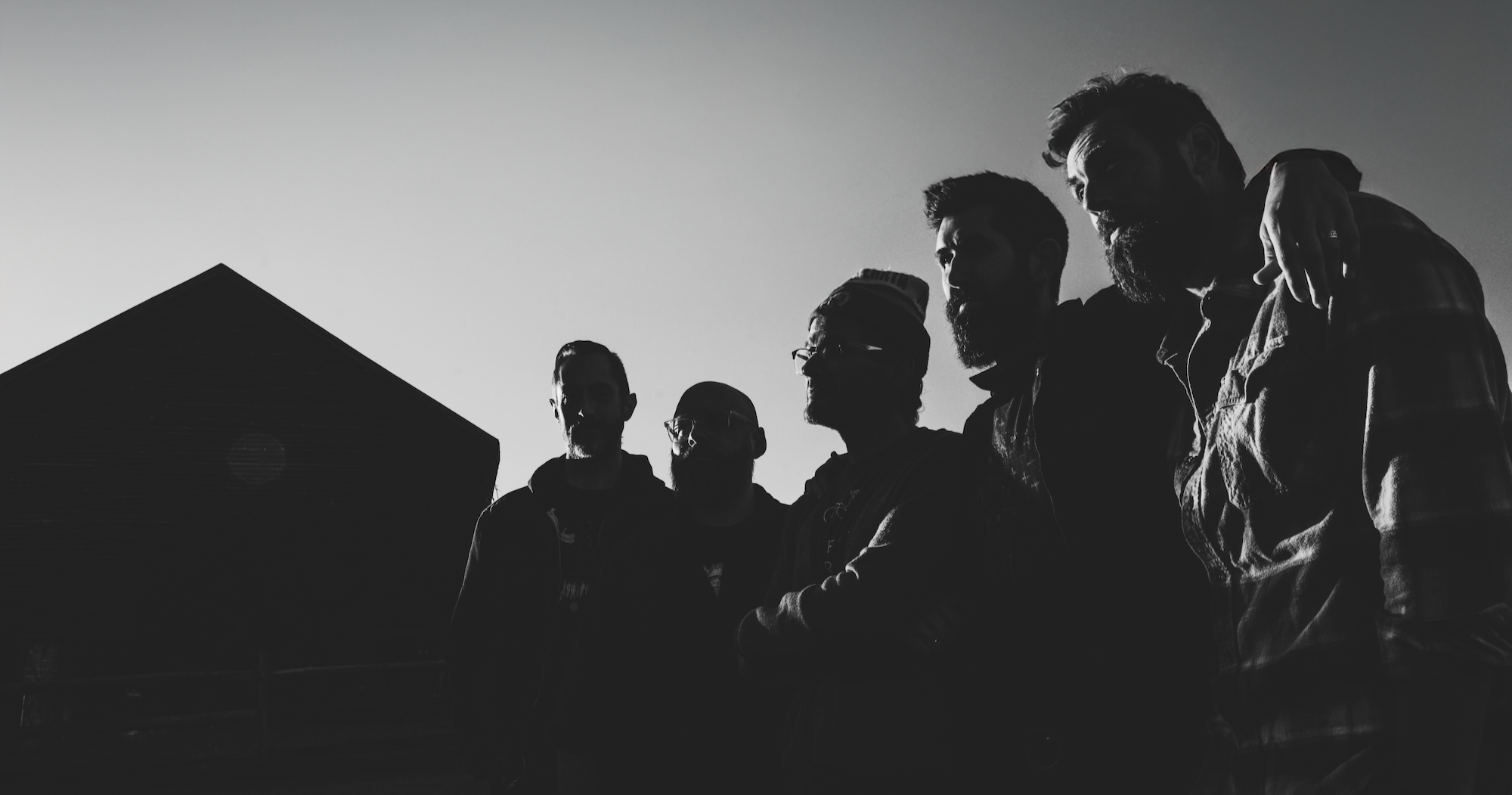
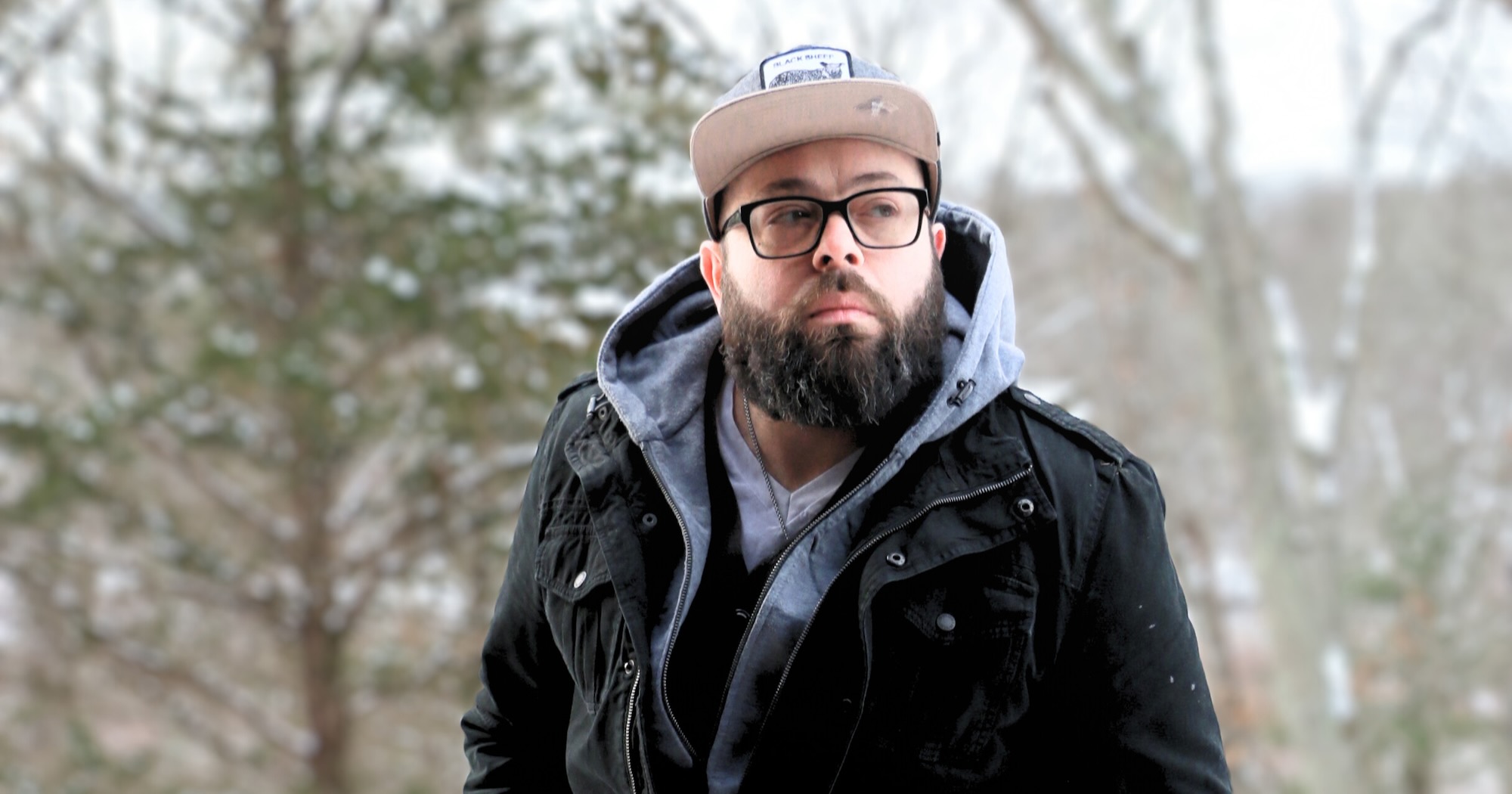
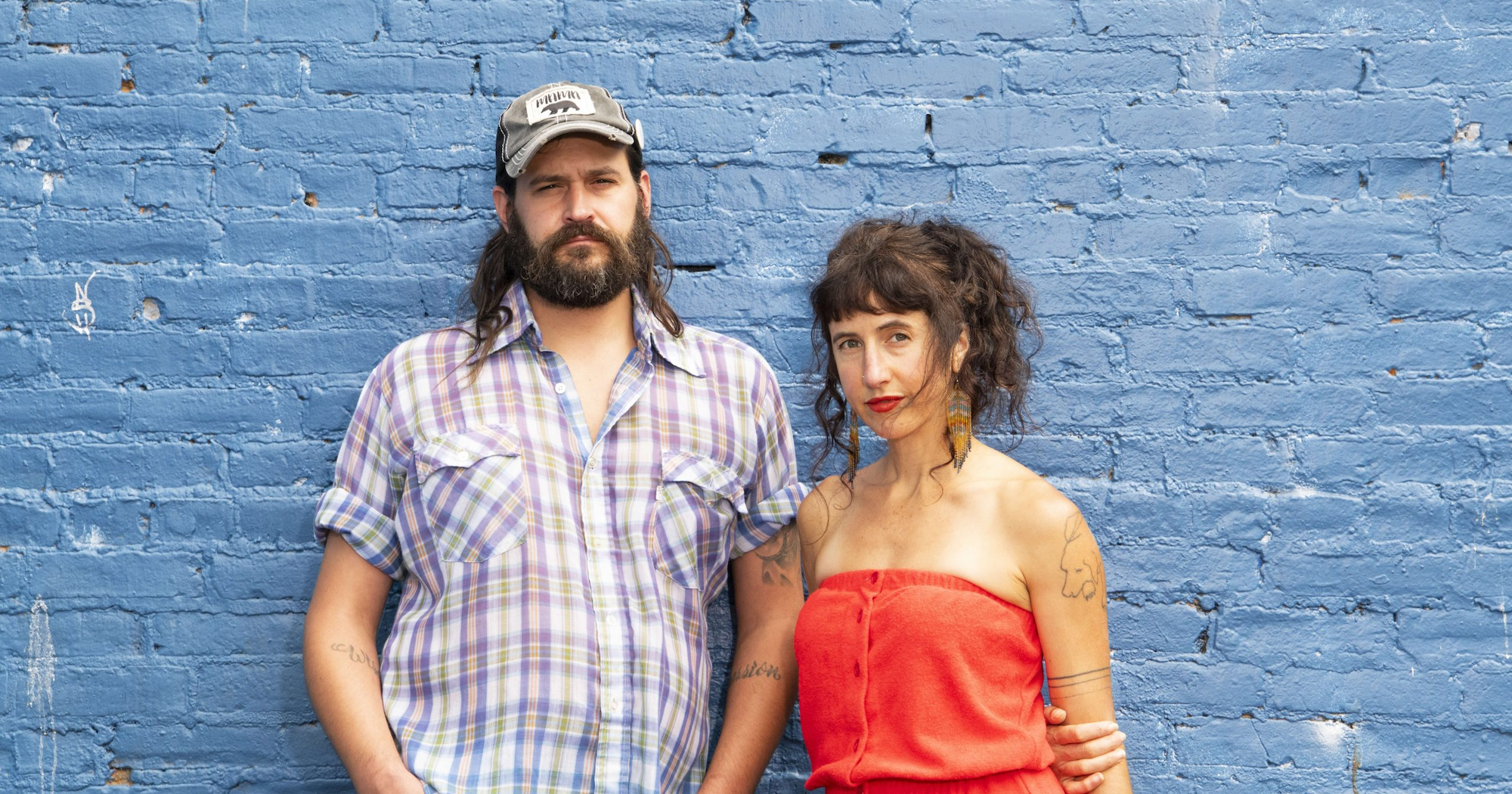
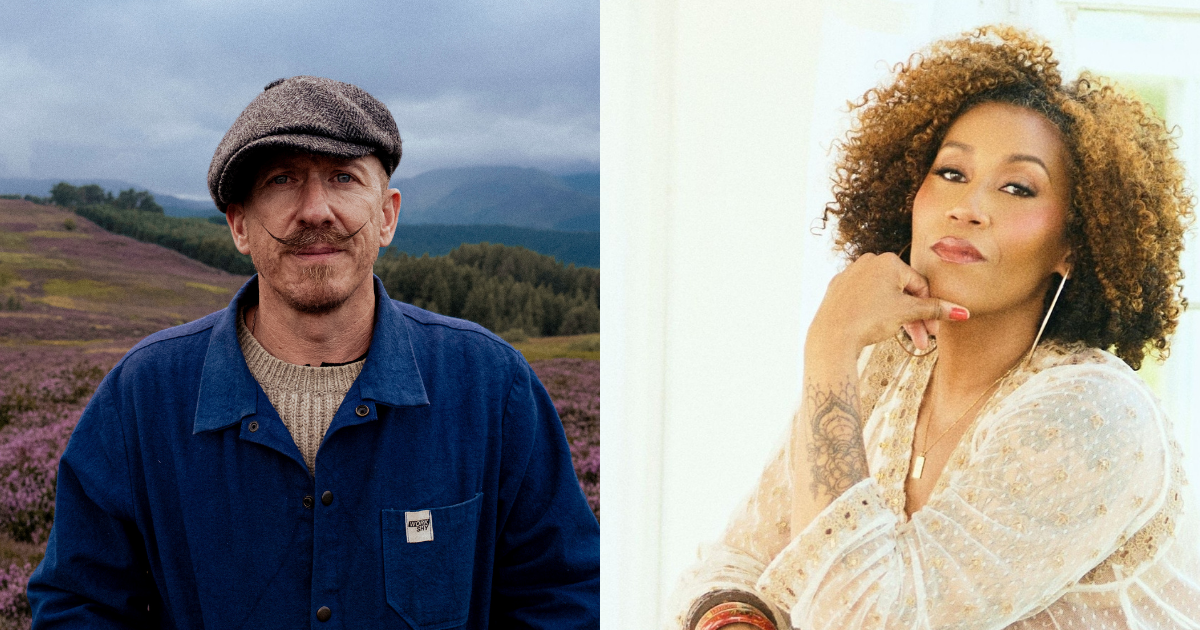
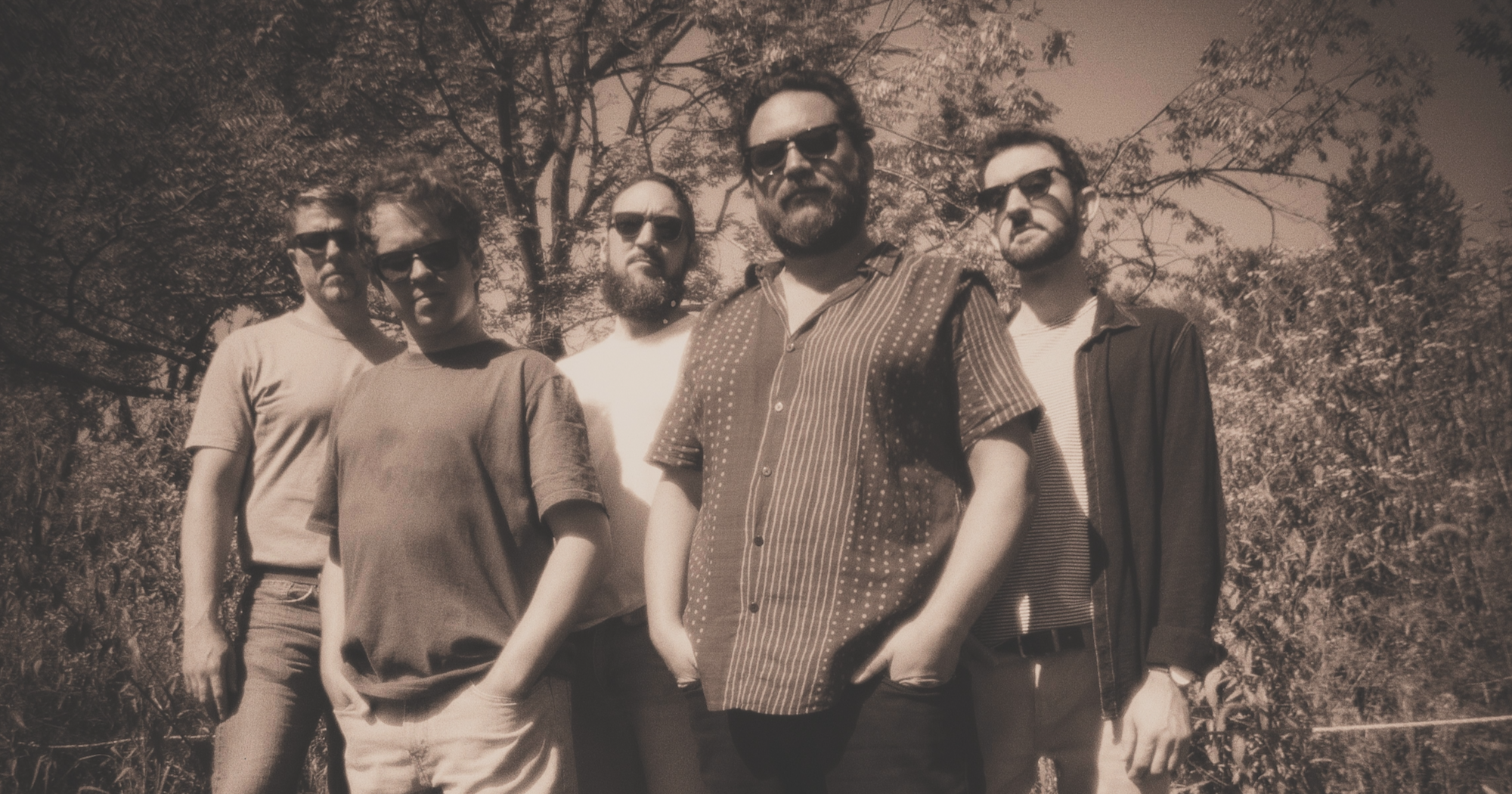
It’s common these days to wring hands over the many ways powerful tech companies have meddled, without permission, in how we discover and listen to music (among other things). It’s just as common to fearfully declare that music’s good old days are past and gone. But after 20 years as a working band, we know that the strength of community through music is much more enduring; and we see it all the time.
There is no greater force than a group of people who are ready to share a joyful experience. It doesn’t matter if they’re gathering to jam, attend a concert, or anything else. People in community can create strong connections in a heartbeat, under almost any circumstances, and music is a powerful vehicle for it. Some days it feels harder than others to find that spark, but it’s always there if we come together and dig for it. Every day the pressure grows to strip the things we all have made and love for parts, but collectively we can raise our voices and push back. As a band, we’re choosing to resist that force and to keep building things. Together.
This playlist features artists that we feel musical and professional kinship with, bands that have been around and are well into their careers. The songs we chose come from albums that are worth spending time with over and over again. These folks have played lots and lots of gigs and revel in the energy of a great show as much as we do. You’ll also find some music from our 9th studio album, The Steel Wheels, too. Music that we made together in a room. – The Steel Wheels
“Easy” – The Steel Wheels
A breezy song with a swirling fiddle intro and a big question at its heart. We live in the future now, with the entire world available to us on the other side of our screens. So why are we lonelier than ever? If everything is supposed to be easy, why does it all feel so hard?
“Talk Is Cheap” – Dr. Dog
Because they inspired me with one incredible Bristol Rhythm & Roots Reunion set probably 15 years ago. Their old amps, their confident trailblazing of their sound that was clearly referential and respectful – but not chasing what a lot of other bands were chasing.
“Los Angeles” – Big Thief
An artist’s job is to remain open and soft to the world and to distill all that pain and joy into work that transmits emotion across space and time. Somehow, Big Thief seems to only become less jaded with time, maintaining curiosity and exploration as part of their creative process.
“Go Back” – The Steel Wheels
All deep relationships come with joy and with pain. To be rid of one you would also lose the other. It’s part of lived experience, this is a reminder to embrace all of it. True connection is worth it.
“Waiting For The Sun” – The Jayhawks
The Jayhawks are a band that prove you can continue to forge your own way and make it through the highs and lows. I was still really just a kid when I discovered them through some older cats I was playing with at the time. Son Volt and Wilco were very much in the alt-country scene and the Jayhawks just had something a bit different going on.
“Worried About The Weather” – Greensky Bluegrass
I love the way this song pivots between the anxiety of pushing forward through uncertainty and the breezy delight of taking a moment to enjoy the journey. There’s momentum to both things and “Weather” has tons of it.
“Keep On Dancing” – The Steel Wheels
Let’s take a break from responsibilities to just see ourselves and each other. Don’t forget to breathe and to appreciate the unadorned peace that can fill the spaces between us.
“I And Love And You” – The Avett Brothers
Even a track like this, one full of solitary stillness, shows the Avetts’ songs are packed with other people. They always remind me that I’m not as alone as I often feel. You can sense the presence of old partners and family throughout this song even though the speaker is alone in their car.
“Valerie” – The Brothers Comatose
These guys are everybody’s friends. Maybe the acoustic Dawes? I don’t know. We’ve known them a long time and they keep bringing joy and fun with warmth and grounded songs that don’t rely too heavily on bluegrass tropes.
“Sway / Endless Highway (Pt. 2)” – Watchhouse
Watchhouse invest deep thought into every lyric and intention into every note without ever seeming to overthink their process or get held back by previous work. “Sway / Endless Highway (Pt. 2)” demonstrates how the band is constantly in conversation, transitioning between tempos and driving down into a deep groove with a breeziness that belies the technical mastery of their acoustic instruments. At a Watchhouse show, the crowd will hang on every note and every silence, sharing a reverence for the song with the band.
“Slow Rise (to the middle)” – The Wood Brothers
Oliver, Chris, and Jano seem to be propelled forward by some groove force that penetrates everything they do and they invite listeners to join in on the funky joy. Their track “Slow Rise (to the middle)” tips a hat to their musical journey. To be in an audience is to get lost in the moment, only to occasionally remind yourself how wild it is that all the sounds coming from the stage emanate from just three musicians.
“Way Down Yonder ” – Chatham County Line
I first heard Chatham County Line when I opened for them at The Livery in Benton Harbor, Michigan, with a jamgrass band I was in, probably 20 years ago. They were tight and had their act together. I was blown away by their professionalism and it made a big impact on me. I will never forget that moment and I’m still inspired by their creativity and longevity as a band.
The second track on Foy Vance’s new album, The Wake, is simply titled, “Hi, I’m The Preacher’s Son.” Among a beautifully intricate and incredibly serene record dealing with overcoming deep grief and prolonged sorrow, the tune hits at the core theme and genuine emotion offered up within the entire body of work – learning to love yourself as you grow older.
“I am no fortunate son/ I am no favoured one/ I am but a loaded gun/ Fired into a world gone wrong,” the Northern Ireland-raised singer-songwriter rumbles through the song. “Face down in the dirt I learned/ You don’t always get what you deserve/ I can hide, I can try to run/ But I am what I have become.”
Captured by acclaimed British producer Ethan Johns, The Wake closes the door on the artist’s 26-year trek, both physically and emotionally, in dealing with the death of his father – what it means for Vance to let go of the pain and finally set his parent free, and himself, as well, within that process.
This journey began in January 1999 on the Spanish island of Lanzarote. Vance was in the midst of a performance when he slipped into this surreal, overwhelming trance, one that felt like the line was being blurred between reality and the cosmos above. The following day, Vance was informed of his father’s passing from a heart attack the previous evening.
“Only time will tell if I know you well/ Or if I did not know you at all,” Vance ascends on “I Think I Preferred the Question,” a selection from the album that squarely aims to put Vance’s past behind him. “It’s heaven, it’s hell/ It is well/ The spell dispels the more that I talk about it.”
The key to The Wake is the number seven. There’s a reason this chapter of Vance’s existence concludes on the seventh of his albums, all of which were inspired by his father. It’s directly linked to an ancient saying often used by Vance’s father, a traveling preacher, which eventually soaked into his son’s heart and soul: “Give me the boy to the age of seven, and I will give you the man.”
“You’ll be up high on the mountain’s peak/ Seeing everything that you just might seek,” Vance rolls through the final track, “Bathed in Light,” an uplifting tent revival number of redemption and closure. “When it gets time for town again/ I’m gonna tell you how you’ll feel right then/ Like nothing will ever bring you down.”
What Foy Vance has presented with The Wake is a raw and real album of sheer vulnerability and human strength, all wrapped up in melodies of such creative depth and sonic splendor. It’s a ceremonial, hallowed shedding of spiritual skin by one of the great songwriters of our day.
Where’s your head space at right now?
Foy Vance: Very good, the field is open. I feel like I walked a narrow road for 26 years, pretty single-minded and focused on one thing. And I don’t think I was even as aware of that at the time I was coming up on the seventh album, realizing that I’d set out on that journey and that was it. So, as you can imagine, finishing a journey that you self-imposed came with a sense of pleasure. Completing something feels good, but there was a bit of dread also, if I’m honest pretty straightaway. But, as is always the way, the end always reveals the new beginning, you know?
You talk about 26 years since your father passed away. What was that heaviness? Was it the relationship you had with him? Things that weren’t said? Things that could’ve been?
I came out [of the womb] singing. There were tapes of me singing at three years old, shutting my brothers up ‘cause they were singing it wrong, saying “No, I’m doing it well.” Music was huge in my life [growing up]. I had just turned 24 when my dad died. I was already playing music and trying to sing a career in it and trying to write songs. And I moved to Lanzarote to try and get away from the humdrum, the comfort zone of life. At home, it was just too easy to become comfortable. I wanted to go and find some time away from all that to seek songs.
And boy, did I find them, but I didn’t expect to find them the way I did. I think it was all the stars aligned at that moment. The moment my dad died, I’d already begun the song the night before as he was dying, and I didn’t even know that bit until the next day. But, the second I found out, I went back and I wrote the first song that mattered to me, the first song that was healing.
It’s like when those musicians were on the Titanic and they played “Amazing Grace” as it was going down. They weren’t playing that for a fee or for applause. Why were they doing that, Garret? You know what I mean? Therein lies something inherent in music that we’ve all but forgotten for the most part. And I think I had that moment [when my dad died] – everything became clear. I realized I’ve been sort of conning music into trying to make it fit my regime. And the whole time, it’s quietly beckoning me to grow and learn and glean. I’m glad I can pay my rent with [music], but that’s not what this is about. It’s not what music is. It’s not what it means.
Did you know that when your dad died or was it this revelation that came in later years?
No, I think I realized immediately, the second that song came and you realize it can come that way. It was like my antenna was out. A thin space was created between me and my dad. And obviously there’s a lot of things going on when you have that shock of grief, a monumental figure like a parent. I’m sure there are a lot of similarities between bouts of great creative inspiration and bouts of mental instability. Like an episode, if you will. So, I was making all kinds of connections that day. I guess I was grasping at anything to make sense of something and give myself something to hold onto and stick to and walk a narrow road with, and just stay focused. My dad was a big figure, and without him it was sink or swim – music was a vehicle for that.
Was he a tough love, hard to read kind of guy?
No. Tough love with three older brothers, for sure. But not so much with me. I think they wore him down by the time I came along. He was very soft and gentle, but he was a rough man. He was from East Belfast, born in 1945. He came from a tough background.
What is it you’re letting go of this far down the road since his departure?
The fact [the album] is called The Wake, it’s the end of it. Where I come from, [at a wake] you go to celebrate the life of someone, not to commiserate the death. You go and tell stories and you laugh your hole off. You raise pints and you sing songs and you have a wake. I realize it’s not the end of “the grief journey,” it’s the end of a grief journey – it’s never going to go away. I hope it doesn’t, because he’s been my co-writer, and I hope it remains that way. But, it just changed. It’s hard to put my finger on what lifted. Something lifted.
You know, I never went to college, I never even passed my school exams. I just left and got a job, didn’t even show up for the exams. I think this is as close as I’ll feel to walking [at graduation]. Like, setting out on a journey and then completing it and there’s your certificate.
In a short documentary about the album, one of the things you mentioned that really struck me was what your father would say to you, “Give me the boy to the age of seven, and I will give you the man.” How has that statement affected you as you’ve gotten older?
Well, because I have two boys. One of ‘em is still under five and I know that by the age of seven, that’s him – he’s locked and dialed. Whoever he is, it’s in there. I’m aware of that and I want to put as much good information in there as you possibly can, all the strong stuff that will be core beliefs when he grows up. [And] being very careful about how you speak to them, the tone you take, making sure that when they hear your voice in their head and you’re not around, it’s a comforting one, it’s a welcoming one. That all takes time and attention to detail and nuance.
I think it’s the same in work in art, like making those seven albums. It was like the making of me as an artist, I guess in my mind. Give me the artist of the age of seven albums and I’ll give you whoever he is. I guess I was making those sorts of connections in my mind. Like, I will have become whatever I am probably by then, I’ll be settled into something.
I have a lot of solidarity with that statement because it plays into another statement that “you learn most everything you need to know in life in the sandbox.” When you look back at who you were at seven, how much of that person is still who you are?
Garret, I’m 51 now. It’s taken me a long time to wander through some wild places, but I finally got back to [myself]. I was right at seven. You can trust your seven-year-old self.
One of the things I’ve noticed as I’ve gotten older is how much, in certain ways, I’m turning into my father. Do you notice anything like that?
Well, I think that’s what I got caught up with on “Hi, I’m the Preacher’s Son.” No matter how much you get away, try to run away from what your dad did. What I do is not a million miles away. Let’s face it, I’m just not preaching any truth of any sort, just talking about what’s happening, reflecting my own experience here or whatever. But, it’s not a million miles away [from what he did], that you go off and you dig for details and you articulate them. He always spoke in parables and riddles, so it’s not surprising that I became a songwriter.
Well, whether you perform onstage or you’re in a pulpit, you have everyone in that room facing the same direction, and everyone’s in there for a different reason. In the church or at a live concert, they’re focused on what you have to say and hopefully walk away with a better feeling of themselves.
Yeah. I guess the main difference is I’m not trying to sell them anything. I’m there having an experience, too. I’m caught up in the music. I, too, get lost in those two hours that we’re onstage. I go there. You can’t take anyone anywhere you’re not willing to go yourself.
Do you look at The Wake as maybe a death of an ego?
I’ve never really thought about it like that, but yeah.
It’s also a shedding of your own skin.
Yeah. Perhaps every album is a bit of a death of an ego. Putting to bed, marking the end of that journey and heading out into the next one. At the end of The Wake, I genuinely didn’t know if I was just going to take a few years off or what was going to happen. And then, I exploded, just absolutely exploded. By the time I got into the car [at the recording studio] in Bath, [England], and got home, I just wrote for the next two weeks. Endless ideas. What I thought was going to be the end was very quickly becoming a beginning.
It became fuel on the fire.
It really did.
What would your dad think about where you’re at right now?
It’s hard to gauge, because my dad applauded anything I did. If I boiled rice, he’d be calling my mom in to see how well I boiled the rice. He was very proud, so I don’t know if he could handle this. And I think it’s sort of sad that he doesn’t get to see it. But, at the same time, I wouldn’t have it without his passing – it’s the strangest gift I’ve ever been given.
There’s a lot of heaviness with the album. But, it does feel like, at the same token, there’s a big sense of release. It sounds like you’re in a good place right now.
Yes, I am. I’m done commiserating. I’m ready to celebrate. It’s the wake, you know what I mean?
Artist:Frank Viele Hometown: New Haven, Connecticut Latest Album:The Silo (EP) Personal Nicknames (or rejected band names): I have no personal nicknames. Really.
Which artist has influenced you the most – and how?
In my formative years, it was Dave Matthews Band. I saw them live 137 times before I graduated college and basically learned how to play guitar in the parking lots of those shows. That constant-strum acoustic style Dave is known for shaped my right hand as a player from day one and still guides the way I play.
Beyond that, I’ve studied all the great songwriters, but I always lean toward heart-on-the-sleeve emotion – that raw, unfiltered passion you hear in Bruce Springsteen or in old soul records like Percy Sledge and Otis Redding. The kind of singing where it feels like the person might crack open mid-line. That honesty is what I chase every time I write or step up to a mic.
What’s your favorite memory from being on stage?
Almost a decade ago, I got to open for Blues Traveler in front of nearly 5,000 people at a festival in my childhood hometown – on the same field I used to play tee ball on. That was a full-circle, surreal kind of moment.
The only things that might top it are the first time Zach Myers from Shinedown pulled me on stage to sing “The Weight” with his Americana project, Allen Mack Myers Moore. Or when John Waite invited me up on stage in the Boston area to sing backup and play guitar with his band on Led Zeppelin’s “Whole Lotta Love.” Those moments as a growing indie artist where one of the greats treats you like a peer… that stuff sticks with you forever.
What has been the best advice you’ve received in your career so far?
My first run of shows opening for Lee DeWyze back in 2015 had me pretty nervous — I mean, that guy can really sing. I think he could sense it. Before the last show of the run, he came into my green room just to hang out.
He said, “I’m going to give you some advice Joe Cocker gave me before we sang together on American Idol. Remember, everyone out there is rooting for you to be great.” That completely changed how I see a stage. I had an incredible show that night, and I carry that with me every time I walk out.
A close second came from Christine Ohlman, who I perform with each year at the Rhode Island Rhythm & Roots Festival. I was nervous before a set because the crowd kept growing, and she just smiled and said, “Just take ’em to church, Frank.”
So now that’s the mission every time – remember they’re rooting for me, and always take ’em to church.
Does pineapple really belong on pizza?
Being from New Haven, Connecticut – the pizza capital of the world – I feel obligated to answer this one sternly. I respect the idea of using pizza crust as an edible plate and experimenting, but pizza basically reached perfection when Pepe’s put clams on a pie. After that, we were done. We nailed it.
If you want pineapple, call it something else. Flatbread. Dessert bread. A tropical situation.
But the word pizza needs boundaries. As I say this, I also want to stress that I’m joking. And as much as I love pizza my way, I love chefs that treat their meals like art, and art can assuredly be experimental.
Since food and music go so well together, what is your dream pairing of a meal and a musician?
After that last question, you’ve got me in a full Italian food headspace. So give me my mom’s pasta e fagioli, an arugula salad with fresh tomatoes and my dad’s homemade lemon vinaigrette, and a basket of garlic knots from Salerno’s in Stuart, Florida.
All of that on the table, a bottle of red open, and Sinatra’s Songs for Swingin’ Lovers! spinning on the turntable.
It’s fitting to enjoy the Lowest Pair’s new album, Always as Young as We’ll Ever Be, in the opening weeks of a new year. In particular, the song “Give It All Away” gently offers a theme of letting go amid an orchestration of acoustic guitar, banjo, and other subdued instrumentation. As the song swells, a soft percussion begins to underscore a sense of renewal.
“I feel the lightest when I give it all/ Give it all away,” sings Kendl Winter in the opening moments; she’s later joined by bandmate Palmer T. Lee when they harmonize on a simple yet poetic lyric: “Before the sun, there was the rain/ Before the rain, there was the sun.”
Indeed, it’s been quite a few seasons – six years in fact – since the Lowest Pair released an album of their own. The duo enlisted Tucker Martine to produce the new project, recorded in Portland, Oregon. There are some surprising musical textures for longtime fans of the duo, but at the heart of the Lowest Pair, there’s still the welcoming vibe that’s enchanted listeners since their 2014 debut album.
“We were really excited about the recording situation, being with Tucker Martine in his studio, and having such beautiful musicians paint our songs, to flesh them out more than just the two of us,” Winter says. “They really did lean into the medium of the studio and the sounds that were available to us. There are a lot of instruments and musicians…”
“… A lot of other people’s ideas coming into the mix. We were just feeling open to that,” Lee adds.
Although both Winter and Lee are reluctant to divulge too much about the meanings behind the songs, listeners will certainly relate to lyrics about making it through rough patches (“Diamonds”) and learning to find comfort in the unknown (“Uncertain Seas”). The album’s country-tinged closing track, “Thorn,” is an elegant ode to getting past the pain.
“You visit these things that hurt often. I mean, we all do,” says Winter, who wrote the song. “That’s what grief is, right? You’re kind of hoping you’ll figure it out, and then it’ll go away. …
“With Always as Young as We’ll Ever Be, the whole theme is now, and now, and now, and trying to be in the present with things. There’s a love and there’s a ‘go to hell’ in that song. There’s a wanting to hold things sacred but also let them go.”
The album is actually named for a song that didn’t make the final track listing; Martine loved the phrase so much that he insisted the band should keep it as the title. The words are wistful enough to also call to mind the 2009 bluegrass festival in Minnesota, where Palmer, Lee, and a few other musicians stayed up late jamming along the Mississippi River.
“That was really pretty special!” Winter recalls. “Both of us were playing banjos in different bluegrass bands at the same festival. I saw Palmer playing and singing and I loved his voice and I loved his melodic style. I still hadn’t seen a bunch of other banjo players exploring more, like, off-the-grid playing and more melodic approaches. And after he played, I think I said something about it, right?”
“Well, I think the first time, you were just like, ‘Hey, nice banjo playing.’ And I was like, ‘Thanks, random person,” Lee remembers with a laugh. “Then maybe a few hours later, you were just like, ‘I really dug your melodic style,’ And it’s like, ‘Oh… you’re a banjo player.’”
Growing up in Arkansas, Winter heard the banjo in bluegrass, but considered herself more of a punk rocker. Hearing Béla Fleck & the Flecktones changed her perception of what tones and sounds could come from the instrument. Lee, a Minnesota native, inherited two banjos – one from each side of his family – when his relatives heard about his burgeoning interest in music. He dismantled them both to create one instrument specifically suited to his personal taste.
Several years later, after that initial encounter at the riverbank, Winter decided to quit her band; Lee asked if she needed a singing partner. Remembering their easy musical bond, she invited him to Olympia, Washington, where she’d relocated in her early twenties. In turn, he asked her to make a duo record with some time he’d already booked. Thus, the Lowest Pair was born.
“I think, serendipitously, both of our bands were falling apart at the same time, and I was exploring ideas about how to move forward in my career,” Lee says. “It was like, maybe if I collaborate with somebody and make a record that way, that could be a way forward.”
Now living about a mile apart in Olympia, Winter and Lee will be touring the Pacific Northwest this spring. At the merch table they’ll have some lino-cut carvings and prints, new posters, stickers, and T-shirts, and of course, vinyl copies of Always as Young as We’ll Ever Be. (The album art is a watercolor painted by Winter’s mother, Jill Morgan.) Along with the new material, they’ll also be mixing in catalog cuts like “Too Late, Babe” and “Rosie.”
Asked about the enduring popularity of the former song, Lee chalks it up to placement on an editorial playlist when it was released as a single in 2020. “I have this vague memory at one point of someone after a show mentioning that we played a really good cover of that ‘Too Late, Babe’ song,” he says. “That was like, ‘Hell, yeah!’”
As for “Rosie,” Winter says, “Yeah, that one’s still in the set list. That one is a really early one. I was playing that even before we had started the Lowest Pair. And it’s really interesting what people latch onto, because it’s simple. I mean, I wrote it crying.
“I think with songs, you can kind of feel the ones that come from your heart. They did the thing. They gave you the goosebumps when you wrote it, and then they continue to have that effect, and it’s pretty cool.”
That emotional effect remains in place for Always as Young as We’ll Ever Be, too.
“I took a lot of space from it and hadn’t listened to it for a few months before we started talking about what we’re gonna do with it,” Lee says of the album. “And I remember being kind of surprised. You know, there’s an amount of pride and accomplishment. I was grateful to have contributed to it.”
We have new music for you, as always, to herald the end of the week and beginning of the weekend. You Gotta Hear This!
From just outside of Washington, D.C., singer-songwriter Connor Daly releases a new single today, “Echoes of Midnight.” An Americana “fast waltz” with a melancholy tinge, the track is clean but gritty. Daly thinks it’s the best song in his catalog to crank through a loudspeaker, and we agree. A longtime friend of BGS and Good Country now, Rissi Palmer releases her brand new EP Perspectives today, so we’re celebrating by sharing a new song from that collection, “Good to Me.” Written with Shannon Sanders and Hilton Wright II, the song finds Palmer much more assured in what she wants and needs from a life partner than she was in her 20s. (Stay tuned for an upcoming interview with Palmer about the EP, coming next week right here on BGS.)
Also in a country space, roots music renaissance man Jim Lauderdale announced a new upcoming album today, Country Super Hits Volume 2. He certainly has plenty of “super hits” to celebrate; we’re kicking off the countdown to the new LP by sharing “Everybody’s Got A Problem.” There’s a kernel of truth in that hook somewhere, isn’t there? Relatable, charming, and effortlessly traditional country, it’s another Lauderdale banger. Then, from across the Atlantic, Foy Vance launched a brand new, homemade music video earlier this week for “Hi, I’m The Preacher’s Son.” With sonics gleaned from the intersection of folk and outlaw, the song is well matched by the trippy and fun video that combines animation, stop motion, and many other forms and styles into a unique visual journey. His dad was a preacher and fond of a parable; the track and video suit their inspiration perfectly.
Don’t miss Bryan Sutton unveiling another tune from his upcoming duets album, as well. This time he’s partnered with fellow guitar picker Jake Stargel on an acrobatic and oftentimes jaw-dropping rendition of the popular fiddle tune-guitar instrumental “Crazy Creek.” These are two of the most personality-rich players and stylist on six strings, doing what they do best. Each single from the album, From Roots to Branches, has been stellar – this latest outing continues that trend.
There’s plenty to enjoy below! Scroll to listen, ’cause You Gotta Hear This…
Connor Daly, “Echoes of Midnight”
Artist:Connor Daly Hometown: Ashburn, Virginia Song: “Echoes of Midnight” Release Date: February 6, 2026
In Their Words: “As soon as I started writing the first pieces of ‘Echoes of Midnight,’ I knew exactly what kind of production I wanted for the song. Going into the studio with David Dorn at Farmland Studios in Nashville, it didn’t take long for him to understand the vision. Big drums, wide acoustic guitar arrangements, and energy pushing through every line. It’s one of those songs that was clearly meant to be played live and I knew I needed to hear it fully take shape in the studio. Lyrically, ‘Echoes of Midnight’ captures a very now-or-never feeling of young love that has always stood out in my catalog. If I could choose any of my songs to play through a loudspeaker, this would be it.” – Connor Daly
Track Credits: David Dorn – Keys Shaun Richardson – Acoustic guitar Tim Denbo – Electric bass Dave Racine – Drums Justin Ostrander – Electric guitar Connor Daly Steggerda – Songwriter, vocals
Jim Lauderdale, “Everybody’s Got A Problem”
ᐧ
Artist:Jim Lauderdale Hometown: Troutman, North Carolina Song: “Everybody’s Got A Problem” Album:Country Super Hits Volume 2 Release Date: February 6, 2026 (single); March 27, 2026 (album)
In Their Words: “This song relates to the common experience of going through difficult times and that very few of us are immune to that; it’s one thing we all have in common.” – Jim Lauderdale
Rissi Palmer, “Good to Me”
Artist:Rissi Palmer Hometown: Durham, North Carolina Song: “Good to Me” Album:Perspectives (EP) Release Date: February 6, 2026
In Their Words: “I started this song with Hilton Wright II and completed it with Shannon Sanders (producer of the project). I sat on this chorus for three years, in the midst of a divorce, not sure what I wanted to say. On this side of things, I’m a bit more clear about what I want from a partner. The things that 29-year-old Rissi wanted are very different from what 44-year-old Rissi wants. We had a really good time writing this…” – Rissi Palmer
Artist:Bryan Sutton Hometown: Nashville, Tennessee Song: “Crazy Creek” featuring Jake Stargel Album:From Roots to Branches Release Date: February 6, 2026 (single) Label: Mountain Home Music Company
In Their Words: “Ever since Jake Stargel came on the scene, I’ve been fascinated and inspired. I think his playing is continually creative and powerful. He was the one that actually suggested ‘Crazy Creek’ and part of my goal with this duets project was just to try to capture musical conversations with my friends. We definitely do that here with ‘Crazy Creek.'” – Bryan Sutton
Foy Vance, “Hi, I’m The Preacher’s Son”
Artist:Foy Vance Hometown: Bangor, Northern Ireland Song: “Hi, I’m The Preacher’s Son” Album:The Wake Release Date: February 4, 2026 (video); March 13, 2026 (album) Label: Rounder Records
In Their Words: “Being a preacher, my Dad was fond of a fable. Parables and philosophies poured out of him on a good day. I couldn’t fully appreciate them at the time, but I would learn to cling to the little wisdoms he shared. So much of him has influenced what I do. Seeking ways to say something concisely.
“I’m glad of that influence. I am also glad to be free of any certainty that gives someone the desire to be a preacher. Even if I felt certain about whatever God might be, I reckon the desire to become a preacher should never allow you to become one!” – Foy Vance
Photo Credit: Foy Vance by Gregg Houston; Rissi Palmer by Dire Image.
Artist:Luca Fogale Hometown: Vancouver, British Columbia, Canada Latest Album:Challenger (out January 30, 2026)
What other art forms – literature, film, dance, painting, etc. – inform your music?
I’m really inspired by cinema and have loved movies ever since I was young. As someone with a very limited set of creative skills outside of music, I find so many elements of the craft of filmmaking so impressive. I am very grateful for how many beautiful films I’ve been able to watch in my life; to see our humanity reflected in such a diverse and dynamic way.
Whether intentional or not, I know that there are always a handful of movies that have inspired songs and albums of mine (It’s a Wonderful Life was one of the starting points for my song “Youth,” about recognizing the passage of time and having dreams of life turning out differently. And Arrival [informed] my song and album Nothing is Lost, in beginning, thinking about time and language not as linear, but circular.)
Which elements of nature do you spend the most time with and how do they impact your work?
Water seems to always be what I’m called towards. I’ve spent a lot of my life near lakes and the ocean, and I recognize how much peace and solace I feel near bodies of water; to be able to watch the world flow and breathe through the rivers and tides. I think it has informed my process in the slow intentionality with which I try to work, as well as given me a deep reverence for the natural world.
How often do you hide behind a character in a song or use “you” when it’s actually “me”?
While I don’t know for certain if I hide behind the characters in my songs, I definitely step outside of myself often and view myself in the third person in order to try to get a glimpse of something objective; to look at my life from a bit of a wider angle. I spend so much of my time inside my own head that when I can use music and lyrics to see myself and my current reality from another vantage point, it always helps me to understand myself a bit better.
If you didn’t work in music, what would you do instead?
At this moment, fueled by my current obsession with chairs, if I wasn’t working in music I would love to take a swing at designing and building furniture. I often crave work that is more physical, while still being creative, and the time I spend as a hobbyist carpenter making (very crude) prototypes of chairs and tables has been some of the deepest peace I’ve felt, and something that feels separate but parallel to making music, resulting in a tactile and immediately useful outcome of time spent.
What would a perfect day as an artist and creator look like to you?
I feel lucky to have experienced a couple of different versions of answers to this question. As a songwriter, I would spend some time reading, followed by having a friend come over to my little home studio to write some music, share a meal afterwards, and perhaps some time spent writing solo afterwards.
As a touring artist, it would look like the day I had today as I type this. My band and crew and I had some breakfast together after a day of rehearsal yesterday, got on a flight to LA, arrived, had a beautiful dinner, and are now heading to bed at the hotel before our show here in town tomorrow. All I could ever ask for.
Mon Rovîa has kind eyes. Unassuming and watchful, he’s spent a lifetime reading the room and taking the temperature of the situations he’s found himself in. As a child, he was quiet. These days, he exudes calm. When he speaks or sings, people listen closely. If his eyes are kind, his voice is empathetic. Soft and soothing, it embraces the listener like a warm hug from somebody who knows how it feels to be lonesome and wouldn’t wish it on another. Only a fool would take this kindness for weakness. It’s a vulnerable strength, tempered over time in the fires of resilience.
By now, Mon Rovîa’s backstory almost feels etched into stone. Born in Liberia, on the Atlantic Coast of West Africa, he was adopted by Christian missionaries during the violent bloodshed of the Second Liberian Civil War. He traveled with his new family through the Bahamas, Montana, and Florida, before settling by the grandeur of the Appalachian Mountains in East Tennessee. From a young age, he has lived in complexity, contrast, and displacement, a questing soul searching for meaning, purpose, and his place in this world.
As he reveals in our Cover Story interview, he still hasn’t found what he’s looking for. However, through music, Mon Rovîa has uncovered a trail to walk along. In recent years, his distinctive Afro-Appalachian folk music sensibilities have earned him a devoted audience through social media, regular releases, and touring.
Across his debut album, Bloodline, he offers memoir and testimony, sharing yet more chapters from his remarkable story. Written and recorded in Los Angeles with producer Cooper Holzman, the album crystallizes his early promise into something timeless, sublime, and deeply needed. In late December, he made some time to reconnect with BGS.
This is more of a provocation than a question, but the highest compliment I could give your music is that it makes me feel that if we all listened more closely, there would be less need for questions.
Mon Rovîa: Thank you very much. That is beautiful. I’ll have to dwell on that.
When was the last time you cried?
I cried this year. That’s a crazy question, because I ask my friends at least once a year, “When was the last time you cried?” or “Have you cried this year?” What made you ask me that?
You seem like an emotional guy.
I guess I am. I’ve cried a couple of times this year.
It’s been a big year. How has your life changed over the last 12 months?
It’s interesting. From the outside, your friends and family see your life changing in a lot of different ways as they watch. Going through it as the artist, many things remain the same for me. I still spend a lot of time trying to reach something, and only I know where that satisfaction lies.
People can look at [what’s] outward and say, “Oh, he’s reached something.” The hard part, probably many artists go through this as well, is that deep down, the search always continues for something that hasn’t been answered. I couldn’t tell you what this is.
There’s the question of ego as well. I always think about these people, like Bill Withers, who were able to do what they needed to do before stepping away from the spotlight.
I hope I’m more of a Bill Withers. My personality leans towards silence and not being seen in general. I could see myself disappearing at a certain point. That would be nice.
Do you think there’s an inevitability to the pathway you’re on, or could you have become someone else?
I definitely think there are other things I could have been. I look back at the circle. The start of coming from Liberia as a young kid, surviving the war, being adopted and taken to the States. From there, I could have become many people. Perhaps it would have been sports, or a person who was not well-known, working a 9-to-5 job, clocking in and out. I also think about the choices I made. You could look at some of them and say, “Those were really bad choices,” but each thing is a step, a piece of this road we walk.
In the end, all of it became the better choice, because everything – the good and bad choices on the journey – led me to where I am now.
It’s great to spend a lot of time making and playing music, but everything that happens in between writing or recording songs is just as important.
You’re right. I did odd jobs. I worked the grounds, mowing lawns. I made flower beds. I was in tech recruitment. I worked at restaurants. Getting paid nothing. Getting yelled at more than getting paid. I took it in. I learned. All of these things became different parts of the story. They became different chapters of songs and elements.
I was thinking about what André 3000 said when OutKast were inducted into the Rock & Roll Hall of Fame: “Great things start in little rooms.” I agree with that, but I also think great things start as a response to big expanses.
I spend a lot of time in a little room with a ukulele, just singing into the ether, but I need both: the silence of a little space, the expansiveness of the world, and the opening of that as well.
19th-century Dutch painter Vincent van Gogh had this thing about bringing permanence to the impermanent. A flower will last for a season, but his paintings of those flowers still endure with us today. We can immortalise something through painting, or do the same with song.
I find from the artist’s standpoint that is, perhaps, the goal: to make something that is immortalized, that surpasses your own life, and carries on when you’re no longer here or present. I think that would be the greatest achievement. If there were an end goal to make something that lives on longer than I do, that would probably be the biggest joy of my life as an artist.
What does water mean to your music, and could a river be considered a bloodline?
Water is the source of all things. Rivers remember where the headwaters lie. They know where they come from. They never forget, no matter how far they come from the source. Bloodline for me is exactly that. It’s a reclaiming of remembering. A lot of the time in the States, I tried to forget. I wanted to assimilate into an American way of life that is built on forgetting. Over time, music brought me back to remembering the cornerstone of my life, the headwaters – which are Liberia, West Africa – and the gift of being able to make something out of a lot of pain, turmoil, and uncertainty. So water is crucial.
When I think about your story, how and why you left Liberia, and what has happened since you arrived in the United States, I think about how this was all preceded by an even more complicated story. As you’re reminding us, it goes deeper and deeper.
There’s truth there, and it’s crazy to me, too. I love that you brought this up, because there are a lot of people who live on the land here in America who don’t even have that in their consciousness, don’t even understand the relationship between the two countries in a way that isn’t talked about. It’s complex. The Back-to-Africa movement. Monrovia after President [James] Monroe. It’s embedded in the very fabric of the country of Liberia. A lot of Liberians feel a kinship to America, but they don’t understand that America doesn’t think one bit about that.
A fascinating thing about cultural exchange is how, through the good and the bad, it can create new cultures. It’s so deeply woven into the foundations of country, folk, and bluegrass: the musical techniques, the instruments, everything. I imagine you often meet people who are excited to tell you about different musicians, scenes, and eras from the past.
Yeah, people have. Growing up, I was pretty locked into a religious space. I listened to a lot of Christian music, but I had no idea about mainstream anything. That wasn’t based on living in Liberia either; it was just the family I was adopted into. I’ve been enlightened by things in the past, and people have referred to music. More importantly, I’ve learned some things on my own from Appalachia and folk music. As a Black man, one of the things that kept me away from the [folk music] space for a long time was feeling like it wasn’t mine.
The truth of the matter, as you have brought out so well, is that a lot of these things do come from cultures that have mixed over time. Slaves were brought over from West Africa, but they brought those instruments, sounds, and sang those songs. That’s another thing that has been stolen along the path, whitewashed, you could say. It’s been beautiful to reclaim things as they’ve found me unknowingly. I’ve learned a lot by looking back on that. It’s been super special to know that I do have a heritage in this space. It’s a beautiful thing.
How important is food to your music?
Food? How important is food to my music? Well, as someone who doesn’t eat that much food, I tend to be quite empty when I make songs, play shows and stuff. I don’t know why.
Do you think you fast for your art?
Yeah, I fast for my art. Perhaps I’m more filled by what music brings to me lyrically and sonically. Food, I guess, is a necessity to live, but for the soul, it’s music. You’ve got your body, but then the soul has to be higher. What’s filling that for you? People have to ask themselves that question.
Something I notice everywhere is people looking to country music and the culture that surrounds it for some form of direction. We’re two and a half decades into the 21st century, living in what used to be considered the future, and yet so many people are looking backwards through rose-tinted lenses.
If we look closely, the rose is very much withered. You can look back and romanticize the South, and its culture, as everyone in the States is doing; they love to be cowboys and farmers, but you know the hardships and the pain that this land has brought, right? Let’s look back on that, if we’re also going to look back and romanticize this. The piece of clarity people often miss in the whole system is the truth, the full truth.
The truth is ugly.
The truth is ugly, but I’m wondering, though– at least for me, there was a time when it was ugly, but the acceptance of it in my own life has brought some sense of beauty at the same time. Once you see the truth – which you know well – it will never leave you. That’s why people are afraid of it. That’s why they never look at it. They don’t want that thing to haunt them through time.
You give a lot of yourself through your music. How do you fill your own cup?
Honestly, being in nature. Being back home in Chatt[anooga], and also being very far away from music. That’s how I refill, 100%. When I’m back home, I do little things, like going back to where I started, which is being on TikTok, playing for these people. I didn’t know them. They didn’t know me. But they raised me up. So I give back that time. I’ll never stop doing that. No matter how big Mon Rovîa gets, I’ll always go back to the people in that space. That fills my cup.
Also, playing soccer. I play tons of soccer. Outside of music, it’s my favourite thing in the world. I would probably drop everything to be a professional soccer player.
If you’ve spent time in Europe, Latin America or Africa, you know what time it is. For many people in many parts of the world, soccer is more important than life or death. It is the game.
I never get tired of playing soccer. I play all the time. It’s my favorite thing and a big part of my joy. Also, my community here has been so beautiful to me. Whenever I get to be home for a long time, I’m just preparing to be filled, and then hopefully ready to pour it out when the road calls again.
It’s important for an artist to have a relationship with a place and its people. There is a value in being accountable to a community, and having a community that is accountable to you.
I would agree. They get to ask me questions about things I struggle with on the daily, and how I’m actually doing as an artist. People who don’t know me might say, “Man, touring must be the best thing in the world?” They’ll want to see if it’s just parties and going out every night in big cities. It’s not like that for me, but maybe it is for some artists.
How many years do you think it takes to become an overnight success?
I don’t know. Nobody knows the years someone has been working towards something like this. What’s your answer?
Five to ten, but people won’t always be transparent with you about how long they’ve been trying to get there for.
The other thing about being a musician or an entertainer is you’re operating in a space where you can easily spend 25 years being 25.
Yeah, and for some reason, it’s allowed. Maybe that’s why people don’t take musicians too seriously until they become really big. It always just seems like a hobby, or like you’re trying to stay young. I’ve always wondered about that. Even with my work, some people don’t understand that it’s my job. I’ve been fortunate enough to be able to pay some bills and live okay, but they’ll still talk to me as if I’m still looking for the dream. Like, “How’s that going? Are you doing okay?”
But maybe there’s a point: so many people grow older, but their mind and spirit stay the same age. I’m not sure whether our dreams should be all-encompassing. I think it’s good to dream, but when you have that big dream, you need to have little dreams as well, things that can come alongside the bigger picture and also bring life to you, because everything is fleeting, right?
Before we wrap up, I wanted to ask you something. When you think about everything that had to happen for you to arrive at this moment, how does it make you feel?
I’ve actually been thinking about this a lot, the feeling of it. Everyone around me is very happy about the things that have come to pass, but a lot of the time, I still feel a very great loss. I think about my mother, my father, my siblings, whom I have not seen, and everything that had to happen for me to come here, and come to it. I often wonder if I would trade all of that, perhaps, to look at my mother’s face, hear her voice, or remember what she looked like. I think all I can say is that it’s a beautiful sadness I’ll carry forever.
The late French illustrator Jean “Mœbius” Giraud loved to tell these stories that were essentially the same story. They’re all about someone who wants something more than anything, and, upon obtaining it, realizes they don’t want it at all.
I have had many thoughts of laying down the pen in that way. It’s a difficult thing. Joy for me is very elusive. I call it the elusive flower. In moments, I feel it, and it is amazing. A lot of the time, it’s very far from me.
I think that was how Mon Rovîa came to be, through my search for joy in all of these things that have happened. Really, happiness has been the connection with people. Having them relate to the songs, and the songs helping them on their journey to becoming.
My purpose is to focus on the human condition and the realities we all live day in, day out. I’m here to tell that story because it is the only one that is truthful currently. I’ll accept wherever that takes me. If it makes me super poor, great. If it makes me able to live a life aloof in the woods with some land and animals, great. At the end of the day, my path is set, and I walk it the way I must.
Courtney Marie Andrews’ story begins in Phoenix, Arizona. An only child raised by her mother, she found solace and an outlet for her creativity and imagination in music. She planted her music roots in a self-described “feminist punk band” and began touring while in her teens. Along the way, she recorded a number of albums – best known are Honest Life (2016), GRAMMY-nominated Old Flowers (2020), and Loose Future (2022) – lived in a number of cities, and worked and toured with a number of musicians, including rock band Jimmy Eat World.
Andrews eventually made her way to Nashville, where she now resides. There, she creates music and other art, fueling her soul and inspiration with long walks and her love of animals, bonding with friends’ dogs, and feeding an assortment of “porch animals,” mostly cats, who take up residence outside her door.
In addition to music, Andrews expresses herself through painting and poetry. She has published two collections: 2021’s Old Monarch (2021) and the recent Love Is a Dog That Bites When It’s Scared. Her music, writings, and artwork explore a broad scope of emotions and experiences: loss, grief, fearless love, deep darkness, pure joy, and acceptance of the entire spectrum.
These outpourings are at the essence of her new release, Valentine (out January 16 via Thirty Tigers). Written in the throes of anticipatory grief, the album plummets into the vortex of her trajectory. While the message is raw, the recording is anything but. Valentine is an unfiltered look into Andrews’ heart, filled with waves of sounds and layers of instrumentation.
Among the numerous instruments she plays on Valentine, Andrews is featured on an assortment of guitars and basses, including a 1973 Martin D-28, 1968 Gibson B-45 12-string, 1970s high-strung Japanese Epiphone, Gibson J-45, Epiphone Casino, 1972 Fender P-Bass, 1960s Kay K5915 bass, and 1960s Teisco six-string bass. Longtime friend and colleague Jerry Bernhardt joins her on various instruments, with drummer Chris Bear rounding out the trio. The album was recorded by Michael Harris at Valentine Recording Studios in Los Angeles and produced by Bernhardt and Andrews.
BGS reached Andrews via Zoom for an Artist of the Month conversation.
Has Nashville changed you as a songwriter?
Courtney Marie Andrews: I thought it would deeply shift everything for me, but if anything, it made me want to do other things as well, maybe subconsciously. I started painting and focusing on poetry. But that core sense of self, that songwriter self, will always be with me wherever I go. It’s hard to say how it has shaped me until I’m looking back on my life 20, 30, 40 years from now.
But I will say the community I’ve found here is profound. I’m a Western girl. I’ve lived in Arizona and Seattle up until pretty much my 30s, and I didn’t realize how lonely the West can be. I think that’s apparent in my early work as a songwriter. That subject is throughout the work. When I moved here, I was almost overwhelmed by how much people wanted to hang out. It took a while to adjust and now I can’t imagine it any other way, not having that community to feel into and understand this work, because it is a strange career. So I think more [that] it has affected me personally, but I’ve always continued to write and been on this journey on my own and in my own time.
This is a stripped-down album – only three musicians, including you, and one of them is also your co-producer. Did you know, when the songs were written, that this is how it needed to be done?
I completely funded this album on my own, so if I’m being frank, it was an economical choice. Originally, we would have loved to have a band, but in hindsight, ultimately it created the record it created and I wouldn’t have had it any other way. There’s some power to it being a very condensed group of people, because the focus is a little bit more zoned in, and it becomes a vibe if it’s coming from a few core people, rather than everybody adding their stroke to what you’re doing – which I think is also valid. But looking back, it was probably the best thing we could have done, having Jerry and I playing all the instruments and Chris Bear, of course, on drums.
You played a number of guitars on Valentine. Do the songs determine the guitar, or does the guitar sometimes direct the song?
The songs ultimately lead the way on feeling and vibe. Jerry and I wanted to layer the record. There are a lot of different layers of guitars. We would varispeed one guitar up, so it’s super-high, and then we’d varispeed one guitar lower, so it’s super-low, to create the rounder sound, especially if you’re listening in headphones or on a high-definition speaker system.
But it’s definitely song-driven, whatever the feeling. “Best Friend” is just my guitar and Jerry’s twelve-string. We didn’t go much further than that, because the song was meant to be a bit sparser as far as the depth goes.
“Everyone Wants To Feel Like You Do” is about a certain type of misogyny where it’s, “I do whatever I want and I don’t care about the consequences, nor am I held accountable for the consequences.” The song was written with that feeling, and I thought it would be funny if I played guitar like that, where I didn’t care, so I over-distorted my guitar and played as crazy as I could to assert my power.
How do songwriting, poetry, and painting each fulfill a different side of your artistry and emotions? Is there ever some cross-pollinating?
I wanted to tell the same story with a different perspective, so there is cross-pollinating in terms of the source of the material, where it’s coming from, where I’m at in my life, whatever darkness or lightness I feel. It all sources from the same well of emotion and experience. But there are different ways of telling the same story. I found that when I was songwriting exclusively, I would write the same song over and over again. Whereas if I take a step back, do a different medium, and come back to songwriting, I feel fresher.
Ultimately and forever, I’ll always identify and feel the deepest connection with songwriting. That’s the first thing I fell in love with. It’s the thing I understand the most. But the mystery of these other mediums has really flourished.
There’s a natural through-line between poetry and lyrics. What about painting? Do lyrics sometimes inspire a painting? Does something you create on canvas ever become words in one of the other mediums?
There’s not a lot of crossover. I don’t look at painting like I would look at a page or a song. Painting is, for me, a place to describe emotions that are unexplainable. That’s why painting is so cool. It’s almost equivalent to jazz; it’s more of a feeling that you can’t describe. That was enticing to me. To express myself as a word person who ultimately values words so much, it was important to think outside of the box a little bit. Painting allows that. To not be confined by words is really interesting.
Tell us about your recent Artist in Residence at the Iowa City Songwriters Festival. You performed and did a reading from your new book, but what does “artist in residence” mean at this particular event?
Because Iowa City is a UNESCO World Heritage City of Literature, there’s a heavy college-funded element. I’m not sure if that was their direct funding, but they definitely have more of a collegiate approach to an artist in residence. I’ve done some residencies where they don’t want anything from you. They just say, “Come up and write whatever you want. We don’t care.” But this one was definitely a bit more mentorship-driven. I led a class, a songwriting workshop. I also had one-on-one mentorships with young songwriters, people who are just getting started. They had a packed schedule for me, but it was so lovely.
I think their ultimate goal is to prop up songwriting among the other literature of the world, having songwriting classes in college, and having it there with poetry, fiction, nonfiction, memoirs, memoir writing, and all that. I think that’s ultimately what they’re trying to attain with the residency program. So it was great.
I’ve found that I really love to talk about songwriting in that way. I think that, in our culture, it’s a dying thing, at least from where I’m sitting, to seek out opportunities to learn from elders, from people who’ve been doing it a long time. The more we can do that in our culture, the better off we’ll be. It’s an incredible festival, and I would highly recommend people going. The people who run it are just wonderful.
When you lead workshops and do one-on-one mentoring, is it as much a learning experience for you as it is a teaching experience?
Absolutely. I think to teach is to be a constant student. The moment you feel like you’ve figured it all out … I don’t know if that’s a good thing. Even as I speak about songwriting, I say things that open doors all the time to myself. It’s good to be endlessly curious.
Do you think being an only child contributes to your storytelling ability through songwriting and poetry? Living inside your head, escaping into your own head, in a way that might have been different if you had been surrounded by siblings?
Oh yeah, absolutely. Because I was a latchkey kid, I spent a lot of time alone. If I didn’t have a friend to play with, I had to go into the inner landscape of my mind. That was my way of communicating in a deeper way that I couldn’t quite get in my home life if my mom wasn’t home. I can attribute a lot of my childhood to that. I was a deeply imaginative kid and would create stories all the time. So I think the loneliness also fueled what I do now.
Do you draw from those past emotions when expressing what you’re currently experiencing?
How it manifests is that it’s like a period of reckoning when I’m writing songs. I’m generally alone. I find it very hard to write if I know somebody is even in the next room. I’ve had weird moments in my life where I wrote at soundcheck and stuff, but when I listen back to those things that I’ve written around people, it’s not as dialed in. So when I’m writing, I’m alone and reckoning with the life that I’m leading, or the life of others. It feels like this very quiet thing that needs to happen.
Are you an old-school pen-and-paper writer or have you gone the way of voice memos?
I do both. I exclusively use a green book to write in. It doesn’t matter what color green. They all are green, though, green-colored notebooks, generally the Moleskine variety or that look. I have plenty of them in a pile. [And] I love Micron, the ballpoint art pens. I really don’t like the standard DMV pen. I’m a little bit bougie when it comes to my pens. I like the flow of a Micron. I write and then voice memo. Generally, once I’m done writing a song, I try and always get it down in its unproduced form. I think it’s important to have that, and the phone happens to be the easiest way.
Is playing guitar, just playing, as much a part of songwriting as writing lyrics?
Oh, yeah. I love the guitar. I love open tunings. I love acoustic guitar music, Hawaiian slack key, and classical Spanish-style guitar on a nylon. I love to play and try and emulate that style. And so in certain works, it’s the first thing that happens. There’s many ways to come to a song, but one of them is [to] play a chord progression I like and sing gibberish, and that sometimes leads to a song. In that case, absolutely I need the guitar. But yeah, the instrument can definitely lead the way. It just depends.
When you spoke earlier about adapting to the Nashville community, it brought up the thought that growing up as “an only” maybe affects our social skills to a degree. It can make community something new, as opposed to something you’re used to having around you.
Yeah. I feel that. I have a hard time with small talk for this reason. I want to go immediately for the jugular, as far as intense conversations. I go from zero to a hundred. It’s really hard for me to be like, “Hey, how are you doing?” I feel like such an actor in those circumstances. Of course I’ve learned to do it by way of being a musician – you have to talk to new people every day. But small talk doesn’t do it for me. I have a hard time going in a simple, surface level.
In the bio accompanying this album, you said, “I was in one of the darkest periods of my life and songs were the only way I could reckon with it. I felt cursed and the only mental cure felt like songwriting and painting.” Have you always felt that darkness?
Obviously, as a teenager, I went through a pretty wild part of my life where I felt dark, but I think I actually denied my darkness for a very long time. I lived in a haze of denial and hope, which is a beautiful thing. It can do wonderful things for your mental health. But you also can’t really grow if you’re living in that state.
When I was younger, especially in my early twenties, I always had this hope – “Oh, one day things are going to change.” That denial, that hope, kept me in this holding place, which for a time was really nice, and as a matter of defense and self-preservation, I stayed there for a long time. It wasn’t until I started therapy that I realized I always had this underlying darkness. When I had that, we worked on that, and real things started to happen. Things in life that are so hard that happen to all of us – it became deeply dark and profound to experience that in a more awake state.
How did that help with writing this album?
During a lot of writing this, I was caretaking for my family member who was terminal. If you’ve ever been in that situation, it is all-consuming. The only way I could turn my brain off from that was to write. It wasn’t “I need to write an album.” It was “I need to get back to myself for a moment.” I wouldn’t say it was a conscious decision. It was just I know how I am, and I know that songs are my only way of regulating in these crazy times.
You once said you felt embarrassed by the vulnerability of your songwriting. Where do you draw the line, or do you draw one, between what needs to be said for yourself and what needs to be said for listeners for whom you are the voice? How do you do this and protect your mental health when performing these songs every night?
I’ve always said that once the song is written, it’s not mine. It also transforms for me as I sing it. There are songs I wrote fifteen years ago that I still perform, that have taken on completely new meaning and feel different to me when I sing them. I honestly can’t remember the headspace I was in when I wrote them, or the origin of them, or who I was thinking about, to a strong degree, but I feel differently about them.
As far as what needs to be said, ultimately I try to relate to people, or first myself, and then you put the song out and it becomes a different thing. I try, in an artistic space, to be as true to myself as possible. I try not to put up any walls in that space. As far as my life where I’m not playing music, that’s a different thing. But music is a safe space to say whatever the hell I want to say. That’s the reason it’s such a powerful thing. It’s a safe place for me to communicate. Whatever walls are up in a song are walls that I have up with myself. That’s always very apparent when you write a song. It’s not quite clicking and you’re like, “I’ve got some walls up to my subconscious, clearly.” So the extent to which the boundaries, the walls, are up is truly only the stage at which my heart is at in that moment.
Did that happen with Valentine – the walls, maybe the fear of the vulnerability? It’s deeply personal and powerful, going deeper and deeper into those emotions as your journey is sequenced.
I hate to say it, because I don’t want to sound trite, but making albums, making bodies of work like this, fear is the last thing on my mind. Obviously, natural fears come up: Is it going to be what I wanted, what I envisioned in my dreams? But as far as songwriting and being vulnerable in a song, that’s not the fear. In fact, if I got very close to the heart in a song, it’s generally the ones that I’m like, “That’s a good one. I got there. I got to the essence of this thing I was feeling.”
Being vulnerable in life can be really hard in my personal life, in some ways, and I think that is more where the fear is. But, for whatever reason, the way I direct it is okay in a song, and I’ve made up my mind for that to be true. I don’t know why; I guess it just makes sense to me. Human emotion makes the most sense to me in the backdrop of music.
As far as sequencing, Jerry and I argued quite deeply about the sequencing, but ultimately it did go to a place where once we got the sequence, it was undeniable. Side A and Side B are completely different frames of minds. Side A, you’re fighting for love and you’re desperate. Side B is a resignation – this is how it is, this is how it’s always been, and this is my childhood. By the end, in “Hangman,” you’re just “This is how it is, and you can fight for it or you can walk away.” So the sequencing was purposeful. I wanted it to be a journey. I think records should be like that. They shouldn’t be all one color or palette the whole way through.
Explore more of our Artist of the Month content featuring Courtney Marie Andrews here.
On singer-songwriter Courtney Marie Andrews’ upcoming album Valentine, you can hear her letting go.
It’s a process she ostensibly started – at least, musically or outwardly – on 2022’s Loose Future, a collection on which Andrews also reckoned with being in a period of transition, personally and professionally, letting go of former five- and 10-year plans and recentering in the present.
Approaching four years since that most recent studio album, with Valentine it seems Andrews is intent on reinforcing and revisiting the same lessons she taught us and herself on Loose Future. The new album, which will be released on January 16 by Thirty Tigers, begins with a grand, tone-setting opener, “Pendulum Swing.”
Reminiscent of ‘60s pop-folk and rich with arpeggiated 12-string guitars, Andrews vocally soars into the verses and murmurs each contemplative chorus:
If I get what I want Gotta let the pendulum swing Can’t be good for too long Let the pendulum swing…
It doesn’t exactly strike a listener as the sort of Loose Future Andrews formerly envisioned, but the song also doesn’t seem to wallow in the apparent feeling of impending doom, or the instinct that imbalances of “good for too long” must be righted. Instead, to this writer, it rather sounds like she’s focusing on the instinct itself. On her belief, conscious or subconscious, active or passive, that “karma” or “deserving” necessitates inevitable negative responses to anything positive.
As with all of her impeccable albums, Valentine finds love as a frequent subject – as well as community, perception, expectations, and how all of these topics touch on or intersect with existential dread. But Andrews seems to be letting go of her ideals of what love is or what it can be, as well. Thankfully, her perspective on the subject is always expansive, never simply reduced to just romance or sex or heteronormativity – or some slurried combination thereof. But Valentine is more direct in its approach to love than some of her LPs.
“[Valentine is] a record in pursuit of love,” Andrews explains via press release. But that love “is a lot more than I gave it credit for,” she continues. “It’s built over years, it’s built with trust, with changes, it becomes something new and unrecognizable, the deeper you go.”
Songs like “Keeper,” “Cons and Clowns,” and “Everyone Wants to Feel Like You Do” follow in tight formation behind Andrews’ past songs on love, connection, and romance – especially the masterful album, 2020’s Old Flowers. But other tracks, perhaps chief among them “Best Friend,” indicate that expansion on love as an idea and point back to the creative process here also being one of letting go.
You can sense that surrender, the gradual unclasping of fists and de-whitening of knuckles, in almost every aspect of Andrews’ creative output. It has, after all, been quite a few years since she last released an album. Her prior rhythm of abject road-dogging and releasing LPs every year or two has been replaced by much more thoughtful and intentional tours, performance forays, and product launches. She’s leaned more into another medium, painting, and has gone full-bore as a published poet, too. She’s released two collections of poetry – Love Is a Dog That Bites When It’s Scared having arrived this past August – and has built up her creative, community infrastructure to feed more than just her itinerant musical pursuits and former wall-to-wall, year-round tour schedule.
It’s almost like you can hear the retooling of Andrews’ idea of success happening in real time, from Loose Future through to Valentine. Like you can hear her realizing that giving up the version of herself who existed on Honest Life (2017) through May Your Kindness Remain (2018), and the version of herself from Old Flowers and Loose Future, doesn’t ever mean net loss. Like being on the road less means one could grow flowers, feed stray cats, and build a support system in her new home of Nashville that, especially as an only child and retired nomadic busker, she’s always craved.
The sense of letting go was perhaps infused into Valentine by the specific circumstances that gave birth to these songs. “I was in one of the darkest periods of my life,” Andrews continues in the project’s album bio, “and songs were the only way I could reckon with it.”
“I felt cursed, and the only mental cure felt like songwriting and painting.”
It’s why this album, like almost all of her prior releases, also feels as self-directed as it is outward-facing and primed for wide audiences. Andrews has learned that letting go – of control, of her past self, of expectations, of legalism around or criteria for love, of the “power” (and curse) of individualism, of freneticism and frantic ladder-climbing, or of life itself – is a process we don’t ever graduate from. We never muster out. We have to return to ourselves, to introspection, to the very constructions of our selfhoods over and over again to do that work.
The redemption and sheer beauty of this album are not because Courtney Marie Andrews has found her Valentine, but because she can hold up her wants, needs, and dreams as valid and wholesome goals on one hand, while stripping – and re-stripping – them of any power they may hold over her on the other. It’s an impressive duality, one that wouldn’t be nearly as successful without Andrews already having done so many reps in finding herself and of letting go.
Andrews is our January 2026 Artist of the Month, an auspicious start to a brand new year of roots music. Here, you can read our feature interview with Andrews all about Valentine, its making, and the unique way she and her collaborators went about recording these fantastic songs. Below, enjoy our Essentials Playlist and tune in on social media as we dip back into the BGS archives throughout the month to share all things Courtney Marie Andrews.
Artist:The Naked Sun Hometown: Philadelphia, Pennsylvania Latest Album:Mirror in the Hallway (set for release January 30, 2026) Personal nicknames (or rejected band names): “Fully Clothed Moon”; “Naked! Son.”; “The Naked Sons”
(Editor’s Note: Responses provided by The Naked Sun guitarist and singer-songwriter Drew Harris.)
What was the first moment that you knew you wanted to be a musician?
I have a very vivid memory from when I was maybe four years old. My mom wasn’t home from work yet, so I was being watched at someone’s house – some kid I barely knew. I was only there once in my life, a strange one-off moment that almost feels like fate. They had one of those old Casio-style keyboards with preset drum loops and out of pure boredom I started messing with it.
To this day, I can remember the feeling of a sort of flow state and being sucked into the music I was making. It’s really that exact feeling that keeps me coming back to the profound play that is making music. Something clicked. When my mom came to pick me up, I didn’t want to let the keyboard go. Something in her must’ve recognized that spark, because not long after we were driving around to strangers’ houses looking for a used piano that we could afford. I started lessons soon after and kept at them for the next six or seven years.
Which elements of nature do you spend the most time with and how do they impact your work?
We all spend a lot of time in nature. Tom, Dylan, and I are pretty avid cyclists. We have some incredible trails in and around Philadelphia that we spend a lot of time riding. Tim’s a trail runner and very recently took up bow hunting. James loves hiking the Wissahickon.
For me, the place that shapes my writing the most is the Delaware Bay. I walk those beaches for hours – staring at the tide, the sky, the sand shifting beneath me. I started doing it out of boredom, stuck at the shore when everyone else was gone, needing some way to fill the time. (Turns out: boredom = creativity.)
One night I walked all the way toward the Cape May–Lewes Ferry and watched a storm crawl across the bay – lightning slowly getting closer. It was beautiful and terrifying and overwhelming. I think that was the first moment I felt truly connected to nature, and something inside me clicked open. I’ve been returning to that shoreline ever since.
I think the ever-changing shoreline informs my music in a deep way. The beach is never the same twice – shaped daily by tides, wind, and waves, scattered with shells, rocks, horseshoe crabs, footprints, and whatever people leave behind. Every sunset lands at a slightly different angle, filtered through a new cloud formation or dropping into a clear sky without interruption.
Change.
Like the shore, our lives are constantly shifting – subtle in some seasons, dramatic in others. Music is how I process that movement. It lets me catalog who I was and who I’m becoming. When change feels heavy or uncertain, music is the valve that releases that pressure. Because the music will always be there, I know I can change.
How often do you hide behind a character in a song or use “you” when it’s actually “me”?
This is a really interesting question, because I think that, at least in my music, every song is about me in some way, shape, or form. Even when I’m writing from someone else’s perspective, when I pull the thread it always comes back to me. Even if it’s years and years after I’ve written a song I’ll look again with a fresh set of eyes and be like, “I thought that was about my mother, but damn, that was really about me.”
I remember writing in a journal years ago that all of my songs are really just letters to myself. And how could they not be? Even when I think I’m writing about someone else, I usually circle back later and realize it was me the whole time. It’s not that I’m hiding behind “you” – it’s that sometimes I don’t yet recognize the reflection I’m writing from.
But I’m increasingly drawn to exploring the true “you” in a song. The songwriters I admire most are shapeshifters – they step into other lives completely, almost like actors. They embody characters, perspectives, flaws, desires. They can disappear into someone else and still reveal something human and true.
That kind of writing fascinates me. It’s difficult – maybe the hardest thing to do, honestly – but I feel like it’s where I’m headed next. If writing has been a mirror, maybe now it becomes a window too.
What is a genre, album, artist, musician, or song that you adore that would surprise people?
Most people don’t expect this, but my all-time favorite band is the Canadian punk group Propagandhi. I first heard them at 14 or 15, walking into a head shop on the Wildwood boardwalk. It was angrier, smarter, sharper than anything I’d heard – political, passionate, direct. Perfect for a rebellious Catholic school kid
I’ve been listening to Propagandhi since their very first record. I’ve even been up to Canada to see them play and met Chris, Todd, and Jord. This style of music is so different from the music I make. I tried, believe me, I tried to write fast punk-metal riffs, I just wasn’t very good at it. (Propagandhi shreds.) I found Bob Dylan at the right age, taught myself how to play guitar and harmonica at the same time, and adopted a more folky sound.
But I think Propagandhi and folk share a similar ethos: anti-corporate, pro-people. I like to think that I’ve combined the two genres at times in my own abstract and artistic way.
Since food and music go so well together, what is your dream pairing of a meal and a musician?
I love to cook and have spent time working in kitchens as a line chef, and I even taught cooking for several years, so cooking, food, and of course music are always paired together. I have a little tradition when I go down the shore in the summer; the first summer meal that I prepare, which is almost always shrimp, scallops, and Jersey corn, I turn on “Mississippi” by Bob Dylan off of The Bootleg Series, Vol. 8: Tell Tale Signs. I just absolutely love this version of this song and it transports me back to making meals at my Mom Mom’s house down the shore.
Sorry, Bob, but since this is a dream meal, my dream meal is with Bob’s friend, Tom. My dream meal would be picking blue crabs, sipping beers (and probably a couple joints), listening to music, and chatting with Tom Petty. Tom’s a southern guy, so I think he’d appreciate some blue crab, corn, shrimp, potatoes, and of course a joint or two.
We’d sit outside down at the Jersey Shore and I’d let Tom control the aux and just shoot the shit while we imbibed. A crab feast is always really long, too, so I’d get some extra time to spend with my hero. Not sure I’d ask Tom any specific questions, I’d just want to listen to his tunes and listen to him tell me why he chose them, what he liked about them, what they remind him of, etc., while we sweat out light beer and fill up on blue crab.
Photo Credit: Bob Sweeney
This website uses cookies to improve your experience. We'll assume you're ok with this, but you can opt-out if you wish.AcceptRejectRead More
Privacy & Cookies Policy
Privacy Overview
This website uses cookies to improve your experience while you navigate through the website. Out of these, the cookies that are categorized as necessary are stored on your browser as they are essential for the working of basic functionalities of the website. We also use third-party cookies that help us analyze and understand how you use this website. These cookies will be stored in your browser only with your consent. You also have the option to opt-out of these cookies. But opting out of some of these cookies may affect your browsing experience.
Necessary cookies are absolutely essential for the website to function properly. This category only includes cookies that ensures basic functionalities and security features of the website. These cookies do not store any personal information.
Any cookies that may not be particularly necessary for the website to function and is used specifically to collect user personal data via analytics, ads, other embedded contents are termed as non-necessary cookies. It is mandatory to procure user consent prior to running these cookies on your website.