You Gotta Hear This: New Music From John McCutcheon, Scroggins & Rose, and More

Our last premiere roundup before the holidays – and therefore, our last of the year! – is full of country, folk, new acoustic, and more. Here are the songs and videos you gotta hear.

In the country camp, check out “Don’t You Dare” by singer-songwriter Ben Chapman from his upcoming Anderson East-produced project, Downbeat, which releases today. Plus, Joel Timmons (of Sol Driven Train, Maya de Vitry, and more) brings a heaping helping of his Psychedelic Surf Country with a fun, true-to-life track, “Guitars, Guns, and Pickup Trucks” that features fiddle by the award-winning bluegrass ringer Jason Carter.

A. Lee Edwards continues in a country vein with “Moving Up to the Mountains,” inspired by his and his wife’s own journey moving from Charlotte, North Carolina, up into Nantahala National Forest. And, Ramona and the Holy Smokes debut a brand new video for “Til It’s Over,” a redemptive song with a music video inspired by the stories of Vivian Cash and Johnny Cash.

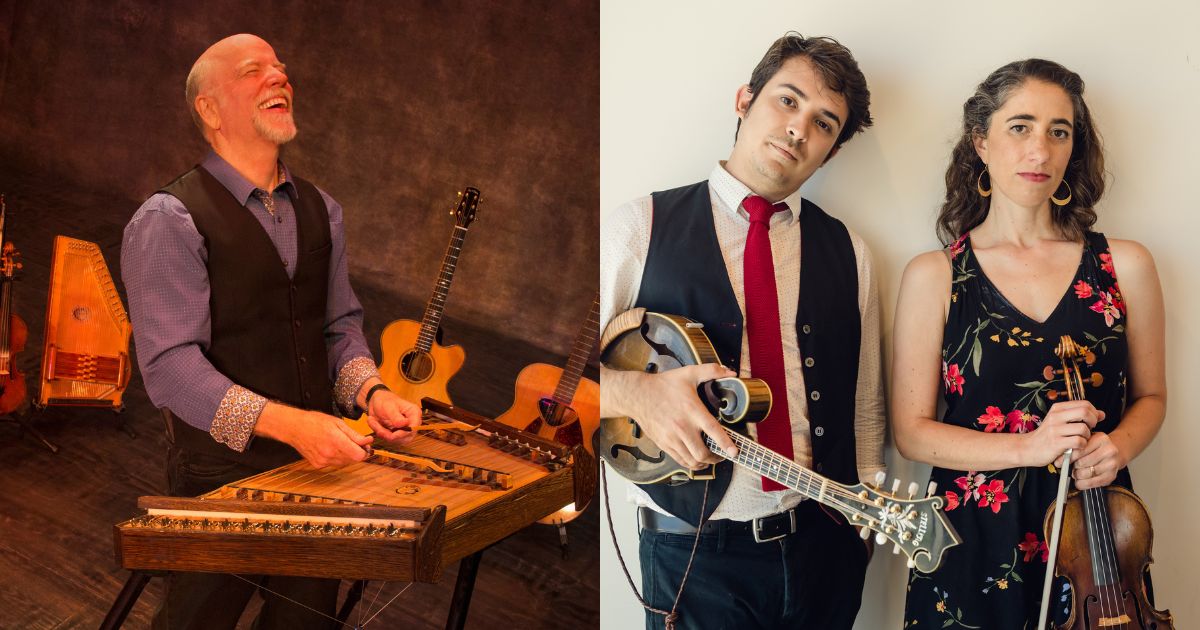
Folk legend John McCutcheon is included below, as well, with a new song “Here” written at the vital Highlander Center in East Tennessee that’s all about being present in the moment. Meanwhile, new acoustic, bluegrass-meets-classical duo Scroggins & Rose premiere their out-of-this-world single, “Space Samba,” from their upcoming January release, Speranza. 

It’s all right here on BGS and You Gotta Hear This! Happy holidays and we’ll be back with plenty more new music in 2025.

Ben Chapman, “Don’t You Dare”

Artist: Ben Chapman
Hometown: Lafayette, Georgia
Song: “Don’t You Dare”
Album: Downbeat
Release Date: December 13, 2024
Label: Hippie Shack

In Their Words: “It’s a simple but rough-edged love song about two lovers sitting on their back porch, thinking of how good they have it and how they’ll never know a love stronger than what they have at the moment. It’s a song for that once-in-a-lifetime, growing old together while sitting in rocking chairs type of love, true love. I wrote this song with my long-time cowriter and girlfriend, Meg McRee. It was one of those songs that just found us. We didn’t even have to go looking. The whole thing took us about 20 minutes to write, and we both knew it was such a special song. Most of the time, the best songs come to you when you least expect it, and in this case, it couldn’t be truer.” – Ben Chapman

Track Credits:
Gregg Garner – Bass
Darren Dodd – Drums & percussion
Anderson East – Electric guitar, mellotron, organ
Ben Chapman – Acoustic guitar & vocals
Meg McRee – Backing vocals


A. Lee Edwards, “Move Up to the Mountains”

Artist: A. Lee Edwards
Hometown: Franklin, North Carolina
Song: “Move Up to the Mountains”
Album: Interpreting Heart Sounds, Vol.I
Release Date: December 13, 2024 (single); February 28, 2025 (album)

In Their Words: “I wrote ‘Move Up to the Mountains’ in the late ’90s after moving from the Virginia mountains to Charlotte. The song came out of feeling stuck in the grind of city life and wanting to escape to the peace and simplicity of the mountains. Inspired by the Bob Dylan line, ‘He not busy being born is busy dying,’ it’s about longing for something different. In 2017, after 22 years in Charlotte, my wife and I made that move to the Nantahala National Forest. The song reflects that desire to leave the chaos behind and find a quieter, more meaningful way of life.” – A. Lee Edwards

Track Credits:
A. Lee Edwards – Acoustic guitar, electric guitar, lead vocal
Matt Royal – Electric bass, backing vocal
Amanda Neill – Electric piano, backing vocal
Tom Mayo – Drums
Matthew Smith – Pedal steel


John McCutcheon, “Here”

Artist: John McCutcheon
Hometown: Smoke Rise, Georgia
Song: “Here”
Album: Field Of Stars
Release Date: December 13, 2024 (single); January 10, 2025 (album)
Label: Appalseed

In Their Words: “I well remember writing ‘Here.’ I was conducting one of my Songwriting Camps at the Highlander Center in East Tennessee. I knew the protagonist in the song well. I had seen him in a lot of my friends and, even occasionally, in myself. Mostly, in those times when creativity and drive give way to a kind of ambition that causes you to lose perspective and purpose. I wanted to start with simple, childhood dreams: that special sandwich, summer vacation. By the time he’s at the altar, he’s sure his dreams have come true, only to realize that he’s still unsatisfied and anxious… failing to simply be present. The pandemic really focused my meditation practice and led me to this song, I guess.

“Interestingly, this was the last song to make the ‘cut’ for the album. And here it is as the opening track. I owe it entirely to my stellar band of brothers (JT Brown, Jon Carroll, Pete Kennedy, ‘Jos’ Jospé, and Stuart Duncan) who’ve become my studio band. I purposely send them bare-bones demos and we jointly create the arrangements live in the studio. They gave this song whatever spark it needed to open this collection.” – John McCutcheon

Track Credits:
John McCutcheon – Vocal, guitar
Jon Carroll – Harmony vocals, piano, organ
JT Brown – Harmony vocals, bass
Pete Kennedy – Electric guitar
Robert “Jos” Jospe – Drums
Stuart Duncan – Fiddle


Ramona and the Holy Smokes, “Til It’s Over”

Artist: Ramona and the Holy Smokes
Hometown: Charlottesville, Virginia
Song: “Til It’s Over”
Album: Til It’s Over (EP)
Release Date: November 22, 2024

In Their Words: “‘Til It’s Over’ is a song about knowing a relationship is doomed but not being ready to let go. I wrote this song after I had a terrible fight with someone I was dating at the time. I saw all the red flags and basically chose to keep going until the relationship self-destructed rather than being brave and ending it as soon as I knew it wasn’t right for me. I have done this more than I would like to admit, and I’m sure I’m not the only one.

“The music video was inspired by the life of Vivian Cash, Johnny Cash’s first wife. I really feel history has done her dirty, most notably by her portrayal in the 2005 film, Walk the Line. I tried to honor her in a number of ways in the video with nods to her Catholicism, her amazing fashion sense, and her strength while her family was falling apart. ‘Til It’s Over,’ couched in the context of her life, becomes a much sadder song. Divorce was against her religious beliefs and even though she was basically abandoned, she loved Johnny Cash until she died. In our video, she reclaims her agency by picking up a guitar and writing her own song, but this is our way of wrapping up our version of the story with a redemptive moment.

“This video was directed by the incredible Elizabeth Culbertson, who also directed Marley Hale’s ‘Dear Girl’ music video. We worked together on creating the visual differences between the two time periods in the video (the 1950s and 1960s), with Elizabeth focusing on light and color, while I focused on hair, makeup & wardrobe. Our concept was incredibly ambitious, and Elizabeth’s cinematography elevates the work from run-of-the-mill music video to full-on cinema. ‘Til It’s Over’ also stars fellow musician Red McAdam as country singer ‘Red McAdams,’ who knocks his first dramatic performance out of the park. Neither Red nor I had ever acted on camera before, and I think we both showed up with our A-game and convincingly captured love gone wrong.” – Ramona Martinez


Scroggins & Rose, “Space Samba”

Artist: Scroggins & Rose
Hometown: San Francisco, California
Song: “Space Samba”
Album: Speranza
Release Date: January 10, 2025
Label: Adhyâropa Records

In Their Words: “‘Space Samba’ began, like many of our pieces, as a fragment recorded in our voice memos. From there, it grew into one of the most playful compositions on Speranza. We took the syncopated rhythm and expanded it into a dancing melody and contrasted it with a spacious, flowing second theme that we thought evoked the image of astronauts floating at a Hawaiian-themed party in space – hence the name. This whimsical retro-futurist imagery guided us as we worked to intertwine the different rhythms and the melodies together into a cohesive piece. By experimenting with standalone patterns and interlocking parts, we developed a tune that combines the energy of a cosmic dance party with moments of suspense. The result captures not only the joy of movement but also the quiet, frozen beauty of space, the urgency of space shuttle alarms, and – of course – more dancing.” – Scroggins & Rose


Joel Timmons, “Guitars, Guns, and Pickup Trucks” (Featuring Jason Carter)

Artist: Joel Timmons
Hometown: Charleston, South Carolina
Song: “Guitars, Guns, and Pickup Trucks” (featuring Jason Carter)
Album: Psychedelic Surf Country
Release Date: December 13, 2024 (single); February 7, 2025 (album)

In Their Words: “Before I met my future father-in-law, I was warned by my girlfriend, Shelby Means, about ‘the list.’ It was my first visit out to Wyoming to meet her parents and she told me he would pepper me with a series of questions to gauge my suitability. On the truck ride out to their property from the airport he began the inquisition, marking my responses with his finger on an imaginary scoreboard. Over the years, I’ve learned that this tough-guy routine and good-natured teasing was a sign of endearment and sort of a cowboy love language, but at the time I was intimidated. Mr. Means has a favorite expression: ‘A man can never have too many guitars, guns, or pickup trucks.’ That felt like a country song that needed to be written. In a nation that feels so politically and culturally polarized, I hope this song encourages the listener to look for common ground with the other side. Jason Carter’s brilliant fiddle and rich baritone vocals give the recording some real country swagger.” – Joel Timmons

Track Credits:
Joel Timmons – Vocals, harmony vocals, acoustic guitar, electric guitar, mouth harp
Jason Carter – Harmony vocals, fiddle
Shelby Means – Harmony vocals, background vocals
Brett Resnick – Pedal steel
De Marco Johnson – Organ
Ethan Jodziewicz – Electric bass
Mark Raudabugh – Drums, percussion


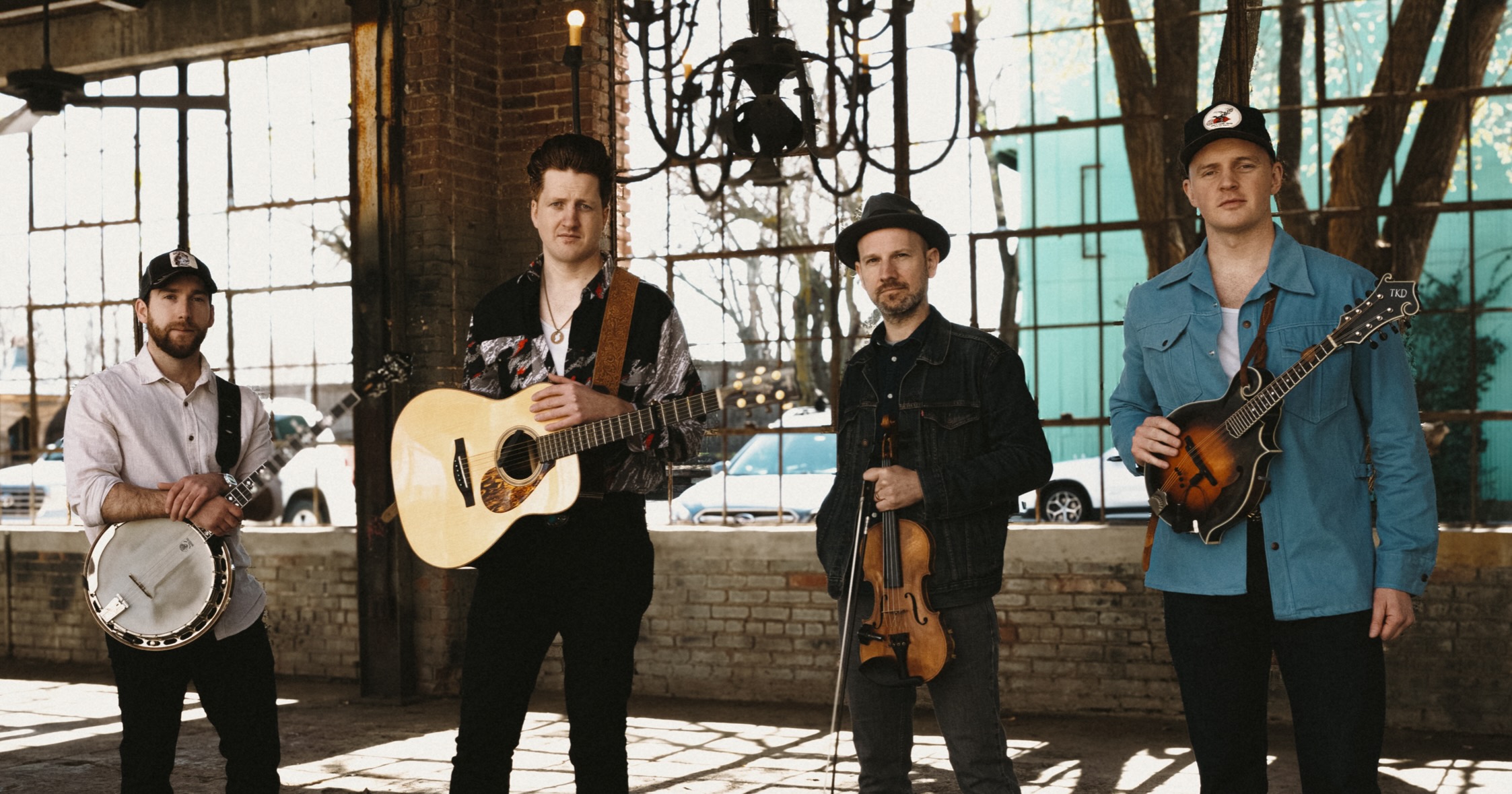
Photo Credit: John McCutcheon by Irene Young; Scroggins & Rose by Lenny Gonzalez.

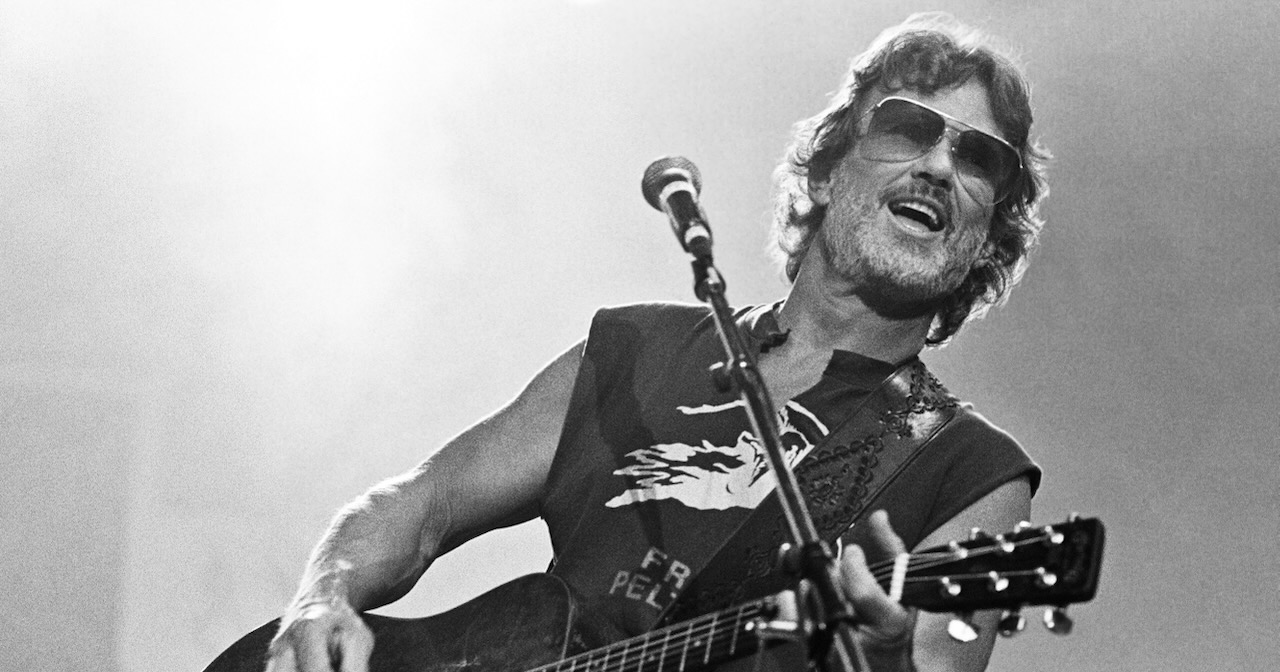
Kris Kristofferson’s Most Human Moments

After passing away on September 28 at the age of 88, Kris Kristofferson has rightly been eulogized as a renaissance man without compare. It makes sense, since the colorful character’s legendary resume includes time as a Rhodes scholar, Golden Gloves boxer, U.S. Army Ranger, Golden Globe-winning actor, janitor at Columbia Studios, and helicopter pilot who once brought Johnny Cash a demo by landing on the superstar’s front lawn.

In fact, it was only after all of these accomplishments that Kristofferson became the icon we remember – a songwriter’s songwriter, and one of the most authentic and impactful artists to hit country and roots music since its development. Yet his longest-lasting gift to all of us may prove to be his humanity.

Emerging onto an American landscape just beginning to feel the pangs of decay – the “Sunday Morning Coming Down” of its post-war glory – Kristofferson’s work found beauty in even the ugliest moments life had to offer. He broke every mold of what a country star “should” be, choosing substance over style, embracing the unwanted, and cutting a trail for generations of artists to follow. Stunning empathy seemed to be his primary tool and as a man of many lives, he was well suited to put himself in the shoes of whatever characters he conjured up.

That deep well of human empathy might be the source of his gravity on camera and on stage. Maybe that’s why his songs came alive for the 450 other artists who covered them. But whatever it was, Kris Kristofferson accessed emotion and compassion without pretension. His humanity will live on now like a beacon, guiding others away from the shallow posturing of country songcraft and toward the authentic depths of the art.

In honor of his life, legacy, and impact, here are eight moments where Kris Kristofferson’s humanity shined bright.

“Help Me Make It Through the Night” on The Old Grey Whistle

After his debut album in 1970, Kristofferson made frequent TV appearances with duet partner and soon-to-be-wife Rita Coolidge – with one capturing his tender side especially well. Singing “Help Me Make It Through the Night” on the UK variety show The Old Grey Whistle in ‘72, Kristofferson and Coolidge were just a few months away from their marriage and seem enchanted with each other. Sharing a microphone and never more than a few inches apart, you can almost feel the sensual spark.

“Help Me Make It Through the Night” on The Muppet Show

Same song, different duet partner – and a totally different view of Kristofferson as an artist. Fast forwarding to 1978 and Season 3 of The Muppet Show, the respected singer-songwriter showed he was good sport by doing “Help Me Make It Through the Night” with none other than Miss Piggy. Clean shaven and re-creating the close proximity of the first clip, Kristofferson could barely hold back the laughs as he serenaded a swooning swine – then lost it completely as Miss Piggy broke into the chorus. Hopefully he and Kermit patched things up later.

“Sunday Morning Coming Down” on The Johnny Cash Christmas Special

Later in 1978, Kristofferson had the chance to perform alongside an idol and show his respect for the artist who had done more to popularize his work than any other. Joining Johnny Cash for the Man in Black’s yearly Christmas special, Kristofferson was left almost speechless as Cash introduced the vivid “Sunday Morning Coming Down,” which they then took turns singing. After Cash noted he’d been making the song his own for years, Kristofferson responds, “Up until now that was the proudest moment of my life. Now this may be the proudest.”

“Me and Bobby McGee” on Austin City Limits

Kristofferson appeared on Austin City Limits a few times, but in 1981 he had a hot band behind him and that led to a rollicking delivery of his biggest rock hit, “Me and Bobby McGee.” Made famous by the late Janis Joplin 10 years before, the freewheeling anthem put Kristofferson’s range – and a sense nostalgic joy – front and center. Although, there’s still a tinge of sadness embedded in the tone. From our perspective now, the iconic line “Freedom’s just another word for nothing left to lose,” is matched only by “I’d trade all my tomorrows for one single yesterday.”

“For the Good Times” with Tanya Tucker

Kristofferson always looked more comfortable in a flannel shirt than a black tie, but in the long run, that only made him more endearing. Joined by Tanya Tucker on a 1982 awards show, Kristofferson climbed into a tux and delivered the one-last-time anthem “For the Good Times” in classic pop style. Backed by an orchestral score and with Tucker taking the lead, it was a rare ballroom-country presentation of a song also recorded by Ray Price, Al Green, and more, which proved the Hollywood heartthrob would truly rather be hanging out with friends at the local dive.

“The Hot Dog Tree” with Pee Wee Herman

By 1988 Kristofferson had built up decades of acclaim as an actor, artist, songwriter – and as an international sex symbol. But he was never too big to have fun. Playing opposite Pee Wee Herman in the kid’s comedy Big Top Pee Wee, Kristofferson slipped into silliness with an easy charm. The iconic scene sees Pee Wee unveiling his top-secret Hot Dog Tree to Kristofferson, and the star’s initial skepticism – and then child-like awe – will brighten any day. Despite being held up as a talent of rare caliber, he never took himself too seriously.

Encouraging Sinéad O’Connor at Madison Square Garden

If you want to know about Kris Kristofferson’s character, look no further than what he did for Sinéad O’Connor at New York’s Madison Square Garden in October 1992. A few nights earlier, O’Connor had shocked the nation by protesting the Catholic Church’s still-under-wraps sex abuse scandal on Saturday Night Live, ripping up a photo of Pope John Paul II as cameras rolled.

When she then took the stage for Bob Dylan’s 30th anniversary concert, the crowd erupted in boos. As O’Connor stood there, unable to begin her performance through the rain of jeers, Kristofferson stepped beside her and spoke the famous words of encouragement, “Don’t let the bastards get you down.” He didn’t try to save her or get her off stage, or diminish her in any way – he just let her know she wasn’t alone. For her part, O’Connor went on to scream sing an a-capella rendition of “War” over the crowd, before staring them down as she left the stage. She said the moment created a lifelong appreciation for Kristofferson.

“Loving Her Was Easier (Than Anything I’ll Ever Do Again)” with Rosanne Cash at Willie Nelson’s 90th Birthday

Kris Kristofferson made his final public performance in 2023, appearing at the Hollywood Bowl in honor of his longtime friend Willie Nelson’s 90th birthday. The moment was filmed for a special airing on CBS and gave us one last moment with an icon.

After a shaky walk to the microphone, Kristofferson joined Rosanne Cash for an arm-in-arm rendition of “Loving Her Was Easier (Than Anything I’ll Ever Do Again),” a devastating ballad first released at the start of his career. Following Cash’s lead with a wide smile and a twinkle in his eye – one armed raised in triumph – Kristofferson soaked up the moment, while the rapt attention of the audience evolved into a thunderous applause. As Cash adapted the song’s hook to address Kristofferson himself, the whole world seemed to send him out on a high note:

Loving you was easier than anything I’ll ever do again


Photo Credit: Scott Newton, courtesy of New West Records.

Jontavious Willis Is Traditional and Contemporary At The Same Time

Growing up in rural Georgia, Jontavious Willis discovered blues through a YouTube video of Muddy Waters and immediately immersed himself in the genre. At 14, he began playing acoustic guitar, he started gigging as a college student, and released his first album, Blues Metamorphosis, in 2016. Two years later, he opened on the TajMo tour with Taj Mahal and Keb’ Mo’. They co-produced his GRAMMY-nominated second album, Spectacular Class.

Offered the opportunity to record his new album, West Georgia Blues, in Nashville, Willis’s response was a resounding “No.” Tracking in his home state was non-negotiable, as that DNA was critical to his vision and sound. “Georgia was a big part of the story and I wasn’t going to fold on that,” he says. “I wasn’t going to let up.”

The singer-songwriter-guitarist and his musicians gathered for ten days at Capricorn Studios in Macon. Willis produced while engineer-guitarist John Atkinson mixed (and contributed guitar work on “A Lift Is All I Need”). They tracked some 200 songs, 80 of them usable, says Willis, and pared those down to the 15 that became his third album.

Willis’s fingerpicking style is rich in tradition and, as he’ll tell you, contemporary because it exists – now. With that, being featured alongside bluegrass and country music on a website such as this is a perfect fit, as he explained during his recent interview with BGS.

What were your goals going into this record?

Jontavious Willis: My goal was to show growth and stay away from carbon copies of other songs. I hear it all the time – you take a song and change a few words around, but it’s still B.B. King, it’s still Robert Johnson. I tried to make each song its own and if I did take from other folks, I did it my own way.

We get so wrapped up in saying, “Oh, I can play old music, so let’s stay there,” that we forget to create. I wanted to show my writing ability, my producing ability, and I wanted to show a difference. I’m glad I put space in between the albums to really show growth. Since the album’s complete, I’ve been getting great reception. But beyond that, I made an album I can listen to from beginning to end.

You didn’t feel that way with your other albums?

The first one, I knew I was green, but I had to put something out there. I’m always happy in the beginning. Then, when you listen to it long enough, you’re like, “I should have did this and this.” But I really can listen to this one. Truly, honestly, the first one, I wasn’t as good a player. The second one, I wasn’t playing at my full capacity or with blues players. I was playing with session musicians. This one, I played with people that knew the references to blues.

You’re a blues musician being interviewed by BGS, a bluegrass website, with a country music “sister” website, Good Country. That might seem like a big jump to some people, but the genres have common threads. Music historian that you are, could you address those connections?

Music was the most integrated pastime, prior to the big record labels coming in and separating them. One of the first integrated groups was actually in Georgia, called the Georgia Yellow Hammers. It featured a fiddle player named Andrew Baxter.

When some people think of country, they think of a particular sound. When I think of country, I think of rural. A lot of people say “simplistic,” because it sounds so peaceful and melodic, but it can be some of the hardest music ever. When I think of the intertwining of country music, I think about the early pioneers, like the first star of the Grand Ole Opry, DeFord Bailey, a Black fellow that played harmonica. Hank Williams learned from Tee Tot, [Rufus Payne]. Johnny Cash spent a lot of time with Gus Cannon and Furry Lewis and old blues folks like that. You can go on and on. A lot of the repertoire of blues artists isn’t just blues. Some of it could be classified as country.

Over time, with new talent, genres expand and change and self-proclaimed “purists” get ruffled. As an artist with deep roots in traditional and contemporary music, what are your thoughts?

I’m kind of with them and not with them. The reason I say this is because I feel like it is good to identify things sonically. When I listen to classical music, I think about what makes it classical. When I listen to jazz, I think about what makes it jazz. The same with blues, because what I’m seeing now is that blues have been overtaken by rock, and I don’t like that, because rock is not blues. It’s definitely a sub-genre or even a whole ’nother genre of blues, but it’s not interchangeable. A lot of the audience the rockers had kind of melted over into the blues, and a lot of people didn’t learn the blues from the front. A lot of ’em came through the back door, through these rockers and other big bands.

So I feel like it is good to identify what it is, but also understand that music changes. But call it what it is. If I’m playing blues-rock, I’m not playing natural blues. If I’m playing contemporary gospel, I’m not playing traditional gospel. The guys that made these beautiful songs that sold millions of copies — they didn’t get money for it. They didn’t get their due. It’s time for folks to stand by the genre of music they do and tell folks what it is.

Let’s talk about those sub-genres and what they mean, if anything.

It’s hard to really define the categories. With blues, they chop it in two main categories, at least for the GRAMMYs: contemporary and traditional. Contemporary means you’re keeping with the times. So by me living and writing music, that is being contemporary. Traditional means I’m a part of the tradition. So I can be traditional and contemporary at the same time. It is not one or the other. It’s a safe room for both.

Scholars made these terms up. Black folk wasn’t calling their music Delta blues or Piedmont blues until they heard so many folks saying it. Then they started saying it. But nowadays, those terms don’t mean nothing unless you’re from those places. I’m from Piedmont, so I’m a Piedmont player by default. I even went one step further to say I play West Georgia blues. What is West Georgia blues? I don’t know. I’m from West Georgia and I’m playing the blues in West Georgia. I can say that’s my style. A lot of people say Delta blues. Delta blues is a region, not necessarily a style. I can name three artists from the Delta that don’t sound alike. It varies from musician to musician.

It’s nicer for the listeners to think it’s categories, so you can navigate your way. But it also pigeonholes the artists and doesn’t really showcase the music and what it is. This is freeform music that people created. The record industry had a big hold on all of it, and that’s how they separated bluegrass from blues and country music. So I think you have to be a purist in a sense to maintain. If not, everything could spill over into everything, which is a good idea, but in essence, you want to identify the different sounds and nuances.

How does Georgia – its music, its history, and your history – inform your music?

Every state has salt-and-sugar history. I grew up in a predominantly Black town. Greenville, Georgia, is 70 or 80 percent Black. We’ve got a rich gospel history, and Georgia overall has Buddy Moss, Blind Willie McTell, on and on. So being in Georgia, always loving history, and always being around my family definitely shaped my music, the good and the bad. That’s what life is about, the good and the bad. Most of all, my hometown shaped me, more so than the famous people.

The blues people from Georgia definitely shaped my music. I was always aware of the other folks, like Little Richard, James Brown, Ray Charles, and Otis Redding, but they didn’t shape me. I listened to the old blues players and it was a great awakening for me to realize that Georgia has blues, because if you listen to a lot of folks, you’ll only think that it’s in Illinois and Mississippi. But the first studio in the South was in Atlanta in 1923. Everybody had to come to Georgia to record.

I know the United States has got twisted history, and that’s part of the blues. The blues is free Black people speaking their mind and saying how they feel, not always being political but just being true to themselves. To me, Georgia is family, struggle, prosperity, farming, food, life. It’s everything. I’ve been to a lot of places in the world, in Europe, to 46 of the 50 states, and ain’t no place like home. I’m looking at it now – the contrast of this dark green and light blue and these hills. You can’t beat that, man. Georgia’s everything to me.

What was it about blues that spoke to you as a 12-year-old? What has or hasn’t changed?

When I was a kid, I was singing gospel music about going to heaven and wasn’t I thinking about dying! A lot of those blues guys started out young. They were teenagers. Helen Humes, Buddy Moss, Josh White … Robert Johnson was 27 when he died, so he had to be singing the blues when he was young.

I’ve loved the blues since I was 12 years old, two years before I started playing guitar. I was at the age where I could appreciate it. The blues makes you think. Technically, some of those sounds aren’t supposed to be happening. Some of the stuff don’t make musical sense because lot of these folks aren’t trained musicians. But the stuff they put out – I can listen to it because it’s relatable to me. They talk in the way I understand. They sing in the way I understand, and man, it can just do something good to me. I don’t know what it is, but Jesus, it’s so good!


Photo courtesy of the Jontavious Willis Team.

The Cactus Blossoms’ Modern-Classic Sound Blooms on New Album

With a sound that’s like rain in the desert for fans of early rock and country, the Cactus Blossoms let their modern-classic vibe bloom on their latest album, Every Time I Think About You. But with pair of big shows to help celebrate the launch, this band is living very much in the present tense.

Made up of Minneapolis-based brothers Jack Torrey and Page Burkum, the duo’s new project arrives August 30 and once again captures the full, timeless magic of spacious melodies, tasteful twang, and tightly-wound harmony. That night, they’ll mark the release with a long-overdue debut at the Grand Ole Opry – where they ought to find a few like-minded fans of keeping music’s traditional cool factors alive – and then head home for a milestone gig in St. Paul.

After a trio of well-received albums and more than 10 years of riveting shows, it’s the perfect setup for a duo who seem totally at ease blurring the American roots timeline – and who promise they couldn’t fake it if they weren’t.

“I don’t think we’re very good at striving,” Torrey says, speaking from the verdant midsummer shores of Lake Superior on a much-needed break from the road. “I do think [this record] has a comfort level, especially since we’ve been able to start touring again, and really hit it. It’s been feeling like we’re a unit and we can kind of read each other’s minds a little bit.”

Speaking with BGS ahead of the release of Every Time I Think About You, Torrey and Burkum filled us in on what that telepathic bond helped create, and where it’s coming from.

A lot of Every Time I Think About You features the “modern-classic” sound you have both made a calling card – like it would sound fresh a few decades ago and today as well. But is that dangerous territory for a band? You don’t want to be pigeonholed as a throwback, right? So how do you walk the tightrope?

Jack Torrey: I think there’s an interesting aspect of that from our perspective. I got super into Bob Dylan and Hank Williams and I was singing songs by both of those guys way back, 18 years ago or whatever. Page was into Jimmie Rodgers and those other super old country things. We start singing together and it’s like if you harmonize on a Hank Williams song, it kind of starts to sound like an Everly Brothers song. You’re kind of accidentally falling into that and getting into territory that people went into 60 years ago – but it’s new for us and I think that has kind of kept happening. We’re not recreating or trying to do anything like listening to records and imitating it. It’s almost like we’re carving our own mini canyon, that resembles some of the other ones from the past.

Page Burkum: I was kind of thinking about this as a way of summing up our style and influences: The Band, The Traveling Wilburys. Those are like my four main food groups or something. I love where all those guys are coming from – a little Roy Orbison, a little Bob Dylan. They balance each other nicely. And I was thinking, when that’s your diet, you’re going to make something that comes out [like Every Time I Think About You]. … But we love other totally different kinds of music outside of that realm too, and I hope a little bit of that gets in there, too.

Where is the title track, “Every Time I Think About You,” coming from? It’s got that lovely, warm-and-fuzzy feel of a mid-century romance ballad to it, but maybe something more, too …

JT: That one is kind of a love song to losing a friend – it’s kind of a heartwarming grief, where you’re almost being consoled by the memory of someone. And that’s where that song came from. The way we wrote it, I just had a couple lines, and then Page jumped in and started singing the beginning of the chorus, and then I sang back the next line, “Every time I think about you …”

PB: Sometimes Jack and I have made fun of biopic movie scenes like in Walk the Line, where it’s like Johnny and June or whoever sit down with a guitar and they’re just writing a song in real time. Like, they sing one line and then pause dramatically, and then sing another line and then it cuts to them playing it for a thousand people or something. But in a funny way, that was kind of the closest to that. [Laughs]

JT: I was like, “I didn’t ask you to jump in and work on my song … but that’s pretty good idea. Let’s do it.”

The album kicks off with “Something’s Got a Hold On Me” – which almost has a Southern rock swagger to it. Where does that come from? Is that your Tom Petty influence showing?

PB: When I first had the idea for that one, the very original idea that set it off was actually a weird little piece of a Jimmie Rodgers song. So, I stole that line and that melody, which is about two notes or something, but it kind of inspired the whole song in a weird way. To me there’s some blend of Lead Belly and The Beatles or something in my mind, but then it ends up just sounding like a country-rock two step. That’s just what happens. It’s fun to roll with stuff. … I threw in another Jimmie Rodgers line, that “T for Texas, T for Tennessee,” to kind of keep that tribute going.

Oh that’s right, I should have known. Why did you end up finishing on “Out of My Mind (On Sunday)”? Is there a reason that seemed to wrap things up?

JT: It wasn’t a big dramatic decision, but it seemed like a nice bookend from “Something’s Got a Hold on Me” to end with being a bit of a crazy person. [Laughs]

PB: To me it actually kind of leaves the door wide open. I don’t know if you want to cap things off with the sweetest, most-concise thing you have, you know? There’s something about it that’s a little bit out there to me.

You’ll make your Grand Ole Opry debut the night this album drops. Then you’re having a big hometown party with show at Fitzgerald Theater in St. Paul [on September 13]. What does that mean to you?

PB: We’ve got one of our favorite local bands, Humbird, joining us for that [St. Paul] show, so that’ll be really cool. We’re trying to get some of our collaborators to be involved too, if we can spice it up with an extra ensemble beyond our regular band. So we’re trying to get a piano on stage or something. I mean, it’s a theater show, so it’s a little different. And it’s our first time playing our own show at this theater. It’s a really beautiful building and I never thought I’d play there when I was a kid.

JT: It’s where [A] Prairie Home Companion used to be back in the day. Page and I actually played there when we were first getting started, which was a special time. So it’s cool, and should be fun. Some people can come that don’t like to stand, since we play a lot of clubs. [Laughs]


Photo Credit: Aaron Rice

You Gotta Hear This: New Music From Dan Tyminski, Liam Purcell, and More

Americana, alt-folk, bluegrass – whatever form these tracks may take, You Gotta Hear This! Our premiere round up this week includes plenty of Texas, a dash of Missouri, and a heaping helping of the Southeast, too. From new bluegrass numbers by the legendary Dan Tyminski and up-and-comers Liam Purcell & Cane Mill Road to thoughtful and intentional Americana by John Calvin and Goodnight, Texas. Plus, there’s a musical tribute to Godfrey, Missouri, a small town on the mighty Mississippi River, by Lost on the Metro and the Steel Wheels reunite with Malena Cadiz on a Paul Simon cover.

Our second-to-last installment of our DelFest Sessions – featuring Mountain Grass Unit – is included here as well, as it premiered on the site earlier this week. It’s a mighty fine collection of music and you know what we think… You Gotta Hear This!

John Calvin, “Austin Chalk”

Artist: John Calvin
Hometown: Recently Boca Raton, Florida, but this record was written living in Dallas, Texas (and this song is very Dallas-centric).
Song: “Austin Chalk”
Album: Greener Fields & Fairer Seas
Release Date: July 25, 2024 (single); January 24, 2025 (album)

In Their Words: “North Texas rests on an ancient deposit of chalk and marl that sits about five feet below the topsoil and runs for hundreds of feet below that. Living in North Texas, you realize how much of our present is determined by an ancient past. The Austin chalk formation leaves torrential rain with nowhere to go. Rivers, like the Trinity River, flood easily and entire neighborhoods and can be underwater in a matter of hours. There are beautiful communities on the banks of the Trinity like Joppa and Bonton that were only able to stabilize and grow with the extension of the levee system by the Army Corps of Engineers in the early 1990s. Our foothold is always more tenuous than we think, and that’s truest for those that can least afford to move.” – John Calvin

Track Credits: Written by John Calvin.
Produced by Nate Campisi.
John Calvin – Vocals, acoustic guitar
Greg DeCarolis – Piano, bass, electric guitar, OB-8 synth
Pat Coyle – Drums, percussion
James Hart – Pedal steel
Eric DeFade – Alto, tenor, baritone sax
Robert Matchett – Trombone
Joe Herndon – Trumpet
David Bernabo – Brass arrangement


Goodnight, Texas, “A Bank Robber’s Nightmare”

Artist: Goodnight, Texas
Hometown: San Francisco, California (Avi Vinocur) and Chapel Hill, North Carolina (Patrick Dyer Wolf); the real town of Goodnight, Texas is the exact mile-for-mile midpoint between the two locales.
Song: “A Bank Robber’s Nightmare”
Album: Signals
Release Date: July 19, 2024
Label: 2 Cent Bank Check

In Their Words: “We’re enjoying some light world building. Our most recent single, ‘The Lightning and The Old Man Todd,’ fleshes out the tragic story of a character from a previous song of ours, ‘The End of the Road.’ Meanwhile, ‘A Bank Robber’s Nightmare’ checks in a decade later on the once carefree, now world-weary and estranged heroes of our 2014 song, ‘A Bank Robber’s Nursery Rhyme,’ which has been a fan favorite and staple of our live shows. The scene is kind of a bittersweet reunion, emphasis on the bitter. What do you say to your former partner in crime?” – Patrick Dyer Wolf


Lost on the Metro, “Godfrey”

Artist: Lost on the Metro
Hometown: St. Louis, Missouri
Song: “Godfrey”
Album: Resonance and Regrets EP
Release Date: July 25, 2024 (single); September 20, 2024 (EP)

In Their Words: “We have this giant river confluence here in St. Louis, and it’s common to take a drive along the river road from St. Louis to get away from the city for a while. Godfrey is a real town along the Mississippi River. Imagine bluffs, eagles flying overhead, touristy shops and restaurants, and the river road cutting through it all carrying cars, trucks, boats, bikes, to some unknown destination. The lyrics focus on getting older in a relationship, and the doubts that creep in, and that need to find a way to clear your head. There’s a dark element to Godfrey as well. It’s definitely a driving song on the surface, but the undercurrent holds all the worries and doubts and fears and hopes that float around as we find our way alone. It’s those thoughts in your head that you’re not sure you want other people to know you’re thinking. Driving down the river road with an open window and the wide Mississippi next to me lets me think those thoughts and then let them go.” – Lost on the Metro

Track Credits:
Jilly Morey – Songwriter, lyricist, lead vocals, percussion
David Morey – Songwriter, composer, arranger, rhythm guitar, vocals
Chris Dunn – Composer, arranger, lead guitar, vocals
Lucan Stone – Composer, arranger, bass, vocals
Josh Bayless – Composer, arranger, drums, vocals


Liam Purcell & Cane Mill Road, “Old Man’s Dream”

Artist: Liam Purcell & Cane Mill Road
Hometown: Deep Gap, North Carolina
Song: “Old Man’s Dream”
Album: Yellow Line
Release Date: April 5, 2024
Label: Pinecastle Records

In Their Words: “This song is one of the most personal stories I’ve ever released. I wrote it one day while my father and I were working at my folks’ place in Deep Gap. The land next door had been sold off for housing development and we had to prepare for them to widen the road. Over the next few months, I watched the trucks come and go, watched the bulldozers change the shape of the mountains, and watched the destructive path of progress as it made its way through our little mountain community.” – Liam Purcell


The Steel Wheels, “Gone at Last” featuring Malena Cadiz

Artist: The Steel Wheels featuring Malena Cadiz
Hometown: Harrisonburg, Virginia (The Steel Wheels) and Kalamazoo, Michigan (Malena)
Song: “Gone At Last”
Release Date: July 19, 2024
Label: Big Ring Records

In Their Words: “This Paul Simon song has been a favorite of ours for awhile. The plain spoken, down to earth writing with a gospel-sounding flare. We have been known to sing a cappella from time to time, but this was an opportunity for strong vocals with a bed of active bass and drum parts.

“Last February we were asked to play as the house band for the International Folk Alliance Music Awards in Kansas City. The house band job comes with the joy of meeting and playing with a variety of musicians. When we got a chance to play and sing with Malena Cadiz, we immediately fell in love with her voice. We were inspired to look for a chance to record together and ‘Gone At Last’ was that chance.” – Trent Wagler


Dan Tyminski, “Whiskey Drinking Man”

Artist: Dan Tyminski
Hometown: Originally from West Rutland, Vermont. Lives in Nashville, Tennessee
Song: “Whiskey Drinking Man”
Album: Whiskey Drinking Man
Release Date: July 19, 2024 (single); August 16, 2024 (album)
Label: 8 Track Entertainment

In Their Words: “My first single off of the new project is one I’m very excited to release. It’s written to be a toe tapping burner in the party spirit. This one should get your juices flowing.” – Dan Tyminski


DelFest Sessions: Mountain Grass Unit

Our second-to-last installment of our DelFest Sessions features Birmingham, Alabama-based jamgrass group, Mountain Grass Unit. Videographers I Know We Should were on hand at this year’s DelFest in Cumberland, Maryland over Memorial Day Weekend to capture a collection of beautiful, fun, and engaging live sessions on the banks of the Potomac River. (See all of our DelFest Sessions here.) For their shoot, Mountain Grass Unit played a pair of exciting cover songs.

Their first selection, “Big River,” is a funky and charming re-imagination of a Johnny Cash classic with a mash-tastic, blues-inflected groove. Drury Anderson, the group’s mandolin picker and lead vocalist on the track, sings with a drawl seemingly from right down the proverbial road from Cash’s homeland (near Memphis, Tennessee). It fits the bluesy undertones of their rendition perfectly, equal parts Muscle Shoals and Bean Blossom. Cash is a common cover subject in bluegrass, and MGU’s version of “Big River” demonstrates exactly why that’s the case.

Watch the full session here.


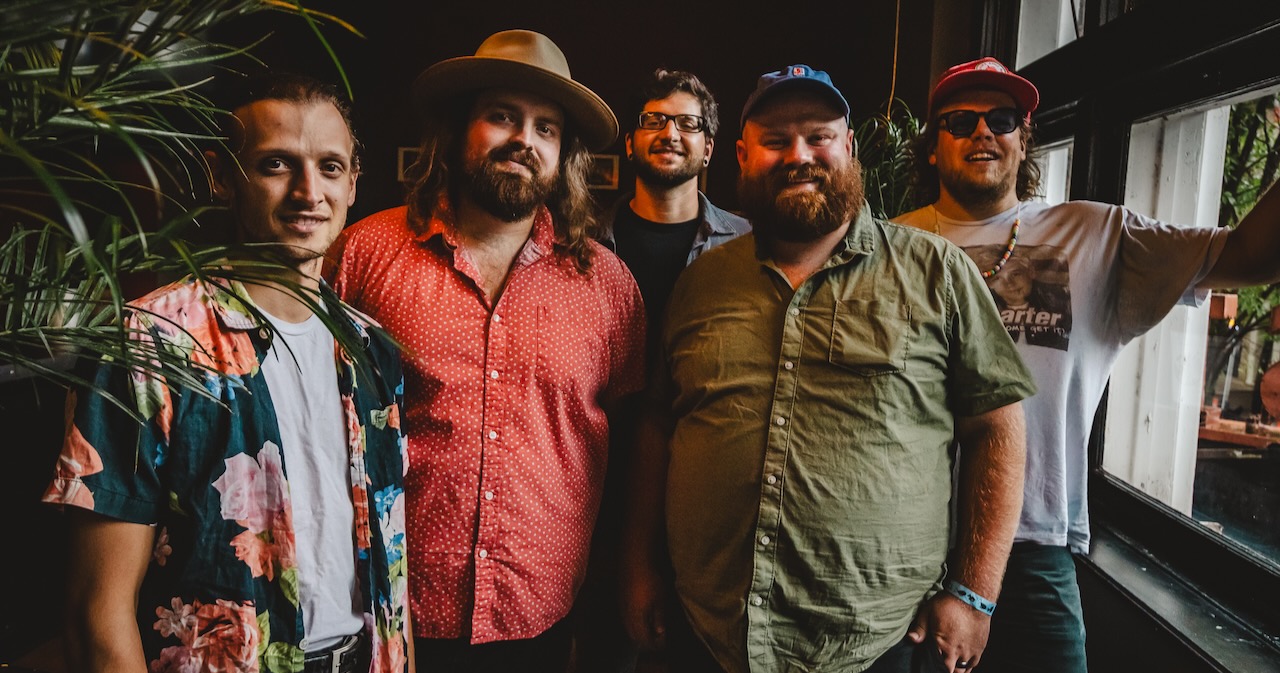
Photo Credit: Liam Purcell & Cane Mill Road by Pinecastle Records; Dan Tyminski by Jeff Fasano.

10 of the Best Deep Voices in Country

No matter where you look in the history of country music, you’ll find some common themes – working-class stories, banjos, an appreciation for the simple life. But there’s something else fans of country music then and now all seem to love, and that’s a deep, rich singing voice.

In this roundup, we’ve gathered just 10 of the all-time best deep voices in country music, from smooth baritones to booming basses. Whether you’re a fan of outlaw country, pop country, or something a bit more classic, there’s a voice for you on this list.

Amythyst Kiah

Combining elements of Americana, old-time, folk, and country, Amythyst Kiah has spent the past decade proving she has one of the most powerful deep voices in roots music. Whether she’s sharing an arrangement of a traditional ballad or innovating Americana, Kiah brings her unique, rich, and haunting voice to everything she does. Her song “Black Myself” even earned her a Grammy nomination in 2020 for “Best American Roots Song.”

Accompanied only by banjo, Kiah’s take on the traditional ballad “Darlin’ Cory” highlights the literal and emotional depth of her one-of-a-kind voice.

Waylon Jennings

Known as a pioneer of outlaw country, Waylon Jennings got his start in country music when he was just a 14-year-old kid in Texas. He then spent six decades gracing the world with his soothing baritone voice, earning himself a permanent place in country music history – and the Country Music Hall of Fame. Alongside frequent collaborators Willie Nelson, Kris Kristofferson, and Johnny Cash, Jennings recorded some of the most legendary songs in the modern country canon, including “Highwayman” and “Mammas Don’t Let Your Babies Grow Up to Be Cowboys.” Jennings passed away in 2002, but his deep and powerful voice remains one of the most recognizable sounds in country music.

Scotty McCreery

Newer to the scene, North Carolina-born Scotty McCreery got his industry start in 2011 after winning the 10th season of American Idol. Since then, he’s enjoyed a successful career as a country singer-songwriter – he even became a Grand Ole Opry member earlier this year – thanks largely to his smooth, deep vocals. Fitting in perfectly with the modern Nashville sound, McCreery’s most recent single, “Cab in a Solo,” showcases this young country star’s keen skill as a baritone crooner.

Orville Peck

A mysterious character in the alt-country realm, Orville Peck has one of the most stunning deep voices in country music, genre-wide. Boasting an impressive vocal range (baritone to falsetto), Peck is best known for his resounding lower register. Teaming up with country stars like Midland and Sheryl Crow, Peck has quickly made a name for himself since the release of his debut album, Pony, just five years ago. Inspired by ’60s- and ’70s country (à la Jennings and his collaborator, Willie Nelson), Peck’s brooding, emotive, and theatrical voice is a must-hear for appreciators of high-quality baritone country singers.

Trace Adkins

First rising to fame in the mid-’90s, Trace Adkins continues to reign as a big name in pop country. His gruff-yet-soothing voice sounds like a day on the farm in the hot sun — and that’s exactly why he’s on this list. A songwriter, singer, and dynamic performer, Adkins wields an unmistakable baritone voice that helped shape the sound and direction of Nashville in recent decades. If you’re looking for a chance to relive the glory days of early pop country, Adkins has the voice you’re looking for.

Randy Travis

One of the most popular country singers of all time, Randy Travis is known for his earnest songwriting style and velvet-smooth baritone voice. After getting his start in the 1980s, Travis recorded over 20 albums and charted on the Billboard Hot Country Songs chart over 50 times. In 2013, he experienced a tragic, life-altering stroke, affecting his ability to sing and perform. With the help of AI, producers recently teamed up with Travis to record and release his first new single in over a decade, “Where That Came From.” Using AI to combine past existing recordings of Travis’s vocals with contributions from another singer, James Dupre, the new single captures the singer’s spirit and depth, giving listeners a newfound opportunity to appreciate a living legend.

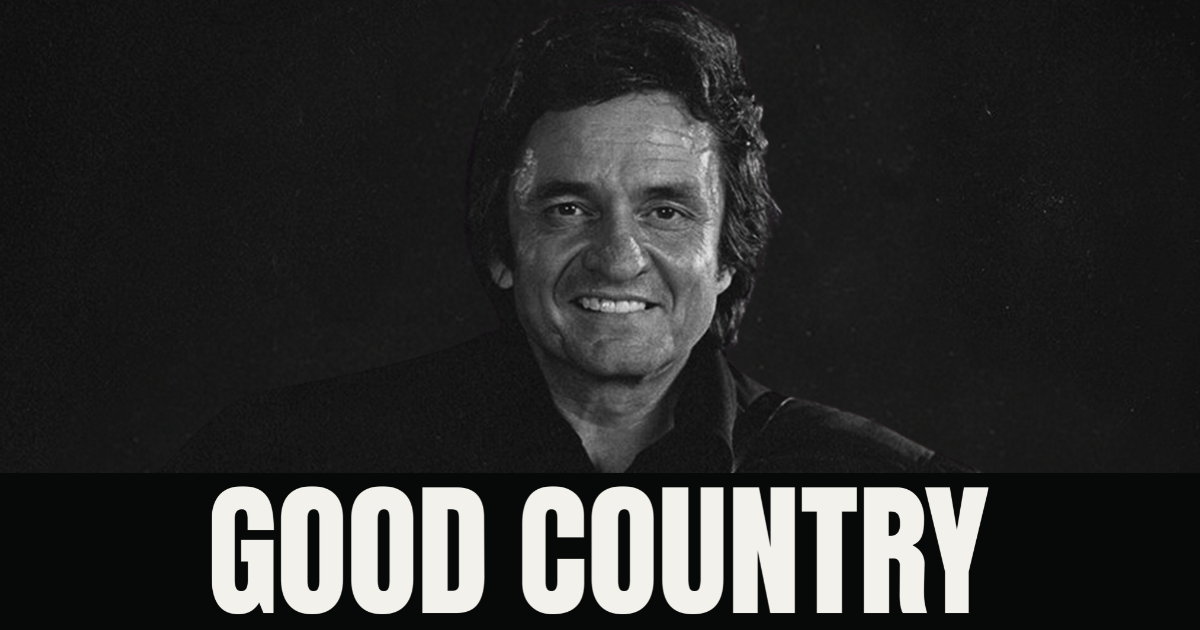
Johnny Cash

Let’s be real: This list would not be complete without Johnny Cash. Arguably the most famous country music star to ever live, Johnny Cash is known near and far for his deep, rich voice that straddled the border between baritone and bass. Cash had a storyteller’s voice, and he used it proudly to tell the stories others weren’t telling. As time went on, Cash’s voice settled into its lower register, which can be heard on his final non-posthumous album American IV: The Man Comes Around. But there’s no better way to showcase the rumbling voice of Johnny Cash than through his infamous recording of “Folsom Prison Blues,” recorded live at Folsom State Prison in 1968.

Jim Reeves

One of the forefathers of country music, Jim Reeves wielded one of the most beautiful baritone voices in the genre. A true crooner and country & western artist, Jim Reeves’s voice is smooth, deep, and unforgettable. Arguably the most technically accomplished singer on this list, Reeves topped the country charts throughout the ’50s, ’60s, ’70s, and ’80s. A dynamic and masterful baritone with a gentle stage presence, Reeves played a huge role in shaping the sound of Nashville and his influence is still felt today.

Colter Wall

Canadian singer-songwriter Colter Wall released his first single, “The Devil Wears a Suit and Tie,” in 2015 when he was just 20 years old. Showcasing Wall’s impossibly deep and weathered voice, the single swiftly launched the young artist into the limelight, mostly via a live performance video on YouTube. Treading the country and Americana borderlands, Wall has one of those voices that makes you think, “How is that sound coming out of that person?”

Since his debut, Wall has released five full-length albums, including his 2023 release, Little Songs. Throughout his catalogue, Wall never misses a beat or fails to remind us that he has one of the deepest and richest bass voices in country.

 Josh Turner

For Josh Turner, bass singing is old hat. He grew up singing bass parts in church choirs and gospel quartets, then debuting at the Grand Ole Opry when he was just 24. Now in his 40s, Turner has spent over half his life making waves in the industry as one of the only true bass singers in the genre — and a top-notch one at that. In May 2024, Turner released a brand-new single, “Heatin’ Things Up,” proving he still deserves the title of the man with the most satisfying deep voice in country.


Photo Credit: Johnny Cash courtesy of JohnnyCash.com.

MIXTAPE: JigJam’s Irish Bluegrass

We all grew up in rural Ireland in small communities in the midlands around County Offaly and County Tipperary. From a young age we were brought up with traditional Irish music, learning the tunes and playing in local sessions. Bluegrass was never a part of our musical upbringing, however, little did we know how strong the relationship between Irish and bluegrass music is. Our band JigJam was formed in 2012 and over the years we developed a sound which captures the crossover between these musical genres.

The creation of bluegrass music and its development over the years is heavily influenced by Irish music. When the Irish people emigrated to North America years ago they brought their music and culture with them, which you can hear within bluegrass music from tunes, melodies, and songs.

We released our new album, Across The Pond, on March 1st of this year. The theme of Across the Pond is to creatively celebrate the deep connection between Ireland and North America through newly composed material that is a dynamic fusion of bluegrass, old-time, and Irish traditional music. By also including traditional tunes and songs which are popular amongst the people from both Irish and American traditions, we added their voice to this transatlantic conversation. This album has been inspired and composed on themes of immigration, nostalgia, cultural difference, and cultural amalgamation. It views the immigrant experience through the lens of pre-immigration, the journey of immigration itself, and their lives upon having settled in North America.

This is our Irish Bluegrass Mixtape, hope you all enjoy! – JigJam

“Good Ole Mountain Dew” – JigJam

Here’s our version of the bluegrass standard, “Mountain Dew,” that we put our own spin on. There’s a similar Irish song called, “The Rare Old Mountain Dew.” It’s about the same subject – “Good Old Mountain Dew” is obviously about moonshine. What we call the “mountain dew” at home is poitin, which is Irish moonshine.

We took some of the lyrics of that song and put it into our version and also wrote our own lyrics based on where we come from. We took the instrumental tune from “Rare Old Mountain Dew” and put it in “Good Old Mountain Dew” while also adding in a bit of Irish lilting. It’s a mashup of both cultures in one song!

“Classical Grass” – Gerry O’Connor

When I was young and first learning how to play the tenor banjo one of my musical heroes was Gerry O’Connor. I was always mesmerized by the speed and precision of his banjo playing. The first time I saw him in concert was at a banjo festival in Ireland called Johnny Keenan Banjo Festival. He was sharing the bill with Earl Scruggs and his band. As a 12-year-old Irish boy, I had no idea who Earl Scruggs was at the time. Little did I know the influence he (Earl Scruggs) would have on my music and JigJam’s music in years to come, when we discovered what bluegrass was and where it came from!! In this track from Gerry, he shows his bluegrass influence himself with pristine crosspicking along with his renowned clean triplets, which was always a favourite of mine growing up.

“Colleen Malone” – Hot Rize

“Colleen Malone” is one of our favorite songs that Hot Rize recorded. Here’s a great live version from their Hot Rize’s 40th Anniversary Bash album. A lovely song co-written by Leroy Drumm and Pete Goble about an Irish girl, Colleen Malone.

“Tennessee Stud” – The Chieftains

In many ways The Chieftains paved the way for Irish bands touring in America and that is something for which we’ll always be incredibly grateful. Their album, Down The Old Plank Road: The Nashville Sessions, paints a vivid picture of the crossover between between the Irish and American music traditions.

“B/C Set” – Beoga

Beoga are an Irish trad band who we all listened to as kids growing up. They were known for thinking outside the box and being ahead of their time as regards arrangements. The second tune in this set is “Daley’s Reel,” which I only realized in recent years when I heard some of the great bluegrass players like Bryan Sutton and Aubrey Haynie playing it. Beoga have a very unique version of “Daley’s Reel,” played on two button accordions and accompanied by piano, bodhrán, and even brass near the end of the track. Certainly a fun one to listen to!

“Streets of London” – Tony Rice

This is one of my favourite songs sung by Tony Rice. “The Streets of London” is a very popular song in Ireland and has been covered by many Irish artists. Written by English songwriter Ralph McTell, I learned this song from the playing of the great Liam Clancy of The Clancy Brothers, Irish powerhouses. I only heard Tony Rice’s version in recent years when I delved into bluegrass guitar playing and I loved it straight away. Tony Rice’s rendition is beautiful as he incorporates his flawless bluegrass crosspicking and signature approach to this classic.

(Editor’s Note: Watch JigJam guitarist Jamie McKeogh perform “Streets of London” for a recent Yamaha Session here.)

“Water’s Hill” – JigJam

“Water’s Hill” is a song off our new album, Across The Pond. The lyrics were written by Ken Molloy as he tells the story of a couple falling in love together and marrying on water’s hill, a mound near Tullamore in County Offaly. The music is by Jamie McKeogh and Daithi Melia along with an old traditional Irish reel that is incorporated into the middle of the song. “Water’s Hill” features a driving Scruggs-style 5-string banjo part along with a strong mandolin backbeat, fiddle counter melodies, and rhythmic acoustic guitar which creates the JigJam sound, capturing the crossover between Irish and bluegrass music.

“Forty Shades of Green” – Rosanne Cash and Paul Brady, Transatlantic Sessions

The Transatlantic Sessions is an amazing platform for the collaboration of Irish and bluegrass musicians. With the likes of Jerry Douglas, Aly Bain, Mike McGoldrick, and many more, this project has wonderfully captured Irish and bluegrass crossover for years. I could have chosen many songs from their repertoire, but I went with this one. It’s “Forty Shades of Green” from the legend that is Johnny Cash. Here, it’s being sung by his daughter Rosanne and Irish singer-songwriter Paul Brady, backed up by the Transatlantic band.

“Sally Goodin / The Blackberry Blossom” – Gerry O’Connor

Gerry O’Connor from Co. Tipperary is the reason I began to play the tenor banjo and he has always been a musical hero of mine – his music still inspires me to this day. This set showcases his skill set, pickin’ on these classic bluegrass fiddle tunes.

“Battersea Skillet Liquor” – Damian O’Kane, Ron Block

One of my favorite tracks off one of my favorite albums. I always loved the groove in this track and of course the playing from this star-studded crew of players always leaves me feeling inspired.

“Bouli Bouli” – JigJam

This set combines the traditional Irish jig, “The Miller of Glanmire,” with the bluegrass fiddle tune, “Big Mon.” It showcases the dynamic and genre fluid nature of JigJam through seamlessly traversing both traditions while highlighting each instrument’s capabilities. We’ve been having a lot of fun playing this one live!

“On Raglan Road” – Dervish & Vince Gill

I always enjoyed this song being performed by the great Luke Kelly from The Dubliners and recently came across this beautiful version of Patrick Kavanagh’s “On Raglan Road” by the legendary Dervish featuring the iconic vocals of Vince Gill.

“The Stride Set” – Solas

I love this set by Solas from their album, The Words That Remain. We are influenced by their creative way of arranging Irish tune sets. I love the addition of the 5-string banjo featured on this track.

“Did You Ever Go A-Courtin’, Uncle Joe” – The Chieftains

Here’s a mighty set from The Chieftains’ live album, Another Country. The crossover between Irish and American genres is great here with a medley of American songs and Irish tunes and also featuring a 5-string banjo. With a great lineup of The Chieftains with Chet Atkins, Emmylou Harris, Nitty Gritty Dirt Band and Ricky Skaggs.

“County Clare” – New Grass Revival

New Grass Revival are one of our biggest influences as a band. Béla Fleck is one of the reasons why I fell in love with the 5-string banjo and started to learn ‘Scruggs style’ while delving into the bluegrass world. Here’s his great instrumental “County Clare,” which Béla wrote inspired by his time spent in Ireland.


Photo courtesy of the artist.

Country Pickers, Center Stage

(Editor’s Note: Sign up here to receive Good Country issues when they launch, direct to your email inbox via Substack.)

Double-, triple-, quadruple-threats are not uncommon in country music, not in the least. It’s a frequent occurrence, tripping over or into a country artist that’s a songwriter, vocalist, multi-instrumentalist, writer, thinker, and so much more. In fact, until more recent decades, wearing many hats was seen as a sort of prerequisite to making hillbilly music. After all, this is “just” country music, it’s got a wide and deep DIY tradition, and the folks who make it often have to also load in the gear, sell the merch, post on social media, and produce the albums, play the demos and scratch tracks, write the lyrics, and otherwise steer the creative ship.

Some of the most successful artists and most original voices in country music are perfect examples of how multifaceted skill sets translate directly to star power. You may not need to be a Telecaster shredder to make it onto the radio or you may not need to be able to pick like Mother Maybelle to make a living, but if you can back up your songs with mighty playing, it certainly translates with audiences.

From Chet Atkins, Dolly Parton, and Wanda Jackson to Charlie Daniels, Willie Nelson, and Bonnie Raitt, here are just a few legendary examples of hugely successful country artists who are or were excellent musicians and instrumentalists, too.

Chet Atkins

A record company executive, producer, and pioneer of the “Nashville Sound,” Chet Atkins was also a one-of-a-kind guitar picker, renowned across the globe for his unique style – which was inspired by Merle Travis. Atkins certainly made “Travis picking” his own, arguably eclipsing all of his predecessors and continuing to influence guitarists today. An inductee of the Country Music, Rock and Roll, and Musicians’ Halls of Fame, Atkins’ impact is hard to understate and his resume includes work with Dolly Parton, Elvis Presley, Hank Snow, Waylon Jennings, and countless others.

DeFord Bailey

One of the first superstars of the Grand Ole Opry, DeFord Bailey was a world-class harmonica player who was also the first Black performer on WSM’s fabled stage. Some sources also credit Bailey as being the first musician to record music in Nashville. However you approach his career and music, Bailey was a seismic presence in the earliest days of country. Born in 1899, Bailey faced constant racism, bigotry, and marginalization on the Opry, in Nashville, and as he traveled and performed. He passed away in 1982 and was posthumously inducted into the Country Music Hall of Fame in 2005.

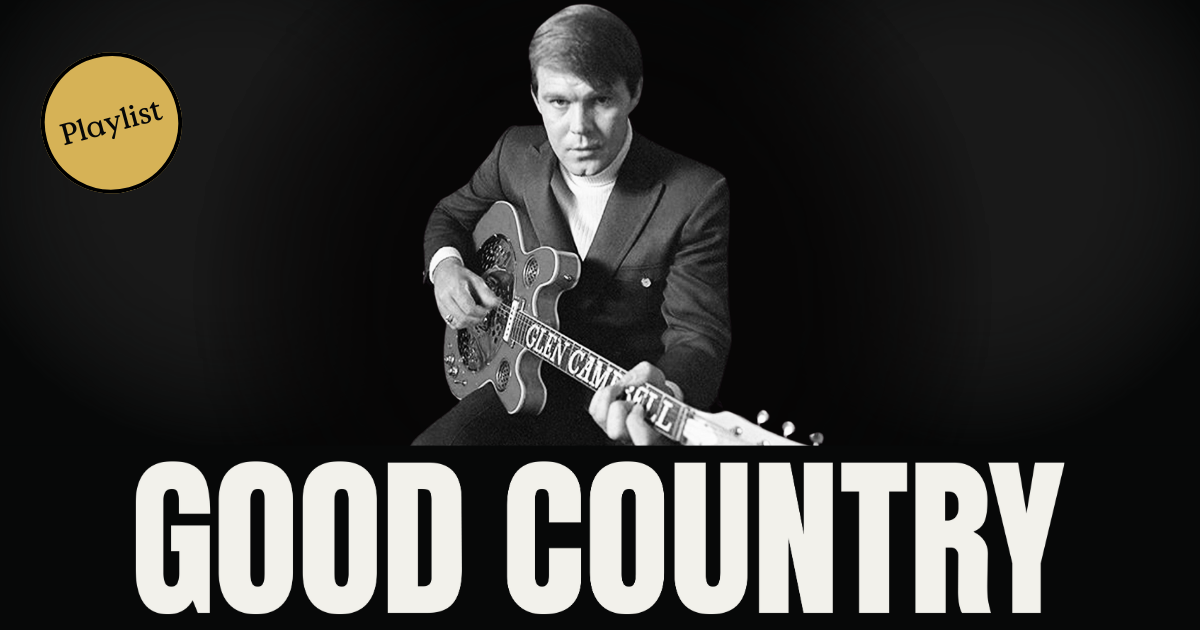
Glen Campbell

Even at the highest heights of Glen Campbell’s superstardom, he refused to let his superlative instrumental skill take a backseat to his roles as frontman, songwriter, Hollywood actor, TV star, and tabloid veteran. Campbell’s approach to country music as a true multi-hyphenate celebrity bridged generations, connecting the hardscrabble, DIY generations where multiple skills were necessary to make a living to the modern era, where he helped pave a way for famously multi-talented picker/singer/writers like Vince Gill and Brad Paisley to not be pigeonholed as one thing or the other.

Ray Charles

Any conversation around or collection of superlative country pickers and musicians would be glaringly incomplete without the inclusion of Ray Charles. His incursions and experimentations in country music are many and infamous. His 1962 album, Modern Sounds in Country and Western Music is routinely listed as one of the best country albums of all time. He’s worked with and performed with Willie Nelson, Merle Haggard, Ricky Skaggs, Travis Tritt, Johnny Cash, Glen Campbell, and many, many more. Plus, his country forays demonstrate a deep, holistic understanding of the genre. Charles is a quintessential country multi-hyphenate and country-soul in the modern era would feel especially lacking without his seminal contributions to that tradition.

Charlie Daniels

It’s hard not to wonder what young, hippie, “long-haired,” Vietnam War-opposing fiddler Charlie Daniels would have thought of his older self, and his more harebrained and often hateful beliefs later in life. But the controversial and outspoken musician, at all points of his career, was a picker’s picker. Over the course of his life he performed and recorded with Earl Scruggs, Bob Dylan, Leonard Cohen, and many more. But his chief contribution to American roots music may just be his fiery, unhinged fiddling on “The Devil Went Down to Georgia.” Just wander down Lower Broadway in Nashville on any given Saturday night to feel the impact of that particular show-stopper. In this clip, he chats and performs “Uncle Pen” with Scruggs and Del McCoury.

Vince Gill

That buttery voice, that stank-face inducing chicken pickin’, that high, lonesome sound – Vince Gill is all at once country and bluegrass, Nashville and Oklahoma, western swing and old-time fiddle. Whether with The Eagles, preeminent pedal steel guitarist Paul Franklin, the Time Jumpers, or so many other outfits, bands, and iterations, Gill is simply right at home. Because, at his core, he’s just a picker. He may play arenas, but he knows he belongs at 3rd & Lindsley or the Station Inn. Or Bluegrass Nights at the Ryman. A quintessential picker-singer-frontman, Gill continues to define the myriad ways country stars can maintain their selfhood and personality – instrumentally and otherwise – even in their wild successes.

Merle Haggard

Speaking of chicken pickin’, country’s most famous Okie was a shredder, too. A sad song, a glass of (misery and) gin, a Telecaster, and the Hag – that’s all we need, right there. Merle’s playing style, even at its most technical and impressive, was simple and down to earth. You could tell he cut his teeth playing bars, fairs, and honky tonks. You could almost hear him pulling himself up by his bootstraps as he played.

Wanda Jackson

The Queen of Rockabilly has been slaying rock and roll, hillbilly music, and the guitar for more than seventy years. In 2021 she released her final album, Encore, when she was 84 years old. It features her signature passion and fire – and performances by Elle King, Joan Jett, Angaleena Presley, and more. Jackson has been representing the vital contributions of women to rockabilly and rock and roll for her entire career, just as often commanding the stage with her growly, entrancing voice and her powerful right hand.

Willie Nelson

Who would Willie Nelson be without Trigger? Without a tasty, less-is-more, nylon-string guitar solo? For decades, Nashville, Music Row, and guitar players around the world have been emulating his particular sound as a guitarist – whether they know it or not. Sure, he’s a hit songwriter, a star and front-person, a collaborator of Snoop Dogg and Frank Sinatra, and a connoisseur of fine bud, but perhaps more than all of these accomplishments, Willie is an impeccable picker. He can hold his own with the best of the best, because he is the best of the best.

Brad Paisley

Brad Paisley’s fame crested at perhaps the perfect time for him in country music, combining a rip-roarin’ guitar playing style with a sound that was entirely trad while carrying touches of the bro country wave that was about to inundate the genre. As such, he was able to build a career on the diversity of his skill set, before Music Row and the power behind it began prioritizing music that didn’t need to be musical and voices that didn’t need to be singular. Luckily, Paisley is both those things and more, and despite the many eyebrow raising moments across his career, our faces more often show shock at his mind-bending skill as a guitarist than anything else.

Dolly Parton

How is it that Dolly Parton can play so many instruments so impeccably with those iconic acrylic nails!? Nowadays, you are just as likely to hear Dolly performing to a track – yes, she does lip sync and pantomime playing along with recordings – but don’t get it twisted, she absolutely can play a passel of instruments from her beloved “mountain music” traditions. She plays guitar, banjo, auto-harp, dulcimer, and has even been known to pick up a bedazzled saxophone from time to time – though we can’t guarantee she actually knows how to play that one, we’re still blown away.

And what about thatone viral video with Patti LaBellewhere they play their acrylics like washboards? Dolly can make music with just about any instrument.

Bonnie Raitt

How many people do you think enjoy Bonnie Raitt’s soulful blues and Southern rock sounds without knowing she’s also often the one playing the guitar solos and making that bottleneck slide weep? Raitt is a Grammy winning songwriter, a fantastic vocalist and song interpreter/collector, and – above all, in this writer’s opinion – a superb guitar picker, especially playing slide. She can hold her own with just about anyone, and she has. Her phrasing and use of melodic space demonstrates that she’s been honing her craft for her entire life. That taste can’t be taught, it has to be found. Boy, has she found it.

Marty Stuart

Marty Stuart’s long, fabulous, superlative career began with him filling the role of sideman for such luminaries as Lester Flatt, Johnny Cash, Vassar Clements, and Doc Watson. He plays guitar and mandolin, working up his chops as a youngster with pickers like Roland White as his mentors. When his solo career took off after his Columbia debut in the mid-eighties, his ear for fine picking remained present throughout his music – however far afield from those early bluegrass and country days he may have traveled, stylistically. Whether bringing in psychedelic surf sounds or Indigenous flavors of the American West, Stuart’s catalog of music centers virtuosity that’s never gratuitous. And his band, the Fabulous Superlatives, featuring crack guitarist Kenny Vaughan and multi-instrumentalist Chris Scruggs, represent a high level of picking prowess, too.

Tedeschi Trucks Band

By many measures, Derek Trucks is the world’s foremost living slide guitarist, but don’t overlook powerhouse vocalist and co-band leader, Susan Tedeschi in order to venerate Trucks! Both started playing as youngsters – Trucks when he was a kid and Tedeschi when she attended Berklee College of Music. These two are guitar and blues royalty, helming one of the most impactful modern blues and Southern rock orchestras on the planet. They’re consummate musicians, knowing just how to surround themselves by players who support and challenge, both. Even with their laundry list of personal accomplishments, together, Tedeschi & Trucks – who are also married – are so much greater than the sum of their parts.

Keith Urban

Keith Urban brings a scruffy, down to earth guitar playing style to his polished and glam mainstream country sound. Yes, even as far away as Australia, having instrumental chops means having country currency. When he moved to Nashville in the early ‘90s, with a few Australian radio hits and awards under his belt, he immediately found work as a side musician and co-writer in Music City. It wasn’t long until his star ascended stateside, too – and then, as quickly, around the world – bolstered by arena-ready guitar. Now readying his first album since 2020, Urban shows no signs of slowing down, with the music or the picking!


Photo of Glen Campbell courtesy of the artist.

Editor’s Note: Sign up here to receive Good Country issues when they launch, direct to your email inbox via Substack.

BGS 5+5: Abby Hamilton

Artist: Abby Hamilton
Hometown: Nicholasville, Kentucky
Latest Album: #1 Zookeeper (of the San Diego Zoo)

Which artist has influenced you the most?

It’s always been Johnny Cash and June Carter Cash. My mom used to have us stop before a Myrtle Beach or Gatlinburg vacation growing up to have us pick out a book. At 12 years old I resented this greatly. But, as luck would have it, I landed on a June Carter Cash biography, Anchored in Love. Realizing I had known this music my whole life, I saw so much of myself in her story and it led me down one of the richest love affairs of discographies I’ve ever experienced. The music and life stories of Johnny Cash and June Carter have always been a north star for my writing, performing, and presence as a person and a writer. I adore them. It also opened the doors to the world of country and folk music.

What was the first moment that you knew you wanted to be a musician?

Speaking of Johnny Cash, I remember being in college and discovering that Kris Kristofferson had written “Sunday Morning Coming Down,” not Johnny. I had no idea people could be songwriters and not the artist. It was like this huge “aha!” moment in my life. I never really felt like I was good at anything growing up. Not very high achieving in school and not super passionate about anything. Until that moment. I thought to myself, “If I can write songs, I will be happy. No matter who sings them.” And that’s what happened!

When I started writing here in Kentucky, I quickly realized everyone who made music here wrote their songs. A beautiful legacy from these parts, but it made me shift my attention to performing them. Thinking maybe, “If I sing these songs, someone might want to sing them, too.” This lead to a beautiful and unexpected journey with performing and falling in love with singing and my band. Don’t know how I got here really, but that’s the most I know.

Since food and music go so well together, what is your dream pairing of a meal and a musician?

Man, I think I’d take a bowl of Vodka Pasta and Bruce Springsteen. Those two always hit. And make it spicy.

What has been the best advice you’ve received in your career so far?

There’s so many things. I’m lucky to be surrounded by so many friends, family, and influences who know me and tell me the truth. The biggest thing has always been staying true to myself. Protect my tribe and be honest with those closest to me. CLICHES I know. But, it’s true.

Which elements of nature do you spend the most time with and how do those impact your work?

Anytime I’m in Eastern Kentucky on a dewey spring morning, I’m writing like a fiend. TRULY. If I can catch a sunrise and see the spiders making webs in the grass in the morning, I’ve always finished a song. Something that feels like a retreat from the real world always inspires me. No matter the season.


Photo Credit: Alysse Gafkjen

Same Twang, Different Tune

(Editor’s Note: Sign up here to receive Good Country issues when they launch, direct to your email inbox via Substack.)

Few words stir up conflict in country music circles the way “authenticity” does. While debates over authenticity rage within every corner of the arts, the tension is especially potent in country, whose unofficial tagline is, after all, a commitment to honest simplicity: “Three chords and the truth.” While “truth” can be a broad umbrella to work under, within country music it tends to encompass a longstanding commitment to sharing the stories and experiences of everyday people, in particular those of the rural working class.

Accordingly, an adherence to and celebration of the very concept of authenticity – nebulous as it may be – is as baked into country music culture as an anti-establishment sentiment is inherent to punk music. Listen to country radio, though, and you might have a hard time finding it, particularly as the bro country of the mid-teens, though finally waning in popularity, still dominates the majority of terrestrial country airwaves.

It’s 2024, though, and it’s way past time to declare that country radio is irrelevant. Glance at Billboard’s Hot Country Songs chart, which includes sales and streaming data alongside airplay, and you’ll see the top spot isn’t occupied by one of the usual radio favorites like Luke Bryan, Morgan Wallen, or even Luke Combs, the latter of whom has notably found a way to straddle the line between commercial success and critical acclaim.

Rather, at the time of this writing the number one country song in America is “I Remember Everything,” a duet between the relatively new artist Zach Bryan and one of the genre’s more adventurous stars, Kacey Musgraves. As a song, “I Remember Everything” isn’t necessarily groundbreaking. Bryan’s and Musgraves’ voices play nicely off one another, with his achy grit contrasting sweetly with her smooth twang. The production is simple, underdone even, and lyrically the track travels well-trod territory: romantic heartbreak.

So, what, then, has kept “I Remember Everything” firmly situated in that top spot for 14 straight weeks (and counting)?

If you’ve paid even the least bit of attention to country music in the last couple of years, you’ve no doubt encountered Zach Bryan and his genuinely singular approach to the genre. With his raw sound, confessional lyrics, and decidedly DIY approach to business, Bryan radiates the kind of authenticity that fans crave. He joins a host of other recently established and emerging artists – including but not limited to Tyler Childers, Lainey Wilson, Colter Wall, and Billy Strings – who found success by foregoing the traditional route to country stardom, one that typically involves following an out-of-date formula honed over time by profit-driven record labels.

Zach Bryan debuted with DeAnn in 2019, finding an audience online thanks to the viral success of “Heading South” on DeAnn’s follow-up Elisabeth. He quickly built a fanbase on TikTok and YouTube before releasing his 2022 breakout LP, American Heartbreak, which had more opening week streams than any other country album that year. In the lead-up to American Heartbreak, Bryan, who served as an active-duty member of the U.S. Navy for eight years, was honorably discharged in 2021 so he could pursue music in earnest.

In addition to topping charts, American Heartbreak set itself apart from the rest of the year’s crop with its unadorned production, heavily narrative songwriting, and sheer ambition – the record clocks in at a lofty 34 tracks, with less filler than one would anticipate. The album’s biggest single, “Something in the Orange,” earned Bryan a Grammy nomination for Best Country Solo Performance and, for a time, landed him atop Billboard’s Top Songwriters chart.

That record, along with a handful of EPs and loosies released in between, teed Bryan up for his 2023 self-titled LP, a much more focused effort (a mere 16 tracks!) that found Bryan firmly situated as a real-deal country star, one who can tap the likes of Musgraves, the War and Treaty, Sierra Ferrell, and the Lumineers to come join the proceedings. While it no doubt shows the depth of his rolodex, that guest roster also points at the breadth of Bryan’s influence, as each artist comes from a different part of the broader country/Americana ecosystem.

And while he considers himself a country artist, Bryan’s roots are more indebted to the folk-rock revival of the late-aughts and early teens, when acoustic acts like Mumford & Sons and the Lumineers grew so big as to cross over into Top 40, eventually helping spur an explosion in popularity for Americana and roots-adjacent music. It’s fitting, then, that the Lumineers feature on Zach Bryan, joining on the track “Spotless” so seamlessly it isn’t always easy to tell who is singing: Bryan or Lumineers frontman Jeremiah Fraites.

It’s on these collaborations, in particular, that you can hear Bryan’s joy at being able to do what he loves. His vocals are raw, but never phoned in; in fact, sometimes he seems to be straining so hard to communicate a particular emotion that you worry his voice will give out. It never does.

In other words, Bryan is a fan’s musician, one who geeks out about his favorite artists the way his own fans do about him. In a post about the duo the War and Treaty, who joined Bryan on the standout Zach Bryan cut “Hey Driver,” he writes, “I can tell you the first time I heard War and Treaty live and I looked to the person next to me and said, ‘Are you hearing this?’ I talked to them later that night and they were the kindest couple I’d ever met.” In the same post, he says of the Lumineers, “I can tell you about how when my Mom went on home I got the Lumineers tattoo on my tricep after hearing ‘Long Way From Home’ for the first time and how Wes [Schultz] and Jeremiah are some of the most welcoming humans I’ve ever met.”

This post points to a major piece of both Bryan’s appeal and the air of authenticity that surrounds him: His direct line of communication with his fans. He manages his social media accounts himself and is no stranger to getting vulnerable in his messaging, often posting progress updates on new songs he’s working on or taking a moment to express gratitude for his success. For fans, it’s almost like there are no barriers between them and Bryan, which reinforces the relatability at the core of his music.

The beating heart of Zach Bryan, for me, is “East Side of Sorrow,” a song that grapples with hope and religious faith by connecting the grief Bryan felt after losing his mother to his time being shipped overseas while serving in the Navy. Despite – or perhaps because of – these vivid references to specific experiences, like being “shipped… off in a motorcade” and losing his mother “in a waiting room after sleeping there for a week or two,” the song is deeply emotional and relatable, a wrenching but empowering anthem encouraging the hopeless to try to keep it moving. These days, you’d be hard-pressed to find someone who couldn’t use such a message, this writer included – Apple Music tells me it was my most-played song of 2023.

It would be – and for a lot of folks, already is – easy to accept Bryan’s every word, to believe that his hardscrabble songs about “rot-gut whiskey” and manual labor are honest reflections of the life he’s lived and the person he is. Then there’s the cynical interpretation, that Bryan’s anti-marketing is, actually, still marketing, that a young musician could only know so much of the realities of the struggle of the working class, that it’s the same twang to a different tune. Bryan has, after all, had a few bumps along his road to fame, including some less than flattering encounters with police that negate his humble personal.

But the truth, as it so often is, is likely somewhere in the middle. With such personal material, it’s easy to trace one of Bryan’s songs to its point of inspiration – “East Side of Sorrow,” for example, is undoubtedly ripped right out of his lived experience. And Bryan isn’t afraid to admit the gaps in his experience, like when on “Tradesman” he sings, “The only callous I’ve grown is in my mind.” Compare that to, say, the sheer tone deafness of a song like Blake Shelton’s “Minimum Wage” and Bryan’s instances of stretching the truth feel trivial.

Bryan is only the latest in a long line of country artists for whom authenticity is both a blessing and a curse. Genre giants like Johnny Cash and Waylon Jennings are often held up as unimpeachably authentic pillars of the genre, despite weathering their own brushes with the authenticity police earlier in their careers. And these debates, which tend to center white, straight, cisgender men, aren’t nearly as hostile in their scrutiny as they are for marginalized artists, against whom the idea of authenticity is typically wielded as a gatekeeping weapon.

Wherever you fall on Zach Bryan, it’s hard to deny that the gravel-voiced, baby-faced boy from Oklahoma has changed the very fabric of contemporary country music. What he does with that power moving forward could break the genre open for good, making space for artists with unusual paths, atypical backgrounds and a disregard for the flavor of the week. If Zach Bryan is who he says he is, he may very well do it.


Sign up here to receive Good Country issues when they launch, direct to your email inbox via Substack.

Photo Credit: Louis Nice