In the past, supporting musicians, writers, and creators meant going out to shows, buying drinks at venues, volunteering at festivals, and so much more. But music fans and supporters around the globe are finding new ways to show up for the folks who supply the soundtracks to our lives.
States and local jurisdictions may be loosening coronavirus lockdown restrictions, but the numbers are still very clear. Memorial Day or not, the healthy, safe choice is to just stay distanced, stay apart, and stay on your ass! We’ll continue to bring you a few of our favorite events, livestreams, and COVID-19 coping resources that we’ve scrolled by on our feeds or found in our inboxes each week until that reality changes.
Did we miss something? (We probably did.) Let us know in the comments or on social media!
Rhiannon Giddens Honors Bill Withers, Aids COVID-19 Relief Efforts
In early May, Rhiannon Giddens released a gem from her vault of B-sides and outtakes. Recorded in what she refers to as a “very un-socially distanced time,” Giddens and co. perform a lively tribute to an icon of American music. The release of this cover and music video celebrate the life and music of Bill Withers, while also portraying life in quarantine and raising funds for Global Giving’s Coronavirus Relief Fund.
Like many of his other hits, Withers’ “Just the Two of Us” has an infectious cheerfulness that, especially when juxtaposed with images of quarantine and sheltering in place, can brighten any day. Giddens explains, “When Bill Withers passed, we suddenly remembered we had made this beautiful [cover]…So whether it’s just the two of us, or just a few of us; whether the lockdown has been for months or it’s about to be lifted; COVID-19 is here for the foreseeable future, and the more we can be alone together now, the better the future will be.”
Whiskey Sour Happy Hour Concludes
Our month-long online variety show came to a close last night with a surprise bonus episode featuring performances from past WSHH performers like Billy Strings, Valerie June, Rodney Crowell, and more. Last week, for the superjam of our final “official” episode, our cast of pickers pulled off this incredible cover of “The Weight,” a perfect finale for the series.
It’s been an incredible journey building and sharing these shows with all of you over the past few weeks, but the fun isn’t quite over yet. We’ve left all episodes of Whiskey Sour Happy Hour online so we can continue raising money for MusiCares and Direct Relief, two organizations leading the charge with critical support for musicians and front line responders facing this crisis.
Over your Memorial Day weekend, why not binge the whole show, enjoy world-class songs and comedy, and if you can, give a little to support the cause, too? Watch all episodes and donate here.Our friends at Direct Relief have been working ceaselessly since the advent of this pandemic to supply personal protective equipment to front line responders. Watch this brief video that captures the importance and the magnitude of the work they’re accomplishing.
California Bluegrass Association Says to “Turn Your Radio OnLINE”
Founded in 1974, the California Bluegrass Association is one of the oldest and largest bluegrass associations in the world, with over 2,700 members. They produce events throughout the year, including the jewel in their bluegrassy crown, Father’s Day Bluegrass Festival, held every Father’s Day weekend in Grass Valley, CA since just a year after the organization’s inception.
This year, the festival has canceled all in-person programming, asking bluegrass fans in California and around the world to turn their radios “OnLine” to take part in music performances, live interviews, online interaction, and so much more, featuring artists such as Tim O’Brien, Laurie Lewis, Molly Tuttle, Lonesome River Band, Special Consensus, Joe Newberry & April Verch, and others.
The webcasts will be accompanied by an online auction to raise funds for the CBA’s newly announced COVID Artist Relief Fund. Items being auctioned include fine acoustic instruments, books, music lessons, historic bluegrass memorabilia, and items of interest from popular musicians.
Music Maker Relief Foundation’s Freight Train Blues 2020
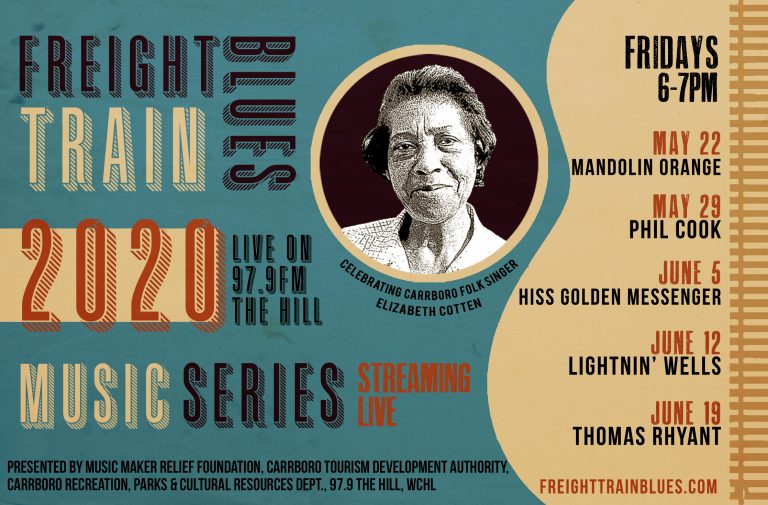
Our friends at the Music Maker Relief Foundation, the Hillsborough, N.C. based nonprofit whose mission is to promote and preserve American musical traditions by partnering directly with elderly musicians, have announced their 2020 music series, Freight Train Blues. The event, which ordinarly takes place at Carrboro Town Commons in Carrboro, NC, will now be broadcasted on Facebook, YouTube, and by WCHL 97.9FM out of Chapel Hill.
Featuring performances from Phil Cook, Mandolin Orange, Thomas Rhyant, and more, Freight Train Blues celebrates the life and legacy of Piedmont blues legend Elizabeth “Libba” Cotten, a pioneer in bluegrass, old-time, and blues and whose songs have left an indelible mark on all of American roots music.
Reinventing a Broken Wheel – Frank Conversations, Future Opportunities
BGS co-founder and executive director Amy Reitnouer Jacobs will moderate the sixth session in Folk Alliance International’s “CommUNITY Online” series of sessions and panels on Friday, May 22 at 2pm CDT / 12pm PDT. Joined by David Macias (Thirty Tigers), Erin Benjamin (President/CEO Canadian Live Music Association), Enrique Chi (artist/activist), and Megan West (Facebook/Instagram) this group of industry experts will discuss, identify, and explore opportunities to innovate, pivot, and move the industry along in new directions. We each have a role to play in constructing our “new normal” — from immediate action to big picture initiatives, this conversation promises to be inspiring, provocative, and realistic.
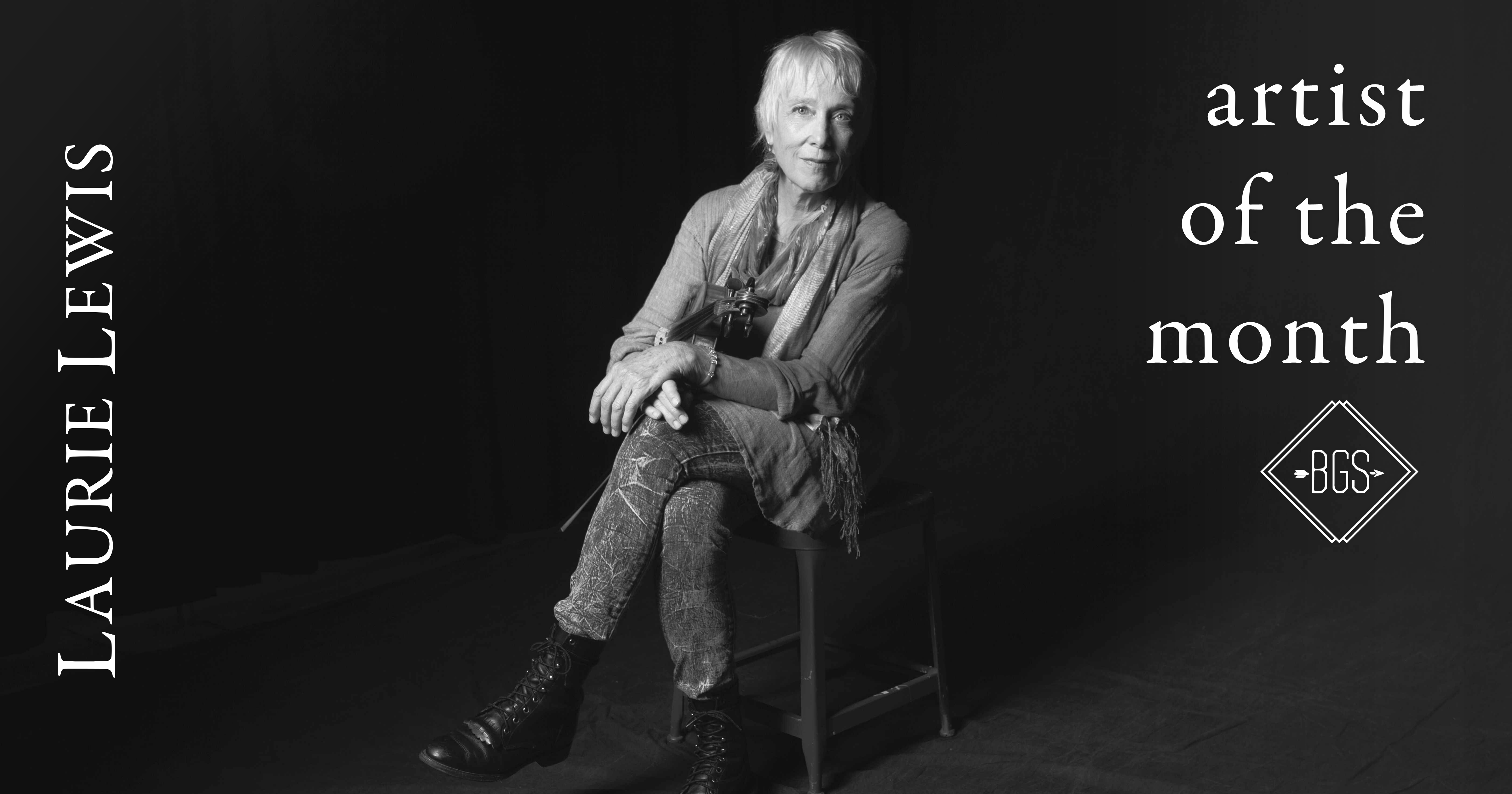
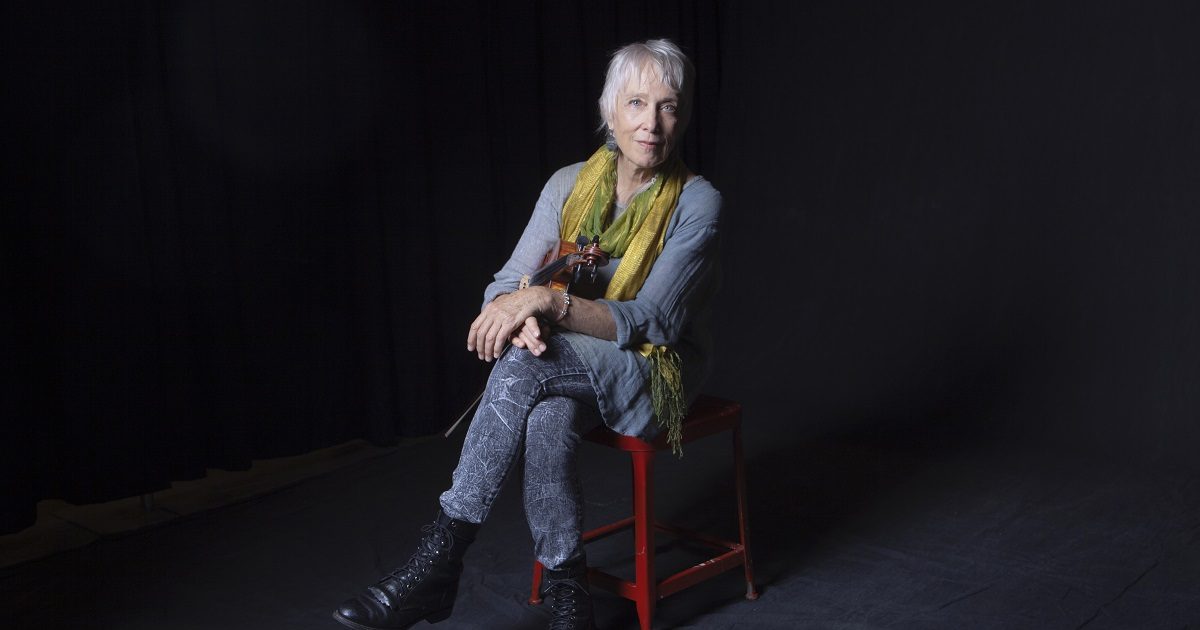
This edition of Tunesday turned out to be an oddly circuitous task. We often take this space to highlight our Artists of the Month, pointing out instrumentals from throughout their catalogs and across their careers, but for singer, songwriter, guitarist, poet, frontwoman, and long-distance hiker Laurie Lewis, the tunes are simply in too-short supply. Not because they don’t exist, but because Lewis’ cosmic level lyricism tends to eclipse her virtuosic command of the majority of bluegrass’s titular instruments. You may most often see her with a dreadnought strapped around her shoulders, but rest a fiddle there instead and you’re bound to enjoy some of the best bluegrass fiddling — with an even sprinkling of contest style, West Coast country, and the melody-driven old-time of the Pacific Northwest throughout.
In this clip from a live performance on The Texas Connection in 1992, Lewis is joined by longtime musical partner and bandmate Tom Rozum as well as Sally Van Meter, Alan Munde, Peter Rowan, Peter McLaughlin, and Cary Black on a sleek and stupefying rendition of “Dear Old Dixie.” It’s a banjo number, naturally, so Munde kicks it off with an uncharacteristically normative, Scruggs-like play through the melody. The remaining bandmates each take a turn, but the fire’s really lit when Lewis saws out her own solo, reminding all of us that she only ends up placing herself behind the guitar more often than not because she chooses to. With slippery, deliciously dissonant double stops she capitalizes upon the signature energy and showmanship concentrated within every note, every bow stroke, and every string pluck she issues.
While a quick stroll through her catalog, especially on streaming platforms, may not immediately land you in a pile of recordings of burning Bill Monroe tunes, or contemplative waltzes, or danceable hornpipes, you’ll probably find yourself confounded by the natural imagery, tender emotion, and raw spiritual power of her lyrics instead. That’s understandable. With a little digging, though, that picture of a legendary artist’s work can be expanded to include lifelong rations of indomitable pickin’ like this, too. And it ought to.
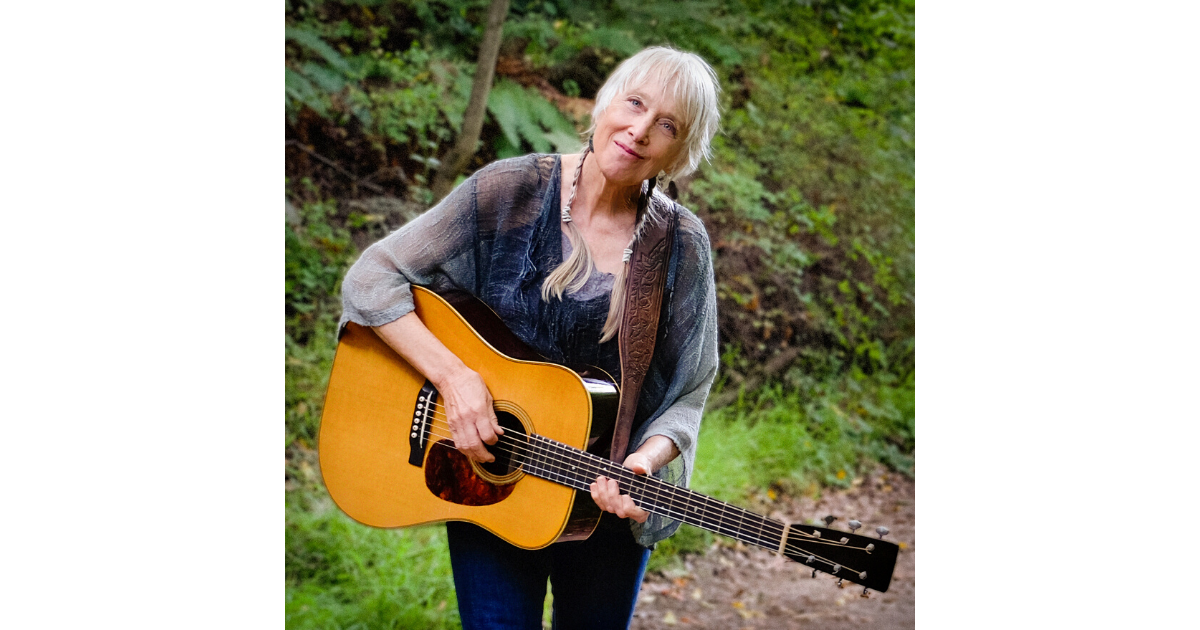
Laurie Lewis’ new album, and Laurie Lewis, is as much a tribute to her strong relationships as it is to her musical talents. Featuring old friends like Kathy Kallick, Todd Phillips, and Tom Rozum, and younger collaborators like Tatiana Hargreaves, Molly Tuttle, and Leah Wollenberg, her embrace of great friends and great music is on full display. In the second half of our conversation, the IBMA Award-winning artist talks about her history in the Bay Area, her aspirations and challenges, and the things that give her joy.
BGS: Years ago, you and Kathy Kallick gave bluegrass a female voice. Were you conscious of breaking barriers at the time? And are you aware of what a model you are to women our age?
I appreciate that in hindsight. In the moment, we were just trying to make the best music we could make together, and we were both in a musical community in the Bay Area that didn’t have the barriers that the outside world had for women in bluegrass. We were doing what we wanted to do, what was fun for us. And not thinking that it was the most special thing or groundbreaking or ceiling-shattering stuff.
It was when I started performing more outside the Bay Area that I began to realize that what we had been doing was unusual. But at that point, I was just headstrong and I was just going to do what I wanted to do and not be stopped. I had disdain for festivals that would only book one girl bandleader at a festival, while they would book 12 male bandleaders at a festival. It pissed me off, but it didn’t stop me. And things are still a little bit like that — it’s amazing how slowly things change.
Did you set out to mentor young women?
Life for me just sort of unfolds, and I have to say I don’t set out to do these things in advance. I didn’t decide, “Now that I’m a wise older woman…” to mentor younger people. What actually started it was when younger people started showing up at music camps. I was a little afraid of that, because most music camps I had been doing were with adults. And I was a little afraid of my ability to relate to and coach young people.
When I was first asked to teach at a fiddle camp specifically for young people, I was sort of daunted by it. But the relationships that grew out of that camp have been incredibly important to me. Tatiana was there — she also went to Bluegrass at the Beach when she was like seven, that’s when we met. And Emily Mann, who wrote one of the songs I sang with Molly, was a preteen at that camp.
It has been a thrill to watch them blossom. It has been so gratifying to me. I don’t have children, and that’s a choice on my part, but I really appreciate them. I really enjoy hanging out with them and being able to have them in my life. I didn’t decide to focus on young women, but I suppose just because I am a woman, that has happened. People want role models – to see someone who’s like them. I am more like a young woman than I am like a teenage boy!
Any comments about being a role model?
Well, I feel very, very grateful that that’s happened. I’m really just trying to do the best I can do and play what’s in my heart and express myself in the best way I can, which seems to be through music. I am very gratified that people see me as a role model. I have a feeling of responsibility about that — so I better not fuck up.
Why is teaching important to you?
I get very excited teaching about things that excite me. Music excites me, and I want to spread the gospel. I am evangelistic about things like Chubby Wise’s fiddle playing, and how his solos are the bedrock of bluegrass fiddling. Singing harmonies, and how to work on making a vocal blend, are is endlessly fascinating to me, so I like a chance to talk about it and explore it with other people.
It also helps me, because when I am teaching I go back to the masters and I listen again to things maybe I haven’t listened to in 10 years. I always hear new things and I always learn myself. It keeps the music fresh for me in that way. It’s not just a one-way street. Teaching’s definitely a two-way street.
Do you want to talk about your shyness? You’ve said you are incredibly shy, and yet when you are on stage you fill auditoriums with your presence and your energy. How does that work?
I’ve certainly conquered a lot of my shyness. Shyness is really fear-based. You have to learn to face your fears. And in many, many instances, by facing them they just melt away. They are like a wraith. They just go away. I have learned that over the years. I used to be afraid to talk on the phone. It was so hard for me to call people up and just be a regular person on the phone and have a one-on-one conversation. I made myself do it. I made myself get on stage. I made myself open up to an audience. Sometimes it’s easier to open up to an audience than it is to open up to three people in the room with you. Strength in numbers when it comes to shyness.
I was really shy — and I’m not so shy any more. I still very seldom will talk to strangers. I told Tom yesterday that I was on a hike, and I met this young man and we talked a whole lot (this guy was named after Superman’s father, Jor-El). Tom said, “How did you start talking to him?” And I said, “I don’t know, it was a beautiful day….” and Tom said, “This is so unlike you.” It is unlike me that I would talk to a stranger, but we had a very great conversation. It turns out we were both born in Long Beach, we have a lot in common. … I’m still breaking down my barriers. By the time I’m 90 I’ll be talking to anybody and everybody. You won’t be able to shut me up.
How is today feeling for you? You have this great new album – and the world is upside down.
It’s frustrating, but — it’s just my own little personal problem. It’s really too bad, but so many people are suffering so much right now. I don’t have it in me to be all upset about it being a bad time for me. The album will still be here, the music will still be here when the virus has run its course. The virus is not going to kill my music.
How are you keeping your spirits up?
I go up into the hills and I walk. And right now it’s springtime, it is so beautiful. The world is just so gorgeous. There are wildflowers everywhere. If you can get out into nature, it is the most healing balm that I know of, and that’s what works for me. It makes the human problems seem so small, and it connects me to the universe. It takes me outside of myself.
What’s next for you?
I’m loving playing with the current Right Hands configuration: Brandon Godman on fiddle, Patrick Sauber on banjo and Haselden Ciaccio on bass (along with Tom). We’ve been planning a new album. We’ve got so many things we’re cooking up: new songs and old stuff that we’ve been doing. I feel like we need to have a record of how we sound together.
Do you have a special goal, something that you want to achieve that you haven’t done before?
I would really love it if other people would sing some of my songs and make them part of the folk tradition. That would thrill me more than anything. I would like to get interviewed by Terry Gross. That would be pretty great! Of course, because I’ve been doing this for so long I would like to get broader recognition, but I’m fine with things the way they are. But mostly I’m just very, very grateful that I get to do what I want to do. I can put together a life out of it and I can keep playing. I’m in my 70th year. I just feel lucky.
Laurie Lewis has lived most of her life in Berkeley, California, yet she’s primarily associated with music from Appalachia. A highly respected producer, she is admired equally for her singing, songwriting, fiddling and arranging, and her influences range from old-time and bluegrass to swing and jazz.
In 1986, Lewis released her first solo album, Restless Rambling Heart, which included seven original songs. Since then, she has recorded more than 20 albums with a variety of musical friends. She holds numerous honors from the International Bluegrass Music Association, as well as Grammy nominations for her own albums and collaborations.
Now nearly 35 years into her career, Lewis regularly pays tribute to female bluegrass pioneers, performs with and fosters a new generation of female musicians, and teaches at many of the nation’s most acclaimed music camps. BGS caught up with her by phone to discuss her new duet album, and Laurie Lewis, featuring old friends and new musical partners alike.
BGS: Why a duet album?
Lewis: It came about accidentally. I had an idea that I wanted to record a duet on (the Carter Family song) “You are My Flower.” Molly Tuttle and I got together to try it out and we had so much fun playing and singing that we went upstairs to my little studio. We turned on the microphones and just sang and played. It was so musically full, it didn’t need anything else. I thought, “Thank heavens, I have finally gotten around to singing this duet the way I’d wanted to for the last 20 or 30 years.” Then I got together with Tatiana Hargreaves. When we toured together, she and I worked up a tune I had written that she played on the fiddle, and I just loved that and I wanted to capture that. Then we got excited and did another song – and then I had three songs! I thought, “Maybe I’m making a duet album.”
Tom Rozum and I had worked out the Monroe Brothers’ version of “Will the Circle be Unbroken” for a Monroe tribute, and I just loved the way that sounded, and I thought we definitely should record that. It snowballed from there. I had lots of duet ideas where I thought a particular friend would be perfect on a particular song. So I went about collecting the versions of the songs. I recorded more things than are on the album. I have a few that are held back, just because I didn’t want it to be super-long and have people lose interest halfway through thinking they would never get to the end!
How did you decide to keep the instrumentation so spare – no more than two voices and two instruments?
After listening to what I recorded with Molly and Tati, I really liked what I heard. I fell in love with playing as a duet with Tom. We’re both essentially band musicians and used to having a whole band surrounding us, not just picking up the slack, but filling out the sound. When we started playing as a duo many years ago, it seemed really scary to both of us – and really empty. But we kept doing it, and I fell in love with the emptiness, that loose weave that you get with just two people and two instruments. And the way it becomes a conversation – my favorite way to have a conversation, just one on one.
How did you choose your partners and songs?
They’re all people who I have had long musical relationships or long friendships with. I’ve known Molly and Leah Wollenberg since they were babies. As the project went on, it felt as if these are some of my closest companions in life. These are the core people who have made a huge difference to my musical life in one way or the other
One of the last things I recorded for the album was “Old Friend” with Kathy Kallick. As the album started to take shape, I realized, “Oh my God, I have to have Kathy on here.” We have been singing partners and friends for more than 40 years. I just have to have her on here. But I couldn’t think of a song. The idea came to me as I was backpacking in the mountains: “‘Old Friend,’ of course!” It was recorded originally in 1989 and we’ve been friends much longer. It seemed like the perfect vehicle for us at this point.
Do you write specifically for an album, or do you just come up with songs, say, when you’re hiking, and then it shows up on an album?
Yes. I would say yes to both of those. For instance, I never expected “The Pika Song” [to end up] on the new album. I was just making up a little poem about pikas when I was hiking on the John Muir Trail. And then I was sitting around playing the banjo one day and I started singing it. When I mentioned it to Tatiana, she told me that some friend had just said that she thought the pika was [a perfect animal to match] Tati. She got really excited – she’d never seen one, but she got to hear all about them and play on the song and sing about them, so that was pretty fun.
Sometimes I will write things specifically for a group or for an album. I have lots of songs that I just don’t finish and sometimes the impetus of recording an album is what pushes me to commit to being done. So in that way I do write for albums. And sometimes just because the creative juices start flowing when you’re in a recording situation, a new song just comes along. And I’m grateful for that.
Did you choose songs that represented your own versatility?
Oh, no. I didn’t think about that. I really just thought about who was the right person to sing with on a particular song. Like the songs I did with Nina Gerber. There is nobody I would rather do certain songs with than Nina Gerber. “My Last Go Round” is a Rosalie Sorrels song. Nina worked closely with Rosalie and I got to play with her a few times. I recorded that song on a tribute album for Rosalie, and when we played the tribute concert, I played it for the first time with Nina. It felt so deep and healing. Music has a real way of being able to soothe and heal grief, and it really felt good to do it with her, and we’ve been doing it every time we play together since then. Nina’s electric guitar is the absolute perfect thing for “This is Our Home.” She fell right into it, just knew exactly what to play. She’s a mind reader.
Todd Phillips and I occasionally play “Baby, That Sure Would Go Good” in concert. We did it for years, but I never thought about recording it. When suddenly I was doing a duet album, I thought it would be perfect. And of course it was really fun. Todd’s bass playing is just out of this world. I mean that in every way you can think of. It’s crazy, but it’s great.
Tell us about “Troubled Times,” which is so appropriate right now. When you wrote it, were you thinking of something specific?
I wrote that about 20 years ago. I honestly cannot remember what inspired me to write it. It had some other verses, at least one other verse which I left out, because it wasn’t as good as the ones I used. I think it was politically motivated at the time, motivated to the outside world and my reaction to what was going on, but I can’t remember what specific event or events inspired it.
I had only performed with Leah Wollenberg once, at the Freight & Salvage, although I’ve known her all her life. One day I said to her, “Would you come over and sing one of my songs with me so I would have a recording of it”? I really didn’t know how it would go. So she came over and we recorded it. When I listened to it I said, “This is good! This is great!” So I asked her if she would be on the album. I think that I’ve just been sitting on that song waiting for the right combination of events, but also the right combination of voices to sing it with me.
Can you talk about the role of friendship in your music? You sustain such long-term friendships and musical partnerships. Is that unique to you?
I don’t think that’s unique to me. Musicians communicate very deeply through shared music. It’s impossible to play heartfelt music with other people without loving them, or at least learning to love them. And once you love somebody, you want to keep them in your life. So if there’s a problem, you work it out. You address it. You don’t let things go by and be on the surface. It’s what we do — we forge personal relationships that are strengthened through music, or are begun through music and continue past music.
Generously sharing her gifts as a fiddler, singer, and songwriter, Grammy nominee Laurie Lewis has remained a beacon on the West Coast bluegrass landscape for more than 30 years. While she’s considered a seminal figure for women in bluegrass, today she’s creating music that’s just as vital as her acclaimed albums of the ’80s, ’90s, and early 2000s.
For her newest album, and Laurie Lewis, she gathers a new generation of admirers and longtime cohorts alike for a mix of covers and originals that draw on her folk and bluegrass roots.
“There are things that you can communicate musically together, which are hard to put into words,” she has said. “To have those conversations with people I love and who have been so significant throughout my career is a beautiful thing.”
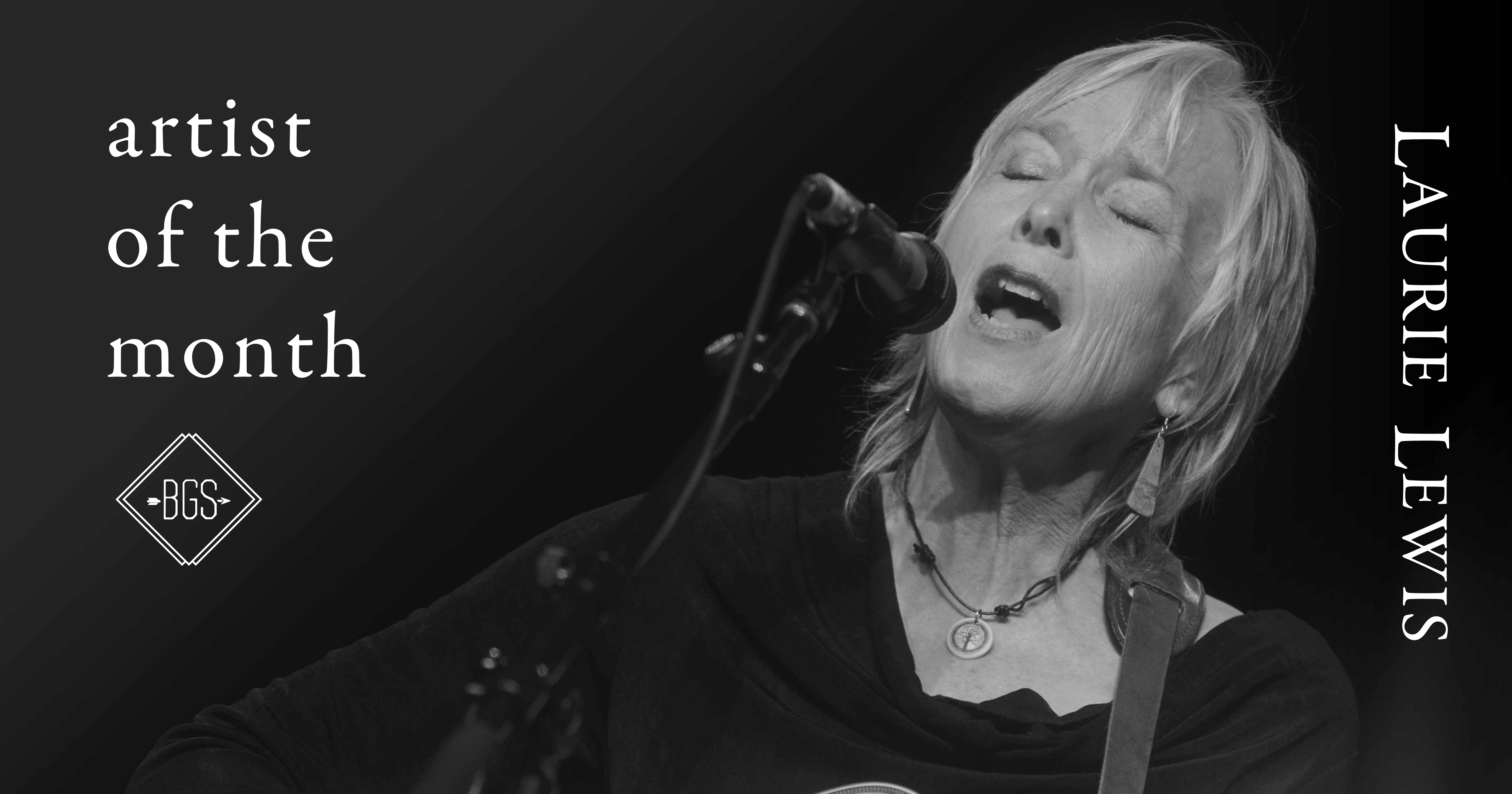
An IBMA Award-winning vocalist and an advocate for equality, Lewis possesses a compelling voice that commands attention. Read our two-part interview with our May Artist of the Month, Laurie Lewis, here: Part one.Part two. And while you do, enjoy our Essentials playlist.
Artist:Becky Buller Hometown: St. James, Minnesota; adopted hometown: Manchester, Tennessee Song: “The Barber’s Fiddle” Album:Distance and Time Release Date: September 18, 2020 Label: Dark Shadow Recording
In Their Words: “This is a celebration of the fiddle and the glorious tradition of passing music down from one generation to the next. I co-wrote this with Lynda Dawson and it is inspired by three fiddling barbers, including Gene Boyd of the Star Barber Shop in Bristol, Virginia, and Bill Womack from Woodbury, Tennessee. The song features my fantastic band (the Becky Buller Band — myself, Nate Lee, Prof. Dan Boner, Ned Luberecki, and Daniel Hardin) along with these special guest singers and fiddlers: Jason Carter, Kati Penn, Sam Bush, Laurie Lewis, Shawn Camp, Laura Orshaw, Michael Cleveland, Jason Barie, Stuart Duncan, Johnny Warren (playing Paul Warren’s fiddle), Bronwyn Keith-Hynes, Deanie Richardson, Tyler Andal, Brian Christianson, and Fred Carpenter.” — Becky Buller
Artist:Laurie Lewis Hometown: Berkeley, California Song: “Troubled Times” Album:and Laurie Lewis Release Date: March 27, 2020
In Their Words: “I wrote ‘Troubled Times’ about twenty years ago, I think, in other troubled times than we are experiencing now. But I never sang the song out in public more than about three times. I honestly feel like I was waiting for the right ‘voice to sing in harmony,’ and when Leah and I started singing together, I think I found my match. I have been friends with her parents (jazz guitarist Mike Wollenberg and artist Jenny Bloomfield) since before she was born, and have known her since then, watching her grow into a fearless jazz violinist and terrific Irish fiddler. It shouldn’t have come as a surprise, but when I heard her sing a piece of a song sitting around the dinner table one night, my ears really perked up. Maybe it’s because Leah has heard my voice her whole life that she is able to get a positively familial blend. Whatever it is, I’ll take it.” — Laurie Lewis
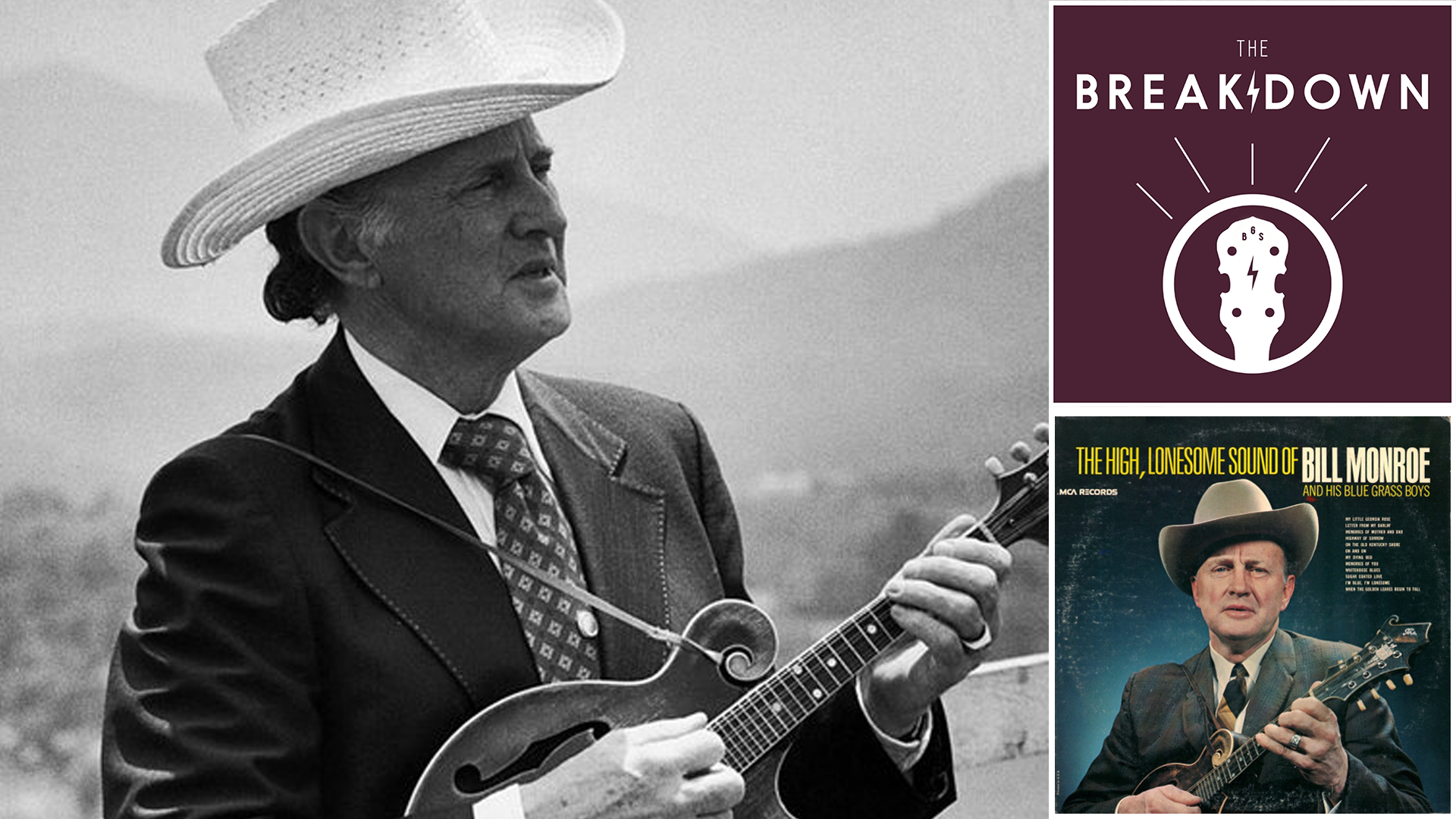
Unpacking Bill Monroe’s bluegrass legacy through this 1966 compilation of Decca recordings is no small task – so Patrick and Emma have enlisted some high-profile help, including the legendary Sonny Osborne (a 14-year-old debutant on this album) and the wonderfully insightful Laurie Lewis.
Season 2 of The Breakdown is sponsored by The Soundtrack of America: Made In Tennessee. Visit TNvacation.com to start planning your trip.
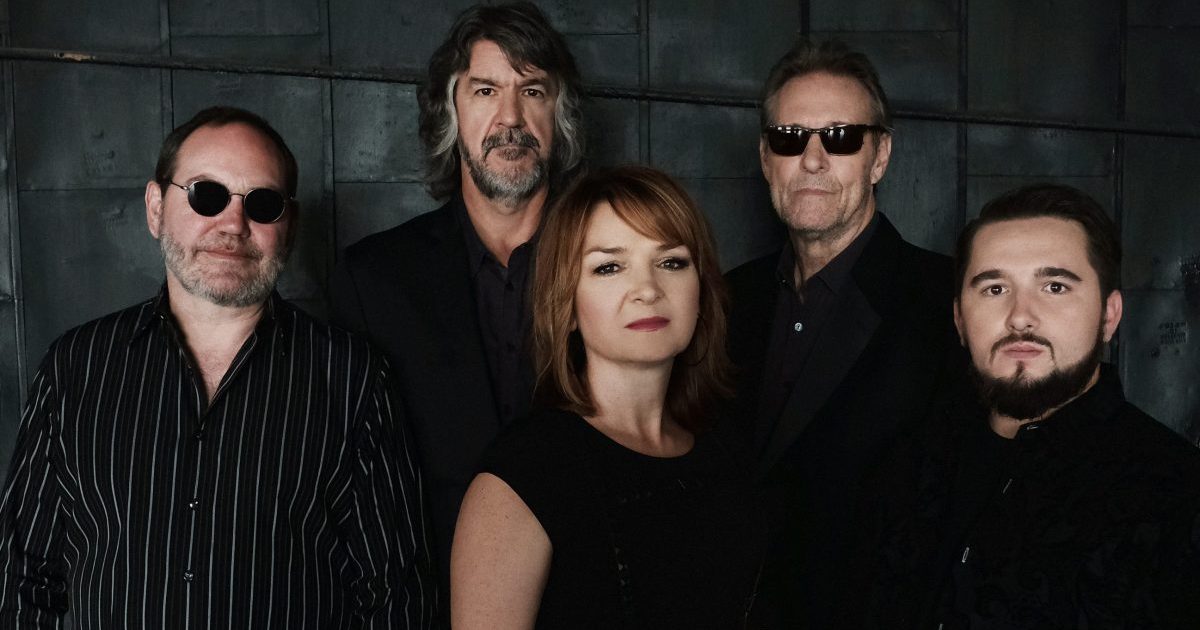
The SteelDrivers’ new lead singer, Kelvin Damrell, already grasps the driving force behind the band, which is marking its 12th year with a brand new album, Bad For You.
“You couldn’t play our songs if you weren’t passionate about what you were doing,” the Berea, Kentucky, native believes. “It wouldn’t sound right at all, in any position in the band. From the mid-range harmony part to the hardest-playing guitar riffs, to the hardest-playing fiddle, it wouldn’t sound nearly as good as it does if you didn’t love what you were doing, and playing with as much passion as you could.”
On Bad For You, Damrell steps into a role once filled by Gary Nichols and Chris Stapleton for the group’s first album since winning a Grammy with 2015’s The Muscle Shoals Recordings. All five of the SteelDrivers — Richard Bailey, Damrell, Mike Fleming, Tammy Rogers (whose daughter discovered Damrell on YouTube), and Brent Truitt — invited BGS over for a chat.
Kelvin, how long had you been in the band by the time you went into the studio?
Kelvin: Goodness, how long has it been now? I joined in October 2017. I was just so looking forward to the release date of the album that I’d forgotten when we went in.
Mike: He had to go to boot camp first. [Laughs] Bluegrass boot camp! We had to take him out of Kentucky. He had his first airplane flight. You saw the ocean for the first time, right? You left a lot of things laying around. [All laugh] You went through airports with knives when you shouldn’t have. But listen, it was good! We all got comfortable with each other, and we needed some time just to feel that, and it got to that point.
Kelvin: When I joined the band, I was really unsure about what was going on, about my position. I had made the cut as far as getting to be in the band, but Brent kept telling me we needed a couple of months to see how we jibe together. I thought that was just him saying that, but it was the truth. We switched vehicles pretty regularly and I rode with different people. We really saw how we jibed together before we made a full decision on whether we were going to keep me, or if I was going to go back to sweeping chimneys.
The song “Bad For You” has such a cool groove. You sent it out as your first single and you named the album after it. What is it about that song that is special to you?
Brent: To me it was the perfect fit for this band. It was the song that hit me right out of the chute. It encapsulates the sound. It’s really edgy, and we’re a little bit on the edgy side of bluegrass.
Mike: It was one of the strongest songs, as far as that kind of feel. It’s like a “Here we are!” kind of song. You know, “Look out!” The way Kelvin sang it, Tammy told him, “Sing it like a rock ‘n’ roll singer.”
Kelvin: I almost got emotional when we played it for the very first time. I really did, that’s the truth. The first night we debuted it, after we hit that last big note, I almost did get a little emotional because it’s like something is finally coming to fruition with my position in the band. I’d done all this other stuff that vocally belonged to Gary and vocally belonged to Chris, and now this one vocally belongs with me at the lead. And man, that three-part harmony! Everything about it was good, and it really did make me emotional.
I’m glad you mentioned harmony because that’s a really important component of this band that doesn’t get talked about enough — how well you can stack those voices.
Tammy: Thank you. But you’re exactly right, I think that’s always been a really strong facet of the band. It’s this rock ‘n’ roll lead singer with this really strong three-part harmony coming in on the chorus. From a writer’s perspective on this album, I thought about that a lot, and how that was still a big part of the sound, and to keep that consistent because I think that does set us apart.
Brent: In our live set, I’m thinking of one or two songs that end with the vocal trio by itself, doing the swell and bending into a note, and the crowd loves it every time. It’s a big part of bluegrass, period, but it’s a big part of our music too.
Brent, how would you describe the SteelDrivers’ sound?
Brent: For me, personally? It’s gritty, grind-y bluegrass. With a lot of soul.
Tammy: Think about the Rolling Stones if they were to play with bluegrass instruments. That’s us.
Mike: With a blues/rock ‘n’ roll singer. … It’s intense! I’m tired after our set. It’s a workout. We keep the emotion and the intensity going quite a bit, but we let up occasionally and do a nice song.
On this record, you do have that slower moment on “I Choose You,” which brings out another side of the band.
Tammy: Yeah, we’ve always had a song or two like that. On the first record, “Heaven Sent” has always been one of our most-requested and popular songs, and it has that great, easy, rolling feel to it. We call it the hippie dance. And when Thomm Jutz and I wrote “I Choose You,” that was definitely musically where I wanted to go with that, to have that feel to it. But it’s still a very serious lyric, even though it has a positive message, in a way. It has a lot of depth and meaning to it.
Richard, do you have a favorite track on this album?
Richard: Umm… “Forgive.”
What do you like about that one?
Richard: I like what I played on it. [All laugh]
Tammy: See, it’s all about the banjo! We joke about it but people love the banjo!
Mike: It’s got a great groove.
Brent: It’s one of my favorite songs too.
Kelvin: It’s funky. It’s like “Bad For You” is rock ‘n’ roll and “Forgive” is funky!
Kelvin, what were you listening to about three years ago, before joining the band?
Kelvin: Three years ago I was on a really big Cinderella kick. [All laugh] I’m still on the kick. I still listen to mainly rock ‘n’ roll when it’s just me in my truck, driving for hours on end.
Did the band prepare you for the honesty of bluegrass fans, and how they’ll tell you what they think?
Kelvin: I was ready for it before I started! I knew how much of a following they had. I know how much people loved Gary. I know how much people loved Chris. And I was ready for it – I prepared myself for people saying, “This guy sucks. You need to get somebody else.” [I’ve heard that] twice, I think, the whole time I’ve been with the band. It’s been great — because I was expecting it at every show!
Tammy, do you have young women coming up and telling how cool it is to see a woman on stage?
Tammy: Yeah, it’s really awesome and I appreciate it a lot. Because when I was growing up there were very few women playing, and the ones that did were usually bass players. Mama might be back there thumping on the bass or whatever. There were very few women role models for me, of that generation. There were a couple — I remember Lynn Morris was playing and Laurie Lewis was playing a few years ahead of me in those circles. Not many in the country world. I was a huge Mother Maybelle fan and part of that was because she played the guitar. That was fascinating for me as a kid.
And now in the generation after me, there’s just unbelievably talented women – not just singers, but instrumentalists. It’s phenomenal, the jump from mine and Alison Brown’s ages, to Sierra Hull, who is a genius on the mandolin, and Kimber Ludiker and all the Della Mae girls we love, and Molly Tuttle is absolutely slaying it on guitar. Sara Watkins, I’m With Her, Sarah Jarosz … it’s just on and on and on. If I in any way influenced any of those players, I am deeply honored.
What would you want bluegrass fans to know about this new record?
Tammy: We’re excited this year to get out and we’ll be playing a lot of different kinds of venues. We don’t play that many traditional bluegrass festivals anymore, but it’s my hope that people hear the music and still see the thread that’s in there. The subject matter that we choose to sing about is not as cleaned up as some other stuff, but to me it’s just another facet of the music, and I think we’re hopefully carrying it forward and carrying a torch.
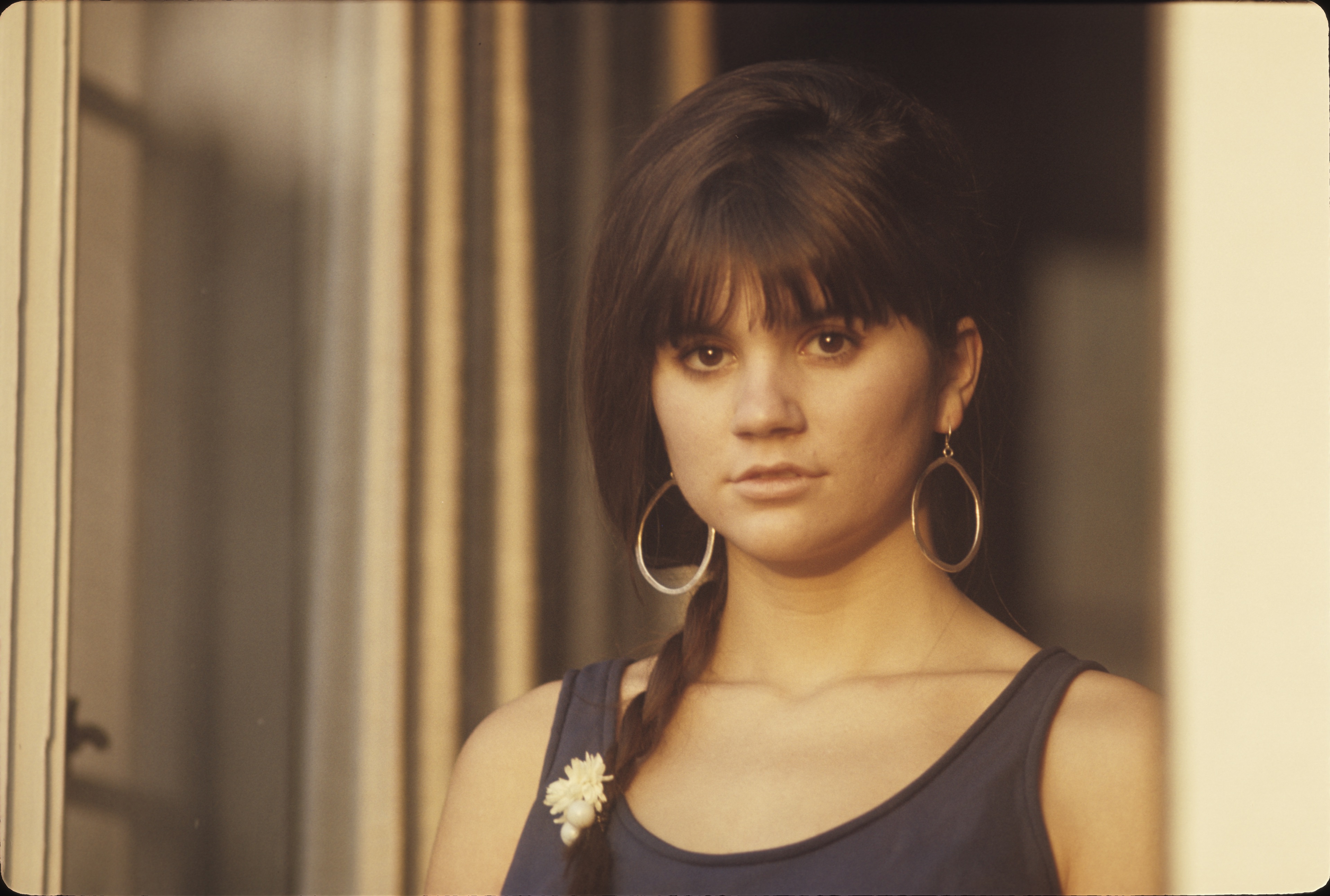
Barely three minutes into the brand new documentary, Linda Ronstadt: The Sound of My Voice, the viewer is already presented with none other than Dolly Parton, who exclaims, “Linda could literally sing anything.”
Over the course of her singular, era-defining career Ronstadt did sing almost anything — from The Pirates of Penzance to American standards to Mexican folk songs — but she’s rarely referenced in the same breath as bluegrass. The BGS x Linda Ronstadthistorynotwithstanding, it’s understanding that the twain rarely meet, in conversation and consideration. Of her most easily recognizable hits, among them “Willin’,” “You’re No Good,” and “Desperado,” perhaps “Blue Bayou” is the closest to bluegrass — and in its Ronstadt iteration, less so than in other covers of the languid ballad.
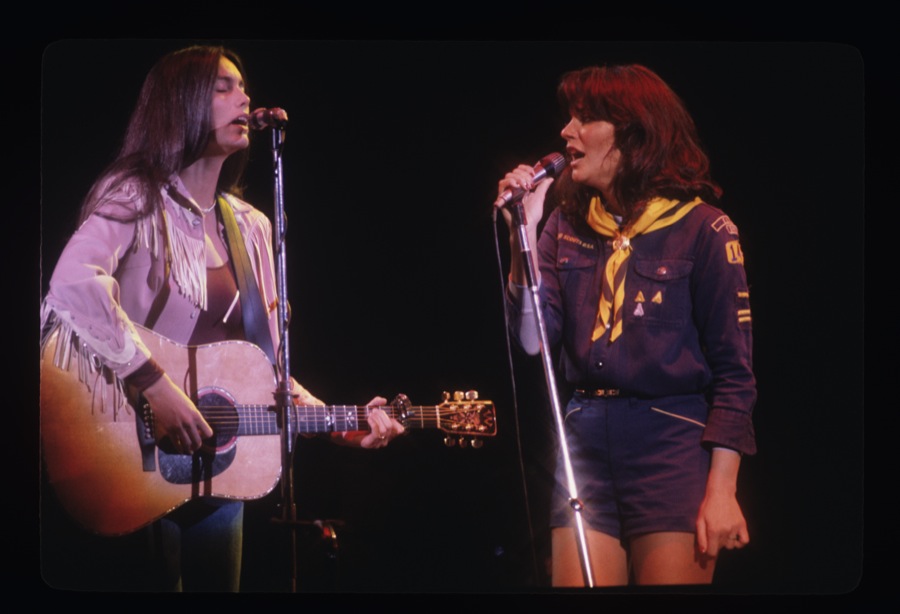
Scratch the surface, though, no matter how slightly, and her bluegrass cred runs deep. This should come as no surprise, given her immaculate performances alongside Dolly Parton and Emmylou Harris on Trio and Trio II — the first song the three sang together, informally, at Harris’s house in L.A. was “Bury Me Beneath the Willow.” The Sound of My Voice digs a little deeper still, reminding that Ronstadt’s very first hit, “Different Drum,” recorded with folk-rock trio the Stone Poneys, was discovered by Ronstadt, who first heard the song from a now almost-forgotten bluegrass band, the Greenbriar Boys.
Elsewhere in the film, Ronstadt mentions that during her early days in the city she frequented Los Angeles’ The Ash Grove, the foremost folk and bluegrass venue there in the ‘60s and ‘70s. She also made appearances and recorded with the Seldom Scene, and remained close friends and musical confidantes with John Starling. One of the last studio recordings Ronstadt ever released was a duet of the Hazel Dickens and Alice Gerrard classic, “Pretty Bird” with bluegrass legend Laurie Lewis. The track was released on Ronstadt’s Duets project as well as Lewis’s The Hazel and Alice Sessions and the pair worked together prior, as well, performing as “The Bluebirds” with Maria Muldaur at Wintergrass Music Festival in 2005.
The bluegrass tendrils are there, undeniably, woven alongside so many other influences and inspirations and impressions that informed Ronstadt’s art. Still, it was surprising to this writer to find that in June 1996 Bluegrass Unlimited, the foremost and longest-running print publication dedicated solely to bluegrass music, had featured a lengthy, in-depth interview with Linda Ronstadt herself. Even by author Dan Mazer’s own admission, “Ms. Ronstadt’s bluegrass/country connection is tenuous at best.” And yet, for nearly five thousand words, the article displays that Ronstadt isn’t just tangentially connected to bluegrass, it is a permanent part of her musical self.
In honor of the new documentary film, and in appreciation of this connection to bluegrass — and in an attempt to shout it from the proverbial rooftops! — we’re reprinting Dan Mazer’s interview with Ronstadt exactly how it appeared in 1996, split into two parts, but in its entirety on BGS. Special thanks to the team at Bluegrass Unlimited for partnering with BGS to spotlight how bluegrass has touched one of the most important and truly iconic voices to ever grace this planet. — Justin Hiltner, BGS Associate Editor
“Linda Ronstadt Talks Bluegrass” By Dan Mazer. Bluegrass Unlimited, June 1996
While preparing an article on the influence of bluegrass on today’s country music, I had the opportunity to interview several prominent country stars. During discussions with Bluegrass Unlimited’s editorial staff about artists to interview, the name Linda Ronstadt came up.
Linda Ronstadt? It seemed an odd choice at first. Ms. Ronstadt has had a long and varied career, and while her forays into bluegrass with the Seldom Scene have been recognized and celebrated within the bluegrass community, as an artist, she just didn’t seem to fit in with the likes of Marty Stuart, Hal Ketchum, and Patty Loveless. On the other hand, her classic recordings of “Blue Bayou,” “Silver Threads and Golden Needles” and “When Will I Be Loved?” are still copied by country music cover bands some 20 years after their release. Some of her work as also been covered by bluegrass artists.
Because Ms. Ronstadt’s bluegrass/country connection is tenuous at best (especially in recent years, when her recordings have featured opera, Big Band and Mexican music), it was with little hope that I sent an interview request to Ms. Ronstadt’s publicist. To my surprise and delight, the request as answered quickly with a call from the publicist to set an appointment for a telephone interview. Ms. Ronstadt called me from her home in Los Angeles, and graciously granted me a significantly longer interview than we had arranged – that was just because the conversation was so interesting and enjoyable! She is remarkably well-spoken, intelligent and passionate. In the end, we decided not to include Ms. Ronstadt’s remarks in the profile of country artists with bluegrass roots.
Ms. Ronstadt grew up in Tuscon, Ariz. Her family listened to a broad variety of music on the radio. Opera, country, rock ‘n’ roll, and jazz filled the house. Some radio shows also featured bluegrass. “We were right in the pat of XERF, Del Rio, Tex,” she said. “And we (had) the Louisiana Hayride. We were right there, where there was a lot of big transmitters, and not a lot of interference. So I heard (bluegrass) when I was little, growing up.
“When we were kids just listening to stuff on the radio, we tried to sing it. My brother and sister and I could always harmonize real early. So we used to sing the stuff we heard on the radio. We heard Bill Monroe, and we heard Flatt and Scruggs, we heard Homer and Jethro doing a sendup of ‘Don’t Let The Stars Get In Your Eyes.’ I had such a cross-section! And then, when I was in high school, I think it really intensified.
“I’ve always been interested in harmony. I’ve always been a harmony singer. When I was a real little child, I could sing harmony. I’m always surprised when children say, when they’re three, that they can’t. But all my brothers and sisters could, real early. I could hear strange harmonies, too. But I understood Mexican harmonies better, and they have a tendency to be very, very clear kind of parallel thirds.”
(Author’s Note: “Parallel thirds” refers to what, in bluegrass, corresponds to the lead and tenor part singing close harmony at the interval called a “third.” Brother duets also feature this harmony.)
As an artist, Ronstadt doesn’t feel authentically connected to bluegrass. “I feel that I would have had to live in the rural south, and grow up in the mountains,” she said. “There’s just such a difference between mountain South and plantation South. Culturally and musically.”
Since she grew up near the Mexican border, and her father is Mexican, Ronstadt mostly sang Mexican music as a child. “There’s a great deal of similarities (between bluegrass and Mexican music),” she noted. “One of them is that the three-part harmony stuff that we sang a lot is Mexican mountain music, and it’s country music. The music of an agrarian lifestyle is what I’ve always been most attracted to. I love it, and having grown up in a kind of isolated, rural setting, it was something that reflected what I was witnessing around me.
“I’ve always had an ear for any kind of a thrilling, wild, high tenor. And again, in Mexican music, there’s a loose parallel, especially up in the mountains, where they sing real high in this falsetto, in the huapango style.
“The language and the pronunciation of the language – whatever the rural accent is – influences the style of singing and the vocal intonation so profoundly! With bluegrass music it was those ways of pronouncing 16th Century English, probably, frozen in those mountains. But in Mexico, of course, it was the indigenous language of nahuatl, which was what was mostly spoken there, which gave the pronunciation and forced the tonality into that nasal thing.
“Also, having to communicate across long distances, you get a real high, ringing (tone). Men get a lot of power out of that high register; way more than women do, which is why – having absolutely nothing to do with sexism –I feel that bluegrass is very wonderful when it’s three male voices. Mariachi music, also (is an example), which is from a different region (Jalisco). But when all those male voices are singing up in the high register, it’s a different sound from a woman’s voice singing up in a more comfortable register. I can sing bluegrass tenor pretty well, but it doesn’t quite have the power that it will ever have from a man forcing himself up way high in that register. It just doesn’t have the same dynamic. It’s still good. I call it ‘pink grass.’”
Until recently, bluegrass has been almost entirely a male reserve. Ronstadt feels that there is good reason for that, although, as she pointed out, “There was old-time music before that, which of course, happily embraced women singers. But I still think it was just that thrilling sound of those male voices in two- and three-part harmony, pushed way, way up high, that really gave it a very distinctive characteristic. And it’s pretty hard to compromise that, regardless of your sexual politics, without making it into something different.
“There are women singers today that have what I think (are) very, very good, and very authentic-sounding bluegrass voices. I think Claire Lynch has a wonderful voice. I love her singing! And those girls that sing with Alison Krauss; the Cox Family. But it’s hard to say. Where do you draw the line? Is that bluegrass, or is that old-time? I think that’s a combination; both things.”
When thinking of acts that embrace and also expand bluegrass, the Seldom Scene immediately comes to mind. Many people argue with some justification that the inclusion of a banjo defines an act as a bluegrass band. Bill Monroe, Flatt and Scruggs, Reno and Smiley and the Stanley Brothers all performed certain songs (usually gospel numbers) without the banjo, but the Seldom Scene broke new ground with their unprecedented, mellow guitar-based sound. Furthermore, because Ben Eldridge’s banjo playing is unparalleled for taste and restraint, the Seldom Scene can be mellow even on tunes that include the banjo. They also distinguished themselves by using Linda Ronstadt as a backup vocalist on some of their earlier recordings. They remain her favorite bluegrass band.
“They really are an urban band with very, very strong rural influences,” she said. “They had all the benefit of a sophisticated, cosmopolitan atmosphere, which Washington, D.C., certainly is, and they were able to refine in any direction they wanted to. I really think they made an extraordinary synthesis. I love that band; I always have.
“Mike (Auldridge) is such a unique player. Nobody sounds like him. He’s got that real beautiful, lyrical, velvet thing that happens, but it’s still got plenty of strength and guts behind it. There are more famous Dobro [resonator guitar] players than that, but I like him the best and I always call him when I want a Dobro [resonator guitar] player.
“John Starling is an exceptional singer, and has a wonderful sense of the groove. He’s a very, very fine guitar player. Emmylou Harris and I both spent so many hours and hours and nights and nights and months and months with him, way on into the night, just grooving on that sound and exploring it! He’s given us a wealth of something. It’s hard to define. But just having that superb musicianship to lean on, and the focus of his sensibility, which is very keen and very well-developed in that direction.
“I remember getting snowed in at John Starling’s house with Lowell George, and Emmy, and Ricky Skaggs (in 1974 or 1975). Fayssoux Starling was there, who was a good singer. And we sang forever! I mean, we sang all night, and they were there for three days. I was sick, so i was there for a month, they were there for three days, and in that time, Ricky Skaggs taught me a whole lot about how to sing bluegrass harmony. I knew a little bit about it, but he really showed me how the suspensions worked, and it helped me to refine it a lot. I understood (the suspensions), but didn’t know quite how to really imply them. He Walked me through ‘em, and after that, I had ‘em.”
(Author’s Note: “Suspensions” is a musical term referring to creating tension in a chord by sounding a not that is not in the chord, and then releasing that tension by lowering the dissonant note. For example, a guitarist will sometimes play a “D” chord and add a high “G” note on the third fret of the first string for one measure, then release that fret, so that the “F#” note rings.)
Ronstadt is surprised that she is sometimes cited within country music. “I was never a country singer,” she stated. “I never thought of myself as a country singer. Always very surprised if anybody else did. I was a pop music singer, and I used various root forms that were acceptable to me, and that was one of the things that was readily acceptable to me.
“I’ve always had a little rule about my singing. If it wasn’t there in the living room by the time I was eight years old, it generally won’t be very successful if I take a swing at it, at least to my standards. But thanks to the radio, there was a lot of stuff in play by the time I was eight. And thanks to the fact that my family has very eclectic kind of taste, anyway.
“So, when I came into pop music, I played songs that I loved. I didn’t care whether they were written by George Gershwin or Hank Williams. A song that would really inspire me for one reason or another, I’d try to sing it. And I’d always try to put it into its appropriate setting. So if it (was) a bluegrass song, I’d try to put it in that kind of setting, and I knew enough about the mechanics of how it worked, so that I would do that. Then there were these singers and players that I really admired, and tried to emulate. But that thrilling high tenor sound, there’s just nothing like it.”
The closest Ronstadt has come to recording bluegrass in recent years was on the “Trio” album, which featured her along with Dolly Parton and Emmylou Harris. A follow-up recording was eagerly anticipated, but never materialized. “The ‘Trio’ record became so difficult, schedule-wise, that we all gave up,” she said. “But Emmy and I did quite a lot of singing together. We had a great time! See, Emmy and I started out with this idea to do a record together, where we would use some guest artists. And we sort of progressed down that road, but it never got to where everybody would agree on a release date. Everybody did agree at some point, but the people kept changin’ their minds.
“But Emmy and I really are kind of locked on to each other musically. Emmy and I have sung some stuff together that’s gonna be on my record; Emmy and I have sung some stuff together that’s gonna be on her record. And we also did some stuff with Valerie Carter, who’s just a great singer.”
Ronstadt’s bluegrass influence is definitely shown in her current release.
Photos courtesy of Shore Fire Media Article appears courtesy ofBluegrass Unlimited
This website uses cookies to improve your experience. We'll assume you're ok with this, but you can opt-out if you wish.AcceptRejectRead More
Privacy & Cookies Policy
Privacy Overview
This website uses cookies to improve your experience while you navigate through the website. Out of these, the cookies that are categorized as necessary are stored on your browser as they are essential for the working of basic functionalities of the website. We also use third-party cookies that help us analyze and understand how you use this website. These cookies will be stored in your browser only with your consent. You also have the option to opt-out of these cookies. But opting out of some of these cookies may affect your browsing experience.
Necessary cookies are absolutely essential for the website to function properly. This category only includes cookies that ensures basic functionalities and security features of the website. These cookies do not store any personal information.
Any cookies that may not be particularly necessary for the website to function and is used specifically to collect user personal data via analytics, ads, other embedded contents are termed as non-necessary cookies. It is mandatory to procure user consent prior to running these cookies on your website.

 Founded in 1974, the California Bluegrass Association is one of the oldest and largest bluegrass associations in the world, with over 2,700 members. They produce events throughout the year, including the jewel in their bluegrassy crown, Father’s Day Bluegrass Festival, held every Father’s Day weekend in Grass Valley, CA since just a year after the organization’s inception.