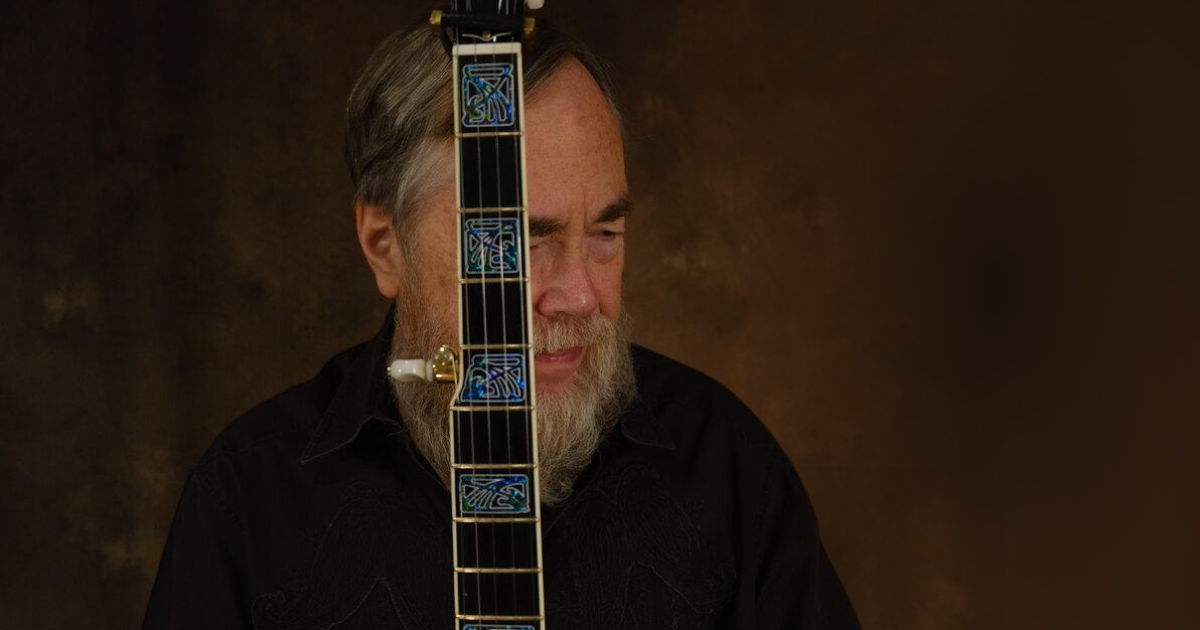
Banjo master Tony Trischka is a bluegrass and roots music renaissance man whose career goes back nearly 60 years, to his early days with his first group, the Down City Ramblers. He’s been making recordings for almost as long, appearing on-record for the first time on Country Cooking’s 1971 debut for the fabled Rounder Records label.
Given the width and breadth of Trischka’s career and sprawling discography, summarizing the man’s recorded legacy is not just a tall order, but a mountainous one. Nevertheless, we’ve made the attempt. Here are a dozen recordings that give a sense of Trischka’s many artistic sides as collaborator, innovator, teacher, keeper of the flame, and all-around musical good spirit.
“Kentucky Bullfight” – Country Cooking (1974)
Trischka was one of two banjo players in this collegiate ensemble. The other was future Hot Rize member Pete Wernick, who spent some time talking up his bandmate to Rounder Records co-founder Ken Irwin. “I was writing a bunch of tunes, and Pete told Ken, ‘Tony should do a solo album,’” Trischka remembered. “Ken said, ‘Sure, go ahead.’”
Irwin cites “Kentucky Bullfight” as the Country Cooking song that convinced him Trischka would be worth signing as a solo act, too.
“China Grove” – Tony Trischka (1974)
Trischka hails from the Northern environs of Syracuse, New York, and it was fairly common for Yankee banjo players of his era to indulge some unusual tangents. “My first album was, comparatively speaking, a little on the bizarre side,” Trischka himself admits. That’s certainly the case for this instrumental from his 1974 solo debut, Bluegrass Light. “China Grove” has East Asian accents throughout and even a saxophone solo from his Country Cooking bandmate, Andy Statman.
“Roll in My Sweet Baby’s Arms” – Tony Trischka (1976)
It seems like a rite of passage that everybody has to put their own stamp on the venerable Flatt & Scruggs bluegrass classic, “Roll in My Sweet Baby’s Arms.” That goes for Trischka on his 1976 album, Heartlands, but few other artists would have the imaginative audacity to kick it off with a drum solo (plus more saxophone).
“Don’t Let Your Deal Go Down” – Tony Trischka (1978)
Another piece of classic repertoire from the wayback machine, “Don’t Let Your Deal Go Down” is the song that made bluegrass forerunner Charlie Poole a star in 1925. Trischka cut it on 1978’s Banjoland in an ambitious all-star arrangement alongside fellow banjo players Bill Keith and Béla Fleck. Also present are resonator guitarist Jerry Douglas, mandolinist Buck White, and guitarist Tony Rice, who adds a definitive vocal.
“They’ll Never Keep Us Down” – Hazel Dickens (1981)
Formerly half of the pioneering female duo Hazel & Alice (with Alice Gerrard), the late great Hazel Dickens was one of Trischka’s best longtime collaborators. His elegant banjo and her emotionally raw voice were a great match on many songs, among them this classic from Dickens’ 1981 album, Hard Hitting Songs For Hard Hit People.
“Bill Cheatham” – Béla Fleck, Bill Keith, and Tony Trischka (1981)
In which three of the foremost roots music banjo virtuosos of the 20th century mesh with tasteful seamlessness while deftly keeping out of each other’s way. From 1981’s Fiddle Tunes for Banjo, this was one of the album’s three tunes that featured Trischka, Fleck, and Keith all playing together.
“Country Death Song” – Violent Femmes (1984)
From Milwaukee, this folk-punk trio puts a gothic spin on folk music. To that end, they often enlist unexpected collaborators to do cameo appearances, adding just-right punctuation. Here is one of the Femmes’ early examples, featuring Trischka’s banjo on their 1984 second album, Hallowed Ground. Nearly two decades later, the Femmes would return the favor by appearing on “Down in the Cider House,” a track on Trischka’s World Turning album.
“New York Chimes” – Tony Trischka (1985)
Trischka has always had a way with clever puns, “New York Chimes” among them. From 1985’s Béla Fleck-produced Hill Country album, “New York Chimes” is also a fine example of Trischka’s higher-gear fast playing. And the band is, of course, spectacular – Jerry Douglas, Tony Rice, Sam Bush.
“Old Joe Clark” – Tony Trischka (1992)
As a dedicated keeper of the flame and teacher/mentor, Trischka has always been up for putting the music into unusual places. One of the most unusual was a 1992 episode of the children’s cartoon, “Where in the World is Carmen Sandiego?,” on which Trischka wandered on camera playing the 19th-century fiddle tune “Old Joe Clark” during a game-show segment.
“World Turning” – Tony Trischka (1993)
Among Trischka’s many virtues as a player, one of the best is that he knows how to back up great singers. And here is a classic example from Trischka’s wildly eclectic 1993 album, World Turning. The title track is a cover of the 1975 Fleetwood Mac song, sung by Dudley Connell and Alison Krauss with Trischka adding just-right banjo flair.
“Shifting Sands of Time” – The Wayfaring Strangers (2001)
Another of Trischka’s far-flung, multi-hyphenate genre experiments is his 2001 album, Shifting Sands of Time, with a wide-ranging guest list that goes from bluegrass patriarch Ralph Stanley to ’90s pop star Tracy Bonham. The title track is at least as worldly as anything his longtime mate Béla Fleck ever put out.
“Brown’s Ferry Blues” – Tony Trischka (2024)
We close with another of Trischka’s all-star collaborations, the opening track from this year’s Earl Scruggs tribute album Earl Jam. “Brown’s Ferry Blues” kicks off with very choice guitar and vocals from modern-day superstar Billy Strings, and Trischka, Fleck, Bush, and fiddler Michael Cleveland are all right there with him.
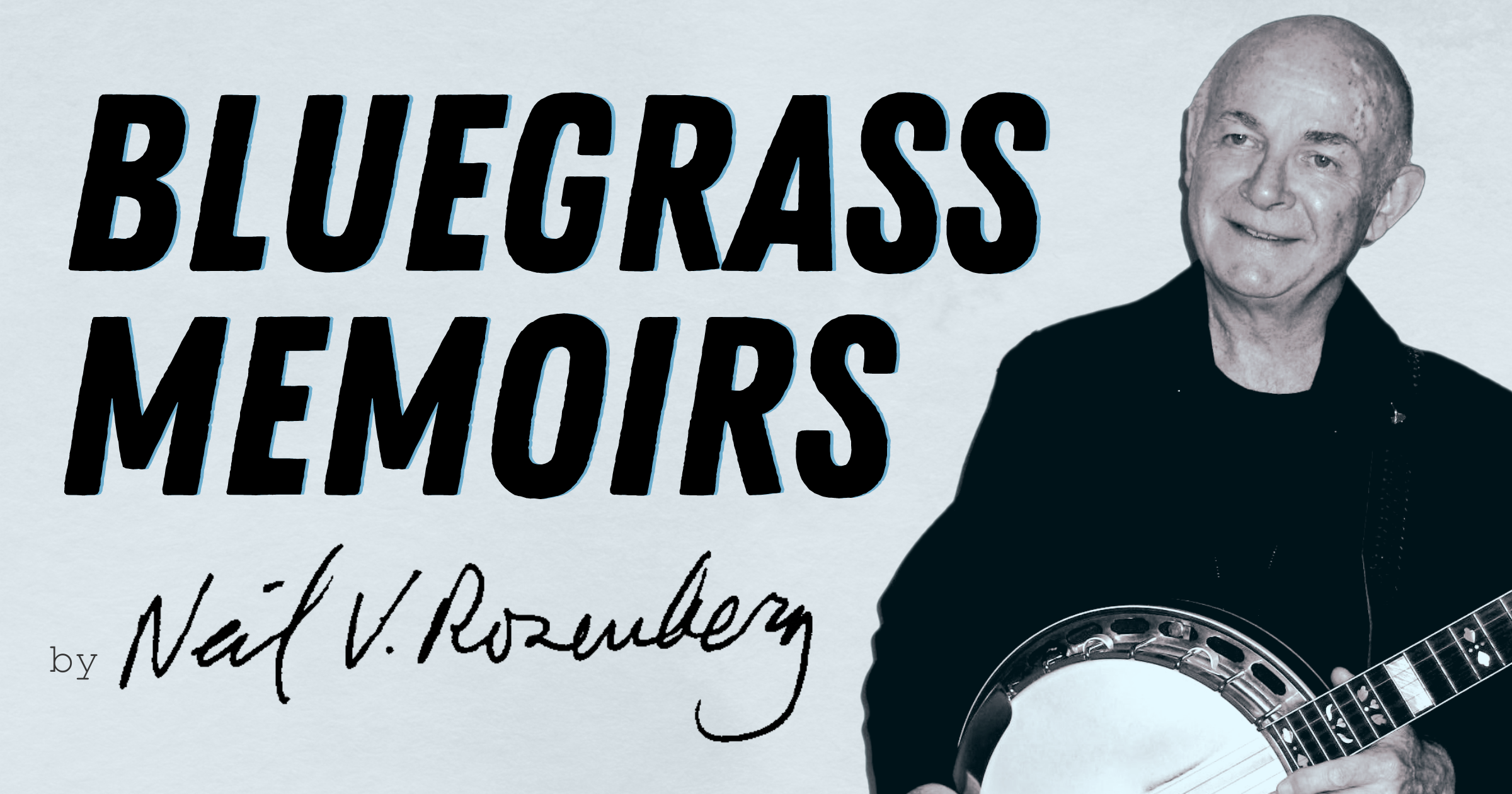
Soon after Earl Scruggs and Lester Flatt ended their partnership and their band The Foggy Mountain Boys in 1969, Earl created The Earl Scruggs Revue with his sons. They recorded for a major label, Columbia, and toured regularly until 1980, disbanding in 1982. This is the story of how I came to see, hear and take extensive notes about their 1975 concert at the University of Maine.
In 1969 I was living in St. John’s, Newfoundland, working at Memorial University’s folklore department where I taught a yearly course, Introduction to Folk Song. I knew that bluegrass drew from folk traditions in the U.S. Southeast, for I had been playing bluegrass and writing about it for a decade. But I could tell my students little about the Canadian milieu. So, in the early ‘70s I began research in Canada’s Maritime provinces of Nova Scotia, Prince Edward Island, and New Brunswick
In August 1974, I moved to New Brunswick for a year’s sabbatical. My research project was a study of regional and local relationships between country music and folk music traditions. I did extensive fieldwork – interviews and documenting events, collecting music.
That fall, I met a singer-collector of country records and song folios, a perfect example of the kind of folk-country connection I was studying. I recorded several hours of his songs and began contemplating publishing them in an album.
I thought at once of Rounder, a new record company that had been publishing innovative roots albums. I’d met the Rounders – Ken Irwin, Bill Nowlin and Marian Leighton, a music collective – at an American Folklore Society meeting. They knew me as a writer about and collector of bluegrass.
Early in the new year I arranged to visit them. In February 1975, I set out in the family pickup with my ten-year-old daughter Lisa from our farmhouse in Pleasant Villa, New Brunswick to Brooksville, Maine, where we visited relatives. Lisa stayed with them while I drove further south to Somerville, Massachusetts, to visit the Rounders.
David Menconi, in his new book, Oh, Didn’t They Ramble (U of NC Press), describes well the scene at the Rounder collective’s big old Somerville house, with their newly flourishing roots music record company. We discussed projects, they took me down to the basement to see their mail order records inventory, and I came back to Brooksville with a load of LPs and lots of news about the contemporary bluegrass world.
Brooksville is a little over an hour away from Orono, site of the University of Maine, where my friend, Edward D. “Sandy” Ives, lived. Sandy was a great writer, a folklorist who’d studied and published books about 19th century singer-songmakers in Maine and the Maritimes. I was looking forward to discussing my ongoing research with him. After I returned from visiting the Rounders, we drove up to Orono to see Sandy and his wife, Bobby.
When we got to Orono, a young friend and former student of mine at Memorial, Lisa Feldman, was staying with the Ives. It was she who alerted us about the Earl Scruggs Revue concert and went along with us to it.
In St. John’s, I regularly bought new bluegrass albums by mail order from County Sales. I don’t recall paying much attention to the Revue then. County didn’t carry their albums.
Revue albums were not easy to find in Newfoundland. Working on a Flatt & Scruggs discography and, admiring Scruggs’ banjo artistry, I wanted to hear his contemporary work. I bought all the Revue albums I could find. By the fall of 1974, when I moved to New Brunswick for the sabbatical, I’d gotten seven.
Those records were in storage back in Newfoundland for the year, but I’d brought my stereo set along and by December I’d found a new Revue album, Rocking Across the Country (Columbia KC 32943). There was nice Dobro on it by Josh Graves and one great instrumental composed by Earl, “Silver Eagle” – named, presumably, for the band’s bus.
During that year I was doing field research at music events and venues – bars, jamborees, concerts, jams – and had developed a system of documenting them. I carried a 3″ by 5″ notebook (spiral binding, ruled pages) and took notes. This was with me all the time and so it just seemed like an easy thing to take notes as usual at this concert.
What follows are my notes from that February 7, 1975, concert, written up from my notebook when I returned to Pleasant Villa the following week.
Friday, February 7, 1975 Orono, Maine Report on Earl Scruggs Revue Concert at the University of Maine, Orono.
Tickets were $3.50. I went with Sandy Ives, and we were joined at the concert by Lisa Feldman and by [Sandy’s wife] Bobby and [their daughter] Sarah Ives and [my daughter] Lisa R., who had all gone to see a Robin Hood movie. The concert was sponsored by the student union and represented a slight departure from previous concerts of this type in that instead of bringing high-powered “name” outfits on which a lot of money had been lost, they were now trying slightly less expensive acts. The concert committee was dominated by frat boys who didn’t know about music, according to Lisa [F.].
Site of the event was the basketball gym. Folding chairs were placed on the court, and wooden bleachers were placed around the side (these might have been permanent, but seemed moveable… small point). There were balcony seats on both sides and at one end, the end over the doors through which we entered. At the other end a stage was set up. Dominated by big columns and horns on either side – your typical rock concert setup. Sandy and I took seats on the left side of the bleachers (as you face the stage), about three rows up and we were about 2/3 to 3/4 of the way back from the stage toward the entry doors. Directly ahead of us in the middle of the floor was a raised platform on which the controls for the sound were set, along with a chair or two for the operator(s?). Behind this, higher and close to the back, was another platform with the lights. During the concert the colors were constantly being changed and moved about from tune to tune by a light man who must have known something about the Scruggs show in advance.
The audience consisted of college students almost exclusively. I didn’t see any old-time Martha White fans or country music types. Dress was Levi’s and hippie mufti – knit caps, ragged but interesting coats, vests, long dresses, patches, etc. There was a lot of smoking going on and some drinking. Before the show a long-haired young man who represented the powers that be got up and told the audience that there was no smoking and no drinking and that if they were caught, they would be ejected from the show by the campus police. In addition he said that, if you must smoke, then don’t get caught. But also, he said, please don’t put out your butts on the floor of the basketball court – a lot were last time, and the University is threatening to not let them have concerts if this continues. Burden of the speech: Here are the ground rules, don’t get caught, play it cool.
The campus police were cruising up and down the aisles dressed in dark blue uniforms with dark blue shirts and black ties with dark blue Stetsons. Something like Civil War Union Army officers in movies. And they were looking very serious and hawk-like.
The warm-up act was introduced, as a group from Boston, “Beckett.” The group consisted of Phil B. (missed his last name, [Buller]), who came on playing a D28 guitar and a harmonica, Steve Delaney, playing an electric bass, and Jaime Michaels, who played a D18 Martin guitar and did the emcee and lead singing in the first few numbers. Later they all switched around, with each doing some lead singing and some emceeing. I took notes in the darkened auditorium with a fancy movie critic’s pen that [then wife] Ann had given me — lights up in the dark, illuminating one’s pad. As it were.
The first song was “CLEAR BLUE SKY.” There were a few catcalls from the balcony and a rather tentative feeling from the audience. A whiff of authentic marijuana smoke drifted my way during this (and subsequent songs), and I could see people lighting up in various places. Later, the folks next to me surreptitiously passed a bottle (beer, I think) around. At the end of the first song, the Beckett emcee made a sly crack about “Maine Mounties” and from there the show built — they had the audience with them.
Next song was “SOMETHING NEW.” As all this was going on, the cops were cruising up and down the aisles, occasionally throwing people out, but generally arriving on the scene after the cigarette had been extinguished. They were on the lookout for tell-tale lights, and one time one went by us while I was jotting down a note with my fancy pen. He gave me a hard look and some of the people around me had a good giggle about that.
Next song, [“WE ARE FREE”]. These guys weren’t musically bad, but I could not really get into their music. The harmony singing was kind of Crosby/Stills/Nash and actually a bit weak; the instrumental aspect of it was bland. A note here says “harelip,” but when you wait ten days before writing up your notes you forget the jokes, I guess. Next one of the boys took up an Ovation guitar – this was Phil B., and the song was “LAST TUESDAY MORNING.” Then Jaimie mentioned that they were from Virginia and that they considered it an honor to be appearing with the Earl Scruggs Revue. Then they did “TENNESSEE.” Next, “I’LL TRY IF YOU’LL TRY.” Most of their songs were their own compositions, I guess. I didn’t recognize any of the above; the names in brackets are ones they didn’t announce that I guessed at from the words. Now Phil took up the Ovation again Steve took an electric guitar and they did a song they had written while in Pittsburgh, [“STOLE AWAY”]. Using the same instrumentation, which, incidentally, sounded better than the acoustics – that is, the electric came over with much more tone – they did “PERFECT HONEY.”
Now another instrument switch with Phil taking up an old Gibson J50 guitar and Steve going back to the bass. The song was introduced as a “folk song” for reasons which eluded me at the time. It was “SEARCHING,” but not the Coasters’ smash hit. With the same instrumentation, they then launched into a song written either by or about some friends in Boston, “COUNTY LINE.” Then, as their final tune, a song they introduced as being by Joni Mitchell and needing no introduction (?). It was well received by the audience, and they got an encore.
They came on and did a song which they introduced as a real old one by that old bluesman Eric Von Schmidt (time flies – I remember Rolf Cahn telling me in 1959 that he’d been picking with a really good kid in Boston who even did some slide guitar, a kid named Rick Von Schmidt). Song was “AIN’T NOBODY’S BUSINESS BUT YOU OWN,” and they did it well. Kids in the front of the audience got up and started waving their hands in the air, literally surrendering to the music. For the second encore, it was another Von Schmidt tune, “GRIZZLY BEAR (SOLID GONE).”
Another intermission, punctuated by further entreaties by the same fellow. By this point, the cops were less in evidence although during the second half they did eject several people sitting around me.
Enter the Earl Scruggs Revue, who plug in and pick away at once on “NASHVILLE SKYLINE RAG.” Across the front of the stage are three microphones; at my left stands Stevie Scruggs, who plays rhythm guitar (a Gallagher) most of the evening, except for one banjo tune. Next to him is Randy, who is bent over his Gallagher guitar, doing the lead work. Characteristically I guess you never see his face when he’s picking, he’s looking at the fingers and anyhow is surrounded by hair. Later, in various numbers which I didn’t note, he plays a bright red Gibson electric with twin cutouts and a thin (hollow?) body, which has a very mellow tone.
Next to him, in stage center, is Earl. Earl’s Mastertone is electrified with some sort of pickup inside, a Barkus-Berry or FRAP of some kind I guess. This surprised me, as did the fact that he was wearing the instrument much lower than when he played with Flatt. He was not bopping around as much as the boys (who, in turn, were not bopping around as much as many or most rock groups), but he was looking very relaxed, had the old smile of yore, and did move when he played more than I remember from the Martha White days. On the right and, rather standing back was poker-faced Gary, who played bass and did the lead singing. When there was any part singing done, Earl and Randy took the center mic, Steve the left-hand one, and, behind them Jody Maphis took his vocal parts on a separate mike over the drums. To my right behind and to the right of Gary, was a piano where Jack Lee the pianist sat. This is the same guy on the cover of the Rockin’ Across the Country album. [This is not correct. The guy on the cover of Rockin’ is Shane Keister, who is listed on the album cover as “keyboard instruments.”]
My first impression was one of tightness, in the sense that the band was really together and tight. And although I can’t say I like Earl’s banjo sound as well with the volts surging through it, it was sounding like a banjo and Earl did get quite a few tonal nuances from it without the visible aid of a tone control. Randy was as good as the recordings led me to expect, however, he frequently seemed to be “grandstanding” it, by playing freak-out type rock licks way up the neck which were spectacular and, effective in terms of inciting the audience, but which were as far as I was concerned not as nice musically as the well thought out stuff he did or does on record. So I was a bit disappointed in Randy.
My reaction to Earl was just the opposite. He has sounded a bit stiff and mechanical on the records I have heard (and I got ‘em all, Jack), but tonight he was nicely in the groove and seemed to have some very interesting new ideas, especially rhythmic variations, which I hadn’t heard before. He really seemed to be enjoying himself, too. After this tune, the members were introduced and they went right into “I SHALL BE RELEASED,” following which, Earl introduced the next song as an old “shouting type number,” “PAUL AND SILAS.”
Gary’s singing is o.k., it fits the music and sells the songs to the rock programmed audience. Doesn’t bother me, doesn’t excite me; seems to be better in person than on record, and better on recent record than on older records. Earl next says this is an old number he used to play at square dances back when they only had one instrument, and he says, “We’ll show you what it was like to do it alone and then we’ll show you why I was so glad when someone else came by with their instruments to help me out.” He doesn’t announce it, but it’s “SALLY GOODIN.” Intro and arrangement are as on the Kansas State album. They really get rolling (and rocking) on this one, with Earl and Randy engaging in some nice banjo-guitar call-response stuff. The audience responds here as it does again and again later on to the faster tunes, by standing up and waving their hands, shouting, etc. Following this, Earl mentions the Kansas State album by saying that the next tune is on it, an old Jimmie Rodgers tune, “T FOR TEXAS.” Next, Randy is to pick a fiddle tune on the guitar, and it turns out to be “BLACK MOUNTAIN BLUES.”
The next tune, an instrumental, was a [Blues in F] and then, coming without an announcement was “MOST LIKELY YOU GO YOUR WAY (AND I’LL GO MINE),” which has a nice arrangement with some good banjo work by Earl. The next song is introduced by Gary as one which dad wrote about the place in North Carolina where he grew up, “FLINT HILL SPECIAL.” Gary takes a harmonica break on this one.
Then, a novelty item — Randy and Jody play a tune written by Elizabeth Cotten (Earl is talking – I was gassed that he gave the tune proper credit, this really shows the kind of considerate and thoughtful person I like to think he is), on one guitar! Here Jody gets up front, from behind his drums, and he & Randy stand near the center of the stage and Randy does the right hand (the guitar, a Gallagher is hung from around his neck) and Jody does the left. Then, while Jody does the simple left hand, Randy does some fancy up the neck left hand stuff too, making it into a very interesting and rather complex piece of music. They also gag it up a bit, swinging the guitar back and forth at the end, in time to a leg-swinging rock dance step thing. Nice job, boys. “FREIGHT TRAIN” was the tune, of course.
Now one of the boys (Gary?) introduces Earl doing an old Carter Family tune on the guitar. This is “YOU ARE MY FLOWER,” which Gary sings and my impression was that the sound not as nice and delicate as on the recordings of that that Earl did a few years back. Next it’s Stevie’s turn – he does “EARL’S BREAKDOWN” on Earl’s banjo and it’s very hard to hear, giving me the impression that he hasn’t mastered the tune that well or that in any case hasn’t worked out tone production and control on the electrified instrument the way his father has. The next tune I noted only as [“FATHER TOLD ME”] and I’m at a loss to identify it from their recordings. Then, of course, the song which “Daddy wrote for a television series,” “THE BALLAD OF JED CLAMPETT” done as an instrumental. Followed by Randy’s guitar version of “ORANGE BLOSSOM SPECIAL,” which is a crowd rouser/etc.
Next comes Gary’s interesting song “EVERYBODY WANTS TO GO TO HEAVEN (NOBODY WANTS TO DIE),” which features in this performance a slide banjo sequence by Earl, in which he’s picking along, then takes his left hand off the fingerboard, reaching into his pocket (I think, what?!) and pulling out a slide and doing a couple bars of that kinda stuff. Grandstanding, but fun, and the audience can’t miss it. “STEP IT UP AND GO” is next and then “one that Dad wrote in 1949 and in 1968 they used it for the theme to a movie called Bonnie and Clyde,” “FOGGY MOUNTAIN BREAKDOWN,” which is the final number and leaves ‘em screaming for more so they do: “CAROLINA BOOGIE,” which has some nice call-response parts and leads to a second encore in which they do “BUGLE CALL RAG,” “LITTLE MAGGIE” (bless her soul).
The audience wants more but the lights are turned on.
(Editor’s Note: Neil Rosenberg’s Bluegrass Memoirs on the Earl Scruggs Revue will be continued.)
Author’s Note: For a contrasting review see Hub Nitchie, “Pull the Plug, Earl” in Banjo Newsletter II:6 (April 1975), p. 13.
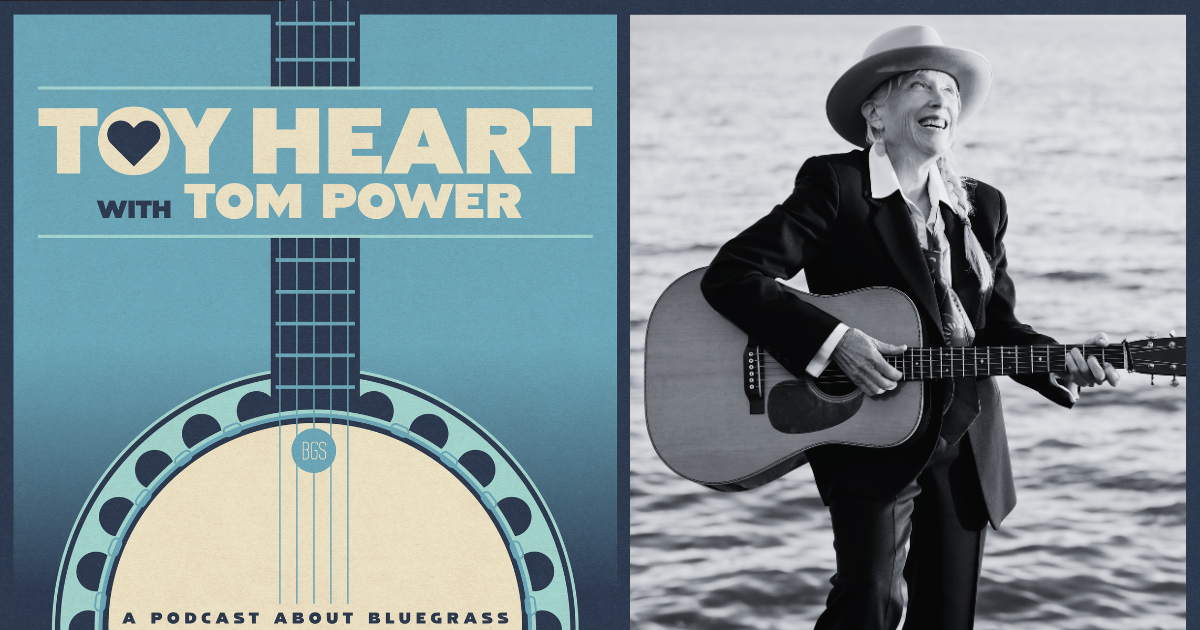
In the latest episode of Toy Heart, we explore the roots and evolution of bluegrass in the modern era by examining the story of legendary bluegrasser, singer-songwriter, and recording artist, Laurie Lewis.
From her tales of growing up in Berkeley during what Lewis jokingly calls the “folk scare” of the ’60s to finding the joy of music through her father’s classical background and eventually becoming a pioneer for women in the genre, her lifelong career in American roots music is a perfect example of how the innovation and tradition-bending tendencies of bluegrass’s first generation continue full force today. Lewis’s musical transformation over the course of her life shows the entrancing power of bluegrass to steer and alter the course of hers and so many others’ lives.
In our Toy Heart interview, Lewis chats with host Tom Power about the magnetic pulls of Chubby Wise’s fiddle tunes, of albums by the Greenbriar Boys, and of a formative live show by the Byrds. She talks about studying modern dance, “disappointing” her father by “rebelling” and choosing folk music forms over classical, and what eventually led to late-night jams, fiddle contests, and navigating the Bay Area’s bustling bluegrass, folk, and women’s music scenes.
Their conversation closes with a reflection on the ways bluegrass has affected Lewis the most, and, how it continues to shape the identities of its artists and listeners with an intractable, ineffable pull. Power and Lewis point out how current generations – from Molly Tuttle to Tatiana Hargreaves, both mentees and collaborators of Lewis – continue in these same traditions. Plus, Lewis shares what it was like to tour and sing with Dr. Ralph Stanley, himself.
This Toy Heart episode dives deep into the many layers of the genre, helping to demonstrate just some of the many ways bluegrass interweaves itself into musicians’ and fans’ personal and musical identities. Lewis shows there are countless joys in staying true to one’s artistic vision amidst an industry that is always in flux; her insights offer a soulful perspective on continuity and change within the genre, echoing the sentiments of a community that, much like a family, supports and evolves with its members – and that continues to rightly hold Lewis up as a trail-breaker and standard-bearer for the entire genre.
The songs of Sarah Jarosz have always been snapshots. Each, whether literally or obliquely, is a tableau – a window into a moment in time, an attempt to capture but never contain the intangible present. Whether demonstrable story songs or abstract, poetic text paintings, Jarosz’s catalog of material shows a ubiquitous skill – a writerly athleticism – for ushering her listeners into the scenes she inhabits or constructs. From her earliest release to her newest, Polaroid Lovers (out January 26 on Rounder Records), Jarosz’s point of view has been confident, relatable, and inviting.
Simultaneously, the expansive body of work she’s produced since her 2009 Sugar Hill debut, Song Up in Her Head, tells a tale as much of uncertainty as of skill and finesse and, within that uncertainty, a commitment to relishing the journey – rather than rushing toward an arbitrary destination.
A teenager when she first gained national notoriety, Jarosz was often compared to her mentor-peer-friend Chris Thile and her contemporary, Sierra Hull. While child bluegrass, Americana, and string band stars – proverbial and oft-mythologized prodigies – have a much more gentle route to adulthood than say, their Hollywood counterparts, it’s still a time hallmarked by experimentation, growing pains, exploration, and a prerequisite amount of floundering. Musically, Jarosz may have “floundered” a bit less than say, Hull or Thile or any kid whose teen years may have had a recorded, audio history. Nevertheless, you can trace a through line of angst, introspection, and finding oneself underlying the precocious self confidence of her early albums.
By the time Jarosz reached 2013’s Build Me Up From Bones, which gained her her first Best Folk Album Grammy nomination, that uncertainty was no longer an undertone, but a focal point in her music. On both Bones and the follow up full-length, Undercurrent, which then won the Grammy for Best Folk Album, Jarosz picks up and runs with those musical expectations, whether overt or projected. She plays with the dichotomy between the public nature of her growing up a heart-on-her-sleeve songwriter and bluegrass picker and the individual, private nature of seeking and finding her own agency within those paradigms. She purposefully built broad and appealing, commercial songs that are both assured in their sincerity and unconcerned with virtuosity or authenticity for their own sakes. She knows exactly what she’s doing, even – if not especially – when she does not.
Needless to say, the following projects World On The Ground and Blue Heron Suite feel like they are both indelible home bases built on the steady foundation of the albums that led to them. Each are distillations of Jarosz’s musical commitment to bringing her audience inside the turmoil and delight, growth and doubt, beauty and bittersweetness of life and song. Jarosz had arrived at her destination, hadn’t she? In her beloved New York City, a Grammy winning artist, picker, and songwriter who knows who she is and why she does what she does.
Ah, but remember, it’s the journey Sarah Jarosz is after and not the destination. Polaroid Lovers is a lens into the new growing pains, the new uncertainty, the new uprooting and, eventually, re-rooting Jarosz finds herself in the middle of now. She recently moved to Nashville, building a life with her new husband, bassist Jeff Picker. Polaroid Lovers, like its predecessors, brings the listener into how living in Nashville has reshaped Jarosz’s songwriting and creative and recording processes.
It may not sound like a Music Row album – it sounds, as all of her work does, exactly like Sarah Jarosz. Whatever that sounds like! – but it’s a collection that has the Row tangled among its roots and certainly in the water. Polaroid Lovers was recorded at Sound Emporium and produced by Daniel Tashian, plus it has many a credited co-writer, a bit of a departure for the songwriter who, besides in her work with Aoife O’Donovan and Sara Watkins in I’m With Her, rarely co-writes material for her own albums, preferring to pen most lyrics and tunes herself. Music Row and Americana hit writers like Ruston Kelly, Natalie Hemby, Jon Randall, Gordie Sampson, Tashian, and others each lent their own fingerprints and touches to this set of song snapshots.
Does Polaroid Lovers sound new? Does it sound like Nashville? Yes, it certainly does, but it doesn’t sound instant or ready-made either, and it always sounds like quintessential Jarosz. This is evidenced nowhere on the record as strongly as one of its lead singles, “Columbus & 89th.” Among more than a few masterworks in Jarosz’s catalog that center on her beloved, transplanted (former) hometown, New York City, “Columbus & 89th” is perhaps the best example of the form. Wistful and hopeful, with a tinge of bittersweetness from the wisdom that comes with age, it paints such a specific picture – of a literal street corner – but, as in all of her snapshots, this polaroid is not confining or finite, it’s resplendent and limitless. Following the photography metaphor one step further, it’s not difficult to see how the perspective Jarosz has gained by moving away from the city might have enabled her to render such a picture perfect homage to New York.
This is a vibrant, animated collection of Polaroid Lovers. This is Sarah Jarosz at her best– for now.
Watch for our Artist of the Month interview feature with Jarosz to come later this month, plus we’ll do a catalog deep dive and showcase plenty more content pulled from the BGS archives. For now, enjoy our Essential Sarah Jarosz Playlist:
I call January my reading month. To be clear, I do of course still scan words and decipher syntax throughout the remaining 11 months that fill the calendar, but I always seem to start and finish the most books in the first month of the year. I don’t think it’s because I have a romantic notion of what my new self will be like in this new year – always reading and writing more or doing xyz to “better” myself (though if I’m being honest, that’s probably part of it). Rather, I think it’s more so that in the hangover of the holidays, when the gatherings are over, and there are months of dreary winter to look forward to, I take comfort in the ability to transport myself to another time or place, or simply get lost in someone’s thoughts for hours at a time.
This community, as much as any, understands the import of passing stories on – allowing a new generation to take the torch and keep honored traditions burning while evolving its culture and extinguishing the shameful parts of its priors. That’s why we at BGS compile notable books that tell the stories by or about these genres’ songs and songwriters and the scenes, places, and events that made them.
Maybe you’re like me, looking for ideas of books to get lost in this winter, or maybe you are looking for a way to turn the page on the calendar and become your most “badass self” (we’ve got a book for that). You might be here looking for a last minute gift idea for that special music-loving person in your life. In all those cases, you’ve come to the right place!
We’ve got a book by an esteemed songwriter who waxes poetic on the art form he loves. We’ve got titles about how certain times in certain places scenes have blossomed and sub-genres formed so palpable that listeners can identify a song by its roots. We’ve got biographies of famous musicians, and some of whom have looked back at their own lives and careers. Find all that and more in our list of reading recommendations, organized by categories below:
Sense of Place
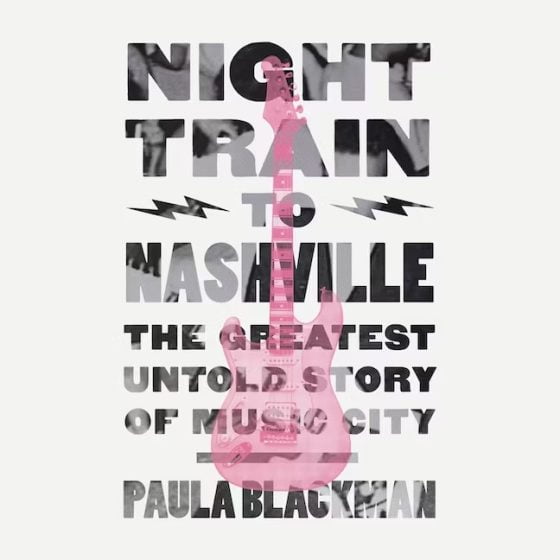
Night Train to Nashville: The Greatest Untold Story of Music City, Paula Blackman
Drawing on stories from her grandfather, E. Gab Blackman, a 30-year radio executive at WLAC, Paula Blackman shares the story of how the Nashville radio station became a pioneering source for Black rhythm and blues music in the 1940s and ‘50s. Seeing the opportunity to reach a more diverse audience – not, as Paula notes, to be a “white savior” – Gab teamed up with disc jockey Gene Nobles to play “race records.” In Night Train, Blackman also profiles William Sousa “Sou” Bridgeforth, the owner of New Era Club, a prominent Black nightclub in Nashville that blossomed as a result of the new artists being spun on WLAC airwaves, many of whom were introduced to Gab by Sou. Fitting that the story of Nashville, in the time leading up to the civil rights era, is told through the music played on the AM radio speakers throughout the city.
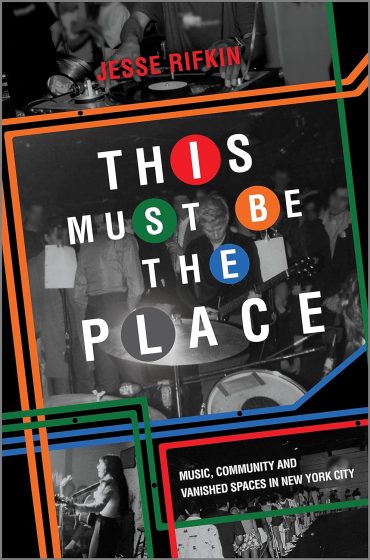
This Must Be the Place: Music, Community and Vanished Spaces in New York City, Jesse Rifkin
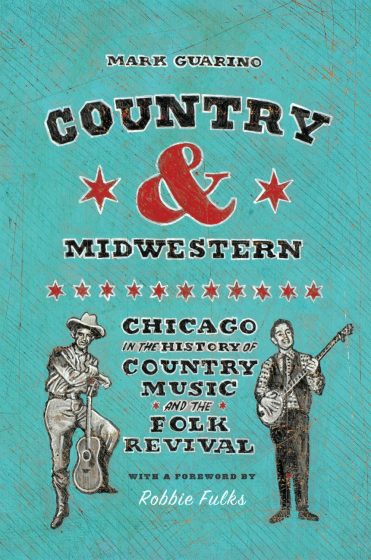
Country and Midwestern: Chicago in the History of Country Music and the Folk Revival, Mark Guarino
In Their Own Words
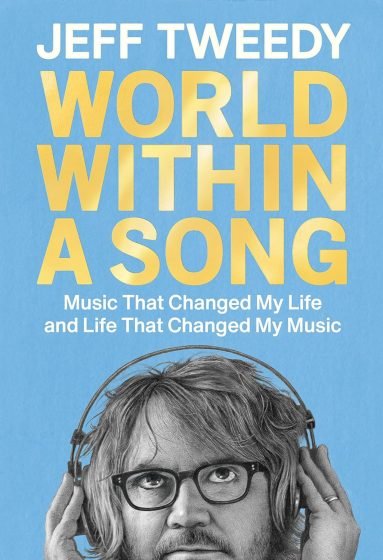
World Within a Song: Music That Changed My Life and Life That Changed My Music, Jeff Tweedy
Wilco frontman and New York Times bestselling author Jeff Tweedy follows up on Let’s Go (So We Can Get Back) and How To Write One Song with a gushing love letter to songs. In it, Tweedy dedicates chapters to many (but clearly not close to all) of the songs that have resonated deeply with him for one reason or another. From Bob Dylan to Billie Eilish, from The Clash to ABBA, Tweedy sheds any and all pretense of what might be considered “cool” in his selections.
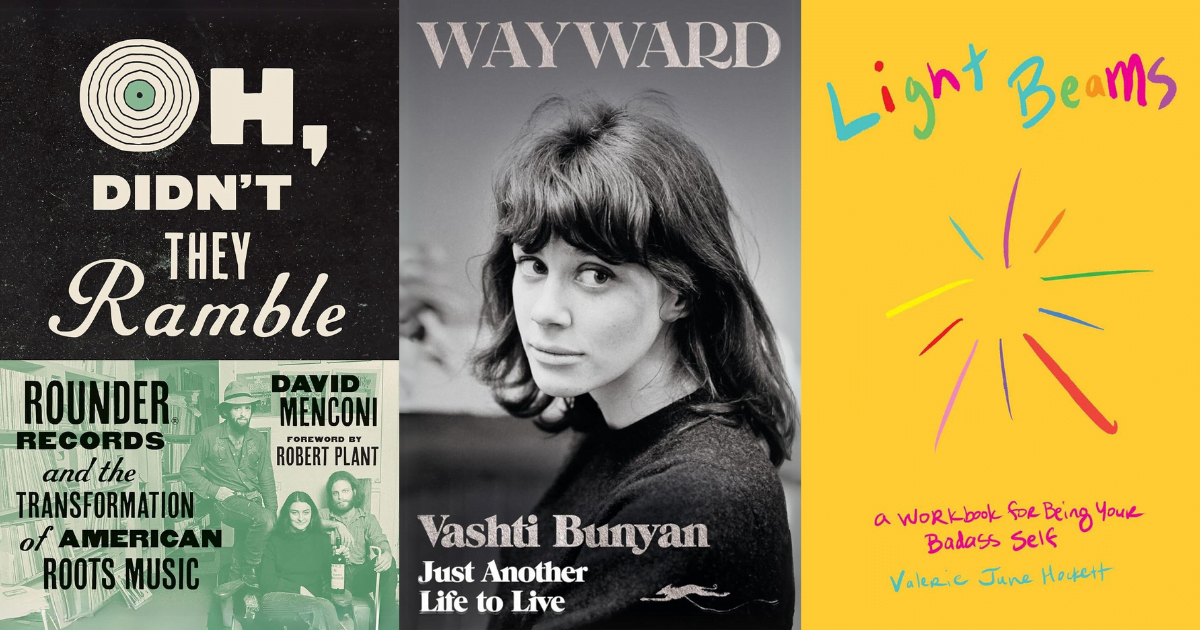
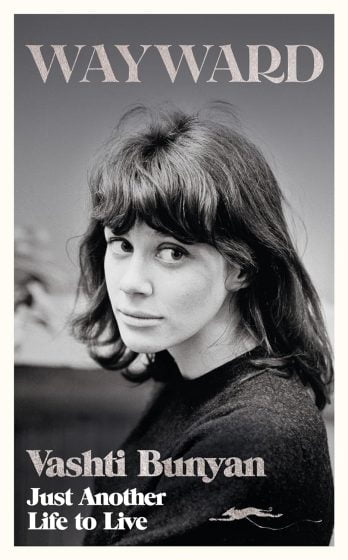
Wayward: Just Another Life to Live, Vashti Bunyan
In Wayward, Vashti Bunyan, an English singer-songwriter, recounts her early career in the mid ’60s leading to her debut release, Just Another Diamond Day, in 1970. Disillusioned by its lack of success (at the time) and the fact that her songs, life, and career were all dictated by men, she left the music industry entirely before re-emerging in the early 2000s. Pick this up for the story of what happened in between, how she reclaimed her life, and is taking her second act in music on her own terms.
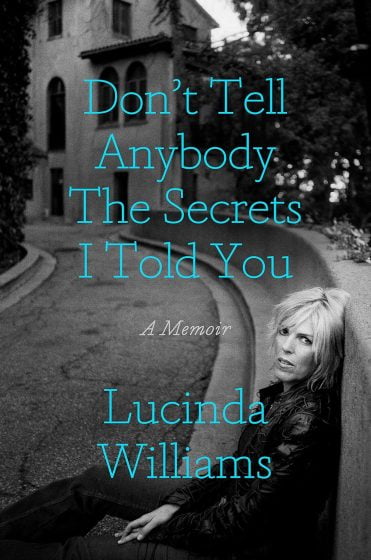
Don’t Tell Anybody the Secrets I Told You: A Memoir, Lucinda Williams
3-time Grammy award-winning songwriter and now New York Times best-selling author, Lucinda Williams, recounts her upbringing and bumpy ride to fame. Once getting feedback from a record company who said her music was “too country for rock and too rock for country,” Williams stayed the course, and became one of the greatest and most influential songwriters of our time.
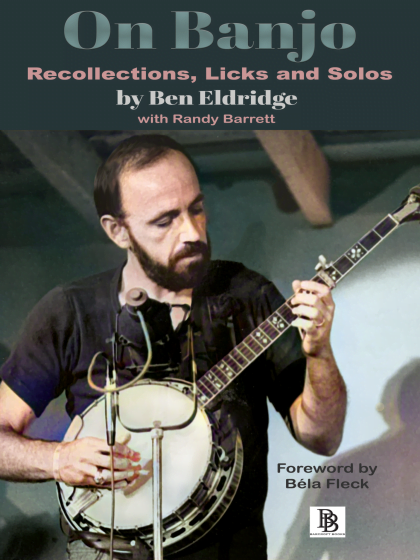
On Banjo: Recollections, Licks and Solos, Ben Eldridge
Born in Richmond, VA, Ben Eldridge fell in love with roots music watching WRVA’s Old Dominion Barn Dance. In this memoir-meets-tablature book, he recalls his path from upbringing to moving to D.C. to become a mathematician, and ultimately going from jam sessions to forming a group that would change bluegrass henceforth – the Seldom Scene. This conversational book with pictures that set the scenes even comes with licks and transcriptions for banjo playing fans.
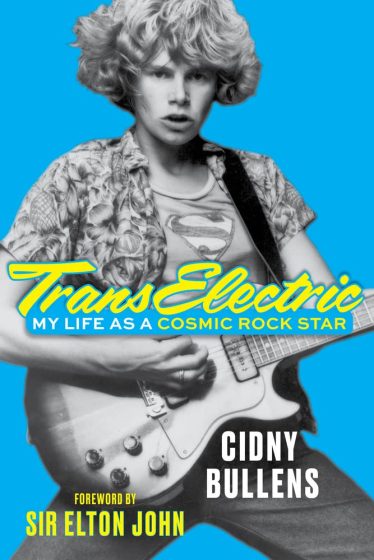
TransElectric: My Life as a Cosmic Rock Star, Cidny Bullens
This book starts with a bang! And I’m not even talking about the foreword from Elton John. As just a 24-year-old Cidny (then referred to as Cindy) had shown up uninvited to a live recording session for Dr. John at Cherokee Studios in Hollywood, and eventually found himself starting an impromptu jam with Ringo Starr, Eric Clapton, Dr. John, and Joe Cocker. This retrospective traces his arc from a backing vocal career in the drug-fueled ’70s for the likes of Elton John and Rod Stewart, and having trouble finding his footing as a solo artist who had expectations of how a woman could behave and perform. Bullens settled into the life of a typical suburban mom, experienced a personal tragedy, and eventually found his true voice.
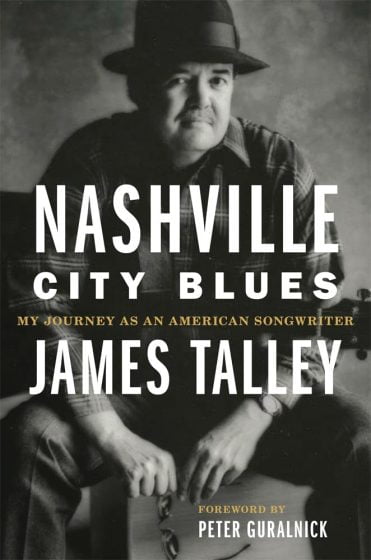
Nashville City Blues: My Journey as an American Songwriter, James Talley
Biographies & Histories
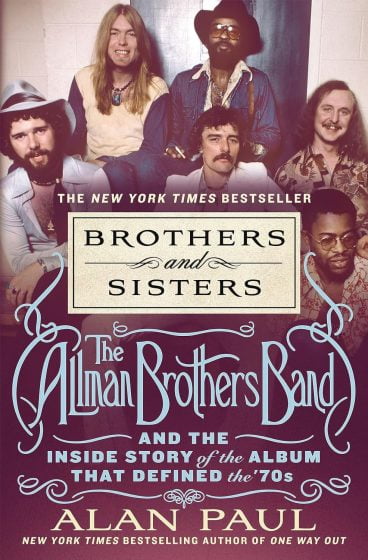
Brothers and Sisters: The Allman Brothers Band and the Inside Story of the Album That Defined the ’70s
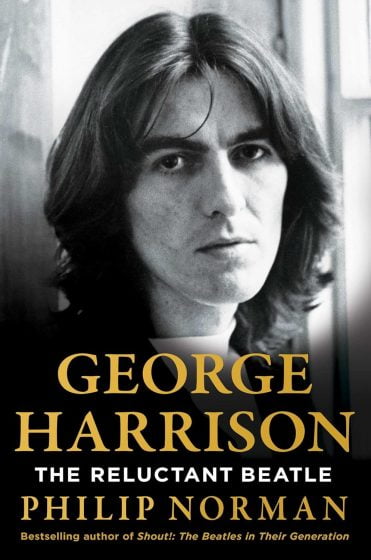
George Harrison: The Reluctant Beatle, Philip Norman
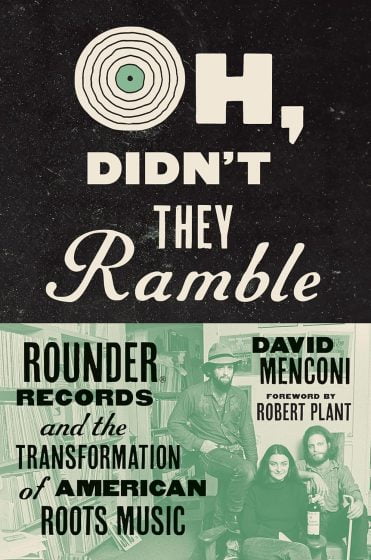
Oh, Didn’t They Ramble: Rounder Records and the Transformation of American Roots Music, David Menconi
Oh Didn’t They Ramble chronicles the comprehensive history of the quintessential folk record label for the last 50-plus years. With extensive access to Rounder artists, staff, and founders Ken Irwin, Marian Leighton Levy, and Bill Nowlin, BGS contributor David Menconi is able to tell Rounder’s story, from its humble but audacious and idealistic beginnings to becoming one of the most influential record labels in the history of recorded music.
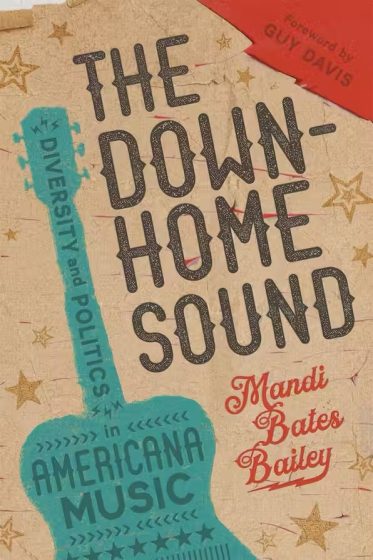
The Downhome Sound: Diversity and Politics in Americana Music, Mandi Bates Bailey
How-Tos
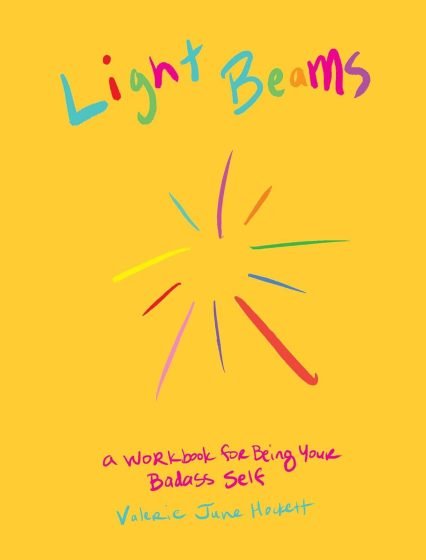
Light Beams: A Workbook for Being Your Badass Self, Valerie June
Like I mentioned, this workbook/journal might be coming just at the right time as you resolve to become your most “badass self.” But even if you’re reading this well into the new year, then there’s no time like the present! Published on Jack White’s Third Man Books, Valerie June’s Light Beams offers its readers “contracts and agreements, self-healing wishes and spells, and maps and prescriptions in exercises” on a journey to self-love and waking up with a promise of choosing kindness and shining like a “badass.”
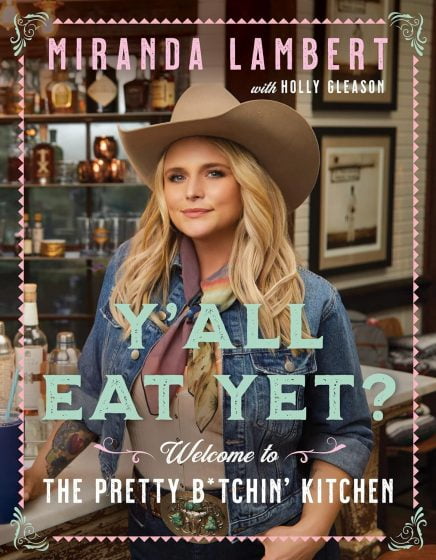
Y’all Eat Yet?: Welcome to the Pretty B*tchin’ Kitchen, Miranda Lambert
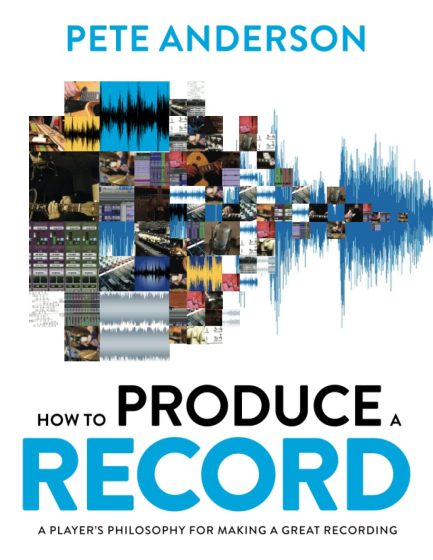
How To Produce A Record: A Player’s Philosophy For Making A Great Recordings, Pete Anderson
Other
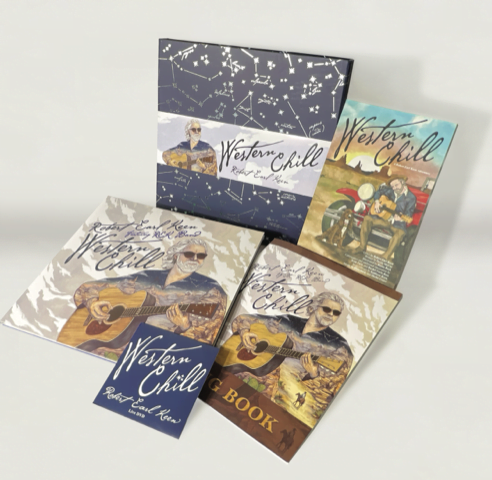
Western Chill, Robert Earl Keen
As a set that features a double sleeve album, a DVD with music videos for every song, a graphic, illustrated novel that explains the writing process, and a songbook with lyrics, notes, and chords so the purchaser can play along, this title certainly belongs in a category of its own.
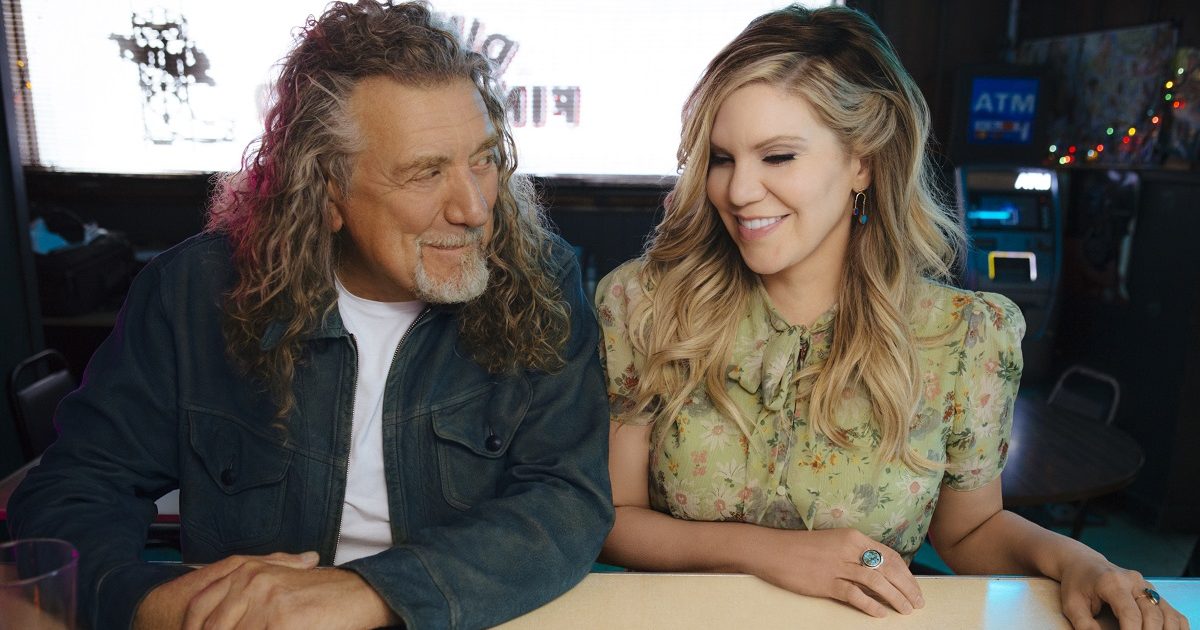
Artists:Robert Plant & Alison Krauss Song: “High and Lonesome” (written by Robert Plant and T Bone Burnett) Album:Raise the Roof Release Date: November 19, 2021 Label: Rounder Records
In Their Words: “It’s such a far cry from everything I’ve done before. I love the whole kaleidoscope of music that I’ve explored, but this is a place where you can think within the song, you can decide how to bring home an emotion. It’s another blend that we’ve got, and long may we have more of them.” — Robert Plant
“One of my favorite parts of this is the songs and songwriters that I had never heard of. Working with Robert, and with T Bone, is always a great education in music history.” — Alison Krauss
Editor’s Note: Plant and Krauss’ 2007 album, Raising Sand, won six Grammy Awards. Like its predecessor, Raise the Roof was produced by T Bone Burnett, and features twelve new recordings of songs by legends and unsung heroes such as Merle Haggard, Allen Toussaint, The Everly Brothers, Anne Briggs, Geeshie Wiley, Bert Jansch, and more. The collection also includes “Can’t Let Go,” written by Randy Weeks and first recorded by Lucinda Williams.
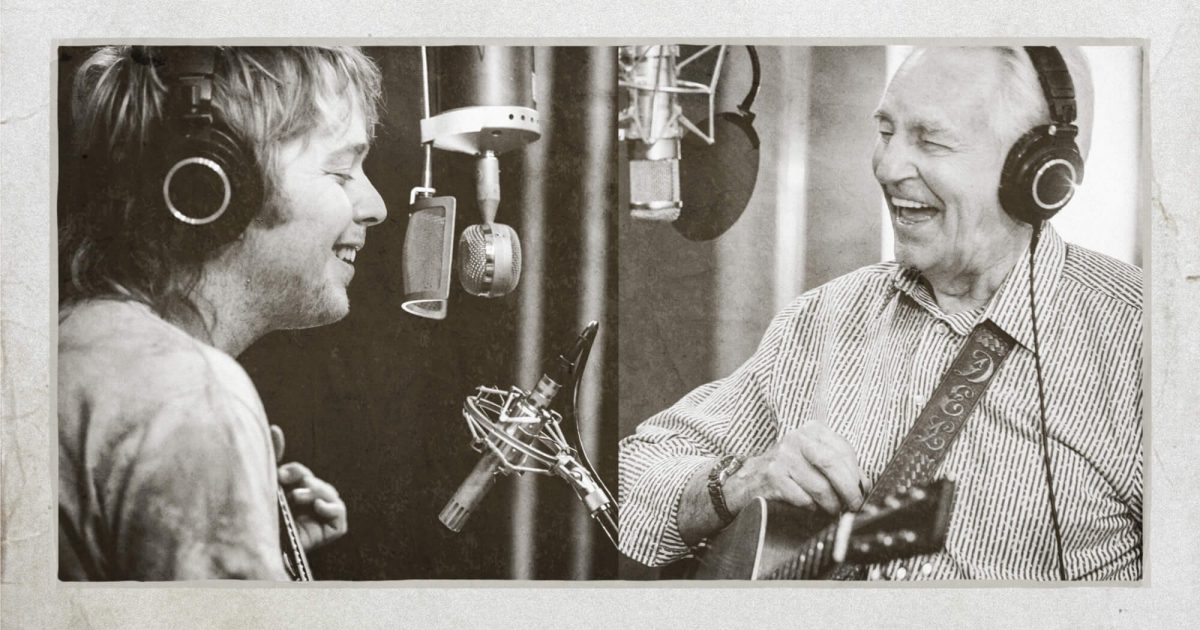
Simple and strong, this live performance of “Midnight on the Stormy Deep” encapsulates so much of what we love about bluegrass. A style-defining voice and top-shelf front man, Del McCoury sings tenor and strums his signature rhythm guitar on the tune as Billy Strings leads from behind a mandolin — a lesser-known instrument for the fiery flatpicker whose name and music have become synonymous with modern bluegrass.
A timeless bluegrass standard, McCoury and Strings’ fresh take on “Midnight on the Stormy Deep” is reverent and quietly respectful of the music’s traditions. The breaks and fills are baked into the sound of bluegrass while the forward, bright vocal tones of the two friends could be the textbook definition of traditional harmonies. Some might say that McCoury and Strings could hardly be any more different as artists, but their mutual respect and appreciation is evident in this figurative, bluegrass passing of the baton. Don’t miss their in-studio performance of “Midnight on the Stormy Deep.”
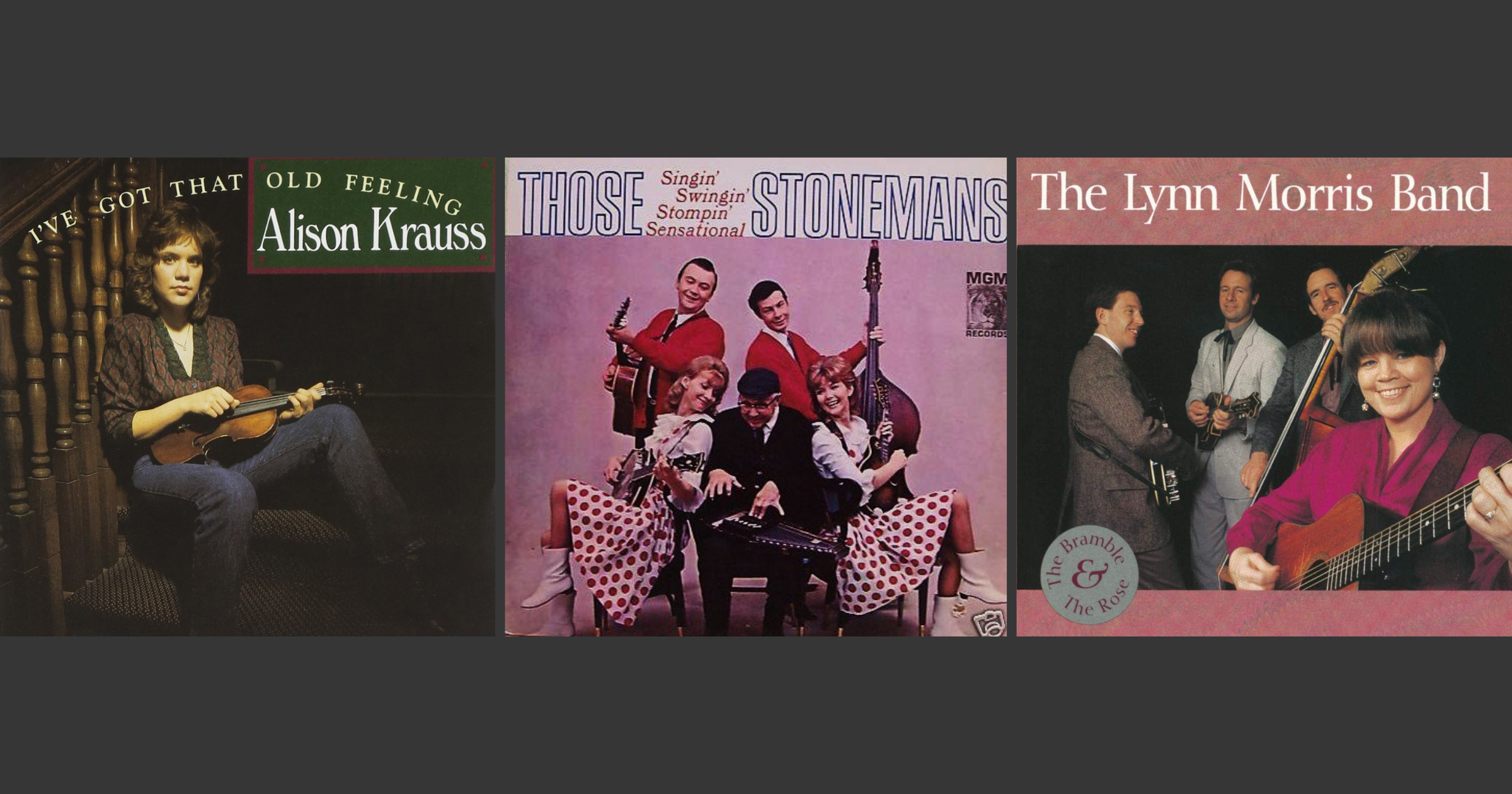
For the first time in the thirty year history of the International Bluegrass Music Association a class of Bluegrass Music Hall of Fame inductees includes a woman in every act. The Hall of Fame, helmed by the IBMA and housed inside the Bluegrass Music Museum in Owensboro, Kentucky, infamously lacks women. Before this year’s class it included ten women, total, and only one woman — Louise Scruggs — had ever been inducted as an individual. All others had been inducted as members of bands, duos, or organizations.
This year Alison Krauss and Lynn Morris join the rarest rank of individual female inductees, alongside influential manager Louise Scruggs. The Stonemans — including Patti, Donna, and Roni — join the likes of songwriter Dixie Hall, who was inducted with her husband, Tom T.; Polly, Miggie, and Janis of the Lewis Family; Marion Leighton Levy of the Rounder Records founders; Sara and Maybelle of the Carter Family; and Hazel Dickens & Alice Gerrard.
To mark the occasion, we’re celebrating women in bluegrass who certainly deserve induction into the Bluegrass Music Hall of Fame, beginning with this year’s inductees. The point is, there is no dearth of women in bluegrass, from way back in its earliest days before the genre even had a name to the big-tent-bluegrass present, and many of whom are more than qualified for inclusion in this hall of honor — as innovators, ambassadors, creators, pickers, and forebears, all.
Alison Krauss
Arguably the most well-known bluegrass musician to achieve mainstream success, Alison Krauss is a no-brainer addition to the Bluegrass Music Hall of Fame. With her stellar collaborations — with Robert Plant, James Taylor, T Bone Burnett, and so many others — her bluegrass bona fides, her technical prowess as a fiddler, her crystalline and influential vocals, and her unparalleled skill for song interpretation she’s the perfect multi-hyphenate bluegrasser to demonstrate to veteran fans or the uninitiated passers-by what the Hall of Fame is all about. Because, no matter how far Alison Krauss may stray from bluegrass, everything she does remains firmly rooted in her ‘grassy foundations.
Lynn Morris
Lynn Morris remains a criminally underappreciated figure in bluegrass, partly due to her career being prematurely ended by a near-fatal stroke in the late 1990s. In the decades prior, this IBMA Award winner was a powerful and influential banjo player, bandleader, and community-builder, carving out a pathway to success in roots music for herself — given that no pathways were being made available to women like her. Morris’ brand of bluegrass was unflinching, driving, and gritty, and to this day it continues to defy stereotypes about what women can contribute to a music that often holds up maleness and horse race-style competition as currency. While at the same time, she retained a level of tenderness and openness rare in masculine-centered bluegrass. Hopefully this induction will spotlight Morris’ important role in bluegrass’ golden age during the ‘80s and ‘90s. “Love Grown Cold,” a semi-viral hit for Morris on many a bluegrass social media page, is merely the tip of the iceberg of what will be this Hall of Famer’s long-lasting legacy in this music.
The Stoneman Family
Ernest “Pop” Stoneman, father and figurehead of country’s legendary Stoneman family, was the man who started it all. No, literally. Pop is credited with being a keystone picker, performer, and pseudo-producer of 1927’s Bristol sessions, which later came to be considered as the “big bang of country music,” the beginning of the genre’s commercial fortunes. His family of pickers, including Donna, Roni, and Patti, became stars of stage and screen thanks to their showmanship, homespun vibes, and blistering-fast picking. The impact of this musical family on country, bluegrass, and Americana music — as a unit and as individuals — can simply not be overstated. From Hee Haw to the Grand Ole Opry to winning a CMA Award to international tours with their own group and as side musicians, the fingerprints of the Stoneman Family are all over American roots music across the globe.
Wilma Lee & Stoney Cooper
At one point, Wilma Lee & Stoney Cooper were perhaps the most famous bluegrass act in the world, landing several singles and tracks in Billboard’s Hot Country Chart in the ‘50s and ‘60s — notably landing four songs in the Top 10. Not on a bluegrass chart, because such a thing did not yet exist, but on the country chart! Granted, at that time bluegrass was still considered simply a subgenre of country and hillbilly music, but imagine not just one “Wagon Wheel”-level hit to their name, but a handful! And somehow, in modern times, Wilma Lee & Stoney are at best relegated to footnotes and asides. Bluegrass has always been a commercial genre and the commercial success of this pair is alone worth induction into the Bluegrass Music Hall of Fame, all their other achievements and accolades notwithstanding.
Ola Belle Reed
Ola Belle Reed is more than “I’ve Endured” and more than “High on the Mountain.” A Western North Carolina songwriter and picker, Reed typified the politically- and environmentally-conscious, subversive, and grounded style of musicmaking by Appalachian women who lived through the many upheavals and uncertainties within the region and around the world during the twentieth century. Her songs, like “Tear Down the Fences,” highlight that the south, Appalachia, and the people who live there are not monoliths. Just as Reed’s catalog of influential music is not a monolith, either. Truly a glaring omission from Bluegrass’s hall of honor.
Sally Ann Forrester
Born Wilene Russell, “Sally Ann” or “Billie” Forrester — wife of fiddler Howdy Forrester — was one of only two women to have ever been members of Bill Monroe’s Blue Grass Boys. (The other being Bessie Lee Maudlin, another prime candidate for Hall of Fame induction and inclusion in this list.) With the band, Forrester played accordion and sang as well as “keeping the books.” Inducting the women who were Blue Grass Boys, members of THE titular band of bluegrass, just makes sense! But with Forrester, it also represents an all-too-rare opportunity to canonize a bluegrass accordionist for the ages. Why wouldn’t we want to do that!? Take a listen to her accordion fills on “Rocky Road Blues” and just try to come up with a reason why bluegrass accordion isn’t more popular nowadays. Besides the obvious reasons.
Rose Maddox
Rose Maddox is traditionally credited as the first woman to cut a bluegrass album, recording Rose MaddoxSings Bluegrass in 1962 for Capitol Records and including many a bluegrass hit, like “Footprints in the Snow.” Maddox also marked the beginning of a series of women vocalists and musicians in bluegrass who could accomplish the high lonesome sound for which men like Bill Monroe, the Stanley Brothers, the Osborne Brothers, and others were famous. Women who sang old-time and country up to this point often had rounder, more full, resonant, and rich voices, where men in bluegrass were seemingly attempting to shout tenor to dog whistles. Sexists weren’t sure women could replicate that testicles-in-a-vise-grip sound, but Maddox’s powerful voice immediately commands the same attention – and respect – of the highest and most lonesome. To think there used to be a time when people actually thought (or pretended to think) women couldn’t sing bluegrass!
Elizabeth Cotten
A pillar of American folk music, Elizabeth Cotten’s influence and impact knows no bounds, reaching far from downhome blues, ragtime, and old-time and into bluegrass, folk, Americana, rock, pop, and beyond. Her songs and her playing style continue to influence bluegrass today, but Cotten’s true legacy, one that will stretch on into infinity, is that her existence stands as permission for the Other – for marginalized folks like herself, a Black, working class artisan and musician from the South – to exist and to take up space within these historically white and often forbidding and exclusive roots music communities. Elizabeth Cotten is proof positive that the contributions of Black folks to American roots musics, including if not especially bluegrass, were truly seminal, essential, and vital to the music growing and developing into the entity we all love today. Elizabeth Cotten would be an excellent and unimpeachable first Black and African American inductee into the Bluegrass Hall of Fame. Let’s make it happen.
Buffalo Gals
In the 1970s the group considered to be the first bluegrass lineup of all women was Buffalo Gals, including Martha Trachtenberg, Susie Monick, Carol Siegel, Sue Raines, and Nancy Josephson. Their first and only record, First Borne, is finally available digitally and via online streaming platforms, but up until recently was largely forgotten. We featured First Borne in our list of the 50 Greatest Bluegrass Albums by women and retold a now-infamous story about the Buffalo Gals performing in their sleeping bags when a festival promoter gave them a set early in the morning because, you guessed it, who would want to see women perform bluegrass!? Hearing this whimsical, zany mash-up of “Foggy Mountain Breakdown” and “Loco-motion” we’d make this group headline. Just sayin’. With bands like Della Mae and Sister Sadie enjoying success and acclaim at all levels of the IBMA, perhaps it’s time to pay tribute to the all-women lineups like the Buffalo Gals who came before and blazed the trail.
Gloria Belle
A woman for a Sunny Mountain Boy! Gloria Belle is most famous as a member of Jimmy Martin’s backing band, but it would almost be an insult to reduce her career to having spent time in the shadow of the King of Bluegrass. She was a fantastic picker, multi-instrumentalist, and singer and the first woman to ever release an album on longtime bluegrass label Rebel Records. In 1999 she received IBMA’s Distinguished Achievement Award after a handful of decades of nonstop recording, touring, and performing in bluegrass. She even made an appearance on the Nitty Gritty Dirt Band’s fantastically popular Will the Circle Be Unbroken album. Another case of an underrated woman who is constantly referred to on the back end of an ampersand after a man or men, Gloria Belle is a perfect example of a woman who deserves induction into the Bluegrass Music Hall of Fame on her own merits first and foremost.
Dolly Parton
Though she’ll often refer to it simply as “mountain music,” Dolly Parton is as bluegrass as they come. Albums like The Grass Is Blue, Heartsongs, and Trio demonstrate this fact to an obvious degree, but it’s worth pointing out — especially within the context of the Bluegrass Music Hall of Fame — that Parton’s bluegrass runs deeper than just being an offshoot of her musical expression. With the shows and festivals at Dollywood, her collaborations with artists like the Grascals, Rhonda Vincent, and Alison Krauss, and her longtime commitment to philanthropy in her home region of East Tennessee and abroad, Dolly is the perfect example the Hall of Fame could utilize to communicate the importance and value of taking bluegrass ideals and spreading them around the world. Plus, who wouldn’t want a ticket to the IBMA Awards show at which Dolly Parton would be inducted? (Pro tip: Dolly has actually attended the IBMA Awards and performed once before, when The Grass Is Blue was nominated in 2000 and Marty Stuart hosted. Let’s please recreate that show. Please.)
We could continue this list into infinity, and that’s exactly the point. Artists and bands like Alison Brown, Laurie Lewis, Missy Raines, Kathy Kallick, Blue Rose, Emmylou Harris, The Whites, Patty Loveless, and so many others are waiting in the wings, qualified, ready, and willing to step up and thrive under the mantle of Bluegrass Hall of Fame induction. And plenty of young women, femmes, and non-binary folks are waiting to have examples to look up to, to signal to them that bluegrass can be a place where they can also make a home. The concept of a Hall of Fame may seem like an unimportant or inconsequential or self-serving enterprise at times, but it can be so much more than that! We can supply those examples. Let’s do it.
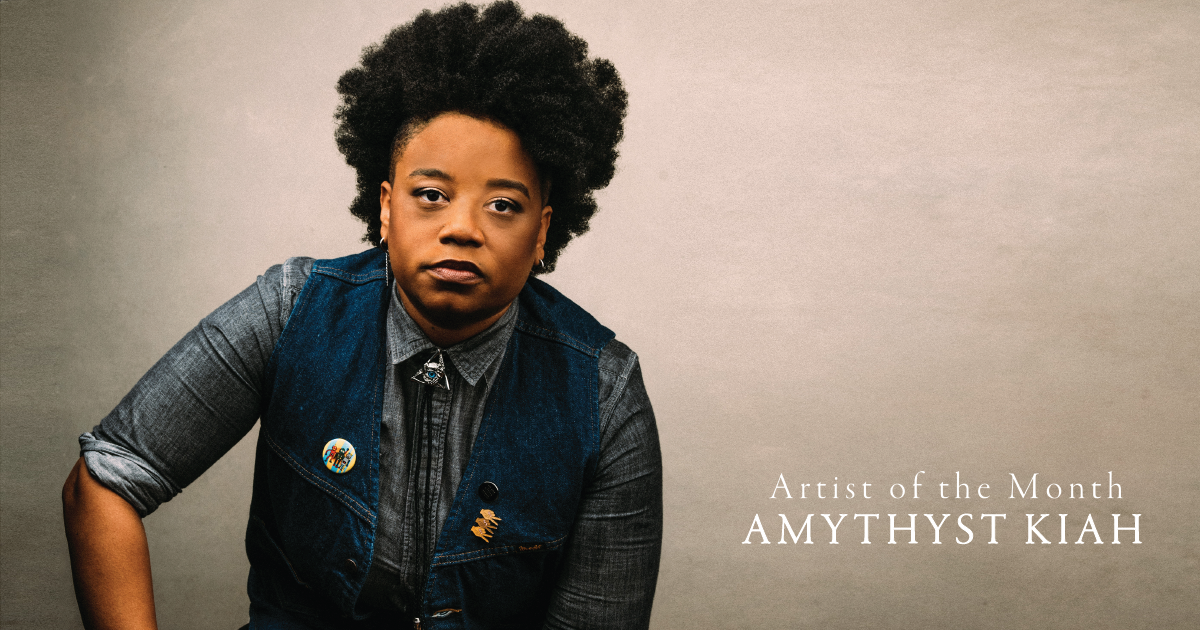
Amythyst Kiah took great pains to get Wary + Strange just right. After studying banjo and old-time music at East Tennessee State University in her twenties, she gained a reputation as an intense live performer, so much so that she was asked to join the roots supergroup Our Native Daughters, where she played alongside Rhiannon Giddens, Allison Russell, and Leyla McCalla. The group recorded Kiah’s bluesy anthem “Black Myself” as the opening cut on their 2019 album, Songs of Our Native Daughters.
The experience of working directly with her contemporaries — even the idea of considering them as her contemporaries — was a profound experience, one that stirred her to write songs that took bigger risks and told bigger truths about herself. She’d been struggling to make this record for several years by then, booking sessions with various producers, but never feeling satisfied with the results. She didn’t hear herself in the music.
That changed when she began working with producer Tony Berg (Aimee Mann, Phoebe Bridgers), and together they devised a way to combine all of Kiah’s influences rather than compartmentalize them. Wary + Strange is a headphones album, one that listeners will pore over intently. “It feels good to make music that helps people get through hard times,” Kiah tells the Bluegrass Situation.
BGS: Are you surprised by the response this record has gotten?
Kiah: This is my label debut. So it’s really the first time that I’ve worked with a giant team of people helping me get my music out into the world. So the whole experience has been completely new. My focus was really tol make this album where I’m excited about it and happy with it, so I felt pretty confident about it. Then I started promoting it and things started coming in, and I didn’t realize how much was going to come in because I’d never done it before. So now I have the craziest workload that I’ve had in a long time. I’m just drinking a lot of caffeine and hanging on as long as I can, because I’m getting an opportunity that a lot of artists don’t get.
And add to that the fact that you can actually play live shows again, if only for a little while. What has the audience reaction been like?
People are really excited to get back to playing or get back to just seeing live music. All of us that were doing virtual gigs for a year and a half. Any time I’ve played a virtual gig, I’ve made a point to say that we’re all in this weird situation together, so let’s make the best of it. The audience is just looking at me through a camera lens, and I’m looking at them through a camera lens, but we’re doing our best to share our energy with one another. I can’t tell you how many times over the past several shows that I’ve gone out to the merch table and people have told me, “This is the first show I’ve seen since quarantine.” They are so excited, so the energy has been more intense than I can remember.
You mentioned something a minute ago about wanting to make sure you were happy with this record. You recorded these songs several times trying to get to that point, and I wondered if you could talk about that process. What was missing from those early songs?
The first time I made the record, it was with Dirk Powell in Louisiana, and it was right before the sessions for Our Native Daughters. But I didn’t really have a strong idea of what I wanted. I was dealing with some writer’s block at the time, and I was putting pressure on myself to put out another record. So I was recording a lot of songs that I didn’t really play anymore, and it felt like I was just trying to fill out an album.
At the end of the recording process, it sounded like a record that was very safe. It sounded good but it was safe. It wasn’t showing any real musical growth from me as an artist. I felt like I was compartmentalizing a lot of my folk stuff and the stuff I played with my backing band. I had this folk side of me and this rock version of me, and it just slapped me in the face that all of those songs needed to be on the record.
What was the nature of your writer’s block? How did you get through it?
There was a period when I wasn’t really writing songs that much. A lot of it had to do with the fact that I was repressing a lot of emotions regarding my mother’s suicide. For twelve years I would do anything I could to avoid getting in touch with those feelings. I was in survival mode, and when you’re in survival mode it’s really hard to think deeply about some of your choices. I was just trying to ignore it all. By the time I got to Our Native Daughters, I’d written a handful of songs over the course of two or three years. That was my second year going into therapy, and I’d made a couple of breakthroughs in understanding how my grief was affecting other aspects of my life.
Being around Rhiannon and Leyla and Allison and writing songs with them, I started to understand something important about myself. We all had this similar background of being the token Black person in a genre that has some very obvious African influences. But that history and those identities had been removed and the music had been segregated. We were able to share stories about being confused with other people, stuff like that. Just to be able to have that conversation with other people who understood where I was coming from was wonderful. Being in that environment gave me the courage to write about the things I was talking about. I’d been afraid to put those experiences into songs because I have this shut-up-and-sing policy for a long time. So that was an important moment for me.
We’re telling stories of our ancestors who were able to survive the transatlantic ship voyage. They survived the Civil War. Reconstruction. Segregation. Civil Rights. We’re standing on the shoulders of so many people who survived, and we’re here because of their survival. Once you start to make those big spiritual connections beyond what you’ve read in a history book, suddenly there’s nothing to be afraid of. If they can survive, then I can survive writing a song about how I feel. There was a new sense of empowerment to really write about myself. So after that project, I wrote more songs. I wrote “Soapbox.” I wrote “Opaque.” I wrote “Firewater.”
Did that change how you approached recording the album?
Really I was still figuring myself out and how I wanted to be defined as a musician. It was a lot of self-exploration. I recorded the album again at Echo Mountain Studios in Asheville, North Carolina. But the third time’s the charm, as they say. I met Tony Berg, and he was able to help me encapsulate the inherent wariness and strangeness of all of these songs. We were also able to keep that essence of roots music while adding in these different textures and sounds. He actually told me once while we were recording, “I don’t think I’ve heard a record that sounds quite like this one.” He’s obviously listened to way more music than I ever have, so I knew we had something special at that point. I knew that would be the final time recording the album.
It sounds like you had to go through those first two versions of the album to get to that point.
Yes. I definitely don’t want to say that those first two didn’t sound good or weren’t worthy. And I’m appreciative of anybody who spent time in any capacity working on them with me. It took all of those moments to get where we are now. But something was always missing, and you shouldn’t be too afraid to explore that and figure out what’s missing. Unless you’re 100 percent excited about your record, it’s going to be hard to go out and play those songs.
There’s a malleable quality to your songs. I’m thinking about the two versions of “Soapbox” on the record, or the solo version of “Black Myself” and the Our Native Daughters version. You talked about learning not to compartmentalize your music, but the songs seem like they could fit so many different settings. “Black Myself” in particular sounds very different when you’ve got several people singing as opposed to just one person singing.
I think that’s a recurring theme that’s always going to be part of my creative process. I spent a good amount of time in my twenties focusing on reinterpreting songs that already existed and learning about the different ways to make it your own. Or at least give it another perspective. It made me hyperaware of, “OK, what am I saying? What if I deliver this particular line this way or what if I go to a minor chord here instead of a major chord. How does that change the meaning?” I’ve always been fascinated with that kind of thing.
That’s just as valuable as writing new songs, because that’s the way most of us learn music. We learn other people’s music, and within that we find our own voice. Reimagining certain songs — even if they’re your own songs — is a valid way to express yourself. Balancing that can be a little tricky. With the various incarnations of this album, I was rehashing a lot of songs that I’d already done. I was taking songs I’d already recorded and rerecording them in a different way. So I had to make myself write new material. I didn’t want to stop moving forward.
As for “Black Myself,” I remember thinking, “Man, I wish I could have some people singing with me on this song.” It’s not even just from a production standpoint. It was more personal. So it was good to record with Rhiannon and Allison and Leyla sticking up for me, you know? It’s different without them. For the version on my record I was doing my own background vocals, which is really enjoyable and helps me dig into a song in a different way. But I definitely missed singing with them. But I was really excited to record that song by myself, because it’s a way to continue that conversation about white supremacy and anti-racism. It was a good opportunity to bring the song forward.
Welcome to the BGS Radio Hour! Since 2017, this weekly radio show and podcast has been a recap of all the great music, new and old, featured on the digital pages of BGS. This week, David Crosby and Sarah Jarosz join up for a Joni Mitchell number, husband-and-wife duo Darin and Brooke Aldridge bring us some beautiful bluegrass harmonies, LA’s own Los Lobos share their rendition of a favorite Jackson Browne tune, and much more.
25 years after their breakout hit and almost a decade after their most recent release, The Wallflowers are back with a new album, Exit Wounds. In our interview with Jakob Dylan we talk about the project, singing with Shelby Lynne, the documentary Dylan executive produced, Echo in the Canyon, and more.
We spoke with Ric Robertson about playing a popcorn kernel in a musical as a kid, his kite surfing aspirations, his new album Carolina Child, and more in a recent edition of 5+5.
Amy Ray of The Indigo Girls finds herself often haunted by the song of the nocturnal songbird, the Chuck-will’s-widow: “I find that I witness the most profound moments in the midst of their songs, when everyone else is asleep. While I am often in need of rest, the respite I find in being awake under a miraculous and melodic night sky is too tempting for me to sleep. It’s a conundrum that inspires me, but also leaves me bleary-eyed.”
Folk singer-songwriter Matt The Electrician will return with a new album called We Imagined an Ending in November. A new track, “Home Again,” takes inspiration from the point of view of his teenage daughter. “The conundrum of parenthood, that as you finally start to figure some things out, and try to pass along some of that hard won wisdom, you’re greeted with your own teenage face staring balefully back at you.”
Says Chris Coleslaw of Tobacco City’s latest single, “The character in the song is trapped between working in a brewery and staring at beers all day and trying to walk a sober line. I think regardless of your sobriety status we can all relate to those kind of blues.”
Jesse Daniel spoke with us about his new album, Beyond These Walls, about growing up catching crawdads and fishing, the chills-inducing feeling when a crowd sings along with his lyrics, and more in a recent 5+5.
Joy Oladokun is able to do more with just an acoustic guitar and her voice than many artists can in an entire discography of work. And going from Arizona to L.A. then across country to Nashville with a new outlook and perspective, her music stands on a plane with a unique vantage point.
A new video for Luke LeBlanc’s co-written tune with Roy August, “Same Blues,” attempts to capture what the song is about: the tug of war between the status quo and what you’re currently doing versus that thing you really want to do.
“Silent Lonely Drifter” is an original folk melody reminiscent of timeless Appalachian string band music. Each verse references a different full moon, speaking to the natural balance that exists in the universe.
The Jackson Browne tune “Jamaica Say You Will” always resonated for the fellas of Los Lobos and the narrative and storytelling were attractive, too. So, they recorded their own rendition of the track on their latest project, Native Sons.
New music from Aoife O’Donovan is here and we’re loving it! Hear tracks created with Joe Henry and the Milk Carton Kids — one inspired by the modern classic re-telling of Peter Pan, the movie Hook.
Depreciated, the new Rounder Records release from singer-songwriter John R. Miller, combines many of his string band and bluegrass influences with a satisfyingly melancholy and dark mood — plus plenty of fiddle.
Legendary singer, guitar picker, and songwriter David Crosby keeps his love for collaboration alive on his new album, For Free, which features guests and co-writers such as Sarah Jarosz, Michael McDonald, his son James Raymond, and more.
Photos: (L to R) Joy Oladokun by Nolan Knight; Aoife O’Donovan courtesy of Shorefire Media; David Crosby by Anna Webber
This website uses cookies to improve your experience. We'll assume you're ok with this, but you can opt-out if you wish.AcceptRejectRead More
Privacy & Cookies Policy
Privacy Overview
This website uses cookies to improve your experience while you navigate through the website. Out of these, the cookies that are categorized as necessary are stored on your browser as they are essential for the working of basic functionalities of the website. We also use third-party cookies that help us analyze and understand how you use this website. These cookies will be stored in your browser only with your consent. You also have the option to opt-out of these cookies. But opting out of some of these cookies may affect your browsing experience.
Necessary cookies are absolutely essential for the website to function properly. This category only includes cookies that ensures basic functionalities and security features of the website. These cookies do not store any personal information.
Any cookies that may not be particularly necessary for the website to function and is used specifically to collect user personal data via analytics, ads, other embedded contents are termed as non-necessary cookies. It is mandatory to procure user consent prior to running these cookies on your website.