Violinist and Singer-Songwriter Anne Harris “Brings Things Up a Level” with New Album

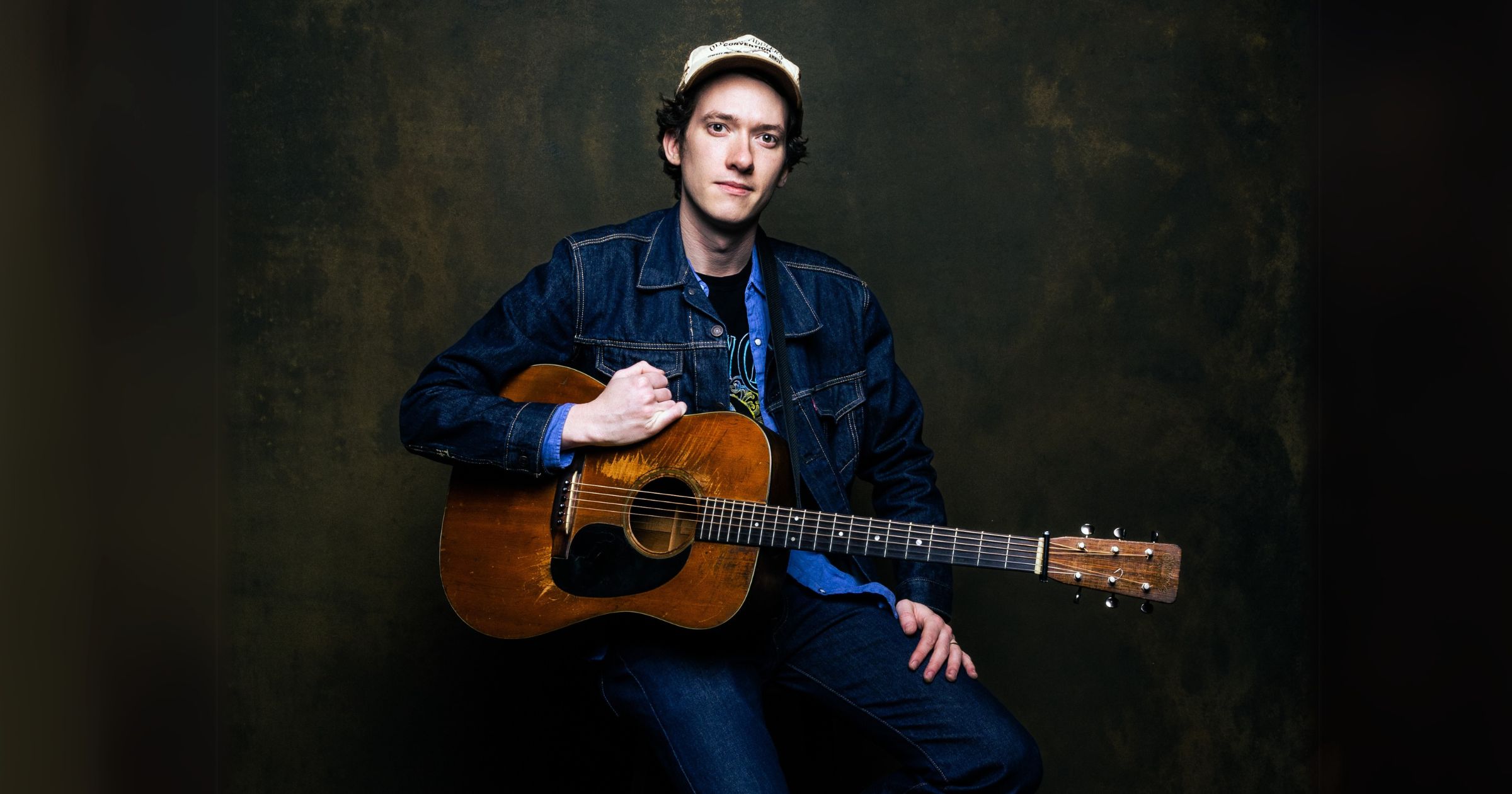
Anne Harris is having a moment. Though many people (this writer included) are just finding out about this Midwestern violin virtuoso this year, she has been making records since 2001. With her new album, I Feel It Once Again (released May 9), Harris decided, in her words, to “bring things up a level.”

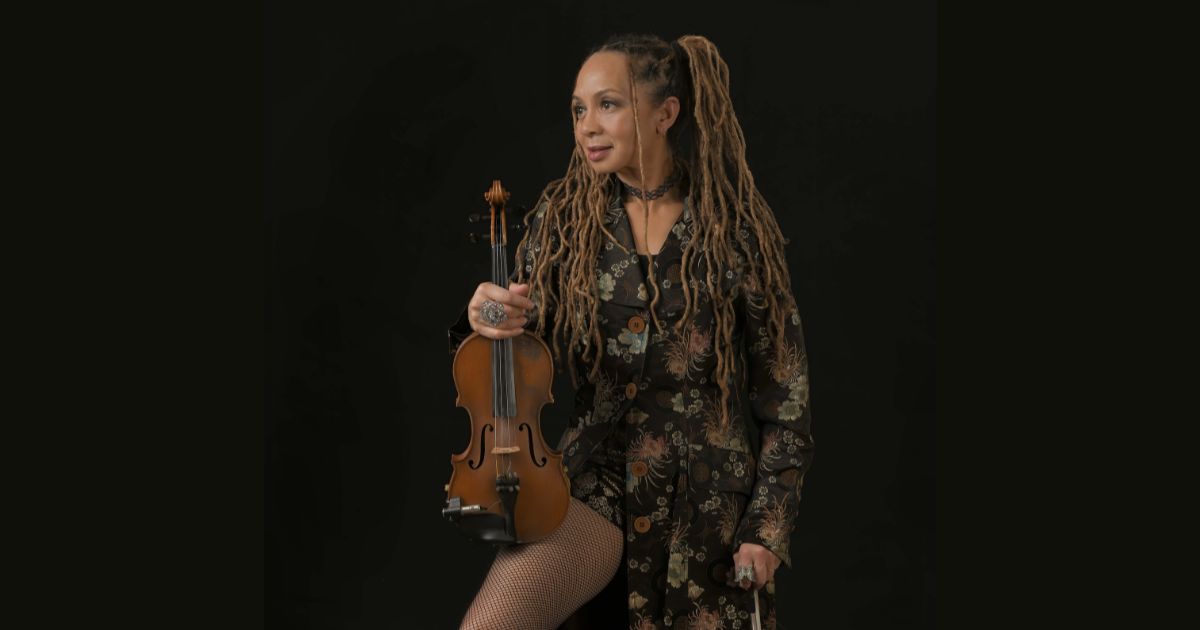
Not only is the disc getting rave reviews, it marks the first-ever violin commission in America between two Black women – Harris and luthier Amanda Ewing. The 10 songs on I Feel It Once Again range from traditionals like “Snowden’s Jig” and the closer “Time Has Made A Change” to originals like “Can’t Find My Way” and the project’s title track. Throughout, Harris remains impressive in both her vocals and her violin playing. The album was produced by Colin Linden who has worked with Bob Dylan, Rhiannon Giddens, Bruce Cockburn, and many others.

Harris is currently based in Chicago, but was actually born in rural Ohio. She took to music at a very young age, inspired by her parents’ record collection. After attending the University of Michigan’s School of Music, Harris moved to Chicago, where she delved into the city’s theater and music scenes. Now, she is about to tour with Taj Mahal and Keb’ Mo’ this summer. BGS had the pleasure of catching up with Anne Harris for a conversation about the new album, her Amanda Ewing-built violin, her influences and inspirations, and more.

To start, tell me where and when I Feel It Once Again was recorded.

Anne Harris: I did the record in Nashville. Coming out of the pandemic, I had been writing and I felt like I had a collection of songs – a pool of things that I wanted to be on my next record. I wanted to work with a producer, [but] I wasn’t sure who to work with. All my prior records had just been basement records, basically. Nothing wrong with that, but I wanted to bring things up a level. A friend of mine, Amy Helm – who is an amazing singer-songwriter in her own right – recommended Colin Linden to me.

Colin is Canadian born and raised. Incredible multi-instrumentalist [and] producer that’s made Nashville his home for many years now. Anyone [Amy] recommends I’m gonna listen to. So I started listening to some of the records he made. I got in touch with Colin and sent him, in really rough form, a big basket of songs I was considering. He really loved them and wanted to work on the record. We got the basic core of the record laid down in about a week of intense recording in Nashville and finished up with a few things remotely after that.

Is it true that you first picked up the violin as a kid after watching Fiddler on the Roof?

Yeah! My Mom took my sister and I to see the movie version of Fiddler on the Roof when we were little; I was around three. I was born and raised in Yellow Springs, Ohio. I remember being at this movie theater in Dayton for a matinee. I remember the picture of the screen – you know, this opening scene where Isaac Stern is in silhouette on a rooftop playing the overture. And [my mother] said I stood up, pointed at the screen, and yelled – as loud as I could – “Mommy! That’s what I wanna do!” She was like, “Okay, you gotta sit down and be quiet.”

She thought [it was] maybe a passing thing and that I was caught up in the drama of the music. [But] I just kept bugging her about it. So she let me do a couple of early violin camp kind of things here and there. I just had this intensity about wanting to really study it. So when I turned eight, I started studying privately with a teacher. Suzuki and classical training was sort of my background.

Tell me about the title track, which is also right in the middle of the album. What inspired “I Feel It Once Again?”

A couple of years ago, [my] friend Dave Hererro – who is a Chicago based blues guitar player. Sometimes he’ll come up with a little riff and send it my way and say, “What do you think of this?” He sent me this guitar riff, which is kind of the through line of that song. I heard it and immediately the whole song and story unfolded in my head. I wrote [it] around that guitar riff in, like, one session. I did a demo and I played it for Dave. I’m like, “Dude! I love this so much.” He’s like, “Well, do whatever you want with it!”

Writing is an interesting thing. I’m not super prolific. I’m not one of those people that’s like, “I journal every day for 13 hours!” [Laughs] You know? [I don’t] have a discipline or method other than trying to stay open to inspiration and committing to it when it happens.

[That] was the case with that song. I had the story and a picture in my mind of what that song about. Somebody musing over a loss. You know, it’s twilight and they’re finishing a bottle of wine and mourning the loss of this great love. One part of you is fine when it’s daytime and you can put on a face and you’re going about your business. But then when the curtain comes down, behind that curtain is this loss and this mourning. That’s what that song is about.

Everything looks different at 4am, doesn’t it? [Laughs]

I [also] wanted to ask you about “Snowden’s Jig.” That’s a type of music I know virtually nothing about. I know it’s a traditional.

Yes. “Snowden’s Jig” is a tune that I learned from the Carolina Chocolate Drops record Genuine Negro Jig. It was my gateway into the Carolina Chocolate Drops. I was doing errands somewhere and I had NPR on and [they] were a feature story. And it was just this mind-blowing thing.

Joe Thompson [has] been deceased for a while now. But he was one of the last living fiddlers in the Black string band tradition. They would go to his porch, learn tunes from him, and learn the history of Black string band tradition. That’s sort of how they started their group. [“Snowden’s Jig”] was on that record and they learned it from Joe.

Part of my mission as an artist is to be a bridge of accessibility through my instrument, the violin, to the Black fiddle tradition. There was a time during slavery days when the fiddle and banjo were the predominant instruments among Black players. Guitars were sort of a rarity. That was when string band music was really at its height. North New Orleans was the sort of center of Black fiddle playing. Often time, enslavers would send their enslaved people down to New Orleans to learn how to play fiddle and then come back to the plantation to entertain for white parties and balls.

You’re based in Chicago. It’s a big music city. How has living in Chicago informed your music?

Chicago is known as a workingman’s city, a working class city. There’s something very grounded about Chicago in general and that’s the reputation it has. I’m a Midwestern person [anyway], from Ohio originally. There’s something about us in the Midwest. You know, we’ll never be as cool as New York or LA! But we work our asses off. I feel that translates into the artists in this town. It’s really a place where it’s about the work.

This album apparently marks the first violin commission between two Black women. Yourself and Amanda Ewing?

Correct. Amanda Ewing. It’s the very first professional violin commission that’s been recognized in an official capacity. Amanda has a certificate from the governor of Tennessee – she’s a Nashville resident – citing her as the first Black woman violin luthier in the country.

When I first saw Amanda, it was online. The algorithm basically brought her to my phone. I saw a picture of this beautiful Black woman in a work coat, holding the violin and I about lost my mind. I was so blown away and inspired. I read her story and got in touch with her and told her, “I have to have you make a violin for me. I have to own a violin that was made by the hands of somebody that looks like me.” It never occurred to me, in all my years of playing, what the hands of the maker of my instrument might look like. That’s not an uncommon thing, but it’s sort of sad! It would never occur to me that a Black woman would be an option.

So as soon as I met her, we embarked on a commission that was funded by GoFundMe. She decided she wanted to make two [violins] so that I would have a choice. They were completed in February, a couple of months ago. [One violin] will make its official debut for a public audience on the 23rd of May. I’m gonna be playing at the Grand Ole Opry with Taj Mahal and Keb’ Mo’. I’m going on tour with them.

It’s funny, I was gonna ask you next about that tour! I noticed you had some upcoming tour dates with Taj and Keb’. I wanted to ask your thoughts on that and maybe what people can look forward to on this tour.

A friend of mine is Taj Mahal’s manager and she’s also good friends with Keb’. She said that Kevin [Keb’] had approached her looking for a violinist player for this upcoming tour. They have a new record out as TajMo called Room On The Porch. It’s their second under that moniker and it’s an amazing collaboration. Two iconic figures making beautiful music together. So she recommended me and [Keb’] had seen me before – I think when I was touring with Otis Taylor years ago. He called me and you know I’ll keep that voicemail forever!

As far as what to look forward to, it’s gonna be amazing. The opportunity to work with luminaries… I’m gonna be the biggest sponge, soaking up all of the knowledge from these giants. Taj has been influential to just about everyone on some level. He’s one of those people who’s worked with everybody and done so much. I’m just over the moon.


Photo Credit: Roman Sobus

Chely Wright Now

From growing up on a Kansas farm, to building an award-winning country music career, to a groundbreaking coming out in 2010, to now. As Senior Vice President, Corporate Social Responsibility and New Market Growth at global workplace experience and facilities management company ISS, Chely Wright has followed a simple but effective mantra: “Plan your work and work your plan.” Her parents instilled this ethic in Wright and her siblings, and to this day it guides her trajectory.

“My parents raised all three of us kids to be problem solvers,” she says. “When you live on a farm, you’re poor, and you have to fix things with duct tape, you get really good at problem-solving. It’s in our DNA, and I love that they raised us to do that.”

A singer and songwriter, she moved to Nashville in 1989. Awarded the Academy of Country Music’s Top New Female Vocalist of 1995, her steady ascent led to over fifteen chart singles — including her first hit, “Shut Up and Drive” (1997), first number one, “Single White Female” (1999), and “The Bumper of My S.U.V.” (2005) — and eight studio albums.

Wright came out in 2010, making history as the first country star to publicly do so — at great personal and professional risk. At that time, she could not have anticipated that her courage and authenticity would not only reverberate and empower countless others, but would eventually lead to a high-level position.

“When I came out, I wanted to do it well,” she says. “That included embedding myself with organizations that could inform, educate, and help me be a good voice in the LGBTQ community. In doing that, I gained tremendous understanding of the power of storytelling and, essentially, culture work. I began having opportunities to do that work with corporate organizations, higher education, and faith communities. It became what I called my ‘side hustle,’ in addition to my work as an artist.”

When COVID-19 lockdowns brought touring to a halt in 2020, Wright continued her “side hustle” through virtual events and workshops. One of her clients, global design firm Unispace, brought her on full-time as chief diversity officer, working in DEI (diversity, equity, and inclusion). This year, she joined ISS, whose international reach includes over 320,000 employees worldwide.

Moving into corporate social responsibility was an organic transition, as CSR intersects with DEI. “We think about creating access and opportunity for Black- and Brown-owned businesses, women-owned businesses, locally owned businesses, LGBTQ-owned businesses, veteran-owned businesses,” she says. “We think about procurement, sustainable sourcing, and ethical supply chains. Our clients have their eye on mindfulness around who works for them. They know there’s an employee value proposition. Those employees want to know that the company they work for is not only being good corporate citizens, but also ‘What are they doing for my community? What are they doing within a twelve-block, twenty-block, hundred-block radius of where I go to work?’

“Especially in the past five to ten years, companies are seriously asking themselves, ‘How do we not only protect our shareholders, our stakeholders, but how are we making sure that the people who work here know that not only do we need and want to give them health insurance, and economic security through a 401k and a paycheck, but what are we doing to use the monies we are making as a company to make the communities outside the four walls of this business, this office, better?’ That’s how I see the shared space between DEI and CSR.”

Wright works in the ISS New York office, sometimes telecommuting from home, and often traveling to meet with clients onsite. “I keep having opportunities to use my story,” she says, “and I cannot think of a single thing more gratifying than doing that now in a corporate space, in a global organization. I get to use that on their behalf and on behalf of our clients.”

In time for Mental Health Awareness Month, Chely Wright spoke at length with BGS about what she calls a move “from C-chord to C-suite,” how the landscape on Music Row and beyond has and hasn’t changed in the fifteen years since she came out, and how she balances fear and caution about the current climate with innate hope and optimism.

So many of us, especially women, experience impostor syndrome in our careers. Did you experience this as you moved into corporate spaces?

Chely Wright: Yes, a hundred percent. “Am I good enough? Am I smart enough? Do I belong here? Do I actually have the goods to deliver?” Making a dramatic life pivot, impostor syndrome bubbled up and it wasn’t my first bout. I dealt with it when I came out. I dealt with it when I left Polygram and went to MCA Records. I dealt with it in 1989, when I went to Nashville to get a record deal. I know now that when impostor syndrome scratches at my back, I just turn around and say, “Okay, I have things to learn.”

There is nothing more exciting than taking on a new skill set and dipping my toe in a body of water that I never thought about being in before. I have 10,000 sunrises left, if I’m lucky. So it’s not “What can I do?” It’s “What do I get to do?” Why wouldn’t a person like me have a second and third life, take the leadership/communication/radical listening/storytelling/execution skill set, and go into corporate spaces?

We take a myopic view of the music business, but it’s business. The artists who have staying power and choices are iconic not just because of their talents. They do open their mouths and something magical comes out. But when you look at what they’ve done with their business and marketing and the protection and stewardship of their brand, it is business.

When Rodney Crowell produced Lifted Off the Ground [2010], he asked me, “What is your goal as an artist?” I said, “My goal is to be able to make music as long as I want to, when I want to, where I want to.” Because I’m in a corporate role right now does not mean in any way, shape, or form that I’m not going to make more records. I know I will. I have the choice to do that when, where, and how I want to, and having that choice is a blessing and a gift.

What changes do you see in the music industry? How does the big picture look today compared to when you came out?

It looks different than it did fifteen years ago. The music industry, as a whole, obviously is making progress. And I think it would be safe to say that the country music industry is making its own progress at its own pace.

All I know is this: change happens, whether we want it to or not, and there will never again have to be someone who says, “Do I jump first?” I jumped and several others since then have joined me in raising their hands, owning their narrative, and saying, “I am a writer, a producer, a picker, and I happen to be a queer person.”

That said, a lot has changed in the world that makes it more difficult to raise your hand and say who you are. Certainly in the last few years, politically, it’s gotten, in some ways, more dangerous to do that. In some ways, the stakes feel higher right now. But change happens. That’s the thing about time: you can’t slow it down. It’s coming.

Does country music have quite a ways to go to be known as a bastion of equity, fairness, justice, and safety for all? Of course. So does banking, construction, and tech. They’re all on their respective journeys and it takes courage. It takes courage to be a holder of a unique story that people might not be ready to hear. It takes courage, tenacity, and a sense of self. God bless those who raise their hands and say, “I am also this.”

Change is not always a forward or positive step. Change is happening now, but in ways that many of us feel are going backward and becoming increasingly frightening.

Change is happening in some terrifying ways. I won’t gaslight and say, “It’s not as bad as it seems,” or, “It’s just rhetoric,” because even if the thing itself doesn’t happen, the terror that it might is the damage.

Some of these things we fear might not come to pass for certain populations, but we look at our brothers and sisters who are in the fight as well — Black and Brown people, immigrants, trans people — they are my family, and very real things are manifesting for them that aren’t just rhetoric. My wife is Jewish, we are an interfaith family, we are two moms, we are women, and we feel under threat in a lot of different ways. People in our family, and in our circle of love and trust and chosen family, are under threat.

American democracy is, by all intents and purposes right now, very close to being disabled. When we hear we’re in a constitutional crisis, in farm terms, we’re hogtied. As a mother of Jewish babies, as a queer person, as a person who has traveled the world and believes America is the greatest nation on the planet, the importance of America and democracy surviving this — it’s not just America at stake. It’s everyone. It’s the human population. We need to find a way to become un-hogtied, because democracy and freedom, real freedom for all, has to stand. I shudder to think what the world would look like without an American democracy.

In a 2010 interview with Entertainment Weekly you said, “It’s the secret haters who do the most harm, historically.” Those haters are now loud and proud. Is that better or worse? Knowing the enemy versus not knowing who and where they are?

Yes. They’ve become unburdened by any concern of being seen as homophobic, anti-Semitic, misogynistic. The power of gang mentality is real and negative gang mentality scares me a lot. There’s danger in it and people are very easily pulled into the vortex of those energies. When these people group together, form coalitions, lock arms, and move, they take on a new and exponential energy that can suck others up into it.

That scares me. I almost wish they would stay in their closets. But it’s also helpful to know who’s with us and who’s against us. That is really powerful information to have.

You said earlier that you have 10,000 sunrises left, if you’re lucky. There was a point in your life when you no longer wanted those sunrises. The Trevor Project’s 2024 U.S. National Survey on the Mental Health of LGBTQ+ Young People cites, among other things, that 39% seriously considered attempting suicide in the past year. What is your message – and how is your mental health today?

Coming out as gay when I did was the only way I could survive. On the morning after I didn’t end my life, on that cold winter day in my house in East Nashville, I was afraid I was going to go back downstairs, grab that gun, and do it. So I got on my knees and said, “God, if you have a way for me now, I need to know it.” Hand over my heart, in an instant I knew, “You’re going to come out, you’re going to come out well, and you’re going to tell the whole story.”

I had a responsibility to my maker to tell that story, which included a successful, relatively well-positioned person who always had a ton of confidence, love, friends, health, and resources. I had all those things, and I found myself with a loaded nine-millimeter gun in my mouth – a gun my parents bought for me for protection.

I had a responsibility to say, “This is how bad it gets when you don’t get to be who you are.” It was important, and I’ve said this many times, for the 14-year-old kid at the foot of their bed with their dad’s gun in their hand. It was important because we have to raise our hands in spaces where representation does matter, like in country music. Somebody needed to say, “I love the Grand Ole Opry, I love our troops, I love having grown up in a farm town in Kansas, I’m a person of faith, and I am a queer person, always have been, and always will be.”

My mental health, ever since that morning after I didn’t end my life – I’ve never had another thought of doing it. I’m often asked if the day I came out was the best day of my life. It wasn’t. The best day of my life was the day I decided I was going to come out, because for the first time since I was 9 years old I had hope that I could be me – the whole me.

So my message … I don’t say “It gets better.” I never liked that campaign of “Just survive junior high. Just make it through being bullied in high school, because once you’re an adult and have resources to change your zip code, it gets better. Just hang on through the shit because it’s going to get better.” I don’t like it. Our job as grown-ups is not to ask young people to survive the shit until it gets better. Our job is to roll our sleeves up, reach out, go to the shit, and fix it for young people right now. It’s incumbent upon those of us who have power, position, and resources to make it better now.

What can each individual, those of us who don’t have “power, position, and resources,” do to help make it better?

What I realized after coming out and having conversations with thousands of other queer people, whether it be on the phone, or they’d write a letter, write to me on Facebook, or stand in line after an event and talk to me and share their story, I understood that everybody has a fan club. That fan club may be your neighbors, your colleagues, your family, your congregation. It may be one person or a collection of people that notice what you do, what you say, how you express yourself. Everybody has their own personal story and presence. How will you use your respective power, position, and resources to do good?

Power means your personal influence – and it may just be with one neighbor or coworker. Position means, for example, if you’re really good at swinging a hammer, then do a little work with Habitat for Humanity. Use your skill. Resources might be, “I’ve got some extra ‘this,’” so use it.

Everybody has power. How will you wield it? How will you use your skill set? How will you use your unique resources, your influence, to make things a little bit better for an organization or a single person? That might mean swinging your hammer, or it might mean helping someone in a crosswalk when the light is about to change. There are a thousand ways we can use our power, position, and resources every day.

You wrote your autobiography Like Me: Confessions of a Heartland Country Singer “to tell the story of who I am.” Who are you now?

I’m exactly the same. I have new experiences to add, my CV looks different, but I am exactly the same person. Still a person of faith, a person who loves country music and the Grand Ole Opry, who loves to meet and talk to people. I’m still really curious, proud of who I am, and as hopeful as I always have been.

And I’m still strategic, as evidenced by the way I came out. If you look at the way I’ve lived my life and evolved my career since then, it should surprise no one how strategic I was in how I came out. I wanted to come out well, and that required strategy, because the people who will and do malign people like me, the Focus On the Family [kind of] organizations and the far-right fringe, who want to tell stories that aren’t true about people like me — you better believe they’re strategic.

I’m going to meet and match their strategy with how I tell the real story of me and people like me. It goes back to what [my parents] Stan and Cheri Wright told me: “Plan your work and work your plan.” I did that when I came out, and I’m doing that now.


Photo courtesy of Shorefire Media.

Mason Via Returned to Virginia’s Blue Ridge Mountains to Record His New Self-Titled Album

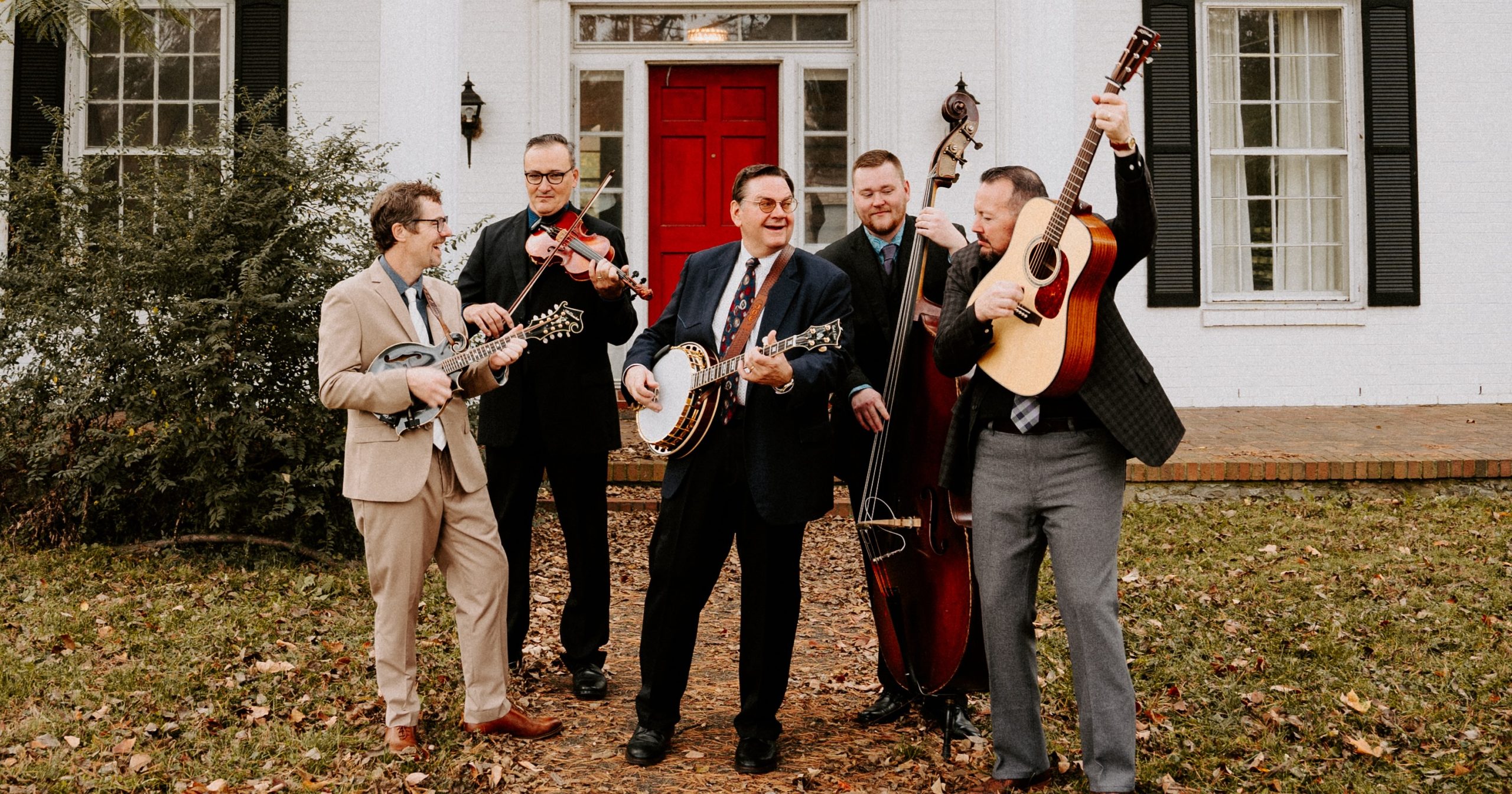
After a three-year run with revered bluegrass troupe Old Crow Medicine Show, Mason Via is breaking off on his own and returning to his roots on his new self-titled, 10-song album.

Out April 25 via Mountain Fever Records, the record finds Via toeing the line between the worlds of old-time and progressive bluegrass with hints of jamgrass mixed in, no doubt an homage to his father, revered picker David Via. Via initially presented nearly 100 songs for consideration to producer Aaron Ramsey – among them a bevy of solo cuts, along with co-writes from the likes of Boy Named Banjo’s Barton Davies, and Christian Ward, the newly minted fiddler for the Del McCoury Band and the Travelin’ McCourys – before whittling the material down to a fraction of that to actually record.

The resulting songs serve as a continuation of what fans heard from Via with Old Crow, particularly the band’s 2023 album Jubilee, where he wrote or co-wrote seven of the 12 tracks – including “Allegheny Lullaby,” “I Want It Now,” and “Belle Meade Cockfight.” According to Via, many of these new songs were even written with Old Crow in mind before he made the decision to step away and release them under his own name.

“This is an album full of stuff that, for the most part, I wanted to do while I was in Old Crow but never got around to,” Via tells BGS. “That being said, I was excited to get to put them on my album because these tunes are a deep dive into who I am as a songwriter from my time spent living in Nashville.”

Ahead of the album’s release and amid a run of shows through the Midwest and Southeast with Logan Ledger, Via spoke with BGS by phone about his path to Old Crow Medicine show, how a Virginia festival changed his entire career trajectory, how he came to love co-writing after moving to Nashville, and more.

You were joined by a trio of bluegrass royalty – Rhonda Vincent, Junior Sisk, and Ronnie Bowman – on the songs “Oh Lordy Me” and “Mountain Lullaby.” What did it mean to you having them join you on those songs?

Mason Via: It was very validating, because I’ve always felt that I circled around bluegrass and navigated on the outskirts or fringe of it, so to have those torchbearers of the genre sign off on this meant a lot. I didn’t know Rhonda as well, but Junior and Ronnie are old family friends. I hate when artists have other people as features, but they’re not really featured – it defeats the purpose of it all. Because of that I really wanted to go out of the way to showcase everyone. For instance, on “Oh Lordy Me” we all take turns singing lead on verses before coming together for the chorus [with Bowman and Sisk], whereas “Mountain Lullaby” is trio harmonies the whole way through [with Bowman and Vincent].

You mentioned Junior and Ronnie being old family friends. Is that a connection through your father, who was a bluegrass picker himself?

It is, they all go way back. They used to have big pickin’ parties every Tuesday at dad’s house in Dry Pond, Virginia, that they called The Blue Room. They’d pick all day and night, with the last person left awake taking home the coveted Bluegrass Buddy Belt, a WWE-style belt, for bragging rights.

In addition to growing up around them, Ronnie also cut a couple of my dad’s songs and Junior was often around Galax and the fiddlers conventions I grew up going to, which the song “Oh Lordy Me” is sort of an homage to.

Speaking of home, you returned to Floyd, Virginia, to record this new album. After spending time in Nashville in recent years, what made you want to go back there?

Floyd is about an hour from where I grew up. I remember going to the Floyd Country Store when I was younger and playing up there and it being like a little mountain getaway, which is exactly what going back to the area to record felt like. It was a bit more secluded than when I recorded in Nashville and elsewhere previously, which forced all of us – myself, producer Aaron Ramsey and all the players – to be in it all the way from start to finish.

However, people will soon be able to hear those different approaches when I release alternate versions of a few of the songs on this album that I recorded in Nashville before this bluegrass record deal happened. Two of them, “Falling” and “Melting the Sun,” are psychedelic indie rock ‘n’ roll – think War On Drugs meets the Foo Fighters – whereas “Hey Don’t Go” is one I released alongside my departure from Old Crow with pedal steel, drums, keys, and electric guitar. We also recorded a version of “Wide Open” with similar arrangements in the same session that we’ll be releasing soon as well.

Sounds like we have a lot to look forward to!

Sticking on the topic of Floyd, I remember seeing you for the first time at FloydFest in 2019 with your band, Hot Trail Mix, which finished runner-up at the gathering’s On-The-Rise band competition that year. What has that moment – and the festival in general – meant to your music career and trajectory?

I’d just gotten out of college and was working as a substitute teacher at a military academy when the opportunity to perform in the FloydFest competition came about. I grew up going to the festival, so finishing runner-up and getting invited back to play the main stage was a moment where I started to realize I should take this more seriously. Since the next year was 2020 that show never happened, so my next time back at FloydFest was actually in 2021 when I played the main stage on Saturday night with Old Crow.

So the festival played a role in you linking up with Old Crow then. How did that opportunity come about?

Ashby Frank, a great bluegrass musician, suggested me to Donica Elliott, who worked with the band at the time, who then passed my information onto Ketch [Secor]. Eventually I got a call from him asking to come audition, so a couple weeks later I drove out there for a casual jam session where we played a bunch of old-time pickin’ tunes from fiddlers conventions with a couple of Old Crow’s songs sprinkled in. I came back and did the same thing the next day followed by [going to] Ketch’s house the day after to help move some furniture, which led to us writing the song “I Want It Now” [from Old Crow’s 2023 album, Jubilee]. I wound up getting the gig and next thing I know we’re recording an album. Even my first gig with them was the Grand Ole Opry – I was thrown into the fire, but loved every minute of it!

I had a great run with Old Crow, but the big reason for leaving the band was to pursue this album, because unfortunately you can’t do both. It feels a little like starting over, but I couldn’t be happier with where I am now. And who knows, 10 years from now I could be back in the band – the world is very cyclical like that. I saw Chance McCoy is back with them and they’ve been touring with Willie [Watson] again, which got me thinking about how the band is an ever-changing cast. We left on pretty amicable terms, so I think there’s definitely room for potential collaboration or a reunion in the future.

During your three-year run with Old Crow, what’s the biggest piece of music-related advice you learned from them?

I like to tell people that I think of my time with Old Crow as getting a Master’s degree in music. They taught me that you don’t need to play the craziest solo in the world or sing the wildest riff, you just need to be distinctly, uniquely you. I’ve been trying to lean into that more in my new material including this new album, which I think is some of my most personal material yet.

I know one thing you started doing a lot more with Old Crow that’s a regular part of your repertoire now is co-writing. What’s it been like opening yourself up to more of those opportunities lately?

When I first moved to Nashville, I’d never really co-written before, but when you get here you realize really quickly that that’s a huge part of the community there, similar to jamming with your buddies. It’s a great way to connect with friends and something I really enjoy because you don’t always get to do something like that on such a deep level. I’m also a very ADD type of person so I love the aspect of being intentional with your time and what you hope to create within it like that.

One of the people you co-wrote for this record with was Zach John King, who you first met in 2021 during your stint on American Idol. Tell me a little about your partnership with him that led to your songs “Wide Open” and “Fireball.”

We were set up to have a conversation together on camera for the show. That’s how we were first introduced and we’ve since gone on to become buddies long after Idol. When I got the Old Crow gig he reached out and said he was thinking of moving to Nashville and if he could stop by to ask me some questions about my journey and the process of going from American Idol to what I’m doing now. I was a mentor there for a second, but now it’s the other way around since he just signed a deal with Sony Music Nashville [in January]. He’s already got some songs doing well in the pop country world and is really about to take off. Connections like the one with Zach are reminders of just how small the music industry really is.

What do you hope people take away from listening to this collection of songs?

Every song is its own kaleidoscopic spectrum of emotions that I’ve felt in one way or another. I hope you can laugh and cry and dance and feel every emotion the whole way through, which I think is a trademark of a good album or show. Pairing those emotions with the feeling of what it was like for me growing up in the Blue Ridge Mountains with all my influences, from rock and roll to country or the string band music that was always present during my raising, was a special experience and something I hope folks enjoy listening to over and over again.

What has music, specifically the process of bringing this new album to life, taught you about yourself?

I love how [music] takes you places, it makes you feel like an astronaut or something. You get to travel to different worlds, get outside yourself and figure out who you are. Each song is like its own barn quilt that showcases the different patchwork that holds a place in my heart.


Photo Credit: Ashli Linkous

MIXTAPE: “Tempus Fugit” – Joe Mullins’ Past, Present, and Future Playlist

I’m rarely satisfied with the status quo. And I love roots music that is bona fide. Well, I’ve used up most of my Latin vocabulary very quickly.

I didn’t know what “Tempus Fugit meant until I got a wonderful new song from Tim Stafford and Missy Raines, both great artists, writers, and old friends. Missy and I were together with our bands at Americanafest in Nashville in 2024. I was chatting with her and said, “We’ve been doing this a long time,” since we got acquainted in the 1980s, as we were both learning everything about the bluegrass community. Missy said, “Yes, but we have heard so much great music and met so many wonderful people. And getting older isn’t a bad thing!” Then she told me she and Tim had a song about the subject. I had to hear it and I loved it!

Our new single, “Time Adds Up (If You’re Lucky)” is out just a few weeks after the new gospel album from JMRR was released in March. Thankful and Blessed is a collection of eight new sacred songs and two revived oldies. I’m grateful for the opportunity to deliver the spiritual message and provide an inspiring gospel collection, but I’m thankful for a great variety of music, and I’ve been blessed by the powerful talents of great musicians, singers and songwriters of all kinds.

So, this Mixtape is truly a mix – some songs from the past that inspire me, a tune from the current JMRR gospel album, and our latest bluegrass single from an album releasing in the near future. Carpe diem! – Joe Mullins

“Time Adds Up (If You’re Lucky)” – Joe Mullins & The Radio Ramblers

“Time Adds Up (If You’re Lucky)” is the new bluegrass single by JMRR. “Tempus Fugit” are the first words of the song, meaning time flies. The lyrics were so relatable for me at this phase of life. I have been on stage with a banjo and on radio in some capacity since 1982. Now, over four decades later, I have my first grandchild – and she’s gorgeous by the way!

I’m not just lucky, I’m thankful and blessed.

“My Ropin’ Days Are Done” – Blue Highway

Tim Stafford is such a great writer! This is a favorite recording of one of the most consistent bands of the past 30 years. Wayne Taylor sings with soul and the song is as lonesome as a one-car funeral procession.

“Yardbird” – Larry Cordle

Music has to be fun sometimes! I love a good sad song, but clever lyrics that are so entertaining have been penned by Larry Cordle for years. And the mighty Cord is a great singer, too. Cord is also one of my favorite people, one of those who you always look forward to seeing. He’s been very supportive of my recording career, providing many songs. He and Larry Shell wrote “Lord I’m Thankful” in our new gospel album and a new working man’s song in the Radio Ramblers bluegrass album that releases soon.

“Andy – I Can’t Live Without You” – Ashley McBryde

She has such a believable delivery, and this song is gritty and sincere. The beauty of simplicity can’t be beat – a great voice, a killer song, and one guitar.

“Gonna Be Movin'” – Larry Sparks

Sparks is a stylist, both vocally and instrumentally. He’s an original in every way. I’m pretty sure he has his own zip code. Interestingly, Larry sings three of the four vocal parts in the quartet portions of this recording from the 1980s. Randall Hylton was a superb songwriter and performer whose home-going was way too soon. His bluegrass gospel songs will be enjoyed eternally and this is one of Randall’s best. I was fortunate to have a song from Randall’s catalog that was never recorded, and it’s the a cappella selection in our new album.

“Looking at the World Through a Windshield” – Daniel Grindstaff with Trey Hensley

One of East Tennessee’s great banjo men, Daniel Grindstaff, produced one of my favorite recordings of 2024. I love good, driving country music. I’ve managed a small network of radio stations for many years and we feature a lot of hard-hitting country music from every era. Daniel and Trey nailed this old truckin’ tune with a contagious, grassy groove.

“Beneath That Lonely Mound of Clay” – George Jones & The Smoky Mountain Boys

Yes, it’s a sad song. Graveyard tunes have always been part of the bluegrass and country canon. But I want the world to be aware of this album. Jones went to the studio with Roy Acuff’s band in the very early 1970s and recorded his favorite Acuff songs. The album wasn’t released until 2017. I’m a huge fan of George’s music from his six-decade career and he was in his prime here with an acoustic band that helped define country music on the Grand Ole Opry stage.

“Journey On” – Joe Mullins & The Radio Ramblers

If you’re enjoying the mixtape in order, we need something uplifting after our stop at the cemetery. This is a new song featuring the Ramblers quartet. The perseverance of the saints is celebrated in this tune from our new album Thankful and Blessed.

“From Life’s Other Side” – Lee Ann Womack

I was fortunate enough to produce an award-winning album during the pandemic. This song is on the 2021 IBMA Album of the Year, Industrial Strength Bluegrass. The album celebrates music I grew up on in my neighborhood, Southwestern Ohio. Dave Evans was an Ohio singer and songwriter with soul oozing out of every note he breathed, like Lee Ann Womack. Her treatment of one of Dave’s rare songs was a highlight of that album that is so special to me.

“Lonesome Day” – The Osborne Brothers

I must include an Osborne Brothers song, because I’ve listened to their music almost daily for my entire life. Bobby’s vocal delivery and Sonny’s banjo genius are among my greatest influences. This cut was produced about 1977. They went to the studio to record a collection of songs from their traditional bluegrass roots, after crossing over into mainstream country during the previous decade. You’ll be hard-pressed to find a more pure voice, and each instrument rings with huge tone because of the perfect touches, including Kenny Baker and Blaine Sprouse on fiddles, and the legendary Bob Moore on bass. Just turn it wide open on repeat!


Photo Credit: Brandy Buckner

An AKUS Primer: Alison Krauss and (Mostly) Union Station for Beginners

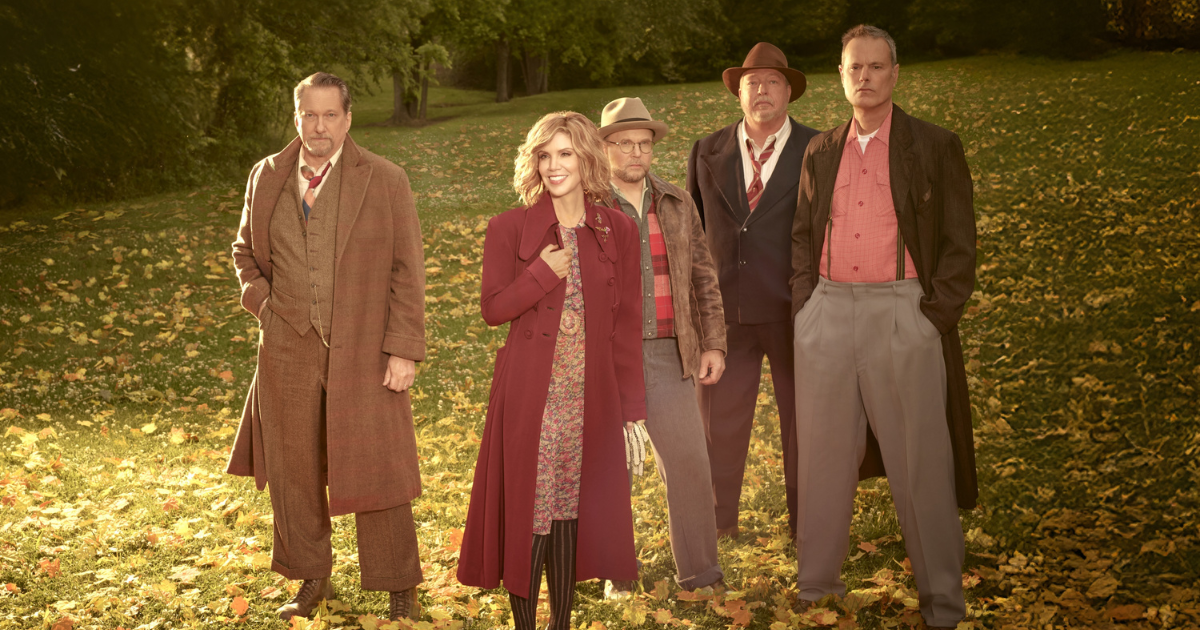
While you know better, there’s a wide swath of the music-listening world in which Alison Krauss is best known as former Led Zeppelin golden god Robert Plant’s duet partner. Yet, Krauss has had a wholly remarkable career going back nearly 40 years, in which she has exhibited profound collaborative instincts and abilities.

On the occasion of the release of Arcadia, her first album with Union Station in 14 years (as well as a reunion with the founders of her former longtime label, Rounder Records), we look back at some of Krauss’ career highlights in and out of Union Station.

“Cluck Old Hen” (traditional; 1992-2007)

We begin with a literal oldie, “Cluck Old Hen,” from the pre-bluegrass era, which demonstrates two things – that Alison Krauss has always revered the history, roots, and traditions of bluegrass; and that Union Station is one incredible ensemble. Recordings of this Appalachian fiddle tune go back more than a century, to country music forefather Fiddlin’ John Carson in the 1920s.

Krauss first released an instrumental version of the tune on 1992’s Everytime You Say Goodbye (her second LP with Union Station), and won a GRAMMY with the onstage version on 2002’s AKUS album, Live. But feast your ears and eyes on this 2007 performance at the Grand Ole Opry, with a pre-teen Sierra Hull sitting in.

1992 studio version: 

2002 live version:


“When You Say Nothing At All” (Paul Overstreet & Don Schlitz; 1994)

After a decade of steadily accelerating momentum, Krauss had her big commercial breakout with this AKUS cover of the late Keith Whitley’s 1988 country chart-topper. Krauss sang it on 1994’s Keith Whitley: A Tribute Album and it served as centerpiece of her own 1995 album, Now That I’ve Found You: A Collection. It reached No. 3 on the country singles chart and went on to win the Country Music Association’s single of the year plus a GRAMMY Award. You can hear why.

Whitley’s version:


“I Can Let Go Now” (Michael McDonald; 1997)

For any interpretive singer, the choice of material is key. And if the singer in question has Krauss’ range and chops and vision, some truly unlikely alchemy is possible. Among the best examples from the AKUS repertoire is “I Can Let Go Now,” a deep cut on Doobie Brothers frontman Michael McDonald’s 1982 solo album, If That’s What It Takes. Another amazing Krauss vocal in a career full of them.

McDonald’s version:


“Man of Constant Sorrow” (traditional; 2000-2002)

Before O Brother, Where Art Thou?, you wouldn’t have called singer-guitarist Dan Tyminski the unheralded “secret weapon” of AKUS. Nevertheless, he didn’t become a star in his own right until serving as movie star George Clooney’s singing voice in the Coen Brothers loopy, Odyssey-inspired farce. “Man of Constant Sorrow” was the hit in the movie and also on the radio, launching Tyminski to solo stardom.

Resonator guitarist Jerry Douglas especially shines on this version from 2002’s Live, recorded in Louisville – you can just tell everyone in the crowd was waiting for the “I bid farewell to old Kentucky” line so they could go nuts. Tyminski would have another unlikely hit in 2013, singing on Swedish deejay Avicii’s “Hey Brother.”

O Brother version:


“New Favorite” (Gillian Welch & David Rawlings; 2001)

Kraus sang on the GRAMMY-winning O Brother soundtrack, too, alongside Gillian Welch. It will come as no surprise that the Welch/Rawlings catalog has been a recurrent favorite song source for her. One of Krauss’ best Welch/Rawlings selections is “New Favorite,” title track of the thrice-GRAMMY-winning 2001 AKUS album. Though it’s edited out in this video, the album-closing version concluded with a rare in-the-studio instrumental flub, followed by sheepish laughter to end the record. Perhaps the AKUS crew is human after all?


“Borderline” (Sidney & Suzanne Cox; 2004)

The story goes that the first time Krauss was on the summer touring circuit, she’d go around knocking on camper doors at bluegrass festivals to ask whoever answered, “Are you the Cox Family?” Once she found them, she didn’t let go, and the Coxes became some of the best of her collaborators and song providers. Along with producing their albums, Krauss covered Cox compositions frequently; “Borderline” appeared on 2004’s Lonely Runs Both Ways, another triple GRAMMY winner.


“Big Log” (Robert Plant, Robbie Blunt, Jezz Woodroffe; 2004)

When Krauss first sang with Robert Plant at a Leadbelly tribute concert in November 2004, it seemed like the unlikeliest of pairings. But here’s proof that they had more in common than you’d expect, with Krauss covering a solo Plant hit from 1983. She sang “Big Log” on her brother Victor Krauss’ album, Far From Enough, which was released earlier in 2004.

This video pairs the Krauss siblings’ version with Plant’s original 1983 video, directed by Storm Thorgerson.


“Dimming of the Day” (Richard & Linda Thompson; 2011)

Fairport Convention guitarist Richard Thompson is one of the finest instrumentalists of his generation as well as a brilliant songwriter, especially with his former wife and collaborator Linda Thompson. This stately, bittersweet love song dates back to their 1975 duo LP, Pour Down Like Silver, and Linda sets the bar high with a stoic yet emotional vocal. Krauss more than lives up to it on the 2011 AKUS album Paper Airplane, which also offers another great showcase for resonator guitarist Douglas.

Richard & Linda’s version: 


“Your Long Journey” (Doc & Rosa Lee Watson; 2007)

Krauss isn’t just a spectacular lead vocalist, but also an amazing harmony singer, one of the few who can hold a candle to Emmylou Harris. Retitled from the Doc/Rosa Lee Watson original, “Your Lone Journey,” this closing track to 2007’s grand-slam GRAMMY winner Raising Sand has Krauss’ most emotional vocal harmonies with Plant on either of their two albums together.

Doc Watson’s version:


“Heaven’s Bright Shore” (A. Kennedy; 1989, 2015)

All that, and she’s an incredible backup vocalist to boot. “Heaven’s Bright Shore” is a gospel song Krauss first recorded as a teenager on 1989’s Two Highways, her first album billed as Alison Krauss & Union Station (and also her first to receive a GRAMMY nomination). It’s great, but an even better version is this 2015 recording in which she’s backing up bluegrass patriarch Ralph Stanley alongside Judy Marshall.

AKUS version: 


“The Captain’s Daughter” (Johnny Cash & Robert Lee Castleman; 2018)

The late great Johnny Cash left behind a lot of writings after he died in 2003, some of which were turned into songs for the 2018 tribute album, Forever Words: The Music. None of his songs ever had it so good as “The Captain’s Daughter.” This superlative AKUS version fits Cash’s words like a glove.


Continue exploring our Artist of the Month coverage of Alison Krauss & Union Station here.

Alison Krauss & Union Station figure prominently in David Menconi’s book, Oh, Didn’t They Ramble: Rounder Records and the Transformation of American Roots Music, published in 2023 by University of North Carolina Press and featuring a foreword by Robert Plant.

Photo Credit: Randee St. Nicholas

Celebrating Women’s History Month: Sister Rosetta Tharpe, Laurie Lewis, and More

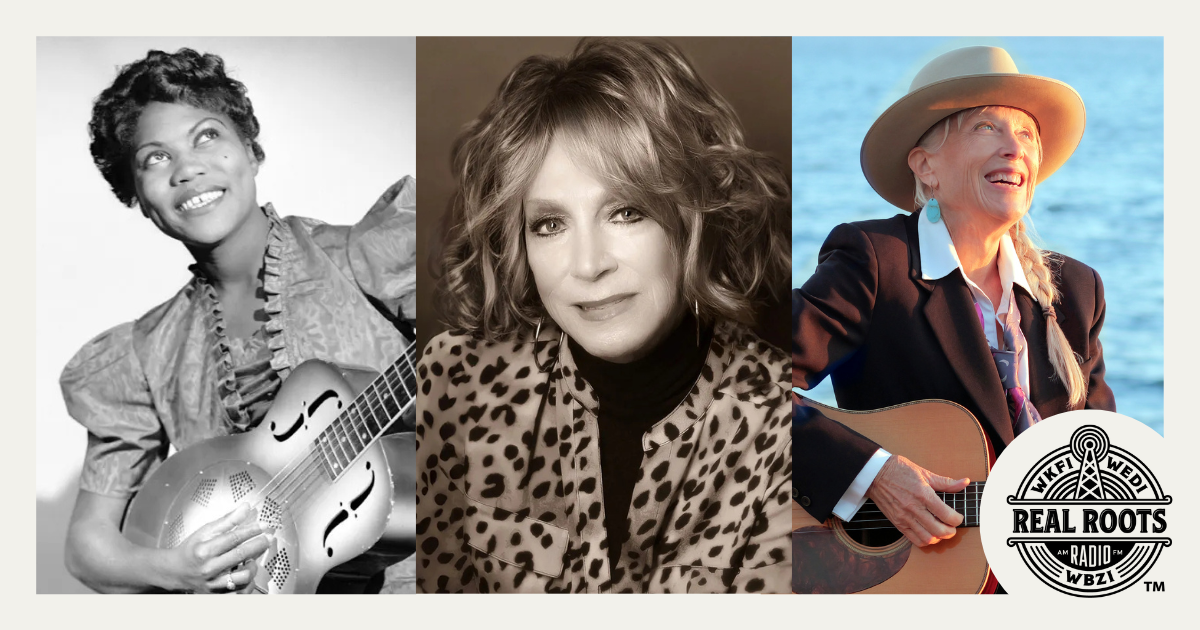
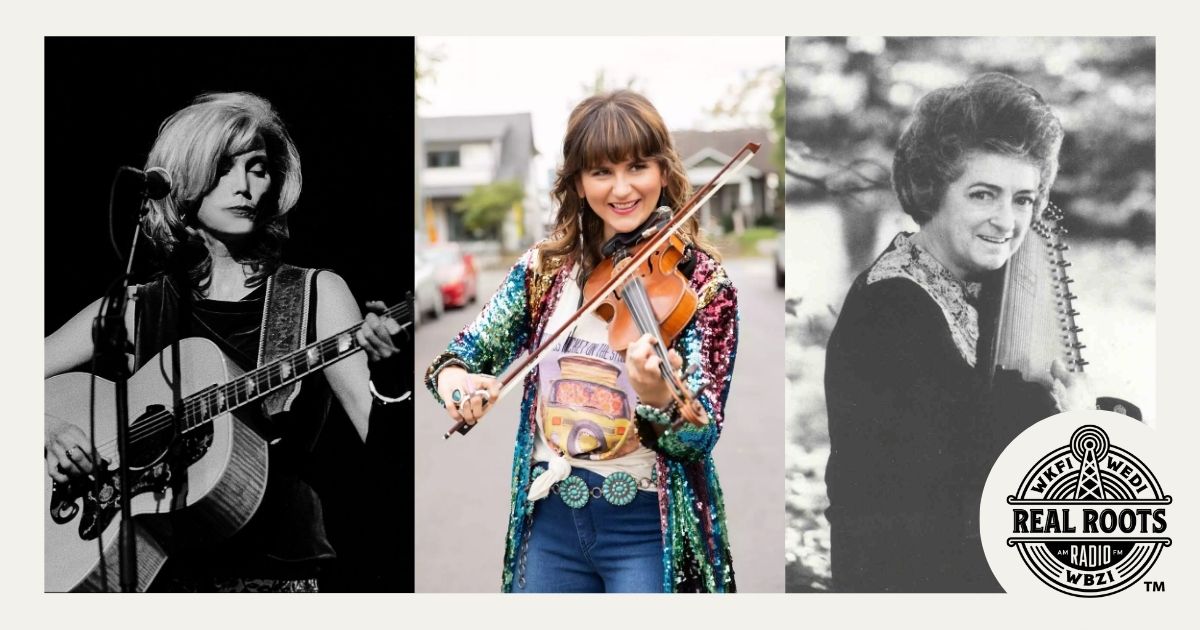
Our partnership with our friends at Real Roots Radio in Southwestern Ohio concludes as we wind down our weekly celebration of Women’s History Month. We’re proud to have brought you four collections of a variety of powerful women in bluegrass, country, Americana, folk, and elsewhere who have been featured on Real Roots Radio’s airwaves each weekday in March, highlighting the outsized impact women have on American roots music. You can listen to Real Roots Radio online 24/7 or via their FREE app for smartphones or tablets. If you’re based in Ohio, tune in via 100.3 (Xenia, Dayton, Springfield), 106.7 (Wilmington), or 105.5 (Eaton).

American roots music, historically and currently, has often been regarded as a male-dominated space. It’s certainly true of the music industry in general and these more down-home musics are no exception. Thankfully, American roots music and its many offshoots, branches, and associated folkways include hundreds and thousands of women who have greatly impacted these art forms, altering the courses of roots music history. Some are relatively unknown – or underappreciated or unsung – and others are global phenomena or household names.

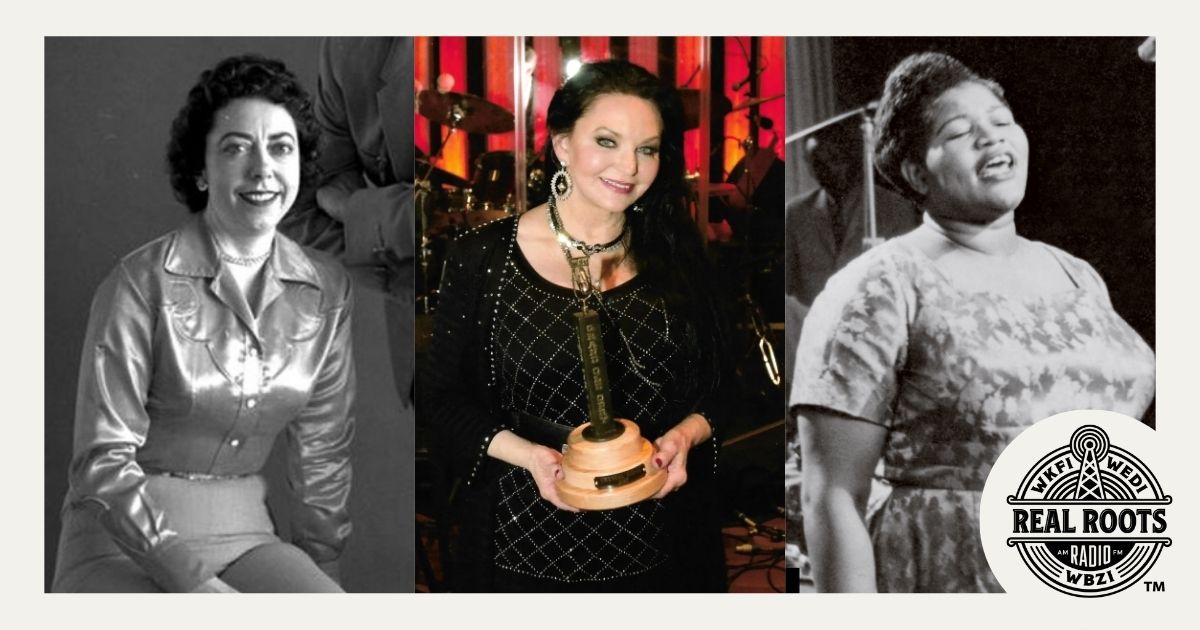
Over the last few weeks, radio host Daniel Mullins, who together with BGS and Good Country staff has curated the series, has brought you just a few examples of women in roots music from all levels of notoriety and stature. Week one featured Dottie West, Gail Davies, and more. Week two shone a spotlight on Big Mama Thornton, Crystal Gayle, Rose Maddox, and more. Week three, paid tribute to Emmylou Harris, Wild Rose, Mother Maybelle, and more. This final installment of the series celebrates Laurie Lewis, the Coon Creek Girls, Amanda Smith, Sister Rosetta Tharpe, Petticoat Junction, and Jeannie Seely.

Plus, you can find two playlists below – one centered on bluegrass, the other on country – with dozens of songs from countless women artists, performers, songwriters, and instrumentalists who effortlessly demonstrate how none of these roots genres would exist without women.

Laurie Lewis (b. 1950)

A GRAMMY-winning singer, songwriter, and fiddler, Laurie Lewis is a California native who has been blazing trails in bluegrass for over four decades. She became enamored with folk music after attending the Berkeley Folk Festival in her youth – she has since made an indelible mark on American roots music with her work in bluegrass and beyond!

Whether leading her band, Laurie Lewis & The Right Hands, performing solo, or collaborating with her pal Kathy Kallick – with whom she helped found the Good Ol’ Persons in 1970s, pushing norms in the process – Laurie’s soulful vocals and skilled fiddle work have made her a standout in bluegrass for a lifetime. Her songwriting paints vivid pictures of love, loss, and the land, while her honest voice pulls at the heartstrings, earning her two IBMA Female Vocalist of the Year awards.

Her recording of “Who Will Watch the Home Place” was named IBMA’s Song of the Year in 1994 and has touched hearts for generations. It’s a certified bluegrass classic and is still a staple on bluegrass radio programs. Another beloved composition, “Love Chooses You,” has been recorded by Laurie, Jeannie Kendall, Kathy Mattea, and more.

Laurie Lewis isn’t just a performer – she’s a mentor, a producer, and a keeper of the bluegrass flame, not only by encouraging the next generation of bluegrass music makers, but also by shining a light on significant voices of the past like Vern & Ray and Hazel & Alice. This West Coast bluegrass leader was honored by the IBMA with their Distinguished Achievement Award in 2024.

Suggested Listening:
Love Chooses You
The Bear Song
I’m Gonna Be the Wind

The Coon Creek Girls (active 1937 – 1957)

We’re heading back to the 1930s with an all-female string band that made history, the one and only Coon Creek Girls! It was 1937 when talent scout and radio pioneer John Lair formed the Coon Creek Girls for the Renfro Valley Barn Dance radio show on the airwaves of Cincinnati’s WLW. Led by the talented Lily May Ledford on banjo alongside her sister Rosie, Esther Koehler, and Evelyn Lange, these ladies brought high-energy mountain music to the masses.

Their popularity on radio brought opportunities to tour around the Midwest and even record in Chicago. They didn’t just play, they broke barriers! In 1939, First Lady Eleanor Roosevelt selected the Coon Creek Girls to perform at the White House for President Franklin D. Roosevelt and the King and Queen of England. A hillbilly band of women? Unheard of at the time! But they proved talent knows no boundaries.

The Coon Creek Girls would be an influence on folks like Cathy Fink, Suzanne Edmondson (of The Hot Mud Family and Dry Branch Fire Squad), and even Pete Seeger. While the historic group would disband in the 1950s, John Lair would revive their legacy decades later by helping pull together another all-female bluegrass band to again perform at the Renfro Valley Barn Dance (which had relocated to Mount Vernon, Kentucky, becoming a popular country music tourist destination for decades). With the blessing of Lily May Ledford, this new act was called The New Coon Creek Girls and would make music consistently for nearly twenty years, helping springboard the careers of Pam Perry and Pamela Gadd (of Wild Rose), Wanda Barnett, Vicki Simmons, Deanie Richardson, Dale Ann Bradley, and more.

The Coon Creek Girls inspired generations, proving women belonged in country and bluegrass. Their legacy lives on in every banjo-pickin’ girl who follows in their footsteps!

Suggested Listening:
Flowers Blooming In The Wildwood
Banjo Pickin’ Girl

Amanda Smith (b. 1975)

Amanda Smith’s voice soars like the mountains of West Virginia from which she comes. She has been a force in the bluegrass world for years. Amanda met her husband Kenny in the mid ’90s at a Lonesome River Band concert (he was playing guitar with LRB at the time). Not only did Kenny fall in love with Amanda, but he fell in love with her voice as well.

Kenny would leave LRB at the turn-of-the-century and he and Amanda would form the renowned Kenny & Amanda Smith Band, a duo celebrated for their tight harmonies and masterful musicianship. They were named Emerging Artist of the Year by the IBMA in 2003 and they haven’t slowed down since. With a sound built on Amanda’s gripping vocals and Kenny’s exquisite guitar work, they have been a staple of the bluegrass world for nearly twenty-five years, racking up many #1 hits on bluegrass radio and frequently seen on stages across the country – both as a duo and with the Kenny & Amanda Smith Band.

Their band has also introduced bluegrass audiences to some of the top pickers of today’s generation, including Jason Davis, Zachary McLamb, Cory Piatt, and Alan Bartram (Amanda’s brother-in-law). Whether delivering beautiful ballads or bluegrass barnburners, Amanda’s voice is one of the most beloved in the genre today, leading to multiple awards, including the IBMA Female Vocalist of the Year honor in 2014. From festival stages to radio waves, Amanda Smith continues to leave a lasting mark on bluegrass.

Suggested Listening:
Feeling of Falling
Mountain Top

Sister Rosetta Tharpe (1915 – 1973)

The Godmother of Rock ‘n’ Roll, Sister Rosetta Tharpe was one of the most influential artists of the 20th century. Born in 1915, Tharpe was shredding on an electric guitar before rock even had a name! With a gospel heart and a rock and roll soul, she fused spirituals with electrifying riffs, paving the way for Chuck Berry, Elvis, and even Jimi Hendrix. Her hit, “Strange Things Happening Every Day,” was one of the first gospel songs to cross over to mainstream charts and is pointed to by many as the first rock and roll record, proving that faith and fiery licks could share the stage.

The juxtaposition of performing her powerful gospel songs in smoky barrooms is the stuff of legend. Her gospel hits like “This Train,” “Down by the Riverside,” “Up Above My Head,” and “The Lonesome Road” are still revered and helped shape the musical identity of artists as diverse as Johnny Cash, Elvis Presley, Tina Turner, Jerry Lee Lewis, Rhiannon Giddens, and more. Despite being a woman in a male-dominated industry, she didn’t just break barriers – she smashed them! Sister Rosetta Tharpe was posthumously inducted into the Rock and Roll Hall of Fame in 2018.

Suggested Listening:
This Train
Up Above My Head

Petticoat Junction (active 1988 – 1998)

A bluegrass festival mainstay of the ’80s and ’90s, Petticoat Junction was a popular all-female traditional bluegrass band that helped open doors for some of today’s “girl groups” like Della Mae and Sister Sadie. In fact, there are several direct connections between Sister Sadie and Petticoat Junction. Not only was Sadie banjoist Gena Britt a member of Petticoat Junction (primarily playing bass), but reigning IBMA Female Vocalist of the Year Jaelee Roberts has followed in her mother’s footsteps. Andrea Mullins Roberts was an anchor of Petticoat Junction’s sound with her rich, traditional voice and strong guitar playing before becoming a respected booking agent, manager, and behind-the-scenes businessperson in today’s bluegrass industry.

One of the most celebrated lineups of Petticoat Junction featured Robin Roller (banjo) and Gail Rudisill-Johnson (fiddle) alongside the aforementioned Andrea and Gena. This particular four-piece ensemble released a pair of great albums for Pinecastle Records in the early ’90s, in addition to touring heavily at festivals from coast-to-coast. Deriving their name from the popular ’60s sitcom (whose theme song would be a hit for Flatt & Scruggs), their heartfelt vocals and instrumental prowess shone brightly, whether on original songs or on material from the likes of Jimmy Martin, Reno & Smiley, Flatt & Scruggs, and more.

In addition to continuing to open avenues for other all-women bands, Petticoat Junction’s influence is still being felt in the 21st century as they’ve influenced acts like Flatt Lonesome and Starlett & Big John.

Suggested Listening:
I’d Miss You
Lift Your Eyes To Jesus

Jeannie Seely (b. 1940)

From the bright lights of the Grand Ole Opry to the heart of country music, today we’re tipping our hats to “Miss Country Soul,”  Jeannie Seely! Born in Pennsylvania, but a Nashville star through and through, Jeannie Seely made history in 1966 with her Grammy-winning hit “Don’t Touch Me,” an envelope-pushing and controversial song due to its featuring a woman expressing sexual desires. With her bold style, unmistakable voice, and trailblazing spirit, she became a beloved icon in country music.

Seely shattered barriers, becoming the first performer to wear a miniskirt on the Opry stage (among other fashion trends she helped bring to country music), being the first woman to host an Opry segment, and fiercely advocating for women in country. Jeannie’s also a respected country music songwriter, writing hits like “Leavin’ and Sayin’ Goodbye” (Faron Young), “He’s All I Need” (Dottie West), “Enough to Lie” (Ray Price), and more; folks like Merle Haggard, Rhonda Vincent, Connie Smith, Ernest Tubb, and Little Jimmy Dickens have recorded her songs over the years.

More than 50 years later, Jeannie is still gracing the Grand Ole Opry stage, holding the record for the most Opry performances ever – 5,200+ appearances and counting! Just as Dottie West encouraged her when she was a young country artist, Jeannie is constantly investing in the future of country as a dear friend and mentor to her Opry sisters, like Carly Pearce and Rhonda Vincent, and even to the young bluegrass band, Cutter & Cash and The Kentucky Grass. She proves that true country never fades. So here’s to Jeannie Seely – an icon, a trailblazer, and a country legend who continues to shine!

Suggested Listening:
Can I Sleep In Your Arms
So Far, So Good” (featuring The Whites)


Photo Credit: Sister Rosetta Tharpe from the Michael Ochs Archives; Jeannie Seely by Cyndi Hornsby; Laurie Lewis by Irene Young.

Opry 100: A Live Celebration

If you missed the Grand Ole Opry’s no-holds-barred 100th birthday party and live television broadcast extravaganza on NBC, we’ve got your recap right here on BGS.

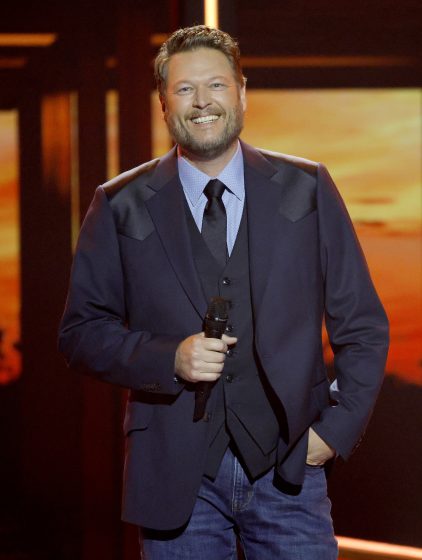
Hosted by Blake Shelton at the historic Grand Ole Opry House in Nashville, Tennessee, Opry 100 included performances by artists like Vince Gill, Alison Krauss & Union Station, Lainey Wilson, Brad Paisley, Ashley McBryde, Reba McEntire, Dierks Bentley, Garth Brooks, Trisha Yearwood, and many more. The primetime broadcast and streaming concert is just one event among an incredible, chocked-full effort by the Opry to celebrate their centennial – officially November 28, 2025 – throughout the entire calendar year.

Over the two-hour broadcast, there were dozens of show-stopping moments, from the brash, bold, and sensational to tender, intimate, and heart-wrenching performances. Good country of all varieties was on display from a wide array of artists at all levels of notoriety.

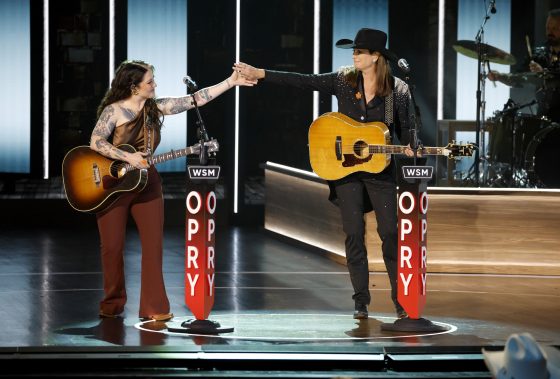
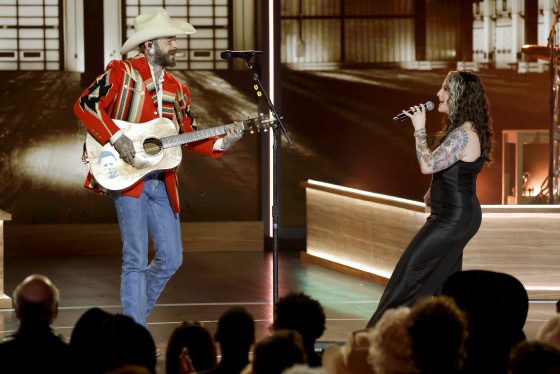
The War and Treaty sang alongside Steven Curtis Chapman and Amy Grant; Vince Gill reunited with his old pals Jeff Taylor and Ricky Skaggs; Ashley McBryde brought the house down alongside superstar country newcomer Post Malone and elsewhere in the show, ’90s stalwart Terri Clark; Lainey Wilson shared the stage with country picker and renaissance man Marty Stuart; husband-and-wife Trisha Yearwood and Garth Brooks were on hand; and Brad Paisley and Alison Krauss reunited for their 2003 smash hit duet, “Whiskey Lullaby.”

The show wrapped with a stunning full cast tribute to Dolly Parton, who greeted the Opry House audience via video and gave her sincere regrets for not being able to appear at the event. (Parton’s husband of 58 years, Carl Dean, recently passed away.) Dozens of the evening’s star artists took to the stage to pay tribute to Parton by singing her most famous hit, “I Will Always Love You,” a perfect, soaring sing along to close the momentous show.

There are truly too many once in a lifetime collaborations, songs, moments, and performances from Opry 100 to list, but we’ve collected a few of our favorite moments so you can relive this once-in-a-lifetime – or once-in-a-century – show! Get your fix by traveling through a few of our own favorite moments from Opry 100: A Live Celebration below.

Blake Shelton Hosts

Country superstar, award winner, and television personality Blake Shelton was a more than qualified host for Opry 100: A Live Celebration. Of course, he also gave a rousing performance of Joe Diffie’s “Pickup Man” to the delight of everyone in the crowd who find somethin’ they like in a pickup man. It wouldn’t be a celebration of country or the Opry without a truck mention.


Nashville’s Own, the McCrary Sisters

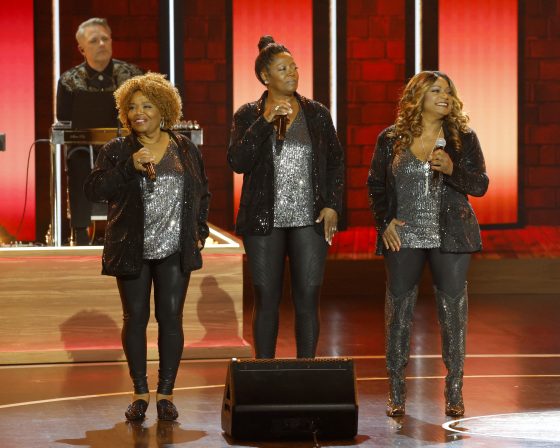
Nashville’s favorite, in-demand singing siblings, the McCrary Sisters were on hand for Opry 100, too. It’s certainly not their first time on the hallowed Opry stage, but in the centennial context their appearance reminds of the legacies of similar groups who blazed trails at the Opry before them – like the Pointer Sisters – and those who’ve followed in their footsteps, like the Shindellas and Chapel Hart.


Steven Curtis Chapman and the War and Treaty Share a Sacred Moment

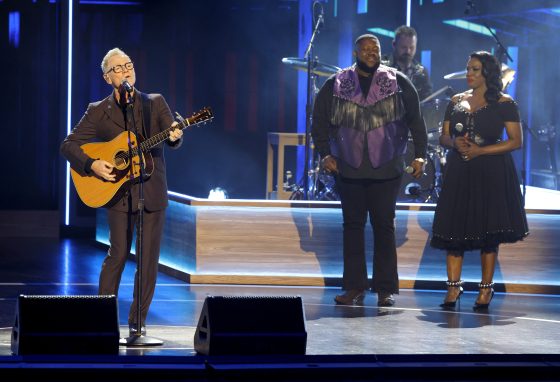
Grand Ole Opry member and contemporary Christian singer-songwriter Steven Curtis Chapman was joined by Americana/soul/country duo the War and Treaty for his performance on Opry 100.


Lainey Wilson and Hall of Famer Marty Stuart Duet

One of the biggest names in country at the moment, former GC and BGS

Artist of the Month Lainey Wilson was joined by bluegrasser, fiery picker, and Country Music Hall of Famer Marty Stuart backing her up on mandolin. They perform “Things a Man Oughta Know” from her huge 2021 album, Sayin’ What I’m Thinkin’, which many regard as her breakout release.


Ashley McBryde with Post Malone and Terri Clark

Ashley McBryde had multiple stellar moments during Opry 100, including these two prime duo performances. One with ’90s country star Terri Clark and another with a superstar newcomer to the genre, Post Malone. Her song selection with Postie was impeccable, too, taking the Opry 100 down to “Jackson” to mess around.


Trisha Yearwood with Garth Brooks and Reba McEntire

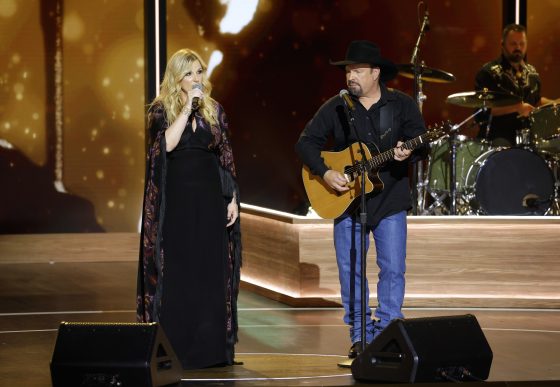
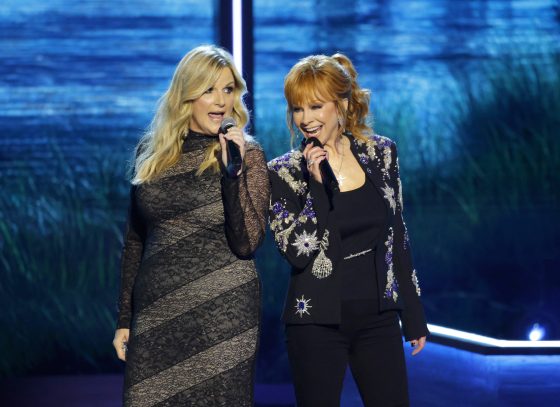
Country has boasted many amazing artist couples, but who better to take the Opry 100 stage than Trisha and Garth? Trisha also appeared with Reba McEntire to perform “The Night the Lights Went Out in Georgia,” a track that has been a huge generation-spanning hit for McEntire.


Brad Paisley and Alison Krauss Reunite

An iconoclastic example of a tear-jerker country story song, Paisley and Krauss’s recording of “Whiskey Lullaby” was released in the 2000s, but has had immense staying power. It shines from the Opry 100 stage in its simple and stripped-down styling. Is anyone a better duet partner and harmonizer than Alison Krauss? Perhaps not. Certainly a highlight among all of the many highlights of the broadcast


Alison Krauss & Union Station Perform, Too

On the precipice of their first album release in over 14 years, Alison Krauss also brought her band Union Station – including newest member,

Russell Moore – to the Opry 100 stage. Introduced by the Queen of Bluegrass, Rhonda Vincent, AKUS performed a hit from a prior era, “Let Me Touch You for Awhile” off 2001’s New Favorite. Their brand new project, Arcadia, releases March 28.


Country Music Hall of Fame Inductee, Vince Gill

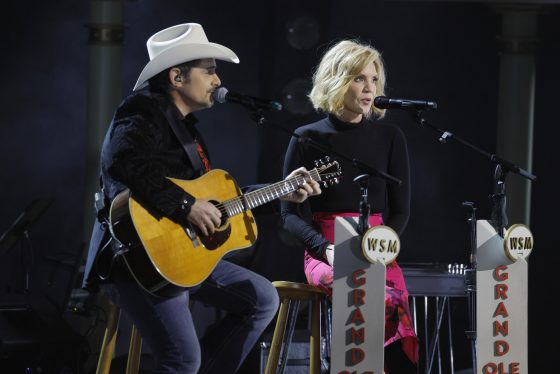
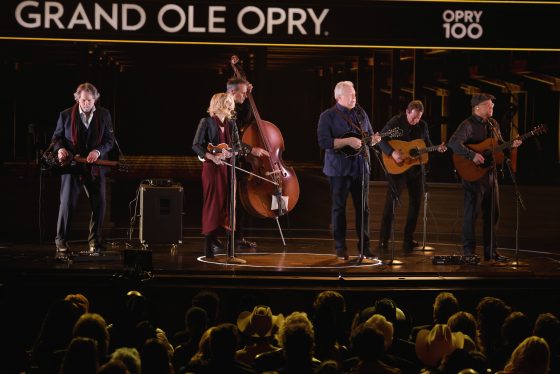
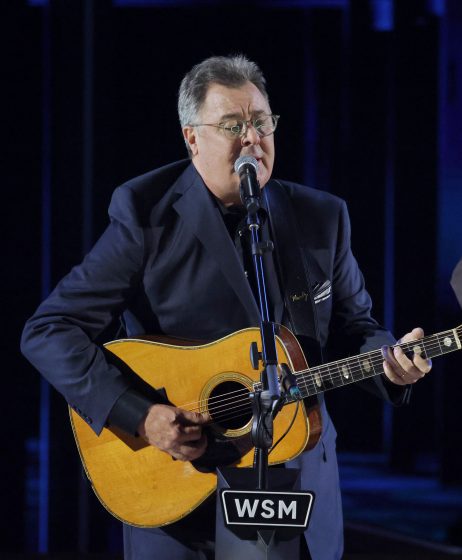
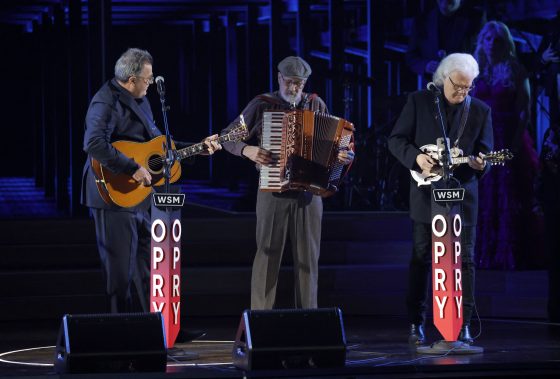
It wouldn’t have been a complete lineup for Opry 100 without Vince Gill! The Country Music Hall of Famer was joined by his old friends Jeff Taylor on accordion, Sonya Isaacs, and fellow inductee Ricky Skaggs, to sing perhaps his most famous song, “Go Rest High on that Mountain.” An impactful and inspiring number, the original has been a comfort to thousands of fans and listeners experiencing their own losses and grief. Of his deep-and-wide catalog of music, there’s not a better choice for an evening like Opry 100.


Ketch, Dierks, and Jamey

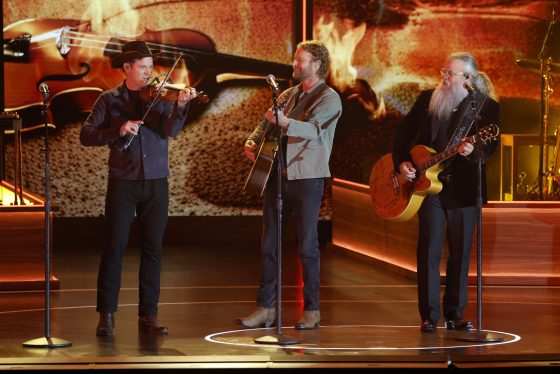
An Opry member trifecta, Dierks Bentley, Jamey Johnson, and old-time and bluegrass fiddler Ketch Secor (of Old Crow Medicine Show) paid tribute to the Charlie Daniels Band with a perfectly honky-tonkin’ medley of “Drinkin’ My Baby Goodbye” and, of course, “The Devil Went Down to Georgia.” From the sidewalks of Lower Broadway to the Grand Ole Opry stage, Charlie Daniel’s impact on country is indelible.


Luke Combs’ Mother Church Moment

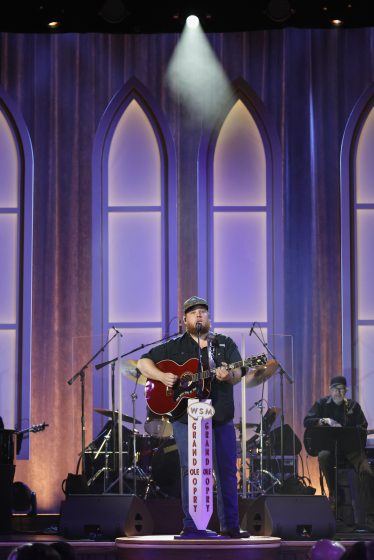
From the hallowed stage of the Ryman Auditorium, the most famous former home of the Grand Ole Opry, one of the most popular singers in all of country, Luke Combs, performed George Jones’ “The Grand Tour,” as well as “Hurricane,” for Opry 100. With more than 800 million streams (on Spotify alone), “Hurricane” is one of his biggest hits from his 2017 album, This One’s For You, which has been certified double platinum by RIAA.

This long list of our favorite Opry 100 moments is still, somehow, merely the tip of the country iceberg. Stay tuned as the Grand Ole Opry continues their 100th birthday celebration all year long.


All photos courtesy of the Grand Ole Opry; credit Getty/Jason Kempin.

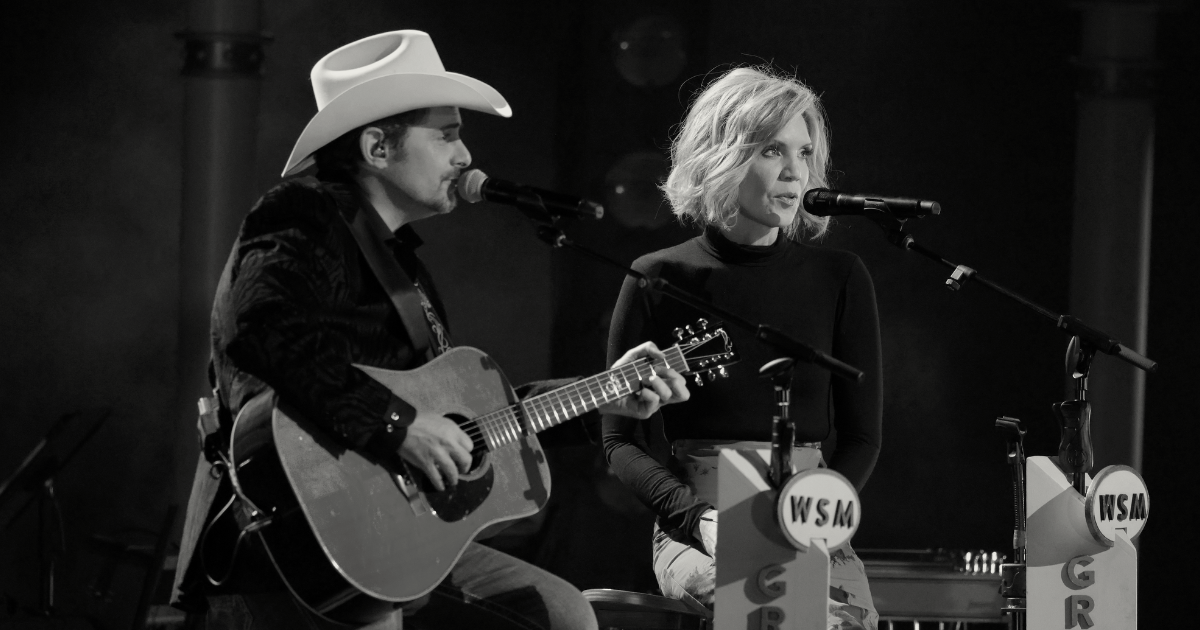
Lead image: Brad Paisley and Alison Krauss perform “Whiskey Lullaby” live at Opry 100.

Tommy Emmanuel’s Fiery Guitar Picking Is Not Just for Musicians, It’s for Everyone

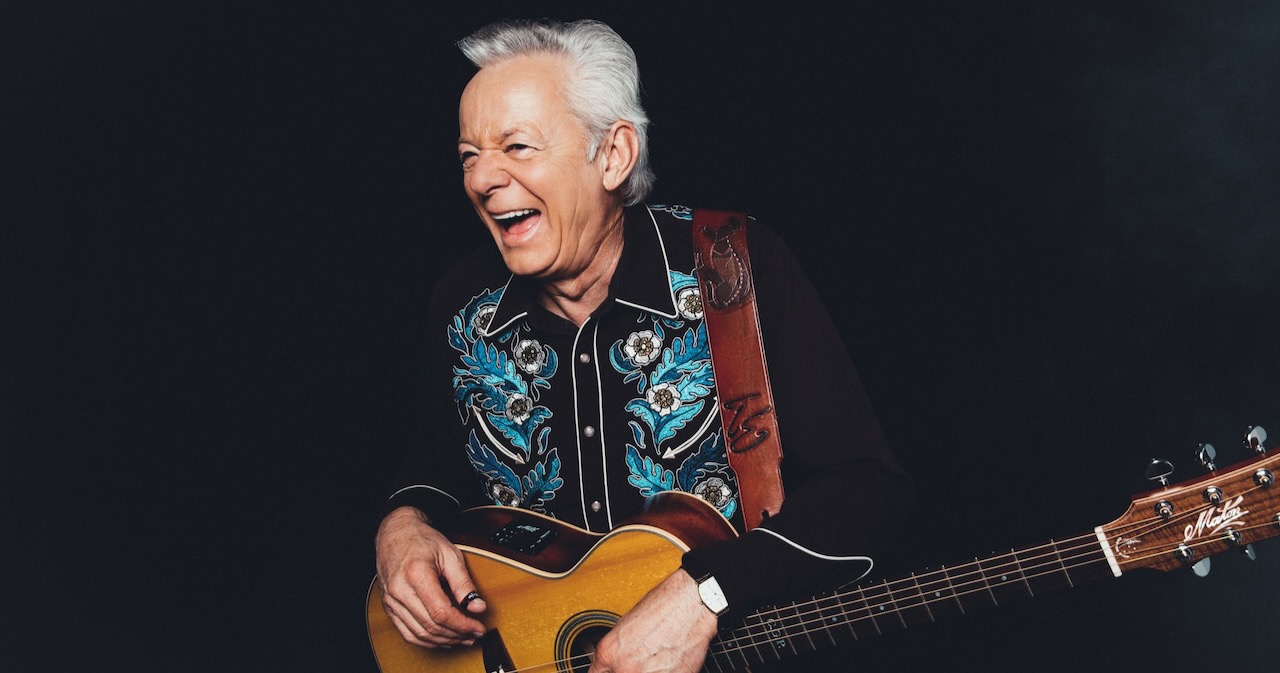
Tommy Emmanuel is in his happy place: spending a Thursday afternoon at Nashville’s Gruhn Guitars in anticipation of recording a new solo album. “I’m here getting a new pickup system featured in one of my guitars, buying strings, hanging out with the guys, and getting a little Gruhn mojo from the shop,” he says. “The weekend, I’ll spend stringing up and playing my guitars, making decisions about which guitar I’ll use for what song, and stuff like that.”

For the next hour, however, he’s upstairs in the store’s amp room, settled in to discuss his two new albums – the just-released Live at the Sydney Opera House, recorded over the course of two performances in May 2023, and a solo album in the works – along with many other topics. Highlights from that conversation follow.

I was trying to find a starting point for this interview, which is challenging because there are so many. I listened to your January interview with Rick Beato and had a “stopped me in my tracks moment” when you said you spent three days listening to Taylor Swift’s The Tortured Poets Department. I thought, “Tommy Emmanuel is a Swiftie! We’ll start there.”

Tommy Emmanuel: Taylor, as a writer, is definitely a big influence on me. Someone who achieves what she achieves is doing something beyond the norm. Even beyond talent, it’s a spiritual experience, it’s big, and it’s deep, and I like to observe, listen, and learn from people who achieve like that.

You described her songwriting as “crying from the heart.” That stood out because that’s really what music is – it comes from the heart. We always hear that tone is in the hands, but is the heart not at the core of that?

Exactly. I was [writing a new song] and trying to find something that could give me the right melody to say with the chorus what I wanted to say without words, making the melody this cry from the heart. It’s– [sings melody], the chords change underneath, and so there’s movement, but there’s this cry from the heart right in the middle of everything.

Can you tell us more about this new solo album?

Normally, I record here, fly to LA, mix and master it with my friend Marc DeSisto, and I’m the producer. With this album, I’m working here in Nashville with Vance Powell, the busiest guy on the planet. We start on Monday and we’ve got to get it all done in four days.

I have eight new songs, including this piece we’ve been talking about, “A Drowning Heart.” There’s “Black and White to Color,” “Young Travelers” – I’ve got some interesting titles. The songs are different to what I’ve written in the past. There’s a couple of typical fingerpicking tunes that I really like. They’re a little more folk-influenced. The other ones I’ve been talking about are much more ’80s rock and roll style. I have a song called “Scarlett’s World.” The introduction and ending sound a bit like Dire Straits. I did that on purpose, because it’s such a cool sound. That song is inspired by the movie Lucy with Scarlett Johansson. I love that movie. I love her work. My granddaughter is like Scarlett and she is a force of nature. I got the idea to call the song “Scarlett’s World” when I was with her.

I’m enjoying this phase of my life. Whatever page I’ve turned to get to this stage has been worth it, because some songs have come to me in this last six months that I really love playing in my shows. Playing new songs live gets rid of anything that doesn’t need to be there, because sometimes you can write a song, you’re trying to be clever, you’re trying to be creative, you’ve got all these good ideas going, and then you play it for somebody and you realize, “Oh, this part here is not necessary.” You throw it out and get to the meat and potatoes. Forget all the other stuff. Just tell me the story. Take me somewhere. That’s why I like to perform my songs to an audience before I record them. Your instincts are on a hundred. When you walk on stage, your physical and spiritual instincts have risen up and they’re ready to serve you.

Of course, you’ve also just released your live album. You’re known for working without a set list. With such a rich repertoire, how do you sequence your shows, and sequence them so that the performance speaks both to musicians and non-musicians?

That’s so important to me. My music is not for musicians; it’s for everybody. I’m trying to be an all-around artist, entertainer, writer, player, performer. I’m trying to give people a bit of everything. [The show] has to be a journey, a story, entertaining, and when it’s over, I want people to think, “I’ve got to see that again.” There’s a passage in the first Indiana Jones movie that I never forgot. One of the characters says, “What are you going to do now, Indy?” Harrison Ford says, “I don’t know. I’m just making this up as I go along.” That’s me. That’s how I live my life.

Your history with Maton Guitars goes back to your days playing electric guitar. The common trajectory is the player begins on acoustic, and then goes on to electric. True to originality, you did the opposite.

I started on electric. When I was starting to be a songwriter and making my own records, I was mostly writing on electric, 60 to 70 percent, and the rest was acoustic. I started doing solo shows on acoustic and all of a sudden I realized, “Holy smoke, this really works well.” So I started writing more songs to play as a solo acoustic player. It was more pop and rock and roll music, funky, all that sort of stuff.

The record company wanted me to do something we could get on radio, so I made some jazz-oriented records. I got a lot of airplay on jazz stations and that kind of forced me into that direction for a while. It was good, because I learned to write and perform that way. When I moved to Nashville, I wanted to be on the Opry and play the Ryman, so I focused on being more country- and bluegrass-based, which is my roots. My biggest influences when I was a kid, before Chet Atkins, were Jimmie Rogers and Hank Williams. They were my first two loves of music.

What are the biggest challenges of doing what you do the way you do it?

Everything comes down to commitment. How committed am I to be a better player? I often tell people who want to talk about my technique, “I don’t talk about my technique. It’s invisible.” The music is what counts, not how I do it. My abilities fluctuate because I’m a human being. I’m not a robot; I’m not going to be exactly the same every time.

If you want it to be good, to flow, and to be wonderful to watch, then there’s a lot of work ahead. You’re going to have to work so hard to make it that way. I never stop working on my abilities, because it’s so important. My role model, Chet Atkins, worked harder than anybody I’ve ever seen at practicing and making sure that every little detail was so smooth. I will follow that with adding that my age is challenging me as well. There are things I could do twenty years ago that I can’t do today and I have to be okay about that. I have to find new things to replace some of the things that I physically can’t do.

I’ve just come off a five-week tour, which was grueling, long, lots of travel, not a lot of chance to do some serious practice. Every day was like, get to the venue, get my guitar out, start playing, work on some songs that maybe I didn’t play the night before or the night before that, remember some of my other songs that I haven’t been playing, put them in the show, and constantly find ways of making it different and interesting from the night before.

I’ve got to be in good shape physically, mentally, and spiritually to get up there and play my heart out for nearly two hours and throw my whole life into it. I’ve got to eat well, rest well, and have enthusiasm for what I’m doing. I can’t remember a time where I was standing on the side of the stage and thought, “Not this again.” That never has entered my mind. I’m like, “I can’t wait to get out there. I can’t wait to play. I can’t wait to see how this night is going to go and what I’m going to do that’s going to surprise me.”

You’ve told us a bit about your introduction to bluegrass, coming to acoustic guitar from electric, and your passion for jazz. Can you draw a through line between all those genres? How do they shape what you do?

It’s about musical abilities and musical ideas. When I play with Ricky Skaggs, or Molly Tuttle, or anybody, it’s about me fitting into what they do and serving the music as best I can. There’s a bit of bluegrass in everything I play. There’s a bit of blues in everything I play. I don’t feel like I need to be in a box or have a style stapled to me. It’s all music to me.

When I play with Billy Strings, I can hear Doc Watson and Tony Rice, of course, but I can also hear little bits of Stevie Ray Vaughan, B.B. King, George Harrison. You know, we’ve all got it in us. It’s all styles of music together. Bluegrass is such an open-ended thing to me. If I’m playing “Highway 40 Blues” and I take a solo, I don’t necessarily think, “Oh, I’d better tap into Tony Rice.” I just play what I feel at that moment.

A number of musicians have told me that they sometimes get sick of their own playing. Does this ever happen to you, and if so, how do you climb out of that rut?

I get tired of myself sometimes and usually something comes along that lifts my faith in my gift. Right when I think I’ve had enough of me, I need a break, something happens and somebody needs me to play for them, and they remind me, “Don’t forget – you’re here for a reason. You’re here to serve others. When you play, people feel something. They feel happy. So get out of your own head and do it for someone else.”

There are times when you definitely need a break. I just had a week after the tour I finished in Zurich a week ago. I flew into England to be with my grandchildren and my daughters and I didn’t play much. I played a little bit after the girls had gone to bed. I made my dinner, played a little bit, and then watched Netflix and chilled out. It was good. I needed that break.

When your colleagues talk about you, they always describe you as a good guy, a nice guy, a mentor. How much of that comes from the kindness and mentoring you received from Chet Atkins?

I’m just trying to hand on what was handed to me. When you’ve been loved on by a guy like Chet Atkins, you know you’ve been loved. When you’ve been loved on by someone like my mother, who led by example her whole life … what a great soul, a great spirit.

When I moved to the big city when I was young, I was so used to people being almost aggressive towards me, because they thought I was showing off or thinking I was much smarter than them. And it never entered my mind. But they were full of jealousy or fear or whatever, I don’t know. So when I got to the big city and I saw musicians who did things I couldn’t do, when I got to know them, they were so encouraging to me. They were so honest with me. They treated me with a dignity that other people didn’t. And so I just want people to feel good when we play together, because it’s a very honest experience.

Who is your dream artist to work with?

Marty Stuart. What a talent! He’s a free spirit and the kind of guy I like being around. I would love to work with Marty.

You’ve spoken openly about your long battle with addiction. You are in recovery and you’ve also done the work through therapy. What part has guitar played in your recovery journey?

The guitar has always been my go-to thing to help me get through stuff. When I went through my first divorce, we’d been married for 15 years and I thought we were doing great. Everything was wonderful, I’ve got two little daughters, then my wife wanted to separate and then she was with someone else. I had to let her go and I went through a painful divorce.

I was broken beyond measure and my world went upside down. It was during that period that I wrote some of the best music I’ve ever written. It came to help me and gave me something good to focus on. Next thing I know, people are loving the music I’ve written, and I’m out, I’m starting again, I’m off on a new road.

The thing I love [about sobriety] is being clear. I’m present. My love of music and playing in general has grown so much since I’m not ruled by drugs or alcohol. I’m [five years] free and I’m so grateful. What I do now is better, it’s more honest, it’s more real. I don’t feel self-obsessed, self-absorbed, or feel sorry for myself for all the bad things that nearly destroyed me.

I know what addiction is now. I know how to deal with it. It’s finding what the problem is, being willing to talk about it, put the work in, follow the steps, and keep doing the work that has made my life so beautiful and so much better. Sometimes I think, “How the hell did I ever survive that?” I’m guessing that my maker was with me all the way. I’m totally free today, but I don’t take it lightly. It’s living one day at a time, and it’s beautiful.

And finally, what is the difference between playing guitar and being a guitarist?

Being a guitarist is being a gun for hire. Being a guitar player is a way of life. A guitar player is someone who loves to play for people and who loves his instrument deeply.


Photo Credit: Alysse Gafkjen

Celebrating Women’s History Month: Emmylou Harris, Mother Maybelle, and More

Our partnership with our friends at Real Roots Radio in Southwestern Ohio continues as we celebrate Women’s History Month. We’re proud to bring you weekly collections of a variety of powerful women in bluegrass, country, Americana, folk, and elsewhere who have been featured on Real Roots Radio’s airwaves each weekday in March, highlighting the outsized impact women have on American roots music. You can listen to Real Roots Radio online 24/7 or via their FREE app for smartphones or tablets. If you’re based in Ohio, tune in via 100.3 (Xenia, Dayton, Springfield), 106.7 (Wilmington), or 105.5 (Eaton).

American roots music, historically and currently, has often been regarded as a male-dominated space. It’s certainly true of the music industry in general and these more down-home musics are no exception. Thankfully, American roots music and its many offshoots, branches, and associated folkways include hundreds and thousands of women who have greatly impacted these art forms, altering the courses of roots music history. Some are relatively unknown – or under-appreciated or undersung – and others are global phenomena or household names.

Over the last few weeks, radio host Daniel Mullins, who together with BGS and Good Country staff has curated the series, has brought you just a few examples of women in roots music from all levels of notoriety and stature. Week one featured Dottie West, Gail Davies, and more. Week two shone a spotlight on Big Mama Thornton, Crystal Gayle, Rose Maddox, and more. This week, we’ll pay tribute to Emmylou Harris, Wild Rose, Goldie Hill, Jenee Fleenor, and Mother Maybelle Carter. We’ll return next week for the final installment of the series – with even more examples of women who blazed a trail in roots music.

Plus, you can find two playlists below – one centered on bluegrass, the other on country – with dozens of songs from countless women artists, performers, songwriters, and instrumentalists who effortlessly demonstrate how none of these roots genres would exist without women.

Emmylou Harris (b. 1947)

Let’s spotlight a true legend of American music: Emmylou Harris. Born on April 2, 1947, in Birmingham, Alabama, Emmylou Harris grew up in a military family, moving frequently across the South. A straight-A student and class valedictorian, she initially pursued drama at the University of North Carolina. However, her passion for music led her to the vibrant folk scene of Greenwich Village in the late 1960s.

Her big break came when she collaborated with Gram Parsons, contributing to the birth of country rock as a genre. After Parsons’ untimely death, Harris embarked on a solo career, releasing her acclaimed album Pieces of the Sky in 1975. Over the next four decades, Harris became a musical chameleon, effortlessly blending folk, country, and rock. Her collaborations read like a who’s-who of music legends, including Rodney Crowell, Mark Knopfler, Ricky Skaggs, and as one third of “Trio” alongside Dolly Parton and Linda Ronstadt.

In 1992, Harris recorded an acoustic album at the Mother Church of Country Music. The historic building had been practically abandoned and nearly condemned, but the success of Emmylou’s live project At The Ryman is largely viewed as responsible for saving the historic landmark. Her 1995 album, Wrecking Ball, is also significant for Emmylou, as she leaned into more of an alt-country space, creating a landmark record for what is now referred to as Americana.

With over 25 albums and 14 GRAMMY Awards to her name, Emmylou Harris was inducted into the Country Music Hall of Fame in 2008 and received a GRAMMY Lifetime Achievement Award in 2018, cementing her legacy as one of the most influential artists in contemporary music. ​Her distinctive voice and heartfelt songwriting continue to inspire artists and captivate audiences worldwide. Whether revisiting traditional tunes or exploring new sonic landscapes, Emmylou Harris remains a beacon of authenticity and artistry in the music world.​

Suggested Listening:
Roses In The Snow
Guitar Town” [Live At the Ryman]
All My Tears

Wild Rose (active 1988 – 1991)

A groundbreaking band in country history, do you remember Wild Rose? Founded by several veteran musicians in 1988, Wild Rose proved that a band with girl power can bring some serious fire power, too.

The group featured Pam Gadd (banjo/guitar) and Pam Perry (mandolin), who had cut their teeth in bluegrass as members of the New Coon Creek Girls, plus Wanda Vick (guitar/fiddle) and Nancy Given (drums) who had worked on the road with Porter Wagoner, and Kathy Mac (bass). Originally known as Miss Behavin’, they would change their name to Wild Rose. Combining country-rock, bluegrass, and more, they were full of energy and sass.

The title track of their debut album, Breaking New Ground, was written by Carl Jackson and Jerry Salley and would be a Top 15 Country Hit in 1989 (and a kickin’ music video as well). Their first album would also include the Top 40 Texas-flavored follow-up single “Go Down Swingin’” and the GRAMMY-nominated instrumental track, “Wild Rose.” With their tight harmonies and hot pickin’, Wild Rose was nominated for Top New Vocal Group or Duet at the 1990 ACM Awards. Their lively stage presence would earn them television appearances on Hee Haw, Nashville Now, and more. The band would release two more albums, Straight and Narrow and Listen to Your Heart, before disbanding in 1991. Many of the gals would continue to work in traditional music as session musicians, songwriters, and more. Although their time together was short-lived, their country-grass sound made waves and made history during country’s new traditionalist era.

Suggested Listening:
If Hearts Could Talk
Go Down Swingin’
Wild Rose

Goldie Hill (1933 – 2005)

Goldie Hill is one of country’s unsung legends. Born in 1933, Goldie was a trailblazer and a shining star in the early days of Nashville. She wasn’t just a pretty face–she was a powerhouse vocalist with a heart full of soul.

Goldie’s breakout hit, “I Let the Stars Get in My Eyes,” soared to the top of the charts in 1953. It was an answer song to “Don’t Let the Stars Get in Your Eyes,” so popular in 1952 that Perry Como, Sketch McDonald, and Ray Price all had separate hit renditions. “I Let the Stars Get in My Eyes” made her only the second female country artist to have a Number One hit song.

Goldie Hill would entertain audiences on radio airwaves through the Grand Ole Opry and the Louisiana Hayride and on television screens through the Ozark Jubilee. With a voice that blended sweetness and grit, she became a favorite of fans and fellow musicians alike. She would go on to have several hit duet recordings with Red Sovine and Justin Tubb. She married fellow country star Carl Smith in the late ’50s, releasing some albums under the name Goldie Hill Smith in the ’60s. Goldie largely retired from the music business by the end of that decade. She and Carl Smith were married for 47 years before Goldie’s passing in 2005. Along with her peers such as Kitty Wells and Jean Shepard, Goldie Hill helped open doors for women in country.

Suggested Listening:
Looking Back To See” with Justin Tubb
Blue Lonely Winter

Jenee Fleenor

When you think of today’s great country fiddlers, one name has to be a part of the conversation – Jenee Fleenor! Born and raised in Arkansas, Jenee picked up the fiddle as a kid after she heard Bob Wills’ “Faded Love” and never looked back. She dropped out of college when she landed her first professional gig playing bluegrass music with Larry Cordle & Lonesome Standard Time.

Since then, she has toured with some of the biggest names in country, including Blake Shelton, Terri Clark, Martina McBride, and George Strait, while also doing session work in Nashville, playing fiddle, mandolin, and guitar on all sorts of hit records – such as Jon Pardi’s fiddle-laden “Heartache Medication.” She’s the first-ever female to be named a CMA Musician of the Year – taking home the honors a whopping four years in a row.

Not only is Fleenor a top-tier musician, but she’s also a talented songwriter, penning hits for artists like Miranda Lambert, Blake Shelton, Darin & Brooke Aldridge, Del McCoury, Adam McIntosh, Rebecca Lynn Howard, Kathy Mattea, and more. Recently, she helped form the hit bluegrass and roots band, Wood Box Heroes, where she lends her talents as a picker, songwriter, and vocalist — a true triple threat! Her skills are shaping the sound of modern country and roots music.

Suggested Listening:
This Train” with Wood Box Heroes
Fiddle and Steel

Mother Maybelle Carter (1909 – 1978)

Referred to as the “Mother of Country Music,” there was only one Maybelle Carter. Born in 1909 in the hills of Virginia, Maybelle Carter didn’t just play the guitar – she changed the way it was played. With her signature “Carter Scratch,” she made the guitar a lead instrument, blending melody and rhythm like nobody had before.

Maybelle, Sara, and A.P. Carter formed the original Carter Family. Maybelle was eight months pregnant in August 1927 when the trio made the trek to Bristol, Tennessee/Virginia, to audition for RCA Victor’s Ralph Peer, part of what we now refer to as the “Big Bang of Country Music.” Peer immediately knew the Carter Family were stars.

The Carter Family’s music captured the heart of America – from “Keep on the Sunny Side” to “Wildwood Flower.” Epitomizing the “Sunday morning” aspect of country’s Saturday night/Sunday morning dichotomy, their songs of hearth and home told stories of love, loss, and life in the Appalachian mountains and became part of the bedrock of country, folk, and even rock and roll.

After Maybelle’s cousin Sara Carter divorced A.P. Carter, the original Carter Family went their separate ways by 1944, with Maybelle taking on a matriarchal role – literally! With her daughters Anita, June, and Helen, “The Carter Sisters and Mother Maybelle” began making waves on radio throughout the southeast, even hiring a young guitarist by the name of Chet Atkins as a part of their show in 1949 and bringing him with them to Nashville when they were made members of the Grand Ole Opry in 1950.

By the latter half of the 20th century, Mother Maybelle was a revered figure in American roots music. She would be a special guest of Flatt & Scruggs on their 1961 salute to the Carter Family. Maybelle and her daughters would frequently tour and collaborate with her future son-in-law Johnny Cash, and would find an enthusiastic new generation of fans thanks to the Folk Revival. In 1972, she would appear alongside other musical pioneers as featured guests on the Nitty Gritty Dirt Band’s platinum-selling Will the Circle Be Unbroken, shortly before her passing in 1978. Mother Maybelle’s influence still echoes today in every twang, every strum, and every song that dares to tell a story.

Suggested Listening:
Keep On The Sunny Side” the Carter Family with Johnny Cash
The Storms Are On The Ocean” with Flatt & Scruggs
Will The Circle Be Unbroken” with the Nitty Gritty Dirt Band


Photo Credit: Emmylou Harris by Paul Natkin/Getty Images; Jenee Fleenor by Katie Kauss; Mother Maybelle Carter via the Southern Folklife Collection at UNC.

Celebrating Women’s History Month: Crystal Gayle, Rose Maddox, and More

Our partnership with our friends at Real Roots Radio in Southwestern Ohio continues as we move from Black History Month to Women’s History Month! This time, we’ll bring you weekly collections of a variety of powerful women in bluegrass, country, Americana, folk, and elsewhere who have been featured on Real Roots Radio’s airwaves each weekday in March, highlighting the outsized impact women have on American roots music. You can listen to Real Roots Radio online 24/7 or via their FREE app for smartphones or tablets. If you’re based in Ohio, tune in via 100.3 (Xenia, Dayton, Springfield), 106.7 (Wilmington), or 105.5 (Eaton).

American roots music, historically and currently, has often been regarded as a male-dominated space. It’s certainly true of the music industry in general and these more down-home musics are no exception. Thankfully, American roots music and its many offshoots, branches, and associated folkways include hundreds and thousands of women who have greatly impacted these art forms, altering the courses of roots music history. Some are relatively unknown – or under-appreciated or undersung – and others are global phenomena or household names.

Over the next couple weeks, we and RRR will do our best to bring you more examples of women in roots music from all levels of notoriety and stature. Radio host Daniel Mullins, who together with BGS and Good Country staff has curated the series, kicked us off last week with Dottie West, Gail Davies, and more. This week, we’re shining a spotlight on Kristin Scott Benson, Crystal Gayle, Big Mama Thornton, Reba McEntire, and Rose Maddox. We’ll return next week and each Friday through the end of the month with even more examples of women who blazed a trail in roots music.

Plus, you can find two playlists below – one centered on bluegrass, the other on country – with dozens of songs from countless women artists, performers, songwriters, and instrumentalists who effortlessly demonstrate how none of these roots genres would exist without women.

Crystal Gayle (b. 1951)

She’s a country music icon with signature floor-length hair and a voice as smooth as silk – Crystal Gayle!

Born Brenda Gail Webb in Paintsville, Kentucky, Crystal Gayle stepped out of the shadow of her legendary sister, Loretta Lynn, to carve her own path in country and pop music. She scored her first Top Ten hit in 1975 with “Wrong Road Again.” However, her major breakthrough came in 1977 with the GRAMMY Award-winning “Don’t It Make My Brown Eyes Blue,” a crossover hit that topped the country charts and even made waves on the pop scene. It peaked at Number Two on the overall Hot 100, setting Gayle up to be one of the premiere crossover artists of the era.

With 18 Number One hits, Crystal Gayle has the fourth most chart-topping songs for a female in country music history, even more than her older sister. She became a defining voice of the late ’70s and ’80s, blending country with soft pop for her signature sound. Who could forget those long, flowing locks – almost as famous as her music! A member of the Grand Ole Opry and the Kentucky Music Hall of Fame, she even has a star on the Hollywood Walk of Fame in addition to scores of other awards, honors, and accolades. Crystal Gayle is still shining today, proving that true talent – and great hair – never go out of style!

Suggested Listening:
Wrong Road Again
The Sound of Goodbye

Big Mama Thornton (1926 – 1984)

Before Elvis shook his hips and Janis wailed the blues, there was Big Mama Thornton. Born Willie Mae Thornton in 1926, this powerhouse of a woman changed music forever.

Thornton’s deep, growling voice and raw emotion made her a legend in blues and rock and roll. She recorded “Hound Dog,” which was written specifically for her, in 1952 – years before Elvis made it even more famous. It sold over half a million copies and reached the Top Ten on the Billboard R&B charts. Her recording of “Hound Dog” is regarded as a pivotal recording in the birth of rock and roll, and truthfully, her female perspective makes the song make a lot more sense.

Like many Black artists of her time, she never saw the wealth or credit she deserved. Big Mama wasn’t just a singer – she played drums, harmonica, and wrote music, influencing generations of artists. Janis Joplin’s hit “Ball and Chain” was written by Big Mama.

As a blues icon, she toured the United States and Europe, worked at many prestigious folk, blues, and jazz festivals, and even recorded an album with Muddy Waters. Sadly, her life was cut short after years of alcohol abuse, passing away at the age of 57 in an LA boarding house; Big Mama was buried in a potter’s field.

Big Mama Thornton paved the way for rock and roll, blues, and soul, and was posthumously inducted into the Rock & Roll Hall of Fame in 2024.

Suggested Listening:
Ball and Chain
Wade in the Water

Kristin Scott Benson (b. 1976)

A South Carolina native, Kristin Scott Benson is a six-time IBMA Banjo Player of the Year and an absolute force on the five-string. She was a mandolin player as a youngster, but caught the banjo bug at nine years old when she saw Doyle Lawson & Quicksilver in the 1980s with their exciting brand of bluegrass – and a young Scott Vestal on banjo. She joined the all-female bluegrass band Petticoat Junction when she was just a senior in high school, moving to Nashville in 1994 to attend Belmont University.

Unknowingly, she made history during her sophomore year in college when she was hired by The Larry Stephenson Band. She is viewed by many as having “broke the glass ceiling” in bluegrass, by playing in a male-dominated professional bluegrass band, without being married to, dating, or being related to any of the other members – she was simply a powerful picker. Kristin worked two different stints with The Larry Stephenson Band, in addition to working with Larry Cordle & Lonesome Standard Time. She joined The Grascals in 2008, where she has remained for over fifteen years.

Pointing to Sonny Osborne as her banjo mentor, she has fit The Grascals’ sound like a glove with their heavy Osborne Brothers influence. (It was actually Sonny who recommended her to The Grascals for their banjo job.) In addition to kicking tail on stage and in the studio with The Grascals, in recent years Kristin has formed a recording duo with her husband, mandolin master Wayne Benson of Russell Moore & IIIrd Tyme Out. Together they are simply known as Benson.

Kristin Scott Benson received the Steve Martin Prize for Excellence in Banjo & Bluegrass in 2018, and was inducted into the American Banjo Hall of Fame in 2024.

Suggested Listening:
Up This Hill and Down” – The Grascals
Conway” – Benson

Rose Maddox (1925 – 1998)

She was bold, she was brash, and she helped shape country as we know it! Rose Maddox wasn’t just another singer, she was a trailblazer.

Born in Alabama and raised in Modesto, California, Rose and her brothers – The Maddox Brothers and Rose – became pioneers of the “hillbilly boogie” sound. Performing on radio as teenagers, their career really took off when Rose’s brothers returned from World War II, anchored by her powerhouse vocals. One of the first hillbilly bands to come from California, The Maddox Brothers & Rose cut a wide swathe, touring across the country, performing on the Louisiana Hayride, and making smash records.

With wild outfits, high energy, and Rose’s infectious laugh, they were country music’s first real rock stars, known as America’s most colorful hillbilly band. In the 1950s, The Maddox Brothers & Rose parted ways and Rose pursued a solo career. She broke barriers as a female country star, scoring over a dozen Top 30 hits like “Sing a Little Song of Heartache” and inspiring legends like Dolly Parton and Emmylou Harris. She also recorded several popular country duets with another legend with ties to southern California – Buck Owens. In 1962, she released the first bluegrass album by a female artist, Rose Maddox Sings Bluegrass, joined by Bill Monroe, Don Reno, Red Smiley, Donna Stoneman, and more.

She would continue to tour and record, even recording an album with Merle Haggard & The Strangers as her backing band. The Hag always pointed to The Maddox Brothers & Rose as one of his influences. Maddox also performed on stage and in studio with California bluegrasser Vern Williams, and even received a bluegrass GRAMMY nomination for her Byron Berline-produced album $35 & A Dream, shortly before her passing in 1998 at the age of 72.

Honky-tonk, bluegrass, rockabilly – Rose did it all and she did it first! So next time you hear a fiery female country singer, tip your hat to Rose Maddox, the original queen of country sass.

Suggested Listening:
Honky Tonkin’” – The Maddox Brothers & Rose
Sing A Little Song of Heartache

Reba McEntire (b. 1955)

From the heart of Oklahoma, one voice has echoed through the decades, captivating fans with her powerhouse vocals and undeniable charm. Reba McEntire, one of the true Queens of Country Music, has been breaking barriers since she first stepped onto the scene in the 1970s.

Her big break came in 1974 when country & western singer Red Steagall saw Reba perform the National Anthem at a rodeo event in Oklahoma. He then helped her land her first record deal. But she was hardly an immediate success, working to find her footing in the music industry and after four years, she scored her first Top Ten hit, “(You Lift Me) Up To Heaven.” After that, she hasn’t looked back!

Reba topped the Billboard country singles chart for the first time in 1983 with “Can’t Even Get The Blues,” the first of her many Number One hits. With over 40 chart toppers and a career spanning more than four decades, she’s done it all. From mega hits to her legendary TV show, Reba, she’s not just a country icon, she’s a cultural force. However, Reba’s most iconic hit only reached #8, from her classic 1990 album, Rumor Has It. A song she learned from Bobbie Gentry, that has been a signature song of Reba’s ever since, it has been certified double-platinum, selling over 2 million copies: everyone loves “Fancy.”

Known for her fierce spirit and down-to-earth personality, Reba’s music continues to inspire generations of fans. Whether she’s singing about love, heartbreak, or resilience, one thing’s for sure – Reba’s voice is timeless. Reba McEntire, a true legend and a voice like no other.

Suggested Listening:
Fancy
Swing All Night Long With You


Want more Good Country? Sign up on Substack for our monthly email newsletter full of everything country.

Listen to Real Roots Radio online 24/7 or via their FREE app for smartphones or tablets.

Photo Credit: Rose Maddox courtesy of Discogs.com; Crystal Gayle courtesy of the artist; Big Mama Thornton from Ball N’ Chain.