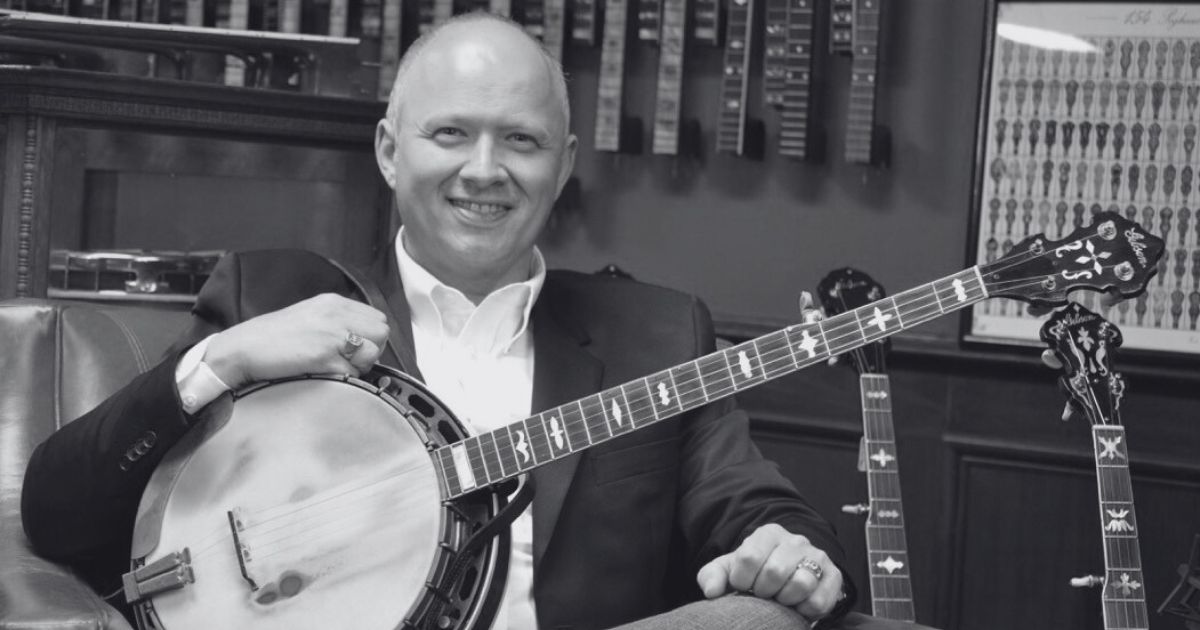
(Editor’s Note: Below, Grammy award and IBMA award winner, guitarist, songwriter, and author Tim Staffordpays tribute to his friend, collaborator, and one-of-a-kind banjo picker and historian, Jim Mills, who passed away at the age of 57 on May 3.)
I started out as a banjo player, but switched to guitar early on; our little group got a better banjo player. But I’ve always loved the banjo, especially pile-driving, inventive players like Earl Scruggs, J.D. Crowe, Paul Silvius, Ron Stewart, Ron Block, Sammy Shelor, Jason Burleson, so many others. I especially like playing rhythm guitar with a great banjo player – it’s like a bluegrass drum track. I’ve not enjoyed that feeling any more than when I got to play with Jim Mills.
Jim was a force of nature on the banjo. He was such a fluid, powerful player and he could be very aggressive on the instrument, which stood in strict opposition to his demeanor – they didn’t call him “Smiling Jimmy Mills” by accident. He played things on record that I had to continually rewind. How did the banjo survive that?
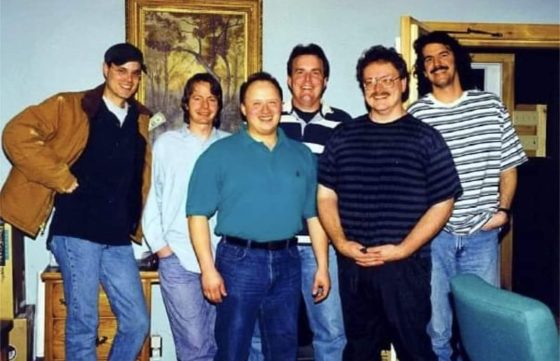
(L-R:) Barry Bales, Stuart Duncan, Jim Mills, Adam Steffey, Tim Stafford, and Brent Truitt, Nashville, TN 1998. Photo by Mike Kelly.
Once in the studio, I remember Jim breaking a string on the intro to “Bear Tracks,” a pretty hilarious outtake. It sounded like the world had exploded in the headphones. Jim just said, “What the ?!??!?” and Barry Bales let out a huge laugh – we had never heard anything like it.
It amazed me how eloquently Jim could talk in quiet rapid stretches and at length about everything related to old, Gibson flathead banjos. Like most vintage instrument topics, it’s a field of deep arcana, and the club sometimes seems too exclusive even if you truly love the sound of the things. But Jim never made it seem like anything but pure joy when he spoke, always returning to that million dollar smile. He was sharp, his collection of instruments was unrivaled, and he turned the basement of his house into a showroom.
And boy, did he know Earl Scruggs and his playing – inside out, all his instruments, all the bootleg recordings, even ephemera related to Flatt & Scruggs. He collected it and treasured it all, because it had never really gotten any better than Earl as far as Jim was concerned. The fact that Jim’s “desert island banjo” was Mack Crowe’s 1940 gold-plated RB-75 was validated for him by the fact that Scruggs himself mentioned Crowe as an influence on his playing in his 1968 book Earl Scruggs and the Five-String Banjo. Of course, Jim wrote his own definitive book, Gibson Mastertone: Flathead Five-String Banjos of the 1930s and 1940s.
Extremely intelligent, driven people are usually good at whatever they put their minds to. Tony Rice’s passion was restoring and repairing Bulova Accutron watches, and he was considered an authority in that area of expertise by people who had no idea he even played guitar. Ricky Skaggs told me that Mills was very involved in buying and trading antique shotguns as well as banjos and was just as well known in that arena.
It was all part of one cloth for Jim, though. A third-generation banjoist, a native son of North Carolina – the homeplace of the bluegrass banjo and a place so many great players still call home. When he joined Ricky Skaggs’s Kentucky Thunder, it was on one condition — he was staying in North Carolina.
We first met in the early ’90s when he was playing with Doyle Lawson and I was part of Alison Krauss and Union Station. He, Barry Bales, Adam Steffey, and I jammed for hours one day in Tulsa, Oklahoma as I recall. One of the songs he wanted to do repeatedly was “John Henry Blues.”
A few years later, the three of us played on Jim’s first solo record, Bound to Ride, for Barry Poss and Sugar Hill records. We tracked it at Brent Truitt’s Le Garage studio along with Stuart Duncan. Later Jerry Douglas overdubbed and Ricky Skaggs, Alan O’Bryant and Don Rigsby came in for guest vocals. And I sang “John Henry Blues.” It was such an honor to be on this record. Later on he did an instructional DVD for John Lawless and Acutab and I ended up backing him up on some tunes there.
I also played on a few records with Jim during this time, including Alan Bibey’s In the Blue Room. Near the end of a Patrick McDougal song called “County Fool,” after the last chorus, I knew Jim was going to come roaring in, taking us out to the end of the song. In anticipation, I hit a G-run that ended on the downbeat, on the bottom root note, a very unusual place for a G-run. I was sure engineer Tim Austin and producer Ronnie Bowman would want me to do it over, but they liked it so it stayed. Today I listen to that track and I’m the one who’s smiling – Jim could make you do things like that.
Jim wasn’t just a banjo player – he was a fine all-around musician and singer. His lead, fingerpicked guitar playing was superb and he was a fine songwriter. One year he came up to me at IBMA and said he had a demo of a song he’d written that he was sure Blue Highway could do. The demo was just him playing all the instruments and singing and it knocked my socks off. He had pitched it to Skaggs, but the boss man passed. The tune was based on a documentary Jim had seen and was called “Pikeville Flood.” We cut it on the Midnight Storm record and it remains one of our most popular live songs.
It was always a pleasure to see Jim and just get to hang out with him. Can’t believe I won’t get the chance to do that again. RIP buddy.
Double-, triple-, quadruple-threats are not uncommon in country music, not in the least. It’s a frequent occurrence, tripping over or into a country artist that’s a songwriter, vocalist, multi-instrumentalist, writer, thinker, and so much more. In fact, until more recent decades, wearing many hats was seen as a sort of prerequisite to making hillbilly music. After all, this is “just” country music, it’s got a wide and deep DIY tradition, and the folks who make it often have to also load in the gear, sell the merch, post on social media, and produce the albums, play the demos and scratch tracks, write the lyrics, and otherwise steer the creative ship.
Some of the most successful artists and most original voices in country music are perfect examples of how multifaceted skill sets translate directly to star power. You may not need to be a Telecaster shredder to make it onto the radio or you may not need to be able to pick like Mother Maybelle to make a living, but if you can back up your songs with mighty playing, it certainly translates with audiences.
From Chet Atkins, Dolly Parton, and Wanda Jackson to Charlie Daniels, Willie Nelson, and Bonnie Raitt, here are just a few legendary examples of hugely successful country artists who are or were excellent musicians and instrumentalists, too.
Chet Atkins
A record company executive, producer, and pioneer of the “Nashville Sound,” Chet Atkins was also a one-of-a-kind guitar picker, renowned across the globe for his unique style – which was inspired by Merle Travis. Atkins certainly made “Travis picking” his own, arguably eclipsing all of his predecessors and continuing to influence guitarists today. An inductee of the Country Music, Rock and Roll, and Musicians’ Halls of Fame, Atkins’ impact is hard to understate and his resume includes work with Dolly Parton, Elvis Presley, Hank Snow, Waylon Jennings, and countless others.
DeFord Bailey
One of the first superstars of the Grand Ole Opry, DeFord Bailey was a world-class harmonica player who was also the first Black performer on WSM’s fabled stage. Some sources also credit Bailey as being the first musician to record music in Nashville. However you approach his career and music, Bailey was a seismic presence in the earliest days of country. Born in 1899, Bailey faced constant racism, bigotry, and marginalization on the Opry, in Nashville, and as he traveled and performed. He passed away in 1982 and was posthumously inducted into the Country Music Hall of Fame in 2005.
Glen Campbell
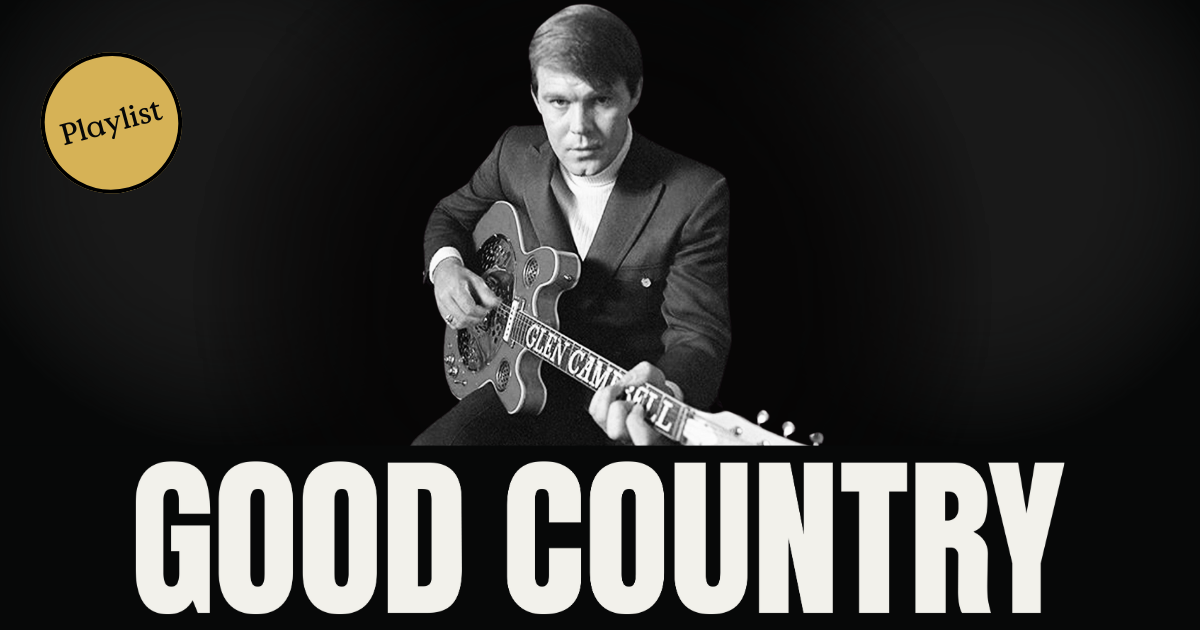
Even at the highest heights of Glen Campbell’s superstardom, he refused to let his superlative instrumental skill take a backseat to his roles as frontman, songwriter, Hollywood actor, TV star, and tabloid veteran. Campbell’s approach to country music as a true multi-hyphenate celebrity bridged generations, connecting the hardscrabble, DIY generations where multiple skills were necessary to make a living to the modern era, where he helped pave a way for famously multi-talented picker/singer/writers like Vince Gill and Brad Paisley to not be pigeonholed as one thing or the other.
Ray Charles
Any conversation around or collection of superlative country pickers and musicians would be glaringly incomplete without the inclusion of Ray Charles. His incursions and experimentations in country music are many and infamous. His 1962 album, Modern Sounds in Country and Western Music is routinely listed as one of the best country albums of all time. He’s worked with and performed with Willie Nelson, Merle Haggard, Ricky Skaggs, Travis Tritt, Johnny Cash, Glen Campbell, and many, many more. Plus, his country forays demonstrate a deep, holistic understanding of the genre. Charles is a quintessential country multi-hyphenate and country-soul in the modern era would feel especially lacking without his seminal contributions to that tradition.
Charlie Daniels
It’s hard not to wonder what young, hippie, “long-haired,” Vietnam War-opposing fiddler Charlie Daniels would have thought of his older self, and his more harebrained and often hateful beliefs later in life. But the controversial and outspoken musician, at all points of his career, was a picker’s picker. Over the course of his life he performed and recorded with Earl Scruggs, Bob Dylan, Leonard Cohen, and many more. But his chief contribution to American roots music may just be his fiery, unhinged fiddling on “The Devil Went Down to Georgia.” Just wander down Lower Broadway in Nashville on any given Saturday night to feel the impact of that particular show-stopper. In this clip, he chats and performs “Uncle Pen” with Scruggs and Del McCoury.
Vince Gill
That buttery voice, that stank-face inducing chicken pickin’, that high, lonesome sound – Vince Gill is all at once country and bluegrass, Nashville and Oklahoma, western swing and old-time fiddle. Whether with The Eagles, preeminent pedal steel guitarist Paul Franklin, the Time Jumpers, or so many other outfits, bands, and iterations, Gill is simply right at home. Because, at his core, he’s just a picker. He may play arenas, but he knows he belongs at 3rd & Lindsley or the Station Inn. Or Bluegrass Nights at the Ryman. A quintessential picker-singer-frontman, Gill continues to define the myriad ways country stars can maintain their selfhood and personality – instrumentally and otherwise – even in their wild successes.
Merle Haggard
Speaking of chicken pickin’, country’s most famous Okie was a shredder, too. A sad song, a glass of (misery and) gin, a Telecaster, and the Hag – that’s all we need, right there. Merle’s playing style, even at its most technical and impressive, was simple and down to earth. You could tell he cut his teeth playing bars, fairs, and honky tonks. You could almost hear him pulling himself up by his bootstraps as he played.
Wanda Jackson
The Queen of Rockabilly has been slaying rock and roll, hillbilly music, and the guitar for more than seventy years. In 2021 she released her final album, Encore, when she was 84 years old. It features her signature passion and fire – and performances by Elle King, Joan Jett, Angaleena Presley, and more. Jackson has been representing the vital contributions of women to rockabilly and rock and roll for her entire career, just as often commanding the stage with her growly, entrancing voice and her powerful right hand.
Willie Nelson
Who would Willie Nelson be without Trigger? Without a tasty, less-is-more, nylon-string guitar solo? For decades, Nashville, Music Row, and guitar players around the world have been emulating his particular sound as a guitarist – whether they know it or not. Sure, he’s a hit songwriter, a star and front-person, a collaborator of Snoop Dogg and Frank Sinatra, and a connoisseur of fine bud, but perhaps more than all of these accomplishments, Willie is an impeccable picker. He can hold his own with the best of the best, because he is the best of the best.
Brad Paisley
Brad Paisley’s fame crested at perhaps the perfect time for him in country music, combining a rip-roarin’ guitar playing style with a sound that was entirely trad while carrying touches of the bro country wave that was about to inundate the genre. As such, he was able to build a career on the diversity of his skill set, before Music Row and the power behind it began prioritizing music that didn’t need to be musical and voices that didn’t need to be singular. Luckily, Paisley is both those things and more, and despite the many eyebrow raising moments across his career, our faces more often show shock at his mind-bending skill as a guitarist than anything else.
Dolly Parton
How is it that Dolly Parton can play so many instruments so impeccably with those iconic acrylic nails!? Nowadays, you are just as likely to hear Dolly performing to a track – yes, she does lip sync and pantomime playing along with recordings – but don’t get it twisted, she absolutely can play a passel of instruments from her beloved “mountain music” traditions. She plays guitar, banjo, auto-harp, dulcimer, and has even been known to pick up a bedazzled saxophone from time to time – though we can’t guarantee she actually knows how to play that one, we’re still blown away.
And what about thatone viral video with Patti LaBellewhere they play their acrylics like washboards? Dolly can make music with just about any instrument.
Bonnie Raitt
How many people do you think enjoy Bonnie Raitt’s soulful blues and Southern rock sounds without knowing she’s also often the one playing the guitar solos and making that bottleneck slide weep? Raitt is a Grammy winning songwriter, a fantastic vocalist and song interpreter/collector, and – above all, in this writer’s opinion – a superb guitar picker, especially playing slide. She can hold her own with just about anyone, and she has. Her phrasing and use of melodic space demonstrates that she’s been honing her craft for her entire life. That taste can’t be taught, it has to be found. Boy, has she found it.
Marty Stuart
Marty Stuart’s long, fabulous, superlative career began with him filling the role of sideman for such luminaries as Lester Flatt, Johnny Cash, Vassar Clements, and Doc Watson. He plays guitar and mandolin, working up his chops as a youngster with pickers like Roland White as his mentors. When his solo career took off after his Columbia debut in the mid-eighties, his ear for fine picking remained present throughout his music – however far afield from those early bluegrass and country days he may have traveled, stylistically. Whether bringing in psychedelic surf sounds or Indigenous flavors of the American West, Stuart’s catalog of music centers virtuosity that’s never gratuitous. And his band, the Fabulous Superlatives, featuring crack guitarist Kenny Vaughan and multi-instrumentalist Chris Scruggs, represent a high level of picking prowess, too.
Tedeschi Trucks Band
By many measures, Derek Trucks is the world’s foremost living slide guitarist, but don’t overlook powerhouse vocalist and co-band leader, Susan Tedeschi in order to venerate Trucks! Both started playing as youngsters – Trucks when he was a kid and Tedeschi when she attended Berklee College of Music. These two are guitar and blues royalty, helming one of the most impactful modern blues and Southern rock orchestras on the planet. They’re consummate musicians, knowing just how to surround themselves by players who support and challenge, both. Even with their laundry list of personal accomplishments, together, Tedeschi & Trucks – who are also married – are so much greater than the sum of their parts.
Keith Urban
Keith Urban brings a scruffy, down to earth guitar playing style to his polished and glam mainstream country sound. Yes, even as far away as Australia, having instrumental chops means having country currency. When he moved to Nashville in the early ‘90s, with a few Australian radio hits and awards under his belt, he immediately found work as a side musician and co-writer in Music City. It wasn’t long until his star ascended stateside, too – and then, as quickly, around the world – bolstered by arena-ready guitar. Now readying his first album since 2020, Urban shows no signs of slowing down, with the music or the picking!
I grew up deep in the hills of the Appalachian Mountains in Eastern Kentucky where, I’m pretty sure, that on a quiet, cool, foggy morning after the rooster crows, you can hear the faint strumming of a mandolin or banjo echoing through the hollers. My home was near the famed Country Music Highway, Route 23, and that set the bar high for me, even at an early age. With local artists such as Patty Loveless, Loretta Lynn, Dwight Yoakum, The Judds, Ricky Skaggs and Keith Whitley and songwriters like Larry Cordle, later joined by artists like Chris Stapleton and Tyler Childers, there was always an incredible standard of music and songwriting to strive for. It also encouraged me, because if it could happen for their hillbilly asses, then why not mine?
Kentucky Bluegrassed is a sister record to my sophomore album produced by Sturgill Simpson and David Ferguson. My husband Adam Chaffins and I, along with an incredible crew of pickers (Rob Ikes, Stuart Duncan, Seth Taylor, Matt Menefee, Dominick Leslie) reimagined five songs from the Kentucky Blue album and added three new songs, to boot. Although Kentucky Blue and Kentucky Bluegrassed are kin, they have their own unique personalities and can stand separately as two distinct independent projects. Kentucky Bluegrassed is exactly what the title implies. It is “grassed” versions of some songs from the Kentucky Blue record.
I’ve never claimed to be a grasser, but I’ve always loved the genre. A lot of my favorite country acts growing up either started with bluegrass music and went to country or started in country music and went to bluegrass. My favorite country artists always drew from bluegrass inspiration and instrumentation and blurred the lines of country and bluegrass music. This Mixtape is comprised of songs that I grew up listening to and that inspired the sounds and writing on Kentucky Bluegrassed. – Brit Taylor
“Pretty Little Miss” – Patty Loveless (Songwriters: Traditional, additional lyrics by Emory Gordy Jr. and Patty Loveless)
It’s 2006 in Prestonsburg, Kentucky, and I’m standing side stage at the Mountain Arts Center waiting for my cue to prance out on stage in an old, ugly vintage dress, silly hat, and no shoes. I always picked Patty songs to sing, whether they were bluegrass or country. I loved them all. During this particular summer show season of the Kentucky Opry Junior Pros, I chose to sing Patty Loveless’ “Pretty Little Miss.” There’s something raw and painfully beautiful about the way that Patty Loveless sings. She feels every note and you feel it with her.
Patty is a wonderful songwriter and a hell of a song hound. She surely knew how to sniff good songs out, and Patty and Emory (husband/producer) knew exactly what to do with them when they found them. Whether she writes the song or finds a great song to sing, she knows how to empathize with the song’s character and you can hear it. Unlike some of her more heart-wrenching songs (like my personal favorite, “You Don’t Even Know Who I Am,” written by Gretchen Peters), “Pretty Little Miss” is funny and fun, plus she wrote it! And she sings the shit out of it. Patty Loveless, like Dolly Parton, knows how to get into character and have fun.
Written in 1962 by one of my favorite songwriters of all time, Harlan Howard, this song has been recorded and re-recorded. From Johnny Cash and the Carter Family to Waylon Jennings to Ray Charles and more, this song has been done again and again for good reason. In 2009, my queen Patty Loveless comes along and grasses the hell out of it. Each interpretation of this song is different from the last in pretty drastic ways. That’s one of the things I love about music and production. Music is like water, it can literally fit into whatever mold you want to pour it into. You just have to have some imagination. It’s songs like this that inspired me to write and record my song, “Rich Little Girls.” And it is artists like Patty Loveless and producers like her husband Emory Gordy who inspire me to not be afraid to reimagine a song completely different from its original presentation.
“Truth No. 2” – The Chicks (Songwriter: Patty Griffin)
This entire album is an inspiration for Kentucky Bluegrassed. The songwriting is impeccable as are the production and the playing. The album is full of incredible songs by writers like Darrell Scott, Tim O’Brien, Marty Stuart, Patty Griffin, and others. The tracks could have easily been recorded on a Chicks traditional country record, but I love that they decided to do them this way. I love the melody of this particular song and the extended intro with the fiddle hook. I also love the space in this song. They didn’t fill every “hole” with a lick. They let the song breathe. These are definitely concepts we were mindful of when recording Kentucky Bluegrassed. Where can we let it breathe? What’s the signature lick here and who’s playing it? Heavy on the dobro and fiddle, please.
“I’m Gone” – Dolly Parton (Songwriter: Dolly Parton)
No one can tell a story quite like Dolly. This whole record – Halos & Horns – is a lesson in storytelling. Dolly is always an inspiration. Her ability to connect with her audience through her lyrics, honest stories, and light-heartedness will always be something I strive to do in my own music. This is one of those records that I remember begging my mom to take me to the Walmart in Prestonsburg to buy!
“Big Chance” – Patty Loveless (Songwriters: Emory Gordy Jr. and Patty Loveless)
Lyrics in Patty’s “Big Chance” such as, “Looka here mama, looka here daddy/ This is my true love, we’re gonna get married/ Ain’t a gonna hem-haw, ain’t a gonna tarry/ This is my big chance, we’re gonna get married/” are what inspired me to be confident in my own Appalachian dialect, enough so that I put words like “sworpin’” in my song “Saint Anthony,” regardless of if other people were going to understand it.
“Marry Me” – Dolly Parton (Songwriter: Dolly Parton)
I love the perspectives and simplicity in songwriting on both “Big Chance” by Patty and “Marry Me” by Dolly. The character in Dolly’s song sounds like she might be 13-years-old, hollering to her folks about how she’s gonna run off and marry this new feller! I love that the character sounds so young and also like she just met the boy yesterday. It just lends itself to sweetness and innocence with a light-hearted humor.
I wanted a song about getting married on my bluegrass record simply because my heroes had them on theirs. I love the personality and the very matter-of-fact, bossy lyrics of these songs – and that’s what Adam Wright and I were going for when we wrote my own song, “Married.”
“A Handful of Dust” – Patty Loveless (Songwriter: Tony Arata)
This is another one of those songs that has been recorded again and again by multiple artists and for good reason. It was first recorded by Dolly Parton, Linda Ronstadt, and Emmylou Harris in 1993 and then by Patty Loveless on her 1994 country album. Then she cut it again on Mountain Soul II where she grassed it! Charley Worsham and Lainey Wilson also just released their own version of the song. I honestly couldn’t pick a favorite version if I tried. It’s hard to mess up a song this great. I chose this version for the playlist because it’s grassed and very much an inspiration for grassing several of my own songs.
I realize I have a lot of Patty Loveless songs on this playlist, but that’s because she is honestly who inspired Kentucky Bluegrassed the most. I listened to her songs on repeat growing up and still find myself doing so today. If you have heard Kentucky Bluegrassed and are now listening to these Patty songs from the Mountain Soul records, you will definitely hear some similarities. Rob Ickes, who plays Dobro, and Stuart Duncan, who plays fiddle, who were on both Mountain Soul records also play on my Kentucky Bluegrassed album.
“Don’t Cheat In Our Home Town” – Keith Whitley, Ricky Skaggs (Songwriters: Ray Pennington and Roy E. Marcum)
Both Ricky Skaggs and Keith Whitley are from near the Country Music Highway in East Kentucky, and you can hear the hillbilly twang in their voices, especially when they’d sing together. This song is wonderful. The harmonies just kill me. If you want a lesson in singing bluegrass harmonies – hell, any harmonies for that matter – this is the record to listen to and learn from. When people tell me they don’t like bluegrass, I always tell them they just haven’t listened to the right records yet. This is one of the first albums I send them to. The self-deprecating lyrics along with the simplicity of the music with its quirky upbeat instrumentation might seem to be a contradictory songwriting and production combo, but that’s just one of the unique and beautiful things about bluegrass music that I love so much.
“Rank Strangers” –The Stanley Brothers (Songwriter: Albert E. Brumley)
My Papaw Hillard Anderson introduced me to bluegrass music when I was just a kid. Truth be told, he liked to put on a Stanley Brothers 8-track tape, drink a little too much Crown Royal and have himself a good cry – or maybe just raise some hell. One of the two. Man, I miss him. When I turned 16 and got my driver’s license, I got us tickets to go see Ralph Stanley at the Mountain Arts Center in Prestonsburg. I picked him up over on Beaver Creek in my little red Mustang and off we went. I think my driving scared him to death. But it was all worth it when we got to see Ralph sing and play. I was able to charm my way backstage because the volunteer door people already knew me from my singing at the Kentucky Opry. I got my Papaw a picture signed by Ralph Stanley himself.
Papaw passed in 2009. I sang to him and strummed my guitar as he died. I wish he could have been here to hear this record more than any record I’ve ever made. But I know he’s got a front seat in Heaven. When I recorded Kentucky Bluegrassed, I took two of my Papaw’s old, scuffed-up Stanley Brothers 8-tracks tapes with me. I set up a little hillbilly altar with the two tapes, some tigers eye, Kentucky agate, clear quartz, and other crystals, a rabbit’s foot, some incense, and a glass of bourbon. I wanted to make sure he knew he was welcome there with us. He was there. I could feel it.
I’ll probably spend the rest of my life trying to write a song this good. Nothing captures where I’m from as much as this one does. It just sounds like East Kentucky. It sounds like the coal mines. It feels like home. The first version of this song that I heard was by Patty Loveless on her first Mountain Soul record. I try to sing it sometimes, but it hits pretty close to home. By the last verse I’m normally in tears. My Papaw was a coal miner, and my husband’s father was a miner, too. Growing up, coal mining was about all there was to do for work around home. So hearing this song just always hits hard.
I hope you enjoy this playlist of tunes that inspired Kentucky Bluegrassed, from the songwriting down to the instrumentation. Songs like these will never grow old or sound dated because they’re too original. They don’t chase any trends of the times. They just are what they are.
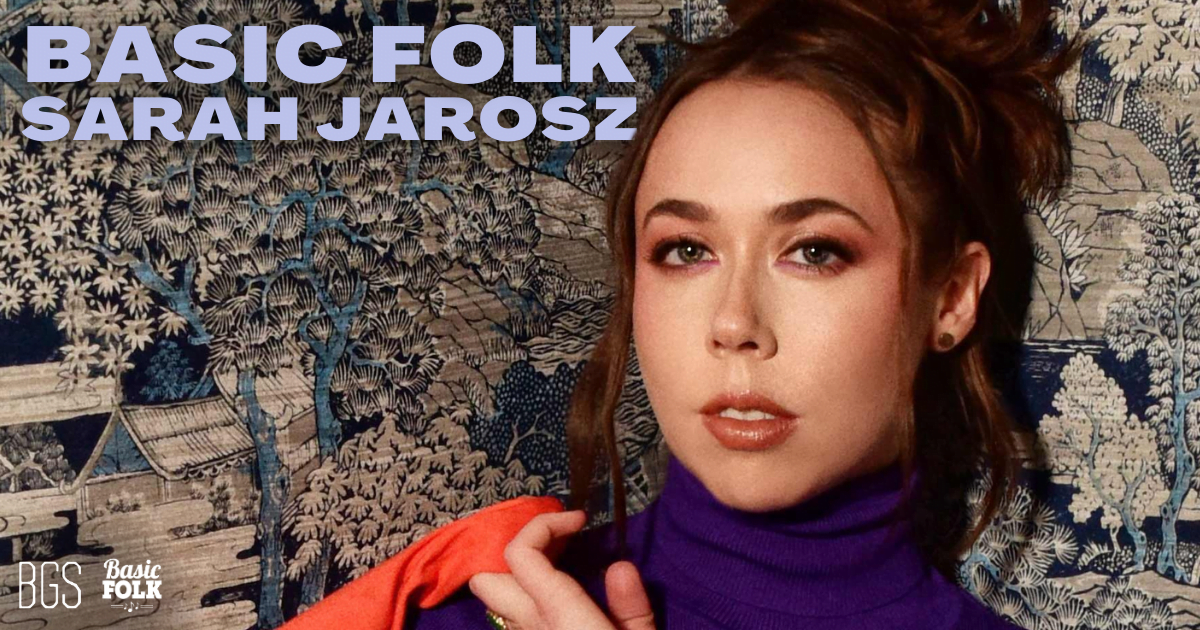
Sarah Jarosz is what happens when young women are taken seriously. A huge part of the mandolinist’s story is that she had supportive male mentors and that has added to her confidence. We all know the age old story of “Young woman shows promise, gets exploited by the patriarchy and it affects her work.” We need to hear stories like this. Starting in her hometown of Wimberley, Texas, just 45 minutes outside of Austin – the live music capital of the world – Sarah found the mandolin at 10 years old. Labeled a prodigy, and thanks to the encouraging spirit of folk music, she found mentorship with seasoned professionals like David Grisman, Ricky Skaggs, Tim O’Brien and Béla Fleck. Following her time at The New England Conservatory of Music, she moved to New York and would go on to collaborate with people like Chris Thile in the Live From Here House Band and her trio I’m With Her, featuring Aoife O’Donovan and Sara Watkins, and won four Grammys.
After making the move to Nashville, on her latest album, the very impressive and sonically expansive Polaroid Lovers, Jarosz collaborated with producer Daniel Tashian, which originally was just a low-stakes co-writing project. The success of her first co-writing experience with Daniel led her to pursue other songwriting sessions with Ruston Kelly and Natalie Hemby. The collaboration found on the record has opened Sarah up to new sounds and new experiences. In our conversation, we talk about Sarah stepping into her own voice with confidence on this record and knowing her musical self enough at this point in her life. She describes her experience with confidence using the Dunning–Kruger effect, in which people with limited competence in a particular domain overestimate their abilities. AKA “fake it till you make it,” AKA “leap and the net will appear.” She also talks about her parents’ influence on her early musicality and how her mom is doing with her cancer remission. An overall theme of this conversation is that Sarah never lost sight of her goal: Keep it all about the music and don’t let noise get in the way of your important work.
Stripping away convention, honing in on narrative, and keeping complex melodies afloat with her ethereal vocals, Sarah Jarosz is a superlative presence in the roots music landscape. The daughter of two schoolteachers hailing from Wimberley, Texas, she began learning to play the mandolin at age 9. By the time she turned 12, Sarah was already gracing stages alongside the likes of musical giants David Grisman and Ricky Skaggs.
Her multi-instrumentalist capabilities and songwriting proficiency only grew from there; at the age of 16, Jarosz signed a deal with Sugar Hill Records and released her first album, Song Up in Her Head, in 2009. This critically acclaimed record would be the first of what now surmounts to seven full-length, tremendously lauded projects. Polaroid Lovers, Jarosz’s latest and the muse of her current tour, is set to be released on January 26, 2024.
Over the span of nearly two decades spent recording and touring, Sarah Jarosz has established herself as a foundational thread in the tapestry of modern roots music. From impeccable collaborations (with Punch Brothers, David Grisman, Sierra Ferrell), to forming a supergroup alongside Aoife O’Donovan and Sarah Watkins (I’m With Her), to a whopping 5 hours and 45 minutes of music published under her name, Jarosz stands firmly in her power. As she forges ahead, she only continues to outdo herself.
While her entire catalog is sure to edify any listener, this compilation showcases some of Jarosz’s most essential tracks. Tracing the arc of her musicianship from adolescence to adulthood, the following 17 songs demonstrate the particular sonic maturity, lyrical astuteness, and emotional evocation that span all she creates.
“Mansinneedof”
From Jarosz’s first album, Song Up in Her Head, this indelible instrumental boldly answers the question, “Can a mandolin be a lead instrument?” with a resounding, “Of course!” The first of many Grammy nominations acquired throughout her career, this tune was considered for Best Country Instrumental in 2009. Impossibly advanced beyond her years, Jarosz’s nimble and articulate melody is akin to a sonic coast through star-studded galaxies.
“Come On Up To The House”
In a clear demonstration of the range of her musical influences, the most-streamed song from Sarah’s inaugural album is a cover of Tom Waits’s “Come On Up To The House.” Her cool, slippery voice lends a new angle to the iconic tune. Paired with astute backing vocals from Tim O’Brien and a slick fiddle solo by Alex Hargreaves, this song grooves right along – an ingenious, albeit unlikely, bluegrass cover.
“Annabelle Lee”
Jarosz’s sophomore album, Follow Me Down, is latent with a mystical quality that reaches towards the ethers, shepherded into expansiveness by a creative spectrum of influences. The third track, “Annabelle Lee,” features lyrics adapted from the illustrious Edgar Allen Poe poem of the same name. Jarosz sets the eerie tale against a conglomerate of haunting textures – the heightened pace and drums evoke a sense of urgency while Jerry Douglas makes his lap steel wail, a somber cello moans, and Dan Tyminski’s backing vocals lend fullness to the ravenous depths of this dark tune. It is also worth noting that Jarosz performed and recorded this tune, very fittingly filmed in an old hunting lodge in the Scottish Highlands, for the Transatlantic Sessions in 2011. (Watch above.)
“The Tourist”
Sarah sure knows how to pick a cover. From Prince to the Decemberists to Joanna Newsom, she can masterfully braid her grace and artistry into anything. “The Tourist” offers Jarosz’s take on Radiohead, an influence cited among many of Jarosz’s contemporaries, including Madison Cunningham and Chris Thile. In fact, Punch Brothers provide the musical backdrop on this track, their syncopated rhythms and blustery fills meeting Jarosz and Thile’s airtight harmonies to create a sense of whirling, palpable, delicate angst.
“Build Me Up From Bones”
Off of her Grammy-nominated third album, this titular track received an additional nom for Best American Roots Song of 2014. This song is SJ’s most popular of all time, having racked up a total of 70.7M streams on Spotify. Here, Jarosz’s songwriting forges into new territory; her lyrics are both poetic and measured, imbued with textures of velvety longing. The form matches the content, from Aoife O’Donovan’s dewy harmonies to the pizzicato string section to the gorgeous cello solo. Effectively, listeners are bathed in a most intimate listening experience that beckons infinite re-listens.
“1,000 Things”
In another track off of Build Me Up From Bones, here SJ shares songwriting credits with the legendary Darrell Scott. The result? Pure synastry. Underscored by pulsating Celtic rhythms, this uptempo earworm says 1,000 things despite its brevity.
“House of Mercy”
This tune, along with the album carrying it – Undercurrent – won Sarah her first two Grammys in one night. “House of Mercy” was crowned Best American Roots Performance of 2017, and it was indubitably worthy. Jarosz shares songwriting credits with Australian singer-songwriter Jedd Hughes, and together they achieve a dark story arc as the encumbered narrator addresses an unwanted visitor. Jarosz opens up her sound into cutting, fierce Americana twang – effectively offering audiences a new layer to her multitudes of sound.
“Jacqueline”
The closing track of Undercurrent is stark, honest, and bewildering. The song is named after the Jacqueline Kennedy Onassis Reservoir in New York City where Jarosz, who once lived nearby, would often do her pondering. Accompanied solely by an electric guitar, Jarosz’s voice is agile and glimmering as liquid silver. She muses over the reflective surface and projected companion while disclosing her own state of unease, immersing listeners in an intimate, unyielding pensiveness.
“Your Water” (with Parker Millsap)
The first of a two-single release titled the Luck Mansion Sessions (2017), SJ here collaborates with fellow singer-songwriter and multi-instrumentalist Parker Millsap. The track, written and originally released by Millsap, is delivered as a duet. The groove opens up into a soul-type feel, allowing for Sarah to showcase a more raw, bluesy, unmeasured latitude of her voice.
“See You Around”
“See You Around” is the title track off of supergroup I’m With Her’s first and – to every listener’s chagrin – only full-length album. In 2018, Jarosz linked up with two of the most astounding women in roots music, Aoife O’Donovan and Sara Watkins, to form a trio of unadulterated excellence (it should be noted that that group won Americana Music Association’s Music Duo/Group of the Year). The album waffles between the three songwriters’ contributions, with each vocalist singing lead on an approximately even number of tracks. “See You Around” is driven by Jarosz’s signature poetic lyrics and fluttery melody, elevated to new horizons by the pristine, angelic blend of harmonies from Watkins and O’Donovan. The musical chemistry these women share evokes the divine; every single song on this album delivers listeners into the sublime.
“Johnny”
For her also Grammy-winning fifth studio album, World on the Ground (2020), Sarah Jarosz invites listeners to experience an array of vignettes; her songs on this album, more than ever, become vehicles for potent storytelling.“Johnny” is the second of three tracks on the album named, presumably, for a character the song aims to illustrate. Jarosz has said that during this album, she “[Tried] to take a step back and look out at the world in my songwriting, rather than looking inward,” and spent much time constructing the album as a patchwork of memories from her hometown in Texas, both faithful and fictionalized.
“Johnny” conveys the psychological landscape of a slightly drunk, slightly disillusioned man who is “just waitin’ on the stars/ that will never align.” It’s all slightly devastating, yet the melody latches onto an unforgettable earworm of a hook uplifted by its folk-pop flavor. Jarosz incorporates a strings section alongside drums, electric guitar, and mandolin, seamlessly using the nuances of sound to bolster the complex mundanities of Johnny’s life.
“Pay It No Mind”
Jarosz shares the songwriting credits on “Pay It No Mind” (also off of World on the Ground) with the renowned John Leventhal, who also produced the album and plays a slew of instruments sprinkled throughout. The song begins with just Sarah and a pensive guitar riff, musing upon a bird and her ponderings. The song then builds in dynamics, layering percussion and eventually a full orchestration of instruments and vocals. It’s slick, it’s sly, and it looks at the world with a cool sense of distance.
“I Still Haven’t Found What I’m Looking For” / “my future”
In the midst of quarantine, Sarah Jarosz committed to staying connected with fans by using Garageband and her home microphone to record one cover each week from July to October of 2020. In January 2021, she released two of the covers, U2’s “I Still Haven’t Found What I’m Looking For” and Billie Eilish’s “my future,” on streaming services. These barebones covers are a time capsule of a moment drenched in emotion, isolation, and fear. Catharsis swells through the minimalistic recordings – Jarosz cradles her whole soul into these songs, and the results are absolutely astounding.
“Mama”
For her sixth full-length studio album, Blue Heron Suite (2021), Sarah Jarosz released a song cycle that she first premiered at Freshgrass in 2017, whereupon she was awarded with the Freshgrass Composition Commission. At the time, Sarah was reckoning with her mother’s cancer diagnosis and reflecting upon childhood trips to the town of Port Aransas, Texas, which at that time had recently been severely affected by Hurricane Harvey. Named for the Great Blue Herons she and her mother used to observe along the town’s shore, this album is imbued with love and hope in its deepest forms. “Mama,” the opening track, is an utterly gorgeous, pared-down arrangement of voice and guitar – a most gentle and tender ode to Jarosz’s mother, who is thankfully now in remission.
“For Free” (with David Crosby)
An astonishing songwriter and pioneer of three-part harmony in American roots/folk music as we know it, David Crosby was a long time supporter of Sarah Jarosz’s work up until his passing last January. Sarah graced the title track of Crosby’s final full-length solo album, For Free (2021). The two sing the entirety of this Joni Mitchell cover in tight harmony, their voices mirroring one another perfectly. The pared back solo piano accompaniment highlights the duo’s vocal finesse; every riff is intertwined with precision and elegance.
“Jealous Moon”
“Jealous Moon” was the first of four singles SJ released from her upcoming album, Polaroid Lovers (out this Friday). Co-written alongside Daniel Tashian, the record’s producer, Sarah remarks of the song, “I’m always seeking to push myself into new sonic territory, and this song gave me permission to not hold back.” In this track, she boldly steps away from her traditional acoustic tethers and moves towards a more pop-rock-twang fusion. Jarosz successfully elicits a sense of novelty while still embodying the sense of fullness and depth she puts into all she creates – reminding us that we still have yet to see the full bloom of her artistry.
The career of singer-songwriter Ronnie Milsap has been remarkably inclusive from an idiomatic standpoint, even if it’s also accurate to say his greatest acclaim has come within country circles. But over the course of five plus decades in the performing and recording arena, Milsap has also toured with James Brown and Ray Charles, been a pianist for JJ Cale, had R&B hits – with songs penned by Ashford & Simpson or previously recorded by Chuck Jackson – cut successful gospel and adult contemporary songs and albums, and even worked the oldies circuit while covering ’50s classic rock and roll and doo-wop.
Still, it’s his poignant, soul-tinged country tunes that have made Ronnie Milsap so beloved, while earning him induction into the Country Music Hall of Fame and membership in the Grand Ole Opry. A two-time Country Music Association Male Vocalist of the Year, Milsap also helped induct longtime friend and mentor Charles (who once encouraged him to choose music over law school) into the Country Hall of Fame. During the ’70s and ’80s Milsap enjoyed a frequent presence on the country charts, and during the ’80s scored thirteen of his thirty-five number one hits.
Even as times and tastes changed, Milsap adapted and continued to enjoy success through the ’90s and into the next millennium. Now, at 80, he recently decided it was time to call a halt to performing in Music City. Pausing a couple of weeks before his final Nashville show at Bridgestone Arena October 3, Milsap told BGS that there’s one idiom he loves that folks don’t often cite or acknowledge when discussing his influences.
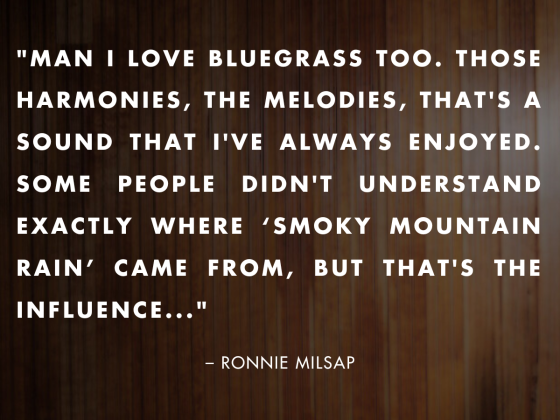
“Man I love bluegrass too,” Milsap said. “Those harmonies, the melodies, that’s a sound that I’ve always enjoyed. Some people didn’t understand exactly where ‘Smoky Mountain Rain’ came from, but that’s the influence. Also gospel is a big influence and of course, I’ve always loved country and soul music. All of it I just absorbed and worked into my own style.”
That sound, an inspired blend of mellow tone and emphatic delivery has made the list of unforgettable Milsap tunes a lengthy one: “(There’s) No Gettin’ Over Me,” “Pure Love,” “Only One Love In My Live,” “(I’m A) Stand By My Woman Man,” or “Daydreams About Night Things,” to cite just five of his numerous hits. Milsap has managed the difficult task of being both sentimental and evocative, never letting his vocals become maudlin or exaggerated, and always credible and persuasive in his stories and testimonies.
Milsap’s also maintained a healthy interest in contemporary happenings and performers, as evidenced by his 2018 LP TheDuets, which he called “one of my favorites.”
“Man I love that Kelly Clarkson,” he added. “She’s fantastic. Working with her was a thrill and I love how she sings. Ricky Skaggs, he’s one of the all-time greatest musicians I’ve ever seen and heard. He’s incredible. There are still so many good young singers out there and great musicians in Nashville. It’s a real pleasure to hear them, and I’m so happy about this show coming up. It’s such an honor.”
The last Milsap concert was billed as “The Final Nashville Show,” and a packed house filled Bridgestone Arena two weeks ago. Twenty-nine artists across the country spectrum performed 30 tunes to mark Milsap’s 50 years. The event was co-hosted by radio veterans Storme Warren (The Big 615) and Bill Cody (WSM), while such luminaries as Reba McEntire, Dolly Parton, Clint Black, and Luke Bryan whose schedules didn’t permit them to attend or participate sent videotaped tributes. In addition, prior to the show, new Nashville mayor Freddie O’Connell declared it “Ronnie Milsap Day,” and Tennessee governor Bill Lee added an official proclamation honoring Milsap’s “Final Nashville Show.”
Depending on personal perspective and taste, there were multiple highlights. One contemporary star who got maximum exposure and delivered a powerhouse performance was Scotty McCreery, whose version of “Pure Love” was a big audience winner, as was Randy Houser’s “Don’t You Ever Get Tired (of Hurting Me)” and Trace Adkins’ “She Keeps the Home Fires Burning.”
Kelly Clarkson’s “It Was Almost Like a Song” was a show stopper, as powerful and dynamic as anything anyone did during the evening, and a rousing rebuttal to those who think her iconic daytime status protects another overrated celebrity. A pair of surprises were gospel vocalist/pianist Gordon Mote and contemporary Christian star Steven Curtis Chapman. Both took secular tunes and soared on them; Mote on “Lost In the Fifties Tonight (In the Still of the Night)” and Chapman on “What a Difference You’ve Made In My Life.”
Band of Heathen’s rendition of “Houston Solution” and Breland’s cover of “Any Day Now” got polite applause, while rousing songs performed by Sara Evans (“Let’s Take the Long Way Around the World,”), The McCrary Sisters (“Stand By Me,” and also appearing backing Clarkson), Terri Clark (“My Love”) and Lorrie Morgan (“I’d Be A Legend In My Time”) reaffirmed the appeal Milsap’s best tunes have had for both men and women vocalists. Elizabeth Cook’s “Nobody Likes Sad Songs” added another element, that of a fresh, lesser known but emerging artist enhancing her reputation with a strong and impressive performance.
Appropriately, the guest of honor closed the show, and while Milsap at 80 isn’t the singer he was in his prime, he remains an effective entertainer. His closing set began with “Smoky Mountain Rain,” and also included “America the Beautiful,” “Stranger In My House,” and “There’s No Getting Over Me.” The night ended with a stage full of the performers who’d previously paid homage to Milsap backing him on an engaging version of the Rolling Stones’ “Honky Tonk Woman.”
Throughout the evening, all the performers were superbly supported by the Nashville session band Sixwire, augmented by special guests like the great Country Music Hall of Famer Charlie McCoy and saxophonist/steel guitarist John Heinrich, a longtime Milsap band member. It was a memorable night, and a wonderful celebration of a premier American musical talent.
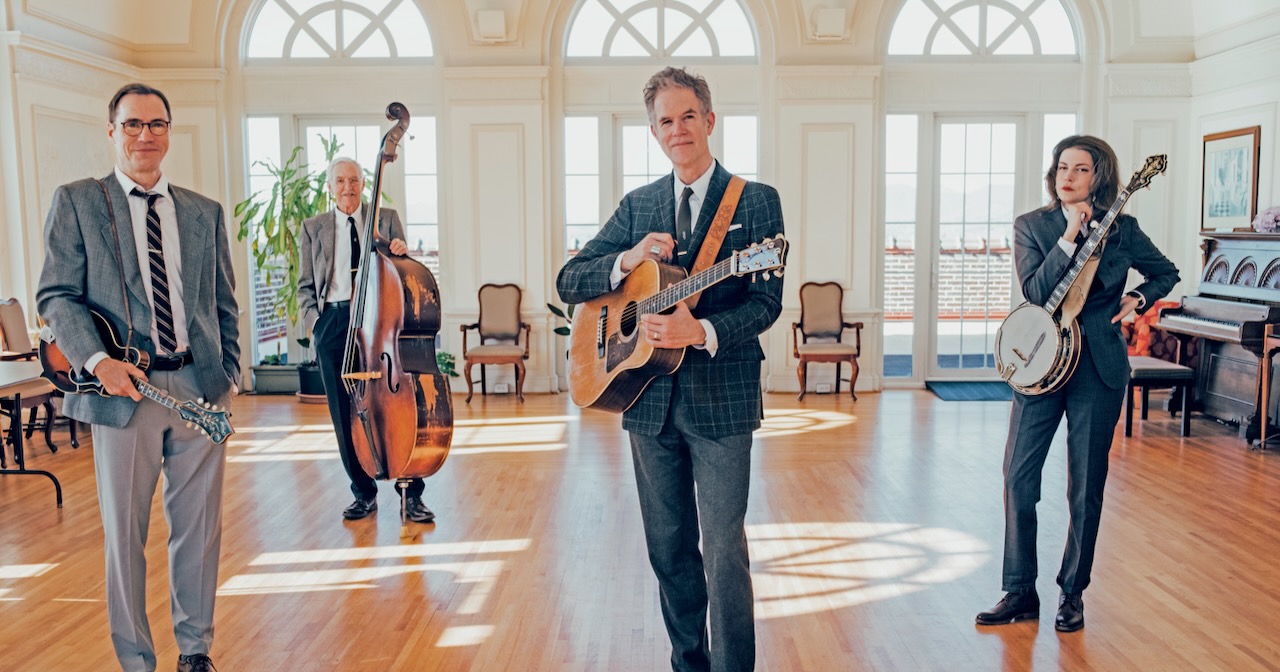
Artist:Chris Jones & The Night Drivers Hometown: Nashville, Tennessee Song: “Step Out in the Sunshine” Album:Pages In Your Hand Release Date: October 6, 2023 Label: Mountain Home Music Company
In Their Words: “Ralph Stanley’s early 1970s Clinch Mountain Boys lineup of Roy Lee Centers, Jack Cooke, Curly Ray Cline, Keith Whitley, and Ricky Skaggs was a golden era for his band, in my opinion, and in my mid-teens their music was a major influence on me as I was just getting serious about playing music. The gospel album they did, Cry From the Cross, was and remains my favorite bluegrass gospel album of all time. It inspired my lead singing and guitar playing, and without consciously trying to do it, I learned to sing the baritone harmony part from Jack Cooke.
“I still have and cherish the original LP that I bought when I was around 15, though the jacket is a little battered and my name is written in brown magic marker on the back — because, you know, other kids in high school were likely to try to steal my Ralph Stanley records. I wanted to record a song from the album that I hadn’t heard anyone else do and that hadn’t become a Ralph Stanley standard, and so I was drawn to ‘Step Out in the Sunshine.’ We rearranged it slightly to fit our sound but it remains a tribute to the Stanley original.” – Chris Jones
Track Credits: Chris Jones – acoustic guitar, lead vocal Marshall Wilborn – bass Mark Stoffel – mandolin, harmony vocal Grace van’t Hof – banjo, harmony vocal
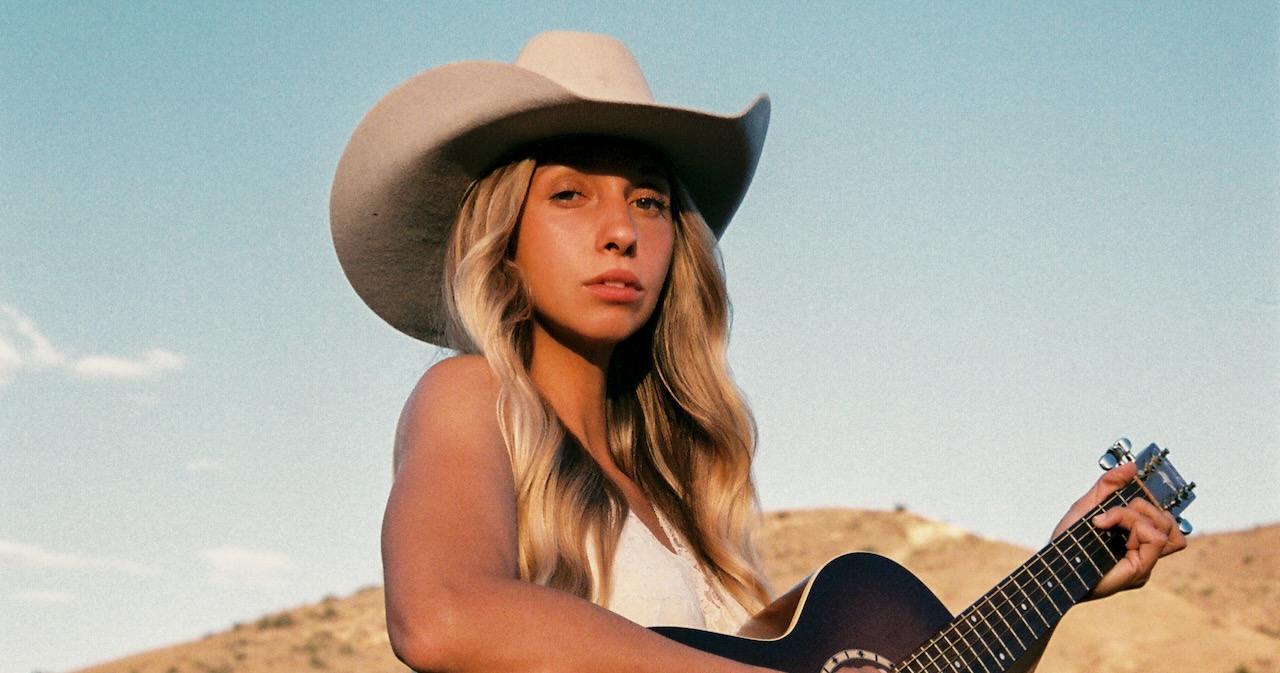
My sophomore album,A Cowgirl Rides On, set to be released October 20, 2023, is a true reflection of my heart and what keeps me going – bluegrass, gospel, western, Jesus, horses, love, and even a little bit of heartache. The songs written for the record were hugely inspired by the songs I included on this playlist. All of these artists and songs are ones I hold near and dear and have moved me in some big way.
I became strong in my faith as a Christian in my early 20s, which is around the same time I began performing and writing a ton. Being introduced to gospel and bluegrass had a big impact on me, and it continues to deeply connect me to my faith.
It’s been a long–time dream to release a record that feels a little bit bluegrass, a little bit gospel, and everything inbetween. Here are the songs that guided me there. I hope you find so much joy in them and that they become the soundtrack to your long drives, or to enjoy over your Sunday pancakes, or during the times you just need a little light. – Victoria Bailey
“Waiting At the Gate” – Ricky Skaggs & Kentucky Thunder
This song is one of my all–time favorites. This whole album, Soldier of the Cross, is pure gospel gold. I actually cover this song on my upcoming record, and it was one of the most fun songs for us to record in the studio. Ricky Skaggs is just simply the best.
“Wayfaring Stranger” – Emmylou Harris
This Emmylou Harris album is really the pinpoint of when I fell in love with country music. Many have covered this classic song, but Emmylou’s version of “Wayfaring Stranger“ is my favorite by far. Her voice and the tone of this song are so haunting and beautiful… nothing compares.
“The Seeker”– Dolly Parton
Oh, Dolly… what would a playlist be without her? Dolly is undeniably the best and has inspired me in so many ways, but especially her love for Jesus and how she ties in a little bit of the gospel to most of her records. This song really gets me moving and grooving around my house.
“I Just Want to Thank You Lord” – Marshall Family
These harmonies are so good, and they really inspired how I wanted the harmonies to sound on my own record. I also wanted it to feel just as timeless and simple as this song by the Marshall Family. This song ends up being on most of my roadtrip playlists.
“The Fields Have Turned Brown” – Ralph Stanley
Ralph Stanley is a huge inspiration to me and such an important figure in bluegrass music and in the banjo world. The banjo is one of my all–time favorite sounds, and I included a lot of it on my new record. It just takes you to a good place.
“Wild and Blue” – Alan Jackson
I turn to this album quite often. What a combo! Alan Jackson and bluegrass/gospel. It’s just so good.
“Snake Trails” – Victoria Bailey
This is by far my favorite song on the record. It is a gospel song I wrote while riding my horse, Weasley, through the canyon one day. It brings me back to that place every time I sing it. It was one of the first written for the project and really sets a tone for the rest of the record. It was inspired by my horse and finding peace and connection to my faith being out on the trails.
“I Must See Jesus” – Snooks Eaglin
This song always gives me the same feeling as when you just finished a really good movie. My whole heart swells, and it brings me to a really special, peaceful place. His voice is incredible, and you can hear all the passion and honesty and faith in his delivery.
“End of the Line” – Moonsville Collective
These guys are like family to me and have inspired me endlessly over the years, watching them play and the way they are beautifully representing bluegrass/Americana music. This song, written by Corey Adams, is one that has always hit home hard for me at many times in my life. It is truly one of my favorite songs ever written, and it was an honor that I actually got to cover this song on my upcoming record.
“I’ll Fly Away” – Gillian Welch, Allison Krauss
When my producer, Brian Whelan, and I sat down to talk about making this record, we referenced the O Brother, Where Art Thou? soundtrack often. Not only is this movie legendary, so are all of the musical performers on the soundtrack. We loved the style of the recordings. Live, all in one room together, where you can hear all the cracks and the love, and it‘s exactly what we tried to emulate for my own record. Recording live was such a special part of making A Cowgirl Rides On.
“Where the Soul of Man Never Dies” – Ricky Skaggs & Tony Rice
Doesn’t get much better than this duet. This is often a Sunday soundtrack for me.
“Long Journey Home” – Billy Strings & Terry Barber
Billy Strings is such an amazing representation of modern bluegrass. His sound is timeless, and his guitar playing and songwriting match up to some of my bluegrass heroes. I’ve always loved this song, and he covers it so well.
“Angel Band” – The Stanley Brothers
This song just always pops in my head any time I hear the word bluegrass. It is so classic and pure, and the harmonies pull on all the heartstrings.
“Just Like Leaving” – Bella White
I have been a longtime Bella White fan, and she is such an important female artist in keeping the bluegrass sound alive. The rest of the record is incredible as well.
“Green Green Grass of Home” – Merle Haggard
You can’t have a playlist without Merle. This song always brings me to tears and really is a beautiful representation of Merle’s songwriting and voice.
If there’s a common ground most bluegrass musicians share, it’s a virtuoso mentality and an extreme level of skill. Most pickers jam on more than one instrument, and the Father of Bluegrass himself was no exception.
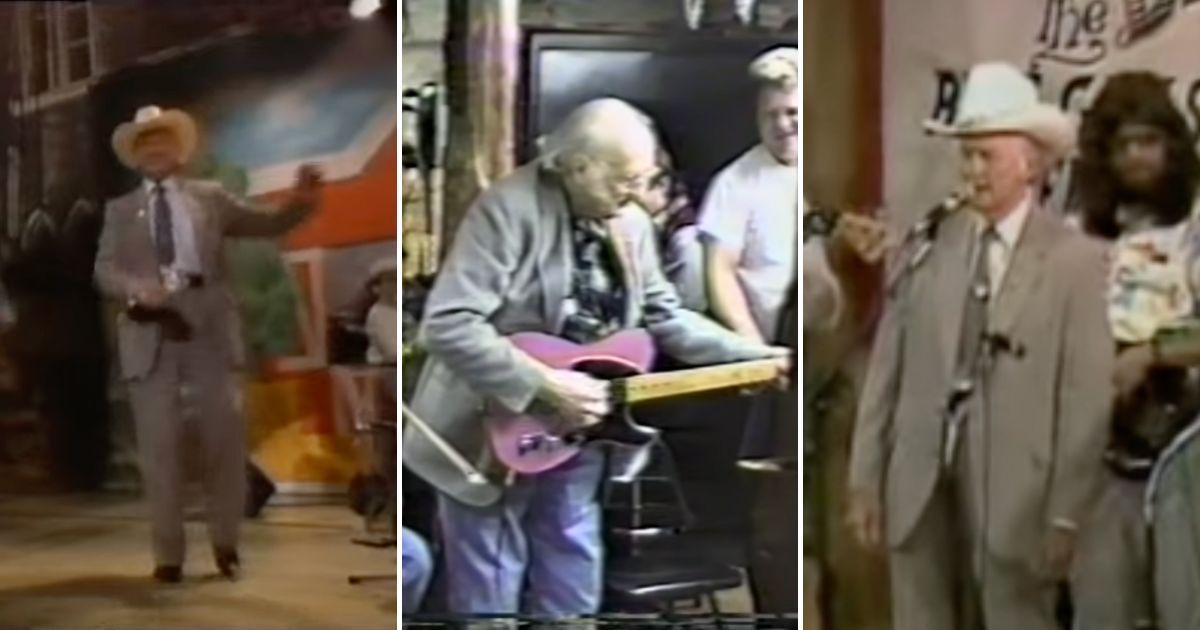
Born in 1911 in Rosine, Kentucky, many folks credit Bill Monroe and his Blue Grass Boys as founders of the genre. Monroe was best known for playing mandolin, churning out driving tunes like “Uncle Pen” and “Jerusalem Ridge,” but he had quite a few other skills as well.
Let’s take a quick peek at a few of the times Bill Monroe broke his own mold and put down his classic mandolin.
Pickin’ a Pink Telecaster
In this old-school, infamous footage shot at a home jam circle, Monroe shows off “Ozark Rag.” A fellow jammer hands Monroe a pink Fender Telecaster with a black pick guard as he sets aside his mandolin. At just two-and-a-half minutes long, this clip is short, but it’s still extremely entertaining and showcases what an incredible musician Monroe was.
Buck Dancing with Ricky Skaggs
This charming clip shows Bill Monroe buck dancing while Ricky Skaggs plays a blazing guitar. The traditional dance style is popular in Appalachia and the South, and Monroe’s steps are pretty slick! Monroe also appeared in the now-iconic official music video for this hit, “Country Boy,” buck dancing in a NYC subway set alongside street dancers.
Playing an Ovation Guitar
Another YouTube throwback shows Monroe in footage from a Homespun tutorial video, playing an Ovation acoustic guitar. Like the first clip, Monroe plays “Ozark Rag,” a tune he wrote later in life.
Playing Muleskinner Blues
This clip shows Monroe and his Blue Grass Boys on the iconic Grand Ole Opry stage. Monroe kicks off “Muleskinner Blues,” which according to other concert footage, was originally debuted by Monroe on the Opry in the 1940s with Big Mon picking guitar, rather than mandolin.
Singing with the Osborne Brothers
In this clip, Monroe leaves the mandolin playing to recently-departed Bobby Osborne of the Osborne Brothers at the Berkshire Mountains Bluegrass Festival. Instead, he provides backup vocals on the gospel number, “I Hear a Sweet Voice Calling.”
Dancing with Emmylou Harris
Like the other buck-dancing clip, Monroe comes out on stage to show off his traditional dance skills — but this time, with a friend! Here, he takes to the stage with singer-songwriter and fellow dancer Emmylou Harris. The pair even do a little do-si-do as Harris dances in cowboy boots.
Playing an Acoustic Guitar
From the plethora of online footage, it’s pretty clear Monroe loved picking “Ozark Rag,” and preferred to do so on guitar. This video is a clip taken from the longer concert above. It was made in 1994 – Monroe died in 1996.
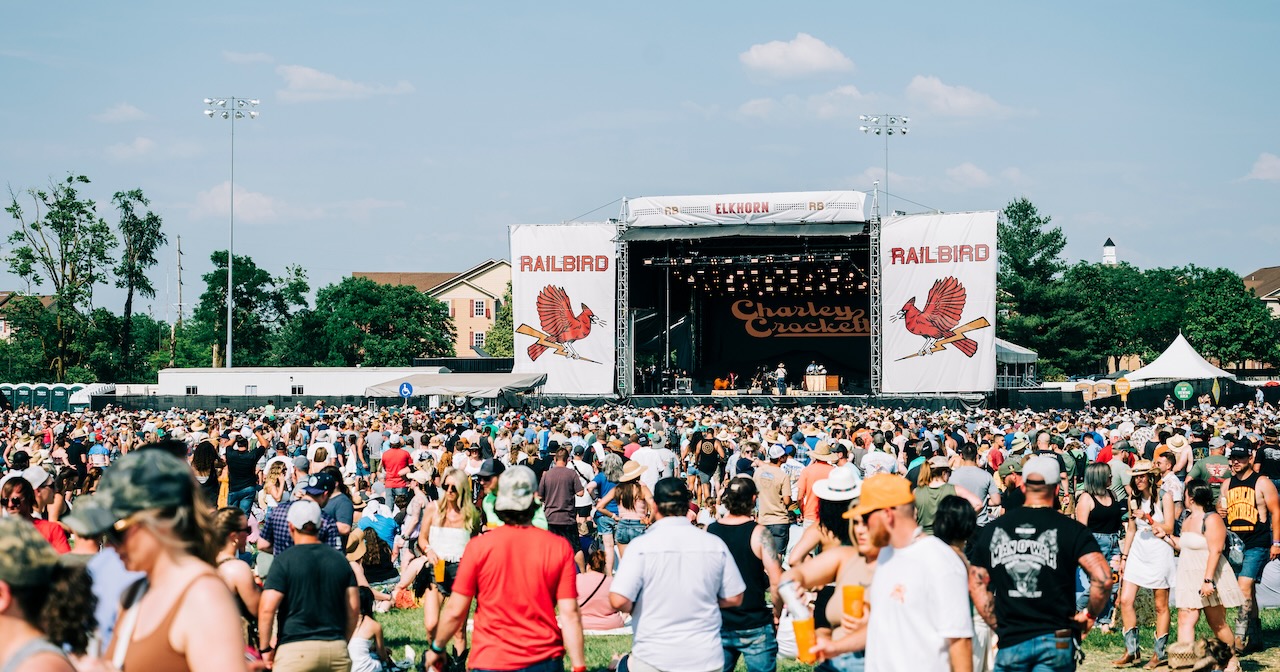
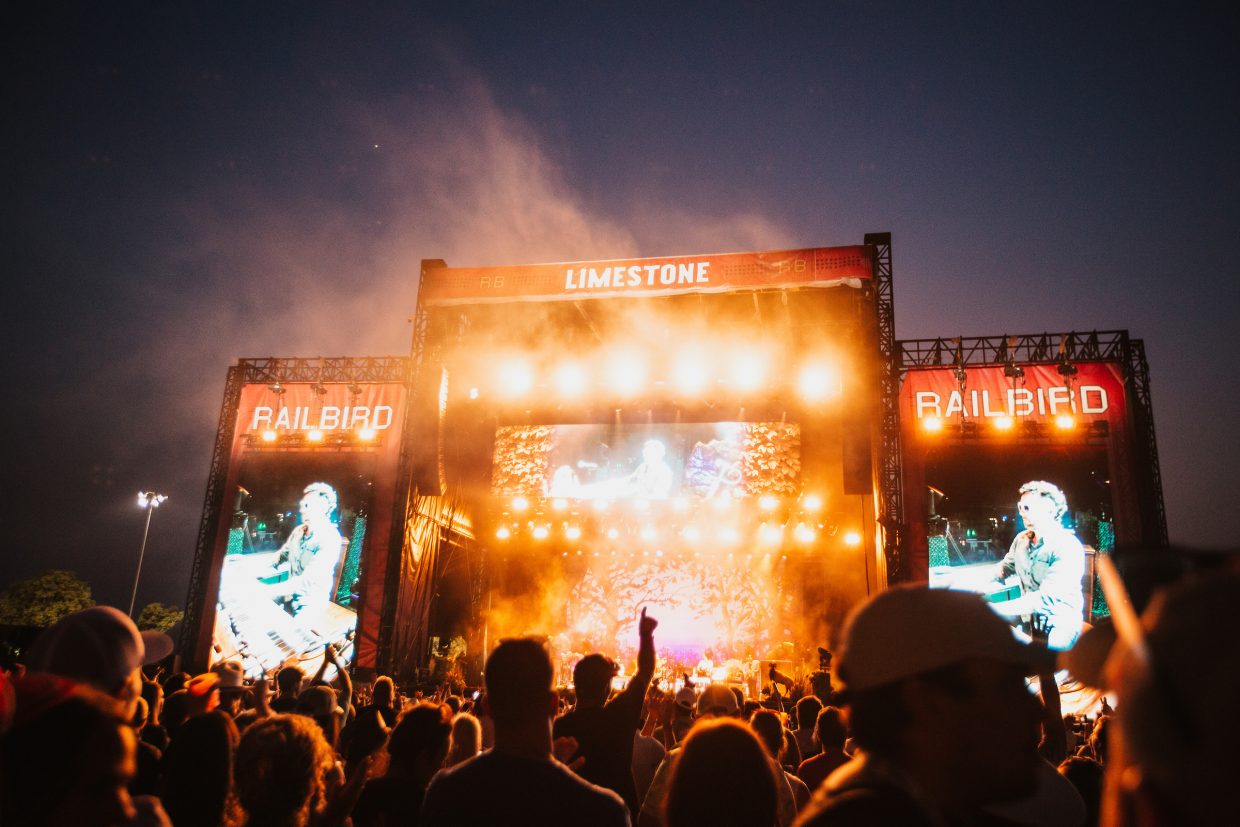
Highlighting the confluence of roots music and the mainstream, Railbird Festival welcomed 32 acts from across the rock, folk, and bluegrass spectrum to Lexington, Kentucky on June 3-4.
Boasting headliners Tyler Childers and Zach Bryan, plus Charley Crockett, Whiskey Myers, Nickel Creek and more, a sold-out crowd of 40,000-plus helped kick off festival season with a uniquely “Americana” lineup – drawing attention to this hidden gem of a city.
Set in the heart of Lexington and spread across three massive stages and a spacious lawn at The Infield at Red Mile (usually a horse racing venue and casino), 2023 marked the third year of a festival turning the “horse capital of the world” into roots-music central while celebrating the rich musical history of the area.
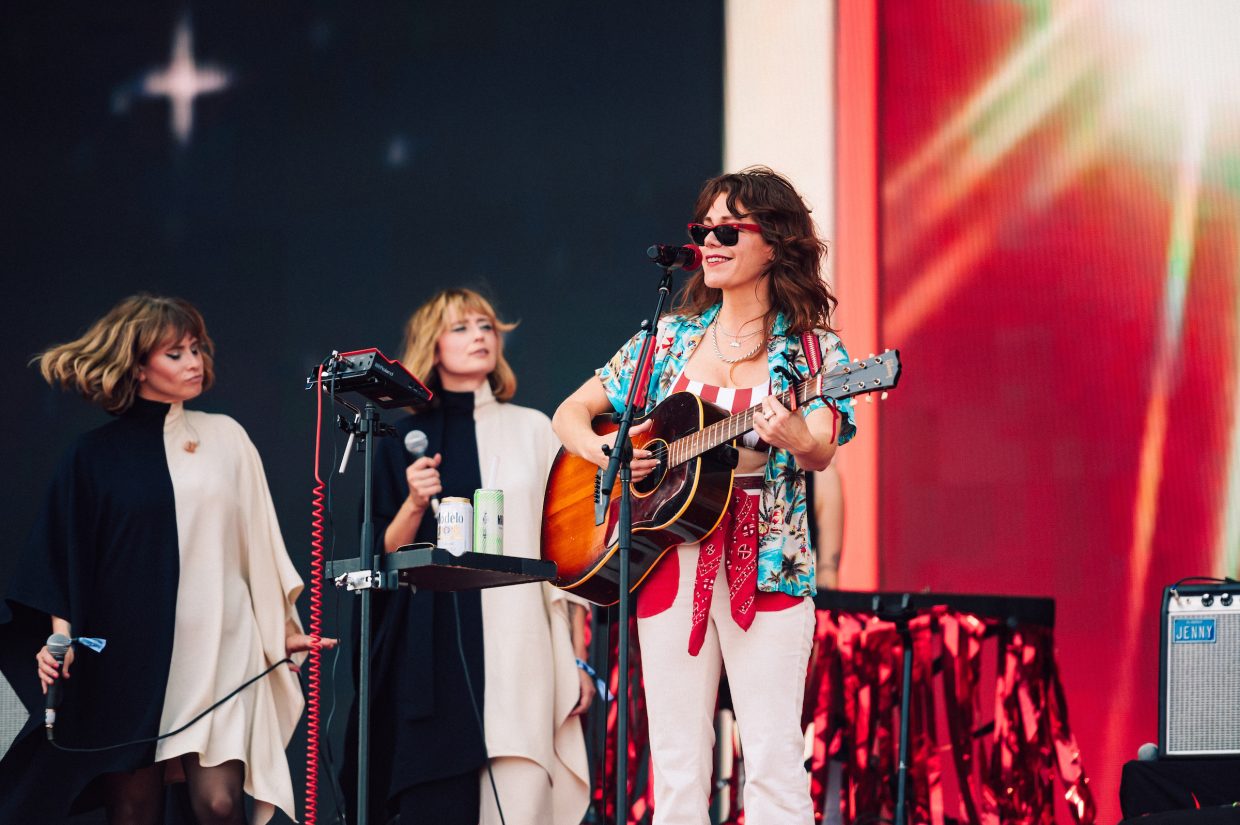
Jenny Lewis (R) with Lucius by Nathan Zucker
Day one kicked off with perfect festival weather– meaning it was blazing hot and dry as a bone. That was no worry, however, since Railbird also featured three huge shaded areas, plenty of refreshments (it is bourbon country, after all) and a merciful breeze. From just about anywhere on the grounds, fans could see everything all at once – and that included 2023’s festival-season fashions.
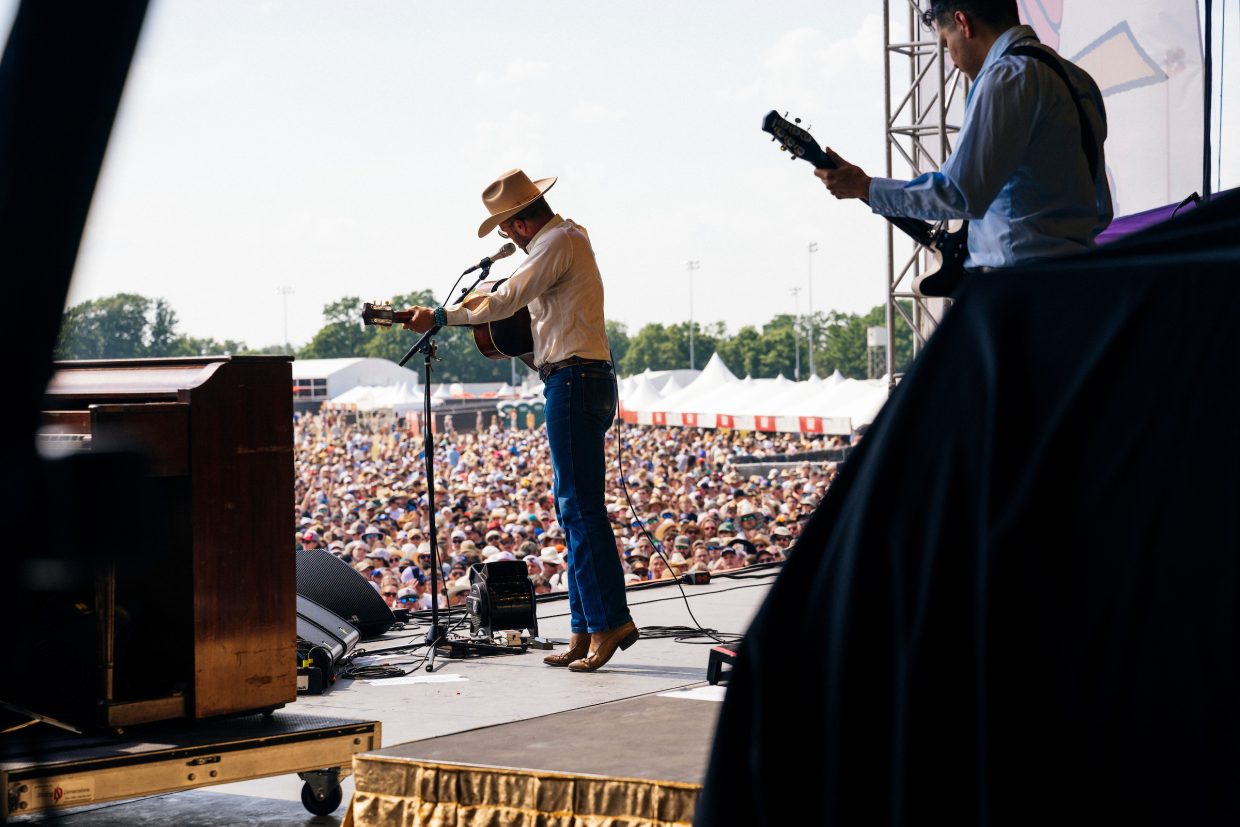
Charley Crockett (L) by Charles Reagan
Indie pop chanteuse Jenny Lewis was an early draw, singing smart tunes about “psycho men” and hypoallergenic puppies – and also welcoming Lucius, the Grammy-nominated duo who became something like the fest’s house band, for a rich duet.
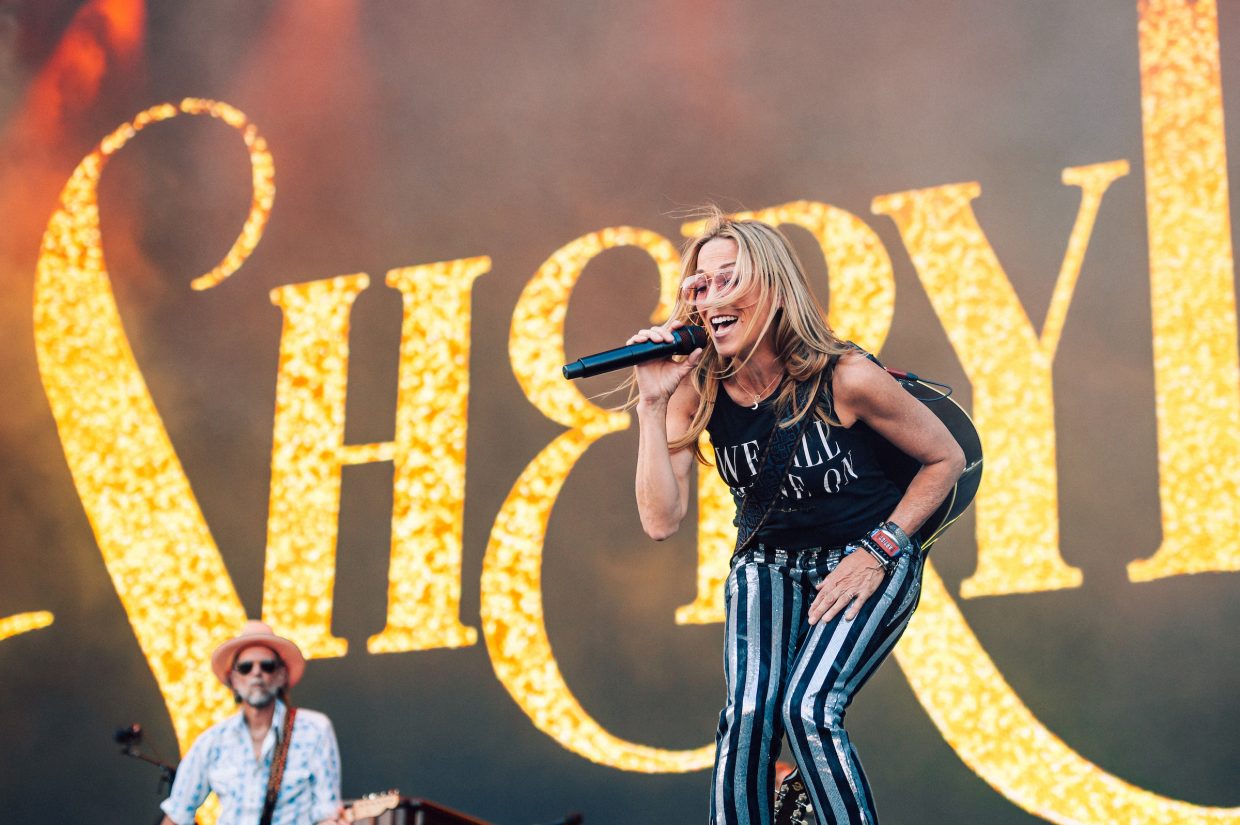
Sheryl Crow by Nathan Zucker
Later on, Charley Crockett herded everyone to the Elkhorn stage for some ballads from a modern day drifting cowboy. And Sheryl Crow showed she could still hang with the kids, even calling for more of them in politics. “I don’t have a lot of hope for people older than me,” the feisty icon said. “But you can bring change.”
Valerie June by Cora Wagoner
Whiskey Myers brought their own gasoline (and a match), firing up a midday crowd with their rowdy roadhouse rock, and while Valerie June won her crowd over with a big smile and songs connected to the Black-folk past, emerging phenom Morgan Wade unleashed the pent up anger of country girls everywhere, sounding like a combination of Courtney Love and Loretta Lynn.
Morgan Wade by Taylor Regulski
Nineties alt-heroes Weezer united the crowd in a full set of fuzzed out awkward-teenager anthems – but also showed where they fit in the roots world, breaking out some old-timey three part harmony – and the day came to a close with breakout superstar Zach Bryan.
Zach Bryan by Charles Reagan
A self-made headliner who still carries the underground spirit, he gathered the whole crowd as the sun went down, doing his best to stay a songwriter who “keeps truth in songs.” Leading a country band with strong Class of ‘89 vibes, he mixed tender-but-edgy confessions with a well-placed vocal growl, and finished the night off in awe of the Railbird crowd, noting he was on the fest’s smallest stage just a few years earlier.
“I’m nervous as shit!” Bryan admitted. “Never in my life did I think I’d be after Weezer or Marcus Mumford.”
Marcus Mumford by Charles Reagan
Day two started off much the same as the first: hot and sunny, but with a marked increase of tow trucks prowling the Red Mile area. Great herds of humanity seem to migrate from one stage to the next, with wide smiles and a rootsier, more-acoustic lineup for them to enjoy. Luckily, the pacing was excellent and there was rarely any conflict over which stage to check out.
Sierra Ferrell by Cora Wagoner
Winchester 49 took over the big stage early, dodging beach balls and blasting their gritty country/rock/soul as they welcomed the crowd back with calls to drink up life (and beer.) Old-school master Sierra Ferrell had everyone dancing a throwback jig, and while Flipturn mixed fiery rock grooves with huge, danceable swells of energy (like EDM on electric guitars), Ricky Skaggs charmed as the fest’s elder statesman, and Kentucky treasure.
Making bluegrass look beyond easy (maybe more like effortless), a “RICKY!” chant soon broke out as parents answered questions from dumbstruck kids, like “Is it just him playing right now?” – once again proving the timeless, ageless wonder of acoustic music.
Nickel Creek by Charles Reagan
Nickel Creek seasoned their simple ingredients with a playful edge, returning for their first tour as a blood-bonded neo-bluegrass trio in quite a few years, while Amos Lee sampled everything from Memphis soul to Bob Marley and a bit of New Orleans funk.
Amos Lee by Taylor Regulski
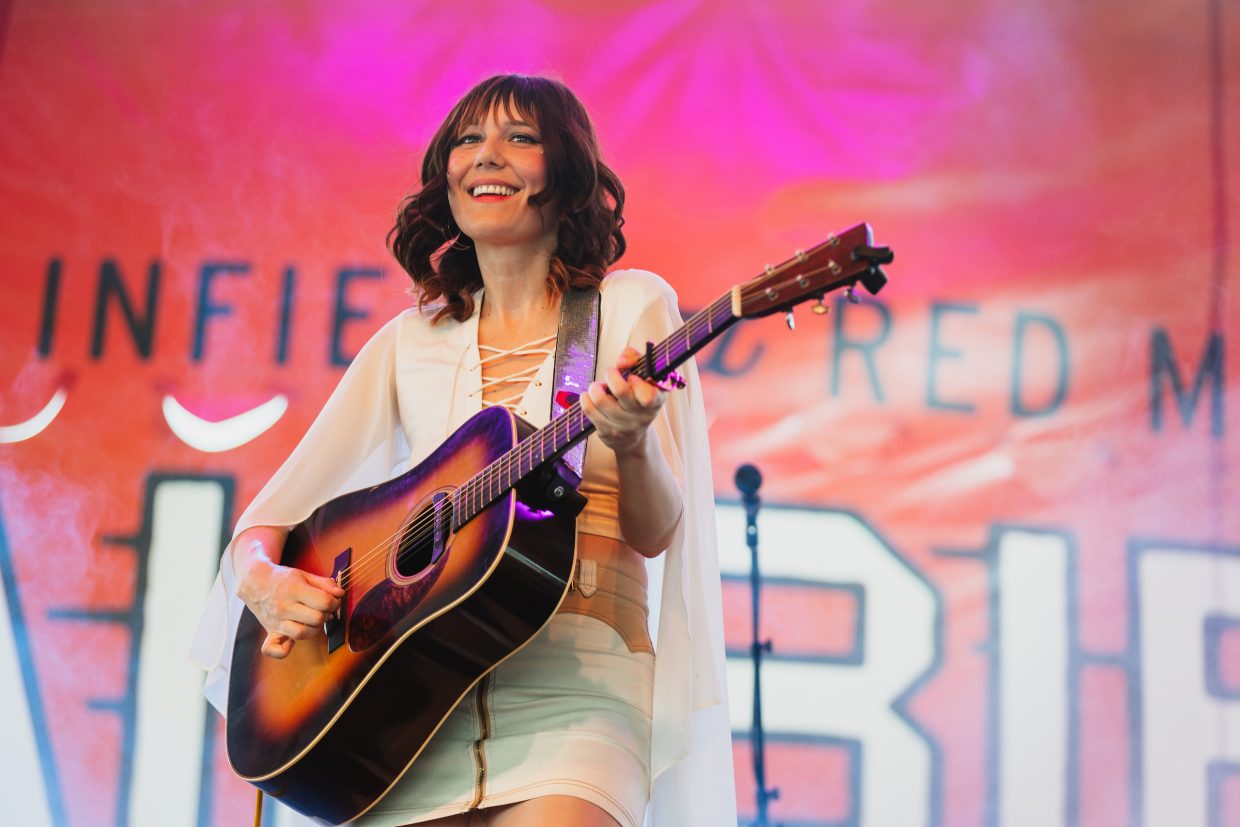
Town Mountain found a welcome home for its foot-stomping, wild-child alternative-grass over at the covered Burl stage – as did Molly Tuttle (who will surely be on a bigger stage next year) and Charles Wesley Godwin, the West Virginia troubadour who welcomed night-one’s headliner back for a re-energizing duet, late in the festival and just before its biggest draw.
Molly Tuttle by Cora Wagoner
That moment finally came as the deep-red Strawberry Moon rose over Red Mile, with Tyler Childers putting a bold, indie-country cap on an already special event.
Tyler Childers by Charles Reagan
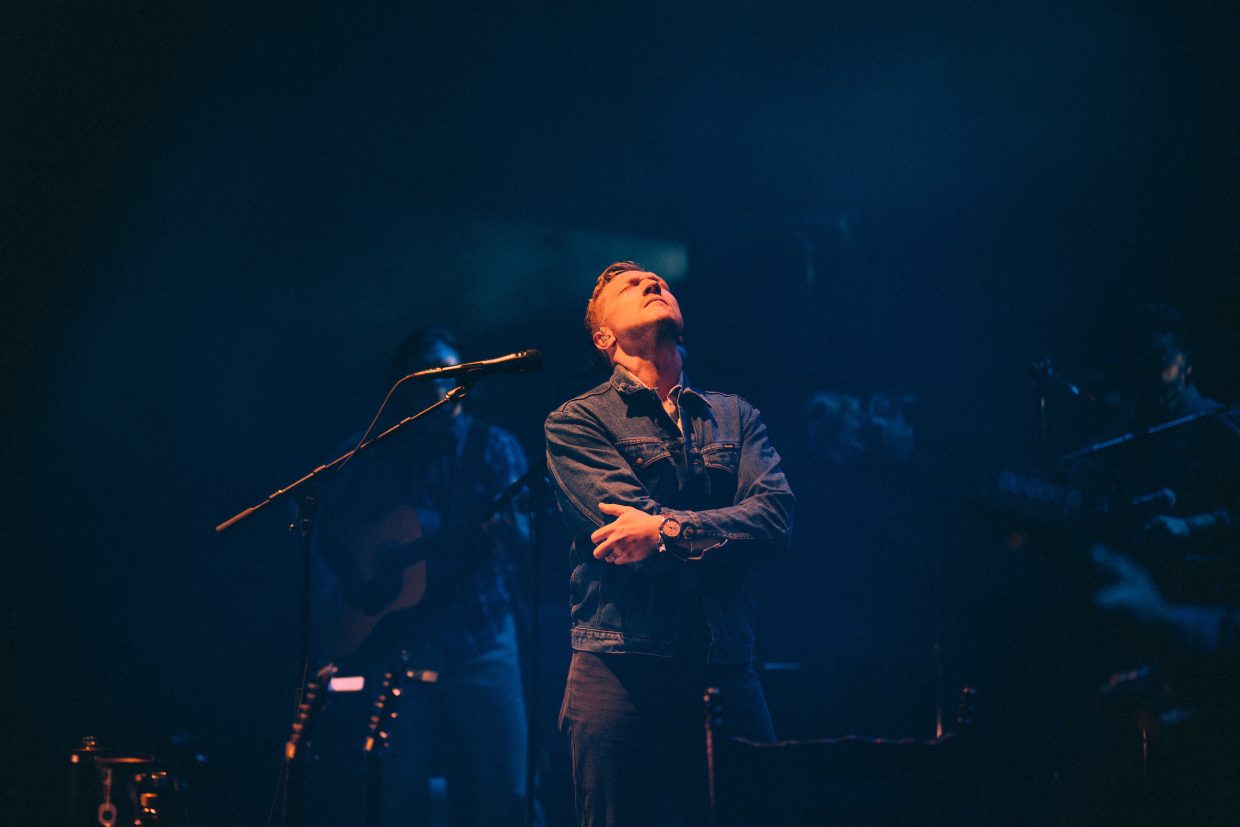
Welcomed to the stage by Lexington Mayor Linda Gorton – who proclaimed June 4, 2023 as Tyler Childers Day – the Lawrence County native arrived carrying the whole state’s roots-music tradition on his small frame, and never put a foot wrong.
Humble as ever and wielding the witty cadence of a carnival barker, he presided over a rabid hometown crowd in a jean jacket and rusty-blond hair, matching a voice that could cut Kentucky limestone with hardscrabble poetry just as sharp.
Tyler Childers by Charles Reagan
Over a two hour set, all of Lexington seemed to sway and sing along, closing the weekend with proudly down-home tracks like “All Your’n.” On the surface, it’s a holler-kid’s rebellious pledge of true love, that’s obvious enough. But in this case, that pledge seemed applicable in other ways – to the fans, to roots music, to Lexington. Perhaps even to the Railbird Music Festival itself.
“I’ll love ya ’til my lungs give out / I ain’t lying,” Childers and his audience sang. “I’m all your’n and you’re all mine.”
Tyler Childers and band by Cora Wagoner
Photos courtesy of Railbird Festival Lead photo credit: Taylor Regulski
This website uses cookies to improve your experience. We'll assume you're ok with this, but you can opt-out if you wish.AcceptRejectRead More
Privacy & Cookies Policy
Privacy Overview
This website uses cookies to improve your experience while you navigate through the website. Out of these, the cookies that are categorized as necessary are stored on your browser as they are essential for the working of basic functionalities of the website. We also use third-party cookies that help us analyze and understand how you use this website. These cookies will be stored in your browser only with your consent. You also have the option to opt-out of these cookies. But opting out of some of these cookies may affect your browsing experience.
Necessary cookies are absolutely essential for the website to function properly. This category only includes cookies that ensures basic functionalities and security features of the website. These cookies do not store any personal information.
Any cookies that may not be particularly necessary for the website to function and is used specifically to collect user personal data via analytics, ads, other embedded contents are termed as non-necessary cookies. It is mandatory to procure user consent prior to running these cookies on your website.