Courtney Marie Andrews Doesn’t Fear Vulnerability

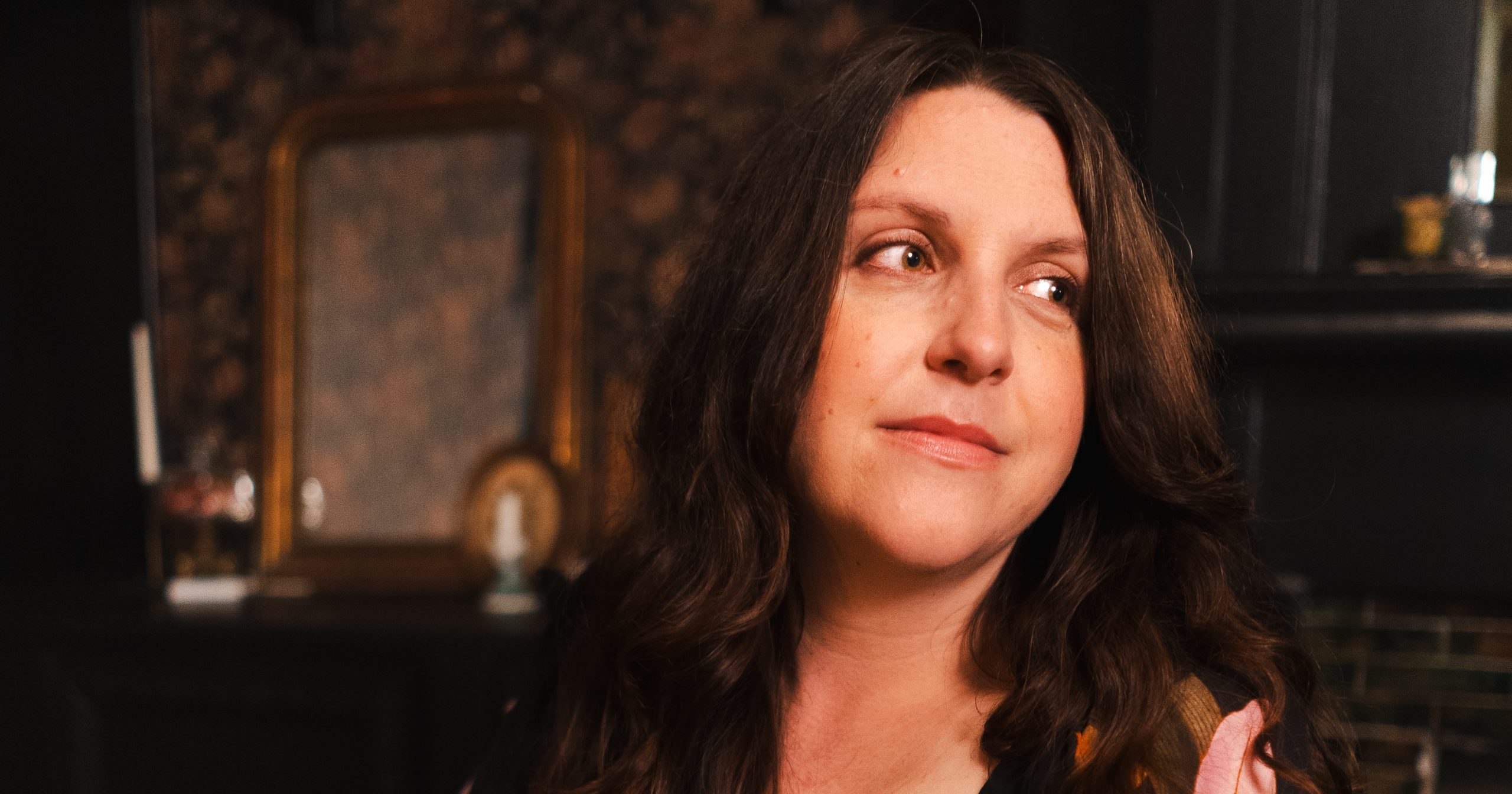
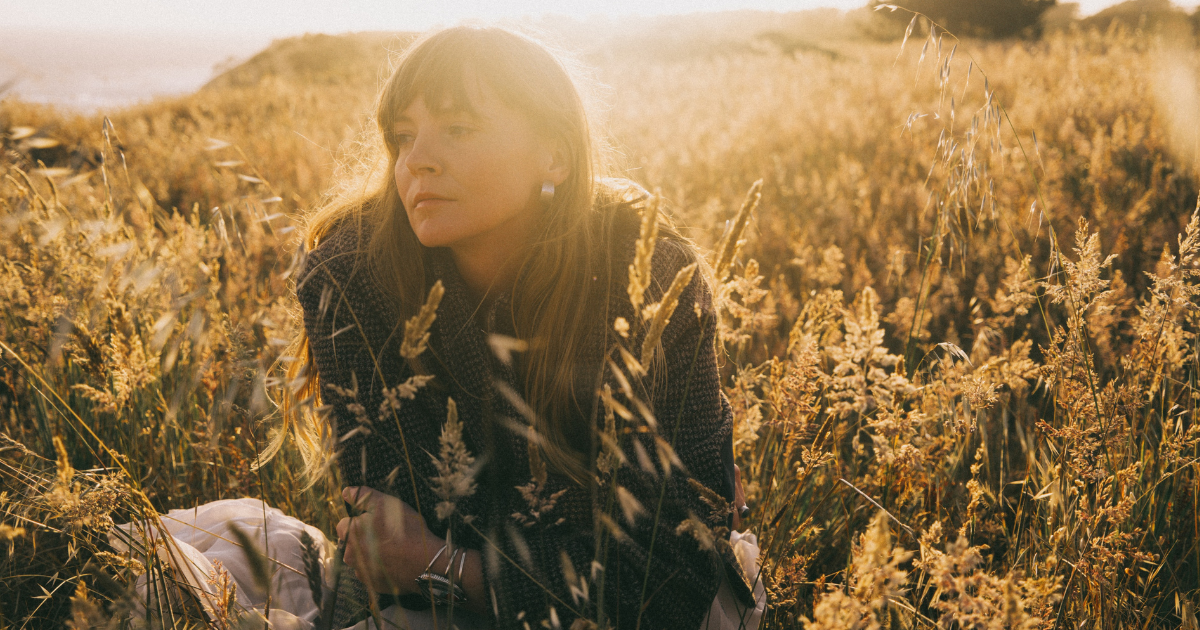
Courtney Marie Andrews’ story begins in Phoenix, Arizona. An only child raised by her mother, she found solace and an outlet for her creativity and imagination in music. She planted her music roots in a self-described “feminist punk band” and began touring while in her teens. Along the way, she recorded a number of albums – best known are Honest Life (2016), GRAMMY-nominated Old Flowers (2020), and Loose Future (2022) – lived in a number of cities, and worked and toured with a number of musicians, including rock band Jimmy Eat World.

Andrews eventually made her way to Nashville, where she now resides. There, she creates music and other art, fueling her soul and inspiration with long walks and her love of animals, bonding with friends’ dogs, and feeding an assortment of “porch animals,” mostly cats, who take up residence outside her door.

In addition to music, Andrews expresses herself through painting and poetry. She has published two collections: 2021’s Old Monarch (2021) and the recent Love Is a Dog That Bites When It’s Scared. Her music, writings, and artwork explore a broad scope of emotions and experiences: loss, grief, fearless love, deep darkness, pure joy, and acceptance of the entire spectrum.

These outpourings are at the essence of her new release, Valentine (out January 16 via Thirty Tigers). Written in the throes of anticipatory grief, the album plummets into the vortex of her trajectory. While the message is raw, the recording is anything but. Valentine is an unfiltered look into Andrews’ heart, filled with waves of sounds and layers of instrumentation.

Among the numerous instruments she plays on Valentine, Andrews is featured on an assortment of guitars and basses, including a 1973 Martin D-28, 1968 Gibson B-45 12-string, 1970s high-strung Japanese Epiphone, Gibson J-45, Epiphone Casino, 1972 Fender P-Bass, 1960s Kay K5915 bass, and 1960s Teisco six-string bass. Longtime friend and colleague Jerry Bernhardt joins her on various instruments, with drummer Chris Bear rounding out the trio. The album was recorded by Michael Harris at Valentine Recording Studios in Los Angeles and produced by Bernhardt and Andrews.

BGS reached Andrews via Zoom for an Artist of the Month conversation.

Has Nashville changed you as a songwriter?

Courtney Marie Andrews: I thought it would deeply shift everything for me, but if anything, it made me want to do other things as well, maybe subconsciously. I started painting and focusing on poetry. But that core sense of self, that songwriter self, will always be with me wherever I go. It’s hard to say how it has shaped me until I’m looking back on my life 20, 30, 40 years from now.

But I will say the community I’ve found here is profound. I’m a Western girl. I’ve lived in Arizona and Seattle up until pretty much my 30s, and I didn’t realize how lonely the West can be. I think that’s apparent in my early work as a songwriter. That subject is throughout the work. When I moved here, I was almost overwhelmed by how much people wanted to hang out. It took a while to adjust and now I can’t imagine it any other way, not having that community to feel into and understand this work, because it is a strange career. So I think more [that] it has affected me personally, but I’ve always continued to write and been on this journey on my own and in my own time.

This is a stripped-down album – only three musicians, including you, and one of them is also your co-producer. Did you know, when the songs were written, that this is how it needed to be done?

I completely funded this album on my own, so if I’m being frank, it was an economical choice. Originally, we would have loved to have a band, but in hindsight, ultimately it created the record it created and I wouldn’t have had it any other way. There’s some power to it being a very condensed group of people, because the focus is a little bit more zoned in, and it becomes a vibe if it’s coming from a few core people, rather than everybody adding their stroke to what you’re doing – which I think is also valid. But looking back, it was probably the best thing we could have done, having Jerry and I playing all the instruments and Chris Bear, of course, on drums.

You played a number of guitars on Valentine. Do the songs determine the guitar, or does the guitar sometimes direct the song?

The songs ultimately lead the way on feeling and vibe. Jerry and I wanted to layer the record. There are a lot of different layers of guitars. We would varispeed one guitar up, so it’s super-high, and then we’d varispeed one guitar lower, so it’s super-low, to create the rounder sound, especially if you’re listening in headphones or on a high-definition speaker system.

But it’s definitely song-driven, whatever the feeling. “Best Friend” is just my guitar and Jerry’s twelve-string. We didn’t go much further than that, because the song was meant to be a bit sparser as far as the depth goes.

“Everyone Wants To Feel Like You Do” is about a certain type of misogyny where it’s, “I do whatever I want and I don’t care about the consequences, nor am I held accountable for the consequences.” The song was written with that feeling, and I thought it would be funny if I played guitar like that, where I didn’t care, so I over-distorted my guitar and played as crazy as I could to assert my power.

How do songwriting, poetry, and painting each fulfill a different side of your artistry and emotions? Is there ever some cross-pollinating?

I wanted to tell the same story with a different perspective, so there is cross-pollinating in terms of the source of the material, where it’s coming from, where I’m at in my life, whatever darkness or lightness I feel. It all sources from the same well of emotion and experience. But there are different ways of telling the same story. I found that when I was songwriting exclusively, I would write the same song over and over again. Whereas if I take a step back, do a different medium, and come back to songwriting, I feel fresher.

Ultimately and forever, I’ll always identify and feel the deepest connection with songwriting. That’s the first thing I fell in love with. It’s the thing I understand the most. But the mystery of these other mediums has really flourished.

There’s a natural through-line between poetry and lyrics. What about painting? Do lyrics sometimes inspire a painting? Does something you create on canvas ever become words in one of the other mediums?

There’s not a lot of crossover. I don’t look at painting like I would look at a page or a song. Painting is, for me, a place to describe emotions that are unexplainable. That’s why painting is so cool. It’s almost equivalent to jazz; it’s more of a feeling that you can’t describe. That was enticing to me. To express myself as a word person who ultimately values words so much, it was important to think outside of the box a little bit. Painting allows that. To not be confined by words is really interesting.

Tell us about your recent Artist in Residence at the Iowa City Songwriters Festival. You performed and did a reading from your new book, but what does “artist in residence” mean at this particular event?

Because Iowa City is a UNESCO World Heritage City of Literature, there’s a heavy college-funded element. I’m not sure if that was their direct funding, but they definitely have more of a collegiate approach to an artist in residence. I’ve done some residencies where they don’t want anything from you. They just say, “Come up and write whatever you want. We don’t care.” But this one was definitely a bit more mentorship-driven. I led a class, a songwriting workshop. I also had one-on-one mentorships with young songwriters, people who are just getting started. They had a packed schedule for me, but it was so lovely.

I think their ultimate goal is to prop up songwriting among the other literature of the world, having songwriting classes in college, and having it there with poetry, fiction, nonfiction, memoirs, memoir writing, and all that. I think that’s ultimately what they’re trying to attain with the residency program. So it was great.

I’ve found that I really love to talk about songwriting in that way. I think that, in our culture, it’s a dying thing, at least from where I’m sitting, to seek out opportunities to learn from elders, from people who’ve been doing it a long time. The more we can do that in our culture, the better off we’ll be. It’s an incredible festival, and I would highly recommend people going. The people who run it are just wonderful.

When you lead workshops and do one-on-one mentoring, is it as much a learning experience for you as it is a teaching experience?

Absolutely. I think to teach is to be a constant student. The moment you feel like you’ve figured it all out … I don’t know if that’s a good thing. Even as I speak about songwriting, I say things that open doors all the time to myself. It’s good to be endlessly curious.

Do you think being an only child contributes to your storytelling ability through songwriting and poetry? Living inside your head, escaping into your own head, in a way that might have been different if you had been surrounded by siblings?

Oh yeah, absolutely. Because I was a latchkey kid, I spent a lot of time alone. If I didn’t have a friend to play with, I had to go into the inner landscape of my mind. That was my way of communicating in a deeper way that I couldn’t quite get in my home life if my mom wasn’t home. I can attribute a lot of my childhood to that. I was a deeply imaginative kid and would create stories all the time. So I think the loneliness also fueled what I do now.

Do you draw from those past emotions when expressing what you’re currently experiencing?

How it manifests is that it’s like a period of reckoning when I’m writing songs. I’m generally alone. I find it very hard to write if I know somebody is even in the next room. I’ve had weird moments in my life where I wrote at soundcheck and stuff, but when I listen back to those things that I’ve written around people, it’s not as dialed in. So when I’m writing, I’m alone and reckoning with the life that I’m leading, or the life of others. It feels like this very quiet thing that needs to happen.

Are you an old-school pen-and-paper writer or have you gone the way of voice memos?

I do both. I exclusively use a green book to write in. It doesn’t matter what color green. They all are green, though, green-colored notebooks, generally the Moleskine variety or that look. I have plenty of them in a pile. [And] I love Micron, the ballpoint art pens. I really don’t like the standard DMV pen. I’m a little bit bougie when it comes to my pens. I like the flow of a Micron. I write and then voice memo. Generally, once I’m done writing a song, I try and always get it down in its unproduced form. I think it’s important to have that, and the phone happens to be the easiest way.

Is playing guitar, just playing, as much a part of songwriting as writing lyrics?

Oh, yeah. I love the guitar. I love open tunings. I love acoustic guitar music, Hawaiian slack key, and classical Spanish-style guitar on a nylon. I love to play and try and emulate that style. And so in certain works, it’s the first thing that happens. There’s many ways to come to a song, but one of them is [to] play a chord progression I like and sing gibberish, and that sometimes leads to a song. In that case, absolutely I need the guitar. But yeah, the instrument can definitely lead the way. It just depends.

When you spoke earlier about adapting to the Nashville community, it brought up the thought that growing up as “an only” maybe affects our social skills to a degree. It can make community something new, as opposed to something you’re used to having around you.

Yeah. I feel that. I have a hard time with small talk for this reason. I want to go immediately for the jugular, as far as intense conversations. I go from zero to a hundred. It’s really hard for me to be like, “Hey, how are you doing?” I feel like such an actor in those circumstances. Of course I’ve learned to do it by way of being a musician – you have to talk to new people every day. But small talk doesn’t do it for me. I have a hard time going in a simple, surface level.

In the bio accompanying this album, you said, “I was in one of the darkest periods of my life and songs were the only way I could reckon with it. I felt cursed and the only mental cure felt like songwriting and painting.” Have you always felt that darkness?

Obviously, as a teenager, I went through a pretty wild part of my life where I felt dark, but I think I actually denied my darkness for a very long time. I lived in a haze of denial and hope, which is a beautiful thing. It can do wonderful things for your mental health. But you also can’t really grow if you’re living in that state.

When I was younger, especially in my early twenties, I always had this hope – “Oh, one day things are going to change.” That denial, that hope, kept me in this holding place, which for a time was really nice, and as a matter of defense and self-preservation, I stayed there for a long time. It wasn’t until I started therapy that I realized I always had this underlying darkness. When I had that, we worked on that, and real things started to happen. Things in life that are so hard that happen to all of us – it became deeply dark and profound to experience that in a more awake state.

How did that help with writing this album?

During a lot of writing this, I was caretaking for my family member who was terminal. If you’ve ever been in that situation, it is all-consuming. The only way I could turn my brain off from that was to write. It wasn’t “I need to write an album.” It was “I need to get back to myself for a moment.” I wouldn’t say it was a conscious decision. It was just I know how I am, and I know that songs are my only way of regulating in these crazy times.

You once said you felt embarrassed by the vulnerability of your songwriting. Where do you draw the line, or do you draw one, between what needs to be said for yourself and what needs to be said for listeners for whom you are the voice? How do you do this and protect your mental health when performing these songs every night?

I’ve always said that once the song is written, it’s not mine. It also transforms for me as I sing it. There are songs I wrote fifteen years ago that I still perform, that have taken on completely new meaning and feel different to me when I sing them. I honestly can’t remember the headspace I was in when I wrote them, or the origin of them, or who I was thinking about, to a strong degree, but I feel differently about them.

As far as what needs to be said, ultimately I try to relate to people, or first myself, and then you put the song out and it becomes a different thing. I try, in an artistic space, to be as true to myself as possible. I try not to put up any walls in that space. As far as my life where I’m not playing music, that’s a different thing. But music is a safe space to say whatever the hell I want to say. That’s the reason it’s such a powerful thing. It’s a safe place for me to communicate. Whatever walls are up in a song are walls that I have up with myself. That’s always very apparent when you write a song. It’s not quite clicking and you’re like, “I’ve got some walls up to my subconscious, clearly.” So the extent to which the boundaries, the walls, are up is truly only the stage at which my heart is at in that moment.

Did that happen with Valentine – the walls, maybe the fear of the vulnerability? It’s deeply personal and powerful, going deeper and deeper into those emotions as your journey is sequenced.

I hate to say it, because I don’t want to sound trite, but making albums, making bodies of work like this, fear is the last thing on my mind. Obviously, natural fears come up: Is it going to be what I wanted, what I envisioned in my dreams? But as far as songwriting and being vulnerable in a song, that’s not the fear. In fact, if I got very close to the heart in a song, it’s generally the ones that I’m like, “That’s a good one. I got there. I got to the essence of this thing I was feeling.”

Being vulnerable in life can be really hard in my personal life, in some ways, and I think that is more where the fear is. But, for whatever reason, the way I direct it is okay in a song, and I’ve made up my mind for that to be true. I don’t know why; I guess it just makes sense to me. Human emotion makes the most sense to me in the backdrop of music.

As far as sequencing, Jerry and I argued quite deeply about the sequencing, but ultimately it did go to a place where once we got the sequence, it was undeniable. Side A and Side B are completely different frames of minds. Side A, you’re fighting for love and you’re desperate. Side B is a resignation – this is how it is, this is how it’s always been, and this is my childhood. By the end, in “Hangman,” you’re just “This is how it is, and you can fight for it or you can walk away.” So the sequencing was purposeful. I wanted it to be a journey. I think records should be like that. They shouldn’t be all one color or palette the whole way through.


Explore more of our Artist of the Month content featuring Courtney Marie Andrews here.

Photo Credit: Wyndham Garnett
Artist of the Month:
Courtney Marie Andrews

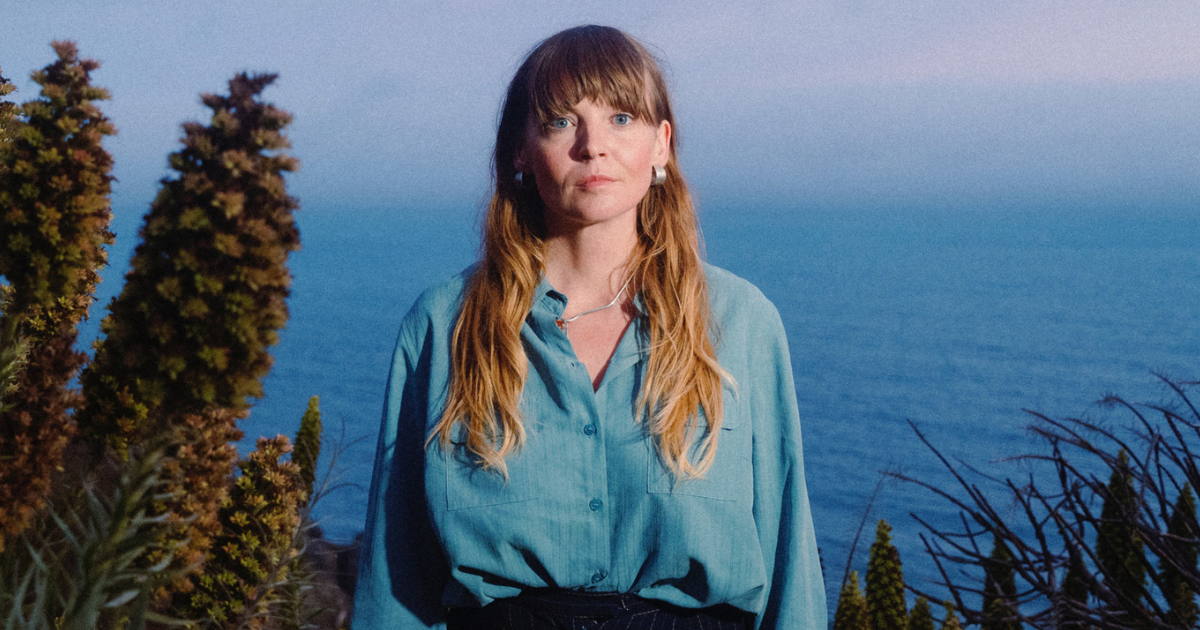
On singer-songwriter Courtney Marie Andrews’ upcoming album Valentine, you can hear her letting go.

It’s a process she ostensibly started – at least, musically or outwardly – on 2022’s Loose Future, a collection on which Andrews also reckoned with being in a period of transition, personally and professionally, letting go of former five- and 10-year plans and recentering in the present.

Approaching four years since that most recent studio album, with Valentine it seems Andrews is intent on reinforcing and revisiting the same lessons she taught us and herself on Loose Future. The new album, which will be released on January 16 by Thirty Tigers, begins with a grand, tone-setting opener, “Pendulum Swing.”

Reminiscent of ‘60s pop-folk and rich with arpeggiated 12-string guitars, Andrews vocally soars into the verses and murmurs each contemplative chorus:

If I get what I want
Gotta let the pendulum swing
Can’t be good for too long
Let the pendulum swing…

It doesn’t exactly strike a listener as the sort of Loose Future Andrews formerly envisioned, but the song also doesn’t seem to wallow in the apparent feeling of impending doom, or the instinct that imbalances of “good for too long” must be righted. Instead, to this writer, it rather sounds like she’s focusing on the instinct itself. On her belief, conscious or subconscious, active or passive, that “karma” or “deserving” necessitates inevitable negative responses to anything positive.

As with all of her impeccable albums, Valentine finds love as a frequent subject – as well as community, perception, expectations, and how all of these topics touch on or intersect with existential dread. But Andrews seems to be letting go of her ideals of what love is or what it can be, as well. Thankfully, her perspective on the subject is always expansive, never simply reduced to just romance or sex or heteronormativity – or some slurried combination thereof. But Valentine is more direct in its approach to love than some of her LPs.

“[Valentine is] a record in pursuit of love,” Andrews explains via press release. But that love “is a lot more than I gave it credit for,” she continues. “It’s built over years, it’s built with trust, with changes, it becomes something new and unrecognizable, the deeper you go.”

Songs like “Keeper,” “Cons and Clowns,” and “Everyone Wants to Feel Like You Do” follow in tight formation behind Andrews’ past songs on love, connection, and romance – especially the masterful album, 2020’s Old Flowers. But other tracks, perhaps chief among them “Best Friend,” indicate that expansion on love as an idea and point back to the creative process here also being one of letting go.

You can sense that surrender, the gradual unclasping of fists and de-whitening of knuckles, in almost every aspect of Andrews’ creative output. It has, after all, been quite a few years since she last released an album. Her prior rhythm of abject road-dogging and releasing LPs every year or two has been replaced by much more thoughtful and intentional tours, performance forays, and product launches. She’s leaned more into another medium, painting, and has gone full-bore as a published poet, too. She’s released two collections of poetry – Love Is a Dog That Bites When It’s Scared having arrived this past August – and has built up her creative, community infrastructure to feed more than just her itinerant musical pursuits and former wall-to-wall, year-round tour schedule.

It’s almost like you can hear the retooling of Andrews’ idea of success happening in real time, from Loose Future through to Valentine. Like you can hear her realizing that giving up the version of herself who existed on Honest Life (2017) through May Your Kindness Remain (2018), and the version of herself from Old Flowers and Loose Future, doesn’t ever mean net loss. Like being on the road less means one could grow flowers, feed stray cats, and build a support system in her new home of Nashville that, especially as an only child and retired nomadic busker, she’s always craved.

The sense of letting go was perhaps infused into Valentine by the specific circumstances that gave birth to these songs. “I was in one of the darkest periods of my life,” Andrews continues in the project’s album bio, “and songs were the only way I could reckon with it.”

“I felt cursed, and the only mental cure felt like songwriting and painting.”

It’s why this album, like almost all of her prior releases, also feels as self-directed as it is outward-facing and primed for wide audiences. Andrews has learned that letting go – of control, of her past self, of expectations, of legalism around or criteria for love, of the “power” (and curse) of individualism, of freneticism and frantic ladder-climbing, or of life itself – is a process we don’t ever graduate from. We never muster out. We have to return to ourselves, to introspection, to the very constructions of our selfhoods over and over again to do that work.

The redemption and sheer beauty of this album are not because Courtney Marie Andrews has found her Valentine, but because she can hold up her wants, needs, and dreams as valid and wholesome goals on one hand, while stripping – and re-stripping – them of any power they may hold over her on the other. It’s an impressive duality, one that wouldn’t be nearly as successful without Andrews already having done so many reps in finding herself and of letting go.

Andrews is our January 2026 Artist of the Month, an auspicious start to a brand new year of roots music. Here, you can read our feature interview with Andrews all about Valentine, its making, and the unique way she and her collaborators went about recording these fantastic songs. Below, enjoy our Essentials Playlist and tune in on social media as we dip back into the BGS archives throughout the month to share all things Courtney Marie Andrews.


Photo Credit: Wyndham Garnett
How-dee! And Happy 100 to the Grand Ole Opry

In 1925, world leaders were signing the final treaties coming out of WWI; Congress authorized work on Mt. Rushmore as a national memorial; the Scopes Trial was held in Tennessee; and the first patent on radio transmission was only 28 years old.

And, in 1925, WSM first broadcast its barn dance – soon to become the Grand Ole Opry.

One hundred years later, the Grand Ole Opry is the world’s longest-running radio program. After a century that saw changes unparalleled in world history, audiences are still drawn to the Opry. Every week thousands make the pilgrimage to the Grand Ole Opry House in Nashville while others tune in around the world. The show continues to inspire new generations of performers to aspire to step “into the circle” on the Opry House stage.

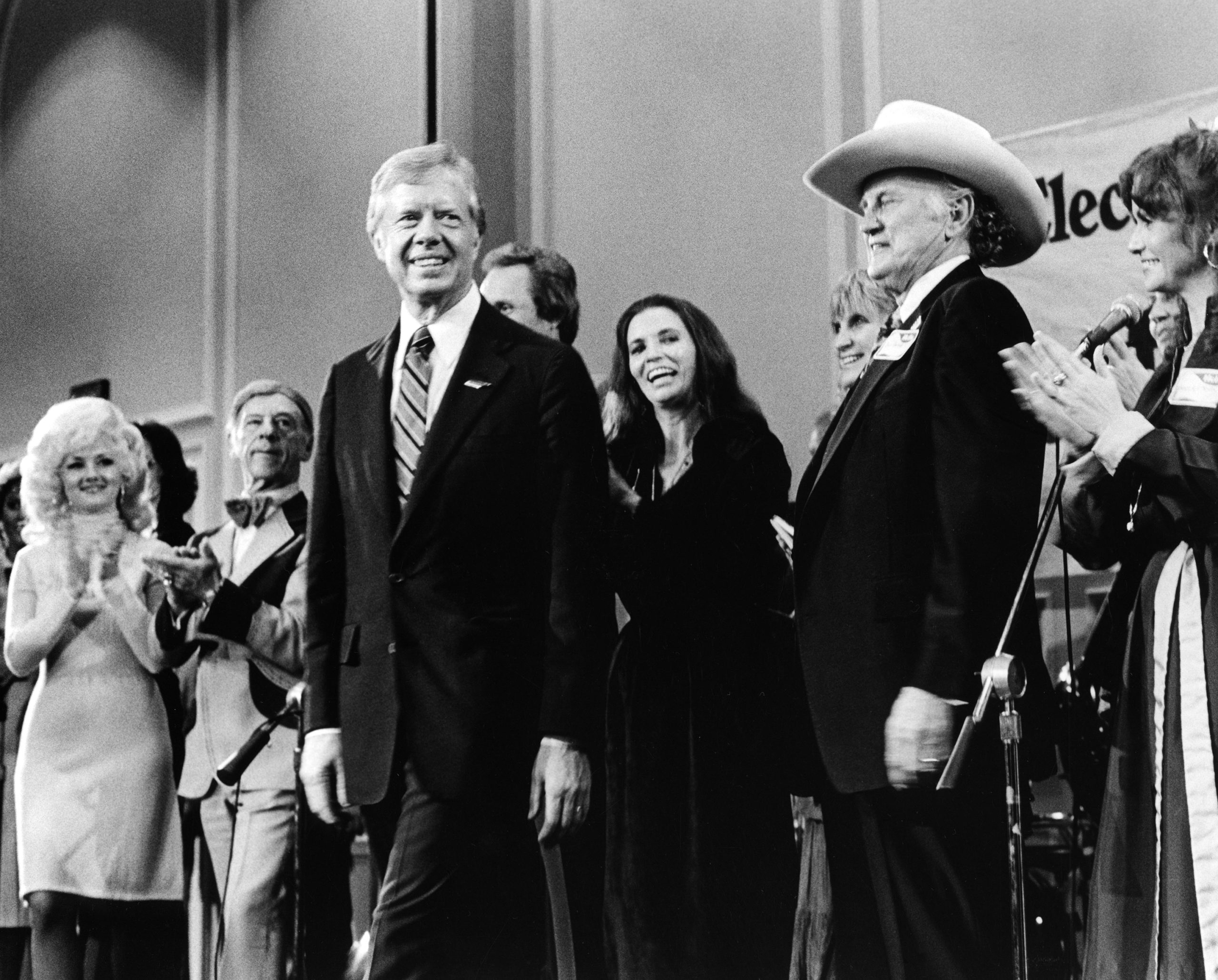
President Jimmy Carter on the Grand Ole Opry stage with Kelly Foxton, Hank Snow, Mel Tillis, June Carter Cash, Skeeter Davis, Bill Monroe, Jeannie C. Riley, and others on October 9, 1980. Photo courtesy of Ryman Hospitality Properties.

In The Beginning Was Insurance

In the 1920s, Edwin Craig was watching radio stations emerge across the nation – and seeing the money-making potential for sponsors and owners. He convinced Cornelius Craig, his father and founder of the National Life and Accident Insurance Company, that a radio station could sell a lot of insurance.

Soon, the fifth floor of the company’s downtown Nashville building held a radio studio. The call letters WSM stood for “We Shield Millions,” the company’s motto. A program that would become the lifeblood of country music started as a way to promote life insurance.

The hiring of George D. Hay away from Chicago’s WLS was the beginning of the WSM Barn Dance. The 30-year-old who called himself The Solemn Old Judge and started every show with a steamboat whistle would set the tone for much of the Opry’s 100 years – including its name.

Which all started with a clash of cultures.

Some upper-crust Nashville residents complained the only radio they could hear on weekends was string band programming from the dominant WSM station. In response, WSM began carrying the syndicated “Music Appreciation Hour.”

The Barn Dance slot followed the classical program, and Hay, not one to pass up a good line, said, “For the past hour, we have been listening to music largely from Grand Opera, but from now on, we will present ‘the Grand Ole Opry.”

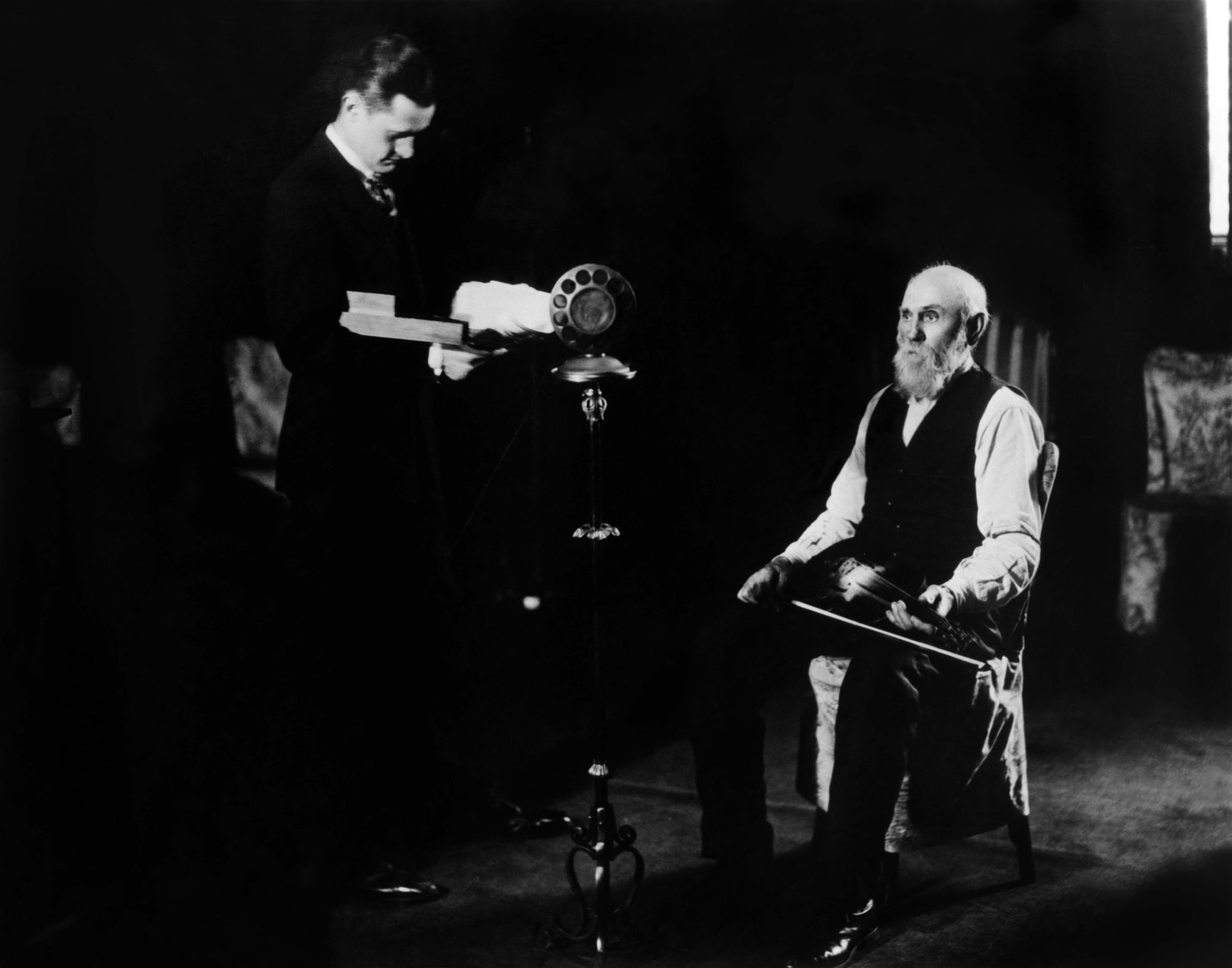
George D. Hay is pictured at microphone with a whistle and Uncle Jimmy Thompson is seated in this 1925 photograph from when the Grand Ole Opry was still the WSM Barn Dance. Photo courtesy of Ryman Hospitality Properties.

For years, the Shield Men – door-to-door National Life and Accident insurance salesmen carrying the company’s shield logo – introduced themselves as representing the Grand Ole Opry. They would even listen outside windows to see who was tuned in to the Opry – and who would be a likely customer.

The earliest WSM shows relied on local talent, running heavily toward fiddlers and string bands. But Hay would invite whoever he thought the audience would like.

DeFord Bailey, a Black musician grounded in both the blues and old-time string band music, became a regular, wowing audiences with his harmonica. Kitty Cora Cline, the first female soloist, performed on hammered dulcimer, and Fred Shriver played the accordion. Uncle Dave Macon on his banjo with Sid Harkreader on fiddle and guitar set the stage for the comedy that would remain central to the Opry’s success, with songs like, “Keep My Skillet Good and Greasy.”

A Beacon

As the recording industry grew, the variety of musicians available to the Opry grew, as well. The show began featuring brother duets, cowboy music, Western swing and solo crooners. Bill Monroe & the Blue Grass Boys were featured stars for decades.

Opry singers expressed the joys of new romance, the happiness of Sunday dinner on the lawn, the sorrow of lost love, and the loneliness of leaving home. Audiences across America listened – and related. The Opry became a focus of family life.

Dolly Parton, like many rural listeners, grew up without electricity. Her family faithfully listened to the Opry on a battery-powered radio. Waylon Jennings’ dad would hook their radio to the car battery. Jeannie Seely’s family would pile in the car and drive up a hill until they could get the signal. Opry history is filled with stories of musicians who listened as children – and dreamed of growing up to perform, like their idols, on the iconic stage.

Opry member Dierks Bentley, who gracefully moves between country and bluegrass, told BGS, “Being invited to join at all is the biggest honor – especially for me, personally. I grew up listening to all the Opry greats on the radio with my dad, so becoming a member is like having the ultimate backstage pass to see the best musicians in the world. And to be invited by Marty Stuart … hands down, it was one of the coolest nights of my life.”

Dan Rogers, the Opry’s senior vice president and executive producer, said the Opry has always been a place to celebrate the good times and be uplifted during the tough times. “Think about,” he said, “the folks who tuned in on Saturday nights during World War II. That was their only source of entertainment throughout the week.” Minnie Pearl, with her signature “How-dee,” and Roy Acuff gave them respite from war news.

On the first show after the 9-11 attacks in 2001, Rogers said, “Our background singers sang an a cappella version of ‘God Bless America.’ And one by one, the people in the audience stood and sang along. And I remember thinking, I bet everybody tuned in across the country is singing along to ‘God Bless America.’”

The Opry’s response to the COVID-19 crisis created desperately needed connection during a frightening time of isolation.

Just a week after deciding that live audience shows weren’t safe, Opry staff arranged a pared-down streaming production with no audience and a skeleton crew. Longtime cast members Bill Anderson, Jeannie Seely and Connie Smith held down the first night alongside Mandy Barnett, Michael Cleveland & Flamekeeper, and Sam Williams.

For the second weekend of restrictions, veterans Vince Gill, Marty Stuart, and Brad Paisley sat on stools spread out across the stage and pulled off what Rogers called “a beautiful, beautiful show.”

Watching from his office, Rogers started reading comments from grateful listeners. For months, people marked their calendars to tune in. They wrote, “I’m in Europe. I set my alarm. It’s 2 a.m. here, but I wanted to experience this with a community.”

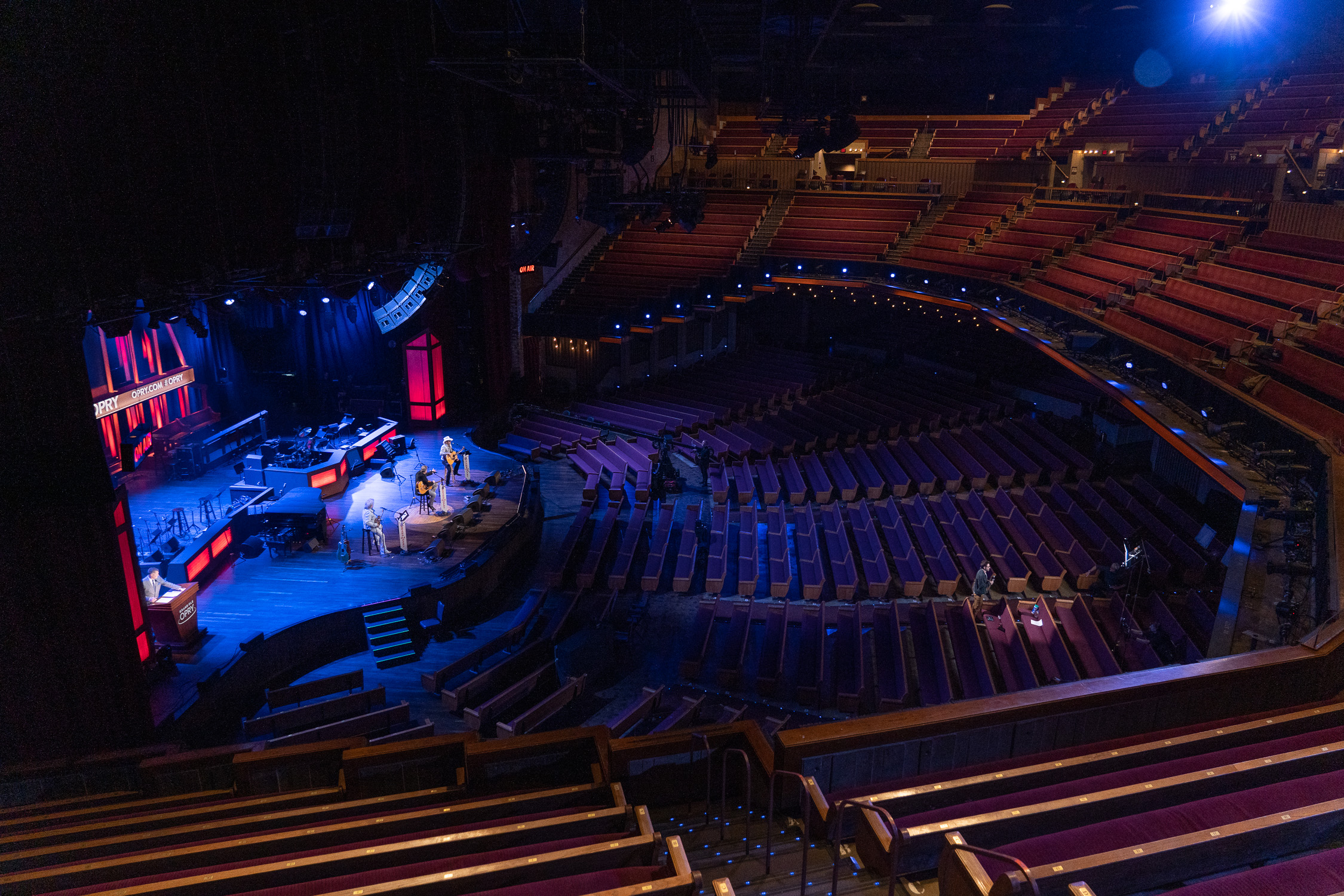
Marty Stuart, Vince Gill, and Brad Paisley perform for an empty Grand Ole Opry House during the COVID-19 lockdowns in 2020. Photo by Chris Hollo, courtesy of Ryman Hospitality Properties.

Kathy Mattea, the newest Opry inductee, feels those connections whenever she performs there.

People may have sung along to her hit “18 Wheels and a Dozen Roses” in their car or in the shower, but at the Opry, she says to BGS, “Here’s your chance to sit with an audience and sing this song that everybody knows. Nobody knows who the person next to them voted for and it doesn’t matter at that moment.”

“The Ellis Island of Country Music”

In the early days of radio, what was called hillbilly music was as limitless as the range of a 50,000 watt radio station. And the Opry remains dedicated to maintaining those wide open spaces.

Garth Brooks and Trisha Yearwood, in their forward to the book 100 Years of the Grand Ole Opry, refer to the show as the “Ellis Island of Country Music – a place where all are welcome.”

Contemporary country often has been accused of being homogenous and limited. But despite the factors that have controlled commercial country, the Opry maintains its open-arms attitude. Rogers said, “The two core tenets of an Opry show are celebrating the past, present, and future of country music, and also showcasing multiple genres under the country music umbrella.”

In any show, he said, “You might have something that’s on the top 20 of the country charts today. And you’ll have country classics. You might have a contemporary Christian song, Americana string music, or even something from outside the genre by somebody who just happens to be a country music fan or was influenced by country music.”

In 1974, the R&B-oriented Pointer Sisters included an original country song, “Fairytale,” on their second album. The cross-over hit earned them an invitation to the Opry stage, where they became the first Black group to perform.

Ringo Starr appeared for the first time in 2025 and James Taylor’s debut on November 11 will be remembered as a big part of the 100th anniversary celebration.

And, Rogers said, “Because we can do it, it’s fun to take a chance on a new artist.”

Before his first Opry appearance in July 2022, Zach Top had no hits to his name. But Rogers remembered the programming team saying, “You don’t see an artist like that every day. It sure feels to us like our audience would absolutely eat that guy up!” Today, Top’s music is everywhere.

Bluegrass has been a staple since before it had a name and it has never lost its place on the stage. Bentley and Del McCoury played “Roll on Buddy, Roll On” when the Grand Ole Opry House first reopened after the 2010 flood closed its doors for months.

Charlie Mattos is a 10-year veteran Opry announcer and longtime co-host and producer of WSM’s morning show. He said that on any given night, a portion of the Opry House audience “may truly have never seen a bluegrass band play.”

“And when Del McCoury and the boys finish with an incredible instrumental,” Mattos continued, “or Sister Sadie blisters the stage … the enthusiasm that comes out of that crowd, the immediate standing ovation for the insane musicianship that they have just witnessed …” Mattos said, “it blows their minds.”

Mattea said, “Bluegrass is front porch jazz – the virtuoso playing and the vocals and the harmonies and the trading off of licks. That’s how I fell in love with bluegrass.” And the Opry exposes millions to that brilliance.

A Good-Natured Riot

The Opry show is a complex set of acts and sets requiring precision planning, flexibility, and good nature on the part of the announcers – and commitment on the part of the performers. Rehearsals are brief or non-existent. Timing is everything.

Borrowing a phrase from George D. Hay, the Opry is still sometimes called a “good-natured riot.”

Mattos said, “When you come to see the show live, you see it all. The set changes. The artists leaving as the announcer sends them off. You can see the stage crew out there and usually in 90 seconds they can completely swap things around.”

But while reading a commercial during set changes, Mattos may notice the stage manager giving the “stretch” signal. He might have to keep talking for as long as four minutes – a millennium in radio time.

Sometimes the commercials themselves become the entertainment.

The first time Glad Wags sponsored an Opry segment, Chuck Morgan was announcing. While he stood off-stage reading the dog food commercial, house bassist Bill Linneman came up behind him and started barking. “By my last year there, there were like 20 people behind me going at it,” Morgan said. (The consensus is that Connie Smith does a great chihuahua imitation.)

A Family

Jeannie Seely – who racked up nearly 5,400 performances on the Grand Ole Opry before her passing in August 2025 – remembered it was more than the music that fueled her desire to join the Opry: “That’s hearing these people, like Mr. Acuff and Minnie [Pearl] and Jimmy Dickens and all of them, coming together every week,” she says in 100 Years of the Grand Ole Opry. “They always sounded like they were so glad to be together. They picked on each other and joked, and I thought, that’s just like a family.”

And they were family. When the plane Jim Reeves was aboard crashed in a wooded Nashville suburb, Marty Robbins and Ernest Tubb joined the search party, as did the elegant Nashville socialite Sarah Ophelia Colley Cannon – known as Minnie Pearl.

Opry star Jean Shepard was expecting her second child with husband Harold “Hawkshaw” Hawkins when Hawkins died in the plane crash that also killed Patsy Cline and Cowboy Copas. After months feeling adrift, as Shepard was quoted in the 100 Years book, “I looked down my driveway one day and here come two big black limousines full of the so-called ‘higher-ups’ from the Grand Ole Opry. They said, ‘We want you to come back to the Grand Ole Opry.’ And it really meant a lot to me.”

The family feeling is no accident. In earlier years, Opry members had to perform a specified number of Saturday nights a year. While there’s no set number today, Rogers said they look for a sense of commitment in new members. “It truly is about that relationship,” he said.

Rogers quoted Mattea, upon her invitation to become a member, saying, “These people treat you like family, no matter what.”

One of Mattea’s favorite Opry memories involves a bass player who toured with her. “He was sitting on a stool, playing and singing some old Western swing chestnut, and suddenly Riders in the Sky leaned into the dressing room in full regalia and started singing harmony.

“He was gobsmacked. He felt it was the highlight of his life,” she said.

Bluegrass performer Kody Norris’ music is influenced heavily by first- and second-generation bluegrass. But the band’s preference for flashy suits dates back to a family-friendly welcome Norris received 25 years ago.

His parents took nine-year-old Kody backstage at the Opry, “and I met Bill Anderson. And he had on a red rhinestone suit. That’s the first one I ever saw up close, where I could touch it.”

Later that day, upon meeting his equally rhinestone-clad hero, Porter Wagoner, young Kody got so excited he spit out his chewing gum. Wagoner graciously grabbed two Opry-logoed napkins, one of which the little boy used for his gum. The other one the grown Norris still keeps in perfect condition.

The Circle is Unbroken

In 1974, the Opry left its revered home of decades, the Ryman Auditorium, to move to the deliciously air-conditioned 4,400-seat Grand Ole Opry House.

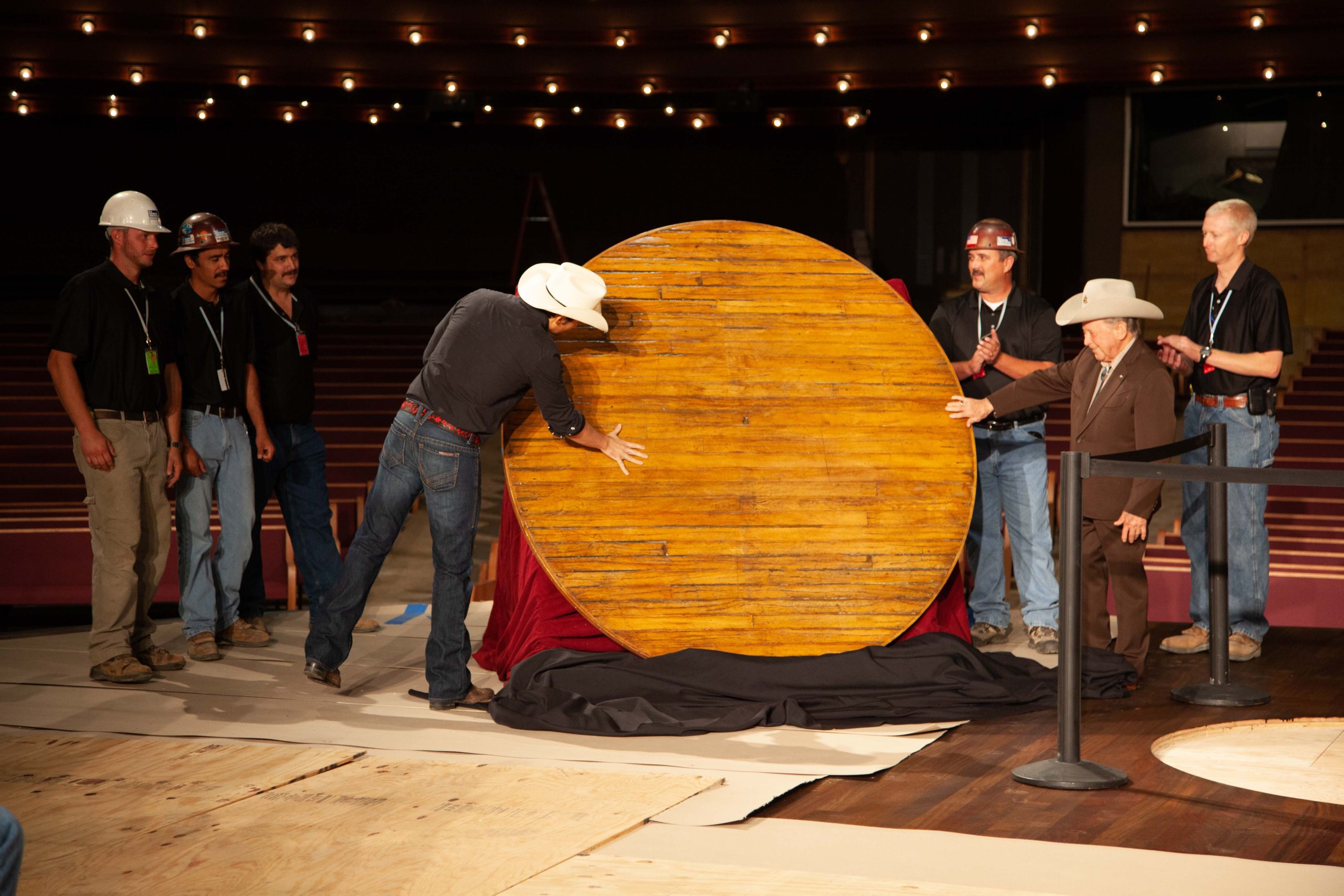
To honor its longtime home, the Opry crew cut a circle out of the Ryman stage and inset it in the new Opry House stage. The circle symbolizes the Opry’s continuity, respect for the past, and optimism for the future.

Mattea experienced that sense of a completed circle on the day she became an Opry member.

“Suzy [Bogguss] was there. We’ve toured together and sung on each other’s records. She’s my closest artist friend, and she was the only one at the ceremony who was not a member. And I thought how generous it was of her to be there.

“So, while I was overflowing with celebration, to get to invite my friend to the party publicly in the name of the Opry was the sweetest gift. It was a moment I’ll never forget, and I’m going to be there for her induction, too.” Bogguss will officially be inducted as an Opry member in early 2026.

Braid Paisley and Little Jimmy Dickens return the Circle to the Opry stage after the 2010 flood. Photo courtesy of Ryman Hospitality Properties.

Join The Celebration

There’s nothing low-key about the Grand Ole Opry – so in the classic Opry spirit, fans have had plenty of opportunity to celebrate the centennial all year long.

Earlier this year, NBC broadcast a three-hour anniversary special, with dozens of stars ranging from Reba McEntire to Jelly Roll to The War and Treaty. The Opry also took the show to London’s Royal Albert Hall for the very first time. You can stream clips of these and other Opry events on YouTube and social media.

With the Virgin Music Group, the Opry has produced the album Opry 100, Country’s Greatest Songs (released November 7). Among the unforgettable recordings are Vince Gill singing his heart-rending “Go Rest High on That Mountain,” Dolly Parton singing “I Will Always Love You,” and Ashley McBryde covering the classic “Your Cheatin’ Heart.” You can order the album from the Opry site.

Craig Shelburne, Brenda Colladay, and Opry members and employees collaborated on 100 Years of the Grand Ole Opry, a book filled with anecdotes and photos that vividly illustrate the Opry’s remarkable history. And to teach your children well, there’s also a new childrens’ picture book written by Emily Frans and illustrated by Susanna Chapman. Find them in your local bookstore.

And, on November 28, 2025, the official 100th anniversary of the Grand Ole Opry we all hold dear, the Opry is celebrating with two huge birthday party shows featuring country stars and Opry members like Vince Gill, Ricky Skaggs, Trace Adkins, Dailey & Vincent, Bill Anderson, Jamey Johnson, Marty Stuart, and many, many more. Tickets are available here.

Of course, the celebrations will continue in 2026.

“The Opry is the core and soul of country music,” Bentley said. “It’s a place where the past, present and future of our genre all come together. There isn’t anywhere else like it.”


Continue exploring our Artist of the Month coverage of Opry 100 here.

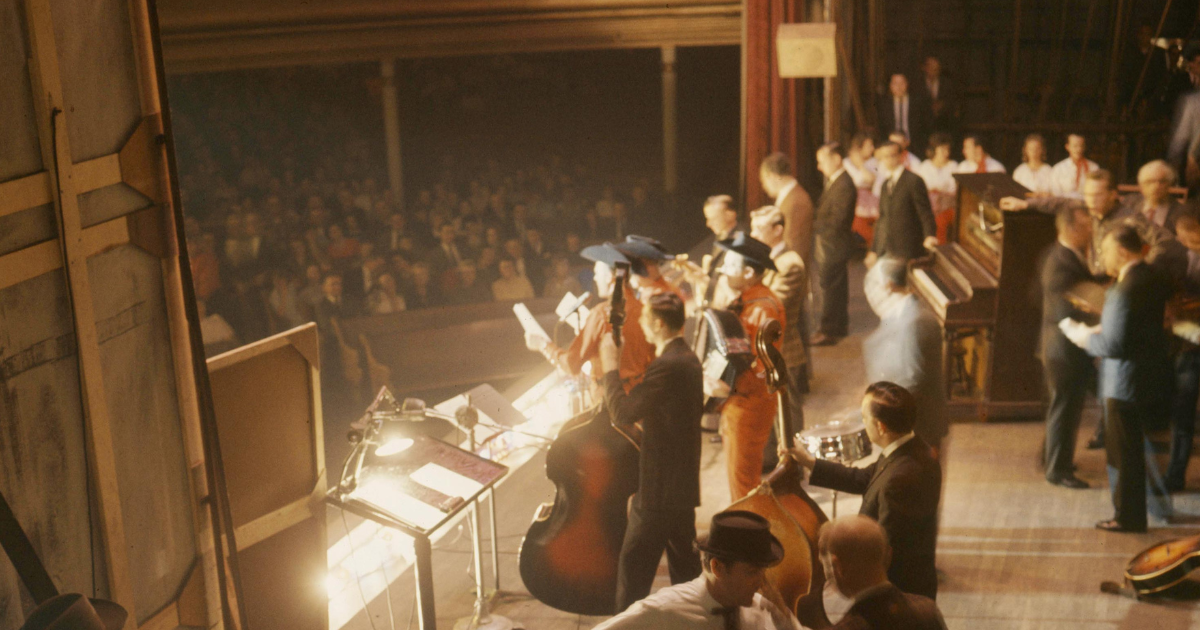
All photos courtesy of Ryman Hospitality Properties, credits and attributions as marked. Lead image: Bill Monroe & the Blue Grass Boys and the Opry Square Dancers take the Opry stage at the Ryman Auditorium in the 1960s.

Artist of the Month: Opry 100

This month, BGS is celebrating 100 years of the Grand Ole Opry! It would be hard to overstate the influence of the Opry on American roots music – hell, on music in general – over the past century.

From Earl Scruggs joining Bill Monroe to create the sound of bluegrass; to DeFord Bailey becoming the first Black Opry star and the first Black musician to break into the commercial music scene in Nashville; to the legendary meeting of Johnny Cash and June Carter; the Opry has been a catalyst for so many iconic moments. Below, we kick off our “Artist of the Month” celebration with our Opry 100 Essentials Playlist, which includes some of our favorite live recordings from the Opry, songs famously debuted on that legendary stage, and some of our favorite roots songs written about the Opry and its lore, too.

Did you know that Dolly Parton made her first Grand Ole Opry appearance in 1959 at the age of 13 and received three encores? To get a sense of how young Dolly might have sounded on that stage, we’ve included one of her very first singles, “Girl Left Alone,” (the B-side of the now well-known “Puppy Love”), recorded when she was just 11 years old and released the same year as her Opry debut.

Elvis famously made his Opry debut in 1954 at the age of 19, singing “Blue Moon of Kentucky” in a style that was so poorly received a manager told him to “go back to driving a truck,” or something of that nature. You can hear his rockabilly version on our playlist.

In 1969, Linda Martell was the first solo Black woman to perform on the Opry, singing “Color Him Father” for her debut. Although she faced rampant racism throughout her career, her first performance on the Opry was met with two standing ovations and she went on to perform there 12 times over the years.

The Opry has also been fodder for songwriting, inspiring many tracks over the years. Early Opry star David “Stringbean” Akeman met Bill Monroe while playing semi-professional baseball and went on to play clawhammer-style banjo in his band from 1943 to 1945. After parting ways with Monroe’s band, Stringbean became an Opry star in his own right and penned the song “Opry Time in Tennessee.”

Stringbean and his wife were tragically murdered in 1973 by thieves who had heard of him storing cash in his home. In 2009, Sam Bush released his song, “The Ballad of Stringbean and Estelle,” co-written with Guy Clark and Verlon Thompson. “The thieves laid in wait for hours/ But things didn’t go their way/ But he wouldn’t let go of his Opry pay,” sings Bush on his album, Circles Around Me.


@cmt #SabrinaCarpenter makes her #grandoleopry debut 💋✨🎙️ #opry100 #slimpickins #mansbesfriend ♬ original sound – CMT

Shortly before the Opry was moved from downtown Nashville’s Ryman Auditorium to the newly built Opry House in 1974, John Hartford released “Tear Down the Grand Ole Opry,” a scathing commentary on the commercialization of country music. “Right across from the wax museum/ They used to line up around the block/ From east Tennessee and back down home again … Broad Street will never be the same,” Hartford sings nostalgically on his legendary Aereo-Plain album.

While the Opry is known as a country music gold standard, over its 100 years as a live-broadcast radio show it has held clout across the genres and in popular culture – not just in country. This year, as part of the celebration of its 100th anniversary, the Opry has been featuring 100 Opry debuts and first-time performances. These special appearances have showcased the broad impact of the Opry, hosting the likes of pop star Sabrina Carpenter who said, “My mom raised me on the artists who have stood up here.”

Whether in country, bluegrass, Americana, or beyond, the Grand Ole Opry continues to be a musical powerhouse, 100 years after its barn dance birth. While we look ahead to the next century of Opry magic, we’re beyond excited to join the Grand Ole Opry family in celebrating Opry 100 for the entire month of November. Enjoy our Opry 100 Essentials Playlist below and relive the Opry 100: A Live Celebration television special on NBC from earlier this year here, too. You can read our primary feature on Opry 100 right here. Plus, stay tuned all month as we have brand new and archive articles, interviews, and features we’ll be sharing here and on socials all spotlighting the incredibly legacy and community of our beloved Grand Ole Opry as we countdown to November 28, 2025 – the Opry’s official 100th birthday!


Lead Image: Opening of the Grand Ole Opry House in 1974, courtesy of Ryman Hospitality Properties.

25 Years of Greensky Bluegrass Connecting the Dots

On a recent afternoon, Paul Hoffman is standing in a parking lot in Harrisburg, Pennsylvania. Lead singer/mandolinist for Greensky Bluegrass, Hoffman is pacing around the backstage lot before the gig at XL Live that evening deep in reflection about questions posed over the phone – the core of which focus on the upcoming 25th anniversary of the groundbreaking jamgrass outfit. A while back, in the depths of rural New Hampshire, I interviewed Hoffman for another project and I asked him just what the original intent was behind Greensky Bluegrass.

“To play heavy metal music on acoustic instruments,” he replied, a sly grin emerging across his face.

Now, 25 years since its inception, Greensky Bluegrass has adhered directly to Hoffman’s sentiments. These days, the group has become a marquee live act, one which uses its string instruments to transcend all genres of music, whether bluegrass or blues, rock or country, funk or soul – or even heavy metal.

Case-in-point, the ensemble’s latest album, XXV, is not only an ode to a quarter-century of passion, purpose, and performance, but also a mile marker by which Greensky Bluegrass can measure their own road to the “here and now” – this realm where the passage of time doesn’t necessarily matter, only fleeting moments onstage with the ones you love do.

XXV brings together many of those dear friends and collaborators of Greensky – Sam Bush, Billy Strings, Lindsay Lou, Nathaniel Rateliff, Aoife O’Donovan, Holly Bowling, Ivan Neville, Natalie Cressman, and Jennifer Hartswick. Each of these special guests represent chapters of the band’s continued journey to something – somewhere, anywhere – that kind and curious folks congregate in the name of fellowship, compassion, and sonic joy.

With the starting line of Greensky Bluegrass being an impromptu Halloween gig in 2000 in Kalamazoo, Michigan, other pivotal dots pop up quickly along the way. Like the inevitable camaraderie between the group and other Michigan artists like Strings and Lou, who came up in the same scene and have supported each other ever since. Or, like Sam Bush himself – Bluegrass Hall of Famer and the symbolic face of the Telluride Bluegrass Festival – being featured on the project, reminding how the Telluride stage brought Greensky Bluegrass into the national spotlight when they won its famed band contest in 2006.

For Greensky, the friendships made along the way brought endless opportunities to play alongside one another at a show, a festival, or late-night jam. Opportunities that would always be too good to pass up – don’t forget, fun is the original point, and should remain so.

XXV is also a fresh snapshot of Greensky Bluegrass. The songs are pulled from across the entire timeline of the outfit, from their early days in Kalamazoo to the mountains of Colorado. From the bright lights of Nashville to the backroads of Southern Appalachia. From the blue skies of Anytown, U.S.A., to the sandy beaches of some international destination.

After 25 years, what remains is a band of genuine souls where gratitude is only matched by hunger and curiosity for what resides just around the next corner. Greensky Bluegrass, decades later, remain ready to surprise the listener and to carry on the pure intent that emerged those many years ago.

Now that this album’s coming out, whether consciously or subconsciously, the celebration of 25 years is currently underway. What’s been kind of rolling through your mind?

Hoffman: Primarily gratitude. I’d be remiss to not be grateful that we’ve been able to [do this for 25 years]. It’s a celebration, truly. It feels so cool. We’re doing [the anniversary shows] in our hometown and playing the [Wings Event Center in Kalamazoo] for the first time, which we’ve talked about since we were a very young band. And, you know, something interesting I’ve learned is how excited people are about this retrospective project. In true Greensky fashion, it’s this unique, hybrid idea. Like, “What if we did this? What if it took this turn? What if we recorded this and revamped this?”

We didn’t just make a new record, we stopped to reflect and commemorate in a way that was meaningful to us. And it seems like it’s translating. It’s not even out yet. It’s a unique perspective on gratitude that maybe I didn’t expect. [For XXV], I don’t want to say that it was easy or something. Because we did it pretty quickly and we didn’t have to write any material and we didn’t have to make huge choices about how to present it, because there already is an arrangement and an idea. But, in some cases, we did things differently because we could and we were not beholden to some authority on how it needs to go.

[The recording process] was so casual and creative in this really innocent way – “Let’s just record this and see what happens.” And we just kept recording stuff. We didn’t even know what we were going to do next. Every moment is monumental in some way or another, but 25 years is nothing to scoff at. And this all was birthed from, “What could we do?” With making new music and new albums, there’s a pressure to create something better than we’ve ever done. Or genuine to the brand we’ve created and to ourselves, but also exploratory enough [and] a departure from the norm enough that it’s new and exciting. It feels like such a relief to do [XXV], to approach creating new material from a different perspective.

How did you decide on the guests?

I wanted to find guests that celebrate our story, that are close to us and collaborators and such, but also elevated the material in some meaningful way. And there were real pleasant surprises along the way there.

What did it mean to have Billy and Lindsay on the record, seeing as all of you emerged from the same scene in Kalamazoo and have always supported each other?

I mean, to say that it was sort of obvious and natural is probably an understatement. We joked about why we chose “Reverend,” because Billy plays it [live]. But, I also feel it’s an important song. And for me as a writer, it’s kind of a landmark in my journey as a creative. But again, even though I knew [Billy] would crush it on the guitar solo, some of the phrasing choices he makes are subtly different than mine – I love it. And, man, I can’t stress enough, what a gift [“Reverend” is]. I wrote that song almost 20 years ago. It means something different to me now, and it has throughout my life singing that song.

You’ve always been a very sonically elusive band. Was that by design or just how things evolved?

I think that we just have a spirit to not be limited. So, if we want to emulate all the things we love – and we’d love a diverse amount of things, musical things – we honor the acoustic nature of our heritage as a band, but we want so much more. We want [things] to keep us interested and engaged. We’ve allowed ourselves that creative freedom to try anything. And we think we’ve jumped the shark many times. [Laughs]

With getting older, you also start having different perspectives on what you were creating and how you want to present it.

Yeah. You know, art is timeless in some ways, because you can change your opinion about it or the way you relate to it as you mature.

When you had mentioned that you guys “jumped the shark many times,” I think that’s one of the things I appreciate about Greensky – you’re not afraid to just take a leap.

It’s one of my favorite things about musicians I admire, too, are the ones that I watch struggle to either challenge themselves, push themselves, push their boundaries, or convey a message with emotion that’s challenging, you know? If you’re willing to make a mistake, if you’re willing to truly find the line of your capacity, you have to be willing to cross it to know where it is. I’ve always said – in my later maturity – that I wonder if I’ve crossed it too many times, and in sort of a noble quest with noble intentions. [Laughs]

That’s something I love about Billy’s playing a lot. Despite being one of the greatest guitar players I’ve ever seen, I’ve watched him up there grasping for things and struggling. Struggle doesn’t always have to have a negative [connotation]. To not struggle would be complicit and boring.

The upcoming Halloween shows in Kalamazoo are the official 25th anniversary of when the stars aligned, when you, Mike [Bont], and Dave [Bruzza] played together as Greensky for the first time.

When you started asking the question, my brain went to right about now, [25 years ago]. We met [a few] weeks before Halloween. I was a college freshman and I went to this bar called the Blue Dolphin, where there was a bluegrass open mic. I saw Dave and Bont play and approached them after the thing and was like, “Hey, I just bought a mandolin,” that I’d gotten in late August before moving to college. So, I’d only had it for four or five weeks.

I didn’t know what the hell I was doing at all or what bluegrass even was. I bought the mandolin because of David Grisman, who’s so bluegrass-adjacent that I didn’t know who Bill Monroe was. I knew “Shady Grove.” [All of] which is still just a remarkable thing for me to think about. Like, what hell would my life have been had I not made that choice [to play mandolin]? What a bizarre twist of fate and then here we are 25 years later.

So, you guys met and you said, “Let’s jam”?

Yeah. A couple days later, I showed up at Bont’s house for a rehearsal. Him and Dave would just get together and pick. They were both learning bluegrass. Everything was so casual and just for fun. They would have band practices where we would get together and learn songs and stuff. And I just showed up for the next one and then didn’t go away.

What was the name of that [open mic] band?

Greensky Bluegrass. They were already playing as Greensky Bluegrass, which was named by a friend of Dave’s that played mandolin with him a little bit for fun. It was a joke in jest, “Wouldn’t it be funny to have a bluegrass band named Greensky Bluegrass?”

I don’t think I ever knew that you guys were called Greensky before the official [2000] Halloween show.

Well, I mean, what is “official” is interesting to think about. They were already [Greensky]. It wasn’t their first open mic, either. So, the first time the three of us [“officially”] played was the Halloween show. But, I think I joined them at open mics for a week or two or something [before Halloween]. And Halloween was a party. There was a poster made for fun or something. We were on the bill. Dave was in another band called Seeds & Stems. It was a house party in a house that Dave lived in. [Laughs] A pretty wild party, if I may say so.

So, it was billed as Greensky Bluegrass?

“Billed” is still kind of generous. But, yeah, we played a set in the basement and in the living room. I think the living room upstairs was just acoustic and then the jam band played downstairs in the basement, like colleges do, you know? A couple days later, we played a show at a venue in town, Club Soda in Kalamazoo, that was kind of a legendary rock club through the ‘90s and stuff. It was small, but we played there on a triple bill November 5 or something, [just] days later. And that one, I [still] have the poster. I think that was our first paid show.

Were you doing covers or did [Dave and Mike] have originals, too?

They were playing just bluegrass standards for the most part. It’s funny, that [first] night [I met] Dave, he gave me CDs – Seldom Scene, Live at The Cellar Door, a Rounder Records bluegrass compilation, and a Bill Monroe live show. And [he] was like, “Listen to these. See you on Tuesday at Bont’s house.”

In hindsight, man, to be 18 and have that kind of freedom, you know what I mean? I’ve been recently jamming on electric guitar at my house by myself for fun. And I’ve been thinking, “I wonder if I could find some dads around to start a band with for just fun.” And that experience is so foreign to me now, because I’m so immersed in this thing that’s become my life.

Looking back on it, you kind of jumped into the deep end pretty quickly.

I didn’t take a mandolin lesson until COVID. [Laughs] I was self-taught, because I already knew how to play the guitar – “knew how to,” I use that a little loosely, too. Took some [music theory] classes in high school and college and I’m sort of classically trained. But, I was able to teach myself my own instrument for a really long time. I should have sooner harnessed the strength of learning from another, because when I took a lesson during COVID from a friend, I was like, “I should’ve done this a lot sooner.” [Laughs]

You know, so much of what I was learning in those early days was how to express myself as a writer and find my voice. That stuff always superseded my need for technical prowess. I think we all kind of share that sentiment, all five of us – how to present this passion piece is more important than how to do it. We took on this every-other-week gig and stuff like that [in Kalamazoo]. And the commitment to go play shows for the same crowd every other week inspired us to grow, because we needed to. We had that jam band sensibility of satiating the fans. What can we do next week that’ll keep people excited? What can we do that’s new? How can we make this better?

When you look back, you can see where the dots connect. But, when it’s happening in real time, you don’t realize what the domino effect is, where all of a sudden you’ve found yourself in this band that you’re still in 25 years later.

Yeah. I was 18 [when we started the band]. I’ve lived with Dave and Bont for 25 years of my life. I didn’t even live with my parents that long. [Laughs] I’ve spent 200+ days of [every] year of my life with those two guys for 25 years, and the other ones for many years, as well. It’s kind of wild. It’s so cool that we created this project, [which has become] just a celebration of our relationship and that’s so much more important than what it has become. We care about each other and we genuinely have a lot of aligned goals, artistically and personally. We’re still grinding for it, and I’m grateful for what we have.

I think we’ve been very successful. I feel less “grinding” now and more, “Let’s just go and have some fun and play some shows.” Play where people want us to play and not measure our success by how many tickets we sell. And I’m starting to learn that more now. It took 25 years for me to figure out that what we have is great. We’ve got something cool, let’s just keep doing it.

And that’s got to be a nice place to get to, because you don’t get to 25 years by accident. The fact the original three members are still there is amazing, because that story is not that common in the grand scheme of things in this industry.

Even in our culture. It’s not even [common] in business partnerships, families, friendships. And the reality of that – that I’m learning with age – is that relationships change and everything shouldn’t be measured by the testament of time. I want to find value in a moment that is for the sake of “now” and not some transactional [thing]. Like, if I’m nice to you “now,” then we’ll have this friendship that serves us both and we’ll be there for each other. All that kind of stuff is great, but I want to live in the moment.

I think what’s remarkable is that we’ve stayed together, because we’ve all grown and changed in similar ways and our journeys have aligned the whole time, or for the most of the time. We’ve veered away from each other and back to each other many times. But, when one of us has wanted something different, we’ve all kind of shared that desire. In a way, we’ve been able to all be very sincere to ourselves and grow and change together.

I don’t mean to speculate what other bands are like or anything like that, but I don’t have a lot of relationships in my life that have lasted this long. And not just people, but to things like food or activities I enjoy. The only thing maybe is the way I’ve worn my hair for 30 years. [Laughs] When we grow, our tastes change for all things. But, my [creative, intrinsic] tastes for these four other men have not changed.


Continue to explore our Artist of the Month content on Greensky Bluegrass here.

Photo Credit: Dylan Langille

Artist of the Month:
Greensky Bluegrass

Michigan music isn’t just Motown or the MC5, Bob Seger or (ugh) Kid Rock. While it’s seldom mentioned as a modern bluegrass hotbed, the Wolverine State has become an unlikely 21st century hub of the latter-day bluegrass offshoot jamgrass. And at the center of this upland strain of music is where you’ll find Greensky Bluegrass, a quintet that is our Artist of the Month for October.

The roots of jamgrass go back to the 1970s, when New Grass Revival took inspiration from the bluegrass adjacency of the Grateful Dead and other proto-Americana rock acts, injecting rock and roll overtones into their music. It was also during this period that Dead guitarist Jerry Garcia went back to his original folkie roots with 1975’s Old & In the Way, a super-session album that would stand as the top-selling bluegrass LP of all time until O Brother, Where Art Thou? a quarter-century later.

Fast-forward to the 1980s, when New Grass Revival banjo maestro Béla Fleck went in some truly idiosyncratic and worldly directions with his new group The Flecktones. Then came the 1990s-vintage H.O.R.D.E. Festival and a generation of bands like String Cheese Incident, Leftover Salmon, and Phish that further obliterated whatever boundary remained between bluegrass and rock.

That set the stage for Greensky Bluegrass, whose emergence in 2000 cued up another chapter of combining traditional bluegrass with rock-band theatrics (to the point of even including a bitchin’ onstage light show). Greensky originally formed as a trio of mandolinist/frontman Paul Hoffman, guitarist Dave Bruzza and banjo player Michael Arlen Bont, convening in the fall of 2000 after meeting at an open-mic show in Kalamazoo, Michigan.

Greensky had plenty of traditionalist bona fides, covering classic bluegrass pantheon cuts by the likes of Stanley Brothers, Charlie Poole, and Bill Monroe. But they’d cover the likes of Pink Floyd, Bruce Springsteen, Prince, Talking Heads, and (yes) the Grateful Dead, too. That has continued over the years as their lineup expanded to a quintet with the addition of resonator guitarist Anders Beck and bassist Michael Devol. As an indicator of their eclectic tendencies, one of the studio producers Greensky has worked with is Steve Berlin (who handled 2016’s Shouted, Written Down & Quoted), best-known as saxophonist of the acclaimed Latino rock band Los Lobos.

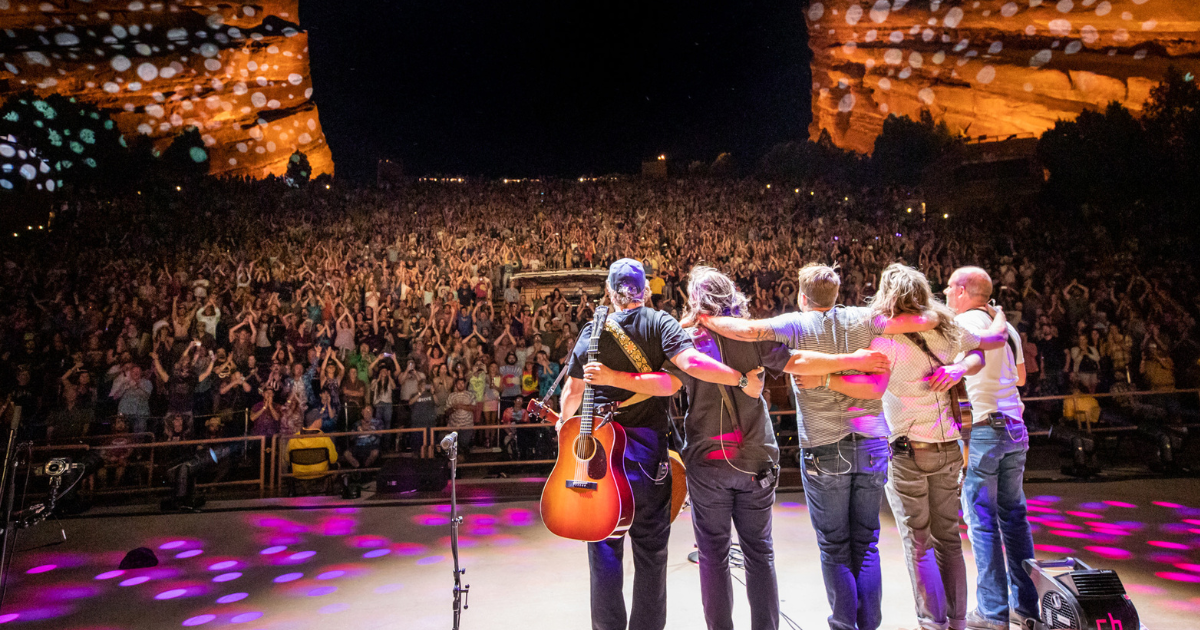
One big milestone of Greensky’s first decade came at Telluride, the storied annual bluegrass festival in Colorado, where they won the band contest in 2006. They’ve steadily built themselves up as a live draw playing bigger venues, becoming a major presence at Red Rocks, the Colorado amphitheater that is the high church of jamgrass. This September, Greensky played the 20th headlining show of their career at Red Rocks.

As they progressed, Greensky provided an inspirational example for younger acts following in their wake, most notably a young guitarist from their home state of Michigan. Born William Apostol in 1992 in the college town of Lansing, he adopted the stage name Billy Strings as a teenager. Greensky was well-established by then and served as Strings’ mentors, collaborating frequently and giving him a choice opening-act slot on a 2018 tour. Strings has gone on to become a worldwide arena-level star, something like the jamgrass genre’s Nirvana equivalent to Greensky’s Sonic Youth.

Fittingly, Strings is one of the cameo guests appearing on the new Greensky album, XXV, which marks the group’s 25-year anniversary with all kinds of star power. Nine of the album’s 13 tracks feature guest appearances from some of the top names in the field.

Sam Bush, a co-founder of the previously mentioned jamgrass pioneers New Grass Revival, opens the first track “Can’t Stop Now” with one of his trademark lightning-speed mandolin runs. Americana stars Nathaniel Rateliff and Aoife O’Donovan turn up to provide lead vocals on a couple of songs. Other tracks feature String Cheese Incident drummer Jason Hann, New Orleans scion Ivan Neville and, from Trey Anastasio Band’s horn section, trumpeter Jennifer Hartswick and trombonist Natalie Cressman. Among the guests with Michigan ties are Phil Lesh & Friends pianist Holly Bowling and, from the Great Lakes State supergroup Sweet Water Warblers, vocalist Lindsay Lou.

Greensky has always been more than willing to expand tunes out to epic, near-galactic dimensions, and XXV has more than enough sprawling solos to satisfy the pickiest of jamgrass fans. Most notable is the 14-plus minutes of “Last Winter in the Copper Country,” on which Bowling’s rippling piano takes center-stage. Bowling also stars on “Windshield,” a longtime Greensky favorite that appeared on the band’s 2014 album If Sorrows Swim in an arrangement of just her piano and Hoffman’s powerful bellow – the closest thing to operatic bluegrass this side of The Hillbenders’ bluegrass take on The Who’s Tommy. That’s only one of the songs from throughout the Greensky discography that they reprise in (sometimes drastically) rearranged form for XXV.

In anticipation of the new album’s release date, which is set for Halloween, check out our Essential Greensky Bluegrass playlist below. Plenty of further Greensky content is also on the way, including a feature interview with the group and plenty of excellent picks from the archives, as well. Follow along all month here on BGS and on our social media pages as we celebrate Greensky Bluegrass as our Artist of the Month.


Photo Credit: Dylan Langille

Your Favorite Artists and Songwriters Love Caroline Spence

Caroline Spence knows better than anyone the importance of community in the roots music scene. Since her 2015 debut album, Somehow, the singer-songwriter has risen through the ranks with four additional solo albums including her latest, Heart Go Wild. Stylistically, Spence fits within the realm of Natalie Hemby, Aoife O’Donovan, Lori McKenna, and Mary Bragg, with a smattering of Mary Chapin Carpenter sensibility. She has garnered praise from both direct peers and industry giants alike. From signal-boosting her work online to recording her songs, many musicians and artists have used their platforms to give Spence a well-deserved spotlight.

Throughout the past decade, Spence has used these moments to nurture friendships within a thankless industry. “The acknowledgement and validation from artists that I respect have been vital in keeping the fire burning under me when parts of the industry have threatened to put it out,” Spence tells BGS.

“No ‘suit’ can convince me I’m not good enough when I have worked with my heroes and have the respect of artists I admire.”

Lori McKenna and Caroline Spence after recording “The Next Good Time” together. Photo by Jordan Lehning.

Reciprocated applause and mutual admiration prove essential to building relationships, in addition to contextualizing an artist’s music within the scene for those fans who may not be familiar. For example, Miranda Lambert has enlisted countless lesser-known artists for her tours, including Gwen Sebastian, Ashley Monroe, and Angaleena Presley. These placements introduce her loyal audience to talent they might not have discovered elsewhere, thus giving those artists more name recognition.

Even more importantly, Spence finds these shout-outs and promotional spots to be her “life force” in keeping her inspired to push through trying times. “My primary goal has always been to be good at my craft and to get better at it,” she says. “To me, the most important judges of that are those who are masters of theirs, and it’s been deeply meaningful every time someone I admire has paid attention to, let alone praised, what it is that I do.”

In her career, Spence has tumbled into the orbits of countless artists who have shown unwavering support for her work. A big Hayes Carll fan, she covered his song “It’s a Shame,” from his 2002 album, Flowers & Liquor, early in her career and later toured with him in 2021 – a moment Spence describes as coming “full circle.” She’s also toured with John Moreland and Madi Diaz. In addition, she wrote “Heavy” with Carl Anderson for Andrew Combs’ album Worried Man and another song she wrote, “We Don’t Know We’re Living,” was recorded by Lucie Silvas, Brandi Carlile, and Joy Oladokun. “[Brandi] called it ‘a once in a century song,’” notes Spence.

Madi Diaz performs with Spence as special guest and opener on tour in 2022.

Despite not having a “game-changing platform,” as she puts it, she pays it forward by sharing “the work of my peers and what I am loving listening to. I think word-of-mouth from trusted personal sources is still the best way to get someone to pay attention to music.”

She takes a moment to shout out others, beginning with Ken Yates & Brian Dunne before mentioning several other artists she’s been listening to, including Angela Autumn (“Her song ‘Electric Lizard’ is intoxicating and reminds me of some of the tracks that made me fall in love with music in high school,” she says), Brennan Wedl & Mariel Buckley, and Danny Malone, “an incredible songwriter out of Austin that I recently saw at a house show in Nashville and was absolutely floored by.”

In our conversation, Spence names an additional six artists, from Miranda Lambert to Tyler Childers, who have uplifted her music over the years.

The National

 
“The fact that I have a duet with Matt Berninger is still completely insane to me. When I was in college in Ohio, falling in love with The National, I could have never even dreamed that I would cross paths with Matt, let alone have him sing words I wrote. I love that band, and his voice is legendary. It still feels unreal.”

Miranda Lambert

 
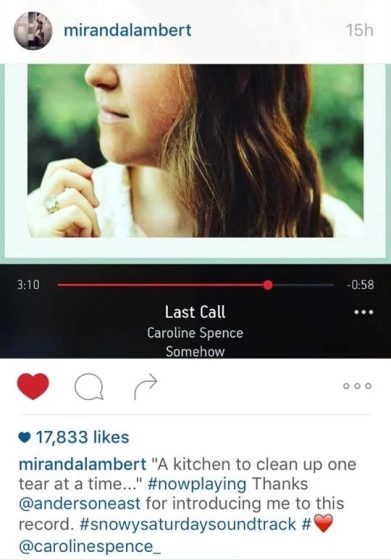
“[She] posted about my first record back in 2016, and that totally blew my mind. I had just been in the studio making my second record [Spades and Roses] and was questioning a lot, and that really felt like a sign to keep doing what I was doing. Part of my dream when I moved to Nashville was to write songs for her, so that was an incredibly validating moment.”

Miranda Lambert shared a Spence original, “Last Call” on her Instagram in 2016.

Lori McKenna

 
“Lori added my music to her monthly favorites playlists that she makes. She featured on a song we wrote together called ‘The Next Good Time.’ One of my biggest heroes and one of the people who inspired me to start pursuing this work.”

For our Artist of the Month feature, Spence joined McKenna for an intimate and engaging conversation. Read here.

Clare Bowen

 
“Clare recorded my song ‘All The Beds I’ve Made’ on her self-titled album.”

Tyler Childers

 
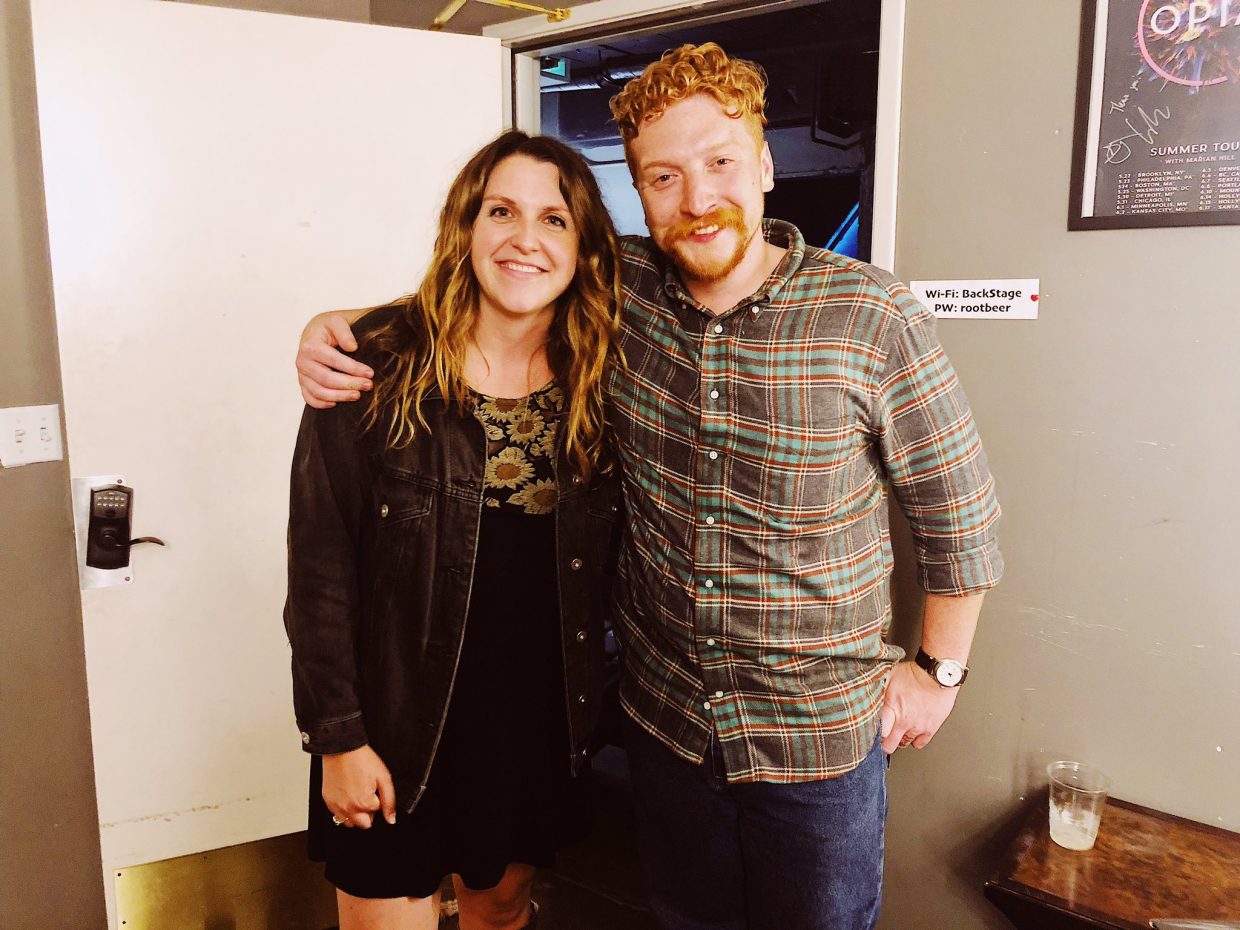
“I’ve known him since 2014 and he opened for me in early 2016 – a month after Miranda posted about my record, and she actually came to the show. I toured opening for him in 2017 and 2019. At some point, he posted about my album on his IG.”

Spence and Tyler Childers backstage together on tour in 2019. Photo by Jace Kartye.

Mary Chapin Carpenter

 
“We connected on social media and she eventually invited me to open some shows for her. A treasured memory was performing in the round with her at the Edmonton Folk Festival and her asking me to play ‘I Know You Know Me’ and her singing it with me.”


Continue exploring our Artist of the Month coverage of Caroline Spence here.

Photo Credit: Caroline Walker Evans
Inset images and screenshot courtesy of Caroline Spence. 

Caroline Spence in Conversation With Lori McKenna

Caroline Spence and Lori McKenna are both lauded for writing songs that cut straight to the heart. In conversation, it’s clear they also share admiration and a generosity of spirit, offering insight into how a life built around family can both coexist with and deepen a life in music. The two met with BGS via Zoom to discuss Spence’s new record, Heart Go Wild, produced by Peter Groenwald, Mark Campbell, and Spence herself.

As Spence charts her first year of motherhood, McKenna reflects on building a catalog of piercingly honest songs while raising five children of her own. Together, they explore the mysteries of publishing, the influence of mentors like Mary Gauthier, and the butterfly effect of one songwriter’s choices on another’s path.

Their exchange drifts from songwriting craft to the role of co-writers in self-discovery into the bigger questions of life: how family and creativity intertwine, how community ripples outward, and how songs become offerings that carry meaning long after they leave the writer’s hands.

What emerges is a portrait of two artists at different points along similar paths, each proving that family life and creative life are not competing forces, but intertwined sources of inspiration and strength.

I know you two have a lot to talk about, but I’d love to start, if we can, with how you know each other? Did you know of each other musically first, and then how did you come to know each other personally?

Lori McKenna: I think the first time we met might have been at breakfast that time?

Caroline Spence: Right. I think that was another Bluegrass Situation connection. I think that was the first time I met you.

I had a good friend from summer camp and we would often trade mixes. She put one of your songs on a CD for me. I had already found Patty Griffin and was having my singer-songwriter love affair. That led me to The Kitchen Tapes, which led me to everything else. And I distinctly remember when Faith Hill cut “Stealing Kisses” and I thought, “Wait, that’s how that works?” I didn’t know what publishing was. I didn’t know how music worked in that way and that became a new little baby dream of mine that I carried with me: to write a song that was good enough that maybe somebody else would want to sing it. I feel like I would not be aware of the job that I have had I not found you, Lori.

LM: That is really cool. I remember not knowing anything about publishing, how it works and all that stuff, too. And I still feel like I know just a tiny bit more.

CS: I know, totally. It’s still a mystery.

LM: We were at a wedding over the weekend and my son Chris, who’s a writer in town, has his first single that he co-wrote that’s going to radio. So we were singing songs and at the end of the night, my brother was like, “Chris sold the song!” I’m like, “It’s not called selling the song.” He’s like, “Well, how does it work?” Nobody knows.

CS: Yeah, nobody knows. They just stream it now into the abyss.

LM: The only reason I knew anything was because of Mary Gauthier. I did know people who had moved to Nashville before Mary, but because I’m in the Boston area, they came back saying, “Yep, it’s very different.” It is very different in Nashville. I didn’t know anyone who had stayed before Mary, you know? I love being inspired by other people. I love it that that’s how life works, that you see someone else do something, and you’re like, “Wait! I can do that! At least I can try!”

CS: I’ve been thinking about that a lot lately, the butterfly effect, and how that happens within our community. Like, if Mary hadn’t done this, then this wouldn’t have happened for you, and if you hadn’t done that, then I wouldn’t have known about this, and I’ve been thinking about that as I’ve been in this creative community for a decade now. There’s so much stuff that you never know your little ripple is doing.

LM: The ripple is such a good word. It’s such a ripple, isn’t it? It’s crazy. We’re really lucky. I know you just had a baby, but the number of people that come up to me and ask, “How did you do this with kids?” Nobody told me that I couldn’t. I know stories of other artists that someone’s told, “You can’t do this and have a family at the same time.” I’ve heard those stories, but nobody ever told me that.

It didn’t seem impossible at the time. But now my son Chris has a baby. I look at them and I’m like, “Wait, how does anybody do that ever? How does anybody have a baby?”

CS: Man, some days it really feels that way. Most days it feels that way. No one ever said that to me either, but those are absolutely the cultural messages you absorb. There are certain gigs I might not get because of my familial obligations, but you just make your choices. And I’m not building my life around what I “might get.” I want to build my life around what I know I want to have. I just feel like all of that is gonna feed your person. You can’t starve yourself of these big, beautiful growth opportunities for some sort of potential. My life is bigger than my career, and I would like it to be as big as possible.

LM: And it’s crazy, right?

CS: Yeah, it’s nuts. Absolutely nuts. The fact that I got a shower this morning is a big win.

LM: Well, that and the fact you’re putting a record out!

CS: Yeah, yeah, and the record!

LM: You did good.

CS: It’s a little bit cuckoo, but it’s been done for a while. A lot of the heavy lifting was done even before I was pregnant, so that was an accidentally smart idea and we’ve just had to be strategic about everything else. I feel like there’ll be a lot of people who assume this is a record about marriage and family, which it’s not. I’m sure I will have that, but this feels like a record that’s more about the chaos before I decided I could do all that.

LM: From the minute I knew who you were, I’ve always loved the way that you express your feelings in such a way that makes other people be like, “Oh! I’ve felt like that! This song makes me realize that I’m not alone in feeling that.”

There’s something in the way that you write that is like arms are reaching out, but they’re also like, “I know you feel this way, too and it’s okay that we all feel this way.” I feel like that’s why music exists. For someone pulling over their car and being like, “Oh my god, okay, I’m not gonna die today because I just heard the song!” It is the biggest reason, the service of songwriting, as Mary Gauthier says. You don’t do it consciously, but it just is your way of doing it. It just seems so innate in the way you write.

CS: That’s so kind and means a lot to me, because that’s really how I feel about it. It’s been a progression. I started writing because I needed to get these hard things out when I was a younger person and as I started putting those out there, I would have conversations where someone would say, “I feel that way, too.” That kind of cemented in me to keep writing from that place, because that’s what music did, and still does for me.

What is personal is universal. I feel like someone smart said that before I did, but it’s so true. And Mary’s perspective of songs as a service resonates so deeply with me. There’s a quote I read when I was doing The Artist Way a few years ago that says, “The artist has to be humble, for he is essentially a channel.” To let the divine in, whatever it is, to flow through you, you have to get small and get in your humanity.

And when I’m feeling really in my head and when I don’t want to perform or I’m feeling self-critical, I think about what I’m doing as an offering, and it makes me feel better and more inside what I’m trying to do.

LM: I love the offering.

CS: People want to feel understood. As a listener, you want to find your soundtrack for your hard time or your good time.

LM: Well, congratulations on doing all this, because the record’s beautiful, as usual. You co-produced this whole thing, right? Did you always co-produce? Because this record seems, and I hate to use the word “rockier,” but it feels like it moves a little bit more. Was that intentional?

CS: I think a lot of that might sort of be a songwriting change for me. I feel like I’ve gotten better at translating what I’m hearing into the actual thing, so I think that’s a skill I’ve slowly developed from my slow folk songs for years.

LM: The transition is so beautiful. With the song “Soft Animal,” if I wrote that song, it would be just the slowest. It wouldn’t move the way [it does].

CS: It totally started on the page, too. It was very much like a poem. Sometimes I sit down to a piece of writing, if I’m going through my ideas, and if something’s sort of dead on the page, I’ll just start playing. That one was one where it sort of just came out that way. The clash of “Soft Animal” to something that felt really thrashy, the irony of that felt celebratory to me, and it was fun. That’s one of my favorites production-wise on the record.

LM: Oh, that’s great. When I work with a producer, you can tell. You can listen to the record and know that this is definitely different. But there’s been this really consistent line with you the whole time, which is kind of remarkable when you think about how much you’ve changed in life and as a person over the years. There’s this vibe that really just comes through where you can tell that you are a big piece of the production of everything.

CS: Thank you for saying that. That was actually a dealbreaker thing for me for this record, that I would only work with people who would give me a production credit, because I felt like over the years – and not to discredit the people who are credited as producers on my albums – but because of who they are as producers, it was collaborative, and there were times when I was making sure that my vision got to the finish line in spite of their initial instincts. I didn’t know it mattered to me until maybe I’d read some press that would bring that person’s name into it and it made me feel a certain way.

Producers are important because I think it’s really helpful to get outside of yourself and your own instincts, and to be challenged. But sometimes what’s helpful is to be challenged, and then you know exactly how firmly you feel about something.

For this record, I really wanted to know that it was collaborative from the jump. That felt incredible, and I worked with two people who had the best energy and a healthy sense of ego, and it was just really fun.

LM: That’s awesome. You come through. I’m exactly the opposite, because I can’t stand being in the studio.

CS: I understand that as well.

LM: I don’t know how you do it, because I literally only hear the song and what it sounds like when I sit at my kitchen table and sing it. People kept telling me over the years that I’d start to hear parts. So I am a person who needs producers… I’m just like, “Here are the songs.”

CS: Yeah, I’ve done that so many times, I’ve given a pile of songs and been like, “I don’t know what I made. What’s speaking to you?”

LM: Well, this morning I was listening to the album again, and I thought, “Oh, she’s gonna produce other people’s records someday.”

CS: That’s very kind and, honestly, a thought I hadn’t really had for myself, but I really did enjoy it. I think if I ever do that, it’s gonna be because of the experience I just had with these people that built up my confidence in that space. It was a lot of fun.

LM: You have this beautiful voice. I have an unpretty voice and you have a very pretty voice that you know how to use really well. You can say the hard things with that beautifully well-orchestrated production and then your beautiful voice, and it still makes you feel all the feels, versus I always feel like no matter what I sing, it’s gonna sound sad.

CS: I feel like a lot of the time I try to be like, “I’m not so sweet,” and grit up the production or avoid certain songs. I was self-conscious about it, which I think may be some internalized misogyny, because I have such a high female voice.

Speaking of songs being of service, babies and children come out singing, you know? It’s such a natural thing to do. We’re meant to do it. It’s joyous; it’s a release. And knowing the way it feels in my body to perform or really sing has changed the way I perceive my own voice.

LM: It is the first thing anybody knows how to do.

CS: Your voice has this wisdom to it. It kind of doesn’t matter what you’re singing; it sounds like you believe what you’re saying and you trust what you’re saying. You have this earnestness to your voice. If you were singing “Red Solo Cup” I’d be like, “That song means a lot to me.”

LM: I actually was at a round at the Bluebird [Cafe] with the Warren Brothers a couple of weeks ago, and they sang “Red Solo Cup.” I am so jealous of songs like that, because I could never write them.

In terms of writing for you, how have things changed since the baby?

CS: I haven’t had the same amount of headspace. My publisher held a sync camp and my mom came to town to help. I wrote for days straight and that felt really good to get back at it. As far as writing by myself, that’s just now kind of coming back.

LM: Is your son enjoying you playing the guitar?

CS: It’s a pacifying thing. I could put him in his playpen if I want to and mess around on guitar, and he’s super happy to listen. The other day, I was practicing for this Springsteen cover night that I got asked to do and I just started kind of riffing around. The flow started and that felt really good. I was like, “Oh, okay, it’s still in there.” I just hadn’t had the circumstances to put myself in the position where I’m visited by that energy. Being in creative spaces with others has been really nice right now, too, to slowly rebuild.

LM: When my kids were little, I actually wrote a lot. They all shared a bedroom and, after dinner, my husband would work on the house while I tried to sing them songs – sometimes terrible ones – or make up songs while they fell asleep. That routine gave me more time to write than I expected.

Two of my kids are songwriters now, though at the time they probably went to sleep just to get away from me singing the same line over and over. But honestly, if I hadn’t had that hour and a half every night with them, I don’t think I would have learned how to write. I wasn’t planning to be a musician. My children gave me the time and space to discover that.

By the time I had five kids, I started doing open mics. I never would have had the courage to get up there if I didn’t have my kids. They were my world, so if people didn’t like what I did on stage, I could always just go home and sing in the living room with them. That gave me the confidence to try.

CS: That balance is so important and it’s hard to reverse-engineer for people. If you move somewhere completely career-focused, you can get lost in that and miss the balance of family and partnership. I feel like any sense of longevity in life or career needs that.

For me, I’ve realized that to be a happy, well-rounded person – good partner, good friend – I need a rich family and personal life. Otherwise, my career just eats me alive. I think the reason you’ve been able to sustain your career and create a catalog of songs full of humanity is that you’ve always had that balance.

LM: Exactly. And it’s not just a woman’s thing. I know men who do it, too. But when you put family first, you have to say no to some things. You can’t always do that week-long tour, for example. But the things you say no to fade away; you don’t remember them. You only remember what you did. Instead, you stayed home and sat in the backyard with your kids and that’s the summer you wrote that one song that you’re still singing years later.

Love is supposed to be the thing you surrender to. It just opens up the universe wider. I’ve seen it happen again and again; even songwriters who know exactly what they want in their twenties, after falling in love or having a child, the world opens up in new ways.

CS: That’s making me emotional. That’s exactly where I am right now. I feel like my life is starting in a really good way. My career feels like it is starting over again. It is making me recalibrate how I want to show up in the world. And it’s freeing to have my compass aligned around my family. It feels like a new beginning. It’s really beautiful.

LM: That’s exactly it. Parenthood gives you a stream of love you hadn’t experienced before and it changes everything creatively. For me, it didn’t really happen until my fifth child, but it always happens. The universe shows up when you do something hard, like having a baby. I remember putting out a record in May, right around the birth of my son, David. By Thanksgiving, I had Faith Hill cuts. It’s like the universe says, “We should remind her that she gets to keep doing this.”

CS: That really resonates.

LM: I always listen to the last song on a record first.

CS: I love that because some of my favorite songs on your records are the last songs.

LM: When I heard “Where the Light Gets Through,” that song is such an offering, such a service. I don’t know if you want to talk about where that song came from, but years from now you are still going to have people tapping you on the shoulder saying “thank you” for that song.

CS: We’d made the record basically and we couldn’t figure out the last one. I said to the producers, “What if we write this one together?” Mark and Peter started building the track. I was going through ideas and I’d been writing a lot about my brother-in-law’s passing away. It just so happened that something I’d written fit almost exactly word for word and we shaped it from there. It couldn’t have just been me on that record, because it needed to feel lighter than I wanted it to.

LM: I know exactly what you are talking about. That’s why I love co-writing. You get perspectives that you could never create alone. Sometimes you can’t do it by yourself, and the song only exists because of that.

I’ve had that experience with Liz [Rose] and Hillary [Lindsey]. I had a song I’d been trying to write for a month by myself and I was so mad I couldn’t. I showed it to them and Liz was writing and singing it immediately. Hillary was like, “Do you know this song?”

CS: Do you feel like that is possible because you know each other so well that they can meet you where your brain is?

LM: Absolutely. And that’s another thing I love about co-writing. You fall in love with each other so quickly in the room. And when you trust yourself with someone, you can say the dumbest thing and it might turn into the smartest thing. I rarely sit with someone who doesn’t make me feel like I can speak my mind. With Liz and Hillary, Liz can read my mind and Hillary is like a musical and emotional genius. They both are.

Parenthood also gives you that focus. You don’t have all the time in the world, so you go straight to the point.

CS: I’ve heard many parents say they become more productive because they have to think differently about time and energy. I feel that now, with my baby being a little more self-sufficient.

LM: Exactly. And think of all the things you can do since having a kid! You weren’t opening drawers with your feet before, were you! Well, I love what you do, and I was genuinely happy when I heard you were pregnant. It’s a good thing for artists to step into family life.

CS: There’s a class of women my age choosing to have families now, balancing careers – it feels like a statement in all the best ways.

LM: Parenthood changes your perspective. You look back and wonder how you managed everything, but the flow and the creative life meet you there. You make the things you have to make because that’s what we’re here for.

CS: Man, there’s a lot of stuff I needed to hear today that you just spouted out. Thank you for spending time with this record.

LM: Congratulations. The record is so good. I hope the biggest challenge with it is all the things you have to say no to.

CS: And I won’t remember them, like you said.


Explore more of our Artist of the Month content on Caroline Spence here.

Photo Credit: Caroline Walker Evans

Artist of the Month:
Caroline Spence

Default icon

Author and artist Jenny Odell begins her impeccable book, How to Do Nothing, immediately driving to the heart of the matter:

Nothing is harder to do than nothing. In a world where our value is determined by our productivity, many of us find our every last minute captured, optimized, or appropriated as a financial resource by the technologies we use daily.

The book is a striking, heartfelt argument for a realignment of societal and personal priorities that decenters social media, the “attention economy,” and the ways each of our individual “rat races” have now penetrated every aspect of our own lives and our each and every waking moment. In Chapter 1, “The Case for Nothing,” Odell continues,

Currently, I see a similar battle playing out for our time, a colonization of the self by capitalist ideas of productivity and efficiency. … The removal of economic security for working people dissolves those boundaries – eight hours for work, eight hours for rest, eight hours for what we will – so that we are left with twenty-four potentially monetizable hours that are sometimes not even restricted to time zones or our sleep cycles.

These paradigms of and assumptions about “productivity” immediately jumped into my mind when I first heard singer-songwriter Caroline Spence’s lovely new album, Heart Go Wild. Released August 29, it marks Spence’s return to independently releasing music – on her own terms and retaining ownership of her own intellectual property (and the productivity that birthed it).

Over 12 original tracks, Spence is meditative and introspective, angry and tender, grateful and underappreciated, clamoring for justice and toying with the idea of giving up. There’s self-cajoling and there’s self-acceptance. There are aspirations, too, but the undercurrent of this collection isn’t ambition or climbing Music Row ladders or seeking any sort of superlative recognition. More than perhaps any of her other delicious albums – which also carry through many of these same themes – Heart Go Wild seems to be an exercise in songcraft, music-making, and album production that’s more in the vein of “doing nothing” than “doing everything, for everyone, 100% of the time.”

So, while these songs will surely elicit tears, spur daydreams, trigger longing, and untether dozens of emotions, overall they feel like one long, therapeutic sigh. A “deep breath out” to purge years of being underestimated or overlooked or underserved by record label execs, an exhale to eliminate any traces of ambition only for ambition’s sake, and to say goodbye – once and for all – to making art in order to meet the expectations (or profit margin targets) of others.

Since Spence’s most recent prior album, 2022’s True North, the shape of her professional life and network isn’t the only way her day-to-day has changed. She married her life partner, together they started a family, and the rocky relationship she had with the music business and its executives was just one facet of many in a deep self-searching and realignment of her musical and artistic priorities.

You can hear this shift in – or perhaps, recovery of – her values system in each of these songs. Spence has learned that “doing nothing,” that is, working outside of the machinations of the music industry, has always been her preferred method. And, just as she tends her bulbs, wildflowers, and hydrangeas, rain by rain, day by day, season by season, she now brings the same sort intention to her entire music-making process.

Odell continues in How to Do Nothing, “Our very idea of productivity is premised on the idea of producing something new, whereas we do not tend to see maintenance and care as productive in the same way.”

These songs – whether “Confront It,” “The Sound of You,” “Soft Animal,” “Dried Flowers, Old Habits,” and many others on the LP – indicate a deep, in-her-bones understanding that maintenance, stillness, rejuvenation, and feeding one’s soul – and the souls of your loved ones – is always productivity. Does it pad the pockets of suits in Nashville board rooms? Certainly not. Can it birth one of the best albums of the year? It does seem so!

Heart Go Wild is full of redemption – and the labors required to bring about a “blank slate,” a fresh starting point, and a re-solidified foundation. It may not feel like a totally new turn for diehard Spence fans (either sonically or textually), but there is still a palpable sense of the dust being shaken off and a new and endless creative horizon coming into view – tempting, tantalizing, and ready for Spence to gallop off toward.

As often as these songs are sad and self-challenging they are bold and dripping with agency. There are many moments of looking back and asking, “Why? How?” and “Did it need to end up this way?” Which are that much more impactful alongside their counterparts that say, “I know who I am,” “I know where I’m going,” and “I know who I’m bringing with me.”

Heart Go Wild places at its center – first and foremost – the loved ones Spence will elect for her songwriting and album-producing “board room” in her mind: her loving husband, their child, her family, her friends and peers, and her endlessly faithful rescue dog, Roxy. Spence is looking forward, utilizing the clarity she did gain from looking back to establish a new sort of workflow.

Externally defined productivity clearly won’t have the power over this critically acclaimed and musician-and-artist-beloved singer-songwriter anymore. (Though this writer is skeptical it ever truly did have that power to begin with.) Spence, like many of us, has spent the last few years, especially post-COVID and in the midst of growing her family, to learn how to constructively do nothing.

Now, with this stunning set of songs, she’s passing along those lessons to us. And, as we’ve already established, this kind of nothing isn’t nothing at all, no matter how hard it is to do. This kind of doing nothing is doing everything.

Default icon

Caroline Spence is our Artist of the Month! Check out our Essential Caroline Spence playlist below and stay tuned as we share content on Spence, her music, and her songwriting throughout the month. We also have a very special “in conversation” interview feature with Spence and Lori McKenna. Follow on social media, too, as we dip back into the BGS archives for all things Caroline Spence all month long.


Photo Credit: Kaitlyn Raitz

Artist of the Month:
Tyler Childers

Next to fellow Kentuckians Sturgill Simpson and Chris Stapleton, you’ll be hard pressed to find a singer more influential on the Commonwealth – or on all of Appalachian music – than Tyler Childers.

The Lawrence County-born artist first began cutting his teeth on dark corner stages inside diners across Eastern Kentucky and in grainy YouTube videos prior to laying the foundation for the cult-like following that’s been enamored with him since with 2011’s Bottles & Bibles and 2016’s Live On Red Barn Radio I & II. The following year he burst onto the national scene with his Simpson-produced studio debut, Purgatory.

From a voice as gritty and raw as the black gold he sings about on songs like “Nose On The Grindstone” and “Coal” to lyrics that shatter stereotypes and perceptions cast down on his home region by those outside of it, it’s easy to see why Childers’ music has become a soundtrack for not just part but all of Appalachia.

Whether it be the combination of humility and holler-bred antics within Purgatory, the intimate honky-tonk vignettes of Country Squire, the fiddle tunes of Long Violent History, the gospel-fueled experimentation of Can I Take My Hounds To Heaven? or the spiritual embodiment of Elvis on Rustin’ In The Rain, Childers has found success by shaking expectations at every turn, keeping old fans on their toes and bringing new ones in along the way.

When violence perpetrated by police was front and center during the aftermath of George Floyd’s death in 2020, Childers opted to cap off that fiddle album with its only vocal track, the protest anthem “Long Violent History.” During a heated societal moment, he approached the tune from an angle of empathy rather than pretentiousness as he tried contextualizing everything going on with past events like the Battle of Blair Mountain. Then in 2023 he had his first hit on country radio with “In Your Love,” an epic love tale that he recast as a gay one with the help of then Kentucky Poet Laureate Silas House in 2023.

While some fans have been turned off by his “political” statements, his viewpoints ultimately led to more people going down the rabbit hole of Childers’ catalog than ever before. This growth has culminated in sold-out shows at fabled venues like New York City’s Madison Square Garden, Lexington’s Kroger Field, London’s O2 Arena and the Los Angeles’ Hollywood Bowl. It also resulted in recording a track for last year’s TWISTERS soundtrack, collaborating with Olivia Rodrigo for a cover of “All Your’n” during a GUTS tour stop in Kentucky, and performing during The White House’s Fourth of July celebrations in 2024. Close to 10 years removed from his breakthrough moment, the singer is as popular and influential as ever.

That influence is sure to grow with the release of his latest studio album, Snipe Hunter. Recorded with and produced by Rick Rubin in Hawaii in early 2024, the 13-song compilation charts the red-headed stranger’s creative and spiritual coming of age with stories of the band’s success. The project is sprinkled with a bit of anti-capitalistic sentiment (“Eatin’ Big Time”), a yearning to escape on a trek to India (“Tirtha Yatra”), his fear of Koalas (“Down Under”) and hunting for whitetail deer (“Dirty Ought Trill”).

Much like its predecessors, Snipe Hunter captures Childers signature sound while also sounding like nothing he’s released before it, a fact no doubt aided by Rubin’s knack for crafting material that sticks to the cultural zeitgeist like superglue. Songs like “Nose On The Grindstone” and “Oneida” – a story about falling for an older woman – have been in Childers’ performance rotation, on YouTube playlists for years, and traded as coveted bootlegs, but the versions captured for Snipe Hunter, with their additions of organ, synths, and other studio toys, has each feeling reborn and completely new again.

Collectively, the album feels rooted in country funk bands of old like Goose Creek Symphony just as much as it incorporates more modern influences like Charlie Brown Superstar (whose remixes for Can I Take My Hounds To Heaven? are sublime) and Eric Church, serving up the perfect combination of past, present and future sounds in the process while sticking to the deeply personal Appalachian flavoring that has long highlighted his grand storytelling.

To celebrate the release of Snipe Hunter, we’ve named Childers our Good Country and BGS Artist Of The Month for August. Throughout the month, we’ll celebrate Childers by going back into our archives for all-things-Tyler, plus we put together a retrospective look at his catalog of songs and recordings here, have shared a thoughtful examination of whether or not Snipe Hunter was created as a musical “prank,” and of course, don’t miss our Essential Tyler Childers Playlist, below.


Photo Credit: Sam Waxman