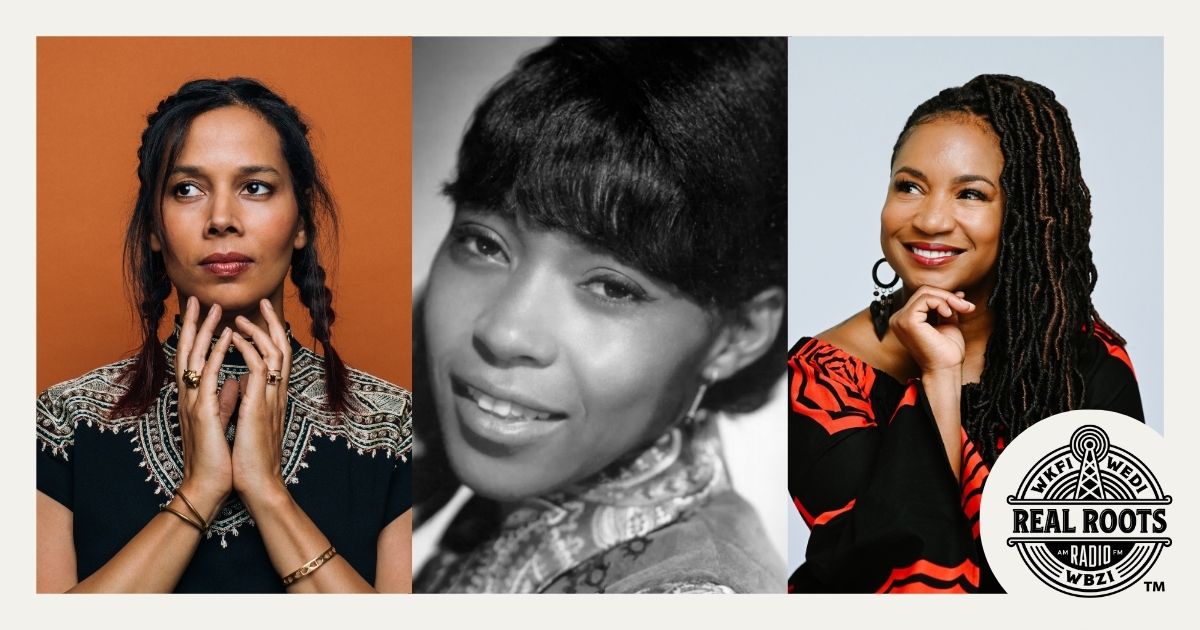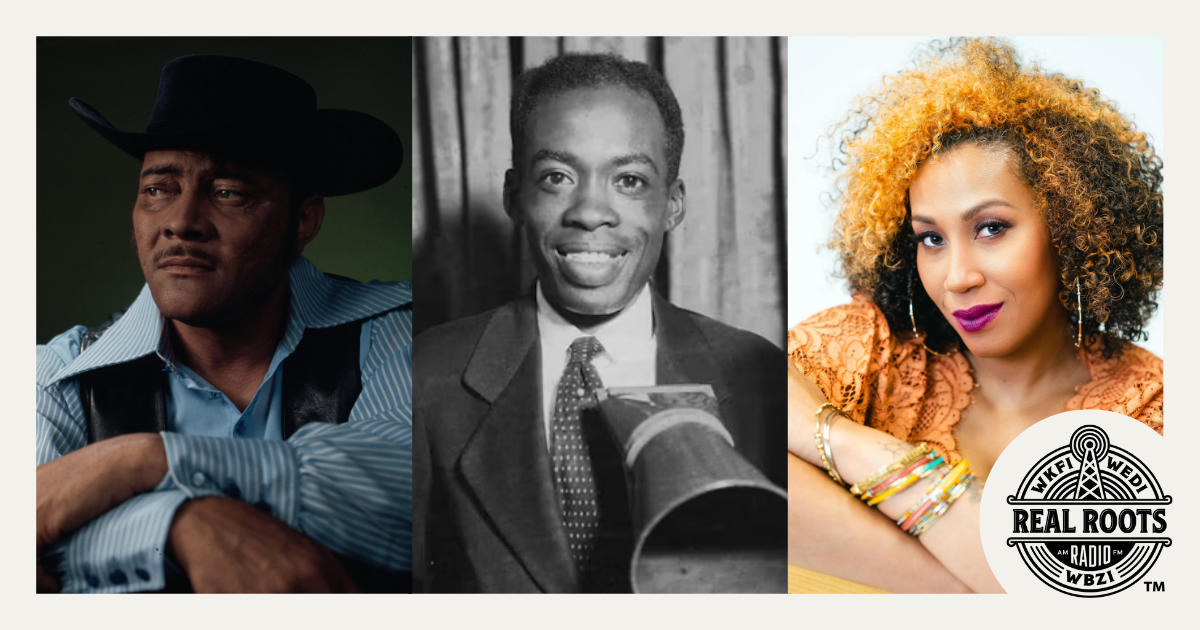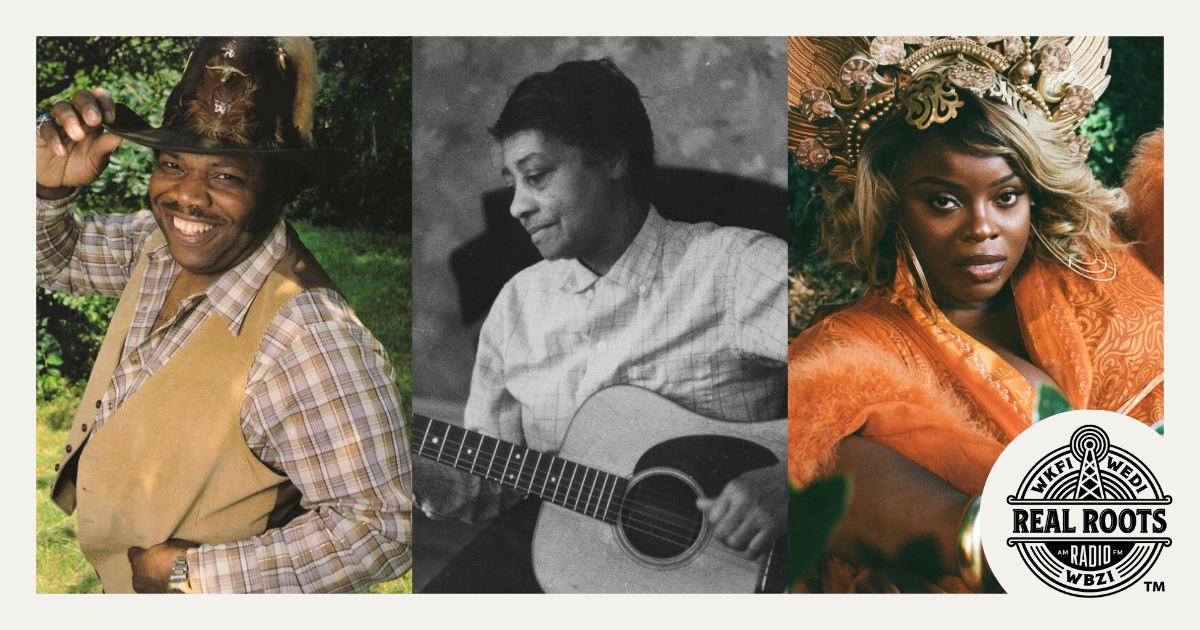
Celebrating Women’s History Month: Dottie West, Gail Davies, and More

Our partnership with our friends at Real Roots Radio in Southwestern Ohio continues as we move from Black History Month to Women’s History Month! This time, we’ll bring you weekly collections of a variety of powerful women in bluegrass, country, Americana, folk, and elsewhere who have been featured on Real Roots Radio’s airwaves each weekday in March, highlighting the outsized impact women have on American roots music.

You can listen to Real Roots Radio online 24/7 or via their FREE app for smartphones or tablets. If you’re based in Ohio, tune in via 100.3 (Xenia, Dayton, Springfield), 106.7 (Wilmington), or 105.5 (Eaton).

American roots music, historically and currently, has often been regarded as a male-dominated space. It’s certainly true of the music industry in general and these more down-home musics are no exception. Thankfully, American roots music and its many offshoots, branches, and associated folkways include hundreds and thousands of women who have greatly impacted these art forms, altering the courses of roots music history. Some are relatively unknown – or under-appreciated or undersung – and others are global phenomena or household names.

Over the next few weeks, we and RRR will do our best to bring you examples of women in roots music from all levels of notoriety and stature. Radio host Daniel Mullins, who together with BGS and Good Country staff has curated the series, kicks off March featuring Dottie West, Girls of the Golden West, Donna Ulisse, Gail Davies, and Cousin Emmy. We’ll return next week and each Friday through the end of the month with even more examples of women who blazed a trail in roots music.

Plus, you can find two playlists below – one centered on bluegrass, the other on country – with dozens of songs from countless women artists, performers, songwriters, and instrumentalists who effortlessly demonstrate how none of these roots genres would exist without women.

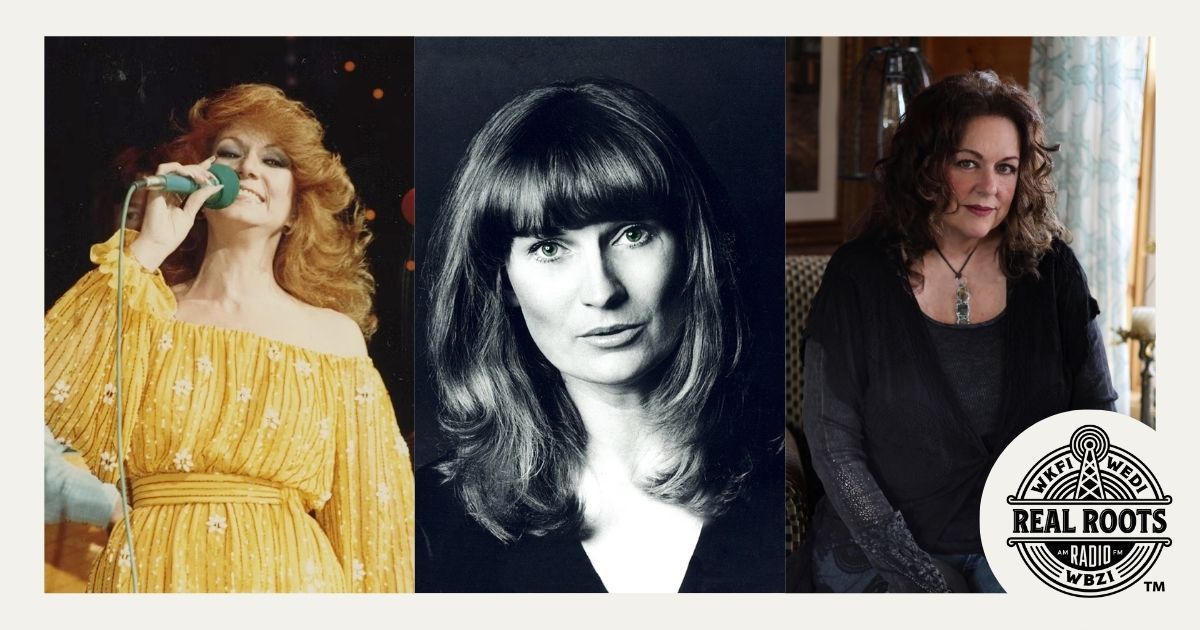
Dottie West (1932 – 1991)

She was a trailblazer, a storyteller, and a country music legend. Dottie West – born Dorothy Marsh in the small town of Frog Pond, Tennessee – rose to fame with her rich voice and heartfelt songs. Her childhood was heartbreaking, due to physical and sexual abuse at the hands of her alcoholic father. As a teenager, she testified against her father, aiding in his conviction and sentencing on charges resulting from his continued sexual abuse of her and her siblings.

After high school, Dottie received a music scholarship to pursue her passion. It was her songwriting that really helped build in-roads for her in the music business, particularly after Jim Reeves had a top three hit with Dottie’s song, “Is This Me.” In 1965, she made history as the first female country artist to win a GRAMMY with her original composition, “Here Comes My Baby.” Its smash success also led to her becoming a member of the Grand Ole Opry.

From then on, Dottie became a force in Nashville, penning hits and performing alongside legends like Jim Reeves, Don Gibson, Jimmy Dean, and Kenny Rogers. Her duets with Kenny melted hearts, but her solo career soared, too, scoring twenty-five Top 40 country hits as a solo artist spanning three different decades. Songs like “A Lesson in Leavin’” proved she was unstoppable.

Part of Dottie’s legacy is that of friend and mentor. Pointing to Patsy Cline’s encouragement of her own career, Dottie West would help build up aspiring performers like Jeannie Seely, Steve Wariner, and more. She also helped transform the image of the female country star, with a sexy wardrobe full of flash and glamour. Dottie would be one of the first country artists to find success in writing commercial jingles as well, most notably, Coca-Cola’s use of “Country Sunshine.” But tragedy struck in 1991 when a car accident on the way to the Grand Ole Opry cut her life short at the age of 58.

Though gone too soon, Dottie West’s voice still echoes through country music. She was posthumously inducted into the Country Music Hall of Fame in 2018.

Suggested Listening:
A Lesson In Leavin’
Here Comes My Baby

Girls of The Golden West (active 1930s to 1960s)

Before there was Dolly or Patsy, there were the Girls of the Golden West! Sisters Mildred and Dorothy Good burst onto the country music scene in the 1930s, blending sweet harmonies and cowboy spirit into radio gold on Chicago’s WLS, home of the National Barn Dance. Alongside early radio stars like Gene Autry, Patsy Montana, and Bradley Kincaid, Girls of the Golden West were one of the most popular country acts of their era.

Taking their name from a popular opera, these Illinois farm girls also developed a compelling backstory for audiences – telling radio listeners they were from Muleshoe, Texas. Embodying the “western” in “country & western,” their cowgirl stage clothes helped add some girl power to the infatuation with cowboys and the Wild West at that time. Their signature song, “Will There Be Any Yodeling in Heaven?,” showcased their angelic voices and signature yodeling style, making them fan favorites on The National Barn Dance.

By the late ’40s, they would relocate from Chicago’s WLS to Cincinnati’s WLW, where they would be part of such iconic programs as the Renfro Valley Barn Dance and the Boone Country Jamboree. Unlike many country acts of the time, these trailblazing women wrote much of their own music, proving that female artists belonged in the spotlight. Their songs, filled with adventure, heartache, and the open range, paved the way for generations of country music legends, including Kitty Wells, Jean Shepard, and The Davis Sisters. Though their fame faded after World War II, their influence never did. So next time you hear a classic country duet, remember – Mildred and Dorothy Good were there first. The Girls of the Golden West were true pioneers of country music.

Suggested Listening:
Lonely Cowgirl
Round-Up Time In Texas

Donna Ulisse (active 1991 to present)

Donna Ulisse is a powerhouse singer, songwriter, and storyteller whose music blends traditional bluegrass with heartfelt country roots. Originally from Hampton, Virginia, she made her mark in Nashville as a country artist before fully embracing her love for bluegrass.

Donna arrived in Nashville in the early ’80s, working as a harmony vocalist. Her first recording session when she hit town was on a Jerry Reed album. By 1990, she was signed to Atlantic Records, where she released her debut album, Trouble at the Door. This great country album yielded two charting singles for Donna and landed her guest spots on Hee Haw, Nashville Now, and more. But Donna had a knack for mountain melodies – heck, Ralph Stanley & The Clinch Mountain Boys played at her wedding (her husband, Rick, is a Stanley after all).

Donna began gaining traction as a songwriter and released her first album of original bluegrass in 2007. Since then, she hasn’t looked back. With a voice as rich as the Appalachian hills and lyrics that paint vivid pictures of life, love, and faith, Donna has penned songs for top artists like Del McCoury, The Grascals, Darin & Brooke Aldridge, and more. Her song, “I Am a Drifter” was recorded by Volume Five and was named Song of the Year by the International Bluegrass Music Association in 2017. Donna has multiple Bluegrass Songwriter of the Year honors under her belt, as well.

But it’s her own albums – filled with soul-stirring melodies and award-winning songwriting – that truly showcase her artistry. Hits like “Back Home Feelin’ Again,” “Come to Jesus Moment,” “When I Go All Bluegrass on You,” and “Livin’ Large in a Little Town” have made her a beloved mainstay on bluegrass radio and at bluegrass festivals nationwide. Whether she’s performing on stage, writing timeless tunes, or inspiring the next generation of songwriters, Donna Ulisse is a true gem in bluegrass music.

Suggested Listening:
Trouble At The Door
When I Go All Bluegrass On You

Gail Davies (b. 1948)

She wasn’t just another voice on the radio, she was the first female record producer in country music history. Let’s tip our hats to a native of Broken Bow, Oklahoma and a trailblazer in country music: Gail Davies!

Originally a session singer, Davies sang on records by Glen Campbell, Hoyt Axton, Neil Young, and more. Through this experience she befriended Joni Mitchell, whose producer taught her about record production. In the mid-’70s she worked alongside Roger Miller and started her songwriting journey. Her song, “Bucket to the South,” would be covered by Lynn Anderson, Ava Barber, Wilma Lee Cooper, and later recorded by Gail herself.

In the late ’70s and ’80s, Davies broke barriers. She released her self-titled debut album in 1978. Though successful, she was dissatisfied with the production, changing labels in order to produce her own records – much like Willie Nelson and Waylon Jennings had done earlier in the decade. This made Gail Davies country’s first female record producer. The result was stellar, yielding her first top ten hit, “Blue Heartache.”

Gail crafted a unique sound that blended traditional country with fresh, innovative production. Hits like “Grandma’s Song” and “I’ll Be There (If You Ever Want Me)” put her on the map, proving she had the talent and the vision to shape her own career. But Gail wasn’t just making music – she was making history, paving the way for women in Nashville to take creative control of their work, inspiring hitmakers who would follow in her wake like Suzy Bogguss, Kathy Mattea, Mary Chapin Carpenter, and Pam Tillis.

Davies would also produce albums for others as well, being hired as the first female Music City staff record producer in 1990. Over the years she would record with Emmylou Harris, The Whites, Ricky Skaggs, Dolly Parton, and even Ralph Stanley. With over a dozen albums and a career spanning decades, her impact still echoes through country music today. So here’s to Gail Davies – a pioneer, a hitmaker, and a legend.

Suggested Listening:
Grandma’s Song
I’ll Be There (If You Ever Want Me)

Cousin Emmy (1903 – 1980)

Have you ever heard of Cousin Emmy? If you haven’t, you’re missing out on a true legend of the Appalachian music scene. Born Cynthia May Carver in the heart of Kentucky, Cousin Emmy was the daughter of sharecroppers and a pioneering force in old-time radio and country music.

In the 1930s, her voice rang out across the airwaves captivating listeners with her mountain spirit and stunning talent. She became the first female to win the National Oldtime Fiddlers’ Contest in 1935 and fronted her own band and radio show by the end of the decade. A true trailblazer for women in bluegrass, she didn’t just play – she performed. Known for her skillful banjo playing and unforgettable voice, Cousin Emmy brought Appalachian culture to the masses on major radio stations in Wheeling, Knoxville, St. Louis, and Chicago, leading her to be signed to Decca Records.

Cousin Emmy was featured in Time magazine in 1943, informing its readers that her popular St. Louis radio program drew an average of 2.5 million listeners every Sunday morning. From live shows to classic radio broadcasts, she influenced generations of musicians, including Grandpa Jones (whom she purportedly taught how to play old-time banjo) and Bobby Osborne, who heard her recording of “Ruby” on jukeboxes when he was a youngster. It would later become the debut single for The Osborne Brothers, and remained one of their signature songs, solidifying its status as a bluegrass standard.

Emmy would eventually move to L.A., where she would raise the children she adopted while continuing to perform locally. As the Folk Revival emerged in the early ’60s, the New Lost City Ramblers heard Cousin Emmy performing at Disneyland and encouraged her to join them on record. That session introduced her to a new generation of fans and led to appearances on the folk circuit, including the infamous 1965 Newport Folk Festival. She passed away in southern California in 1980, at the age of 77. Remember the name: Cousin Emmy — a powerful personality and hillbilly star.

Suggested Listening:
Ruby, Are You Mad At Your Man?
I Wish I Was A Single Girl Again


Want more Good Country? Sign up on Substack for our monthly email newsletter full of everything country.

Listen to Real Roots Radio online 24/7 or via their FREE app for smartphones or tablets.

Photo Credit: Dottie West courtesy Country Music Hall of Fame & Museum; Gail Davies courtesy of the artist; Donna Ulisse courtesy of Turnberry Records.
Basic Folk: Sierra Hull

(Editor’s Note: The entire BGS team would like to congratulate Basic Folk on 300 amazing episodes of the podcast! Celebrate #300, featuring GRAMMY nominee Sierra Hull as our guest, with us below.)

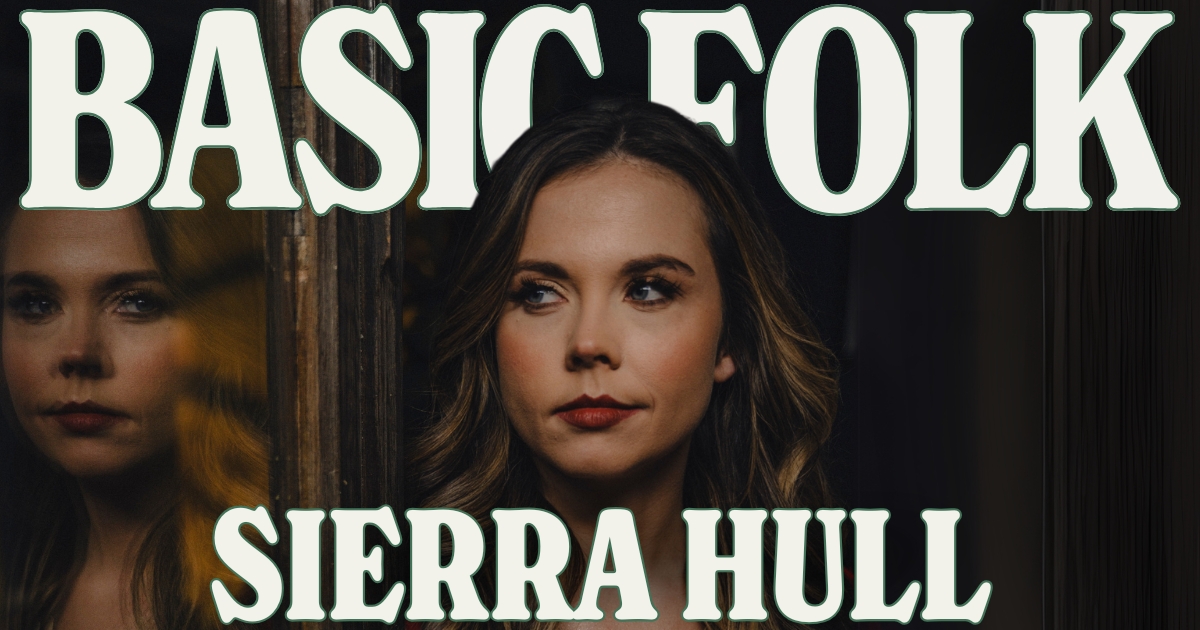
When mandolinist Sierra Hull was little, her dad told her she was really good “for a 10-year-old.” The older Hull knew Sierra had a fiery passion for the instrument and he knew exactly how to motivate his daughter. He went on to say that if she wanted to go to jams and porch-play for the rest of her life, she’d learned enough. He gave her realistic advice, saying if she wanted to dedicate her life to music, she would have to work really hard. Because “that 10-year-old cute thing is gonna wear off.” Sierra, who would draw pictures of herself playing at the Grand Ole Opry with Alison Krauss and doodle album covers with the Rounder Records logo, took his advice to heart and got to work.

LISTEN: APPLE • SPOTIFY • AMAZON • MP3

Since then, Hull has shared the stage with more heroes than one could count. She’s inspired a new generation of younger players, she’s released five albums, and she’s considered a master of the mandolin. Her new album, A Tip Toe High Wire, is set for release March 7. In our Basic Folk conversation Sierra reflects on how growing up in the small town of Byrdstown, Tennessee, shaped her musical identity alongside bluegrass, gospel, and family traditions. She shares memories of family gatherings filled with music featuring Aunt Betty and Uncle Junior, the profound influence of church hymns, and how these experiences continue to resonate in her playing and songwriting.

Sierra also discusses the significance of A Tip Toe High Wire, her first independent release, highlighting the freedom and growth that come with that independence. She emphasizes the importance of authenticity in her music, allowing herself to explore new sounds while remaining grounded in her bluegrass roots. Elsewhere in the episode, she opens up about her personal growth, the pressures of being labeled a child prodigy, and her journey toward embracing imperfection in her art. We also dive into what we’ll call her “Stevie Nicks Era” with the amazing cover art on the new record. Sierra enjoys playing with elaborate styles in her album artwork and red carpet looks (helloooo CMA Awards). With a candid perspective on the challenges of the music industry, she encourages listeners to find joy in the process while appreciating the beauty of vulnerability.


Photo Credit: Bethany Brook Showalter & Spencer Showalter

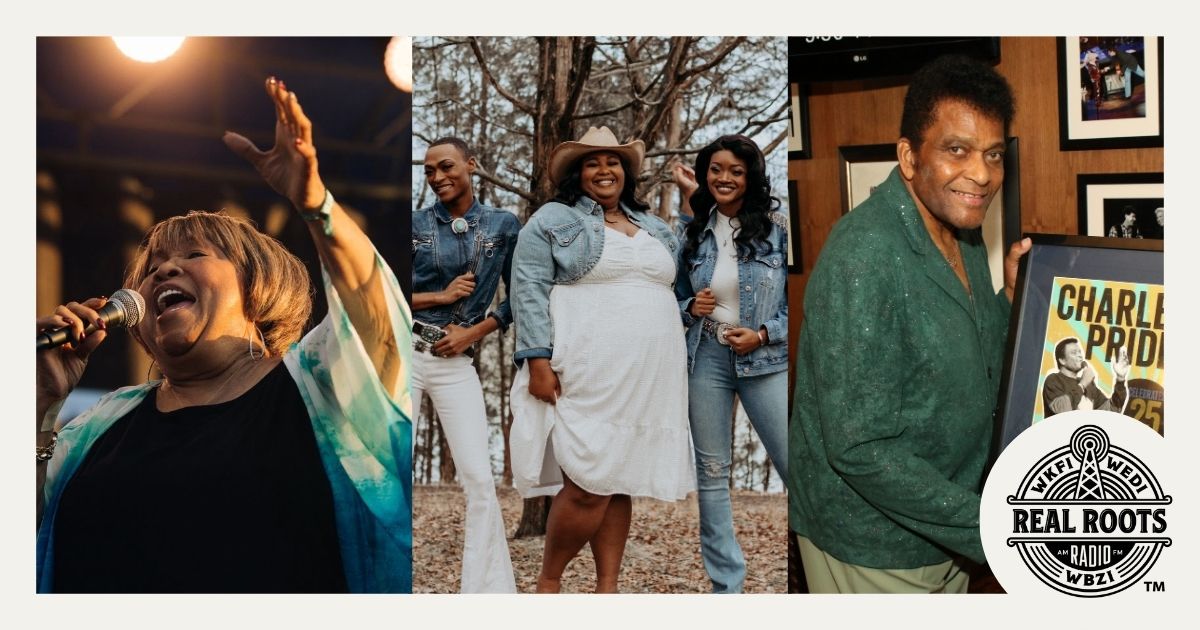
Celebrating Black History Month: Mavis Staples, Chapel Hart, Charley Pride, and More

To celebrate Black History Month – and the vital contributions of Black, Afro-, and African American artists and musicians to American roots music – BGS, Good Country, and our friends at Real Roots Radio in Southwestern Ohio have partnered once again. This time, we’ve brought you weekly collections of a variety of Black roots musicians who have been featured on Real Roots Radio’s airwaves. You can listen to Real Roots Radio online 24/7 or via their FREE app for smartphones or tablets. If you’re based in Ohio, tune in via 100.3 (Xenia, Dayton, Springfield), 106.7 (Wilmington), or 105.5 (Eaton).

American roots music – in any of its many forms – wouldn’t exist today without the culture, stories, skills, and experiences of Black folks. Each week throughout February, we’ve been spotlighting this simple yet profound fact by diving into the catalogs and careers of some of the most important figures in our genres. For week four of our celebration, RRR host Daniel Mullins shares songs and stories of Charley Pride, Mavis Staples, Chapel Hart, Carolina Chocolate Drops, and Philip Paul. Be sure to check out week 1, week 2, and week 3 of the series, too.

Today is February 28, so sadly this will be the final installment of our Black History Month celebrations this year. But, as always, we’re committed to bringing you even more music celebrating Black History – and the songs and sounds we all hold dear – not just in February, but year-round.

Plus, you can find a full playlist with more than 100 songs below from dozens and dozens of seminal artists, performers, songwriters, and instrumentalists from every corner of folk, country, bluegrass, old-time, blues, and beyond.

Black history is American roots music history; the two are inseparable. As we celebrate Black History Month and its legacy throughout the year, we hope you’ll join us in holding up and appreciating the artists who make country, bluegrass, blues, folk, and Americana the incredible and impactful genres that they are today.

Chapel Hart (est. 2014)

If you haven’t heard of Chapel Hart yet, it’s time to change that! This powerhouse trio – Danica, Devynn, and Trea – are taking the country music world by storm with their soulful harmonies, fiery energy, and a whole lot of heart. Hailing from Poplarville, Mississippi, these ladies bring a fresh and fearless sound to country music with their family harmonies; Danica and Devynn are sisters, while Trea is their cousin.

The group first began their musical journey by busking on the streets of New Orleans. In 2021 they were among CMT’s Next Women of Country, before making their way to America’s Got Talent in 2022. Their unforgettable run on the hit music competition television show is where the nation first heard their breakout hit, “You Can Have Him, Jolene,” an answer song to the Dolly Parton classic.

Since their time on the competition, Chapel Hart have released “Welcome to Fist City” as well, in response to Loretta Lynn’s fiery “Fist City” per Loretta’s request. They have been frequent performers on the Grand Ole Opry, and have recorded collaborations with Darius Rucker, Vince Gill, The Isaacs and more. Chapel Hart are proving that country music is alive and well – and full of girl power!

Suggested Listening:
American Pride
Welcome to Fist City

Mavis Staples (b. 1939)

You know Mavis Staples as the gospel and soul legend, but did you know she’s got deep country connections as well? That’s right, her powerful voice and storytelling fit right into the heart of country music.

Mavis grew up singing gospel with the Staples Singers, even marching with Dr. Martin Luther King, before finding success in R&B and beyond. However, her musical influences also include listening to Hank Williams and the Grand Ole Opry. She once said, “Country music is just another way of telling the truth” – and if anyone knows about truth in music, it’s Mavis Staples.

Over the years, her stellar career has included forays into country that include collaborations with George Jones (“Will The Circle Be Unbroken”), Willie Nelson (“Grandma’s Hands”), and Dolly Parton (“Why”). Staples’ recording of “Touch My Heart” for the 2004 tribute to Johnny Paycheck is a masterpiece. She and Marty Stuart are dear friends and mutual admirers of one another’s music. Together, they have recorded wonderful renditions of “Uncloudy Day,” “Move Along Train,” and “The Weight.”

Staples and Stuart were part of a show-stopping performance on the CMA Awards a few years ago alongside Chris & Morgane Stapleton and Maren Morris, tackling Stapleton’s “Friendship” and the Staple Singers’ classic, “I’ll Take You There” in an awards show mash-up.

Mavis Staples is a member of the Gospel, Blues, and Rock & Roll Halls of Fame. Whether it’s gospel, soul, or country, her voice carries a message of love, hope, and resilience.

Suggested Listening:
Uncloudy Day” with Marty Stuart
Touch My Heart
Grandma’s Hands” with Willie Nelson

Carolina Chocolate Drops (active 2005-2016)

Let’s shine a spotlight on a group that revolutionized old-time string music – Carolina Chocolate Drops. Formed in 2005 by young twenty-somethings Rhiannon Giddens, Dom Flemons, and Justin Robinson after attending the first Black Banjo Gathering in Boone, North Carolina, they revived the nearly forgotten Black string band tradition.

Inspired by the legendary Black North Carolinian fiddler Joe Thompson, Carolina Chocolate Drops brought energy, authenticity, and a fresh perspective to Appalachian folk music and were a powerhouse on stage. The first African American string band to perform at the historic Grand Ole Opry, their GRAMMY-winning 2010 album Genuine Negro Jig fused tradition with innovation, blending deep-rooted folk with modern influences and proving that history and rhythm go hand in hand.

Carolina Chocolate Drops didn’t just perform, they educated, too, sparking a renewed appreciation for African American contributions to folk and traditional music. Over the years they would open for Taj Mahal and Bob Dylan, perform at events like MerleFest and ROMP, appear on Prairie Home Companion and BBC Radio, and even contributed to the soundtrack of The Hunger Games. Though they’ve since been on a hiatus for the last decade plus, their impact on American roots music is undeniable. Look for a reunion at Biscuits & Banjos festival in downtown Durham, North Carolina, in April.

Suggested Listening:
Trouble In Your Mind
Pretty Bird
Day of Liberty

Charley Pride (1934-2020)

He broke barriers and made history. Charley Pride, the son of sharecroppers, a Negro league baseball player, and the Pride of Sledge, Mississippi, became a country music legend.

In the 1960s, when country music was overwhelmingly white, Pride’s rich baritone and heartfelt songs won over audiences. At the urging of Red Sovine and Red Foley, Pride pursued a career as a country recording artist. Cowboy Jack Clement brought some of Charley’s demos to Chet Atkins and he was signed to RCA Records. His first big hit, “Just Between You and Me,” earned him a GRAMMY nomination and soon he was topping the charts with classics like “Kiss an Angel Good Mornin’.” His popularity was undeniable, outselling all of his RCA labelmates except Elvis Presley during his peak.

With over 50 Top-Ten hits and more than 30 Number Ones, Pride became country’s first Black superstar – earning the CMA’s Entertainer of the Year award in 1971. His nationwide popularity was such that in 1974 he became the first recording artist to perform the National Anthem at the Super Bowl.

“Is Anybody Goin’ to San Antone,” “Mississippi Cotton Picking Delta Town,” “All I Have to Offer You (Is Me),” “Roll On Mississippi,” “You’re So Good When You’re Bad,” and dozens of others are essential country listening. Pride would be only the second African American made a member of the Grand Ole Opry and the first Black artist inducted into the Country Music Hall of Fame. His music broke racial barriers, his talent captivated millions, and his legacy? It still inspires artists today.

Charley Pride wasn’t just a country star – he was a pioneer.

Suggested Listening:
The Snakes Crawl At Night
Roll On Mississippi

Philip Paul (1925-2022)

Philip Paul was a legendary drummer who made history in Cincinnati for decades, making major contributions to classic recordings in rock, blues, country, jazz, bluegrass, and more. Born in Harlem in New York City, he moved to Cincinnati at the urging of jazz legend of Tiny Bradshaw, to join Tony’s band. Post-WWII, Cincinnati became a hub of various music – including bluegrass – thanks to an influx of people migrating to the area for factory work. While playing in jazz clubs in the Queen City, Paul met Bluegrass Music Hall of Fame member Syd Nathan. For a dozen years, Philip Paul was a member of the house band at Syd Nathan’s King Records, where he appeared on countless classic recordings by Cowboy Copas, Hank Ballard, Freddie King, The Stanley Brothers, and more – over 350 records.

Paul is playing on drums on such American classics recorded in Cincinnati as “Fever” (Little Willie John), “Soft” (Tiny Bradshaw), “Alabam’” (Cowboy Copas), “Please Come Home For Christmas” (Charles Brown), and so many more – including the bulk of Freddie King’s catalog. He is also responsible for laying down the rhythm on the original recording of “The Twist” for Hank Ballard & The Midnighters before it was covered by Chubby Checker. In addition he performed on Hank Ballard’s “Finger Poppin’ Time” and added percussion on the overdubbed version by King recording artists, The Stanley Brothers.

For the ensuing decades, Paul would consistently perform at various jazz nightclubs around the Cincinnati area. He received Ohio Heritage Fellowship honors in 2009, the same year he was recognized for his remarkable career during a special presentation at the Rock & Roll Hall of Fame and Museum. The museum’s president at the time, Terry Stewart, had this to say: “If someone were to try to isolate the single heartbeat of the early days of rock and roll, as it transitions from ‘race music’ to ‘rhythm & blues’ to whatever you want to call what early rock and roll is, that heartbeat is Philip. [He is] the thread that runs through so much of the important music of that period.”

Philip Paul even contributed to the 2021 IBMA Album of the Year, Industrial Strength Bluegrass: Southwestern Ohio’s Musical Legacy, playing drums on “Mountain Strings” (Sierra Hull), “Readin’ ‘Rightin’ Route 23” (Joe Mullins & The Radio Ramblers), and “Are You Missing Me” (Dailey & Vincent). These would be the final recordings of Philip Pauls’ remarkable career in American music. He passed away in January 2022 at the age of 96. Phil Paul played drums on some of the most famous recordings in American history, and he did it all at Cincinnati’s King Records!

Suggested Listening:
Fever,” Little Willie John
Hide Away,” Freddie King
Mountain Strings,” Sierra Hull


Want more Good Country? Sign up on Substack for our monthly email newsletter full of everything country.

Listen to Real Roots Radio online 24/7 or via their FREE app for smartphones or tablets.

Photo Credit: Mavis Staples by Daniel Jackson for BGS; Chapel Hart courtesy of SRO PR; Charley Pride courtesy of CharleyPride.com.

Celebrating Black History Month: Rhiannon Giddens, Linda Martell, Miko Marks, and More

To celebrate Black History Month – and the vital contributions of Black, Afro-, and African American artists and musicians to American roots music – BGS, Good Country, and our friends at Real Roots Radio in Southwestern Ohio have partnered once again. This time, we’ll be bringing you weekly collections of a variety of Black roots musicians who have been featured on Real Roots Radio’s airwaves. You can listen to Real Roots Radio online 24/7 or via their FREE app for smartphones or tablets. If you’re based in Ohio, tune in via 100.3 (Xenia, Dayton, Springfield), 106.7 (Wilmington), or 105.5 (Eaton).

American roots music – in any of its many forms – wouldn’t exist today without the culture, stories, skills, and experiences of Black folks. Each week throughout February, we’ll spotlight this simple yet profound fact by diving into the catalogs and careers of some of the most important figures in our genres. For week three of our celebration, RRR host Daniel Mullins shares songs and stories of Linda Martell, B.B. King, Miko Marks, Darius Rucker, and Rhiannon Giddens. Be sure to check out the first week and second week of the series, too.

We’ll return for one last edition next Friday to bring you even more music celebrating Black History and the songs and sounds we all hold dear. Plus, you can find a full playlist with more than 100 songs below from dozens and dozens of seminal artists, performers, songwriters, and instrumentalists from every corner of folk, country, bluegrass, old-time, blues, and beyond.

Black history is American roots music history; the two are inseparable. As we celebrate Black History Month and its legacy, we hope you’ll join us in holding up and appreciating the artists who make country, bluegrass, blues, folk, and Americana the incredible and impactful genres that they are today.

Linda Martell (b. 1941) 

She was a trailblazer, a pioneer, and a voice that country music wasn’t ready for – but she made sure they heard her anyway!

Linda Martell, the first commercially successful Black female country artist, broke barriers in the late 1960s with her soulful voice and undeniable talent. In 1969, she made history with her hit song “Color Him Father,” reaching the Top 25 on the country charts before the release of her debut album – Color Me Country on Plantation Records — resulting in two more charting singles. She became the first Black woman to perform on the Grand Ole Opry, making a dozen appearances on the historic radio program and appearing as a special guest on television programs like Hee Haw, proving country music is for everyone.

Despite her success, the industry wasn’t kind. Racism and label conflicts cut her career short, leaving her influence overlooked for decades. She would spend many of those decades settling into domestic life, working a variety jobs including as a school bus driver. Still, her legacy lives on, inspiring a new generation of Black country artists. She is an influence on many African American country artists today, including Mickey Guyton. When Rissi Palmer began her program on Apple Music Radio, it was intentionally named “Color Me Country” after Martell’s historic album. As she puts it, she was “paying homage to the foundation on which my house is built, and that is Linda Martell.”

In 2021, Martell was recognized with CMT’s Equal Play Award and has had an even greater spotlight shone on her groundbreaking work after she made guest appearances on Beyoncé’s Cowboy Carter album, resulting in Martell’s first GRAMMY nomination at age 83. Thankfully, Linda Martell is finally getting the recognition she deserves. Her story is one of resilience, talent, and breaking down barriers—one song at a time.

Suggested Listening:
Color Him Father
Before the Next Teardrop Falls

B.B. King (1925 – 2015)

Let’s talk about a blues icon who found inspiration in country music – B.B. King! Born on a Mississippi plantation in 1925, B.B. grew up listening to blues. But did you know he also had a love for country music? As a young man, he was inspired by the guitar playing of country stars and tried to emulate the sound of a crying steel in his bluesy pickin’ style with his guitar, Lucille. He would frequently collaborate with country music stars both on stage and in the recording studio, including on his album, Deuces Wild, which featured appearances from Willie Nelson and Marty Stuart.

He performed at Willie’s FarmAid, on the GRAMMYs with Keith Urban, and even appeared on the popular That Nashville Music TV Show with Jerry Reed. In the ’90s, the hit all-star album Rhythm, Country & Blues closed with a legendary collaboration between B.B. King and George Jones on the old story song, “Patches.”

B.B. King proved that great music knows no boundaries. Blues, country, rock and roll – it’s all about storytelling from the soul and letting the good times roll! B.B. King was inducted into the Rock & Roll Hall of Fame in 1987. He passed away in 2015 at the age of 89.

Suggested Listening:
Patches” (featuring George Jones)
Let the Good Times Roll” (featuring Brad Paisley)

Miko Marks (b. 1973)

She’s breaking barriers, blending genres, and bringing a fresh voice to country – meet Miko Marks. Born in Flint, Michigan, Marks has been redefining country since the early 2000s. She was named Best New Country Artist in 2006 by New Music Weekly and won several awards at the Independent Music Awards in the early aughts as well. With a voice that’s equal parts soul, blues, and traditional country, she has a compelling sound full of power and conviction.

After years of industry struggles, Marks focused on her role as a mother for the next decade-plus. She mounted a powerful comeback with her 2021 album, Our Country, earning critical acclaim and recognition from Rolling Stone and NPR. The equally impressive follow-up, Feel Like Going Home, was released in 2022. She was named one of CMT’s Next Women of Country that same year.

Miko’s music speaks of resilience, hope, and inclusivity, carving a space for new voices in country. Her release Race Records features her take on country classics from The Carter Family, Willie Nelson, and more. From performing at the Grand Ole Opry to rocking major festivals, Miko Marks is a name you need to know. If you haven’t heard her yet, now’s the time!

Suggested Listening:
Tennessee Waltz
Freeway Bound

Darius Rucker (b. 1966)

From Hootie & the Blowfish to country superstardom, Darius Rucker has done it all. This GRAMMY-winning artist first made waves in the ’90s by leading popular alt-rock band Hootie & The Blowfish, which he helped found while attending the University of South Carolina. They scored half a dozen Top 40 hits, including “Hold My Hand,” “Let Her Cry,” and “Only Wanna Be With You.” There were seeds even then of his future country success, especially with the band’s bluegrass-flavored “Desert Mountain Showdown” from their Musical Chairs album.

Rucker began pursuing a country career in 2008. His debut country single, “Don’t Think I Don’t Think About It,” made history as he became the first Black artist in over 25 years to top the country charts. He was named CMA’s New Artist of The Year in 2009, making him only the second African American artist to win a CMA award – the first being Charley Pride. He would join the Grand Ole Opry in 2012 as only the third Black member of country music’s oldest institution.

He has continued to release many country hits, including nine chart-toppers. In 2013, he released the biggest song of his career, his take on an Old Crow Medicine Show song, “Wagon Wheel.” This number one hit is only the fourth country song to be RIAA-certified Diamond (for 10 million units) and earned Darius Rucker a GRAMMY Award for Best Country Solo Vocal Performance, making him only the third Black artist to win a country vocal performance GRAMMY. With his distinctive voice, heartfelt lyrics, and undeniable charm, Darius Rucker continues to break barriers and bring fans together. Whether it’s rock, country, or beyond, one thing’s for sure – this guy’s got soul.

Suggested Listening:
Don’t Think I Don’t Think About It
If I Told You

Rhiannon Giddens (b. 1977)

From the rolling hills of North Carolina to the world stage, Rhiannon Giddens is a musical force re-centering American roots music. A singer, songwriter, multi-instrumentalist, and historian, Giddens brings the forgotten voices of history back to life one song at a time. After leading the GRAMMY-winning old-time band, the Carolina Chocolate Drops, she has focused on her solo career for now more than a decade.

Rhiannon blends folk, blues, gospel, country, Celtic influences, and more into her dazzling brand of American roots music, all while shining a light on Black contributions to the American musical landscape. Her voice? Soulful. Her banjo? Revolutionary, as she is a recipient of the Steve Martin Prize for Excellence in Banjo and Bluegrass. Giddens has also earned MacArthur Genius honors, collaborated with folks like Elvis Costello, Eric Church, and Gillian Welch, written ballet music, and even composed a Pulitzer Prize-winning opera! (She did study opera at Ohio’s Oberlin College after all.) She has even written several children’s books based off some of her original songs.

Recently, Giddens has partnered with fellow Carolina Chocolate Drops co-founder Justin Robinson to shine a light on fiddle & banjo music from North Carolina. Whatever she sets her sights on, Rhiannon Giddens tackles it head on, inspiring us all in the process.

Suggested Listening:
Julie
Don’t Let it Trouble Your Mind
Hook and Line


Want more Good Country? Sign up on Substack for our monthly email newsletter full of everything country.

Listen to Real Roots Radio online 24/7 or via their FREE app for smartphones or tablets.

Photo Credit: Rhiannon Giddens by Ebru Yildiz; Linda Martell courtesy of the artist; Miko Marks by Karen Santos.

Celebrating Black History Month: DeFord Bailey, Tina Turner, Keb’ Mo’, and More

To celebrate Black History Month – and the vital contributions of Black, Afro-, and African American artists and musicians to American roots music – BGS, Good Country, and our friends at Real Roots Radio in southwestern Ohio have partnered once again. This time, we’ll be bringing you weekly collections of a variety of Black roots musicians who have been featured on Real Roots Radio’s airwaves. You can listen to Real Roots Radio online 24/7 or via their FREE app for smartphones or tablets. If you’re based in Ohio, tune in via 100.3 (Xenia, Dayton, Springfield), 106.7 (Wilmington), or 105.5 (Eaton).

American roots music – in any of its many forms – wouldn’t exist today without the culture, stories, skills, and experiences of Black folks. Each week throughout February, we’ll spotlight this simple yet profound fact by diving into the catalogs and careers of some of the most important figures in our genres. For week two of the series, RRR host Daniel Mullins shares songs and stories of Stoney Edwards, Rissi Palmer, Keb’ Mo’, Tina Turner, and DeFord Bailey. Check out the first week of the series here.

We’ll return each Friday through the end of the month to bring you even more music celebrating Black History and the songs and sounds we all hold dear. Plus, you can find a full playlist with more than 100 songs below from dozens and dozens of seminal artists, performers, songwriters, and instrumentalists from every corner of folk, country, bluegrass, old-time, blues, and beyond.

Black history is American roots music history; the two are inseparable. As we celebrate Black History Month and its legacy, we hope you’ll join us in holding up and appreciating the artists who make country, bluegrass, blues, folk, and Americana the incredible and impactful genres that they are today.

Stoney Edwards (1929 – 1997)

If you don’t know the late, great Stoney Edwards’ name, it’s time to fix that – because his story in country is as powerful as the songs he sang.

Born Frenchie Edwards in Seminole Country, Oklahoma, in 1929, Stoney was part African American, Native American, and Irish. The son of sharecroppers, he was a prominent bootlegger in Oklahoma during his younger years. Stoney had dreams of playing the historic Grand Ole Opry. His big break in music would come later in life, in his early 40s, when he was discovered in California singing his honky-tonk style at a benefit for the King of Western Swing, Bob Wills.

Stoney was signed to Capitol Records in the early ’70s and from there he made history. He scored fifteen charting singles, including a pair of Top 20 hits, one of which – his 1973 hit “She’s My Rock” – is still revered as a bona fide country standard later covered by artists like Brenda Lee and George Jones. His songs were deeply authentic, whether he was singing about love, loss, or his own experiences growing up poor and Black in America. He gave a voice to the underdog, often drawing from his own struggles, including battling discrimination and working blue-collar jobs before music. Edwards would also record several songs saluting his country heroes over the years, including “The Jimmie Rodgers Blues,” “Daddy Bluegrass,” and his Top 40 hit, “Hank and Lefty Raised My Country Soul.”

Stoney’s music wasn’t just about catchy melodies; it was about storytelling. His debut single was inspired by a true story. Before he hit it big as a country singer, Stoney was trying to provide for his family working as a forklift operator at a steel refinery in San Francisco. A workplace accident resulted in Edwards being sealed up in a tank and suffering dangerous carbon dioxide poisoning; he endured an extensive two-year recovery, both physically and mentally. During this time, Stoney was struggling to care for his wife and children, so he planned to leave in the middle of the night. However he tripped over one of his daughter’s toys, and it prompted him to stay. In 1970, backed by the virtually unknown Asleep at the Wheel, Stoney Edwards released his debut single, the autobiographical “A Two Dollar Toy.”

While his career didn’t reach the same commercial heights as some of his peers, Stoney Edwards left an indelible mark on country music. He paved the way for greater diversity in the genre and showed that country music is for everyone – no matter where you come from or what you look like. Stoney Edwards passed away from stomach cancer in 1997 at the age of 67.

Suggested Listening:
She’s My Rock
Hank and Lefty Raised My Country Soul

Rissi Palmer (b. 1981)

She’s a trailblazer in country music, a voice for change, and an artist who refuses to be boxed in – meet Rissi Palmer!

Palmer’s mother passed away when she was just seven years old, but she instilled in her a love for the music of Patsy Cline. Rissi would burst onto the country scene in 2007 with her hit single, “Country Girl,” making history as one of the few Black women to chart on the Billboard country charts. Rissi has built a career on breaking barriers by blending country, soul, and R&B into a sound all her own. She has penned some empowering original songs, helping folks on the margins feel seen, especially her most personal song, “You Were Here,” dealing with the heartbreak of a miscarriage.

Beyond the music, Palmer uses her platform to uplift underrepresented voices in country and roots music. As the host of Color Me Country radio on Apple Music, she spotlights Black, Indigenous, and Latino artists in country music – proving that the genre belongs to everyone. With her powerful voice and unwavering spirit, Rissi Palmer isn’t just making music, she’s making history.

Suggested Listening:
Leavin’ On Your Mind
Seeds

Keb’ Mo’ (b. 1951)

Keb’ Mo’ is a modern blues legend. Born Kevin Moore, this L.A. native blends Delta blues with folk, soul, and a touch of country. With his smooth vocals and masterful guitar skills, he’s kept the blues alive for over four decades.

Mo’ is heavily influenced by the late Robert Johnson, who preceded Keb’ by about 60 years. Keb’ portrayed Robert Johnson in a 1998 documentary and included two Johnson covers on his breakthrough self-titled album in 1994. He has since won five GRAMMY Awards, collaborated with legends like Bonnie Raitt, Jackson Browne, and Taj Mahal, and performed for multiple U.S. presidents.

Mo’ is embedded in country and Americana music as well, working with cats like Lyle Lovett, Old Crow Medicine Show, John Berry, Alison Brown, Jerry Douglas, and Darius Rucker over the years. He has been quick to share his respect for country and gospel traditions, appearing on the critically acclaimed all-star album, Orthophonic Joy, recreating the magic of the 1927 Bristol Sessions – country music’s big bang.

Whether he’s playing a heartfelt ballad or a foot-stomping blues groove, Keb’ Mo’ keeps the genre fresh and timeless. His music isn’t just about the past – it’s about where the blues is going next. We love his passion for all things American roots music. Fifty years into his remarkable career, Keb’ Mo’ is still one cool cat.

Suggested Listening:
To The Work
Good Strong Woman” featuring Darius Rucker

Tina Turner (1939 – 2023)

She was the Queen of rock ‘n’ roll, but did you know Tina Turner had deep country roots?

Born Anna Mae Bullock, she grew up in Nutbush, Tennessee. Tina recalled picking cotton as a youngster during her hardscrabble rural upbringing. Her musical journey began by singing at church on Sunday mornings. She grew up on country, gospel, and blues. Turner and her husband, Ike (who was abusive towards her) had massive success in R&B and rock and roll, but her first solo record was actually a country album.

In 1974, Turner released her debut LP, Tina Turns The Country On!, introducing herself as a solo act. Featuring top musicians, including Country Music Hall of Famer James Burton on guitar, Tina tackled songs from country greats like Dolly Parton, Kris Kristofferson, and Hank Snow. It would go on to receive a GRAMMY nomination for Best Female R&B Vocal Performance in 1975. Over the years, unreleased songs from this groundbreaking album would be dropped, including her powerful take on “Stand by Your Man.”

However, her most enduring impact on country might be as the inspiration behind one of the outlaw movement’s most popular hits. In 1969, Waylon Jennings was staying at a motel in Fort Worth, Texas, when he saw a newspaper ad about Ike & Tina Turner that intrigued him enough to interrupt Willie Nelson during a poker game so they could write a country classic. The phrase that struck Waylon heralded Turner as “a good hearted woman loving a two-timin’ man.” Sound familiar?

From honky-tonks to stadiums, Tina Turner’s fiery spirit left an unforgettable mark on practically every genre – country, rock, and everything in between.

Suggested Listening:
Stand By Your Man
Good Hearted Woman

DeFord Bailey (1899 – 1982)

Let’s go back to the early days of country to a name that shaped the Grand Ole Opry, but is often forgotten: DeFord Bailey, “The Harmonica Wizard!”

Born in 1899 in Smith County, Tennessee, Bailey grew up around banjos and fiddles in a musical family, saying that he learned the “Black hillbilly music” tradition. He overcame polio as a child, resulting in his short stature – he was only 4’ 10” tall – but it was through this ordeal that he found his voice in a harmonica. While recovering from the disease, he was bedridden for a year, and learned to mimic the sounds he heard outside on his harmonica: trains, animals, and the rhythms of life.

In 1927, Bailey became one of the first stars of the Grand Ole Opry on Nashville’s WSM, dazzling crowds with hits like “Pan American Blues.” He was actually the first artist introduced after George D. Hay referred to WSM’s Barn Dance as the “Grand Ole Opry” for the first time to poke fun at NBC’s classical Grand Opera. Bailey would also become the first artist to record in Music City. His hits like “Fox Chase,” “John Henry,” and “Evening Prayer Blues” captivated radio audiences, making him one of the Opry’s most popular performers. He would tour with other stars like Roy Acuff, Uncle Dave Macon, The Delmore Brothers, and Bill Monroe, but would often not be allowed to stay in the same hotels or eat at the same restaurants as his white contemporaries due to Jim Crow laws.

In 1941, DeFord Bailey was unceremoniously fired from the Grand Ole Opry under suspicious circumstances. He would make his living shining shoes in Nashville and would not perform on the Opry again until 1974, the first of only a handful of final performances on the radio program which he helped grow during its infancy, before his passing in 1982.

The Grand Ole Opry would eventually work to reconcile its mistreatment of its first Black member, issuing a public apology to the late DeFord Bailey in 2023 with his descendants on hand. Old Crow Medicine Show was there to celebrate the occasion, performing their tribute song to Bailey led by black percussionist Jerry Pentecost, entitled “DeFord Rides Again.”

In 2005, Bailey was rightfully inducted into the Country Music Hall of Fame and over 40 years since his passing, he is still recognized as the Harmonica Wizard.

Suggested Listening:
Pan American Blues
Evening Prayer Blues


Want more Good Country? Sign up on Substack for our monthly email newsletter full of everything country.

Listen to Real Roots Radio online 24/7 or via their FREE app for smartphones or tablets.

Photo Credit: Stoney Edwards by Universal Music Group; DeFord Bailey courtesy of the Country Music Hall of Fame; Rissi Palmer by Chris Charles.

Celebrating Black History Month: Big Al Downing, Yola, Elizabeth Cotten, and More

To celebrate Black History Month – and the vital contributions of Black, Afro-, and African American artists and musicians to American roots music – BGS, Good Country, and our friends at Real Roots Radio in southwestern Ohio have partnered once again. This time, we’ll be bringing you weekly collections of a variety of Black roots musicians who have been featured on Real Roots Radio’s airwaves. You can listen to Real Roots Radio online 24/7 or via their FREE app for smartphones or tablets. If you’re based in Ohio, tune in via 100.3 (Xenia, Dayton, Springfield), 106.7 (Wilmington), or 105.5 (Eaton).

American roots music – in any of its many forms – wouldn’t exist today without the culture, stories, skills, and experiences of Black folks. Each week throughout February, we’ll spotlight this simple yet profound fact by diving into the catalogs and careers of some of the most important figures in our genres. To kick us off, RRR host Daniel Mullins shares songs and stories of Big Al Downing, Yola, Cleve Francis, Charley Crockett, Elizabeth Cotten, Dom Flemons, and Lead Belly.

We’ll return each Friday through the end of the month to bring you even more music celebrating Black History and the songs and sounds we all hold dear. Plus, you can find a full playlist with more than 100 songs below from dozens and dozens of seminal artists, performers, songwriters, and instrumentalists from every corner of folk, country, bluegrass, old-time, blues, and beyond.

Black history is American roots music history; the two are inseparable. As we celebrate Black History Month and its legacy, we hope you’ll join us in holding up and appreciating the artists who make country, bluegrass, blues, folk, and Americana the incredible and impactful genres that they are today.

Big Al Downing (1940 – 2005)

Big Al Downing was an engaging entertainer whose winding career included forays into many genres, including country music. An Oklahoma boy, Downing played piano on Wanda Jackson’s signature rockabilly hit, “Let’s Have A Party,” before pursuing a solo career, finding some mainstream success, dabbling in R&B, and even scoring a Number 1 disco hit, “I’ll Be Holding On.”

However, Downing made history in country as one of the earliest Black artists to find success in the genre. Beginning in the late ’70s, he would have a string of fifteen singles hit the Billboard country charts over the next decade, three of which reached the Top 20. He was nominated by the Academy of Country Music for their Top New Male Vocalist award in 1980. Big Al would be a frequent guest on the Grand Ole Opry, Hee Haw, Nashville Now, and more.

Downing’s soulful singing on hardcore country songs like “Bring It On Home” and “Touch Me (I’ll Be Your Fool Once More)” endeared him to fans, while his story song “Mr. Jones” has remained beloved by country enthusiasts. His career spanned five different decades of country, rockabilly, and more, remaining active in the country music world until shortly before his passing in 2005 after a brief battle with leukemia. Downing is a member of the Oklahoma Music Hall of Fame and Rockabilly Music Hall of Fame, and his legacy is still remembered by longtime fans of country music.

Suggested Listening:
Mister Jones
Touch Me (I’ll Be Your Fool Once More)

Yola (b. 1983)

Yola is a soul, country, and roots powerhouse! Born in the United Kingdom, Yola’s voice is a force of nature – rich, soulful, and packed with emotion. She started as a songwriter and backing vocalist before stepping into the spotlight with her 2019 debut album, the GRAMMY-nominated Walk Through Fire! Featuring contributions from Vince Gill, Molly Tuttle, Charlie McCoy, Ronnie McCoury, and more, the project was produced by Dan Auerbach of The Black Keys, and quickly endeared her to roots music lovers everywhere. She even appeared as a guest vocalist with all-star group The Highwomen.

With her unique blend of country, rock, and soul, Yola shatters boundaries. In 2021, she dropped Stand for Myself, an album full of bold, genre-blending anthems that brought her more GRAMMY noms. She has even dabbled in acting as of late, appearing on Broadway in Hadestown and playing Sister Rosetta Tharpe in the hit blockbuster Elvis. Do yourself a favor and check out this bon a fide star in roots music.

Suggested Listening:
Whatever You Want
Hold On” (featuring Sheryl Crow, Brandi Carlile, & Natalie Hemby)

Cleve Francis (b. 1945)

Do you remember Cleve Francis? He grew up listening to Hank Williams in Louisiana as a child before making his first guitar out of window screen wire and a King Edwards Cigar Box on his way to becoming an inspiring country artist. Cleve isn’t just a singer – but he’s a songwriter, a dreamer, and a doctor? That’s right, before he hit the stage, Cleve was saving lives.

Dr. Cleve Francis was a practicing cardiologist before he pursued his passion for country music full-time in the late ’80s. Cleve brought a fresh voice to the genre in the 1990s with his smooth voice and heartfelt lyrics that resonated with country fans, resulting in four singles on the Billboard country charts. Cleve’s style of country earned him appearances on major stages like the Grand Ole Opry, The Today Show, and more.

Though he eventually returned to medicine, Francis left an enduring legacy, inspiring many Black country artists who have followed in his wake. He was instrumental in the curation of the Country Music Hall of Fame & Museum’s “From Where I Stand: The Black Experience in Country Music” exhibit while also helping found the Black Country Music Association in the mid ’90s.

In 2021, he was recognized with a Black Opry Icon Award, and his album Walkin’ is on display at the National Museum of African American History & Culture in Washington D.C., where he could still been seen frequently performing at the legendary Birchmere music club until his retirement in 2021.

Suggested Listening:
Love Light
You Do My Heart Good

Charley Crockett (b. 1984)

One of the most authentic voices in modern American roots music, Charley Crockett has a story that sounds borderline mythical. A descendant of Davy Crockett who grew up in Texas, Crockett spent his early years busking on street corners from New Orleans to Dallas to New York, learning the art of storytelling from life itself. His travels took him to California, Paris, Spain, and Morocco before returning to Texas and releasing his debut album in 2015. Crockett’s recording output has been impressive, frequently releasing multiple albums a year and balancing his records with heartfelt originals and a deep catalog traditional songs from the likes of Tom T. Hall, Hank Williams, Willie Nelson, George Jones, Johnny Paycheck and more.

The common denominator is Charley – his voice carries a raw, timeless quality that cuts straight to the heart. Now performing at the Ryman Auditorium and on Jimmy Kimmel Live!, Charley’s rise hasn’t gone unnoticed. He’s earned critical acclaim and has racked up accolades from the American Music Association and a GRAMMY nomination. With black, Cajun, Creole and Jewish heritage, Crockett’s unique take on country and American roots music is sure to speak to music lovers everywhere for years to come.

Suggested Listening:
Jukebox Charley
$10 Cowboy

Elizabeth Cotten (1893 – 1987)

An underappreciated hero of American folk and blues, Elizabeth Cotten was born in 1893 in Chapel Hill, North Carolina. Growing up in a musical family, by the time she was 7 Elizabeth taught herself to play guitar left-handed. She flipped the guitar upside down, creating her own unique picking style, now known as “Cotten picking,” which featured alternating bass notes played with her fingers while her thumb played the melody.

Elizabeth wrote her iconic song, “Freight Train,” when she was just 12 years old. This classic has been recorded by Bob Dylan, Joan Baez, Tommy Emmanuel, Doc Watson, and dozens more artists across multiple genres. But her music remained largely unheard for decades as she spent much of her life working as a domestic housekeeper. It wasn’t until she reached her 60s, while working for the Seeger family – yes, that Seeger family – that her incredible talent received a proper platform. Working for a family that loved and appreciated music inspired Elizabeth to resume playing. With the Seegers’ encouragement, Elizabeth recorded her first album, Folksongs and Instrumentals with Guitar, in 1958, recorded at home by Mike Seeger, a member of the Bluegrass Music Hall of Fame.

Cotten went on to perform at major festivals thanks to the folk revival, w0n a GRAMMY at age 90, and inspired countless musicians before passing away in Syracuse, New York at the age of 94. Elizabeth Cotten was posthumously inducted into the Rock & Roll Hall of Fame in 2022.

Suggested Listening:
Shake Sugaree” [Live]
Oh Babe, It Ain’t No Lie

Dom Flemons (b. 1982)

Let’s shine a spotlight on a modern-day troubadour, the Grammy-winning musician, historian, and storyteller Dom Flemons, The American Songster. An avid folk music fan, Flemons was a busker in his home state of Arizona before moving cross country to North Carolina to help found the Carolina Chocolate Drops, a band that revived the nearly forgotten legacy of Black string band music.

Flemons has been a successful solo artist for the last decade-plus. He is a master of multiple instruments – banjo, bones, guitar, harmonica – you name it! His music blends old-time, folk, blues, jazz, and country, tracing the deep roots of African American contributions to American music. From the Grand Ole Opry to Carnegie Hall, Flemons brings history to life with every note.

His 2018 album, Black Cowboys, uncovered the often overlooked stories of African American pioneers in the West, earning critical acclaim and a GRAMMY nomination. Today, whether performing solo or collaborating with legends like Taj Mahal, Sam Bush, and Rhiannon Giddens, Flemons keeps the rich traditions of American roots music alive. In addition to educating audiences about the origins of roots music, Flemons creates great original music as well, truly embodying his moniker.

As The Boston Globe said, “most folk artists go by ‘singer-songwriter’ or simply ‘musician.’ But ‘American Songster’ speaks to a greater truth about the work Flemons, a multi-instrumentalist, has accomplished.” We couldn’t agree more.

Suggested Listening:
Steel Pony Blues
Nobody Wrote It Down

Lead Belly (1888 – 1949)

He was a man of legend, his voice as powerful as the chains that once bound him. Born Huddie Ledbetter in 1888, the world knows him as Lead Belly. Imprisoned and pardoned multiple times, Lead Belly carried his music from the prison yards of Louisiana to the streets of New York City.

Legend has it that his musical gift led to his release. His background makes his prison, chain gang, and work songs even more haunting, including “Midnight Special.” His original song, “Goodnight Irene,” has been recorded more than two hundred times, including versions by Ernest Tubb & Red Foley, Moon Mullican, Frank Sinatra, Jerry Reed, and Johnny Cash. It is viewed as a verified country standard.

“Duncan and Brady,” “In the Pines,” “Cotton Fields” – his songs told stories of hardship, freedom, and the American experience. Lead Belly’s music shaped folk, blues, rock, and country inspiring legends like Creedence Clearwater Revival, Bob Dylan, Robert Plant & Alison Krauss, Pete Seeger, Johnny Cash, The Johnson Mountain Boys, and Nirvana.

Lead Belly died in 1949, but his music lives on. His voice still echoes in every blues riff and folk song today. Lead Belly was posthumously inducted into the Rock & Roll Hall of Fame in 1988.

Suggested Listening:
Black Girl (In The Pines)
Irene (Goodnight Irene)


Want more Good Country? Sign up on Substack for our monthly email newsletter full of everything country.

Listen to Real Roots Radio online 24/7 or via their FREE app for smartphones or tablets.

Photo Credit: Big Al Downing via Team Entertainment Records; Elizabeth Cotten via Smithsonian Folkways Recordings; Yola by Valeria Rios.

You Gotta Hear This: New Music From Ashleigh Flynn, Carter & Cleveland, and More

Happy Friday! We’ve got another excellent premiere round-up for you to finish out your week with a roots music high note.

Check out brand new tracks like “Heartless” from singer-songwriter Dustin Brown. It’s a song about finding redemption in self-doubt in an alt-country meets Americana package. Plus, North Carolina bluegrass outfit Unspoken Tradition pay tribute to Acoustic Syndicate and Steve McMurry with their new cover of “Katie and Burl.”

Just in time for Valentine’s Day next week, Nick Taylor debuts his video for “Lover’s Dream,” a lovely number built around tender fingerpicking that came to Taylor in the middle of the pitch-dark night. We’ve also got a honky-tonkin’ music video from Portland, Oregon’s Ashleigh Flynn & the Riveters. Their new track, “Drunk in Ojai,” retells a story of too much tequila and an unlikely guardian angel named Dutch.

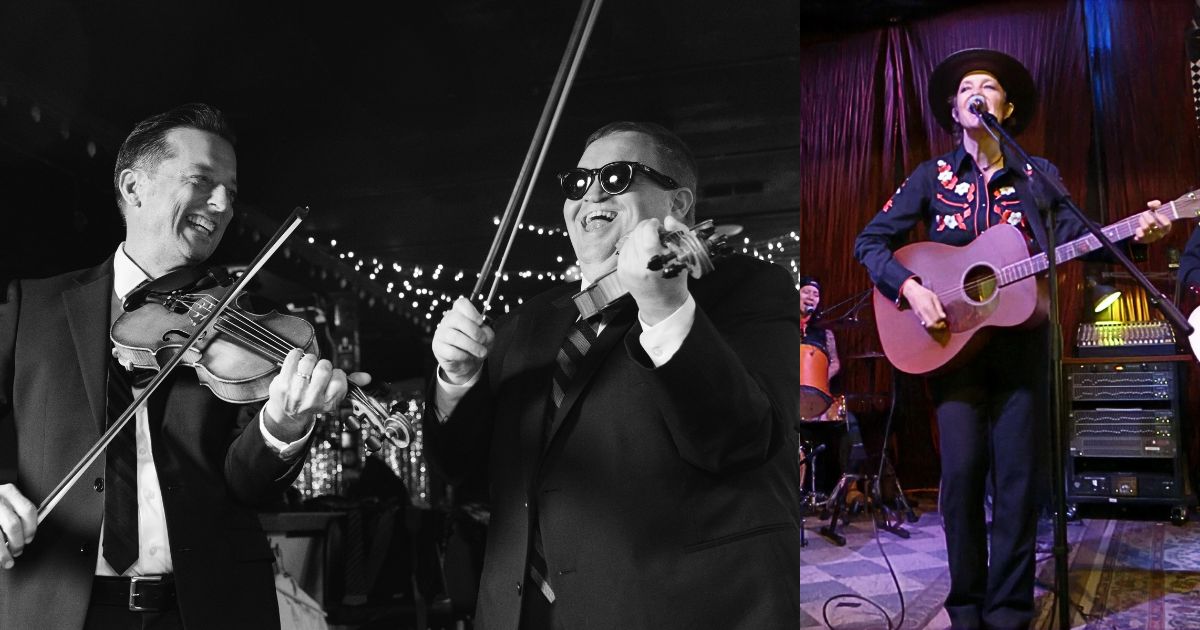
You won’t want to miss “With a Vamp In the Middle,” a brand new single from Jason Carter & Michael Cleveland from their just announced debut duo album (due in March) that premiered on BGS earlier this week.

It’s all right here on BGS. Scroll now to find all these songs and more, because You Gotta Hear This!

Dustin Brown, “Heartless”

Artist: Dustin Brown
Hometown: Moody, Texas
Song: “Heartless”
Album: Dustin Brown
Release Date: March 28, 2025 (album)

In Their Words: “Everyone comes into this life clean, unmarked, and full of love. Unfortunately, on the other end, some come out dirty, marred, and heartless. This song comes from a place of resolve, in accepting that at times you must be a little crazy especially when dealing with folks that suffer from a heartless nature. I suppose it’s a redemption song about self-doubt and how powerful of a driving force that can be in life and love.” – Dustin Brown

Track Credits:
Dustin Brown – Lead vocal, songwriting, guitar
Rachel Cole – Backing vocals
Joel Allan – Lead guitar
Christopher Smith – Drums
James Bartosh – Bass


Carter & Cleveland, “With a Vamp In the Middle” (Live at the Grand Ole Opry)

Artist: Jason Carter & Michael Cleveland
Hometown: Nashville, Tennessee and Charlestown, Indiana
Song: “With A Vamp In The Middle”
Album: Carter & Cleveland
Release Date: February 5, 2025 (single); March 14, 2025 (album)
Label: Fiddle Man Records

In Their Words: “This song has always felt like a national anthem for fiddle players and it’s our tribute to the legendary John Hartford and Vassar Clements. It’s long been a favorite for Michael and me to jam on – perfect for twin fiddles and a blast to improvise and trade licks on. Having Darrell Scott’s harmony vocals on [the studio version of] this track was an absolute honor, and his contribution took it to another level. I hope y’all enjoy it!” – Jason Carter

More here.


Ashleigh Flynn & the Riveters, “Drunk in Ojai”

Artist: Ashleigh Flynn & The Riveters
Hometown: Portland, Oregon
Song: “Drunk in Ojai”
Album: Good Morning Sunshine
Release Date: April 4, 2025 (album)
Label: Blackbird Record Label

In Their Words: “This song wrote itself – it’s a true story! Nearly a decade ago, I crashed Nancy’s (record producer) wedding with our mutual friend who had introduced me to her. I had played a solo gig the night before at the Deer Lodge in Ojai. After the show, the owner at the time was losing his mind (in a good way) because the entire cast of Mad Men had just shown up for dinner – likely to celebrate the show wrap. He came up to my friend and me, and invited us to the bar, as we all marveled at ‘Don Draper and Co.’ filing into the back banquet room.

“The owner proceeded to offer us a taste of nearly every tequila at the bar after which he pointed us toward the late-night hang, ‘The Cantina,’ where, for better or worse, we continued to imbibe tequila. As the night wound down, we opted not to drive ourselves back to the hotel, because we were clearly too tipsy. We asked the Cantina bartender for taxi suggestions and she handed us a card that simply said ‘Dutch’ and included a number… We called the number, and minutes later an off-white Bronco with ‘Ojai Fire and Rescue’ painted in red across the doors pulled up. ‘You gals called for a ride?’

“When I got to the wedding the next day, a friend there asked, ‘So what did you do last night?’ I said, ‘I got drunk in Ojai. I didn’t know where I was. Caught a ride from the fire and rescue; the driver’s name was Dutch.’ That friend literally sang that line back to me and that was that – took five minutes to finish it as soon as I got my hands on a guitar. The band adds, ‘We are grateful to Dutch for getting us home safely.'” – Ashleigh Flynn

Track Credits:
Ashleigh Flynn – Lead vocal, acoustic guitar
Nancy Luca – Electric guitar
Carmen Paradise – Bass
Leila Chieko – Drums
Kat Fountain – Harmonica
Kathryn Claire – Harmony vocals, violin
Jenny Conlee – Piano, organ

Video Credits: Art direction, animation by Lupo Studio.
Videography, editing by Polly Lisicak, Cai Indermaur.
Special thanks to the staff of Laurelthirst Pub and Music Portland/EchoFund.


Nick Taylor, “Lover’s Dream”

Artist: Nick Taylor
Hometown: Austin, Texas
Song: “Lover’s Dream”
Release Date: February 14, 2025

In Their Words: “I wrote ‘Lover’s Dream’ in the early days of a relationship. I was living in a first-floor apartment that was basically a cave and came home one night with a song in my head. I sat down in the dark and played the song all the way through without stopping. When I woke up in the morning I realized I hadn’t written any of it down, so I got to work trying to reconstruct what I could remember. I still have no idea what how similar this version is to what I played that night, but I have been waiting a long time to release it out into the world as a single.

“We recorded this one in Nashville, just me and my guitar in the studio with Bryce, the recording engineer. We set up in the middle of the biggest room and it felt just like the first time I played it, quiet and still. The song is mostly stream of consciousness, reflecting on my own faults while declaring a true and lasting love – which is any lover’s dream I think, to be accepted and loved with all their imperfections.” – Nick Taylor 

Video Credits: Produced by Charlotte Avenue Entertainment.
Shot by Dominick Sotis and Hayden Westberry.
Color Grading by Color Sync Visuals.


Unspoken Tradition, “Katie and Burl”

Artist: Unspoken Tradition
Hometown: Cherryville, North Carolina
Song: “Katie and Burl”
Release Date: February 7, 2025
Label: Mountain Home Music Company

In Their Words: “When I was a kid, probably 11 or 12 years old, there was a local music venue called Leatherwoods in Shelby, North Carolina. It was in the back of this old comic book store and there was a door in the back that opened into a listening room. Acoustic Syndicate used to play there all the time. My dad knew the McMurry boys and fished with Steve some when I was a kid, so we went to Leatherwoods every time they played there. Steve wrote ‘Katie and Burl’ for their first album and this was about the time I got my first guitar. I learned several songs on that album and ‘Katie and Burl’ was one of them. I was so honored that Steve was willing to come sing a verse on our version of his own song!

“I’ve always been drawn to songs that have a sweet but sorrowful sense of loss. It’s a song about two young people against the world, experiencing joy and sadness along the way. Symbolically, Burl the farmer returns ‘to the earth where he came from’ and today he wouldn’t understand the farm he once owned as it’s been repurposed for modern men. In fact, when I wrote ‘Land‘ back in 2016, the themes of ‘Katie and Burl’ served as inspiration: that our existence here is both meaningful and insignificant in the grand scheme of things.” – Audie McGinnis

Track Credits:
Audie McGinnis – Acoustic, lead vocals;
Steve McMurry – Guest vocals
Sav Sankaran – Bass, vocals
Tim Gardner – Fiddle
Zane McGinnis – Banjo
Ty Gilpin – Mandolin


Photo Credit: Ashleigh Flynn by Christine Lupo; Jason Carter & Michael Cleveland by Sam Wiseman.

WATCH: Carter & Cleveland, “With A Vamp In The Middle”

(Editor’s Note: Today, award winning fiddlers Jason Carter and Michael Cleveland announce their upcoming debut duo album, Carter & Cleveland, out March 14. To celebrate the announcement and the project’s lead single, we’re premiering a special live performance of the track, “With A Vamp In The Middle,” from the fabled stage of the Grand Ole Opry.)

Artist: Jason Carter & Michael Cleveland
Hometown: Nashville, Tennessee and Charlestown, Indiana
Song: “With A Vamp In The Middle”
Album: Carter & Cleveland
Release Date: February 5, 2025 (single); March 14, 2025 (album)
Label: Fiddle Man Records

In Their Words: “This song has always felt like a national anthem for fiddle players and it’s our tribute to the legendary John Hartford and Vassar Clements. It’s long been a favorite for Michael and me to jam on – perfect for twin fiddles and a blast to improvise and trade licks on. Having Darrell Scott’s harmony vocals on [the studio version of] this track was an absolute honor, and his contribution took it to another level. I hope y’all enjoy it!” – Jason Carter

Credits:
Jason Carter – Fiddle, vocals
Michael Cleveland – Fiddle
Alan Bartram – Bass, harmony vocals
Cory Walker – Banjo
Bryan Sutton – Guitar
Harry Clark – Mandolin


Photo Credit: Sam Wiseman

Watch Post Malone Make His Grand Ole Opry Debut in New Video

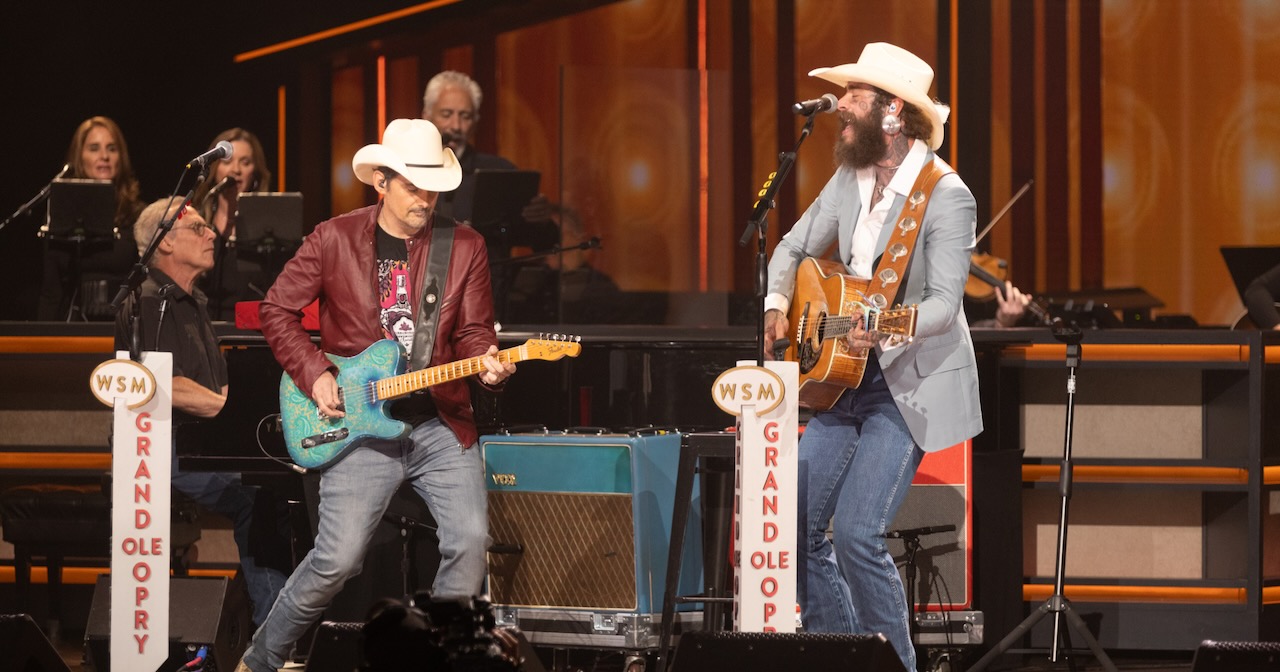
Back in August 2024, in tandem with the release of his earth-shaking country debut, F-1 Trillion, Post Malone took to the heralded Grand Ole Opry stage for the very first time. The special edition show, “Post Malone & Friends Live at the Opry,” was filmed for an Opry Live and Circle Now livestream broadcast and featured performances by Malone, Lainey Wilson, Vince Gill, Brad Paisley, The War and Treaty, and many more.

As usual, the incredible Opry content team was backstage and on hand for the momentous evening, capturing Malone’s debut as they do for each artist who takes to the stage, stepping into “the circle” – the inset portion of stage taken from the Ryman Auditorium in downtown Nashville and installed into the floorboards of the Grand Ole Opry House. Hundreds, if not thousands, of iconic artists, musicians, and celebrities have strode the hallowed circle.

“Stepping into the circle today is very much like the Super Bowl,” Malone says in the video released last week. “It’s terrifying, but it’s so exciting – and I’m ready to rock.”

And rock he did, bringing the drive and swagger of his mainstream background onto the Opry stage, packaged in rugged, honky-tonkin’, and fun F-1 Trillion vibes. The video showcases just how excited and even giddy Malone is to share in the legacy of the Opry. It’s a common, nearly universal feeling for every artist – of every level and every genre –who has stepped onto that stage.

With words and thoughts from Wilson, Gill, and Post Malone himself, the video includes sweet backstage moments, clips of once-in-a-lifetime performances, and a heaping helping of the welcome and hospitality of the Grand Ole Opry family. It’s a testament to how open and warm this genre can be to newcomers and visitors in these styles – when it wants to be.

Enjoy a taste of Post Malone’s iconic Opry debut above and read more about F-1 Trillion and Post Malone’s history with the genre on Good Country here.


Photo Credit: © Grand Ole Opry, Photo by Chris Hollo. Left to right: Brad Paisley, Post Malone.

‘Sweet Critters’ Shows a Deepening of Caleb Caudle’s Point of View

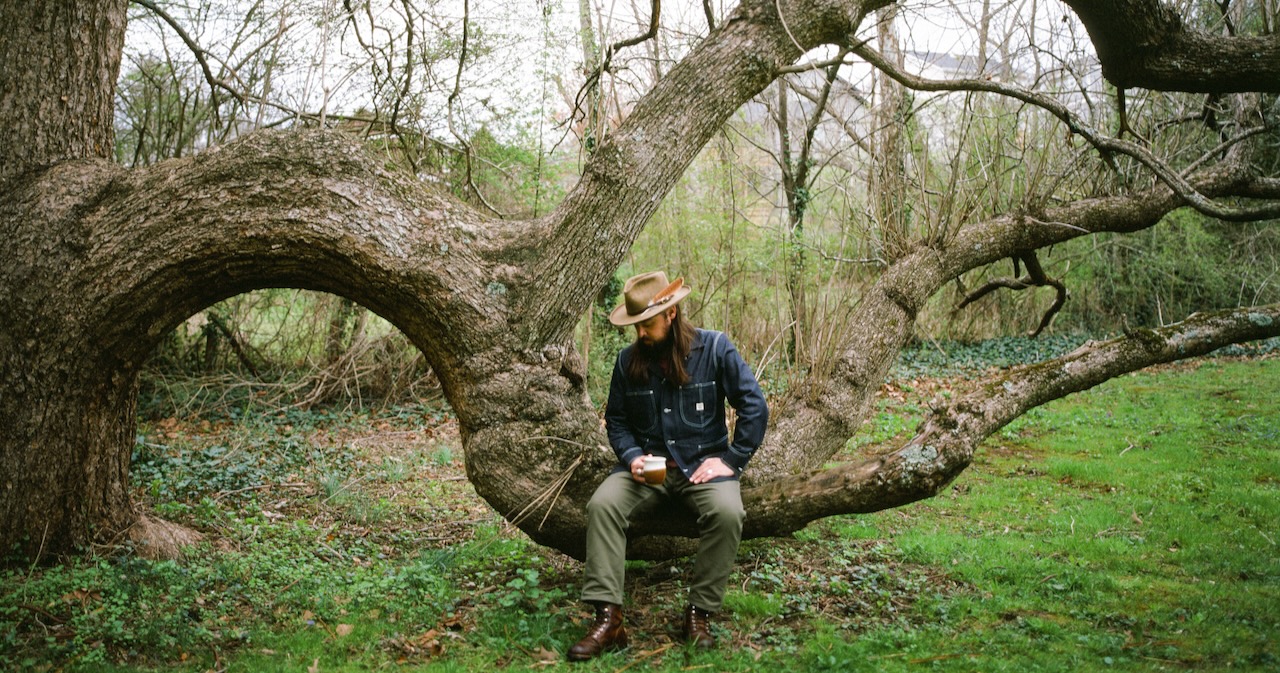
On his new album, Sweet Critters, Caleb Caudle has no desire to reinvent himself. The North Carolina native has spent his career trying to move closer and closer to what is already inside of him. “This well is getting deeper… more nuanced,” he explains. “And I really enjoy that. I’m not trying to be repeat myself, I’m trying to be myself.”

Dedicated to friend and former bandmate Alex McKinney, who recently passed after a battle with cancer, the album rings out with appreciation for the everyday experience of life. With gratitude and grit, Caudle explores both his external and internal world as he continues to travel the hardfought and beautiful path of a touring troubadour.

Reaching Caudle by phone during his headline tour in support of Sweet Critters, he explained that on days off from the road his band likes to rent a spot out in the woods somewhere, hunker down, cook meals, and play music and board games to recharge for the shows ahead. It was during one of these recharge days that he caught up with BGS.

This album was produced by John Paul White, former member of The Civil Wars. How did that come about and what did he bring to the record?

Caleb Caudle: John Paul and I have been buddies for a long time and we had always talked about working together. For this record, our schedules finally synced up and we had the chance to do it. I traveled to Alabama with my road band. It was my first time recording with my live band and that brought something special to the record.

With John, he’s such a great singer and he pushed me harder than anyone has pushed me as far as the vocals on this recording. I think there are things he hears that other folks don’t hear, so I trusted him. I liked that atmosphere of being pushed to go further, and I really enjoyed the process.

You’ve been doing this work for a long time. This is your sixth studio album. Is there anything new, thematically, that you see in this collection, or any new places you tried to reach?

It’s kind of in a similar world to my other albums… you know, it’s love, it’s loss, it’s empathy, it’s addiction, it’s anxiety. I think there’s some more character studies than I have done in the past, which is an exercise I kind of started doing more of on my previous record, Forsythia. At this point, I’m not trying to reinvent myself so much as I’m trying to deepen it all. Some of the habits you create end up just being your style and I think that’s what’s kind of happening at this point in my career.

A lot of the record is about endurance, whether about me or through the eyes of another character – which is usually me, anyway. For example “The Devil’s Voice,” it’s an empathetic look at addiction, because I’ve dealt with that. I try not to judge the characters, I try to stay out of it in a way and let them just tell their stories. Another song, “The Brim,” is a love song that I wrote for my wife, which is also about endurance in a certain way, about endurance in a long relationship.

And then there’s career endurance. I think “Heaven Sometimes” is about that. You know you’re going to have an off night here and there, and this song is about trying to recognize that the art that I’m making is more important than any other money I might make from it and just focusing on that concept.

Sonically, where did you and White want to take this record? As far as production, did you have any specific references you were trying to achieve?

I have been trying to figure this thing out for a while where I’m trying to marry traditional instrumentation with less traditional instrumentation and sound. There’s not a lot of stuff going on in the world of music that I listen to which has vibes of fiddle and old-time string instruments blended with other electric sounds. I’m trying to mix it up and blend it to create something new and that was one of the great things about using my live band for this record. I’ve been able to bring that vision out on the road with me.

Generally, when it comes to production, I just try to stay open-minded and completely available in the moment. I try to go where the music is leading me, and stay out of it a little bit.

Speaking of your live shows, you’ve been on a big headline tour in support of this record. How has that felt?

The songs are already starting to feel more lived-in. We’ve all been playing together long enough where we aren’t really thinking about the songs anymore. We really know the material. So we are doing a bunch of different interlude stuff, and we aren’t really putting borders around anything, which feels really nice.

We are doing our Grand Ole Opry debut in November. I can’t remember not knowing what the Opry was, because everyone around me would listen to it when I was growing up. I’ve learned as I’ve gotten older that there is no one moment that can change the trajectory of your career, but I’ve gotten worse calls! And John Paul is going to come up and sing with me, so I’m excited to share that moment with the people I love.

I absolutely love the Allison Russell and Aoife O’Donovan features on this album! “The Brim” is my favorite track. Can you tell me how those guest appearances came about?

Allison came to an in-store performance I did and we talked afterwards. She was so great. I saw her again over in London and I asked if she wanted to sing on on my record and she said yes, so that was a treat.

With Aoife, I didn’t actually know her, but [she and] John Paul are friends and her voice was perfect for that song. I ended up meeting her at the Long Road Festival and got to thank her for making that recording more beautiful.

Before I let you go, I’d love to know what has been inspiring you lately?

Right now I’m kind of at a spot where this record is my entire existence. My days are: focus on the set, drive back to the AirBnb, and then get up, drive, and do it all over again. As far as art, I really like that new Waxahatchee record, and the new Dave and Gil record… there’s been so much great stuff out lately. We just heard the new Jerry Douglas record and really liked that.

But for me, nature is my number one inspiration and I’m always seeking it out. I like going to cities, but when I’m home I really like being home. I really like the land in North Carolina and when I’m there I feel like I’m back on my axis, I feel centered. It’s really nice and I always find my inspiration.

(Author’s Note: Between our interview and its publication, Hurricane Helene devastated Caudle’s beloved home region in North  Carolina and surrounding areas. We reached out to Caudle, who has been at the forefront of rescue and relief efforts, for comment and for folks who are interested in helping, he wanted to encourage donations to BeLoved Asheville. Find more ways to help Hurricane Helene relief here.)


Photo Credit: Joseph Cash