Double-, triple-, quadruple-threats are not uncommon in country music, not in the least. It’s a frequent occurrence, tripping over or into a country artist that’s a songwriter, vocalist, multi-instrumentalist, writer, thinker, and so much more. In fact, until more recent decades, wearing many hats was seen as a sort of prerequisite to making hillbilly music. After all, this is “just” country music, it’s got a wide and deep DIY tradition, and the folks who make it often have to also load in the gear, sell the merch, post on social media, and produce the albums, play the demos and scratch tracks, write the lyrics, and otherwise steer the creative ship.
Some of the most successful artists and most original voices in country music are perfect examples of how multifaceted skill sets translate directly to star power. You may not need to be a Telecaster shredder to make it onto the radio or you may not need to be able to pick like Mother Maybelle to make a living, but if you can back up your songs with mighty playing, it certainly translates with audiences.
From Chet Atkins, Dolly Parton, and Wanda Jackson to Charlie Daniels, Willie Nelson, and Bonnie Raitt, here are just a few legendary examples of hugely successful country artists who are or were excellent musicians and instrumentalists, too.
Chet Atkins
A record company executive, producer, and pioneer of the “Nashville Sound,” Chet Atkins was also a one-of-a-kind guitar picker, renowned across the globe for his unique style – which was inspired by Merle Travis. Atkins certainly made “Travis picking” his own, arguably eclipsing all of his predecessors and continuing to influence guitarists today. An inductee of the Country Music, Rock and Roll, and Musicians’ Halls of Fame, Atkins’ impact is hard to understate and his resume includes work with Dolly Parton, Elvis Presley, Hank Snow, Waylon Jennings, and countless others.
DeFord Bailey
One of the first superstars of the Grand Ole Opry, DeFord Bailey was a world-class harmonica player who was also the first Black performer on WSM’s fabled stage. Some sources also credit Bailey as being the first musician to record music in Nashville. However you approach his career and music, Bailey was a seismic presence in the earliest days of country. Born in 1899, Bailey faced constant racism, bigotry, and marginalization on the Opry, in Nashville, and as he traveled and performed. He passed away in 1982 and was posthumously inducted into the Country Music Hall of Fame in 2005.
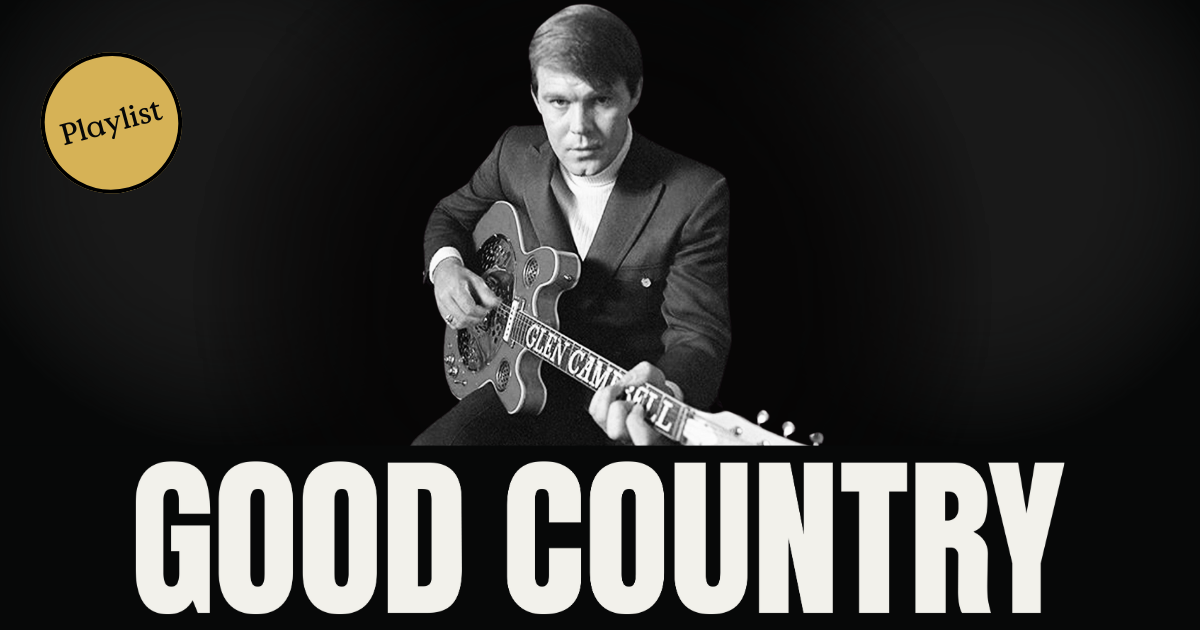
Glen Campbell
Even at the highest heights of Glen Campbell’s superstardom, he refused to let his superlative instrumental skill take a backseat to his roles as frontman, songwriter, Hollywood actor, TV star, and tabloid veteran. Campbell’s approach to country music as a true multi-hyphenate celebrity bridged generations, connecting the hardscrabble, DIY generations where multiple skills were necessary to make a living to the modern era, where he helped pave a way for famously multi-talented picker/singer/writers like Vince Gill and Brad Paisley to not be pigeonholed as one thing or the other.
Ray Charles
Any conversation around or collection of superlative country pickers and musicians would be glaringly incomplete without the inclusion of Ray Charles. His incursions and experimentations in country music are many and infamous. His 1962 album, Modern Sounds in Country and Western Music is routinely listed as one of the best country albums of all time. He’s worked with and performed with Willie Nelson, Merle Haggard, Ricky Skaggs, Travis Tritt, Johnny Cash, Glen Campbell, and many, many more. Plus, his country forays demonstrate a deep, holistic understanding of the genre. Charles is a quintessential country multi-hyphenate and country-soul in the modern era would feel especially lacking without his seminal contributions to that tradition.
Charlie Daniels
It’s hard not to wonder what young, hippie, “long-haired,” Vietnam War-opposing fiddler Charlie Daniels would have thought of his older self, and his more harebrained and often hateful beliefs later in life. But the controversial and outspoken musician, at all points of his career, was a picker’s picker. Over the course of his life he performed and recorded with Earl Scruggs, Bob Dylan, Leonard Cohen, and many more. But his chief contribution to American roots music may just be his fiery, unhinged fiddling on “The Devil Went Down to Georgia.” Just wander down Lower Broadway in Nashville on any given Saturday night to feel the impact of that particular show-stopper. In this clip, he chats and performs “Uncle Pen” with Scruggs and Del McCoury.
Vince Gill
That buttery voice, that stank-face inducing chicken pickin’, that high, lonesome sound – Vince Gill is all at once country and bluegrass, Nashville and Oklahoma, western swing and old-time fiddle. Whether with The Eagles, preeminent pedal steel guitarist Paul Franklin, the Time Jumpers, or so many other outfits, bands, and iterations, Gill is simply right at home. Because, at his core, he’s just a picker. He may play arenas, but he knows he belongs at 3rd & Lindsley or the Station Inn. Or Bluegrass Nights at the Ryman. A quintessential picker-singer-frontman, Gill continues to define the myriad ways country stars can maintain their selfhood and personality – instrumentally and otherwise – even in their wild successes.
Merle Haggard
Speaking of chicken pickin’, country’s most famous Okie was a shredder, too. A sad song, a glass of (misery and) gin, a Telecaster, and the Hag – that’s all we need, right there. Merle’s playing style, even at its most technical and impressive, was simple and down to earth. You could tell he cut his teeth playing bars, fairs, and honky tonks. You could almost hear him pulling himself up by his bootstraps as he played.
Wanda Jackson
The Queen of Rockabilly has been slaying rock and roll, hillbilly music, and the guitar for more than seventy years. In 2021 she released her final album, Encore, when she was 84 years old. It features her signature passion and fire – and performances by Elle King, Joan Jett, Angaleena Presley, and more. Jackson has been representing the vital contributions of women to rockabilly and rock and roll for her entire career, just as often commanding the stage with her growly, entrancing voice and her powerful right hand.
Willie Nelson
Who would Willie Nelson be without Trigger? Without a tasty, less-is-more, nylon-string guitar solo? For decades, Nashville, Music Row, and guitar players around the world have been emulating his particular sound as a guitarist – whether they know it or not. Sure, he’s a hit songwriter, a star and front-person, a collaborator of Snoop Dogg and Frank Sinatra, and a connoisseur of fine bud, but perhaps more than all of these accomplishments, Willie is an impeccable picker. He can hold his own with the best of the best, because he is the best of the best.
Brad Paisley
Brad Paisley’s fame crested at perhaps the perfect time for him in country music, combining a rip-roarin’ guitar playing style with a sound that was entirely trad while carrying touches of the bro country wave that was about to inundate the genre. As such, he was able to build a career on the diversity of his skill set, before Music Row and the power behind it began prioritizing music that didn’t need to be musical and voices that didn’t need to be singular. Luckily, Paisley is both those things and more, and despite the many eyebrow raising moments across his career, our faces more often show shock at his mind-bending skill as a guitarist than anything else.
Dolly Parton
How is it that Dolly Parton can play so many instruments so impeccably with those iconic acrylic nails!? Nowadays, you are just as likely to hear Dolly performing to a track – yes, she does lip sync and pantomime playing along with recordings – but don’t get it twisted, she absolutely can play a passel of instruments from her beloved “mountain music” traditions. She plays guitar, banjo, auto-harp, dulcimer, and has even been known to pick up a bedazzled saxophone from time to time – though we can’t guarantee she actually knows how to play that one, we’re still blown away.
And what about thatone viral video with Patti LaBellewhere they play their acrylics like washboards? Dolly can make music with just about any instrument.
Bonnie Raitt
How many people do you think enjoy Bonnie Raitt’s soulful blues and Southern rock sounds without knowing she’s also often the one playing the guitar solos and making that bottleneck slide weep? Raitt is a Grammy winning songwriter, a fantastic vocalist and song interpreter/collector, and – above all, in this writer’s opinion – a superb guitar picker, especially playing slide. She can hold her own with just about anyone, and she has. Her phrasing and use of melodic space demonstrates that she’s been honing her craft for her entire life. That taste can’t be taught, it has to be found. Boy, has she found it.
Marty Stuart
Marty Stuart’s long, fabulous, superlative career began with him filling the role of sideman for such luminaries as Lester Flatt, Johnny Cash, Vassar Clements, and Doc Watson. He plays guitar and mandolin, working up his chops as a youngster with pickers like Roland White as his mentors. When his solo career took off after his Columbia debut in the mid-eighties, his ear for fine picking remained present throughout his music – however far afield from those early bluegrass and country days he may have traveled, stylistically. Whether bringing in psychedelic surf sounds or Indigenous flavors of the American West, Stuart’s catalog of music centers virtuosity that’s never gratuitous. And his band, the Fabulous Superlatives, featuring crack guitarist Kenny Vaughan and multi-instrumentalist Chris Scruggs, represent a high level of picking prowess, too.
Tedeschi Trucks Band
By many measures, Derek Trucks is the world’s foremost living slide guitarist, but don’t overlook powerhouse vocalist and co-band leader, Susan Tedeschi in order to venerate Trucks! Both started playing as youngsters – Trucks when he was a kid and Tedeschi when she attended Berklee College of Music. These two are guitar and blues royalty, helming one of the most impactful modern blues and Southern rock orchestras on the planet. They’re consummate musicians, knowing just how to surround themselves by players who support and challenge, both. Even with their laundry list of personal accomplishments, together, Tedeschi & Trucks – who are also married – are so much greater than the sum of their parts.
Keith Urban
Keith Urban brings a scruffy, down to earth guitar playing style to his polished and glam mainstream country sound. Yes, even as far away as Australia, having instrumental chops means having country currency. When he moved to Nashville in the early ‘90s, with a few Australian radio hits and awards under his belt, he immediately found work as a side musician and co-writer in Music City. It wasn’t long until his star ascended stateside, too – and then, as quickly, around the world – bolstered by arena-ready guitar. Now readying his first album since 2020, Urban shows no signs of slowing down, with the music or the picking!
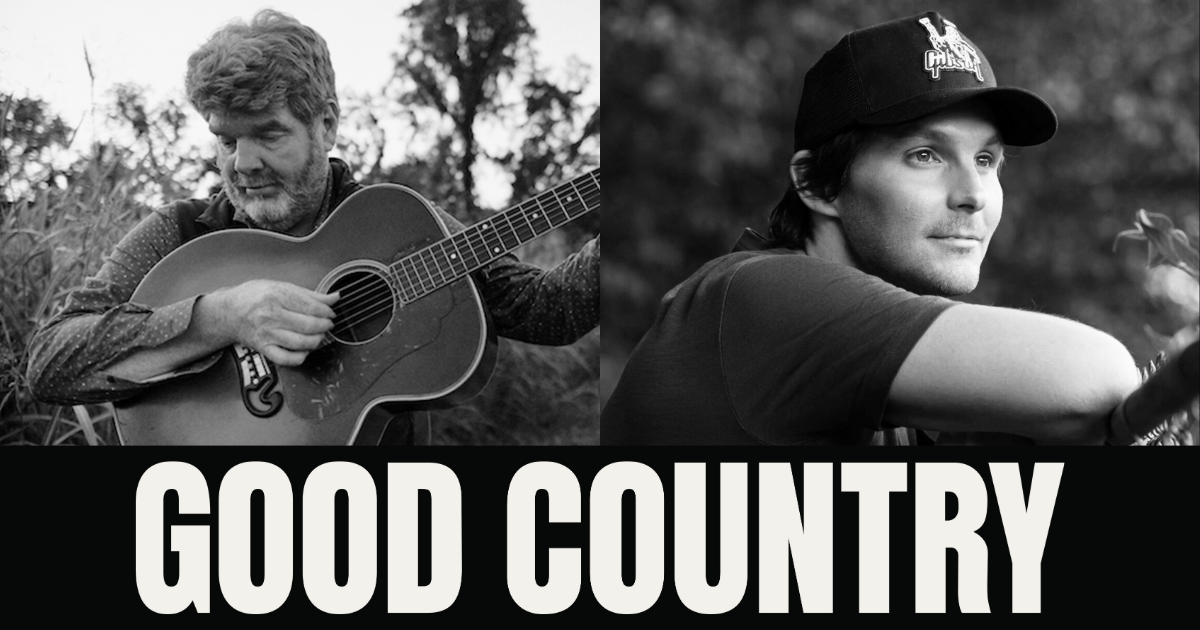
Mississippi is well-known for storytellers who craft in multiple mediums. From songwriter-guitar shredder-photographer Marty Stuart, to filmmaker-actor-business owner Morgan Freeman, to author-TV personality-business magnate Oprah Winfrey, the list of multi-hyphenates originating in the state is formidable. Hailing from different parts of the state and from different generations, Charlie Worsham and Mac McAnally are both known as consummate songwriters, instrumentalists, storytellers, singers, producers, and prolific performers.
McAnally frequently jokes that spare time is the chief export of the state of Mississippi, and while hyperbolic, this does underline the fact that it takes time and space to become an expert music creator. Whether Mississippi afforded them both the opportunity to develop their crafts or whether their own obsessions forced them to carve pathways to success for themselves, we’ll never know.
The way the pair speak about playing instruments is reminiscent of the youthful compulsion with which some people describe playing video games or sports. Both Worsham and McAnally started very young. By age 12, Worsham was on the Grand Ole Opry’s hallowed stage. McAnally grew up playing in bars and honky tonks on the Tennessee state line and started playing sessions in Muscle Shoals studios by his early teen years.
In an industry rife with surly personalities, both McAnally and Worsham have reputations of kindness that precede them. It is no coincidence that both of their calendars are fully booked with tours, both solo and in support of other artists and acts, studio work, and various and sundry creative projects.Worsham’s most recent solo release, Compadres, is a who’s who of modern Nashville duet partners; he’s also a current member of Dierks Bentley’s band. McAnally has a fully packed solo tour schedule after losing his long-time collaborator and Coral Reefer Band leader, Jimmy Buffett, just last year and is currently collaborating with Disney on updating the Country Bear Jamboree.
Good Country spoke with Worsham and McAnally from their homes in Nashville. Worsham was making Valentine’s Day memes, preparing for a run of solo shows, and balancing it all with a toddler in the house. McAnally was fresh off a week-long run of shows in Hawaii co-headlining with fellow multi-hyphenate, Jake Shimabukuro, and gearing up for a run of solo shows himself.
The discussion was a mutual admiration society as they are clearly big fans of each other’s work. They talked about their progressions to becoming multi-hyphenates, the benefits of being able to pivot, what their younger selves would think about their careers, and in a Substack-exclusive epilogue, they paid tribute to the fellow multi-hyphenate greats that we lost this past year, Jimmy Buffett and Toby Keith.
As you both became multi-hyphenate creators, were there people in your pasts who either discouraged you from this or encouraged you towards this?
Mac McAnally: Well, I began just by being pretty much fascinated with everything. As far as the multi-instrumentalist part of it, that came from my dad, because he kept the books at an auction and he came home every week with some musical instrument, and it wouldn’t be connected to the last one that he brought. He was just fascinated with music, too, so he would trade up a saxophone one week. He’d have a clarinet the next week, a fiddle the next week. And then drums, which he was kind of glad I didn’t stick with. I was always interested and fascinated by what kind of sounds they made, whether I could help make them or not.
When it became the studio application, I don’t wanna say I was discouraged, but my application in Muscle Shoals was that there wasn’t really a dedicated acoustic guitar player. There was a rhythm section at every studio. Broadway had a rhythm section. Fame had a rhythm section. Muscle Shoals Sound had a rhythm section. Wishbone, where I was working mainly, had a rhythm section. But none of them had a dedicated acoustic player, so it allowed me to go cross-pollinate those different rhythm sections and learn with different producers.
I wouldn’t say I was discouraged, but initially, I was encouraged to be primarily an acoustic player. But I think just because I’m so fascinated with all of it, I was paying attention to all of those jobs; to what the engineers were doing, to what the producers were doing. And then, as I began to have opportunities to do some of those other jobs later on, I certainly believe that having done a few of them gave me more consideration or compassion for everybody that was doing them. I think that it is a good thing to go through life with respect for everybody, and how they’re doing their job. So the more jobs you’ve done, the more you can identify with individual situations of those jobs.
Charlie Worsham: I couldn’t agree more on that last statement. You know, I always have felt that way, and all my favorite people in music are people who have worn different hats over the years, because they have that added perspective and appreciation. And I think it was similar for me, Mac. I was curious. I wasn’t really good at sports, so for me instead of picking up a new sport, it was picking up a new instrument. I was fortunate to have supportive parents who would help me acquire that instrument and acquire a connection to someone who could give me lessons, or a book or video tapes to learn from, or whatever, or just be playing along to records.
That was a big driver for me – and I don’t think anyone ever discouraged me in a similar way. It wasn’t discouragement so much as an encouragement in the other direction, which was because I was a bluegrass kid. There were a handful of people in the bluegrass world who sort of said, “Hey, if you want to be a fiddler, or if you want to be a banjo player, you need to dedicate everything you got to that one instrument,” and I figured out pretty early on I that I was too curious about the full picture, like you said. I wanted to get a little bit of understanding about it all, especially once I got the bug for recording equipment.
I had a chance to come to Nashville when I was 13 and make a bluegrass record. And this guy named Bobby Clark, who played mandolin with Mike Snider at the time, had a 2-inch tape machine in the guest bedroom. I walked in, saw that thing, and I was hooked. It was game over. And so, of course, my new mission became that I had this room full of instruments and I needed a way to record them. That’s what got me into being a songwriter. It all kind of snowballed, because I ran out of fiddle tunes to record. I was like, well, I need to write something now that I’m running out of material to record. By the time I got to Nashville, my motto in those early years was, “Say yes, ‘til you can afford to say no.”
I really wanted to be the big ol’ electric solo rippin’ guitar player. But everybody was an electric guitar player, like you said. A lot of times they needed an acoustic player or the band needed a harmony singer and someone who could play mandolin. So it was a way to always be able to pay the rent. And then, as I got more and more connections, and I guess my stock rose, then I could afford to choose a little bit more what I wanted to do specifically. Looking back, I wouldn’t have wanted to do it any other way, because I love being able to pivot.
I have a question for your 16-year-old selves. What hat do you wear today that you would be most surprised about?
CW: So if 16-year-old us popped into the future and said, “Wow, I didn’t see that coming?” Man! What’s yours, Mac?
MM: I probably didn’t understand what record production was, so it would have seriously surprised my 16-year-old self. A), That there was a job that was really what this is, and B), I wanted to do it. My 16-year-old self just wanted to be a guitar player in a band. At the time I was kind of having to be a piano player in the band, because I knew the notes on the piano and that pretty much disqualified me as a guitar player. Everybody played a little guitar in North Mississippi and almost nobody played the keyboard. If you had a keyboard, you were a keyboard player. I had a Fender Rhodes, which meant I was gonna load it by myself every night and blow my back out by the time I was 20.
I didn’t want to be a singer. I didn’t think I could sing. I wanted to be a guitar player, and I didn’t even want to be the guy playing the solo. I honestly think that’s probably what’s got me so many gigs in bands, because I would always just sit and play rhythm for two hours while somebody jammed over “Down By the River.” I was just trying to make it groove.
My adult self is fueled a little bit by my ignorant teenage self, and like you, I wasn’t necessarily inclined to sports, but I was a big enough guy that they expected me to play football in Belmont, Mississippi. I was blessed by the fact that Belmont, Mississippi did not own a helmet that would go on my head – even in junior high school. My head is huge, and the high school coach took me into the equipment room and said, “Son, see if you get any of these high school helmets on that head of yours. You’re a big boy, and we’d love to have you out on that field.” And I sat and mashed as hard as I could. It looked like Mr. Peanut. I went trotting out on the field, and the coach said, “No, that ain’t on, son.” The face mask was still over my hairline, you know, so I didn’t get to play football.
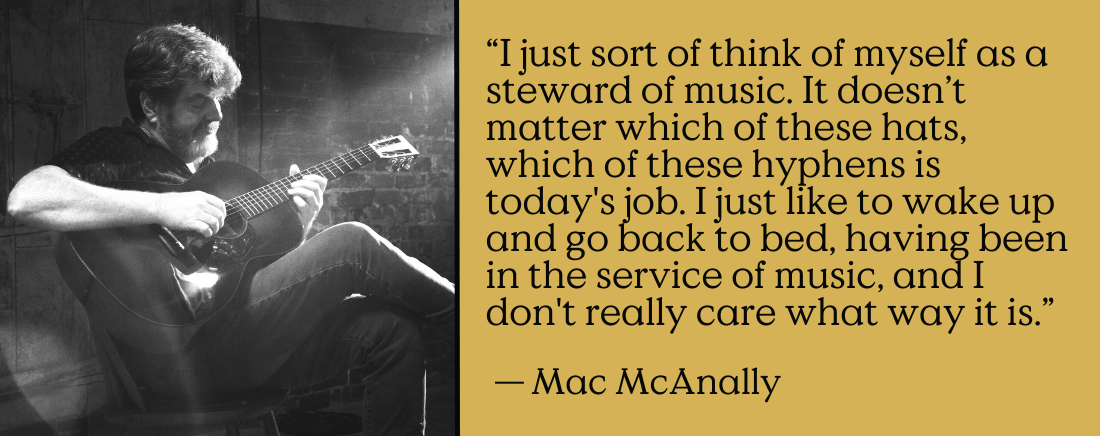
But a record producer, somebody that is in the service of the music and in the service of helping somebody’s dream come true, I didn’t understand what that job was. I don’t view myself as particularly good at it, but I relish the fact that I get to do that on occasion. I just sort of think of myself as a steward of music. It doesn’t matter which of these hats, which of these hyphens is today’s job. I just like to wake up and go back to bed, having been in the service of music, and I don’t really care what way it is.
CW: It’s interesting, because I think I’m closer in my mindset today, for the first time, to my 16-year-old self than I’ve been since then. In that, like you, I just wanted to be where the music was. I wanted to be involved. By my early twenties, there was a part of me that if I brought my 22-year-old self to the present he’d be going, “Where’s the building you own on Music Row? And where’s your wall full of plaques and all your 10 number ones?” I was pretty fired up by then to go out and change the world and be a star. But at 16, I just wanted to be around the music. I wanted to get to Nashville and be in those rooms. I think that the part of me that’s fueled by gratitude and excitement, that 16-year-old self, would be blown away by how much music I get to make and the people who I get to make it with. And the fact that the liner notes legends that I revered and learned from know me and that people like Vince Gill, who were my ultimate North Star and still are, that they would know me, and even respect what I do, and want me to be around to help.
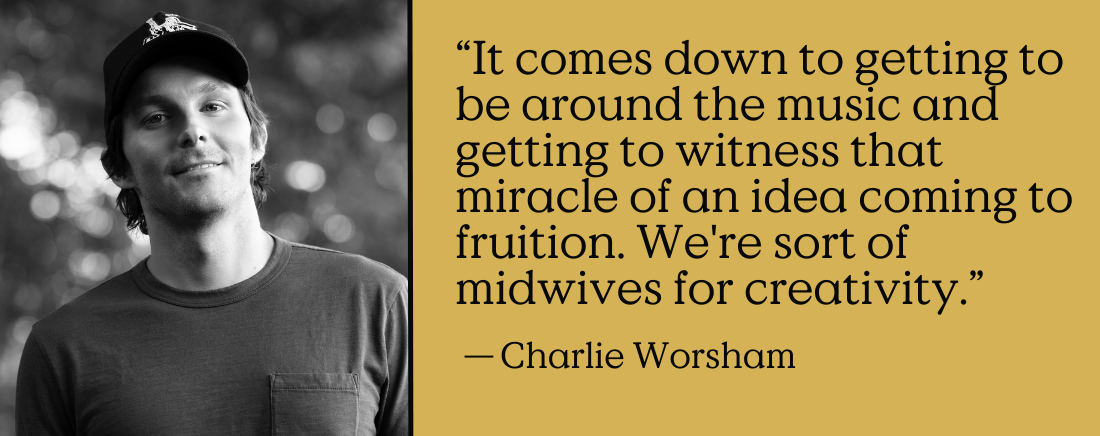
That early 20s self, who just thought I had to have the number ones and thought I had to have it a certain way, has given way to realizing that it’s unfolded in a much cooler way. Had I had that one hyphen, the guy in the spotlight, and if everything had gone the way I thought I wanted it to go, I would not have gotten the chance to do all these other things. Being a big star means that’s really all you have time to do. I’ve had the chance to be on the tour bus with Vince, with Old Crow Medicine Show, or right now with the Dierks Bentley gig. And I’m still hungry for certain things in the spotlight part of the hyphen, but it’s way cooler now – and I have so much more perspective and gratitude. It comes down to getting to be around the music and getting to witness that miracle of an idea coming to fruition. We’re sort of midwives for creativity.
MM: That’s well said, and I almost bet as many of these multi-hyphenates as you talk to, they are gonna have that in common. I didn’t even desire to get a record deal, but I got a record deal when I was 19 and I had a record on the charts when I was 19. I was just really on a dare out there. I was like, “They’re gonna send me back home within 6 months.” I didn’t have any ambition to be in the middle of the stage at all. And still don’t. It’s Old Testament miracles, daisy-chained together, that I ever got a record deal, because I never even played my songs to my parents. I was so bashful.
But had the record deal been a big blow-up kind of deal, as you said, Charlie, it takes up all your time, and it also can shorten your career.
CW: So true.
MM: You can only take the hard spotlight for a few years and then people kinda want you out of their living room.
Charlie, you’re actually a few decades closer to your 16-year-old self than I am. I still have the mindset of that, and I’m grateful every day, really, that I didn’t blow up when I was 19, because I didn’t have a clue how to handle that. It allowed me to watch a bunch more people, how they do it, how they make records to get to play along with a bunch of people, and, as you said so well, I got to play with heroes of mine that I would never dream to be even shaking hands with. All of that is partly a result of not being a big deal when I was 19.
CW: We do it backward, right? Because I think when people hit about 40, that’s when they’re actually finally prepared to be a big star and they’re at their peak. That’s one of the best pieces of wisdom I’ve been fortunate to glean from Vince in particular, as the great mentor that he is. He’s making the best records he’s ever made now, and that’s my own hope, too, that every 10 years I can be proud of the music I’m making today, and I can look back at the music I made 10 years ago. I’ll still be proud, but also part of me cringes a little bit, because that means I’m growing. That’s the dream really.
MM: I couldn’t say it better.
Can you both talk about what being from Mississippi means to you as music makers and in terms of how you developed as music creators?
CW: The older I get, the more I recognize that you can tell the whole story of America, and particularly American music, through the lens of Mississippi. All the really inspiring parts and all the really scary parts and tragic parts of it, too. It’s all wrapped up there, and somehow, it just seems like the folks who came out of Mississippi with music in their heart did just a bang-up job of documenting all of that.
I think back to when I first acquired an electric guitar. It took me a while. I had the banjo, I had the mandolin, and I was playing all the acoustic and bluegrass instruments. But I still wanted to be Vince Gill or Marty Stuart. And I finally got that electric, and it was B.B. King records that I used to learn first. The reason was I thought, “Oh, he didn’t play that many notes. I’ll figure all this out in no time. One weekend and I’ll be playing like B.B. King.” I very quickly learned, no. He might only be playing one note, but the way that he bends a note is like watching Mozart compose.
Growing up [in Mississippi], there was that factor of seeing Marty Stuart on TV, knowing he grew up where I grew up. Same with B.B. King and Pops Staples. And same with you, Mac. I’ve always looked up to you, as well. If there’s anything I know about Mississippi, I know the only thing bigger than our mosquitoes are our stories. We really know how to tell a story.
MM: It is the truth. I got to run around with Jimmy Buffett for years, he was a Mississippi guy who had done well and I respected him. And the same with all of the blues guys. I wasn’t so much a student of blues, but I knew that the blues essentially came out of our delta. I appreciate and honor the fact that it came out of our soil there.
Our home state is fiftieth in most things. We’re the poorest and the least educated, and the most overweight. We get the number 50 a lot. But I also think that the spirit of community– when everyone’s kind of close to one another because nobody’s that far apart. The poor and middle class are almost everybody. So you kinda know your situation and how everything you do affects everybody you know. It gives you a big picture from a small town. That is a big picture that applies to the whole world. There’s a ripple of good or bad, according to whether you’re doing good or bad, it goes out through your community. That, I think, informs our storytelling nature.
If you had to boil it down today and you could only pick one thing that you do, what would you choose?
CW: Today? There’s a part of me that wants to say, “Play mandolin,” as crazy as that sounds. It’s probably number six on the list of things I do. I learned over the years that being on tour and playing that two hours of music every night doesn’t necessarily mean that you keep your chops, because you’re playing the same two hours of material. And so over the last few years, I’ve sort of set a mission ahead of every tour: I want to pick a music nerd project – and last year it was mandolin. So I try to put in a couple of hours every day out on the road, learning solos I always wanted to learn, or just playing along, or jamming with the other guys in the band.
Since I’m sort of in the middle of a mandolin renaissance, there’s a part of me that would be relieved to just go, “Oh, that’s all I’m gonna do is just go get really good at mandolin right now.” Just because it’s what’s fueling my curiosity and my creativity. I also think it’d be impossible for me to not pick songwriting, especially off the heels of us talking about being from Mississippi and the fact that we’re kind of born into telling stories growing up there.
I process so much of my life and my feelings through writing songs. If I don’t get it out, it builds up and it comes out all sideways. One of my life’s mantras is “I ain’t right if I can’t write.”
But most days, to make a long story short, I just want to play guitar. You give me a guitar and I just want to play, and that’s fine by me.
MM: You could just superimpose my voice on what Charlie said pretty much. I love everything that I do. But I just came home from working every day for a long time and literally, before I took my shoes off, I was playing a guitar. Like you said, Charlie, on tour you play what you already know how to play. You don’t really challenge yourself, because you’re spending two hours just trying to make that show be as good as you can.
But I know that I still want to get better. At a certain age, you also want to maintain. I’ve got arthritis in my hands. I remember my grandmother, who was a musician as well, she crocheted all the time, and she crocheted things that we didn’t need, because she was afraid to stop. She was afraid her hands would lock up if she stopped, so we got sweaters and doilies and blankets and bedspreads. She was really just trying to keep her hands active. There’s an element of that in what I’m doing, too. But it also lights me up. I can’t imagine being separated from a guitar for any long period of time. That’s sort of terrifying.
CW: I brought a guitar on my honeymoon. That tells you how bad it is.
MM: Yeah, I was just all week last week with my buddy Jake Shimabukuro, and he’s blessed by the fact that his passion is the ukulele. He literally doesn’t go to dinner without it. Anytime we get in the van to ride from the airport to the hotel, I make a personal bet with myself whether we get to the first speed bump on the way out of the airport before he’s playing. He’s still just as fired up about it as ever, and that’s inspiring to a 66-year-old. And I hope there’s some 78-year-old that’s looking at me going, “Look at that idiot! He’s playing guitar before he sets his suitcase down!”
Even though you’re in different generations, the modern-day music business is so different from when either of you guys were coming up. And there’s a lot of extra hats that you guys are having to wear. Given that it is a different landscape, do you have advice for people coming up who aspire to do what you two do?
CW: Most of it is stuff I’m passing on secondhand. I’d love to start by saying I believe we are in the best time in my lifetime to go into this world of music with this multi-hyphenate mindset. My dad was a banker and my mom was a teacher, both professions that they held for decades. I grew up with this message from the world that this is kind of how it works, right? You get a job, and you keep that one job, and that’s what your job is. That has kind of gone away. I’m actually particularly grateful now that I never had a plan to stay on one track. Generally music, yes. But I was always prepared to pivot. Looking at where we are now, I think that the ability to pivot is going to be the most important skill someone could have, especially in music going into the future.
I could give you tons of great advice from other people like, never be the best musician in your band, because then you don’t have anything to learn. You’re gonna learn more if you’re the weak link in that band.
But in terms of personal advice that I can give, I think it’s figure out how to have a sustainable and not-so-toxic relationship with your public-facing platform, most of the time that’s going to be through whatever social media is happening. And you can count on that changing. It’s TikTok today. It’ll be something else in a couple of years. But I have found success in finding something that I know I can commit to, that I know I can be consistent with, and that isn’t going to just drain my soul.
You know, the definition of integrity I keep is that the insides match the outside. If it’s guitar nerd stuff, I know there are other guitar nerds out there, and I know that’s something I can always put 10 minutes of my time into. I do believe that our presence online, in so many ways, is becoming the currency of the future. I mean, even for songwriters, even for session players. You know, if someone heard your name twenty years ago, they’d pick up the phone and call a musician they trust and say, “Hey, have you heard about this kid? What are they like? Have you worked with them?” And basically, that was your best shot at getting called by that person. But now they’re more likely to just search you online and look at your YouTube or your Instagram. Iif you’re there and you have a consistent presentation of who you are, they can get to know you really quickly. You also have to keep in mind that it isn’t everything. There are seasons in life where it’s okay to let that go and shut it down and focus on something else. But it is something you kind of have to at least keep on the back burner.
Ultimately, if it ain’t who you really are, it’s just not gonna work long term. And if there’s anything I’ve learned, it’s that if you can’t pull it off long term, it’s not worth doing. Like Mac said earlier in this conversation, being a big star isn’t made for thirty years. You’re not meant to stand in that bright of a light for a long time. The real trick is being able to run the full marathon. With social media, you have to really be careful not to lose your spirit in it.
MM: I have missed my opportunity to take some of your good advice, because social media came too late into my life. I’m probably not ever gonna be anybody that posts a lot, but I will say just in general, whatever the new thing is tomorrow, that was the old thing yesterday.
What I would say to folks starting out is to widen the lens, to dream wider. When you are a teenager, when you’re full of hormones, you tend to dream narrow. There’s so many rewarding aspects of what’s available to us that you don’t know about in your teen years and if you narrow your dreams down to where all bands suck except the one you like, you eliminate not only a lot of career opportunities, but you eliminate a whole bunch of joy that’s just sitting there waiting in the music.
There are just all sorts of payoffs to leaving everything as a possibility. And then, besides that, I would just say, in the context of all success, in all the ways that we measure it and quantify it, if you can just remember that the music is the reward. It is the primary reward. Everything else, as wonderful as everything else is, is secondary to the music itself. Nothing will ever compete with that to me. The things that I’ve gotten to be part of, or play on, or make a little bit better just because I was there, that is the most career reward that I’ll ever have, regardless of how much revenue I ever generate or how many people mistake me for the musician of the year, or whatever songwriting accolades that we get. All of those are great, but they’re secondary to the work. The work is the reward.
CW: That is incredibly profound and true. I relate to that every day these days. It calls to mind for me, too, that when we talk about awards, number ones, or getting big checks in the mail, you don’t often in those kinds of conversations hear people talk about respect. I’ve found that the work is the reward. But to feel the respect of people that you admire and look up to, respect is about as sweet a feeling as anything you could get.
MM: It is awesome
CW: And it’s also kind of a hedge against hard seasons. If you operate with empathy and respect for others, one of the best ways to get respect is to respect other people in the first place.
MM: Absolutely
CW: It is a bit of insurance, I think, against hard times, because it means in your lowest point you got people you can call who are gonna shoot you straight, who are gonna help in any way they can. There are people with big mansions and number ones, and all the things who don’t necessarily have respect, and if I had to pick one or the other, I’d rather have the respect and not have all the rest than have all the rest, and not have respect.
MM: No, that’s correct. And there is no hard turn or dark corner that music can’t get you out of. Not necessarily financial and success-wise, but whatever headspace you’re in, music can turn bad into good. There aren’t many things that do that and we’re connected to one of those. The worst thing that ever happens to you can become a song that makes somebody else’s life better who is going through a similar thing. And they couldn’t articulate it. They couldn’t speak it. But we can help with that and help ourselves at the same time.
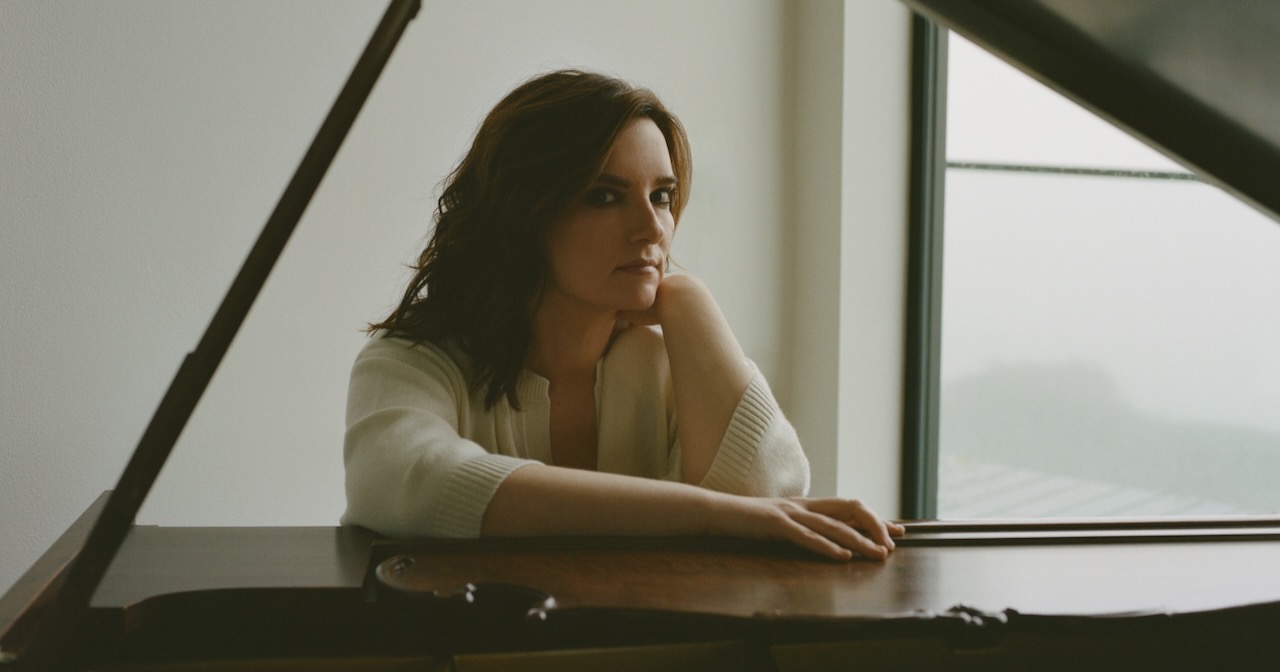
Despite her well-earned reputation as one of Nashville’s strongest songwriters and nuanced singers, Brandy Clark had gotten used to not hearing her name called at Grammy Awards ceremonies. Two years ago, her friend Brandi Carlile decided to do something about that. Carlile produced Clark’s fourth studio album, Brandy Clark, which earned five of the six nominations she got this year, upping her tally to 17 — one of which turned into her first win. Clark was honored for Best Americana Performance for “Dear Insecurity,” a duet with Carlile. After her win, Clark told a backstage interviewer, “Brandi is the reason why I made this record and why this song is what it is.”
But as Clark explained in an earlier BGS interview, the catalyst for that collaboration — her most personal, affecting work yet — was one of those Grammys she didn’t win.
So how did Brandi’s involvement come about?
Brandy Clark: The label wanted me to record two more songs for a deluxe version of Your Life is a Record. I had made that record with Jay Joyce, and he couldn’t do it. Tracy Gershon, a mutual friend of Brandi and I, said, “What if Brandi produced?” And Brandi was willing to do it. It was a really good experience, mostly because Brandi really follows her gut instinct, which is so amazing. I tend to overthink. And then “Same Devil,” which was part of that, ended up nominated at the next Grammys. We didn’t win, and she leaned over to me and said I looked really devastated. I didn’t remember feeling particularly devastated, but she said I just looked really sad, so she said, “Hey, buddy, we’ll get one. I’d love to do a whole record with you.” I was like, “Really?” And she said, “Yeah, I’ve thought about it. I think these things through when I get involved in a project; I think about the artwork, I think about everything. I’d see it as your return to the Northwest, because I’m from the Northwest.”
It was such a different experience for me, because Brandi’s an artist. I think producers lead with whatever their original instrument is; if they were a guitar player, they lead with that. If they were a songwriter, they lead with that. I’ve never worked with a producer that could sing to me what they heard, and also keep me from over-singing. And she wanted as many live vocals as possible. That was different for me. And she really challenged me to get to the heart of who I am as an artist. No producer’s ever asked me to make lyric changes; she said, “I just want to believe that you believe everything you’re saying.”
What’s an example of a lyric she asked you to change?
“Buried;” the second verse used to start out, “I’ll read ‘Lonesome Dove,’ I’ll start doing yoga,” and she said, “I don’t like that yoga line.” I was thinking, “I don’t care if you like it or not.” That was my first [reaction]. I said, “Why not?” She’s like, “Well, I just don’t believe that you do yoga.” I said, “I don’t.” She’s like, “Then it shouldn’t be in the song.” And she was right.
You do heartbreak songs so extraordinarily well. Even the ones that aren’t sometimes feel like heartbreak songs, because they’re so full of emotion. “Dear Insecurity” — to hear that coming from the perspective of two women who are both stars now, and yet it’s so believable — it’s not like two women just singing “Oh, yeah, we’re insecure,” you really believe it. That’s what’s so striking about all of your songwriting, but to be able to do that, and do it well, and to know that it doesn’t matter how big you get, you still experience that …
Oh, I have massive insecurities. I think everybody does. That’s why I think that song hits; to be human is to be insecure. And the more willing you are to admit those insecurities, the less they rule you. That song came from— I had gotten my feelings hurt. A really great friend of mine says insecurity is the ugliest human emotion; it’s what makes people do mean things. So I was trying to remember that on the way to my writing appointment that morning, because I wanted to get into a good headspace to write with someone I had never written with. When I was sitting in the car, I started to think about my own insecurities, and the things that they have messed up along the way for me. I thought, “Wouldn’t that be something, to write a letter to insecurity?”
Why did you and Brandi choose to duet on that song?
Well, going in, I never heard that song as a duet. The first day we were in the studio, she said, “What do you think about ‘Dear Insecurity’ being a duet?” I loved the idea; I heard it as a duet with a guy, because men have insecurities just like women do. She really wanted Lucinda Williams. Because we hadn’t secured anybody yet, she said, “I’ll sing the scratch [vocal], and then we’ll see about getting Lucinda in here.” So she started to sing, and we really got lost in it.
Brandi had also been pretty adamant that she didn’t want to be a feature on this record, because of producing it, and because we had done that other feature, [“Same Devil”]. She just didn’t want it to look like she was trying to get featured. But when it was going down, I could just feel this magic happening. When I listened to the board mix, I thought, “Oh, God, what am I going to do? I don’t want to hear anybody but her on this now.” I loved the way that our voices battled each other and melded together. So I said the next day, “Brandi, I really want it to be you.” And she was like, “Oh, that’s all you had to say.” It was perfect because we have similar insecurities. We’re around the same age, both gay, like, there’s insecurities in that. We’re very similar, and very different. And it just worked.
In what other ways did she influence or impact this album?
There were a couple of things that I’ll take with me forever. When she was asking me to make lyric changes, that really bothered me. It felt disrespectful to the co-writers to do that on the fly, and I told her that. I said, “These songs, none of them were just slapped together, because I don’t write that way.” No offense to anyone who does, I just have to put a lot of thought into songs for ’em to be good. And it took other people to write these songs that I respect and that put their heart and soul into this, too. And I like to be in service to the song. And she said, “Well, I understand that. I think this time, you need to be in service to the artist.” It put me in a different space as an artist than I’ve ever been in. I always come at things as a songwriter first. This record, I came at it as an artist first.
The other thing – and I’m so glad that I asked her this question, and that she answered it the way she did, because it makes me think differently; I’ve never worked with a producer on a record that I was a co-writer with. So they’re always, to me, the last writer on the songs. The positive is that they’re making choices based on what they feel when they hear them the first time, like a listener. …I always give a producer probably 18 to 24 songs, then I’m just too close to pick the 10 or 12. So she picked the songs that she thought should be on this record. When she gave me her list of what she really wanted us to dive into, I said, “Why did you choose those 10?” And she said, “Well, they were all great songs; but I chose the songs that I felt like you wrote in your bedroom.” That was such a great thing… it reminded me that when all of us picked up a guitar or pad of paper the first time, it wasn’t to impress anybody. It was to just get some emotion out that we could only get out through song.
There’s another song on here, “She Smoked in the House,” that I wrote about my grandma that I never thought would be on any record. I thought I was just writing it for me. People have responded so strongly to that song, it just helps me know I need to double down on me and what I’m feeling, instead of what I think people want to hear. That sounds really simple, but it’s easy to forget that if we’re feeling something, other people are gonna feel it. And if we’re not, nobody’s gonna feel it.
You once told me your mission was to write a classic like “Crazy.” While listening to this album and Shucked [the Broadway musical for which she and Shane McAnally co-wrote the music and lyrics], it occurred to me that you have. A song like “Friends,” that’s gonna be sung at thousands of weddings and graduations, and “Take Mine” and “Up Above the Clouds” and these other tracks… I kept thinking of the great Randy Newman tearjerker songs in Pixar films.
I’ve always thought “Up Above the Clouds” should be in one of those.
Totally! Are you working on that?
Yes. It makes me feel amazing that you feel like I have written a classic song like that. I’m going to hang on to that today, and then I’m going to let it go. Because what keeps me hungry as a songwriter is to think I haven’t.
You mentioned you might do something else with Brandi. Are you already talking about that?
No, but we clearly work well together and people like what we do. She’s a little bit like Shane for me; I feel like the sum of our parts is greater than two people.
I love that you’re all part of this connected group of people, especially women. I remember Allison Russell crediting Brandi with elevating her family out of poverty, and to be able to do that for so many people …
That’s a testament to Brandi. She’s on top of the world and she’s choosing to elevate other people; she said to me when she approached me about this, “You deserve to be in the same spot as me on festival posters. That’s what I want.” A lot of people have a scarcity mindset. She has an abundant mindset and wants to raise up the music of other people that inspires her. That inspires me to do the same.
My trajectory is on a really great path right now. And then I look to someone like her and think, “OK, where do I pay it forward? Where do I lift someone else up?” Because it’s really easy when you’re just grinding and trying to get your own star to rise, to not look around and think, “Oh, how can I help someone else?” But she really inspires me to do that.
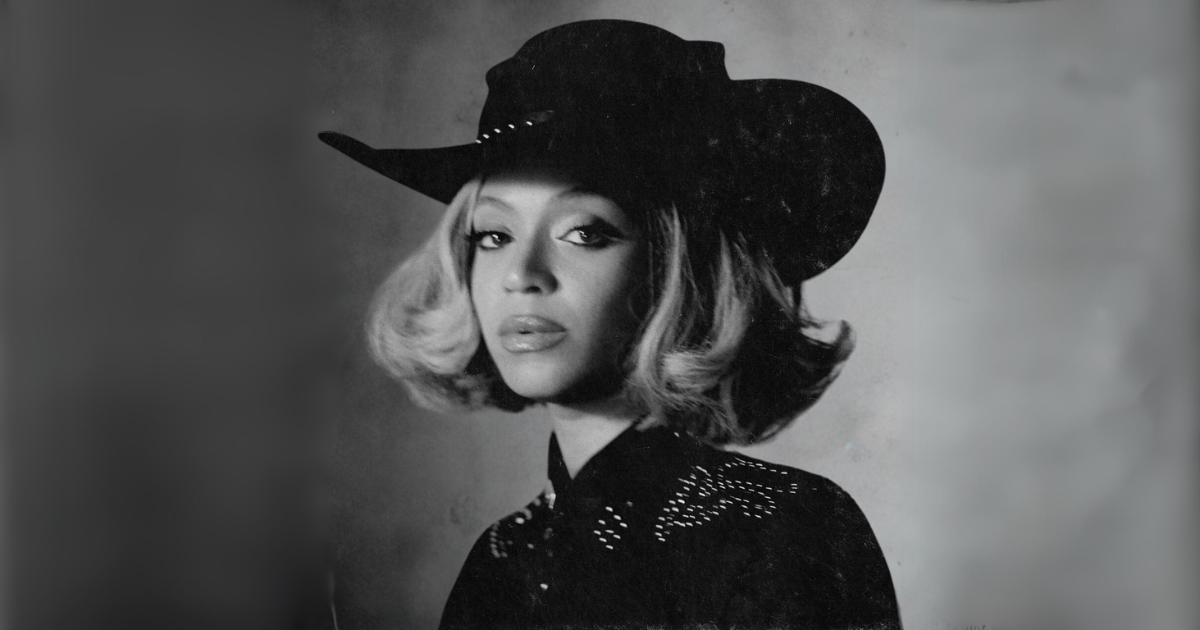
During a series of high profile Verizon ads during yesterday’s Super Bowl, Beyoncé announced that her upcoming Act II following 2022’s incredibly popular dance album, Renaissance, will find the globe-crossing singer/creative powerhouse returning to country. As music journalist Marissa Moss points out in a brand new post for the country newsletter she co-founded, Don’t Rock the Inbox, Beyoncé Knowles-Carter’s relationship to the genre is nothing new – as far back as 2007 the Texas born-and-raised artist rode a horse as she entered the iconic Houston Rodeo, an internationally known, marquis event in her hometown. Across the decades, Knowles-Carter has constantly utilized her music to remind her audience of her Americana roots, with songs, tracks, and production values that regularly reference country and roots music idioms. At the Grammy Awards on February 4, she wore a modernist couture cowgirl get up – a motif that has been peppered throughout the visuals for Renaissance and its world tour. As Lana Del Rey had just announced her next album, Lasso, would be country, the world wondered – why is Beyoncé wearing a cowboy hat?
But Beyoncé’s relationship to country goes deeper, still. In 2016, as Moss and many other journalists and industry insiders pointed out in reaction to last night’s announcement, Knowles-Carter appeared with The Chicks (at that time still referred to as The Dixie Chicks) in a fiery medley performance during the CMA Awards. The trio joined Beyoncé on her countryfied Lemonade track, “Daddy Lessons,” before morphing into a barn burning all-skate on the Chicks’ Darrell Scott-written hit, “Long Time Gone.”
These new songs, which were initially unveiled exclusively on the streaming service Tidal, are built on the “Texas Bama” terroir that all of Knowles-Carter’s music is intentionally rooted within. “Texas Hold ‘Em” begins with a full, warm, fretless old-time banjo, playing a looped, intricate melodic hook. If your ears perked up during Act II‘s teaser video upon hearing the five-string, you are correct – the banjo and viola on the track were performed by the one and only Rhiannon Giddens and were tracked with Demeanor, Giddens’ nephew, another roots music innovator and genre blender, acting as engineer.
It is beyond apropos for Beyoncé and her team to tap Giddens here, someone who has also built a career and prolific musical output on holding together seemingly disparate influences, textures, tones, and styles. It speaks to Knowles-Carter’s aptitude for not only trying on and exploring new or relatively unfamiliar idioms, but also inhabiting them wholly, intricately, and intuitively. It seems obvious to state, but Beyoncé is no roots music carpet-bagger or opportunist putting on “poverty tour” cosplay just to bolster her bottom line.
Though the production style and arrangements here are decidedly interconnected with Renaissance, the beats and underscoring beneath and around the clawhammer banjo and finger-picked acoustic guitar don’t feel entirely like Avicii’s “Hey Brother” or similar, more heavy-handed attempts to intermingle string band music with house, disco, and dance. Ultimately, these two tracks feel less like a “stomp & holler” money-grab/chart-grab and more like post-modernist line dancing music, carrying forward the placemaking and space-holding of her 2022 album. This is music about gathering, moving, and polishing the floorboards with a pair of cowboy boots.
As MacArthur “Genius” and New York Times columnist Tressie McMillan Cottom points out in a NYT blog entry on the new tracks, the most country-sounding aspects here don’t originally stem from “country” at all: “‘Texas Hold ’Em’ sounds like a Maren Morris-style bop, with many of country-pop’s current themes,” says Cottom. “There is a good reason for that. Those themes are very R&B and hip-hop coded: harmonies, danceable hooks, trap percussion and call-and-response.”
In the mind of this writer, though, “16 Carriages,” the proverbial B-side to the more glitzy and grabby “Texas Hold ‘Em,” is the most remarkable of the two singles currently available from Act II. It’s a Beyoncé train song, one that straddles the divide between urban and rural, city folk and country folk, hillbilly music and rhythm and blues. This is a deft balancing act, one that collectives like the Black Opry and artists like Mickey Guyton, Brittney Spencer, Black Pumas, Buffalo Nichols, Julie Williams, and yes, Giddens, have been demonstrating to the roots music industry and its fans for years and years, now. Such a balance can easily go awry, but as we know, Beyoncé so rarely goes awry – even in a would-be treacherous foray into this well-guarded and gatekept genre.
These two songs, but “16 Carriages” especially, illustrate how important it is to view music such as this not as aberrations from a country music norm, but as distillations and representations of what has always been possible in country. Especially if we let arbitrary, moralistic, and bigoted “rules” and expectations fall away and we let artists – whether the most famous in the world or the busker on the street corner – be who they are, unencumbered and empowered by their identities, in all of their idiosyncrasies and complications. Beyoncé’s Act II will showcase that we really do all belong in country, whether your hat and boots are literal shit kickers or are overlaid in hundreds of disco ball mirrors.
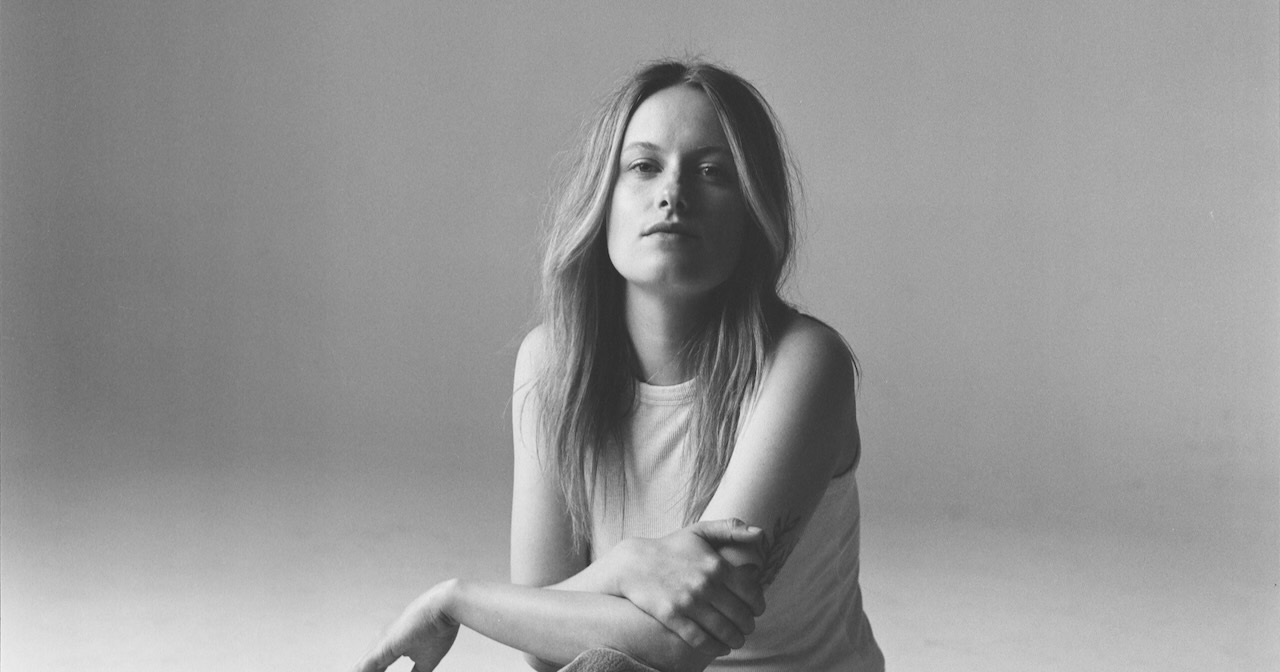
Artist:Abby Hamilton Hometown: Nicholasville, Kentucky Latest Album: #1 Zookeeper (of the San Diego Zoo)
Which artist has influenced you the most?
It’s always been Johnny Cash and June Carter Cash. My mom used to have us stop before a Myrtle Beach or Gatlinburg vacation growing up to have us pick out a book. At 12 years old I resented this greatly. But, as luck would have it, I landed on a June Carter Cash biography, Anchored in Love. Realizing I had known this music my whole life, I saw so much of myself in her story and it led me down one of the richest love affairs of discographies I’ve ever experienced. The music and life stories of Johnny Cash and June Carter have always been a north star for my writing, performing, and presence as a person and a writer. I adore them. It also opened the doors to the world of country and folk music.
What was the first moment that you knew you wanted to be a musician?
Speaking of Johnny Cash, I remember being in college and discovering that Kris Kristofferson had written “Sunday Morning Coming Down,” not Johnny. I had no idea people could be songwriters and not the artist. It was like this huge “aha!” moment in my life. I never really felt like I was good at anything growing up. Not very high achieving in school and not super passionate about anything. Until that moment. I thought to myself, “If I can write songs, I will be happy. No matter who sings them.” And that’s what happened!
When I started writing here in Kentucky, I quickly realized everyone who made music here wrote their songs. A beautiful legacy from these parts, but it made me shift my attention to performing them. Thinking maybe, “If I sing these songs, someone might want to sing them, too.” This lead to a beautiful and unexpected journey with performing and falling in love with singing and my band. Don’t know how I got here really, but that’s the most I know.
Since food and music go so well together, what is your dream pairing of a meal and a musician?
Man, I think I’d take a bowl of Vodka Pasta and Bruce Springsteen. Those two always hit. And make it spicy.
What has been the best advice you’ve received in your career so far?
There’s so many things. I’m lucky to be surrounded by so many friends, family, and influences who know me and tell me the truth. The biggest thing has always been staying true to myself. Protect my tribe and be honest with those closest to me. CLICHES I know. But, it’s true.
Which elements of nature do you spend the most time with and how do those impact your work?
Anytime I’m in Eastern Kentucky on a dewey spring morning, I’m writing like a fiend. TRULY. If I can catch a sunrise and see the spiders making webs in the grass in the morning, I’ve always finished a song. Something that feels like a retreat from the real world always inspires me. No matter the season.
(Editor’s Note:Open Mic is a new series from BGS with a simple premise – to remove all the filters between artist and audience and give musicians and creatives an Open Mic. With each installment, we’ll hold space for musicians to say whatever they’d like on any topic they like in any format that moves them most. It’s about facilitating real conversations and genuine insight with our roots music community.)
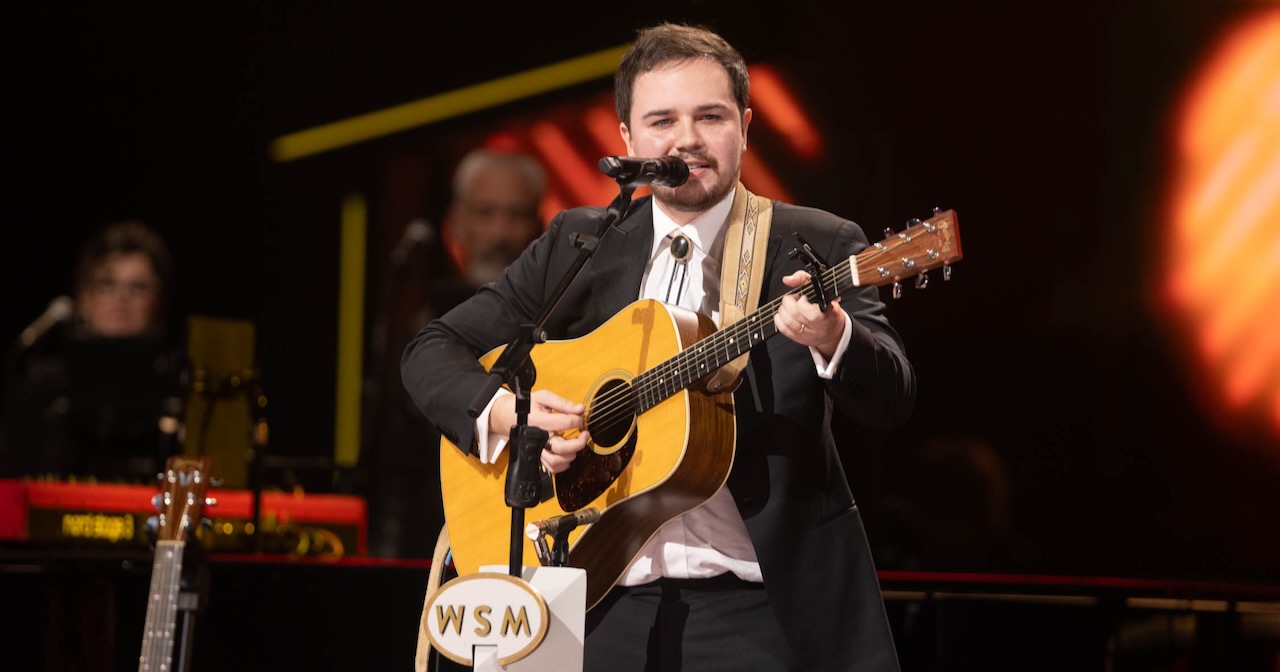
For our first edition of our new series, we set up an Open Mic for Americana newcomer Tommy Prine, an emerging singer-songwriter who walks a unique tightrope. The son of folk legend John Prine and an artist with a creative vision all his own, his work both builds on an established tradition and breaks free from the past – a contrast in full view at his December 2023 Grand Ole Opry debut.
Here, Prine reflects on his winding and not-at-all anticipated path into the artistic world – and into the ability to stand on his own creative feet.
Tommy Prine: “I have learned many things over the last few years, but the most important lesson I have learned is that no one gets anywhere without a lot of support.
“My wife, Savannah, is the embodiment of support. We decided in 2020 that we were going to give this music thing a shot, and by ‘shot’ I mean throwing every ounce of our hearts and spirit into making it work. She has taken on so many roles and worn a thousand hats (still does) during this music journey and it amazes me everyday how graceful and effortlessly she navigates the strange world that we operate in.
“My mom, Fiona, has been the guiding hand through so many new and scary events ultimately enabling me to gain the needed self-confidence to be an artist. She also played that role in raising me, and I owe a whole lot to her for any and all success in my life.
“My dad, John, set a standard of manhood that I will always strive to attain; gentleness, respect, and a lot of listening. As I walk the path that he walked, I learn more about him each day and his lessons unfold time and time again. Thank you for a lifetime of love and teachings, Dad.
“My brothers, Jody and Jack, have seen me in every shape and form I have ever taken on and been nothing but loving and understanding. They both have taught me so much about patience, wisdom and any and all cool music/movies. Without them I would be an entirely different person with different interests, and I couldn’t be prouder to be their little brother.
“My friends, who have been there with me since I was just a kid who played guitar by himself with the doors closed, all of you have influenced me to be a better and smarter man, and have never missed an opportunity to support me. For these reasons, I consider myself the luckiest man alive, and I feel undeserved of such incredible and loving company.
“When I reflect on my Opry debut, the word that comes to mind is acceptance. Acceptance into the community of artists that I admire so much, and acceptance of the life path that I chose which led me to the Grand Ole Opry. Growing up in Nashville, the Grand Ole Opry stage is the stage that you tell yourself, ‘One day, I’ll get there.’ When those thoughts crossed my mind as a teen, all it ever felt like was a dream. An unattainable dream barricaded by years of the most vulnerable and terrifying work I could imagine.
“Part of me knew who I had to be in order to get there, and the other part of me found that to be impossible. My journey in music has provided the personal growth I always wanted – and if all else fails, at least I found out who I really am. When an artist gets the opportunity to step into that circle, they light their own torch. On December 8th, 2023 I lit my own torch, and I intend to carry it to the end of my road.”
Photo Credit: Courtesy of the Grand Ole Opry, shot by Chris Hollo
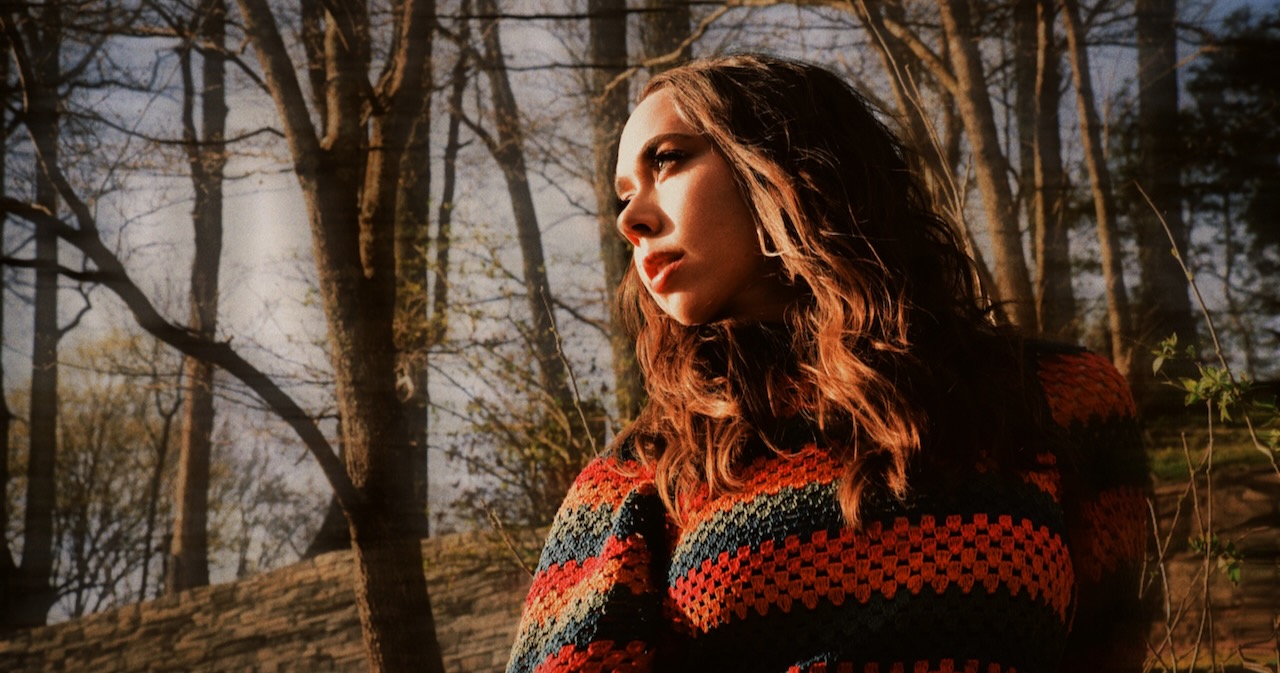
Sarah Jarosz is what happens when young women are taken seriously. A huge part of the mandolinist’s story is that she had supportive male mentors and that has added to her confidence. We all know the age old story of “Young woman shows promise, gets exploited by the patriarchy and it affects her work.” We need to hear stories like this. Starting in her hometown of Wimberley, Texas, just 45 minutes outside of Austin – the live music capital of the world – Sarah found the mandolin at 10 years old. Labeled a prodigy, and thanks to the encouraging spirit of folk music, she found mentorship with seasoned professionals like David Grisman, Ricky Skaggs, Tim O’Brien and Béla Fleck. Following her time at The New England Conservatory of Music, she moved to New York and would go on to collaborate with people like Chris Thile in the Live From Here House Band and her trio I’m With Her, featuring Aoife O’Donovan and Sara Watkins, and won four Grammys.
After making the move to Nashville, on her latest album, the very impressive and sonically expansive Polaroid Lovers, Jarosz collaborated with producer Daniel Tashian, which originally was just a low-stakes co-writing project. The success of her first co-writing experience with Daniel led her to pursue other songwriting sessions with Ruston Kelly and Natalie Hemby. The collaboration found on the record has opened Sarah up to new sounds and new experiences. In our conversation, we talk about Sarah stepping into her own voice with confidence on this record and knowing her musical self enough at this point in her life. She describes her experience with confidence using the Dunning–Kruger effect, in which people with limited competence in a particular domain overestimate their abilities. AKA “fake it till you make it,” AKA “leap and the net will appear.” She also talks about her parents’ influence on her early musicality and how her mom is doing with her cancer remission. An overall theme of this conversation is that Sarah never lost sight of her goal: Keep it all about the music and don’t let noise get in the way of your important work.
Perspective. A universal concept, but also something which bears the potential to be entirely different from one person to the next. How one person views a setting, an experience – or even something as simple and innocent as a Polaroid picture – can set the tone for how they come to hold onto and look back on an entire memory.
The 11 songs on Polaroid Lovers, the seventh album from multi-Grammy-winning singer-songwriter Sarah Jarosz, not only presents the bulk of its musical subjects from a variety of vantage points, but the very making of this record is a story built on a shift in perspective for Jarosz herself.
“World on the Ground was my first traversing into really working on songwriting as more of a storyteller and not necessarily always writing from my own perspective or writing my own story. Or, maybe a better way to say it would be, from a confessional kind of point of view,” says Jarosz. “I think that really carried over into [Polaroid Lovers] and was very much assisted by the people that I was co-writing with,” she adds. “And so I think by co-writing all the songs and by not being in a solitary mindset, I was able to more easily slip into trying to write the songs from a more universal perspective.”
Jarosz is nowhere near a newcomer to the concept of collaboration, both in live performance and in songwriting for studio records. Just ask mandolinist and songwriter Chris Thile, former host of the iconic live performance/radio show Live From Here, or Sara Watkins and Aoife O’Donovan, Jarosz’s creative cohorts in the Grammy-winning roots supergroup I’m With Her. The New York-to-Nashville transplant carved out her place in the musical landscape with an indubitable gift for solo songwriting. This gift propelled Jarosz forward for a host of years, a slew of awards, and an ever-growing body of recorded work. However, staying a self-contained songwriter wasn’t without constraint – a state of affairs Jarosz admits was largely self-imposed through much of her early career, for the sake of her own artistic voice.
“I was very closed off to co-writing especially for my first couple records,” she says. “I had managers and label people always trying to set me up on co-writes and I did a couple, but I just don’t think I knew my voice well enough and I hadn’t had long enough writing on my own, performing on my own, and figuring out my sound. I think I was just worried that my voice would get lost in those [writer] rooms.”
Jarosz’s deliberate decision to not only include co-writing, but make it a dominant pillar of Polaroid Lovers seems entirely understandable as a way to push her own creative boundaries. She isn’t shy about sharing the burst of confidence that also arose within her while writing songs for the album. “I really don’t think I could have made this record even five years ago,” she says. “There were so many moments in the studio that I mean, if I’m being honest, kind of – I hate to use the word scared – but challenged me.”
If it feels strange to envision a creative powerhouse of Jarosz’s caliber struggling to embrace new musical ideas, there are plenty of specific sonic snapshots in the songs of Polaroid Lovers that Jarosz can look at through the lens of her past self and know just how differently things could have gone.
“For instance, the beginning of ‘Jealous Moon’ – when the guitar and the drums come in like right at the top – I was like, ‘Whoa, this is on a new playing field for me and a stretch from what I’ve done before,’ but I loved it,” she says. “At the end of the day, my barometer [is about] if the music is moving me, if I believe in it, and if I can proudly sing every lyric with a stamp of approval. And so I think something like that [style of introduction] – I might have just shut it down. Like, it would have scared me a little too much maybe five or 10 years ago and I would have said, ‘No, that’s not me. So we’re not going to do that.’”
Though “Jealous Moon” starts the music of Polaroid Lovers with an adventurous hook, Jarosz actually made the shift to disregard fear and connect with her inner co-writer in her mind from the very first day she met producer Daniel Tashian, while the two co-wrote “Take the High Road” – an upbeat song about staying true to oneself and not shying back from what feels right. “The thing that’s so refreshing and cool about Daniel [Tashian] is that he’s just so open and so endlessly curious about all things music and I think [he] would just be creating all the time if it were up to him,” Jarosz admits.
A seasoned songwriter and collaborator known for his work on Kacey Musgraves’ Golden Hour, Tashian brought Jarosz out of her comfort zone, often literally, in providing many changes of scenery for their writing sessions. “I met [Daniel] in March of 2022, which was when I started writing for this record, and… he just kind of welcomed me in to his family,” Jarosz says. “I wound up going on these kinds of writing retreats… and that was cool to just, get out of Nashville, shift our perspective, be in a different place, and just be really open to to the muse and to what would come.”
Other times Tashian’s sharing of simple but impactful thoughts and his own decisive opinions helped to nurtured a spirit of open possibility regarding what Jarosz would be able to write, but also ideally what she would find joy in playing for herself, as well.
“Daniel said something when we were in the studio that really resonated [with me]: ‘Why would you just want to make the same record over and over again?’ I love that, because I think you try to find your voice and hone your voice over the course of a career but the fun is in exploration – at least for me. I mean, maybe some people find comfort and repetition and that’s fine but I really love exploring and ultimately seeking what serves the song. I mean, that’s what it comes down to at the end of the day.”
Running parallel to this expanding circle of people, ideas, song forms, and stories that Jarosz was inspired to put into Polaroid Lovers are her personal tools of the trade – particularly her octave mandolin. An instrument Jarosz has grown to appreciate over the years alongside her artistry and proficiency with the mandolin, guitar, and banjo, the octave mandolin is another meaningful element of creative expanse, change, and consistency that’s become integral to who Jarosz is as a musician and what she wants to sound like.
“[Polaroid Lovers] feels more like me than ever before. Even though there might technically be some differences, I feel that it’s very strongly my voice and my sound. I think a huge part of that is my octave mandolin being a prominent texture,” she says. “I’ve gotten to this place where the octave mandolin feels like my sound in a way and I really sort of gravitated towards that instrument over the course of the years.”
A derivation of the mandolin, the octave mandolin is a fitting instrument to feature on an album that reflects new and familiar points of view. “Whenever I play octave [mandolin], I feel like, ‘This is me.’”
Beyond its presence being a defining musical attribute, for this album especially Jarosz says the octave mandolin was also a tool of creative focus amidst everything new and sometimes daunting. “Having [the octave mandolin] sort of be the through-line on this album helped me in those moments where I felt challenged by a sonic thing that felt new,” she says. “The octave mandolin would kind of make me feel like I was grounded.”
Though grounded, one need not mistake Jarosz’s sense of musical stability with any kind of fixation on genre. While there’s almost no escaping others’ archetyping of Jarosz’s work, Polaroid Lovers is neither a show of rebellion against her musical foundations, nor a calculated attempt to partition an exact ratio of familiar stylization with ideas new to her writing process.
“I personally don’t like to think of myself in terms of genre and I never really have,” she says. “It can be frustrating for me when people say, ‘Oh, you’re this, you’re that’ and I feel like, ‘Well, no…’ I think about [music] in terms of if I like it or not.” She adds, “I’ve just always felt that way and I’ve always listened to so many different types of music. It just feels too narrow, too limiting, to have to fit too squarely into a box.”
Despite the fact that the general public can launch a barrage of staunch opinions about the style of Jarosz’s work or what they may perceive is “right” about it, Jarosz says there’s a whole other dimension to Polaroid Lovers yet to be unveiled that won’t come into view until she’s out on the road, playing live, and connecting directly with everyone who’s listening. “The difference between performing a song in the studio versus performing it live in front of an audience is that I think songs sort of start to take their own journey.”
She adds, “I know my story, or I know my part of it. But sometimes, if you can be vague enough, you can almost keep it secret a little bit, where it’s like my story and my feeling about it is my own and then other people get to find their story in it as well. I think something that will be fun in singing these songs over the next however many years is discovering new perspectives with [audiences]. The perspective will really come singing [the songs] over the course of the next year on tour. I’m very excited about getting to do that.”
Ironically, all the talk of a growing compendium of artistic styles, of new collaborators, of new musical techniques, and of new ways to tell new stories truly hammers home the notion that Jarosz’s musical world is an ever transforming space – rather than one made up of experiential snapshots, as Polaroid Lovers is aptly described. Still, Jarosz came up a solo writer and one of the biggest curiosities around potential changes ushered in by this record would be how she views the dynamic of writing music alone versus writing her music with others. Not surprisingly, Jarosz doesn’t see an inner conflict on the horizon. It’s all “the more the merrier.”
“If anything, this [album] just expanded my community, which is a wonderful thing,” Jarosz says. “Especially now living here in Nashville, I think it’s made me feel more a part of this great community. Whereas when I was 18, I think I felt like there was something to lose in writing with people – that being, losing my voice or like kind of losing my way a little bit. Now I don’t feel like that and I think that there’s nothing to lose by sitting down and trying to be creative with with someone else. I think I will always do that from here on out, but it definitely will be simultaneous to me also writing by myself. That’s something that I don’t ever want to lose and that I want to keep doing for as long as I can.”
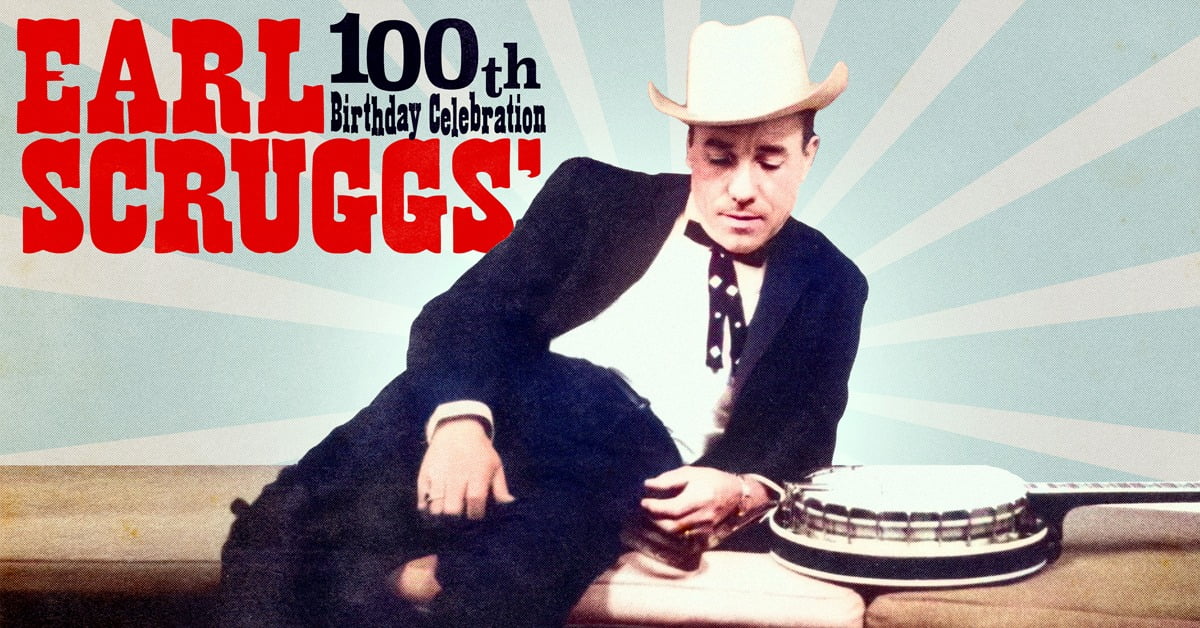
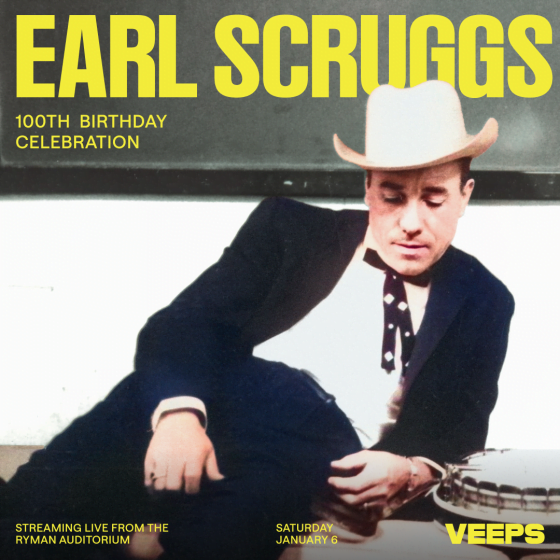
January 6, 2024 would be the 100th birthday of Earl Scruggs, a musician and artist who helped create bluegrass music and who was and is perhaps the most prominent and well known banjo player to have ever lived. Scruggs passed away in 2012, but this posthumous celebration – to be held at Nashville’s Ryman Auditorium – speaks to his undying musical legacy. The performance will benefit the Earl Scruggs Center, a museum in Shelby, North Carolina that’s dedicated to Scruggs, the local community, and its residents, and inhabits the former courthouse just up the highway from unincorporated Flint Hill, where he was raised.
The show, with musical director Jerry Douglas, will feature performances by bluegrass and roots music luminaries such as The Earls of Leicester, The Del McCoury Band, Gena Britt, Alison Brown, Sam Bush, Michael Cleveland, Stuart Duncan, Jimmie Fadden, Béla Fleck, Jeff Hanna, Sierra Hull, Bronwyn Keith-Hynes, Jim Mill, Justin Moses, Jerry Pentecost, Todd Phillips, Harry Stinson, Bryan Sutton, Tony Trischka, Abigail Washburn, Pete Wernick, and more. Limited tickets are still available and, for those who may not be able to attend in person, the entire show will be livestreamed via Veeps.com for $14.99.
It promises to be a quintessential Nashville evening, a star-studded lineup with endless appearances, special guests, and with certainly plenty of heartfelt remembrances and tributes in store. Livestream viewers will get a rare chance to be invited “flys on the wall” for a magical and one-of-a-kind concert.
Earl Scruggs’ legacy will certainly live on – for another hundred years and, we hope, beyond. BGS and many other roots music and bluegrass communities and organizations will continue to celebrate Scruggs’ centenary throughout the year, so keep an eye out for upcoming content that celebrates Earl Scruggs and his three-finger style.
Lead image courtesy of the Ryman Auditorium; inset graphic courtesy of Veeps.
The songs of Sarah Jarosz have always been snapshots. Each, whether literally or obliquely, is a tableau – a window into a moment in time, an attempt to capture but never contain the intangible present. Whether demonstrable story songs or abstract, poetic text paintings, Jarosz’s catalog of material shows a ubiquitous skill – a writerly athleticism – for ushering her listeners into the scenes she inhabits or constructs. From her earliest release to her newest, Polaroid Lovers (out January 26 on Rounder Records), Jarosz’s point of view has been confident, relatable, and inviting.
Simultaneously, the expansive body of work she’s produced since her 2009 Sugar Hill debut, Song Up in Her Head, tells a tale as much of uncertainty as of skill and finesse and, within that uncertainty, a commitment to relishing the journey – rather than rushing toward an arbitrary destination.
A teenager when she first gained national notoriety, Jarosz was often compared to her mentor-peer-friend Chris Thile and her contemporary, Sierra Hull. While child bluegrass, Americana, and string band stars – proverbial and oft-mythologized prodigies – have a much more gentle route to adulthood than say, their Hollywood counterparts, it’s still a time hallmarked by experimentation, growing pains, exploration, and a prerequisite amount of floundering. Musically, Jarosz may have “floundered” a bit less than say, Hull or Thile or any kid whose teen years may have had a recorded, audio history. Nevertheless, you can trace a through line of angst, introspection, and finding oneself underlying the precocious self confidence of her early albums.
By the time Jarosz reached 2013’s Build Me Up From Bones, which gained her her first Best Folk Album Grammy nomination, that uncertainty was no longer an undertone, but a focal point in her music. On both Bones and the follow up full-length, Undercurrent, which then won the Grammy for Best Folk Album, Jarosz picks up and runs with those musical expectations, whether overt or projected. She plays with the dichotomy between the public nature of her growing up a heart-on-her-sleeve songwriter and bluegrass picker and the individual, private nature of seeking and finding her own agency within those paradigms. She purposefully built broad and appealing, commercial songs that are both assured in their sincerity and unconcerned with virtuosity or authenticity for their own sakes. She knows exactly what she’s doing, even – if not especially – when she does not.
Needless to say, the following projects World On The Ground and Blue Heron Suite feel like they are both indelible home bases built on the steady foundation of the albums that led to them. Each are distillations of Jarosz’s musical commitment to bringing her audience inside the turmoil and delight, growth and doubt, beauty and bittersweetness of life and song. Jarosz had arrived at her destination, hadn’t she? In her beloved New York City, a Grammy winning artist, picker, and songwriter who knows who she is and why she does what she does.
Ah, but remember, it’s the journey Sarah Jarosz is after and not the destination. Polaroid Lovers is a lens into the new growing pains, the new uncertainty, the new uprooting and, eventually, re-rooting Jarosz finds herself in the middle of now. She recently moved to Nashville, building a life with her new husband, bassist Jeff Picker. Polaroid Lovers, like its predecessors, brings the listener into how living in Nashville has reshaped Jarosz’s songwriting and creative and recording processes.
It may not sound like a Music Row album – it sounds, as all of her work does, exactly like Sarah Jarosz. Whatever that sounds like! – but it’s a collection that has the Row tangled among its roots and certainly in the water. Polaroid Lovers was recorded at Sound Emporium and produced by Daniel Tashian, plus it has many a credited co-writer, a bit of a departure for the songwriter who, besides in her work with Aoife O’Donovan and Sara Watkins in I’m With Her, rarely co-writes material for her own albums, preferring to pen most lyrics and tunes herself. Music Row and Americana hit writers like Ruston Kelly, Natalie Hemby, Jon Randall, Gordie Sampson, Tashian, and others each lent their own fingerprints and touches to this set of song snapshots.
Does Polaroid Lovers sound new? Does it sound like Nashville? Yes, it certainly does, but it doesn’t sound instant or ready-made either, and it always sounds like quintessential Jarosz. This is evidenced nowhere on the record as strongly as one of its lead singles, “Columbus & 89th.” Among more than a few masterworks in Jarosz’s catalog that center on her beloved, transplanted (former) hometown, New York City, “Columbus & 89th” is perhaps the best example of the form. Wistful and hopeful, with a tinge of bittersweetness from the wisdom that comes with age, it paints such a specific picture – of a literal street corner – but, as in all of her snapshots, this polaroid is not confining or finite, it’s resplendent and limitless. Following the photography metaphor one step further, it’s not difficult to see how the perspective Jarosz has gained by moving away from the city might have enabled her to render such a picture perfect homage to New York.
This is a vibrant, animated collection of Polaroid Lovers. This is Sarah Jarosz at her best– for now.
Watch for our Artist of the Month interview feature with Jarosz to come later this month, plus we’ll do a catalog deep dive and showcase plenty more content pulled from the BGS archives. For now, enjoy our Essential Sarah Jarosz Playlist:
Photo Credit: Shervin Lainez
This website uses cookies to improve your experience. We'll assume you're ok with this, but you can opt-out if you wish.AcceptRejectRead More
Privacy & Cookies Policy
Privacy Overview
This website uses cookies to improve your experience while you navigate through the website. Out of these, the cookies that are categorized as necessary are stored on your browser as they are essential for the working of basic functionalities of the website. We also use third-party cookies that help us analyze and understand how you use this website. These cookies will be stored in your browser only with your consent. You also have the option to opt-out of these cookies. But opting out of some of these cookies may affect your browsing experience.
Necessary cookies are absolutely essential for the website to function properly. This category only includes cookies that ensures basic functionalities and security features of the website. These cookies do not store any personal information.
Any cookies that may not be particularly necessary for the website to function and is used specifically to collect user personal data via analytics, ads, other embedded contents are termed as non-necessary cookies. It is mandatory to procure user consent prior to running these cookies on your website.