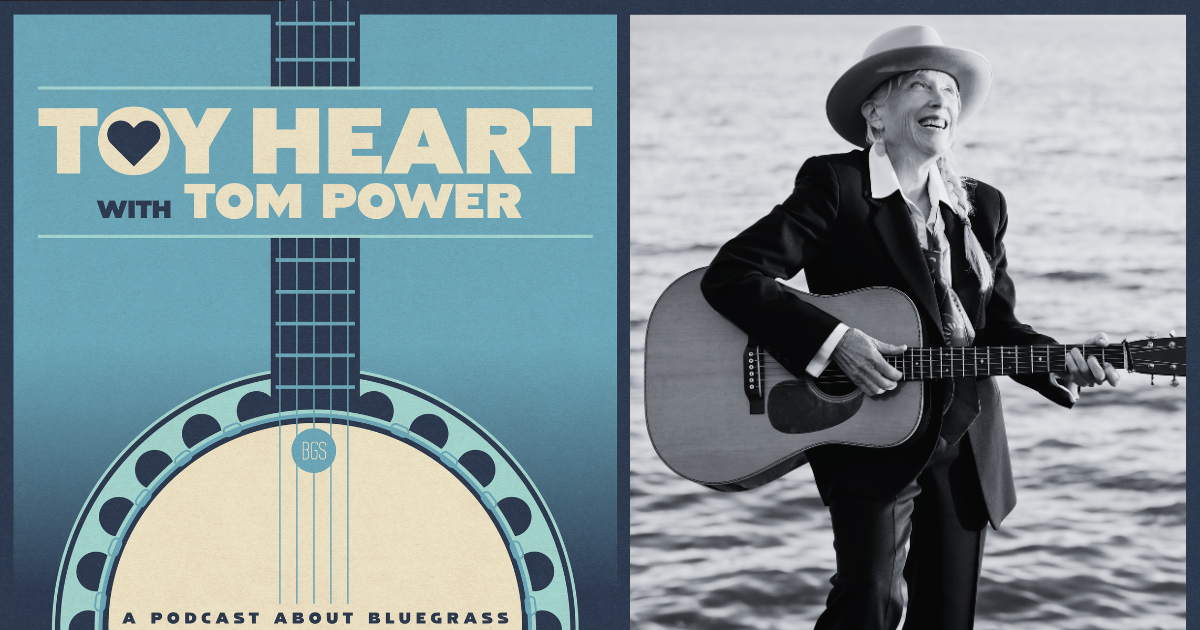
Laurie Lewis – Toy Heart: A Podcast About Bluegrass

In the latest episode of Toy Heart, we explore the roots and evolution of bluegrass in the modern era by examining the story of legendary bluegrasser, singer-songwriter, and recording artist, Laurie Lewis.

From her tales of growing up in Berkeley during what Lewis jokingly calls the “folk scare” of the ’60s to finding the joy of music through her father’s classical background and eventually becoming a pioneer for women in the genre, her lifelong career in American roots music is a perfect example of how the innovation and tradition-bending tendencies of bluegrass’s first generation continue full force today. Lewis’s musical transformation over the course of her life shows the entrancing power of bluegrass to steer and alter the course of hers and so many others’ lives.

LISTEN: APPLE PODCASTSSPOTIFYMP3

In our Toy Heart interview, Lewis chats with host Tom Power about the magnetic pulls of Chubby Wise’s fiddle tunes, of albums by the Greenbriar Boys, and of a formative live show by the Byrds. She talks about studying modern dance, “disappointing” her father by “rebelling” and choosing folk music forms over classical, and what eventually led to late-night jams, fiddle contests, and navigating the Bay Area’s bustling bluegrass, folk, and women’s music scenes.

Their conversation closes with a reflection on the ways bluegrass has affected Lewis the most, and, how it continues to shape the identities of its artists and listeners with an intractable, ineffable pull. Power and Lewis point out how current generations – from Molly Tuttle to Tatiana Hargreaves, both mentees and collaborators of Lewis – continue in these same traditions. Plus, Lewis shares what it was like to tour and sing with Dr. Ralph Stanley, himself.

This Toy Heart episode dives deep into the many layers of the genre, helping to demonstrate just some of the many ways bluegrass interweaves itself into musicians’ and fans’ personal and musical identities. Lewis shows there are countless joys in staying true to one’s artistic vision amidst an industry that is always in flux; her insights offer a soulful perspective on continuity and change within the genre, echoing the sentiments of a community that, much like a family, supports and evolves with its members – and that continues to rightly hold Lewis up as a trail-breaker and standard-bearer for the entire genre.


Photo Credit: Irene Young

Real Roots Radio, BGS, and Good Country Partner on Women’s History Spotlight

March is Women’s History Month, and BGS, Good Country, and Real Roots Radio have partnered to highlight a variety of our favorite women in country, bluegrass, and roots music with our Women’s History Spotlight.

Each weekday in March at 11AM Eastern (8AM Pacific) on Real Roots Radio, host Daniel Mullins will be celebrating a powerful woman in roots music during the Women’s History Spotlight segment of The Daniel Mullins Midday Music Spectacular. Then, we will have a Friday recap here on BGS featuring the artists highlighted throughout the previous week. No list is comprehensive, but we hope to feature some familiar favorites as well as some trailblazers whose music and impact might not be as familiar to you.

You can listen to Real Roots Radio online 24/7 or via their FREE app for smartphones or tablets. You can also ask your smart speaker at home to play “Real Roots Radio.” Based out of southwestern Ohio, we feature the best in country, bluegrass, and Americana music — past and present.

Each week in March, we hope you enjoy learning more about the incredible women who have made American roots music what it is today.

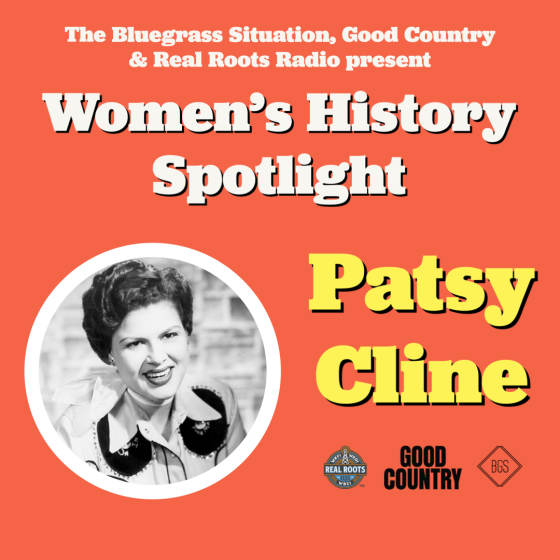
Patsy Cline

One of the most impactful voices in 20th century American music, Patsy Cline’s legacy still looms large over country music. An crossover star in the genre, her timeless voice has influenced generations of country stars — Loretta Lynn, k.d. lang, Mandy Barnett, and countless others. The strength and emotion with which she sang endeared her to music fans of all walks of life; she has sold over 14 million albums and had songs on the country charts two decades after her untimely passing. Her 1973 posthumous induction into the Country Music Hall of Fame made her the first solo female artist inducted into the hallowed hall.

This week marked the anniversary of the tragic 1963 plane accident that took the lives of Patsy Cline, Cowboy Copas, Hawkshaw Hawkins, and their pilot, Randy Hughes. Although she passed away at the age of 32, there is always Patsy Cline.


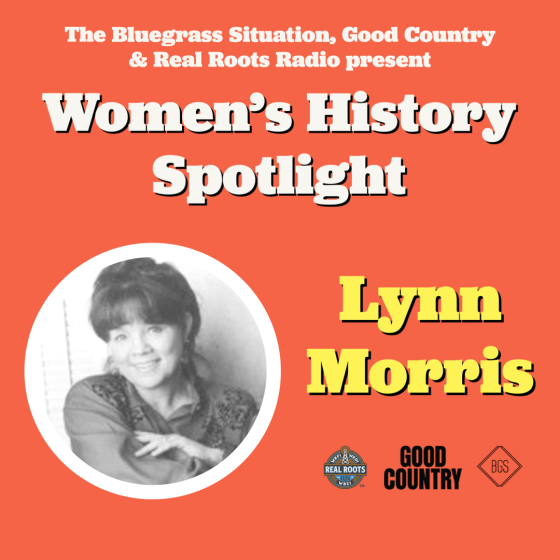
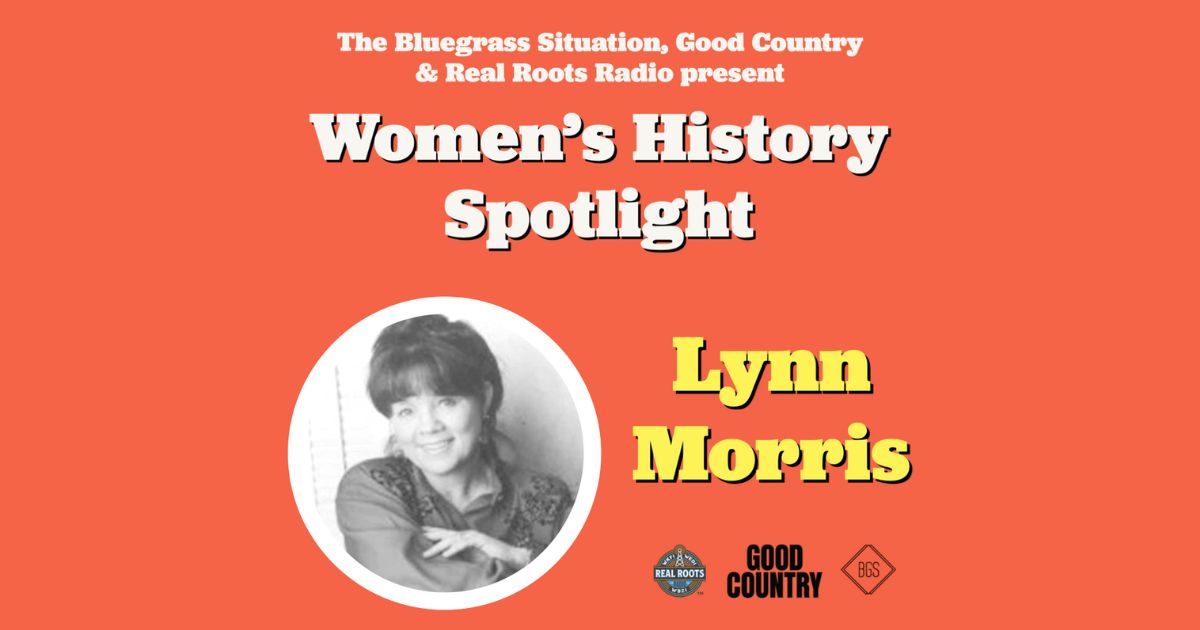
Lynn Morris

A recent inductee into the Bluegrass Music Hall of Fame, Lynn Morris is renowned in bluegrass circles for her virtuosity as a musician and her sincerity as a vocalist. The first person to win the National Banjo Championship in Winfield, Kansas twice, she is also a fantastic guitar player. After playing with Whetstone Run throughout much of the 1980s, she founded The Lynn Morris Band in 1988. Anchored by her heartfelt voice, The Lynn Morris Band featured a who’s who of future bluegrass stars over the years, including Jesse Brock, Ron Stewart, Chris Jones, Tom Adams, Jeff Autry, Audie Blaylock, and Marshall Wilborn (Lynn’s husband), among many others. She was forced to retire in 2003 due to a stroke, but her love for animals and radiant smile have continue to inspire the bluegrass community.


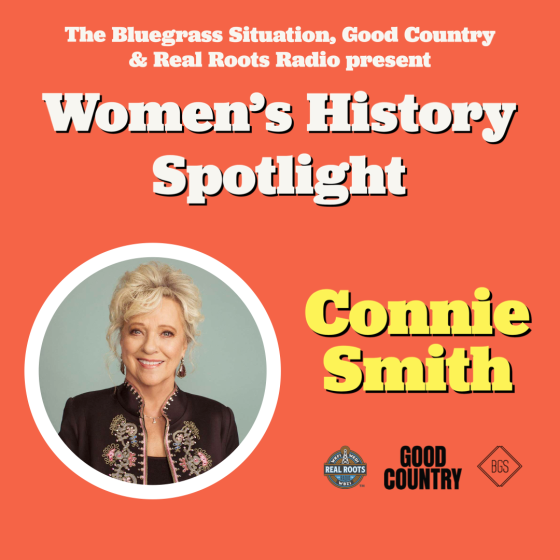
Connie Smith

Connie Smith was discovered at a talent contest in Columbus, Ohio at the famed Frontier Ranch by Bill Anderson, who quickly got her to Nashville where her debut single, “Once A Day,” shot to the top of the charts (her only number one hit). Connie Smith was an instant star. After many hit records, she semi-retired beginning in the late ’70s, only working sparingly while she raised her children, until she mounted a comeback in the mid ’90s. She continues to captivate Opry audiences, is still releasing powerful country albums, and was inducted into the Country Music Hall of Fame in 2012. Once billed as “Miss Cute ’n’ Country,” Eddie Stubbs more aptly (and more appropriately) dubbed her “The Rolls Royce of Country Music Singers.”


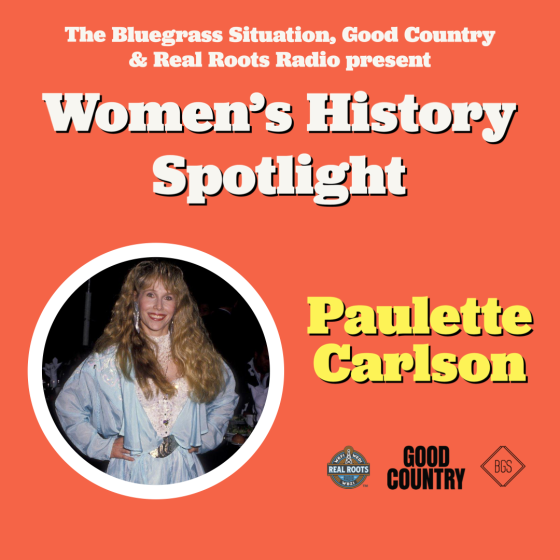
Paulette Carlson

’80s and ’90s country still slaps (which is one of the few things people can agree on these days), and if you’re familiar with country music from that era, you’re definitely familiar with the voice of Paulette Carlson. A Minnesota native, her talent quickly outgrew the bars of Minneapolis and Fargo, North Dakota and she moved to Music City in the late ’70s. After working as a songwriter and releasing a few songs on her own, she formed the band Highway 101 in 1986.

On the strength of Paulette’s distinct vocals, Highway 101 quickly began churning out hit records, like “Whiskey, If You Were A Woman,” “Walkin’, Talkin’, Cryin’,” “Barely Beatin’ Broken Heart,” and their breakthrough hit, “The Bed You Made For Me” (written by Carlson). Highway 101 received “Vocal Group of the Year” honors in 1988 and 1989 at both the CMA and ACM awards. Paulette Carlson left the band in 1990 to pursue a solo career, but failed to reach the commercial success that she achieved while leading Highway 101. In recent years, she has resumed recording touring, with several songs saluting the military, inspired by her brother Gary, a Vietnam War veteran.


Lee Ann Womack

One of the most revered country vocalists of her generation, Lee Ann Womack’s impact on the current generation of female vocalists is obvious. In bluegrass alone, Sister Sadie’s Dani Flowers and Jaelee Roberts both point to her as a major influence, and before that, Flatt Lonesome’s Charli Robertson and Kelsi Harrigill did the same.

While “I Hope You Dance” is still played at nearly every graduation ceremony and high school prom, the depth of Womack’s talent and catalog is remarkable. Her ability to combine her style of traditional country with contemporary elements has allowed her to find great success outside of the genre, while unashamedly being an advocate for country music. In addition to some killer records of her own in recent years (I’m looking straight at you, The Lonely, The Lonesome & The Gone), the timelessness of her voice and the respect she has among her peers has allowed her name to pop up on some amazing all-star albums that truly run the gamut. I implore you to check out her contributions to Divided & United: Songs of the Civil War, last year’s Nashville tribute to the music of Bill & Gloria Gather, the country tribute to Elton John (Restoration), the Fisk Jubilee Singer’s 150th anniversary project, and the award-winning Industrial Strength Bluegrass album.


Patsy Montana

Born Rubye Rose Blevins, Patsy Montana was the original singin’ cowgirl. Her musical talent really blossomed during her time studying at what is now UCLA, where she studied violin, sang, played guitar, and yodeled on the side (which would remain a prominent part of her music). She traveled to Chicago’s World Fair with the hopes of receiving recognition for her family’s watermelon that she toted from Arkansas, but wound up auditioning for WLS’s National Barn Dance, becoming a part of the cast, and quickly becoming a radio star.

Her 1935 hit, “I Wanna Be A Cowboy’s Sweetheart,” would be country music’s first million-selling single by a female artist. She performed on WLS’s airwaves until the 1950s, until she took time off from the music business, but would continue to record occasionally into the 1990s. (Her 1964 album even featured a young lead guitarist named Waylon Jennings, before he was a household name.) Her impact in the early days of country music is remarkable as a trailblazer in the genre. A member of the Country Music Hall of Fame, Patsy Montana is known to have been an influence on future Hall of Famers like Patsy Cline and Dottie West.

It’s also not a stretch that Patsy Montana may have inspired Jessie the Yodeling Cowgirl from the Toy Story franchise… Well, at least it is known that the singing voice of Jessie, Devon Dawson, is influenced by Patsy Montana, but Jessie herself seemed pretty excited to receive the “Patsy Montana Award” by the National Cowgirl Museum in 2000. (Yes. This is actually happened.)

We hope you enjoyed this first installment of our Women’s History Spotlight presented by Real Roots Radio, Good Country, and BGS. Stay tuned for weekly updates each Friday in March.


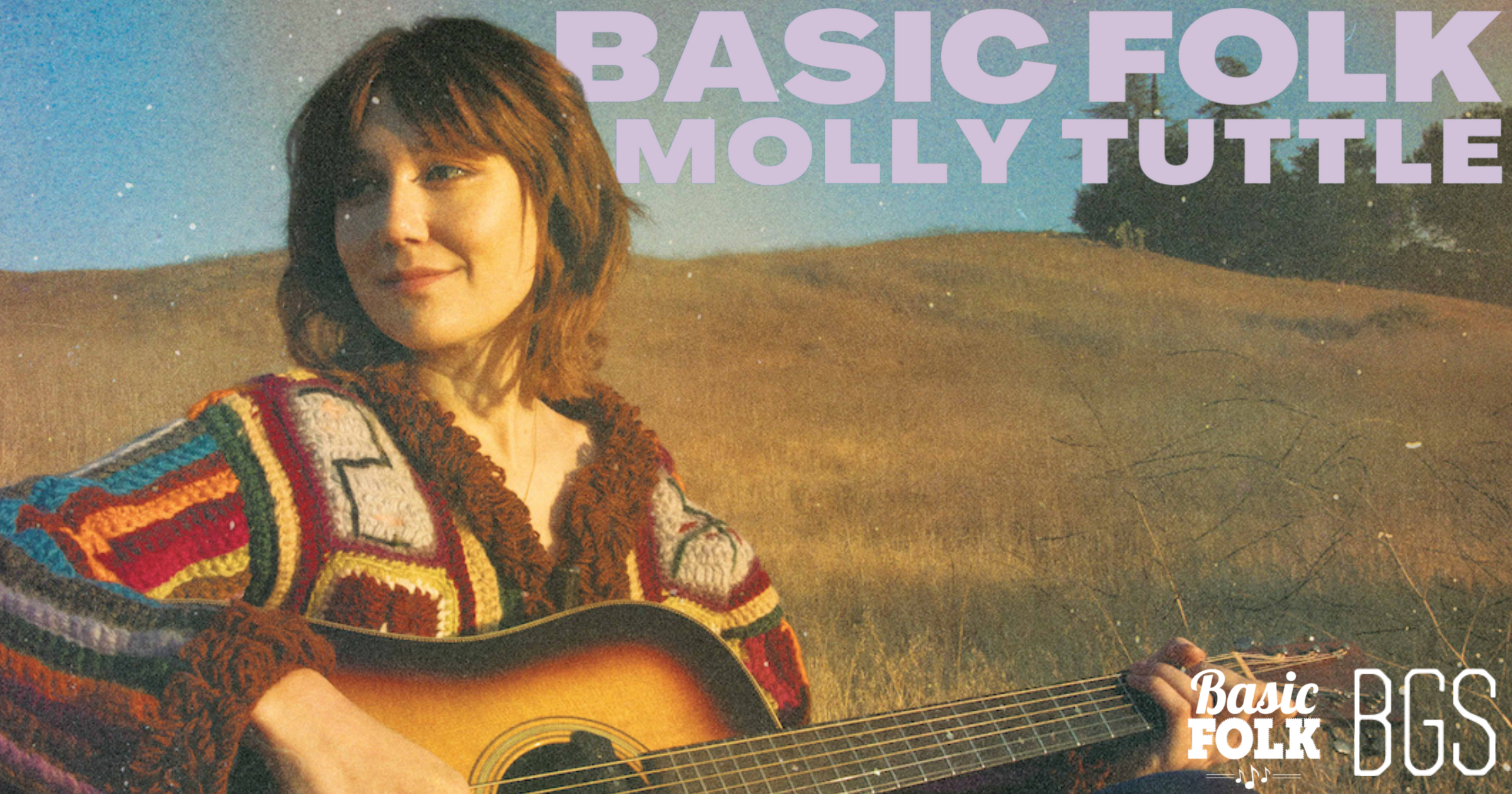
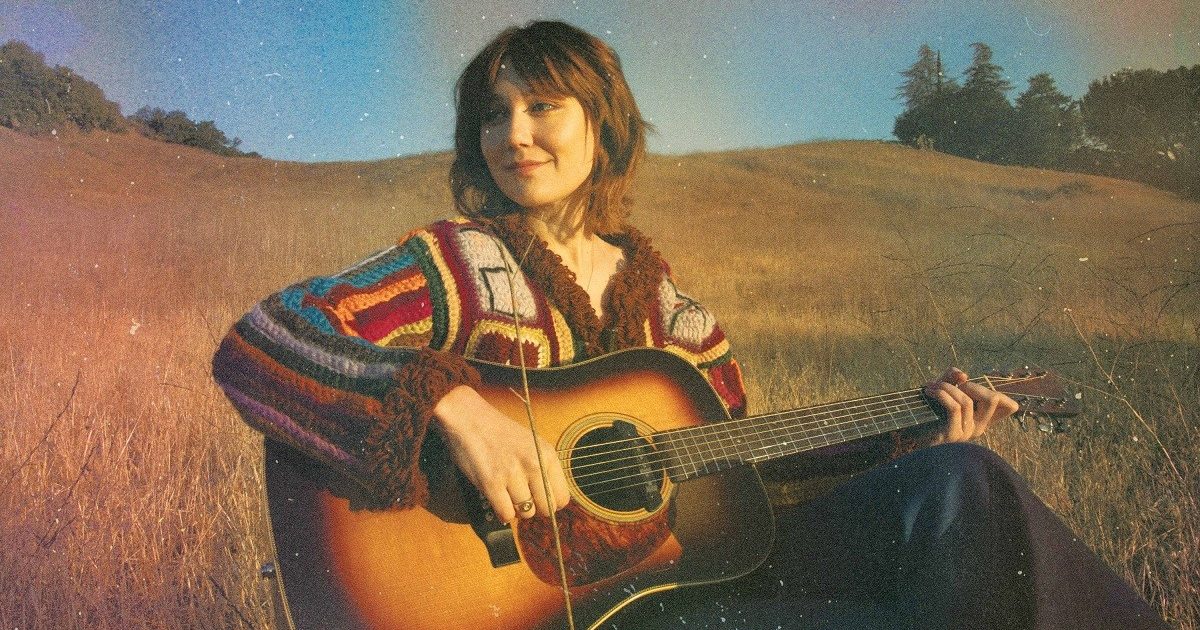
Basic Folk – Molly Tuttle

Growing up in Palo Alto, California, Molly Tuttle was surrounded by music. Her dad was a teacher at Gryphon Stringed Instruments, which is not-so-coincidentally where I got the pickups installed on my mini harp. Molly took to the guitar early and intensely, eventually earning a scholarship to the prestigious Berklee College of Music. But I think it was those early days growing up in California, attending bluegrass festivals with her family, basking in the glow of the jam, that set the tone for her warm and collaborative approach to playing music.

LISTEN: APPLE • SPOTIFY • STITCHERAMAZON • MP3

At Berklee, Molly formed a band called “The Goodbye Girls,” and cut her teeth touring in Scandinavia. Digging into The Goodbye Girls was a good launchpad for talking about what it means to be a female musician in Americana, as well as what happens when you explicitly call yourself an all-female group. As the first woman to win the IBMA Guitarist of the Year award, Molly has a unique perspective on this particular conundrum. It’s juicy.

I talked with Molly about her debut album, When You’re Ready, and her dazzling covers album …But I’d Rather Be With You before sifting through the many layers of her latest album, Crooked Tree. Crooked Tree features Molly’s brand-new band, Golden Highway. This new record is a study of bluegrass sensitively executed by one of the genre’s stars. Molly’s interpretations of bluegrass traditions like the murder ballad, shiny stacked vocal harmonies, and lightning fast guitar playing, are something to behold.


Photo Credit: Samantha Muljat

WATCH: Caroline Jones, “Being a Woman (Is Like Being the Sun)”

Artist: Caroline Jones
Hometown: Greenwich, Connecticut
Song: “Being a Woman (Is Like Being the Sun)”
Release Date: April 28, 2022

In Their Words: “‘Being a Woman (Is Like Being the Sun)’ is about the double-edged sword of emotional intelligence and sensitivity that comes with womanhood. There is immense, life-giving power in a woman’s care and understanding of the intricacies of others’ needs. But many challenges accompany that power. As I mature, I am learning how to navigate those challenges, and trying to be intentional about the kind of woman I want to be. How do I care for those I love the most while ensuring that my own needs and desires are met? How do I communicate honestly, without being demanding or controlling, and more importantly listen with an open heart? I really, really hope that this song resonates with women and makes them feel heard and understood. And perhaps inspire men who listen to the song to appreciate and understand the women in their lives more.

“I had a vision to record this song with an all-female bluegrass band because I knew they could bring the lyric to life in an authentic way. I am so grateful that Alison Brown resonated with this message, because I cannot think of a better producer to have at the helm for this song. Alison is an inspiration to me and countless other musicians, especially women.” — Caroline Jones


Photo Credit: Tracy Alison

BGS Top 50 Moments: The 50 Greatest Bluegrass Albums Made by Women

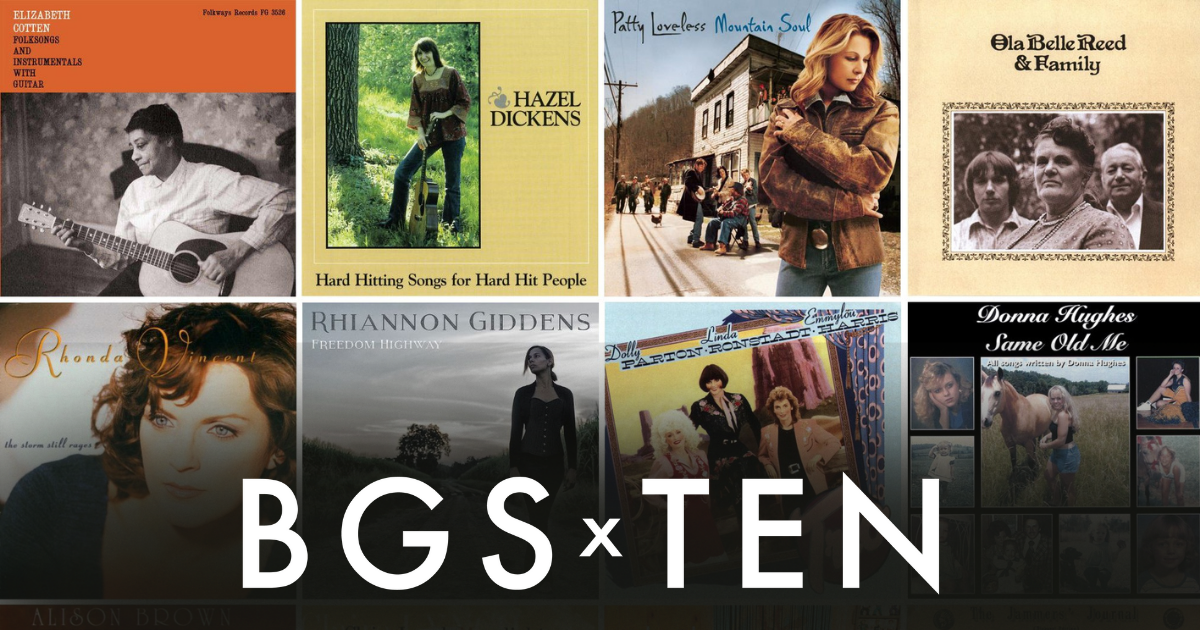
March is #WomensHistoryMonth (although, let’s be honest, shouldn’t we be celebrating 51% of the population’s history every month?!) so it seems like a fitting time to revisit our comprehensive — but by no means exhaustive — list of the 50 Greatest Bluegrass Albums Made By Women.

Published five years ago as an unofficial extension of NPR’s Turning the Tables project, our list included a wide array of female talent from over a century of bluegrass, old time, string band, and other traditional styles of recorded music, from Ola Belle Reed to Laurie Lewis & Kathie Kallick to Molly Tuttle and everything in between.

“We dare not be so bold as to claim that every important bluegrass album created by women is included. We are simply striving to illustrate the far-reaching, undeniable influence that these incredible artists have had on the music, as a whole. Each contributor, many of them groundbreaking, trail-blazing artists themselves, has chosen albums that are personally impactful. Glaring omissions and oversights are almost guaranteed, but therein lies the beauty of this conversation: This collection is merely a starting point, a springboard for a greater dialogue about the place of female creators, artists, musicians, and professionals in the telling of the history — herstory — of bluegrass.”

There’s no question that there are plenty of amazing albums that should be added to the canon since 2017, but each new addition wouldn’t have been given an inch of foothold in the genre without the strength, determination, heart, and amazing music of the women who came before them.

Revisit our list of the 50 Greatest Bluegrass Albums Made By Women here.

BGS Top 50 Moments – Lynn Morris: the National Banjo Champion Who Couldn’t Get an Audition

To honor the start of Women’s History Month, we want to refocus your attention to a profile you might have missed the first time around; that of a true bluegrass icon, Lynn Morris. A prolific banjo player and singer whose illustrious career has included multiple International Bluegrass Music Award wins for Best Female Vocalist and Song of the Year, and an induction into the Bluegrass Music Hall of Fame in 2021 (alongside Alison Krauss and The Stoneman Family). Lynn was also the first female IBMA Board Member, and continues to be a mentor and supporter of the music, even after health issues took her away from center stage.

What sets this profile apart from the thousands of other features we’ve published is that it had some of the highest engagement we’ve ever seen on the site. Even now, nearly twenty years after her retirement, Lynn’s legacy continues to ripple through our community in big ways.

Bluegrass and roots music is as much about learning from and appreciating that which has come before as it is discovering what’s ahead. And BGS will continue to be a place that highlights that history for generations of future musicians and fans.

To read more about Lynn Morris and countless other female leaders in the genre, check out Murphy Hicks Henry’s Pretty Good for a Girl: Women in Bluegrass.


Photo credit: Rounder Records

LISTEN: Molly Tuttle, “She’ll Change”

Artist: Molly Tuttle
Hometown: Palo Alto, California, and Nashville, Tennessee
Song: “She’ll Change”
Release Date: November 17, 2021
Label: Nonesuch Records

In Their Words: “I’ve always loved the rare bluegrass songs that are sung by women about women. Songs like ‘It’s Hard to Tell the Singer From the Song’ by Hazel Dickens, and ‘Ellie’ by Kathy Kallick. I wanted to write my own bluegrass song about a badass woman who lives by her own rules. ‘She’ll Change’ is my homage to the strong musical women who helped me find my own voice.” — Molly Tuttle


Photo Credit: Samantha Muljat

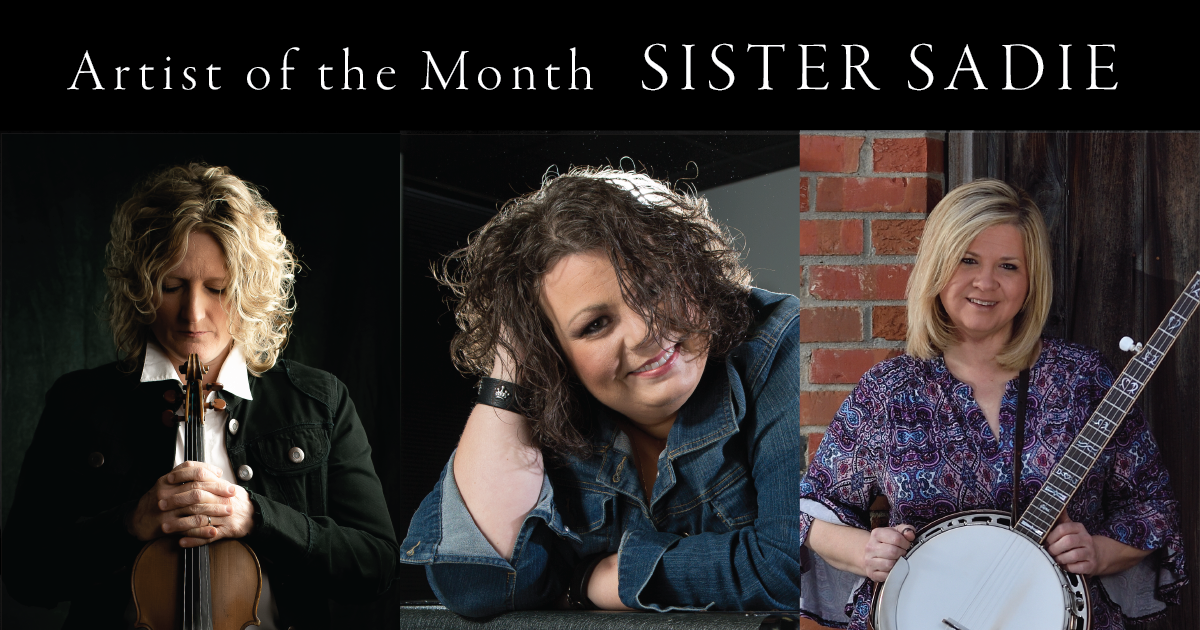
Sister Sadie: Bluegrass Entertainers, Teachers, and Most of All, Friends

Sister Sadie is a bluegrass supergroup featuring no-holds-barred instrumental and vocal talent presented as world-class entertainment. To list each member’s history in bluegrass and their accomplishments would take up more space than this entire interview, but their music speaks for itself. These women have spent their lives perfecting their craft. The band originally formed to play a one-off show at the historic Station Inn in Nashville. Once they started playing, they knew that they had found something special.

Since that night they have gone on to perform on the Grand Ole Opry, receive a Grammy nomination, and rack up two historic awards from the International Bluegrass Music Association. In 2019 they were the first all-female group to win IBMA Vocal Group of the Year and in 2020 they became the first all-female group to win IBMA Entertainer of the Year. These awards represent not only their individual lifetimes’ worth of hard work and passion, but also the work and love that they put into their music and each other.

BGS caught up with three of the band’s founding members — Tina Adair (mandolin, vocals), Gena Britt (banjo, vocals), and Deanie Richardson (fiddle) — for our Artist of the Month interview.

BGS: Since IBMA was virtual this year I haven’t gotten to see any of y’all in person to congratulate you on your award. I imagine this recognition must feel exciting since you’ve all been playing for your entire lives. Does winning Entertainer of the Year hold any special significance to you?

Tina Adair: I’ve been singing on stage since I was 3 years old. As big of a ham as I am now, I was as big a ham back then, too. I’ve always loved the stage and I love entertaining people and making people feel good and having a good time. I think people go out to see shows to get a break from the everyday world and to enjoy music because music is very therapeutic. It’s always been a goal of mine to make sure that people leave smiling bigger than they did coming into the show and feeling like they’re part of something. I know that Gena and Deanie are the same, all we’ve ever known has been music, you know? It’s not just a part of our lives — it is our life. So to get to do this as a profession, just makes us even luckier. And then to be recognized by your peers. Entertainer of the Year has always been something that I’ve dreamed about all my life. It’s been very special and we’re very honored and grateful.

Gena Britt: That’s pretty much everything I would’ve said.

Deanie Richardson: Yeah, that was pretty good. I’d say we’ve all been going to IBMA since we were teenagers. We all dreamed of being nominated for awards, but I don’t know if we ever thought it would happen. And like Tina said, that Entertainer of the Year category is special for some reason, so winning is just the icing on the cake. It means that we’ve not only gone out and played our best, but entertained them. Tina’s a great entertainer. She can grab that crowd and take them on a big journey. They’ll laugh and cry and anything they need to feel emotionally she can do that with an audience. To pull this off, to experience these awards and what we’ve accomplished together as five friends who have grown up knowing each other and going to IBMA that’s the really special part for me.

You all have this connection to mentoring the next generation, which is such a big part of the bluegrass tradition. How do you feel about being able to influence the generation of bluegrass in general and of women and bluegrass?

TA: Each of us has had such a lifelong journey, and we’re not old, but we’re middle aged now. So we’ve got some experiences to share. With age comes wisdom. I’ve been [working] at Belmont [University] for 20 years now. Personally I love that college age, because it’s such a transitional period in a person’s life. That’s the age where you’re coming into being a young adult and learning to make decisions. I love to be involved in lives at that point in time. I love to be able to provide advice to the kids and share any kind of tips. One of the best pieces of advice I always give to my students that I learned from one of my mentors is to do something every day to help forward yourself towards a goal or the career that you want to go after. Whether you spend five minutes on it or 10 hours that day on it, do something every single day.

And then, as far as influencing women and everything, I hope I can be an influence to a female that doesn’t fit the typical mold of what people think you’re supposed to look like in society. You know what I mean? People who need to be encouraged to get on stage or find the courage to want to learn how to play something even if they’re just sitting in their living room. I think that’s important — having that self-confidence and awareness of knowing who you are and knowing what you stand for. And being okay with yourself. Lord knows I’m not a size four, but it doesn’t matter. I’ve got the confidence of a size two. I love people. And I think if you give love to people then they’re gonna give back to you. I really feed off the energy of an audience because if I’m interacting with them and they’re interacting with me, then they’re invested just as much as I’m invested in them, you know? If I can influence one person that may have thought they couldn’t do something but changed their mind after seeing a Sister Sadie show, then that’s made our journey worth it.

DR: We’re not ones to harp on this whole “We’re women, blah, blah, blah.” But there are lots of women out there who paved the way for us like Laurie Lewis, Lynn Morris, and Kathy Kallick. We look up to them and they made it possible for us to win these awards. Somebody said the other day in an interview, “No woman has ever won this award” or all-female band or whatever. It is a male-dominated business, but there have always been women in this genre. There have been women always working towards what we just accomplished and they helped us get to where we are. And I hope that we’re paving the way for the next group of women to come right behind us. I think we’re working past saying, “Here are some women, and they just did this.” Because, you know what? We’re freaking good. And we just did this. Eighty percent of my roster that I teach is young girls playing fiddle and I want them to not have to worry about being a man or a woman. I want them to just want to be good, or to be the best, and to get out there and do this because that’s their goal.

Gena, I had a question for you because you played in Petticoat Junction, which is another historically significant, all-female group. Do you feel like there’s much of a difference performing in an all-female group now versus back then?

GB: Back then, there were a few other all-female bands, and at the time, if you called a promoter to book a show or something, they would say, “Well, we’ve already got a female band that weekend. We don’t need another female band.” I think we’ve grown so much since then. It hasn’t completely gone away, but we have stepped away from that. Yes, we are women, we are in our 40s, we all have these jobs that we’re doing, like, I have a day job and everything. But people are recognizing our music and we’ve been given these awards, because we’re carrying our own and we’re doing as best we can as musicians.

It’s great to see all of that progress. Bluegrass has this thing where men age into reverence, kind of no matter how talented they are. If you’ve been around for long enough, then people recognize that you have some wisdom which is turned into social capital. But women don’t seem to get that same treatment. It seems like it’s much harder for them to age into legends. You just stop hearing about them as much. It’s a really unsettling phenomenon. So I think it’s doubly exciting for you all to, uh, as… I’m trying so hard to not say, and I’m not saying at all that you guys are —

TA: Just say it, Tristan!

You’re only older than me! You’re not old, I’m just a baby.

TA: I mean, we’re all one step away from menopause. At least I really hope I am, because if I’m not, there’s something else wrong with me. [Laughs]

GB: I was 18 when I joined Petticoat Junction. That was 30 years ago. I’m 48. That gives some perspective on how long we’ve been out here doing this.

You’ve been doing this your entire lives and have been actively involved in the scene the entire time and I think it’s reflected in your music. You’re all talented musicians. The music that you play has its own sound, but clearly has a lot of different influences. How do you bridge the gap between bluegrass and folk and country and blues?

DR: Going into the studio and picking material is a hard thing for five people to do, and as women who all have different tastes and different senses of artistic creativity, it’s a challenge. Everybody brings songs to the table and then we choose as a unit what we think works as a band. That’s a hard process for us, but I feel like, at the end of the day, we work really well through our differences. Hell, we’re probably gonna break into a fight, but it’s gonna be alright. We’re gonna make it through it. And at the end of the day, there’s gonna be 12 songs on the record that we can kick ass on. Part of it comes down to Tina has a singing style that works for her, Gena has a singing style, and Dale Ann had one as well. So that brings in the blues, the hardcore traditional, the folky, from each of us.

GB: It’s all those influences. The East Kentucky, Alabama and the blues from Tina, I’m straight-ahead, traditional bluegrass from here in the heart of North Carolina. And it’s like you said, it is a cohesive sound. We’re all together. All those influences do help create our sound.

TA: It’s what brings it together.

You all clearly put a lot of work and love into your music and it’s really paid off.

DR: The one thing I am most proud of about this band is that we started as five friends played that show at the Station Inn. It went from there to another show, to another show, to a record to another record, to a Grammy nomination, to the Opry, to Vocal Group of the Year, to Fiddle Player and Entertainer of the Year. I wouldn’t have won that Fiddle Player or the Year award without this band so I’m truly grateful for all of that. But we’ve done this all by ourselves. We are five women who love each other, who work through our differences, and who have worked hard together.

We’ve done the booking, we’ve done the managing, we’ve done the publicity — it’s all been organic. It’s not something we’ve gone out and pushed, it’s not something we’ve gone out and publicized a great deal. It’s just all happened organically. It took on its own life. Everything that has happened with Sister Sadie has happened because it was meant to happen. And it’s just out of our love for this music and for each other. That is what I’m most proud of. Five women who raise kids, who work day jobs, who teach, who play professionally. Five women who have done this together. I’m super, super proud of that.

TA: Me, too. I want to piggyback off of that because that’s an important point. We didn’t start off to make it big or anything. We just wanted to play music together and instead of doing it in our living room, we thought, “Well, we could do it at the Station Inn, and that would be fun.” Because Station Inn is like all of our home away from home. So that’s how it all started. I think everything has a time and a place and everything happens the way it’s supposed to happen. I think that night at the Station Inn was supposed to happen. That is what led us down this road to accomplishing and achieving some things that have been lifelong dreams of ours that may not have ever come true had Sister Sadie not been formed. We just love each other dearly and hopefully that comes across. I hope the concept of Sister Sadie comes across as nothing more than we’re trying to love. I love people, we love each other, and love making music. We love bluegrass.


Photo credits: Deanie Richardson by Kerrie Richardson; Tina Adair by John Dorton; Gena Britt by Mike Carter
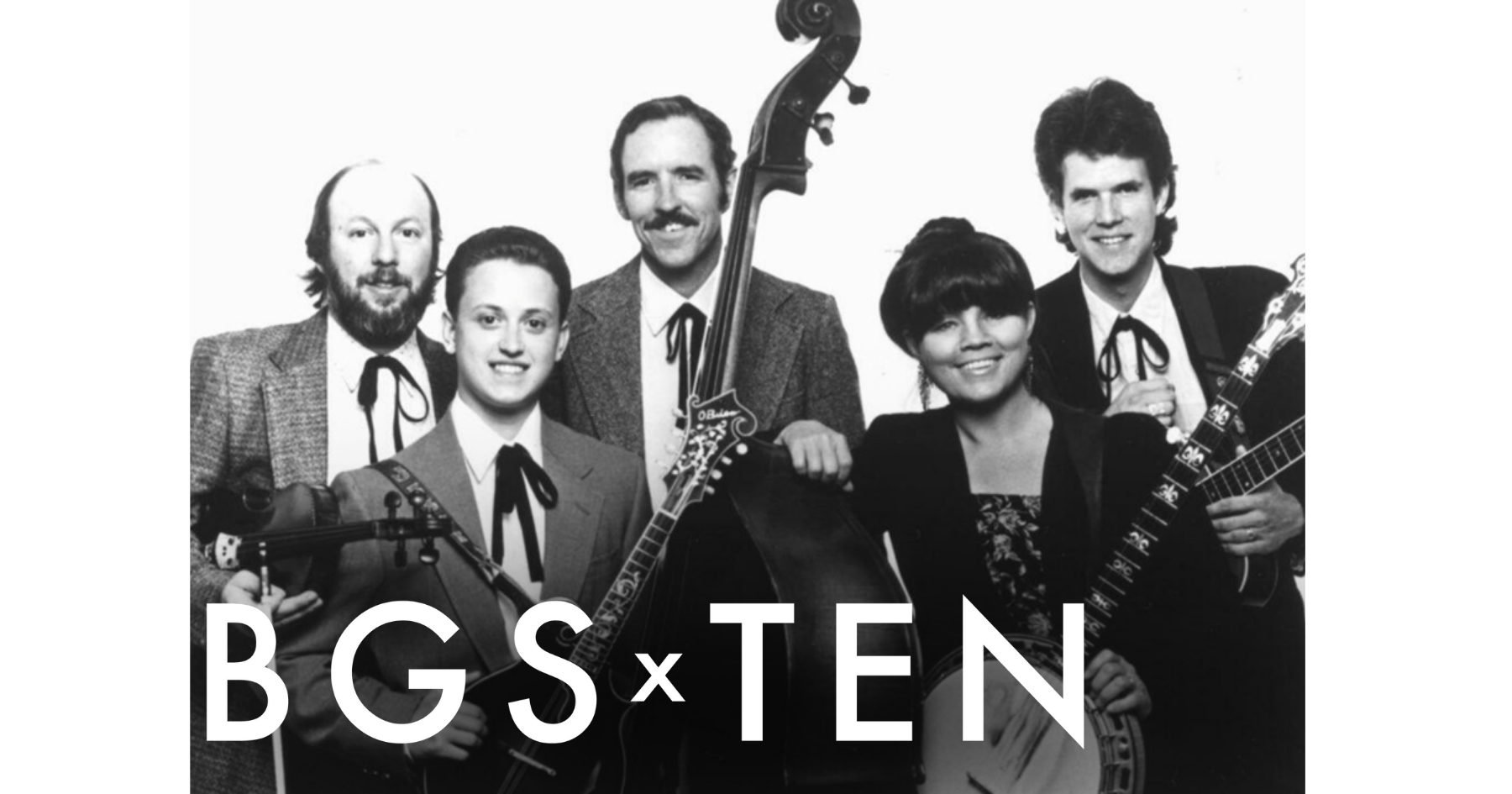
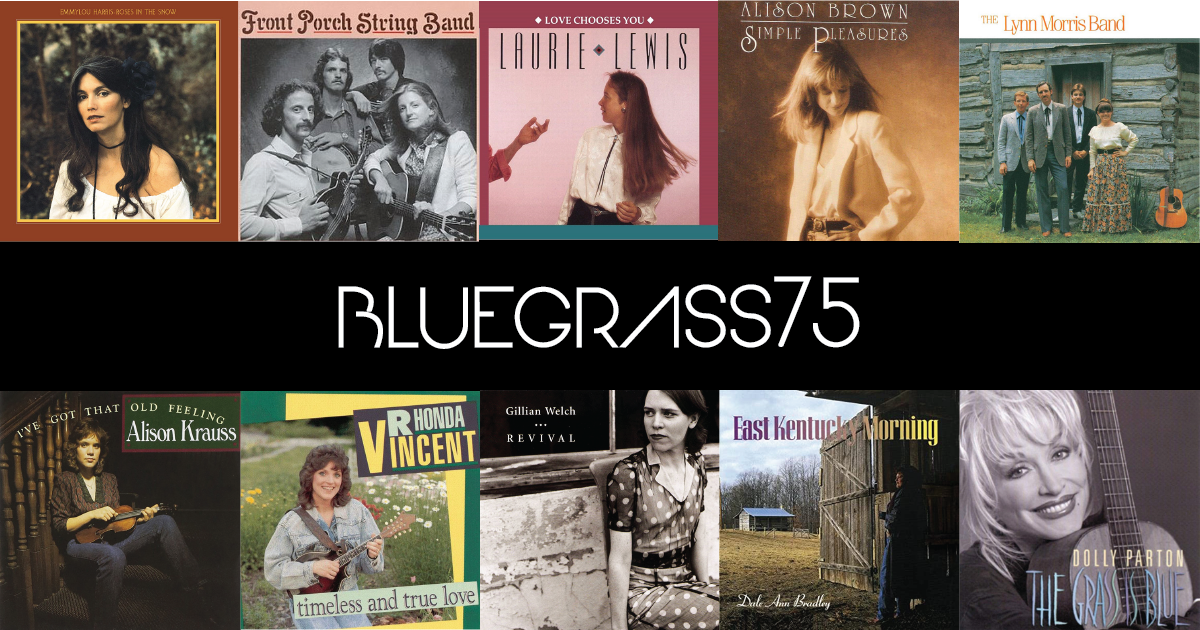
In the ’80s and ’90s, These 10 Women Made Bluegrass Better

With this year marking the 75th anniversary of bluegrass, it’s remarkable to note that women emerged as a creative force at roughly the halfway point between then and now. Of course, female musicians have been part of the fabric of bluegrass from the start, with Mother Maybelle Carter, Sally Ann Forrester, and Hazel & Alice among those serving as inspirations through the decades.

However, the role of women as bandleaders, rather than in a supporting role, began to change in the ’80s and flourished in the ’90s. As part of our Bluegrass 75 series, BGS commends these 10 women who carried bluegrass forward with a combination of undeniable talent, strong material, and a refreshing new perspective.

Emmylou Harris

One of the most visible country artists of the ’70s turned her attention to bluegrass, with a support team she deserves (Ricky Skaggs, Jerry Douglas, Dolly Parton, etc.) Her material ranges from the Louvin Brothers to Paul Simon, though that exquisite voice makes the album seamless. It’s one of her finest albums in a brilliant catalog.


Claire Lynch

With a crystalline soprano, Claire Lynch first gained notice as a lead vocalist and guitarist with Front Porch String Band, which released an indie album in 1980 that was picked up by Rebel Records in 1983. The poignant track, “Hills of Alabam,” which she co-wrote, shows her gift for melody and her ability to sing with sincerity.


Laurie Lewis

A key figure of the West Coast bluegrass scene, Laurie Lewis can fiddle with the traditionalists, then hush a crowd with a beautiful acoustic ballad like “Love Chooses You.” As the acolyte of a generation before her, Lewis actively takes an interest in the bluegrass scene’s rising talent, as evidenced on her latest work, an album of duets entitled and Laurie Lewis.


Alison Brown

As a picker, Alison Brown has made her mark on countless recordings and won the 1991 IBMA Award for Banjo Player of the Year. She’s also a co-founder of Compass Records, a producer, and a Grammy-winning artist. At times blazing, and other times mellow, Brown consistently finds just the right tone on her albums’ instrumentals.


Lynn Morris

Blessed with a sweet but persuasive voice, Lynn Morris knew how to get the storyline across, whether she’s reminiscing about “Mama’s Hand” or laying down the law in “You’ll Get No More of Me.” As a banjo player, she had incredible chops, and her grace on stage (and off) has made her one of the bluegrass family’s most beloved figures.


Alison Krauss

A gifted vocalist, bandleader, and fiddler, Alison Krauss kept her early career focused on bluegrass, though her material would soon find its way to millions of country listeners, too. Being a former child prodigy herself, she served as a role model for a generation of younger pickers, while showing traditionalists that bluegrass is indeed in good hands.


Rhonda Vincent

Coming up in a family band, singer and mandolin picker Rhonda Vincent has been working in bluegrass for decades, though she’s always finding ways to keep things fresh. Still, her early albums remain some of her most satisfying work. As a bandleader, she keeps the energy up on stage, and her outgoing personality makes her a true entertainer.


Gillian Welch

While few would consider her albums to be bluegrass proper, Gillian Welch has exerted tremendous influence on its community. A 1993 winner of Merlefest’s Chris Austin Songwriting Contest, Welch has seen originals like “By the Mark” and “Caleb Meyer” become standards, and though she didn’t grow up in Appalachia, her songs somehow embody its heritage.


Dale Ann Bradley

A sterling discovery from the New Coon Creek Girls lineup, Dale Ann Bradley launched her solo career by selecting relatable material along with a surprise or two (including a U2 cover). It’s a template that still serves her well. The title track of East Kentucky Morning captures the mood and melancholy that she continues to convey so well.


Dolly Parton

It’s hard to imagine now, but Dolly Parton had dropped off the mainstream radar in the mid ’90s. Then her first bluegrass album proved what her fans knew all along — she represents her mountain people well. A wonderful mix of familiar favorites and new material, The Grass Is Blue solidified her reputation as one of music’s most important voices.

(Editor’s note: Explore more of our Bluegrass 75 Artist of the Month coverage.)


Rose Maddox: The Remarkable Hillbilly Singer Who Made Bluegrass History

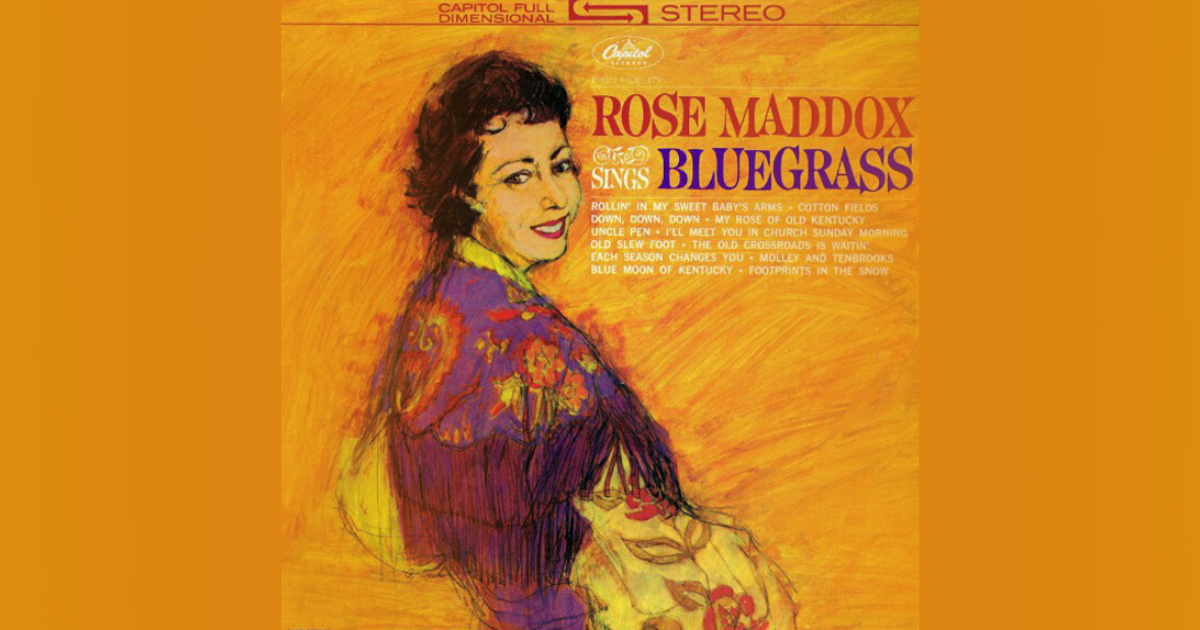
Rose Maddox, the lead singer of the Most Colorful Hillbilly Band in America, made a significant mark in bluegrass, too, as the first woman ever to record a bluegrass album. Her incredible rags to-riches story touches on boxcars and sharecropping, the Grand Ole Opry and Buck Owens, and finally the Father of Bluegrass Music himself, Bill Monroe, who laid the foundation for that seminal 1962 Capitol Records LP, Rose Maddox Sings Bluegrass.

Born on August 15, 1925, in Boaz, Alabama, Roselea Arbana Maddox arrived in a family with some musical heritage. Her paternal grandfather was a fiddler and roaming preacher, while her uncle Foncey gave lessons to locals and performed in blackface. Rose’s father, Charlie Maddox, worked as a sharecropper and hired hand. After getting stiffed for a job chopping wood, Charlie decided to skip town and finally indulge his wife Lula’s lifelong dream of living in California, panning for gold. They sold everything they had and stashed away the proceeds — just $35. The two oldest children stayed behind, while the youngest five and their parents set out for the Golden State in the spring of 1933.

How? On foot. Then hitchhiking. And after crossing over the state line to Mississippi and encountering another family who explained train-hopping, the seven Maddoxes rode the boxcars all the way west. Rose was 7 years old. They settled and resettled in various towns, with their situation once so dire that Lula had to place Rose with another family — but Rose acted up so often that the family gave her back. When Charlie got harvesting work in Modesto, the family followed and became what they called “fruit tramps.”

With some stability, the kids were putting down roots in Modesto. They collected whiskey bottles, turned them in for a penny a piece, then spent their dimes on movies. One Sunday the Sons of the Pioneers appeared in person at the Strand Theater. At that moment, Rose had found her calling — to be a singer. Her brother Fred had a similar epiphany while picking cotton that fall. After hearing that the band who’d just played the rodeo made $100, he decided it was time to get into the music business. Acting as manager, he found a furniture store to sponsor some radio spots. The caveat was simple: The furniture store owner wanted a girl singer. Thus, the Maddox Brothers & Rose were launched — with the spunky lead vocalist just 11 years old.

They followed the California rodeo circuit and played bars for tips, then won a State Fair competition that crowned them California’s best hillbilly band. However, things unraveled for a time in the early 1940s, as Fred, Don, and Cal were drafted in World War I, and Rose became an unhappy bride at 16, then a single mother at 18. Auditions with Roy Acuff and Bob Wills went nowhere. She played occasional gigs with other bands until the war ended and the Maddox Brothers & Rose reformed, with the youngest Maddox child, Henry, now joining on mandolin.

Playing dances as well as radio shows, the group shifted their sound to get people moving. Their look got an overhaul after Roy Rogers recommended Los Angeles tailor Nathan Turk, a pioneer of flashy Western stagewear. They also signed a deal with 4 Star Records, an indie label that marketed them as Most Colorful Hillbilly Band in America. Their repertoire ranged from Woody Guthrie’s “Philadelphia Lawyer” to Hank Williams’ “Honky Tonkin'” to the gospel tune “Gathering Flowers for the Master’s Bouquet.” They made their Opry debut in 1949, where they met Bill Monroe, and became the first hillbilly band the play the Las Vegas Strip. That same year, however, Charlie and Lula Maddox divorced.

By 1950, various members of the family were living in Hollywood. A beautiful woman of 25, Rose took courses in modeling and vocal control, although Lula would not allow her to date. The band appeared on broadcasts like Hometown Jamboree and Town and Country in Southern California, as well as the regional show, the Louisiana Hayride. Columbia Records signed her as a solo act in 1953. With rock ‘n’ roll in full force in 1956, the Maddox Brothers & Rose sputtered, then disbanded, and not without some bitterness as Rose’s career still flourished. The Opry didn’t appreciate her first solo appearance though, when she wore a blue satin skirt that exposed her bare midriff. Nonetheless she relocated to Nashville (with the ever-vigilant Lula) and became an Opry member in 1956, but quit about six months later when Roy Acuff complained she (and not other Opry members who were touring) made appearances on too many local TV shows.

That professional setback might have given the perception that Rose couldn’t have a career without her brothers. That proved quite untrue. Hometown Jamboree in Los Angeles hired her, which led to plenty of gigs. When the Columbia deal ended, she recorded for two independent labels before signing with Capitol Records in 1959. When Lula tried to boss around producer Ken Nelson, he banned her from all future sessions. Rose, by this time 33 years old and still under her mother’s thumb, was secretly delighted. Taking things a step further, Rose eloped with a nightclub owner that December, then embarked on a European tour.

For Capitol, she made her first Billboard chart appearance ever with the honky-tonk weeper “Gambler’s Love,” climbing to No. 22 in 1959. Her first solo album, The One Rose, dropped in 1960, followed by a gospel set titled Glorybound Train. By 1961, she took “Kissing My Pillow” and “I Want to Live Again” to No. 14 and No. 15, respectively. Johnny Cash invited her to join his road show and Buck Owens asked to record some duets. Those twangy tracks, “Loose Talk” and “Mental Cruelty,” both entered the Top 10 in 1961. Her third album for Capitol, A Big Bouquet of Roses, appeared later that year.

The year 1962 proved to be the pinnacle of her career, as Bill Monroe encouraged her to make a bluegrass album. Because they recorded for competing labels, Big Mon anonymously played on the first day of the two-day session, recording several numbers from his own repertoire. Donna Stoneman stepped in on mandolin on the second day with the remainder of the material. Reno & Smiley joined the session too. Monroe later told Maddox biographer Jonny Whiteside, “The Maddox Brothers & Rose always had their own style, but you must remember their home was Alabama, and I always thought they sang a lot of the old Southern style of singin’. So I enjoyed helpin’ her on one of her albums. She had some great entertainers workin’ on it, and it didn’t take long at all.”

Maddox herself explained, “Bill Monroe has always told me that I sang bluegrass, and to me what he was talkin’ about is just what I call ‘hillbilly.'” She may not have agreed with the terminology, but she certainly adhered to the enthusiasm of the best bluegrass singers. Rose Maddox Sings Bluegrass became the first bluegrass LP recorded by a woman. Its release coincided with the chart success of an earlier country single, “Sing a Little Song of Heartache,” which rose to No. 3 (and practically begs for a bluegrass remake).

Without Lula to intervene, Rose’s life on the road nearly derailed her, with infidelity, volatility toward band members, and a propensity for Benzedrene wrecking her marriage and her professional reputation. A heavy schedule of international touring wreaked havoc on her voice, too. The singles she did release were moody, if not morbid. Although she eclipsed Patsy Cline and Kitty Wells to be named Cashbox‘s female country artist of 1963, her chart momentum fizzled out after her final album with Capitol, 1963’s Alone With You. Still she continued to tour with Buck Owens and Merle Haggard, with her grown son Donnie as her sideman.

Maddox occasionally recorded for small labels in the ’70s and ’80s to modest results, while her venues now included the San Francisco gay bars that embraced the Urban Cowboy phenomenon, as well as the annual gay rodeo in Reno, Nevada. She performed with the Vern Williams Band in folk clubs, too, and recorded a 1984 album with Merle Haggard & the Strangers that was funded by fans. A number of Arhoolie Records reissues helped keep her loyal audience appeased, while introducing her vivacious music to a new generation. She and her brother Fred patched things up for a 50th anniversary celebration of the Maddox Brothers & Rose in Delano, California.

Too often overlooked among the country performers of her era, Maddox landed her first Grammy nomination for her 1994 Arhoolie release, $35 and a Dream, in the category of Best Bluegrass Album. She recounted her exceptional career in the 1997 biography, Ramblin’ Rose: The Life and Career of Rose Maddox, and died the following year at age 71 in Ashland, Oregon. Remarkably, her life story has not been adapted for Hollywood, nor has she been inducted into the Country Music Hall of Fame or the Bluegrass Hall of Fame. Yet her catalog still shines as a beacon for listeners who seek out traditional music with an undeniable West Coast flair.

On the final track of that final album, Johnny Cash intones, “I worked with Rose Maddox a lot back over the years. And I found that when she started working my show that she was probably the most fascinating, exciting performer that I’d ever seen in my life. She was a total performer. She captivated the audience. She held them in the palm of her hand and made ‘em do whatever she wanted to. The songs that she sang were classics, and I loved the way she sang and kind of danced at the same time. I thought there was, and still think that, there will never be a woman who could outperform Rose Maddox. She’s an American classic.”