IBMA Virtual Business Conference: Who’s Taking Part, How to Watch, and More

J.D. Crowe, Jerry Douglas, Sarah Jarosz, and Ronnie McCoury are just a few of the artists taking part in the IBMA Virtual World of Bluegrass, which begins today, Monday, September 28. Kristin Scott Benson, Doyle Lawson, and Mumford & Sons’ Winston Marshall are also confirmed to participate.

IBMA Virtual World of Bluegrass is an annual bluegrass music homecoming and convention that takes place online this year, encompassing the IBMA Business Conference, IBMA Bluegrass Ramble, the 31st Annual IBMA Bluegrass Music Awards, and music festival IBMA Bluegrass Live! powered by PNC running through October 3. See the full schedule.

Check out our General Information page regarding IBMA Virtual World of Bluegrass. You’ll find our full-week schedule…

Posted by International Bluegrass Music Association on Thursday, September 24, 2020

Conference registration is available at a lower price point than in years past: $99 for IBMA members, and $149 for non-members. Register here.

To stream the following sessions, as well as many others, IBMA Business Conference registration is required. Business Conference registration also allows access to other valuable content: an online version of the Gig Fair (one of the most popular conference events each year) the Songwriter Showcase, two virtual in-the-round Song Circles, the Annual IBMA Town Hall Meeting, the IBMA Virtual Exhibit Hall, and much more.


As previously announced, Sarah Jarosz will deliver the Keynote Address on Monday, September 28 to kick off this year’s virtual IBMA Business Conference. “Having attended IBMA as a young kid just getting into bluegrass, and having returned more recently as a performer at their Raleigh conference, I’m deeply honored to have been asked to be this year’s keynote speaker. I look forward to helping kick things off!” said Jarosz.

Organizers have added three presentations to lead each day’s conference activities, Tuesday through Thursday:

Tuesday at 11 AM ET: Artist-2-Artist with J.D. Crowe, Winston Marshall, and Jerry Douglas

Hall of Famer J.D. Crowe’s infusion of new ideas into bluegrass banjo took the music to a decidedly younger and more diverse crowd, inspiring a new generation of pickers and fans. His music would influence a young banjo player across the Atlantic named Winston Marshall, who would take the banjo to millions of fans worldwide. As a member of Mumford & Sons, Winston has helped completely transform the image of the banjo in popular culture. Jerry Douglas has used his dobro to build musical bridges throughout his storied career. He has shared both the stage and the studio with J.D. Crowe and Winston Marshall, and he invites you to join him and these two groundbreaking banjo players for a fun conversation about how music unites.

We just announced special feature presentations to kick off each day of the IBMA Business Conference:

Monday – Keynote…

Posted by International Bluegrass Music Association on Friday, September 18, 2020


Wednesday at 11 AM ET: Artist-2-Artist with Doyle Lawson and Kristin Scott Benson

Doyle Lawson has been a leader in bluegrass music for decades. He and Quicksilver played at a festival in Dahlonega, Georgia in the mid-eighties, and it changed the life of a young girl in the audience named Kristin. Three and a half decades later, Kristin Scott Benson is one the most celebrated banjo players of her generation and is the reigning IBMA Banjo Player of the Year. She sits down with Bluegrass Hall of Fame member, Doyle Lawson, to talk about the impact he and his music have had on her and on the bluegrass community at large.

Thursday at 11 AM ET: From the Bay, to Bean Blossom, and Back

Jerry Garcia is unquestionably a towering figure in American culture, and one of the most influential musicians of the 20th century. He and the Grateful Dead set the template for a new style of music that would inspire generations, much as Bill Monroe, The Father of Bluegrass himself, had done. What’s less known about Jerry, is that long before, during, and after the Grateful Dead, he was a banjo player, a bluegrass musician, even an aspiring Bluegrass Boy. Join Ronnie McCoury, filmmaker Brian Miklis and others in a conversation diving deep into the relationship of a true giant of American music, and the music that inspired him.
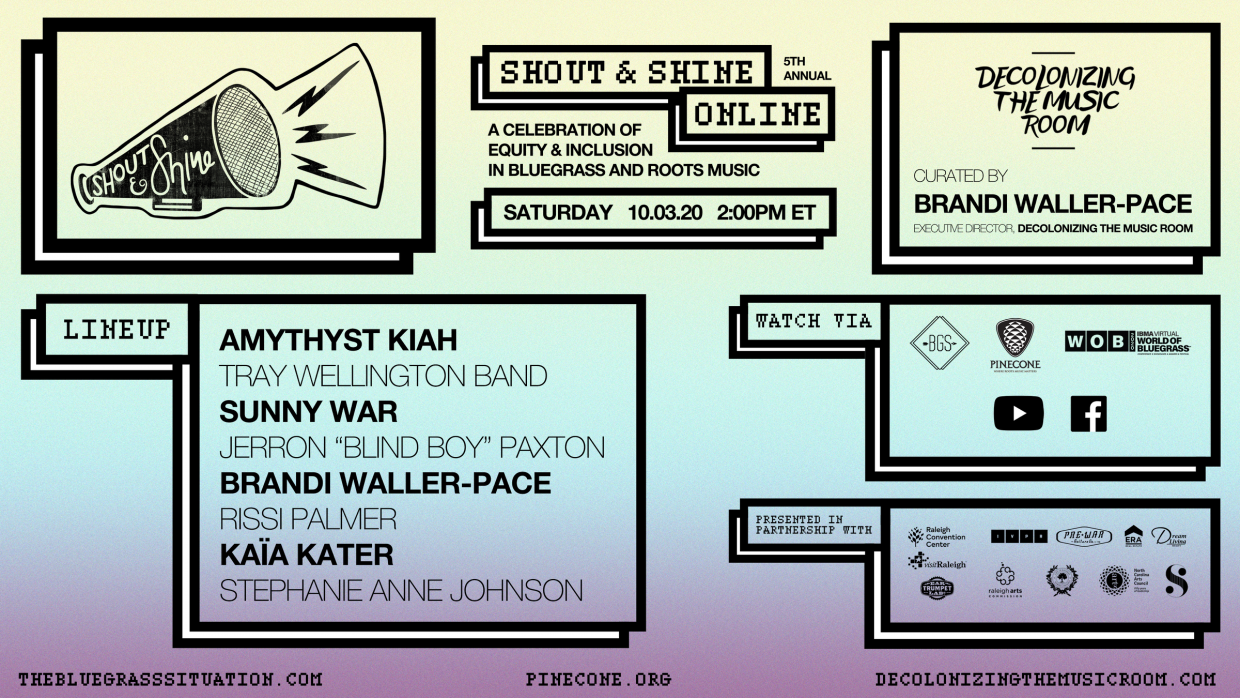
The Bluegrass Situation will proudly present our fifth annual Shout & Shine Online on Saturday, October 3rd at 2pm ET. And at press time, 30 artists have also been confirmed for a series of showcases known as the Bluegrass Ramble.

The virtual music festival IBMA Bluegrass Live! powered by PNC, will take place Oct. 2-3. Special performances by The Travelin’ McCourys with special guest Del McCoury; Steep Canyon Rangers; Jerry Douglas & Odessa Settles; Sierra Hull & Molly Tuttle are just some of the highlights that bluegrass fans can look forward to.


In addition, PNC Bank is boosting its support for the IBMA and bluegrass artists experiencing financial hardship due to pandemic-related performance cancellations. PNC Bank, the presenting sponsor of IBMA Bluegrass Live! powered by PNC, has announced it will match all 2020 donations made to the IBMA organization and the IBMA Trust Fund, for a total up to $50,000. (Donate now.)

IBMA is the nonprofit professional organization for the global bluegrass music community — connecting, educating and empowering bluegrass professionals and enthusiasts while honoring tradition and encouraging innovation worldwide. The organization has suffered financially this year due to pandemic-related health precautions that are preventing the IBMA World of Bluegrass event from being held in Raleigh, N.C. The IBMA Trust Fund, which is administered by IBMA, was established in 1987 as a means to offer emergency financial assistance to bluegrass music professionals. In 2020, requests for assistance have increased tenfold due in large part to COVID-19.

As the presenting sponsor of IBMA Bluegrass Live! powered by PNC since 2013, PNC Bank has helped bring bluegrass music and culture to Raleigh for what has become one of the city’s most beloved live, free events. While IBMA Bluegrass Live! powered by PNC cannot be presented as an in-person event in 2020, PNC remains committed to supporting this event and community tradition by helping deliver bluegrass programming in a virtual setting, Oct. 2-3.

Donations may be made online; additionally, those registering for the free IBMA Virtual World of Bluegrass Music Pass have the opportunity to make a donation during the online registration process. The Music Pass includes access to all music performances during the week, including IBMA Bluegrass Live! powered by PNC, the IBMA Bluegrass Music Awards presented by Count On Me NC, and IBMA Bluegrass Ramble presented by Count On Me NC.
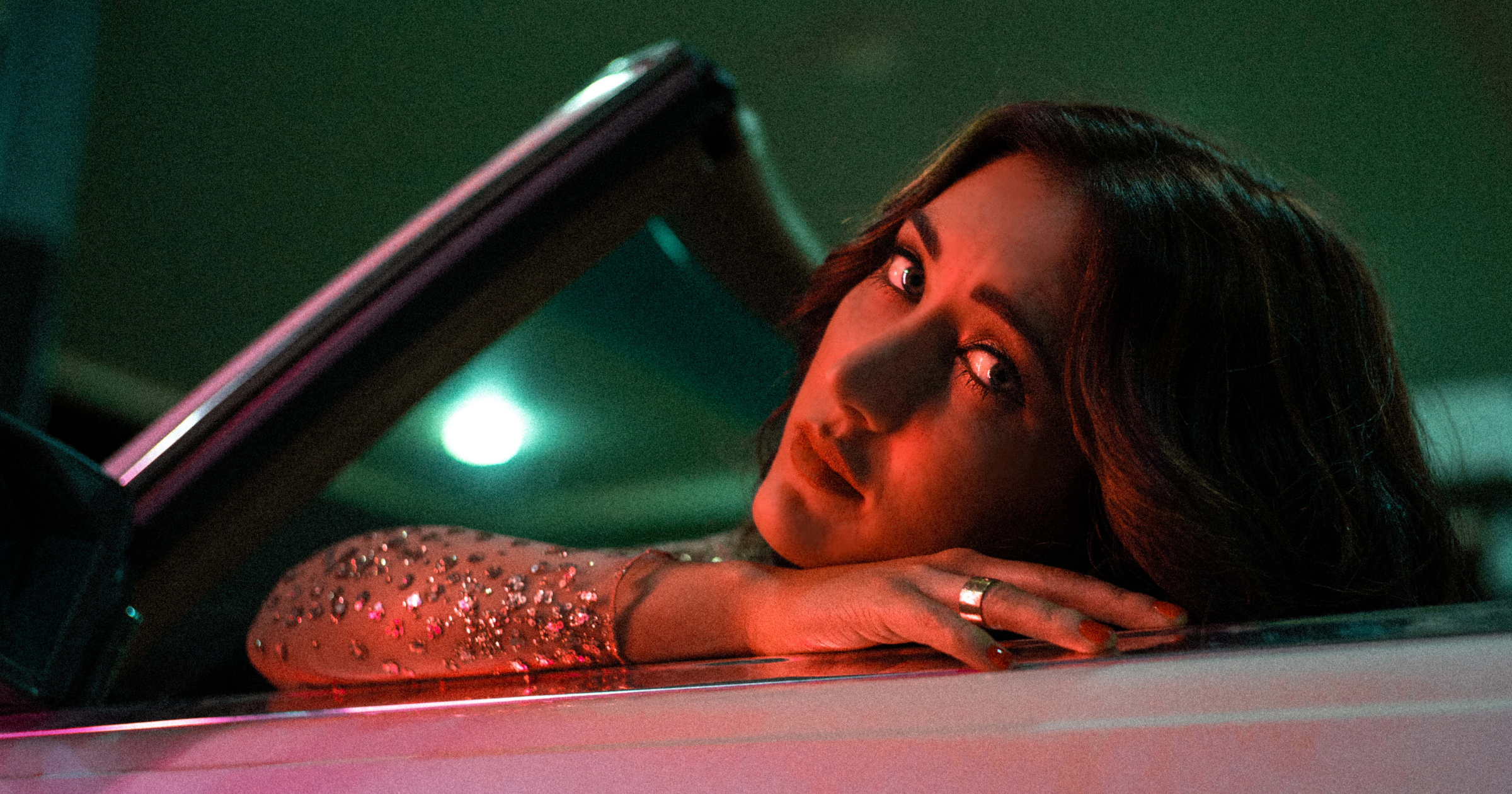
 

The Show On The Road – Aubrie Sellers

This week on the show, we catch up with a rising star in boundary-bending country and take-no-prisoners rock ‘n’ roll, Aubrie Sellers.


LISTEN: APPLE PODCASTSSTITCHERSPOTIFYMP3

What have you been doing since the pandemic hit in late February? Somehow Aubrie Sellers has managed to release a striking new LP of twisty, guitar-drenched originals on Far From Home (collaborating with her roots rock heroes like Steve Earle) while also pushing herself to make a EP of beloved covers on the aptly-titled, World On Fire. In rejuvenating a faded favorite like Chris Isaak’s “Wicked Game,” she takes a song we all thought we knew and twists it around until it seems like a poisonous, reverb-zapped revelation that just arrived out of nowhere.

Sellers was prepared to make music earlier in life than most. Growing up, she often found herself in nontraditional school situations, doing her homework on tour buses, hanging out in green rooms, and getting her feet wet on stages in Nashville’s tight-knit country community; you might know her mom, twangy-pop icon Lee Ann Womack and her dad, Jason Sellers, had a few chart toppers of his own, writing for folks like Kenny Chesney and playing in Ricky Skaggs’ touring band.

Sellers made her major label debut in 2016 with the more straight-ahead, but tightly crafted New City Blues, and earlier sang on a compilation record with the late Ralph Stanley. But at only 27, Sellers feels and sounds like an old soul — one less interested in climbing the current country charts than mining thornier material like her history of anxiety and stage-fright. She harnesses the punky, poetic outlaw energy that more cerebral songwriters like Steve Earle and Lucinda Williams have become known for. And audiences are taking notice, as Sellers’ scorching duet with Earle, “My Love Will Not Change,” was recently nominated for the Americana Music Association’s Song of the Year.

Stick around to the end of this episode of The Show On The Road to hear an acoustic, live-from-home rendition of her tune “Far From Home.”


Photo credit: Scott Siracusano

MIXTAPE: Daniel Rodriguez’s Songs of Authenticity

I love all types of music and song. How beautiful a thing to hear the invisible insides of someone shared outwardly. A culmination of dynamic forces, experiences and sensibilities dialed into pulsating, Pythagorean waveforms, giving color to the space in between. The only catch is we have to trust what we’re hearing is authentic. Whether it’s the tonal intention of a singer or the specific touch of an instrumentalist, the song has to move me in some way or else I’m changing the station. Authenticity is subjective to each listener where no authority exists, though goosebumps, tears, movement, lofty notions and inspiration have always been my litmus tests to playing something thrice or more.

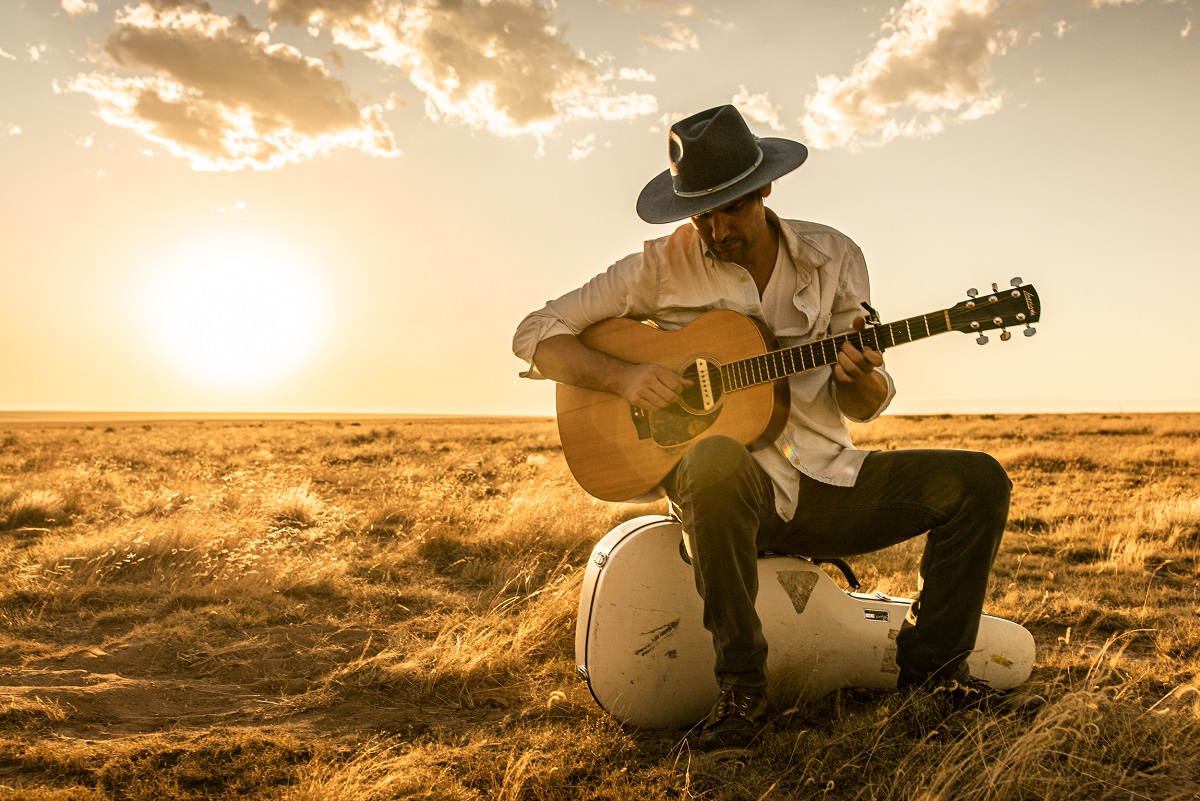
Here’s a list of songs that have moved me in some way worthy of mention. Also, if you’re so moved, check out my album Sojourn of Burning Sun out on August 28. — Daniel Rodriguez

Bill Monroe – “Uncle Pen”

From what I hear, this song is Bill giving gratitude and paying tribute to his actual uncle, Pen [James Pendleton Vandiver]. Pen played the fiddle at family gatherings and inspired Bill to join the musical world. The song structure of “Uncle Pen,” though only a few chords, is kind of complex. It’s a jubilant song with a great melody and has those goosebumping, Appalachian harmonies that Bill and his band often showcased. Probably what I like most about the song is that it appears to skip a beat before the head of each verse. It happens during a G run directly after the chorus that impossibly lands at the head of the next section. Simple genius.

Gregory Alan Isakov – “Amsterdam”

I like pretty much all of Gregory’s songs and his recordings. Catching his band live or him solo is a remarkable experience. I’m lucky to call him a longtime friend and I keep my fandom of his music separate from that. Gregory paints imagery that is most times not specific, which leaves you, as a listener, more in an abstract state of mind. Yet he threads a powerful emotion throughout, which his voice and arrangements unavoidably invoke. He uses imagery of a woman often, which comes across as more a mythical character of the sacred feminine, rather than one of a romantic endeavor. This is apparent in “Amsterdam”: “That howling wind, she’s waving hi, her other hand’s in mine.” The song ascends towards the end in some epic way when Greg moves his voice up an octave and sings “Churches and trains, they all look the same to me now / They shoot you some place, while we ache to come home somehow.” Goosebumps to follow.

Bruce Springsteen – “Youngstown”

The Boss has never failed to paint us the pictures of the struggling American working class. Our popular culture seems to only highlight the celebrities and billionaires, and yet The Boss celebrates and sheds light on the untold stories of the common man, the backbone of our culture. His stories are always rich with the American story, full of its hypocrisies and triumphs. “Youngstown” paints a very real picture of the uphill and endless bogging down of industry and war. The arrangement has a suiting Americana feel, stripped down and intimate. The pedal steel and fiddle give an eerie voice to the emotion of the character in the story who sings, “My sweet Jenny, I’m sinking down, here darling in Youngstown.”

John Prine – “Lake Marie”

When John Prine passed on earlier this year I cried constantly for three days. I’ve been lucky enough to catch him live more than a few times at festivals that we both played. The authenticity in his delivery has healing properties that only a few possess. John touches on all the hidden sadnesses and joys of humanity, and gives color to the seemingly opaque hidden corners of the human condition. “Lake Marie” is a special song with all the ingredients: New love, tenured love, relationship struggles and cold-blooded murder. John delivers this story in a very light-hearted and humorous way. He speaks the verses and accentuates certain parts, which become vital to the song’s DNA. The chorus is maybe the best chorus ever written, beautiful and joyous, juxtaposed with a very brutal and tragic story.

Levon Helm – “The Mountain” (written by Steve Earle)

Just like any song that Levon sings of someone else’s, he makes it his own. That is very much the case with “The Mountain” by Steve Earle. Steve recorded a great version of this song with Del McCoury, but my favorite version is the one Levon sings. It’s about the coal industry brutalizing the natural wonder of a homeplace. Removing mountaintops from where once majestic mountains stood. Filling in swimming holes that you once could cool off from the summer’s heat within its cool mountain runoff. Levon brings you there to those mountains, and he takes you to that swimming hole, and then he shows you the pain of it being no more.

Gillian Welch – “Everything is Free”

When speaking of Gillian’s songs it would be prudent to also mention David Rawlings. The line is blurred when trying to understand who wrote what — and it’s fitting that their voices in harmony become an entity of grace and grit that is alive and well. “Everything Is Free” is a song that hits home for the majority of musicians and artists who are at large suffering in an age where the fruits of their labors are taken for granted. This is certainly reflected by our culture, which would ironically feel the worth of music in its absence. In regards to this, Gillian sings: “If there’s something that you wanna hear you can sing it yourself.”

Leon Bridges – “River”

I’m not a religious person, but I am spiritual. Even though Leon uses biblical terminology in this beautiful song of yearning, and being cleansed from your sins — it’s the intention of the song that shines through and transcends all the negative connotations that might come with organized religion. It’s the true Christian values that are evoked here, of actively wanting to become a better person. It sounds like it was recorded live around one mic in a big room and really captures a beautiful moment of music.

Bob Dylan – “Murder Most Foul”

Bob is my favorite artist and songwriter. I love all the phases of his expression. I don’t subscribe to picking a favorite era or compare everything he creates to what he produced in the 1960s. This brings us to “Murder Most Foul,” a recent release of his. It is a nearly seventeen-minute song that talks about the day and days that followed the assassination of John F. Kennedy. Bob beautifully describes this tragic and heightened moment in history, giving us a stream of consciousness of images peripherally and directly happening around the time of the assassination. The production of this song is very minimal which allows the lyrics to be absorbed and breathe.

Mandolin Orange – “Wildfire”

Growing up and residing in the hills of North Carolina, Mandolin Orange has lived and been more than aware of the culture that exists below the Mason-Dixon Line. Not buying into the rhetoric of those holding on to the nostalgia of the Confederacy, Mandolin Orange gives a historical and psychological look at the wildfire that unfortunately still is fueled today. “Wildfire” is a bit of medicine to us all, and carries a hope that some who might need the medicine most. Listen to this song that is served in the musical genre of its commonplace.

The Del McCoury Band – “Hot Wired” (written by Shawn Camp)

This song is a hoot. It’s very well-written, witty and might even spark a belly laugh or two. It talks about all the things the author’s girlfriend is capable of hot-wiring. My favorite lyric is “She might hot wire your Chevy, she might hot wire your Ford / And if she ever gets to Heaven she might hot wire the Lord.” Del breaks the bluegrass rules on this song and introduces an electric guitar after singing about his girlfriend hot-wiring his acoustic guitar to play like the “doggone Rolling Stones.”

Billie Holiday – “Strange Fruit” (written by Abel Meeropol)

This song is so powerful. Billie Holiday recorded it in 1939. The emotion and dynamics of her timing are delivered in a powerful and haunting way. The fruit that hangs from the trees is not fruit at all. [The song’s titular analogy references lynchings of Black folks.] It is perplexing to me that humanity can stoop so low to such an evil as to think one is inferior to another, where murder is rationalized within such a vitriolic mindset. In this specific case it is rationalized within the minds of pale complexion below the Mason-Dixon line. How those trees still stand and the fruit still hangs, though embedded within policy, social structures, the psychology of an unexamined people and history books with whole chapters missing. Music and song throughout time has been utilized to pass stories down and convey emotions. This is a song that passes down and conveys a traumatic truth; its shockwaves still crash on the shores of our everyday.

Josh Ritter – “Girl in the War”

This is one of my favorite songs. I’ve had the fortunate opportunity to play a bunch of shows with Josh and actually back him up on this song with my old band. I’ve heard him say in an interview that this song is about America. I’ll take his word for it. I’m not quite sure what the song is about myself, but I do know it’s a goosebumper. The recording of the song is stunning and I sure do like to play this song around the fire at gatherings.


Photo credit: Jesse Borrell

“The Shorthairs and the Longhairs”: The Story Behind ‘Bluegrass Country Soul’

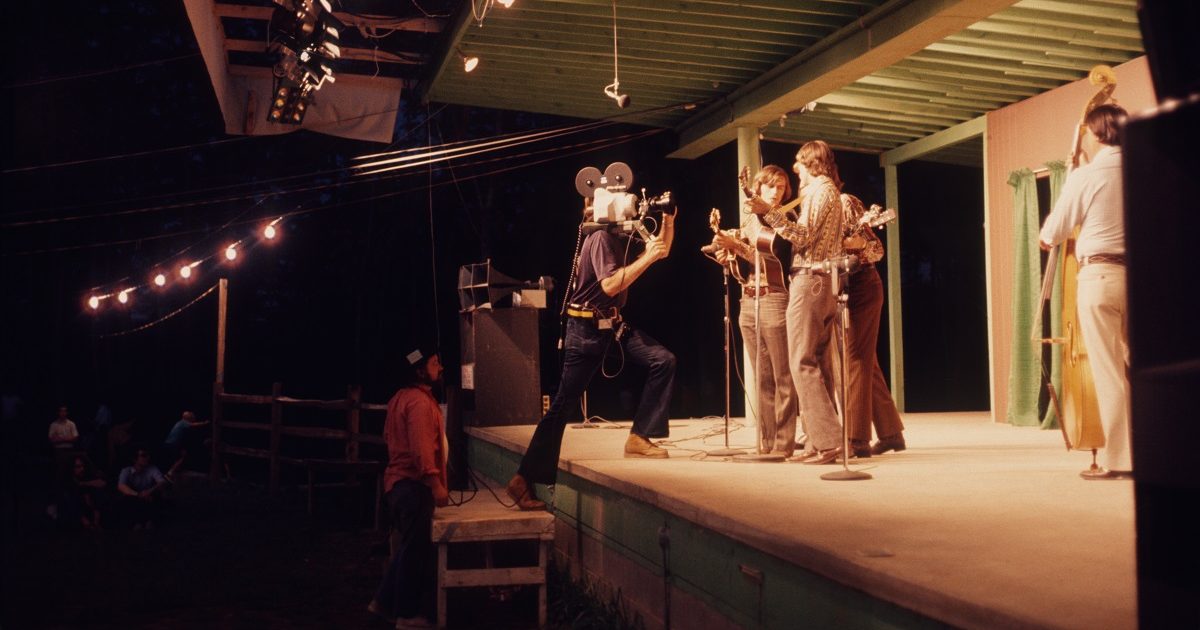
Bluegrass Country Soul captures one of Carlton Haney’s legendary festivals in Camp Springs, North Carolina, on Labor Day weekend of 1971. It is credited as the first bluegrass documentary, and is essential viewing for both lifelong bluegrass fans and those new to the genre.

This classic film features bluegrass music’s pioneers, as well as those who would take the music into the future. Earl Scruggs, The Osborne Brothers, Ralph Stanley, Chubby Wise, Mac Wiseman, J.D. Crowe, and Jimmy Martin were featured alongside The Country Gentlemen, Del McCoury, Sam Bush, Tony Rice, Ricky Skaggs, Keith Whitley, Alan Munde, and more. The film documents Rice’s last show with The Bluegrass Alliance and his first show with J.D. Crowe & the Kentucky Mountain Boys. Many of the festival’s legendary moments are preserved in color for posterity.

A larger than life figure who is credited as starting the first multi-day bluegrass festival, Carlton Haney organized the weekend’s festival, and serves as the de facto host of the film, sharing thoughts about bluegrass music, bluegrass festivals, bluegrass fans, and the bluegrass “stow-ry.” His passion for the music is evident, and makes for a great depiction of one of bluegrass’s most significant and one-of-a-kind personalities.

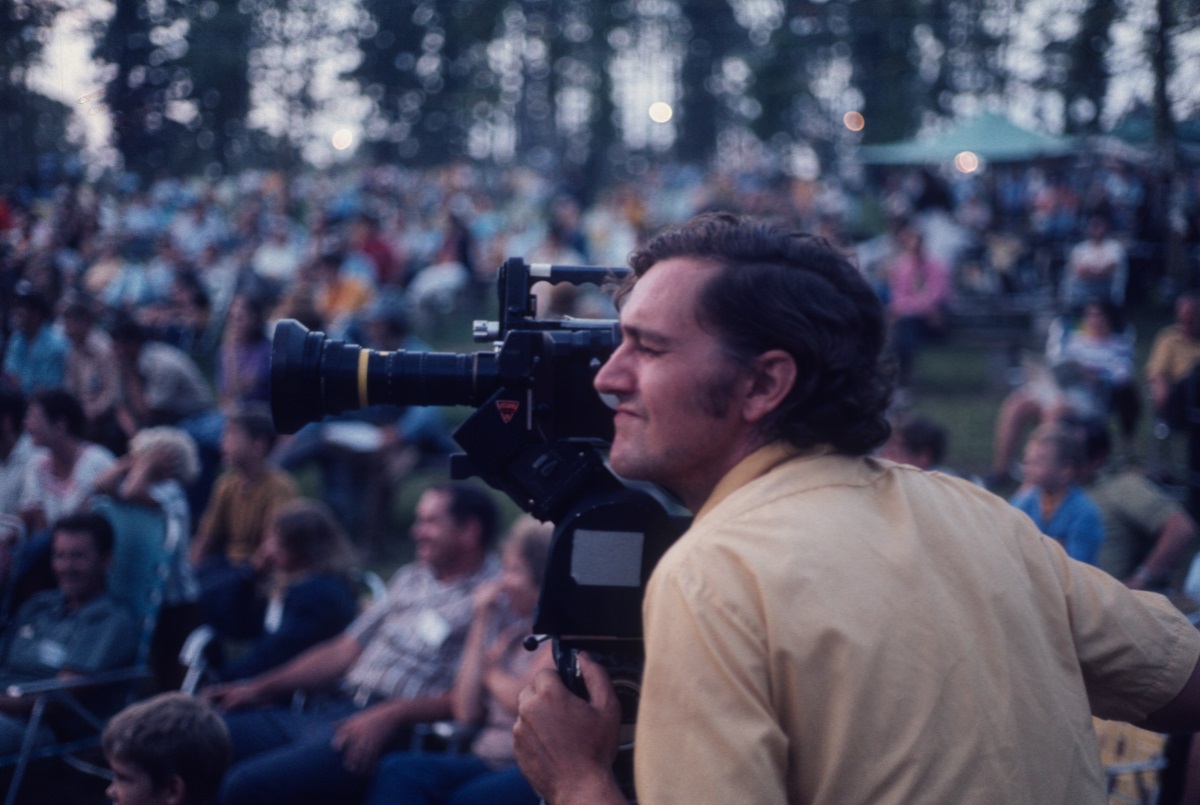
Albert Ihde, the film’s director (pictured below), spoke with BGS about the film and its legacy to commemorate the 50th Anniversary boxed set of the film, released this summer. The special edition set includes the original film, recently remastered and restored; CDs of performances not featured in the film; bonus footage including exclusive interviews with Ricky Skaggs, Bill Emerson, Missy Raines, and more; and a full-color coffee table book about the film.

BGS: How did the opportunity to film Bluegrass Country Soul present itself 50 years ago?

Albert Ihde: It was almost by accident, in a sense. A couple of buddies of mine and I were preparing a screenplay for a company in Washington, D.C. that had hired me to write a film, and then I would direct. The only thing that they insisted on was that it had to be about a Country & Western singer. Now this is 1971, and back then they called it Country & Western. I said, “Okay. Fine. Let me do some research on that.

A buddy of mine, Bob Leonard, and I were out scouting locations in Berryville, Virginia when we saw posters for Carlton Haney’s 4th of July Festival, and Earl Scruggs was going to be playing. We thought, “Well, that looks interesting.” To make a long story short, I got in touch with John Miller, who was the partner of Carlton’s there at Berryville, and John took us on a tour of the sites because I wanted to see what it looked like. It was right on the Shenandoah. Gorgeous location. He gave us passes to the Fourth of July Festival. We had no idea what bluegrass was, compared to country music, and we thought, “This looks like it’ll be fun. We’ll go to see this.”

Director, Albert Ihde

A bunch of us got a VW wagon, and my wife hooked up a camper on the back of our car. We went out, and we parked and saw it, and I have to tell you, as soon as I heard that music coming from the stage, we were all hooked. We talked to Carlton. Quite a deal! Talked to Fred Bartenstein (a local disc jockey who helped with the annual festival) and they told us more about what they were doing. I wanted to put Carlton in a film right then and there as soon as I met him.

We got back to D.C. and the company that hired me to write this screenplay, it turned out that they couldn’t raise the money to make the movie. So we took the film and decided we would try and find the money ourselves. Fortunately the first guy that I sent it to called us into his office. He was a major D.C. investor, philanthropist, and owned lots of real estate in D.C. He said that the thing that interested him most about the screenplay was this bluegrass festival out in Berryville. He said, “Why don’t you do a film about that?”

My partner and I looked at him and said it’s gonna be hard to raise money for a documentary, and he said, “How much do you need?” We get our calculator out, we start going through it, and we throw a figure out to him. It’s not gonna be as expensive as the film that’s going to have all the actors that would be taking us six to eight weeks to shoot. This, we could shoot in one weekend. He said, “Listen if you get Carlton Haney to agree to allow you to come and shoot the film at his festival, I’ll go out and find the money.” And we said, “Okay.”

The next day, Bob Leonard and I were on a plane to North Carolina and met with Carlton and Fred, pitched the whole idea to him, and Carlton was on board right at the beginning. He said, “Absolutely. No problem.” I said, “Well, are you gonna get all of these musicians to agree to this?” And he said, “Yes, I can do that.”

We had all of twelve days, two weeks, or something like that, to get the whole thing together to get down to Camp Springs on Labor Day weekend. And we lucked out. We happened to have this incredible festival with all of the pioneers of bluegrass, along with all of the up and coming newgrass guys who were changing the music as we watched. It was a great mix of both the old and the new, and as Carlton called it, “the mixture of the short hairs and the long hairs.”

That was it! You’ve got the hippies sitting right next to the guys right off the farm in coveralls. A guy in a Confederate hat sitting right next to hippie girls. It was a great mix. And everybody got along. And it was at a time in America when the country split. Nixon and the protests trying to bring our troops home from Vietnam. It was a strange time. But the thing that happened at the festival… everybody was getting along all right! Also of course, most of the audience were bluegrass musicians of their own or were learning or wanting to be. So that’s how we got into it.

What were some things about Carlton’s personality that made him such a compelling figure to follow for a film?

A number of people have said he was like the “P.T. Barnum of Bluegrass.” So it was kinda like, just put a camera on him and let him go, because you never know what he’s gonna say! Of course, the great thing about filming is, you can always edit it, and we edited out a lot of Carlton.

At one point, it was towards the end of the weekend, we were filming Carlton out on the lot, and I say “Carlton, we need something to kind of summarize the whole thing, and put a tag on the end of the film.” He said, “Oh, that’s okay. I know exactly what to say. Do you want me to make you laugh or do you want me to make you cry?” And I looked at my cameraman, and Bob was ten years older than me, and he had a lot of experience doing this, and I looked at Bob and I said, “What do you think? Make us cry?” And Bob nodded his head “Yeah, make us cry, Carlton.” And Carlton said, “Okay, start the camera rolling.”

So we started the camera rolling, and Carlton is saying goodbye to the kid who is packing up his gear at the end, and then he turns to the camera and he says, “You know, when people leave, it makes me sad, because all my friends are leaving. But I know that they had a good time, and that they’ll be back again next year.” And tears are coming to his eyes! And he says, “And that’s bluegrass and that’s a bluegrass festival.” And I said “Cut!” Bob and I just burst out laughing, and I said “Carlton, you’re going to get an Academy Award for that!”

To this day, Fred tells me, he runs into people and he says they will quote to him the lines that Carlton had in the film. “The shorthairs and the longhairs,” [and,] “You look down upon the stage and you can hear the soul of man — Ralph Stanley.” They just came out of his mouth!

The other thing was, he could not look at the lens, no matter how hard I tried. [Carlton] had this real shyness problem, and yet you put him on the stage and hand him a mic in front of ten thousand people, he was fine. But put a camera in front of him, he was looking away. Kind of shy and withdrawn. I think he was very concerned about his looks. He had terrible teeth. As somebody once said, that’s part of the times back then when nobody had health insurance or dental insurance… that was the last thing that people spent money on. So I think Carlton was a little shy about the way he looked. But he was an interesting guy.

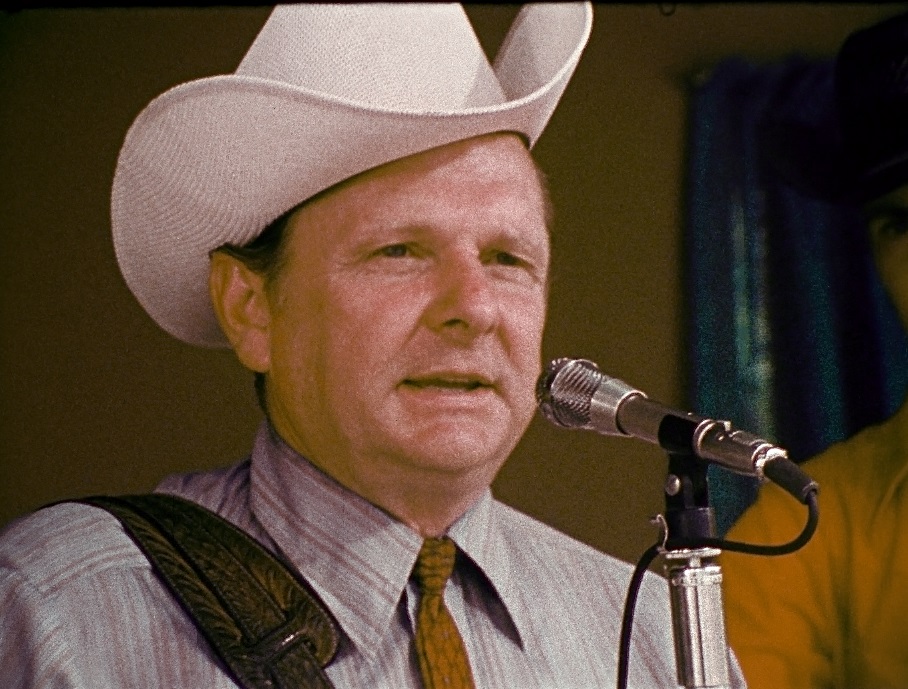
Pictured: Ralph Stanley

You mentioned that one thing that was so compelling about the film, and at bluegrass festivals in general, was seeing people from different walks of life united by this music and finding common ground, even if it was for a weekend. What do you think that message has for us today where we are as divided now as we were fifty years ago?

I hope it has the same result. Every time I have shown the film — and I have shown it to heads of studios in Hollywood, I showed it to corporations up in New York City — no matter where I’ve shown it, people leave the theatre with big smiles on their faces. It’s not necessarily because they’re bluegrass fans, but because they enjoy it. They had fun. They were delighted. Something about that music, about the people playing it, about the commitment that these people have to it. There’s more to it than just country music. I think that’s what Carlton was trying to say about the soul. It’s a commitment to the music that is thorough.

I don’t know whether Carlton told me this or not, but at some point I learned early on: bluegrass music is not commercial country. Meaning, you’re gonna lose your shirts on it, but you’re doing it because you love it. That really says it all, and I think that comes through with music and with Carlton and with all of the people that are on stage in the film and all the people playing out in the field… You see the commitment to the music.

Ellen [Pasternack, the project’s Executive Director and Ihde’s wife] and I have a background in professional theatre, regional theatre around the country, and what you’re always looking for working in theatre are actors who can really commit to doing a performance. It’s that commitment to the art — whether that’s music, theatre, dance, or painting — that’s where you find the joy in the art. And I think that comes through in the film, even if you don’t know anything about bluegrass. I hope that comes through still to this day, and maybe gets people thinking “past the politics” for a moment or two just to look at the music and listen to the music. And to see, “If this was going on back then, why can’t it happen again?”


Photos and trailer courtesy of Bluegrass Country Soul.

BGS Long Reads of the Week // April 24

We’ve so enjoyed looking back into the BGS archives with you every week for some of our favorite reporting, videos, interviews, and more. If you haven’t yet, follow our #longreadoftheday series on social media [on FacebookTwitter, and Instagram] and as always, we’ll put all of our picks together right here at the end of each week.

Our long reads this week examine entire careers, dive into different versions of new classic songs, revisit a lost hero, and more.

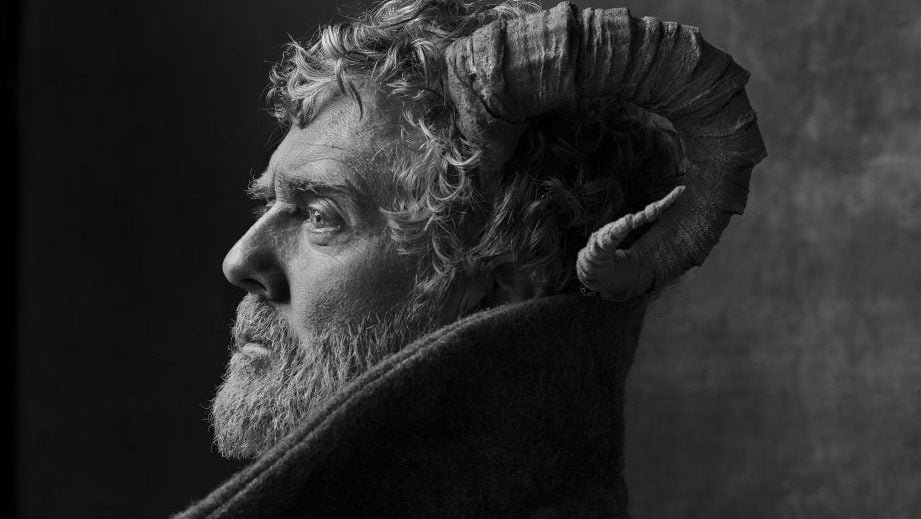
Glen Hansard: A Career in 12 Songs

We spend a lot of time at BGS immersing ourselves in the music, sounds, and careers of our favorite artists — what can we say, we love a deep dive! For this aural long read choice (if such a thing exists?) we unpack twelve of Glen Hansard’s essential songs from myriad points in his globe-crossing career, from rock bands and movie soundtracks and confessional songwriting and more. [Read the entire list, and listen, too]


Rose Cousins Shares Her Truth More Freely With Bravado

In a strangely prescient interview from late February, Canadian singer/songwriter Rose Cousins offers some insight and wisdom for being alone — the difference between loneliness and solitude, for instance — and for being present in each moment, as well. Their themes she’s explored in-depth in her music-making across the years, but in some newfound ways on her most recent album, Bravado. [Read our interview]


Glen Campbell’s Final Coda: An Interview with Carl Jackson

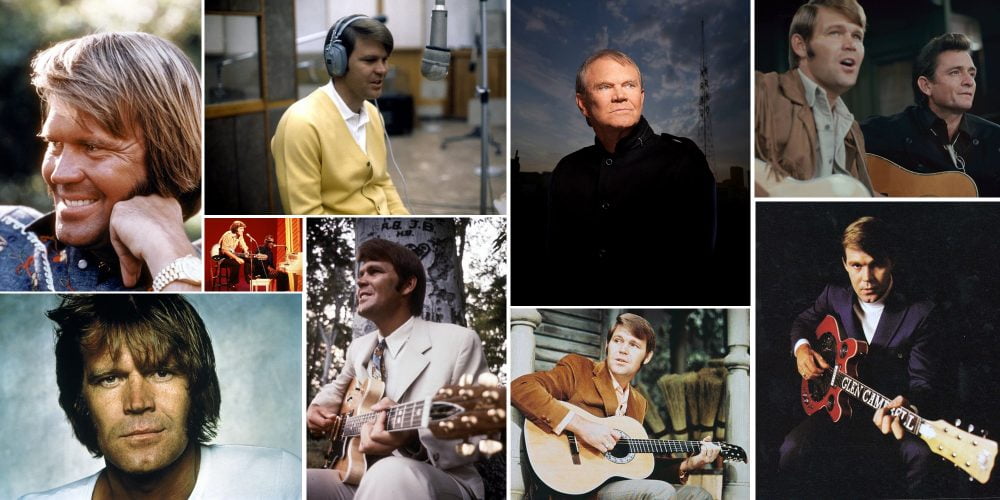
April 22 marked what would have been Glen Campbell’s 84th birthday. The rhinestone cowboy passed away a short couple of months after releasing his final album, Adiós, in 2017. Campbell’s long-time friend, collaborator, and bandmate Carl Jackson produced the project, and helped coax Campbell through the recording process as Alzheimer’s disease made his singing, playing, and performing increasingly difficult. To honor his birthday, we revisited our conversation with Carl Jackson. [Read


Steve Wariner’s Signature Hit? That’s Tricky

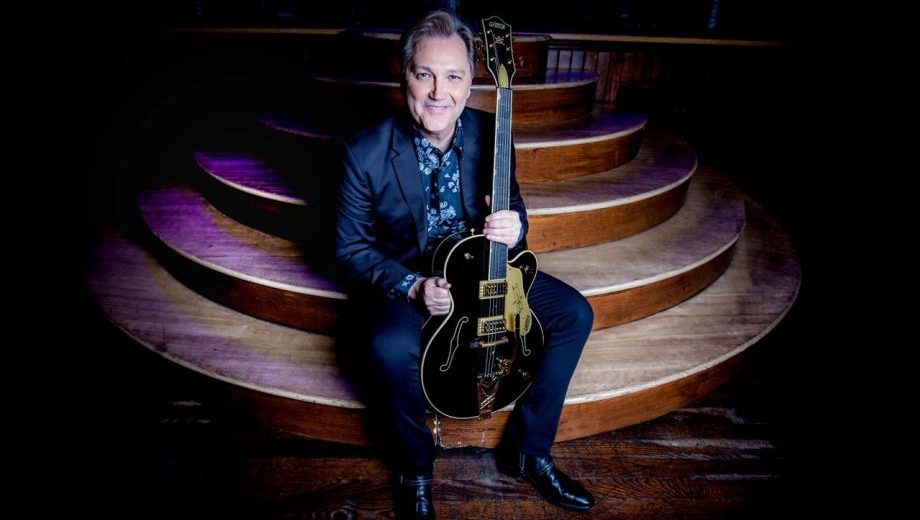
One of Nashville’s good guys, Steve Wariner was inducted into the Musician’s Hall of Fame last year, recognized for his versatility as a lead guitarist, as a sideman, and a singer/songwriter, too. Over more than four decades the Grand Ole Opry member has had numerous charting singles, so we wanted to explore that catalog and ask Wariner himself: “Do you think you have a signature hit?” [Read the interview]


My Love Will Not Change: Four Versions of a Modern Classic

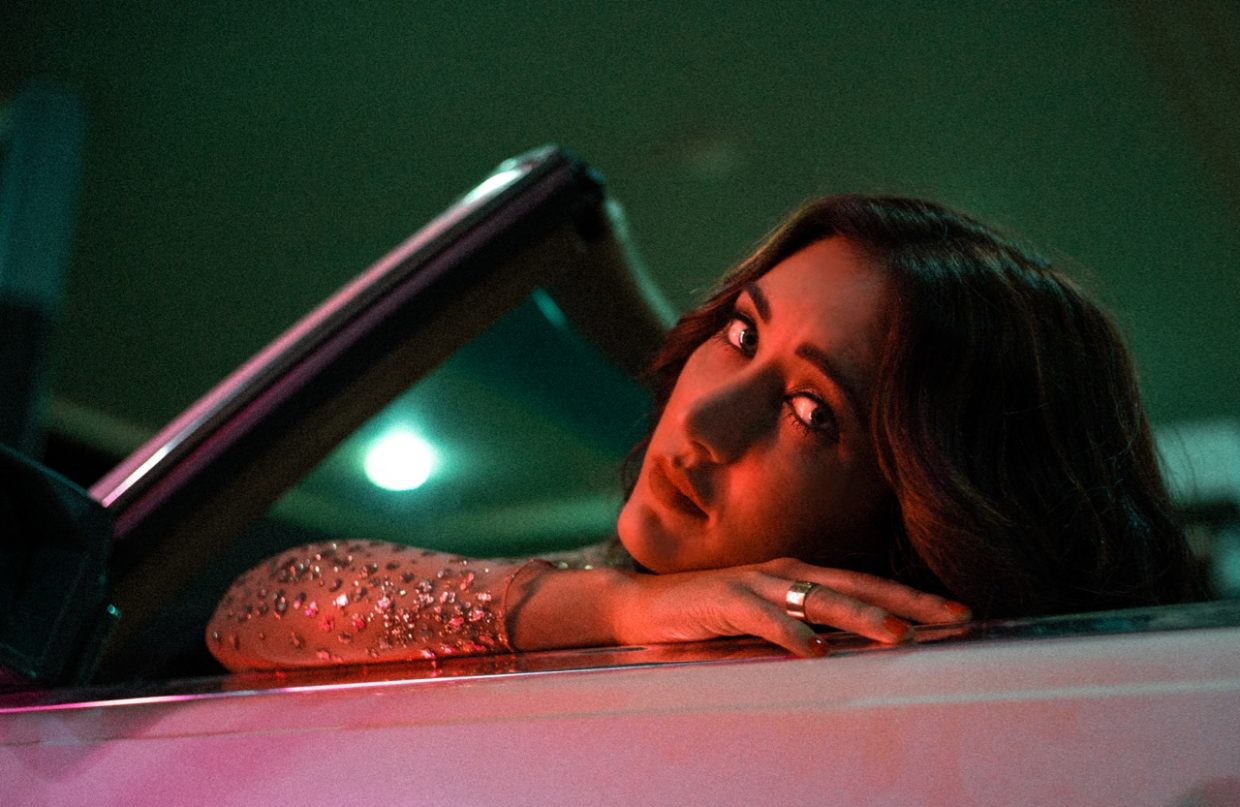
After Americana singer/songwriter Aubrie Sellers gave a flawless, stripped-down performance of this song on our first episode of Whiskey Sour Happy Hour this week we’ve been returning to it over and over! Written by Shawn Camp and Billy Burnette, Del McCoury and Steve Earle have both been involved in recordings of this modern classic over the years. [Check out four different versions]


BGS Long Reads of the Week // April 17

We’ve so enjoyed looking back into the BGS archives with you every week for some of our favorite reporting, videos, interviews, and more. If you haven’t yet, follow our #longreadoftheday series on social media [on FacebookTwitter, and Instagram] and as always, we’ll put all of our picks together right here at the end of each week.

Our long reads this week are pioneering, longsuffering, triumphant, innovative, and so much more.

Old, New, Borrowed, and Blue: A Conversation with Sam Bush

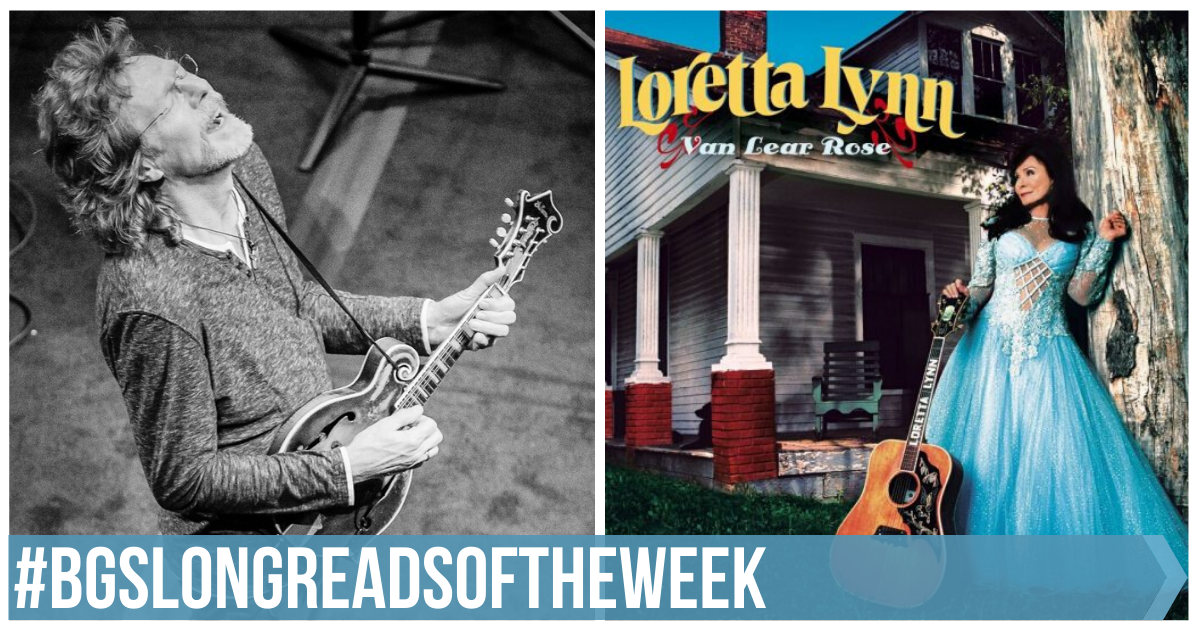
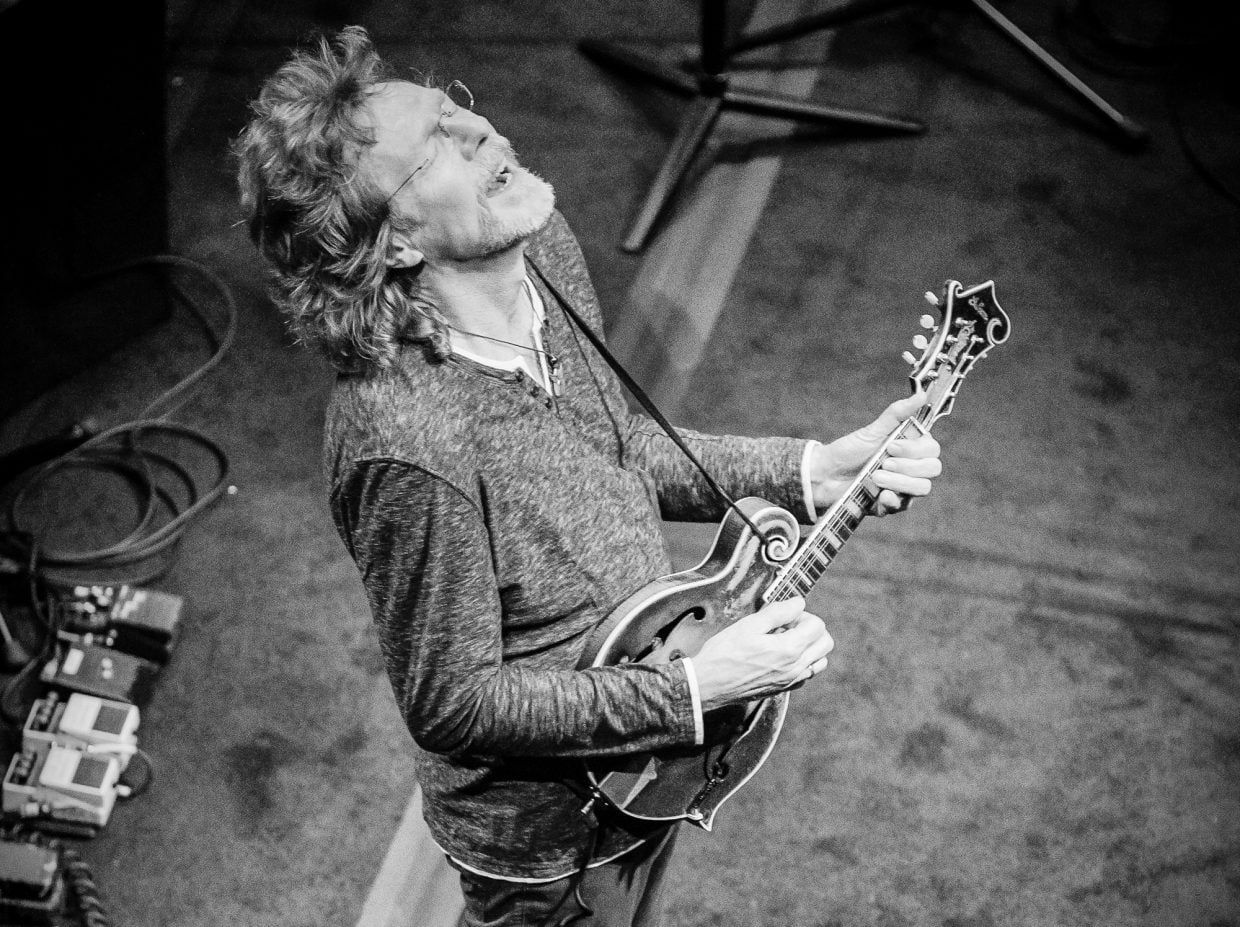
April 13 just so happens to be the birthday of this bluegrass pioneer, a man who has had an incredible impact on the genre over the course of his lifelong career. So of course we started off the week in long reads with this 2016 interview with Sam Bush, written by Mipso guitarist and vocalist, Joseph Terrell. Sam talks New Grass Revival, Bluegrass Alliance, the future of mandolin, and so much more. It’s worth a read, birthday or not! Happy Birthday, Sam! [Read more]


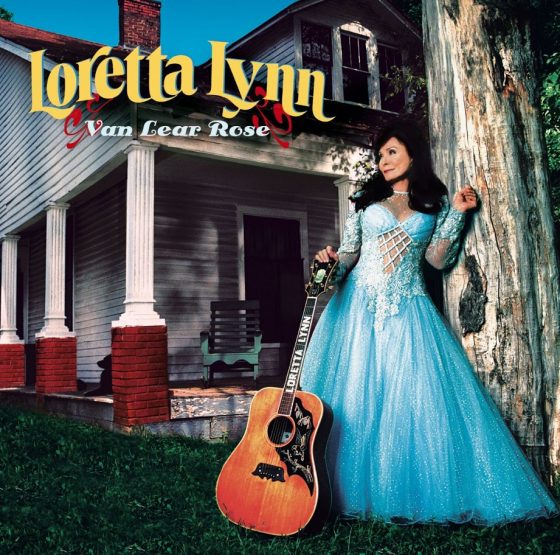
Canon Fodder: Loretta Lynn, Van Lear Rose

It just so happens, we’re featuring two birthday long reads in a row! On Tuesday this week we wished country legend Loretta Lynn a very happy birthday with a revisit to an archived edition of Canon Fodder on Van Lear Rose, her 2004 critically-acclaimed collaborative album made with Jack White. Lynn has changed and innovated upon country music in many more ways than one, and she continues to do so as her career goes on! Just like with Van Lear Rose. [Read more about the album]


Eric Gibson’s Family Shares Autism Story in New Film

We love a two-fer. With this look back into the archives, you get a film choice for tonight or this weekend, too. The Madness & the Mandolin is a documentary following the many challenges and breakthroughs of Kelley Gibson’s (son of The Gibson Brothers’ Eric Gibson) journey and evolution with autism. The film explores methods like exercise, meditation, reading, and music as tools that, combined, can often be the most powerful treatment. We spoke to the project’s producer/director Dr. Sean Ackerman last year. 

The Madness & the Mandolin is available to rent on Amazon Prime. [Read the interview]


Like Father, Like Sons: Del McCoury & the Travelin’ McCourys

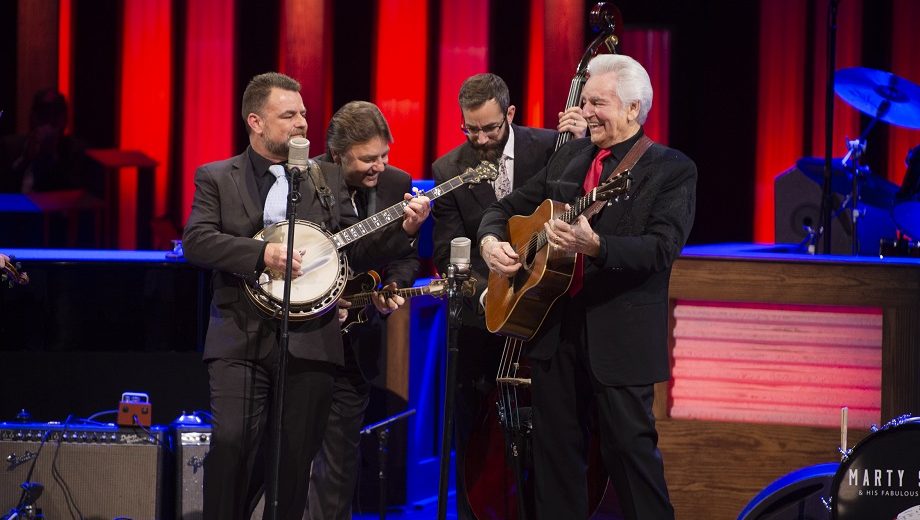
2019 was a banner year for The Del McCoury Band and The Travelin’ McCourys, Del celebrated his 80th birthday, his Opry anniversary, and DelFest conquered the mid-Atlantic once again. While 2020 is certainly off to a rockier start, the entire bluegrass world — and roots music altogether, too — are so glad to still have this legend of bluegrass making music, laughing a lot, and killing the hair game. At BGS, we’re grateful we got a chance to chat with Del backstage at the Opry last year. [Read more]


Rose Maddox: The Remarkable Hillbilly Singer Who Made Bluegrass History

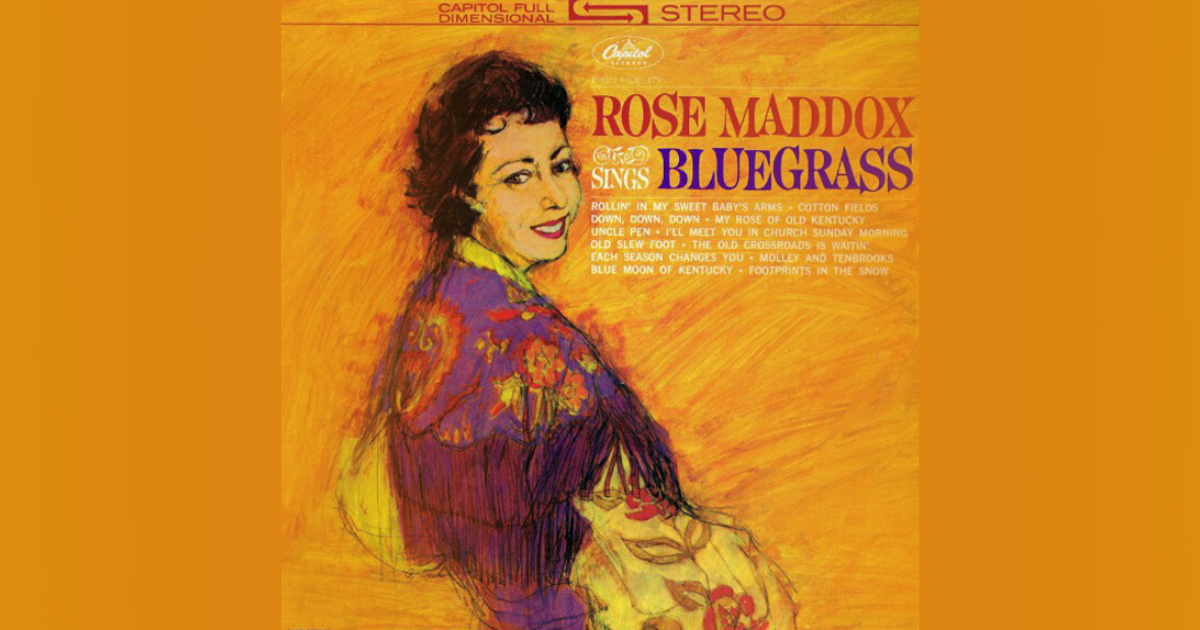
She’s not in the Country Music Hall of Fame or the Bluegrass Hall of Fame, and Hollywood has never adapted her story for any sized screen. She’s certainly more than deserving of the former — regarding the latter, you’ll just have to read our feature to see why Rose Maddox deserves to be canonized and then some for her myriad contributions to country, bluegrass, and every other genre in between. [Read about this musical pioneer]


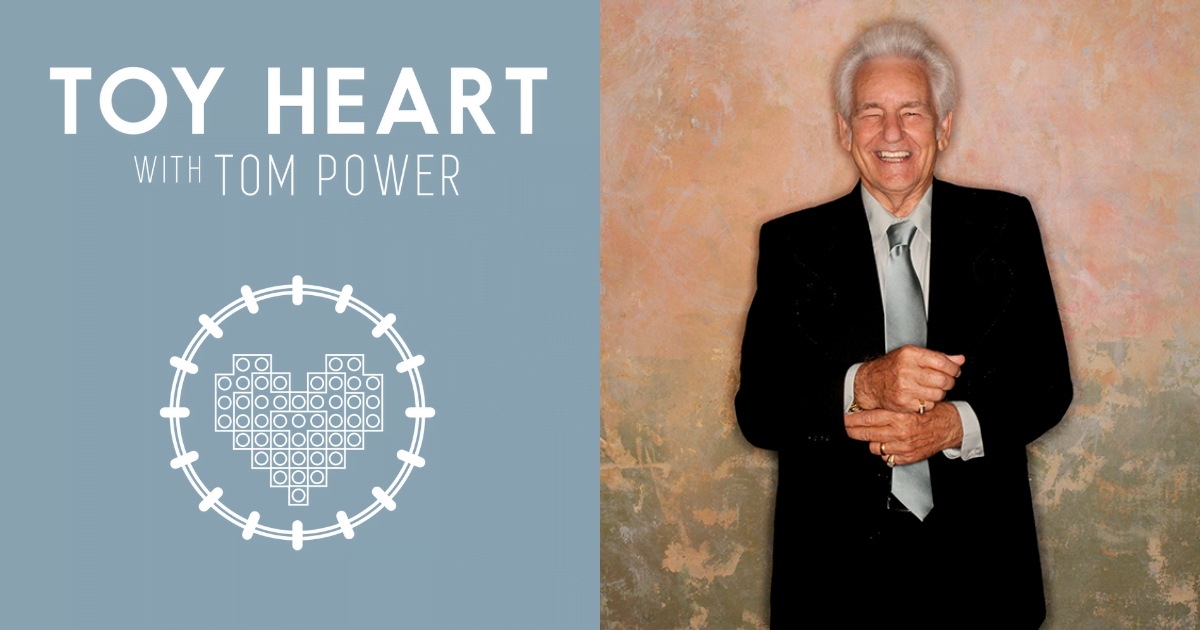
Ricky Skaggs – Toy Heart: A Podcast About Bluegrass

Bluegrass legend and Country Music Hall of Famer Ricky Skaggs talks to TOY HEART host Tom Power about what it was like to grow up as a child prodigy, the real story of how he got pulled on stage by Bill Monroe, how meeting Keith Whitley changed his life forever — and the last time they ever spoke. Plus, a never before told story of how Bill Monroe thought Ricky would make a “fine Blue Grass Boy.”

Listen: APPLE MUSIC • STITCHER • SPOTIFY • MP3

It’s the story of Ricky Skaggs… but the one that you may not expect. Skaggs is a notable entry point to bluegrass for many listeners and fans — like our first guest, Del McCoury is as well. Though his story is familiar: From playing the Grand Ole Opry as a tot, joining Ralph Stanley’s Clinch Mountain Boys, and going on to perform and record with J.D. Crowe and the New South, to his own smashing success in mainstream country and eventual return to his now dynastic bluegrass career. Still, Tom Power displays Skaggs in a fresh light, with stories from and impressions of the icon that even veteran fans will find refreshing and illuminating.

Subscribe to TOY HEART: A Podcast About Bluegrass wherever you get your podcasts. New episodes drop every other Thursday through May.

Del McCoury – Toy Heart: A Podcast About Bluegrass

In an interview backstage at the Grand Ole Opry host Tom Power talks to Bluegrass Hall of Famer and Grammy award-winner Del McCoury about how he started playing banjo, his (interesting) time in the military, joining Bill Monroe’s band, being replaced by Bill Keith, starting over, playing music with his sons, and how he found his way to becoming a legend of bluegrass music — and to some, defining the whole thing.


Listen: APPLE MUSIC • STITCHER • SPOTIFY • MP3

Subscribe to TOY HEART: A Podcast About Bluegrass wherever you get your podcasts. New episodes drop every other Thursday through May.


Aubrie Sellers Lets Her Music Breathe in ‘Far From Home’

With her new album Far From Home, Aubrie Sellers is living up to its title. Raised in Nashville as the daughter of musicians (Jason Sellers and Lee Ann Womack) and now living in Los Angeles, she absorbed bluegrass and country while still exploring genres with a harder edge. That spectrum of influences is apparent in her new music, which ranges from the softer sounds of the title track to the electrified vibe of “My Love Will Not Change,” a duet with Steve Earle.

Adding another meaning to “Far From Home,” Sellers wrote much of the album in Texas, and she’ll launch her national tour by opening for Tanya Tucker in New York City. BGS caught up with her just before she hit the road.

BGS: You recorded Far From Home at Sonic Ranch in Texas. What made you interested in working there?

Sellers: I was listening to a lot of what I call “desert music.” Tarantino soundtracks and The Ventures and stuff like that. I had taken my camper out to Marfa, Texas, and wrote some of the songs on this record there. I was very inspired by that vibe. My whole family is from Texas, so that kind of feels like my home.

Also I wanted to get outside of Nashville and I loved that idea that the whole band stays there while you’re recording. You immerse yourself in the making of the music. It’s really important for me to focus on making a record and having a cohesive experience. I feel like all that stuff tied together.

Why did you feel like you needed to get out of Nashville, do you think?

It’s nice to have no distractions. It’s nice to have a new environment. Your environment affects what you’re doing and I felt like it was important to have that vibe, since that’s what was in my brain already. It’s just nice to escape and make sure that you’re really focusing on making the record, and focusing on the music, and doing something different.

Is that the reason you moved to L.A. as well?

Yeah, I grew up in Nashville and I’ve been around that scene my whole life. It felt important for me to get out of there and experience some new things, and surround myself with a totally fresh energy. Also I went to acting school growing up and I’ve always wanted to do that. I find the film industry here really inspiring. I tried to come here when I was younger and I wasn’t quite ready, so this time it stuck.

You draw on a lot of influences and genres in your sound, but where do you think country music comes into your musical vision?

For sure I think my songwriting is country. I think it’s a little of that personal touch — and you don’t find that as much in other genres. There’s a simplicity to it, in a good way hopefully! And then sonically, steel guitar is one of my favorite instruments. I don’t want to make a record without steel guitar on it.

I listen to a lot of traditional country but I also really love that era of country with Steve Earle and Dwight Yoakam and Lucinda Williams. I love Buddy Miller — he’s kind of on the fringe of country. Buddy and Julie Miller have been a huge influence on me. All of those, and of course, classic country like George Jones and Merle Haggard. Those were my biggest country influences.

Are you a fan of bluegrass?

Yeah, I play the banjo! I thought for a while when I was in high school that that’s what I was going to do. I love bluegrass. Ralph Stanley is my favorite singer. My dad grew up playing with Ricky Skaggs so I was around it a lot. I’m really inspired by bluegrass. On this record, I did “My Love Will Not Change,” which was written by Shawn Camp, but I knew the Del McCoury version. For me, there’s just a similarity in the intensity and the drive behind some bluegrass and rock and blues music. It’s got a simple, emotional feel to it, to me. All of those things connect in my brain and my heart. I love bluegrass.

What was your entrance point to Ralph Stanley? That’s a big catalog to navigate.

I guess just listening to old Stanley Brothers records. Fortunately I grew up in an era where I could explore all music on the internet, you know? So I would go into a bluegrass rabbit hole and listen to that. And then of course, I love the banjo. I think it’s like the electric guitar of bluegrass.

You co-produced this record, too [with Frank Liddell]. What kind of textures did you hope to capture?

I don’t bring in references or anything like that when I’m making music. I think it’s more important to have a vision in your head and make sure you’re bringing in the right players, putting them in the right environment, and having the right songs. Let it evolve, take your time, and let it breathe.

It’s the same with writing and choosing songs. I try not to make it like a factory. I try to let it happen organically. I think it’s making sure you’re putting together the right people in the right environment. You know, I had four guitar players on this record! Sometime it’s about having someone sit out for a song. Letting everything have room to breathe is my philosophy.


Photo credit: Chloé Aktas

CBC’s Tom Power and BGS Partner on New Bluegrass Podcast, ‘Toy Heart’

A familiar voice across Canada’s airwaves, Tom Power hosts CBC Radio’s q, an all-encompassing public radio talk show that perhaps best compares to NPR’s Fresh Air or PRI’s Studio 360. Though it does air on some public radio stations in the United States, Power is best known to the north, not only as a radio personality, but as a musician — he’s an accomplished guitarist with remarkable prowess in Irish and traditional Newfoundland musics — and musical scholar.

As it turns out, he’s also a diehard, lifelong fan of bluegrass. As a teenager he picked up the five-string banjo and took lessons (which had a much broader reach than just banjo techniques) from once Blue Grass Boy and now Bluegrass Hall of Famer Neil Rosenberg, who just so happened to live nearby in Power’s native Newfoundland. Though his work as host on q reaches far beyond his home island and his favorite chosen folk musics, his ethnomusicological expertise still centers on bluegrass — and he is a devout and starry-eyed fan.

BGS is proud to partner with Power and his co-producer Stephanie Coleman to present Toy Heart: A Podcast About Bluegrass, a platform for bluegrass storytelling and an examination of the true narratives that gave rise to this singular genre. Over eight episodes in its inaugural season Power will interview Grammy Award-winning, IBMA Award-winning, and truly earth-shattering artists in bluegrass about their lives, their stories, and their songs.

At Folk Alliance International in New Orleans last week BGS and Tom Power unveiled the first five minutes of the first episode of Toy Heart, which features Del McCoury accompanied by his sons Ronnie and Rob. Listen to that trailer right here on BGS, and read our interview, where Power discusses the pros and cons of his status as an “outsider,” the never-before-heard stories he unearthed in his recordings, and much more.

Our BGS audience, being largely American, might not have an understanding of who you are already. Then the audience there in Canada will know who you are as an interviewer and on-air personality, but maybe not that you are a dyed-in-the-wool bluegrass nerd of the best kind.

[Tom laughs]

How does it feel being the person executing these interviews, creating this podcast, and being in the center of that odd Venn diagram between really traditional bluegrass and folks who love it, and your more outward-facing persona on the radio in Canada and, to a lesser degree, here in America?

Tom Power: I am a little apprehensive and a little scared, but I also know that the things that are making me scared about this are making our podcast good. I feel like I have a lot of bona fides in this music, in terms of my knowledge of it. I’ve been obsessed with it since I was about fifteen years old, studied it extensively, did a lot of work on it. When I went down to Nashville and met the community there I started to understand that I was an outsider, that I was not someone who was part of that community. I’m from a very different group, I play very, very different music.

I’m kind of a new member, [everyone has] been very welcoming, but it’s a little intimidating. That being said, I think the perspective I have allows me to ask different questions, or at least think differently about the music than someone who’s in it. In this case I’m on the outside looking in, which allows me to ask different questions, allows me to have different conversations. I wouldn’t know the history of say, Ricky Skaggs and Bill Monroe as well as others. I know the history of how they got together, but I was able to look at Ricky and say, “Hey man, I don’t remember a lot from when I was four years old. Do you actually remember him handing you that mandolin? How is that possible?” Which is a question that maybe someone who was a little more involved in this community may not have thought of. They may have just accepted it as part of the lore.

As you’re describing this apprehension I’m wondering, are you thinking about how to mitigate for folks being like, “What about my favorite Del McCoury song? What about my favorite Ricky Skaggs anecdote?” How much of that are you anticipating and/or how much of this is you specifically turning over stones that haven’t been turned over before?

The format of the podcast is largely autobiographical. Each episode begins with, “Where were you born?” Or, “What was it like growing up?” I try to let the guest [lead]. On the radio show, q, say I have twenty minutes and ten pieces I really need to hit. In this case I have an hour, I have an hour and a half. I’m able to let them guide me where they want to go and I can steer them back around.

One nice thing about my interviewing background, and I think the reason q has been in any way successful in Canada and a bit in the U.S. as well, is because we focus on what the listener might want to know most. When I’m doing an interview I’m always thinking about how it’s coming out in someone’s headphones, how it’s coming out over somebody’s car stereo. What are they shouting at the radio? What are they shouting at their phone? I’m always trying to keep that in mind.

When you imagine that hypothetical listener, the average person you’re trying to target with the podcast, is it a diehard who knows everything about bluegrass, or is it somebody who’s maybe a new initiate? Who do you hope will come into the audience of this podcast?

More than anything what I’m trying to do is trying to get a record of some of this music. I think the podcast format is a great opportunity to get these kind of biographical stories on record. I found myself listening to people like Marc Maron, Howard Stern, and Terry Gross thinking, “Why can’t I do this for the music I love the most? Who’s doing this work?” The music that Del McCoury’s making, the music that Ricky Skaggs is making, or Alice Gerrard or Alison Brown, is as valid to me as something nominated for an Oscar or nominated for the Booker Prize. Who’s treating this music this way? Who’s giving it this attention to detail?

In any kind of music there’s a lot of myth-making and a lot of legend-making. I’m really interested in what the actual story is. Even if it might seem a little boring to them. The eight-hour drive from Nashville to somewhere else, I want to know what they talk about on that bus ride! I want to know the minutiae.

Some of my favorite interviews have been with people who I didn’t know. I’ve turned it on and I’ve gone, “Who is this person? Who is this director? Who is this actor?” And I found myself engrossed in the story. Take Jesse McReynolds, who told me on this podcast about driving around with his brother Jim from schoolhouse to schoolhouse, taking the car battery out of their car, putting it on stage, plugging the PA into it, and seeing if they could just get people to come. Is that not just a beautiful, human story? Bluegrass is the story of the original DIY music, as far as I can tell. These people were living what punks thought they were living for the first time in the 1970s. [Laughs]

I am aware that I’m entering sort of a hallowed ground of music and music aficionados. I really believe that this is just a matter of getting it on the record and using the little bit of training that I’ve had on public radio. Being able to sit down with Del McCoury and go through his entire life, his entire career, and ask, “What was it like when you had to quit music and go work in the logging industry? What was it like working in a sawmill? Tell me about the actual moment. I know the story that you were playing banjo [in your audition] for Bill Monroe and then Bill Keith came in, how’d that happen? Didn’t that hurt? You lost that gig — what was it like playing in a band with a guy you lost a job to?”

You do have these moments with so many of these icons that we know and love. We know their “mythology” intimately, yet you get stories out of them that people like you and I have never heard before, let alone people who don’t think and write about music every day for a living. You mention Del and Jim & Jesse, but is there another story that you’ve uncovered in your recording so far that you were surprised to hear?

I spoke to Del McCoury about the time he [spent] in the military. I said, “So you were in the military, how did that go?” Pretty broad, right? He tells a story about being in the military, about a couple of things that transpired while he was in the military that were hilarious. We laugh about it, and on the way out Ronnie and Rob McCoury stopped me and said, “Tom, we’ve never heard that story before.” These were his sons! Not just sons, but his business partners, his bandmates, and they said they had never heard him tell that story before.

I can tell you, Alice Gerrard told me what it was like to sing at Hazel Dickens’ funeral. I felt so honored that she would even be able to tell me that. I asked Béla Fleck, “Where is Tony Rice?” And what his relationship with Tony is like these days. I asked Jerry Douglas about drug use in bluegrass, something that often gets overlooked. And I should be clear, the goal is not to be in any way sensational. The world I come from in public radio, I find stories about humans way more interesting than stories about legends. What I was able to do is have human conversations while finding out the history of how a bunch of people created this thing that changed my life and it changed the lives of people all around the world. How is that possible? It’s largely by an unglamorous industry, a hard life on the road, touring nonstop, playing small barns, having lean years — the story of what actually happened there is more interesting to me than anything else.

I’ll give you one more. Ricky Skaggs, for the first time ever, tells the story of how Bill Monroe almost hired him to be a Blue Grass Boy. Hearing Ricky’s tone when he told me that story — he says to me, “I haven’t really talked about this before.” I felt so honored that I saw not a bluegrass legend on the Opry, but I saw a kid still being blown away because his hero spoke to him.

I think that’s one of the most beautiful things about bluegrass and even folks with even the most casual relationships to bluegrass understand that the community is just as important a part of the whole thing as the music itself. The legends that you’re describing just so happen to also still be human.

And they have stories they want to tell! And maybe haven’t even had the chance to tell them. I want to hear about it. I want to hear the story of how Béla Fleck heard that Tony Rice was making records without banjo and he thought, “That’s not right, and I gotta be the banjo player.” So he leaves New York! These are the stories of ambition, of love of music, honoring a tradition, and wanting to further things. Of humanity. I find it fascinating.

Ideally, if enough people listen to it, this season will just be one of many. I want to get to everybody! I mean, my white whale is Tony Rice. If you listen to these interviews a lot of them close with, “How do I get in touch with Tony Rice?” [Laughs] Alison Krauss is another I’d love to speak to, because other than Bill Monroe she is maybe the most transformative artist in the music’s history. I want to know what it was like to be a twelve-, thirteen-, fourteen-year-old child prodigy playing this music. I want to know what emails — I know there weren’t Tweets back then — or messages she got when she started adding drums to her music. I’m dying to talk to Larry Sparks! And the Osborne Brothers! These are crucial — I had to limit myself to eight people this time around and it was so challenging.

As someone who got a Bluegrass Unlimited subscription mailed to Newfoundland when he was fifteen, and a Banjo Newsletter subscription mailed to Newfoundland when he was sixteen, I still would not know anything about this if I wasn’t under the tutelage of, in my mind, the greatest mind in the history of bluegrass, Neil Rosenberg. It changed my life forever. When I first took this on the first thing I did was fly back to Newfoundland to see Neil. I told him, “I’m doing this thing, what should we talk about?” And he helped me out. If I can be a pebble onto the beach of the work he has done that would make me very happy.


Photo courtesy of Tom Power