Michael Cleveland Grabs Grammy Nom for (Not Quite) Solo Album

Michael Cleveland is one of the defining fiddlers of his generation, known for his incredibly quick licks, deep groove, and shiver-inducing double stops. His virtuosity has been recognized by artists from many different genres and their thoughtful collaborations have proven that Cleveland is much more than just a flashy fiddler.

His talents were recognized at a young age by many of bluegrass music’s biggest stars and as a teenager he appeared as their guest in such settings as the Grand Ole Opry and A Prairie Home Companion. As one of the most-awarded musicians in IBMA history, Cleveland invited many of his heroes to collaborate on his 2019 album, Tall Fiddler. The project will compete for Best Bluegrass Album at the Grammy Awards on January 26.

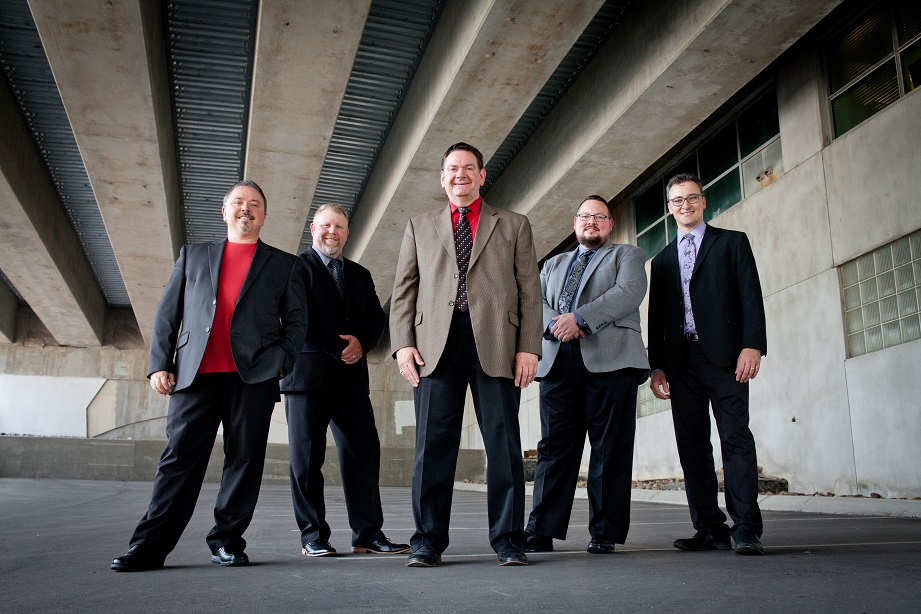
Unlike many solo albums, Tall Fiddler features Cleveland’s band Flamekeeper throughout. Half of the record features selections from their popular touring show while the other half features Cleveland and band playing with masters such as Tim O’Brien, Béla Fleck, and Tommy Emmanuel. The origin of many of these collaborations were explored in Flamekeeper: The Michael Cleveland Story, a documentary detailing his journey, from being born blind to forming Flamekeeper.

Cleveland spoke to BGS by phone from his home in Indiana.

BGS: I wanted to ask you what it feels like to be nominated for a Grammy, but I have to imagine it feels pretty good! What does it mean to you?

MC: Well it’s pretty exciting! The last time I was nominated I thought I’d go through the list just to see who’s actually won and who’s been nominated in the past and it is mind-blowing for me to be considered.

And then to be nominated with the Po’ Ramblin’ Boys — I’ve known Jeremy Brown since he was probably a baby. None of my family ever played music, but my grandparents had a bluegrass association in Henryville, Indiana, which is just across the river from Louisville, Kentucky. So we got a lot of bands come out of the Louisville area and from other parts of Indiana. Jeremy’s dad, Tommy Brown, used to play with a band called Jim Simpson and the Kentucky Mountain Grass and it was one of the best bands in the area. Whenever they came to Henryville it was an event.

When they broke up Tommy formed his own band called Tommy Brown and the County Line Grass and I would see Jeremy playing on stage with his dad when he was a little kid. I’ve known all those guys for a while and have a connection with them so it’s really cool to be nominated at the same time as them and all the other artists.

Tall Fiddler is your eighth album. What makes this album stand out from the others?

This album was a little different because it wasn’t strictly a solo album or a band album. I wanted to do something where I could collaborate with other people, but I wanted my band to be on the album as well. It’s just a killer band, they’re who I tour with all the time, and I wanted to hear what they would do with the guests. So the band is on half the album and then there’s special guests on the other half.

We did the title cut, “Tall Fiddler,” with Tommy Emmanuel. That was especially cool because we got to do that live in the studio. Tommy came in and we had never played with him. We’d just worked this up based on a recording of his called Live! at the Ryman where he had played it. So Tommy comes in the studio and I think we knocked that out in just a few takes. It’s a dream come true for me, because I want to see my band collaborate with people like that.

Like Josh [Richards] singing with Del McCoury and getting to play with Tommy, and Dan Tyminski, and Jerry Douglas. The guys in my band are great players and deserve to play with people like that. That’s always been a goal of mine and for my career — to get to collaborate with as many great musicians and heroes of mine as I can. And that’s been possible because of this album and the Flamekeeper documentary, you know? Like, I’ve gotten to record with Béla Fleck.

Yeah, tell me about “Tarnation” and how that track came about.

When we made the Flamekeeper documentary we did some of the filming in Nashville. We got Del, Sam [Bush], Béla, Todd Phillips, and some other people that I’ve worked with in the past to be a part of it. John Presley, the producer of the documentary, said “I think it’d be cool to hear you play some of these guys’ music,” and I said “Yeah, that’d be great!”

We had just got done filming a lot of stuff and I was messing around and started playing a little bit of one of those tunes and Béla’s like, “Oh, you learned that? Let’s play it!” and after that he asked if I liked learning tunes and I told him I love learning new stuff and he said, “I’ll give you a call and maybe we can do something together.”

So then, when I was working on this record I reached out to him and I asked if he’d be interested in collaborating on something and I said “I would love for it to be something that you and I could write together.” He agreed, so we sent stuff back and forth for a while, like voice memos of ideas, and then he came up with that slow part in the beginning — which I really liked, it’s really bluesy. He asked if I could come down to his house to finish working on it.

To be able to go to Béla Fleck’s house and write a song with him. I mean, that’s something I would never dream that I would be able to do. But it’s cool for me to get to be around all these people that we worked with on this album. The thing that strikes me is not only that they’re incredible musicians — needless to say — but their whole [personalities]. They’re great people. They’re just having fun playing music, you know?

You’ve always struck me as a versatile musician because of your ability to collaborate with so many different artists and complement the style while still sounding like yourself. Like how you play on Andy Statman’s Superstring Theory album, for example.

See, that’s the thing. I’ve loved traditional bluegrass for a long time and would mostly just listen to that. But there’s so much music out there that I still haven’t heard that’s classic stuff to other people. I just started listening to Boston and they are awesome! My girlfriend says I live under a rock. But a lot of the music I play in places like Nashville, I don’t really have a whole lot of chances for experimentation. With someone like Andy [Statman] there’s no holds barred. Whenever Andy plays a song it’s going to be different every time.

I have noticed in your live shows that it seems like you’ve been experimenting with having a song or two with an extended solo section that’s a little more open ended than traditional bluegrass might be.

Yeah we’re trying to incorporate more of that because I think the audience like to see something and think, “Oh, this is not what happens every day.” And it’s a fine line because I’ve always been of the mind that you practice, you know the arrangements, and that’s what you play. Maybe you don’t play what’s on the record the whole time but you play it pretty close and you play that every day and that makes it good. And it does.

I always like to hear live recordings for the differences. Like when someone plays a different solo or somebody misses a note but it’s OK; it’s alive. It’s authentic. And it’s sometimes hard for me to remember that it’s music. It’s not supposed to be perfect. When we do the extended solos, that’s when I really pull out stuff and think of things that I would never play. If all you did was just play that arrangement every time and make it as perfect as possible, you might never be able to experience that.

I went to MerleFest one year and I came away thinking [about] all these guys like Sam [Bush], and the McCourys, and Béla, and Tim O’Brien, and Doc Watson. All these people are great instrumentalists and great old-time bluegrass players but they all do so much more than that. And just because somebody’s plugged in, and turned up loud, and improvises, that doesn’t mean they don’t know their stuff when it comes to traditional bluegrass.


Photo Credit: Stacie Huckeba
BGS Top Moments of 2019

If music happened in 2019, but wasn’t a “song” or an “album,” does it make a sound– er… does it warrant real estate in any of the many year-end pieces, wrap-ups, and lists hitting the internet on a daily (sometimes hourly) basis? Why, of course it does! Each year BGS notes Top Moments of roots music — whatever form they may take — as a way of reminding ourselves that the art we each consume, especially of the musical variety, is often at its best when it eschews the formats and media we expect and/or most closely associate with it. What changes about the way we view a year in music when we alter the context as such? First and foremost, we change just that — our viewpoint. Turns out that makes a world of difference.

Speaking of top moments, one of the best for the BGS team took place just last week, as we premiered a brand new look with an updated homepage and logo. A lighter color palate, clean modern lines, and updated fonts usher in a new era for the site, and hopefully a positive reading experience for you, our beloved fans and readers. Not unlike the state of roots music itself, our new look is constantly evolving, but what’s at the heart of it remains timeless. Now, read about more moments that turned our heads and caught our ears over the course of the past 12 months.

Chris Stapleton Creates LEGO Alter Ego

When Chris Stapleton’s music video for “Second One to Know” hit YouTube, I found myself musing, “What are the benchmarks we use to determine someone’s level of notoriety? What are their claims to fame? Owning a tour bus? Having your first number one hit? Being the musical guest on SNL? Having a highway named after you? Or perhaps a proclamation from your local public figures designating a [Named After You] Day?” Seriously, can you imagine getting to a point in your country pickin’ / singin’ / songwritin’ career where your Game of Thrones cameo falls into the background of your music video star LEGO-self?

I would be remiss if in this blurb I did not mention another real-ass country singer/songwriter/rabble-rouser who dabbled in alternative visual media this year, too — that would be Sturgill Simpson’s “Sing Along.” More of this oddball, non sequitur energy in country in 2020, please. – Justin Hiltner


Dolly Parton’s America Podcast Finds Common Ground

Epiphanies in the podcast series Dolly Parton’s America are too many to count, as host Jad Abumrad and his team explore the notion that the Tennessee songbird is a rare unifying force in the fractured socio-cultural universe — everyone loves Dolly! But the fourth episode, titled “Neon Moss,” finding the common ground of Dolly’s Tennessee mountain home and the Lebanon mountain home in which Abumrad’s dad (a doctor who became friends with Parton after treating her in Nashville) grew up is gripping on a cultural and emotional level. Bonus: BGS’ own Justin Hiltner and his banjo pop up as a key part of a later episode. – Steve Hochman


Duos, Duos, and More Duos

Were you seeing double this summer? Mandolin Orange, Tedeschi Trucks Band, and Shovels & Rope offered exceptional albums and sold tons of tickets. From the sweeping San Isabel from Jamestown Revival to the intimacy of Buddy & Julie Miller’s Breakdown on 20th Avenue South, roots duos were having their moment. Personal favorites included The Small Glories and Bruce Robison & Kelly Willis, but the true discovery for me was Dravus House, a Seattle duo who delivered an understated and beautiful album that blends Elena Loper’s vocal with Cooper Stouli’s soft touch on guitar to stunning effect. – Craig Shelburne


Del McCoury Turns 80

At 80 years old, Del McCoury has witnessed the rise of bluegrass while still being actively involved in it. (In fact, he’s got a gig this weekend in New York with David Grisman, Jerry Douglas, Drew Emmitt, Andy Falco, and Vince Herman.) An all-star tribute at the Grand Ole Opry provided perhaps the most musically satisfying night of music this year for me, mostly because The Del McCoury Band has still got it (and they make it look like so much fun). Check out their 2019 performance on Live From Here With Chris Thile. – Craig Shelburne


Hadestown Wins Big on Broadway

In an era when Broadway has seemingly been taken over by jukebox musicals that rehash the catalogs of legacy artists, watching Anaïs Mitchell pick up eight Tony Awards for Hadestown was a surreal triumph. For those of us who have followed Mitchell’s career over the past couple of decades, it was truly remarkable to see a grassroots musical that she first staged in 2006 reach the heights of Broadway, earning her a win for Best Musical and Best Original Score. “Wait for Me,” indeed. – Chris Jacobs


Ken Burns Digs Deep into the Roots of Country Music

Ken Burns has a long history of digging into America’s deepest roots, through documentaries like The Civil War, Jazz, Baseball, and The National Parks. In 2019 he took those roots in a more on-the-nose direction, exploring the long and varied history of American Roots Music through his PBS documentary series Country Music, which premiered in September. As the filmmaker himself said in a recent interview, “Country Music is about two four-letter words: love and loss.” Thanks to Burns, who looks unflinchingly at all of the different stories that have shaped this music, we get to see the love, the loss, and everything in between. – Amy Reitnouer Jacobs


MerleFest and IBMA, Rediscovered

After a long break, I made an effort to reconnect with two of the preeminent roots music festivals  in 2019 – MerleFest and IBMA’s World of Bluegrass. With other obligations in Nashville, it had been five or six years since I’d attended either, and both surprised me for different reasons. At MerleFest, I was struck by the caliber and diversity of artists, in particular for landing a headlining set by Brandi Carlile in her breakout year. Five months later, I returned to North Carolina to see IBMA in action, amazed by the way that the city of Raleigh has embraced the musical experience, from the Bluegrass Ramble to the StreetFest with plenty of outdoor stages. North Carolina, I’ve got you in my 2020 vision. #ComeHearNC – Craig Shelburne


“Old Town Road” Can Lead Anywhere

Is “Old Town Road” country? Like millions, maybe even billions of fans, I’m inclined to answer that question with an emphatic “Of course it is!” But I’m also inclined to ask: What else is this song? Is it roots music? Is it folk? Blues? Yes, yes, and yes. That chorus is powerful in its simplicity, and it’s not hard to imagine Doc Watson singing those lines or Geechie Wiley intoning that sentiment mysteriously from some lost B-side, accompanied by a century of acetate scratches and surface noise. Almost accidentally existential, the chorus speaks to an unnamed American melancholy, and it can mean anything you want it to mean and be anything you want it to be. – Stephen Deusner


Roots Music Don’t Need No Man

No, like literally. After 2019 we can definitively say that roots music as a whole does not need any men. From the first albums of the year (say, Maya de Vitry’s Adaptations or Mary Bragg’s Violets as Camouflage), followed by two indomitable women of the Grammys (Kacey Musgraves and Brandi Carlile), then two universally regarded supergroups (Our Native Daughters, the Highwomen), the resurgence of true legends (like Reba McEntire’s Stronger Than the Truth and Tanya Tucker’s While I’m Livin’), to a Newport Folk Fest collaboration that combined nearly all of our favorites, this year in Americana, bluegrass, old-time, and folk has been defined by women. There were pickers (Molly Tuttle, Nora Brown, Gina Furtado), there were scholars (Allison de Groot & Tatiana Hargreaves, Our Native Daughters), there were poets (Caroline Spence, Jamie Drake) — repeatedly this year I found myself in musical spaces that, if all of the men were subtracted, I would still want for nothing. #GiveWomenAmericana – Justin Hiltner


Yola’s Meteoric Rise

Co-write sessions and frontwoman-for-hire gigs aptly prepared Yola for the non-stop successes she’s had in 2019, from sharing stages with childhood heroes Mavis Staples and Dolly Parton to nabbing a whopping four Grammy nominations, including a coveted Best New Artist nod. Kicking off the whirlwind year was her Dan Auerbach-produced debut solo album, Walk Through Fire, a beginning-to-end stunner and a sure sign that Yola’s star power will only continue to rise. The ample steel guitar on “Rock Me Gently,” the countrypolitan charm of “Ride Out in the Country,” and the buoyant old-school soul of a new bonus track “I Don’t Wanna Lie” show off an eclectic roster of influences and a striking vocal range. But the album standout might be its only number written solely by Yola, “It Ain’t Easier,” a slow-burner with a hell of a bridge that pays tribute to the hard work behind even the greatest of loves. On the stage, in the studio, and in everything she does, Yola is putting in the work — and we can’t wait to see what 2020 holds. – Dacey Orr

IBMA Awards 2019: See the Winners

With their first nomination in the top category, Joe Mullins & The Radio Ramblers secured the IBMA award for Entertainer of the Year on Thursday (September 26) from the International Bluegrass Music Association at a ceremony in Raleigh, North Carolina.

“Well, I don’t know how in the world this happened. I want every one of you guys right here,” he said to his band. “I’ve told them for years that one ol’ boy with a few corny jokes and a banjo in tune sometimes can’t do this by himself. It’s a team effort every time we leave the house and every time we climb on the stage.”

The group also picked up a trophy for Collaborative Recording of the Year with “The Guitar Song,” a duet between Mullins and Del McCoury. Meanwhile, McCoury won Album of the Year for Del McCoury Still Sings Bluegrass.

McCoury and longtime friend Jim Lauderdale traded introductions and hair jokes as co-hosts of the event, which has annually honored the top achievements in the thriving bluegrass community since 1990. Lauderdale opened the show with a performance of “When Carolina Comes Home” joined by all of the previous Instrumentalist of the Year winners. Moments later, a clip was shown from the inaugural 1990 event with Alison Brown (banjo), Alison Krauss (mandolin), Lynn Morris (guitar) Missy Raines (bass), and Andrea Zonn (fiddle).

A number of musicians made their first appearance at the podium in select categories, including Alan Bibey for Mandolin Player of the Year, Sideline for Song of the Year (“Thunder Dan”), and Sister Sadie for Vocal Group of the Year. Tina Adair spoke on behalf of the group, while her colleagues Dale Ann Bradley and Gena Britt barely held back their tears. (Deanie Richardson is also a member of the group.)

“You know what, I love making music,” Adair said. “I’ve been singing since I was 3 years old on stage. It’s something I’ve always loved to do but I love it even better with these gals right here.”

In addition, Billy Strings was named Guitar Player of the Year. The fast-rising talent also claimed the New Artist of the Year trophy. He was unable to attend.

Brooke Aldridge earned her third consecutive award as Female Vocalist, while IIIrd Tyme Out’s Russell Moore rebounded with a Male Vocalist Year win, his first since 2012 and sixth overall. Additional familiar faces include Michael Cleveland & Flamekeeper for Instrumental Group, their fifth win. Cleveland collected his 12th trophy in the fiddle category as well.

Other returning winners in instrumentalist categories are Kristin Scott Benson (banjo), Phil Leadbetter (resophonic guitar), and Missy Raines (bass). Raines also took home the Instrumental Recording of the Year honors for “Darlin’ Pal(s) of Mine,” which featured Alison Brown, Mike Bub, and Todd Phillips. Claire Lynch’s “Gonna Sing, Gonna Shout” earned the Gospel Recording of the Year award. But it was Leadbetter whose name brought the crowd to its feet, as the five-time cancer survivor shared the joy of his latest remarkable recovery.

The recipients of the 2019 International Bluegrass Music Awards are listed below:

ENTERTAINER OF THE YEAR:
Joe Mullins & The Radio Ramblers

VOCAL GROUP OF THE YEAR:
Sister Sadie (this is the band’s first win in this category)

INSTRUMENTAL GROUP OF THE YEAR:
Michael Cleveland & Flamekeeper

SONG OF THE YEAR:
“Thunder Dan” — Sideline (artist), Josh Manning (writer) Tim Surrett (producer), Mountain Home Music Company (label)

ALBUM OF THE YEAR:
Del McCoury Still Sings Bluegrass – Del McCoury Band (artist), Del and Ronnie McCoury (producer), McCoury Music (label)

GOSPEL RECORDING OF THE YEAR:
“Gonna Sing, Gonna Shout” – Claire Lynch (artist), Jerry Salley (producer), Billy Blue Records (label)

INSTRUMENTAL RECORDING OF THE YEAR:
“Darlin’ Pal(s) of Mine” – Missy Raines with Alison Brown, Mike Bub, and Todd Phillips (artist), Alison Brown (producer), Compass Records (label)

NEW ARTIST OF THE YEAR:
Billy Strings

COLLABORATIVE RECORDING OF THE YEAR:
“The Guitar Song” — Joe Mullins & The Radio Ramblers with Del McCoury (artists), Joe Mullins (producer), Jerry Salley (associate producer) Billy Blue (label)

FEMALE VOCALIST OF THE YEAR:
Brooke Aldridge

MALE VOCALIST OF THE YEAR:
Russell Moore

BANJO PLAYER OF THE YEAR:
Kristin Scott Benson

BASS PLAYER OF THE YEAR:
Missy Raines

FIDDLE PLAYER OF THE YEAR:
Michael Cleveland

GUITAR PLAYER OF THE YEAR:
Billy Strings

MANDOLIN PLAYER OF THE YEAR:
Alan Bibey

RESOPHONIC GUITAR PLAYER OF THE YEAR:
Phil Leadbetter

Previously announced inductees into the International Bluegrass Music Hall of Fame — Mike Auldridge, Bill Emerson, and The Kentucky Colonels — were honored at this evening’s show.

At the Industry Awards Luncheon held earlier in the day, these recipients were announced:

BROADCASTER OF THE YEAR:
Michelle Lee

EVENT OF THE YEAR:
Blueberry Bluegrass Festival – Stony Plain, Alberta, Canada

LINER NOTES OF THE YEAR:
Epilogue: A Tribute to John Duffey
Akira Otsuka, Dudley Connell, Jeff Place, Katy Daley

GRAPHIC DESIGNER OF THE YEAR:
Michael Armistead

WRITER OF THE YEAR:
David Morris

SONGWRITER OF THE YEAR:
Jerry Salley

SOUND ENGINEER OF THE YEAR:
Ben Surratt

The previously announced 2019 Distinguished Achievement Award recipients — Katy Daley, Mickey Gamble, Dan Hays, Allen Mills, and Moonshiner — were also honored at today’s luncheon.

Hosts With the Most: Del McCoury, Jim Lauderdale Team Up for 2019 IBMA Awards

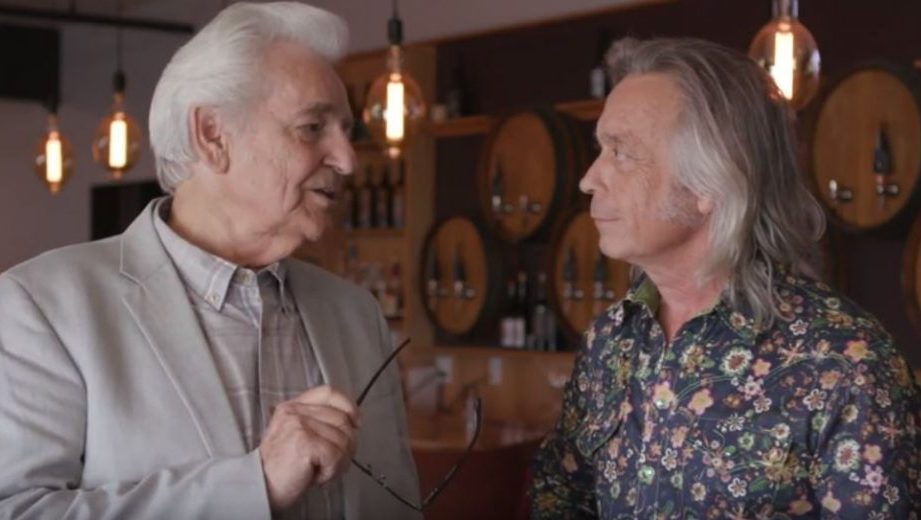
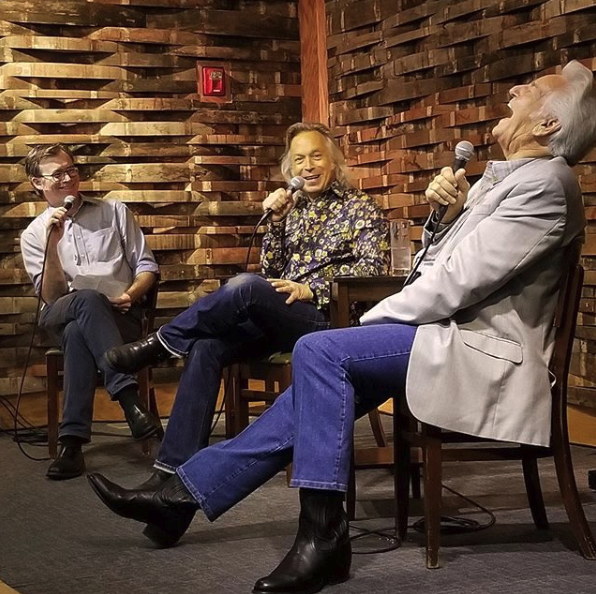
Loose and lovable Jim Lauderdale and Del McCoury will host the 30th annual IBMA Awards in Raleigh, North Carolina, coming up on September 26. McCoury is a nine-time winner of IBMA Entertainer of the Year — the most of any artist — while Lauderdale has won two Grammy Awards for his exceptional bluegrass work. These fan favorites don’t just bring a wealth of bluegrass experience to the stage; they’re seasoned masters of ceremonies as well. We got together at Nashville’s City Winery for a public conversation about the show.

BGS: As a 30th anniversary edition, I’m sure there will be quite a focus on the history of the music and of the awards over these 30 years. Del, what do you remember about the first IBMA Awards?

DM: It was so exciting, ’cause it was the first time that bluegrass music was really recognized. And there were still quite a few of the senior people there, you know, who started in the music years ago. We were fortunate that they were still there. Bill Monroe was even there, you know? But we’ve lost a lot of the great pioneers since that first one, and that’s probably the biggest difference, I would think.

BGS: When was your first one, Jim?

JL: I believe it was 1998, and I got to do a song with Ralph Stanley during the awards. Then I started going back and doing showcases. And I saw the move to Nashville and then the move to Raleigh, which I think has been really, really a great thing.

BGS: Do you guys ever surprise the jammers playing on some floor and stride in and go, “Hey, fellas, can I play a song?” And they go “Holy cow, that’s Jim Lauderdale and Del McCoury!”?

JL: Not quite like that! I go, “Hey everybody!” I like to be inclusive. But I do like to pop in if it calls for it.

DM: For me, I’m a little too old for that these days. But I remember the time when the festivals started when I would stay up all night and jam with people and go do a gospel show in the morning. And of course, I had a voice that would take that kind of punishment then, but I don’t have that voice anymore. So I do have to get my rest. But it’s a temptation, if you hear a jam session, to at least go listen to it.

JL: That’s the thing about bluegrass. Of course in any musical genre you can jam but you’ve got your acoustic instrument and you come across a group of folks that maybe you’ve never even met, but [you have] the bluegrass vocabulary or common language with these songs. It’s something that everybody can pick up.

BGS: Del, because of your 80th birthday and your longtime involvement in IBMA, I understand that they’ve just told you that on Saturday at the Wide Open Bluegrass festival, there will be a big “Del-ebration” for you. What do you know yet about this?

DM: I’m embarrassed! I had an inkling they were going to do something, you know? But I didn’t know who was going to be on that Saturday night show until me and Jim came here today. We’re going to have different folks from other genres of music come in, and me and Jim will do duets and sing all kinds of stuff.

JL: When we get together, you never know what’s going to happen. But I’ll tell you, in all seriousness, for as long as I’ve known Del, I’ve loved to make him laugh. …For several years I used to love to do this, when Del and the band was backstage somewhere. I’d walk up and say, “Hey you guys, what are y’all doing here?” And then I’d say to whoever is standing next to me, “It’s like these guys go to almost all of my shows! They’re from Canada, right? Anyway, good to see you guys!”

BGS: You guys have an interesting thing in common that people might not know, because you’re both guitar-playing frontmen. But you both started playing the banjo early on, right?

DM: Yeah, we did, didn’t we?

BGS: Del, in your case, the fellow who coaxed you away from the banjo into the lead guitar and the lead vocal was Mr. Bill Monroe, right? You hoped to play banjo, but he needed a guitar player. Is that the story?

DM: Yeah, myself and Bill Keith, you know, we auditioned together and he took Bill on banjo and wanted me to start playing guitar. I had played some guitar before that, but after I heard Bill Keith, I thought, yeah, that’s what Bill needs that guy. He needs that guy right now, cause it was a different thing. You know Bill called him Brad. He didn’t want to have two Bills in the band, so he called him Brad. He said what is your full name? And Keith said, William Bradford Keith. He said we’ll call you Brad. And he did from that time on.

BGS: And you never looked back. You were a singing guitar player from that point forward?

DM: Yeah, begrudgingly I was. Because I liked banjo. I’d heard Earl Scruggs when I was about 11, and Don Reno. They were our idols, those guys, so I learned to play. I did a date with Bill Monroe up in New York City. He took me up there, and he offered me a job, and I didn’t take him up on it. So maybe a month later, I did decide to come down here and when I did, Bill Keith was here, at the same hotel. He told us both to come to the Clarkston Hotel, which was on Seventh Avenue. You’d get a room about two dollars and 62 cents a night, from what I remember. Bathroom down the hall. No air conditioning. That’s the things I remember about it.

The next morning I walked into the lobby with my banjo and another guy walked in from somewhere else. About that time, Bill Monroe walked in and he said, “Come on, boys. Follow me.” We went next door to the Clarkston Hotel’s restaurant, I think. We sat down and he said, “Now go ahead and order something. I’m paying for it.” So we sit there, and Bill was not a man of many words. I didn’t know who this other guy was, and he didn’t know who I was, and Bill didn’t introduce us either.

So we got done eating, and he paid and we walk next door to the National Life building. That’s where they had the Friday Night Opry [and WSM’s studios.] We went into this room and I saw an old Gibson guitar case over in the corner. When we got in there, Bill said, “Del, you could take guitar there.” I thought, “What kind of deal’s this? I wasn’t lookin’ to play no guitar.”

So we tried out that way and Bill Keith told me later, only about 10 years ago, “You know, he tried me on the guitar, too.” [Monroe] tried us both ways and he wanted to see what’s gonna work best. And Keith said, “I was no guitar player.” And I said, “Well, when I heard you play banjo, I figured I was no banjo player either!” [Bill Keith] was really good. And so [Monroe] hooked us up that way and then I thought, “Well, I guess I was up for the challenge, I’ll try this job.” But I had to learn all the words his songs. That was the hardest part.

BGS: Jim, how did you make the journey from banjo to a guitar-playing songwriter?

JL: I was a pretty good banjo player, but I got to a certain point in my late teens where it’s like I’m just not as good as Earl, Ralph Stanley, Don Stover, or Bill Keith. Those were my go-to guys at that time. I was getting a little discouraged. But I did get a dobro. I was such a big Mike Auldridge fan and I was playing that a little on the side. I thought, I’ve reached my peak. I’m not going to get any better. So I start playing rhythm guitar and writing songs. When I did come to Nashville and did that record with Roland White, I thought, “OK, this is it.” You know, finally after 22 years this is my big break.

So I moved up to New York City because I wasn’t able to really make a living here in Nashville. New York City’s the most next logical choice! But I had some friends from college up there. And I got a country gig before I moved up there. But anyway, I sent this record with Roland out to the bluegrass labels that I knew of — sent a cassette — and every one of them wrote back and said we like the record, but you’re an unknown and you’re not on the circuit. But stay in touch. Keep us posted. And that discouraged me so much. I just thought the writing is on the wall. So I started doing more country stuff. But in New York I was in a couple of bluegrass bands too.

BGS: You’ve seen this music keep renewing itself and raising up younger artists and seeing them join the flow, and you’ve watched the audiences change and evolve over the years. What are your observations about this music? How healthy is it? Where do you think it may be going, and what do you hope for?

JL: It seems really healthy, and you’re absolutely right about that with the younger audiences and the younger players. It’s so cool to see these kids sometimes playing that are eight, nine, seven. I know at IBMA, they’ve got a program for youth. And at different festivals — Pete Wernick has a thing at Merlefest. There is a big outreach, and parents I think are so supportive of that to see their kids playing bluegrass, and kids love it. I’ve had this theory for a long time that if you start out playing bluegrass, you can play anything if you want to, because the ear training is just incredible.


Inset photo credit: Amy Beth Hale, IBMA
(L-R) Craig Havighurst, Jim Lauderdale, Del McCoury

The String – Del McCoury, Jim Lauderdale and IBMA 2019

Del McCoury is a bluegrass hall of famer and repeat host of the International Bluegrass Music Association Awards. Jim Lauderdale is a beloved Nashville songwriter whose wide range of projects and songs includes Grammy Awards in bluegrass. Their personalities are as big as their resumes, so they’ll make memorable co-hosts of the 2019 IBMA Awards in Raleigh.


LISTEN: APPLE MUSIC

In a joint interview in front of a live audience, Jim and Del talk about the World of Bluegrass and their past and potential future as banjo players. You never know what might happen. Also in the hour, the next wave of the genre with Bluegrass Ramble showcase artist Jaelee Roberts. The 18-year-old is a new voice and songwriter who’s being welcomed by leading musicians into her first steps as a recording artist. IBMA’s World of Bluegrass runs Sept. 24-28 in Raleigh, NC.

IBMA 2019: The Top 5 Reasons to Go

It’s September. Festival season is going strong — music conference season, too! — and it seems, just about everywhere you turn, roots music is being made and enjoyed.

On September 24, the International Bluegrass Music Association’s business conference and festival will begin in Raleigh, North Carolina. Last year more than 230,000 attendees descended upon the Triangle area to take in the bluegrassy spectacle. We’ll be there once again this year. Here are the top five reasons we think you should be, too:

1. World of Bluegrass

Starting on Tuesday, the World of Bluegrass business conference kicks off the entire week of programming in Raleigh with panels and seminars, a keynote speech by Alison Brown, IBMA constituency meetings, a gig fair, a health fair, showcases, and focused business tracks for songwriters, broadcasters, talent buyers, and more. Learn about the Music Modernization Act, engage in one-on-one songwriting mentor sessions, and don’t miss the exhibit hall! It’s not just a place to stock up on strings ‘n’ Shubbs, you’ll almost undoubtedly bump elbows with the genre’s greatest pickers and artists, too. Like this moment at the Gibson booth when luthiers and musicians Dave Harvey and Brian Christianson share an impromptu tune.

2. Bluegrass Ramble

Did we mention showcases? This year, IBMA’s showcase extravaganza, the Bluegrass Ramble, will include more than 200 sets from over 30 bands all around downtown Raleigh. Don’t miss the World of Bluegrass Kickoff Party with Special Consensus at the Lincoln Theater on Tuesday night.

Need another couple suggestions to help narrow down your options? We’re excited to see acts like California bluegrass band AJ Lee & Blue Summit, banjoist Gina Furtado’s solo effort, the Gina Furtado Project, and newcomer Jaelee Roberts. Set aside time for a new band from Clinch Mountain Boys alumnus, banjo player Alex Leach, and High Fidelity, perhaps the best truly traditional bluegrass band on the scene right now, too.

3. The Awards

The 30th Annual IBMA Awards Show will be held Thursday, September 26 at the Duke Energy Center for the Performing Arts just down the block from the Raleigh Convention Center. Hosted by Del McCoury and Jim Lauderdale, bluegrass’s biggest night will see awards handed out for Gospel Performance, Collaborative Recording, Entertainer of the Year, and more — including three inductions into the Bluegrass Music Hall of Fame.

But, this is not the only awards event during the week! BGS is proud to sponsor the Momentum Awards luncheon the day before the “big” awards show, where young, up-and-coming, and just-getting-started musicians, events, and professionals are recognized for their contributions to the bluegrass community writ large. The lunchtime presentations are peppered with showcase bands, as seen here in 2016 with Loose Strings.

The IBMA Industry Awards (formerly the Special Awards), for categories such as Event of the Year, Sound Engineer of the Year, and Broadcaster of the Year — and more — will be announced during a luncheon on Thursday, as well. It’s an awards-packed week!

4. Wide Open Bluegrass

For the first time, the entirety of IBMA’s “fan fest,” Wide Open Bluegrass, is free! Yes, you can even get into the main stage at Raleigh’s Red Hat Amphitheatre for free. (Tickets for reserved seating are still available!) This year’s lineup at the main stage includes a special tribute to Hazel Dickens and Alice Gerrard and a celebration of Bluegrass Hall of Famer Del McCoury.

Don’t miss the StreetFest, too! Vendors line Fayetteville St. from the capitol to the Duke Energy Center with more than a handful of stages and a world-class lineup of bluegrass, string bands, old-time, folk, and Americana. Wide Open Bluegrass is the biggest bluegrass festival east of the Mississippi, and if you’ve been you understand why.

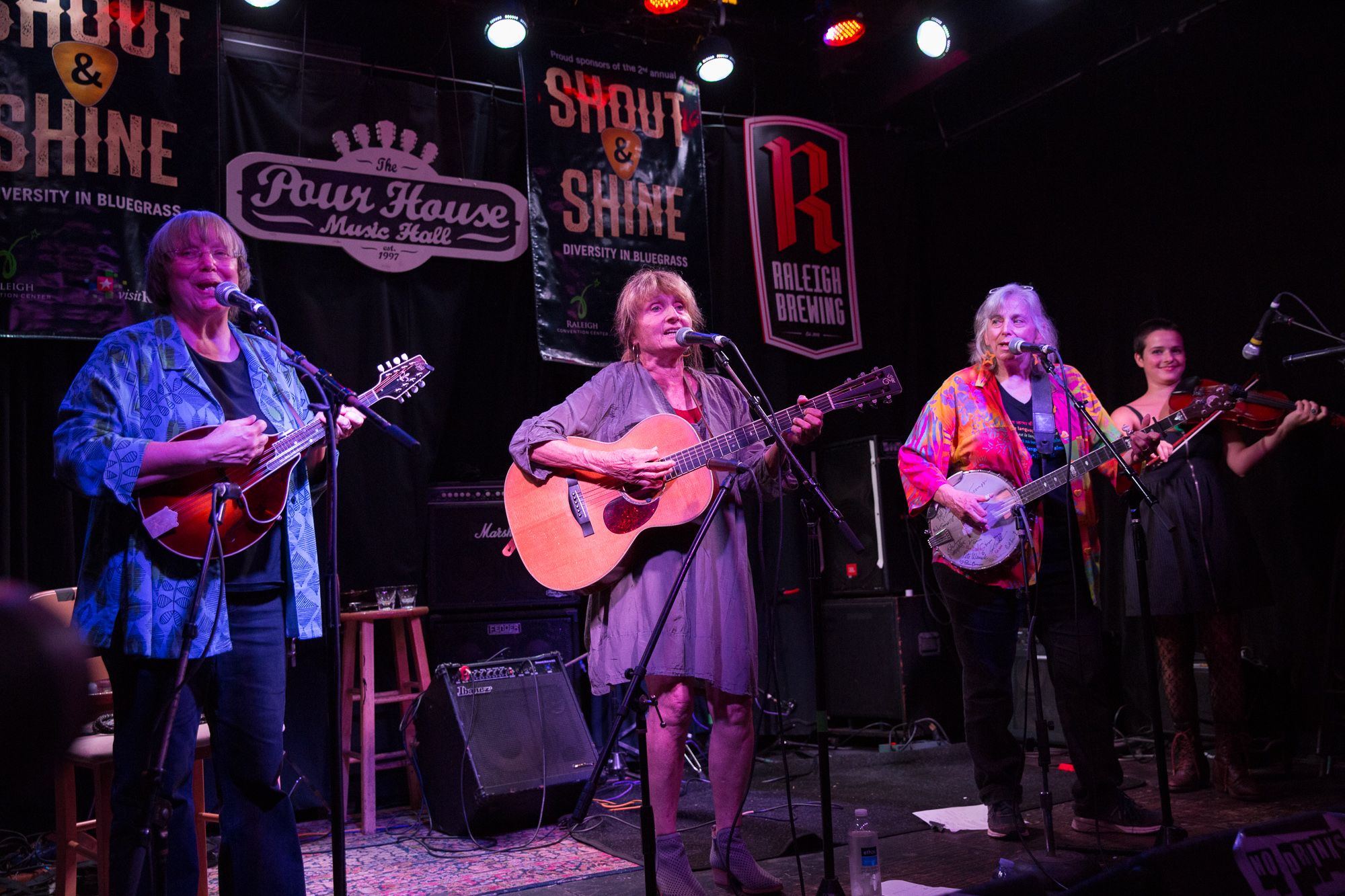
Also, make plans to join us for our Fourth Annual Shout & Shine: A Celebration of Diversity in Bluegrass on Friday, September 27! With our friends at PineCone we’re taking over the StreetFest’s dance tent for an entire day of dance, music, and celebrating the vast array of diverse voices and creators who love bluegrass. Music starts at noon and goes til 11:00 pm! Did we mention there’s going to be a Shout & Shine Square Dance Party?

5. THE JAMMING

If you don’t spend at LEAST two to three nights out of the week staying up ‘til dawn camped out in a hallway or a hotel room enjoying some of the best off-the-cuff music the world has to offer, you just aren’t doing IBMA right. We recommend the whole enchilada, going to the business conference, the Bluegrass Ramble, the main stage at the Red Hat — but if there’s just one thing you can muster during the week of bluegrass events at World of/Wide Open Bluegrass, it should be a mosey through the Marriott for a little bit of jamming. A lotta bit of jamming. Who knows who you’ll run into on the elevator or around the corner…


Photo of Marcy Marxer, Alice Gerrard, Cathy Fink, and Tatiana Hargreaves at Shout & Shine 2017: Willa Stein

My Love Will Not Change: Four Versions of a Modern Classic

“My Love Will Not Change” — but my favorite version of this song just might. (And yours might, too!)

The tune, penned by consummate songwriter, bluegrasser, and country stalwart Shawn Camp and his rockabilly collaborator and friend Billy Burnette, has had versions recorded and performed by both writers as well as Bluegrass Hall of Famer Del McCoury. Today, another iteration has hit the airwaves and digital shelves from Americana rocker Aubrie Sellers. The track, which features harmonies from Steve Earle, will appear on Sellers’ sophomore release, Far From Home, set to drop on February 7, 2020.

“I love bluegrass, and I thought it would be fun to bring a song with unmistakable mountain soul like this into my world a little bit,” Sellers relates in a press release. “It’s the only song [on the album] I didn’t write, but it’s something I wish I’d written. I live for straightforward, emotionally-driven writing like this. When I envisioned the sound for the track, I knew there was no one else who could do it like Steve.”

It should come as no surprise that bluegrass influenced this hard-and-heavy, rollicking rendition of the song — and not simply because Camp wrote it and the Del McCoury Band originally recorded and popularized it. In 2015, Sellers appeared on a Stanley Brothers classic, “White Dove,” with her mother Lee Ann Womack and Dr. Ralph Stanley himself on Ralph Stanley and Friends: A Man of Constant Sorrow, which was the final album released by the bluegrass forefather before his death in 2016.

In honor of the newly-minted Sellers and Earle cover, we thought we’d lay out a handful of this modern classic’s cuts and performances, posing the question to you, our BGS readers: Which one is your favorite?

The absolute original. If you’ve never had the pleasure of having your face peeled off by Shawn and company at one of his many Station Inn shows, where he routinely cobbles together just such a mind-blowing bluegrass-meets-trad-country band, you maybe haven’t really ever had a truly “Nashville” experience. Is that bluegrass organ? Let’s call it that. You can hear the influence of Camp and Guthrie Trapp’s chicken-pickin’ shredding in the Sellers cut, too. And you’ll notice, across all cuts of this song, no one tries to emulate Camp’s vocal phrasing, which outright refuses to snap to any semblance of a grid, because it can’t be done.


A more languid, loping style that reads as honky-tonk and rockabilly and “shuffle across them polished-smooth floorboards” all at once. Nashville legend and Fabulous Superlative Kenny Vaughan is on guitar, once again reinforcing the inextricable role of the Telecaster in this song. That is, until we get to its next version…


And suddenly, all of our perceptions about what this song is and what it should be are thrown out the window. Whether it’s “Misty” or “1952 Vincent Black Lightning” or “Nashville Cats,” Del has a way of taking a song and immediately making every listener forget that it ever could’ve had a version that predates him. The definitive cut? Perhaps. The counterintuitive intervals between the harmony vocal and the lead (notice how Ronnie’s tenor sounds eerily similar to his father’s voice), the subtly dissonant melodic hook, and Mike Bub’s relentless rhythm — that doesn’t just reside in the pocket, it’s freakin’ mayor of the city of the pocket — are icing on the cake. Splendid.


It’s remarkable that the Sellers and Earle version doesn’t attempt to reinvent the wheel, while simultaneously covering almost entirely fresh ground. The skeletal structure is still here, with hallmarks from Camp’s, Burnette’s, and McCoury’s versions each, but this take is original. The grungy, harder rock flavors don’t blow out the more subtle touches, either. Sellers gives her own melodic embellishments and her own twists of phrasing as well, with Earle matching, but again referencing the there-are-no-rules feel of the harmonies in the other cuts. For something so seemingly disparate from the others, it is equally charming and unabashed.

Perhaps it doesn’t so much matter which one is preferable over the others? We’ll gladly take them all. Pardon, while I scroll back up to the top and start again.


Photo credit: Scott Siracusano

This Could Be a Golden Year for Lillie Mae

Brown’s Diner is the kind of hole-in-the-wall that your eyes have to adjust to, after stepping in from a sunny afternoon in Nashville. However, Lillie Mae shines like a beacon in the dim light of the dark booth as she gabs with the staff she’s clearly known for years.

A twenty-year Nashville veteran, her very first business meeting as the youngest member of her former family band, Jypsi, was in this very restaurant. A true road warrior, Lillie Mae and family traversed the country playing bluegrass festivals and churches. On the heels of a censored childhood steeped in traditional music, she graduated to the honky-tonks of Lower Broadway and on to her own burgeoning career as a solo artist now signed to Third Man Records.

Settling in at the beloved burger-and-fries mainstay after three weeks on the road with The Raconteurs, Lillie Mae detailed the process of making her brand new record, Other Girls, with producer Dave Cobb, as well as songwriting inspiration, a crummy golden year, and what works feels like when it doesn’t feel like work.

BGS: Your lyrics leave a lot to the imagination. They weave a story and put you in a setting but they aren’t inculcating anything for the listener. But tell us more about “A Golden Year.”

That one and the last one are my favorites on the album for sure. Basically, my birthday is June 26 so my golden year was a year ago. We were in The Refuge in Appleton, Wisconsin, and we’d played a couple of gigs up there and we were leaving this monastery. It is an amazing place where musicians and artists of all kinds can go and live for free. Food and everything is taken care of. They get government grants and they have a studio. It is an amazing place right on the water.

We were rolling out and I went to do one more look around and my brother was still wrapping up so I was just walking through the hallways. They have a chapel where they do shows and I heard a choir singing “Ahhhs” and I just heard the whole song and I had a guitar in my hands. I rummaged through rooms to find a pen. I sat down on the guitar case and wrote it. It came from somewhere else. It is a perfect example that we are just a vessel. I had been looking forward to my golden year my whole life and then it turned out pretty lousy for me. I was super depressed and down and writing that song was probably the best part of it.

Do you sit down to write or do you mostly write when you are inspired?

You know, mostly when it starts to come through. But if I sit down and pluck on the guitar or something for a minute, I will easily find myself trying to come up with something. I don’t sit down and try to write nearly as often as I should.

Did you have to do any of that for this record as you were putting the songs together?

Nah. There were a couple of things that were not completely finished, like the last song on the record. I was tweaking words until recording. Some stuff was almost there. And every once in a while, if a second verse is not coming, I’ll just repeat the verse, though that’s kind of cheating.

With your ingestion of art being censored in your religious upbringing, there is some open sexuality on this record. Bluegrass, folk, and country have all been known to suppress that. Have you ever come up against censorship from co-creators or folks in the business realm?

Totally. I think a lot of it you can do it to yourself. You can put yourself in a little conservative box easily. But these days, I’ve just lost my care about what people think. It just doesn’t matter. I have a couple of songs that I haven’t been open about what they are about — on the last album, that were written about abortion. Songs that were really heavy to me and I never talked about that. It wasn’t a secret but “Why do we need to talk about this?” because it can mean whatever it means to anyone. But that is coming from a very conservative place of trying to please all ears.

Having these old mindsets of being in old Nashville, I definitely have been more conservative than I truly am. For me to not mute or hide lyrics or not be open about things, it has been a step for me. There is a song on the album called “Crisp & Cold” that was inspired by a friend of mine who is transgender. There is a line in the song that says, “Don’t be scared/Be more.” When you literally have to worry that some people might take your life because of that. It is crazy. There are times when you don’t want to offend anyone but those days are over.

But growing up in bluegrass, we did the circuit. We were always on our way to another festival. My sisters were older than me and were beautiful young women who were experiencing growing out of the whole religious thing. We did Beatles covers back then when I was a little kid and bluegrass snubbed us. To love something so much and to be ousted from it because you’ve developed some fashion sense or something. It sucks to be such a supporter of something and to not have them have your back. But it has changed a lot.

Did you and your siblings grow up listening to any specific artists?

It was super limited, what we were allowed to listen to and we grew up playing full time. We played churches and bluegrass festivals. We had a lot of live influence. As far as what we were allowed to listen to, it was not very much. We’d be allowed to listen to some Del McCoury songs but not all of them because of the content. A lot of Marty Robbins and Hank Williams, but always excluding some stuff because my folks were super strict.

Did you find yourself seeking ways to listen to those excluded songs?

Not me. I’m the youngest in the family and I never did. I’m really bad about that still. I don’t go out and pick out music. If I go to a record store, I have a panic attack. Every single time I end up on the floor in a corner just sitting cross-legged waiting for everyone to check out. I have full-on attacks. Maybe I’ll be better now. It has been a minute since I’ve been in one. I never got joy out of going to buy a record.

I was the youngest and growing up, I never had a choice. I didn’t get to pick where we went or what we listened to or anything. I just listen to what other people are listening to. I really rely on my boyfriend or my brother playing cool music. Unless I hear someone at a gig or a festival, then I’ll pick up their music. Like Natalie Prass. My brother met her at a show a couple of years back and he brought her CD home. And I was like, “Oh my God.” Her music changed me.

Jack White gave me a record player but I didn’t have speakers and I’m technically challenged so I could never figure out how to hook it up. The vehicle I have doesn’t have music. I have very little music on my phone and rarely listen to it. I do think I have Natalie Prass’ record on there. [Laughs]

What was it like working with Dave Cobb on this album?

He was wonderful to work with. He’s a really nice person. The first conversation we had, we talked about some bluegrass bands. I think it was something different for him. I was very nervous as first to go in because I was out of my comfort zone but it was really easy. We went in and recorded a song, took a lunch, and came back and recorded another song. It was a pretty easy process.

How was it out of your comfort zone?

Well, Dave uses his drummer Chris Powell on most of his stuff so for me going in because I’m such a picky asshole, I was nervous about playing with someone I hadn’t played with. I was just nervous it wasn’t going to be my vibe. But it was. It was wonderful. It’s an amazing studio [RCA Studio A] with great sounds and a great crew.

So it was pretty easy once it started?

Totally. After song number one. The first song had two different time signatures the way it was written but it got straightened out to just one. At first, I was like, “What is going to happen here?” It ended up a great thing, but I was a little stubborn at first.

Did that create friction?

No. Not at all. I kept it to myself. I went to the bathroom, cried it out, and came back ready to give it a try.

That’s awesome you trust your producer.

Well, I’d be foolish. Who am I, you know? Here’s a shot to work with some amazing people. If I threw a wrench in it, there are too many people on board. There are too many people invested in me. I owe too many people too many things. There’s a time and a place. Maybe next album. [Laughs]

I’ll get OCD and have little brain freak-outs. One can come across as stubborn, and all I’ve ever tried to do is be opposite of that. I’ve tried hard to be positive and give my all no matter what the project is, but those little OCD things, they can hinder you for sure.

Have you ever made concessions that you regretted making because the art didn’t turn out the way you wanted it to?

If I’ve thought like that, I’ve tried to change my outlook and be like, this is the way it was supposed to be. It (the process of making the album) wasn’t what I had anticipated. I anticipated buckling down. I anticipated really working hard, and then when I wasn’t working hard and it was just coming really easily and naturally, I felt like I wasn’t doing a lot. When you are used to hustling and it comes easy, it feels like something must be wrong.

How do you feel about the release of the new album? What is the period like right before it comes out?

The last couple of weeks [touring with The Raconteurs] were super exciting. It was fun to be out playing the tunes. I wasn’t ready to be done. I enjoyed it a little too much.

I’m pretty level. Just from so many years of getting my hopes up, not even just about music. I used to get so excited about something but I crashed and burned too many times. I don’t allow myself to get excited about much of anything. People will get the wrong impression that I’m not enjoying myself or that I’m not grateful. I’m so thrilled but my expectations are pretty low. I’m excited about it coming out, but if I got dropped tomorrow I think I’d be prepared. Which is not good! [Laughs]

My boyfriend took the pictures for the album campaign. And my sister Scarlett and our friend Amy helped with the photo shoot. It was just us, so it feels super close to home, and I feel really proud of it.


Photo credit: Misael Arriaga

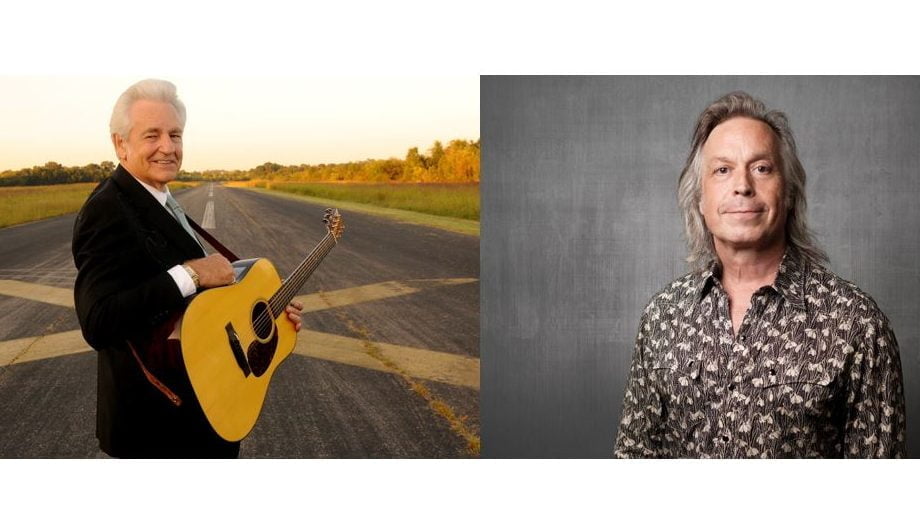
Del McCoury, Jim Lauderdale Will Host IBMA Awards

Del McCoury and Jim Lauderdale will host the 30th Annual IBMA Awards show on September 26 in Raleigh, North Carolina.

“This year we celebrate both the 30th anniversary of the International Bluegrass Music Awards and the 80th birthday of Hall of Famer Del McCoury! What could be better than Del co-hosting the Awards Show with the legendary Jim Lauderdale?!” said Paul Schiminger, executive director of the IBMA. “It is sure to be a fun and memorable evening with unforgettable performances by awards nominees. This is the biggest night in bluegrass music, as we honor excellence over the past year and over entire careers.”

Even among the pantheon of music’s finest artists, Del McCoury stands alone. From the nascent sound of bluegrass that charmed hardscrabble hillbilly honky-tonks, rural schoolhouse stages, and the crowning glory of the Grand Ole Opry to the present-day culture-buzz of viral videos and digital streams, Del is the living link, headlining sold-out concerts to music festivals of all genres, including one carrying his namesake. In 2010 McCoury received a National Heritage Fellowship lifetime achievement award from the National Endowment for the Arts, and in 2011 he was elected into the International Bluegrass Music Hall of Fame. A two-time Grammy winner, McCoury has won numerous IBMA Awards, as well, including Entertainer of the Year a record-setting nine times.

Jim Lauderdale won the Best Bluegrass Album Grammy in 2002 for Lost in the Lonesome Pines, his collaboration with Ralph Stanley & The Clinch Mountain Boys, and won a second Grammy for his album The Bluegrass Diaries in 2008. A lauded singer-songwriter, he has been a symbol for creative integrity and prolificacy for thirty-two albums over decades of recording. He’s an A-list Nashville songwriter whose songs have ruled the music charts while recording an eclectic catalog of albums. His prolific streak of releases continues in 2019, as he finishes his tenth bluegrass album.

Claire Armbruster and Mary Burdette return as executive producers of the show.


Photo of Jim Lauderdale: Scott Simontacchi
Photo of Del McCoury from DelMcCoury.com

22 Top Bluegrass Duos

Everyone knows that in the early days of bluegrass, before that term was even coined, all you needed to make a “band” was two people and two instruments. Fiddle and banjo? Sure. But in those days, they’d take whatever they could get. Duos are still a strong presence in the music today, in brother/sibling duos, spouse-led bands, and legendary collaborations.

Check out these twenty-two bluegrass pairings — and their accoutrement — on BGS:

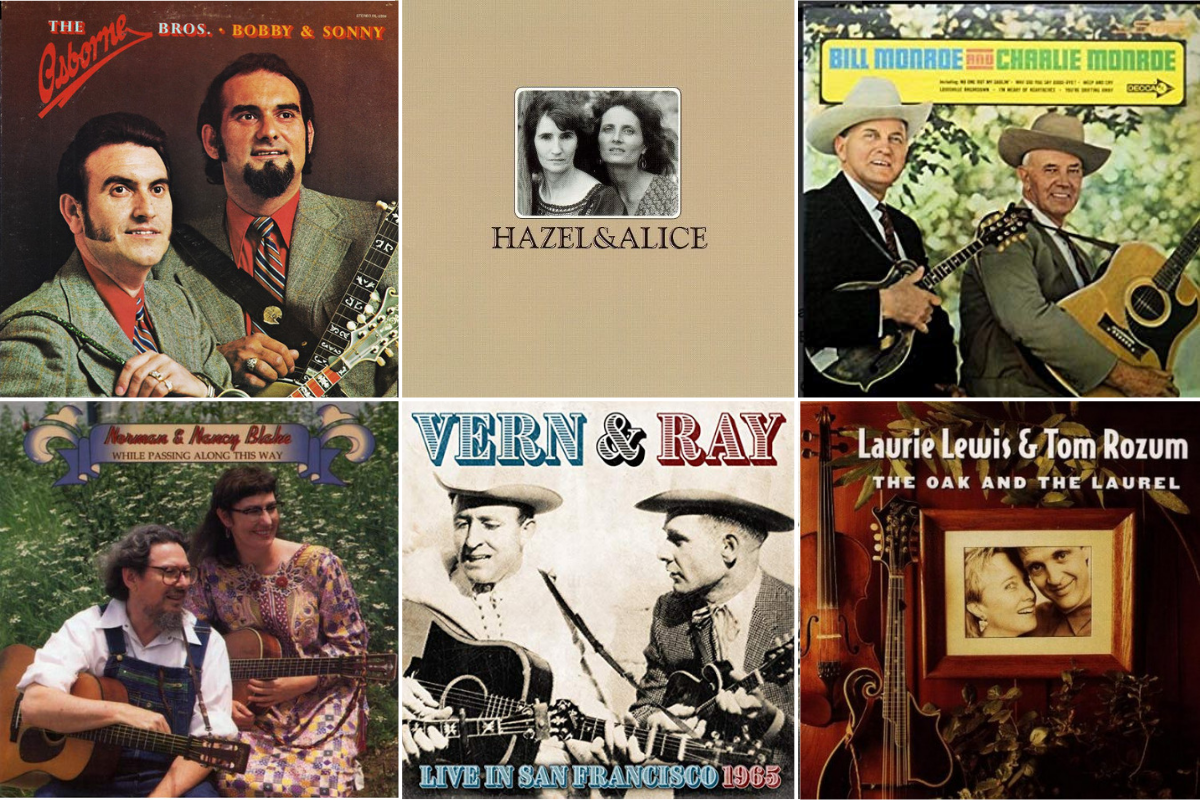
Bill & Charlie Monroe

Before Bill Monroe, the Father of Bluegrass, made his indelible mark on the genre (quite literally giving it its name), he was already a popular performer with his brothers Charlie and Birch. Birch left The Monroe Brothers in the mid-1930s, and Charlie and Bill went on to enjoy success on the road, in the studio, and on the radio — until rising tensions and a fateful fight in 1938 caused them to split ways. But, without that fight, we may not have “bluegrass” at all.

Flatt & Scruggs

December 1945. The Ryman Auditorium. Nashville, Tennessee. Bill Monroe and his Blue Grass Boys stepped on stage for the Grand Ole Opry with Lester Flatt and Earl Scruggs among their ranks for the very first time and bluegrass as we know it today was born. Flatt & Scruggs left Monroe in 1948 to join forces and went on to become one of the few ubiquitous, household names of bluegrass.

Hazel Dickens & Alice Gerrard

Undeniably trailblazers, Hazel Dickens & Alice Gerrard are widely regarded as the first women in bluegrass to capture the “high lonesome” sound popularized by Monroe, the Stanley Brothers, and others. They toured across the U.S., often supporting causes that benefited forgotten, downtrodden people from all backgrounds and walks of life. They were inducted into the Bluegrass Music Hall of Fame in 2017.

The Stanley Brothers

Natives of the music-rich southwest corner of Virginia, Carter and Ralph Stanley were prolific recording artists and touring musicians in bluegrass’s first generation. Countless songs written and/or popularized by the Stanley Brothers and their backing band, the Clinch Mountain Boys, are staples of the genre today. Carter passed in 1966 and Ralph continued until his death in 2016 with the Clinch Mountain Boys — who still tour today with Ralph’s son, Ralph II.

Don Reno & Red Smiley

Unsung trailblazers of the first generation of bluegrass pickers, Reno & Smiley were tireless innovators with a jovial, sometimes silly flair to their songs and instrumental prowess. Their duets are simply some of the best in all of bluegrass. The duo performed together off and on from the early 1950s to the 1970s — but both passed away much too young, Smiley in 1972 at the age of 46 and Reno in 1984 at the age of 58. Reno’s frenetic, electric and pedal steel guitar-infused licks remain unmatched in banjo picking today.

Jim & Jesse McReynolds

With matching suits and impeccable pompadours brothers Jim and Jesse McReynolds often brought rockabilly, rock ‘n’ roll, mainstream country and pop sensibilities to their take on sibling harmonies and bluegrass brother duos. Jesse’s crosspicking on the mandolin was — and continues to be — absolutely astonishing. Jim passed in 2002, Jesse continues to perform on the Grand Ole Opry to this day. At the time of this writing, he is ninety years old.

Laurie Lewis & Tom Rozum

Laurie Lewis often takes top billing — as leader of the Right Hands and before that, the Bluegrass Pals, and others — but since 1986 her musical partner Tom Rozum has almost constantly been at her side on the mandolin and harmonies. Their duo recording, The Oak and the Laurel, was nominated for a Grammy in 1995. Here is the album’s title track:

Bill Monroe & Doc Watson

What is there to say? Two of the folks who paved the way for this genre, laying a foundation so strong and far-reaching that we still can’t fully comprehend its impact. Bill and Doc collaborated on more than one occasion and we, as fans and disciples, are lucky that so many of these moments are captured in recordings and videos.

Del McCoury & David “Dawg” Grisman

At face value, an unlikely combo, but their friendship goes back to the early 1960s and their musical endeavors together began soon after. As Del slowly but surely became a bastion for traditional bluegrass aesthetics applied broadly, Dawg embraced jammy, jazzy, new acoustic sounds that sometimes only register as bluegrass-adjacent because they come from the mandolin. Opposite sides of the same coin, their duet makes total sense while at the same time challenging everything we think we know about the music. In this clip, Dawg sings tenor to Del — not many would be brave enough to try!

Ricky Skaggs & Keith Whitley

They got their start together in the Clinch Mountain Boys with Ralph Stanley, making some of the best recordings in the history of the band’s many iterations. Before they both struck out on wildly successful, mainstream careers they recorded a seminal duo album together, Second Generation. It remains one of the most important albums in the bluegrass canon — especially as far as duos/duets go.

Norman & Nancy Blake

Norman is well known for his flatpicking prowess, which has graced recordings by John Hartford, Bob Dylan, the Nitty Gritty Dirt Band, and so many others. He and his wife, Nancy, were married in 1975 after having begun their musical forays together a year or so earlier. Nancy’s command of many instruments — cello, mandolin, and fiddle among them — balances neatly with Norman’s jaw-dropping, singular style on the flattop. Their inseparable harmonies and timeless repertoire are merely icing on the cake.

Jimmy Martin & Ralph Stanley

How their first album together, First Time Together (cough), is not more well-known is truly impossible to understand. The King of Bluegrass and the Man of Constant Sorrow twining their extraordinary voices must have been ordained by a higher power. It’s a good thing they answered the call. Be careful, Jimmy’s percussive G-runs feel like a slap in the face — in the best way.

Darrell Scott & Tim O’Brien

Their live albums together and their co-written masterpieces belong in every museum and shrine to roots music around the world. Both of these triple threat (Quadruple? Quintuple? When do we stop counting?) musicians are rampantly successful in their own right, but together they are simply transcendent. Their cut of “Brother Wind” deserves a listen right this instant and “House of Gold” gives you the harmony acrobatics gut punch you need every time. It was nearly impossible to choose just one, but here’s a hit that was recorded once by a little group called the Dixie Chicks.

Ricky Skaggs & Tony Rice

Again, words fail. Skaggs & Rice is a desert island record. Each and every time these two have graced a recording or a stage together, magic has been made, from their days with J.D. Crowe & the New South and on. We only wish that they could have done more together.

Vern & Ray

Vern Williams and Ray Park were California’s original bluegrass sons. Though they were both born and raised in Arkansas, they relocated to Stockton, California, as adults. They’re often credited with “introducing” bluegrass music to the West Coast. They disbanded in 1974 (both passed in the early 2000s), but their influence is palpable to this day, even if they’re sorely unheard of east of the Mississippi. This deserves correction! Immediately!

Eddie & Martha Adcock

Eddie is a pioneering banjo player who’s a veteran of both Bill Monroe’s Blue Grass Boys and The Country Gentlemen, two decidedly legendary and influential acts. His style is somewhat wacky, certainly singular, but effortlessly bluegrass and traditional as well. He married Martha in the late 1970s and the pair have toured prolifically as a duo. In 2008, Eddie underwent brain surgery to correct debilitating hand tremors. He was kept awake, playing the banjo during the procedure — and there is jaw-dropping film of this online!

Dailey & Vincent

When Dailey & Vincent burst onto the scene in the mid-aughts after both having notable careers as sidemen, the bluegrass community rejoiced at the reemergence of a wavering art form within the genre — traditional duo singing. However, Jamie and Darrin, whether they knew it at the time or not, had their sights set much higher. Now more of a full-blown stage show than a bluegrass band, their recordings and concerts are a high-energy, charismatic, and downright entertaining mix of classic country, Southern gospel, quartet singing, and yes, bluegrass.

Kenny & Amanda Smith

Husband and wife Kenny and Amanda first recorded together in 2001, going on to win IBMA’s Emerging Artist of the Year award two years later. They’ve now cut eight albums together, all clean, clear, crisp modern bluegrass that centers on Amanda’s impossibly bright vocals, which maintain a personal, country hue alongside Kenny’s fantastic flatpicking. SON!

Tom T. & Dixie Hall

Two of the most recent inductees into the Bluegrass Music Hall of Fame, Tom T. and Dixie Hall wrote hundreds and hundreds of songs cut by country, bluegrass, and Americana artists alike. Tom T.’s reputation and chart-topping originals tend to eclipse Dixie, but he is unyielding in his efforts to point that same spotlight at his beloved wife instead, who passed away in 2015. Though she never performed — definitely not to the extent that Tom T. did — the marks she left on bluegrass, country, and her partnership with her husband are indelible. This number was co-written by the pair:

The Louvin Brothers

Recipients of IBMA’s Distinguished Achievement Award in 1992, the Louvin Brothers are another example of early bluegrassers who enjoyed the amorphous, primordial days of the genre before it became more and more sequestered from mainstream country and country radio. Their duets are iconic, with counter-intuitive contours and lines that bands and singers still have difficulty replicating to this day. Their most famous contribution to the American music zeitgeist, though, might not be their music, but the spectacular cover art for their 1959 album, Satan Is Real. If you haven’t seen it, Google it right now.

Delia Bell & Bill Grant

Natives of Texas and Oklahoma, respectively, Delia Bell and Bill Grant met through Bell’s husband, Bobby, in the late 1950s. Between their band, the Kiamichi Mountain Boys, and their duo project they recorded more than a dozen albums together through the 1980s. Famously, Emmylou Harris became a fan when she heard their cut of “Roses in the Snow,” which Harris went on to record on her eponymous bluegrass record. Bell died in 2018.

The Osborne Brothers

Though they popularized a style of three-part harmony that had never been heard before — the infamous “high lead” harmony stack — their band, no matter who it may have included over the years, was undeniably helmed and anchored by Bobby and Sonny. (Which does explain the name.) You may remember “Rocky Top” and “Ruby” first and foremost in their discography, but the hits they’ve contributed to the bluegrass songbook are innumerable. Here’s one such classic.