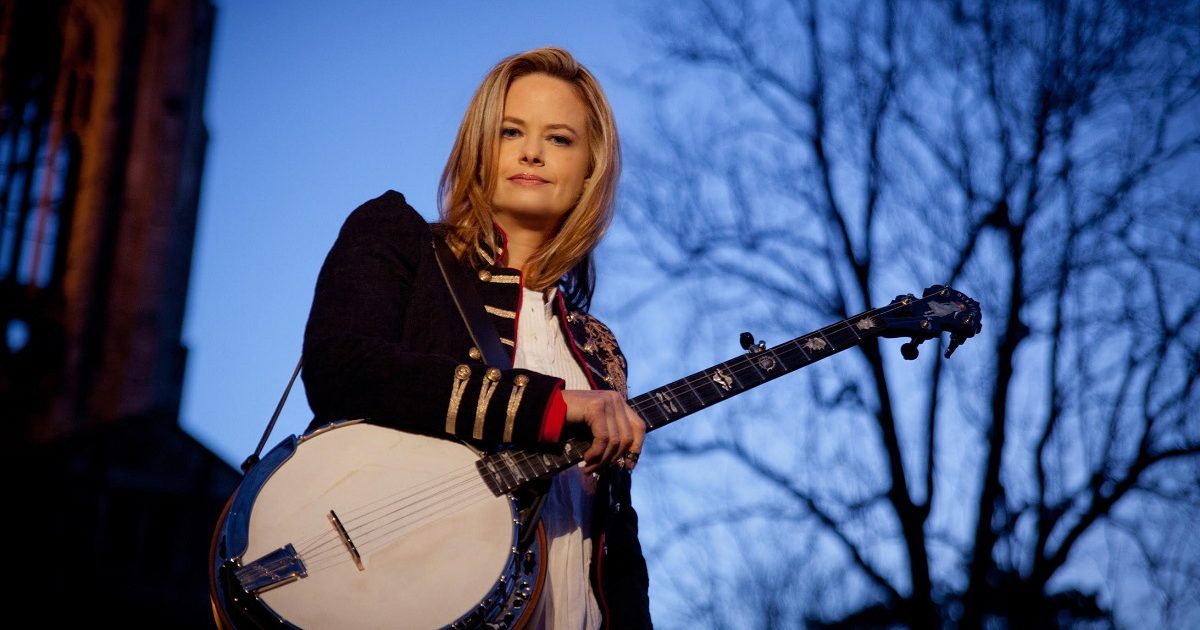
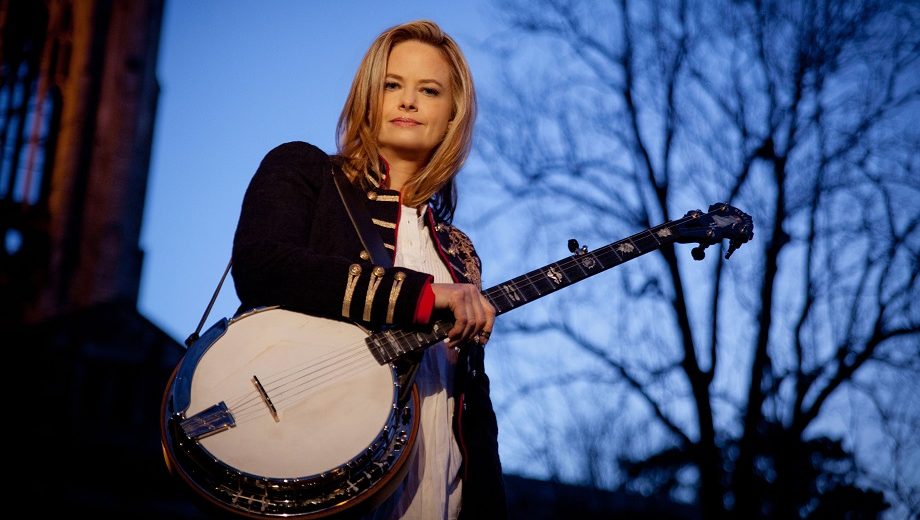
BGS 5+5: Alison Brown

Artist: Alison Brown
Hometown: La Jolla, California
Latest album: The Song of the Banjo
Personal nicknames (or rejected band names): Mom (currently trending)

From the Artist: “‘Here Comes the Sun’ is a song I’ve loved for years. But I never thought about playing it on the banjo until I was inspired by stories of hospitals playing it over their PA systems to encourage staff and patients in their battle against COVID. As I started working on it I realized that the tune has a lot in common rhythmically and harmonically with ‘Águas de Março’ (‘Waters of March’), a Tom Jobim classic that’s one of my favorite melodies and recordings. So I put the two together and came up with this mash-up — setting the low banjo against a tapestry of piano and jazz flute.” — Alison Brown


What was the first moment that you knew you wanted to be a musician?

I didn’t become a musician in one lightning rod moment. It was really more a series of baby steps. When I was really getting into the banjo in the late ’70s there weren’t a lot of successful role models that pointed the way to how you could make a career as an instrumentalist. As much as I loved playing the banjo I really thought it would be a hobby that I would talk about at cocktail parties in my real life as a doctor, lawyer, or another respectable white collar professional. As it happened, I had to spend several years as an investment banker before I got up the nerve to try being a banjo player.

What’s your favorite memory from being on stage?

I have so many great memories it’s hard to pick just one. Collaborating with a skratji band on stage at the Opera House in Paramaribo, Suriname, during a State Department tour is one that has stayed with me. Guesting on Brandi Carlile’s collaboration set with the First Ladies of Bluegrass at the Newport Folk Festival last summer with Dolly Parton singing “9 to 5” is definitely another. Playing on the Banjo Stage at Hardly Strictly Bluegrass in front of a crowd that reaches all the way down Speedway Meadows never fails to blow me away and is one that always validates my decision to leave my investment banking job in San Francisco’s financial district to play the banjo.

If you had to write a mission statement for your career, what would it be?

Since launching Compass Records 25 years ago, my career has had two parallel tracks: one as an artist and the other as the co-founder of a roots-based indie label. When Garry West and I started the label in 1995, literally at the kitchen table, we felt there was a keen need in the market for a record company that was run by musicians. We were driven by the idea that our perspective gained from years of touring would position Compass uniquely in the market. Our goal was to create an artist friendly home for other artists; at the time I was halfway into a multi-album contract with Vanguard Records. Garry and I were, and are still, extremely passionate about discovering new artists and helping to bring their music to a wider audience.

Over the past two and a half decades, we’ve had a chance to help further the careers of an amazing roster of artists across the roots music spectrum and also have had the privilege of carrying the torch forward for some great label imprints through catalog acquisitions. One thing that I didn’t really anticipate when we started Compass was how running a label would inform my own creativity as an artist and producer. Knowing the challenges in the market has been very much of a double-edged sword: sometimes it makes it difficult to get motivated to create new music but, at the end of the day, having a handle on current challenges and opportunities on the business side has made it more natural for me to create music with specific target results in mind.

What rituals do you have, either in the studio or before a show?

For me, studio = food:) When I’m producing, or leading a session, I like to arrive with warm scones or banana bread to start the morning and then make sure there’s a kitchen full of interesting snacks on hand throughout the day. I know it’s not great for the waistline, but for me it adds to the fun of the creative process. I’m also a fan of having slow TV, sound off, running on the monitor in the control room. When I was producing Special Consensus’ record Chicago Barn Dance, we had a Norwegian winter train journey from Oslo to Bergen on a loop while we worked and it complemented our musical journey in a perfect way.

Since food and music go so well together, what is your dream pairing of a meal and a musician?

Hmmm, perhaps not your typical banjo player’s dream, but how about a simple dinner with Tom Jobim on a garden terrace in La Jolla, California, overlooking the Cove and a menu that includes Jacques Pepin’s roast chicken, haricots verts, and a bottle of Cakebread Chardonnay?


Photo credit: Stacie Huckeba.
“Here Comes the Sun” credits: Low Banjo: Alison Brown; Piano: Chris Walters; Flute: John Ragusa; Bass: Garry West; Drums and Percussion: Jordan Perlson

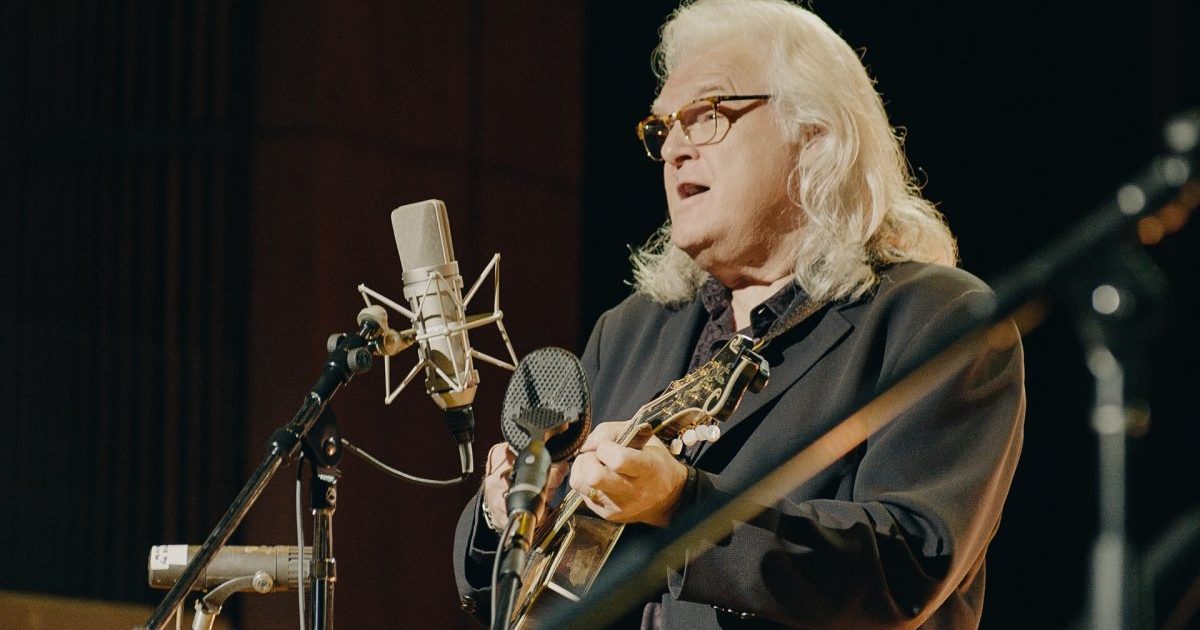
Ricky Skaggs Reunites With Bill Monroe’s Mandolin for ‘BIG NIGHT’ Event

On Wednesday, October 28, music fans had the chance to see and hear some of the most historic instruments in bluegrass played once again during an all-star fundraiser, BIG NIGHT (At the Museum). The Country Music Hall of Fame and Museum presented performances captured in the museum’s galleries and performance venues while the museum was closed, with select artists paired with instruments from the institution’s collection. The event debuted on the museum’s YouTube channel.

One such performance includes Alison Brown playing Earl Scruggs’s 1930 Gibson RB-Granada banjo, Ricky Skaggs playing Bill Monroe’s 1923 Gibson F-5 mandolin, and Marty Stuart playing Lester Flatt’s 1950 Martin D-28 guitar. Skaggs was elected to the Country Music Hall of Fame in 2018.

“I think it’s important to do anything we can to support the museum not as just members of the Hall of Fame, but as lovers of country music history,” Skaggs tells BGS. “I think it’s kind of our job to do that and it’s a privilege to know that my grandkids will be able to go there to see that history that we celebrated — and some of it I even got to be a part of. I’m thankful to be a part of it. It’s a wonderful thing.”

BIG NIGHT (At the Museum) generated support for the museum’s exhibitions, collections preservation, and educational programming. A closure of nearly six months due to COVID-19 caused significant loss of revenue for the museum, which was forced to cancel in-person educational events. During the BIG NIGHT program, viewers were encouraged to donate to the museum.

BGS spoke with Hall of Fame member Ricky Skaggs and museum CEO Kyle Young about the event.

BGS: Kyle, how have things been at the museum since the shutdown?

Young: We’re hanging in. We were closed for about six months. We opened back up September 10 under very limited capacity. As I look at the year, I think we will end up looking at lost revenue approaching thirty five million dollars, so it’s a matter of trying to navigate through and I’m hoping that we can stay open, even though it’s very limited.

Ricky, it’d be hard to imagine such an event without you there considering that you have such a deep connection to this music. What does it mean for you to get to play Mr. Monroe’s mandolin?

Skaggs: I can’t believe I’m getting to play it one more time. Every time I play it I’m sure it’s the last time, but then they’ll drag it out again and I’m always like, “Oh, God, thank you.” The first time I played it, I was 6 years old. So I didn’t really know that much about how priceless it was even then. And he wouldn’t just take it off and give it to you to play. He wasn’t that way, you know? Sometimes we’d shared a dressing room together. And he’d have the lid open in the case, but it would be pushed down in the case. I would always ask his permission if I could play it and he’d let me.

But, I didn’t play it that much when he was alive. I’ve played it so much more since he passed. There was a time before it went into the museum that the Opry House had it in a vault. There was a guy there that would let me play it, and two or three times a year, I’d go out and make sure that the bridge was OK and maybe I’d put new strings on it and stuff like that. But I played it quite a bit back then. When it went into the museum, I thought, “This is it.” You walk by and see it in the case and think, “Well, that ain’t ever coming out.” But I’ve been able to play it a few times and I’m always thankful.

It’s an amazing sounding instrument. And I made sure to mention, when I was inducted into the Hall of Fame, that Mr. Monroe did not create this music by himself. That instrument was his partner. That was his number one instrument from the time that he got it. He and that instrument created the sound of bluegrass. I mean, he was so creative after he got that instrument. If you think about the instrumentals that he wrote before when he had that F-9 with that short scale you can tell he was very limited. But when he got that 14 fret neck — goodness gracious! It gave him the room and the tone and the whole Loar experience to work with. It was meant to be. It was a heavenly meeting of two instruments: Monroe being one instrument and the mandolin being the other.

Listen to Ricky Skaggs on Toy Heart with Tom Power: APPLE MUSIC • STITCHER • SPOTIFY • MP3

That’s a beautiful sentiment and a good point about how inspiring that instrument was for him. That connection between instrument and musician existed with all of these instruments, so it’s going to be special to watch all of these performances. Were you all excited to get to perform a bit?

Skaggs: We were. None of us three — me, Marty or Alison — have had COVID, and we’ve certainly been pent up and cooped up. I recently did a video for Camping World with Steven Curtis Chapman, and after one of the faster instrumentals we played, I remember thinking, “Man, I have got COVID fingers,” you know? Kentucky Thunder hasn’t played a show since March 11 and that’s just crazy. So, it was a lot of fun to play with Marty and Alison. I think it’s going to be a really, really great show, and I hope it raises a lot of money for the Hall of Fame, because even though they’ve had to shut down, the building must be paid for every month like nothing happened. But, something has happened and that’s another example of how hard this virus has been on America in general, and which has been really, really unfortunate.

https://www.youtube.com/watch?v=Y1j5JYpSfTc

I know that those instruments almost never leave their display cases so what were the circumstances that allowed the instruments to get played for this event?

Young: We knew that there were a lot of things we couldn’t do while we were closed, but we tried to focus on what we might be able to do under these circumstances and what opportunities there might be. I don’t know if you remember this or not, but very early on in the shutdown, the Shedd Aquarium let a couple of penguins out and let them walk around the aquarium and posted videos of them looking at the other exhibits. That got us to thinking about what we could do. We are a very active museum with lots of programming, but we realized with an empty museum, we can carefully take these instruments out of their cases.

So, the penguins were the germ of it, to tell you the truth. We wanted to do something that looked like us and felt like us. The backbone of the museum, as you know, is the collection — and the collection is unbelievable. The curatorial staff enjoyed carefully choosing which instrument they wanted to take out and allow to be played. From that point, we decided which artists made sense.

That’s so special because I know it’s such a rare thing. The only time I can remember something like it was when Ricky played Bill Monroe’s mandolin at the Medallion Ceremony back in 2018.

Young: That was very, very unusual. And after a lot of discussion, we thought that’d be a great thing to do with Ricky that afternoon. And likewise, this is something we never do. It is only because we were closed and able to really control the circumstances by which we were moving these instruments and carefully handling them and letting the artists play them. They’re behind glass for a reason. That’s the best way to protect them. And they are in an environment that is intensely controlled from temperature to humidity to light exposure and so on. But we did feel like under these circumstances, and only these circumstances, could we see our way clear to take them out for a little while and let them be played.


Photos courtesy of the Country Music Hall of Fame & Museum


This article was updated on November 12, 2020

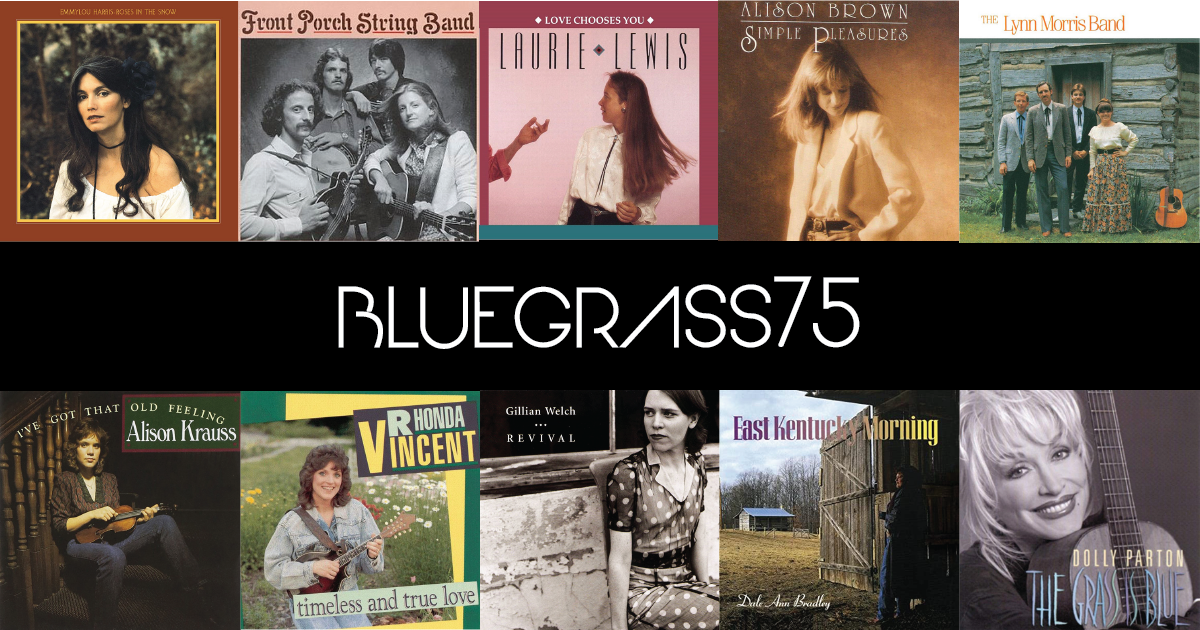
In the ’80s and ’90s, These 10 Women Made Bluegrass Better

With this year marking the 75th anniversary of bluegrass, it’s remarkable to note that women emerged as a creative force at roughly the halfway point between then and now. Of course, female musicians have been part of the fabric of bluegrass from the start, with Mother Maybelle Carter, Sally Ann Forrester, and Hazel & Alice among those serving as inspirations through the decades.

However, the role of women as bandleaders, rather than in a supporting role, began to change in the ’80s and flourished in the ’90s. As part of our Bluegrass 75 series, BGS commends these 10 women who carried bluegrass forward with a combination of undeniable talent, strong material, and a refreshing new perspective.

Emmylou Harris

One of the most visible country artists of the ’70s turned her attention to bluegrass, with a support team she deserves (Ricky Skaggs, Jerry Douglas, Dolly Parton, etc.) Her material ranges from the Louvin Brothers to Paul Simon, though that exquisite voice makes the album seamless. It’s one of her finest albums in a brilliant catalog.


Claire Lynch

With a crystalline soprano, Claire Lynch first gained notice as a lead vocalist and guitarist with Front Porch String Band, which released an indie album in 1980 that was picked up by Rebel Records in 1983. The poignant track, “Hills of Alabam,” which she co-wrote, shows her gift for melody and her ability to sing with sincerity.


Laurie Lewis

A key figure of the West Coast bluegrass scene, Laurie Lewis can fiddle with the traditionalists, then hush a crowd with a beautiful acoustic ballad like “Love Chooses You.” As the acolyte of a generation before her, Lewis actively takes an interest in the bluegrass scene’s rising talent, as evidenced on her latest work, an album of duets entitled and Laurie Lewis.


Alison Brown

As a picker, Alison Brown has made her mark on countless recordings and won the 1991 IBMA Award for Banjo Player of the Year. She’s also a co-founder of Compass Records, a producer, and a Grammy-winning artist. At times blazing, and other times mellow, Brown consistently finds just the right tone on her albums’ instrumentals.


Lynn Morris

Blessed with a sweet but persuasive voice, Lynn Morris knew how to get the storyline across, whether she’s reminiscing about “Mama’s Hand” or laying down the law in “You’ll Get No More of Me.” As a banjo player, she had incredible chops, and her grace on stage (and off) has made her one of the bluegrass family’s most beloved figures.


Alison Krauss

A gifted vocalist, bandleader, and fiddler, Alison Krauss kept her early career focused on bluegrass, though her material would soon find its way to millions of country listeners, too. Being a former child prodigy herself, she served as a role model for a generation of younger pickers, while showing traditionalists that bluegrass is indeed in good hands.


Rhonda Vincent

Coming up in a family band, singer and mandolin picker Rhonda Vincent has been working in bluegrass for decades, though she’s always finding ways to keep things fresh. Still, her early albums remain some of her most satisfying work. As a bandleader, she keeps the energy up on stage, and her outgoing personality makes her a true entertainer.


Gillian Welch

While few would consider her albums to be bluegrass proper, Gillian Welch has exerted tremendous influence on its community. A 1993 winner of Merlefest’s Chris Austin Songwriting Contest, Welch has seen originals like “By the Mark” and “Caleb Meyer” become standards, and though she didn’t grow up in Appalachia, her songs somehow embody its heritage.


Dale Ann Bradley

A sterling discovery from the New Coon Creek Girls lineup, Dale Ann Bradley launched her solo career by selecting relatable material along with a surprise or two (including a U2 cover). It’s a template that still serves her well. The title track of East Kentucky Morning captures the mood and melancholy that she continues to convey so well.


Dolly Parton

It’s hard to imagine now, but Dolly Parton had dropped off the mainstream radar in the mid ’90s. Then her first bluegrass album proved what her fans knew all along — she represents her mountain people well. A wonderful mix of familiar favorites and new material, The Grass Is Blue solidified her reputation as one of music’s most important voices.

(Editor’s note: Explore more of our Bluegrass 75 Artist of the Month coverage.)


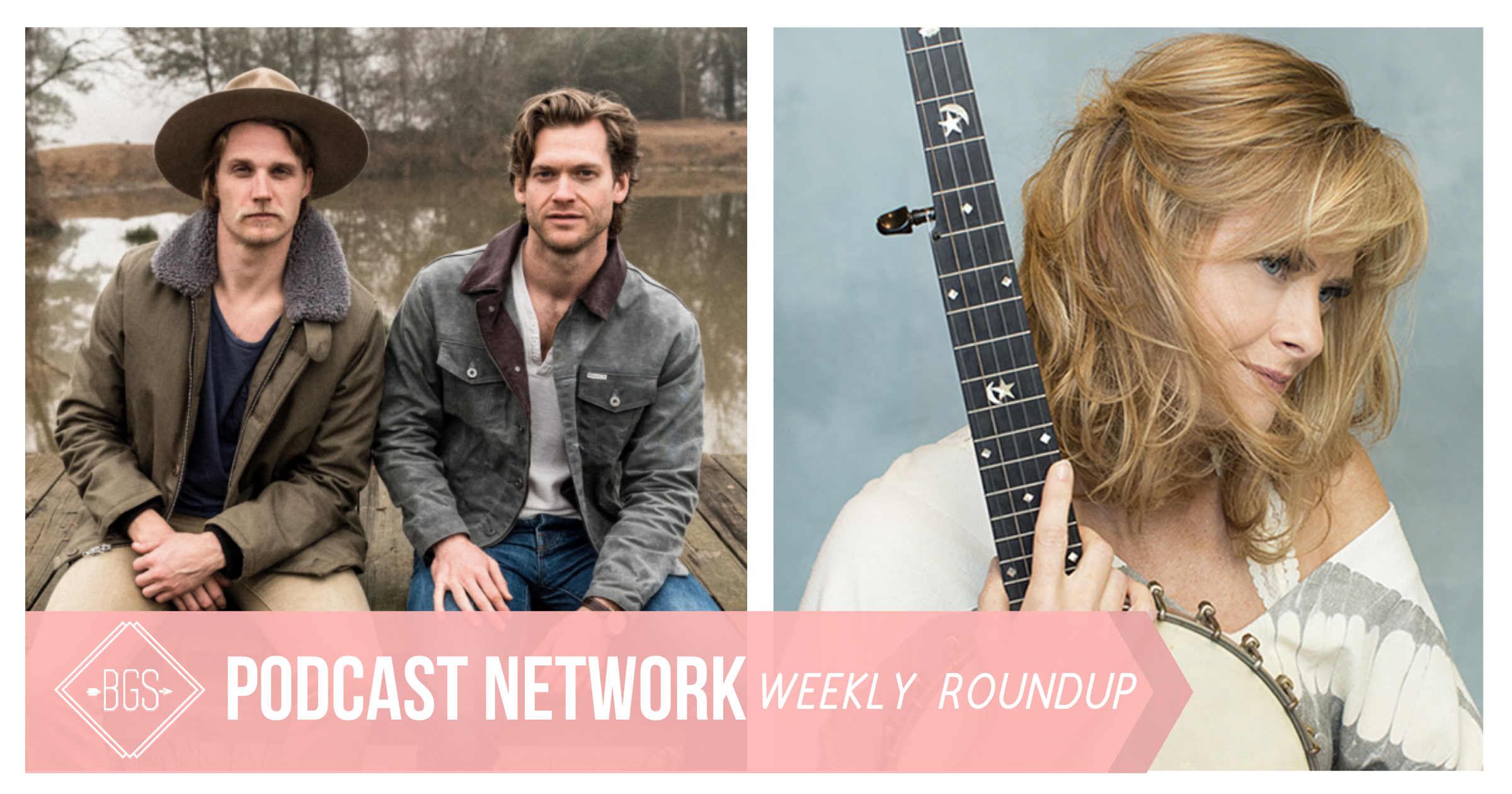
BGS Podcast Roundup // May 8

In this week’s podcasts, we take you everywhere from Nashville’s Lower Broadway, to Compass Records, to the culinary scene in Montreal, and even back to a time when touring was a thing.

If you enjoy spending your weekend with the BGS Podcast Network, make sure to follow along on our social media [Facebook, Twitter, and Instagram] and right here, where we’ll consistently gather our new episodes, as well as some past favorites:

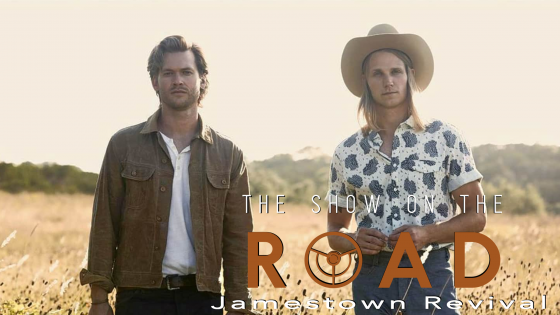
The Show on the Road – Jamestown Revival

On the latest episode of The Show On The Road, we feature Jonathan Clay and Zach Chance, two Texans and expert harmonizers who for the last decade have toured the world as Jamestown Revival.

Right before all tours got sent home, host Z. Lupetin was able to hop on the Jamestown Revival tour bus to discuss their intimate new record, San Isabel. While their previous record, The Education of a Wandering Man, saw them harnessing the muscular roots-rock that can be heard at their powerful live shows, San Isabel strips everything back to their intimate two-voices-around-one-mic, “southern and Garfunkel” sound that brought them together in the first place — and has rightfully won them hordes of fans coast to coast.

They say sibling harmony can’t be compared and we’ve had several sets of twin bands on the podcast, but what about soul-brother harmony? If one thing is clear just sitting on the bus and listening to them weave their stories and songs together, it’s that Clay and Chance were born to sing together.

San Isabel was laid down at Ward Lodge Studios overlooking the San Isabel National Forest in Buena Vista, Colorado and often includes the natural sounds of the nature all around them. Give it a listen — it’s peaceful and powerful and raw and maybe just what we all need right now.


Toy Heart – Alison Brown

Banjoist and record label head Alison Brown speaks with host Tom Power from her studio at Compass Records headquarters in Nashville, Tennessee. They begin with her early records made with Stuart Duncan, “finding her people,” and winning the Canadian National Banjo Championship (as an American), then on to her time at Harvard, where playing banjo became “something you’d talk about at cocktail parties.”

She describes the moment she decided to leave investment banking and commit to music full time, her cocktail napkin dream, and the two talk women in bluegrass, women in banjo, and the First Ladies of Bluegrass. The story they dive into together is ultimately about figuring out what makes you happy, and pursuing it bravely, against all odds.


The Shift List – Chef Dyan Solomon (Olive et Gourmando, Foxy) – Montreal

This week, The Shift List closes out its miniseries focusing on the food of Montreal with chef, restaurateur, and cookbook author Dyan Solomon. If you’re from Montreal, Dyan Solomon needs no introduction. She’s the co-owner of multiple restaurants there, including Foxy, one of the city’s essential fine dining establishments. Back in November 2019 she released the Olive + Gourmando cookbook, a collection of 150 recipes from the namesake cafe that put Solomon on Montreal’s culinary map when it opened back in 1999.

Host Chris Jacobs checked in with Chef Dyan via email the other week to see how her restaurants have been affected by the stay-at-home orders in Canada. She replied with cautious optimism, saying that while all of her restaurants are closed until further notice, they are surviving and trying to remain positive about the future.

If you’ve listened to the last two episodes of The Shift List with Chef John Winter Russell of Restaurant Candide, you’ll know that he highlighted the work that’s being done to help support the Montreal Restaurant Workers Relief Fund, an organization set up to provide emergency relief to restaurant employees who are facing economic hardship due to COVID-19. Coincidentally, the fund was set up by Kaitlin Doucette, the Sommelier at Solomon’s fine dining restaurant Foxy, and donations are still being accepted at mtlrestorelieffund.org.


The String – Paul Burch, Thomm Jutz

Paul Burch moved from Indiana to Nashville in 1995 when his friend Jay McDowell (BR549) told him about the burgeoning indie country music scene on sleepy Lower Broadway.

In the 25 years since then, Burch has made uncompromising and original music with shades of classic honky tonk and timeless rock and soul. On the latest episode of The String, we talk with Burch about his role in the fascinating band Lambchop, the evolution of his band the WPA Ball Club and his new album Light Sensitive. Also in the hour, German-born bluegrass songwriting star Thomm Jutz.


Alison Brown – Toy Heart: A Podcast About Bluegrass

Banjoist and record label head Alison Brown speaks with host Tom Power from her studio at Compass Records headquarters in Nashville, Tennessee. They begin with her early records made with Stuart Duncan, “finding her people,” and winning the Canadian National Banjo Championship (as an American).

LISTEN: APPLE PODCASTS • MP3

Brown then headed to Harvard, and playing banjo became “something you’d talk about at cocktail parties.” She describes the moment she decided to leave investment banking and commit to music full time, her cocktail napkin dream, and playing with Alison Krauss, Indigo Girls, and Michelle Shocked.

Power and Brown talk women in bluegrass, women in banjo, and the First Ladies of Bluegrass. The story they dive into together is ultimately about figuring out what makes you happy, and pursuing it bravely, against all odds.

Alison Brown, “Poe’s Pickin’ Party”

Watching the movement for equity and inclusion in roots music grow and expand over the last decade or so, especially in the last few years, has been particularly gratifying in bluegrass. As a community, bluegrass is often stereotyped as backwards, hillbilly, conservative, evangelical, and so on. As the genre becomes more representative, and as musicians, artists, and scholars unpack the factors that have led to this cause gaming steam, it’s essential that we give credit where it’s due. Namely, to women.

Pickers like Alison Brown, truly one of the most adept and creative banjo players alive today — and holder of an MBA from Harvard — and women who went before her carved the paths by which so many other underrepresented or categorically excluded folks have found places for themselves in this music. Women, having much less to lose in bluegrass (by having much less access to gains in bluegrass), could actively advocate for inclusion in ways many men in the same spaces had never considered. Infrastructure and communities fashioned by these women exist still today, providing a point of coalescence around which these more broader, zoomed out missions can gather.

“Poe’s Pickin’ Party,” an instrumental penned by Brown, seems the perfect tune by which to tie together this legacy with Women’s History Month and Tunesday Tuesday. The bouncy, hornpipe-y number is a playful jab at an actual pickin’ party of the same name, which Brown stumbled upon advertised in a now vintage volume of Bluegrass Unlimited. In the ad, women were welcomed to attend Poe’s party, but not participate. It’s a humorous story, when told on stage to introduce the piece, but also a pointed reminder that active, overt exclusion of women in bluegrass happened so very recently (and persists today) and we have plenty of work to do in order to include so many others in this life-altering, enriching genre.

Where Business Meets Banjo, Alison Brown Prepares IBMA Keynote Address

The first time Alison Brown gave a keynote address at IBMA’s annual conference in 2002, the bluegrass industry gathering was still held in Owensboro, Kentucky. So much has changed since then, but not everything. Asked about memories from those early conferences, she replies, “Oh, it was like it is now. I always kind of think of it as a family reunion. It was just a slightly smaller family then, but no less enthusiastic or supportive, as far as I’m concerned.”

Brown is one of bluegrass’ most prominent figures, adept as an artist, a producer, and co-founder of Compass Records. She’s also won a mantle of IBMA awards in multiple categories, including Banjo Player of the Year in 1991 and a Distinguished Achievement Award in 2015.

This year she will present a new keynote address, “Four and a Half Things I’ve Learned,” on Tuesday at IBMA’s World of Bluegrass in Raleigh, North Carolina. She spoke with BGS by phone.

BGS: What was it about this opportunity to present the keynote address that appealed to you?

AB: I was thinking about the fact that this is Compass Records’ 25th anniversary, and so I thought that, personally, it would give me an opportunity to reflect a little bit on where we’ve been and what we’ve learned in the process of doing what we’ve been doing over 25 years. And maybe share a few things with folks that could be edifying for them.

You’re seeing this bluegrass world as an artist and producer, as well as a business owner. What do you hope that the creative side of the bluegrass community will take away from your presentation?

Hmmm, maybe a better understanding of the landscape that we’re all trying to navigate. And how to better position yourself for success. I think some of the idiosyncrasies of the business, from the view of the record company — I wouldn’t expect that most creatives would be as immersed in that as we are, running a record label. And so I think if you know the challenges that you’re dealing with, you’re better able to position your music and your career to take advantage of the opportunities that do exist, and stand a better chance to succeeding.

What are some of the bluegrass community’s greatest strengths right now, do you think?

I really mean this — I think that we are incredibly fortunate to have an organization like IBMA that’s kind of the centerpiece of our community, that’s looking out for all of us and keeping the community together. I really think that’s incredibly valuable, even more than people know. Other roots music genres that don’t have that are not as fortunate as our community, in my opinion.

What are some things that the bluegrass community can really take pride in?

I gave the keynote address back in 2002, so this is actually my keynote redux. You know, looking back at that keynote, a lot of what that was about was embracing diversity, and musical diversity. That was 17 years ago and that was a rallying cry at that point in time, but it’s not like it was a revolutionary idea. I’m really proud of our community for the strides that we have made. Expanding the envelope conceptually, welcoming in people whose music may be more on the fringes of bluegrass, and not exactly emulate what Earl and Lester and Bill did in 1945.

So there’s the musical aspect, but there’s also the demographic diversity, like gender diversity and racial diversity. Those are things that are community is still grappling with — but we are grappling with them and I’m proud of us for that.

One thing I’ve noticed over the last 20 years in bluegrass is that the music videos are better, the websites and album covers are modern, and the band photos are more contemporary. How important are visuals, do you think, for a bluegrass artist to get attention from press, festivals, and audiences in general?

I think visuals are more important than they’ve ever been. It’s my experience that people can’t just listen to music anymore. They have to see music. We have people in the studio all the time and you want to play them a new track, and I can just see their eyes wandering around the room, looking for the screen. “Where do I look while I listen to this?” So, I think it’s more important than ever.

I’ve also noticed that some bluegrass labels are choosing not to put their new music on Spotify. Why is it important for Compass to be represented there?

That’s where the audience is moving. Granted, the traditional bluegrass music audience is slower to adopt a new technology than a more youthful pop audience would be, but still we’re seeing our audience move there and it’s a great place for people to discover new music. It’s one of the new revenue sources for selling music. We’re seeing the music industry move more and more into the streaming arena. It would seem to be crazy not to be there, as frustrating as the economics may be.

It hasn’t really been our experience that having bluegrass on Spotify has meant that we sell less bluegrass in physical form. And it only really supports the artists’ efforts because maybe the older audience is used to consuming physically but the young audience is used to consuming through streaming and digital. So if you’re not present in that space, you’re never going to expand your audience into that younger demographic, and obviously an artist needs to grow their audience. You need to keep trying to make the average age of your audience younger, rather than older, just in terms of your own longevity as an artist.

So many bluegrass musicians are friends with each other, as well as colleagues in a sense. In bluegrass, it’s pretty rare to send a business-related email to someone you don’t know. How do you think that familiarity shapes the business side of bluegrass?

I completely agree with you but I’m not really sure how to answer the question, though. I guess I can really only answer it personally — that that is part of what gives me a lot of joy, to be in the business of the bluegrass world, because this community has meant a tremendous amount to me personally. I’ve been in the bluegrass community since I was 12, which is crazy to think about, and there are people that I see at IBMA that I have known since I was 12 years old. I think about how much others have given me as I’ve come up in this music. So to be able to have a hand in making this music stay healthy, and paying it forward, is very meaningful to me.

Looking back, is there advice you wish you’d been given in 2002 that you had to learn the hard way?

That’s an excellent question. That’s probably something I should ponder for my keynote and see if I can come up with a good answer. I guess the one thing that I would say is, big things can happen in small steps. We’ve been pedaling this bike for 25 years, building this label, and it’s amazing to look back over a quarter of a century and see how something that you literally started at the kitchen table can grow into an entity that some would consider to be a significant force in bluegrass music. I mean, I think I might have known that going into it, so it’s not really a revelation. It just takes a long time, but if you continue to do the work to the best of your ability, over that long period of time, at the end you can stand back and you will have built something that is amazing to see, and that it did really happen.


Photo courtesy of IBMA

IBMA Reveals Award Nominees, Hall of Fame Inductees, Distinguished Achievement Winners

Five of the top bands in bluegrass earned IBMA Entertainer of the Year nominations from the International Bluegrass Music Association. The ballot was revealed on Wednesday morning in Nashville.

The Entertainer of the Year nominees are Balsam Range, Sam Bush Band, The Earls of Leicester, Del McCoury Band, and Joe Mullins & the Radio Ramblers.

Due to a tie, seven titles will compete for the Song of the Year category. The IBMA Awards will take place Thursday, September 26, at the Duke Energy Performing Arts Center in Raleigh, North Carolina, with hosts Jim Lauderdale and Del McCoury.

Mike Auldridge, Bill Emerson, and the Kentucky Colonels have also been named as inductees into the Bluegrass Hall of Fame.

Distinguished Achievement Award recipients include radio personality Katy Daley, Mountain Home label founder Mickey Gamble, former IBMA executive director Dan Hays, The Lost and Found founder Allen Mills, and Japanese language magazine Moonshiner, now in its 37th year covering bluegrass and acoustic music.

The full ballot is below.

ENTERTAINER OF THE YEAR

Balsam Range
Sam Bush Band
The Earls of Leicester
Del McCoury Band
Joe Mullins & the Radio Ramblers

VOCAL GROUP OF THE YEAR

Balsam Range
I’m With Her
Doyle Lawson & Quicksilver
Russell Moore & IIIrd Tyme Out
Sister Sadie

INSTRUMENTAL GROUP OF THE YEAR

Sam Bush Band
Michael Cleveland & Flamekeeper
The Earls of Leicester
Ricky Skaggs & Kentucky Thunder
The Travelin’ McCourys

NEW ARTIST OF THE YEAR

Appalachian Road Show
Carolina Blue
High Fidelity
Mile Twelve
Billy Strings

SONG OF THE YEAR (7 nominees, due to a tie)

“Dance, Dance, Dance”
Artist: Appalachian Road Show
Writers: Brenda Cooper/Joseph Cooper/Steve Miller
Producers: Barry Abernathy, Darrell Webb, Ben Isaacs
Executive Producer: Dottie Leonard Miller
Label: Billy Blue Records

“The Girl Who Invented the Wheel”
Artist: Balsam Range
Writers: Adam Wright/Shannon Wright
Producer: Balsam Range
Executive Producer: Mickey Gamble
Label: Mountain Home Music Company

“The Guitar Song”
Artist: Joe Mullins & the Radio Ramblers with Del McCoury
Writers: Bill Anderson/Jamey Johnson/Vicky McGehee
Producer: Joe Mullins
Associate Producer: Jerry Salley
Label: Billy Blue Records

“The Light in Carter Stanley’s Eyes”
Artist: Peter Rowan
Writer: Peter Rowan
Producer: Peter Rowan
Associate Producer: Tim O’Brien
Label: Rebel Records

“Next Train South”
Artist: The Po’ Ramblin’ Boys
Writer: Mac Patterson
Producers: The Po’ Ramblin’ Boys, Dave Maggard, Ken Irwin
Label: Rounder Records

“Take the Journey”
Artist: Molly Tuttle
Writers: Molly Tuttle/Sarah Siskind
Producer: Ryan Hewitt
Label: Compass Records

“Thunder Dan”
Artist: Sideline
Writer: Josh Manning
Producer: Tim Surrett
Label: Mountain Home Music Company

ALBUM OF THE YEAR

City on a Hill
Artist: Mile Twelve
Producer: Bryan Sutton
Label: Independent

Del McCoury Still Sings Bluegrass
Artist: Del McCoury Band
Producers: Del and Ronnie McCoury
Label: McCoury Music

For the Record
Artist: Joe Mullins & the Radio Ramblers
Producer: Joe Mullins
Associate Producer: Jerry Salley
Label: Billy Blue Records

I Hear Bluegrass Calling Me
Artist: Carolina Blue
Producers: Bobby Powell, Tim and Lakin Jones
Executive Producers: Lonnie Lassiter and Ethan Burkhardt
Label: Pinecastle Records

Sister Sadie II
Artist: Sister Sadie
Producer: Sister Sadie
Label: Pinecastle Records

GOSPEL RECORDING OF THE YEAR

“Acres of Diamonds”
Artist: Joe Mullins & the Radio Ramblers
Producer: Joe Mullins
Associate Producer: Jerry Salley
Label: Billy Blue Records

“Gonna Sing, Gonna Shout”
Artist: Claire Lynch
Producer: Jerry Salley
Label: Billy Blue Records

“I Am a Pilgrim”
Artist: Roland White and Friends
Producers: Ty Gilpin, Jon Weisberger
Label: Mountain Home Music Company

“I See God”
Artist: Marty Raybon
Producer: Jerry Salley
Label: Billy Blue Records

“Let My Life Be a Light”
Artist: Balsam Range
Producer: Balsam Range
Executive Producer: Mickey Gamble
Label: Mountain Home Music Company

INSTRUMENTAL RECORDING OF THE YEAR

“Cotton Eyed Joe”
Artist: Sideline
Producer: Tim Surrett
Label: Mountain Home Music Company

“Darlin’ Pal(s) of Mine”
Artist: Missy Raines with Alison Brown, Mike Bub, and Todd Phillips
Producer: Alison Brown
Label: Compass Records

“Earl’s Breakdown”
Artist: The Earls of Leicester
Producer: Jerry Douglas
Label: Rounder Records

“Fried Taters and Onions”
Artist: Carolina Blue
Producers: Bobby Powell, Tim and Lakin Jones
Executive Producers: Lonnie Lassiter and Ethan Burkhardt
Label: Pinecastle Records

“Sunrise”
Artist: Sam Bush & Bela Fleck
Producers: Akira Otsuka, Ronnie Freeland
Label: Smithsonian Folkways Records

COLLABORATIVE RECORDING OF THE YEAR

“Burning Georgia Down”
Artist: Balsam Range with Atlanta Pops Orchestra Ensemble
Producer: Balsam Range
Label: Mountain Home Music Company

“Darlin’ Pal(s) of Mine”
Artist: Missy Raines with Alison Brown, Mike Bub, and Todd Phillips
Producer: Alison Brown
Label: Compass Records

“The Guitar Song”
Artist: Joe Mullins & the Radio Ramblers with Del McCoury
Producer: Joe Mullins
Associate Producer: Jerry Salley
Label: Billy Blue Records

“Please”
Artist: Rhonda Vincent and Dolly Parton
Producers: Dave Cobb, John Leventhal, Frank Liddell
Label: MCA Nashville

“Soldier’s Joy/Ragtime Annie”
Artist: Roland White with Justin Hiltner, Jon Weisberger, Patrick McAvinue, and Molly Tuttle
Producers: Ty Gilpin, Jon Weisberger
Label: Mountain Home Music Company

MALE VOCALIST OF THE YEAR

Shawn Camp
Del McCoury
Russell Moore
Tim O’Brien
Danny Paisley

FEMALE VOCALIST

Brooke Aldridge
Dale Ann Bradley
Sierra Hull
Molly Tuttle
Rhonda Vincent

BANJO PLAYER OF THE YEAR

Gina Furtado
Mike Munford
Noam Pikelny
Kristin Scott Benson
Scott Vestal

BASS PLAYER OF THE YEAR

Barry Bales
Mike Bub
Beth Lawrence
Missy Raines
Mark Schatz

FIDDLE PLAYER OF THE YEAR

Hunter Berry
Becky Buller
Jason Carter
Michael Cleveland
Stuart Duncan

RESOPHONIC GUITAR PLAYER OF THE YEAR

Jerry Douglas
Andy Hall
Rob Ickes
Phil Leadbetter
Justin Moses

GUITAR PLAYER OF THE YEAR

Kenny Smith
Billy Strings
Bryan Sutton
Molly Tuttle
Josh Williams

MANDOLIN PLAYER OF THE YEAR

Alan Bibey
Sam Bush
Sierra Hull
Ronnie McCoury
Frank Solivan

Béla Fleck and the Flecktones Forge Their Own Path

What’s on Béla Fleck’s mind?

Balloons.

Just the day before, his Nashville house was filled with them, as well as with a few dozen kids. It was the 6th birthday of the eldest of two children of the three-finger-style banjo maestro and his clawhammer-style counterpart, frequent recording and touring partner and wife Abigail Washburn.

But the days surrounding this have also had a party vibe. He’s been in rehearsals with his cohorts in the beloved jazz-and-way-beyond Flecktones, in preparation for a tour marking the band’s 30th birthday.

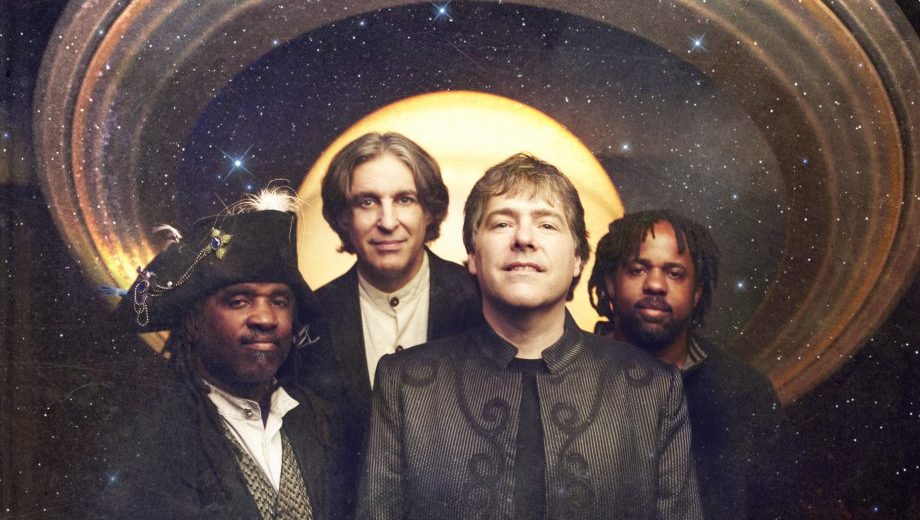
Working again with harmonica player/pianist Howard Levy, bassist Victor Wooten, and the singular electro-acoustic percussionist known as Futureman (a.k.a. Wooten’s brother Roy), digging deep into their group catalog of complex flights of fancy mixing daredevil chops, musical depth, and persistent whimsy has been a blast.

“They’re the same guys they were when I first met them,” he says, speaking from home. “Curious, interested, ever-expanding, ever-pulling me with them. There’s a very special bond we have together. I’m realizing it more and more as years go by, one of the great relationships in our lives, musically and personally.”

They’re even pulling out such rarely played and decidedly difficult gems as “Jekyll and Hyde (and Ted and Alice)” from the band’s second album, 1991’s Flight of the Cosmic Hippo. It’s challenging and exciting, enlivening the qualities that made this alchemical combo of characters special from the very start. Futureman, he says, is an “empath and enabler — musical enabler, brings consciousness underneath you.” Victor Wooten too. Levy is “the crazy ideas on top. He’s the brains of the outfit.”

Fleck’s role? “Somehow I thought I was the heart of it, limiting it but making it more understandable for the common man — I was the common man in the band, surrounded by these crazy guys.”

But with a moment to reflect on their collective history and achievements, he finds descriptions of the magic they work together to be elusive.

This is where the balloons come in.

“It has to have heart, has to have melodies, some harmonies,” says Fleck, who turns 61 in July. “Couldn’t just be a groove or a shred-fest. That’s the power of the band. The tunes are strong, good things to pour everyone’s musical power into. Like a balloon. It’s an empty piece of rubber. But these tunes I’d written, we filled them up with Futureman and Victor and Howard — the balloons get real handsome. With the balloons at the party, it occurred to me that you fill them up and they become joyful. That’s what this music is.”

They’ll be sharing that joy on the road now, including two shows of particular import. This 30th anniversary tour began with a big “Friends and Family” kickoff May 30 at Red Rocks near Denver, the friends and family here including Washburn, saxophonist Jeff Coffin, Dobro genius Jerry Douglas, and the Colorado Symphony. And on June 8 they will be taking a cherished headlining slot at the Hollywood Bowl’s vaunted Playboy Jazz Festival.

The Playboy slot is, to Fleck, a particularly meaningful recognition.

“It’s one of the neat things to being around 30 years,” he says of that booking. “From the start I was begging to play it and they said, ‘Yeah, we’ll put you on at noon’ and we’d play once every four years or so. Now we’re in the headlining slot and we’re legacy artists.”

Sure, the Flecktones have had several albums go to the top of the jazz sales and airplay charts and they have won two Grammy Awards for contemporary jazz album, with Outbound in 2000 and The Hidden Lands in 2006. And last year the band was given the prestigious Miles Davis Award by the Montreal International Jazz Festival. And Fleck has found himself partnering regularly on recordings and tours with some of the greats of jazz, one in particular in an ongoing partnership. “I’m playing with Chick Corea, which is ridiculous, on a regular basis,” he marvels, having just returned home from a tour with the ceaselessly groundbreaking pianist.

But, while belated acceptance in the jazz world is frustrating, he understands. See, banjo is pretty much standard in any jazz band… in 1919. In 2019, not so much. Even after 30 years of forging a path for banjo in modern jazz, Fleck remains singular. Asked about others doing anything comparable today, he’s kinda stumped.

He cites New Orleans’ veteran Don Vappie, but he’s generally in the mode of traditions going back to those earliest years of jazz. There’s Matt Davis, a converted jazz pianist who’s on the faculty of the University of Michigan. And there are others who use some jazz chops and sensibilities while not strictly playing that style of music, notably Tony Trischka, Noam Pikelny, Alison Brown, and Pat Cloud.

“But yeah,” he says. “They’re rare.”

Not to mention that the Flecktones as a whole is anything but standard jazz, with a truly eccentric approach and reach into a lot of styles. The 3-CD Little Worlds set from 2003 showed a boundless range that felt to some at once excitingly delightful and confounding.

On the other hand, not fitting in any category is par for the course for Fleck. He’s made a career of it, holding the record for the most categories in which he has been nominated for Grammys, 16 total. The most recent win is a best folk album trophy in 2016 for Béla Fleck & Abigail Washburn.

He’s a charter member, he quips, of the “Modern American Attention Deficit Disorder Musicians.” There are really only two others he’d put in that association: Jerry Douglas (whose fusiony Jerry Douglas Band may be the only thing out there comparable to the Flecktones) and Chris Thile (who’s resumé runs from Nickel Creek to ongoing collaborations with classical cellist Yo-Yo Ma and jazz pianist Brad Mehldau).

There’s one side of his musical hexadecagon he’s underserved for a while now, though. Ironically, it’s the one that first brought him fame when he emerged as a precocious New York City musician in the ‘70s and ‘80s.

“On the bluegrass side, people go, ‘Whatever happened to Béla Fleck? He could have been a great bluegrass player.’” he says. “Someone told me he had heard that. That was when I was at the top of my game, selling out stadiums with the Flecktones on tour with the Dave Matthews Band.”

Well, it has been 20 years since his last true bluegrass album, the on-point-titled The Bluegrass Sessions. And the one before that, the breakthrough Drive, came in 1988, a year before the Flecktones genesis. Well, as it happens, Fleck has a new bluegrass album in the works with a cast of musicians including such longtime buddies as Douglas, mandolinist Sam Bush, Jerry Douglas, bassist Mark Schatz and fiddler Stuart Duncan (all of whom were on the 1988 album) and a mix of fellow veteran stars (bassist Meyer, mandolinists David Grisman and Chris Thile) and relative newcomers (fiddlers Billy Contreras and Michael Cleveland, mandolinist Dominick Leslie, and guitarist Cody Kilby).

The timing? Just seemed right, he says.

“Now the years have gone by and I didn’t have a place for bluegrass to fit in,” he says. “But I had these tunes burning a hole in my pocket and thought I would really love to have a place for them. These sessions have been a knockout. These are hard tunes. And we’re having a blast. It’s as good as I’d hoped.”

The results will be out sometime next year. But first there’s this Flecktones balloon to float.

“One thing I will guarantee you is you will never hear anything else like it,” he says. “There is nothing else like the Flecktones in the world. I promise that. And I am very proud that were are that, and that we are back together.”

Dale Ann Bradley Hears the Truth in ‘The Hard Way’

Dale Ann Bradley has made a lasting impression with bluegrass listeners as a solo artist, as well as a member of the all-female band Sister Sadie. And before that, she recorded and performed with the New Coon Creek Girls in Renfro Valley, Kentucky, where she established a foundation that would carry to her multiple performances on the Grand Ole Opry and five IBMA awards in the female vocalist category.

An approachable artist who describes her audiences as “my people,” Bradley is quick to admit that her musical path hasn’t always been easy – in fact, her new album is named The Hard Way, a nod to the Jim Croce song she covers, “The Hard Way Every Time.” But in spite of that title, it’s a beautifully subdued project that stands among the most satisfying of the Kentucky native’s long career. That’s as much due to her gentle singing as her gift for finding songs that suit her.

Bradley invited the Bluegrass Situation to chat prior to a Nashville show earlier this month at the Station Inn.

BGS: I wanted to start by asking about the production on this record, because to me it sounds very crisp. It seems like there’s a “less is more” approach.

Bradley: It is. I have learned, on some things, that’s the correct approach. This one’s more guitar-oriented than a lot of them I’ve done – since [1997’s] East Kentucky Morning. Because I had such good guitarists play, it really didn’t need to be souped up. And the lyrics are so story-telling that the song, and the great musicians that I had, found their own way and their own place to be. … This is the third one I’ve produced and I’m always scared to death! I never take that for granted because it’s just like painting a picture or having a young’un! [Laughs] You don’t know what’s going to happen.

What is it about production that makes you want to keep coming back into that role?

If I want to try something, to able to do it. Even though I know that sometimes it works and sometimes it don’t. I have the utmost respect for any producer that I’ve had because I’ve had the best there is. … From Sonny Osborne, I learned that a good performance is a lot better than everything being technically perfect. He drilled that into my head – it’s all about emotion. With Tim Austin, I learned drive and punch with the guitar, and he helped me a lot with my guitar playing. And with Alison Brown, I learned not to be afraid of creativity. Put it down, and if it works, it works. And if it don’t, then you’ll know not to do it the next time. She’s so creative. I’ve worked with three different producers with three different outlooks, and learned from all of them.

“The Hard Way Every Time” is a beautiful song, with a lot of truth in there.

It is for me. The generation that I come from, we’re all at that point where we’re looking back, and we think, “Well, I sure did that the hard way.” Kept doing it and kept doing it. I hope it reaches a young generation. It seems to be, but I think there’s something in there hopefully for everybody.

How do you find the songs you want to record?

All the memories… I may not be able to recall what I had for lunch or breakfast, but a song will stay with me. Songs that have been poignant in my life have been so much so that I’m never going to forget them. I don’t cut cover tunes just to be different. I do it because it shows how talented these musicians are. … And I want to show that in music it doesn’t really matter what genre it is. If it really breaks your heart or makes you happy, it’s all good. Then there are songs that I want to do in the bluegrass style because I didn’t want to do them in the other style.

I’ve often thought that there might not be any song that’s off limits for you. Is that true?

Well, it was close this time. I’ve never been as scared as I was with “Wheel in the Sky.” I really belabored it. Everybody was saying, “Let’s cut it,” but what do you do after Steve Perry’s cut something? Or Journey’s played it, you know? Then I got to looking at it some more. That was probably the last song that I picked. And I got to listening to those lyrics, and I thought, Bill Monroe would have wrote that: “Winter’s here again, O Lord…”

And I’ve done that with other songs, like “Summer Breeze.” The lyrics are just about life and emotions, and it’s important to me. I love novelty, funny little songs but I just really like the ones that have a message, or maybe leave one.

How did the guitar come to be your instrument?

It was probably going to be the only one that I had any possibility of getting. I would have loved to have had a banjo and mandolin, but I finally got a little ol’ cardboard, classical-style guitar that somebody ordered from a catalog. I knew I might get that one if I pressed enough. If I pressed too hard, I wasn’t going to get nothing! But I had a love for it. And still do.

I never was around anybody that played, is the thing. I had a friend who was my age, and we wrote songs together. He was very talented and he didn’t play bluegrass-style. He was a Jim Croce fan, so he would play that and I was so mesmerized, but that was the only guitar influence I had until I came to Renfro Valley. They were all seasoned Central Kentucky musicians and I learned so much from them.

You were at Renfro Valley for years, and then you became a bandleader. What do you remember most about that time? What was that transition like for you?

It was a transition that had to take place, before I would have ever gotten out of the community I was from. I learned a lot about the history. I learned Bradley Kincaid songs and who Bradley Kincaid was, and how Renfro Valley is such a treasure. I loved it and I got to perform country and gospel. I started singing traditional country there, and then the entertainment director would let me do traditional bluegrass songs with the country band. And that worked out good.

When that position with the Coon Creek Girls came open, I was tickled to death to get that. … Renfro Valley is in “The Hard Way Every Time.” Major, maybe over 50 percent! [Laughs] But I learned, and I’m thankful now that I learned those hard life lessons with good people that had hearts. I was thrilled to work there. The talent there in the late ‘80s and ‘90s – I’m telling you, it was as good as you’d hear anywhere.

And then you decided you wanted to be in front, and go on tour?

Well, what happened was, the Coon Creek Girls had been together for years and everybody got married and had babies. I still didn’t want to step completely out, so we called it Dale Ann Bradley and Coon Creek. And then things changed from there, and I signed with Compass, and then it grew its way into me totally being responsible. [Laughs] Good, bad, and indifferent!

What is some of the best business advice you’ve ever gotten.

[Laughs] Don’t spend your money! Cut corners, but not so much where you make somebody uncomfortable. But when you can, cut corners. Don’t buy what you can’t pay for. And work hard. Respect your money. I had to learn that the hard way, too — that’s the other 50 percent of The Hard Way!

Who would you say are some of your heroes?

Oh, Dolly Parton of course. I loved John Duffey and John Starling. What got me really hooked on bluegrass was that I’d hear Ralph Stanley and Bill Monroe on the radio — and Lester and Earl on The Beverly Hillbillies when I got to see that. Dolly was a hero, and the Seldom Scene, The Country Gentlemen, Charlie Waller, so many in the country field, too. Dolly could do anything. Bluegrass was naturally there, with her being 80 miles across the mountain from where I was from. And I loved Glen Campbell – he was another one that could do everything. So many that you can’t name.

So many of those artists you named have an incredible ear for a song.

They do, and it’s a gift that they can sing anything. And I adore Aretha Franklin, Stevie Wonder, and Ray Charles. You can’t stay on this earth and get any better than that.

You’ve won some IBMA Awards, and Sister Sadie earned a Grammy nomination this year. I would imagine that aspiring musicians may look to you as a role model. Do you see yourself that way?

Well, I don’t feel that I’m even worthy enough to put myself up as a role model. But if they like this style of music, I want to be somebody that makes them unafraid to express themselves. And I’ve always tried to treat people as good as I can. In those two ways, I hope that I am. In other ways, everyone’s got to walk their own journey, you know?

The IBMA Awards now have women winning the instrumental categories. As a woman in bluegrass yourself, what does an accomplishment like that mean to you?

Well, obviously it’s good that the mindset has changed, in order to really study the female musicians because some of them are quite great. The thing that worries me a little bit is that I don’t want it to matter if it’s male or female, if you’re a good player. I know so many females who are wonderful players and I don’t think we should get it just because we’re women. Let’s get it on our playing and our accomplishments. I don’t get into that (mentality of) “you’ve got to let me play because I’m a girl!” [Laughs] I’ve never been thrown out of a jam session, but I ain’t been in too many either.

Do you see a difference from when you started until now?

Definitely. I see girls cutting their gig, is what I see. Learning. And playing and singing and writing. I do see a female presence strongly coming in there. There was a time of course, I know not so very long ago: “Well… girls can’t sing bluegrass.” Now that needed to go!

I’d like to see the festival scene open those doors more.

Yeah, they’ve moved up to about two girl acts. And I didn’t really realize that was the case, because in the ‘80s and ‘90s, the Coon Creek Girls were the girl act. [Laughs] And I thought, “We’re getting hired, what’s the problem?” “Well, you’re the only girls!” [Laughs]

Going back to the title of this record for a second, I know there’s a lot of hard work that goes into a career like yours. But what would you say is the reward in that?

Oh gosh. There’s been so many. The reward was that I was able to do it. I was able to sing from the very first venue until now. I got the opportunity to sing and to write and to express myself in a musical way. I’ve met the most precious angels — and a lot of musicians have. They’re angels themselves. So many good friends that have been so good and gracious and merciful to me. And along with that, it provided a way for me to support myself and my son. That’s the reward. That right there is everything.


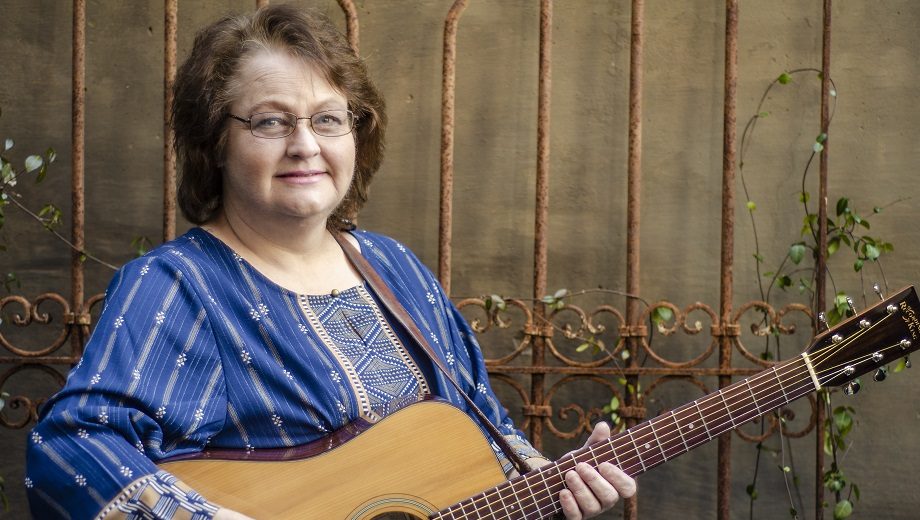
Photo credit: Pinecastle Records