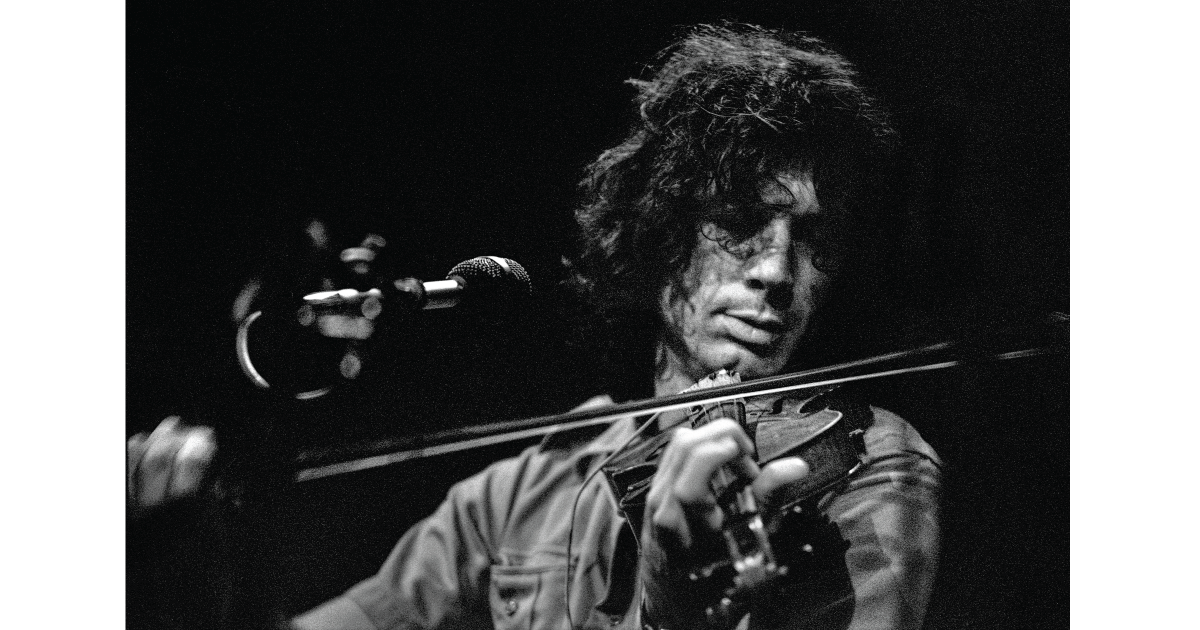
Twenty Years After ‘O Brother,’ John Hartford Gets Grammy Attention Again

Some years after the late great John Hartford passed on, his daughter Katie Harford Hogue wound up with his archival material in her basement in Nashville. It was a huge collection, a lifetime’s worth of recordings, books, instruments, notes, stage outfits and all the rest. So she dutifully began wading through everything to sort, organize and catalog it all. And she would come across notebooks with numbers on the cover, which she set aside – 68 of them all together.

“It can be a pretty heavy task to go through someone else’s things like that,” Hogue says now. “And I was not sure what they were at first. But we were able to piece together the puzzle and figure out what these were: They had been his creative journals.”

Representing decades’ worth of raw material, the journals contained nuggets straight out of Hartford’s musical mind. There were some transcriptions of old tunes by other artists, but the vast majority of it represented original music composed by Hartford himself, amounting to several thousand tunes. It was a trove that yielded up a couple of projects that have returned Hartford to widespread attention coming up on two decades after his death.

First came a 2018 book, John Hartford’s Mammoth Collection of Fiddle Tunes, featuring transcriptions of 176 compositions from the journals as well as Hartford’s own illustrations plus writings from Hogue, musicologist Dr. Greg Reish and others.

That led to an accompanying album, The John Hartford Fiddle Tune Project, Vol. 1, featuring an all-star cast of players recording 17 of the archival Hartford songs.

Even though it was independently released, The John Hartford Fiddle Tune Project is up for a Grammy Award in the category of Best Bluegrass Album, alongside Billy Strings, Danny Barnes, Steep Canyon Rangers, and Thomm Jutz.

“Winning would mean a lot,” says Hogue, who is credited as co-producer with Matt Combs. “But I certainly feel honored to be considered, especially in a field like that. The fact that there’s something new that has people paying attention to my dad’s work again is wonderful. Mind-blowing, even. It’s a side of him that a lot of people did not know about, another dimension. I love being a part of that.”

Hartford was no stranger to Grammy Awards, going all the way back to his mainstream breakthrough with “Gentle on My Mind.” Reputedly inspired by the 1965 romantic epic Doctor Zhivago, Hartford wrote and recorded the first version of “Gentle on My Mind” for his 1967 album, Earthwords & Music.

Yet it was Glen Campbell’s version from later that year that put “Gentle on My Mind” on the map. Industry lore has it that Campbell made what he thought was a demo, complete with yelled instructions to the Wrecking Crew studio musicians. Campbell’s producer Al De Lory cleaned it up enough to release as-was. And even though it barely cracked the pop Top 40, “Gentle on My Mind” never left the radio. In 1990, BMI rated it as the fourth-most played song in radio history.

Along with setting Hartford up financially, Campbell’s “Gentle on My Mind” cover won Hartford his first two Grammy Awards. He won another for 1976’s Mark Twang, an album inspired by Hartford’s riverboat experiences on his beloved Mississippi River. And his final Grammy was awarded posthumously, for his contributions to the landmark soundtrack for the 2000 Coen Brothers slapstick epic, O Brother, Where Art Thou?

O Brother’s surprising popularity launched a bluegrass revival and also put a luminous bookend on Hartford’s career. He emceed the Down From the Mountain show at Nashville’s Ryman Auditorium on May 24, 2000 (filmed by D.A. Pennebaker for the concert film of the same name), in which Emmylou Harris, Alison Krauss, Ralph Stanley and other stars from the soundtrack performed. The soundtrack was just starting to take off a year later, on its way to topping the charts and winning a Grammy for Album of the Year, when Hartford succumbed to cancer on June 4, 2001, at age 63.

“He didn’t get to see all of that, but he would have told you that the coolest part of that movie being popular was that it put an old Ed Haley tune in the forefront,” Hogue says. “There’s a campfire scene with a lonesome fiddle playing, and that was my dad playing the Ed Haley tune, ‘I Am a Man of Constant Sorrow.’ That was always his goal, to highlight the old-time music and fiddle players he loved so much. I don’t think he would have taken any of the accolades for himself.”

The Fiddle Tune Project album liner notes include a quote from Hartford himself, something he told Matt Combs once: “If we play our cards right, we can fiddle all day and on through the night.” That play-all-night-play-a-little-longer spirit animates the album, as played an all-star cast including Sierra Hull, Ronnie McCoury, Alison Brown, Tim O’Brien, Brittany Haas, Noam Pikelny and Chris Eldridge from Punch Brothers and Hartford’s old bandmate Mike Compton.

However, Hartford himself is the real star, in absentia, via the 17 songs pulled from the 2,000-plus in his journals. Hogue calls it a celebration of his creative process.

“Creativity with him was like a faucet he could never turn off,” Hogue says. “His journals are full of weird late-night thoughts and ideas he’d jot down, and then go back and try to work into something. He was very prolific and would go down rabbit holes very quickly. His journals have a lot of stream-of-consciousness writing where he was looking for different ways to come up with songs. He was a very open free-thinker.”

Combs oversaw recording at Cowboy Arms Hotel and Recording Spa, a Nashville studio formerly operated by Jack Clement. It is the studio Hartford used to make his 1984 album, Gum Tree Canoe. The project was funded by a Kickstarter campaign that raised more than $33,000 from 468 contributors. As the Vol. 1 in the title implies, there will be future volumes if only because more musicians wanted in on it than they had room to accommodate on just one record.

Indeed, tending to her father’s posthumous legacy has turned into quite an ongoing project for Hogue. Hartford left behind so much material in so many wide-ranging areas that the family donated parts of it to four different institutions. The Herman T. Pott National Inland Waterways Library at the St. Louis Mercantile Library is where Hartford’s photos, journals and research pertaining to the Mississippi River wound up.

“That’s where the papers of all the river people and mentors my dad grew up with are, so it already looked like his office on steroids,” Hogue says. “So that was a no-brainer for everything of his related to the river, from when he had his pilot’s license. Had he not been a musician, he would have been a boat pilot up and down the river. That’s what he really loved. It was his passion.”

Putting together these projects has been therapeutic for Hogue, who was raised by her mother after her parents split when she was very young. She didn’t see much of her father during her childhood, and there were long stretches when she mostly heard from him when he’d mail her copies of his latest album.

“I still remember opening the mailbox one day and finding Aereo-Plain,” she says, referring to Hartford’s 1971 hippie-bluegrass classic.

For all Hartford’s success, his daughter still didn’t realize his stature until relatively late in his life — especially from all the visitors who came to see him at the end. That carried over to when she was dealing with the archive that yielded up the book and the album.

“There’s a lot to sift through in a process like that,” Hogue says. “The public sees the figure and the persona and hears the music, but there’s so many different dynamics behind that for friends and family. When you lose a parent, it’s like the world comes to a stop and there’s suddenly a period at the end of everything they were. There’s so much joy, anger, frustration, confusion. Going through all his things this way made me able to see the human side of him, which was healing. It’s been a way to say, ‘Hey, Dad, we’re good. I did this because I love you.’ There’s a lot of joy in these songs. They just make you want to dance, and his spirit comes through. I love that. I’m thrilled to be able to have this with him, even though it’s posthumous. A father-daughter project, where he’s here in spirit.”


Photo credit: Charles Seton

2020: The Year of Dolly Parton

Dolly Parton kept her promise to bring good into the world in 2020 and beyond. For so many reasons, this is absolutely the Year of Dolly Parton.

Marking her 50th anniversary as an Opry member in October 2019, she told reporters, “This world is just so dark, ugly and awful. I just can’t believe how we just can’t have a little more light and a little more love. So, I’m going to make it my business to try to do songs that are more uplifting — not just all Christian-based songs but songs that are just about better things. Do better and just have a little more love, a little more light and just don’t be so dark and dirty!”

Gosh, where to begin? How about…


View this post on Instagram


A post shared by Dolly Parton (@dollyparton)

Although it seems like a million years ago now, Dolly launched a viral craze on January 21 with a meme that went around the world. Gotta love the acoustic guitar for Instagram!

Also in January, she notched a Top 10 track on Billboard’s Hot Dance/Electronic Songs chart with “Faith,” which basically transformed the John Hiatt classic into an international EDM hit. Co-starring in the video with her musical collaborators, Galantis, Parton camps things up as the world’s best-dressed bus driver.

Later in the month, Parton collected her ninth career Grammy Award, this time in the category of Best Contemporary Christian Music Performance/Song, sharing the honor with For King and Country with “God Only Knows.” Although Parton wasn’t in attendance, the duo’s Joel Smallbone remarked from the podium, “To dear Dolly Parton, who is an incredible human being. It’s one of the great moments of our career to collaborate with her and her team.”

He continued, “I taught two of her managers in Sunday school growing up, so they were kind enough to reach out and play her the song. But she said something on a call. She said, ‘I love this song because it’s reaching to the marginalized, to the depressed, to the suicidal,’ which is all of us at some point. And then she said this, in her Dolly accent: ‘I’m going to take this song from Dollywood to Bollywood to Hollywood.’ And we did it, Dolly, we took it all the way.”


View this post on Instagram


A post shared by Dolly Parton (@dollyparton)

A few months into the pandemic, Parton told Instagram followers, “I think God is in this, I really do. I think he’s trying to hold us up to the light so we can see ourselves and see each other through the eyes of love. I think that when this passes, we’re all gonna be better people.”

She also revealed on social media that she’d donated a million dollars to Vanderbilt University help find a cure for the coronavirus. She wrote, “My longtime friend Dr. Naji Abumrad, who’s been involved in research at Vanderbilt for many years, informed me that they were making some exciting advancements towards research of the coronavirus for a cure. I am making a donation of $1 million to Vanderbilt towards that research and to encourage people that can afford it to make donations.”

Incredibly, when news of the Moderna vaccine emerged in November, Parton’s contribution was duly noted. “Without a doubt in my mind, her funding made the research toward the vaccine go 10 times faster than it would be without it,” Abumrad told the Washington Post.

In April, she kicked off a series of bedtime stories, told online, in order to bring comfort to children who were scared about sheltering in place. “This is something I have been wanting to do for quite a while, but the timing never felt quite right,” she said. “I think it is pretty clear that now is the time to share a story and to share some love. It is an honor for me to share the incredible talent of these authors and illustrators. They make us smile, they make us laugh and they make us think.” Two of the chosen books she wrote herself: Coat of Many Colors and I Am a Rainbow.

In addition, a new line of uplifting greeting cards inspired by Parton appeared in Walmart stores over the summer. Meanwhile, musically, she responded to the pandemic with a beacon of optimism, titled “When Life Is Good Again.” She shared the song in tandem with an interview (while sitting on her porch in her first-ever Zoom call) with the series Time100 Talks: Finding Hope.

Bluegrass fans rejoiced in August as she made a surprise announcement that six of her albums from the early 2000s were finally available on streaming services, so how about adding title tracks of Little Sparrow and Halos & Horns to your Dolly playlists? Overall, 93 once-missing tracks are now available to stream.

Although she’s rarely controversial, Parton’s commentary about Black Lives Matter caused a commotion among its supporters and detractors — and even inspired a mural in East Nashville. She told Billboard in August, “I think that everybody needs to express themselves however they feel they have to. I’m not out here to tell you what to do. I don’t want you to tell me what to do. But I just do what my heart tells me to do, I ask God to direct me and lead me, and if I’ve got his direction, I don’t have to worry too much about anything else. But I do understand people having to make themselves known and felt and seen. And of course Black lives matter. Do we think our little white asses are the only ones that matter? No! Everybody matters.”

In November, she commemorated the 25th anniversary of the Imagination Library – an incredible program she launched in 1995 in order to provide free books every month to preschool children — with a new documentary titled The Library That Dolly Built. Parton stated, “I am so excited that we can finally tell the whole story of the Imagination Library. It is certainly not just about me. Our story is the story of children, of families and communities who all share the dream to inspire kids to love to read and to love to learn. My hope is this documentary will encourage more towns, more states and even more countries to jump onboard. One thing is for sure, I think this is the best investment I have ever made.”

Those who have been fans of Dolly Parton for their whole lives were treated to two magnificent overviews in 2020. The first is a Time Life box set of her career on camera, available in two different configurations. One option for Dolly: The Ultimate Collection clocks in at 11 DVDs, and the other at 19 DVDs. Some of the most interesting footage comes from her variety shows, such as this clip of the superstar singing “Amazing Grace” with Glen Campbell (who, for some reason, has brought along his bagpipes).

The other retrospective is Songteller, a book of lyrics that doubles as a memoir. Compiled by Parton and noted journalist Robert K. Oermann, it portrays Parton as a composer whose catalog goes way deeper (and darker) than “Jolene,” “9 to 5,” and “I Will Always Love You.” Dorian Lynskey, a contributor to the L.A. Times, wrote, “Her shows are carnivals of good-natured inclusivity that unite everyone from LGBTQ millennials to MAGA-hat boomers under one roof. There is room for heartbreak but not deep cuts about suicide and arson. Still, she would not have included so many of these dramas of cruelty and suffering in Songteller if she did not believe that this harsher strain in her life and work was worth remembering. Her optimism stands on the shoulders of pain.”

And if all that isn’t enough, she gifted us with a holiday album and a network special (both titled A Holly Dolly Christmas), a Netflix movie (Christmas on the Square), and even a baking kit at Williams-Sonoma. It may be the only time in history that she’s been affiliated with the words “cookie cutter.”

Right before Thanksgiving, the iconic musician logged her 50th Grammy nomination, this time for “There Was Jesus,” a collaboration with Zach Williams in the Best Contemporary Christian Music Performance/Song category. A week later, former President Barack Obama lamented that he hadn’t given Parton the Presidential Medal of Freedom. Perhaps that will happen in 2021?

Not that she’s short on awards. She picked up the new Hitmaker award from Billboard in December, and told viewers, “Of course, I’m proud of all the wonderful women in show business that write all these wonderful songs. I’d like to acknowledge a few — some of them older, kind of back in my day. Cindy Walker, who wrote some of the greatest songs ever, and of course Loretta Lynn, a wonderful, wonderful songwriter. And this day in time, of course, Taylor Swift, she’s just right up there, probably number one. And of course, Brandi Carlile, there’s just so many that write so many good songs. I think it’s so important that we acknowledge the women that write and sing in country music. And I think it’s also very important that they take control of their own business. I know I’ve had my own publishing company for years. Same with a lot of these women that I mentioned. But anyhow, I’ve just wanted to always say, ‘You go, girls!’ We can do it!” (Like hundreds of others, the trophy will be housed in her museum in Dollywood.)

This year, and in all years, we commend Dolly Parton for her work ethic and for making herself available to her fans. Yes, she knows how to market herself through visibility and personality, but in 2020, when so many of us have stayed in, she’s gone the extra mile to put herself out there, safely.

On November 30, she wound up in New York Times‘ Style magazine in its “Diva” series, alongside Patti LaBelle and Barbra Streisand. One of the most accurate depictions of what it’s like to be around Dolly (and to always wish you had more time to spend together), the article’s author Emily Lordi quotes Dolly talking about her ambition: “I just wanted to do really good work, and I wanted it to make a really big difference in the world … to uplift mankind and glorify God.”


Photo courtesy of Dolly Parton

New Grass Revival: Sam Bush and John Cowan on the Early Years (Part 1 of 2)

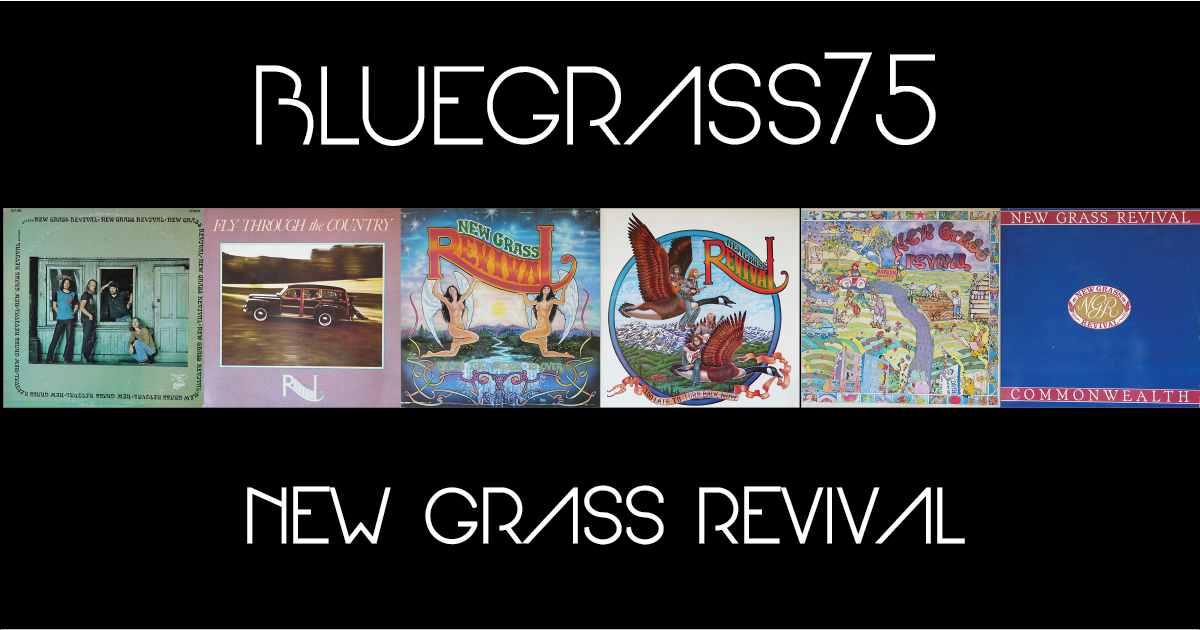
One of the most celebrated and innovative bands of the 1980s, New Grass Revival will be inducted into the Bluegrass Music Hall of Fame during the IBMA Bluegrass Music Awards on October 1. As part of our coverage of the 75th anniversary of bluegrass music, BGS caught up with founding member Sam Bush and vocalist/bass player John Cowan to talk about the early years in this first of two stories exploring their remarkable discography. Read part two of the story here, featuring insight from Béla Fleck and Pat Flynn, as well as Bush and Cowan.

The four founding members of New Grass Revival are Curtis Burch on guitar and Dobro, Courtney Johnson on banjo, Ebo Walker on bass, and Sam Bush on mandolin. They had all played together in the five-piece band, Bluegrass Alliance.

Sam Bush: We wanted to fire our [Bluegrass Alliance] fiddle player Lonnie Peerce, and when we told him this he said, “You can’t fire me, I own the name of the band.” So we said, “Let us put it this way: we quit.” We were already influenced by the Country Gentlemen and the Osborne Brothers and Jim & Jesse and the Greenbriar Boys and a really great record by the Charles River Valley Boys called Beatle Country. That’s one of the reasons we called ourselves New Grass Revival — we were trying to point out that we were reviving a new bluegrass that had already been invented by those people. We were only hoping to further the progressiveness we already dug.

Bush had been friends with Courtney since he was a teenager, when the banjo player was lead singer in a band playing Stanley Brothers tunes.

SB: We had no particular plan to play differently but our very first practice I remember Ebo hitting a bass lick in D minor that we later discovered he got from Dolly Parton’s “Jolene.” We played licks back and forth over it and all of a sudden Courtney went into the melody of “Lonesome Fiddle Blues” by Vassar Clements. That’s how we came to work up “Lonesome Fiddle Blues” for our first album. It was like a band epiphany, that we could improvise over a riff the way rock ‘n’ roll bands did. We were just playing it the way we felt it.

Courtney and Curtis were steeped in traditional bluegrass, but Bush was a musical sponge, soaking up everything from Homer and Jethro to Jefferson Airplane to the Rolling Stones to French jazz violinist Jean-Luc Ponty. The band’s first, self-titled album, from 1972, included covers of Leon Russell’s “Prince of Peace” and Jerry Lee Lewis’s “Great Balls of Fire.“

SB: This is the days before cars had cassette players, so Ebo had a tiny cassette player we took with us on the road, and we’d made a tape we could listen to. One side was John Hartford’s Aereo-Plain. And on the other side we had Leon Russell and the Shelter People. Without John Hartford there would be no newgrass. Growing up close to Nashville, I would watch him on local TV, and one night he did a bluegrass version of “Great Balls of Fire” on the Glen Campbell show, and I recorded it from the TV — that was the one we learned. Courtney even played his chromatic run the same way John did it.

While making their first album Bush encountered the man who would be his songwriting partner, Steve Brines.

SB: We lost our Louisville club gig when we ended Bluegrass Alliance, so in order to make a living that first winter in ’70-’71 I ended up playing electric bass with a folk group called the Cumberlands: Harold Thom and his wife Betty, and a banjo player called Jim Smoak. Jim had co-written a couple of songs with this poet-lyricist over in Lexington called Steve Brines and we played one on that early album — “Cold Sailor.” After I made his acquaintance Steve and I started trying to write together. Steve lived up in Lexington and I lived down in Barren County, and he’d send me five to ten sets of lyrics in the mail and I’d make up music, put it on a cassette and send them back. Our rule was I wouldn’t change one word, if he didn’t change one note.

It was a productive partnership – Bush and Brines wrote half the songs on their second album, Fly Through the Country. By then, Walker had left the band and they had gained a new player: John Cowan.

John Cowan: I joined in 1974. I did not grow up in bluegrass. I was a rock ‘n’ roll kid playing in local garage bands. But I had an awareness of New Grass Revival because I lived in Louisville, which was their home, and the woman who became my wife once dragged me to go see them. I didn’t want to go, but I was blown away. Six months later I got a phone call from Sam living down in Western Kentucky with Courtney and Curtis and he said he got my number from this guy, and would I be willing to come down and audition for us?

SB: He was a city guy, and when he pulled up and saw us, it was like “Oh my god what have I got myself into?”

JC: Courtney and Curtis were truly unique individuals. They were from South Georgia, super country dudes, born and raised playing bluegrass. I was wild-eyed and “What is all this stuff?” To their credit they welcomed me with open arms.

SB: We played some tunes together and asked him to join the band and he said, “I sing too — do you mind if I sing a song?” And in the tradition of Barney Fife I puffed up my chest and said, “Well, I’m the lead singer but yeah, go ahead.” And he sang “Some Old Day” in the same key as John Duffey did it in, only with this powerful voice and this beautiful vibrato. At the end of it I said, “John, I used to be the lead singer, now you are.”

JC: The day they hired me we rehearsed with the drummer. The next morning I got up and he was gone! I was like, “Where did Michael go?” Courtney said, “Oh hell, we fired him. We don’t need him with you!” I felt kind of bad about it, he was a really nice guy.

Soon the band’s rock ‘n’ roll influences were coming to the fore.

JC: They were already experimenting with jamming on traditional instruments over songs and it was right up my alley, because I was also a big prog rock fan. I was obsessed with Yes. On the title track of Fly Through the Country, Sam played this little thing that looked like a can of Spam — it was a resophonic mandolin, he played slide on it. When Béla joined, he said the big joke was that you could listen to the first part of the song, go out for lunch, come back, and you’d still be playing it.

SB: People would call us “The Grateful Dead of Bluegrass” because of our long tunes and our experimentation. We had to put it in our contract that we wouldn’t be billed like that, because then we had Deadheads coming expecting us to play their songs, and we didn’t do any.

JC: Our touchstone was the Allman Brothers. Their live album At Fillmore East came out three years before and we both knew it by heart; to this day I could sing every note and every solo. So that was a crucial record for our band. Sam exposed me to Jack Casady’s [of Jefferson Airplane] bass playing. When I joined the band I was 21, and Courtney was already 38, I was so out of my element. I’d only ever played with guitars and keyboards and drums, and I was smart enough to at least say, “I don’t know what I’m doing, you guys have to help me.” They’d give me a joint and say, “Go listen to this stuff — here’s John Hartford, here’s Norman Blake, here’s the Dillards….” It was so foreign and beautiful to me.

SB: One of the first songs John taught us was “These Days.” He sang like Gregg Allman when he first arrived, and his voice and vocal style changed to fit into what he had joined.

JC: I would imitate him [Gregg Allman], Lowell George, Stevie Wonder. But when I got in that band, now what do I do? I was smart enough to realize it wasn’t going to work for me to try and sing like Ricky Skaggs or Bill Monroe, that’s not in me. But Sam was very encouraging to me and the more I sang the more I developed my own voice.

SB: Garth [Fundis, the band’s producer] had introduced me to a piano player, Chuck Cochran, and Chuck played electric piano with us on “These Days” at the end of the Fly Through the Country. It was the last song we recorded, and we went, “Huh… We can make this fusion of more instruments into our sound.”

Their next album, When The Storm Is Over, went further, incorporating more of Cochran’s keyboards, as well as drums and percussion.

SB: We wanted to augment our sound and appeal to a wider audience, and Chuck and Garth introduced us to the great drummer Kenny Malone. He played on our next three records and I started producing the records myself. Stephen and I continued to write. The subject matter of our songs was totally different than bluegrass-style songs. I’ve always just said newgrass music is contemporary music played on bluegrass instruments.

JC: Sam’s going to solo for eight minutes, then he’s going to toss it to Courtney, then Curtis, and I’m the guy who’s in charge of keeping the train on the tracks and keeping the coal in the engine. That was my job and I loved it. To this day, when you’re playing that kind of music and all the players are in sync spiritually and musically and emotionally there’s nothing like it. To me that’s what punk music is: just this tremendous energy of people.

In 1977 their first live album, Too Late to Turn Back Now, was recorded at the Telluride Bluegrass Festival.

JC: It was such a fruitful time for music and we were in the middle of it. Jackson Browne, Miles Davis, the Mahavishnu Orchestra, John Coltrane, Little Feat…. Those people were our models, we listened and listened and it came out in our music. At Telluride we took this Willis Alan Ramsey track off this one solo album he made, the song “Watermelon Man,” and to me that was us doing Little Feat. That’s “Dixie Chicken.” That’s “Fat Man in the Bathtub.” There was a lot of Little Feat groove in what we were doing.

SB: We were trippier on stage than on most of our records, but you can hear it on that live record. Our association with Leon Russell — we’d opened for him in 1973 — had opened the doors. I don’t know that we were psychedelic exactly, but I was trying a phase shifter on my fiddle, like Jean-Luc Ponty, and Curtis would play lap steel with distortion.

JC: We had all grown together. Sam and I were fixated with Delaney & Bonnie at the time. We played “Lonesome and a Long Way from Home,” which Delaney co-wrote with Leon Russell, and we were so obsessed with them vocally that we talked about this: “I’m going to do Bonnie, you’re going to be Delaney.”

The band’s popularity was growing and they were finding their audience, thanks to the support of fellow musicians like the Dillards and Nitty Gritty Dirt Band. In 1979, Leon Russell had dropped in on the band’s soundcheck when they played at the Apollo Delman Theatre in his hometown of Tulsa, Oklahoma. The band released the album Barren County that same year.

SB: Leon saw our name on the marquee and hadn’t seen us for years so he stopped by. We went back to his house that night, we jammed all night, and then we went and recorded with him in Nashville and in Hollywood where his studio was. It was really cool. We were teaching Leon bluegrass songs.

The result was the album Rhythm and Bluegrass, Vol 4, which Russell recorded in 1980 under his country alter ego, Hank Wilson. However, the project stayed unreleased until 2001.

SB: We were always most proud of that record. I co-produced it, I just didn’t know that’s what you called it. Leon had a bluegrass songbook and he’d say, “What do you think, should we do this one?” And I’d say, “Nah, let’s try this one.” So that’s how we started as his backup band. For two years! John and I had so much fun singing harmony with him. I love singing baritone, and vocally we were glued to him. And the way John and I did call-and-response in our singing was very influenced by the way Leon and Mary [his wife] did it on their records.

A live album, recorded in 1981, captures the spirit of their collaboration with Leon Russell.

SB: There were shows where you’d see him bounce up and down on his piano stool and that’s when we knew we were going to go into this Pentecostal church service with him, and the songs would just keep speeding up and speeding up and the audience was getting more and more excited. It was amazing, the rock ‘n’ roll hysteria. We learned a lot about show business from him.

Russell played keyboards on Commonwealth, which was Johnson and Burch’s last album with the band.

SB: Listening to the solo that I played on “Deeper and Deeper” [on Commonwealth], having not heard it for years, that one I managed to go to place I hadn’t planned on. Of course you have a game plan and an outline of what you want to achieve with a solo, but that solo was one of the happiest surprises.

(Editor’s note: Read part two of our oral history of New Grass Revival.)


BGS Long Reads of the Week // June 12

Don’t look now, but we’re approaching the mid-point of June and another week has passed us by. YIKES! Luckily, we have another week’s worth of long reads for you, too!

The long-winding catacombs of the BGS annals and archives have so much to offer. As we share our favorite longer, more in-depth articles, stories, and features to help you pass the time, take a minute to follow us on social media [on Facebook, Twitter, and Instagram] so you don’t miss a single #longreadoftheday pick!

This week’s long reads travel from the canyon drives above Hollywood to Pavement to a former Oregon poet laureate to everyone’s favorite five-stringed instrument. Check ’em out.

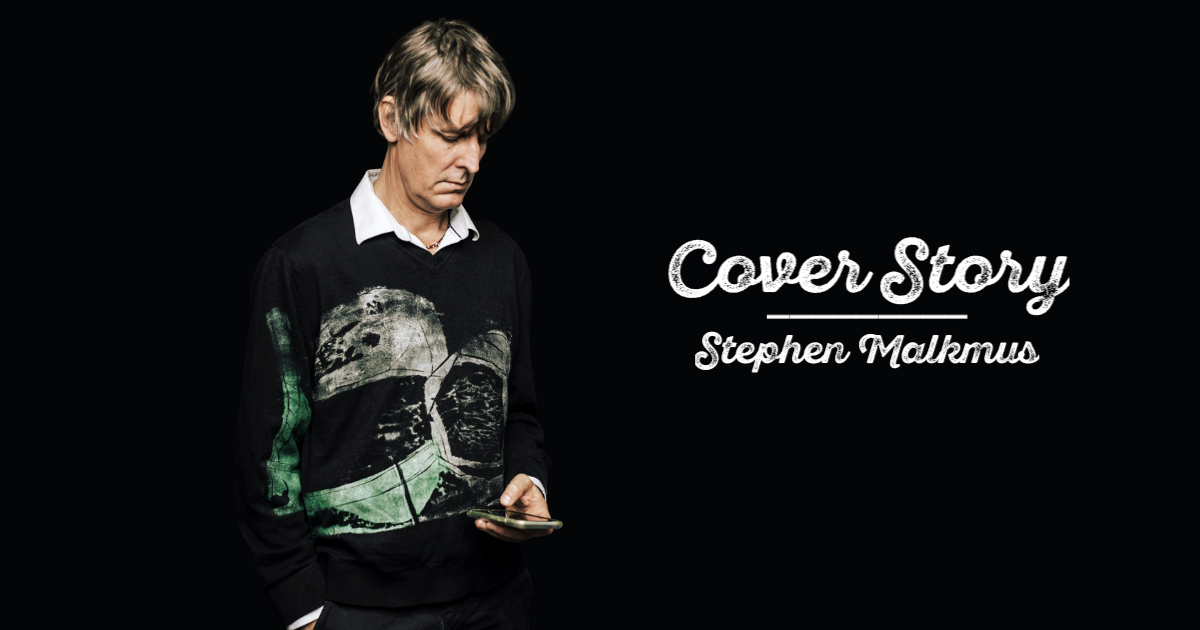
Stephen Malkmus of Pavement Ventures Down Acoustic Road on New Album

Stephen Malkmus, of the bristly, brainy 1990s indie rock band Pavement, joins a host of fellow alt-rockers in dabbling with folk and acoustic sounds. On a brand new album, Traditional Techniques, which was produced by Chris Funk of the Decemberists, Malkmus expands on the flickers of folk interest that have permeated his career, though he may not claim mastery of any of them. [Read our #CoverStory interview]


Sara Watkins Wants Us to Ride Along on Watkins Family Hour’s brother sister

Earlier this week we celebrated Sara Watkins’ birthday (June 8, for the record) with a revisit to our recent Artist of the Month interview where she walked us through her recent Watkins Family Hour album, brother sister. For the first time in their lifelong musical careers, Sara and her brother Sean focused on creating music centered on their own duo. brother sister was the result. [Celebrate Sara’s birthday with a read]


Aoife O’Donovan Finds Her Heart in the Verse of Others

Aoife O’Donovan’s latest EP, Bull Frogs Croon (And Other Songs), arrived in March. Our Cover Story unspooled the inspiration she gained via poet Peter Sears, the former poet laureate of Oregon, whose verse is utilized in three songs O’Donovan wrote and arranged with Teddy Abrams and Jeremy Kittel. The project is rounded out by a Hazel Dickens cover and a classic folk song, giving listeners a sampling of each of O’Donovan’s folky expertises. [Read the interview]


The Byrds’ Chris Hillman Reflects on Laurel Canyon and Why He Had to Leave

A new, two-part documentary, Laurel Canyon, traces the comings and goings of several generations of folk rockers down Sunset Boulevard and up into the hills. Chris Hillman (The Byrds, The Flying Burrito Brothers), one of the canyon’s earliest and most famous residents, about the new film, the community, the music, the neighborhood, and why he had to leave. [Read the full story]


Mixtape: Ashley Campbell’s Banjo Basics

With her classic 2018 Mixtape banjoist and singer/songwriter Ashley Campbell reinforced the deeply held BGS belief that– MORE!! BANJOS!! From songs by her late, legendary father Glen and her godfather Carl Jackson to classics from folks like J.D. Crowe, John Hartford, and the Dixie Chicks, this mix has a little bit of everything and a whole lot of five-string. [Read & listen]


BGS Long Reads of the Week // April 24

We’ve so enjoyed looking back into the BGS archives with you every week for some of our favorite reporting, videos, interviews, and more. If you haven’t yet, follow our #longreadoftheday series on social media [on Facebook, Twitter, and Instagram] and as always, we’ll put all of our picks together right here at the end of each week.

Our long reads this week examine entire careers, dive into different versions of new classic songs, revisit a lost hero, and more.

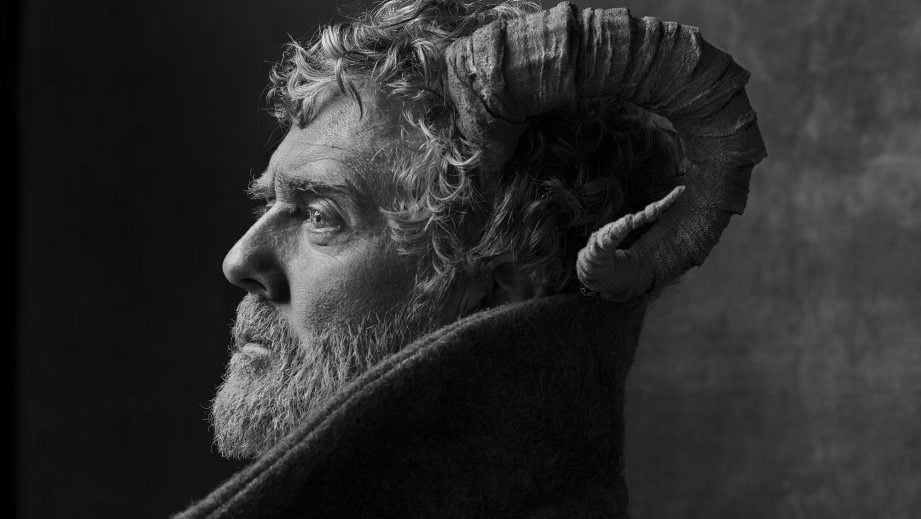
Glen Hansard: A Career in 12 Songs

We spend a lot of time at BGS immersing ourselves in the music, sounds, and careers of our favorite artists — what can we say, we love a deep dive! For this aural long read choice (if such a thing exists?) we unpack twelve of Glen Hansard’s essential songs from myriad points in his globe-crossing career, from rock bands and movie soundtracks and confessional songwriting and more. [Read the entire list, and listen, too]


Rose Cousins Shares Her Truth More Freely With Bravado

In a strangely prescient interview from late February, Canadian singer/songwriter Rose Cousins offers some insight and wisdom for being alone — the difference between loneliness and solitude, for instance — and for being present in each moment, as well. Their themes she’s explored in-depth in her music-making across the years, but in some newfound ways on her most recent album, Bravado. [Read our interview]


Glen Campbell’s Final Coda: An Interview with Carl Jackson

April 22 marked what would have been Glen Campbell’s 84th birthday. The rhinestone cowboy passed away a short couple of months after releasing his final album, Adiós, in 2017. Campbell’s long-time friend, collaborator, and bandmate Carl Jackson produced the project, and helped coax Campbell through the recording process as Alzheimer’s disease made his singing, playing, and performing increasingly difficult. To honor his birthday, we revisited our conversation with Carl Jackson. [Read] 


Steve Wariner’s Signature Hit? That’s Tricky

One of Nashville’s good guys, Steve Wariner was inducted into the Musician’s Hall of Fame last year, recognized for his versatility as a lead guitarist, as a sideman, and a singer/songwriter, too. Over more than four decades the Grand Ole Opry member has had numerous charting singles, so we wanted to explore that catalog and ask Wariner himself: “Do you think you have a signature hit?” [Read the interview]


My Love Will Not Change: Four Versions of a Modern Classic

After Americana singer/songwriter Aubrie Sellers gave a flawless, stripped-down performance of this song on our first episode of Whiskey Sour Happy Hour this week we’ve been returning to it over and over! Written by Shawn Camp and Billy Burnette, Del McCoury and Steve Earle have both been involved in recordings of this modern classic over the years. [Check out four different versions]


MIXTAPE: Bradley & Adair’s Generations and Inspirations Collide

“We went into the studio and decided to do a whole album of duets. These are old songs, some of them are from the ‘40s, ‘50s, early ‘60s, one from the ‘80s, and a new song. We grew up with these songs and our parents grew up with these songs. Just like our latest record, many of the songs on this playlist are songs we’ve loved all of our lives. At the same time, some of them are newer, or unique takes on previous hits. That’s the great thing about music is the diversity and uniqueness that comes with it. We hope you enjoy some of our picks!” — Dale Ann Bradley and Tina Adair

Jack Greene – “There Goes My Everything”

This was the first song I heard on the radio. – DAB

The Osborne Brothers – “Once More”

I’ve been listening to them my whole life and am a student of their classic and seamless harmonies. This song is an example of that. – Tina

Simon & Garfunkel – “The Sound of Silence”

It’s a prophetic song that is still unraveling today as in the ‘60s. A look at human nature that continues to be so thought-provoking. – DAB

Alison Krauss & Union Station – “So Long, So Wrong”

This song encompasses everything I love about bluegrass. Great playing, fantastic vocals and an absolute amazing production/arrangement. – Tina

Glen Campbell – “Galveston”

It’s just a consummate recording in every way. – DAB

Brandy Clark – “Stripes”

This is one of my favorite written “new” songs. Brandy is one of the most clever songwriters in Nashville right now and this song shows it. Fun fact… I have a version of this recorded. Maybe someday I’ll let everyone hear it. Ha ha! – Tina

The Grateful Dead – “Ripple”

This is a song from The Grateful Dead that so much expresses the way I feel spiritually. – DAB

Blue Öyster Cult – “(Don’t Fear) The Reaper”

Talk about drive and timing with an iconic guitar riff, and one of the best rock bands ever. – DAB

Reba McEntire – “Fancy”

Well I’ve always been a huge fan of Bobbie Gentry’s voice and songwriting; however, one of my heroes in this business has been the one and only Reba McEntire (for her ability to interpret a song, entertain you and her amazing business sense). I admire her on so many levels. Her version of “Fancy” is one that can always entertain a crowd … and I love that. Reba was my first concert I attended outside of local bluegrass festivals. – Tina

The Stanley Brothers – “Jacob’s Vision”

Great writing and singing in pure Appalachian style. This song touched my heart the first time I heard it. – DAB

Harry Chapin – “Cat’s in the Cradle”

This is a song that has taken my breath away. – DAB

Poco – “Crazy Love”

I love the harmonies and guitar fingerpicking and just Poco’s overall laid-back feel with this song. It’s always been a fave of mine. – Tina

Mason Williams – “Classical Gas”

I love the guitar and this is so good! We all wanted and tried to play this. – DAB

Ludwig van Beethoven – “The Moonlight Sonata”

It’s such an emotionally driven piece. I always got lost while listening and felt several different feelings. – DAB

Linda Ronstadt – “Desperado”

Any style, any arrangement… we’ve all been “Desperado.” – DAB


Photo courtesy of Pinecastle Records

22 Top Country Duos

Country music was made for duets. Not only because those tight, tasty harmonies are a foundational aspect of the music, but also because country accomplishes heartbreak — and every other make and model of love song — better than almost any other genre. (Thought quite possibly better than all other genres.) It just makes sense to have two singers, one to play each role in a lost, soon-to-be-lost, or (rarely) divine, never-perishing romance. But the format isn’t restricted to lovers or their placeholders, it can just as seamlessly fit heroes and acolytes, parents and children, siblings, peers, fellow pot smokers, and on and on.

Take a scroll through these twenty-two country twosomes:

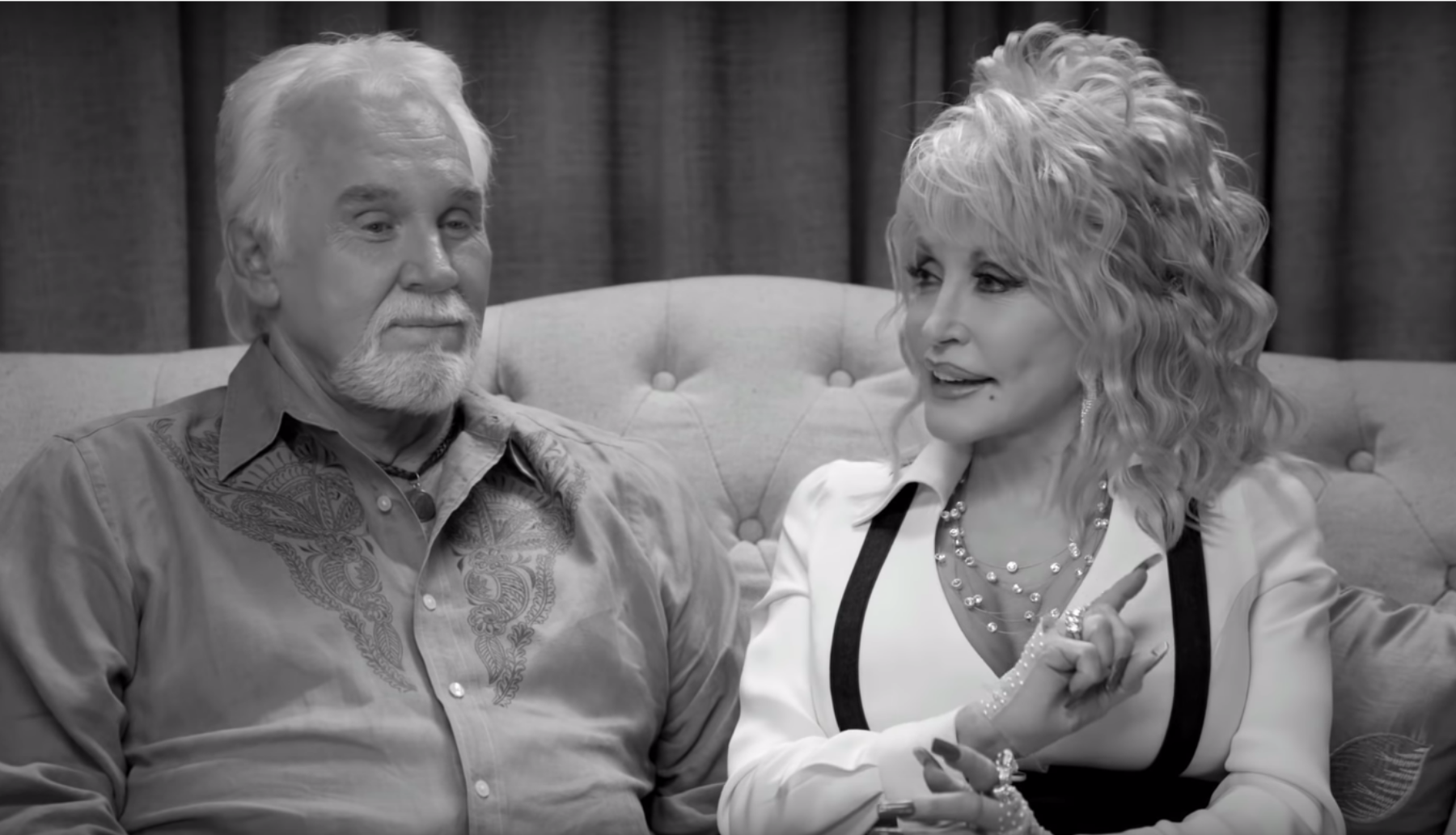
Kenny Rogers & Dolly Parton

We couldn’t have this list without these two. They should be the start, middle, and end of any definitive list of country duos. So we’ll just make the easy choice and kick it all off with Kenny and Dolly — that extra intro about their friendship and the years they’ve known each other? Swoon.

Loretta Lynn & Conway Twitty

After saying what we did about Kenny & Dolly we knew this pair needed to come next — so as to not rile anyone. Out of countless duets we could have chosen, how could any top “You’re The Reason Our Kids Are Ugly?”

Willie Nelson & Ray Charles

For inexplicable reasons people tend to forget Ray Charles’ incredible forays into country. His collaborations with Willie are stunning for the extreme juxtaposition of their voices and styles — they feel and swing so distinctly and differently, but all while perfectly complementary. “Seven Spanish Angels” ranked a very close second to this number in our selection process.

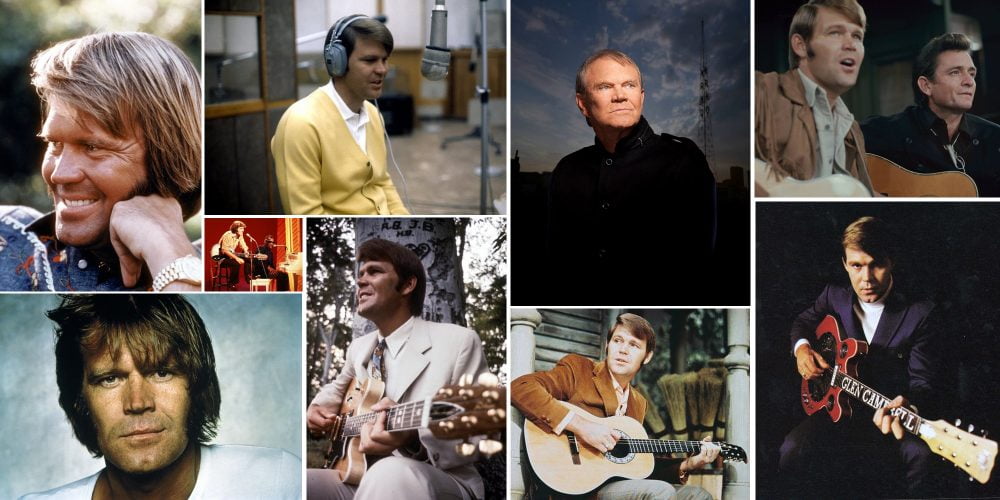
Glen Campbell & John Hartford

The most-recorded song in the history of recording? It’s said “Gentle On My Mind” holds that honor. And goodness gracious of course it does. Here’s its writer and its popularizer and hitmaker together.

Lee Ann Womack & George Strait

Together, Lee Ann and George were beacons of the trad country duet form, especially in the ’90s and early 2000s. This one from the jewel in the crown of Lee Ann’s discography, Call Me Crazy, is crisply modern, but with decidedly timeless vocals.

George Jones & Tammy Wynette

A broken, country fairy tale of a love story, George and Tammy’s relationship was infamously fraught, but damn if that didn’t just make their duets ever more… ethereal. Which doesn’t justify that Tammy Wynette kinda pain, to be sure, but it does remind us that if country can do anything better than all other genres, it can be sad.

Reba McEntire & Linda Davis

One of the best country songs, duets, and music videos EVER MADE. Theatrical and epic and a little silly and downright catchy and Rob Reiner and… we could go on forever.

Tanya Tucker & Delbert McClinton

Tanya is back with a brand new album and its well-deserved level of attention has been helping to re-shine the spotlight on her expansive career. Forty top ten hits across three decades. Who does that? Here she duets with Delbert McClinton on their 1993 hit, “Tell Me About It.”

Alan Jackson & Jimmy Buffett

Hey, if this has to be stuck in our heads for the rest of the month, it should be stuck in yours, too. Fair’s fair. It’s only half past [whatever time it is], but we don’t care.

Johnny Cash & June Carter Cash

One of the most recognizable duos in the history of the genre, immortalized not only in their discography but in a film adaptation of their love as well, Walk the Line. We all know “Jackson” as familiarly as the ABC’s, so here’s a slightly lesser-known beaut. (Keep watching til the last verse for an adorable bit from June.)

Eric Church & Rhiannon Giddens

Country is at its best when it surprises us. This collaboration is certainly, on the surface, unexpected, but the message of the song isn’t the only way these two artists can relate to each other. Over the course of their careers they’ve both fought their way from the fringes to the centers of their respective scenes. More of this, please.

Dolly Parton & Porter Wagoner

Dolly got her start with Porter Wagoner on his television show in the 1960s. They can certainly be credited with pioneering, popularizing, and epitomizing the country duet format. One of her most famous hits, “I Will Always Love You,” was written for Porter as she lamented leaving their act to go totally solo. (We’re a little glad she did.) You can tell they sang this song just a few gajillion times together, give or take.

Pam Tillis & Mel Tillis

Father/daughter duos in country aren’t as common, but they certainly aren’t unheard of. Pam and Mel are a perfect example. (The Kendalls are another.)

Patty Loveless & Ralph Stanley

Patty Loveless received the first ever Ralph Stanley Mountain Music Memorial Legacy Award in 2017 at Ralph’s home festival, Hills of Home, in Wise County, Virginia. Patty and Ralph were longtime friends and collaborators during his lifetime and even through her mainstream country success she referenced bluegrass and Ralph as influences — and she cut a few bluegrass records as well.

Alison Krauss & James Taylor

It’s. Just. Too. Good. Like butter. Like a warm bubble bath. Like floating on a cloud. Two voices that were meant to intertwine.

Charley Pride & Glen Campbell

These two were made to sing Latin-inflected harmonies together, weren’t they? Charley Pride gets overlooked by these sorts of lists all too often. But dang if he didn’t crank out some stellar collaborations, too!

Gram Parsons & Emmylou Harris

“Love Hurts” and boy, if Gram and Emmylou don’t make you believe it heart and soul and body and being. The definitive version of this Boudleaux Bryant song? Perhaps.

Willie Nelson & Merle Haggard

Icons being icons. And friends. And amazingly talented, ceaselessly musical comrades. You love to see it. (We could’ve/should’ve chosen “Pancho & Lefty.” We did not.)

Vince Gill & Amy Grant

There are quite a few reasons why the Ryman Auditorium basically hands this husband and wife duo the keys to the place each December. Basically all of those reasons are evident in this one. It’s fitting that this video came from one of those Christmas shows, too.

Dolly Parton & Sia

Dolly literally outdoes herself, re-recording “Here I Am” for the original soundtrack for her Netflix film, Dumplin’, after she first cut the Top 40 country single in 1971. Clearly she and Sia have much more in common than an affinity for wigs; their soaring, acrobatic voices seem so disparate in style and form until you hear them together. Listen on repeat for the best therapeutic results.

Robert Plant & Alison Krauss

[Insert entire Raising Sand album here, because how could we ever choose?] Lol jk, here’s “Killing the Blues.”

Carrie Underwood & Randy Travis

Cross-generational, meet-your-hero magic right here. Little did we know what was in store for Carrie Underwood then. But the way Randy looks at her up there, you can tell he knows she’s goin’ places.

Dale Ann Bradley Hears the Truth in ‘The Hard Way’

Dale Ann Bradley has made a lasting impression with bluegrass listeners as a solo artist, as well as a member of the all-female band Sister Sadie. And before that, she recorded and performed with the New Coon Creek Girls in Renfro Valley, Kentucky, where she established a foundation that would carry to her multiple performances on the Grand Ole Opry and five IBMA awards in the female vocalist category.

An approachable artist who describes her audiences as “my people,” Bradley is quick to admit that her musical path hasn’t always been easy – in fact, her new album is named The Hard Way, a nod to the Jim Croce song she covers, “The Hard Way Every Time.” But in spite of that title, it’s a beautifully subdued project that stands among the most satisfying of the Kentucky native’s long career. That’s as much due to her gentle singing as her gift for finding songs that suit her.

Bradley invited the Bluegrass Situation to chat prior to a Nashville show earlier this month at the Station Inn.

BGS: I wanted to start by asking about the production on this record, because to me it sounds very crisp. It seems like there’s a “less is more” approach.

Bradley: It is. I have learned, on some things, that’s the correct approach. This one’s more guitar-oriented than a lot of them I’ve done – since [1997’s] East Kentucky Morning. Because I had such good guitarists play, it really didn’t need to be souped up. And the lyrics are so story-telling that the song, and the great musicians that I had, found their own way and their own place to be. … This is the third one I’ve produced and I’m always scared to death! I never take that for granted because it’s just like painting a picture or having a young’un! [Laughs] You don’t know what’s going to happen.

What is it about production that makes you want to keep coming back into that role?

If I want to try something, to able to do it. Even though I know that sometimes it works and sometimes it don’t. I have the utmost respect for any producer that I’ve had because I’ve had the best there is. … From Sonny Osborne, I learned that a good performance is a lot better than everything being technically perfect. He drilled that into my head – it’s all about emotion. With Tim Austin, I learned drive and punch with the guitar, and he helped me a lot with my guitar playing. And with Alison Brown, I learned not to be afraid of creativity. Put it down, and if it works, it works. And if it don’t, then you’ll know not to do it the next time. She’s so creative. I’ve worked with three different producers with three different outlooks, and learned from all of them.

“The Hard Way Every Time” is a beautiful song, with a lot of truth in there.

It is for me. The generation that I come from, we’re all at that point where we’re looking back, and we think, “Well, I sure did that the hard way.” Kept doing it and kept doing it. I hope it reaches a young generation. It seems to be, but I think there’s something in there hopefully for everybody.

How do you find the songs you want to record?

All the memories… I may not be able to recall what I had for lunch or breakfast, but a song will stay with me. Songs that have been poignant in my life have been so much so that I’m never going to forget them. I don’t cut cover tunes just to be different. I do it because it shows how talented these musicians are. … And I want to show that in music it doesn’t really matter what genre it is. If it really breaks your heart or makes you happy, it’s all good. Then there are songs that I want to do in the bluegrass style because I didn’t want to do them in the other style.

I’ve often thought that there might not be any song that’s off limits for you. Is that true?

Well, it was close this time. I’ve never been as scared as I was with “Wheel in the Sky.” I really belabored it. Everybody was saying, “Let’s cut it,” but what do you do after Steve Perry’s cut something? Or Journey’s played it, you know? Then I got to looking at it some more. That was probably the last song that I picked. And I got to listening to those lyrics, and I thought, Bill Monroe would have wrote that: “Winter’s here again, O Lord…”

And I’ve done that with other songs, like “Summer Breeze.” The lyrics are just about life and emotions, and it’s important to me. I love novelty, funny little songs but I just really like the ones that have a message, or maybe leave one.

How did the guitar come to be your instrument?

It was probably going to be the only one that I had any possibility of getting. I would have loved to have had a banjo and mandolin, but I finally got a little ol’ cardboard, classical-style guitar that somebody ordered from a catalog. I knew I might get that one if I pressed enough. If I pressed too hard, I wasn’t going to get nothing! But I had a love for it. And still do.

I never was around anybody that played, is the thing. I had a friend who was my age, and we wrote songs together. He was very talented and he didn’t play bluegrass-style. He was a Jim Croce fan, so he would play that and I was so mesmerized, but that was the only guitar influence I had until I came to Renfro Valley. They were all seasoned Central Kentucky musicians and I learned so much from them.

You were at Renfro Valley for years, and then you became a bandleader. What do you remember most about that time? What was that transition like for you?

It was a transition that had to take place, before I would have ever gotten out of the community I was from. I learned a lot about the history. I learned Bradley Kincaid songs and who Bradley Kincaid was, and how Renfro Valley is such a treasure. I loved it and I got to perform country and gospel. I started singing traditional country there, and then the entertainment director would let me do traditional bluegrass songs with the country band. And that worked out good.

When that position with the Coon Creek Girls came open, I was tickled to death to get that. … Renfro Valley is in “The Hard Way Every Time.” Major, maybe over 50 percent! [Laughs] But I learned, and I’m thankful now that I learned those hard life lessons with good people that had hearts. I was thrilled to work there. The talent there in the late ‘80s and ‘90s – I’m telling you, it was as good as you’d hear anywhere.

And then you decided you wanted to be in front, and go on tour?

Well, what happened was, the Coon Creek Girls had been together for years and everybody got married and had babies. I still didn’t want to step completely out, so we called it Dale Ann Bradley and Coon Creek. And then things changed from there, and I signed with Compass, and then it grew its way into me totally being responsible. [Laughs] Good, bad, and indifferent!

What is some of the best business advice you’ve ever gotten.

[Laughs] Don’t spend your money! Cut corners, but not so much where you make somebody uncomfortable. But when you can, cut corners. Don’t buy what you can’t pay for. And work hard. Respect your money. I had to learn that the hard way, too — that’s the other 50 percent of The Hard Way!

Who would you say are some of your heroes?

Oh, Dolly Parton of course. I loved John Duffey and John Starling. What got me really hooked on bluegrass was that I’d hear Ralph Stanley and Bill Monroe on the radio — and Lester and Earl on The Beverly Hillbillies when I got to see that. Dolly was a hero, and the Seldom Scene, The Country Gentlemen, Charlie Waller, so many in the country field, too. Dolly could do anything. Bluegrass was naturally there, with her being 80 miles across the mountain from where I was from. And I loved Glen Campbell – he was another one that could do everything. So many that you can’t name.

So many of those artists you named have an incredible ear for a song.

They do, and it’s a gift that they can sing anything. And I adore Aretha Franklin, Stevie Wonder, and Ray Charles. You can’t stay on this earth and get any better than that.

You’ve won some IBMA Awards, and Sister Sadie earned a Grammy nomination this year. I would imagine that aspiring musicians may look to you as a role model. Do you see yourself that way?

Well, I don’t feel that I’m even worthy enough to put myself up as a role model. But if they like this style of music, I want to be somebody that makes them unafraid to express themselves. And I’ve always tried to treat people as good as I can. In those two ways, I hope that I am. In other ways, everyone’s got to walk their own journey, you know?

The IBMA Awards now have women winning the instrumental categories. As a woman in bluegrass yourself, what does an accomplishment like that mean to you?

Well, obviously it’s good that the mindset has changed, in order to really study the female musicians because some of them are quite great. The thing that worries me a little bit is that I don’t want it to matter if it’s male or female, if you’re a good player. I know so many females who are wonderful players and I don’t think we should get it just because we’re women. Let’s get it on our playing and our accomplishments. I don’t get into that (mentality of) “you’ve got to let me play because I’m a girl!” [Laughs] I’ve never been thrown out of a jam session, but I ain’t been in too many either.

Do you see a difference from when you started until now?

Definitely. I see girls cutting their gig, is what I see. Learning. And playing and singing and writing. I do see a female presence strongly coming in there. There was a time of course, I know not so very long ago: “Well… girls can’t sing bluegrass.” Now that needed to go!

I’d like to see the festival scene open those doors more.

Yeah, they’ve moved up to about two girl acts. And I didn’t really realize that was the case, because in the ‘80s and ‘90s, the Coon Creek Girls were the girl act. [Laughs] And I thought, “We’re getting hired, what’s the problem?” “Well, you’re the only girls!” [Laughs]

Going back to the title of this record for a second, I know there’s a lot of hard work that goes into a career like yours. But what would you say is the reward in that?

Oh gosh. There’s been so many. The reward was that I was able to do it. I was able to sing from the very first venue until now. I got the opportunity to sing and to write and to express myself in a musical way. I’ve met the most precious angels — and a lot of musicians have. They’re angels themselves. So many good friends that have been so good and gracious and merciful to me. And along with that, it provided a way for me to support myself and my son. That’s the reward. That right there is everything.


Photo credit: Pinecastle Records

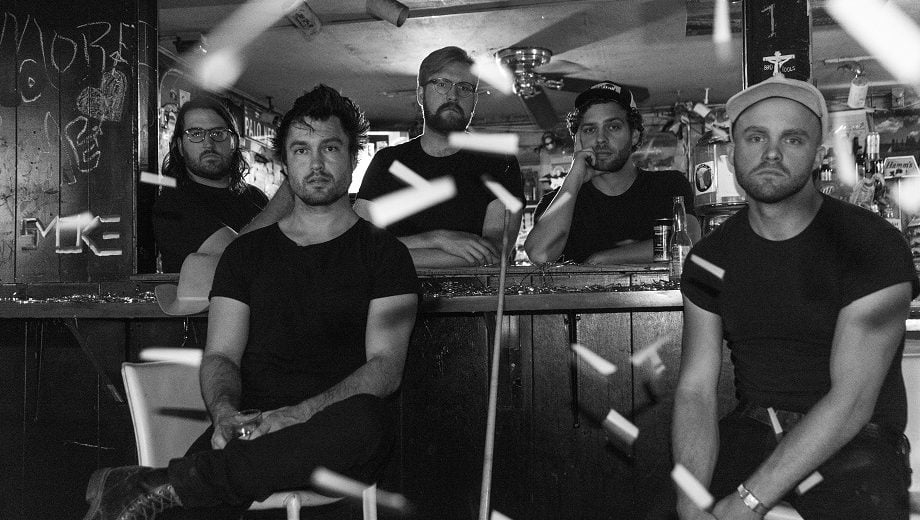
MIXTAPE: Jared & the Mill’s Overnight Driving Playlist

“Overnight drives are the lifeblood of developing into a touring band. Leaving the comfort of street lights and neighborhoods and going into the void to get to the next town in time for soundcheck is as thrilling and mysterious as it is exhausting and daunting. It’s a ritual we share with bands all over the country and it teaches us to identify as the road dogs we are. It’s a powerful sympathy that unites us with others like us. Looking out at the nothingness and knowing there are many hours left without comfort is isolating and forces us to look inward.

“After conversation about the show earlier that night or what we miss back home diminishes, we’re left with the stars, the dashboard, and the radio to keep us company as we try to stay awake through the hypnotic rhythm of yellow lines passing beneath us. These are some of the songs that keep us going as we pass through the voids in between towns, we hope you enjoy.” — Jared & the Mill


Gregory Alan Isakov – “Stable Song”

The sonic qualities of this song are absolutely perfect for lonely nights away from home, and the lyrics inspire wanderlust just enough that I forget my homesickness and reinvigorate my excitement for adventure. It’s a godsend on long overnight drives.

James Taylor – “Sweet Baby James”

I was raised on ‘60s/’70s singer-songwriter music for a lot of my childhood, and this song brought my worlds together when I realized its subject matter covers the spirit of chasing a dream away from home and into the void. I come from a cowboying family and really love the idea of the traveling musician being the last of the cowboys.

–Jared Kolesar (vocals, acoustic guitar)


Feist – “Graveyard”
Feist’s “Graveyard” is a slow build that’s always worth it. Lyrically I feel like it dances around the topic of death, the dead, our memories, and our relation to our past, and our past relatives. Great for a long pondering drive. What a wonderful and beautiful chance it is, to be alive and experiencing anything.

Ennio Morricone – “The Good, the Bad and the Ugly – Main Title”

If this song doesn’t make you want to trip back to your previous life, strap on your shooting irons, and gallop down a dry arroyo to avenge your lovers death, then I don’t know what will.

–Michael Carter (banjo, mandolin)


Glen Campbell – “Wichita Lineman”

Glen is an amazing guitarist and the glittery arrangement of this great Jimmy Webb song always makes me long for home.

Jackson Browne – “These Days”

Sometimes thoughts of regret can creep in on those late-night drives. This song has an awesome way of acknowledging past mistakes while moving on from them.

–Larry Gast III (electric guitar)


The Wallflowers – “One Headlight”

Pretty sure this song that was scientifically created to make you feel like you’re in a driving montage in a movie. Maybe one of the best rhythm section grooves in the history of Americana to boot.

Kacey Musgraves – “Space Cowboy”

Kacey makes a stronger case for modern country music with every record she puts out. This is a perfect song for looking out the van window into the darkness of night and wondering why you are the way that you are.

–Chuck Morriss III (bass)


Fleet Foxes – “Helplessness Blues”

Lots of times on overnight drives you wonder if you have chosen the right path, or if a standard 9-5 could be more fulfilling. This song is a good way to consider the possibilities of that life, while the driving acoustic guitar keeps you alert at the wheel after an arduous day.

Robert Ellis – “Elephant”

I love the intricate plucking rhythms in this song, while the lyrics tackle relationship complications of being in a touring band.

Josh Morin (drums)


Photo credit: Cole Cameron

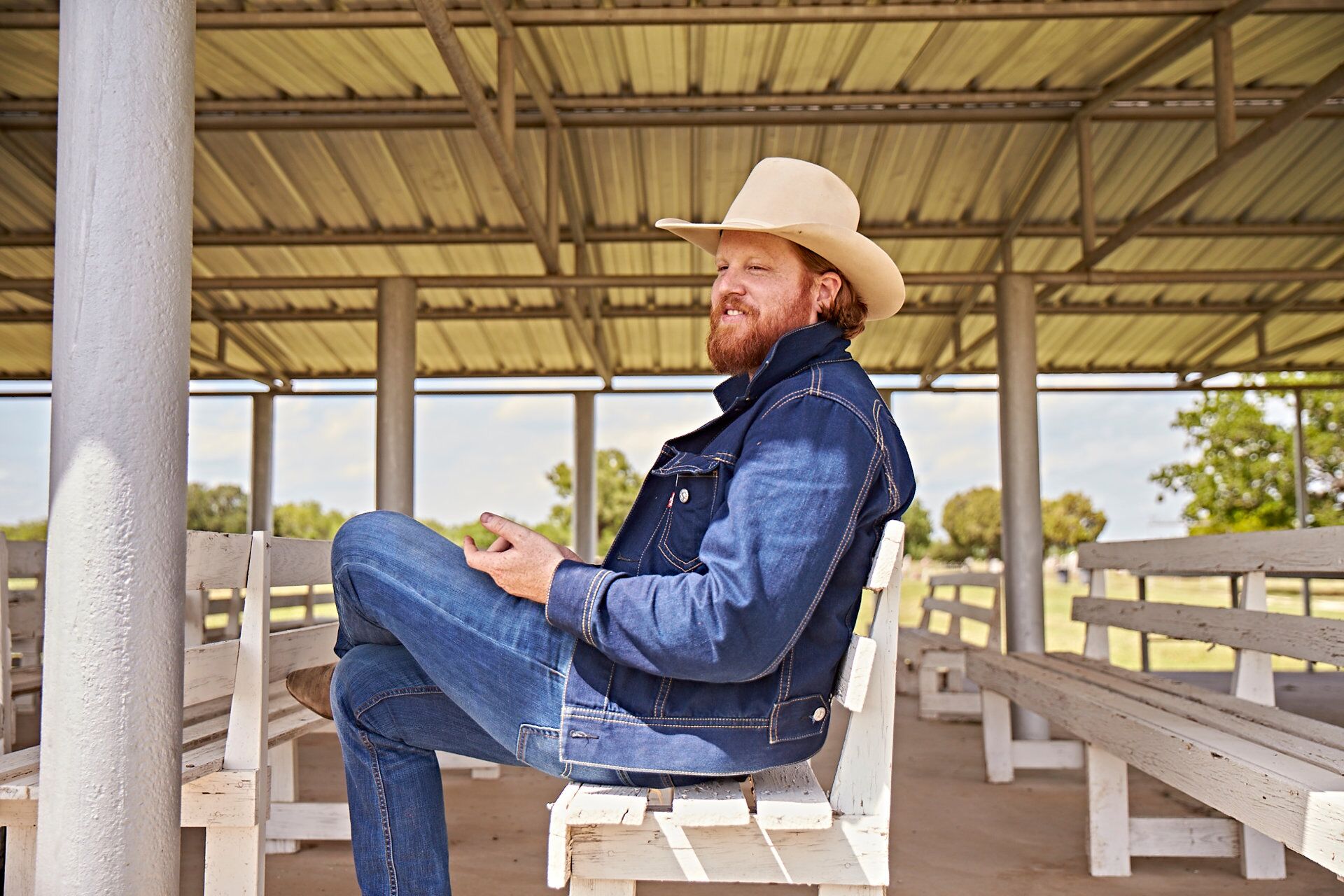
MIXTAPE: Red Shahan’s Orange is the New Remodeling

In this edition of “Orange is the New Remodeling,” I cover music the human brain needs to survive a world of DIY home renovations amidst the Whip Cracker herself. Strap on your father’s 1987 radial arm saw and your most valued curse words and join me for your first day of remodel prison while you enjoy the music I’ve selected as my soundtrack. – Red Shahan

The Doors – “Riders on the Storm”

Today’s the day. Your hand is outstretched to the handle of the front door and the only thought you’re clinging to is, “What the hell have I done and who the hell do I think I am?”

Faron Young – “Hello Walls”

You’ve entered the home after nearly losing your life to the wasps that were conveniently located above the door jamb. It’s time to assess the damage you’re about to create. This is the calm before the storm.

Eddy Arnold – “Make the World Go Away”

Imagine yourself flung into a Quentin Tarantino-esque version of This Old Fuc$#%* House as the chorus and the head of your sledgehammer synch up perfectly in a slow-motion battle with the wall you will later regret removing.

Glen Campbell – “Wichita Lineman”

Despite the chaos you’ve just created, the Hiroshima-like living room leaves you with a slight feeling of accomplishment and the thought, “Hell, sing it to me, Glen. I know your pain.”

Melanie – “Brand New Key”

Your first taste of the midday crazies has ensued. Out of the drywall dust appears the neighbor’s dog who lets himself into your home and relieves himself on the ‘70s shag carpet your MeeMee once adorned; but you say nothing and stare in envy as it’s what you’ve wanted to do all morning.

LeAnn Rimes – “Blue”

LUNCH TIME. But this is no enjoyable burger as the only thing in your area is Johnny Wang’s “Sushi, Burgers, and More” while LeAnn plays in the background reminding you of that faded, computer-blue house you just bought.

Seal – “Kiss From a Rose”

Back to work, tough guy! With mustard on your shirt and hate in your heart, the Whip Cracker gives you a sign of approval and a sensual tap on the rear as if to say, “Keep it up and I might let you rub my back tonight….shirtless.”

Tom Waits – “Heartattack and Vine”

If a remodeled house could grow a salty swagger and sing to you while you work, old Computer Blue would have a raspy voice and abundant smell of cigarettes, just like Tom. But this place has the smell of a nasty wax ring under the toilet you just removed. Not even the bubonic plague came close to that stench.

Al Green – “I’m Glad You’re Mine”

Time for the first of many, many return trips to Home Depot. Strap on your gas station-purchased measuring tape, load your freshly-sharpened pencil in its fleshy holding device otherwise known as an ear, and walk into that Home Depot like it’s covered in neon lights and you’re an eligible bachelor ready to peel paint with your swanky presence. Strut your stuff, handy man. (*Needle scratches record) but then Whip Cracker calls to say she’ll meet you there. *leaves suspenders in the Subaru.

The Notorious B.I.G. – “Hypnotize”

You walk back into Computer Blue with your sacks of suggested tools and materials from “Leonard,” the 17-year-old pimple-faced smart-aleck that acts like he hung the handyman’s moon, when in all reality he goes to a school that doesn’t teach cursive and believes in trophies for everyone…. Anyways, with an attitude and a second wind you’re ready to pull up the urine-soaked carpet. *curses loudly* “I forgot to get gloves.”

Michael Jackson – “Smooth Criminal”

The sun is setting and your mind is telling you to go home but it’s winter solstice and only 5 p.m. You know Whip Cracker expects a solid 22 hours of labor or you can bet she’ll overcook Rachael Ray’s “Peach Bellini Chicken Thighs” because she’s too busy pacing the house with outlandish ideas. So suck it up, buddy, and let Michael moonwalk you into that kitchen you’ve been turning a blind eye to.

Joe Cocker – “With a Little Help From My Friends”

There comes a time in a man’s life when he deciphers the difference between his friends and his brothers. Just imagine peering out the window after hearing three car doors shut. To your amazement while shedding a slow tear, the “Regulators” show up with some Keystone tall boys and some judgments like slander to help you finish the day. Despite the endeavor you blindly took on and the lies you told the Whip Cracker, where there’s a will there’s a way. And when your light switch turns on the refrigerator and you’re slinging nachos at the Cowboys when they don’t make the playoffs, just remember the music that got you to that point. But for now, it’s just day one, sucka.