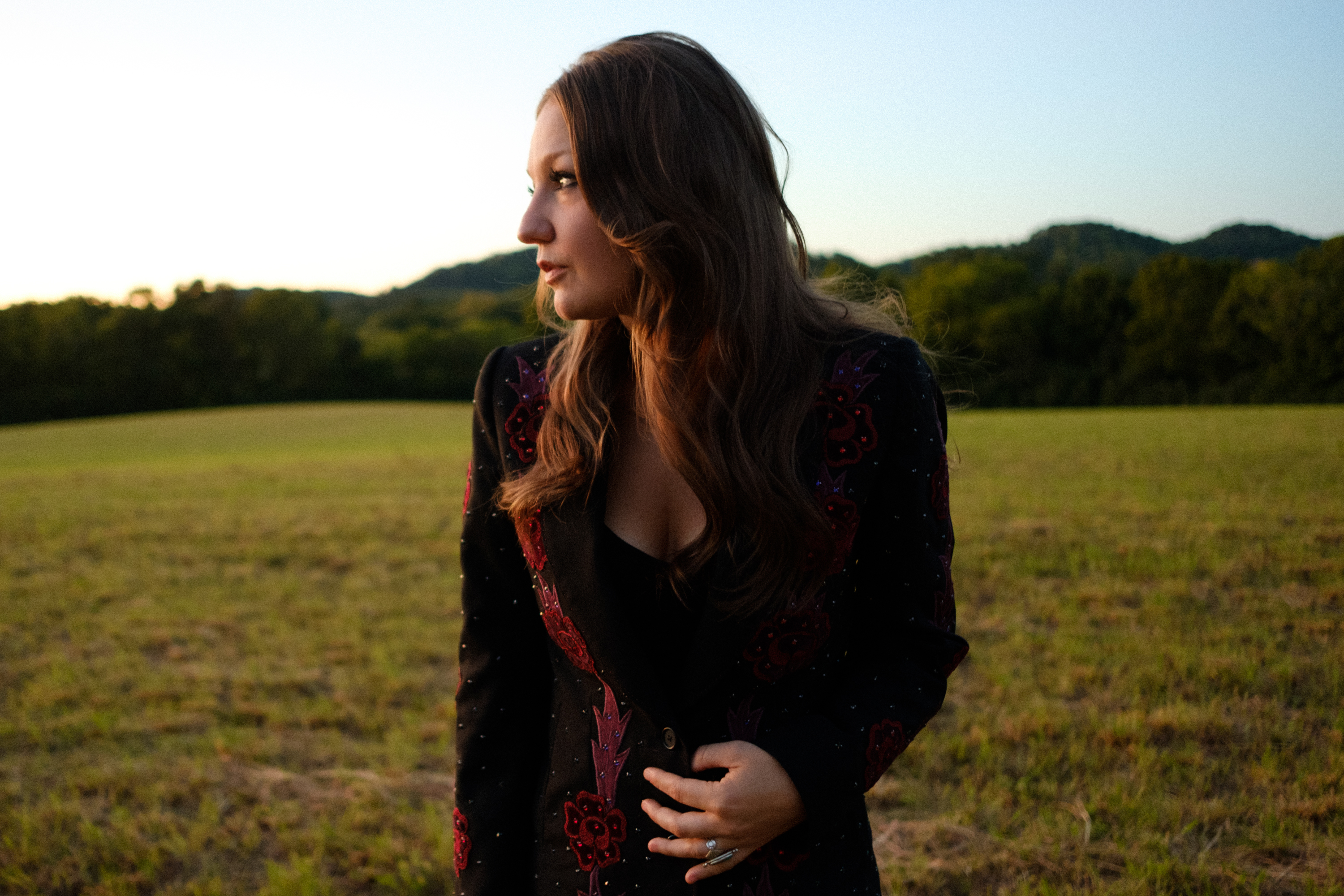
An Incomparable Album, ‘White Noise/White Lines’ Is the Kelsey Waldon Experience

I’ve had the good fortune of knowing Kentuckian country queen-in-waiting Kelsey Waldon for almost the entire time I’ve lived in Nashville — more than eight years at the time of this writing. I’ve stood over her unfathomably enormous cast iron skillet, filled to the brim with bubbling, sizzling battered fish. I’ve sung harmony on one too many choruses of “Smoky Mountain Memories” after perhaps one too many slugs of Kentucky straight bourbon whiskey with her, too. 

And yet, in listening to her brand new album, White Noise/White Lines, I still found myself picking up fresh tidbits of her extraordinary yet downright ordinary approach to musicmaking, songwriting, self-expression, and artistic exploration. Waldon, despite limitless comparisons to almost every female country forebear to ever growl through a lyric, remains a paragon unto herself, a true singularity in realms of American roots music. 

White Noise/White Lines cements the fact (which has always been plain as day to those who dug deep enough) that Waldon will refuse tidy, one-for-one comparisons to any/all other country stars and writers who have come before her or who count themselves among her contemporaries. Except perhaps two: Loretta Lynn — whose “Coal Miner’s Daughter” inspired Waldon’s own “Kentucky, 1988” — and John Prine. The latter is fitting, in so many ways, now that Waldon makes her label home with Oh Boy Records, label of the denizen of Kentucky songs, meat and threes, and plain spoken oracle-like wisdom through lyrics. 

A brief album by many measures, White Noise/White Lines captures technicolor moments of Waldon’s life, her joys, her musings, and her homeplace, encouraging listeners to lean into the record’s brevity and engage wholly with each constituent moment therein. Because truth needs no more than a moment.

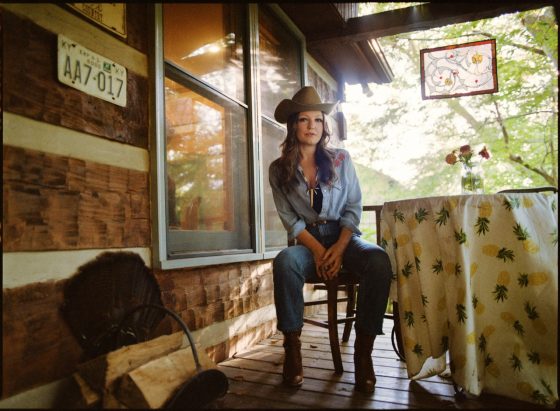
For BGS I made the trek out to Waldon’s cabin outside of Nashville and after a quick stroll around the vegetable gardens and a tour of the many Kentucky-themed decor items imported from one state north, we settled in the kitchen, sipping water out of mason jars, to talk.

People routinely refer to you as being similar to Loretta, similar to Tammy Wynette, Kitty Wells, Patsy Cline. People are constantly making these comparisons to these kind of foremothers of country and I wonder how that makes you feel, to be a bookend against someone like Loretta or Tammy Wynette?

Kelsey Waldon: Honestly, I think that’s an incredible compliment. Those are all, you know, my sisters that have gone before me, women that I’ve looked up to quite a bit. Especially in the country music realm. However, I also kind of feel like, especially with this new record, I think it’s apparent that hopefully I’m also finding quite a bit of my own thing. 

Sometimes when people say things like that to me it’s like, well maybe their scope of country music isn’t that wide. When someone would be like, “You sound like Patsy Cline!” I’d be like, “Uh, no I don’t.” [Laughs] I mean, I love Patsy Cline and I hold her up as something sacred, I wouldn’t ever even sing Patsy just because nothing touches that. 

I think it can kind of be, dare I say, a lazy comparison to just kind of name [some popular woman country star.] It’s definitely there. Even sonically, I was so inspired by them. Especially Loretta, absolutely.

I hope the new record showcases that with the years we’ve spent on the road — just using even my own touring band. It starts at country with me, I can’t just flip off a light switch and say, “Oh, it’s not country!” I guess some people can do that, but I don’t see it that way. Country is just so much embedded in me. No matter what form my artistic expression comes out, that’s still gonna be there. It just may not be cookie cutter, it may not be formulated. It may not even sound exactly like that. One thing that I think the growth of this record shows, hopefully, is that these are my songs, I’m not a throwback artist. I’m not a retro artist. I am an artist making music in 2019.
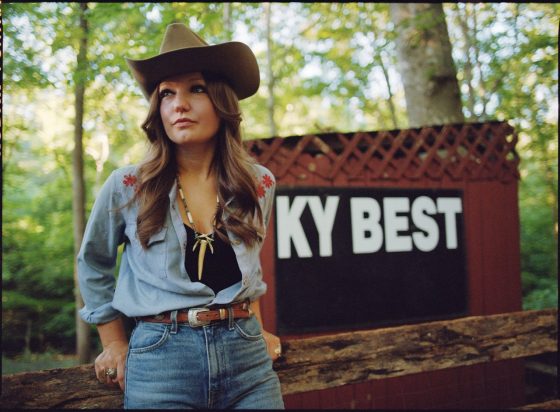
I did want to talk about your band, I think it’s remarkable. It’s getting more and more rare that folks tour with the folks who played on the record, because — and it’s not the fault of anybody — they’re trying to make money on the road. So if they stack their record, of course they aren’t bringing those people on tour. Why is it a priority for you to have the same band?

There are obviously all of these amazing musicians out there who are session musicians and a lot of people I’ve been fortunate enough to play with myself. I’ve learned a lot from [them]. This time around, this was always a goal of mine, to have a record that had a band I wanted on it. I worked really hard to find the band to really fit those pieces together. It took me a while…  just trying to figure out really what I wanted. My last record, I’ve Got A Way, caused the right people to gravitate towards my music. I mean, I eventually found the band that I have now because they heard those earlier records and they were like, “I would love to be a part of this.”

The band I have now, which is Mike Khalil, Nate Felty, and Alec Newnam — and Brett Resnick played on the record, but he doesn’t get to play with us a lot anymore, he plays with Kacey Musgraves, which is wonderful. But with the band I have now I just knew it. I was like, “I think this is it.” We all knew it. Even Brett. People were like, “We think this is the right combination.”

In that way, too, there’s nothing wrong at all with using session players, I just think, honestly — and I might be a little biased — my band is just as good as any. I think they could, and they will be one day, they will be those session players. They care so much about their craft and they work hard. I’m very lucky. 

One of the things that excites me most about this record is that I’ve always heard the bluegrass influences in your music, but they’re really forward in this record. Especially in your rhythm playing, in your rhetorical style in your writing, in your vocal phrasing, even in the arrangements with the twin fiddles and there are a couple of “fast waltzes” on the record. I love that “Lived and Let Go” really could be played on bluegrass radio. 

I think that is such a huge compliment, thank you.

It’s bluegrass! I wanted to ask, and not just because we’re The Bluegrass Situation, but in general, because this is a huge part of the canon of music you reference and that you listen to. Who in the bluegrass sphere influences you now and who has in the past — and I’m gathering Ola Belle Reed is at least one of them. 

I love Ola Belle, obviously, we did an Ola Belle song on the record. Well, I love that you can pick that out. To me, I feel like it’s plain as day that there’s a bluegrass influence all over it. To some people it’s not as apparent, I guess. I’ve had some people just be like, “What is this thing that you’re doing?” It’s because they don’t listen to bluegrass. I’m like, “I STOLE that!” [Laughs]

I guess I understand now why they don’t put those two together, if you’re talking about mainstream country, because that’s clearly not. But to me, I’m always like, “Of course bluegrass is country.” It’s also bluegrass, but it’s also country.  It’s like the OG country music. 

I would say one of my favorite influences, one of my favorite singers ever, is Dale Ann Bradley. She’s up there for me. I really think Dale Ann should be a legend, honestly. And Ralph Stanley, and obviously I love Bill [Monroe], and Jim & Jesse, and all those groups. And early Keith Whitley, I’ve been obsessed with that for a long time. 
I think it’s interesting that you mention both Ralph and Keith back to back like that, because you can hear elements of both of their vocal phrasing and vocal techniques, in what you do singing-wise. 

The same thing with Dale Ann. They have such unique registers of their voices and it’s something that I really relate to. Sometimes I didn’t really know what it was that I was doing. I could kind of hear my own voice in [their vocals]. If that makes sense? I could really relate to that. It’s so soulful. 

I feel like Keith could sing on anything. [Laughs] He sounded exactly like Keith. That’s the beautiful thing about a country singer to me, he could sing on an R&B track and it would be sexy as hell. It’s like George Jones — and Dolly can sing on anything, as far as I’m concerned. That’s a great singer, to me. Ralph, I’ve always said that he is like the Pop Staples of mountain music. It’s like he doesn’t even have to be loud, but he is so loud. He’s barely singing. He’s just projecting. I love Flatt & Scruggs as well. 

New artists… Molly Tuttle, I love what she’s doing. That new record. She’s really taking a genre and making it her own. Something that’s not worn out or tired. Doing something fresh. She has accomplished making this new for people. In my own way, I hope to do that as well. 

I don’t guess there’s anybody else completely new, besides like Sister Sadie, and Dale Ann! [Laughs] They are some BAD girls!! Dale Ann, man. The mark of a true artist is that she can sing all of the covers she does. Like I said, I think Dale Ann should be a legend. 

Words are clearly your priority in your songwriting. You’re prioritizing what you’re meaning to say first and foremost, then making the melody and music and everything work around what you’re trying to say. It sounds effortless when you listen to it, but I wonder what kind of intention goes into that?

Songwriting is kind of interesting to me in that way. I’ve actually heard a couple people be like, “It sounds effortless.” Sometimes, it is effortless and you’re just like, “Wow that kind of poured out of me. I didn’t realize it was in there but it poured out of me in like five to ten minutes.” With this record, though, there were definitely a couple of things I had to go back to. I had the meat and taters, but there were a couple of things I rewrote and made sure made exactly the sense I wanted them to make. There’s a balance there, too. You don’t want to kind of go too far, over-analyzing the whole thing.

With “Kentucky, 1988,” I think your songwriting up to this point has felt so personal, and so tightly intertwined with who you are, that I almost didn’t realize that you hadn’t written this exact kind of song, yet. What brought you to the point of wanting to be that direct with telling your origin story? Was it more intuitive or more purposeful?

That was definitely purposeful. That is awesome that you’ve observed that, because I’ve felt the exact same way. I was writing new songs and I felt like, “You know, I haven’t written my ‘Coal Miner’s Daughter.’” I don’t really have something that is kind of like this definitive origin story. I just set out to write it. The title was actually kind of inspired by someone I forgot to mention, Larry Sparks — one of my favorite singers. 

Oh my gosh!! “Tennessee, 1949!!” 

Yeah! Yeah, it was inspired by that. That and a Tom T. Hall song that has Kentucky and a year in the title, with the comma and everything. In my head all of that sounded so cool. Everything about it, the rhythmic feel, it all rolled right off my tongue great. I just had to write it. People always [say], “That’s very vulnerable and transparent.” Well yeah, isn’t that what we’re supposed to do? [Laughs]

I know a lot of artists say this, but I definitely think this is the most personal thing I’ve done so far. I think all of it has been very transparent, in a way. I want to completely embrace that. I want to be as much of a freak as I want to be. It’s not like I was afraid to before, I just don’t think that I was ready. My mom always said I was a late bloomer, but she said, “When you bloom, baby, you’ll bloom!”  

I did want to ask you about the significance of the Chickasaw Nation members singing on the record. We hear them at the end of “White Noise, White Lines.” What’s the personal significance of that for you? And are you a tribal member? Is anybody in your family a tribal member? 

No. All of the Rollins side of my family, which is my granny’s side, they were all of French and Native American descent, but I never claimed anything like that. I just think it’s been something that’s been such a part of where I grew up, culturally. Even just hunting for points [arrowheads] and having such a respect for that way of life and culture. 

It’s always really hard to keep this story short, when people ask me about the song, because I wrote it right after this amazing experience I had back home in Monkey’s Eyebrow, Kentucky, my hometown. When I went back to watch a ceremonial dance that the Chickasaw from Ada, Oklahoma [performed]. They came to re-bless the Wickliffe Mounds. They ended up lodging at my Dad’s that night, for free, [he was] cooking the food, doing the catering and stuff. I ended up staying down there and visiting.

We just became friends with the members of the tribe. We had so much fun. They’ve kept in touch… My dad took them arrowhead hunting for the first time, and they were doing ceremonial dances out on my dad’s land as well. I think he really really was appreciative of that. We were kind of the only people who ever lived down there in those river bottoms, maybe besides [the Chickasaw]. I mean, it’s the river bottoms. That’s why we find all these artifacts. No one has been down there except us. 

I just remember thinking about how awesome the weekend had been and the radio had been on white noise for literally fifteen minutes and I had no idea. I was just in this tranquil moment. The song is just a detail of all these things. The solar eclipse had also blown my mind that weekend. Just realizing how small we actually are, compared to what is even going on in this universe. 
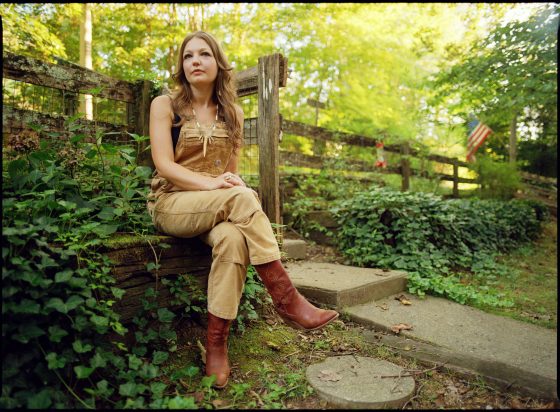
Naturally, I included the details. “Chickasaw man got a buffalo skin drum,” because Ace — Ace Greenwood and Jesse Lindsey, that’s who’s on the song — actually did have a buffalo skin drum. It was pretty badass. My dad asked them to sing some songs on the porch. I love Ace’s voice, it reminds me of Ralph Stanley. It’s a voice that just feels like it’s been there for a long time. It’s so pure. I just loved it, I was really touched.

He sang a song that had been in his family for generations. The message of the song was basically, “Though I’m far away I’m still near you. No matter where I am. We are together.” In that moment that really was something I needed to hear. I put that [on the record] not only because I thought it was beautiful, and I wanted people to experience what I felt, but I also wanted the record to feel like an experience. 

Ace told me one time when we were down there that the media likes to tell his people who they are and that’s not who they are. I think in a way, perhaps it’s also why I thought it would be really beautiful to have that at the end as well. I hope it doesn’t seem like it was for my own reasons, I guess. I was just writing about that weekend and I felt like it was so beautiful to me I wanted it to be documented. 

I think it makes a lot of sense. And I’m not saying it’s not a complicated thing to talk about, or that it doesn’t trip into some territory that we as settlers will never fully understand, but I do think that it follows perfectly with you bringing your whole entire self to your music. So much of what you do is tied to place and is tied to coming from Kentucky. 

That was another part of it, showcasing where I’m from. And the cultural background of it. 

And not just the colonial background of where you’re from? 

No. I mean absolutely not. To me, that’s exactly how I saw it. Nail on the head. It might cause a little bit of question, but I think that’s good. ‘Cause then I’ll get asked about it. And then I’ll tell ‘em. [Laughs] 


Photos by Laura Partain for BGS. See the entire photo story.
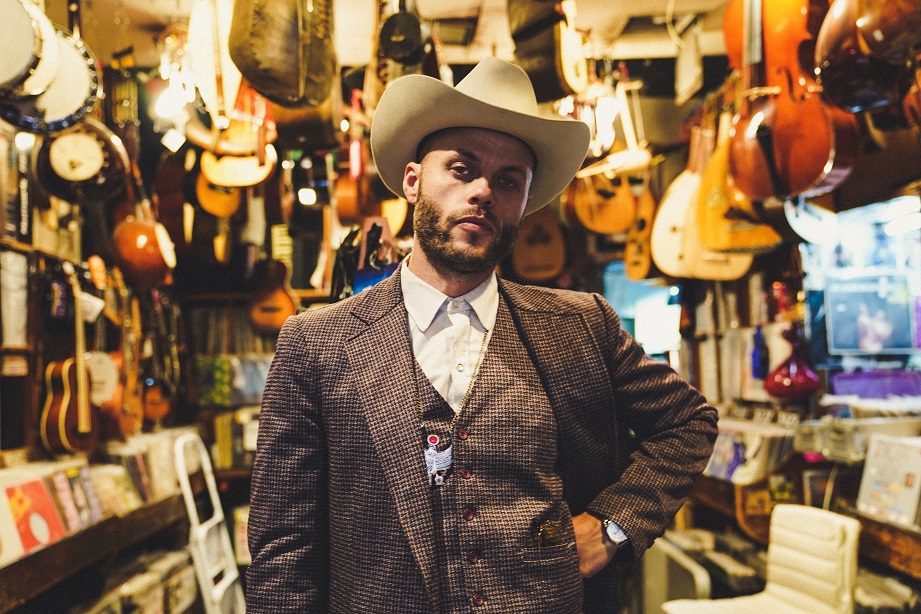
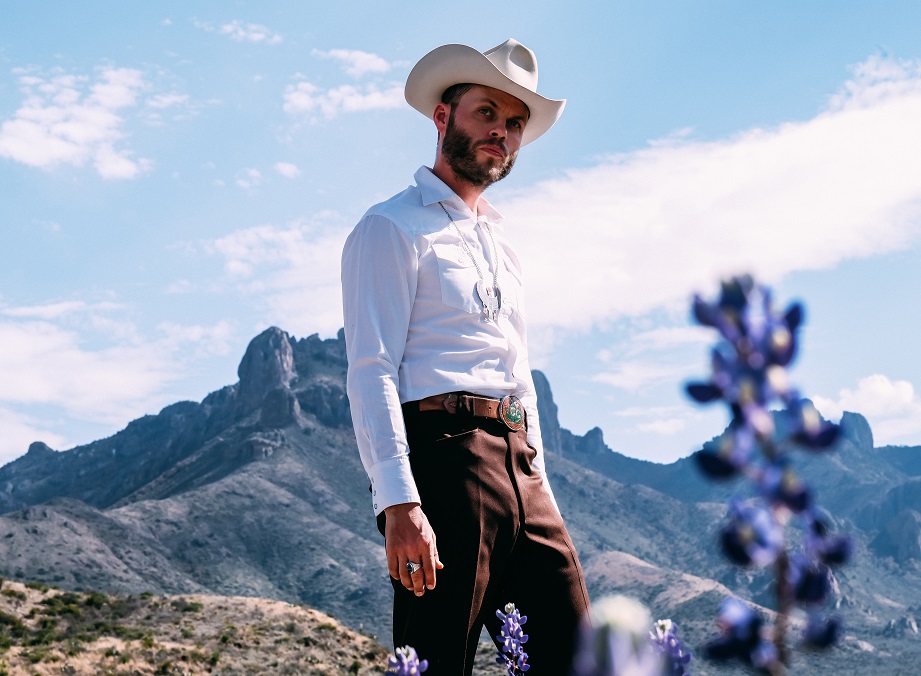
From Texas to the World, Charley Crockett Spreads Traditional Music of ‘The Valley’

“I’m from San Benito, Texas…”

That’s the first line of “The Valley,” the autobiographical title track of Charley Crockett’s newest album and perhaps the best entry point into his true-to-life twist on traditional music. Not only do those lyrics reference the rougher times of his story so far, the jaunty arrangement underscores his fascination with blues and classic country music — but without treading the same fertile ground as everybody else. BGS caught up with Crockett by phone on his way to the Pacific Northwest.

BGS: At the end of the song “The Valley,” your closing line is, “May your curse become a blessing. There ain’t nothing else to do.” Tell me about the message you were trying to convey with that line.

CC: Man, I think people are born into struggles that we don’t have a lot of control over. I know for me, I dealt with different adverse situations that I never saw them coming and got forced into at a young age. Just with my own story I had a lot of issues over the years with getting in trouble and family stuff, siblings going to prison and losing my sister to some of the vices of the modern world. My mother was struggling, working 80 hours a week, to take care of me, and that whole deal.

I parlayed all of those hardships together into making music, so quite personally I’m saying, hey, you can take those really hard things and turn them into something, because if you don’t, what’s the alternative? I had a guy tell me years ago on the street, I asked him how he was doing, and he said, “I’m doing great today. I have to be doing great ‘cause what’s the alternative?” That stuck with me for my whole life.

I thought, man, it really is all about how you see it. That line before it is, “And now you know my story, I bet you got one like it too.” I never really run across very many people that didn’t feel like they were fighting some kind of adversity. I feel like you got to take the lemons and make it into lemonade.

Do you consider yourself an optimist?

Oh, I’d say so, most definitely. I met a guy in Denmark, when I was over there recently, who had an Indian curry joint there in Copenhagen. We ended up going two days in a row. The first day I went in there and we had cowboy hats on, and he knew real quick we were doing music and the whole loud-mouthed Texan thing or whatever. We played up and had a good time in there, and he got my name and stuff, and we left.

We ended up going in the next day to eat again because we liked his curry so much. I come in there and he said, “Charley, man, I want to apologize to you. I looked you up and I read about your story.” He’s like, “I really judged you as being somebody that maybe hadn’t been through much, because you seem like you were so happy-go-lucky and so optimistic.”

I thought that was so strange, that because of my positivity, he thought that maybe I was privileged or something. I guess he read my circus of a biography and realized that I was a lot different than that. And that really struck me. It was sad to me in a way. I thought if everybody in this life wore their hardship on their sleeve and let it get the best of them, it would be really sad. But what’s really amazing about people, overall, is the resiliency in people.

Who were some of your early champions when you decided to take this music path?

Well, in the beginning, my mother was the one who got me this old Hohner guitar out of a pawn shop when I was 17, and told me that I could do this. Even when I sounded terrible. I remember saying, “Mama, I tried to write these songs. Am I any good?” Then she said, “Well, son, people will believe you when you sing.” [Laughs] She wasn’t going to lie to me and tell me I was good. She told me what I needed to hear and I understood what she was saying. She was talking about honesty. She was talking about integrity. She was talking about sincerity. That’s what I believe in.

On “The Way I’m Living (Santa Rosa),” you’re singing about Mendocino County, and that it’s taught you a few things. Was there a specific moment in California where you had an epiphany, or that something really struck you?

Yeah, man. I hitchhiked and rode trains and hoboed around for a really long time. I had hitched out there to Northern California when I was 22 or 23. I ran into cool people up there that would pick me up on the side of the road and let me sleep in their barns or in their pastures, and do work trade and all kinds of stuff. Even my record, A Stolen Jewel — my first one that I ever put out on myself — those people gave me the money to make that record and print 5000 copies of it.

I got them printed up in San Francisco, just a couple of hours south, and I drove in a truck that I’d gotten from those farmers up there that let me work their land. Then I drove back down to Texas and I handed them out on the street in DFW and Austin. That was how I first started getting my first publicity. I got written up in the Dallas Observer and the Fort Worth Star-Telegram, and I got a local guy to start booking me at Texas bars.

So yeah, the line is “Mendocino County bring me lots of joy. It’s opened up the eyes of this wanderin’ Texas boy.” And that’s exactly what happened. It was the first place that I’d ever been in my life where people said, “Man, all you got to do is help out on this farm and play music for us and you can live here in exchange. And we’ll feed you too! And we’ll take you out to the open mics at the brew pubs.”

I’d go to a gathering on people’s farm where you’d play music around the campfire and I’d never known anything like that, besides being down and out on the side of the highway in more shady situations. But then in Northern California, it was the first place where somebody in my position, my modest, kind of undeveloped artistic abandon, that people were like, “Hey, I see you as an artist and I respect you and your music. There’s something about you.” That’s why I have so much love for Mendocino County and continue to be a part-time member of that community there. Those people have always treated me like I had value.

Do you like bluegrass music?

Big time, man. Jimmy Martin, Ralph Stanley, I wear that stuff out. Actually I packed a banjo and brought it into my show. We have a bluegrass section in the show, right in the middle of the set, where we do a five-song bluegrass deal around the one mic. It’s just a lot of fun!

What do you hope people take away from the experience of coming to see you play?

I hope the people that have come out before to see me will see that I’m true to what I promised — that I’m getting better every year. I’m really about the classic stuff and I think when you’re really rooted in the tradition, you’re never going to stop growing.

When I was playing in San Antonio the other night, I played “Nine Pound Hammer” on the banjo for these kids. … This mother had her two young children at the very front of the stage and they were hollering for “Nine Pound Hammer” as I got off stage after the encore, and I ended up playing it for them sidestage, because they were so sweet. These kids were young. The little girl was probably 8 and the boy was probably 10 or 11 at the oldest, and they knew every word to “Nine Pound Hammer.” That was really cool to me to see these young kids, who had no context of how old that dang song is, excited about something out of the nineteenth century like that.

I guess that’s one thing you could say, but for me it’s like I wear tradition on my sleeve and I think what’s radical in music today is to bring tradition up front. I think that’s what people like about me. Not that I’m some kind of preservationist, but that I’m doing tradition as a man of my times. I think that people can hear the tradition and they can also hear something new in what I’m doing. I hope that’s what people hear when they come out to see me.


Photo credit: Lyza Renee

Despite Bleak Beginnings, Billy Strings Emerges as a Force in Bluegrass

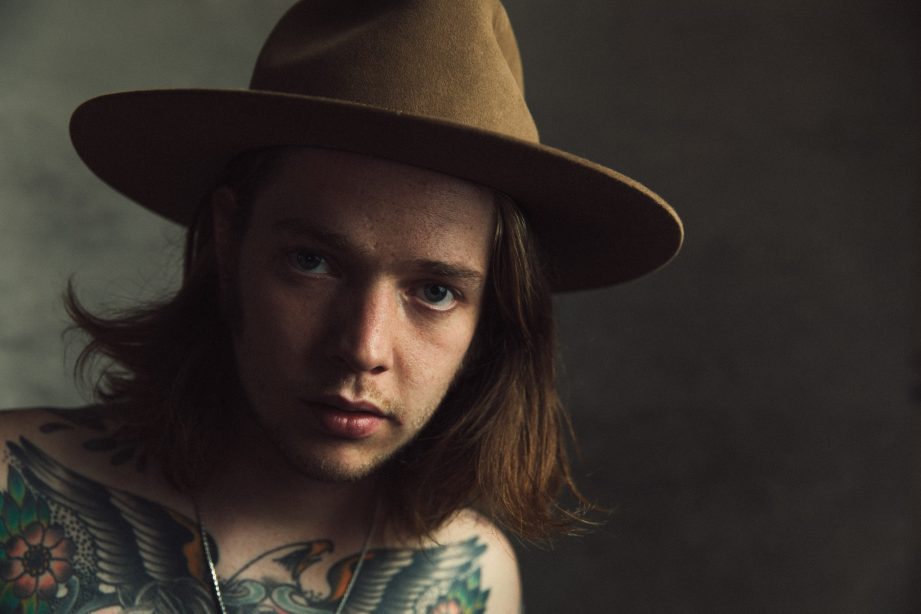
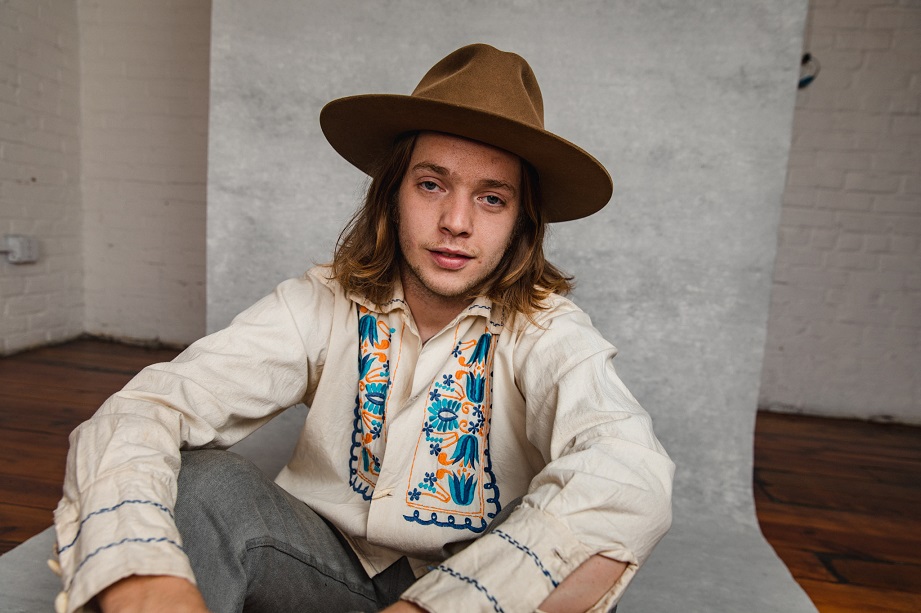
Get Billy Strings on the phone, and the interaction will probably seem as much like a musical recital as a verbal conversation. He’ll most likely have a guitar in his hands, noodling around on scales or snatches of songs, sometimes as conversational punctuation marks. But mostly, it sounds like he’s thinking out loud with the instrument.

It’s a good time for Strings right now, who earned IBMA Awards last week for New Artist of the Year and Guitar Player of the Year. His very fine second album, Home, is out on Rounder Records. Checking at 50-plus minutes, Home is a wide-ranging album that showcases his remarkable, classic-bluegrass voice and even more remarkable six-string wizardry, confirming his status as one of the top young guns in the field. The album has 14 songs, pretty much every one of them a journey.

We caught up with Strings shortly before he hit the road on what will be a full season of touring across the U.S. this fall.

BGS: Is there ever a day when you DON’T play music?

Strings: Not usually. I do try to play all the time. Sometimes when I’m on the road playing every night, onstage more than two hours, I might feel like I want a little break: “When I get home, I’m not even going to touch it for a couple of days.” Never happens. It only takes about a day to get the itch and feel like I need to practice.

What form does practice usually take?

A little of everything. That right there is just doing some scales all over the neck in different keys. Metronome practice is good and I have not done enough of that lately. That will really whip your ass into shape. Playing along with records, too, or playing fiddle tunes, playing through songs I know and love. Coming up, I did not have these rigid practice regimens. I just played music.

But recently I’ve started getting into it more. I was inspired by the Rocky movies: “Man, he works out for months, running up and down stairs and training so hard for just one gig!” Every night I get in the ring, but I never train, never hit the bag. I need someone like Mickey yelling at me, “C’mon, kid, lemme see that major scale again! Now slip the G run!”

I saw a quote about how you learned to play with bluegrass, but learned to perform when you were in a metal band. What did you take away from your time playing metal?

I grew up watching bluegrass bands in suits and hats, singing and playing into the mic and standing very still. When I was playing in a metal band, we were all over the stage running into each other, spitting and headbanging. I remember I would start a show by running from the back of the stage into the audience, and they’d push me back onstage.

It was just this crazy energy and that was my first performing experience onstage in front of people. I do think bluegrass is more about music, listening to the notes. The metal band, we’d jump around so much it was difficult to play the correct notes. The music may have suffered, but we tried to put on one helluva show and I still sort of bring a little of that.

Your new album is called Home. Is there any significance to that as a title?

I would say there’s a lot. That came from a poem I wrote titled “Home” and turned into a song that was kind of obvious as the opus of the album once we recorded all the songs — the just kind of wild song of the bunch. So I figured we’d name it after that. I’m 26 years old, this is my second album and I’m sort of settling into life as a young adult. Up to now, not knowing what was happening kind of kept me alive.

Now I’m starting to feel a little bit like a grown-up. Also, on the road, we’re always dreaming about getting home. What does it mean to you? Home is something different for everybody — a place, a state of mind, a drink, a meal. When I get home, my friend’s grandpa grows some real good weed outdoors in Michigan soil. Smoking that is home right there. Home sweet home.

“Away From the Mire” is the longest song on the album and it seems like the centerpiece, a real journey. Did you know it was going to go that far when you started recording it?

It was spontaneous. We were recording, working on that one a couple of days and trying to figure out what to do with it. It felt like it needed a big guitar solo because I’m a fan of that. It’s a classic thing that always happened with ‘70s rock and roll bands: great song, verse, chorus, bridge and EPIC solo before it’s over.

A lot of times, me and the band will get into these moments and “Mire” was one of those we sort of landed on where I took my guitar and they followed along. It was not composed at all, just a jam. It did not take too many times through to get it. We were oiled up, had been in the studio a few days, and didn’t have to spend too much time on any of the songs. That whole jam in the middle, it’s all live.

Doc Watson seems like an obvious influence on your playing. Did you ever meet him?

Unfortunately, I never got the chance to meet Doc. I worshiped the man, you know? I started listening to his records and watching VHS tapes when I was 5 or 6 years old. Doc left a huge impression because his music was so alive with such heart and soul. I took my dad to see Doc once, the only time either of us got to see him. It was the Midland Theatre in Newark, Ohio, six hours away, the closest he was coming to us. So I got tickets for my dad, my mom, me and my friend Benji, who drove us there in his truck.

Seeing him in-person was incredible. He played “Shady Grove” and “Way Downtown,” and my mom and my dad and me were all crying because we could not believe that really was Doc right there. I enjoyed the hell out of it. That was in 2010, Doc with David Holt and T. Michael Coleman, and he forgot a lyric here and there but still picked something great. I’ll never forget it as long as I live and I’m so glad I brought my parents.

Growing up listening to Doc was something special, and a mutual love for Doc is a connection I share with my dad. We bond over Doc’s music, play it together and I think we do it justice, a little. He knows so many old Doc songs, the deepest cuts. He’ll pull out one he’s not played in years and remember all the words. He embodies the soul Doc put out there. We really worship Doc around my house. He was, is and always will be the best.

Were there other influential elders?

When I was little, my mom and dad took me to a couple of bluegrass festivals. Larry Sparks and Ralph Stanley made a huge impression. Those guys would walk through a crowd like a hot knife through butter, in their big hats and suits with banjo cases. That was the first time I heard bluegrass on a PA, loud. I’d heard it around the campfire all my life. But hearing Larry Sparks’ band up there with the fiddle and banjo and guitar and harmonies, I knew then what I had to do. I’d already been messing around on guitar. Seeing those dudes, I knew it was serious.

Have you ever thought about what else you might do if not for music?

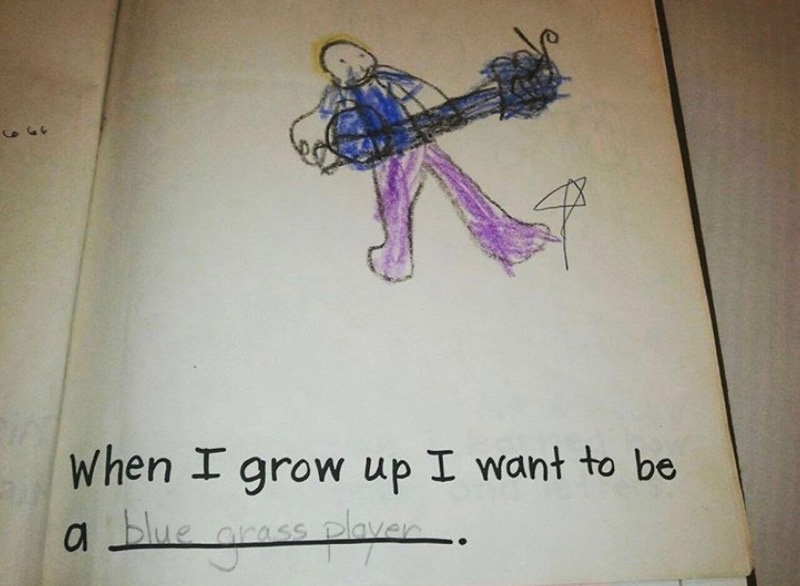
There was this picture I drew in kindergarten with a thing that said, “When I grow up I want to be a (blank).” I put “bluegrass player” and drew a picture of a guy with a banjo. So there it is. All I need now is the purple pants. I don’t know what else I’d do. I’m not a good mechanic or woodworker and I don’t like painting houses or carrying shingles up a ladder.

And I don’t like somebody wagging their finger in my face telling me what to do. I’m not good at dealing with authority figures. I’ve always had to do it my own way. I never thought music would even be possible as a career so I thought I’d always be a loser. But the last six or seven years have brought the incredible realization I can make it with music and not have to be a bum or drug addict.

Does that account for some of the heavy subjects on the record, like the song about drug overdoses (“Enough to Leave”)?

I always end up talking about this stuff, because it inspires a lot of my songwriting. When I reach down and look for what to write about, I always come up with things I’ve experienced in the past relating to substance abuse or loss or poverty. It’s sad how many people are struggling with all of that. I have a lot of friends who have gone in all sorts of directions, some good but some not. I’m lucky to have gotten out, and it haunts me. I still think about it a lot.

Maybe I’m looking in the rearview mirror too much when I should be looking out the windshield. But back there is what motivated me to get to where I’m at. It’s where I got my drive as a teenager, being around bums and meth-heads. I did not want to end up like that. It was either that, or keep running toward the light and working hard. I got a job in Traverse City, but I was playing gigs and realized, you can make a living that way even if you’re not a star. So that started to happen and I’ve been walking slowly upward ever since, reaching higher goals.

How much of a master plan do you have?

I know what I’m trying to go for, but at the same time I don’t. It’s a transparent vision where I know it’s something large and cool where I want to do good and be successful, but I don’t know what it looks like. I do feel like I’m moving toward dreams. More people are coming out to the shows, I’m able to explore more creatively and musically. That’s success and I feel good about it. I went from playing for tips to clubs and theaters, slowly working my way up. I remember renting minivans at Enterprise and having to sleep in parking lots because we could only afford one hotel room. I even got robbed once like that.

But I’ve always been willing to do whatever it takes to make the dream happen. If I have to stay up all night and drive 16 hours to play music, I’m willing to do it. The thing is, the more we grow as a band, we’re able to make those plans better so we don’t have to kill ourselves — play a few less gigs with a few less hours between them. It feels like it’s working, which I’m happy as hell about. I work hard but it’s so much fun it does not feel like work even though I’m physically exhausted. I’m sore and tired all the time but happy as shit, too. I’m lucky, man, really grateful.


Photo credit (live): Emily Butler; (portraits) Shane Timm

Hosts With the Most: Del McCoury, Jim Lauderdale Team Up for 2019 IBMA Awards

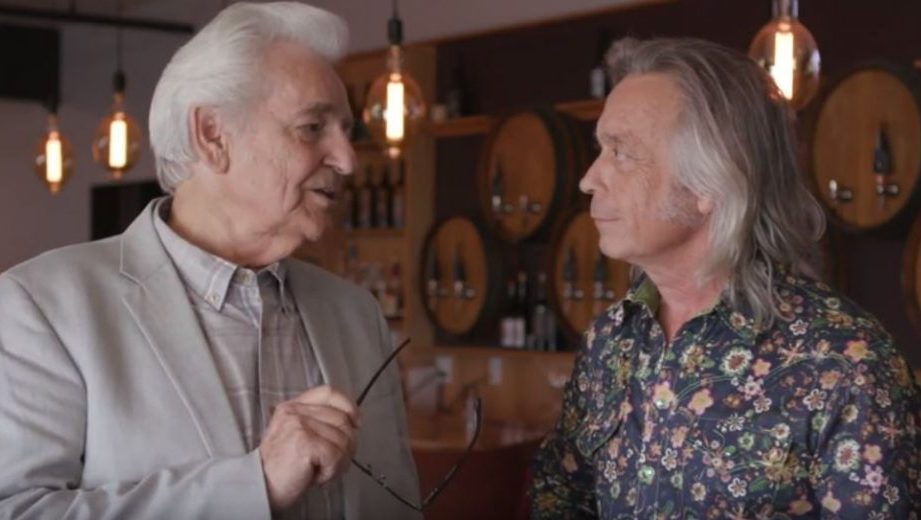
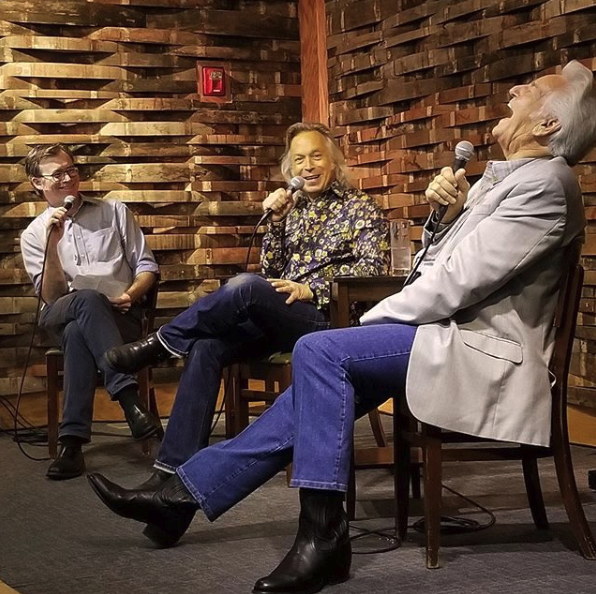
Loose and lovable Jim Lauderdale and Del McCoury will host the 30th annual IBMA Awards in Raleigh, North Carolina, coming up on September 26. McCoury is a nine-time winner of IBMA Entertainer of the Year — the most of any artist — while Lauderdale has won two Grammy Awards for his exceptional bluegrass work. These fan favorites don’t just bring a wealth of bluegrass experience to the stage; they’re seasoned masters of ceremonies as well. We got together at Nashville’s City Winery for a public conversation about the show.

BGS: As a 30th anniversary edition, I’m sure there will be quite a focus on the history of the music and of the awards over these 30 years. Del, what do you remember about the first IBMA Awards?

DM: It was so exciting, ’cause it was the first time that bluegrass music was really recognized. And there were still quite a few of the senior people there, you know, who started in the music years ago. We were fortunate that they were still there. Bill Monroe was even there, you know? But we’ve lost a lot of the great pioneers since that first one, and that’s probably the biggest difference, I would think.

BGS: When was your first one, Jim?

JL: I believe it was 1998, and I got to do a song with Ralph Stanley during the awards. Then I started going back and doing showcases. And I saw the move to Nashville and then the move to Raleigh, which I think has been really, really a great thing.

BGS: Do you guys ever surprise the jammers playing on some floor and stride in and go, “Hey, fellas, can I play a song?” And they go “Holy cow, that’s Jim Lauderdale and Del McCoury!”?

JL: Not quite like that! I go, “Hey everybody!” I like to be inclusive. But I do like to pop in if it calls for it.

DM: For me, I’m a little too old for that these days. But I remember the time when the festivals started when I would stay up all night and jam with people and go do a gospel show in the morning. And of course, I had a voice that would take that kind of punishment then, but I don’t have that voice anymore. So I do have to get my rest. But it’s a temptation, if you hear a jam session, to at least go listen to it.

JL: That’s the thing about bluegrass. Of course in any musical genre you can jam but you’ve got your acoustic instrument and you come across a group of folks that maybe you’ve never even met, but [you have] the bluegrass vocabulary or common language with these songs. It’s something that everybody can pick up.

BGS: Del, because of your 80th birthday and your longtime involvement in IBMA, I understand that they’ve just told you that on Saturday at the Wide Open Bluegrass festival, there will be a big “Del-ebration” for you. What do you know yet about this?

DM: I’m embarrassed! I had an inkling they were going to do something, you know? But I didn’t know who was going to be on that Saturday night show until me and Jim came here today. We’re going to have different folks from other genres of music come in, and me and Jim will do duets and sing all kinds of stuff.

JL: When we get together, you never know what’s going to happen. But I’ll tell you, in all seriousness, for as long as I’ve known Del, I’ve loved to make him laugh. …For several years I used to love to do this, when Del and the band was backstage somewhere. I’d walk up and say, “Hey you guys, what are y’all doing here?” And then I’d say to whoever is standing next to me, “It’s like these guys go to almost all of my shows! They’re from Canada, right? Anyway, good to see you guys!”

BGS: You guys have an interesting thing in common that people might not know, because you’re both guitar-playing frontmen. But you both started playing the banjo early on, right?

DM: Yeah, we did, didn’t we?

BGS: Del, in your case, the fellow who coaxed you away from the banjo into the lead guitar and the lead vocal was Mr. Bill Monroe, right? You hoped to play banjo, but he needed a guitar player. Is that the story?

DM: Yeah, myself and Bill Keith, you know, we auditioned together and he took Bill on banjo and wanted me to start playing guitar. I had played some guitar before that, but after I heard Bill Keith, I thought, yeah, that’s what Bill needs that guy. He needs that guy right now, cause it was a different thing. You know Bill called him Brad. He didn’t want to have two Bills in the band, so he called him Brad. He said what is your full name? And Keith said, William Bradford Keith. He said we’ll call you Brad. And he did from that time on.

BGS: And you never looked back. You were a singing guitar player from that point forward?

DM: Yeah, begrudgingly I was. Because I liked banjo. I’d heard Earl Scruggs when I was about 11, and Don Reno. They were our idols, those guys, so I learned to play. I did a date with Bill Monroe up in New York City. He took me up there, and he offered me a job, and I didn’t take him up on it. So maybe a month later, I did decide to come down here and when I did, Bill Keith was here, at the same hotel. He told us both to come to the Clarkston Hotel, which was on Seventh Avenue. You’d get a room about two dollars and 62 cents a night, from what I remember. Bathroom down the hall. No air conditioning. That’s the things I remember about it.

The next morning I walked into the lobby with my banjo and another guy walked in from somewhere else. About that time, Bill Monroe walked in and he said, “Come on, boys. Follow me.” We went next door to the Clarkston Hotel’s restaurant, I think. We sat down and he said, “Now go ahead and order something. I’m paying for it.” So we sit there, and Bill was not a man of many words. I didn’t know who this other guy was, and he didn’t know who I was, and Bill didn’t introduce us either.

So we got done eating, and he paid and we walk next door to the National Life building. That’s where they had the Friday Night Opry [and WSM’s studios.] We went into this room and I saw an old Gibson guitar case over in the corner. When we got in there, Bill said, “Del, you could take guitar there.” I thought, “What kind of deal’s this? I wasn’t lookin’ to play no guitar.”

So we tried out that way and Bill Keith told me later, only about 10 years ago, “You know, he tried me on the guitar, too.” [Monroe] tried us both ways and he wanted to see what’s gonna work best. And Keith said, “I was no guitar player.” And I said, “Well, when I heard you play banjo, I figured I was no banjo player either!” [Bill Keith] was really good. And so [Monroe] hooked us up that way and then I thought, “Well, I guess I was up for the challenge, I’ll try this job.” But I had to learn all the words his songs. That was the hardest part.

BGS: Jim, how did you make the journey from banjo to a guitar-playing songwriter?

JL: I was a pretty good banjo player, but I got to a certain point in my late teens where it’s like I’m just not as good as Earl, Ralph Stanley, Don Stover, or Bill Keith. Those were my go-to guys at that time. I was getting a little discouraged. But I did get a dobro. I was such a big Mike Auldridge fan and I was playing that a little on the side. I thought, I’ve reached my peak. I’m not going to get any better. So I start playing rhythm guitar and writing songs. When I did come to Nashville and did that record with Roland White, I thought, “OK, this is it.” You know, finally after 22 years this is my big break.

So I moved up to New York City because I wasn’t able to really make a living here in Nashville. New York City’s the most next logical choice! But I had some friends from college up there. And I got a country gig before I moved up there. But anyway, I sent this record with Roland out to the bluegrass labels that I knew of — sent a cassette — and every one of them wrote back and said we like the record, but you’re an unknown and you’re not on the circuit. But stay in touch. Keep us posted. And that discouraged me so much. I just thought the writing is on the wall. So I started doing more country stuff. But in New York I was in a couple of bluegrass bands too.

BGS: You’ve seen this music keep renewing itself and raising up younger artists and seeing them join the flow, and you’ve watched the audiences change and evolve over the years. What are your observations about this music? How healthy is it? Where do you think it may be going, and what do you hope for?

JL: It seems really healthy, and you’re absolutely right about that with the younger audiences and the younger players. It’s so cool to see these kids sometimes playing that are eight, nine, seven. I know at IBMA, they’ve got a program for youth. And at different festivals — Pete Wernick has a thing at Merlefest. There is a big outreach, and parents I think are so supportive of that to see their kids playing bluegrass, and kids love it. I’ve had this theory for a long time that if you start out playing bluegrass, you can play anything if you want to, because the ear training is just incredible.


Inset photo credit: Amy Beth Hale, IBMA
(L-R) Craig Havighurst, Jim Lauderdale, Del McCoury

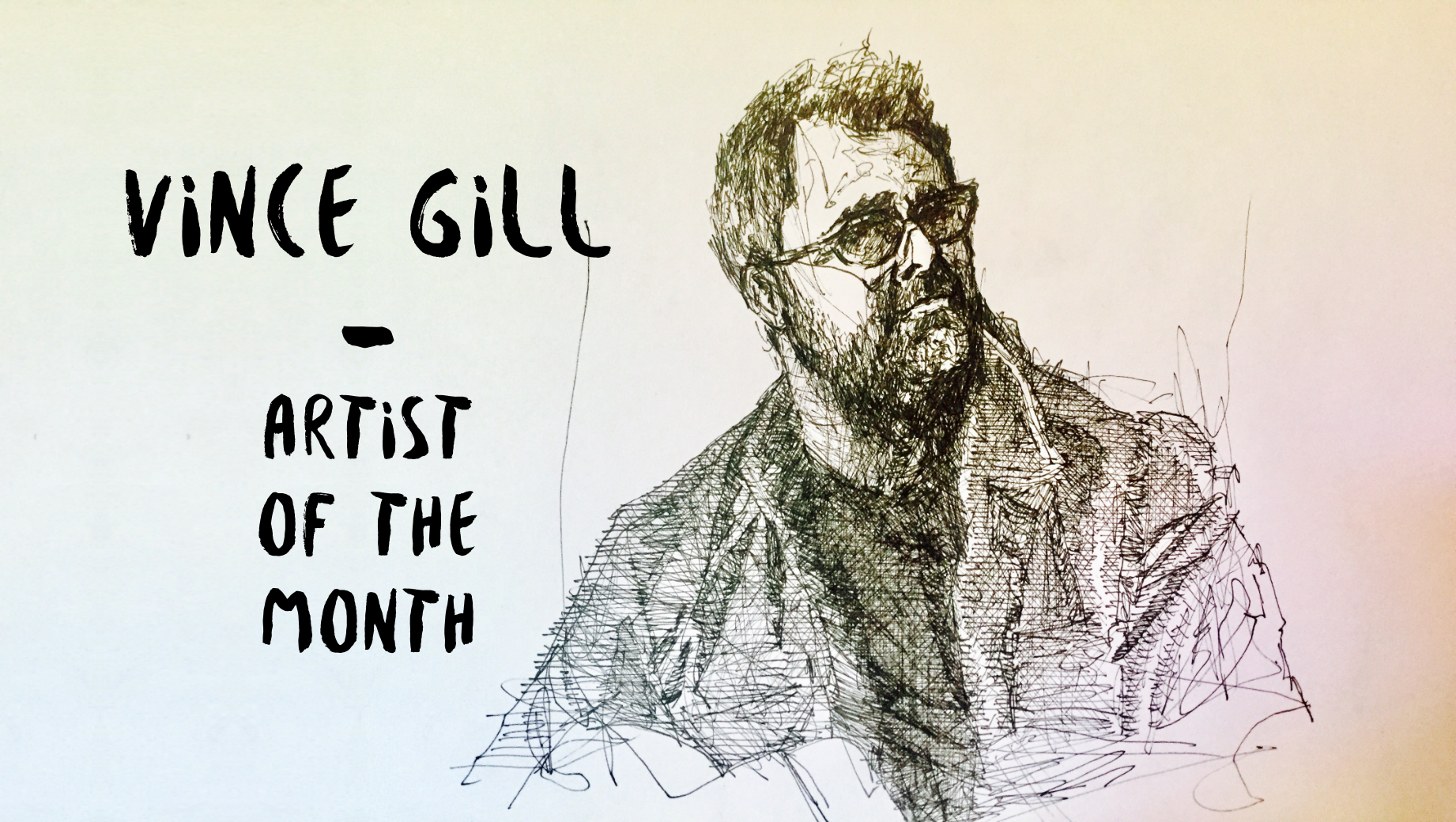
Vince Gill Looks Back on His Bluegrass Years (Part 2 of 2)

In the second half of our interview with Vince Gill, the country legend reflects on his bluegrass history, explaining how he became interested in the music, what he learned by listening closer, and why it led to one of his most famous songs.

Editor’s Note: Read the first part of our Artist of the Month interview with Vince Gill.

BGS: “Go Rest High on That Mountain,” in my opinion, is going to live forever. And I think the bluegrass audience loves hearing Patty Loveless and Ricky Skaggs sing with you, too.

Gill: You know, I wouldn’t have been able to write that song if I hadn’t played bluegrass music and learned the structure of that music and how it works — and the emotion of it. Bluegrass music is so honest and so real. Some of those morbid murder ballads and the saddest of the sad songs are what I love most. Give me “Mother’s not dead. She’s only a-sleepin’. Patiently waiting for Jesus to come.” That’s about as good as it gets. “The Little Girl and the Dreadful Snake.” I could just go on and on and on.

All these tortured songs, but you know they’re real life. They’re not somebody going, “How can I slip one up on the world and make a bunch of money having a big hit record?” They’re so honest and real. And the fact that my past had so much to do with Ricky and Patty, they were the only two people that I would’ve consider it singing on that song.

I still love it when Patty comes to do the Opry.

There’s a really unique thing that happens when our voices sing together. It’s so… obvious. I sang on her very first record in the early ‘80s. I sang on her first hit record and she sang on my first hit record. So it’s my little sis.

Tell me about how you found bluegrass. Was there an entry point for you?

Yeah, I knew of it because my dad played the banjo a little bit. He never could figure out the three-finger, Scruggs-style banjo. He cussed Earl his whole life because he couldn’t figure it out. He played more of a folky banjo. Not drop thumb, not old-timey, but more of a frailing kind of banjo. So I was always around the music, as best I can remember, forever. There were obviously the Flatt & Scruggs things from The Beverly Hillbillies that were in everybody’s DNA. Then I was playing mostly in rock bands in junior high school and high school.

A kid named Bobby Clark was the one that really got me pointed towards bluegrass. He had a little band in Oklahoma City and his father was a repairman. I had broken the string on my dad’s banjo, messing around with it, and I didn’t know how to change it. So I took it to Charlie and he put a string on it pretty quickly and everything was fine. I wasn’t gonna get my butt kicked. Then I started talking to Charlie, and he says, “You play music, don’t you?” And I said, “Yeah, I love to play. I play electric guitar and play in rock bands and stuff.” He goes, “My son Bobby is a really fine mandolin player and plays bluegrass. You ever played any bluegrass?” I said, “No.”

They stuck an acoustic guitar in my hands and Bobby said, “We just had our lead singer leave the band and we’re looking for a singer.” So they did a pretty good job of raising me and teaching me and showing me how bluegrass worked. I played in their band for the last couple of years of high school. Then in another bluegrassy kind of band called Mountain Smoke. And I started playing all the festivals down around Oklahoma and Texas and Kansas. And ran into all the people that I’ve known in my whole life since I was 15, 16 years old.

Wasn’t that how you met Cheryl White [from The Whites]?

Yeah, I used to carry her bass around the festivals. I always had a thing for the girl bass players for some reason. There was another family band from Missouri called the Calton Family. Got sweet on Brenda. Then I got sweet on Cheryl. And she says I should’ve picked a harmonica player. [Laughs]

Those were such fun days and innocent. I loved the camaraderie that went on in that music. Not only with the people that came to the festivals, but the musicians. Everybody jammed together. There wasn’t a whole lot in it for anybody. Everybody was just kind of getting by. It was amazing, as I look back, what it did for me in the way that I respected other musicians and listened to other musicians. It was really important that I had a lot of that in my past. I haven’t forgotten it.

When I first heard bluegrass, I was just blown away by musicianship of it.

Yeah, I mean Stuart Duncan was as great as he was at 12 or 13. So was Mark O’Connor when he was 12 or 13. And Marty and Ricky and Jerry and on and on and on and on of these wonder kid pickers. Unbelievable. I kind of squeaked in because I could sing a little bit and figured out how play as I went. I kind of played whatever was left over in a lot of the bands I was in, and that was fine.

I saw you play mandolin on quite a few songs when you played Bluegrass Nights at the Ryman. What is it about that instrument that you really enjoy?

I think the mandolin is the most important drive of a bluegrass band. The banjo and that are the two most definitive sounds. In bluegrass, mandolin players are like the drummer, even more so than the guitar player to me. It’s that backbeat and driving it. Sam Bush was a great teacher of how you drive that music, you know? I loved the ferocity and intensity that he played with. When he played, that was powerful to watch as a 15- or 16-year-old kid.

That’s what I like. I like making it dance. I liked the importance of playing that instrument in bluegrass. I’m probably a much better guitar player in bluegrass than I am a mandolin player. But in some bands I had to play banjo. Sometimes I had to play, unfortunately, fiddle on a few things. Terrible! I played Dobro, I played everything. I played bass with Ricky’s band for a minute and then got to play some other instruments, but had a love for all of it. I still do. Probably I love it more now because it reminds me so much of my early days, and those first forays into learning about playing music.

Did Dobro come naturally to you?

It all kind of did. I mean, I put in the hours and I practiced hard. The neat thing was, you had such good people to learn from. I always had big ears and could always hear well and find what I was hearing in my head, figuring out how to play it.

There are so many brother duos that came up in bluegrass. Do you think that rubbed off on you with your harmony singing now?

Absolutely, yeah. I was trying to either be Ralph Stanley or Phil Everly or Ira Louvin or whoever. Don Rich and Buck Owens should’ve been brothers. I was a high singer so bluegrass was a natural fit. There have always been predominant high singers that were the focal point. Whether it was Ralph and Carter or whoever, man, that was a blend. You didn’t understand it when you were 15 or 16, what it was that made that blend so beautiful. It was the blood, you know. The DNA was the same.

I didn’t get to experience that until my oldest daughter was 18, 20 years old and we started singing together. I started calling her my little Everly because I’d spent my whole life trying to be Phil. You know, singing the high parts for everybody else, and blend perfectly, and every nuance they did, I’d do. And I’d just want ‘em to think I was related to ‘em. She wound up naming her daughter Everly because of that, because I called her my little Everly.

But yeah, I love sharing music. I love the collaboration of music more so than I like it by myself. It’s not as interesting by yourself, but when you get to play off somebody, and play with somebody, it’s very powerful.


Photo credit: John Shearer

22 Top Country Duos

Country music was made for duets. Not only because those tight, tasty harmonies are a foundational aspect of the music, but also because country accomplishes heartbreak — and every other make and model of love song — better than almost any other genre. (Thought quite possibly better than all other genres.) It just makes sense to have two singers, one to play each role in a lost, soon-to-be-lost, or (rarely) divine, never-perishing romance. But the format isn’t restricted to lovers or their placeholders, it can just as seamlessly fit heroes and acolytes, parents and children, siblings, peers, fellow pot smokers, and on and on.

Take a scroll through these twenty-two country twosomes:

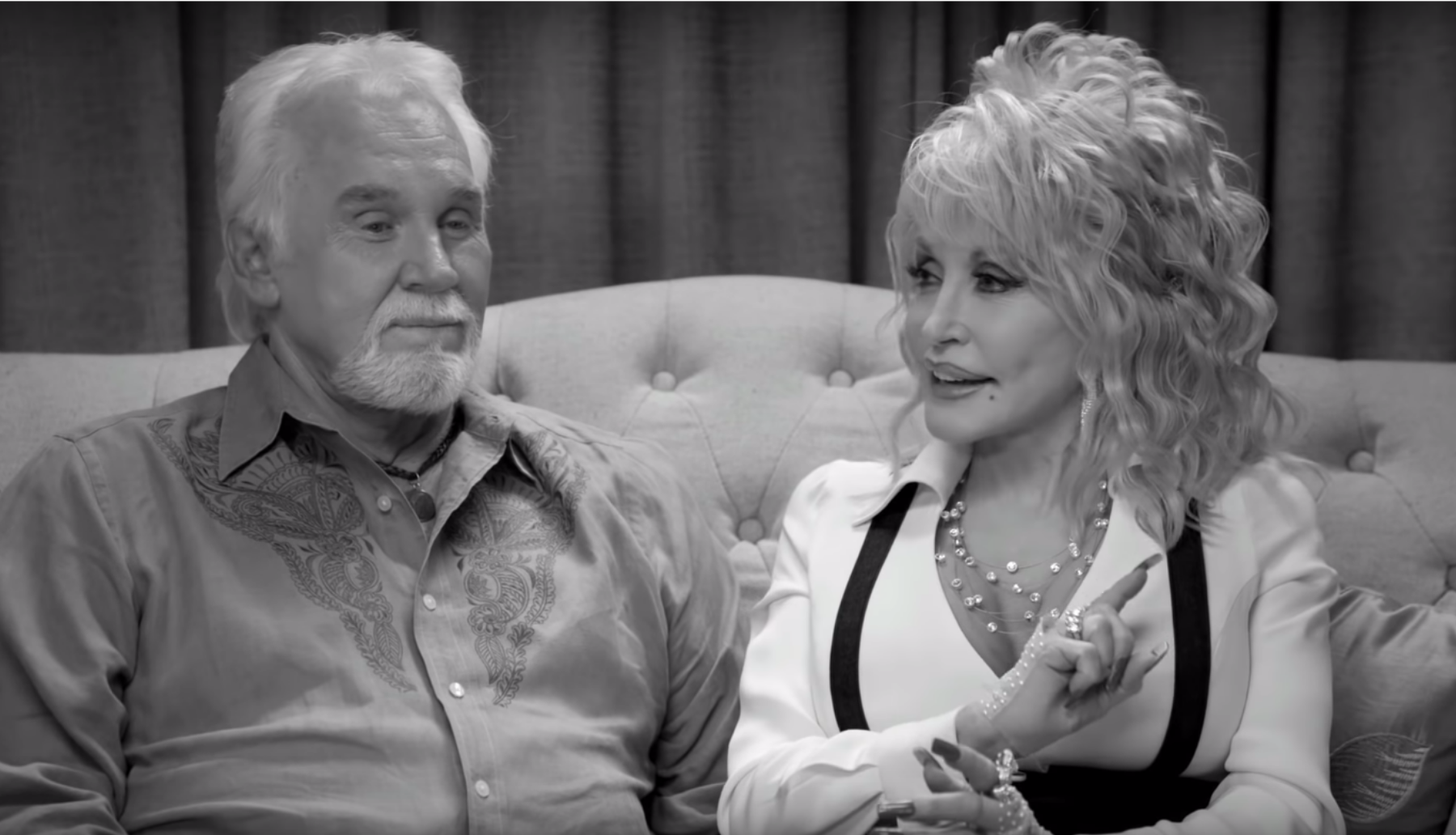
Kenny Rogers & Dolly Parton

We couldn’t have this list without these two. They should be the start, middle, and end of any definitive list of country duos. So we’ll just make the easy choice and kick it all off with Kenny and Dolly — that extra intro about their friendship and the years they’ve known each other? Swoon.

Loretta Lynn & Conway Twitty

After saying what we did about Kenny & Dolly we knew this pair needed to come next — so as to not rile anyone. Out of countless duets we could have chosen, how could any top “You’re The Reason Our Kids Are Ugly?”

Willie Nelson & Ray Charles

For inexplicable reasons people tend to forget Ray Charles’ incredible forays into country. His collaborations with Willie are stunning for the extreme juxtaposition of their voices and styles — they feel and swing so distinctly and differently, but all while perfectly complementary. “Seven Spanish Angels” ranked a very close second to this number in our selection process.

Glen Campbell & John Hartford

The most-recorded song in the history of recording? It’s said “Gentle On My Mind” holds that honor. And goodness gracious of course it does. Here’s its writer and its popularizer and hitmaker together.

Lee Ann Womack & George Strait

Together, Lee Ann and George were beacons of the trad country duet form, especially in the ’90s and early 2000s. This one from the jewel in the crown of Lee Ann’s discography, Call Me Crazy, is crisply modern, but with decidedly timeless vocals.

George Jones & Tammy Wynette

A broken, country fairy tale of a love story, George and Tammy’s relationship was infamously fraught, but damn if that didn’t just make their duets ever more… ethereal. Which doesn’t justify that Tammy Wynette kinda pain, to be sure, but it does remind us that if country can do anything better than all other genres, it can be sad.

Reba McEntire & Linda Davis

One of the best country songs, duets, and music videos EVER MADE. Theatrical and epic and a little silly and downright catchy and Rob Reiner and… we could go on forever.

Tanya Tucker & Delbert McClinton

Tanya is back with a brand new album and its well-deserved level of attention has been helping to re-shine the spotlight on her expansive career. Forty top ten hits across three decades. Who does that? Here she duets with Delbert McClinton on their 1993 hit, “Tell Me About It.”

Alan Jackson & Jimmy Buffett

Hey, if this has to be stuck in our heads for the rest of the month, it should be stuck in yours, too. Fair’s fair. It’s only half past [whatever time it is], but we don’t care.

Johnny Cash & June Carter Cash

One of the most recognizable duos in the history of the genre, immortalized not only in their discography but in a film adaptation of their love as well, Walk the Line. We all know “Jackson” as familiarly as the ABC’s, so here’s a slightly lesser-known beaut. (Keep watching til the last verse for an adorable bit from June.)

Eric Church & Rhiannon Giddens

Country is at its best when it surprises us. This collaboration is certainly, on the surface, unexpected, but the message of the song isn’t the only way these two artists can relate to each other. Over the course of their careers they’ve both fought their way from the fringes to the centers of their respective scenes. More of this, please.

Dolly Parton & Porter Wagoner

Dolly got her start with Porter Wagoner on his television show in the 1960s. They can certainly be credited with pioneering, popularizing, and epitomizing the country duet format. One of her most famous hits, “I Will Always Love You,” was written for Porter as she lamented leaving their act to go totally solo. (We’re a little glad she did.) You can tell they sang this song just a few gajillion times together, give or take.

Pam Tillis & Mel Tillis

Father/daughter duos in country aren’t as common, but they certainly aren’t unheard of. Pam and Mel are a perfect example. (The Kendalls are another.)

Patty Loveless & Ralph Stanley

Patty Loveless received the first ever Ralph Stanley Mountain Music Memorial Legacy Award in 2017 at Ralph’s home festival, Hills of Home, in Wise County, Virginia. Patty and Ralph were longtime friends and collaborators during his lifetime and even through her mainstream country success she referenced bluegrass and Ralph as influences — and she cut a few bluegrass records as well.

Alison Krauss & James Taylor

It’s. Just. Too. Good. Like butter. Like a warm bubble bath. Like floating on a cloud. Two voices that were meant to intertwine.

Charley Pride & Glen Campbell

These two were made to sing Latin-inflected harmonies together, weren’t they? Charley Pride gets overlooked by these sorts of lists all too often. But dang if he didn’t crank out some stellar collaborations, too!

Gram Parsons & Emmylou Harris

“Love Hurts” and boy, if Gram and Emmylou don’t make you believe it heart and soul and body and being. The definitive version of this Boudleaux Bryant song? Perhaps.

Willie Nelson & Merle Haggard

Icons being icons. And friends. And amazingly talented, ceaselessly musical comrades. You love to see it. (We could’ve/should’ve chosen “Pancho & Lefty.” We did not.)

Vince Gill & Amy Grant

There are quite a few reasons why the Ryman Auditorium basically hands this husband and wife duo the keys to the place each December. Basically all of those reasons are evident in this one. It’s fitting that this video came from one of those Christmas shows, too.

Dolly Parton & Sia

Dolly literally outdoes herself, re-recording “Here I Am” for the original soundtrack for her Netflix film, Dumplin’, after she first cut the Top 40 country single in 1971. Clearly she and Sia have much more in common than an affinity for wigs; their soaring, acrobatic voices seem so disparate in style and form until you hear them together. Listen on repeat for the best therapeutic results.

Robert Plant & Alison Krauss

[Insert entire Raising Sand album here, because how could we ever choose?] Lol jk, here’s “Killing the Blues.”

Carrie Underwood & Randy Travis

Cross-generational, meet-your-hero magic right here. Little did we know what was in store for Carrie Underwood then. But the way Randy looks at her up there, you can tell he knows she’s goin’ places.

Dale Ann Bradley Hears the Truth in ‘The Hard Way’

Dale Ann Bradley has made a lasting impression with bluegrass listeners as a solo artist, as well as a member of the all-female band Sister Sadie. And before that, she recorded and performed with the New Coon Creek Girls in Renfro Valley, Kentucky, where she established a foundation that would carry to her multiple performances on the Grand Ole Opry and five IBMA awards in the female vocalist category.

An approachable artist who describes her audiences as “my people,” Bradley is quick to admit that her musical path hasn’t always been easy – in fact, her new album is named The Hard Way, a nod to the Jim Croce song she covers, “The Hard Way Every Time.” But in spite of that title, it’s a beautifully subdued project that stands among the most satisfying of the Kentucky native’s long career. That’s as much due to her gentle singing as her gift for finding songs that suit her.

Bradley invited the Bluegrass Situation to chat prior to a Nashville show earlier this month at the Station Inn.

BGS: I wanted to start by asking about the production on this record, because to me it sounds very crisp. It seems like there’s a “less is more” approach.

Bradley: It is. I have learned, on some things, that’s the correct approach. This one’s more guitar-oriented than a lot of them I’ve done – since [1997’s] East Kentucky Morning. Because I had such good guitarists play, it really didn’t need to be souped up. And the lyrics are so story-telling that the song, and the great musicians that I had, found their own way and their own place to be. … This is the third one I’ve produced and I’m always scared to death! I never take that for granted because it’s just like painting a picture or having a young’un! [Laughs] You don’t know what’s going to happen.

What is it about production that makes you want to keep coming back into that role?

If I want to try something, to able to do it. Even though I know that sometimes it works and sometimes it don’t. I have the utmost respect for any producer that I’ve had because I’ve had the best there is. … From Sonny Osborne, I learned that a good performance is a lot better than everything being technically perfect. He drilled that into my head – it’s all about emotion. With Tim Austin, I learned drive and punch with the guitar, and he helped me a lot with my guitar playing. And with Alison Brown, I learned not to be afraid of creativity. Put it down, and if it works, it works. And if it don’t, then you’ll know not to do it the next time. She’s so creative. I’ve worked with three different producers with three different outlooks, and learned from all of them.

“The Hard Way Every Time” is a beautiful song, with a lot of truth in there.

It is for me. The generation that I come from, we’re all at that point where we’re looking back, and we think, “Well, I sure did that the hard way.” Kept doing it and kept doing it. I hope it reaches a young generation. It seems to be, but I think there’s something in there hopefully for everybody.

How do you find the songs you want to record?

All the memories… I may not be able to recall what I had for lunch or breakfast, but a song will stay with me. Songs that have been poignant in my life have been so much so that I’m never going to forget them. I don’t cut cover tunes just to be different. I do it because it shows how talented these musicians are. … And I want to show that in music it doesn’t really matter what genre it is. If it really breaks your heart or makes you happy, it’s all good. Then there are songs that I want to do in the bluegrass style because I didn’t want to do them in the other style.

I’ve often thought that there might not be any song that’s off limits for you. Is that true?

Well, it was close this time. I’ve never been as scared as I was with “Wheel in the Sky.” I really belabored it. Everybody was saying, “Let’s cut it,” but what do you do after Steve Perry’s cut something? Or Journey’s played it, you know? Then I got to looking at it some more. That was probably the last song that I picked. And I got to listening to those lyrics, and I thought, Bill Monroe would have wrote that: “Winter’s here again, O Lord…”

And I’ve done that with other songs, like “Summer Breeze.” The lyrics are just about life and emotions, and it’s important to me. I love novelty, funny little songs but I just really like the ones that have a message, or maybe leave one.

How did the guitar come to be your instrument?

It was probably going to be the only one that I had any possibility of getting. I would have loved to have had a banjo and mandolin, but I finally got a little ol’ cardboard, classical-style guitar that somebody ordered from a catalog. I knew I might get that one if I pressed enough. If I pressed too hard, I wasn’t going to get nothing! But I had a love for it. And still do.

I never was around anybody that played, is the thing. I had a friend who was my age, and we wrote songs together. He was very talented and he didn’t play bluegrass-style. He was a Jim Croce fan, so he would play that and I was so mesmerized, but that was the only guitar influence I had until I came to Renfro Valley. They were all seasoned Central Kentucky musicians and I learned so much from them.

You were at Renfro Valley for years, and then you became a bandleader. What do you remember most about that time? What was that transition like for you?

It was a transition that had to take place, before I would have ever gotten out of the community I was from. I learned a lot about the history. I learned Bradley Kincaid songs and who Bradley Kincaid was, and how Renfro Valley is such a treasure. I loved it and I got to perform country and gospel. I started singing traditional country there, and then the entertainment director would let me do traditional bluegrass songs with the country band. And that worked out good.

When that position with the Coon Creek Girls came open, I was tickled to death to get that. … Renfro Valley is in “The Hard Way Every Time.” Major, maybe over 50 percent! [Laughs] But I learned, and I’m thankful now that I learned those hard life lessons with good people that had hearts. I was thrilled to work there. The talent there in the late ‘80s and ‘90s – I’m telling you, it was as good as you’d hear anywhere.

And then you decided you wanted to be in front, and go on tour?

Well, what happened was, the Coon Creek Girls had been together for years and everybody got married and had babies. I still didn’t want to step completely out, so we called it Dale Ann Bradley and Coon Creek. And then things changed from there, and I signed with Compass, and then it grew its way into me totally being responsible. [Laughs] Good, bad, and indifferent!

What is some of the best business advice you’ve ever gotten.

[Laughs] Don’t spend your money! Cut corners, but not so much where you make somebody uncomfortable. But when you can, cut corners. Don’t buy what you can’t pay for. And work hard. Respect your money. I had to learn that the hard way, too — that’s the other 50 percent of The Hard Way!

Who would you say are some of your heroes?

Oh, Dolly Parton of course. I loved John Duffey and John Starling. What got me really hooked on bluegrass was that I’d hear Ralph Stanley and Bill Monroe on the radio — and Lester and Earl on The Beverly Hillbillies when I got to see that. Dolly was a hero, and the Seldom Scene, The Country Gentlemen, Charlie Waller, so many in the country field, too. Dolly could do anything. Bluegrass was naturally there, with her being 80 miles across the mountain from where I was from. And I loved Glen Campbell – he was another one that could do everything. So many that you can’t name.

So many of those artists you named have an incredible ear for a song.

They do, and it’s a gift that they can sing anything. And I adore Aretha Franklin, Stevie Wonder, and Ray Charles. You can’t stay on this earth and get any better than that.

You’ve won some IBMA Awards, and Sister Sadie earned a Grammy nomination this year. I would imagine that aspiring musicians may look to you as a role model. Do you see yourself that way?

Well, I don’t feel that I’m even worthy enough to put myself up as a role model. But if they like this style of music, I want to be somebody that makes them unafraid to express themselves. And I’ve always tried to treat people as good as I can. In those two ways, I hope that I am. In other ways, everyone’s got to walk their own journey, you know?

The IBMA Awards now have women winning the instrumental categories. As a woman in bluegrass yourself, what does an accomplishment like that mean to you?

Well, obviously it’s good that the mindset has changed, in order to really study the female musicians because some of them are quite great. The thing that worries me a little bit is that I don’t want it to matter if it’s male or female, if you’re a good player. I know so many females who are wonderful players and I don’t think we should get it just because we’re women. Let’s get it on our playing and our accomplishments. I don’t get into that (mentality of) “you’ve got to let me play because I’m a girl!” [Laughs] I’ve never been thrown out of a jam session, but I ain’t been in too many either.

Do you see a difference from when you started until now?

Definitely. I see girls cutting their gig, is what I see. Learning. And playing and singing and writing. I do see a female presence strongly coming in there. There was a time of course, I know not so very long ago: “Well… girls can’t sing bluegrass.” Now that needed to go!

I’d like to see the festival scene open those doors more.

Yeah, they’ve moved up to about two girl acts. And I didn’t really realize that was the case, because in the ‘80s and ‘90s, the Coon Creek Girls were the girl act. [Laughs] And I thought, “We’re getting hired, what’s the problem?” “Well, you’re the only girls!” [Laughs]

Going back to the title of this record for a second, I know there’s a lot of hard work that goes into a career like yours. But what would you say is the reward in that?

Oh gosh. There’s been so many. The reward was that I was able to do it. I was able to sing from the very first venue until now. I got the opportunity to sing and to write and to express myself in a musical way. I’ve met the most precious angels — and a lot of musicians have. They’re angels themselves. So many good friends that have been so good and gracious and merciful to me. And along with that, it provided a way for me to support myself and my son. That’s the reward. That right there is everything.


Photo credit: Pinecastle Records

MIXTAPE: Gangstagrass’ Standard Setters

As purveyors of genre crossing, we like to recognize standouts within a genre that innovated simply by epitomizing a sound with particular skill: tracks that demonstrated what virtuosity could do within a genre, that pushed the genre to new heights (or at least new places) for us, tracks that maybe we used to judge what came afterward. We could list a lot of classics, but this list is really about the tracks that were the standard setters for each of us personally, making a mark in how we thought about a genre or sound. For our Mixtape, we selected a few songs and described the impact the tracks made. Gangstagrass

Flatt & Scruggs – “Foggy Mountain Special”

Earl’s fast, regular picking in songs like “Foggy Mountain Breakdown” made his three-finger rolls, like the Foggy Mountain roll, iconic. But this heavily-swung tune, while not a slow song by any standard, really explores the bluesy side of bluegrass banjo. The syncopated banjo kick, with the band entering on the second beat, throws off the listener’s perception of time. The main lick itself deserves to be as iconic as any fast-flowing Scruggs roll. And that solo! From the single-string bends to that chromatic octave line, Earl knows to keep playing it just a little bit longer. You couldn’t go back and redo any part of this any better, not in a hundred years. They nailed it.

Norman Blake and Tony Rice – “Little Beggarman/Gilderoy”

Tony Rice sounds his best on duo albums, whether it’s with country superstar Ricky Skaggs on a journey to reconnect with his bluegrass roots, or songster Norman Blake, whose clear-as-a-stream picking and earnest vocals are augmented by Tony’s unparalleled rhythm work and rich baritone. On this instrumental track, guitar and mandolin trade breaks and, unusually, trade tunes. Because they’re both in A, with similar chords and melodies, you almost don’t notice the transition, except that the tune Blake plays on mandolin is minor, while Tony’s guitar tune is major. It’s a beautiful, subtle effect that showcases both artists and enhances the sound of each instrument.

The Steeldrivers – “Ghosts of Mississippi”

Before Chris Stapleton was Chris Stapleton, he was in a band called the Steeldrivers. The mainstream music audience has rightly picked up on his powerful vocals and formidable songwriting, but arguably his best work has been with this band that gave him a perfect setting. From the smoldering growl of the banjo to the searing whine of the fiddle, the sound has not been surpassed by either Stapleton’s pop work or by any other bluesy bluegrass band. This track in particular sets the bar, serving up equal parts groove, emotion, and one hell of a catchy melody.

Béla Fleck and the Flecktones – “Hole in the Wall”

The Flecktones represent Béla’s furthest ventures outside traditional bluegrass, and this late track on their second album, Flight of the Cosmic Hippo, is a representative example of their early sound. Of note, Howard Levy’s keys get more room than on most other tracks which tended to feature more of his admittedly superlative harmonica work. Near the end, there’s enough sonic buildup to justify a fantastic extended banjo solo with fluidly shifting time signatures and tonalities. Banjo players who have tried to emulate this piece will have noticed that, like many Béla tunes, it centers around a particular lick, in a particular nonstandard key, played in open G tuning. But as with magic, sometimes understanding the trick doesn’t make it any less exciting to see it performed right in front of you. — Gangstagrass

Pharoahe Monch feat. Black Thought – “Rapid Eye Movement”

Every now and then there’s a collaboration that you just know is going to be dope just by the parties involved. “That’s what I figured when I saw these two MCs on a track from Pharoahe Monch’s 2014 album P.T.S.D. I wasn’t prepared for HOW DOPE, however,” says R-SON. Pharoahe Monch drops bars about being in a relationship with his ammunition and then filing for divorce and releasing his “ex-calibers.” Not to be outdone, Black Thought starts his verse with the last two lines of Pharoahe’s and goes on to “send shots to ancient Greece to pop Socrates.” Black Thought’s line “the ex-slave sado-masochist/who gave massa my ass to kiss” is, as R-SON puts it, “just another example of Black Thought’s conscious swagger that laces every verse that he blesses a track with.”

Black Star – “Thieves in the Night”

Mos Def and Talib Kweli came together on the Black Star album and created gems but this was the standard for R-SON. Their distinct flows built two very different parts — Kweli’s recounting what his man Louis said and thought and how those thoughts affected Kweli. Mos Def’s verse, on the other hand, had a breakdown of the hook where he responded to the things said in it. The song ends with one of the great lines in the genre’s history: “I give a damn if any fan recall my legacy, I’m tryina live life in the sight of God’s memory.” R-SON notes that “in my younger days the song brought tears to my eyes and I’m happy to say that it still does.”

Mos Def – “Mathematics”

We cannot think of another time when someone counting from 1 to 10 (Dolio the Sleuth on “Ain’t No Stopping” aside) has had more meaning. Mos raps, “5 dimensions, 6 senses, 7 firmaments of heaven and hell, 8 million stories to tell, 9 planets keep orbit around the probable 10th, the universe expands length….” He continues his “…numbers game, but shit don’t add up somehow,” speaking of the number of bars he has to do what he does, and the minimal amount of money he gets from it all. “6 million ways to die for the 7 deadly thrills / 8-year-olds getting found with 9 mils / it’s 10 p.m., where your seed, he’s on the hill/….pumping crills to keep they bellies filled.” His word (and number) play is immaculate.

UGK – “Int’l Players Anthem (I Choose You)”

A seminal “posse cut” that unites two legendary duos of Southern hip-hop, UGK and Outkast, exhibiting four distinct flows and approaches to the subject of being a “player.” Each emcee delivers a memorable verse complete with the stunning street poetry they’re known for, with cadences that ride the beat (or the lack of beat, in the case of Andre 3000’s intro verse) that samples heavily from Willie Hutch’s “I Choose You” from the soundtrack of 1970s Blaxploitation flick, The Mack.

Ralph Stanley and the Clinch Mountain Boys – “Nobody’s Love Is Like Mine”

Rench was listening to 1970s-era Clinch Mountain Boys when he started putting Gangstagrass together as a sound. There’s been a good deal of attention to the Stanley Brothers, but the sound was developed and refined to a new level with the addition of Ricky Skaggs and Keith Whitley. The vocal harmonies are tight and the full string section is on point in a way that epitomizes the best of classic bluegrass sound.

Stuff Smith – “Serenade for a Wealthy Widow”

Stuff Smith is one of the few truly iconic jazz fiddlers. His style is on Charlie Parker’s level. “In an alternate reality, where we weren’t so hung up on jazz’s horn players, I feel Stuff would have been one of the fathers of bebop,” says Brian. Stuff’s style pulls from such a diverse array of influences, from Stéphane Grappelli to the Western swing fiddlers like Bob Wills. The gruffness of his tone and clarity of his lines point to the meld between the character of string band/blues fiddlers players before him like Clifford Hayes and Robert Roberson, and the progressive harmonies that took over jazz after bebop. Stuff is the perfect example of harmonic personality over the harmonic intellectualism that followed. “This track is one of the more off-beat compositions that I love to surprise folks with,” Brian adds.

Slam Stewart – “Oh Me, Oh My, Oh Gosh”

“I feel much the same way about Slam as I feel of Stuff; his musical voice is synergistic of the eras before and after him,” Brian says. The way he rides the rhythm comes from an era of bassists mimicking the sound of tubas in marching bands, indicative of players like Bill Johnson, Wellman Braud, and Pops Foster. His style foreshadows others like Jimmy Blanton, Oscar Pettiford, and Ray Brown with their strong solo personalities. This tune is a favorite; it’s a slick lyric and showcases what Slam can do on all fronts.

Outkast – “Rosa Parks”

This one came out of left field in 1998 — when Southern rap was growing into national attention — and planted a flag with the trademark quirkiness of Outkast style, including a harmonica breakdown in the middle of the song. Their fast-flow style is undeniable and surgical here, while their unabashed Southern drawls in this radio hit opened the floodgates for Southern hip-hop to start dominating the charts.

Wilson Pickett – “Hey Jude”

This has a lot to do with the way the Swampers in Muscle Shoals epitomized the soul sound of the ‘60s in the best way, but this track in particular pushed boundaries by including what would later become familiar Southern rock sounds, courtesy of a young Duane Allman. Of course, the wicked Mr. Pickett kills it with a prime example of soul vocals just owning the track.


Photo credit: Sean Aikins

MIXTAPE: Crowder’s Simple Yet Complex Bluegrass Playlist

“I think my favorite description of bluegrass music is from Bill Monroe: ‘It’s Scottish bagpipes and ole-time fiddlin’. It’s Methodist and Holiness and Baptist. It’s blues and jazz, and it has a high lonesome sound.’ It is that and more to me. It is simple and complex. It is death and life. It is impossible to put together anything close to a definitive playlist of such things so here are a few songs I really like.” — Crowder

“A Far Cry” – Del McCoury Band

Del McCoury is the epitome of the progressive conservation of that “high lonesome” sound.

“Angel Band” – Stanley Brothers

This is it for me. An old gospel song from a poem originally titled “My Latest Sun Is Sinking Fast.”

“The Prisoner’s Song” – Bill Monroe

This origin of this song goes back to the beginning of recorded “hillbilly” music and nothing better than the Father of Bluegrass’ take on it with electric guitar, piano, and drums. Heretical!

“Ruby” – Osborne Brothers

Those falsetto jumps and holds, if you’re not smiling we can’t be friends.

“Shady Grove” – Ricky Skaggs

Mr. Skaggs is one of my favorite humans ever made and he and Kentucky Thunder slay this traditional Appalachian courtin’ song that’s found its way into the repertoire of all the greats.

“Walls of Time” – Bill Monroe

A classic written by Monroe and Peter Rowan, but not recorded until after Rowan left the group. The lyrics are perfectly haunting.

“Freeborn Man” – Jimmy Martin

“King of Bluegrass” after the addition of Gloria Belle. That female vocal sitting above Martin’s cutting tenor is supreme.

“Mama’s Hand” – Hazel Dickens

Known for her singing style as well as her advocate songs for coal miners and the working folk and to be one of the first women to record a bluegrass album. This song tells the story of the day she left her family’s home in West Virginia.

“Carry Me Across The Mountain” – Dan Tyminski

This guy is legend. Popping into the universal ethos and consciousness of popular culture every so often, from his updated version of “Man of Constant Sorrow” to vocal feature on Avicii’s international hit “Hey Brother.”

“Blue Train” – Nashville Bluegrass Band

I love how these guys incorporate black gospel and spirituals. Just a line as simple as “coming for to carry me” brings with it the momentum and mass of a locomotive.

“Salty Dog Blues” – Flatt and Scruggs

The original meaning of “salty dog” comes from rubbing salt into the coat of your dog as a flea repellent. That infers that a “salty dog” would be your favorite person or your best friend. I like that.

“Oh, Death” – Ralph Stanley

No vocalist will ever fit a song more perfectly.

“The Little Old Log Cabin in the Lane” – Fiddlin’ John Carson

The first “hillbilly” song ever recorded with vocals and lyrics. When I moved to Atlanta I landed in Cabbagetown on Carroll Street living in the Fulton Bag and Cotton Mill that he and his children worked in. That’s as close as I’ve ever come to greatness.

Photo credit: Eric Brown

15 Bluegrass Covers of Bob Dylan

Bluegrassers have been covering Bob Dylan for decades. First generation stalwarts Flatt & Scruggs covered more than a handful of songs penned by the future Nobel Laureate, Ralph Stanley sang with him, and at this very moment there are almost certainly jam circles out there around the globe laying down “Girl From/Of the North Country” with mash’s reckless, head-bobbing abandon without even realizing Dylan wrote the dang thing. Bluegrass covers of Dylan are so prolific, we had to cap our list at 15 — with an additional three not-quite covers tacked on for good measure.

Explore Dylan’s broad-reaching impact on bluegrass:

“Blowin’ in the Wind” — The Country Gentlemen

It just makes sense. The Country Gentlemen epitomized the impact of the folk revival on bluegrass and string bands of that era.

“Girl Of the North Country” — Sam Bush

Perhaps the most common and least jambuster-y of Dylan’s bluegrass incarnations, this one has been covered by everyone from Flatt & Scruggs and the Country Gentlemen to Tony Rice and his newgrass compatriot, Sam Bush.

“Señor (Tales Of Yankee Power)” — Tim O’Brien

It takes a special kind of songwriter (I mean, Dylan. Duh.) to craft a song that can allow another artist to inhabit it, wholly. It takes a special kind of artist to be able to do that song and songwriter justice. Tim O’Brien singing “Señor” is the perfect example of both.

“Tomorrow Is A Long Time” — Nickel Creek

An entire generation’s most mainstream exposure to bluegrass — Nickel Creek — might have simultaneously tipped off their young audience to the voice of a generation.

“It Ain’t Me Babe” — Flatt & Scruggs

Did you ever stop to think about the similarities between Lester Flatt and Bob Dylan’s singing styles? Now you have.

“When I Paint My Masterpiece” — Greensky Bluegrass

Truegrass, newgrass, jamgrass — any kind of [fill-in-the-blank]grass works for a Dylan cover.

“Boots of Spanish Leather” — Seldom Scene

Hearing a bluegrass band relax into a slower, loping groove is always a breath of fresh air. Seldom Scene know how to own a decidedly non-bluegrass beat. And yet, it’s quintessentially bluegrass.

“Long Ago, Far Away” — Front Country

The current bluegrass generation isn’t immune to Dylan’s influence either. Front Country burns this one down with a more straight ahead, hammer down arrangement.

“One More Night” — Tony Rice

Tony is arguably at his absolute best, his most extraordinarily superlative when he renders the songs of singer/songwriters and troubadours like Gordon Lightfoot and of course, The Bard.

“Rambling, Gambling Willie” — The Lonely Heartstring Band

There’s ramblin’, there’s gamblin’, philanderin’, and lots more gamblin’. It’s a dyed in the wool bluegrass banger — showcased in that decadently clean Boston style by the Lonely Heartstring Band — straight from a Dylan bootleg.

“Subterranean Homesick Blues” — Tim O’Brien

Spit. Out. Those. Lyrics. Tim. Oh and that hambone!! Lawd. Just listen to this and try not to feel visceral joy.

“Just Like a Woman” — Old Crow Medicine Show

This is here because we didn’t want to add that one Dylan song Old Crow is pretty famous for. They did an entire-album cover of Dylan! Let’s hear those songs for a change! It’s got more of a country and Western flavor, but we know Old Crow’s bluegrass roots run deep.

“Simple Twist of Fate” — Sarah Jarosz

Another take outside of the bluegrass box, but inherently informed by bluegrass. You can feel Jarosz emulate the lilt of Dylan’s voice in her phrasing. Unencumbered, yet supported in full by the strings.

“Don’t Think Twice, It’s Alright” — Flatt & Scruggs

Everybody join in and sing! There’s something especially pleasing about hearing Scruggs comp over these iconic chord changes.

“Walkin’ Down the Line” — the Dillards

At their height, the Dillards’ sound was blended so purely with that iconic folk revival sound, but without giving up one shred of their traditional bluegrass sensibilities. This is a perfect example.

“East Virginia Blues” — Bob Dylan & Earl Scruggs

Now here’s your bonus. Bob Dylan and Earl Scruggs, with the Scruggs boys gathered around pick through “East Virginia Blues” for a TV documentary.

“Lonesome River” — Bob Dylan & Ralph Stanley

And of course, how could we have a list about Bob Dylan and bluegrass without a nod to the special relationship Dylan had with Ralph Stanley? Dylan consistently cites Stanley as an influence and they even collaborated on this recording of an iconic Stanley Brothers classic.

“Man of Constant Sorrow” — Bob Dylan

Remember that Ralph Stanley influence we mentioned? Here it is again. It’s a reverse Bob Dylan bluegrass cover to round out the set.