Artist:Lisa Morales Honmetown: Tucson, Arizona Song: “Flyin’ and Cryin'” Album:Rain In the Desert Release Date: March 11, 2022 Label: Zaino Records
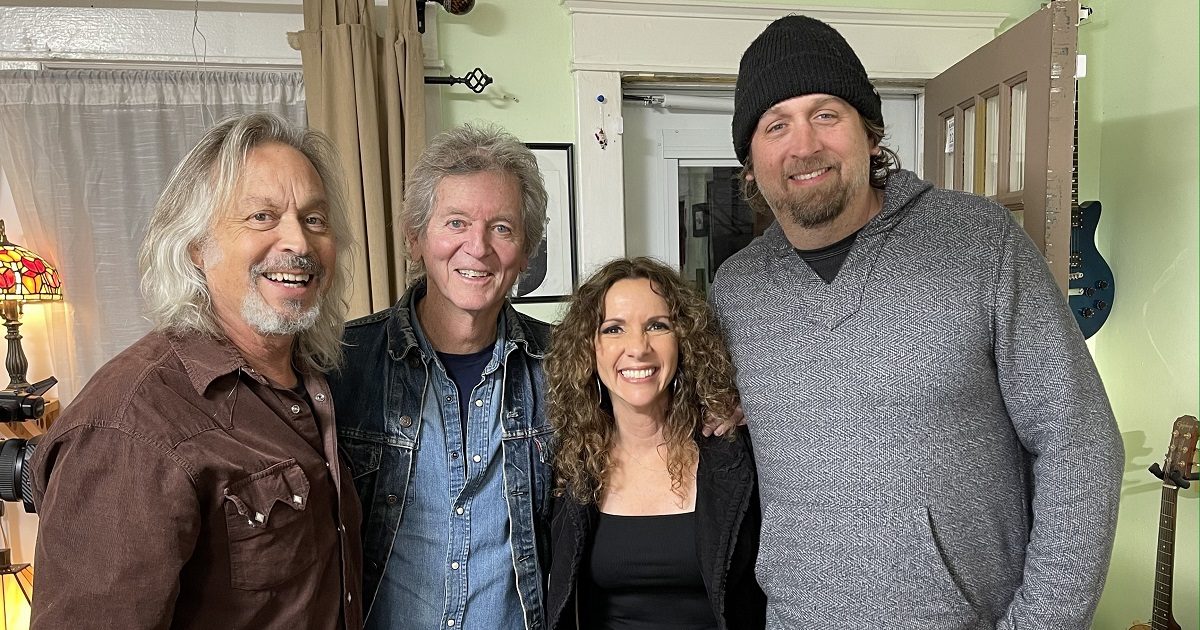
In Their Words: “Making this video was just hanging with the boys, sharing stories, laughs, and music. Hayes Carll is a dear friend; we both used to live in the Houston area and I produced his first album, Flowers and Liquor. I introduced him to Texas audiences early on.” — Lisa Morales
“With her talent and her generosity Lisa Morales changed the trajectory of my life. I heard Lisa a few hours before I actually saw her. The Sisters Morales show in Galveston, Texas, was sold out so I sat on the sidewalk and listened to them perform through the windows. Afterwards — when I could finally squeeze into the club — we were introduced by the club owner. When she heard that I was a singer-songwriter, Lisa offered to let me open the next time they came through town. I happily accepted. Eventually she offered more shows across the state. These were my first opportunities to travel for music and to play in front of audiences who had bought a ticket to listen and witness a show. It was all game-changing for me. Some time later Lisa offered to produce my first record and that offer changed the trajectory of my life. I’ll always be grateful to her for her kindness, wisdom, and mentorship.” — Hayes Carll
“I’ve known Lisa for years. When she asked if I’d find a harmony part to sing on a track for a new album, I couldn’t find a suitable part. So I took the liberty of assuming she wouldn’t mind if I wrote a few lines that would make the song a duet. She didn’t bat an eye, even gave me a songwriting credit. At least I think she did. What’s not to love about Lisa Morales?” — Rodney Crowell
“I’ve been a fan of Lisa Morales for such a long time. It was such a treat to get be in this video of this very fine song that she and Rodney wrote. It was a joy to get to spend some time with her, Rodney, and Hayes, and be in their presence!” — Jim Lauderdale
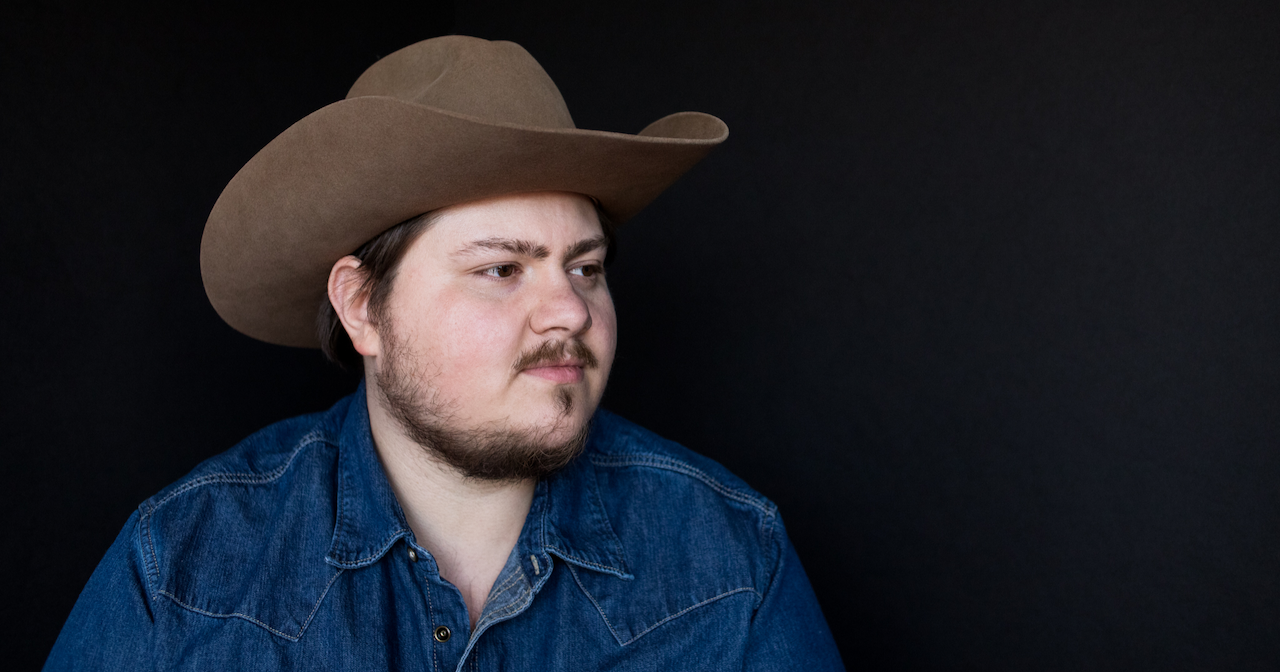
The self-titled country album by East Texan singer-songwriter Vincent Neil Emerson (Choctaw-Apache) oozes of the iconic “Wild West” with honky-tonk sensibilities and bluegrass touches that combine so many favorite textures and styles of country and Americana’s primordial ooze. His personality and identity are forward in every aspect of the project, from the lyrics to the production to the genre fluidity of each individual track – all of which marvelously combine into a cohesive whole.
In Emerson’s exclusive Shout & Shine live session (watch below), he performs two tracks from the album, “High on Gettin’ By” and “The Ballad of the Choctaw-Apache,” a song that dutifully tells the story of his grandmother’s community which was impacted by the creation of a man-made lake, the Toledo Bend Reservoir. The flooding of Toledo Bend had a disproportionate impact on impoverished, rural, and marginalized communities – including many Indigenous people – on the Texas-Louisiana border.
On first listen, “The Ballad of the Choctaw-Apache” feels like many classic country songs telling of injustice and standing in opposition to empire and “the man,” but Emerson’s personal connection to the tale is the entrancing spotlight under which this song shines. As you enjoy Emerson’s performance, take in our interview, when we connected via phone to discuss the album, Emerson’s creative process, and the overarching fact that, as he puts it, “Indigenous music is folk music. Indigenous stories are part of American folklore.”
BGS: I loved listening to the album and something that’s striking to me is that it feels so country, but also combines a lot of different genre aesthetics from different subsets of country in a unique way. I hear bluegrass in it, I hear string band music in it as well as western swing and classic country. How do you approach production and deciding which songs sound like what? There are a lot of different flavors here, but they still sound cohesive as well.
Emerson: With this one I got really lucky having Rodney Crowell producing the album. I think a lot of his ideas were what I was hearing in my head anyways. It matched up very well. As far as instrumentation, song by song we sat down and said, “Here’s what I think the song needs.” We were trying to fit the instrumentation around the song and around the story of the song. As opposed to doing it the other way around. If it sounded bluegrassy, that’s because it probably needed it, I guess!
To me it sounds like that golden age of country before it was divided into sub-genres and all country was just country.
I appreciate that!
What was it like working with Rodney? What was the balancing act like as far as his fingerprints being on the music and yours?
Nothing was forced, it was kind of like, “We got this song and this is what we’re going to do.” And, “Yeah, that sounds good!” [Chuckles] I wouldn’t say he was very hands-off, he knew exactly what he was doing. I didn’t really question any move that he made. It was kind of surreal getting to work with him.
A bystander, or a casual listener, when they hear “Ballad of the Choctaw-Apache” might just hear a country & western song, but I know for you it’s not just a classic, archetypical country song tale, it’s much more personal. It tells the iconic story of this country and this continent of the theft of land, culture, and ways of being from natives. I wonder if you could tell us a bit more about that song and how it’s more than just you writing a “rootsy” song.
I started writing that song after I sat down and talked with my grandmother about her upbringing, what she went through, and how the whole Toledo Bend Reservoir [creation in Texas and Louisiana and the displacement of natives and entire communities] affected her family. As I’ve been learning more about my tribe I felt that it was necessary to write something about that. I haven’t heard any songs written about it – in fact, not a lot of people talk about it. I thought it was needed.
Sometimes music like yours can get pigeonholed as “time capsule music” or throwback music. Something I love about this collection of songs is that, even though it’s classic and timeless, it doesn’t feel dusty or antiquated or divorced from the present. Can you talk a bit about that? Your music is down to earth, too, but it doesn’t feel like you’re trying to make music that’s retro.
There are a lot of bands out there that sort of play dress-up. There’s nothing wrong with that! I respect that and I’ve done it, too, but they’re trying really hard to be a certain era. I love all that music from the old school — I love Bob Wills — it’s just a personal choice. I don’t feel the need to “dress up” or try really hard to make the music sound like it was from back then. I’m so heavily influenced by the people around me and what’s going on around me constantly.
One guy who really had a good mix of that, too, was Justin Townes Earle. He had the old-time thing going on, then he could bust out “Rogers Park,” a piano ballad, and move in and out of [many different styles]. A personal style of songwriting should be a melting pot, it should be all eras – past and present.
Music is so subjective, I’m a firm believer in the idea that however you hear it is what it is. Whether that’s a positive thing or a negative thing to someone, I think it’s their right. I can’t tell anybody they’re wrong for forming their own opinion about my music – or anybody’s music.
It sounds like the process of letting a song have a life of its own is a big part of the process for you and that you understand an audience is always going to project onto or perceive meaning maybe where you didn’t yourself.
I don’t like to bounce my stuff off of people that much, because I’m going to write what I’m going to write. I don’t want to let people influence me too much in that way. But it is a really good feeling whenever you write something and you get a positive reaction or positive feedback. I think I’m more focused on the songwriting. As long as I’m being one hundred percent honest with myself in the song then I feel like it’s a tool for me to express myself completely. I feel that’s good enough.
A point that I always try to make about country, Americana – especially “country & western” specifically – Texas swing, and western swing traditions is that none of these genres would exist without the contributions of Indigenous folks. Especially when you think about Indigenous folks living in the occupied “Wild West” before any other folks did. And there were Black and brown folks who were cowboys before white folks ever were. I feel like that’s always missed, forest-for-the-trees style, by the roots music establishment these days. Country wouldn’t exist without Indigenous folks. Do you have thoughts on that? Have you thought about how your music draws on that legacy?
That’s something I’m still trying to understand myself and really learn about. I think you definitely have a great point there. If you think about it, the settlers came over and they didn’t know how to work the land, they didn’t know how to hunt over here. Natives taught them all that and the settlers took that information and they thrived with it. Our society would not exist in the U.S. if it weren’t for the people who were here before. And it applies to the music as well, yeah.
The album feels so western. Like rhinestones and cactuses and false-fronted buildings. It feels so “authentic,” but it’s not just about the nationalism of settling the Wild West and it’s not about these white supremacist myths about cowboys and western culture. Could you talk a bit about that aesthetic? How Texas and the West and something like cowboy poetry and storytelling come through your songwriting?
I never really set out to try to write about these things, it’s just the things I’ve been surrounded by. I worked on a ranch for a little while. “High on the Mountain,” that song came to me while I was literally on the top of a mountain – well, it was more of a hill – while I was in Palo Duro Canyon. Growing up in Texas, seeing all that stuff, it kinda [left an impression]. A lot of it, as far as stylistically, comes from listening to people like Bob Wills and Townes Van Zandt and Blaze Foley. Anyone that I’ve been influenced by, their influence creeps into it. It’s definitely not just a brand, it’s more my life. [Laughs] I never really thought about it, actually!
I grew up between a horse ranch and a cow pasture in East Texas. I grew up in the middle of nowhere. When you get into cities like Dallas, Fort Worth, Houston, Austin, San Antonio, these bigger cities, there’s a lot more to the area I’m from than just little podunk country towns. I learned that when I was 19. I moved over here [to the Fort Worth area] and was like, “Holy shit!” There was a lot going on. There’s a lot of rich, cultural, musical history. I’d like to dive more into that on the next record. I want to try to put some Tejano music in the blender. Maybe some polka and western swing. See what happens! If you go down around the Hill Country there’s a lot of German music, German immigrants, there are entire communities that still speak German over there.
Maybe this is a good way to wrap up our conversation: Who’s inspiring you right now? Who are you listening to?
As far as Indigenous artists go, I think folks really need to listen to Leo Rondeau. He is one of the baddest motherfuckers out there doing it right now. Really, really great music. In the realm of music I play, there’s not a whole lot of Indigenous people doing it. Of course, I think there are a lot of people with Indigenous heritage, but as far as being able to immediately trace your roots back like my grandmother who is Choctaw-Apache from Ebarb, Louisiana, there’s not a lot of that. It’s kind of a shame. And I’m not the end-all be-all on the subject! I’m not the most up to date on things. I’m sure there are a lot more, I’d love to learn more and hear more. It’s a good thing to bring up and a good question to ask, because it’s something people should be thinking about.
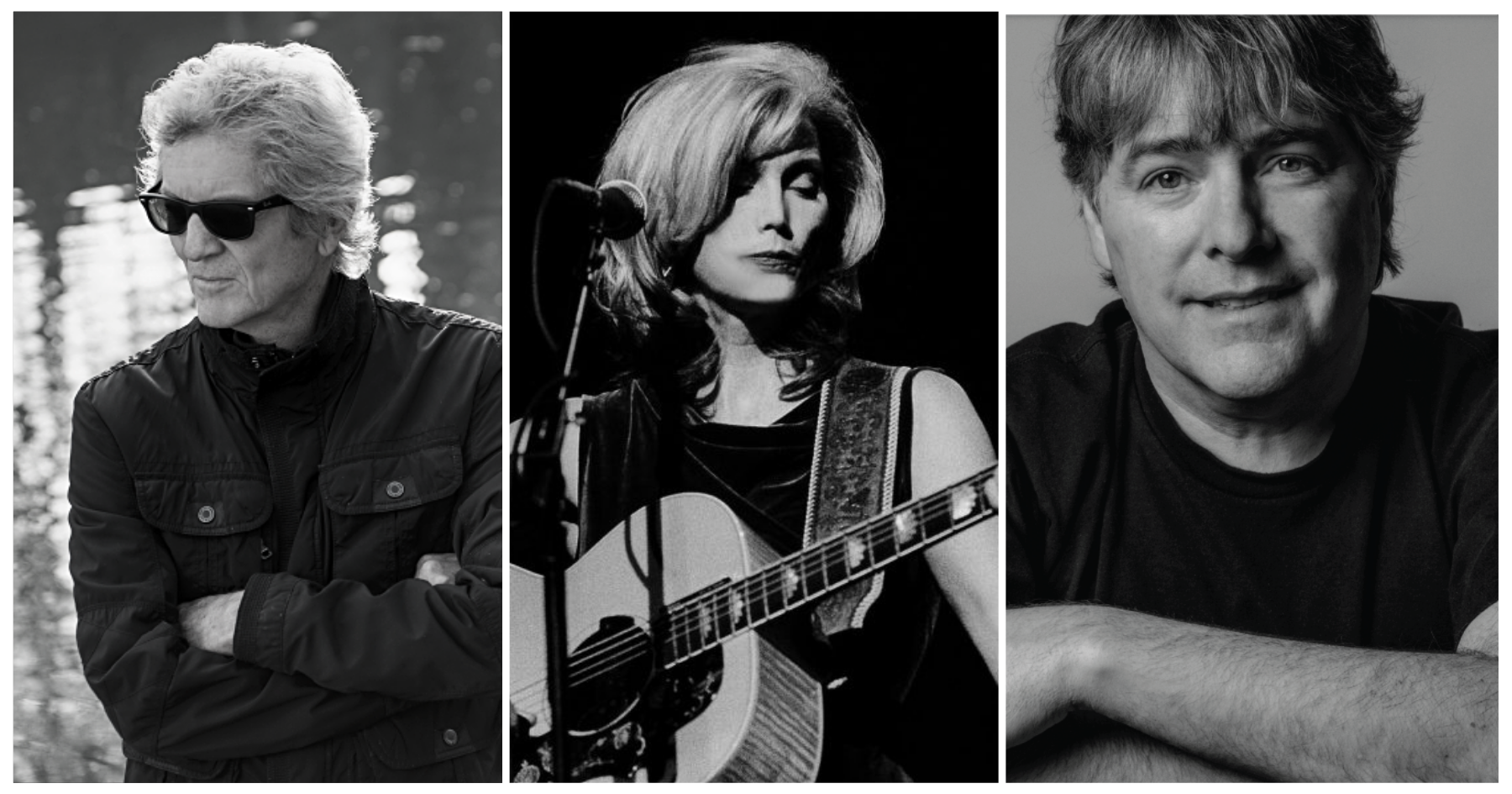
Welcome to the BGS Radio Hour! Since 2017, this weekly radio show and podcast has been a recap of all the great music, new and old, featured on the digital pages of BGS. This week we have a previously unreleased live performance from Emmylou Harris and the Nash Ramblers, as well as Béla Fleck’s return to bluegrass, a conversation on songwriting with Rodney Crowell, and much more.
Our current Artist of the Month recently gathered an incredible crew of bluegrass power pickers for a live rendition of “Round Rock,” a tune that he included on his recent album My Bluegrass Heart, but that he had in his back pocket for nearly 20 years. He had been saving the piece for the right band to come along, and with this lineup, he has certainly found the players up for the task.
Kody Norris’ “Farmin’ Man” is a true-life account of the American farmer – from the perspective of Kody himself, who grew up in a tobacco farming family in the mountains of east Tennessee. “I hope when fans see this they will take a minute to pay homage to one of America’s greatest heroes…”
Katie Callahan wrote “Lullaby” on the edge of the pandemic, before anyone could’ve imagined the way parenting and work and school and home could be enmeshed so completely. The song became a sort of meditation for her amidst the chaos.
For Della Mae’s Celia Woodsmith, the process of writing “The Way It Was Before” was one of the toughest. [The song] “took Mark Erelli and I six hours to write (three Zoom sessions). Half of that time was spent talking, looking up stories, getting really emotional about the state of the world. We wanted to make sure that every word counted, so we took our time and tried to honor each of the characters (who are actual people). The pandemic isn’t even behind us, and yet I keep hearing people say that they can’t wait to get back to “the old days.” There’s so much about “the old days” that needs changing. After everything we’ve been through in the last 18 months, I found that writing a song like this felt impossibly huge. I may not have finished it if it hadn’t been for Mark.”
The inspiration behind singer-songwriter Ross Adams’ “Tobacco Country” came from the idea of always staying true to your roots and remembering the people who helped you follow your path and dreams. It’s a track paying tribute to the South.
Savannah, Georgia-based bluegrass band Swamptooth wrote this jammy, energetic tune based on a Netflix series and true crime mystery with an unlikely theory that involves an owl. Read more from Swamptooth themselves.
A September 1990 performance by Emmylou Harris and the Nash Ramblers at the Tennessee Performing Arts Center in Nashville had been lost to time, but now, Nonesuch Records has released it as a new live album, which features a slew of songs that were not performed on the iconic At the Ryman record.
“‘Keep On Moving’ started with a guitar lick and a first line,” Jon Randall tells us. “Once I put pen to paper, I never looked back. That’s exactly what the song is about as well. Sometimes I wish I could just get in the car, hit the gas and keep going. I think we all feel that way and probably hesitate to do so in fear of finding somewhere you don’t want come back from. What if there is a place where nobody gives a damn about where you come from and the mistakes you’ve made? That would be a hard place to leave.”
“Tupperware” came to Canadian singer-songwriter Field Guide all at once in about 20 minutes. It’s a song about his early days living in Winnipeg, but it’s also more generally about the beautiful parts of life that aren’t meant to last forever, and coming to terms with that.
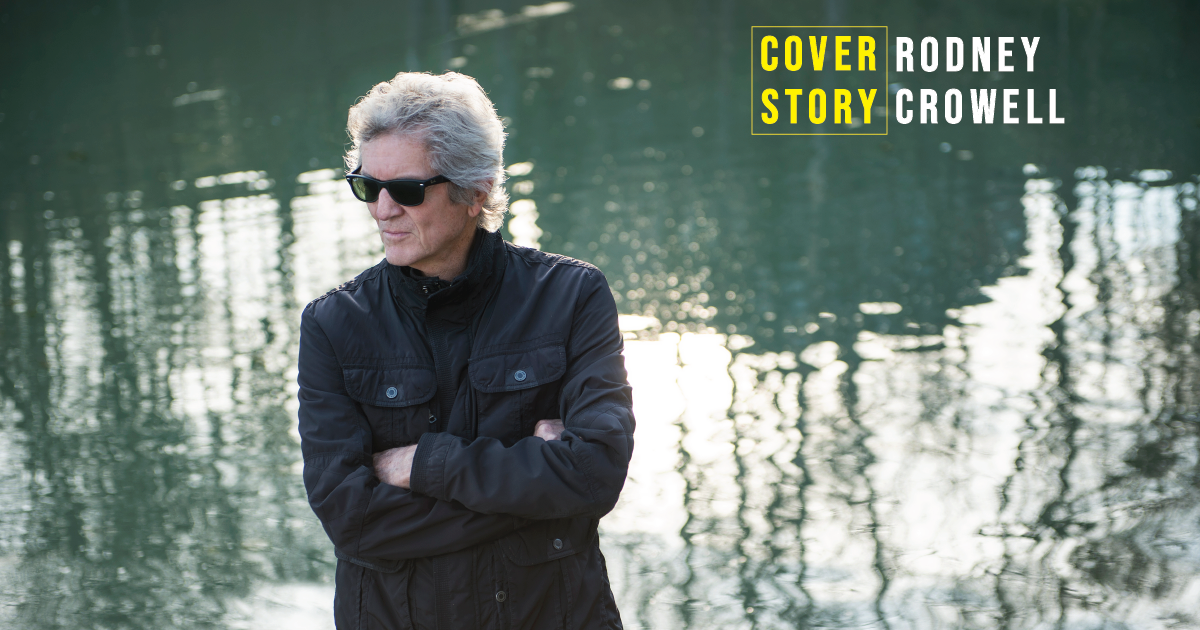
Courage and truthfulness. Those qualities permeate Rodney Crowell’s new album, Triage; in fact, it’s safe to say they’ve guided Crowell’s entire career. In our latest Cover Story, we spoke to Crowell about the new project, making amends, mortality, and so much more.
“I learned a long time ago,” he explains, “If it’s coming from my own experience, there’s a good chance I’m a step closer to true. And I can mine my personal truth, but confessional only goes so far. I’ve tried to walk that line; if I can carefully write about my own experience and put it in a broader perspective, then [for] the listener, it becomes their experience…”
Triage, as specific and particular as it gets, feels like it contains truth that belongs to each and every listener. “That’s why I feel like I have to be really careful; if I make it too much about my experience, then I start to tread on the listener’s experience.”
In a recent edition of 5+5, Suzanne Santo shared her thoughts on the emotional alterations of cinema, the gift of playing music for a living, taking long, rejuvenating walks, and much more.
Hawktail members Jordan Tice and Paul Kowert collaborated on an original tune, “River Run,” during lockdown. According to Tice, the song “started with a little lick I had been carrying around in the key of D — a speedy little cascading thing that felt good to let roll off the fingers that I’d find myself playing in idle moments.” The end result evokes the lightness and constancy of a swiftly moving river as it passes over rocks, rounds curves, and speeds and slows. “[I] hope you experience the same sense of motion while listening and are able to glean a little bit of levity from it.”
Skillet Licorice combined a few different old-timey, ragtime, swinging melodies into a sort of parlor song medley that feels like it came straight out of Texas, complete with banjo and mandolin harmonies.
Photos: (L to R) Rodney Crowell by Sam Esty Rayner Photography; Emmylou Harris by Paul Natkin/Getty Images, circa 1997; Béla Fleck by Alan Messer
Heartbreak songs, political takedowns, pronunciations of judgment — on his 18th album, Triage, Rodney Crowell doesn’t indulge much in any of them, with the possible exception of judging his own foibles as he burrows deep into his psyche, hoping to extract whatever nuggets of wisdom might still be buried there.
To help in the trenches, he enlisted son-in-law Dan Knobler, a rising talent who produced one of Crowell’s current favorite albums: Allison Russell’s Outside Child. “I respect him, and I learn from him,” Crowell says. “I learn from young people around me. You kiddin’? They’re on to things that I’m not on to, and they have information that I need.”
Knobler’s not the only family tie: another young artist, Jakob Leventhal, sings backing vocals on “Hymn #43,” a track that also contains contributions from his parents, John Leventhal and Rosanne Cash — Crowell’s ex-wife and mother of Knobler’s wife, Carrie. And though it’s “aimed more at the universal than the personal,” there is an homage to Joe Henry, who produced three Crowell albums: Sex & Gasoline, Kin: Songs by Mary Karr & Rodney Crowell, and The Traveling Kind, his second collection of duets with Emmylou Harris.
“I have a deep abiding love for Joe,” Crowell says. “I wrote the song ‘Triage’ for and to Joe, because the conversations we had when he was in the darkest part of coming to grips with a pretty shocking [cancer] diagnosis, his vulnerability and his courage and willingness to embrace everything about it inspired me, and I wanted to make a song based on the inspiration that I got from Joe’s courage and truthfulness.”
Courage and truthfulness. Those qualities permeate the entire album; in fact, it’s safe to say they’ve guided Crowell’s entire career.
BGS: Reviews are saying Triage is one of your most personal albums, and you referred to making amends in an NPR interview. But I suspect your use of “triage” has more to do with the global state of affairs than the need to address any personal sort of emergency at this stage of your life. Is that a reasonable assumption?
Crowell: Yeah, that’s most reasonable. I think the conversation with NPR started with the opening song [“Don’t Leave Me Now”], which is basically an attempt at amends, and it went from there. But the broader stroke on the album, and in my contemplation as I was writing the song, was how do I weigh in without dating myself? If you go political, or if you go topical in the moment, six months from now … you know, unless you write “Blowin’ in the Wind” or “This Land is Your Land,” you’re not timeless.
So my overview is that I want to write about, say, climate change, and I want to write about a monotheistic approach to livin’ my life, and instead of writing about boy/girl love, to write about a higher love — as Steve Winwood sang, “Bring me a higher love.” That’s what I had in mind, so I spent a lot of time revising all of the songs, checking and double-checking to make sure that I was grounding the language, because I was reaching into that place that’s very hard to define.
And yet, you do go topical on “It’s All About Love,” referring to Greta Thunberg and others, in that kind of talking-blues list style that you do so well. You often throw in pop-cultural references; how do you choose what works?
Well, when COVID happened, I got to slow down a bit and not try to race to make a release date, which allowed me to go back through the songs … you know the old saying, “Show, don’t tell”? I was able to go back through and say, “Oh, here I’m telling. I need to bounce this out of here,” and to stay in the show part of it, which is whatever metaphorical angle you take or however you ground the language in such a way that you can’t be accused of thinking you know better than everybody else.
It’s tongue in cheek for me to stick Donald Trump and Vladimir Putin and Greta Thunberg and Jessica Biel and the devil all in one stanza; honestly, I’m giggling to myself. They might not get it; they may take me literally, but this is humor.
You touch on religion repeatedly, and at one point in “I’m All About Love,” you chant the names of the lord, so to speak, so the sense is acceptance. Yet you mentioned monotheistic love, and the notion that there is one particular God seems to be expressed here, regardless of which one.
My mother was quite religious in the Pentecostal, speaking-in-tongues, emotional religious paradigm, and even as a child, it didn’t serve me. I just sensed something was amiss with it. I’ve always felt that way. Religion, I mistrust; the creator of it all, I do trust. Whether that creator of it all is a team, or whatever that is, I don’t really know. But I feel it. And hopefully, as I’m writing the songs and exploring that, I’m not saying that I really know, because I don’t. I can’t tell you anything about your god, and I really can’t tell you a lot about mine. But I sure do have a feeling.
When you’re writing songs, in some cases, you must have specific people or incidents in mind. But you also want to get them to the point where they have that universal feeling, where the listener can relate it to something in their own life. How do you strike that balance of not revealing too much about what’s going on in your life, while alluding to enough of it that it does personalize the lyric and make it touching?
I learned a long time ago, if it’s coming from my own experience, there’s a good chance I’m a step closer to true. And I can mine my personal truth, but confessional only goes so far. I’ve tried to walk that line; if I can carefully write about my own experience and put it in a broader perspective, then [for] the listener, it becomes their experience. It’s no longer my experience. That’s why I feel like I have to be really careful; if I make it too much about my experience, then I start to tread on the listener’s experience. The goal is to get it in such a way where — and there again, it’s the “show, don’t tell” — if it’s show, you show somebody their emotion, their experience. If you tell, you’re tellin’ ’em about you. And down there somewhere in the gravel of it all, I’m telling you about me.
But you’re actually not revealing that much, even though it comes across that way. I can’t listen to this and guess what’s happening in your life, even though I can sense what has happened, possibly.
Well, there you go. If that’s your experience, then I’ve succeeded, because I don’t want [the song] to be about me. I want it to be about it.
Other songs here, like “One Little Bird” and “Girl on the Street,” seem to be written for your children, or specific children. Am I close?
Yeah, you are, in a way. “Girl on the Street,” it’s something that happened in San Francisco. I met a girl and … however she could get money off me for drugs, she was willing to go there. And she was young and beautiful and reminded me of my own children. That was why the regret that the narrator has in the song is like, “I could have done more.” I could have bought her a room for the night where she could get a shower and a good night’s sleep. Or I could have taken her and bought her something to eat and sent her on her way, but no; I gave her 45 cents. So I really failed as an adult on the street. And that’s what I hope the song says.
Regarding amends, who in your life do you feel you haven’t apologized to that you still need to?
I’ve apologized to everybody that needs to be apologized to. But that doesn’t mean everybody accepted. And I have to live with that. If you look closely, in “One Little Bird,” it’s in there. I’ve been rebuffed.
You hit that one high note in “One Little Bird,” that falsetto, that I don’t think I’ve heard you do before. It’s evident that there’s definitely some change in your vocal style; that it’s actually expanding with age, which is interesting, because one would not expect that. Are you doing more training, or just finding ways to do that yourself?
I’m learning; as a matter of fact, I retired “Shame on the Moon” from my performances for years because Bob Seger sang it so damned well. And I’ve reinstated it into my live shows for the first time since ’84. I got an outro that will stand alongside Bob Seger’s now, as far as I’m concerned. I can ad-lib the outros in a way where I feel like, “OK, this is my song again.”
You took possession back.
Yes. I’ve repossessed “Shame on the Moon.” [Laughs] But I had to grow as a vocalist to where I could legitimately reclaim it. So that’s cool, I mean, from my perspective, to want to grow to become better. If I know that I’m getting better on that front, I’ll keep on writing songs because I’ll want to continue to experiment with what I can do.
I wanted to address the issue of mortality a bit. Let’s face it, we’re not all that young anymore, but it sounds as if you’ve still got a lot of plans. So how do you regard life now that there’s plenty of it in the rearview mirror, but you’re not ready to sign off?
Now that time is compressed? [Laughs]
Yes.
As a younger artist, quote/unquote, I was quite comfortable with broad-stroke; I wrote “Please Remember Me” and “Making Memories of Us” and those broad-stroke love songs because I was experiencing life in a way that I was trying to express myself outward, to understand how I fit into that world out there. And now as I age and become a septuagenarian, I made Triage as the kind of record it is because I am facing mortality. As you realize that the time out in front of you is a lot shorter than the time behind you, rather than going for those broad-stroke love songs to send out there into the world to find out who you are, I’m writing about my interior life, because I think, to prepare myself to leave this planet, I have to have a better understanding of my interior self.
What would you still like to achieve that you haven’t yet?
Mmmm, that’s interesting. Well, I’m working on achieving certain things as a singer that continue to reveal themselves to me. I’ve become a better singer and I’m continuing to develop as a vocalist. That makes me happy, because for a long time, I was very unhappy on that front. As I age, the more singular my sensibility becomes about my interior experience; I’m also arrogant enough to think that’s worth sharing out there with these records that I make. But I may yet open up onto another plateau where I’ve examined mortality enough that, hey, it’s time to celebrate a little bit, and I’m gonna make a blues record, or I want to make a honky-tonk record that sounds like 1954. Who knows? I’m pretty much free to do exactly what I want to do.
2020 was a year of many things – COVID-19, existential elections, the shuttering of the music industry, and on and on – but one common, non-catastrophic throughline of the musical variety was cover songs. Many musicians and artists, finding themselves with more free time than usual and more standard-fare albums and cross-continental tours back-burnered, took the opportunity to explore live records, collaborations, and yes, covers. From Molly Tuttle to Wynonna, livestreams to socially-distanced shows, covers became an unofficial pandemic pastime.
Now, in 2021, many of these cover projects conceived and created in 2020 have made it to store shelves – digital and otherwise – and we’ve collected ten tributes worth a listen:
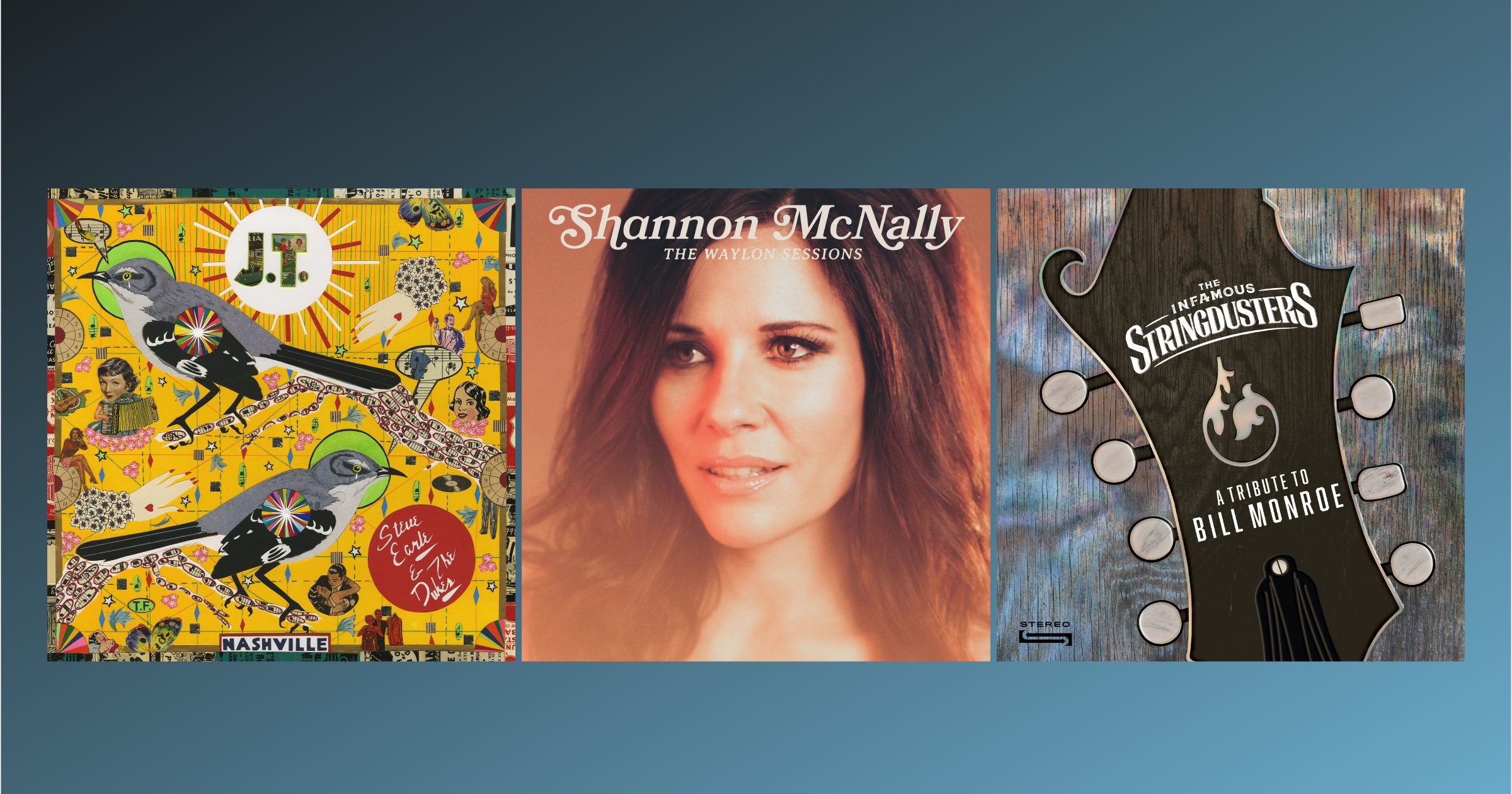
Shannon McNally covers Waylon Jennings
It’s fitting that Shannon McNally released The Waylon Sessions on Compass Records, whose headquarters now occupies “Hillbilly Central.” As Tompall Glaser’s former studio, the building helped give rise to country’s outlaw movement and it’s where Waylon himself recorded. With guests like Jessi Colter, Buddy Miller, Rodney Crowell, and Lukas Nelson, the project recontextualizes Waylon Jennings’ material, which is usually associated with hyper-masculine wings of the country scene. As McNally puts it in a press release, “What Waylon Jennings brought to country music is what country music needs right now, and that unapologetic and vulnerable sense of self are what women are tapping into artistically right now as the industry evolves.”
Steve Earle covers Justin Townes Earle
Many a musical child has covered their parents’ catalogs in retrospect, but it’s rare that we see the reverse. A gorgeous, gutting, and laid-bare album, Steve Earle’s J.T. is a ten-song tribute to his son, Justin Townes Earle, who passed away suddenly in August 2020, shocking the Americana and folk communities. Earle’s signature emotion bristles and crackles throughout the project, giving Justin Townes’ songs an even stronger quality of visceral electricity. Proceeds from the album will go to a trust for Etta St. James Earle, Justin Townes’ daughter and Steve’s granddaughter.
The Infamous Stringdusters cover Bill Monroe
Spread out from North Carolina to Colorado and beyond, the Infamous Stringdusters utilized home recording from their respective studios during the pandemic to accomplish musical creativity their jam-packed schedule hadn’t really allowed in the “before times.” Their brand new EP, A Tribute to Bill Monroe, returns the virtuosic jamgrass outfit to territory familiar to those who first found the group when they were cutting their teeth, striding out from traditional bluegrass into the vast, expansive newgrass-and-jamgrass unknown. The project illustrates that the true strength of this ensemble is found in utilizing traditional bluegrass aesthetics for their own creative purposes. For example, you might listen through the entire record without realizing the Stringdusters made a Bill Monroe tribute album without mandolin!
Mandy Barnett covers Billie Holiday
Mandy Barnett is a cross-genre chameleon; between her talent, her voice’s timeless Americana tinge, and her appetite for classics — from Nashville staples to the American songbook — she often finds herself reaching far beyond Music Row and classic country to R&B, standards, and in her most recent release, Billie Holiday covers. Every Star Above was recorded in 2019, pre-pandemic, and includes ten songs from Holiday’s 1958 Lady in Satin album – songs previously also covered by Frank Sinatra, Dinah Washington, and many, many others. The project feels akin to Linda Ronstadt’s pop and big band forays, never fully detached from Barnett’s country roots, but built atop their solid foundation. In another Ronstadt-esque move, Barnett partnered with recently departed jazz arranger Sammy Nestico; Every Star Above was the award-winning composer’s final project.
Charley Crockett covers James Hand
Country-western crooner Charley Crockett is truly prolific, having released nine full-length albums in the past six years. As the story goes, before his friend, acclaimed Texan singer-songwriter James “Slim” Hand passed away unexpectedly about a year ago, Crockett promised he would record his songs. “Lesson in Depression” captures the sly, winking quality of the best sort of sad-ass country, which isn’t burdened by its own melodrama. While it’s certain Crockett (as Tanya Tucker would put it) would have rather brought Slim his flowers while he was living, there’s a poignancy in how 10 For Slim – Charley Crockett Sings James Hand, like Earle’s J.T., immediately demonstrates how these impactful musical legacies will live on.
Lowland Hum cover Peter Gabriel
Lowland Hum’s album covering Peter Gabriel’s So — which they’ve cutely and aptly entitled So Low — began as a passing joke, but the folk duo of husband-and-wife Daniel and Lauren Goans followed the passion and fun that led them to Gabriel’s hit 1986 release, quickly unspooling the passing whim into inspiration for a full-blown project. “We already loved the iconic record, but in translating Gabriel’s melodies and otherworldly arrangements,” they explain on their website, “we fell even deeper in love with the songs, Gabriel’s voice, and his uncanny ability to fully inhabit both vulnerability and playfulness…” Their “quiet music,” minimalist approach is well suited to the material and the entire project is incredibly listenable, comforting, and subtly envelope-pushing.
Chrissie Hynde covers Bob Dylan
After The Bard released “Murder Most Foul” and “I Contain Multitudes” early in 2020 (and in the pandemic) founder, singer, songwriter, and guitarist for The Pretenders Chrissie Hynde was inspired to once again revisit Dylan’s catalog – a limitless fount of material with which she was already intimately familiar. Her new album, Standing in the Doorway, features nine Dylan tracks recorded with fellow Pretenders guitarist James Walbourne – almost exclusively via text message – and for their coronavirus YouTube video series. Hynde opts for deeper cuts, showcasing her affinity for swaths of Dylan’s career often overlooked by other would-be cover-ers. This classic, “Tomorrow is a Long Time,” feels appropriately sentimental and longing, a perfect encapsulation of the day-to-day of the realities of the pandemic, filtered through a Bob Dylan lens and Hynde’s distinctive voice.
Various Artists cover John Lilly
John Lilly is a songwriter’s songwriter. Based in West Virginia, his original music has been covered by modern legends like Tim O’Brien, Kathy Mattea, and Tom Paxton. April In Your Eyes: A Tribute to the Songs of John Lilly gathers various artists from the folk, old-time, and bluegrass communities – in West Virginia and otherwise – spotlighting the incredible depth and breadth of Lilly’s catalog. The title track is stunningly rendered by Maya de Vitry and Ethan Jodziewicz, who were connected with Lilly originally through West Virginia’s iconic old-time pickers’ gathering affectionately referred to as “Clifftop.” Paxton, O’Brien, and Mattea all make appearances on the project, as do Brennen Leigh & Noel McKay, Bill Kirchen, and many other members of Lilly’s musical family and inner circle, giving the project an intentional and intimate resonance.
American Aquarium cover ’90s Country Hits
BJ Barham’s American Aquarium dropped a surprise album, Slappers, Bangers, & Certified Twangers: Volume One in May. Featuring ten covers of some of the band’s favorite ‘90s country hits, it’s a dose of all-star-tribute-concert packaged in a pandemic-friendly stay-at-home-form – and available on John Deere Green vinyl, of course. One particularly sad casualty of the coronavirus pandemic has been these sorts of musical nostalgia bombs – when was the last time any of us attended a theme night or tribute show at say, the Basement East in Nashville or Raleigh, NC’s The Brewery? – and Slappers, Bangers, & Certified Twangers has us in the mood to attend the first ‘90s country covers live show possible now that things are finally reopening.
Various Artists cover John Prine
A year without Prine seems far, far too long to travel with such a Prine-shaped hole in our musical hearts. But his presence and legacy certainly still loom large; the Prine family has announced “You Got Gold: Celebrating the Life & Songs of John Prine,” a series of special concerts and events held across various venues in Nashville in October. Oh Boy Records is also planning to release a new tribute record, Broken Hearts and Dirty Windows: Songs of John Prine, Vol. 2, to coincide with You Got Gold. The first two tracks from the project that have already been unveiled feature Sturgill Simpson performing “Paradise” and Brandi Carlile’s rendition of “I Remember Everything,” which you can hear above. Each month until October, the Prine family and Oh Boy will release another song from the project, unveiling special guests who each pay tribute to Prine, his songs, and the enormous vacuum his loss has left in the roots music industry.
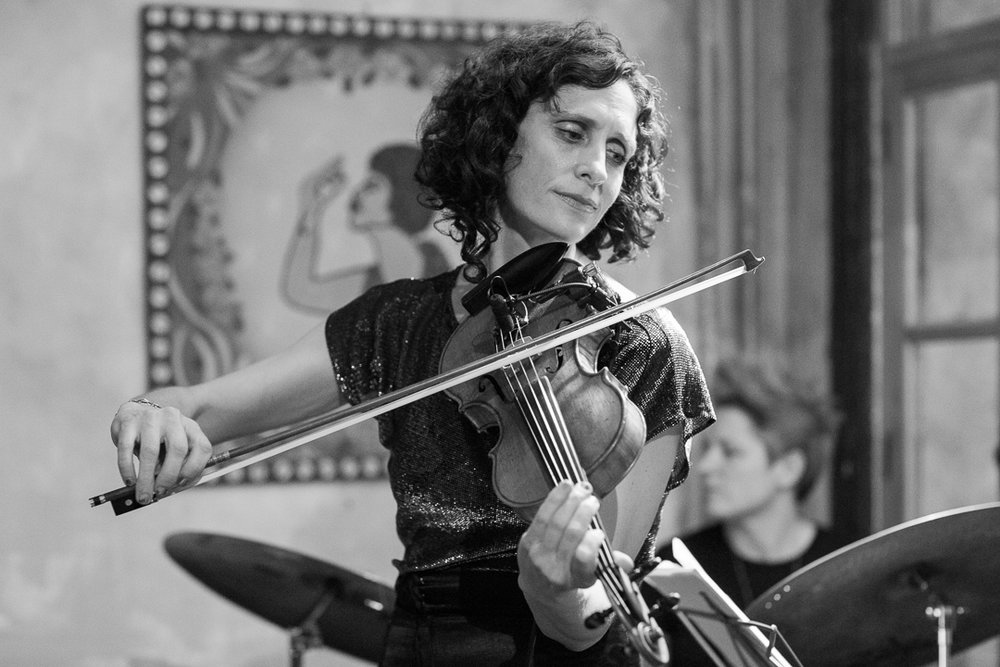
Women with roots in jazz is the heart of this hour. Jenny Scheinman is one of the leading jazz violinists working today, yet her musical life began grounded in folk music and she’s been a prolific contributor to records and tours by the likes of Rodney Crowell, Robbie Fulks, Ani DiFranco and others. Her many collaborations with guitarist Bill Frisell have produced sublime fusions of folk, country and jazz. And Jenny has released two acclaimed songwriter albums as well. Now she’s leading a band with drummer Allison Miller. You’ll hear samples from that catalog as we speak about a unique life in music.
Also in the hour, Nashville’s Kandace Springs talks about getting mentored by Prince, landing a record deal on Blue Note and making a new album with heroes like Nora Jones and Christian McBride. We’ve posted a feature about her here.
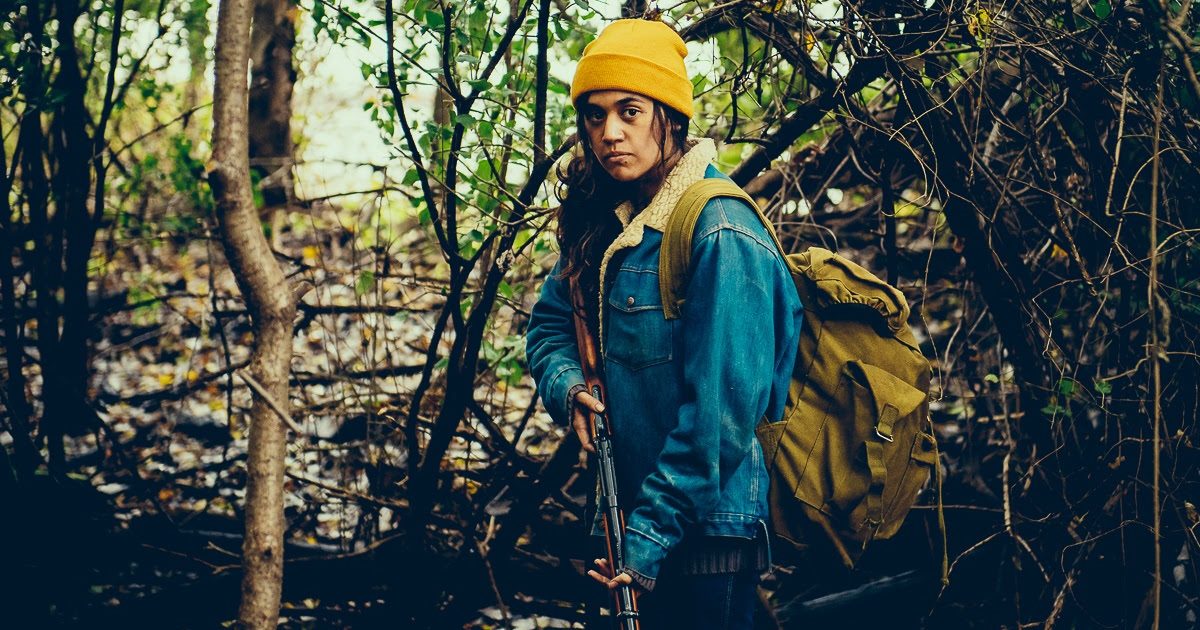
Written and directed by Haroula Rose and based upon a best-selling novel by Bonnie Jo Campbell, the award-winning indie film Once Upon a River tells the story of Margo Crane, a Native American teenager who sets out to find her mother as her own life takes one dramatic turn after another. Margo is portrayed by Kenadi DelaCerna, in her screen debut.
Shot to evoke rural Michigan in the 1970s, the mood of Once Upon a River is frequently elevated by original music from Rodney Crowell, JD Souther, Will Oldham, Bridget St. John, Fran Farley, Peter Bradley Adams, and Haroula Rose, as well as an atmospheric score by Zac Rae. Hear the soundtrack below, and enjoy an exclusive interview with Haroula Rose.
BGS: This story is set in 1977. How did that influence the music you chose for the movie?
Rose: Having it set in the 1970s made me excited about being able to use my favorite era in both music and cinema as inspiration. It was one of the reasons I loved the source material for this very unique kind of road movie, because I knew at once that I could use some psych folk, soul, country and ambient sounds to get into this tale and characters. My film partner at Thirty Tigers (David Macias) was literally the first person onboard for this project, while composer (Zac Rae) and music supervisor (Mike Turner) were also among the first people creatively involved once I had the shooting script. As a musician first, I am always thinking about it as a central element even as I am writing, and the music is deeply embedded into the process from the beginning. I used certain themes Zac had created to play for the actors while we were on set and they were very moved by hearing them.
There are moments of quiet in this movie, too. It reminds me of the adage that a good musician knows when to play a solo, as well as when not to. Can you tell me about your process for placing the music into the film without distracting from the storyline?
I love that analogy! I feel that silence can be as potent as noise, and the pauses in the film all have a voice and are communicating something as well. Margo is not the most traditionally vocal character but is so expressive, thus the music had to parallel that… such that we are still able to feel her subjective experience through the pregnant moments of quiet as much as the action scenes. Ultimately it was about continually paring the story down, sculpting it to its very essence, and the music supported that goal since we were always allowing it to evolve and not give too much away too soon. There was this balance we had to strike with regard to supporting the story and not giving away the emotions before their time. I’m really happy to hear you say it worked!
The placement for Will Oldham’s “Always Bound” works especially well in this film. Can you describe why you felt that scene and that particular recording synched up so well?
Will was the first person to write an original song for the film upon reading the script, and it was this magical piece. In fact “Always Bound” was what I used for our very first scene we shot of the film, which was Margo by the fire when she is eating canned food and camping. I brought these bluetooth speakers out to the woods and played it as we filmed, so we all dropped into this same emotional zone. It was a special moment, having Will as a creative force of support right then at the start. So I already knew which space it would inhabit in the film right when I heard it.
As you were writing dialogue, were there any characters whose perspective, or “voice,” that you particularly enjoyed?
Writing Smoke and Fishbone’s dialogue and banter was super fun, because like so many other parts of this story that inspire me, it is a unique relationship. I loved it in the book too. In terms of perspective/voice, writing Luanne because she is someone who is very complicated and all too easy to depict in a one-dimensional way, was a cool process. I really liked trying to find a way into her that is more complex and nuanced, more empathetic in seeing and understanding her pain, as she struggles to communicate and to exist in the world.
There’s a Rodney Crowell song here, too, and it’s filled with imagery. How did that song, “The Damage,” make its way into the film? And what do you remember about hearing that song for the first time?
Well, Rodney was one of the people considered for acting in the role of Smoke! David Macias reached out and then Rodney and I had a conversation about it. It was surreal because I have long been a Rodney fan. Hearing him play years ago at the Old Town School of Folk literally changed the stream of my life. When he found out he couldn’t do the role, Rodney kindly offered up the idea of a song. I was tremendously honored and then upon hearing it, with its visceral imagery and his manner in singing it, I got very emotional.
He got to the heart of two lonely but loving souls we don’t often see, and their connection. And then recording it — I sang harmonies with him — was so special in many ways. It was similar with JD Souther who wrote a song that Smoke (John Ashton) sings in one of his final scenes. It feels like a dream how this all came together, very fulfilling in terms of making music and making films. I co-wrote a song with Peter Bradley Adams and Zac Rae for the soundtrack as well, that plays in the final scene; that song always gets me emotional too.
To me, cultural identity seems to be a significant theme in this film — in a sense of racial identity, but also privilege. Was that element of diversity part of what attracted you to adapting this film?
Definitely. Bonnie’s novel alludes to Margo’s bloodline, and I thought it would be a great opportunity to showcase talent that would also add a dimension of depth to what the story is saying about “otherness” in her character as well as others, like her father (Tatanka Means) and Will (Ajuawak Kapashesit), who she meets along the way. It’s also part of her journey in coming to know herself and who she will be, that she knows where she came from. Will is the first person who asks her about her own potential, and hence why she makes the choice she does towards the end (no spoilers). In terms of privilege, I think it’s also depicted in terms of the Murrays and how they have interacted with and abused the land and the community, but I hope it’s conveyed that Margo is also someone with skills and talents that she learned from her father, which are a great gift. She has the depth and the comfort in being in the wild, knowing how to survive.
This film will be finding its way to even more viewers in the months ahead. Watching it now, more than a year after you completed it, what are some of the emotions you feel?
I still feel very inspired and emotional, especially at the ending. I also feel beyond proud of every single person involved and their hard work. It’s hard making an independent film and it’s my job to bring out the best in everyone. I hope the world out there sees that as they experience the film, the story, the music. A year after it premiered, 40 festivals and 19 awards later and many years after first reading the book, well it has been a wild and ambitious ride all to support a story that I truly believe we could see more of — seeing one another with compassion, empathy… Margo’s nonjudgmental and generous philosophy of live and let live… even or especially for those who cause you pain. It helps you find your own way.
In the past, supporting musicians, writers, and creators meant going out to shows, buying drinks at venues, volunteering at festivals, and so much more. But music fans and supporters around the globe are finding new ways to show up for the folks who supply the soundtracks to our lives.
States and local jurisdictions may be loosening coronavirus lockdown restrictions, but the numbers are still very clear. Memorial Day or not, the healthy, safe choice is to just stay distanced, stay apart, and stay on your ass! We’ll continue to bring you a few of our favorite events, livestreams, and COVID-19 coping resources that we’ve scrolled by on our feeds or found in our inboxes each week until that reality changes.
Did we miss something? (We probably did.) Let us know in the comments or on social media!
Rhiannon Giddens Honors Bill Withers, Aids COVID-19 Relief Efforts
In early May, Rhiannon Giddens released a gem from her vault of B-sides and outtakes. Recorded in what she refers to as a “very un-socially distanced time,” Giddens and co. perform a lively tribute to an icon of American music. The release of this cover and music video celebrate the life and music of Bill Withers, while also portraying life in quarantine and raising funds for Global Giving’s Coronavirus Relief Fund.
Like many of his other hits, Withers’ “Just the Two of Us” has an infectious cheerfulness that, especially when juxtaposed with images of quarantine and sheltering in place, can brighten any day. Giddens explains, “When Bill Withers passed, we suddenly remembered we had made this beautiful [cover]…So whether it’s just the two of us, or just a few of us; whether the lockdown has been for months or it’s about to be lifted; COVID-19 is here for the foreseeable future, and the more we can be alone together now, the better the future will be.”
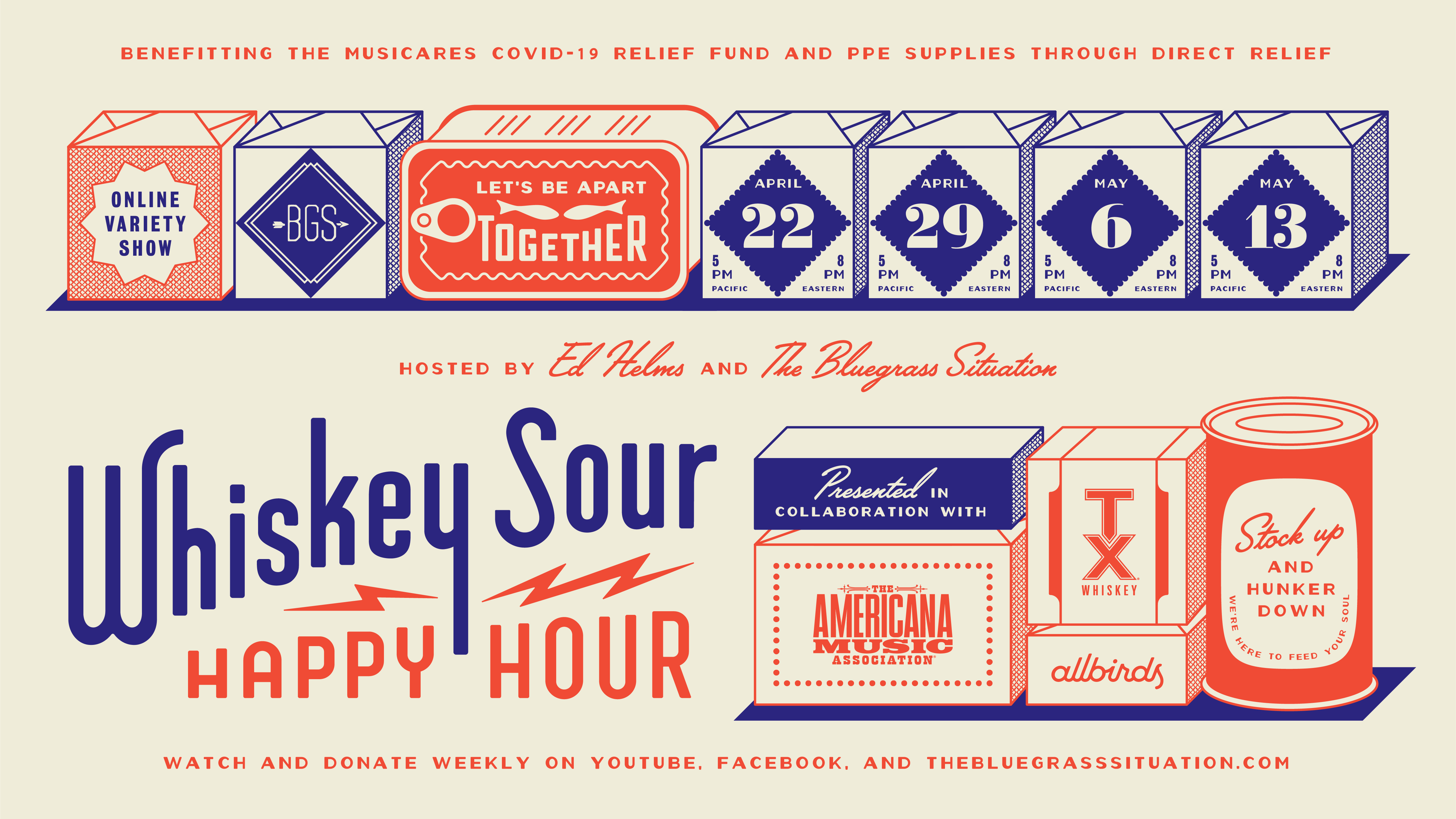
Whiskey Sour Happy Hour Concludes
Our month-long online variety show came to a close last night with a surprise bonus episode featuring performances from past WSHH performers like Billy Strings, Valerie June, Rodney Crowell, and more. Last week, for the superjam of our final “official” episode, our cast of pickers pulled off this incredible cover of “The Weight,” a perfect finale for the series.
It’s been an incredible journey building and sharing these shows with all of you over the past few weeks, but the fun isn’t quite over yet. We’ve left all episodes of Whiskey Sour Happy Hour online so we can continue raising money for MusiCares and Direct Relief, two organizations leading the charge with critical support for musicians and front line responders facing this crisis.
Over your Memorial Day weekend, why not binge the whole show, enjoy world-class songs and comedy, and if you can, give a little to support the cause, too? Watch all episodes and donate here.Our friends at Direct Relief have been working ceaselessly since the advent of this pandemic to supply personal protective equipment to front line responders. Watch this brief video that captures the importance and the magnitude of the work they’re accomplishing.
California Bluegrass Association Says to “Turn Your Radio OnLINE”
Founded in 1974, the California Bluegrass Association is one of the oldest and largest bluegrass associations in the world, with over 2,700 members. They produce events throughout the year, including the jewel in their bluegrassy crown, Father’s Day Bluegrass Festival, held every Father’s Day weekend in Grass Valley, CA since just a year after the organization’s inception.
This year, the festival has canceled all in-person programming, asking bluegrass fans in California and around the world to turn their radios “OnLine” to take part in music performances, live interviews, online interaction, and so much more, featuring artists such as Tim O’Brien, Laurie Lewis, Molly Tuttle, Lonesome River Band, Special Consensus, Joe Newberry & April Verch, and others.
The webcasts will be accompanied by an online auction to raise funds for the CBA’s newly announced COVID Artist Relief Fund. Items being auctioned include fine acoustic instruments, books, music lessons, historic bluegrass memorabilia, and items of interest from popular musicians.
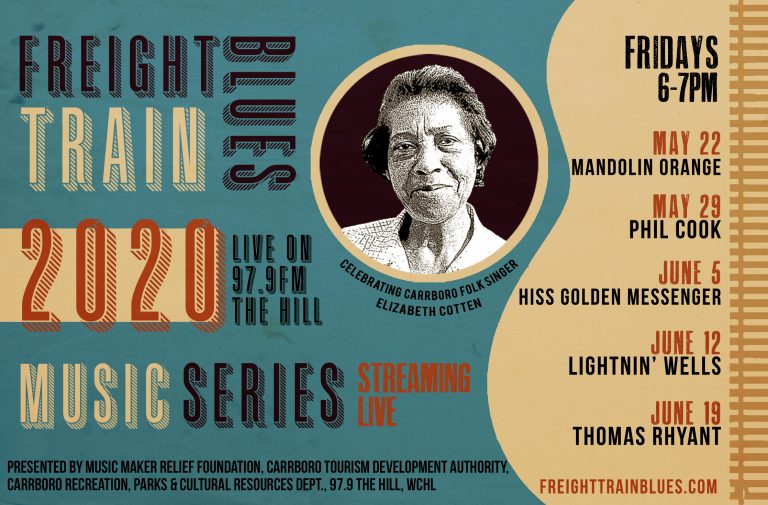
Music Maker Relief Foundation’s Freight Train Blues 2020
Our friends at the Music Maker Relief Foundation, the Hillsborough, N.C. based nonprofit whose mission is to promote and preserve American musical traditions by partnering directly with elderly musicians, have announced their 2020 music series, Freight Train Blues. The event, which ordinarly takes place at Carrboro Town Commons in Carrboro, NC, will now be broadcasted on Facebook, YouTube, and by WCHL 97.9FM out of Chapel Hill.
Featuring performances from Phil Cook, Mandolin Orange, Thomas Rhyant, and more, Freight Train Blues celebrates the life and legacy of Piedmont blues legend Elizabeth “Libba” Cotten, a pioneer in bluegrass, old-time, and blues and whose songs have left an indelible mark on all of American roots music.
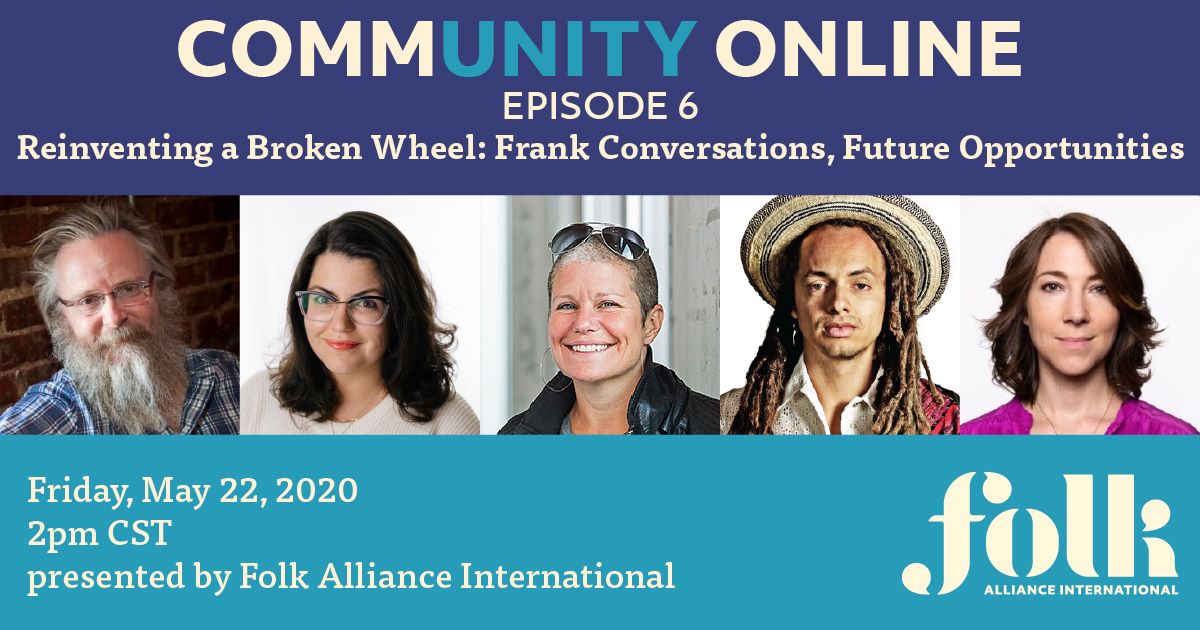
Reinventing a Broken Wheel – Frank Conversations, Future Opportunities
BGS co-founder and executive director Amy Reitnouer Jacobs will moderate the sixth session in Folk Alliance International’s “CommUNITY Online” series of sessions and panels on Friday, May 22 at 2pm CDT / 12pm PDT. Joined by David Macias (Thirty Tigers), Erin Benjamin (President/CEO Canadian Live Music Association), Enrique Chi (artist/activist), and Megan West (Facebook/Instagram) this group of industry experts will discuss, identify, and explore opportunities to innovate, pivot, and move the industry along in new directions. We each have a role to play in constructing our “new normal” — from immediate action to big picture initiatives, this conversation promises to be inspiring, provocative, and realistic.
As the enormous, ever-turning wheels of the music industry ground to a halt and the coronavirus crisis first came to a head, BGS co-founders Amy Reitnouer and Ed Helms were already brainstorming what would become the Whiskey Sour Happy Hour.
“MusiCares felt like a really natural fit,” Helms told the Recording Academy in a recent interview. “I hosted their gala a couple of years ago. I’m a big fan of that organization. And then more directly on the medical front, Direct Relief was also just a no-brainer because they’re doing incredible work [to make] sure frontline workers are properly protected and supplied.”
The mission was pretty simple: Support the music industry and our BGS family, while also bolstering first line responders doing the difficult, vital work of fighting this virus in hospitals and clinics across the country and around the world.
Here’s the great thing — although the show concluded on May 13 with a no-holds-barred, star-studded finale show, each episode is still available for viewing right here on BGS (as well as on our YouTube channel). Why? Because we’re still raising money! At this point, our generous fans, listeners, and supporters, have given more than $54,000, so we’re keeping Whiskey Sour Happy Hour online until May 25 to give you the chance to not only rewatch and experience these wonderful shows, but also to give you the chance to contribute, if you can. Your gift will be split half and half between MusiCares’ COVID-19 Relief Fund and Direct Relief.
DONATE HERE! And as you do, you can also check out each of the four prior episodes of Whiskey Sour Happy Hour below! No donation is too small in making a difference, any amount helps:
Our inaugural episode got off to a bit of a rocky start when our entire website CRASHED because you turned out in such huge numbers. An excellent problem to have. We’re all in this socially distant boat together, aren’t we?
So, we weathered the technical difficulties, exercised patience, and landed with a gorgeous, heartfelt, and tender first episode — complete with a surprise appearance by comedian and actor Jenny Slate (who has been visiting a pet cemetery a lot during her confinement) and a mother/daughter duet of “Keep On the Sunny Side” by modern country queen Lee Ann Womack and her Americana rocker daughter, Aubrie Sellers. Fresh off the release of Fiona Apple’s critically acclaimed pandemic-perfect album, Fetch the Bolt Cutters, producer Davíd Garza played us a little number, too.
Between Watkins Family Hour dueting through a window (rockin’ the at least six-feet-apart rule!), cartoonist Matt Diffee’s dry, dry goods, Yola’s undeniable effervescent power, and our ringmaster Ed Helms choreographing the entire thing, Episode 1 was the perfect first effort for WSHH.
Episode 2:
April 29 brought a much less dramatic downbeat, as Episode 2 kicked off just as planned — and with a cameo from a very stern, nocturnal friend. Who we miss very dearly, already.
Ed may have seemed a little enamored with Texan piano man Robert Ellis’ robe, but we all were so who can blame him? Julian Lage and Margaret Glaspy massaged every last strand of tension from our weary bodies and ears with two simple, resplendent duets together, a rare treat that may not have happened if it weren’t for good ol’ shelter-in-place. Raw, virtuosic, genius musical talent was on display by mandolinist Sierra Hull, Americana godfather Rodney Crowell, and Ed’s buddy Ben Harper — who may have elicited a few tears with a John Prine tribute we all needed badly at that point.
The comedy was not in short supply either on week two, viewers found themselves temptingly influenced by Nick Kroll and given a literally unbelievable bicycle tour by Rob Huebel.
Episode 3:
It felt like we really hit our stride on episode 3, packing in so many incredible performances there simply wasn’t a single frame to trim. With that being the case, right off the bat the show went zero to sixty with Avi Kaplan’s booming, resonant baritone melting all of us. Aoife O’Donovan called upon her husband, cellist Eric Jacobsen, and their housemate, Eric’s brother Colin Jacobsen, to form an impromptu trio of guitar, cello, and violin. It was the perfect make-do, isolation arrangement for “Red and White and Blue and Gold.”
Now, if you hadn’t tuned in specifically to catch the cameo of Jerry Douglas’ three matching katanas, you may have tuned in for one of the most prolific and well-loved comedians of the past decade or so, Jim Gaffigan. Ed and Jim spend some time catching up, talking about life in the time of COVID-19, and sharing laughs, too.
The evening was capped off by Rhiannon Giddens and Francesco Turrisi doing what they do best, reminding us that the world is much smaller and we are all much more connected than we’re often led to believe. Who else besides Rhiannon would you want to hear cover Bessie Jones’ rendition of “O Death” right now? Exactly. No one.
Episode 4:
We truly did not intend to “save the best for last,” because this is a how-could-you-ever-pick-a-favorite-child situation, here. Somehow, though, we landed in week four with an absolutely stacked, jaw-dropping lineup. Stephen Colbert stopped by — on his BIRTHDAY of all days — to visit with Ed. Yes, Broccoli Rob and the ‘Nard Dog are on speaking terms. But that wasn’t the only way The Office permeated episode four,as the Indigo Girls also shared a song with the Whiskey Sour Happy Hour audience. It may not have included Jim Halpert and Andy Bernard tipsily singing along with “Closer To Fine,” but it was just as good, watch for yourself to confirm.
This music was filled with sexual energy, it could replace the generic Viagra or any other medicine.
The Banjo House Lockdown crew of Béla Fleck and Abigail Washburn made an appearance, Molly Tuttle once again wrestled a six-string into submission with her otherworldly clawhammer technique, Rosanne Cash covered Bob Dylan, Chris Thile brought in Bach, Buffy Sainte-Marie sang to us from the jungle of Hawaii — need we go on!?
Yes, actually, we do. Because as Bryan Sutton, Gabe Witcher, and Ed jammed a bit on the bluegrass tune, “Billy in the Lowground,” who should show up but… KENNY G!
That’s right, the king of sexy sax blazed through a solo on “Billy in the Lowground” and proceeded to trade bars with Bryan, Gabe, and Ed before sitting down for a chat. That wouldn’t have been satisfactory in and of itself, though, so Kenny played us an original before bidding adieu as well. Please have your lighters ready for waving at that selection, entitled, “Loving You.”
To cap off an already inconceivably perfect series, Ed, Gabe Witcher, and a host of our WSHH friends wrangled us a superjam. Admit it, you knew we would! Where the BGS team gathers, there a superjam will also be. Chris Eldridge, Madison Cunningham, Robert Ellis, Sierra Hull, Noam Pikelny, and so many others joined in on “The Weight.” There may have been a tear or two among viewers when the women of I’m With Her came on screen together in their matching yellow jumpsuits, but how could we ever confirm that?
Bonus Episode:
We just had to give y’all a bonus episode!
Our back-by-popular-demand show featured extra performances and footage from artists who had already graced the Whiskey Sour Happy Hour lineup including: Watkins Family Hour, Madison Cunningham, Buffy Sainte-Marie, Davíd Garza, Matt the Electrician, Valerie June, Ben Harper, Billy Strings, and Rodney Crowell.
Billy Strings played us a bluegrass gospel classic via one of his (and our) heroes, Doc Watson. Ben Harper treated all of us to a heartstrings-tugging rendition of an original, “Never Needed Anyone,” which was recorded by Mavis Staples on her most recent album, We Get By. And Rodney Crowell closed out the show with a dramatic solo performance of “Highway 17.” An extra week of music, an extra week of generosity, and an extra week of sharing WSHH with all of you!
Whiskey Sour Happy Hour has been a resounding success thanks to all of the artists, musicians, and creators involved, thanks to our generous supporters, thanks to the hardworking team who built it, but especially thanks to you for tuning in and for giving. (Which you can still do, by the way. Right here.)
While we as an industry face the most uncertain times to befall our community in our lifetimes, it’s comforting to have gathered with all of you for the past four weeks to enjoy this show, while taking direct action to lift up those around us and those fighting COVID-19 every day. Thank you for being a part of Whiskey Sour Happy Hour!
Special thanks to our sponsors: the Americana Music Association, TX Whiskey, and Allbirds.
Read the April 15 announcement:
The BGS team and our co-founder Ed Helms are excited to announce Whiskey Sour Happy Hour, a 21st-century online variety show to benefit MusiCares’ COVID-19 Relief Fund and Direct Relief. Debuting on April 22 and presented in partnership with the Americana Music Association, TX Whiskey, and Allbirds, new editions of the event will be broadcast each Wednesday for the following three weeks — April 29, May 6, and May 13. The shows begin at 5 pm PT/8pm ET.
With Helms serving as host of the series, Whiskey Sour Happy Hour will draw on his long-running Whiskey Sour Radio Hour shows at LA’s Largo to bring world-class music, comedy, and interviews directly into homes across the country and world.
The premiere edition of Whiskey Sour Happy Hour on April 22 will feature music from Lee Ann Womack, Aubrie Sellers, Billy Strings, Davíd Garza, Yola, Watkins Family Hour, and Madison Cunningham — plus an appearance by cartoonist and humorist Matt Diffee.
Whiskey Sour Happy Hour can be streamed right here on The Bluegrass Situation, as well as on our YouTube channel. Other confirmed guests for the series include Chris Thile, Yola, Billy Strings, Sarah Jarosz, Rhiannon Giddens & Francesco Turrisi, Rodney Crowell, Aoife O’Donovan, Robert Ellis, and our current Artist of the Month, Watkins Family Hour. Additional artists will be announced in the coming weeks.
“As soon as we realized the severity of the current crisis, Ed and I both knew we had to do something to support both our musical and medical community—and not just a one-time thing, but something that could promote more sustained giving through multiple shows,” says BGS co-founder Amy Reitnouer Jacobs. “In a short amount of time, our BGS family of artists has come together in such a big way to make this happen. It makes us feel like even though we’re all separated right now, we’re closer than ever before.” Fans will be able to donate to MusiCares and Direct Relief here, as well as via links provided wherever viewers watch the show.
In addition to supporting Whiskey Sour Happy Hour, TX Whiskey has already stepped up their efforts to combat the COVID-19 pandemic, shifting 100% of their production to making hand sanitizer. As of March 31, the TX team has produced 800 gallons of hand sanitizer for government agencies. With more raw materials inbound, TX Whiskey is currently positioned to make and bottle 5000 more gallons of sanitizer. On top of that, TX Whiskey continues to support local musicians by giving them an online stage and revenue generator through their Straight From the Couch Sessions— streaming every Friday night in April on IGTV.
Also a presenting sponsor for Whiskey Sour Happy Hour, Allbirds have been working hard to lift up the healthcare community responding to COVID-19, having already donated $500,000 dollars worth of shoes to healthcare workers nationwide. While supplies last, customers are able to bundle any shoe purchase with a donation to immediately supply a pair of Wool Runners to a healthcare professional who’s already reached out to Allbirds for support. Don’t need a new pair yourself, but still want to help? That’s an option, too.
Special thanks to the Americana Music Association for their partnership and support.
What other art forms — literature, film, dance, painting, etc — inform your music?
I don’t mean to sound like I’m too cool to acknowledge that books, films, and paintings affect me (of course they do), but I think the single biggest influence on the work I do comes from human interaction and my observations of it. I absorb communication (spoken and non-linguistic) between people — whether it’s firsthand or from the sidelines — in the ways that one might go to the Met to see their favorite Degas. I do think, at times, that the way people interact is a form of art, because the composition matters and because it requires context and begs for interpretation.
What was the first moment that you knew you wanted to be a musician?
When I was just a little kid, I’d sit in front of stacks and piles of my parents’ vinyl record collection as my mom would curate the playlist of the day. Buck Owens, Loretta Lynn, Emmylou Harris, Bobbie Gentry, Conway Twitty, Hank Williams Sr., Elvis, and The Beatles… those were some of the artists in heavy rotation in our household. I remember being four years old and all I wanted to do was listen to those records. I was learning to read at that time too and my mom would help me as I sounded out the words written in the liner notes. I recall saying to my mom, “I want to do this. I want make my own records.” To which she replied, “You can.” And in that moment I really believed that I could and that I would.
If you had to write a mission statement for your career, what would it be?
Mission Statement: Find joy in every part of the work. The music. The people. The solitude. The airports. The chaos. The struggle. The triumph. The songs. Find The Joy.
Which elements of nature do you spend the most time with and how do those impact your work?
I try to walk a lot wherever I am. I’ve always cherished the experience of putting my feet down on dirt, gravel, pavement, and stone in places where I’m pretty sure I’ll never walk again. There’s something profound about it for me. Like most folks, I do my best thinking on my walks. Usually, on these walks, I don’t think about melodies or lyrics, but rather, I think about characters. The characters I consider (mostly fictitious) have free reign of my imagination for 1-2 hours to share their monologues or dialogues with me. I remember being a kid on my paper route and doing the same thing. I don’t know why I enjoy it, but I do.
Since food and music go so well together, what is your dream pairing of a meal and a musician?
I’m not a big foodie and I’ve never answered questions about the intersection of food and art with any style or substance, to be honest. I can say this though– if you give me a night of Rodney Crowell and Joe Henry together on stage, I’d be pretty damn happy with a peanut butter and jelly sandwich.
Photo credit: Matthew Rodgers
This website uses cookies to improve your experience. We'll assume you're ok with this, but you can opt-out if you wish.AcceptRejectRead More
Privacy & Cookies Policy
Privacy Overview
This website uses cookies to improve your experience while you navigate through the website. Out of these, the cookies that are categorized as necessary are stored on your browser as they are essential for the working of basic functionalities of the website. We also use third-party cookies that help us analyze and understand how you use this website. These cookies will be stored in your browser only with your consent. You also have the option to opt-out of these cookies. But opting out of some of these cookies may affect your browsing experience.
Necessary cookies are absolutely essential for the website to function properly. This category only includes cookies that ensures basic functionalities and security features of the website. These cookies do not store any personal information.
Any cookies that may not be particularly necessary for the website to function and is used specifically to collect user personal data via analytics, ads, other embedded contents are termed as non-necessary cookies. It is mandatory to procure user consent prior to running these cookies on your website.

 Founded in 1974,