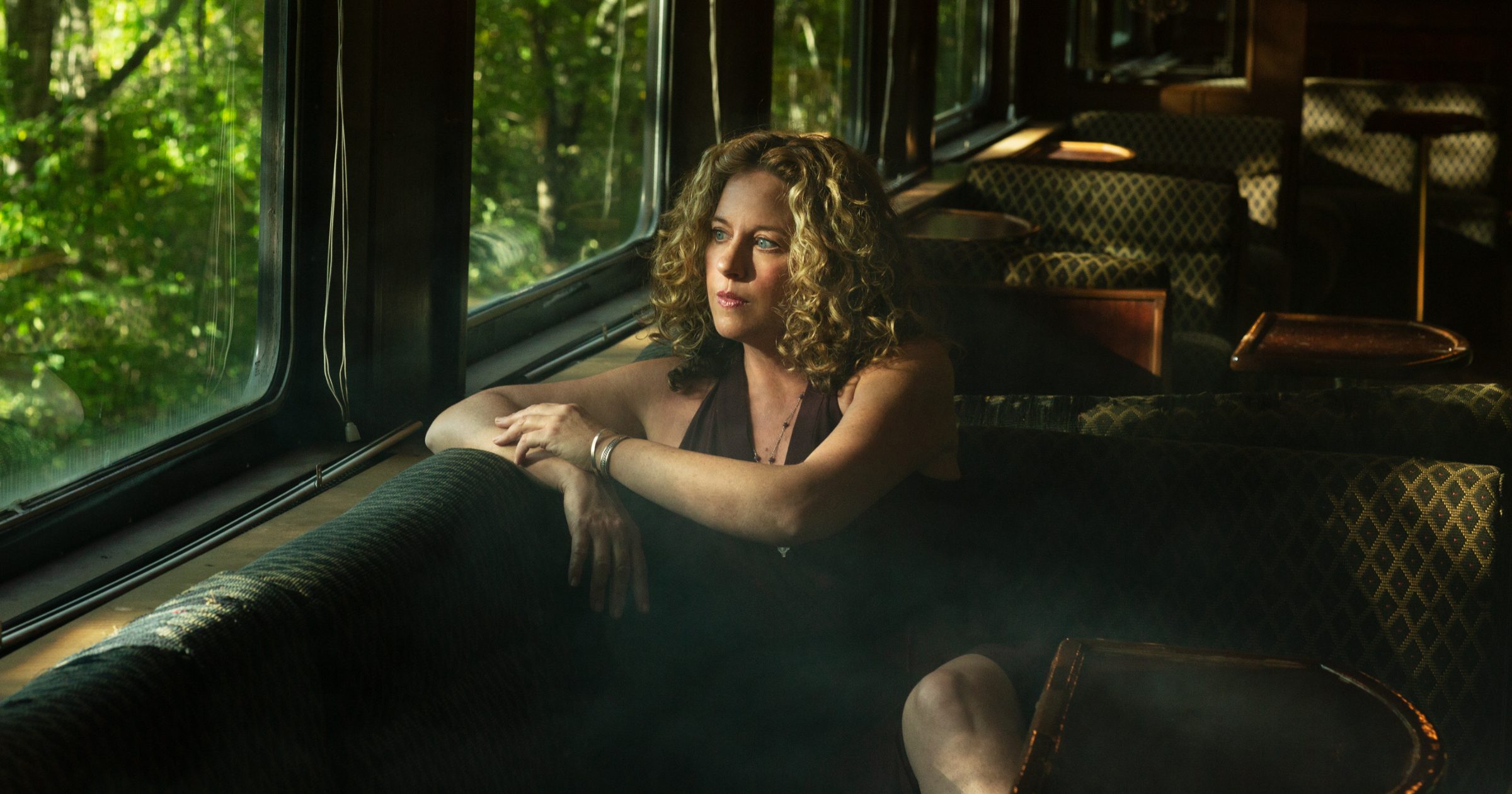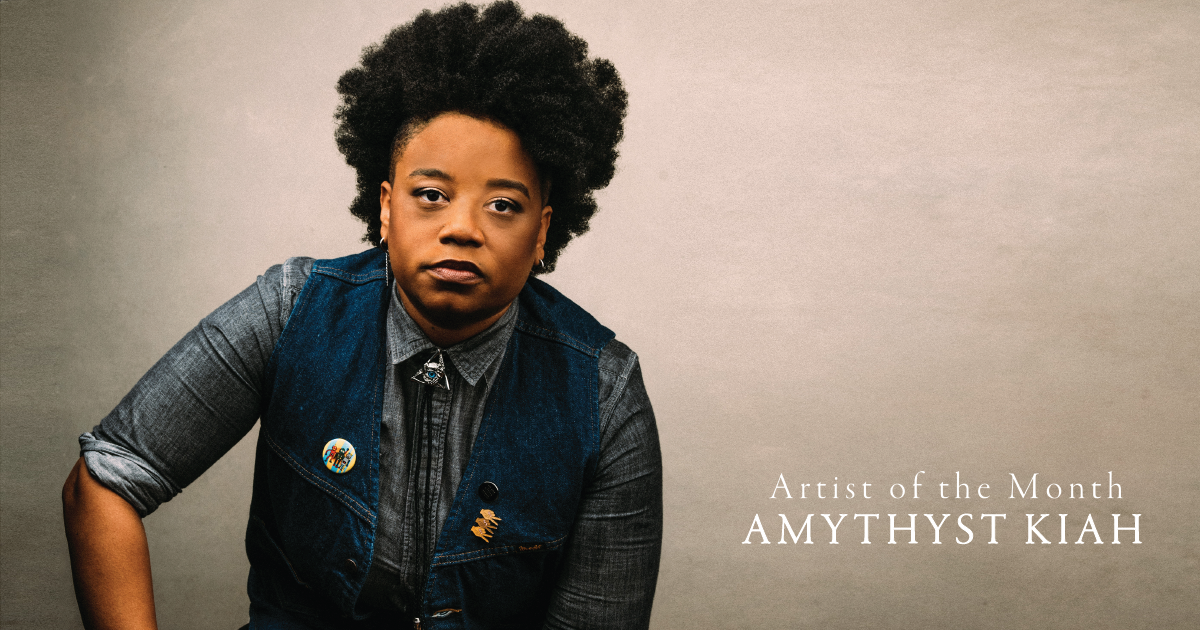
Amythyst Kiah Ends Her Shut-Up-and-Sing Policy on ‘Wary + Strange’ (Part 1 of 2)

Amythyst Kiah took great pains to get Wary + Strange just right. After studying banjo and old-time music at East Tennessee State University in her twenties, she gained a reputation as an intense live performer, so much so that she was asked to join the roots supergroup Our Native Daughters, where she played alongside Rhiannon Giddens, Allison Russell, and Leyla McCalla. The group recorded Kiah’s bluesy anthem “Black Myself” as the opening cut on their 2019 album, Songs of Our Native Daughters.

The experience of working directly with her contemporaries — even the idea of considering them as her contemporaries — was a profound experience, one that stirred her to write songs that took bigger risks and told bigger truths about herself. She’d been struggling to make this record for several years by then, booking sessions with various producers, but never feeling satisfied with the results. She didn’t hear herself in the music.

That changed when she began working with producer Tony Berg (Aimee Mann, Phoebe Bridgers), and together they devised a way to combine all of Kiah’s influences rather than compartmentalize them. Wary + Strange is a headphones album, one that listeners will pore over intently. “It feels good to make music that helps people get through hard times,” Kiah tells the Bluegrass Situation.

Editor’s Note: Read the second half of our BGS Artist of the Month interview with Amythyst Kiah here.

BGS: Are you surprised by the response this record has gotten?

Kiah: This is my label debut. So it’s really the first time that I’ve worked with a giant team of people helping me get my music out into the world. So the whole experience has been completely new. My focus was really tol make this album where I’m excited about it and happy with it, so I felt pretty confident about it. Then I started promoting it and things started coming in, and I didn’t realize how much was going to come in because I’d never done it before. So now I have the craziest workload that I’ve had in a long time. I’m just drinking a lot of caffeine and hanging on as long as I can, because I’m getting an opportunity that a lot of artists don’t get.

And add to that the fact that you can actually play live shows again, if only for a little while. What has the audience reaction been like?

People are really excited to get back to playing or get back to just seeing live music. All of us that were doing virtual gigs for a year and a half. Any time I’ve played a virtual gig, I’ve made a point to say that we’re all in this weird situation together, so let’s make the best of it. The audience is just looking at me through a camera lens, and I’m looking at them through a camera lens, but we’re doing our best to share our energy with one another. I can’t tell you how many times over the past several shows that I’ve gone out to the merch table and people have told me, “This is the first show I’ve seen since quarantine.” They are so excited, so the energy has been more intense than I can remember.

You mentioned something a minute ago about wanting to make sure you were happy with this record. You recorded these songs several times trying to get to that point, and I wondered if you could talk about that process. What was missing from those early songs?

The first time I made the record, it was with Dirk Powell in Louisiana, and it was right before the sessions for Our Native Daughters. But I didn’t really have a strong idea of what I wanted. I was dealing with some writer’s block at the time, and I was putting pressure on myself to put out another record. So I was recording a lot of songs that I didn’t really play anymore, and it felt like I was just trying to fill out an album.

At the end of the recording process, it sounded like a record that was very safe. It sounded good but it was safe. It wasn’t showing any real musical growth from me as an artist. I felt like I was compartmentalizing a lot of my folk stuff and the stuff I played with my backing band. I had this folk side of me and this rock version of me, and it just slapped me in the face that all of those songs needed to be on the record.

What was the nature of your writer’s block? How did you get through it?

There was a period when I wasn’t really writing songs that much. A lot of it had to do with the fact that I was repressing a lot of emotions regarding my mother’s suicide. For twelve years I would do anything I could to avoid getting in touch with those feelings. I was in survival mode, and when you’re in survival mode it’s really hard to think deeply about some of your choices. I was just trying to ignore it all. By the time I got to Our Native Daughters, I’d written a handful of songs over the course of two or three years. That was my second year going into therapy, and I’d made a couple of breakthroughs in understanding how my grief was affecting other aspects of my life.

Being around Rhiannon and Leyla and Allison and writing songs with them, I started to understand something important about myself. We all had this similar background of being the token Black person in a genre that has some very obvious African influences. But that history and those identities had been removed and the music had been segregated. We were able to share stories about being confused with other people, stuff like that. Just to be able to have that conversation with other people who understood where I was coming from was wonderful. Being in that environment gave me the courage to write about the things I was talking about. I’d been afraid to put those experiences into songs because I have this shut-up-and-sing policy for a long time. So that was an important moment for me.

We’re telling stories of our ancestors who were able to survive the transatlantic ship voyage. They survived the Civil War. Reconstruction. Segregation. Civil Rights. We’re standing on the shoulders of so many people who survived, and we’re here because of their survival. Once you start to make those big spiritual connections beyond what you’ve read in a history book, suddenly there’s nothing to be afraid of. If they can survive, then I can survive writing a song about how I feel. There was a new sense of empowerment to really write about myself. So after that project, I wrote more songs. I wrote “Soapbox.” I wrote “Opaque.” I wrote “Firewater.”

Did that change how you approached recording the album?

Really I was still figuring myself out and how I wanted to be defined as a musician. It was a lot of self-exploration. I recorded the album again at Echo Mountain Studios in Asheville, North Carolina. But the third time’s the charm, as they say. I met Tony Berg, and he was able to help me encapsulate the inherent wariness and strangeness of all of these songs. We were also able to keep that essence of roots music while adding in these different textures and sounds. He actually told me once while we were recording, “I don’t think I’ve heard a record that sounds quite like this one.” He’s obviously listened to way more music than I ever have, so I knew we had something special at that point. I knew that would be the final time recording the album.

It sounds like you had to go through those first two versions of the album to get to that point.

Yes. I definitely don’t want to say that those first two didn’t sound good or weren’t worthy. And I’m appreciative of anybody who spent time in any capacity working on them with me. It took all of those moments to get where we are now. But something was always missing, and you shouldn’t be too afraid to explore that and figure out what’s missing. Unless you’re 100 percent excited about your record, it’s going to be hard to go out and play those songs.

There’s a malleable quality to your songs. I’m thinking about the two versions of “Soapbox” on the record, or the solo version of “Black Myself” and the Our Native Daughters version. You talked about learning not to compartmentalize your music, but the songs seem like they could fit so many different settings. “Black Myself” in particular sounds very different when you’ve got several people singing as opposed to just one person singing.

I think that’s a recurring theme that’s always going to be part of my creative process. I spent a good amount of time in my twenties focusing on reinterpreting songs that already existed and learning about the different ways to make it your own. Or at least give it another perspective. It made me hyperaware of, “OK, what am I saying? What if I deliver this particular line this way or what if I go to a minor chord here instead of a major chord. How does that change the meaning?” I’ve always been fascinated with that kind of thing.

That’s just as valuable as writing new songs, because that’s the way most of us learn music. We learn other people’s music, and within that we find our own voice. Reimagining certain songs — even if they’re your own songs — is a valid way to express yourself. Balancing that can be a little tricky. With the various incarnations of this album, I was rehashing a lot of songs that I’d already done. I was taking songs I’d already recorded and rerecording them in a different way. So I had to make myself write new material. I didn’t want to stop moving forward.

As for “Black Myself,” I remember thinking, “Man, I wish I could have some people singing with me on this song.” It’s not even just from a production standpoint. It was more personal. So it was good to record with Rhiannon and Allison and Leyla sticking up for me, you know? It’s different without them. For the version on my record I was doing my own background vocals, which is really enjoyable and helps me dig into a song in a different way. But I definitely missed singing with them. But I was really excited to record that song by myself, because it’s a way to continue that conversation about white supremacy and anti-racism. It was a good opportunity to bring the song forward.

Editor’s Note: Read the second half of our BGS Artist of the Month interview with Amythyst Kiah here.


Photo credit: Sandlin Gaither
Harmonics with Beth Behrs: Time for Some Music Recommendations

Let’s face it: times are pretty dark right now — but what else is new? Harmonics was born out of a love for music and its healing powers, and we are once again turning towards art to pull us through. Today, Beth is joined by Amy Reitnouer Jacobs — our very own BGS co-founder and executive producer of Harmonics — who shares with us the fruits of her curatorial labor in the form of her top albums getting her through the summer: from heart-wrenching yet uplifting folk songs by Allison Russell, to the vibey, Don Henley-esque sounds of John Mayer’s recent release, on through to ’70s Japanese pop, and stopping everywhere in between.

LISTEN: APPLE • SPOTIFY • STITCHERAMAZON • POCKET CASTS

Allison Russell – Outside Child

BGS readers will be familiar with this first pick. We’ve long sang the praises of Allison Russell (she was our Artist of the Month for May of this year) and when asked their favorite albums of the year, essentially every member of the BGS team chose her solo debut Outside Child. This is a very special record — for so many reasons — that you do not want to miss. And your listening experience will only be enhanced by learning the context in which it was written. Russell shared her painful story with us back in Season 1 of Harmonics, then came back and breathed uplifting hope into that story through the beautiful music of Outside Child.

Dante Elephante – Mid-Century Modern Romance

This album has been Amy’s weekend soundtrack for some time now. Throw this record on first-thing Saturday morning, and you, too, will be grooving, coffee in hand, in no time.

Tony Joe White – Smoke from the Chimney

This posthumous album from Tony Joe White features vocals from acoustic demos the roots legend recorded shortly before his passing, brought to their full potential through the lush arrangements and editing magic of Dan Auerbach.

Valerie June – The Moon And Stars: Prescriptions For Dreamers

Fall into the weird and wonderful world of Valerie June through the intricately layered yet completely raw and vulnerable musical journey of her latest album. Don’t try to define this album — just allow yourself to get wrapped up in whatever it is.

John Mayer – Sob Rock

While Amy has admittedly not dug into any John Mayer album since his 2001 debut Room for Squares, her love for the newly coined “Bistro Vibes” aesthetic (read into this y’all, and just trust us…) has led her to Mayer’s latest summer release: a more-than-likely pandemic-fueled nostalgic nod to the sounds of the ’80s a la Don Henley, Dire Straits, Steve Winwood, and Phil Collins, paired with songwriting that taps into the isolation and despair we’ve felt for the past year and a half.

Yellow Magic Orchestra – Yellow Magic Orchestra

The experimental nature and endlessly chill vibes of Japanese pop of the ’70s and ’80s make for the perfect summer soundtrack, and the traceable influence on today’s indie music is fascinating. Bonus points if you can listen on vinyl, as the depths of these recordings are all the more rewarding and delicious in this format.

Sara Watkins – Under the Pepper Tree

While the beautiful Under the Pepper Tree — a collection of lovely lullabies, both original and classic favorites — was recorded and released for Watkins’ small daughter, we, as adults, have been unable to take it off of repeat since its March release. While some may laugh at the idea of being so enamored with a “children’s record,” we dare them to experience the comfort of Watkins’ magical collection — especially amidst the tumultuous year we’ve had — and not fall in love. She pulls out what is so beautiful and lasting about these songs, and what makes us connect with and feel through them.


Listen and subscribe to Harmonics through all podcast platforms and follow Harmonics and Beth Behrs on Instagram for series updates!

The Show On The Road – Amy Helm

This week, The Show On The Road places a call into Woodstock, NY, where we speak to a respected singer, songwriter, and sometimes drummer Amy Helm, beloved daughter of Levon Helm of The Band.

LISTEN: APPLE PODCASTSSPOTIFYSTITCHER


Growing up in the home of two working performers (her mother is singer Libby Titus, who wrote songs covered by Bonnie Raitt and Linda Ronstadt) wasn’t always the easiest for the introspective Helm, but it gave her a fertile proving ground to begin exploring creating her own soaring songs in the folk, blues, and soul traditions. She waited until she was forty-four to release her acclaimed first solo record, Didn’t It Rain, with her father lending his signature earthy drums on several tracks — and this year, she teamed up with multi-instrumentalist and producer Josh Kaufman (Taylor Swift, Bonny Light Horseman) to create What The Flood Leaves Behind, her most emotive and lushly-realized project yet.

With her dogs often joining the conversation from her upstate home, Helm dives into her early years trying her hand at singing in New York City cafes, having folks walk out of her folk fest shows because her band was too loud, founding the band Ollabelle, joining her stepdad Donald Fagen’s group Steely Dan onstage, backing up legends like Stax soul artist William Bell and finally reconnecting with her dad in her mid-thirties as he began his late life renaissance, hosting his epic Americana throwdowns called “The Midnight Rambles.” It was being a member of that crack “ramble band” that gave Amy the final push to pursue her own lead voice.

While Levon famously struggled with heroine addiction and the foibles of post-Bob Dylan and The Band fame fallout, it was when he got clean and took Amy under his wing that both of their stars began to rise again. You can hear Amy singing on his gorgeous return in 2017’s Dirt Farmer. Becoming more ambitious, Amy laid down her upbeat rock-n-soul-tinged second album with producer Joe Henry in LA with notable players like Doyle Bramhall II, Tyler Chester, and a vocal choir of Allison Russell and JT Nero (Birds of Chicago) and Adam Minkoff. This Too Shall Light was released in 2018 on Yep Roc Records and Amy began to be recognized as one of the most powerful singers touring the Americana circuit. Her newest record was recorded at her spiritual home, Levon Helm Studios, where each ramble still takes place on the weekends.

During the pandemic, Helm had a unique idea to keep her creative muscles strong, even when live music gatherings were not technically allowed in public. She began setting up “curbside concerts” for her friends and any curious fans who missed her songs, touring around Woodstock with her guitar, bringing a little joy to her shut-in listeners during New York’s darkest hours.

Stick around to the end of the episode to hear Helm introduce the spiritual opening track of What The Flood Leaves Behind, “Verse 23.”


Photo credit: Ebru Yildiz

The BGS Radio Hour – Episode 209

Welcome to the BGS Radio Hour! Since 2017, this weekly radio show and podcast has been a recap of all the great music, new and old, featured on the digital pages of BGS. This week, we bring you new music off of the beautiful new album Outside Child from Allison Russell, as well as bluegrass songs to celebrate springtime, and much more! Remember to check back every week for a new episode of the BGS Radio Hour.

APPLE PODCASTS, SPOTIFY

Kishi Bashi – “Waiting For Springtime”

To start off this week’s roundup, we visit our conversation with Athens, Georgia-based Kaoru Ishibashi, better known as Kishi Bashi, about his new EP Emigrant. When COVID hit, he and his daughter packed into a camper and hit the road, from the southeastern U.S. all the way to Oregon, over a period of several months. Along the way, he fleshed out the songs that became Emigrant through visiting places like the Ozarks, the Dakotas, and Montana, including Heart Mountain: a World War II Japanese internment camp he visited many times during the production of his documentary Omoiyari: A Songfilm by Kishi Bashi.


Reid Zoe – “When I Go”

This new track from singer-songwriter Reid Zoé is, on the surface, a song about dying, but really it’s about all of the questions that come with being a human on earth.

Full Cord – “Right In Step”

With a catchy melodic hook and low-tuned banjo, “Right in Step” is a lovely bluegrass tune full of love, hope, and togetherness – hopefully a respite from the uncertainty of the pandemic.

Sean McConnell – “Price of Love”

It’s been said that everything in this world comes with a price. For Nashville’s Sean McConnell, that price is reflected in loving someone — be it family, friend, or significant other — and the eventuality and certainty of you losing them. Yet still, he suggests, most of us are willing to take that risk for love, to give up our hearts completely. It’s the price that our heart pays for love in return.

The Deep Dark Woods – “How Could I Ever Be Single Again?”

A new song from pan-Atlantic singer-songwriter The Deep Dark Woods was inspired by English folk band Steeleye Span. Featuring Kacy Anderson on fiddle, the tune asks the titular question, “How Could I Ever Be Single Again?”

Sam Robbins – “Raining Sideways”

“Raining Sideways” is one of Sam Robbins’ most-requested songs, a stream of consciousness lyric that’s one of the most raw and authentic he’s ever written.

Lera Lynn – “A Light Comes Through”

A recent episode of The Show on the Road featured a deep dive with silky-voiced, southern gothic-folk songwriter Lera Lynn. Stick around to the end of the episode to hear Lynn introduce her favorite broken-romance number, “So Far.”

Graham Sharp – “Truer Picture of Me”

BGS recently caught up with Steep Canyon Rangers’ banjo player and songwriter Graham Sharp about the release of his new solo record, Truer Picture. We talked about Steve Martin’s influence on the Rangers and Sharp himself, as well as his approach to songwriting, nature inspirations, and the way literature and music coincide.

Our Native Daughters – “Quasheba, Quasheba”

Our Artist of the Month for May, Allison Russell, wrote this song for her many-times-great-great-grandmother Quasheba, who survived being enslaved, being ripped away from everything she knew, the horrible Middle Passage, having her children taken, and more. Russell says her art and a loving community have inspired her to connect with her ancestors and find connection through intergenerational strength, resilience, and transcendence, despite intergenerational trauma and abuse.

Grace Pettis – “Paper Boat”

Singer-songwriter Grace Pettis literally dreamed up “Paper Boat,” a song about coming of age, trying to fit in, and losing our innocence. She’s joined by her producer, Mary Bragg, on tender harmony vocals.

Allison Russell – “The Runner”

We spoke with our May Artist of the Month, Allison Russell, about the inspiration behind and creation of her honest and stunning album Outside Child, including this track “The Runner.” Read our two-part interview here.

Lost & Found – “Wild Mountain Flowers for Mary”

We hope, wherever you’re reading this from, that snow, frost, and the cold are truly retreating, giving way to longer days, warmer weather, and the gorgeous, humid, cicada-soundtracked days of summer. But, before we get to full-blown bluegrass season – and, hopefully, our first live music forays since COVID-19 shut the industry down in early 2020 – let’s take a moment to intentionally enjoy spring with 12 bluegrass songs perfect for collecting a wildflower bouquet, romping and frolicking in the meadow, and pickin’ on the back porch while the evenings are still cool.

Accidentals – “Wildfire”

The Accidentals spoke with BGS on loving and learning from Brandi Carlile, singing on stage with Joan Baez, the magic in meeting strangers and finding common ground, and much more in this edition of 5+5.


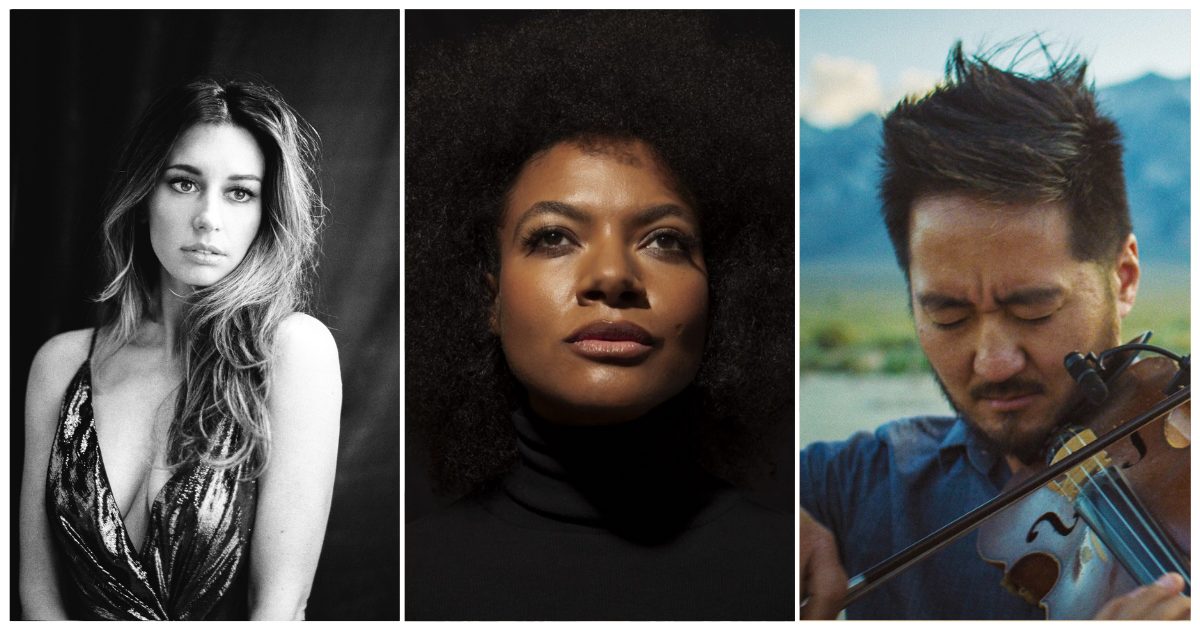
Photos: (L to R) Lera Lynn by Alysse Gafkjen; Allison Russell by Marc Baptiste; Kishi Bashi by Max Ritter

2021 Americana Honors & Awards Nominees Announced

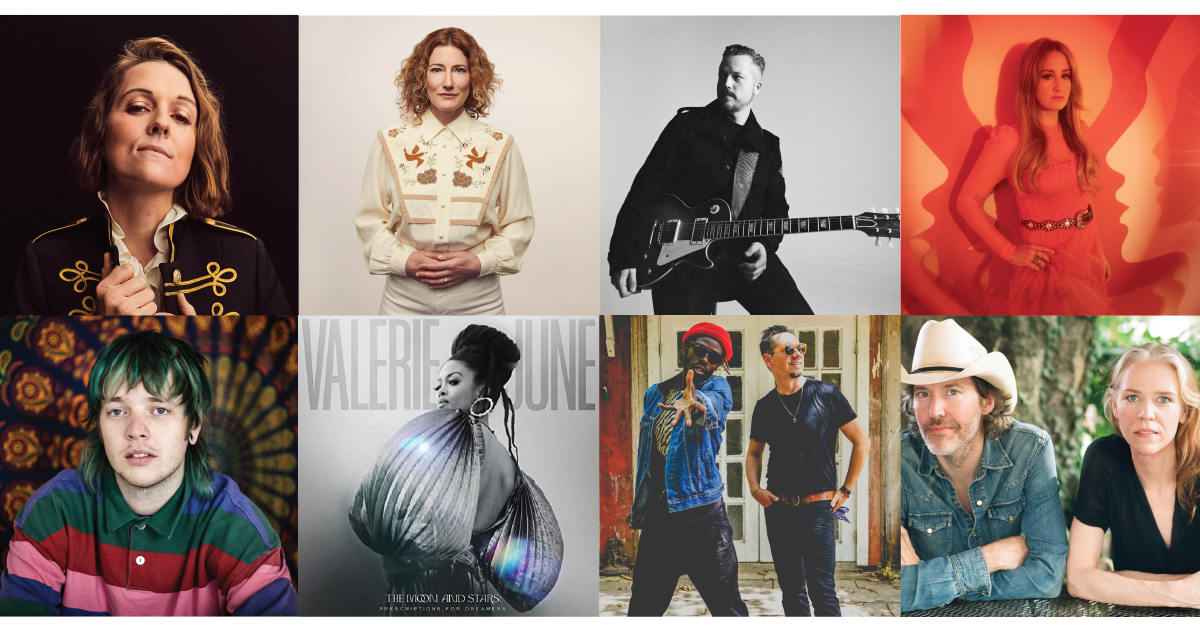
Brandi Carlile, Jason Isbell, Amythyst Kiah and Allison Russell are the leading nominees for the 20th annual Americana Honors & Awards, set for September 22, 2021 at the Ryman Auditorium in Nashville, Tennessee. Familiar names like Tyler Childers, Steve Earle, Sarah Jarosz, John Prine, and Sturgill Simpson are also on the ballot.

Carlile and Isbell are joined by Kathleen Edwards, Margo Price, and Billy Strings in the Artist of the Year category. On the ballot for Duo/Group of the Year, Carlile is also nominated as a member of The Highwomen, while Kiah and Russell are part of Our Native Daughters. As solo artists, Kiah and Russell are both nominated for Emerging Act of the Year as well. In addition, Kiah’s version of “Black Myself” (which was earlier recorded by Our Native Daughters) will compete for Song of the Year, bringing her total nominations to three.

Other contenders for Emerging Act are Charley Crockett, Joy Oladokun, and Waxahatchee. The Duo/Group category also includes Black Pumas, The War and Treaty, and Gillian Welch and David Rawlings. The Americana Music Association’s Lifetime Achievement Awards, including the NMAAM co-presented Legacy of Americana Award, will be announced at a later date. The awards ceremony is a cornerstone of AmericanaFest, which returns for its 21st year on September 22-25.

Keb’ Mo’ and Old Crow Medicine Show’s Ketch Secor unveiled the nominations during a socially-distanced ceremony at Nashville’s National Museum of African American Music. The intimate event featured acoustic performances from nominees Valerie June and Allison Russell. A full list of categories and nominees for the Americana Music Association’s 20th annual Americana Honors & Awards is below:


ALBUM OF THE YEAR:

Cuttin’ Grass – Vol. 1 (Butcher Shoppe Sessions), Sturgill Simpson, Produced by David Ferguson & Sturgill Simpson

J.T., Steve Earle & The Dukes, Produced by Steve Earle

The Moon and Stars: Prescriptions For Dreamers, Valerie June, Produced by Valerie June, Ben Rice & Jack Splash

Reunions, Jason Isbell and the 400 Unit, Produced by Dave Cobb

World on the Ground, Sarah Jarosz, Produced by John Leventhal


ARTIST OF THE YEAR:

Brandi Carlile

Kathleen Edwards

Jason Isbell

Margo Price

Billy Strings


DUO/GROUP OF THE YEAR:

Black Pumas

The Highwomen

Our Native Daughters

The War and Treaty

Gillian Welch and David Rawlings


EMERGING ACT OF THE YEAR:

Charley Crockett

Amythyst Kiah

Joy Oladokun

Allison Russell

Waxahatchee


INSTRUMENTALIST OF THE YEAR:

Megan Coleman

Robbie Crowell

Ray Jacildo

Philip Towns

Kristin Weber


SONG OF THE YEAR:

“Black Myself,” Amythyst Kiah, Written by Amythyst Kiah

“Call Me A Fool,” Valerie June ft. Carla Thomas, Written by Valerie June

“Dreamsicle,” Jason Isbell and the 400 Unit, Written by Jason Isbell

“I Remember Everything,” John Prine, Written by Pat McLaughlin & John Prine

“Long Violent History,” Tyler Childers, Written by Tyler Childers

The BGS Radio Hour – Episode 208

Welcome to the BGS Radio Hour! Since 2017, this weekly radio show and podcast has been a recap of all the great music, new and old, featured on the digital pages of BGS. This week, we bring you new music from both our Artist of the Month, Allison Russell, off of her brand new album Outside Child, and from the late Tony Joe White, too — plus much more! Remember to check back every week for a new episode of the BGS Radio Hour.

APPLE PODCASTS, SPOTIFY

Maia Sharp – “Things to Fix”

Moving across the country is stressful enough on its own. At the end of a 21-year marriage, Maia Sharp put her energy directly into working on her new Nashville home — painting one room, then another, and another. She took the idea to her co-writer on “Things to Fix,” relating the things that could have been fixed in her relationship to what she was fixing in the house.

Last Year’s Man – “Still Be Here”

Singer-songwriter Last Year’s Man (Tyler Fortier) explained his new track “Still Be Here” to BGS, relating, “I think we’re all eager for life to get back to what it was in some way or another and this is a love song built out of the idea that it will.”

Casey Driessen featuring Taro Inoue – “Little Cabin Home on the Hill”

Casey Driessen’s recent project Otherlands: A Global Music Exploration, is a self-produced travelogue of on-location recordings, short films, and essays that documents collaborations with masters of regional music in Spain, Ireland, Scotland, India, Finland, and Japan, where he recorded this bluegrass standard with his friend and mandolinist Taro Inoue.

Tony Joe White – “Smoke From the Chimney”

Legendary country singer and songwriter Tony Joe White, who penned hits like “Polk Salad Annie” and “Rainy Night in Georgia,” passed away in 2018, leaving behind quite a legacy of music. However, the material didn’t quite stop after he died. His new posthumous record, Smoke From the Chimney, was recorded a year later in 2019, as producer Dan Auerbach built the music around voice and guitar demos that White had left behind.

Carsie Blanton – “Mercy”

Carsie Blanton wrote “Mercy” for her husband Jon, who helped her find out that love can be a gentle force that allows us to become more ourselves: “Once I discovered that, I was able to envision a whole world of love; a world that’s less about control and more about compassion.”

Angela Autumn – “Sowin’ Seeds”

“Sowin’ Seeds,” the latest track from Americana singer-songwriter Angela Autumn, explores the could-be life of a musician, one of imagined ease and free from sacrifice.

Danny Paisley and the Southern Grass – “Date With an Angel”

Up next is Baltimore bluegrass royalty Danny Paisley with a track off of his newest record, Bluegrass Troubadour. Paisley started out performing in the Southern Mountain Boys with his father, Bob Paisley, and Ted Lundy. Years later, Danny formed the Southern Grass and performs with his own son as well as the sons of Ted Lundy. They’re a two-family, three generation band! Paisley is the most recent IBMA Male Vocalist of the Year, an award he’s received more than once. Listening to Bluegrass Troubadour, you can see why.

Beth Whitney – “I Go”

Singer-songwriter Beth Whitney wrote “I Go” inspired by her family’s tradition of taking backpacking trips and her favorite Wendell Berry poem, “The Peace of the Wild Things.” While she’ll be the first to admit that she doesn’t backpack gracefully, though as blisters and bug bites take hold, “as the wilderness takes me in, it starts to heal me somehow and I come into focus.”

Amy Helm – “Sweet Mama”

“Sweet Mama” is a rock and roll track made with love in Woodstock, NY by Amy Helm with one and only Phil Cook on harmonica!

Allison Russell – “Montreal”

Our current Artist of the Month, Allison Russell, has just released her stunning solo debut, Outside Child, an album that delves deeply into the extreme trauma she experienced in her youth spent in Montreal. We recently spoke with Russell about her experience making the record and the relief that songwriting, music and art can bring.

Mike Barnett featuring Alex Hargreaves – “Piece O’Shrimp”

Mike Barnett, a Nashville-based fiddle player who recently released +1, an album of duets with friends and heroes, had originally slated the album for release in late summer 2020, but was delayed when he suffered a cerebral hemorrhage, putting his career and life on hold. Undergoing extensive rehabilitation, he posted a welcome update in February on his GoFundMe (support here) that a full recovery is still possible and likely! While we’re wishing Mike the best, and supporting his recovery through his GoFundMe, we’re also enjoying a “Piece O’ Shrimp” from his new album, featuring Alex Hargreaves.

Christina Alden & Alex Patterson – “Hunter”

UK-based folk duo Christina Alden & Alex Patterson wrote “Hunter” inspired by an unlikely friendship between a grey wolf and a brown bear, as captured by Finnish photographer Lassi Rautiainen.

Charlie Marie – “El Paso”

Country singer-songwriter Charlie Marie recently joined BGS for a 5+5, that is 5 questions and 5 songs. She talks growing up listening to Patsy Cline, meditating before “big” shows, listening to Frank Sinatra at old school Italian restaurants, and more.


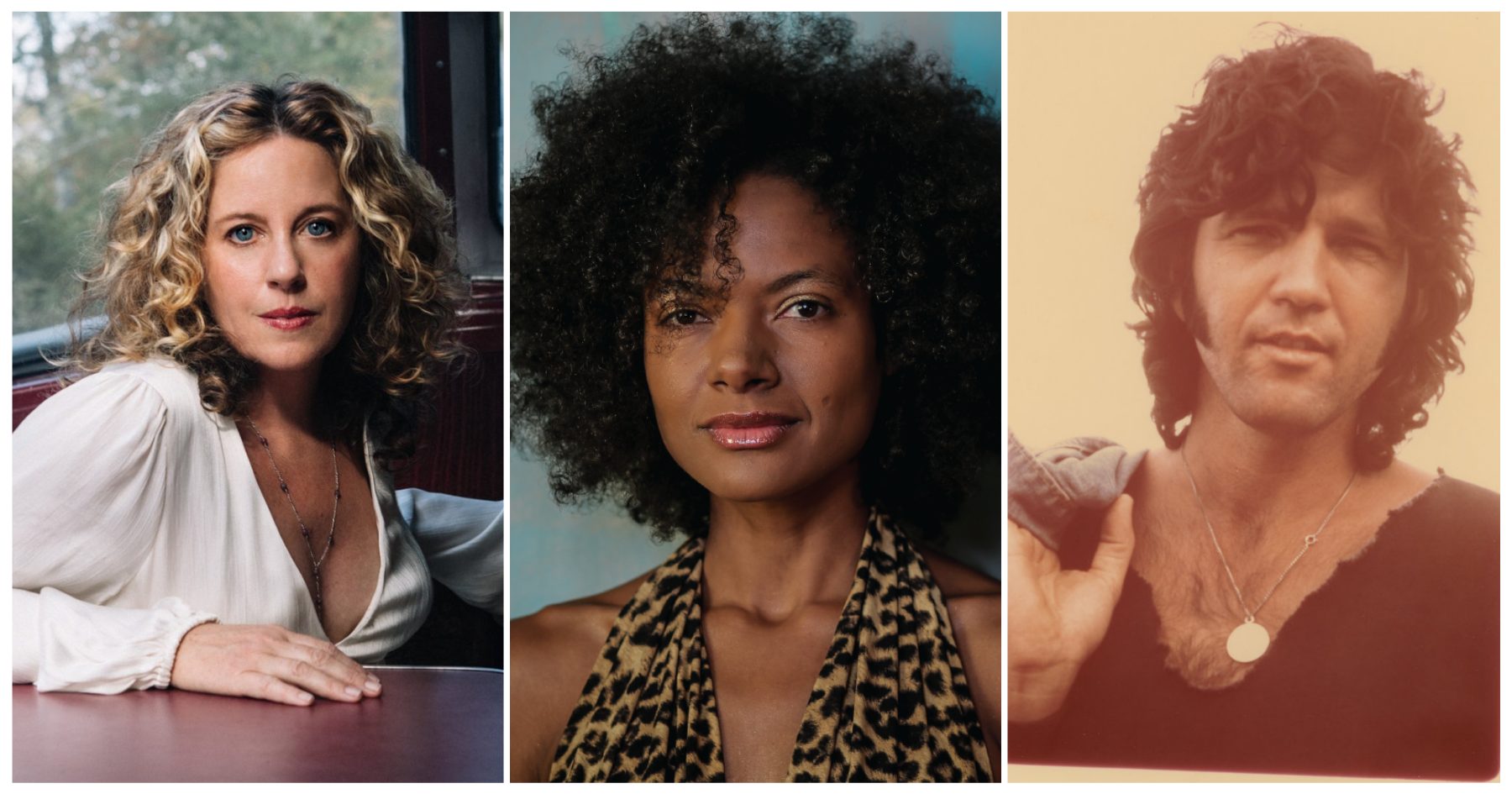
Photos: (L to R) Amy Helm by Ebru Yildiz; Allison Russell by Marc Baptiste; Tony Joe White by Leann White

With Her Banjo and Best Friends, Allison Russell Delivers ‘Outside Child’ (Part 2 of 2)

Allison Russell’s first solo album offers an intimate look into her life, yet it’s far more than just her musical vision that elevates Outside Child to one of the year’s most eloquent albums. Working with Dan Knobler in Nashville, she populated the studio with musicians like Joe Pisapia, Jason Burger, Chris Merrill, Jamie Dick, and Drew Lindsay, as well as exceptional guests such as Yola, Ruth Moody, Erin Rae, and the McCrary Sisters. She describes them as her “chosen family,” accompanying her as she shares stories about other families in her life.

Enjoy the second half of our BGS Artist of the Month interview with Allison Russell. (Editor’s note: Read the first half of our AOTM feature here.)

BGS: You can feel that sense of community between the musicians on this record. Can you talk a little bit about what it felt like while you were tracking?

Allison Russell: These songs were recorded in four days. Everything that you are hearing, I sang live with the band. We did it at Sound Emporium Studio A. There’s a lovely, big room with glass doors that you can open up. Everyone was in a semi-circle. It was a magical experience. We would gather in the center of the room and work out an arrangement together and then we would record the song. Most of what you are hearing is the second take. That was sort of when it magically coalesced, when everyone was communing and free flowing.

Dan [Knobler] shares my deep conviction that it is not about perfection. It is about capturing the communication in as honest and as true of a way as you can. That has been my approach ever since working with Joe Henry four or five years ago on a record called Real Midnight. So what you are hearing is a community choosing to come together to uplift these songs. I will be grateful for that for the rest of my life, even if no one ever heard the record. That experience of getting to record that way with chosen family. I can’t imagine a more healing, supportive environment than I experienced.

This is your first solo record and though you’ve made many records with groups, I’m wondering if the feeling of picking the songs and the sounds was different for you as a solo artist?

I don’t know that I really picked them. I think that the songs just poured out. So much of the sound is my community of artists. I would never dream of telling any of those artists what to play. I trust their ears and I trusted Dan Knobler’s ears, who produced the record. And I trusted my own ears too, of course, but really what we did was cast the room with people who we love and trust. What was different is that I’d never worked with Dan before and I trusted him bringing in two of his brothers, Joe Pisapia and Jason Burger to join the family of musical kindred that I’ve been part of. A lot of the artists who played on the record were artists that I’d met over my many years and different projects. …

And then since I moved to Nashville in 2017, I’ve been going to hear the McCrary Sisters and loving them. I really got to know them through Yola, because they formed a friendship at a festival in Scotland and I got to know them through her. I’m a huge admirer of them and their work and their harmonies. I reached out to them thinking I wouldn’t be able to afford them and they were so generous. They came and sang for way less than they are worth and worked within my budget. I was honored that they came. So it was really a matter of casting the room and then letting people shine the way they do.

I read your speech from the [2020] Women’s March [in Nashville]. It is really gorgeous, thought- and emotion-provoking. In it you mention that you are the hero of your own story which is wildly inspiring and important for us all to remember – that there are some things we can save ourselves from. Can you talk a bit about ways in which you save yourself?

I feel like connection with a loving community is what saves me every day. Art and music save me every day. I’ve been a book worm my entire life and I can’t emphasize enough, I don’t think I would have survived my childhood if I hadn’t had the escape of literature. Being able to go into other worlds and other imaginings and literally inside of someone else’s mind and take refuge and find inspiration and comfort and strength. Disappearing into books was the first kind of way that I learned how to try to be brave. It was reading about brave protagonists and people in situations worse than I could imagine. I got very obsessed in my tweens with reading first person accounts of survival of the Holocaust. It put into context what was happening to me, that if people could survive that, then I could survive what I was experiencing.

Being in a community with people that uplift you and see you and value you and you do the same for them, that is life-changing. I have that with my partner J.T. I have that with my sisters in Our Native Daughters. We wrote a whole record together, uplifting each other and bringing forward the perspective of Black women within the diaspora and within the historical record. Our particular demographic is so often left out of any kind of historical record in any kind of first-person way, with agency and lived experience. That has been a source of great strength and resilience.

And then to connect with my ancestors. To delve into all of the history. With all of the intergenerational trauma and abuse, there is also incredible intergenerational strength and resilience and transcendence. The ability to overcome circumstances I cannot even dream of. My many-times-great-great-grandmother Quasheba survived being enslaved. She survived being ripped away from everything she knew, her family and language and home. She survived the horrible Middle Passage. She survived multiple plantations and having her children taken. If she can survive all that, I can get through this.

Do you remember what prompted you to pick up a banjo for the first time?

I was in a band called Po Girl, that was my first baby band and the woman I started the band with, Trish Klein, played the banjo. She taught me my first few chords and I just kept playing from there. I met Rhiannon Giddens in 2006 at the Vancouver Folk Music Festival and I was so excited to meet another Black woman that played banjo, because I was the only one that I knew. She told me about the Black Banjo Gathering, which I never got to attend. I’ve met so many dear friends who were a part of that, like Valerie June. All of us in Our Native Daughters play banjo and that has been a deep communion for us.

I think Rhiannon’s minstrel banjo is one of the most beautiful sounds I’ve ever heard. I’ve adapted my little Americana Goodtime banjo to sound as much like that as I can by adding gut strings and a fiber skin head. I’ve modified the bridge a bit to give it that deeper resonance. For me the banjo has allowed me to access my songwriting in a different way. I’ve noticed this over time as I’ve picked up more instruments. Different songs come through on different instruments and now for me, the banjo has become my primary songwriting instrument.

This album is coming out hopefully at the tail end of the pandemic so I’m guessing some of the songs have not been performed in front of an audience yet. Are there songs you are particularly excited about presenting on stage and on the flip side are there songs you are nervous or trepidatious about presenting to an audience?

Basically none of them. Of course I’ve done some virtual performances here and there of a couple of them. But they have not been played live. I am always nervous about everything. I’m just a very anxious person most of the time. But where that stops, usually, is on stage, when I get to be in communion with my fellow artists and with the people who have come to listen. That is very much a two-way exchange. The answer is, I’ll be nervous about all of it right up until the moment we are playing and then I will be in the happiest place I know.

(Editor’s note: Read part one of our Artist of the Month interview with Allison Russell here.)


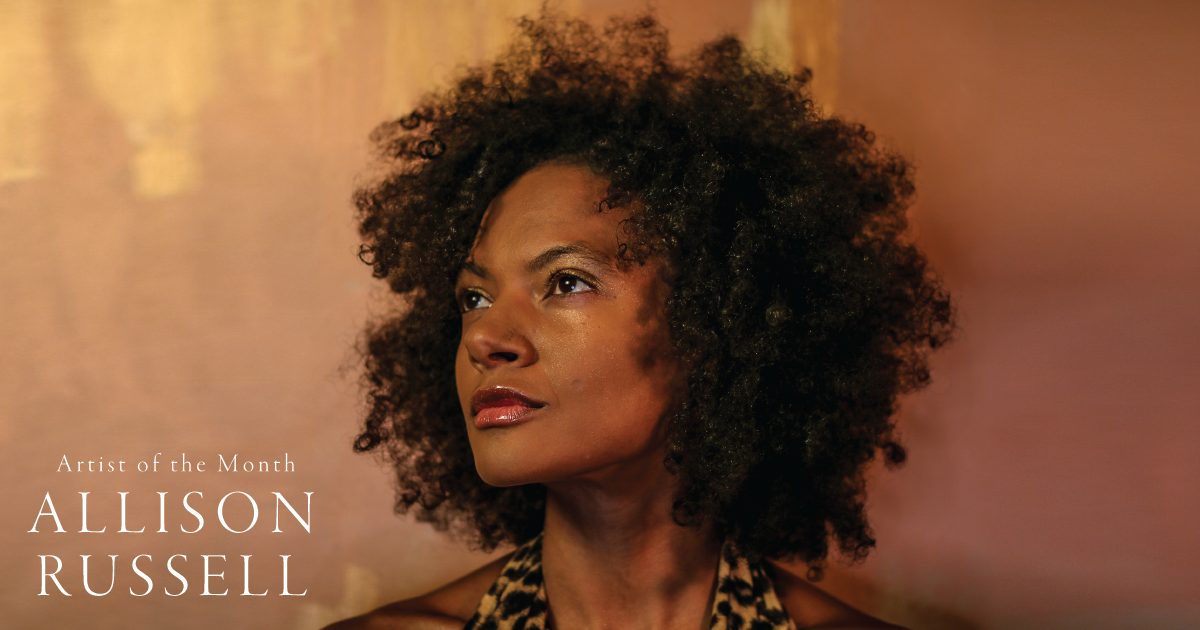
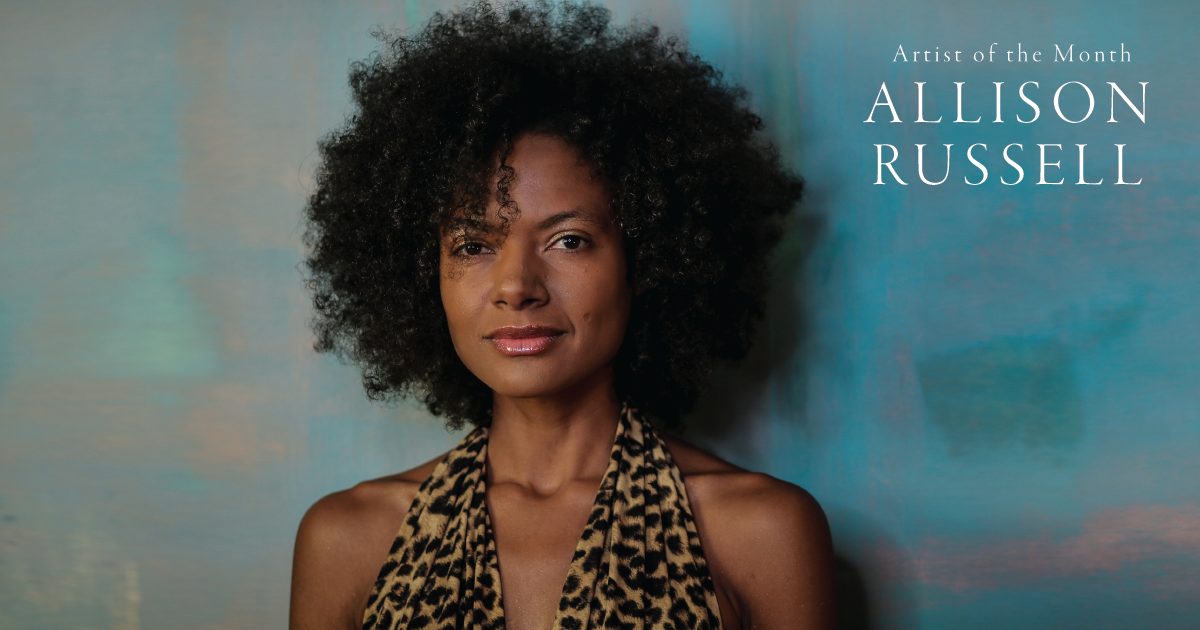
Photo credit: Marc Baptiste (top); Laura E. Partain (in story)

Allison Russell Gives a Voice to Queer Folks and Survivors on Solo Debut (Part 1 of 2)

Within the songs of her new album Outside Child, Allison Russell delves deeply into the extreme trauma she experienced in her youth spent in Montreal both as a mechanism for personal relief, but also in the hopes that it might reach people with similar experiences.

Although she is a member of multiple bands (including Birds of Chicago and Our Native Daughters) and is an accomplished speaker and poet, the release of Outside Child marks Russell’s first solo work as a recording artist. BGS caught up with our Artist of the Month, Allison Russell, from her home in Nashville.

BGS: This is a deeply personal record. What was your writing process like?

Allison Russell: The writing process was having to delve deeply into the most painful parts of my past and childhood and history. I experienced severe childhood abuse, sexual, physical, mental, and psychological. In many ways, I think the psychological is the toughest part to unpack and defang. I don’t know that I am ever going to be entirely free of that and the process of dealing with that. What was very beautiful about this to me is that I didn’t have to go on that fearsome journey alone. My partner J.T. [Nero] was with me every step of the way. He co-wrote many of the songs on this record with me. He scraped me up off the floor when I was in the depths of it.

I have tried at different times in my songwriting life to tackle some of that material and I did on various songs with my first baby band, Po Girl, but I didn’t have the same kind of support and stability at home that I have now. I didn’t have the same amount of distance in time from the events and trauma of my childhood. Time and distance, plus boundless unconditional love that I receive from my partner, were really healing to have that collaborative sense on these songs. It is tough. It is hard to contemplate pain and trauma. That is reflected in the macrocosm of what is happening in our world right now. We are dealing with it every day with each news story of violence towards communities of color. …

We have to go into the pain of it or it perpetuates. The cycles self-perpetuate if we don’t take a stand to stop them. That’s what I’m trying to do personally. Art builds empathy and connection and it helps stop cycles of abuse when we really listen to one another and see and hear one another. It is a lot more difficult to practice abuse and bigotry. I believe in harm reduction. I don’t think we are going to achieve nirvana in this lifetime, in this world, but I do believe strongly in harm reduction and that small things can create mighty ripples. That’s why telling our own stories in our own words under our own names is so important because it can provide a roadmap for somebody else going through similar experiences.

I wish my story was unique. It is not. One in three women, one in four men, one in two trans or non-binary folks have experienced stories very similar to mine.

In “Persephone,” you sing about a lover in your youth who was seemingly a refuge from the trauma you were living through. It feels like a really loving tribute to her. Is that a story you’ve always wanted to tell?

It has become more important to me as I get older to honor those friends of our youth and loved ones of our youth and lovers of our youth who helped shape us and in this case, she literally saved my life. And I wanted her to know that. I also wanted to acknowledge that I am a queer person who is now in a straight passing life and marriage. I fall in the middle of the spectrum of orientation. I’ve been in love with women and I’ve been in love with men and I’ve been in love with trans people and I’ve been in love with non-binary people. I wound up falling in love and committing to share a life with a man, my husband.

One could assume that I’m straight, but I am not and especially in this time of increased polarization and bigotry, it is really important that people understand that nothing is black and white. Nothing is simple and you can’t assume that because I am married to a man and I have a child that I am a straight person. You can’t say homophobic things to me and have it pass. Part of me wanted to really acknowledge that publicly. I am grateful. I don’t get to be here singing today and having my child and my family if it wasn’t for that first love. She taught me how to love and that it was possible. She taught me about kindness and unconditional love. She taught me about acceptance, courage and bravery.

I’d love to know about your influences coming up in music.

Growing up, my mom was my first musical influence. She is a beautiful piano player. We had a really troubled relationship, but one of my first memories is crawling underneath her piano and just listening to her play and watching her feet on the pedals and hearing the resonance under the piano and feeling connected to her in that way, even though she didn’t know I was there. It was a feeling like the music she made was a truer expression of her than the often very hurtful words or violent things she did. That was my first sense of understanding the depth of music, that it goes beyond language.

My grandmother taught me lots of very violent, creepy lullabies from Scotland. She knew a lot of old murder ballads and child ballads and she sang me all of those songs. I loved them. That oral distillation of archetypal stories over generations and time, generally very matrilineal and passed down from mother to daughter, I connected deeply with those songs. That was my first sense of the hidden archive of the world.

My adoptive father was very repressive about what we were allowed to listen to. If it wasn’t Baroque or Classical or maybe Romantic, we would get in trouble for listening to modern music. One of the sort of transgressive things that my mom and I sometimes did was listen to Joni Mitchell or Stevie Wonder together. I have such distinct memories of holding the Ladies of the Canyon album and poring over it and reading the back and seeing Joni’s art. That was very formative music for me.

With Tracy Chapman, I was 9 the first time I heard her. I was on a trip with my uncle and I remember hearing “Behind the Wall” and just bawling because we were the family behind the wall. We were the family where there was violence and abuse and the police were constantly being called. To hear someone writing this and have this sense of recognition that this happens to other people and I’m not alone in the world and hearing her voice and her writing and poetry made me feel I wasn’t alone.

And when I left home at 15, my sonic world exploded. There were all these endless possibilities. I’m a huge Staples Singers fan. John Prine, Lucinda Williams, Emmylou Harris, Taj Mahal (particularly Giant Step/De Old Folks at Home). And Mulatu Astatke, who I’ve been obsessively listening to over the pandemic. His music is expanding my understanding of melody and structure. It is ongoing. The influences never stop and I’m influenced by my brilliant peers as well.

Has your daughter listened to these songs with you? What do you want her to learn about you from the music?

She has listened to it. One of the hard things has been having to talk about abuse with my child. I think it is incredibly important. I think that by the time we start to do that in schools, it is often much too late for the children, including me. I’ll never forget in Grade 4, hearing the song, “My body’s nobody’s body but mine,” and for me that had not been my reality since I was 3. What I want her to know is that we are strong enough to live through hard things and come out the other side of it. I want her to know that she is strong enough, in whatever struggles she faces.

I want her to know that her stories are worth telling and her experiences are of value. She is an infinitely strong being and she is part of a whole long lineage of strong women. I want her to know that. And that she is loved so much and a huge part of why I strive to do anything or be any kind of good ancestor is because of her.

(Editor’s Note: Read part two of our Artist of the Month interview here.)


Photo credit: Marc Baptiste (top); Laura E. Partain (in story)

Allison Russell, Gentle Spirit and Whimsical Style

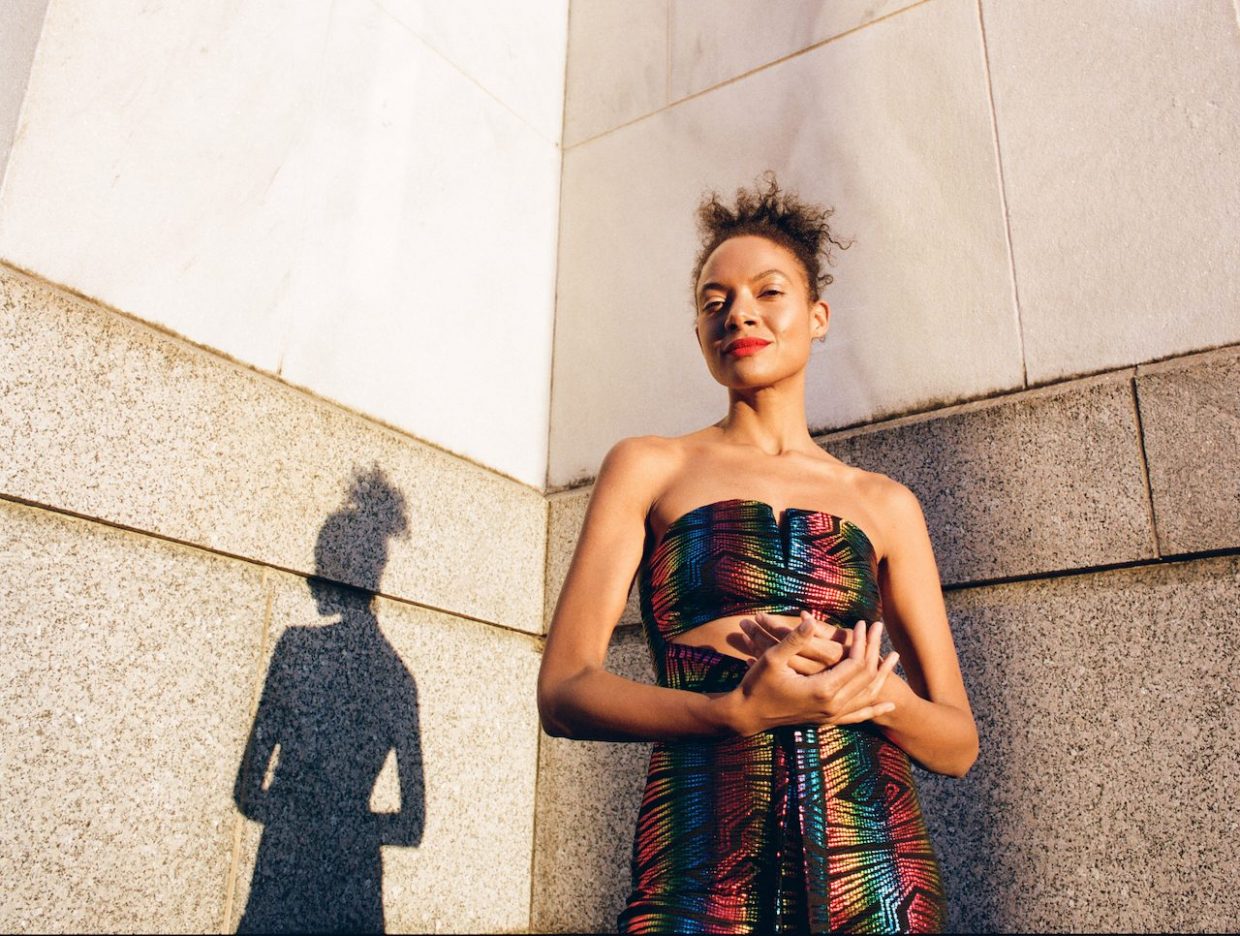
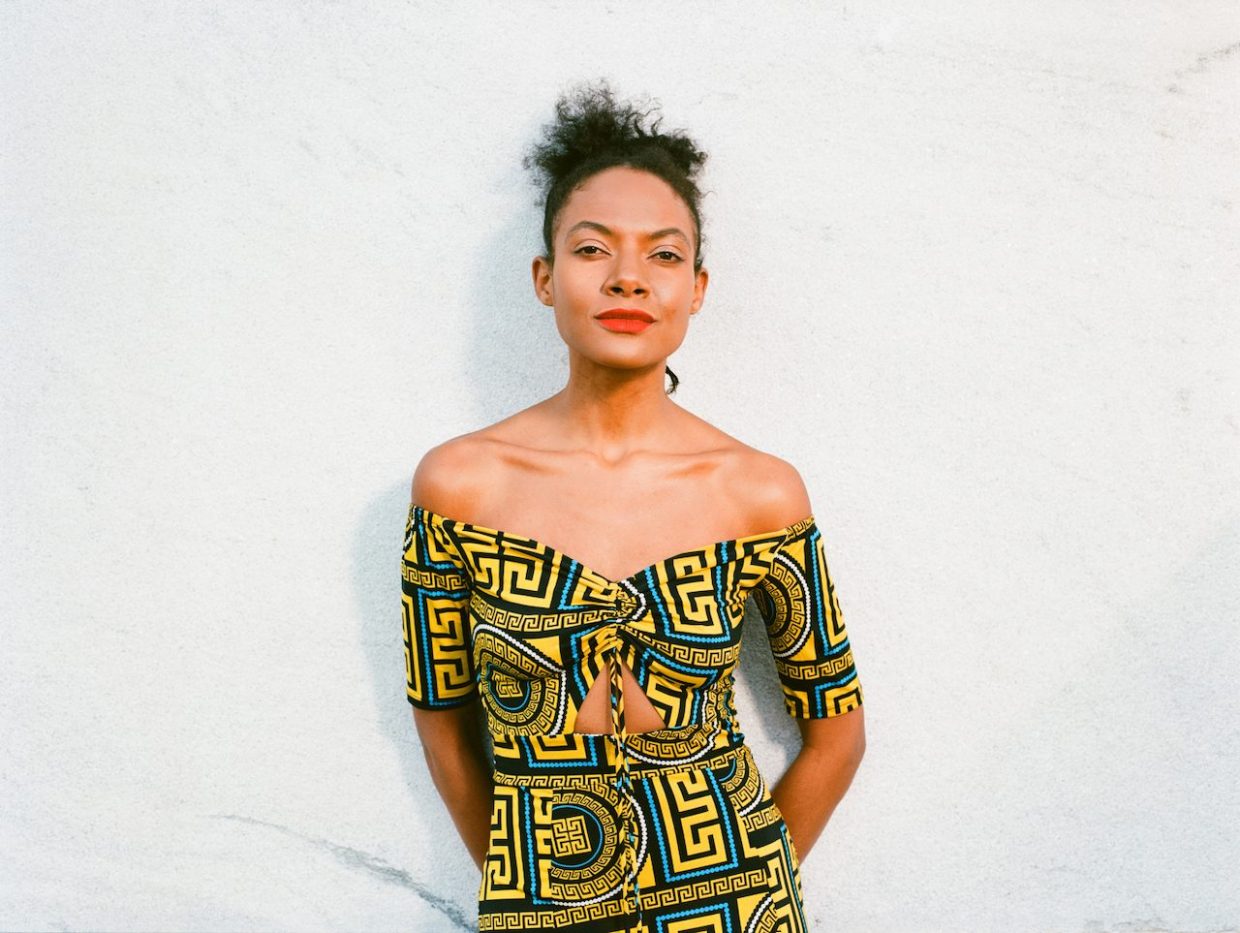
I met Allison Russell briefly several years ago during AmericanaFest here in Nashville, Tennessee. Years later on a masked up photoshoot with Yola during the COVID pandemic, I talked with this wonderful friend of Yola’s who introduced herself as Alli. We talked off and on during the shoot and had a wonderful time, only towards the end realizing that we did indeed meet before. That’s the funny thing about masks, I guess!

This particular shoot was the second one we had together within several months. Alli has since become a wonderful friend, and beyond her own ferocious talent and musicalities, she’s a gentle and whimsical spirit. We met in downtown Nashville this spring for our friends at BGS. Enjoy!Laura Partain


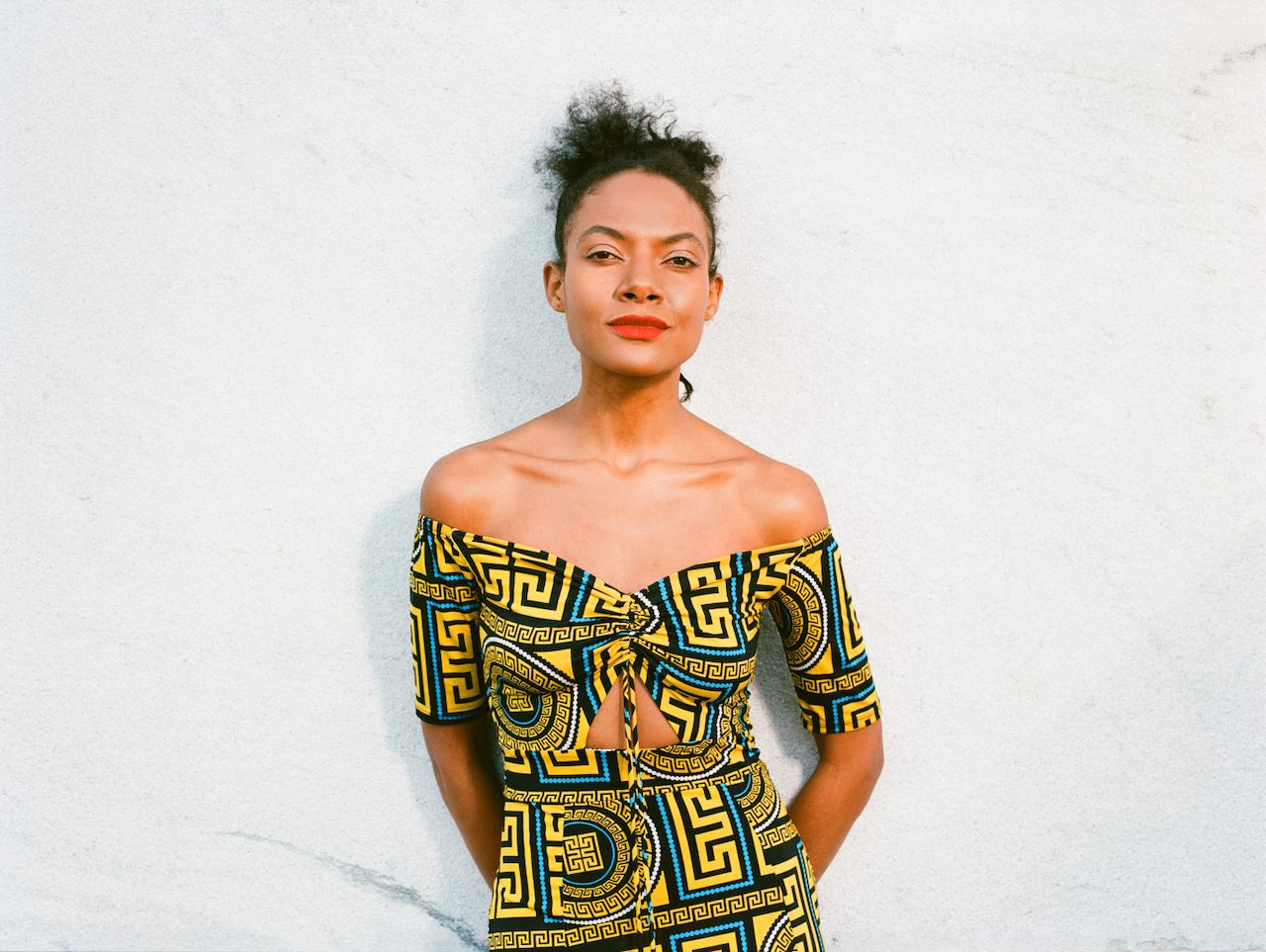
Allison Russell, wearing a dress designed and purchased from Kenyan American-owned Kings and Queens Boutique in Madison, Tennessee.


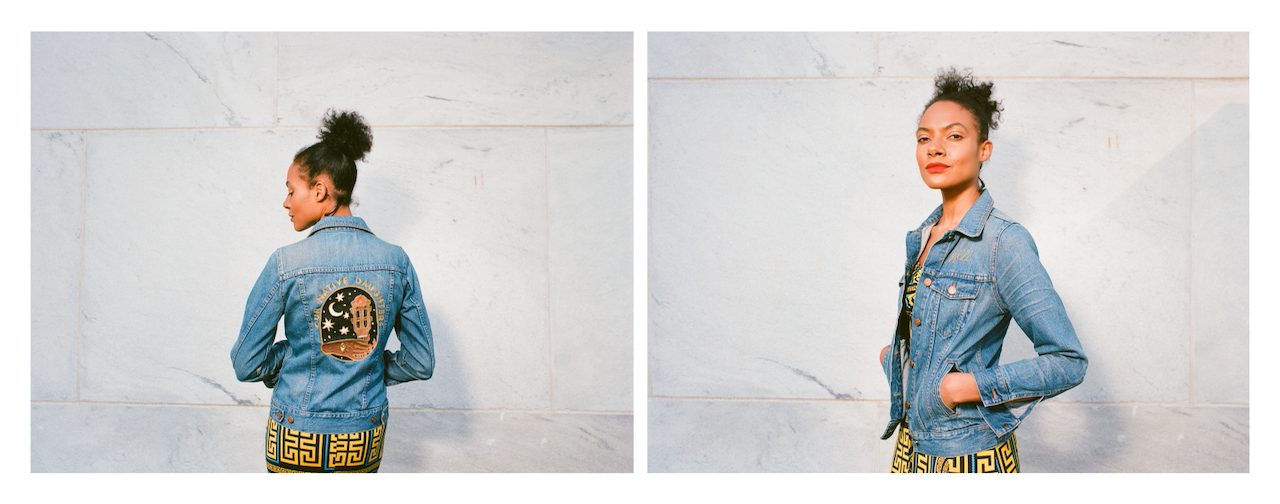
Allison in her custom Fort Lonesome jacket, which was gifted to her during the 2019 Newport Folk Fest, where she performed with Our Native Daughters.
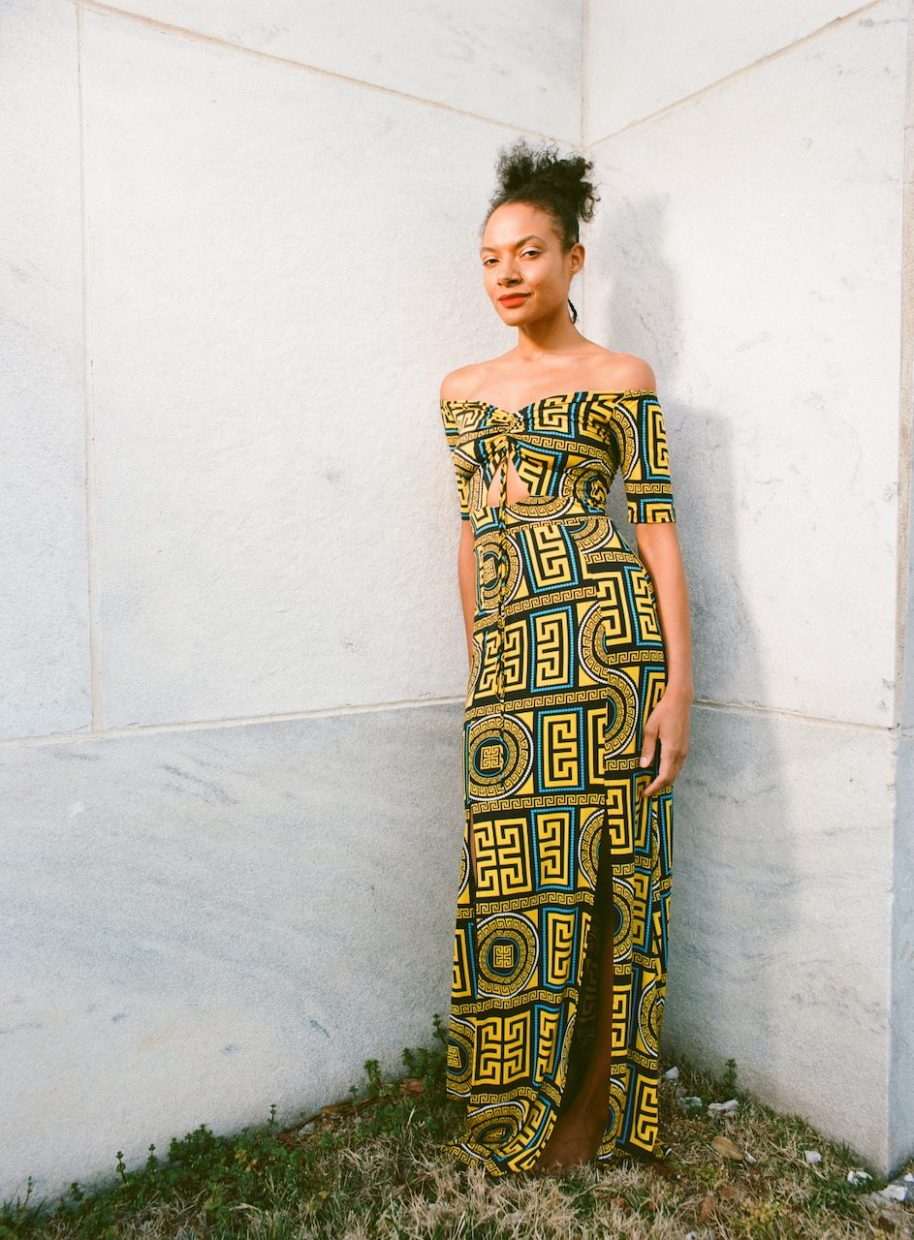

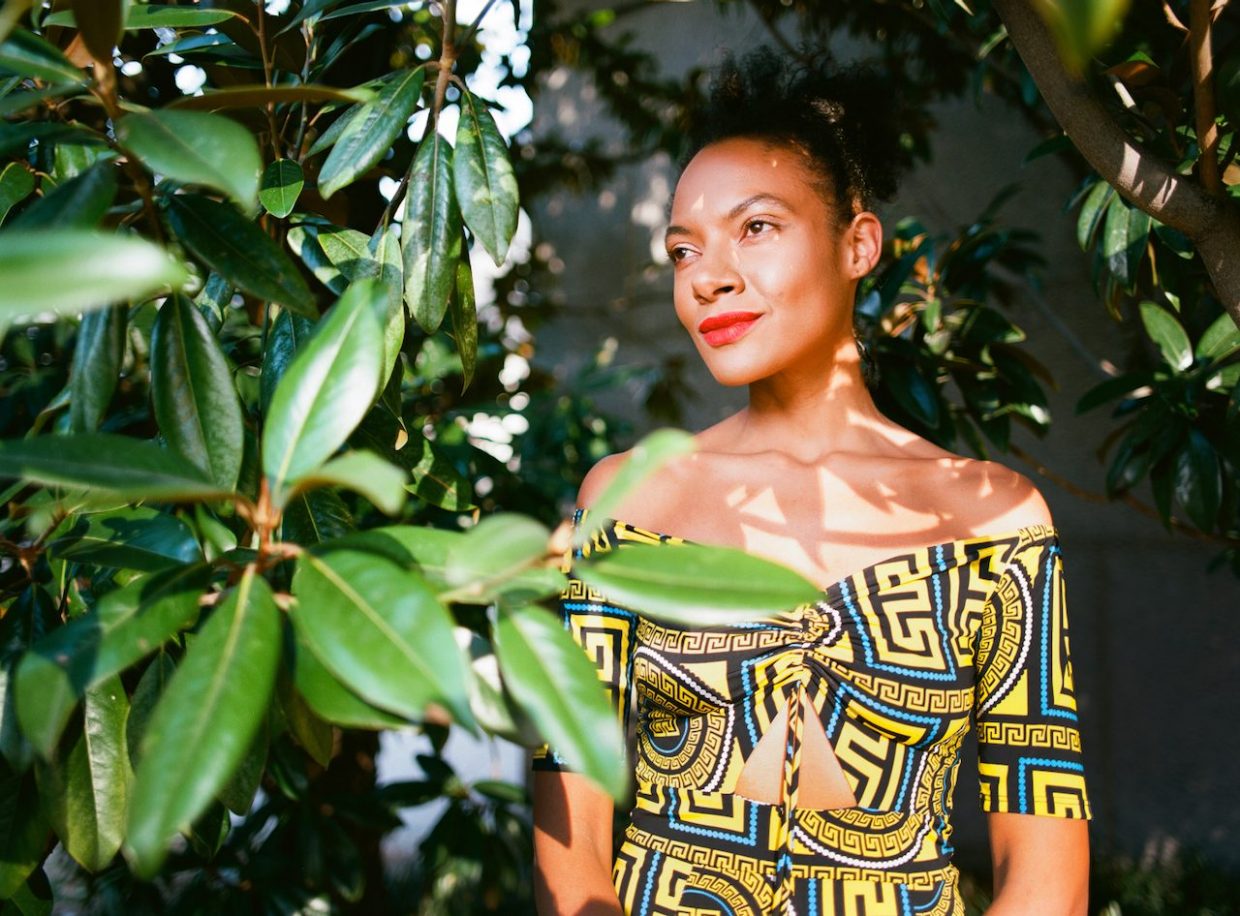
Once again, wearing the dress designed and purchased from Kings and Queens Boutique.


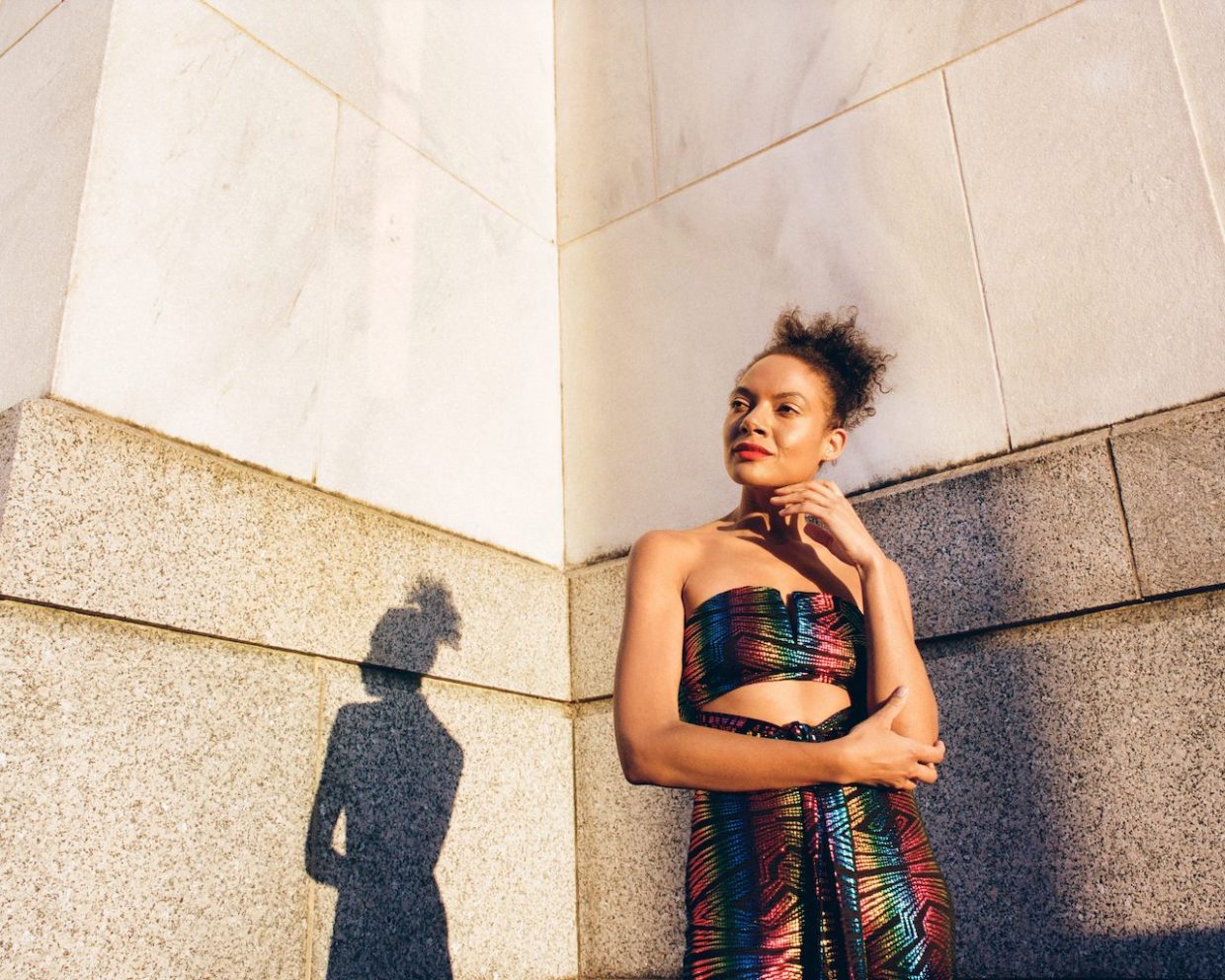
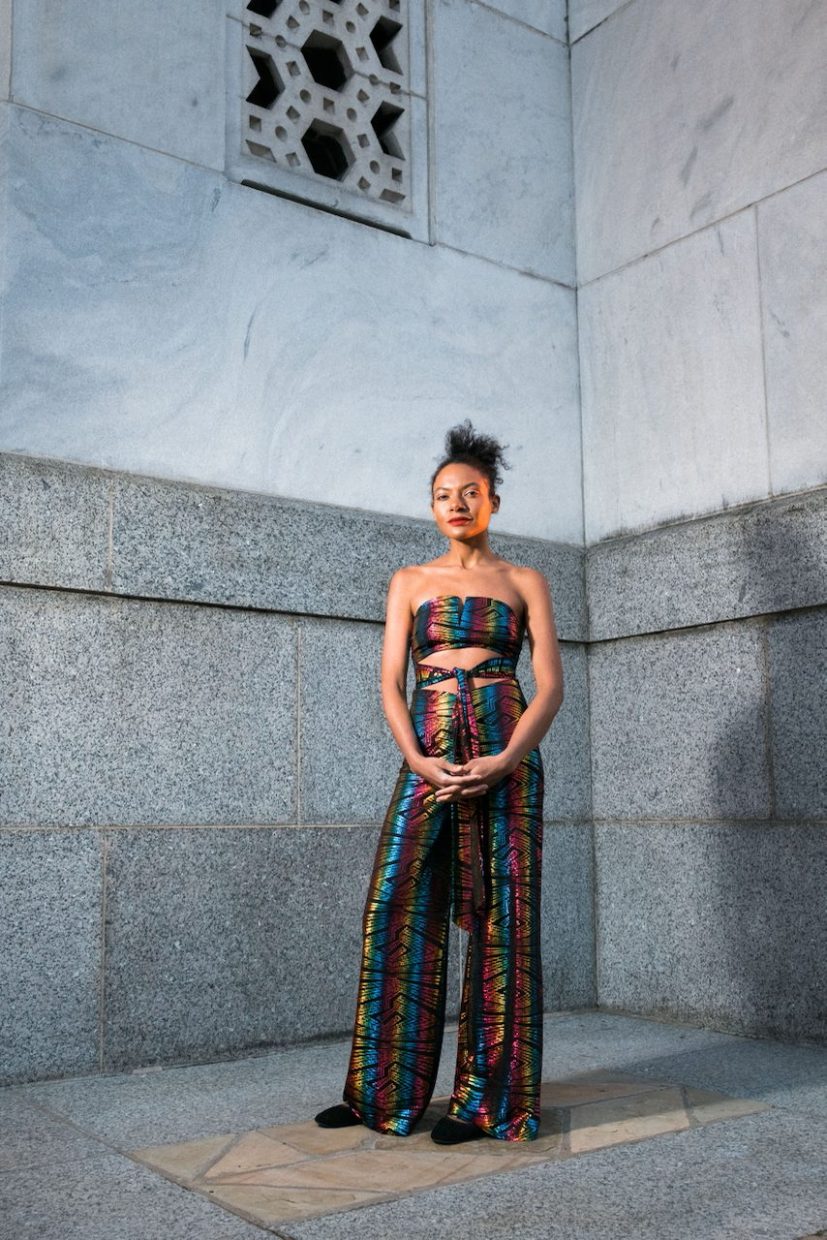
Allison wears a shiny, rainbow jumpsuit she scored from a local thrift shop in Nashville, Tennessee.

(Editor’s note: Explore more of our Artist of the Month coverage on Allison Russell here.)


All photos by Laura Partain

The BGS Radio Hour – Episode 207

Welcome to the BGS Radio Hour! Since 2017, this weekly radio show and podcast has been a recap of all the great music, new and old, featured on the digital pages of BGS. This week, we bring you new music from our Artist of the Month, Allison Russell, an exclusive live performance by Madison Cunningham from BGS’ Whiskey Sour Happy Hour, and much more. Remember to check back every week for a new episode of the BGS Radio Hour.

APPLE PODCASTS, SPOTIFY

Sunny War – “Losing Hand”

Coming out of COVID isolation with fingers crossed and masks on, many artists are releasing new and exciting music. We’re particularly thrilled about Sunny War’s latest release, Simple Syrup. We caught up with the LA-based guitarist and singer for an edition of 5+5 and talked everything — from Elizabeth Cotten’s guitar playing to eating black-eyed peas with Nina Simone.

Ted Russell Kamp – “Lightning Strikes Twice”

Singer-songwriter Ted Russell Kamp originally wrote “Lightning Strikes Twice” in the style of Billy Joe Shaver, as a honky tonk number. But, for his upcoming album Solitaire, he decided to rework the track, bluegrass style.

No-No Boy – “Gimme Chills”

A student of singer-songwriter, multimedia artist, and scholar No-No Boy (AKA Julian Saporiti) once called his song “Gimme Chills” a “fucked up love letter to the Philippines.” No-No Boy agreed. The track is part history lesson and part tribute.

Yola – “Diamond Studded Shoes”

Yola’s roots-pop outing “Diamond Studded Shoes” is a song that explores the divides created to distract us from those few who are in charge of the majority of the world’s wealth. It calls on all of us to unite and turn our focus to those with a stranglehold on humanity.

Dale Ann Bradley – “Yellow Creek”

BGS recently caught up with Kentucky’s own Dale Ann Bradley, discussing her recent album, Things She Couldn’t Get Over — her first release since departing group Sister Sadie. Each of the songs on the project deal with hard times, and finding the courage that gets us through. “Yellow Creek,” a song about the forced removal of Native Americans from their land, finds Bradley giving us a reminder to walk with empathy.

Josephine Johnson – “Where I Belong”

“Where I Belong” by singer-songwriter Josephine Johnson was inspired by characters from British Navy novels set during the Napoleonic wars. Love and high seas adventure, to be sure!

The Wandering Hearts – “Gold”

Inspired by their song “Gold,” The Wandering Hearts created a Mixtape for BGS, entitled The Golden Tonic, it’s a selection of songs that have helped them through tough situations, inspired them, and take them back to specific moments in time. They hope that the Golden Tonic will work its magic on the listener after this heavy and hard year.

Eli West – “Brick in the Road”

In a recent 5+5, multi-instrumentalist and singer-songwriter Eli West discusses the influence of Paul Brady and Irish folk music, understated chaos in visual art, and drunk BBQ with Sting and Mark Knopfler.

Allison Russell – “Nightflyer”

Our Artist of the Month Allison Russell has already made a mark on the modern roots scene through various powerhouse groups, like Birds of Chicago and supergroup Our Native Daughters. Now, she’s stepping out with her first solo record, Outside Child. Stick around all month long for exclusive content from Russell.

Bhi Bhiman – “Magic Carpet Ride”

Bhi Bhiman reimagines iconic rock song “Magic Carpet Ride” in the style of old country blues players – artists like Mississippi John Hurt, Lightnin’ Hopkins, and others who’ve played a huge role in Bhiman’s evolution as a guitarist.

Parker Millsap – “Vulnerable”

Parker Millsap, one of our recent guests on The Show On The Road, is a gifted singer-songwriter who grew up in a Pentecostal church and creates a fiery gospel backdrop for his tender (then window-rattling) rock ‘n’ roll voice.

Madison Cunningham – “L.A. (Looking Alive)”

Last spring, on our debut episode of Whiskey Sour Happy Hour, Los Angeles-based, Grammy-nominated guitarist and singer-songwriter Madison Cunningham kicked off the entire series with an acoustic rendition of “L.A. (Looking Alive).”

Stash Wyslouch – “Lord Protect My Soul”

From bluegrass mad scientist Stash Wyslouch, formerly of progressive string band the Deadly Gentlemen, here’s a traditional number turned upside down, taking a Bill Monroe tune and contrasting it with polytonal backup. Wyslouch told BGS that while he gravitates towards gospel standards in the bluegrass world, his own style drifts to the absurd and unexpected. Like a bluegrass Frank Zappa!

Bob Malone – “The River Gives”

Singer-songwriter and pianist Bob Malone wrote “The River Gives” after the devastating 2016 flooding in West Virginia, but he never had a chance to produce the track like he wanted to – until now!

Marty Stuart – “One In A Row”

Marty Stuart’s new project, Songs I Sing In The Dark, is a collection of twenty songs that he curated that helped him through the tough times that we all saw in 2020. Stuart says this Willie Nelson song has followed him around since he first heard it over twenty years ago. “I think of it as an old friend, same as Willie. It’s a friend for the ages, and an excellent song to sing in the dark.


Photos: (L to R) Madison Cunningham by Claire Marie Vogel; Yola by Joseph Ross Smith; Allison Russell by Marc Baptiste