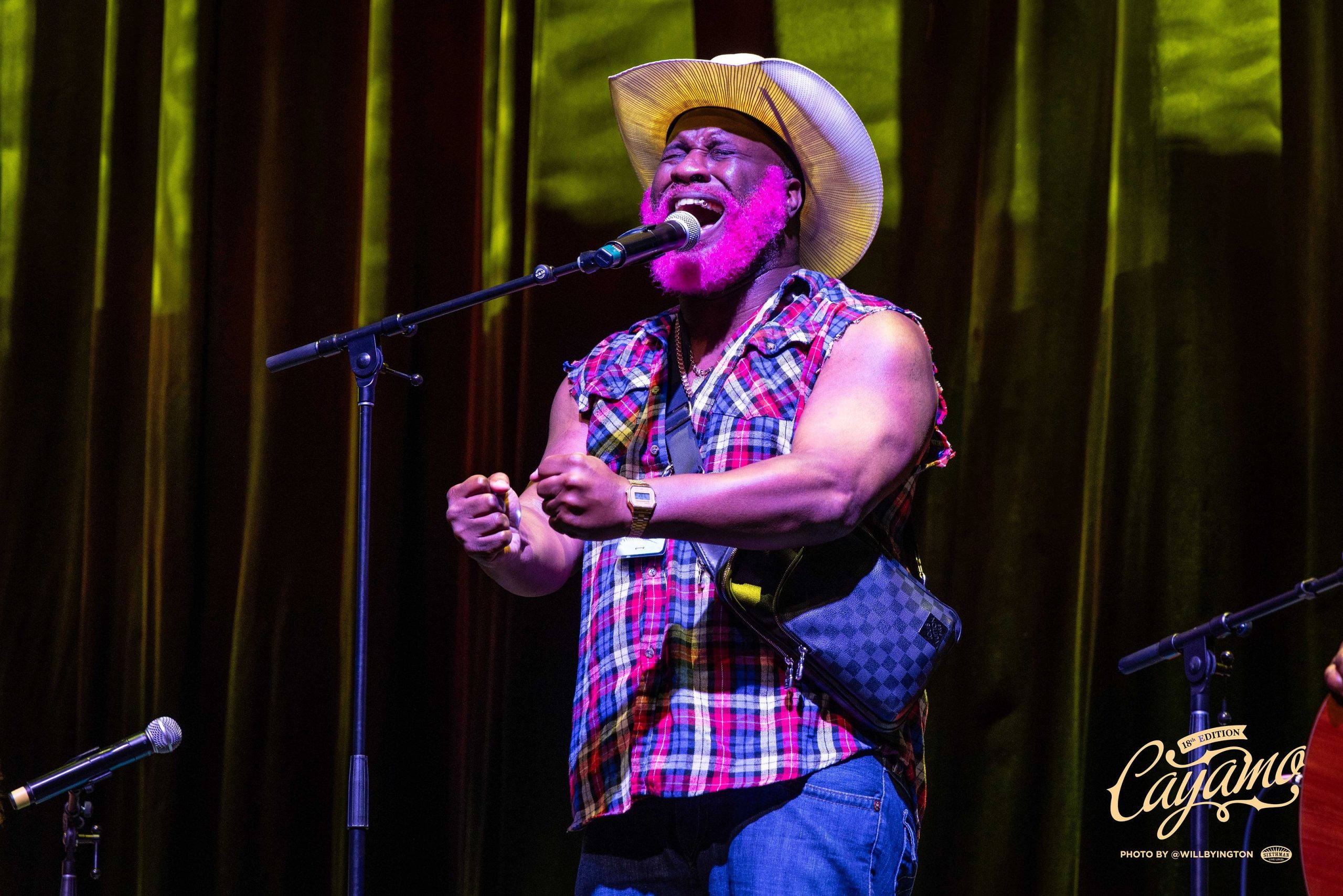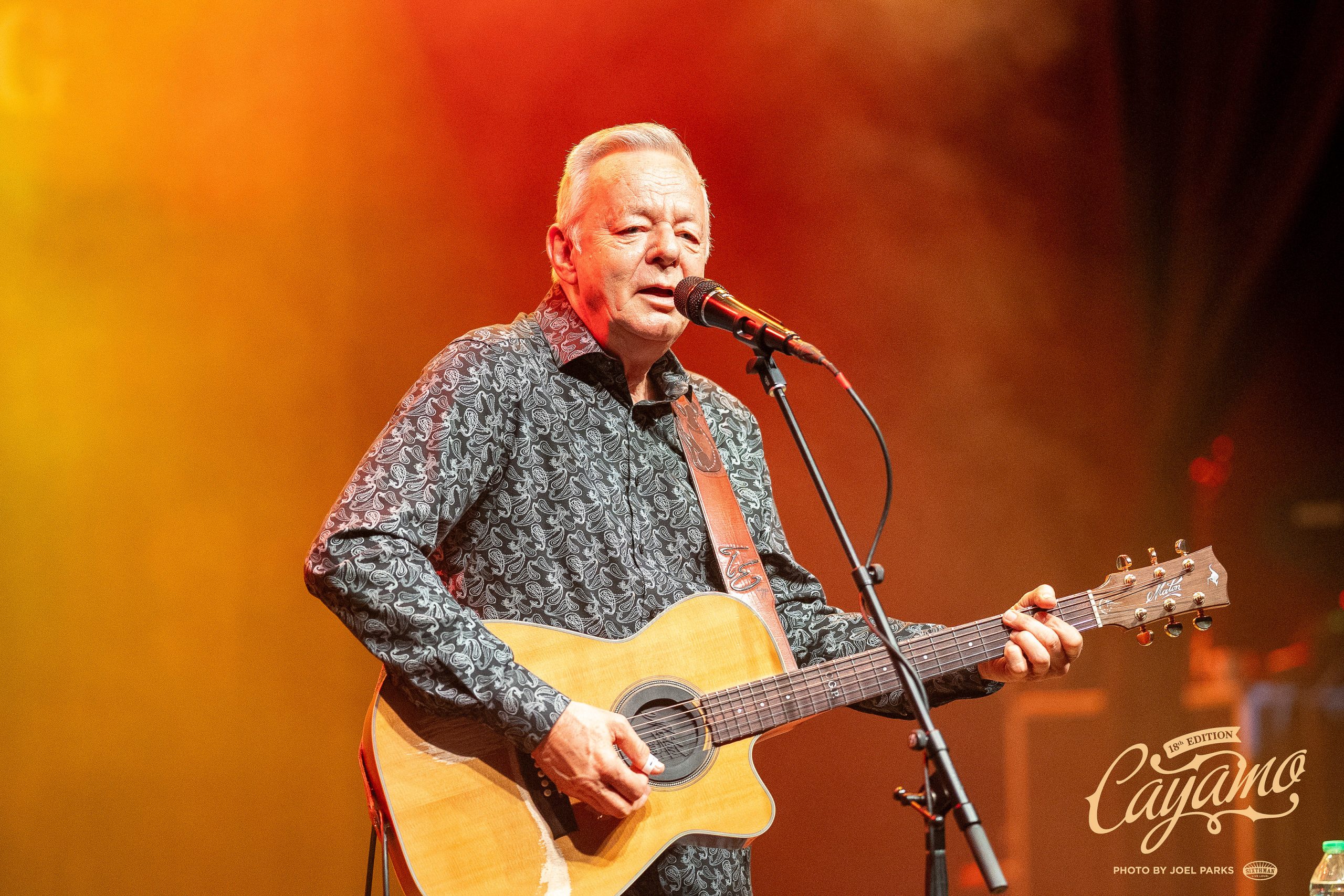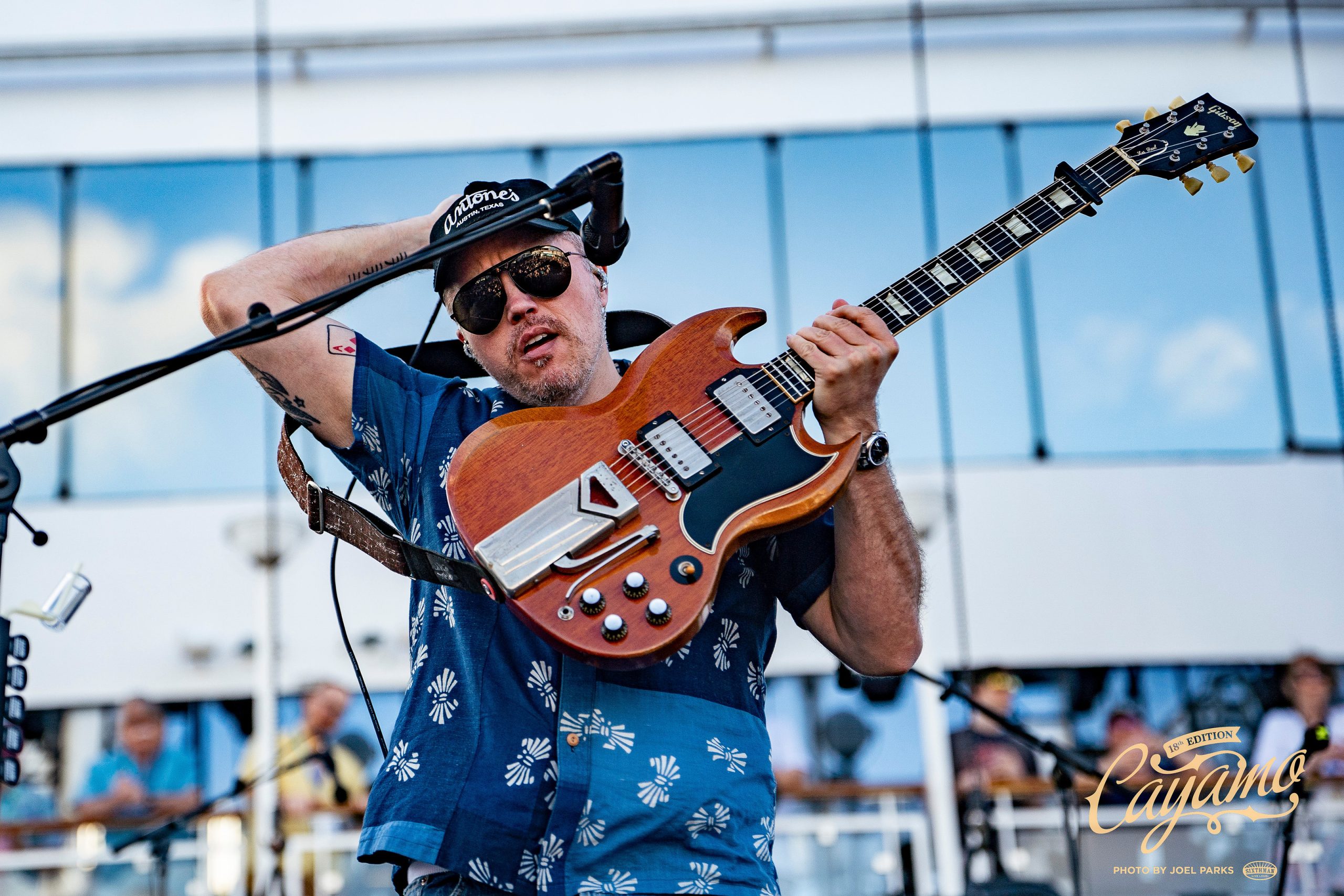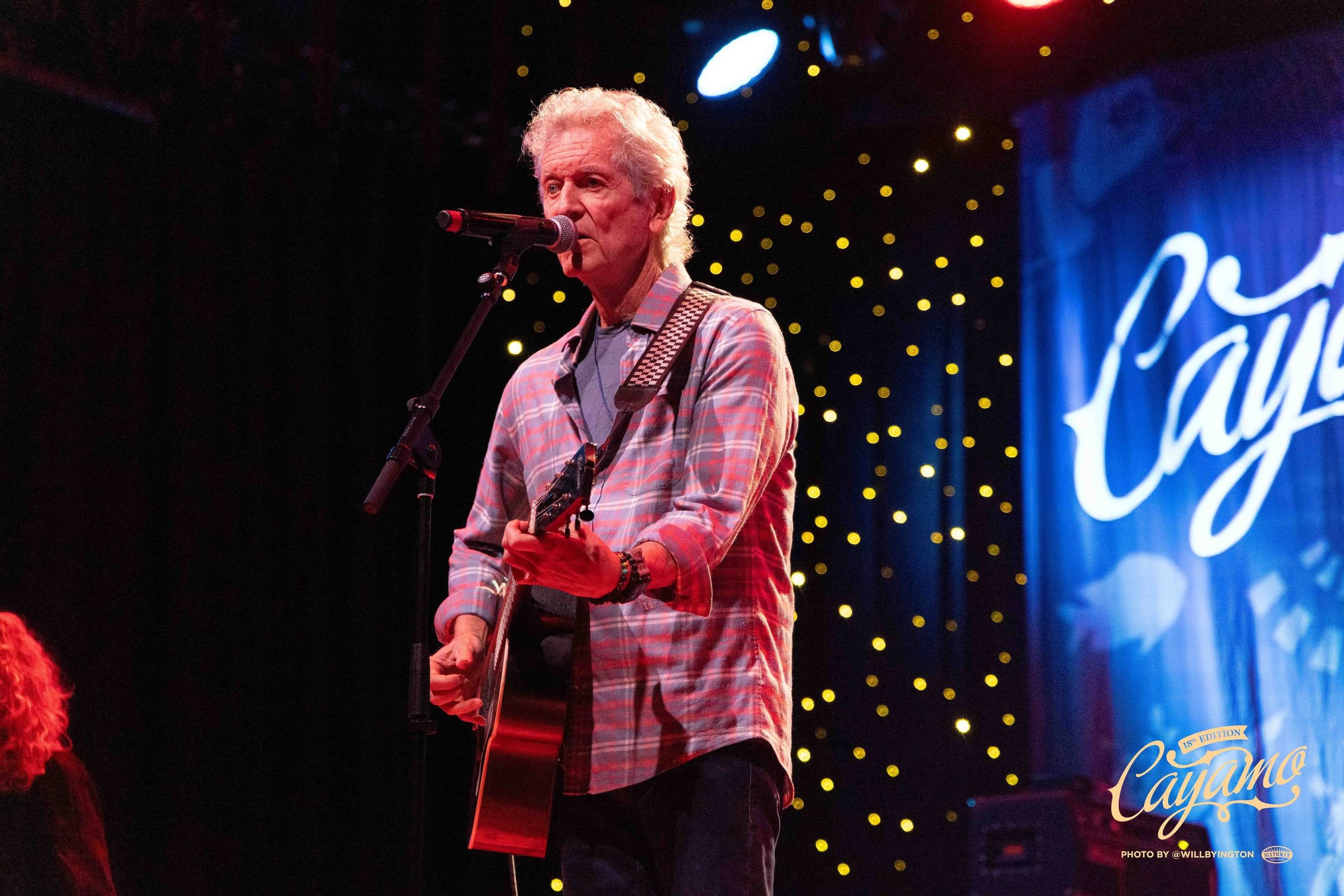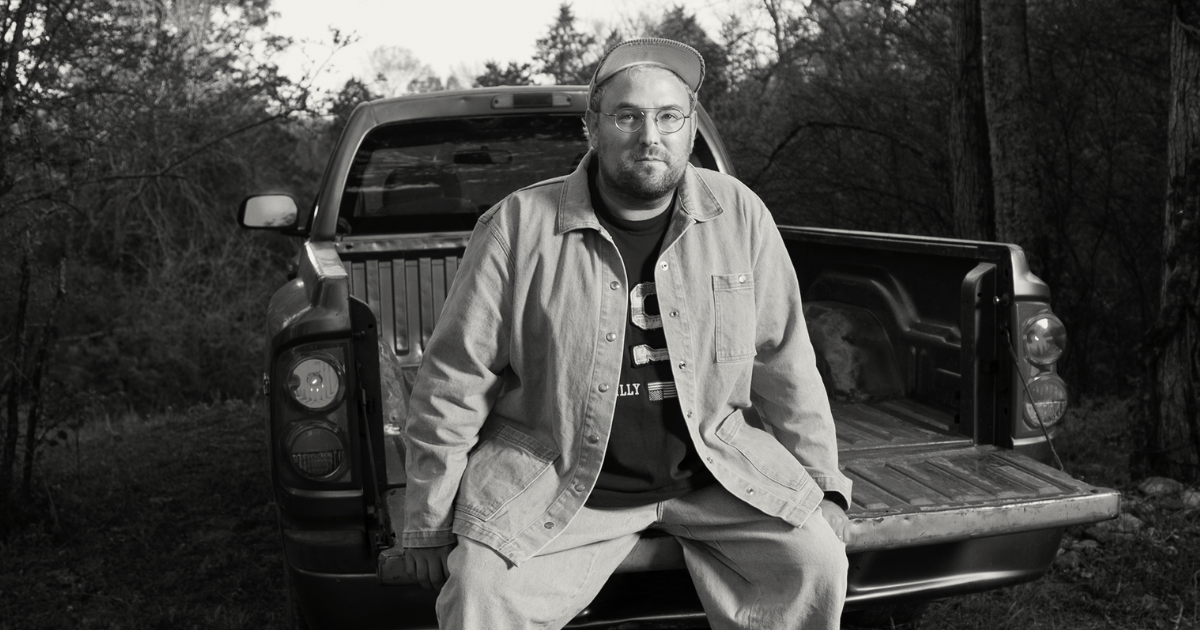
Boy Golden is Rooted in Roots

Lots of people are taking a shine to Boy Golden lately. Radio stations in Canada sent his populist pop single, “Suffer,” to the top of the modern rock chart. He produced William Prince’s 2025 album, Further from the Country, which recently received a Juno nomination in the Contemporary Roots Album category. And he’s among the new additions to the esteemed Telluride Bluegrass Festival lineup in June.

Offstage, Boy Golden is Winnipeg-based musician Liam Duncan. (His mother’s maiden name is Goulden, so he conjured the stage name Boy Golden.) In addition to jumping across genres, he’s also crossing the Canadian/American border this spring, with dozens of U.S. tour dates to promote his new album, The Best of Our Possible Lives. Duncan recorded the project in Los Angeles with fellow Winnipeg guitarist Austin Parachoniak, producer Robbie Lackritz, and cream of the crop LA studio players.

Duncan called in to Good Country to talk about making the new record, though the conversation also gravitated toward his abiding love for bluegrass music.

“Suffer” has been a big hit for you in Canada. What do you remember about trying to get “Suffer” to sound the way you wanted it to sound? Was it hard to come up with that song?

Boy Golden: No, that was a quick one. I sat down and wrote it all in one chunk. I remember it taking about an hour, maybe. But then I did make several demos of it, and throughout that process, I did edit it a fair bit and experimented with different lyrics and arrangements. By the time I got to the studio, I was really confident in the foundation, the bare bones of it. I could trust the musicians there, and they nailed it.

On that song, Pino Palladino plays the bass, which is really cool because he’s a legend, and then Abe Rounds is on the drum kit and he’s a really great drummer and musician. We had a few drummers we were thinking about asking, but I listened to Abe’s solo album – which is called The Freedom to Make Mistakes – and his percussive sensibilities on percussion instruments, beyond just the drum kit, were so spot on. It made it an easy decision, because I really wanted a lot of percussion on this album.

Why is that?

A lot of records that I love have a lot of percussion, first off. I was listening to a lot of Ry Cooder. I was listening to a lot of Paul Simon. The percussion on those records is fantastic. But also I was thinking about the first record I made as Boy Golden and I really went overboard with the percussion on that album. I hadn’t listened to it in years, I was in a store in Portland, and the guy running the store put on my song while I was in there. I was like, “Oh gosh, this is really great!” [Laughs]

I went back and listened to the record and I was like, “I should do that again,” because the records that I made between that first one and this one were way more stripped back. I made both of them on different types of 8-track tape machines so there’s just not as much room to go crazy with it. And I knew I was gonna have the freedom to do anything on this record.

The album before this one [For Eden] had a lot of banjo. Are you still grabbing the banjo from time to time?

Oh, yeah. I made a demo yesterday that has a bunch of banjo on it. And I spent the Christmas holidays just shedding some old-time, which is a really fun thing to do and does not bother my family much!

When did you pick up the banjo originally?

When did I pick up the banjo… 2020? 2019? Somewhere in there. It wasn’t, like, always a thing, but I’ve always loved bluegrass, and I’ve always listened to a fair bit of bluegrass, but I was just in a big phase. And I think part of it was, I was like, “I am never going to be a good enough guitar player to really play bluegrass, so maybe I should try a different instrument.”

You included “The Year Clayton Delaney Died” on that first record. Is Tom T. Hall somebody that you gravitated toward?

Yeah, particularly his bluegrass record, The Magnificent Music Machine. It’s such a good album! Something I love about that album is, a lot of bluegrass is pretty dry, and that record is not. It just sounds like a bunch of people playing in a big room, like maybe a church or something. I don’t know how it was recorded, but I love the energy on that record.

What are some of your other favorite bluegrass records?

My favorite bluegrass records are the Bluegrass Album Band’s Volumes I through III. [Laughs] They’re my favorite. I love a lot of what’s going on in the old-time scene right now, like Nora Brown and Stephanie Coleman. And I love playing music acoustically with friends. I love sharing songs that way. I grew up going to the Winnipeg Folk Festival, and that was where I was first exposed to bluegrass, and it has been a lifelong love. And I feel like it does make its way into my music, even though I write kind of pop songs or something. I like to produce in all sorts of different ways, but on each song on this album, I tried to have at least one element that felt distinctly rooted in roots, whether that was a guitar part or a banjo part or a pedal steel or whatever. I just tried to always have some sort of grounding in the roots.

Reading up on you, I found that you were a Gillian Welch fan.

Yeah, I saw Gillian and Dave for the first time this [past] year at Winnipeg Folk Fest. It was very emotional for me. I cried a lot because I had a friend pass away right before we made this record. We had made a record together, me and this friend, and one of the songs was called “I Dream an Ocean,” which was inspired by “I Dream a Highway.” We would just bond over those records so much. … I could cry right now thinking about listening to Gillian and Dave when he was here. It was super affecting and really gorgeous.
I’ve enjoyed the videos that you put out so far and I think visuals must be really important to you. Can you talk about the concept of the video for “Cowboy Dreams”?

Yeah. I had a couple pretty specific visual references. One of them was the Brazilian tune “Águas De Março,” which has a great video you can find of Elis Regina and Antônio Jovian duetting that song together on an old stereo capsule mic. You can put [that mic] off-axis and then you can both sing into it. Anyways, it’s just a really beautiful video, and I love watching it because they have such chemistry. Me and my friend Cat [Clyde] have a great creative chemistry as well. We wrote that song together and made the demo together. So, I thought we could basically steal that concept and make it a little more cinematic by putting a 360-degree dolly camera around it. I love that shot.

The other one was a killer Sade video that’s all in black and white, and she’s galloping on a horse bareback, which is beyond my skill level, and it’s just so cool. Cat’s a really good rider. I was not a great rider. I’m still not a great rider, but I took a bunch of riding lessons leading up to that video shoot and got myself to the point where I could gallop comfortably. The ranch where we shot the horse stuff is run by some friends of mine, and they gave me, like, a Cadillac of a horse, so it was super easy.

You’re riding a horse in that video and you’re in Lake Winnipeg on your album cover. I’m assuming you’re pretty outdoorsy. Do you like the great outdoors?

I do, yeah. Yes sir. There are references to the natural world in my writing a fair bit.

Say you’ve got a free afternoon, what would you do?

Well, right now in the winter, I go cross country skiing. I go a couple times a week, usually. And I love cross country skiing, because it’s very meditative once you get into the flow and if the conditions are good – kick, glide, kick, glide. … And you can get into the woods with it, which is what I like about it. I mean, you can’t downhill ski where I live, because it’s just flat, but on cross country, you don’t need a lift pass. You don’t have to pay any money, usually. Maybe a trail fee of like $5 but once you get going, you can get onto this trail and you’re in the woods in the middle of winter. It’s a pretty special experience, not something everyone gets to enjoy, or even maybe realizes is as wonderful as it is. You know, to be out in the woods in the middle of winter, it’s sweet. And in the summer, I like to hike. I like to backpack.

That reminds me of the song “Blue Hills” from one of your past records. That one seems more of a country-leaning song to me. What inspired you to write that song?

I was thinking about being in high school actually. The town I grew up in is called Brandon and Brandon famously has hills [laughs] in Manitoba and they’re called the Blue Hills of Brandon, ostensibly because from a distance, they kind of look blue, I guess. And I was under the impression when I wrote that song that I had a great aunt or some ancestor who had written an old song called “The Blue Hills of Brandon.” I found out later from my dad that I must have made that up, because I don’t! That person who wrote that song is not my ancestor.

But either way, at the time, I thought she was, so I was like, “I’m gonna write my own version,” which I thought would be really special. I was thinking about high school, I was thinking about my late grandma and grandpa. Thinking about how those really early memories of love are so tangible, no matter how old you get. That’s why I say, “It’s the only thing I know to be true.” It’s like, that early love just was true.

When did the spark start for you as a songwriter?

I always wanted to write songs, but I was really blocked until I was about 21 or 22. And then I had a relationship end. It’s a common story, and I think I was so heartbroken that I didn’t really care if I wrote anything bad. And then it was like a spiritual revelation for me.

Had you been on stage a lot before that moment?

Yeah, I toured with my high school band all over. We played over 600 shows together. I’ve been in some sort of band with friends since I was like 14, so it’s been a lifelong thing. But I kind of thought I would just be a producer. To be honest, I never really thought I’d end up doing this.

When did you turn the corner? When did you decide, “All right, let’s make it happen”?

I guess when I had enough songs. And then I made a record that came out under my own name, which you can’t really find anymore. And then I came up with the Boy Golden character and idea and had a bunch of songs that I felt like were in the Boy Golden world. And ever since it’s been an obsession.


Photo Credit: Best of Our Possible Lives album cover

Laura Bryna’s Lipstick & Lightning Playlist

“Lightning & Lipstick” is exactly what it sounds like – strength with sparkle, power with personality. This is a Mixtape full of songs that remind us we can be fierce and feminine, gritty and glamorous all at the same time. These are the anthems that shaped me – the ones that say you don’t have to shrink, you don’t have to apologize, and you definitely don’t have to choose between softness and strength. That duality is who I am, and it’s woven into everything I’m creating right now, from the fire and fight in “Warrior” to the swagger of “Beauty Queen” to the passion of “Hearts On Fire.”

As I gear up for shows at Sturgis Motorcycle Rally, The Cutting Room in NYC, Vanish Hall in Maryland, CMA Fest, and beyond, this Mixtape feels like the heartbeat behind it all – loud, fearless, and unapologetically alive. – Laura Bryna

“Rise” – Laura Bryna

I believe my song “Rise” resonates so deeply with women because it speaks to that quiet strength so many of us carry. It’s about pushing through the moments that try to break you – the doubts, the setbacks, the heartbreak – and choosing to stand up anyway. I’ve heard from so many women who see their own story in that song and to me that’s everything. It’s not about being fearless, it’s about being brave enough to rise even when you’re scared.

“Queen Of The Night” – Whitney Houston

This one resonates so powerfully because it’s pure confidence. There’s no shrinking, no second guessing – just a woman standing fully in her power and daring the world to keep up. That kind of boldness is contagious. For so many female listeners, it’s not just a song, it’s a reminder that you’re allowed to take up space, own your presence, and rule your own night without asking for permission.

“Miss Me More” – Kelsea Ballerini

I love “Miss Me More” because it flips the breakup narrative in such a smart way. It’s not about missing him, it’s about rediscovering yourself. That’s such a powerful shift. It reminds women that sometimes the biggest glow-up isn’t finding someone new, it’s remembering who you were before you started shrinking. It’s confident, catchy, and such a great reminder that losing someone can actually mean getting yourself back.

“Stronger” – Kelly Clarkson

“Stronger” is one of those songs that just hits you in the chest in the best way. It takes heartbreak and turns it into fuel. I love how it doesn’t pretend pain doesn’t exist, it just refuses to let it win. For women especially, it’s such a powerful reminder that the thing that knocked you down might actually be the thing that builds you back braver, louder, and more yourself.

“Jawbreaker” – Laura Bryna

My song “Jawbreaker” is that no-filter energy I think every woman deserves to tap into. It’s about being bold, a little dangerous, and not watering yourself down to make anyone else comfortable. I wanted it to feel playful but powerful – like, yes, she’s sweet… but she’s also not someone you mess with. For female listeners, it’s a reminder that you can be soft and strong at the same time, and that confidence looks really good on you.

“Survivor” – Destiny’s Child

This track hits because it turns every setback into a statement. It’s not about pretending things didn’t hurt, it’s about saying, “You didn’t break me.” That kind of energy is so powerful for women. It reminds us that resilience isn’t quiet; sometimes it’s loud, proud, and sung at the top of your lungs. It’s the ultimate glow-up anthem: strength with rhythm and attitude.

“I Will Survive” – Gloria Gaynor

“I Will Survive” is the blueprint. It’s the original standing-ovation moment for every woman who’s ever been underestimated. What I love about it is that it doesn’t just move on from heartbreak, it rises above it with dignity and fire. It’s strength wrapped in melody. For female listeners, it’s a reminder that resilience is timeless, and sometimes the most powerful thing you can say is, I’m still here and I’m stronger than ever.

“Before He Cheats” – Carrie Underwood

“Before He Cheats” is just fun. It taps into that dramatic, slightly unhinged energy we’ve all joked about at some point, and Carrie delivers it with such sass and power that you can’t help but sing along. It’s not about actually keying a car (please don’t), it’s about reclaiming your power in a moment where you felt disrespected. It’s fiery, bold, and the ultimate girls’ night, windows-down anthem.

“Strong Enough” – Cher

This song is such a timeless empowerment anthem because it’s strength wrapped in attitude. I love how the production carries that steady, almost defiant pulse; the groove feels grounded and unshakeable, like the confidence the lyrics are claiming. Cher’s vocal delivery is cool and controlled, which somehow makes the message even more powerful. For female listeners, it’s that reminder that independence isn’t loud for the sake of it – it’s steady, self-assured, and completely unbothered.

“Pink Pony Club” – Chappell Roan

“Pink Pony Club” feels like freedom in glitter form. It’s about choosing the life that lights you up, even if it doesn’t look like what everyone expected for you. I think that’s why it resonates so deeply with female and LGBTQ+ listeners – it celebrates self-expression without apology. The production is big, theatrical, and dramatic in the best way, like stepping into your own spotlight. It’s not just a song, it’s a permission slip to be fully, fabulously yourself

“Over Being Under You” – Laura Bryna

This song came from a really honest place for me. I wrote it during a season where I realized I was bending over backwards trying to keep the peace, trying to make everything work and slowly losing myself in the process. The song is about that turning point, when you decide you’re not going to shrink or overextend just to be chosen. For female listeners, I think it resonates because so many of us have been taught to over-give. This song is the reminder that you don’t have to over-bring anything to be enough – you already are.

“Unstoppable” – Sia

“Unstoppable” is that anthem you blast when you need to borrow a little courage. What I love about it is how the production builds — those pounding drums and cinematic layers make it feel larger than life, like you’re stepping into your own movie moment. Sia’s vocal has that mix of vulnerability and steel, which makes the message hit even harder. For women especially, it’s a reminder that even if you don’t always feel unstoppable, you can choose to show up like you are.

“My Strongest Suit” – Sherie Rene Scott

This one is a little out of left field but it’s such a clever, empowering anthem because it flips the idea of vanity into self-confidence. On the surface it’s playful and glamorous, but underneath it’s about owning your presence and knowing your worth. The production is theatrical and bold – bright brass, dramatic builds, and that larger-than-life Broadway energy – which makes it feel like you’re stepping into your power with every beat. For us women, it’s a reminder that confidence isn’t shallow… it’s strength dressed up and shining.

“Born This Way” – Lady Gaga

“Born This Way” is one of those songs that feels bigger than music, it feels like a movement. Gaga wrote it as a direct celebration of identity and self-acceptance, inspired by conversations around equality and the idea that we’re all designed exactly as we’re meant to be. I love how the production is bold, anthemic, and loud – it doesn’t tiptoe around the message that you were born powerful

“Time To Say Goodbye” – Laura Bryna

This is one of the most personal songs I’ve written because it’s about that breaking point. The moment you realize love shouldn’t feel like walking on glass. I wrote it thinking about anyone who feels stuck in something that’s slowly dimming their light. The production builds intentionally. It starts restrained and vulnerable, almost fragile, then opens up into this powerful, emotional lift that mirrors the courage it takes to finally choose yourself. For listeners in toxic relationships, it’s not just a goodbye to someone else – it’s a hello to your own strength.

“Espresso” – Sabrina Carpenter

“Espresso” just has that effortless, confident sparkle to it. It’s playful but self-assured, like she knows exactly the effect she has and isn’t apologizing for it. It’s flirty without being desperate, powerful without being preachy. The production is slick and minimal in the best way – that tight groove, the punchy bass, the airy vocal stacks – it feels cool, modern, and addictive. It’s the kind of song you put on when you want to walk a little taller and remember you’re the energy in the room.

“Beautiful” – Christina Aguilera

One of those rare songs that meets people exactly where they are. The lyrics are so direct and vulnerable – there’s no metaphor to hide behind, it just says what so many people are afraid to admit: I don’t feel enough sometimes. That honesty is universal. Production-wise it’s intentionally stripped back at first, soft piano, space around the vocal, which make Christina’s performance feel intimate and raw. Then it swells just enough to feel like a release. It’s not flashy, it’s sincere. And that sincerity is why it resonates across every background, identity, and experience.


Photo Credit: Fernando Salazar

You Gotta Hear This: New Music From Dirk Powell, Daniel Grindstaff, and More

Need some new music in your life? You Gotta Hear This!

This time, our weekly roundup is kicked off – pun intended – by mandolinist and singer-songwriter Ashby Frank, who has just released “Stokes County Buck Dancing Man.” Written with Mason Via, the track pays tribute to the tradition of flatfooting and buck dancing at fiddlers conventions, old-time jams, and bluegrass festivals – especially giving homage to Todd “The Bod” Inman of Galax Old Fiddler’s Convention fame. It’s modern bluegrass with plenty of fun, down-home, mountain music infusions. Also in bluegrass, Daniel Grindstaff & the Uptown Troubadours have a brand new self-titled album out today. To celebrate, we’re sharing their cover of “Denver,” a song written by the legendary Larry Gatlin. Whatever the genre, whomever the artist, the song certainly shines; Grindstaff and company do it justice.

Old-time, Cajun, and Americana musician Dirk Powell shares a new lyric video with us today, as well. “Down The Line” captures the musical itinerant lifestyle and career Powell has made for himself, reflecting on the journeys he’s taken from his home in Louisiana to points all over the map – but especially Powell’s beloved Southwest. From West Virginia, singer-songwriter Brad Goodall draws from the river town vibes of his native Huntington for “River Water.” Found at the confluence of clean, manicured soft rock and gritty Americana folk rock, Goodall plays with themes well-placed in roots music: home, belonging, leaving, staying, and – eventually – coming to terms with all of it.

Texan artist, songwriter, and cowgirl Candace Hastings has brought us her new song, “Loving Cowboys,” today as well. It’s a song about being left behind by the person you love, watching the dust kick up from their truck tires as they head off to make their living. Jazzy and swinging, it’s country steeped in the “& western” most of the genre has long since dropped, but Texas keeps well alive for all of us to enjoy. To wrap us up, SUSTO’s acoustic iteration, Susto Stringband, team up with Morgan Wade for “Hard Drugs,” off an upcoming second volume of Susto Stringband. The group wasn’t originally planning to include this song on the project, but were convinced by Wade – to the benefit of each of us.

There’s so much to check out and enjoy below! You Gotta Hear This…

Ashby Frank, “Stokes County Buck Dancing Man”

Artist: Ashby Frank
Hometown: Nashville, Tennessee
Song: “Stokes County Buck Dancing Man”
Release Date: March 20, 2026
Label: Mountain Home Music Company

In Their Words: “I wrote this song with my buddy Mason Via. We both attended fiddlers conventions and bluegrass festivals in North Carolina and Virginia when we were kids and, of course, flatfoot buck dancing and clogging are a big part of these events. There were always so many great musicians and dancers there, as well as some larger-than-life personalities, but Todd ‘The Bod’ Inman from Stokes County, North Carolina, might have been the biggest and brightest character of them all.

“We wrote this song as a tribute to Todd and we were able to send him a work tape version of it before he passed away from cancer in 2024. He loved being the life of the party and the star of the show and he seemed to really get a kick out of our song about him. Galax Old Fiddler’s Convention will never be the same without his iconic dance moves and sense of humor. I was so pleased that Mason agreed to sing harmony with me on this track and I’m so very proud of how it turned out. This one’s for The Bodman!” – Ashby Frank

Track Credits:
Ashby Frank – Mandolin, lead vocal
Seth Taylor – Acoustic guitar
Travis Anderson – Bass
Matt Menefee – Banjo
Tony Creasman – Drums
Mason Via – Harmony vocal
Jim VanCleve – Fiddle


Daniel Grindstaff, “Denver”

Artist: Daniel Grindstaff
Hometown: Elizabethton, Tennessee
Song: “Denver”
Album: Daniel Grindstaff & The Uptown Troubadours
Release Date: March 20, 2026 (album)
Label: Bonfire Music Group

In Their Words: “‘Denver’ lyrically paints a picture and tells a story of heartbreak set against the backdrop of the Rockies. Written more than 40 years ago by legendary songwriter Larry Gatlin, I felt it was the perfect time to introduce ‘Denver’ to a new bluegrass audience. There’s so much about the song that I loved when I first heard it – the melody, the storyline, and the vocal lift in the chorus all grabbed me. Being a huge fan of Larry Gatlin’s songwriting and the music of the the Gatlin Brothers, it’s an honor to put our spin on this great song and show how incredible lyrics and melodies can move through genres and generations and stand the test of time.” – Daniel Grindstaff


Brad Goodall, “River Water”

Artist: Brad Goodall
Hometown: Huntington, West Virginia
Song: “River Water”
Album: Hometown
Release Date: March 20, 2026 (single); May 1, 2026 (album)

In Their Words: “Biographical in nature, this song pulled from me a lot of the bittersweet feelings I have regarding my surroundings. ‘You can leave it, it’ll be there when you need it,’ in the hook. West Virginia isn’t going anywhere, and it’s home, but finding my own brand of happiness here took a lot of maturing, because I spent much of my twenties confused, frustrated, and wanting out. As my values changed, my outlook on it brightened.

“This song became more than I imagined in the initial demos. The record version scratches my soft rock itch and even leaves room for a hypothetical live jam in the instrumental bridge section – both of those qualities are pure to me. I was also lucky to have found a defining riff song, which has blossomed again in trending indie and folk songs of today’s landscape. ‘River Water’ is a personal favorite of mine for another reason, it’s malleable. On the road last year and now, I’ve played it as a solo piano ballad, which has brought me close to the tune in inspiring new ways.” – Brad Goodall

Track Credits:
Brad Goodall – Vocals, piano, songwriter, producer
Jason Boesel – Producer
Zack Owens – Guitar, vocals
Griff Goldsmith – Drums, vocals
Macey Taylor – Bass
Jack Tellmann – Engineer


Candace Hastings, “Loving Cowboys”

Artist: Candace Hastings
Hometown: San Marcos, Texas
Song: “Loving Cowboys”
Release Date: March 26, 2026

In Their Words: “I’ve loved a lot of leavers in my life. ‘Loving Cowboys’ is for all of us who stay home and watch the truck kick up dust on the way out of the gate at sunrise or the ship pull away from the dock for yet another six-month tour. It’s about loving someone with a divided heart, a touchstone for those of us who are left behind – how much are we willing to give up of ourselves to make someone else’s dreams come true? ‘Loving Cowboys’ is a song that gets folks to push back the tables in a crowded bar and dance in the dark. It’s a late-night, jazz-tinted country ballad you can’t help but sway to, a dive bar classic jukebox tune that closes out the night for every lonely heart in the joint. So close the blinds and turn down the lights – it’s time to dance.” – Candace Hastings

Track Credits:
Candace Hastings – Vocals, guitar
Lloyd Maines – Guitar
Glen Fukunaga – Upright bass
Chris Gage – Piano
Pat Manske – Drums


Dirk Powell, “Down The Line”

Artist: Dirk Powell
Hometown: Lafayette, Louisiana (Born in Oberlin, Ohio into a family with deep Kentucky roots.)
Song: “Down The Line”
Album: Wake
Release Date: April 17, 2026 (album)
Label: The Last Music Company

In Their Words: “Softly rolling banjos, stark guitars, and distant fiddles paint pictures of journeys from my home in Louisiana through places that have inspired me to lay everything on the line – and given me settings in which to do so. West. South. I’ll take either one, but both at once makes the blood rise in my chest. To feel the moisture of the Gulf give way to chaparral, then to scrubby plains, and finally to the bright desert. Danger and its opposite.” – Dirk Powell


Susto Stringband, “Hard Drugs” Featuring Morgan Wade

Artist: Susto Stringband
Hometown: Asheville, North Carolina
Song: “Hard Drugs” featuring Morgan Wade
Album: Susto Stringband (Volume Two)
Release Date: May 29, 2026 (album)
Label: Missing Piece Records

In Their Words: “‘Hard Drugs’ was written in the early days of SUSTO, shortly after the release of our self-titled debut. It’s a song about loss, and performing it for years has always taken me back to the moment when it was written. It’s one of the songs from our catalog that people have really latched on to over the years and I’m glad to have been able to revisit it for Susto Stringband (Volume Two). I wasn’t originally planning on including this track for the record, but after chatting with Morgan [Wade] about doing a feature for the album, she requested this one in particular and I’m really glad she did. Morgan’s vocals, along with the string band reimagining of the song, have really breathed new life into it for me and reminded me that songs written from the heart can continue to transcend when presented in new light. I’m so grateful for Morgan adding her voice to this song and the stories it represents, and I’m extra glad to finally share it with the world!” – Justin Osborne


Photo Credit: Dirk Powell by Karen Cox; Daniel Grindstaff courtesy of Bonfire Music Group.

The Working Songwriter: Fruition

Our guests this week got their start busking on the streets of Portland, Oregon, but it wasn’t long before their popularity pulled them onto the open road. Jay Cobb Anderson and Kellen Asebroek are pivotal and founding members of roots music band Fruition. They have toured with Greensky Bluegrass, the Infamous Stringdusters, Yonder Mountain String Band, and many others and have appeared at iconic festivals such as Telluride Bluegrass Festival, WinterWonderGrass, and the Northwest String Summit.

LISTEN: APPLE • SPOTIFY • LIBSYN • MP3

Fruition’s 2018 release, Watching It All Fall Apart, debuted at #3 on the Billboard Bluegrass Albums Chart. Billboard said, “Fruition have matured into one of America’s most compelling roots acts” while Rolling Stone Country noted, “The trio’s harmonies are as tight as anything coming out of Nashville.” No Depression declared that they’re “a band whose chemistry feels lived-in and wholly authentic.”

I got a chance to catch up with them a while back to hear about their musical journey so far.


Photo Credit: Kaja Sigvalda

Welcome to Meels’ Critter Country

There are plenty of country subgenres out there, but quickly rising up-and-comer Meels has carved out a unique new niche. The California-born singer-songwriter calls her sound “critter country,” a fitting term for her playful but grounded brand of country-leaning roots music, which takes cues from folk of the ‘60s and ‘70s, traditional bluegrass, and classic country a la Loretta Lynn or Willie Nelson.

On her recently released new project, Across the Raccoon Strait, Meels takes listeners on a colorful, far-reaching tour of critter country and in the process announces herself as a fresh, genuinely exciting new voice in the broader roots music ecosystem.

Folks are taking notice – Meels is one of the first handful of artists signed to the newly rebirthed Lost Highway Records, with a legacy of artists like Lucinda Williams, Lyle Lovett, and Johnny Cash, as well as another left-of-center singer-songwriter, Kacey Musgraves, who was announced as the first official signee when the label relaunched last year. Meels has shared stages with artists like Molly Tuttle and Old Crow Medicine Show, and will appear with Margo Price, Carter Faith, and Nitty Gritty Dirt Band this spring.

Below, BGS catches up with Meels about songwriting, “critter country” and signing to Lost Highway.

In the lead-up to releasing Across the Raccoon Strait you shared that this batch of music feels truest, holistically, to who you are as an artist. Can you elaborate on that? What do you think enabled you to express yourself so fully?

Meels: As a writer and a producer and a songwriter and a singer, I really trust my gut and just follow the wave. With these songs, it was just me doing that. A few summers ago, before I made the project, I dove deep into the country classics – like Loretta Lynn and Marty Robbins and Dolly Parton. I got super inspired, the floodgates opened, and I just started writing like crazy. I grew up on a lot of ‘60s and ‘70s folk and my uncle is actually a bluegrass musician. He gigged around town where he lives in upstate New York. So I was already introduced to that world, but I took a deep dive and felt really inspired. The project just kind of poured out of me.

Would it be fair to say you found some unexpected connection points or overlap in those genres – the bluegrass and folk you grew up with, then the classic country you dove into?

Oh, totally. I also was trying out my own take on all of these genres and, again, trusting my gut with production and with the songwriting, to find a space within the genres that felt right for me as an artist.

You describe your music as “critter country,” which I just love. And that seems to encompass more than just your sound, as you’ve developed this really strong visual aesthetic in your videos and artwork, too. How did the concept “critter country” first come to you?

That came naturally, too. I grew up surrounded by a ton of critters in the woods in Northern California and found myself using animals as metaphors for my life. I went to NYU for music, and I took a branding class. I remember all of my peers were coming up with all these cool names for their genre. The teacher was like, “Oh, come up with a name specific to your genre and who you are as an artist.” I was still figuring out who I was as an artist in college and when I was looking through my lyrics and finding all of these “critter” similarities, I was like, “You know what? Critter country, that has such a nice ring to it.”

Take me back to the early days of making Across the Raccoon Strait. Was there a moment or idea that kicked off the creative process for you?

I think it was probably “Out West.” That track, in itself, encompasses the whole idea of the EP. I wrote it in New York when I was still living there and I’d just decided that I was moving back to California, back to my roots. I was just so excited about the idea of moving back out to the West Coast that the song came ripping out of me in my New York apartment. So that was a catalyst for me. I wrote most of these songs – that are about California and about home, actually – in New York when I was in a state of longing for home.

Did having that physical distance from your California home, and maybe the benefit of hindsight, help you write those songs?

I think so. My whole life, I have felt the most creative when I’m in California. New York is very overstimulating and there’s a lot going on all the time. I feel like, when I was living there, I was very much just absorbing everything that I could, but I wasn’t really writing so much until I was like, “Yeah, I’m gonna move back.” Then all of the sudden, I just started writing like crazy.

Something that stands out in your songwriting is how freely you use humor in your lyrics. You tackle some tough subjects, but never shy away from playfulness and to me it makes the stories feel more realistic, because in real life our experiences are often mixed bags. Are you consciously trying to inject some lightheartedness into your writing or does it just happen that way for you?

I don’t know. I do find myself making little jokes in my songs all the time. For example, in “The Wizard” I’m writing about a heavier topic: my struggles with OCD for my whole life. But I’m writing about it in a way that I’m not trying to hide anything. I’m just trying to put it in a way that’s maybe a little more digestible, and a little silly and a little funny, to help myself work through it a little more. And maybe to make it more digestible for my audience, too. Maybe I use humor as a way to cope.

“The Wizard” really does nail that balance of sharing something difficult and vulnerable while giving a little wink and nod to the listener.

I love a wink and a nod.

Speaking of that song, when you do get into vulnerable territory in your writing, do you ever feel fear or hesitation? And if you do, how do you engage with those voices?

To be honest, I feel like when I’m songwriting I’m at my most fearless. Since I was young, it’s been my way to put it all out on the table and not be afraid. I think me writing in these little critter metaphors, or using humor – maybe that’s my fear talking, I don’t know – but when I’m writing I just want to lay it all out on the table. It’s my one true release, so I try to do it without fear.

It sounds like you had a fantastic group of collaborators working with you in the studio. What was your time together like?

It was so wonderful. We recorded at a studio in Oakland called Tiny Telephone [owned by John Vanderslice]. They actually had old telephones that worked all over the studio. And they had everything you could want and more to play with and to get creative with. The space itself was incredible. We had an incredible engineer named Danielle, and she was also so important in the creative process, you know, running the vocal through this weird flanger and making moves that were so creative and so unique and so cool.

I also co-produced it with Peter [Groenwald] and Mark [Campbell], who made my first record with me, so that felt really comfortable and really safe. I knew nothing was off the table. I could bring up any idea, no matter how stupid I thought it was, and we would try it. Sometimes it worked, sometimes it didn’t. But we had such a good, natural flow in the studio. I brought a lot of friends, too, to play in the band, which was just really great.

You can hear the looseness and camaraderie in the music, in a way that I’d assume can’t be replicated without having close relationships with the players.

I’d always wanted to track a whole record live to tape. And we did that with Across the Raccoon Strait. We didn’t use any click [tracks]. It was just like, “Let’s get this next one tight, guys, let’s go.” We were all having a lot of fun with it.

When I’m in the studio, making music is such a collaborative thing. Even if it’s my song, every musician that I bring in is going to bring something unique. I really love to let them loose and let them rip. We can pull back where we want, but everybody in there plays an instrumental – no pun intended – role in making the music great.

This is also the first project you’ve done as one of the initial signees to the newly relaunched Lost Highway Records. How did you get hooked up with them and what does it mean to you to work with such an historic and impactful label?

This record has opened a lot of doors for me. I made it a little over a year ago and I was like, “I’m gonna quit my day job.” I was living with my grandma in Pasadena. She’s 86 and she’s so cool. “Marsha June” was actually written about her. So, I was basically like, “I’m just gonna give this thing a go.”

I sent this record around to literally anybody that would listen to it. I would send it to venues, because I’d just moved to LA. I was like, “Hey, I haven’t played a lot of LA gigs. Here’s my new record. You want to book me?” I was just kind of fearless about that, too. Some artists are so precious with the new stuff and don’t want to send it around. But I was sending these songs around before they were even mastered.

Eventually, I started working with a manager, I started working with an agent, and then I got a lawyer and did the whole thing. I talked to a lot of great labels, but when I met with Lost Highway I knew that it was the right direction. I’m so, so happy that I’m working with them. It really does feel like a family. It’s such a close-knit team and everybody really cares. … So many of my favorite artists have put music out through Lost Highway. Its legacy just runs so deep. I’m the hugest Johnny Cash fan in the world – and a Willie Nelson fan, and Lucinda Williams. It’s kind of absurd to me that my name could be looped in with all of those other names.


Photo Credit: Jim Hughes

Stephen Wilson Jr.’s Dreams Have Been Outdreamed

Stephen Wilson Jr. knows he doesn’t fit the mold of your typical mainstream country artist. But honestly, who needs that?

A 46-year-old former microbiologist and Golden Gloves boxer, the Southern Indiana native stands out with probing lyrics and an experimental sound to match. Grunge and jazz combine with country inside a drop-tuned gut-string guitar, powering the 2023 album søn of dad to critical acclaim and a slow build of career momentum. But Wilson has now reached exit velocity.

After a viral, six-minute solo performance of Ben E. King’s classic “Stand By Me” at the 59th Annual CMA Awards – so stark and surging it stunned Nashville’s Bridgestone Arena into complete silence – Wilson has followed up with the equally enigmatic single, “Gary.” Like his album debut (which was a tribute to his multi-faceted father), “Gary” takes an almost scientific approach to detailing the mythical class of people who don’t do fancy, but do get things done.

“When life gets very real, like your plumbing or your electricity goes out for two weeks like we experienced [in Nashville’s January ice storm], you need a Gary,” Wilson explains.

“Gary” is now climbing up the country radio charts and it will eventually become part of Wilson’s next album, currently in the works. But we wanted to catch up with him now. Wilson spoke with Good Country about his musical worldview just before the launch of his headlining Gary the Torch Tour, which kicked off March 6 in Columbus, Ohio – and just added dozens of dates through the summer and fall, including appearances in Europe and the United Kingdom.

I was hoping you could tell me a little about how your sound developed. I mean, you play a gut-string acoustic guitar, but not the way Willie Nelson does, right? It’s down-tuned and you have these very hypnotic sections that I really love. Have you always played guitar like that?

Stephen Wilson Jr.: Yes and no. I’ve been a guitar player of all ilks over the years. I’ve been an electric lead guitar player, a jazz nerd in college. And I was an indie rock guitar player for a long time. A lot of soundscaping and stuff like that. And I was super technical for a long time. I still am very much into Apocalyptica and Al Di Meola and the John McLaughlin Trio.

Oh, ok!

I used to go to sleep to the song “Mediterranean Sundance” [by Al Di Meola, Paco de Lucía] all the time. That was the soundtrack to my late teen years. And just because I love that kind of music, there’s a lot of percussiveness in the style that I play. Influencers like Dave Matthews, a lot of acoustic players like that, they kind of treated the guitar like a drum as much as they did a melodic instrument. …

I was also very influenced by the Seattle sound, all the drop tunings. The fundamentals of my guitar playing I kind of learned from the Superunknown record by Soundgarden. I learned it from front to back, and there’s so many different tunings and so many droney riffs that had a huge inspiration on me, too. So it’s really a combination of Seattle and then a bunch of Spanish-style guitar players.

Wow, I had no idea.

Then, I discovered Willie Nelson. I grew up listening to tons of country music, but it was more like George Jones and Johnny Cash and Hank Sr. and a lot of ’90s country. Willie wasn’t a big part of my soundtrack growing up. But I saw him at the Ryman Auditorium the year I moved to [Nashville] and it changed my life. I saw him playing a gut-string through two Baldwin [amps] with a pick and I’ve been pretty much chasing that ever since. I play a gut-string through an amp, too, but not the same way. It’s a lot heavier and a lot grungier. And, obviously, I use these drop tunings, which Willie doesn’t do, which has made for a lot of challenges in the production department. It’s like trying to figure out how to tame that animal, which is honestly kind of the point. I didn’t really want it to be tame. I want it to be wild. I liked that it always has the ability to get away from you.

I think it tells – definitely on stage.

That’s kind of what I learned from Willie when he would solo. He would just fly real close to the sun. He had no problem taking the 18-wheeler right to the edge of the cliff and seeing how far he could take it before it almost goes off the edge. And he’d always somehow pull it back on the track. I really lean into that every night and every song – every time we produce a song, we kind of go in hoping that the wild animal will show up. And it does all the time on stage, there’s a lot of unpredictable things that happen, but we kind of welcome them.

The untamed wildness of it. I would say you can even hear that in your lyrics. Tell me a little bit about “Gary” and why you felt the need to say this. You write about the value of blue-collar folks, how loyal, selfless, and capable they are. But also how they’re not appreciated enough sometimes.

Well, yeah, I grew up in a body shop. I’m a son of a body man.

Really? Me too.

Yeah. Grandson of a body man. All my uncles are auto body repairmen. I grew up in body shops. I grew up in a house that was surrounded by a cornfield, like the movie Signs. And there was farmers all around me. The blue-collar influence was everywhere. I grew up in a John Mellencamp song, literally. I grew up in a town where there was an abundance of these “Garys,” as I call them. I kind of started thinking about Garys as a subspecies of humanity, and I started to observe them in the wild, similarly to how Jane Goodall would observe chimpanzees and other greater apes. That’s kind of the approach with the whole song, but it was all inspired by a tragedy, really.

I was driving down a highway and I saw a memorial billboard sign and it said “in memory of Gary,” and there was a picture of a boy who was probably 16 years old. It was just really heartbreaking. I could feel the sadness and the heartbreak and the family’s plea to keep this boy alive in any way possible. I understand that plea. That’s why I made that album. I mean, søn of dad is a sonic monument to my father. That’s my billboard that I put on the side of the road to keep my dad alive, to keep his memory alive. So I really understood that sentiment behind it, just on the foundational level. And then when I saw it, I couldn’t help but say out loud in the car, “Dang, there ain’t a lot of boys named Gary these days.”

That’s where my brain started subconsciously turning Gary into a subspecies of human. And then honestly, the song just fell out. Because of my upbringing, it wasn’t really written. It was subconscious. I guess my brain just started writing, and that’s how I write pretty much all my songs. Generally, I write them fast and I write all the lyrics first. I wrote the whole chorus in my car right there and I just kept driving around and I kept writing it. Then I put it to music a couple hours later and it was 85 percent done.

It seems like people have really latched onto the “Gary” theme. Those people you can depend on, but they’re not flashy.

There’s a lot of truth to this Gary thing. There’s a lot of people coming up after the show or whatever. I was getting overwhelming evidence to basically prove that this Gary thing was real. … You really couldn’t deny the conclusions that, yeah, I’m not the only person that has seen this Gary theme. Because I had so many people like, “Dude, I know exactly who you’re talking about.” It wasn’t a couple months after we started playing and people were chanting “Gary” in the audience. The song wasn’t even recorded yet, let alone released. … Now it’s being played all over the country. It’s pretty wild.

And the song is sad. I mean, that’s the thing. I’m definitely celebrating a working-class human, but at the same time, it’s a very sad story. I wasn’t trying to make Gary some superhuman. I wanted to try to be real about the situation, because the Garys are endangered. We experienced that when we had this ice storm in Tennessee [in late January 2026]. We had to import Garys from all over the country to get everybody’s power back on. There’s logistical evidence that we just saw recently to prove that, yeah, these Garys? We’re running out of them, and maybe we should pay attention to that because we rely on them to fix things. … Instead of just letting them drive off into the abyss to go save another person’s day, how about we give them a moment and celebrate them?

You’re starting the Gary the Torch Tour in March, and that should help. I was wondering, what’s your favorite setting for listening to music? Do you consider that when you’re putting your tour together?

I guess I prefer vinyl, and I listen a lot in my vehicle as I’m driving. But also, I don’t listen to a lot of music. It probably will shock a lot of people, not that it matters to them, but I wouldn’t say that I just sit around and listen to music all the time. I listen to a lot of silence, and I think it’s really important for musicians to listen to as much silence as they do sound, because that’s where the inspiration for me really comes from – the silence, not the sound.

That’s actually fascinating.

As much as I want to sit around and listen to bops, I got to listen to nothing, too. I’ve never had a song come to my head from listening to another song, ever. It’s always come from silence.

@stephenwilsonjrwent loco tryna open my møuth more for y’all this time. “Cuckoo” live acoustic version out now. love y’all. 🖤🥕🏃🏻‍♂️♬ original sound – Stephen Wilson Jr.

I saw you at the Ryman Auditorium in November and I know those were special shows, but you had a boxing ring on stage there. Where do you go creatively from something like that?

That was very much an ode to my father and getting to that stage was all I ever dreamed of, really since I moved to town. Back to the first part of this conversation, seeing Willie Nelson at the Ryman? I’ve been dreaming about that show since I moved to town.

Typically I tend not to rely on a lot of spectacle for the show. I tend to rely on something divine. … The real light show is what descends into the room during those shows. That’s really what I try to focus on more than laser beams and a bunch of production tactics. I do have a really quirky stage design that I created. I have my own little world up there. And ideally, full-time, there will be a boxing ring on stage. We’re working out the logistics of bringing that around full-time because it’s quite the undertaking.

But I mean, I think it’s all about feeling at home up there. I’m not really supposed to be here in this world. I’m not a natural-born star, as they would call it. My goal is to try to feel comfortable up there, and get people feeling things. That’s what people really remember. I’m in the emotion business, not the music business.

You’ve been working on some new music, right? What do you hope people will take away from that?

Well, I’m working on a whole new record, which is more just the continuation of conversations and observations from where I left off. Because it would’ve been really easy to never make another record again after søn of dad.

Oh yeah?

I never was trying to be an artist in the first place. And there was a big part of me that was … I mean, honestly, when I was making that record that’s what I was thinking, if I’m going to be perfectly honest with you. “I’m going to make this and then I’ll never make another record again,” because why would I? Then the story of søn of dad just was so much a God thing. It was so divinely orchestrated that I just had a hard time thinking, “What would I do from here?” Everything I ever wanted to do was already done.

But that was my own stuff, and I don’t believe God put me in this position for me to do that. It took me some time to figure that out. I’ve got to give “Gary” the credit for that because when “Gary” showed up, that’s when I knew I wasn’t done. If “Gary” hadn’t showed up to show me that, I’m not sure I would’ve ever recorded another song ever again. Like I said, I’m not supposed to be here. None of this was supposed to happen. So for me to have any expectation of what is down the road is pretty comical. My dreams outdreamed me a long time ago. I really just want to focus on being there for people and being where I’m supposed to be.
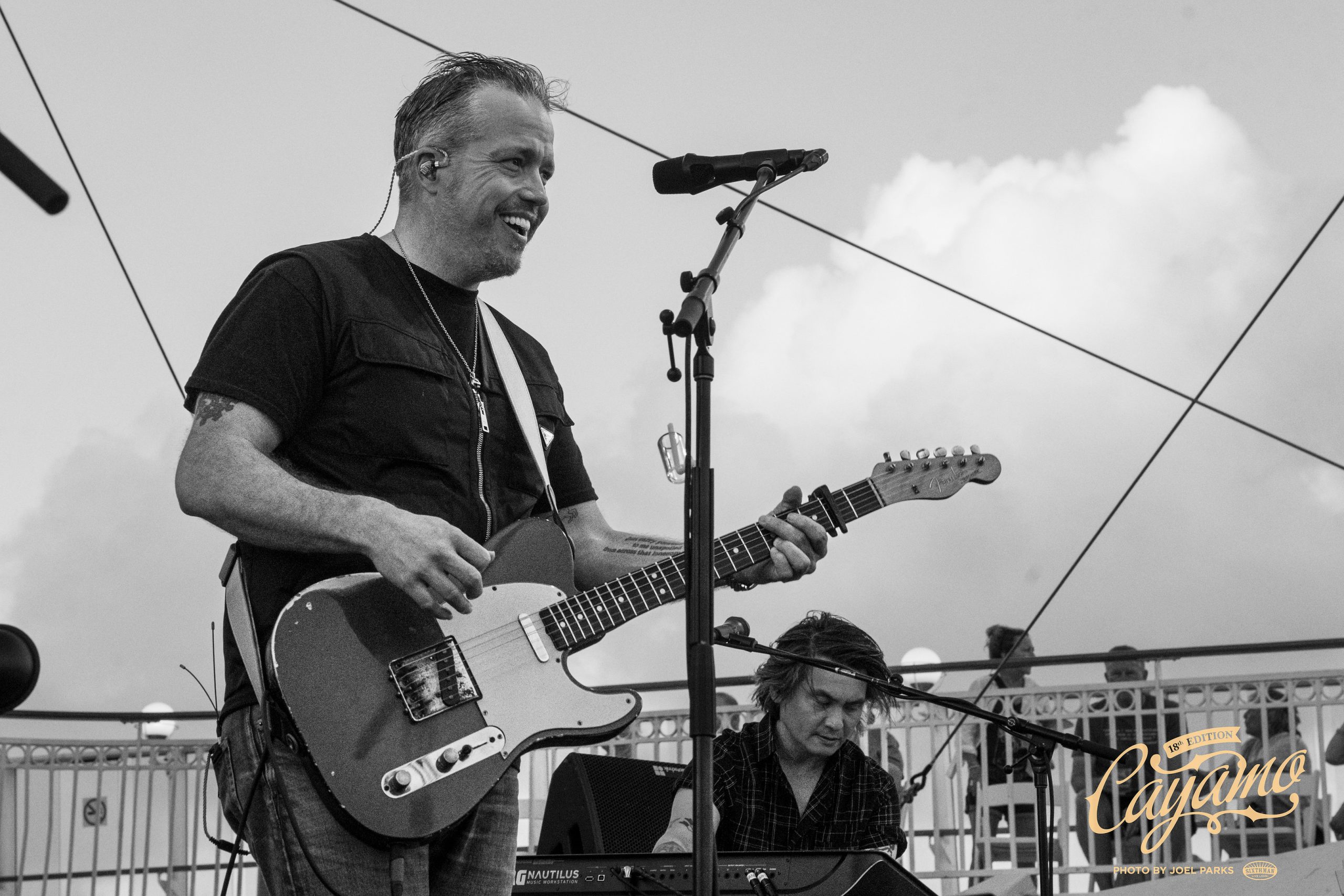
That’s one thing I learned from being a scientist and doing all these things over the years: There’s where you can be and then there’s where you’re supposed to be. And there’s nothing wrong with being in either place. There’s no guilt to be had in being where you can be because, man, we’re all just trying to survive. But then there’s where you’re supposed to be, and that can be a very difficult place to be. But I’ve chosen to be there and for whatever reason, I intend to stay there until the day I die.


Photo courtesy of Missing Piece.

Basic Folk: The Mammals

Mike Merenda and Ruth Ungar Merenda have been making music together as the Mammals since 2001, with a little break in 2008 to play as Mike & Ruthy. They’ve been back as the Mammals since 2017 with a couple of great albums, most recently Touch Grass Vol. 1 and Vol. 2. Mike, born and raised in New Hampshire, picked up the banjo after he met fiddler Ruth Ungar. Ruth is the daughter of Jay Ungar, a much-loved folk musician who is best known for his composition, “Ashokan Farewell,” used as the theme tune to the Ken Burns 1990 documentary The Civil War, which you now have playing in your head. Essentially, Ruth grew up surrounded by folk music, which she talked all about on her previous appearance on Basic Folk.

LISTEN: APPLE • SPOTIFY • AMAZON • MP3

This time around, we dig into a few of the songs on their double album Touch Grass. There are A LOT to choose from: seventeen tracks in all. It was a four-year project recorded at their Humble Abode studio in the Catskills. The songs offer a mix of socially conscious “daytime” folk-rock and introspective “nighttime” Americana. We get into the gospel influence on “O The Cruelty,” the bare-bones arrangements of “Old Friend,” and keeping the sadness in check with “Doldrums.” They also talk a bit about their home venue, the Ashokan Center, where their musical festival the Hoot takes place. Let it be known that the center has a ton of old farm equipment and no, they do not want any more, so don’t ask them to take it. Thanks, Mike & Ruthy!


Photo Credit: Lead image and vertical alternate image by Wayne Gibbous; square alternate image by Tanya Barricklo.

Bill Frisell Invites All of Us Inside His Guitar Dreams

The first time Bill Frisell played guitar in front of an audience was typical for the time. It was the summer of 1965 and he was 14. He’d saved up money from a paper route in his Denver-area neighborhood so he could buy his first electric.

“Oh man, I can still just…” He pauses, lost in nostalgic reverie, on a Zoom chat from his now-home in Brooklyn.

“I opened the case and I can just smell it,” he says. “It’s amazing.”

His face bears a beatific smile, his voice a genial, gentle tone – things that he’s known for nearly as much as his astonishing musical talents.

“I got a Fender Mustang and a Fender Deluxe amp,” he continues. “And then my other friend, he got an electric guitar and this other guy across the street played drums. We learned like three songs. And then within a couple of weeks we were playing for a party in somebody’s basement.”

He’s not sure what they played – “probably ‘Louie Louie’ and I don’t know what else.” But the feeling?

“I guess in a way, that’s kind of what I kept on doing,” he says. “Get with my friends, learn a couple of songs and then go play for people. And that’s all I’ve done ever since.”

It’s exactly what he did on a recent Wednesday at the new Blue Note jazz club in Hollywood at the start of a several-week “75th Birthday Celebration” tour, that milestone coming on March 18. The friends joining this night were bassist Luke Bergman and drummer Tim Angulo.

The set was more than three songs, of course, played, as is his frequent style, in a continuous, hour-long stream, moving through originals, jazz standards, and movie score themes, as well as an ethereal “Moon River,” a tremolo-inflected “Shenandoah” and, closing, Burt Bacharach’s ever-timely “What the World Needs Now Is Love.” Wrapping it up was a somber yet hopeful encore of “We Shall Overcome.” Throughout the show, he and his trio-mates play with remarkably fluid connections. The approach could be delicate or heavy, buoyant or somber – or somehow all at once.

And with each note, even amid immeasurable harmonic complexities, melodic sophistication, and the nimble skills he’s gained through the decades, there was that kid from 1965, his beaming smile and twinkling eyes revealing his utter, still-fresh delight.

Frisell approached every measure as fresh territory, ripe for discovery, for exploration, curious where an old melody might reveal something new, reveling in its beauty or finding richness in dissonance he adds. Sometimes he’d play around with a short, simple phrase for a bit, like a new toy. Occasionally he’d fiddle with effects to enhance his pointillistic Telecaster touch (he moved on from the Mustang years ago). He throws in a cluster of sonic fireflies here, some “backwards” sounds there. He even giggled a little once when he hit a bad note.
“It’s weird,” he says in conversation a few days before the concert. “I still feel like I’m just beginning. And I’m not kidding. I mean, I know I’ve been playing for a while, but it’s still that feeling [that] never goes away. I’d be fooling myself if I thought … “

He paused again, looking for the right words.

“You just can’t feel as it you finished anything.”

This all comes through profoundly on his new album, In My Dreams, his 45th (plus many dozens of collaborations, group, film and TV scores and sideman projects), released on February 27. It also features a trio (longtime collaborators Thomas Morgan on bass and Rudy Royston on drums joining him) plus a string trio (violinist Jenny Scheinman, violist Eyvind Kang and cellist Hank Roberts), as well.

The title references an actual dream he had years ago in which a group of mysterious, cloaked figures allowed him to experience things beyond our normal perception. First they showed him colors – intense and beautiful – and then music in which all the things he’s loved, from Nino Rota to Hank Williams to Jimi Hendrix to Thelonious Monk, lived together as one glorious sound.

The album, mostly recorded live in three concerts last summer, shows him pursuing that sound himself, with approaches that might be termed jazz, classical, and folk-Americana braided through originals sometimes tender, sometimes dark and intense. Also included are interpretations of the Duke Ellington/Billy Strayhorn classic “Isfahan,” Stephen Foster’s “Hard Times” and, to close, “Home on the Range.” The latter is previewed earlier in the album with his own fantasia on themes from the song that he calls “Give Me a Home.” And for the title song, fittingly, he created an anxious soundscape inspired in part by Bernard Herrmann’s Alfred Hitchcock scores.

Still, the dream remains a dream for him, something ever out of reach, but ever-alluring.

“I don’t even know when it was, 30 years ago when I had it or more,” he says. “And music in general is always something that you can’t quite…. “

He stops to choose his words again.

“It’s always a little bit past what you can get to,” he says. “But the dream was like that. It’s like, I don’t know if I’ll ever get there, but just keep trying.”

In My Dreams is a hearty grab at that ring, though that very elusiveness is a key part of his art.

“With these people, we’ve been playing together so long,” he says, noting that Royston and the string players all were together on his 2013 album Big Sur. “There’s this thing that started happening quite a while back where, for me, I just love the line between arranging and orchestration and composing. The lines get all sort of blurred. We’re all seeing the same information, like what I write could look like a piano score or something. And we figure out some stuff, but basically everyone is free. The cello doesn’t always play what’s on the bottom and the violin doesn’t always play what’s on the top. And there’s a thing that happens spontaneously amongst them, amongst all of us, dropping out or coming in or switching parts that’s really the exciting part of it for me.

“So it’s like you’re improvising with the whole texture of everything. It’s not like they’re playing some part and then I’m playing a solo on top of it. Ideally it’s like an ongoing conversation amongst all of us. I never want it to be predictable. Hopefully it’s always in a state of uncertainty. I mean, I want it to be strong, but at the same time I want everyone to feel safe that they can fall off the edge, and then we’ll come back and pick it up, because that’s where the good stuff happens.”

That, of course, goes back to the avant-garde settings in the New York downtown scene of the 1980s and ‘90s, where he made a name as part of boundary-pushing sax player John Zorn’s unpredictable jazz-metal ensemble, Naked City. But the sensibility remains core to him even in his frequent trips into folk, Americana, movie scores, and unabashedly romantic pop-rooted material. His 1992 album, Have a Little Faith, a musical portrait of America spanning from Foster and Sousa to Ives and Copland, from Muddy Waters and Sonny Rollins to John Hiatt and Bob Dylan to Madonna, remains a landmark in his vast catalog. And he’s recorded and performed with many Americana singer-songwriters including Paul Simon, Lucinda Williams, Joe Henry, Bonnie Raitt, Buddy Miller, and Shawn Colvin. He simply loves a good song with a good melody.

“I can’t help it,” he says. “I was born in 1951 and I grew up in Colorado, just as television and rock ‘n’ roll were all happening. It’s not a conscious thing. [But] at a certain point, I realized, ‘Wait a minute, I gotta not be afraid to show that that’s where I come from.’ I think when I was younger I was more worried about, ‘Oh, are people going to think this is not cool?’ But then after a point it’s like, well, wait a minute. This is what I am. This is where I came from. And if I’m really honest, I do like that melody. I like when Burt Bacharach wrote a really beautiful song and it’s not corny if you look at it a certain way.

“I think I learned that from the people I thought were the coolest, like Sonny Rollins. He would play songs that he heard when he was a kid, or that he saw in a Broadway show or whatever. And I realized he’s doing that because that’s his experience and his life. So it’s okay for me to play a Beach Boys song or a Beatles song, because that’s what I heard when I was growing up. And ‘Home on the Range,’ I mean, [I] probably heard it when I was in my mother’s womb or something, you know?”

Arguably, the latter is the emotional keystone of In My Dreams, particularly in tandem with his “Give Me a Home” musings on its melodic theme earlier on the album, the strings following him as he steps through and around the familiar melodies, clearly with Copland hovering over.

“I was messing around with ‘Home on the Range,’ I wrote all these different versions and then that particular one, it’s just a phrase from the song, doesn’t even get through the whole song. And then the title.” He laughs.

“When you think of what’s going on in [the world]. I mean, we play ‘Hard Times’ on there, too. It’s like, folks without a home. Where are we now? What is going on around here?”

Those questions come to the fore again on the full “Home on the Range” later. The song starts relatively straightforwardly, but after a couple of minutes it goes into a dark, abstract zone. That is how the album ends.

“I didn’t have that planned out,” he says. “The stuff just happens organically and then we piece it together, and that’s what it is. But then you see how the music reflects the place we’re at. I didn’t have a preconceived idea. It’s always easier after the fact to make a story out of it somehow.”

The story of Bill Frisell, inevitably, touches on his generous, easygoing manner. It seems to be mentioned every time someone talks or writes about him. Does he ever get tired of people saying how nice he is?

He hesitates.

“No,” he says, sheepishly. “I don’t know if I’m really that nice. I try to be a good person, but I don’t know. I mean, there’s a lot going on underneath the surface.”

He laughs, clearly uncomfortable with the topic.

“I get upset,” he says. “I have to wake up and look at the news every day and that doesn’t help, you know?”

He pauses one more time.

“But I guess that’s all the more reason for us to try to be good to each other.”


Photo Credit: Marko Mijailovic

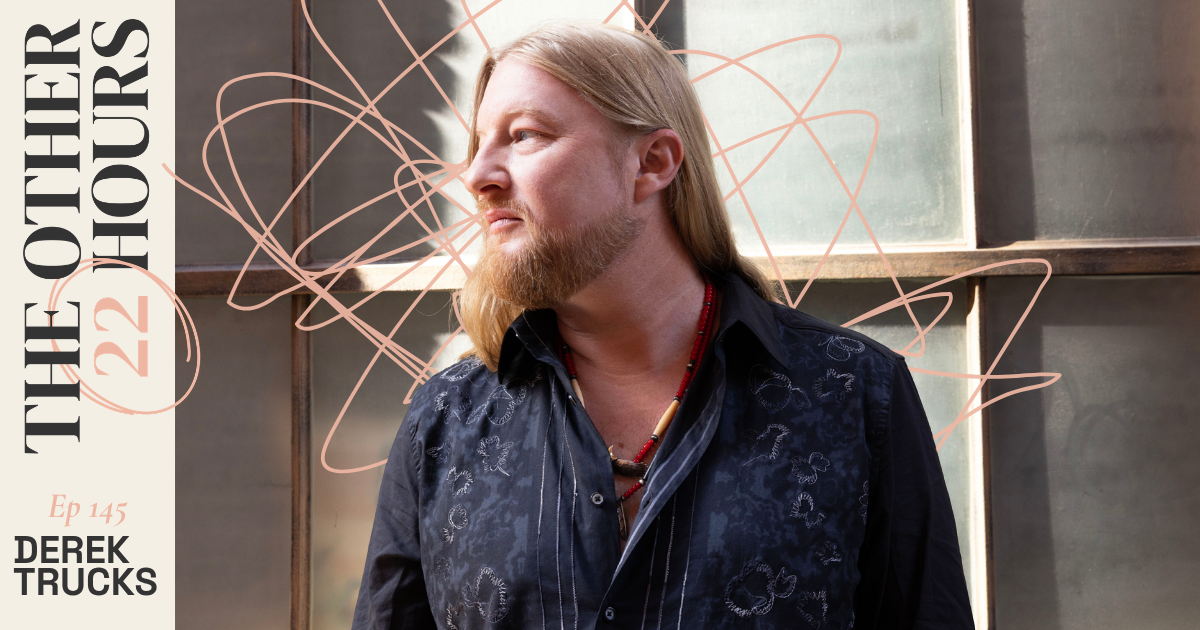
The Other 22 Hours: S.G. Goodman

Singer-songwriter S.G. Goodman has earned critical acclaim, award nominations, and has worked with legends like Tyler Childers, Jason Isbell, and Jim James of My Morning Jacket. In this episode of the Other 22 Hours, we discuss the grueling physical and mental requirements of “making it.” From working manual labor to stay afloat while not on the road to navigating the complex realities of running a bona fide business, S.G. opens up about scarcity, OCD, and the hard-won wisdom of learning to drive the lawnmower instead of letting it drive you.

LISTEN: APPLE • SPOTIFY • AMAZON • MP3

In This Episode:

SG Goodman
Mas Tacos
Madison Cunningham
Jesse Welles

Go Deeper:

Watch: View this entire conversation on YouTube.
Explore: Find similar conversations in these themed playlists.
Connect: Join the conversation on Instagram.

The Other 22 Hours is hosted by Aaron Shafer-Haiss (producer, mixer, musician) and Michaela Anne (songwriter, artist, creative coach). More about Aaron’s workMore about Michaela Anne’s work.


Produced by Aaron Shafer-Haiss. Original music written, performed and produced by Aaron Shafer-Haiss.

Photo Credit: Ryan Hartley

BGS 5+5: Cold Chocolate

Artist: Cold Chocolate
Hometown: Boston, Massachusetts
Latest Album: Not Gonna Stop (released February 13, 2026)

(Editor’s Note: Answers supplied by Cold Chocolate’s Ethan Robbins.)

What’s the toughest time you ever had writing a song?

In May of 2020, smack dab at the beginning of the pandemic, my wife and I were expecting our second daughter. At the time, among other things, we were worried about whether or not I would be allowed to accompany my wife to the hospital to give birth – that’s the way the protocols were set. Fortunately I was able to, but unfortunately the birth didn’t go as smoothly as one always hopes it will and Casey, our daughter, had to remain in the hospital for 17 days after she was born. Because of the protocols at the time, my wife and I were not allowed to stay with her. So all we could do each day was call the hospital to find out when she was coming home. If you recall, back in the early pandemic days, each day felt like a year. Those 17 days really felt like 17 years.

It was an incredibly emotional time. I’d find myself crying out of nowhere, in the middle of the day, without any warning. It was during that emotionally charged period that I wrote “How You’re Feeling Today,” and although it was hard to find the right words to write and sing, it was incredibly cathartic in that moment. Through the writing of that song, I was able to start to see the light at the end of the tunnel. Now, when we play that song live, I get to revisit some of those feelings, but in a much more positive light – because Casey is 5 years old now. Incredibly healthy, incredibly beautiful, incredibly hilarious, and one of the best dressers I know.

Genre is dead (long live genre!), but how would you describe the genres and styles your music inhabits?

We call our music Americana. It’s a broad term that’s meant to encapsulate many different genres, as does our sound. Our band goes back a long way, over a decade, and has evolved considerably over that time. When we began the band over 10 years ago, we had a banjo player and an upright bass player and the music we were playing was very much bluegrass-forward – or at least, that’s what we considered it to be. We always had drums, so some people may never have considered us a bluegrass band, but we did.

The issue for us back then was that the entire time our banjo player was touring with us he was also studying to get his PhD in Physics from Harvard University. So when he graduated and became a doctor, he had to make the very difficult decision whether to pursue his career in science or his career in banjo. He made the wrong decision that day – and we obviously continued on as a band and our music continued to evolve as anything and everything does over 10+ years of time.

We began to get enthralled by the music of bands like the Wood Brothers and the Black Keys, and I started playing electric guitar live more than ever before. Ariel [Bernstein] and I delved pretty far into what this electric sound allowed us to do. We found we were now able to play things and express things that we’d been unable to achieve before. So we went forth as an electric “power duo” (trademark pending) and wrote and performed a ton in that duo setting. Then, bam! – pandemic hits, and we don’t see each other for more than two years.
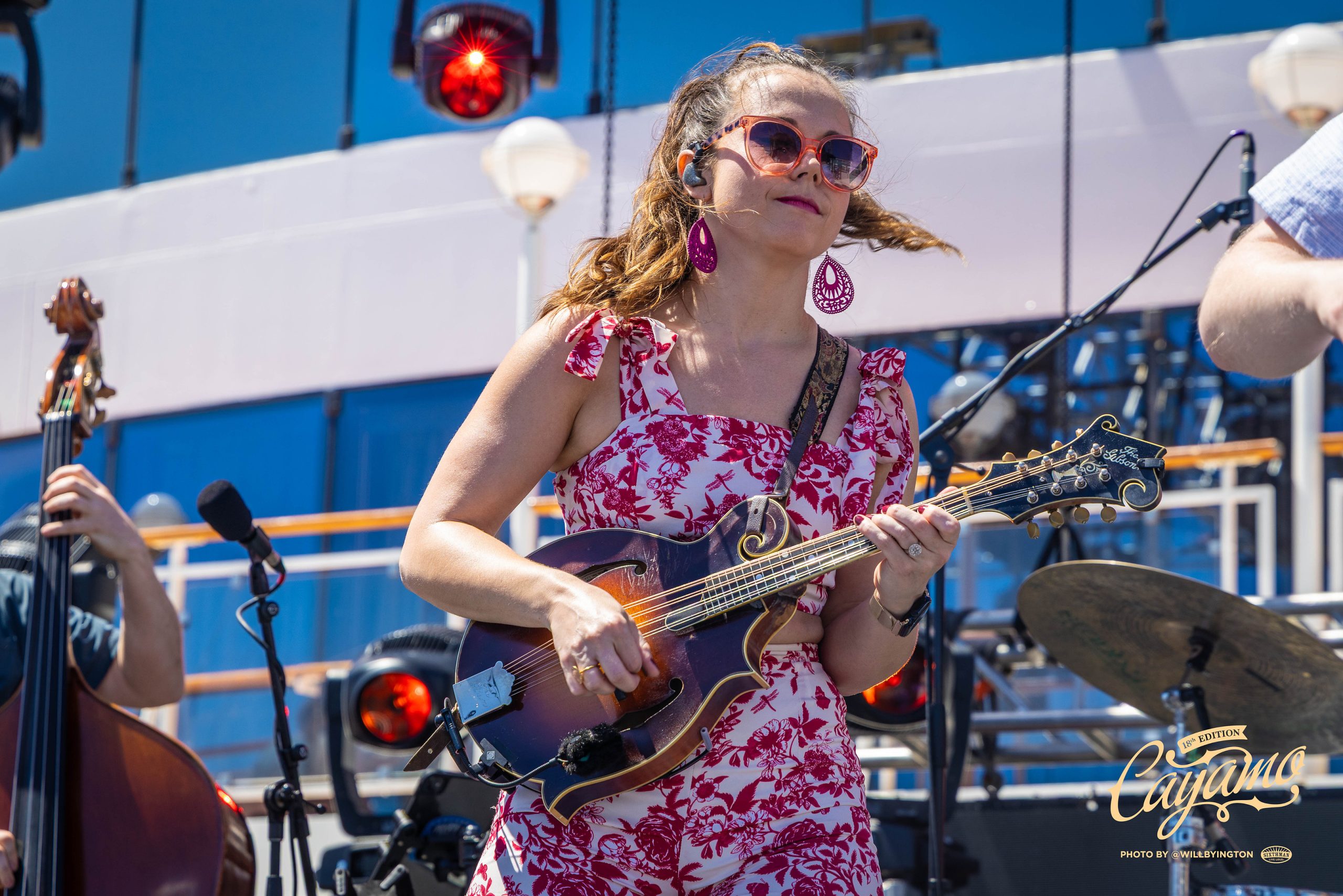
In May of 2022, I showed up at Ariel’s house and he says, “Oh, I play banjo now!” Through his banjo and my mandolin’s addition to our band, we were able to revisit some of the bluegrassy material that we’d started with so many years ago. We breathed fresh life into tunes that were as old as the band itself and now they feel like some of our newest songs. It’s added an arc to our albums and live shows that we adore. So in a live setting, we’ll play everything from electric funk and rock with a drum kit and guitar amp to acoustic bluegrass and folk with banjo and mandolin around a condenser mic. It’s hard to put one word on what we do. It’s all… us.

What was the first moment that you knew you wanted to be a musician?

I started classical violin lessons when I was 4 years old. I studied with the same teacher until I went to college at 18. At the beginning, although there was certainly a level of enjoyment that I was aware of, I never connected with classical music in a way that made me want to take complete ownership of my music education. When I was 14, I started teaching myself guitar and my love of playing music started to grow. I was finally able to play things that I wanted to play. At the time, that was a lot of Dave Matthews Band – but it was the first time I realized that music could be so soul-fulfilling.

When I got to college at Oberlin, at that point listening to a lot of Grateful Dead, I met some people who were really into bluegrass. I didn’t know what that was at the time, but the first time I heard Old & In the Way I was sold. I went to the very first DelFest in 2008, right before spending the summer working for HeadCount – the voter registration organization – on a six-week tour with the Dave Matthews Band. It was that juxtaposition, seeing my favorite childhood band rock out every night then going to sleep listening to Peter Rowan and Vassar Clements in my headphones, that I started to visualize a life path for me as a musician.

It certainly took us some time as a band to figure out how to make that dream a feasible reality and, in some ways, we are still figuring that out. But truthfully, I just met the right friends at the right time, saw and listened to the right music when it mattered most, and that sparked the dream.

What is a genre, album, artist, musician, or song that you adore that would surprise people?

When I was at IBMA in 2024 in a meeting setting, as an icebreaker, someone asked what the first album each person had ever purchased was. Most people responded on-brand with a classic bluegrass or newgrass album, Bill Monroe’s Uncle Pen or Alison Krauss & Union Station’s Paper Airplane. For me, it was an easy answer: Third Eye Blind’s self-titled record. I know all of the words to all of the songs on that record and it’s still a personal fave of ours as a band. During late-night drives, we’ll blast that album front to back in the van. It still pumps us up, sets the vibe and energy high, and keeps us going full-speed ahead toward our next destination. ’90s pop, across the board, is a winner for this band, but that album specifically will always and forever hold a special place.

Since food and music go so well together, what is your dream pairing of a meal and a musician?

Great question. My top act to have seen live, hands down, would have to be the Band. Certainly Cold Chocolate’s musical vibe has been modeled after those raw, rootsy sounds of theirs. Their songs transcending genre, while being just so totally “them.” I’m not sure what food would pair best with seeing them. At The Last Waltz it was a Thanksgiving dinner, which is honestly one of my favorite meals of all time. But [with] a heavy meal, I’d want to dance my ass off at that show.

Southern BBQ is another obvious choice for Levon’s Arkansas-growl, but again maybe too heavy. I think I could get down with a fish boil at a show by the Band, thrown out across a table, family-style. Then I could grab little bites throughout the show while belting out “The Shape I’m In” with my idols on that stage.

WBUR recently wrote about us that our song “I Know This Girl” has “enough grit, drive and backbeat to make Cold Chocolate worthy heirs to The Band,” which is maybe the best thing ever written about us in the media.


Photo Credit: Lead image by Kelly Davidson, alternate images by Joe Navas.