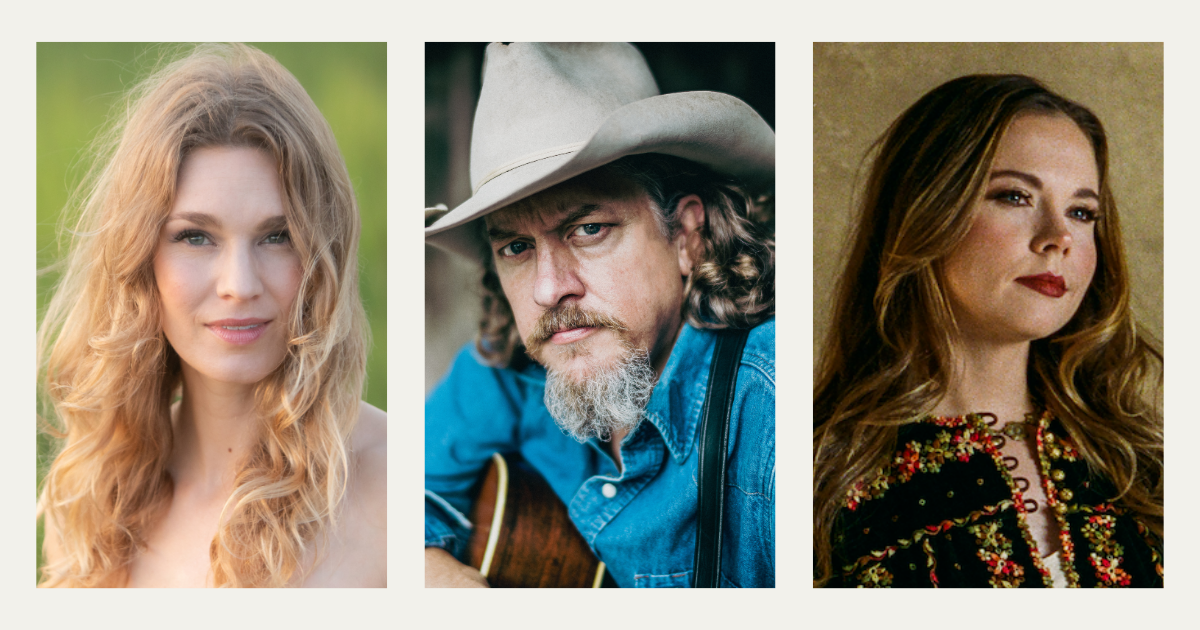
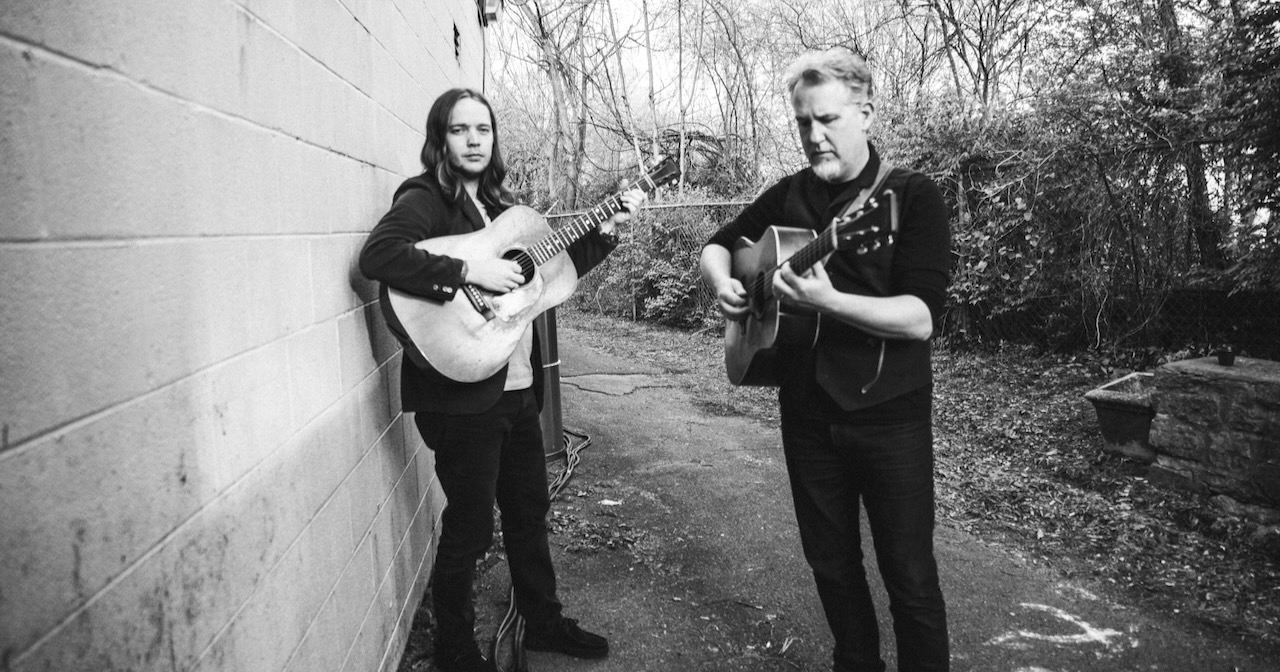
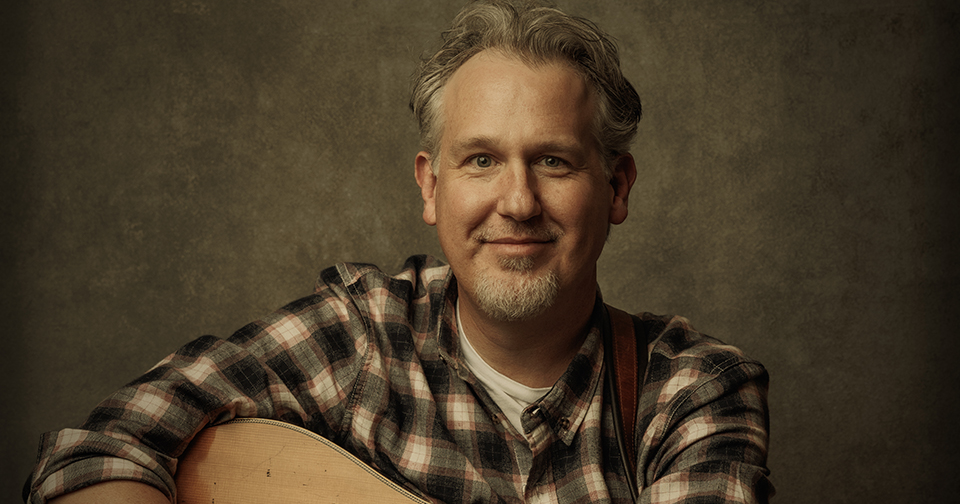
WATCH: Bryan Sutton, “The Devil Went Down to Deep Gap” with Billy Strings

Artist: Bryan Sutton with Billy Strings
Hometown: Nashville, Tennessee
Song: “The Devil Went Down to Deep Gap”
Album: From Roots to Branches
Release Date: January 9, 2026 (single/video)
Label: Mountain Home Music Company

In Their Words: How do you see Doc’s playing influencing both yours and Billy’s?

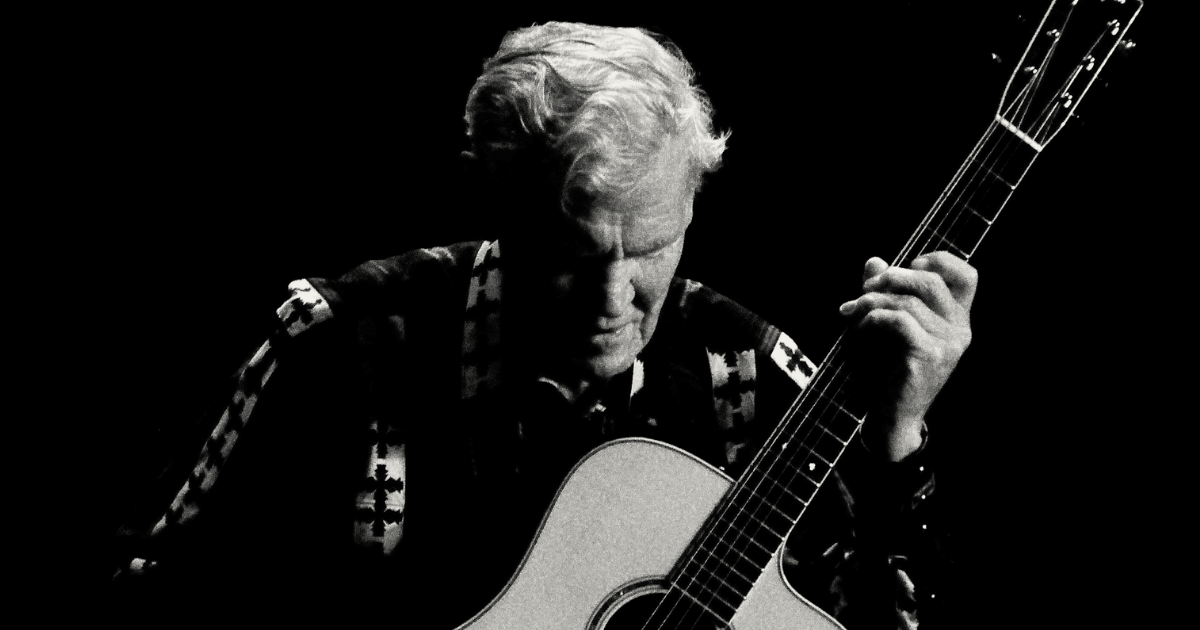
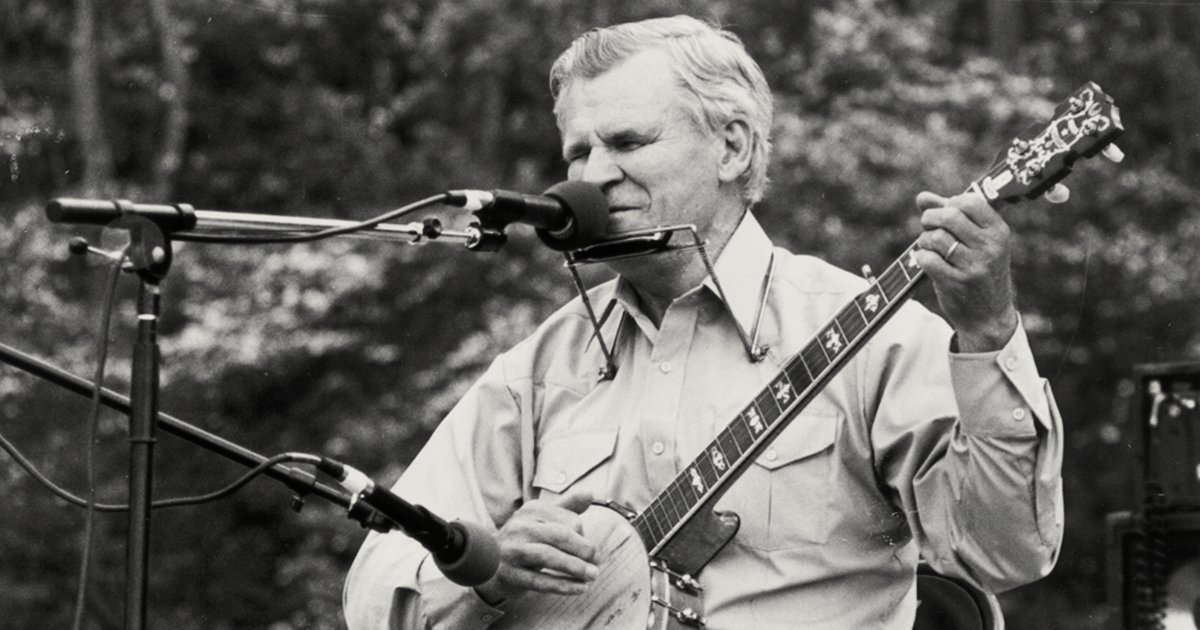
“I think beyond the specific influence of Doc’s guitar playing that informs most every note Billy or I may play, I know that we both are students of Doc’s complete artistry. To say Doc is just the most influential flatpicker ever is limiting. He brought so much to the table in his honest and emotional singing, his song choices and writing, banjo and harmonica playing, and Travis-style fingerpicking. He was not comfortable being labeled or limited within a specific genre. His onstage persona was true to him. Without being a ‘showman,’ he was informational when the song needed it and willing to share whatever emotion he might be experiencing. It’s also important to note that Doc and Merle’s duo playing has been a huge part of the overall focus for things Billy and I have done together. I know for both Billy and I, Doc provides a lifetime of inspiration, influence, and learning.”

How do you pay tribute to that in this song and video?

“First and foremost, this is kind of a silly or fun thing, along with being a somewhat serious tribute to Doc Watson. I wanted to use the song to have fun with the guitar shredding and good versus evil battle, but also imagine an origin story of how Arthel Watson could have become the ‘Doc’ we all have loved. Maybe it’s a gospel song in the way that Doc, even and especially in his blindness, can ‘see’ through the Devil’s lies. Ultimately, Doc carries his triumphant message to the world, and influences us all with wonderful and heartfelt music.”

It sounds like you had this concept before talking with Billy about it. How did the concept and song come to be, from start to finish?

“It was listening to Charlie Daniels’ original ‘The Devil Went Down to Georgia’ with my youngest daughter, Lily. She has very eclectic and broad musical tastes. I’ve loved sharing music with her and checking out what she has discovered. We found some other covers of the original and one that stuck with me was Jerry Reed’s interpretation, where he makes Johnny a guitarist instead of a fiddler. I have been working on a duets record for some time, collecting recordings here and there with my pals, and knew I wanted to do something different with Billy, as he and I have a whole record of duet playing.

“Billy and I also share a love for heavy metal. I was trying to think of a way he and I could do something connected to this duets project that would allow us to play acoustic and electric. It all kind of came together when I realized this song would allow for that. The Doc origin story came about thinking how to make this not just a cover, but more personal and fun. It’s also another subtle tribute to Doc, who would oftentimes change or add lyrics to a song in order to make it fit for him. I fashioned the story, made a little demo, and sent it to Billy. He was into it and we were off.

“I feel fortunate that Del was into playing the Devil. I also am so happy to have T. Michael Coleman and Sam Bush on the track, who played many years on the road and studio with Doc. My pal Jerry Roe, who is Jerry Reed’s grandson, plays the drums, connecting to the Reed version that inspired me. Once I had the concept and demo for the song, I knew it had to be an animated video and discovered Pat Bradley of Springshoe Animation. It was wonderful working with him to take what had been in my head and be able to visualize it. Ultimately, all this came about a little piece at a time, and I’m so happy to share it with the world.” – Bryan Sutton

Track Credits:
Bryan Sutton – Acoustic guitar, electric guitar, vocal
Billy Strings – Acoustic guitar, electric guitar, vocal
Del McCoury – Vocal
T. Michael Coleman – Electric bass, harmony vocal
Sam Bush – Mandolin
Jerry Roe – Drums

Video Credits: Animation by Pat Bradley, Springshoe Animation.


Lead image courtesy of the artist.

BGS Class of 2025: Best in Bluegrass

If you’re looking for a definitive, qualitative, and deliberate ranking; a firm and scientific rubric; or an unbiased, sterile reckoning of the best albums made in bluegrass this year, this roundup may not be for you.

Truthfully, as someone who’s worked, been acquainted, and become friends with many of the artists on this list in various capacities – from bio writing to onstage performances to media coverage to pickin’ parties to recordings and beyond – objectivity isn’t something I, personally, could establish anyway. And such year-end or other merit-based lists and collections aren’t all that interesting, are they, if not just to argue with their curation and selections.

I would not even attempt such things, because to me – to many of us – that’s not what bluegrass is about anyway. Bluegrass is about a feeling. It’s about innovation. It’s about virtuosity. It’s about tradition, loving it or retooling it or coaxing it or turning it upside down. It’s about adrenaline and a high pulse – and passing a mason jar around. It’s about feeling downtrodden or alone, shedding tears into that very ‘shine, and wailing along with the high lonesome sound. It’s folk music as much as it’s abject commercial country in “poor people drag.” It’s endlessly interesting and complex, but pretty damn simple, too.

Anyone with even an ounce of sense knows and understands that bluegrass can’t ever be objective. So indeed, why try? Why not acknowledge that bluegrass is always a matter of taste, of preference, of whimsical or capricious or convicted opinion? Bluegrass is always debatable, because, after all, bluegrass is always in the eye of the beholder.

In the eyes – and especially ears – of this particular beholder, these albums released in 2025 were the best, the most memorable, the most engaging. These collections stick to ribs like ham hocks, or stick in your throat like the tastiest clod of emotional peanut butter. They each advance, subvert, perpetuate, or wrinkle our core ideas of what bluegrass is – and what it can be.

Are each and every one of these LPs the best in bluegrass from 2025? Perhaps not… But also definitely yes.

Big Richard, Girl Dinner

In January, we gobbled down a heaping helping of Big Richard energy with the nourishing and nutritious Girl Dinner. The project may have been the band’s album debut, but this Colorado all-women quartet had already been making remarkable waves in the bluegrass, jamgrass, and string band scenes – and each of the members had extensive and glitzy musical resumés before they even convened. With a new album, Pet, on the horizon for February 2026, a signing with Signature Sounds, and an upcoming co-bill tour with fellow femme outfit Della Mae, we can tell this Girl Dinner is set to become an ongoing traveling feast.

Shawn Camp, The Ghost of Sis Draper

I remember attending Station Inn shows in Nashville in the early 2010s and sitting with rapt attention – like Martha’s sister Mary at the feet of Jesus – as Shawn Camp performed his suite of Sis Draper songs with his star-studded bluegrass bands. Often you’d hear just “Magnolia Wind” or just “Sis Draper.” Sometimes he would perform a more complete handful of the tracks he had written, individually and with his hero and mentor Guy Clark, about the mythical roots music figure from his home state of Arkansas. Now, he’s collected the slate of material – what could easily become a musical or multi-disciplinary theatre work of some kind – into one commanding, lovely, and visceral album. These are timeless songs, written and rendered as only Camp could.

Jason Carter & Michael Cleveland, Carter & Cleveland

Every now and again a new collaborative duo album comes along and makes you think, “Oh! This must have been what it felt like when Skaggs & Rice was released.” Or Tone Poems. Or Ralph Stanley and Jimmy Martin’s First Time Together. A monumental occasion, captured for posterity’s sake in the studio. When fiddlers Jason Carter & Michael Cleveland released their duo debut, that was the feeling. History made in the present, a work that will be regarded as seminal ages into the future being enjoyed in real time. Carter and Cleveland have collaborated quite a bit over the decades they’ve known each other, but what a gift to have that musical friendship ensconced forever on this album. We hope there is more to come.

Wes Corbett, Drift

Look, if all modernist banjo players sounded like Béla Fleck and Noam Pikelny, that would certainly be great. But thankfully there are dozens of five-string pickers continuing to expand on the Fleck (and Pikelny and Munde and Keith and Trischka) school of Scruggs-style, each in their own veins. Corbett is one of the best. Though he blends effortlessly into Scott Vestal’s former role in Sam Bush’s band – or into any number of recordings and one-off pick-up bands that boast his playing in newgrass and bluegrass and beyond – Corbett is a true idiosyncratic banjo player and composer. Drift, his latest, often employs traditional techniques as tools for innovation and contemporary tunesmithing. He recalls the great melodic pickers while always sounding first and foremost like himself.

East Nash Grass, All God’s Children

A few years ago, if you had told me the ragamuffin band holding down Monday nights at Dee’s Country Cocktail Lounge in Madison, Tennessee, would in 2025 release an album you’d describe as “heartfelt, contemplative, and intentional,” I would have probably laughed. East Nash Grass were just as jaw-dropping good then as they are now, but with that down-home silliness and clumsy charm all the great bluegrass bands born of indentured residencies have had. All God’s Children finds the band all the way grown up (but not really), and they never forsake their banter-rich, never-know-what-you’re-gonna-get roots. That overlap – of silly and heartfelt and virtuosic and not too serious – is where most (if not all) of the best bluegrass is born, anyway.

Sierra Hull, A Tip Toe High Wire

Every single time Sierra Hull releases a new album, journalists and critics love to talk about how she’s now “found herself” and “found her sound.” This writer, however, disagrees. I first saw Hull perform when we were both in our mid-teens and then as now I knew, wholeheartedly, this is someone who knows who they are. Granted, Hull has done plenty of finding herself along the way, as we all do, but the songs and tunes of A Tip Toe High Wire were obviously not born of someone just locating her voice, musically or otherwise. They don’t feel experimental or out on a limb, they are each solidly in her wheelhouse. They do still push the envelope, though, and they all tell personal stories, draw on individual experiences, and chase those treasured Hull-ian melodies wherever they lead.

I’m With Her, Wild and Clear and Blue

Perhaps all future I’m With Her albums should be made while basking in the “Ancient Light” of a total solar eclipse, given the striking sonic successes of Wild and Clear and Blue. Is that cosmic magic why their second full-length release feels so distinct and metamorphosed from their debut? Is it all the years and personal growth in between recordings? It’s not like they reinvented the wheel, they’re the exact same band – but something feels different here. Whatever the special sauce may be, all of I’m With Her’s offerings over the course of the band’s lifespan have been stellar, but this latest full-length project stands apart. As long as Jarosz, O’Donovan, and Watkins are making music together, we will be unendingly grateful they offer us these recorded windows into their creativity.

Kissing Other ppl, Kissing Other ppl

Bluegrass and old-time birth new projects, bands, and collaborations all the time. Some are purposefully momentary, some are unintentional flashes in the pan, some are such long strings of last names ampersand-ed together you know there’s no future for them. We hope Kissing Other ppl are here to stay. Rachel Baiman and Viv & Riley joined forces on the album – and band – turning mainstream and pop songs into bluegrassy and old-timey string band arrangements that positively vibrate with passion and life. “Sad boi” covers these are not, though you may at times find them subdued or tender or mild. Long may this old-time Americana musical polycule reign.

Cameron Knowler, CRK

If you’ve been craving a contemporary storyteller and poet who utilizes the guitar as their medium – like Norman Blake or Doc Watson or Tony Rice or so many others – I am so pleased to step onto my soapbox to tell you about Cameron Knowler. Also a writer (at times for BGS), archivist, photographer, and visual artist, Knowler’s guitar-centered album, CRK, is almost anything but a “guitar album,” despite each and every composition centering on the instrument. The LP paints vivid and haunting musical portraits of a place Knowler loves, longs for – and despises or begrudges, too – Yuma, Arizona. Knowler wouldn’t even pretend to compare himself to Norman Blake or state that he’s deliberately taking up Blake’s heavy, heavy mantle in the 2020s, but I’m saying he is. Thank goodness.

Bryan McDowell, Bryan McDowell

You may recognize multi-instrumentalist Bryan McDowell from his time performing, recording, and touring with artists like Claire Lynch, Sierra Hull, Molly Tuttle, Alison Brown, and many, many more. He’s an incredibly talented sideman and session player, so when I first received his new self-titled solo album, I imagined the sort of formless instrumental project most pickers with similar resumés create. What a pleasant surprise to find a fully fledged, well-rounded, complete song sequence chocked full of original songs and McDowell’s lovely, honeyed singing voice. (I know Bryan and I didn’t know he sang like this!) It’s on me, really – I shouldn’t have been surprised at all – but McDowell’s skill set is clearly no longer just geared towards backing others up. I am looking forward to seeing what’s next.

Shelby Means, Shelby Means

Speaking of artists ready to step out of the role of sideperson or session musician. Bassist, singer, and songwriter Shelby Means’ debut solo album is fantastic. Since departing Molly Tuttle’s Golden Highway, Means has already built striking momentum as an artist unto herself, and the quick success of her album has played a huge role in that. With originals, tasteful (and surprising) covers, and a star-studded roster of pickers – Tuttle, Ron Block, Michael Cleveland, and more – the project certainly doesn’t feel like a debut. And it shouldn’t, Means has crisscrossed the country and the globe for decades, she’s more than ready to step to the center of the stage. She’s done it before, she’s doing it again – and now a lot more frequently, I’d bet.

The Onlies, You Climb the Mountain

All the best bluegrass is old-time these days. (I say that over and over again, here’s what it means.) While mainstream bluegrass sounds more like ‘90s country played by a bluegrass string band, or jamgrass, or “MASH” – all of which depart greatly from the 1945/1946 sound of its origin – modern old-time becomes more and more of an audio swatch of essential parts of what bluegrass used to sound like and used to include. One album this year that epitomizes this phenomenon is the Onlies’ You Climb the Mountain. Is it phenotypical bluegrass? Oh, no. It’s not. But it also has plenty of textures and tones endemic to original bluegrass that are becoming increasingly rare in its modern forms. I shouldn’t sell the Onlies short, though, they aren’t here because they’re “better bluegrass” than bluegrass, or more authentic, or more “real.” They’re here because this album is excellent, on its own terms.

Danny Paisley, Bluegrass State of Mind

Danny Paisley is celebrating 50 years of bluegrass with his latest album, Bluegrass State of Mind. Still looking for new challenges and trying to add fresh sparkle to his dyed-in-the-wool traditional sound, the new LP includes Dobro (for the first time), drums (sacrilege!), and a bit of an Americana lean. (Don’t you dare call it “grassicana.”) To BGS readers, the project will most likely sound like straight down the middle bluegrass of the highest order. Longtime fans of Paisley & the Southern Grass, though, may notice that very sparkle Danny has been chasing, as he targets new audiences and still sets new goals, five decades into his career as a bluegrass tradesman. It’s the family business.

Missy Raines & Allegheny, Love & Trouble

Missy Raines is one of the winningest musicians in the history of IBMA, amassing 10 Bass Player of the Year trophies over the years and and a handful of honors in other categories, as well. She may have won her biggest prize, though, when she landed on her latest band lineup, Missy Raines & Allegheny, a few years ago now. Her second album with the group, Love & Trouble, continues building upon the chemistry and collaboration that dripped from 2024’s Highlander. They often rise to the occasion of my preferred nickname for them, Mashy Raines & Allegheny, but they remain a consistently dynamic group capable of gritty, barn-burning bluegrass and contemplative and emotive slow burners, just the same.

Red Camel Collective, Red Camel Collective

They began as Junior Sisk’s backing band, and like many of the great “spinoff” bluegrass bands of yore – Quicksilver (Authentic Unlimited), the New South (American Drive), and many more – Red Camel Collective have quickly shown they’ve got the chops to take the same route. Their debut self-titled album was released earlier this year and was made at Sisk’s suggestion – and with his blessing. (He regularly steps off the stage at his own shows to spotlight the Collective and their music, as well.) This band of lifelong pickers have clocked so many miles playing bluegrass and executing the visions of others that, when charting their own course as Red Camel Collective, they’re able to sound exactly like themselves. It’s tough to sound singular in modern, radio-inclined bluegrass. But Red Camel Collective do. Is that why they won New Artist of the Year at the IBMA Awards this fall? It sure ain’t coincidence.

Sister Sadie, All Will Be Well

Sister Sadie’s All Will Be Well is like dropping the needle on a 45-minute bluegrass therapy session. I don’t say it flippantly or sarcastically; it is indeed shocking the level of earnest contemplation, processing, emoting, and growth evident in the songs on this album. At the same time, when you hear the tracks played down at a bustling bluegrass festival or a packed rock club or a subdued listening room, they never feel twee or try-hard or sodden with greeting-card level sentiments. They never feel heavy, actually – this is fun, often hilarious, party-ready music. Dance-along music. Shout-along songs. You’ll laugh, you’ll cry. (At the vocals alone.) These are real human ideas, thoughts, and feelings set to bluegrass. Imagine.

Larry Sparks, Way Back When

How does this album seem like it could have been pulled from any year, any decade of Bluegrass Hall of Famer Larry Spark’s sceptered career? Because it could have been, damnit. He’s Larry Sparks. Way Back When sounds warm and live, like listening to tape or vinyl over earbuds or cell phone speakers. Like being in the room with that resonant, vibrant, and patinated voice. The material is timeless, but never tired or lost in retrospection. Sparks is obviously making bluegrass in the present, as he always has. He just sounds exactly like this. And the way he talks about making music – as he did in a BGS interview set for publish in January 2026 – you can tell, for him, it’s essential to inhabit the present and inhabit the song. Bluegrass really is his calling, and we’re all all the better for it.

Billy Strings & Bryan Sutton, Live At The Legion

One of the best bluegrass albums of the year? Of course. One of the best live shows and tours of the year? Doubly, triply, quadruply of course. You’d think it would be brain-melting to listen to hours of two acoustic guitars and an electric bass pick through bluegrass, fiddle tunes, and Doc Watson classics, but it was divine. Trance-like – not with eyes glazed over, but on the edge of your seat. I wasn’t at that show at the Legion when they tracked the album, but was lucky enough to catch their show this fall at the Ryman in Nashville. If you weren’t so fortunate, don’t worry, ‘cause this isn’t an incredibly exclusive club. This record really does capture all that’s ineffable of being “in the room.” (No one is surprised.) Turns out, you can actually bottle and sell it, if you’re these two. Now if only you could buy the skillset, too…

Thompson the Fox, The Fox in Tiger’s Clothing, vol. 1 & vol. 2

Maybe once a year I trip over or into a new music discovery that gets me so excited I start getting annoyed with myself from having to hear me recommend them over and over again. With Thompson the Fox, it never got annoying (not to me, at least) and the excitement of turning folks onto their music still hasn’t worn off. So here we are, again. If this is your initiation, don’t thank me, thank the people who sent Thompson the Fox my way. Jazz, newgrass, bluegrass, bebop, ragtime, and oh-so-many more styles and textures combine in a completely fresh and distinctive form. I’ve never heard new acoustic music quite like this, yet it’s clearly rooted in that tradition. The simple math of xylophone, banjo, bass, and drums doesn’t quite math, but this group sounds resplendent, rich, and fascinating. Takumi Kodera on banjo is a revelation and Rie Koyama (xylophone), Akihide Teshima (bass), and Tomohito Yoshijima (drums) complete the Tokyo-based ensemble.

Cristina Vane, Hear My Call

Cristina Vane exists at an intersection of roots music that far too few inhabit, because very few can manage there. Vane can. She does blues, bluegrass, old-time, country, and Americana. Sometimes blended, sometimes compartmentalized. She’s got short-form, short-attention-span, vertical-video appeal for days, but her songs are never vapid or playing to any kind of commercial common denominator. Her instrumental skills and the passion for learning and song collection across roots and folk genres that she exhibits bring it all together. I’d not want to subject either woman to the corniness of comparing one to the other, but for folks who love Sierra Ferrell and are looking for more artists in a similar roots-meets-mainstream space, Cristina Vane can do it. She is doing it.

Vickie Vaughn, Travel On

Vickie Vaughn has won IBMA Bass Player of the Year for three years in a row and on the heels of that remarkable accomplishment, she’s released her debut full-length solo album, Travel On. Produced by Deanie Richardson of Sister Sadie, it’s Vaughn’s first recording under her own name released in 10 years. Original songs and covers are packaged in a sound that’s always trad bluegrass, but often infused with a dash of Osborne Brothers from the ‘80s or Jim & Jesse with a drum kit. It’s an Earl Scruggs Revue sort of flair, troubadour-steeped bluegrass-country. And it’s divine.

To conclude this long yet non-exhaustive and surely myopic list of the best bluegrass albums of 2025, let me leave you with this gentle reminder. What’s bluegrass and what’s best are always in the eye – and the ear – of the beholder.

What was your favorite bluegrass album of 2025? Let us know on social media. We hope you discover some new music to love in our BGS Class of 2025 and we can’t wait to make new discoveries with you, too.


BGS Staff contributed to this list.

Photo Credit: Shelby Means by Hunter McRae; Shawn Camp by Neilson Hubbard; Sierra Hull by Spencer Showalter.

The Five Pillars of Doc Watson’s Legacy

What a difference a Doc made.

Lots of people would like to think their lives have made a difference – whether through their family life, or work, or some sort of creative endeavor.

However, even to approach the enduring heritage of the great musician Arthel “Doc” Watson, a person would have to achieve lifetime landmarks as imposing as the North Carolina Appalachian mountains that were his home. During a lifespan from his birth in 1923 until his death in 2012, Watson created a legacy of music, folklore, and goodwill that no one has entirely equaled.

First a little background: Arthel Lane Watson was born March 3, 1923, near Deep Gap – he is not from Asheville – in Western North Carolina. An audience member suggested the nickname “Doc” when his given name was found less than compelling for an entertainer.

His life story before and after becoming an admired folk musician has been often told, notably in Doc Watson: A Life in Music, a 2025 biography by Eddie Huffman published by the University of North Carolina Press.

Blind since infancy, Watson started to develop life skills and musical ability from an early age. He learned both formal and popular styles when sent to the state’s school for the blind in Raleigh at about age 10.

The boy was consumed by music and persistent in getting better at it. Watson had learned both the rudiments of harmonica and a few banjo tunes from his father, General Watson, before he went off to Raleigh. While living within the strict environment of the school for the blind, Watson learned braille and grew familiar with classical and church styles of music taught there. Perhaps as strong an influence as that education was fellow student Paul Montgomery, the talented friend from whom he learned guitar chords. Young Watson and Montgomery, later a well-known Raleigh pianist and children’s show host, shared enthusiasm for the popular music of the day, including jazz and big-band sounds.

His parents, Annie and General Watson, taught the boy skills of growing crops and basic carpentry, and he contributed to the family despite his blindness.

After years of mostly local performances back in Western North Carolina, it wasn’t until the early 1960s, when East Coast musician and historian Ralph Rinzler tuned into and promoted his far-reaching ability as a singer and picker, that Watson’s name gained national, then international attention.

According to an account at the Blue Ridge Heritage Area website Watson recorded over 50 albums and was honored with “the National Medal of Arts, a National Heritage Fellowship, the North Carolina Folk Heritage Award, seven GRAMMY Awards, and a GRAMMY Lifetime Achievement Award.”

As fans know, Doc Watson contained multitudes of skills, a breadth of ability that inspired this list of the five pillars of his musical and artistic legacy.

The King Flatpicker

Watson largely created the challenging fiddle-inspired guitar style that led many followers along a flatpicking trail.

It was during the 1950s, when playing an electric Gibson Les Paul in the local Jack Williams Band, that Watson developed a style that would transform the way the guitar was played in folk and bluegrass music.

Generally, earlier acoustic guitarists in roots-derived styles used a flatpick to create basic “boom-chuck” back up, perhaps throwing in some fills and Jimmie-Rodgers-style bass runs.

But when dancers at Williams’s gigs wanted music for square-dancing, Watson worked up single-note versions of fast fiddle tunes such as “June Apple” and “Bill Cheatham” on his Les Paul. This approach enables lead guitar pickers to achieve the same flowing, rapid attack that fiddlers used for tunes, many of which had come over from the British Isles in past generations.

It’s not possible to say that Doc Watson was the first guitarist to flatpick fiddle tunes. After all, it wasn’t until Watson emerged as a folk artist in the 1960s that the broader music scene caught on to his musicianship. And high achievers such as Arthur Smith on “Guitar Boogie,” Don Reno on “Country Boy Rock ‘n’ Roll,” and Bill Napier on the Stanley Brothers’ “Mountain Dew” – along with some jazz and blues players – all recorded hot-licks acoustic soloing before Watson did. Joe Maphis was also cranking out ultra-fast flatpicking numbers in the 1950s.

But it was Watson’s 1960s performances that created a precedent for a wave of guitarists who had to muscle up to the speed and dexterity he displayed.

A long line of guitarists at the top of the field – from Clarence White to Tony Rice, from Bryan Sutton to Billy Strings – all show Watson’s clear influence not just in recreating fiddle tunes, but also in rapid-fire picking and clean sound on a broad range of material.

Player and educator Alan Barnosky wrote in “An Exploration of Doc Watson’s Innovative and Joyful Guitar Stylings” for Acoustic Guitar in 2023 about the spread of this kind of playing.

“Watson amazed folk fans in the early 1960s by taking tunes typically reserved for the fiddle and reworking them for the acoustic with speed, clarity, and flash,” he wrote. “He never claimed to be the first to play fiddle tunes on a guitar, but for the majority of listeners at the time it was an entirely novel and groundbreaking approach.”

Another world-class, tradition-based player, Earl Scruggs, praised Watson’s adaptation of fiddle tunes as the two were joined by Ricky Skaggs for the 2003 The Three Pickers performance and album.

“He was the first man I ever heard on the guitar that was fooling with tunes like that,” Scruggs said in a Three Pickers introduction. “You had all these good G-C-D pickers – that’s chord positions – but I had never heard anybody that actually took over a lead like a banjo or a fiddle or a mandolin and do those tunes. He could do it.

“And what amazed me about Doc Watson’s picking, and still does, is he’s got that – I call it ‘mountain sound’ to his picking, and he’s one of the best to keep it in that mode of sound.”

New generations of players have immersed themselves in Watson’s style. When I interviewed him for a Bluegrass Unlimited article, leading guitar picker and multi-instrumentalist Bryan Sutton talked about being captivated by Watson’s playing during Sutton’s youth on Western North Carolina.

“Doc and Dan Crary were the first great influences on me,” he said. “Doc Watson was one of the first professional musicians/guitar players that I ever saw. He doesn’t live too far from Asheville, so I saw him play some different festivals and at Maggie Valley. So, he was the first one to really catch my ear as far as what you could do with the flatpick.

“My right hand – it may not as much anymore – but I remember at one time it was kind of like Doc’s. It’s kind of like the way Sam Bush plays, using the whole forearm and wrist involved in the playing, whereas with jazz players or Tony Rice it’s more of a wrist thing. I think I’ve got a little bit of both now.”

Billy Strings, the artist who’s likely doing the most to promote Watson’s legacy in the 21st century, sounded almost evangelical during a September 2025 interview for NPR’s Fresh Air.

“He’s like the ground upon which I stand, you know?” Strings said. “My dad played his music all around the house growing up. And by the time I could play guitar, you know, 5, 6 years old, I was learning those tunes, too. I might’ve been able to play some of them before I knew how to tie my shoes or something, you know?

“It was like, I was learning how to speak and talk and walk, and I was learning all these Doc Watson tunes at the same time. And it was just, like, a religion in my house, you know? His music is just – it’s the best.”

To see some of the top pickers in the field paying tribute, check out this video shot at the Merle Watson Memorial Festival – what would become MerleFest – in Wilkesboro, North Carolina, in 1992.

A Model Fingerpicker

From his first albums on, Watson regularly also played guitar with a thumbpick and index finger. As he noted with his customary self-deprecating humor in the DVD “Doc’s Guitar: Fingerpicking & Flatpicking,” “See, I just play with one finger and a thumb. I don’t use the sensible three-finger method that you should use on finger-style guitar.” (Watch below.)

Watson sounded great with that approach, making finger-picked tunes such as “Deep River Blues,” “Nashville Blues,” “Omie Wise,” and “Doc’s Guitar” fan favorites and objects of long study. For every striving guitarist who practiced hard on his fiddle-tune adaptations, plenty of pickers also worked on showcases such as “Windy and Warm,” with its alternating bass, pull-offs, note bending, and a jazzy minor sixth chord at its conclusion.

Watson’s fingerpicking often showed off his acquaintance with diverse approaches, as in “Deep River Blues,” with an E diminished as its second chord. It also illustrates the way he put his touch on existing pieces such as 1933’s “Big River Blues” by the Delmore Brothers, who played with flatpicks.

“There were two guitars, a tenor – a little four-string, and the regular flattop, and I never could get my guitar to sound like both of theirs did,” Watson said. “Then I began to hear brother Merle Travis, the late Merle Travis, on the radio. And I thought, Now, wait a minute. If I can steal me a lick off brother Travis, maybe I can learn ‘Deep River Blues.’”

Multi-talented Kentuckian Merle Travis (1917-1983) popularized a style in which the thumb plays an alternating bass on the guitar’s lower strings while picking the melody on treble strings. Watson also studied the work of the great guitarist Chet Atkins. The picking buddies released the album Reflections in 1980.

The centuries-old, transatlantic ballad “Georgie” would have once been sung unaccompanied, leaving Watson and others free to craft a brand new style of guitar back up. With no clear precedent on guitar, he might employ the flowing, almost classical patterns that became popular among folk revivalists.

And fingerpicking became the tool Watson used to play the blues that he loved and drew on so deeply, music he followed from the time he heard Mississippi John Hurt on the family’s disc player in childhood.

In the end, there’s no easy way to pin down the many elements Watson brought to his picking, musical points of view that enriched his listeners along the way.

A Standout Singer

Doc Watson’s vocal abilities don’t generally get as much attention as his top-drawer chops as an instrumentalist. However, he was also a tuneful singer with a natural, angelic mountain baritone.

Watson came along during an era when rougher-voiced vocalists such as Hobart Smith, Dock Boggs, and his picking buddy Clarence Ashley represented mountain singing to a growing audience. And Watson’s less mannered style likely contributed to acceptance among listeners less familiar with the high lonesome sound. His direct vocal approach was often heard in performances with no instrumental backing.

It’s useful to remember that Watson also enjoyed the smooth country vocalist Eddy Arnold so much that his son Merle Eddy Arnold was named not just after fingerpicker Merle Travis, but also for Arnold.

Tunes from the Tennessee Plowboy’s repertoire such as “Tennessee Stud,” “I Couldn’t Believe It Was True,” and “Anytime” also showed up in Watson’s repertoire. These were only a few examples of the eclectic side of Watson’s vocal approach, with emphasis on great material over genre labels.

Given his broad taste, Watson at times put some extra grit into his singing on a number such as “Blue Suede Shoes” from his Jack Williams days of the 1950s, later a concert favorite. But more often he sang songs straight, even on one like “Nights in White Satin,” a 1967 pop hit by British rockers the Moody Blues. With waltz-time guitar and plain singing, Watson makes the song come across as relevant to himself and listeners as songs by the Delmore Brothers and Jimmie Rodgers.

Watson’s first memories of vocal music came in church, and he prized the straightforward, no-vibrato sounds that carved such songs in his memory.

“If you love music, you have to listen from the time you’re big enough to notice music,” he told me when recording his 1991 GRAMMY-winning CD On Praying Ground.

“If you’re looking for old-time material in songs, those old songs that you heard when you were young were the easiest to put down.”

From his first commercial recordings on, Watson featured gospel numbers such as the a cappella version of “Talk About Suffering” from 1964 and “Down in the Valley to Pray” from 1966. Both radiate belief and unornamented clarity.

More recent listeners may know the latter song as “Down in the River to Pray,” as it was opportunistically relabeled to match a scene in the 2000 hit film, O Brother, Where Art Thou?.

Always A Song Man

Doc Watson had an impressively broad range of musical interests, perhaps markedly so, given the period in which he came along.

Country or folk music didn’t start appearing on commercial records until Watson was about two years old. In childhood he listened to down-home picking as well as church and gospel songs. It wasn’t until the 1930s that the family owned a radio that let them hear music beyond their 78-rpm record collection.

Virtually every great musician is a song collector at heart. And like Bob Dylan, Watson took on songs from tradition and added new elements. Take the mournful ballad “Omie Wise,” based on a North Carolina murder from the early 19th century.

In the 1920s notable old-time artists G.B. Grayson and Clarence Ashley recorded it with modal accompaniment that was neither truly major nor minor. When Watson recorded in the 1960s, he ventured into folky, arpeggiated picking that put it squarely into minor-chord territory, opening up the song to young folkies who couldn’t play fiddle like Grayson or banjo like Ashley.

In fact, Watson’s playing on “Omie Wise” occupied the same guitar realm as folk star Joan Baez’s playing on “East Virginia” and other traditional songs.


He also tuned into compositions by folk musicians Bob Dylan (“Don’t Think Twice It’s All Right), Tom Paxton (“The Last Thing on My Mind,” “Leavin’ London,” and “Bottle of Wine”), and Townes Van Zandt (“If I Needed You”).

Watson isn’t chiefly known as a songwriter, but he enjoyed notable success with “Your Lone Journey,” which he wrote with wife Rosa Lee. The starry duo of Led Zeppelin frontman Robert Plant and bluegrass’s own Alison Krauss released it as “Your Long Journey,” leading to what biographer Huffman called significant royalties for the family.

Watson’s greatest legacy in songs may have come with the wealth of lasting favorites – just a few are “Deep River Blues,” “I Am a Pilgrim,” “Banks of the Ohio,” “House Carpenter,” and “Shady Grove” – that made their way into the folk, old-time and bluegrass repertoire and could otherwise have been forgotten.

Ambassador for the Old-Time Way

This role for Watson may be the hardest to pin down, as it overlaps with almost all the others. By cleaving to his Appalachian heritage while also making the most of decades of change, Doc Watson was able to introduce countless fans to a rich, living culture.

“I don’t live in the past,” Watson told me in 1991. “I still burn wood in a furnace at the house, but I have heat ducts and a blower on it just like an oil furnace.

“I love to burn wood and I love to split wood. There’s a few of the old-timey things I love to do. I like good dried-apple pie and I like ‘leather britches’ beans.

“And I like to be at home, dadburn it. I hate the road.”

Watson’s long career of traveling to take his music to listeners, often in the company of his beloved son, Merle, nourished their taste for music that he built upon sold timbers of musical tradition.

Wade Smith, a legendary Tar Heel lawyer, told me once about his first experience of hearing Watson, at a small coffeehouse in downtown Raleigh in 1965.

“What word would I choose to describe how I felt?” Smith said for a later Raleigh News & Observer story. “Electrified, stunned at the speed of his fingers and the way he played single strings, and the clarity of the sound. Each note was like a piece of gold, so amazing.

“We stayed to the last note. When we left, I remember thinking that I had never heard anything like it and that in some way I had been changed by it, that I was in an altered state of existence.”

Watson’s national and international impact becomes more impressive given that he wasn’t heard outside his North Carolina stomping grounds until his late 30s. That’s when he honed his broad range of expertise into a mountain-based style that captivated and often amazed listeners at first hearing.

When the Society for American Music, a distinguished non-profit scholarly and educational organization, made Watson an honorary member in 2012, musicologist and musician Greg Reish paid tribute to Watson’s broad impact.

“As I discovered more of America’s traditional musical styles through my teenage years, Doc Watson always seemed to be at the core, an entrée into both older and newer styles,” Reish wrote. “Through Doc’s music I found my way to the pre-war music of the Carter Family, Jimmie Rodgers, and the Skillet Lickers; to the first-generation bluegrass of Bill Monroe and Flatt & Scruggs; to the classic country of Merle Travis, Chet Atkins, and Eddy Arnold; to the country blues of John Hurt and Frank Hutchison; and to the contemporary and progressive flatpicking of Clarence White, Norman Blake, and Tony Rice.”

Huffman’s book quotes the great bluegrass musician Roland White as he talked about the way his guitarist brother Clarence was caught up in Watson’s flatpicking after hearing him at California’s Ash Grove club.

“After seeing Doc, his picking became an obsession, an everyday part of everyday life. To play music and practice every day. Whether we played gigs or not, he was always playing music.”

Sixty years after White’s epiphany, Doc Watson’s music continues to gain and inspire new followers, whether through the picking and testimony of contemporary players such as Sutton and Springs, or through his own dozens of albums and videos. His legacy of tradition and innovation still flows like one of the ancient streams that nourish his cherished mountainsides.


Thomas Goldsmith is an award-winning journalist based in Tennessee and North Carolina. In addition to producing many hundreds of articles for newspapers and magazines, he edited The Bluegrass Reader and authored Earl Scruggs and Foggy Mountain Breakdown: The Making of an American Classic, both for the University of Illinois Press.

Lead image courtesy of MerleFest.

Explore more of our Doc in December Artist of the Month series here.
Artist of the Month:
Doc in December

For the past few years, as the music industry goes quiet, spooling itself down for a two-week sleep over the Christmas and New Year’s holidays, the team here at BGS has taken the opportunity to utilize December to spotlight a few of our heroes. We began the series with Dylan in December in 2018 and followed up the success of that nontraditional “Artist of the Month” pick in following years with Dolly in December, Del in December, Dawg in December, and last year’s incredibly popular Dead in December.

What better way to spend a cozy, holiday-filled, wintry month than celebrating some of the legends – artists, songwriters, musicians, and bands – that have made our roots music scene what it is today? This year, it’s clear who our December Artist of the Month should be: “Doc” Arthel Watson, himself.

Born in Deep Gap, North Carolina, in the heart of Appalachia in 1923, Doc Watson started playing guitar – and other instruments, too – as a child. Doc lost his vision in his youth, but would go on to become one of the most important American guitarists in history even with his disability. His position in modern roots music, especially in bluegrass, old-time, and folk, is canon. He is a legend to any and all, from the diehard lifelong acolytes to the recently initiated neonates. He’s one of our Americana music figures who tends to get lost, like the forest for its trees, within his own ubiquity and universal adoration. But no matter from which angle you drill down into his career, discography, artistry, and legacy there’s always more to find. To explore. And to enjoy, of course.

Over the course of December, we’ll be doing just that. Our writers and contributors will offer new articles considering Doc’s songs and output and his career as an American guitar hero. And, how even after his passing in 2012, he continues to be a definitional stylist on flat-top, flatpicked guitar. But don’t sell him short, either. Though most known for his fiddle tunes, folk songs, and old-time and bluegrass licks, Watson was accomplished in many genres across the roots continuum; he dabbled in and conquered sounds from hillbilly and rockabilly, electric guitars, blues, ragtime, fingerstyle, chicken pickin’, and more. He collaborated with artists from well within his own circle and far outside it – sonically, socially, and geographically. Watson was incredibly dynamic, a characteristic that has contributed greatly to his lasting, ongoing appeal.

We will also be dipping back into our BGS archives to share past features, playlists, and articles about Doc, and his son Merle; about his festival MerleFest, which continues to this day; and about the albums and offerings celebrating the 100th anniversary of his birth that were released in 2023. Truthfully, there’s nearly an endless supply of BGS content that touches on, focuses on, or mentions Doc. Because of course there is – these genres we all love and hold dear wouldn’t be what they are today without him.

You also won’t want to miss perhaps the most exciting aspect of our Doc in December Artist of the Month celebration. In 2023, BGS was invited to Bryan Sutton’s Blue Ridge Guitar Camp in Brevard, North Carolina. Sutton, alongside his friend and peer Billy Strings, is one of the most prominent proselytizers for Watson in the 21st century, so it’s no surprise his annual camp just up the mountains from Watson’s hometown of Deep Gap is usually dripping with Doc’s music.

That year, one of Doc’s most famous guitars, “Ol’ Hoss” – a 1968 G-50 Gallagher Guitar Watson played in the late ’60s and early ’70s and on many recordings – was also at the Blue Ridge Guitar Camp. The instrument was one of the first of a few Gallaghers that Doc owned. BGS made the trip to Brevard to capture special video performances and interviews with many of the event’s instructors and pickers, each of whom played Doc tunes and shared stories and memories while picking Ol’ Hoss. It was a magical week in the mountains. Now, for the very first time, we’re making select songs from these tapings available in a new series, the Ol’ Hoss Sessions. Three sessions pulled from the shoot celebrates Doc in December and features Bryan Sutton, Courtney Hartman, and will also feature Billy Strings. Stay tuned as we share those videos right here on BGS and on our YouTube channel throughout the month.

It’s not that Doc Watson is underappreciated or underrated, or that he needs any of the visibility that being a BGS Artist of the Month might afford. In our neck of the woods, seemingly everyone knows and loves Doc Watson already. But with so many folks and institutions shouting Watson’s praises from the rooftops lately – artists like Sutton, Strings, and a host of guitar pickers and roots musicians from across our community and scene; the folks who put on and attend MerleFest; the communities of Boone and Deep Gap, North Carolina; projects like I Am a Pilgrim: Doc Watson at 100 – it’s clear there’s always more to learn, love, and enjoy about Arthel Lane Watson.

Get started with Doc in December with our Essential Doc Watson Playlist, below. Plus, follow along right here on BGS and on social media as we share Doc Watson content throughout the month. We’ll have a new feature on Watson’s status as American guitar hero, and you can see our YouTube playlist of his incredible musical collaborations here. Plus, of course, our very special Ol’ Hoss Sessions, exclusively available right here on the Bluegrass Situation. (Watch Bryan Sutton here. Watch Courtney Hartman here.) Plus, we’ll be combing through the BGS archives for everything Doc Watson for y’all to enjoy. Buckle up for a mighty month of guitar pickin’ glory, it’s Doc in December!


Lead image courtesy of MerleFest.

You Gotta Hear This: New Music From Valerie June, Bryan Sutton, and More

Hear ye, hear ye! A fresh collection of new music, premieres, videos, singles, and more is here. You Gotta Hear This…

To start off, Good Country purveyors, Texan duo Briscoe, offer a brand new music video for “Free.” It’s a track from their new album inspired by lessons learned by Truett Heintzelman from his grandfather, as well as an ode to the Texas roots he shares with his grandad – and with his bandmate, Philip Lupton, too. Also bringing a newly minted video, singer-songwriter Rachael Sage and her band the Sequins celebrate love, friendships, and togetherness on “Belong To You.” The adorable music video was created by hosting an open casting call inviting participants to arrive and join in the taping with whomever they “love the most.” Sidle up to your loved ones and click play.

Bluegrass guitar great Bryan Sutton sits down with mandolinist Sierra Hull for a new rendition of an instrumental classic, “Grandfather’s Clock,” this week, too. But, this time, Hull is playing a six-string instead. Did you know she’s an equally accomplished guitar picker? Meanwhile, Sutton quite fittingly performs the tune on a guitar once owned by his own grandpa. Elsewhere, you’ll find South Carolina-based gospel bluegrass band Eighteen Mile sharing a new single below. “What Mercy Means” is an excellent example of how the long relationship between gospel and sacred music and bluegrass and old-time continues today.

Keep scrolling, though, because we have two more videos for you to enjoy. If you have young roots music fans around – or if you’re young at heart – the Okee Dokee Brothers have an adorable new animated music video for their track, “Little Old You.” Sure, the Brothers make children’s music, but this is listenable at all ages, that’s for sure. The message of the track is sweet and timely, as they put it: “…We’re [all] infinitely big in all our little ways.”

And, finally, the cosmic and (literally) magical Valerie June has a new single out this week and an accompanying visualizer you won’t want to miss. “Rollin’ and Tumblin'” is raucous, impassioned, and brash – just how we like June’s music – and demonstrates yet again how complex and inviting this indie-string-folk mastermind can be. Especially when she brings the blues and the banjo together in exciting ways like this.

There’s plenty to watch and hear, so let’s get to it! ‘Cause seriously, You Gotta Hear This.

Briscoe, “Free”

Artist: Briscoe
Hometown: Austin, Texas
Song: “Free”
Album: Heat of July
Release Date: September 19th, 2025 (album); November 14, 2025 (video)
Label: ATO Records

In Their Words: “I’ve learned a great deal of lessons from my grandfather and the life that he lived so well. He was chock full of wisdom and always keen to share that wisdom with me and my siblings. Perhaps the most important thing he taught me was the art of moderation and the joy in being content with what you have. ‘Free’ is an ode to him and the Texas roots we both share, as well as a reminder for people of all walks to savor a life lived right down the middle.” – Truett Heintzelman

Video Credit: Jackson Ingraham 

(Editor’s Note: Read our recent Good Country interview with Briscoe here.)


Valerie June, “Rollin’ and Tumblin'”

Artist: Valerie June
Hometown: Humboldt, Tennessee (now Memphis, Tennessee and New York, New York)
Song: “Rollin’ and Tumblin'”
Release Date: November 12, 2025 (single)
Label: Concord

In Their Words: “Working with producer and bassist Matt Marinelli and drummer Andy Macleod brings a wild, rambunctious twist to this old blues standard, “Rollin’ and Tumblin’.” I love taking the banjo out of its traditional comfort zone and driving it into a raw, heavy, metallic space – like someone tossing and turning through sleepless nights until they finally let go.

“Decades of digging into how the blues bleeds into every style have taught me one thing – those roots never die. Every time I twist that sound through my own work, I find new ways to grow and let those old ghosts roar again.” – Valerie June

Track Credits:
Valerie June – Vocals, banjo
Matt Marinelli – Basses, producer, engineer
Andy Macleod – Drums

Video Credits: Filmed at Magnolia Pearl in Fredericksburg, Texas by Brights and in Big Sur, California by Dr. Ietef Vita.


Eighteen Mile, “What Mercy Means”

Artist: Eighteen Mile
Hometown: Upstate South Carolina
Song: “What Mercy Means”
Release Date: November 14, 2025

In Their Words: “I’ve always been intrigued by the mental picture of Moses climbing up Mount Sinai to meet God in Exodus 34.The Bible paints a picture that the mountain was dark and terrifying and it even describes earthquakes and thunder, all because the holy presence of God was there. I wrote this song to capture the divine tension of a powerful holy God meeting an unholy man. The song then relates the Bible story to my personal story, that even though I deserve the punishment that comes from being a sinner before a holy God, he surprises me with overflowing mercy every morning instead.” – Carson Aaron

Track Credits:
Hallie Ritter – Upright bass
Carson Aaron – Acoustic guitar, lead vocal, songwriter
Emily Guy – Harmony vocal
Jack Ritter – Banjo, harmony vocal
Savannah Aaron – Fiddle
Andy Leftwich – Mandolin, mandola, acoustic guitar
Steve Pettit – Mandolin


The Okee Dokee Brothers, “Little Old You”

Artist: The Okee Dokee Brothers
Hometown: Denver, Colorado
Song: “Little Old You”
Album: Little Old You
Release Date: November 11, 2025 (video); November 7, 2025 (album)
Label: Okee Dokee Music

In Their Word: “This tune is a special one for us. It reminds us that we’re infinitely big in all our little ways. Even our tiniest feelings ripple like oceans, our dreams comfort the night, and our smiles can light the way for others.” – Justin Lansing

“It’s a gentle anthem to our place in the cosmos – showing that our smallest actions have big effects. We are silly and wise, young and old, and infinitely big in all our little ways.” – Joe Mailander

Track Credits:
Justin Lansing – Vocals, guitar
Joe Mailander – Vocals, guitar
Dean Jones – Organ

Video Credits: Directed by Jack Carr.
Art Directed by Zachariah Ohora.
Animated by Tom Jolliffe & David Jenkins.


Rachael Sage & The Sequins, “Belong to You”

Artist: Rachael Sage & The Sequins
Hometown: Hudson Valley, New York
Song: “Belong To You”
Album: Canopy
Release Date: November 14, 2025
Label: MPress Records

In Their Words: “‘Belong To You’ is the first song I’ve intentionally composed as a gospel ballad. It meant the world to me that many of The Sequins ended up singing on the arrangement, rather than me performing all the harmonies myself (as has often been the case). Kevin J. Killen’s soulful Hammond organ and guitar playing and Will Wilde’s incredible blues harmonica add so much; Dave Eggar’s cello performance keeps everything grounded so beautifully.We all genuinely feel so much love and devotion for one another, so the vibe that was captured via our friendships really mirrors the lyrics and adds so many beautiful layers of emotion.

“Because it’s one of the more universal songs on the record, it’s been really magical to perform it live, and have audience members at the gigs share their individual interpretations of it with us. Trina Hamlin, who also sings on the track, has been singing it with me live lately and it makes it very easy to sing about unconditional love and friendship when one of your best friends is harmonizing with you!” – Rachael Sage

Track Credits:
Rachael Sage – Lead vocals, background vocals, piano
Doug Yowell – Drums
Dave Eggar – Cello
Kerry Brooks – Upright bass
Will Wilde – Harmonica
Kevin J. Killen – Acoustic guitar, electric guitar, Hammond B3 organ, background vocals
Trina Hamlin – Background vocals
Mikhail Pivovarov – Background vocals

Video Credits: Jenny He – Director, producer
Shadow Play Pictures, LLC. – Production company
MPress Records – Executive producer


Bryan Sutton, “Grandfather’s Clock” (with Sierra Hull)

Artist: Bryan Sutton with Sierra Hull
Hometown: Nashville, Tennessee
Song: “Grandfather’s Clock”
Album: From Roots to Branches
Release Date: November 14, 2025 (single)
Label: Mountain Home Music Company

In Their Words: “I’m so happy to have Sierra Hull on this record. We chose the song, ‘Grandfather’s Clock,’ just because it’s a classic, beautiful melody. A lot of people know what a great mandolin player Sierra is, but I’ve always known what a great guitar player she is. This song meant a lot to us and, in fact, I’m playing my grandfather’s old Martin 0-17 guitar on this track.” – Bryan Sutton

“Bryan is one of my favorite musicians in the world to listen to and make music with. He knows how to elevate any musical situation he enters. Whether he is supporting a simple melody with pure tone and restraint or providing a wave of rhythmic brilliance and musical playfulness to ride along with, he always knows how to make things feel and sound easy. He’s one of my biggest heroes, so I’m both honored and thrilled to get to be a part of this new duets project with him!” – Sierra Hull

Track Credits:
Bryan Sutton – Acoustic guitar
Sierra Hull – Acoustic guitar


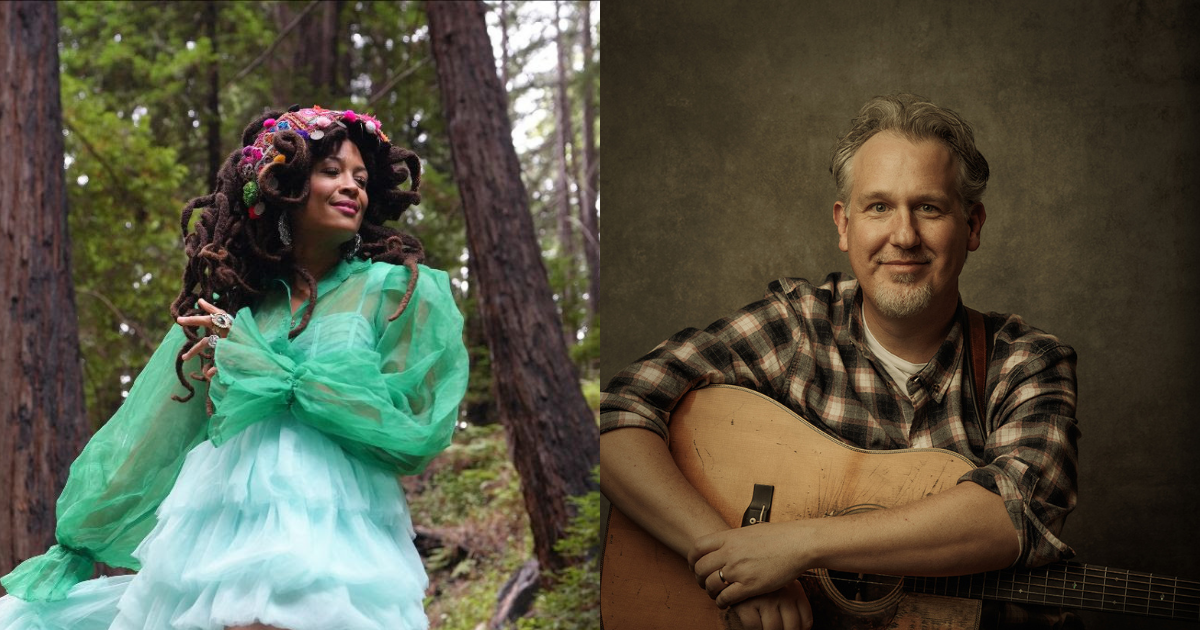
Photo Credit: Valerie June by Dr. Ietef Vita Photography; Bryan Sutton courtesy of the artist.

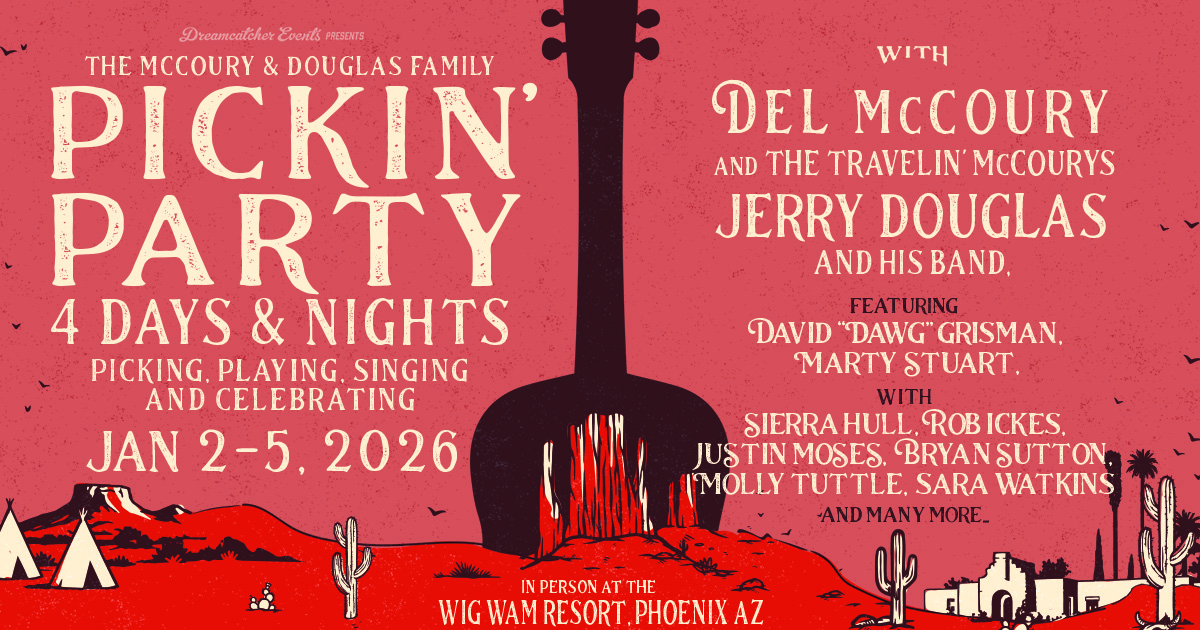
Our McCoury & Douglas Family Pickin’ Party Playlist

Have you ever dreamed of hanging out, jamming, and learning from your all-time favorite bluegrass artists? Then you don’t want to miss your opportunity to be part of the best pickin’ party ever, The McCoury & Douglas Family Pickin’ Party happening January 2-5, 2026 in Phoenix, Arizona.

We’ve assembled an exclusive playlist (listen below) featuring all of the amazing artists who will be on site for four days of masterclasses, performances, and workshops, including Del, Ronnie, and Rob McCoury, Jerry Douglas, Bryan Sutton, David “Dawg” Grisman, Sara Watkins, Molly Tuttle, Marty Stuart, Sierra Hull, and more.

Limited spots for this one-of-a-kind experience remain. And if you’re already registered, start getting excited by jumping into our BGS playlist. Registration and more information can be found at DelMcCouryPickinParty.com.


This content brought to you in partnership with the McCoury & Douglas Family Pickin’ Party and Dreamcatcher Events.

You Gotta Hear This: Red Camel Collective, Wood Box Heroes, and More

It’s not only the end of the week, it’s the end of the month! And that, to us, is scary enough for October 31. Mark the occasion – whether Halloween, the end of the week, or the end of October – with our new music roundup.

Kicking us off, singer-songwriter Sophie Gault releases the title track from her upcoming album, Unhinged, today looking ahead to her full record release in January 2026. Inspired by a stroke of luck playing cards aboard a cruise ship, Gault leans into trusting your gut and doing what feels true – even if others might call that “unhinged.”

Red Camel Collective, 2025 IBMA Award winners for Best New Artist, have unveiled a new music video today for “In The Mexican Sun,” written by hit bluegrass songwriter Malcolm Pulley. Perfect contrast for the cool, rainy days of fall or the quickly approaching shivery weather of winter, “In The Mexican Sun” wasn’t intended to be a bluegrass number, but the Collective make it feel right at home in the genre.

Meanwhile, contemporary bluegrass (and everything else) guitar great Bryan Sutton has a special posthumous duet with Doc Watson that he’s sharing today. The new single, “Working Man Blues,” includes vocals and guitar by Watson and Sutton shares the story of how the Merle Haggard cover came to be.

Experimental old-time and indie musician Laurel Premo shares her new project today, Laments, a thoughtful and deep exploration of grief from a variety of perspectives. A sort of instrumental text painting, “Grief Of The Angler” listens like an entrancing dreamscape as resonant bow strokes and heart-wrenching vocalizations interweave in evocative and inspiring ways.

Bringing us home, Nashville bluegrass-Americana supergroup Wood Box Heroes pay tribute to K.T. Oslin with a video performance of their cover of “Do Ya.'” With fiddler/vocalist Jenee Fleenor on the mic, it’s a lovely homage to a relatively undersung hero of ’80s and ’90s country music. Of course, the track shines with the Wood Box treatment.

There’s plenty to enjoy in our weekly collection of new music, videos, and premieres. You Gotta Hear This!

Sophie Gault, “Unhinged”

Artist: Sophie Gault
Hometown: Nashville, Tennessee
Song: “Unhinged”
Album: Unhinged
Release Date: October 31, 2025 (single); January 23, 2025 (album)
Label: Torrez Music Group

In Their Words: “I wrote ‘Unhinged’ after going on the Outlaw Country Cruise. I was learning to play blackjack and everyone told me I was crazy for doubling down on a 17 – but I did it anyway, and won. That moment kind of summed up everything for me. The song’s about gambling, but really it’s about trusting your gut and doing what feels true, even when the odds are against you. Sometimes the biggest risk is the one that pays off inside. On the way off the boat, this guy stopped me and said, ‘Hey, you’re that unhinged girl from the blackjack table!’ and I thought, ‘Yup, that’s the spirit of the song right there.'” – Sophie Gault


Laurel Premo, “Grief Of The Angler”

Artist: Laurel Premo
Hometown: Traverse City, Michigan
Song: “Grief Of The Angler”
Album: Laments
Release Date: October 31, 2025

In Their Words: “The four pieces on this record each hold a different-sized relationship. The third track, ‘Grief Of The Angler / I Grieve In The Realization Of The Generosity Of Your Gift,’ is sung from a formed deeper intimacy with the ecosystem that I belong to. In my life, my relationship with a form of hunting has been fishing and this piece sings the shared experience of taking another body for nourishment.

“As every relationship deepens, as the bonds are woven together between individuals, there is the opportunity for those threads to hold beings closer together but also to create tension when one leans back. The ties stay connected in both directions and that reciprocity demanded is an exchange for the gift of being able to be closer in intimacy. This piece sings from the moment of gravity of the fisherperson deciding to keep a catch and the energetic blending of beings therein.” – Laurel Premo


Red Camel Collective, “In The Mexican Sun”

Artist: Red Camel Collective
Hometown: Wirtz, Virginia (Johnathan Dillon); Walnut Cove, North Carolina (Tony and Heather Mabe); Oakboro, North Carolina (Curt Love).
Song: “In The Mexican Sun”
Release Date: October 17, 2025 (single); October 31, 2025 (video)
Label: Pinecastle Records

In Their Words: “This tune comes to us from the pen of our buddy Malcolm Pulley. You may recognize that name as he also wrote the hit song ‘In The Gravel Yard,’ which went on to become a bluegrass jam standard. ‘In The Mexican Sun’ is one of those songs that you’re sure you’ve heard somewhere before. The melody seems familiar somehow. It has all the earmarks of a hit tune. This one wasn’t a bluegrass song from its conception, but I believe it was always destined to become one.” – Heather Berry Mabe

Track Credits:
Heather Berry Mabe – Guitar, vocals
Tony Mabe – Banjo, vocals
Johnathan Dillon – Mandolin
Curt Love – Bass
Stephen Burwell – Fiddle

Video Credit: Laci Mack


Bryan Sutton, “Working Man Blues”

Artist: Bryan Sutton
Hometown: Nashville, Tennessee
Song: “Working Man Blues”
Album: From Roots to Branches
Release Date: October 31, 2025 (single)
Label: Mountain Home Music Company

In Their Words: “On the original 2006 release, I would just show up, set my gear up, and we would record. Even in those sessions I had a general idea but not so much of a design on what exactly I needed to get. Once [Doc] got comfortable, he was just starting to talk and show me some different tunes. … He just launched into ‘Working Man Blues,’ out of nowhere! It felt like, ‘I hope I got all that, I hope the tape didn’t run out.’ Then he said at the end of it (and I kept it on the recordings), ‘I just wanted to hear what you did with it.’

“You never knew what you were going to get with Doc Watson – from Crystal Gayle songs and ‘Nights in White Satin,’ certainly all that Doc-abilly stuff and swing tunes – outside of just fiddle tunes and bluegrass and folk ballads and things like that. Certainly Doc Watson was a fan of Merle Haggard and probably knew more Merle Haggard songs than he ever played for anybody. And I don’t know that I’ve ever heard him play it any other place.” – Bryan Sutton

Track Credits:
Bryan Sutton – Acoustic guitar
Doc Watson – Acoustic guitar, vocal


Wood Box Heroes, “Do Ya'”

Artist: Wood Box Heroes
Hometown: Nashville, Tennessee
Song: “Do Ya'”
Release Date: October 31, 2025 (video)

In Their Words: “I heard K.T. Oslin’s ‘Do Ya” on the radio one day and immediately thought, ‘Now that’s a song I’d love to sing.’ I brought it to the guys and when we worked it up together the crowd response was incredible! K.T. has always inspired me – not just because of her artistry, but because her country career didn’t take off until she was in her 40s. I’ve been so blessed with a successful fiddle career, but I’ll admit, there were times I thought about stepping away from singing and letting that part of me go. Starting Wood Box Heroes reignited that spark and this song, in particular, hit me on so many levels. It’s a joy to perform and I hope we can all take a moment to remember and celebrate the great K.T. Oslin.” – Jenee Fleenor

Track Credits:
Jenee Fleenor – Lead vocal, fiddle
Josh Martin – Vocals, guitar
Barry Bales – Upright bass
Matt Menefee – Banjo
Thomas Cassell – Mandolin

Video Credits: Videography by Barry Rice, Steve Anderson, and Andy Jeffers.


Photo Credit: Red Camel Collective by Ed Rode; Wood Box Heroes by Eric Ahlgrim.

Guitarist Ben Garnett’s New Album Transcends the Instrument

My conversation with Ben Garnett finds him at about a decade in Music City and in the swing of an album cycle for Kite’s Keep, the guitarist-composer’s second full-length solo record. Our discussion centers around the ethos of modern string band music, what the guitar has to say about it, and the potential for folk music’s inherent narrative quality to uplift and move past tradition itself.

Garnett’s perspective on these topics is one that is quite underrepresented: A graduate of the University of North Texas’s famously rigorous jazz guitar program, he spent his early years in Texas developing the skills needed as a pop-oriented sideman and session player, while making ripples in the experimentally disposed Denton, Texas, before heading east. As we’ll find out, he has made disparate musical worlds come together, informing each other along the singular path he leads.

Upon arriving in Nashville, Garnett was quickly recruited as trailblazer Missy Raines’ go-to guitarist, while contributing his compositions and musicianship to progressive acoustic ensemble Circus No. 9. Though his path wasn’t entirely certain at first, his dedicated, open-minded approach to musicianship quickly yielded success both creatively and professionally. Now touring his original music while balancing responsibilities as a band member, the new album Kite’s Keep was made in collaboration with today’s top-of-the-heap acoustic guard: Darol Anger, Chris Eldridge, Brittany Haas, Ethan Jodziewicz, Paul Kowert and experimental pianist-composer Matt Glassmeyer.

I was surprised to hear Ben describe this project as a “guitar” record; being a guitarist myself, and with kindred reference points, I am conditioned to hear six string-born music through the instrument’s highly subjective – yet unendingly capable – lens, though Ben manages to disrupt this. His distinct transcendence of the instrument comes from embracing its format and stepping past folks’ conception of it, while explosively celebrating the guitar as a compositional tool.

Garnett’s ability to write for the room, so to speak, enables him to accommodate many players’ perspectives while balancing high precision with casualness. This is a blend of skill sets and priorities that are rare in ecosystems historically dominated by performative virtuosity. At every turn, Ben Garnett is courteous and grateful, crediting his achievements to friends, linchpins, and heroes within his scene – ones that he now orates his compelling tale alongside.

Is it safe to say that your new record, Kite’s Keep, portrays a narrative? Was that built into your approach as you wrote and recorded it?

Ben Garnett: Absolutely. Poetically speaking, the album title Kite’s Keep loosely refers to this idea of a child’s inner world – a dreamscape where each song represents a different vignette of imagination. The broader narrative has to do with using the acoustic guitar as a world-building tool. This idea that guitar records can be more expansive than just, “here’s my solo arrangement of such and such a tune.”

My goal was to make a record that celebrates the power of what an acoustic guitar can do as an ensemble instrument – like bringing out what other instruments are capable of. The guitar can act as this stage, or world, that other instruments can then inhabit.

So, in that way, would you say that this is a guitar record?

Definitely.

Interesting, because when I listen to it, it doesn’t necessarily feel that way, which is an aspect I’m quite partial to.

I’m curious why this feels like a guitar record to you. I know you’re facilitating these exchanges and you’re world-building with them, you’re obviously pushing past what the guitar is conceived of, but it sounds like you’re not trying to push past the guitar itself.

I guess the idea is that, in addition to world-building, a lot of the compositional material was guitar-born. I’m thinking of the fiddle and bass as extensions of what I would otherwise play. They’re bringing guitar-born ideas into this other register, carrying them to places where the guitar can only point.

Do you have a compositional process? Would you consider it more passive, or do you sit down to compose in a more dutiful way?

Sometimes it’s dutiful, but a lot of the time it’s passive, like when I’m at the airport. Thoughts come to me and I’ll write them down in my notes app. From there, it’s more like script or scene writing. For instance, I’ll want the tunes to arrive at a certain point and I’ll figure out how to get there in reverse. When I’m being more dutiful, I’ll realize a piece in a program like Ableton or Finale, or just by recording myself.

I wrote one tune in a weird way: I improvised freely for 15 minutes, mostly with long tones. The only directive was to play a note and whatever note I heard after that, I would immediately try to play. I chased my tail for 15 minutes and recorded myself. Then I sped up the recording by 400%. I chopped up the transients, warped it, and put the transients on different parts of the metric grid. I had a groove in mind – a half-time, kind of bluegrass-funky tempo. Since it was my melodic sensibility and the way I heard the notes flowing into each other, there was a certain intention and trajectory there.

So, you were kind of sampling yourself – that must get you out of your own head and off the instrument.

Yes. It gave me rhythms and phrasing that I never would have come across otherwise.

And then you learn it from yourself.

Exactly. … It’s the second track, with Darol Anger, “Tell Me About You.”

For something like that, which is more thoroughly composed, how do you make it sound so fluid in the studio while recording?

The process for that tune involved getting the basic elements assembled in Ableton, but then there was the process of arranging the material. Then after arranging, came “breaking in” the tune, so to speak.

Once I had a basic arrangement, I brought it to Darol. We probably got together four or so times. I remember asking him what would make it more idiosyncratic to his instrument and playing. He’d suggest adding a double stop somewhere or doing something rhythmically a little differently. Basically, it was all about massaging it so it didn’t feel clunky. It had to pass all these “tests” before we even got into the studio.

What are these tests that it must pass?

They have to do with the flow. Even if the compositional material comes from using a computer or another unusual place, the music still has to have this casualness. String band music tends to sound its strongest when the parts rely on each other in a certain way. I generally will “test” my music by playing it with as many people as I can, to make sure it has an inherent interpretive quality. Making sure the ideas are robust enough to hold water no matter who’s playing them.

For people who don’t know, you come from Dallas, you went through UNT’s jazz guitar program, and then you moved to Nashville. I’m curious how you found Nashville with your sensibilities, growing of musical age in an environment that is uniquely experimental, yet highly rigorous. Did you come here with the aspirations of doing the things that you’re doing now?

Not at all. At the time, it was much more open-ended than that. I was mostly driven by wanting to get out of Texas. But I had also just gone to the Acoustic Music Seminar with Mike Marshall, Julian Lage, Bryan Sutton, and Aoife O’Donovan, which was a hugely formative experience. I think it was Sutton who offhandedly mentioned, “You should think about moving to Nashville.” I knew there were acoustic musicians here I looked up to – the whole Sam Bush and Jerry Douglas generation of players and I knew Critter [Chris Eldridge] and Sutton were here, too.

At that time, I was also in a phase of wanting to be an electric guitar player. The idea of being a session musician or side-person appealed to me. I had an electric background playing all kinds of music back in Texas – jazz, rock, country, pop, etc. I remember my cousin and my first guitar hero, Andy Timmons, telling me, “Nashville is definitely where I would be if I were your age.” It just seemed like the most open-ended place for the variety of interests I had.

Did you feel like you could do what you wanted to do at first?

It took a while to figure that out. I got a job with bluegrass bassist Missy Raines two weeks after arriving, which was a great first touring experience. I had the idea of making a solo record in my head for a long time, but I always thought I’d wait until I was 30 or so to make it. However, at one point, I distinctly remember Missy telling me, “You definitely need to make a record before you’re 30,” which was amazing advice.

I also got a job with progressive bluegrass band Circus No. 9, a year or so after moving, and was expected to bring in original music to build out our repertoire. The more engrossed I got in the progressive bluegrass world, the more I realized how rare my perspective on it was. It felt isolating at first, but being on the road with Missy and Circus was like being in a second family where I got to realize my position and perspective.

Fast forward a few years, and my hero Chris Eldridge agreed to produce my first solo record, Imitation Fields.

I’m always fascinated by the Dennis Hopper quote where he says one day an actor wakes up and they decide they’re a producer. I’m wondering if you feel similarly in regard to pursuing your voice as a bandleader, composer, artist. I feel like in the current state of the music industry, with how comically hard it is to do anything, it’s almost like a fatalistic, “Why not?”

I’m curious if you could speak to the process of finding yourself in a record of your own stuff and what advice you might give to somebody trying to figure it out.

It goes back to the validation thing. I probably wouldn’t have made a record without all the help and encouragement from those around me. I hate to even frame it this way, but I just have to count my blessings. In some ways, I feel like I walked into something that was waiting for me.

You could have stayed in Texas and made records, but you wouldn’t have made the records you’re making here in town.

Absolutely. Who knows what those Texas records would’ve sounded like.

Going back to your question on what advice I’d give to somebody figuring it out. If you’re an aspiring musician who wants to make your own music, I’d advise not to be too career-oriented at first. Obviously, you need to do what it takes to pay the bills. But there’s a lot of music out there that, to me, sounds born from a certain careerist mentality, which I frankly find to be taking up space.

All the stuff I’m doing now – booking my own tours, stocking merchandise, making promo graphics, being my own publicist (essentially being a small-business owner) – is all really new to me. I moved to Nashville just to see what would happen. I had no real objective. Even if it at times felt meandering or directionless, I’m grateful for the space I inadvertently gave myself to try things. You find yourself in that process, and I think your art becomes more meaningful as a result.

Another factor worth considering in finding myself was the impact of COVID. Critter and I were in the middle of editing Imitation Fields during this time and I think if it weren’t for COVID, it could have easily been, “Okay, we’ve recorded now – let’s edit, mix, master, then done.” All the sudden, it became a whole process of, “What if we tried this? What if we did that?”

It’s like being in a block of molasses. You’re not thinking, “I have three days in the studio, and we have to figure it out.”

Exactly. We had all this time. No corners were cut. … It was kind of insane. I didn’t quite realize it at the time. I’m just really grateful, even if it ultimately drove me a little crazy.

As someone who puts a lot of meticulous work into the visuals which accompany your music, how do you feel that film informs music and vice versa?

First and foremost, the two seem inseparable. For those of us who can see and hear, we’re always looking at something while we’re listening and we’re always listening while we’re looking. That connection is inherent, so my argument is, why not have a say in both realms of sensory experience?

On top of that, I think there’s something cinematically interesting with the traditions of jazz and folk music. A lot of folk music tends to have this quality of wanting to tell a story, albeit in a fairly literal way. Listening to a song, there can be this mini-movie playing in the listener’s mind. Maybe they’re imagining a character, or their own life experiences – whatever the case may be, it largely seems to be about evoking imagery on some level.

In contrast, that kind of storytelling seems less of an objective in jazz. Jazz tends to revolve around this more abstract, spontaneous kind of communication. Which feels equally as cinematic, but the goal of that storytelling feels distinctly different than with folk music.

Of course these are generalizations and I don’t mean to be reductive with either music. This is all to say – the way these traditions interact with our “cinematic” experience of music is something I find deeply fascinating and is a huge source of inspiration for my writing and playing.

It’s the same phenomenon with a song like “Nine Pound Hammer” that has lyrics and semantic content, but is also a vehicle for instrumental virtuosity. I feel like you’re meeting in the middle there.

Absolutely. This is where bluegrass, in some ways, has the best of both worlds.

What I think initially drew me to folk music, in general, was the cinematic quality I didn’t get playing jazz standards. Obviously, there’s the storytelling you get listening to the great singer-songwriters, but there’s also listening to bands like Strength in Numbers. It feels like cinematic stories are being told in those compositions.

Do you feel like a more approachable rhythmic foundation provides a shoo-in for listeners to more quickly imagine a world?

It certainly can. But I also think it’s this general narrative quality in folk music that provides this. For instance, when I play a tune with Brittany [Haas], there’s almost this unspoken objective between us to build the tune in a certain way. In a way that’s very different from playing a jazz tune.

As an aside, I think that’s why people sometimes misunderstand jazz or say they can’t connect with it. Most of the time, jazz isn’t trying to do what most pop or folk music is doing. It’s not trying to conjure a story in this literal way. What makes jazz work is how it centers around this more abstract, colloquial communication.

Perhaps in that way, music school’s training isn’t always “backwards compatible.” Is that fair to say?

I grew up being taught a certain set of rules about how to make good music from going to jazz school. Then, when I moved to Nashville and started working with string band musicians, I realized what I was working with was quite different from the rules they had grown up with.

I think this intersection is what makes someone like Edgar Meyer a powerful force. In some ways, he’s able to pull out all these things in people like Jerry Douglas, Russ Barenberg, Béla Fleck, Mike Marshall, and Sam Bush by bringing in this other perspective from his classical background.

He also realized that the same rules did not apply.

Exactly. He’s able to take what those musicians are giving him, see what they’re good at, harness it, and arrive at a perspective that none of them would have had otherwise.


Photo Credit: Natia Cinco

Dierkscography

In 1994, a not yet 20-year-old Dierks Bentley threw all caution to the wind when he packed up his dorm room at the University of Vermont with hopes to never return. Bentley’s relocation would not only forever change the course of his life – it would go on to catalyze his tremendous impact on roots music at large.

After a trip with his father to Nashville made quite the impression, Bentley decided to complete his college degree at Vanderbilt, dedicating his studies to English (the major most proximal to songwriting). After graduating, Bentley continued to foster both his musical education and career; his day job entailed archiving old country performances at The Nashville Network (in fact, his diligent field work even got him banned temporarily from the Grand Ole Opry), while his evenings were filled with bar gigs and songwriting sessions. After five years of grunt work, 2003 saw Bentley release a self-titled album with Capitol Records. His first single, “What Was I Thinkin’,” made waves on the country charts. Since then, Bentley has been responsible for the release of 20 No. 1 country singles and 10 additional studio albums, the latest of which, Broken Branches, arrived in June.

While Bentley’s career has seen major commercial country success, his deep respect for expansion and immersion has made him a beloved fixture within bluegrass, as well.

Of his instrumental move to Nashville, Bentley has shared, “I moved to Nashville in 1994 – I was trying to find that seed of truth, that authenticity, that thing ‘country music’ that I had in my head. And I got here and it was definitely different than I expected it to be. It’s big business, a lot of money.

“Luckily, for me, I found a little bar called the Station Inn where bluegrass music existed – and I found what I was looking for. Just the sound of a five-piece bluegrass band blew my mind. And they’re not trying to take meetings all the time and meet producers, and get their foot in the door. It’s funny, I moved to Nashville looking for country music, but I found bluegrass.”

Whether it’s his proclivity for cross-genre conversation, songwriting prowess, or patinaed tenor delivery, Dierks has proved himself a mainstay favorite for country, Americana, and bluegrass fans – here at Good Country and BGS, and beyond. In honor of his recent album release and his huge Broken Branches tour with Zach Top and the Band Loula concluding this month, we present you with our Dierkscography, a non-comprehensive compilation of more than 15 songs meant to show off some of our favorite Dierks gems from across genres sampled from the many years of his remarkable career.

“Never You” featuring Miranda Lambert, Broken Branches (2025)

Dierks’s new album, Broken Branches, arrived fresh off the press with a slew of impressive collaborators, from Riley Green to Stephen Wilson Jr. Dierks fondly calls the record a “special” display of “making music in the studio with our buddies.” Country giant and longtime collaborator Miranda Lambert joins Bentley on this banjo-driven track, with the pair’s velvety duet vocals imbuing tenderness and warmth into one of the album’s only love songs.

“High Note” featuring Billy Strings, Gravel & Gold (2023)

This rip-roaring tune off of Bentley’s tenth studio album features a whole handful of bluegrass greats. Not only does Billy’s high tenor soar above Dierks gravelly tones during choruses, his famous flatpicking joins the likes of Sam Bush, Bryan Sutton, and Jerry Douglas for a superjam ending.

Of the collaboration, Dierks recalls, “Bryan Sutton first tipped me off to Billy Strings about seven years ago, mentioning that the future of bluegrass was in good hands. I was totally blown away the first time I saw him. I’ve cut songs like these since my first record, and I knew I wanted to have him on this one, I’m such a huge fan. It was a lot of fun to have him, Jerry, Sam, and Bryan all passing licks around – having them all on this record means a lot to me personally.”

“American Girl” (2024)

Who doesn’t love an Americana “American Girl”? Bentley delivers this country-fied Tom Petty classic alongside some BGS favorites, including Chris Eldridge on guitar and Noam Pikelny on banjo. Dierks reprised the hit single joined by Bronwyn Keith-Hynes, Sierra Hull, and Molly Tuttle on stage at the 2024 CMA Awards, bringing down the house.

“For As Long As I Can Remember,” Broken Branches (2025)

The country canon has seen its fair share of heartache, murder, trains, and drinking. Also on his latest release, “For As Long As I Can Remember” shirks these motifs in favor of something a little more wholesome – a warm and adoring ballad dedicated to the strength of enduring familial bond. An ode to his brother and father, Dierks reminds that respect and love can be country, too.

“Train Travelin’,” Dierks Bentley (2003)

With many of his nascent Nashville days edified by nights at the Station Inn and in the surrounding bluegrass scene, iconic bluegrass family the McCourys quickly became repeat collaborators for Dierks. Their features pepper many of his earlier albums, dating all the way back to his debut self-titled release in 2003. “Train Travelin’” would become the first of many, with other gems such as Good Man Like Me (Modern Day Drifter, 2005) and Last Call featuring Ronnie McCoury (Feel That Fire, 2009) dotting the road to Bentley’s eventual bluegrass-centric album, Up On The Ridge.

“Up On The Ridge,” Up On The Ridge (2010)

The titular track off of Bentley’s bluegrass-inspired album is thrumming with energy, both quickly-paced and haunting with its descending melodic hook. Up On The Ridge was Bentley’s fifth studio album, featuring a star-studded list of bluegrass collaborators including Alison Krauss, Punch Brothers, Chris Stapleton, Tim O’Brien, Sam Bush, and beyond. Del McCoury even joins forces with Bentley and Punch Brothers to deliver a deliciously grassified cover of U2’s “Pride (in the Name of Love)” further evidencing the album as a culmination of both tradition and innovation.

“Freeborn Man,” (Live, 2025)

Another of our favorite timeless covers, Dierks has been adorning his Broken Branches Tour this summer with his vigorous take on “Freeborn Man.” This rendition includes a fiery feature by Zach Top, nearly toppling the stage with talent.

“Hoedown for My Lowdown Rowdy Ways” featuring Dierks Bentley, Lowdown Hoedown (Jason Carter, 2022)

With Jason Carter fiddling his heart out on Dierks’ records since 2003, it’s of course a polite roots custom for Dierks to return the favor. Released as part of Carter’s second solo album, Lowdown Hoedown, “Hoedown for My Lowdown Rowdy Ways” has Dierks singing harmony and strumming away on the bluesy breakdown. Lowdown Hoedown also features a tender Jamie Hartford number, “Good Things Happen,” that Dierks Bentley covered on his 2005 album Modern Day Drifter, yet another frame of conversation between the two artists.

“Prodigal Son’s Prayer” featuring The Grascals, Long Trip Alone (2006)

This acoustic tune features the bluegrass sensibilities of the Grascals, a long-running group lauded for their instrumental prowess. The song loosely follows the parable of the prodigal son, ultimately centering themes of repair and reconciliation. The song also features the stomps and hums of incarcerated individuals from Charles Bass Correctional Complex, who had been in Bentley’s producer’s Bible studies course at the time.

“Free and Easy (Down The Road I Go),” Long Trip Alone (2006)

From the same release, this breezy banger remains a hallmark of Bentley’s career, even after nearly two decades since it dropped. The fifth of his singles to top Billboard’s Hot Country charts, “Free and Easy (Down The Road I Go)” lures in listeners with its fast-paced country twang and life-affirming sentiment.

“Beautiful World” featuring Patty Griffin, Feel That Fire (2009)

No stranger to incredible collaborators, Dierks Bentley asked iconic folk and country singer-songwriter Patty Griffin to accompany him on this track, gushing, “Her voice is one of a kind and she’s such an important figure in the American music scene… She’s just amazing. And so I asked her.”

The result is a tender homage to the beauties of the world, largely inspired by his wife, who was pregnant with their daughter at the time of the song’s conception. “You hear people sometimes say, ‘Man, I can’t imagine bringing a child into this world. It’s so bad.’ That’s just such a negative outlook,” Dierks says. “You cannot live your life with that viewpoint of the world. Yes, there are a lot of things that are wrong, but it is a beautiful world, and you need to find the positive in it.”

“Heart of a Lonely Girl,” Home (2012)

From Bentley’s sixth studio album, Home, comes this spirited, emotionally deep number. The narrative song was penned by the infinitely talented Charlie Worsham, who would go on to join Bentley’s touring band a decade later – and you can currently see him on stage each night during the Broken Branches tour.

“Trip Around the Sun,” featuring Dierks Bentley, I Built a World (Bronwyn Keith-Hynes, 2024)

Fiddler Bronwyn Keith-Hynes first connected with Bentley through Molly Tuttle & Golden Highway, the popular bluegrass group that opened for him several times on tour. She’s also married to Jason Carter, so Dierks wasn’t just a professional collaborator, but a member of her personal Nashville network, as well. It’s no surprise, then, that she’d end up on stage with him at the CMA Awards and, in the same year, he would guest on her acclaimed and GRAMMY Award-nominated album, I Built a World.

“Mardi Gras” featuring Trombone Shorty, Black (2016)

Soaked in Louisiana charm, this tune was inspired by Dierk’s 2015 galavant on a Mardi Gras parade float. Featuring the indelible hornsmanship of Trombone Shorty, the track grooves along with bluesy undertones. “Getting Trombone Shorty to do his thing on it, what a great guy. I love working with him. He is so laid-back and so good at what he does,” Bentley boasts of his collaborator.

“Travelin’ Light” featuring Brandi Carlile, The Mountain (2018)

Featuring the powerhouse vocals of Americana giant Brandi Carlile, this tune appears on Bentley’s 2018 album, The Mountain. The collaboration between the two icons came to fruition after Bentley saw Brandi perform at Telluride Bluegrass Festival, inspiring him to approach her about dueting on the track.

“Sun Sets in Colorado,” Gravel & Gold (2023)

Written reflecting his pandemic move to Colorado (though he has since returned to Nashville), Bentley released this tune on Gravel & Gold. The song shouts out New Grass Revival and Telluride in a verse: “Sing an old new grass song with me/ Telluride along with me,” while also featuring New Grass Revival founding member Sam Bush on mandolin. Bryan Sutton also joins in on the studio recording, yet another sparkling collab with bluegrass greats.


Want more Good Country? Sign up to receive our monthly email newsletter – and much more music! – direct to your inbox.

Photo Credit: Robby Klein

SURPRISE! Billy Strings & Bryan Sutton Release ‘Live at the Legion’

A year ago today, on April 7, 2024, the American Legion Post 82 in East Nashville was packed to the gills with rabid flatpicking fans, geared up for a special appearance by two of the greats: Billy Strings and Bryan Sutton. Far from their first show together or their first collaboration, it was still one of the hottest tickets in Nashville and fans lined up down the sidewalk and up the drive of the humble Legion for their chance to witness bluegrass guitar history in the making.

To the delight of the many hundreds of thousands who would have but couldn’t also squeeze into the cinder block building known for two-stepping, honky-tonkin’, and bluegrass jams, today Strings and Sutton surprise released a live-recorded album of that evening’s show, Live at the Legion. Available digitally – with CDs and vinyl on the way August 1, and physical pre-order open now – it’s a two-disc, 20-song collection of traditional tunes, medleys, covers, and two of the most personality-rich and unique improvisational voices on the instrument.

Strings makes it no secret that, like many younger guitar pickers in bluegrass and adjacent styles, Bryan Sutton is a hero. The two have collaborated often in the past, formally and informally, getting together for jams and lessons, Strings appearing at and attending Sutton’s Blue Ridge Guitar Camp, performing as a duo at the Station Inn, Sutton guesting on stage with Strings and band, and more.

These are two generational talents, understood within and outside of bluegrass to be standard-setters for the instrument and for flatpicking at large. Together, their musical dialogues are entrancing, exciting, and as charming as they are downright unpredictable. Billy’s power and aggression on the six-string ease, while each player listens ardently and responds to the other with comfortability, or a wink, or a tasteful counterpoint, or an outburst-inducing surprise. Sutton is endlessly lyrical, drawing out such responses from Strings. For their level of chops, the collection rarely strays into self-involved jamming or ego-driven ideas.

Later this year, in September, Strings and Sutton will perform a short series of intimate duo shows to celebrate Live at the Legion – and give any who couldn’t be there in East Nashville in 2024 for the taping of the album another chance to catch the magic. The pair will appear at the Bluegrass Music Hall of Fame & Museum in Owensboro, Kentucky; at Nashville’s Ryman Auditorium; in Chattanooga, Tennessee; and in Boone, North Carolina with accompaniment by Strings’ bassist, Royal Masat. Due to anticipated demand, tickets for any/all of the shows must be requested by April 21, 2025, after which lottery winners will be notified. Sign up to request tickets here.

Bluegrass boasts many an iconic duo album, especially focused on the guitar. In the future, will we group Live at the Legion alongside other such definitive recordings as Blake & Rice? It seems almost inevitable. From Blake & Rice to Skaggs & Whitley, Watson & Monroe, and Grisman & Garcia – or even the just-released Carter & Cleveland – it seems immediately clear Billy Strings & Bryan Sutton’s Live at the Legion will be going down in bluegrass history. Tuck into this double album delight to see and hear why for yourself.


Photo Credit: Joshua Black Wilkins