They’ve Got You Covered: 10 Tributes You Need to Hear

2020 was a year of many things – COVID-19, existential elections, the shuttering of the music industry, and on and on – but one common, non-catastrophic throughline of the musical variety was cover songs. Many musicians and artists, finding themselves with more free time than usual and more standard-fare albums and cross-continental tours back-burnered, took the opportunity to explore live records, collaborations, and yes, covers. From Molly Tuttle to Wynonna, livestreams to socially-distanced shows, covers became an unofficial pandemic pastime. 

Now, in 2021, many of these cover projects conceived and created in 2020 have made it to store shelves – digital and otherwise – and we’ve collected ten tributes worth a listen:

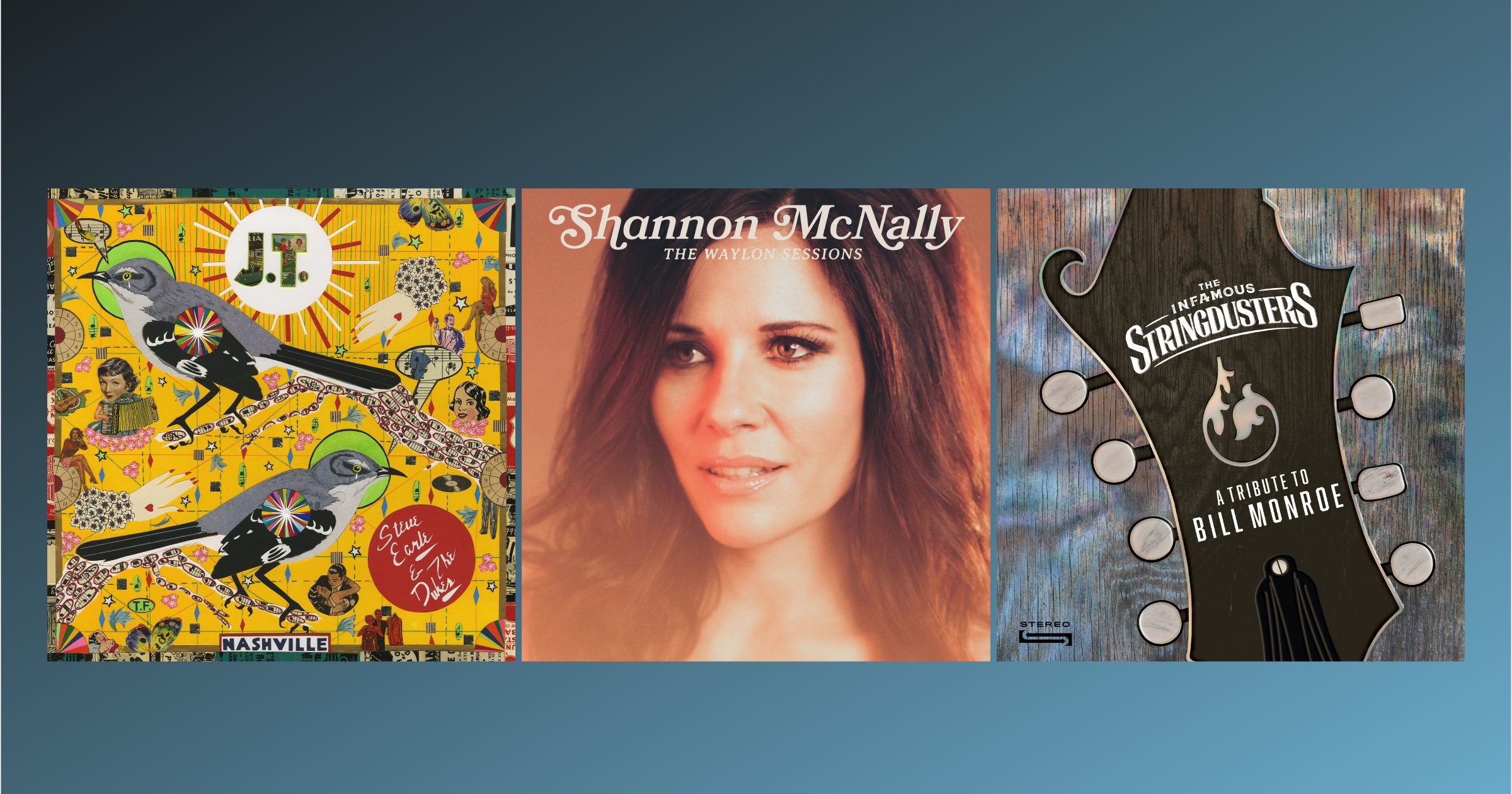
Shannon McNally covers Waylon Jennings

It’s fitting that Shannon McNally released The Waylon Sessions on Compass Records, whose headquarters now occupies “Hillbilly Central.” As Tompall Glaser’s former studio, the building helped give rise to country’s outlaw movement and it’s where Waylon himself recorded. With guests like Jessi Colter, Buddy Miller, Rodney Crowell, and Lukas Nelson, the project recontextualizes Waylon Jennings’ material, which is usually associated with hyper-masculine wings of the country scene. As McNally puts it in a press release, “What Waylon Jennings brought to country music is what country music needs right now, and that unapologetic and vulnerable sense of self are what women are tapping into artistically right now as the industry evolves.” 


Steve Earle covers Justin Townes Earle

Many a musical child has covered their parents’ catalogs in retrospect, but it’s rare that we see the reverse. A gorgeous, gutting, and laid-bare album, Steve Earle’s J.T. is a ten-song tribute to his son, Justin Townes Earle, who passed away suddenly in August 2020, shocking the Americana and folk communities. Earle’s signature emotion bristles and crackles throughout the project, giving Justin Townes’ songs an even stronger quality of visceral electricity. Proceeds from the album will go to a trust for Etta St. James Earle, Justin Townes’ daughter and Steve’s granddaughter. 


The Infamous Stringdusters cover Bill Monroe

Spread out from North Carolina to Colorado and beyond, the Infamous Stringdusters utilized home recording from their respective studios during the pandemic to accomplish musical creativity their jam-packed schedule hadn’t really allowed in the “before times.” Their brand new EP, A Tribute to Bill Monroe, returns the virtuosic jamgrass outfit to territory familiar to those who first found the group when they were cutting their teeth, striding out from traditional bluegrass into the vast, expansive newgrass-and-jamgrass unknown. The project illustrates that the true strength of this ensemble is found in utilizing traditional bluegrass aesthetics for their own creative purposes. For example, you might listen through the entire record without realizing the Stringdusters made a Bill Monroe tribute album without mandolin!


Mandy Barnett covers Billie Holiday

Mandy Barnett is a cross-genre chameleon; between her talent, her voice’s timeless Americana tinge, and her appetite for classics — from Nashville staples to the American songbook — she often finds herself reaching far beyond Music Row and classic country to R&B, standards, and in her most recent release, Billie Holiday covers. Every Star Above was recorded in 2019, pre-pandemic, and includes ten songs from Holiday’s 1958 Lady in Satin album – songs previously also covered by Frank Sinatra, Dinah Washington, and many, many others. The project feels akin to Linda Ronstadt’s pop and big band forays, never fully detached from Barnett’s country roots, but built atop their solid foundation. In another Ronstadt-esque move, Barnett partnered with recently departed jazz arranger Sammy Nestico; Every Star Above was the award-winning composer’s final project.


Charley Crockett covers James Hand

Country-western crooner Charley Crockett is truly prolific, having released nine full-length albums in the past six years. As the story goes, before his friend, acclaimed Texan singer-songwriter James “Slim” Hand passed away unexpectedly about a year ago, Crockett promised he would record his songs. “Lesson in Depression” captures the sly, winking quality of the best sort of sad-ass country, which isn’t burdened by its own melodrama. While it’s certain Crockett (as Tanya Tucker would put it) would have rather brought Slim his flowers while he was living, there’s a poignancy in how 10 For Slim – Charley Crockett Sings James Hand, like Earle’s J.T., immediately demonstrates how these impactful musical legacies will live on.


Lowland Hum cover Peter Gabriel

Lowland Hum’s album covering Peter Gabriel’s So — which they’ve cutely and aptly entitled So Low — began as a passing joke, but the folk duo of husband-and-wife Daniel and Lauren Goans followed the passion and fun that led them to Gabriel’s hit 1986 release, quickly unspooling the passing whim into inspiration for a full-blown project. “We already loved the iconic record, but in translating Gabriel’s melodies and otherworldly arrangements,” they explain on their website, “we fell even deeper in love with the songs, Gabriel’s voice, and his uncanny ability to fully inhabit both vulnerability and playfulness…” Their “quiet music,” minimalist approach is well suited to the material and the entire project is incredibly listenable, comforting, and subtly envelope-pushing.


Chrissie Hynde covers Bob Dylan

After The Bard released “Murder Most Foul” and “I Contain Multitudes” early in 2020 (and in the pandemic) founder, singer, songwriter, and guitarist for The Pretenders Chrissie Hynde was inspired to once again revisit Dylan’s catalog – a limitless fount of material with which she was already intimately familiar. Her new album, Standing in the Doorway, features nine Dylan tracks recorded with fellow Pretenders guitarist James Walbourne – almost exclusively via text message – and for their coronavirus YouTube video series. Hynde opts for deeper cuts, showcasing her affinity for swaths of Dylan’s career often overlooked by other would-be cover-ers. This classic, “Tomorrow is a Long Time,” feels appropriately sentimental and longing, a perfect encapsulation of the day-to-day of the realities of the pandemic, filtered through a Bob Dylan lens and Hynde’s distinctive voice. 


Various Artists cover John Lilly

John Lilly is a songwriter’s songwriter. Based in West Virginia, his original music has been covered by modern legends like Tim O’Brien, Kathy Mattea, and Tom Paxton. April In Your Eyes: A Tribute to the Songs of John Lilly gathers various artists from the folk, old-time, and bluegrass communities – in West Virginia and otherwise – spotlighting the incredible depth and breadth of Lilly’s catalog. The title track is stunningly rendered by Maya de Vitry and Ethan Jodziewicz, who were connected with Lilly originally through West Virginia’s iconic old-time pickers’ gathering affectionately referred to as “Clifftop.” Paxton, O’Brien, and Mattea all make appearances on the project, as do Brennen Leigh & Noel McKay, Bill Kirchen, and many other members of Lilly’s musical family and inner circle, giving the project an intentional and intimate resonance.


American Aquarium cover ’90s Country Hits

BJ Barham’s American Aquarium dropped a surprise album, Slappers, Bangers, & Certified Twangers: Volume One in May. Featuring ten covers of some of the band’s favorite ‘90s country hits, it’s a dose of all-star-tribute-concert packaged in a pandemic-friendly stay-at-home-form – and available on John Deere Green vinyl, of course. One particularly sad casualty of the coronavirus pandemic has been these sorts of musical nostalgia bombs – when was the last time any of us attended a theme night or tribute show at say, the Basement East in Nashville or Raleigh, NC’s The Brewery? – and Slappers, Bangers, & Certified Twangers has us in the mood to attend the first ‘90s country covers live show possible now that things are finally reopening.


Various Artists cover John Prine

A year without Prine seems far, far too long to travel with such a Prine-shaped hole in our musical hearts. But his presence and legacy certainly still loom large; the Prine family has announced “You Got Gold: Celebrating the Life & Songs of John Prine,” a series of special concerts and events held across various venues in Nashville in October. Oh Boy Records is also planning to release a new tribute record, Broken Hearts and Dirty Windows: Songs of John Prine, Vol. 2, to coincide with You Got Gold. The first two tracks from the project that have already been unveiled feature Sturgill Simpson performing “Paradise” and Brandi Carlile’s rendition of “I Remember Everything,” which you can hear above. Each month until October, the Prine family and Oh Boy will release another song from the project, unveiling special guests who each pay tribute to Prine, his songs, and the enormous vacuum his loss has left in the roots music industry.


The Show On The Road – Amy Helm

This week, The Show On The Road places a call into Woodstock, NY, where we speak to a respected singer, songwriter, and sometimes drummer Amy Helm, beloved daughter of Levon Helm of The Band.

LISTEN: APPLE PODCASTSSPOTIFYSTITCHER


Growing up in the home of two working performers (her mother is singer Libby Titus, who wrote songs covered by Bonnie Raitt and Linda Ronstadt) wasn’t always the easiest for the introspective Helm, but it gave her a fertile proving ground to begin exploring creating her own soaring songs in the folk, blues, and soul traditions. She waited until she was forty-four to release her acclaimed first solo record, Didn’t It Rain, with her father lending his signature earthy drums on several tracks — and this year, she teamed up with multi-instrumentalist and producer Josh Kaufman (Taylor Swift, Bonny Light Horseman) to create What The Flood Leaves Behind, her most emotive and lushly-realized project yet.

With her dogs often joining the conversation from her upstate home, Helm dives into her early years trying her hand at singing in New York City cafes, having folks walk out of her folk fest shows because her band was too loud, founding the band Ollabelle, joining her stepdad Donald Fagen’s group Steely Dan onstage, backing up legends like Stax soul artist William Bell and finally reconnecting with her dad in her mid-thirties as he began his late life renaissance, hosting his epic Americana throwdowns called “The Midnight Rambles.” It was being a member of that crack “ramble band” that gave Amy the final push to pursue her own lead voice.

While Levon famously struggled with heroine addiction and the foibles of post-Bob Dylan and The Band fame fallout, it was when he got clean and took Amy under his wing that both of their stars began to rise again. You can hear Amy singing on his gorgeous return in 2017’s Dirt Farmer. Becoming more ambitious, Amy laid down her upbeat rock-n-soul-tinged second album with producer Joe Henry in LA with notable players like Doyle Bramhall II, Tyler Chester, and a vocal choir of Allison Russell and JT Nero (Birds of Chicago) and Adam Minkoff. This Too Shall Light was released in 2018 on Yep Roc Records and Amy began to be recognized as one of the most powerful singers touring the Americana circuit. Her newest record was recorded at her spiritual home, Levon Helm Studios, where each ramble still takes place on the weekends.

During the pandemic, Helm had a unique idea to keep her creative muscles strong, even when live music gatherings were not technically allowed in public. She began setting up “curbside concerts” for her friends and any curious fans who missed her songs, touring around Woodstock with her guitar, bringing a little joy to her shut-in listeners during New York’s darkest hours.

Stick around to the end of the episode to hear Helm introduce the spiritual opening track of What The Flood Leaves Behind, “Verse 23.”


Photo credit: Ebru Yildiz

Somewhere Out There, These 9 Songs from Cartoons Stand on Their Own

Adults who have happened to spend any amount of time watching children’s TV and cartoons – say Winnie the Pooh, or Looney Tunes, or The Amazing World of Gumball – know that plenty of jokes and gags aren’t written for the kids tuning in at all. Certainly the same fact is true of many soundtracks and scores. Originally intended for younger audiences, these nine songs from popular cartoons supersede their animated film origins. Some have gone on to become modern classics, others popular karaoke anthems, Americana covers, and even a drag queen number or two. No matter the context, each of these songs stands on their own.

Bonnie Raitt: “Will the Sun Ever Shine Again,” Home On the Range

A ragtag group of livestock must save their family farm, “Patch of Heaven,” from a thieving-cowboy-would-be-rancher-and-real-estate-magnate. Along their journey, quite a few problems arise for the cows and crew, and right when you realize all hope is lost, Bonnie Raitt’s voice comes wafting on the Western wind. A nearly perfect, succinct package at 2:30 long, “Will the Sun Ever Shine Again” deserves a spot in the modern country canon. Instead, it’s nearly hidden away on this 2004 Disney release.


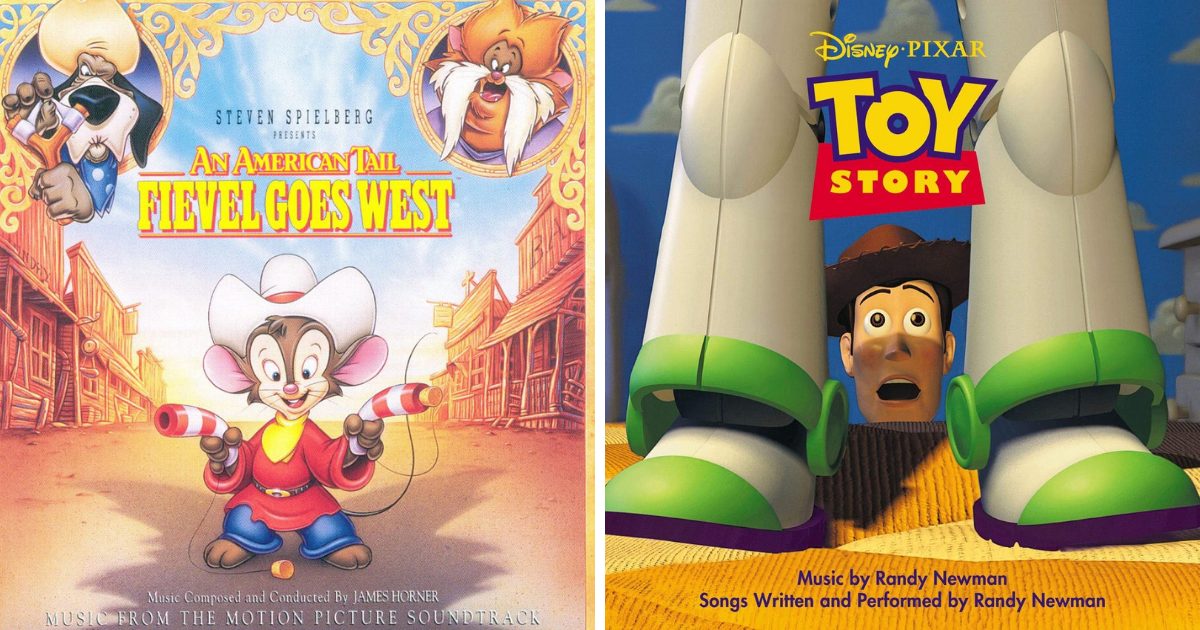
Linda Ronstadt: “Somewhere Out There,” An American Tail

Immigrant mice find themselves journeying to America in this 1986 Steven Spielberg-produced classic cartoon, which was so popular a sequel was released in 1991. (Hear a track from its soundtrack later in this list.) The main character Fievel’s sister, Tonya, has designs on starhood, singing “Somewhere Out There” exquisitely and mournfully — and apparently poorly by mouse standards. But her family uses the tomatoes flung at her for dinner. Linda Ronstadt reprises the track on the soundtrack, belting the epic arrangement as only she can.


Randy Newman: “You’ve Got a Friend in Me,” Toy Story

Randy Newman’s soundtrack offerings for all of the Toy Story movies epitomize the central concept of this list: Songs that are just good, whether they’re from an animated film or not. Other soundtracks from the franchise feature Riders in the Sky, Sarah McLachlan, Judas Priest, and Chris Stapleton. All are fantastic, but “You’ve Got a Friend in Me” is certainly the piece de resistance.


Shelby Flint: “Someone’s Waiting for You,” The Rescuers

A haunting, morose, nightmarish — and hilariously entertaining — tale of an orphan kidnapped by treasure hunters, The Rescuers follows two mice from the Rescue Aid Society as they join an albatross to attempt… well, a rescue. “Someone’s Waiting for You” captures the melancholy of loneliness and isolation so well, with a tinge of solemn hope. The classic Disney animation style and southern bayou setting are simply gorgeous and the Golden Age of Hollywood orchestration is decadently nostalgic.


Helen Reddy & Sean Marshall: “It’s Not Easy,” Pete’s Dragon

A groundbreaking film for its time, 1977’s Pete’s Dragon combined live action and animation — so we’re sneaking it onto this list on that technicality. Another song from the film, “Candle on the Water,” was nominated for an Academy Award for Best Original Song, but “It’s Not Easy” might be the movie’s best. Helen Reddy, who passed away in September of 2020, had multiple Top 10 hits in adult contemporary and pop. Her performance — on this song and throughout the film — certainly sell it.


Bryan Adams: “Get Off of My Back,” Spirit: Stallion of the Cimarron

Spirit: Stallion of the Cimarron was one of the first feature-length animated films to effectively and seamlessly combine traditional animation with more modern, computer-generated 3D animation. It’s a hugely popular film, but somehow still grossly underrated, and Bryan Adams’ deliciously early 2000s soundtrack is still impeccable. Several songs could’ve made the cut for this list, but we’ve gone with the high-energy, joyfully defiant “Get Off of My Back.”


Lea Salonga: “Reflection,” Mulan

A ballad and anthem that’s something of a queer rite of passage for Disney millennials: “If I were truly to be myself/ I would break my family’s heart….” This rendition of “Reflection” is a rare instance of the score version being better than the credits version. (No shade to Christina Aguilera.) Lea Salonga so relatably embodies Mulan’s longing to live her truth. Just try not to sob-shout along.


Whitney Houston & Mariah Carey: “When You Believe,” The Prince of Egypt

All epic cartoon powerhouse ballad duets must be second to this one, a smash hit from Dreamworks Picture’s The Prince of Egypt. How blessed are we to have Whitney and Mariah trading runs on this loosely Bible-themed melodrama-via-song? If you didn’t start out at the beginning of the song as a believer in miracles, by the end you will. “When You Believe” reached number 13 on Billboard’s Hot 100 chart and was released by Carey on her Number 1’s compilation album.


Linda Ronstadt: “Dreams to Dream,” An American Tail: Fievel Goes West

We simply had to include Linda Ronstadt — and the An American Tail franchise — twice. “Dreams to Dream,” another credits reprise by Ronstadt, nearly blows the doors off “Somewhere Out There” with its soaring modulations and Ronstadt pulling out all of the stops. How one voice, one woman, could out-power an entire orchestra and rock band combined defies reason. Except, with Linda, that level of energy, charisma, and raw presence is the norm rather than the exception. Try to listen through to this song just once. It almost begs being played on repeat.


BGS 5+5: Coco Reilly

Artist: Coco Reilly
Hometown: Buffalo, New York
Latest Album: Coco Reilly
Personal nicknames: Coco

What other art forms — literature, film, dance, painting, etc. — inform your music?

Oh, literature definitely. I buy books way faster than I can read them. I rotate books during the week depending on my mood. I’m usually working my way through 3-5 books at any time and they’re usually a mix of psychology and science with an occasional biography sprinkled in. I know it’s not very cool to say that science informs most of my songwriting, but it does trigger a lot of the introspection and curiosity about how things work and why we do what we do. Aside from that, comedy is my go-to in second place for most inspiring. It helps balance out the heavier parts of my brain and there’s also nothing better than making fun of yourself, which, as a musician, is really easy to do. It’s healthy for the ego.

What rituals do you have, either in the studio or before a show?

I usually do some quick stream of conscious writing in the morning to clear my head. I do that every morning, but it’s extra important on show days, because I get pretty anxious about performing and have to work really hard to keep my inner critic at bay. Any other middle-aged activity such as drinking tea, exercise, or a nice walk also helps. If I’m feeling really locked in I’ll meditate and try to set an intention, remind myself to relax and enjoy the moment.

What’s the toughest time you ever had writing a song?

If a song isn’t working I usually just let it go. I don’t fight too hard for them because it takes the fun out of it. Sometimes ideas just need more time to grow so I come back and check on them later without rushing them. That being said, arranging the songs in the recording process can be really tough for me, because I like to hear a lot of options before I settle on the thing that feels best. I struggled to arrange “Oh Oh My My” and “Mirror” the most. It was hard to find the balance of organic sounds and the bigger, more cinematic parts without tipping the scale too far in one direction. I think we recorded “Mirror” four or five times with different tempos and the band almost died from boredom. It’s a very long song. They have the patience of saints.

If you had to write a mission statement for your career, what would it be?

Well, the last song on the record, “Be True,” was really written as my personal mission statement. Be true, no matter who surrounds you. Regardless of what I choose to do in my life I just want to do it authentically, and try to leave the world better than I found it.

Which elements of nature do you spend the most time with and how do those impact your work?

Water and fire. I light a candle at my desk every morning and I am lucky enough to have a view of the sea for the first time in my life from my apartment in Reykjavik. I think fire helps soothe and keep me focused. It adds a nice warmth to the work space. Water helps me think. I could sit by water for hours and never get bored. There’s always so much going on beneath the surface, especially in the ocean. I do my best thinking near water and always leave it with inspiration and new perspectives.


Photo credit: Juliette Rowland

BGS 5+5: Elizabeth Cook

Artist: Elizabeth Cook
Hometown: Wildwood, Florida
Latest album: Aftermath
Personal nicknames: Shug

What’s your favorite memory from being on stage?

Forgetting that I’m on stage and then coming to and being like, “Oh my god, I’m on stage!” That, and one night in Phoenix, this group of young girls stood at the front of the stage and sang along to every one of my songs.

What was the first moment that you knew you wanted to be a musician?

I didn’t really know that I wanted to be. I was a kid singer — so, I came to it from a funny angle. I fought it for years and tried to do other things, but never found a really gratifying way to fit into the world. I got asked to open for Todd Snider once in Wilmington, North Carolina, at this outdoor amphitheater. He threw a one-man acoustic folk show party riot throwdown. I’d never seen anything like it and really haven’t since. But I thought if this is on the table — I will try it.

What other art forms — literature, film, dance, painting, etc — inform your music?

All of it. I’m always collecting details that ping me in some way… and it can be something that I see, read, taste, touch or hear.

What’s the toughest time you ever had writing a song?

I wrote a song about my mama’s funeral. And of course it’s not something you want to write about, because it’s not something you want to even happen in the first place. But it did. And I was really dreading this event, and the responsibility I felt in the throes of my grieving. I was resenting the whole process. But then, it turned out to be a really beautiful day and it was helpful and healing. And I owed it to the world, almost a right to the wrong for my attitude towards it in the beginning. The song is called “Mama’s Funeral” and it’s on Welder.

What rituals do you have, either in the studio or before a show?

I have a “hard hat” bag! I can get really fussy and anxious right before I go on and dig neurotically for things I think I need. So I made this little bag… it has all the comforts from Advil to throat sprays and drops, a neck and hand massager, extra guitar picks, my lucky rock and some dice.


Photo credit: Electropogram

Americanafest Prepares Thriving Roots: A Virtual Community Music Conference

Although in-person plans for Americanafest are on hold this year, fans of roots music can still take part in celebrating the music, no matter where they are.

From September 16th to the 18th, Thriving Roots: A Virtual Community Music Conference will host intimate conversations between pairings you won’t find anywhere else.

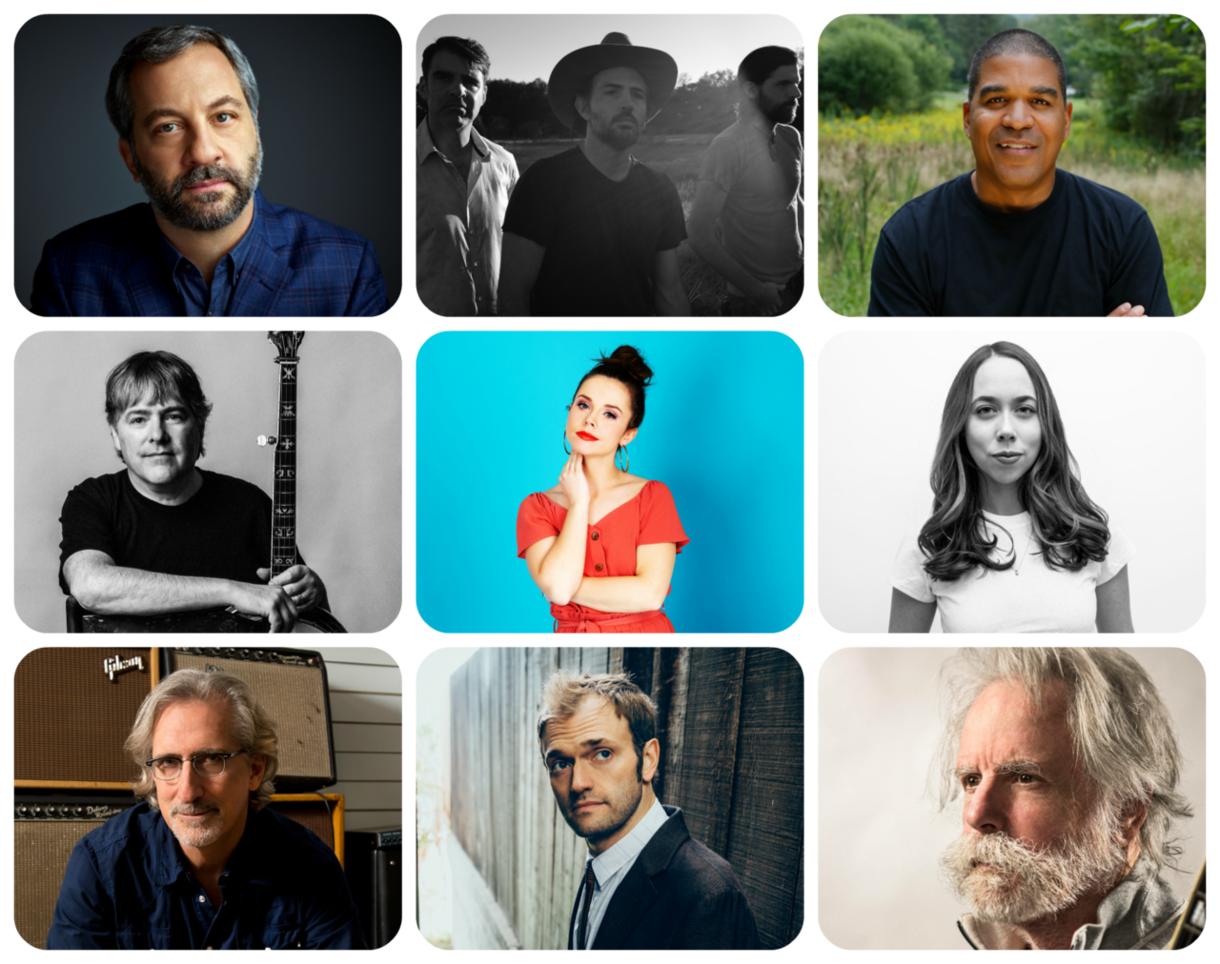
In August, the Americana Music Association Foundation (AMAF) revealed programming featuring director Judd Apatow in conversation with The Avett Brothers; Bob Weir with Oteil Burbridge; Béla Fleck with Sierra Hull; and Sarah Jarosz with John Leventhal and Chris Thile. The latest programming information also includes talks on empowering today’s creatives, developing streaming strategies and musicians in recovery.

https://www.instagram.com/p/CD1R4d_BUzV/

Apatow will sit down with The Avett Brothers to discuss the intersection of film and music, as well as the fine line between fine art and commerce. In 2017, Apatow co-directed the band’s critically acclaimed documentary, May It Last: A Portrait of The Avett Brothers. Since then, The Avett Brothers have released their new album, The Third Gleam.

The music that fans know and love from their favorite artists simply wouldn’t exist without the innovative musicians who came before them. Weir will sit down with fellow Dead & Company member Burbridge as they explore the inspirations and influence Black musicians have had on the Grateful Dead.

Now more than ever, musicians continue to push and blur the confines of genres to create the art they want to make. Fleck and Hull will speak to how roots music transcends and connects with a wide range of audiences during “Music Without Boundaries.” When it comes to creating that art in the studio, a producer’s ability to understand an artist’s vision is an integral part of the creative process. Moderated by Thile, Jarosz and Leventhal will delve into the connections forged between the artist and producer evident on her latest project, World on the Ground.

Additional new programming includes “Independent Control: The Power of Collaboration,” an inside look into how Americana industry professionals are empowering their independent artists to retain full creative control and the benefits of assembling a hand-picked team. Moderated by Jessica Nicholls (Metropolitan Groove Merchants), this discussion will include Blair Clark (Brooklyn Basement Records), Maria Ivey (IVPR) and Michelle Szeto (Paquin Entertainment Group).

In the streaming era, an abundance of digital resources can be found at the fingertips of industry and artist professionals, but how does one optimize those helpful tools? Led by Mike Fabio (New West Records), “Building a Streaming Strategy in 2020” rounds up Charles Alexander (Systemic), Margaret Hart (YouTube), Margaret Jacobi Lee (AMFM Management), Laura Ohls (Spotify) and Amy Wright (DittyTV) for a talk on developing real-world strategies that lead to increasing listenership and growing a solid fanbase.

Presented by Promises Behavioral Health, “The Show Must Go On: Musicians in Recovery” will find artists Phil Bogard and Jaime Wyatt in conversation with Shireen Janti (MusiCares) and Shane Ramer (That Sober Guy Podcast) about the road to recovery while offering how to find treatment and how others can take practical steps toward becoming a sober creator.

https://www.instagram.com/p/CDRhNsvBq-n/

Previously announced Thriving Roots programming includes intimate conversations between Brandi Carlile and Yola; Emmylou Harris and Ken Burns; and Jackson Browne and Mavis Staples. Rosanne Cash will bring together Ry Cooder, Angela Davis, Bonnie Raitt and Alice Randall for “Love and Vigilance,” a look at the history of protest music.

Moreover, RIAA Chairman/CEO Mitch Glazier and COO Michele Ballalynte will share an update on the music industry during “Record Setting” while looking at current trends and sharing their outlook. There will also be artist-friendly songwriting workshops and case studies like Mary Gauthier’s “Accessing the Universal in Your Songs: Mercy Now,” Taj Mahal’s “Music Is the Healing Voice” and an artist development breakdown with Black Pumas.

With over 50 panel discussions and more than 40 special events filled with music, Thriving Roots will bring the Americana music community together from across the world for three full days of engaging insight from its top industry professionals and leading artists.

Adding to the slate of artist conversations music fans won’t want to miss is Linda Ronstadt offering a behind-the-scenes look at Linda and the Mockingbirds, a new documentary that chronicles her 2019 journey with Jackson Browne and Mexican-American song and dance troupe Los Cenzontles to her grandfather’s hometown in Mexico, resulting in a tale of immigration, family and music. Moderated by esteemed journalist Randy Lewis, attendees will be able to watch the film screening and hear insight from the musical icon alongside the doc’s producer/director James Keach and Los Cenzontles founder Eugene Rodriguez.

https://www.instagram.com/p/CE95F1chNOY/

The Lumineers’ Jeremiah Fraites and Wesley Schultz will sit down with renowned filmmaker M. Night Shyamalan for an engaging discussion on the importance of retaining creative control of your art. In addition, Kathleen Edwards will speak with acclaimed Program Director Rita Houston (WFUV) about her new album Total Freedom, which marks her triumphant return to music after an eight-year hiatus from the business.

The common threads and differences of the Americana and country music worlds will be explored during “Ladies, Your Roots Are Showing,” presented by Change the Conversation. Moderated by CTC co-founder Tracy Gershon with freelance music journalist Marissa Moss, this panel session rounds up Brandy Clark, Tanya Tucker and Lee Ann Womack to share how they’ve been able to successfully navigate both worlds while maintaining their artistic integrity. They’ll also reveal the challenges and memorable moments they’ve experienced during their respective careers.

Reigning Legacy of Americana Award (co-presented by the Americana Music Association and the National Museum of African American Music) recipient Rhiannon Giddens joins NPR’s Ann Powers and the legendary Taj Mahal to discuss the theme of “Music is the Healing Voice.”

https://www.instagram.com/p/CEpIcpMhsZ-/

Music buffs should also tune into a special virtual edition of “Songlines Music Meeting,” an Americanafest fan-favorite. Sean Coakley and Leslie Rouffé will once again invite listeners to hear mostly unreleased tunes and score them during the live session, leading to a discussion on how music programmers in various media formats select the songs they feature.

Aside from plenty of educational and networking opportunities, Thriving Roots attendees will have a chance to unwind and recharge with immersive virtual events and lifestyle breaks. Valerie June will walk folks through a guided meditation that explores how to center oneself using ancient teachings. Big Machine Label Group will spotlight The Cadillac Three, Sheryl Crow and Ray Wylie Hubbard with some must-see musical performances.

During “Aw Heck: An Oh Boy Music Break,” join the late John Prine’s own record label Oh Boy Records for a celebration of their talented roster which includes Tré Burt, Arlo McKinley, Dan Reeder and Kelsey Waldon. For “Come Hear NC,” experience the rich music of North Carolina featuring Hiss Golden Messenger, Jim Lauderdale, Mandolin Orange, Steep Canyon Rangers and more.


Pictured above in composite: Top Row (L-R): Judd Apatow, The Avett Brothers, Oteil Burbridge; Middle Row: Béla Fleck, Sierra Hull, Sarah Jarosz; Bottom Row: John Leventhal, Chris Thile, Bob Weir

The Show On The Road – Nicole Atkins

This week on The Show On The Road, a conversation with Nicole Atkins, a singer/songwriter  out of Neptune City, New Jersey who has become notorious for making her own brand of theatrical boardwalk soul. 

LISTEN: APPLE PODCASTSSTITCHERSPOTIFYMP3

The Show On The Road host Z. Lupetin fell in love with Atkins’ newest, harmony-rich record, Italian Ice, which came out spring 2020 and was recorded in historic Muscle Shoals, Alabama. Both rumblingly ominous and joyously escapist, standout songs like “Domino” make the record a perfectly David Lynch-esque summer soundtrack of an uneasy 2020 scene that vacillates between fits of intense creativity and innovation and deep despair. Toiling below the radar for much of her career, Atkins is finally enjoying nationwide recognition as a sought-after writer and producer; Italian Ice was co-produced by Atkins and Ben Tanner of Alabama Shakes.

While some may try to shoehorn Nicole Atkins into the Americana and roots-rock categories, one could better describe her as a new kind of wild-eyed Springsteen, who also mythologized the decaying beauty of New Jersey’s coastal towns like Asbury Park, or a similarly huge-voiced, peripatetic Linda Ronstadt who isn’t afraid to mix sticky French-pop grooves with AM radio doo-wop, ’70s blaxploitation R&B and airy jazz rock like her heroes in the band Traffic. If you watch her weekly streaming variety show, “Live From The Steel Porch” (which she initially filmed from her parents’ garage in NJ, but now does from her new home in Nashville), you’ll see her many sonic tastes and musical friends gathering in full effect. Italian Ice features a heady collection of collaborators including Britt Daniel of Spoon, Seth Avett, Erin Rae, and John Paul White.

After playing guitar and moving in and out of hard-luck bar bands in Charlotte and New York — many of which that would find any way to get rid of their one female member — Atkins’ bold first solo record Neptune City dropped in 2007 and three more acclaimed LPs followed, including her twangy, oddball breakout, Goodnight Rhonda Lee in 2017 on John Paul White’s Single Lock Records.

Much like the tart and brain-freezing treat sold on boardwalks around the world, Atkins’ newest work is a refreshing and many-flavored thing and demonstrates that, in a lot of ways, the show-stopping performer, producer, and songwriter has finally embraced all the sharp edges of her personality.


Photo credit: Anna Webber

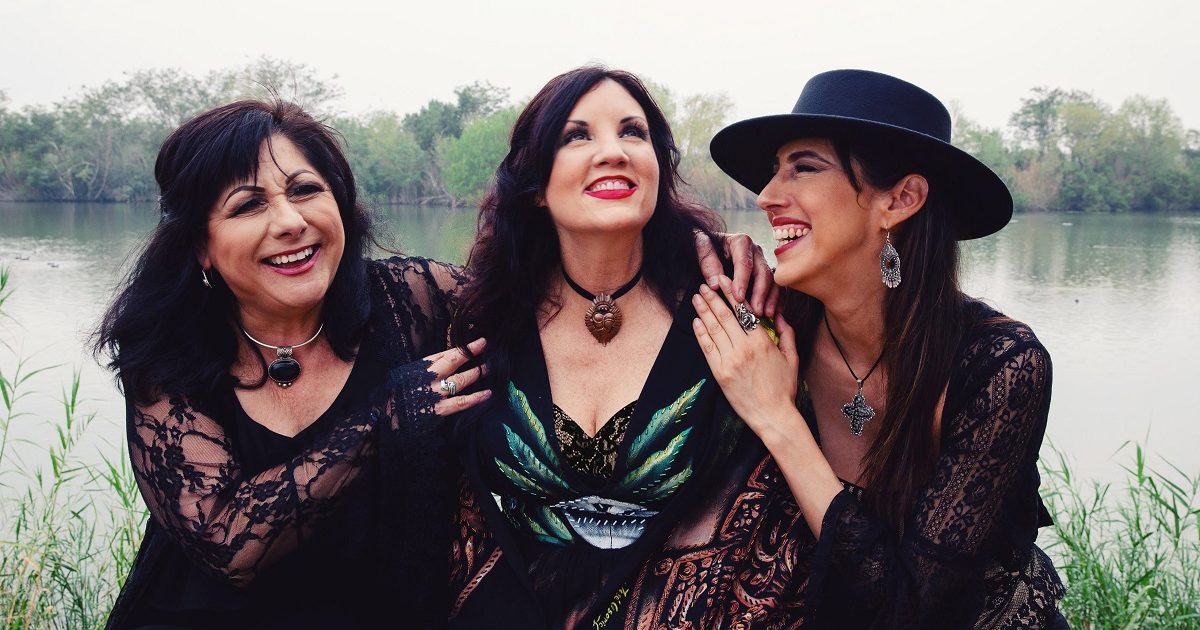
LISTEN: The Texicana Mamas, “Lo Siento Mi Vida”

Artist: The Texicana Mamas (Tish Hinojosa, Stephanie Urbina Jones, and Patricia Vonne)
Hometown: San Antonio, Texas
Song: “Lo Siento Mi Vida”
Album: The Texicana Mamas
Release Date: August 21, 2020
Label: The Texicana Mamas

In Their Words: “I was hooked on Linda Ronstadt’s music from the first time I heard ‘Different Drum’ in 1967 when I was 12 years old. When I heard her sing ‘Lo Siento Mi Vida’ for the first time in 1976; as a fledgling folk singer myself at that time, I grew a whole new admiration for her artistry as a writer, as a sister, as a Latina. This poignant, tender song sung in Spanish captured the perfect essence of the romanticism of the beautiful Spanish language and sentiment. I am so pleased that our group, The Texicana Mamas, had the opportunity to pay tribute to Linda though recording her song.” — Tish Hinojosa, The Texicana Mamas


Photo credit: Emma Trejo

The Byrds’ Chris Hillman Reflects on ‘Laurel Canyon’ and Why He Had to Leave

Splitting off from Sunset Boulevard in West Hollywood, Laurel Canyon Boulevard runs a circuitous route through unkempt mountain acres, past the Laurel Canyon Country Store, weaving and curving for miles before finally spilling out in Studio City. Along the way small roads split off into the mountains like tributaries from a river.

Up these narrow, twisting mountain byways lived many of the musicians who, in the late 1960s and throughout the 1970s, exerted an incalculable influence on popular music: the Byrds chief among them, but also the Mamas & the Papas, Joni Mitchell, Love, James Taylor, the Monkees, and Crosby Stills & Nash. Together, they transformed folk music into folk rock and singer/songwriter fare, transforming it with new sounds, new ideas, new priorities, and — it can’t be denied — new drugs.

This strange, paradoxical place — a rustic mountain paradise nestled within the purgatory of Los Angeles — is the subject of a two-part documentary on EPIX, directed by Alison Ellwood and produced by Alex Gibney. Across two 90-minute episodes, Laurel Canyon traces the comings and goings of several generations of folk rockers down the boulevard and up into the hills.

Ellwood depicts this place as something like a bucolic community that enabled and encouraged romantic and musical collaboration among its denizens. A struggling musician named Stephen Stills flubbed an audition for a TV show called The Monkees, but suggested his roommate Peter Tork try out for a role. Mama Cass introduced Stills and David Crosby to a British musician named Graham Nash, and the trio became one of the most successful groups of the 1970s. A band of freaks from Phoenix, Arizona, calling themselves Alice Cooper showed up at Frank Zappa’s cabin at 7 a.m. — about twelve hours early for their audition. The stories go on and on, too much for even a lengthy documentary to contain.

Laurel Canyon didn’t just offer a sense of community along with unobstructed views of the city at night. It also gave these musicians access to the city itself — in particular, the happening Sunset Strip clubs like the Troubadour, Pandora’s Box, Ciro’s Le Disc, and the Hullabaloo Club. It was a neighborhood galvanized by the riots in 1966, when young clubgoers protested a police-imposed curfew — a pivotal moment in ‘60s radicalism and the inspiration for Buffalo Springfield’s “For What It’s Worth.”

The popularity of the music written in the hills above the Strip meant that Laurel Canyon’s most famous residents spent more time away from the canyon, spending weeks in the studio recording their next albums or months on the road playing their songs in front of growing legions of fans. Elwood’s documentary strays from the locale in its title, traveling as far away as Bethel, New York, for the Woodstock music festival in 1969, which demonstrate how deeply these new musical ideas were taking across the country.

There are, refreshingly, few talking heads in these two episodes. Rather than the usual musicians rhapsodizing about their youth, Ellwood frames the documentary with remembrances by a pair of photographers, Nurit Wilde and Henry Diltz. Their archival images and films make up the bulk of Laurel Canyon, which makes it all seem more immediate, as though fifty years ago was just yesterday. In that regard it’s closer to Tarantino’s Once Upon a Time in Hollywood than Jakob Dylan’s Echo in the Canyon.

But that also makes this historical moment seem more fleeting. Around the time that Charles Manson sent four of his followers to a house he thought belonged to producer Terry Melcher, drugs started to infiltrate Laurel Canyon, puncturing what Graham Nash calls a “beautiful bubble.” Grass and booze are quickly displaced by coke and heroine, and the scene chills a bit in the 1970s, as a new wave of musicians moved in to these houses and crash on these couches.

There are many stories from Laurel Canyon that don’t get told in the documentary, as well as many songs that don’t get played and many artists who don’t get mentioned. There’s no trace of Van Dyke Parks, the eccentric L.A. arranger who affectionately satirized the community on “Laurel Canyon Boulevard,” off his 1968 album Song Cycle. “What is up in Laurel Canyon?” he asks, quixotically, like the most ironic tour guide. “The seat of the beat,” he replies to himself.

On the other hand, the film can only hold so much. And the stories that Ellwood does tell add up to something larger: Laurel Canyon is less about a place and more about an idea. It’s about how different strains of traditional and popular music commingle and mutate, how they point to an infinite set of possibilities for voice and guitar (and drums and bass and amps and keyboards and synthesizers and so on).

On the eve of the documentary’s premiere, BGS spoke with one of Laurel Canyon’s early and most famous residents, Chris Hillman.

BGS: You moved to Laurel Canyon in 1965. What took you there?

Hillman: First thing on the list was, I needed a place to stay. The Byrds were getting going and starting to gain a little ground, and I had already known about Laurel Canyon. It was purely by accident that I’m up there one day by the country store, and I run into a guy who had a place to rent. It was wonderful. It was up on this road overlooking the entire city of L.A. You can imagine how beautiful it was at night, with all the lights on and everything. Shortly thereafter, David Crosby moved up there, and then Roger McGuinn. I’m not sure where Mike [Clarke] and Gene [Clark] were. They were probably up there, too. The Byrds were very early occupants of the area.

To what degree was it like a small town in the middle of this big city?

It sorta was. But it was trying so hard not to be that. We were literally four minutes away from the Sunset Strip. So you went from this incredibly energetic, fast-moving madness of the Sunset Strip clubs, you go up Laurel Canyon Boulevard, and in four minutes you’re up in this pristine, quiet environment with all these beautiful old houses. We weren’t the first ones to discover this place. People were living up there in the ‘40s and ‘50s — some actors and a lot of artists. It already had this reputation as a bohemian beatnik enclave.

There was the famous legend that Houdini had a house up there. People would be driving around and point out a place and say, “That’s where Houdini lived.” They’d point out some old wreck of a place, some ruins of an old structure. There were a lot of good legends to the place. I think that’s where Robert Mitchum got in trouble at a party in 1949 or 1950. He walked into a party and then the police came and arrested people for marijuana. He just happened to walk in at the wrong time. But he had a hell of a career after that, though, so he must have struck a deal. The musicians didn’t start moving up there until the ‘60s, and by then it seemed like a quiet mountain town that just happened to be minutes away from the heart of the city.

I always thought of it as the Woodstock of the West Coast — this retreat from the rigors of the big city.

Well, in Woodstock you’re a good long ways from Manhattan. But in Laurel Canyon you’re minutes from the Sunset Strip and maybe ten minutes from Beverly Hills or Hollywood proper. A lot of people don’t know this, but the Sunset Strip was part of Los Angeles County. It was a mile long, from La Cienega I think to Doheny. It was county instead of city, so it was run completely differently. It was patrolled by the L.A. County sheriff, as opposed to the LAPD.

Is that why they imposed that curfews that led to the riots in ’66?

The whole thing with the kids rioting had to do with the small business owners, whose businesses were being infringed upon by foot traffic. The kids were running around, goofing around, and it was killing business. I didn’t get involved in that. I just saw it on the news. I remember seeing that footage. I still lived in the Canyon then. I was there until ’68, then I moved to Topanga Canyon.

Why did you leave?

Things changed. I was still in the Byrds and I just bought a house in Topanga. No, I’ll tell you why I left. I completely forgot the most important part of the story. I’m getting older. The reason I left was, my house burned down in Laurel Canyon.

I was renting this beautiful house, and you could see the whole city. It was all wood, and I remember it was fall, then the ferocious Santa Ana winds hit. They always come around in the fall. They’re very dangerous. It was real hot that day, and the winds were kicking up, and I had pulled my motorcycle out. I was going to kick it over, but it was leaking gas and the wind blew the fumes into the water heater. It was an open-flame heater and it just ignited. It made the same sound you hear when you light an old-fashioned gas range. I literally caught on fire. Instinctively I rolled on the ground. I think I lost a bit of hair and some eyebrow before I got out of there. I jumped in my car and pulled into the dirt road. I had nothing. I had my car and that was it. I lost everything I owned.

David Crosby had just been visiting me at my house. He’d been there for an hour and left just 20 minutes before my house burned down. I think we can connect the dots! I’m kidding. I love David dearly, but I still poke him about that one. Roger McGuinn lived across the canyon from me and saw the fire. He said it looks like where Chris lives, so he starts filming it. Somehow the footage got on the local NBC affiliate. I was living in a hotel for a few nights, and I remember watching my house burn down on the TV. That was ’66.

Is that why you left for Topanga?

Well, it was starting to be the place to live. More groups were moving up there: the Turtles and Frank Zappa and Mama Cass and Peter Tork. Everything was changing. Drugs entered the picture. I ended up buying a house in Topanga Canyon, which is about 25 miles north of Los Angeles. It’s also very pristine and quiet — a little bit bigger than Laurel Canyon. A lot of people moved there, too, like Neil Young. And it was a very similar scene, with everybody interacting with each other. That should be the next documentary.


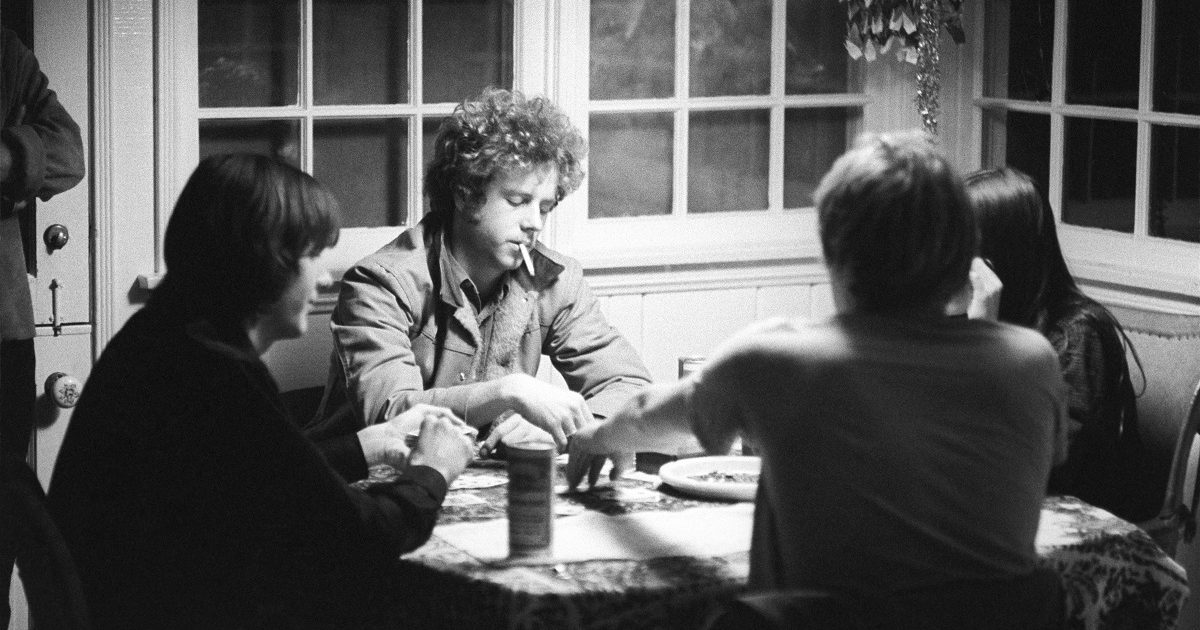
Photo of Gram Parsons and Chris Hillman playing cards: Courtesy of Nurit Wilde
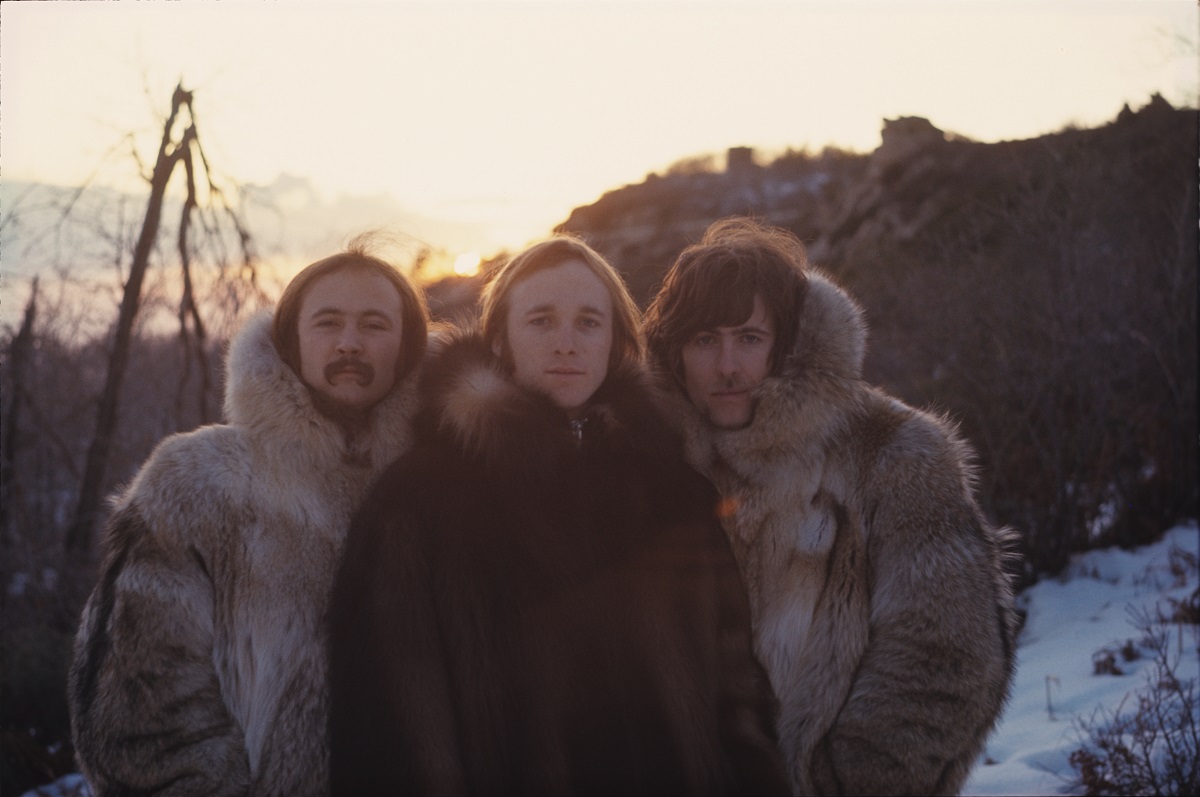
Photo of Crosby, Stills & Nash at Big Bear: Henry Diltz
BGS Long Reads of the Week // May 1

It’s gonna be… May! Welcome to a new month of long reads, where each week we look back into the BGS archives for some of our favorite content from across the years. If you haven’t yet, follow our #longreadoftheday series on social media [on FacebookTwitter, and Instagram] and as always, we’ll put all of our picks together right here at the end of each week.

Our long reads this week are southern rock and blues, bluegrass and rock and roll, Americana and country, and a dash of… hard-to-put-a-finger-on-it, too. Read on:

Marcus King: A “Young Man’s Dream” Come to Life

A cover story from earlier this year, our conversation with 23-year-old singer/songwriter/guitarist Marcus King digs deep into the creative processes that shaped his debut album, El Dorado — his first project outside of his critically acclaimed group, The Marcus King Band. With Dan Auerbach producing and an absolutely stacked roster of studio musicians, the project came together “on the fly,” yes, but that turned out to be a pretty natural pace. [Read the entire interview]


Canon Fodder: The Flying Burrito Brothers, The Gilded Palace of Sin

Given the canonization of Gram Parsons over the last few decades, as well as the gradual breakdown of genres and styles over time, it’s easy to forget just how contrarian it would have been for a West Coast rock band to embrace country and bluegrass. But that’s exactly what the Flying Burrito Brothers did. This edition of Canon Fodder explores their first album, The Gilded Palace of Sin, which despite its near-flop at the time of its release is perhaps their most important work. [Read more]


Linda Ronstadt Talks Bluegrass

One of the most important vocalists/artists in rock and roll and popular music over the last century, Linda Ronstadt also knows a thing or two about bluegrass — as evidenced in this 1996 interview from Bluegrass Unlimited magazine. We pulled this fascinating article out of the BU archives to commemorate the release of the documentary film, Linda Ronstadt: The Sound of My Voice last year. It’s a two-parter, so we spread it out over a couple of days this week!
[Read part one] [Read part two]


John Moreland Figures out How to Love Music Again

Turns out there are drawbacks to any career – even when it’s your dream job – and you can confirm that with dark-folk and Americana favorite, John Moreland. The Oklahoman singer/songwriter released his latest album, LP5, earlier this year. The project surprised some listeners by exploring new sonic territory for Moreland — new territory that revived the spark that got Moreland into writing to begin with. [Read our conversation]